Return to Istasyon Hotel
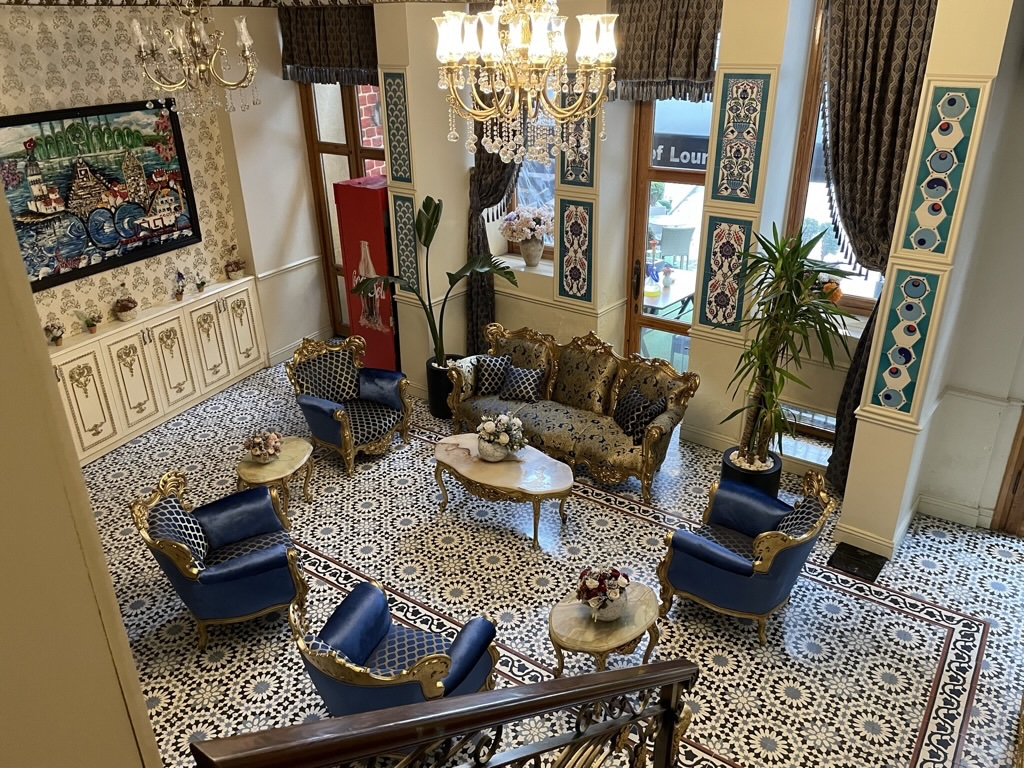
Istanbul
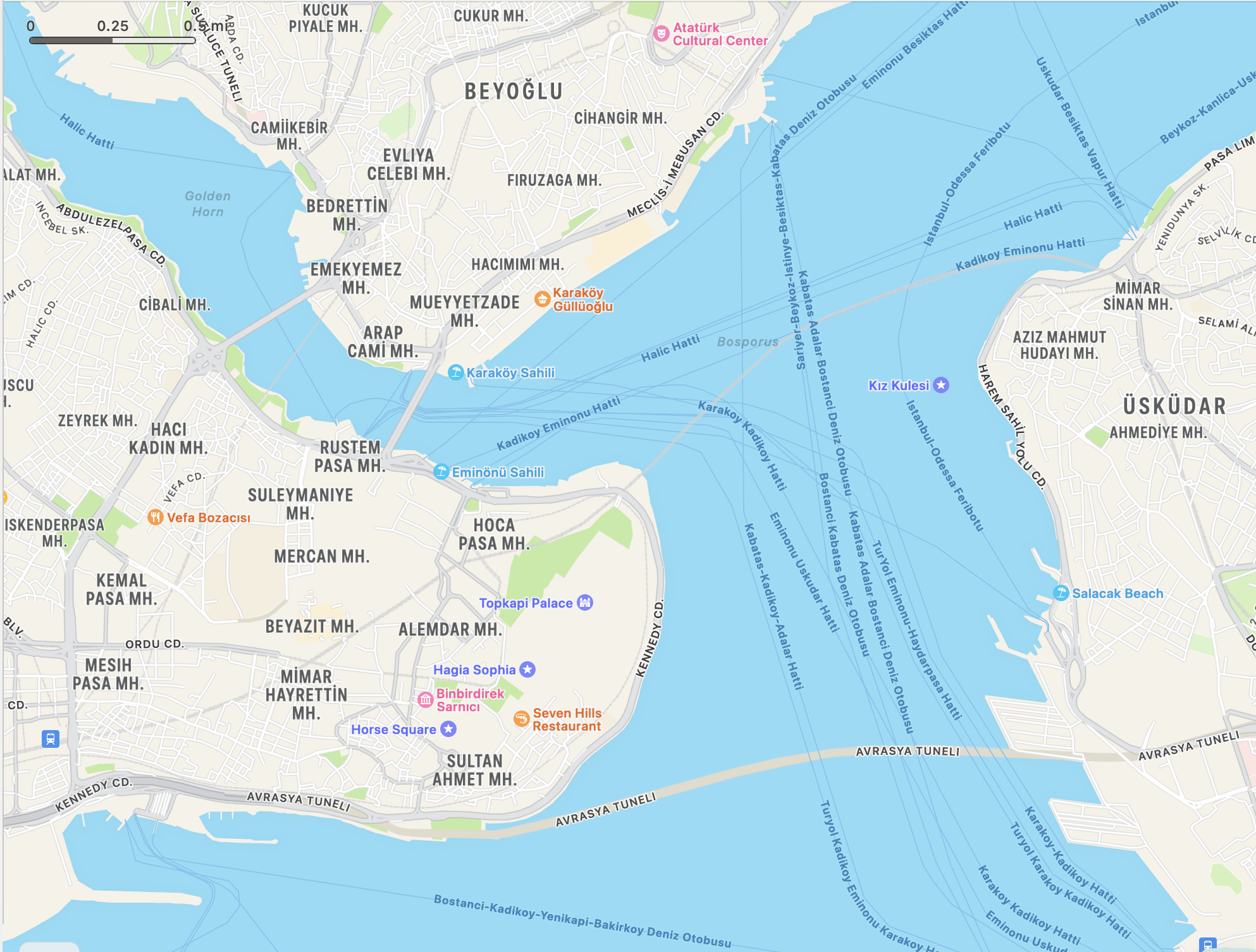
The modern city ‘straddles the Bosporus Strait, lying in both Europe and Asia, and has a population of over 15 million residents, comprising 19% of the population of Turkey. Istanbul is the most populous European city and the world’s 19th largest city’ (Wikipedia)
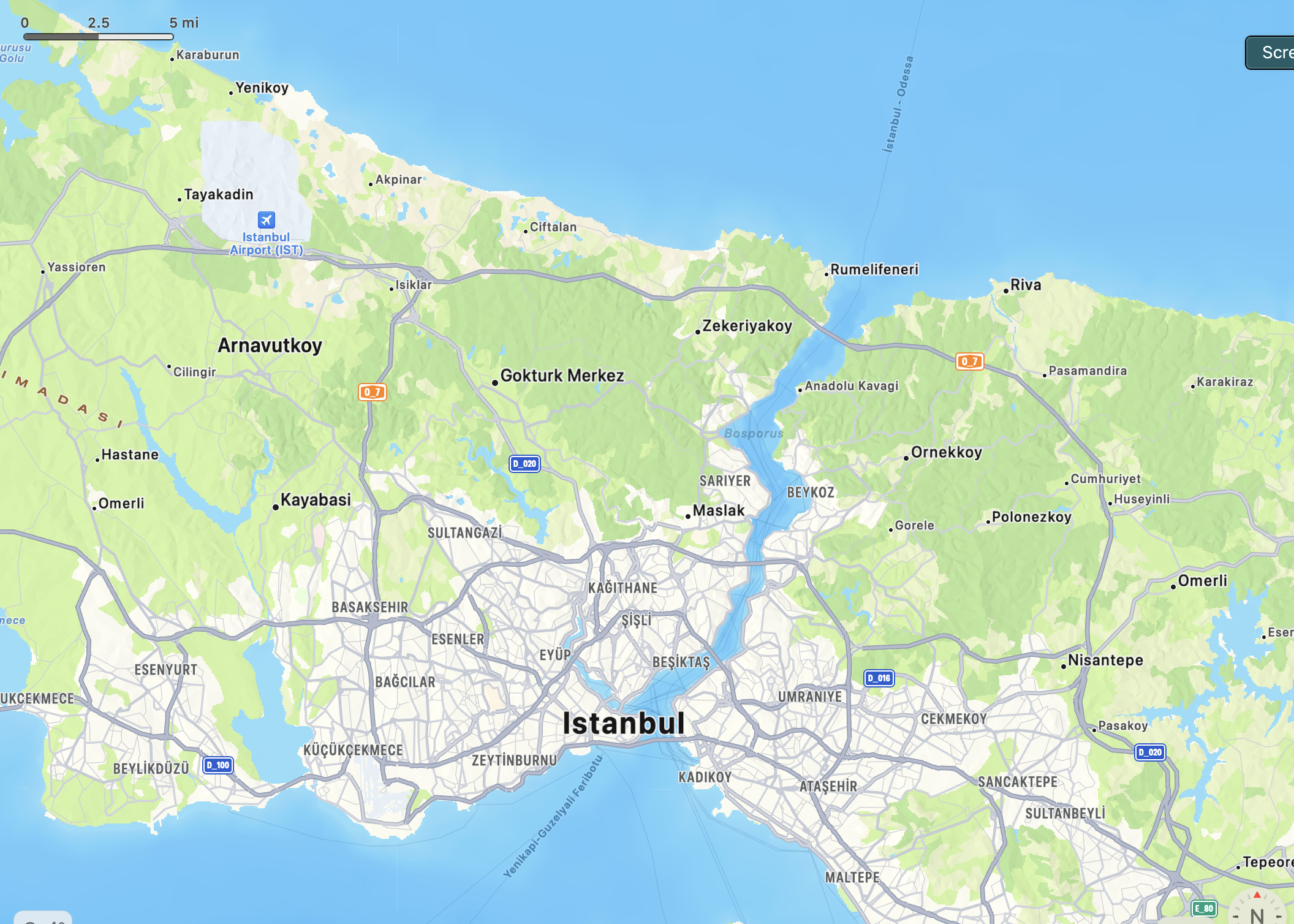
Our accommodation is in the centre of the ancient city, in Hoca Pasha between the entrance to Golden Horn & the higher ground containing Topkapi and Hagia Sophia.
The area, being the centre of ‘touristic’ Istanbul is a maze of streets and alleyways focused on providing accommodation, food, gifts…. etc
Testi Kebab
A traditional pot cooked meal from Cappadocia (basic cooking/simmering in the pot should be for 90 minutes before serving.
Once again, as with traditional ‘folk’ medicine such as mandrake, Turkey provides all the traditional drama of a mediaeval street performance.
Showmanship is a valued element in the process…. and takes skill & timing.
We spent time talking with Firat – the Showman – who was very complimentary of our photographic efforts with the ‘Delighted American’! ( he also cleared up the mess created)
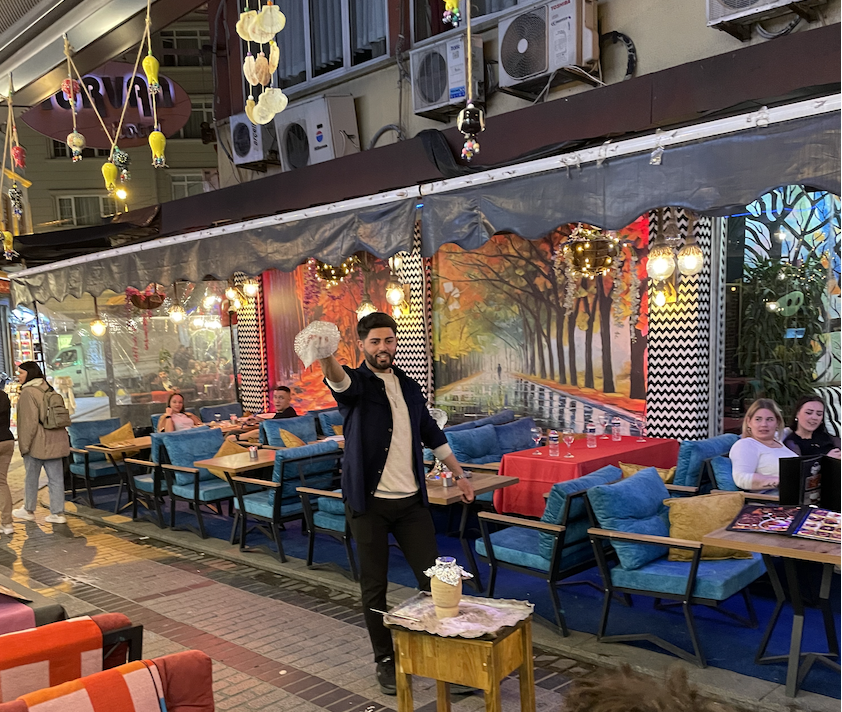
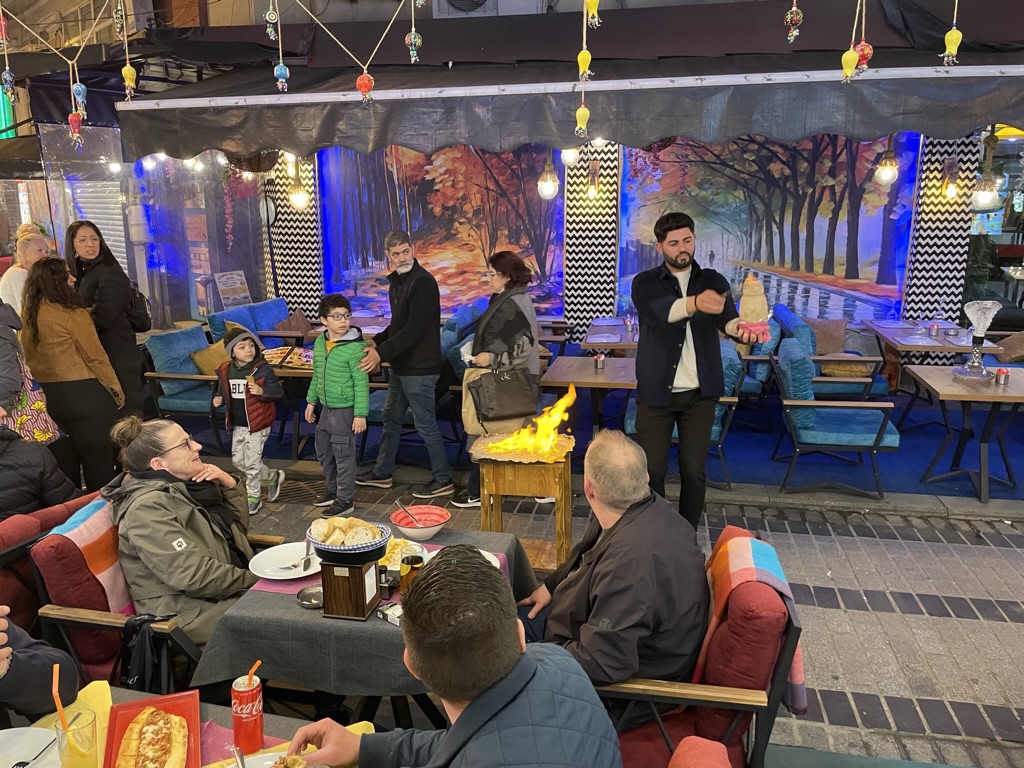
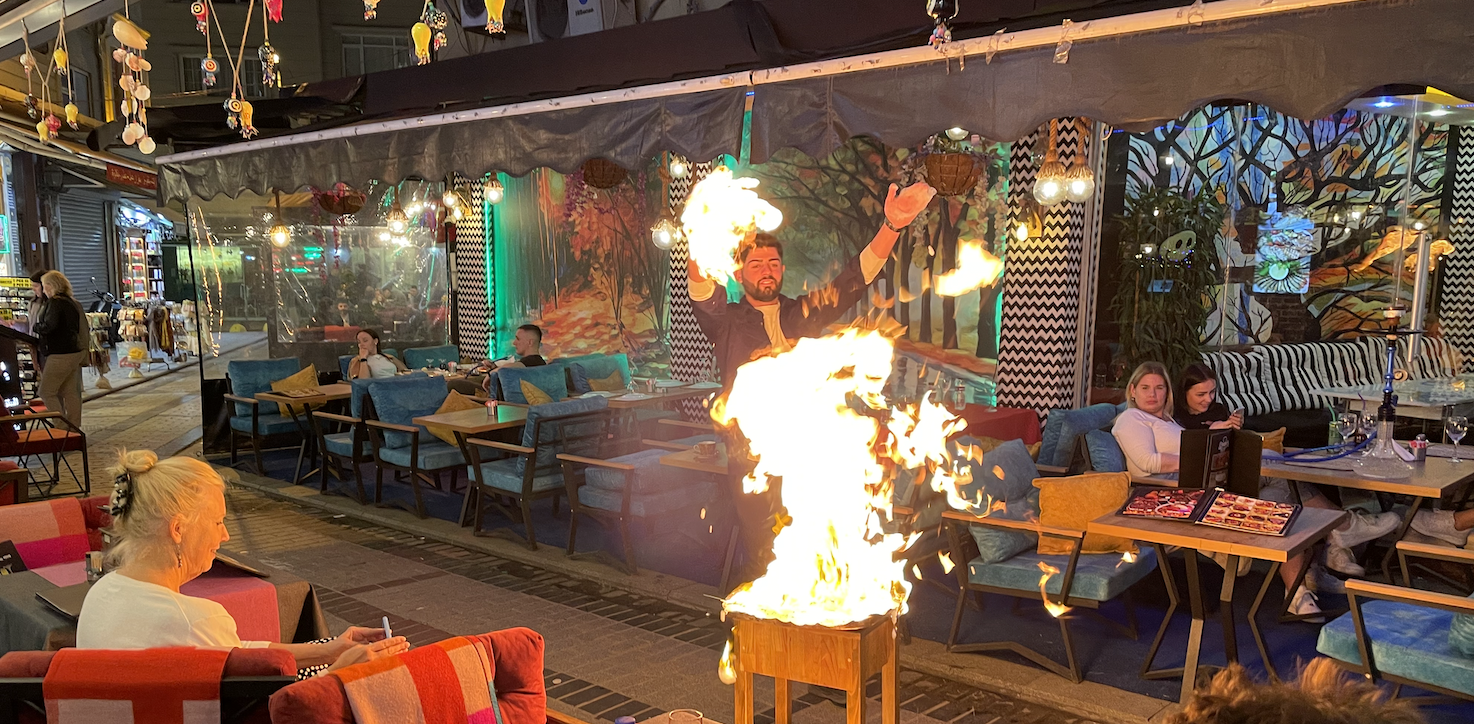
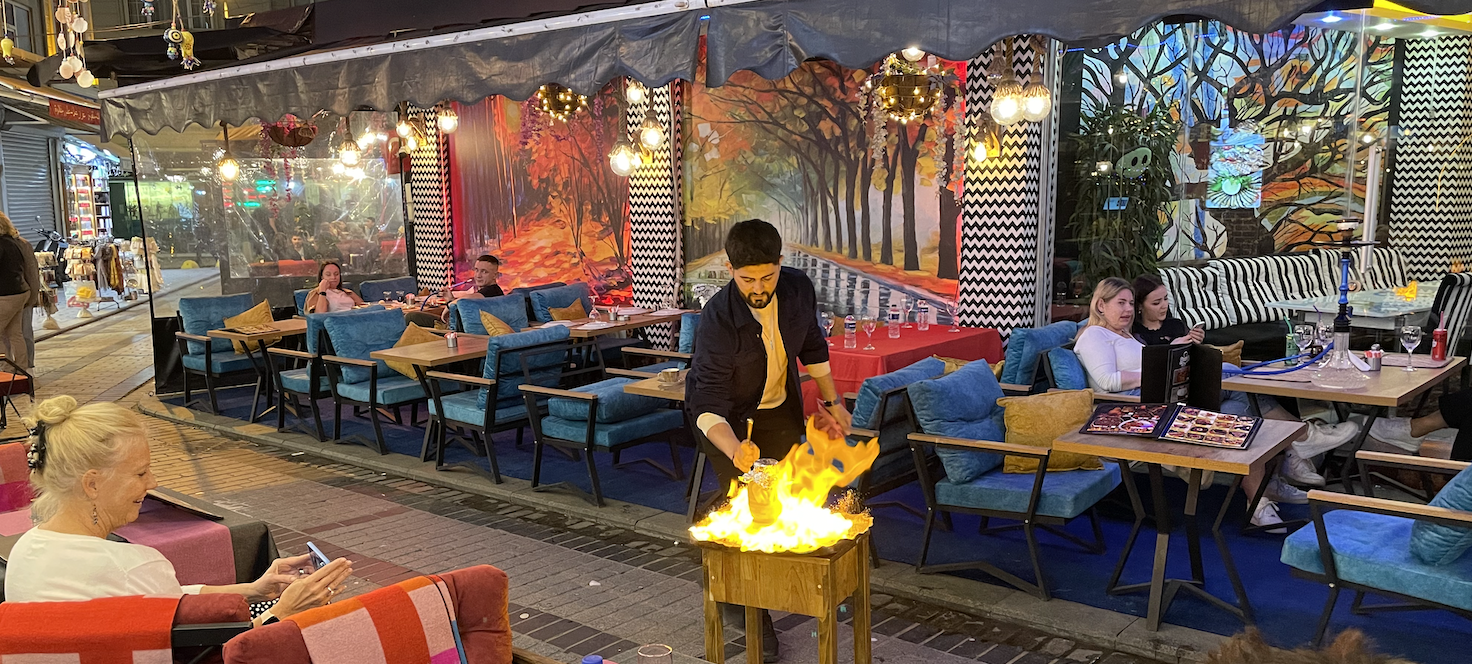
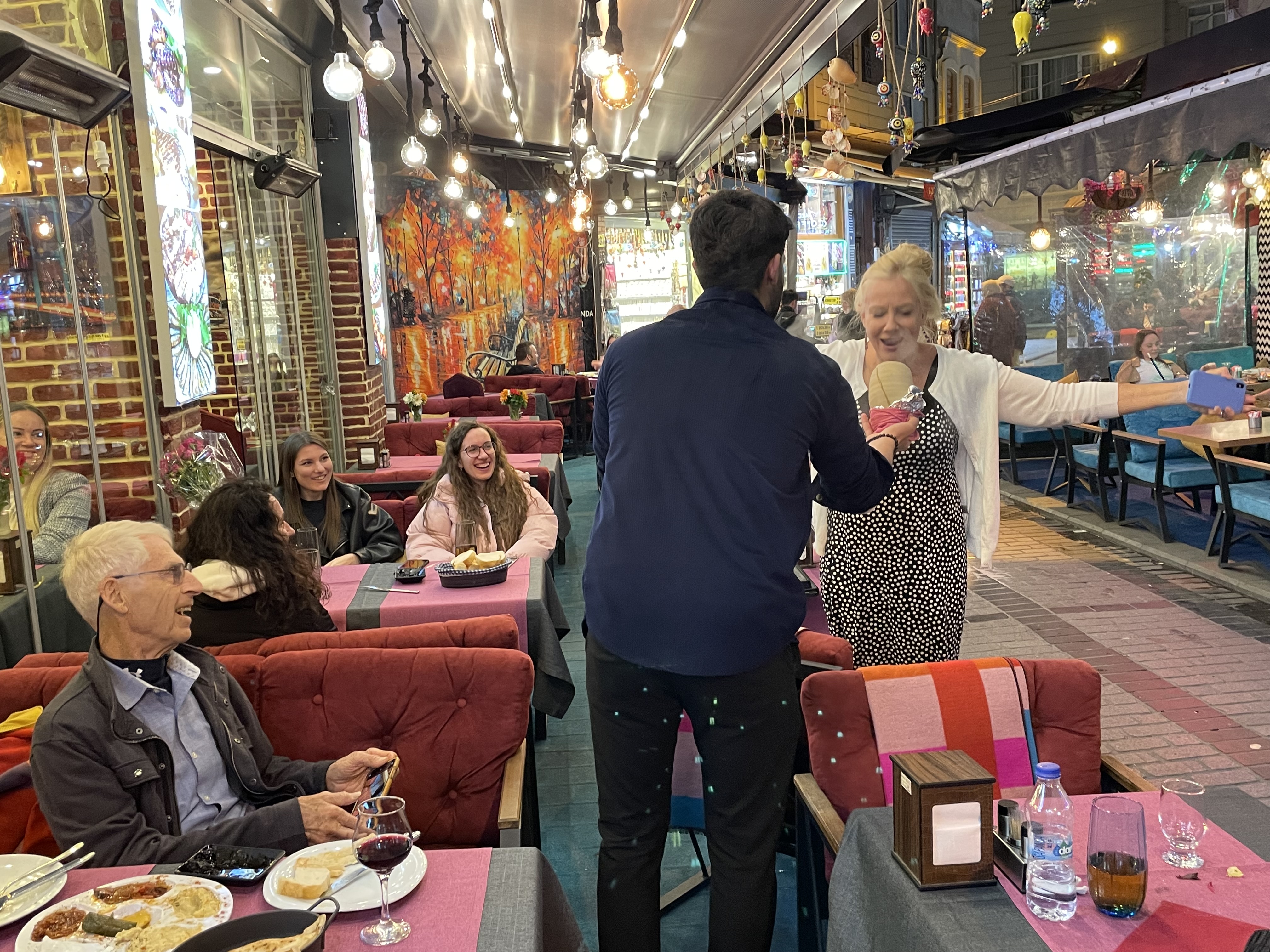
‘I’ve waited 60 years to experience this!’

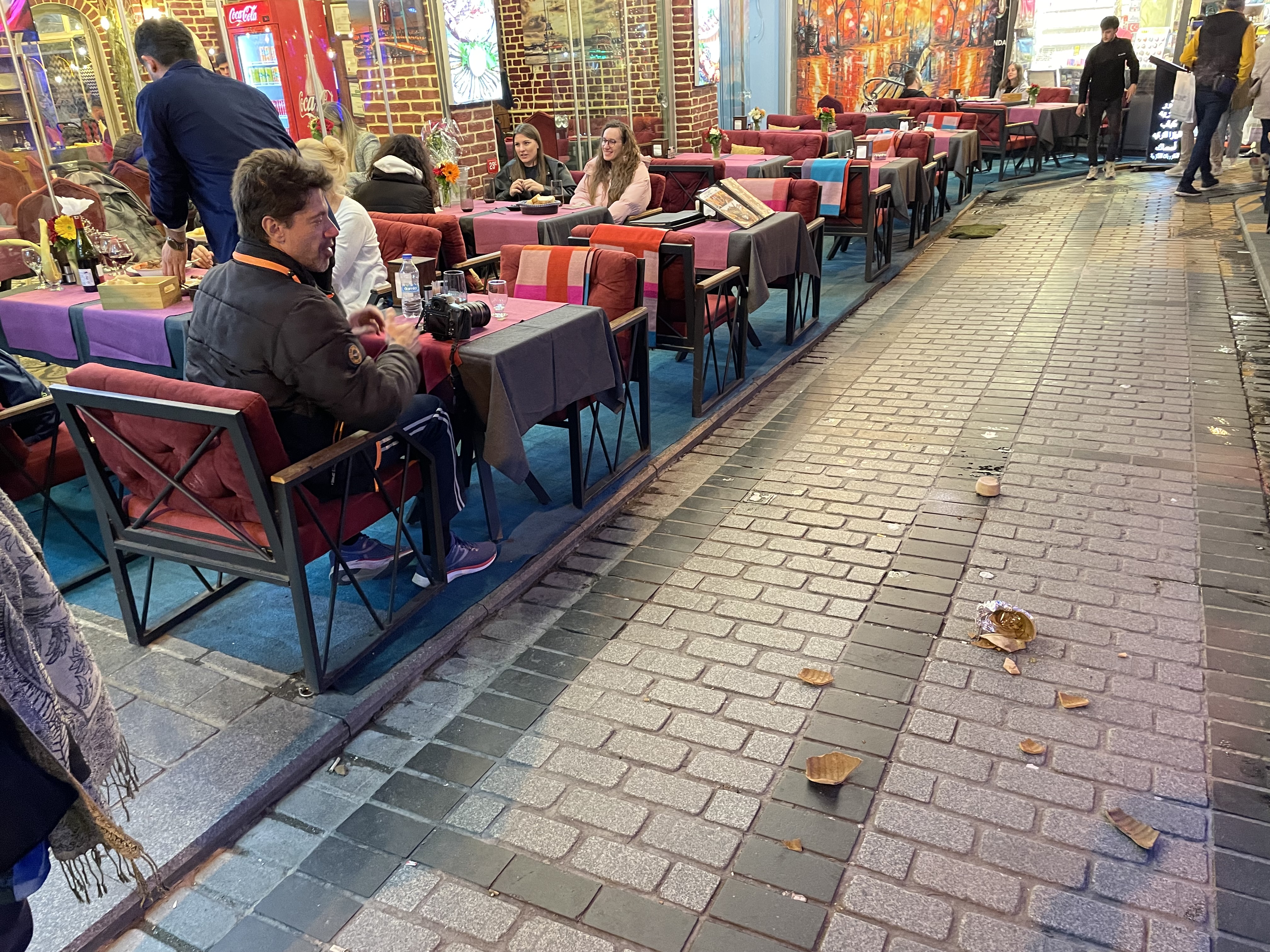
More tradition
We strolled up Alemdar Caddesi & became captivated (in the nicest possible way) by a window in which a carpet was being woven.
It became one of the most important moments on our whole tour… as we met Salih with whom we spent time then and at later times – with glasses of tea – discussing carpets, tradition, religion, Istanbul, politics, conservation… etc etc.
The carpet was being woven with traditional patterns, in silk…. and slowly, as and when the weaver (a Kurdish lady) had time to work…. she allowed Jacqui to join the process!
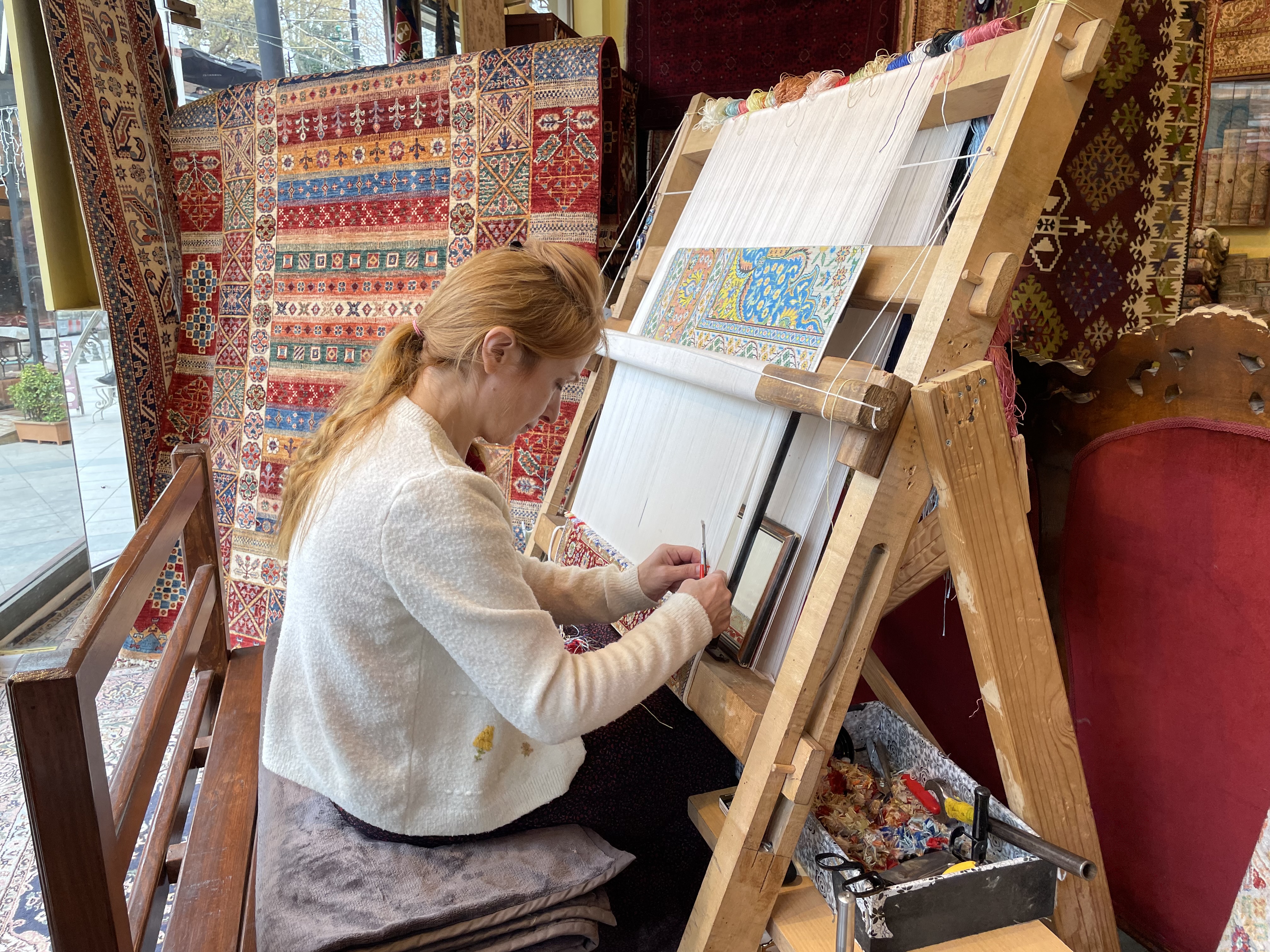
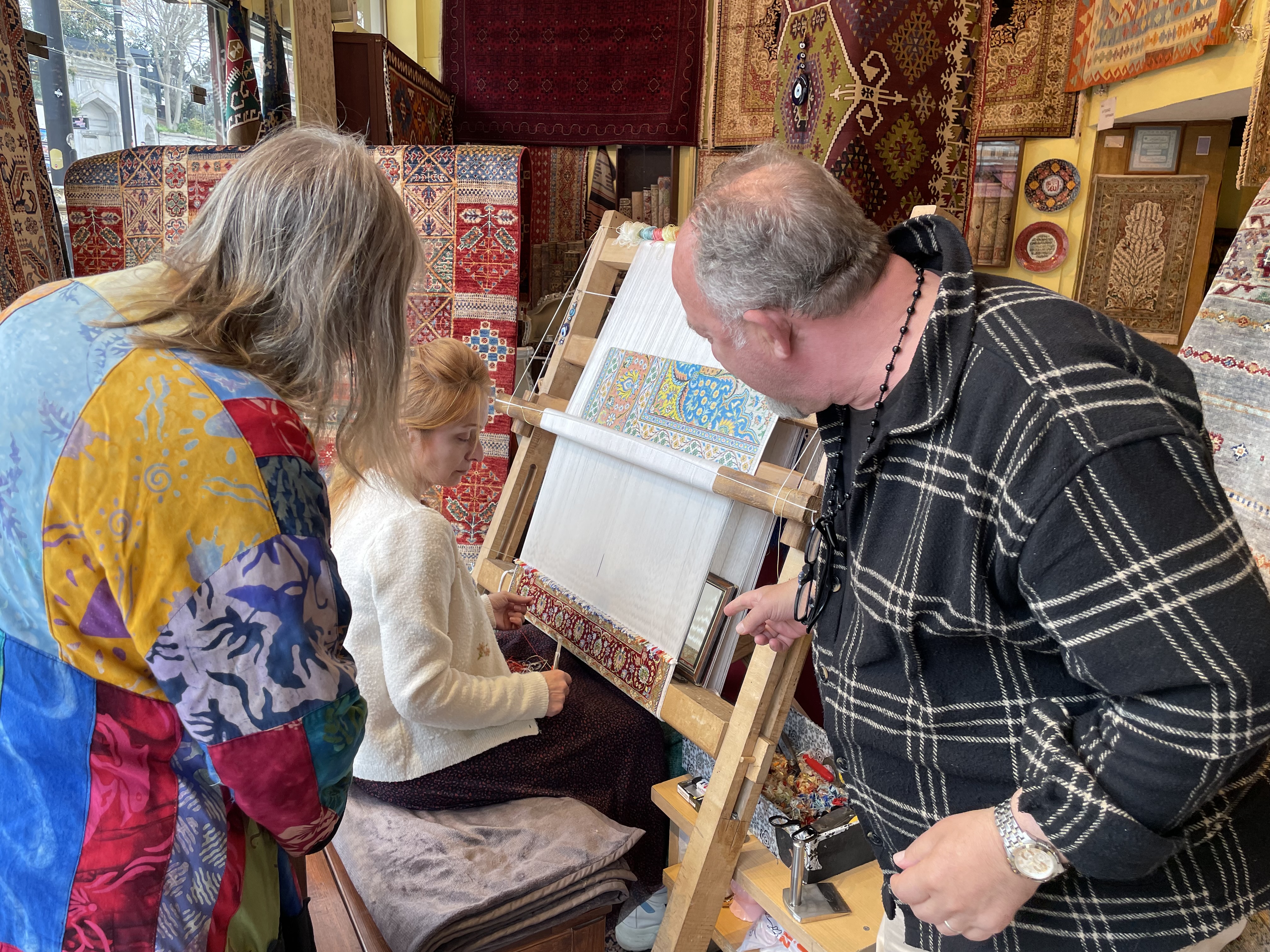
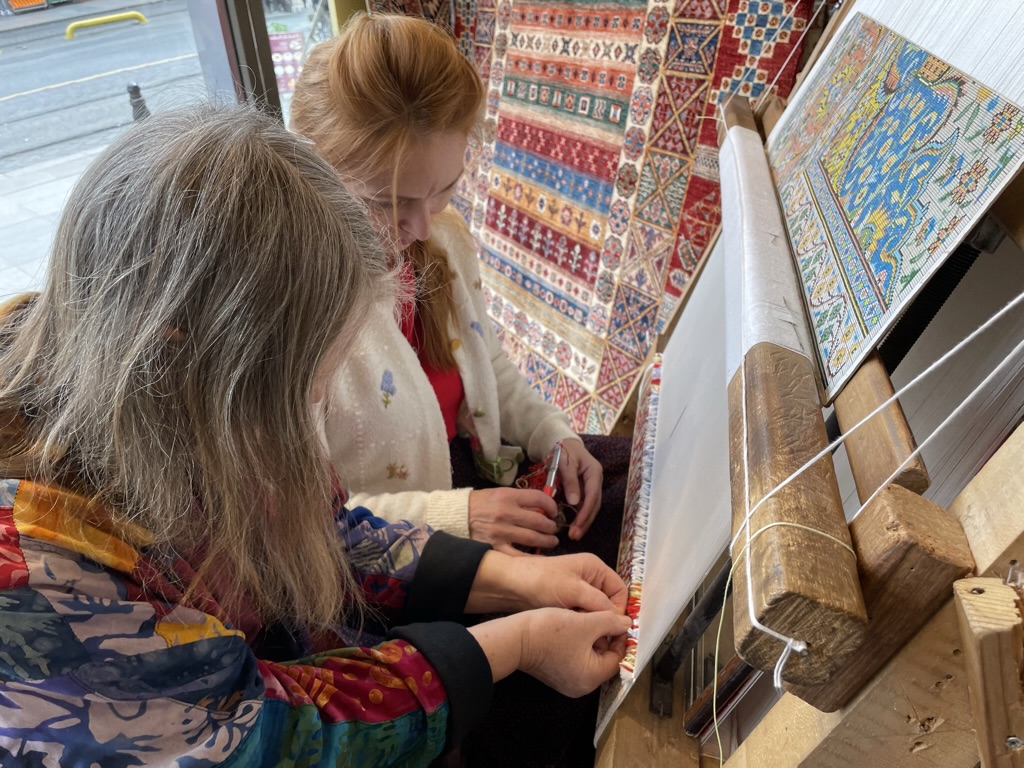
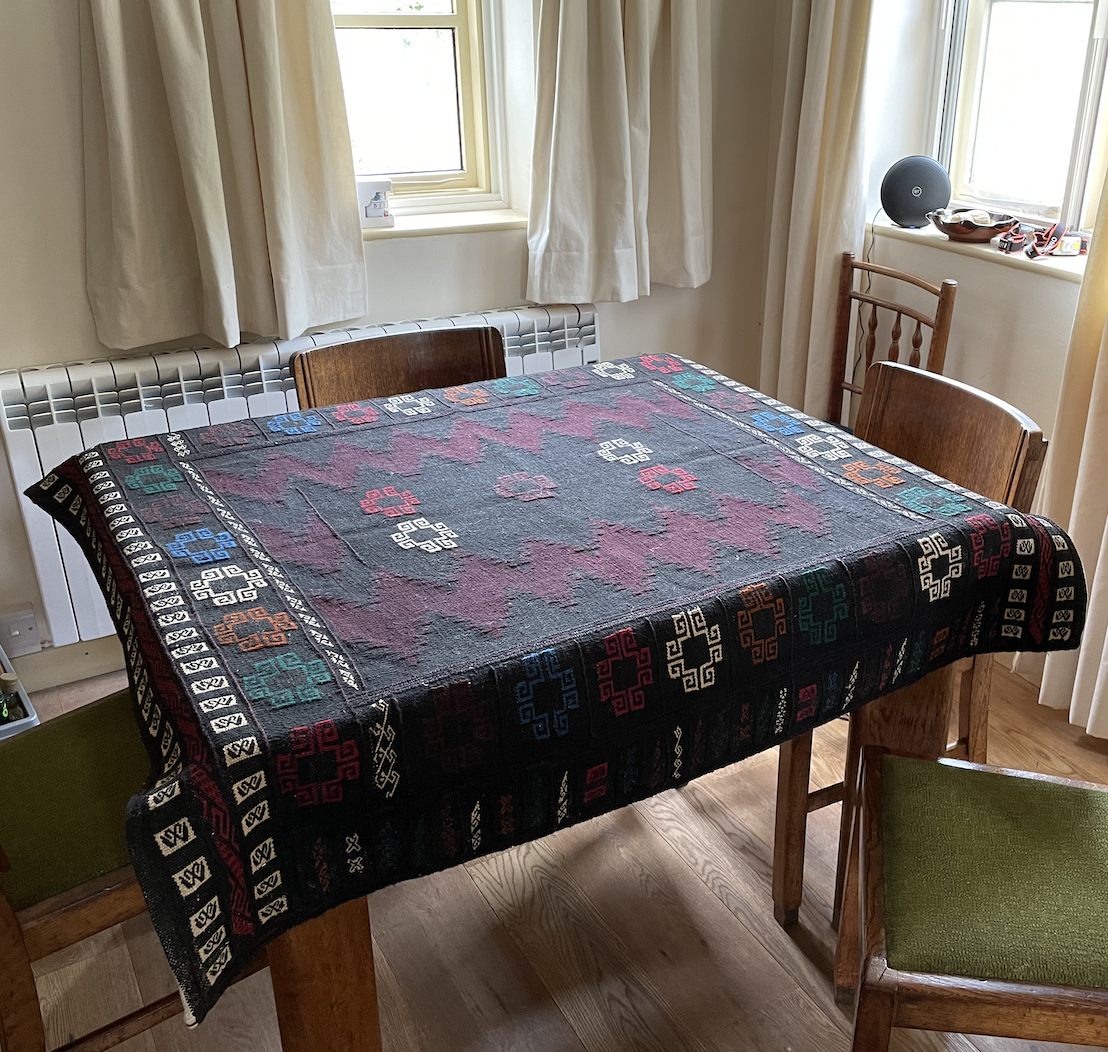
A Kurdish woven fabric of goat hair, wool & cotton bought from Salih
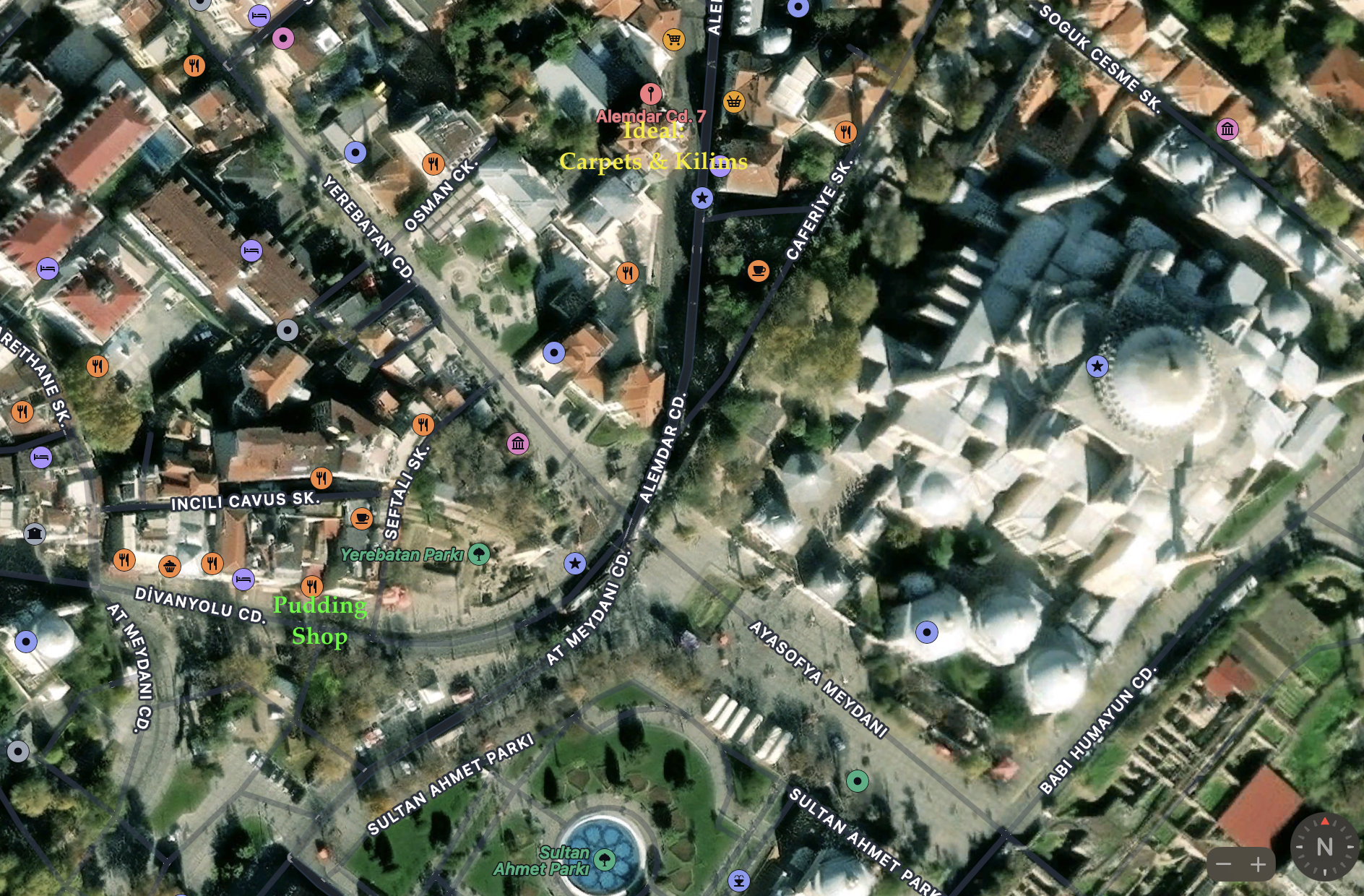
We also talked about our previous visits & especially the first that we made in 1970.
Consequently Salih took us to….
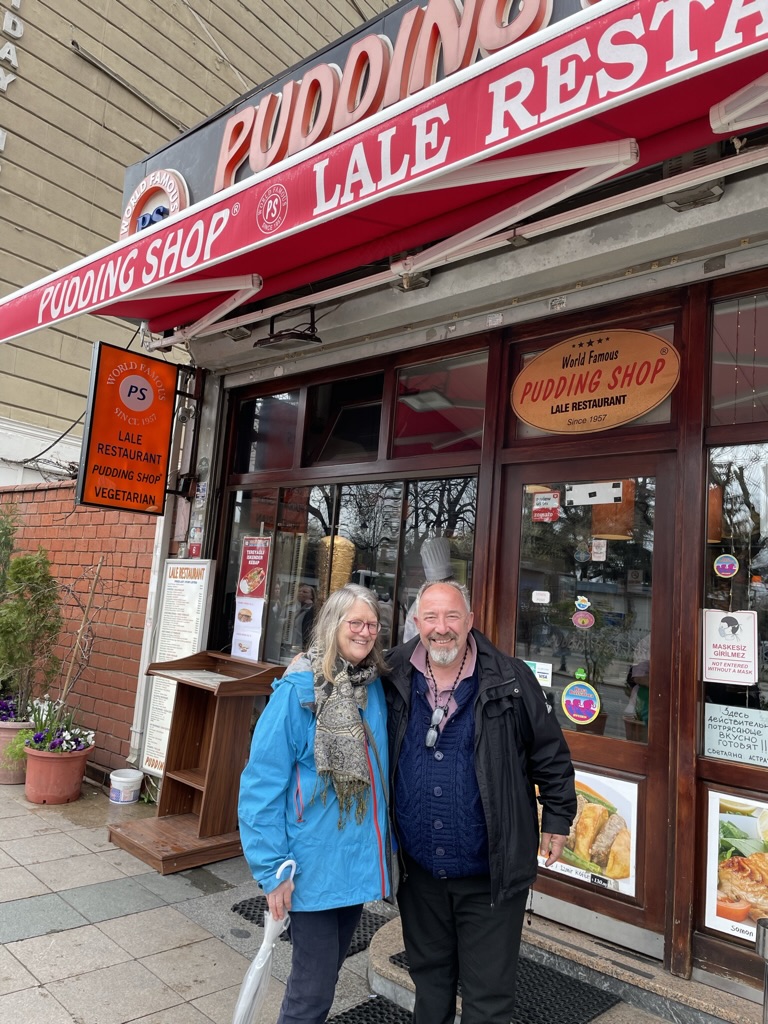
Idris Çolpan and his brother Namik opened Lale Pastanesi in 1957.
Pudding Shop web site
At the time The Pudding Shop was the only place in the area the adventurous could get direct transport to Asia and tourist information on Turkey.
The tourists made The Pudding Shop famous, using it as a meeting place and message center.
Idris Çolpan explained that “pilgrims” travelling East, often driving old cars or Volkswagen vans, would stop at his restaurant to meet new acquaintances and find other travellers with whom to share expenses and experiences.
The Çolpan brothers put up a bulletin board to handle all the messages from people offering or hitching rides to Europe or Far East.
The Bus to Istanbul
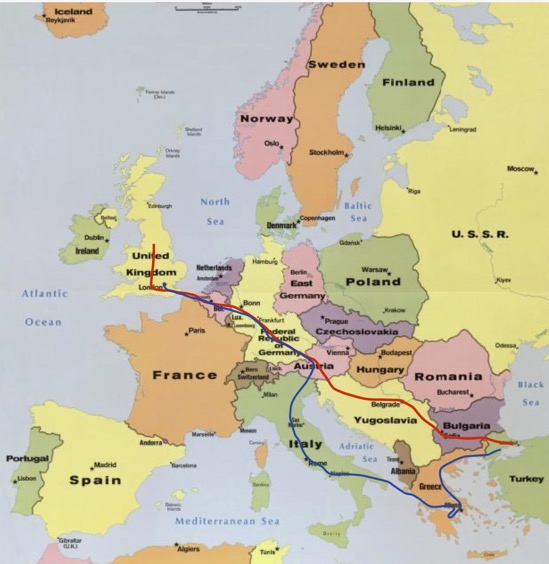
Our ‘Berliner Stadtrundfahrt’ Mercedes bus that us around the cathedral in Sofia (referred to above 30th March) was one of those ‘tourist vehicles’.
Mohammed, the driver, had a trade in purchasing old but serviceable vehicles in Europe and then driving them to Afghanistan for sale. On his journey he collected hitch-hikers (such as us). When we joined the bus on the Austrian-Yugoslav border there were already a number of people on board. Others joined in Yugoslavia. With a mix of Germans, Belgians & Brits.
We became something of an International Community (except for one British couple who stayed apart from the rest – and we nicknamed ‘the English’). An interesting prophetic commentary on a nation that was not (until 1972) a member of the growing Common Market.
Two British students whom we collected on the outskirts of Belgrade had spent several days unable to get a lift (‘ride’). They had been sheltering inside a huge new concrete drainage tube ready for underground installation & because it was a bus that stopped could not believe we were serious when we offered.them a place.
Most of the group left the bus in Istanbul but 2 of the Germans stayed on ready to travel with Mohammed for the rest of his journey… and then move on to India.
This was ‘Hippie Trail to India’ that in the ‘60s and ‘70s many followed. It became (& remains) impossible after 1979 with the Iranian Revolution, the Russian – Afghan war & the conflicts that followed led by the USA and UK.
Jacqui and I during our stay in Istanbul used the Pudding Shop as a point of contact; fortunately avoiding, by chance, the Police raids but also managing to be recruited , with others, as extras for a Turkish film
The filming was very strange – somewhat scruffy long haired young students acting as an apparently sophisticated night club clientele.
At the end the film company attempted to reduce the amount they had offered to pay us. There was a revolution among the group – led, appropriately, by the French contingent & resolved when Jacqui suddenly intervened in clear & loud English pointing out that the company could not release the film in the UK if we objected. It worked – we were paid correctly.
1n January 2010, en route to a meeting in Adana, we revisited the Pudding Shop and were surrounded by staff asking us to tell them more of ‘those days’ (some of the pictures on the wall related to links in the UK that involved ‘the Hippy Trail’
Salih, very much a local, took us to meet the management.
We arrived shortly before the midday rush – tourists being shown/introduced to the recent history of ‘hippie-trail’ through Turkey.
https://en.wikipedia.org/wiki/Pudding_Shop
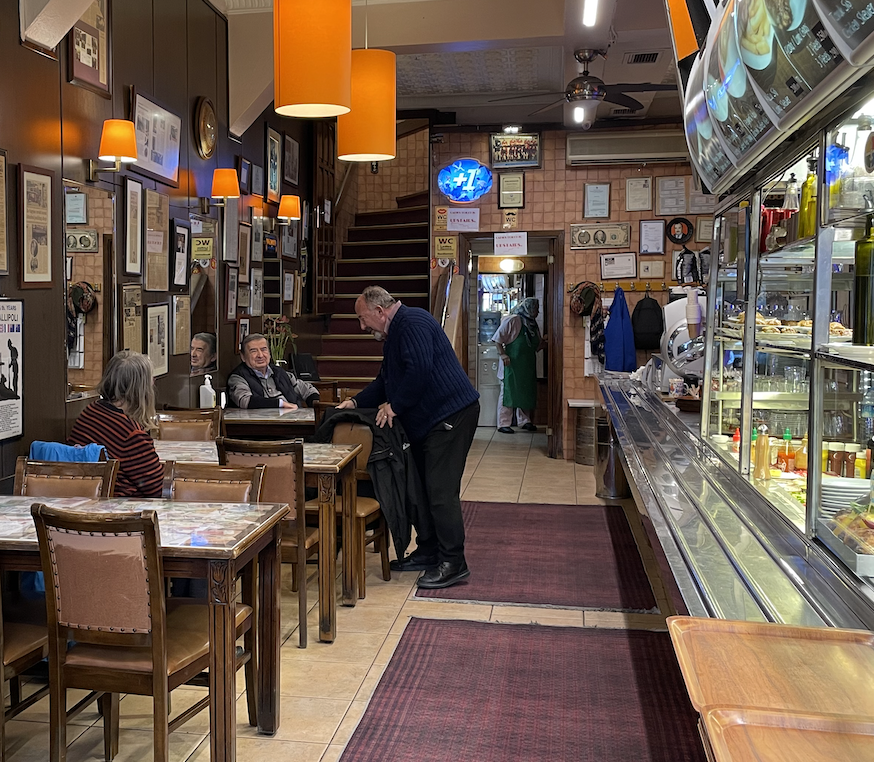
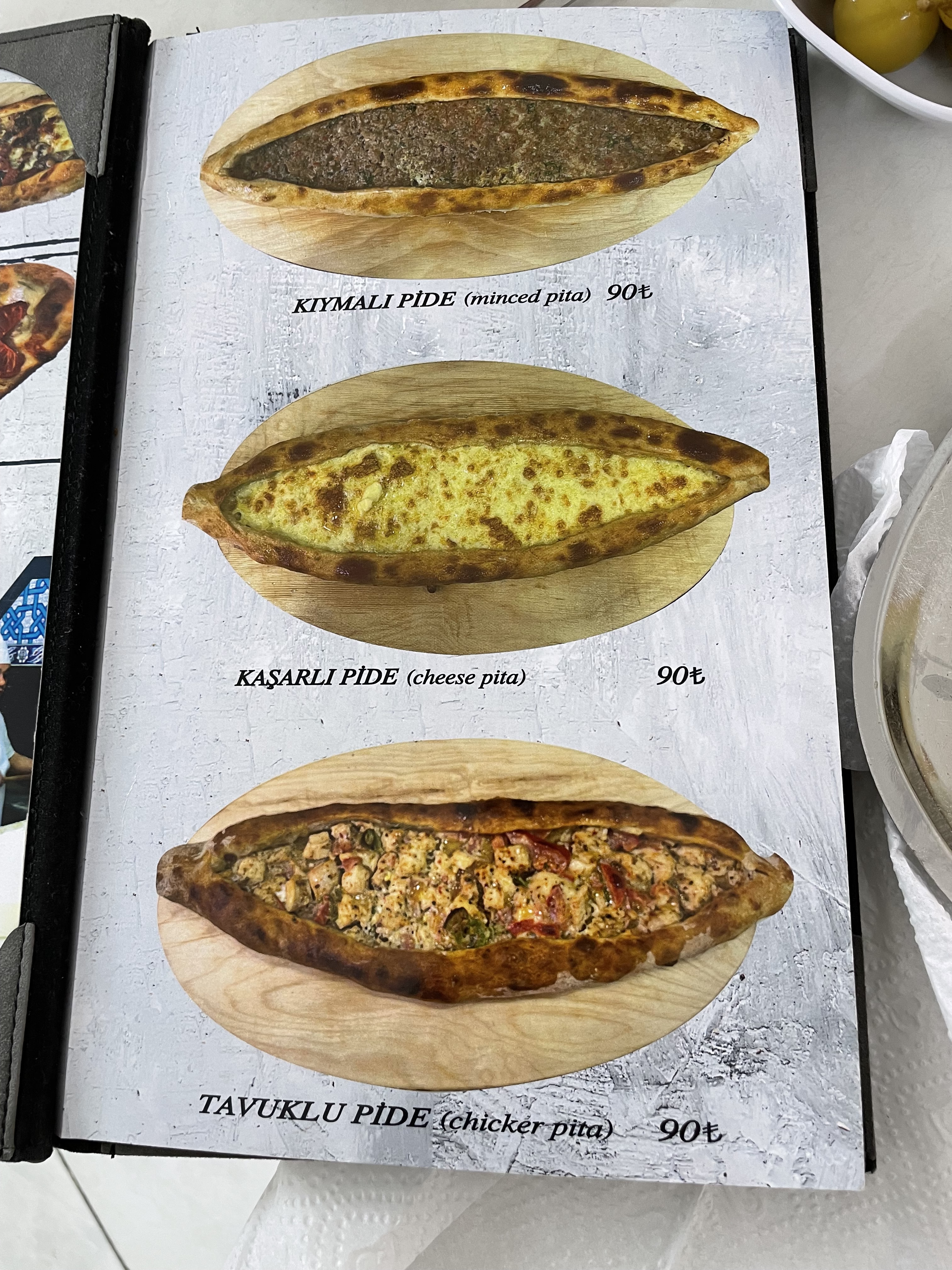
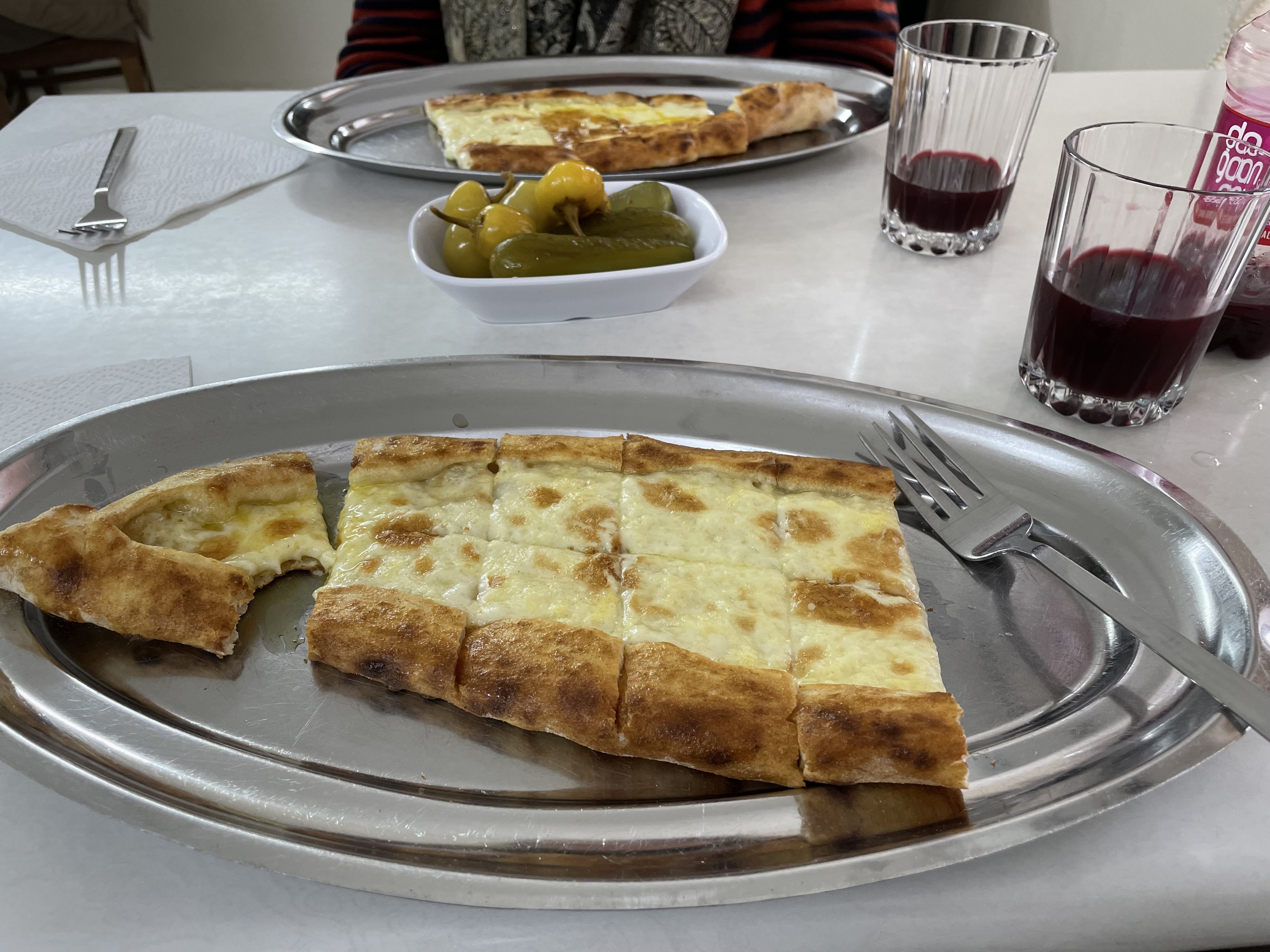
Salih advised us as to where we could eat the best Pide (in order to succeed we had to be very early)
It was washed down with Şalgam (Shalgam) – Turnip Juice (plus other elements)
An afternoon stroll away from the tourist areas.
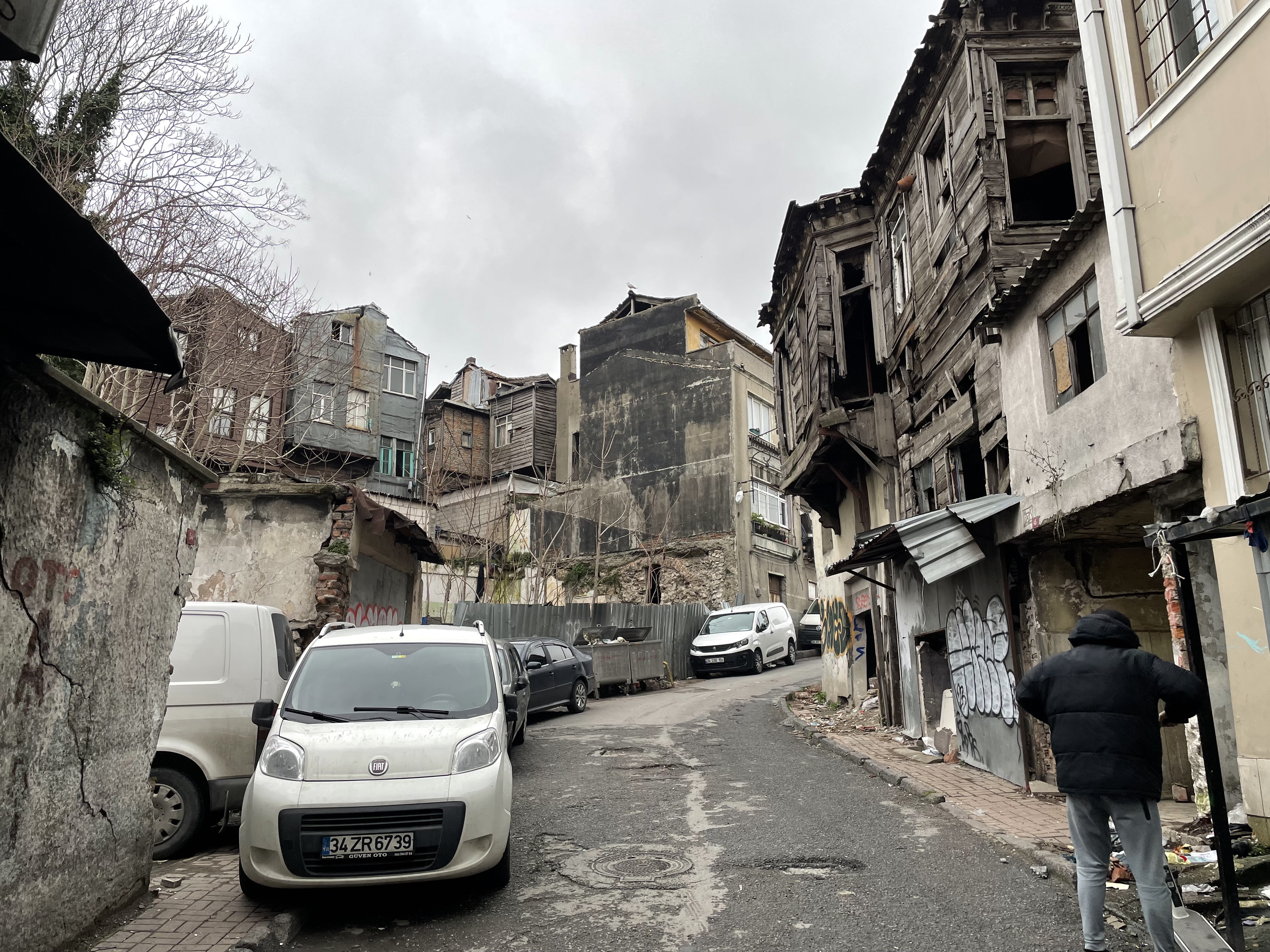
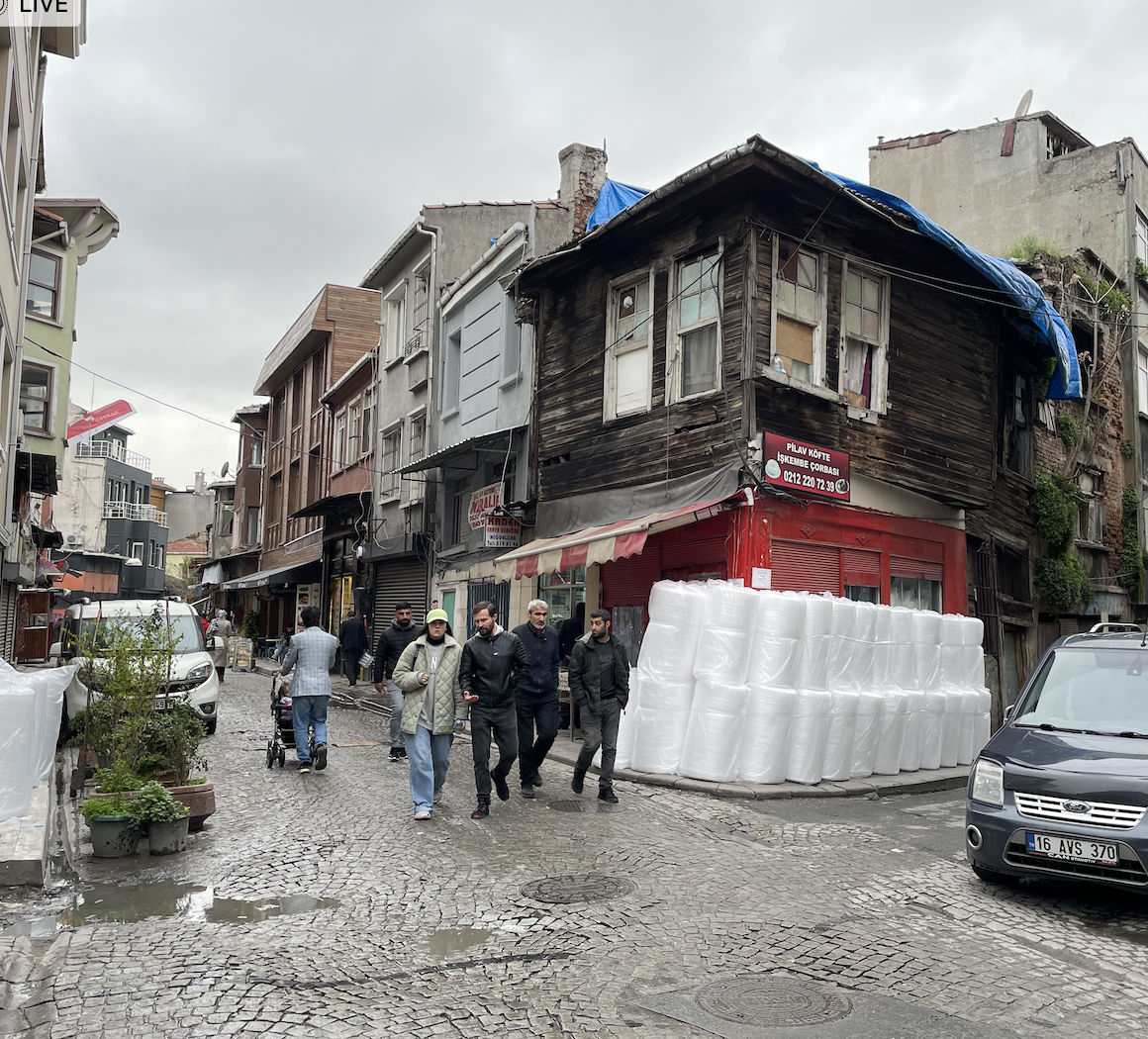
A directionless afternoon stroll took us into areas of the city we’d not visited previously – and followed up the next day, out to the boundaries of the ancient city.
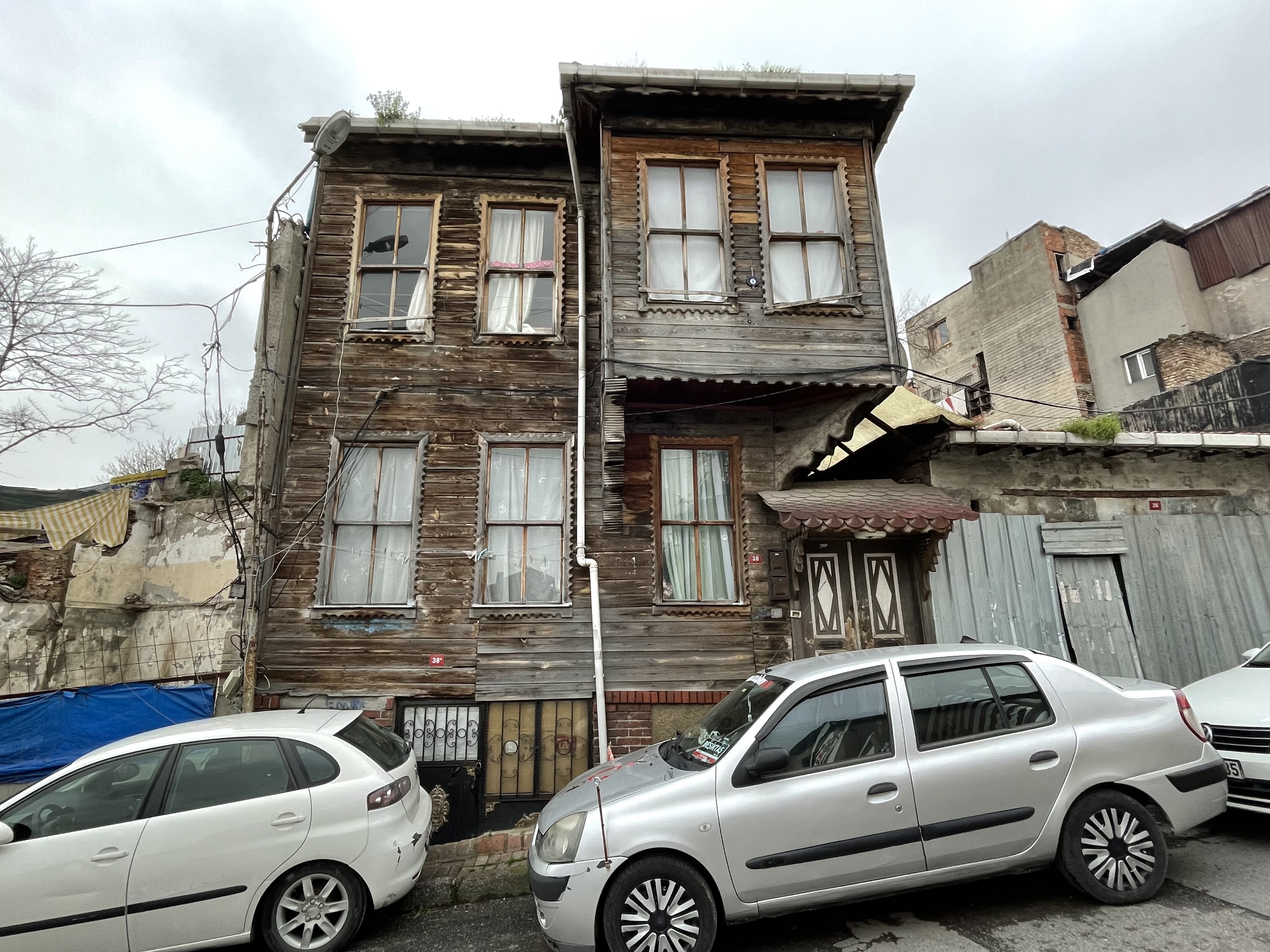
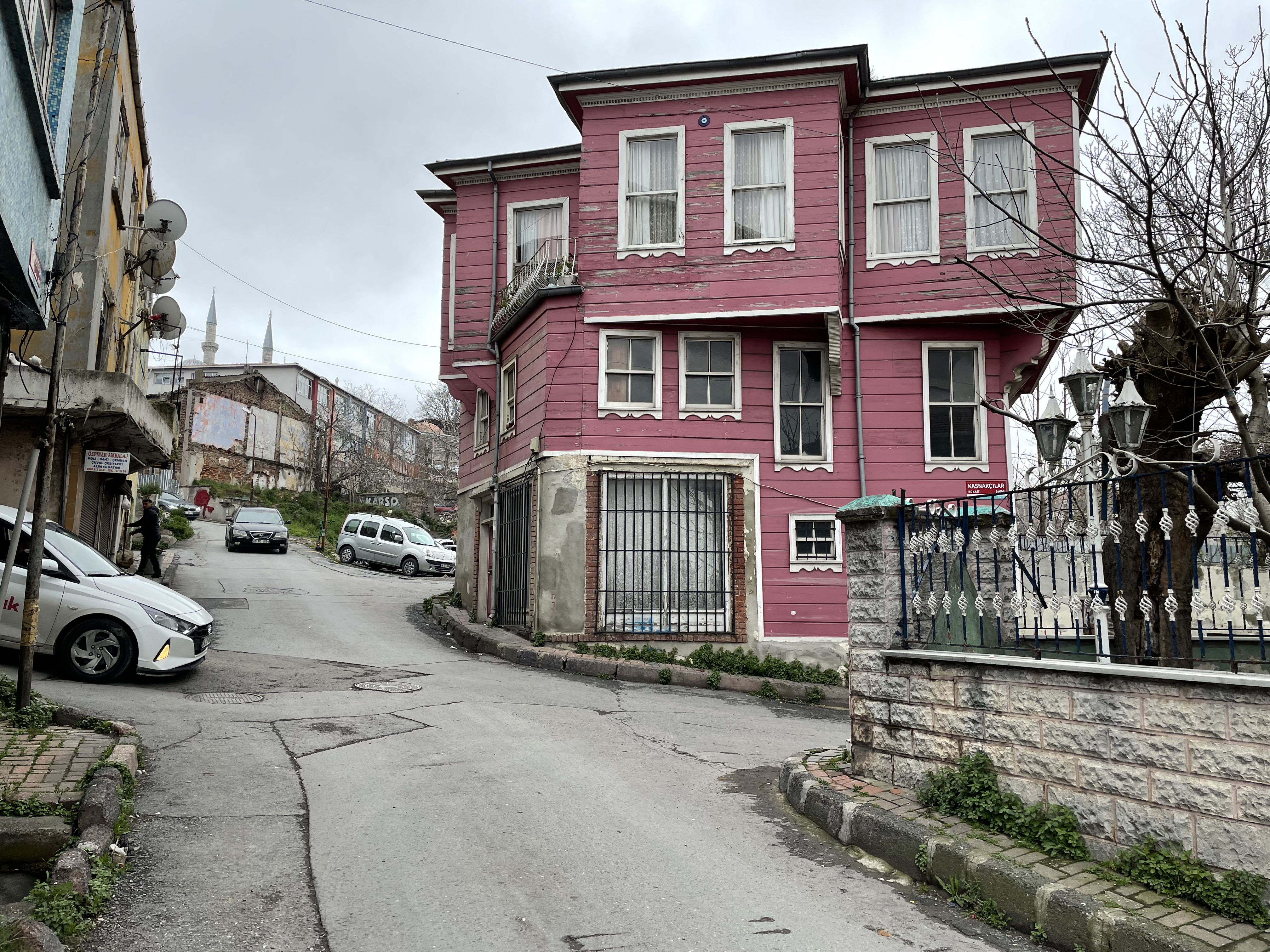
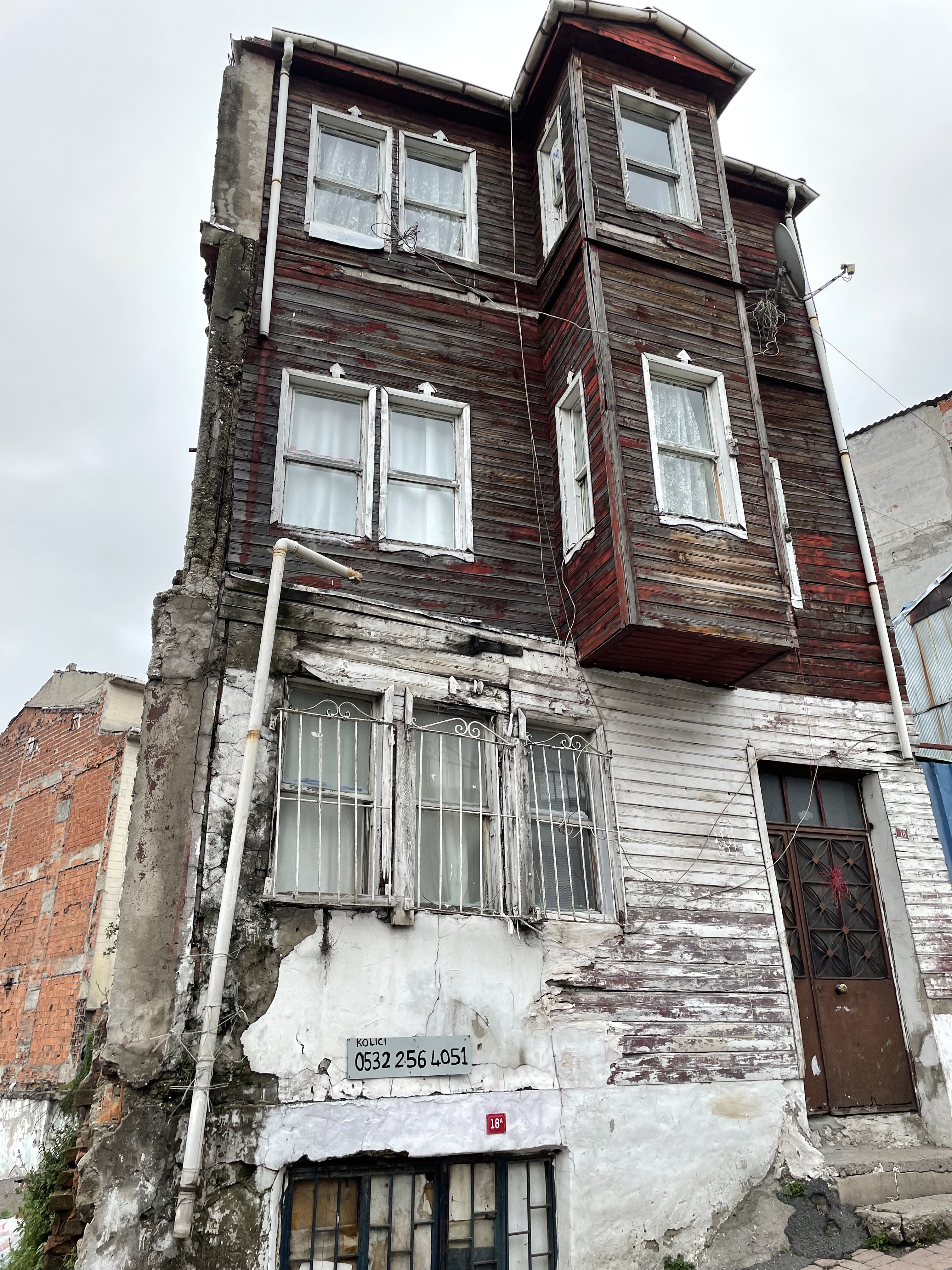
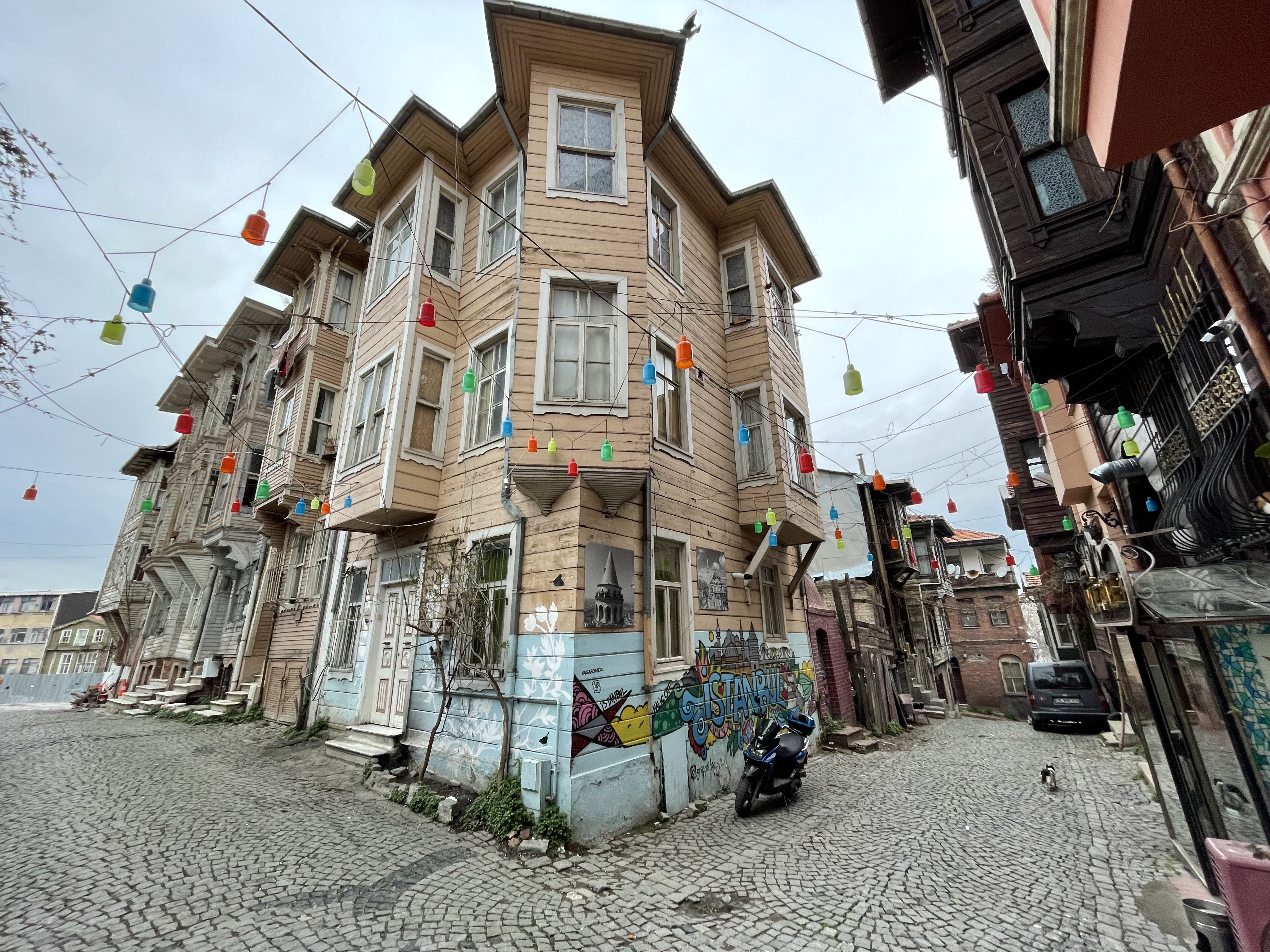
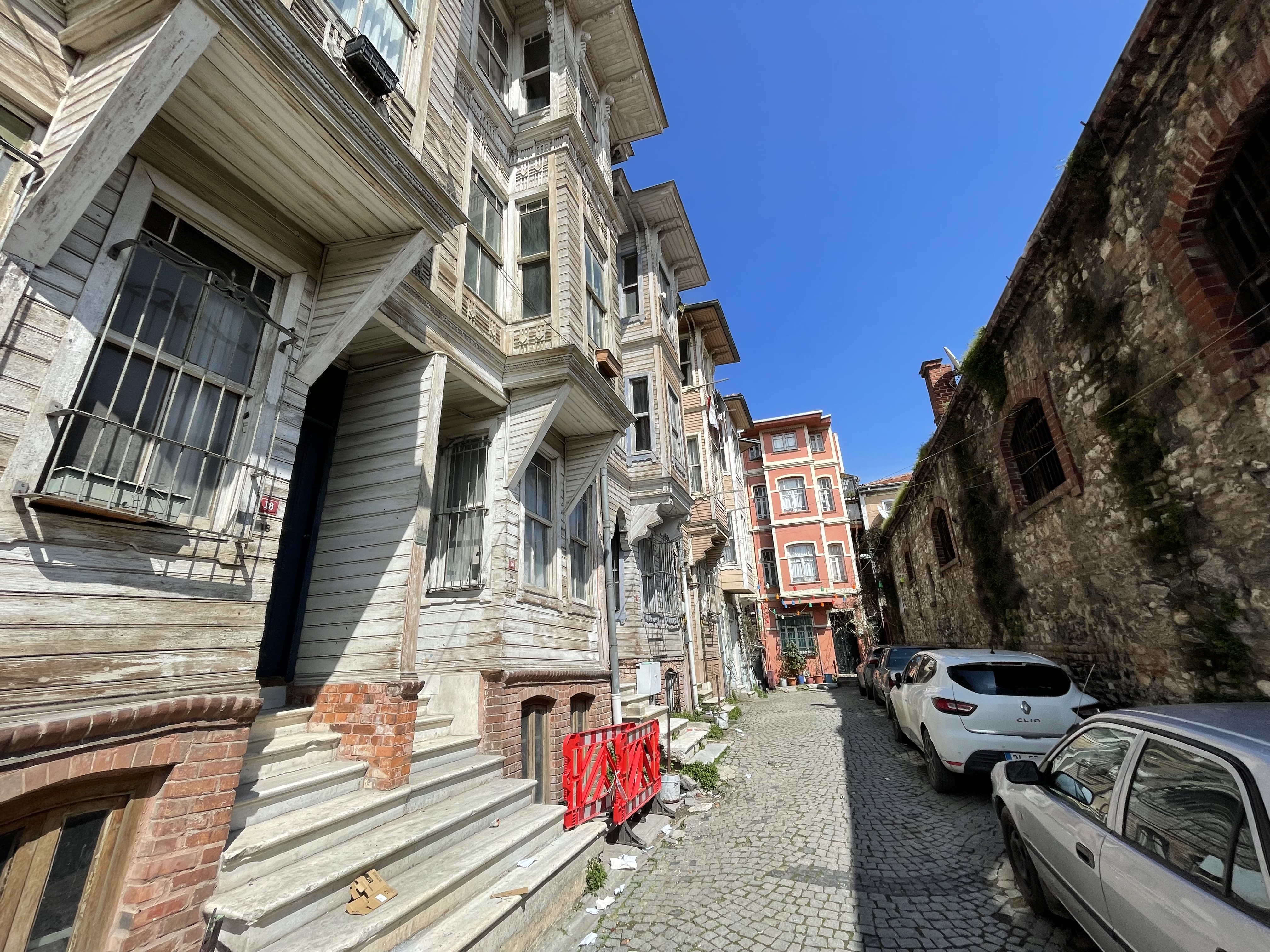
Some of the area is very decayed but attempts have been made at redeveloping in traditional housing style.
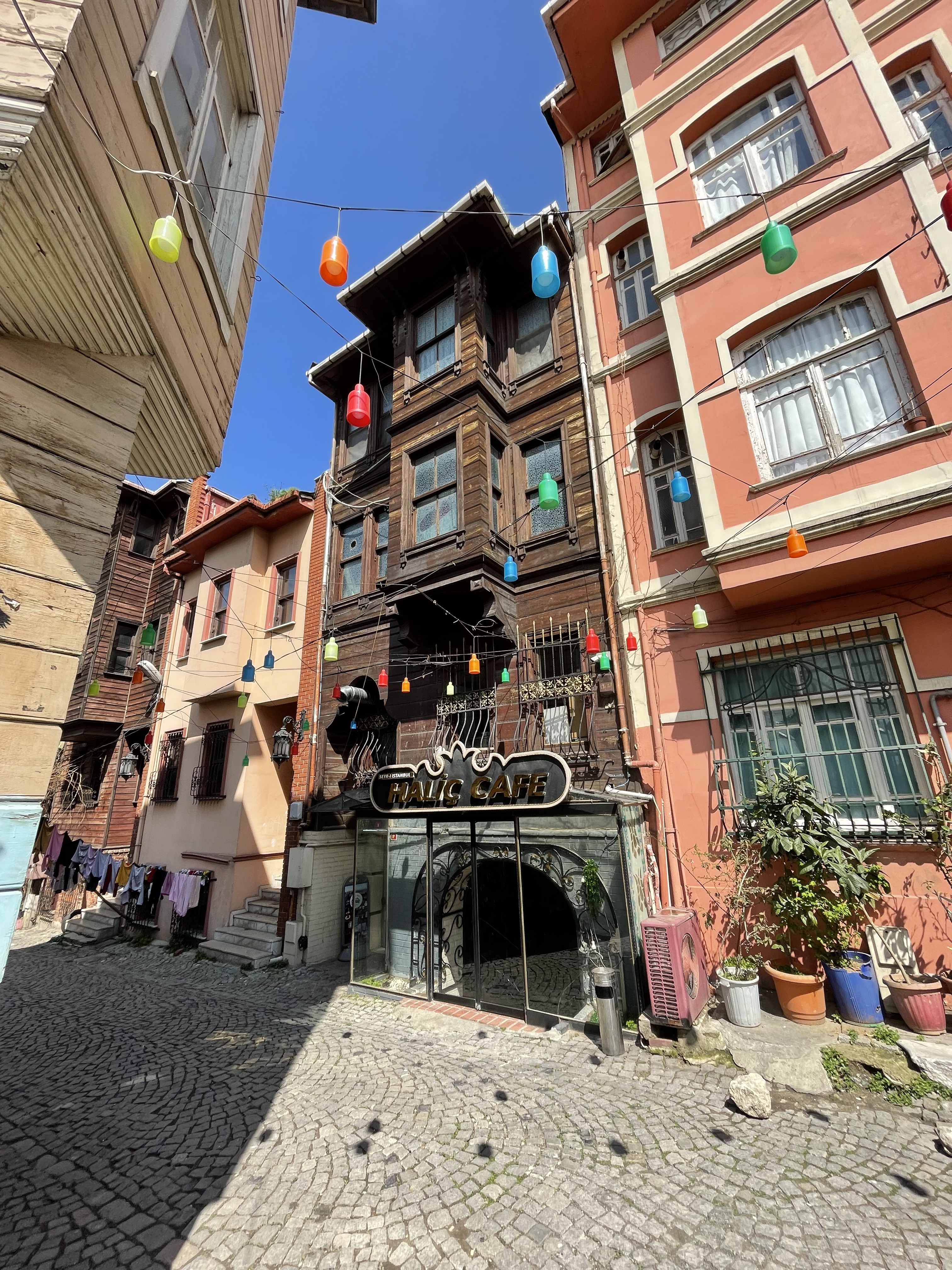
Salih told us that there were many refugees living in the area…. but there was also the delight of discovering Haliç Cafe.
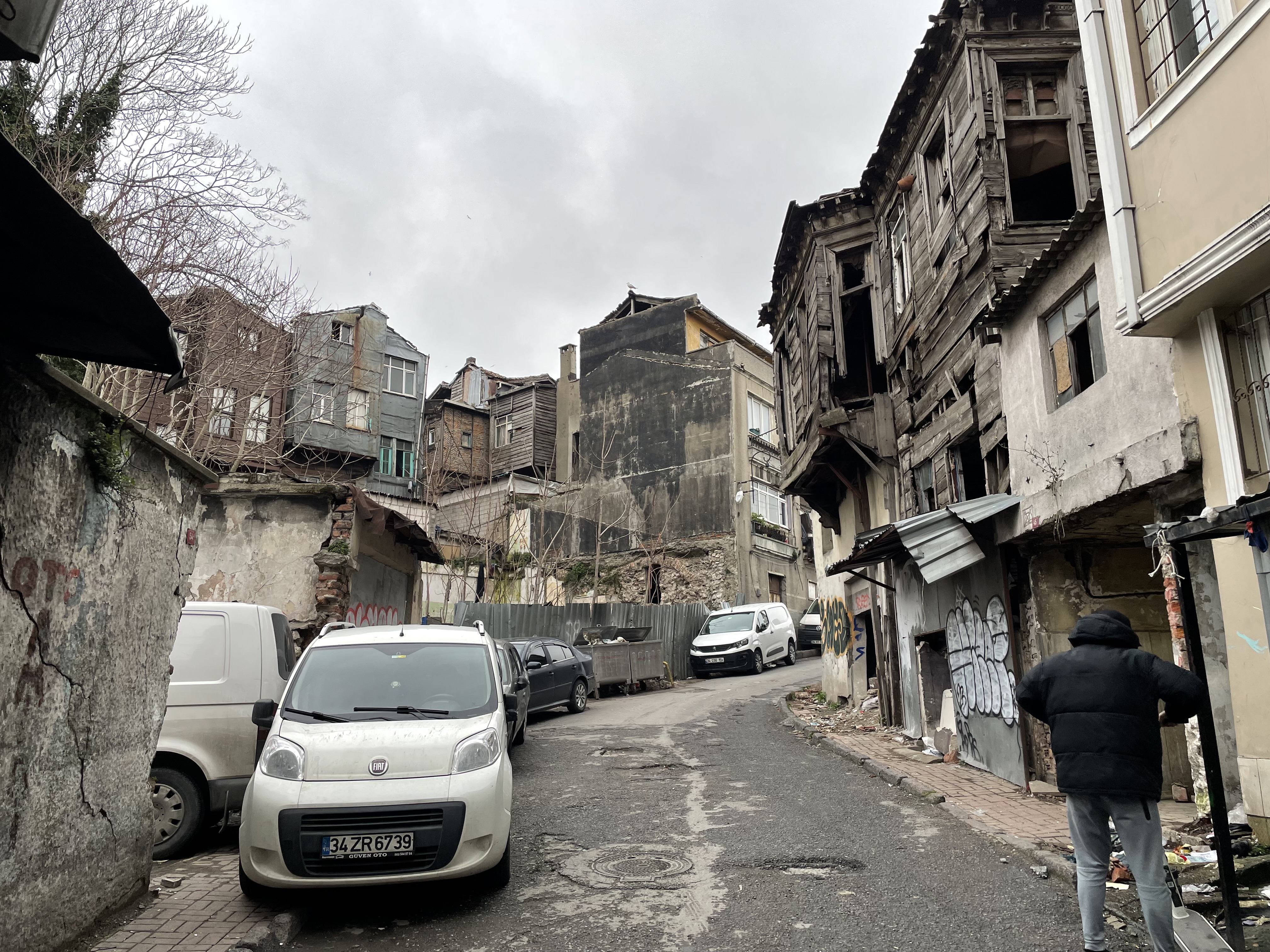
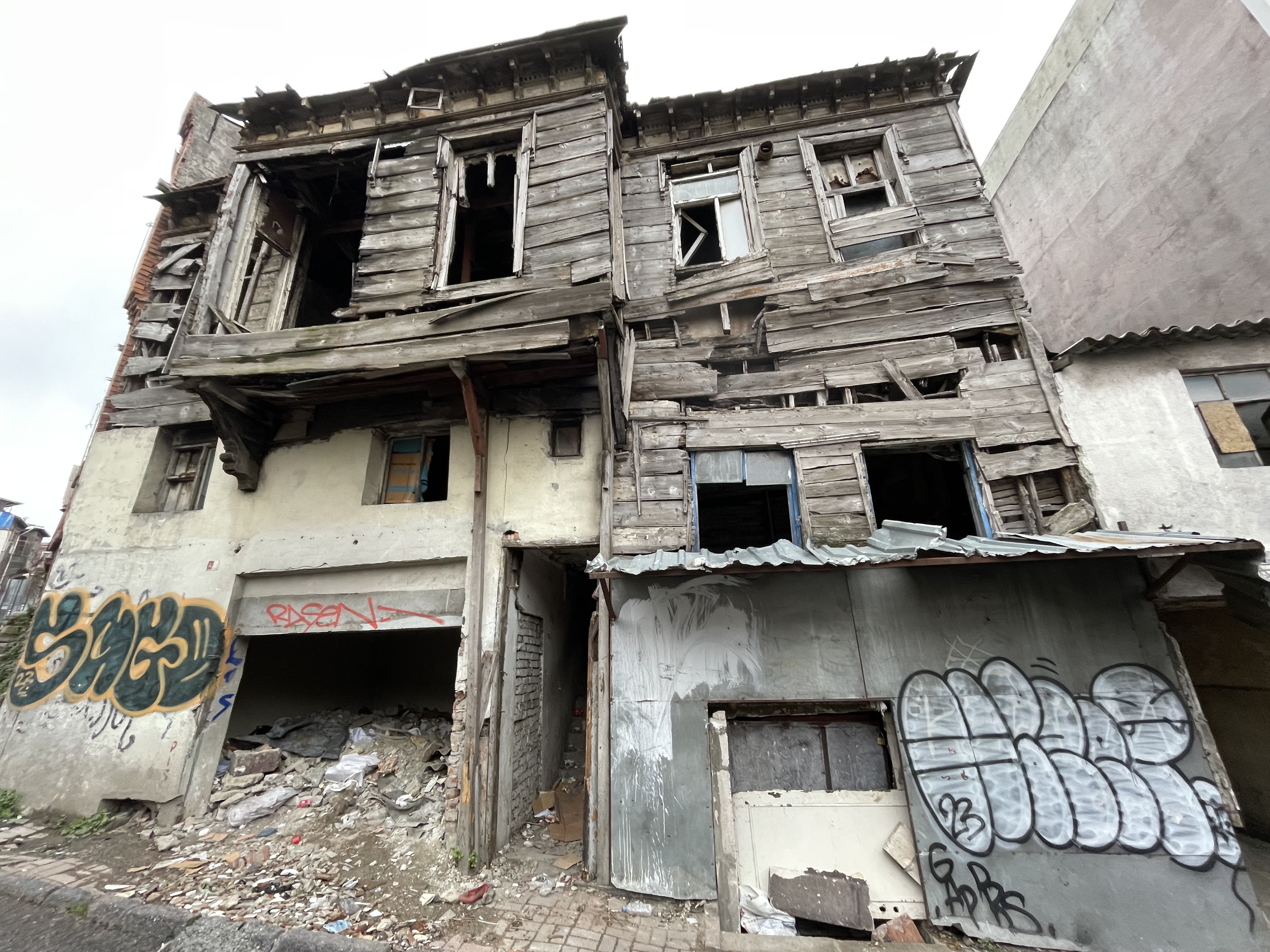
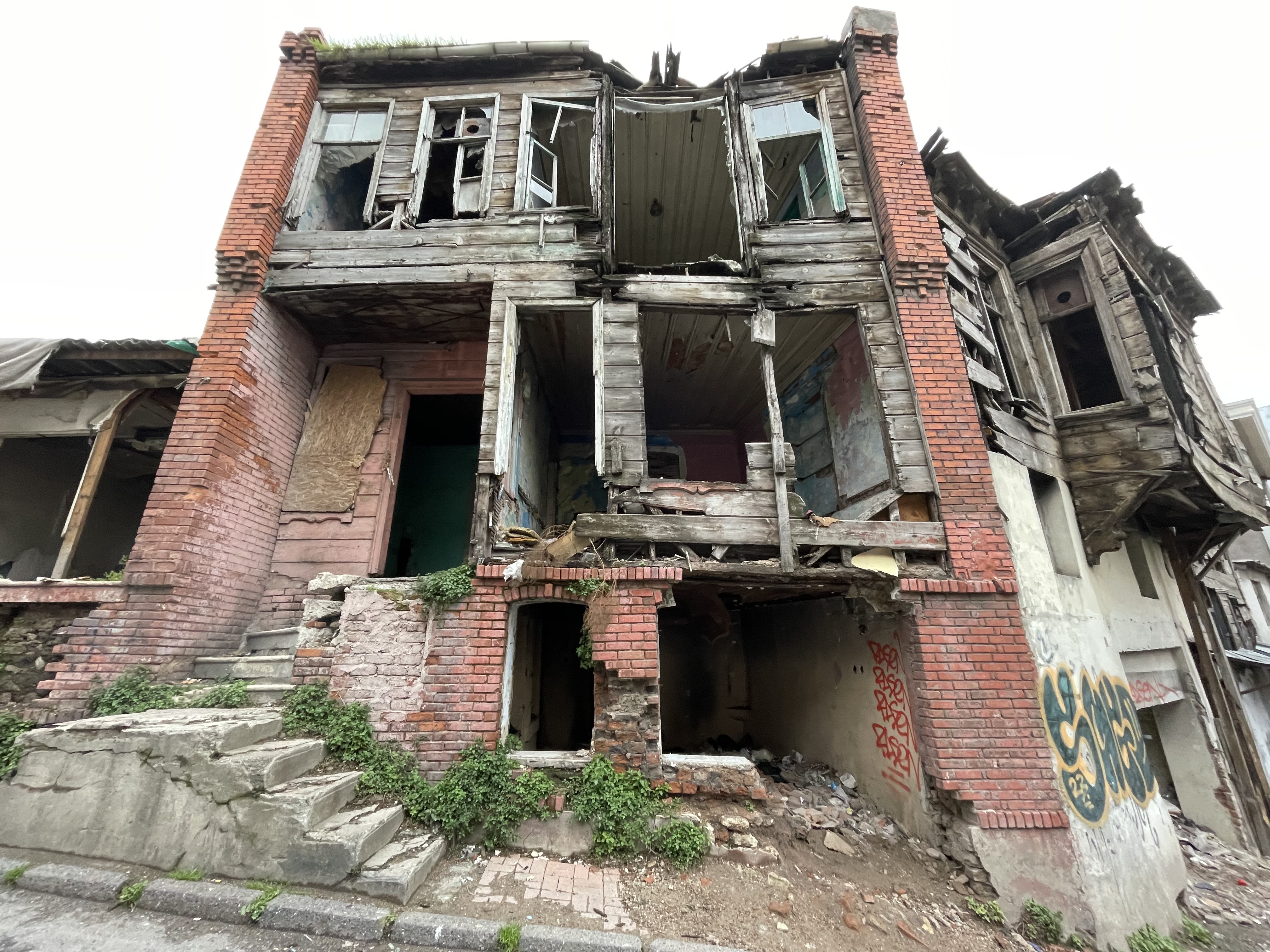
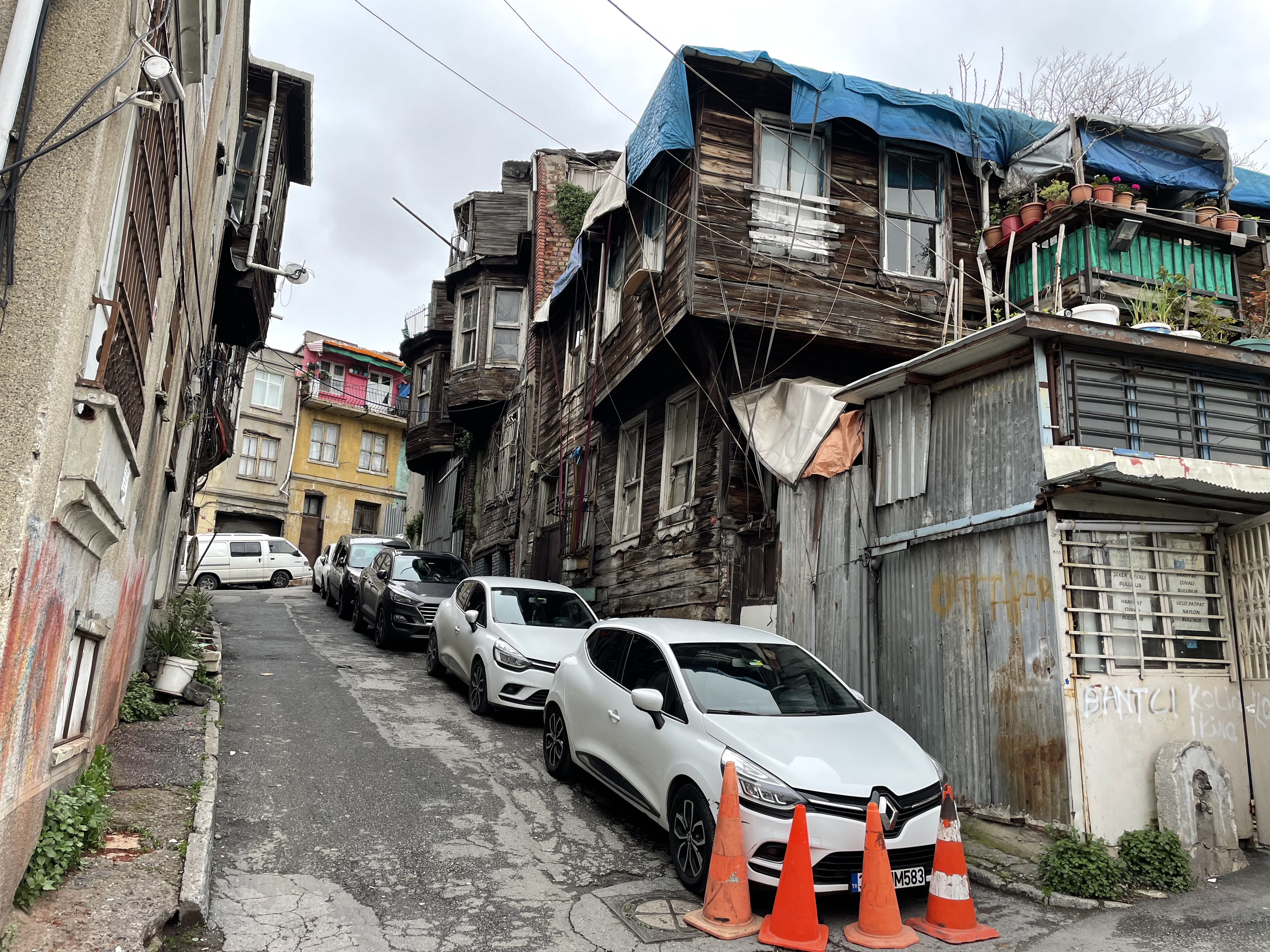

Interesting examples of the way space was maximised in the old city
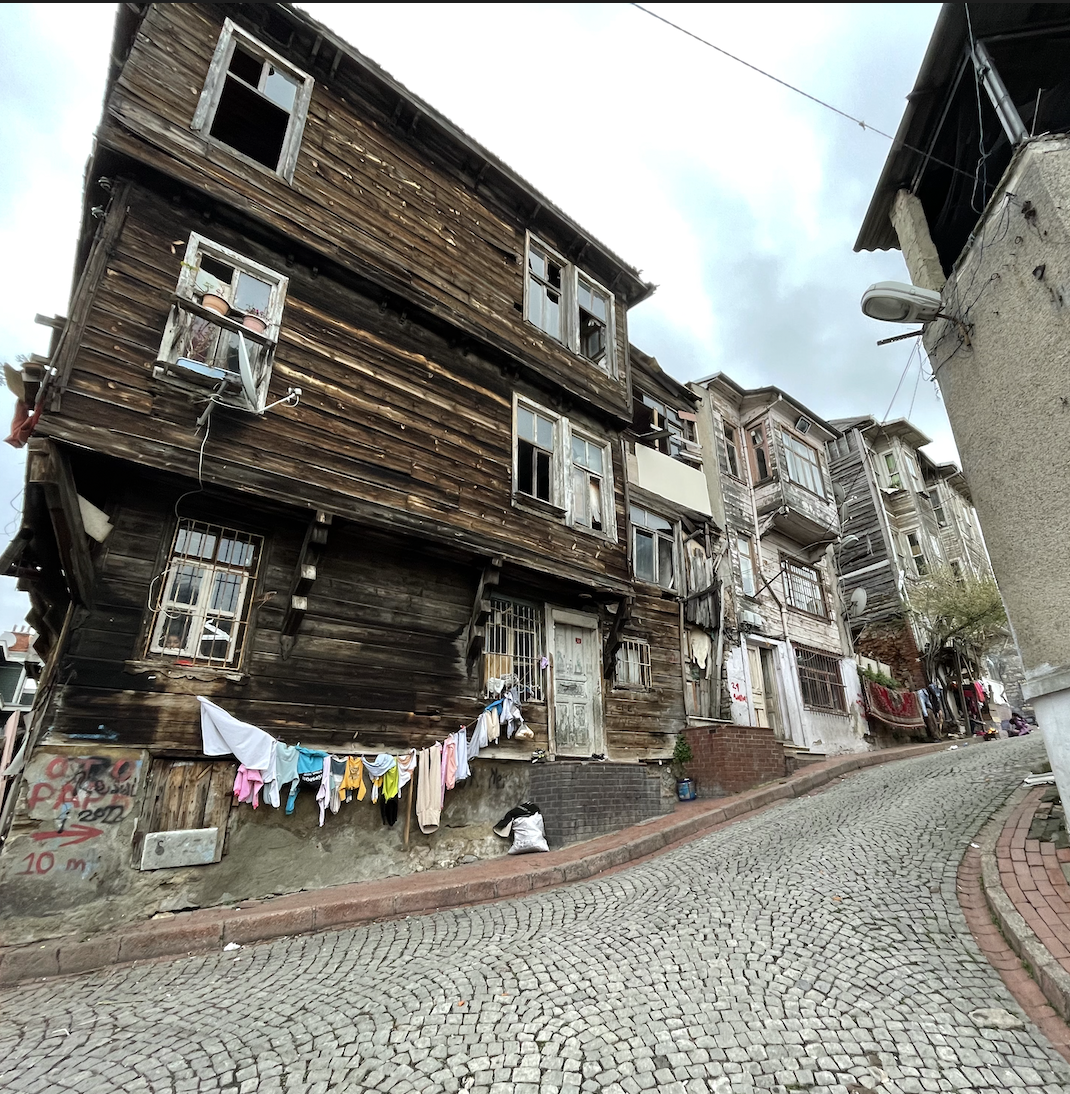
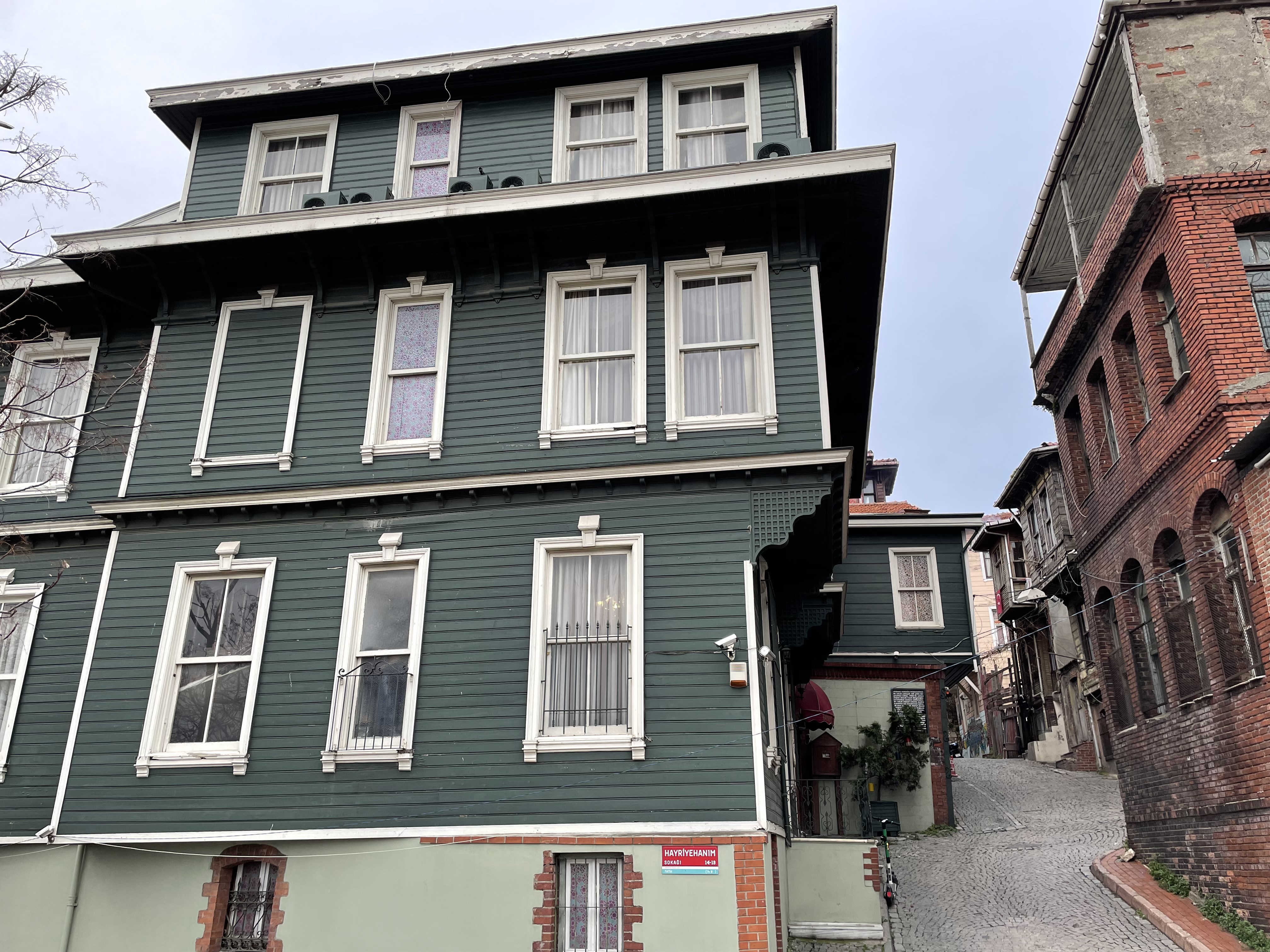
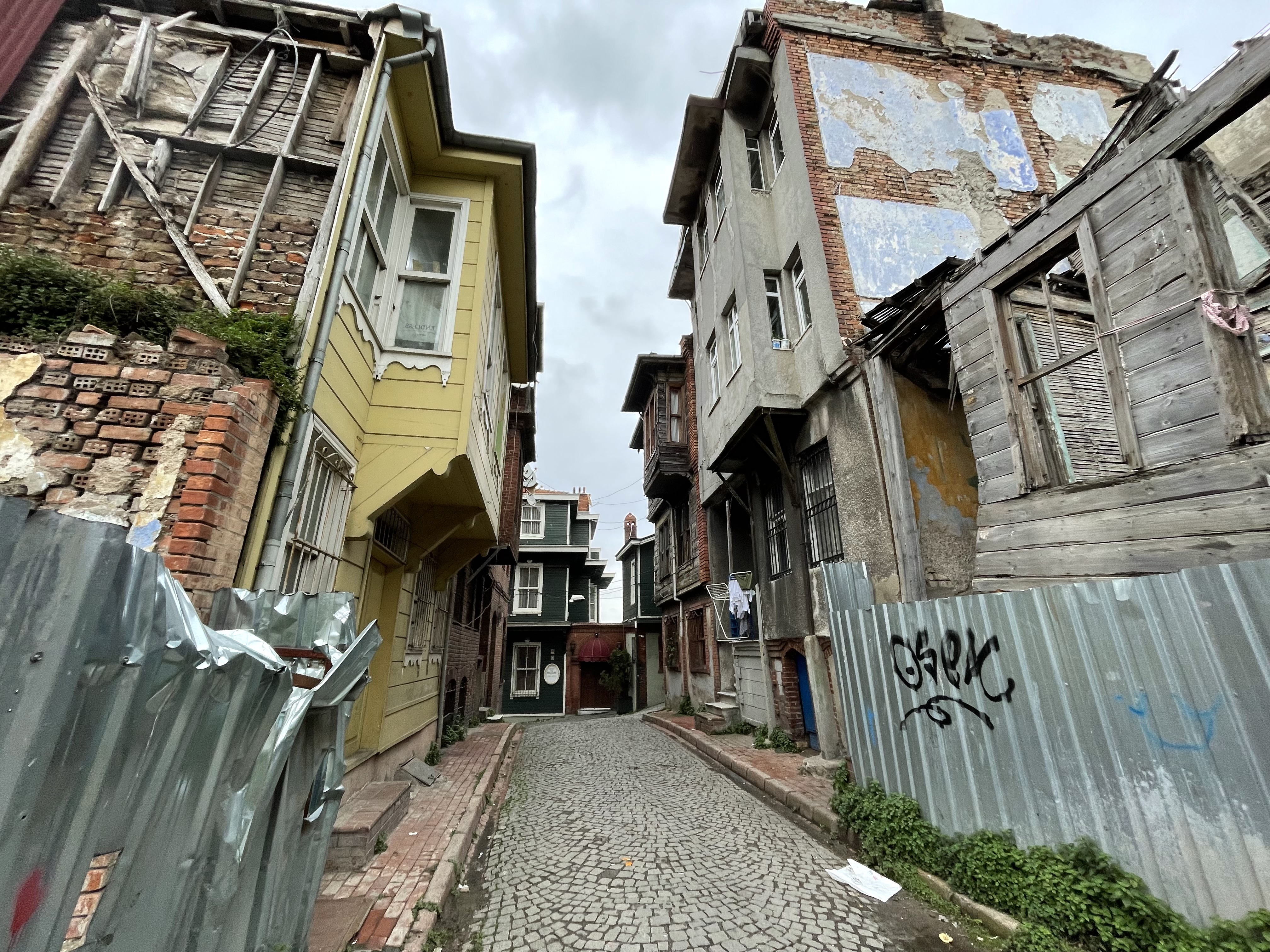
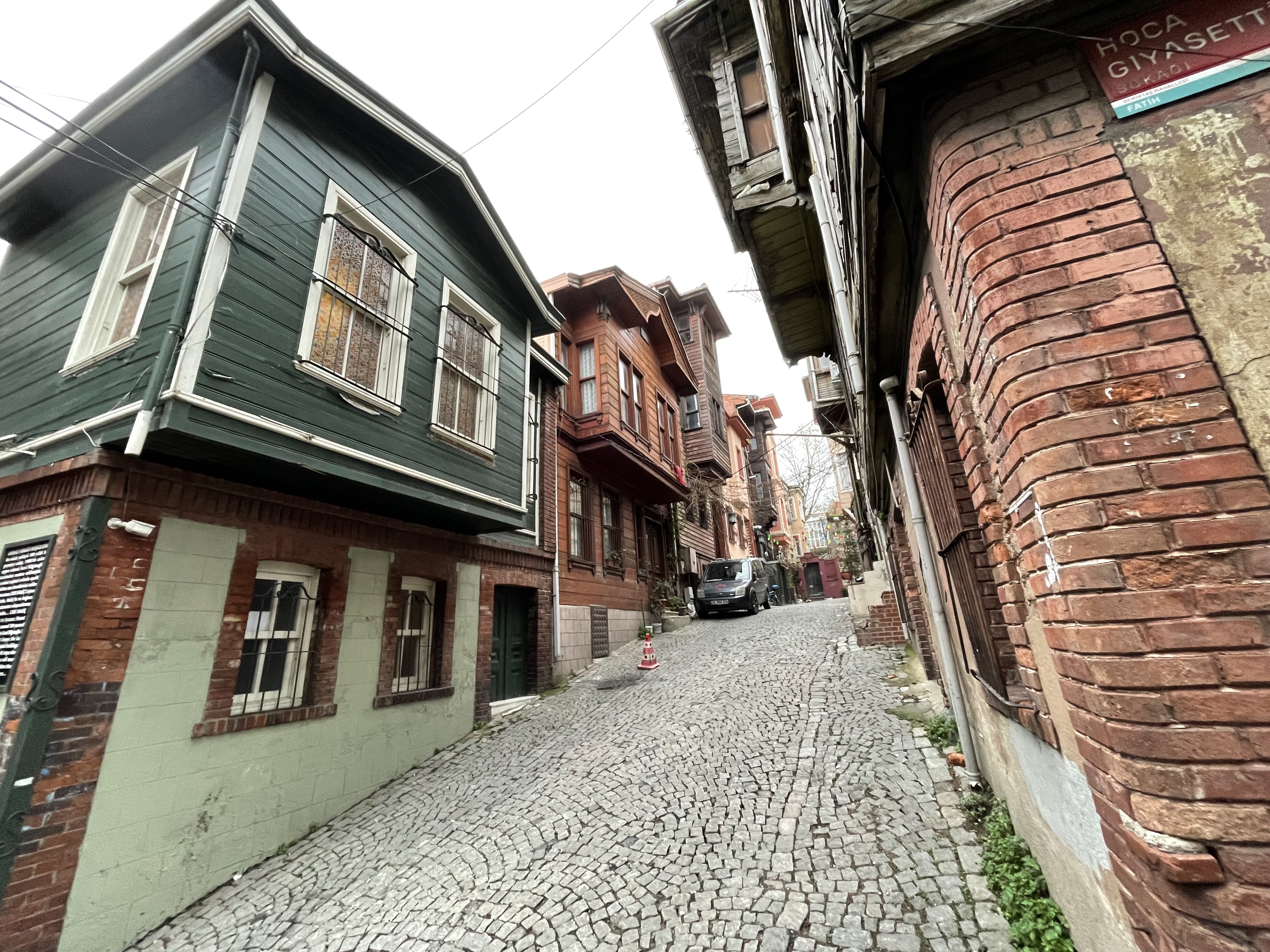
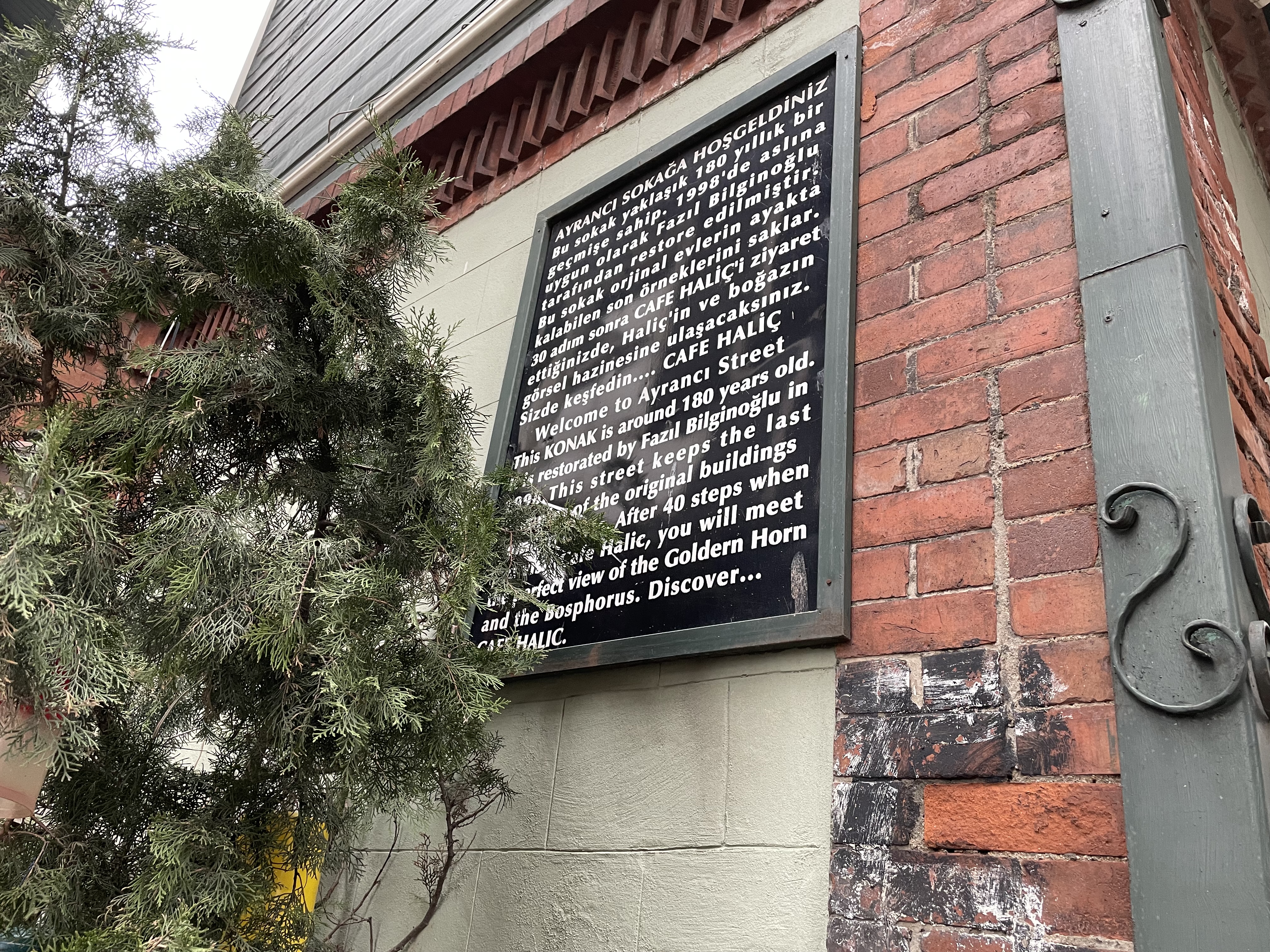
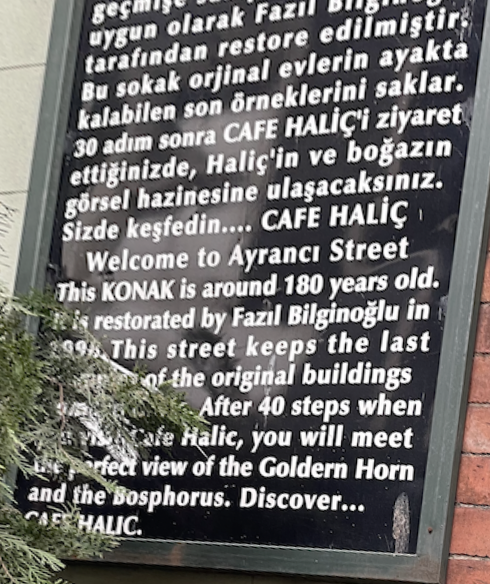
we approached the cafe from a parallel street.
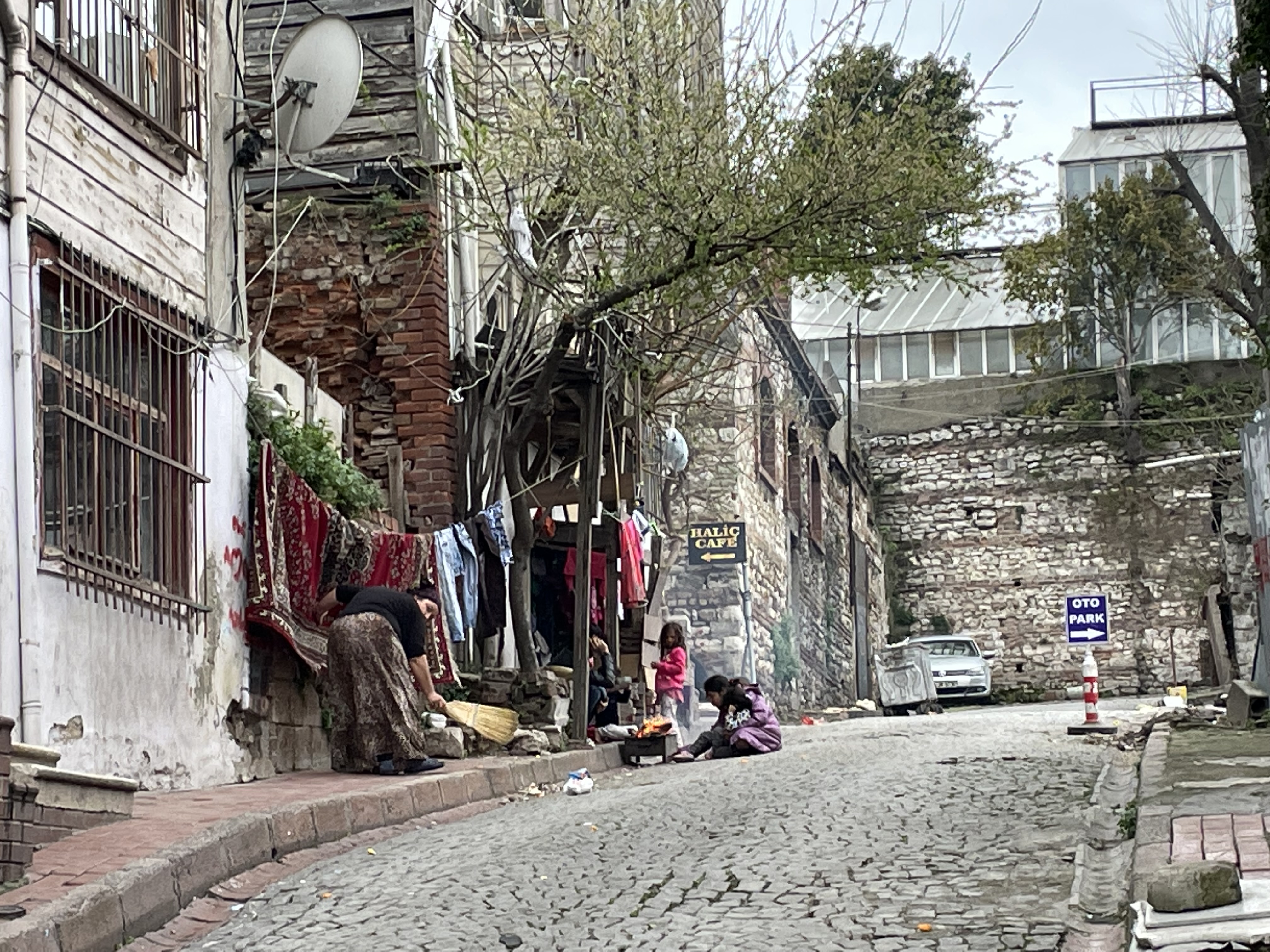
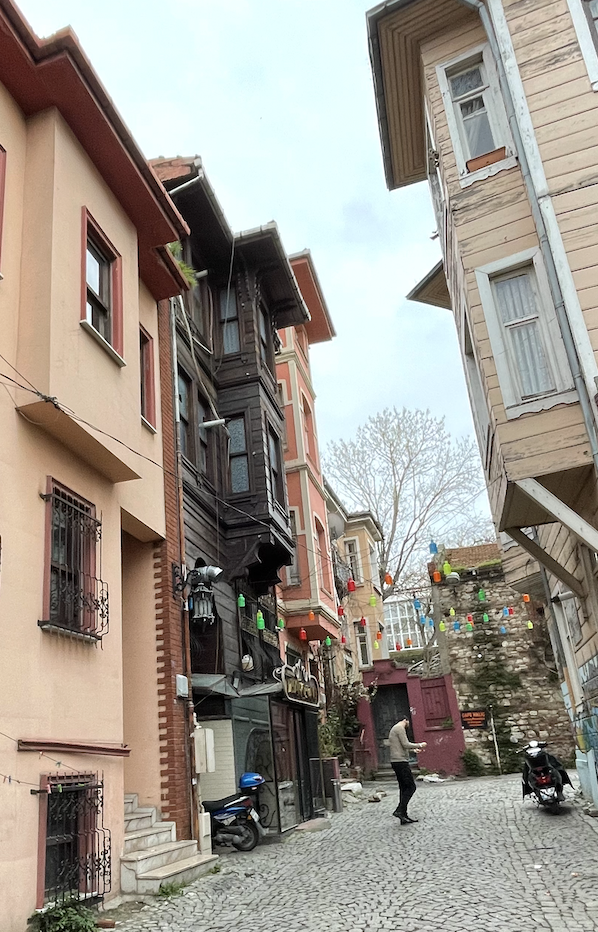
reverse view from outside the cafe
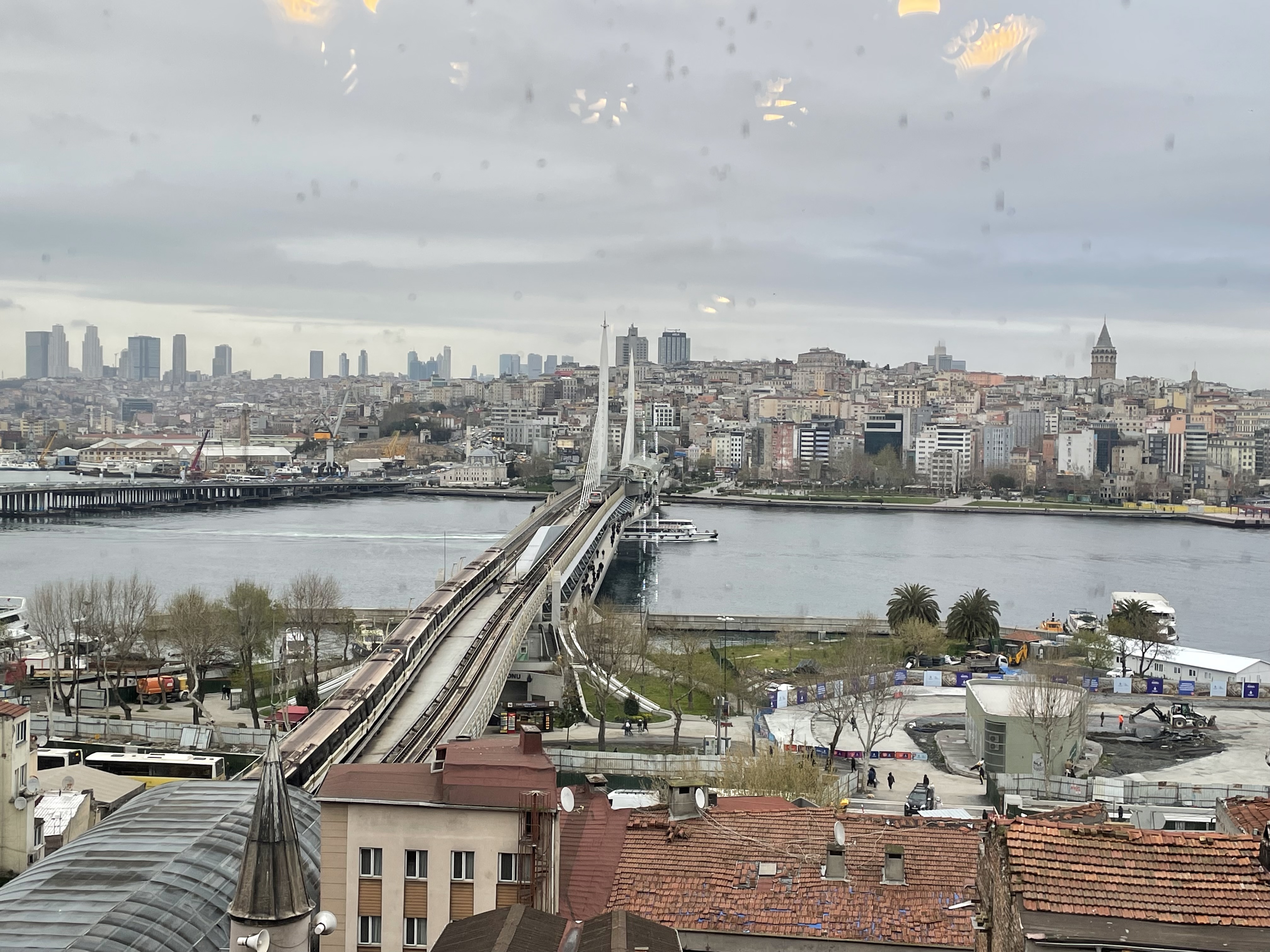
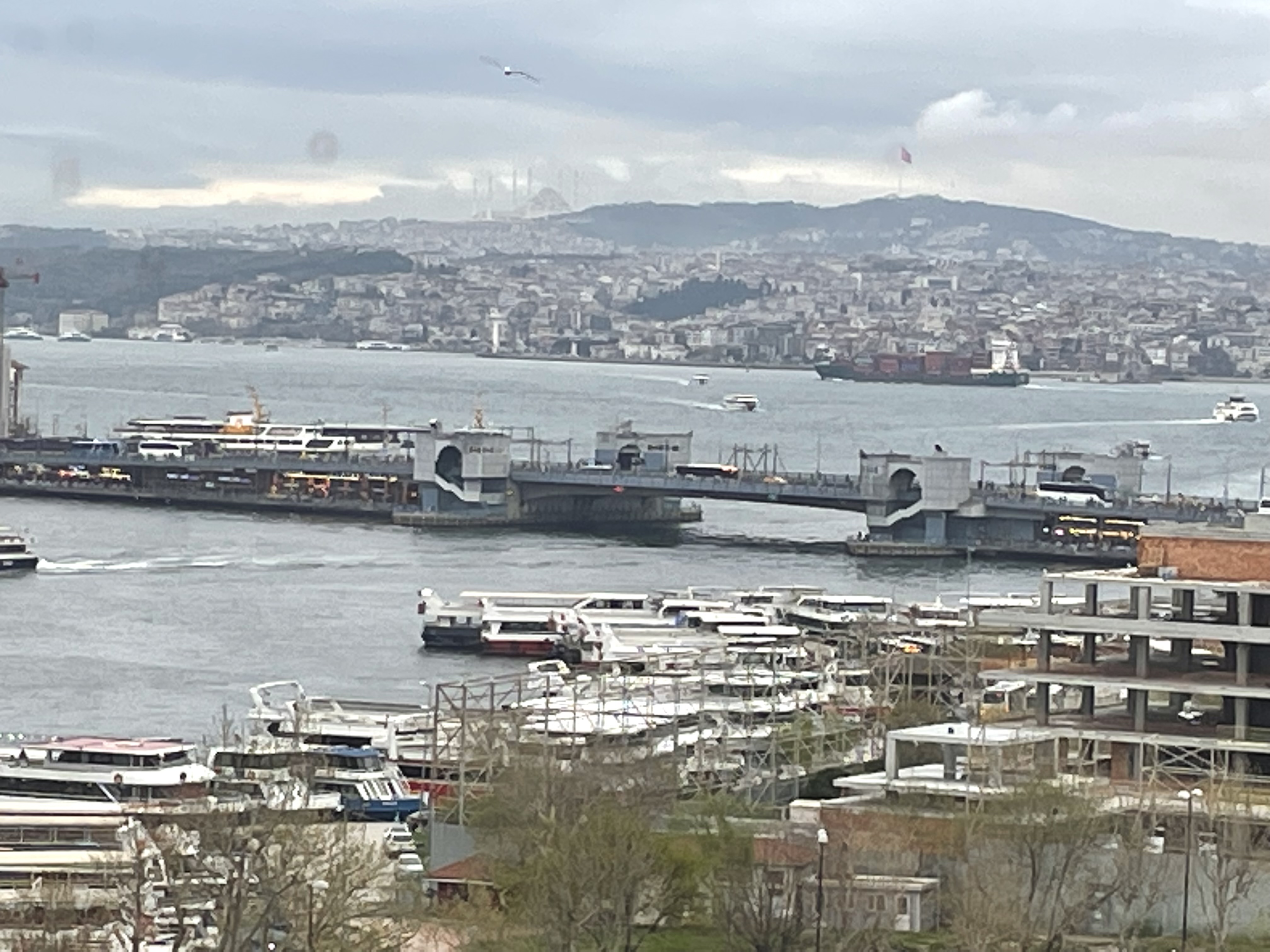
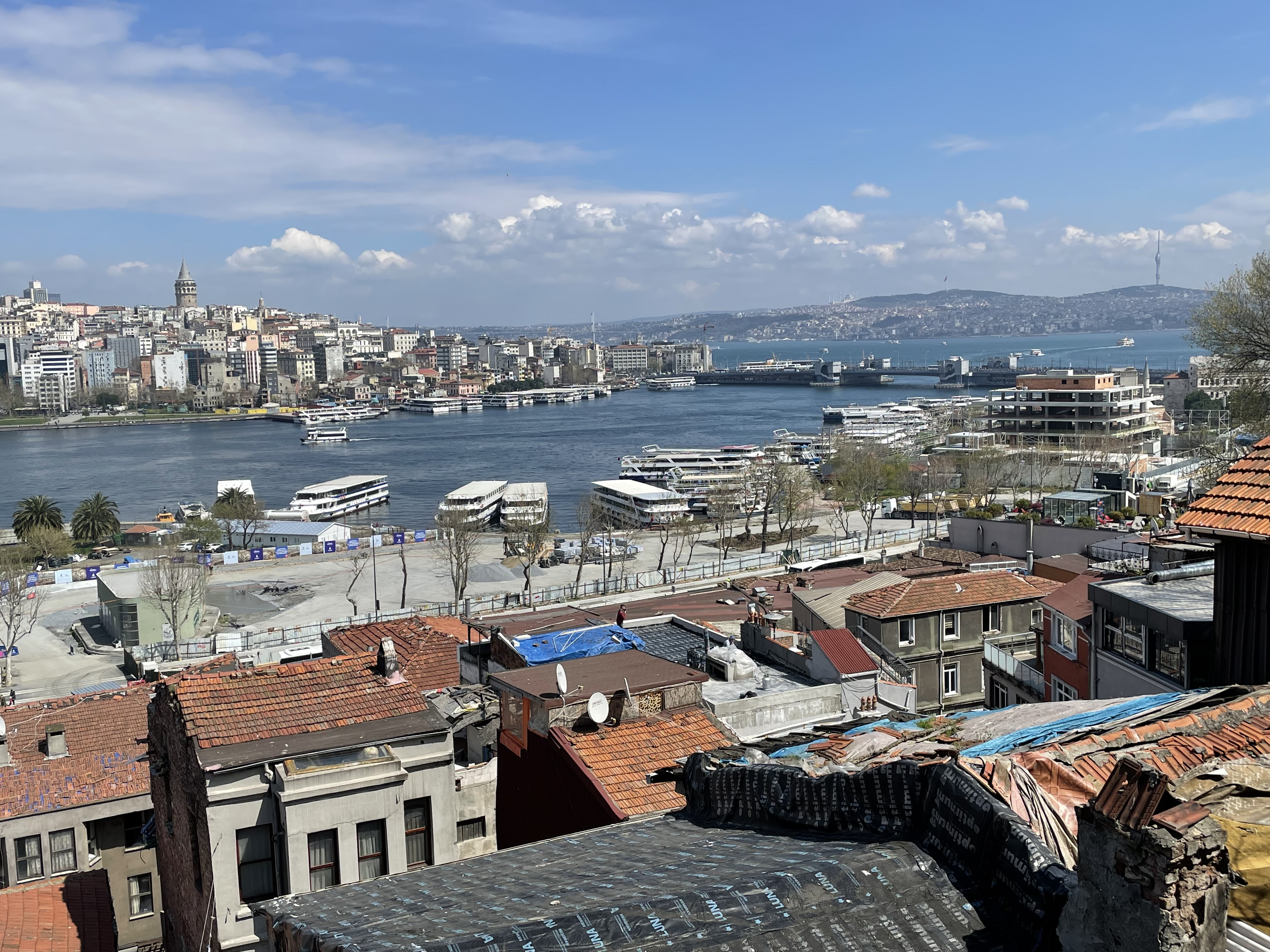
from inside the Haliç Cafe… some of the best local views – across the Golden Horn to Taksim & to the Bosphorus
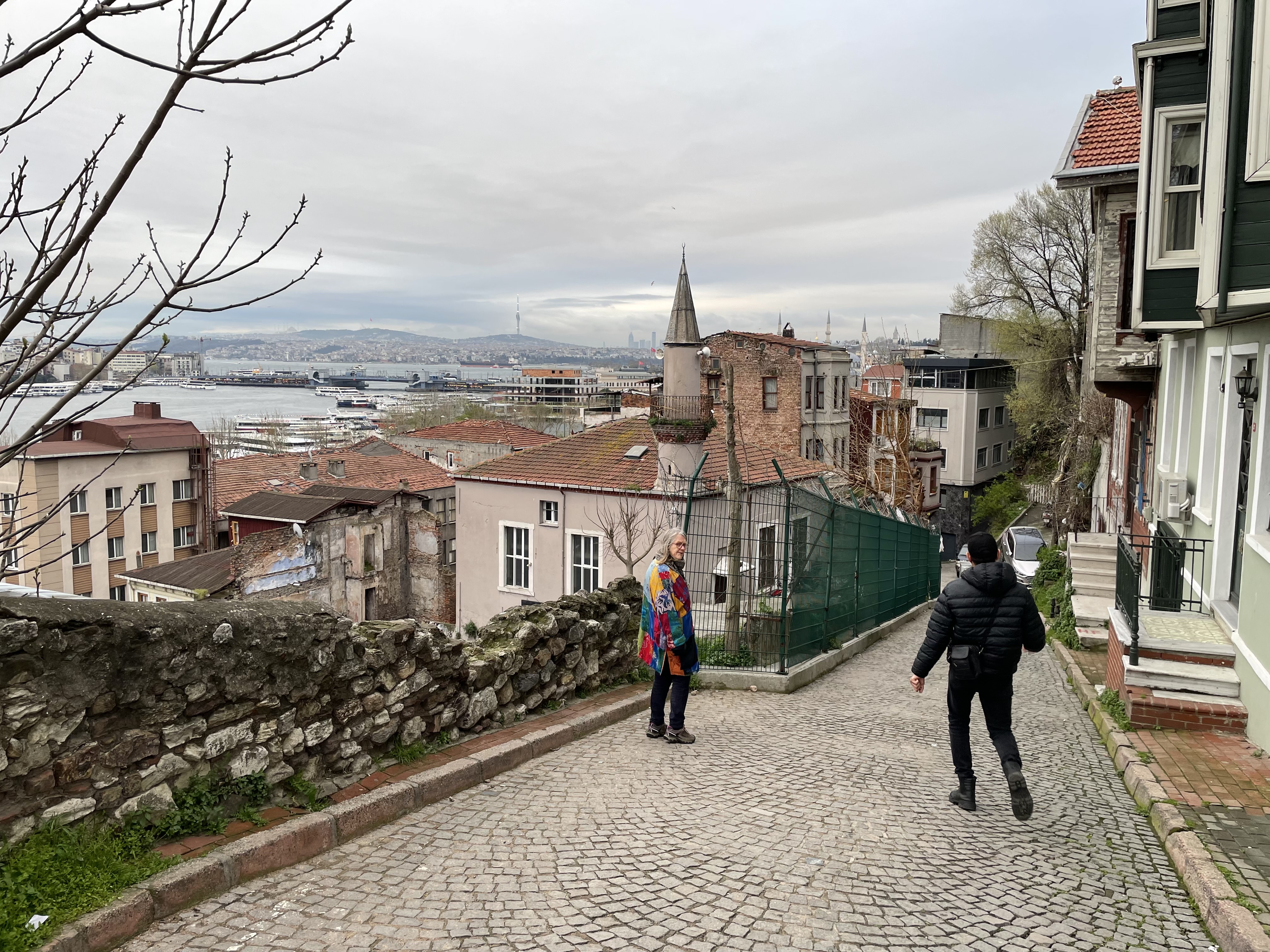
and on the street returning to the centre

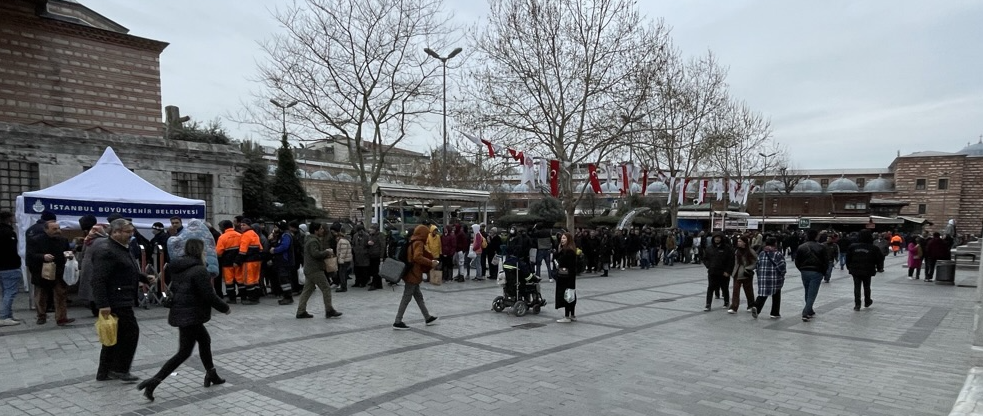
A Food Bank organised by the Büyükşehir Belediyesi metropolitan municipality
April 6th
Breakfast & Farewells
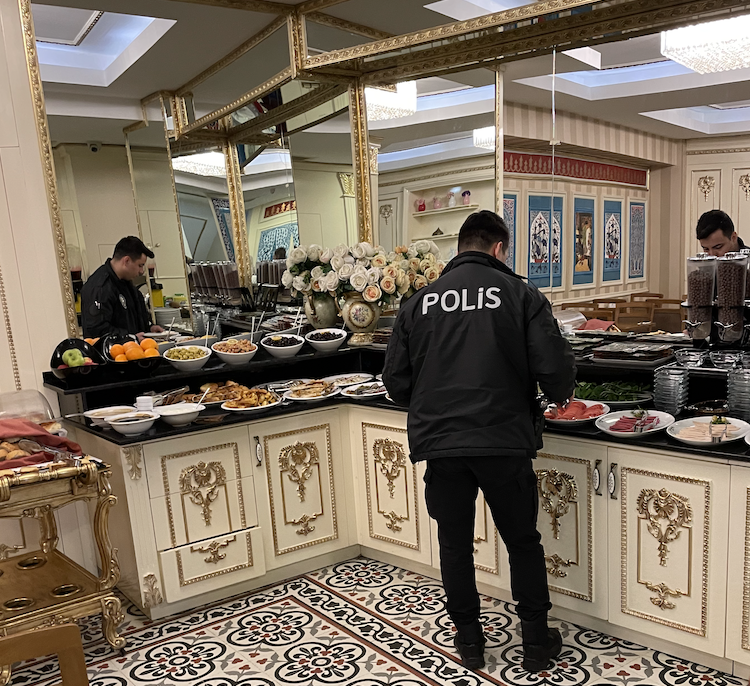
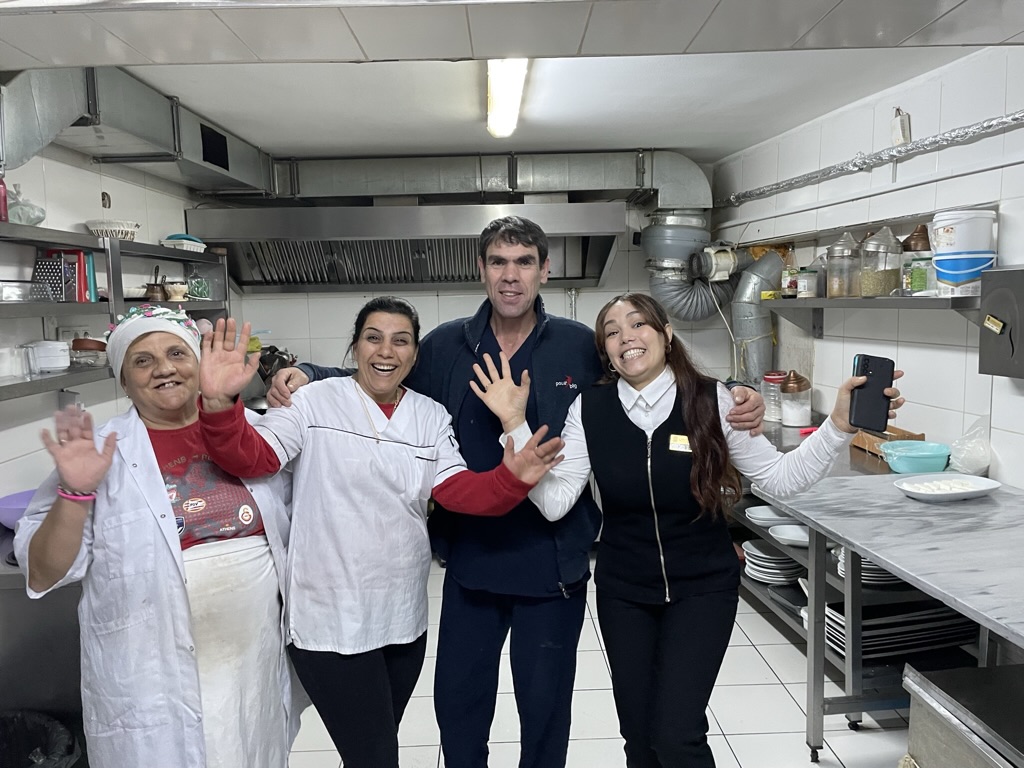
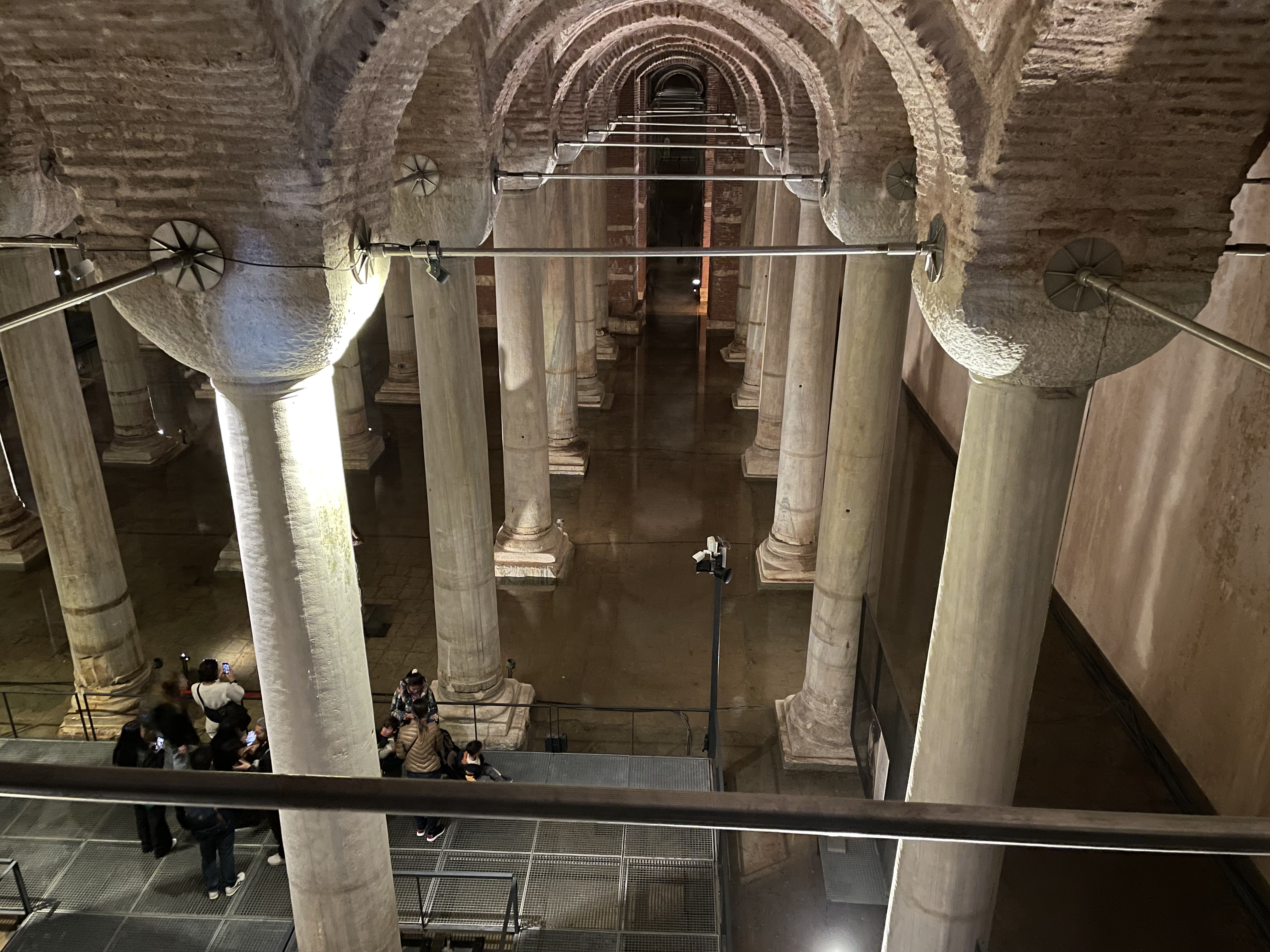
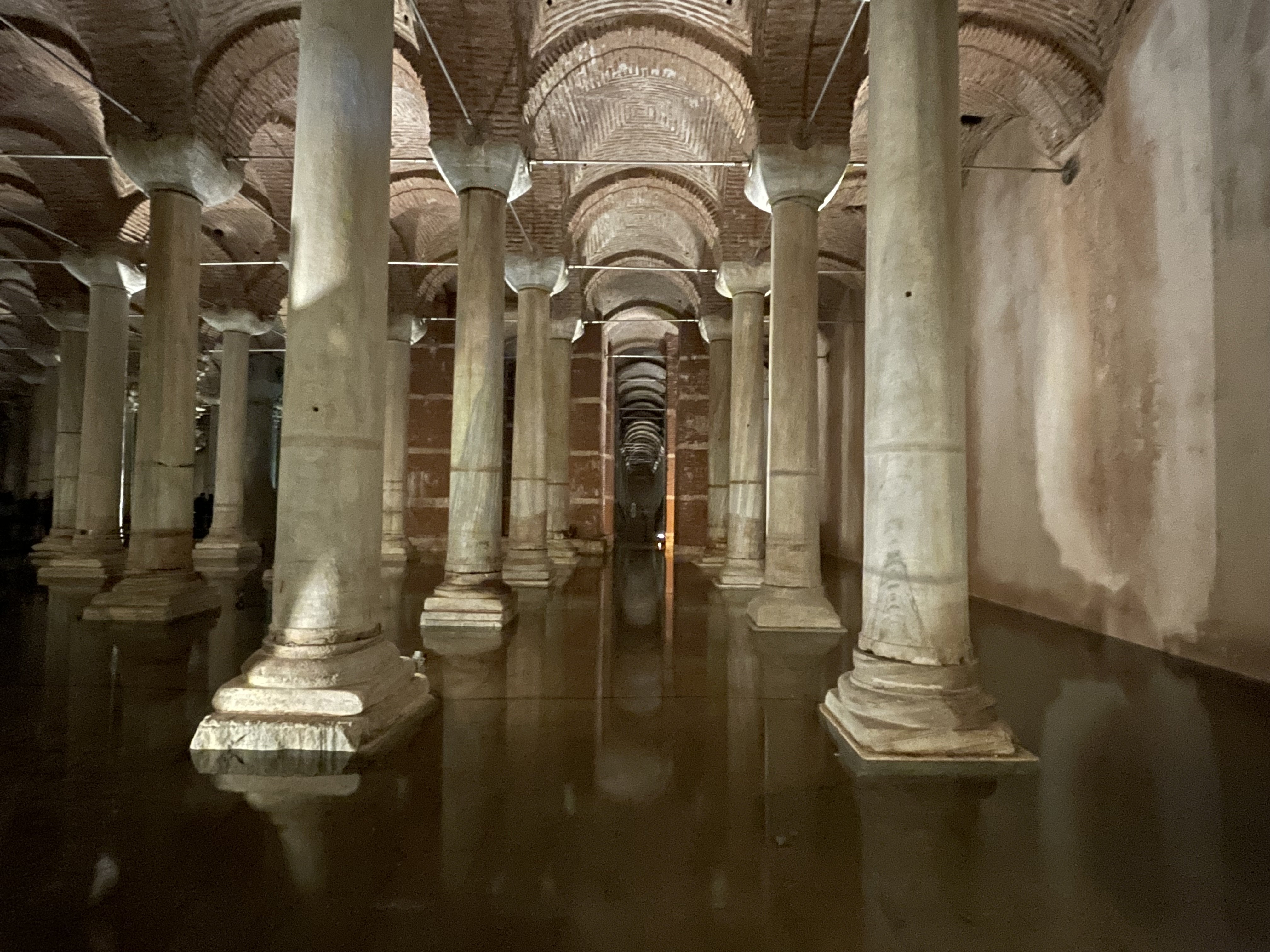
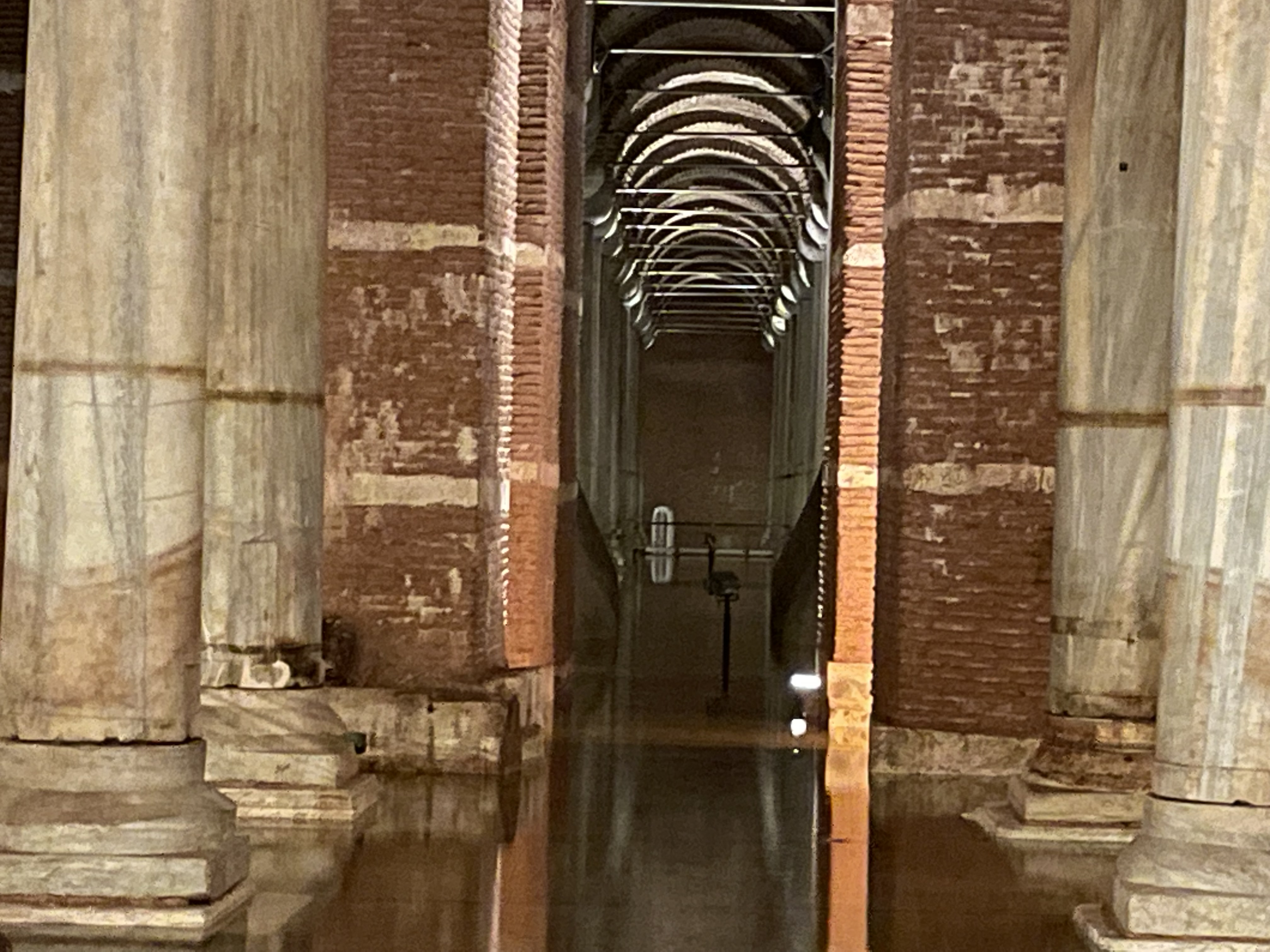
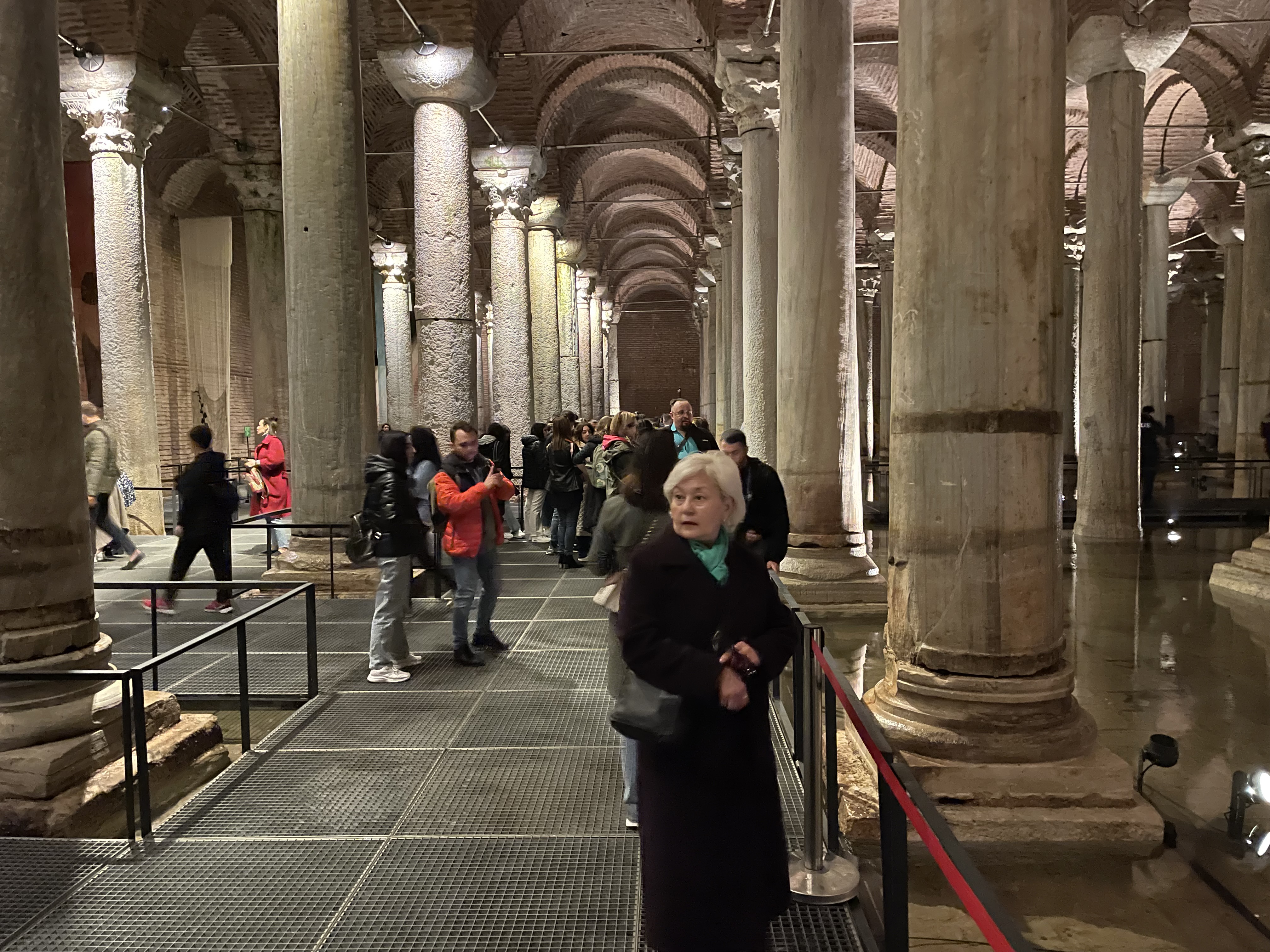
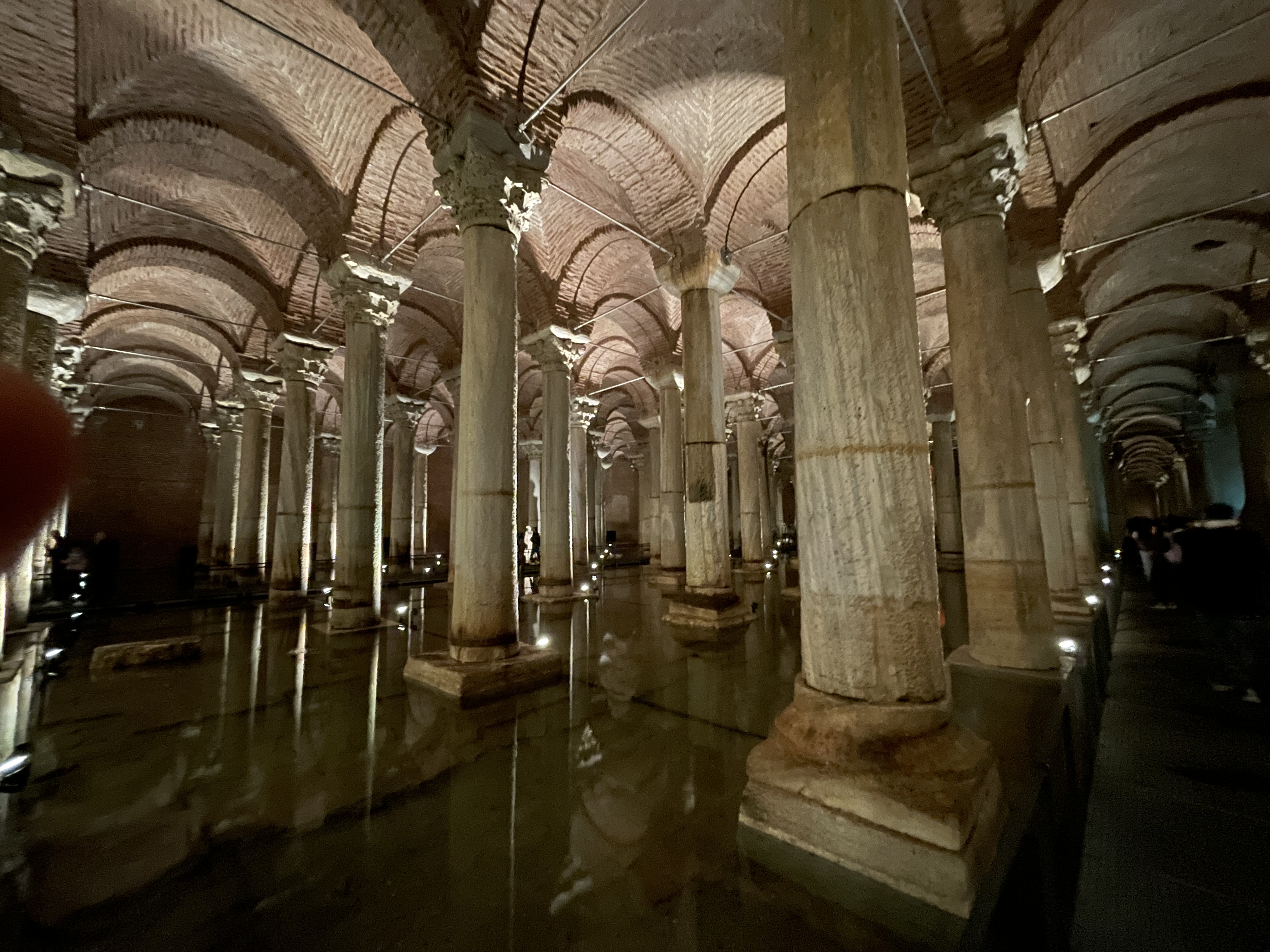
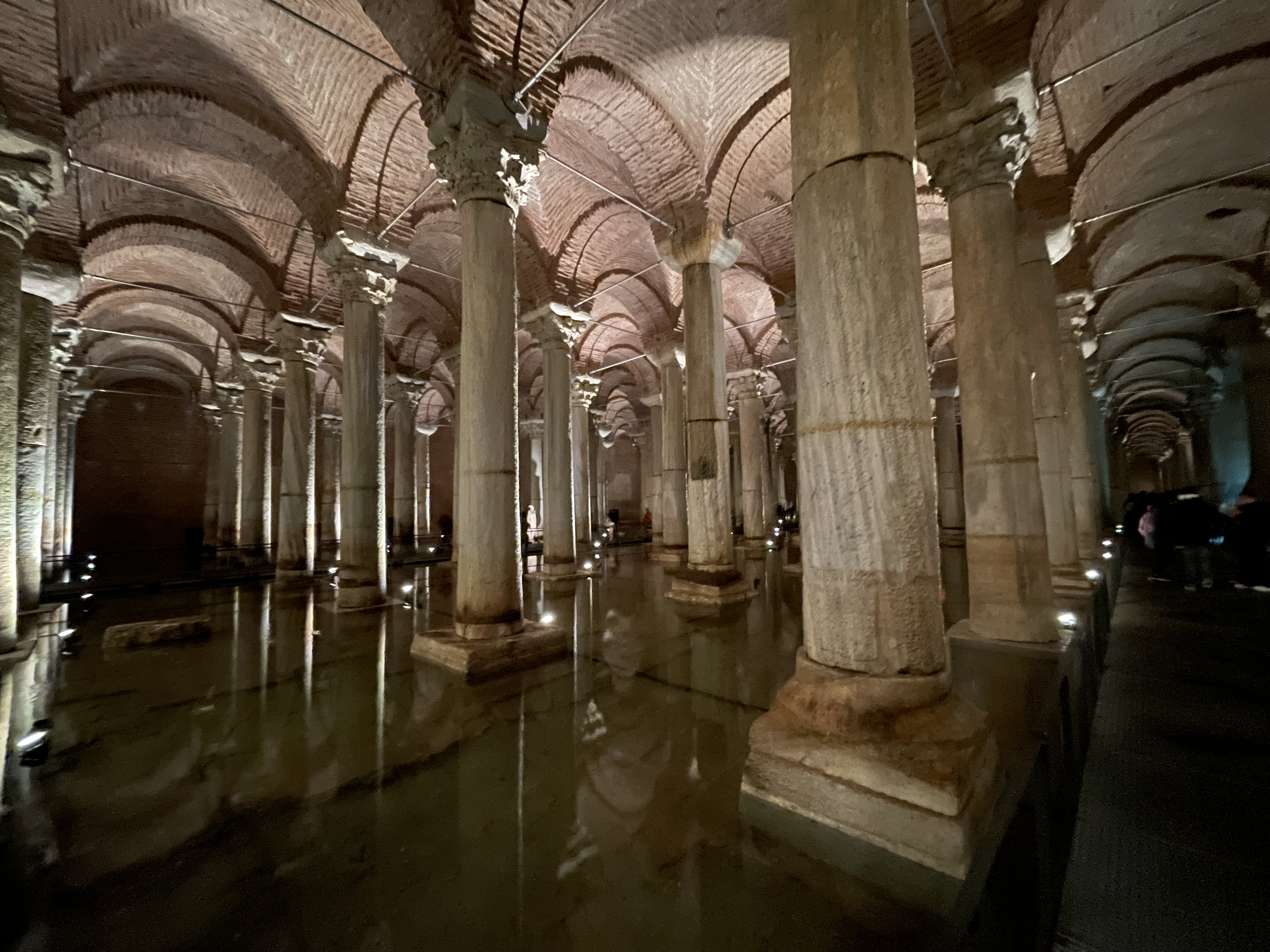
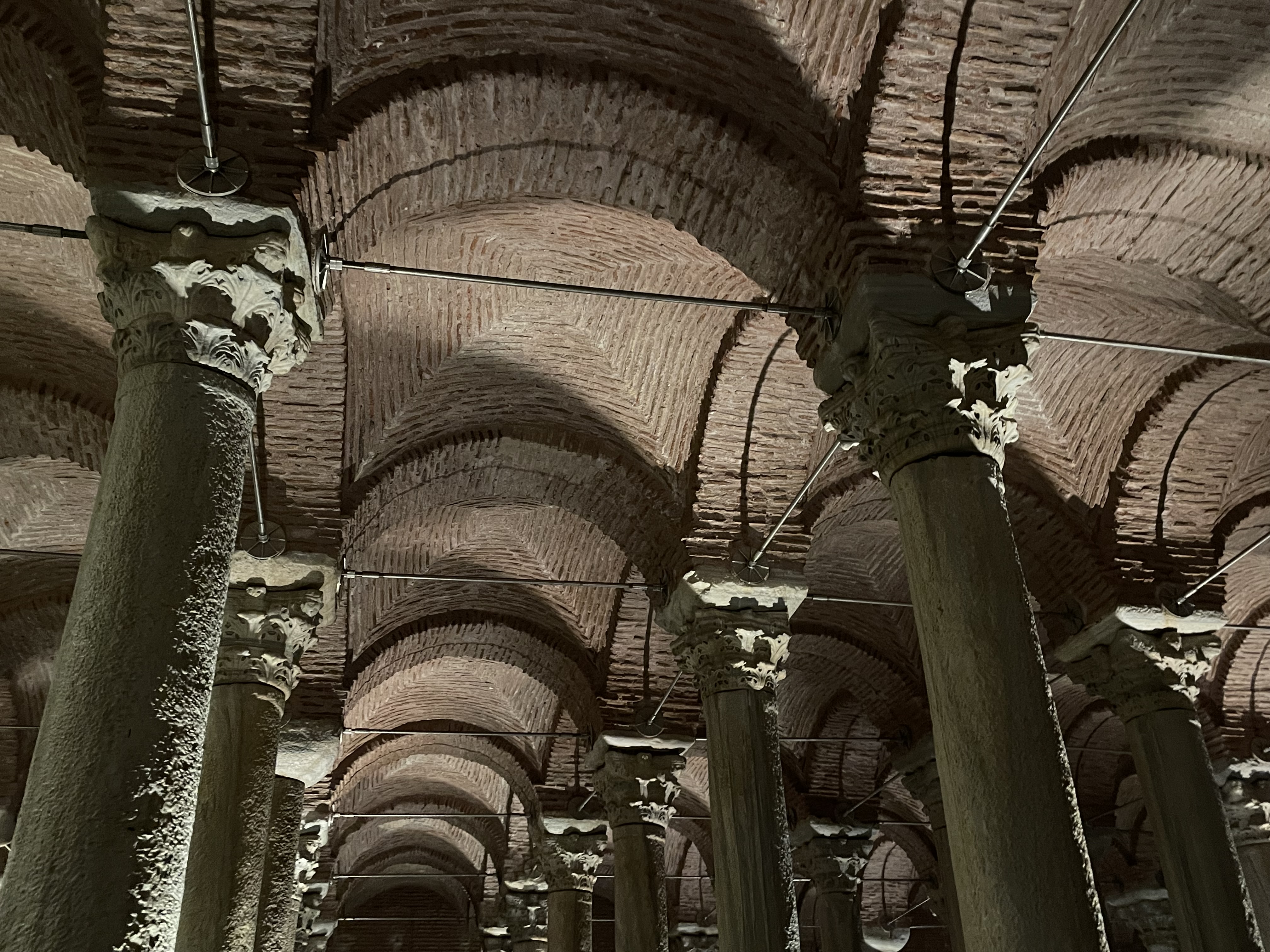
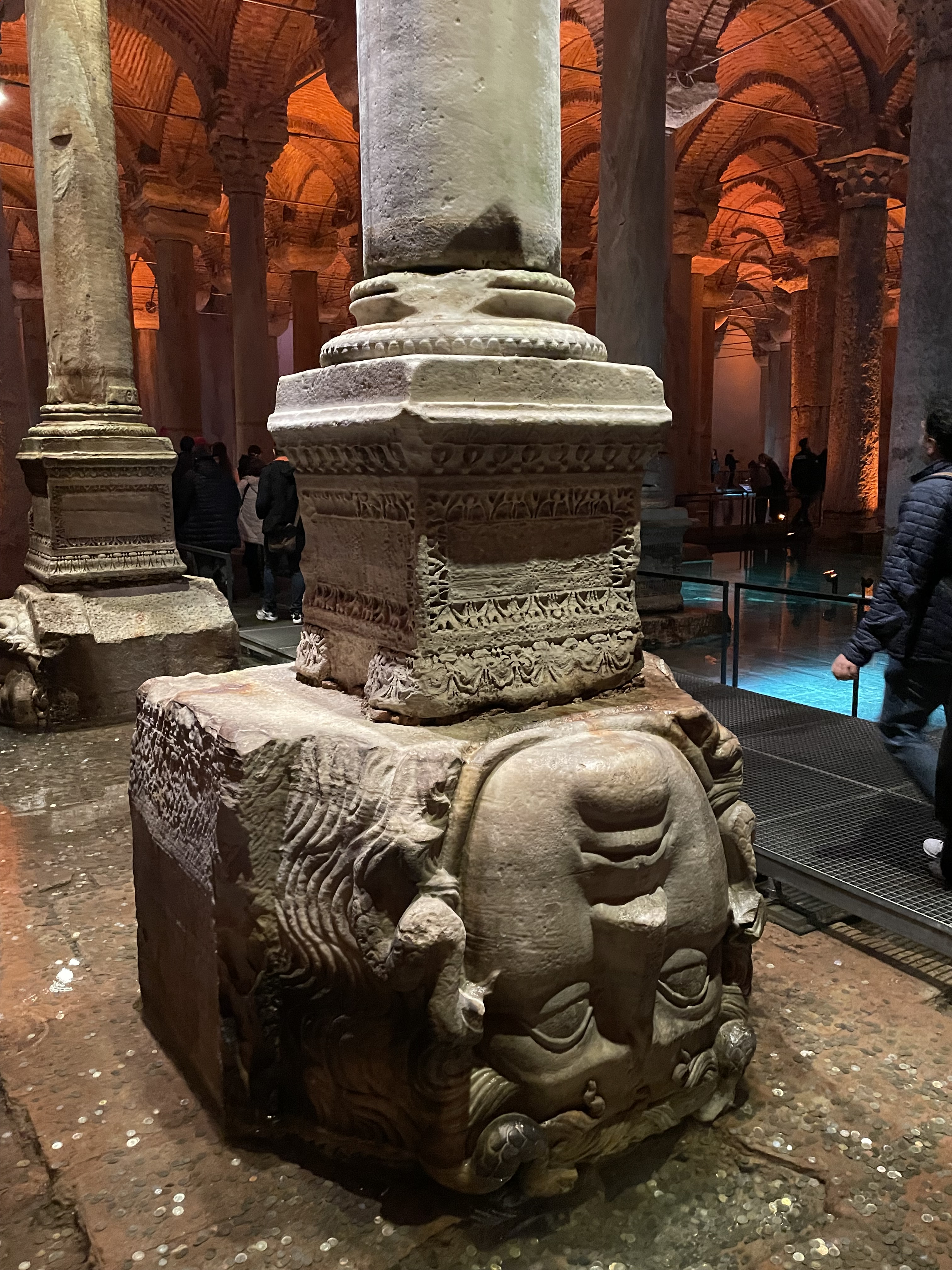
We left our baggage at the hotel and had a day for further exploration. At the start we made one of our few purely ‘touristic’ visits – to the Basilica Cistern near Hagia Sophia.
‘…the largest underground cistern of Byzantine Constantinople’. This link has very detailed description & pictures
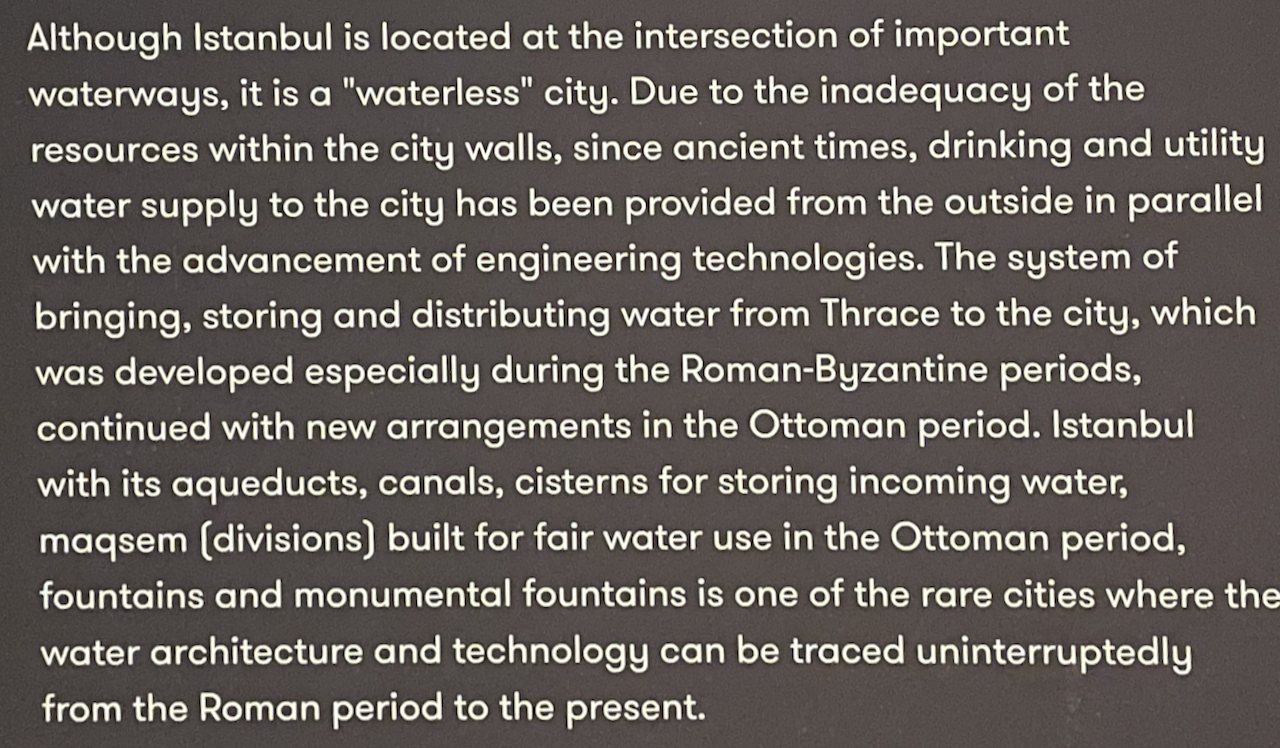

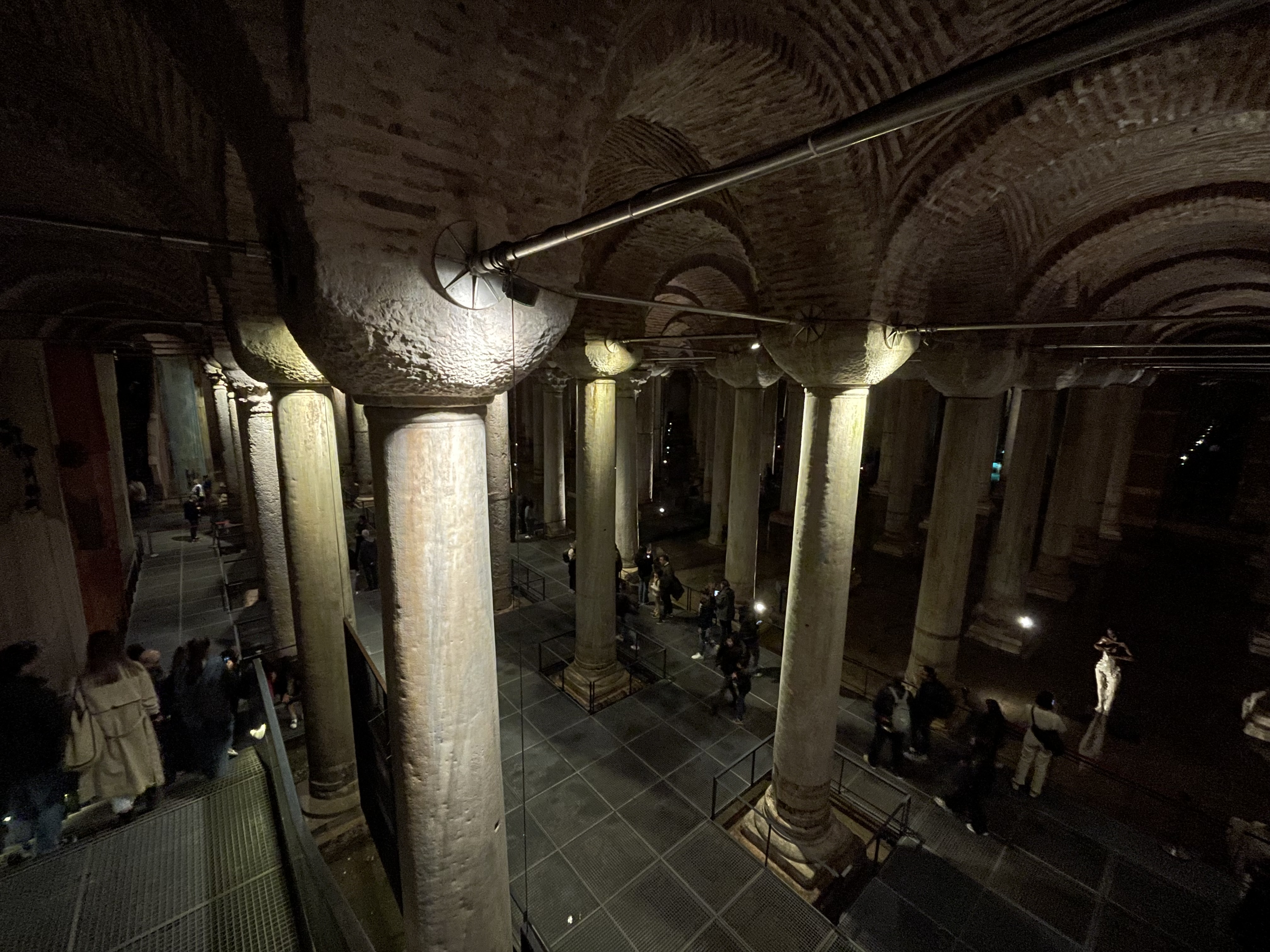
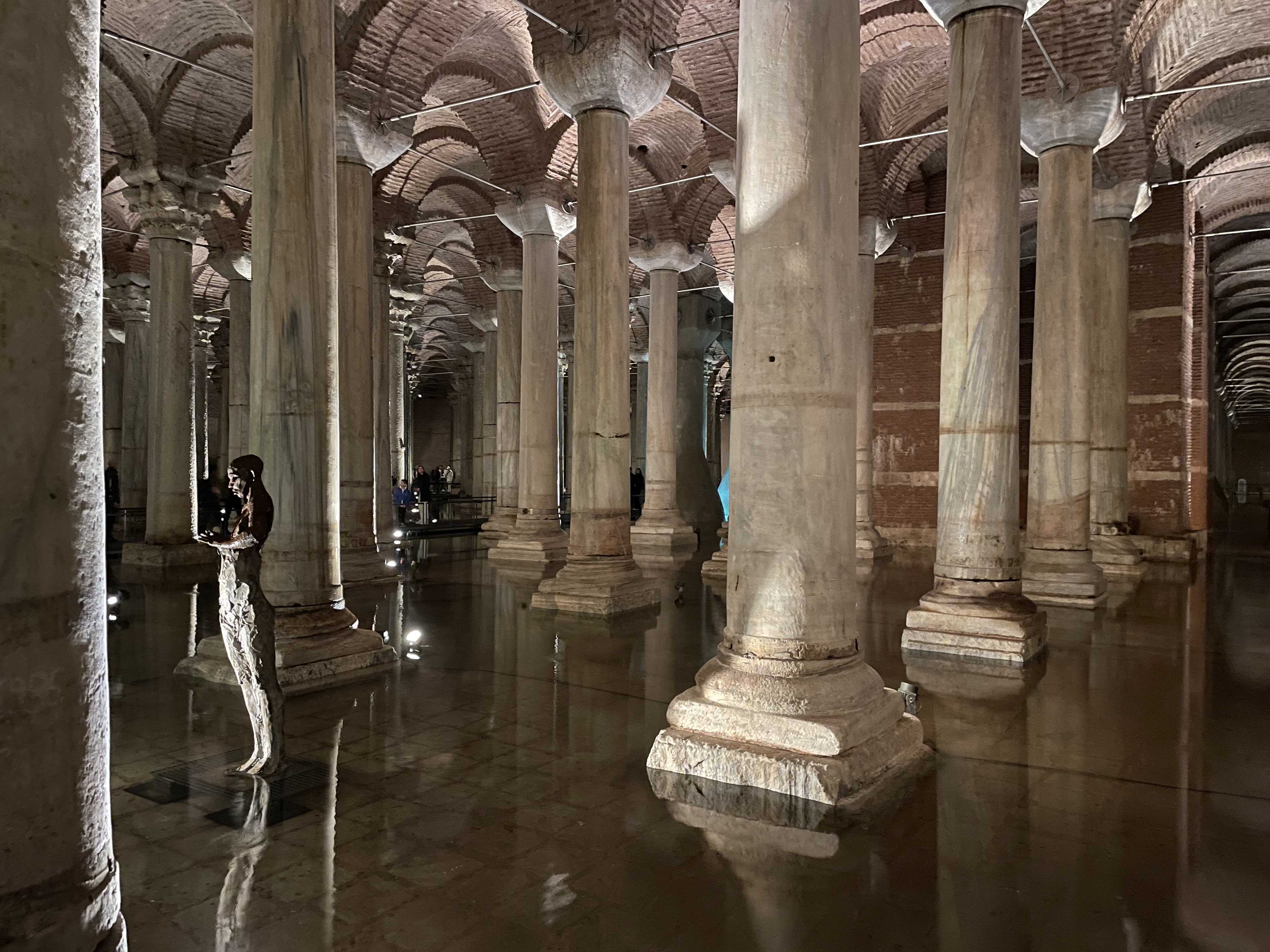
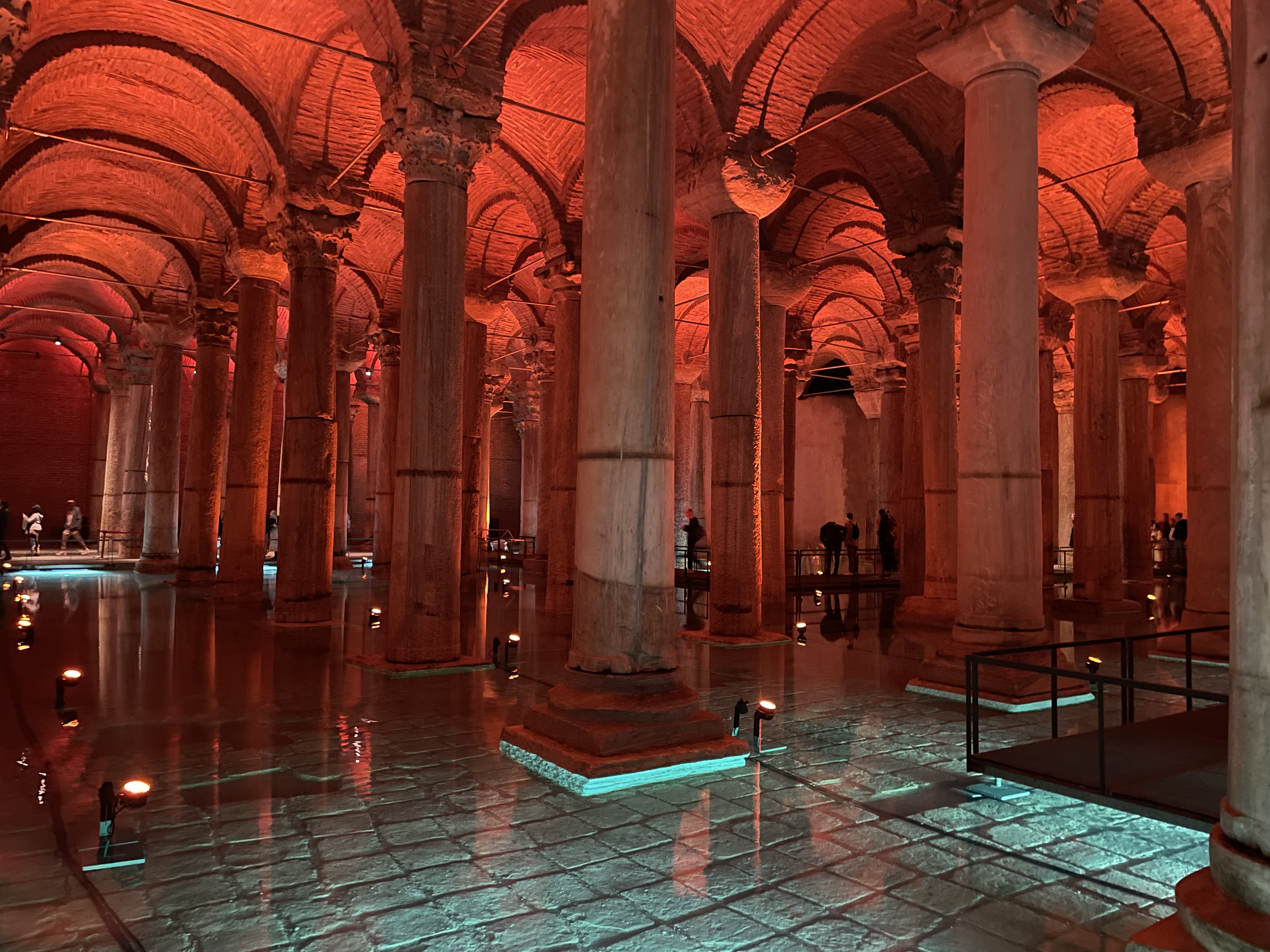
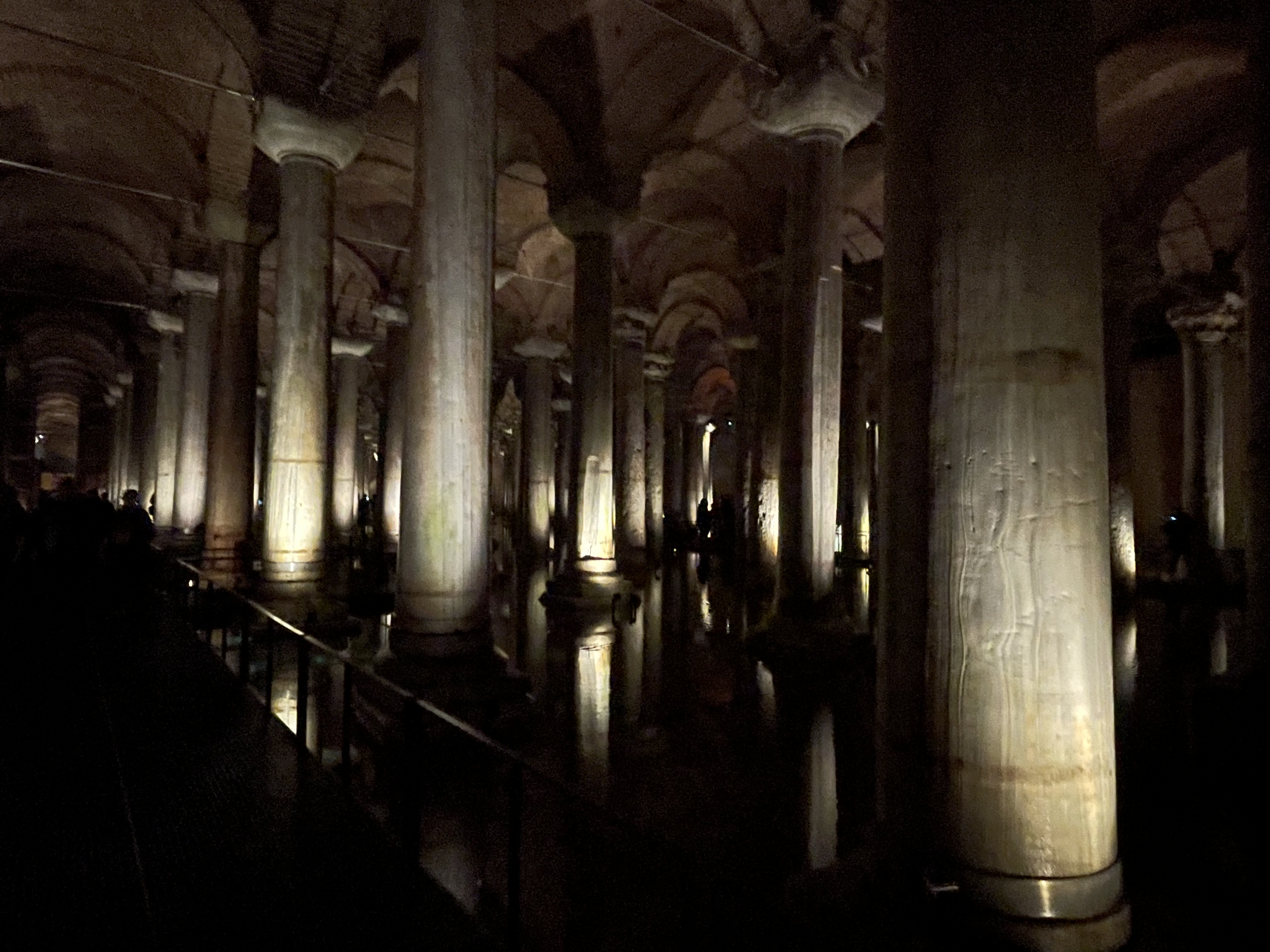
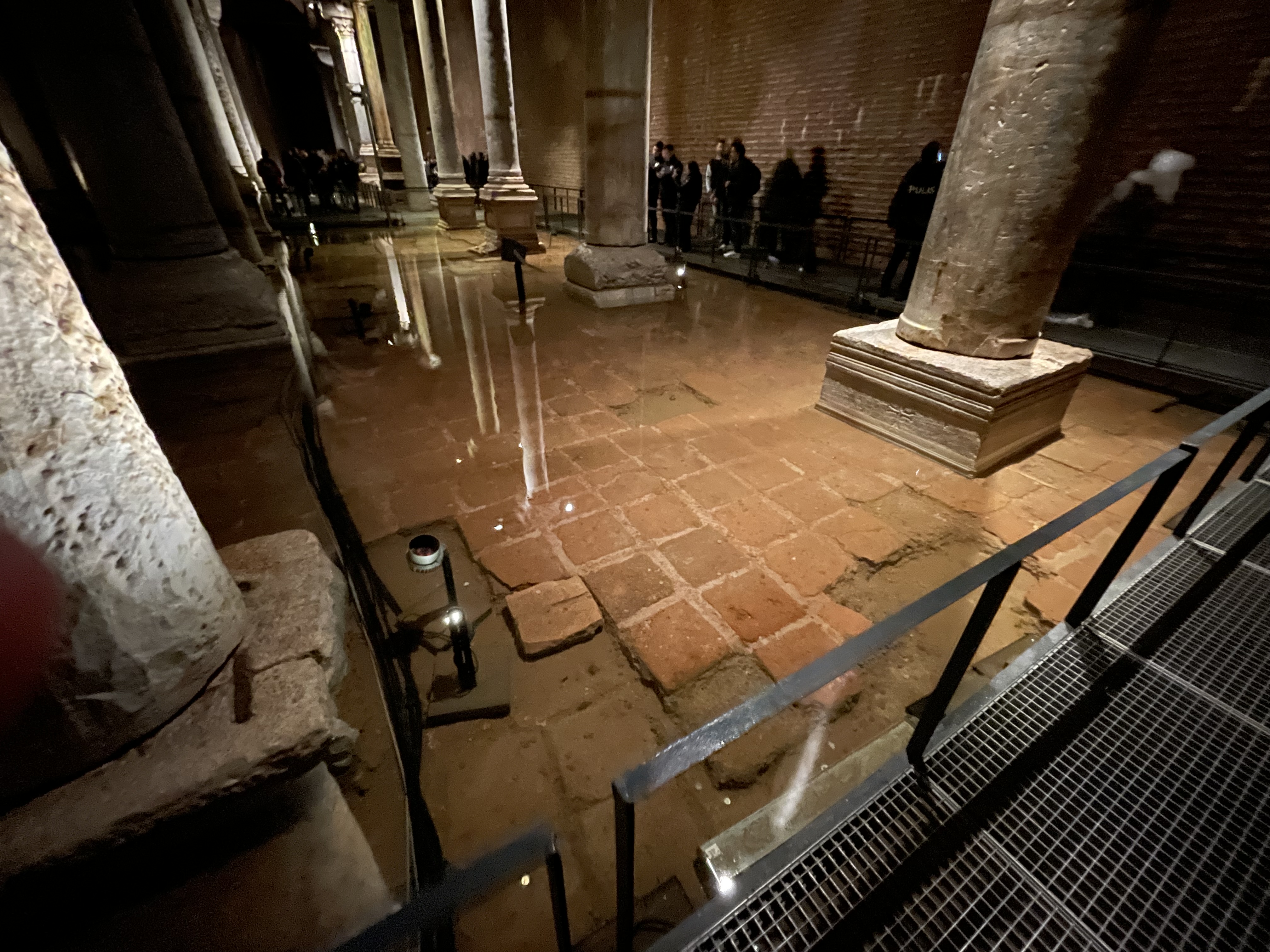
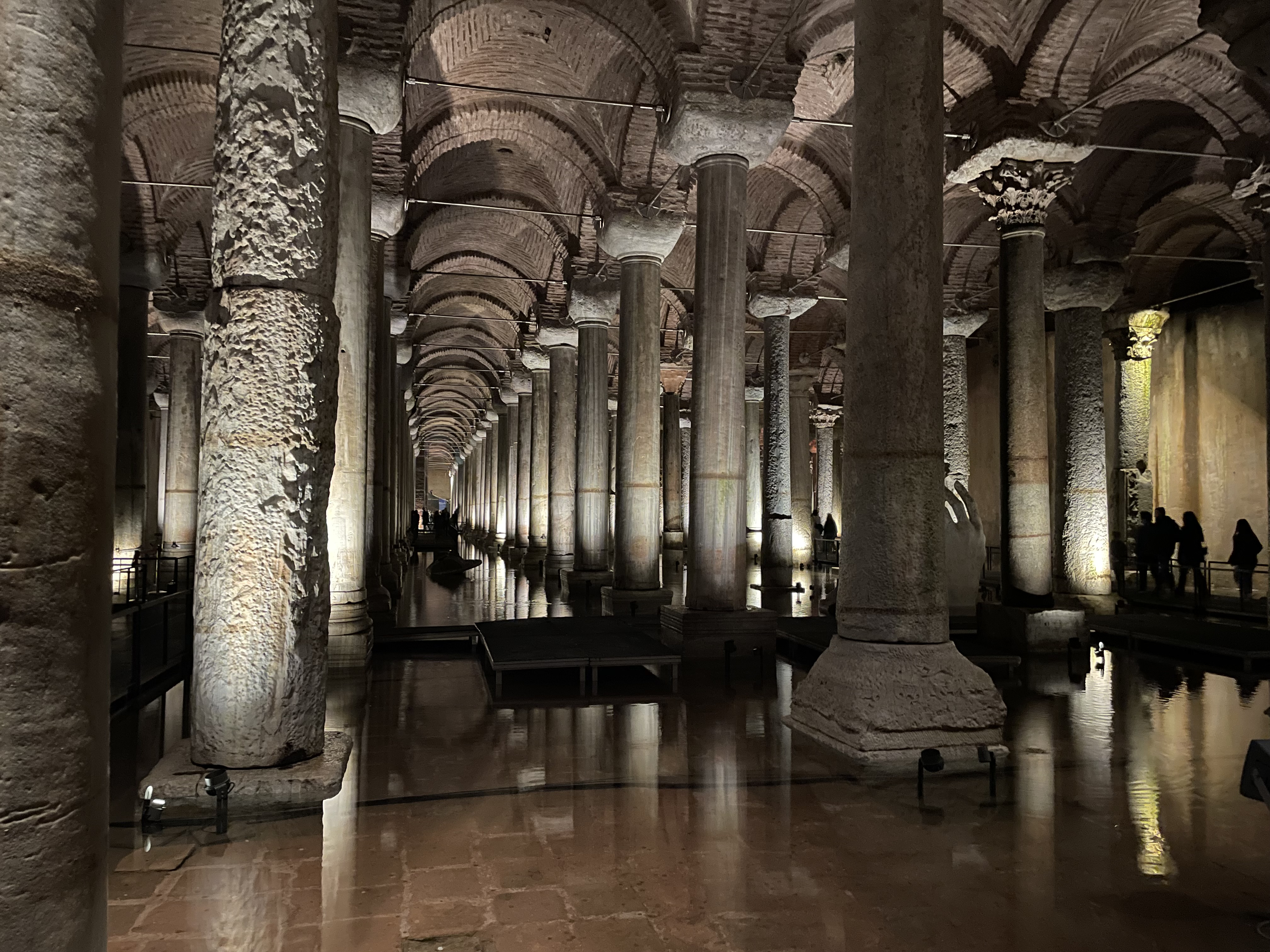
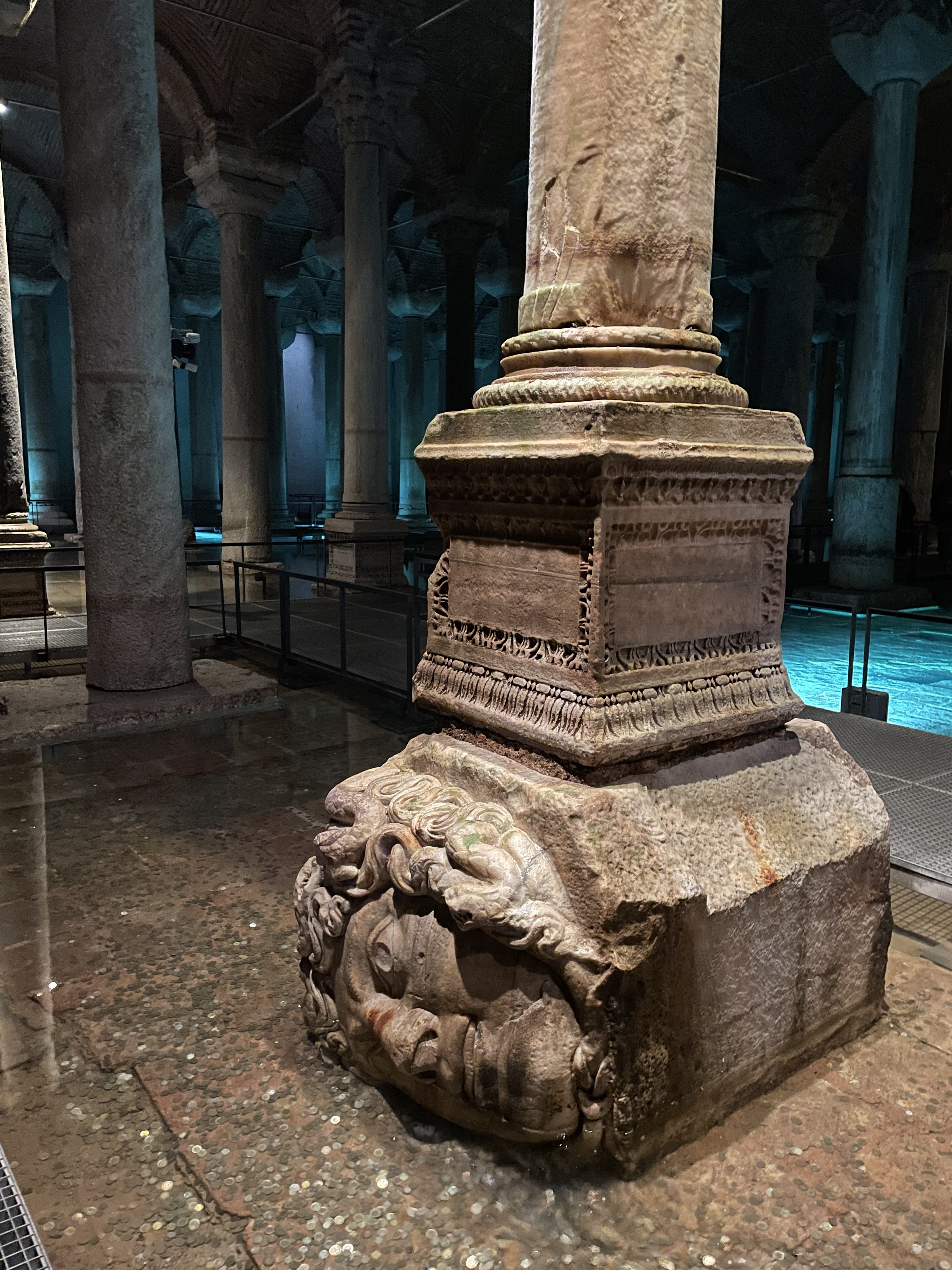
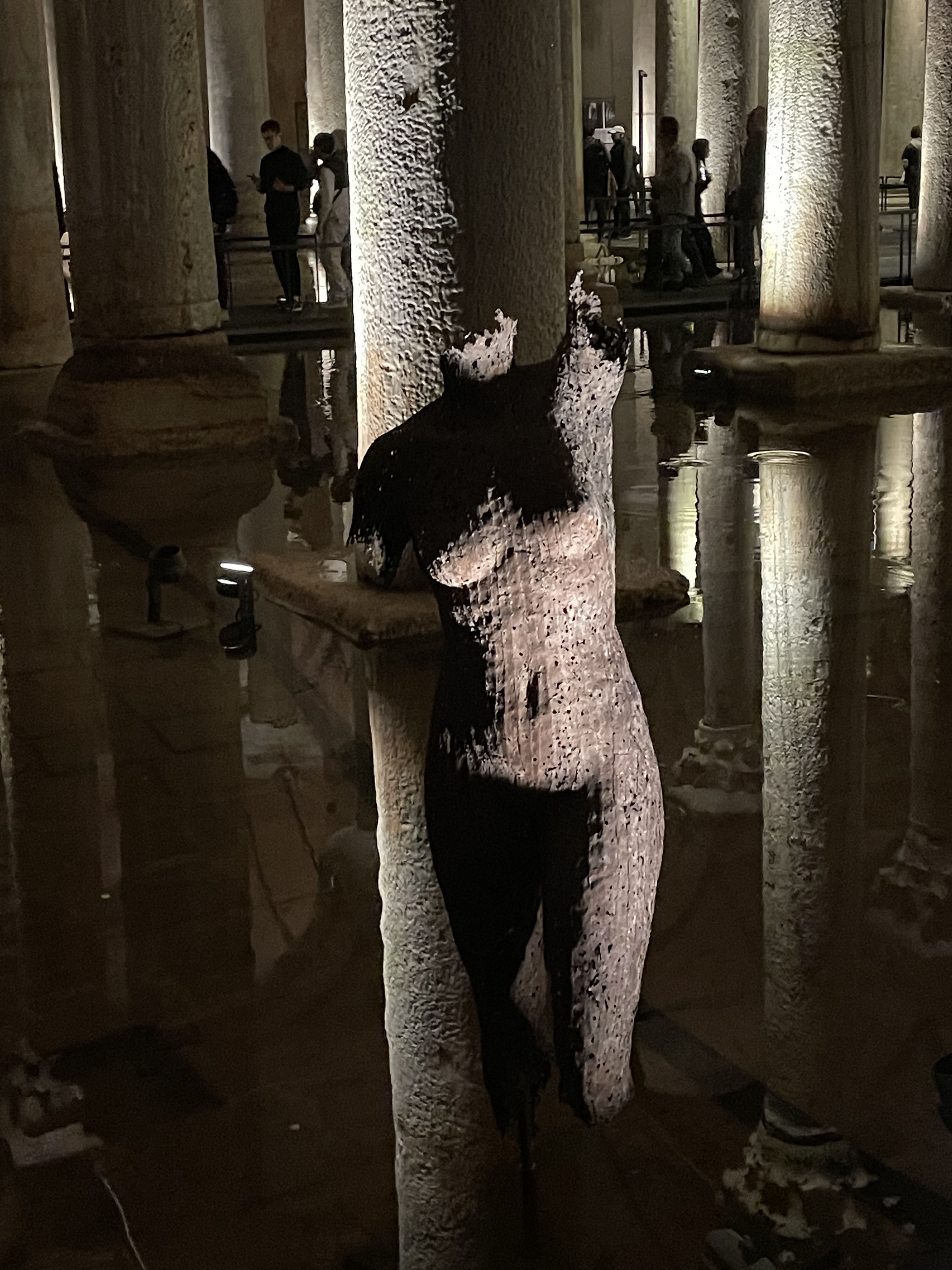
Medusa
Old Religion Recycled & probably being greater value
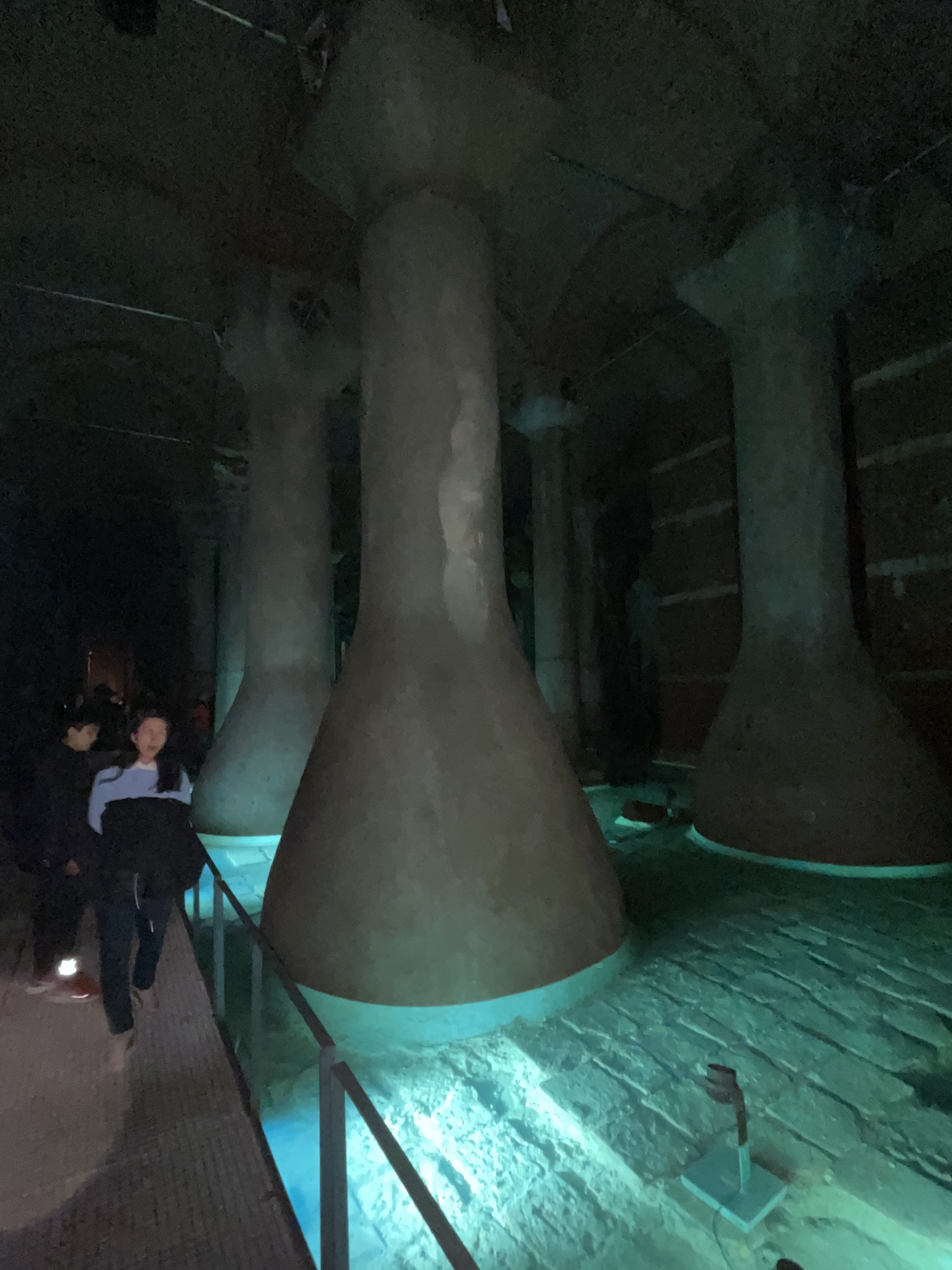
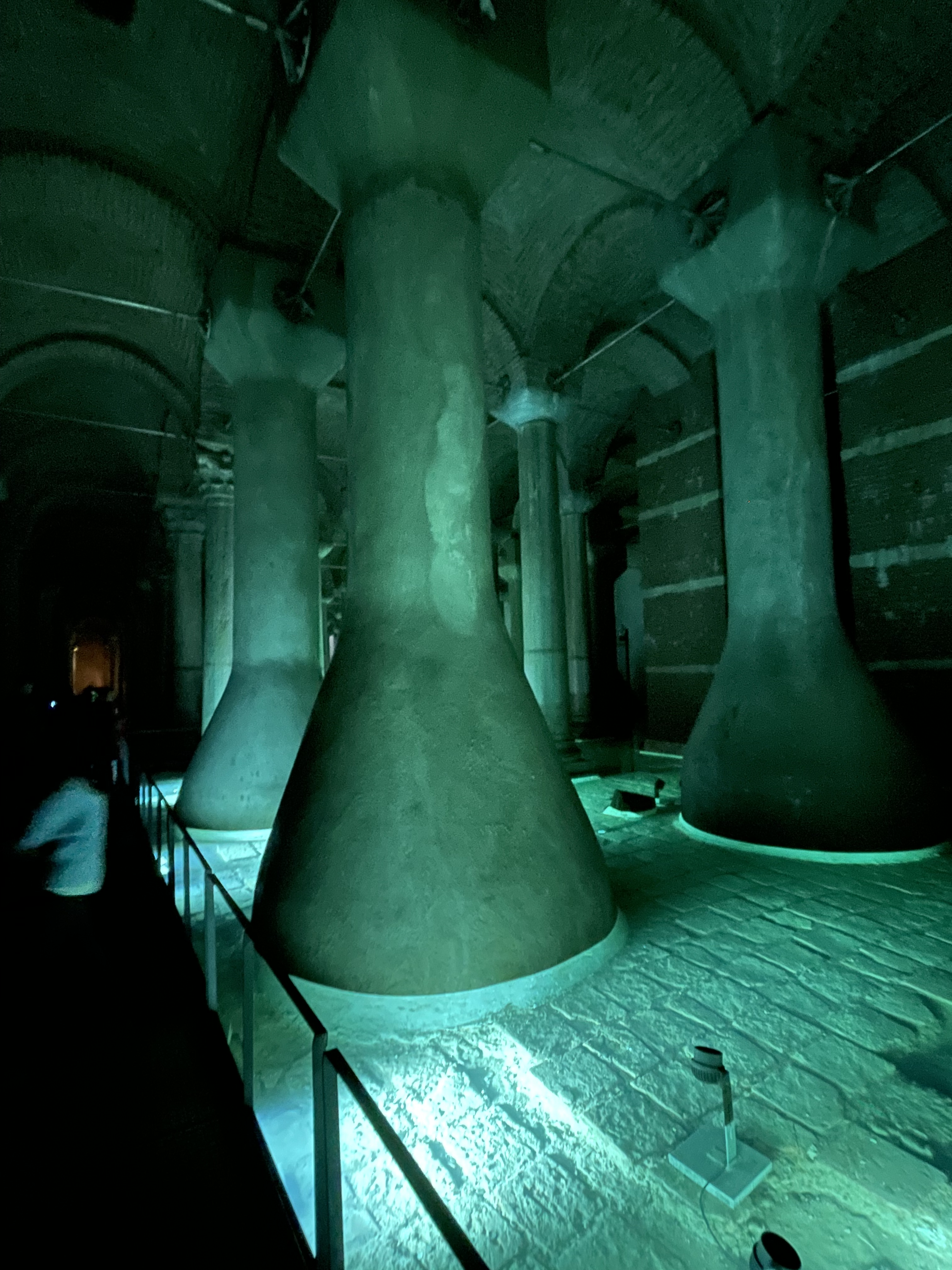
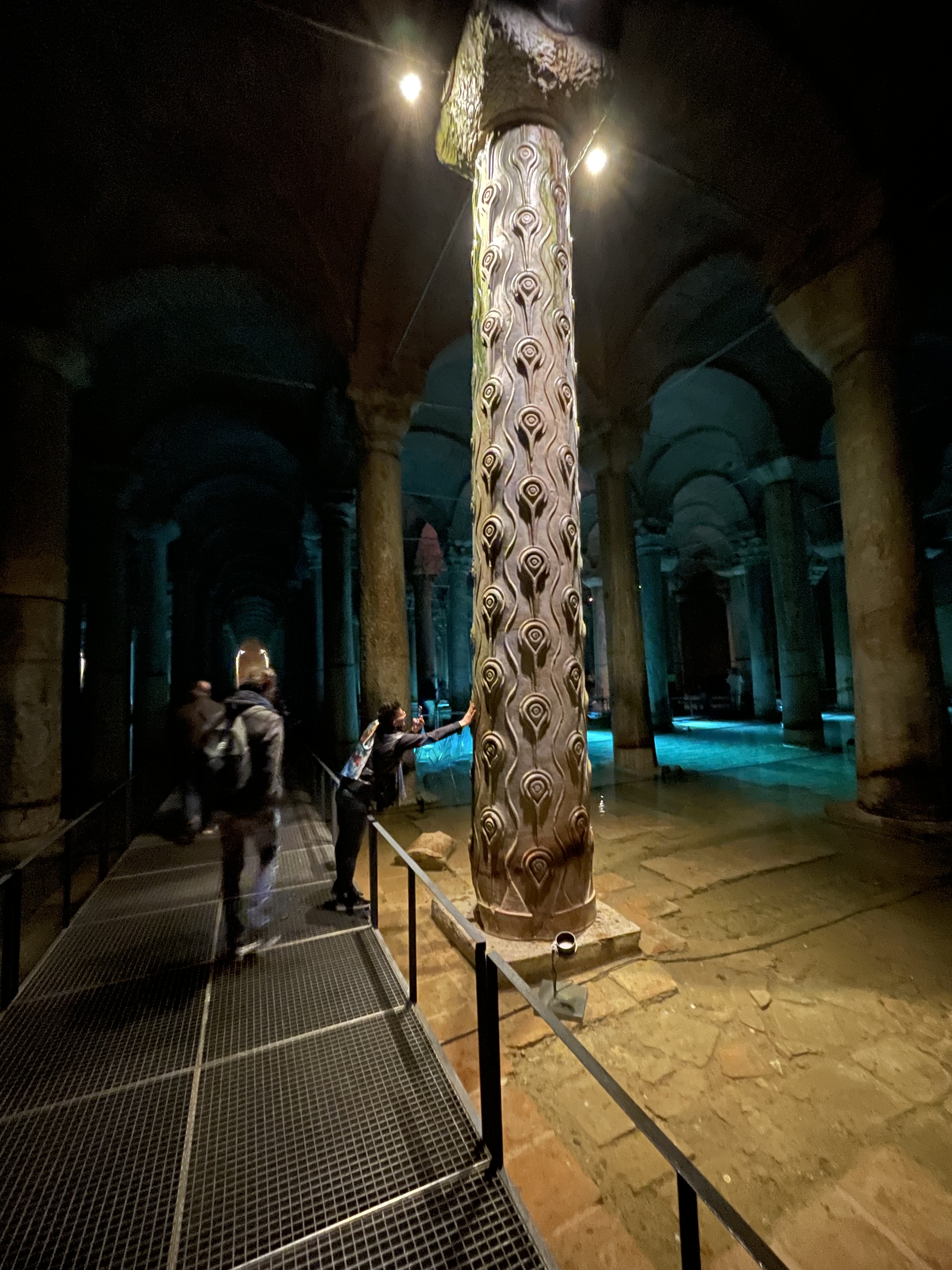
The so-called Tear-Drop pillar below is possibly representative of the Club of Hercules
The “peacock-eyed” column, which is similar to column fragments from the Forum of Theodosius, resembles the artistic convention of the Club of Hercules, as seen in the famous Farnese Hercules, which depicts Hercules resting on his club. This would mean that the column is decorated with knots of a tree, rather than peacock eyes or tear-drops.
.
A ‘Touching Faith’
…ancient magic continues to sneak in…….. We watched this person spend considerable time preparing to lean over and touch the pillar – whilst photographing the action.
What is it about humans that need to perform such actions? – It is a very ancient need… proximity & physical contact with that which is designated ‘important’ and from which one gains something ’special’.
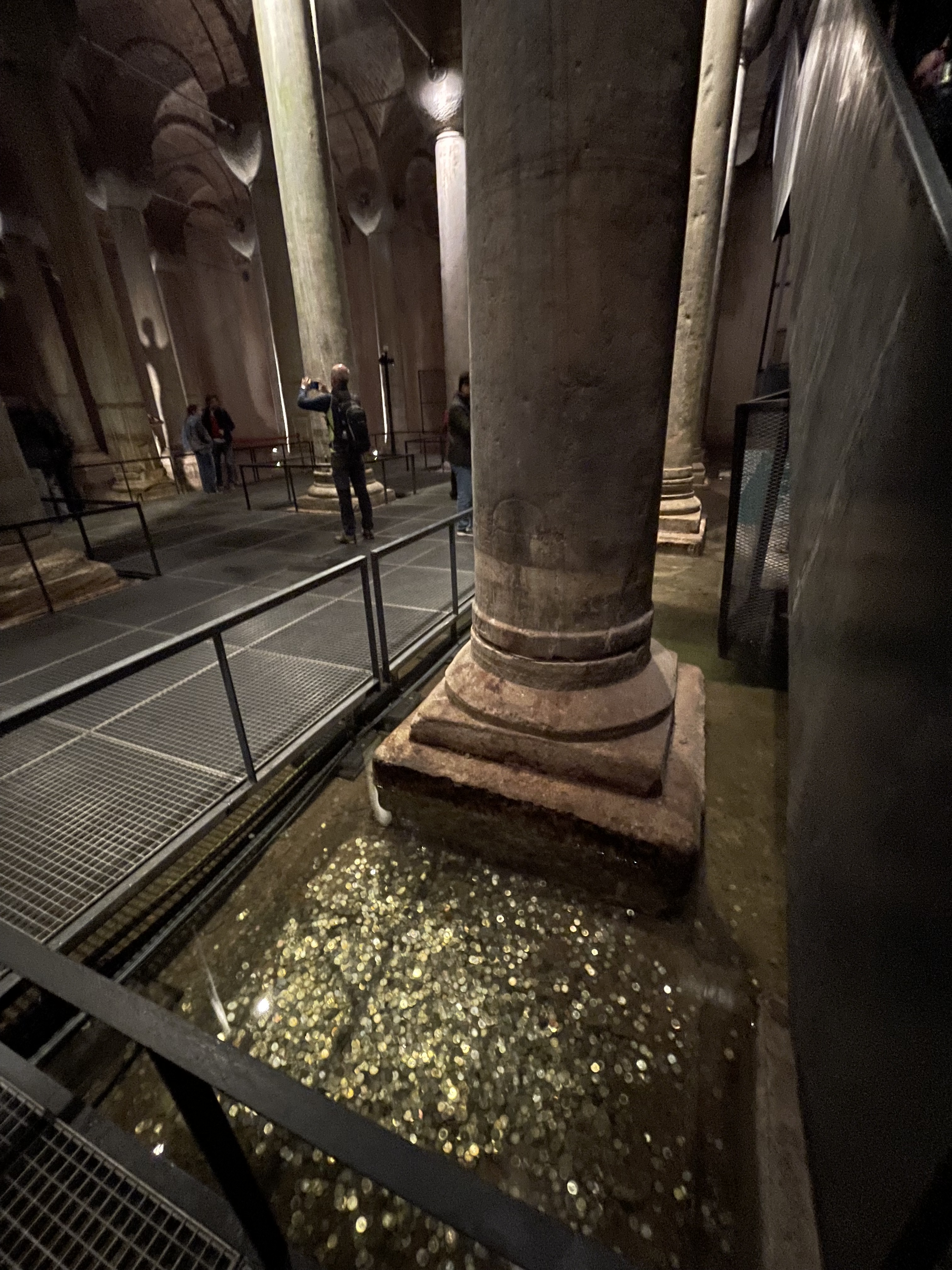
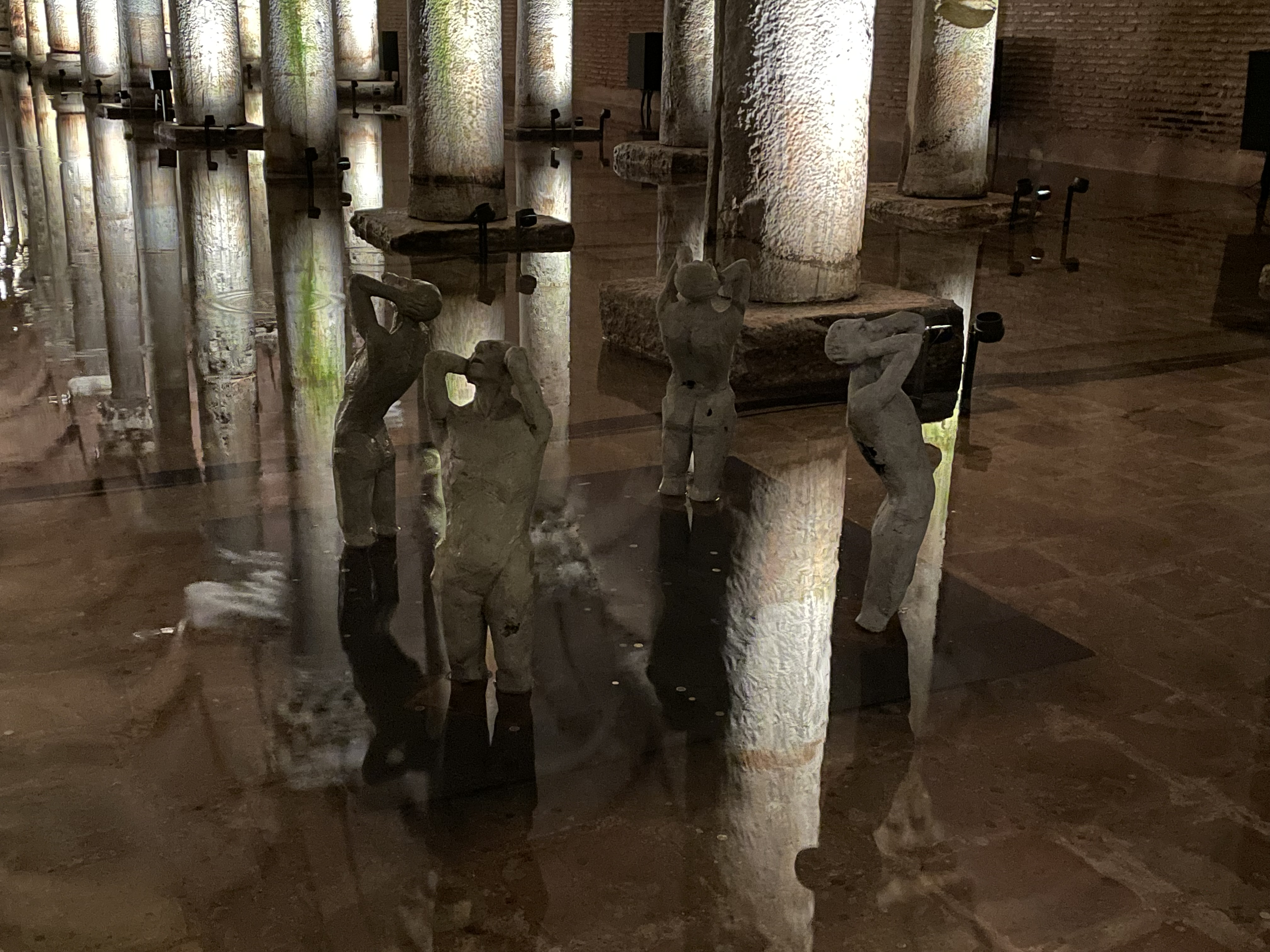
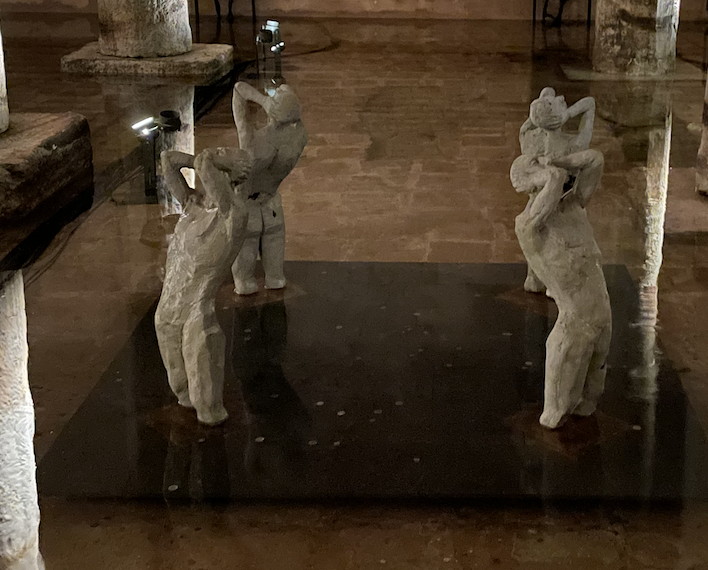
The cistern also has places where coins have been deposited – placatory gestures?… but to what? Is it the ‘need to give back’?
Humanity seems to need to create what in religious terms is called ‘the sacred’…. And maybe (as with the Gorgon heads) ‘desecrate’ that which does not fit the latest manifestations of ‘faith’.
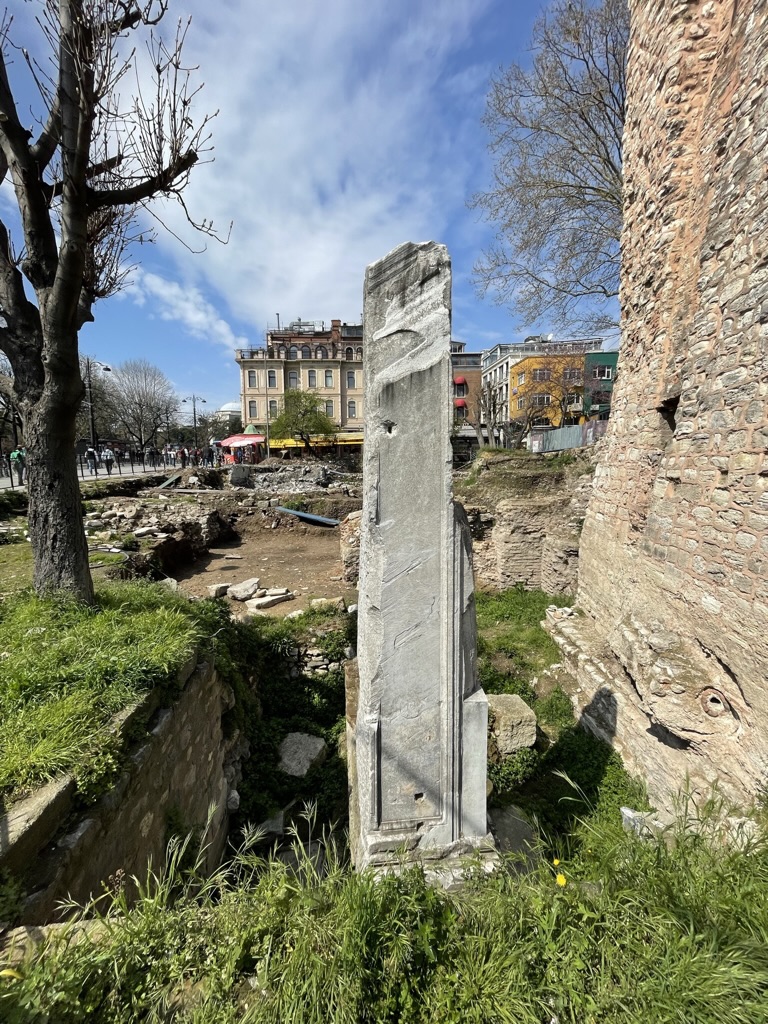
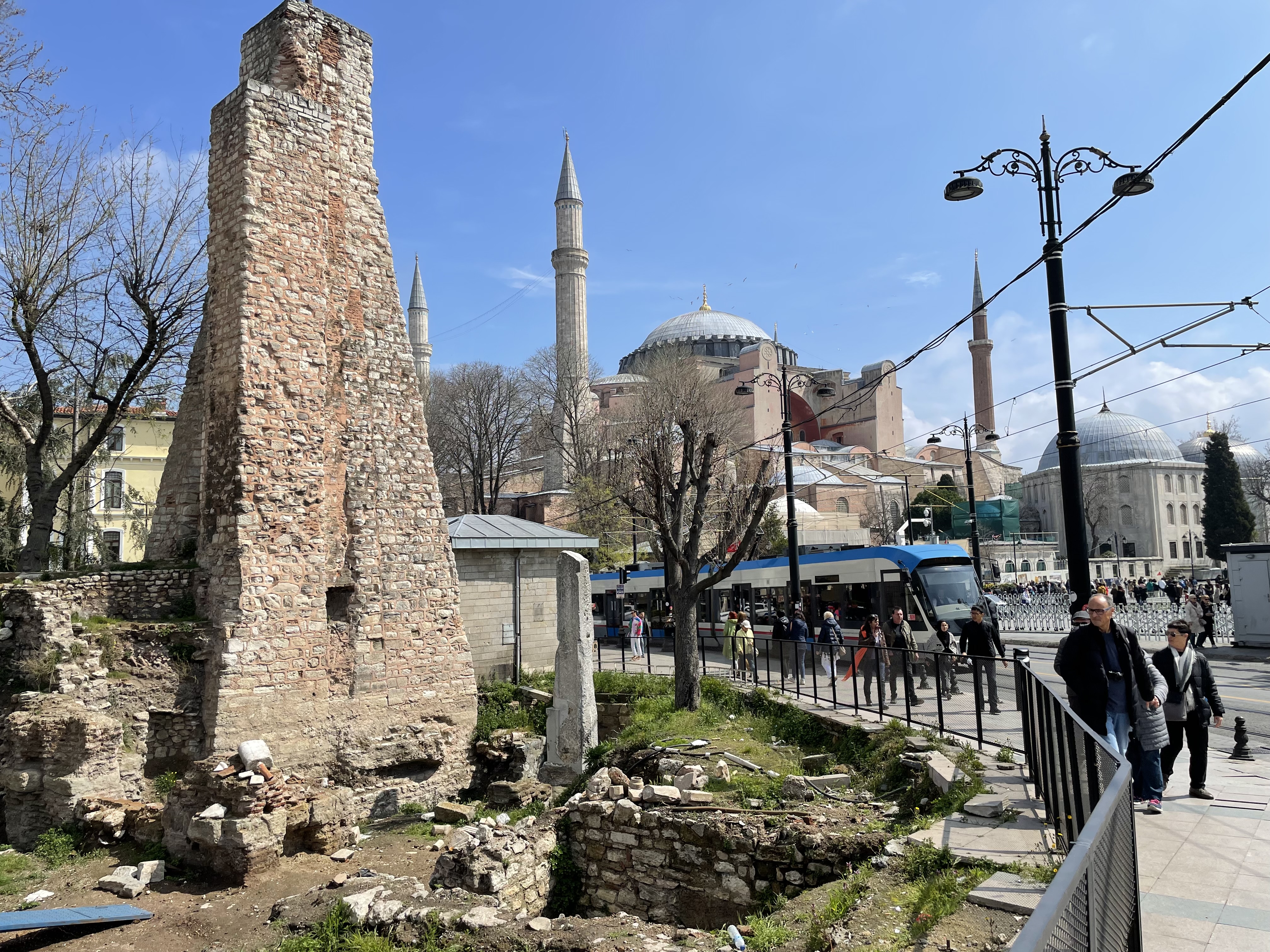
Outside the cistern an apparently insignificant stone (a fragment) marks the centre of the ancient city. The Milion.
….the Byzantine zero-mile marker. The starting-place for the measurement of distances for all the roads leading to the cities of the Byzantine Empire. It thus served the same function as the Golden Milestone (Milliarium Aureum) in Rome’s forum.
https://en.wikipedia.org/wiki/Milion
The area around it is gradually being excavated. Its position on that specific bend in the road is significant but without the advice from Salih, we, like most others, would have ignored it.
Then, a walk to the mosque that was built by Suleiman the Magnificent
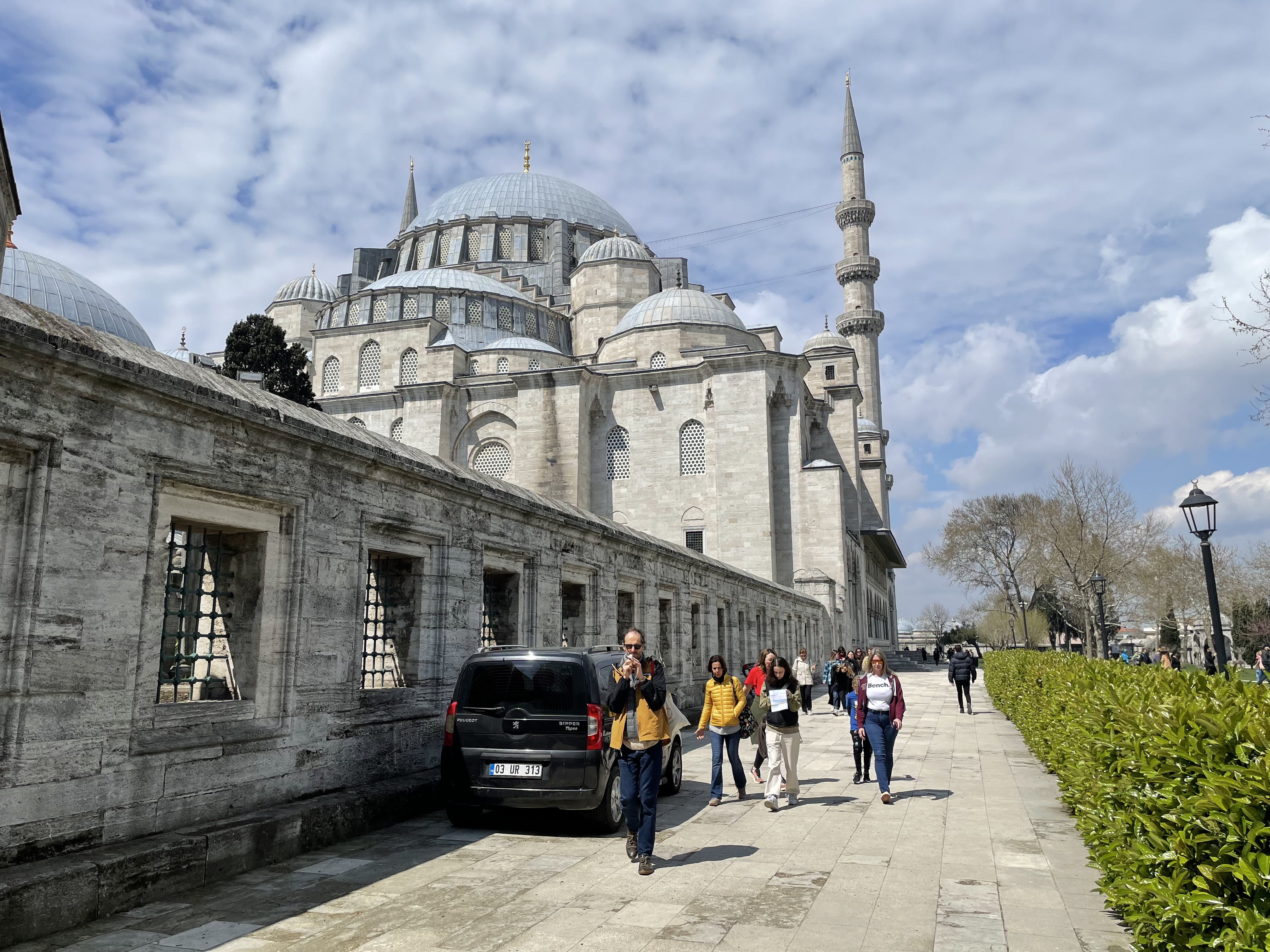
The practice of Empire Building, if not always ‘honoured’, until the C20th it was (more or less) accepted.
Histories are inclined to focus on those who ‘held power over territories’, (‘ruler’). The larger the territory, the more significant the the ruler.
The origin of the word ‘rule’ means to ‘move in a straight line’ which implies lack of obstruction in being able to do so.
Suleiman can be regarded as one of the most successful examples of this ‘ability’.
The results of his ’straight line movement’ stretched across the Mediterranean (though Malta became a ‘stumbling block’), N Africa, Europe as far as Vienna & across oceans towards what is now Indonesia.


Suleiman was also regarded as ‘Magnificent’ due to his encouragement of crafts, arts and poetry.
“Under Suleiman’s patronage, the Ottoman Empire entered the golden age of its cultural development.”
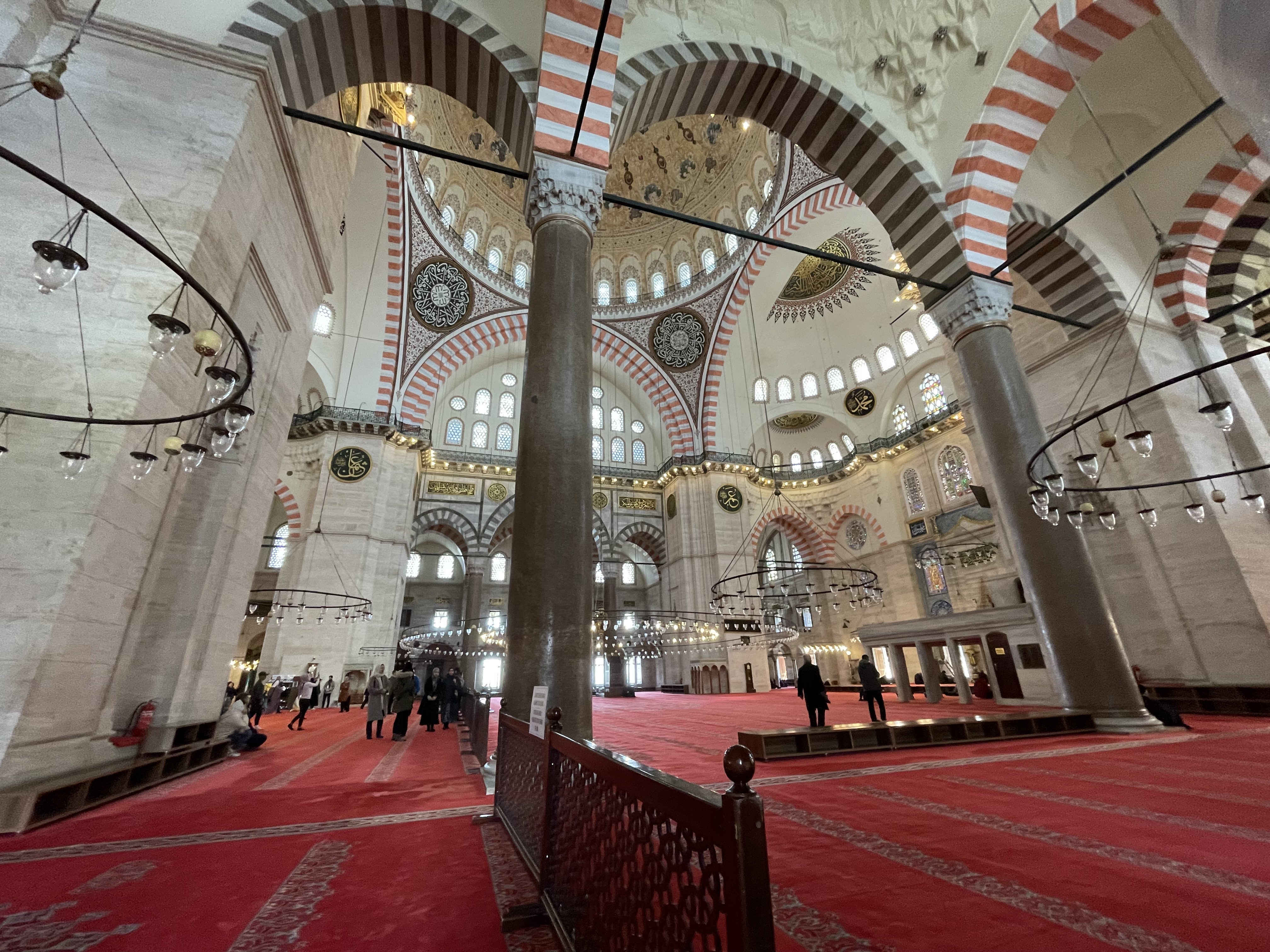
It is therefore not surprising to discover that he constructed a mosque which was intended to demonstrate his status – as equal to his ancient namesake (King Solomon) & Emperor Justinian, who ordered the construction of St Sofia – which (as Hagia Sophia) stands slightly further ‘down the road’ (& from which we had walked).
Suleiman was also prepared to ‘remove’ those (including sons) who blocked his ‘straight line’:
“Angered by what he came to believe were Mustafa’s plans to claim the throne,…Suleiman summoned him to his tent … When Mustafa entered his father’s tent… Suleiman’s eunuchs attacked Mustafa, and after a long struggle the mutes killed him using a bow-string.”
In order to ensure his son Selim to inherit Suleiman paid for an “executioner to strangle Bayezid and his four sons in 1561, clearing the path for Selim’s succession to the throne five years later.”
Murder of potential rivals remains as part of the ‘normality’ for one 21st century European ruler as he dreams (manifested through warfare) of restoring an autocratic Russian Empire.
Haliç Cafe is situated below Süleymaniye Mosque, so we returned for lunch.
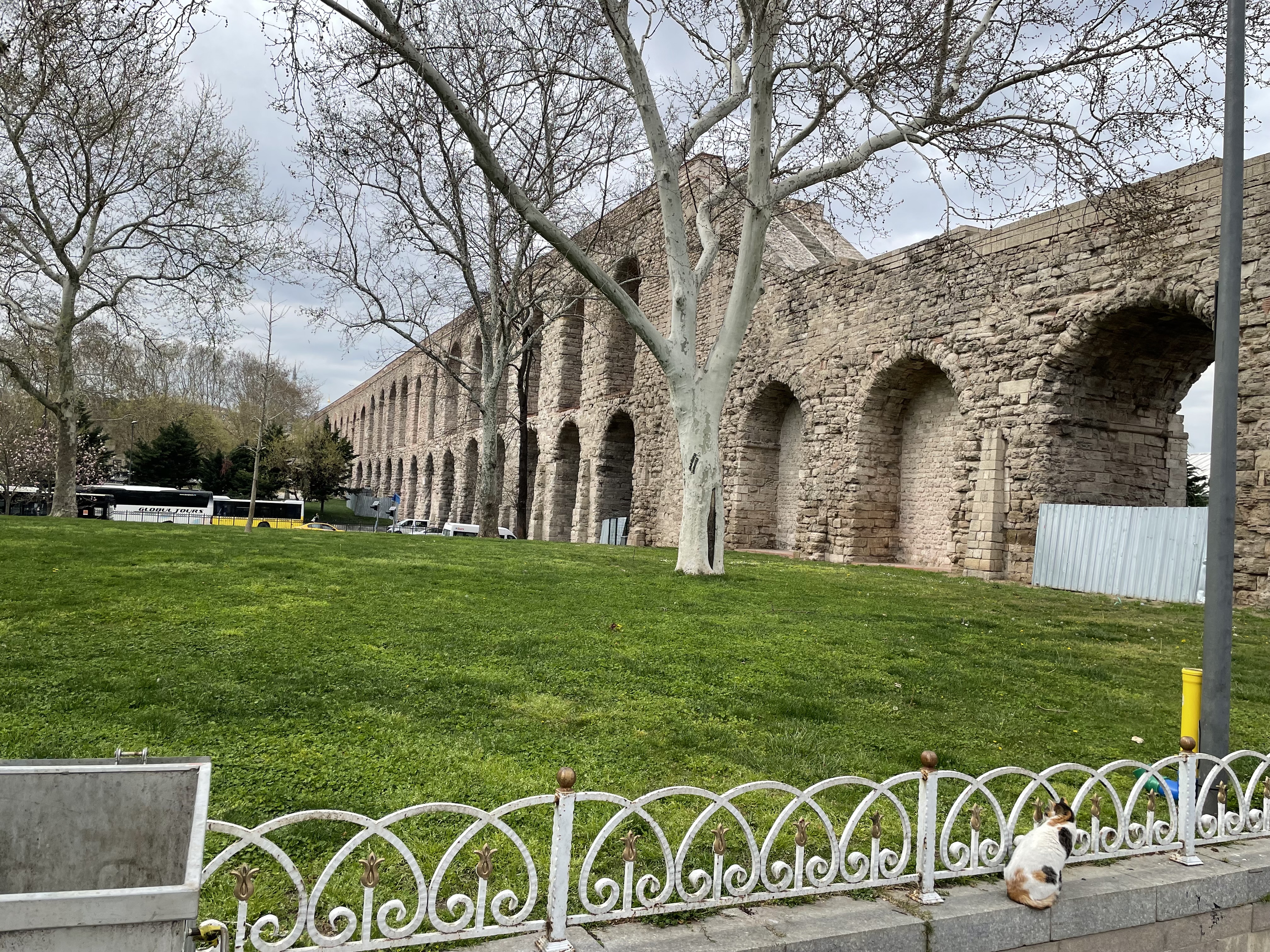
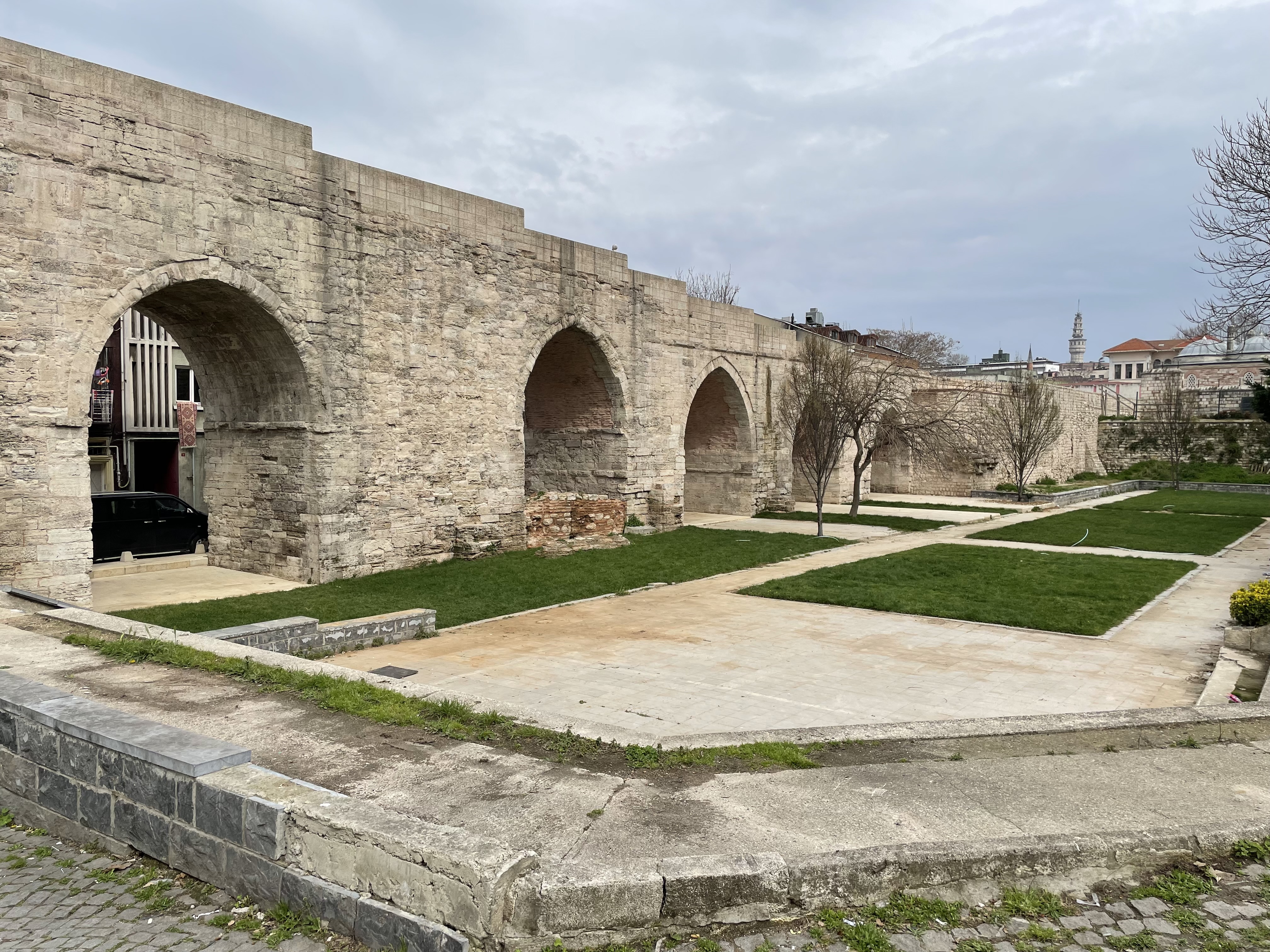
After lunch we wandered on to view a section of the Aqueduct of Valens which was one of several bringing water to Byzantium/Constantinople (for storage in cisterns).
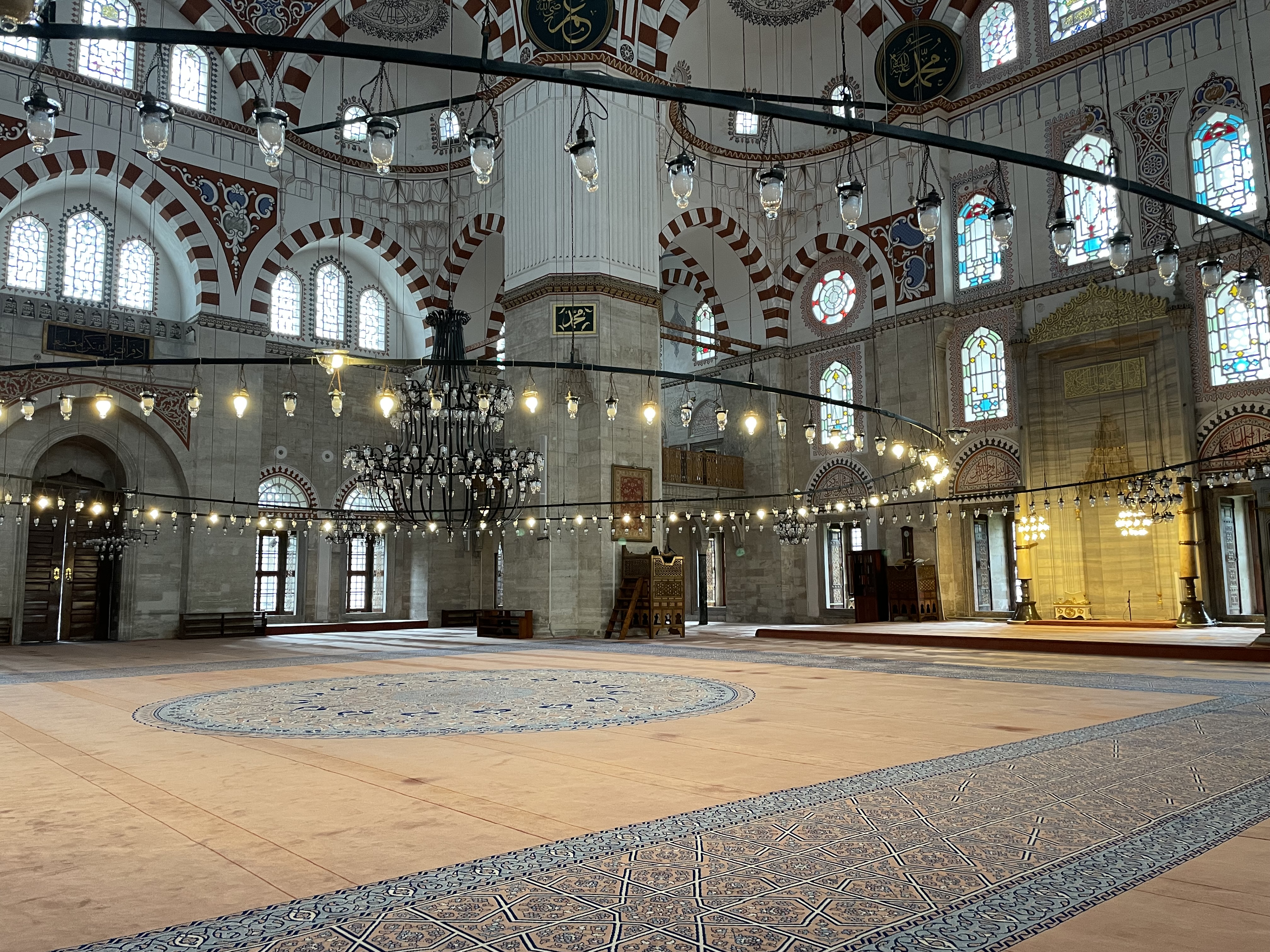
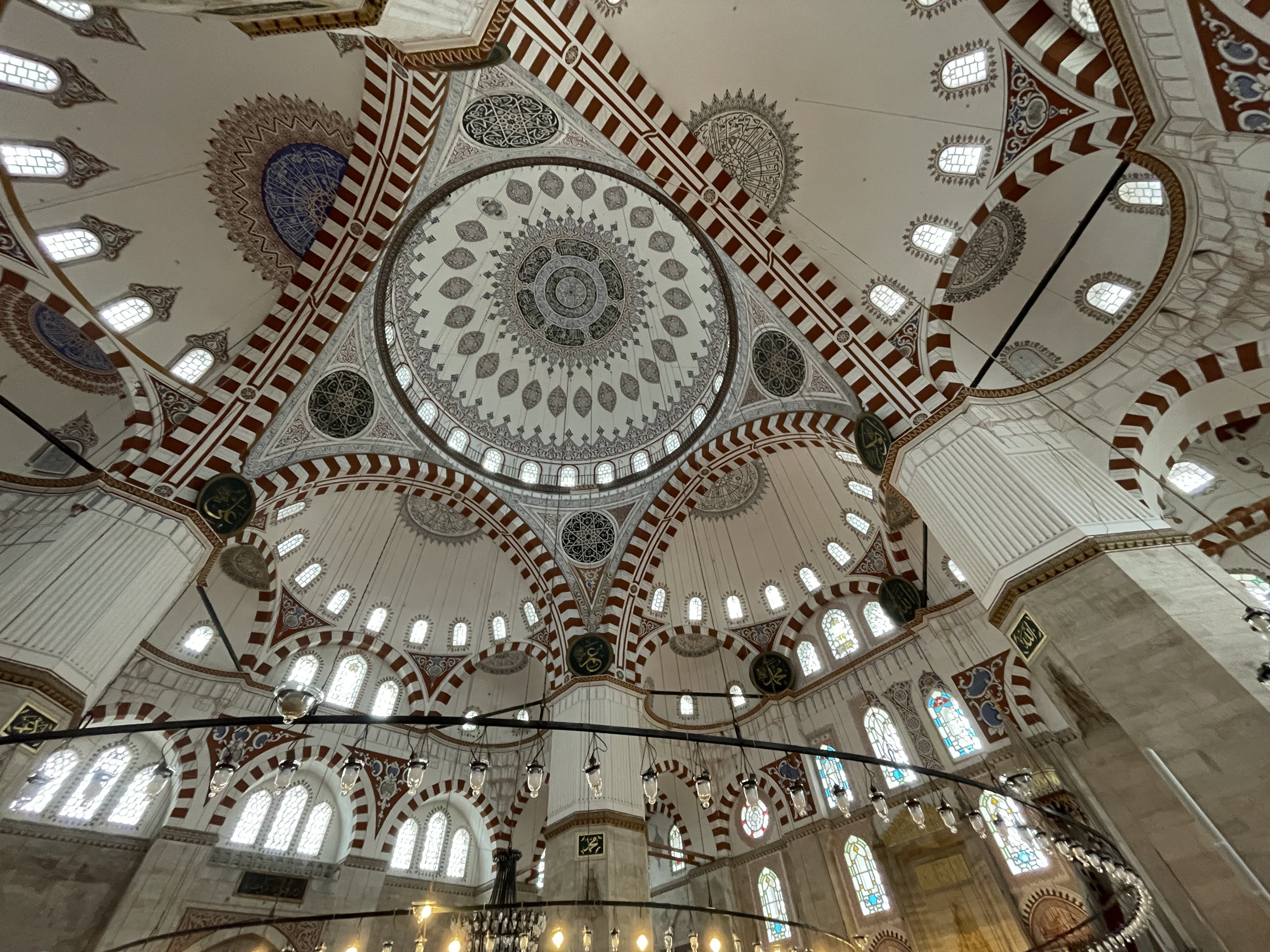
We returned to the centre calling in at the Şehzade Mosque – constructed at the order of Suleiman
“as a memorial to his favorite son Şehzade Mehmed (born 1521) who died in 1543 while returning to Istanbul after a victorious military campaign in Hungary.”
One feature of the walk through the city was the regular sighting of people pulling a form of truck filled with what we assume to be ‘dry waste’.
Were they employed by a an agency or company… or were they simply individuals working (in competition with each other) as and when someone wished to use their services?
Individuals gaining whatever income they can by offering such basic services has a long history & still forms the basis of what is now called the Gig Economy (but at its economically and socially lowest level).
We felt that the final picture (taken late in the day) gave us an answer as it seemed that (as we watched) the man was looking hopefully at shops he was walking past…. hoping for employment?
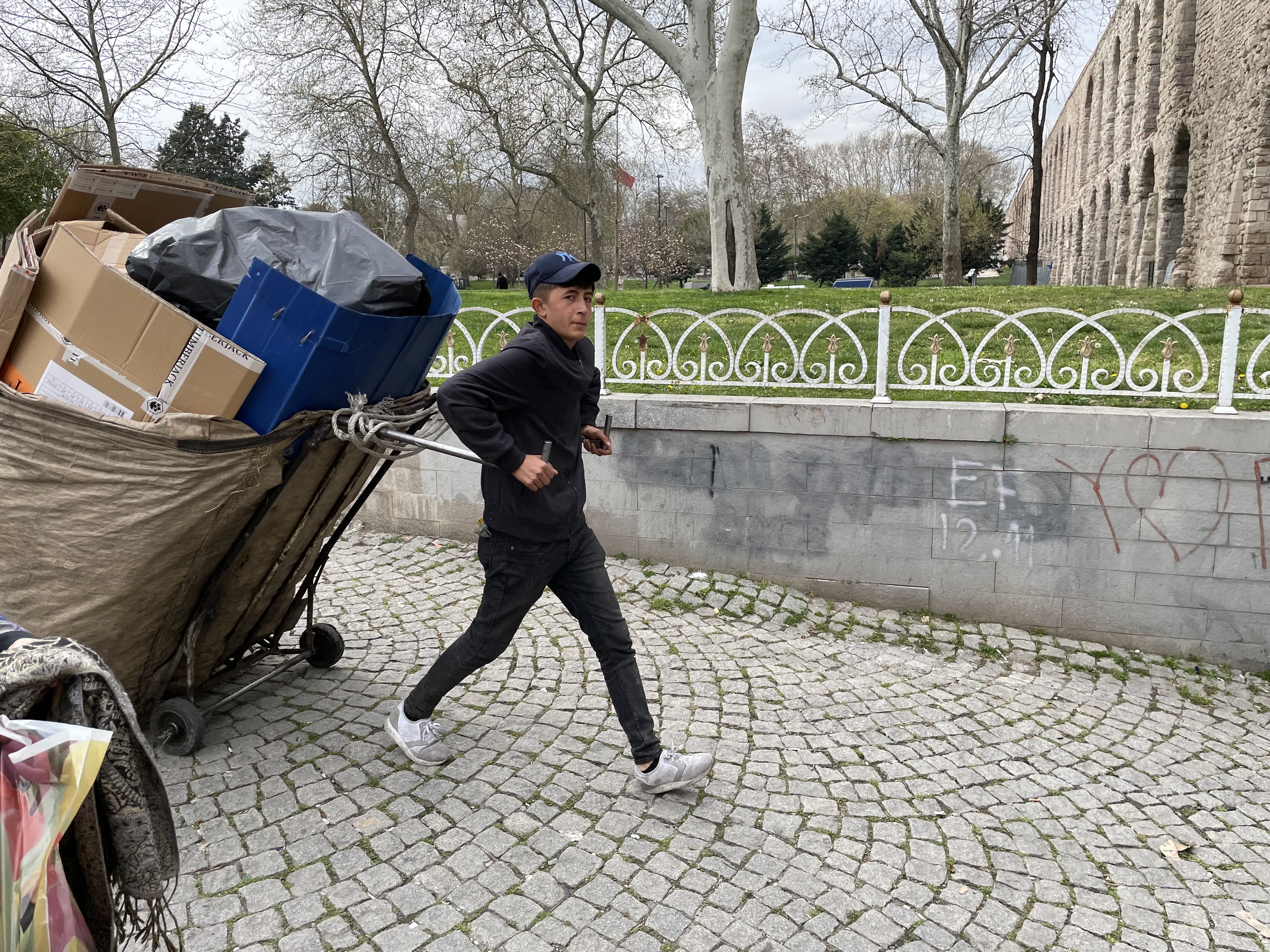
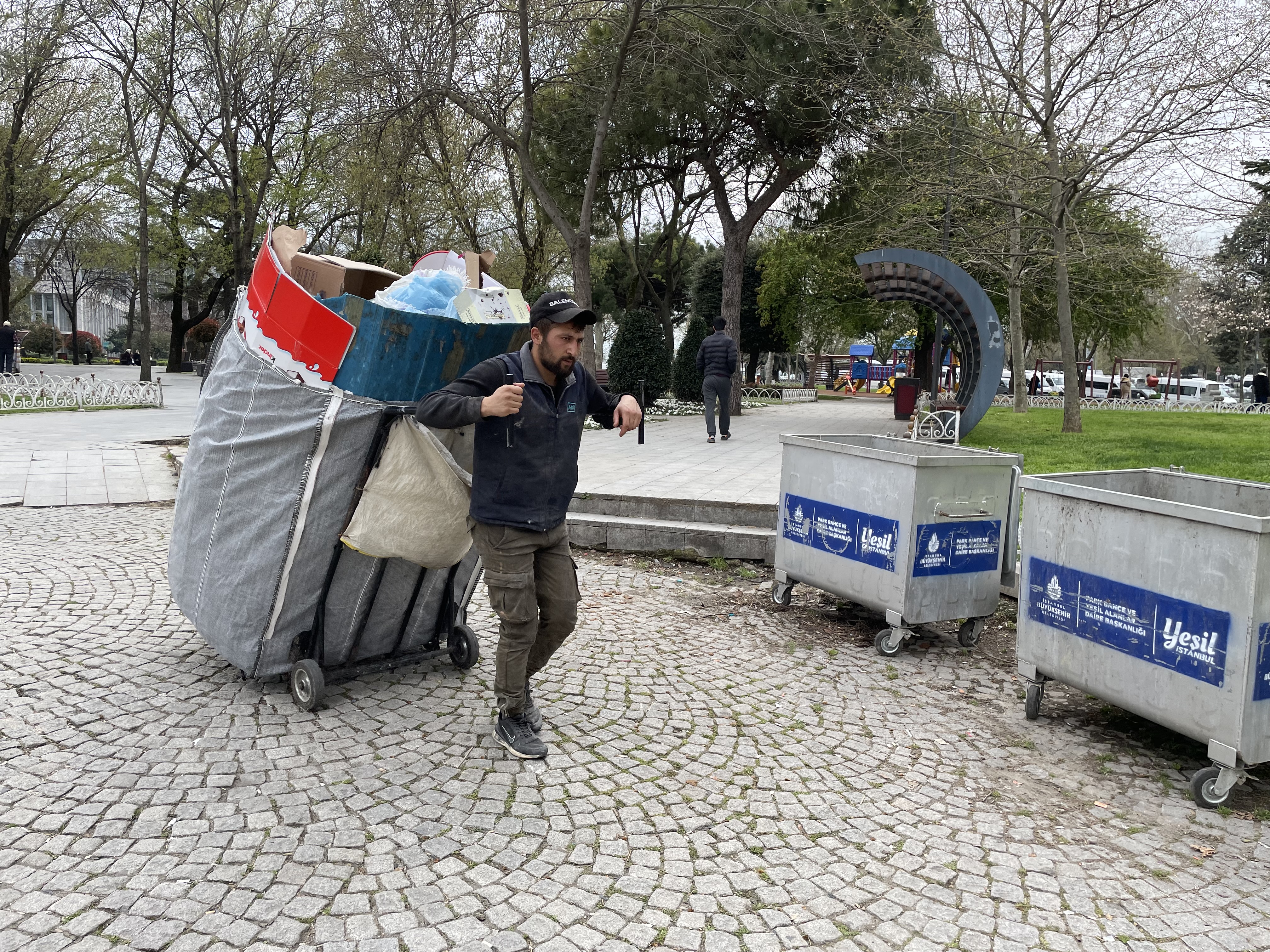
…..on seeing this I began to understand ….Jacqui’s offer of payment for the photograph was easily accepted.
How much do we ever understand of other places, other people?
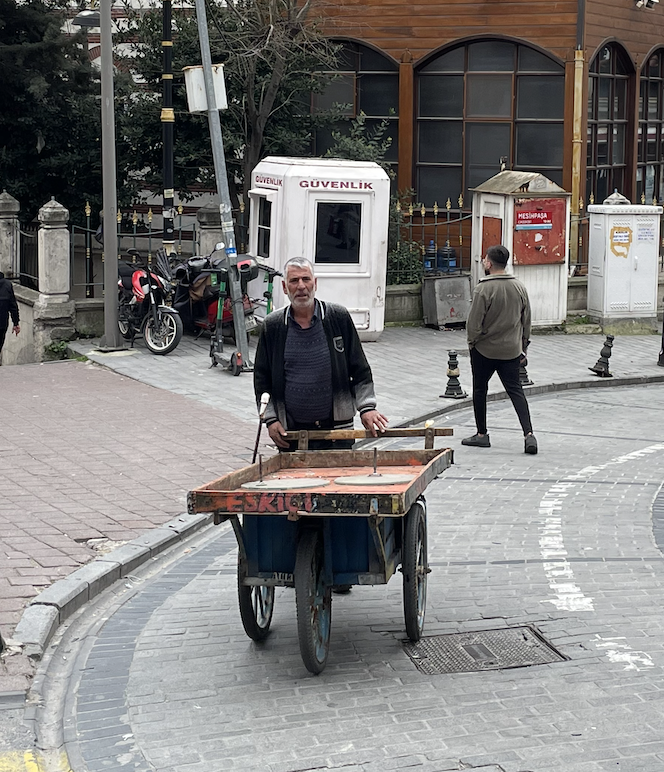
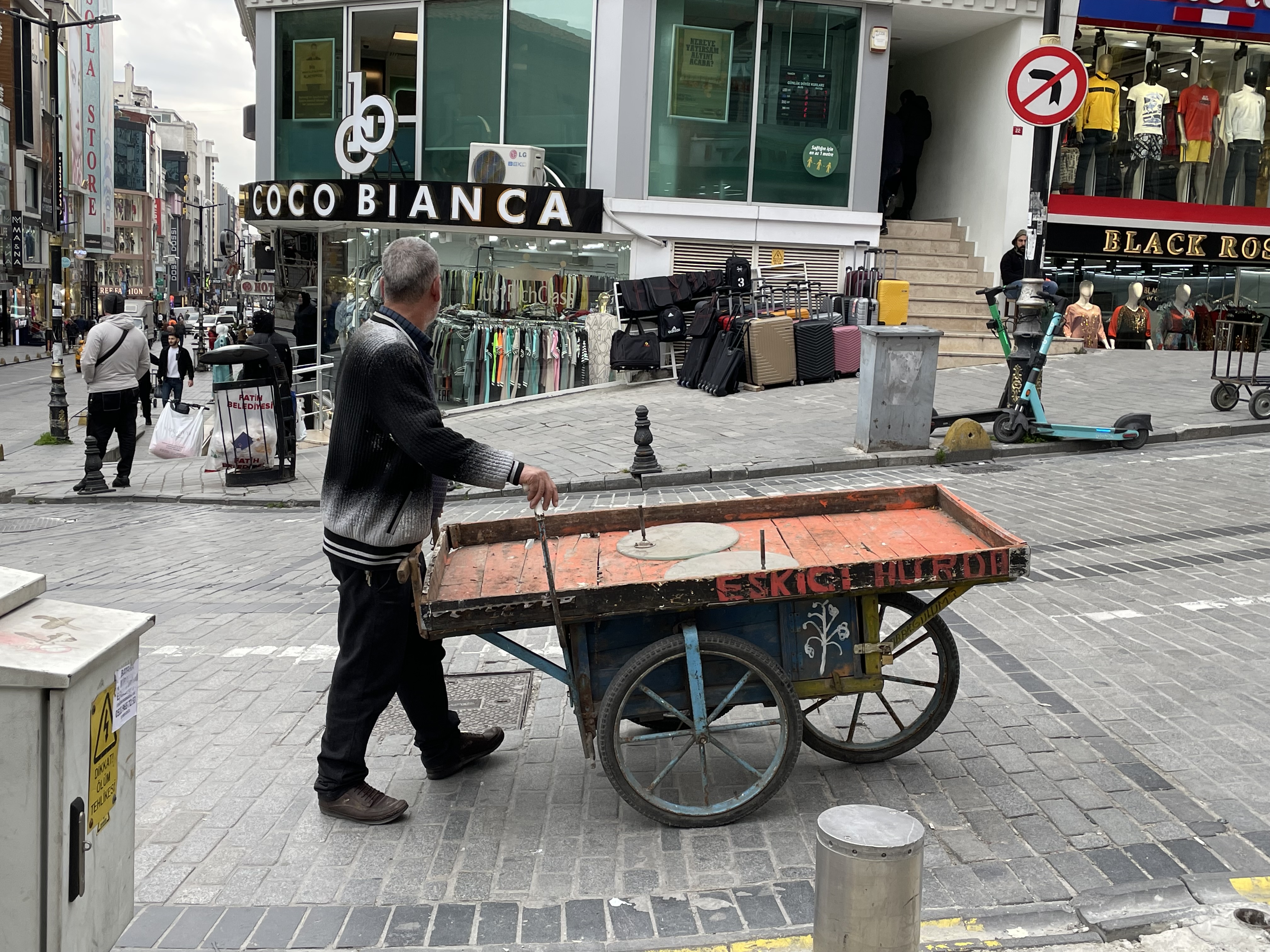
We managed a slight conversation (gesturing that we had taken photos) & paid him for the allowing us the privilege.
We (visitors, tourist, pilgrims, researchers) take our photos in order to enhance the telling of our own story. For some pictures payment is an obligation.
As we walked through the Gulhane Park gardens near the hotel we saw storks…. Recent Spring arrivals that on Journey 2 we never saw north of Sofia… we remained ahead of them.
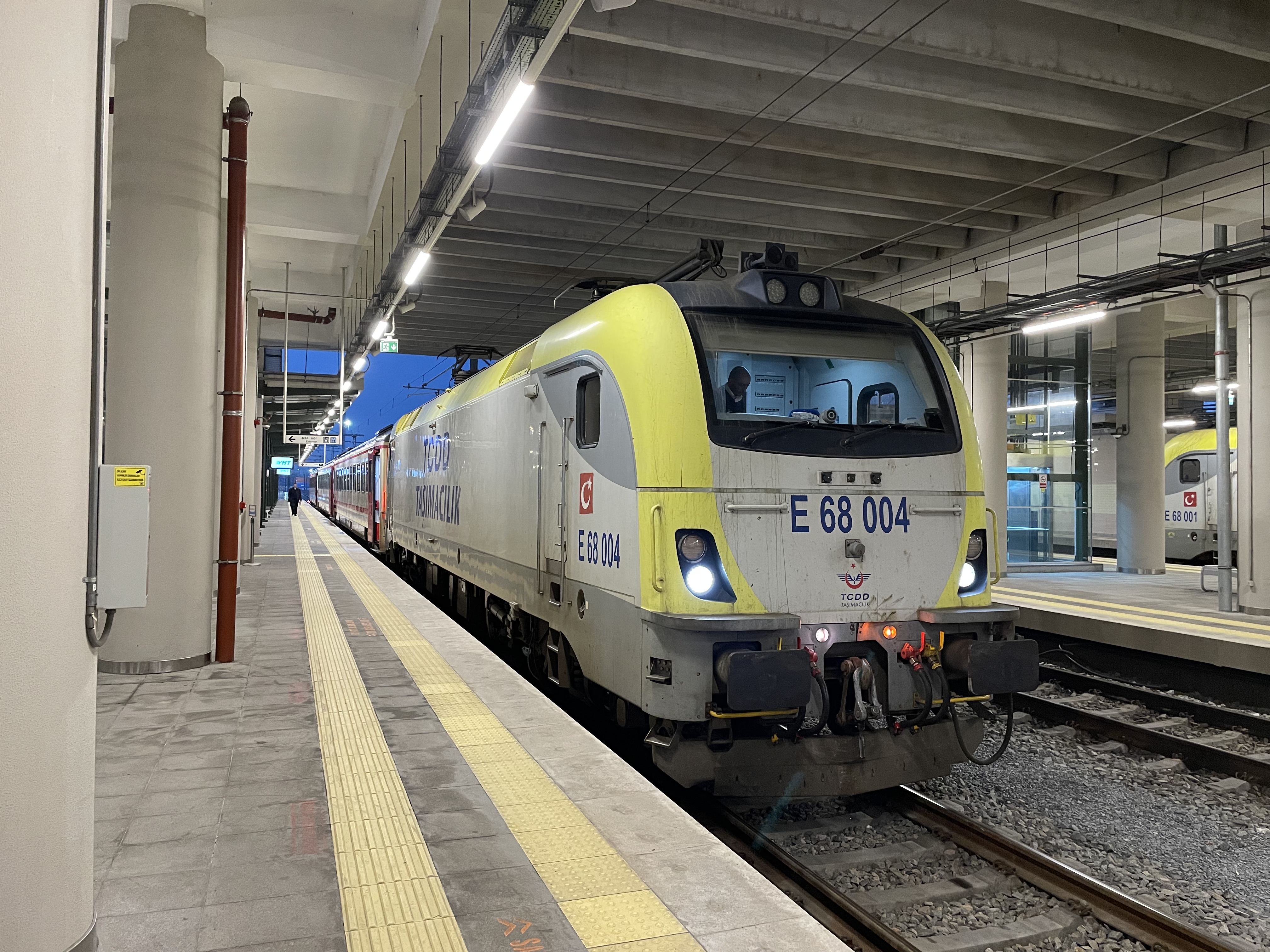
On to Halkali and the Sleeper Train to Sofi
 Inspirational Pathways