BUCURESTI
Had accommodation at the Lido Hotel, first visited in 1991.
Much has changed – but not everything: the 1930’s lift shaft (the lift itself is recent)

The Romania of 1990 was almost unbelievable. A nation fearful, ravished & traumatised whose inhabitants walked the streets with their heads held down, private, suspicious & seemingly, fearful.
… the traumatic effects of Europe’s recent history is a whole lot closer to the surface in Romania than it is Britain.
It’s still dealing with the consequences of the second world war and its aftermath in very direct ways…an Irish writer who lives in Bucharest, tells me how different those born in the 1990s are from the generation that preceded them.
“They have no idea. Which is great. They are healthy.
They really are no different from young people in western Europe whereas their parents are a different species. They were totally traumatised and still are to a degree.”
Michael Bird
Ceaucescu’s policies had left Romania battered, bewildered & impoverished. Many we met could barely believe they had achieved any freedom.
Their fears were reinforced in June 1990.

To suppress opposition the ‘new’ government encouraged a violent invasion of București by miners from the Petroșani area (a remote series mining communities 300+ kms/7 hours from București)
The ‘Mineriad’,
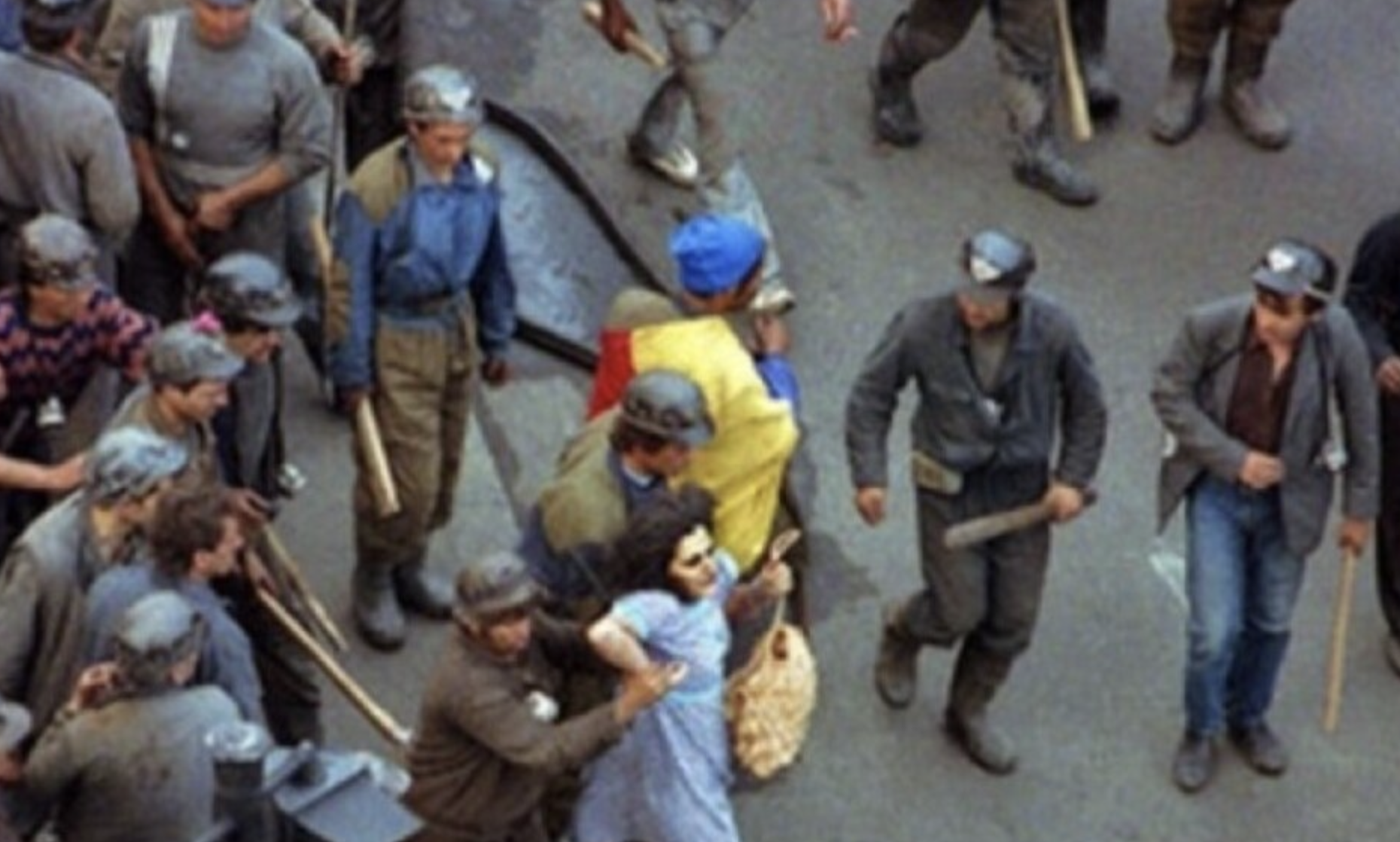
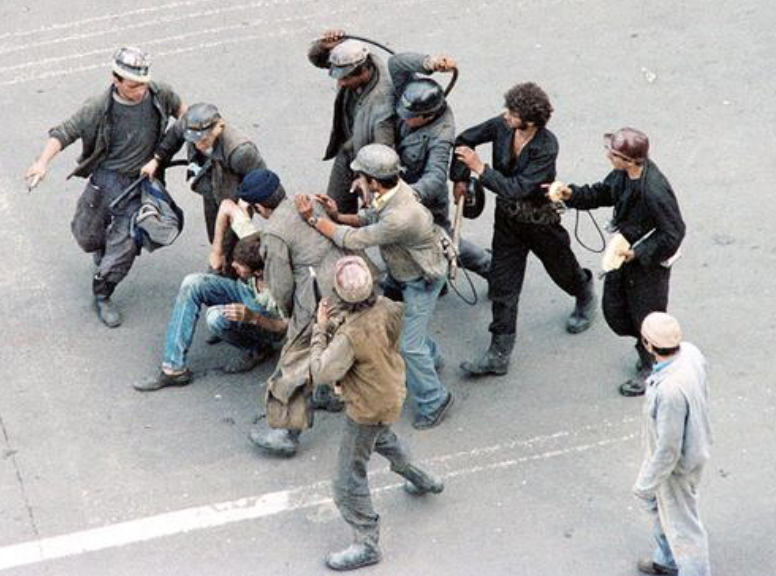
The above writer stated
Romania in the winter of 1991, and of all the post-Soviet hellholes I visited during that period, the country seemed stuck in a different category of bleakness. I’ve never been anywhere where people just looked so beaten down and depressed.
After a year of hosting guests through our link with Râmnicu Vâlcea (established in 1990) I flew from London Heathrow into București Otopeni Airport. My first flight since 1964! I stayed at the Lido Hotel.
In 1991/92 the Lido with its (empty) swimming pool was a meeting place for westerners. The advice was ’sleep at the Lido, eat at the Intercon’ (Intercontinental Hotel). Both hotels had bars that were populated by somewhat over-dressed young-ish ladies who smiled warmly when anyone (‘male’) entered. These ladies were managed, at the Lido, by someone called Maria. Conversations with the group were never difficult. One of my colleagues (Graham) spent hours in the nighttime talking to Maria about the nature of the work she managed.
The Bucuresti of 1991 had not changed greatly from Ceaucescu’s time. I was told ‘Don’t drink the water – but if you become ill we fly you directly to Vienna’, there were few shops (though a plethora of booths and stalls selling drinks, cigarettes, second-hand clothing), no street lighting & very few social places such as restaurants. Members of NATO nations were entitled to visit clubs held at various nationally managed & controlled venues. The Brit Club was held in a bar attached to the Embassy but the German Club had its own premises – with bierkeller & imported keg beers (the Brit Club had only Boddingtons’ cans).
There were was very little traffic. In ?December 1992 with friend Graham & the UK Embassy Anglican Chaplain we walked for an hour back to our accommodation from the German bar – along the centre of the snow filled major roads (Calea Victoriei, through Piața Romană) – noisily snow- balling as we went. No traffic.
At that time a team of US engineers was working on the inner structures of the Intercon Hotel. Some of what they found (presumably varieties of rotting material) and the difficulties they had with the locally attached workforce was clearly having a serious impact on mental health.
I met a British wagon driver who was delivering an imported small Ford truck to be part of the new Coca-Cola sales network (there was no ‘coke’ before that time). He told us that he’d arrived at the depot and had to wait for 2 days before the local workers managed to find an improvised ramp and unload the wagon: ’Someone would turn up and I’d ask him to get a ramp. He’d agree and go away – and never return. This continued for 2 days’
An living example of the joke about the USSR:
‘They pretend to pay us. We pretend to work.’
We stroll around & discover, amazingly, that the dry swimming pool is, apart from the trees that have grown around it, exactly the same as in 1991.
The reason being that the ownership of the pool is now different to that of the hotel – and the owner will not sell. The attitudinal impact of ‘those day’ survives.
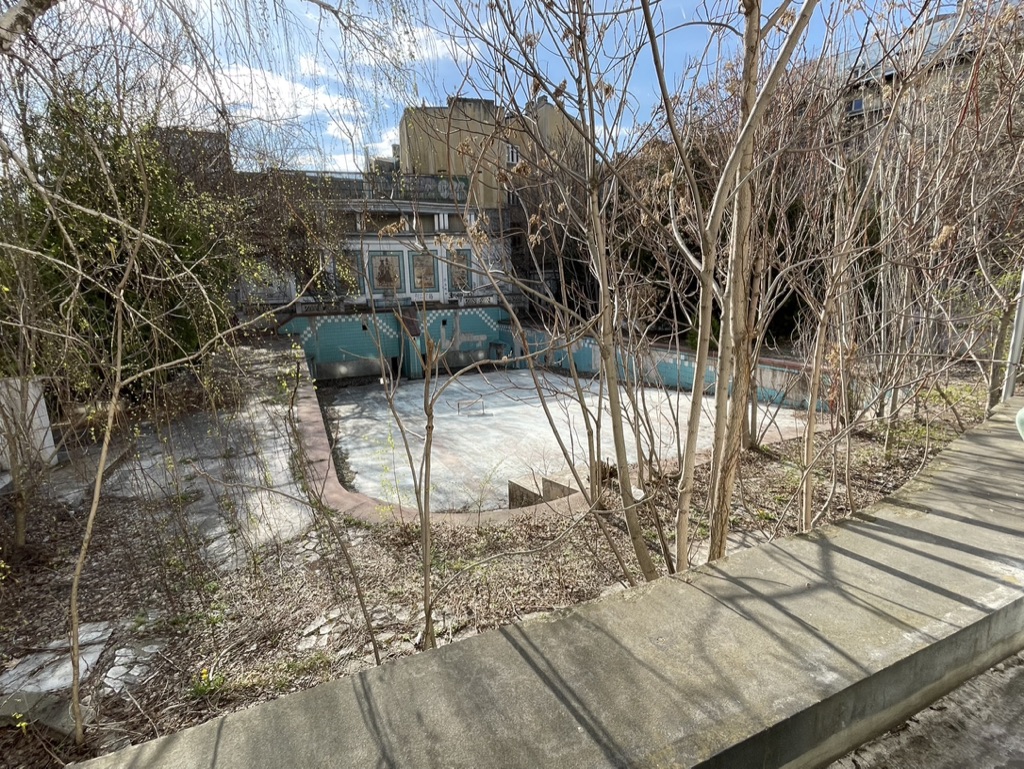
Though never in use, the swimming pool terrace was a pleasant place by which to sit & talk with others – some of the few visitors to the city who were largely officially or charitably (eg nurses) assisting Romania and or exploring the commercial opportunities of a largely unregulated nation:
The Romanian-Australian Cement Deal
June 1992: we sat by the dry swimming pool. 2 Brits, 2 Canadians & the Man from Oz. The Canadians were nuclear power specialists part of a team sent to visit & check the state of the Romanian Nuclear Power station on the Danube.
We (the Brits) were heading west & then north visiting contacts. The Australian was exploring the possibility of buying cement for export to Oz. He was very excited as he’d found a seller (at that time all manner of opportunities existed as, since the collapse of State control there were no controls on resource exploitation – and Romania being largely on suitable rock, could produce vast quantities of cement). The seller’s price was such that the Australian believed he could close a deal that leave him an incredibly wealthy man. He already knew he could ship the cement from a Romanian Black sea port.
Two weeks later we were back at the Lido – as were the nuclear specialists (reassuring us that the nuclear plant on the Danube was reasonably safe!). They had met ‘The Man from Oz’ and he was ‘over the moon’ with excitement. He’d closed the deal & now had only to ship the cement to Australia.
October 1992: I was back in Romania, this time in Sighișoara. Whilst there, a wagon from Newark (UK) arrived carrying charity supplies from UK to the town. With help from our local contacts we were able to direct him to his destination.
We chatted and he told me how the boss of his company was desperately trying to find wagons to use in Romania.
Why?
Because he had contact with an Australian who had a huge amount of cement that he need to to transport from Central Romania to a Black Sea port where a ship was waiting to receive it – but there was no transport capable of moving it.
The story remains …….. incomplete!
Whilst exploring the latest developments in the Lipscani we toured a market of local products in Hanul Manuc.

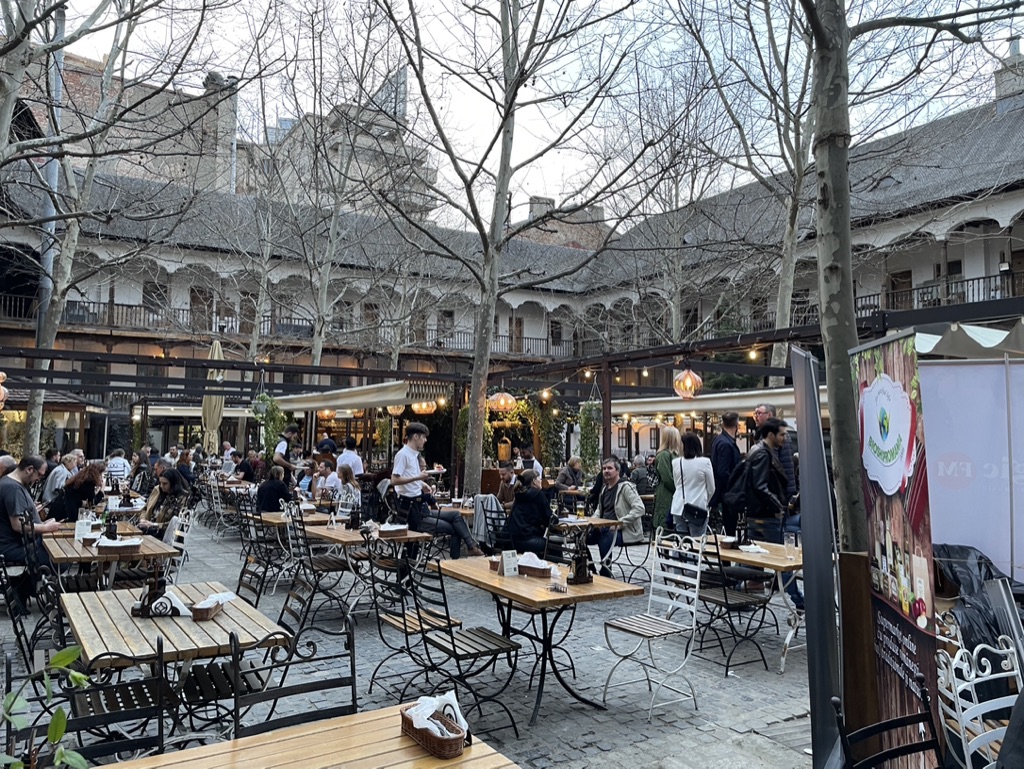
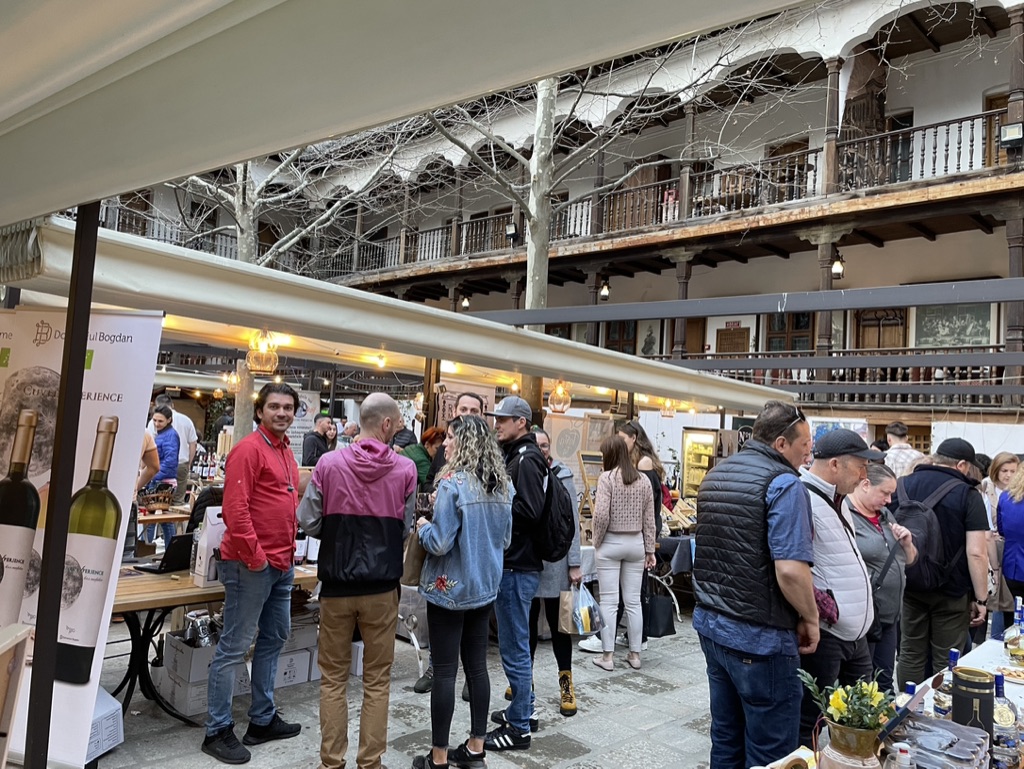
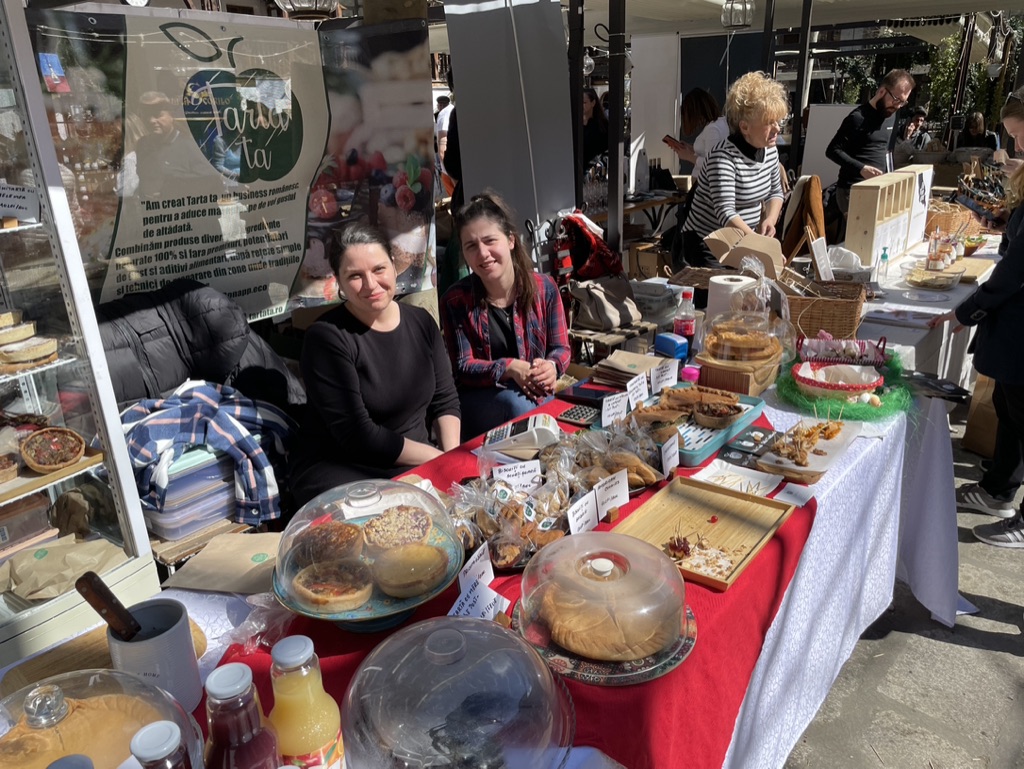
…. and bought Blackberry and Raspberry wine…..
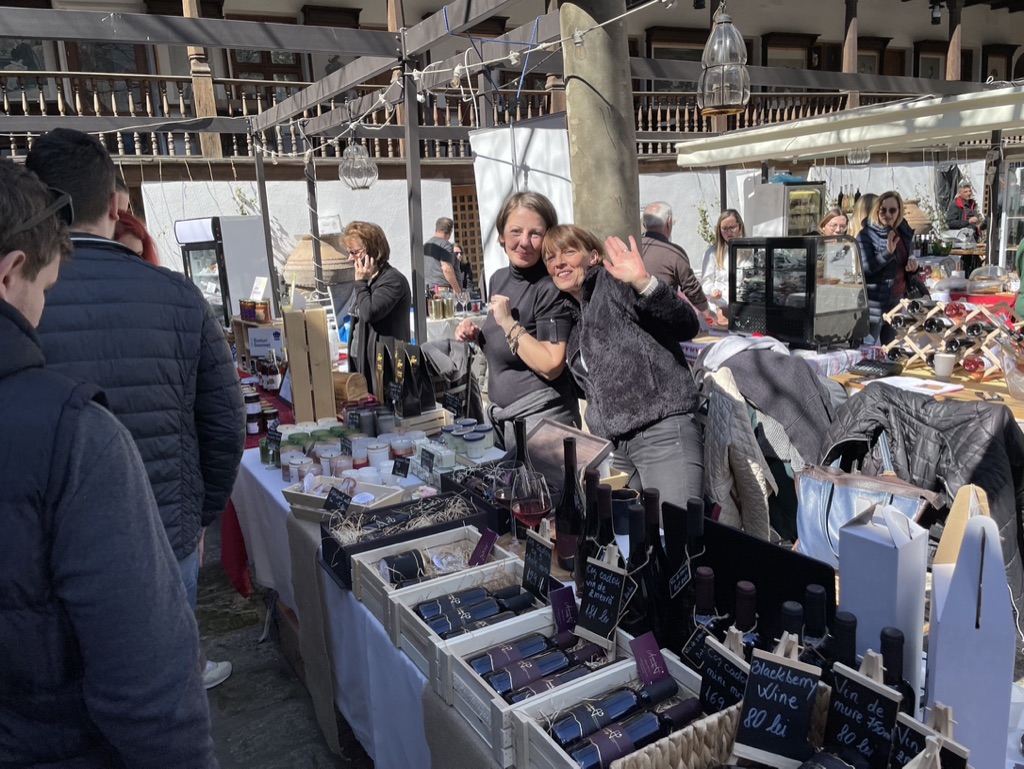
Old haunts and powerful new experiences. Now a smart hotel but with outside dining in the courtyard of a traditional ‘Han’. Here we bought portions of an excellent traditional savoury pastry (whole meal/organic etc) and bottles of raspberry and blackberry wine…..
WhatsApp
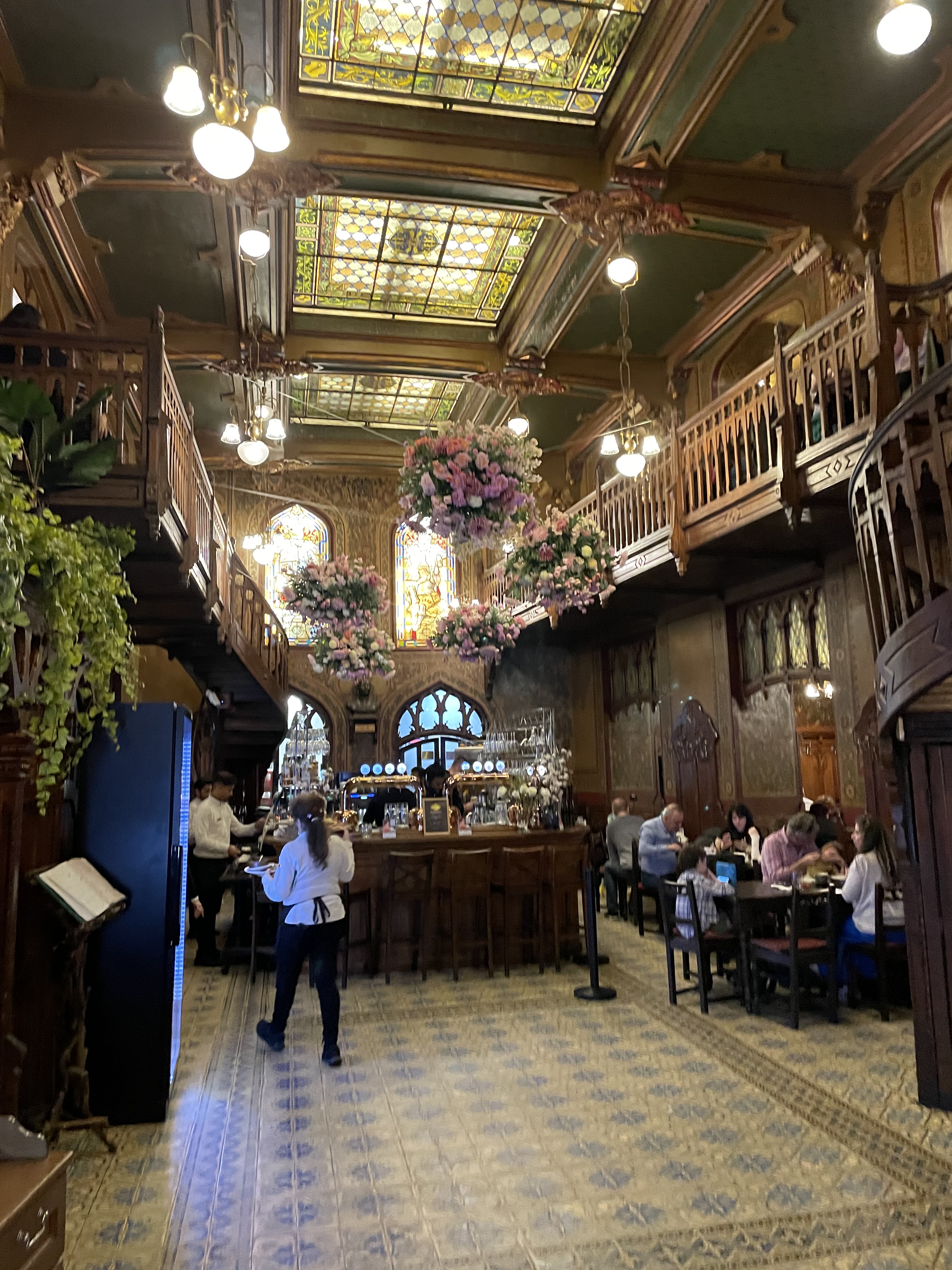
The other traditional place …. Cara cu bere was as busy as usual.
WhatsApp
Sunday 26th March
The clocks changed to Summer Time – and we went to morning service at the church.
București haș an Anglican Church which in 1992 we were allowed to use for a workshop event with a group from Râmnicu Vâlcea.
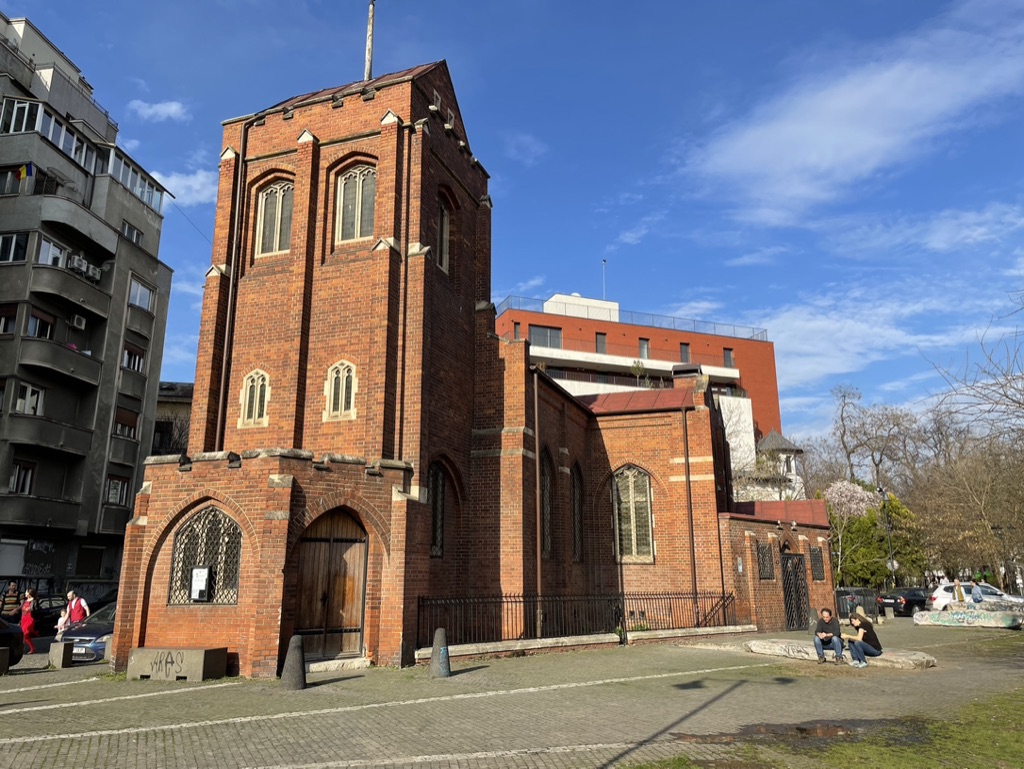
The place has always been a resource
– in Communist times where it was possible to meet those from beyond the Iron Curtain (but perilously, as the Securitate always had a presence at services)
– in the years following the events of 1989 it was a place where groups and individuals engaged in assisting Romania develop new structures could share and support each other (some of the work in the health sector was very stressful)
– and always it had been & remains, a place where those in the international community who spoke or were learning English, could meet.
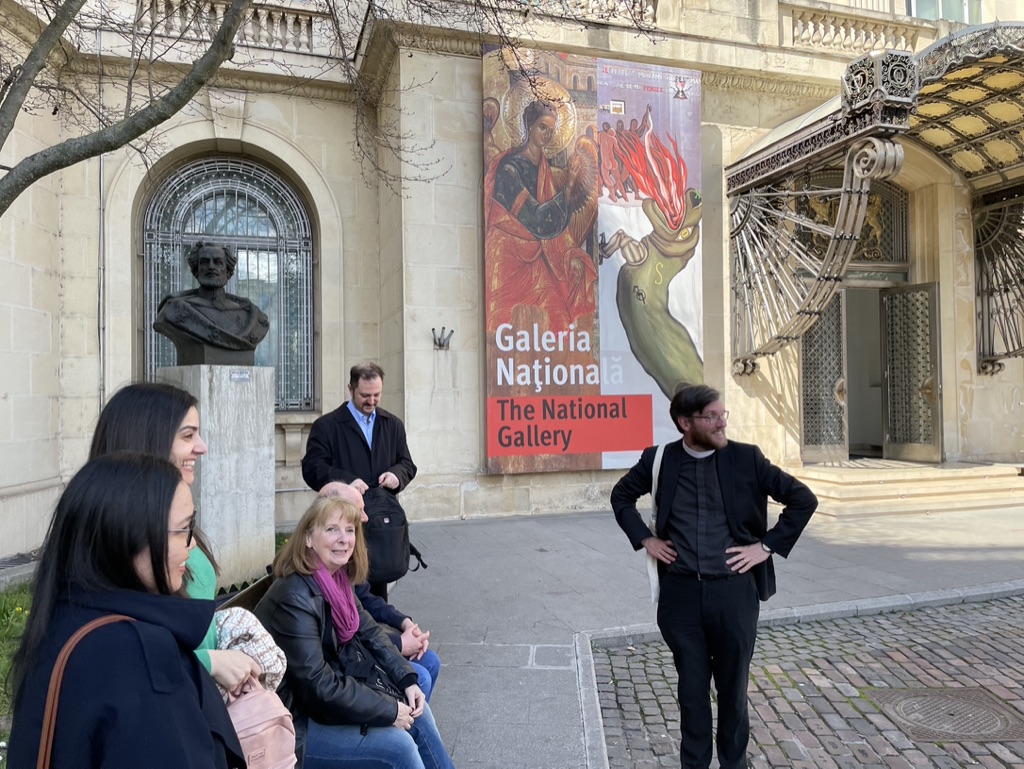
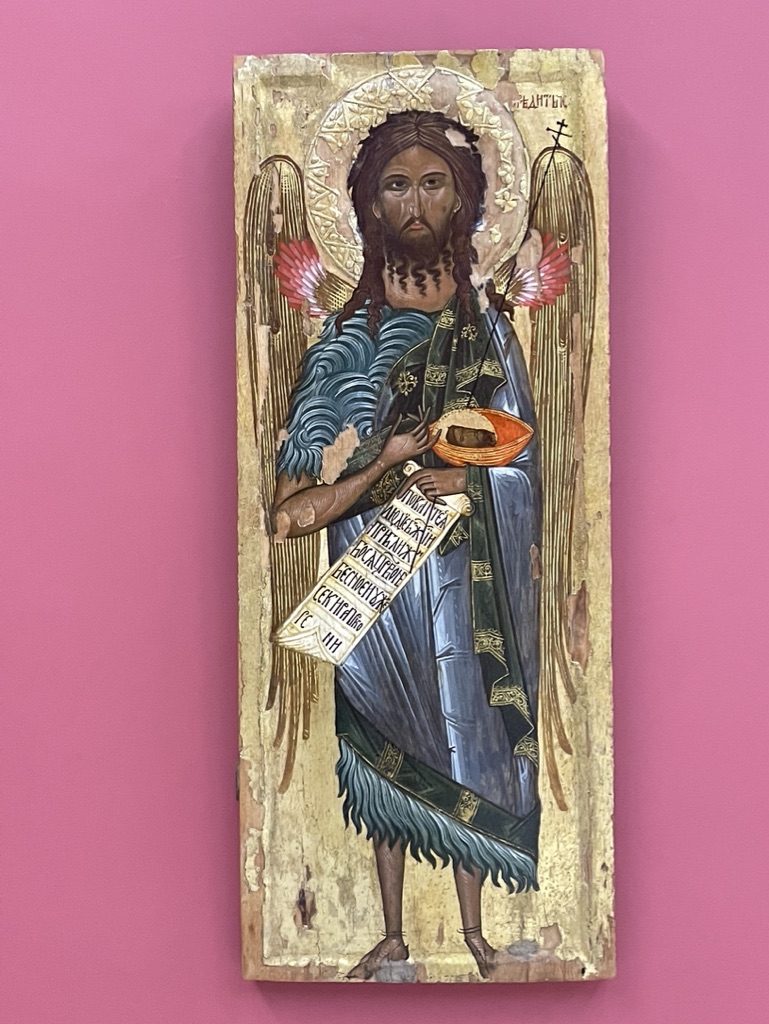
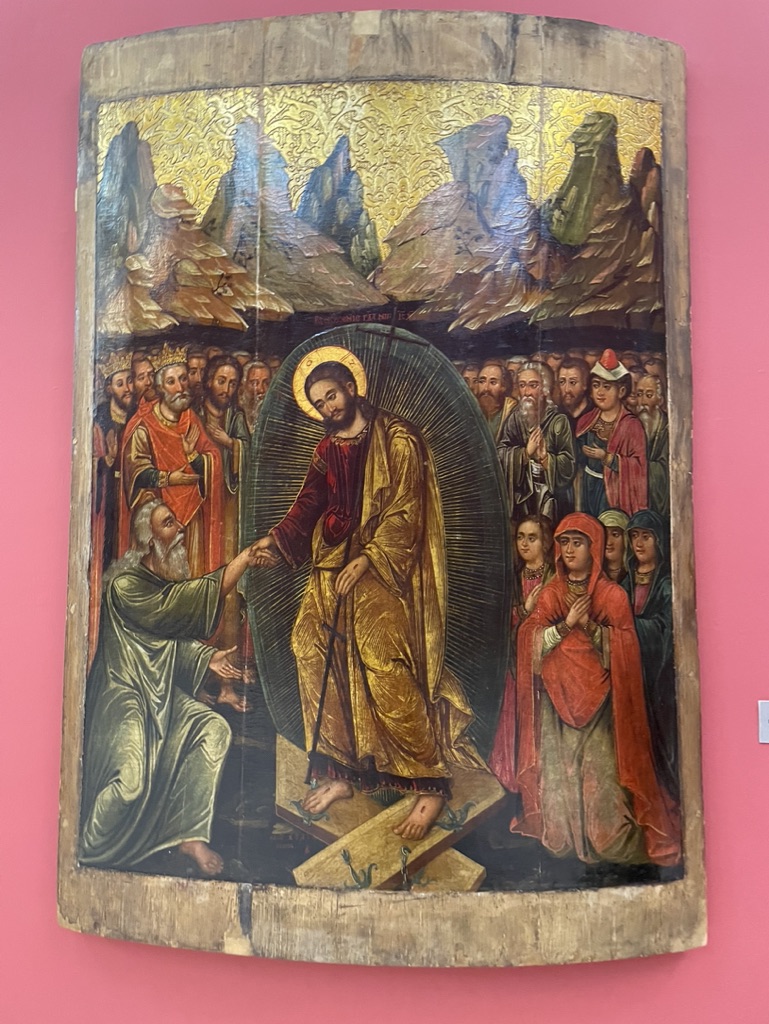
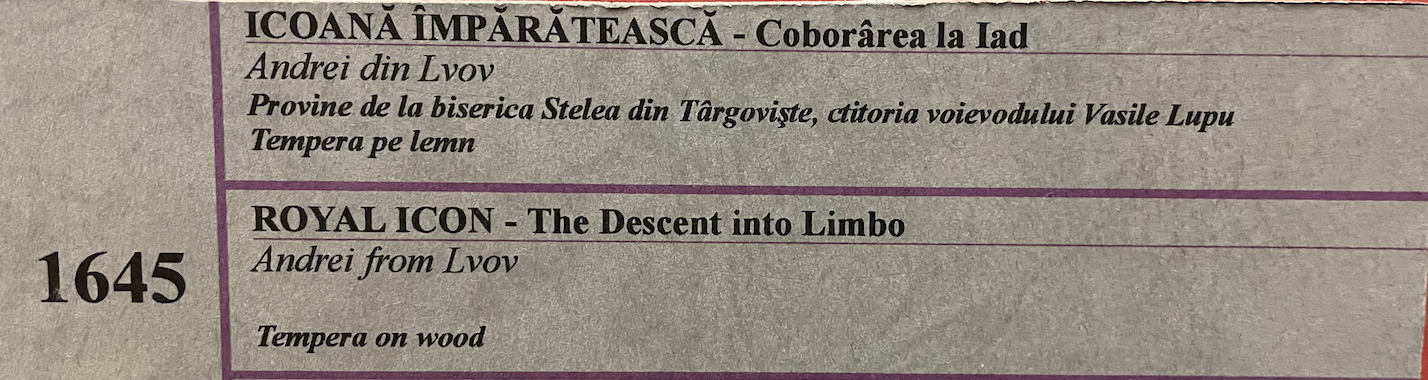
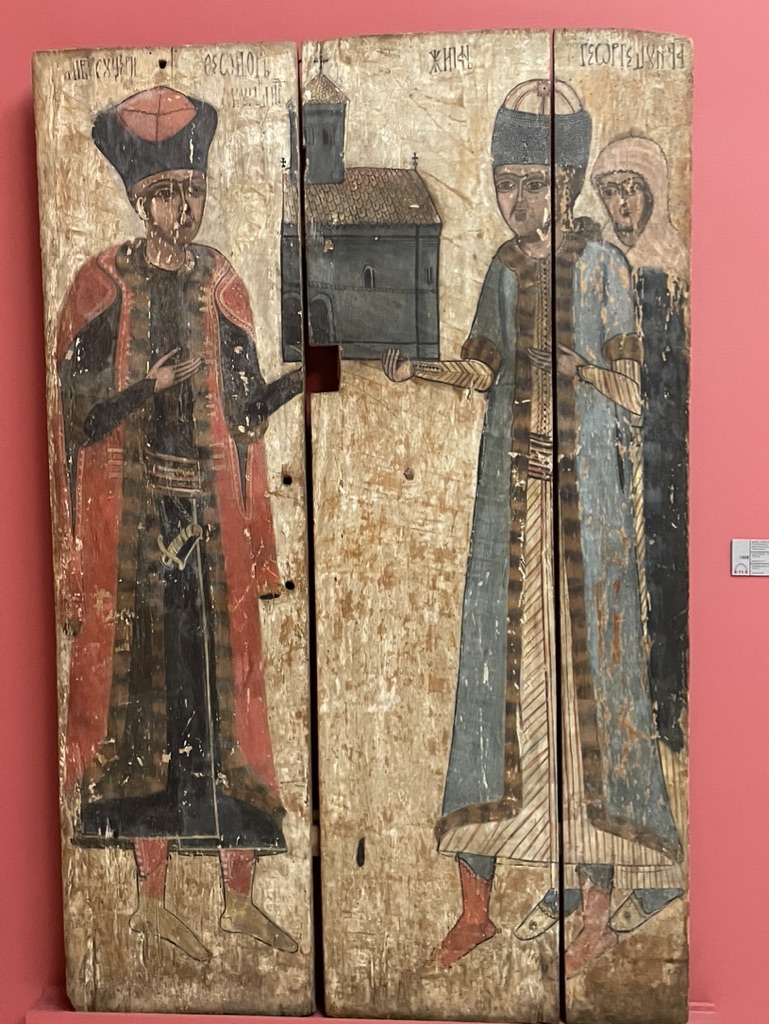
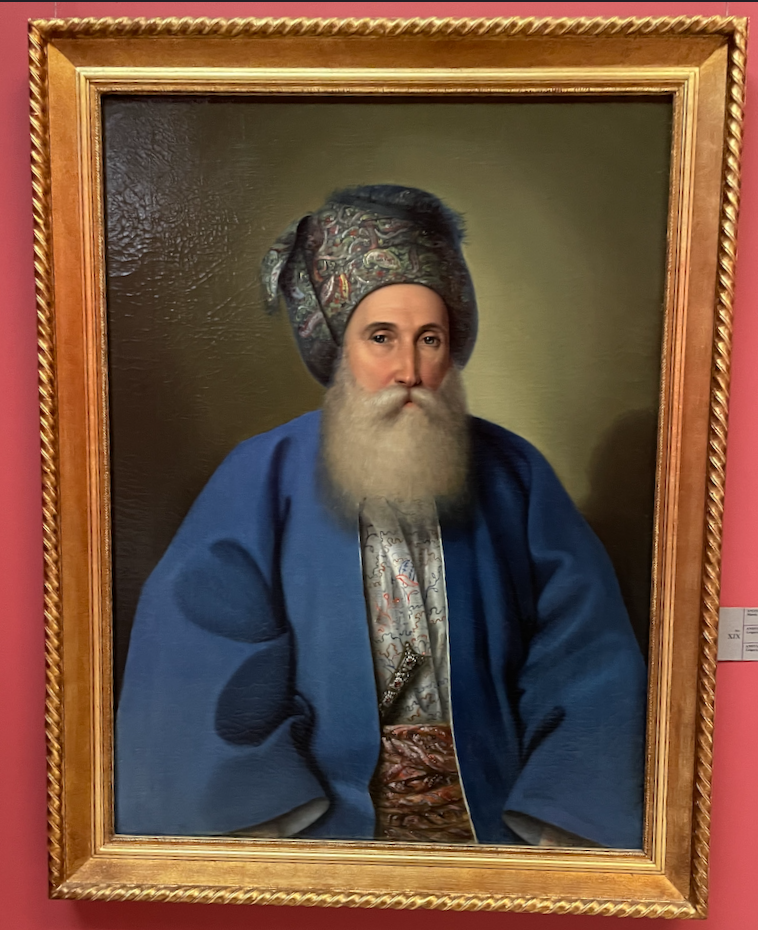
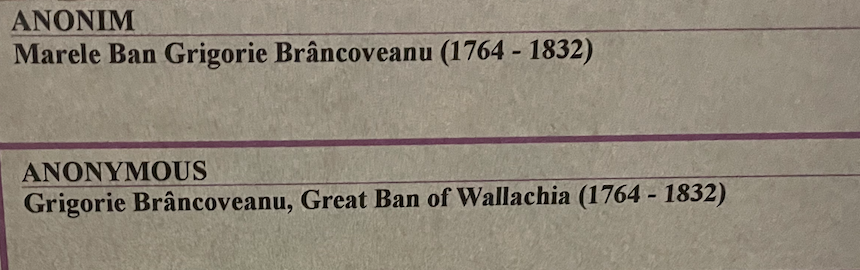
In the afternoon Father Nevsky led a group round the National Gallery, explaining some of the delights and details of the important collection.
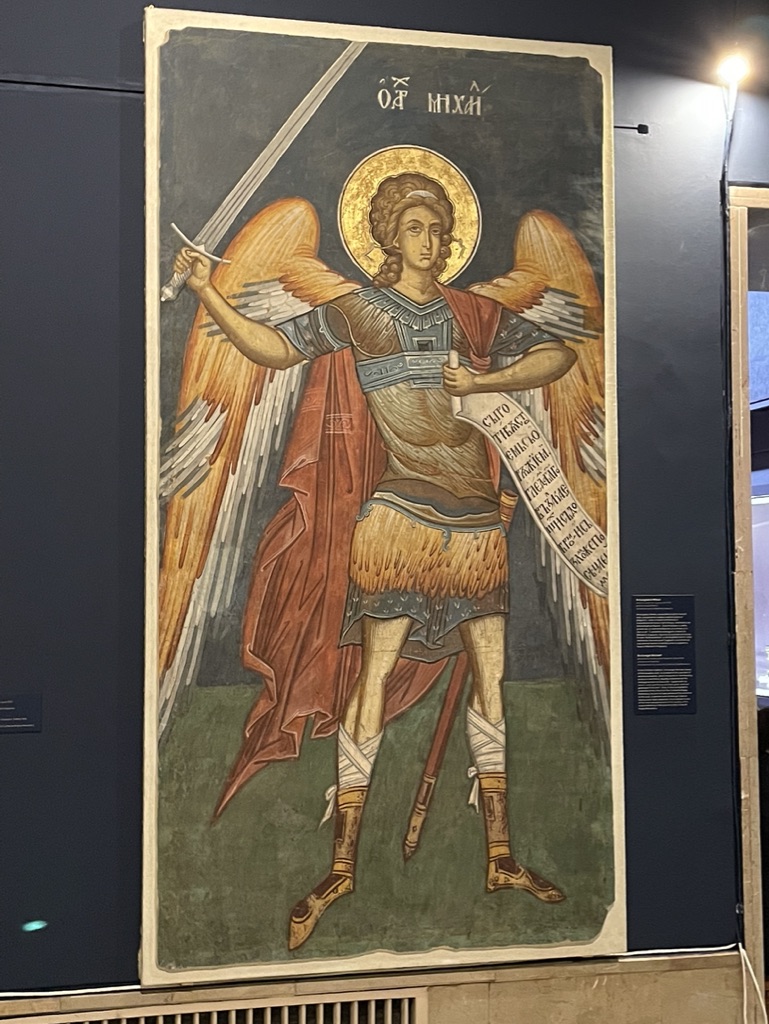
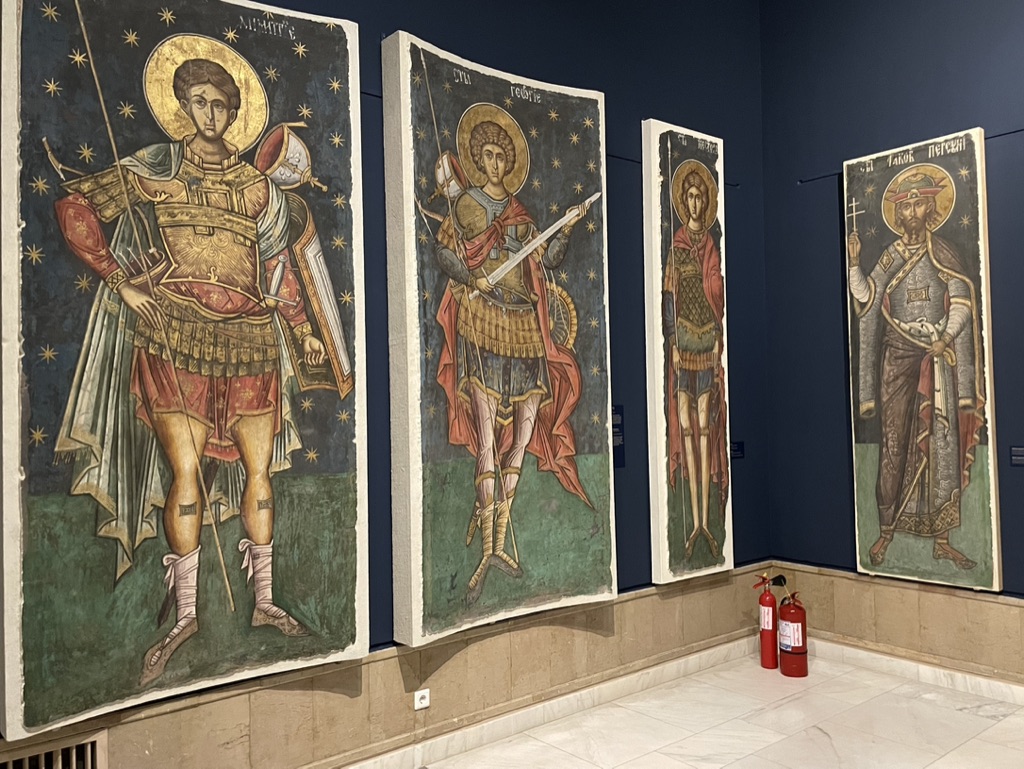
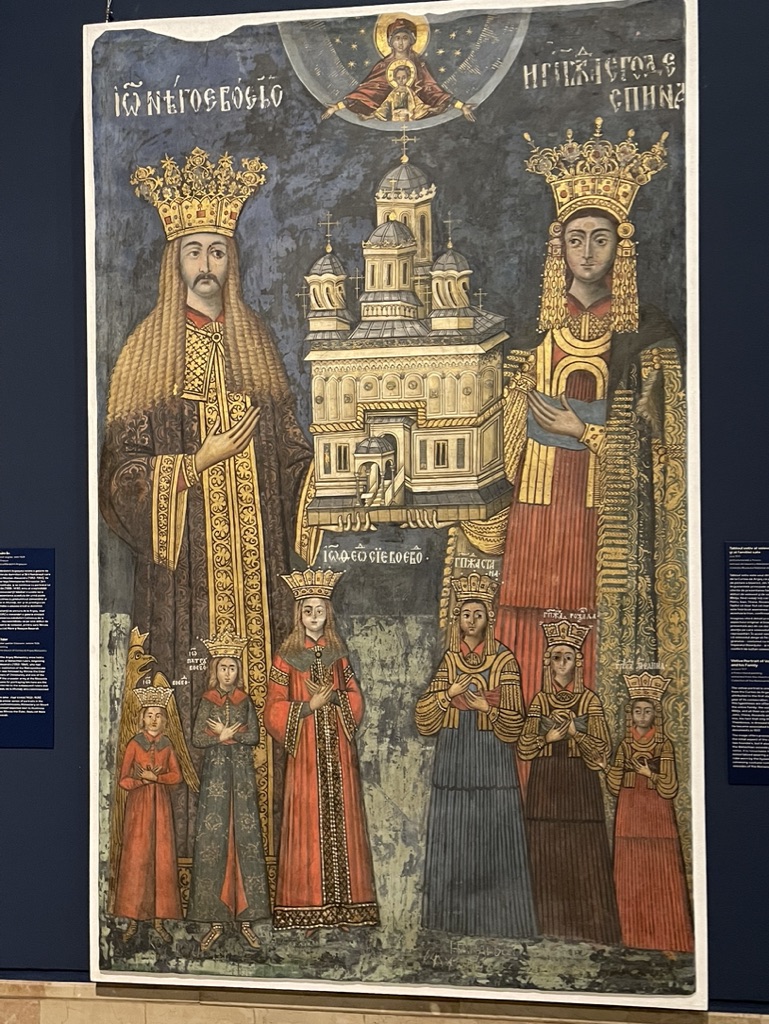
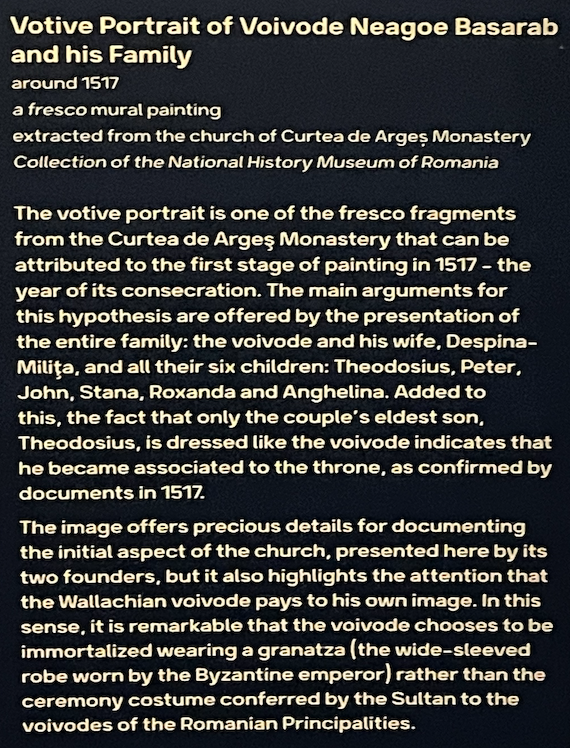
Romania maintains contrasting cultural and religious traditions (as the Black Church in Brasov exemplifies). Transylvania was, culturally, more western influenced
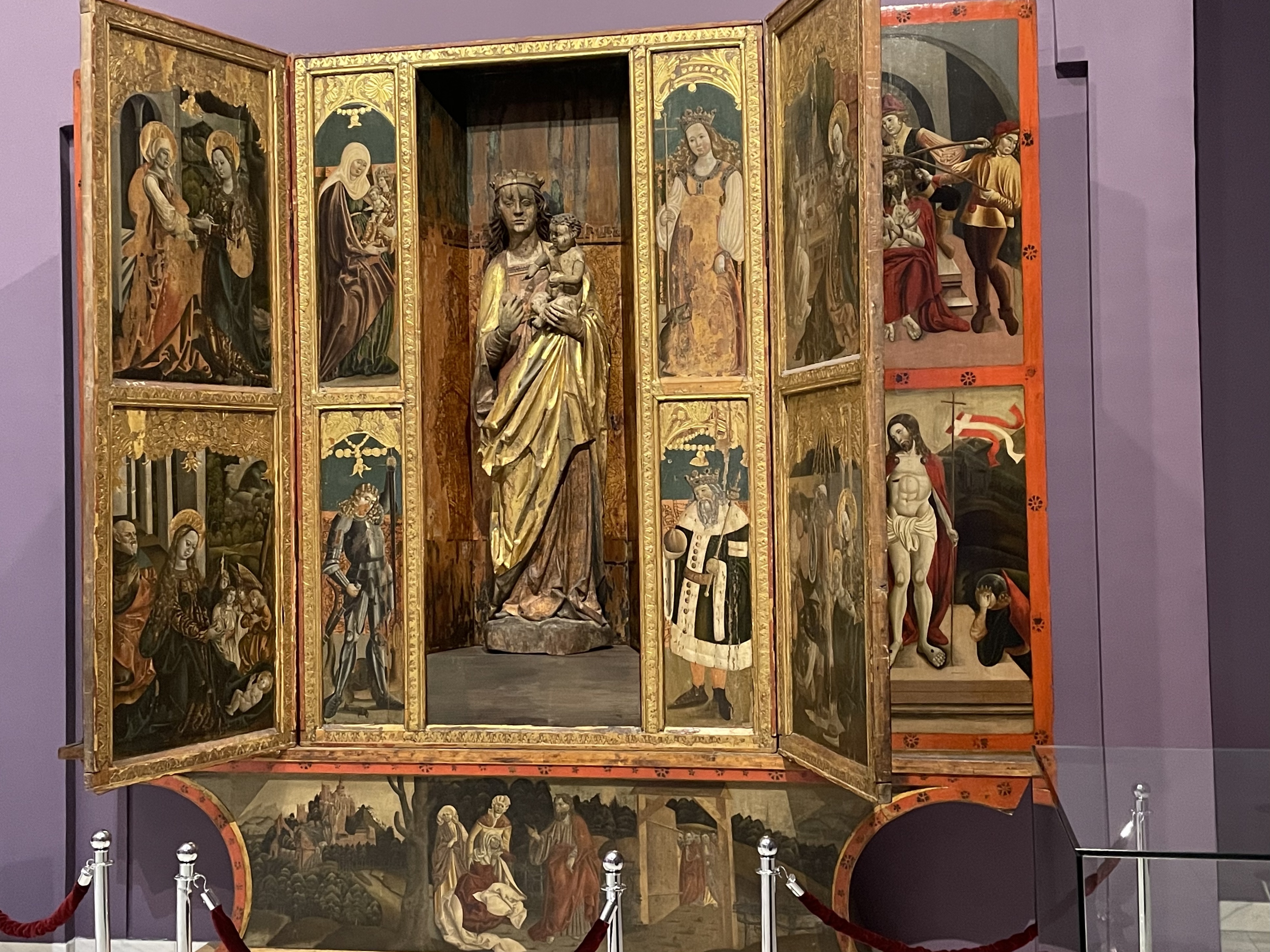
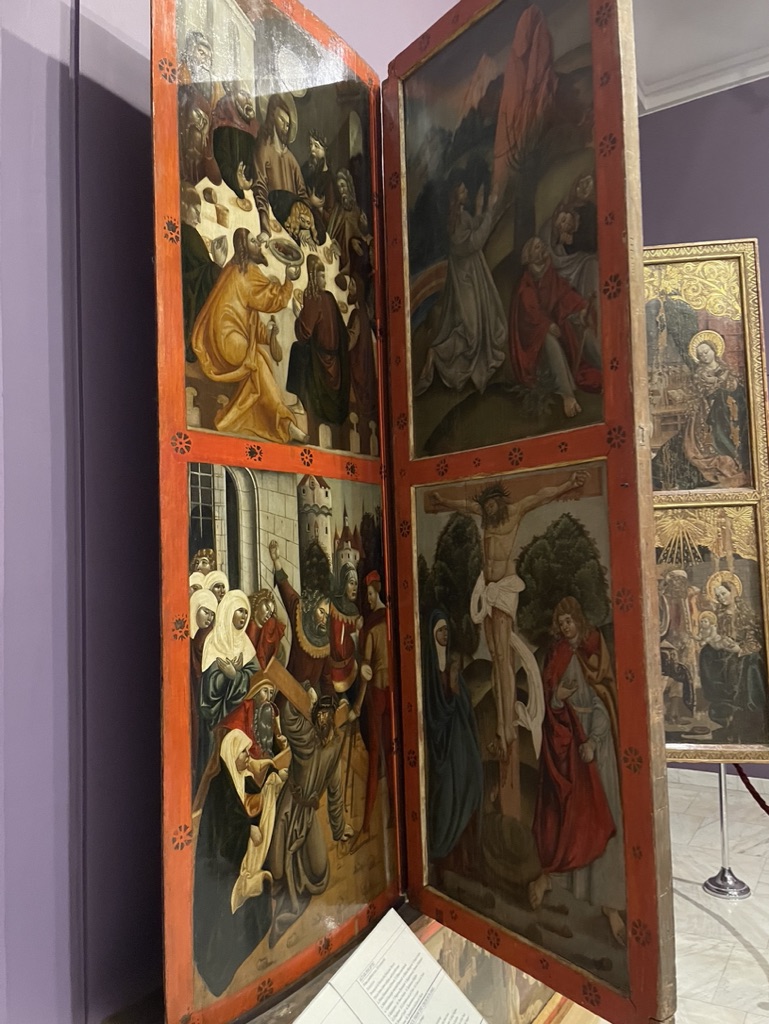
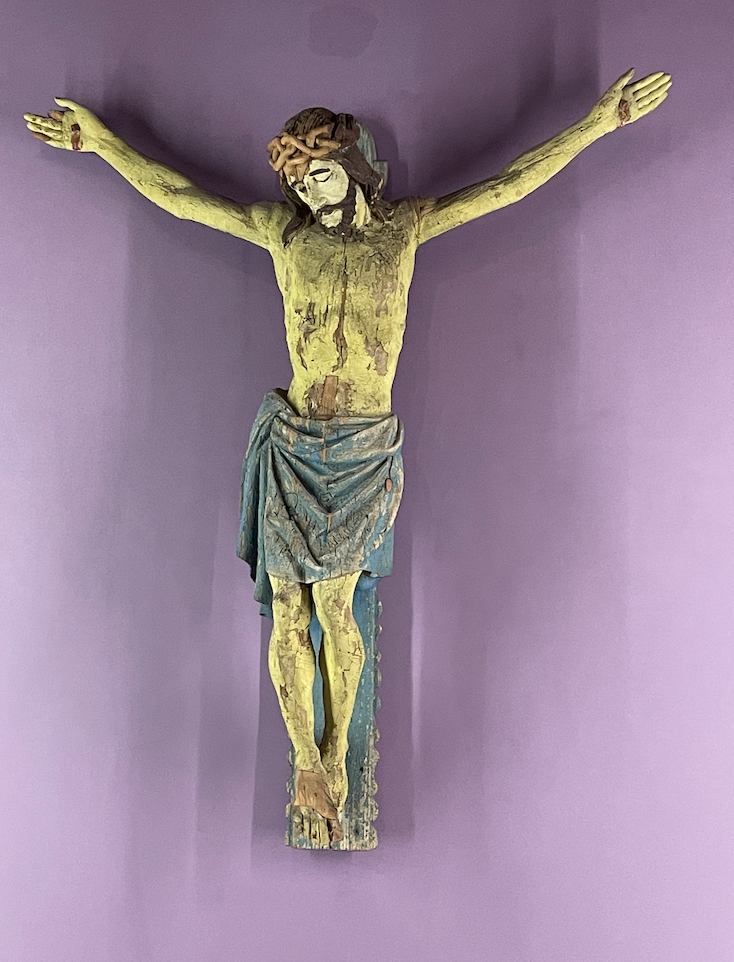
In the Eastern tradition John the Baptist is a regular feature – and (given the story of his decapitation) shown carrying his own head on a plate

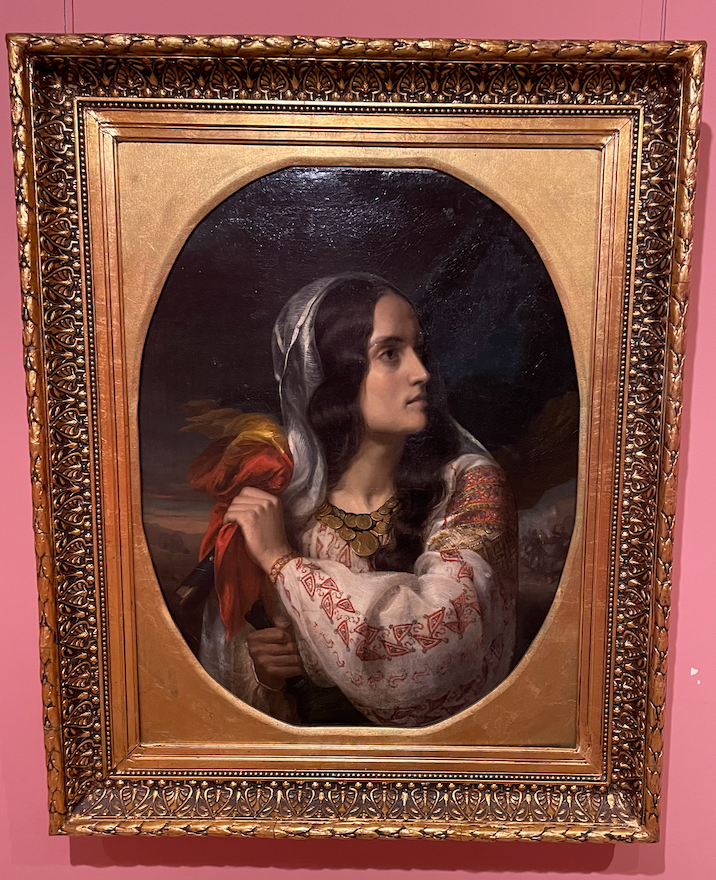
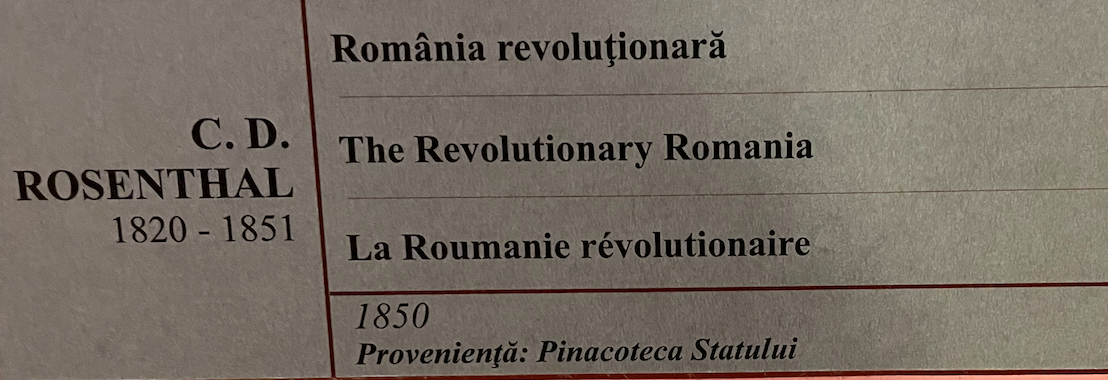
The painting is of Mary Grant born into a Scottish family on the Isle of Guernsey.
She married Constantin Alexandru Rosetti, an important Romanian literary and political leader, and was deeply committed to the issues of Romanian nationalism & female liberation.
1990: we drove, as a family, to Romania. It was a country with almost nothing available commercially.
I first visited Bururesti in 1991. Most Romanians we meet are younger than that time…. So we are regularly asked for detailed information about their country.A Brit we met this morning (teaching in the British school) confirmed our view that great change occurred in the past 5 years.
Bucuresti is very different…. exemplified in part by the positive developments (from when I last saw it) in Lipscani. A real open buzz… and much humour.
WhatsApp
 Inspirational Pathways