Monday 27th March
To Bulgaria
Bucuresti to Pleven
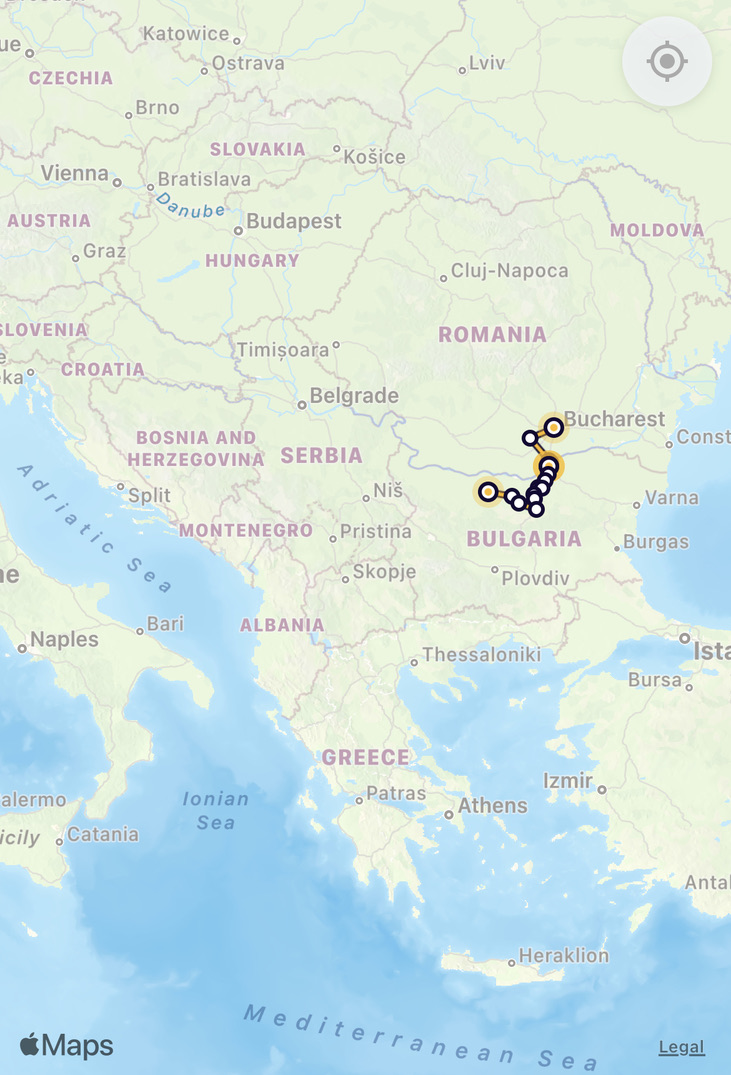
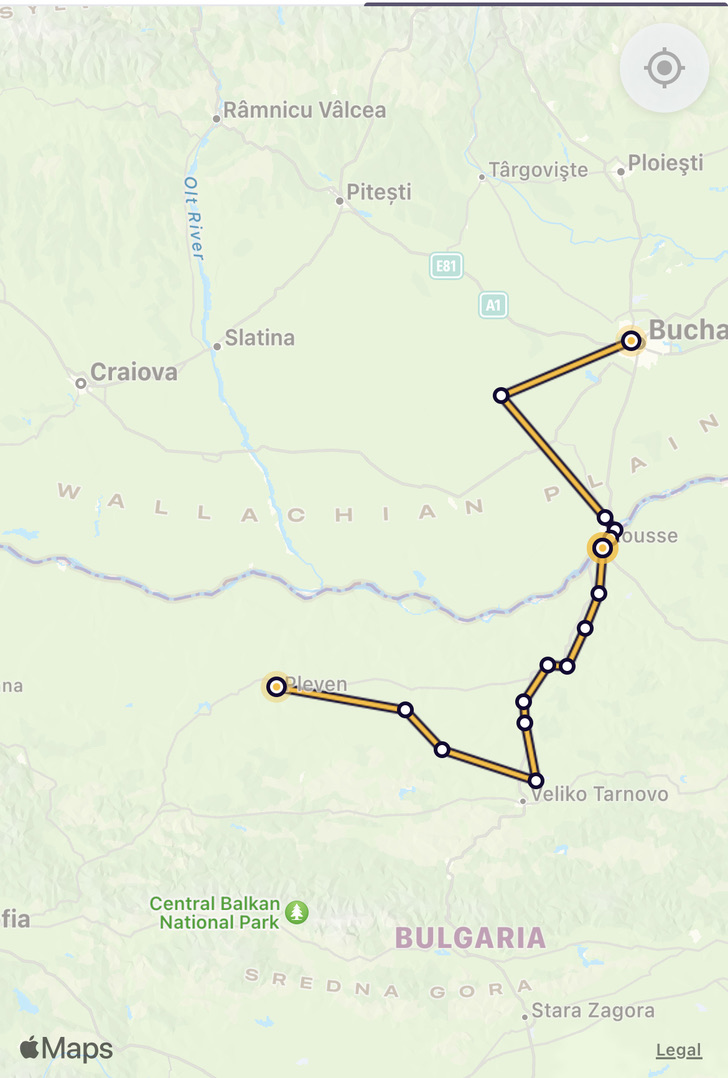
First a walk to Gara de Nord
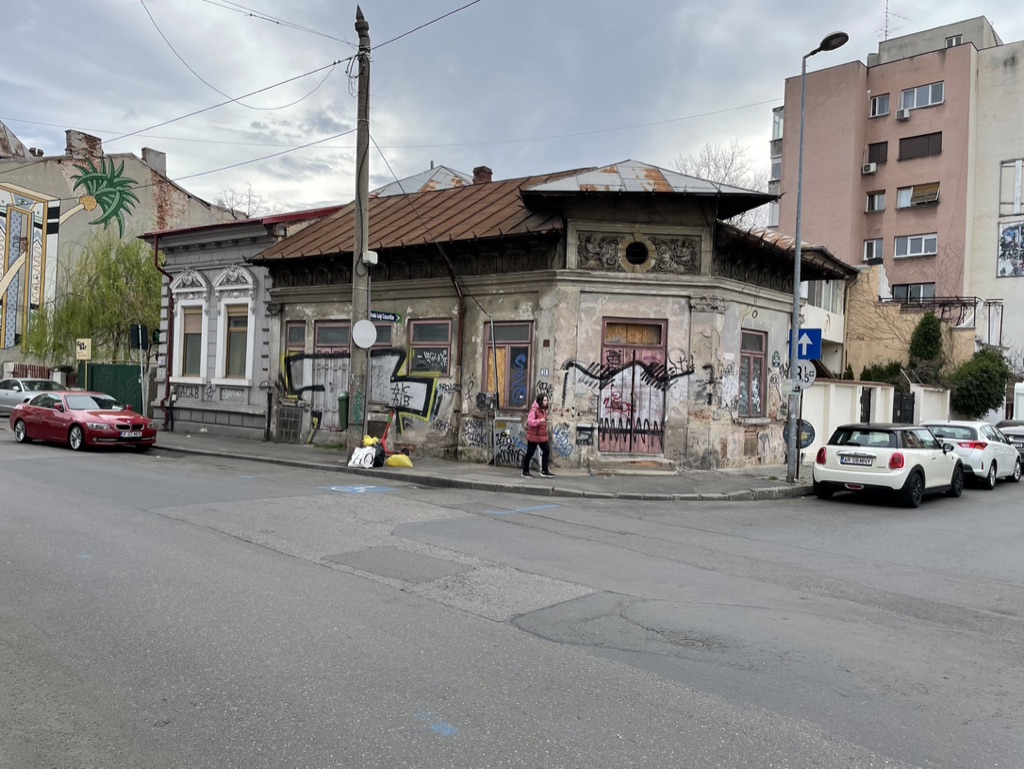
The state of the building may seem depressing but – as with many such in post-communist countries – it is a positive sign: It remains, restoration is intended.
The ‘international’ train into Bulgaria.

There is an unfortunate lack of maintenance.

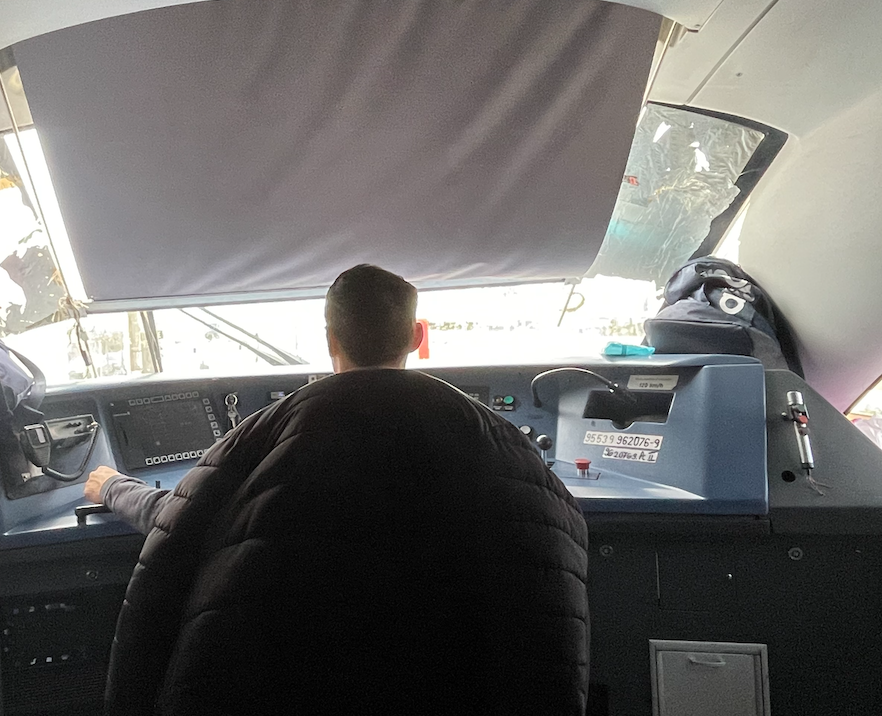
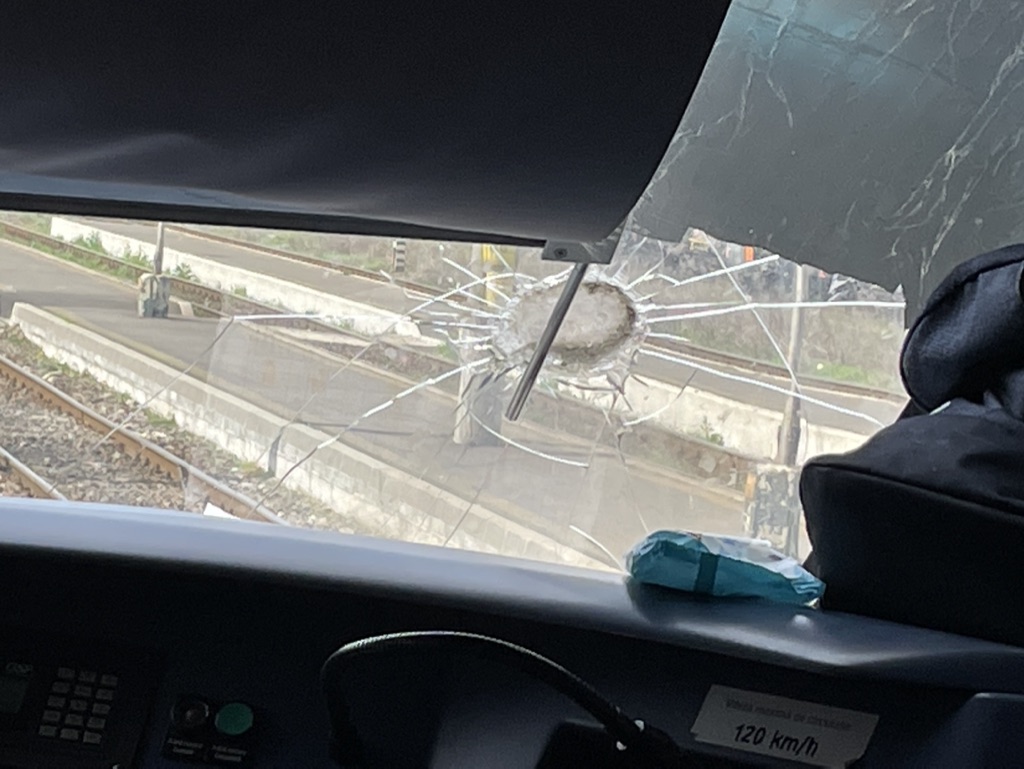
The outskirts of Bucuresti & evidence of the rapidly expanding economy
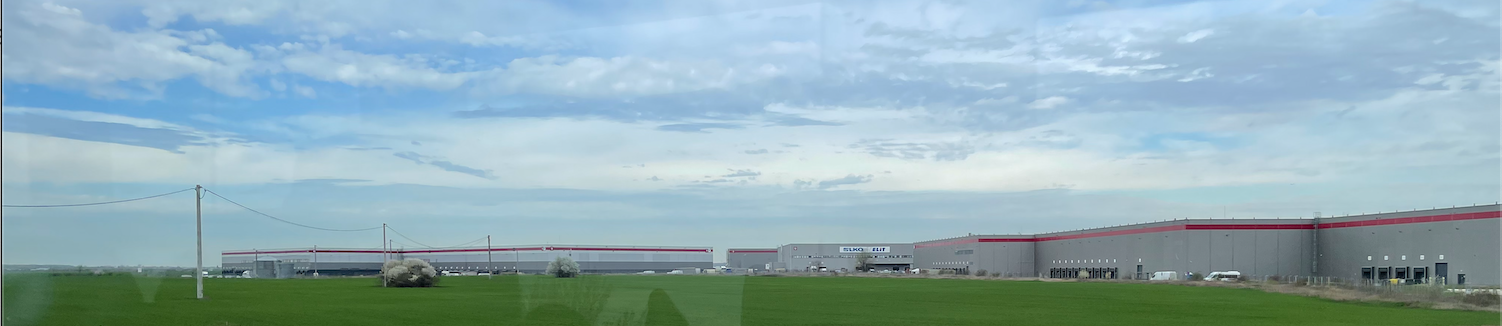
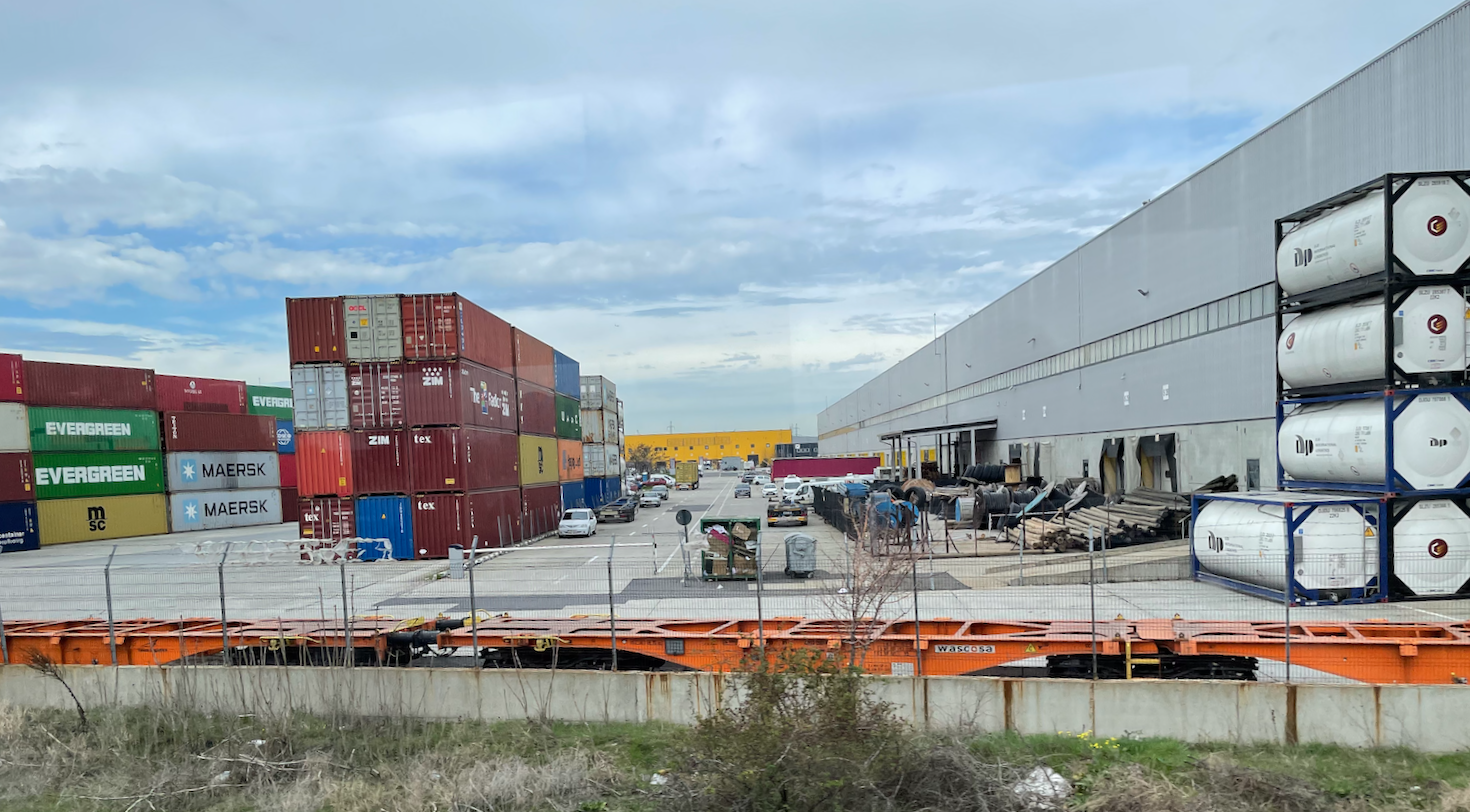
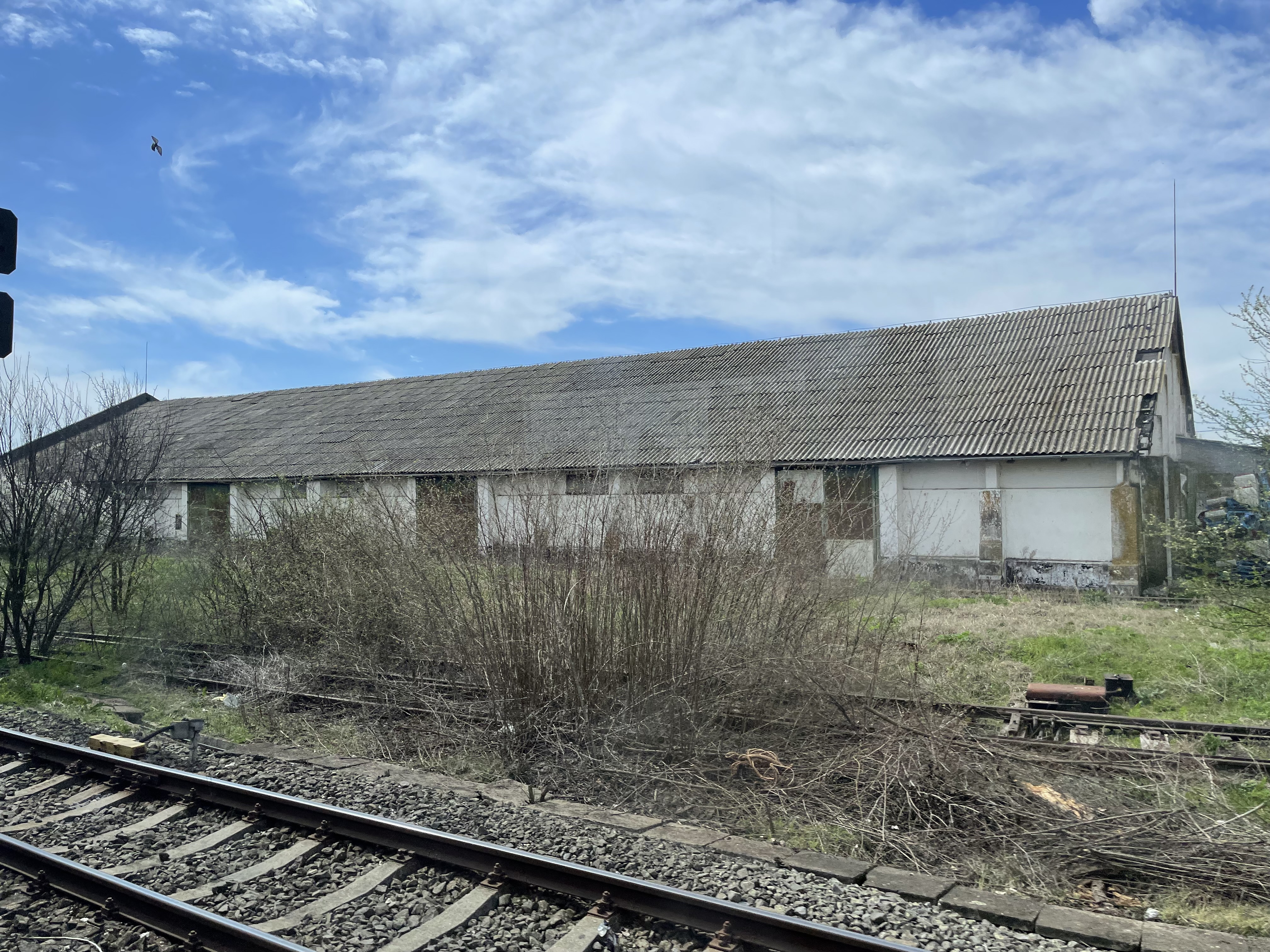
As in may places in Romania there are ghosts….. and ‘ghost tracks”

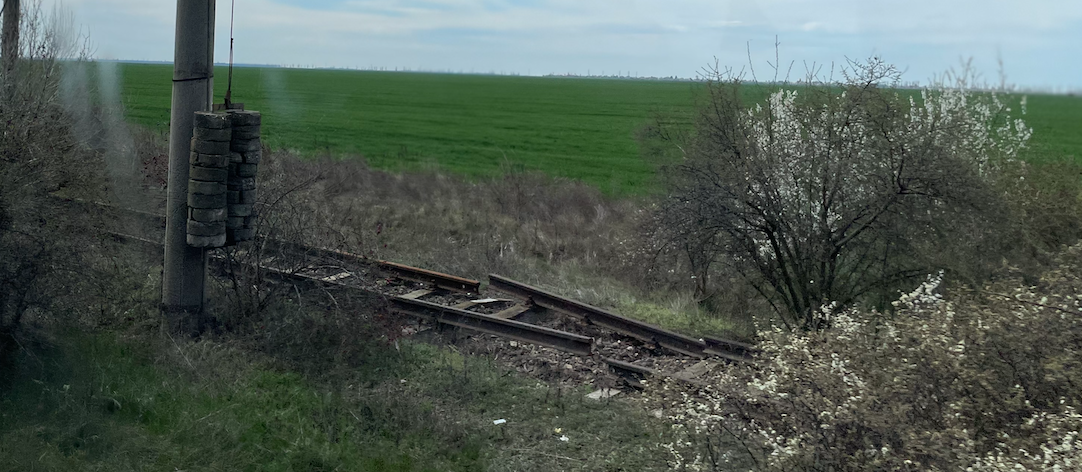
Photographing them became something of an obsession – but (given the speed at which they appeared and disappeared) not as successful as desired.
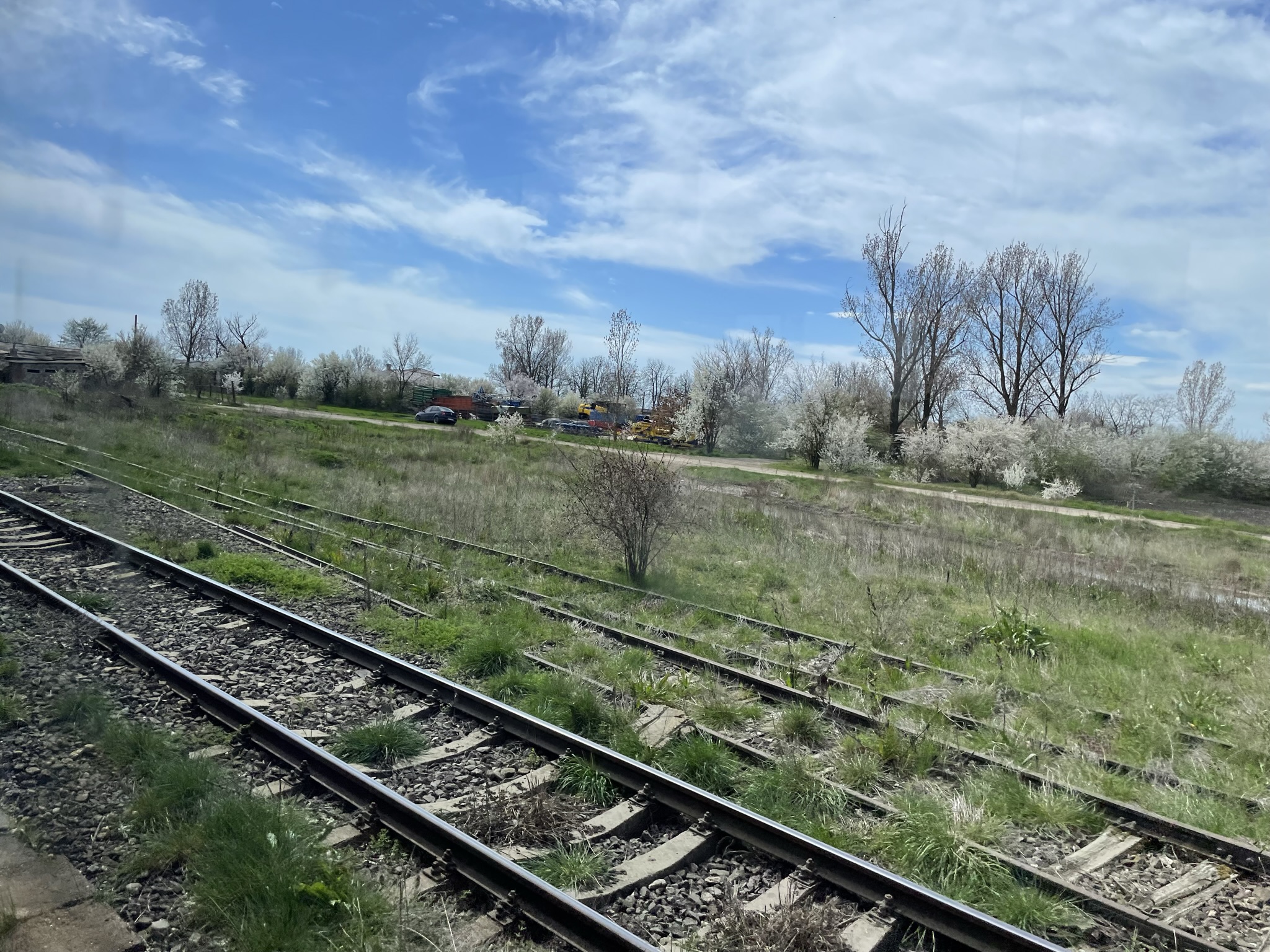

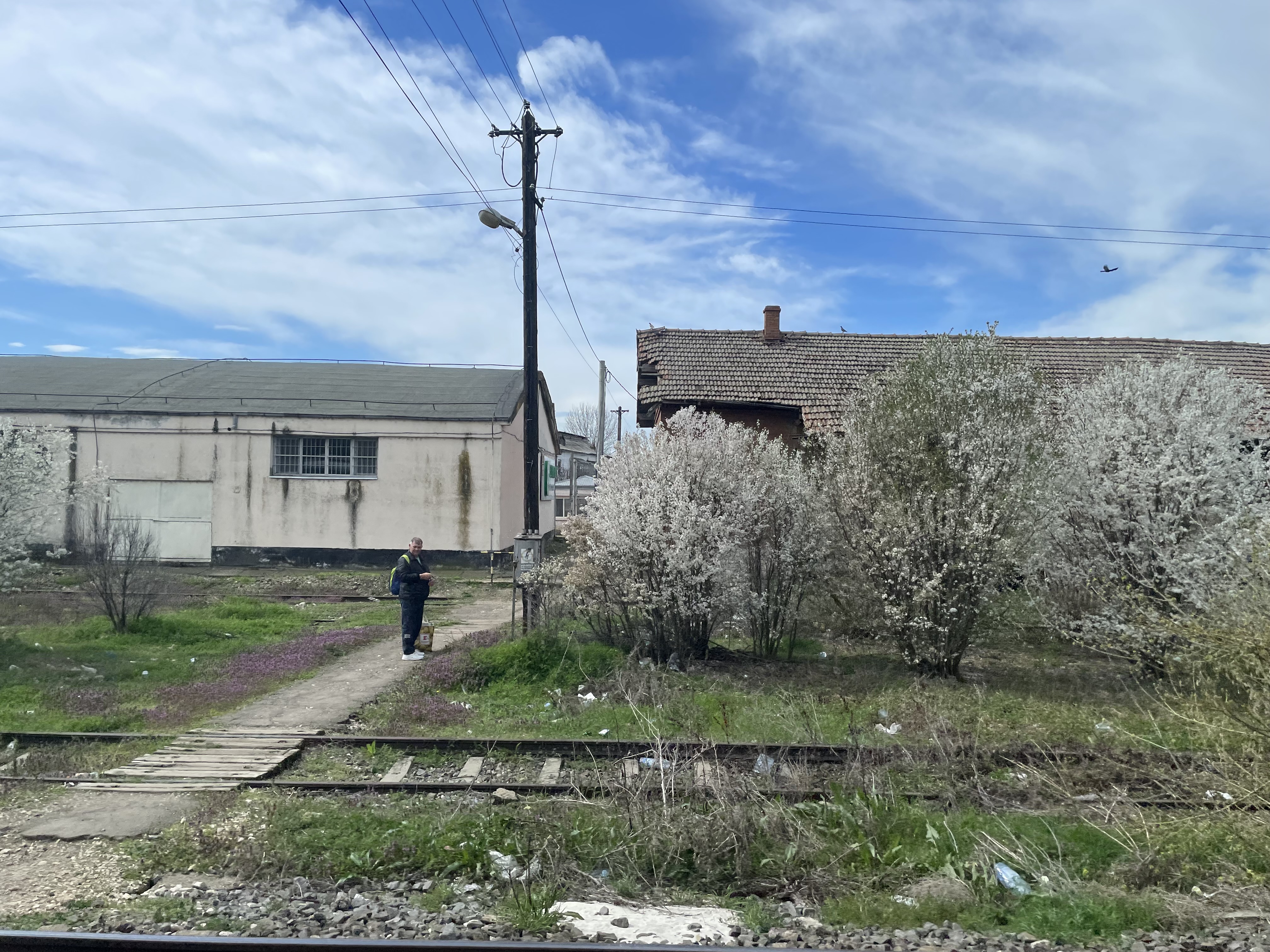
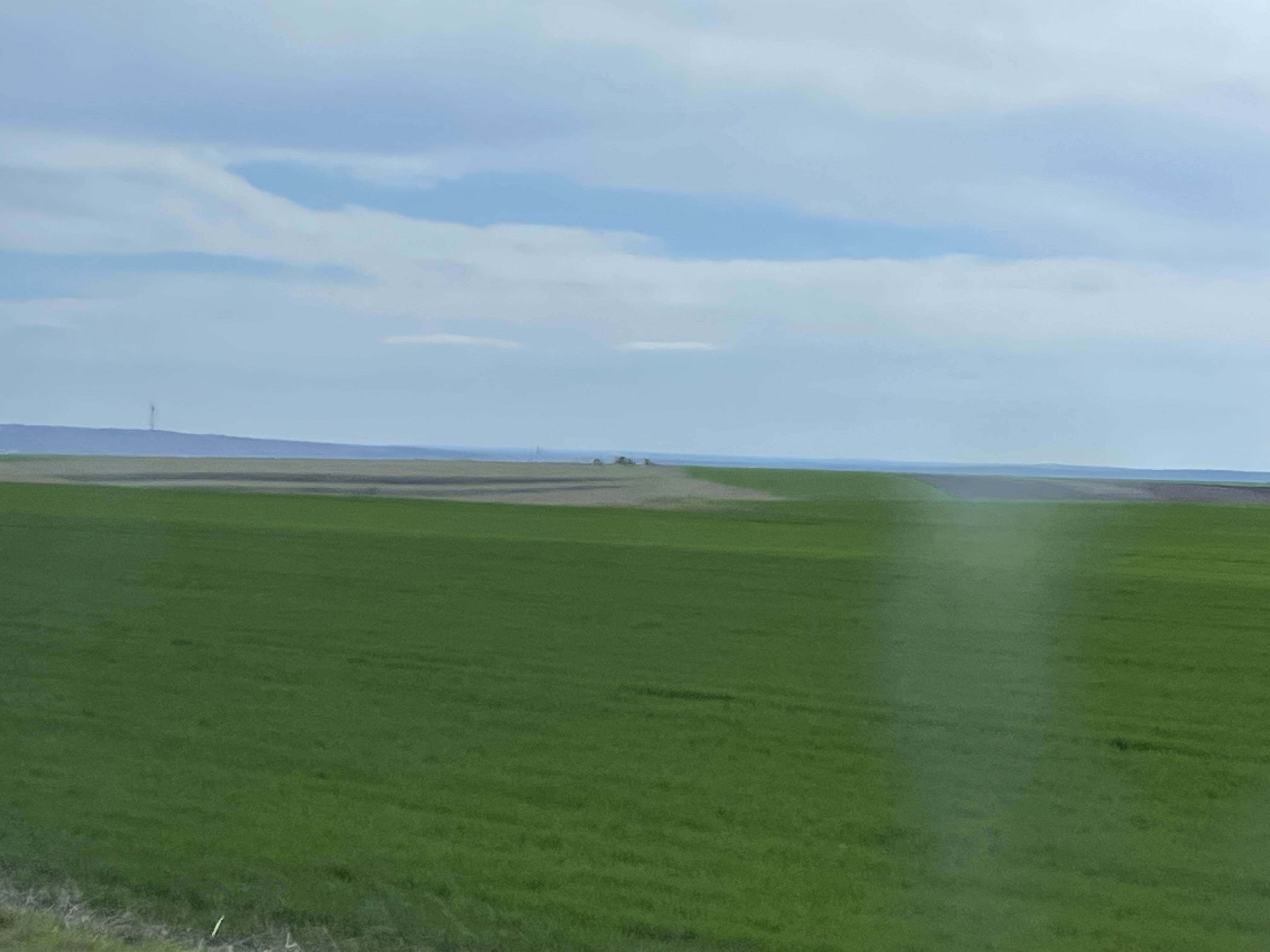
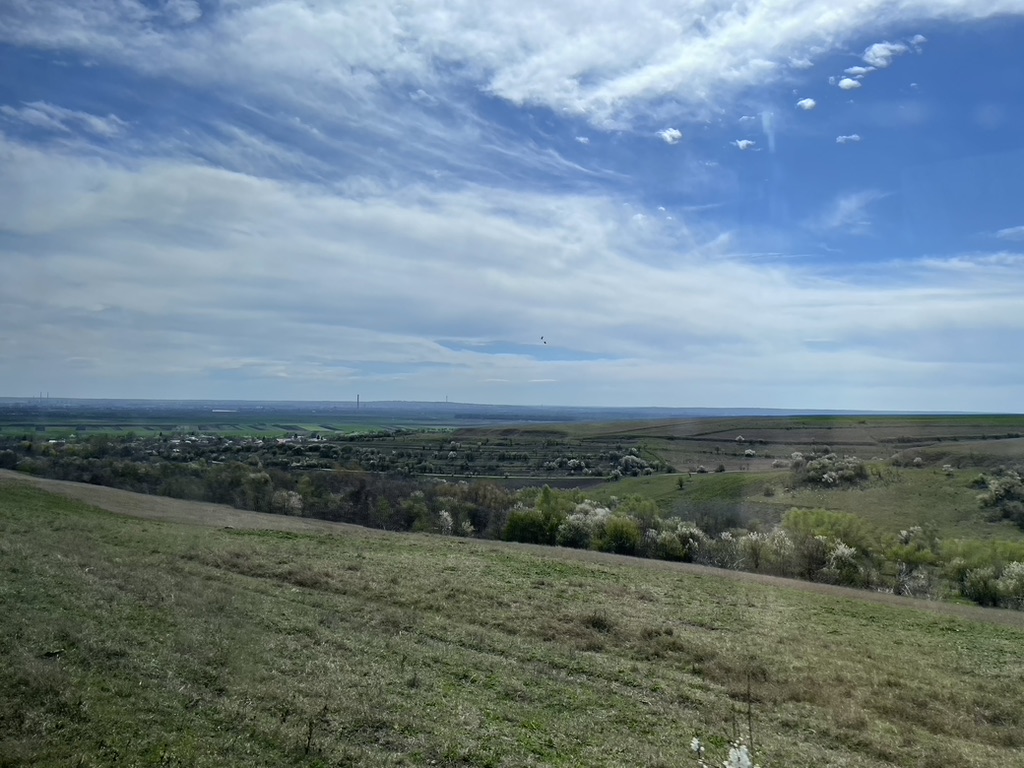
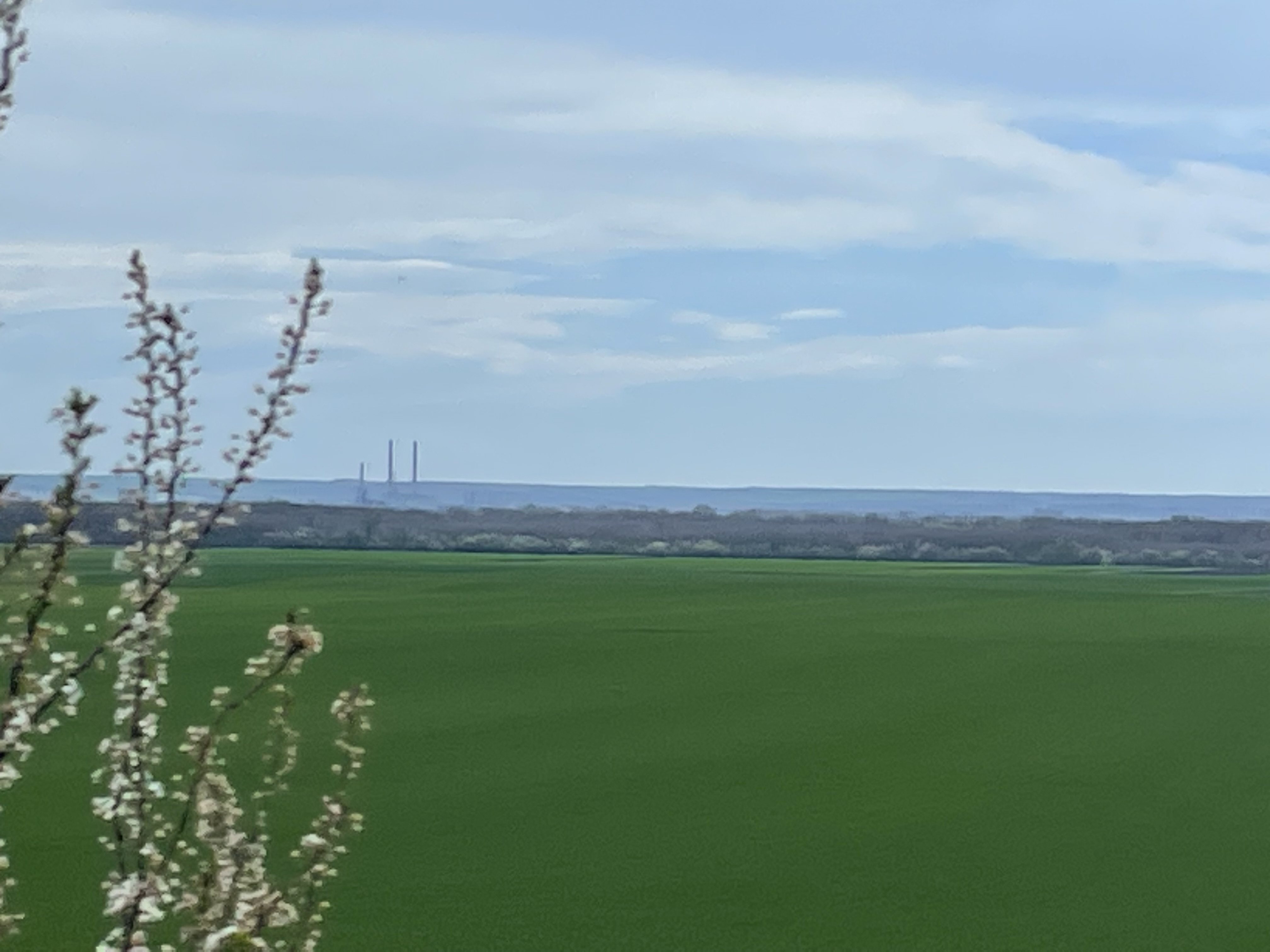
The line to Ruse & Bulgaria leaves the main line & crosses a fertile plain (part of what was once know as ‘the breadbasket of Europe’) before descending to the Danube.
First, Girgiu & the slow process of handing over passports for ‘processing’
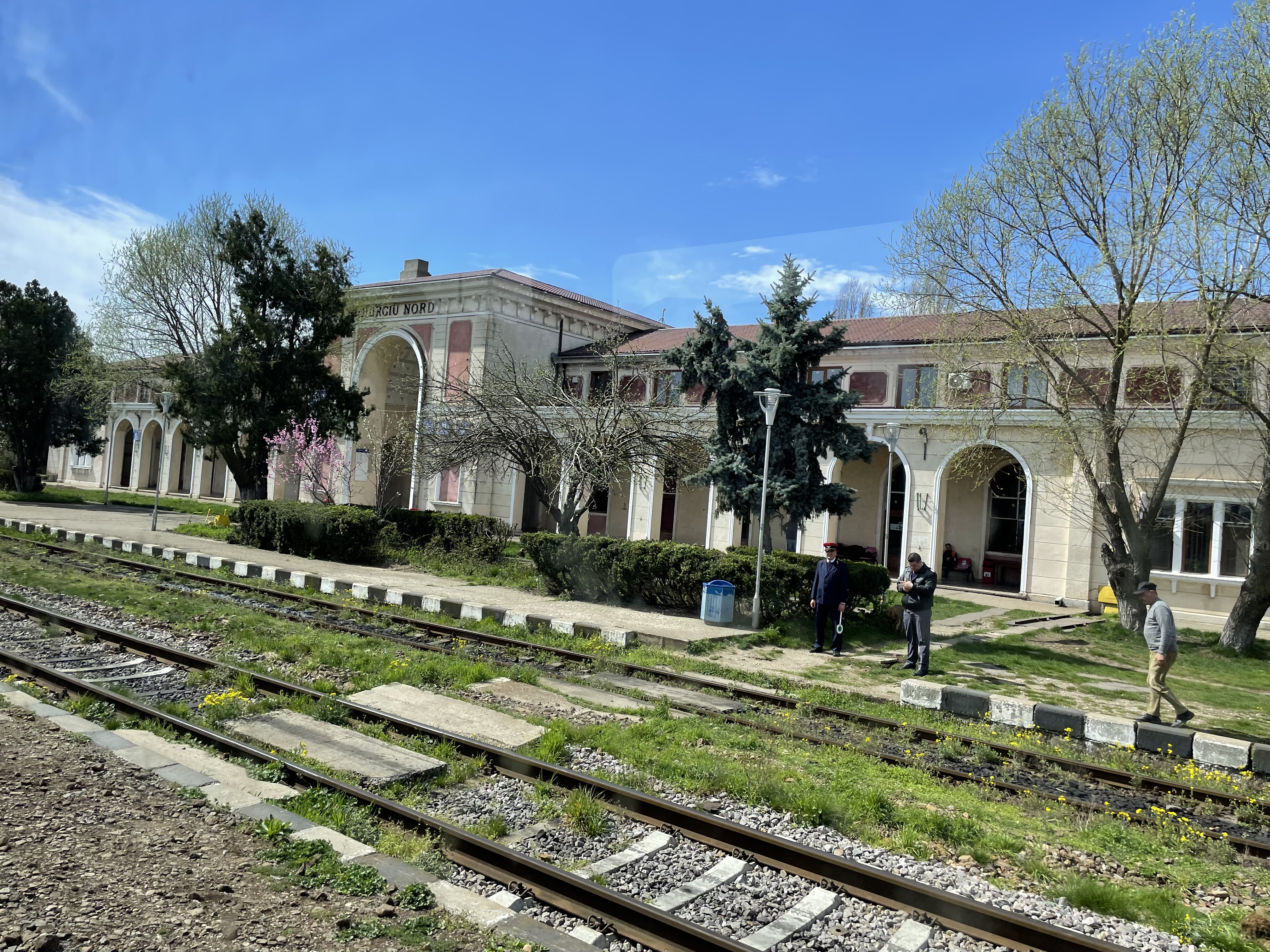
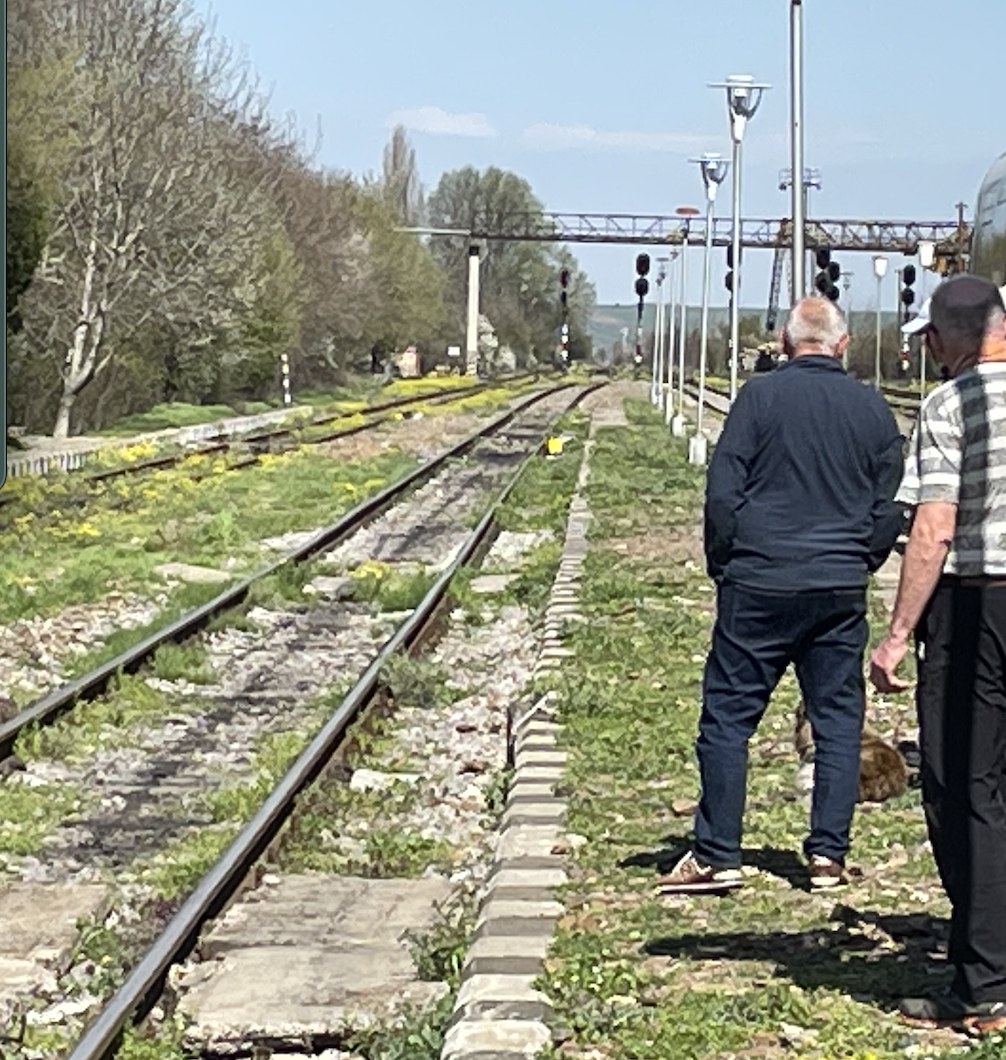
International travel by rail is a fine idea but in many places it has yet to rise above the level of being a reasonably comfortable adventure available to those with time to spare. This break allowed a British gentleman an opportunity to find new individuals to bore with his apparently non-stop comments and opinions (expressed continually during the journey from București). Jacqui and I kept a very low profile, never speaking when near him (for fear of being another victim).
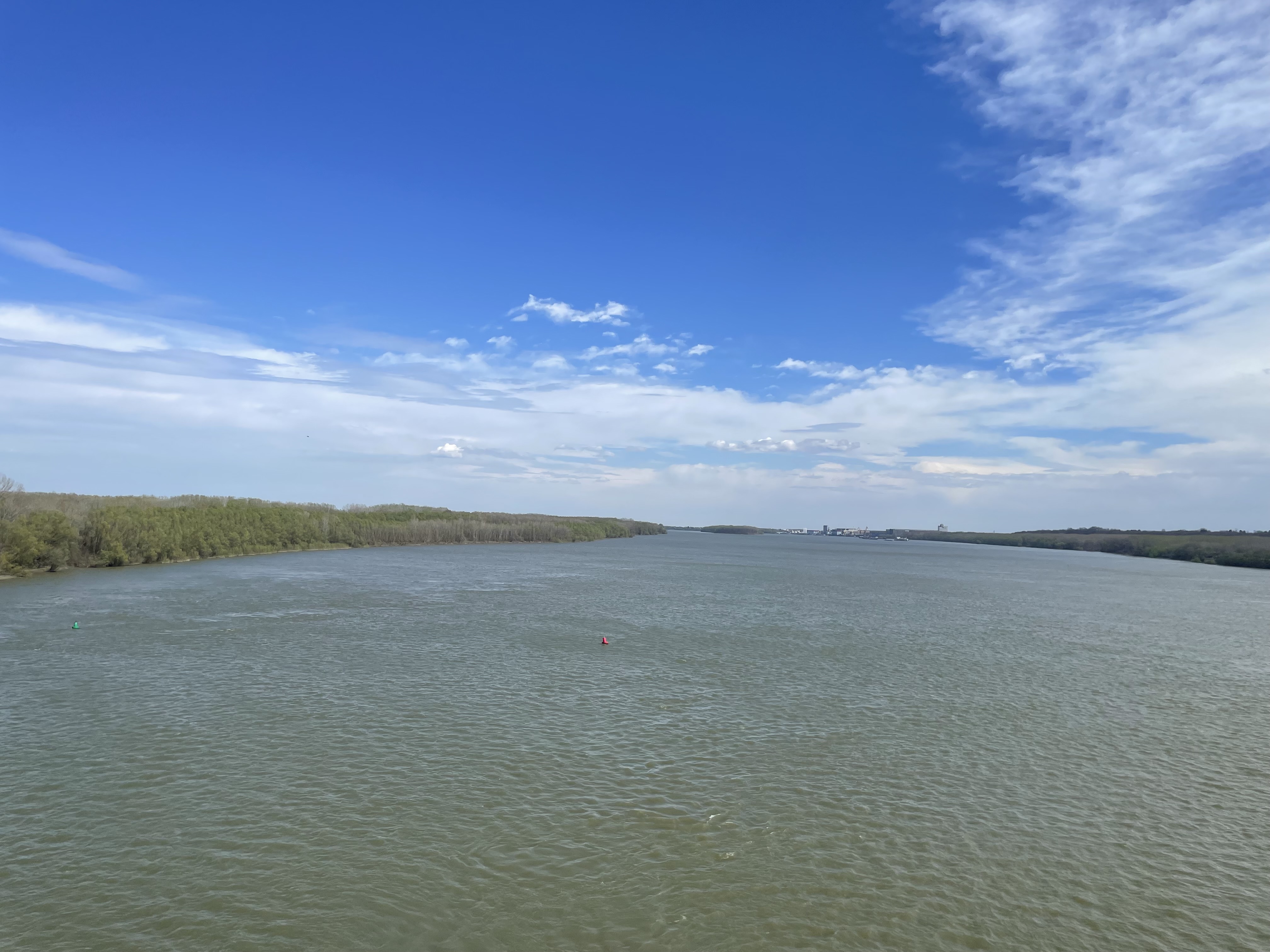
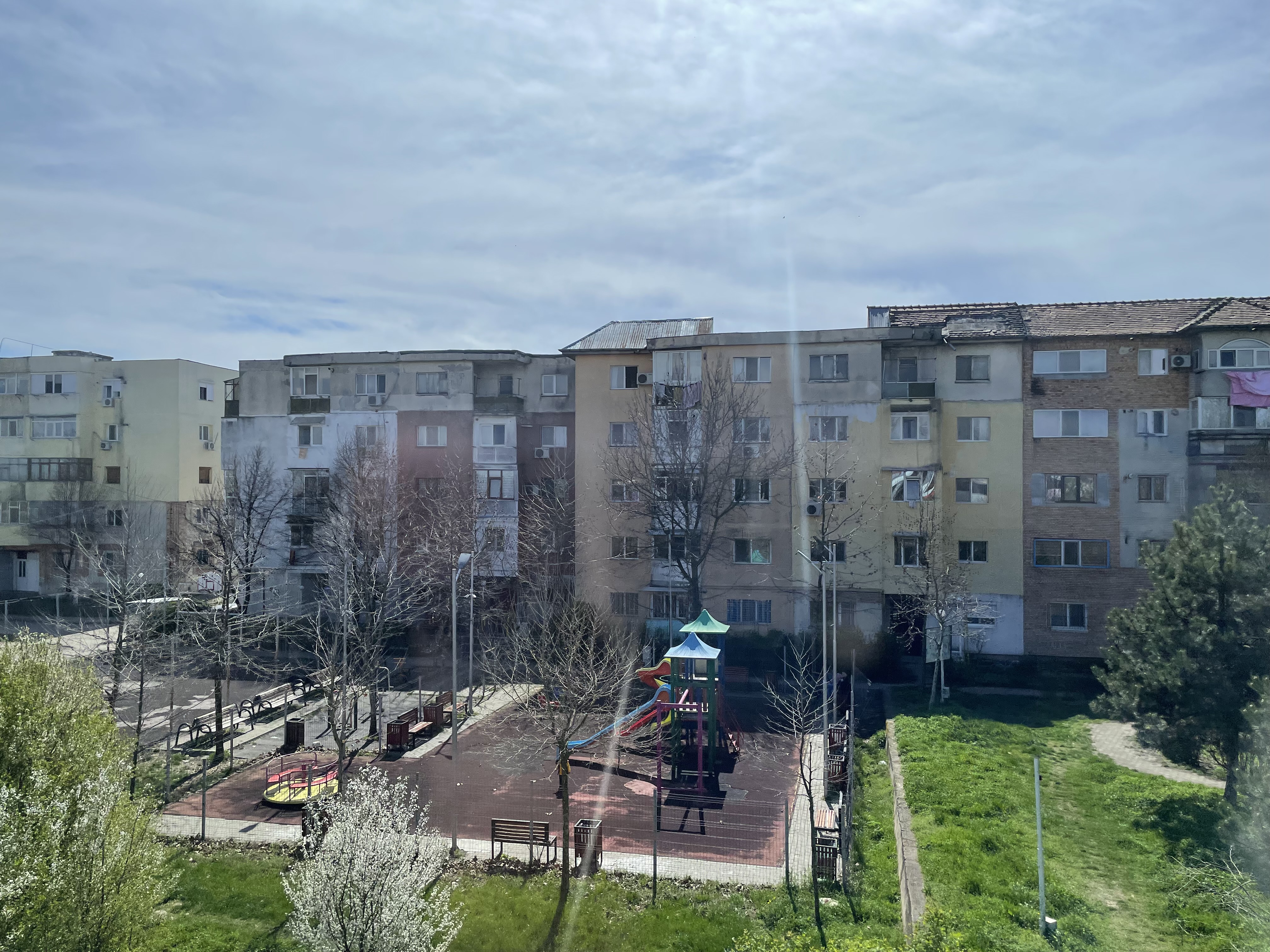
Eventually we move on and ‘trundle’ (a fairly regular form of slow movement at border crossings) into Bulgaria & Ruse station… crossing the impressive river ‘Dunărea'(Romanian), Дунав: Dunav (Bulgarian)… also known as ‘the Danube’.
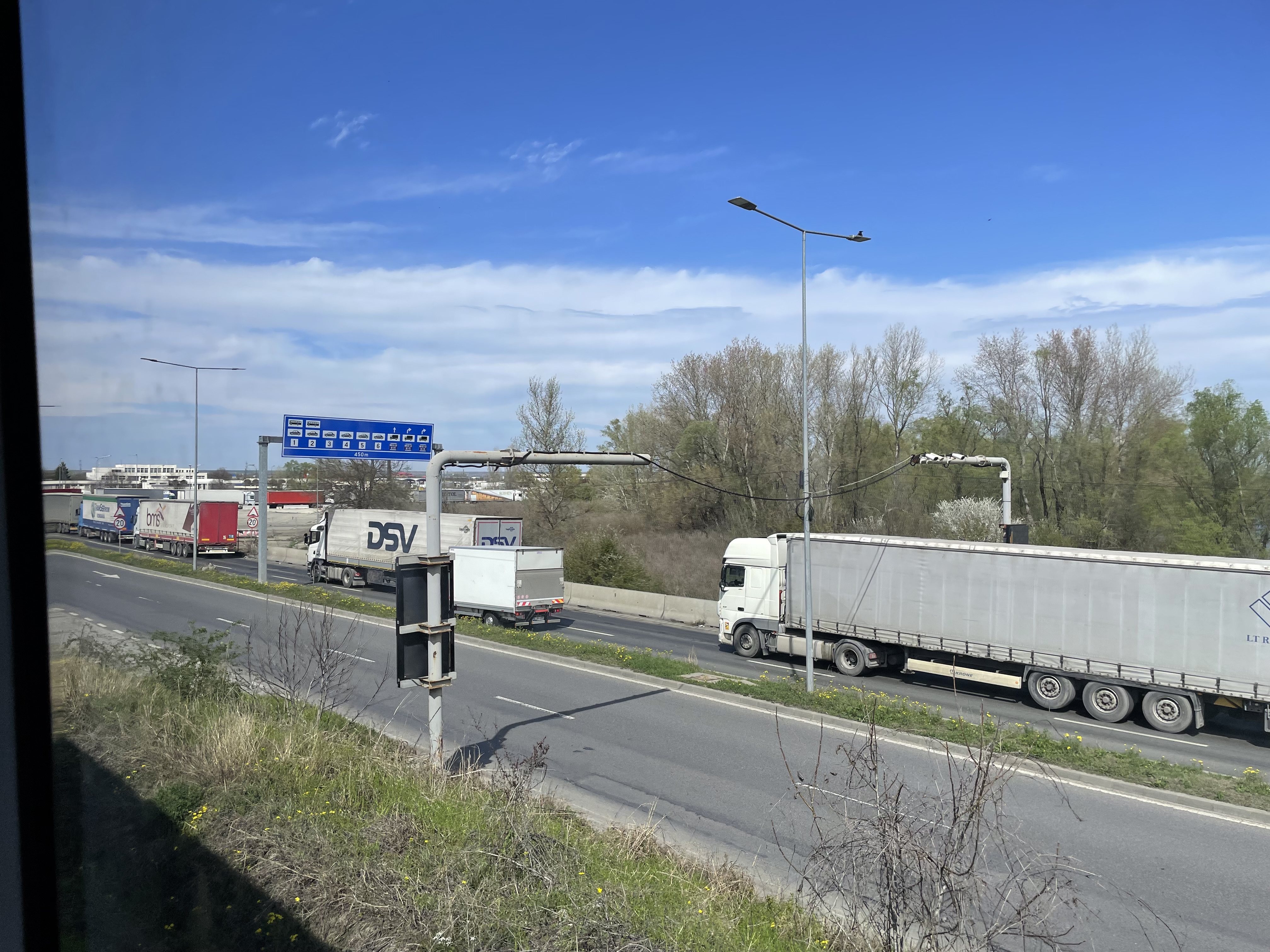
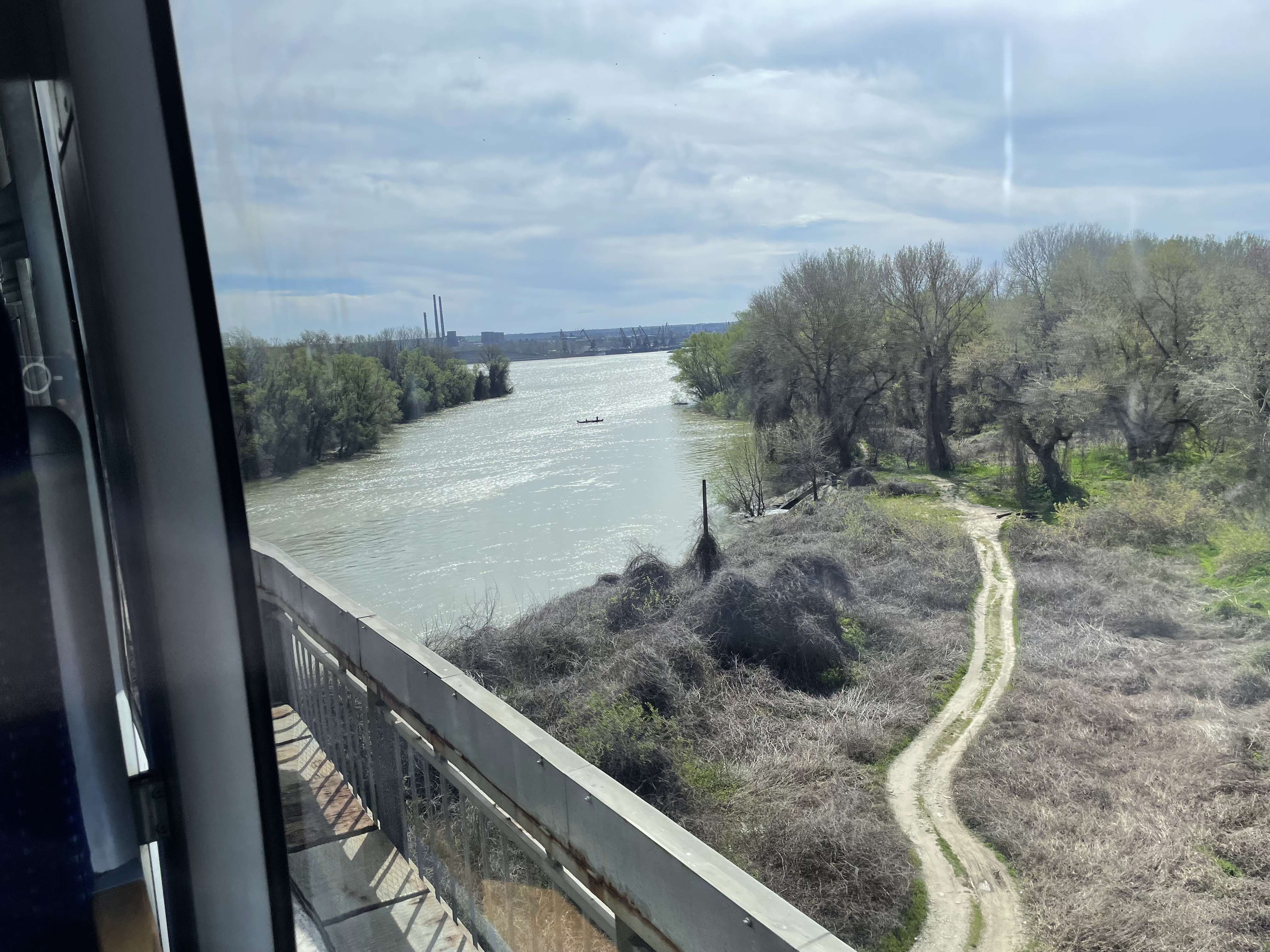
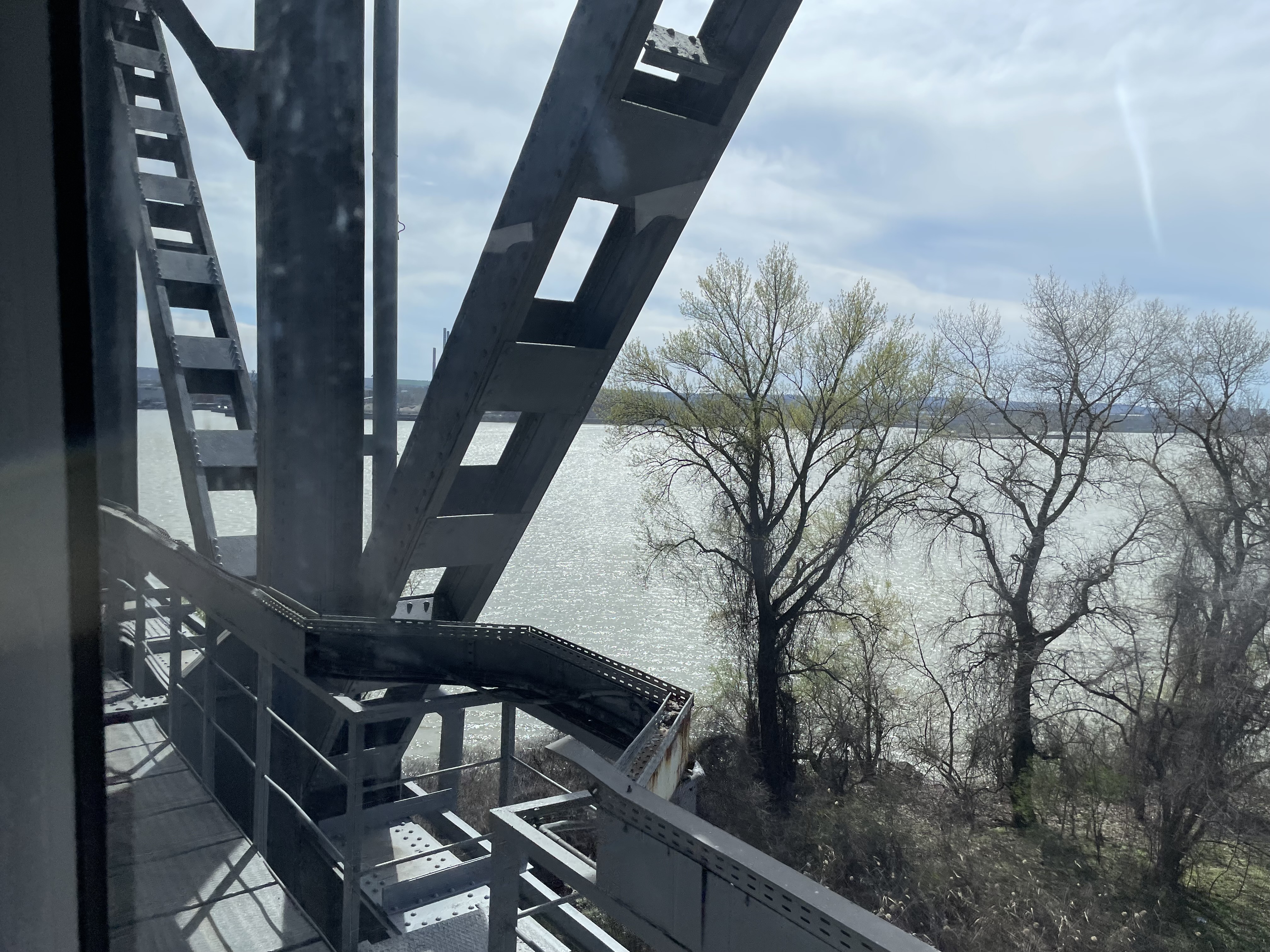
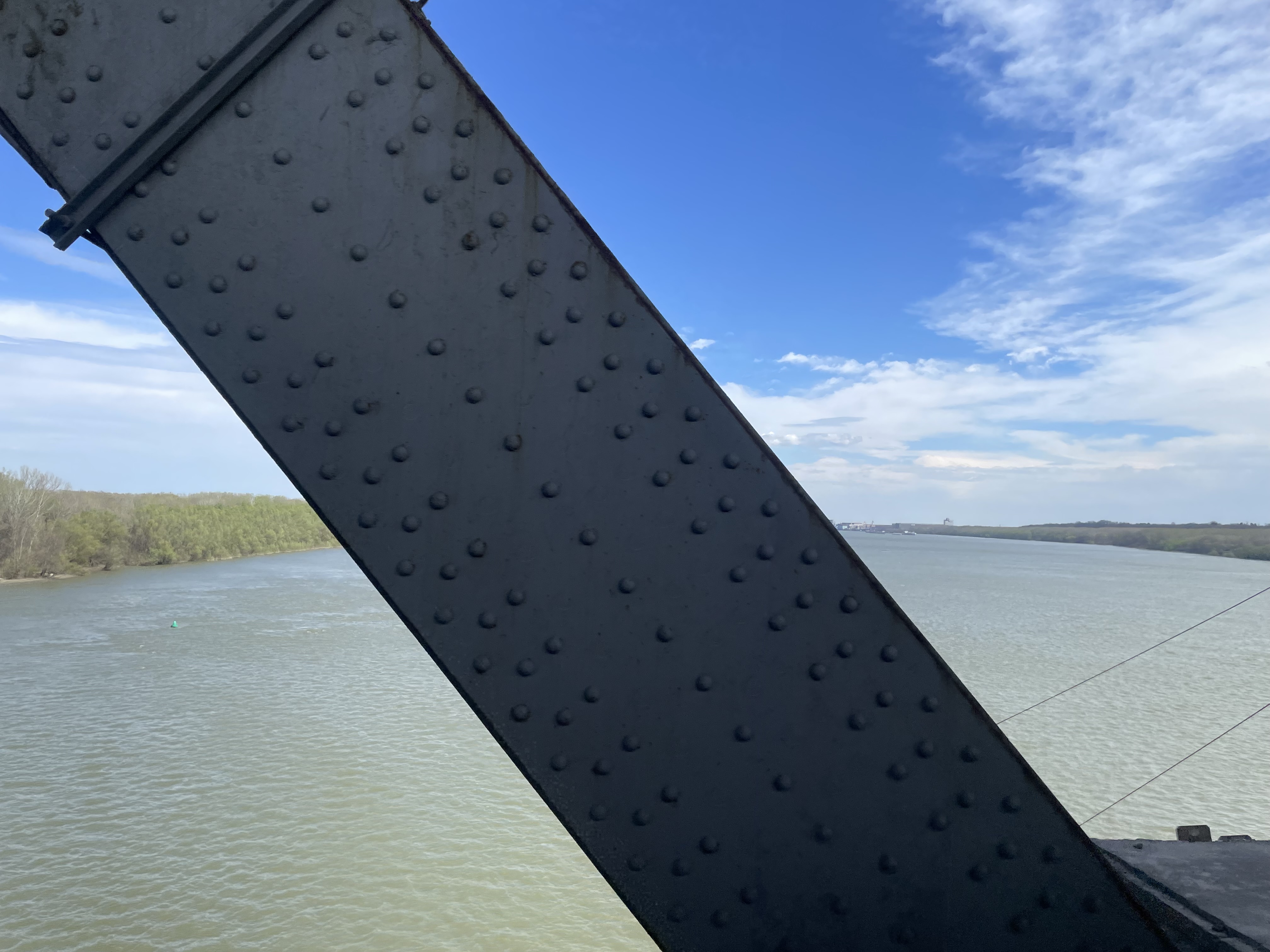
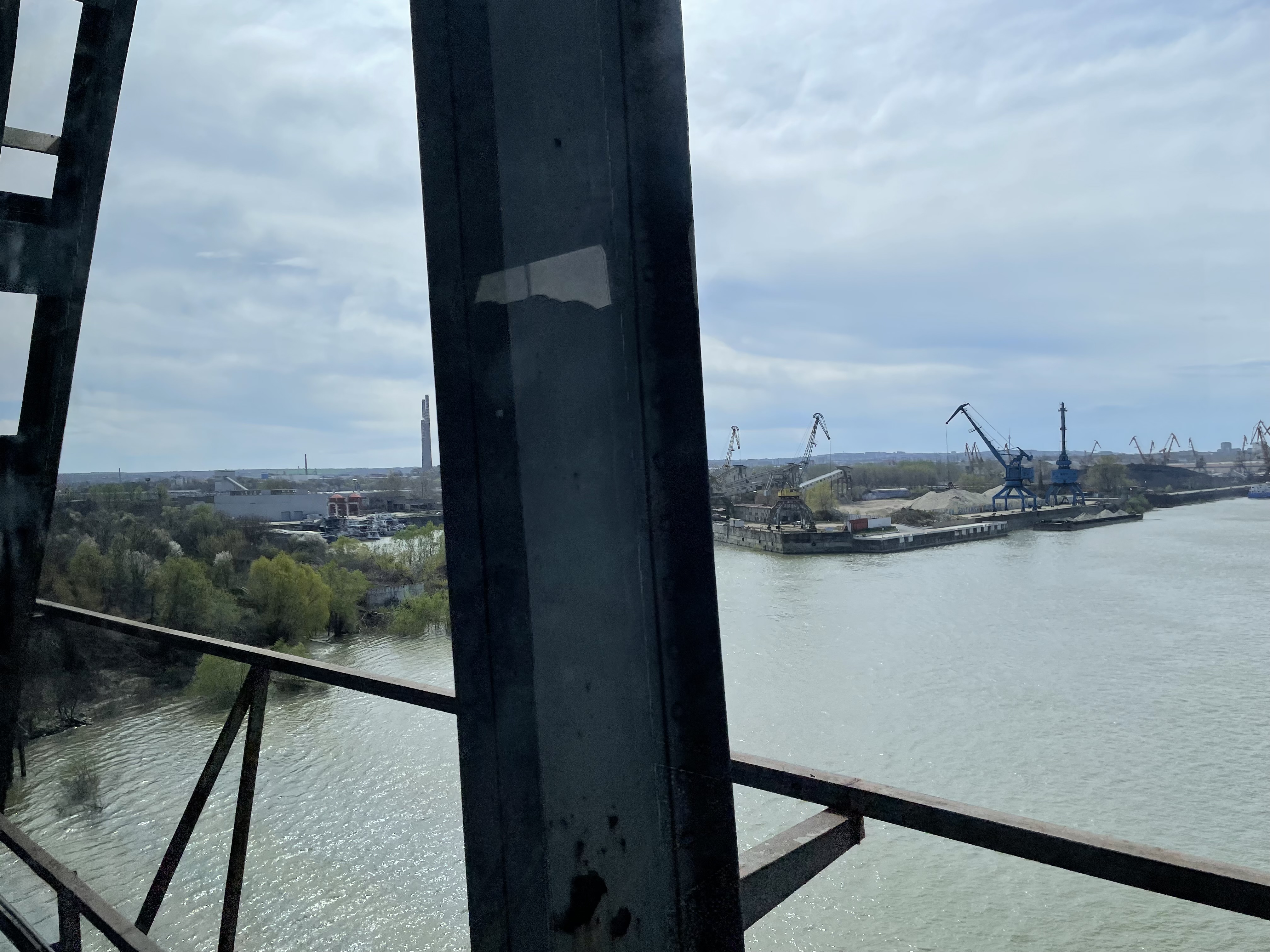
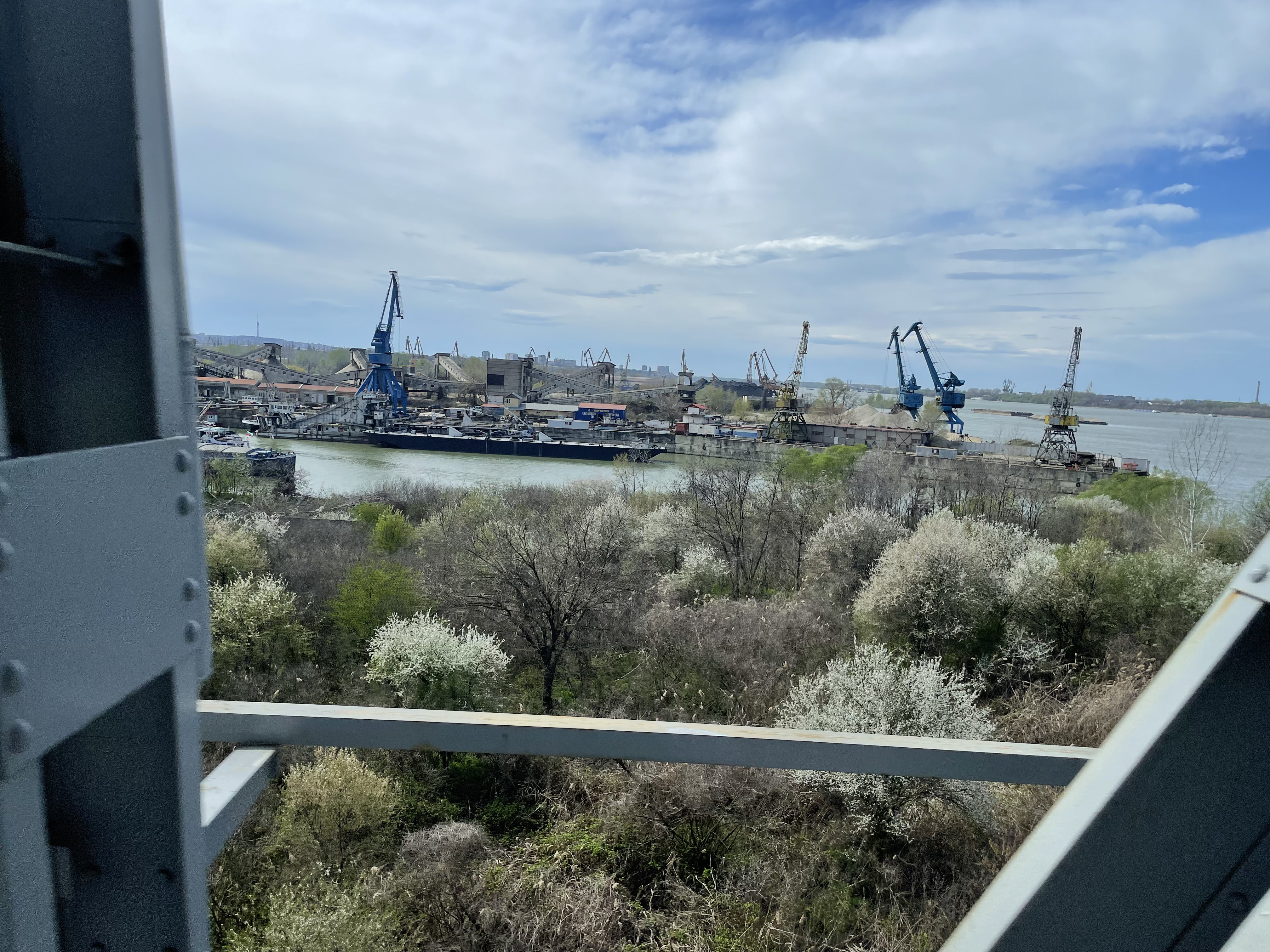
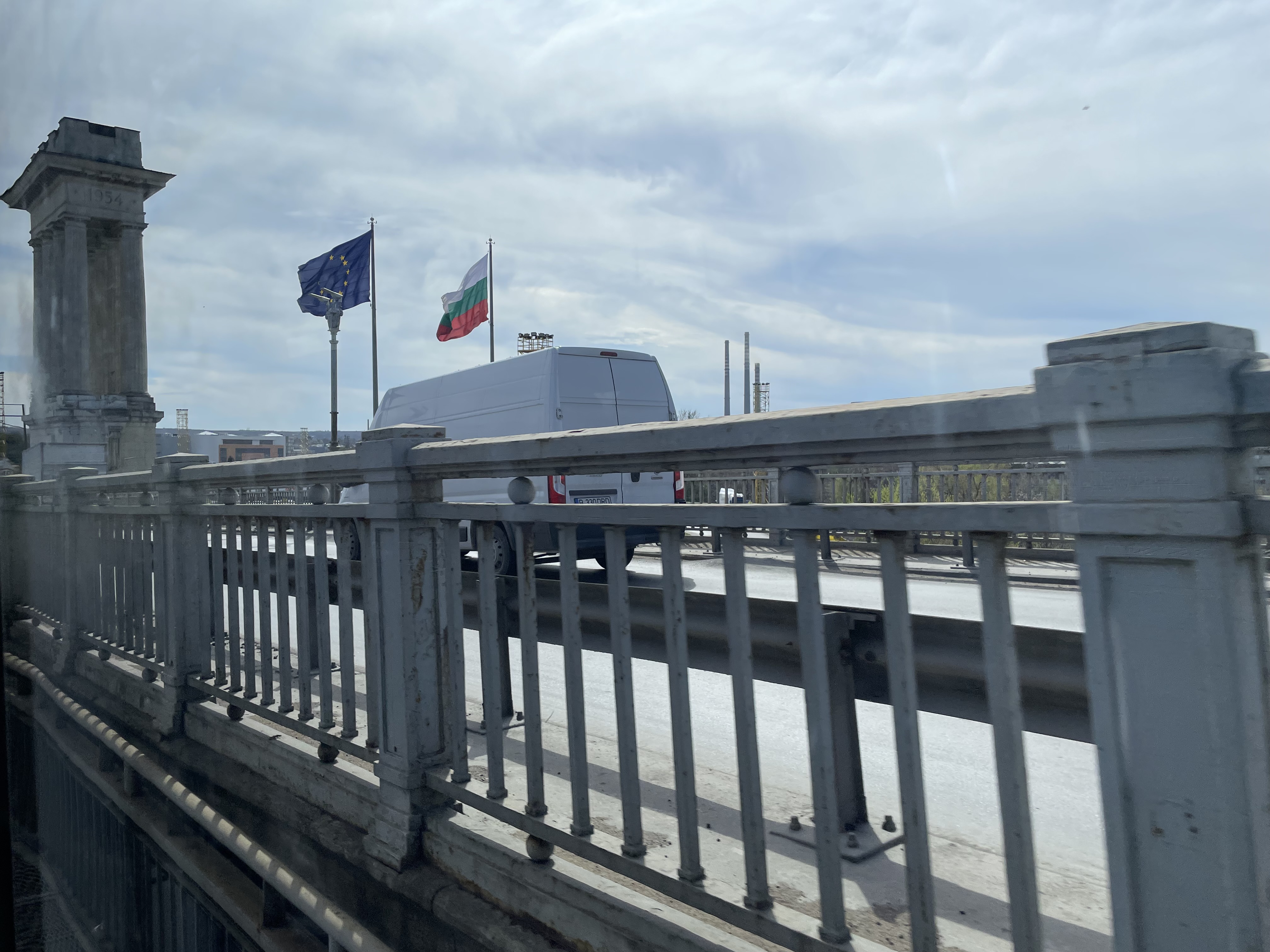
1n 1970 travelling into and through Bulgaria was very strange. At the border (on our ‘Berliner Stadtrundfahrt bus’), as rather unkempt which-hiking students, we felt a mixture of excitement, caution and humour). Memory is of laughable (now) concerns at the Border crossing & a meal in a town which was probably Plovdiv.
We were to be passing through the ‘People’s Republic of Bulgaria’ during the international meeting of Communist Youth. It felt strange & rather weird. To ensure we were allowed passage, all men gathered their long hair under whatever covering could be created & when required (or even before), smokers willingly offered cigarettes. At the meal a crowd of curious locals assembled outside the hotel & they seemed, in general terms ‘poor’. I also remember staring at glass in windows & mirrors that was not quite ‘even’. Some suggest they are ‘two-way’ – but such mirrors are usually been less obvious.
Since 1990 I’ve seen plenty of examples of this imperfect glass (but no longer) & being ‘noticed as different’ still occurs in some places. “Changes have occurred”.
Once again we hand over passports & wait….. even our Opinionated Brit was silent for a period.
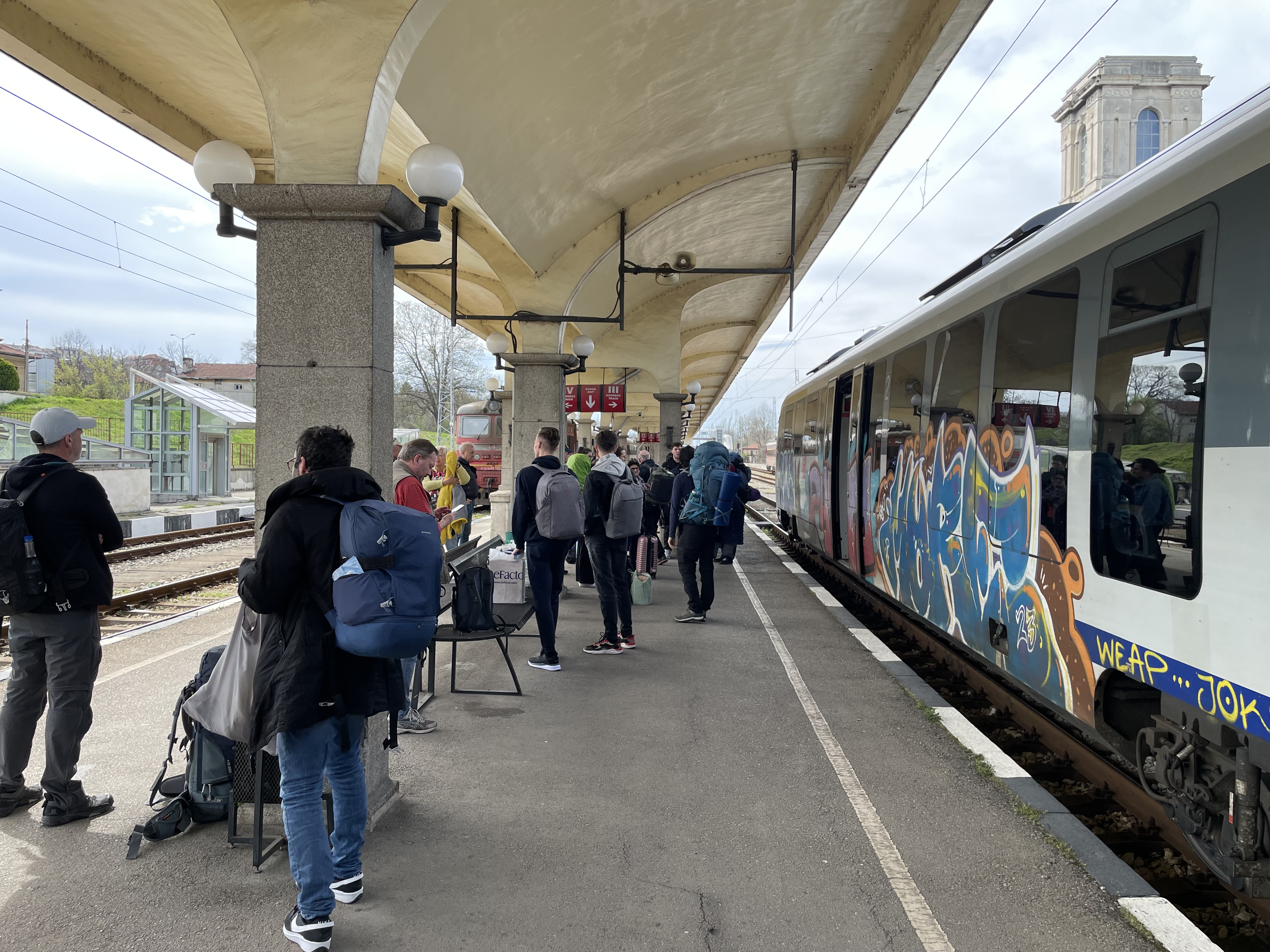
Eventually we are released and cross tracks to our awaiting express train.
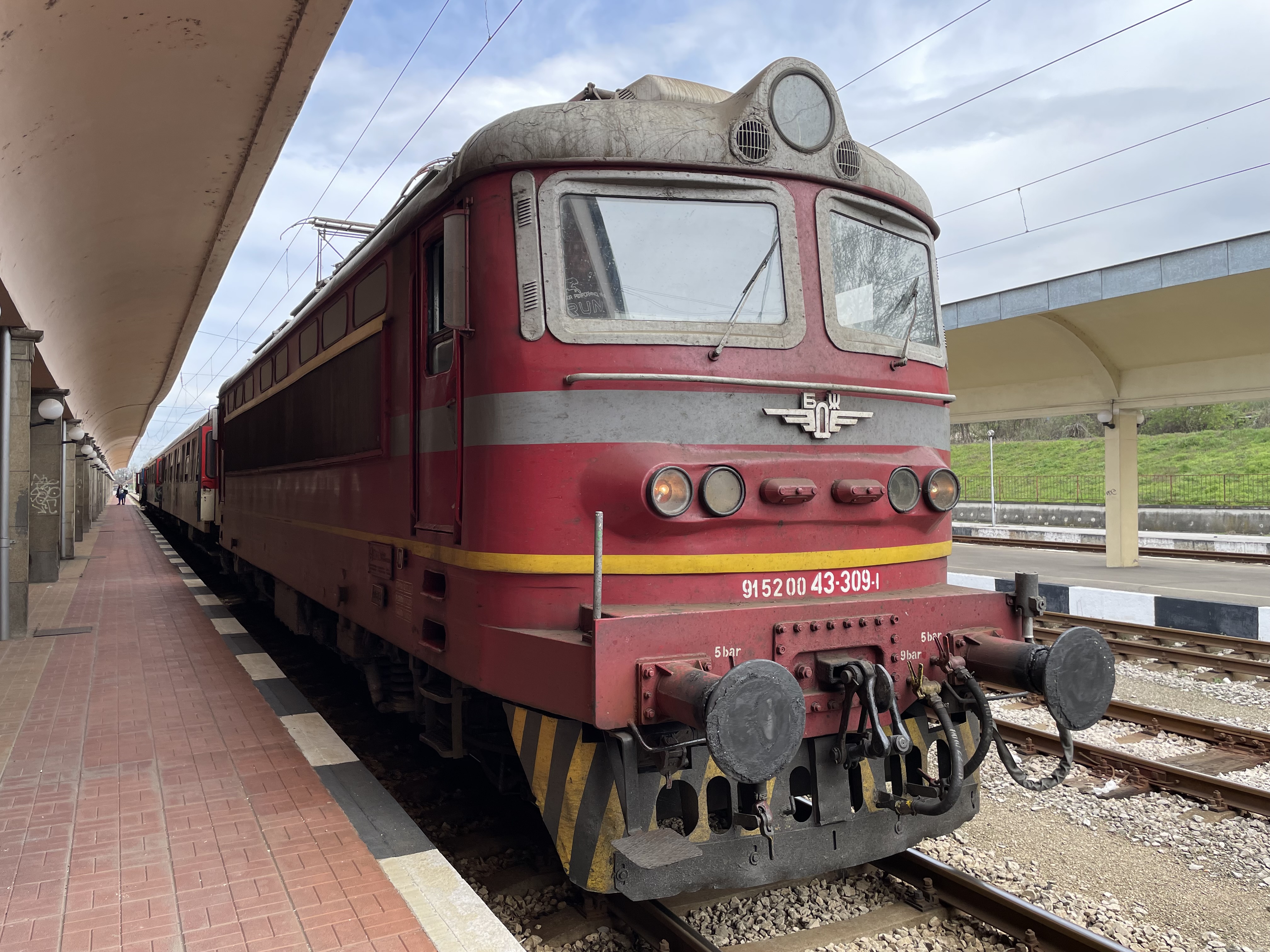
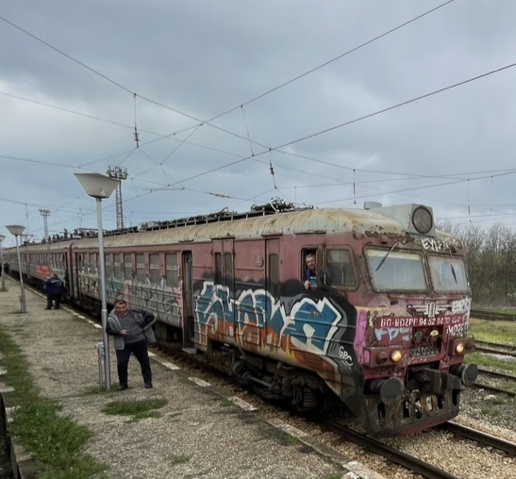
Our engine was built 40 years ago in Czechoslovakia by Škoda (then a Company owned by the Communist Government). Max speed 110 kms pr hr….. and occasionally, during our amble, over hill & dale through Bulgaria, we achieved that speed.
As with the engine, so it was with the coaches – but despite their age, ‘decorated’ outer panels & somewhat improvised approach to passenger safety & security, they were kept scrupulously clean.
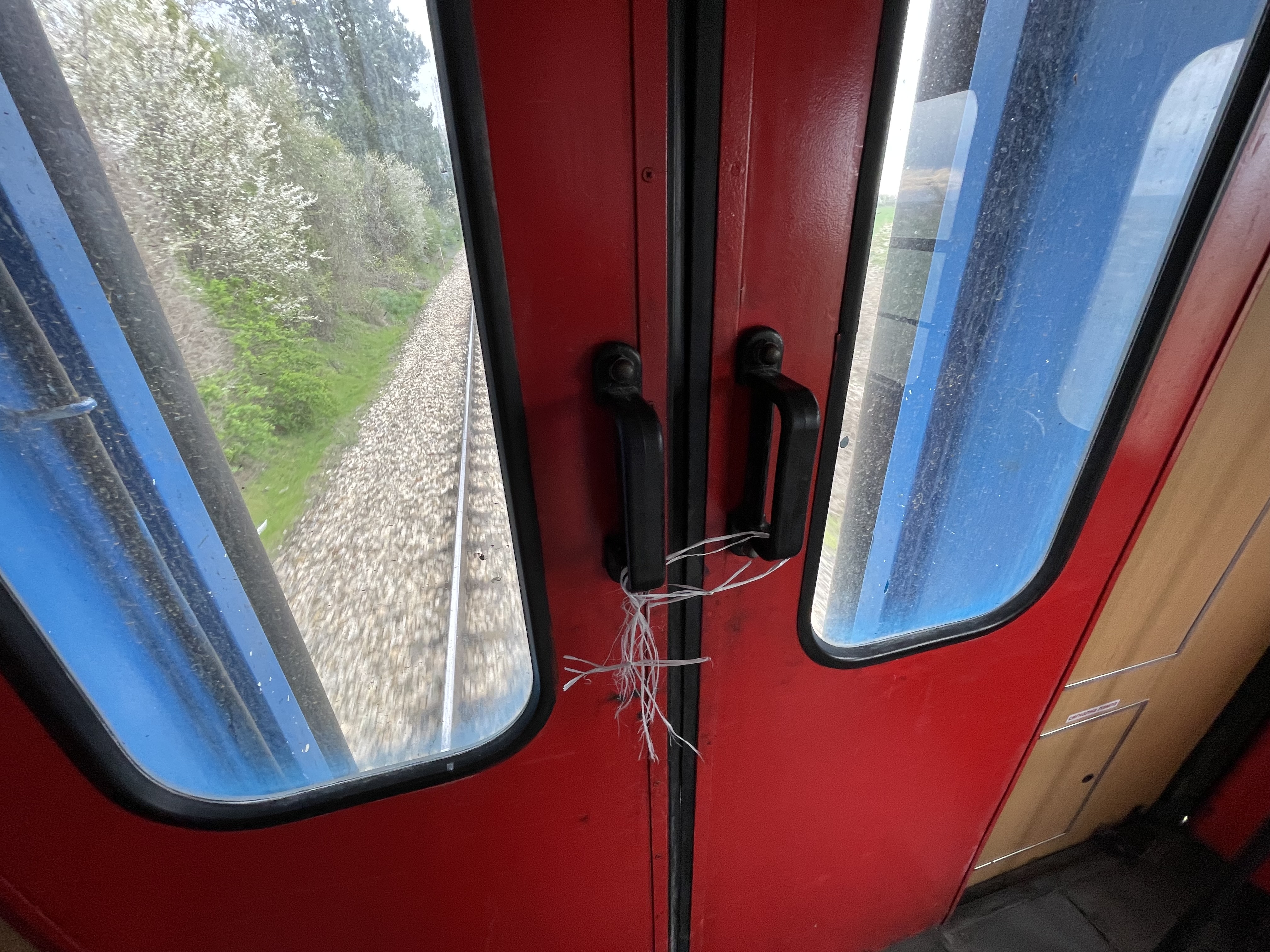
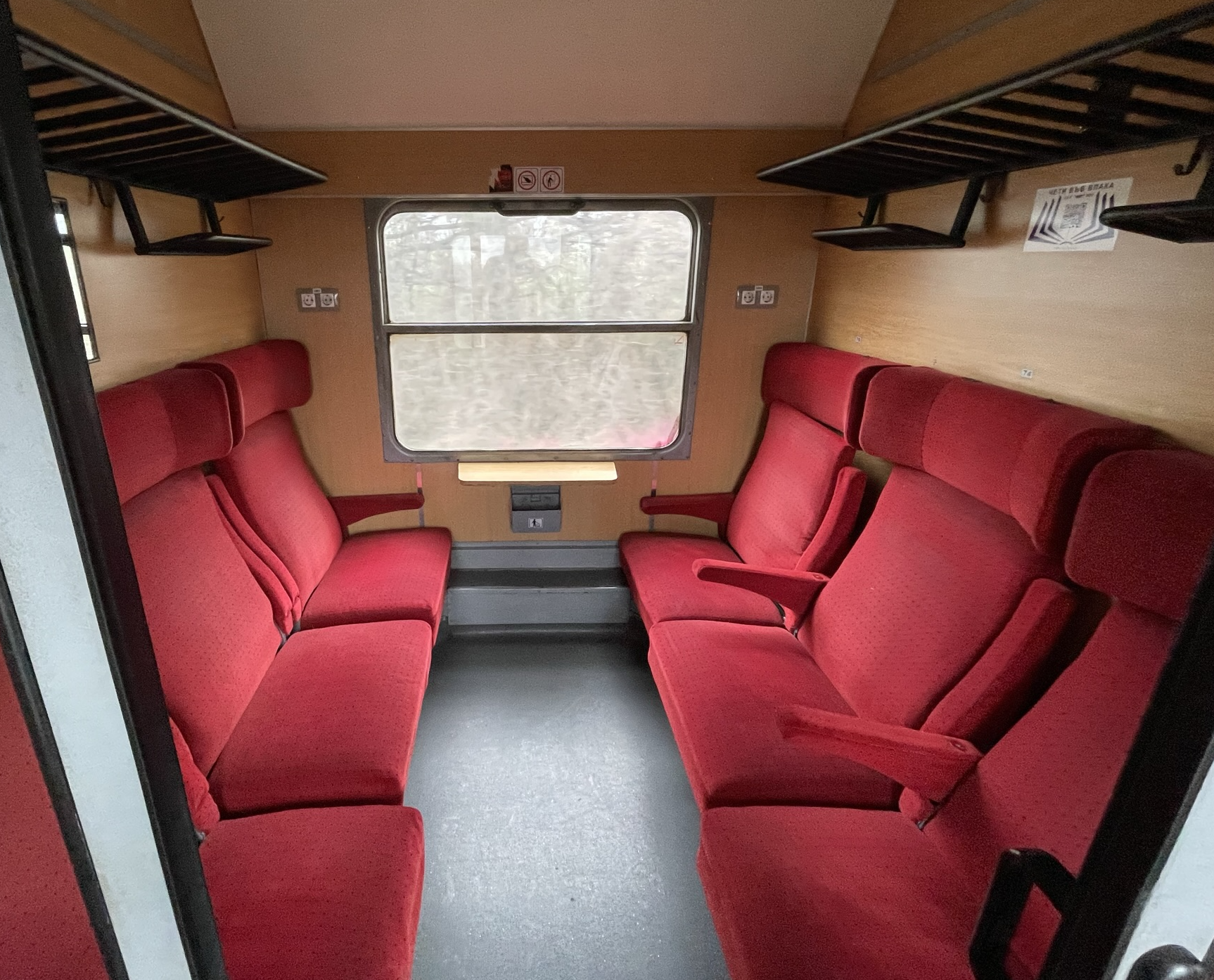
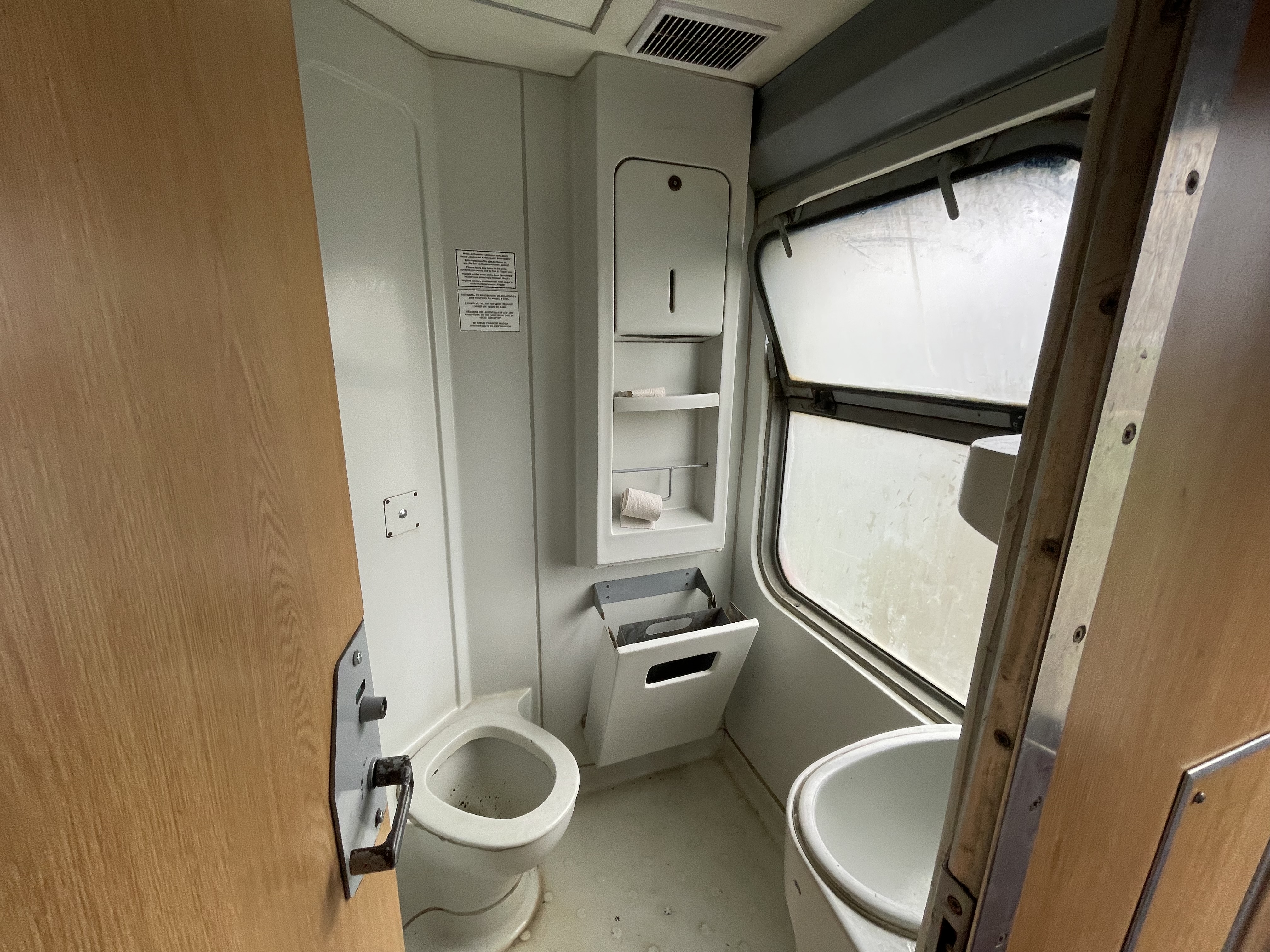
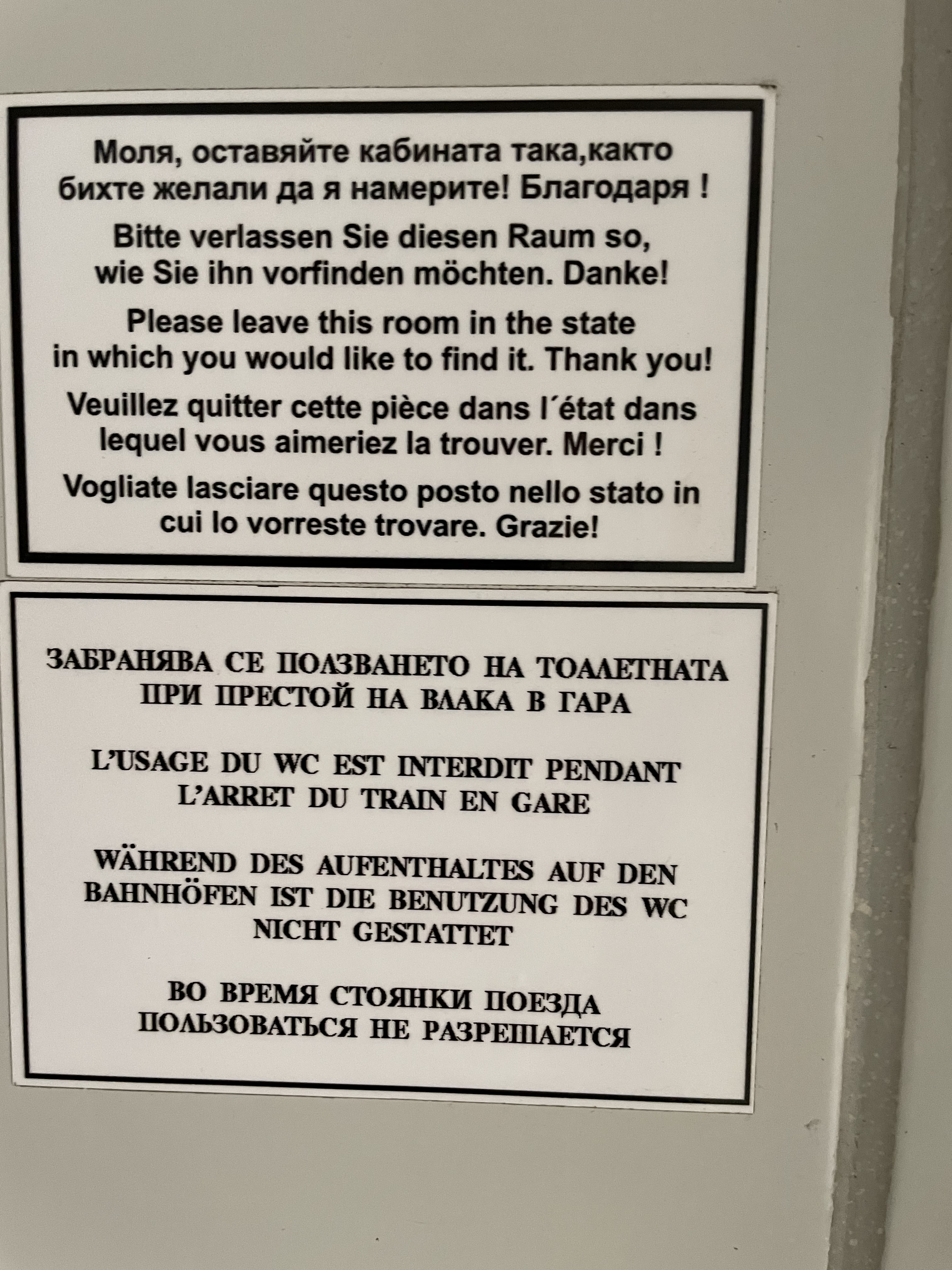
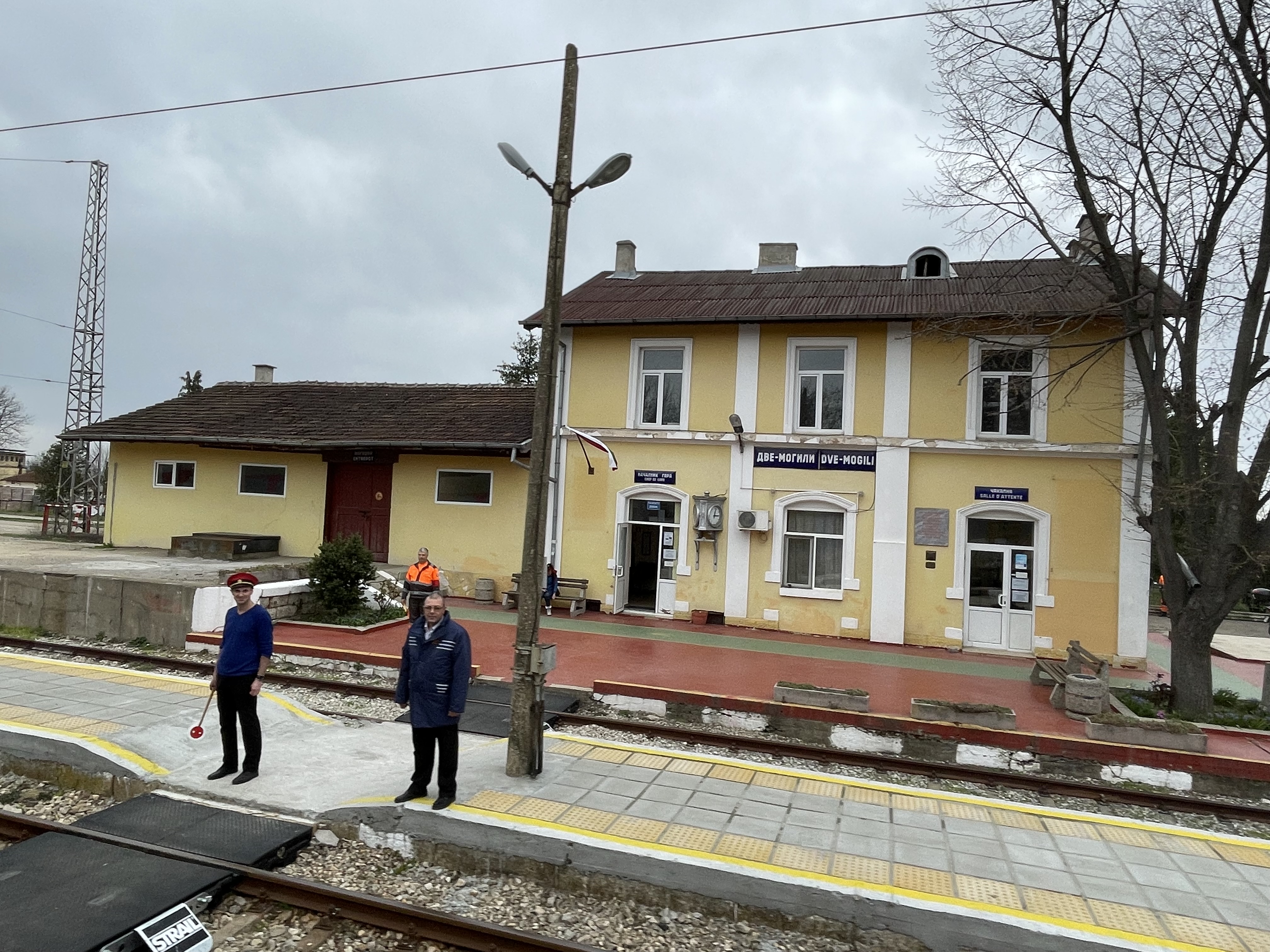
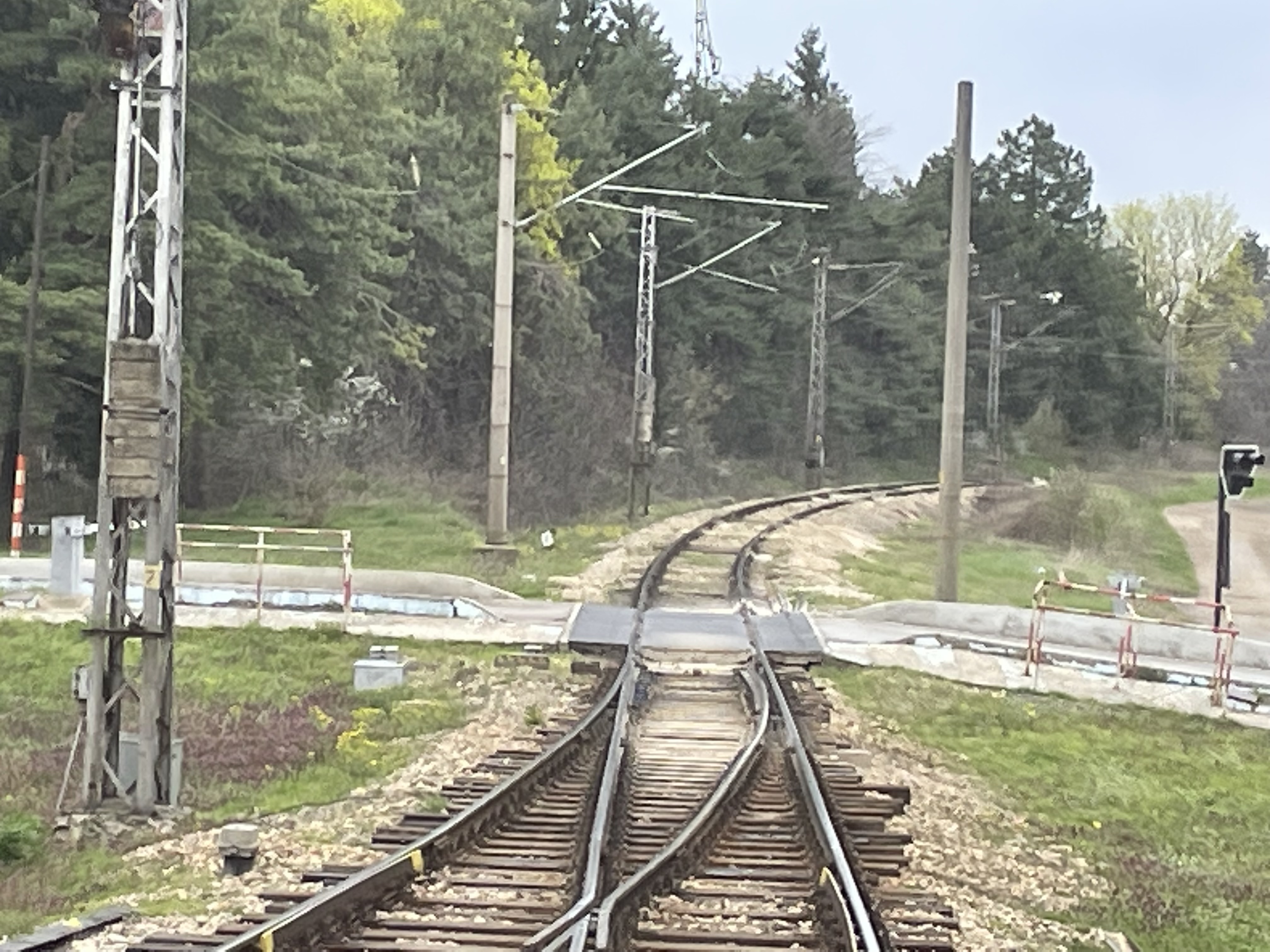
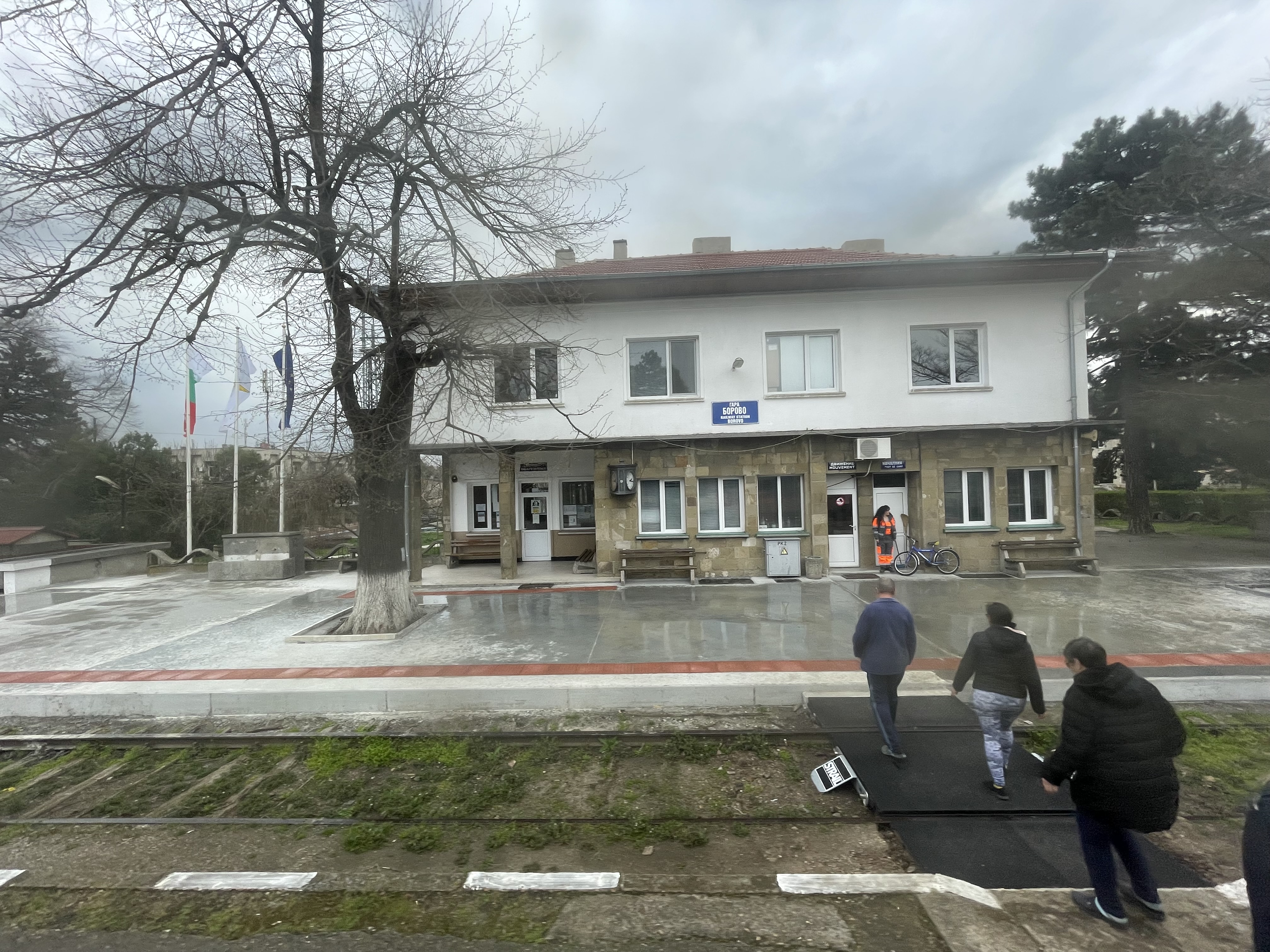
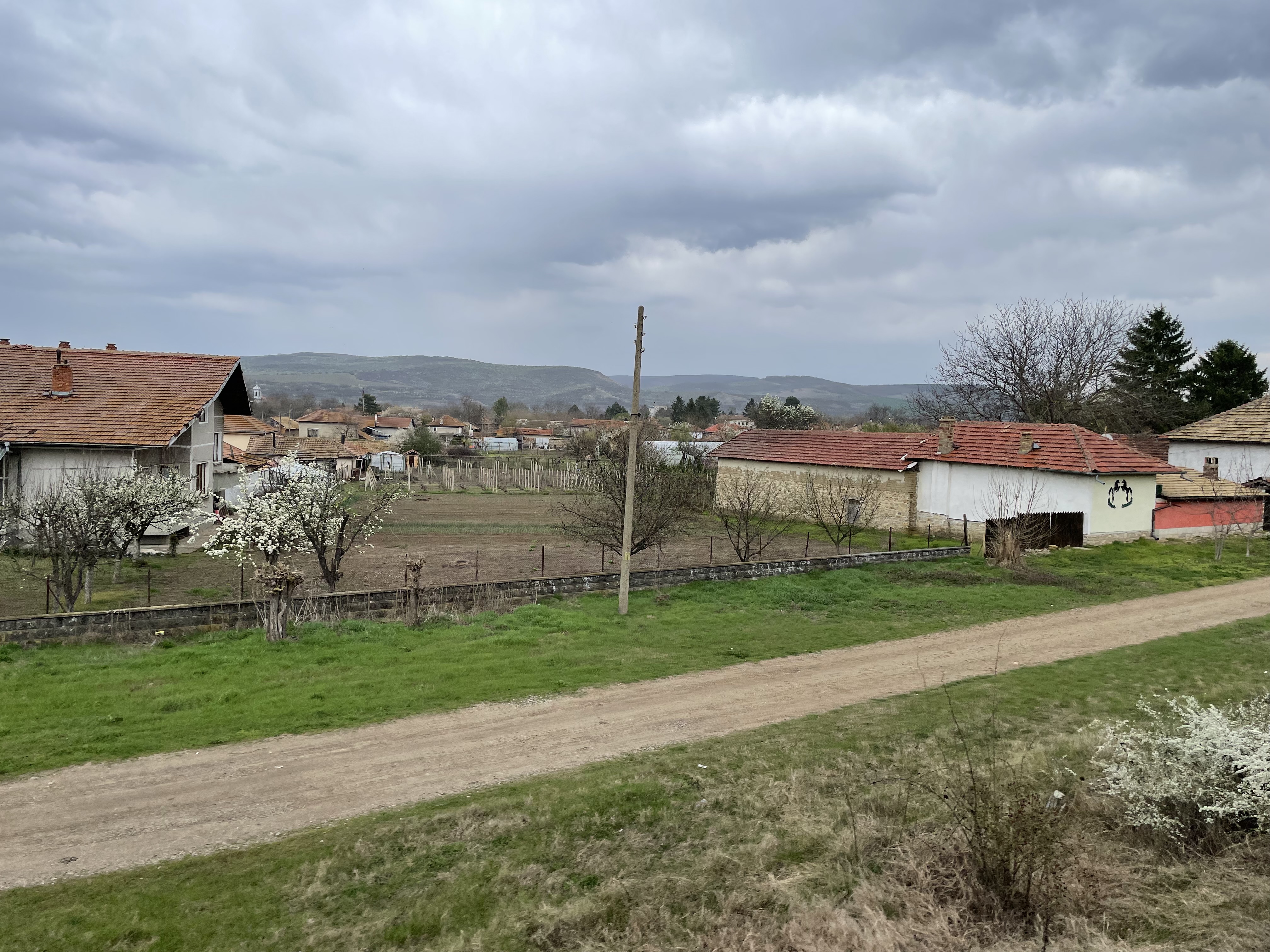
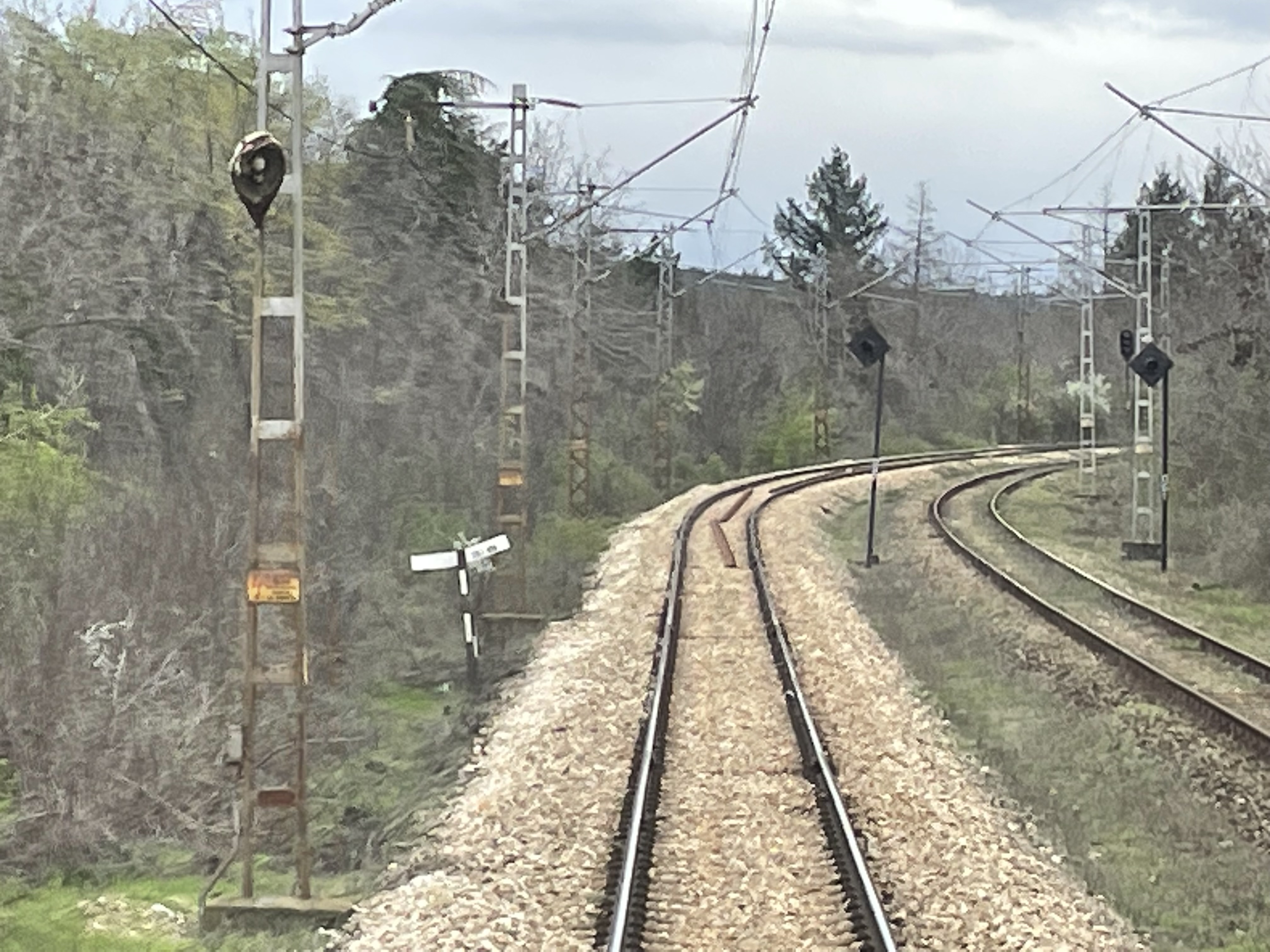
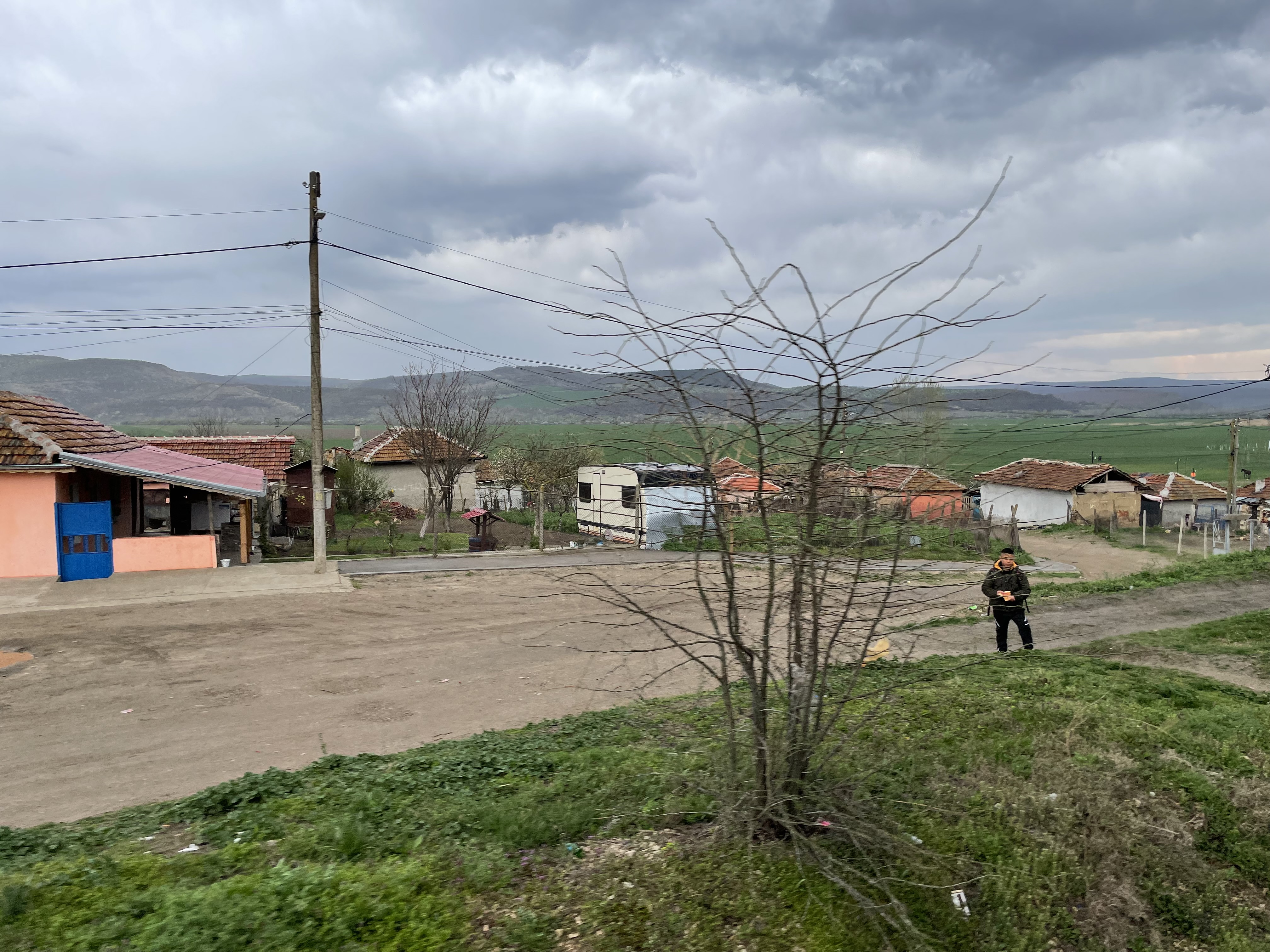
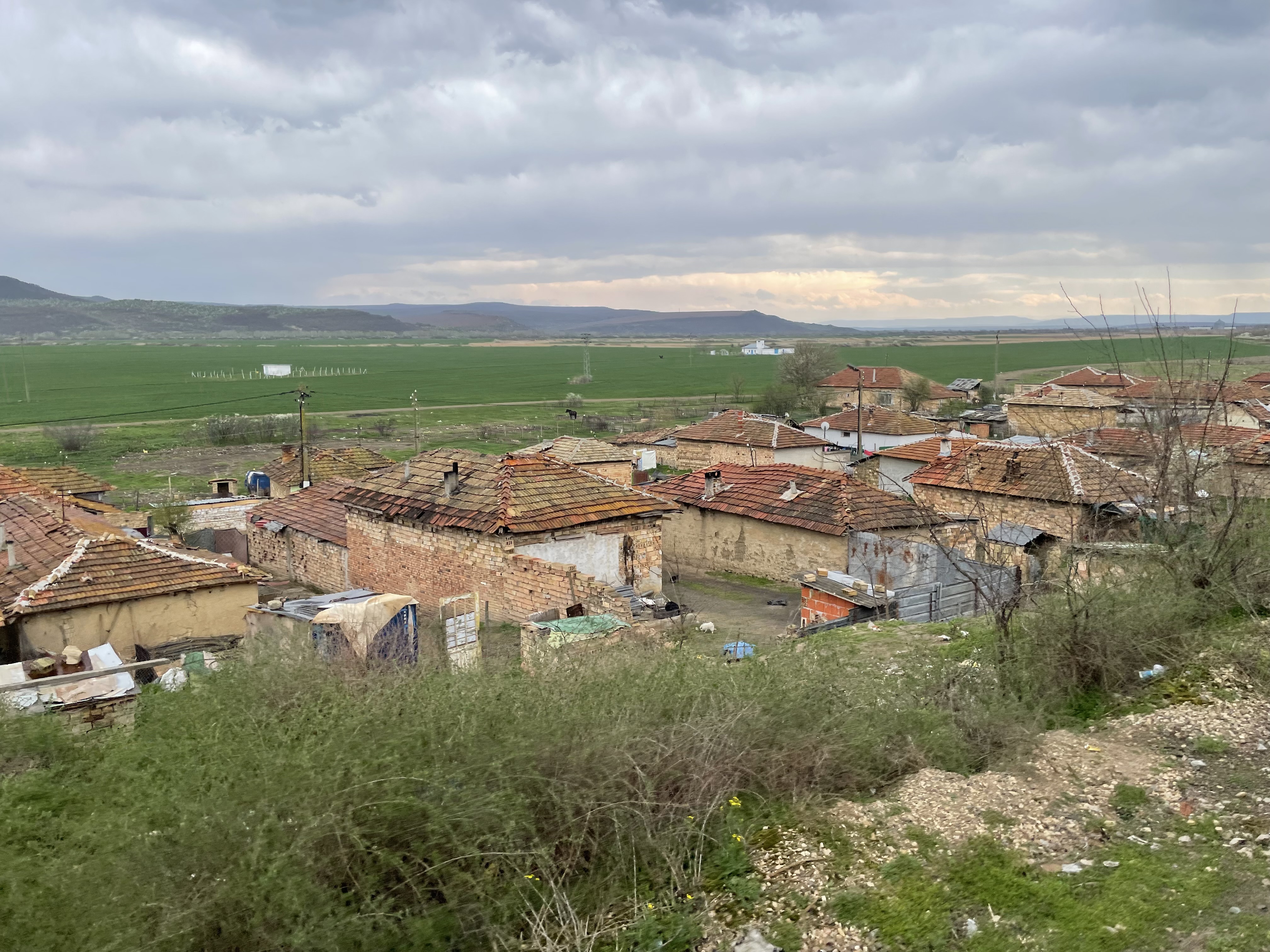
Contrasts:
Our journey produces contrasts
We were not able to investigate this ‘facility’………
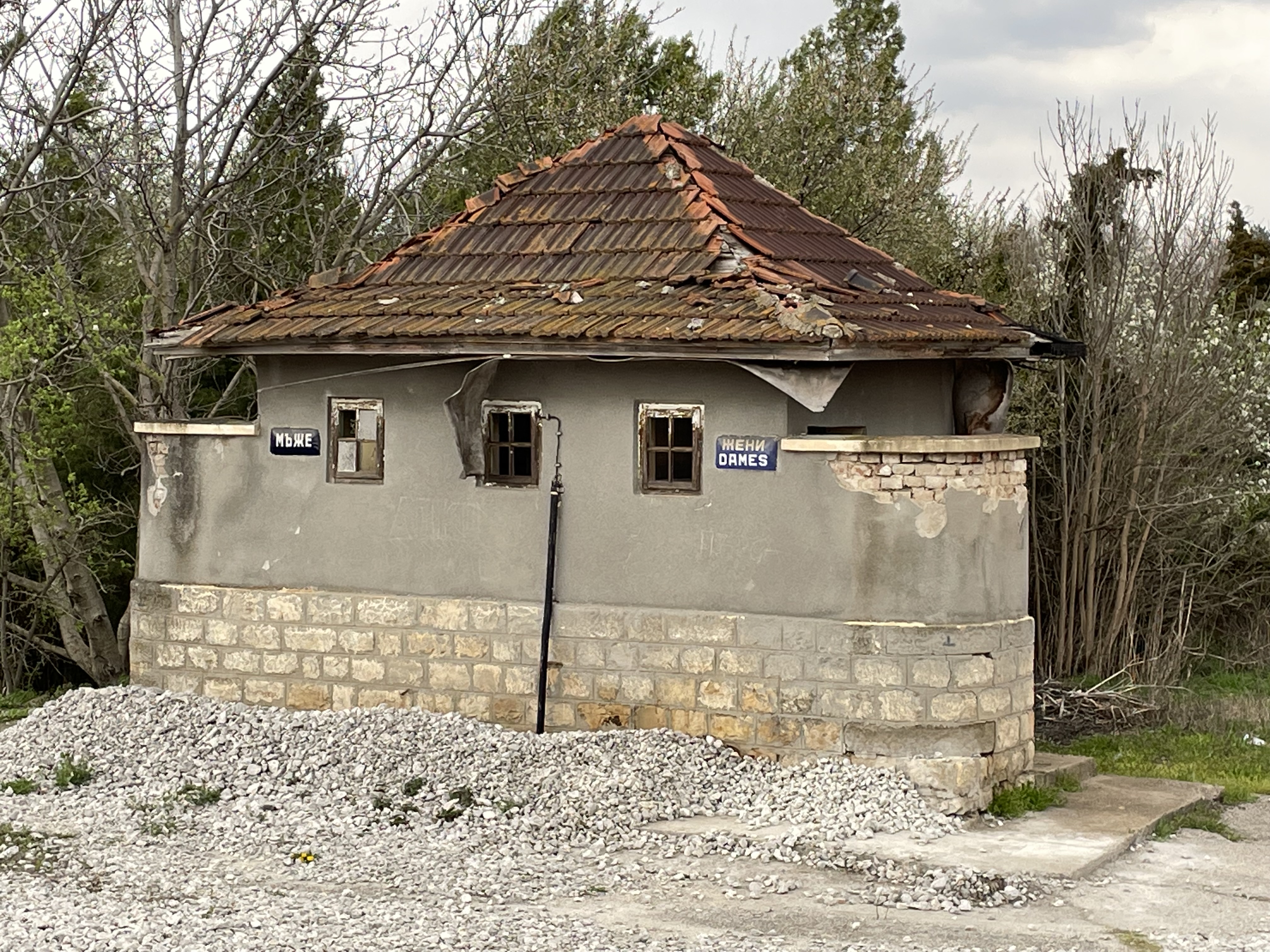
……. but it stands by a well ordered station that has been physically improved………
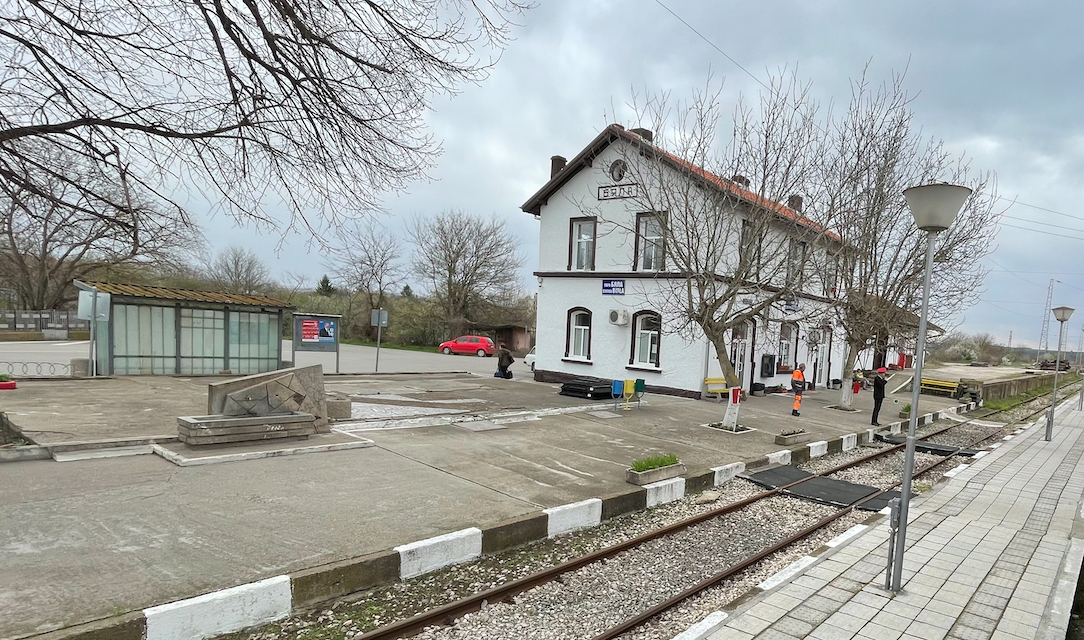
…Yet is still served by some very curiously maintained ‘survivals’
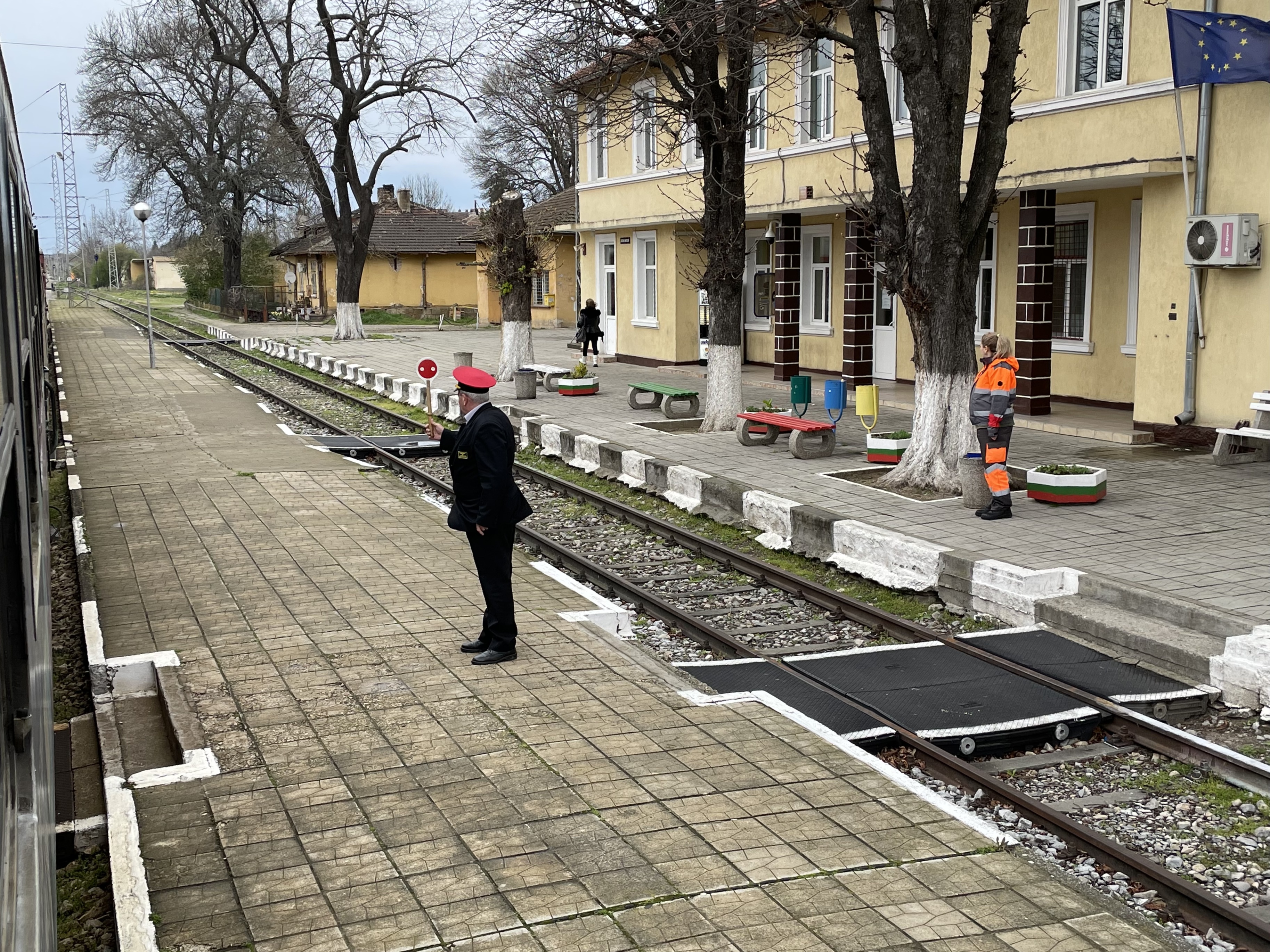
In Bulgaria (& Romania), some old formalities survive.
As is normal across most railway systems, at major stations, a platform staff member is designated as ‘dispatcher’. Their task is to give official departure clearance to train staff who manage and operate the train.
In Bulgaria & Romania most stations (even the smallest) are staffed & such people are required to ‘dispatch’ trains that have stopped and stand to attention when express trains pass through.
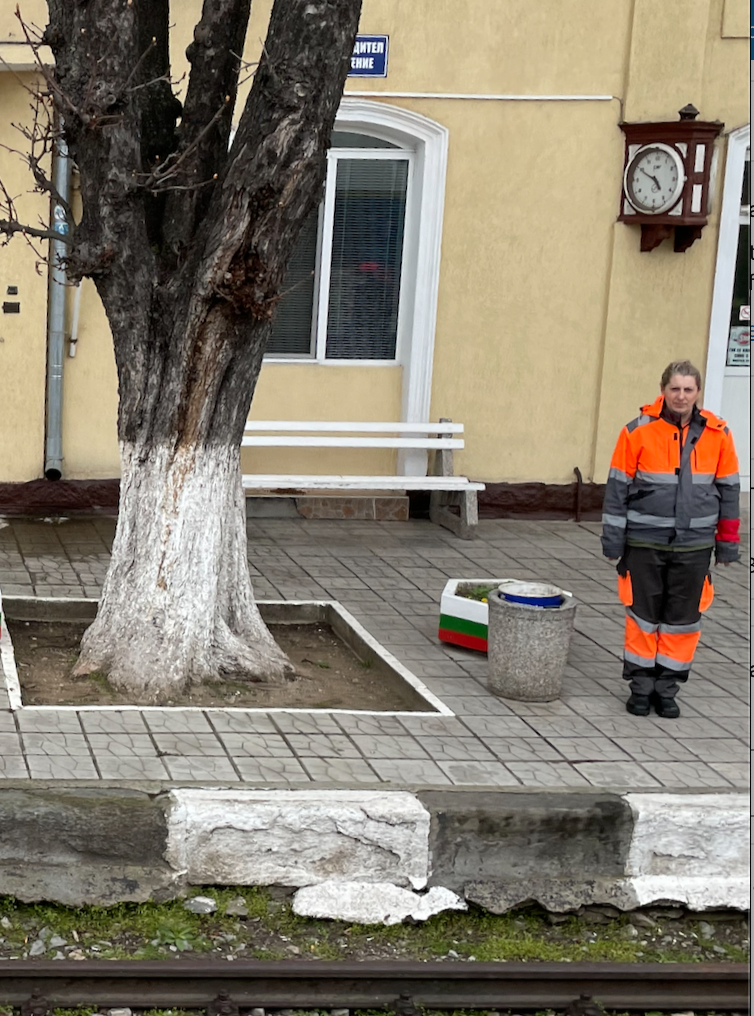
Day’s end is at Pleven…. in the rain.

Pleven
An ‘Unexpected Great Surprise’.
Of its history I knew a little, but was unprepared for the sharp realisations, relevance & continuing impact which that history creates.
BUT – not initially
First:
A wonderful introduction to Bulgaria & Pleven.
We arrived & were whisked away from our hotel and taken to a cave.
There we met Vanya, our dynamic & wonderfully well organised local friend.

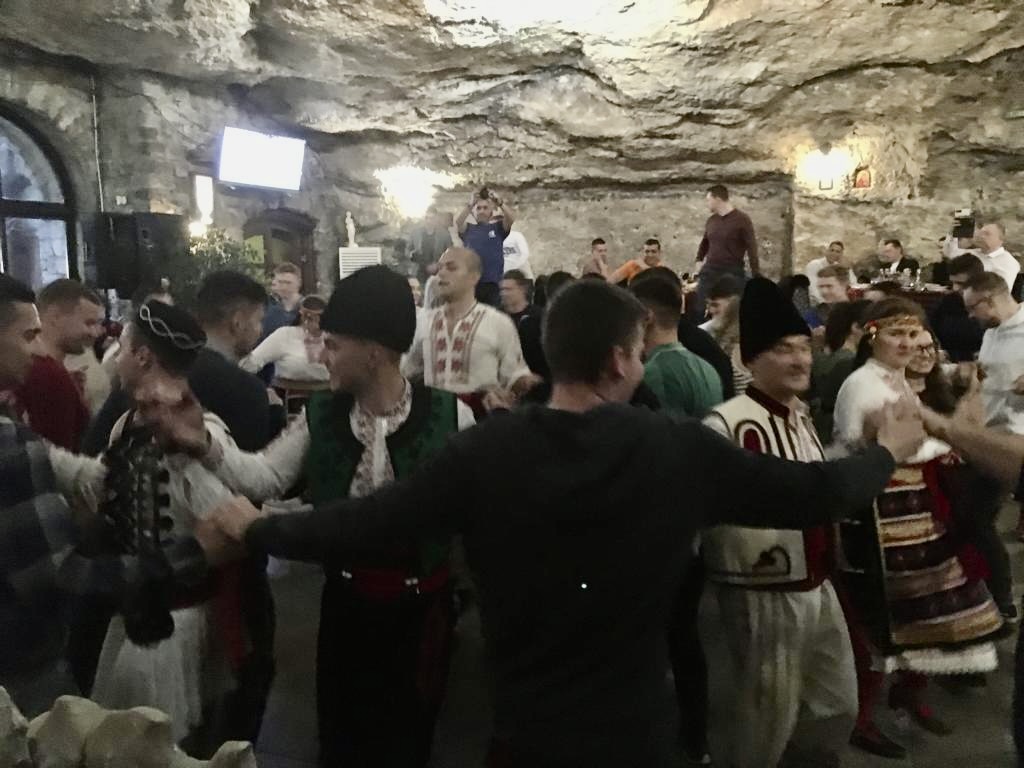
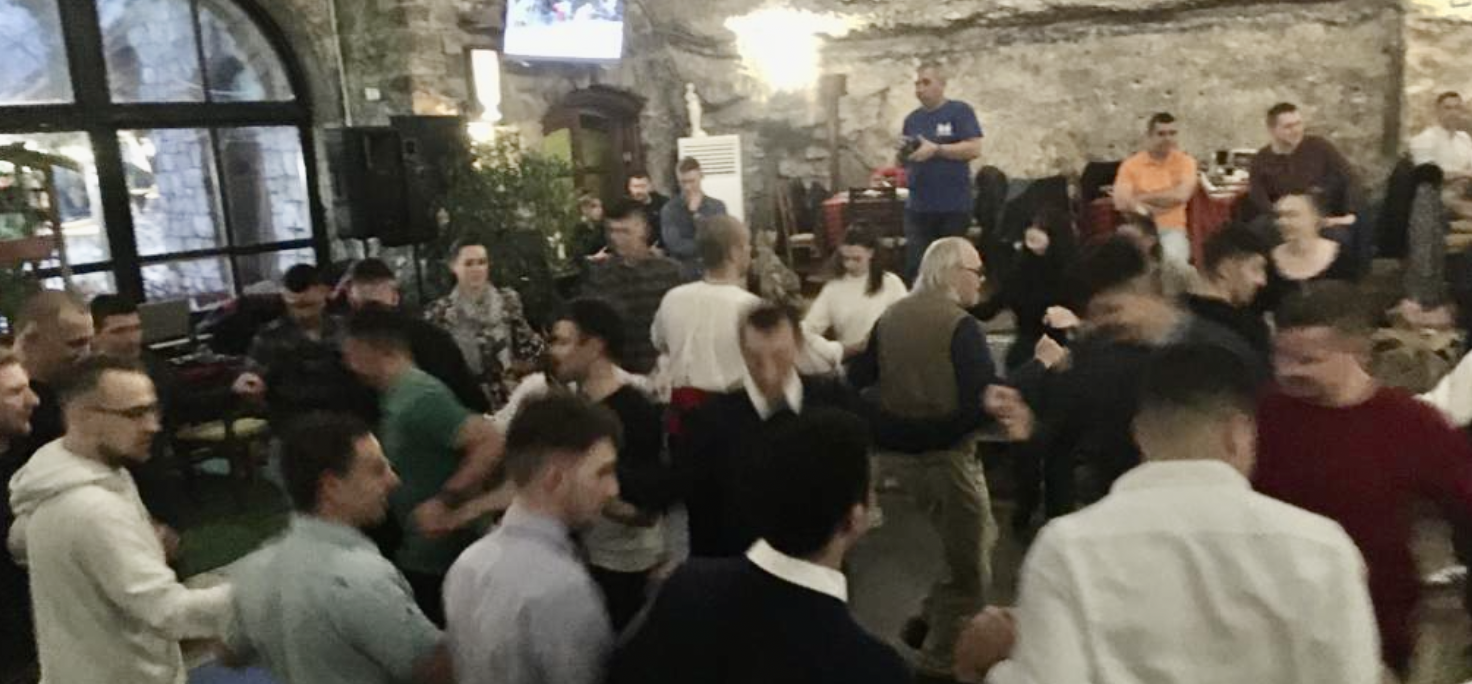
In the cave there was a celebration forming part of an international gathering of military students & cadets from Bulgaria, Romania, Poland & USA.
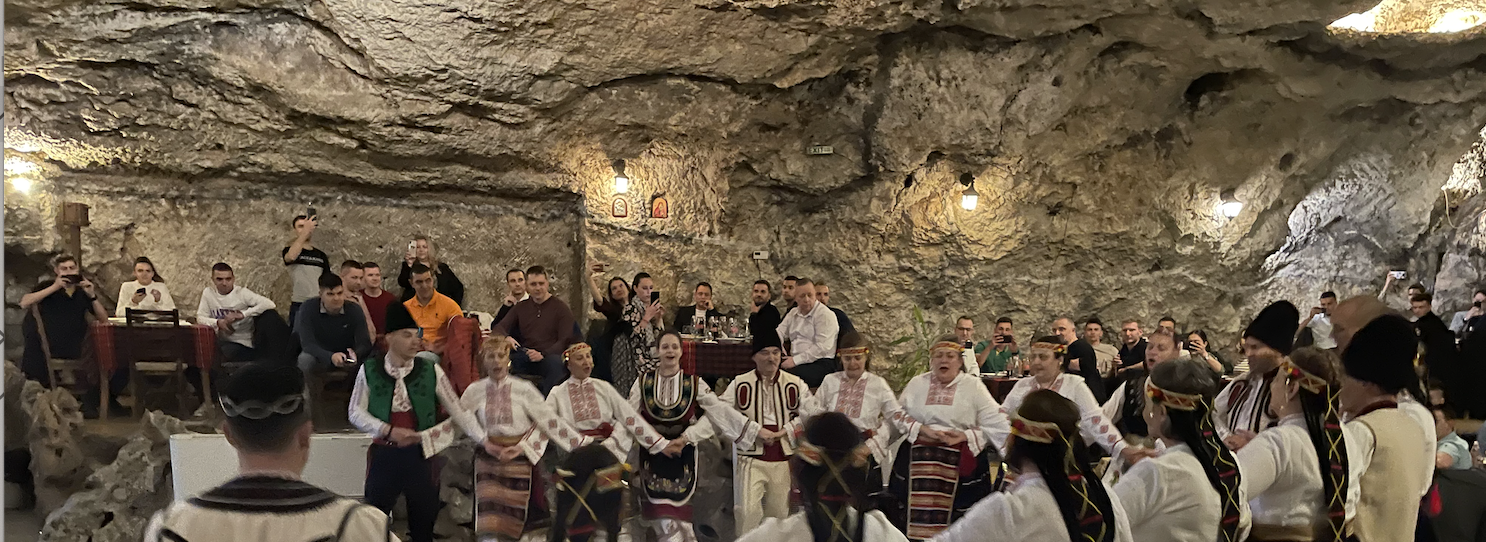
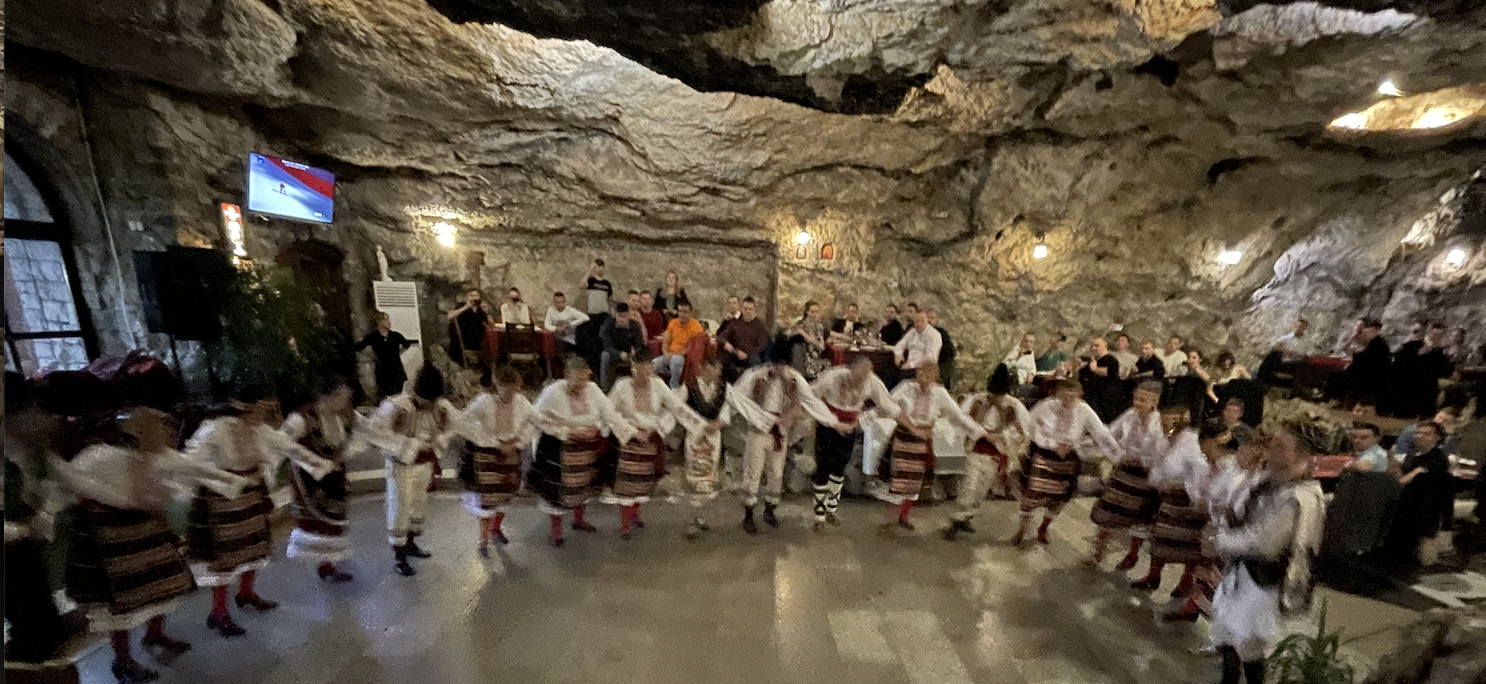
After a local dance team performed, students performed a traditional winter danced – drama
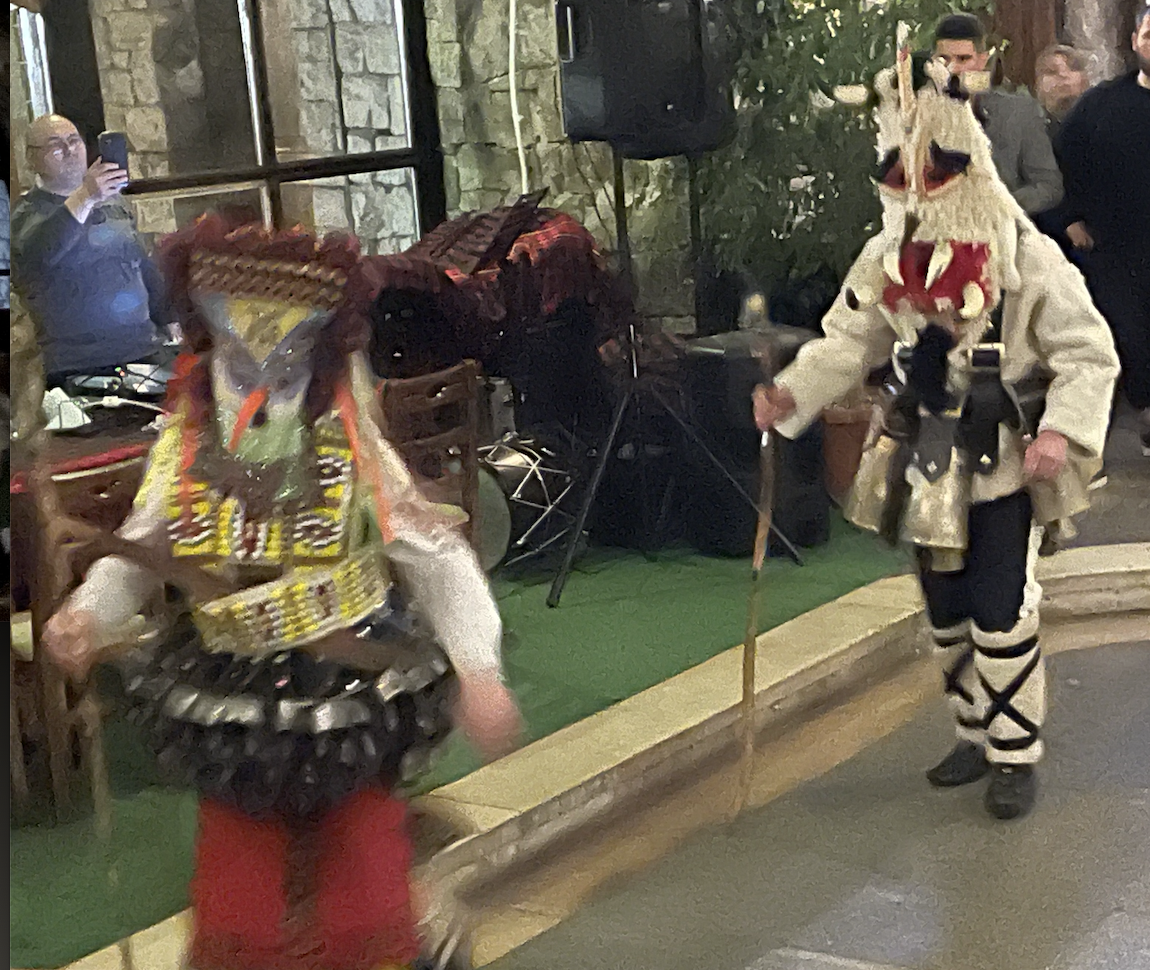
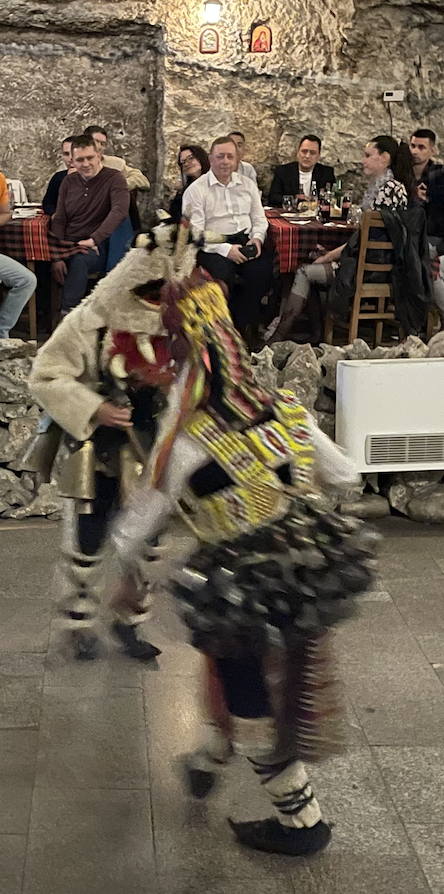
….. Bulgarian students then led with their ‘own ‘horo’ (хоро) – traditionally a semi-circular dance
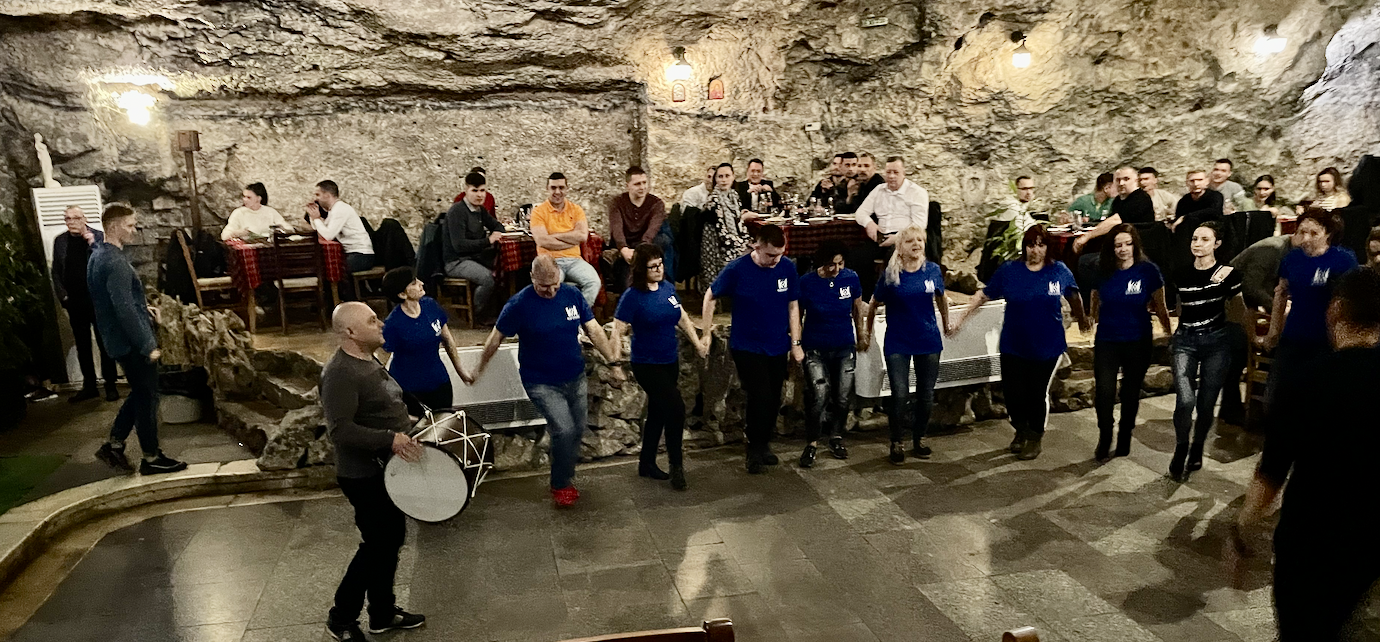
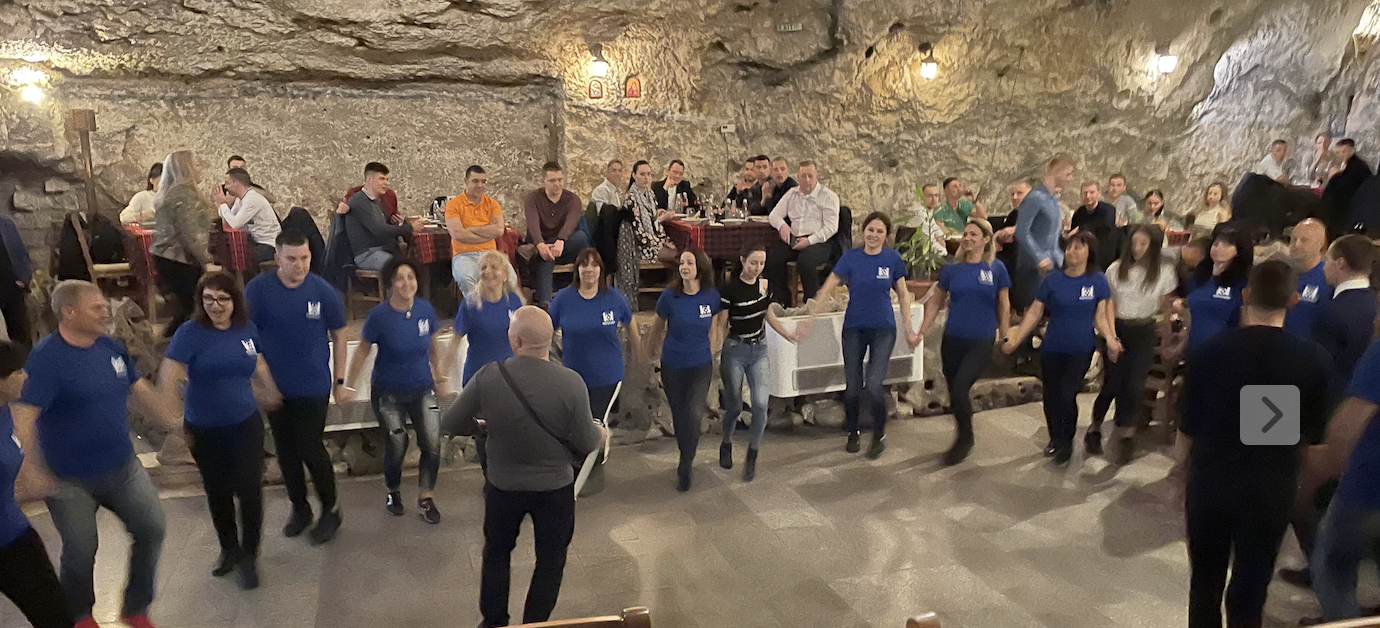
followed by the Romanian students ‘hora’ – which is circular
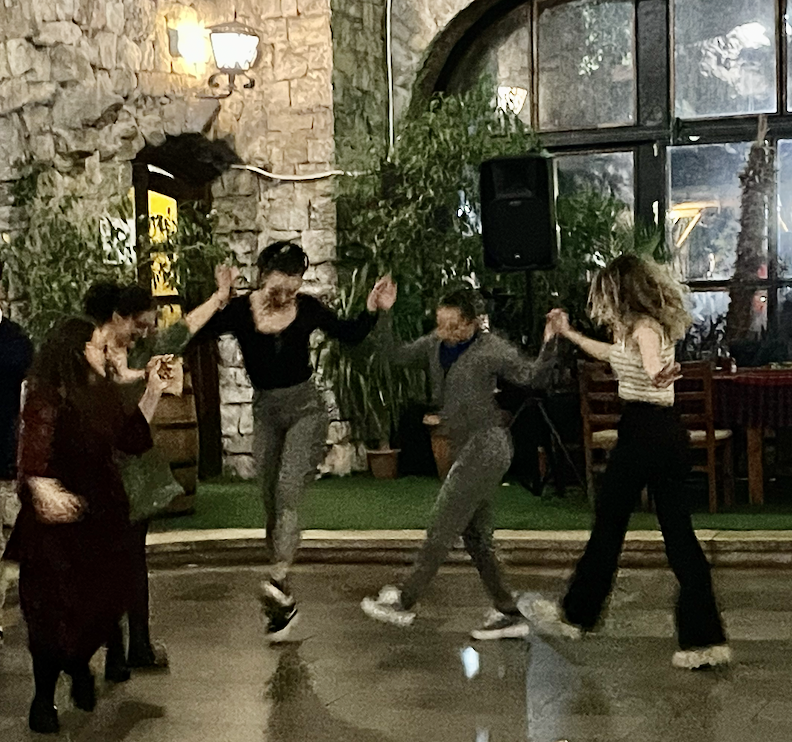
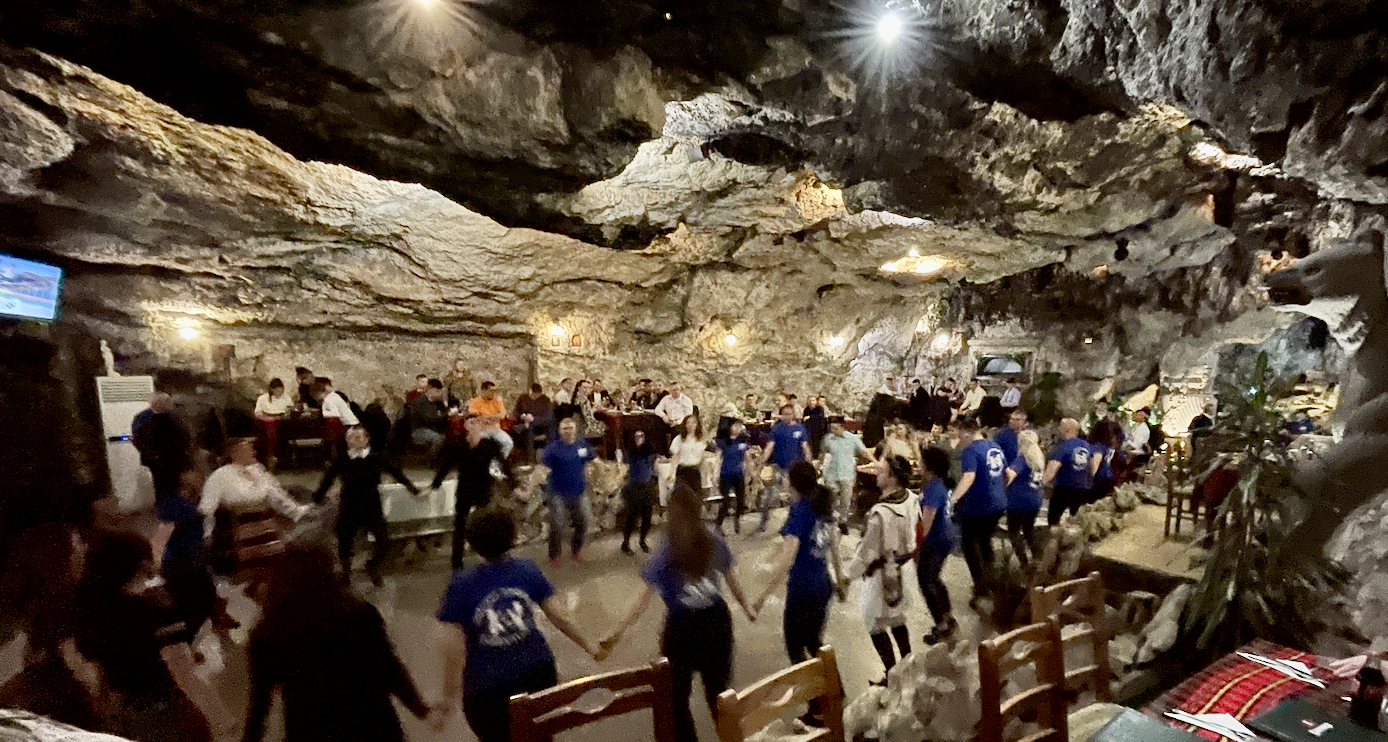
…. and then we all joined in Poles, Brits, Americans) …. stepping and dancing as best as possible…..
Tuesday March 28th
Pleven is a major regional centre with important local industries – but the impression given to a first time visitor arriving in the centre is of a place rooted in one specific event: A siege in 1877.
The event gained considerable extra emphasis during the period of Communist Authoritarianism. They were building on existing remembrance of Pleven as a critical point in the emergence of the modern Nation States of Bulgaria and Romania & of the ‘liberating role’ of Russia
Given the imperial ambitions of Putin’s Russia & the parallels with the recent history of Bulgaria, Pleven dramatically exposes a significant ‘Tragic Drama of The Present’.
Our visit to Pleven challenged, stimulated & incentivised.
Pleven, through its monuments, provided an encounter with some of the background realities (& fears) facing countries (especially Bulgaria), that were once a part of the ’Russian Soviet Block’, but which now are formally ‘western’.
Our visit was ‘an education’ encouraging considerable further enquiry – both of the background & history of Bulgaria & of present realities facing Europe….
…becoming, for us, inquisitive travellers crossing the old ’soviet bloc’, probably the single most significant place we visited on the whole ‘No Kerosene’ Tour.
Background history:
In 1877 Russia invaded the Ottoman Empire, advanced through Romania & across the Danube.

An Ottoman- Turkish Army under command of Osman Nuri Pasha (‘one of the most respected and decorated Ottoman pashas of all time’) had established a strong defensive position at “Plevna’.

The Russians (slow and unprepared for strong resistance) were stopped at Plevna & required Romanian assistance.
 A siege began 20th July lasting until  10th December when lack of supplies & a failed break-out resulted in Turkish surrender.

The Russian army continued its advance to near Constantinople but the defence was regarded as heroic. Other European powers became aware of the dangers of a collapse of the Ottoman Empire & Russian control of the Bosphorus. An agreement to end the invasion was concluded & that included the creation of a Bulgarian Principality (& in 1908, a Kingdom) & acceptance by the Ottoman Empire of the complete independence of Romania.
Czar Alexander 1, ‘Emperor and Autocrat of all Russia, King of Poland, Grand Duke of Finland’ & his brother, Grand Duke Nicholas Nikolaevich of Russia were present at the siege. Romanian forces were led by Prince Carol (Prince Karl of Hohenzollern-Sigmaringen) who later became King Carol 1 of Romania.

https://en.wikipedia.org/wiki/Siege_of_Plevna
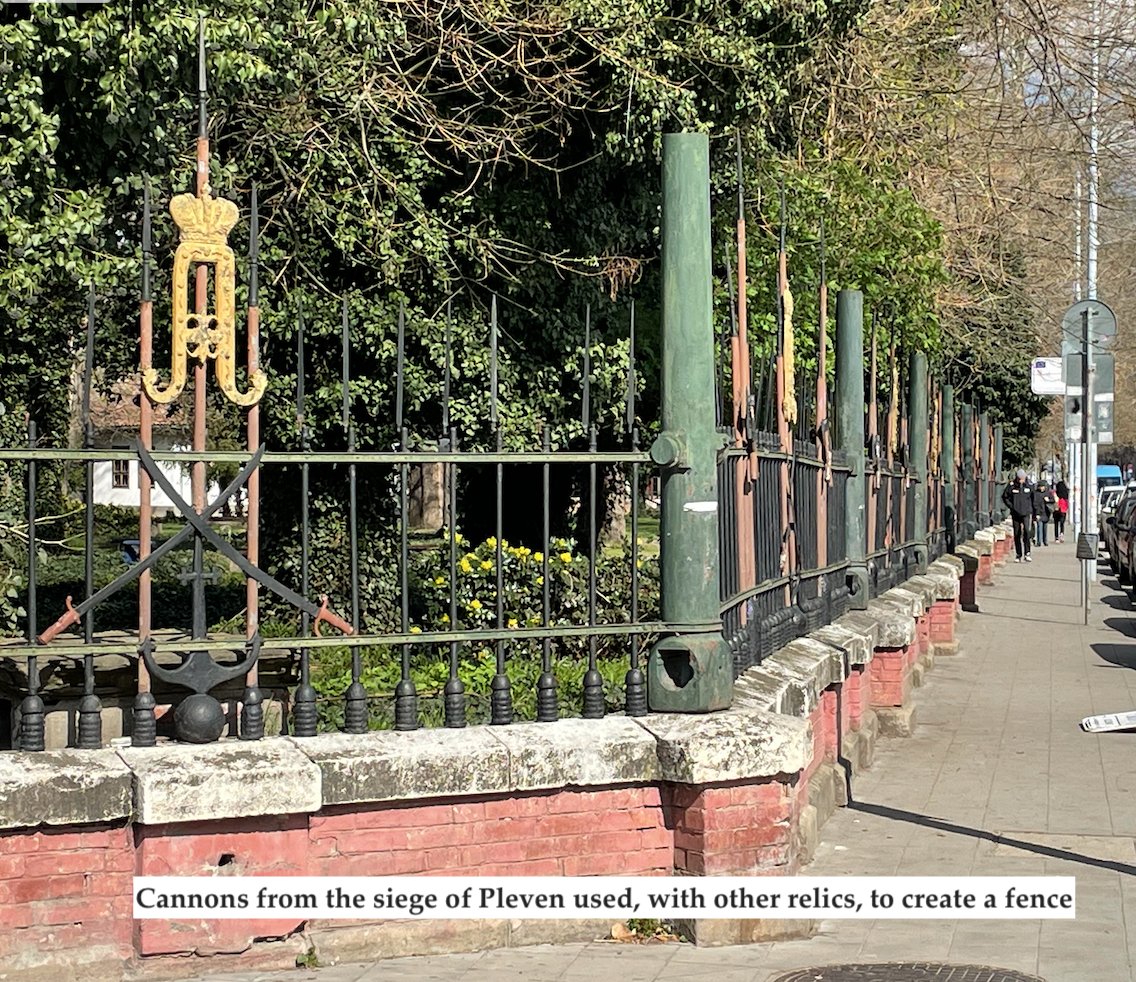
Most of the historical landmarks in Pleven are related to the Russo-Turkish war, with around 200 monuments commemorating the bloodiest battles of the war.
https://en.wikipedia.org/wiki/Pleven_Panorama
For modern Bulgaria the Russian invasion marks a beginning.
The siege is turned into a ‘critical moment’ in the process of becoming a ‘Nation’. The invader presents & is accepted as ‘liberator’
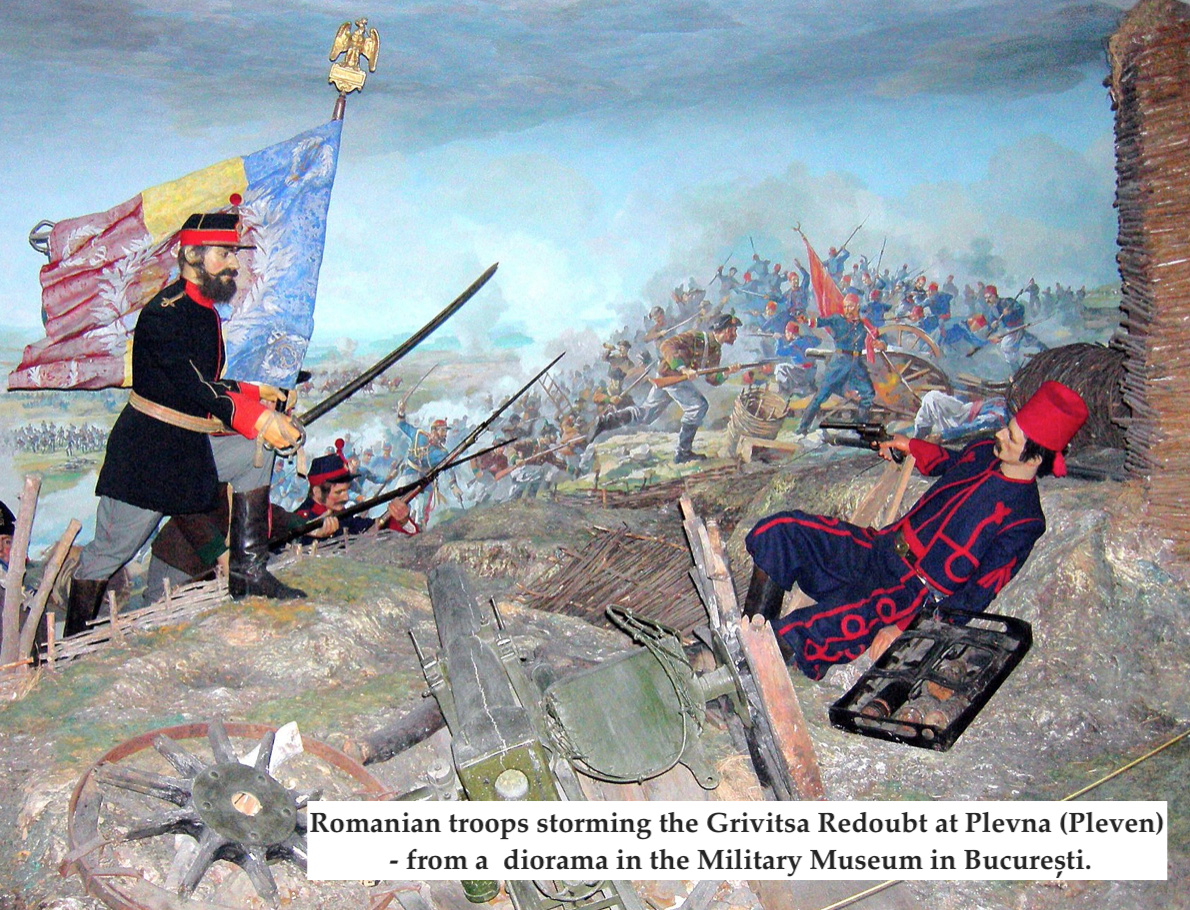
Nation States develop such stories – Foundation & other types of Mythology that become embedded in national social consciousness.
For example, ‘Brexit Britain’ was, not based on attitudes formed during one limited period of time in 2016 – it was possible because of certain underlying attitudes (relating to the UK’s difference from its neighbours) that existed within popular culture (film, TV comedies, school history etc) as well as political parties.
It is the manner in which nations use & hold onto such moments that can charge the attitudes of the present….. often to the detriment of present needs (of all types: social, economic, environmental, socio-psychological).
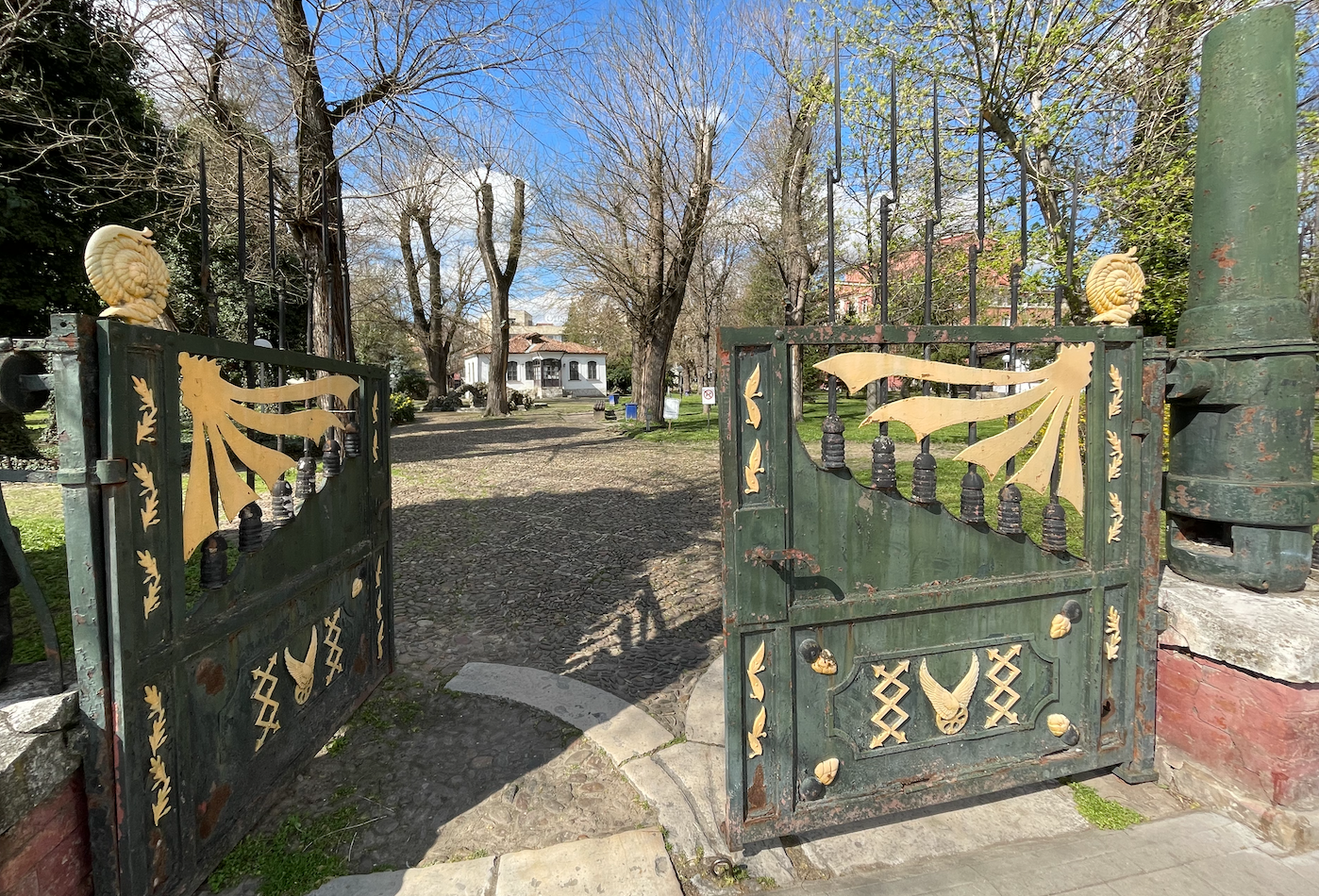
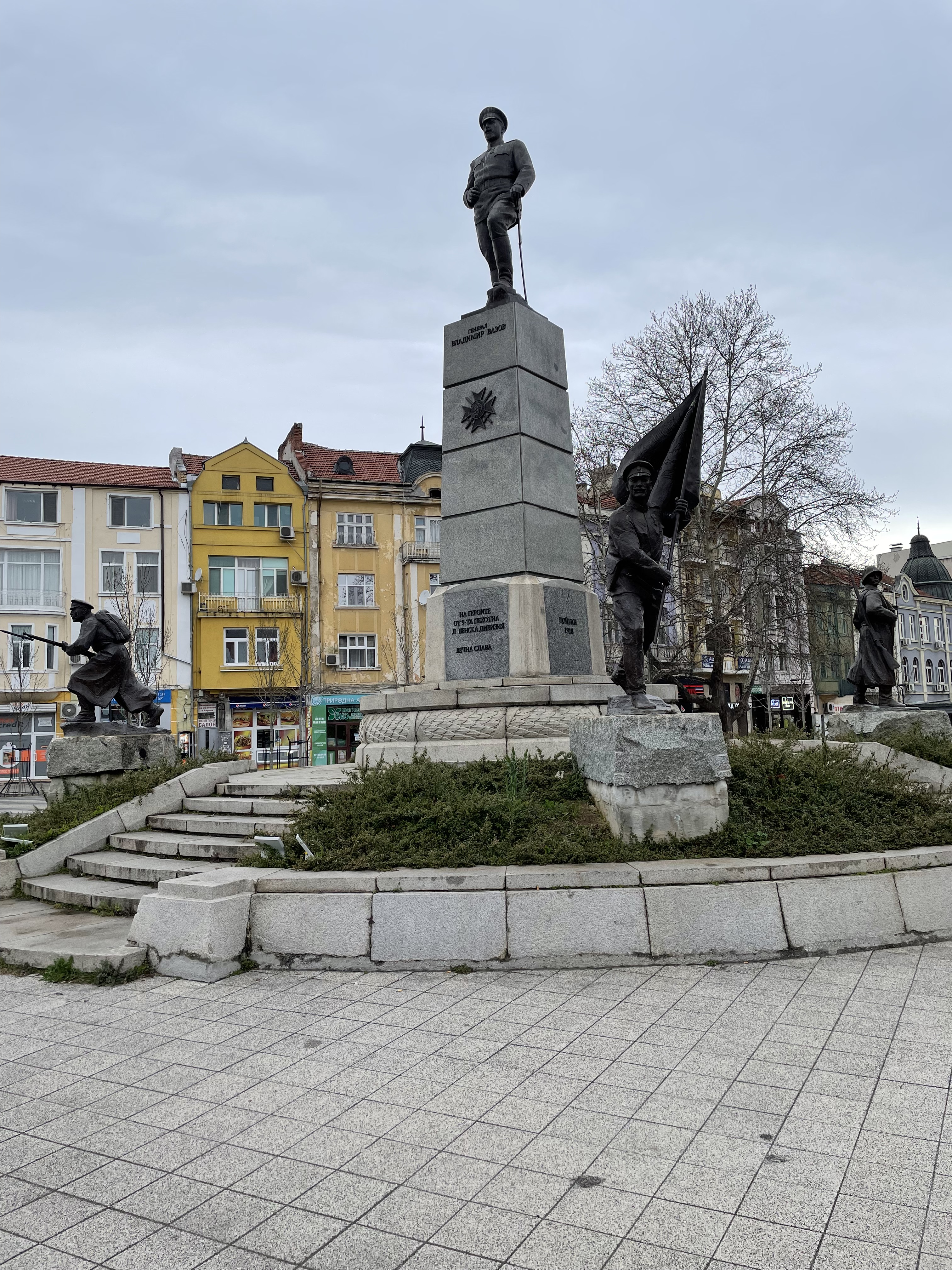
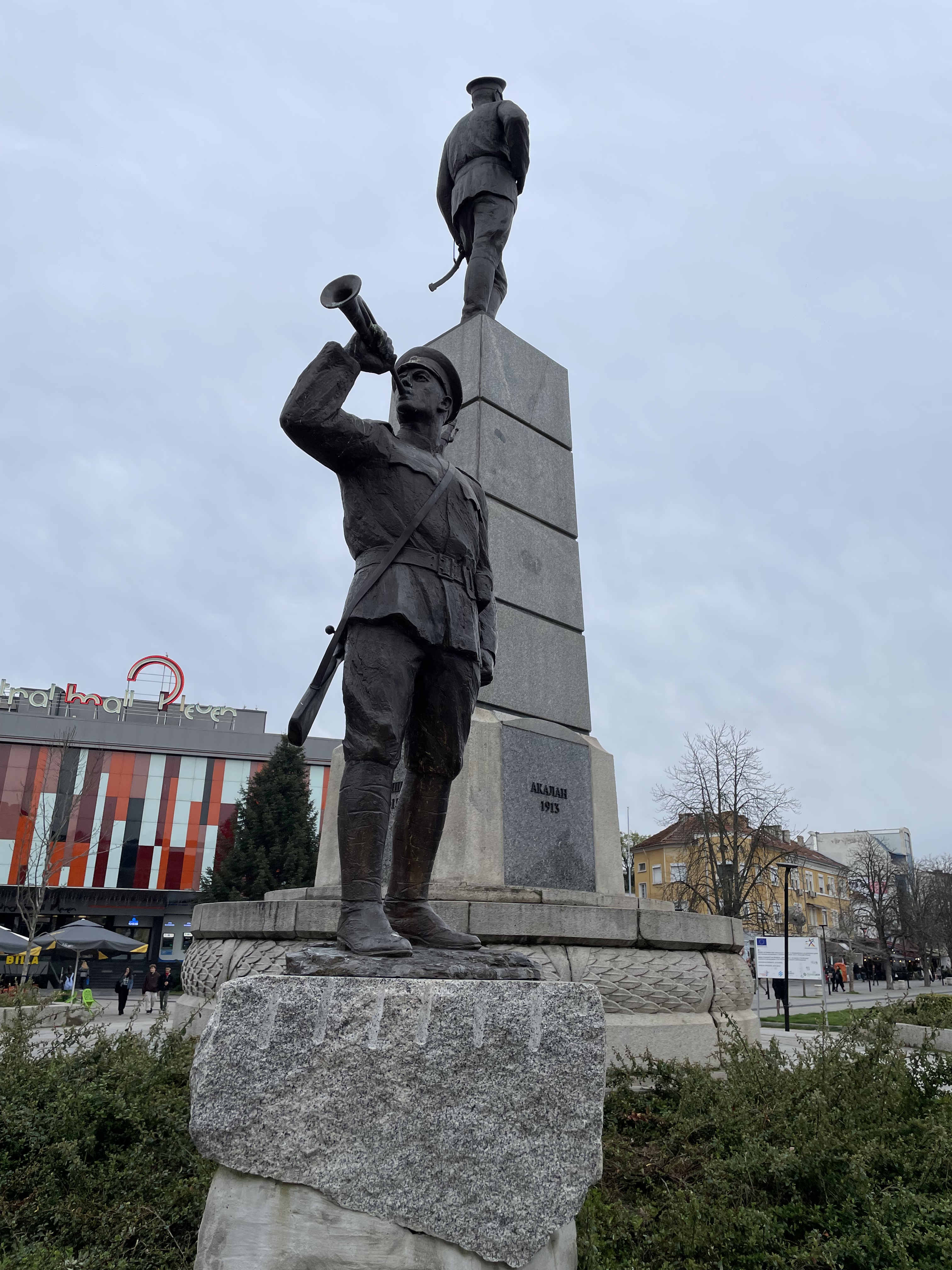
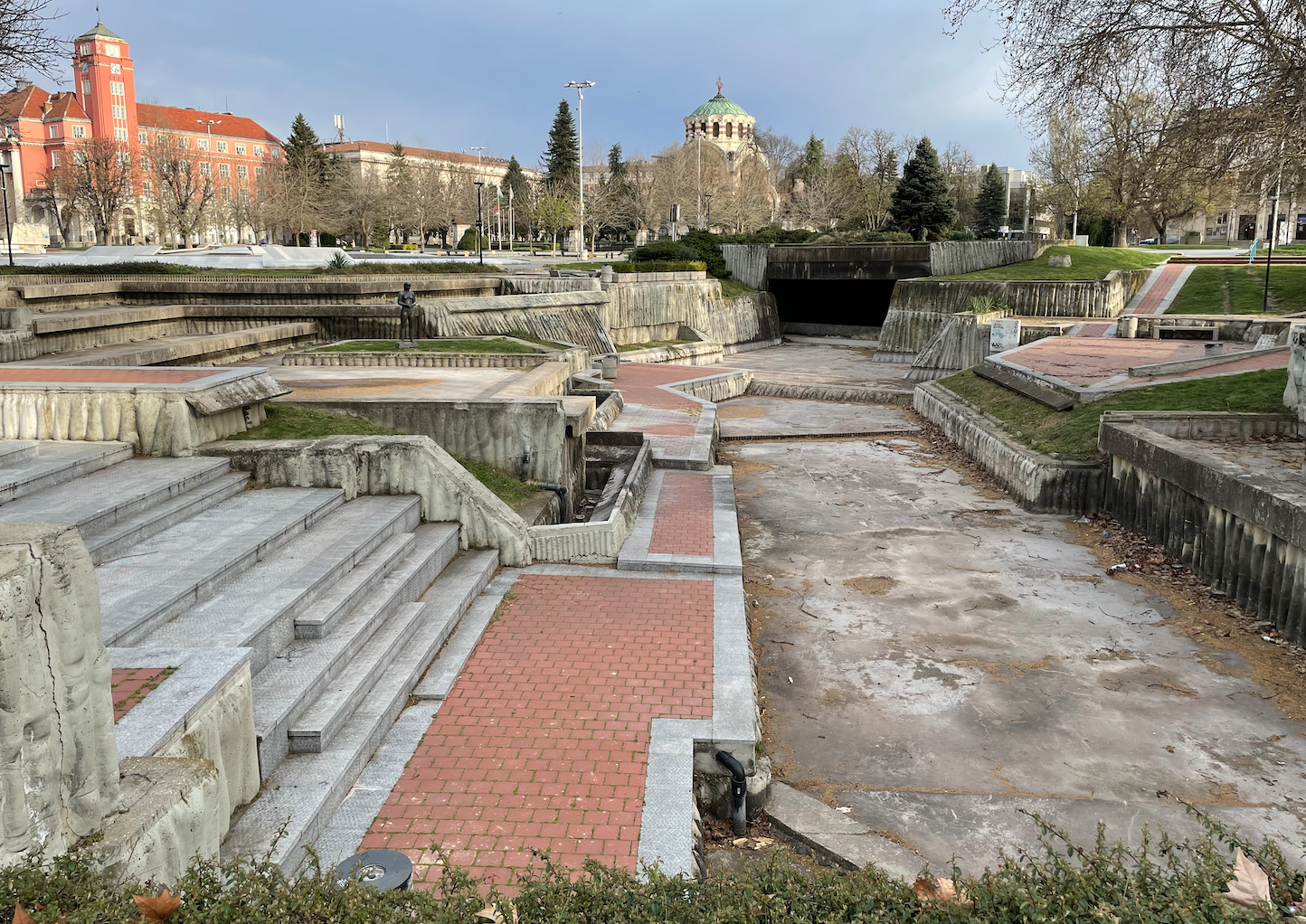
The centre of the town contains a square and public park.
At one end:
– a significant war memorial created during the period of communist rule,
– in the middle a water feature (rather forlornly empty during the winter)
– at the further end a large mausoleum.
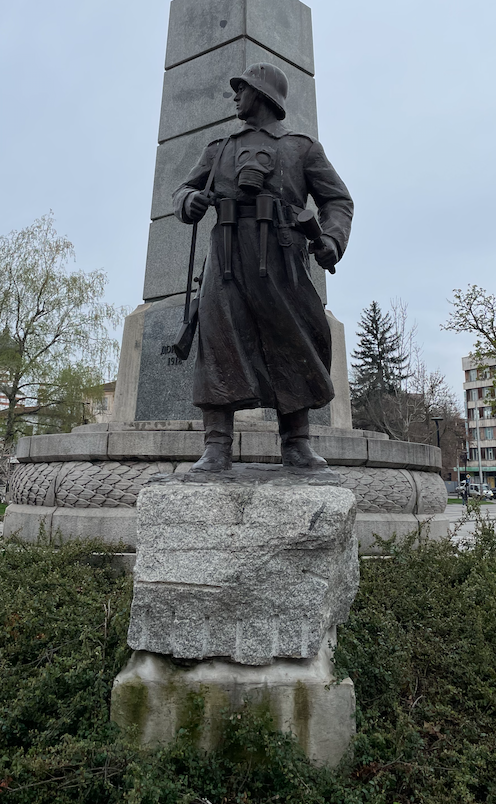
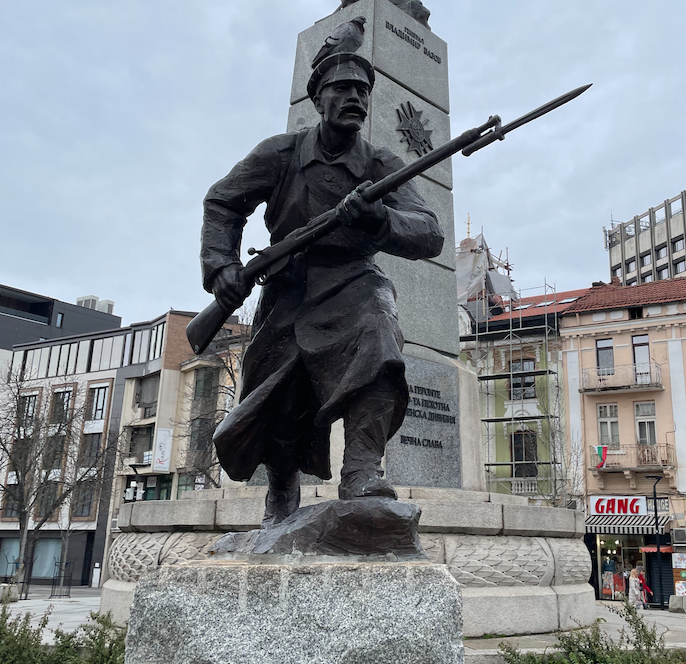
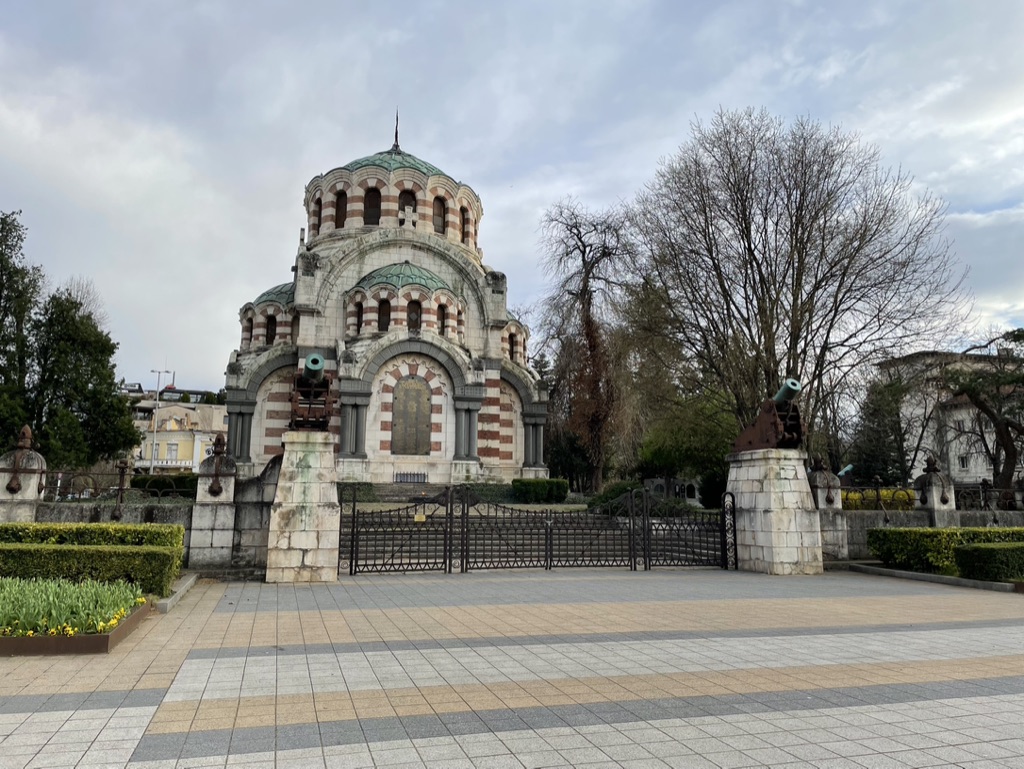
The St George the Conqueror Chapel Mausoleum (Bulgarian: Параклис-мавзолей „Св. Георги Победоносец“, Paraklis-mavzoley „Sv. Georgi Pobedonosets“) is a mausoleum (ossuary) and memorial Bulgarian Orthodox chapel, as well as a major landmark of Pleven, Bulgaria.
Built between 1903 and 1907 in the Neo-Byzantine style by the architect P. Koychev, whose project won a contest in 1903, it is dedicated to the Russian and Romanian soldiers who fell for the Liberation of Bulgaria during the Siege of Plevna of 1877. The remains of many of these soldiers are preserved in the mausoleum. The icons in the chapel mausoleum are the work of Bulgarian artists.
The chapel mausoleum bears the name of Saint George, the patron saint of soldiers, and is also depicted in the coat of arms of Pleven. It lies on the main Vazrazhdane Square.
https://en.wikipedia.org/wiki/St_George_the_Conqueror_Chapel_Mausoleum
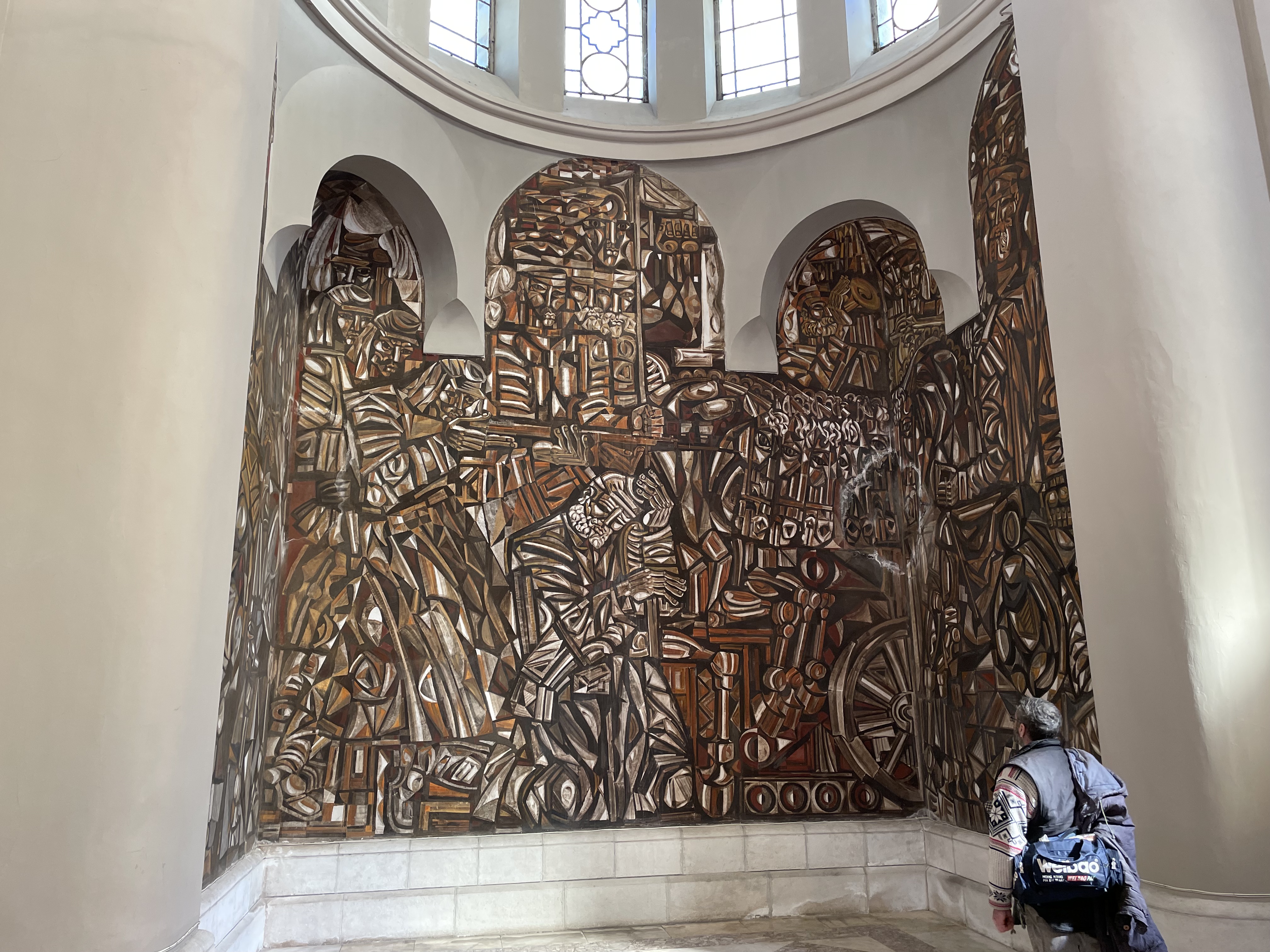
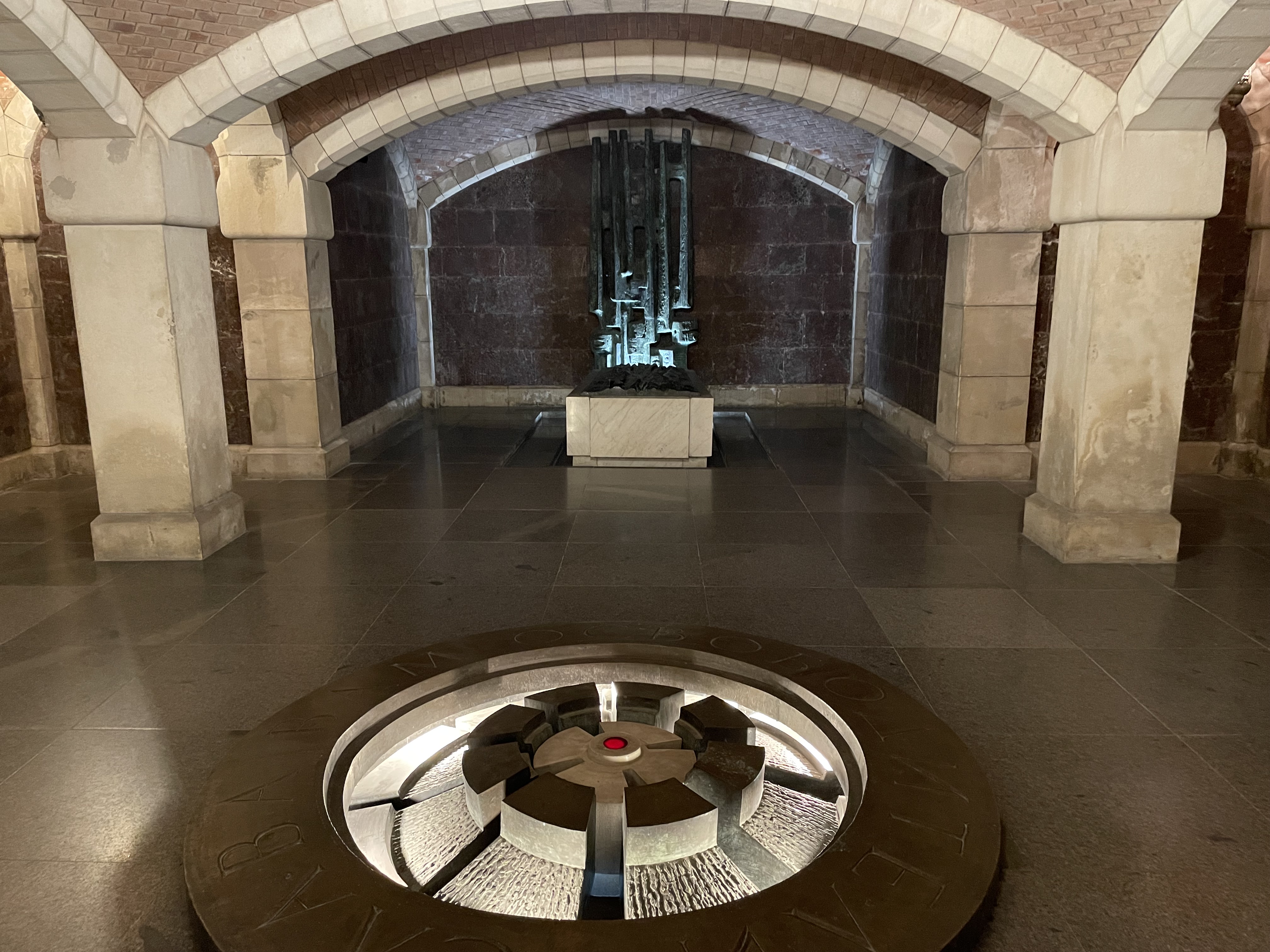
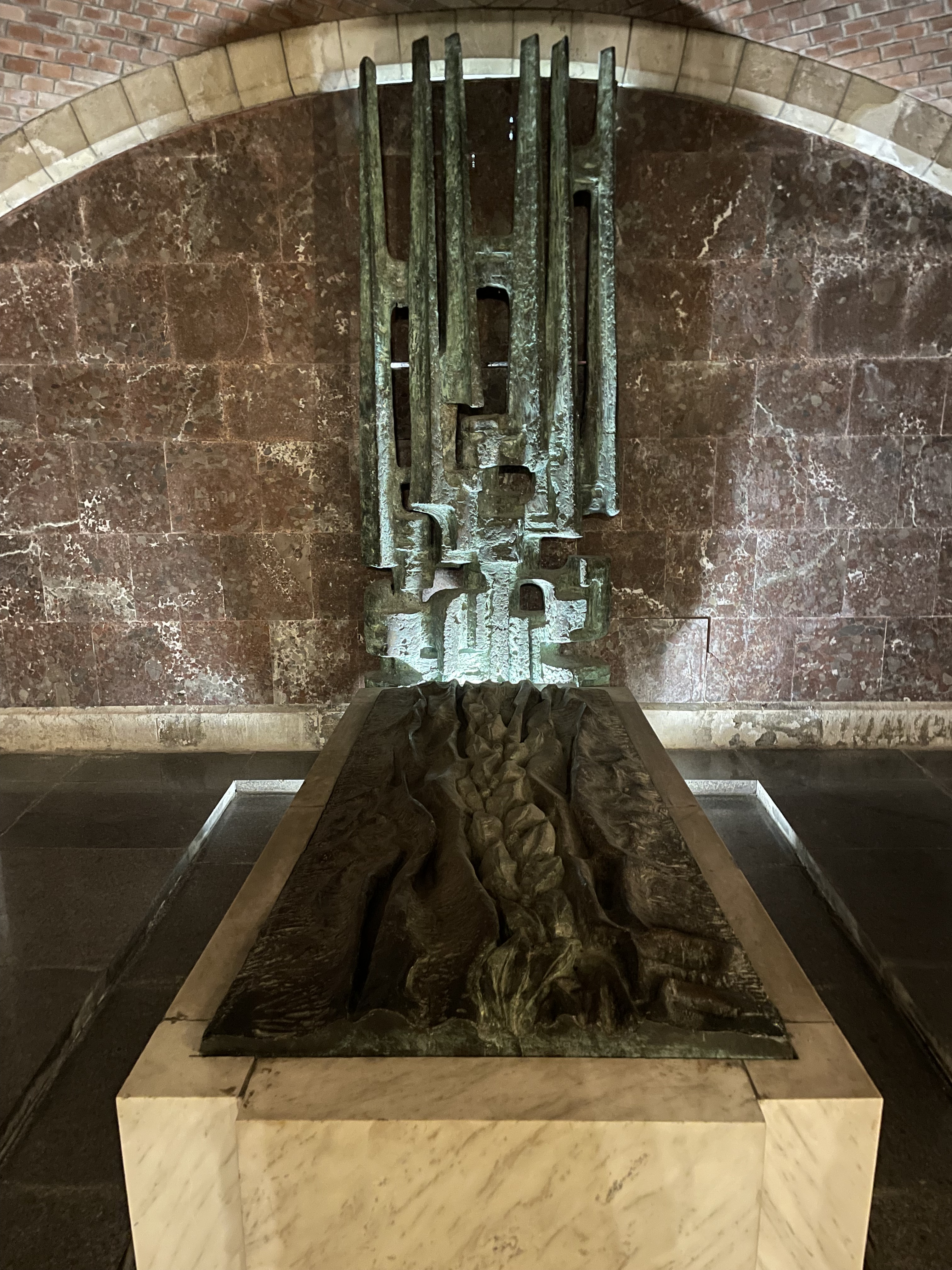
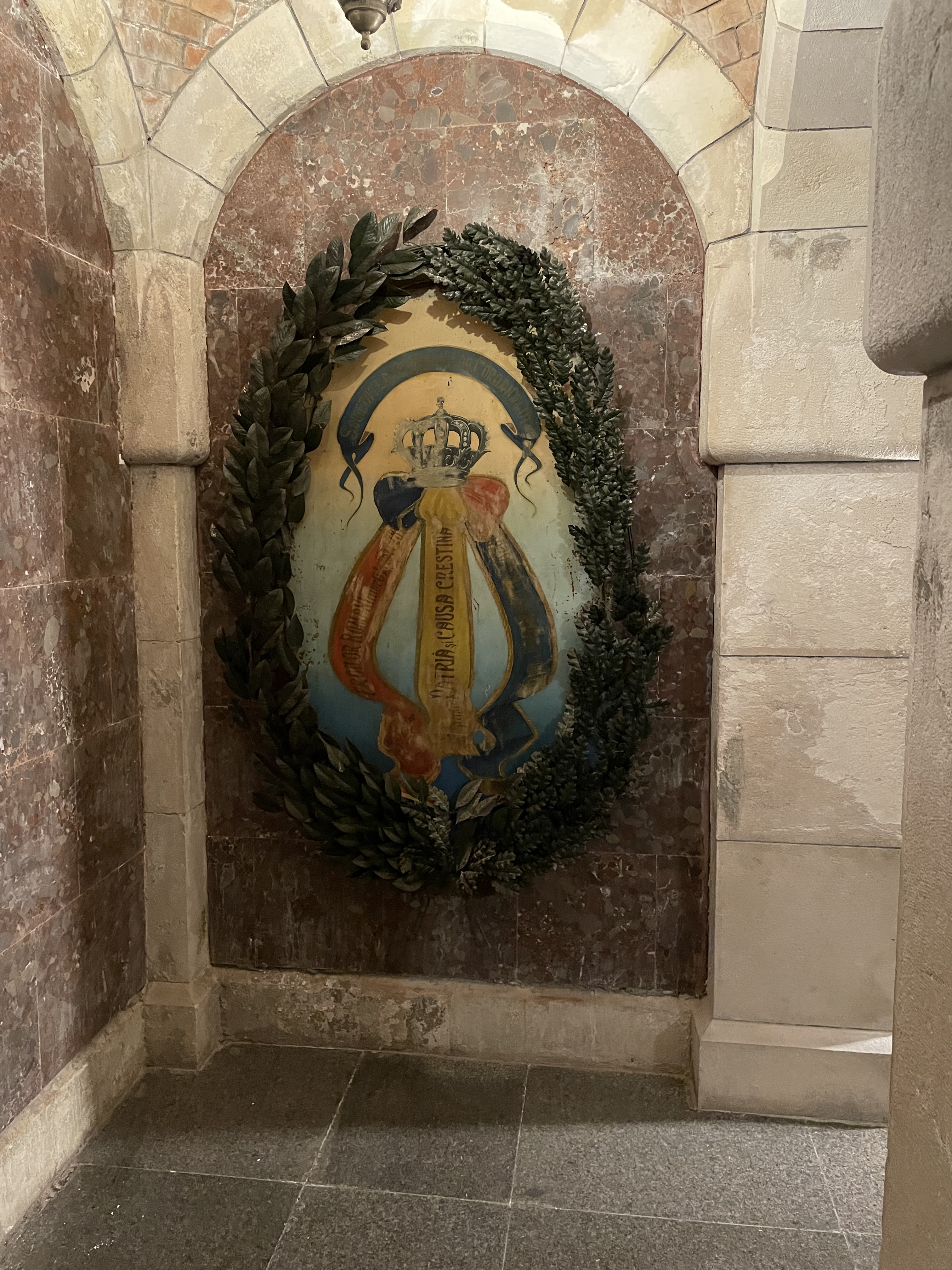
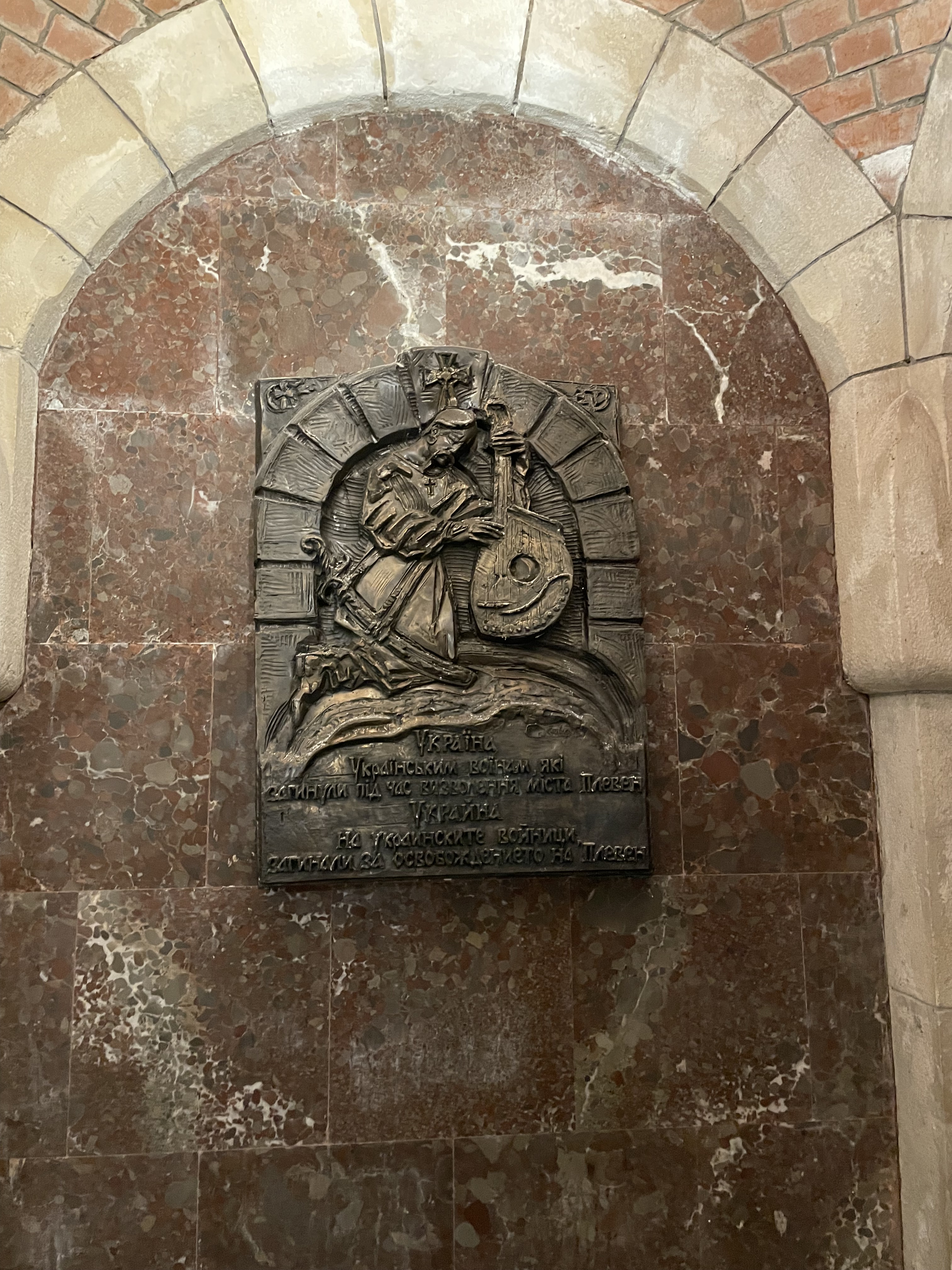
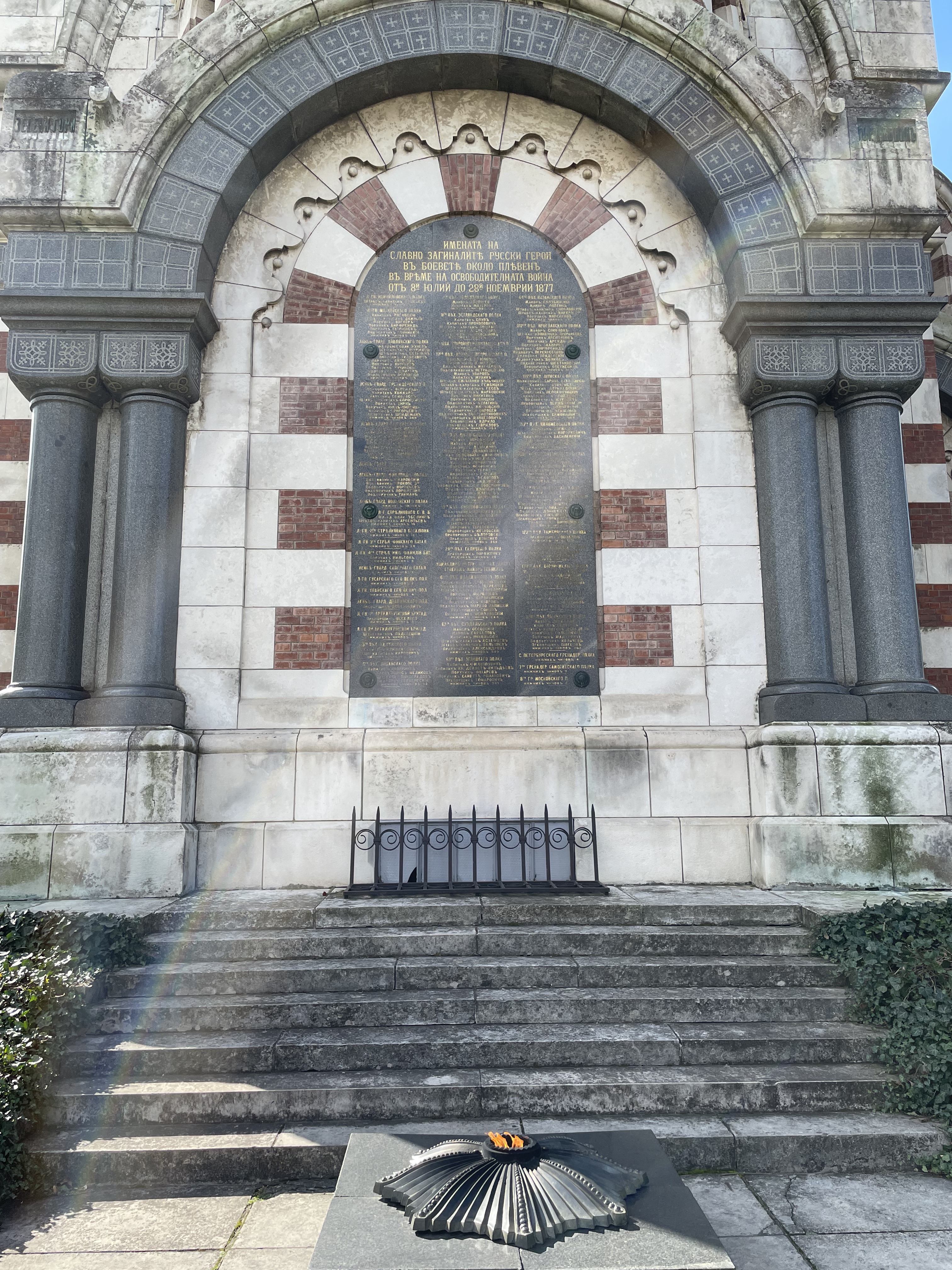
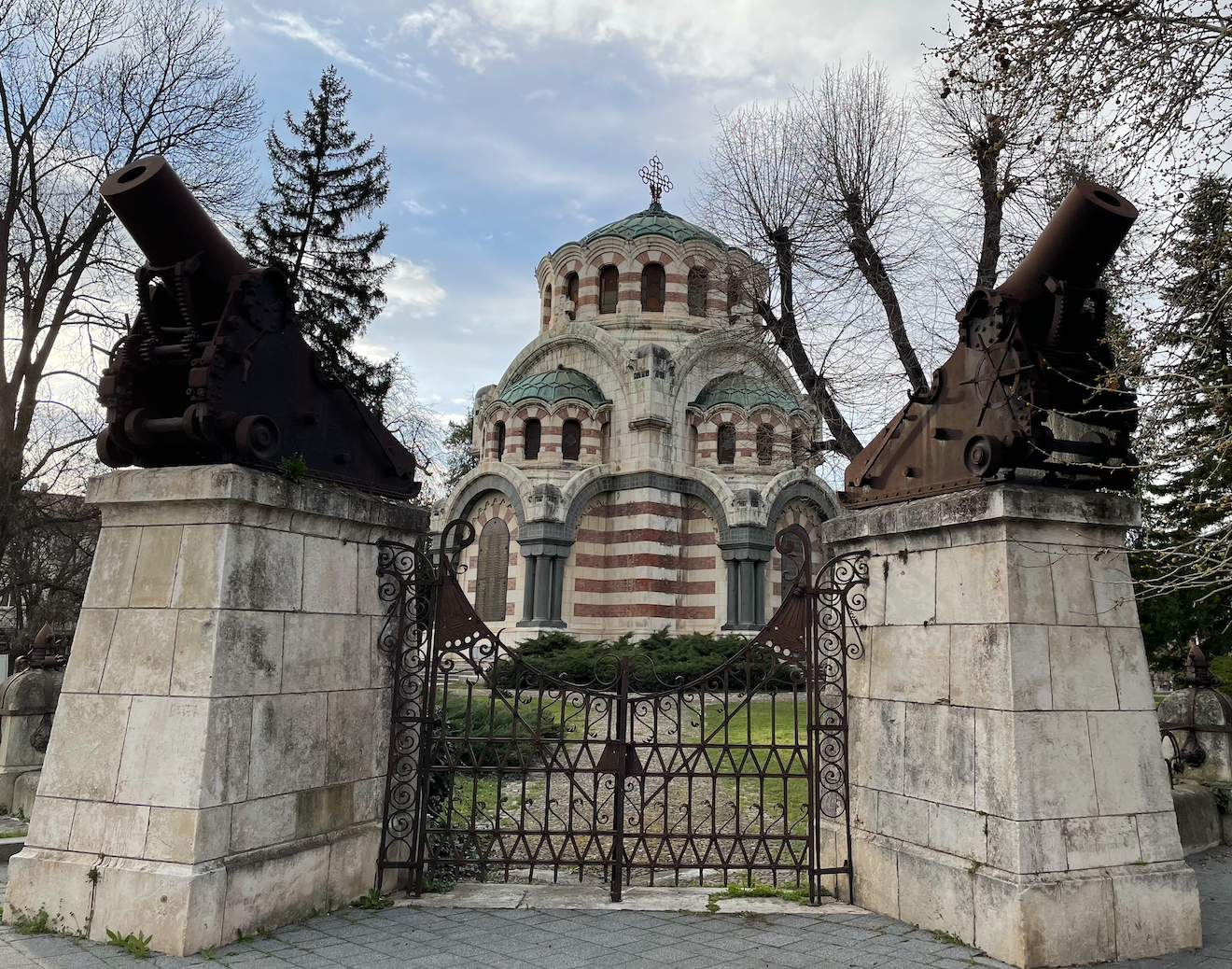
The monument: a forceful presence in a townscape that is still largely representative of another pre-1990 Age. In the New Realities of EU membership (that are still only gradually developed locally) it seems rather forlorn, gradually developing an appearance that ‘speaks only of the past’.
The Heroic Liberators:
embedding a national sensibility of gratitude in one of the ‘liberated’ lands.
“In Bulgaria, at least a third of Bulgarians, if not half, have deeply rooted pro-Russian sentiments based on historical ties.”
Georgi Gotev
The siege of Pleven (Plevna) is remembered in Romania, Bulgaria, Serbia & Russia as an important victory.
The Russians in 1877 presented themselves as ‘liberators’ of oppressed Orthodoxy. This colonial attitude continued throughout the period of Soviet rule.
Providing ‘Liberation’ from offensive or evil external forces continues to be an underlying national sensibility in Russia & is used by the present Russian authorities in their war with Ukraine.
Presenting selected examples of warfare as dramatically heroic also continued during Soviet Communist rule. They were a means of impressing on populations, the requirement that each individual member of a nation should be seeking to achieve personal perfection solely in service of the State.
Bulgaria was closely allied and one of the most loyal satellite states of the Soviet Union during the Cold War, sometimes being called the 16th Soviet Republic rather than an independent country.
Wikipedia: People’s Republic of Bulgaria
The Hundredth anniversary of the siege, in 1977, provided an opportunity to re-emphasise the heroic, self-sacrificial ‘brotherly liberator’ myth.
So: a further a major monument was constructed.
It is given a significant position above the centre of the town.
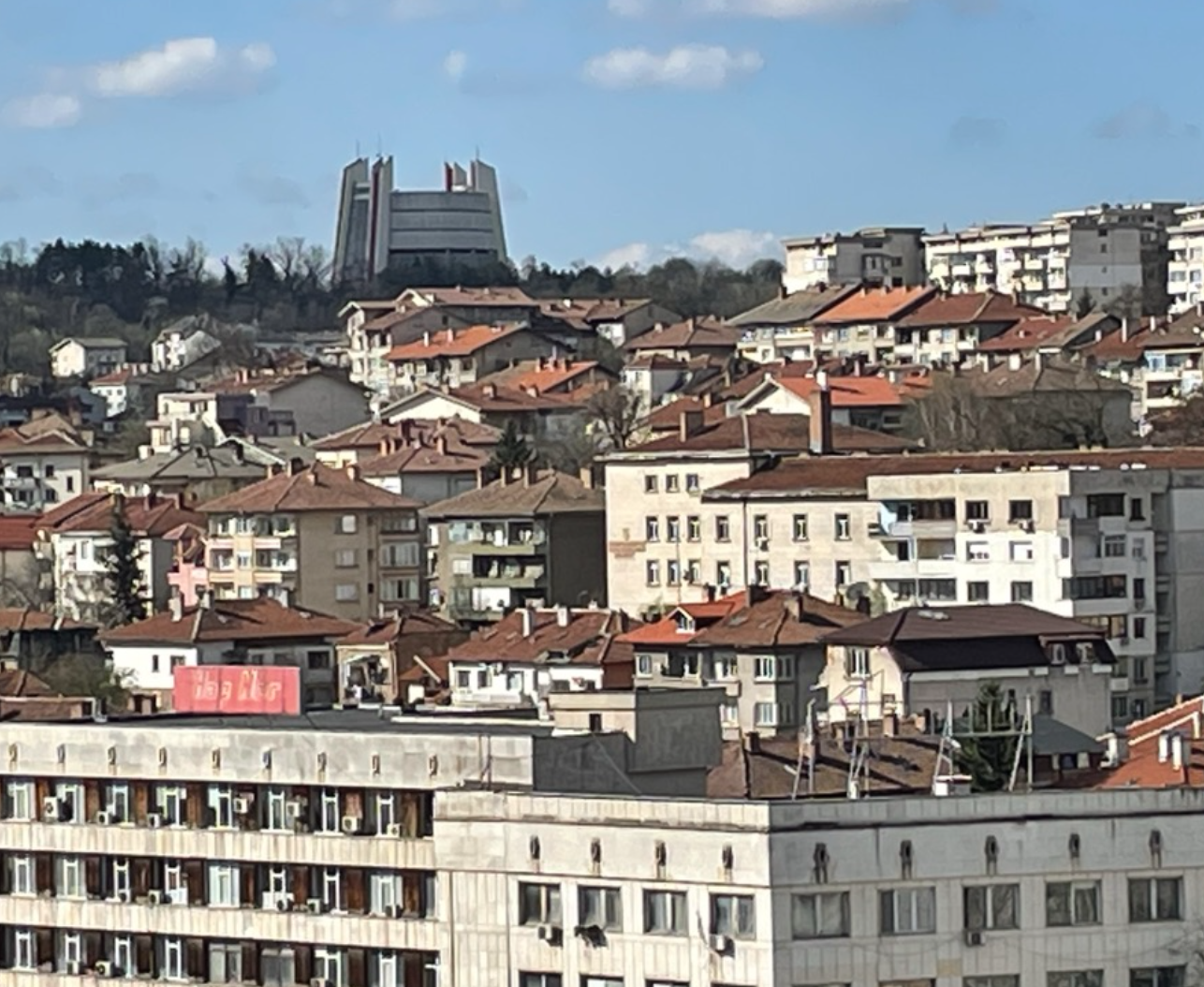
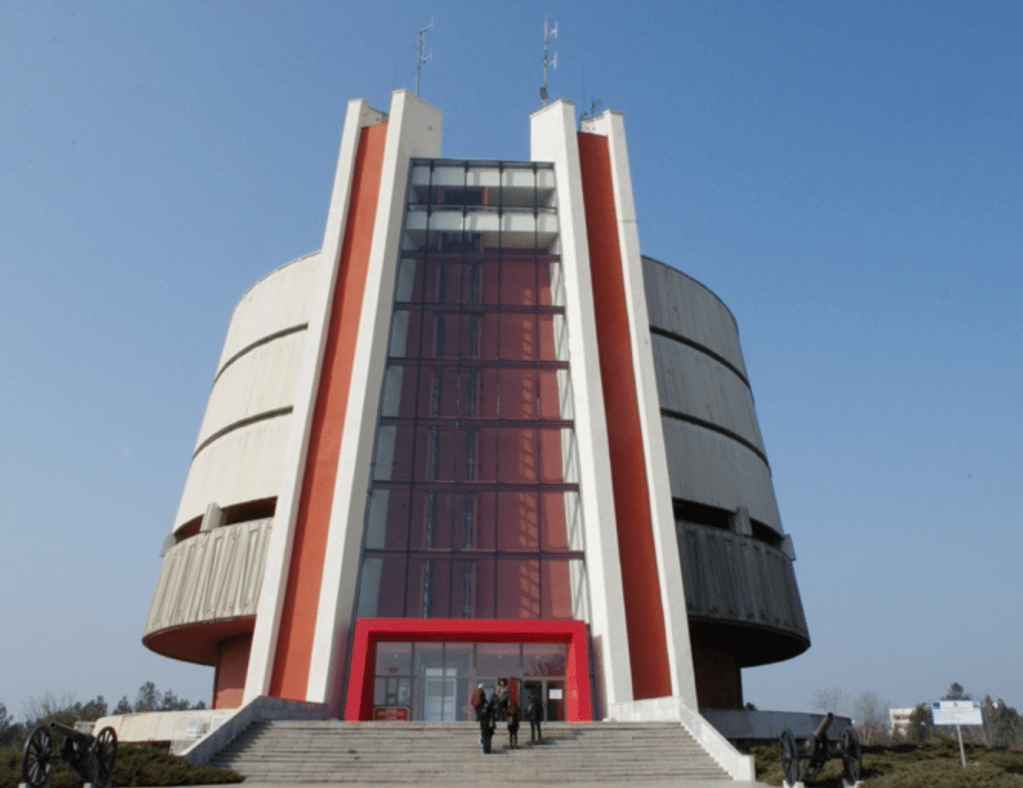
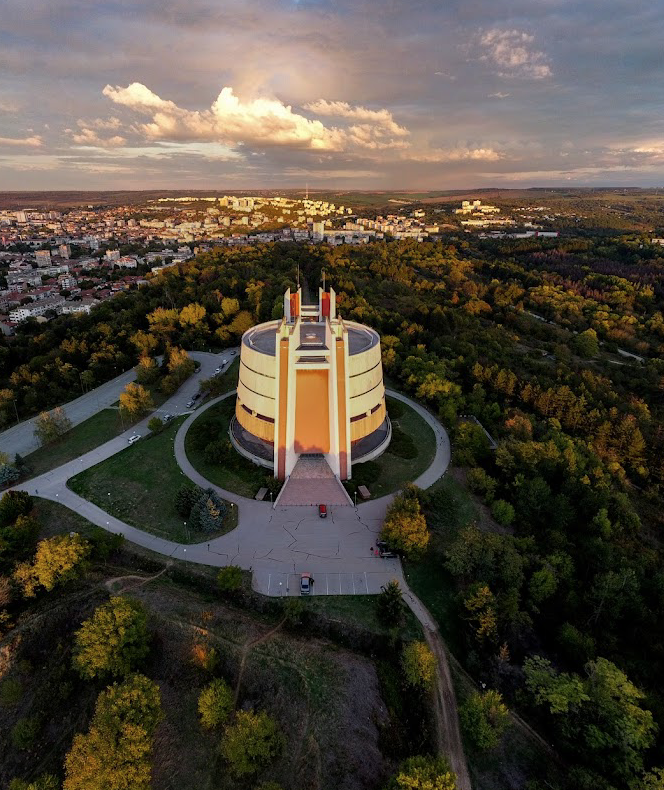
The focus, as usual in Soviet constructed histories, is the theme of the Russian’s as ‘self sacrificing liberators of the people’ (in this case Bulgaria and Pleven).
The Panorama thus uses the invasion & siege to underscore a Soviet Russian presence in the C20th.
“The six canvases of the introductory room discover the tragic destiny of the people, their dramatic fight and their compassion to the fellow Russian soldiers.”
https://en.wikipedia.org/wiki/Pleven_Panorama
The ‘tragic destiny of the people’ is presumably a reference to the locality being part of the Ottoman Empire – and ignores the fact that many locals were Muslim rather than ‘Orthodox Christians’.
The real tragedy was created, in large part, by the Russian desire to swallow up large parts of the Ottoman Empire by military conquest & then in engaging in an invasion, fired by a belief they were bringing ‘liberation’, without sufficient realistic planning & competence to achieve their goal (an action being repeated in 2022/23).
A thorough & well-balanced article explains the background to the Russian invasion of Ottoman territory which used a local Bulgarian nationalist uprising in 1876 to give
‘the Russians the much-desired excuse to declare war on the Ottoman Empire’
https://en.wikipedia.org/wiki/April_Uprising_of_1876
Change can be slow. In Pleven the role that the siege, through its monuments, has been given in recent Bulgarian history, raises other issues relating to the style (and number!) of monuments.
The official city web site still focuses on the siege as ‘liberation’. The 10th December local holiday commemorates the surrender of the Turkish garrison at the end of the siege. Photographs of clerics and wreath laying at the Mausoleum emphasis the ‘gratitude’ shown to Russia – as does the description (which seems to continue the style of its recent communist past)
DECEMBER 10, 2021 – THE DAY OF THE LIBERATION OF PLEVEN FROM TURKISH SLAVERY AND OF CITIZENS’ ACKNOWLEDGMENT TO THE DEAD FOR ITS LIBERATION
10 ДЕКЕМВРИ 2021 Г. – ДЕН НА ОСВОБОЖДЕНИЕТО НА ПЛЕВЕН ОТ ТУРСКО РОБСТВО И НА ПРИЗНАТЕЛНОСТ НА ГРАЖДАНИТЕ КЪМ ЗАГИНАЛИТЕ ЗА НЕГОВОТО ОСВОБОЖДЕНИЕ
https://www.pleven.bg/en/holidays-pleven/10122021-g
How does a modern C21st Western European focused city wish to be viewed and understood?
Pleven: beyond the mythologies
We visited Pleven at the start of Spring. In reality it was rather ‘the end of winter’ – bitterly cold and grey with a strong northerly wind. Almost no-one was lingering on streets or in the parks. Our view of the small area of the city in which we were based is therefore very limited.
Our visit began with celebratory dancing – real internationalism (not the kitsch version that Soviet Russia promoted).
In Pleven, though less obvious than the monumental structures, there has been considerable change.
The physical manifestations are (compared with the monuments) unspectacular (though profoundly different to what existed before 1990.
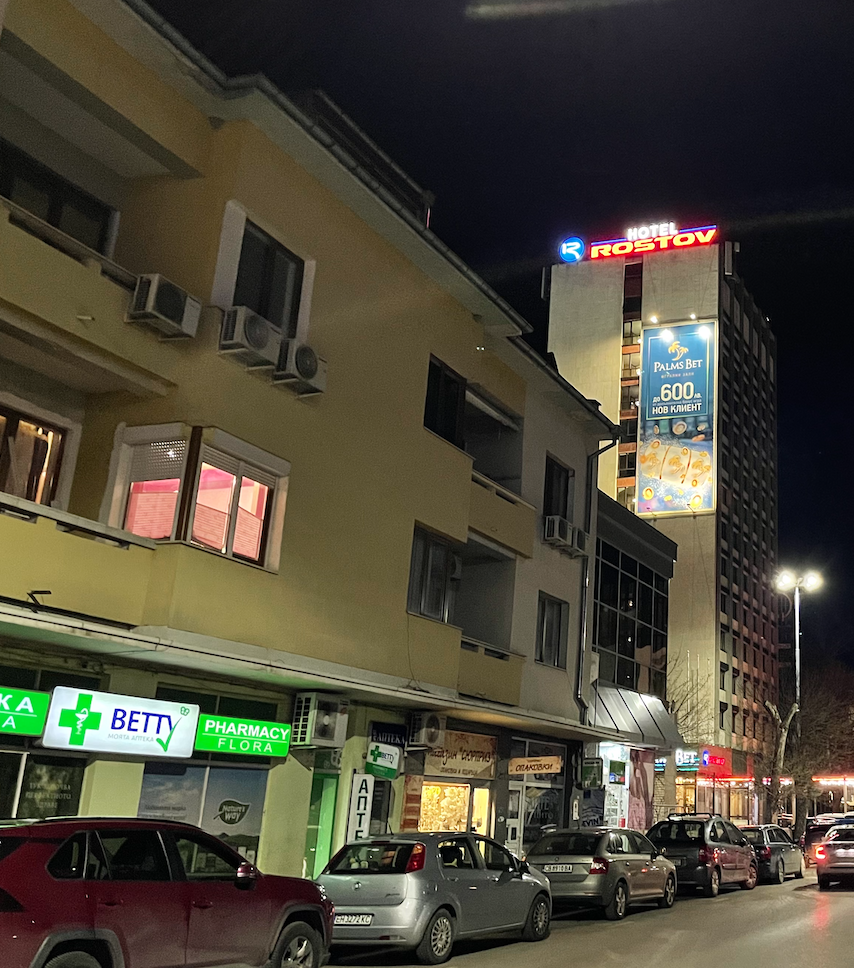
One fine example of change is the investment being made in urban transport systems.

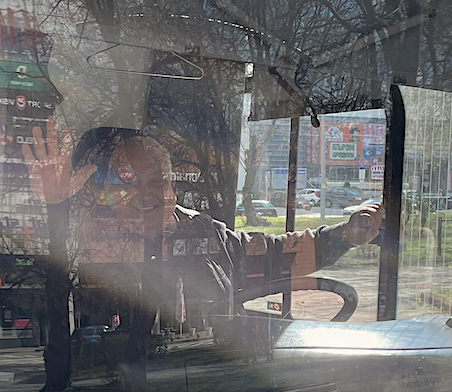
Primarily it is found in the way people behave towards visitors – open, cheerful & ready to chat informally.
The driver of the bus was delighted to be photographed
The students we met on the first night were enthusiastic examples & others in the important ‘commercial sector’ were similarly inclined.
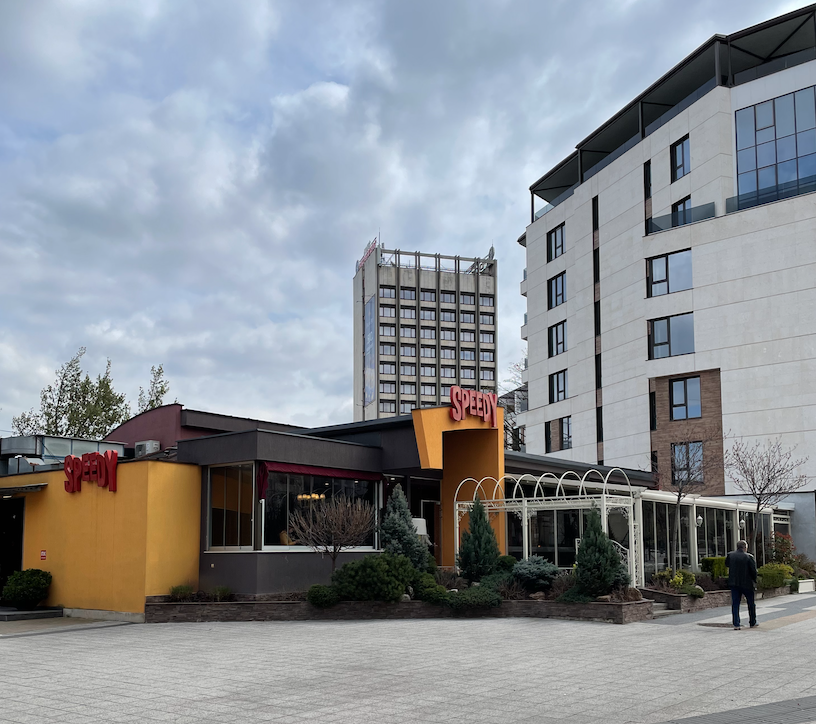
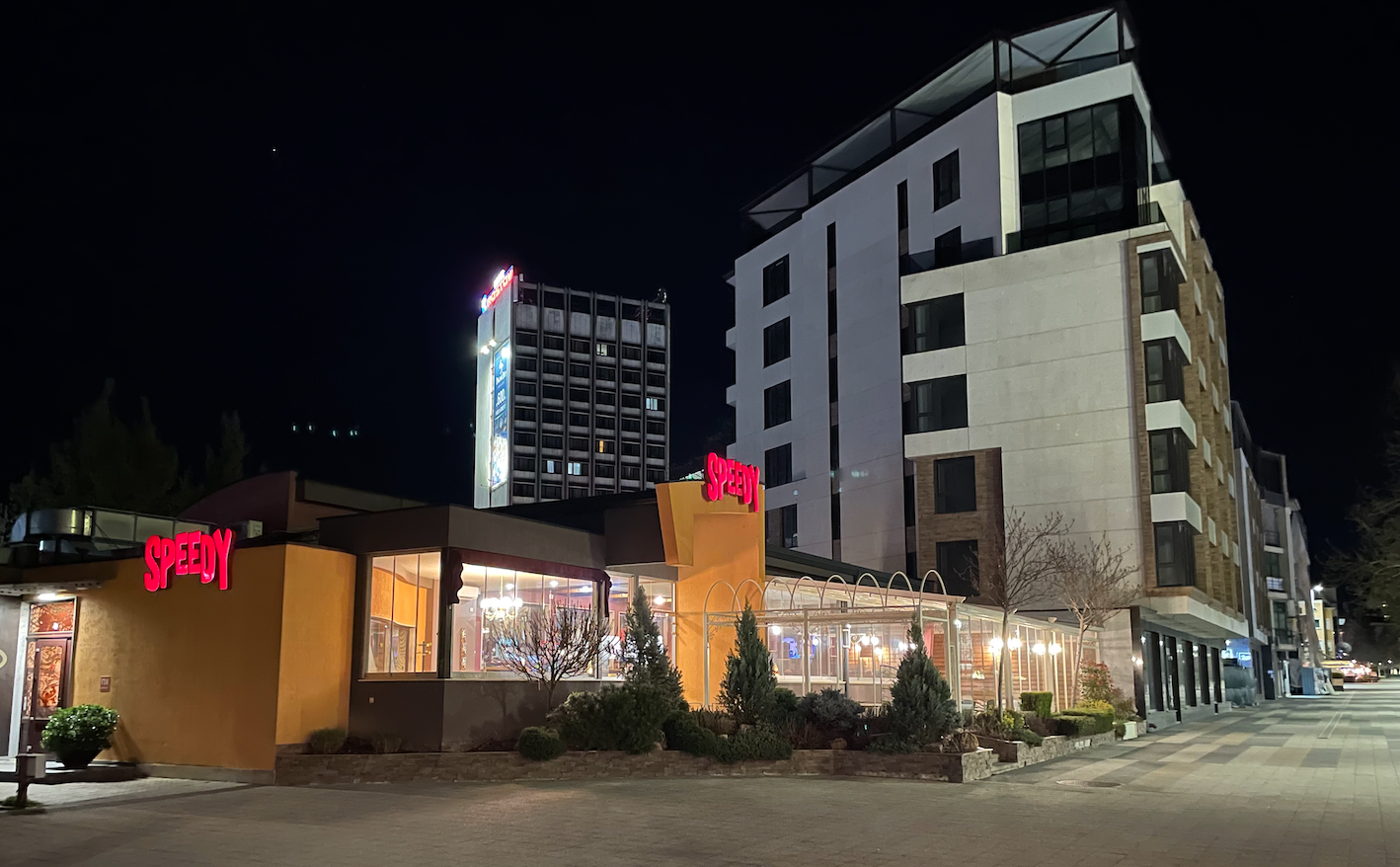
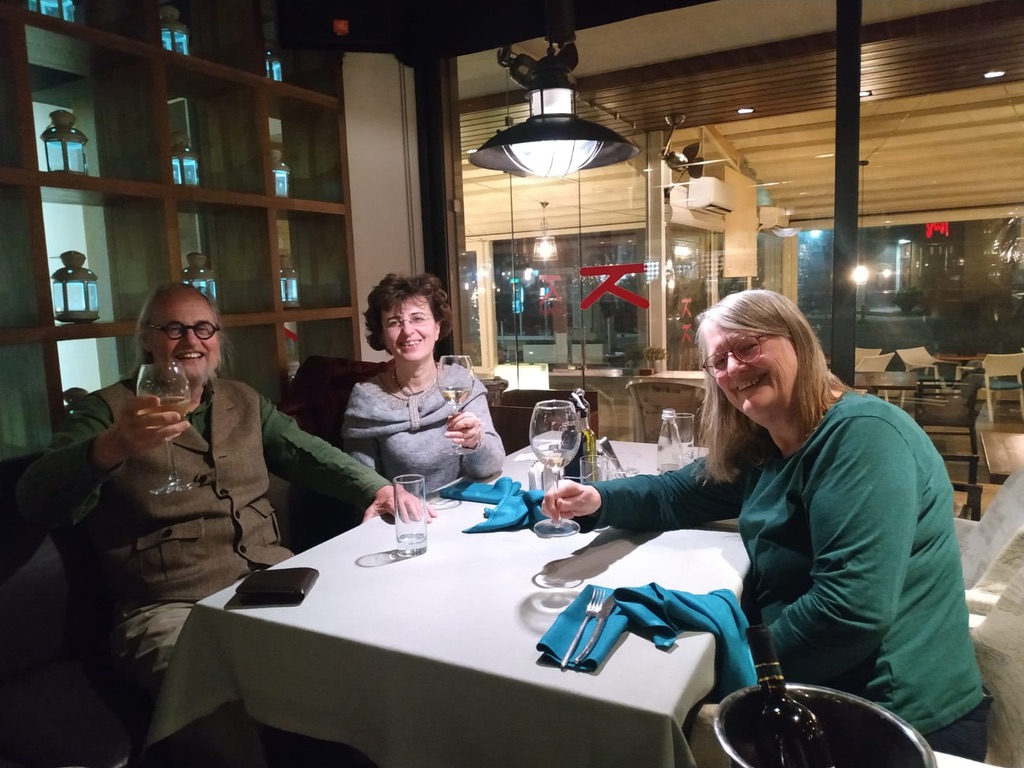
The example that best illustrated the change was a restaurant (Canape Food # Club) that initially (from outside) seemed limited. It was a revelation of the degree to which ‘appearances can be deceptive’.
Its welcome, decor, service, food & general quality was a huge contrast with the ‘old style’ impression given by the other ‘monumental’ nature of the centre of the city.
We arrived in Bulgaria at an important moment when underlying attitudes regarding Bulgaria’s relationship with Russia were an important feature.
An important time for Bulgaria as national elections were occurring for the 4th time since 2021!
A core issue related to the way Bulgaria plans its future – balanced between the EU and its traditional links with Russia. ‘Russia has always been good to us’ one young woman (who was supportive of strengthening membership & links with the EU) explained when we were discussing the issues.
Hopefully the EU will assist those seeking a strongly developed relationship by ensuring that Bulgaria (& Romania) become members of the Schengen group. This will also speed-up border crossings – and travellers on overnight sleeper trains will not, as we were, have to be woken for passport checks in the middle of the night!.
 Inspirational Pathways