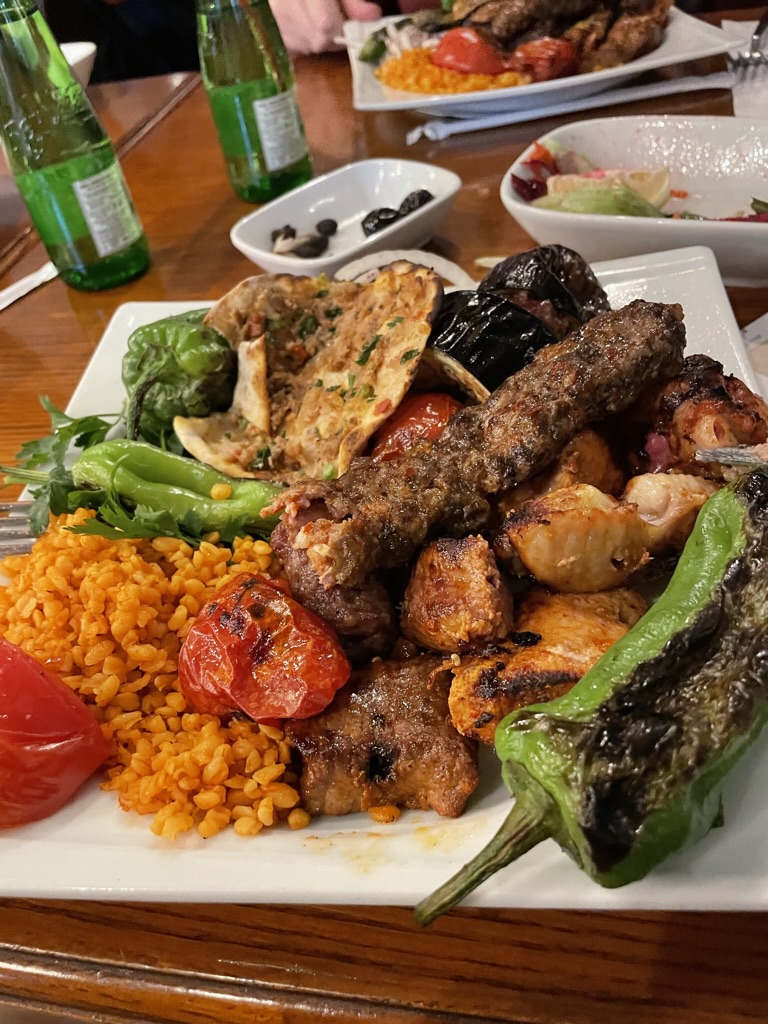
It was the month of Ramadan whilst we were in Turkey & our evening meal on our first evening was taken following the tradition – after sunset (and formal call from the Mosque).
As ever we were somewhat overwhelmed by the positive welcome we received at the restaurant…. but there still exists this old tradition of welcoming the stranger as an honoured guest. It also survives in hosting families in countries such as Romania and Bulgaria – and can seem very strange to western visitors.

We were also somewhat ‘overwhelmed’ in other ways……..
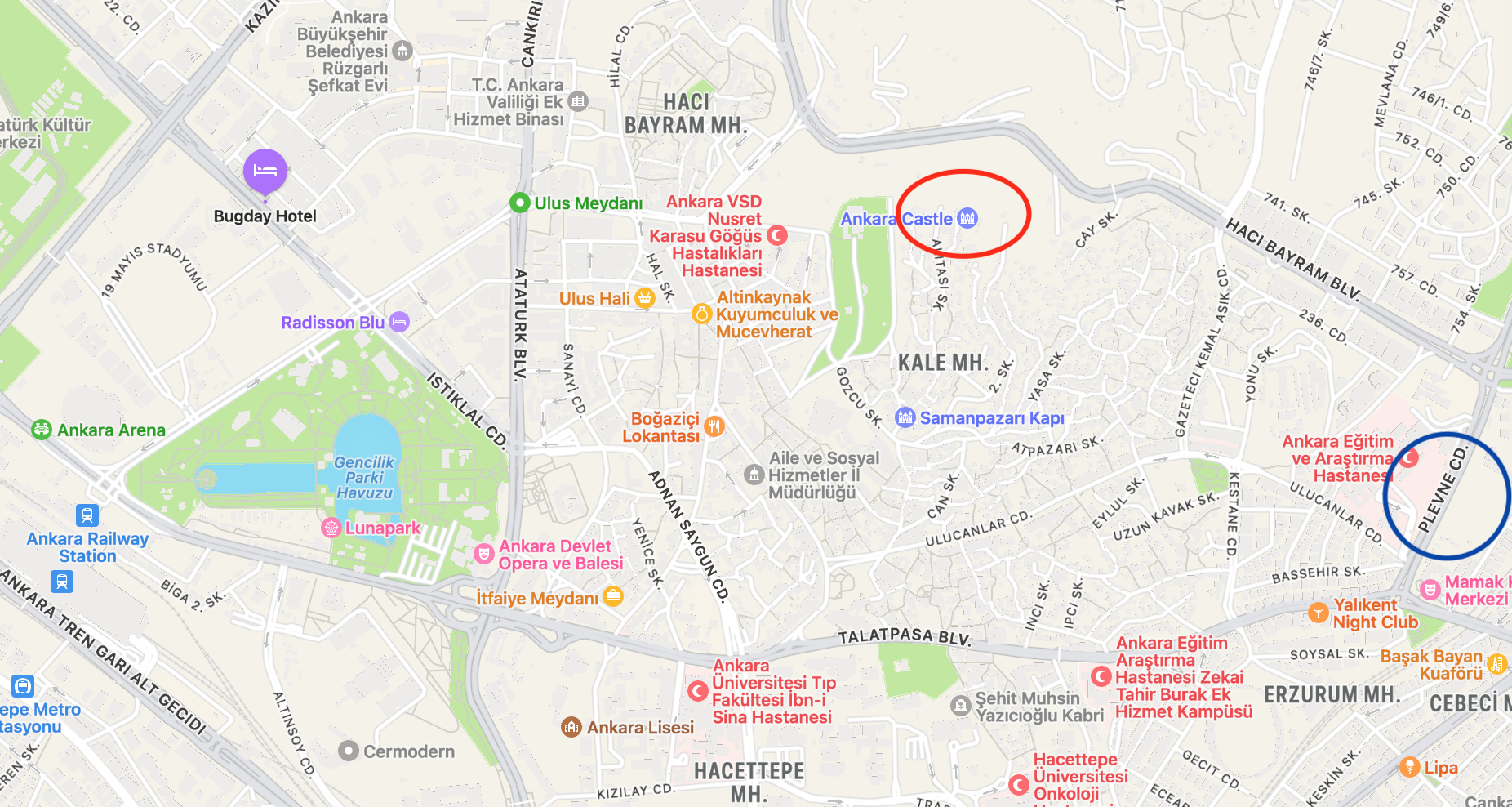
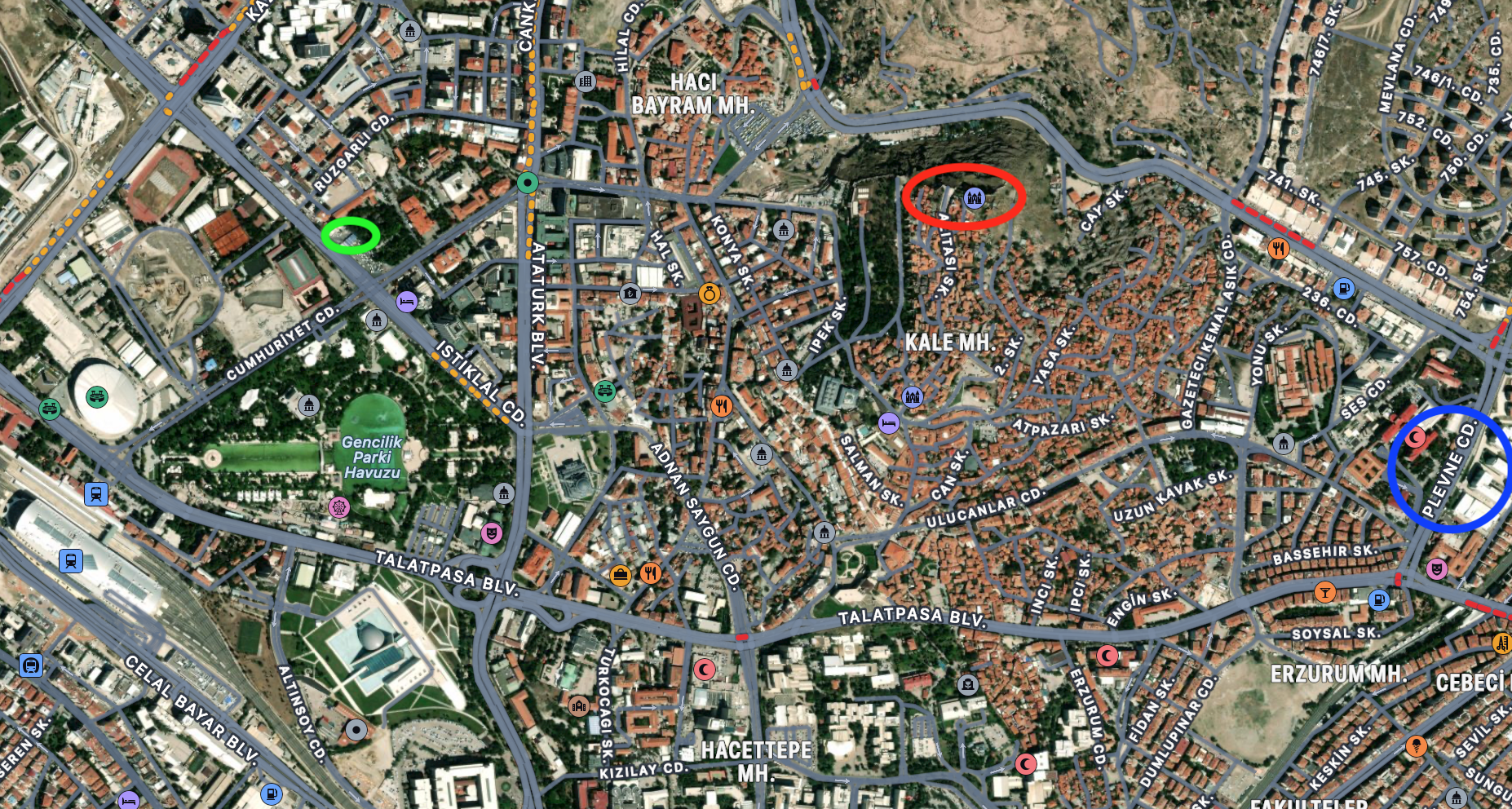
A brief visit and limited to a small part of the city.
Of interest (given our recent visit to Pleven) is the road Plevne CD (blue circle). For the Turks (cf with the Bulgarians, Romanians and Russians), site of an heroic defence that, by delaying the Russian invader, saved the Empire.
The name Plevna became popular in UK following the siege and what became regarded as the ‘heroic defence’ made by the Turkish forces. There are several streets/roads in industrial towns with the name Plevna & a football club (one of the oldest) named in honour of the siege.
The Turkish defence led other ‘Great Powers’ to become involved in preventing the Russians taking control of Constantinople & the Bosphorus Strait (which provided access from the Black Sea to the Mediterranean). For example the British sent a fleet of battleships into the Strait & Otto Von Bismarck’s involvement led to the Treaty of Berlin.
Some of the issues, relating to Russian imperial desires in the region, remain important in the present Ukrainian conflict.
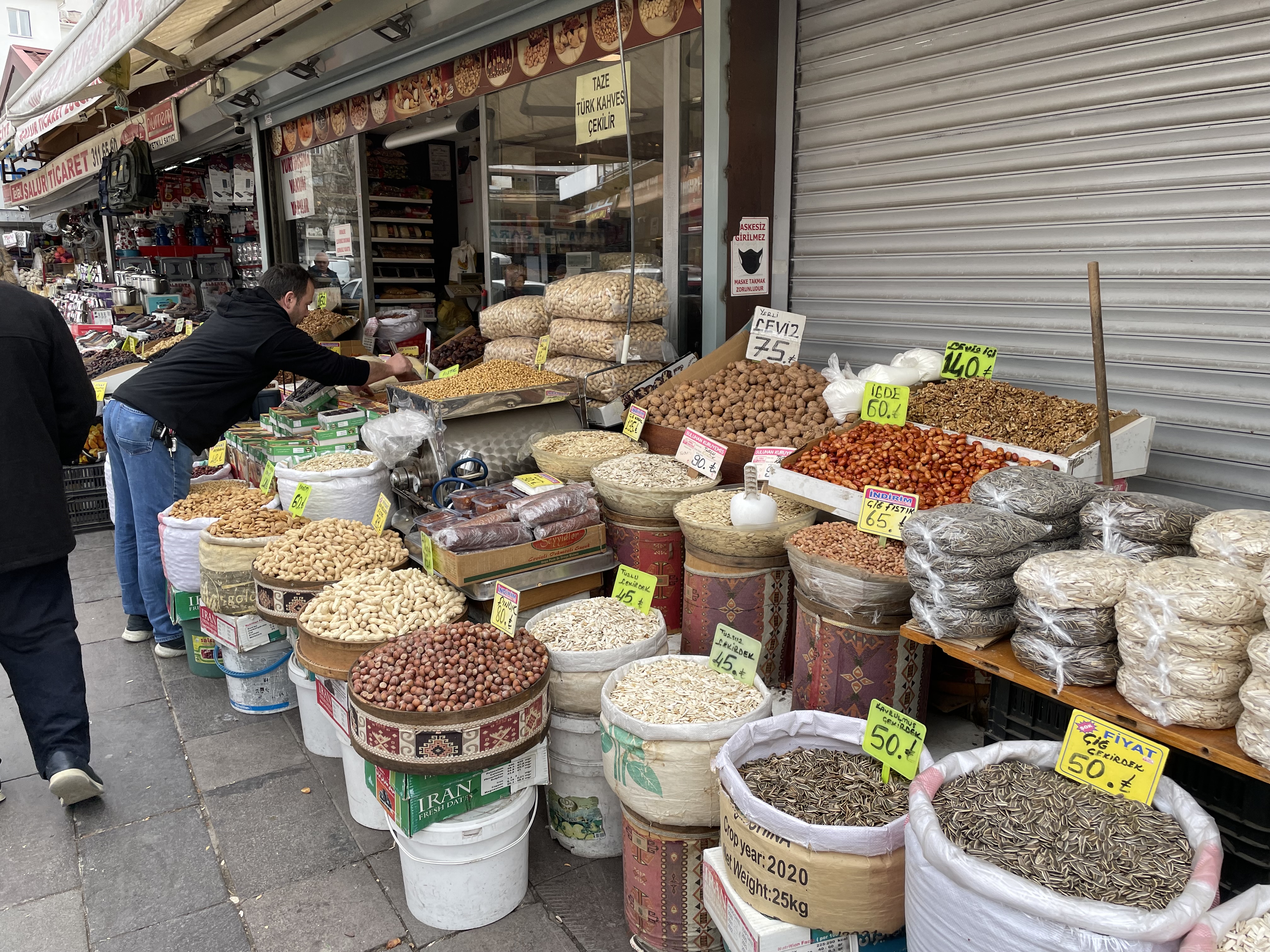
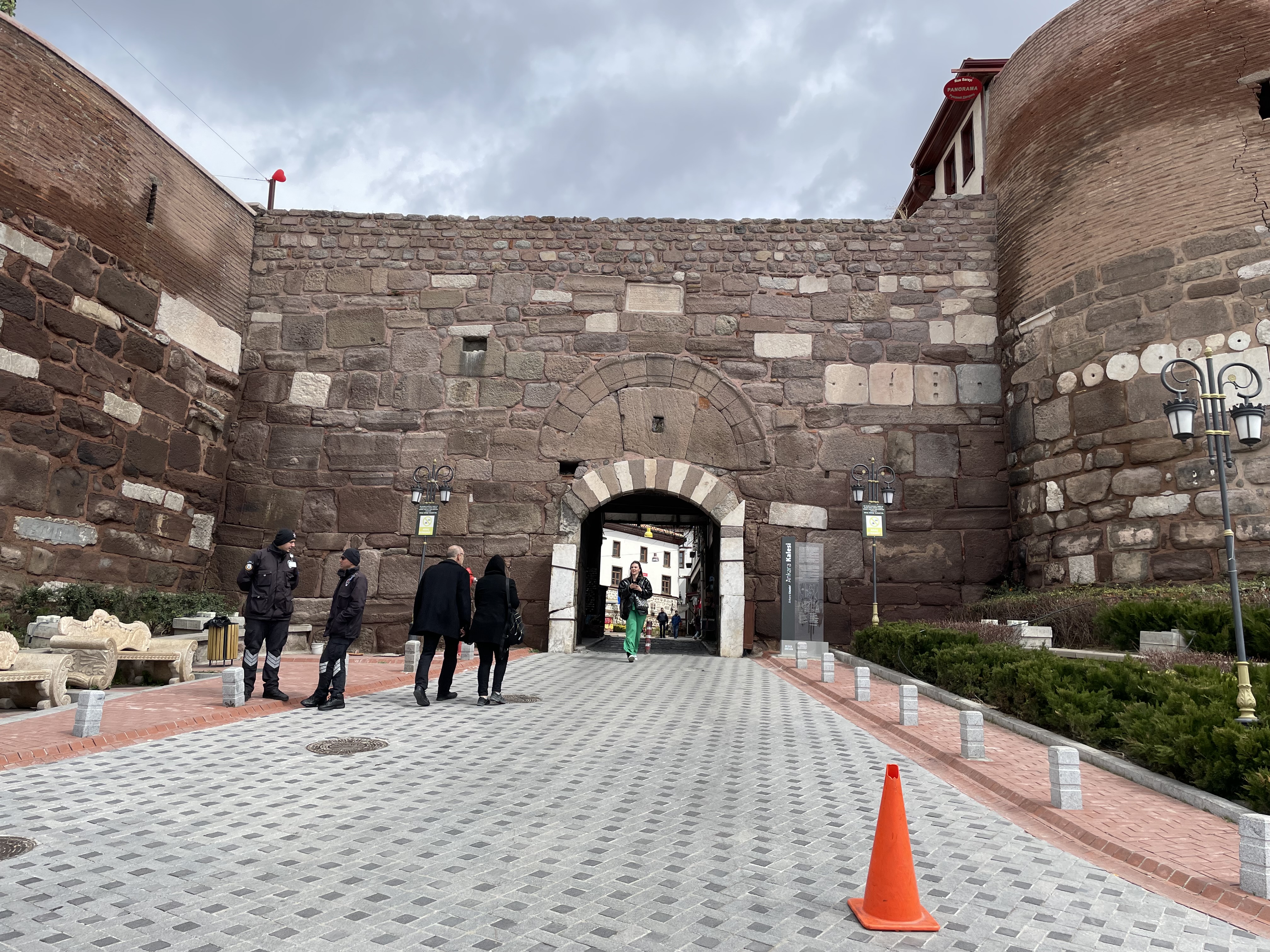
A walk to Ankara Kalesi….
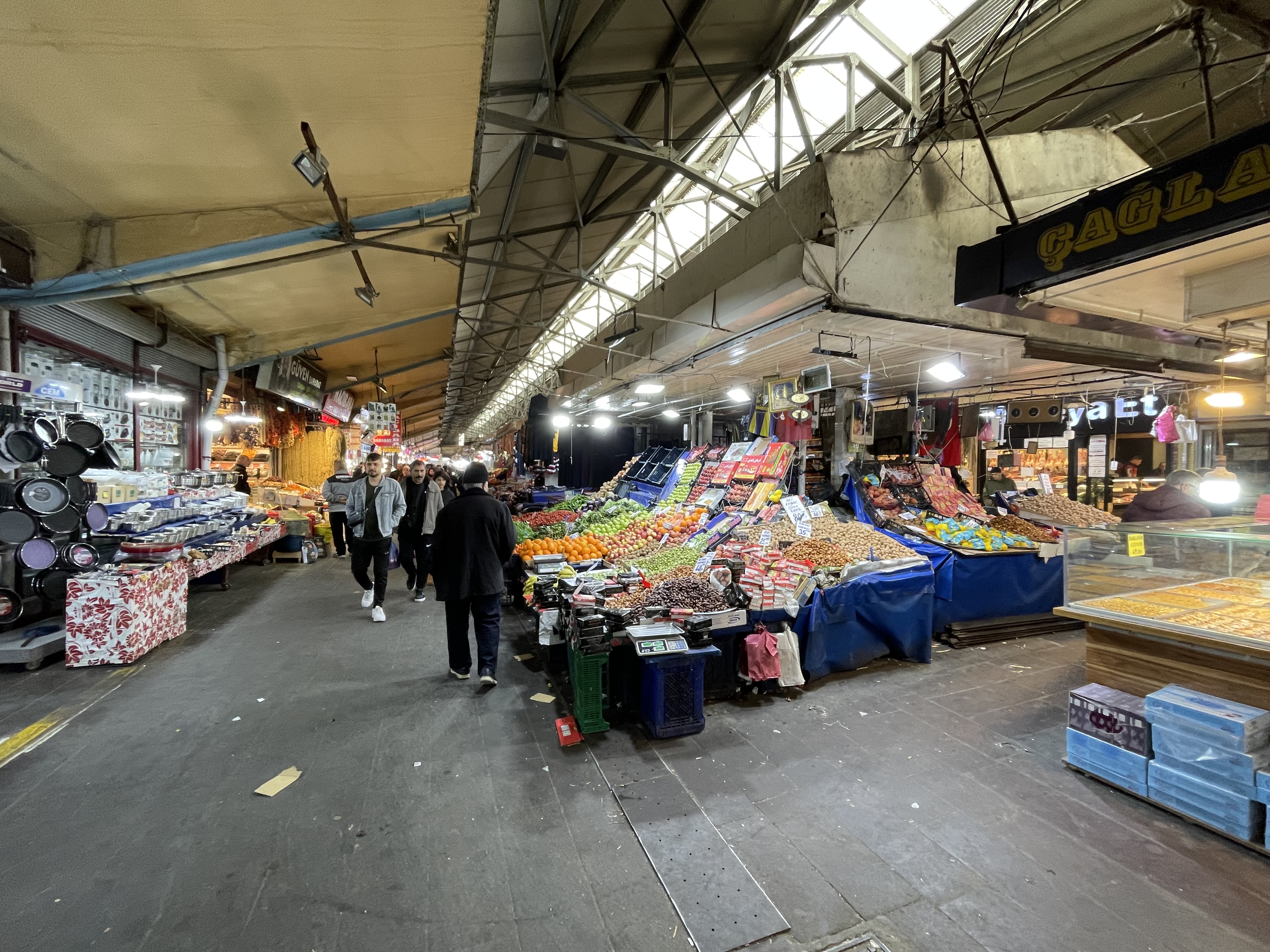

‘…..now we see through a glass, darkly; but then face to face…’
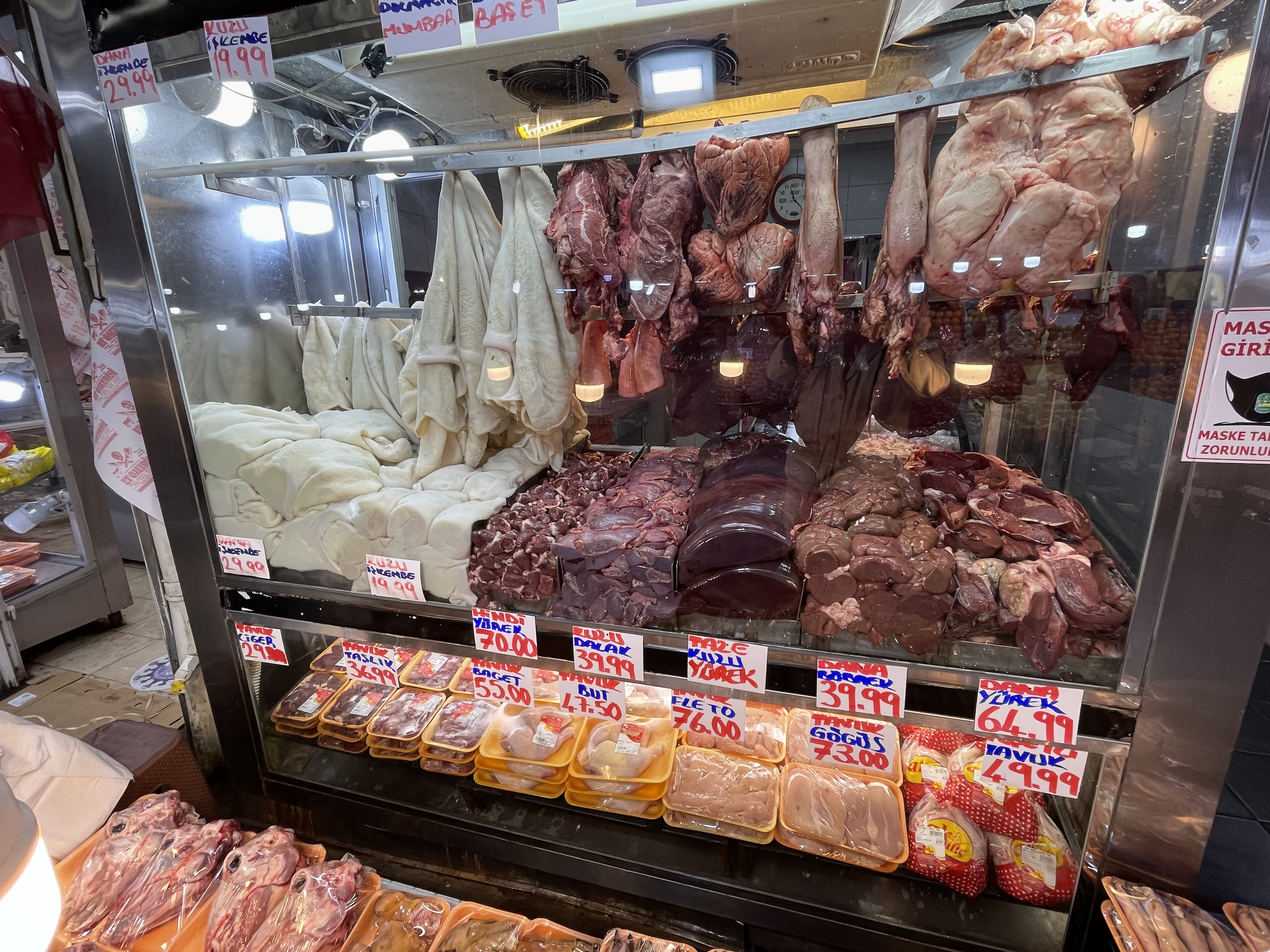
In Istanbul in 1970 we were invited to a restaurant meal. We were served a soup that seemed to have been the product of a person in the window of the cafe, chopping an object firmly and rhythmically.
Our host had no English, we had no Turkish but drawings seemed to suggest that we were consuming part of a small animal.
Later we realised what it was…. probably a form of tripe soup
Traditions survive – and one seems to be that every part of an animal is capable of being eaten.
It was (and remains) so in many countries until affluence and squeamishness (probably related to the loss, in urban and particularly ‘suburban’ societies, of direct contact with rural life and food production.

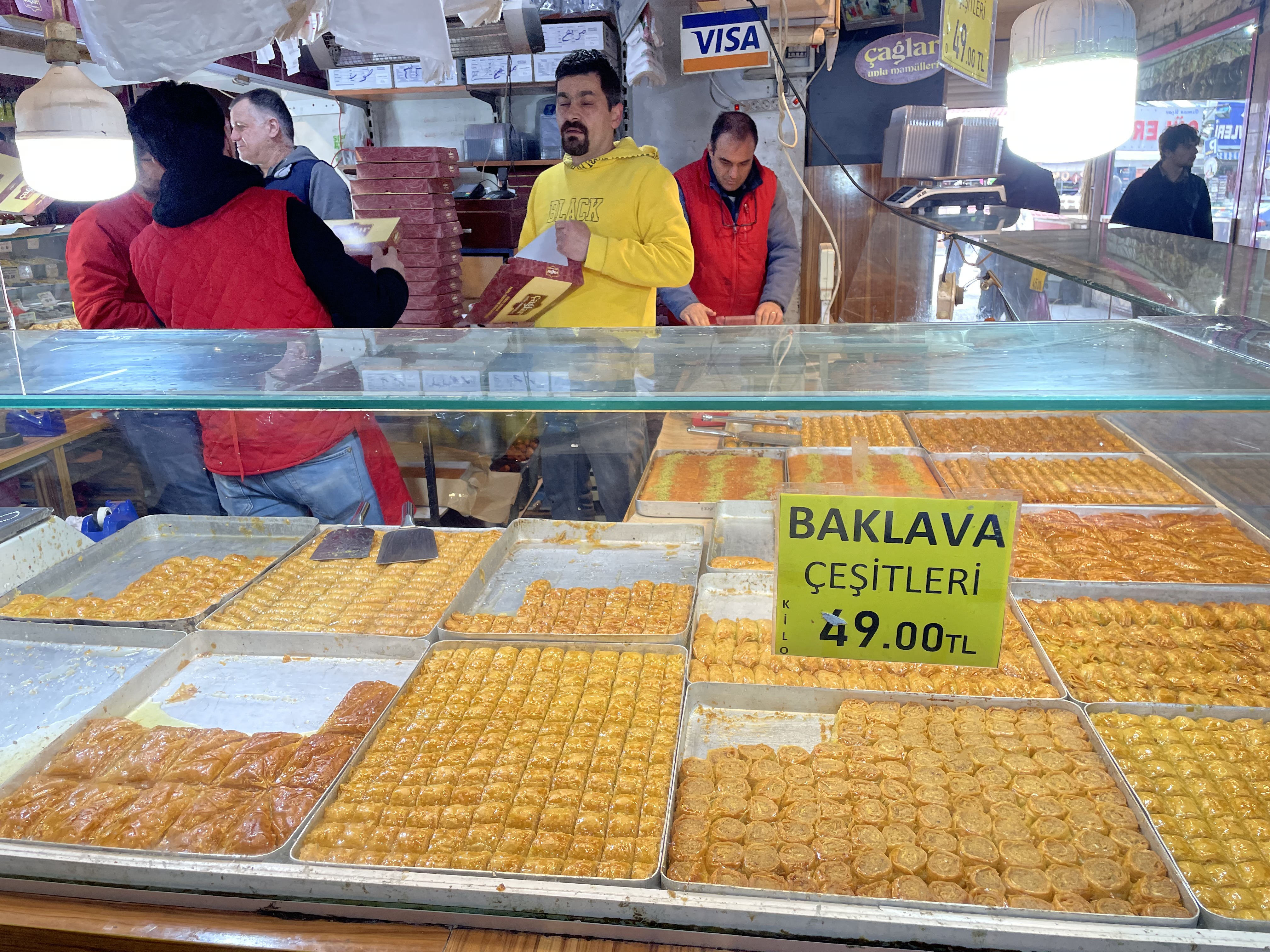
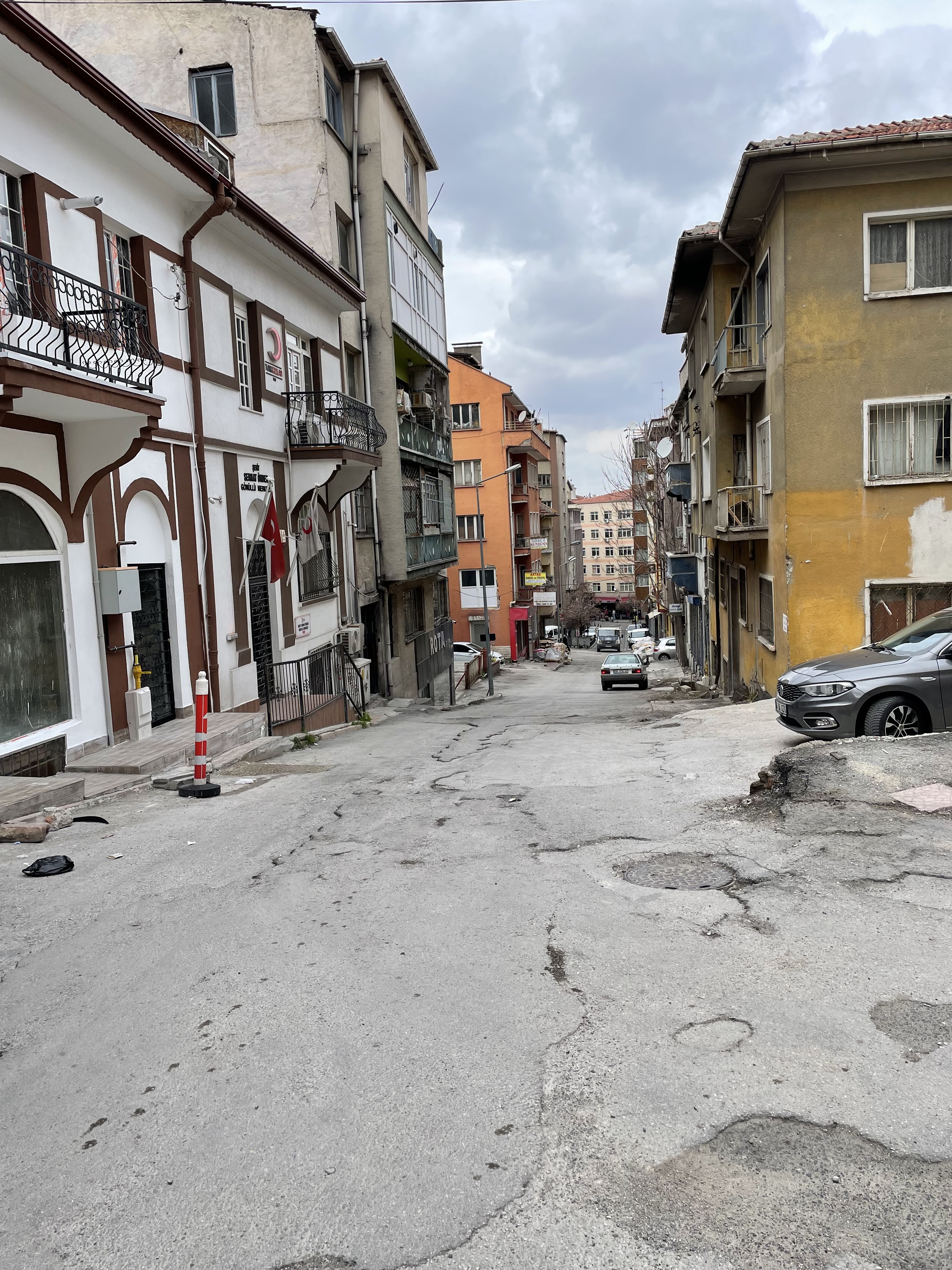
We allowed a day to revisit part so of the city that had featured during 3 previous partnership visits. Our hotel (Bugday Hotel in Ulus) was chosen to allow us to walk from the station and then through the city and up the hill to Ankara Kalesi – the ancient fortress and castle.
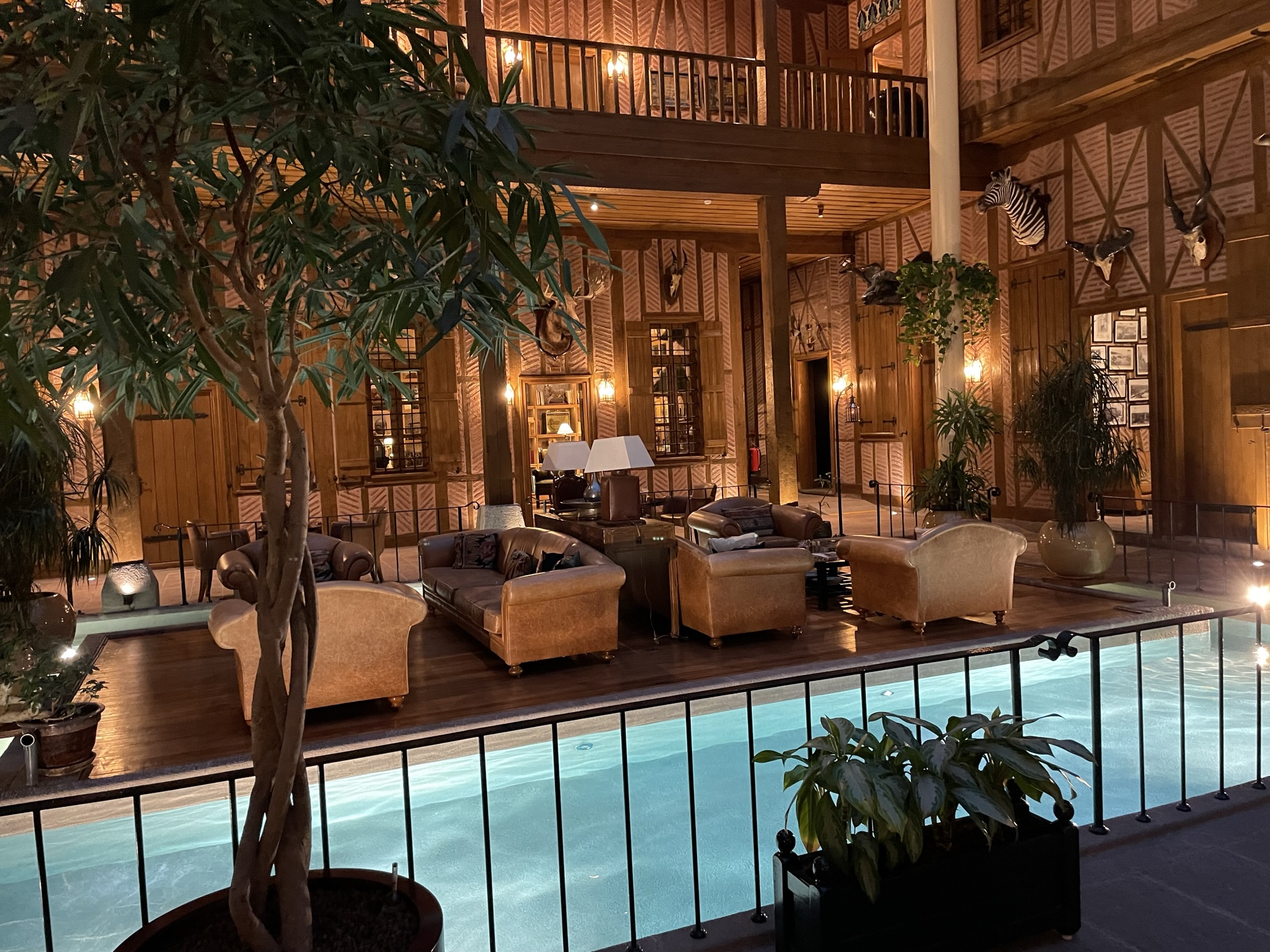
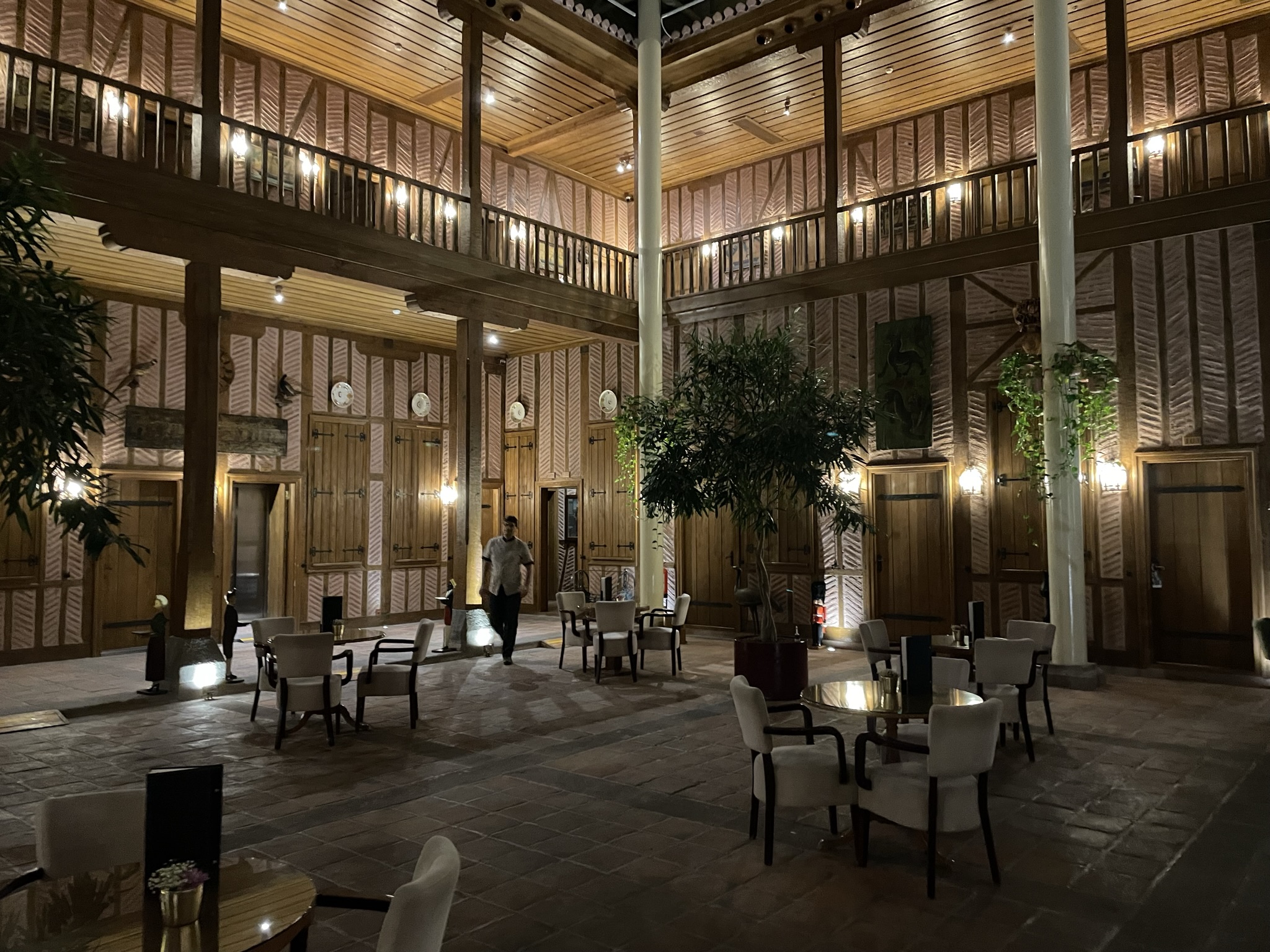
This area had been a focus for previous visits with groups from the UK. On one occasion we stayed in a traditionally rebuilt Ottoman Turk house, on another, at Divan Çukurhan, a traditional ‘Han’ style building with inner courtyard.
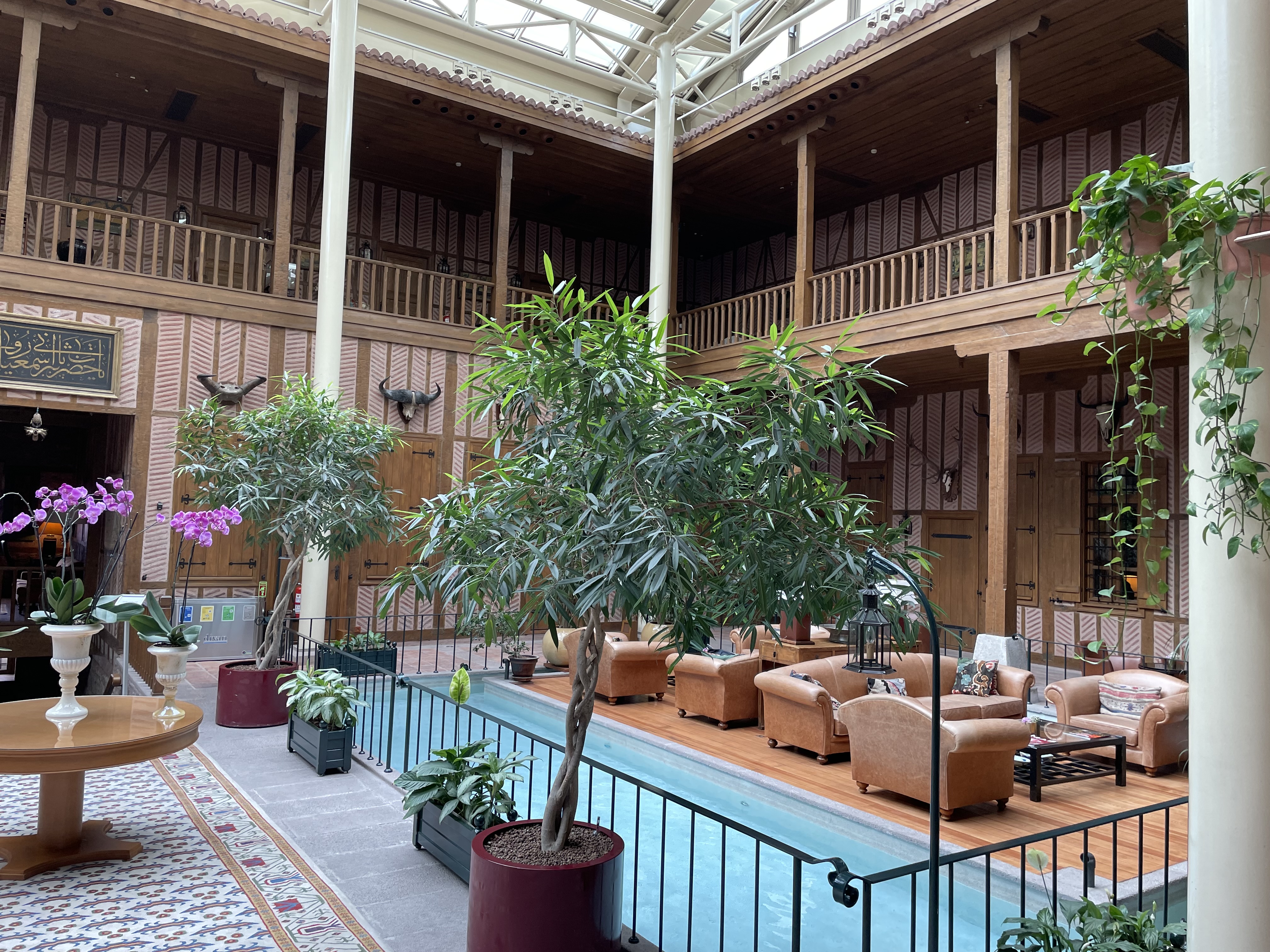
This Han is, for some of our UK team, famous for charging £80 (€92) for a glass of brandy.
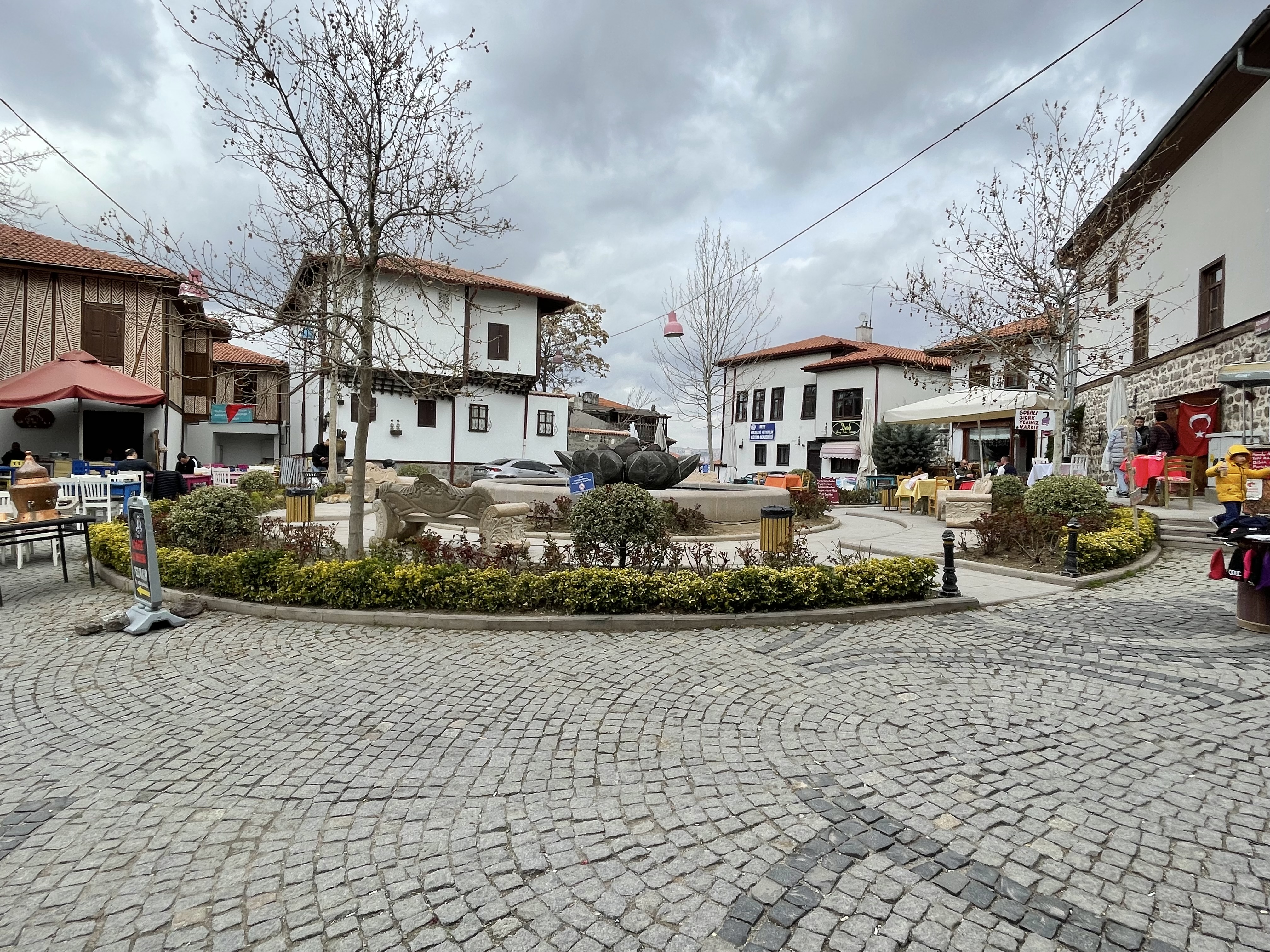
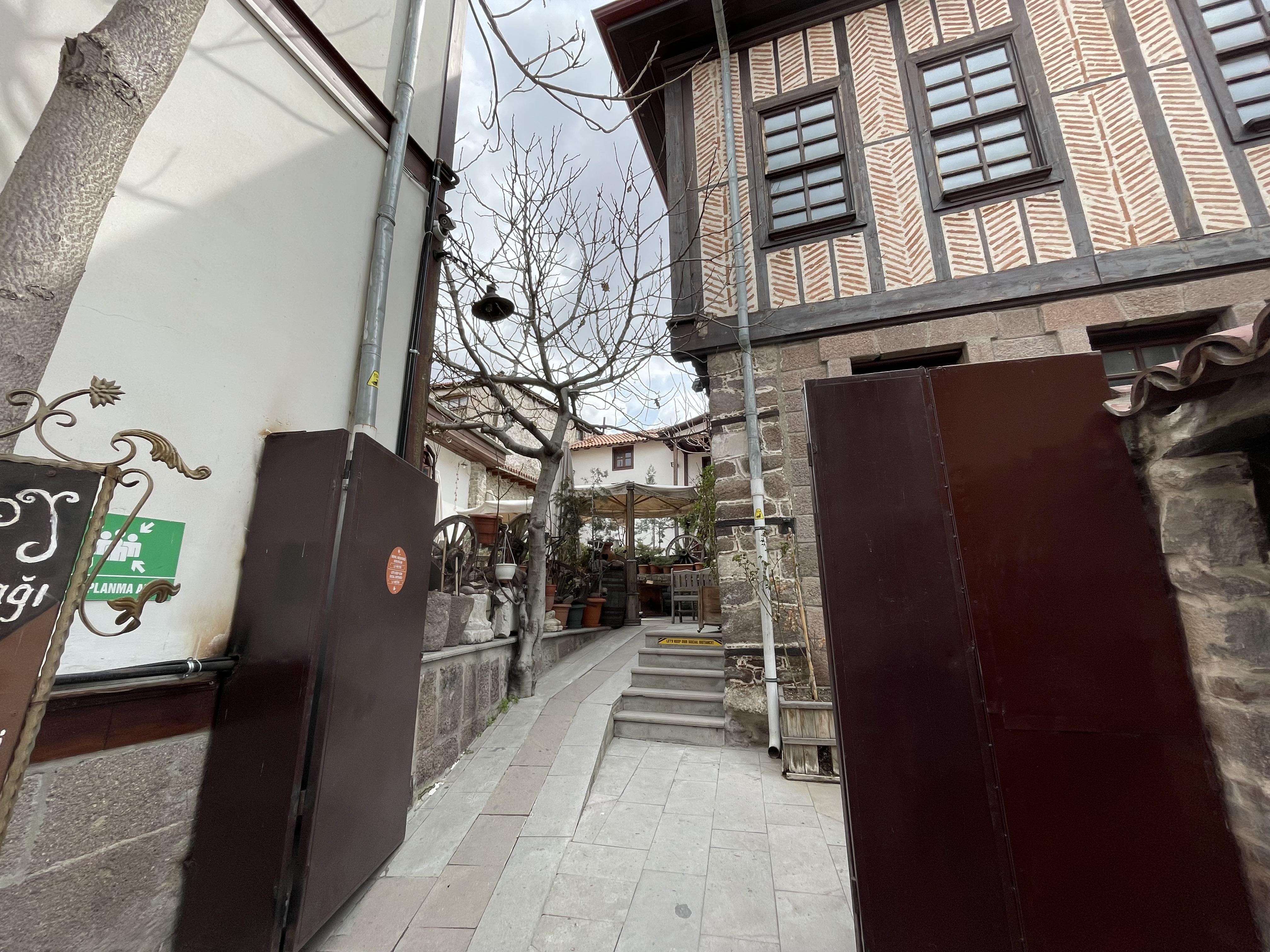
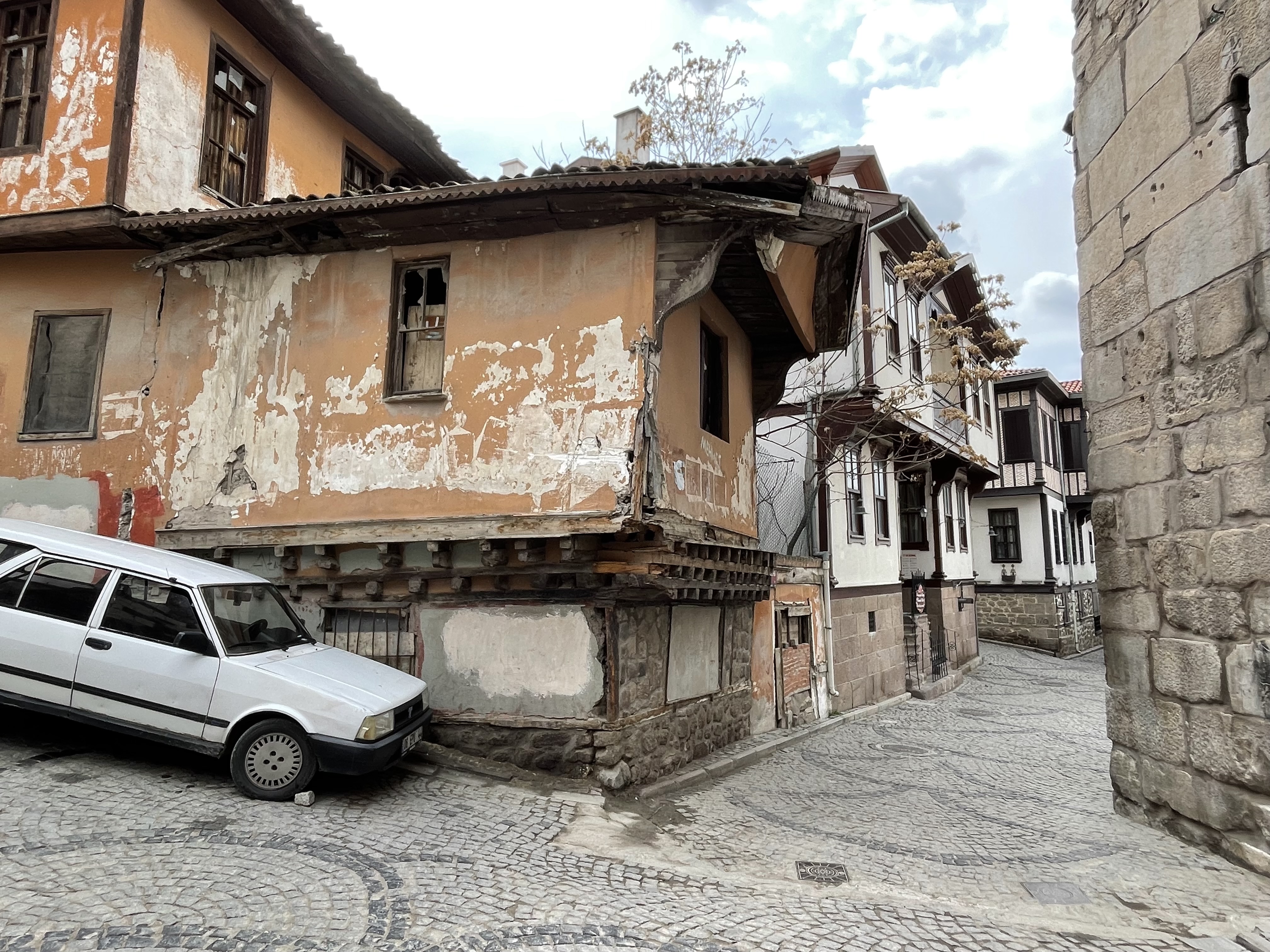
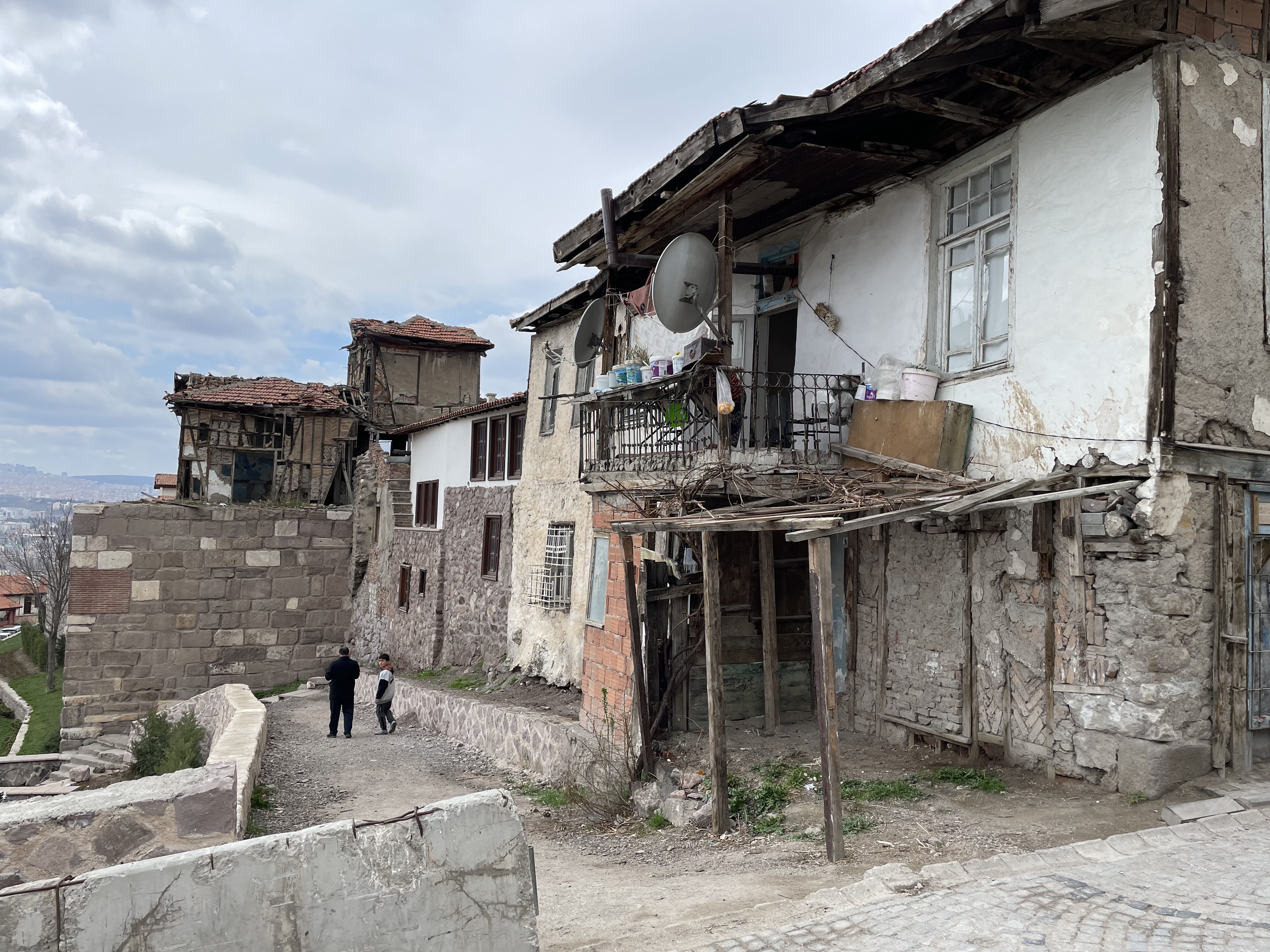
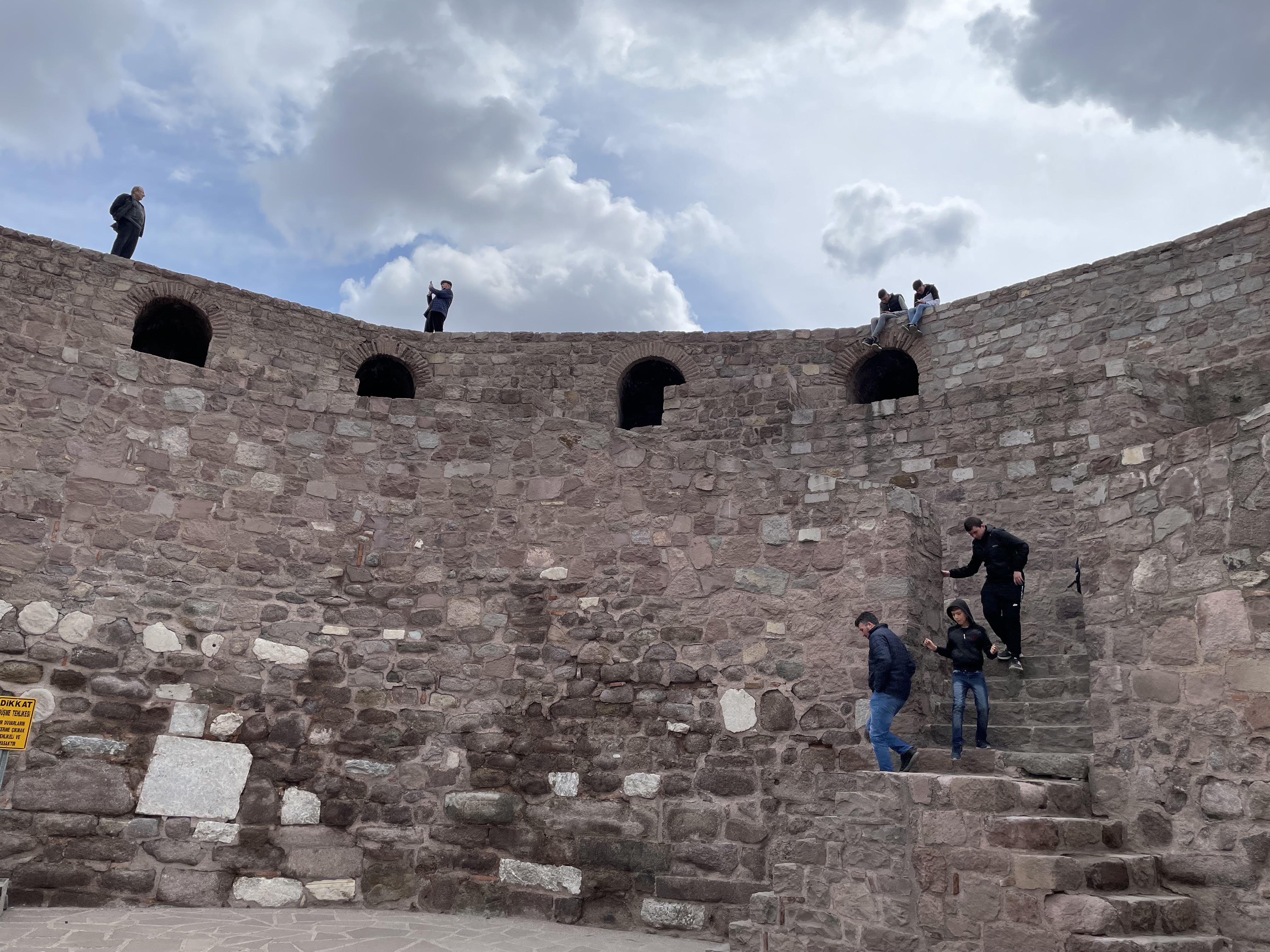
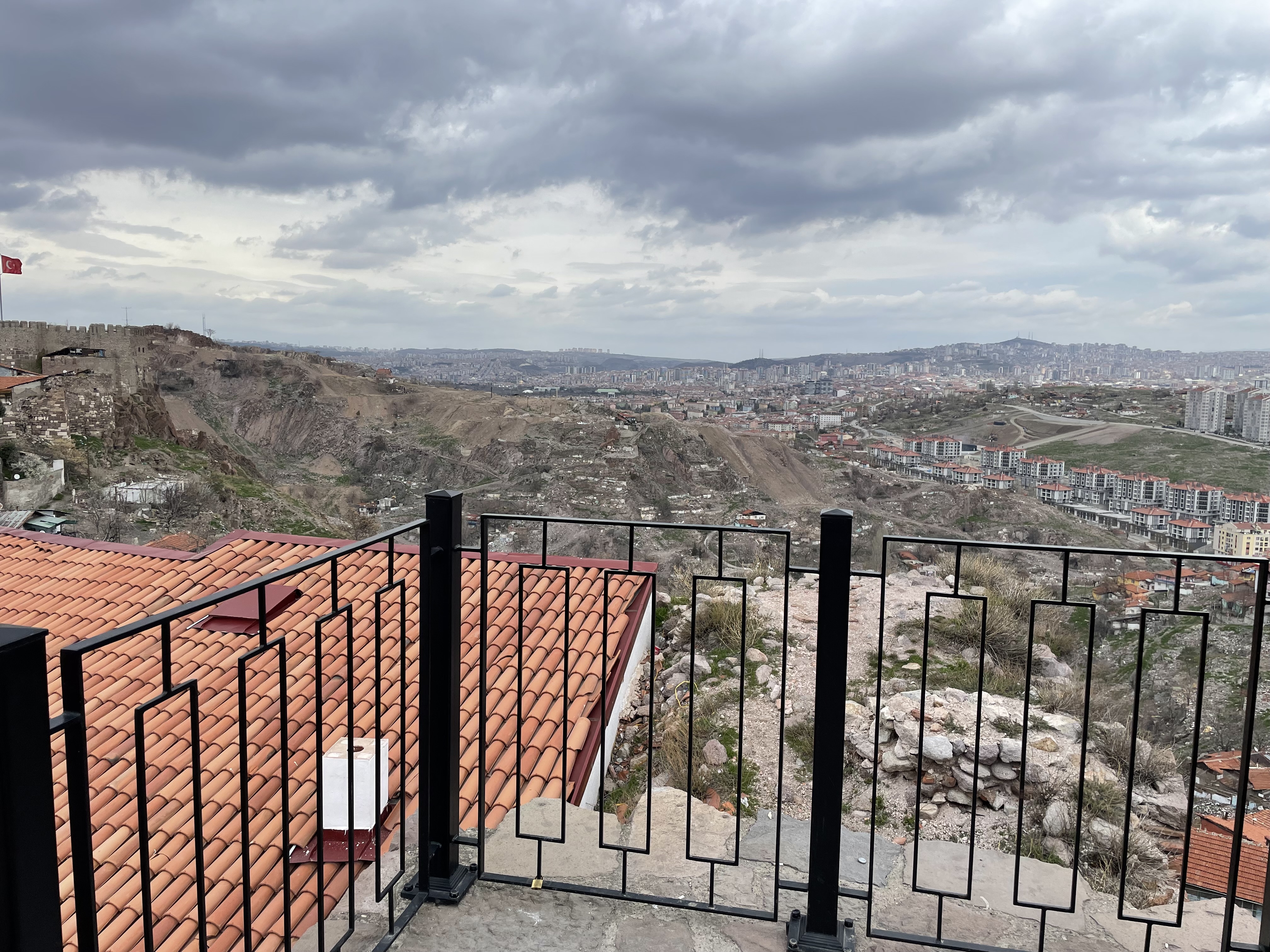
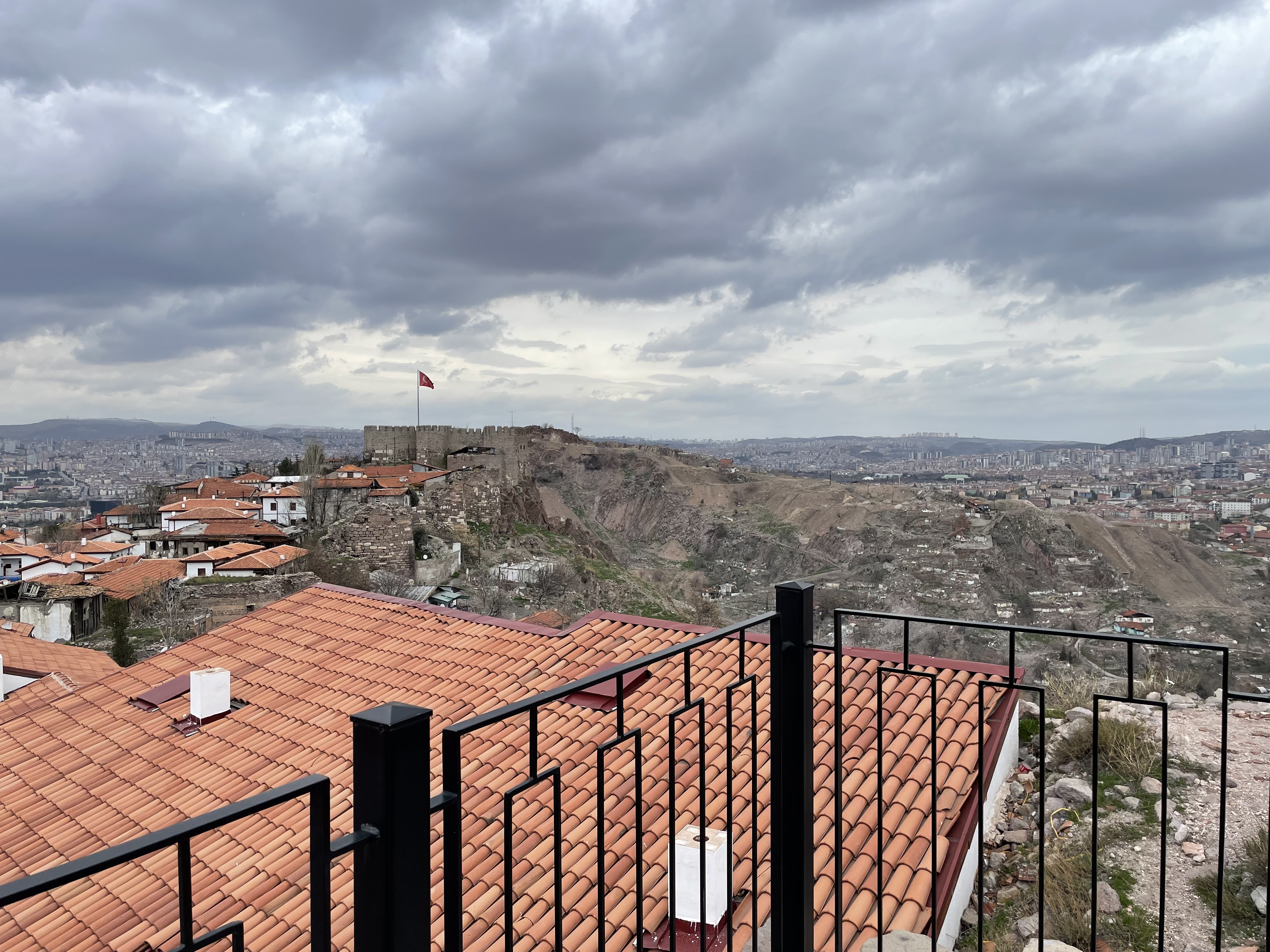
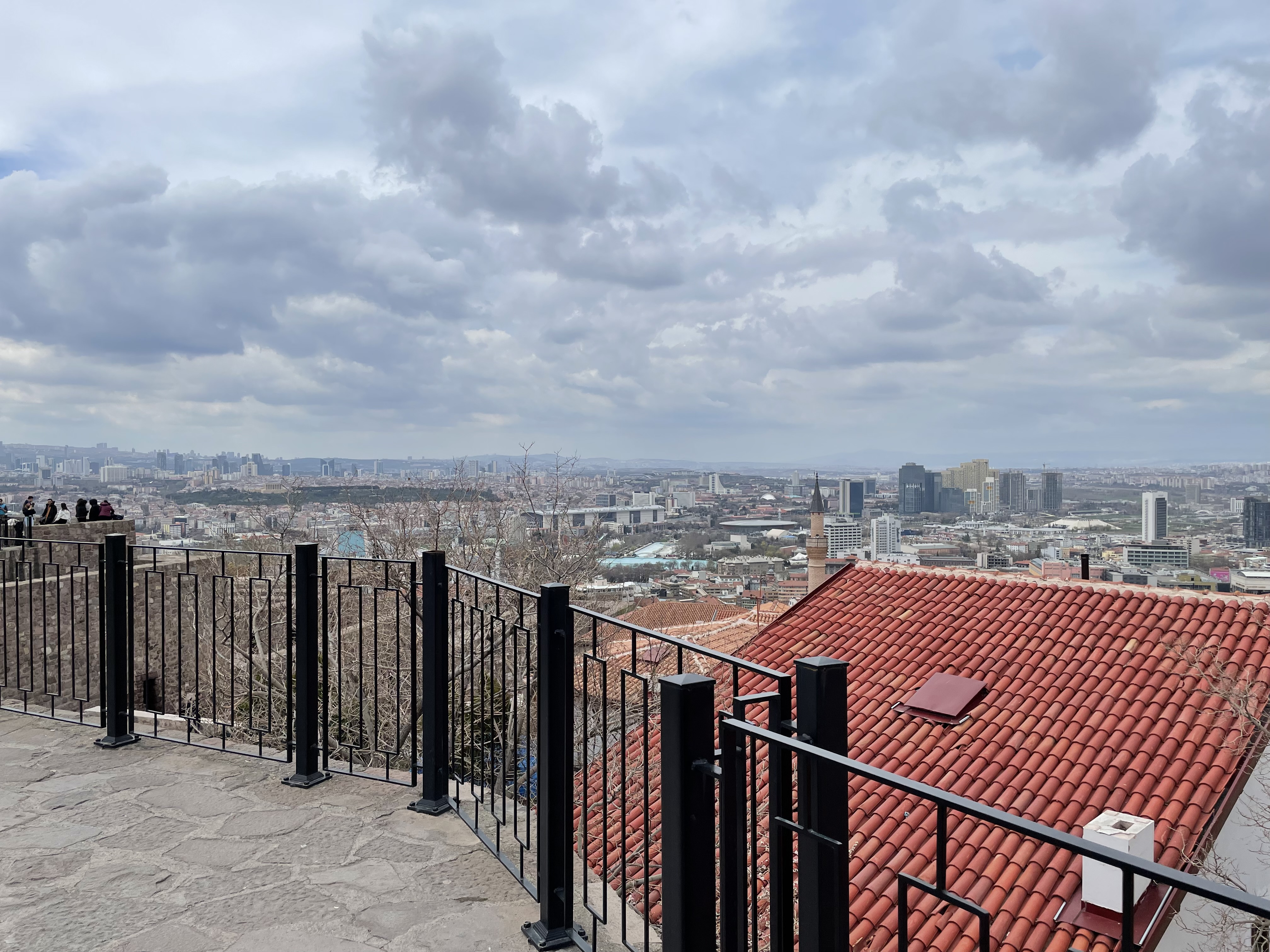
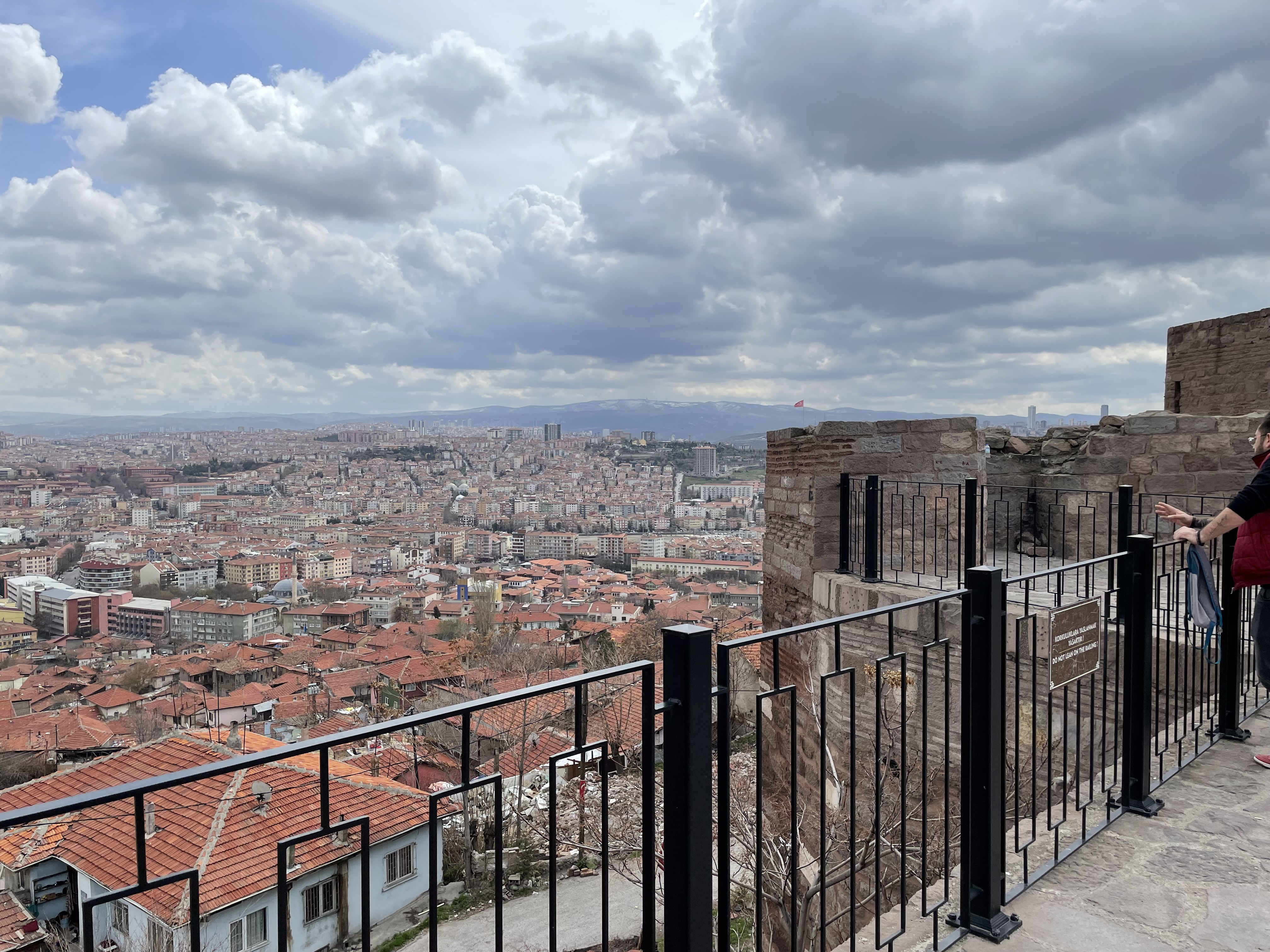
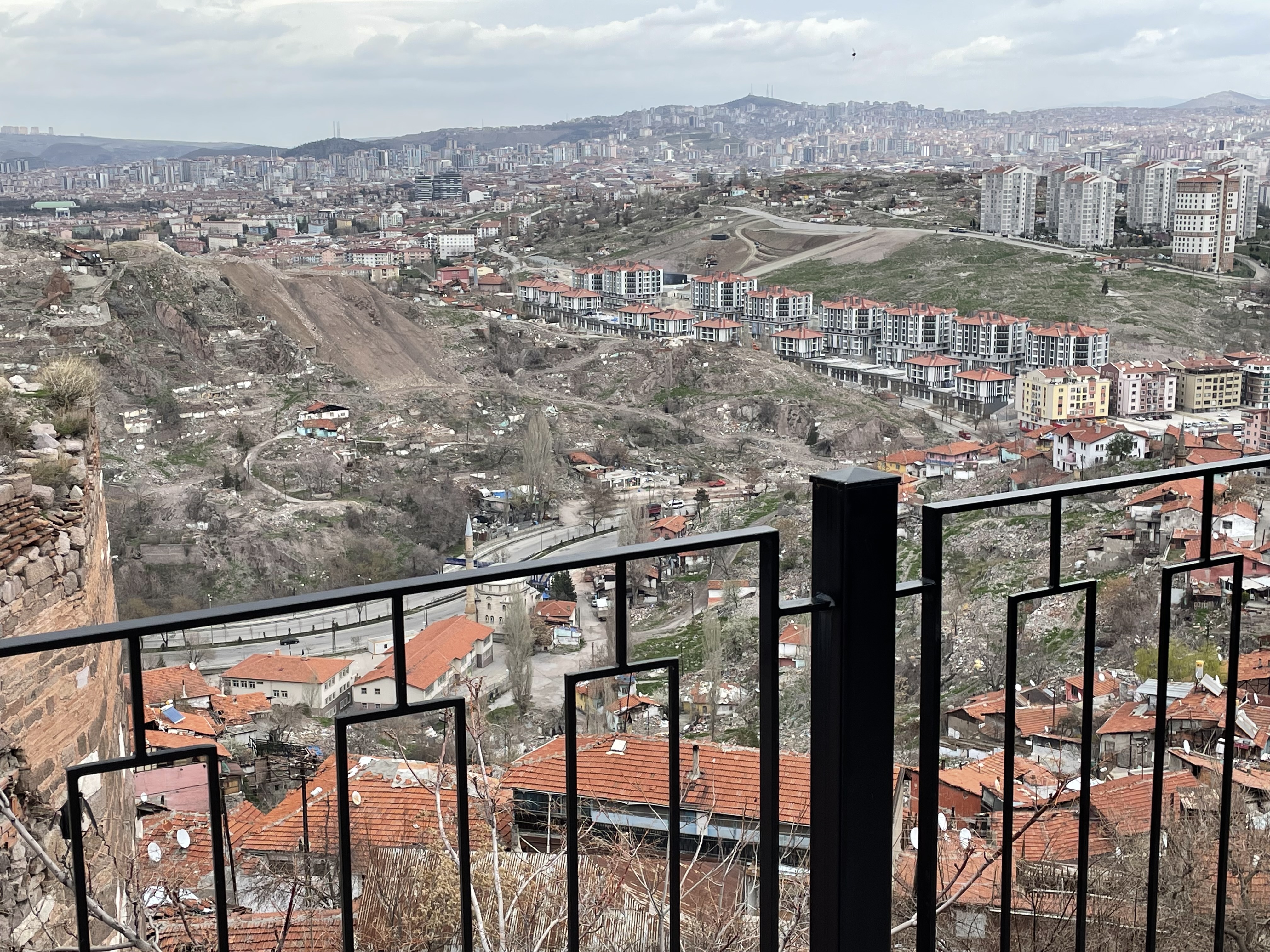
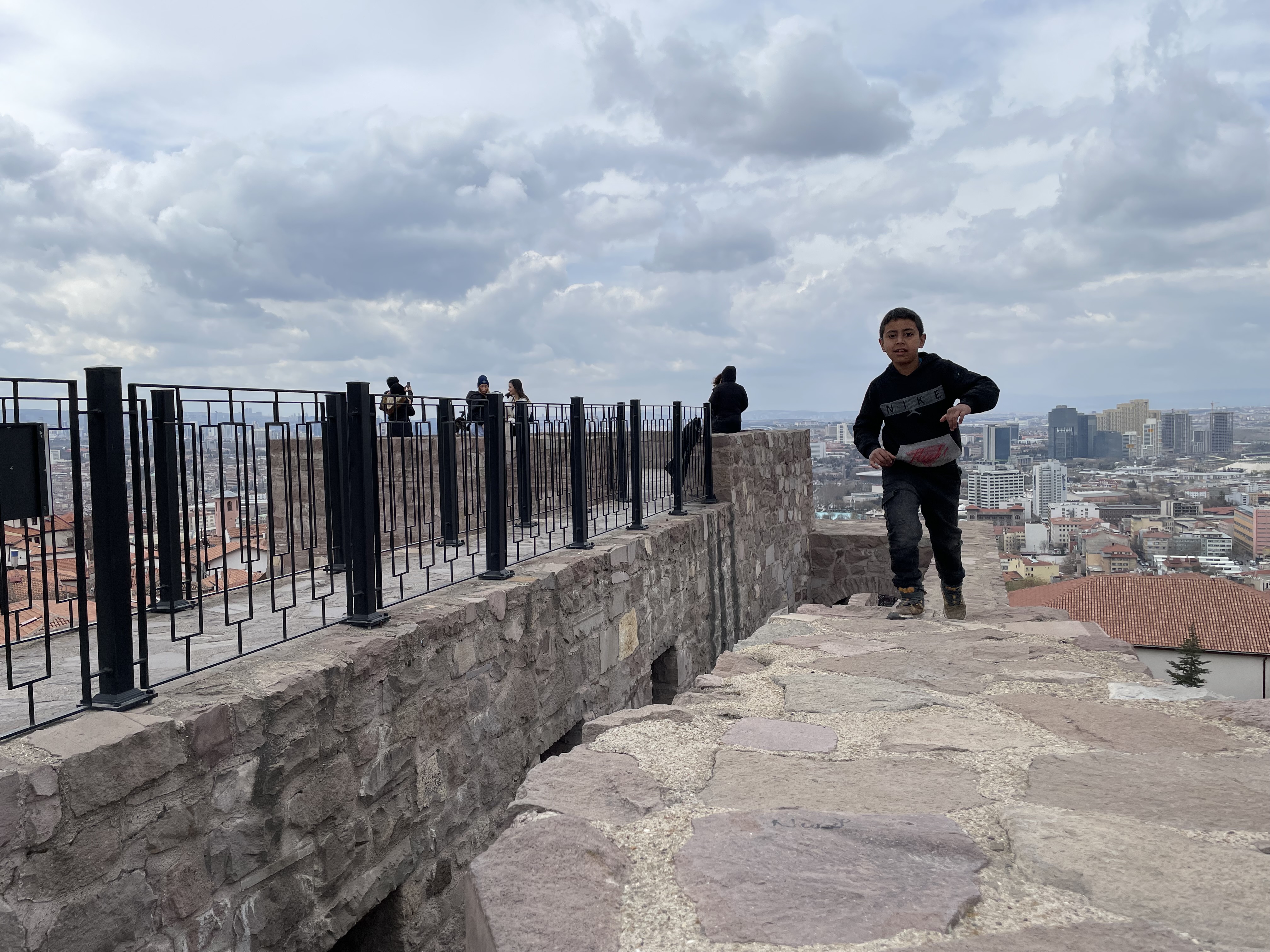
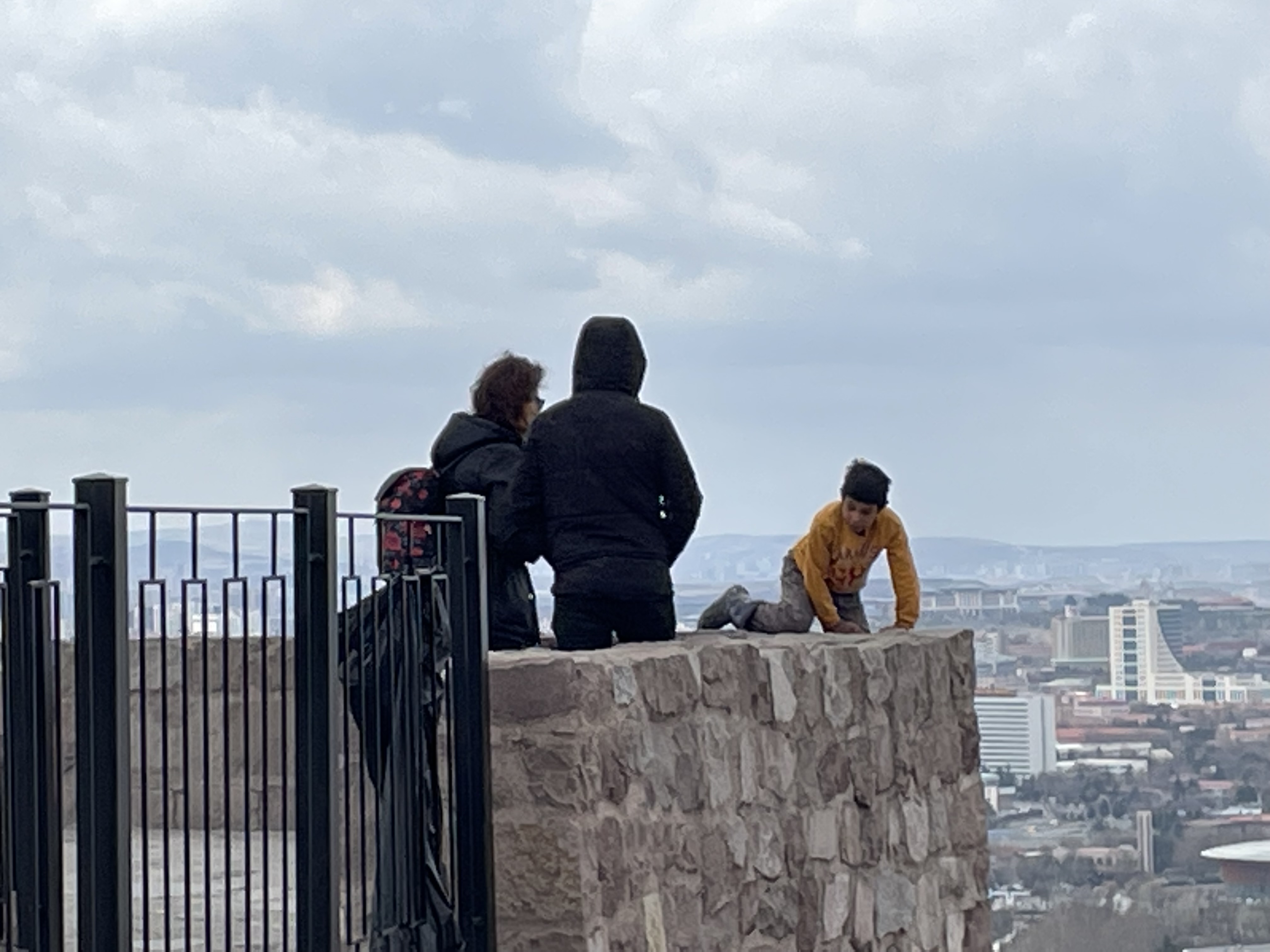
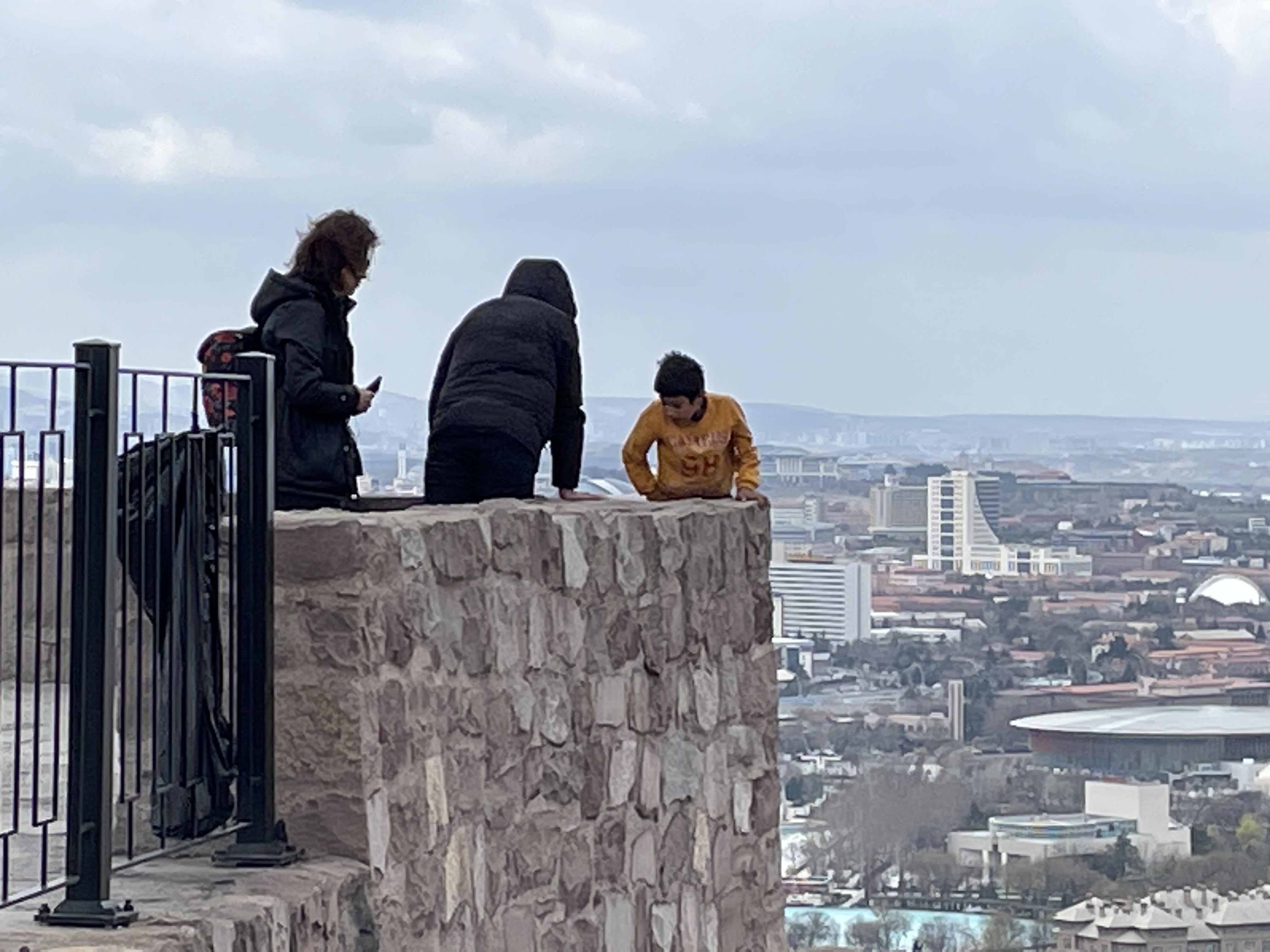
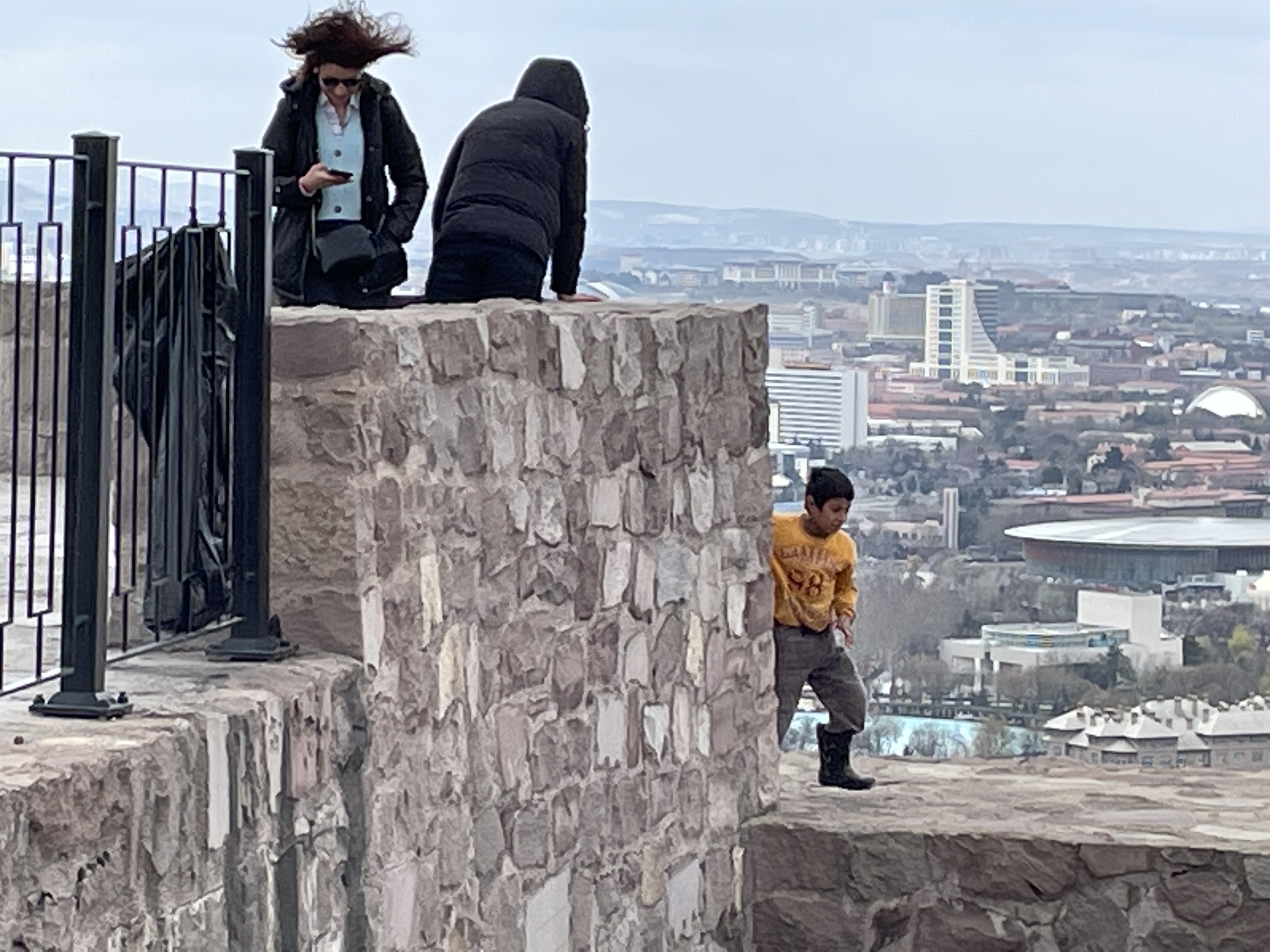
In a previous visit we had used the tent shown (by its black roof) below. Osman’s wife’s cafe. They had a restaurant we had used – but (on 2 separate occasions) greeted us like family, with free drinks, when we visited the castle.
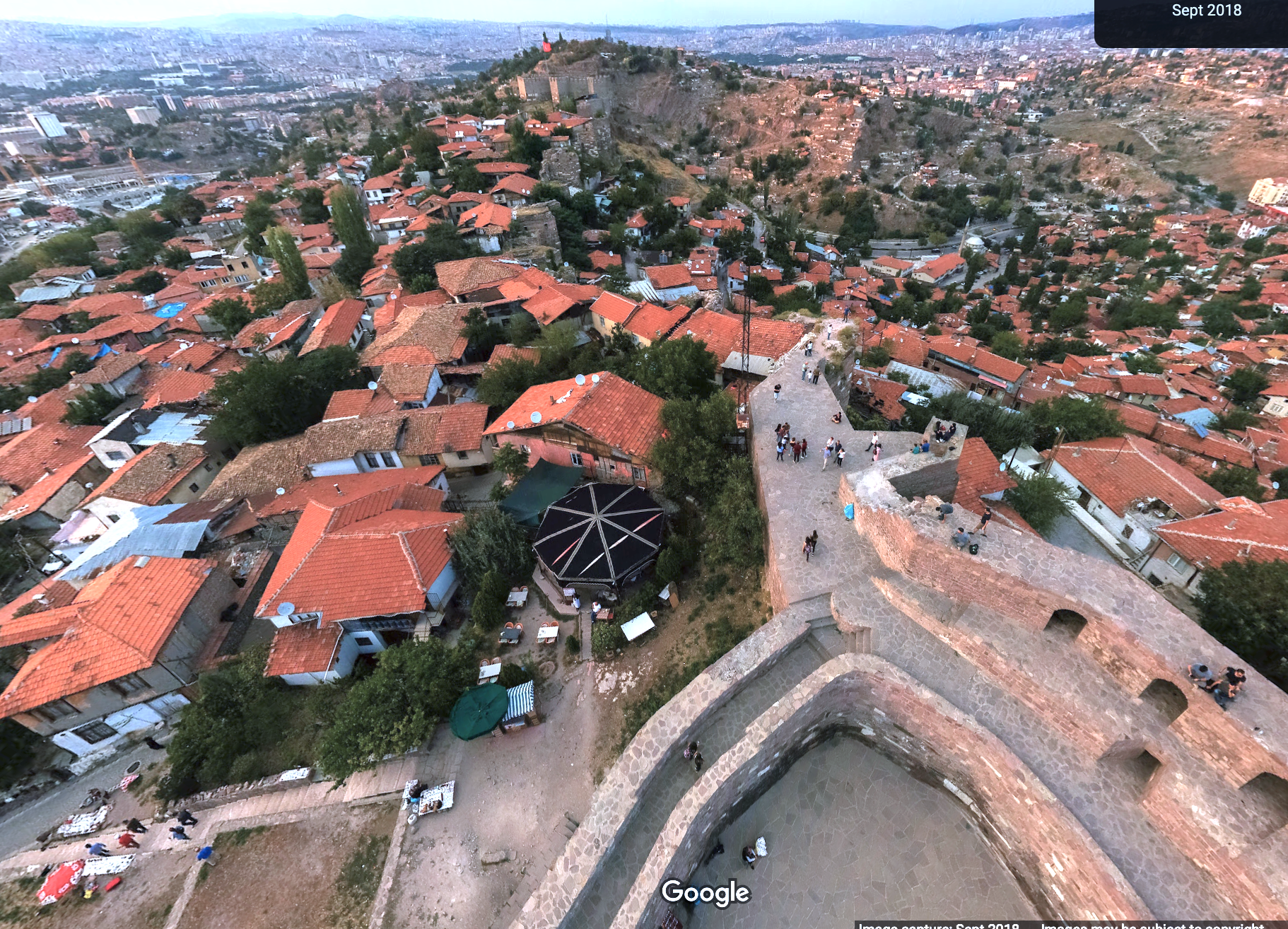
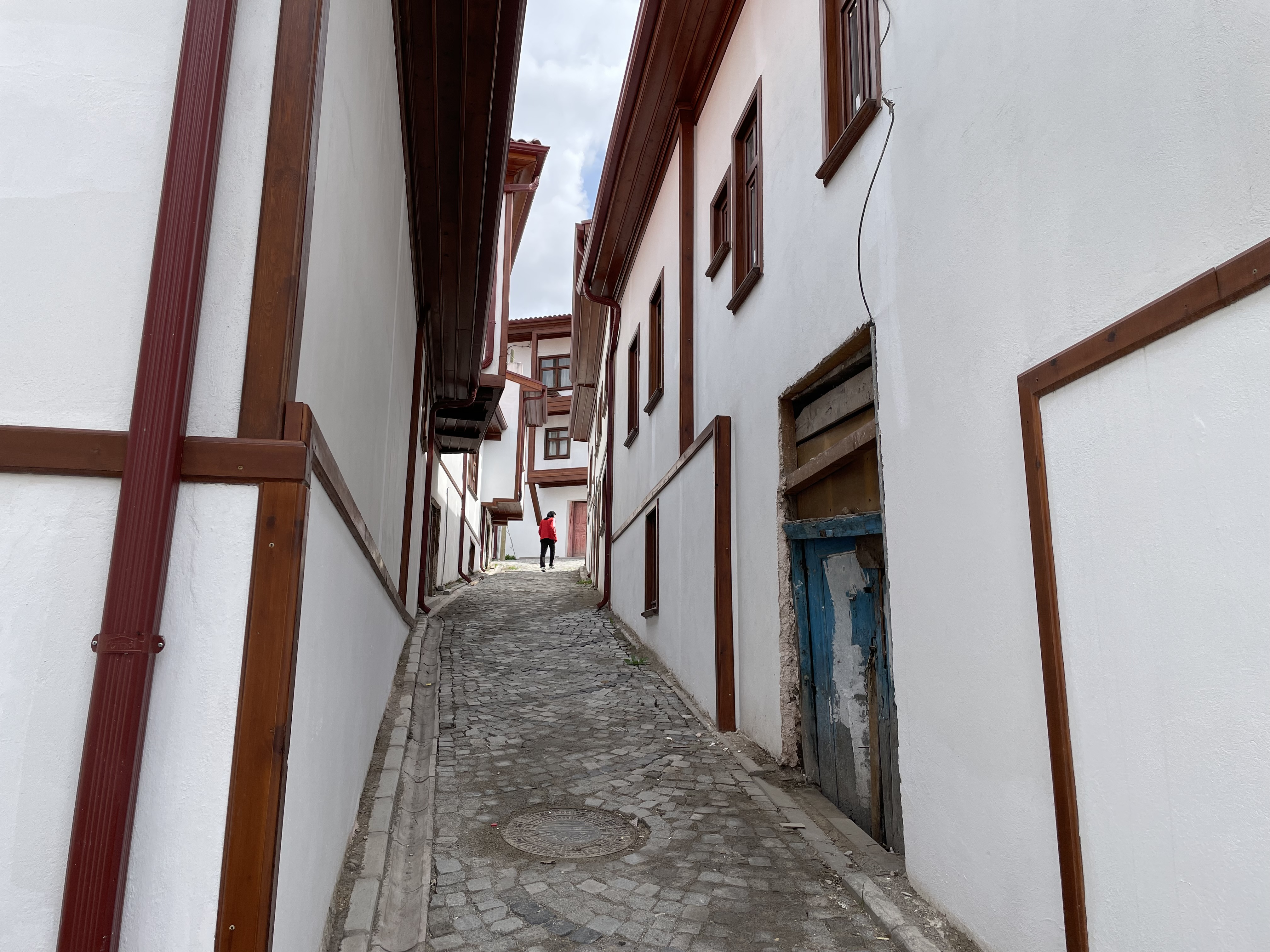
We walked through the hilltop settlement to the far end of the fortress
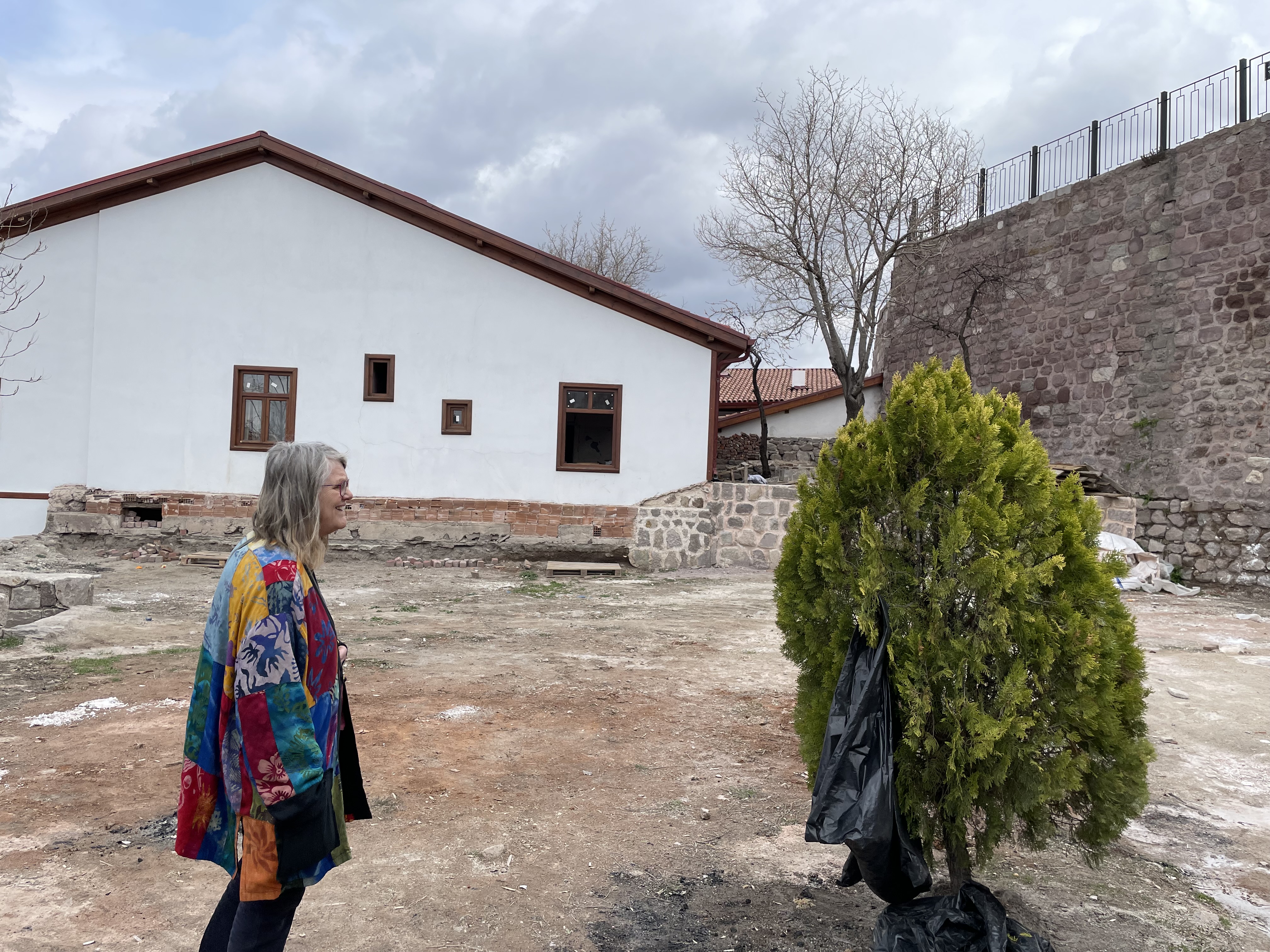
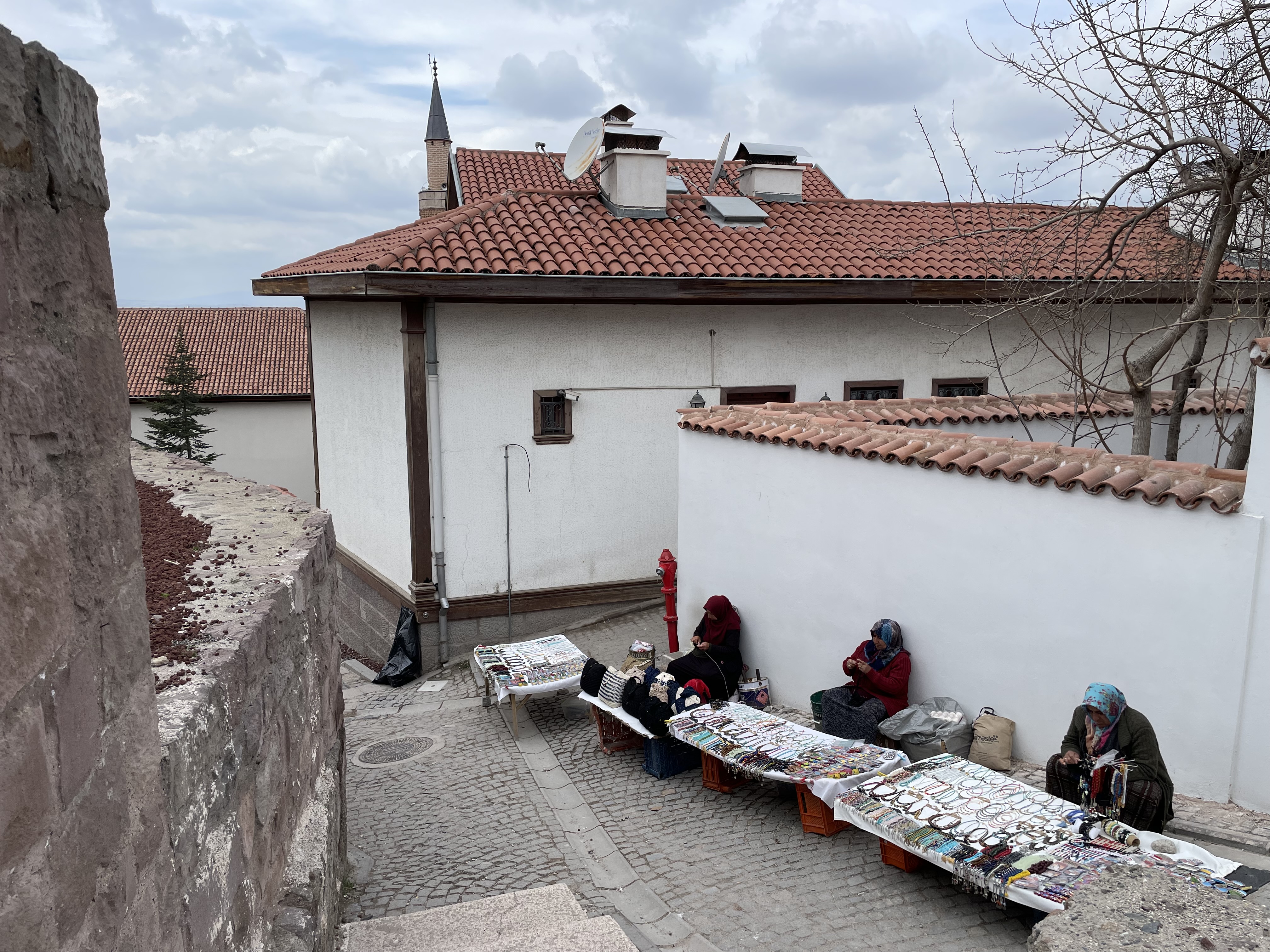
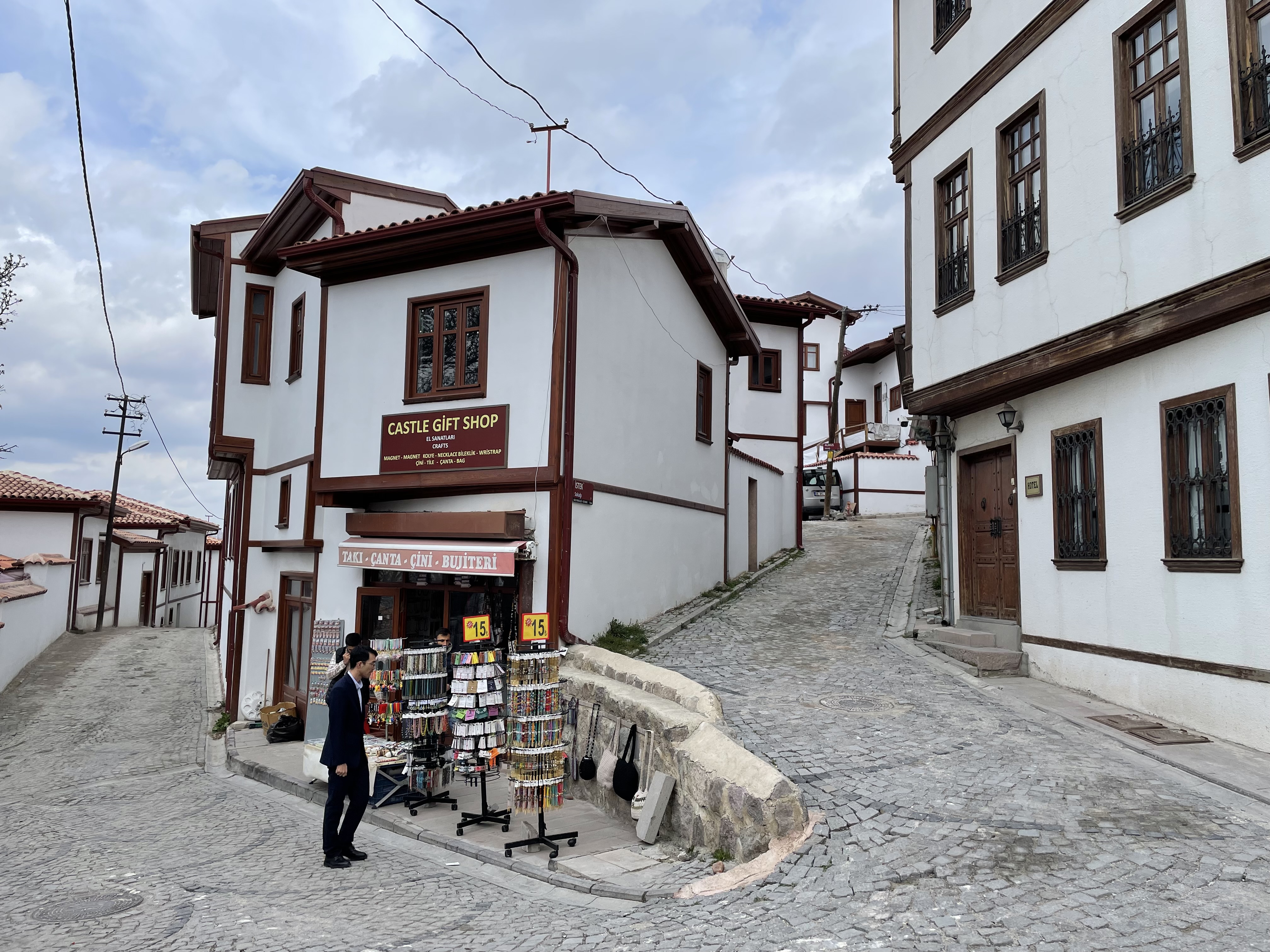
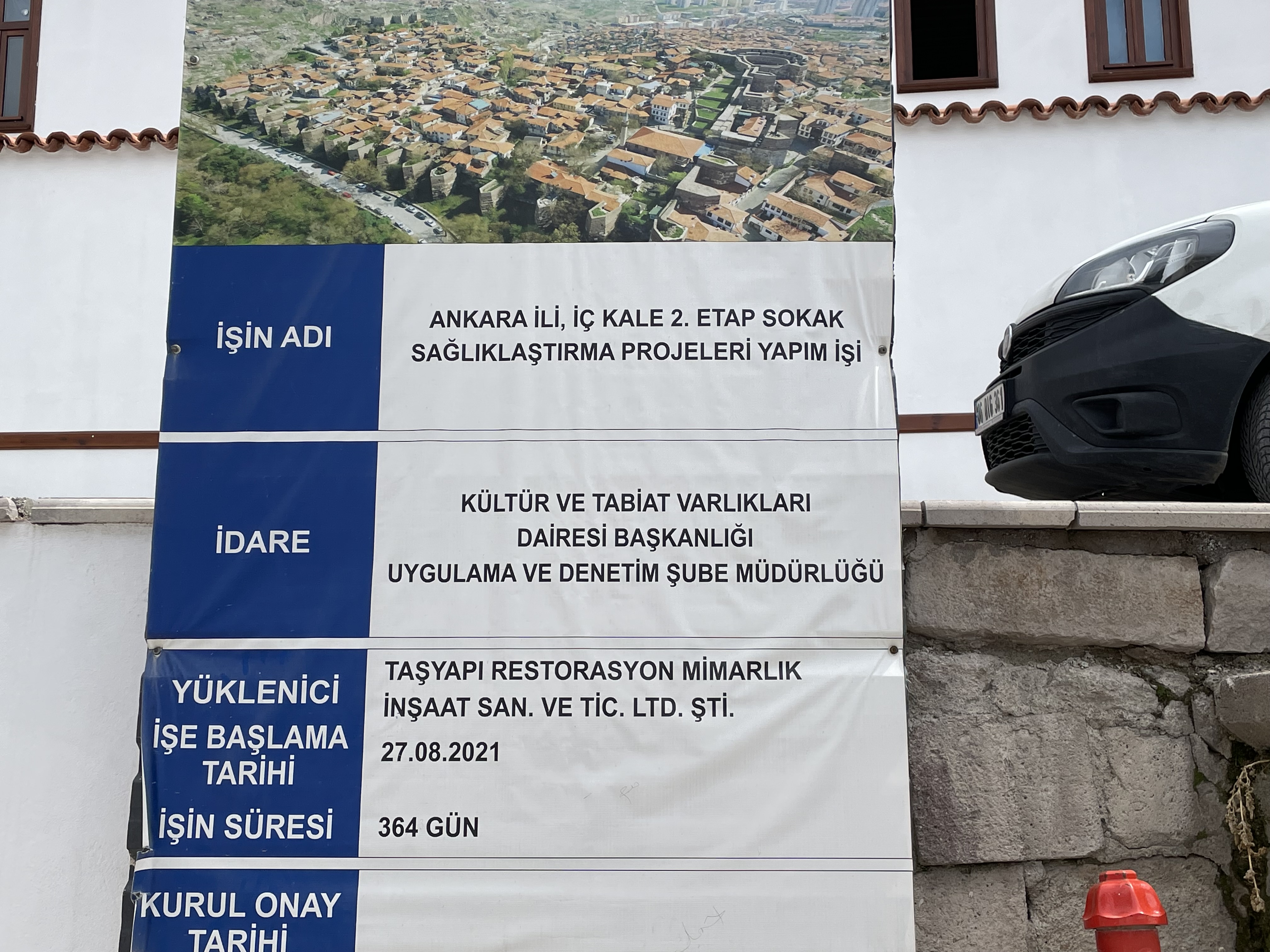
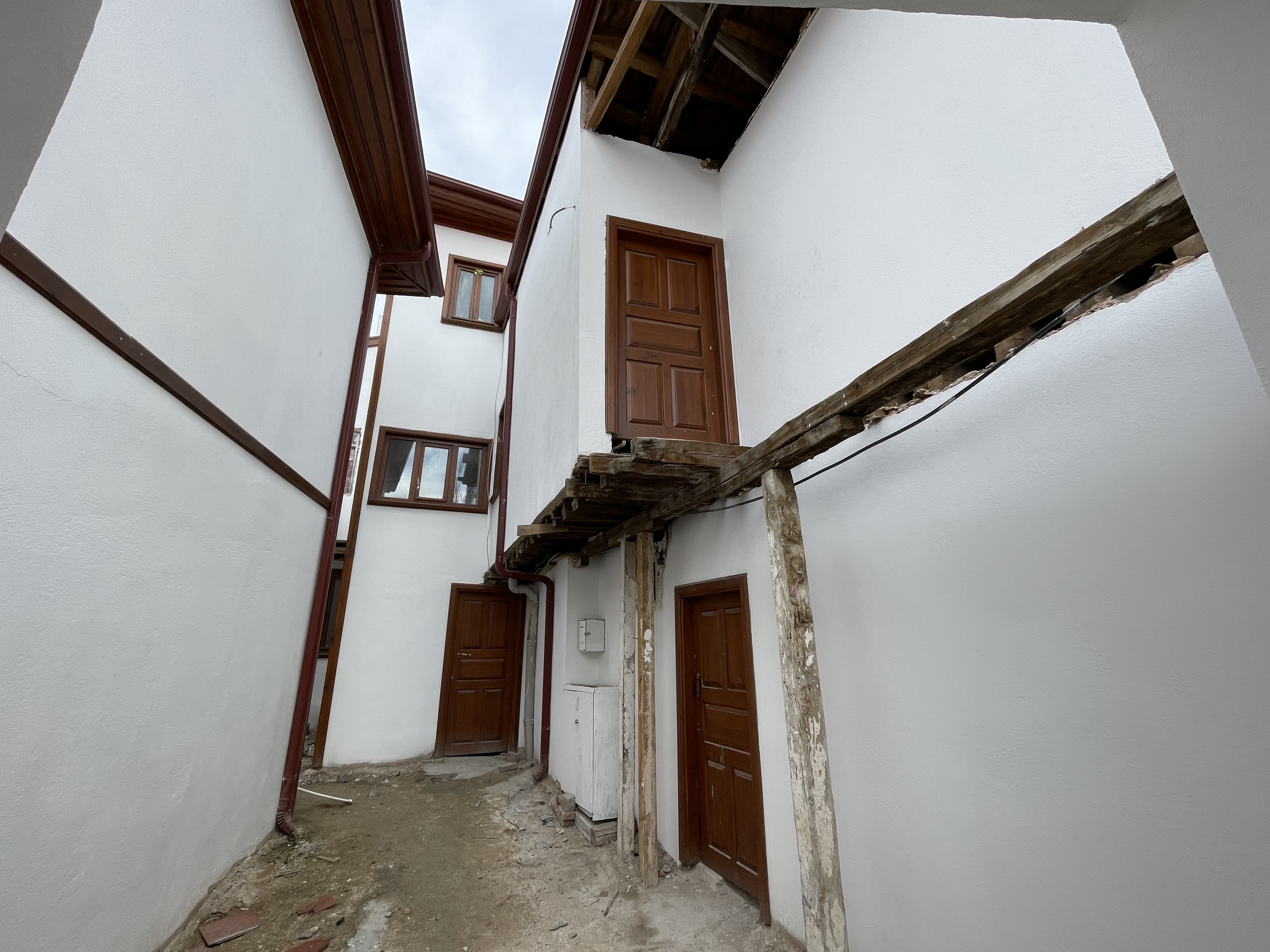
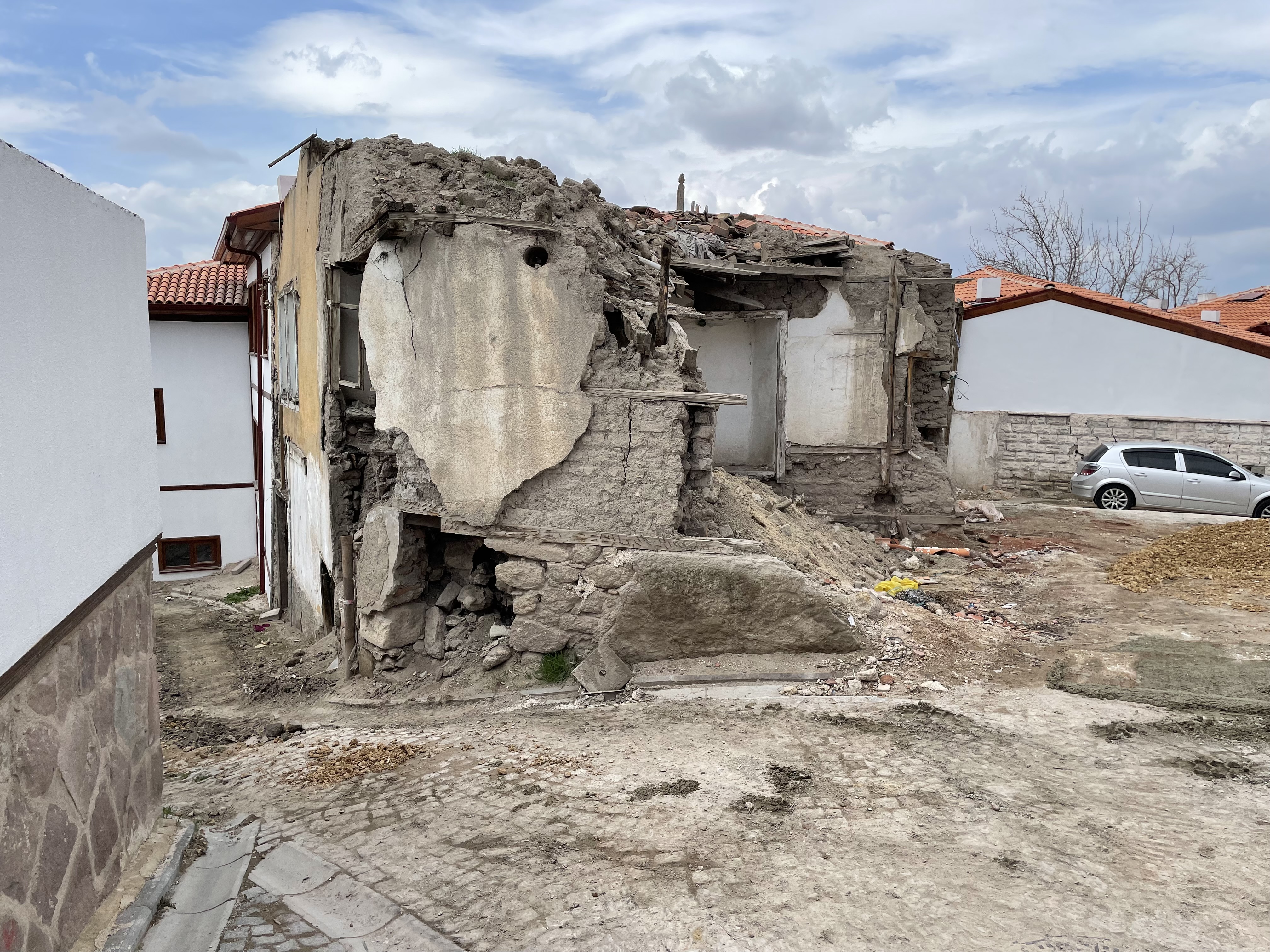
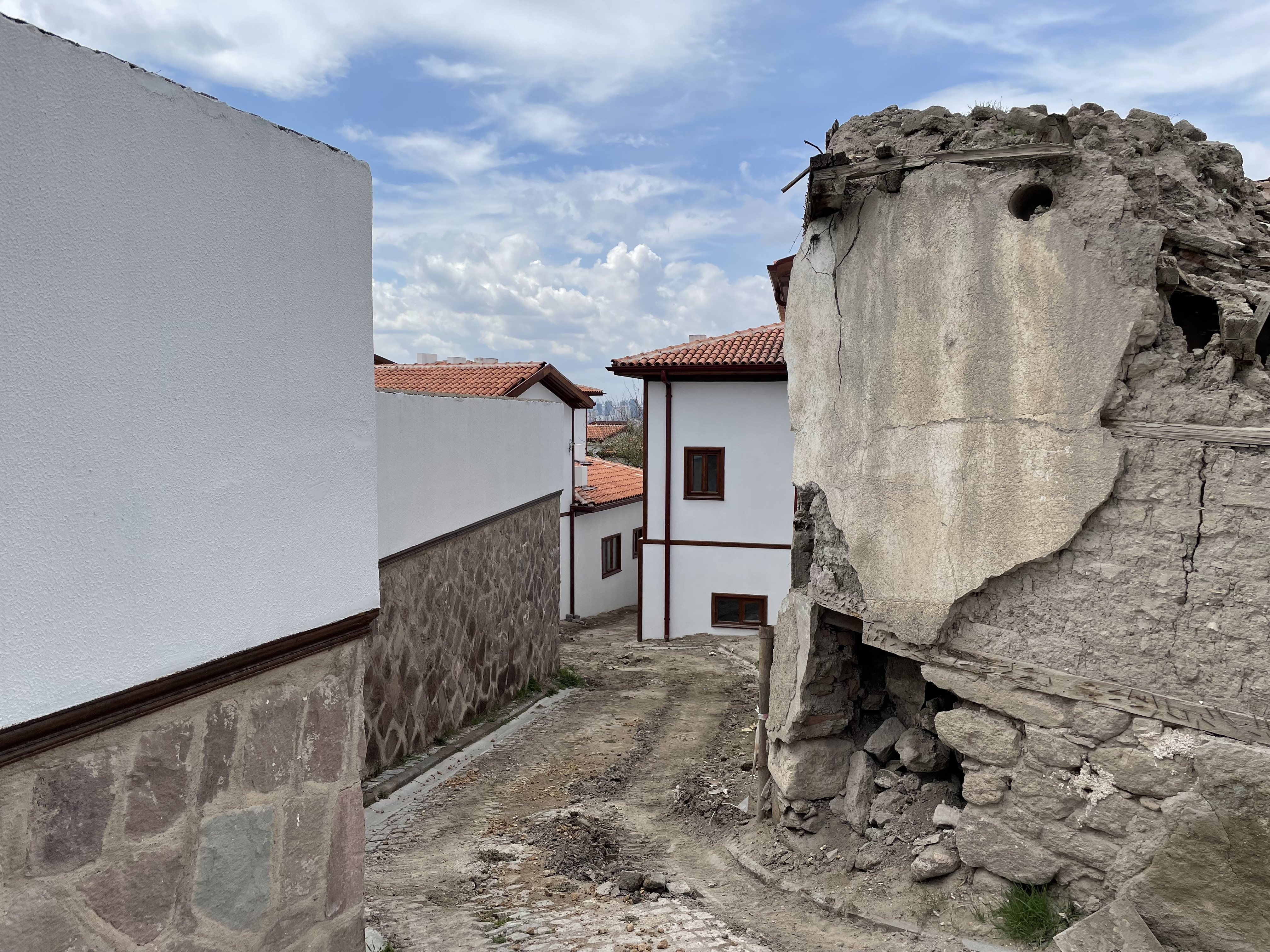
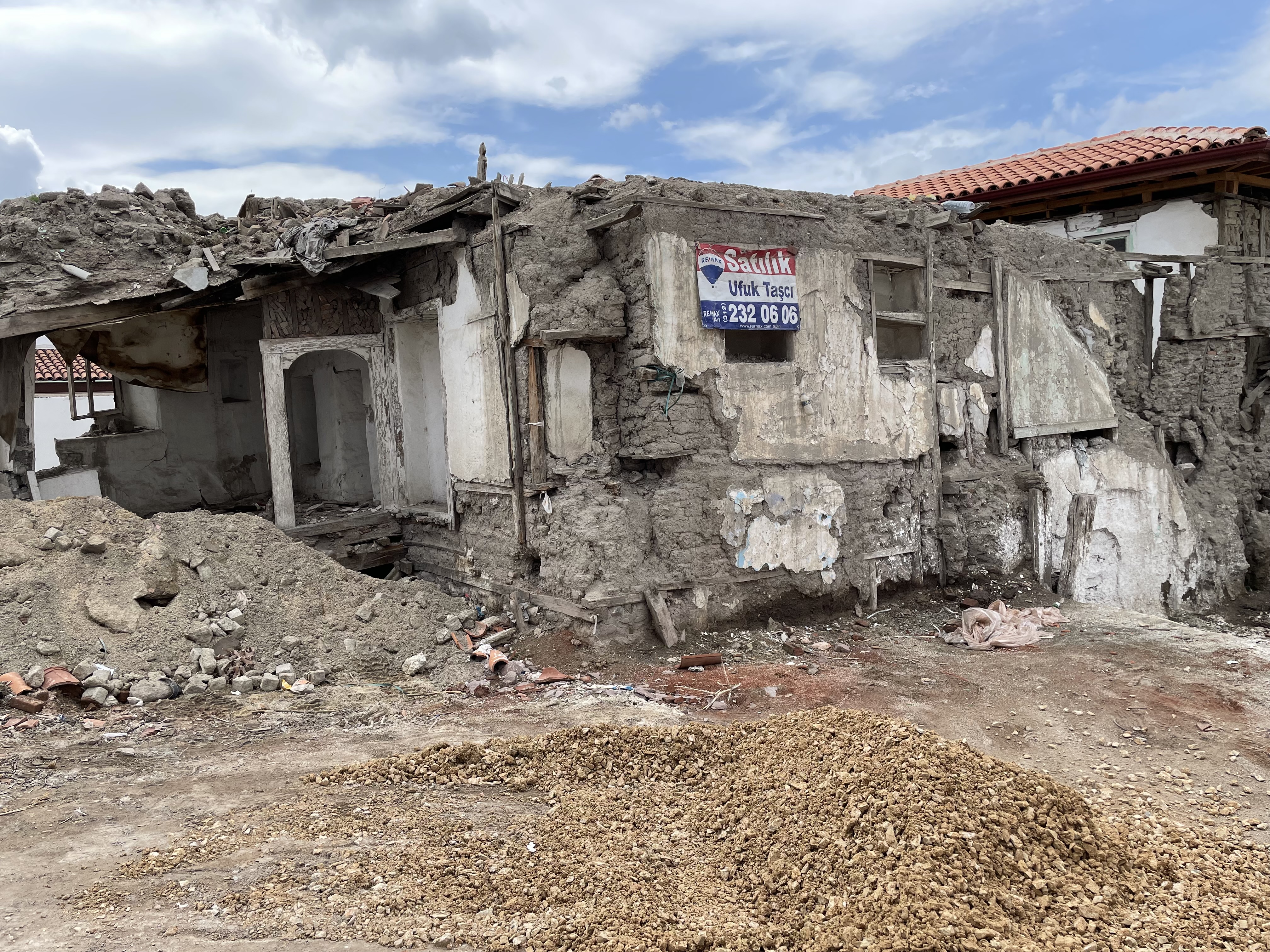
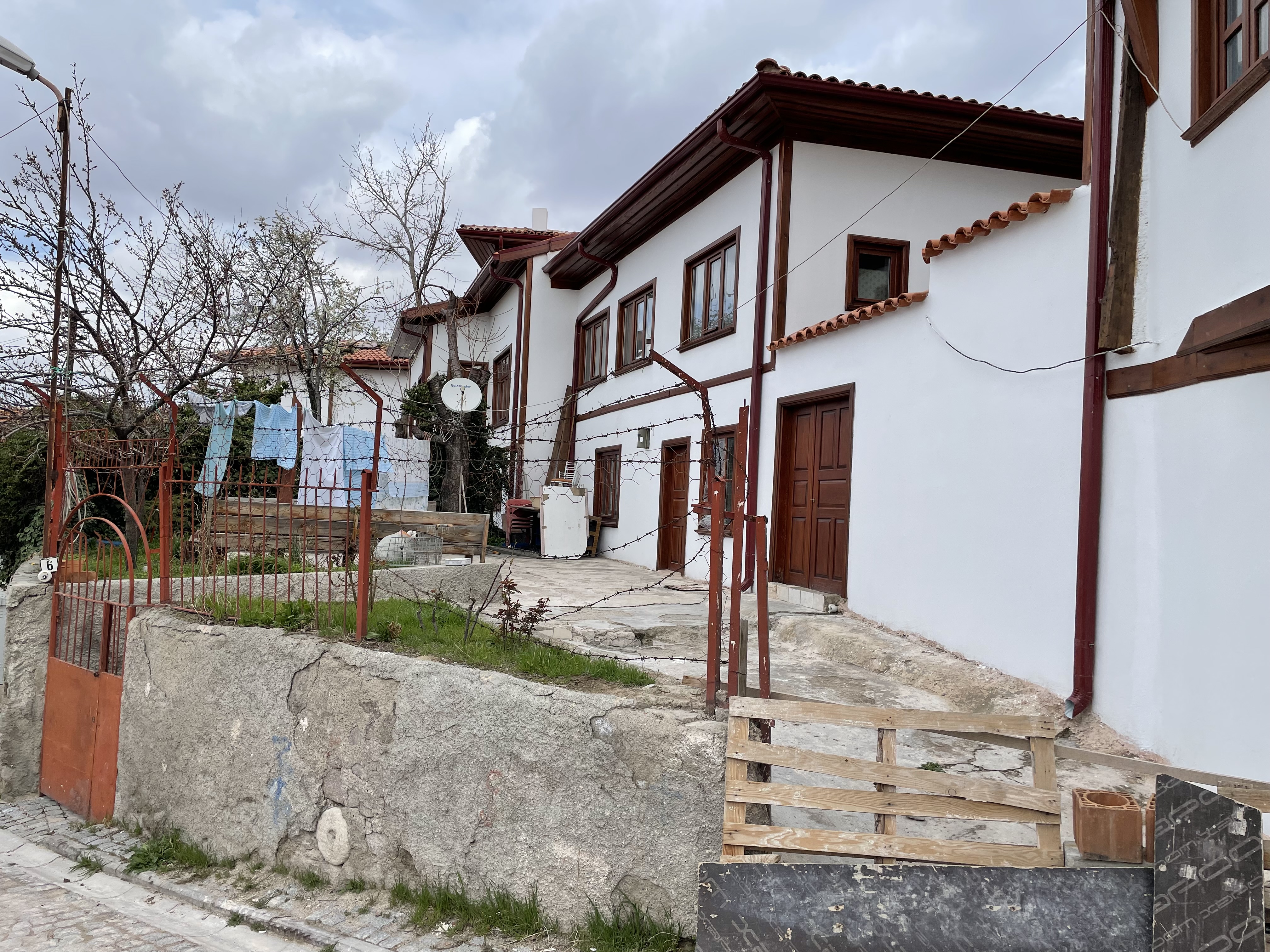
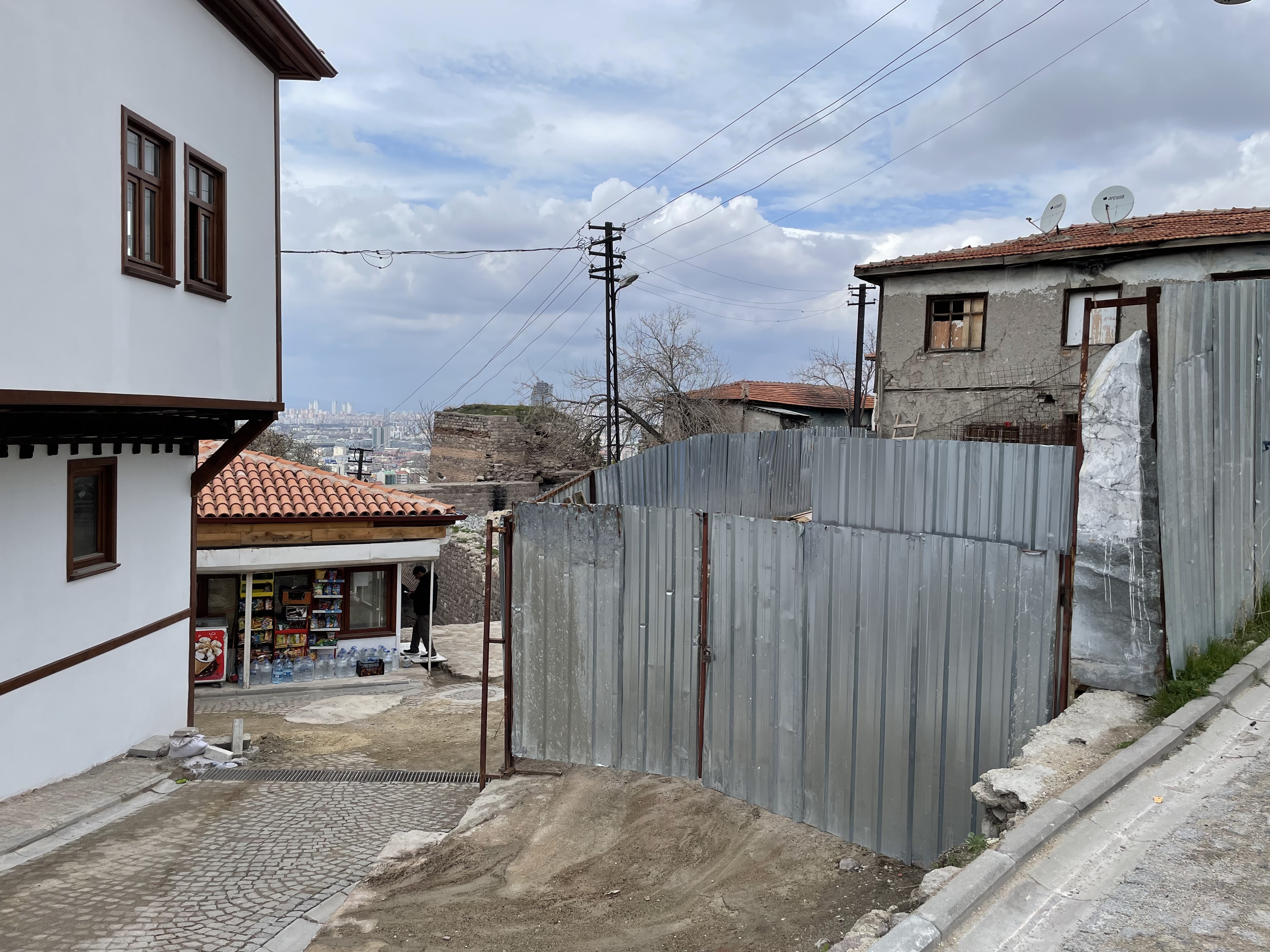
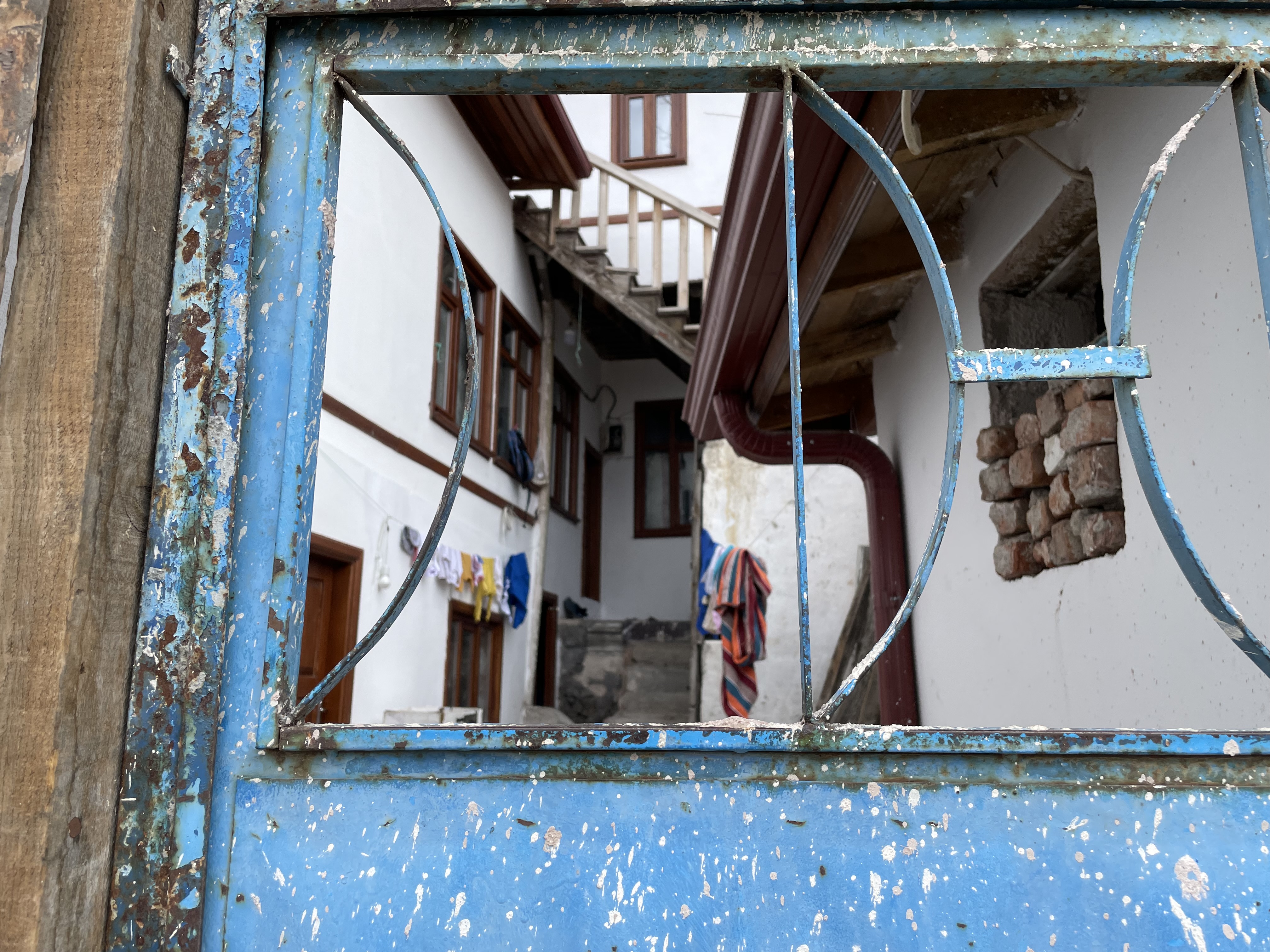
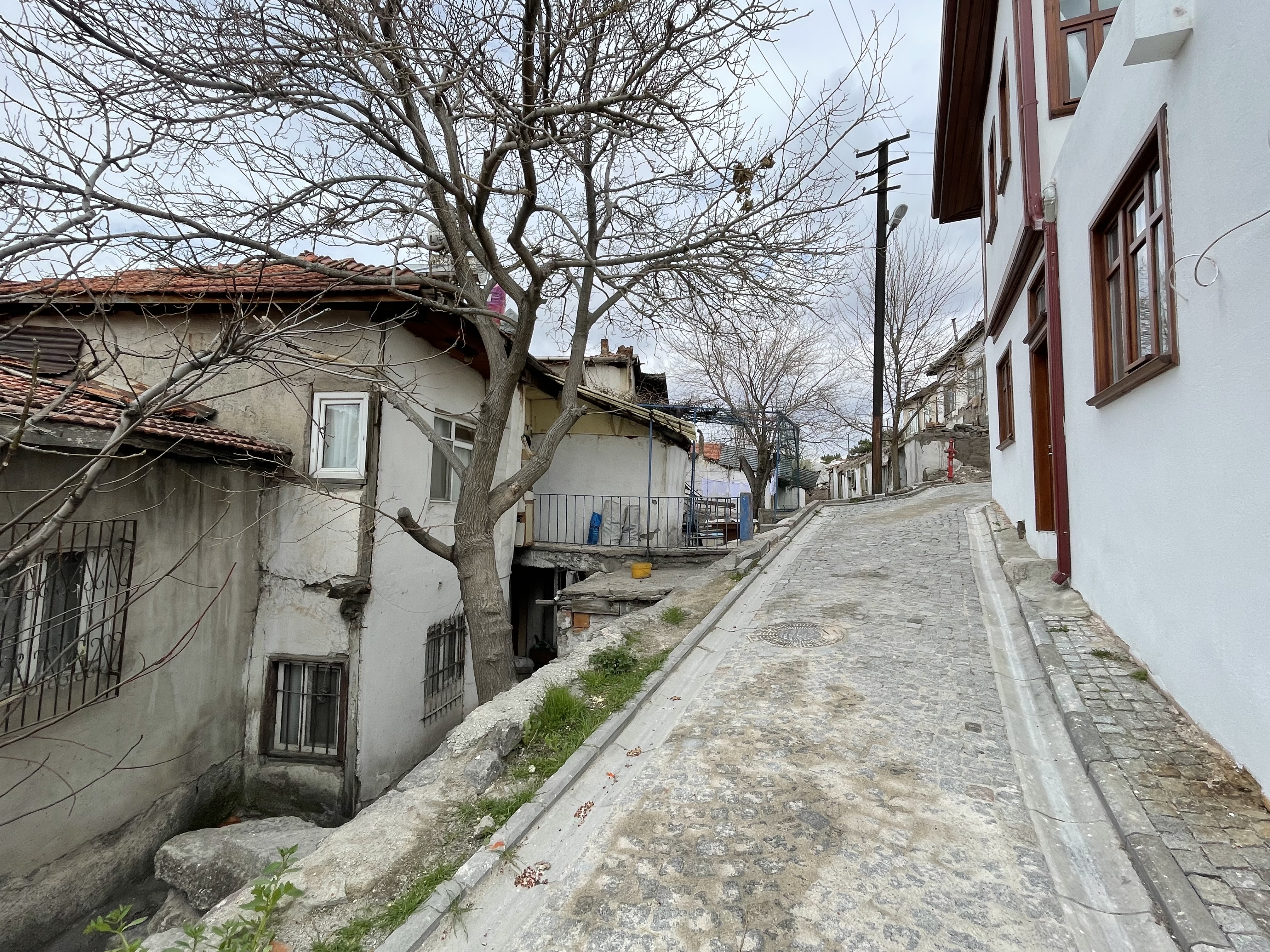
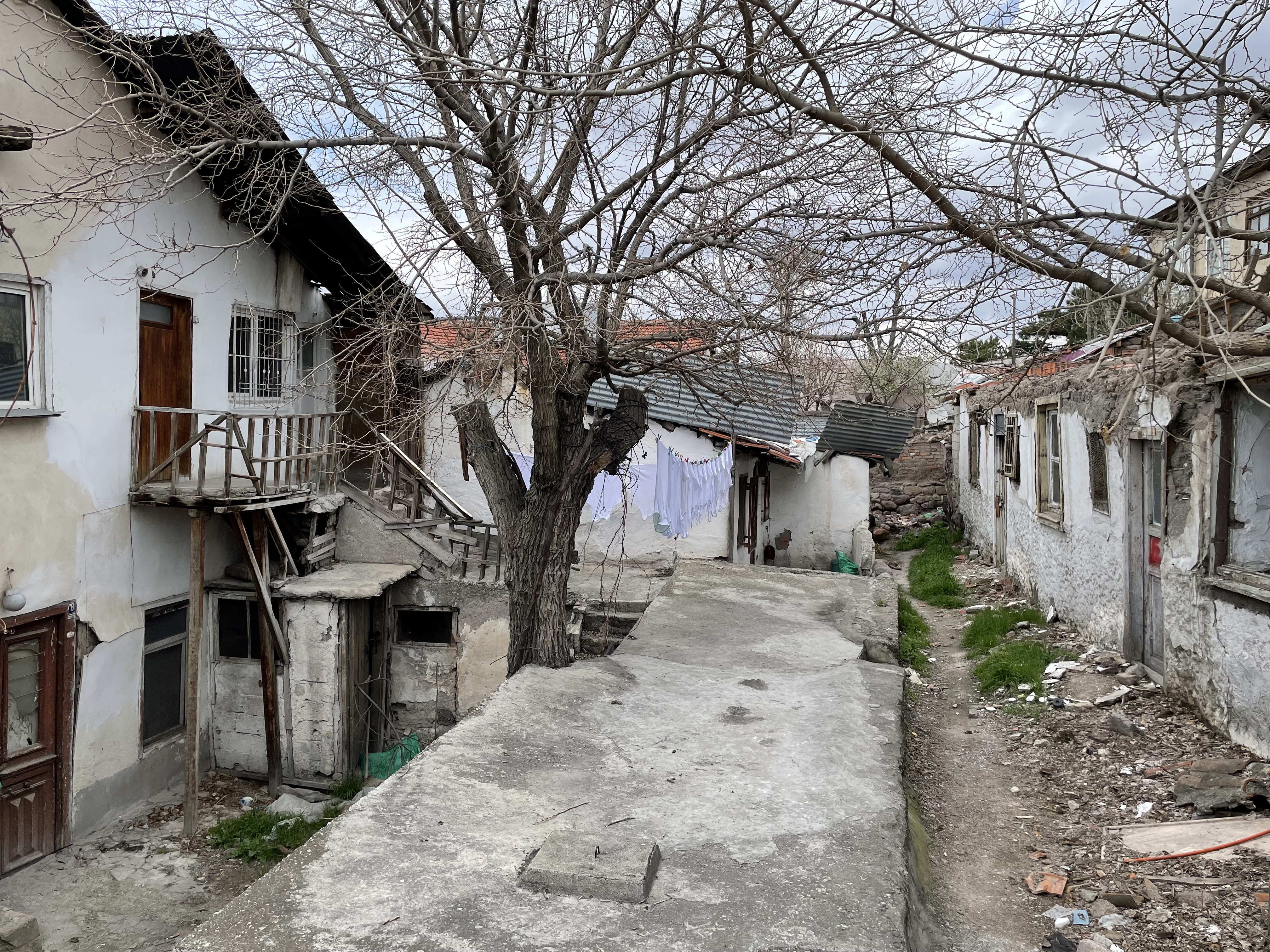
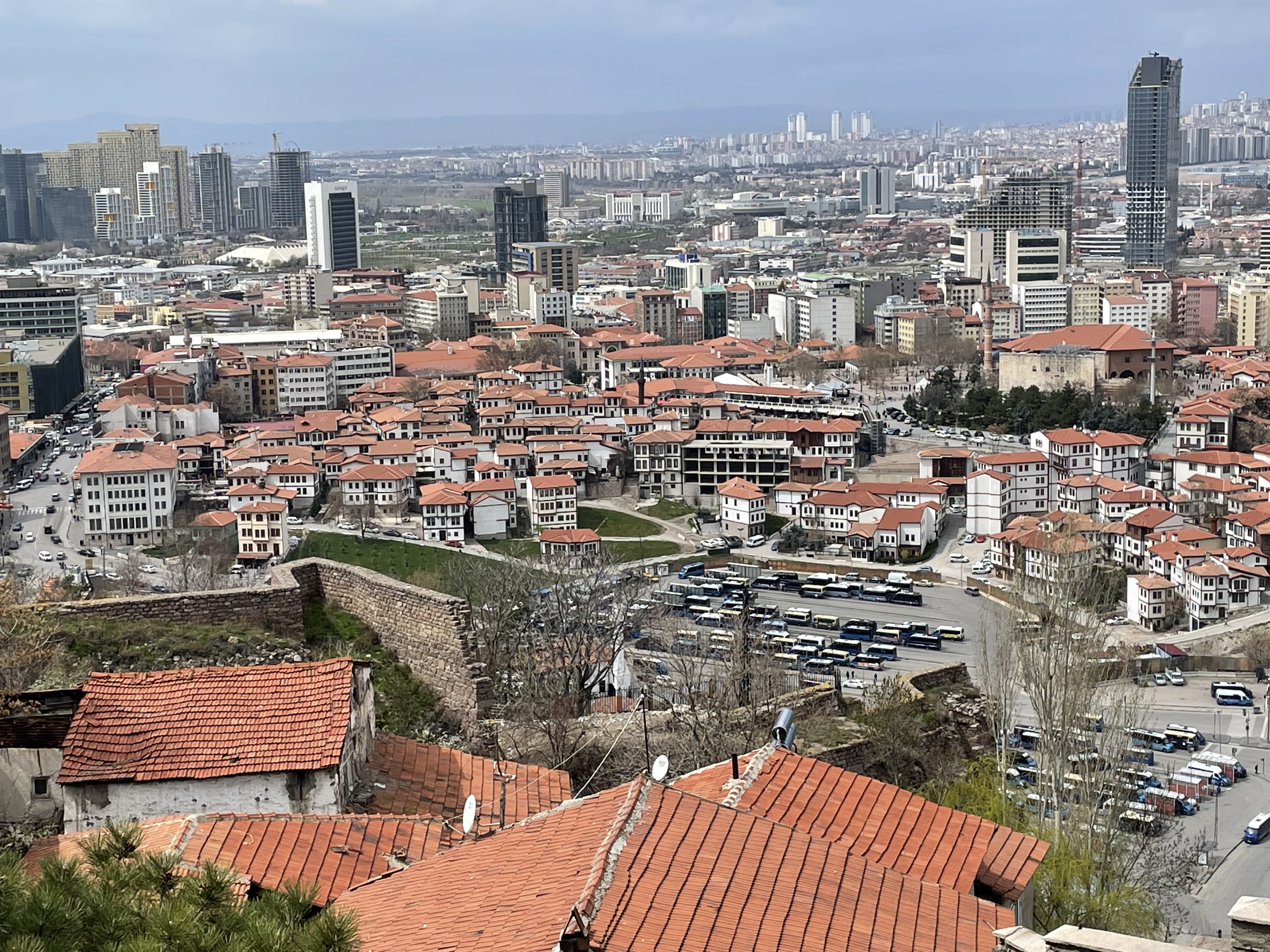

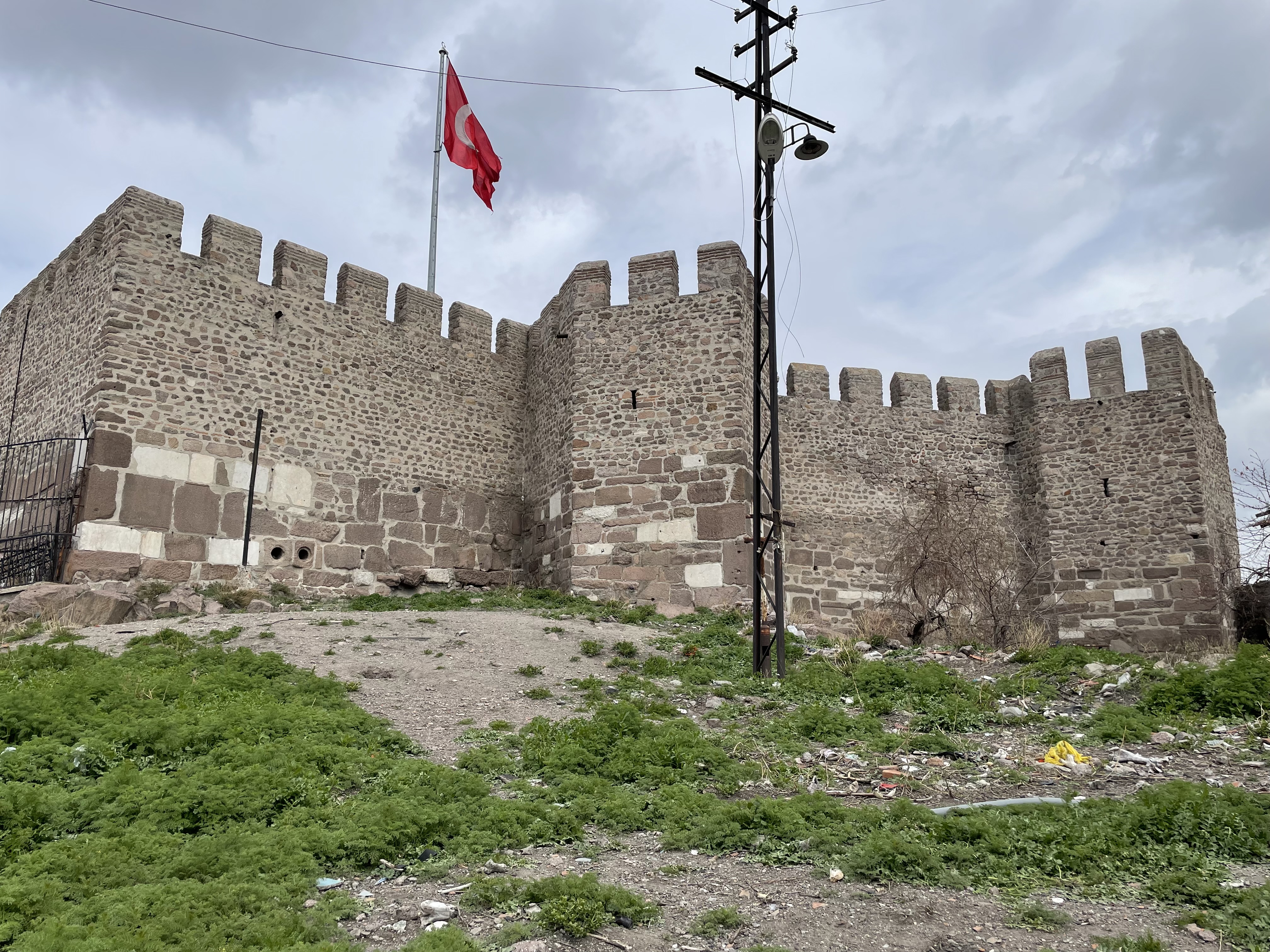
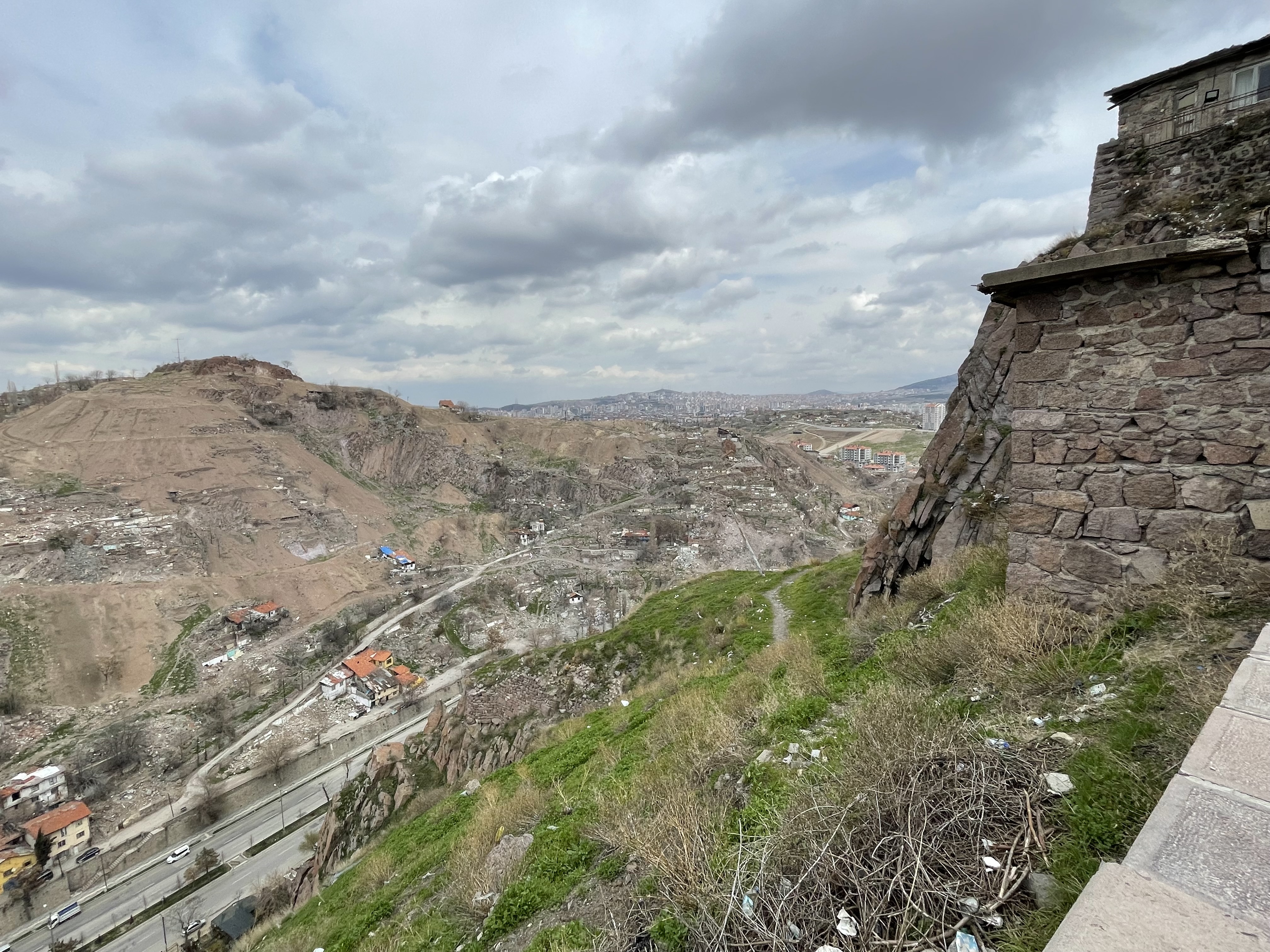
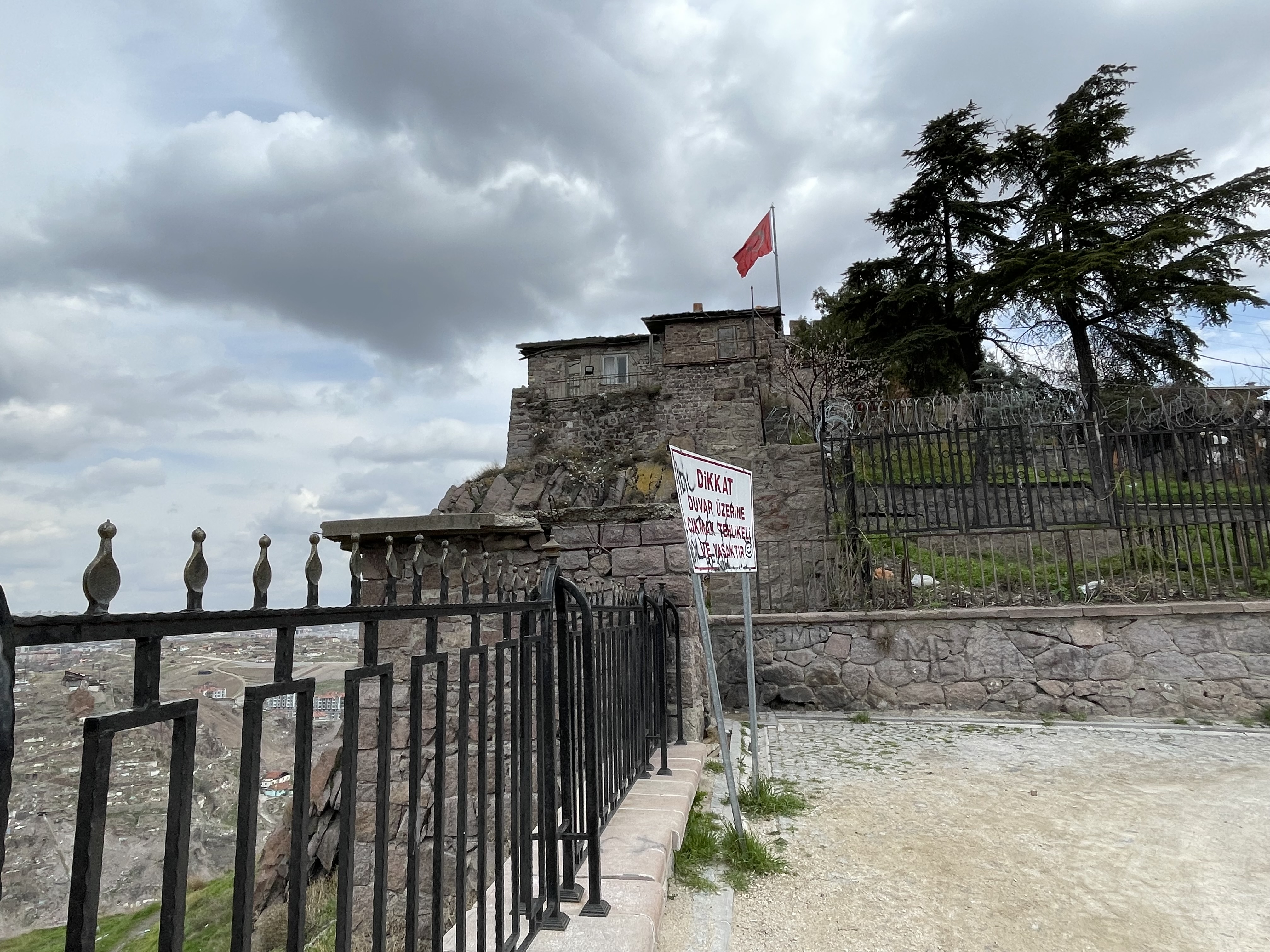
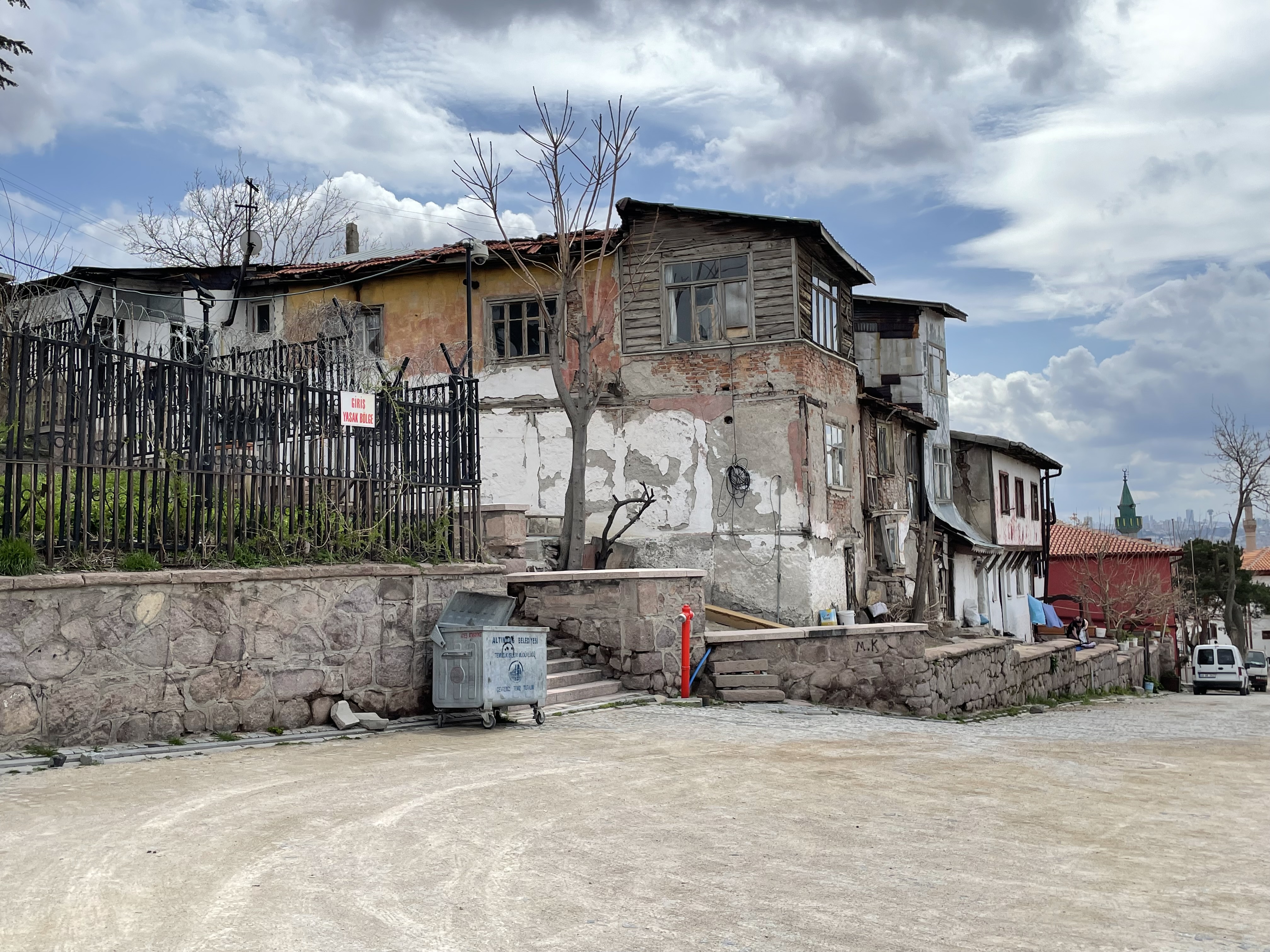

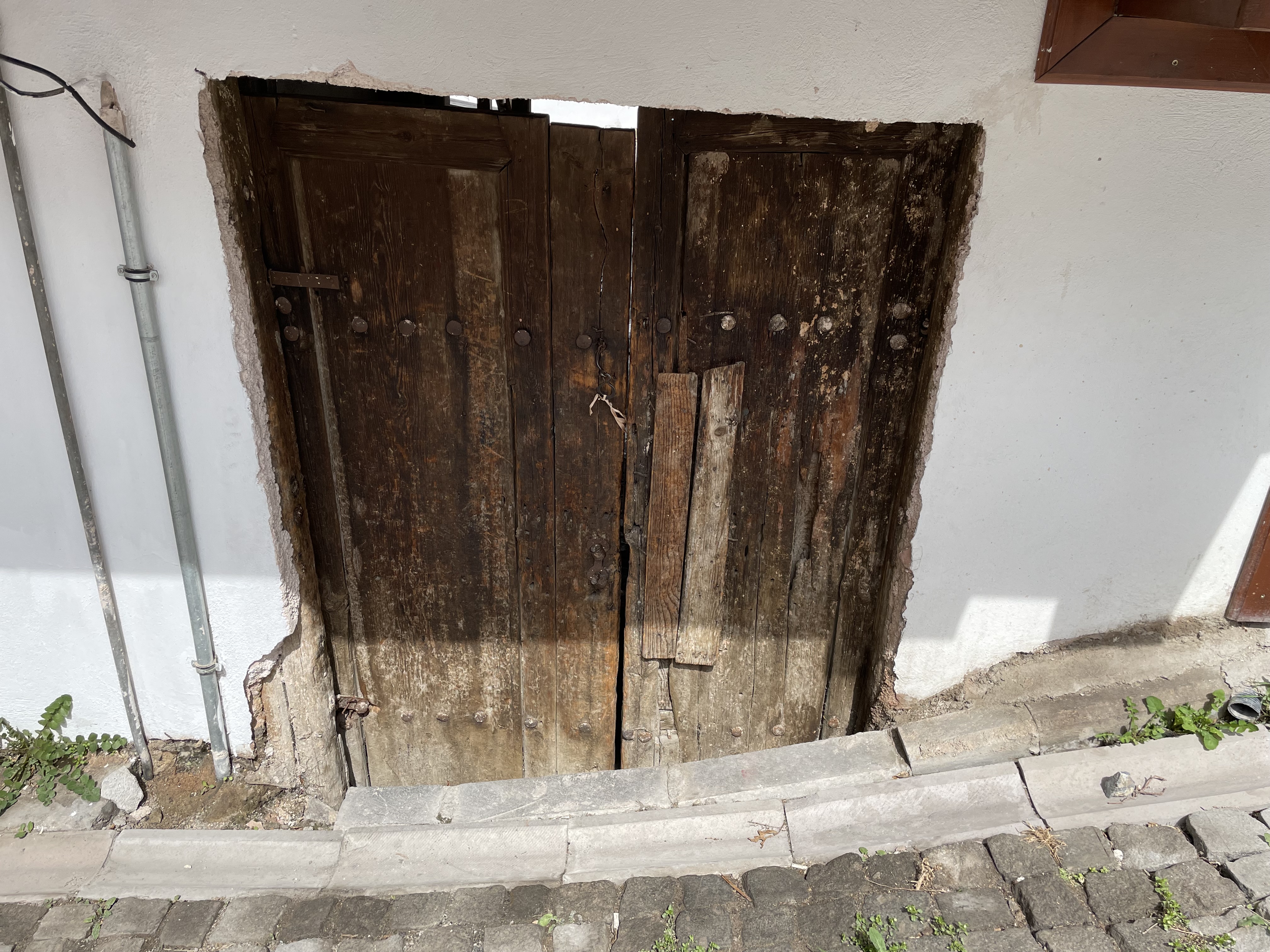
What most impressed was that the restoration of these traditional houses was clearly for local people.
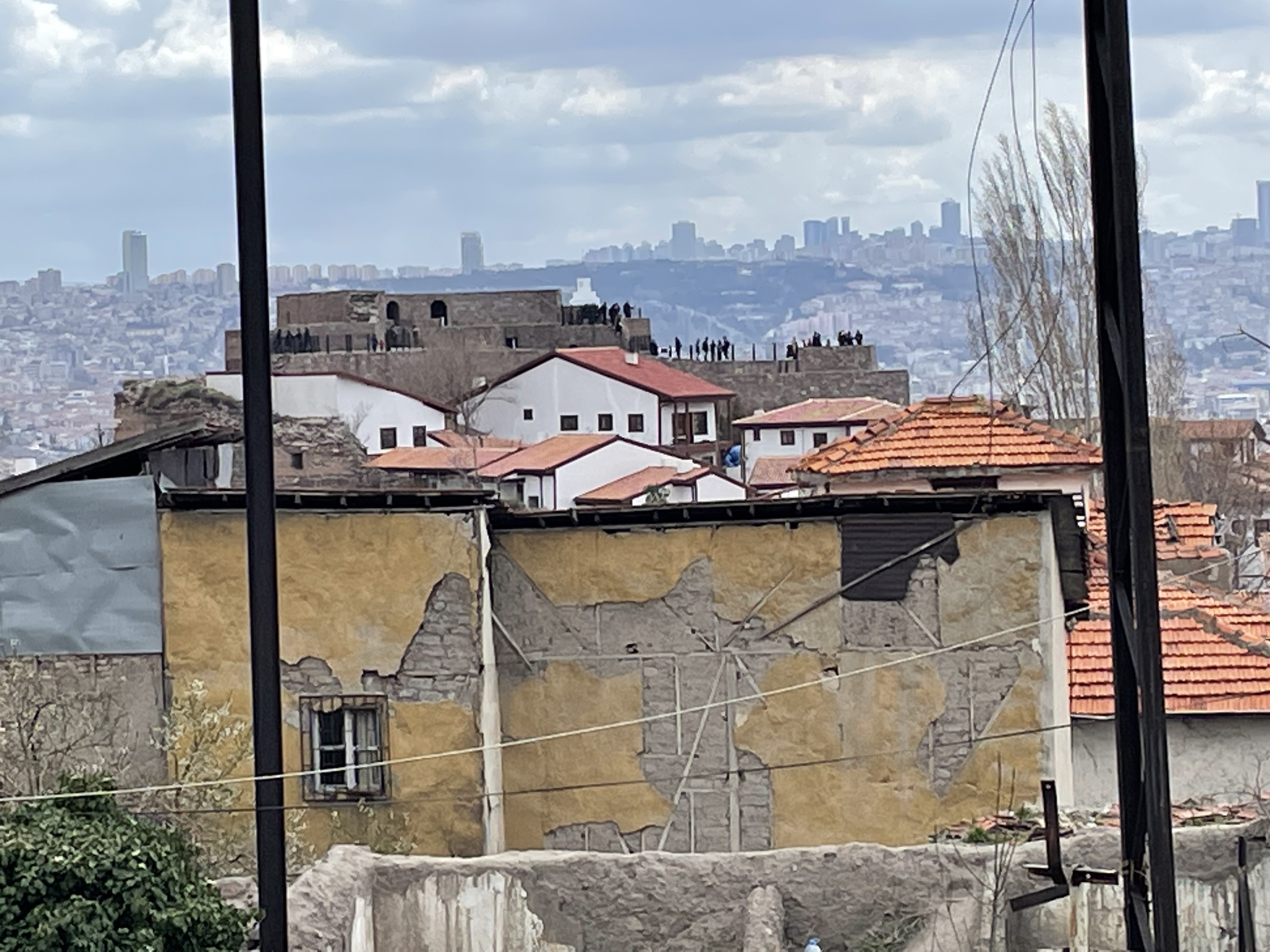
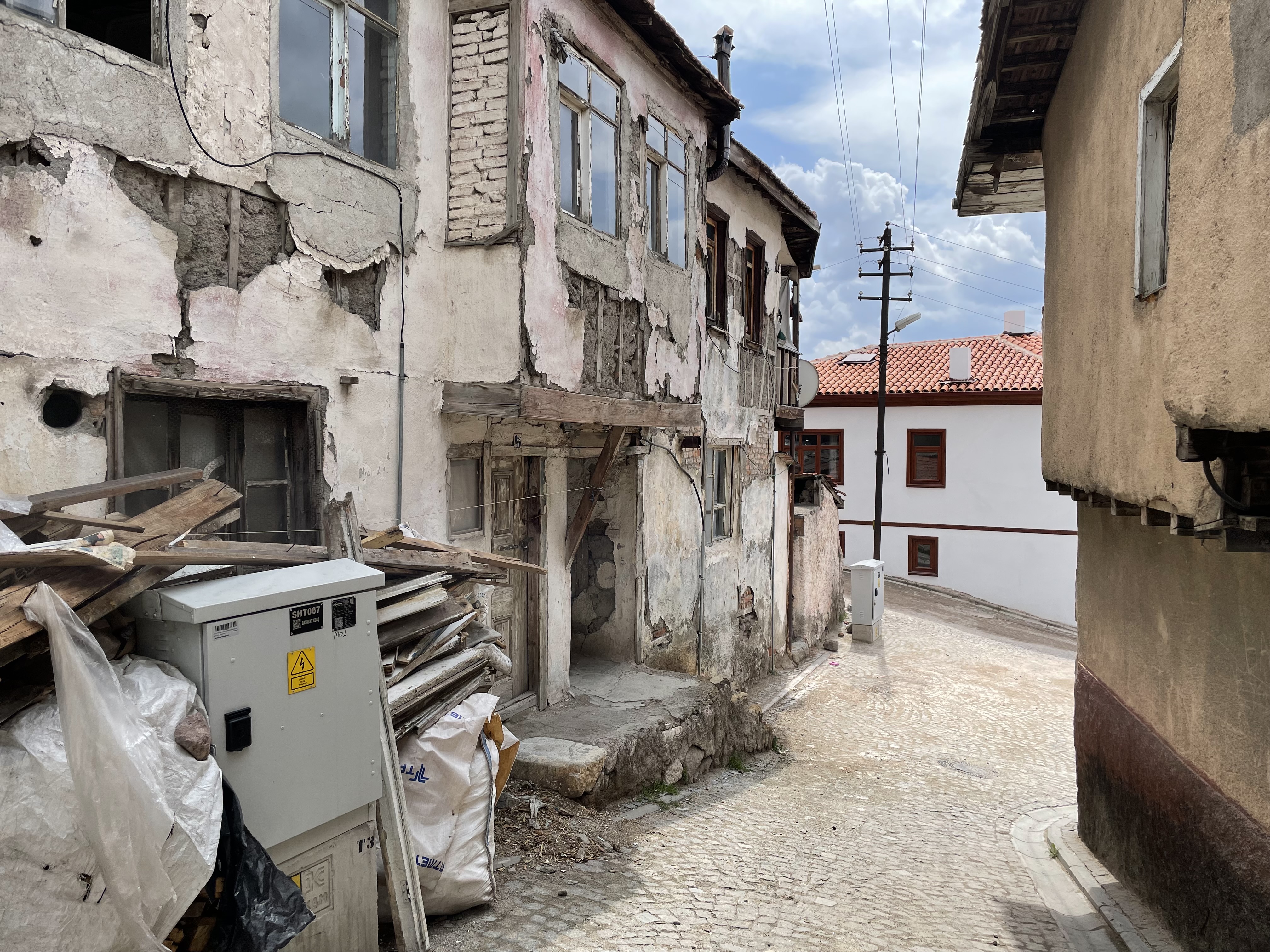
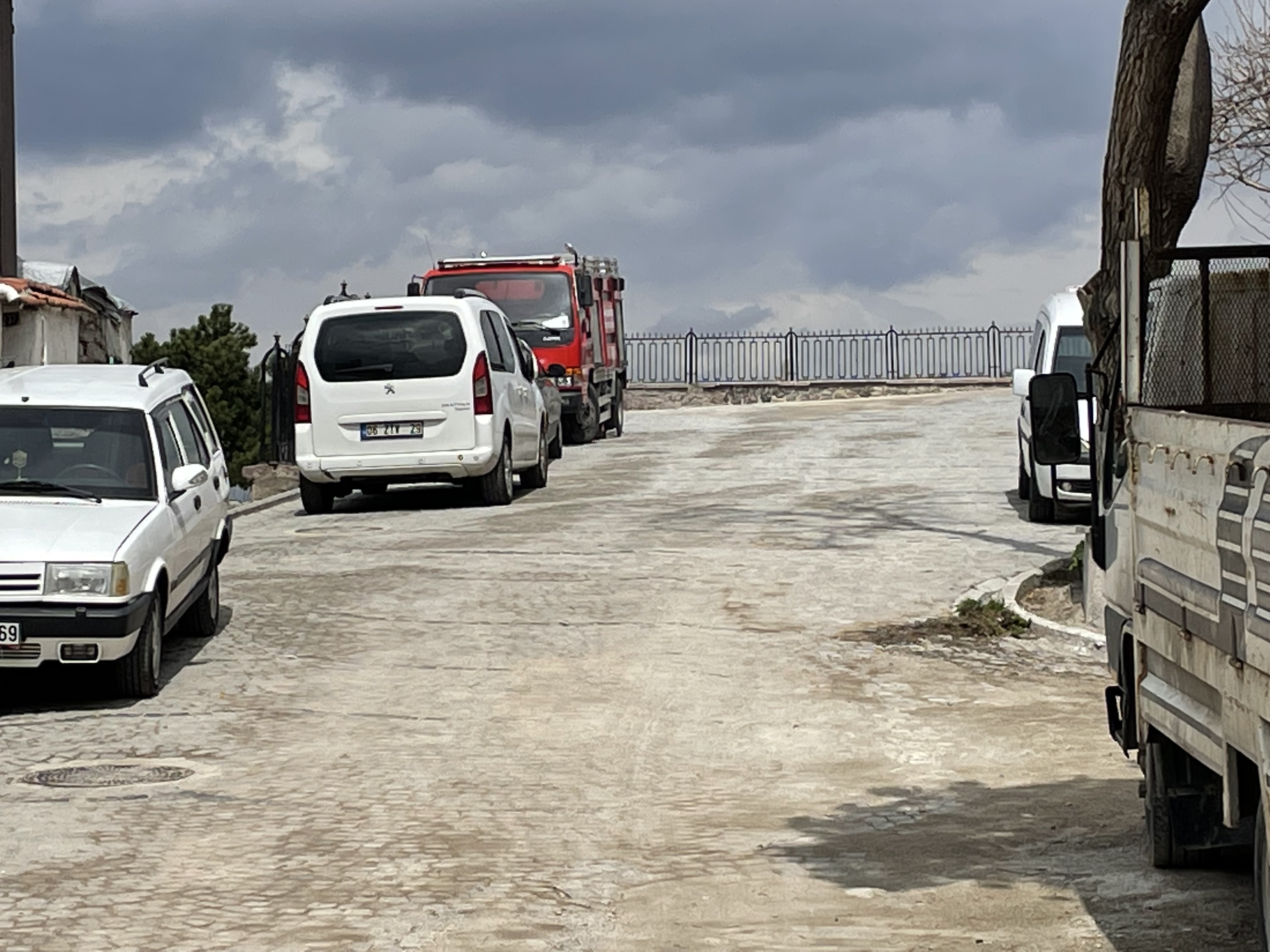
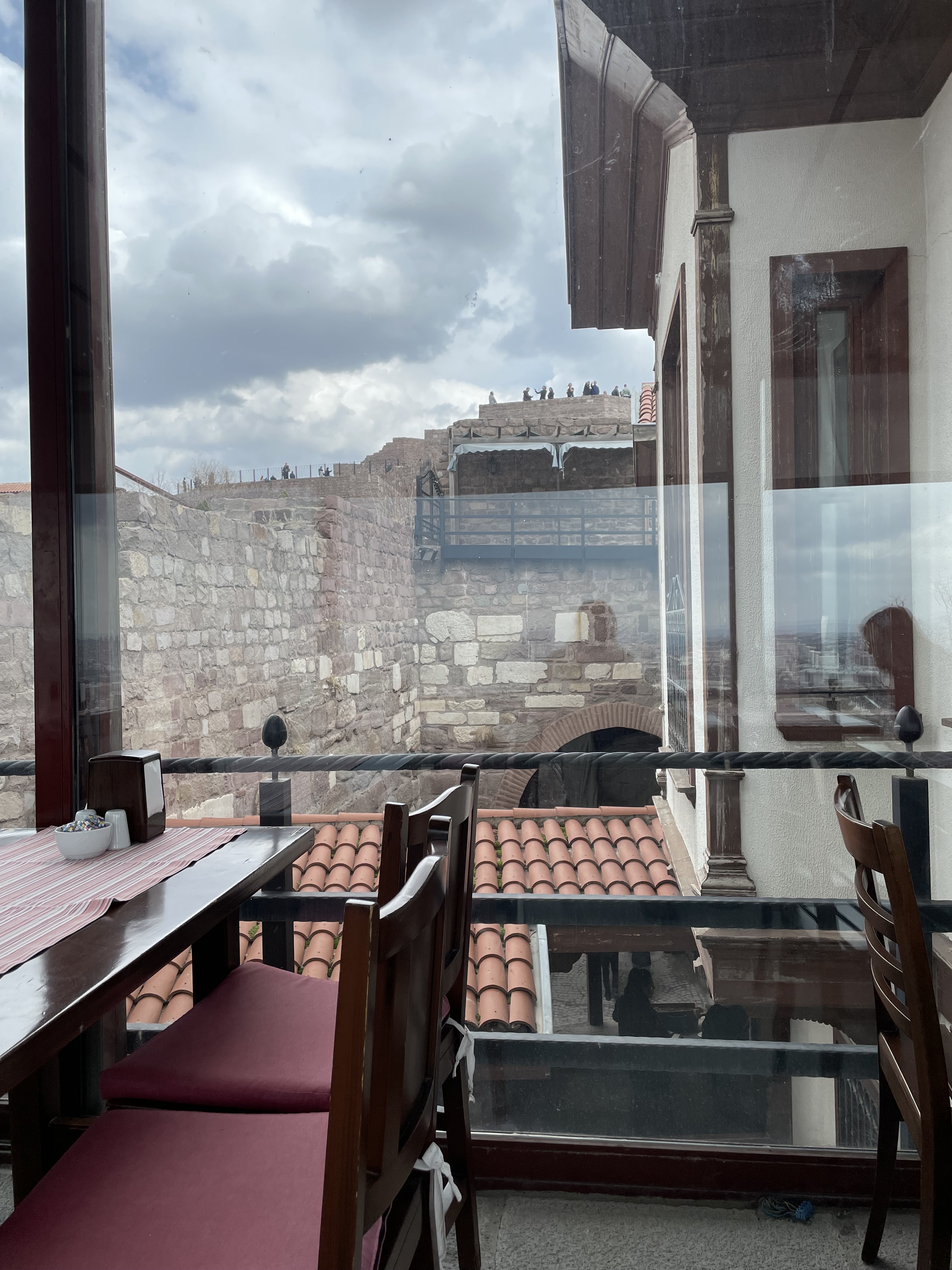
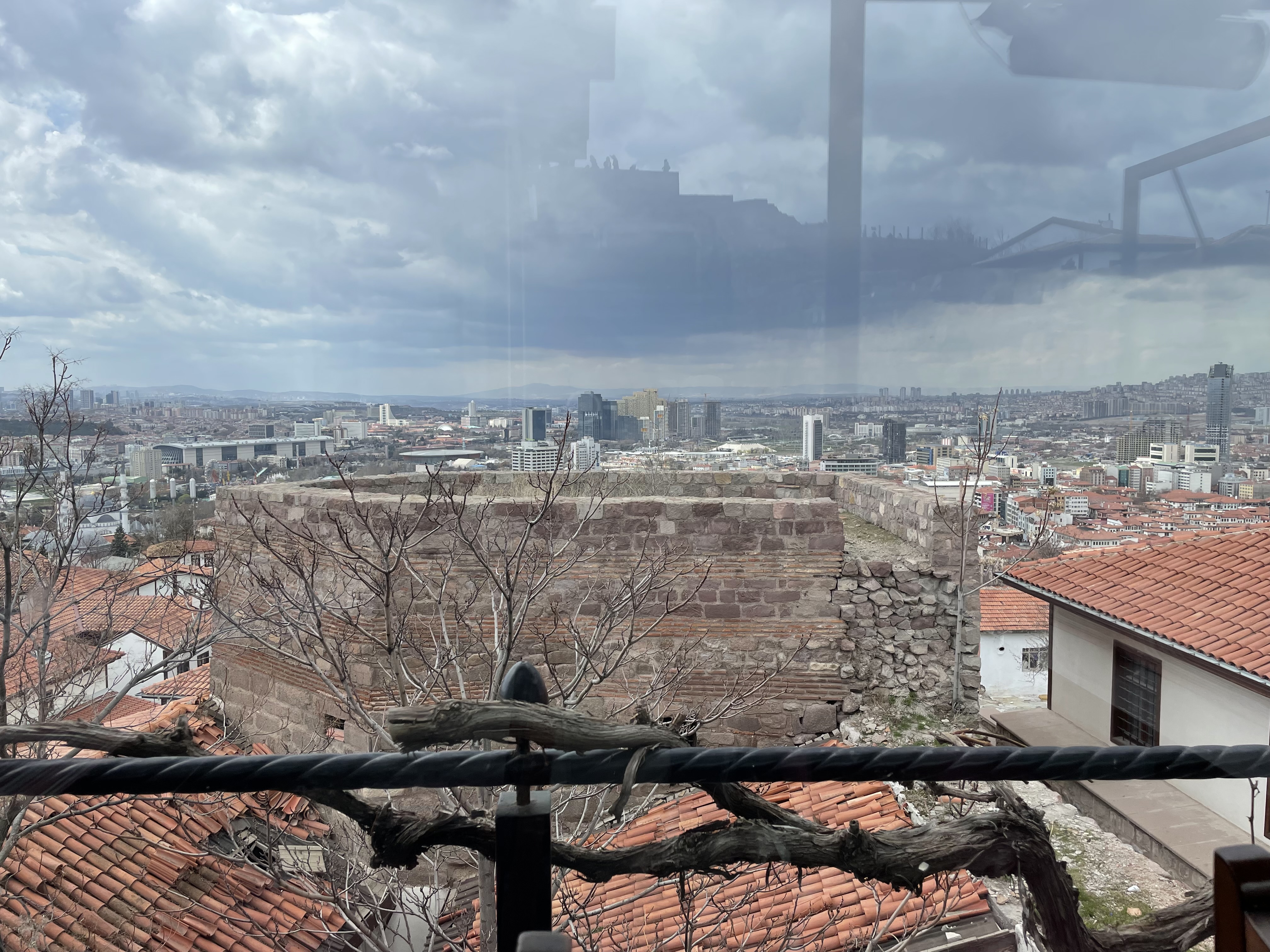
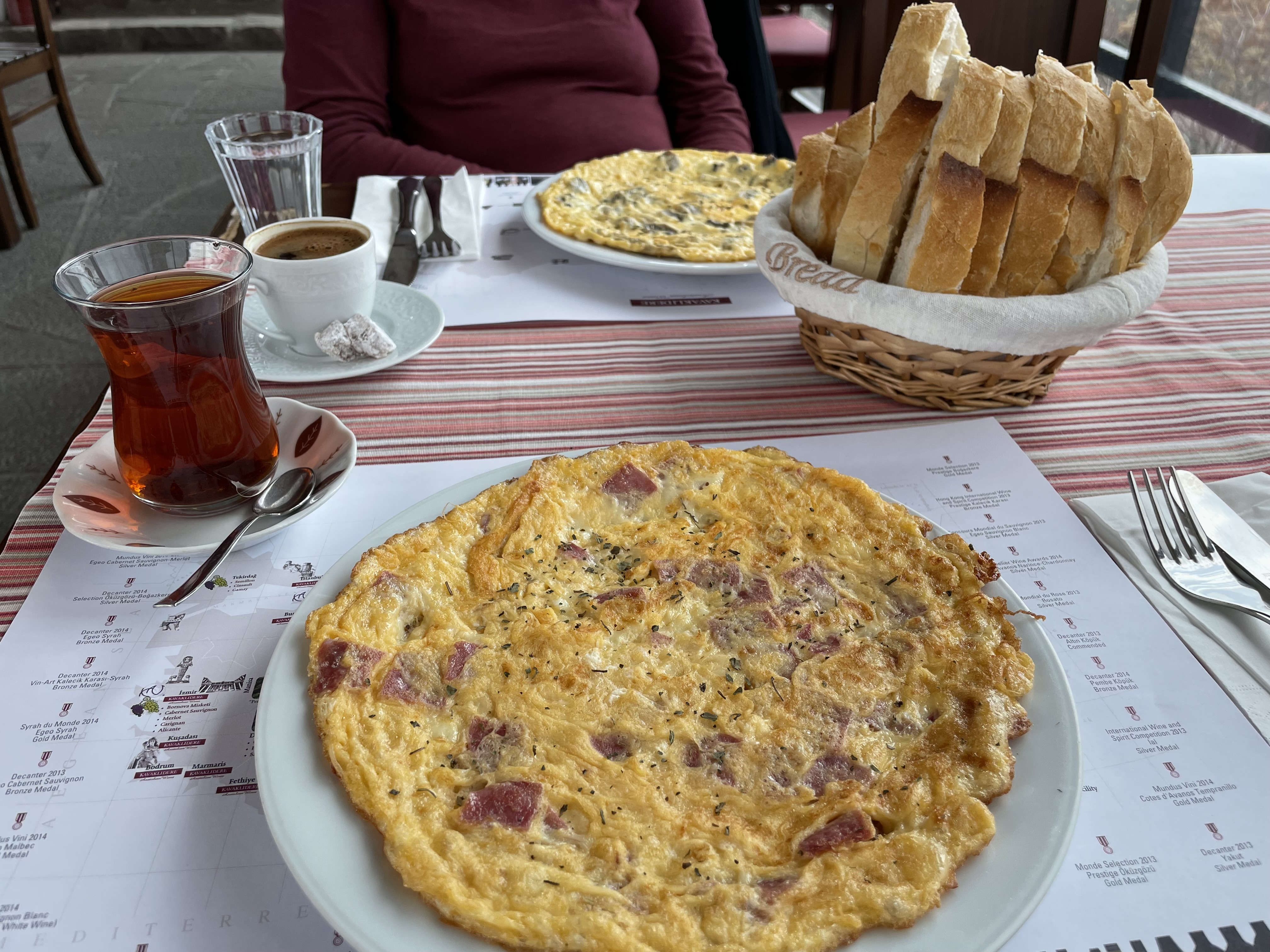

We realised later (too late) that we would have been better dining here than in the (apparently) smart restaurant that we chose.
 Inspirational Pathways