Page 6: Mézkészítő Cults in The Harghita Carpathians
October 12th
A short distance from Siculeni and the train arrives at Csíkszereda:
Hungarian: Csíkszereda
Romanian: Miercurea Ciuc
German: Seklerburg
Latin: Sicolsburgum
Administrative centre of Hargita Megye: Harghita County; Romanian: Județul Harghita
We are in Székelyföld : Székely Land. They are a group with Hungarian language but a proudly distinctive group – some suggest they were amongst the earliest of the Huns to live in what is now Transylvania or a semi-independent group created by social change
The original meaning of the word is ‘a swift-moving, fugitive, runaway (person).’ The formation of the social group began in the 11th century. The process was triggered by the establishment of the landlord system and the frequent wars which led to the escape and ‘wandering’ of slaves and free people coerced into subordination. The refugees mainly settled in the sparsely populated border region and hard-to-reach places (forests, swamps) where the institutional vacuum allowed them to found independent communities. After this process of self-organization, the Hungarian kings reintegrated the Székely groups into the kingdom’s society from the beginning of the 12th century.
It was always the name and its apparent isolated, hill bound position that attracted. The railway however used existing travel ‘corridors’ north – south & to the east. The line heading east, which we use, was, before Transylvania became part of Romania, the only rail link from Transylvania into Moldavia.
The Székely settlement developed in the early 15th century, as its name suggests, at the site of fairs held on Wednesdays, in the middle of the Csík Basin, at the junction of north-south and east-west trade routes. The Székelys had equal rights with the nobles, owned their own land, paid mostly no taxes, and in return were obliged to go to war one by one to defend Hungary from foreign invasions. Prince Bethlen Gábor of Transylvania donated the town to the Székely aristocrat Mikó Ferenc of Hídvégi, who started the construction of the castle.
https://www.explorecarpathia.eu/en/romania/csikszereda-miercurea-ciuc
The opportunity to pass through the area occurred in 2023 & on this journey it was the convenient place at which to change trains…. ‘convenient’ if a 4 hour wait was acceptable…. which it was, as it provided time to explore the place. As the train was 2 hours late we only had 2 hours.
Those hours became, accidentally, one of the most fascinating of our whole journey.
Arrivals:
Seen from the position below it appears that the station is a relatively smart welcoming point to the County Town.
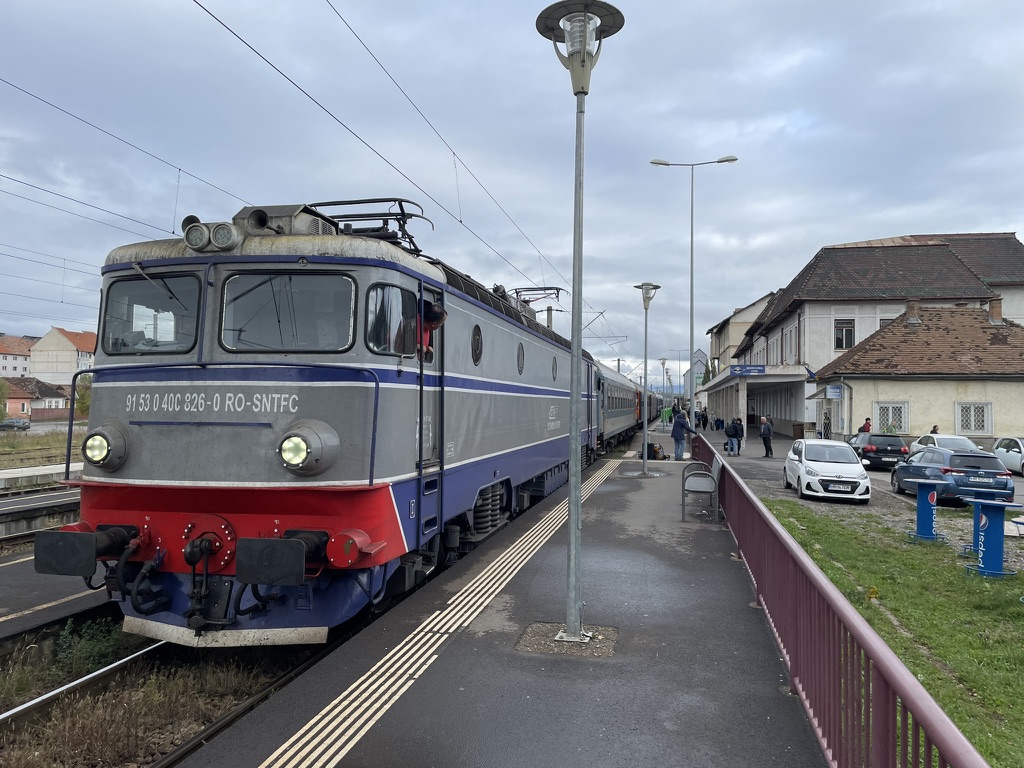
Not quite – a bleak interior and a decayed exterior
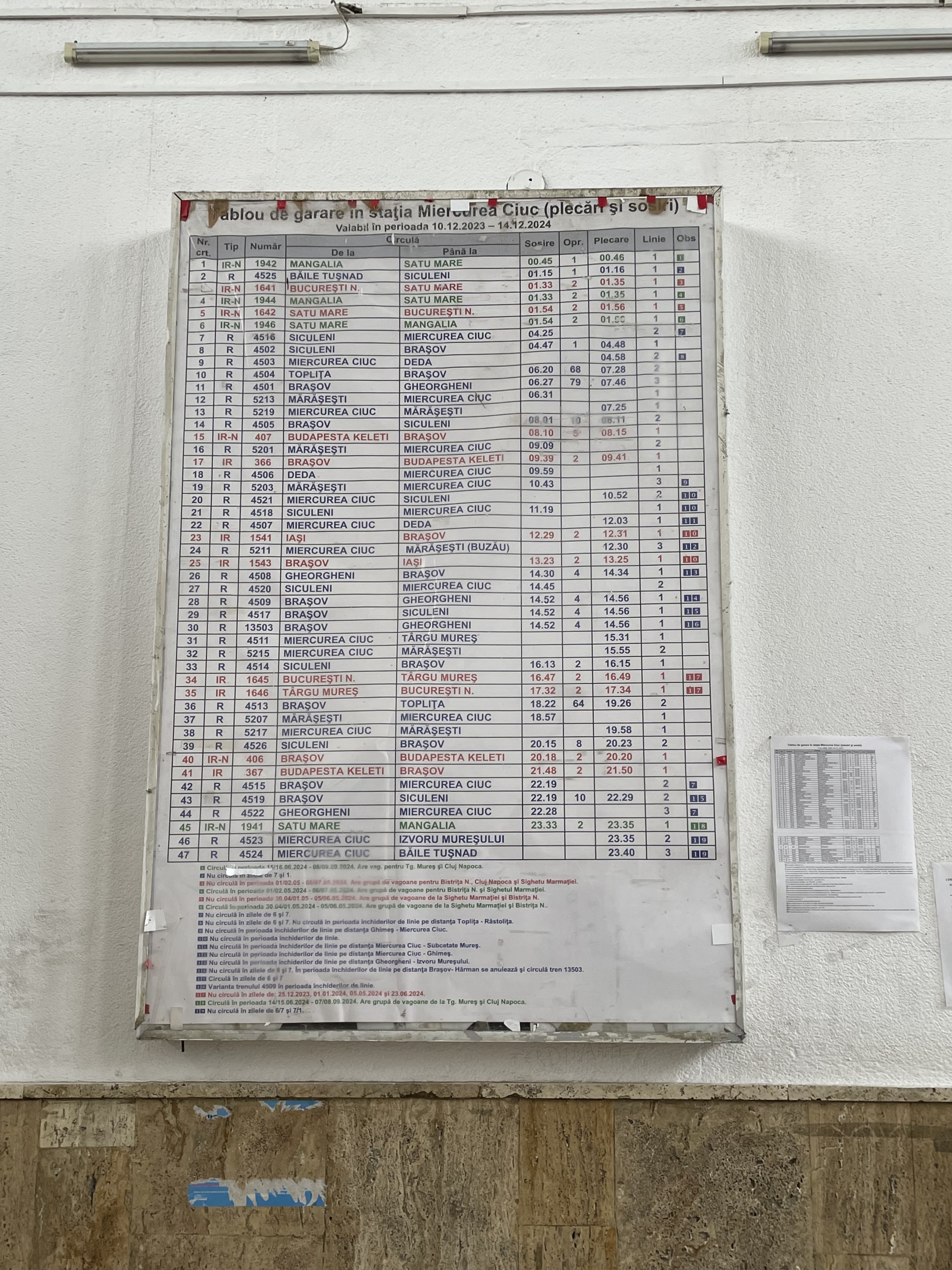
The information board which after careful study we became capable of interpreting
(it seems to be a general feature of railway information systems that to understand they require a degree of intense study & expertise)
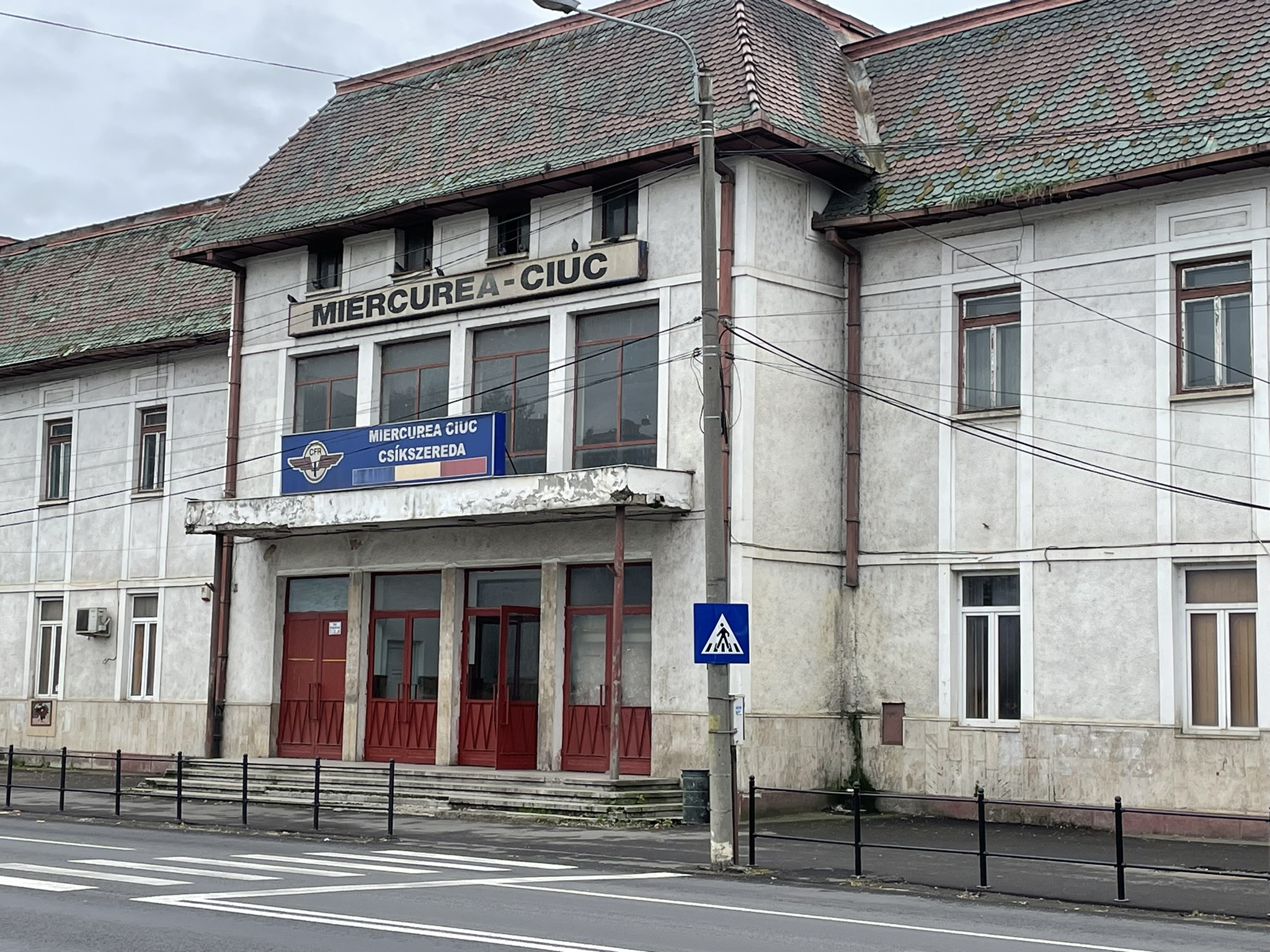
The steps to the station provided a particularly interesting hazard as we began our wandering by stumbling onto the (fortunately) quiet main road ….
Our first impression (which continued throughout the visit) was how well ordered & quiet everywhere was… pleasant streets with very little traffic.
From Google Streetview (summer)
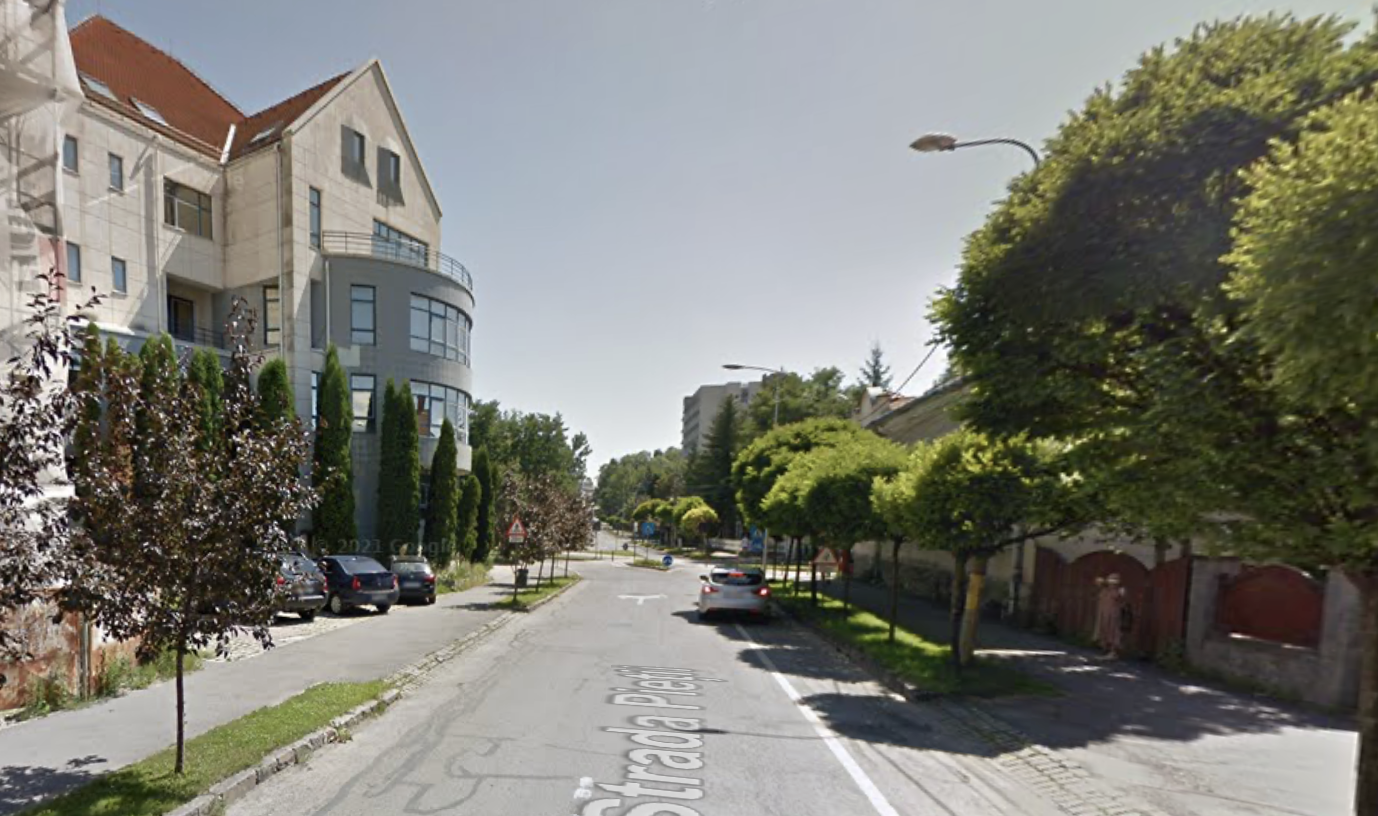
Curious to know the nature of the town centre. Many towns visited in the Transylvanian/Erdély region have surprised by having retained their old centres. What would a smaller town have retained?
The answer escaped us, we did not explore as much as we intended due to an accidental encounter that then occupied most of our visit. As the encounter had more to do with ‘people’ than the historic details of ‘place’, we believe our time in the town was better-spent.
Moving along quiet streets into the town we saw a somewhat strangely shaped building & gradually realised it was some form of church.
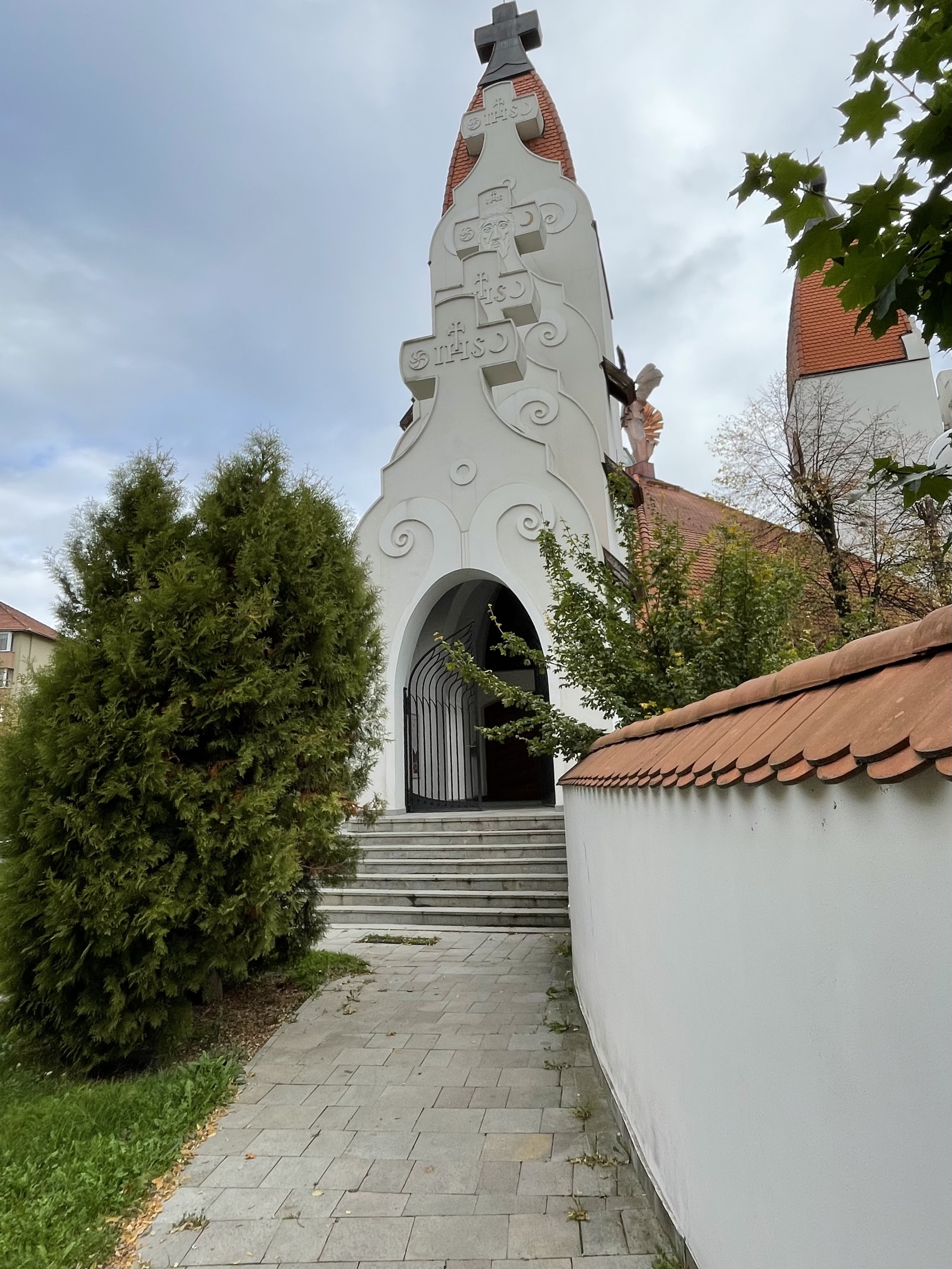
apparently unfinished
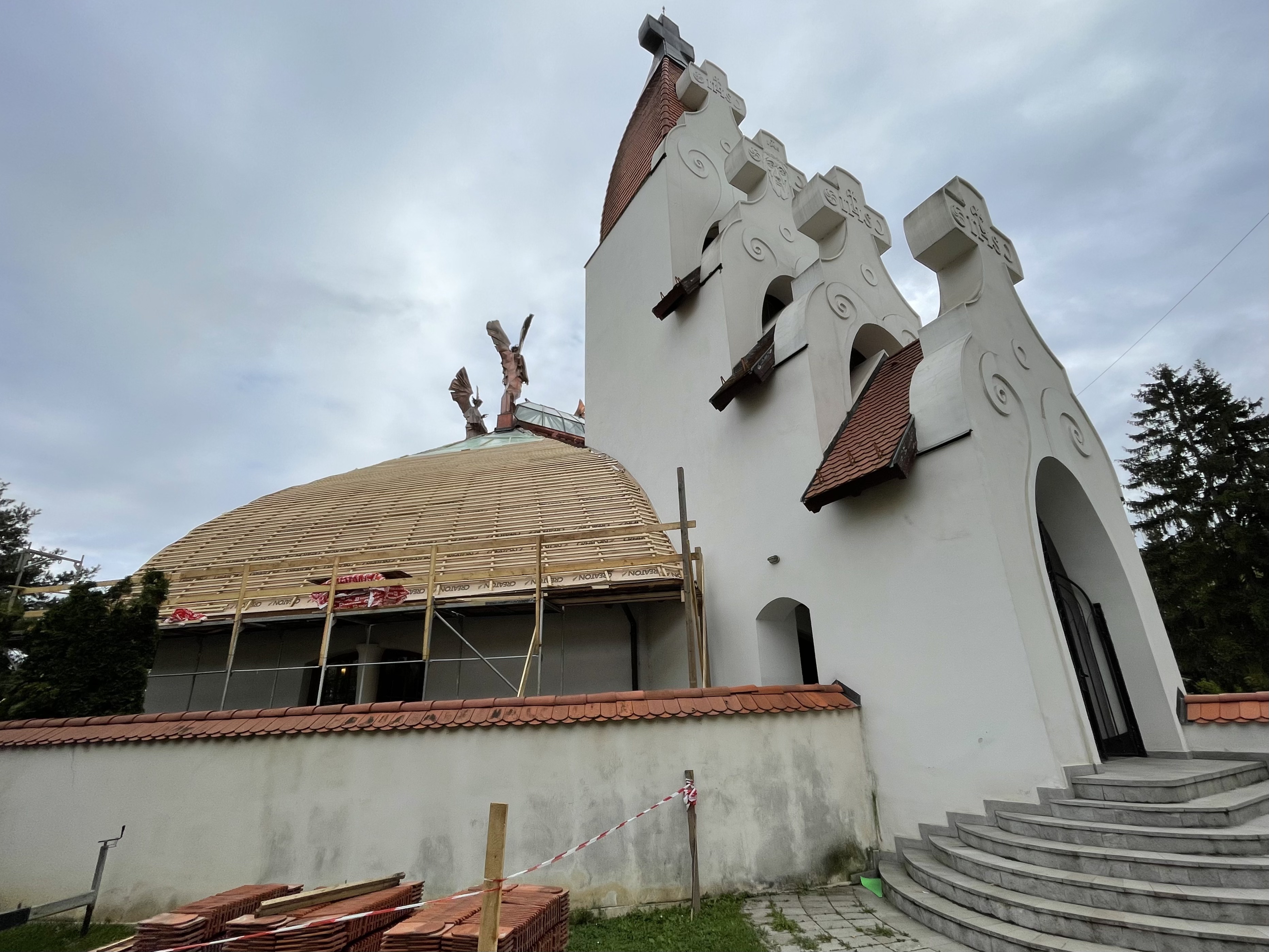
Even the work on the roof, which was occurring, occurred rather quietly…. the church was otherwise very quiet….
…on finding the door unlocked, we entered…..
and were shocked to find ourselves stepping into some sort of ritual occurring in a context that was in style, both traditional & almost outrageously modern (or at least would regard itself as being ‘modern’). There was an assembly of people in the centre of which were uniformed members of ….? and , we slowly realised, a ritual officiant.
What ‘faith’ is this?…. It is around 10.30 on Saturday morning… have we accidentally wandered into some form of ancient cult, surviving in the mountain trapped zone that covers most of the local County: ‘Harghita’ – one of the poorest and coldest areas of Romania?
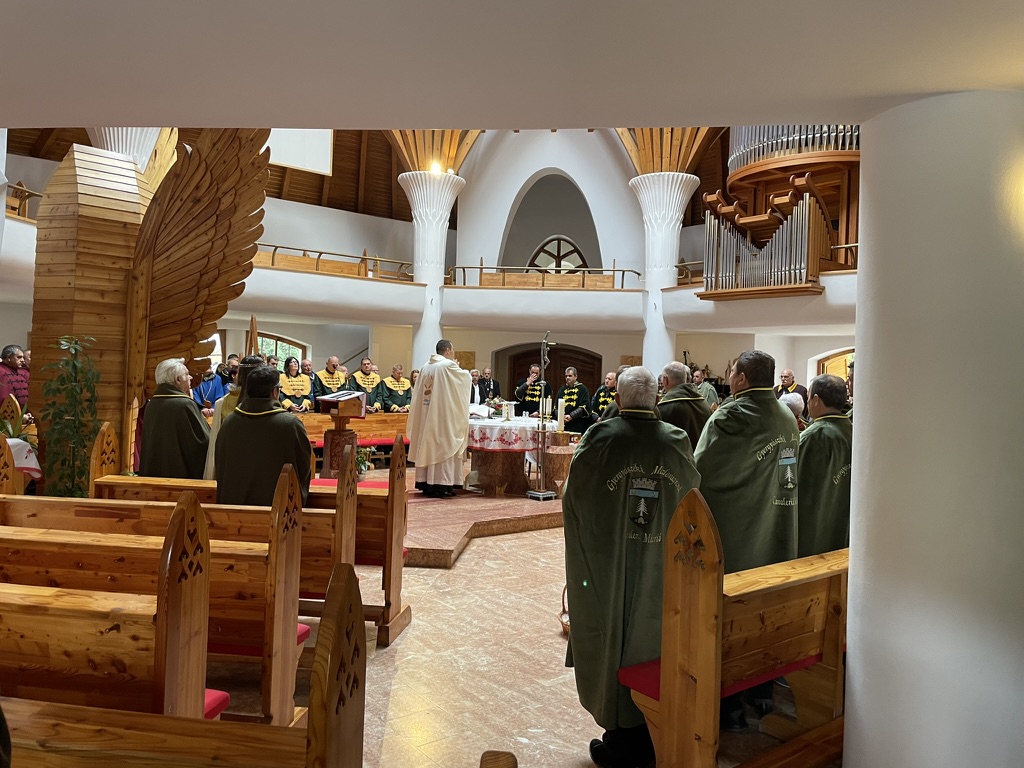
The focus was on the uniformed members of the assembly, the others (who had paid no attention to us as we sidled passed them to a convenient space in which to stand) were, like us, simply passive observers.
It was nearly possible to read an organisation, from the back of the cloaks of the ‘green’ devotees
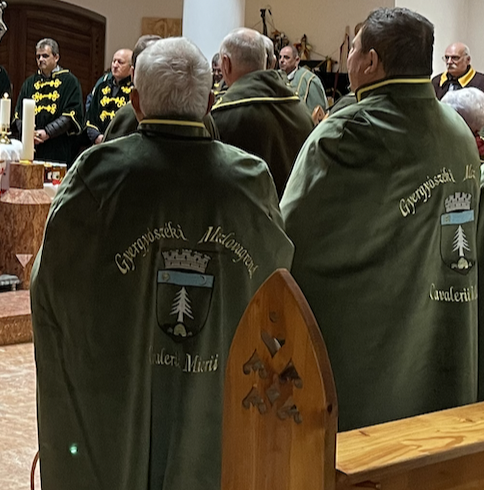
which seemed to suggest (Cavaleruli Maria?) some form of devotion to Mary (mother of Jesus)… ?The Chevaliers of Mary?
The symbols which included a fir tree on a mound, were not helpful.
All this speculation was occurring in the very first few minutes of entering the church.
The first accurate understanding occurred quickly – this was a Roman Catholic establishment and the ritual was the Eucharist – or ‘Mass’.
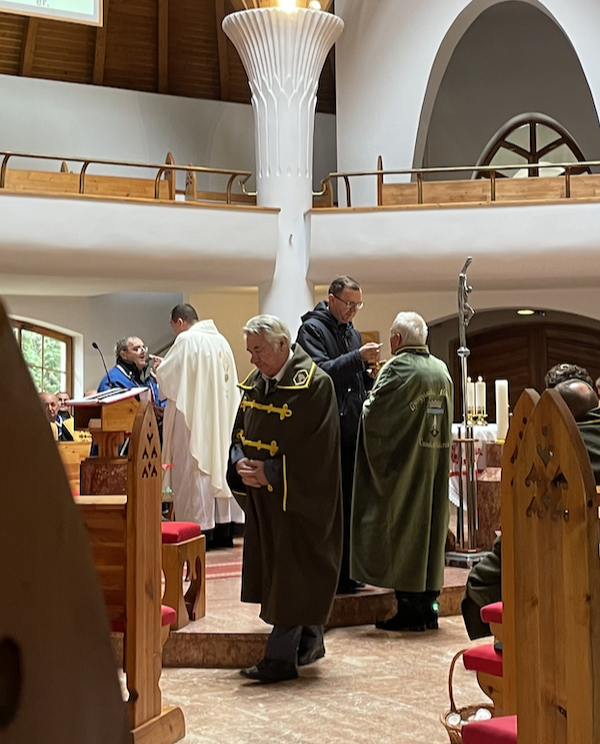
Transylvania had a history that included the established presence of various Christian denominations… Lutherans (usually in German speaking areas), Unitarians mainly in western Harghita and Sighișoara, Romanian Orthodox – throughout the region & Roman Catholics, significant in this part of Harghita & on the other (Moldovian) side of the Carpathian ridge.
One present distinctive element of the Székelys is their adherence to Roman Catholicism.
So – whatever may have been the cause of this gathering it was being formally supported by the Roman Catholic Church.
There was singing led by a very fine organ & other musicians – and once the service was concluded everyone made their way outside and lined-up ready to process……
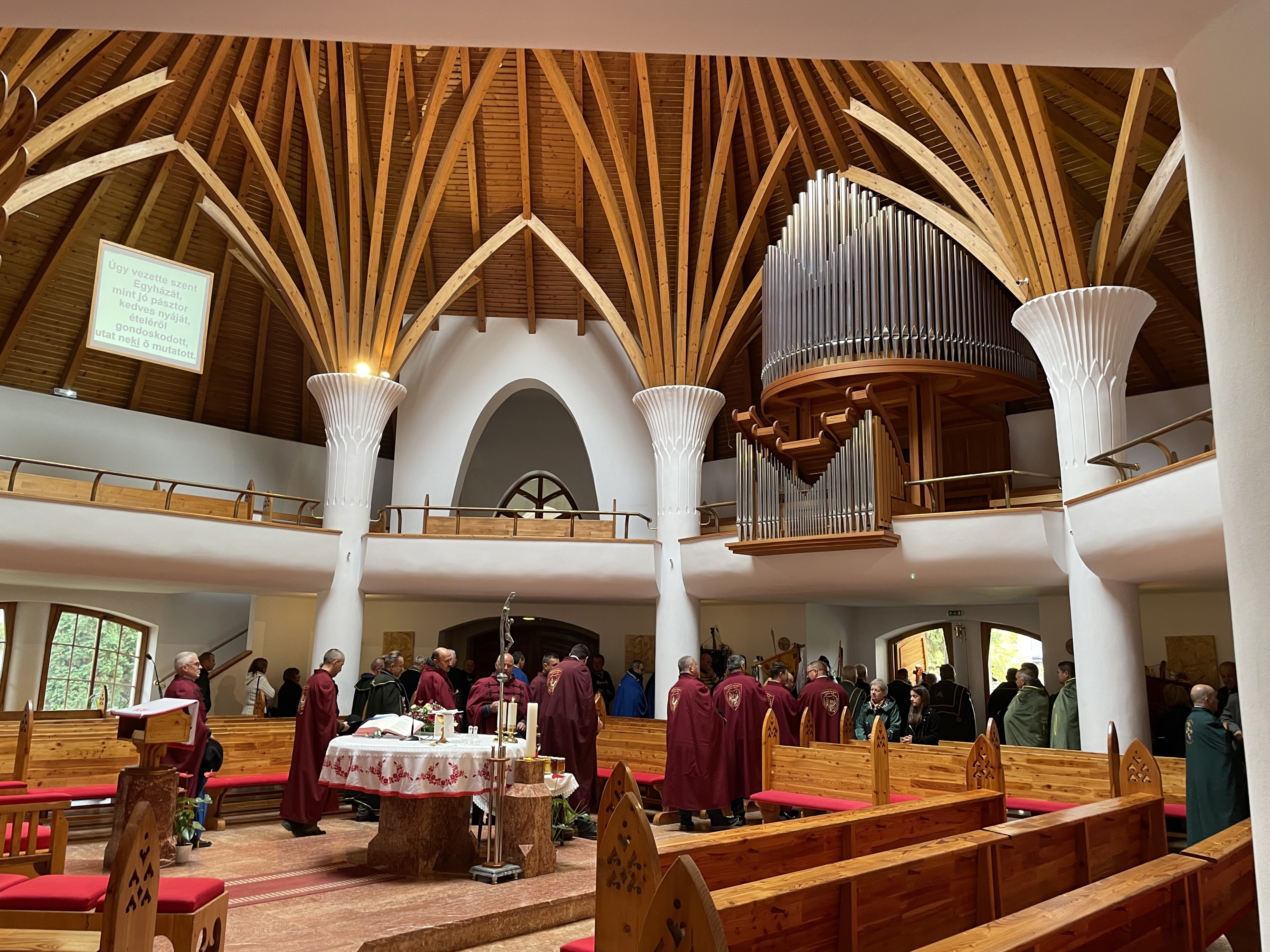
After the group left the church and we stood alone in the building absorbing its somewhat strange atmosphere.

It is imposing…. and stresses, through the materials & structure, a forest or arboreal context. Does this & the conifer symbol on the clothing have a specific Székely Magyar meaning?
The central area has natural light from glass panels above… and these contain a ‘presence’.
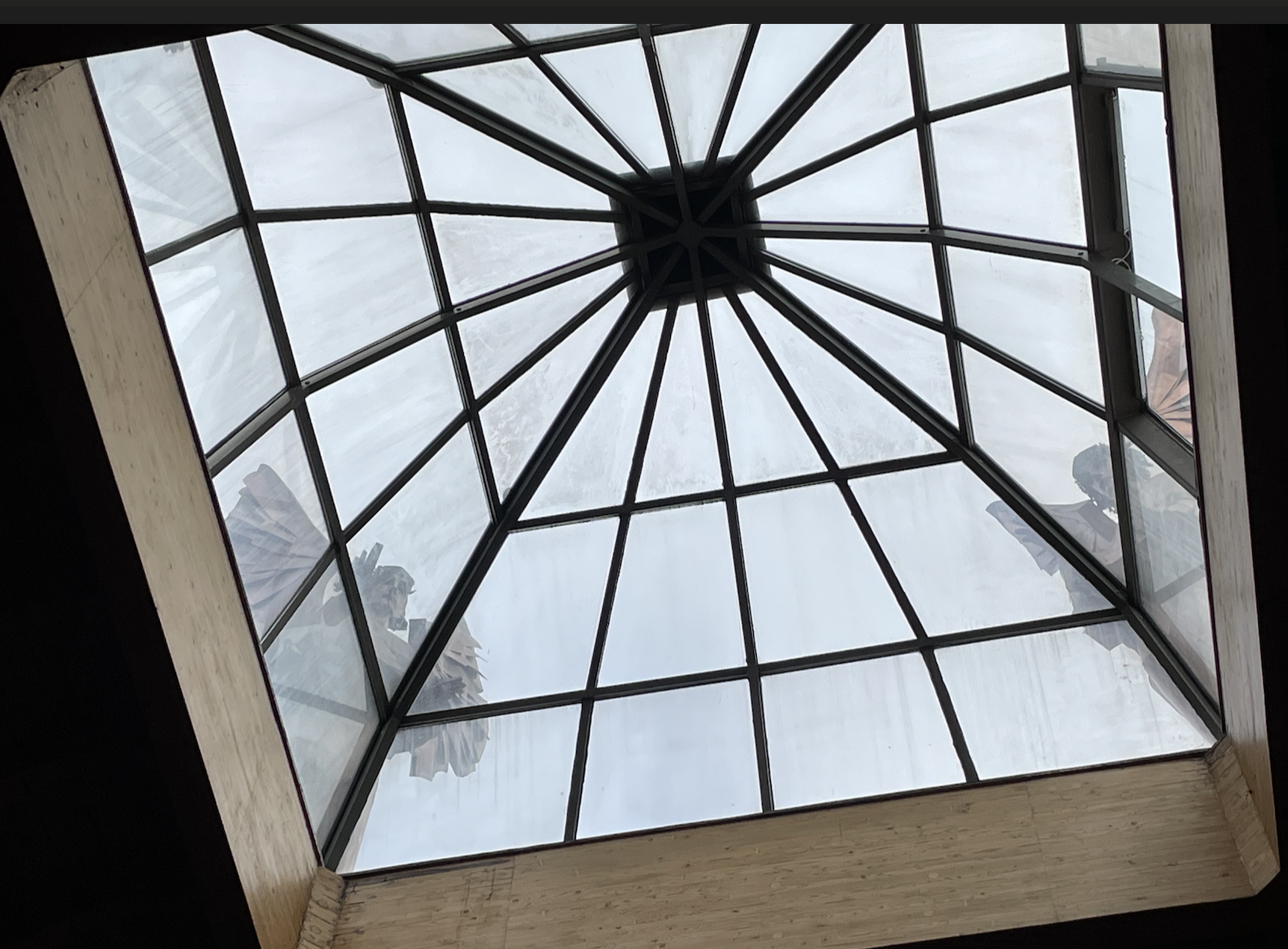
… overseeing angels.
These may be intended to have a ‘guardian’ function but (particularly given the recent history of Romania) could also be be regarded as a form of Divinely Ordered ‘Securitate’.
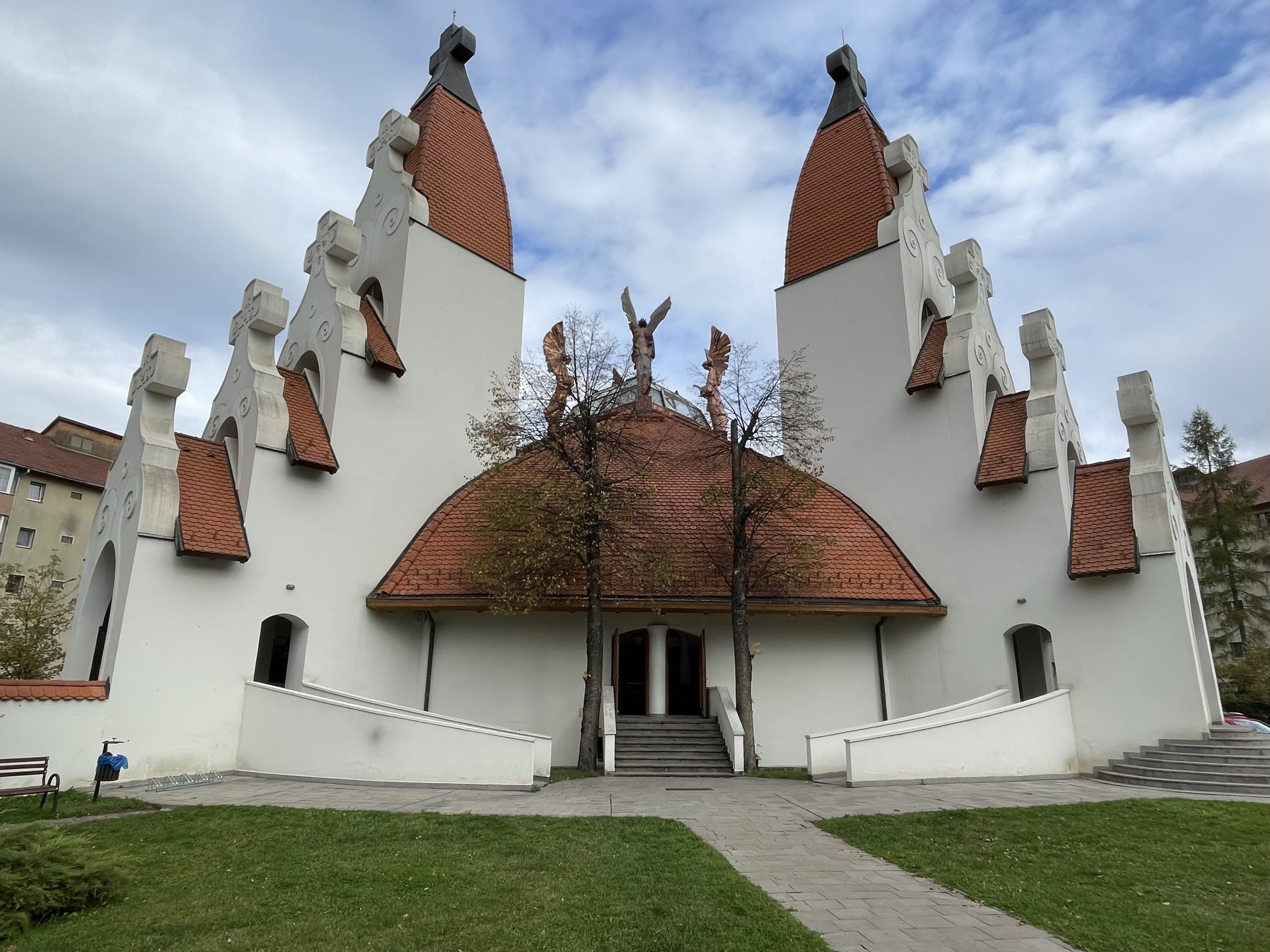
Overseen by angels, sheltered by trees – a theme evident from the entrance

All contained within a dominating outer structure that seems to be an architectural form of Catholic Brutalism.
The building is the Biserica Mileniului
The church was built in 2003, based on the plans of Makovecz Imre, and consecrated on 18 October 2003, in honour of the Assumption and the Hungarian saints, by Archbishop Jakubinyi György and Bishop Tamás József. The parish priest Darvas-Kozma József came up with the idea of the Millennium Church.
The statue of the Resurrection behind the altar is the work of the sculptor Nagy Ödön from Csíkszereda.https://www.explorecarpathia.eu/en/romania/csikszereda-miercurea-ciuc/millennium-church
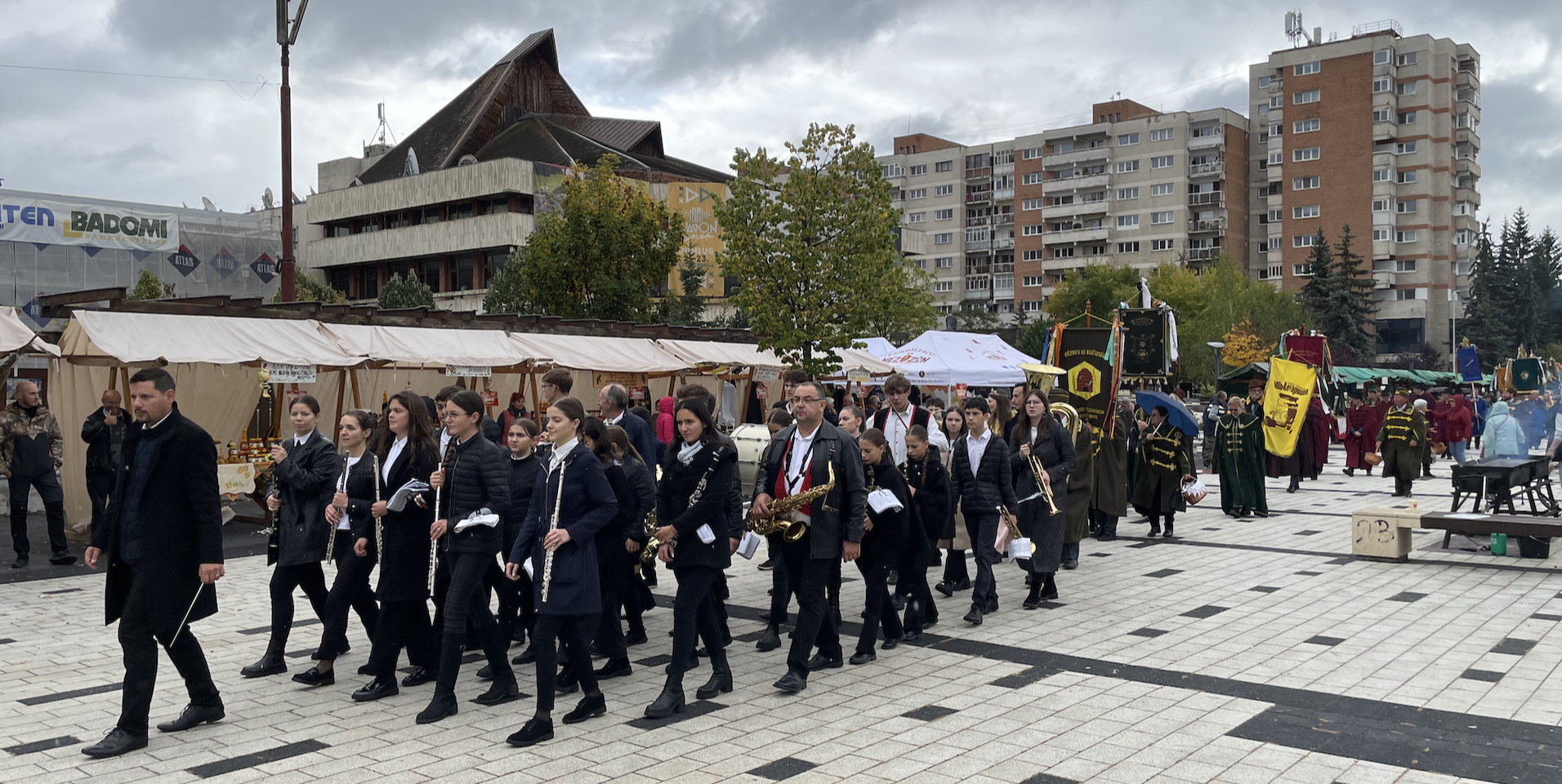
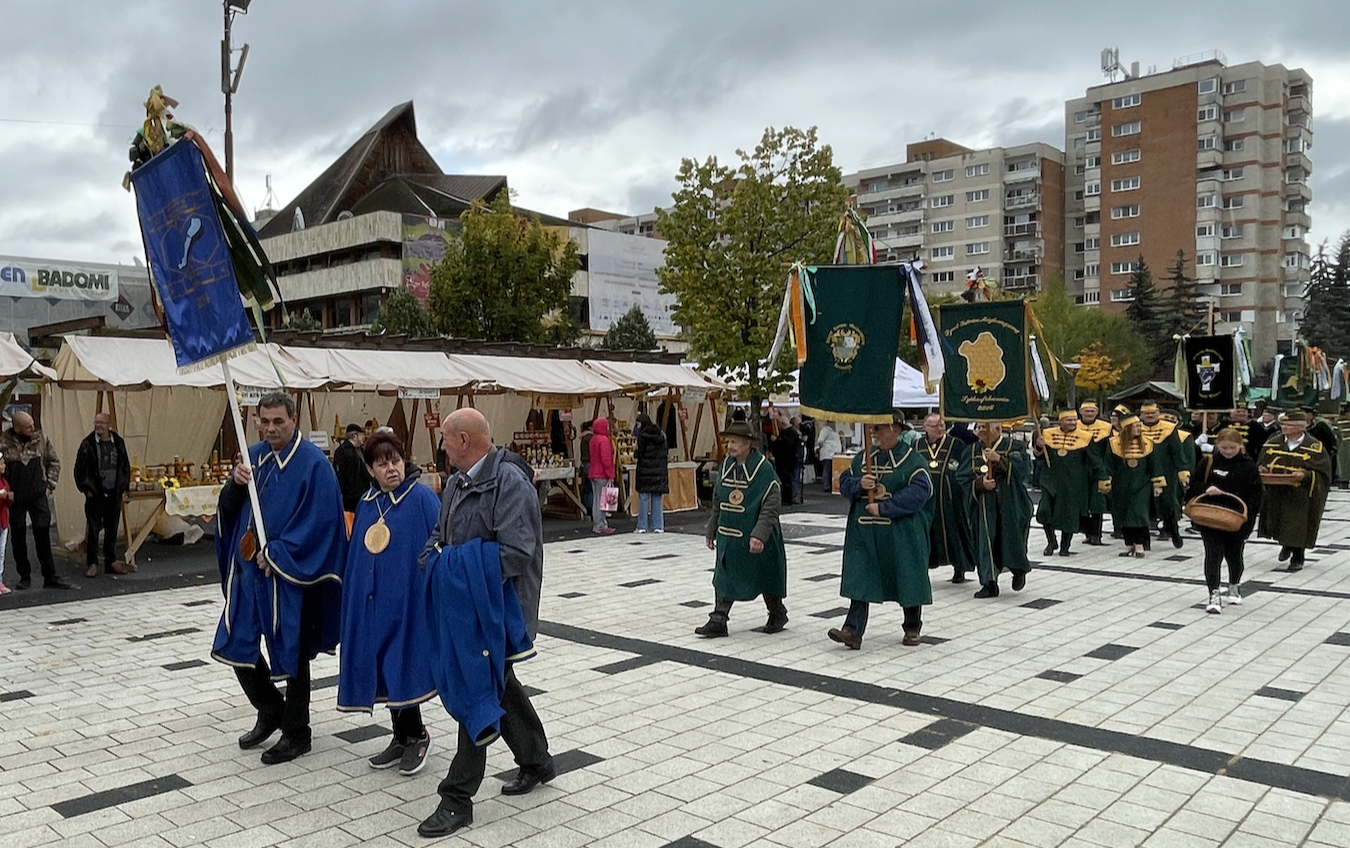
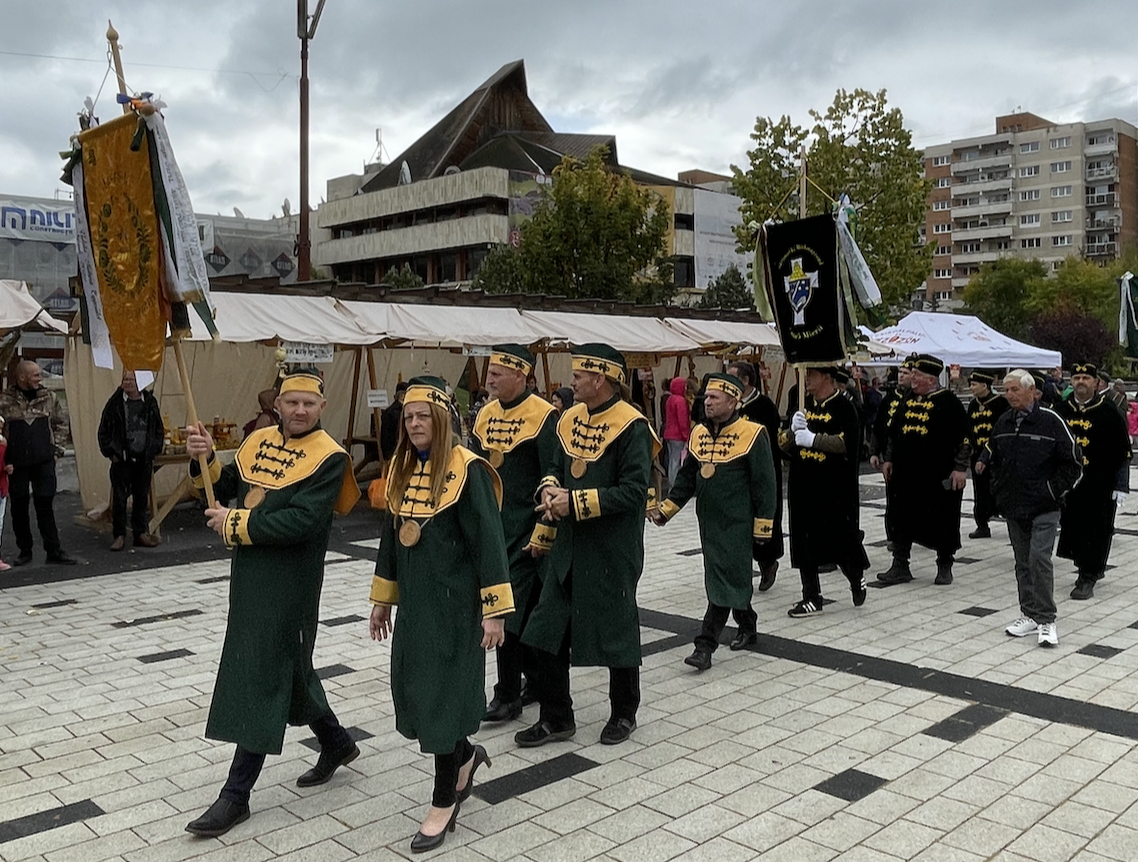
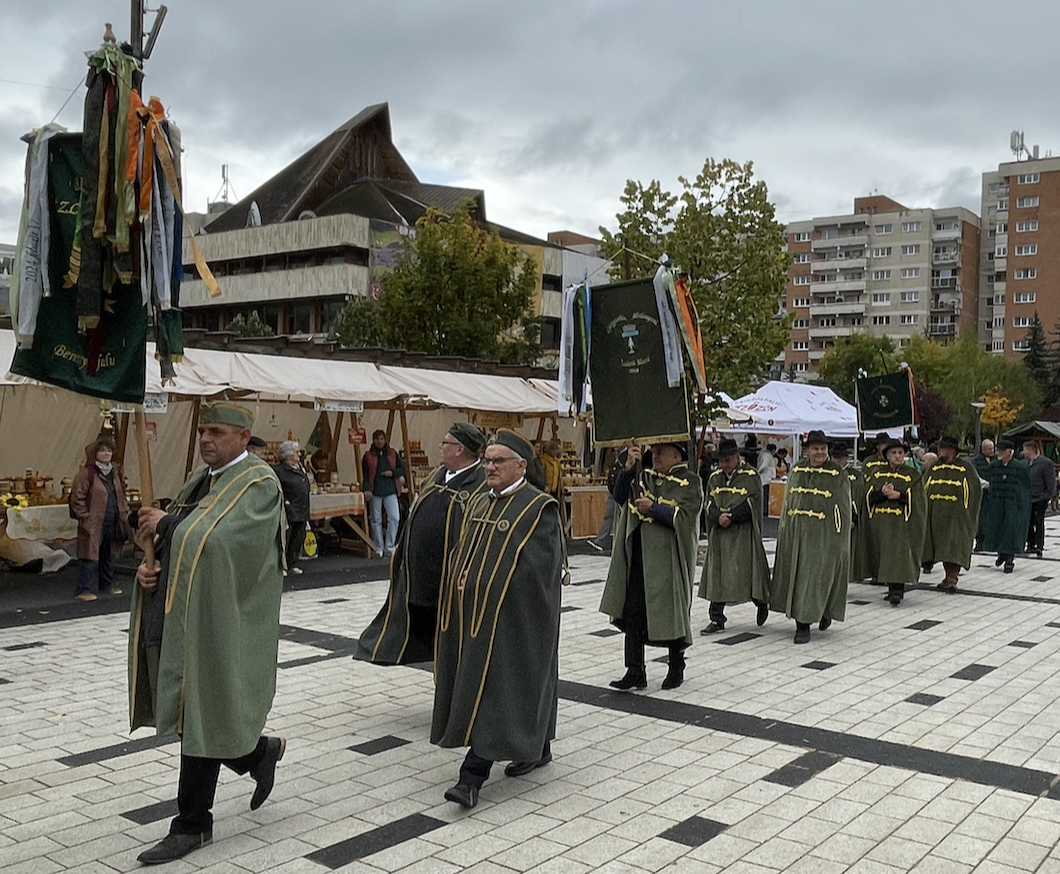
Having left the church the Caped Adherents of ?? & their followers, led by a band, set off in procession into the town.
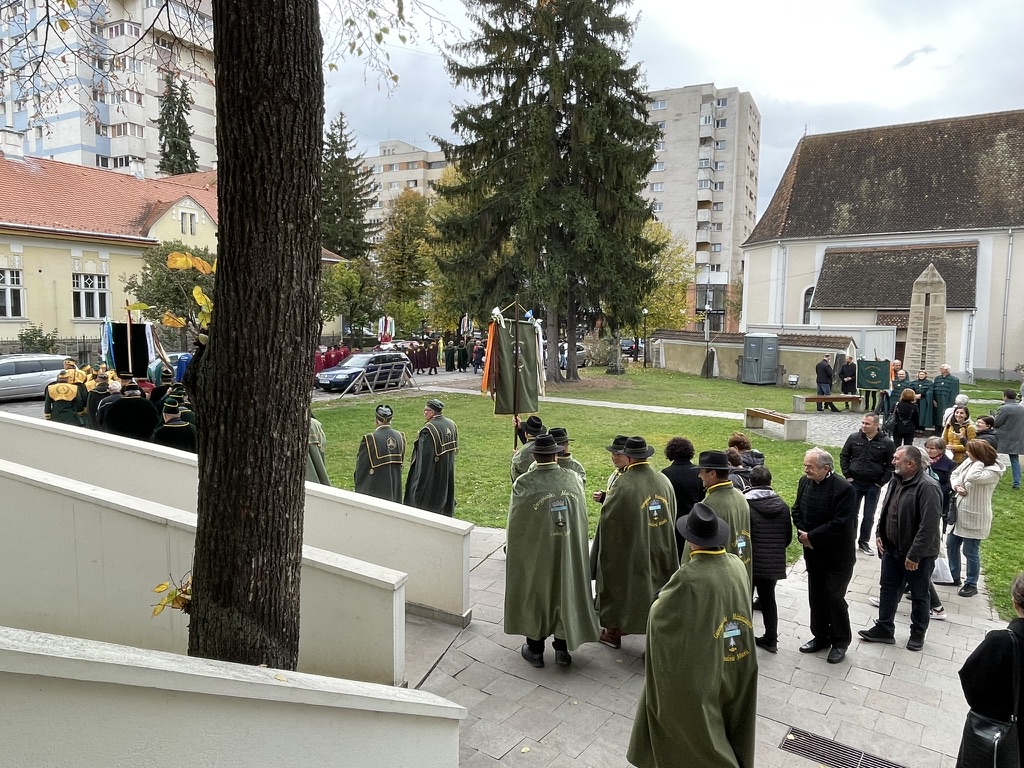
Well… what should we do…. ?
We follow, at a respectful distance, without having any idea as to what it was that these different uniformed groups were ?celebrating?
As they passed along the streets we noticed that individuals were peeling off from the procession and from woven baskets they carried, giving any passing citizens (and their families) small gifts.
We increase our speed in order to be positioned to receive a gift – and fortunately the person who approached us spoke some English.
Ah!… it all, rather delightfully, became clear.
We were given a small tub of honey.
This was the annual bee-keepers festival… and we were advised to cut through the adjacent parkland to the central square where the festival was centred.
We did….. and enjoyed a brief but delightful time with the local community.
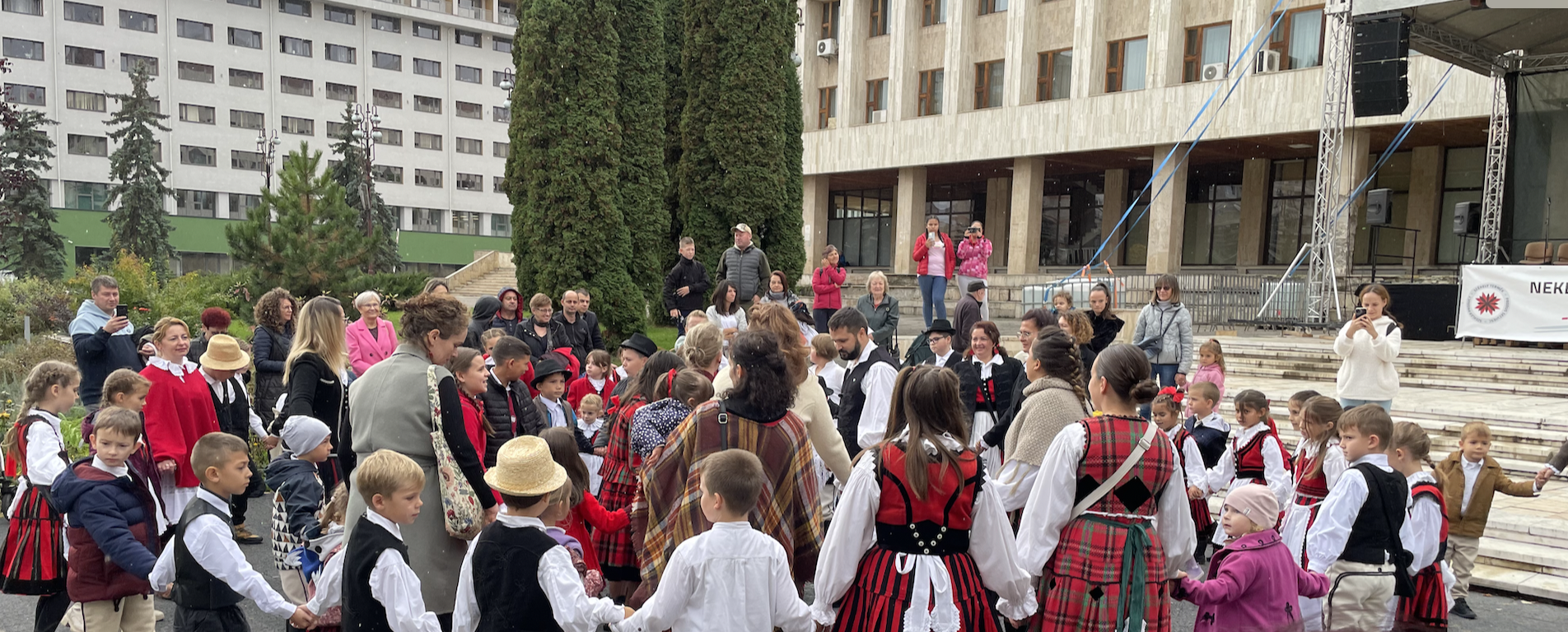
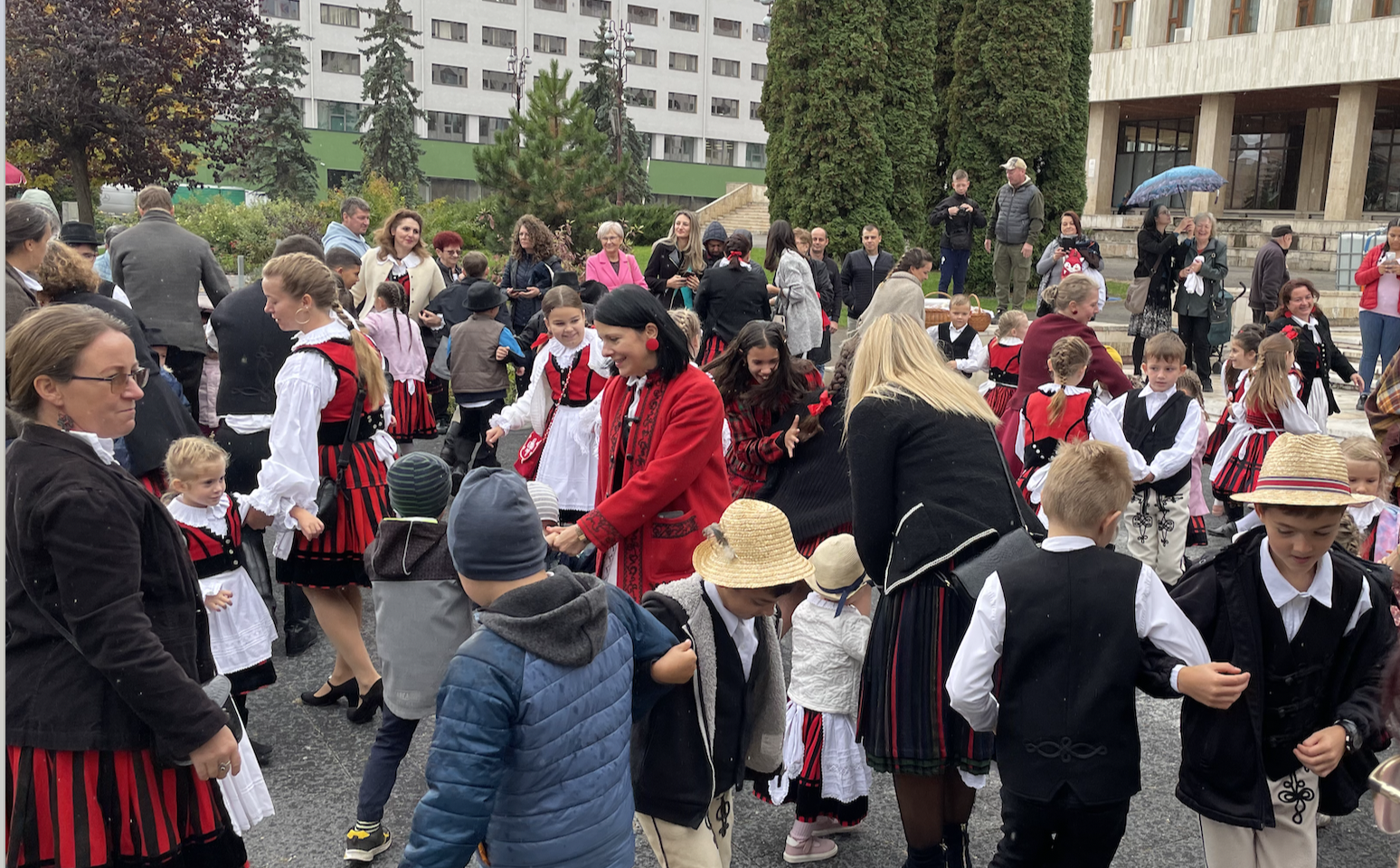
The square was filled with stalls – local honey producers & others.
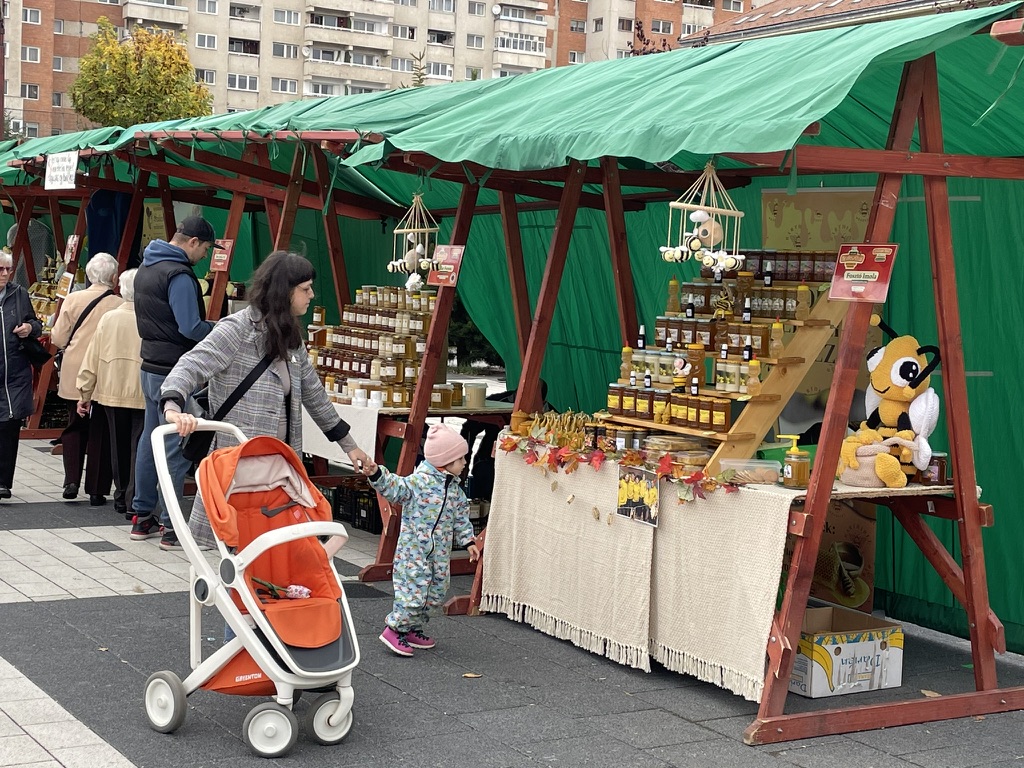

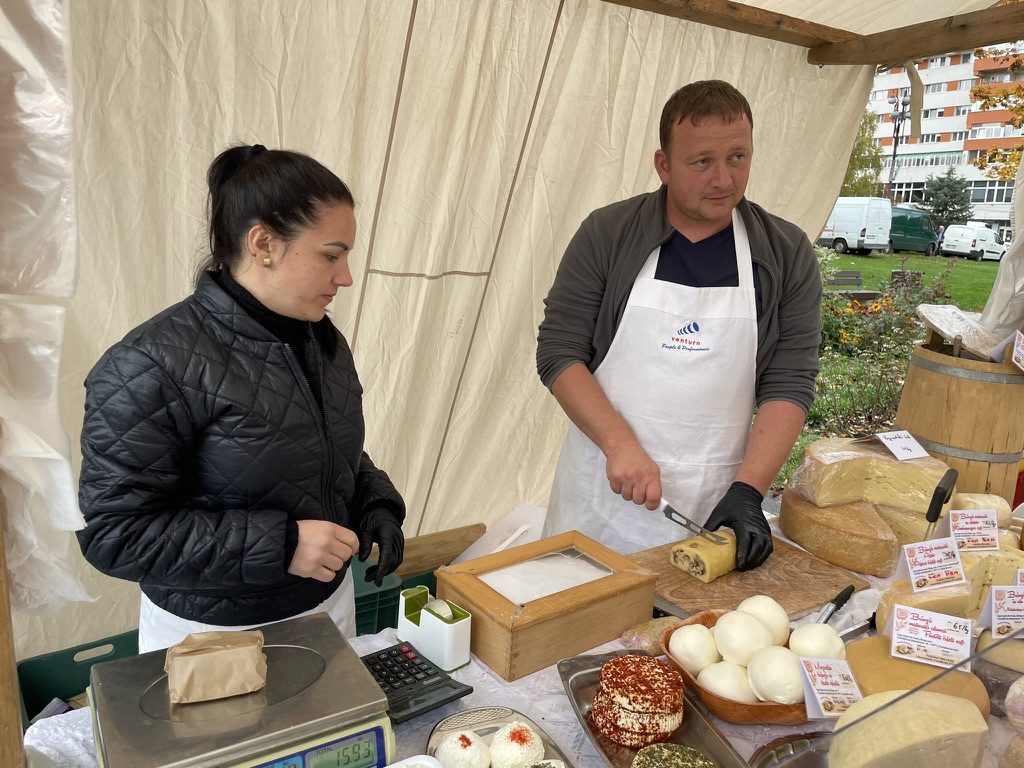
We bought cheeses and from a neighbouring stall some very fine wholemeal bread.
These developments – honey, cheese, bread, meats – all the result of sponsorship being available via EU support. The impact is not just the provision of quality food but the release of people’s energies in creating & developing their businesses & exploring varieties of appropriate cooperative working to ensure that small scale enterprises survive and prosper.
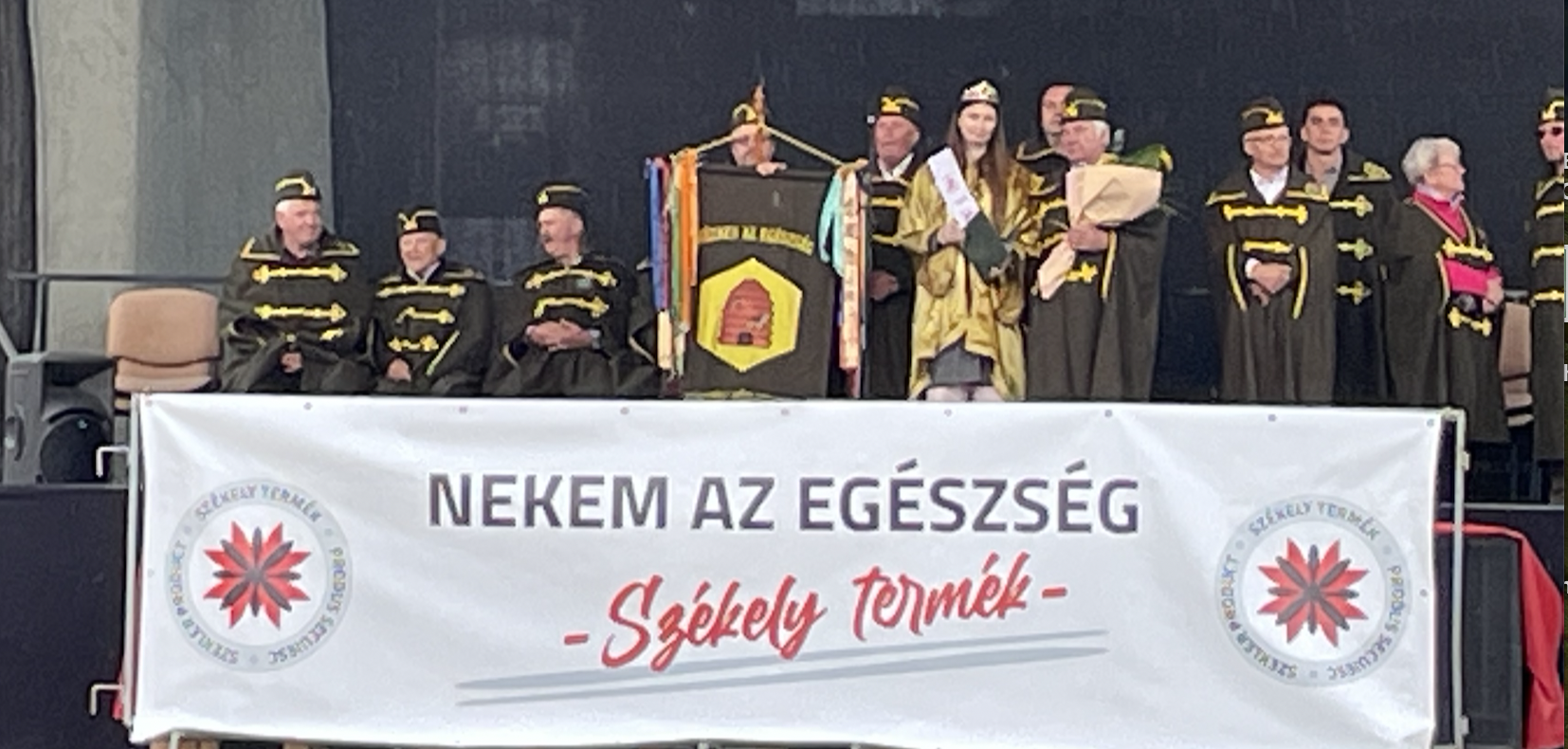
The Queen Bee seems to have a drone.
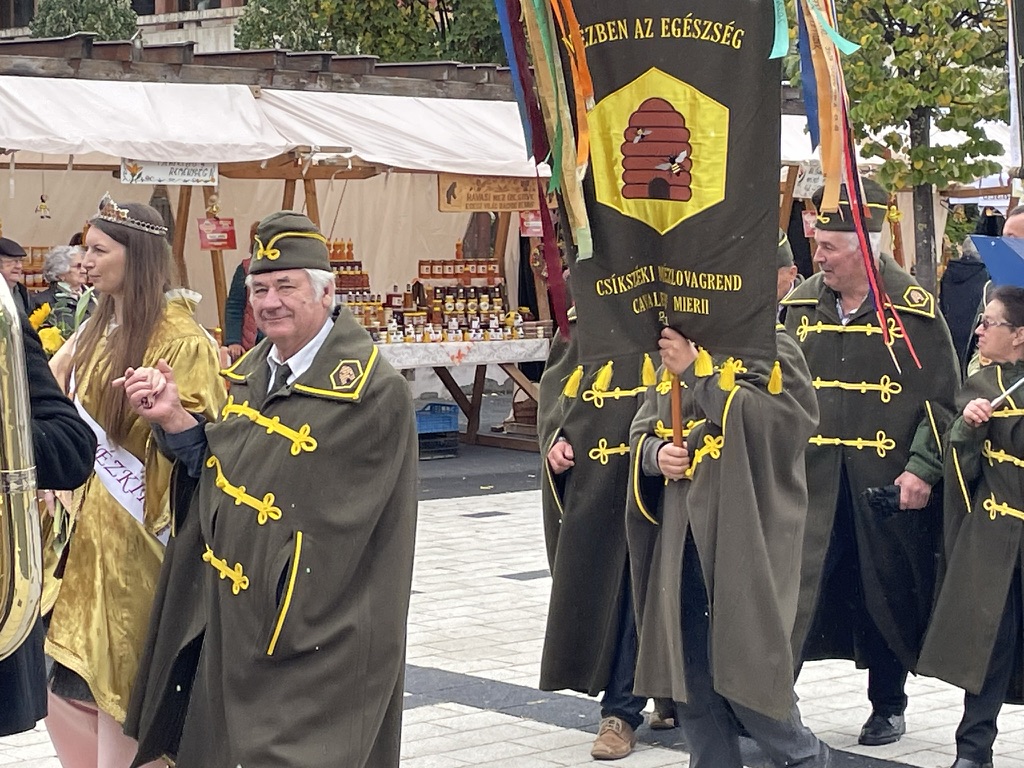
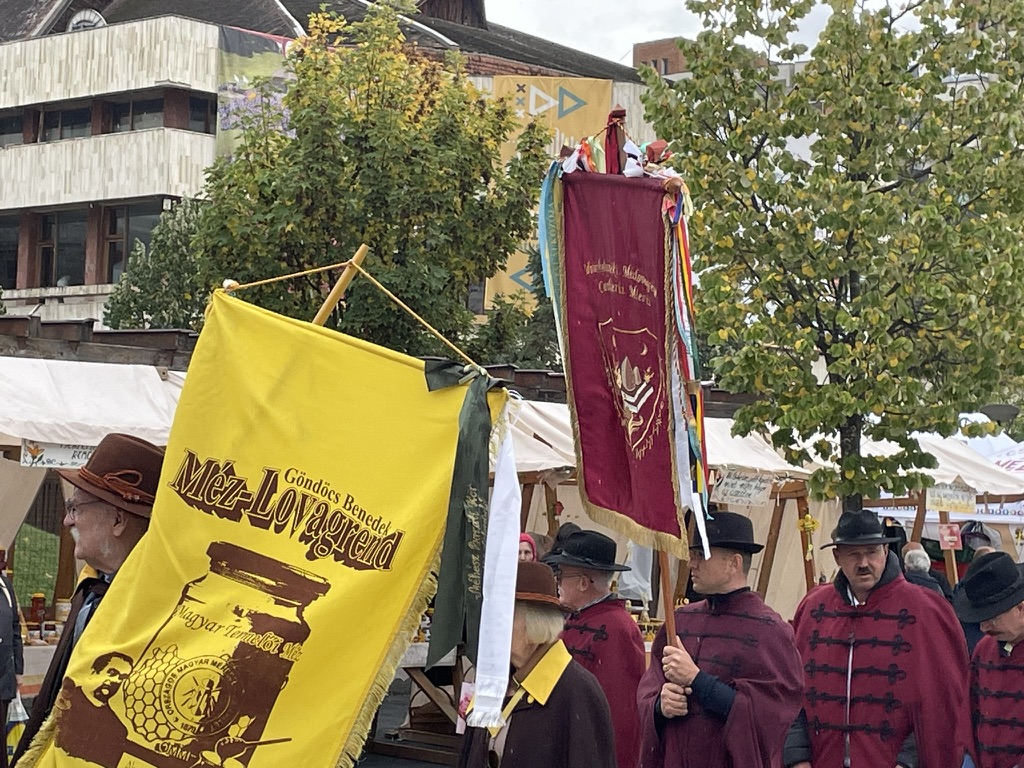
MEZBEN AZ EGÉSZSÉG: health in the field. (‘méz’ also means ‘honey’)
Mézi lovagrend: Knight of Honey
In Romanian
Cavalerii mierii: the Knights of Honey
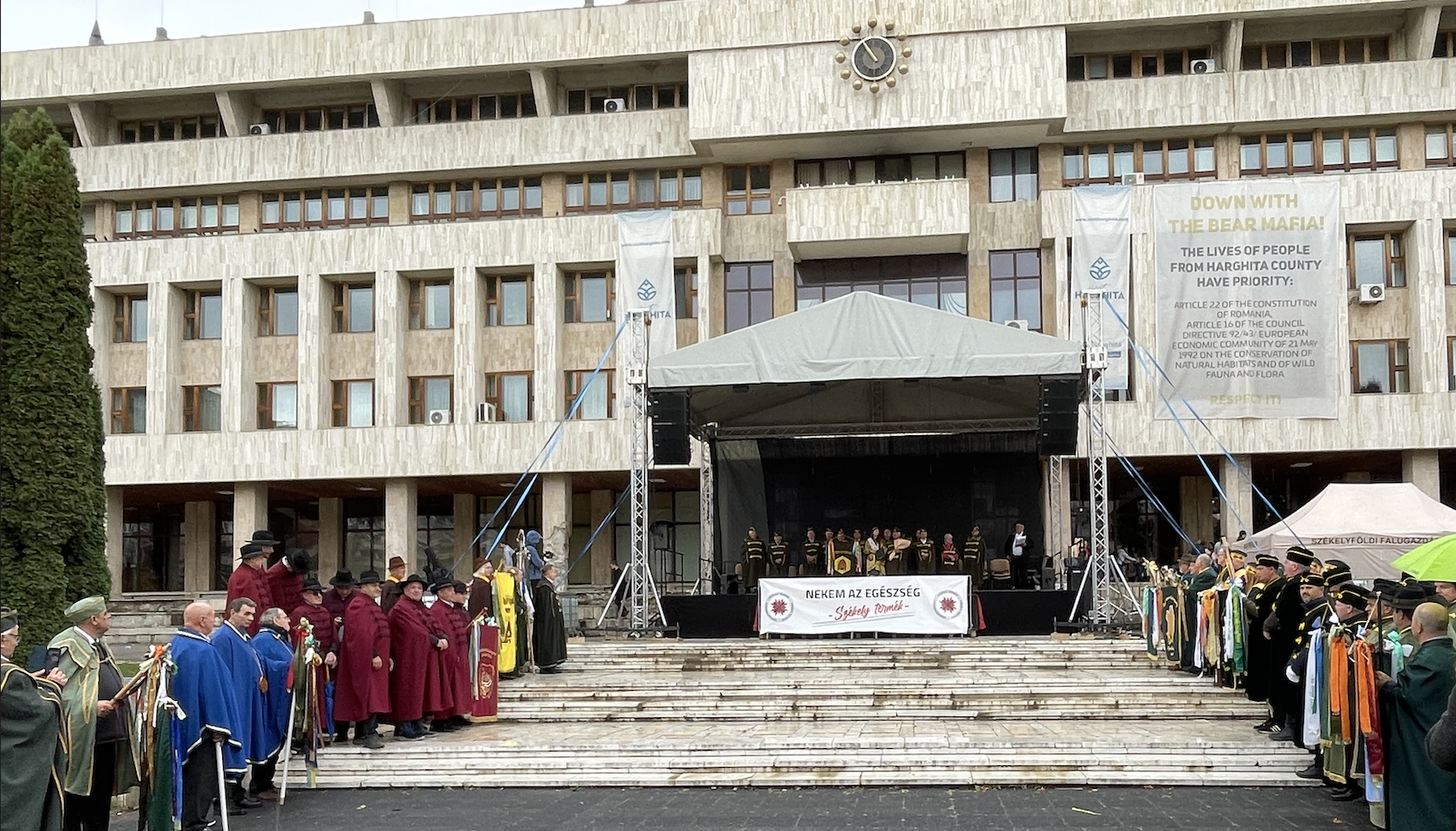
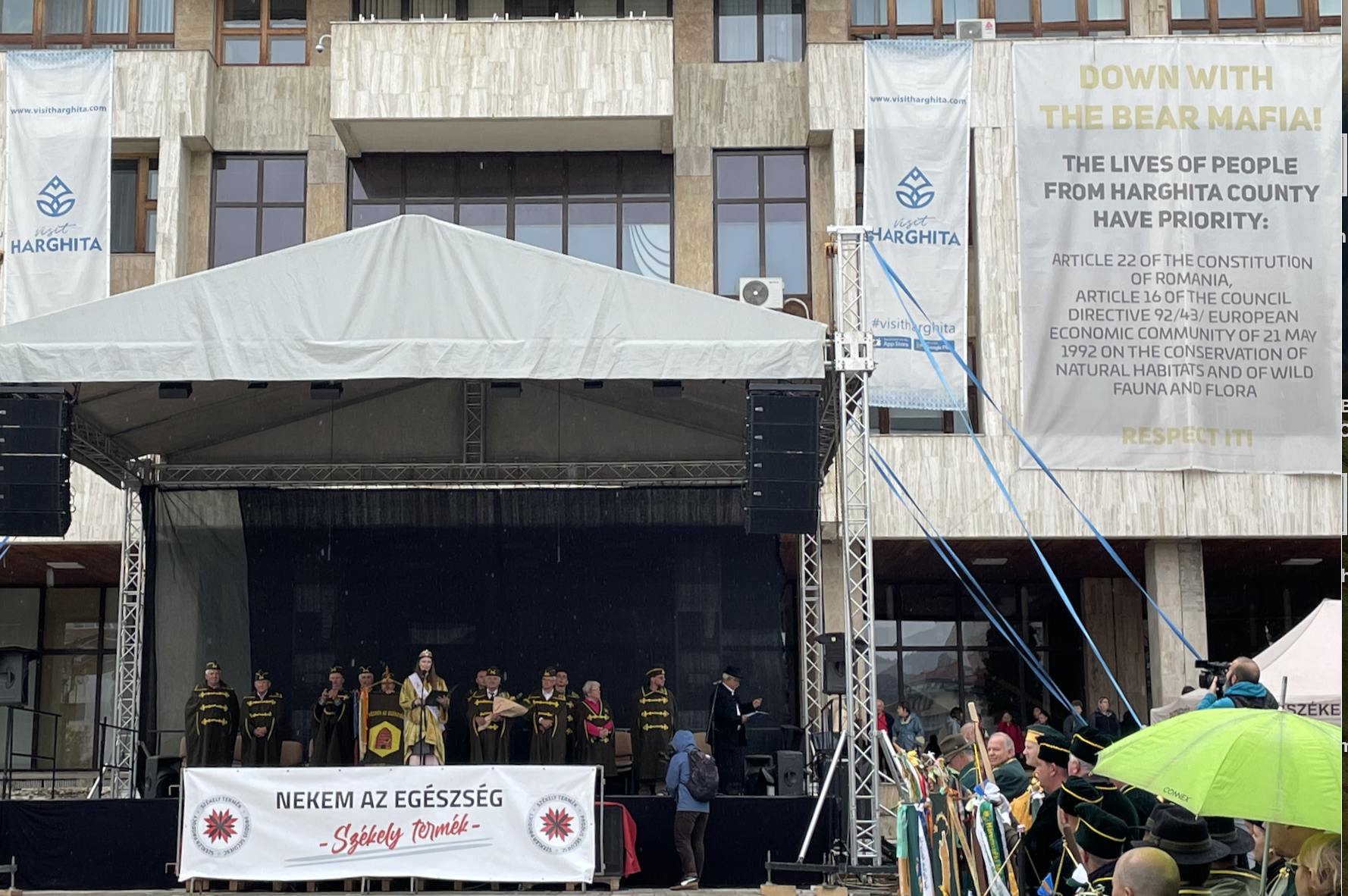
One local issue was made understandable by the large poster hung on the County Offices……
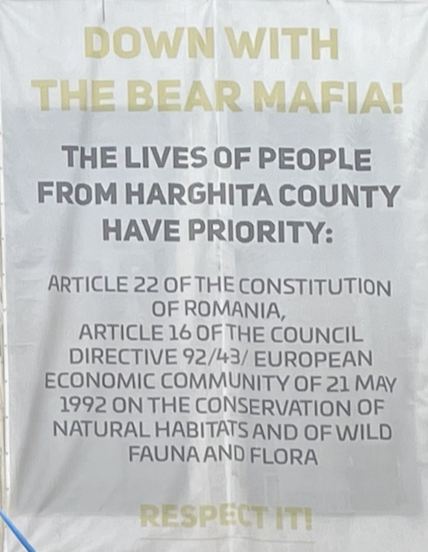
The ‘Bear Mafia’ being the conservationists who oppose the proposed culling of bears (whose influence has expanded partly due to poor environmental management).
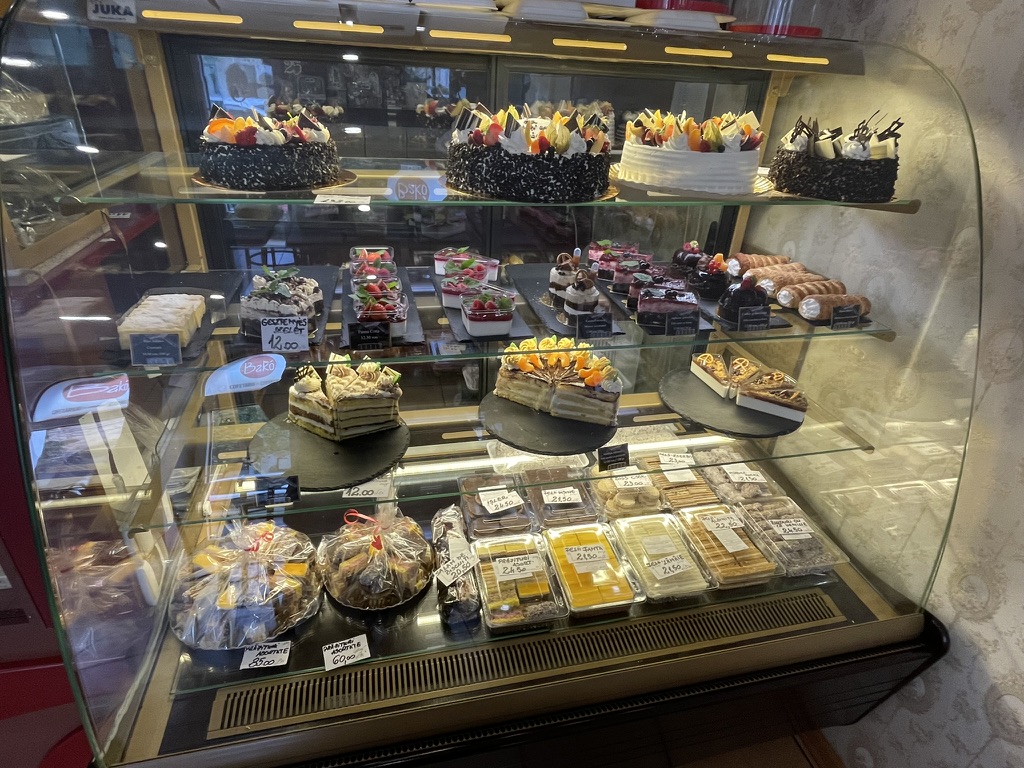
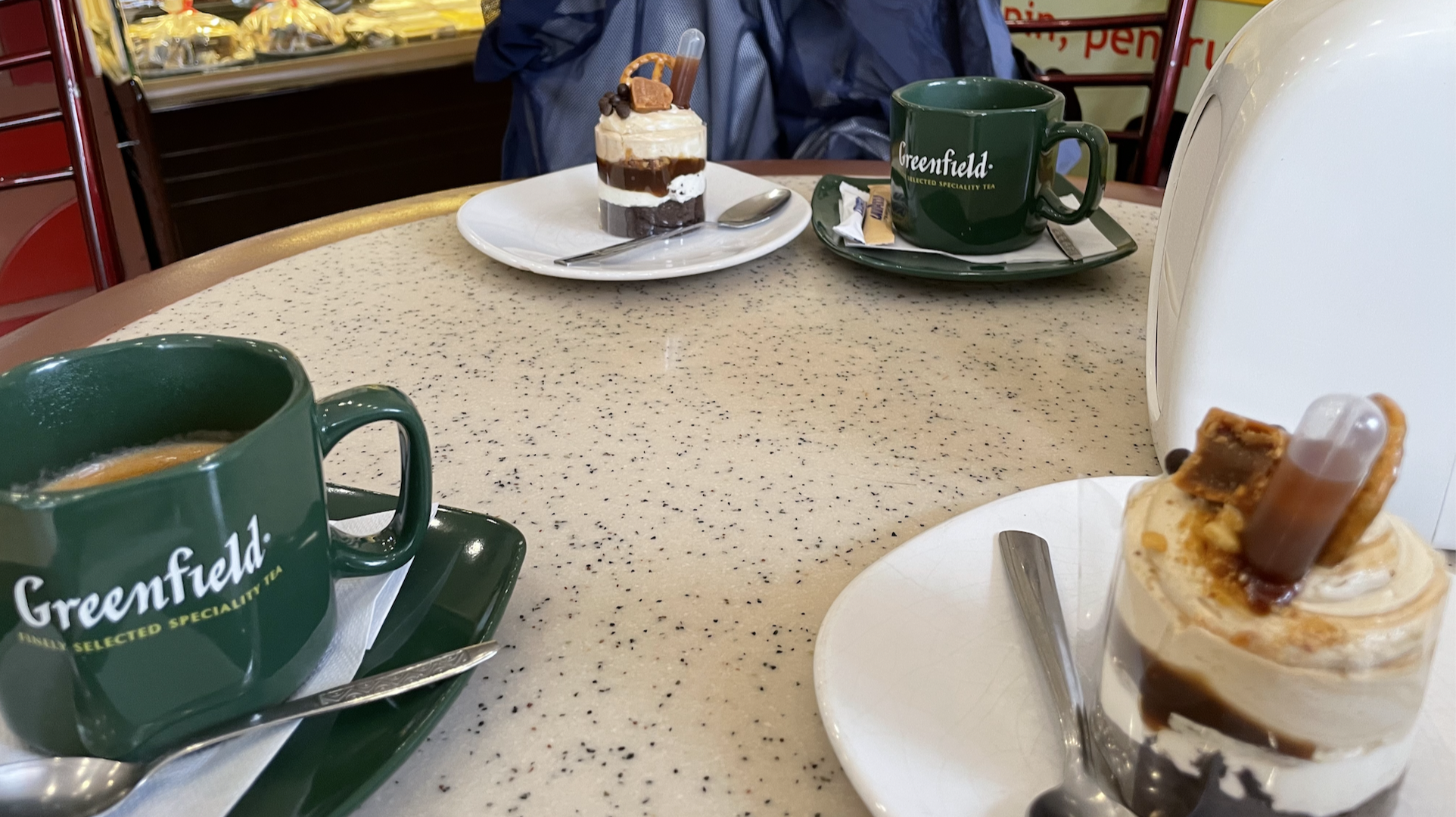
We finished our visit with a (for us, very rare) visit to a cake shop
A much deeper delight occurred & remains:
For over 30 years we’ve been visiting Romania. In our first visit we travelled across Transylvania & south into Wallachia.
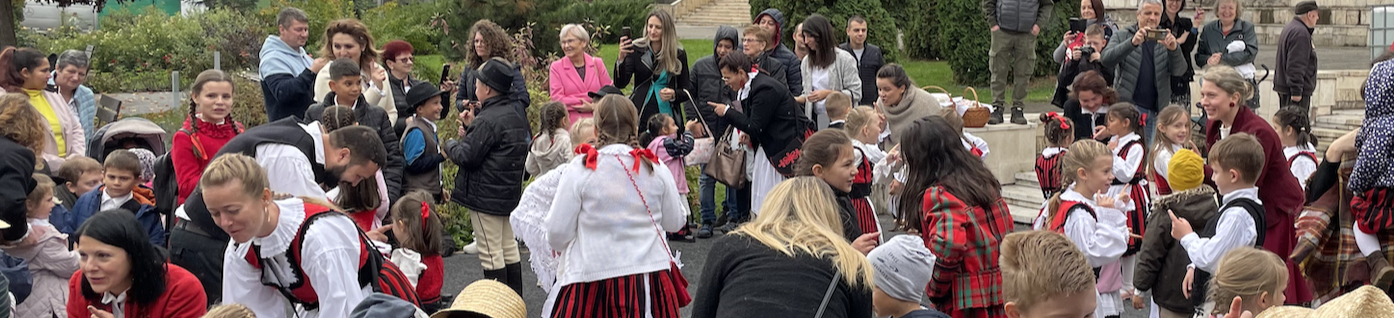
This group, the event, the parent’s, kids and their friends are so utterly different from those of similar age we met and saw in 1990.
Whatever difficulties people may now face there has been a ‘release’ created by the escape from the soulless frozen controlling hand of communism…. and it is seen directly in the faces of parents, teachers and friends who were gathered in in this lovely town.
Here, as we watched the celebration & explained, to one of the parents, our journey & our unexpected surprise and delight we felt at being in Csíkszereda, we received a curious but supportive comment by being told:
‘Sometimes unexpected accidental discoveries are always intended to occur’
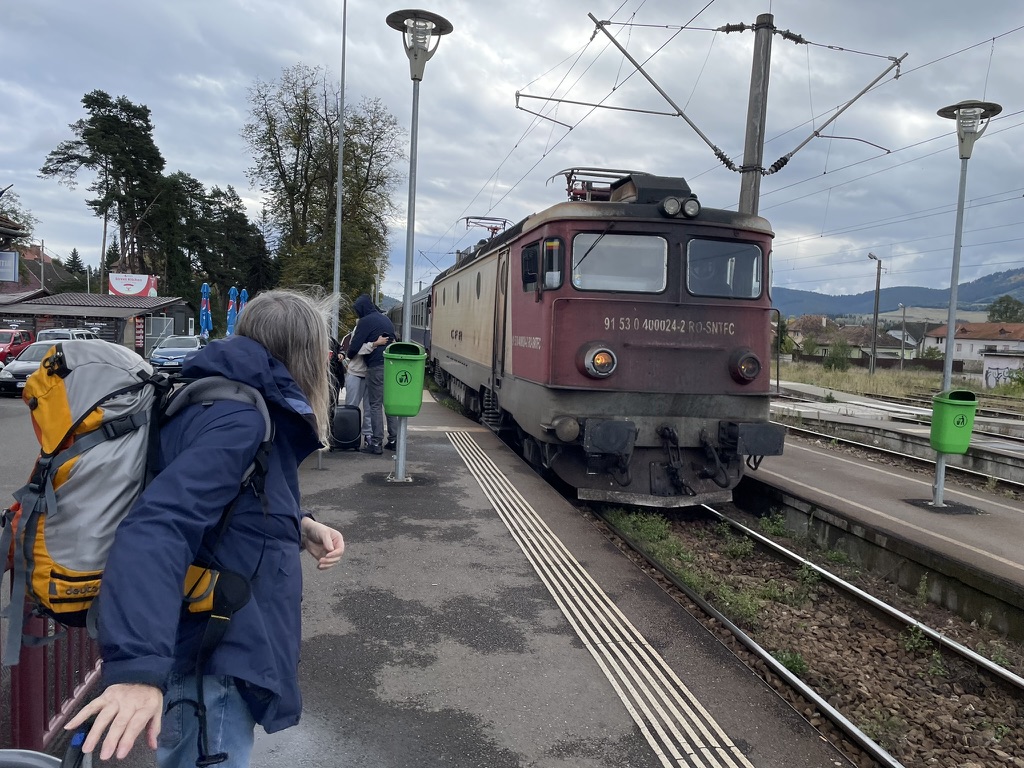
Back to the station & the train to Iași
 Inspirational Pathways