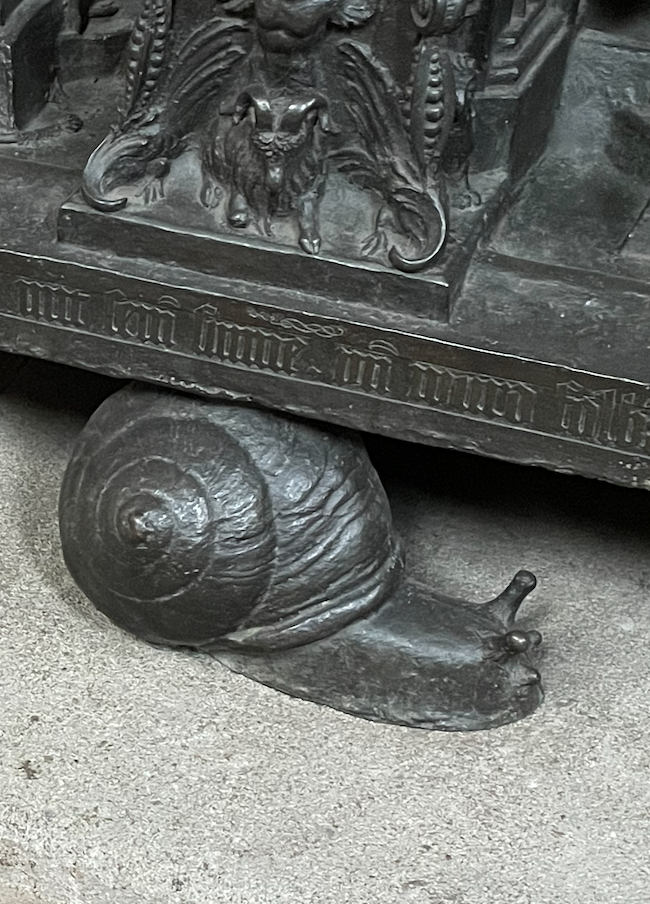
At times, this has been our speed (detail from a monument in Nurnberg)
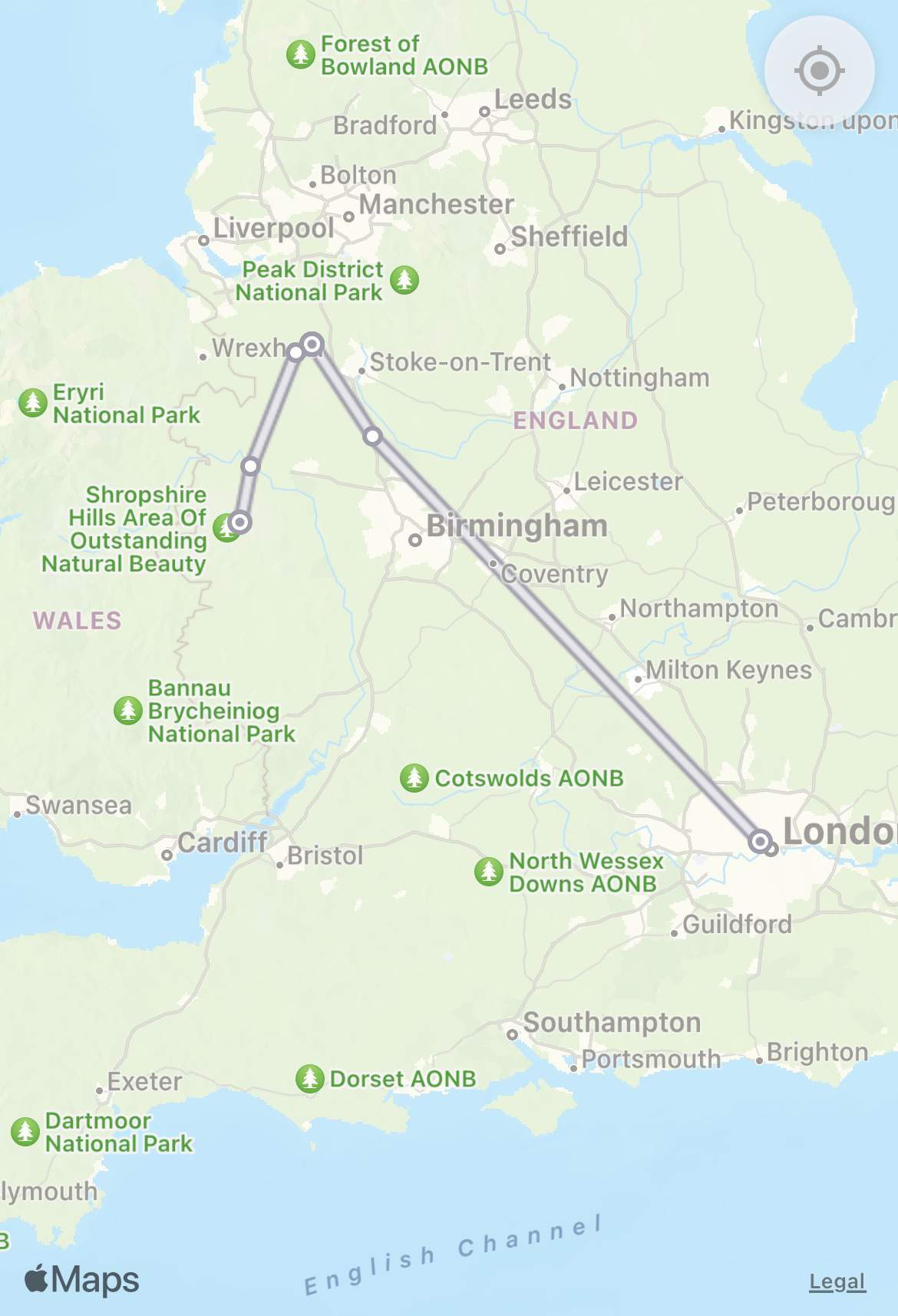
24th April Church Stretton – London
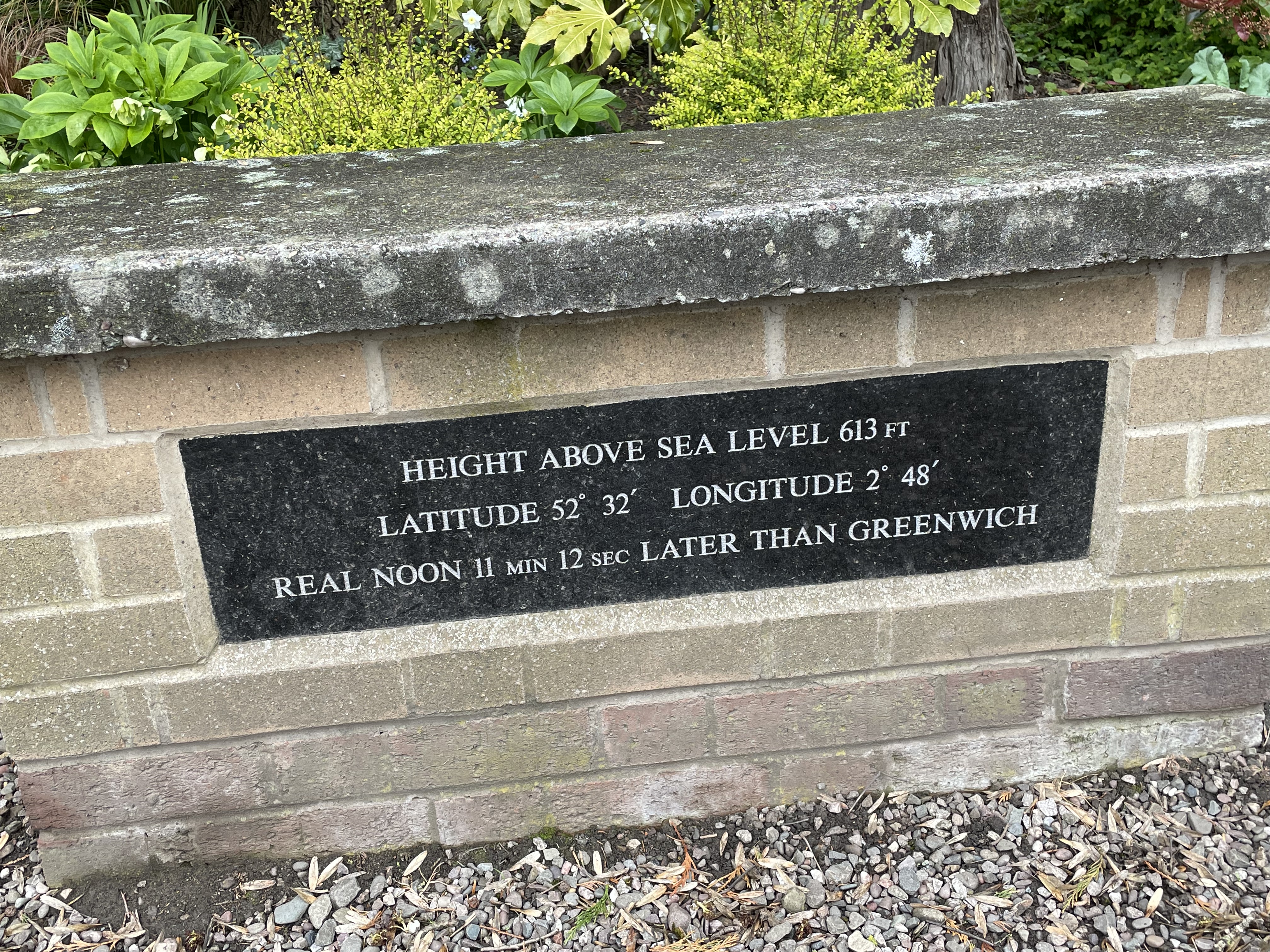
we start at Church Stretton where a plaque notes the time distance from London.
We stayed overnight in Wembley
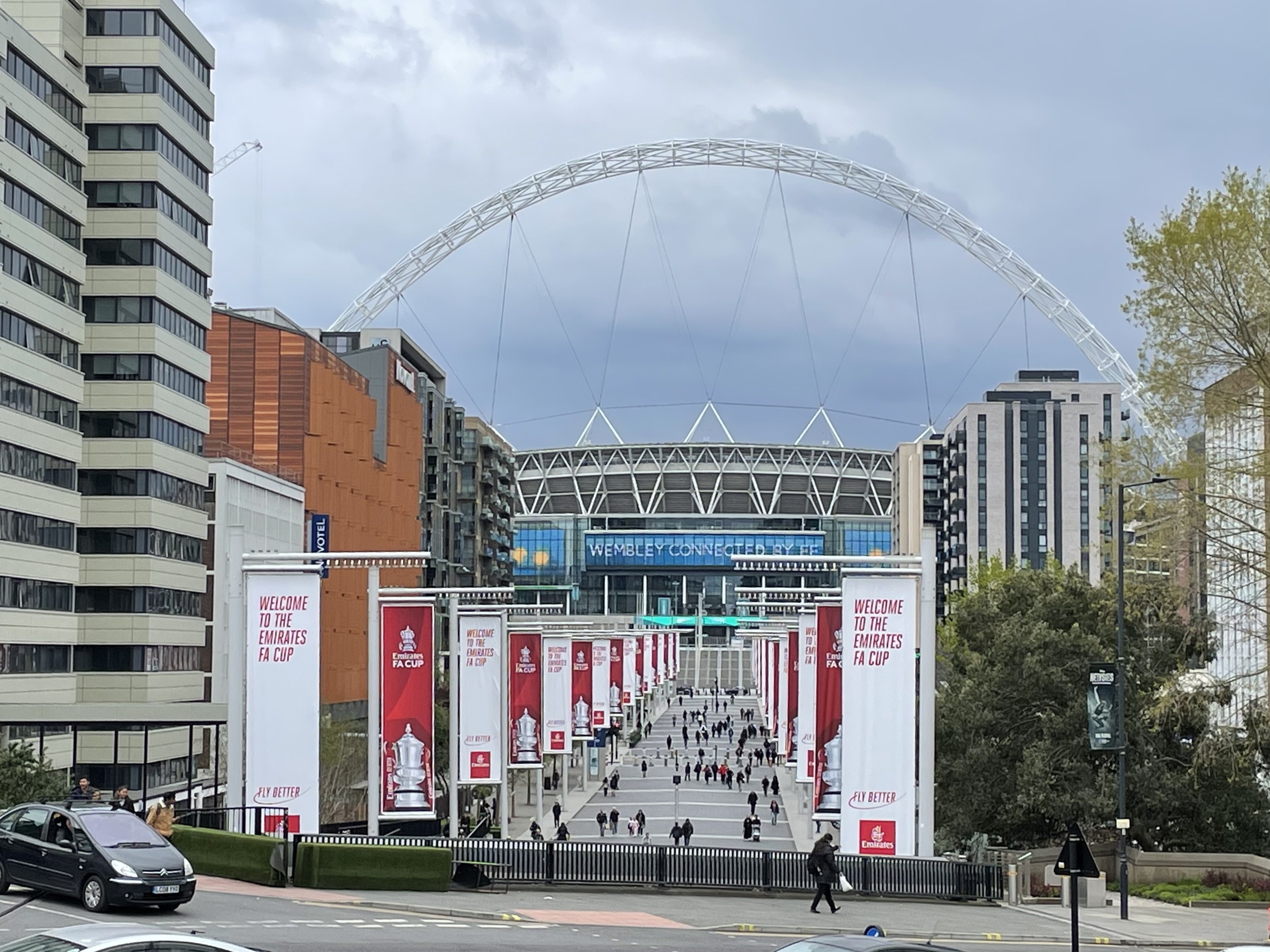
It’s not only the stadium that is interesting but the way the area around has evolved it…. Tower blocks, apartments, the London Outlet complex etc ….. similar in some ways to that witnessed in Vienna near the Hauptbanhof
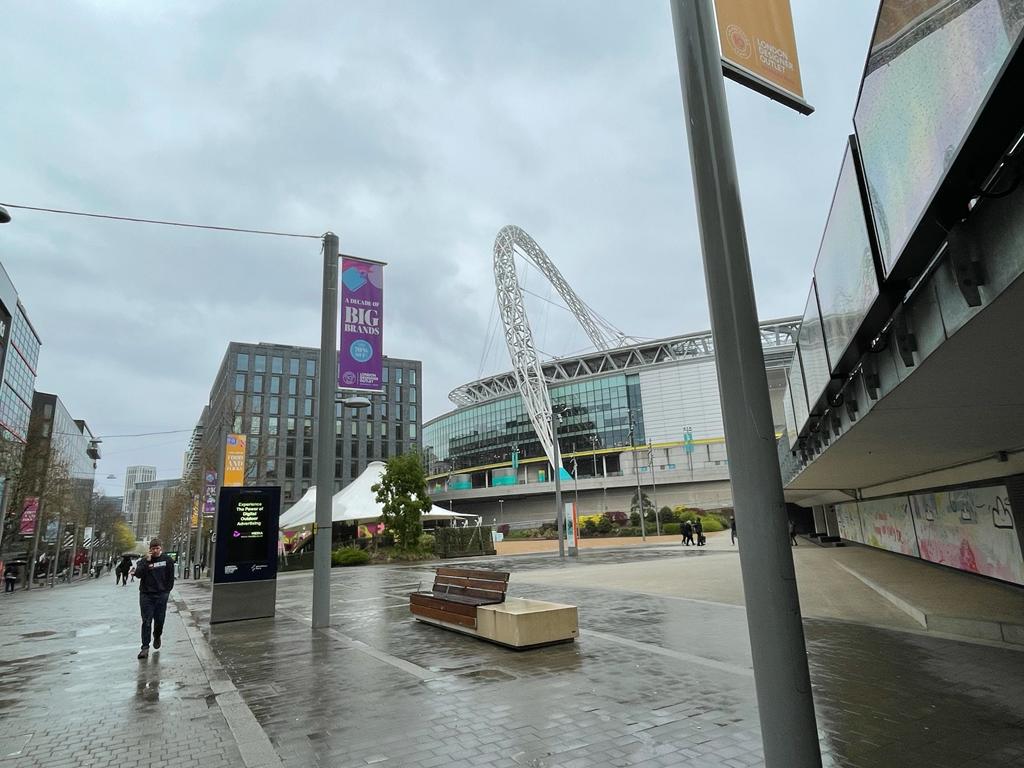
Also interesting to compare costs with eg Napoli…. Wembley: £85+ for a national group established hotel (Premier Inn) including large cooked breakfast …. And situated next to national monument (Wembley stadium) with fast, easy access to central London
Napoli: single room in building (not a hotel) next to Napoli Centrale station …. Over £100.
My Grandfather Roy Rogers lived there. He was from Neasden. The Nazi’s bombed the family home. It was completely destroyed. His younger sisters we evacuated to Swansea and he followed them, got a job in a munitions factory where he met my Grandmother, before he was signed up…the rest is history!! Best wishes for the next leg of your journey 😎😎
Gemma : Valuable comments because this whole 3 months has been about meeting friends, partners & places. Places are only real when one engages with the people who live and own them. Views and ‘sight-seeing’ are utterly inconsequential …. Passing moments that most usually are simply that ‘passing’ & momentary.
Out of one type of engagement… whether that be work/friendship/shared action… can come something deeper and longer lasting. The rest …. Sights, views etc, are as dross…. Insubstantial.
So on this journey Jacqui and I trace many routes and hopefully will meet (as we did in Journey 2) friends and companions with whom we shared and in visiting, shared again, joyful times.
WhatsApp comments
25th April London to Köln
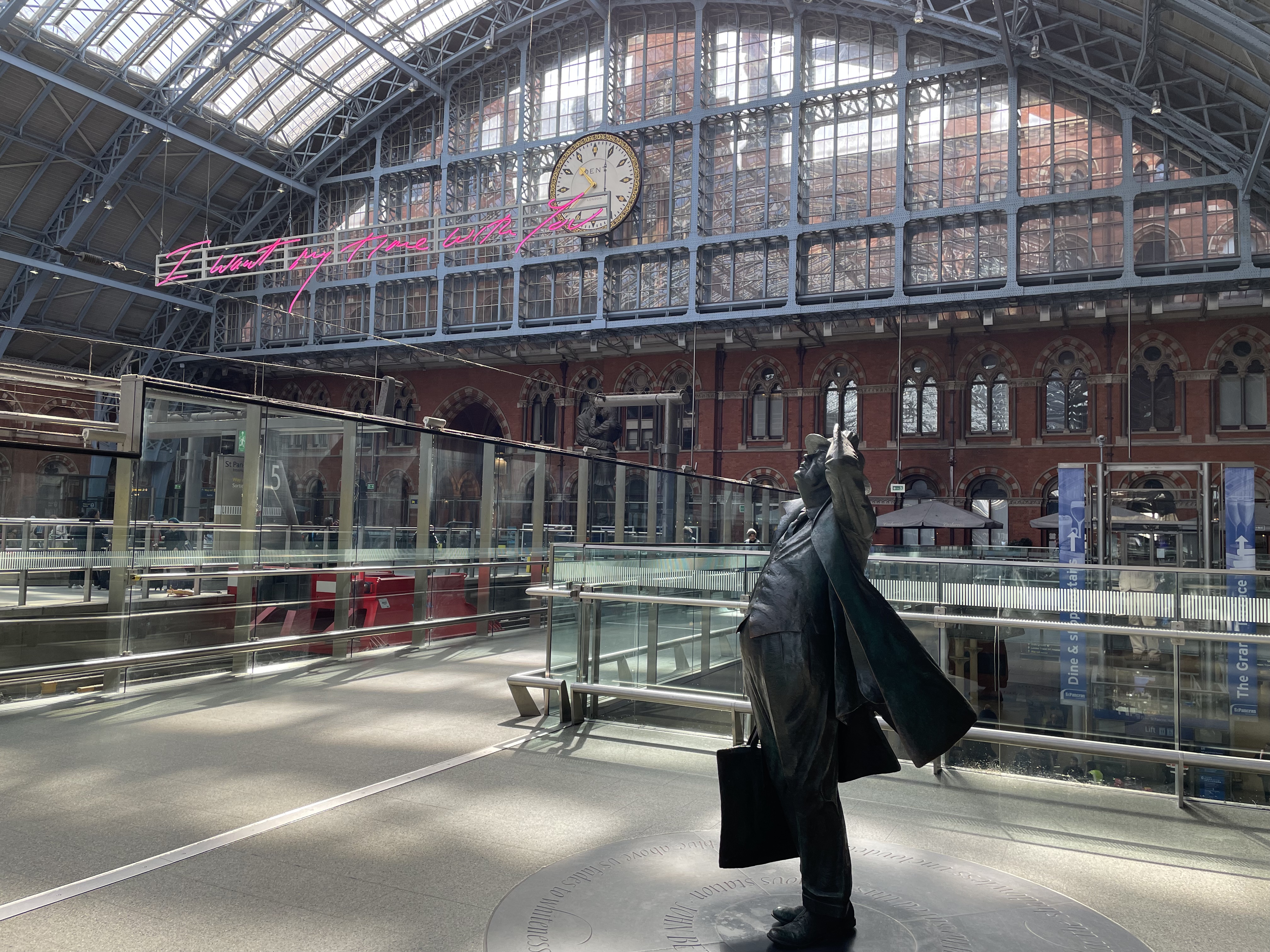
“Will you be joining us today Mr Betjeman?”

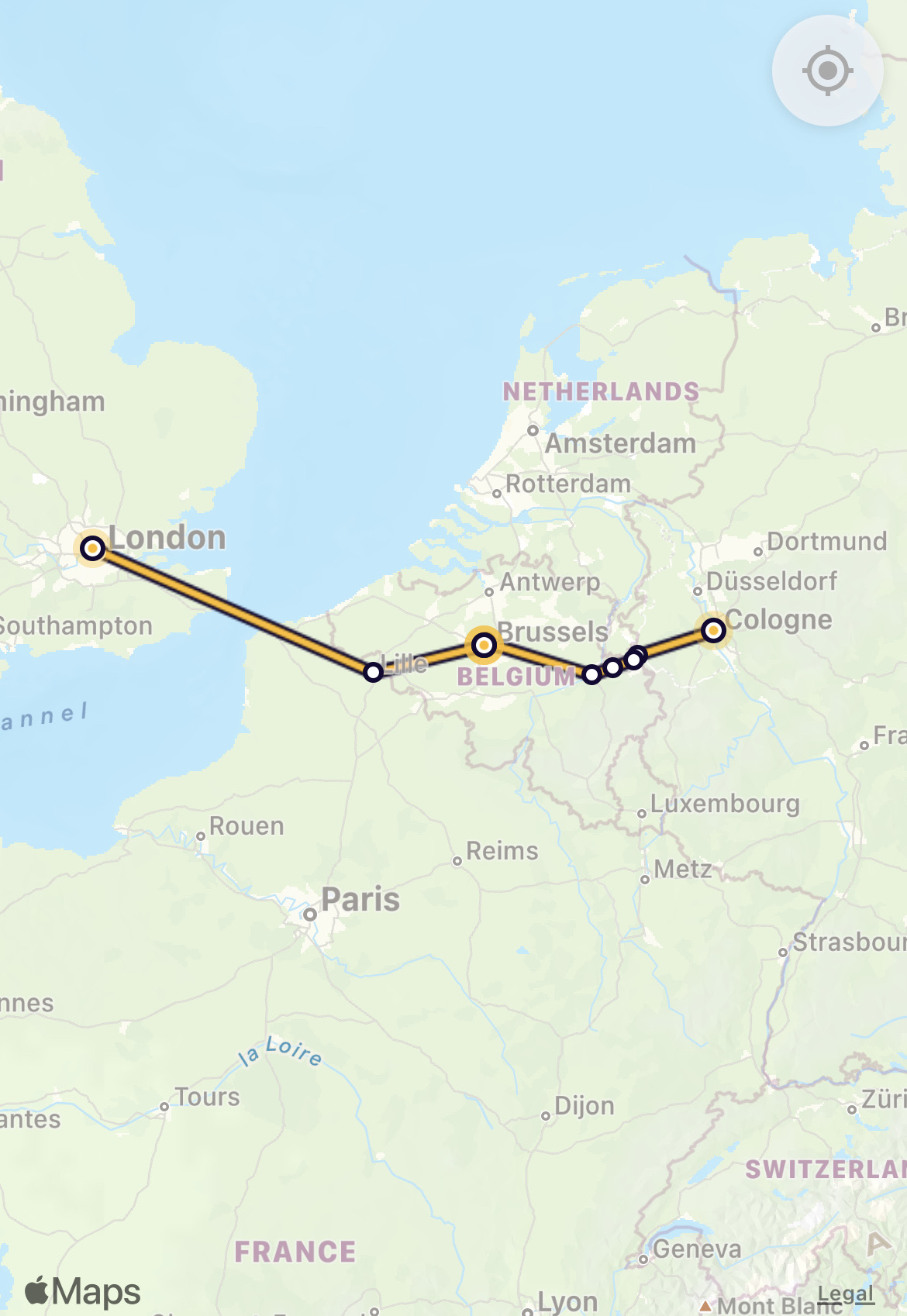
Eurostar ran late, our connection left as we & others ran towards it.

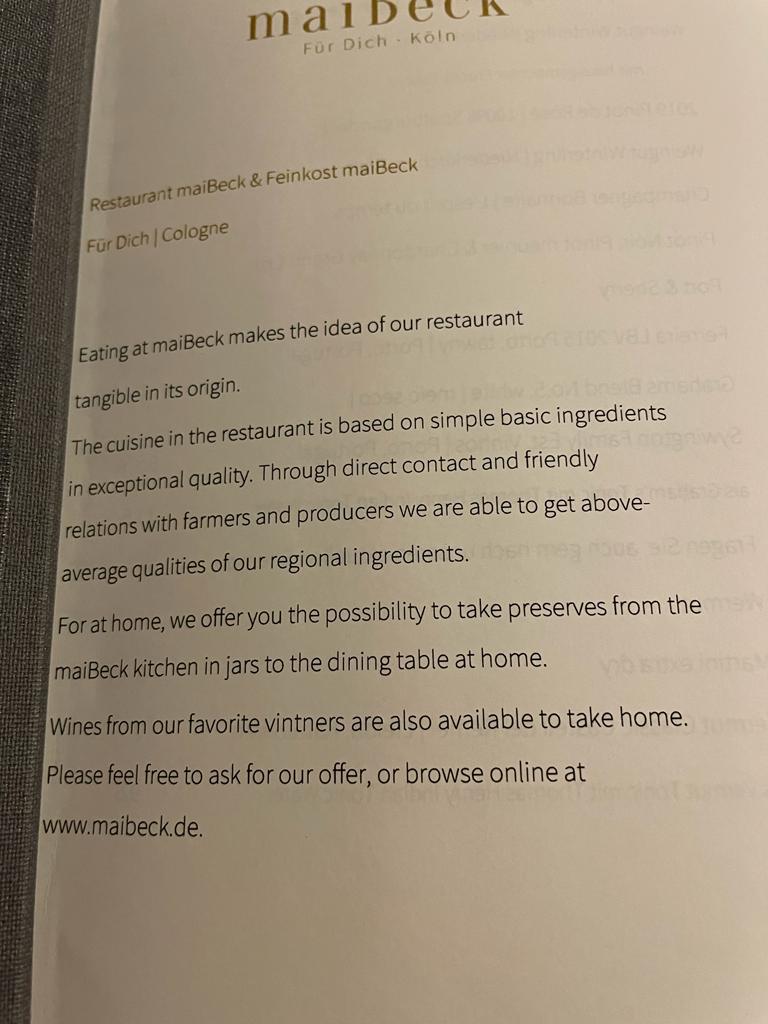
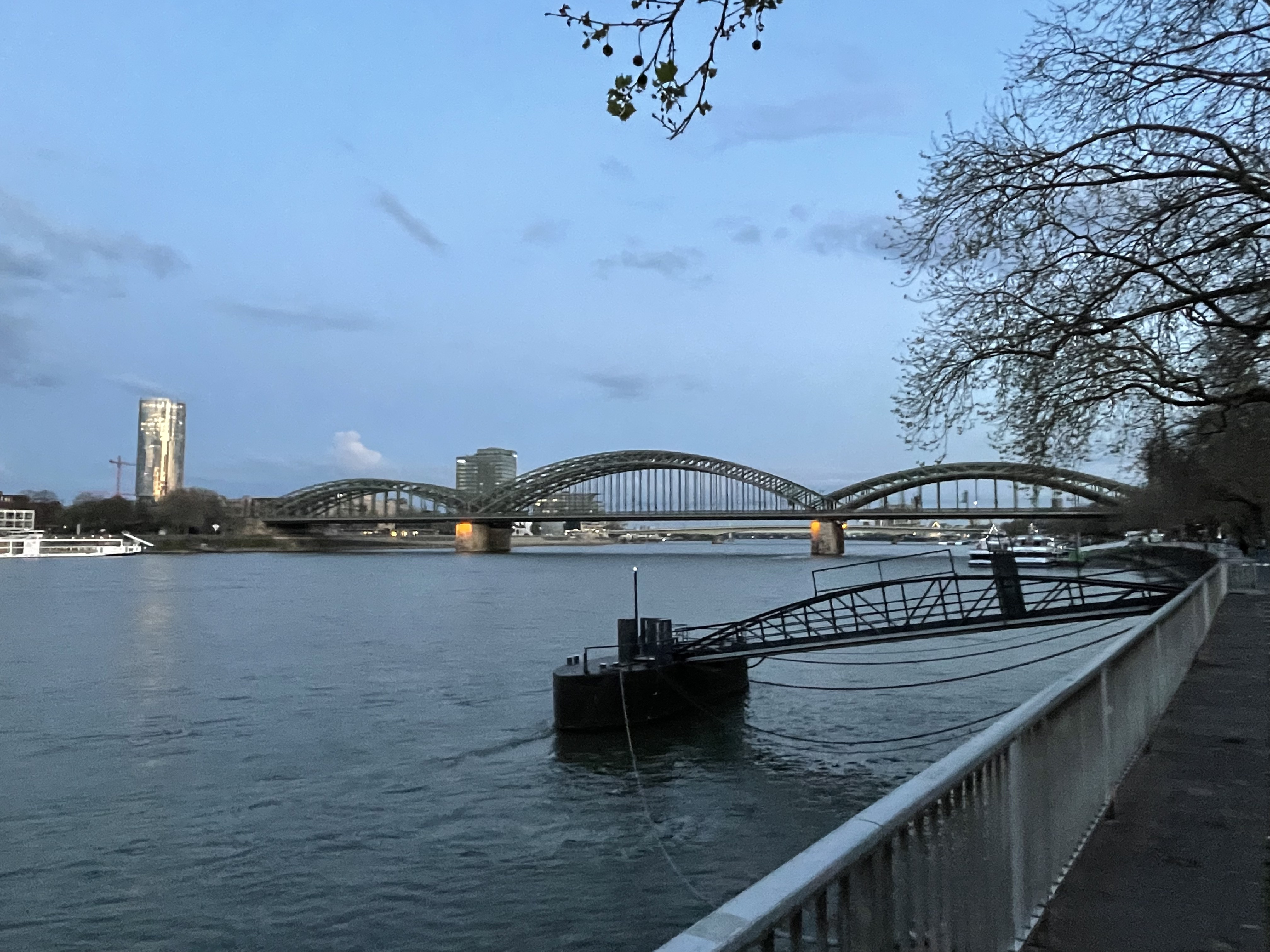
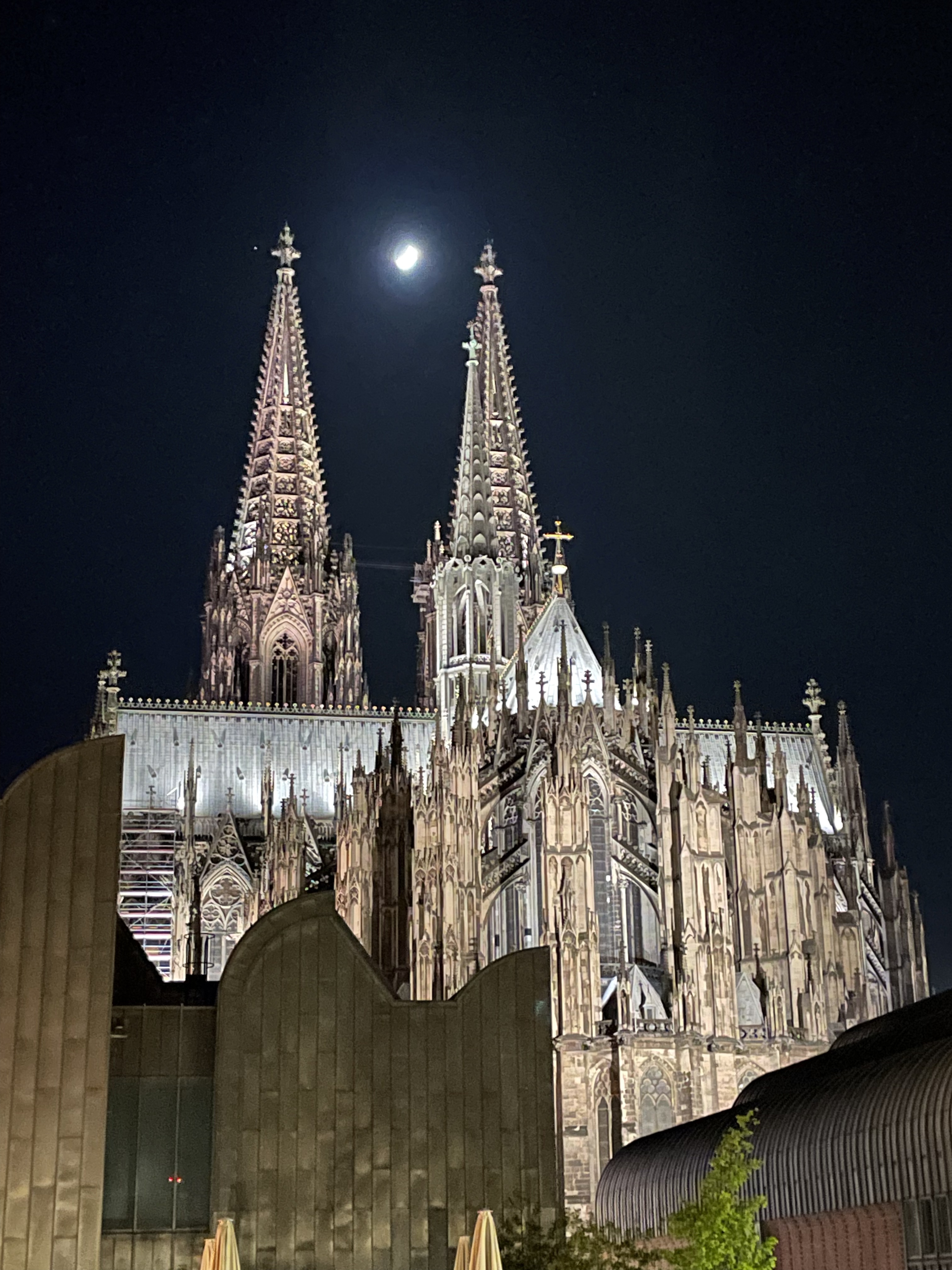
Eventually we arrived in Koln (late as is usual with German trains…. A train manager warned us on our first day in March). By accident (due to our choice of restaurant being closed) we were guided here…. Almost under the Hohenstaufen Bridge….. I mentioned I preferred Franconian wine….. spot on! The owner is Franconian… and so told us in detail about the wine (2021 vintage) we are now drinking and his friend whose vineyard profuced it. A frustrating day has become full of hope and pleasure.
26th April to Wien
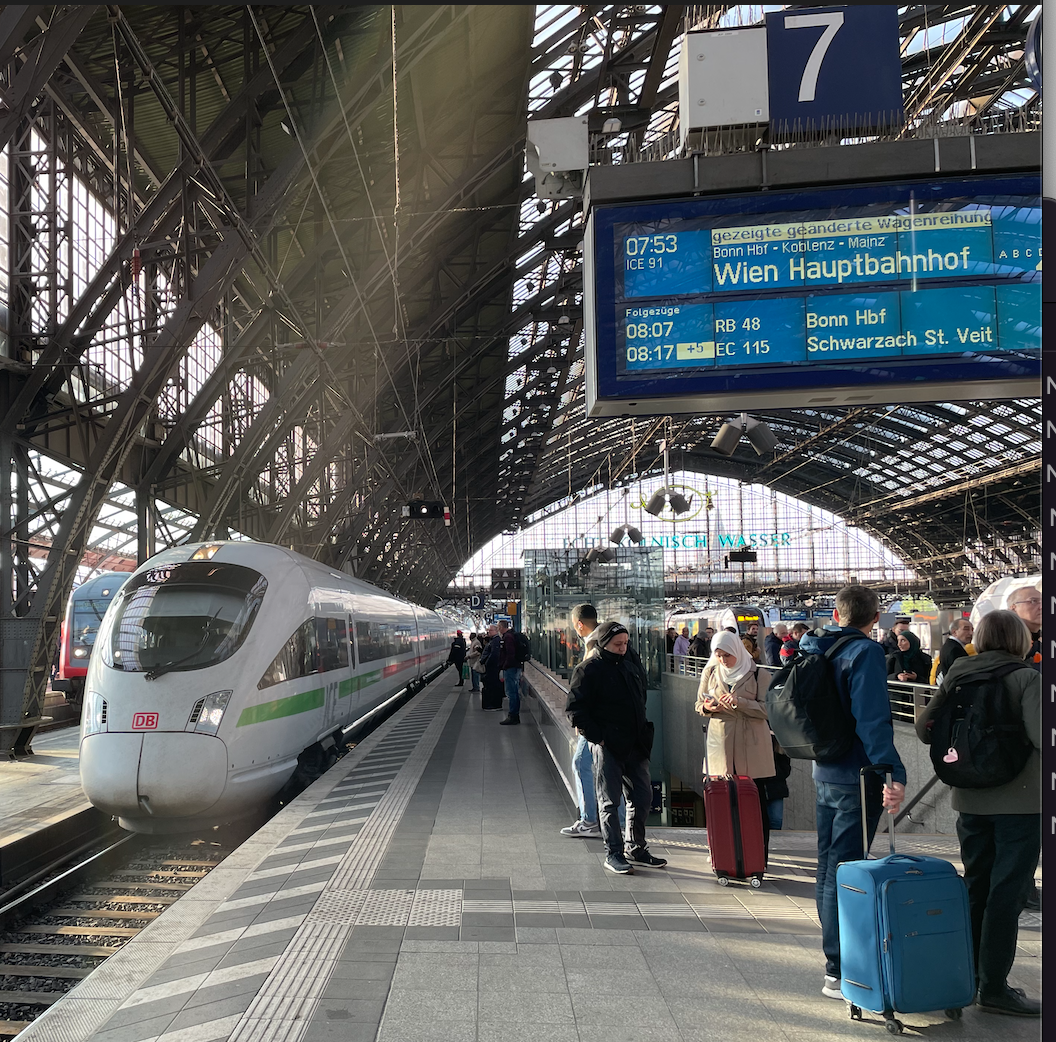
To Vienna……. via the slower original route along the Rhine
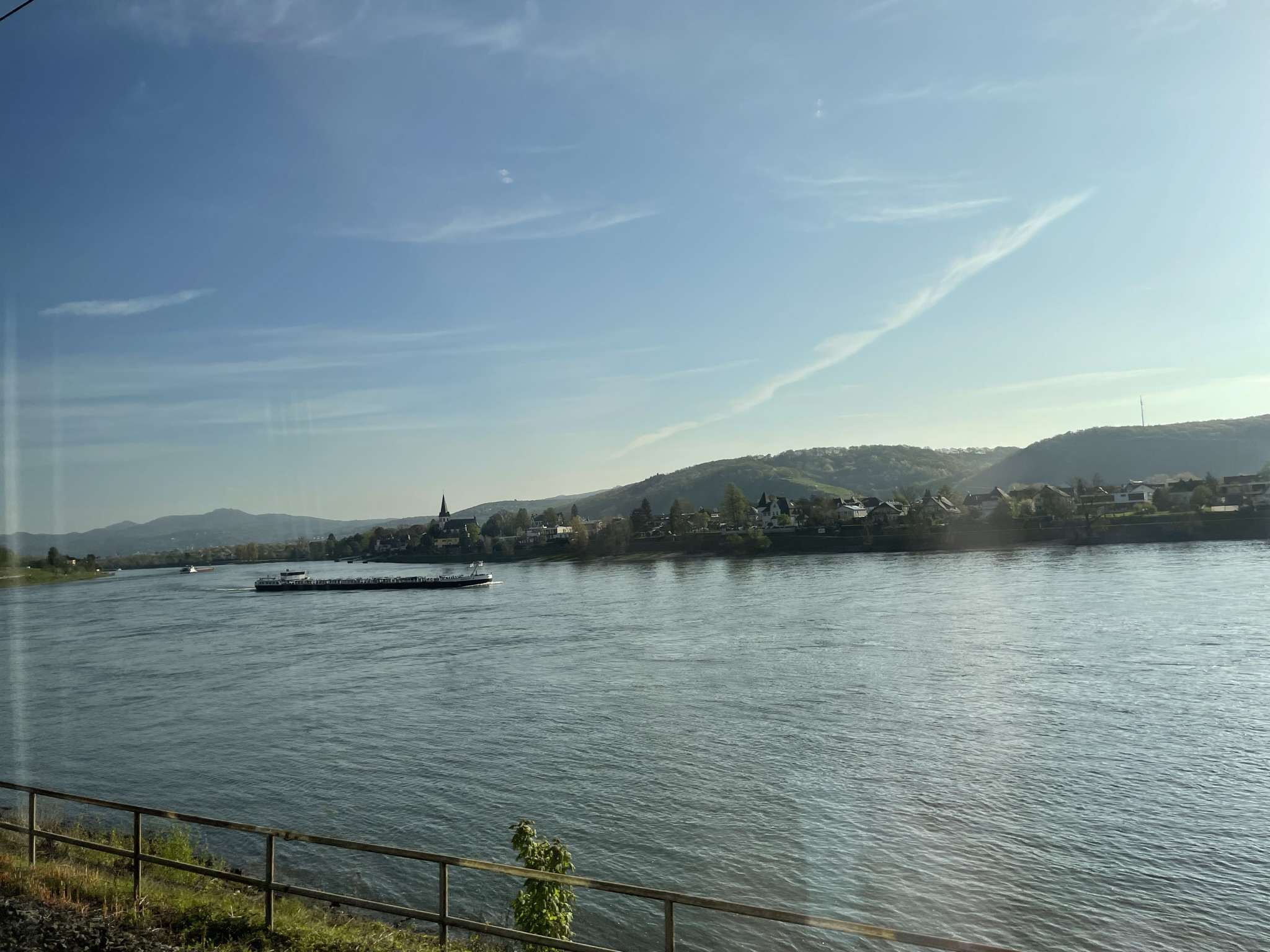
Travelling the slower route along the Rhine valley. I used this route to Nurnberg in 1987 and met an American in the bistro (where we now are, having breakfast). We talked about computers and he explained he was working for an innovative company I’d recently heard of….. it was called ‘Macintosh’ with computers called ‘Apple’
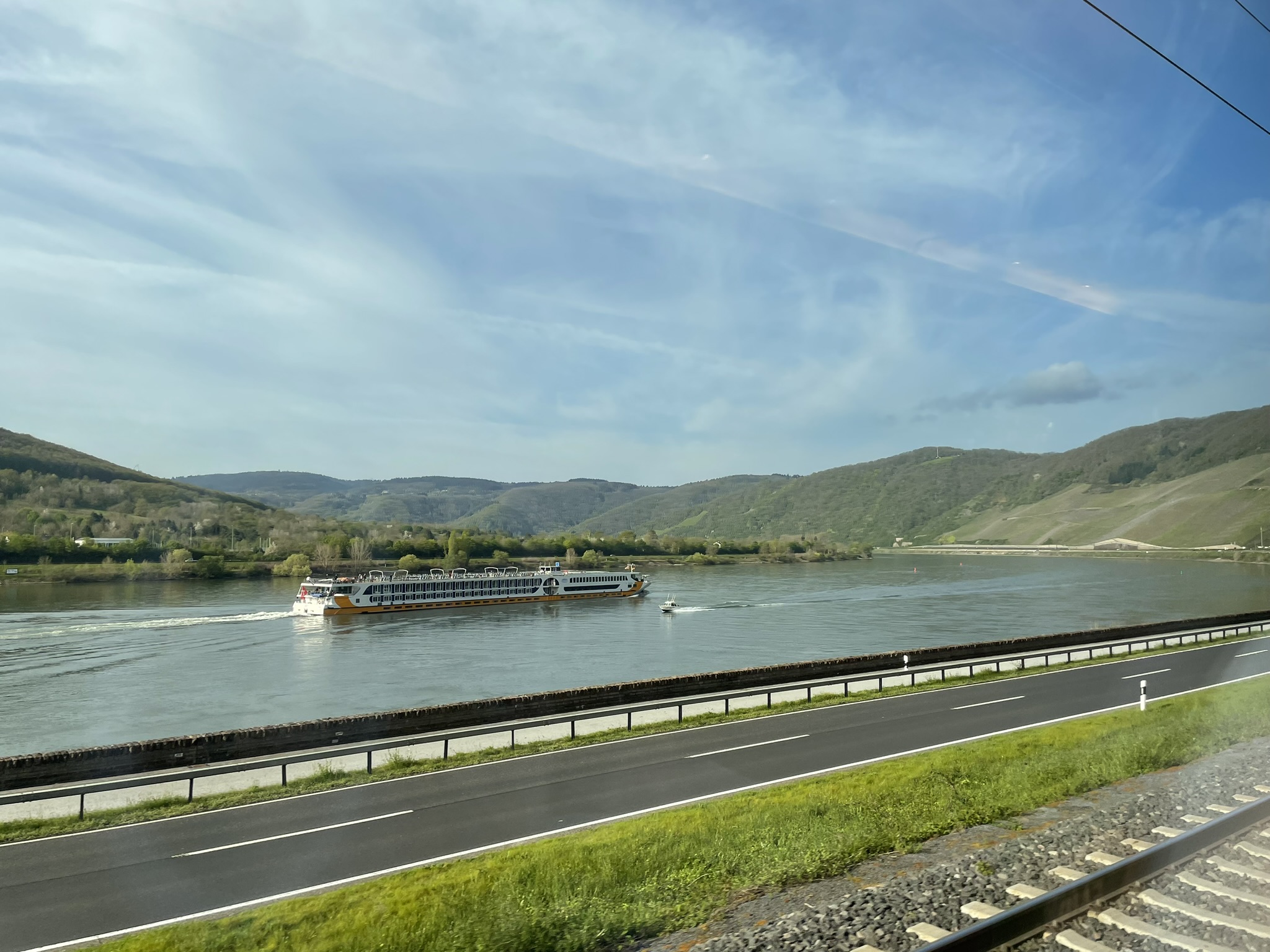
… and later the Danube:
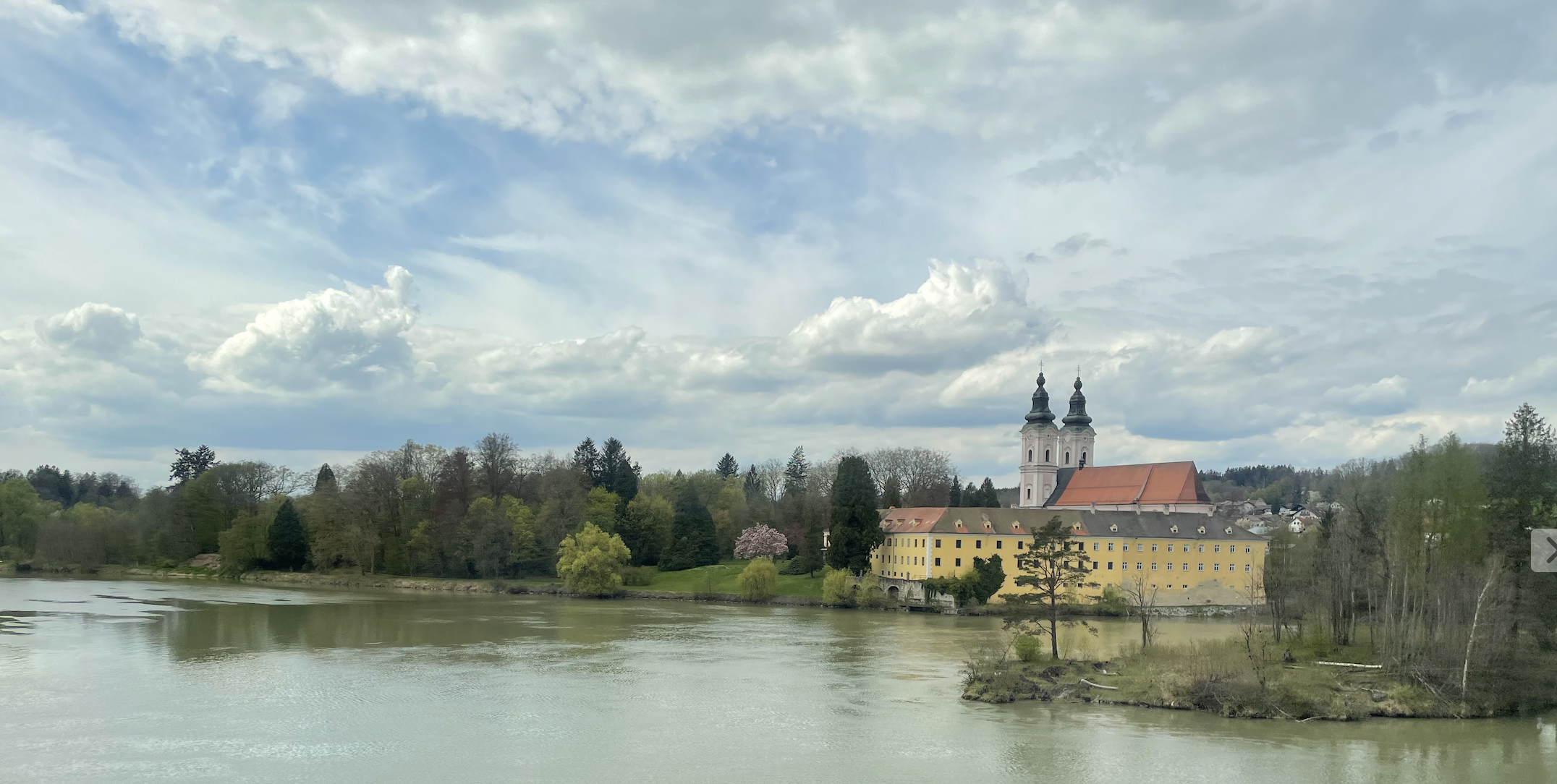

Apparently Vienna is famous for coffee and cakes. The coffee was ok but I don’t like cake…. And despite trying a small portion, I remain unimpressed. Now looking forward to the night train to Romania (in 2 hours) and the usual 02.00 wakening at the border.
But first a beer
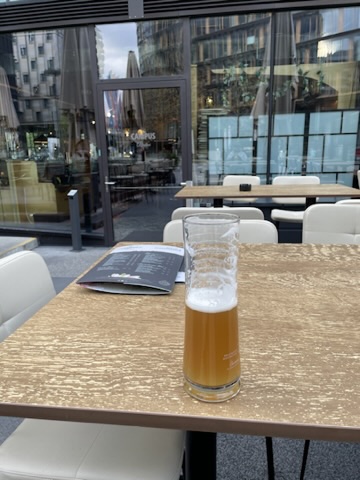
A Paracelsus Beer drunk outside on Karl-Popper Strasse ( literally ‘no room in the inn’) is a wonderful restorer of balance…. Physical, emotional and spiritual. BUT Mein Gott, girls and boys, it is still so cold that it is what in U.K. we call ‘brass monkey’ weather. I hope that in Spilinga we can eventually warm up.
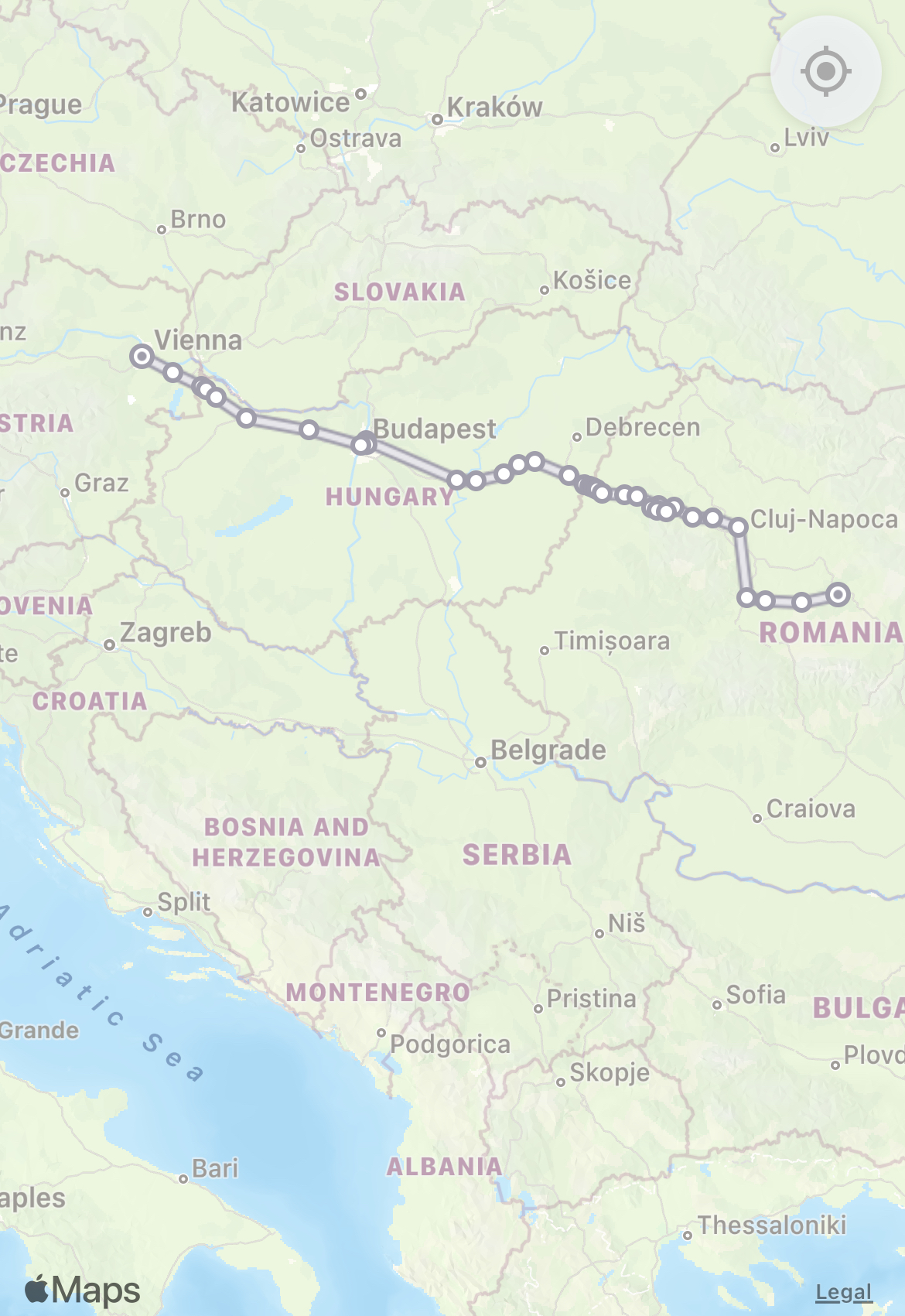
…….. we take the night train to Sighisoara
We were to be in 2 separate male/female cabins….
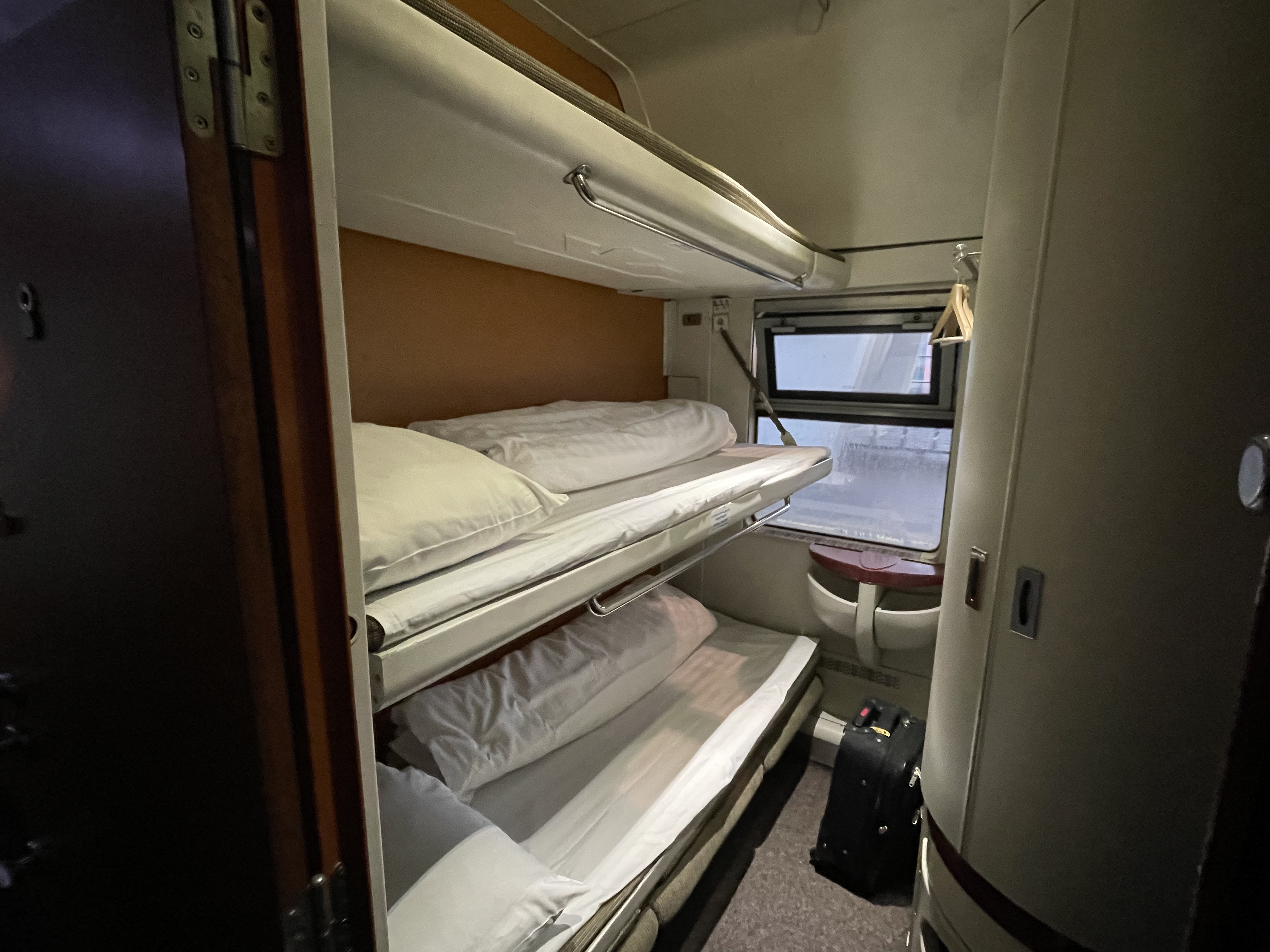
HUZZAA! RO-MAN-IA….. our attendant from last trip remembers us and we r upgraded! …. 3 bed to compartment with loo and shower!
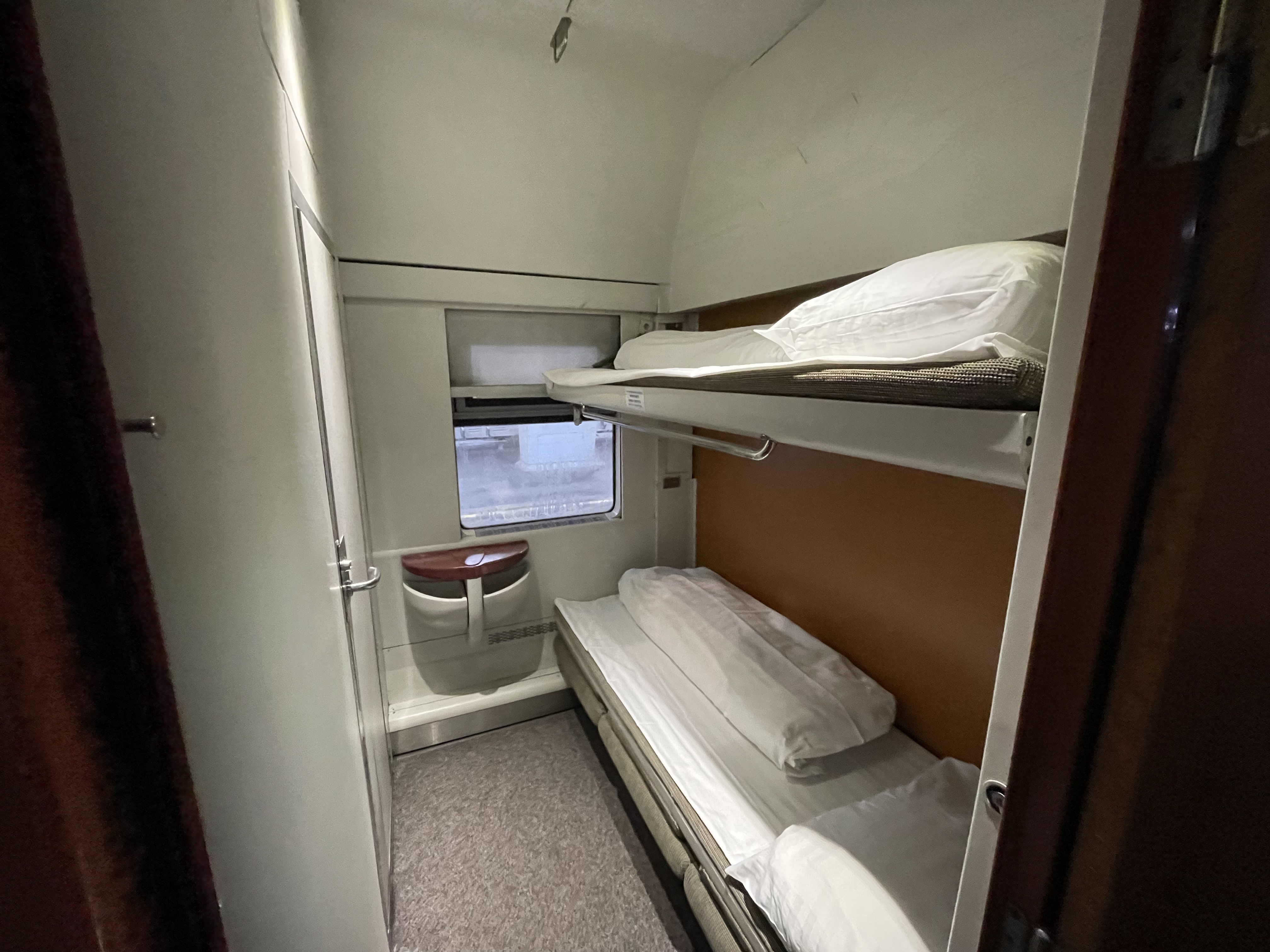
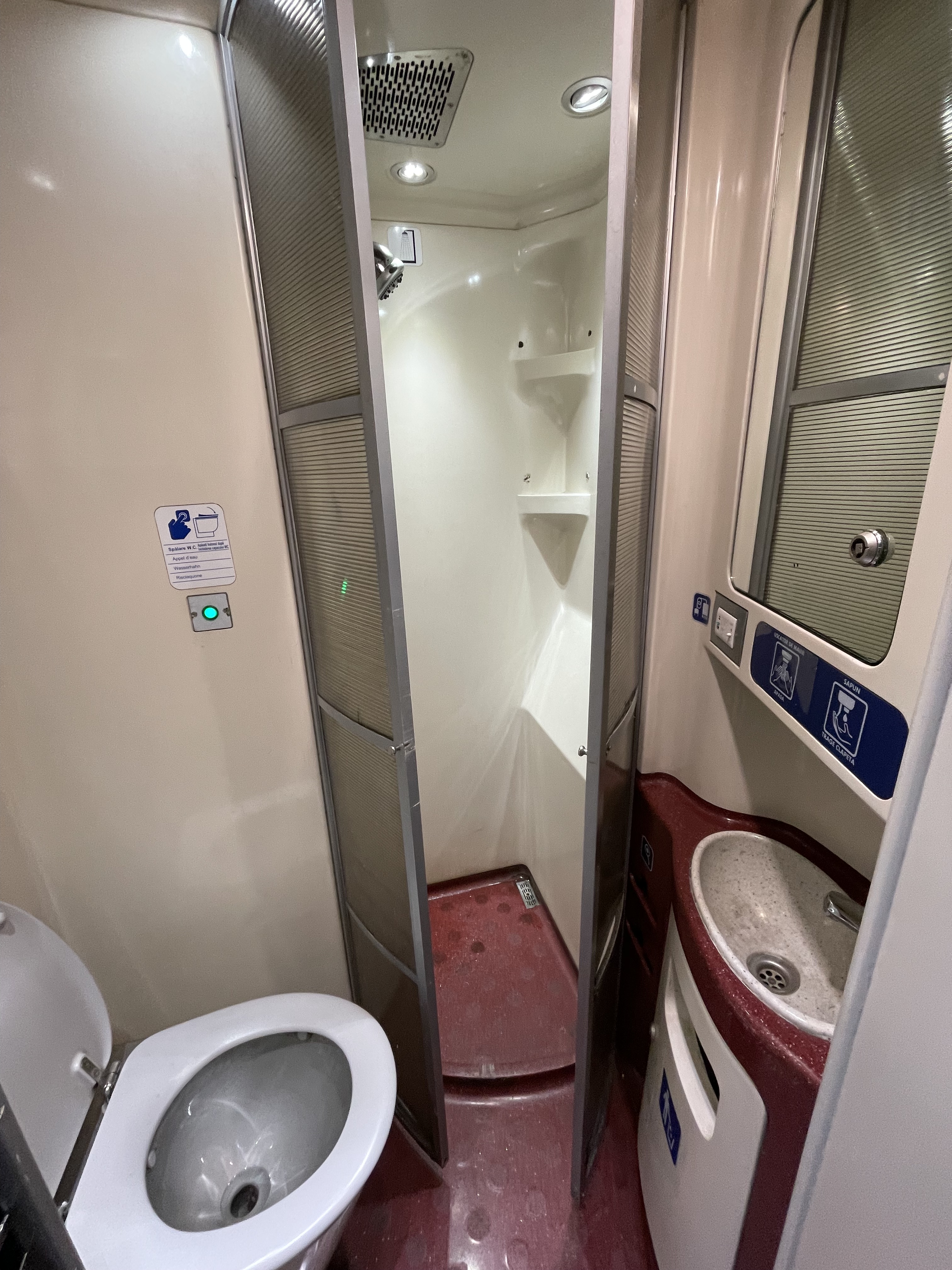
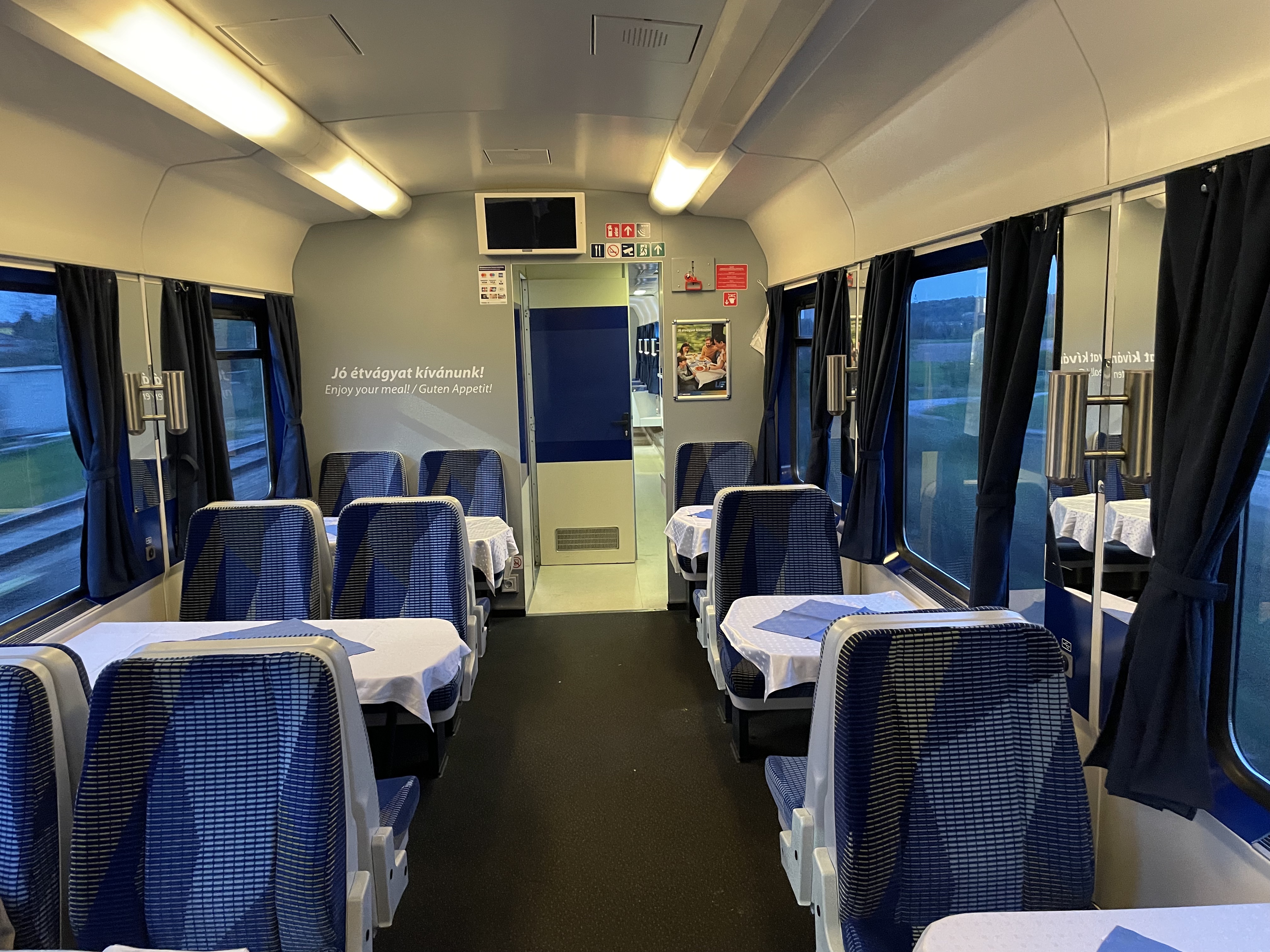
We are tracing (by train) the route we took (en famille) in 1990. Same border points…. Our train has Hungarian section until Budapest…. With restaurant ….. and like then, the pleasure and relaxed attitudes of local Hungarian staff is a real pleasure.
As I write this we enter Hungary (BT message telling me).
The crossing into Romania at Oradea will be different…. But only because it will be at 02.00/03.00 (EET).
27th April to Sighișoara
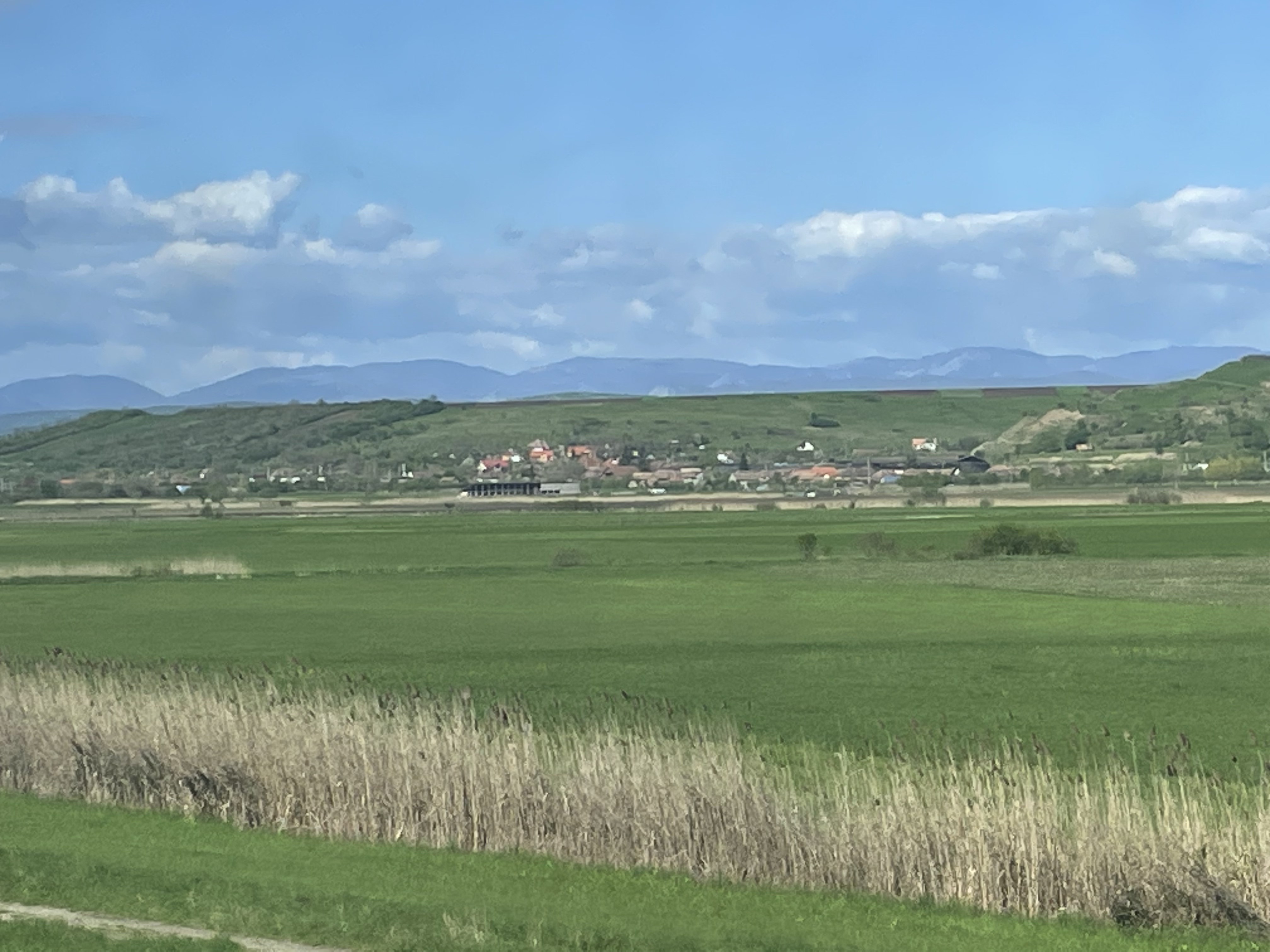

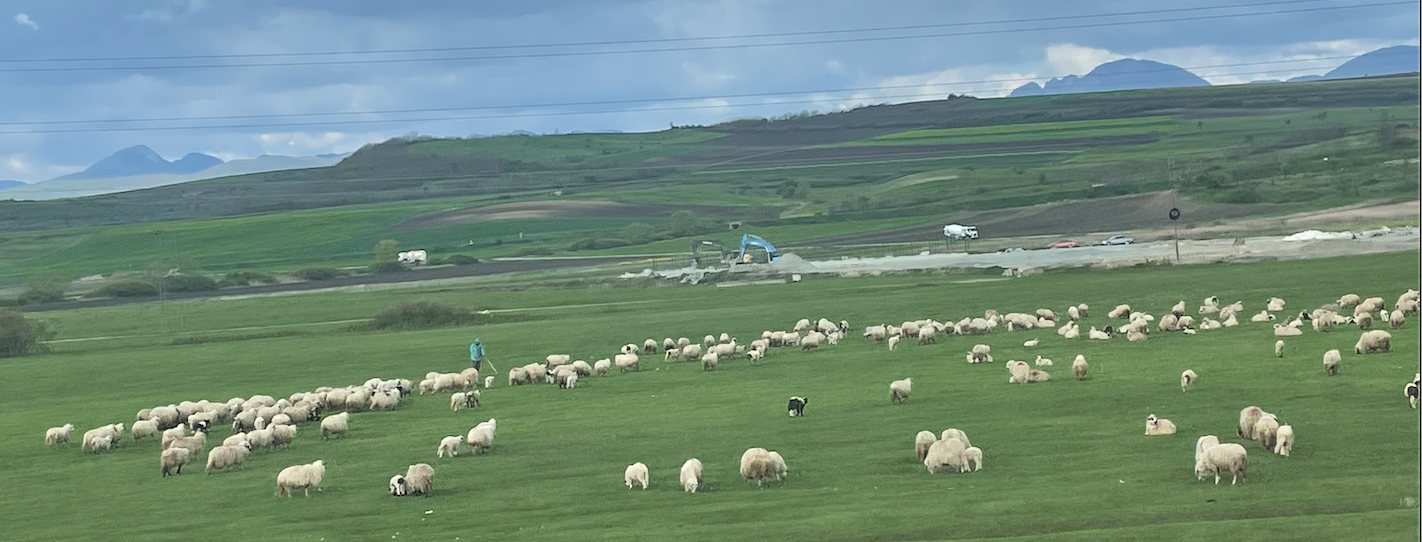
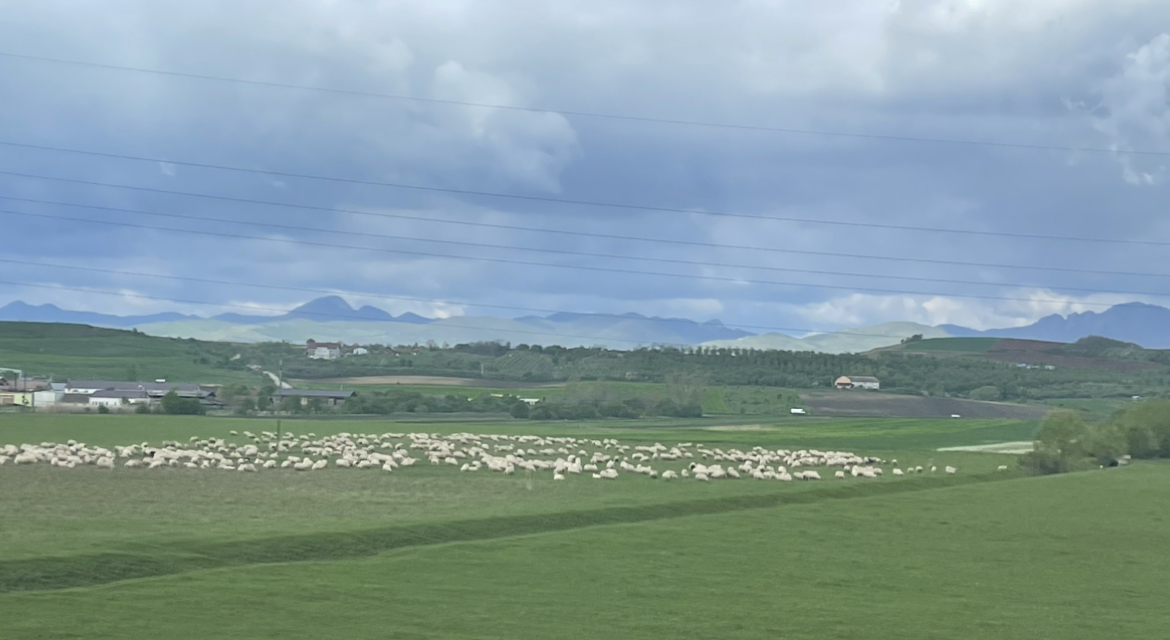
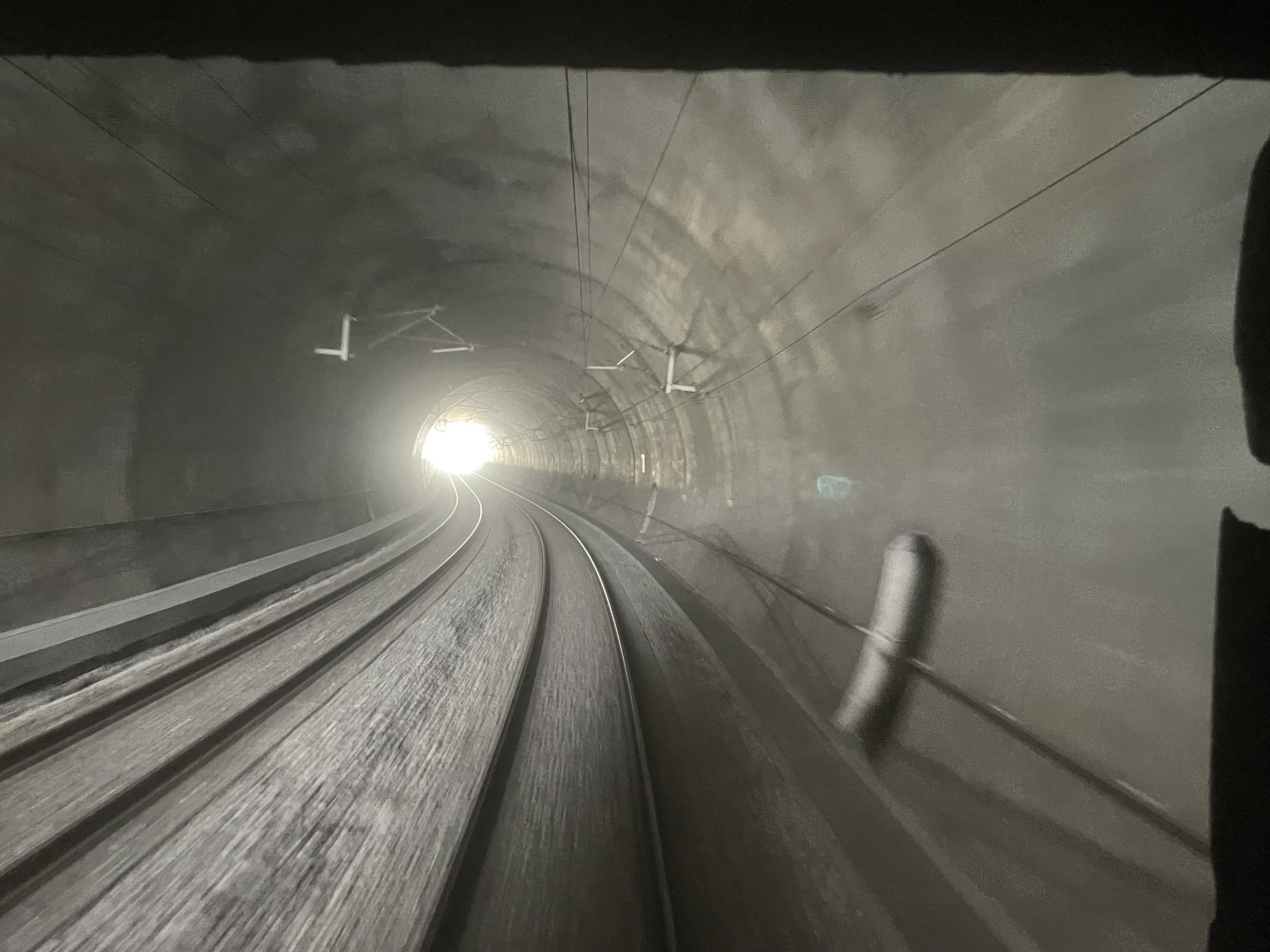
To Sighișoara along the railway being reconstructed between Hungary & Bucuresti.
The reconstruction work made it difficult to cross the tracks

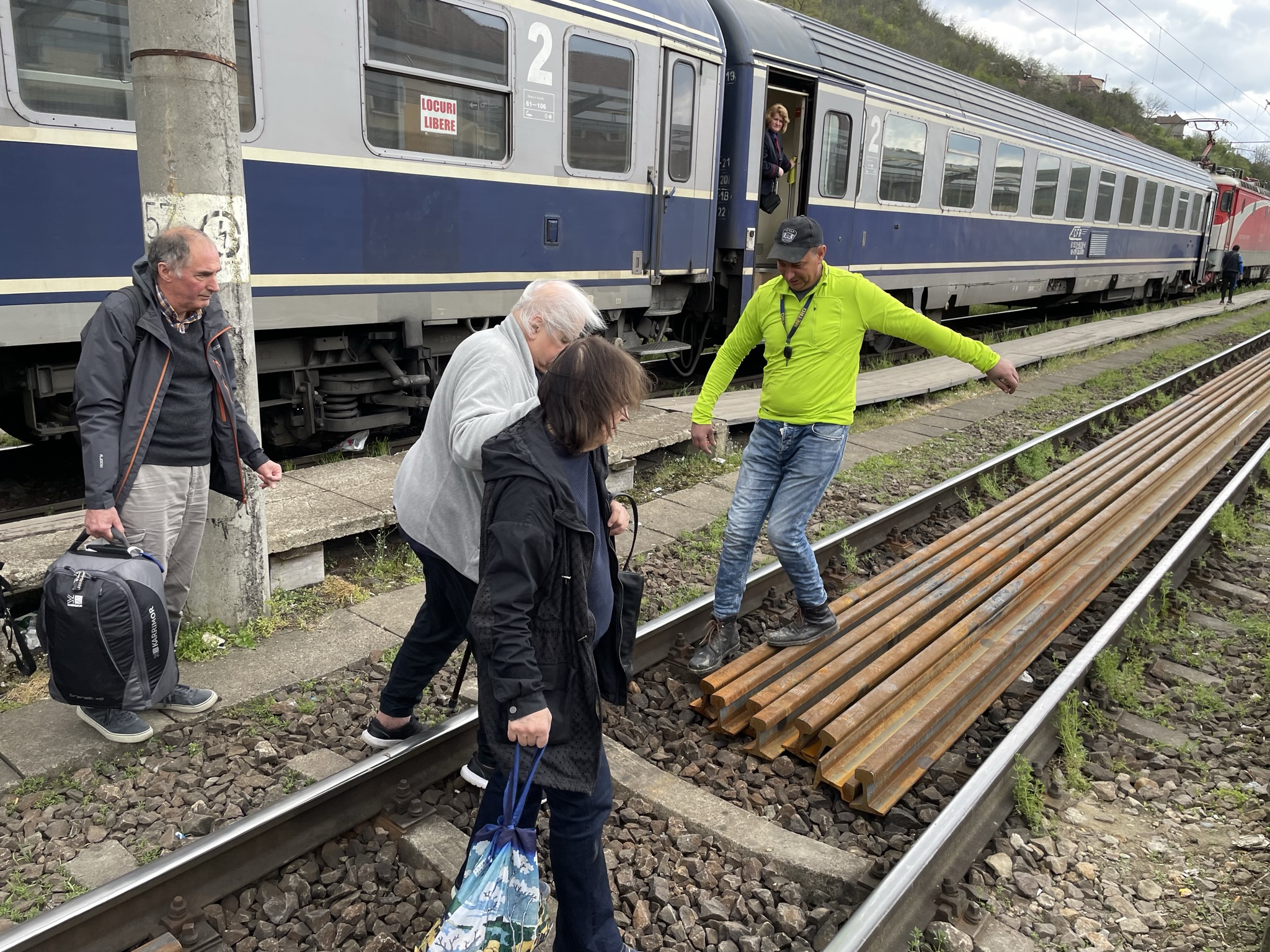
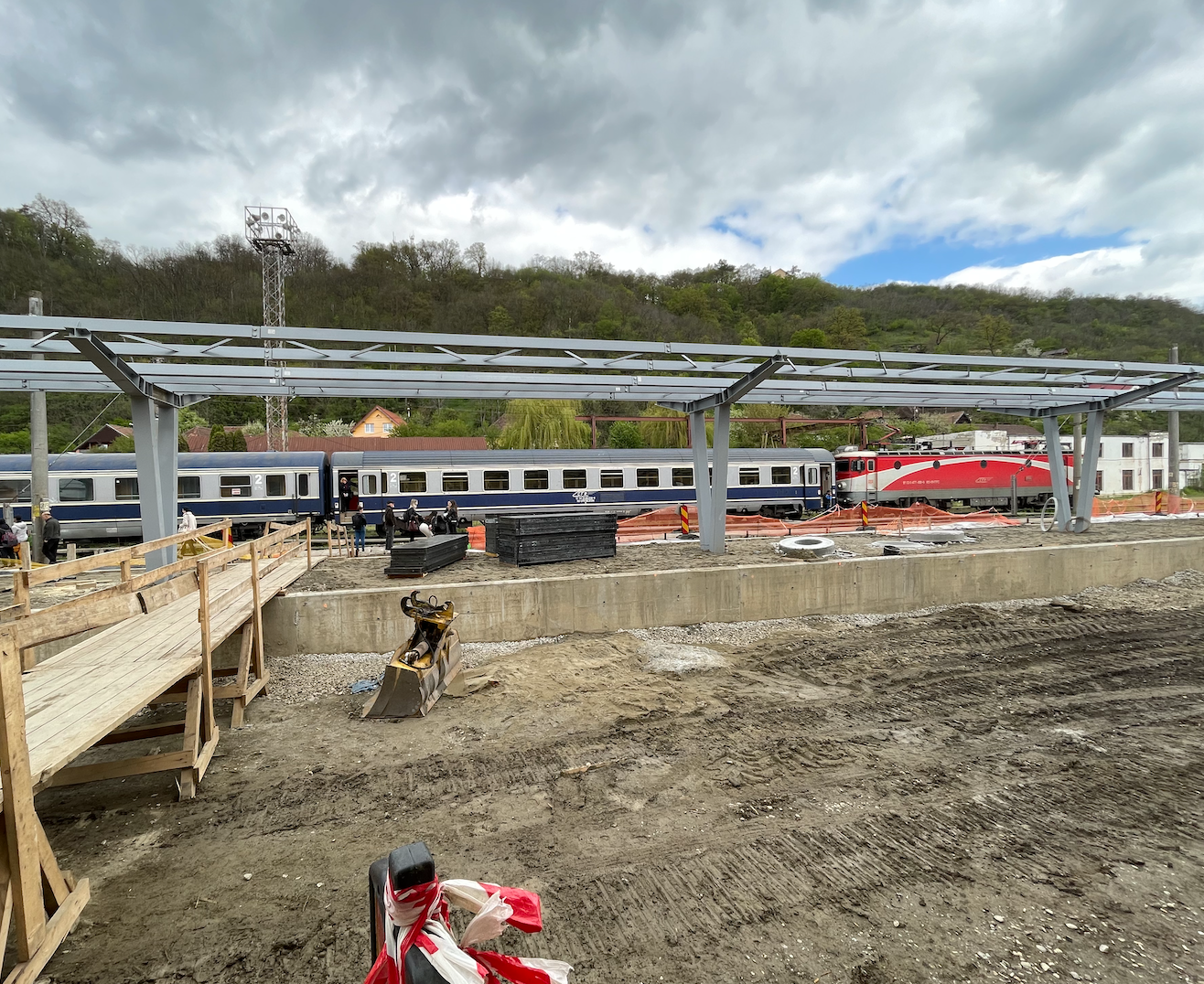
“Welcome to Sighisoara…. Mind the Gap!”

Sighișoara: July 1990.
The arrival point for one journey but the starting point for another that still continues
In 1990 as a family, we had driven from UK to Romania but only had an address in a town in Transylvania called Sighișoara or Segesvár.
We drove into France, then via Nürnberg, around Vienna, into Hungary & through the centre of Budapest. After crossing the Hungarian Plain we stopped for one night on the border with Romania, entering the next day & passing through Oradea, Cluj & Tirgu Mures
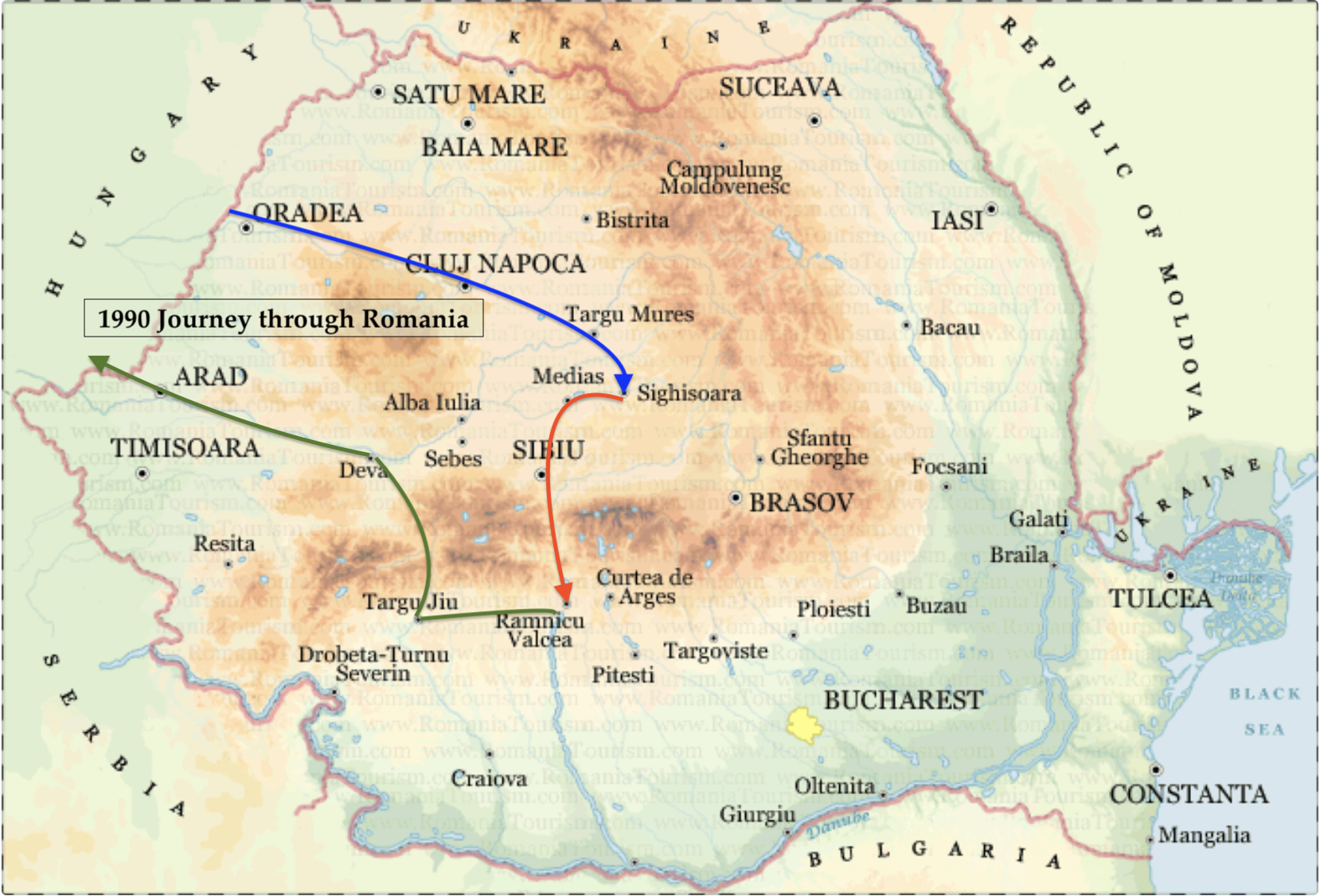

The journey across Transylvania was for us as a family, an adventure into an uncertain & very poor, land. We saw a lengthy stationary Romanian armoured column which seemed to have been halted because vehicles at the front had failed and were being supported on random bricks whilst wheels were changed.
We knew that the area had a significant Hungarian speaking population & that our contacts were Unitarians & members of that community. Somehow we managed to make contact & receive instructions to go to a hotel in the town centre.
So: on a very quiet Saturday afternoon we found the hotel – and were greeted with a warmth that was almost as if we were a returning family – with Vera hugging Jacqui as if she was the long-lost sister!
There was some reality to this – not because there was a familial relationship but because this was a period of very dramatic change for the previously communist countries.
They were rejoining what they sensed as the democratic, free-nation family – it produced (and still produces 33 years later) a mixture of anticipation & excitement, flavoured with an uncertainty of the unknown (which included the ancient fear of Russian reaction).
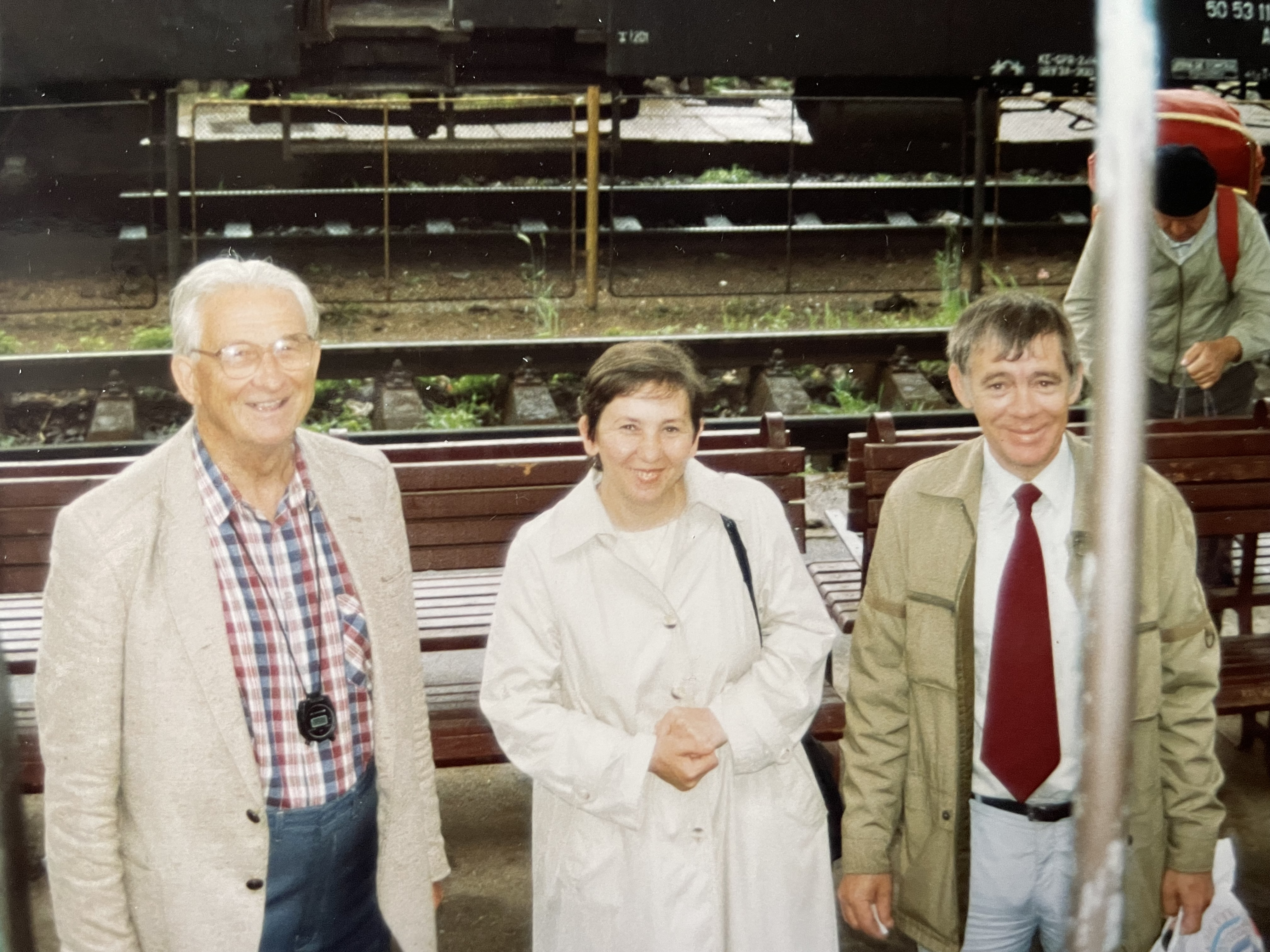
Revd Ferenc Nagy, with daughter Vera & her partner Béla Jakabházy – our generous first hosts in Romania : At the station after a visit in 1992
We were provided with accommodation in their apartments & spent a few days that became a very rapid education about a vast range of issues, history & culture.
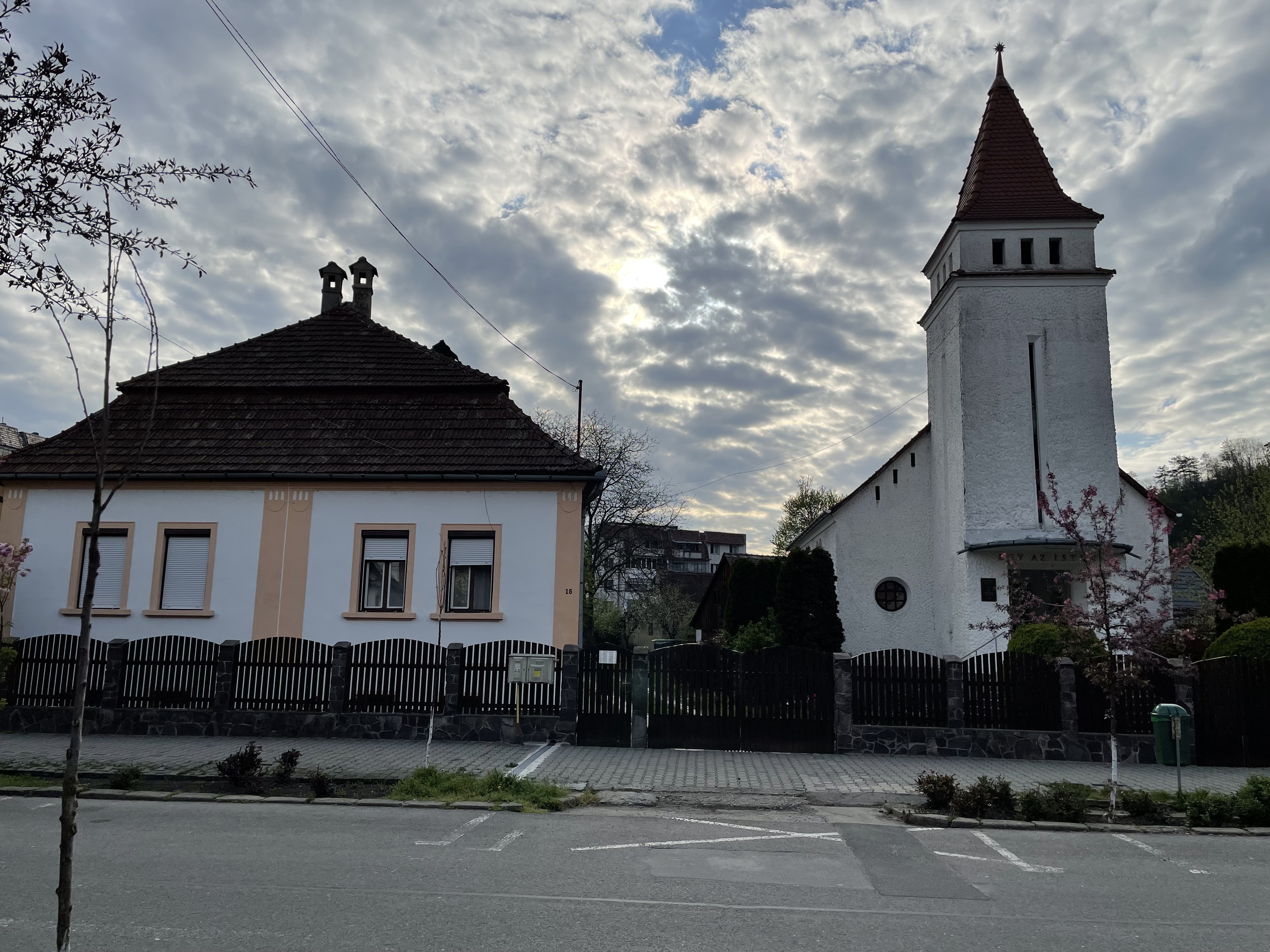
It was a strange journey and arrival, very little traffic on the roads and the town centre utterly quiet. The traffic lights at a crossroads didn’t work – we thought it was as in some place that at weekends they were switched off….. but no, this was the normality.
Normality included there being no products in shops – Romania had been turned into a barter-gift based economy.
Whilst staying with the family a friend arrived and delivered cheese – taken from the factory in which she worked in exchange for lessons in English.
We visited the bar which (still) exists in the building where Vlad Țepeș (Vlad the Impaler) was born. They had beer casks (for locally produced product) – empty:
‘Where is the beer?’
‘It has all gone to the seaside’.
For sale there was only a curious green liquid & Cuban Rum.
All institutions, commercial premises, community centres, sports clubs etc were State owned and controlled. Volunteering was compulsorily managed (!).Any private initiatives or commercial activity was officially prevented.
Shops (as below) simply had pictures of items in the windows. Usually there was nothing inside.
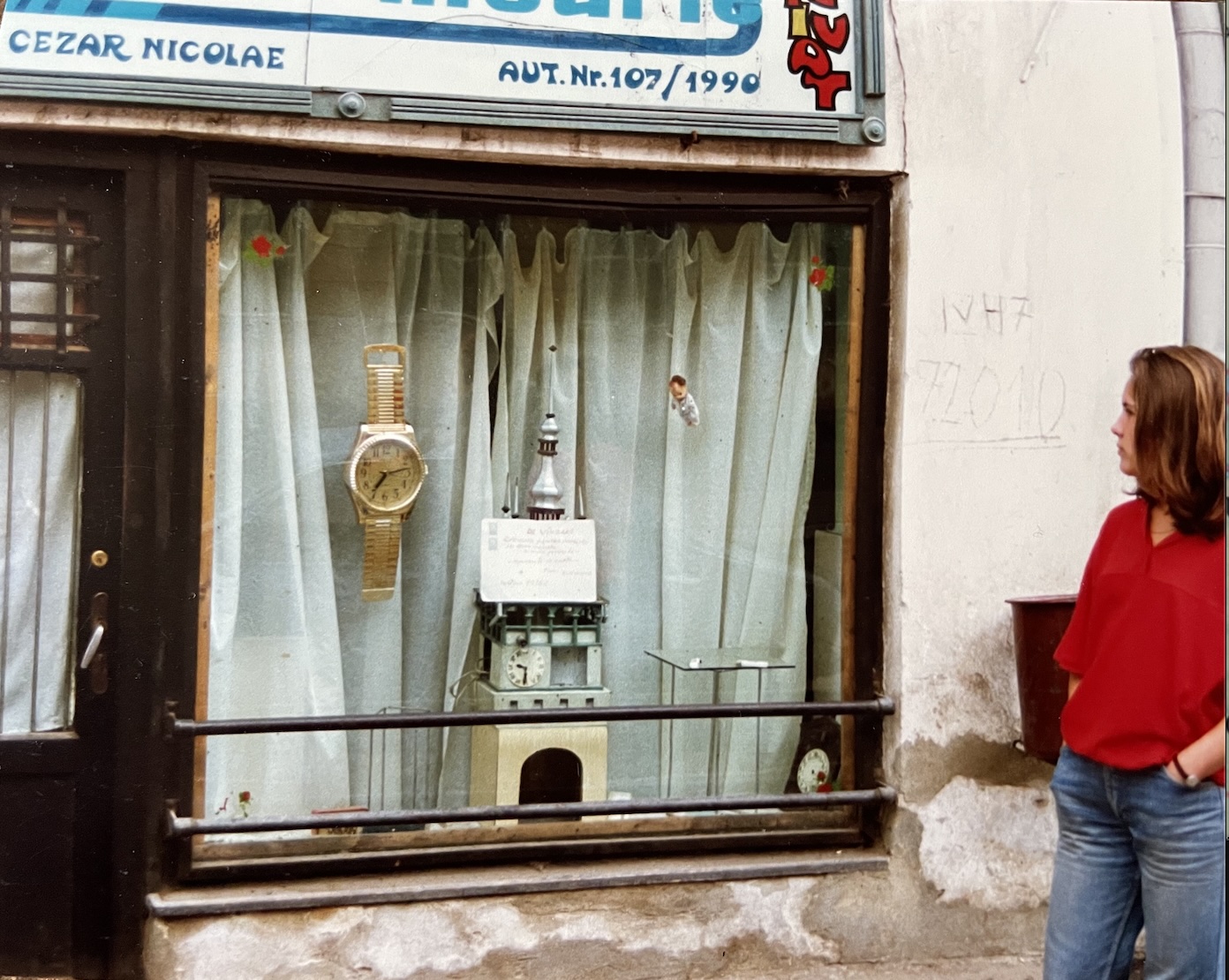
The shoe shop had pictures of shoes in the window – but no shoes for sale inside. This discovery so impressed our 8 year old son that it stayed with him as a question…. ?Why?… & 10 years later featured in his SOAS, London University application – for Development Economics.
Fear was present – in the family apartment the radio was always on & turned to loud when we had discussions about the situation in Romania.
Sighișoara /Segesvár / Schäßburg was had been an important Saxon settlement in Transylvania, created in the C12th as part of the eastern defences of the Kingdom of Hungary.
The Saxon settlements were significant but the German speaking inhabitants were encouraged to leave during Ceaucescu’s time and after the revolution of 1989.
The Transylvanian region was part of the Kingdom of Hungary until 1920 when, after WW1 Hungary, along with several other ‘losing’ combatants (Austria & Ottoman Empire, Germany) were dismembered. Romania gained Transylvania (also known as Ardeal – from the Hungarian term Erdély). The population of the region was very mixed but with a preponderance of Romanian speakers.
As with many other places related to the ‘dismemberment’ policy of the ‘western’ powers (France, UK & USA) – especially in the post-Ottoman lands of the Middle East – the impact of those decisions made 100 years ago is still part of our living experience.
Hungary lost about 2/3rds of its pre-war territory. The resentment caused probably still provides support to politicians in Hungary who try to forge an independent voice whilst being economically tied into the EU structures.
On the Sunday we joined the family in the first public memorial of an important conflict from the C19th: Battle of Segesvár. This was a defeat in 1848 of Hungarian Revolutionary Army by Russian forces supporting the Austrian Crown.
Among the dead was the important poet Sándor Petőfi who is now the Hungarian National Poet.
The revolutions that occurred in 1848 were a mix of liberalism & romanticism which also fed into nationalism. The established powers were successful in containing the revolutionary fervour. The arch-conservative Russian forces were important but the revolutionary impact led eventually to the creation of a dual monarchy – Austro-Hungary for the Hapsburg Empire. The ideas also fed into Russian consciousness.
Much of ‘the present’ can be traced back to this period.
Russia, in 2023, is, within Europe, the only completely negative national actor. In this respect it is somewhat the same as the Russia of 1848….. but others are able to build on resentments created in the intervening period.
Curiously Hungary, whose revolutionaries once wished to create an independence, now stands obstructing support (& ‘friendly’ towards Putin’s Russia) for what is largely a similar evolutionary change in Ukraine that in 1956 Hungary fought for.
By arriving, by chance, on the memorial weekend of the battle, we were immediately bathed in an almost bewildering amount of complex and important history. We learned more in those 2 days than (I suspect) many non-Hungarian Romanian nationals, fully understand.
The battle-site Memorial was held with some considerable trepidation. This was a First Time… since the removal of Ceaucescu & (at least formally) the ‘Old Regime’. Buses of supporters had driven from Hungary, others from local Hungarian-speaking Romanian population arrived in considerable numbers. Most were wearing of varieties of national costume. Though successful people’s eyes wandered cautiously, checking others and the sky and expecting the Securitate. We were the only non Hungarian speakers present….. I was described as looking like an elderly American (but a nice one!)…. I was 45!
Before we left Romania in 1990 we were beginning to grasp some of the issues that exist in the country. In this we were considerably aided by Radu Alexandrescu to whose town, in the old territory of Wallachia, we drove after leaving Segesvár.
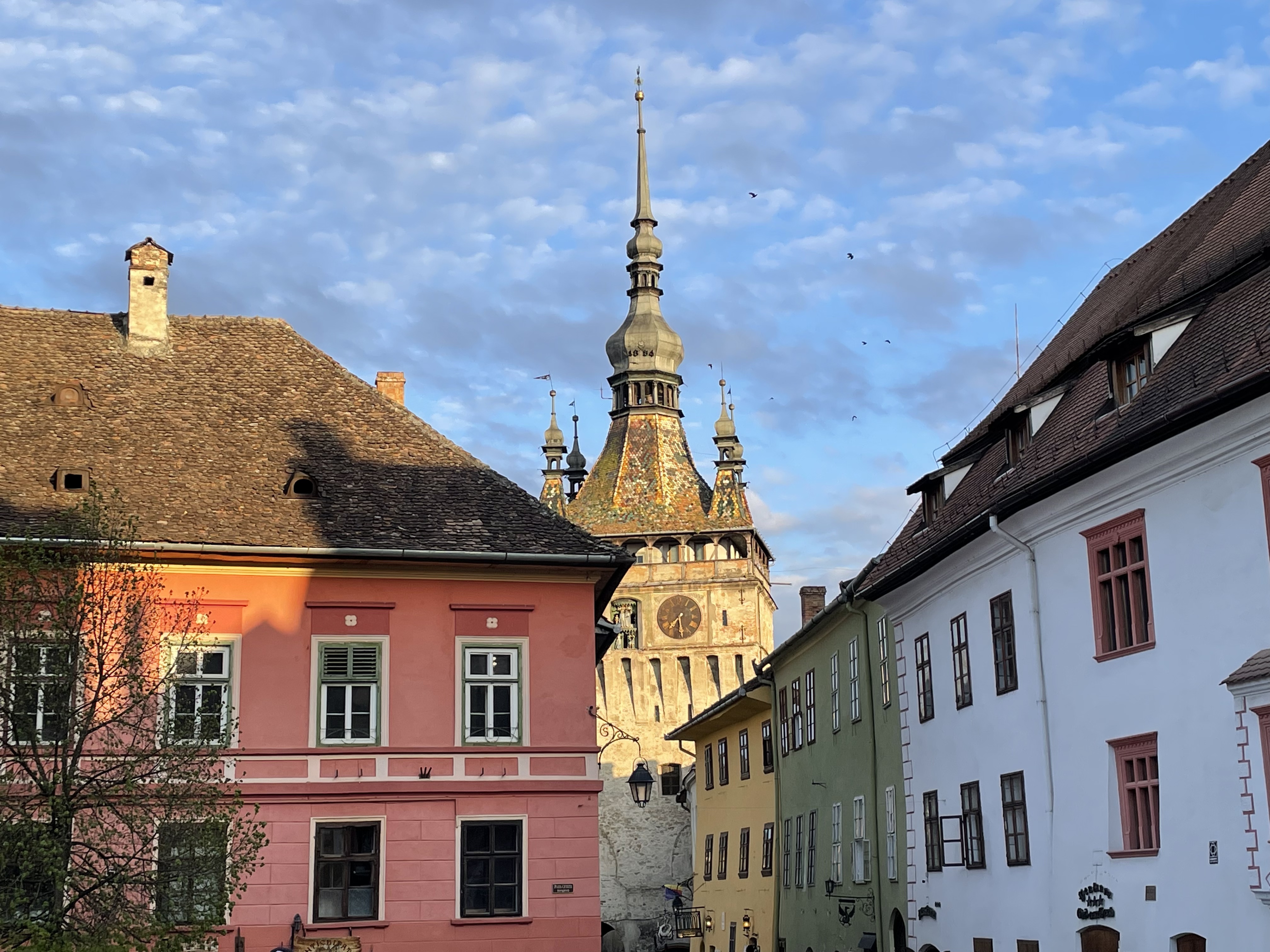
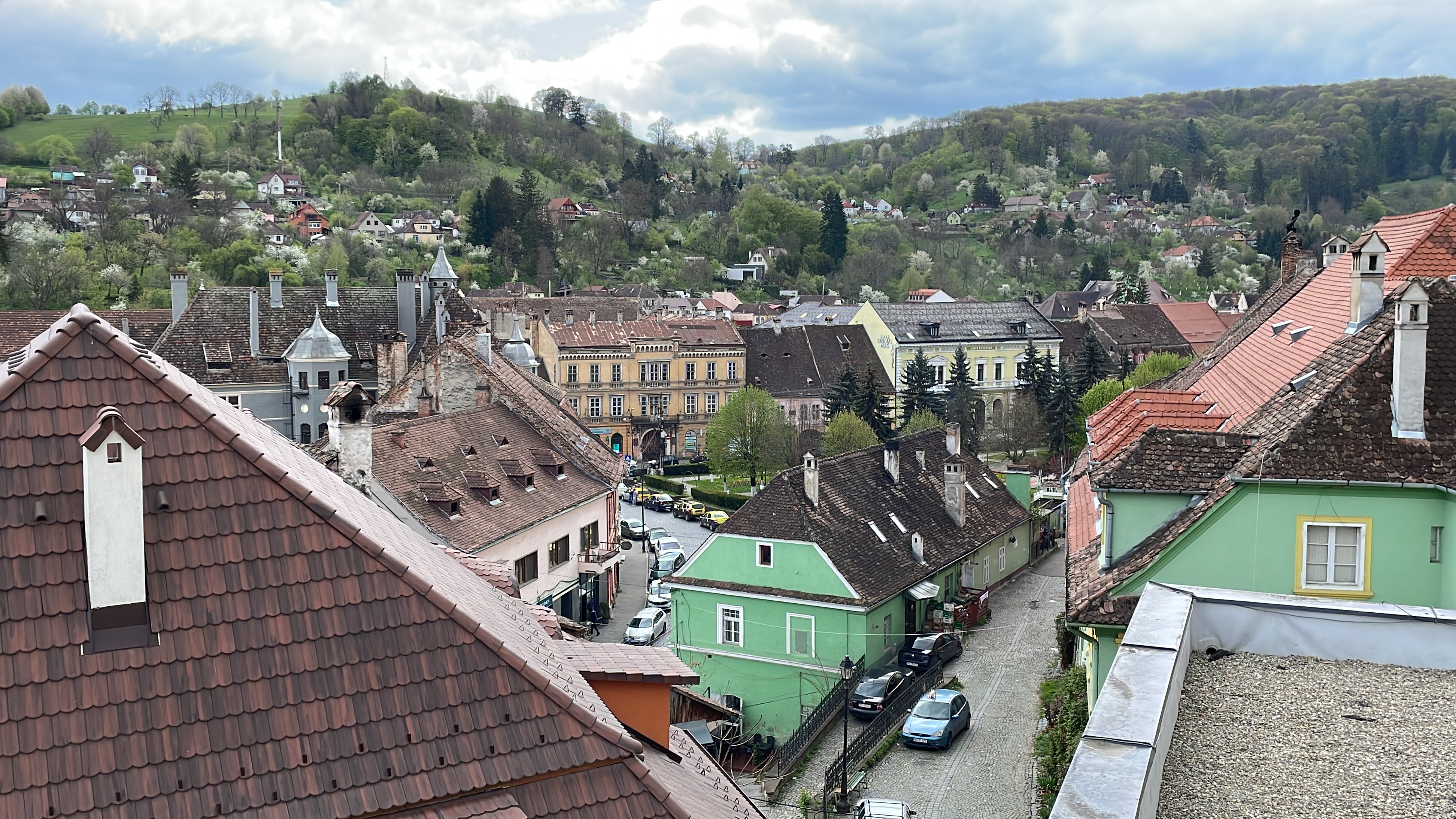
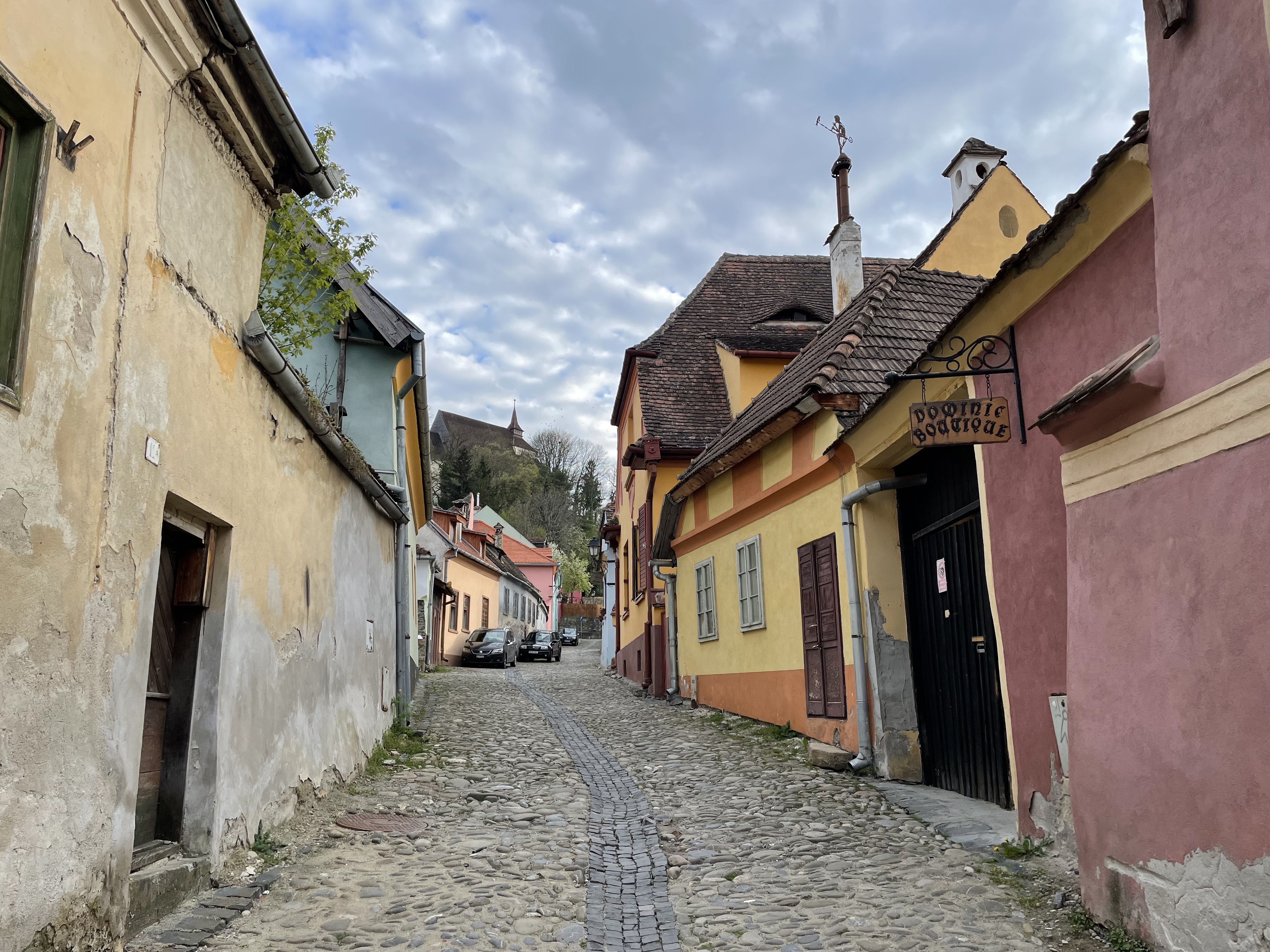
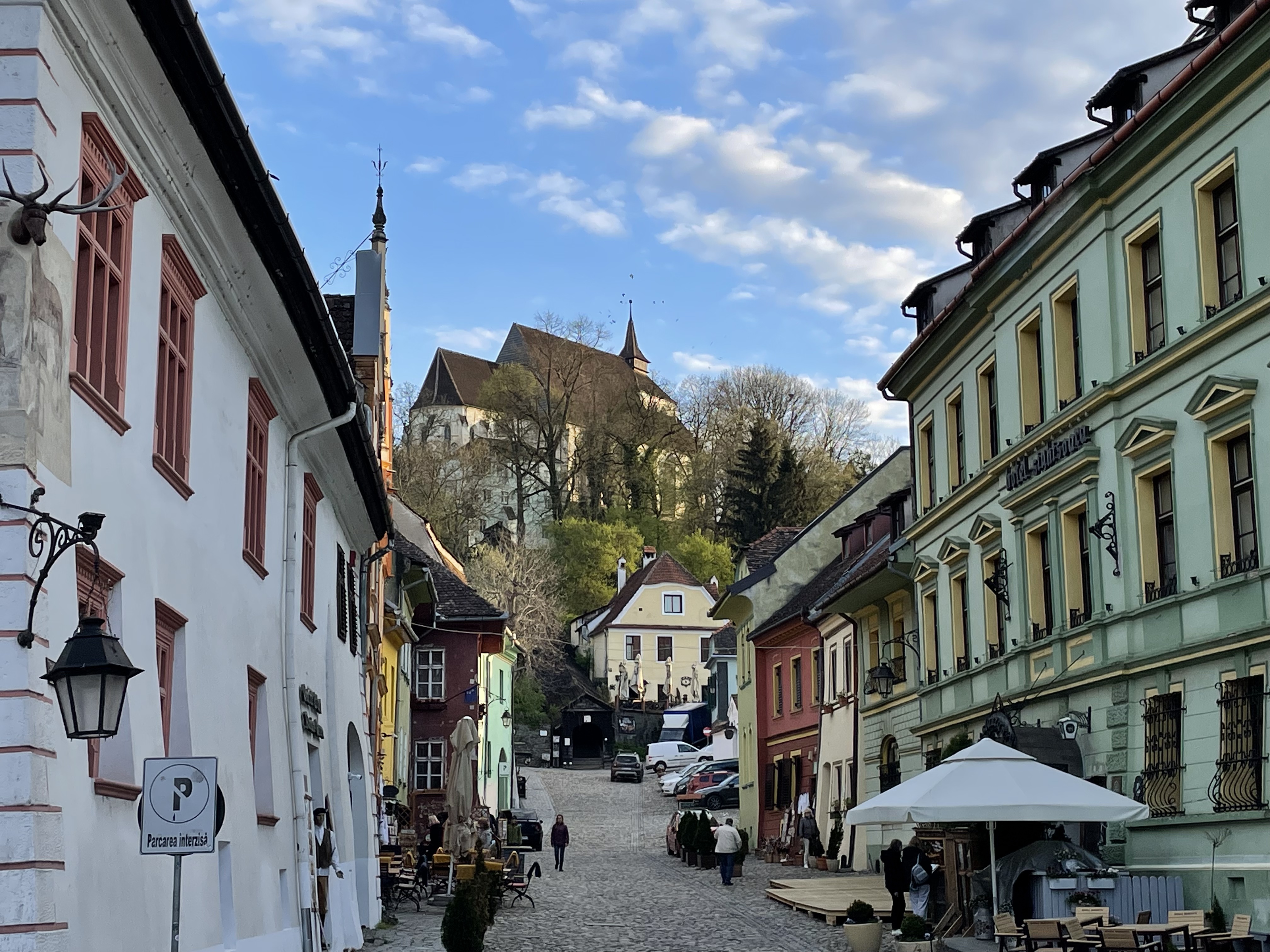
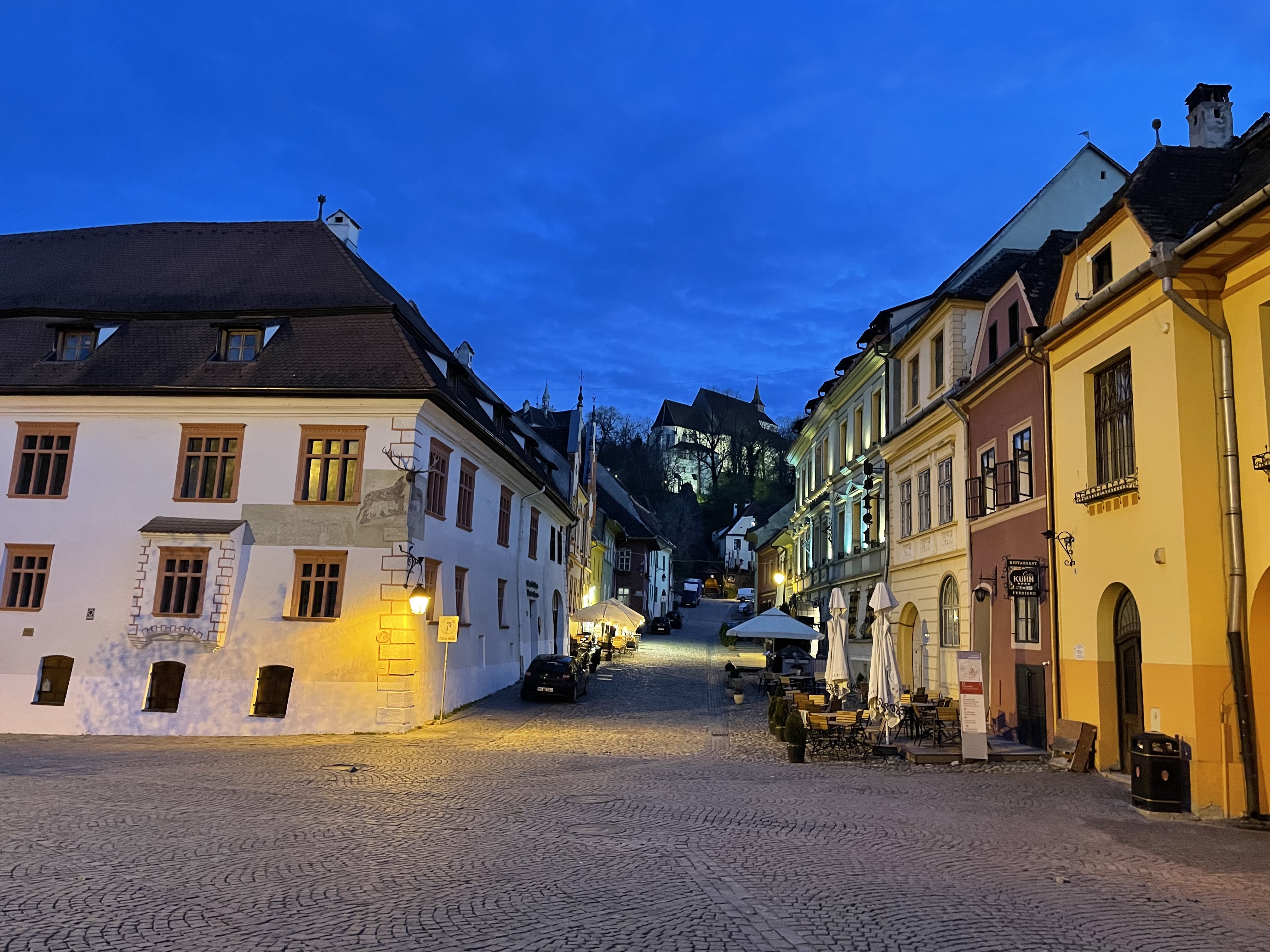
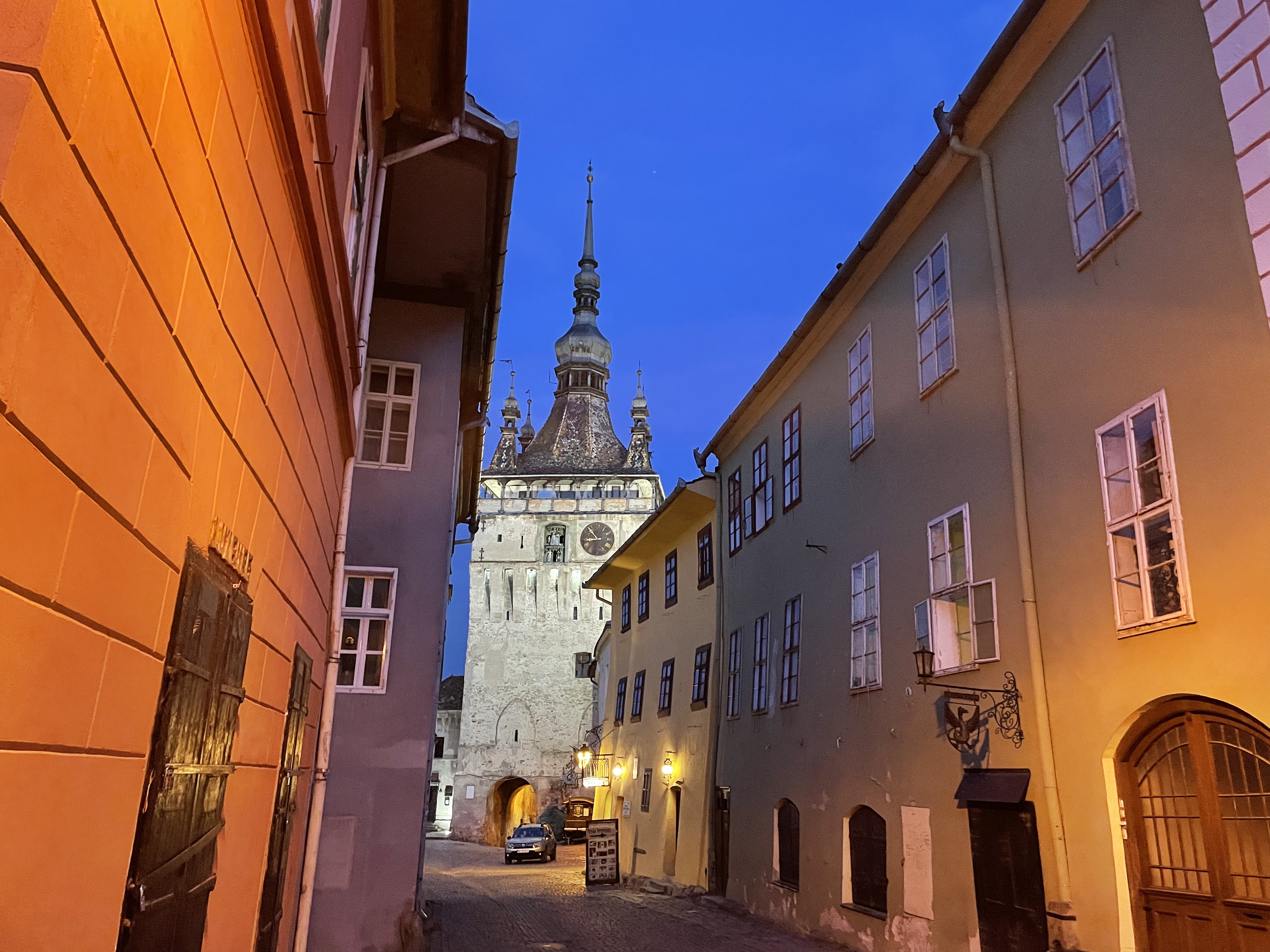
Much has changed – but the basic structure of one of Europe’s most significant mediaeval German towns remains the same.
“I am following your progress on your map. It makes me realise how small the world has become since my first journeys through Europe and how small minded some of us are in the UK. Go well!”
……….
That issue is the most painful part of this journey.
Most people we meet are not aware of the degree to which the U.K. has chosen to separate…. And many regard us, at best, as bizarre.
No matter how encouraging our partners and friends are, the impact of discussion about the practical issues of Brexit are deeply depressing.
I’m standing at a viewing point over the town…. A place beneath which (where the taxis are standing) we arrived as a family …. And were met enthusiastically by locals. It was a time when the U.K. was engaged… unlike now when I read today that a member of our government avoids committing to helping the Sudanese & incorrectly suggests refugee responsibility lies with the UN ……. Immoral and shameful.
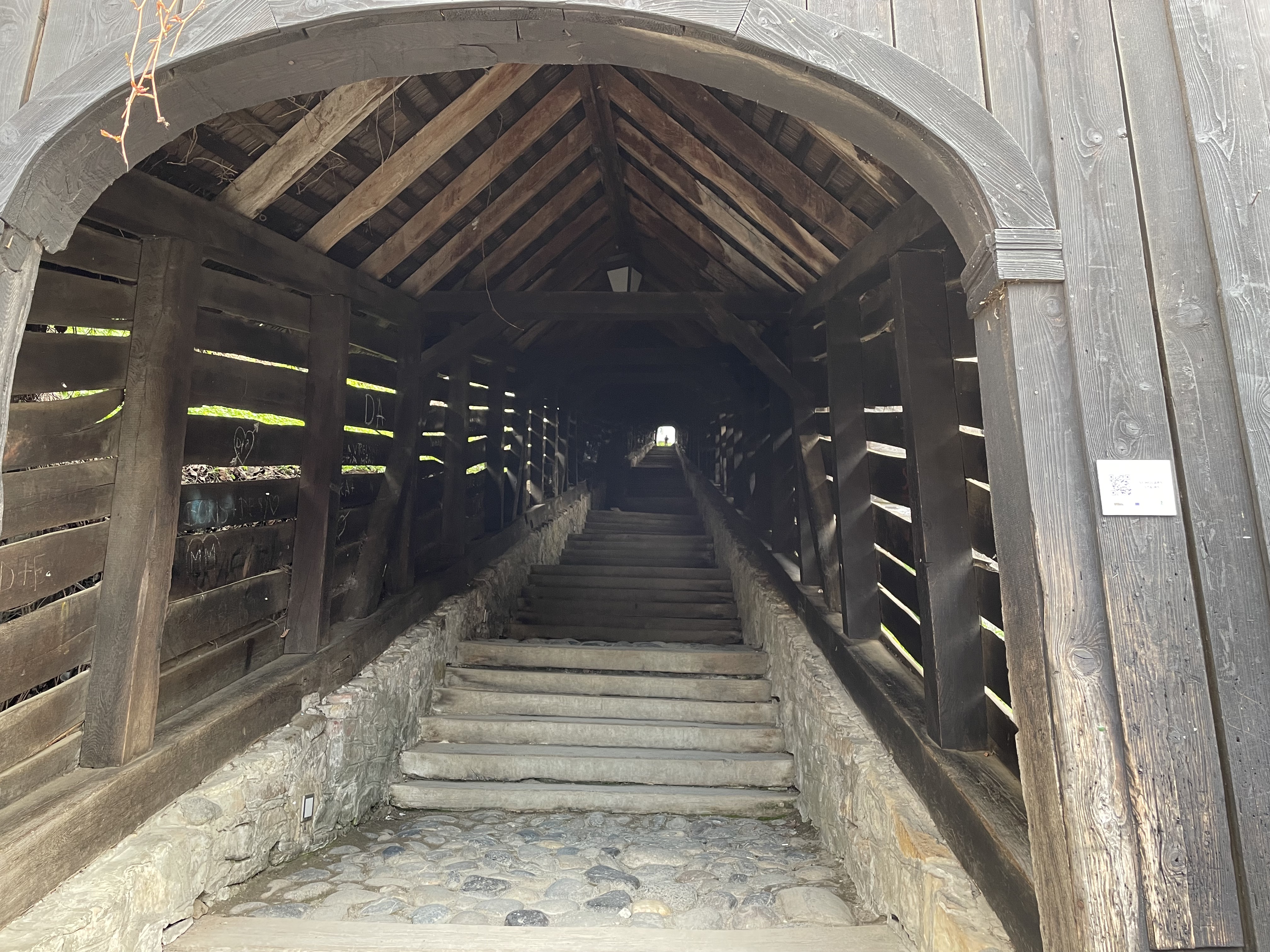
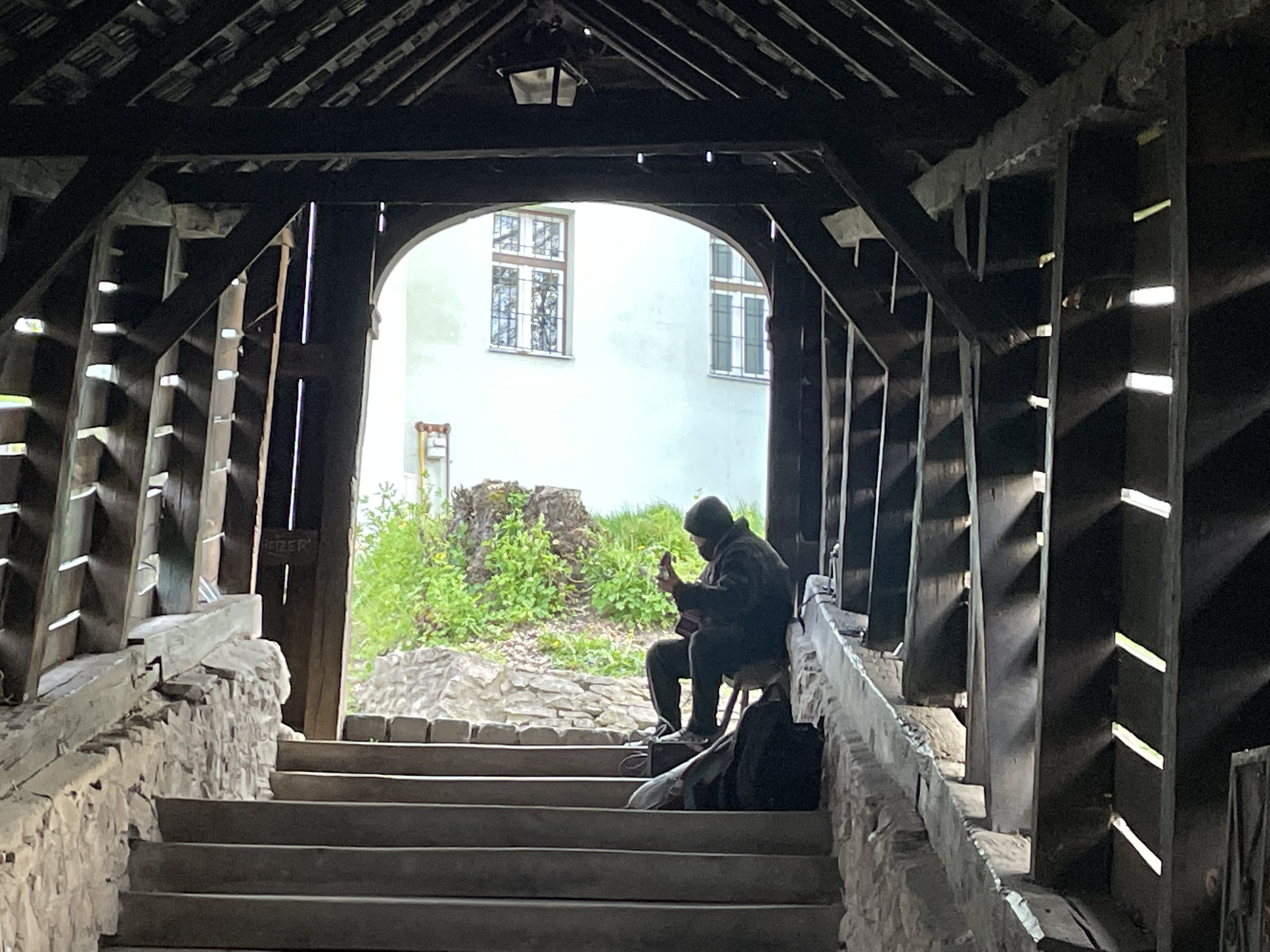
The guitarist was playing “Stairway to Heaven’.
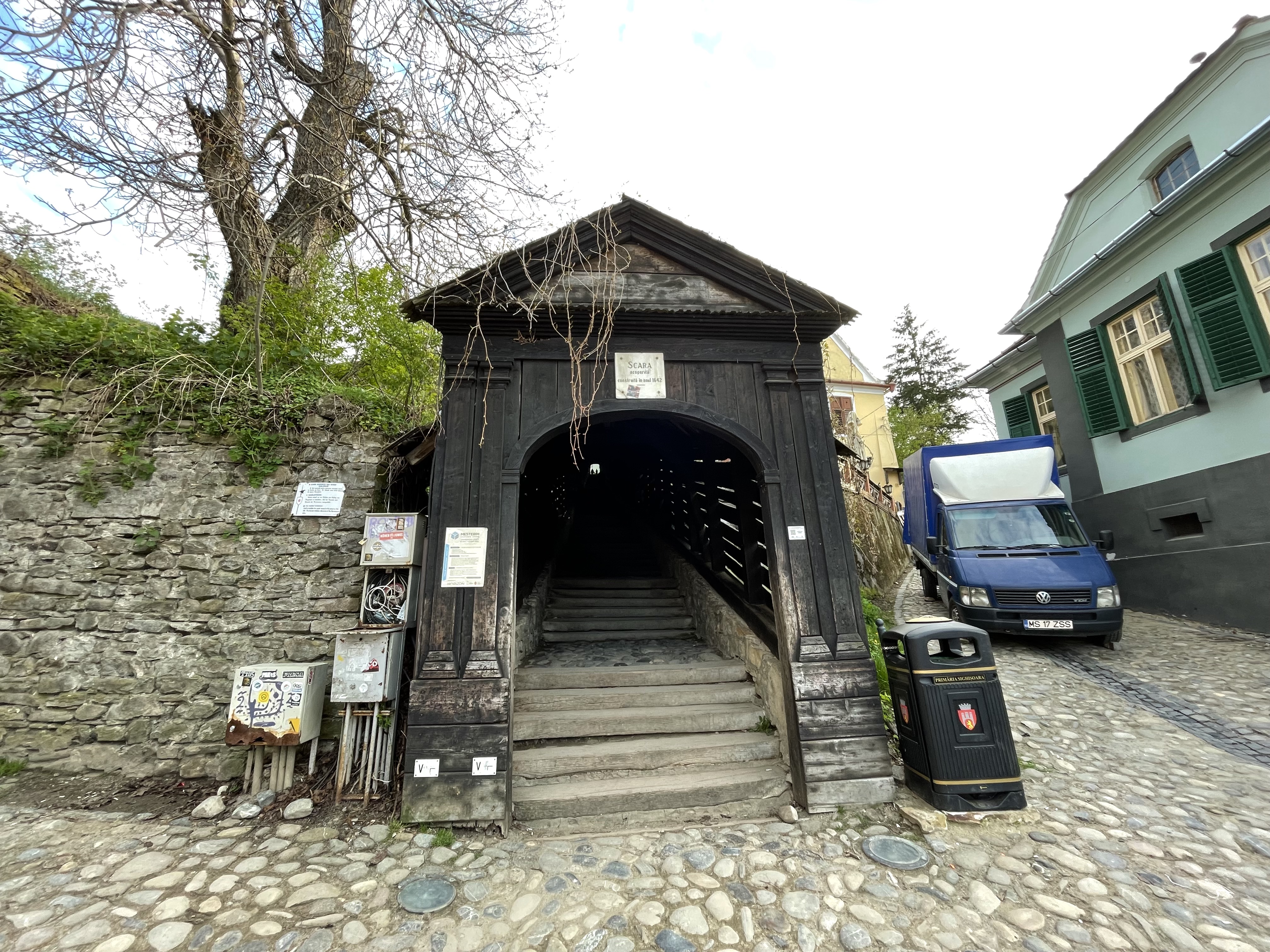
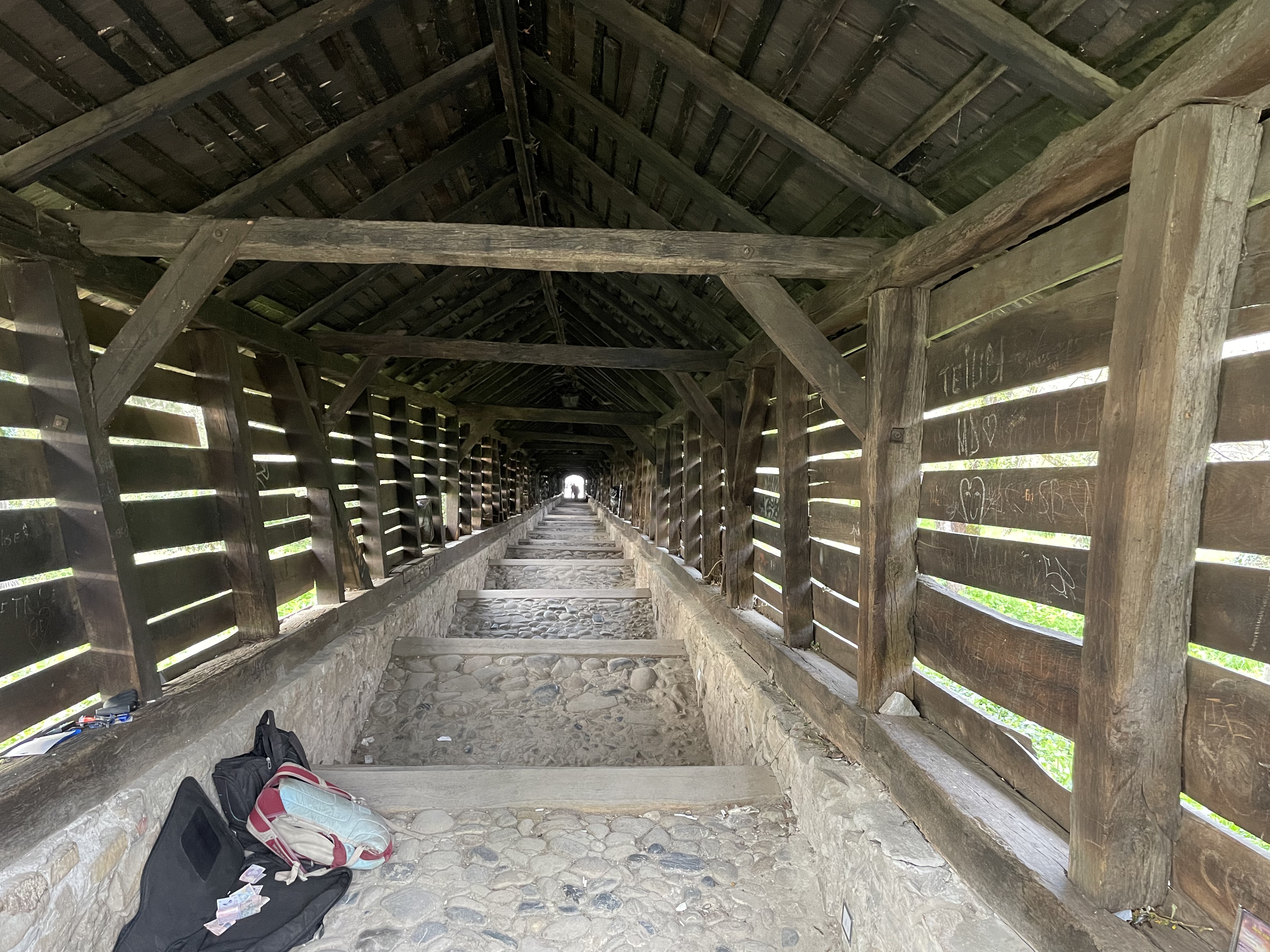
There is still a school at the top.
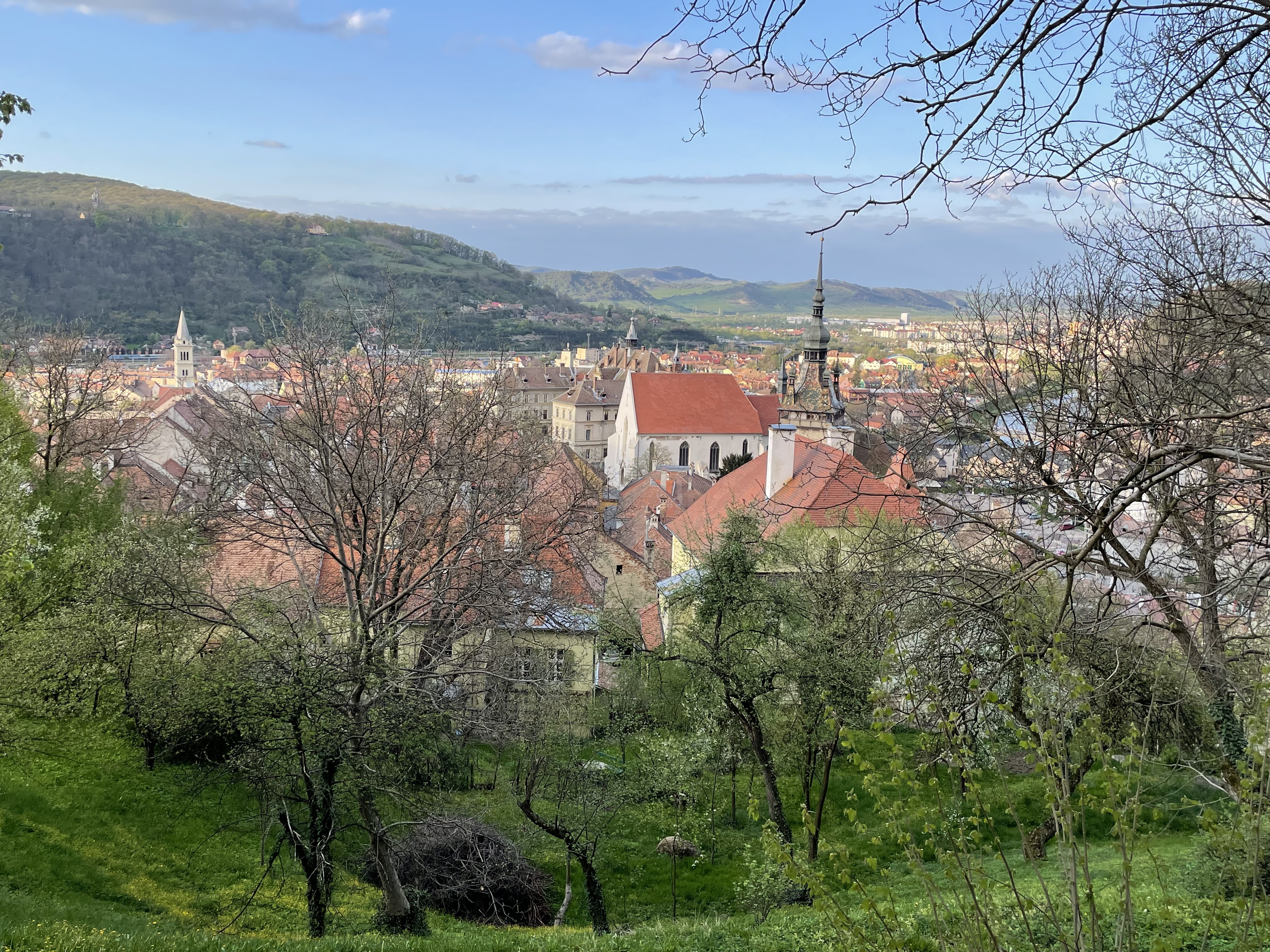
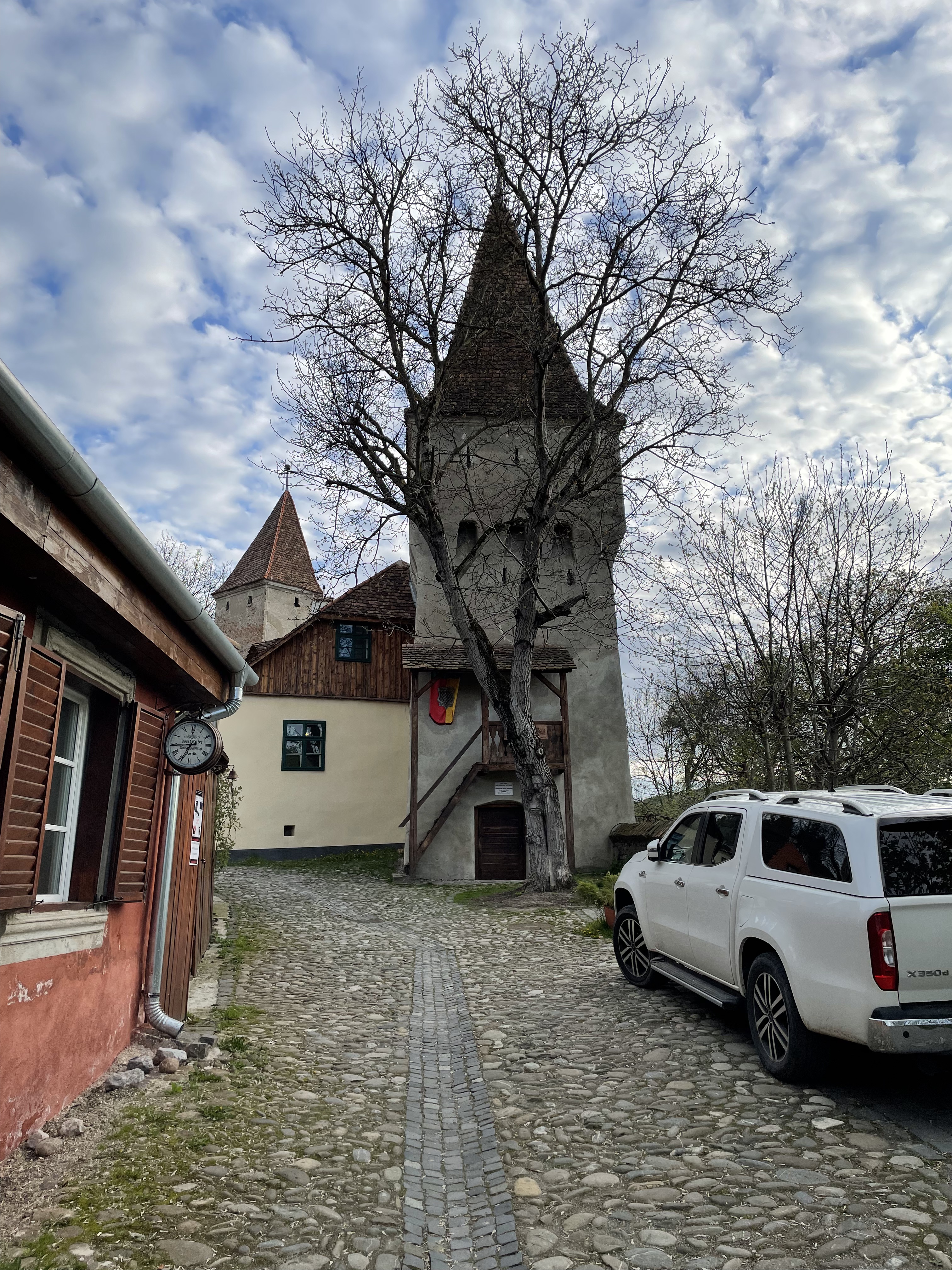
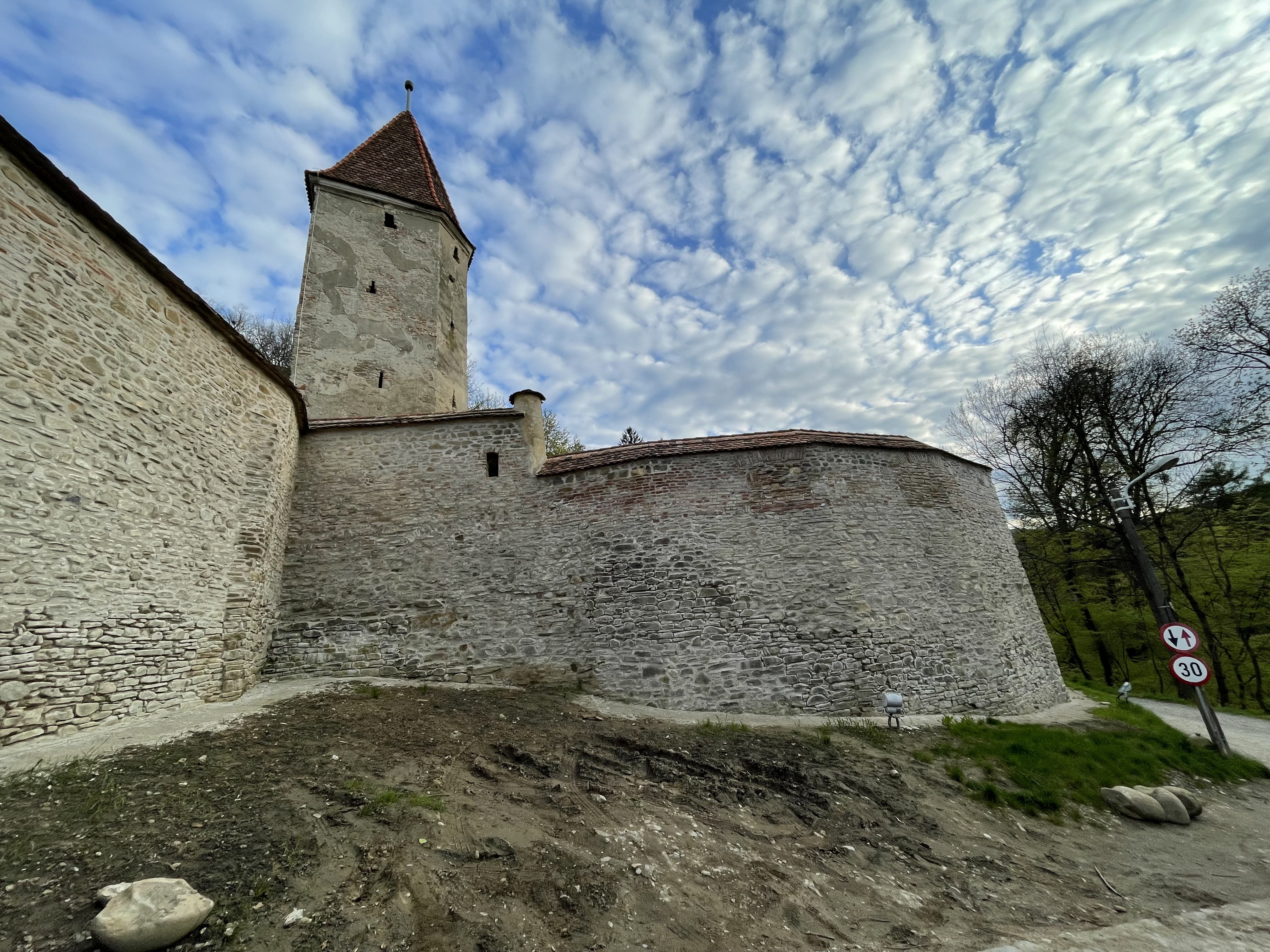
During one of our projects, we stayed in this tower.
 Inspirational Pathways