8th May: to Bologna
Making Tracks:
Memories, Myths & Magic
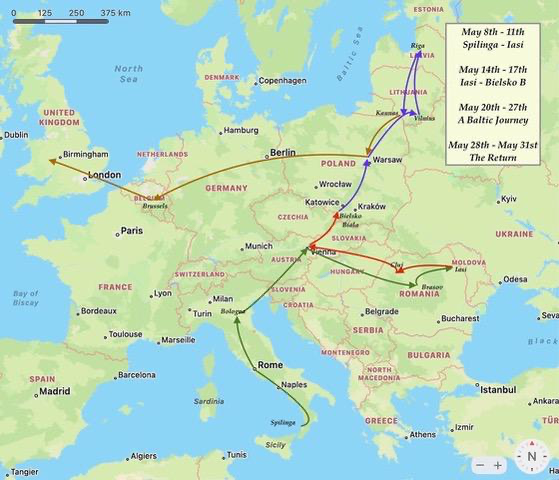
Spilinga, May 2023, appropriately our southernmost link:
we begin the final part of our 3 month travel
Linking project partners in Spilinga, Iasi, Bielsko-Biała, Riga & Kaunas
We created the journeys to bring together some of what we’d shared with others across Europe.
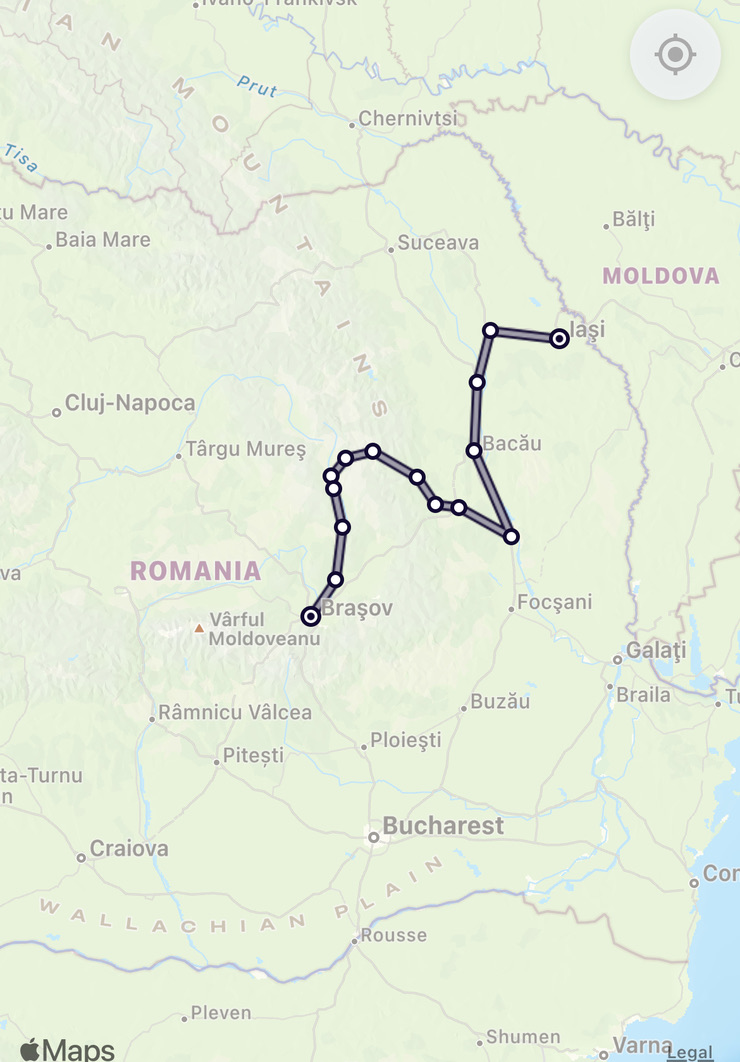
The final route of the 3 Month No Kerosene Tour
‘Writes our Line of Experience & Learning’.
Maybe others, in their time, will create & map their own Routes of Personal Significance
8th May: to Bologna
One additional task, presented by Pasquale,
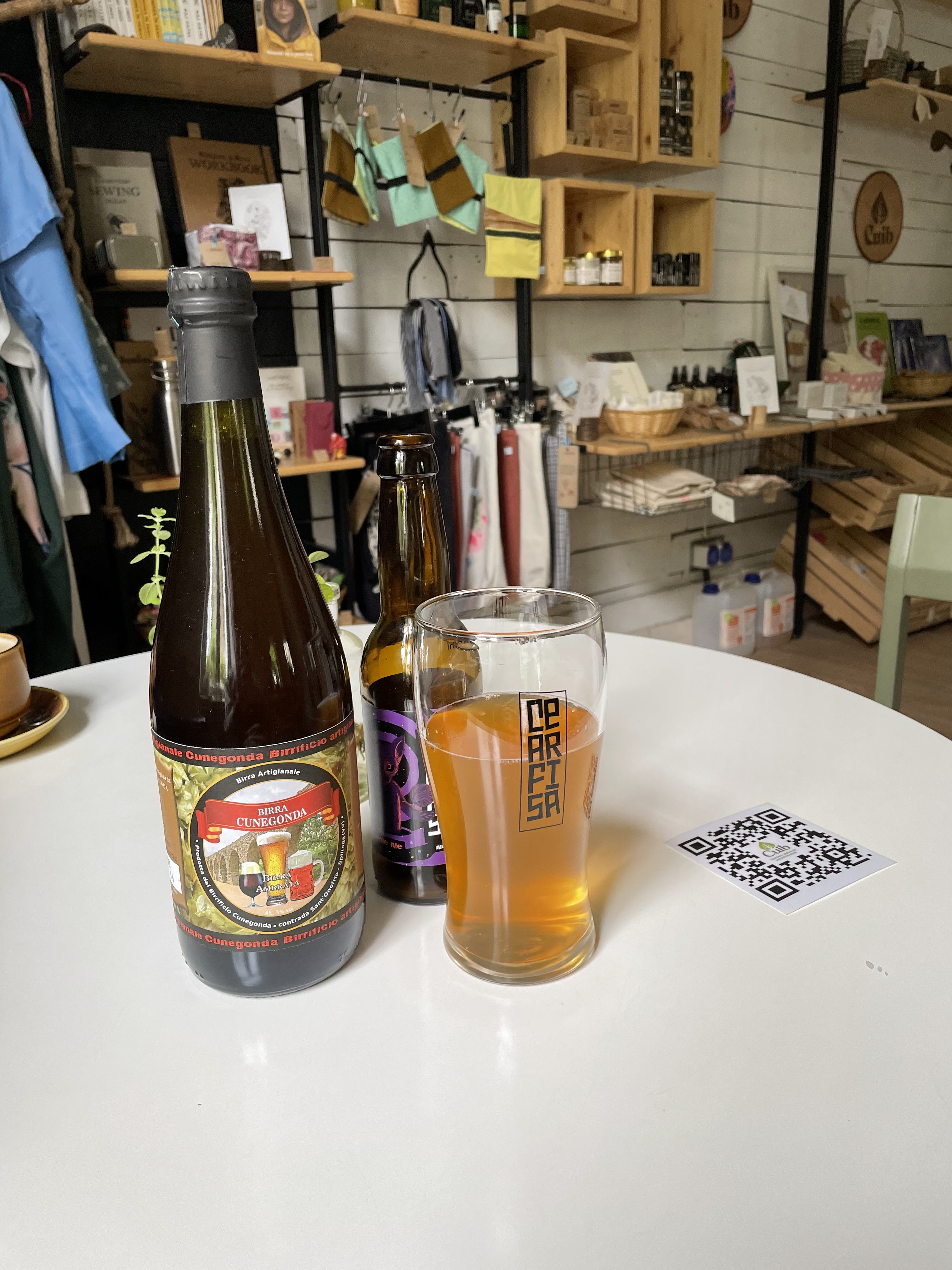
to carry his Birra Cunegonda beer
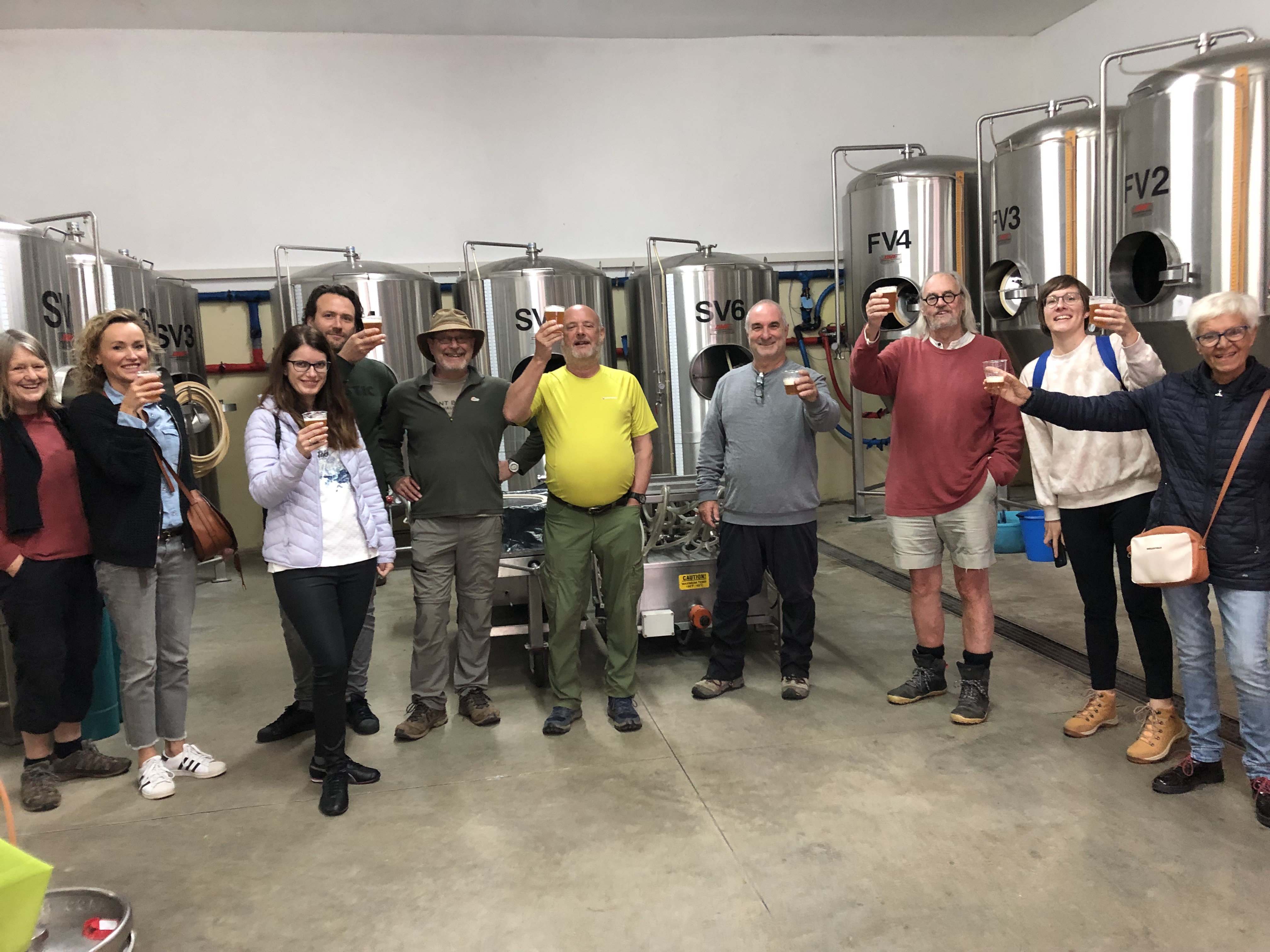
…to partners in Iași, Romania & Kaunas, Lithuania
The first stage of the journey is from Spilinga/Ricadi to Iași
……. rain in Ricadi.
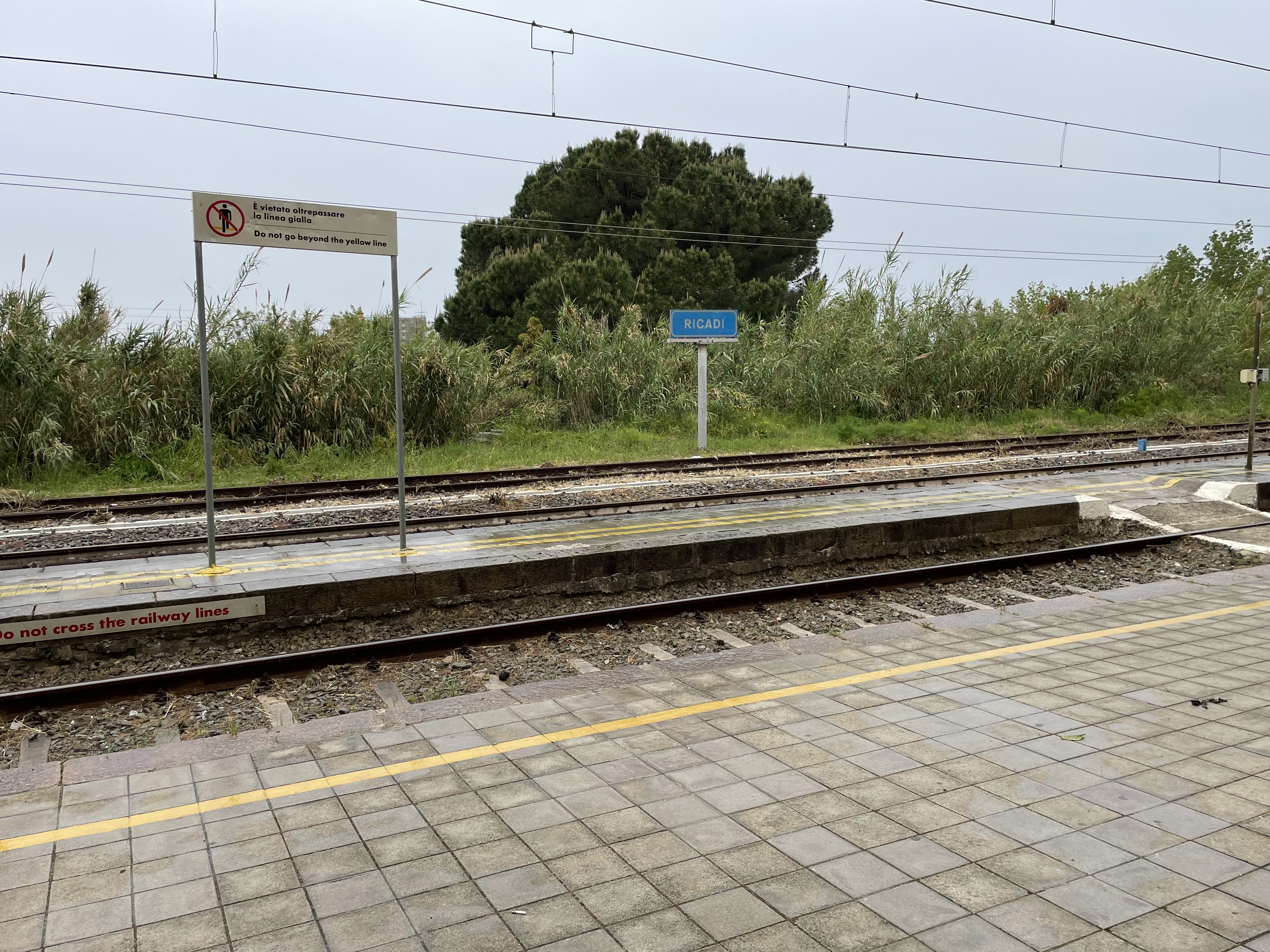
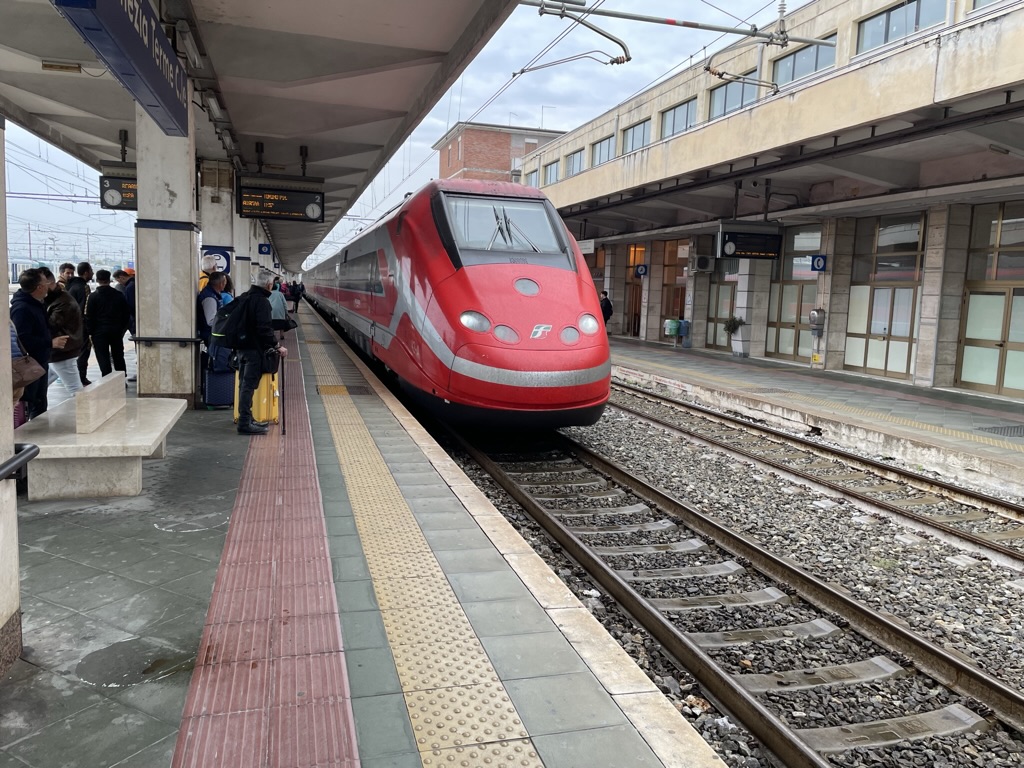
E vietato oltrepassare la linea gialla
Do not go beyond the yellow line
‘Stand behind the yellow line’ – but on the central platform both sides are so close together, so where?
The problem is solved by the other notice preventing us from crossing by stating ‘Do not cross the railway lines’ (there was no other way of reaching the platform).
Somehow we managed & reached Lamezia Terme… and beyond
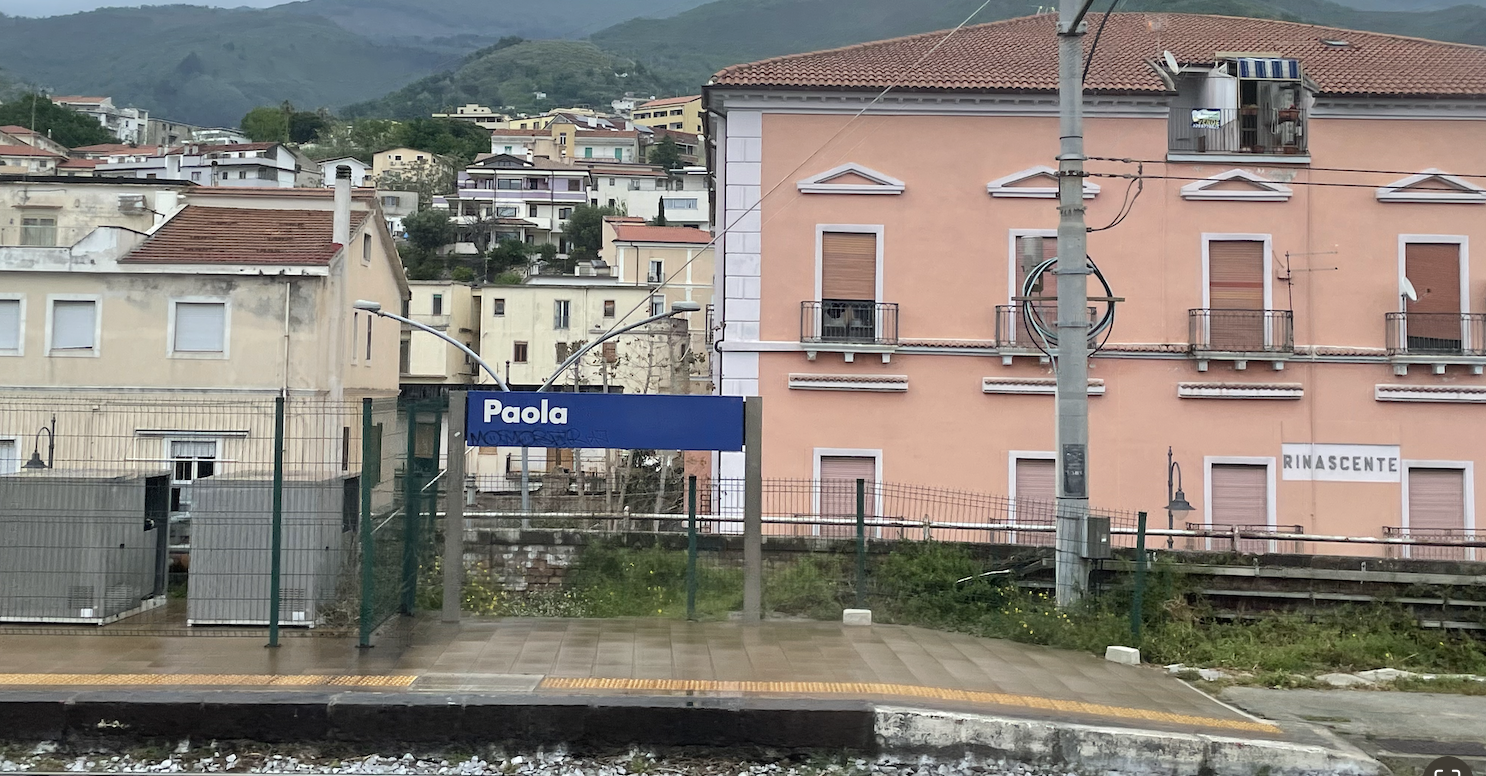

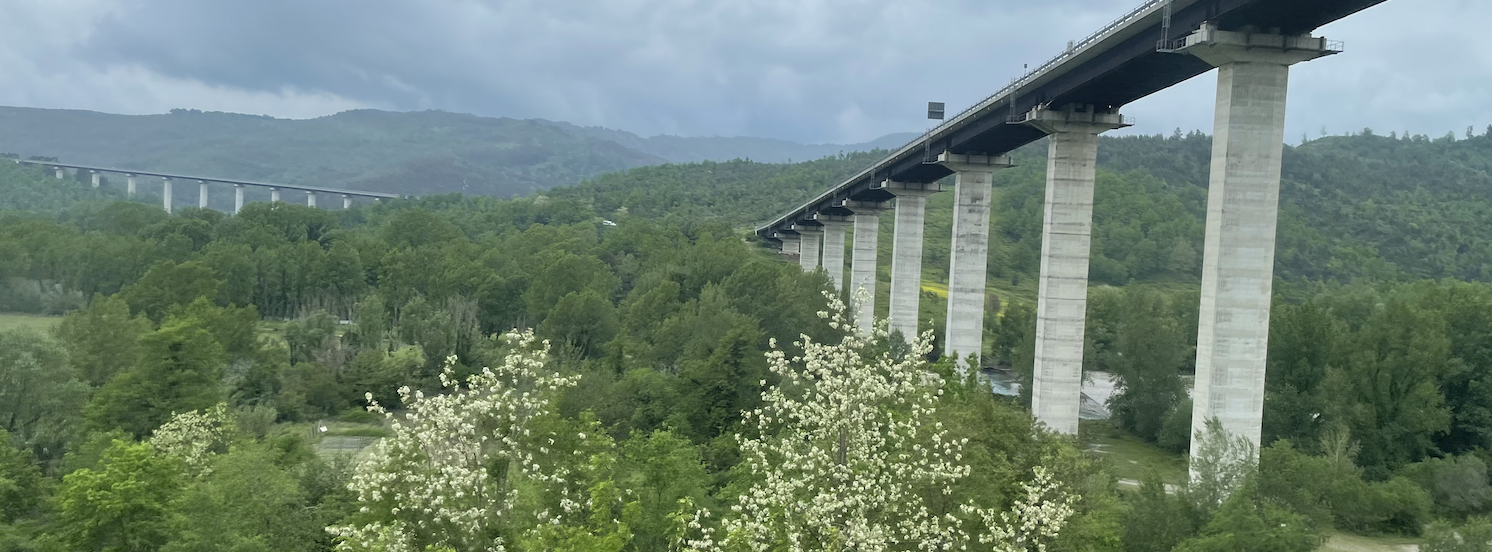
Maximising the land resource
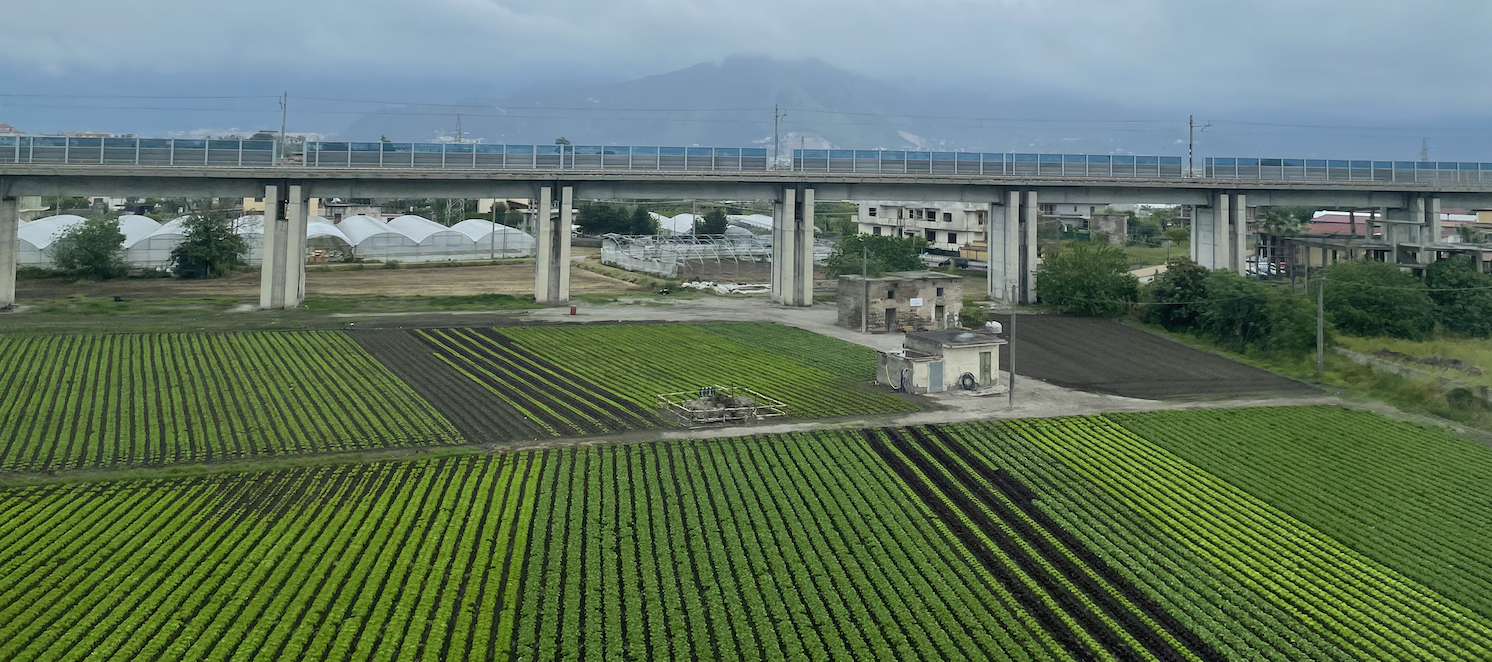
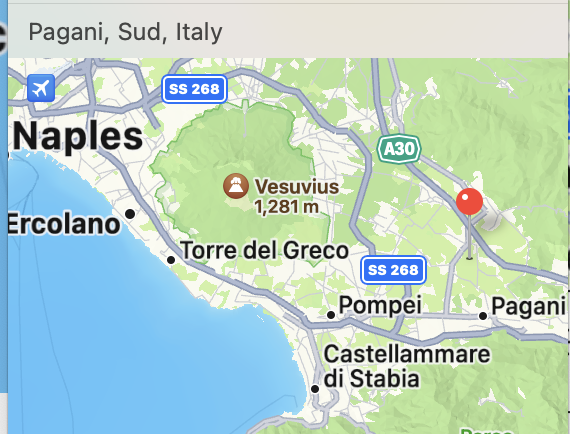
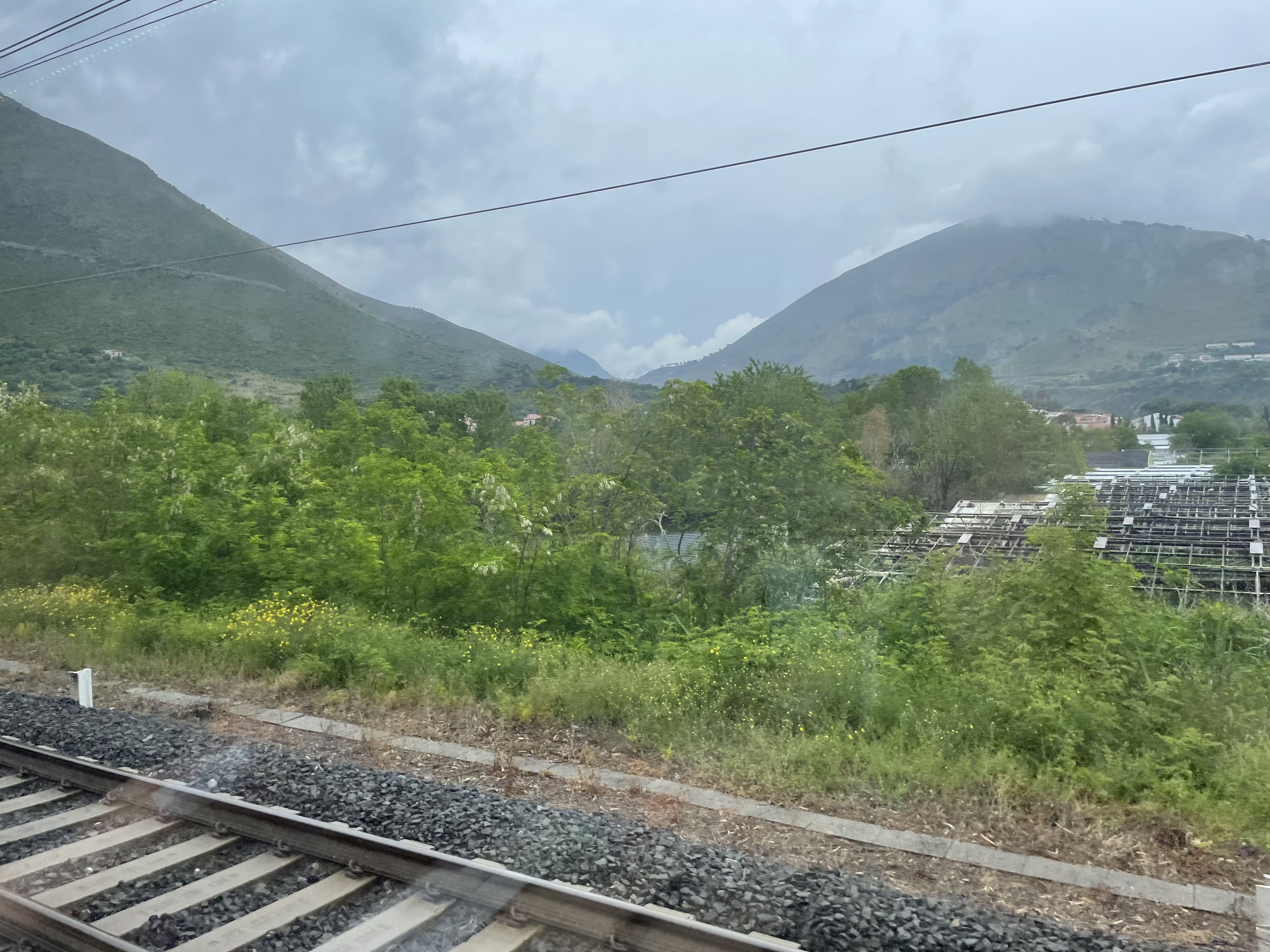
Fertile volcanic soil – gift of a dangerously explosive neighbour
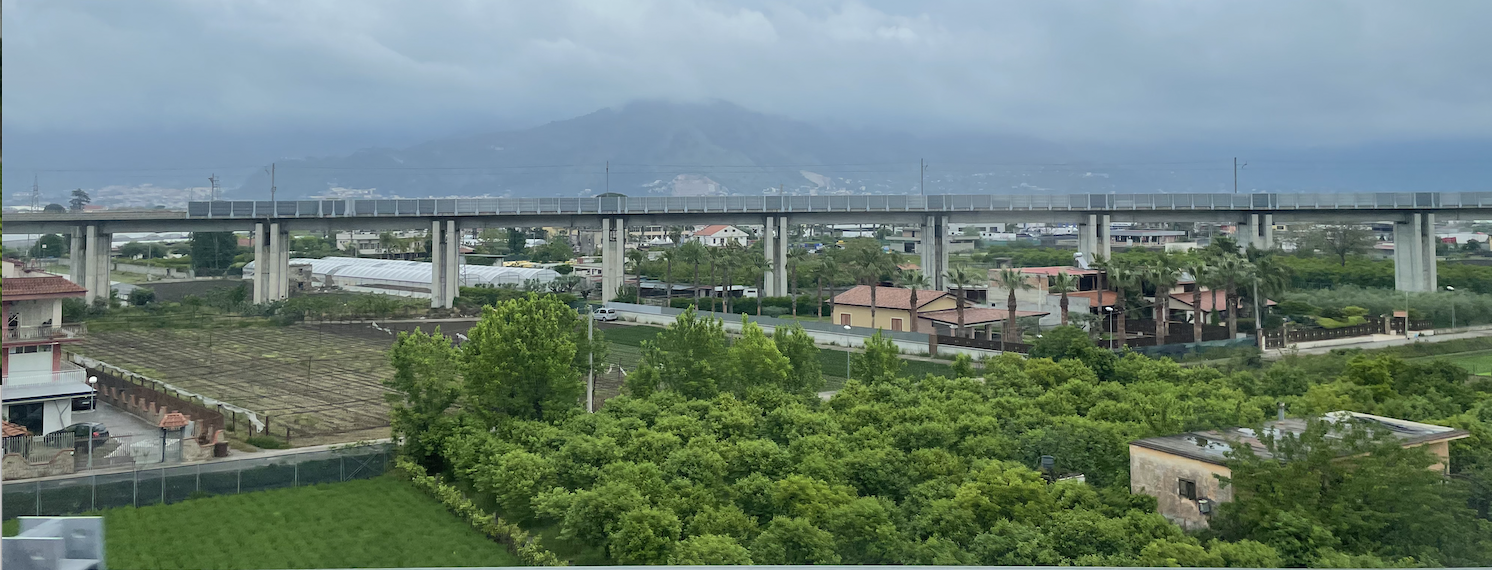
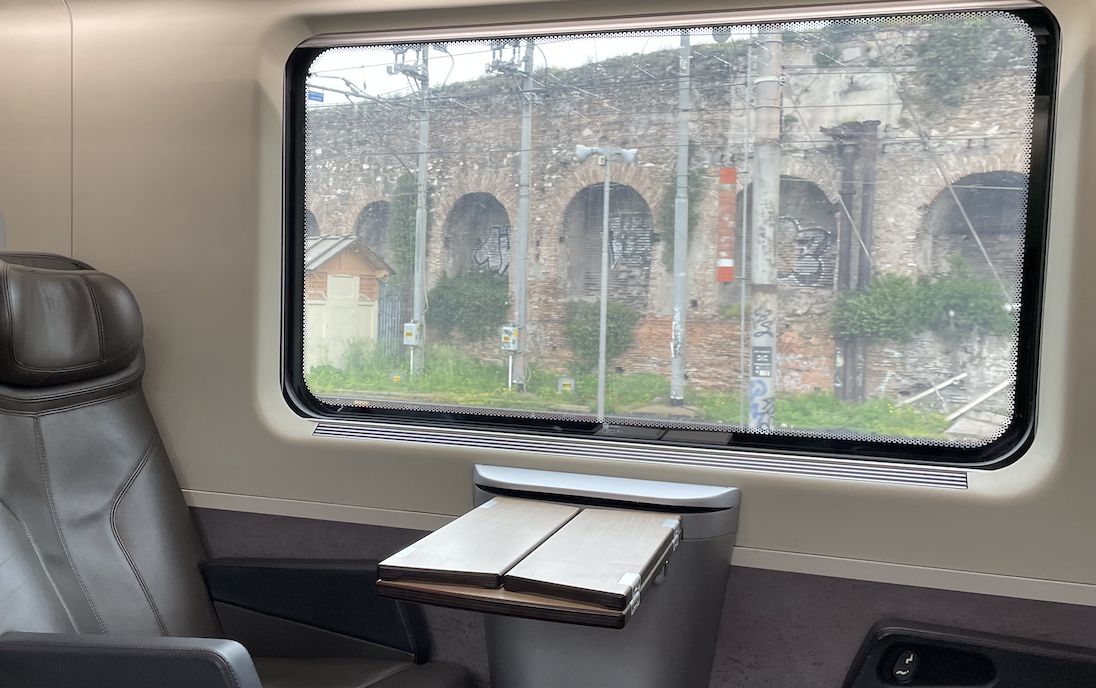
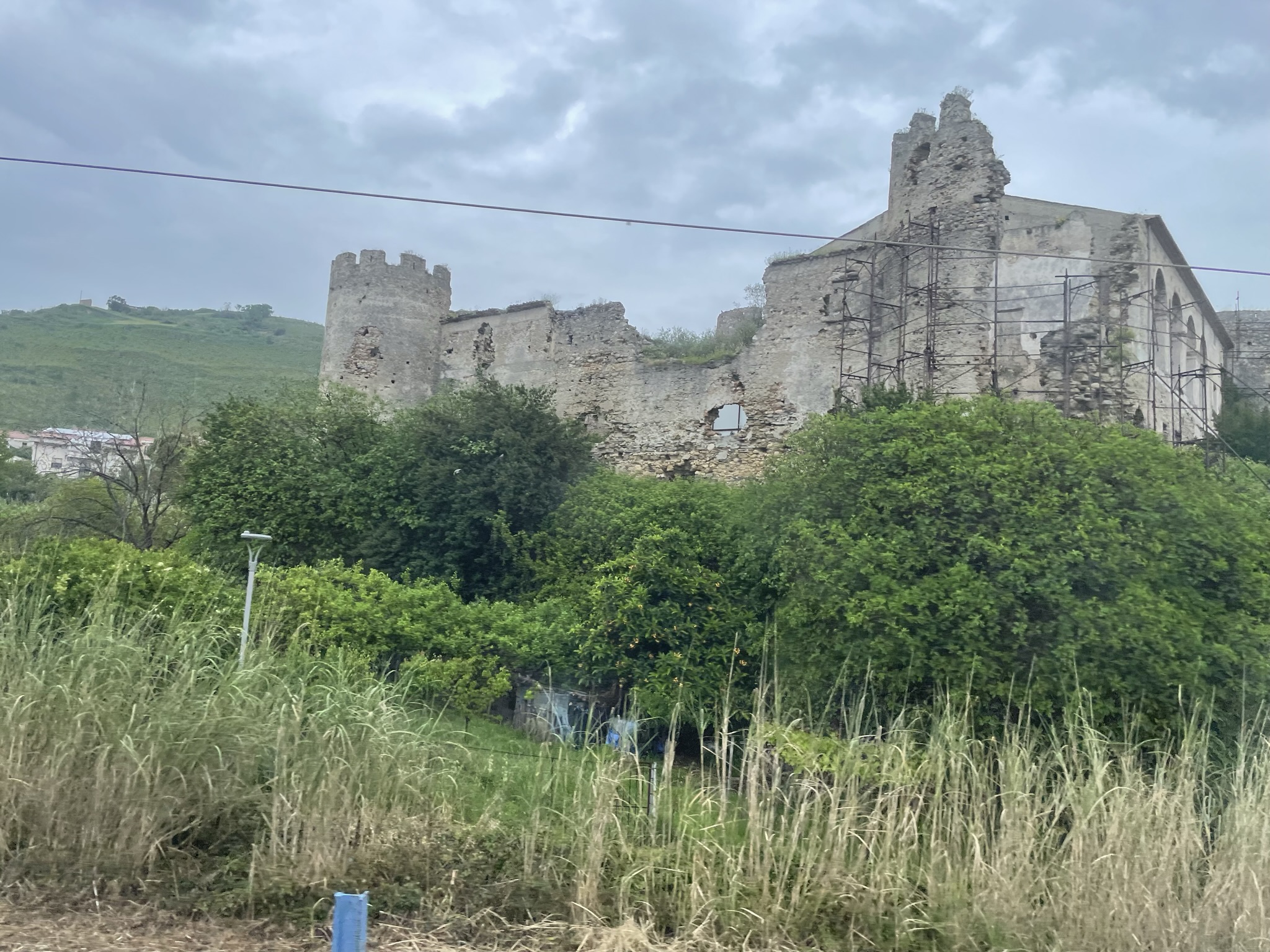
Cutting through ancient walls
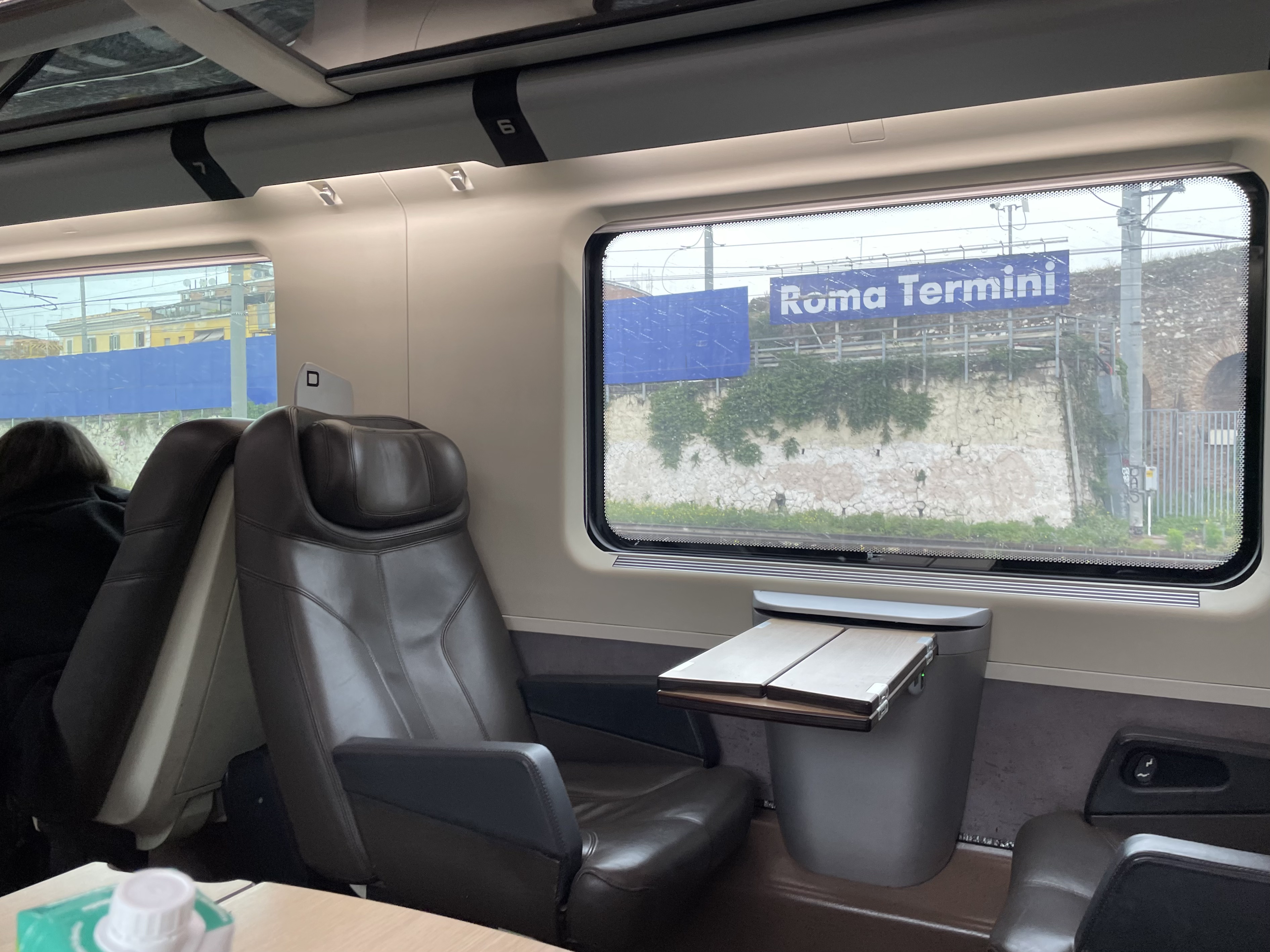
Rain – nearly all the way until…. Bologna
Railways ‘improvements’ in cities across Europe seem to involve creating multiple levels… usually below ground. Some like the wonderful Hauptbanhof in Berlin architectural structures allowing the traveller to gaze through the structural complexities above and below.
Others, like Birmingham New St station can be hideously confusing.Bologna however cleverly flatters to deceive (or if arriving by one of the excellent Frecciarossa trains, simply deceive.)
The original Bologne Centrale survives seemingly untouched…. but beneath there are 4 further levels,& the platforms are at the lowest level.
Dante’s Inferno had 9 circles and 24 divisions. Bologna has 5 levels and 19 platforms.
In Bologna there is not any eternal punishment (as far as I know) but there is an overall sense of gloom and… (for a first time visitor arriving at the lowest level having no sense of how to escape)… confusion (a cleaner, clearly used to observing such difficulties) assisted us.
This architecture is utterly functional without any sense of form that pleases or satisfies. It must be pretty depressing to have to work (as many staff do) in such an overbearing, half-light concrete ghetto.Dante emerged from hell to view a starlit sky…. We were relieved to emerge into the ‘fresh’ air of suburban Bologna… real life, on a street, with varied architecture, colour, noise, traffic and movement. Relieved!
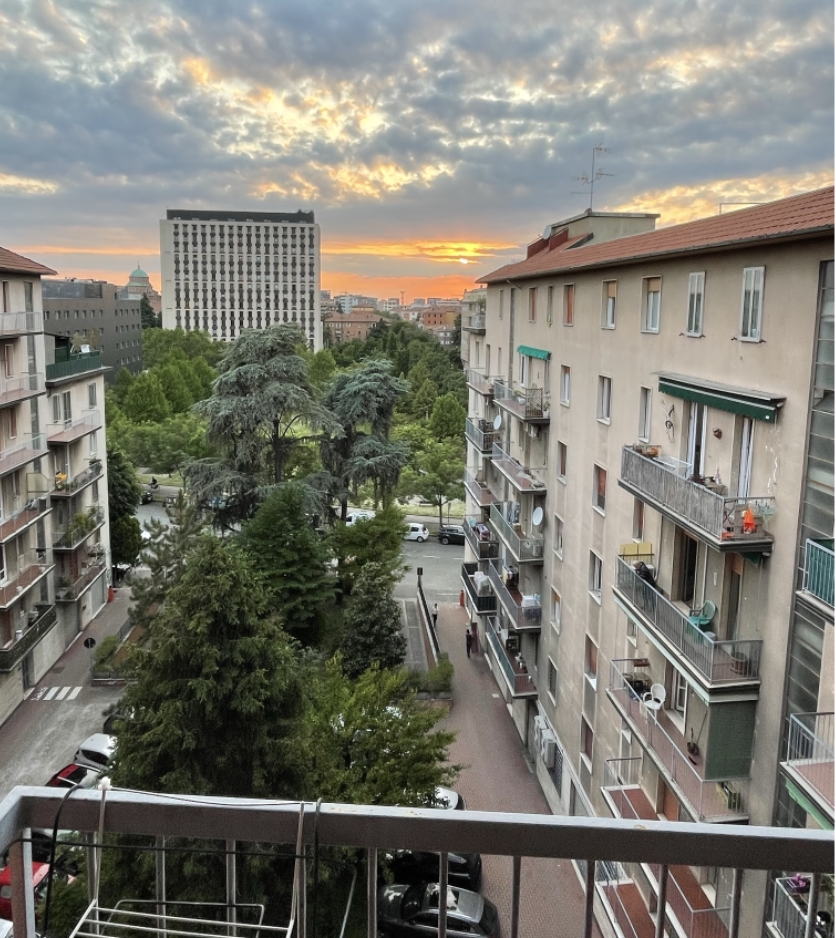
…sunset from our apartment balcony.
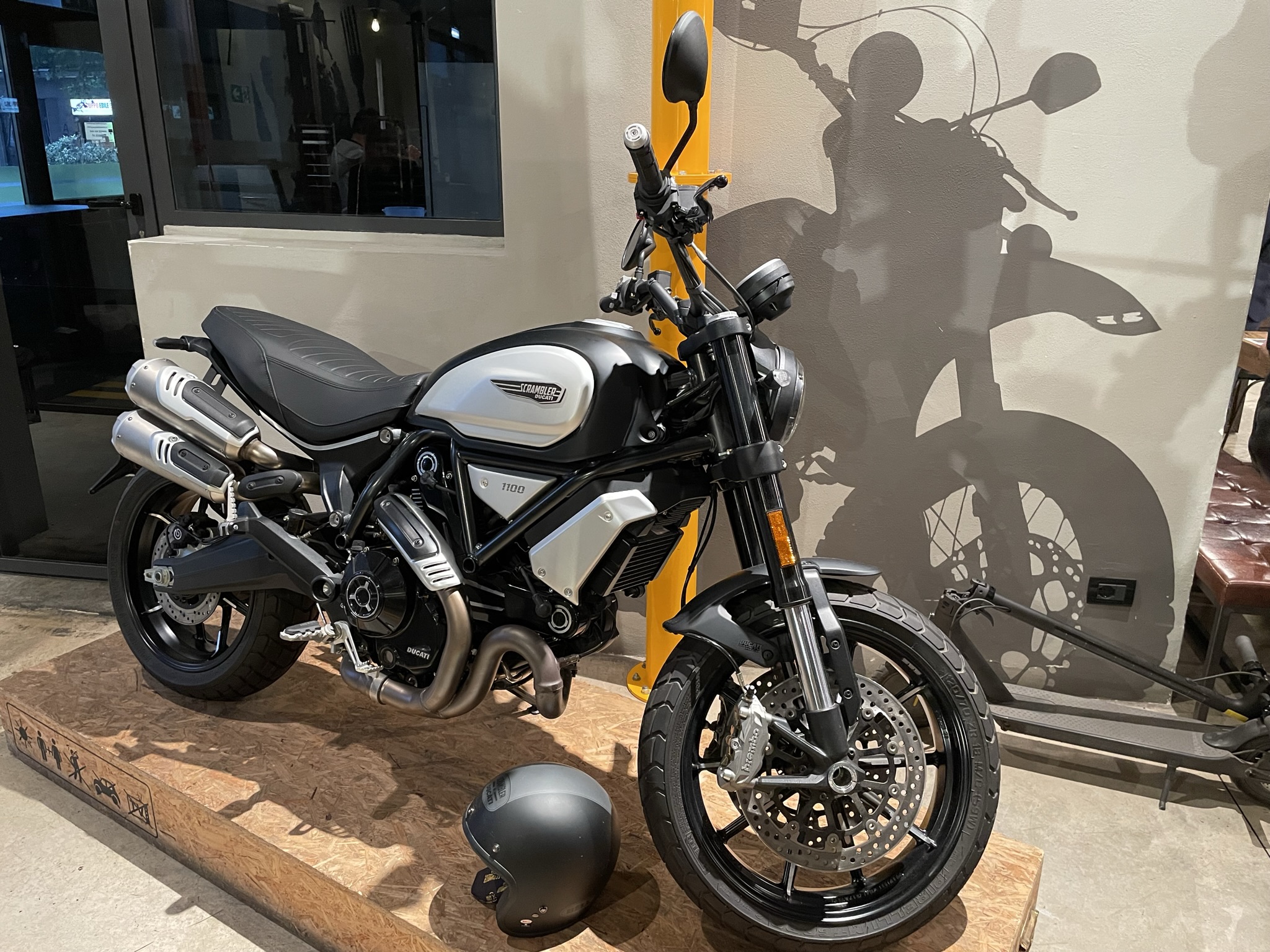
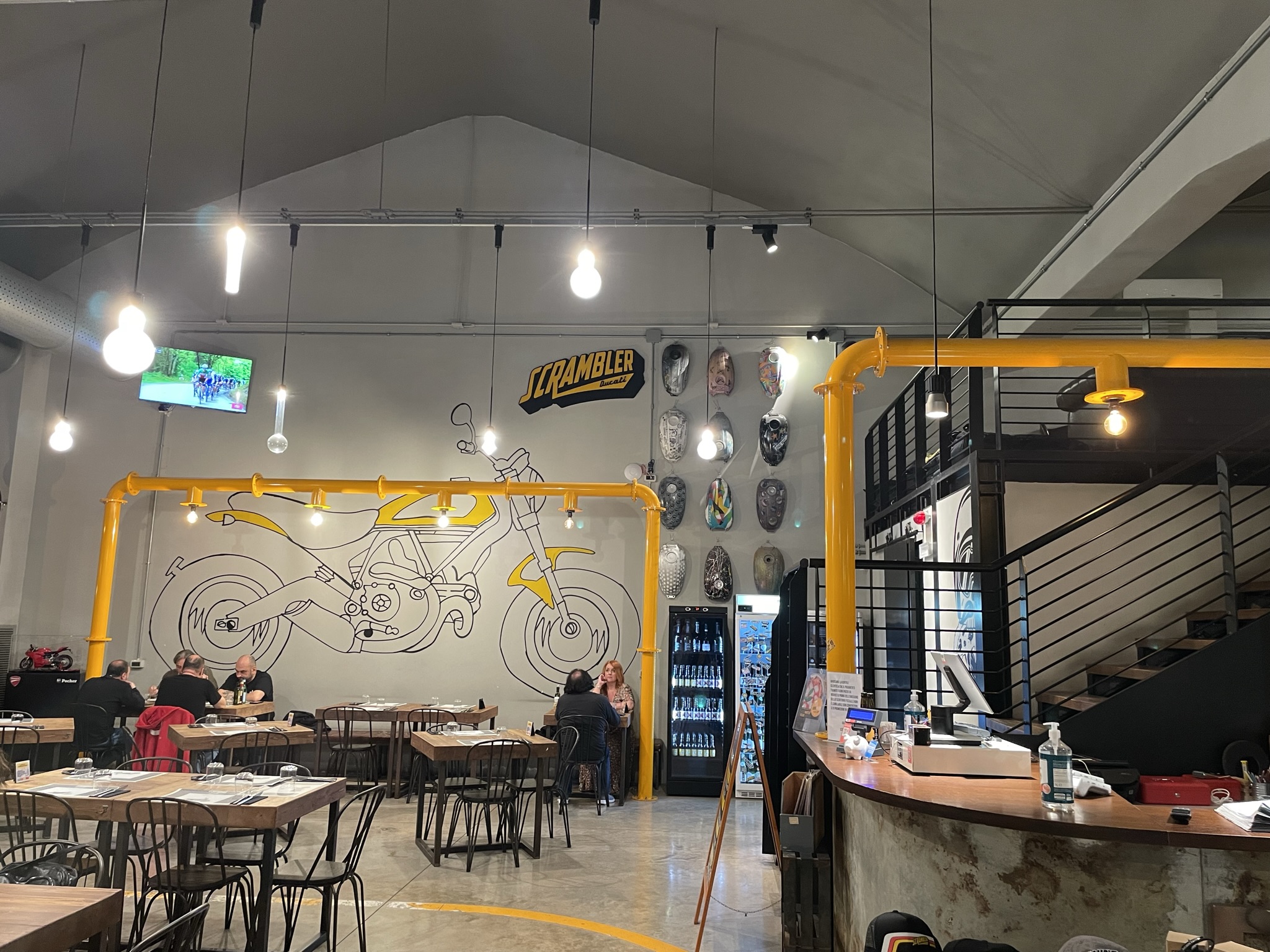
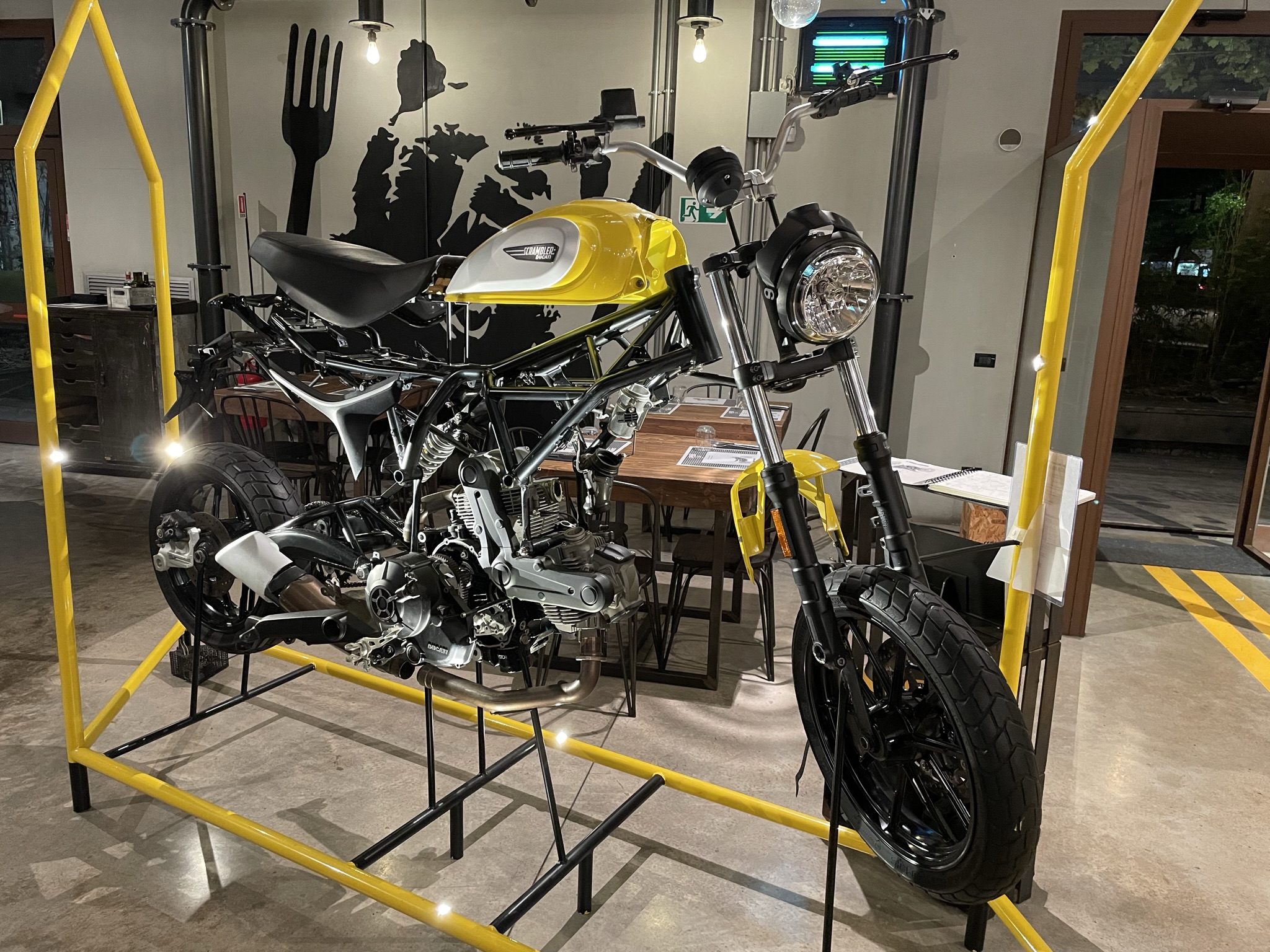
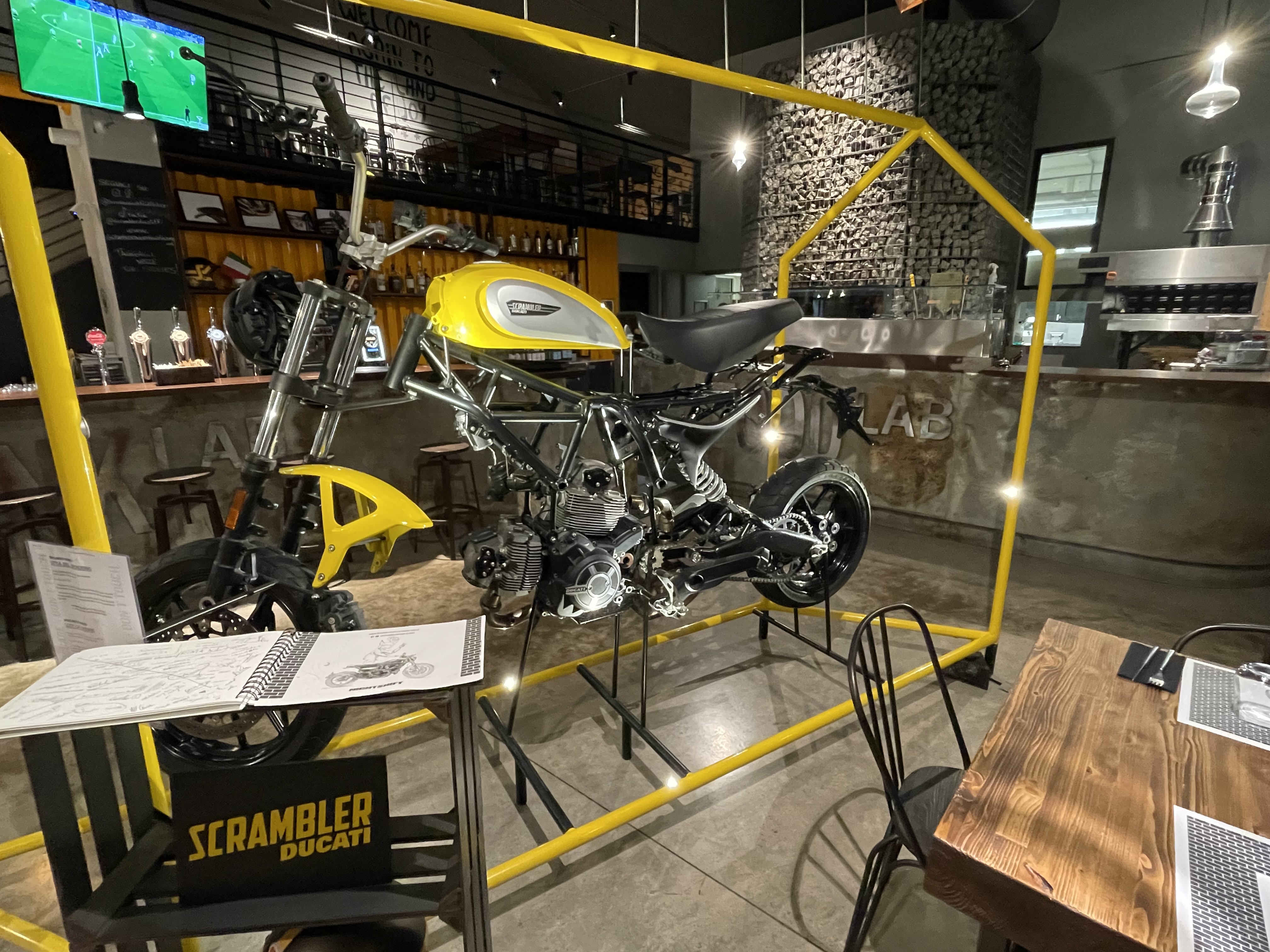
… and a fascinating restaurant
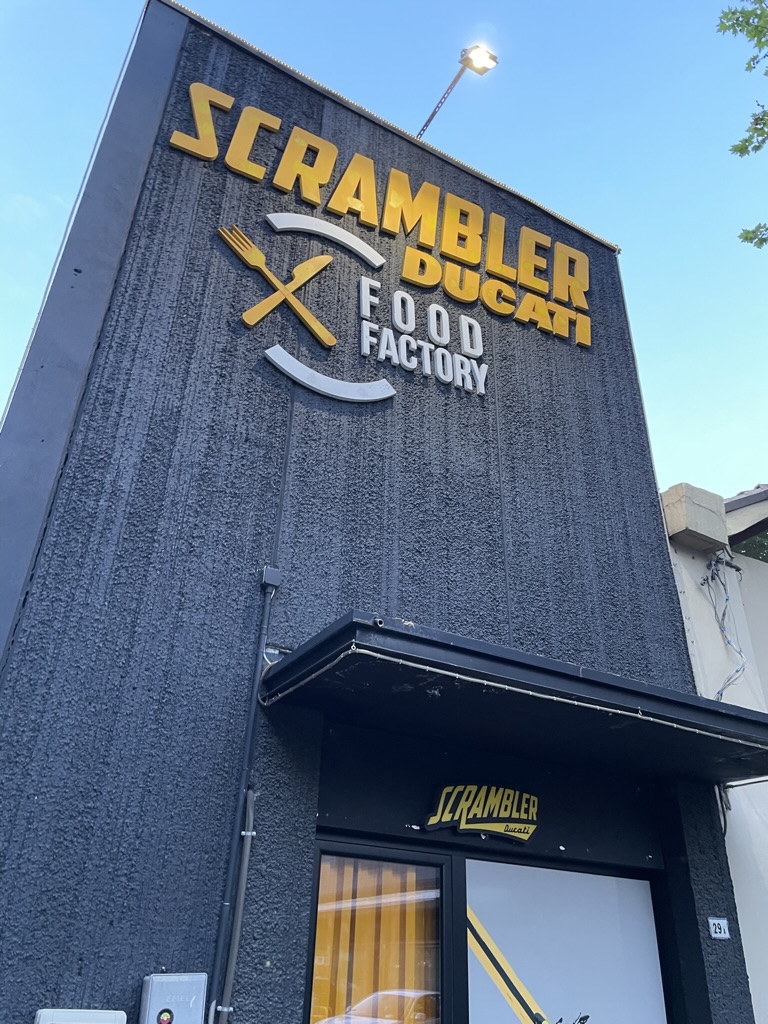
9th May: to Vienna (again)
A brief visit to Italy & Calabria concludes with a journey over one of the most scenic routes.
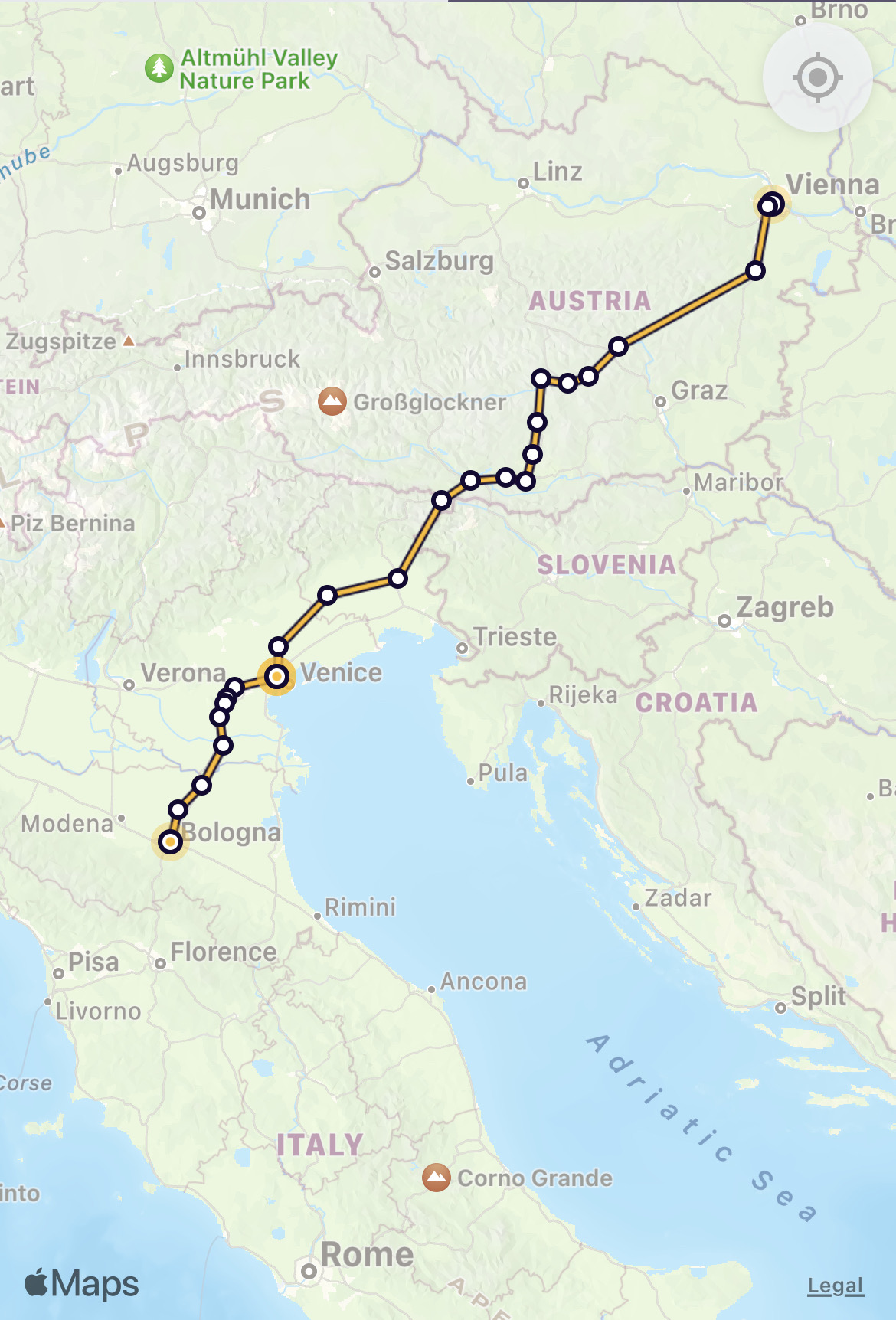
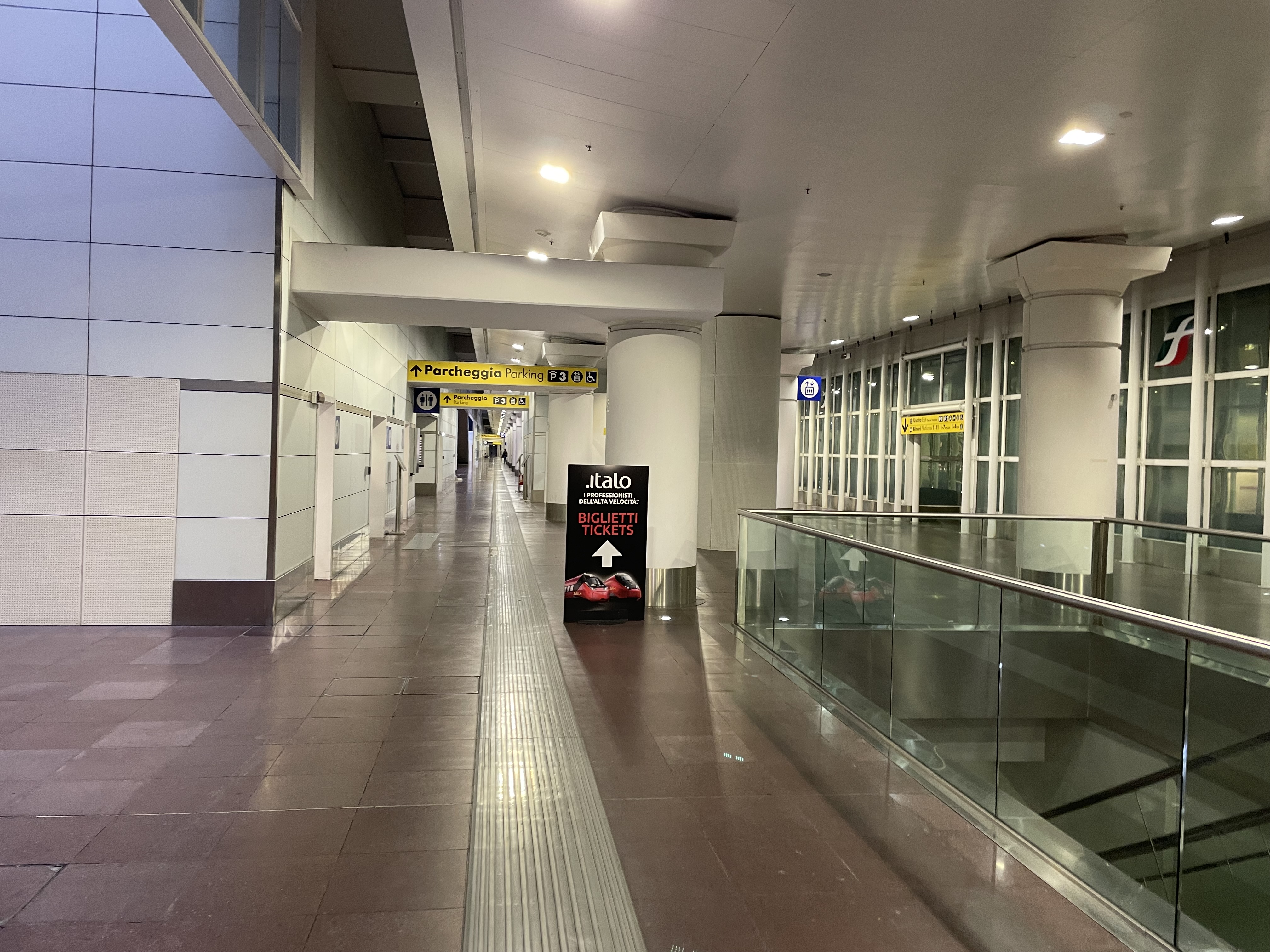
But first we have to renegotiate our way through the Bologna Station rabbit warren from which, last night, we spent around half-an-hour trying to escape.

An unassuming entrance

Then into the depths – exploring levels
and if successful, gathering with others, waiting, checking, waiting for an appropriate announcement….
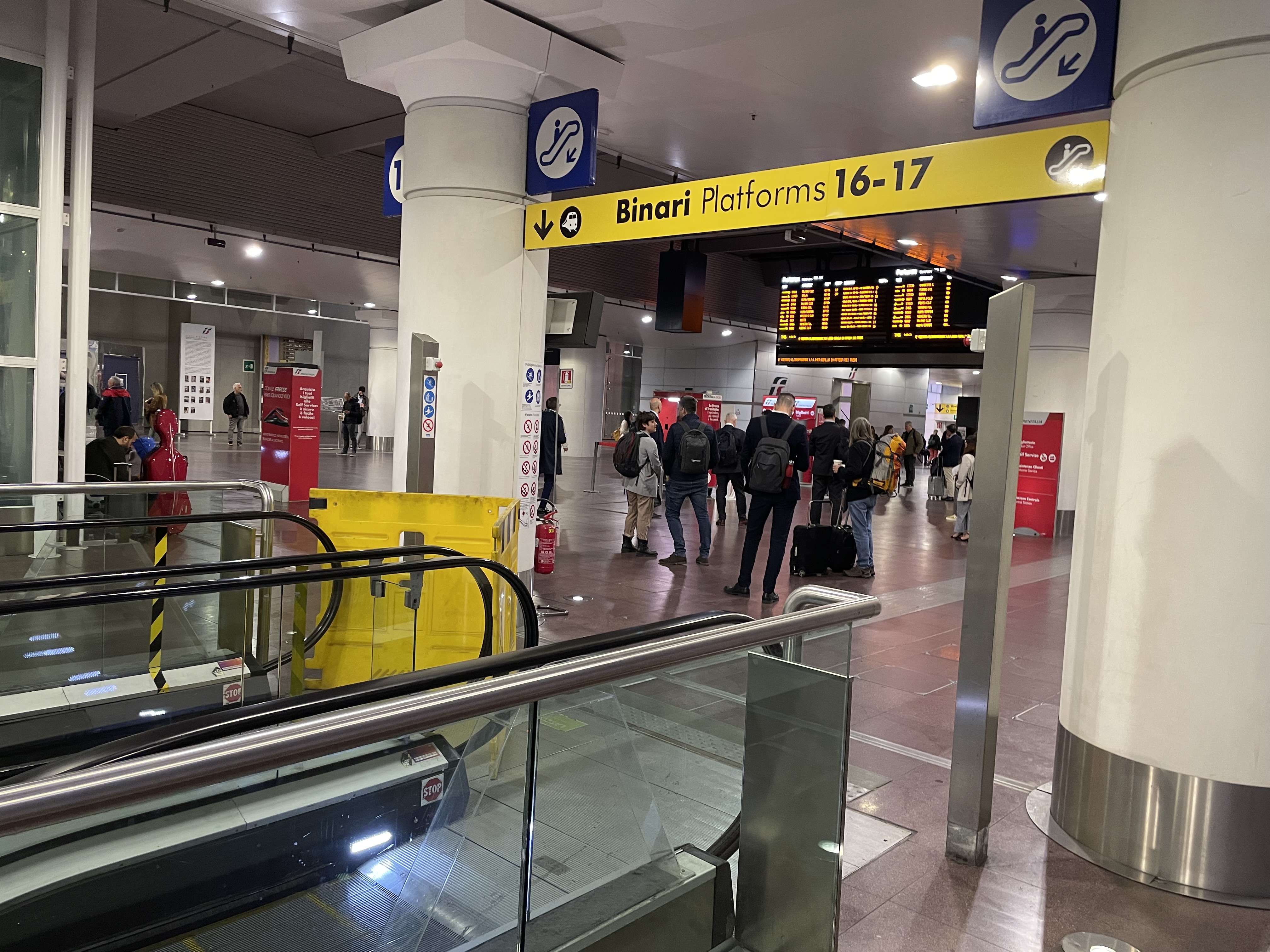
then swiftly scurrying to greet the train
Ours took us to Venezia Mestre where we joined an Austrian Railjet Express.
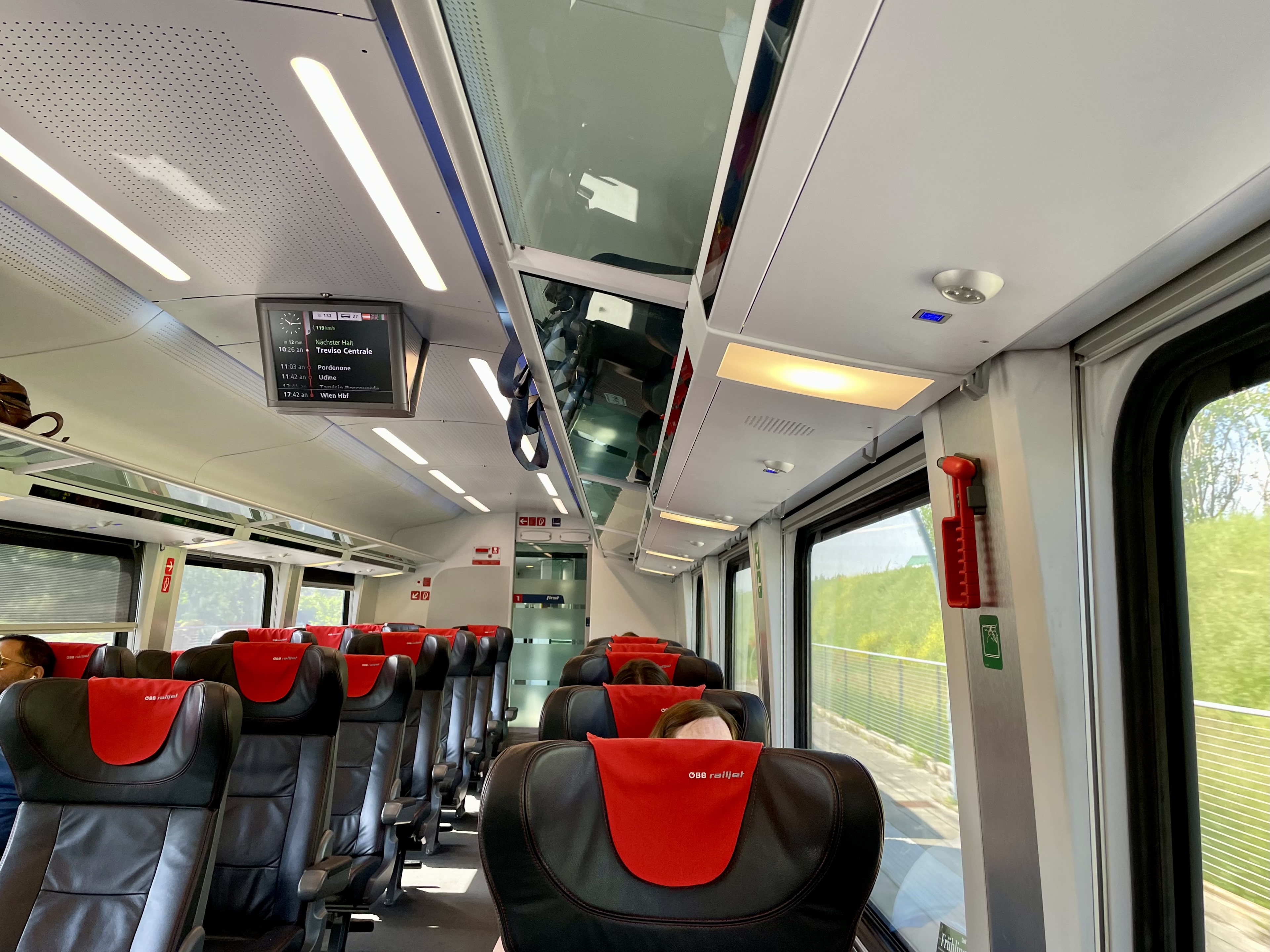
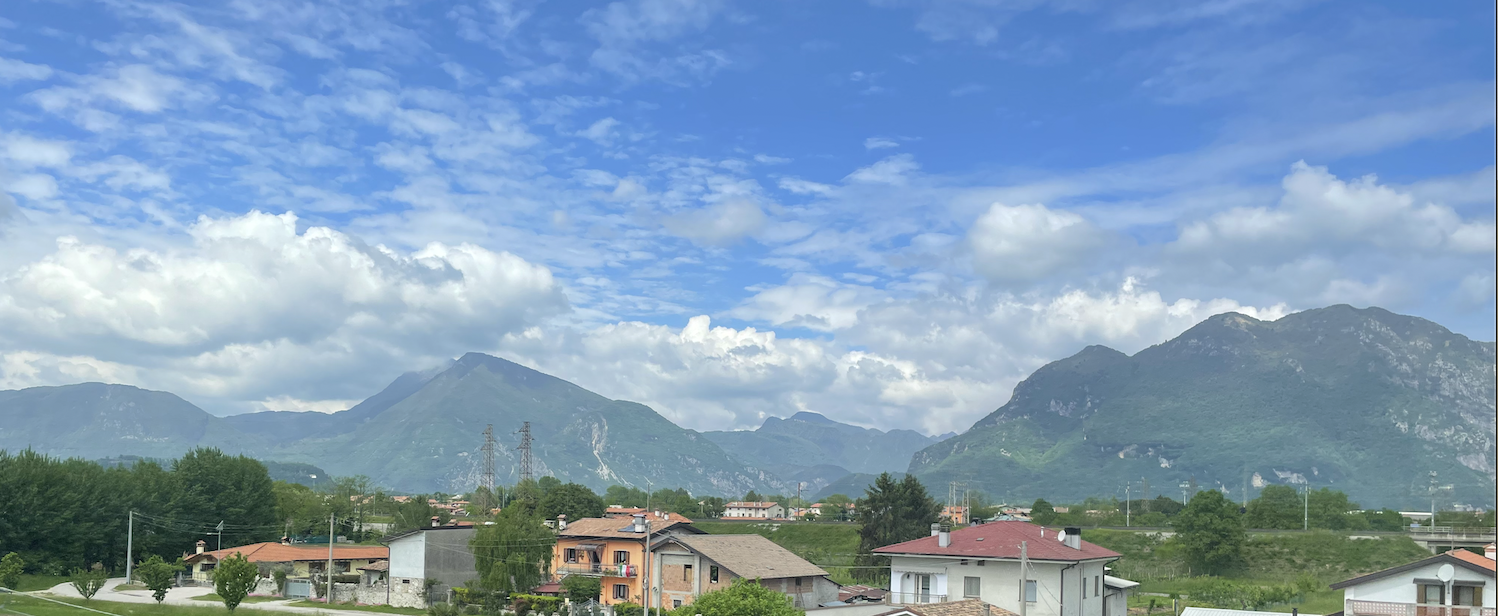
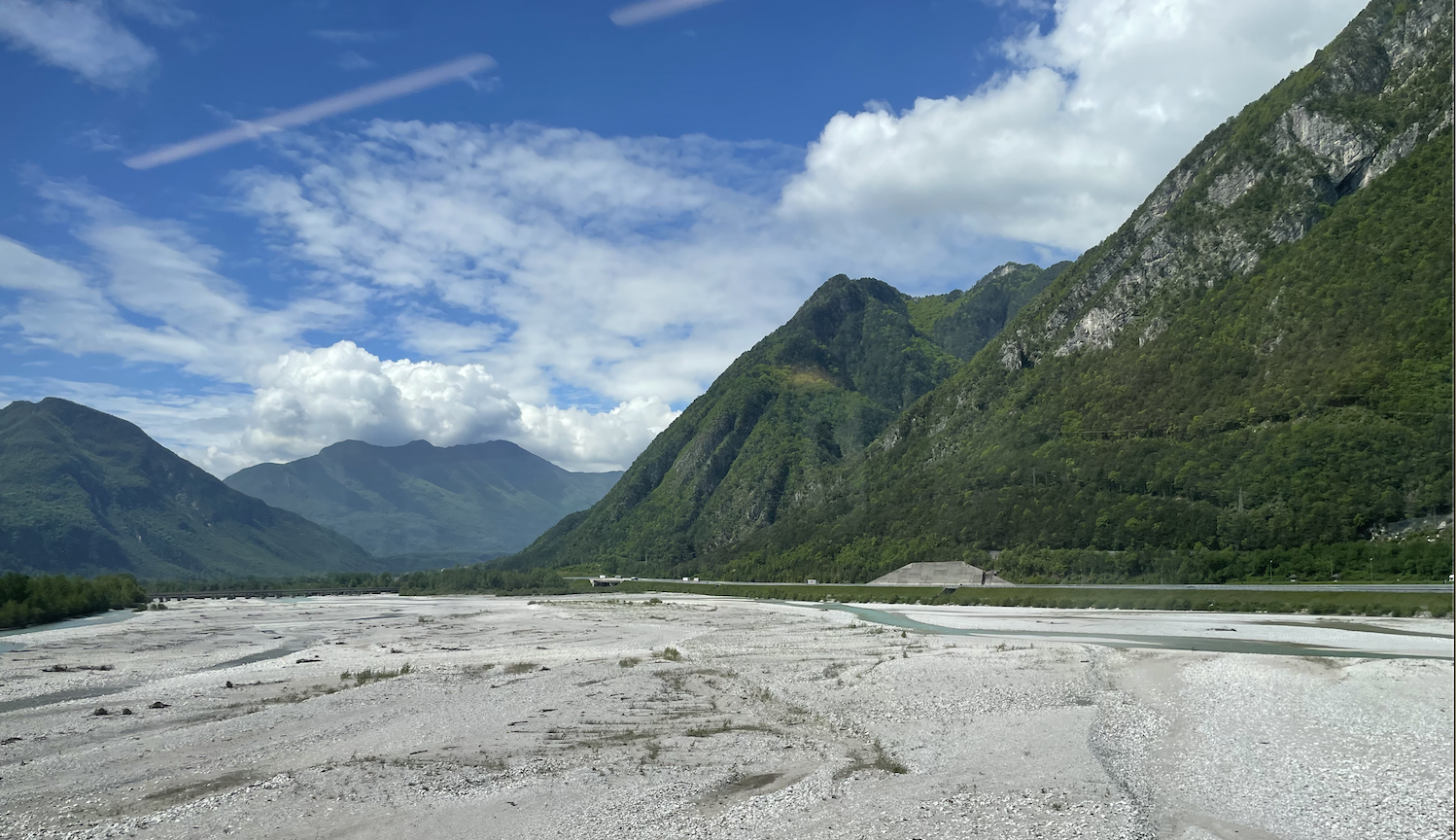
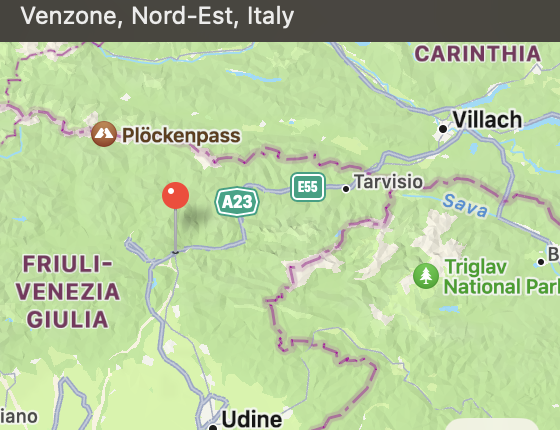
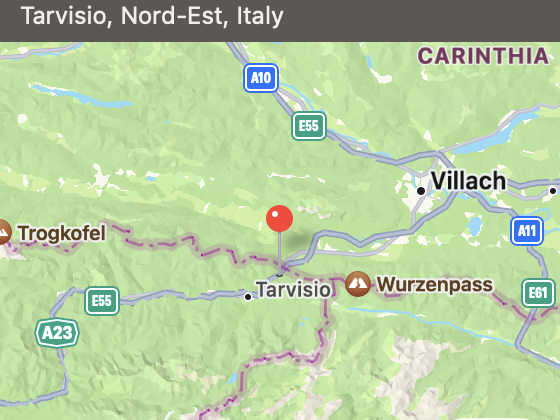
Approaching the Italian-Austrian border

Our journey involved using the Semmering Route – a remarkable railways crossing on the high hills.
the first mountain railway in Europe built with a standard gauge track. It is commonly referred to as the world’s first true mountain railway, given the very difficult terrain and the considerable altitude difference that was mastered during its construction.
Even while being built, the Semmering railway was perceived as an effort of “landscape gardening”, i.e. it attempted a harmonious combination of technology and nature. The unique travel experience which the Semmering railway offered contributed significantly to the original opening of the Semmering region for tourism. Numerous hotels and mansions are witnesses of this epoch.
https://en.wikipedia.org/wiki/Semmering_railway
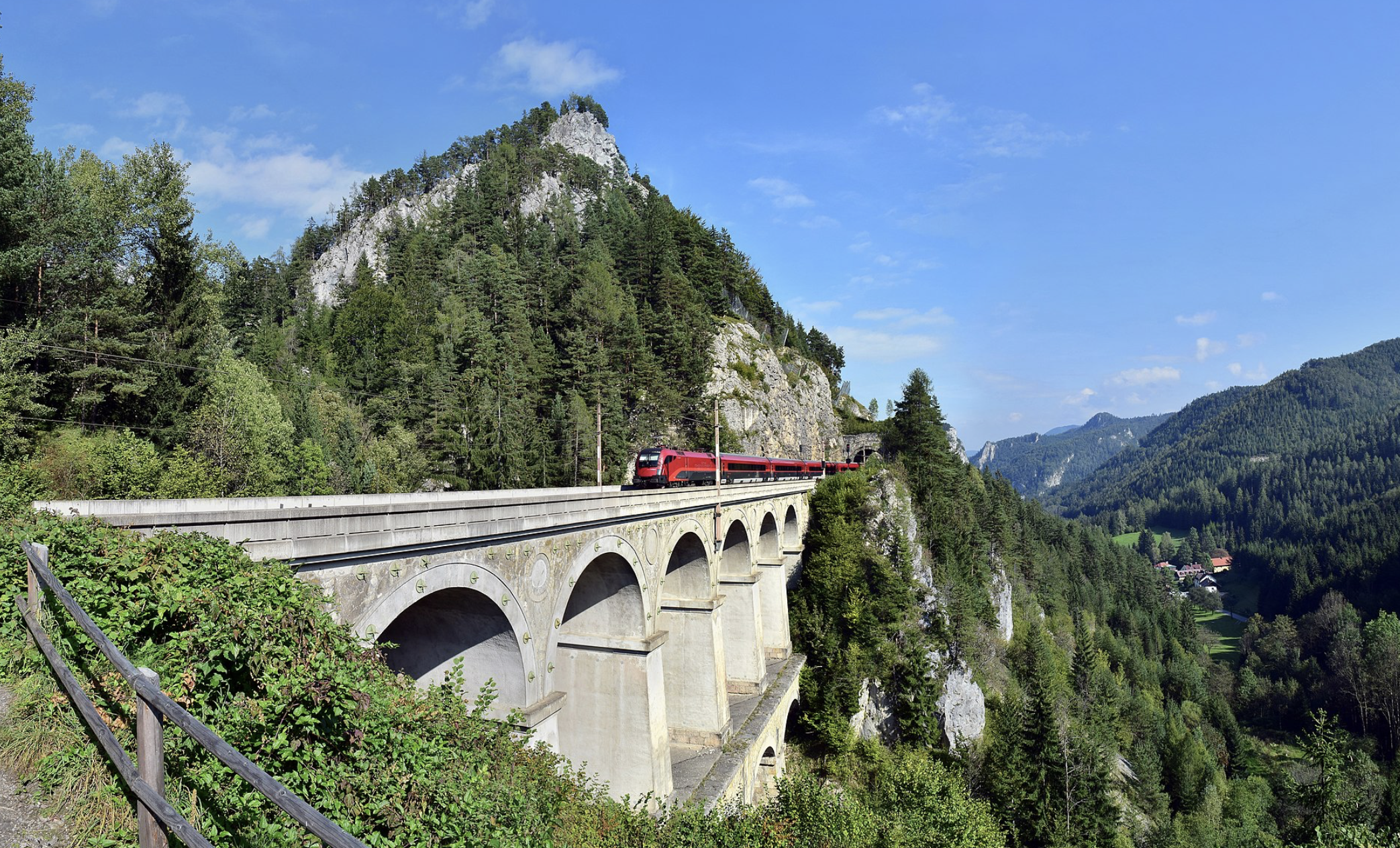
Krauselklause Viadukt of Semmering railway with a Railjet, in the background the Spießwand (915 m) and Krausel tunnel
https://en.wikipedia.org/wiki/Semmering_railway#/media/File:Breitenstein_-_Semmeringbahn_-_Krausel-Klause-Viadukt_-_2.jpg
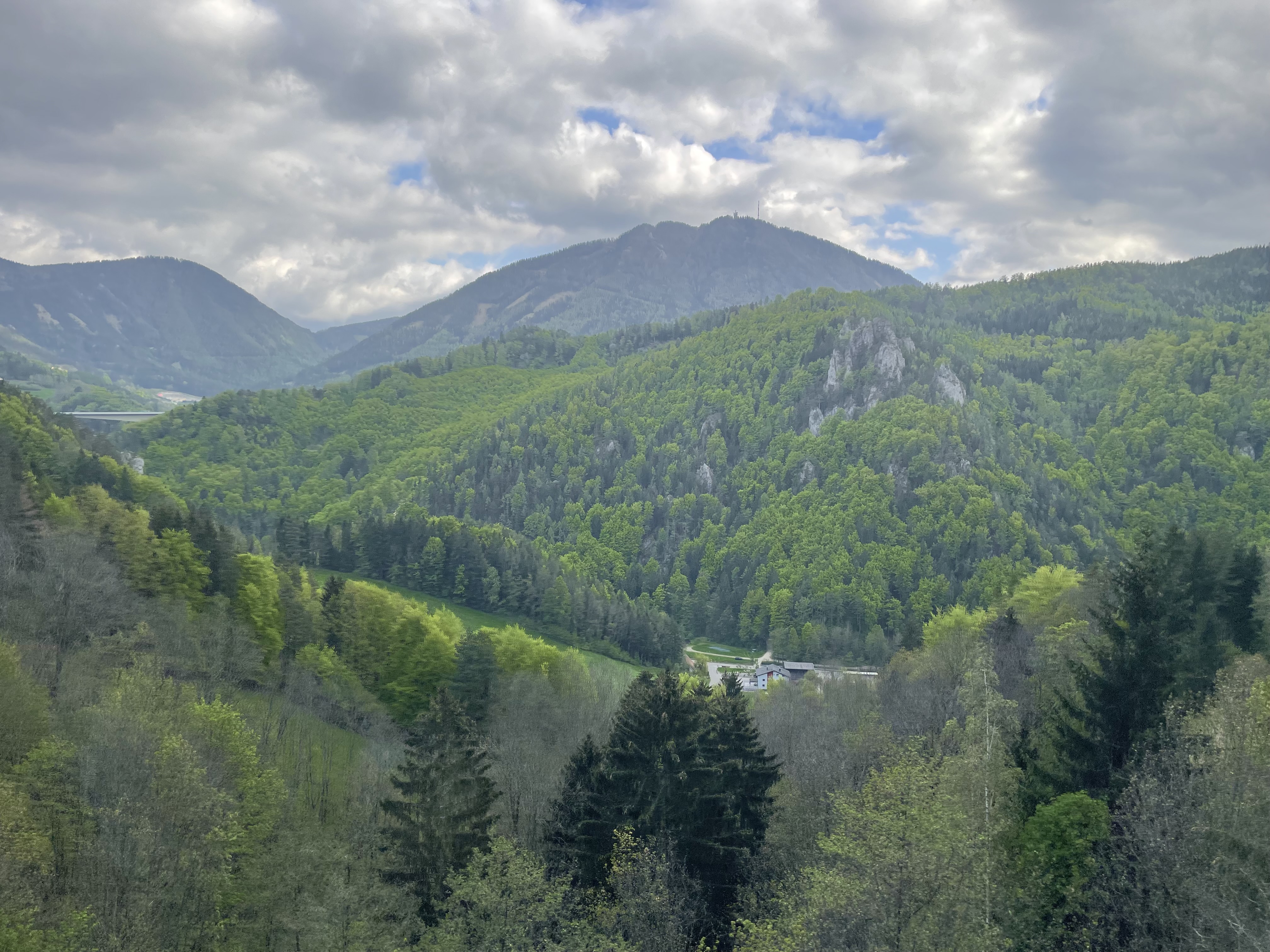
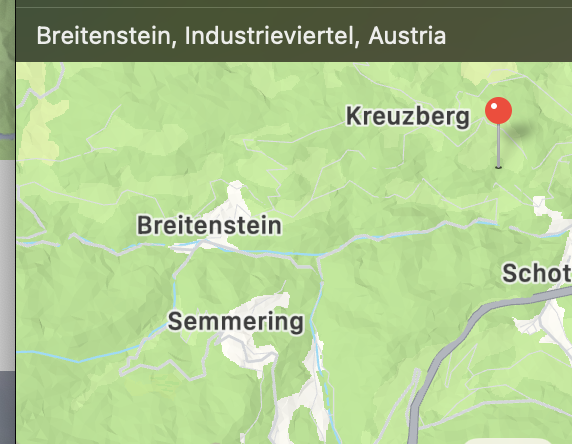
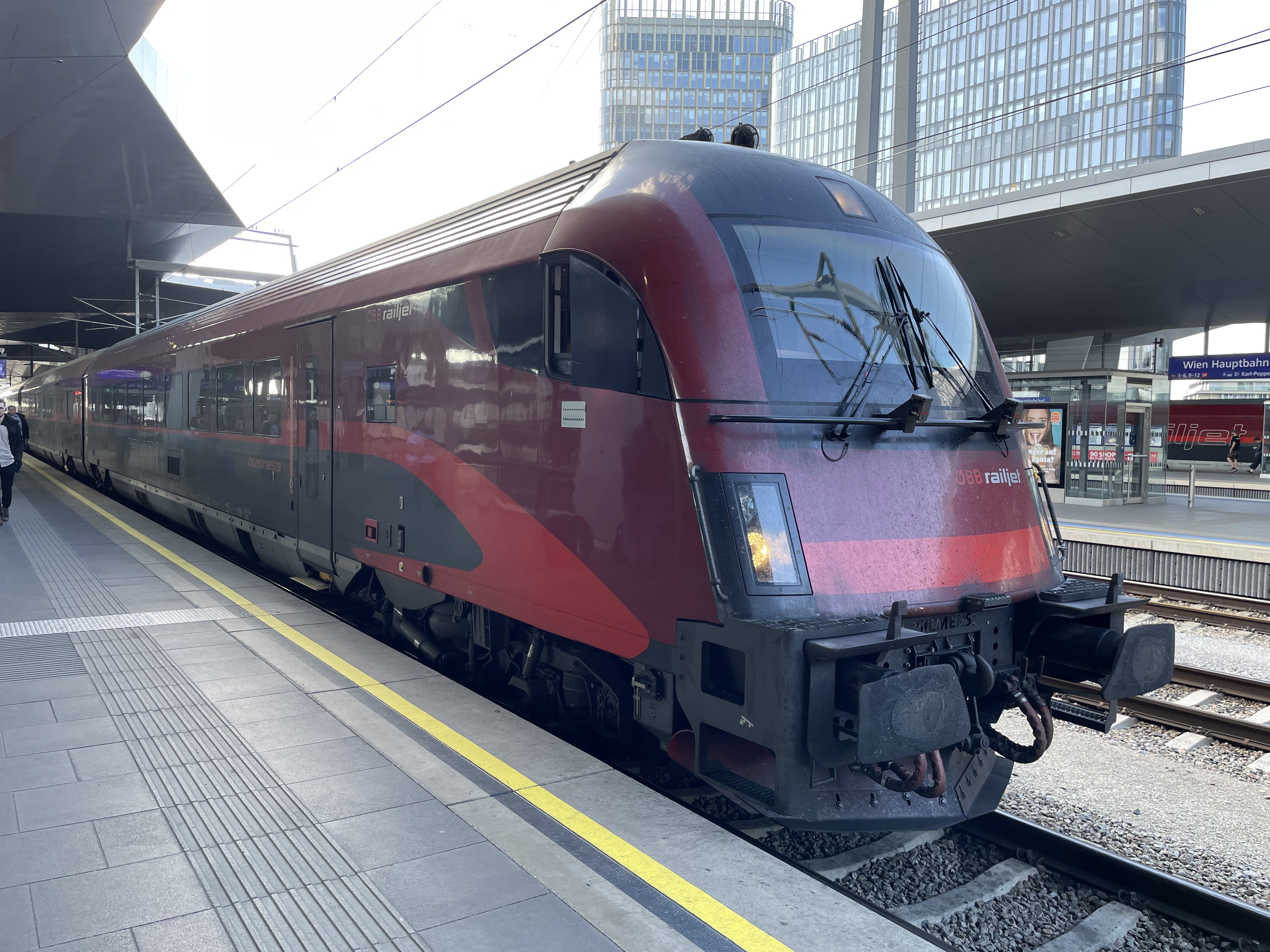
Vienna for one night, then on to Budapest for another night train to Romania.
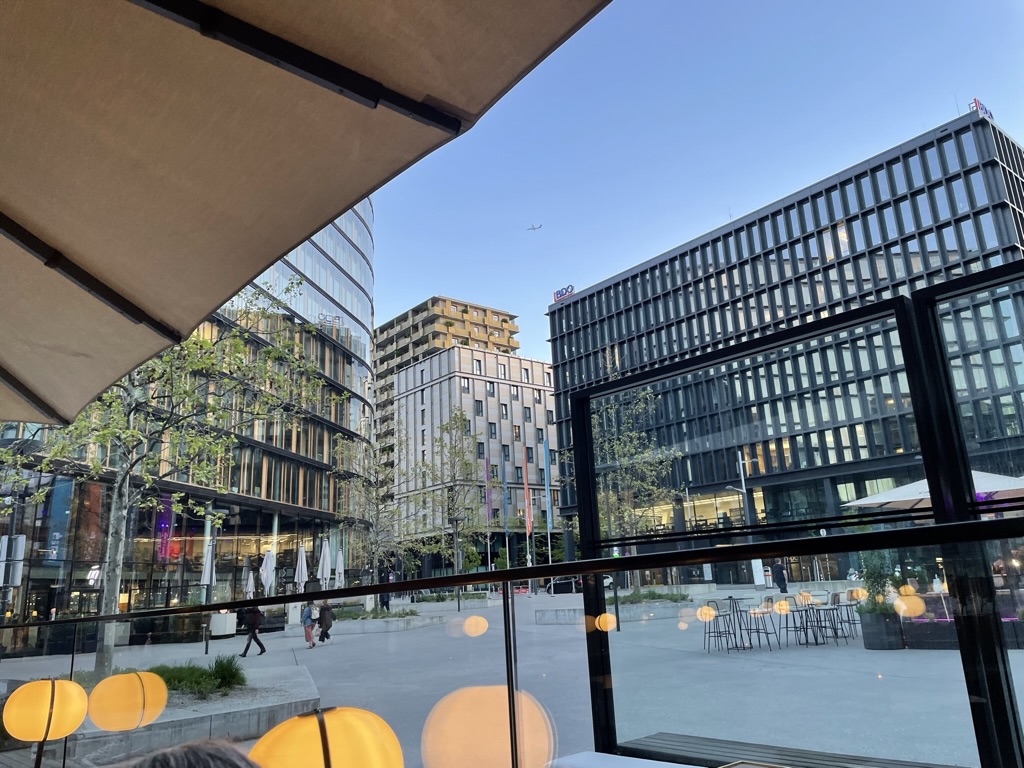
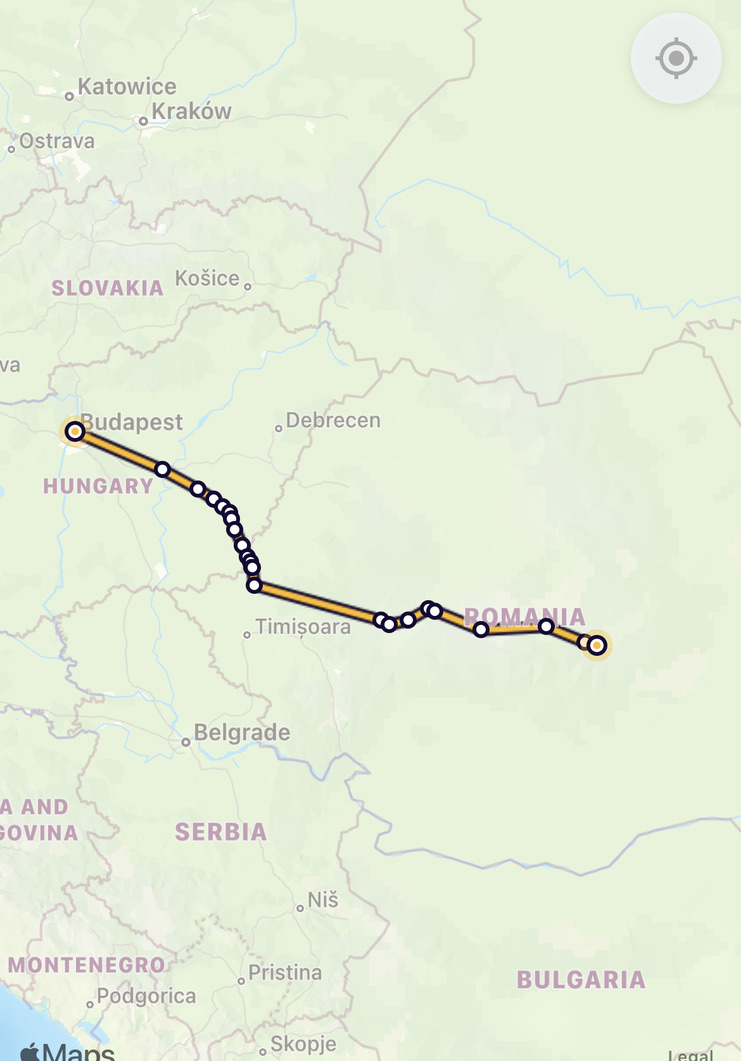
10th May: To Budapest & on, overnight, to Brasov
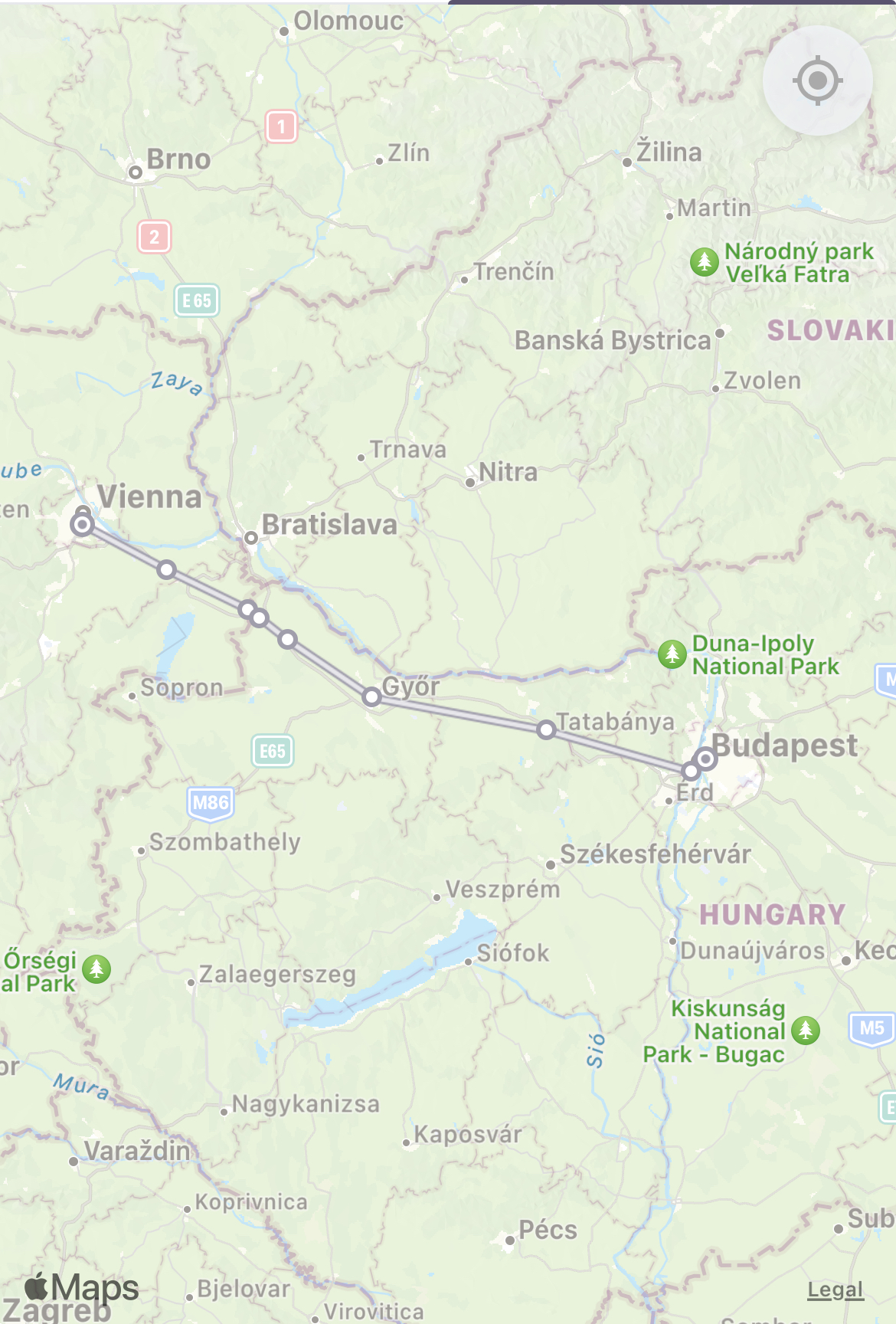
On this journey through to Budapest, we have daylight.

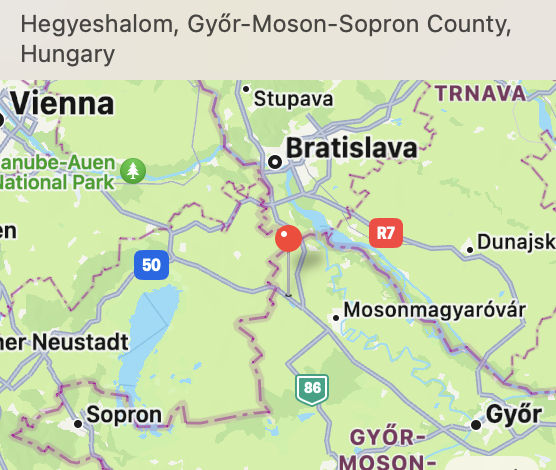
The Hungarian border & inevitable crew change.
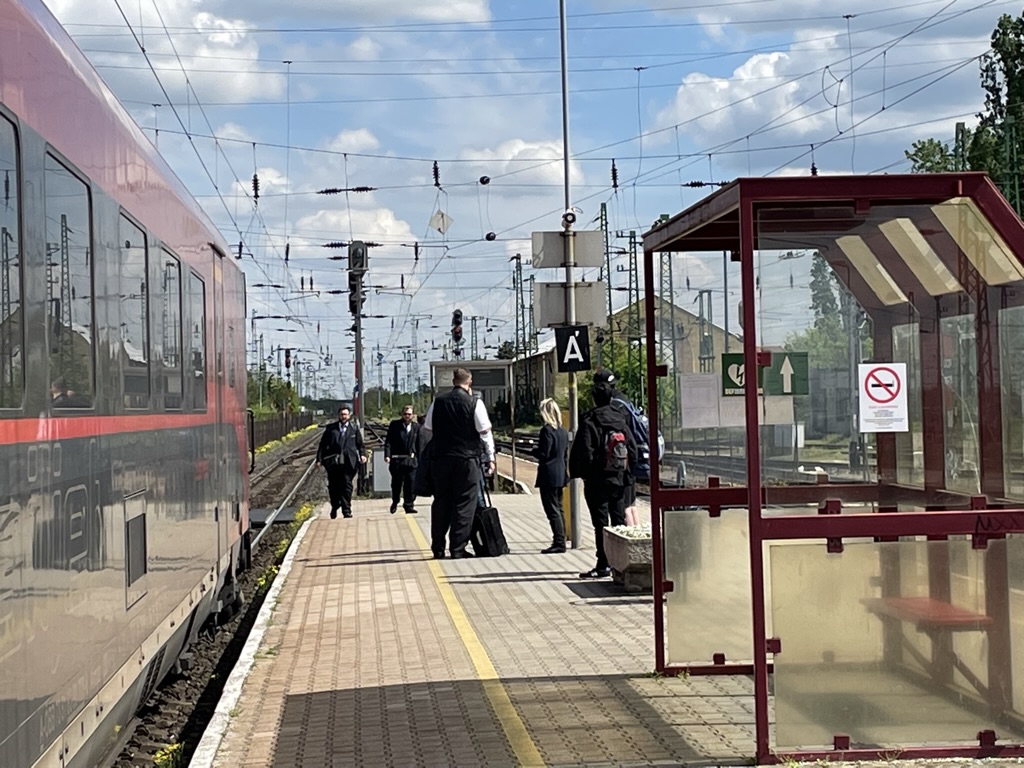
Crossing borders…. Austrian crew replaced by Hungarian crew. Long stop, warm day, no other movement…. Europe has a long way to go in making border crossings easy (& the Brits have added more difficult).
An Austrian Adlestrop
Edited extract from British poem (with apologies to Edward Thomas):The steam hissed. Someone cleared his throat.
No one left and no one came
On the bare platform. What I saw
Was Hegyeshalom—only the nameAnd willows, willow-herb, and grass,
And meadowsweet, and haycocks dry,
No whit less still and lonely fair
Than the high cloudlets in the sky.And for that minute a blackbird sang
Close by, and round him, mistier,
Farther and farther, all the birds
Of Austria and Hungary.
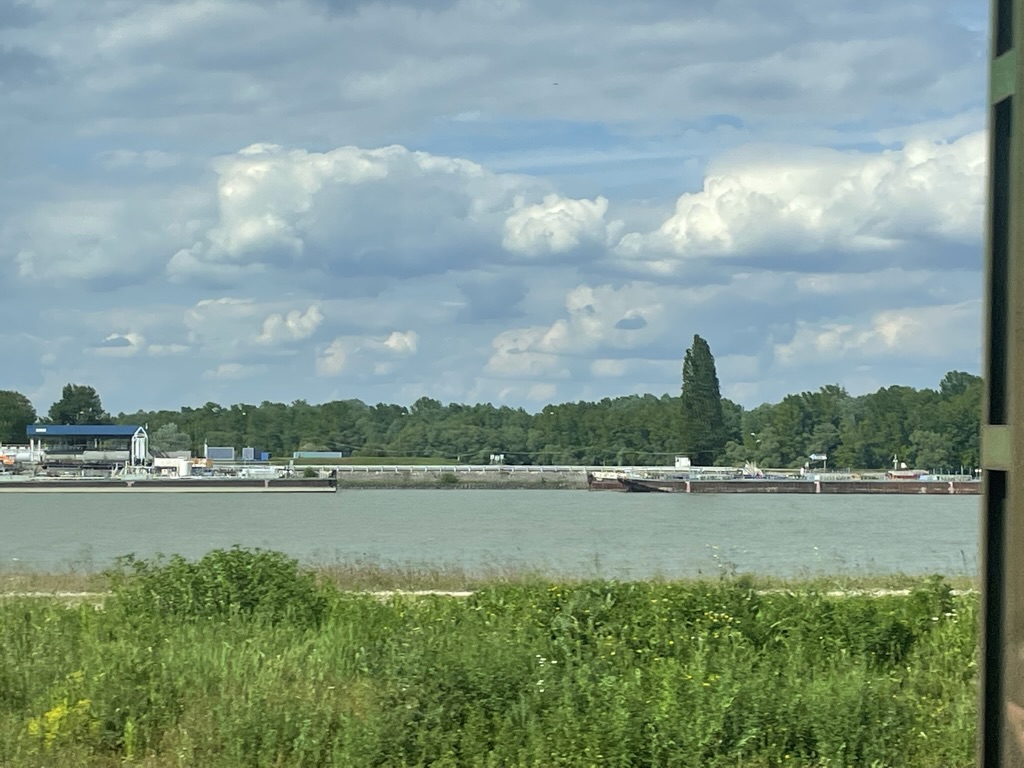
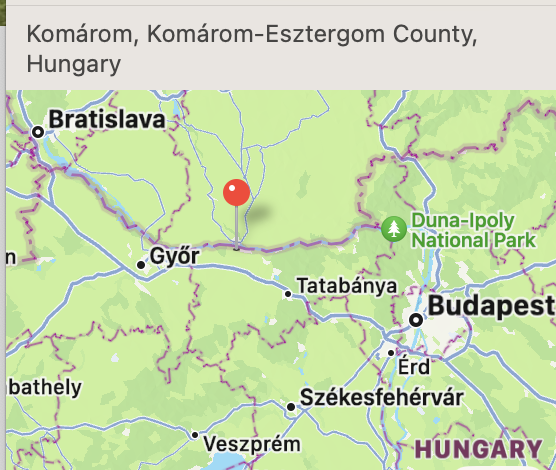
Viewing across the Danube into Slovakia…
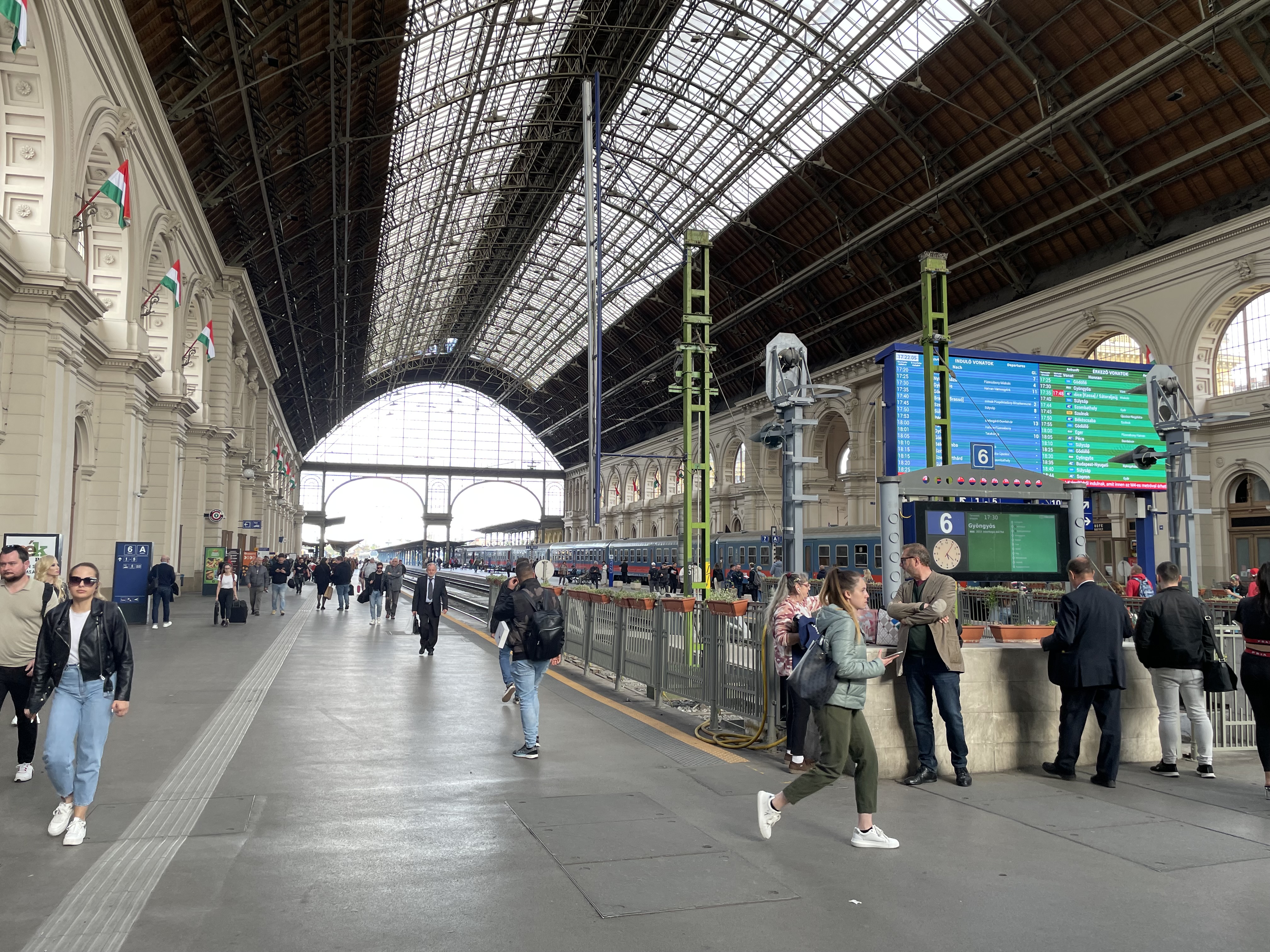
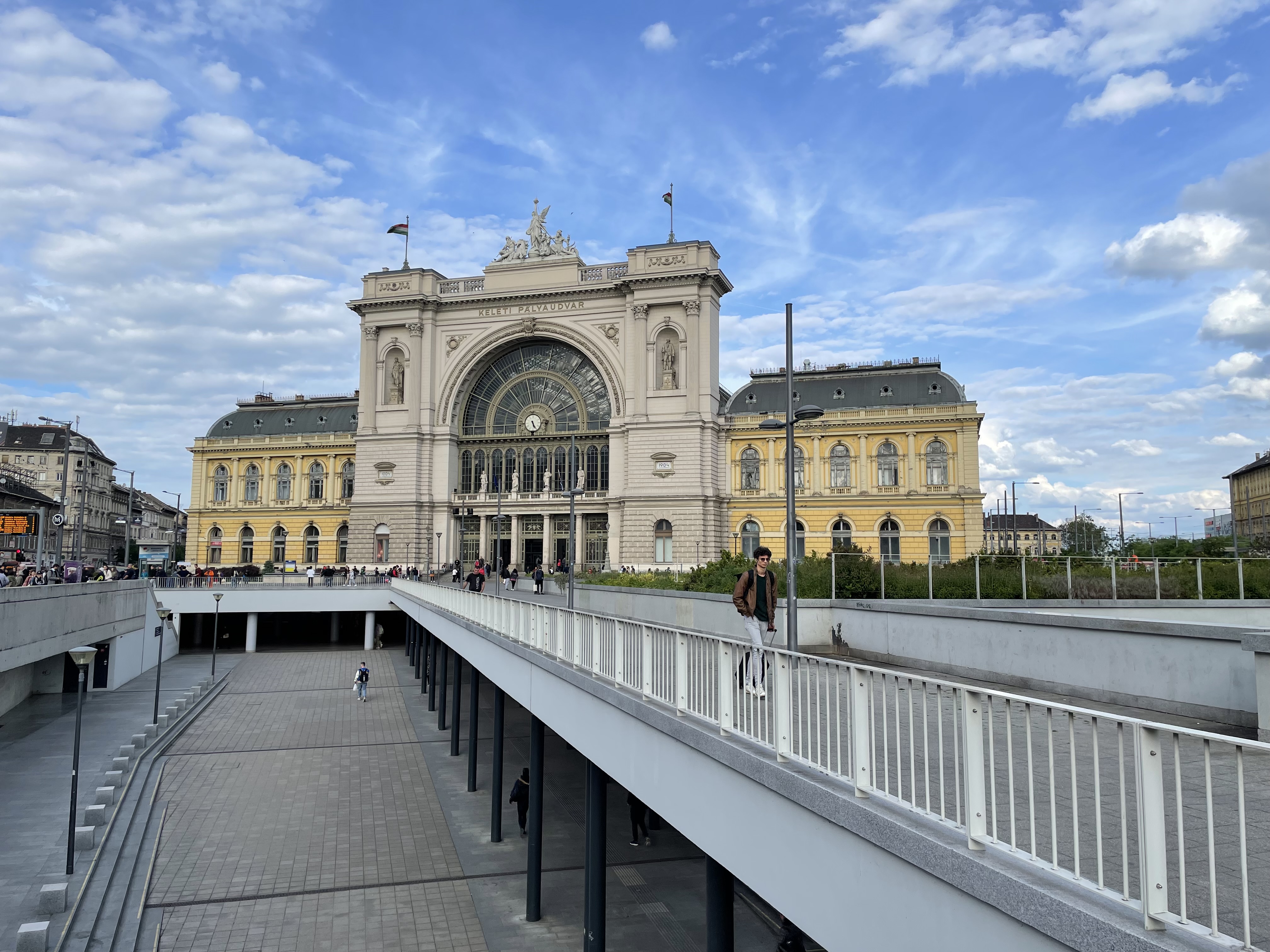
The daylight view of Keleti station recently seen after nighttime arrival from Romania
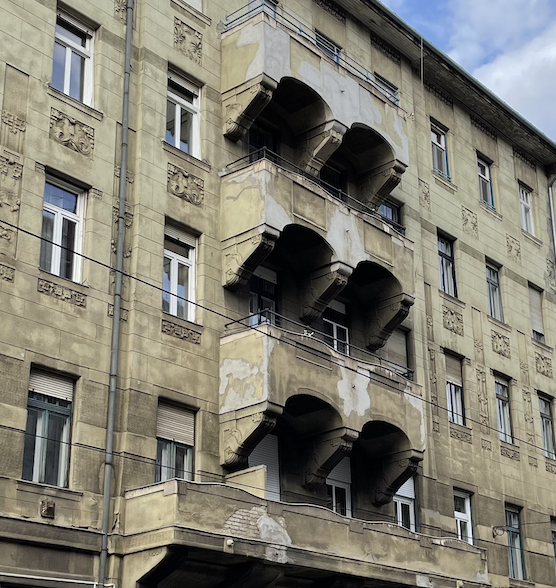
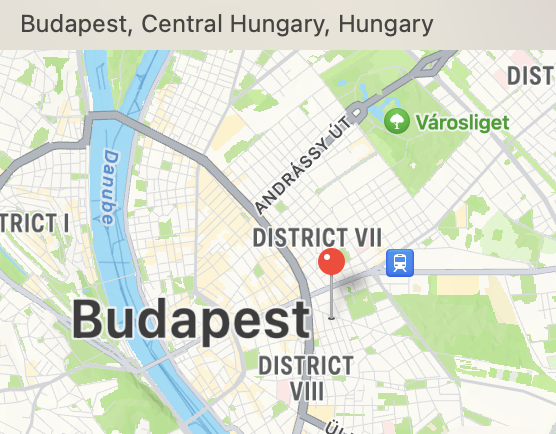
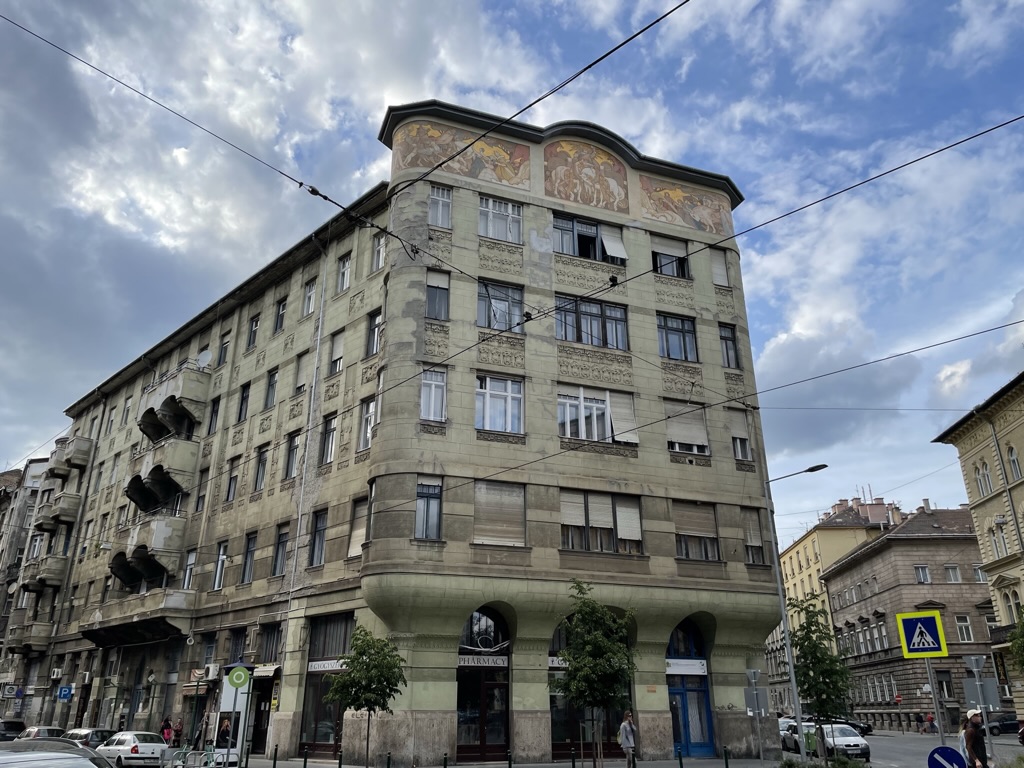
We had time so walked along streets near the station – and were able to see that this was an area that had been one of the centres of the 1956 Hungarian Uprising.

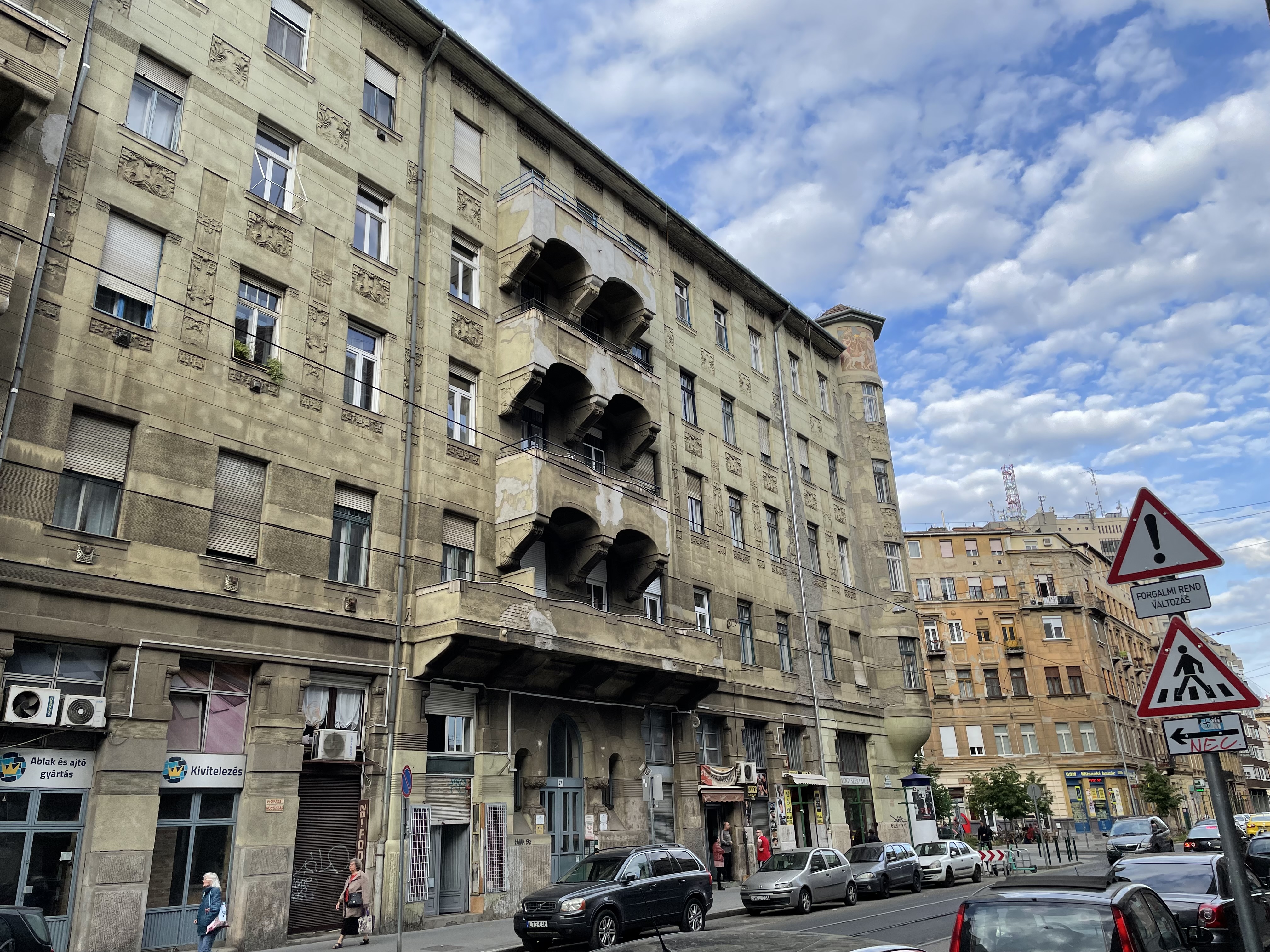
The pock-mark evidence remains on the surface many of the buildings…. only lightly re-faced.
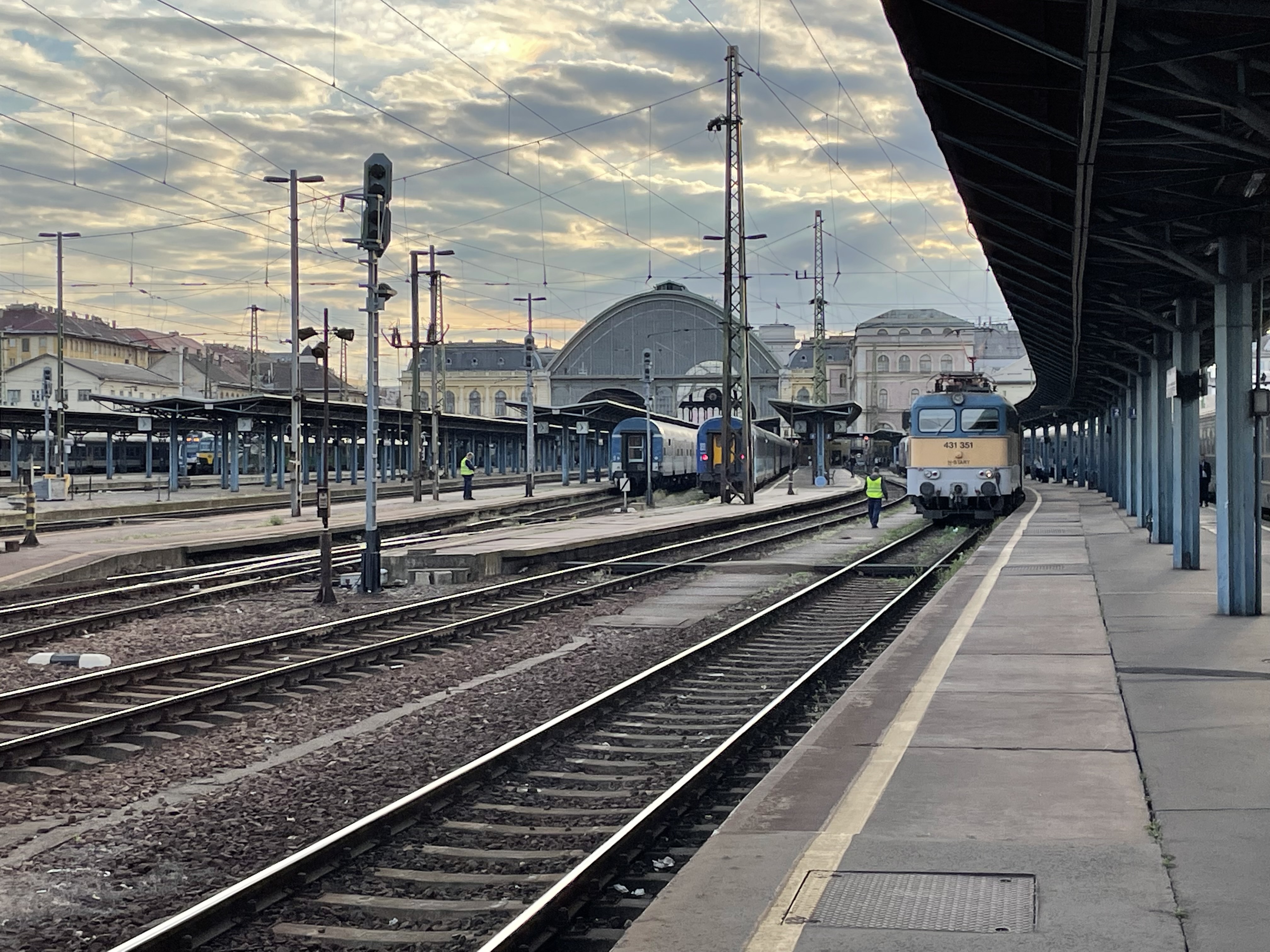
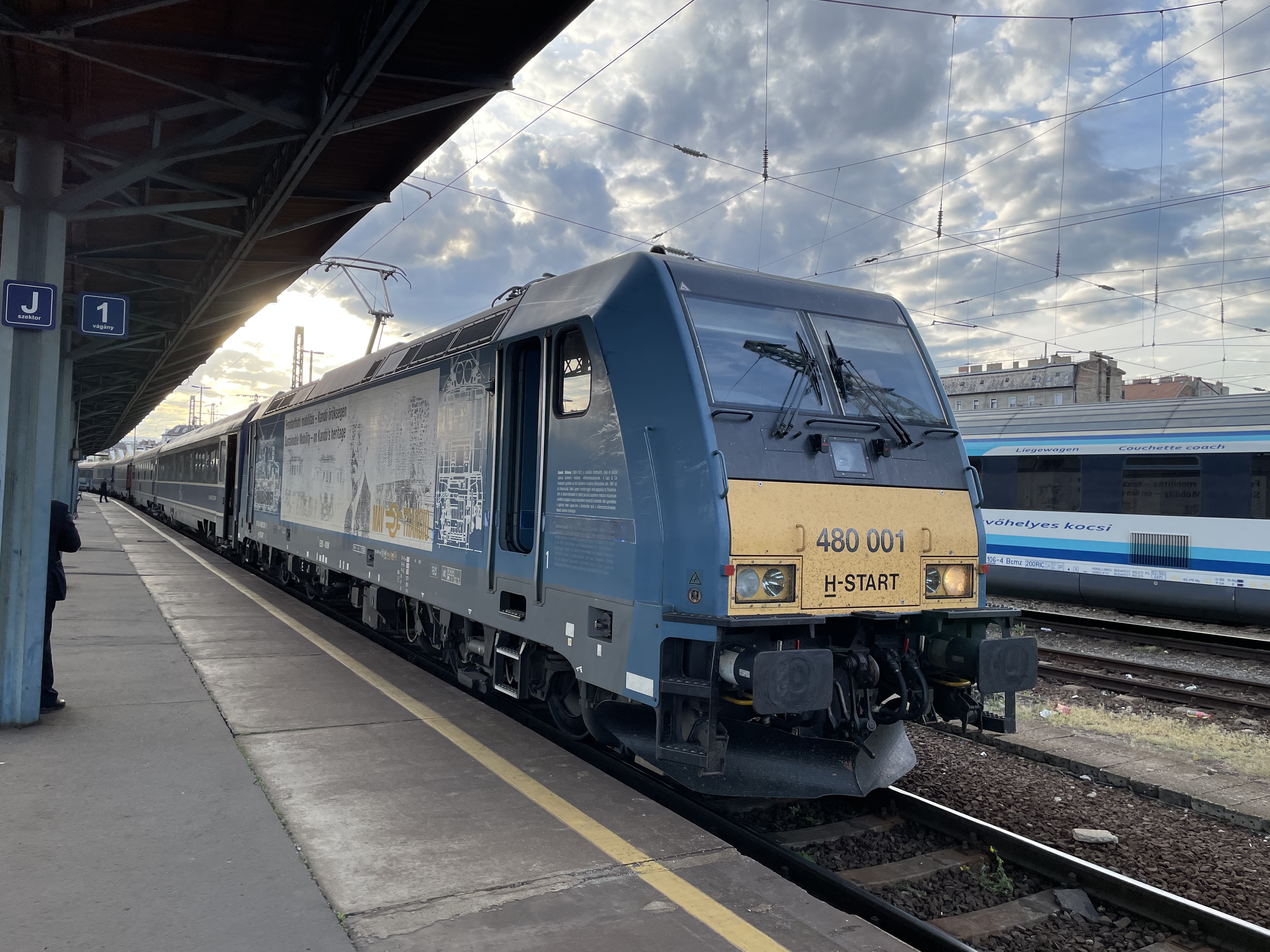
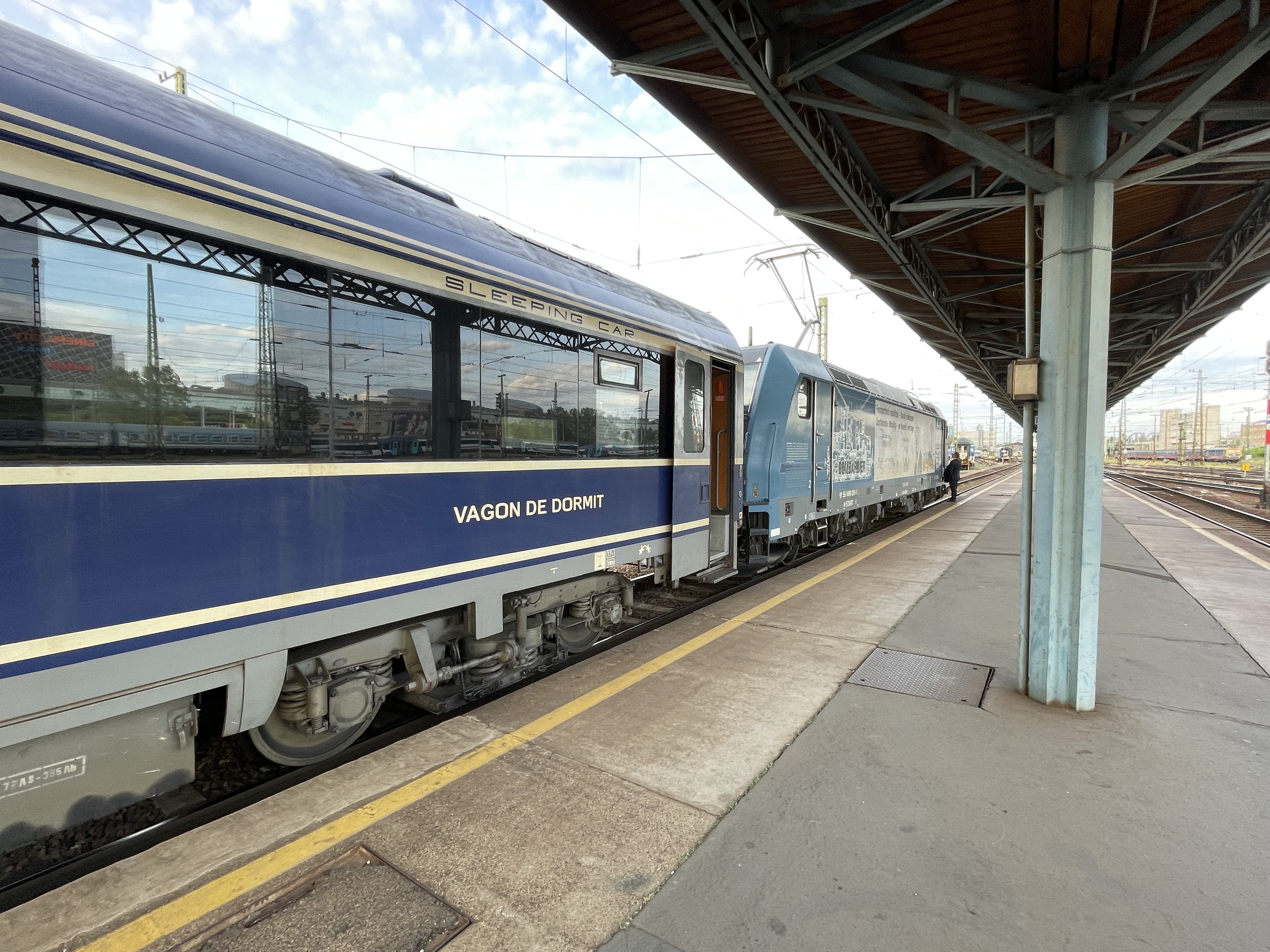
To Brasov
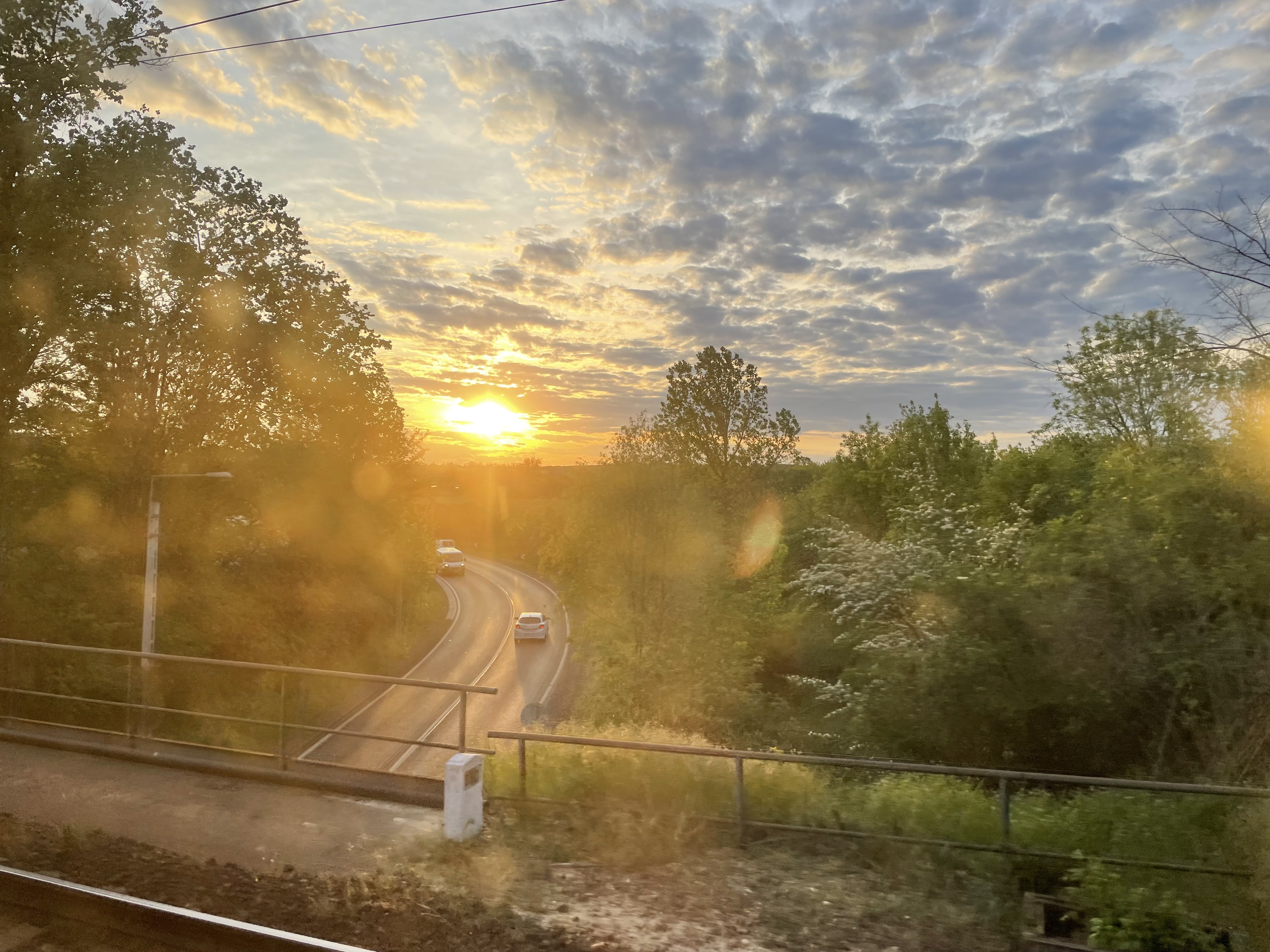
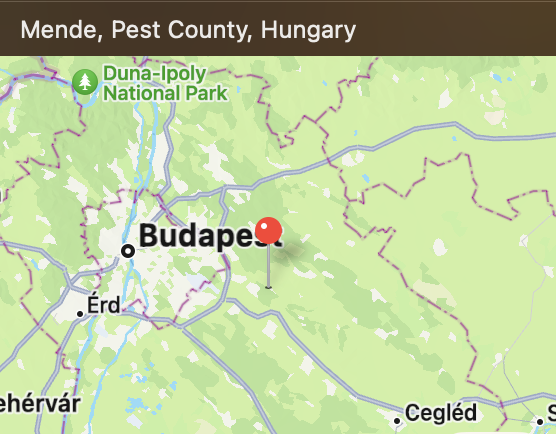
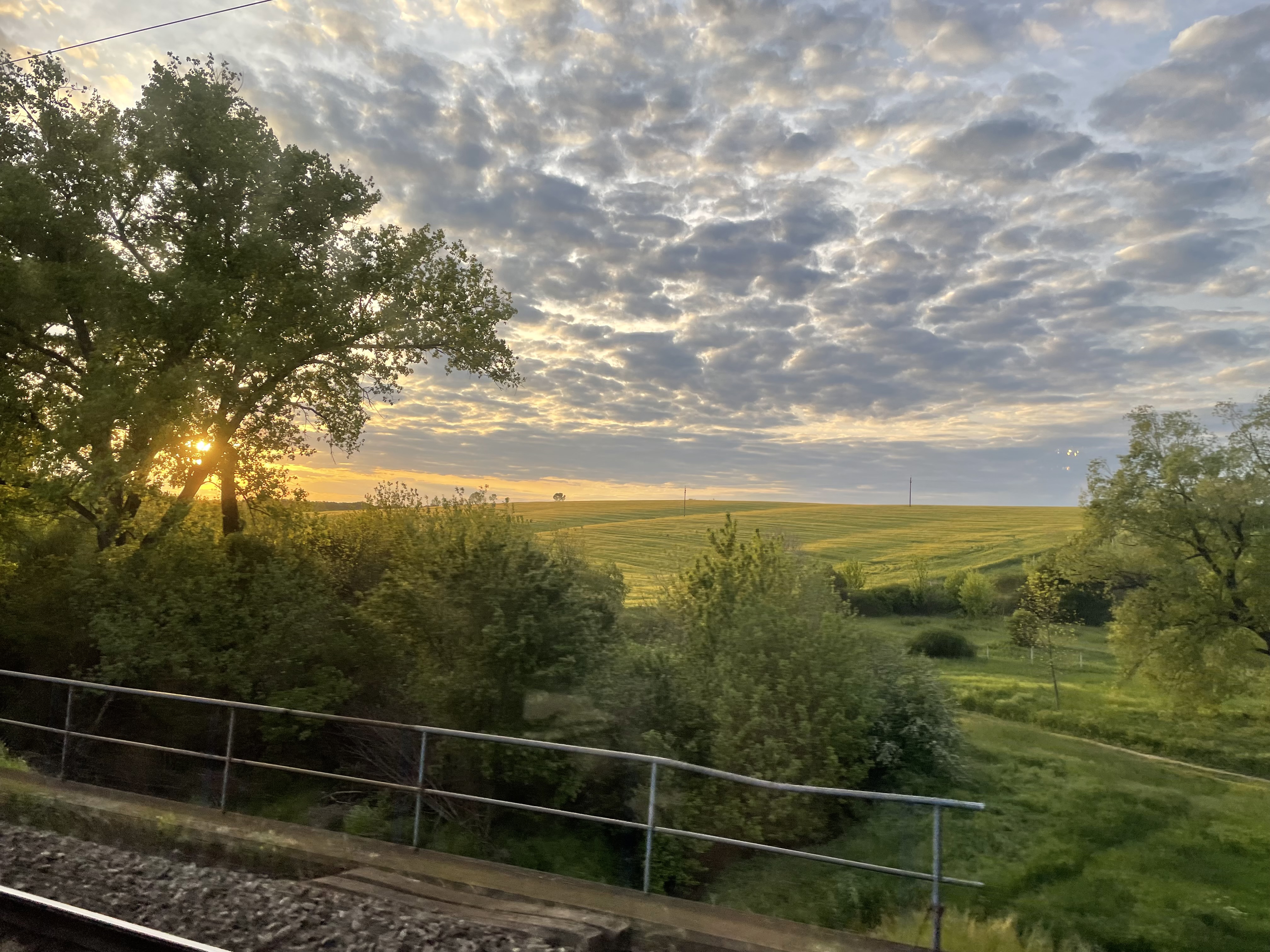
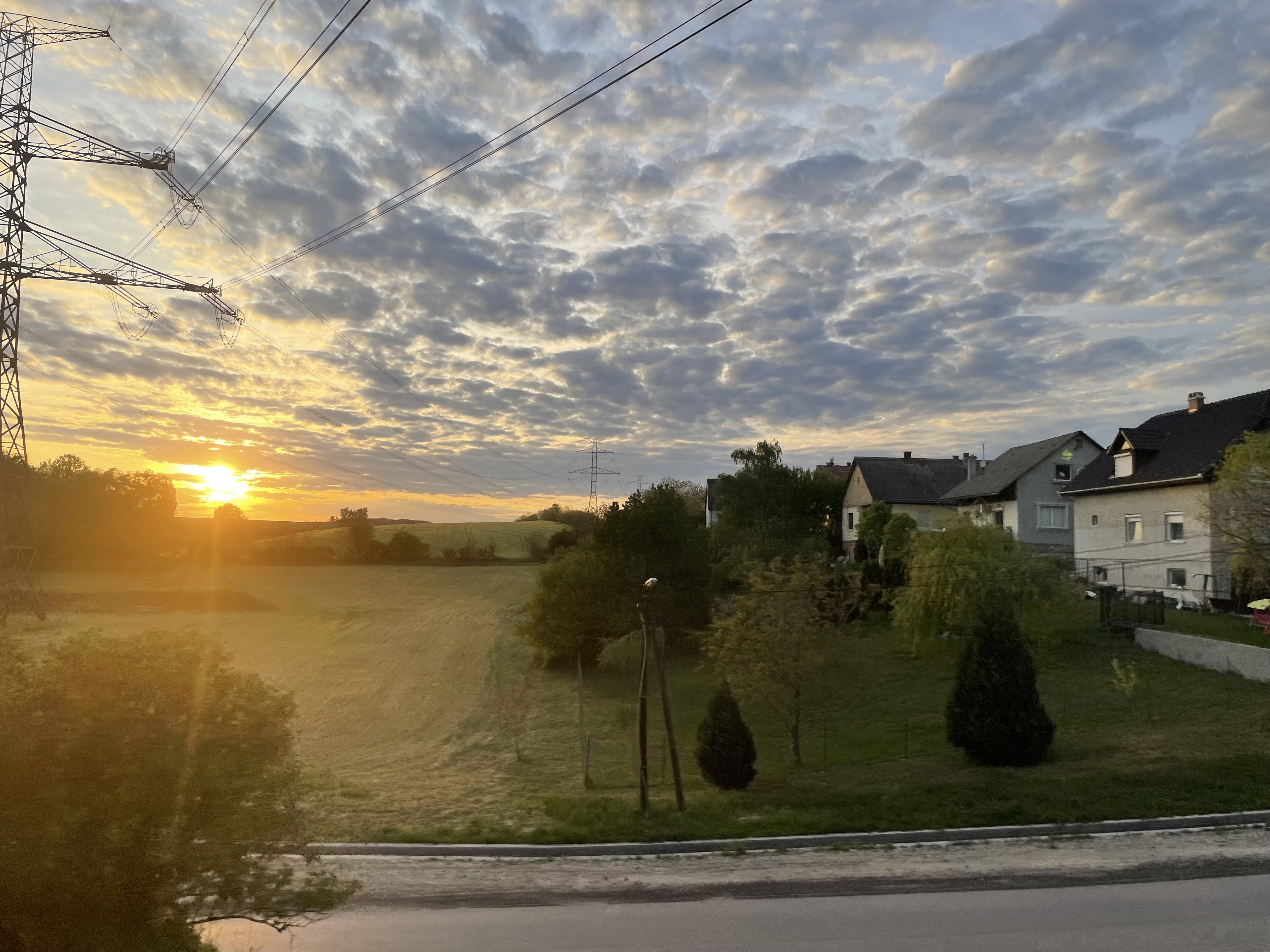
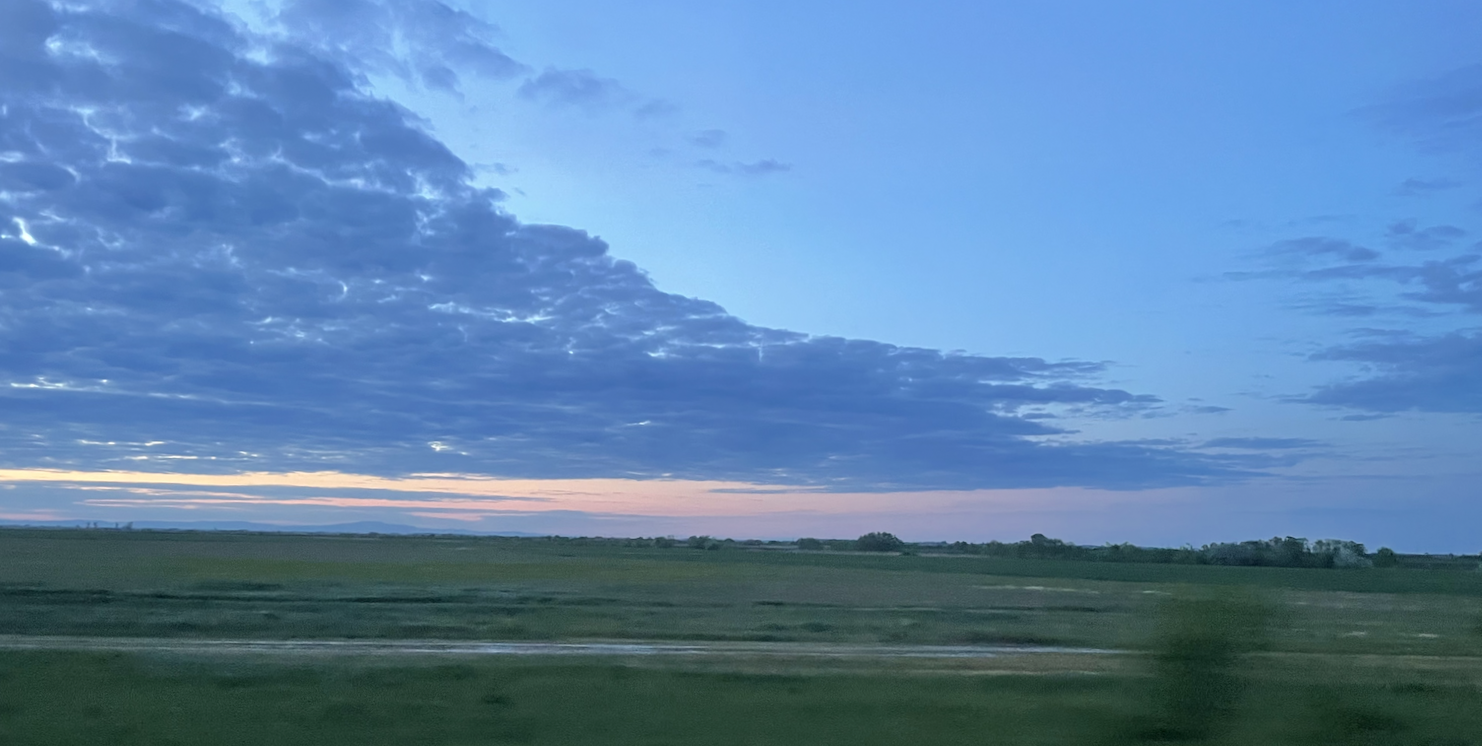
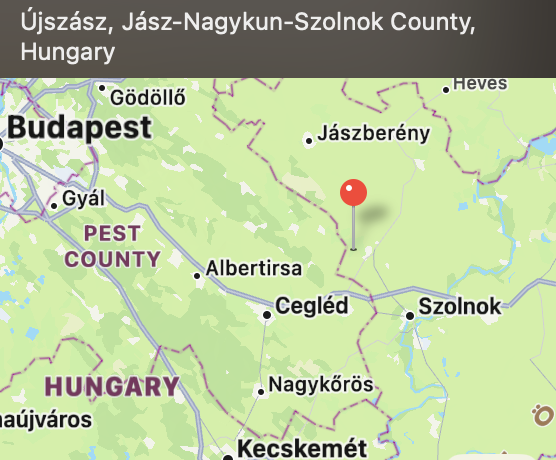
No Restaurant Car: Improvised Dining…
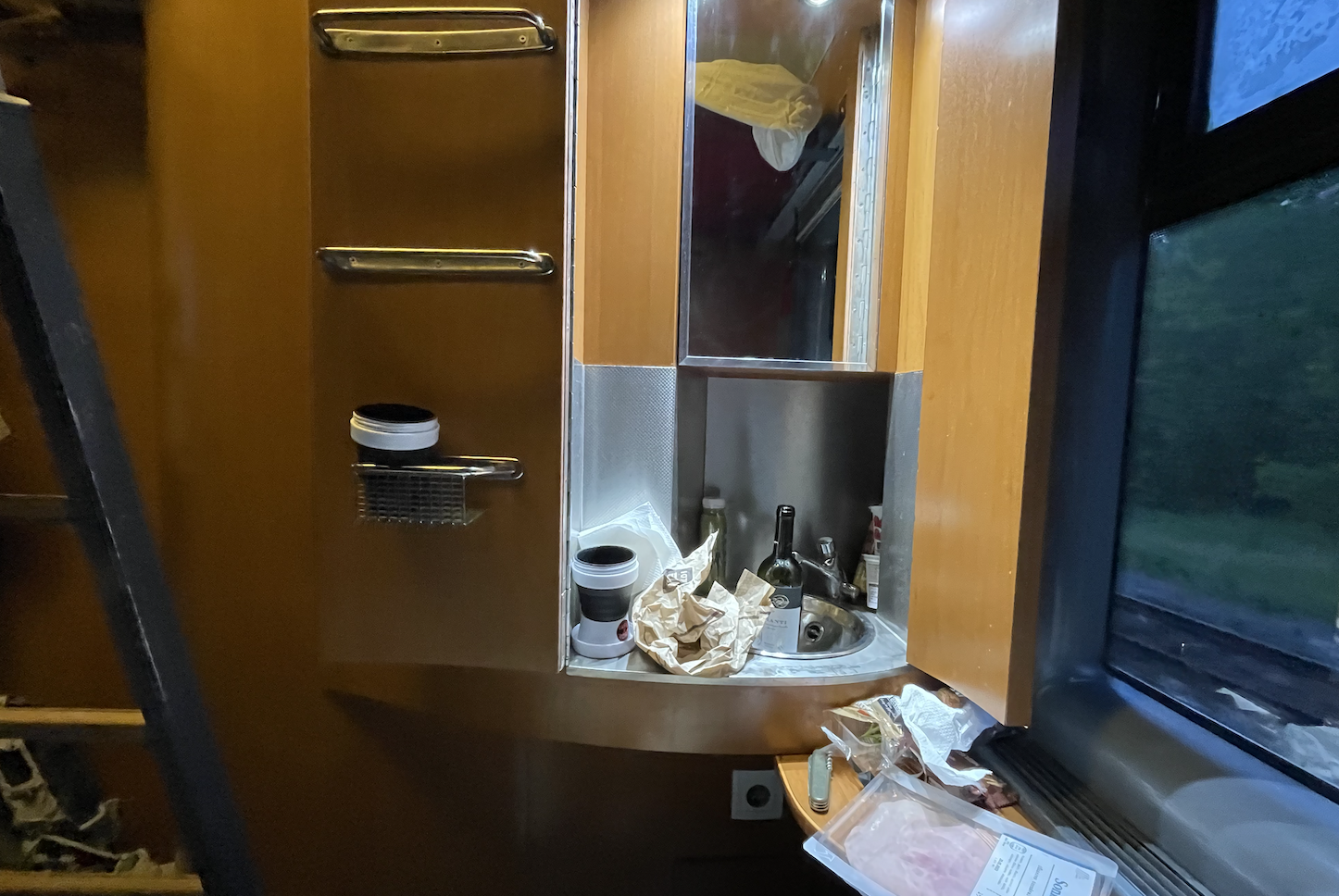
… in a narrow space
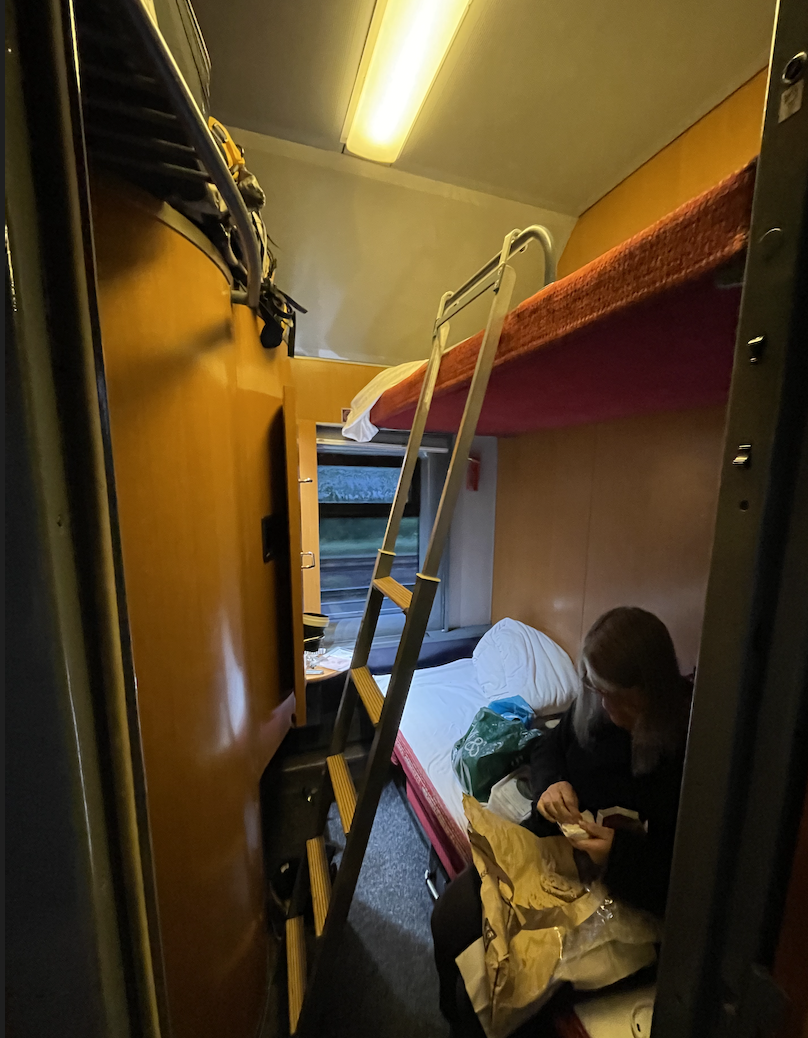
A step back in times: The Railway Pic-Nic. The ladder leads to the top bunk…. Just enough space in which to breathe (occasionally)
WhatsApp
…but its still the delightful experience of the ‘Night Sleeper’……..
May 11th
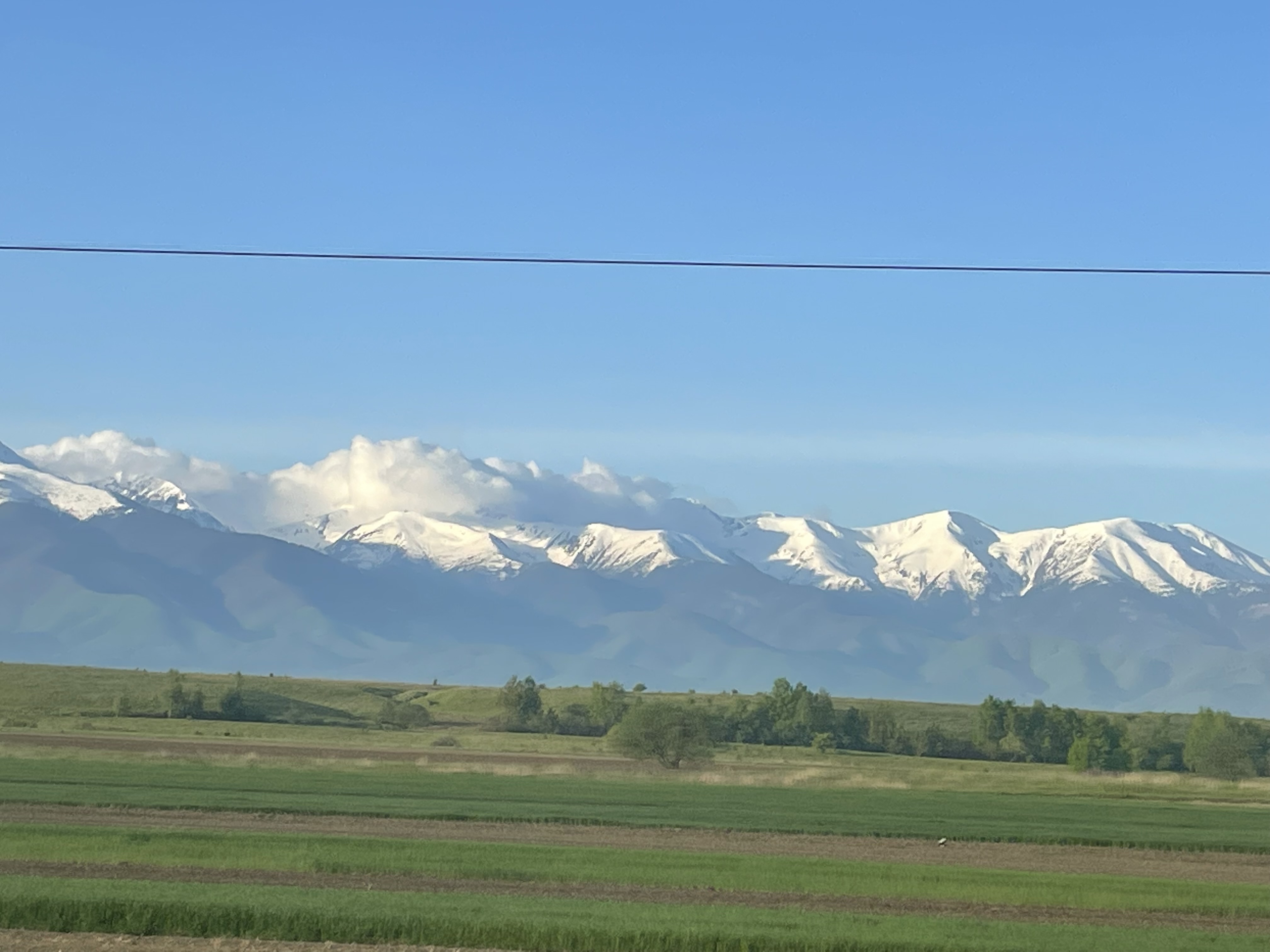
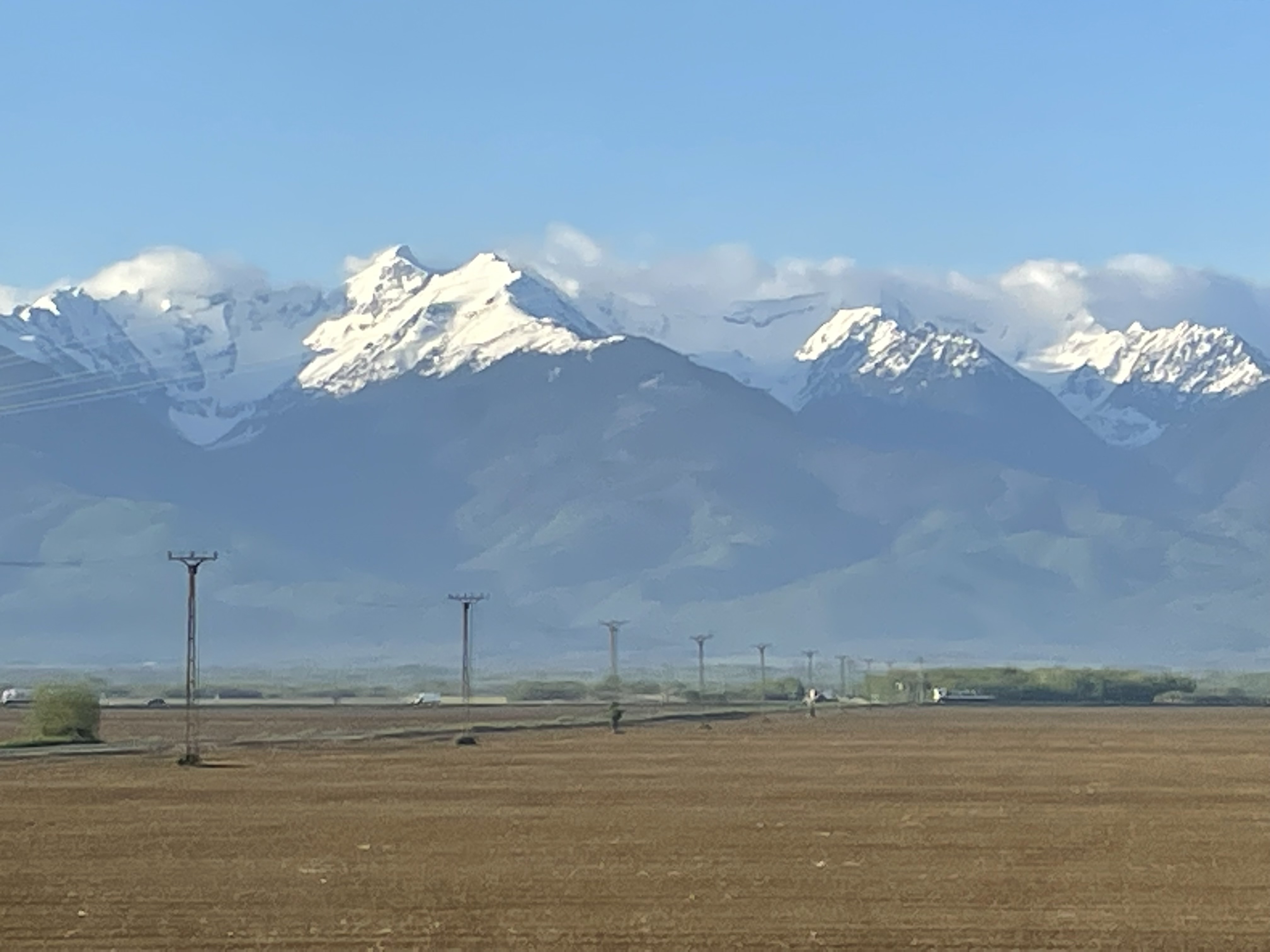
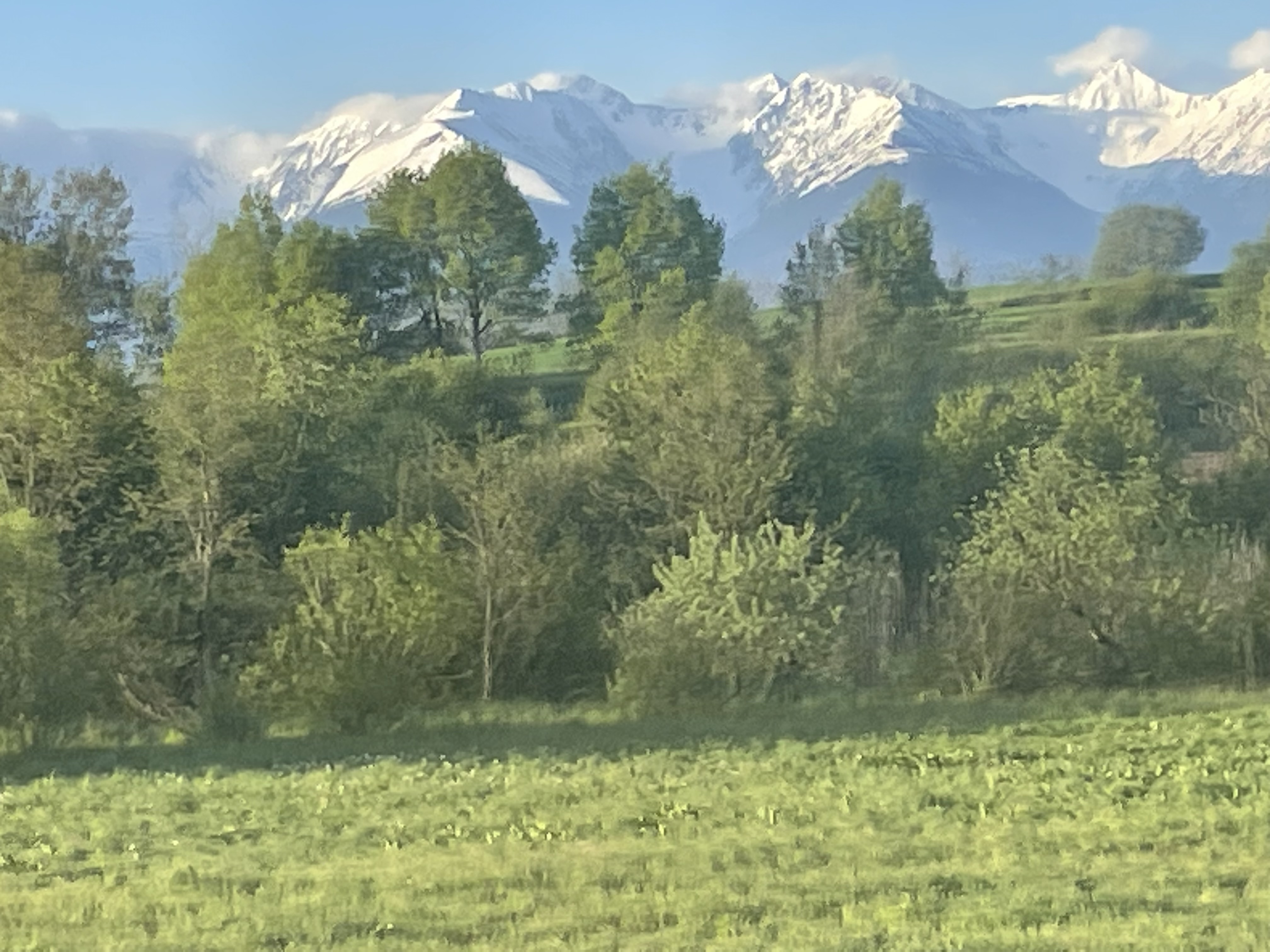
…. and the morning, travelling through Transylvania, brings views of the Munții Făgărașului (Fagaras Mountains)
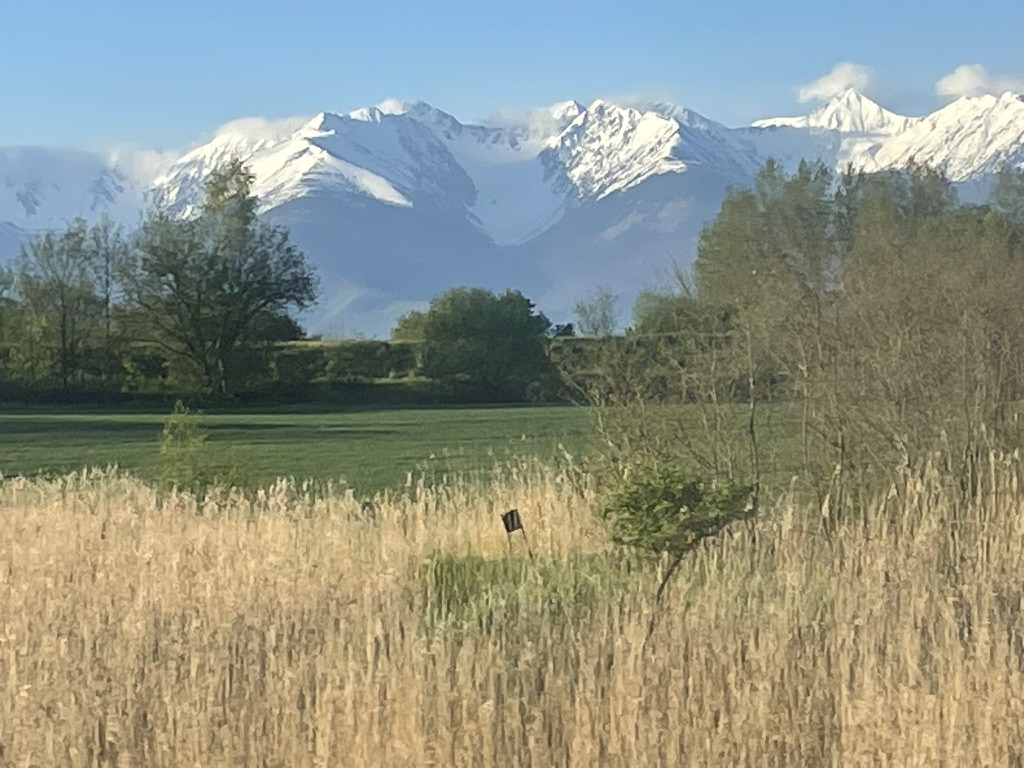

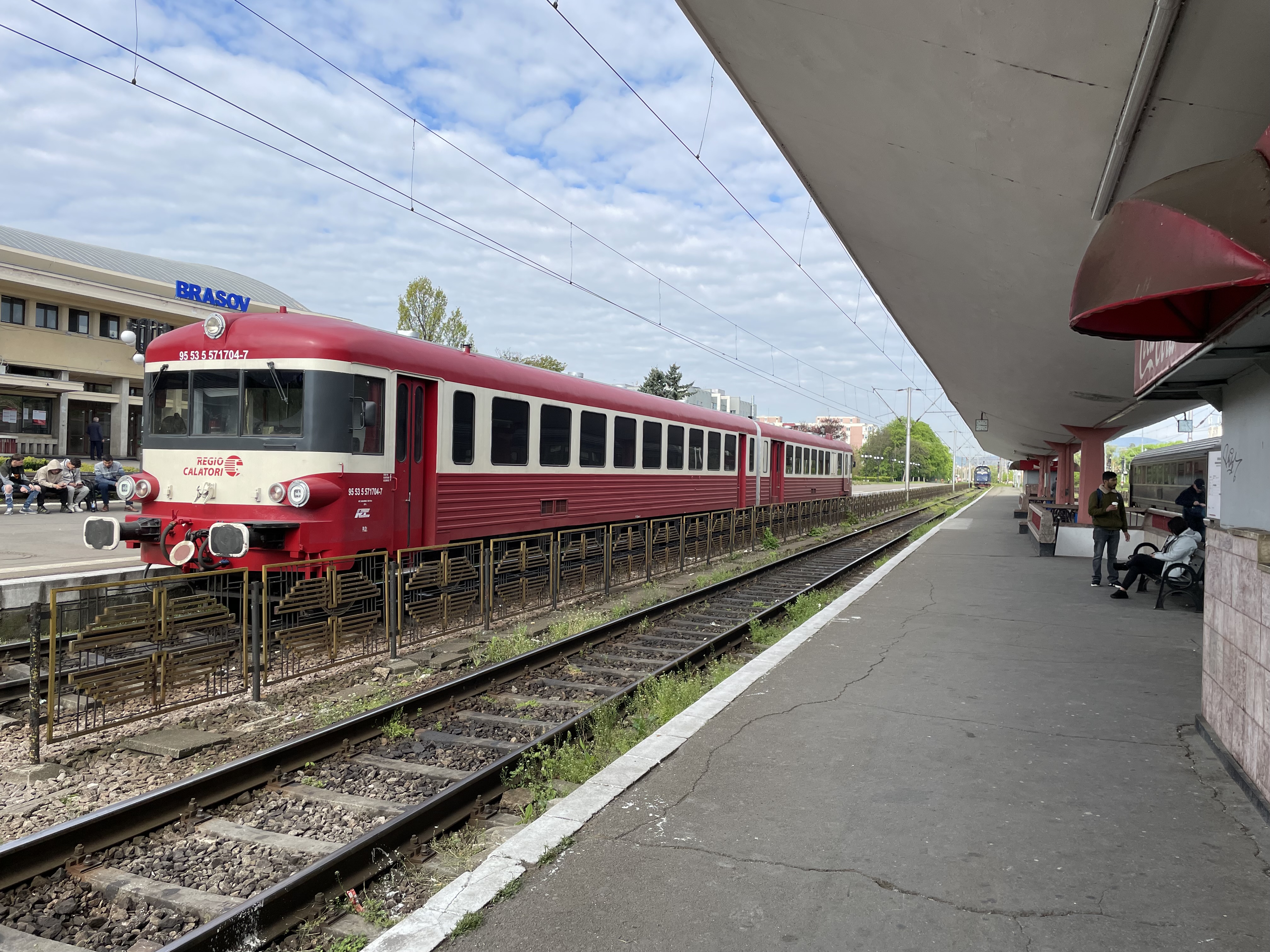
At Brasov station: suffering a continually repeated tune…Old, tired, slow but steadily reliable….. it must be love…..
WhatApp
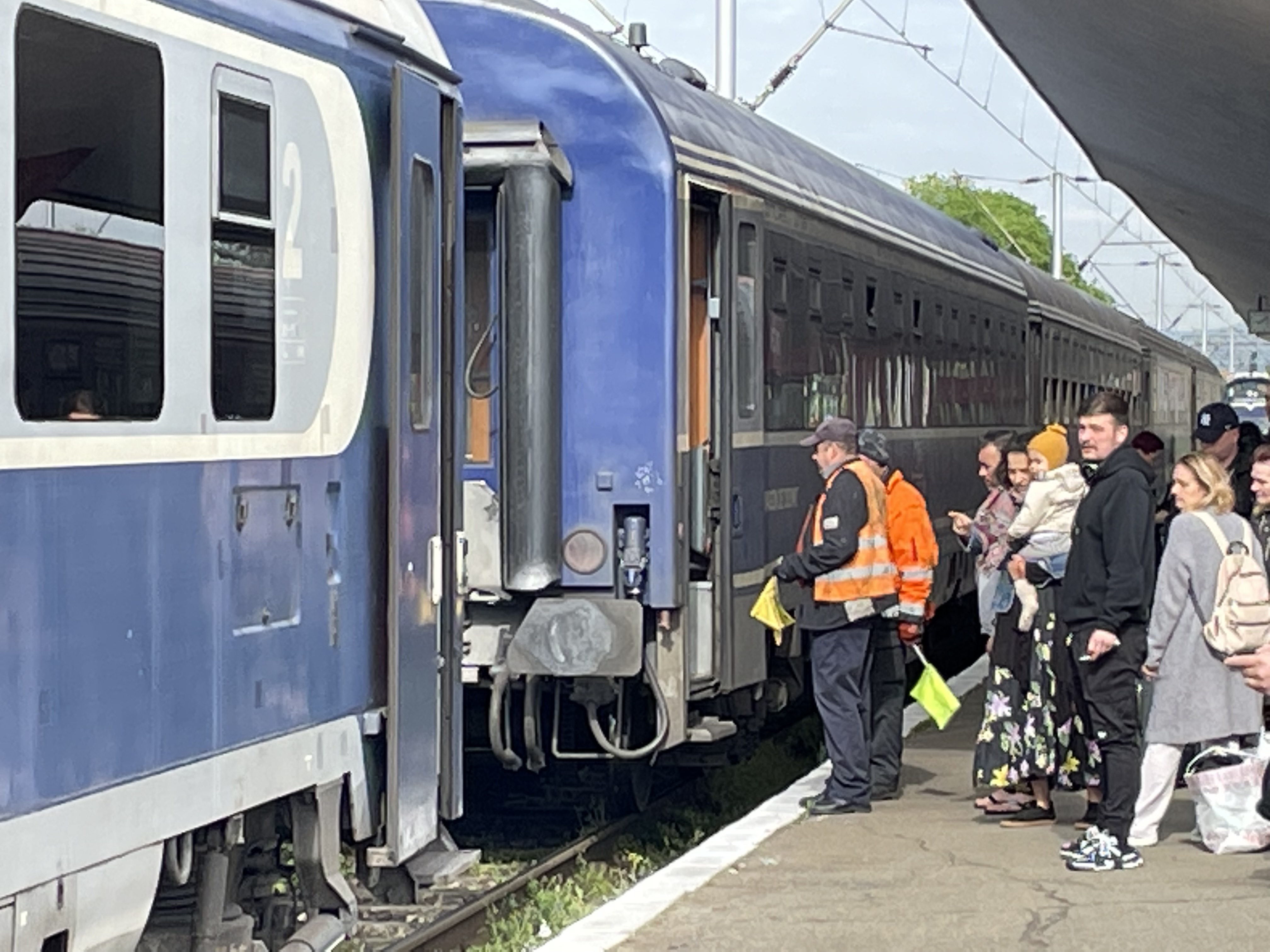
Coaches are added for the final section to București
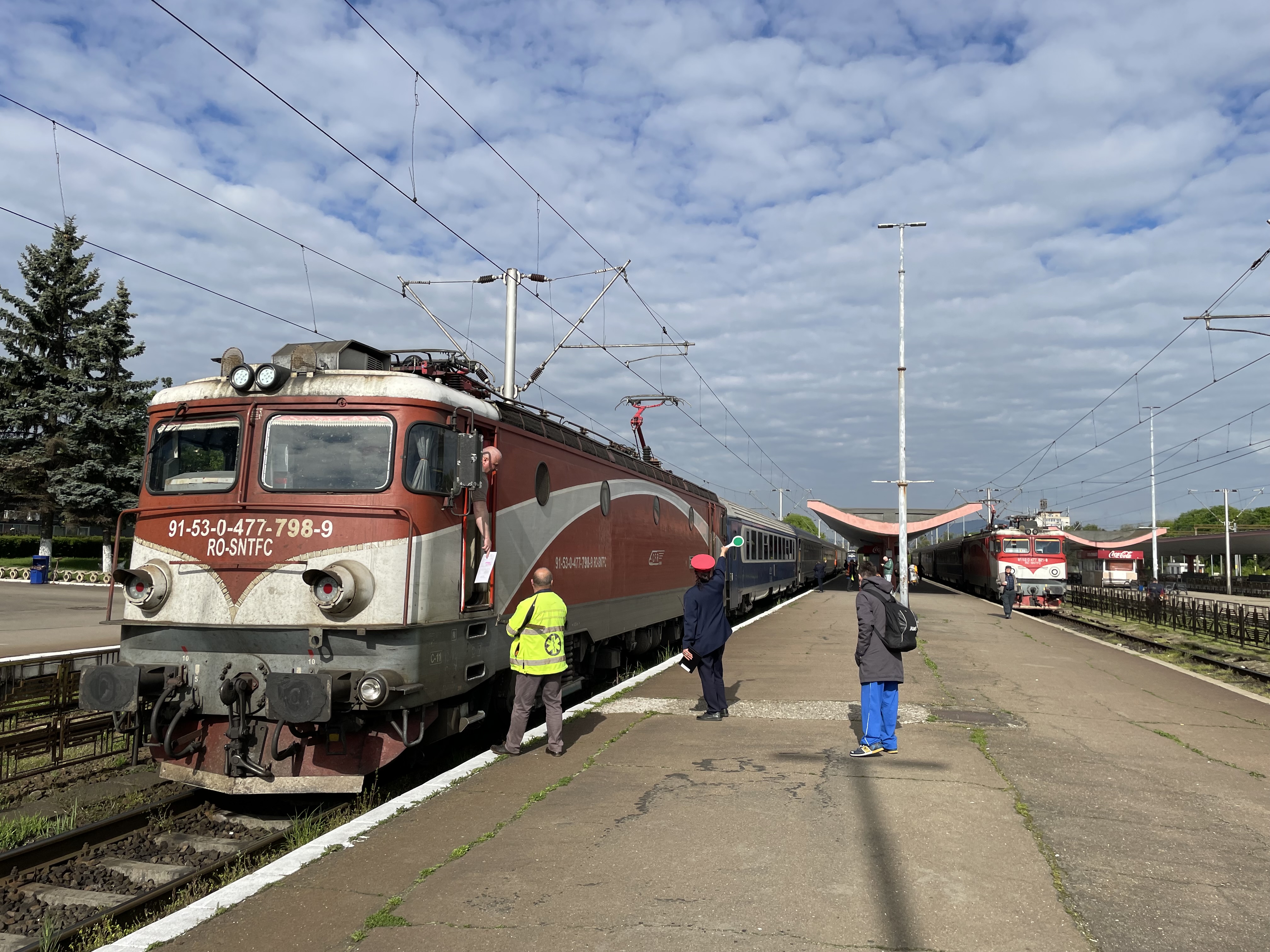
… the reference was to these beauties…. that, given the complexities staff have to manage, they do a wonderful job
WhatsApp
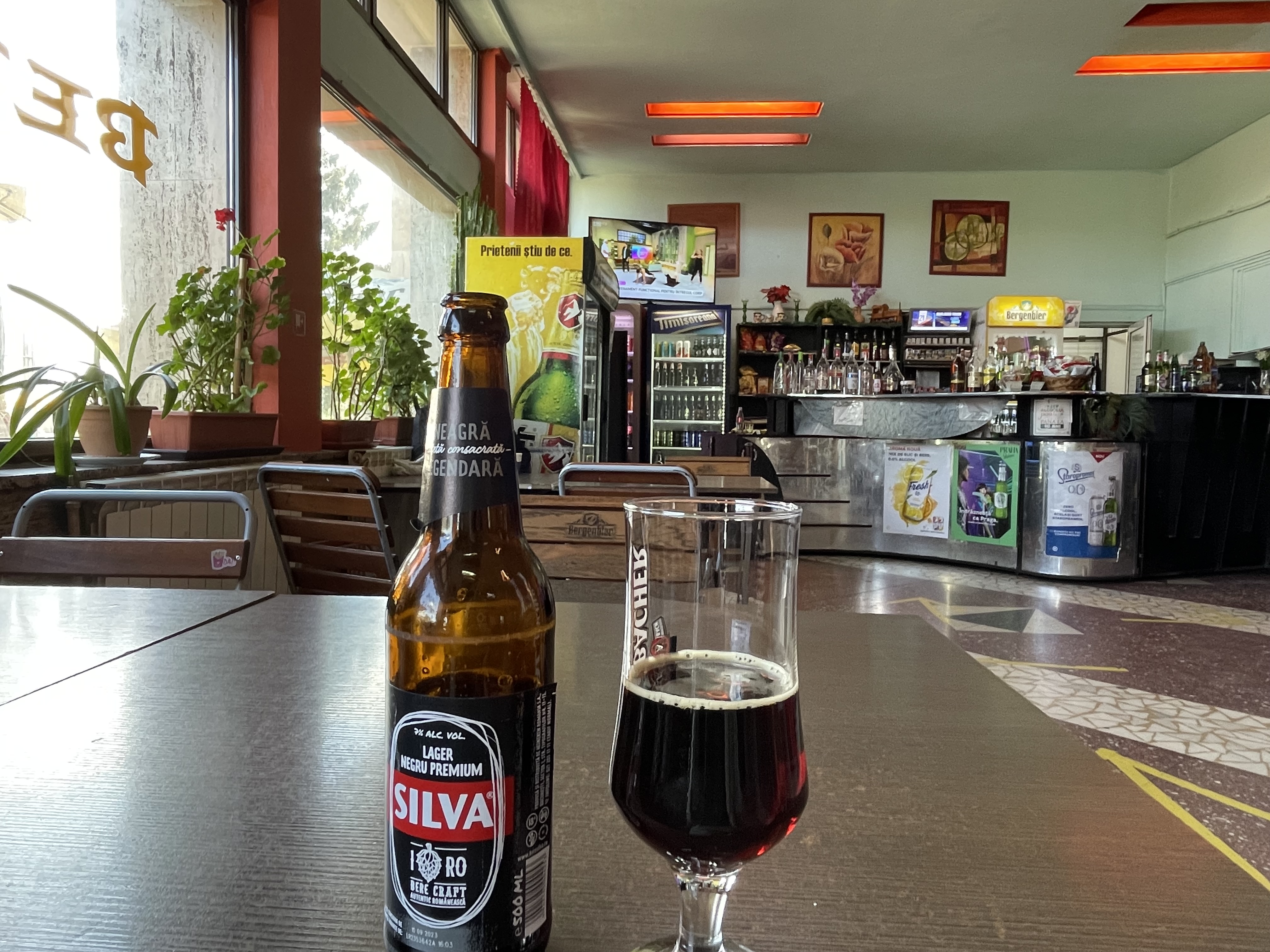
Retreat to bar and join the solitary drinkers
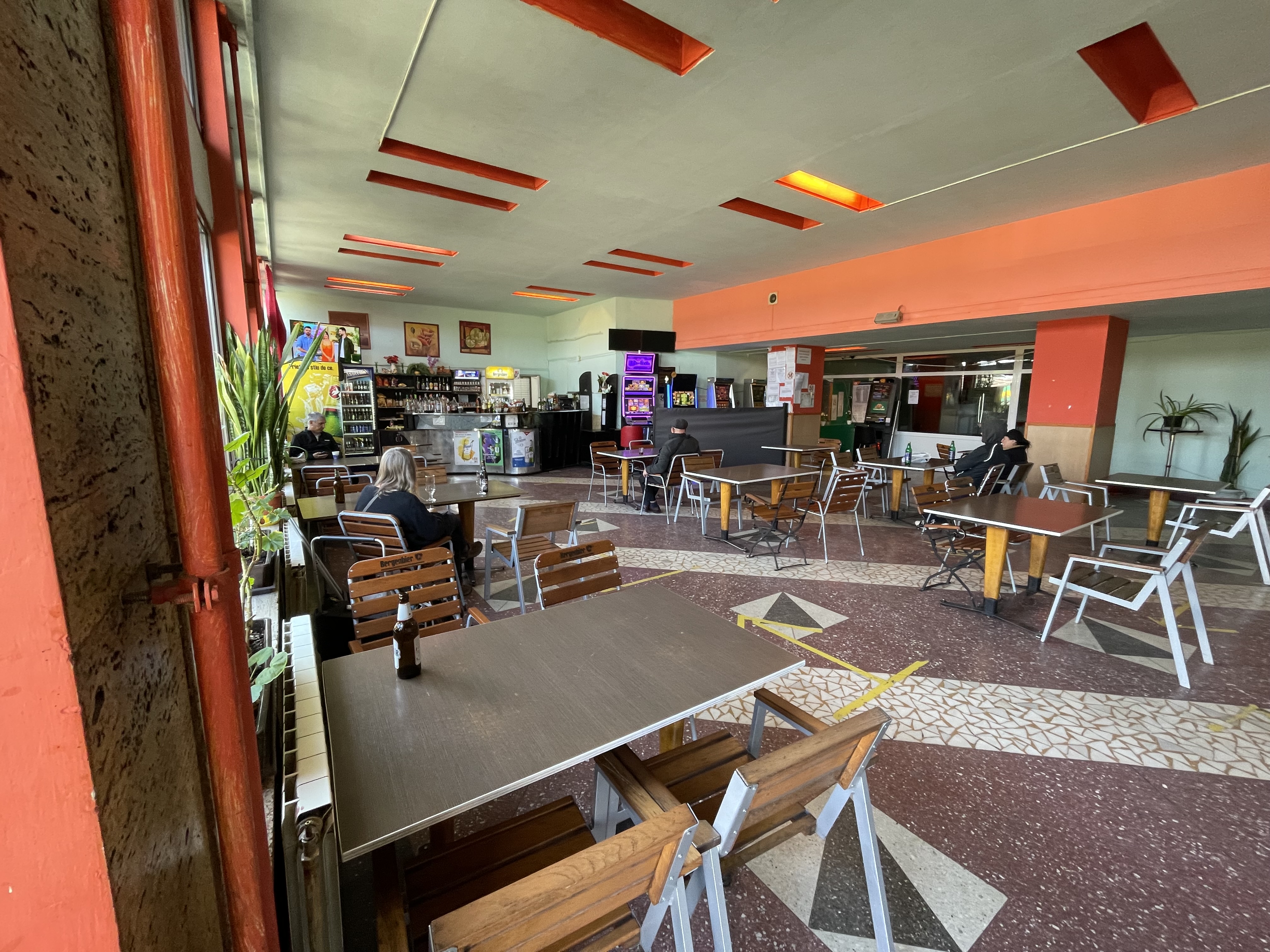
… and enjoy the prospect of vigorous exercise

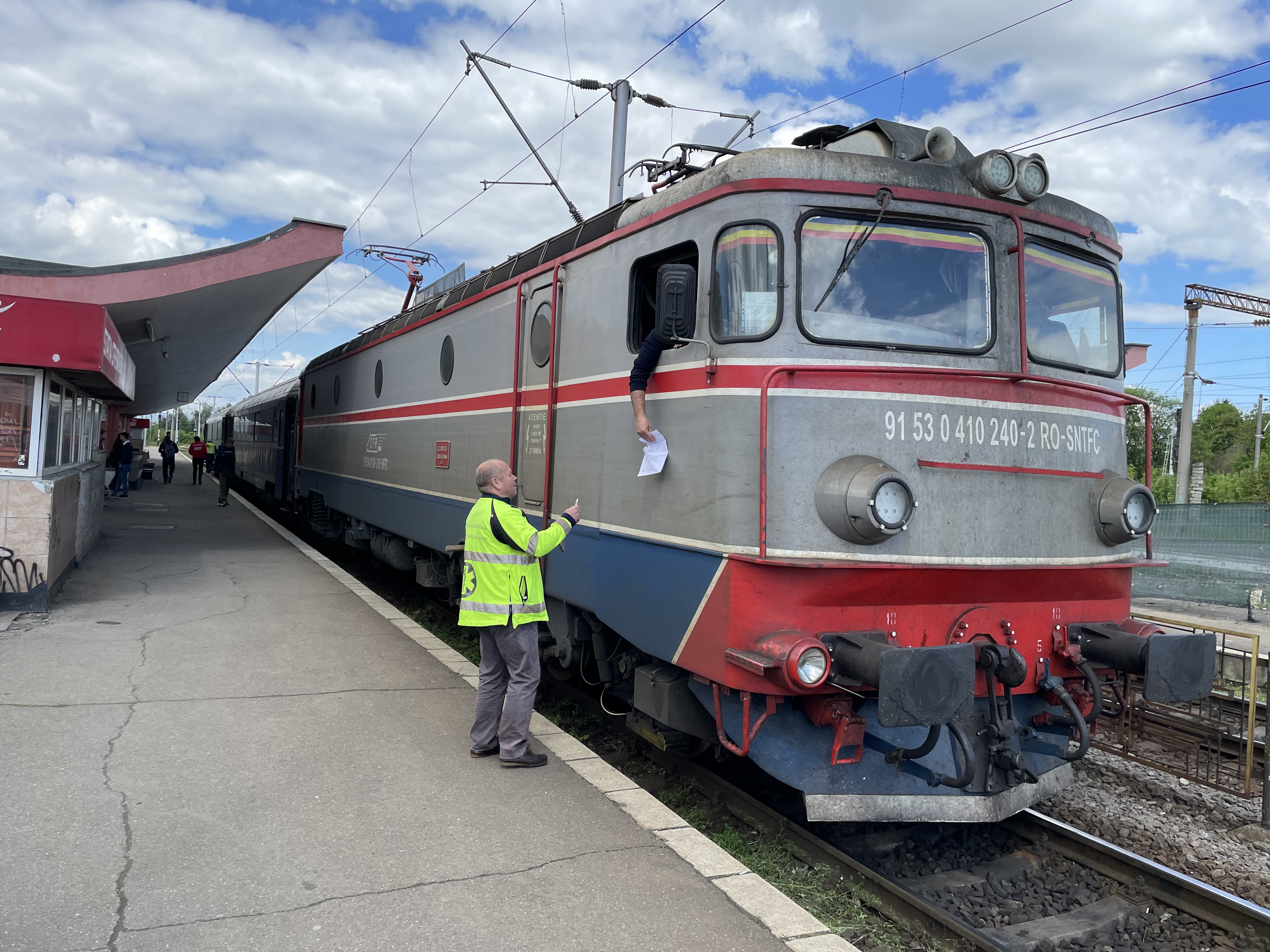
We begin a delightful journey over the Carpathians and on to Iași – one I’ve wanted to make for several years – and in terms of sheer simple pleasure, it was everything I expected.
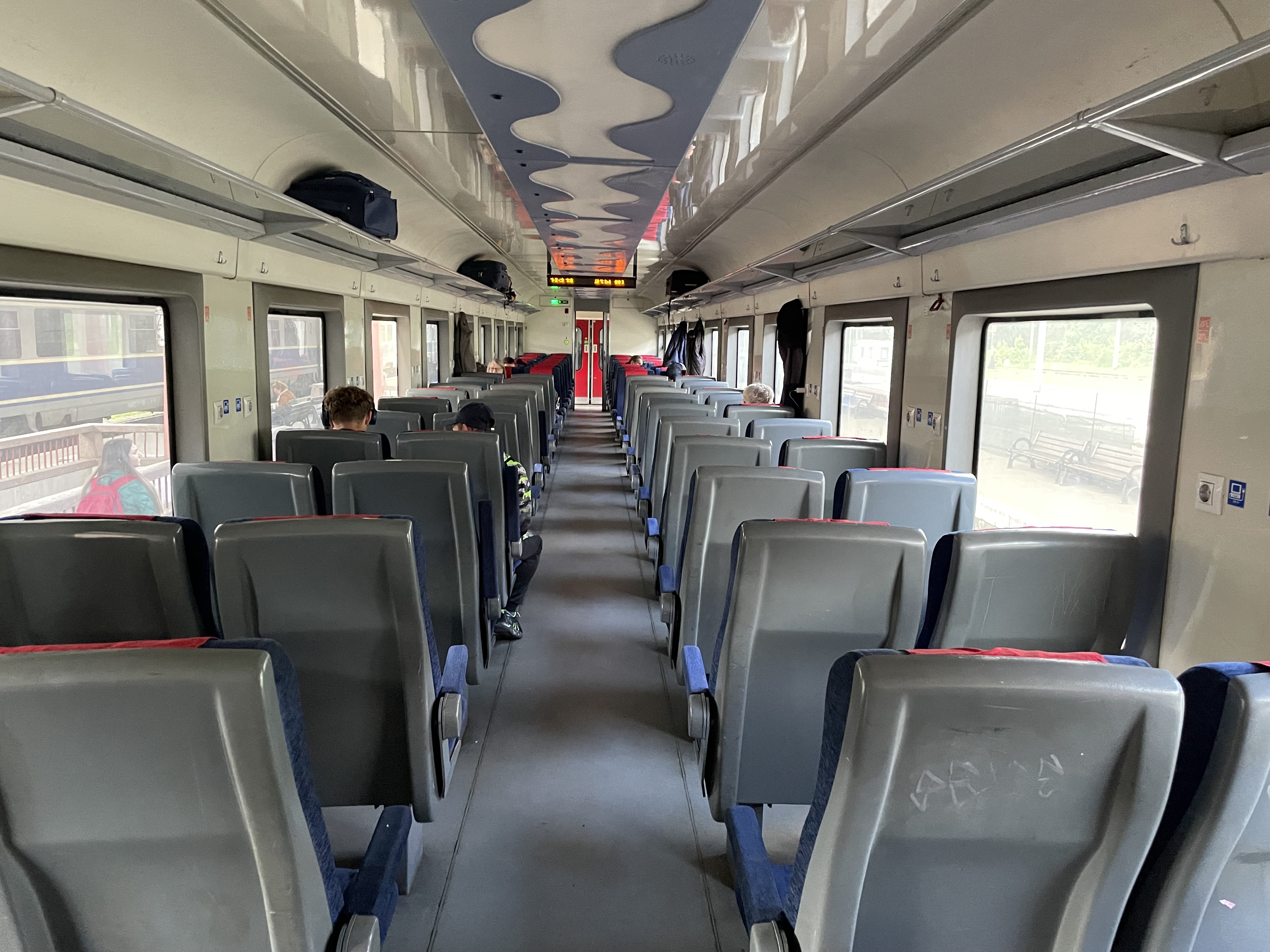
Into Harghita County: Hargita megye – the highest percentage of Hungarian speakers in Romania (85%+). The area is known as Székelyföld (Székely Land) – a distinctive land within the broader Hungaian speaking part of Romania.
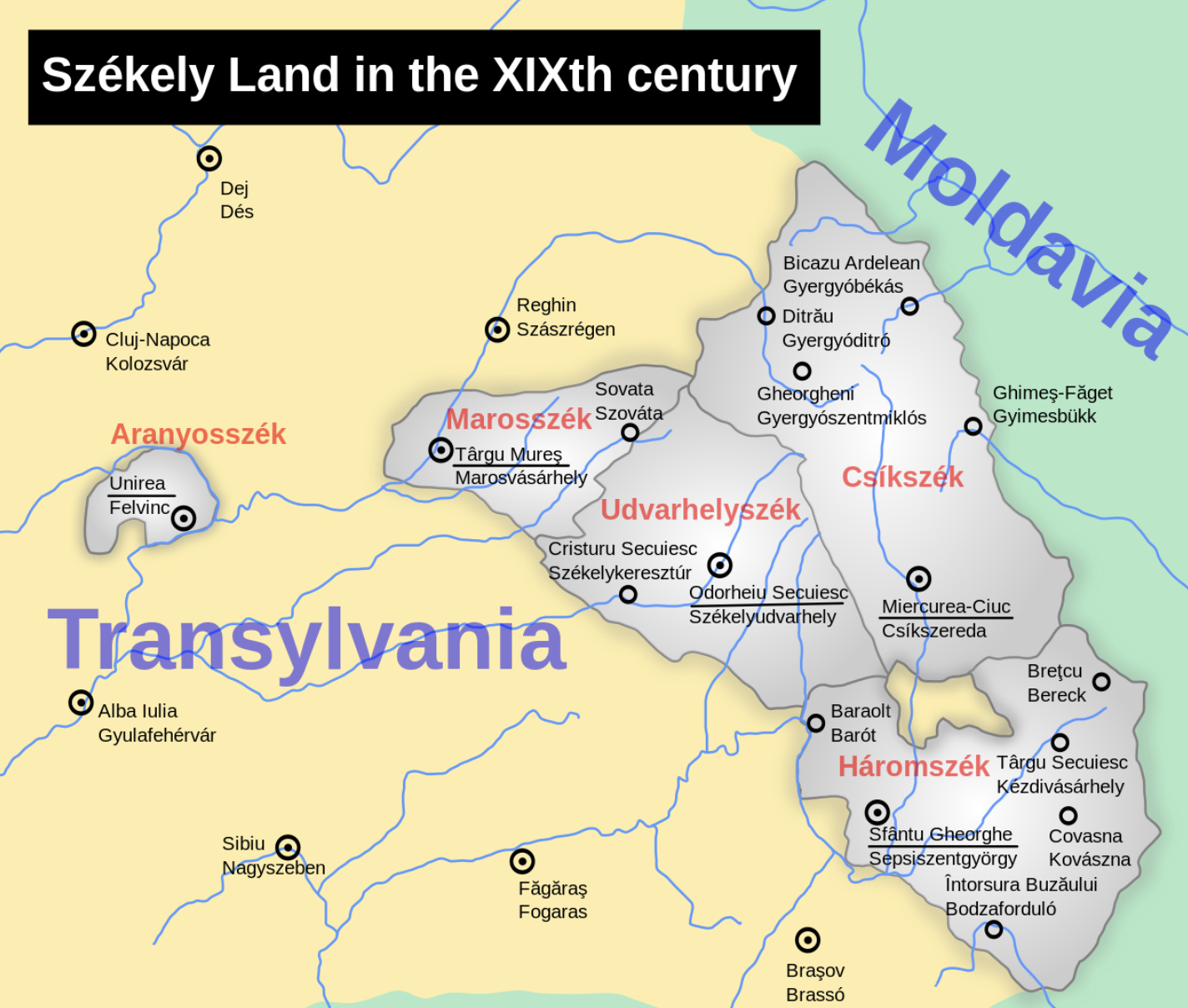
We first visited the area in 1990 – on a day tour from Sighișoara with Vera travelling through Odorheiu Secuiesc (Székelyudvarhely) and visited again in 2013 with Krisztina Pall (who had been a member of a 2012 Workshop in UK – which included Franco – of whom she said “He may not learn much English but by the end of the week we’ll all be speaking Italian!” (Bravissimo!).
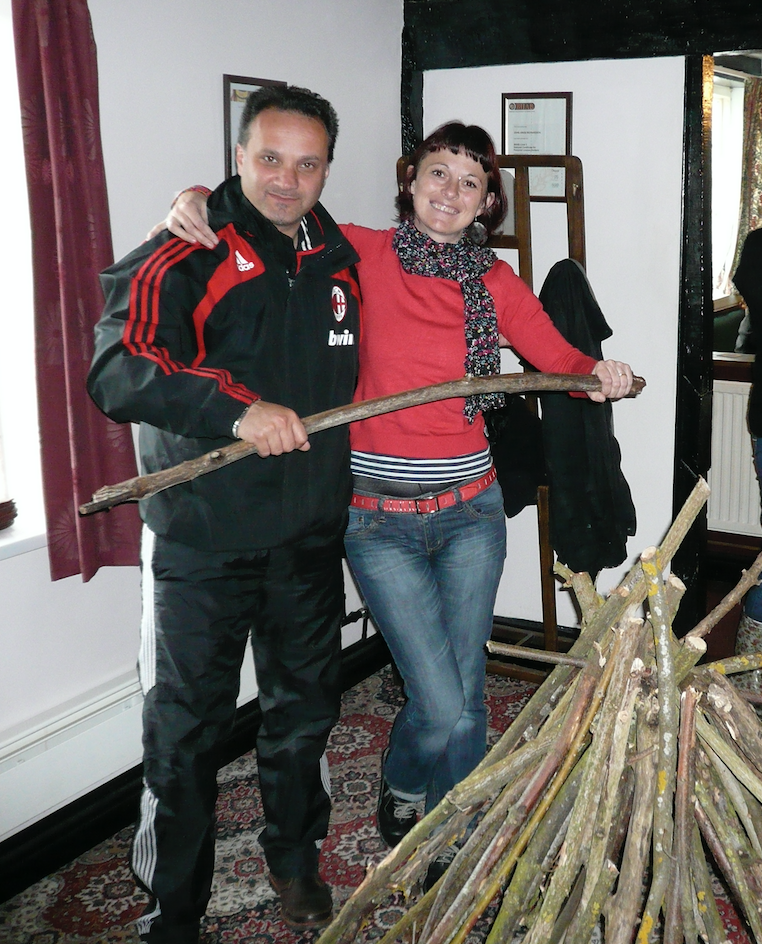
Krisztina also taught the group to dance ‘Drumul Dracului’ – in the parish church in Bishop’s Castle (Some, of a cynical mind, might state ‘How Appropriate’)
The following link provides background on the complexity of the region.
Transylvania: Age of Migrations
The journey from Brasov, through Miercurea Ciuc (Csíkszereda) follows the highest reaches of the Olt Valley (which we followed from Sibiu to Râmnicu Vâlcea & beyond 2 weeks previously).

Harghita is ‘high hills country’, The valley in this area is over 650 metres high
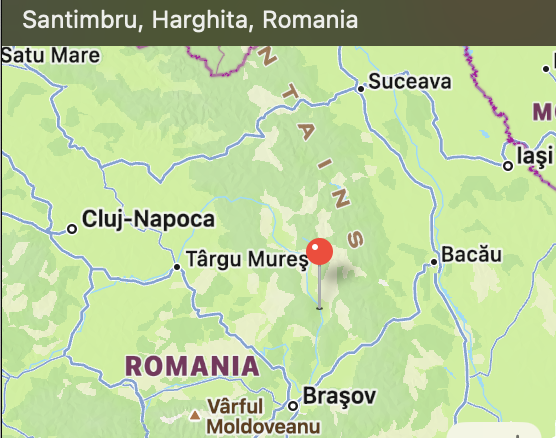
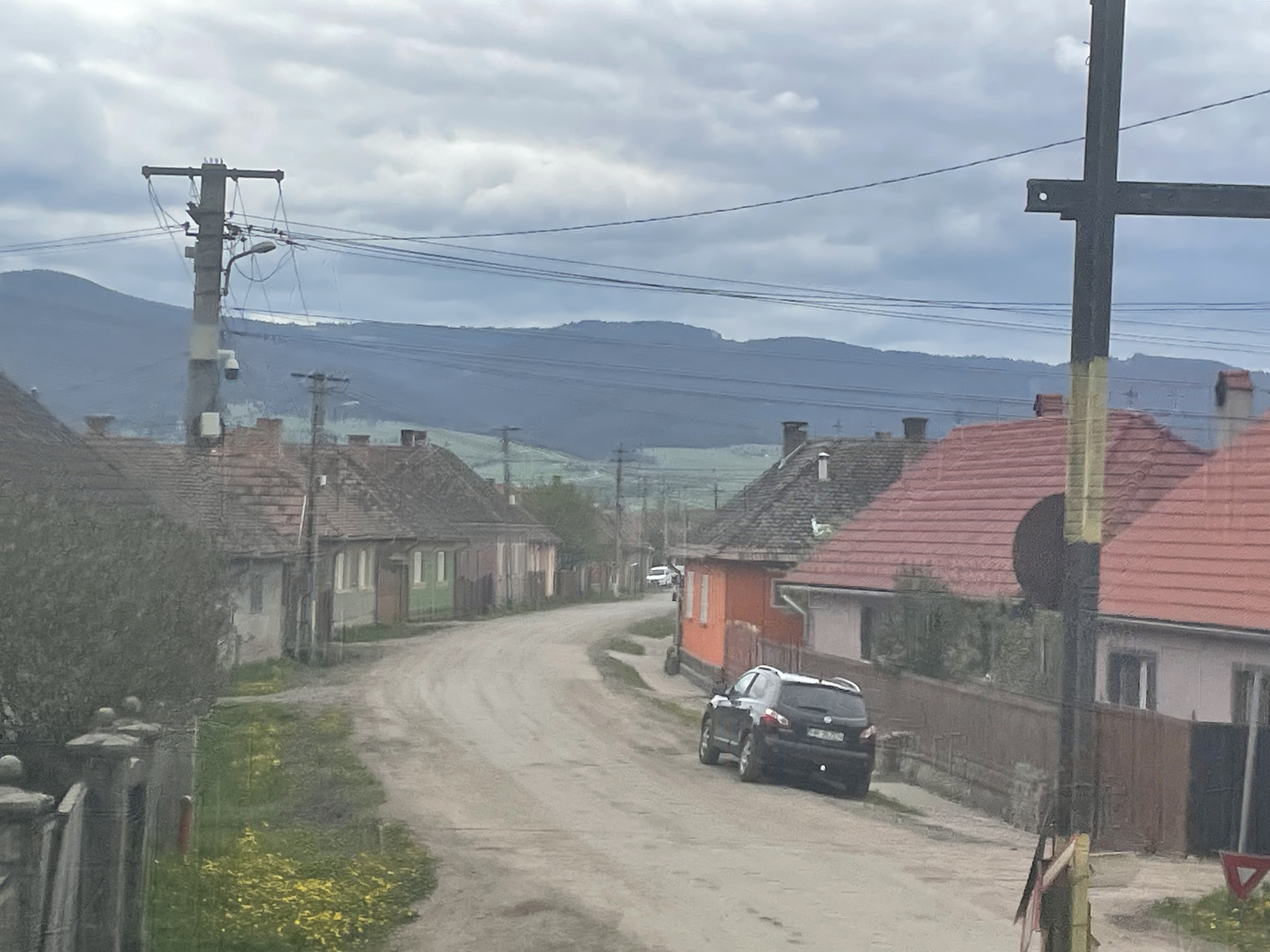
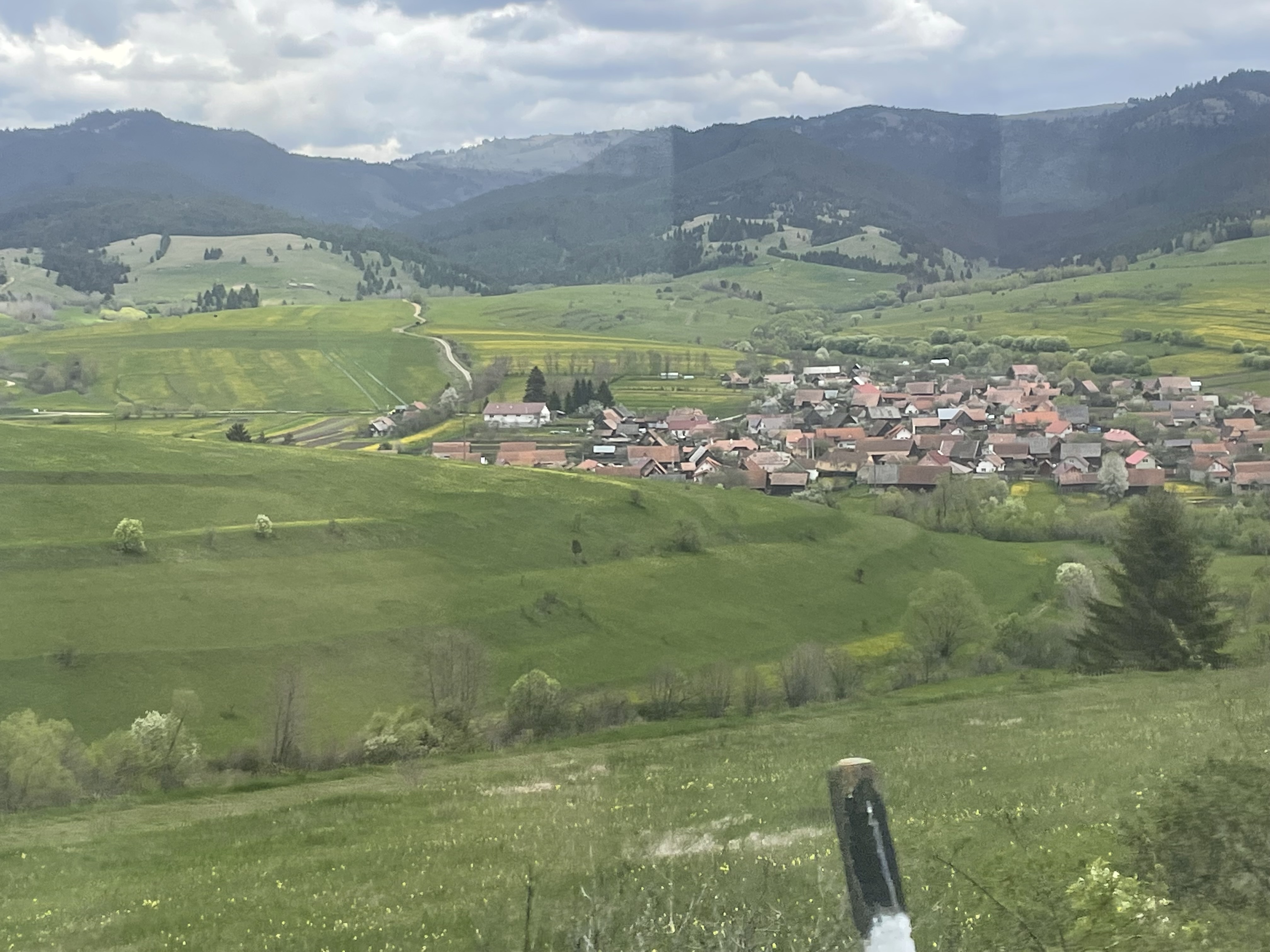
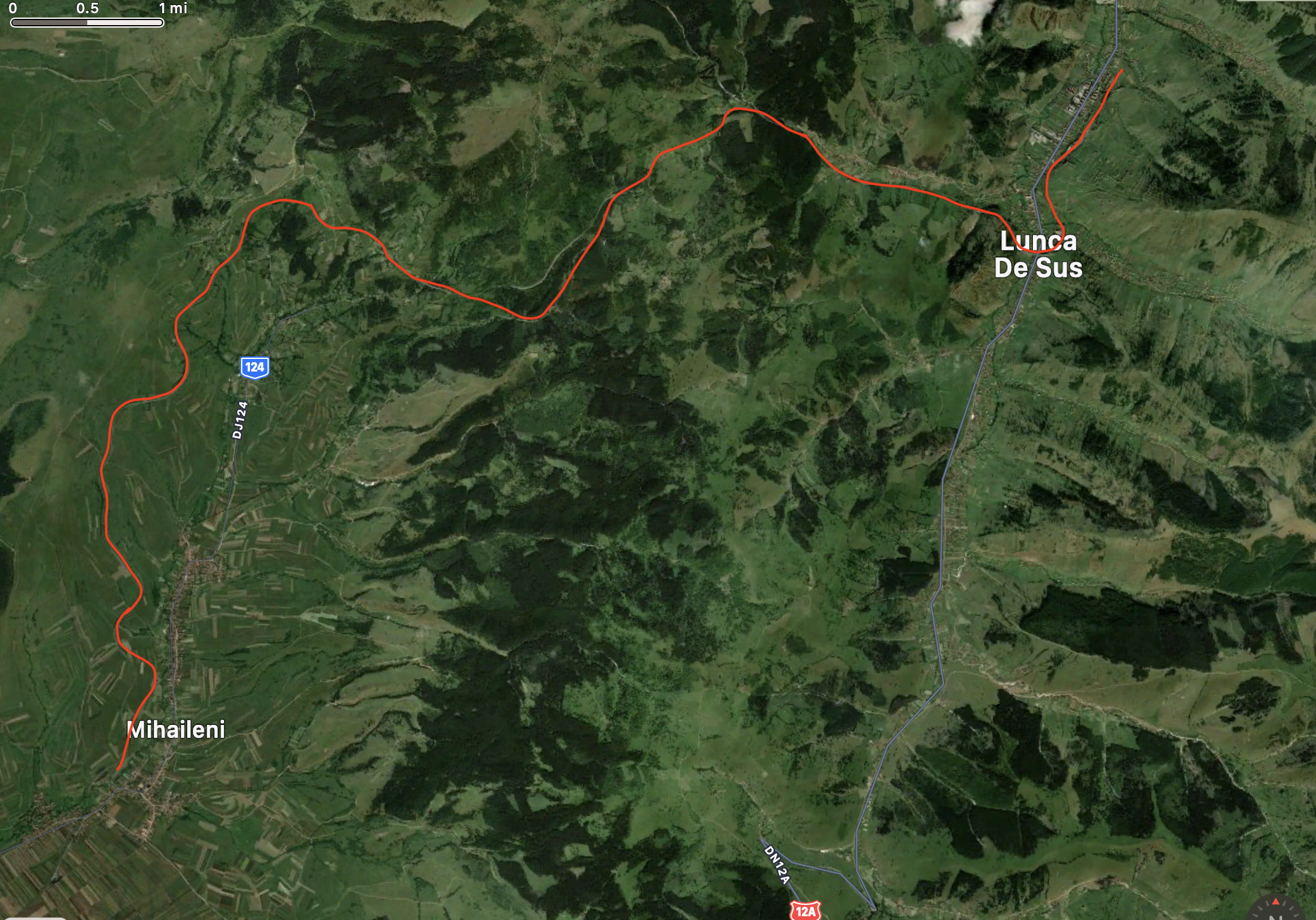
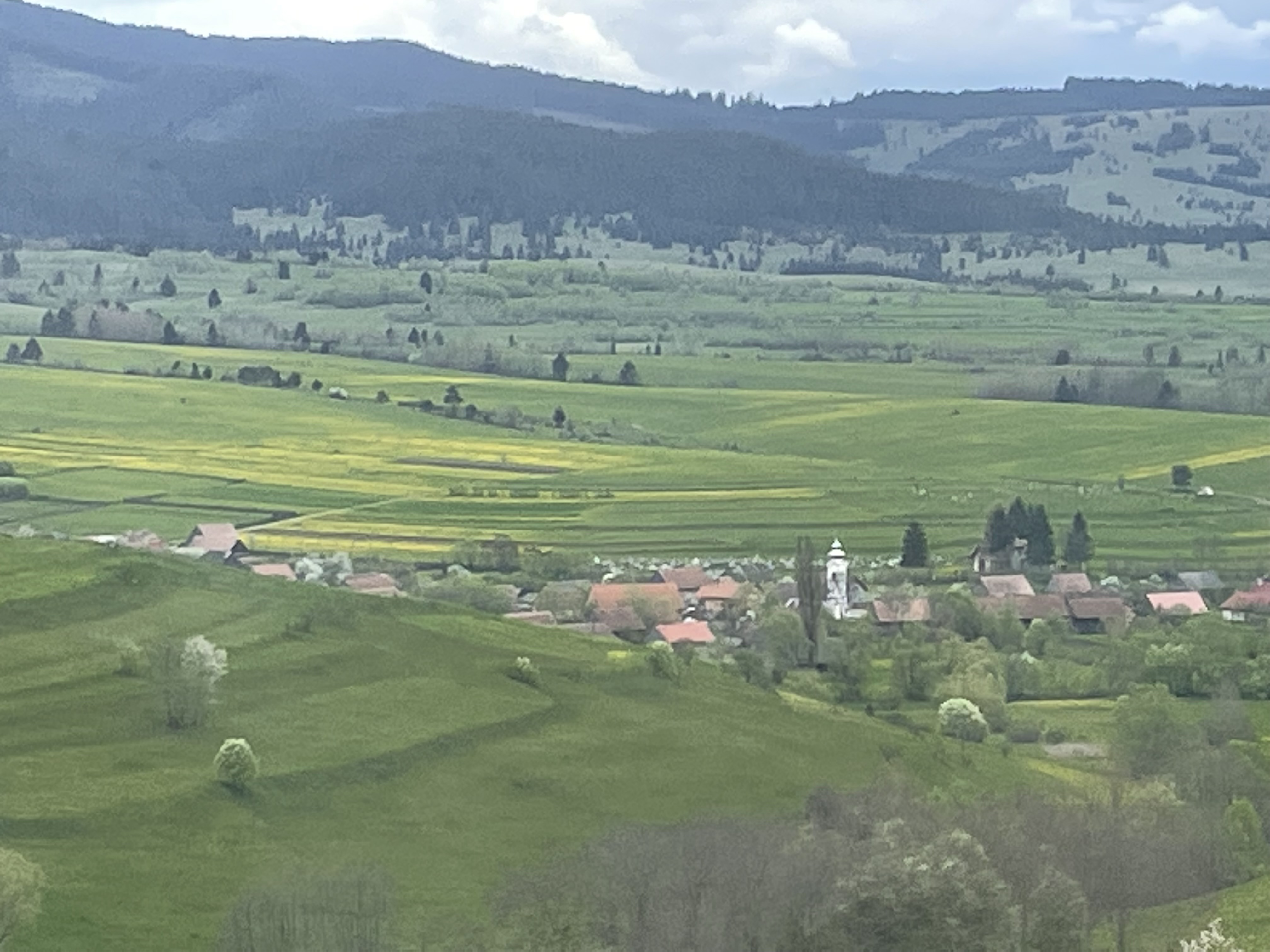
This mountainous section was constructed in 1897 & was the only direct line linking Transylvania (part of Hungary until 1918 when it was given to Romania) & the Romanian region of Moldova. A line further north (our return route to Cluj) was completed after the formal transfer of Transylvania to Romania in the early 1920s.
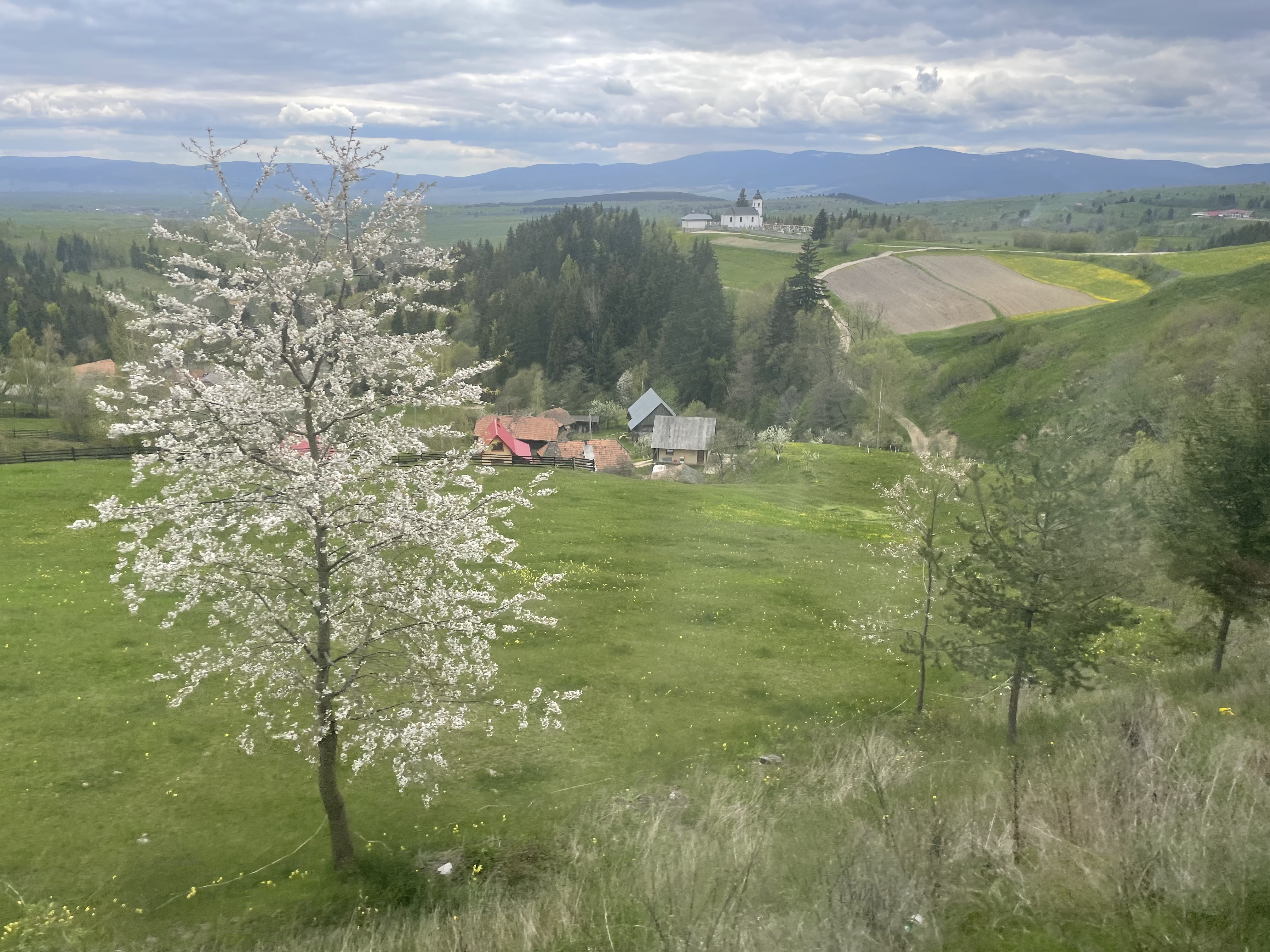
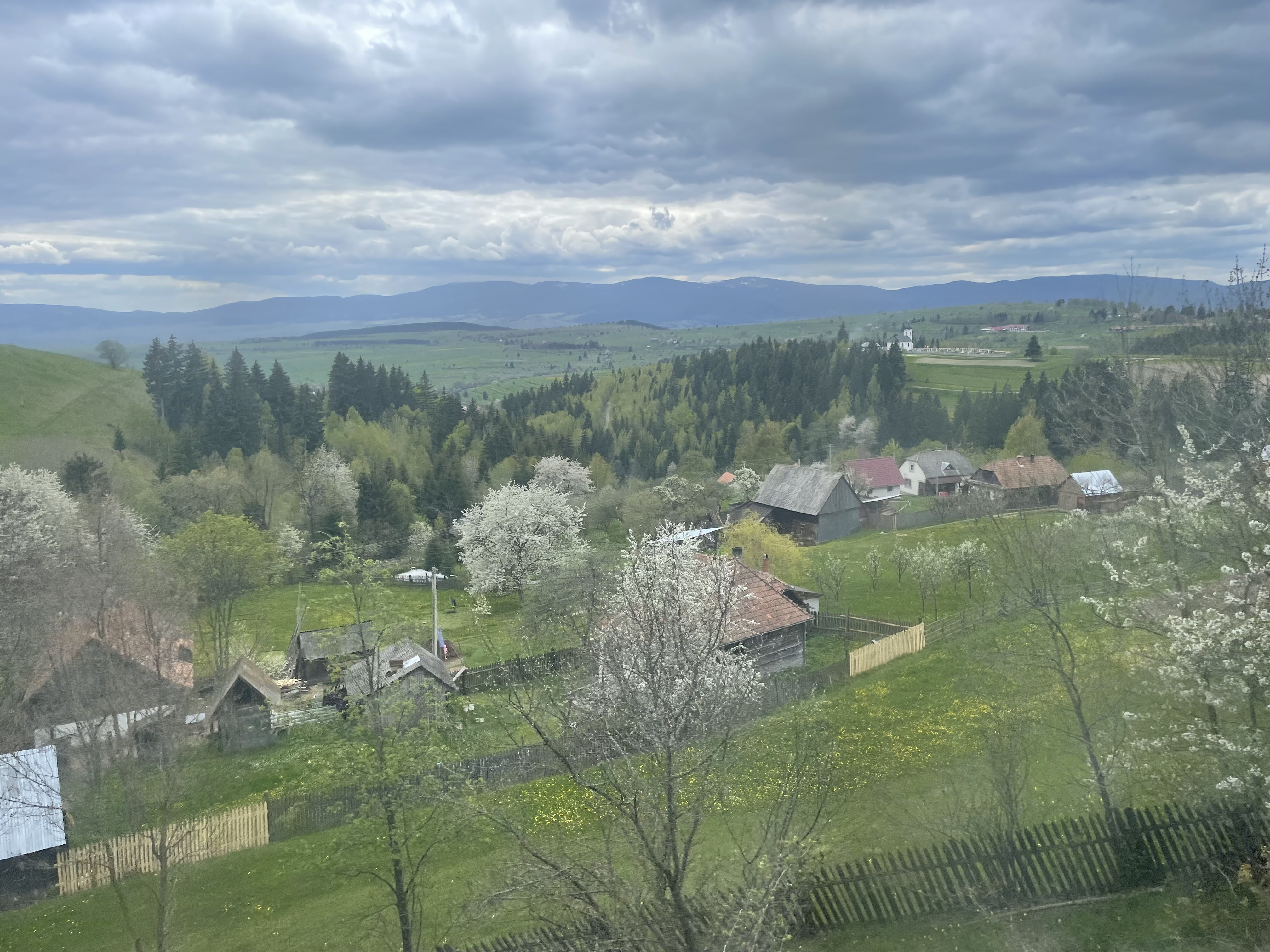
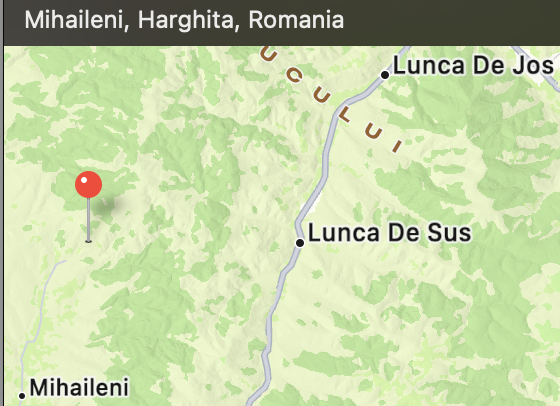
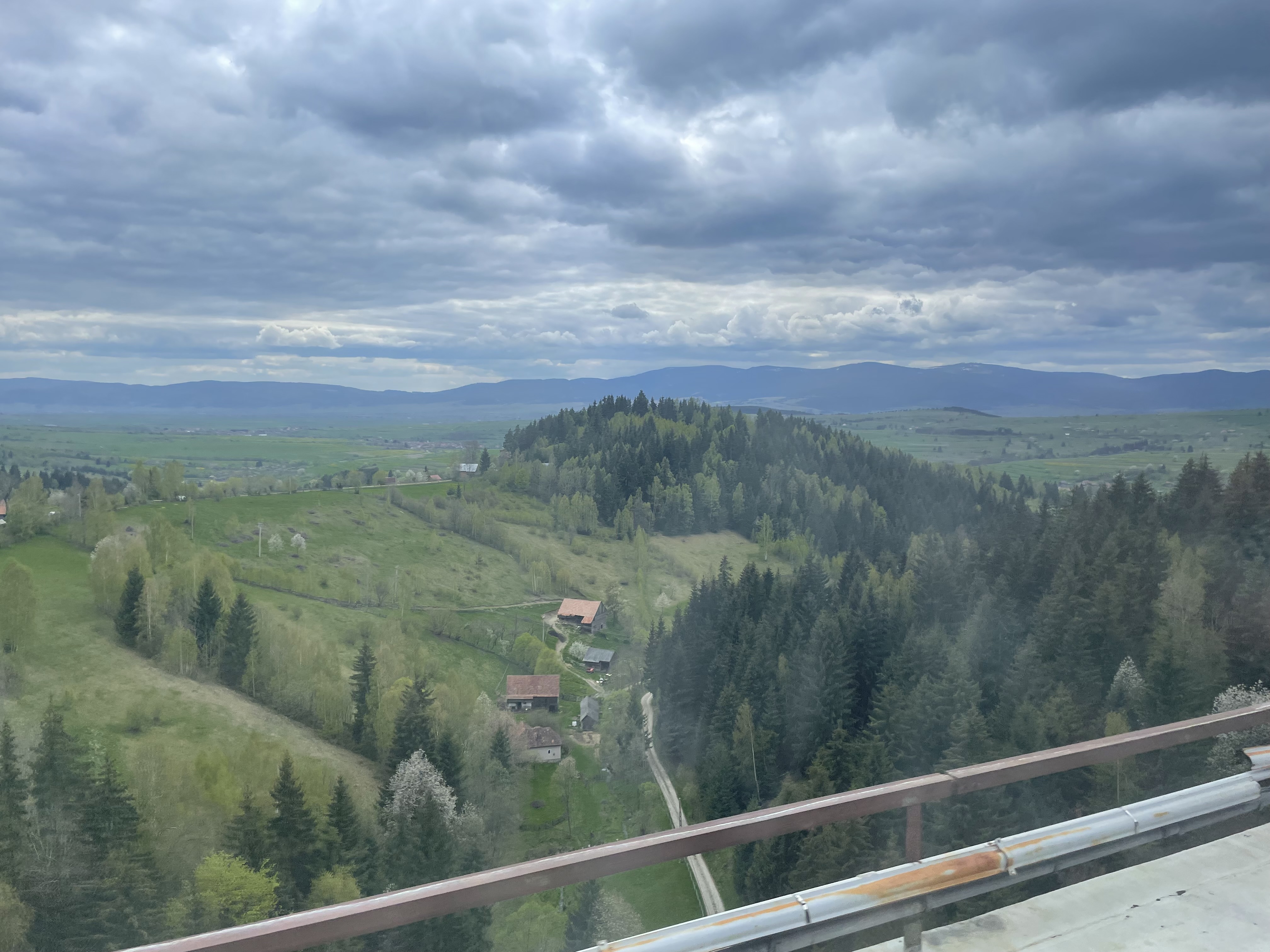
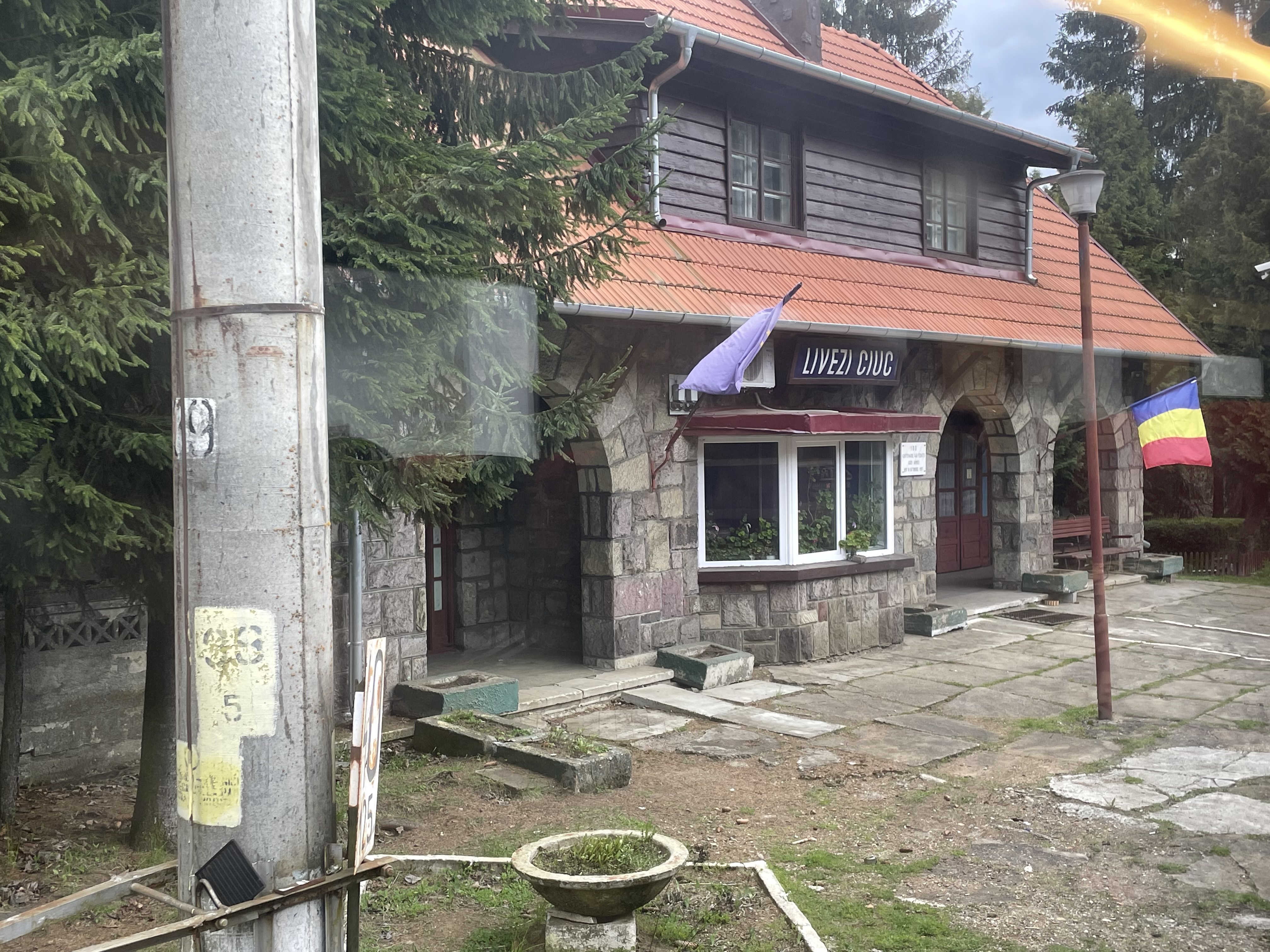
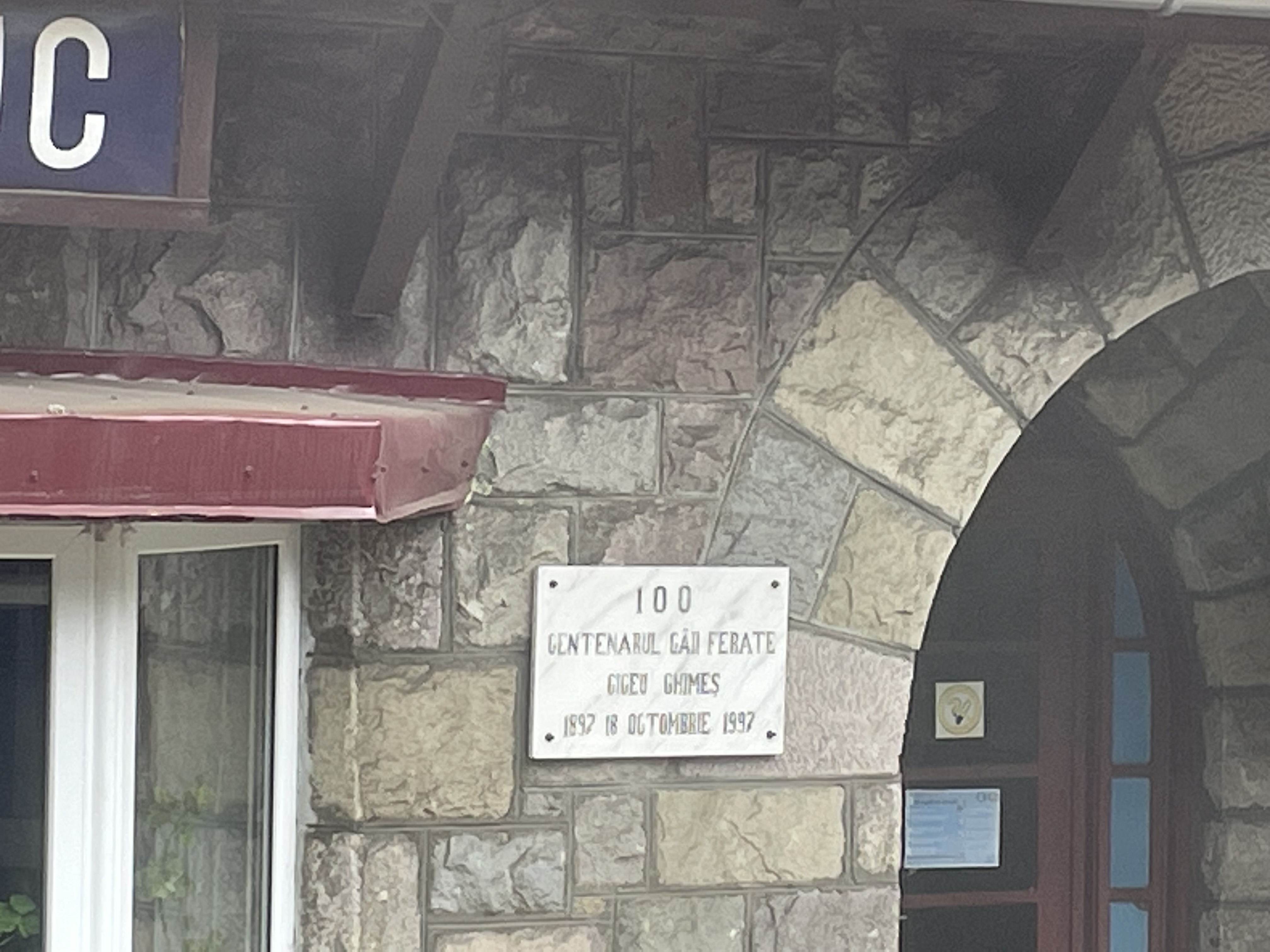
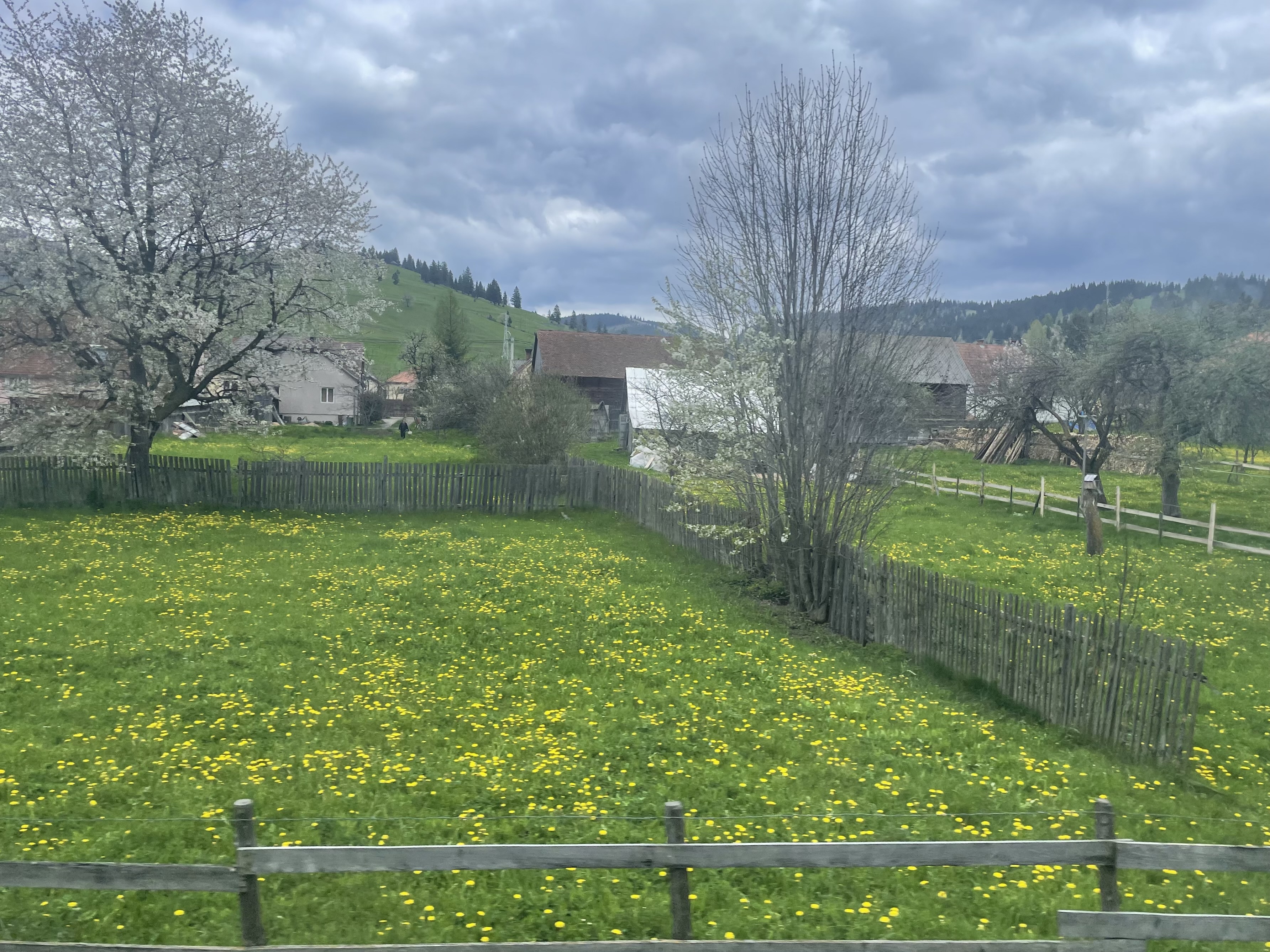
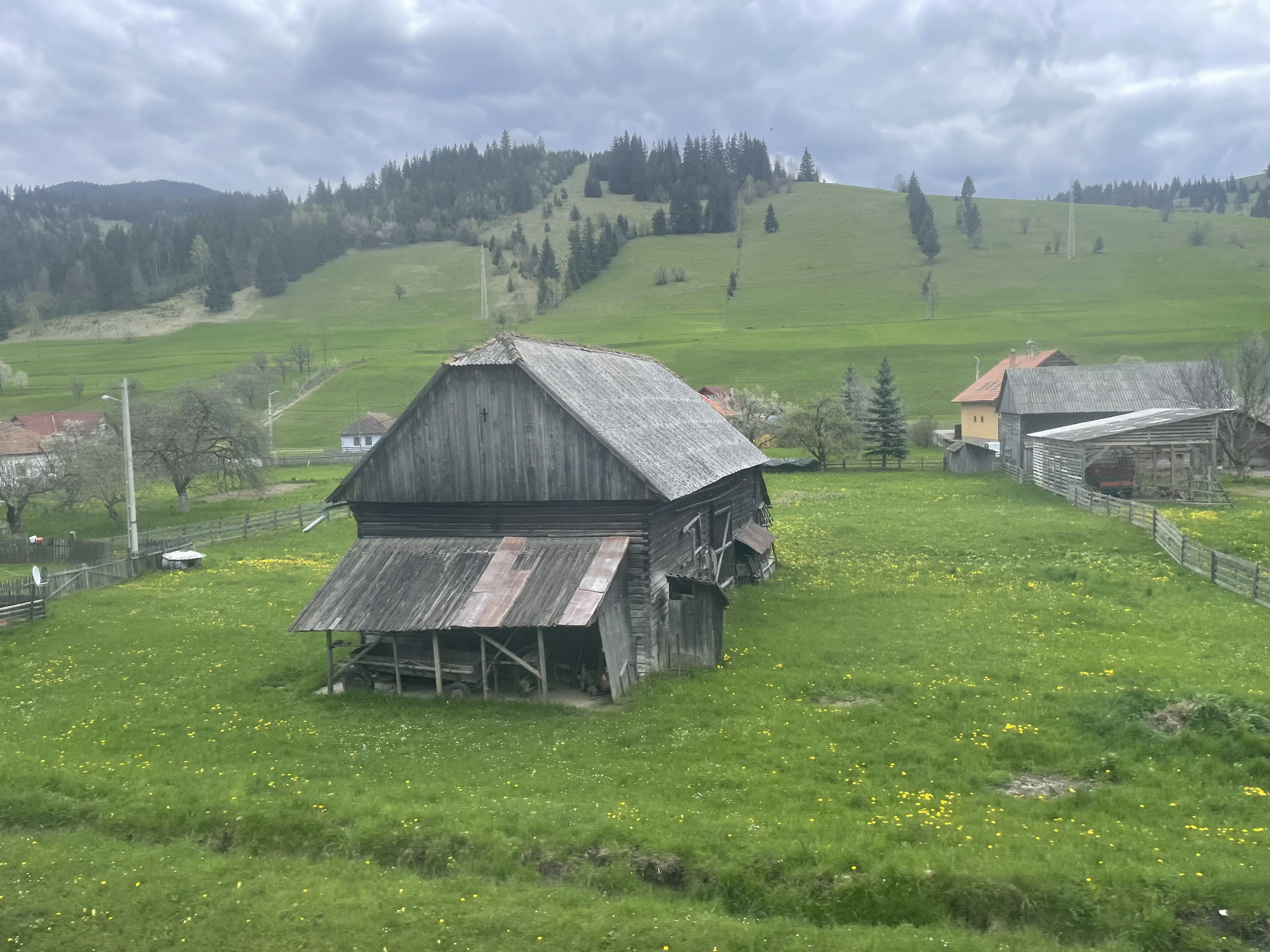
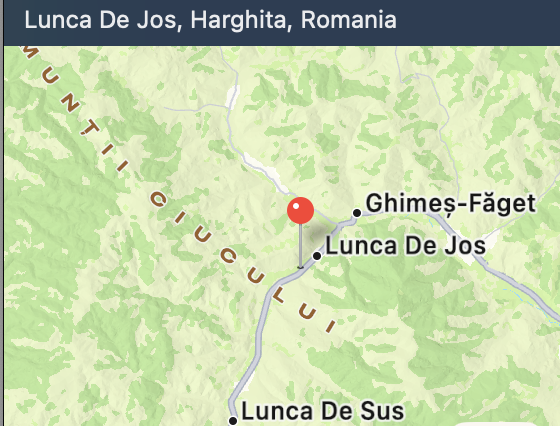
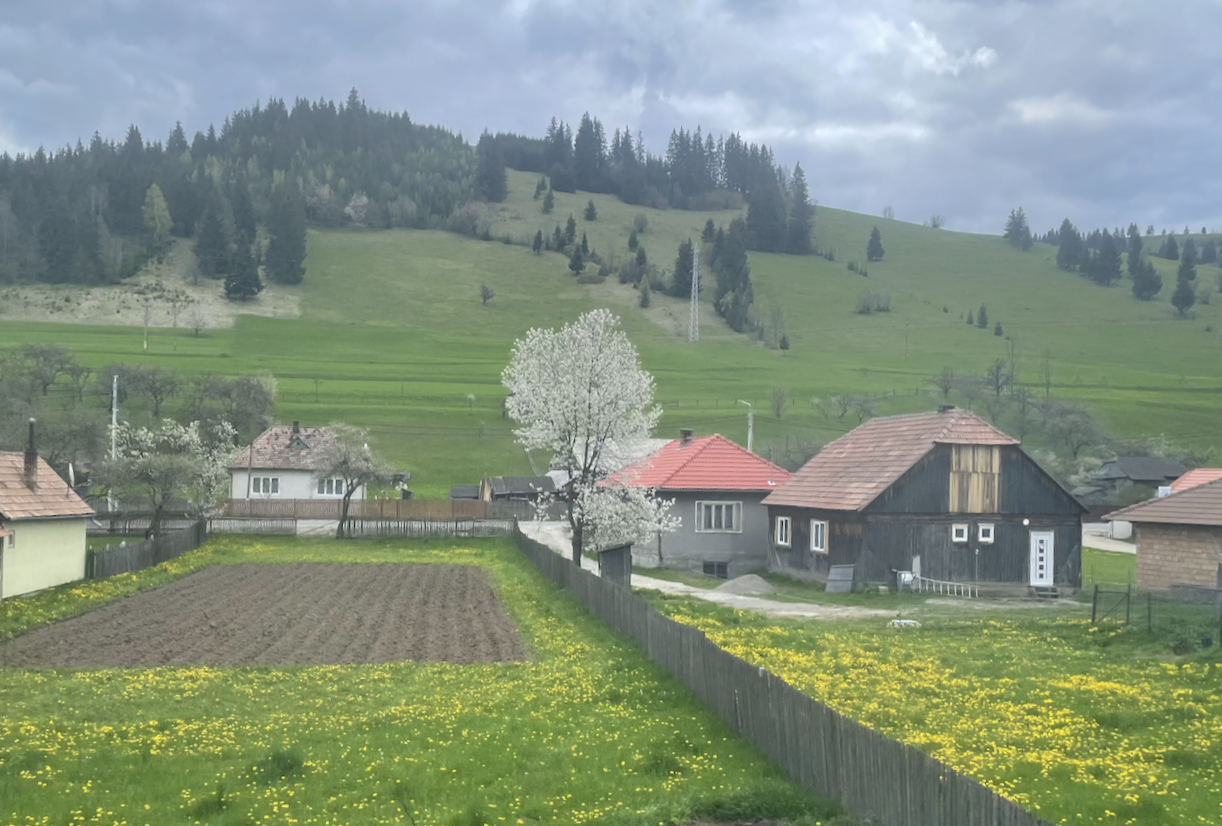
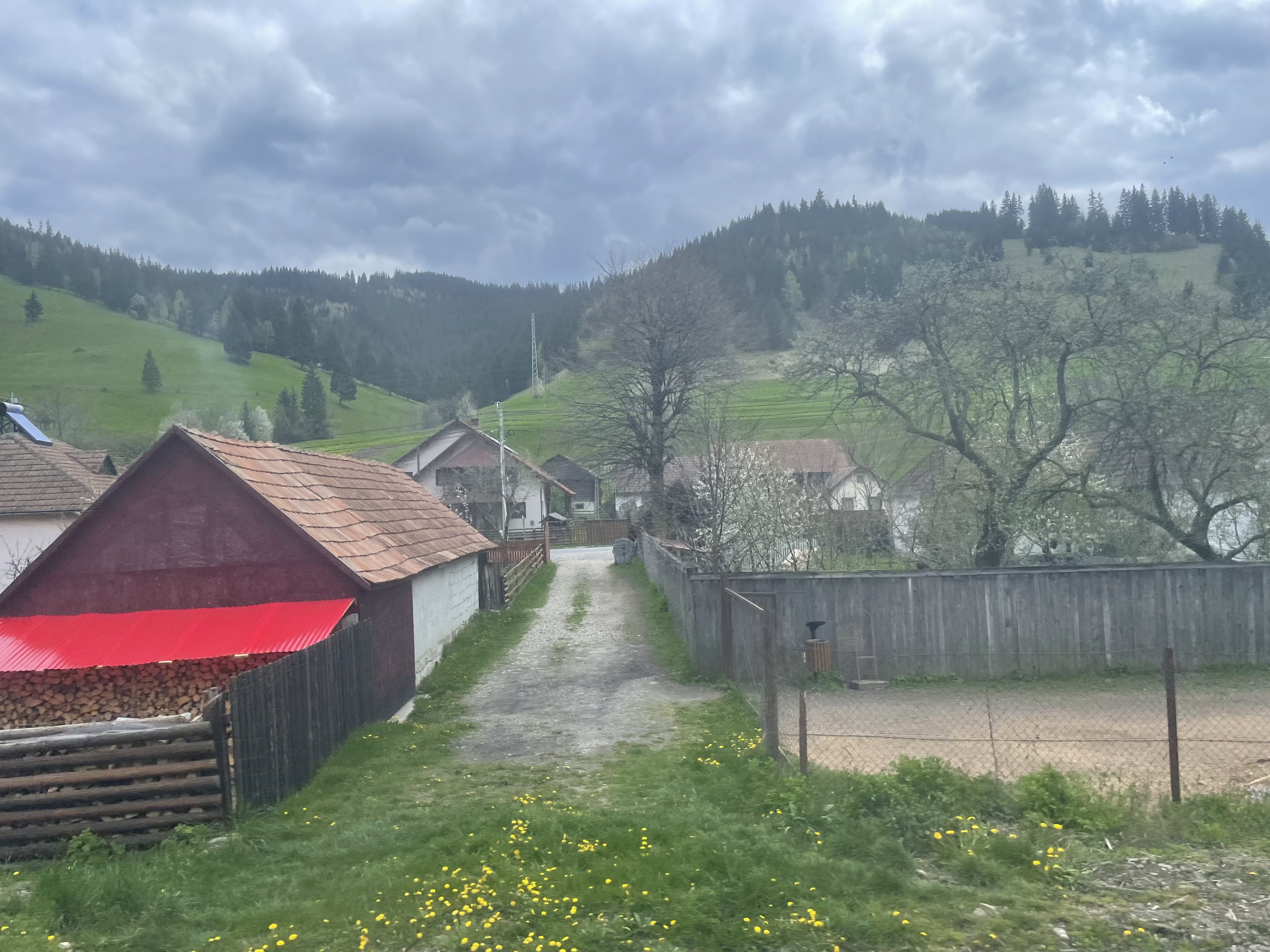
Into Moldova. The railway was closed 10 years ago in order to relay track. Looks as if the the tidying up process has not yet been completed.
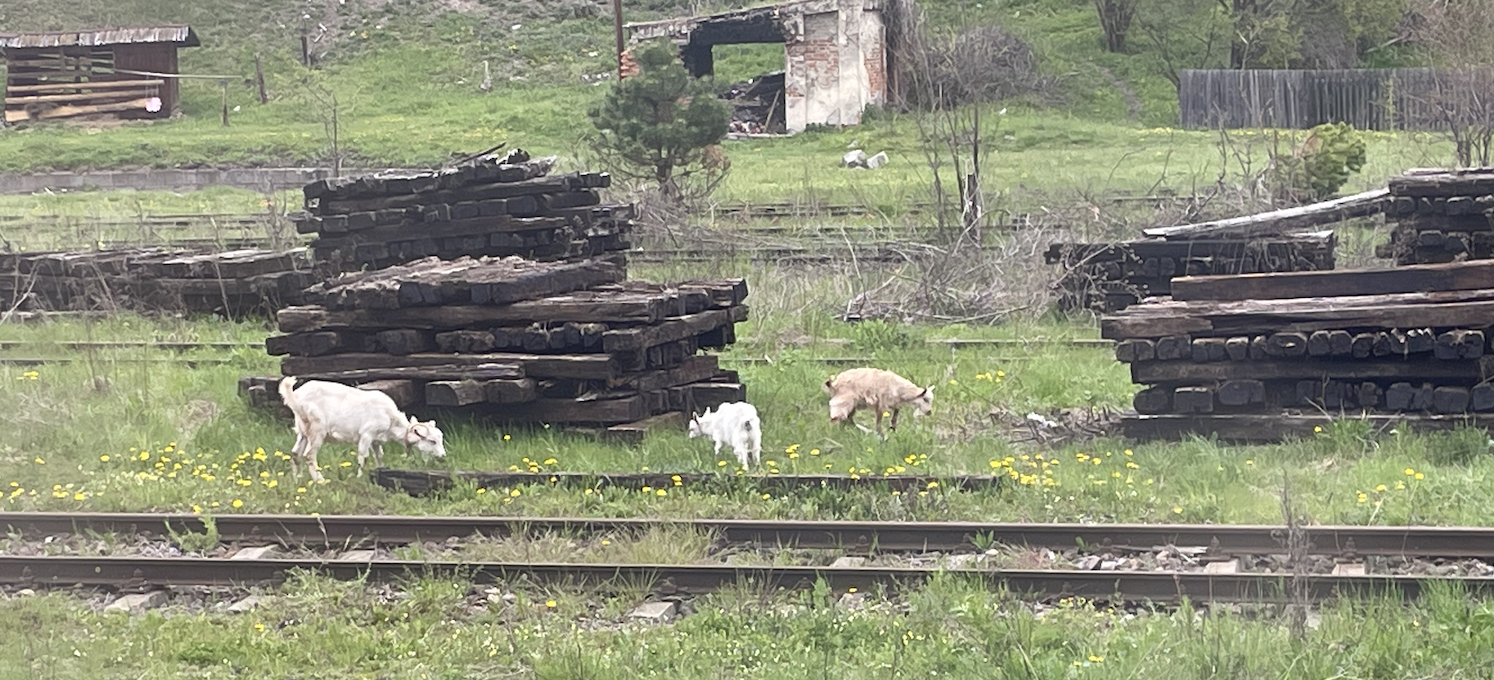
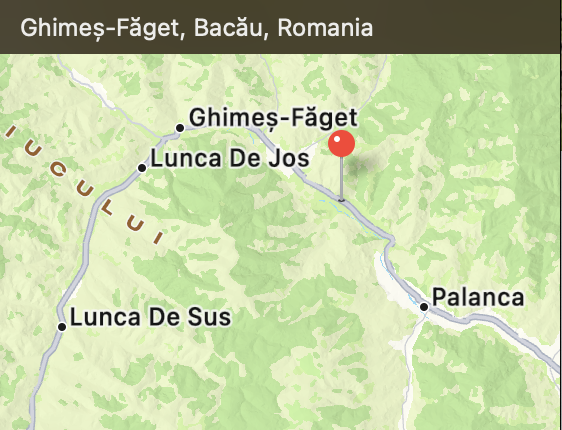

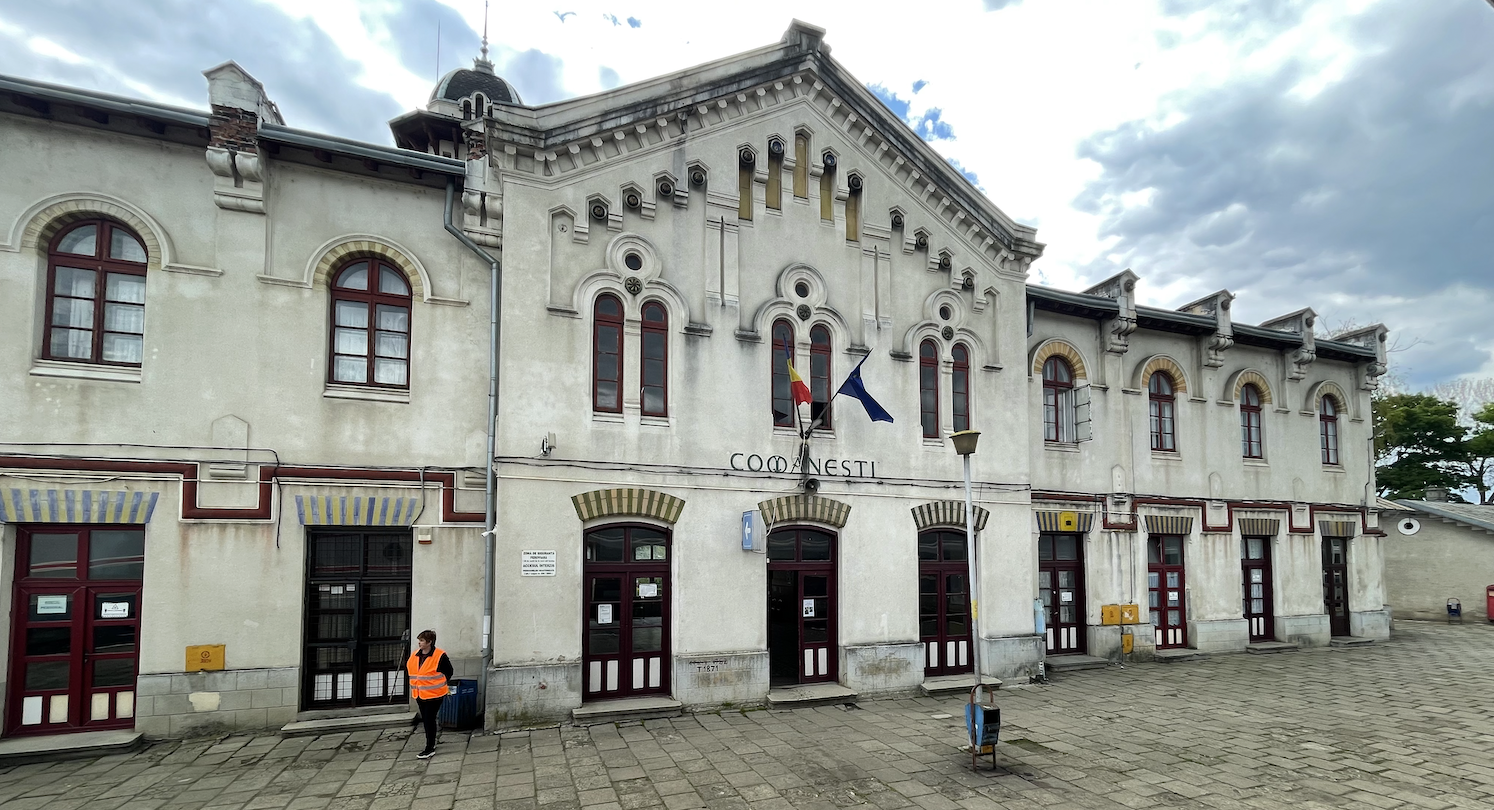
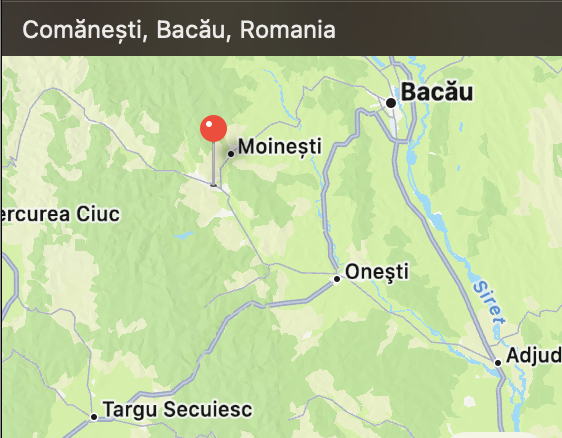
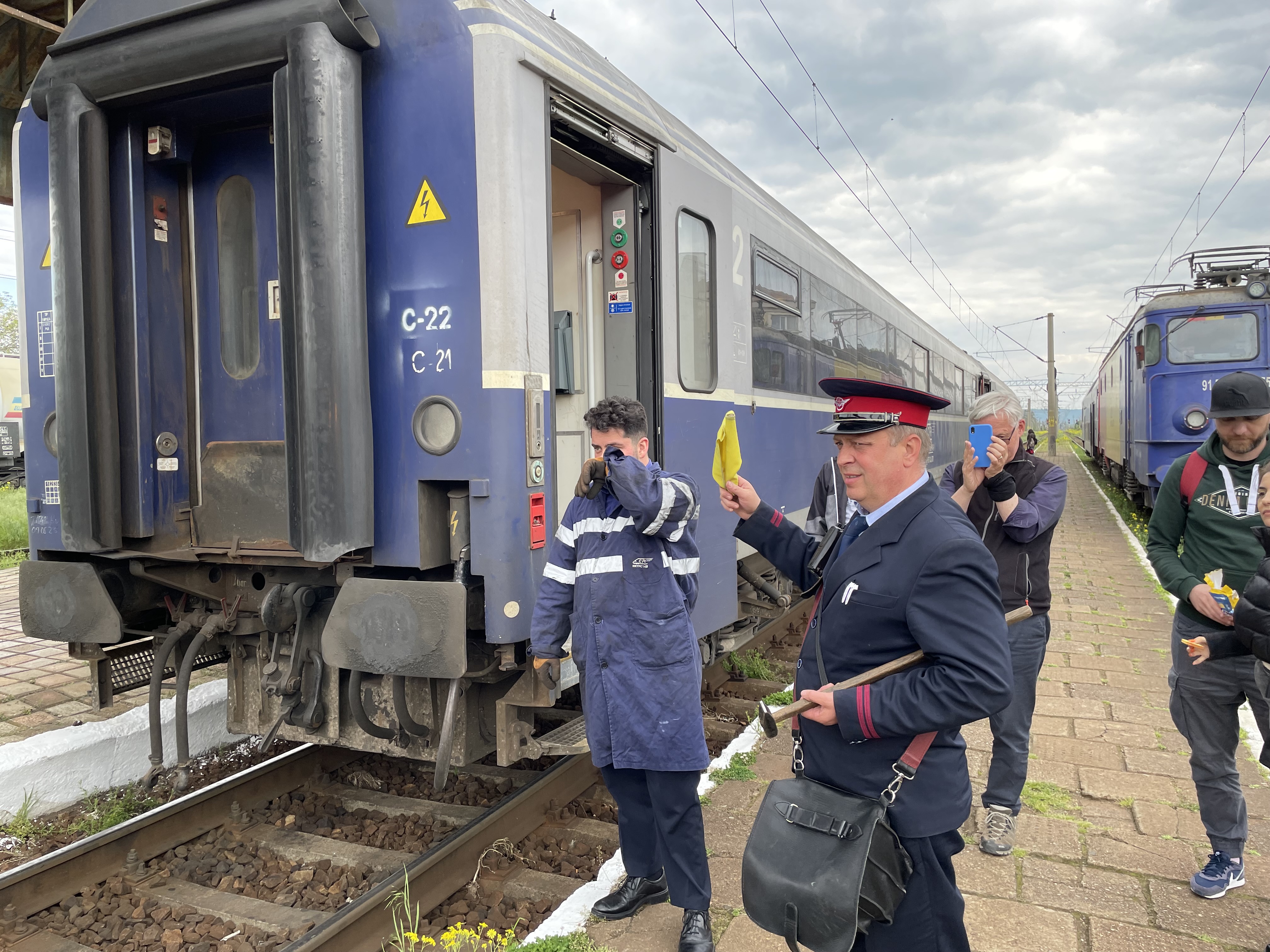
Changing engines
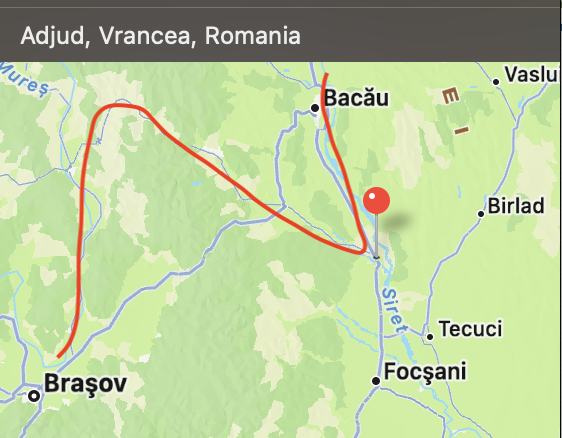
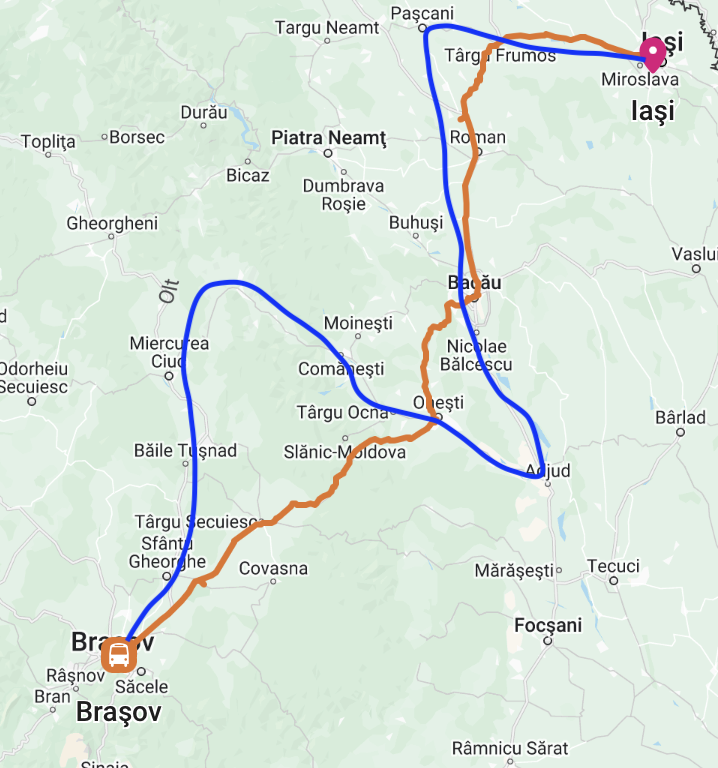
Connecting Brasov & Bacau, 2 important regional centres….
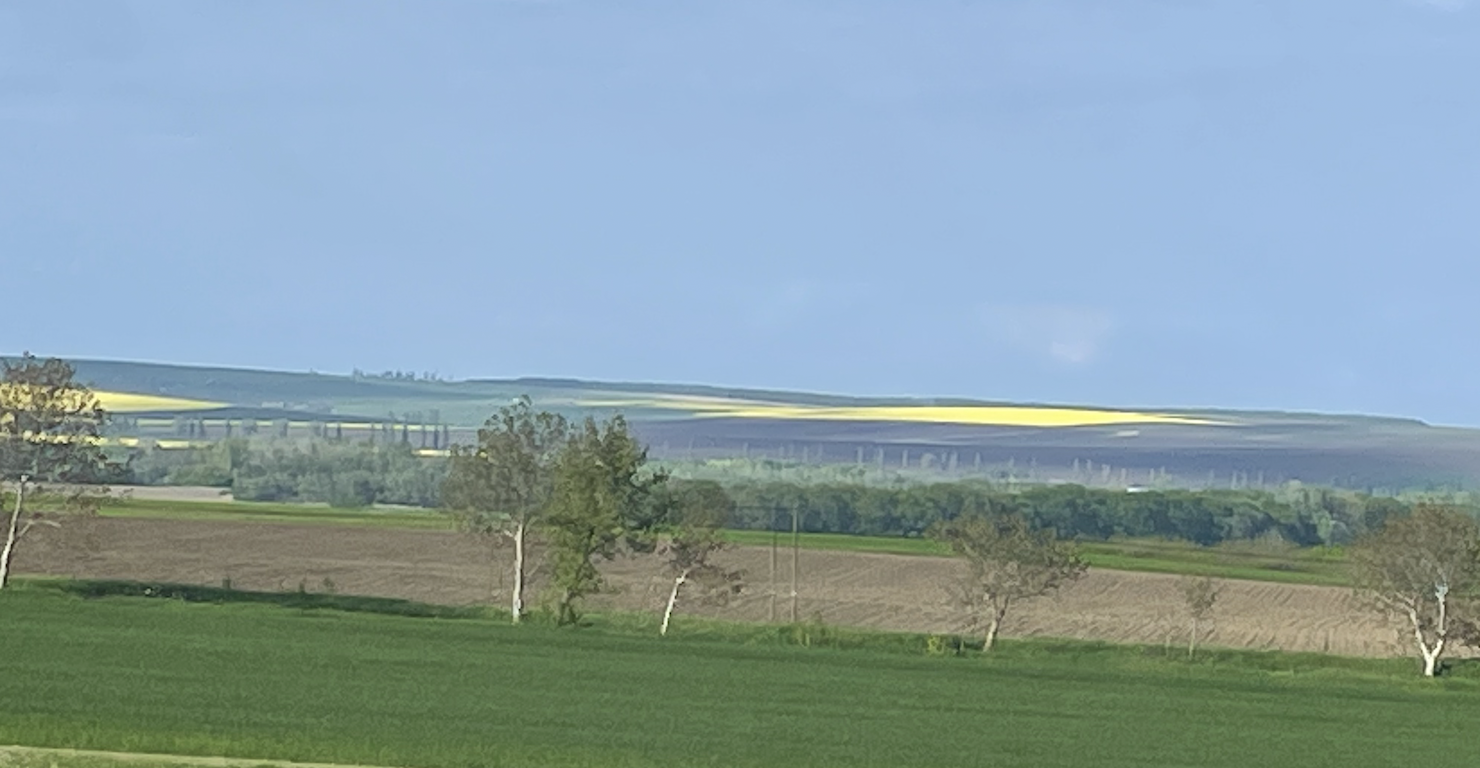
Lower lands, bigger skies
Brasov to Iași:
7 hrs 42 mins by train,
6 hrs 20 mins by bus,
5hrs 10 mins (309 kms, 190 mls) by car
By car, a saving of 2 1/2 hours – but those knowing the stressful nature of driving in Romania might choose to arrive more relaxed….?
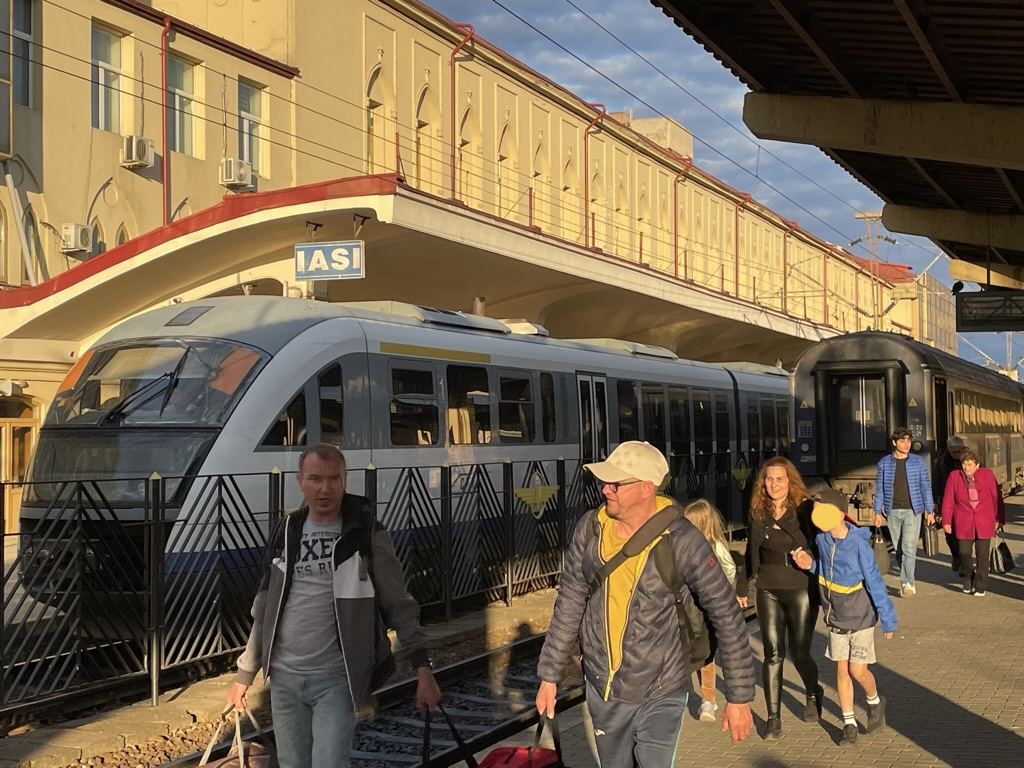
Iași
Where, since 1998, our present links began & in which our partnership programmes evolved
Iași was a place of critical importance for all our partnership work. It was the origin, hub & nexus of our activities.
‘This is where’, Jacqui tells friends who ask, ‘Ian goes for his social life’
Yet I never wished to visit.
In the early ’90s I would meet travellers to Iași & beyond (Siret – infamous Children’s Home, Transnistria, working on conflict resolution) on the one flight a day from London to Romania (București)….old ROM-BAC jets (very dodgy as I later discovered).
I was always so grateful I did not have to face their onward journey (the old Sleeper train & more) but was being collected from airport & would be in Râmnicu Vâlcea approx 3 hours later.
1998: A fax changes our whole direction
In early in 1998 I received a fax message from Ostap T. Paparega in Iași
– and everything changed.
At first there was from a planning meeting for a European Millennium Project in Hamburg & subsequently a follow-up to Iași.
Then began the start of community & development work with University students in the city.
The UK based Charity Know-How Fund provided support for activities in Iași & UK. This was supplemented with additional funding from Leeds & Bangor Universities.
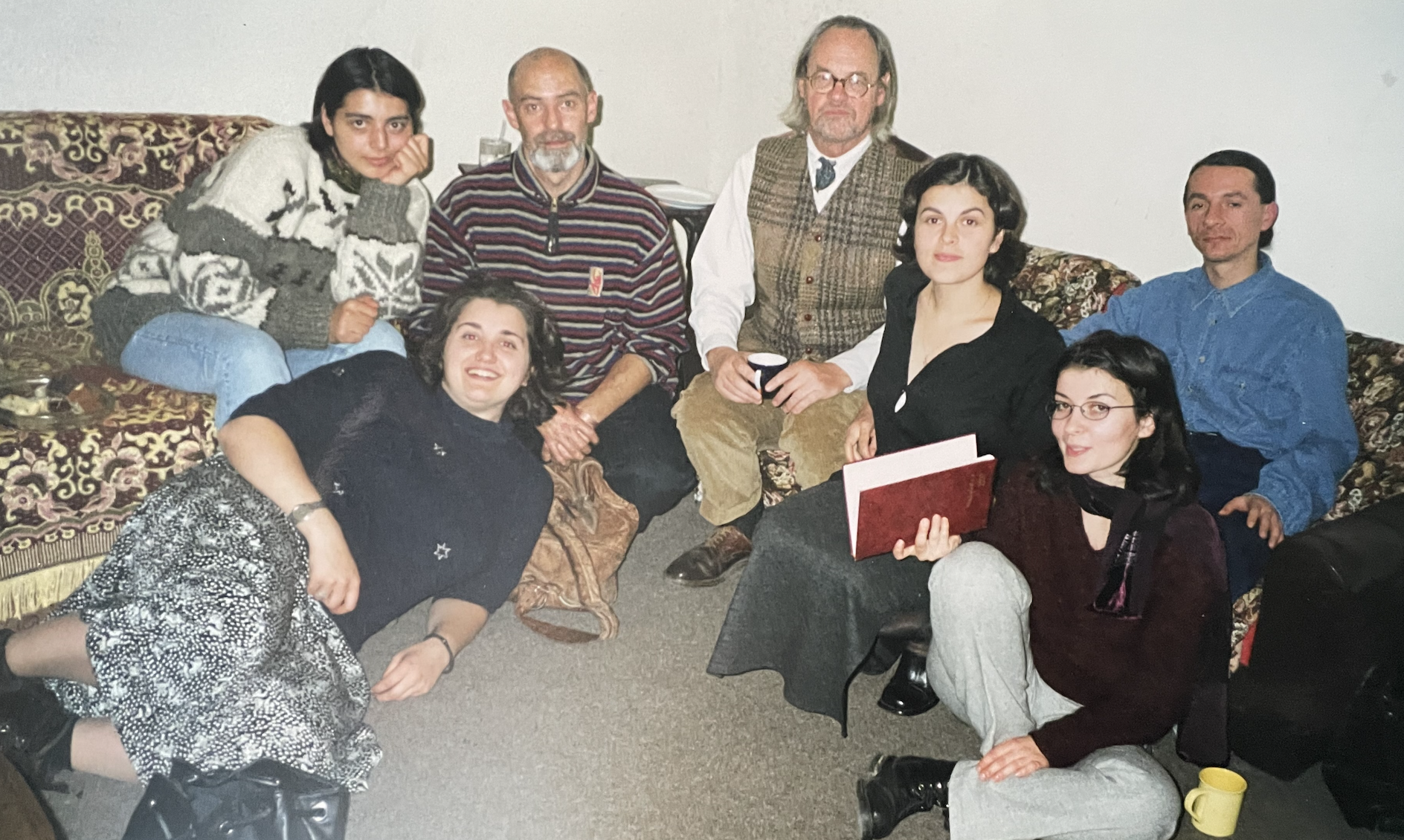
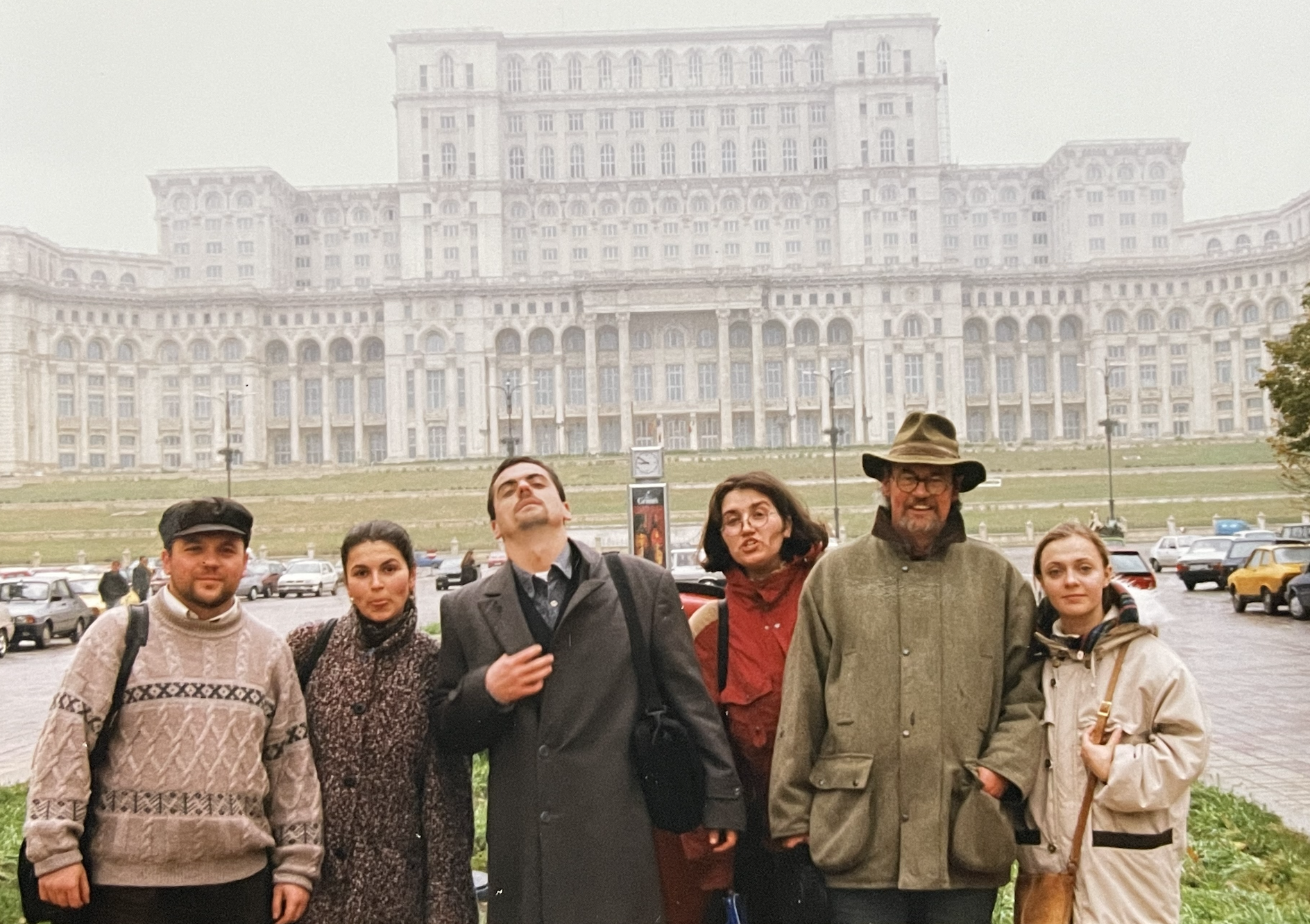
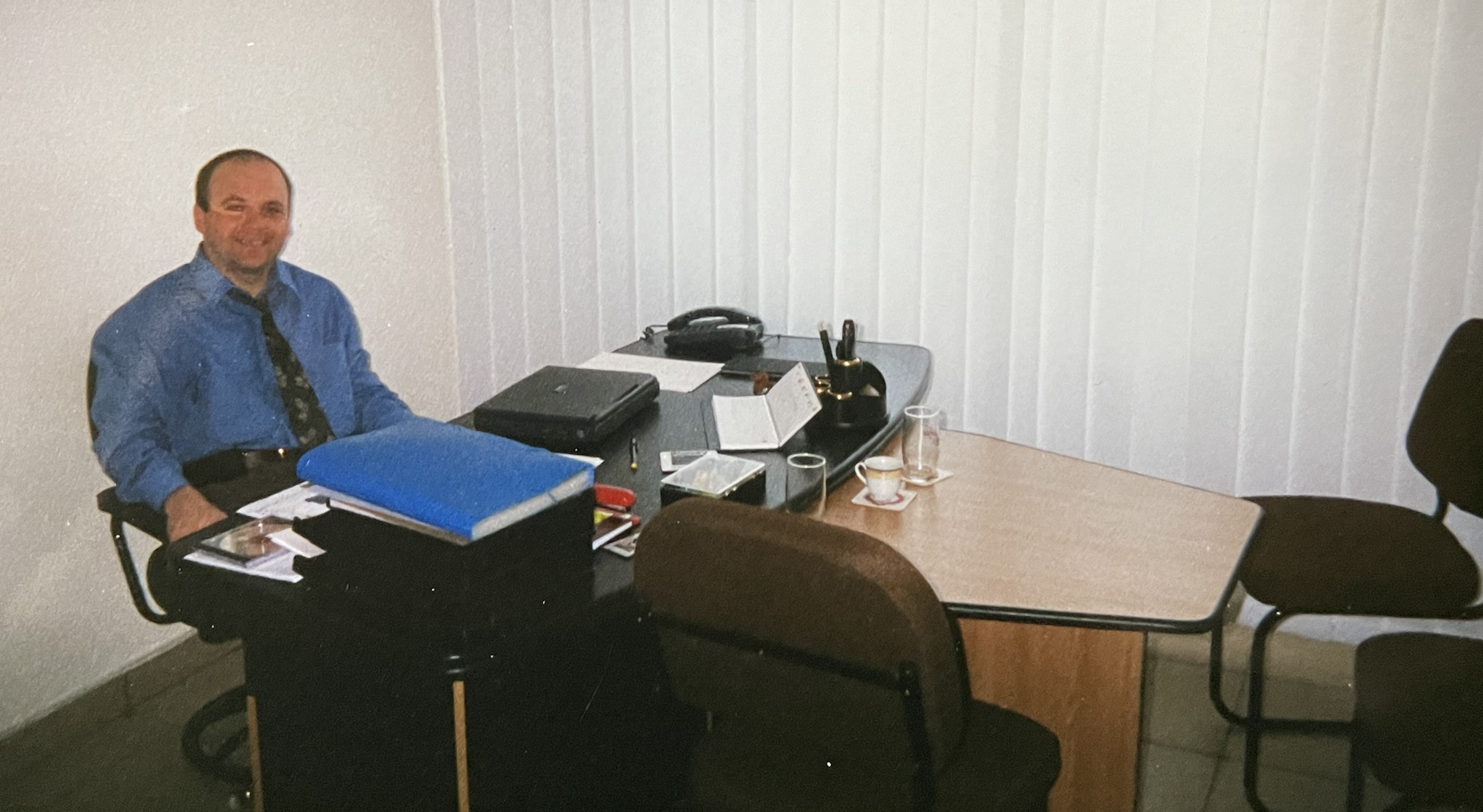
There were contrasting student groups engaged in the work of 1999 – 2002…. those with economic studies & those on theology. Both were significant to University life in Iași.
The city was a major university centre & also seen, through the religious culture of Moldavia as at the ‘heart of Romanian culture’. I am uncertain as to what is required for such a position. The differences in language, traditions & religion between Transylvania and Moldova/Wallachia are considerable. Sibiu, an old German town in Transylvania was a European Capital of Culture in 2007 – and has received other accolades.
One of the fascinating aspects of Romania is its variety – making it difficult to choose any one place as being ‘the cultural heart’
Maybe Iași is simply cultural heart of the pre-Treaty of Trianon Romania (after which Transylvania was added to Romania)? The designation being associated with somewhat formalised interpretations of the term ‘culture’.
Iași has the oldest Romanian University, Theatre, library & Botanical Gardens (also the largest) & has strong associations with Romanian writers.
One considerable positive is that the city’s ‘cultural zone’ stretches out along a lengthy sloping hill. The route starts with the Boulevard Carol 1st & the Botanical Garden in Copou; it includes parks, the University & libraries, then after a slight deviation merges into Boulevard Stefan Cel Mare which contains Theatres, Cathedrals, significant churches, Municipal buildings & completes at the dominant Palace of Culture.
Maybe I’ve known it too well to have truly appreciated its significance and value…..?
Another key factor in the cultural life of Iași is the major religious festival that occurs in October:
The Feast of St Parascheva – a saint of significance in Orthodox Christianity.
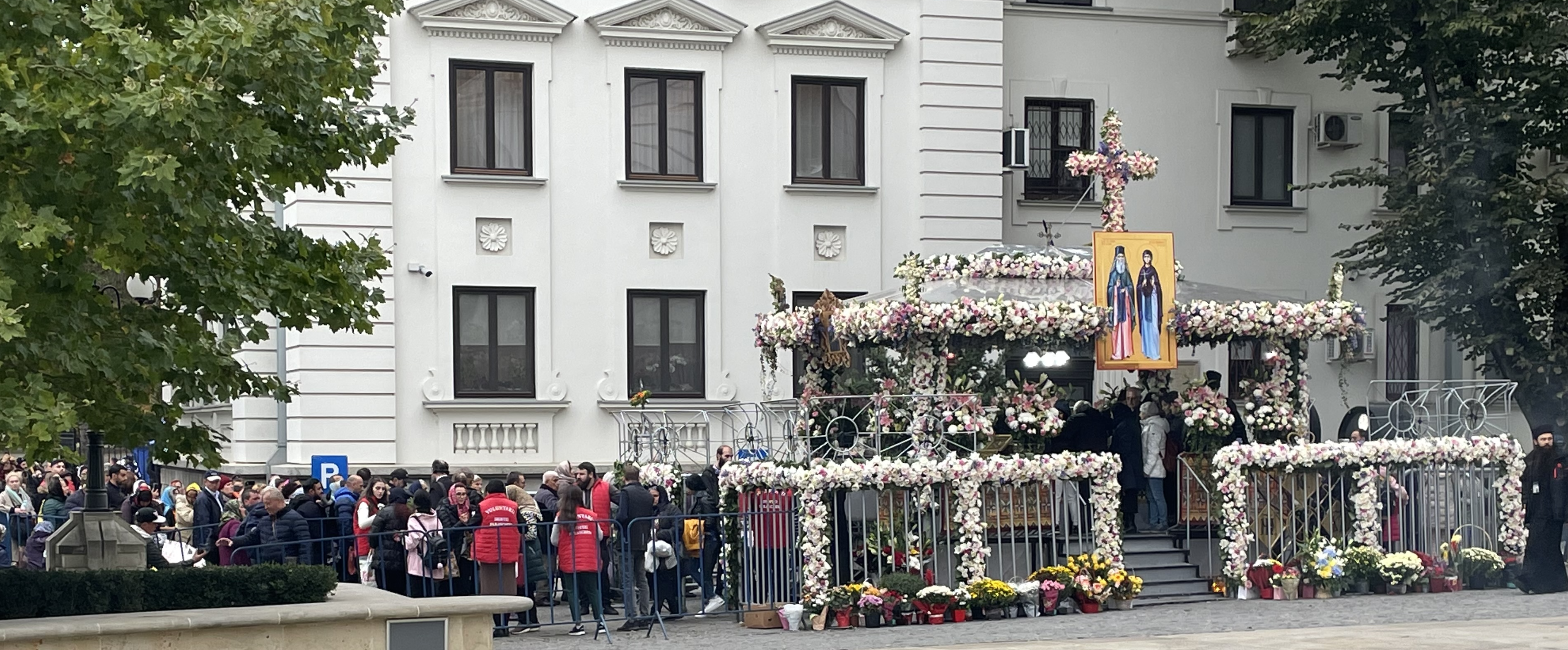
So fascinating is this event that over many years & many partnership programmes we have arranged international meetings to occur whilst it occurs.
Culturally, compared with such festivals in North West Europe, it is distinctively very different. It is highlighted by a form of (largely rural) popular spirituality & beliefs that have departed (at least overtly) from those of most European societies. The passion and fervour of those making the pilgrimage to the saint continues to present a profound & exciting meditative challenge to apparently conventional belief structures.
On 2 separate occasions I’ve observed experience-hardened colleagues being emotionally impacted by the fervour created. This is not imply any sense of religious ‘conversion’ or ‘response’ but it suggests that our personal ‘cloak of rationality-modernity’ is in reality only a thin veil.
The event, on another level, is a very valuable tool for the arch-conservative forces of religion that lurk within the structures of Romanian Orthodoxy as they play-out their traditional Church-State Power Game.
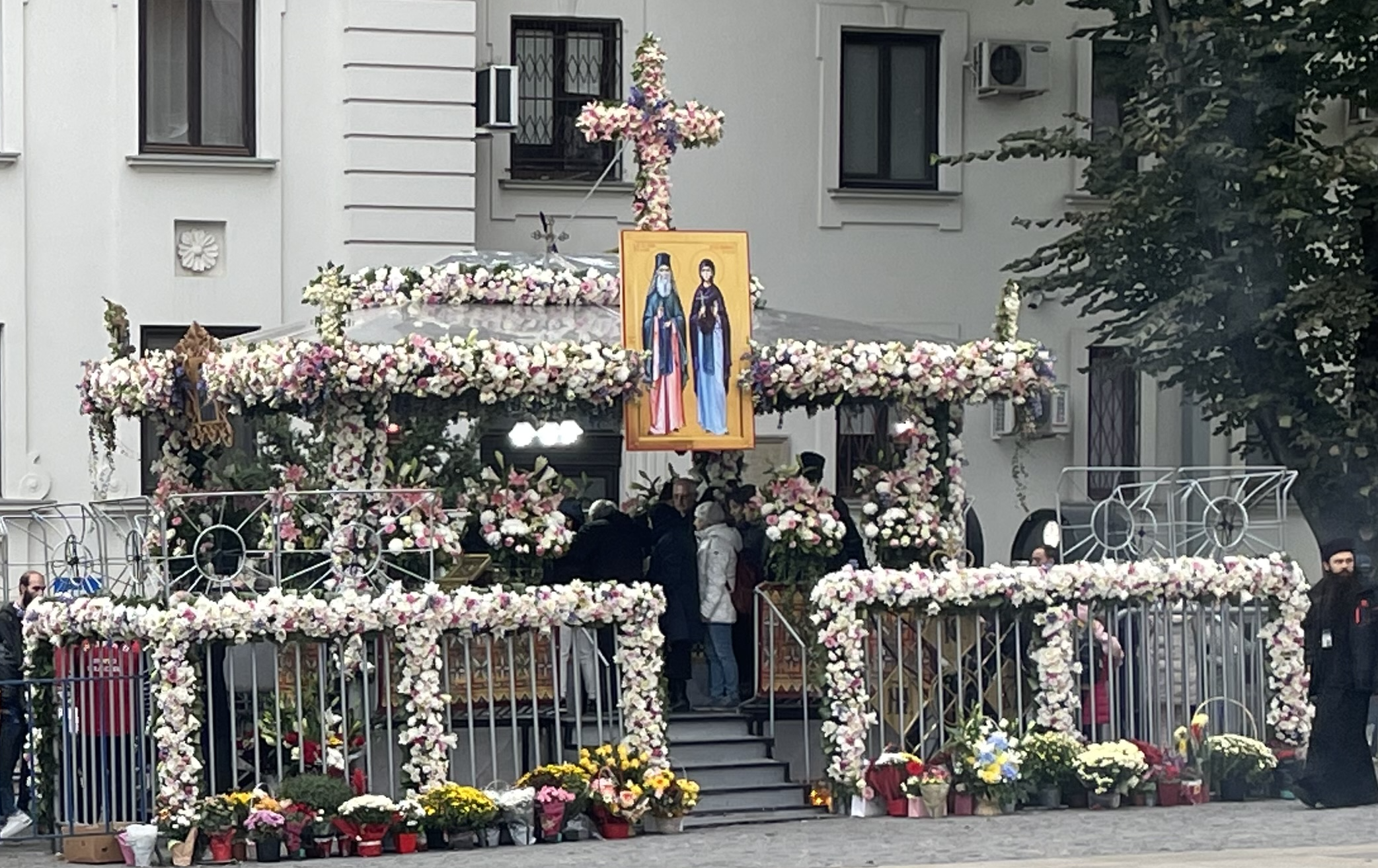
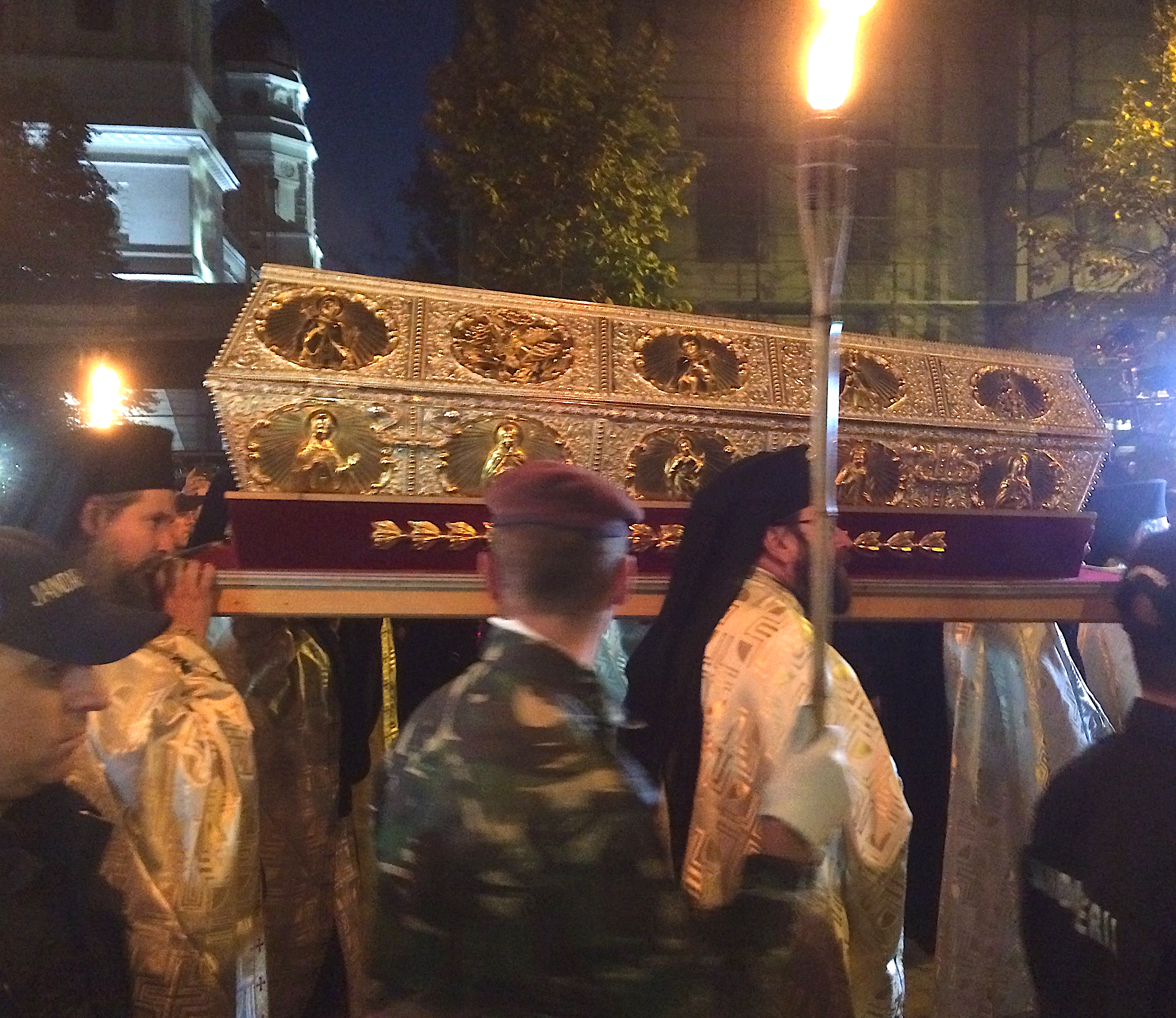
The bones of the saint normally rest in the Cathedral but are brought out and laid in a special bower that allows the devout to pass-through. The most auspicious day for visiting is her saint’s day – 14th October.
Estimates suggest that over 300,000 people can be drawn to the city during the festival period. It has major economic impact.
A special service is held in the cathedral led by The Metropolitan Archbishop of Moldavia and Bukovina

Archbishop Daniel (now Patriarch)
The event always draws special guests (especially politicians during election years). In 1999, by chance acquaintance relating to plans for the Millennium, I was included (but only once!).
The city becomes ‘en fête’ with multiple events & concerts in the city centre. The day finishes with a huge fireworks display (on one occasion I witnessed the fireworks setting fire to the roof of the Palace of Culture!)
Management of the festival has developed a greater professionalism in recent years (& EU membership has improved standards of hygiene and health & safety).
The pilgrimage elements, which had gradually been downgraded by authorities wishing to create a Fun Park atmosphere (they were were always of poor quality), have now been recognised as of major value to the city.
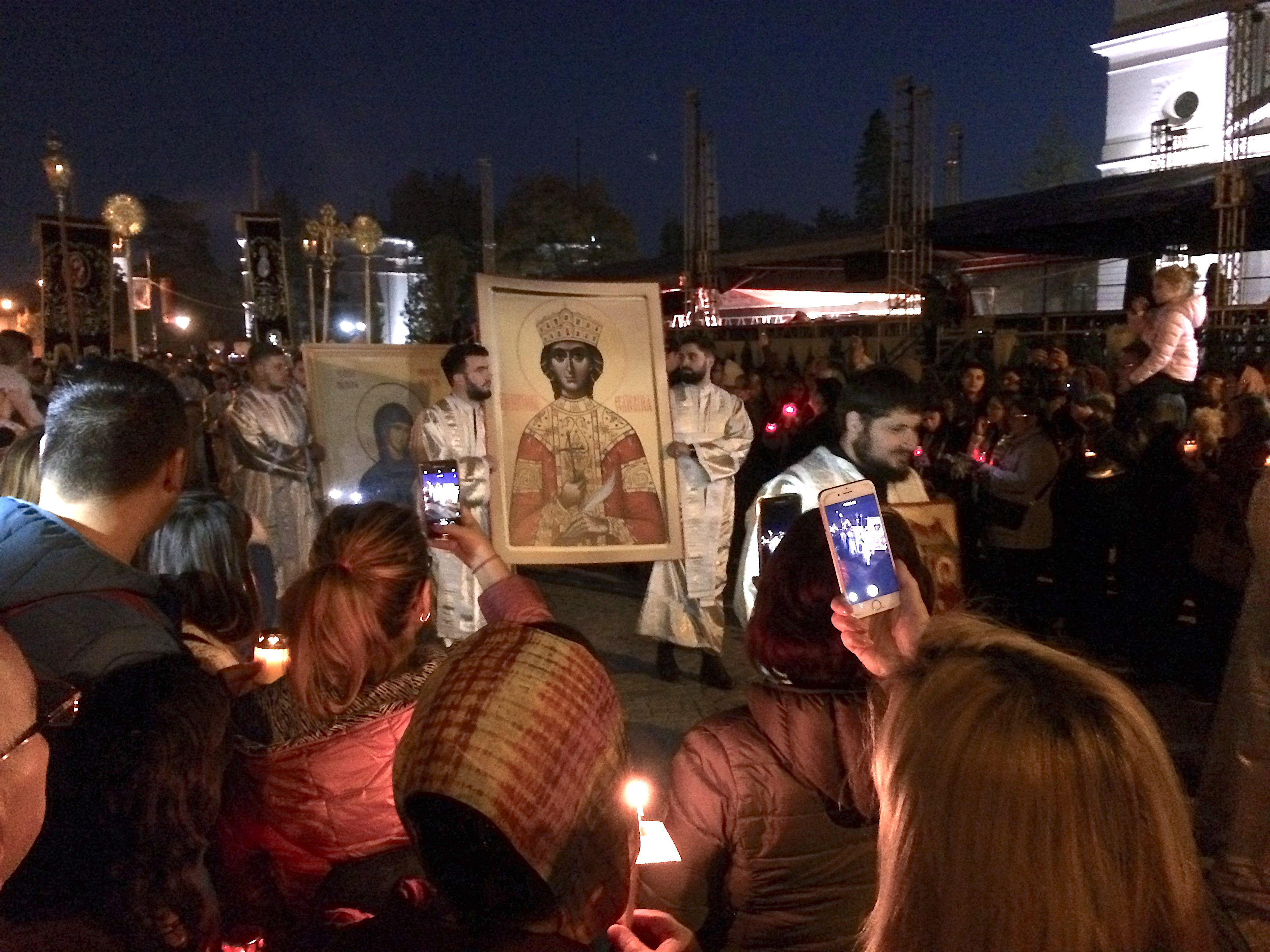
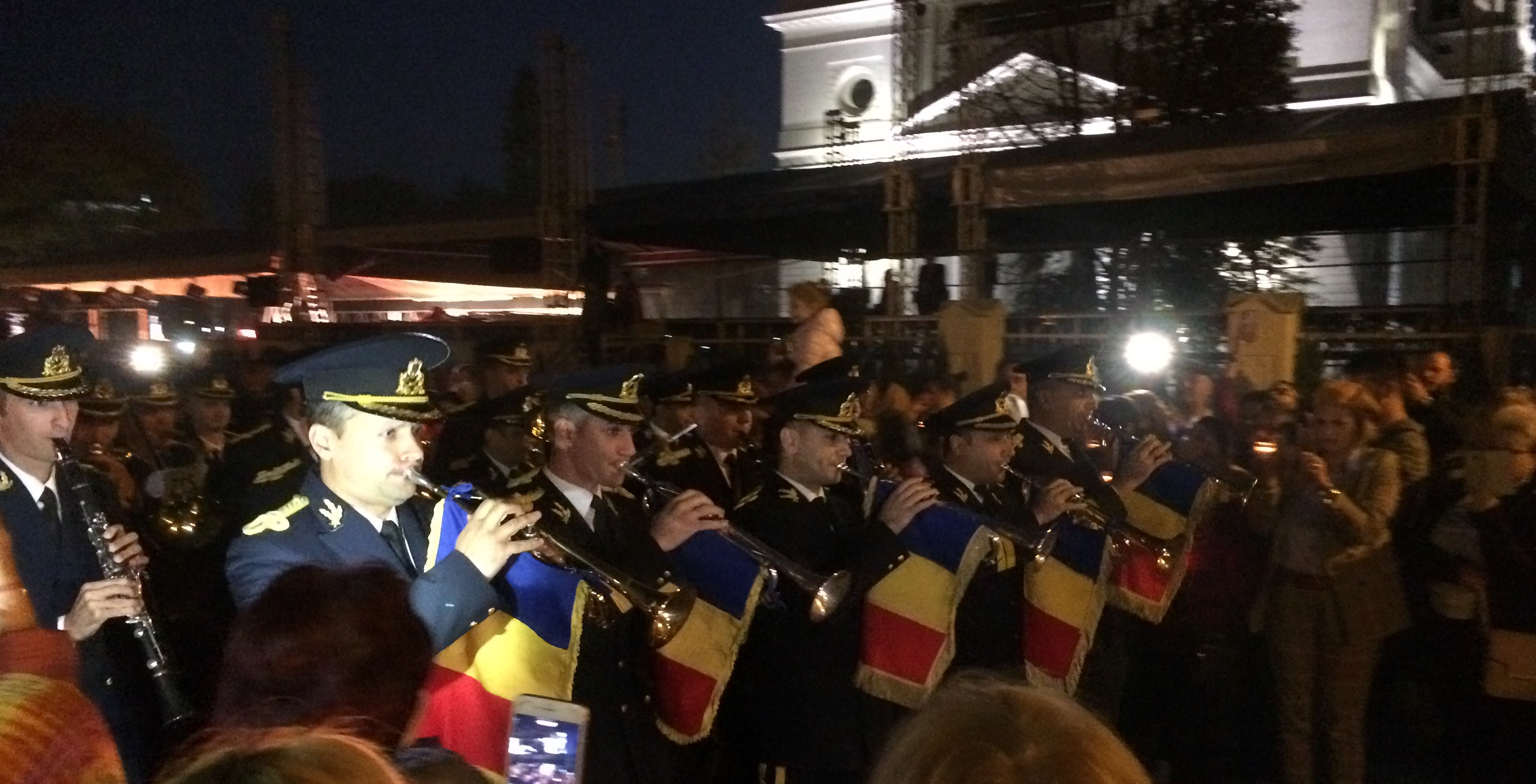
A spectacular civic & religious night-time procession occurs on 13th October in which the relics of a visiting saint are carried ceremoniously through the streets.
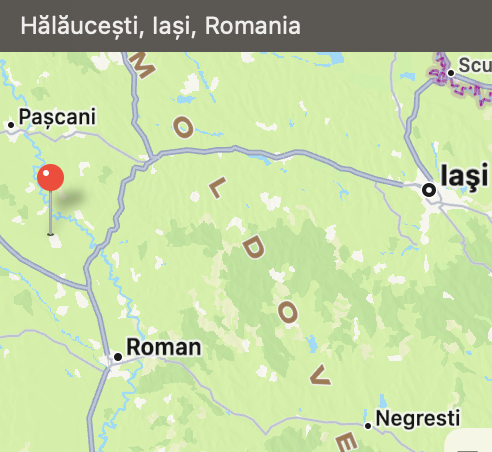
Iași, also referred to historically as Jassy, is the third largest city in Romania and the seat of Iași County. Located in the historical region of Moldavia, it has traditionally been one of the leading centres of Romanian social, cultural, academic and artistic life. The city was the capital of the Principality of Moldavia from 1564 to 1859, then of the United Principalities from 1859 to 1862, and the capital of Romania from 1916 to 1918.
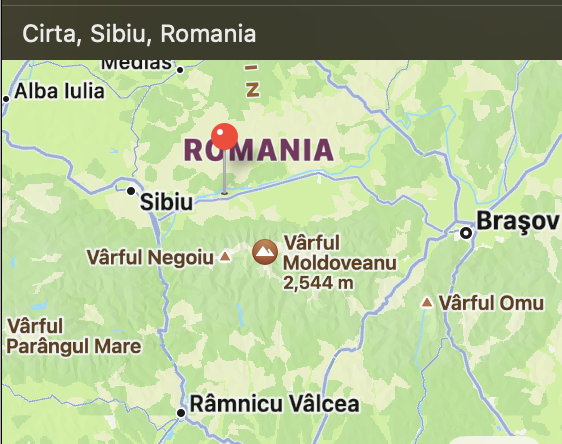
Apple maps
We are at a city whose centre we’ve come to know well – and have seen, over the past 25 years, many changes.
It is also a city that has, at times, been a pivotal point in recent east European history. This was exemplified in 2022 after Putin’s Russia invaded Ukraine when the city – and its airport – became a focal point for displaced people entering Romania from their northern border with Ukrainia & western media trying to gauge, understand & broadcast the rapidly developing situation.
It has been to two groups in the city that were assisting displaced Ukrainian families, that finance raised in Bishop’s Castle on another border (Wales/England), was supplied.
This assistance was made possible due to the links developed with local community groups since 1998.
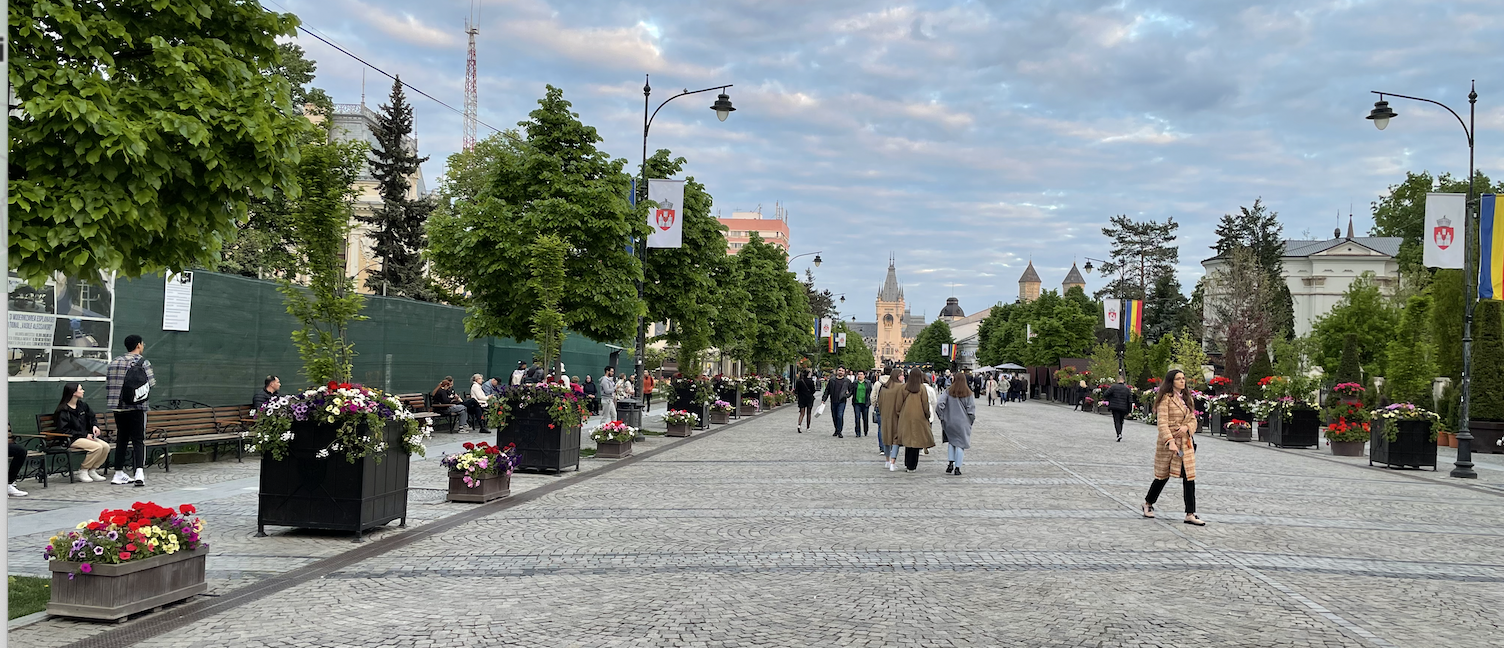
An evening stroll through the city
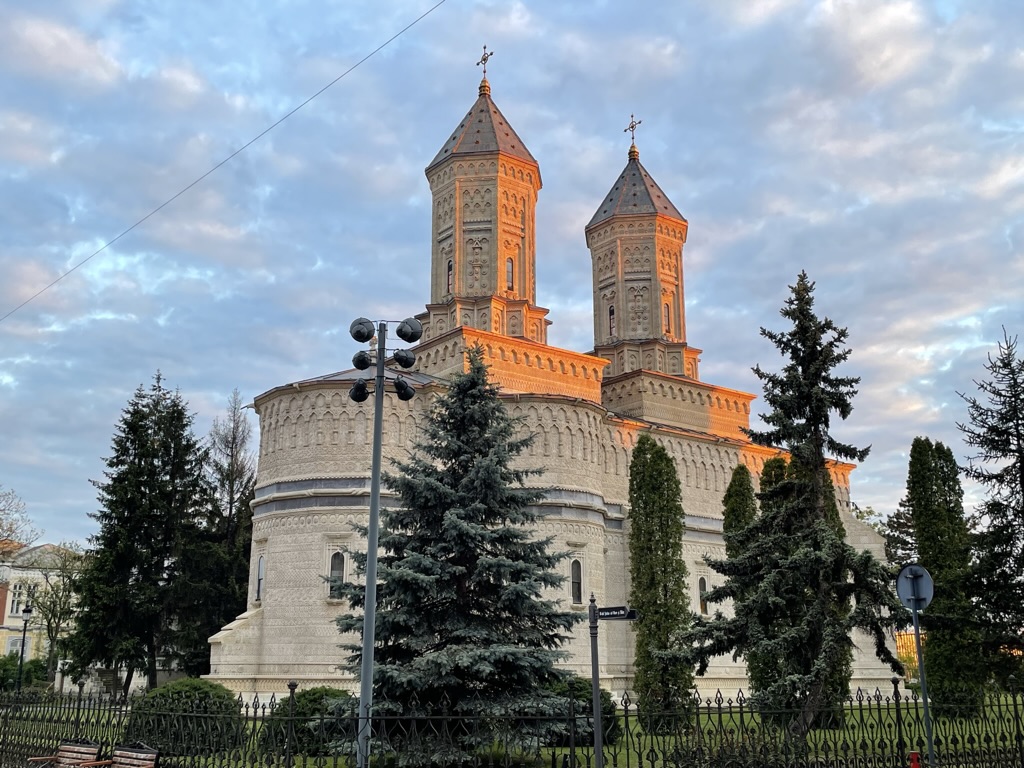
…..over 30 non-repeating registers of decorative motives. Western architectural elements (Gothic, Renaissance) combine with the Eastern style, of Armenian (Khachkar), Georgian, Persian, Arabian or Ottoman inspiration, in a totally bold conception, whose result is a harmonious ensemble
Several Romanian royal figures are buried inside the church: Tudosca (Vasile Lupu’s first wife) and Ștefan Vodă, their son; prince and scholar Dimitrie Cantemir (1673–1723); and Alexandru Ioan Cuza, the first ruler of the united Romanian principalities(1859–1866)
https://en.wikipedia.org/wiki/Trei_Ierarhi_Monastery
Cantemir & the significance of Iași
Dimitrie Cantemir made a very important contribution to a true eastern & western European Culture & particularly to the understanding of Ottoman music. Traditionally it was never notated – but he, when forced, as hostage (it was normal for children to be held thus) in Istanbul, devised a system to record what he heard & saw of the Turkish style of recoding.
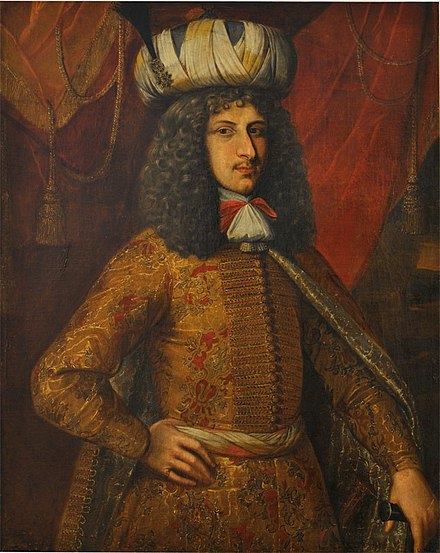
He was a polyglot (apparently speaking 11 languages) & was ‘a prolific writer, variously a philosopher, historian, composer, musicologist, linguist, ethnographer, and geographer’.
His life is also an exemplar of the politics of the time – as it marked a major shift towards the influence of Russia in the region.
The 2 images provide a visual introduction to the complexities of this particular regional history.
The youthful – in Turkish attire
The mature – a classically portrayed, early C18th western noble
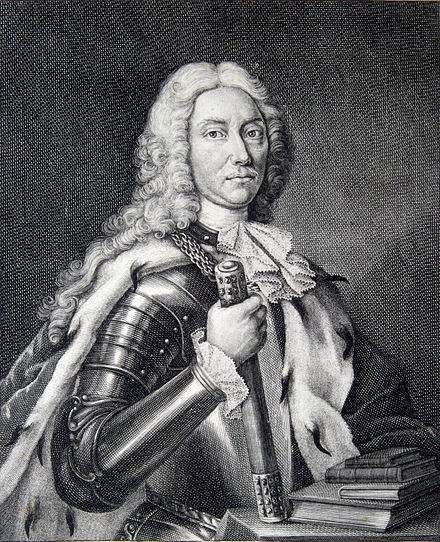
After 1453 (capture of Constantinople) the Turkish-Ottoman Empire was able to continue expanding & eventually had control over territories now called ‘The Balkans’. Twice their armies reached Vienna (1529 & 1683) & Moldavia & Wallachia were tributary states of the Ottoman Empire, technically independent, but with only limited self-rule.
In 1710 Cantemir, having successfully fought with the Ottomans was made ruler of Moldavia (Voivode/Hospodar/Prince – each of those terms are used in descriptions).
Russia was expanding and encroaching on Ottoman territory.
In 1711 Cantemir agreed to allow Peter 1st, Tsar of All Russia (& later ‘Emperor’) to attack the Ottoman Empire through Moldavia. His forces also joined with those of Russia in the Pruth River Campaign.
The campaign failed.
It was a significant mistake as the Ottoman forces defeated the invaders.
Consequently, having broken the trust of his Ottoman overlords he sensibly emigrated to estates in Russia approximately 300 kms south of Moscow… where he reputedly lived a rather splendid & very ‘well-connected’ life. His son became Russian Ambassador to the British Royal Court & is regarded as important to Russian poetry.
His Wallachian counterpart, who had merely been reluctant to join forces with the Ottomans was deemed unreliable by the Sultan and with his 4 sons & a counsellor was later executed.
Following that war, direct (and economically negative) rule by the Sultan through agents was established over Moldavia and Wallachia.
The campaign therefore also marked the beginning of Russian interest and influence in the region… and this has continued to the present.
……………..
Iași has featured as a crucial point in Russian relationships on several occasions.
Major changes occurred late in the C18th when the Treaty of Küçük Kaynarca in 1774 gave Russia considerable power and influence over commerce & religion in Moldavia and Wallachia. The right to protect Orthodox Christians within the Ottoman Empire has been used since as prerogative for interference.
Further expansion occurred after that treaty with, in 1789, the capture by Russian troops, of Iași from the Ottomans.
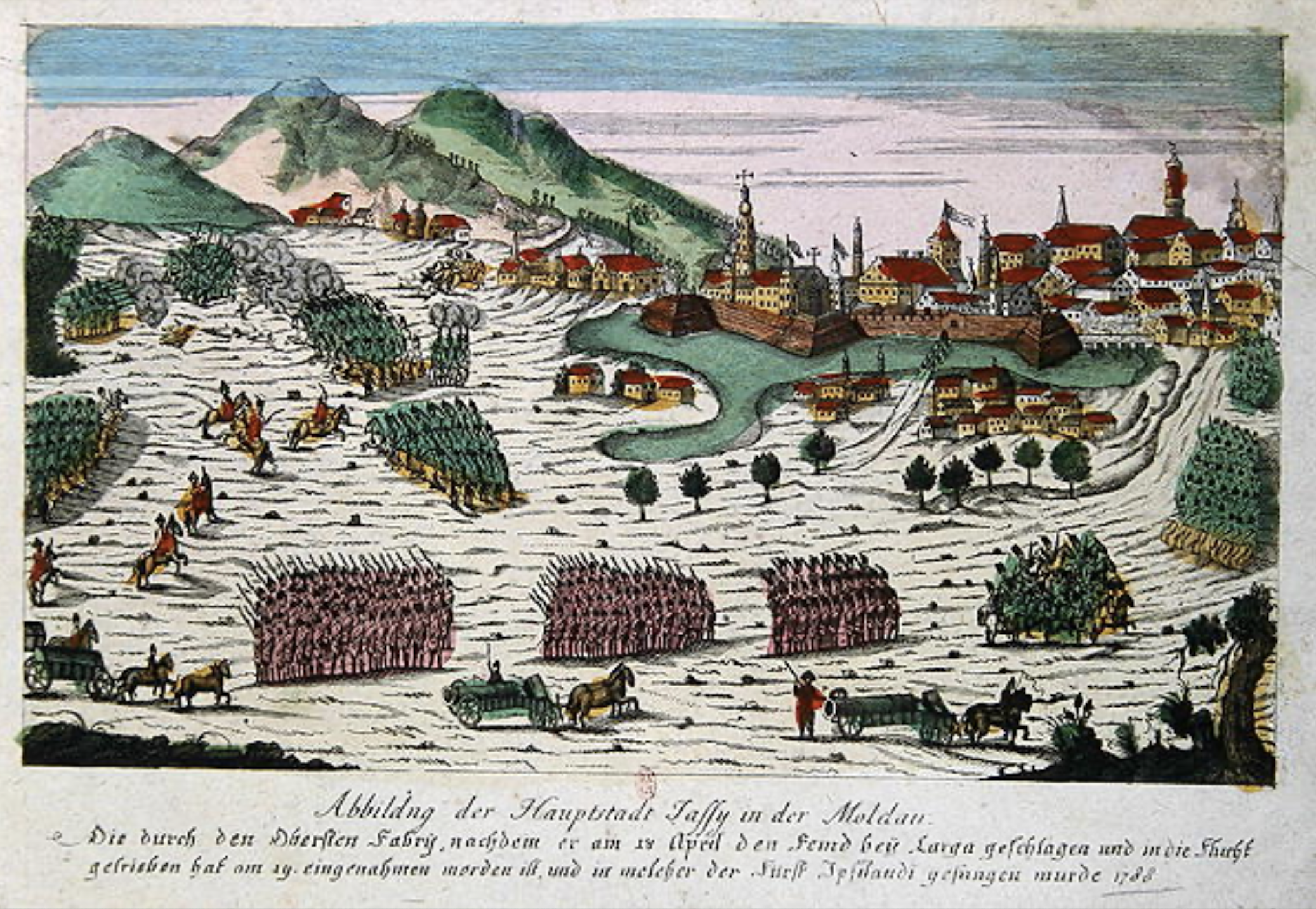
In 1792 Iași was the site of the Treaty of Jassy in which Russia was formally granted the Crimea and the River Dniester became their boundary.
The significant military figure of Russian history at that time & the Empress Catherine’s favourite, was Prince Potemkin. he ruled the expanding Russian southern territories and established the cities of Kherson, Nikolayev, Sevastopol, and Yekaterinoslav (‘Dnipro’).
Names now associated with Putin’s invasion.
Potemkin, who would have been signatory to the Treaty of Jassy, became ill in the city & died near Iași where, after being embalmed, a funeral service and burial occurred. Parts of his internal organs (inc heart & brain) may still be held at Golia Monastery.
His body seems to have been moved 19 times including being interred in Kherson until 2022 when Putin ordered its removal to Russia.
There were other related significant moments for Iași. After another Turkish-Russian war, in 1812, Russia absorbed part of Moldavia as the Bessarabia Governate – leaving Iași as a city on the border, marked by the River Prut. Bessarabia has occasionally been reunited with Romania but since 1945 remained as a Soviet Republic in the USSR until 1991.
Later, 1877, it was through Iași that Russian troops were permitted to pass on their invasion of Ottoman territories (leading to the siege of Plevna/Pleven, described in Journey 2).
In all this localised history one further ‘moment’ was significant .
1941: The assembly of the Romanian forces near Iași and their invasion across the Prut, into Russia. Romania made a major contribution of troops many of whom reached as far as Stalingrad…. following which, disaster befell them – and ultimately Russian forces were able to establish control over the whole country.
In my early visits to Romania I was regularly confronted with history of which I knew little …. and regularly told that the British (in particular, Churchill) betrayed Romania to Russia (at Yalta and later).
It was one of those initially amusing moments – WW2 had been a disaster for everyone & the idea of Britain or any other country suddenly engaging in a war against Russia to protect Romania (who had entered the war willingly on the side of the Nazis), was simply ‘odd’.
However I realised that this attitude was deeply held by many people.
It also told me something about the somewhat obsessive attitudes many people held – and not just about their view of history. It infected inter-personal relationships…. elements of that approach still remain.
Our (UK & others) experience haas largely been with people who are now themselves (as we were) ‘middle-aged’. The opportunities to work with those who were born after 1990 has been limited but those we have met have seemed, as expressed in Journey Two to have a very different general ‘approach’ to life.
‘…..how different those born in the 1990s are from the generation that preceded them‘
In the autumn of 2000 with Professor George Poede we visited a family at Bohotin south of Iași. The grandfather had been one of those Romanians who invaded the USSR & marched to the disaster of Stalingrad. He survived and made a solitary journey, walking, home. He proudly brought out & showed us the boots he had worn on his journey.
The setting created a sense of being out of some older long-lost pre-war time….
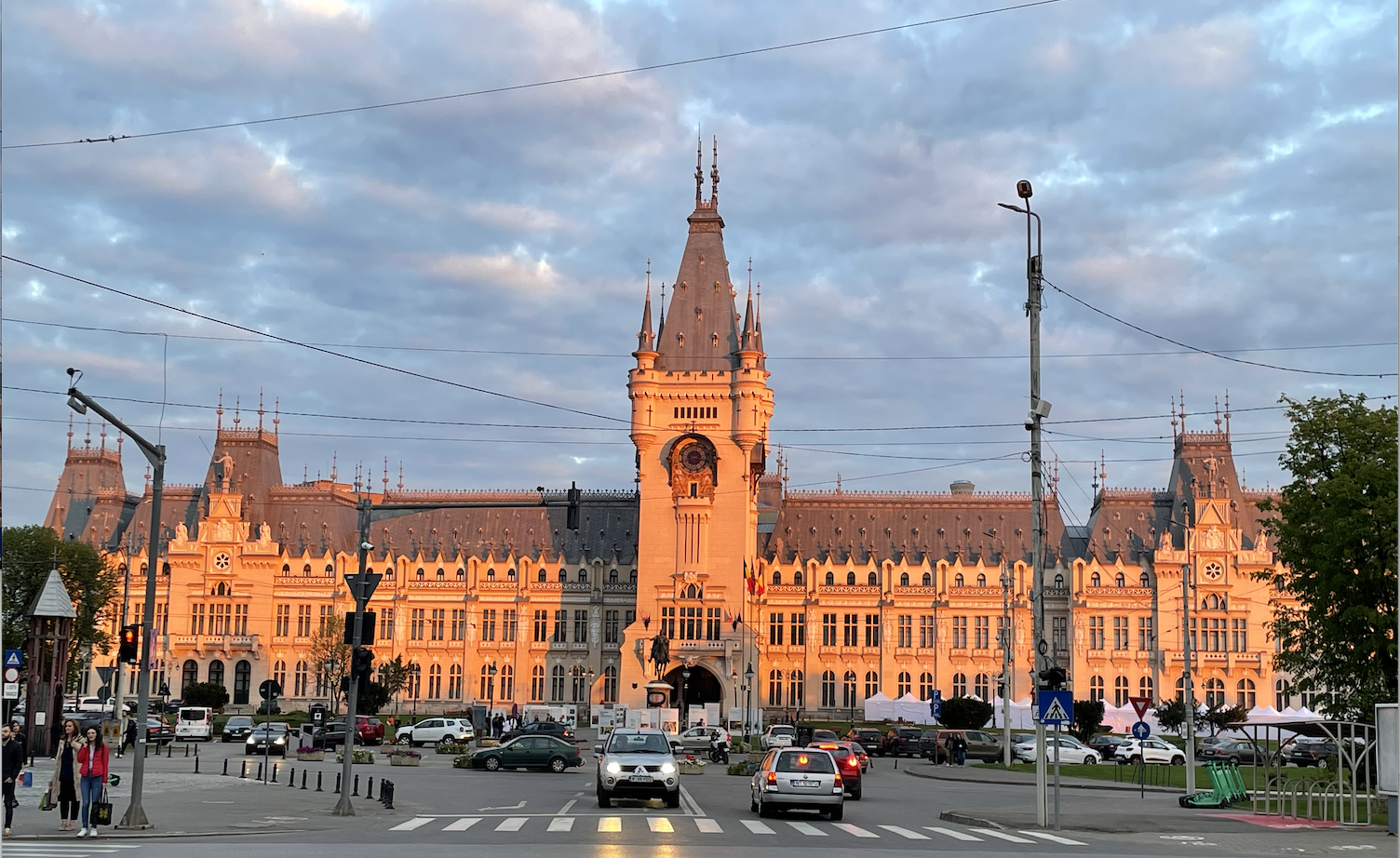
The Palace of Culture – in the area of the original places of the princes of Moldavia, it was constructed in the early C20th & was administrative centre and judicial court until 1955.
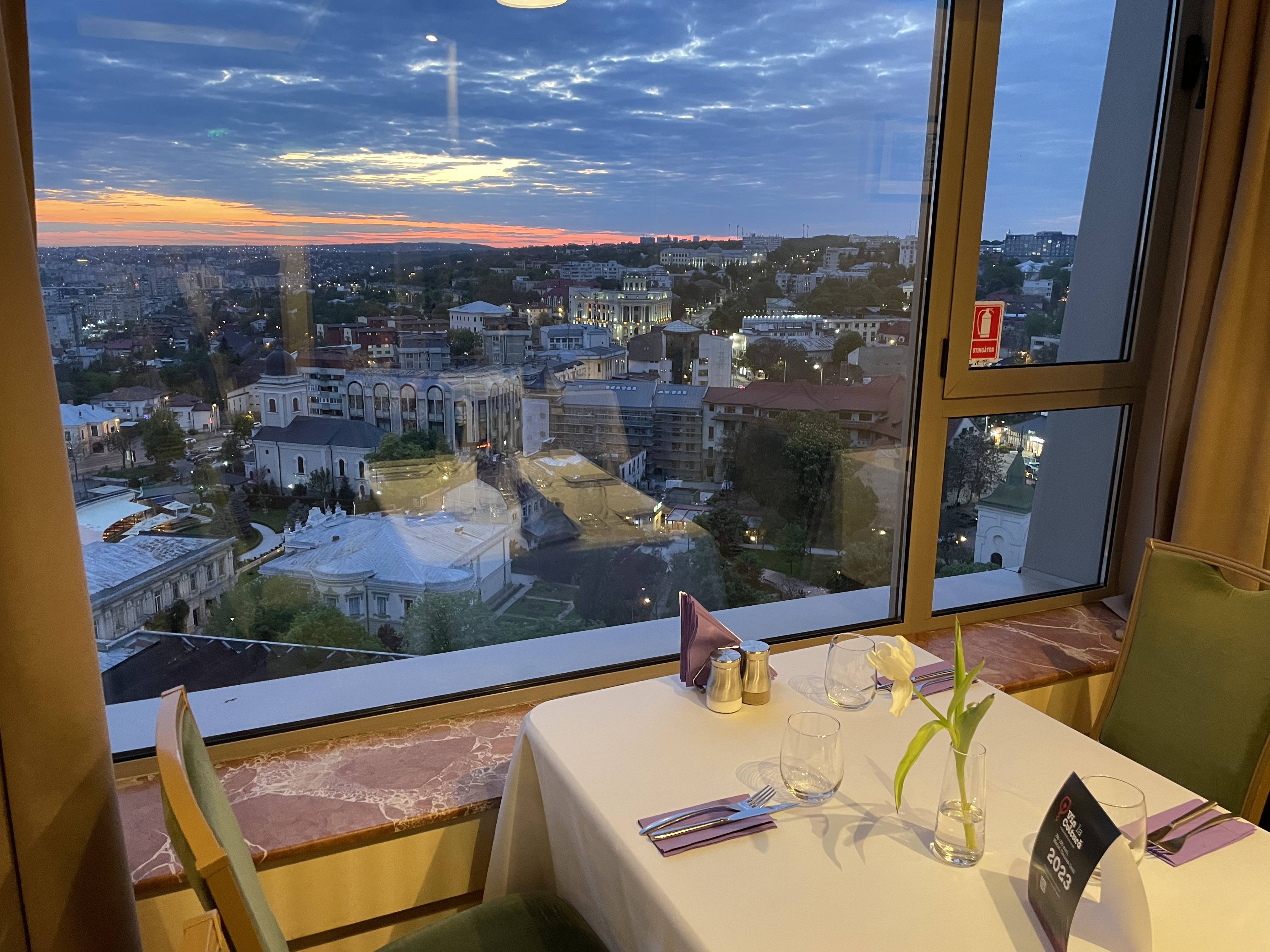
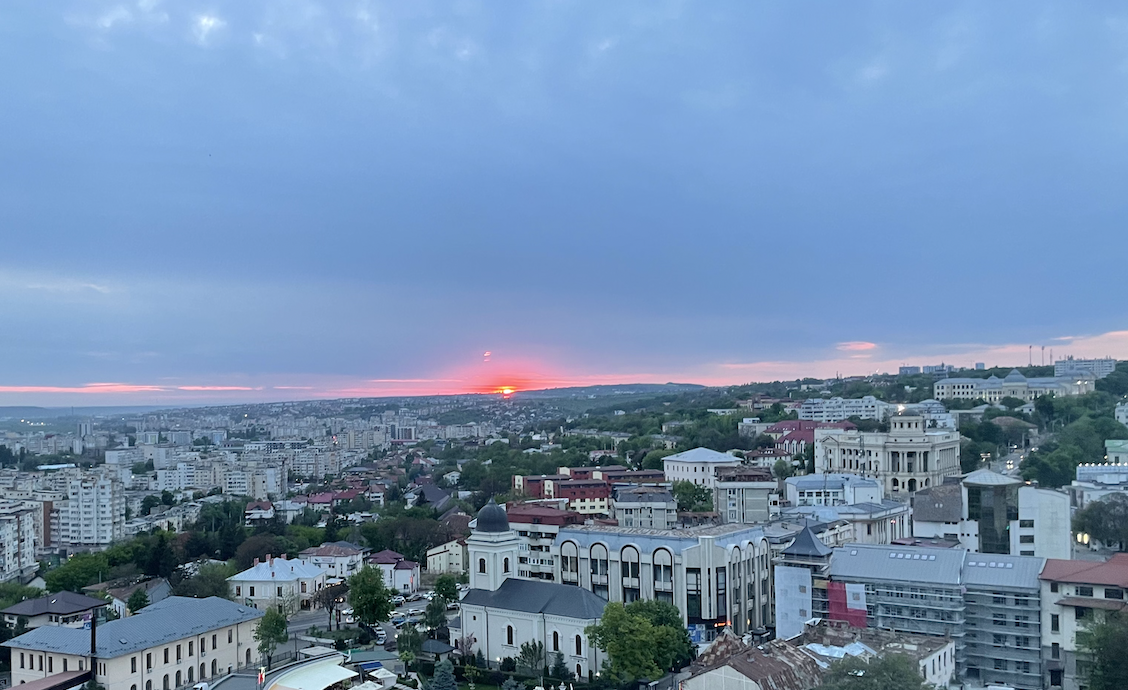
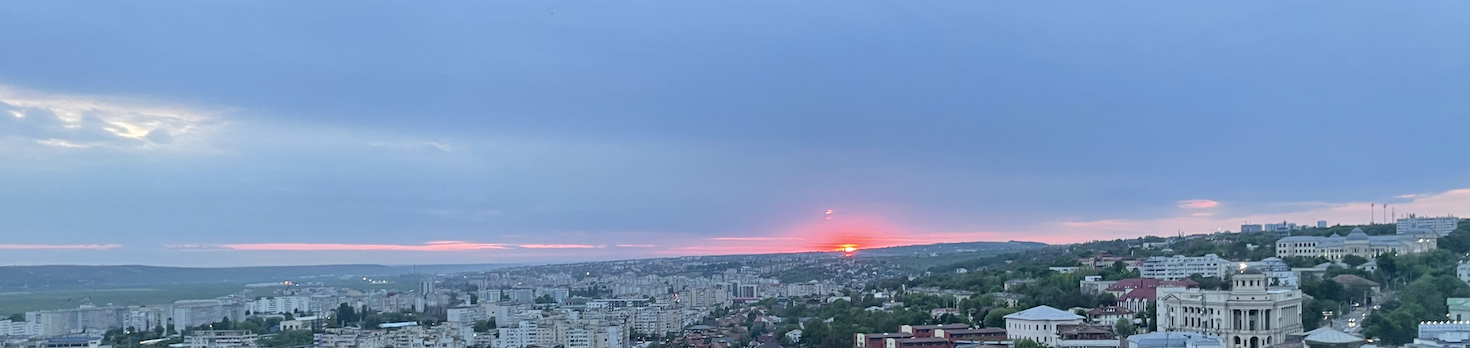
Sunset from the Panoramic restaurant of Hotel Unirea.
Background to our present visit
In 2002 a someone (but who? – memory has failed) in Iași associated with a work being created by UK students suggested continuation by applying to the EU Socrates Fund (as ‘Erasmus Plus’ was then called).
Success created a first meeting in autumn 2003 of three partners from Iași (Romania), Panevėžys (Lithuania) & Moelyci (UK).
The beginning of a partnership process that lasted, formally, until 2022 – but has not yet entirely departed.
The programme funding was for Adult Education and named Grundtvig after the ‘ideological father of the folk high school… he believed the university should educate its students for active participation in society and popular life’ (Wikipedia).
So our programme ‘Community Creativity for Community Development’ began with on 13th October 2003.
It was something of a surprise to our rather formally dressed group of Romanian teachers (and one very informal Brit)… but they embraced the action with remarkably good humour.
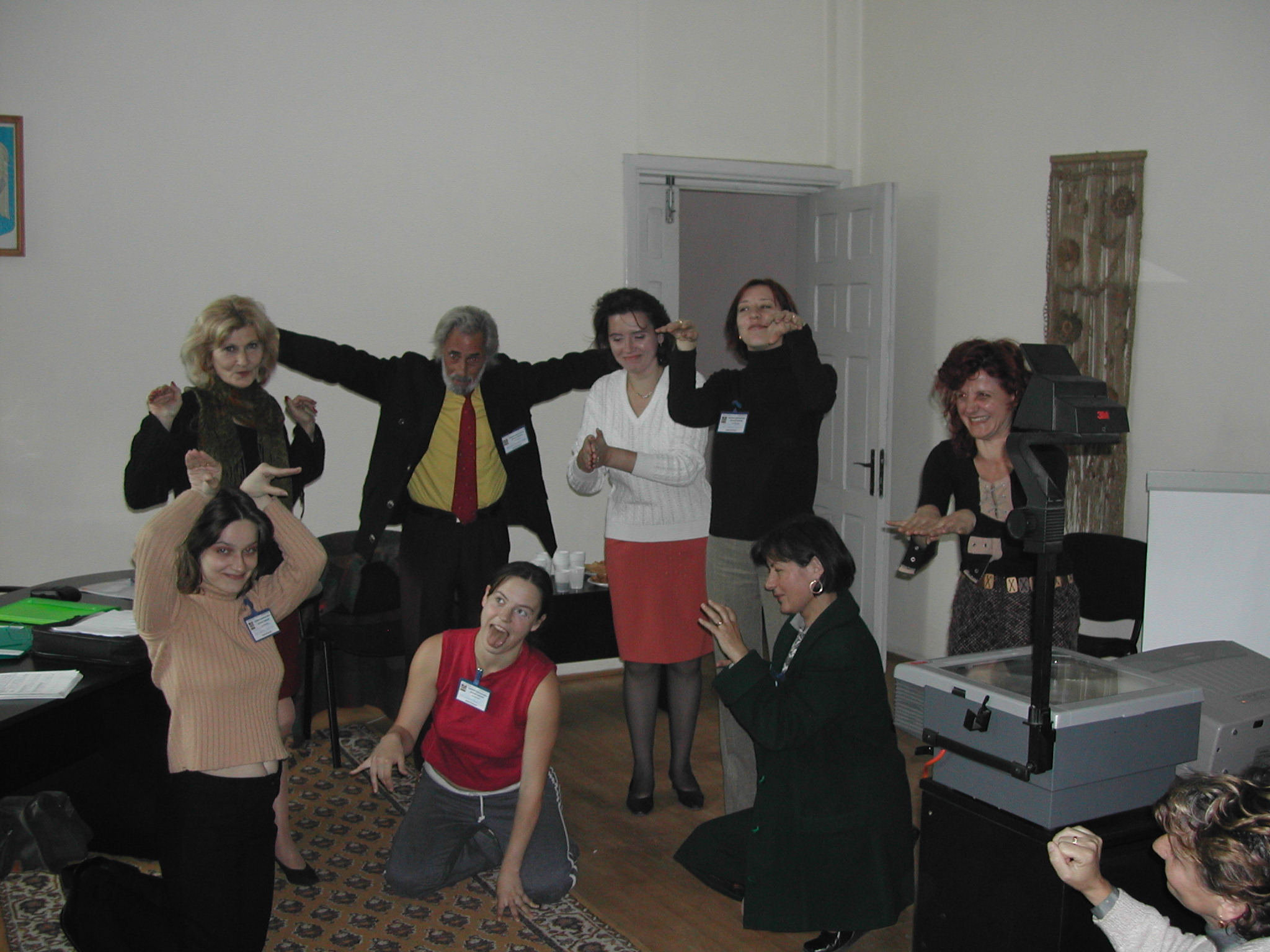
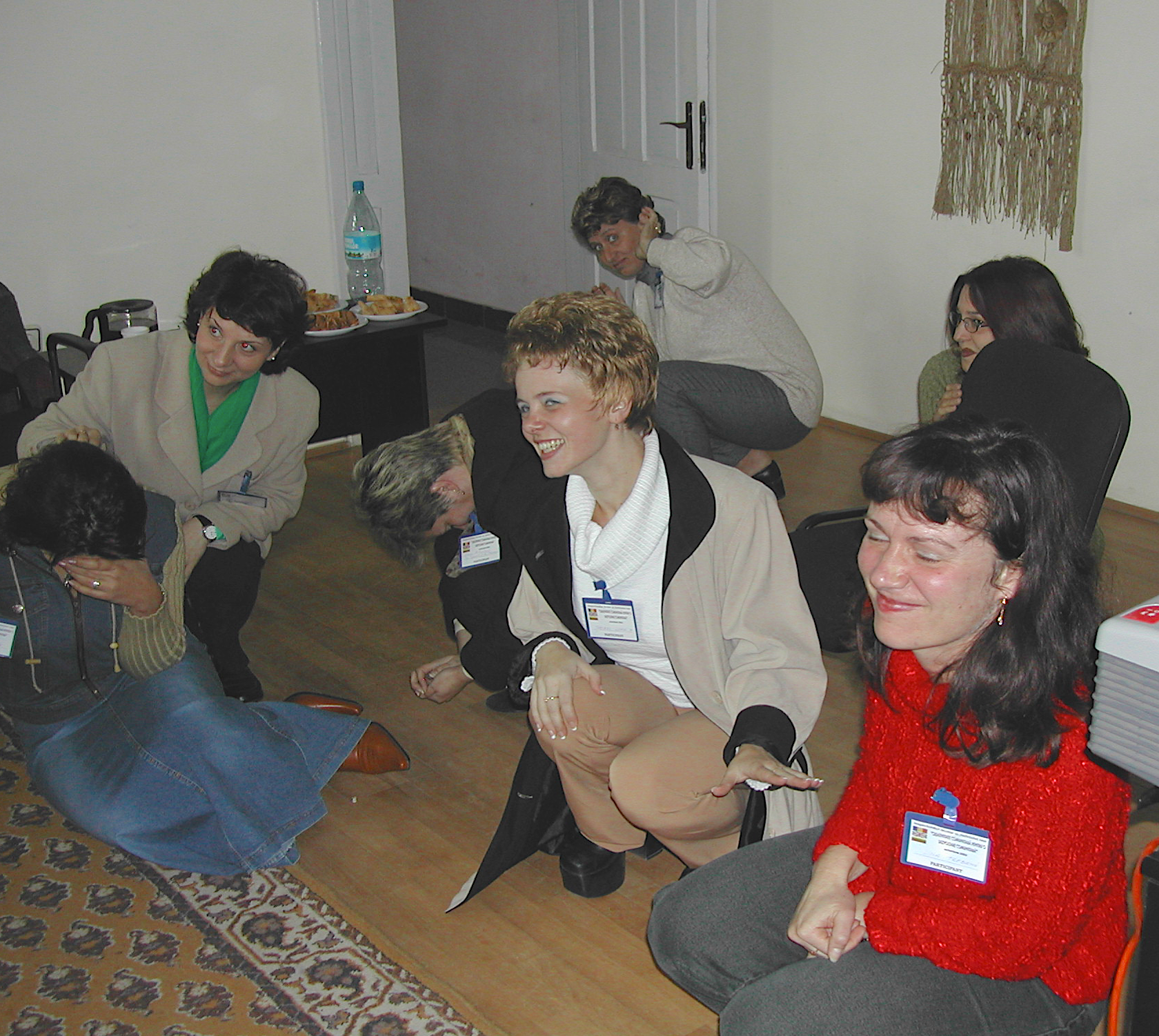
However, as later events proved, we were unsure how much understanding – or even interest, was shared by local project management staff!
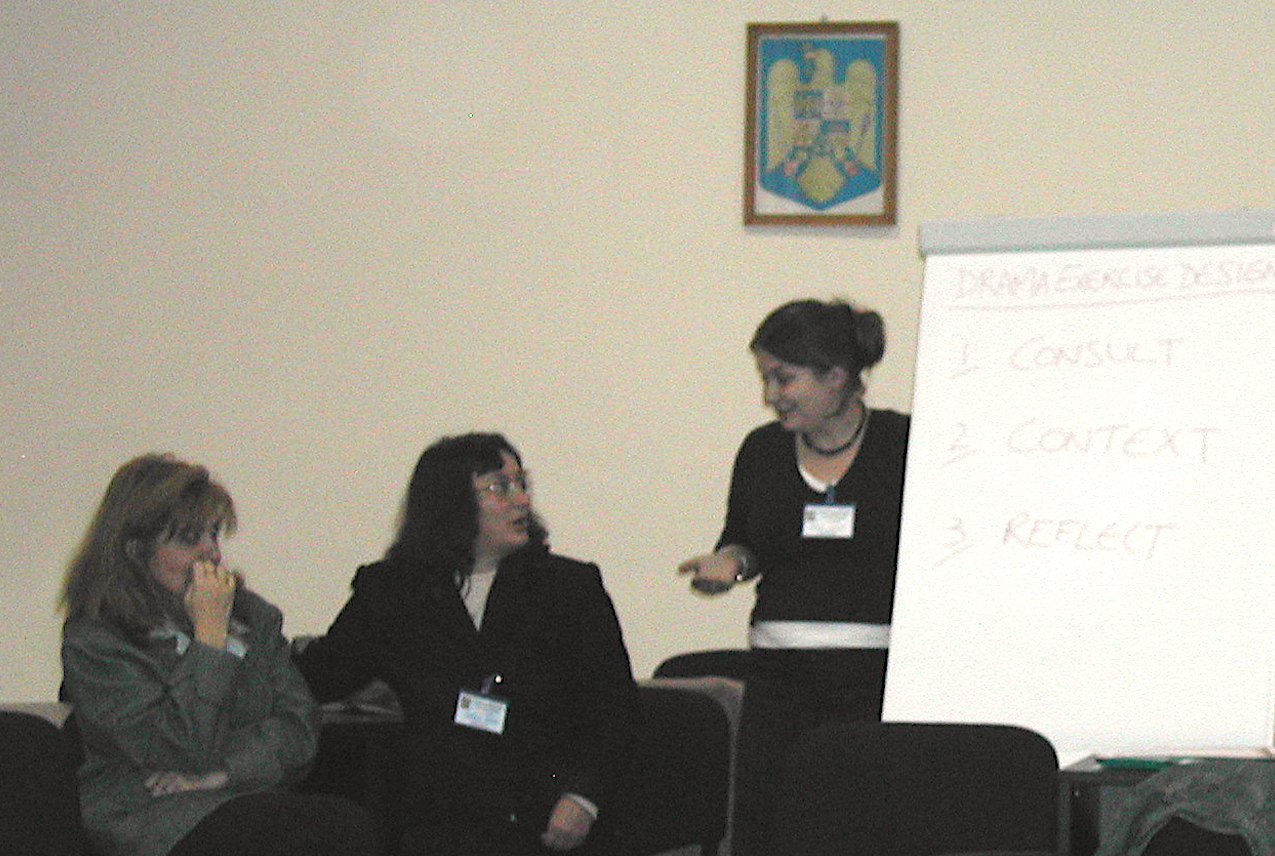
But despite the difficulties, the 2 visits made to Iași in 2003 & 2004, created new opportunities & new friends.
Many visits followed – almost all associated with EU funded education & partnership activities.
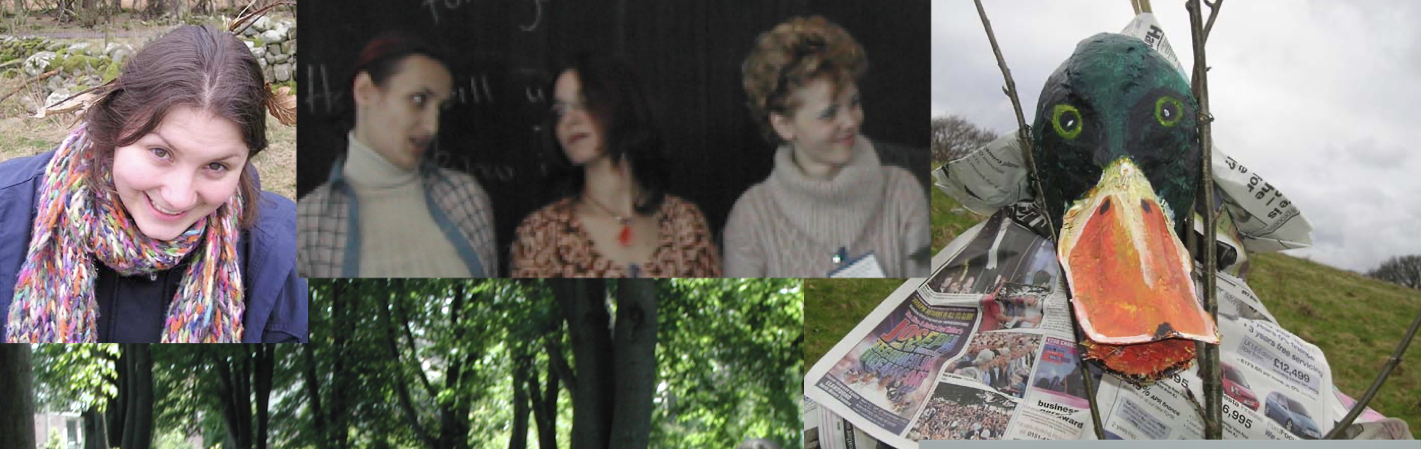
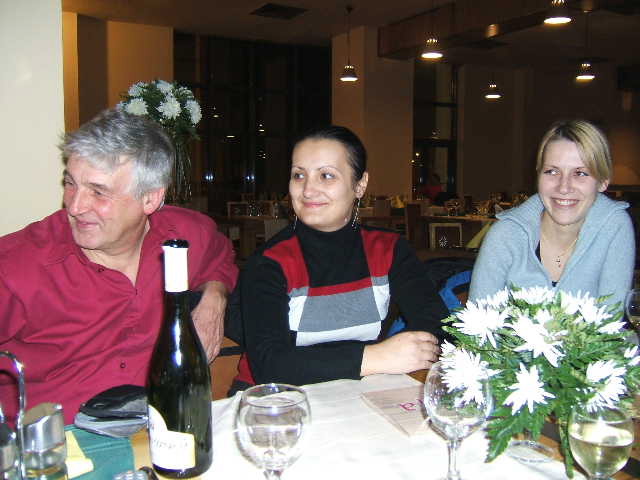
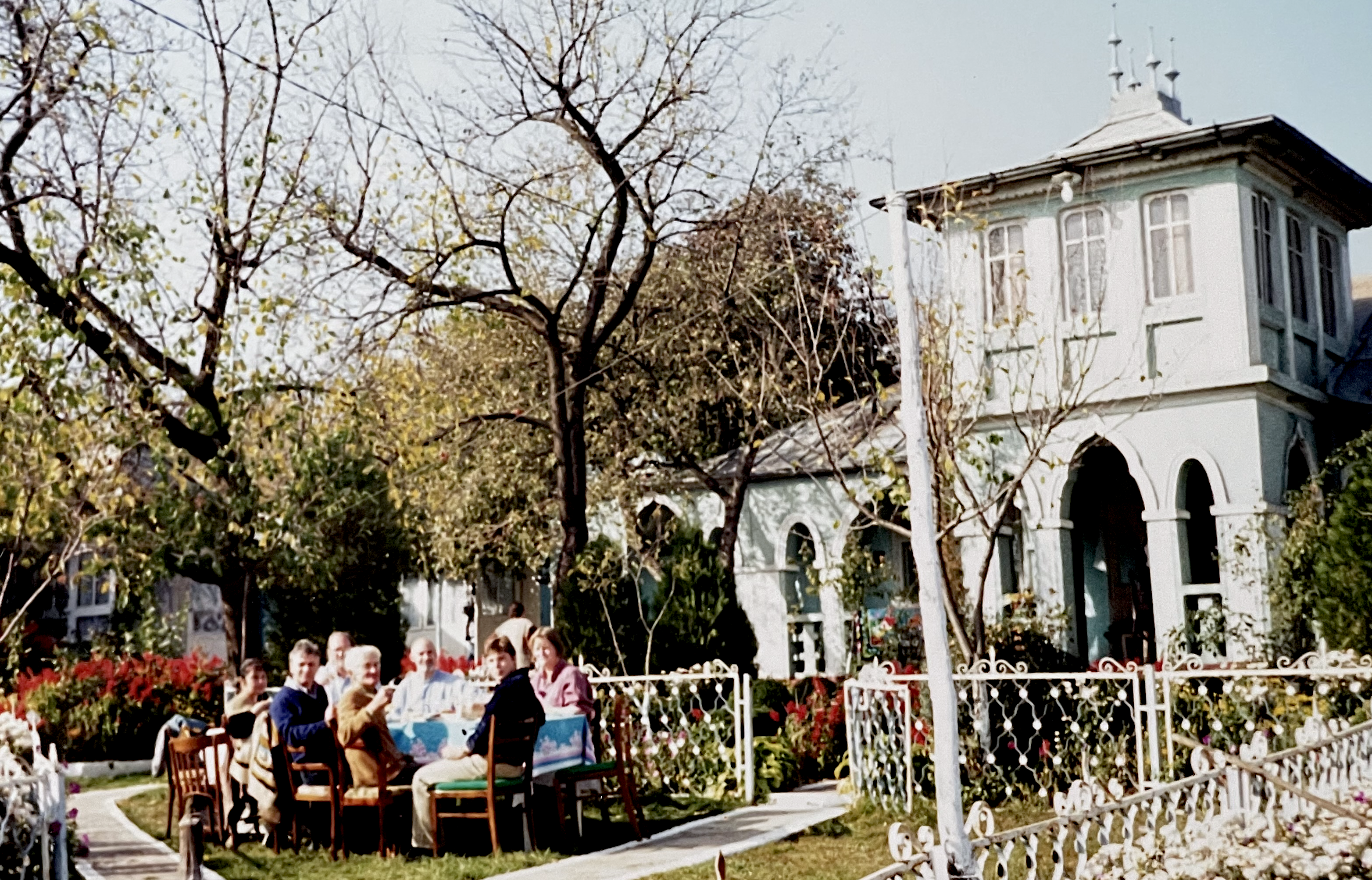
John Fazey, Dana Robota, Lidia Vieru in ‘Carafa’

Luciana (Vibo Valentia) Lidia, Dana, Edi & Radu in Casa Lafric (2007?)
Visitors at meeting of Arboreal Futures, 2018
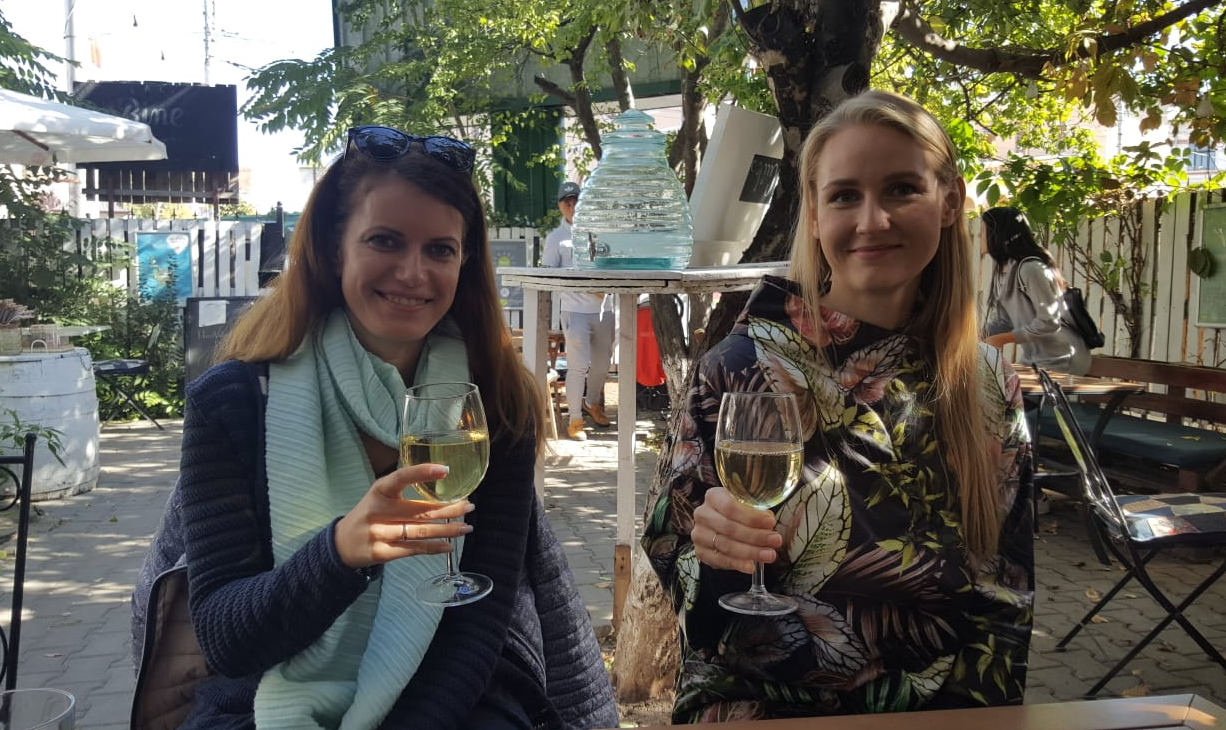
Aistė & Agnė from Kaunas
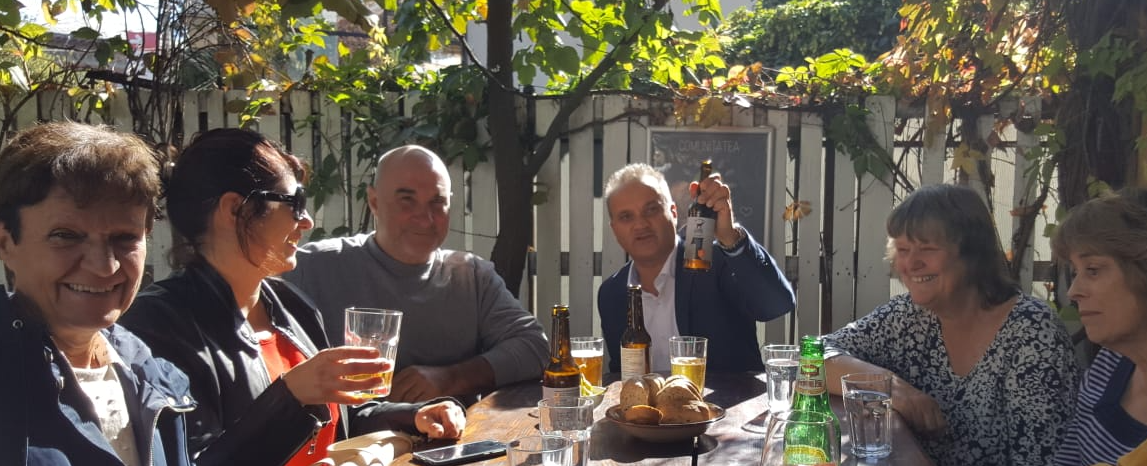
Anna, Vittoria, Pasquale & Franco from Spilinga (+ 2 Brits)
Years of gentle cooperative achievements, allied to unexpected moments of surprise & delight
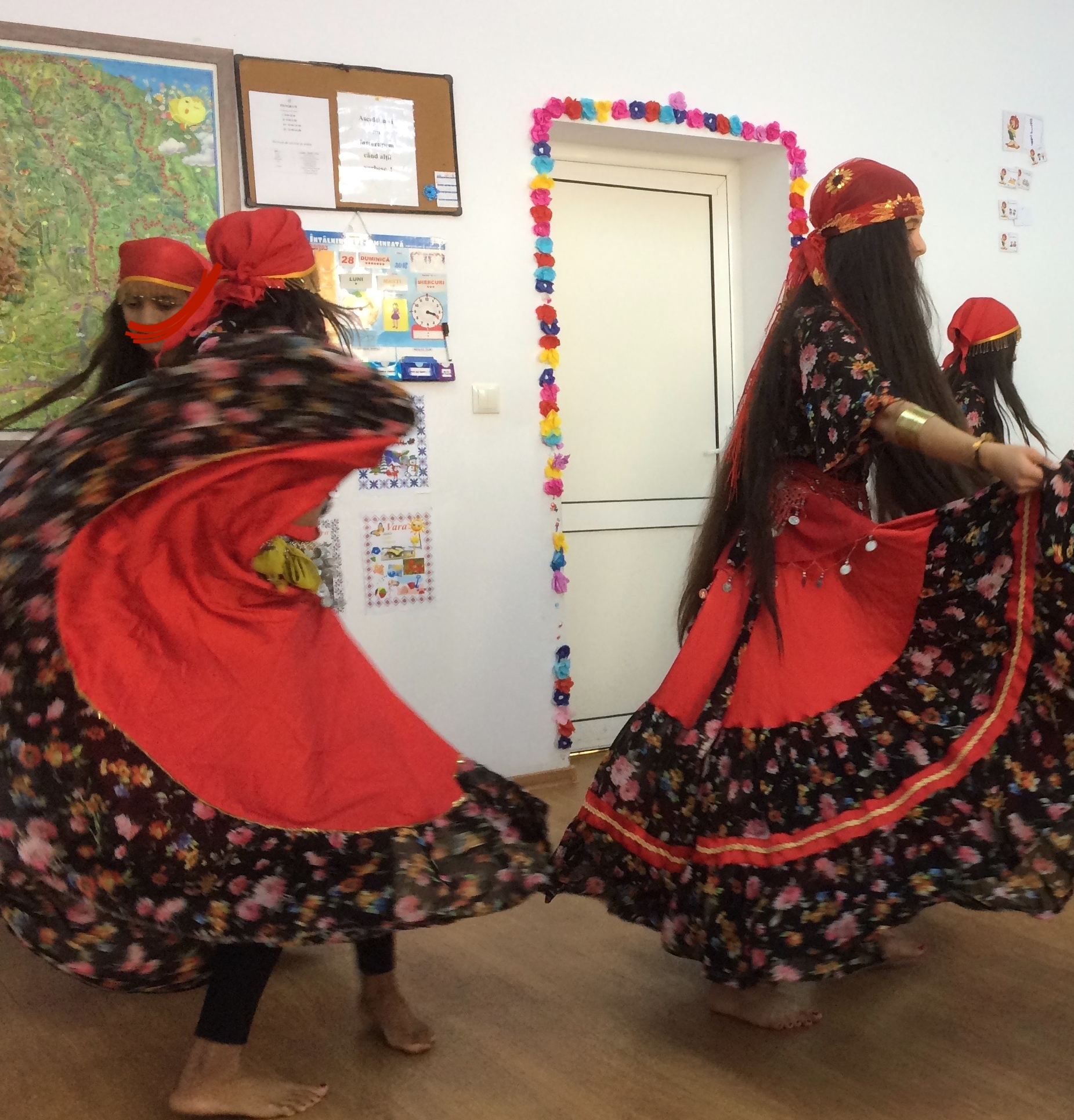
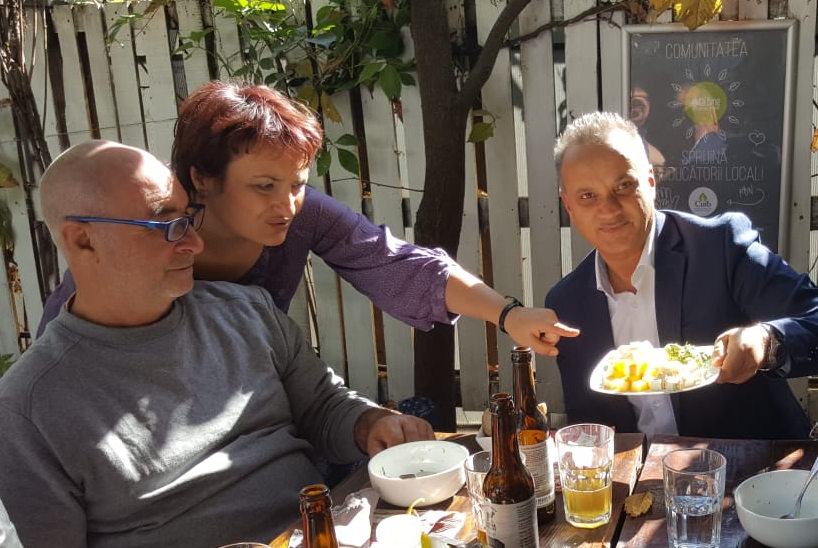
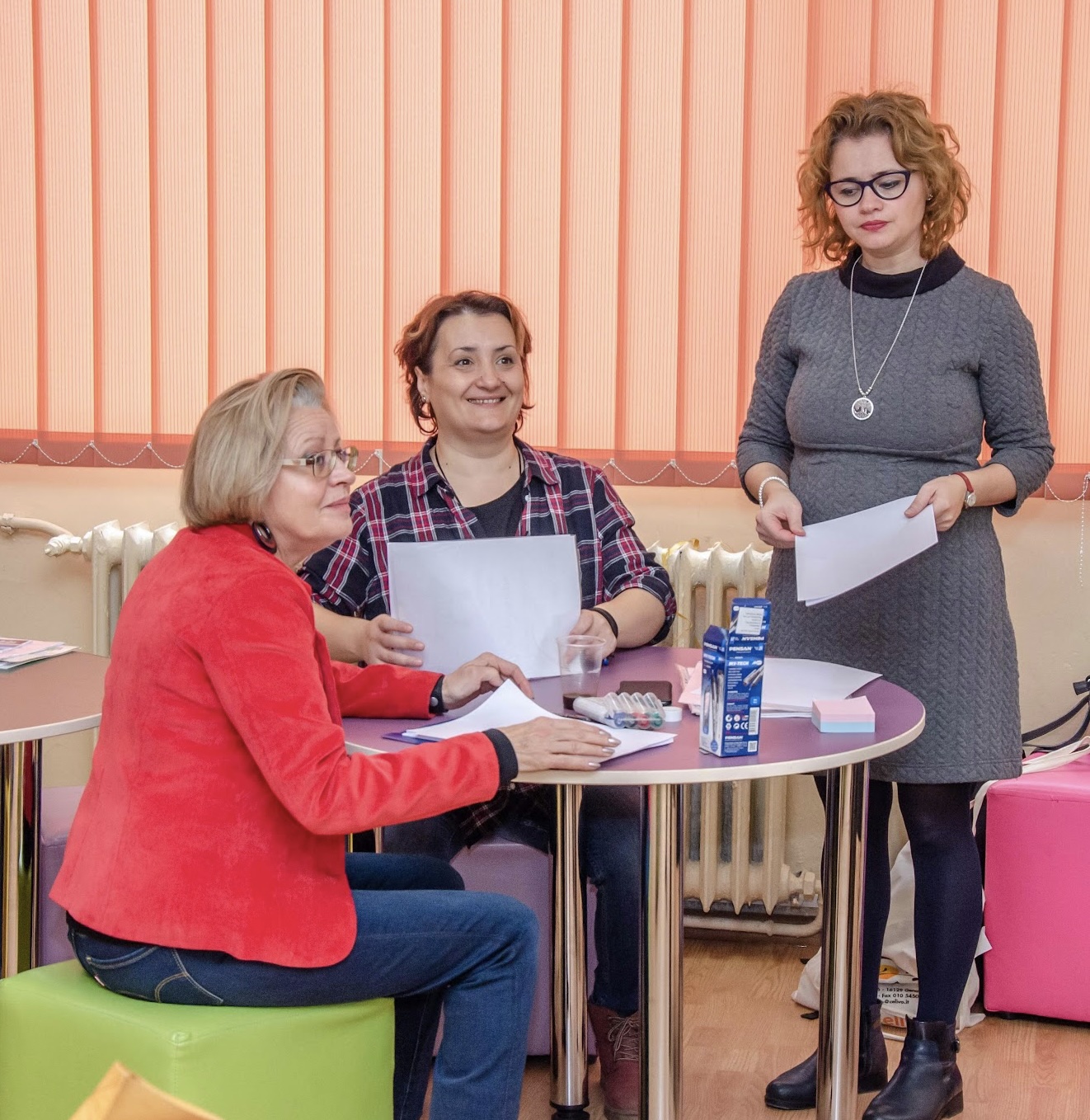
Dana, who appears in many of the above photos, became, during the first EU partnership (2003-05), the key inspirational creative contact, advisor, project-writer, programme manager, networker. As well as her professional work as a School Counsellor, she also created her own & managed, with Tatiana & Claudia (as above) her own Not-for-Profit organisation.
Further, she also managed an independent visit to the UK (where she met Ostap – our first contact in Iasi) & assisted the UK group in a separate project in Râmnicu Vâlcea (where she met Rad Alexandrescu)… and therefore becoming the only contact in Romania who links all the other key people together.
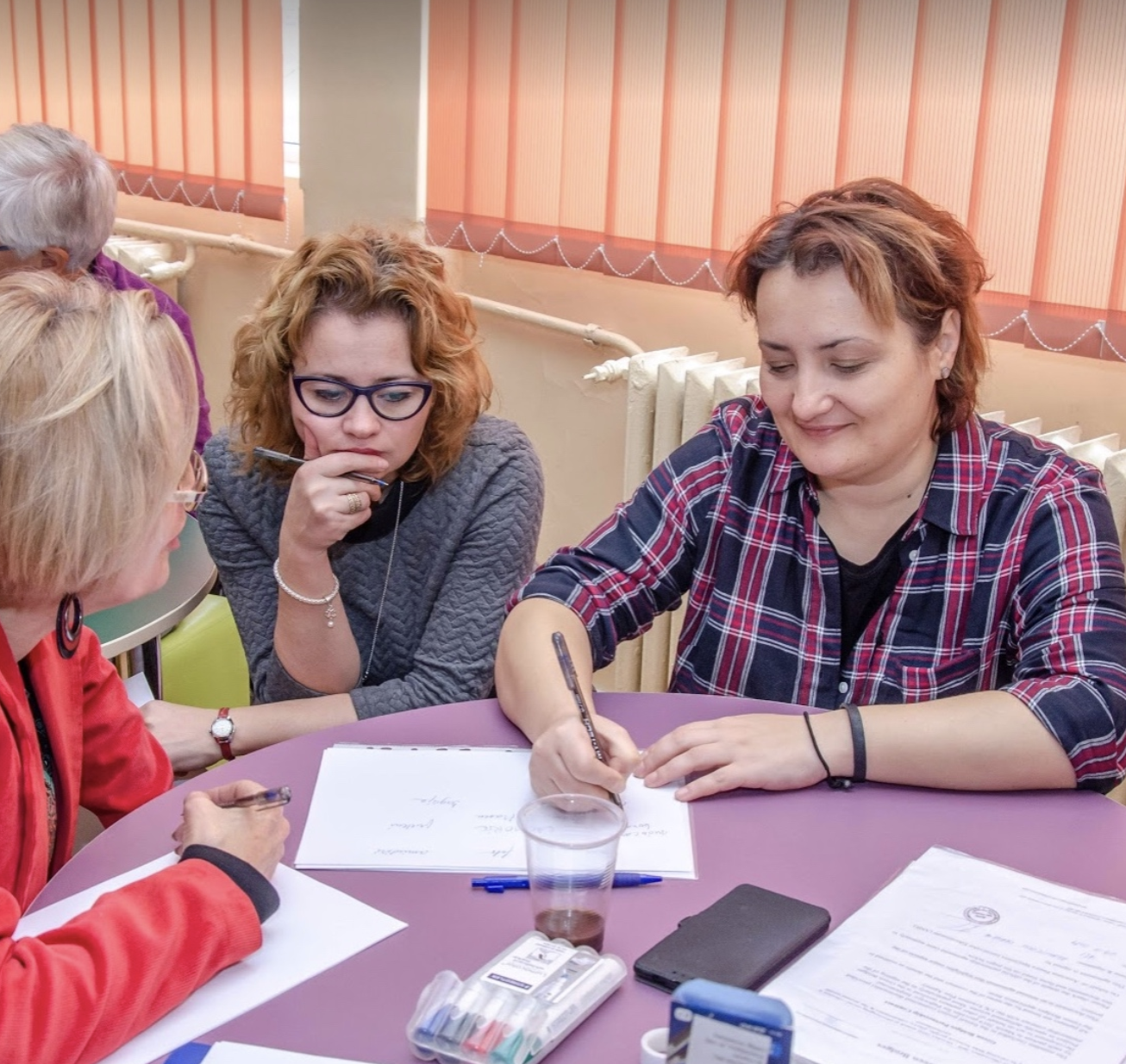
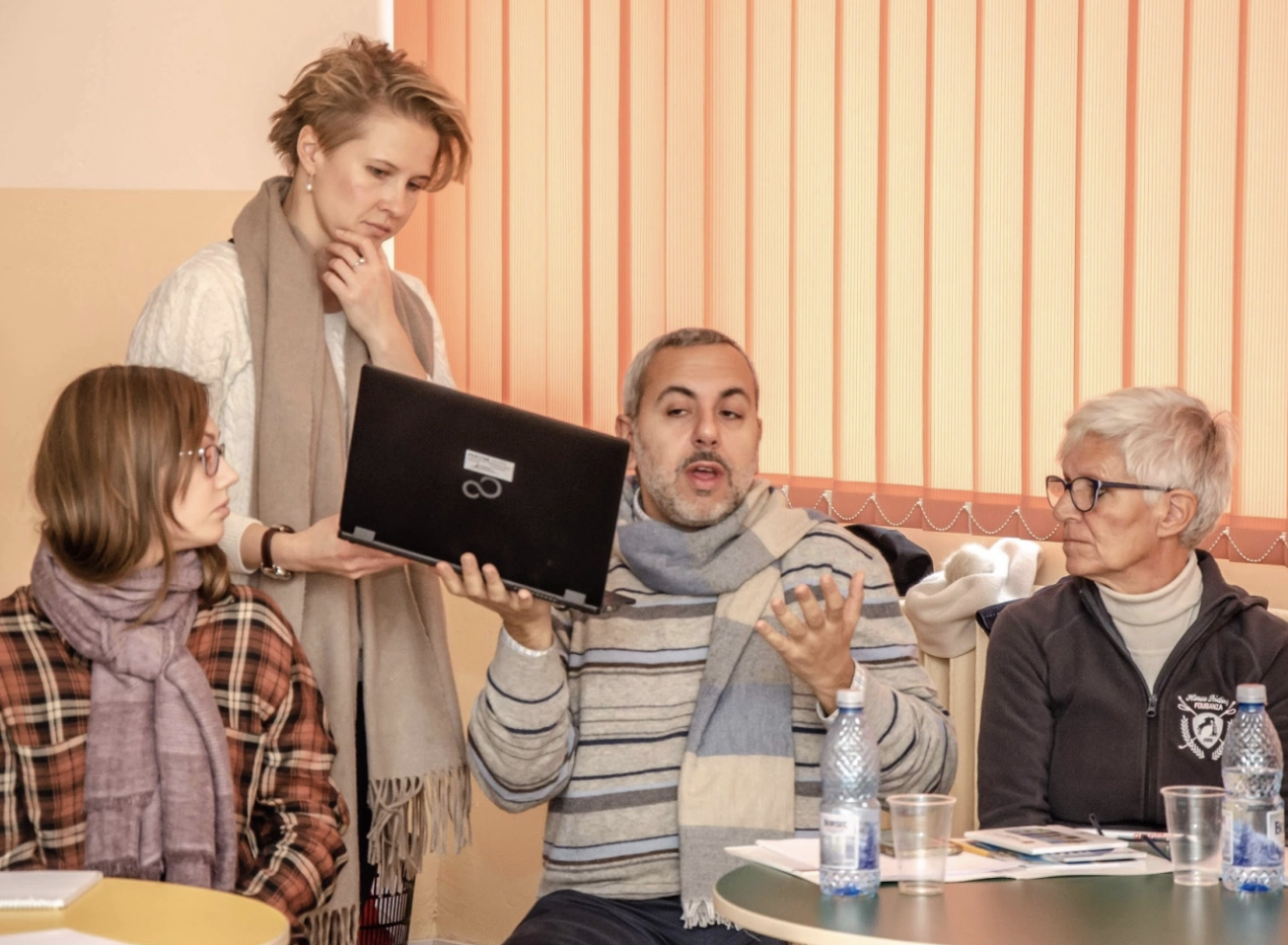
In late 2019 what became our last EU funded partnership programme had its first meeting in Iași.
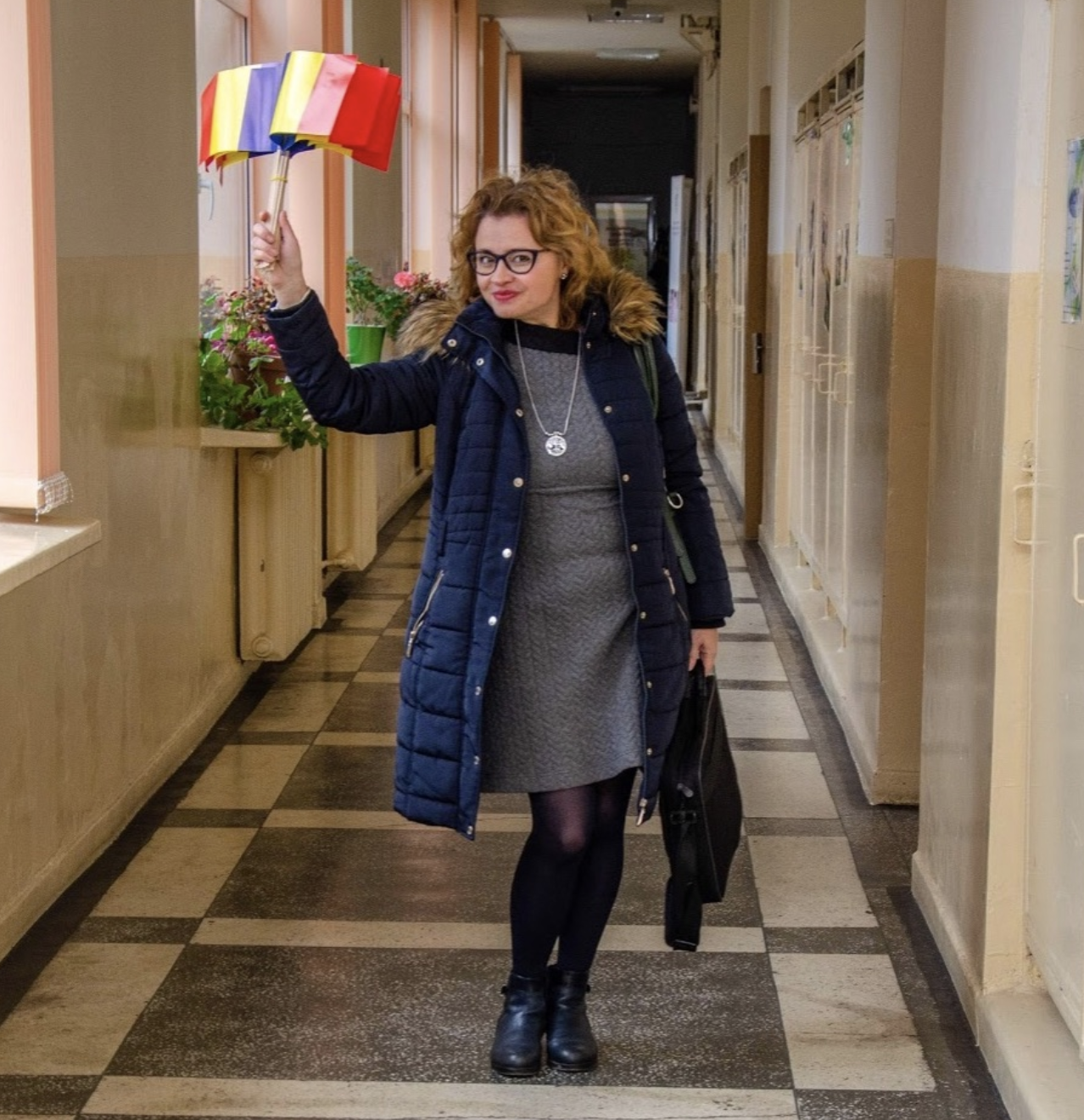
It was to have been a fully attended meeting – but technical registration difficulties relating to our Polish partners prevented their presence.
Looking back one might interpret that as a ‘sign of things to come’. Within 2 months of the meeting the Covidian Scourge was on the March & no other physical meetings occurred until October 2021.
By this time the UK was gripped by the impending Brexit finale which, as EU funded support staff were being withdrawn, advisory support was more directive than previously. Thus only 4 of the 6 partners were able to be present.
The final meeting was appropriately in Spilinga (see above end of page 5)
Though joyous in itself it was, after 25 years of shared actions, a disappointing end… especially as the start had been so positive
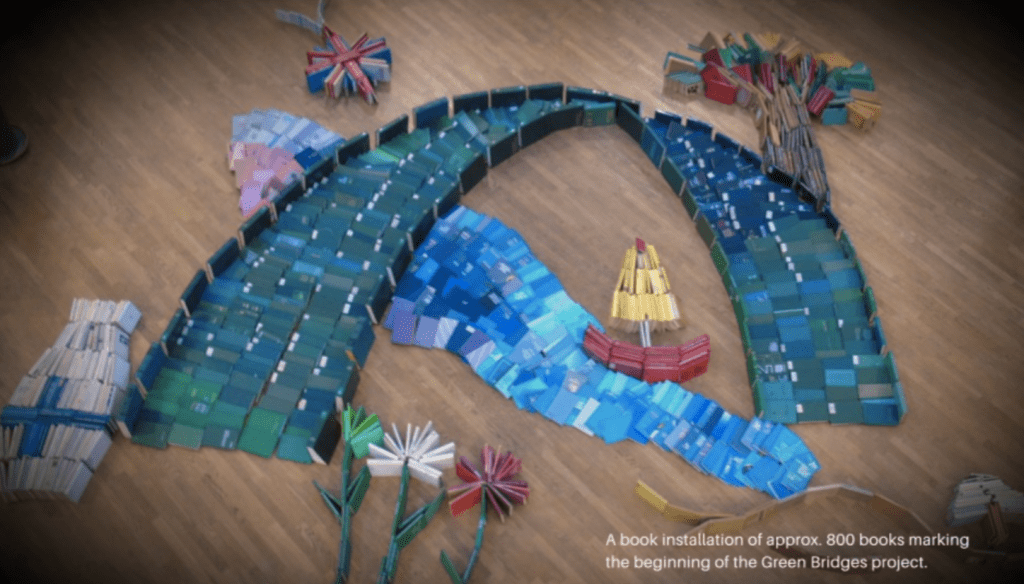
https://greenbridgesproject.org/first-partnership-meeting/
12th May: In Iași
Over the past 2 & half months we’ve experienced a wide range of ‘mid-level’ accommodation. Some of the more curious were the only places available.
Breakfast was not always possible and in very few places was best avoided.Here in Iasi, Unirea Hotel remains one of the best. Now (as in our hotel in Nurnberg) prosecco is available (but why?).
The hotel breakfast room has also (over 20 years) been a very valuable place for observing certain levels of social and economic development. Today is a working day and thus the more valuable than a weekend. The are a few families, some who may be tourists and other rather more ancient drifters such as me and Jacqui but for the most part it is a professionals’ resource… some with computers, others in small groups (they always betray the hierarchy in the group) and now (a real sign of part of what is happening in Iasi) several well groomed, informally dressed individuals with extremely large bushy beards…. all of whom are thoroughly ‘wired to go’.
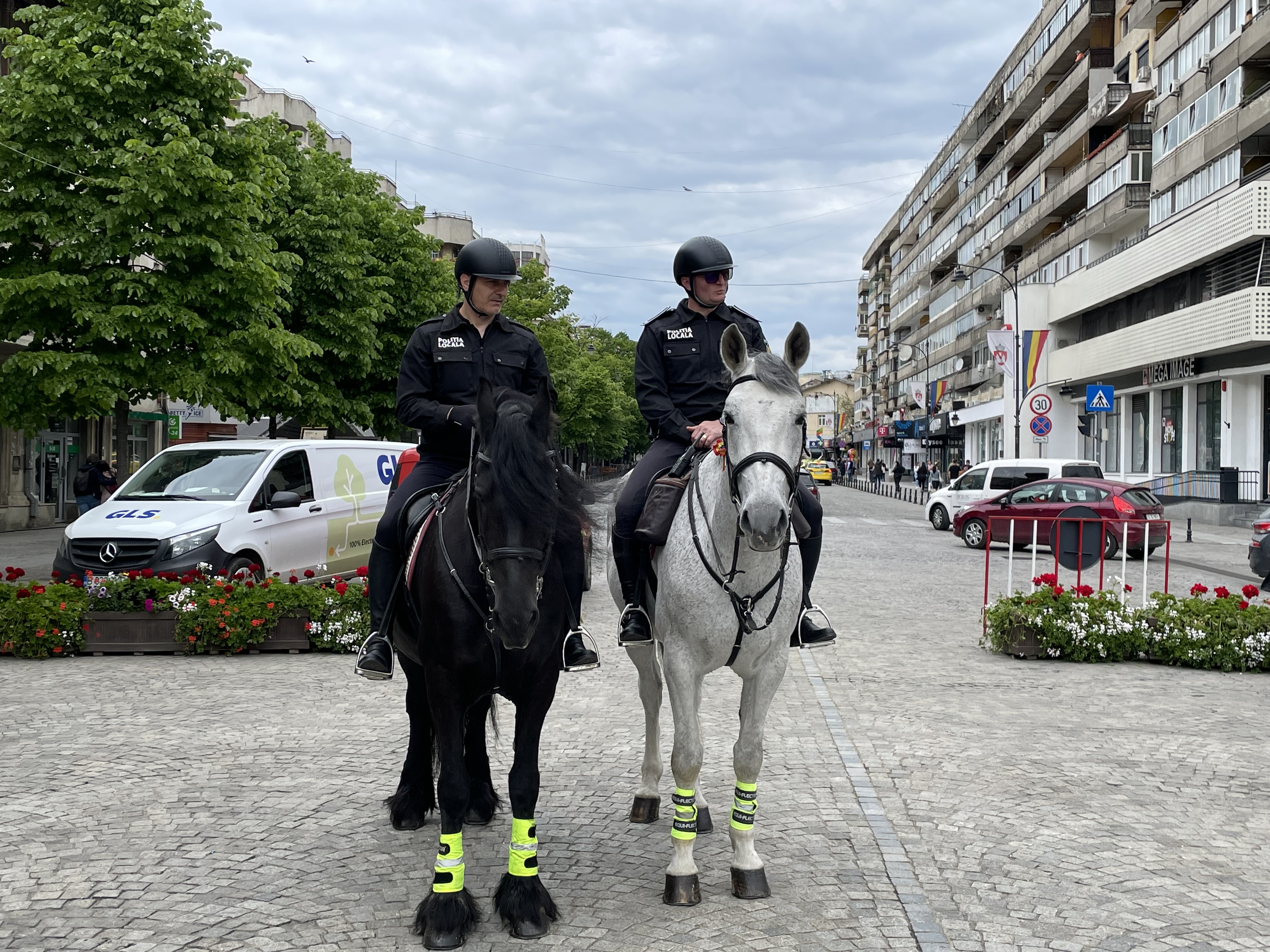
A mark of the major changes – these mounted police are always popular – serving as ‘custodians’ but also a means contact with the public…. most famously in the case of ‘Canadian Mounties’ (who legend has it ‘always get their man’….. not so easy to consider these days!)
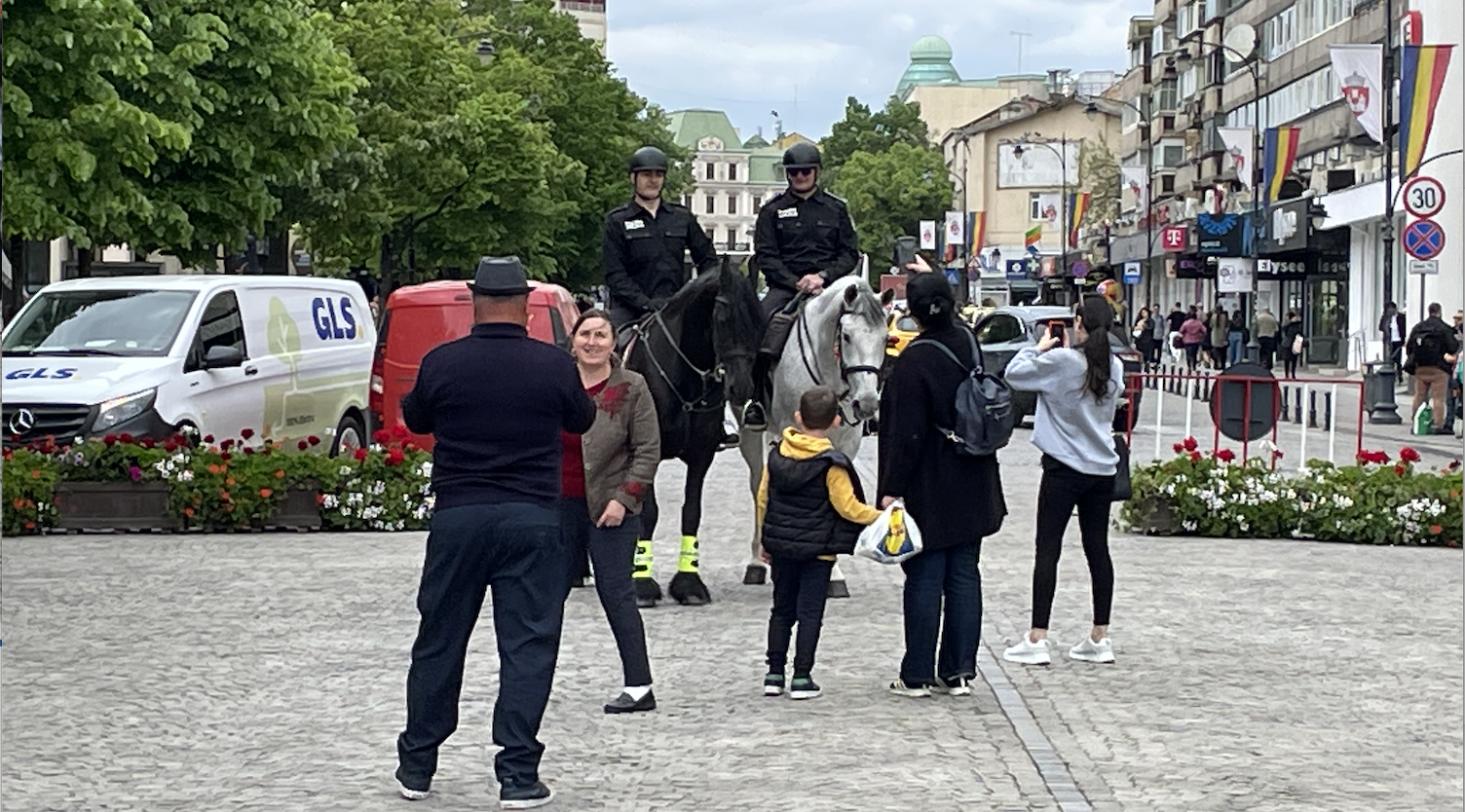
As is usual where police forces use horse, for most of the time the officers can be very accommodating
The most recent & ‘living’ link
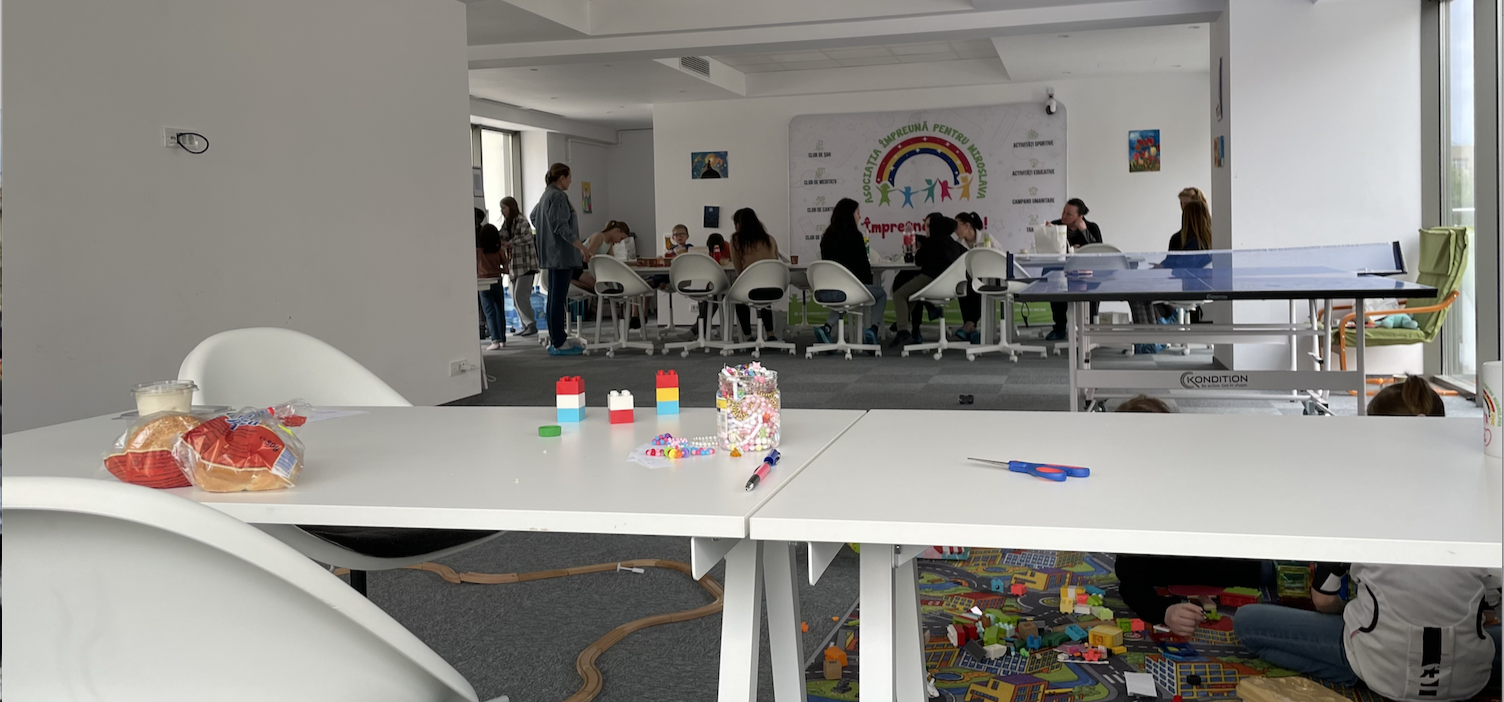
The Ukrainian Community Centre in Iași
One of the major reasons for visiting Iași is because since 2022 support from our local Welsh Border area has been offered to those working with displaced Ukrainian families.
Lucian Grigorescu has managed to establish a Ukrainian Community Centre in the city
The work is sensitive and managed on grants and by volunteers. There are approximately 3000 Ukrainians living on 12th May In Iași.
The group in the background are children who have ‘lost’ their families (probably orphaned) as a result to the war in Ukraine. They have accommodation provided – but the activities provided at this centre are very important.
One of the Ukrainian volunteers organises art classes and she produced this picture as a ‘thanks’ for Lucian & Andreea

13th May: in Iași
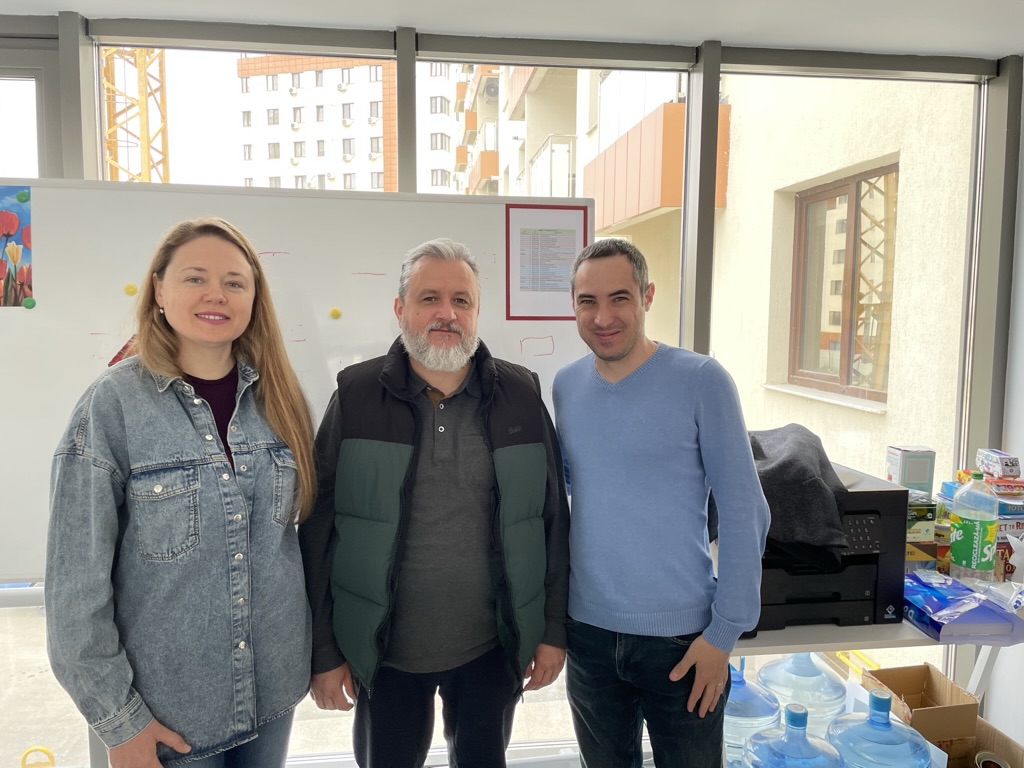
We met Corneliu (centre) – a friend and colleague since 1998 & made a second visit to the centre
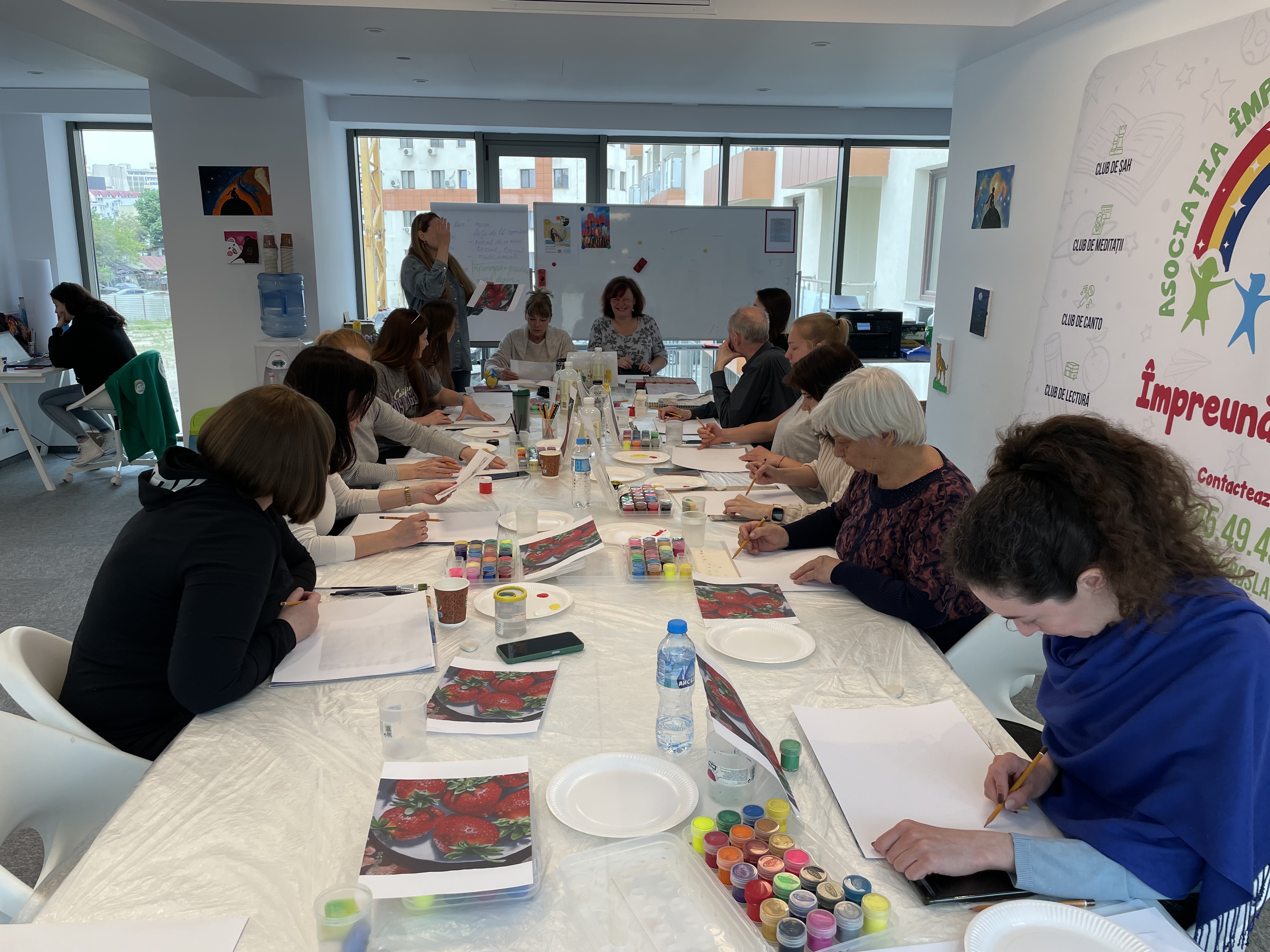
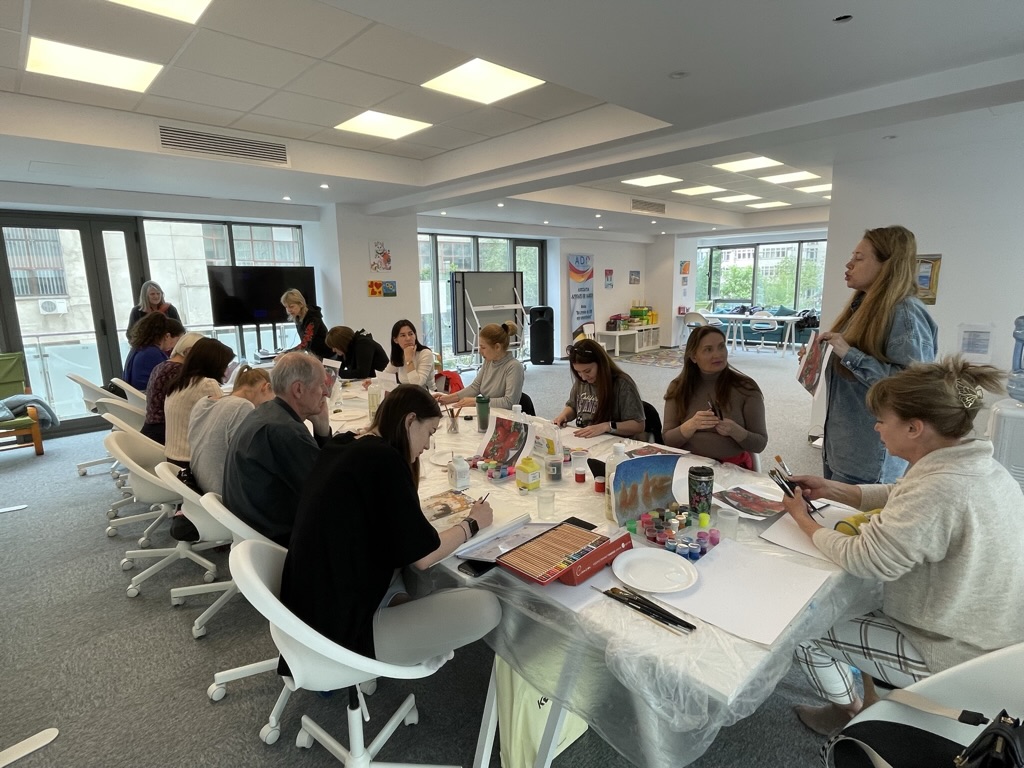
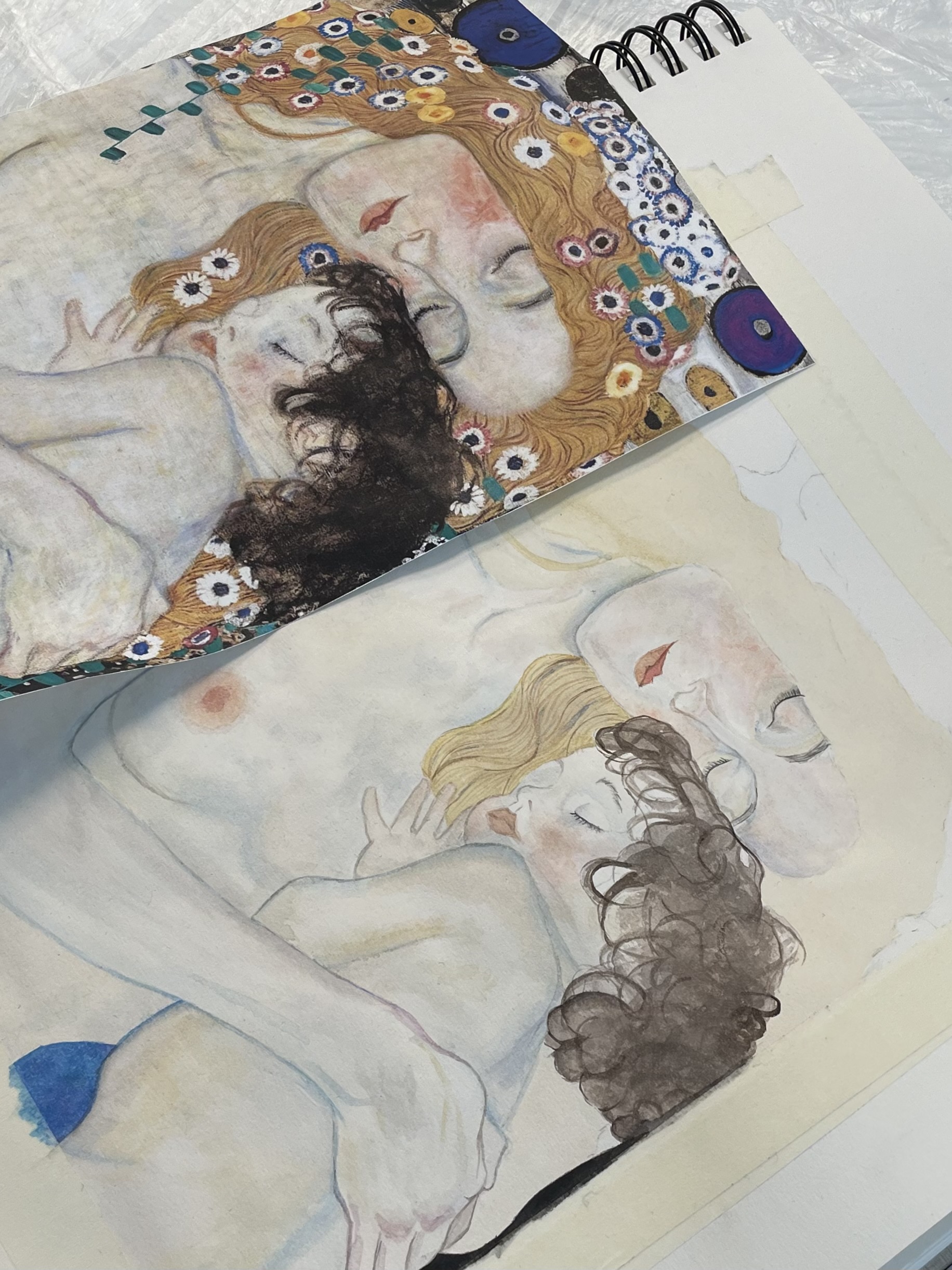

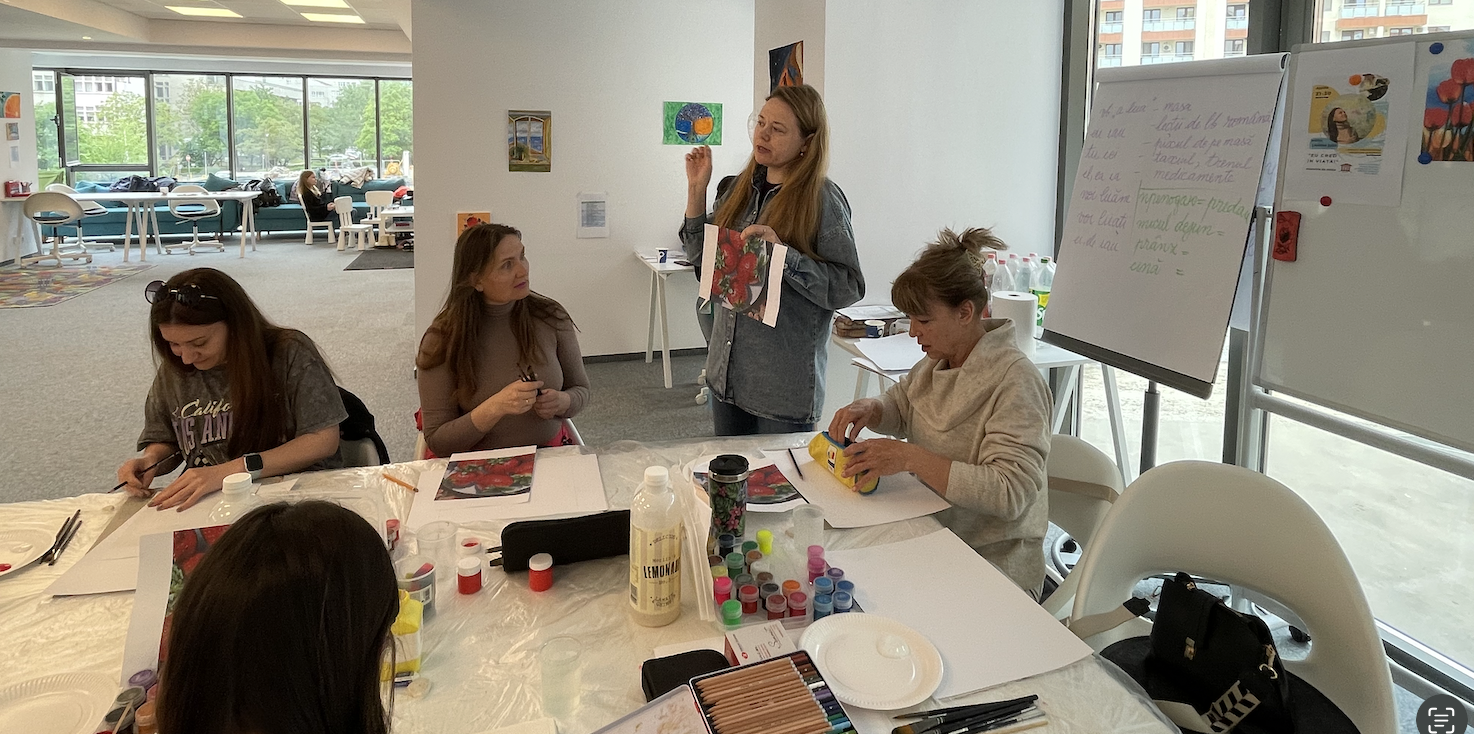
The unique aspect of this particular centre is that Lucian simply manages the process (funding, physical space, facilities) – but all the activities are organised by Ukrainians…. Lucian has provided them with their own centre. he is, in a very real sense, a Care-Taker.

…………………………………
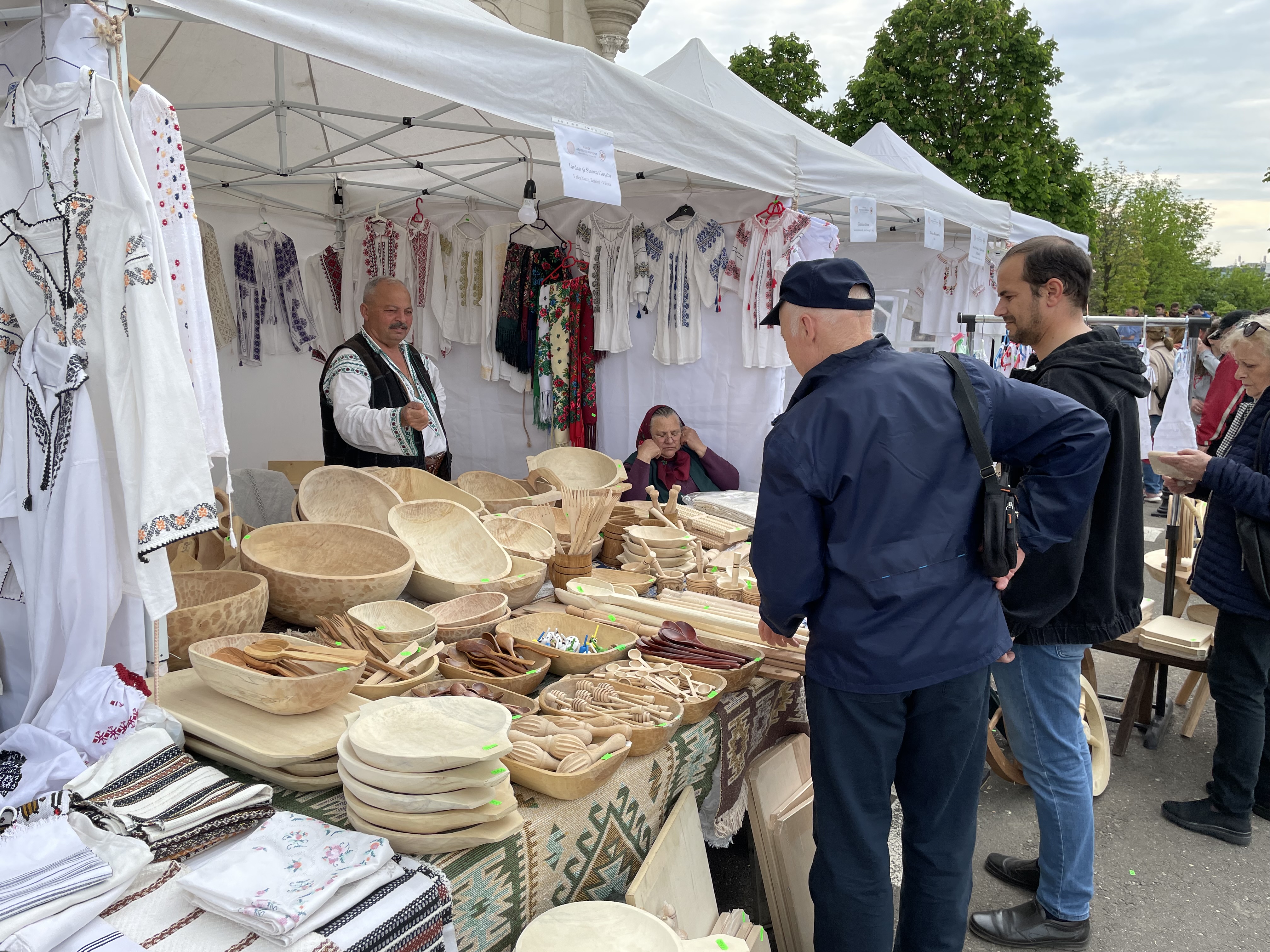
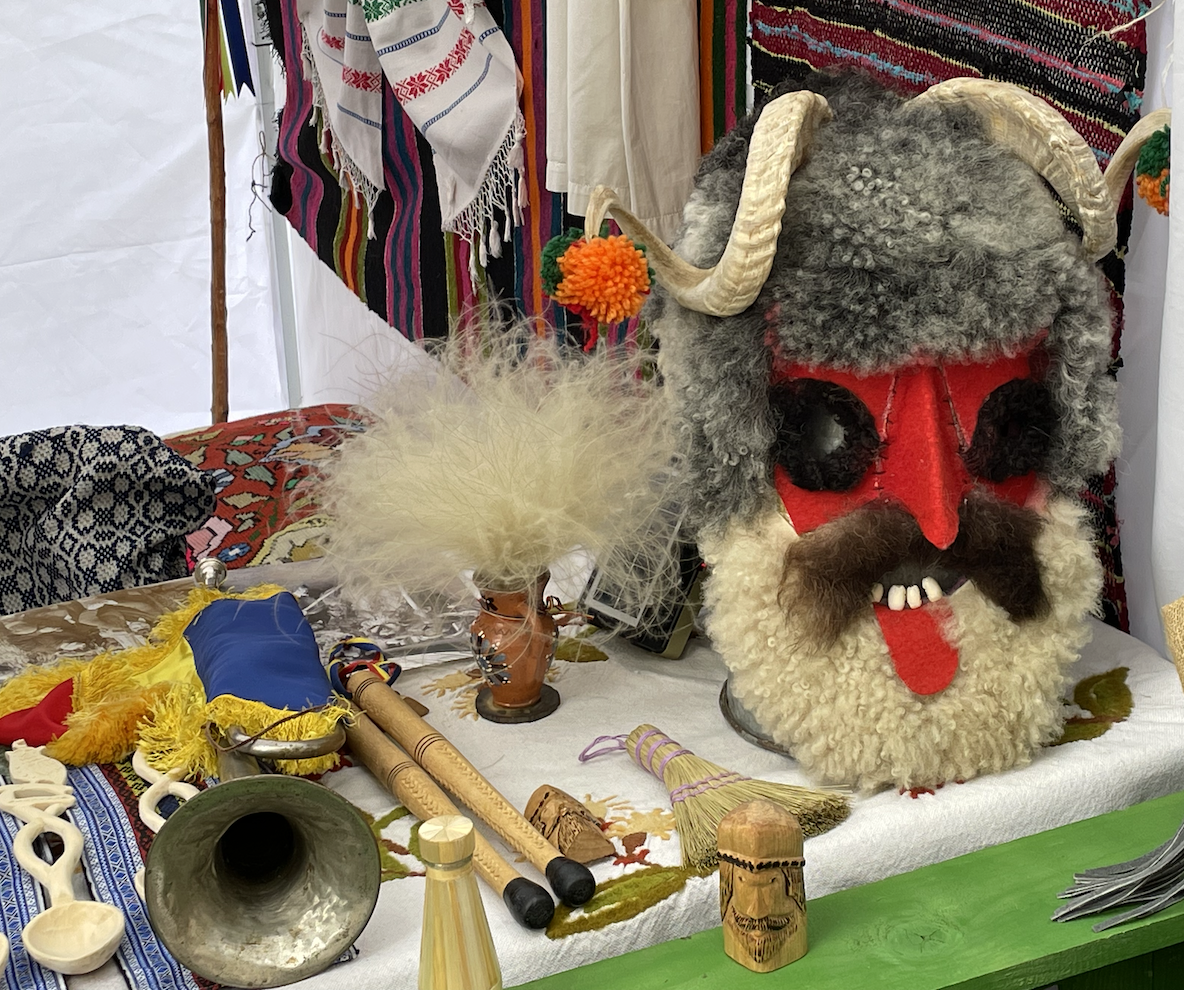
At the Palace of Culture there was a craft market – and to our delight it had our wood crafter from Babeni (Near Râmnicu Vâlcea) whom I first visited in 1992. We bought spoons – to ensure we are well-stocked at home and for family and friends who have all enjoyed using them over many years.

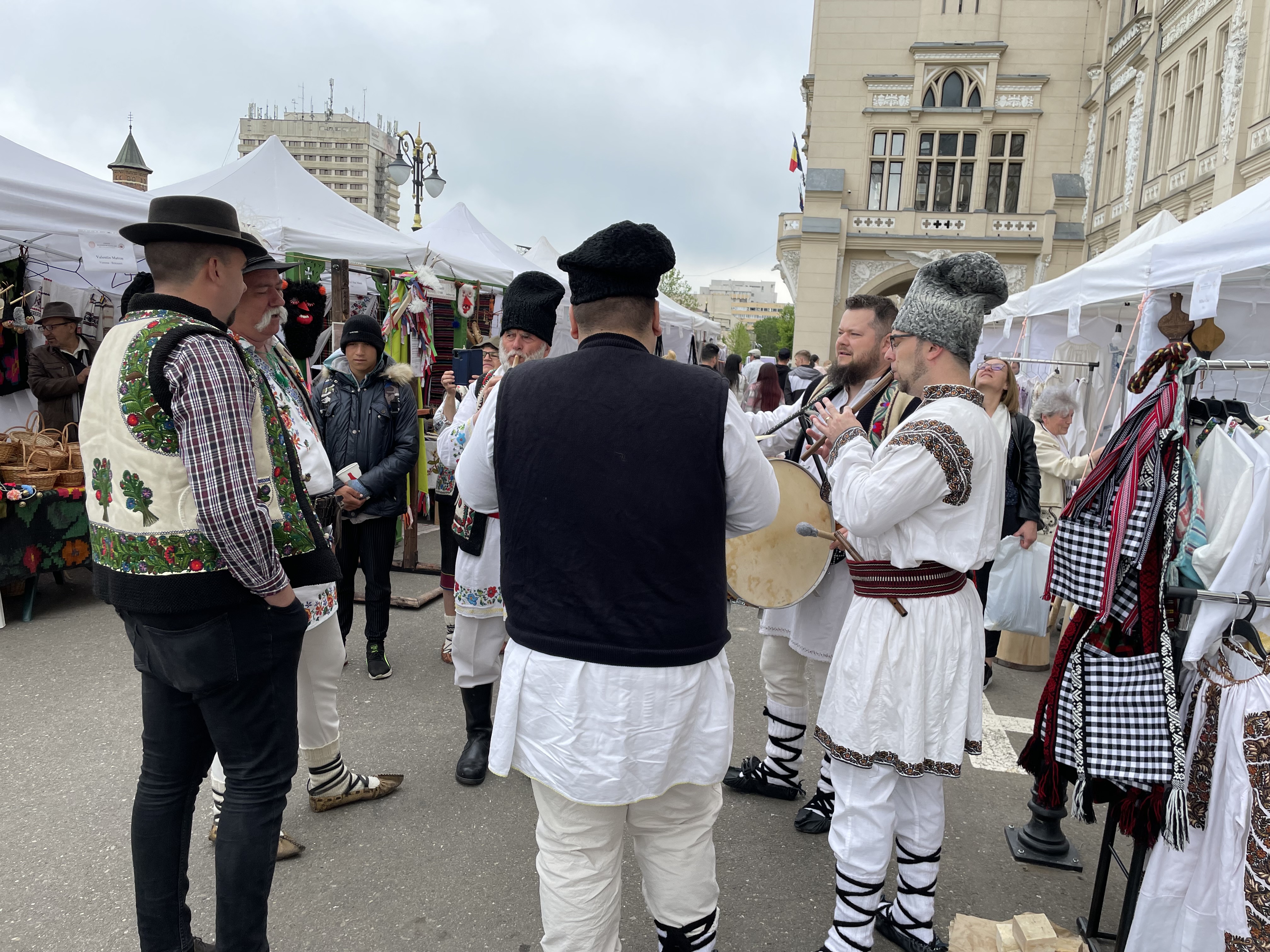
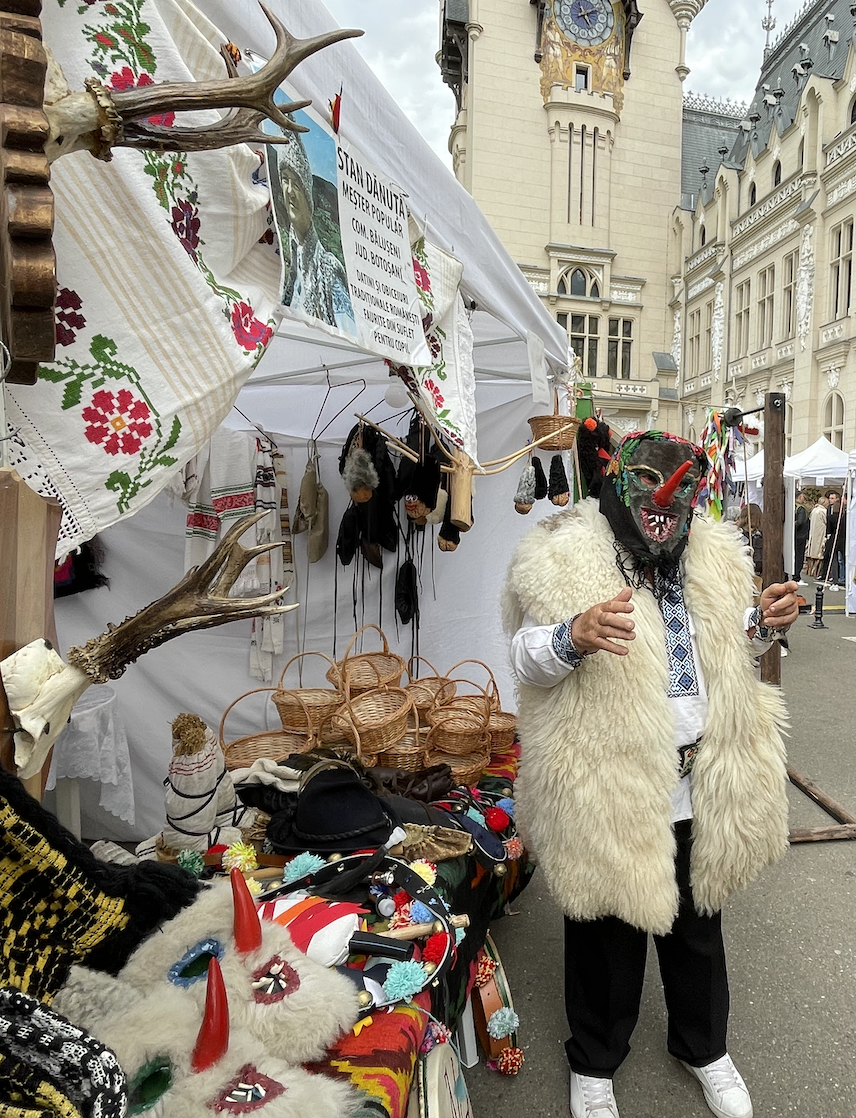
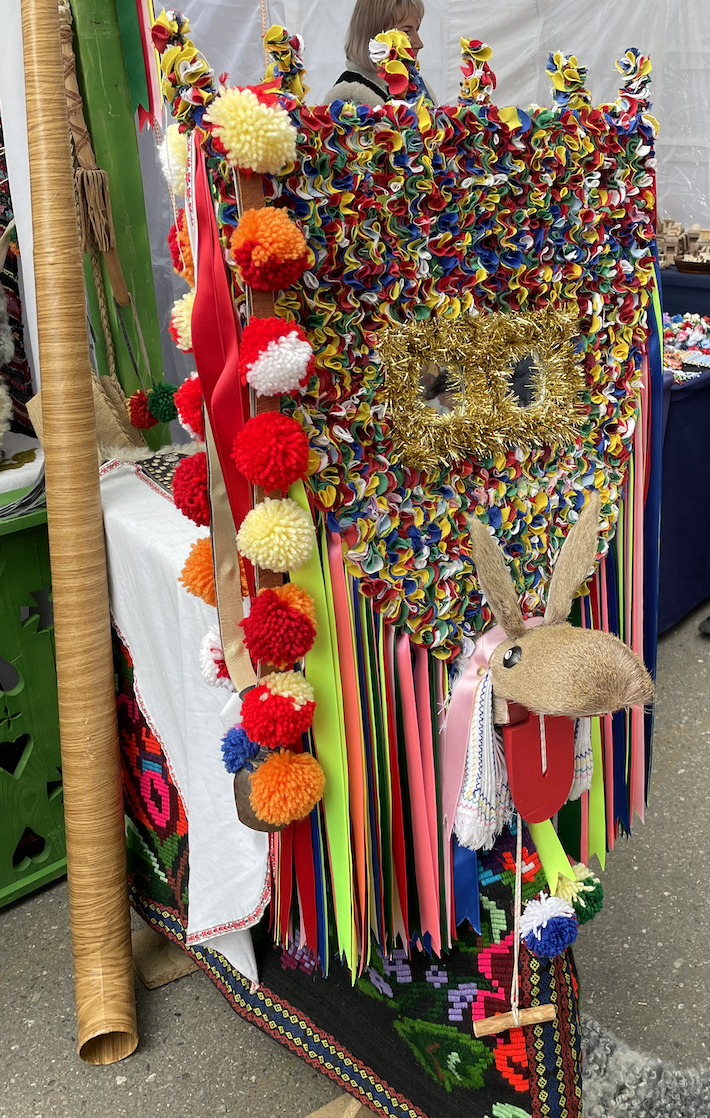
Traditional music and mid-winter costumes – used in village dramas.
Then to Cuib and delivery of Pasquale’s Spilinga beer to Dana and Radu.
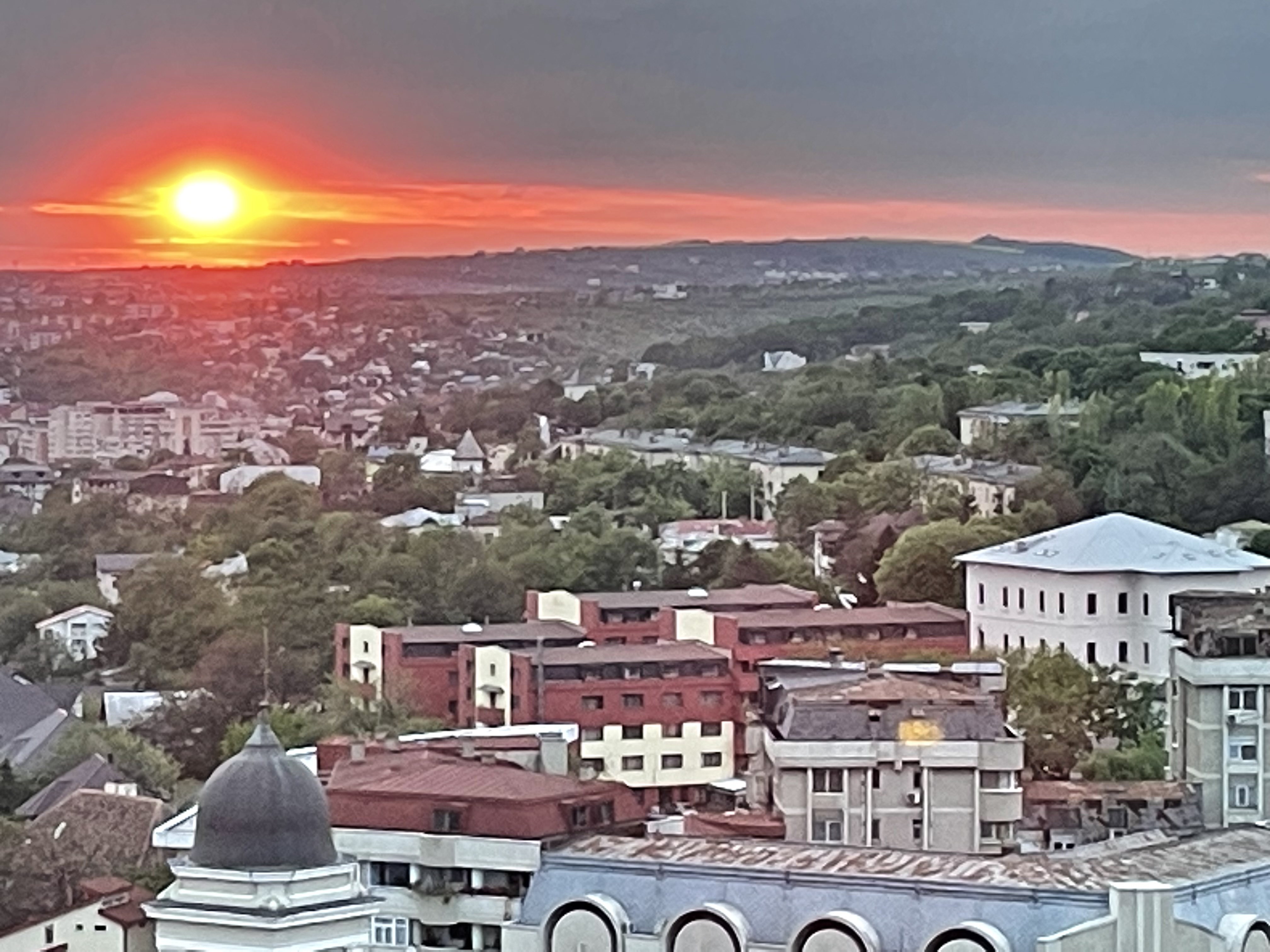
Iași Sunset: The restaurant clientele have abandoned their eating and rushed to the windows.
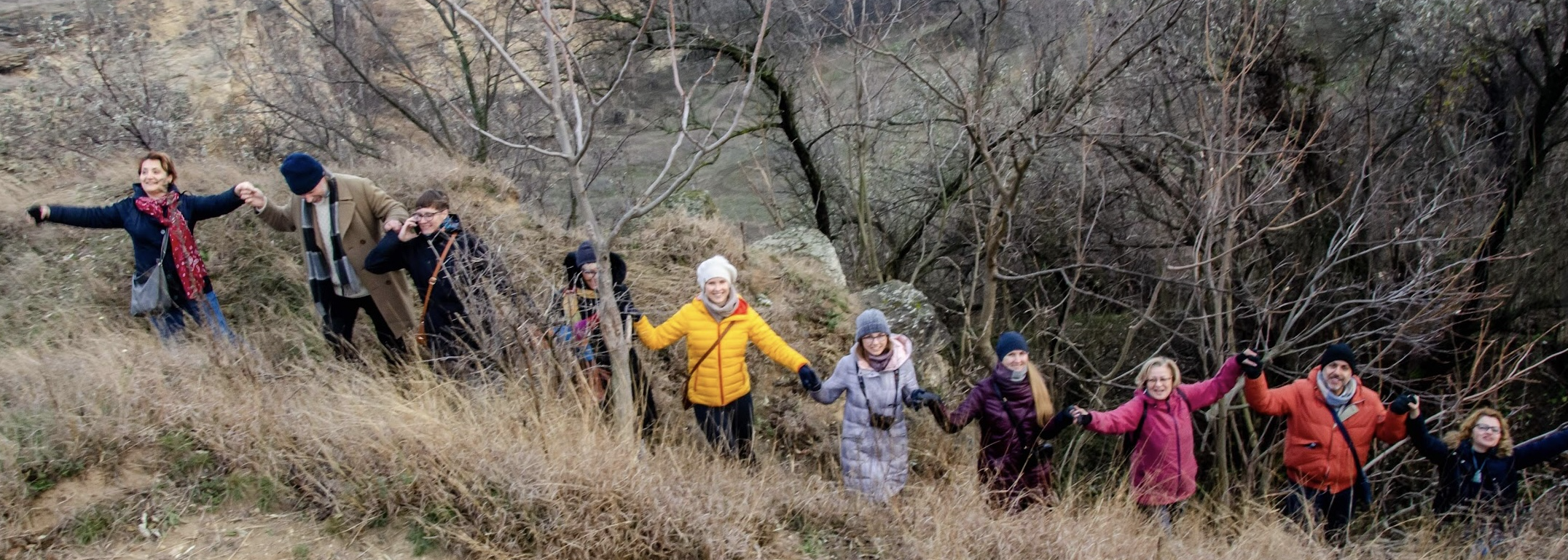
Tomorrow we leave – the visit having stirred many memories one image taken at the end of the Green Bridges Partnership Meeting November 2019.
Dana, appropriately, leads the group (as she has since 2005)
Italy, Lithuania, Finland, UK, Romania
Iași was where the EU funded partnership meetings began,
it is appropriate that it became the place that started the last such programme
The image now has, for us, the status of
The Valedictory Wave
 Inspirational Pathways