14th May: To Cluj & Wien
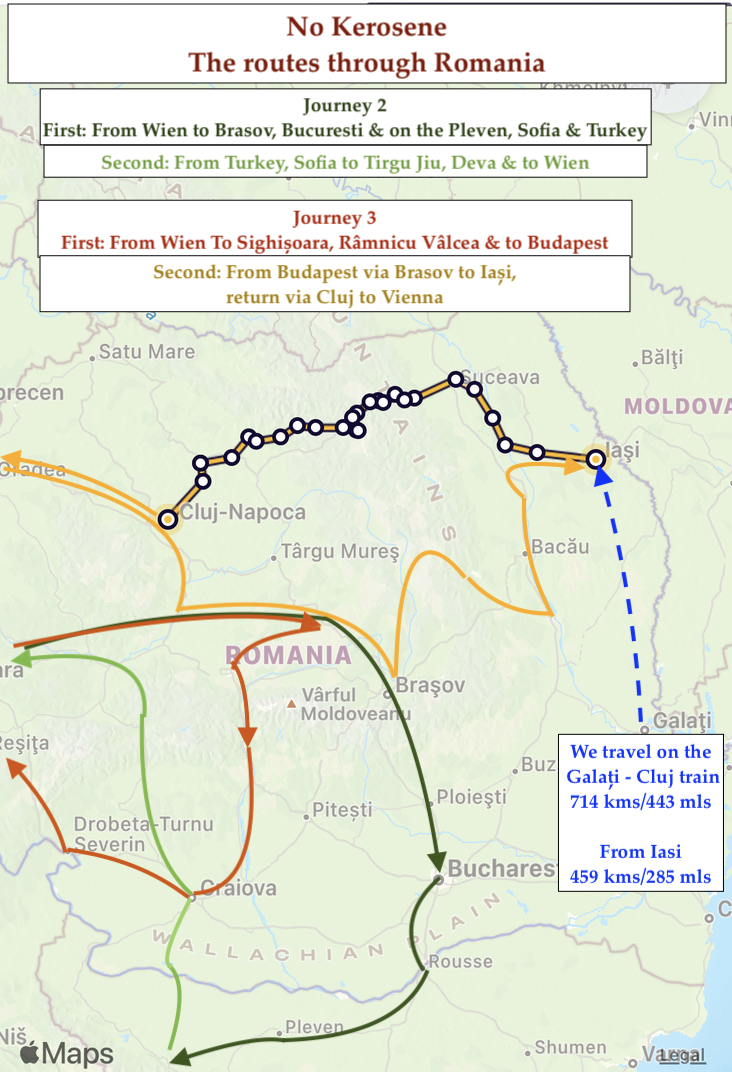
The start of the final route through Romania
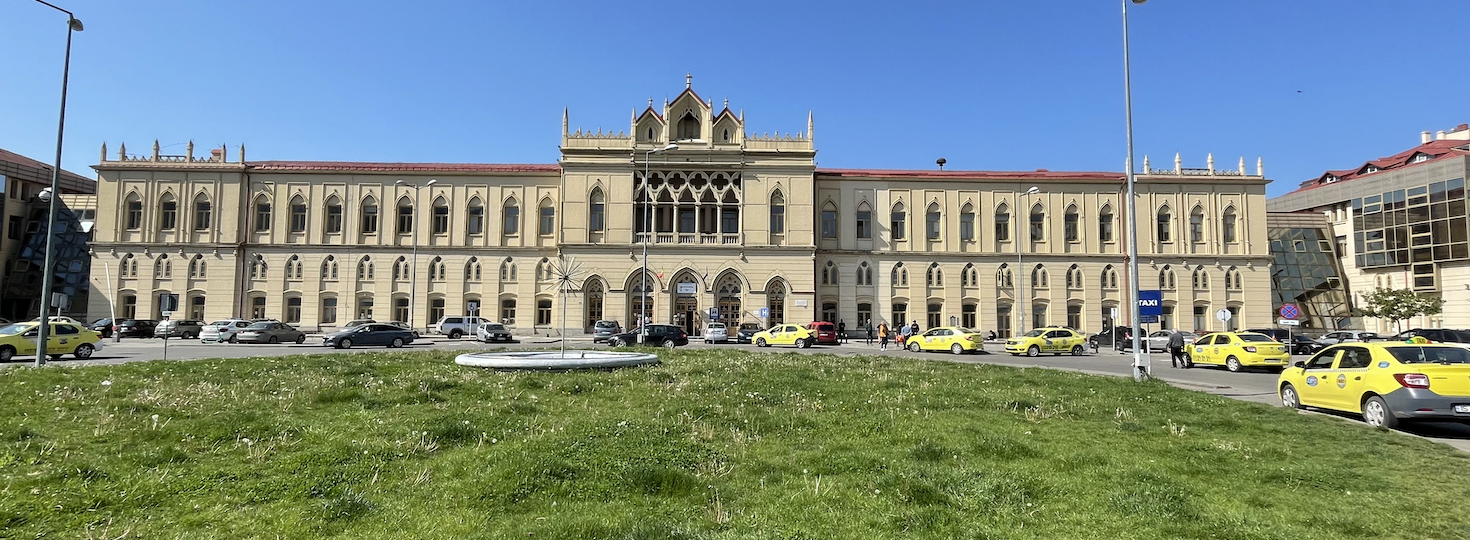
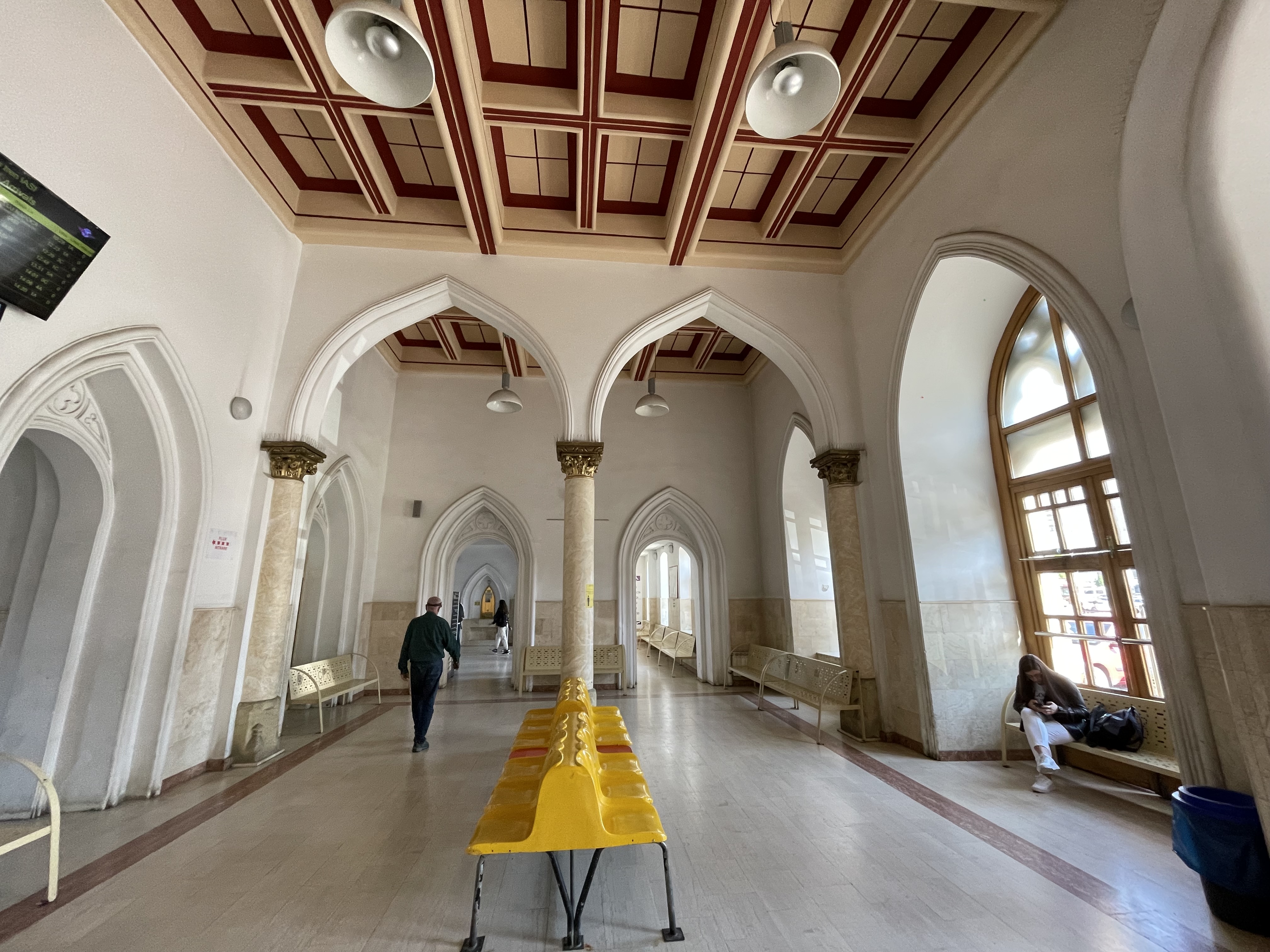
There are plaques:
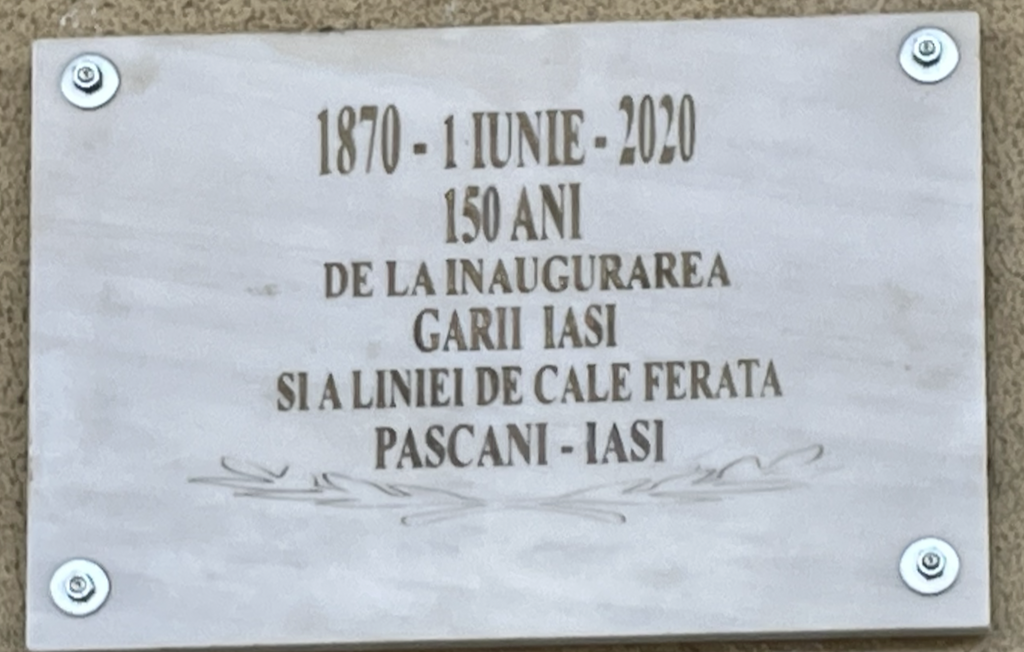
Celebratory of achievement
and Commemorative of ‘holocaust’
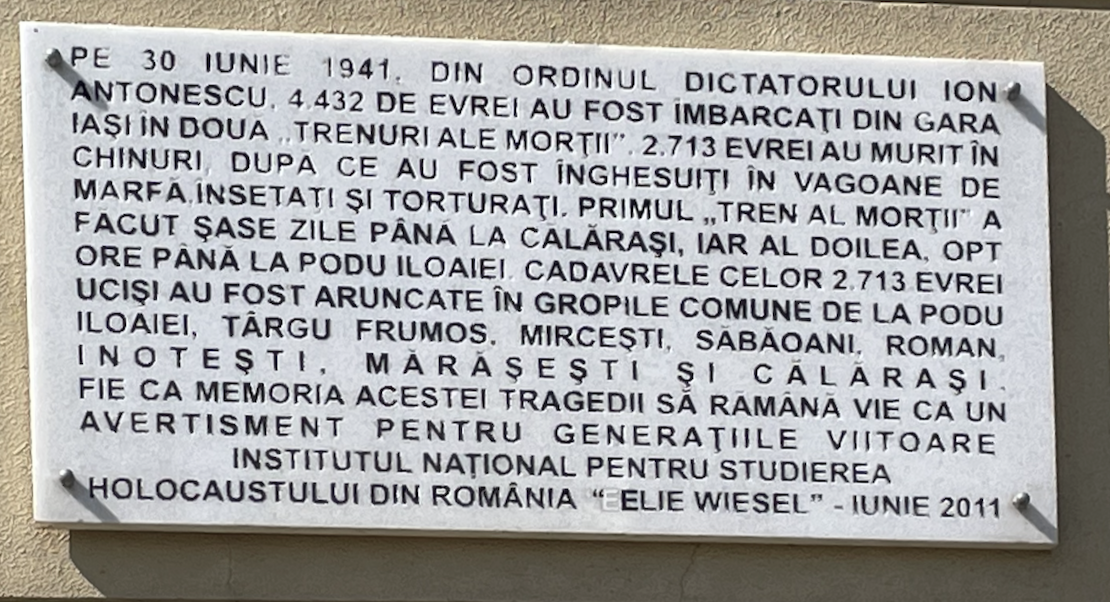
The ‘Death Trains’
The Holocaust ‘has become central to Western historical consciousness as a symbol of the ultimate human evil’
https://en.wikipedia.org/wiki/The_Holocaust
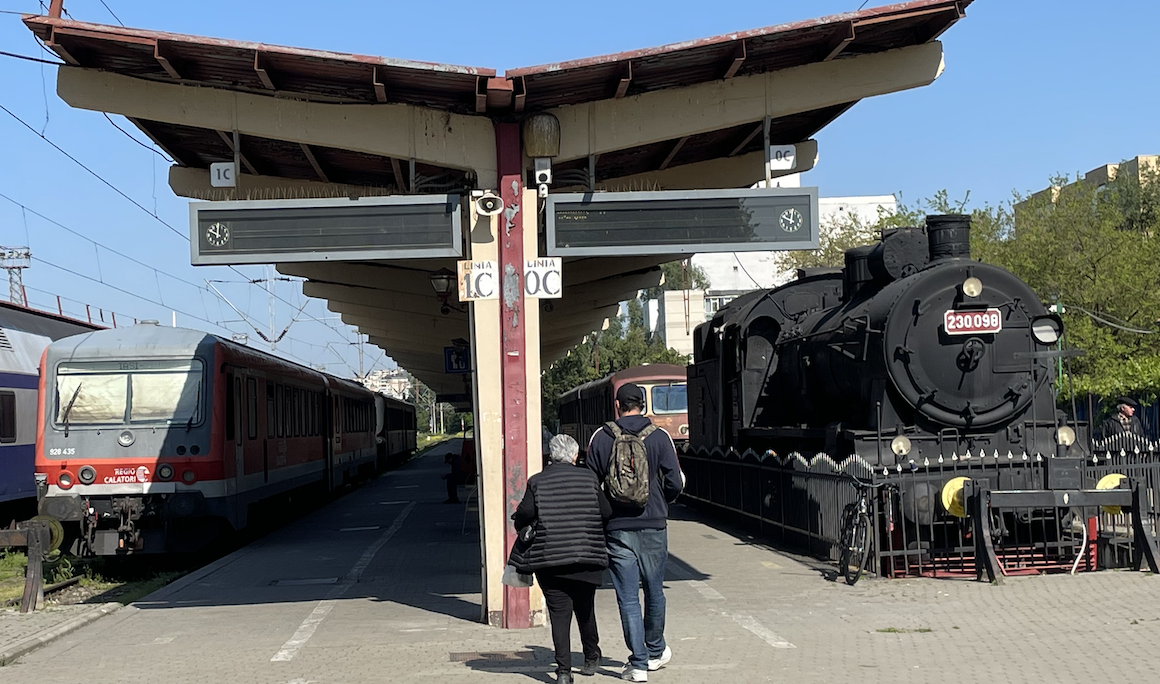
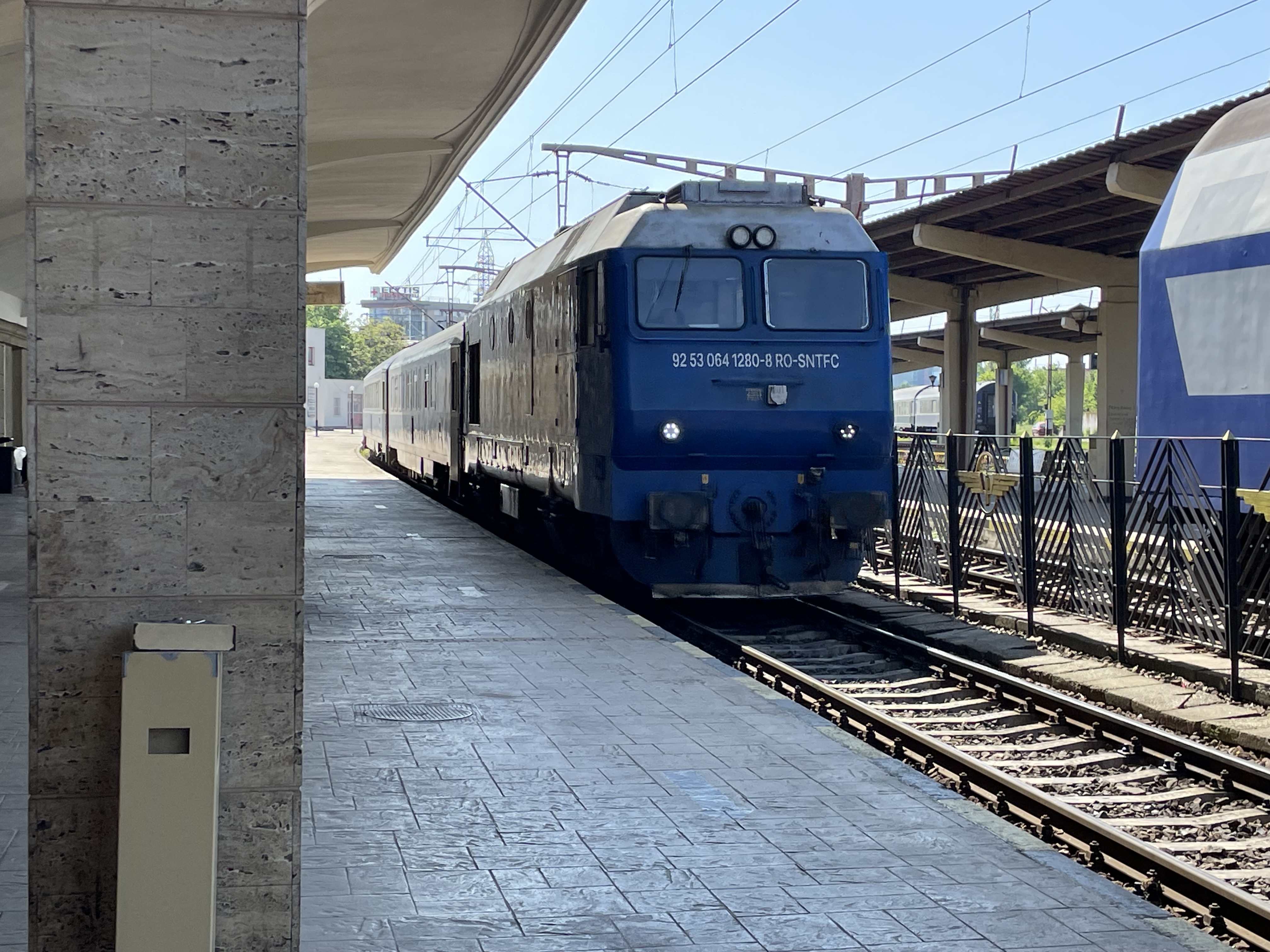
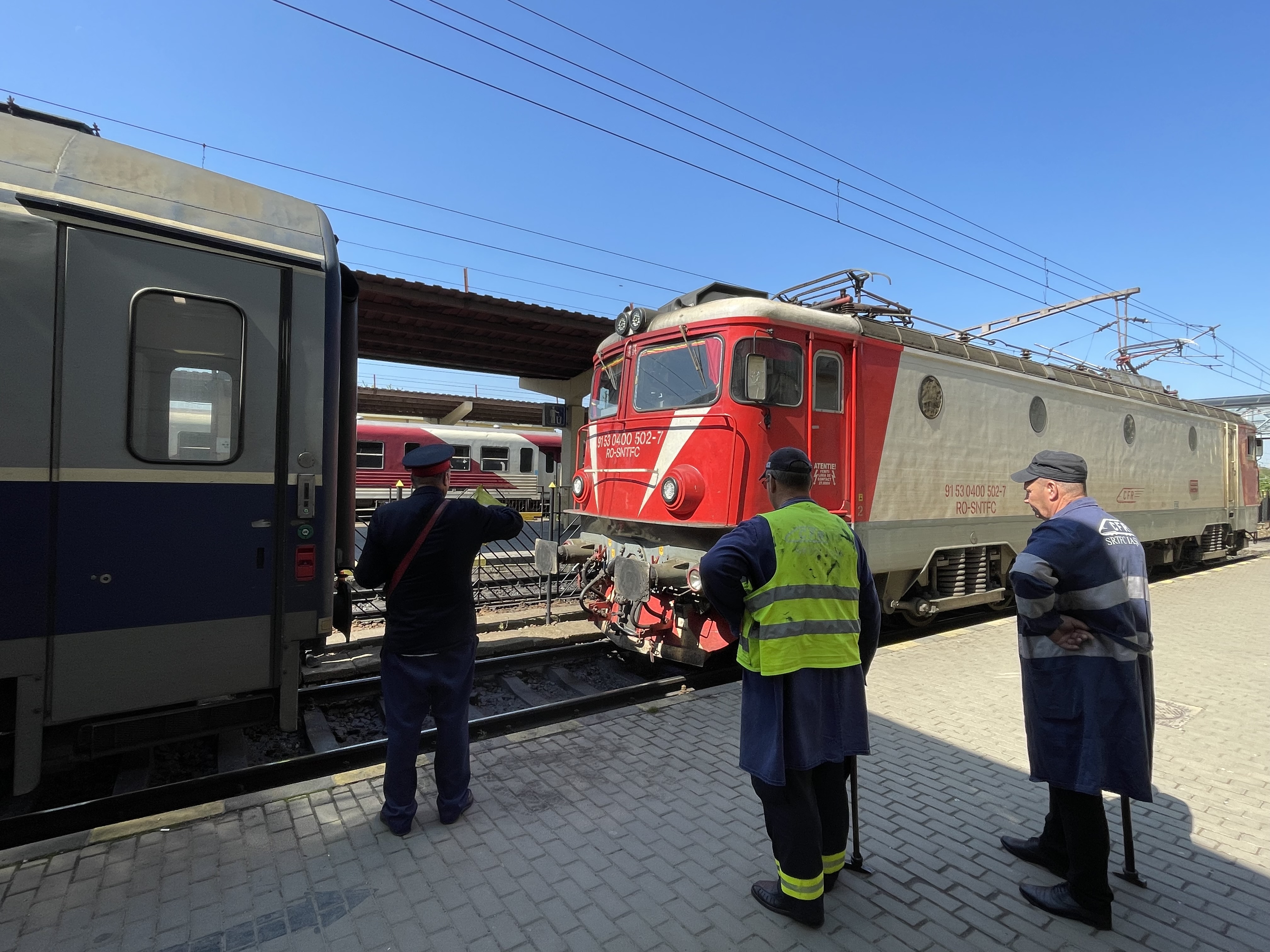
Crossing Romania from east to west
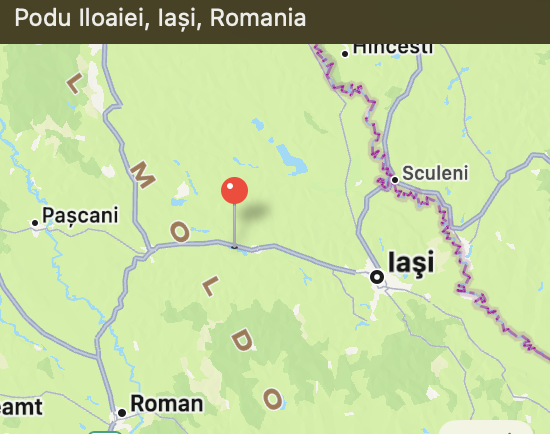
In distance terms, Iasi was an approximate mid point on the route north from Spilinga
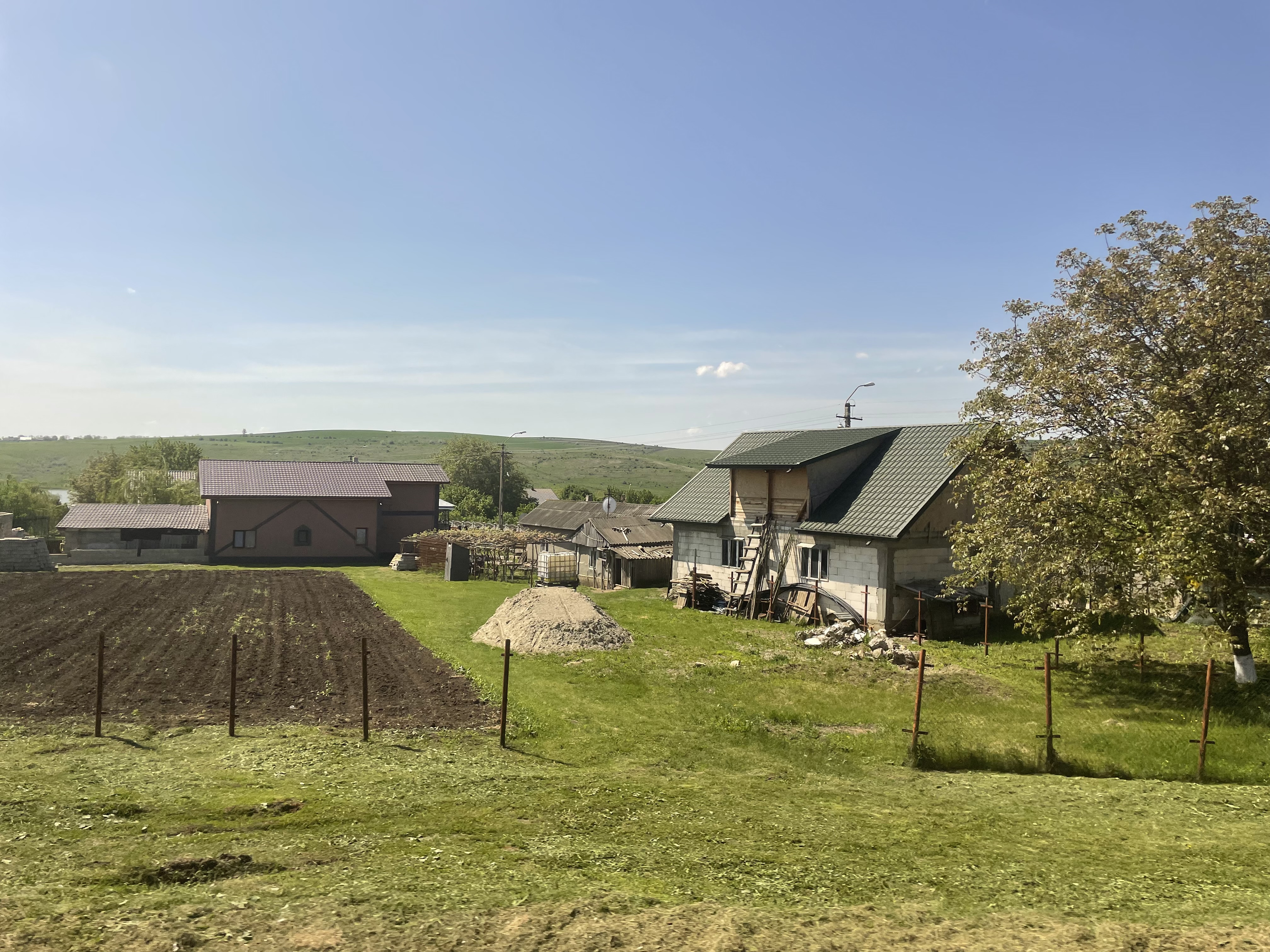
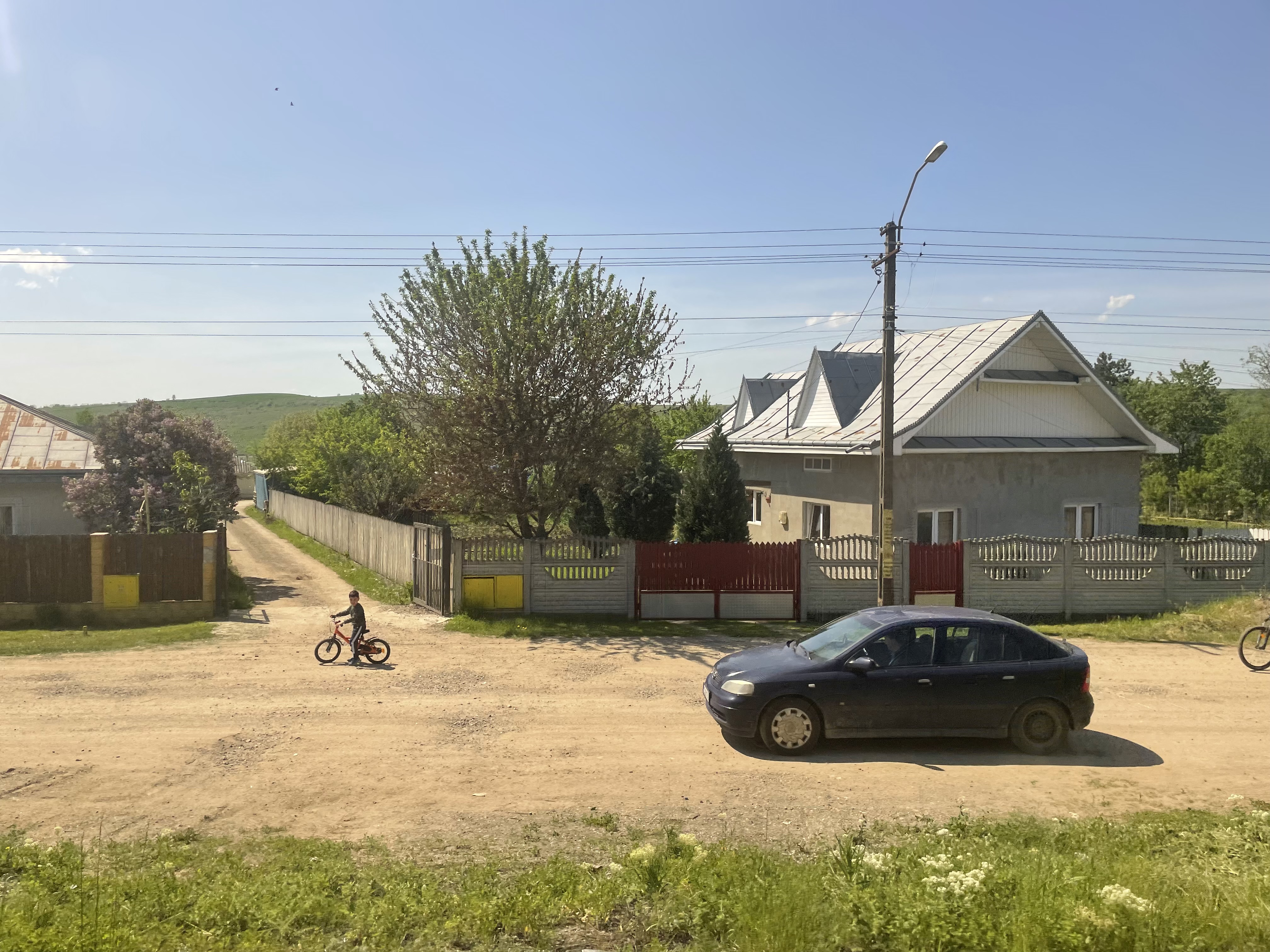
Gradually climbing away from Iasi past villages with the old and new happily presented.
This tour has had many ghosts… some, quite ancient, most were welcome, some needed exorcising… (and were)… they stretch back over 50 years.
I first visited Iasi 25 years ago (May 1998) and this visit had delightful meetings with those who have been important through most of that time… Dana and Radu (recipients of birra Pasquale) are comparatively recent … only 20 years (!).Change: I was in the area when my father died…. But could not be contacted directly.
Now…. For us all, so different.However…. Most ‘ghosts’ in Iasi are jolly and positive and it was delightful to meet again our Valcea ‘spoon’ family whom I first met in Babeni in 1992 (when they invited us to a family wedding celebration ….But it was to last all weekend!).
Now the City has, once again, encouraged traditional crafts ….. giving them special place outside Palatal Culturii. Result: our bags are heavier with local craft product…..

At Veresti, without any warning, we have music…. He was doing quite well ‘working’ the passengers
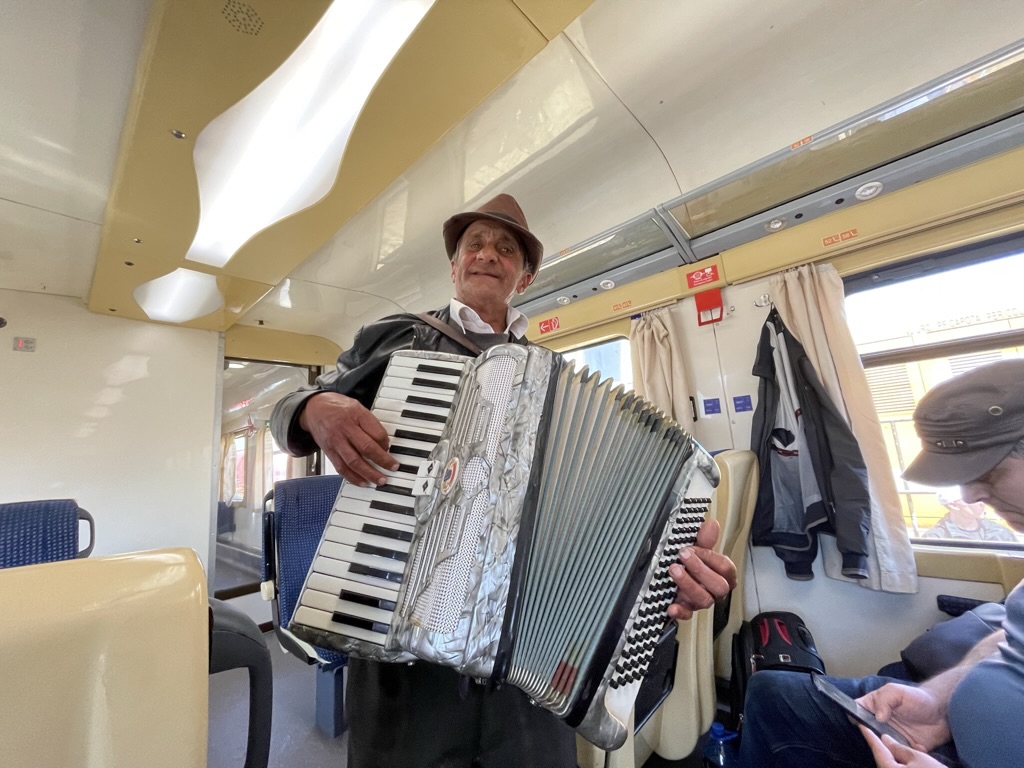
The musician worked a busy train which despite the total length of its journey had no staff cleaners – the lavatories became cesspits.

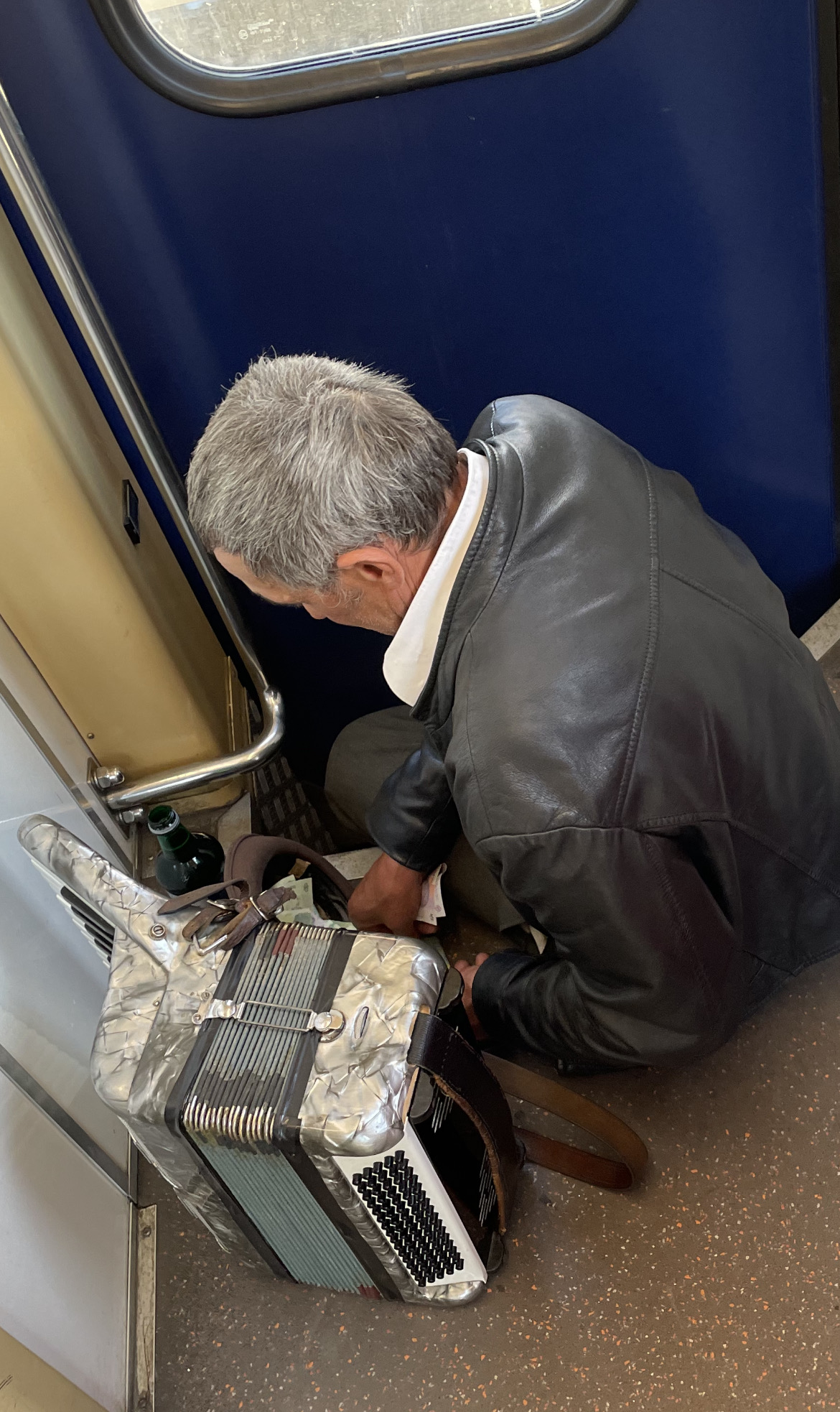
During a search for a usable lavatory I found the musician counting the donations….
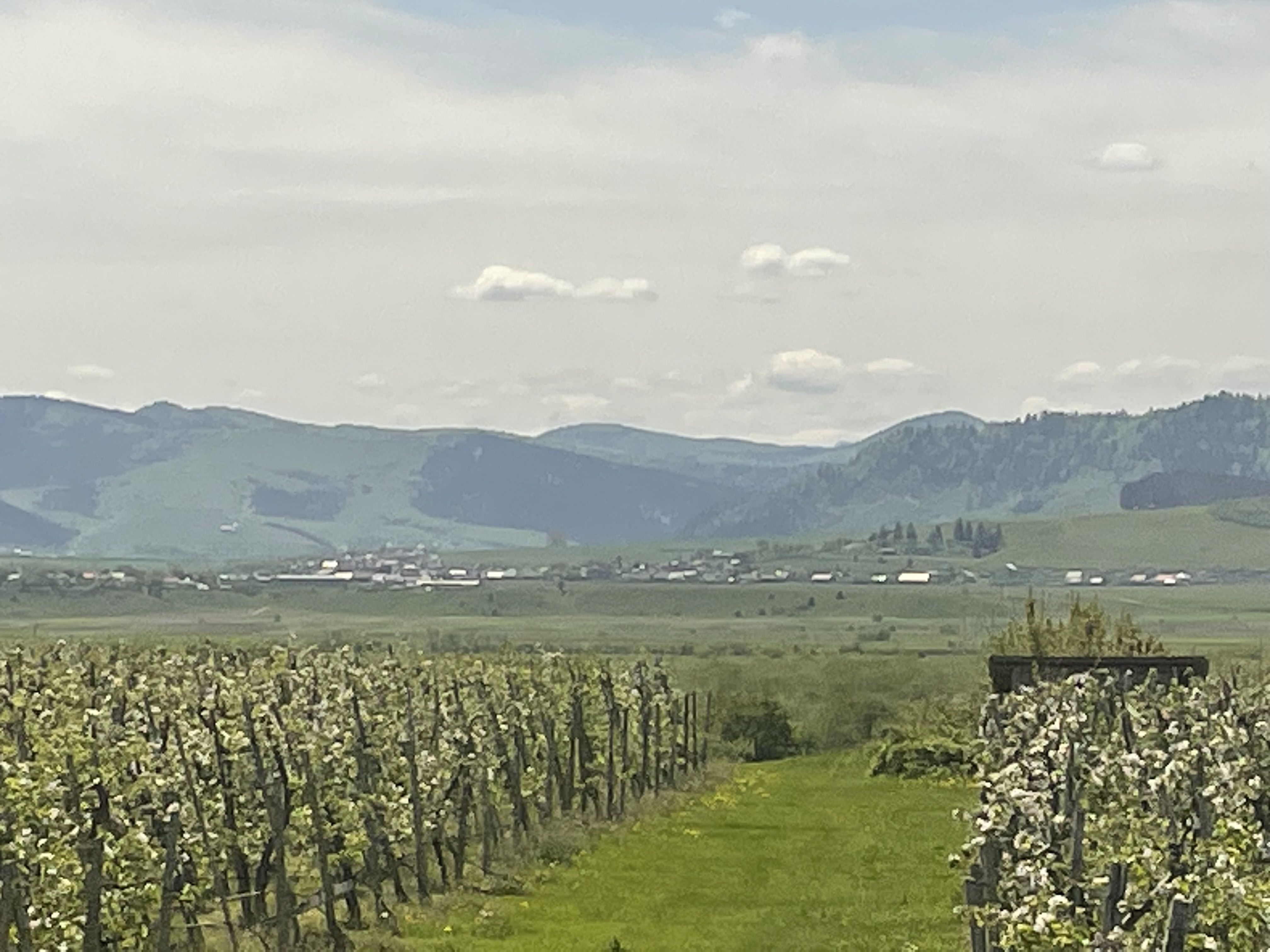
We travel through Suceava and into one of those fascinating regions of Europe that, partly due to its mountainous structure, has a complex history:
Bukovina
…a historical region, variously described as part of either Central or Eastern Europe (or both). The region is located on the northern slopes of the central Eastern Carpathians and the adjoining plains, today divided between Romania and Ukraine.
Though the southern part of the region is firmly in Romania it still feels as if it is on the border of ‘Somewhere Else’
Our musician serenading the train crew….. there was no need, he & they were just enjoying ‘life on the rails’. There was a real sense of camaraderie.
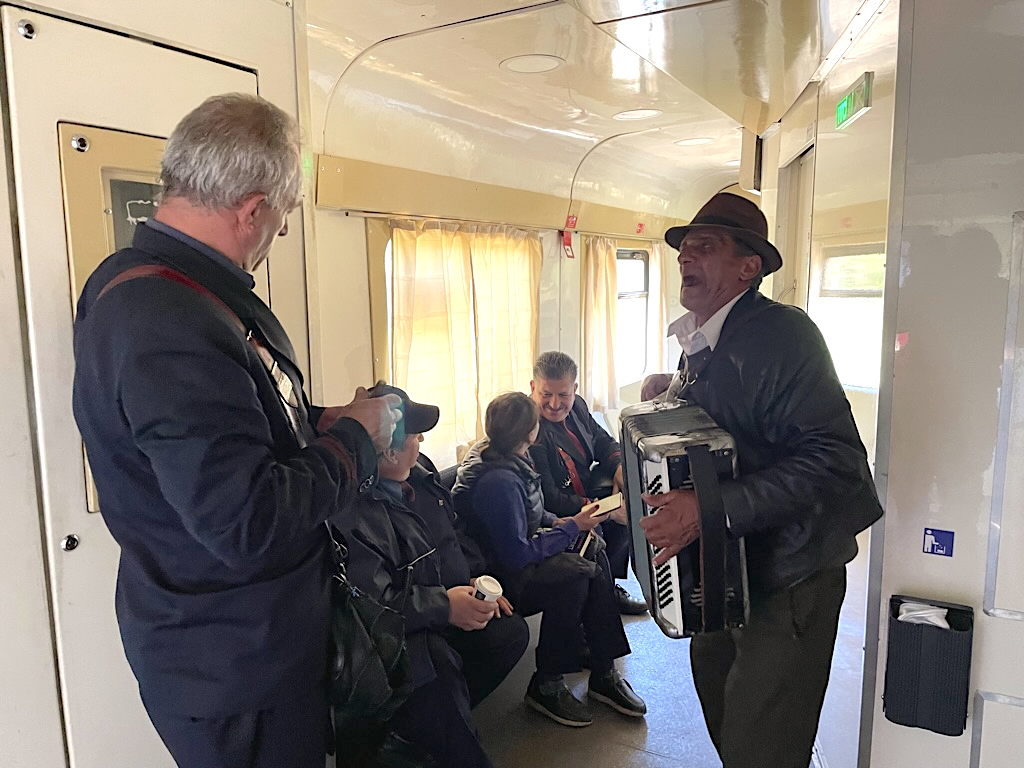
……..just a shame about the state of the lavatories… which by now was becoming a serious issue… and 6 more hours on-board!
Vama
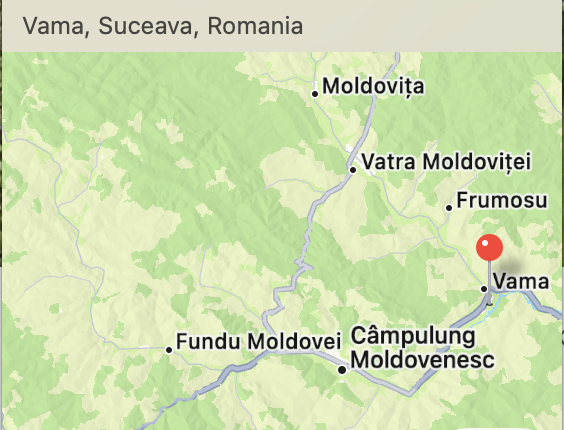
Why ‘Vama’?
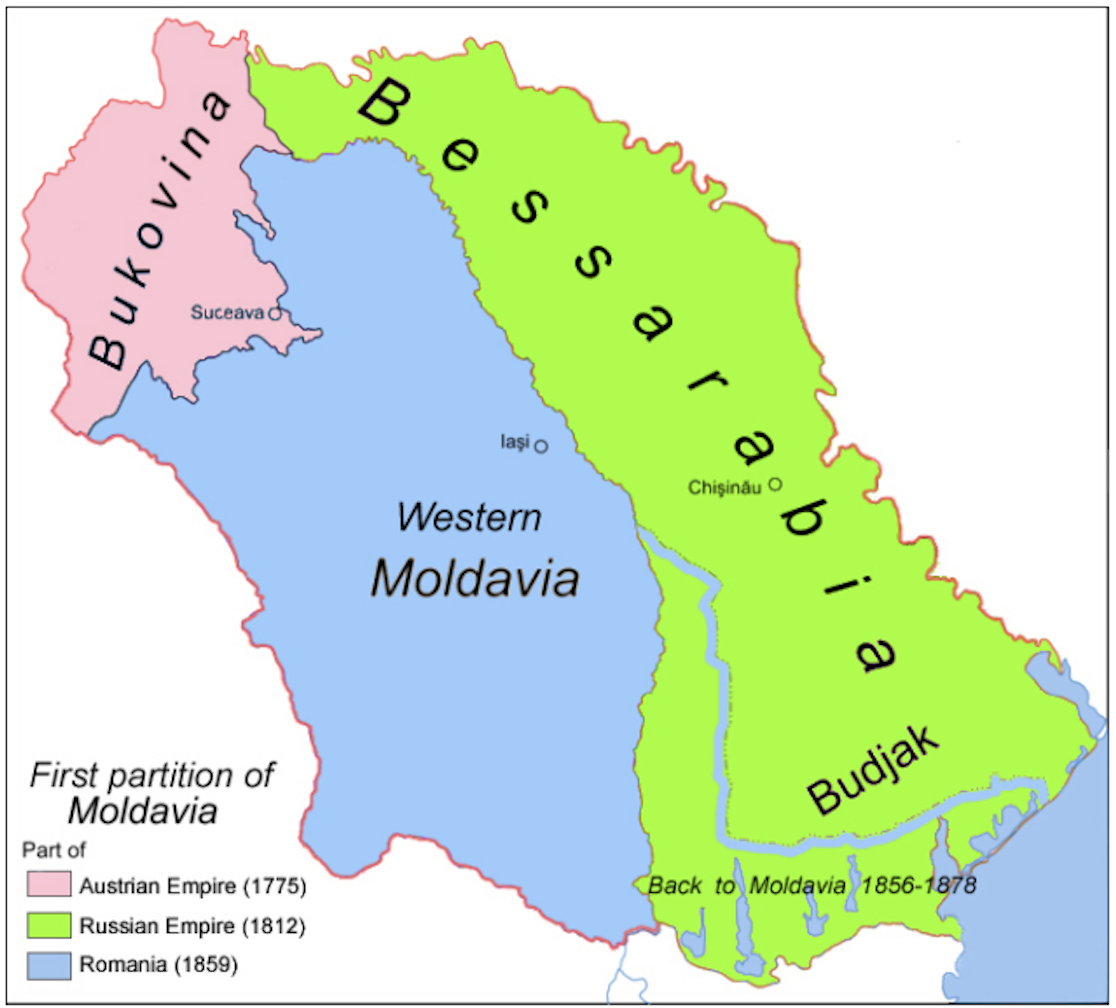
Boundaries in this region have changed and changed again. Bucovina was ‘acquired’ from Moldavia in 1775.
From this point on (14th May) – using the pre-WW1 boundaries, we are in Austro-Hungarian territory until we cross into what was (pre-WW1) Russian Poland on 20th May.
Map of Bucovina as Austrian possession

A C19th Austrian map of Bucovina which was an Austrian possession.
Vama is circled in yellow & the dashed blue line is the approximate position of the present Romanian- Ukrainian boundary.
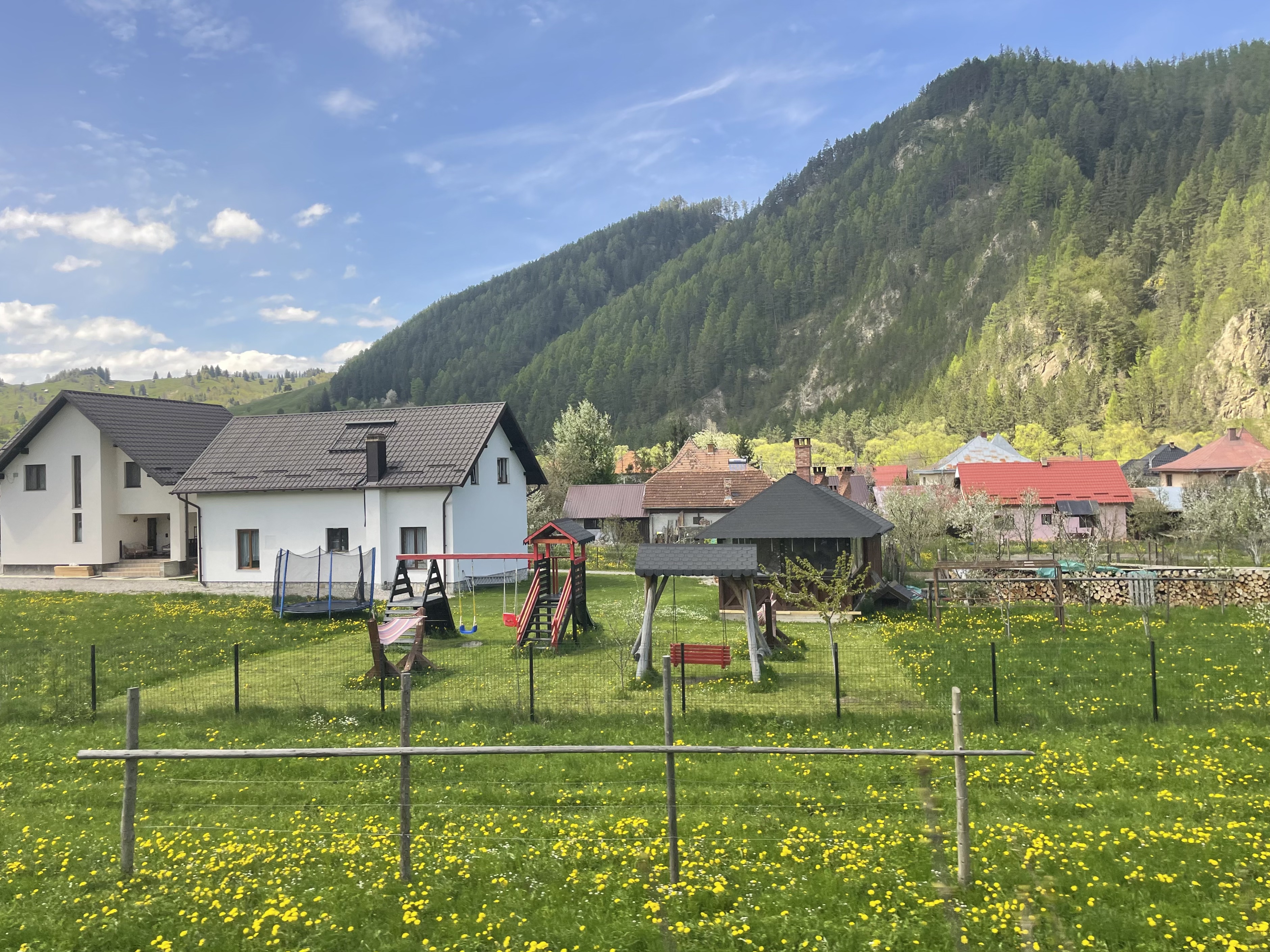
There was no railway across the hills into Transylvania until after WW1 when the southern part of the territory was, along with Transylvania, put into Romania.
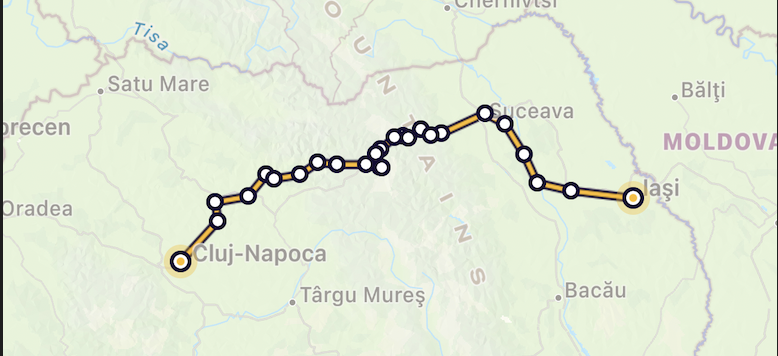
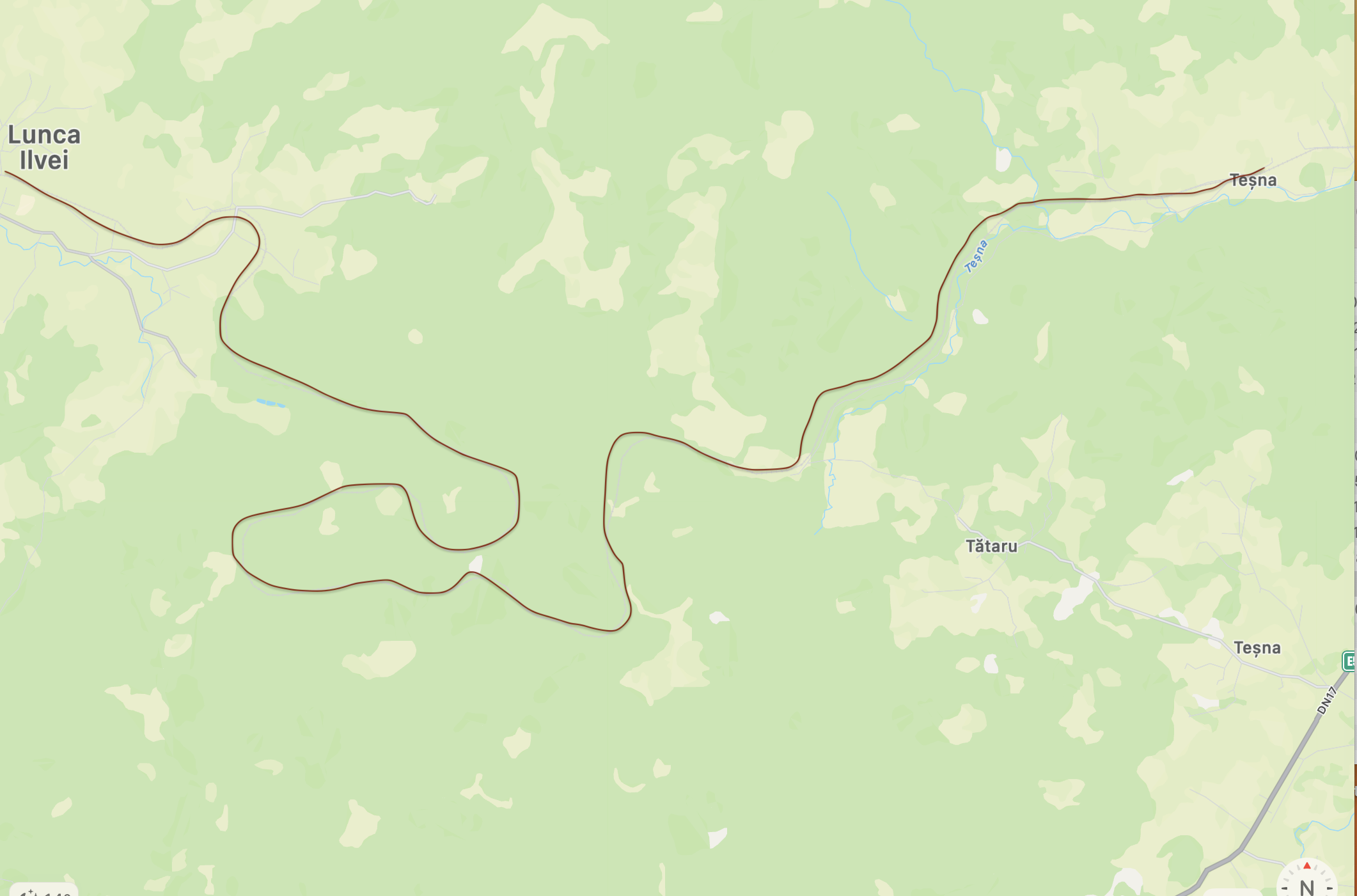
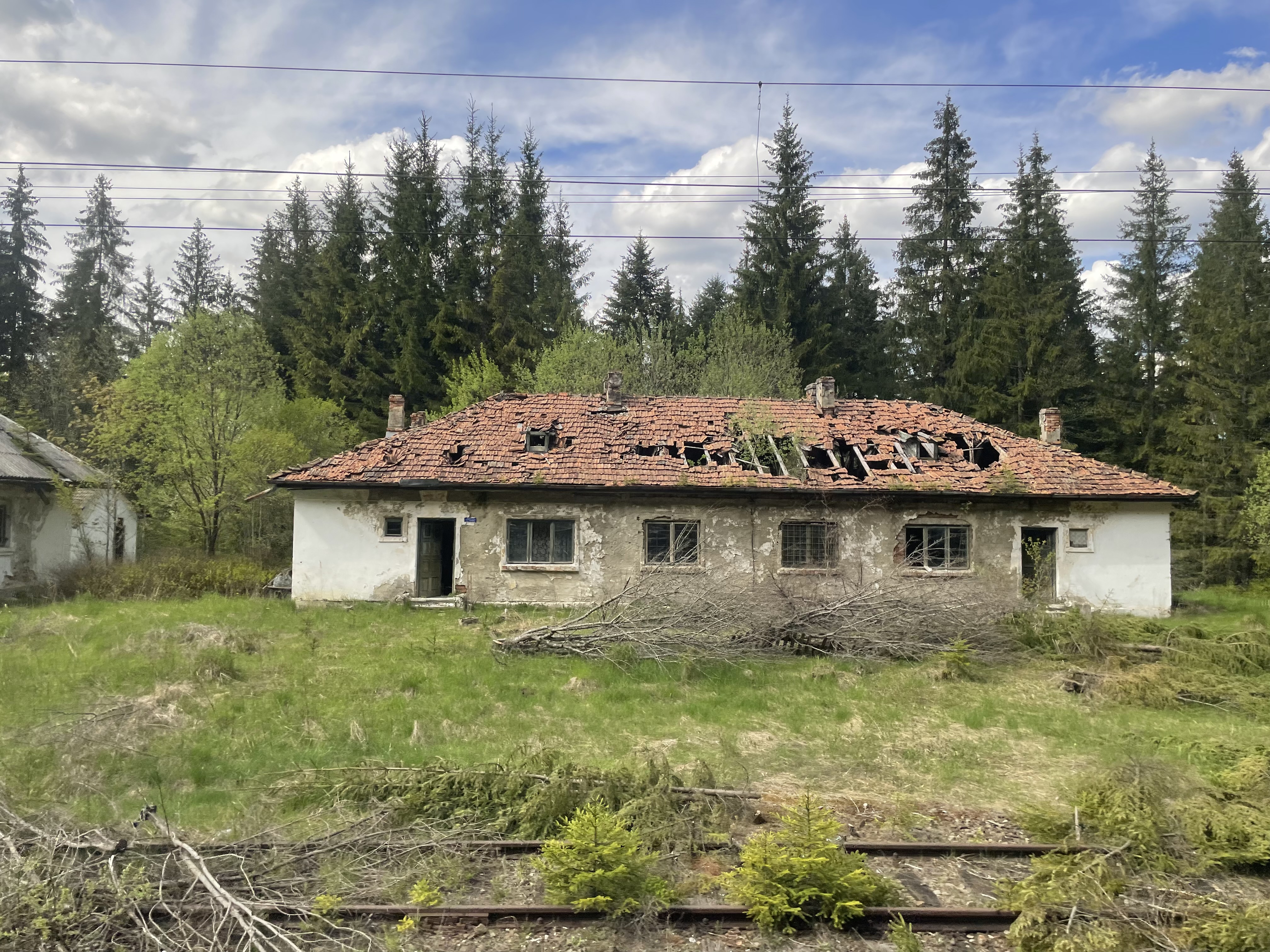
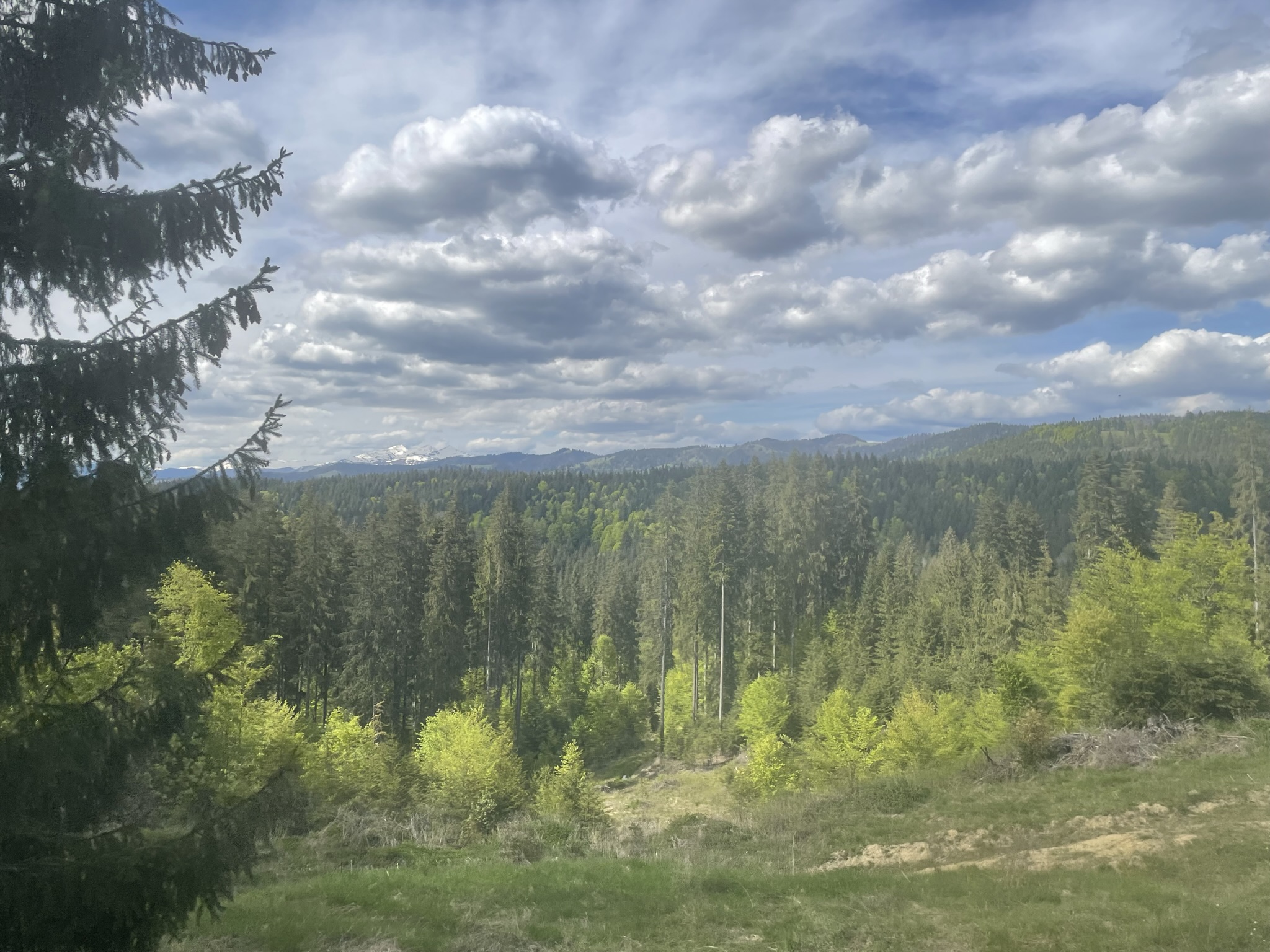
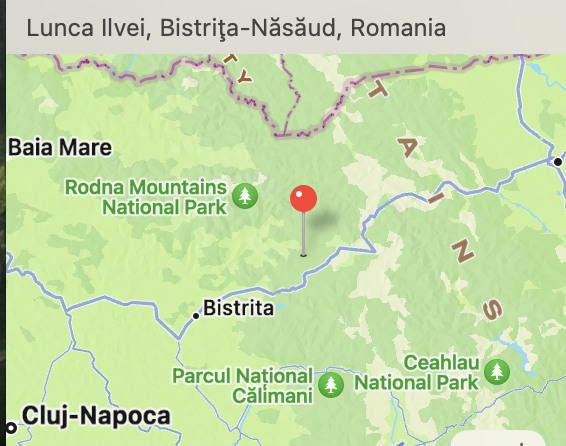
The map below is a tracing of the railway route taken over the high hills (Apple Maps). Even though I’ve travelled the route twice & taken photos, until I made the tracing I had not realised how ‘snake-like’ it was. This was necessary to allow conventional locomotives to manage the inclines required…. it’s quite amazing!

Looking beyond borders?
Into Transylvania
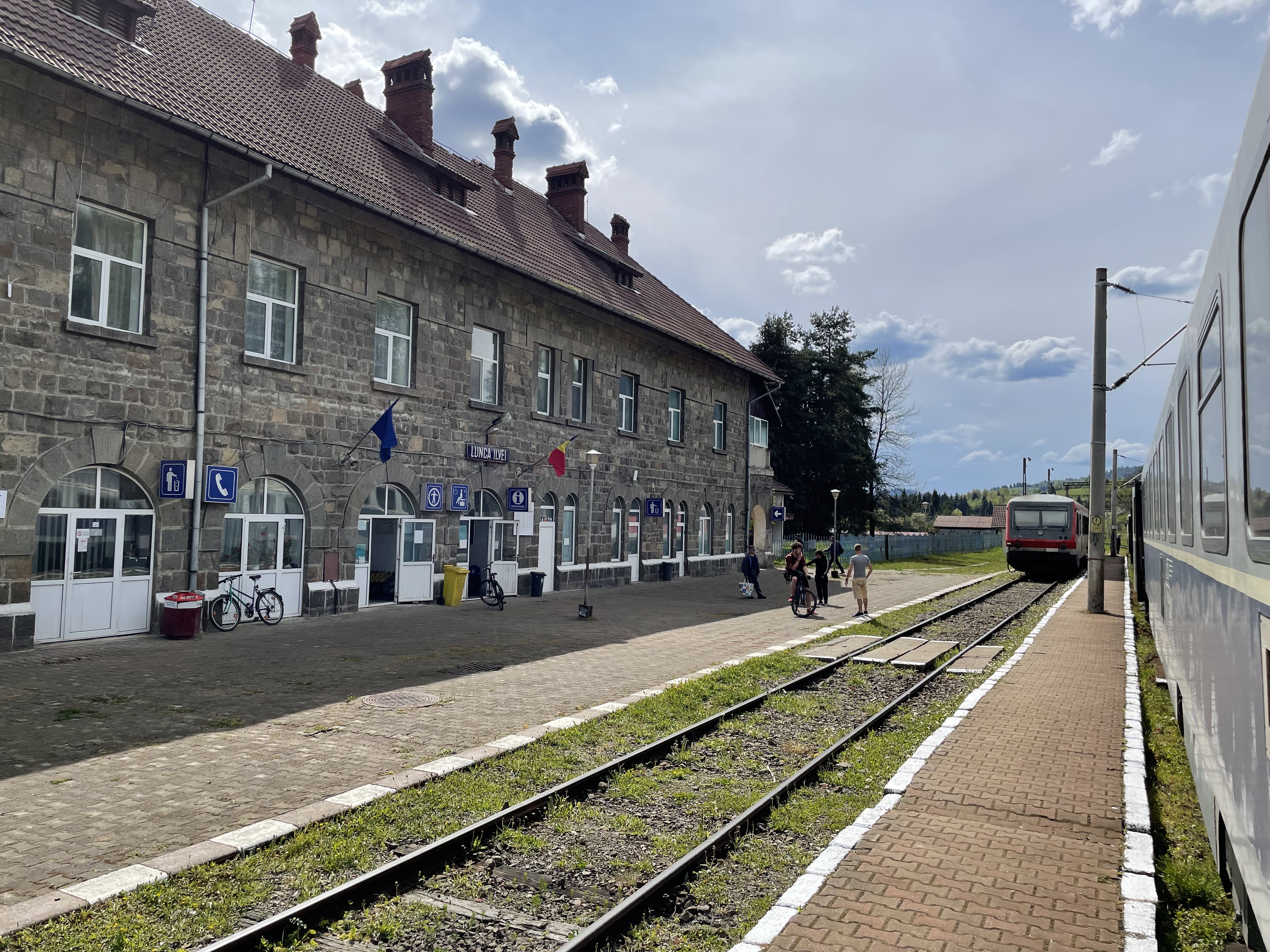
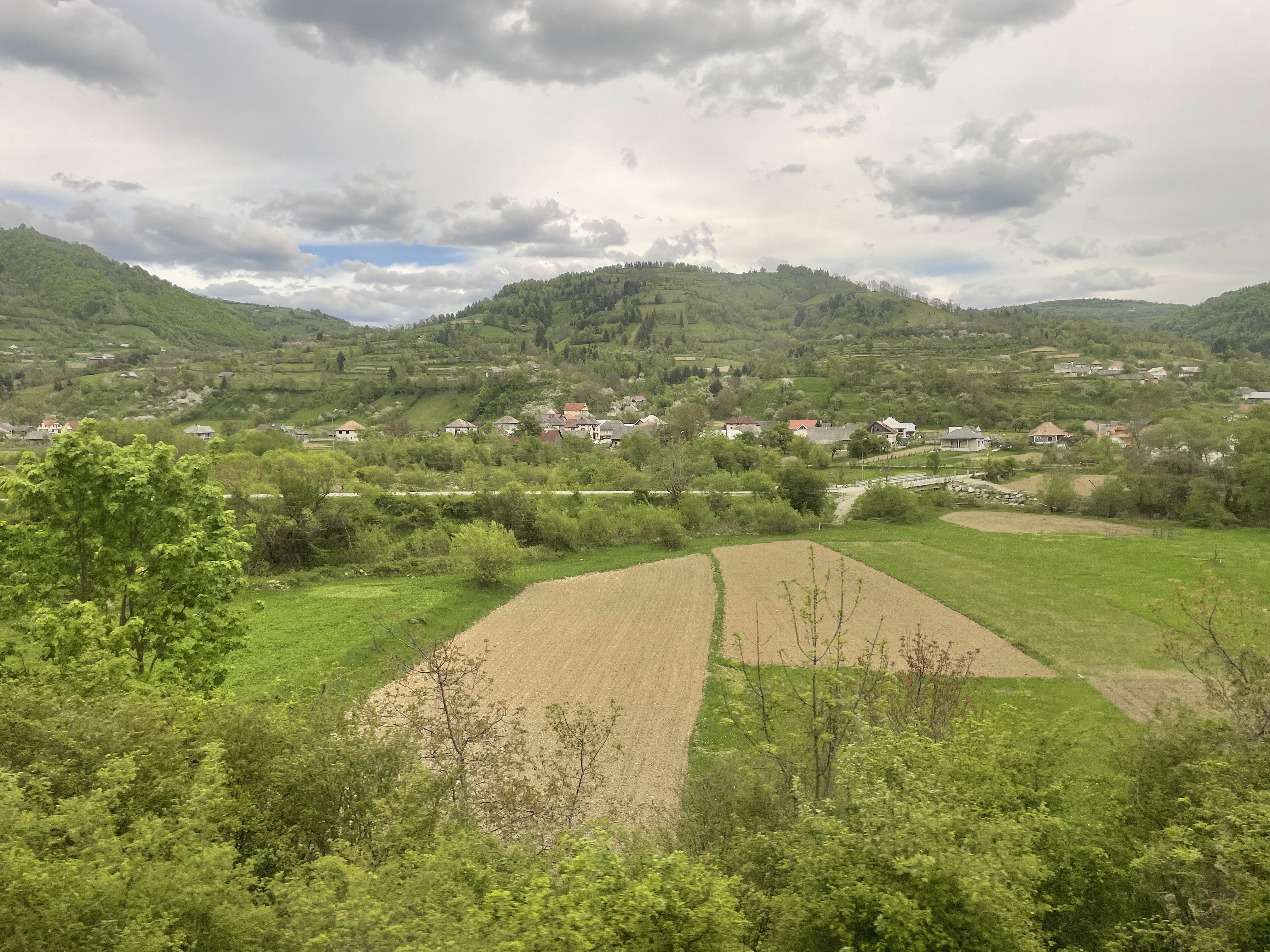
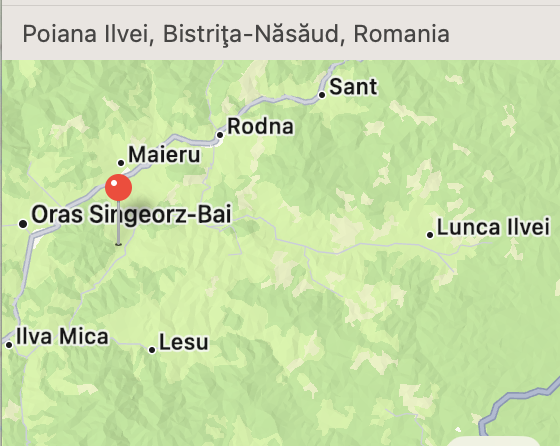
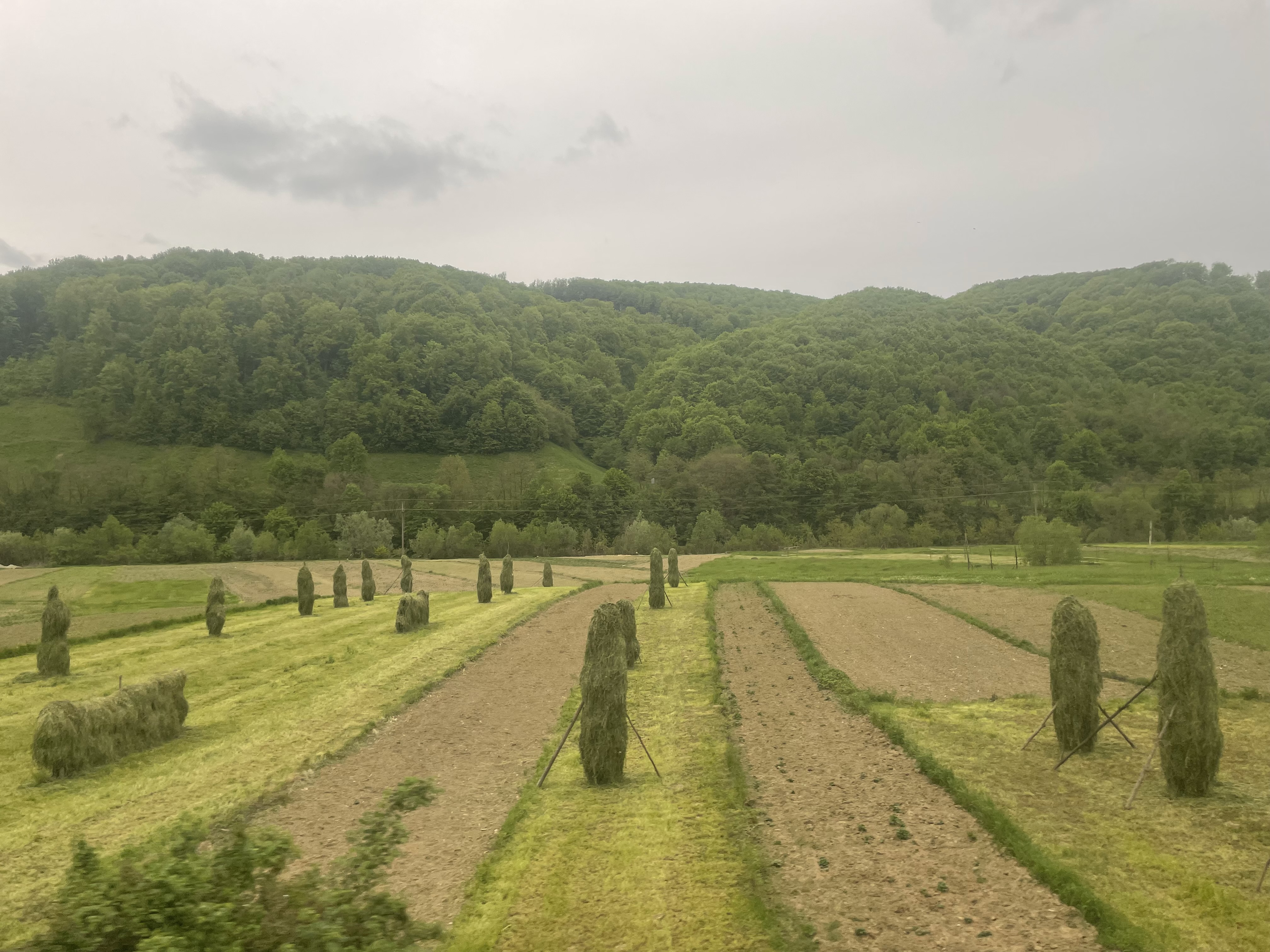
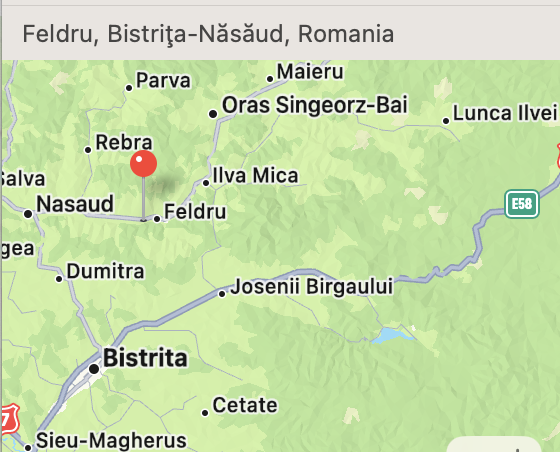
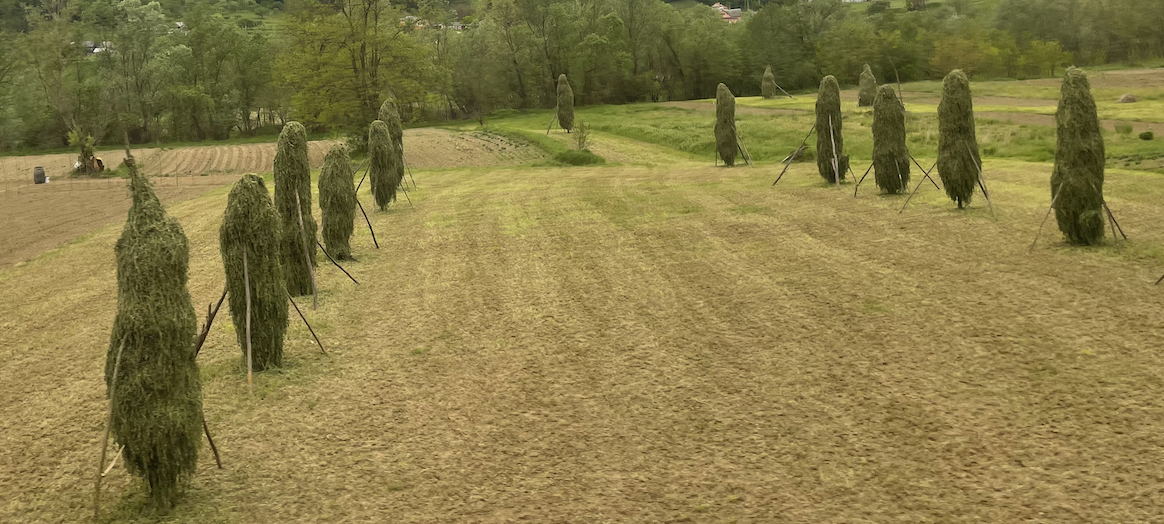
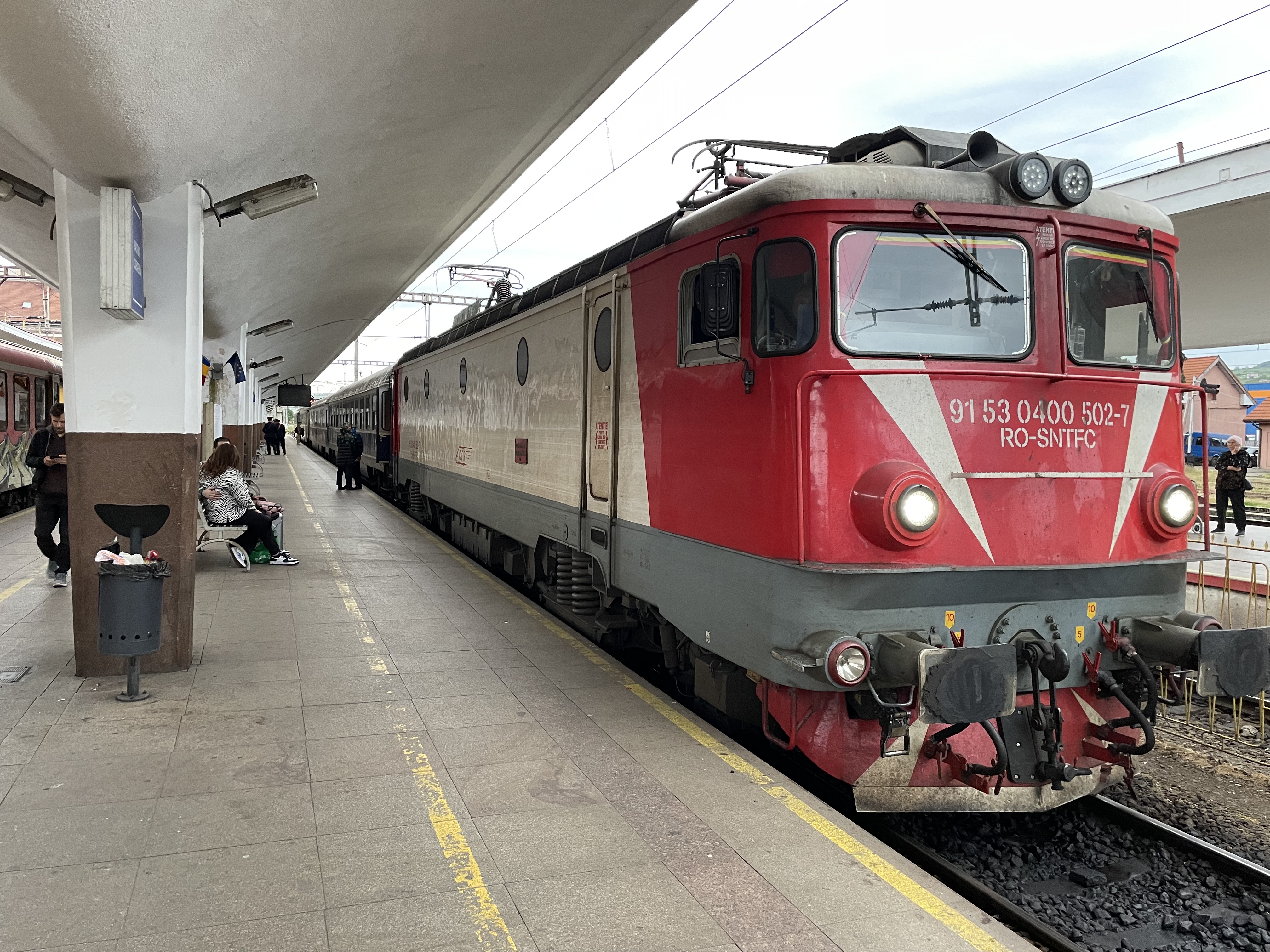
Arrival in Cluj – comfortably in time for us to go shopping for food.
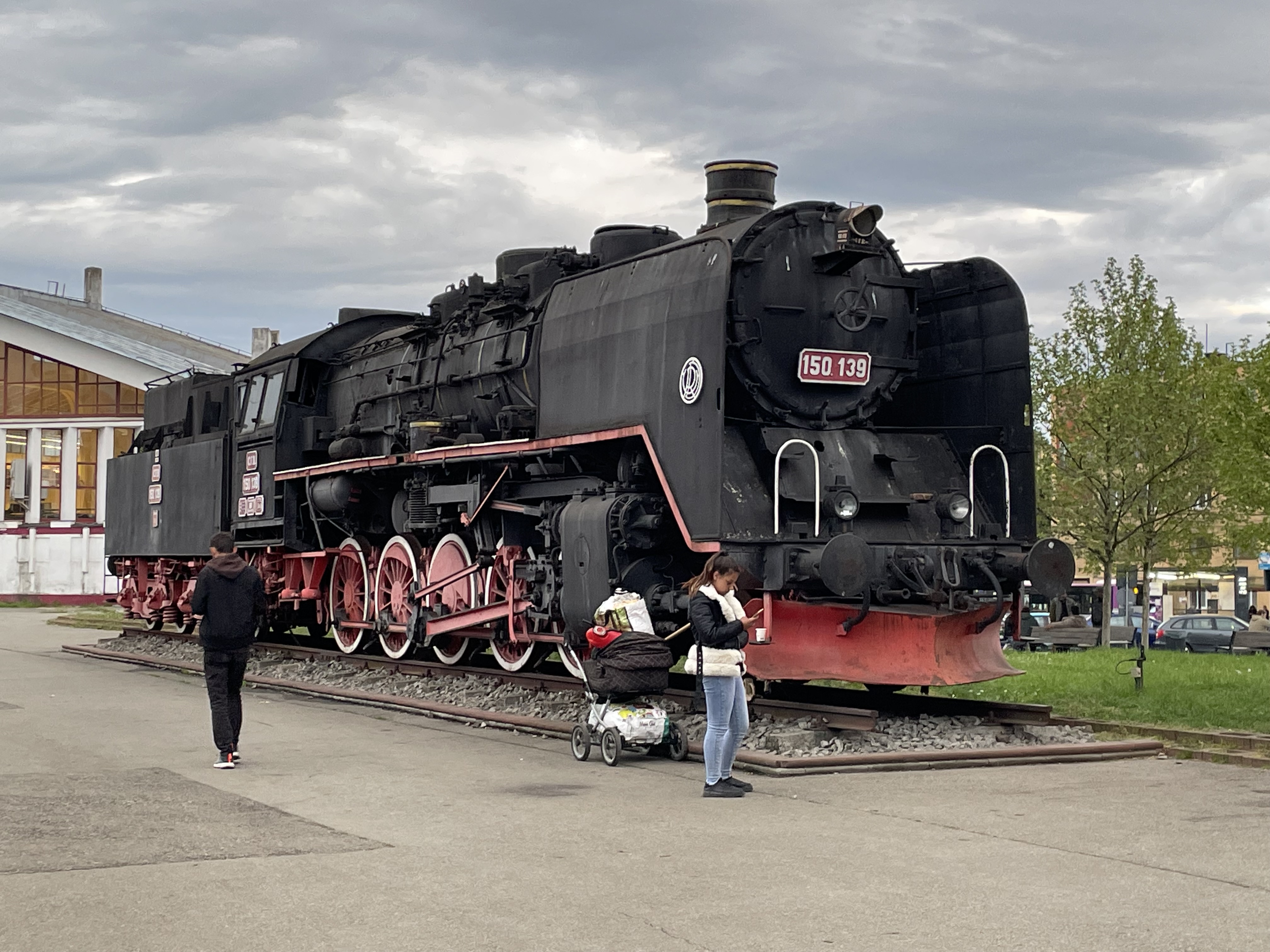
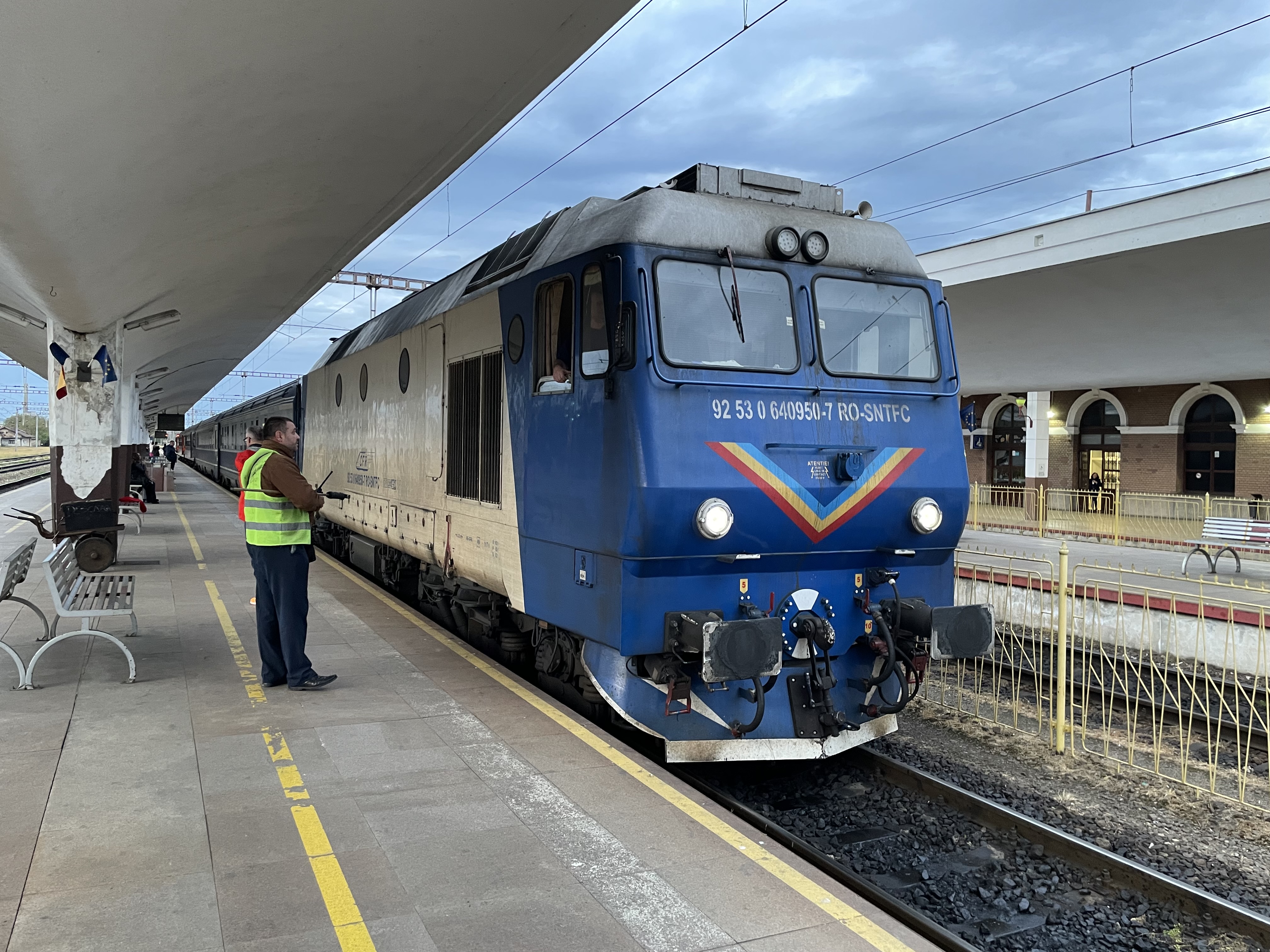
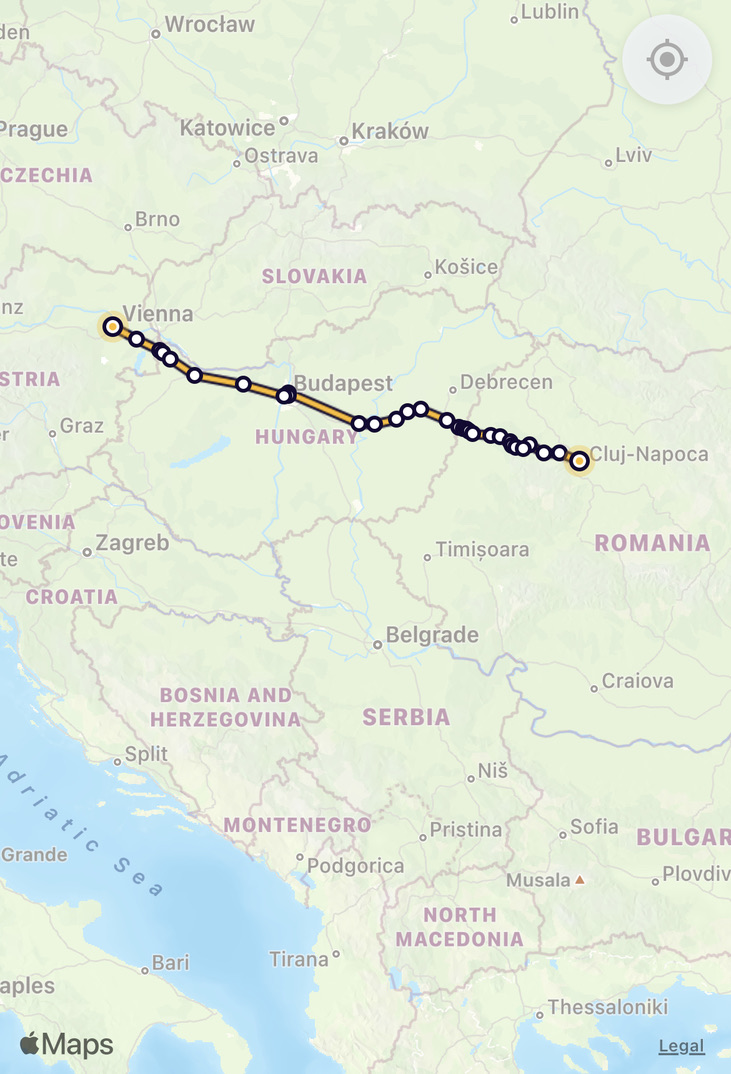
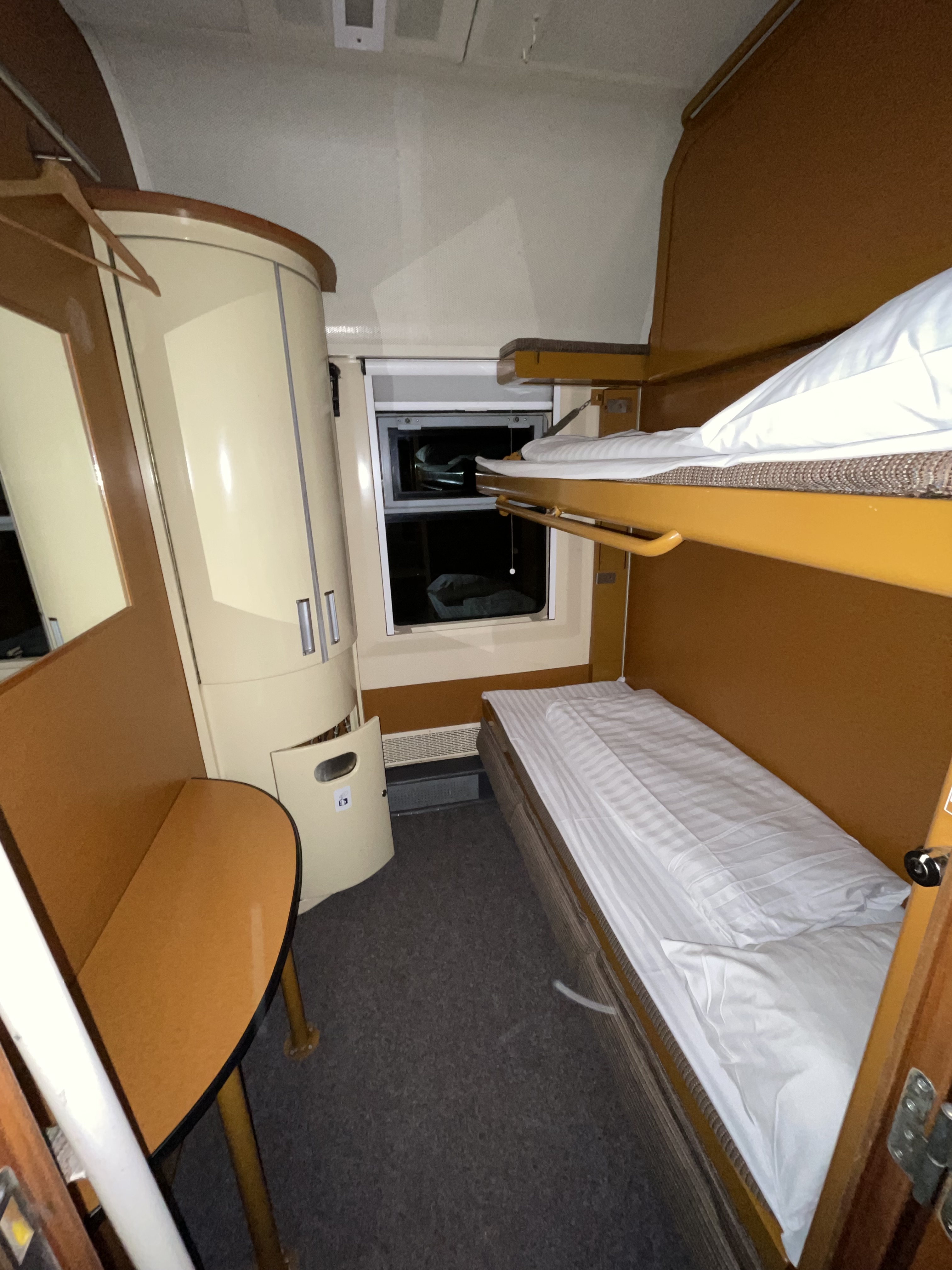
The night train to Vienna
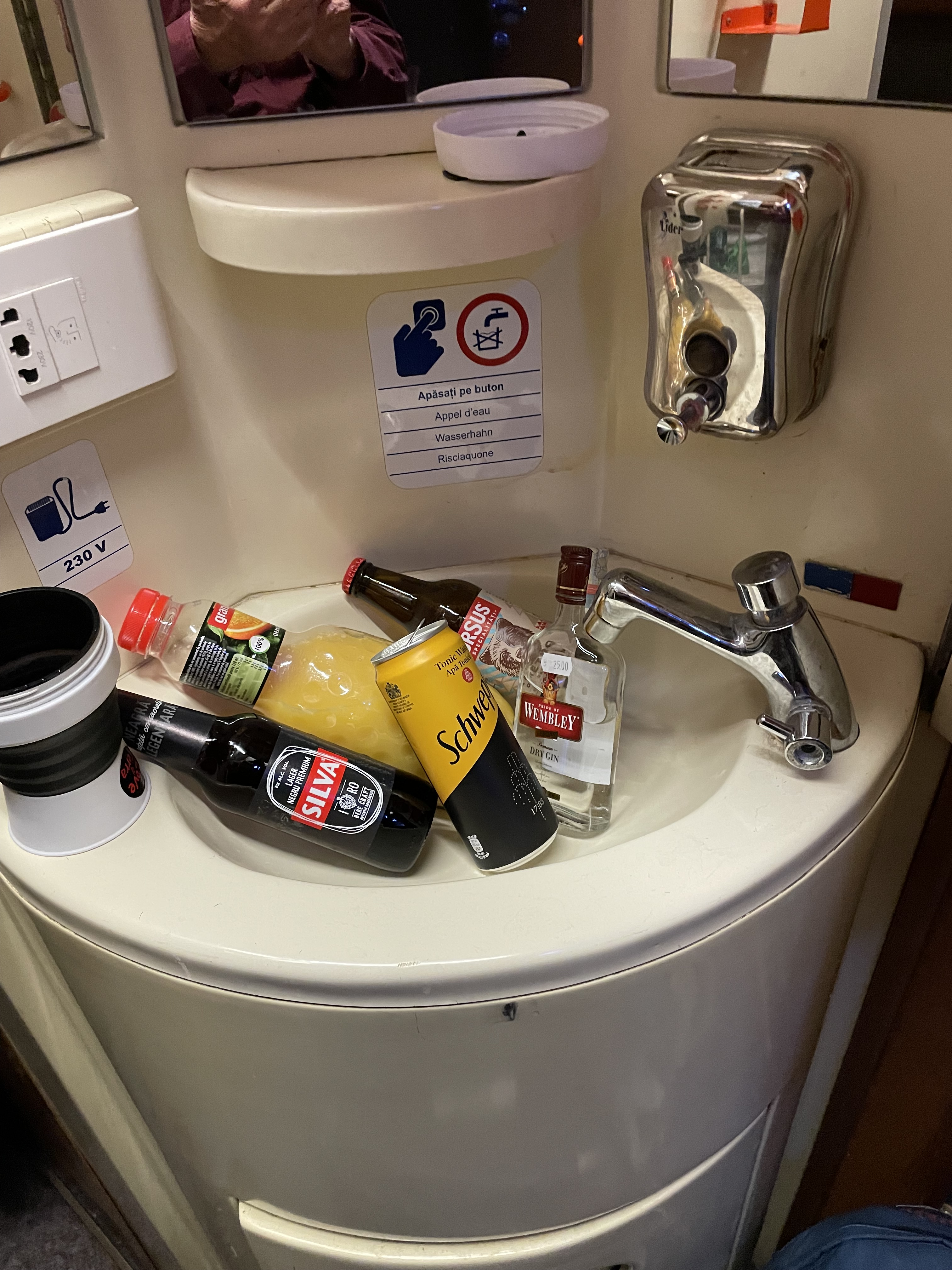
Essential supplies
15th May: To Wien
Looking back towards Budapest

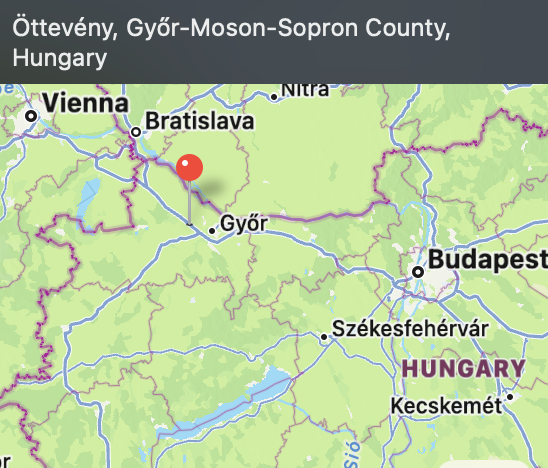
Back at the BnB Hotel

Our 5th visit on the No Kerosene Tour to previously unvisited Wien.
On our first, we wandered, wishing to see the Danube – and discovering that it is nowhere near the centre of the city - and only encountered famous sites by accident.
Do most tourists ever see the Danube??
Another included a visit to the Belvedere.
In the others we were only as ‘birds of passage’ – brief presences en route to elsewhere.
In all, uninformed wandering.
So it is with this visit. Broadly unplanned but with the intention of viewing significant sites known by name.
Does the real experience of a physical visit contribute to – or counter – previously formed views?
Having wandered around on our first visit & also visiting the Belvedere on the second, some of the available mapping was useful in understanding where we’d been & the nature of the modern Vienna that was created in the mid-late C19th.
The discovery were the 2 maps below.
First Map: mid C19th – before the reconstruction of the city centre and removal of mediaeval defences. The river Danube is beyond the top of the map.
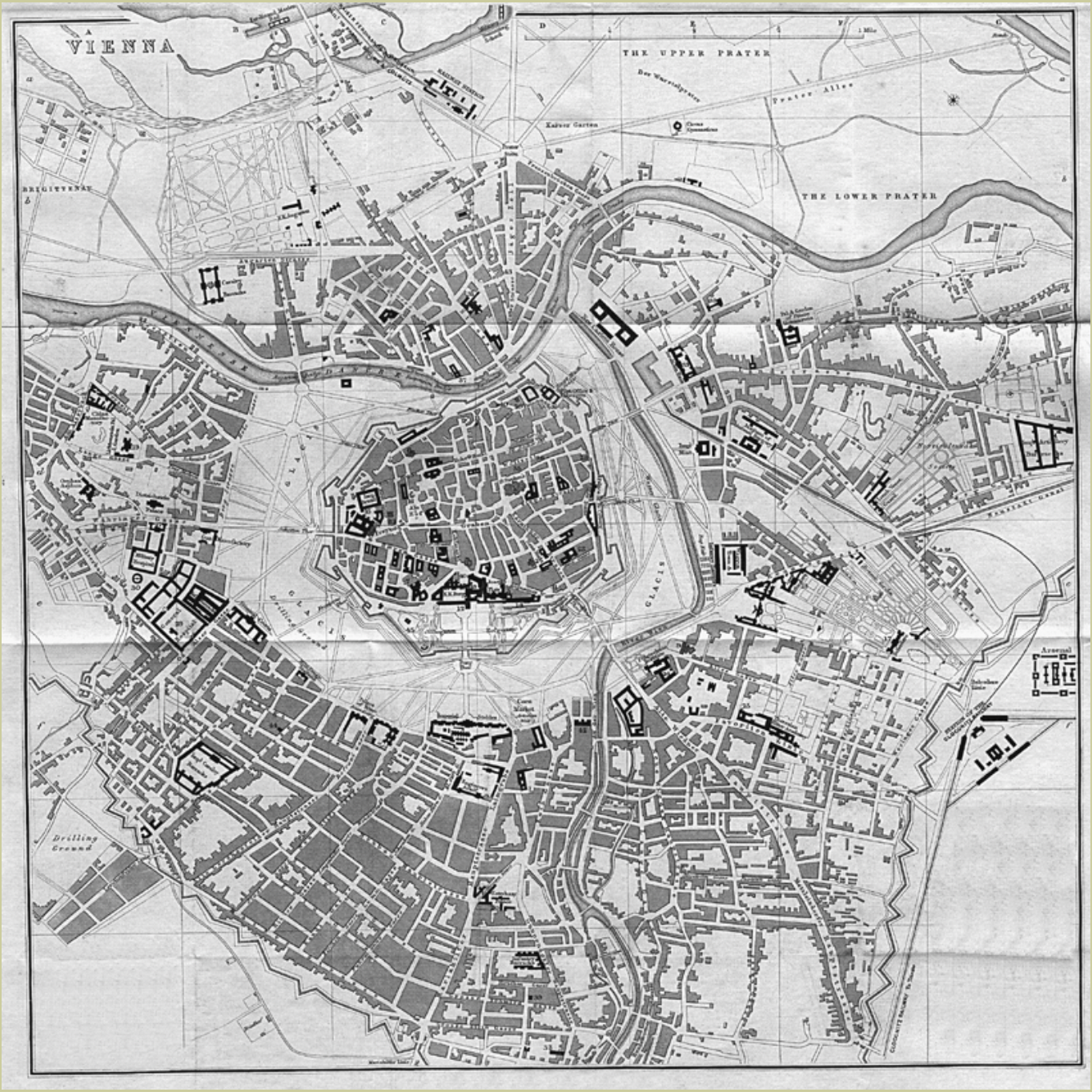
This picture presents the same aspect as the map. It is of the
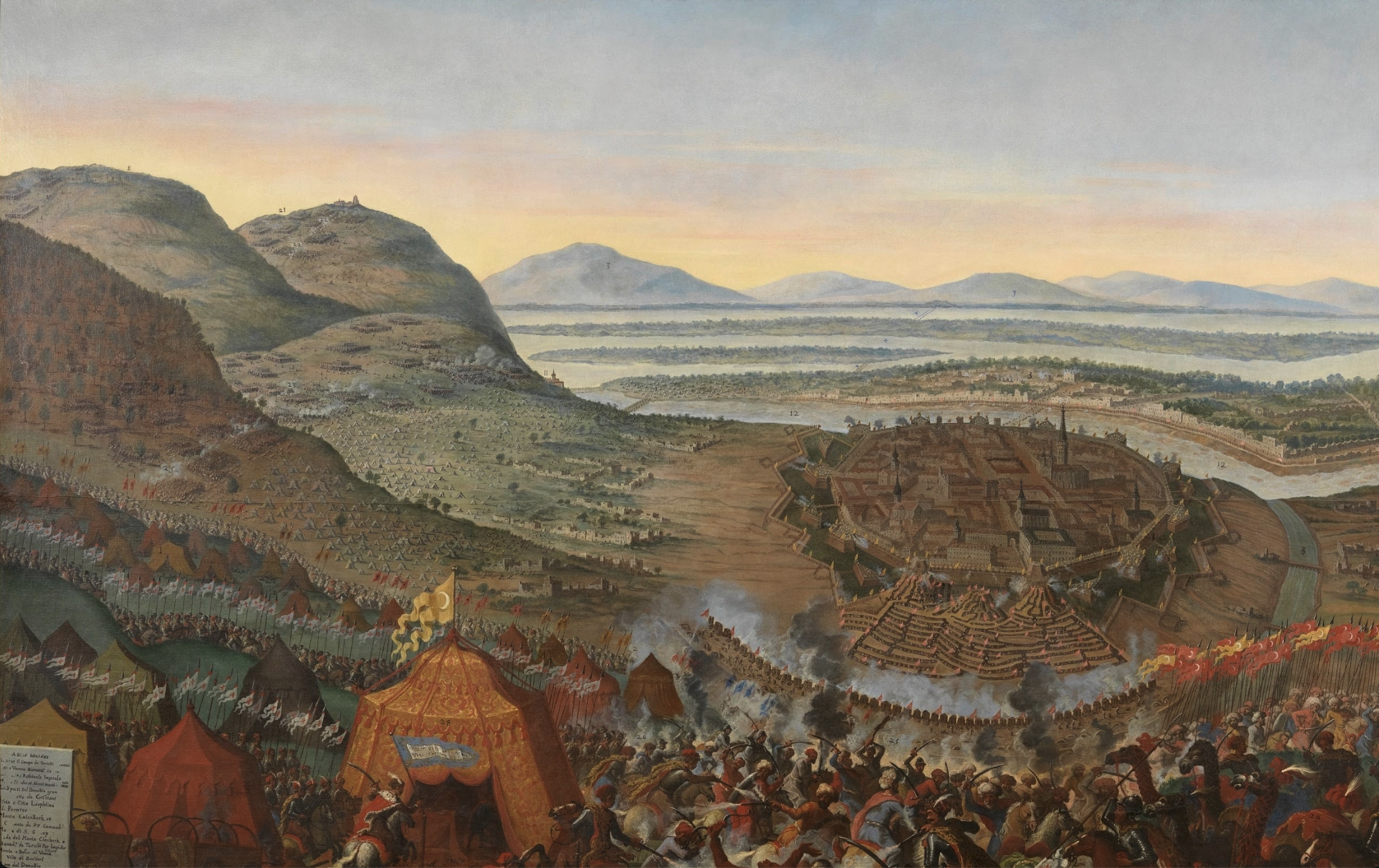
The contemporary picture by Frans Geffels provides provides a very detailed account of the battle (numbered sections and a key in the bottom left) with the foreground showing the decisive charge of the Polish Heavy Cavalry (18,000 strong, probably the largest cavalry-charge in history).
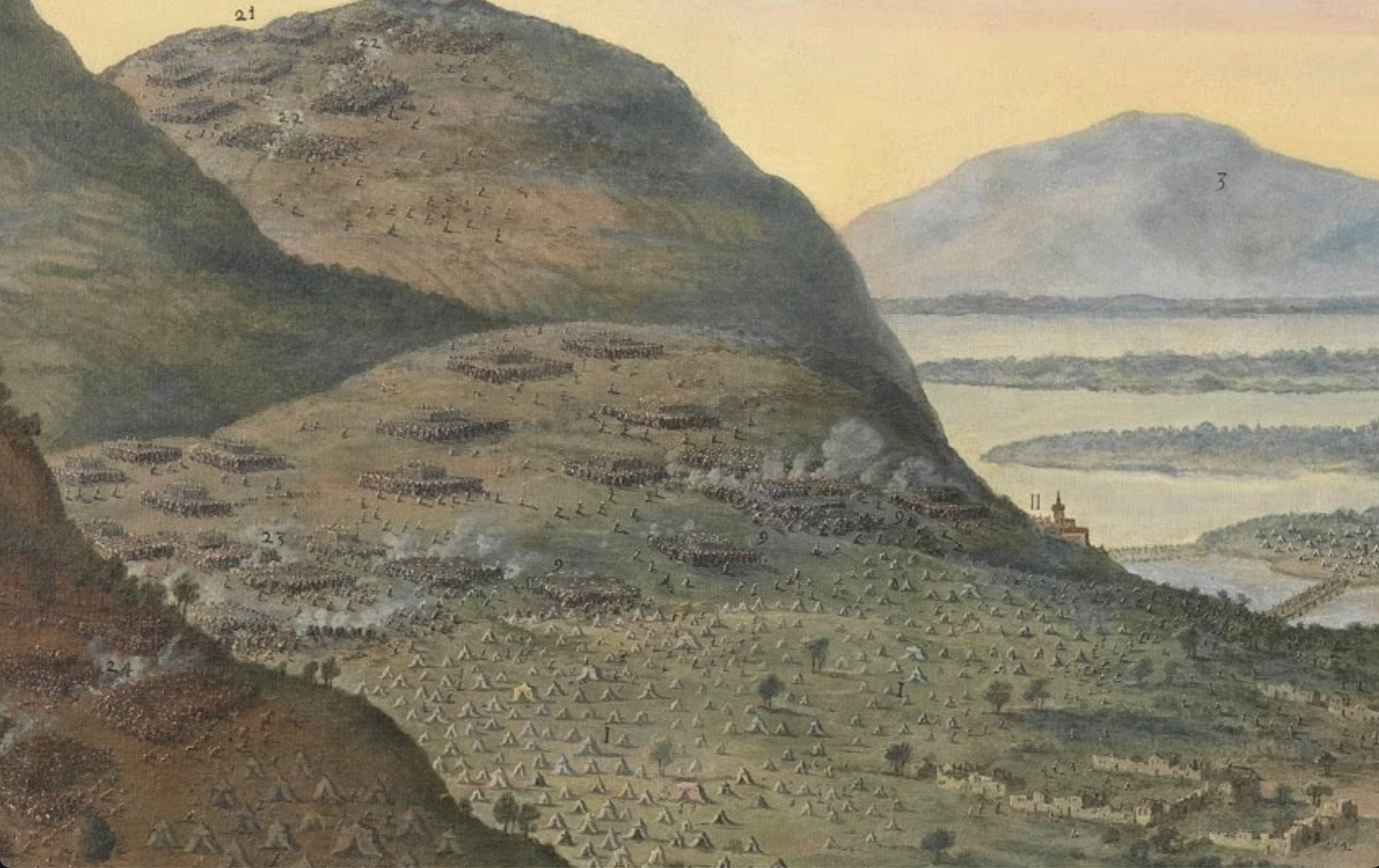
The Danube itself is a distant feature (and remains so today)
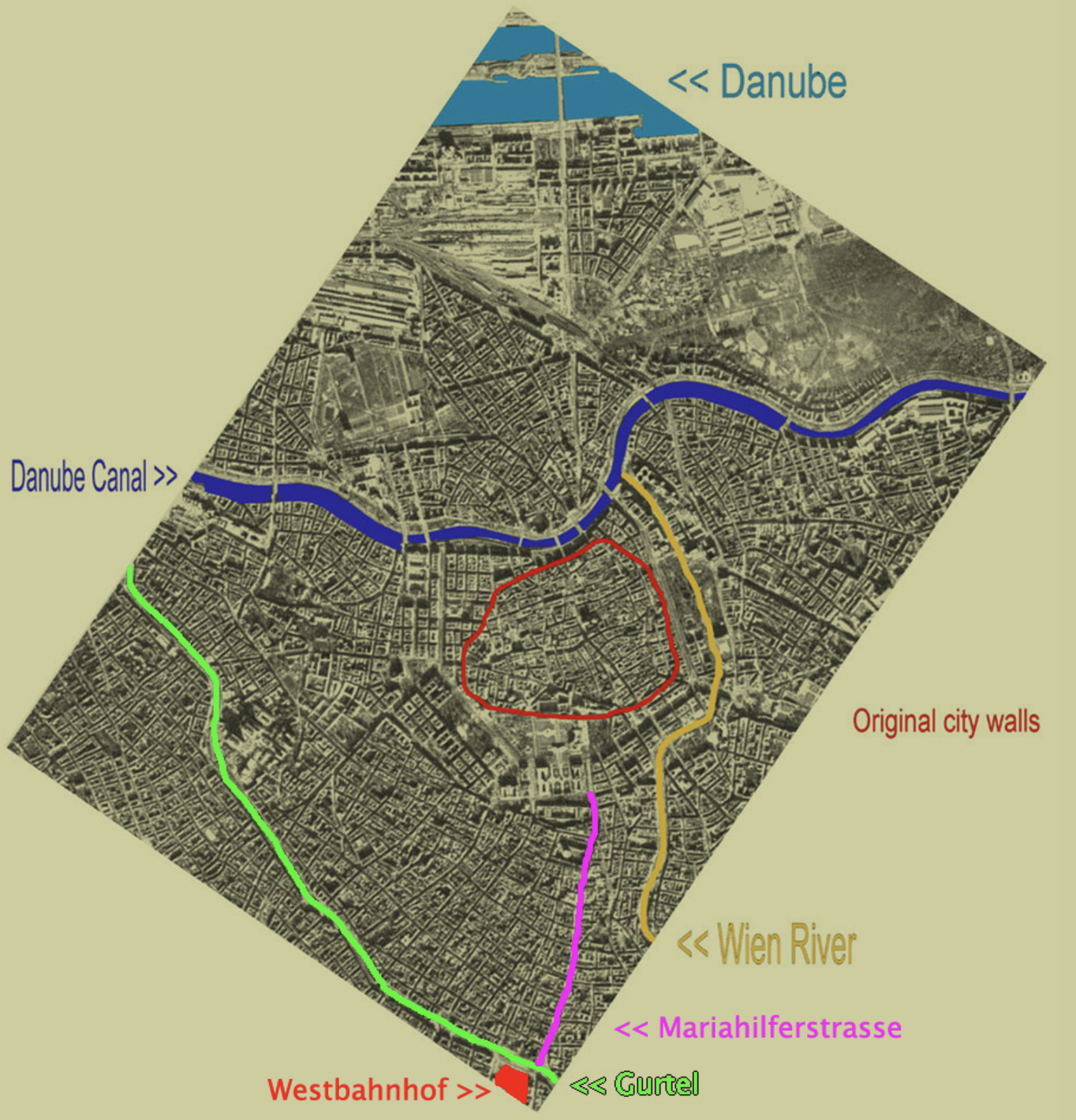
Second Map: C21st.
As with Paris, the creation of a city centre with wider streets and avenues was in part designed to be a ‘statement’ of power, wealth, status – but was particularly a city which could not easily be barricaded by revolutionaries.
Many other cities (old and new) aimed to create of well organised city spaces and buildings representative of ‘power and wealth’ that also transcended the squalor of rapid expansion due to the Manufacturing & Industrial Age.
From 1850, Vienna began to expand, by incorporation of the suburbs and especially by demolition of the old defences – the revolutionary events of 1848 convinced the authorities that it was more important to allow the Imperial Army free access to the citizens of the inner city than to keep the Turks out of it! The post-1848 constitutional changes enabled the City to prevail over the suburban landlords. A further drive to incorporation of the suburbs was the rapidly rising population and increasing squalor; housing was entirely privately owned and the suburbs had insufficient revenue to deal with their inadequacies. Tuberculosis became internationally known as “Vienna disease”.
Modern satellite image – shaped to fit with the map above
New buildings:
The Opera House was the first, opening in 1869; Town Hall (built 1872-83); Stock Exchange (1877); Parliament (1874-83); Burgtheatre (1888). At the same time the Wiener Fluß was partly canalised
All of above: https://www.austrianphilately.com/1850enlargement/index.htm

Question above:
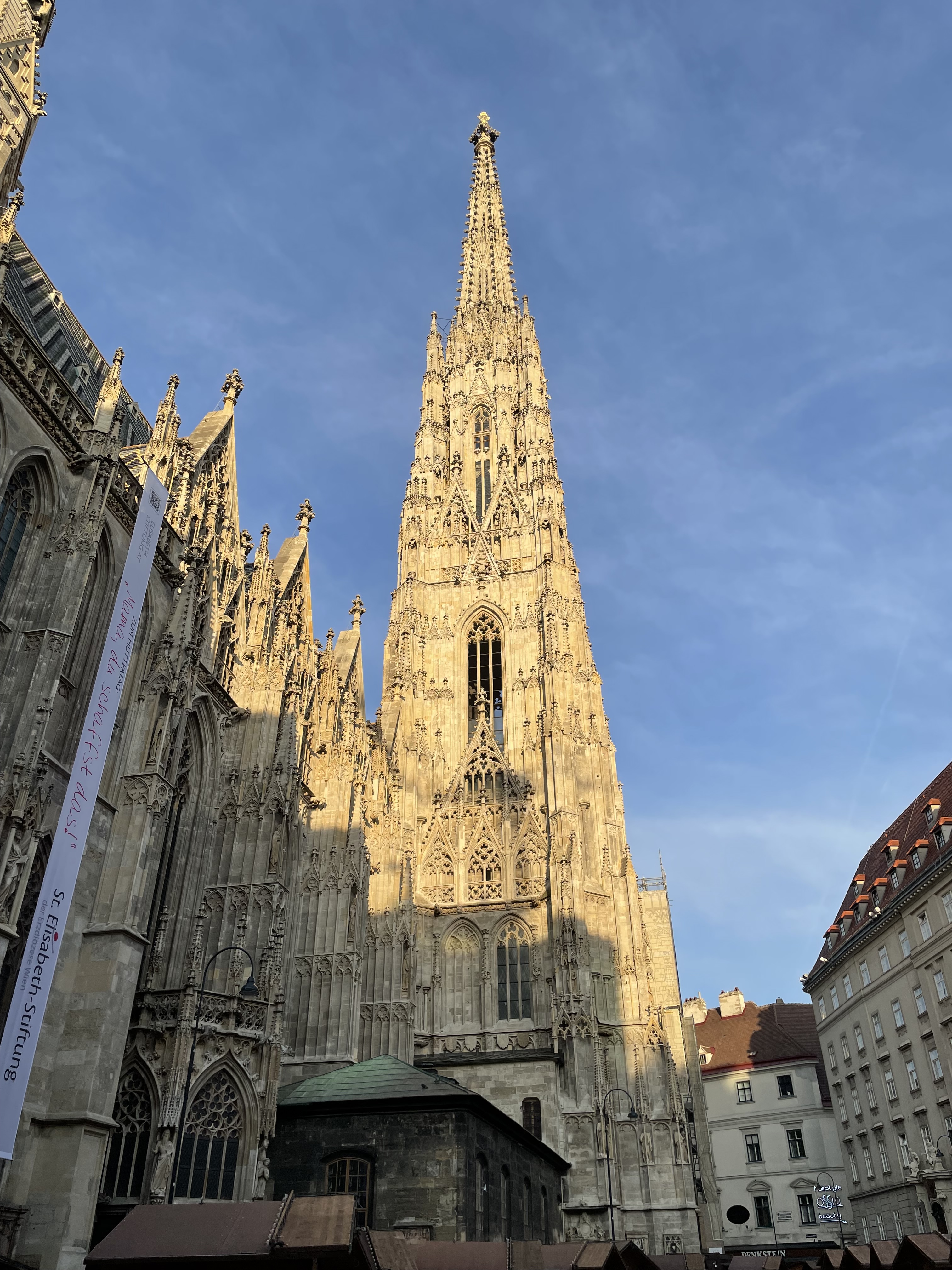
Does the real experience of a physical visit contribute to – or counter – previously formed views?
in the case of this fascinatingly monstrous confection of a monument, it is a near perfect fit to my expectation.
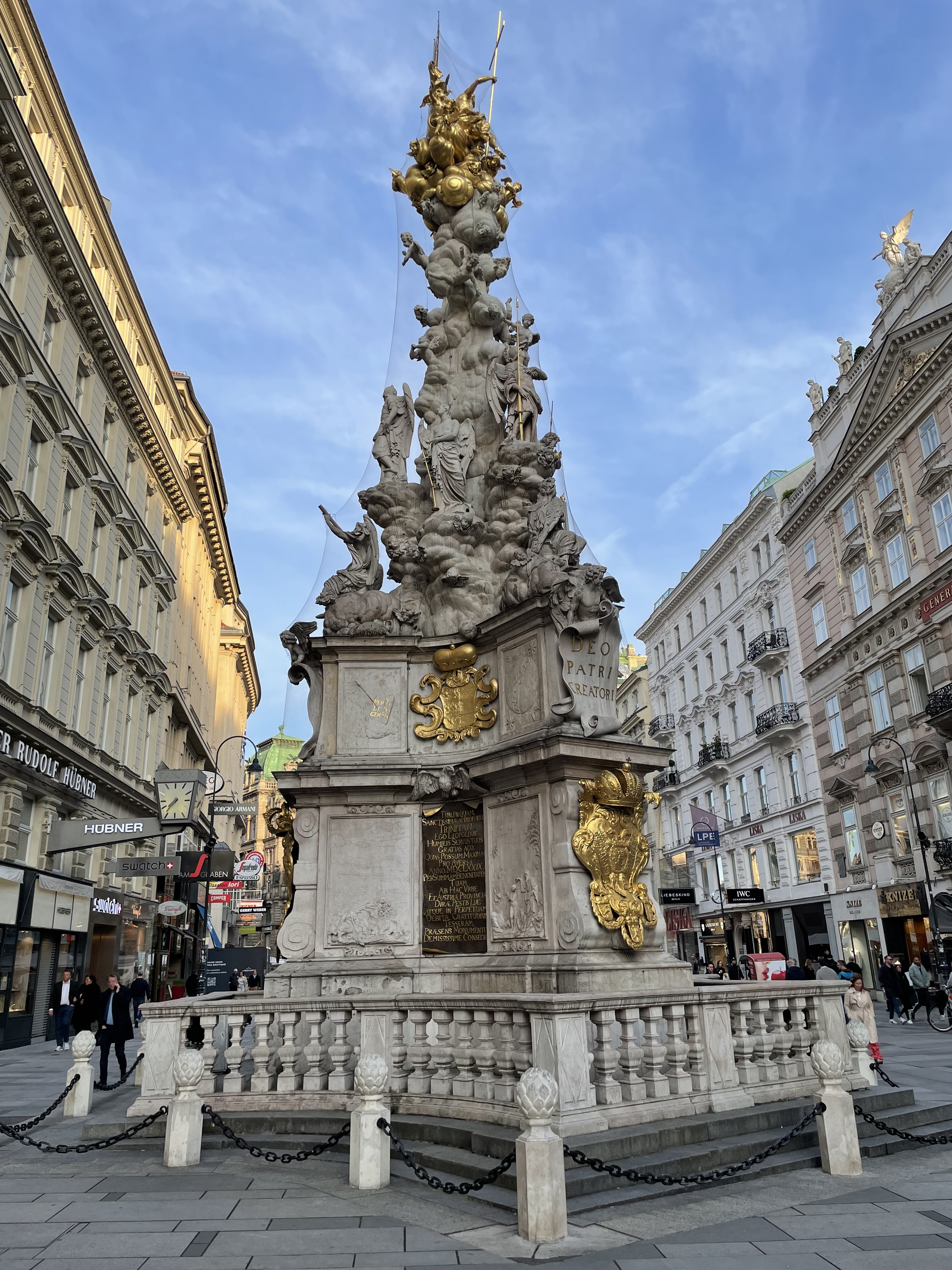
It was a plague pillar – and, to be fair to the present guide to Vienna here quoted, recognised as somewhat amusing to present-day viewers:
Life is rarely relaxed when your next visitor might bring thousands of friends waving swords and pitchforks.
So you can hardly blame the 17th-century Viennese for trying everything to get a bit of higher authority on their side. Just in case they ever needed divine help.
In 1679, for example, one particularly unwelcome visitor was Yersinia pestis, better known as the bacteria that causes the plague.
To help ward off the epidemic, the authorities built a wooden Pestsäule (pest column) on the Graben in Vienna’s centre.
This Pestsäule drew its inspiration from the tradition of Marian or Holy Trinity columns.
These columns were topped by the Virgin Mary or a representation of the Holy Trinity. People typically erected them as a declaration of faith or out of gratitude for surviving some dramatic event, like a war.
Of course, large columns of this nature also did no harm for the self-esteem and image of the sponsor, adding another tick in their book of good deeds.
This wooden Pestsäule went up while the plague still raged through the city, but the Emperor of the time (Leopold I) committed himself to building a more durable alternative, presumably to give thanks for the eventual end of the epidemic.
visitingvienna.com
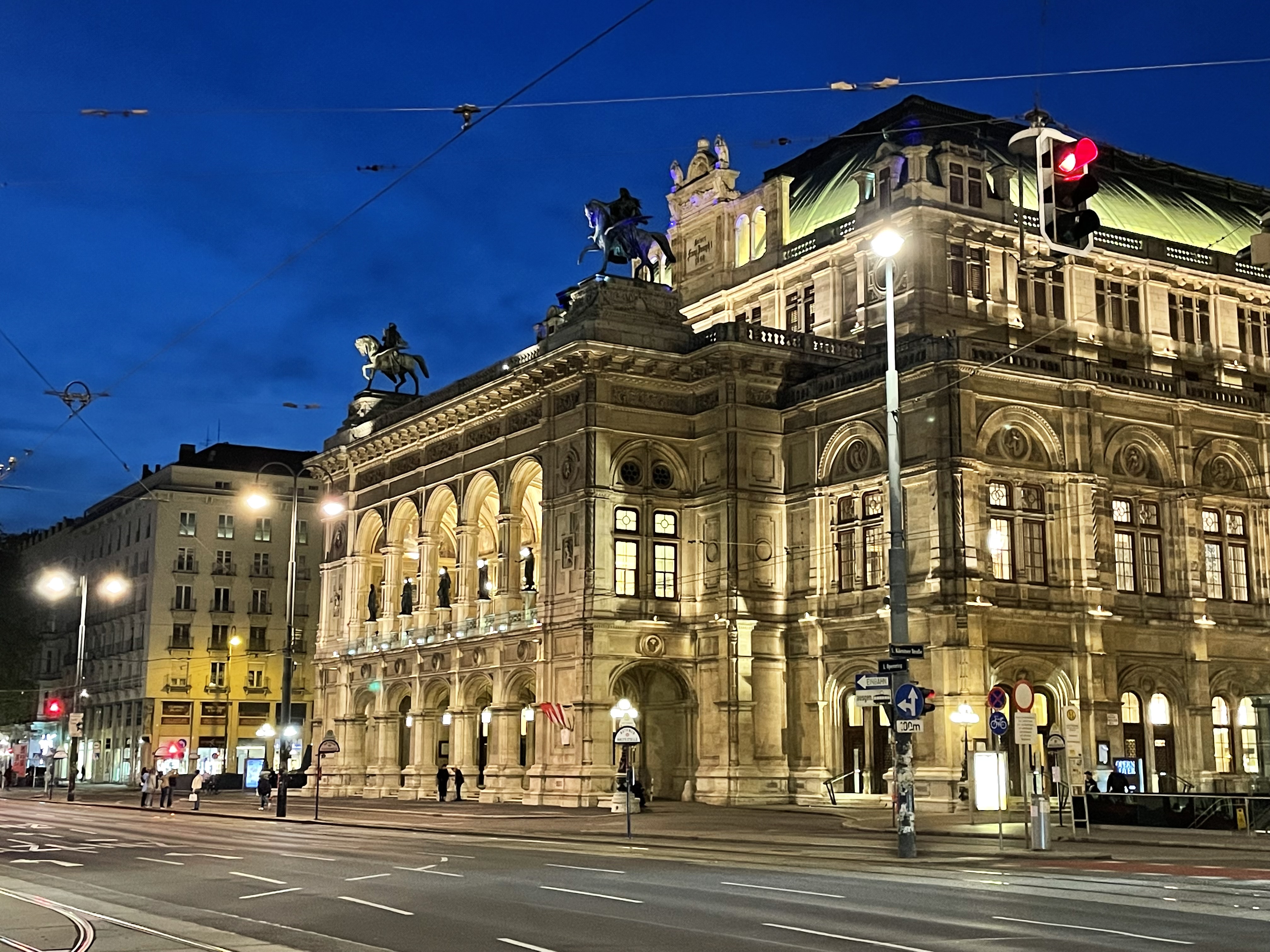
The opera house | Staatsoper
‘The Vienna State Opera is one of the leading opera houses in the world’
16th May: Wien
Rain is forecast – our exploration starts early.
It was curious being an unprepared, ignorant visitor in Wien.
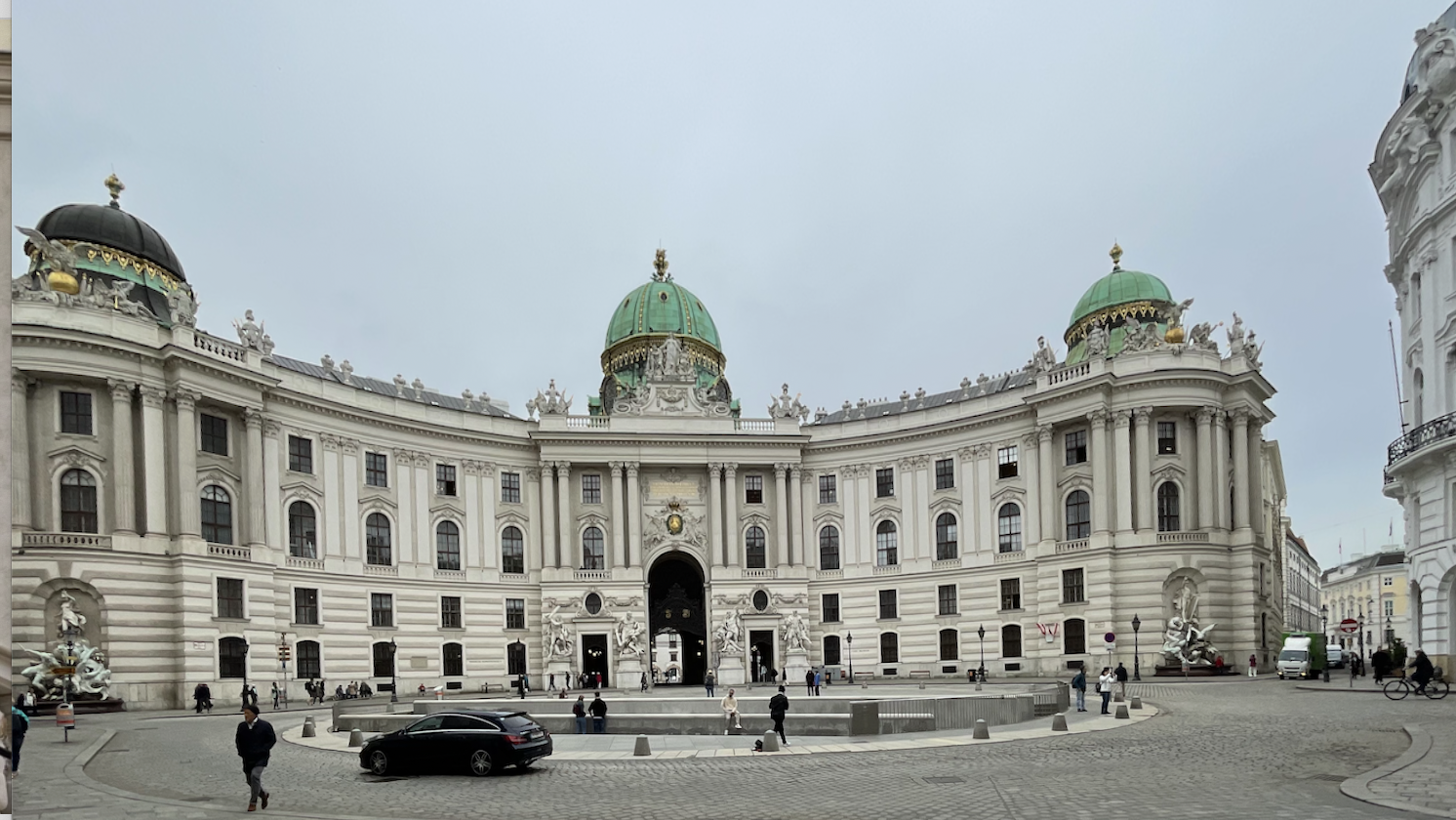
The Hofburg Palace – much as might be expected, though maybe larger. We expected the usual excessive grandeur – My Goodness, how the Nations love to compete with each other
“Why do the nations so furiously rage together…
… And why do the people
Imagine a vain thing?
Organisations need office space (even if, as is becoming more usual, it is in an inter-connected bedroom).
But for a Kingdom or Empire – Size & Display Matters
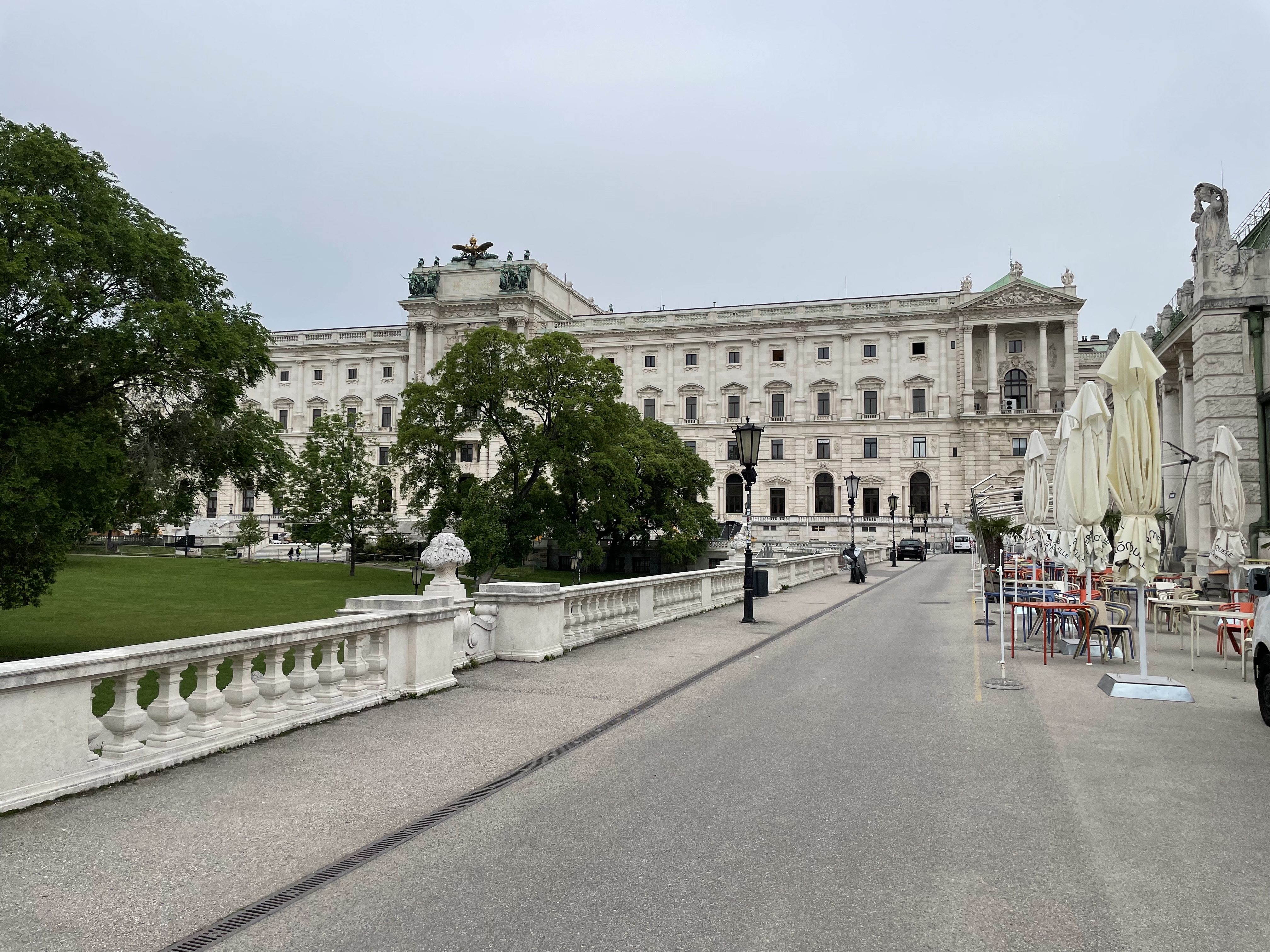
Stone balustrades – they are very ‘common’….could the C19th designers not have had more variety in their style… or is it all ‘copying’… formalised & frankly, (where-ever – Vienna, London, Washington D.C. etc), boring.
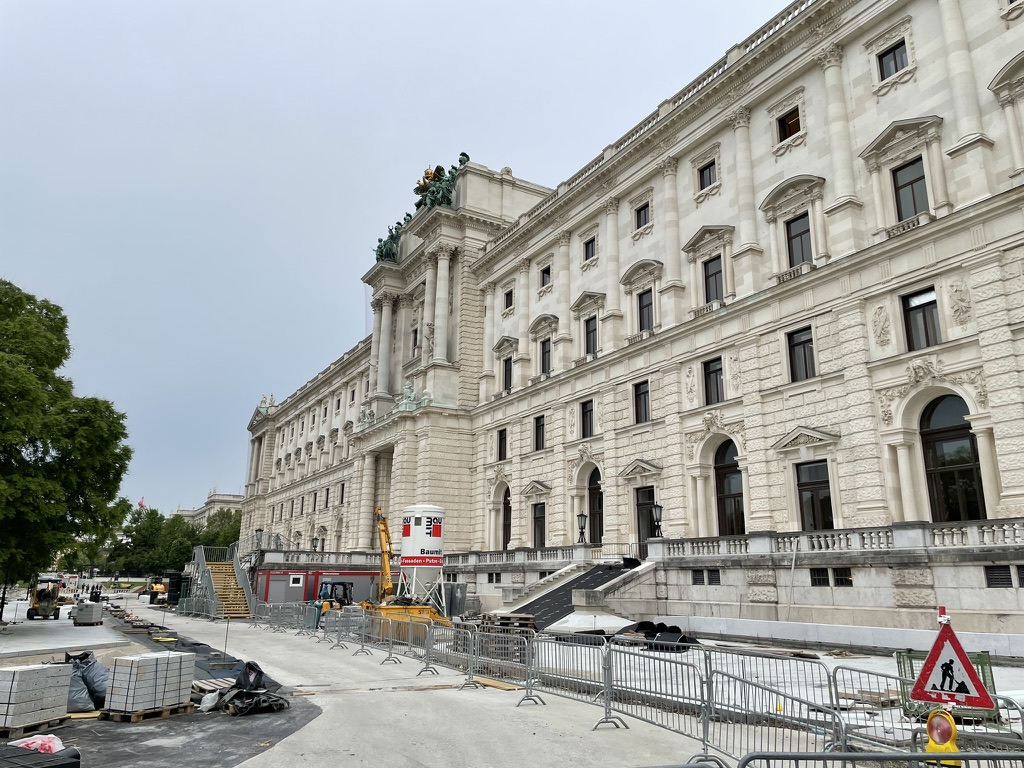
We ambled through the spaces, round the corners & arches in the Hofburg…..
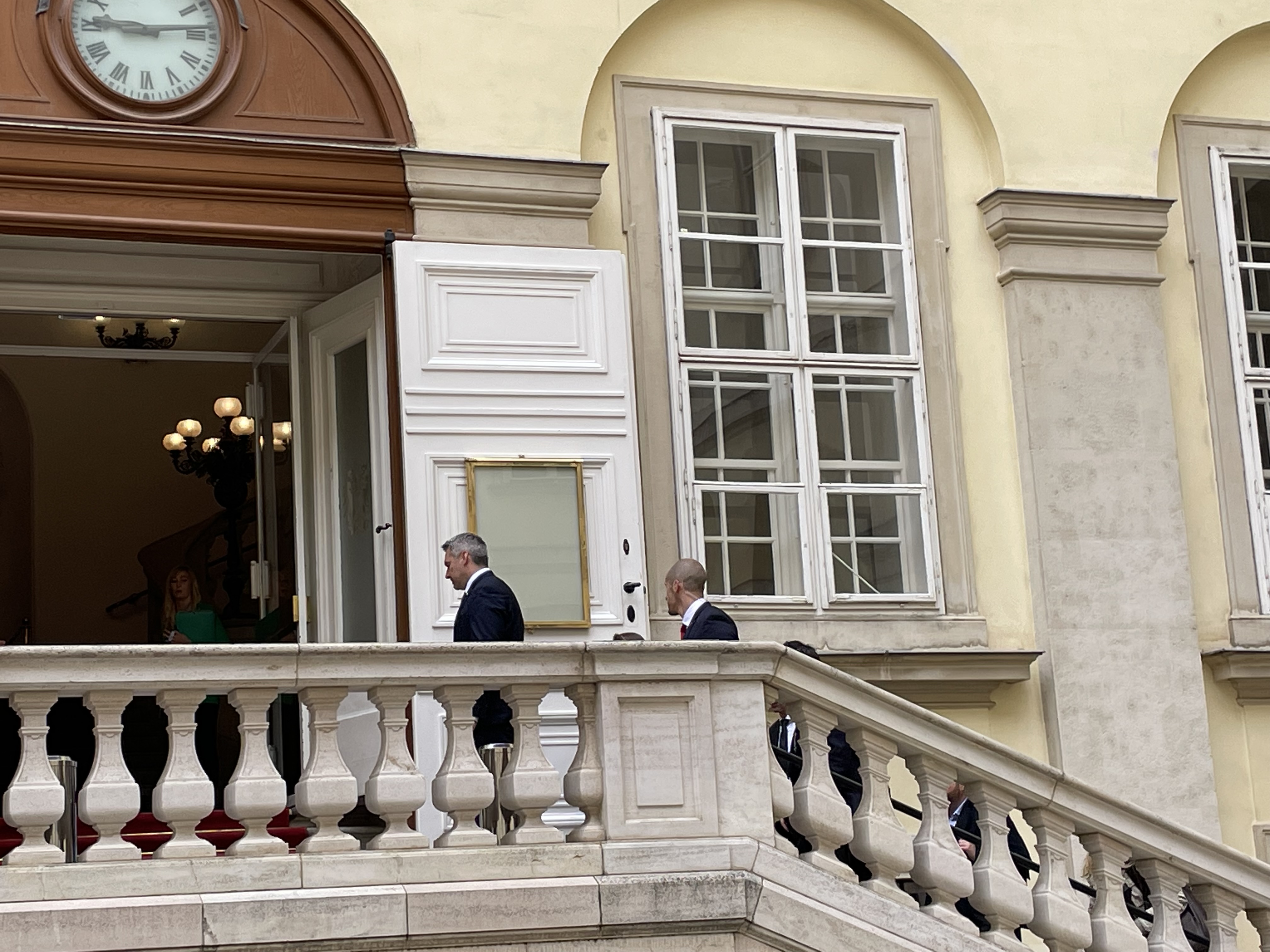
… passing the Austrian Federal Chancellor (Karl Nehammer, of the ÖVP: centre-right Austrian People’s Party) en route to his office in the Hofburg Palace.
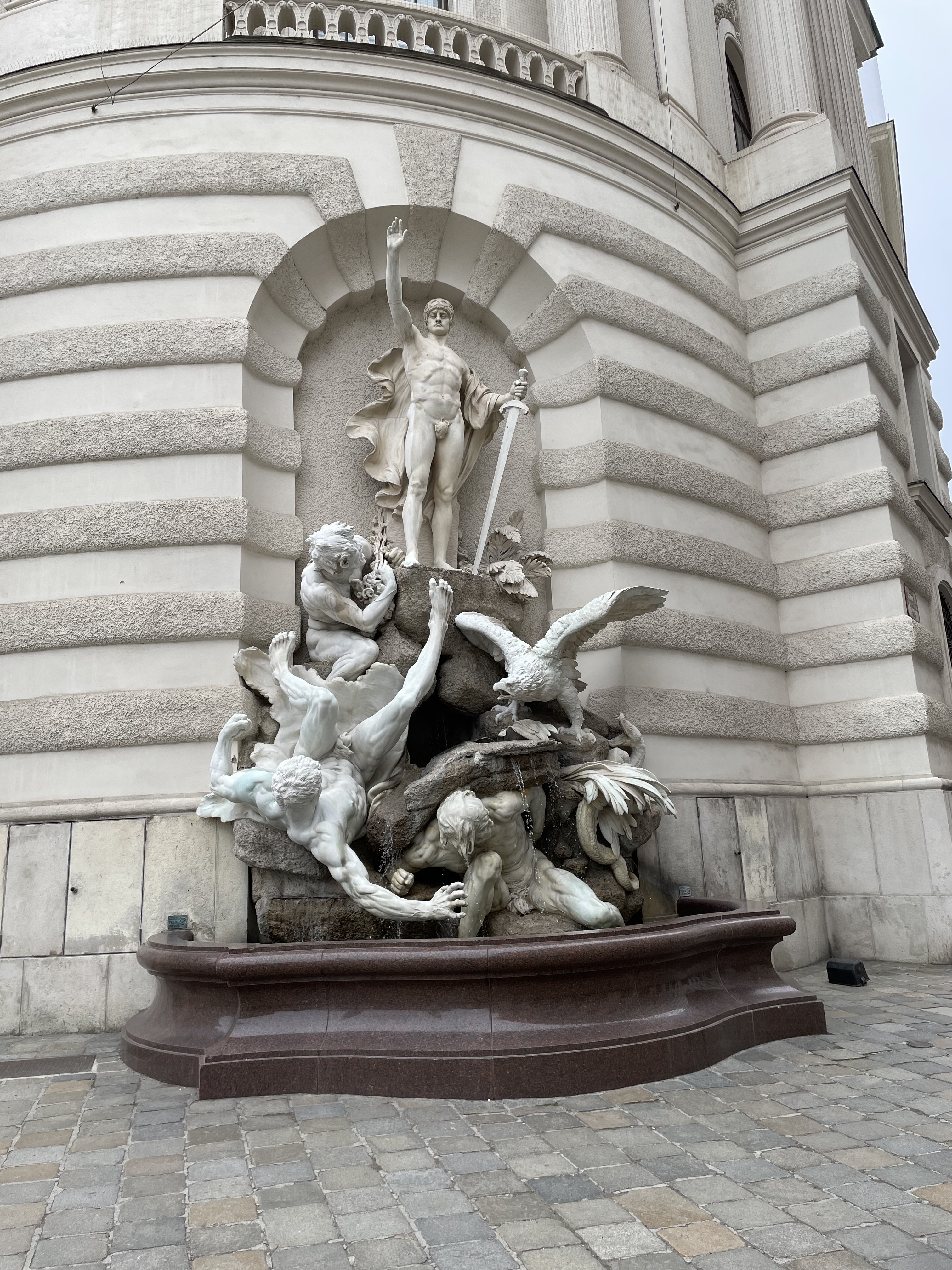
Ancient legend become Imperialist Nonsense
Arrival (had we been chosing such) was in the Heldenplatz (‘Heroes Square’)
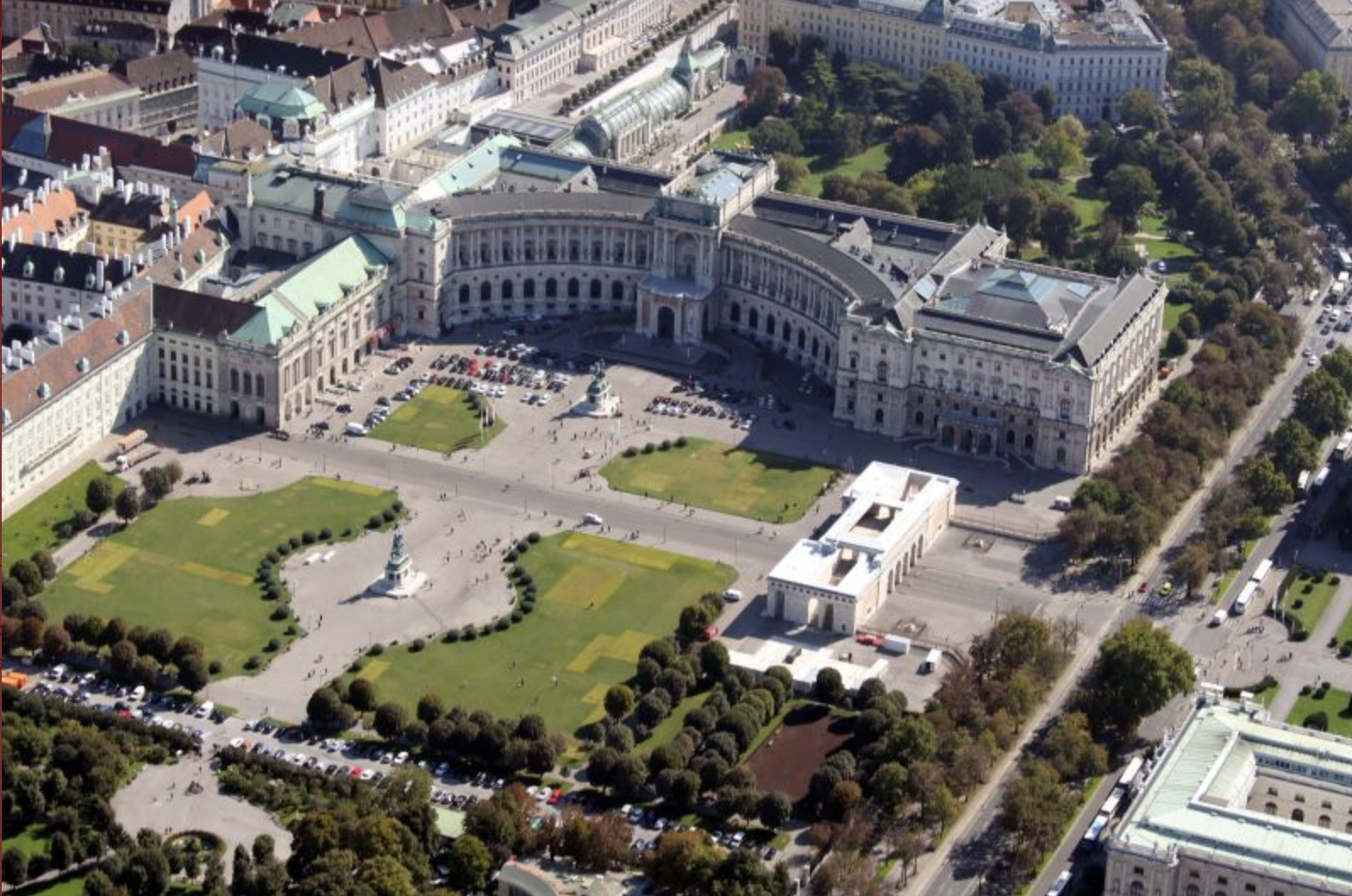
Whatever it had been intended as, it now seemed to be a car park with areas of grass. On the side opposite the Hofburg were several portable cabins & elements of a building site.
[I now understand that these were temporary accommodation for the Parliament in the process of being removed]
In March 1938, Heldenplatz Square and the balcony of the Neue Burg wing gained sad notoriety, as it was here that Adolf Hitler announced Austria’s Anschluss (annexation) to the German Reich to a cheering crowd.
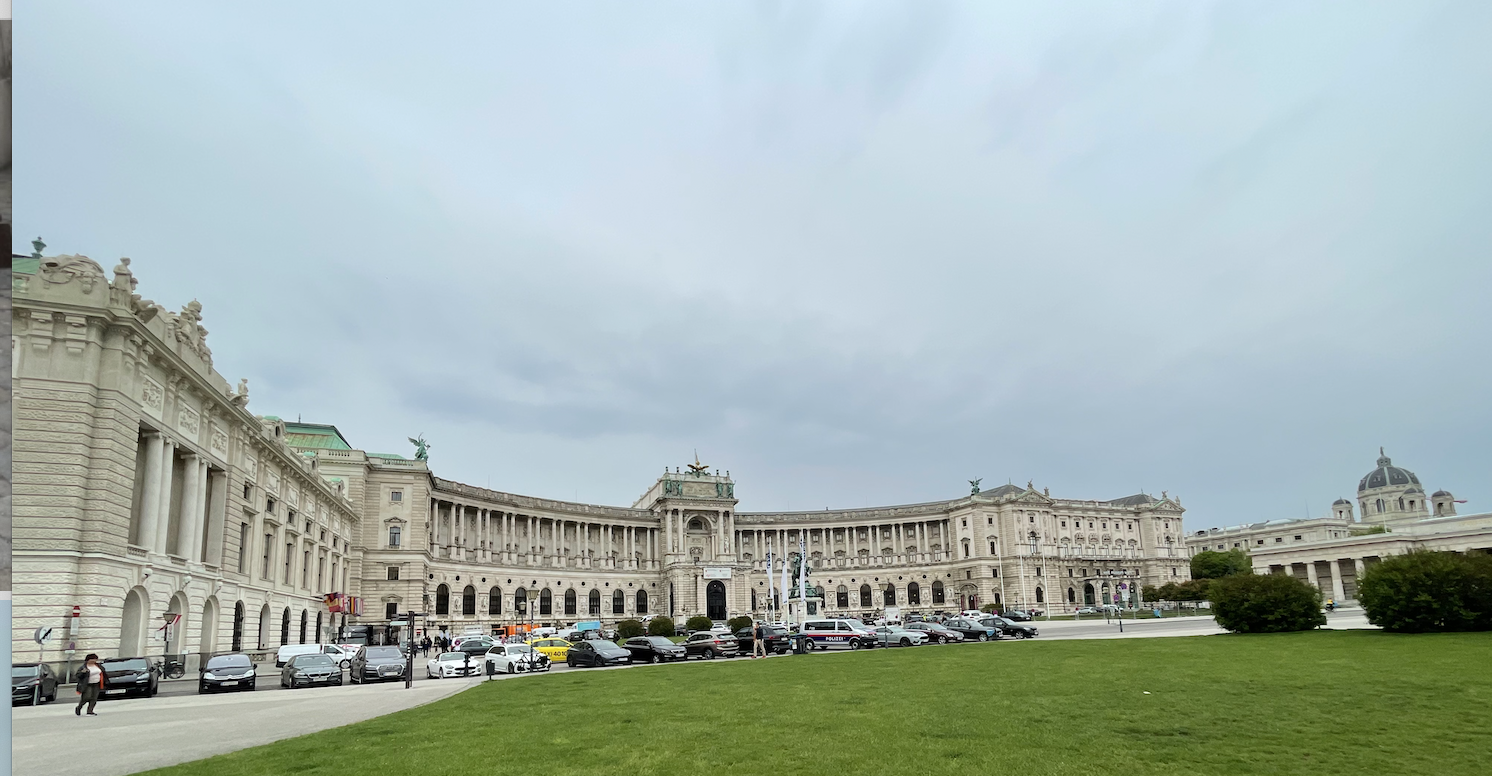
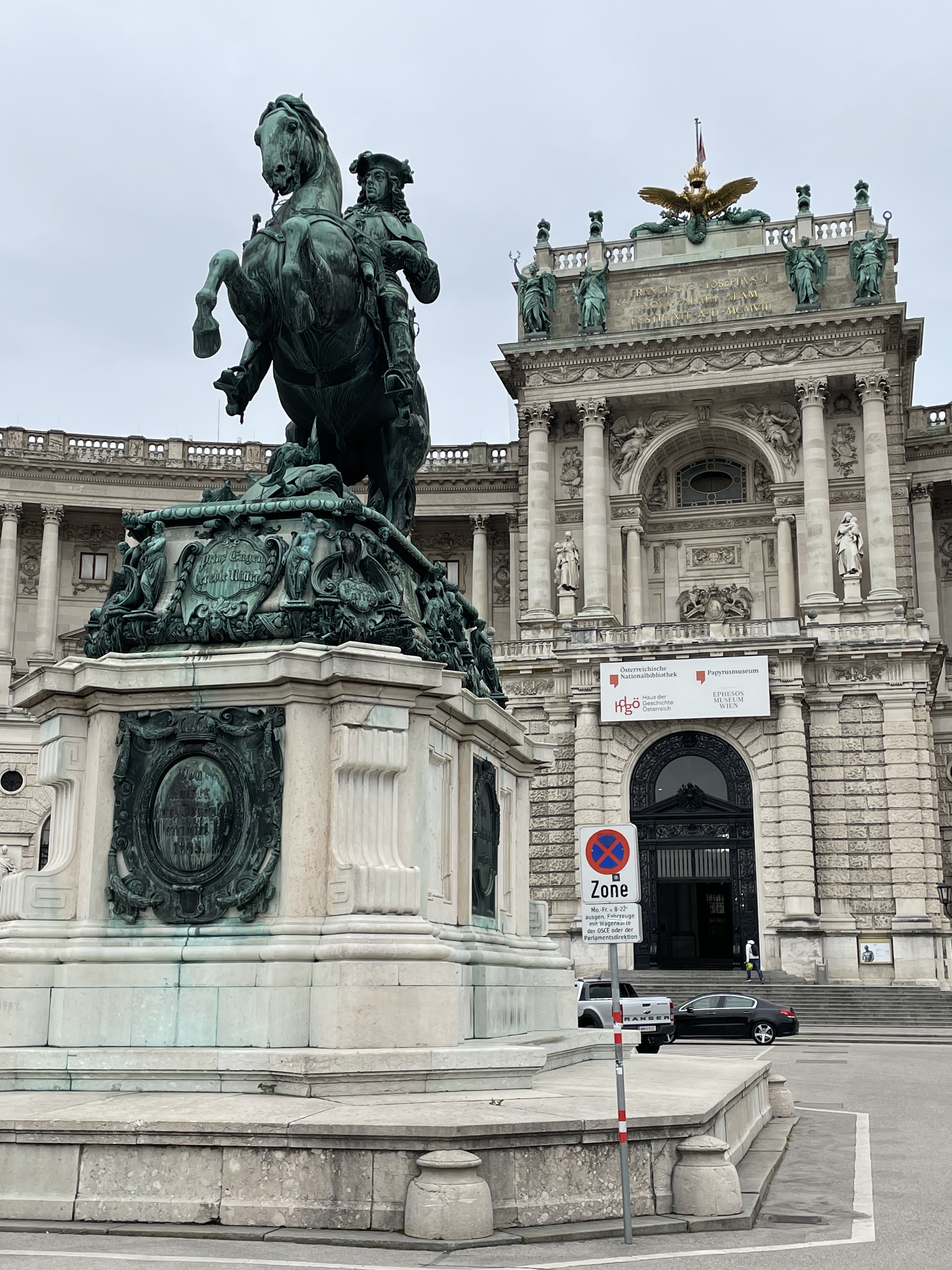
This is the Square of the Heroes – so an opportunity to demonstrate ‘The Reaches of Power’, over time & over Peoples
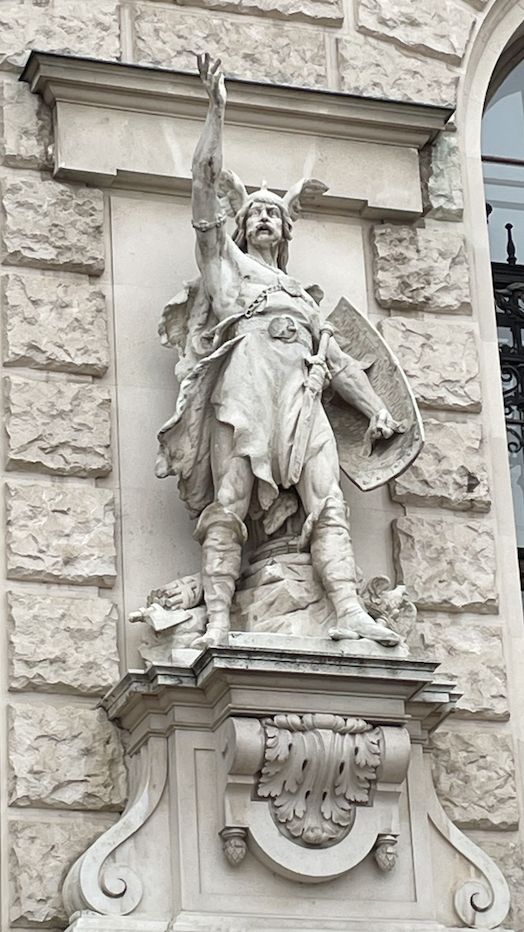
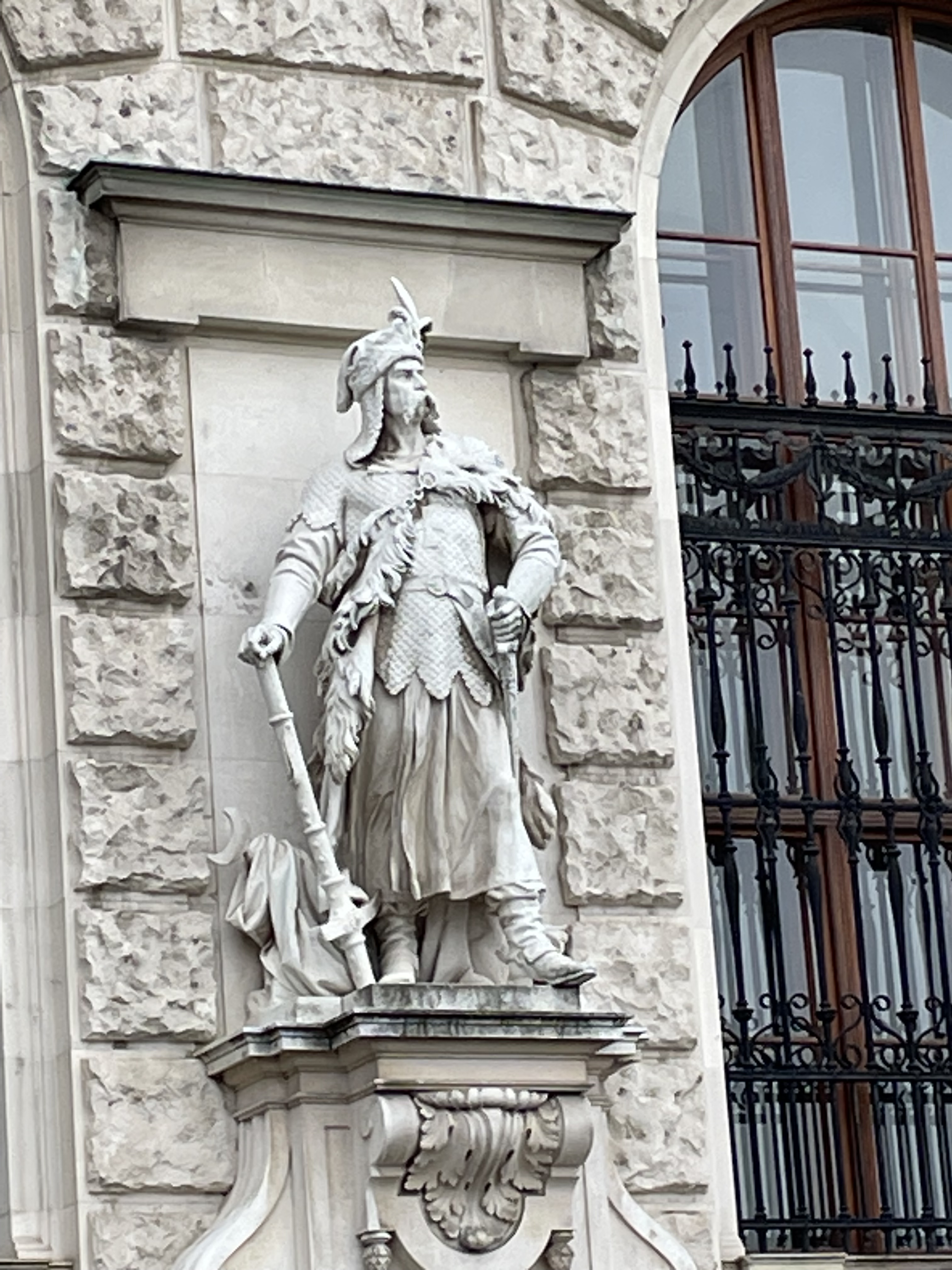
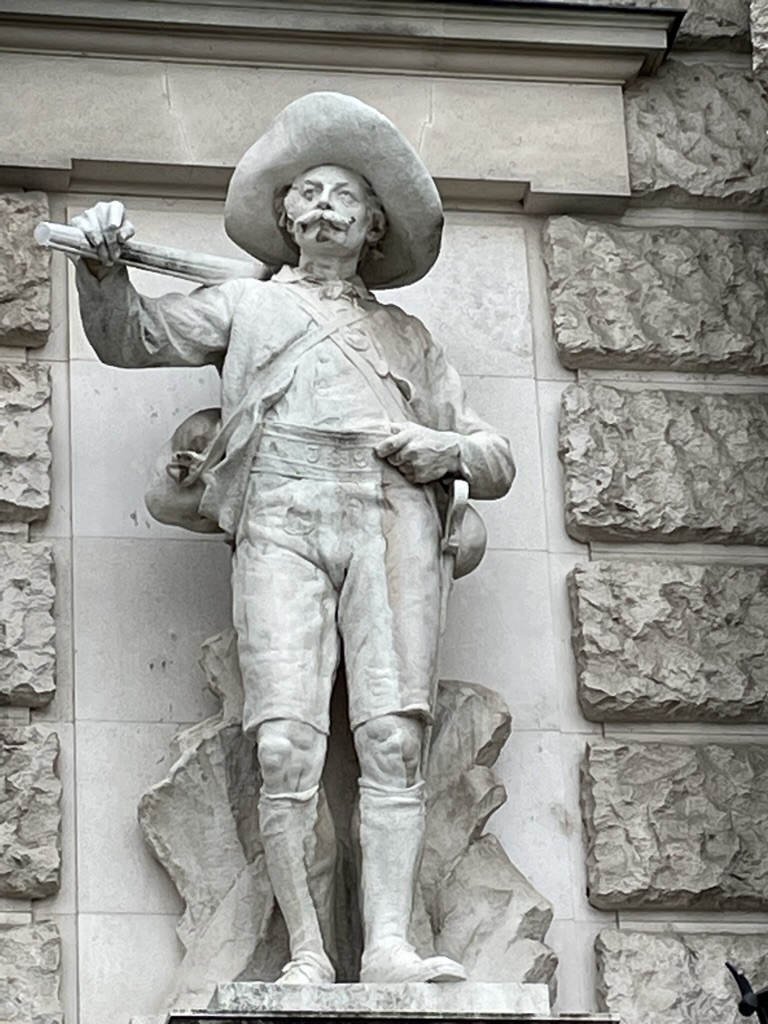
A Bavarian proudly set near to a Magyar

…. along with a more ancient Magyar.
These proudly fashion conscious ‘Ancients’ had their equivalents in later times
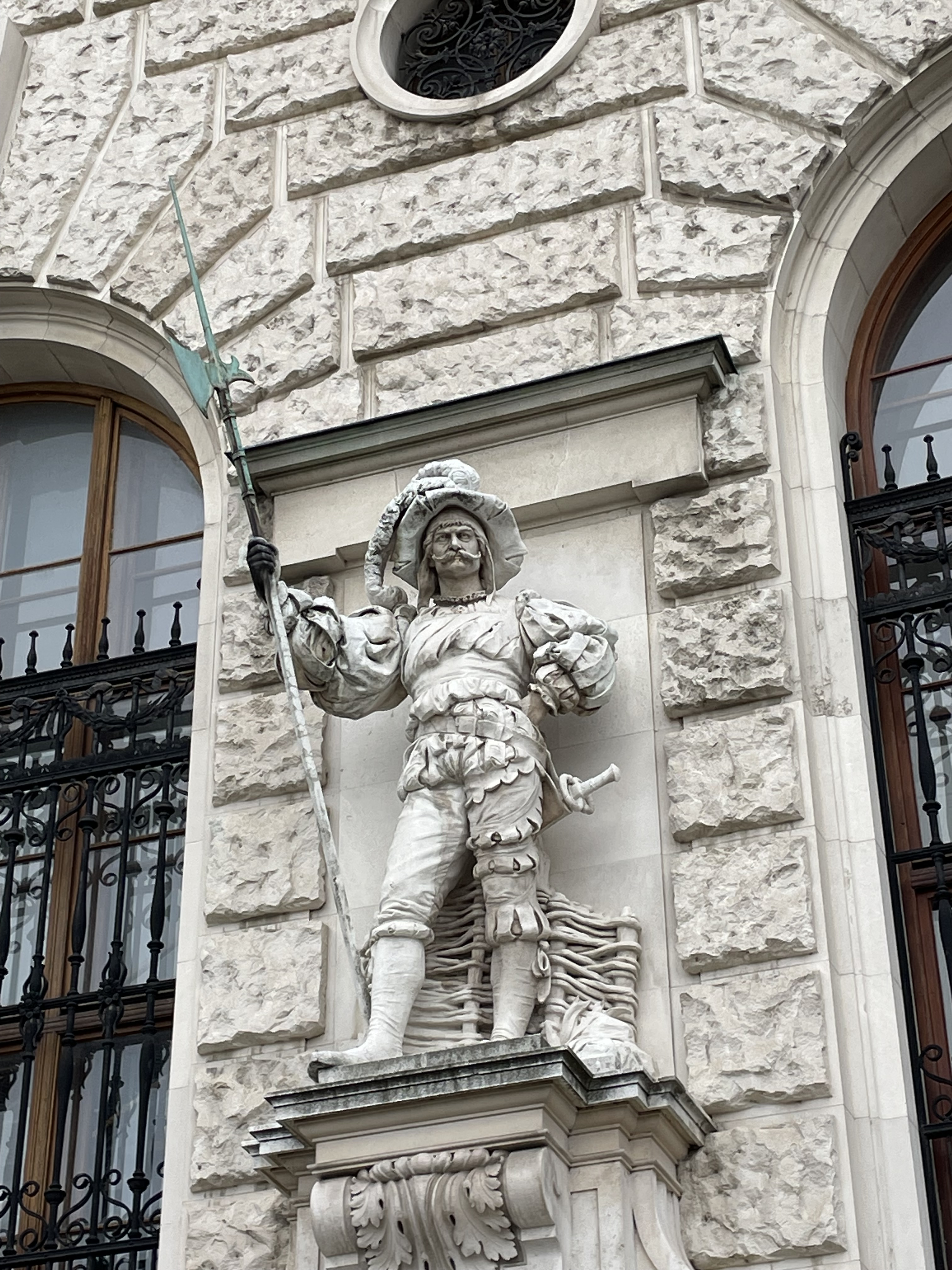
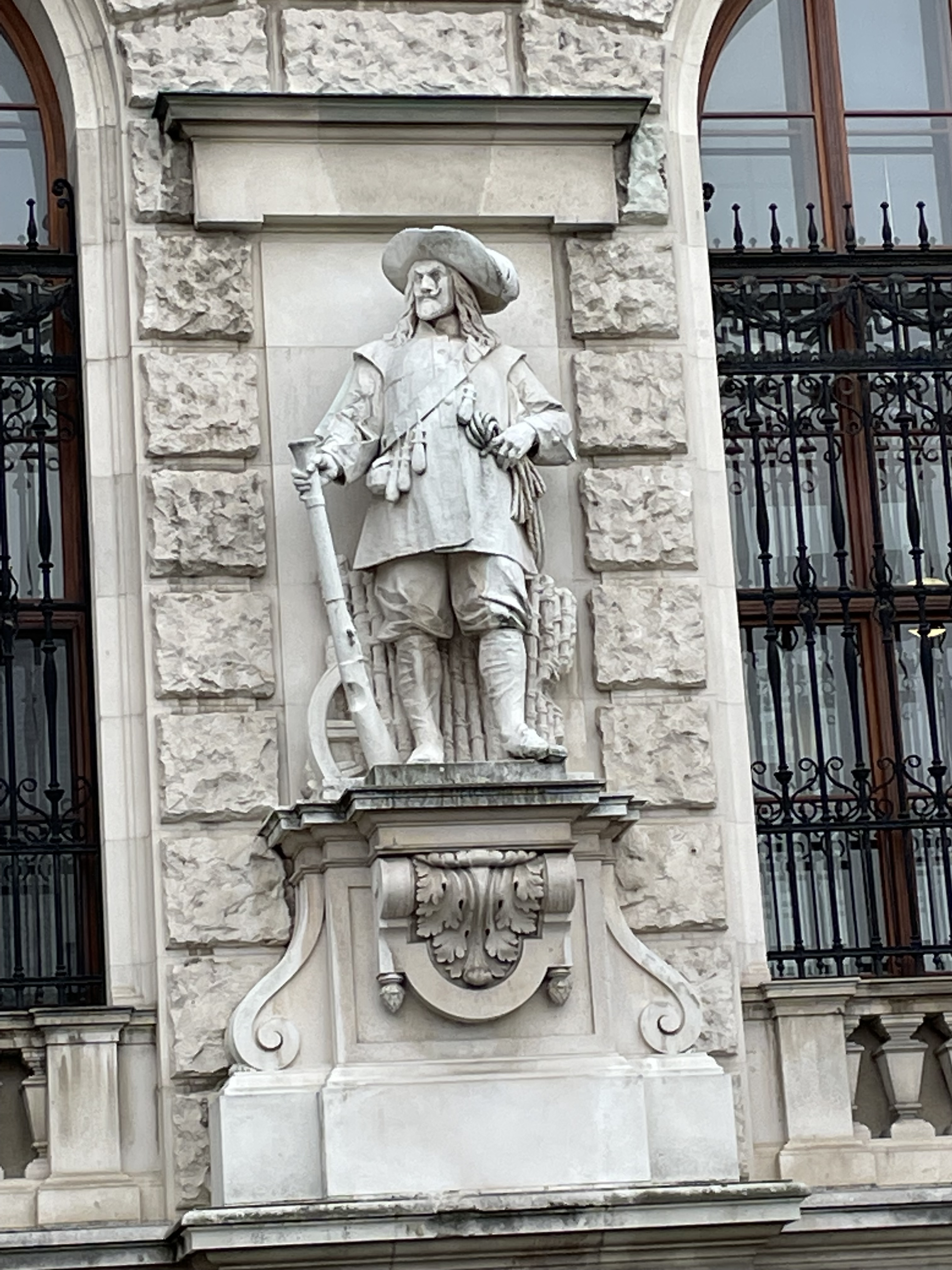
…… but in terms symbols of male power and dominance, nothing, it seems, could compete with
The Heavy Metal Age…. from the stare he makes one might imagine there are also powerful drugs involved.
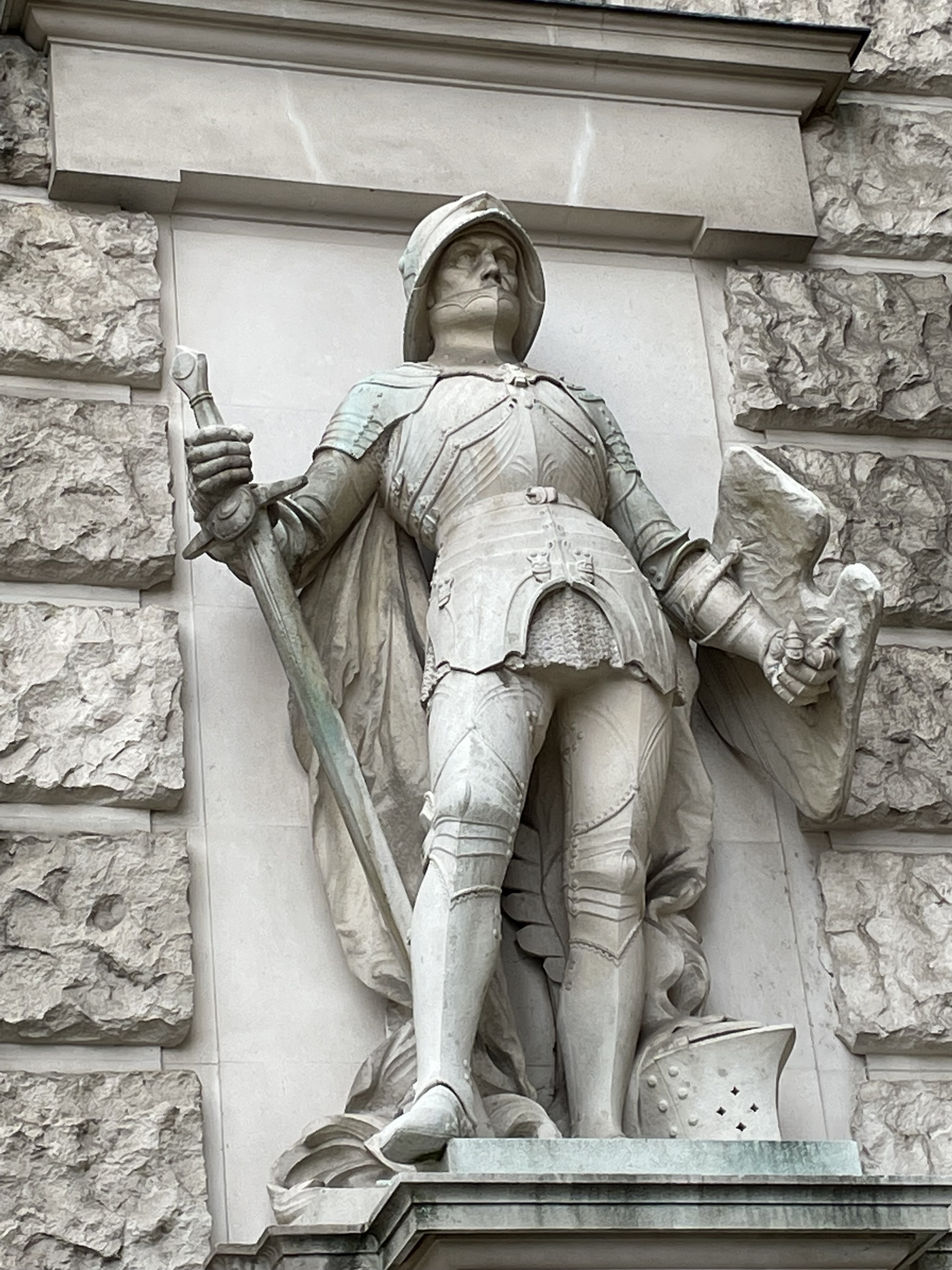
The Age of Reason produces a much more thoughtful type of human – quite unlike the brutish, bestial Mediaeval characters
A contemplative, gentle, wistful ’tiller of the soil’, resting in a quiet moment … and no doubt, composing poetic verses in praise of the idyll of rural life.
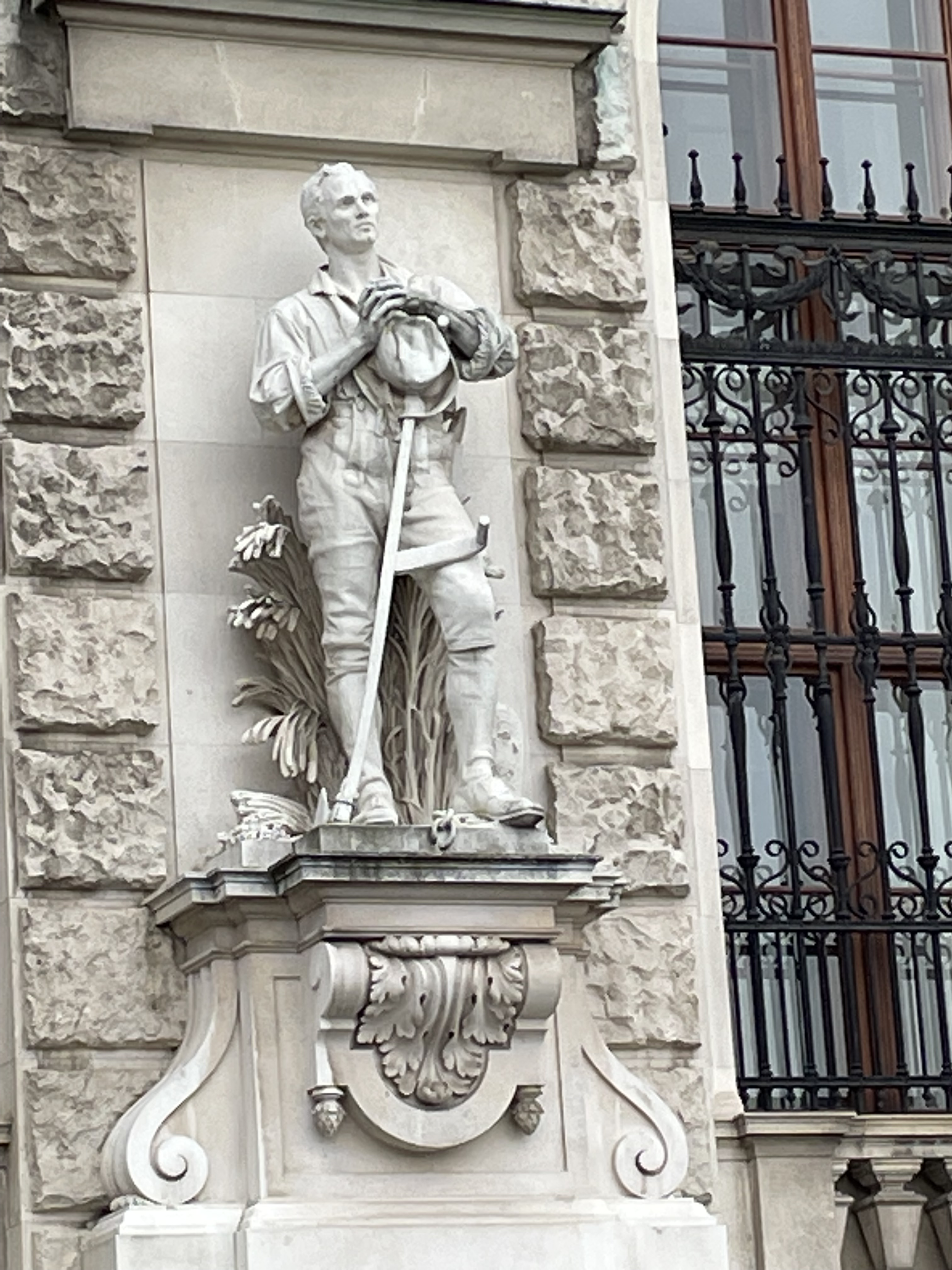
The ‘homesteader’… bearing arms, but merely to protect his kith & kin and to deal severely with any unwanted intruder.
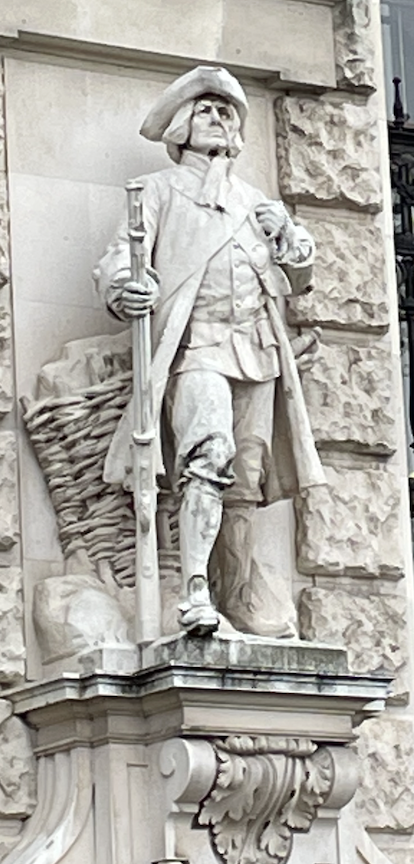
The honest servant of the Empire, loyal and faithful to anyone who holds overall authority.
The rain arrives (and ‘settled in for the day’).
We cross the Ringstraße and into Maria-Theresien-Platz
& pay our respects to a rather damp Maria Theresa (Maria Theresia Walburga Amalia Christina), significant ruler of the Hapsburg Dominions between 1740 – 80.
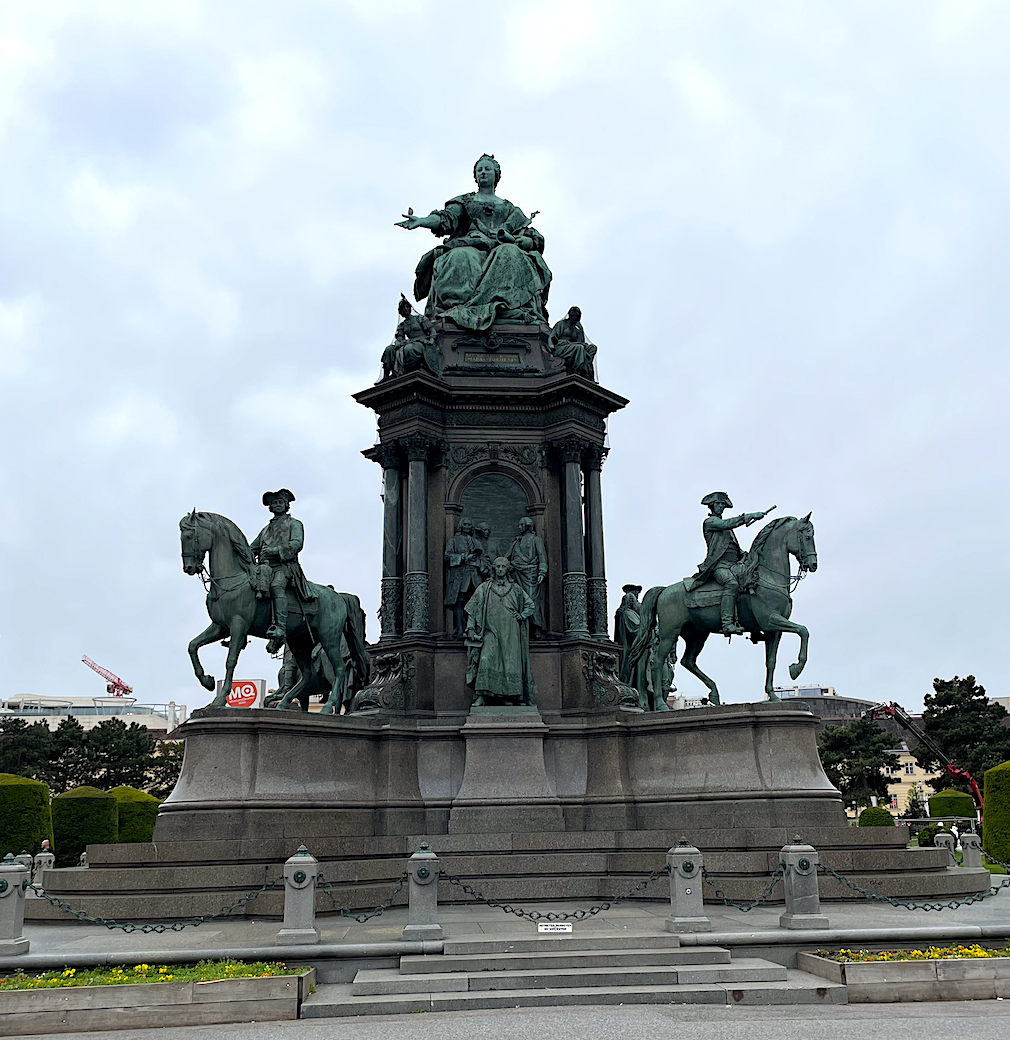
She was the sovereign of Austria, Hungary, Croatia, Bohemia, Transylvania, Mantua, Milan, Galicia and Lodomeria, the Austrian Netherlands, and Parma. By marriage, she was Duchess of Lorraine, Grand Duchess of Tuscany, and Holy Roman Empress.
Wikipedia: Maria Theresa
Rain increases, we drift… past the Parliament, over the Ringstrasse into the Volksgarten & shelter in a cafe.
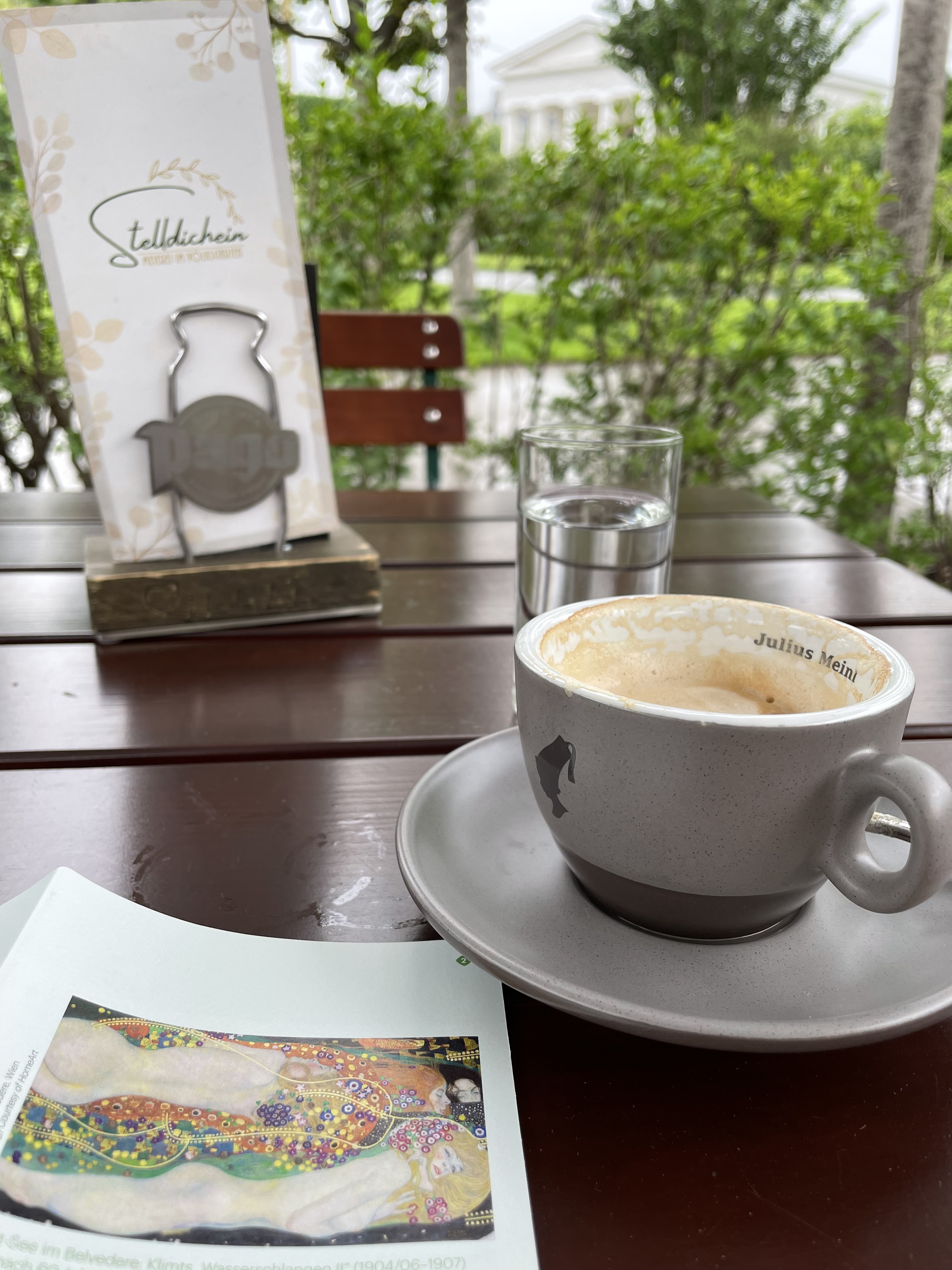
Then, after once again passing an even damper Empress Maria-T, fail in an attempt to visit one of the Art collections in the Museum Quarter (it was the only local museum always closed on Tuesdays).
Most of this 3rd Journey had been in unseasonably cold weather, with rain a significant feature, even in the most southerly parts. Today, here in Vienna the wet and the cold combined.
This day in Wien, was the only day on the whole No Kerosene Tour allowed for simple ‘sightseeing’. The city had never featured directly in any of our partnership meetings. Other places had important links, or had been important ‘staging-posts’ – not even Vienna Airport featured.
Our form of Rambling Exploratory Tourism was best suited to dry weather – cold & even gentle snow (as in Turku, Finland) did not discourage…. but rain (of a type well known at home in the UK) was depressing.
We decided on an early lunch….. inside the Hofburg in what seemed to be a vegan staff canteen.
But even though we were ‘strangers in the house’ we were very well received
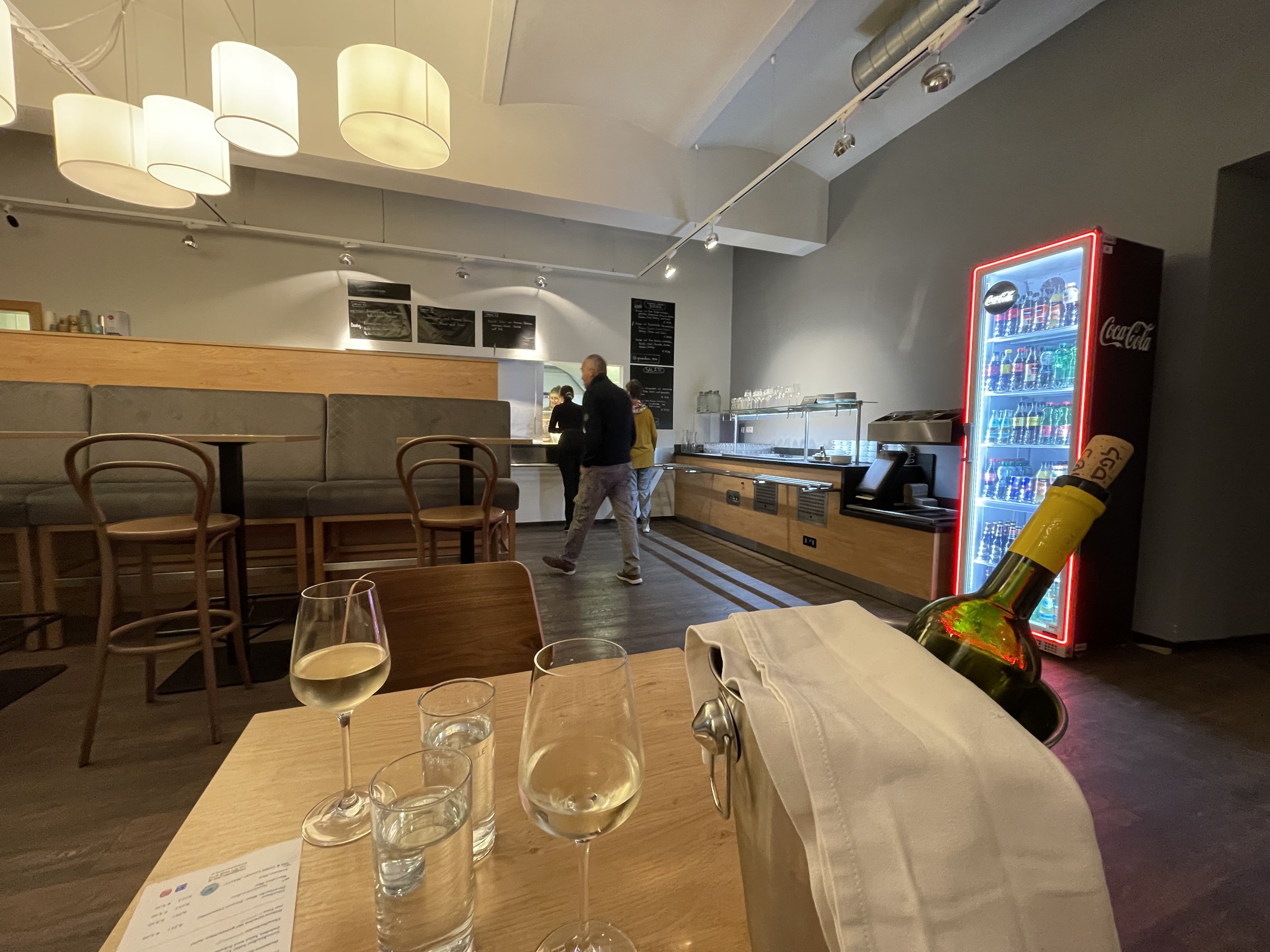
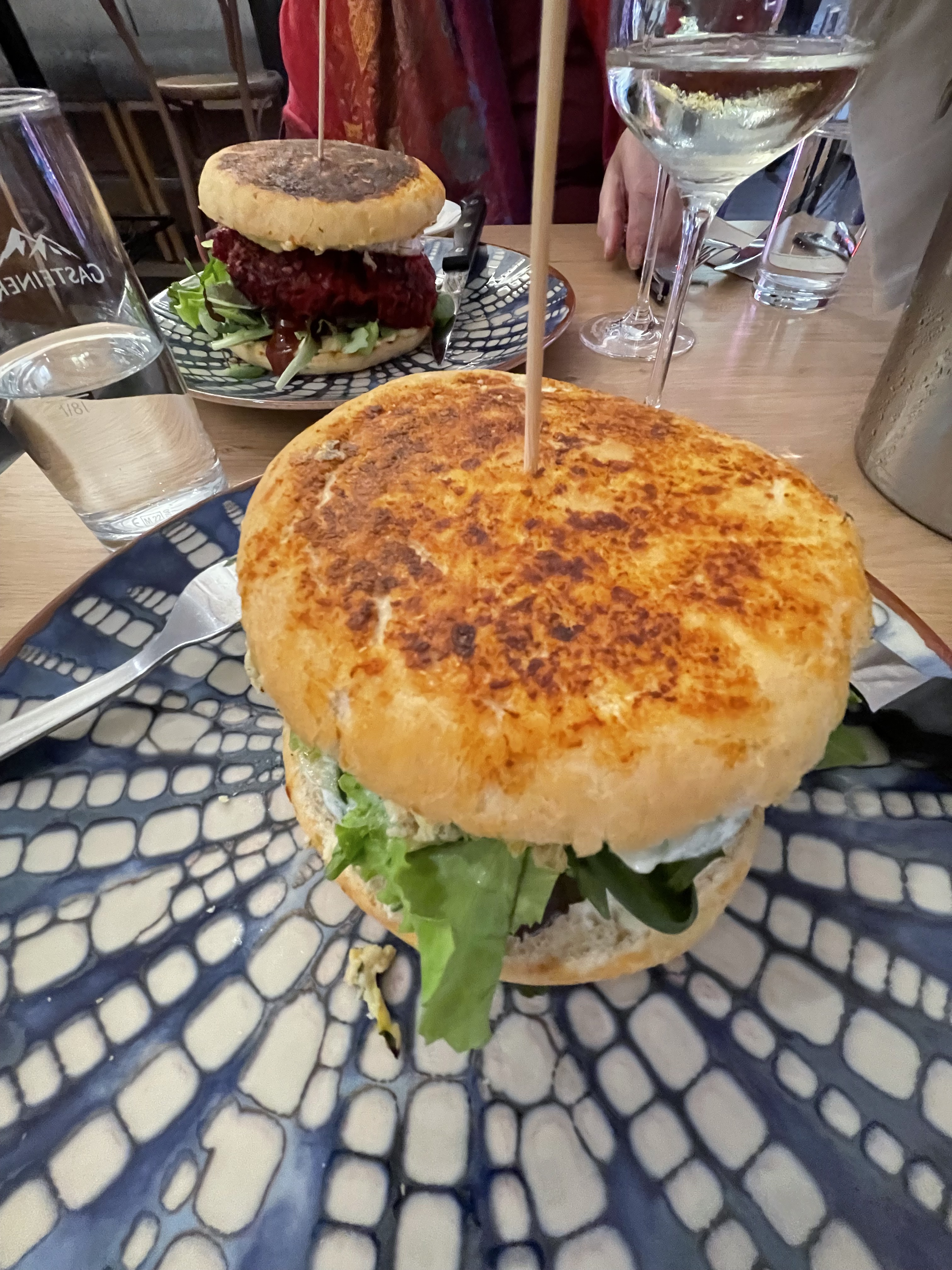
We surrendered to the grim, depressing weather & retreated to our hotel.
What to make of Vienna?
In general terms I’ve not really changed my view – it is not a place that I find exciting.
Except:
It is an important cross-roads – so almost certainly a place to be visited again (and there are sites & galleries in the city to be viewed).
We knew very little about Vienna having never had any great desire to visit, largely because its promotion seemed centred around excessive baroque architectural styles & the irritating & bland tedious musical romanticism of Johann Strauss – ‘On the Beautiful Blue Danube’.
The Radetsky March – celebrating a victory over the Kingdom of Sardinia – had also developed unfortunate associations
“It was announced in 2019 by the Vienna Philharmonic board of directors that a new version would be used that would replace the Weninger arrangement in an attempt to “de-Nazify” the march. The new arrangement was first performed at the New Year’s Concert in 2020.”
Five separate but brief visits to the city became a ‘normalising process’ (if only to the Hauptbanhof & immediate area) & a chance to discover if there was anything worthy of further attention.
What finally helped me understand my own feeling of disinterest was the realisation of the nature & role (then & now) of the Ringstrasse. A wide road, called a boulevard, circling what had been the mediaeval city. Its original purpose was to help build connection between Citizens & Centre. Its structures were created over a lengthy period of time.
It was only on our final day that I began to understand what it was…. but also to realise that, without knowing, we had, in our unstructured wandering, criss-crossed the boulevard several times. Now I hope for an opportunity to return and walk the ring in one movement – to see if the repeated term: “the most beautiful boulevard in the world” is (for me, appropriate).
I suspect that my resistance to Wien was based on an almost intuitive sense that the architectural splendours that are spread along & around the ringstrasse fit too neatly with the music of the period that is so often churned out creating an harmonious union in time, sound & sight. The architecture and the music of Strauss (father & son) fit neatly together….. and (despite all the other major European & World cultural figures who associated or lived there) Wien seems to be ‘enveloped’ in that period.
Maybe it is that harmonious relationship that results in my disinterest. I care for neither the architecture nor the music.
Though not a son of the soil, the mine or the forge – I am more relaxed in company of such than in the artifice, artificiality & essentially shallow company of Haute Société:
‘Un ensemble d’élites d’un groupe social ; élites d’un corps social · La classe occupant la position la plus élevée dans la hiérarchie’
Our strolls around parts of the city were allied to an increased fascination with the place as centre of the wonderfully diverse region for which it had been the Imperial City – a Central European Rome in the fading years of the Holy Roman Empire. Following the demise of that ‘Empire’ (early C19th) it was the centre, until 1866, of German language and culture. Vienna’s position
Being prevented from expanding westwards or to the Indian Ocean, the Habsburg rulers started to concentrate on territorial acquisitions in east and southeast Europe. After having lost Silesia to Prussia in 1742, they made territorial gains through the partition of Poland (Galicia), the conquest of Moldavia (Bukovina) and the Venetian heritage in Dalmatia, which they accepted in exchange for the southern Netherlands and the Vorlande. After 1815 the Habsburg borders saw only minor changes with the loss of Lombardy (1859) and Venetia (1866) and the occupation of Bosnia and Herzegovina (1878).
Ashgate history of textile workers
The hope……..
‘A multinational democracy’, with all nationalities granted freedom of thought, movement and belief,
The river systems rising within the Empire go north (Baltic), South (Mediterranean), East (Black Sea), West (North Sea/Atlantic). Historically, pre the formal Empire, Hapsburg lands included parts of France, Spain and the Austrian Netherlands.
In 1911 the following map was created
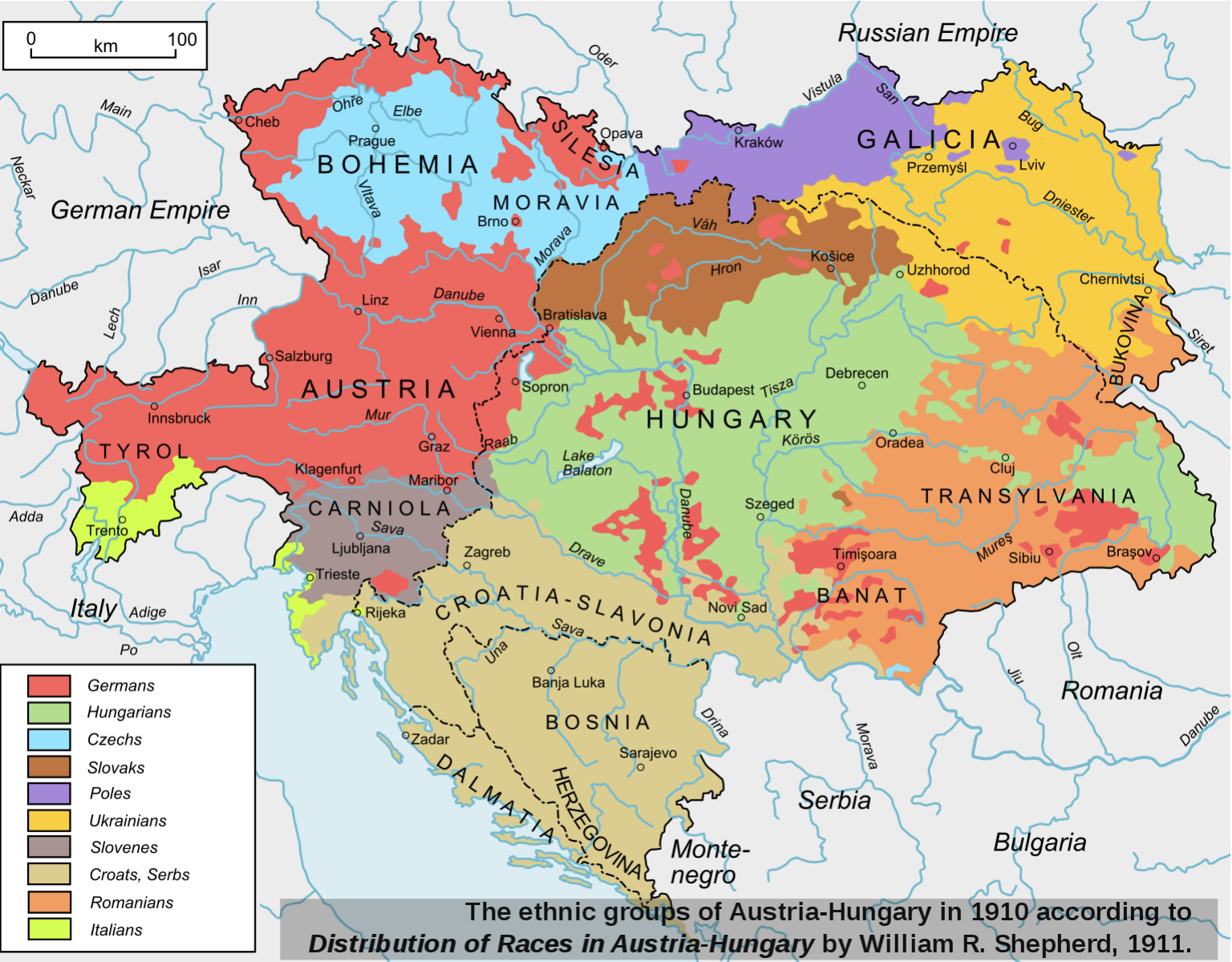
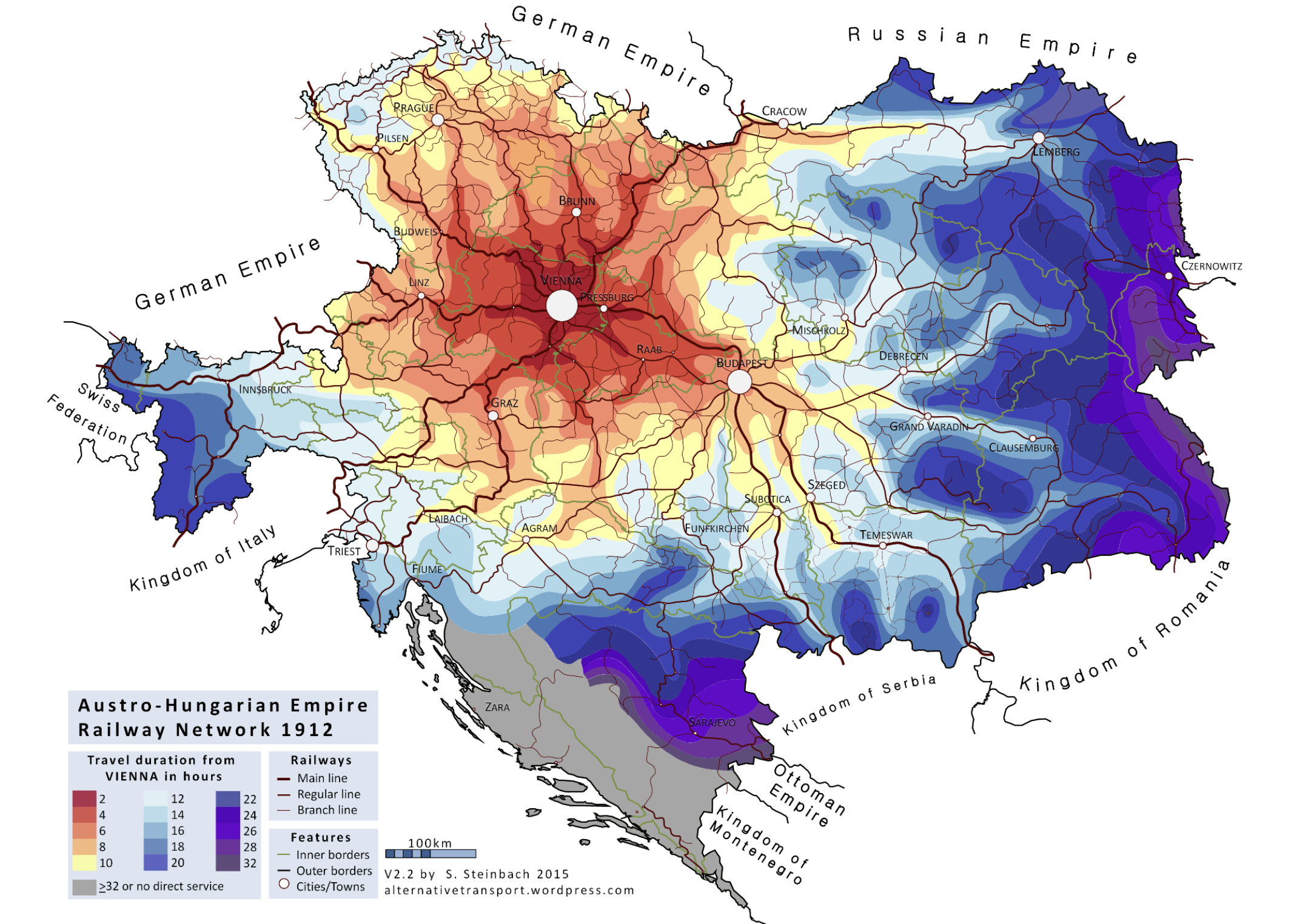
It was capital of a genuinely fascinating Empire that, even though entirely based on land connections, contained, at one time or another, some of the most interesting & culturally varied parts of Europe – Krakow, Prague, Trieste, the High Alps, the Pannonian Basin, Galicia, Transylvania & Bucovina, Sarajevo, Dalmatian Coast, Venice (on & across water).
17th May: to Bielsko-Biała
With mist and rain as our companions, we cross the Danube & head north.

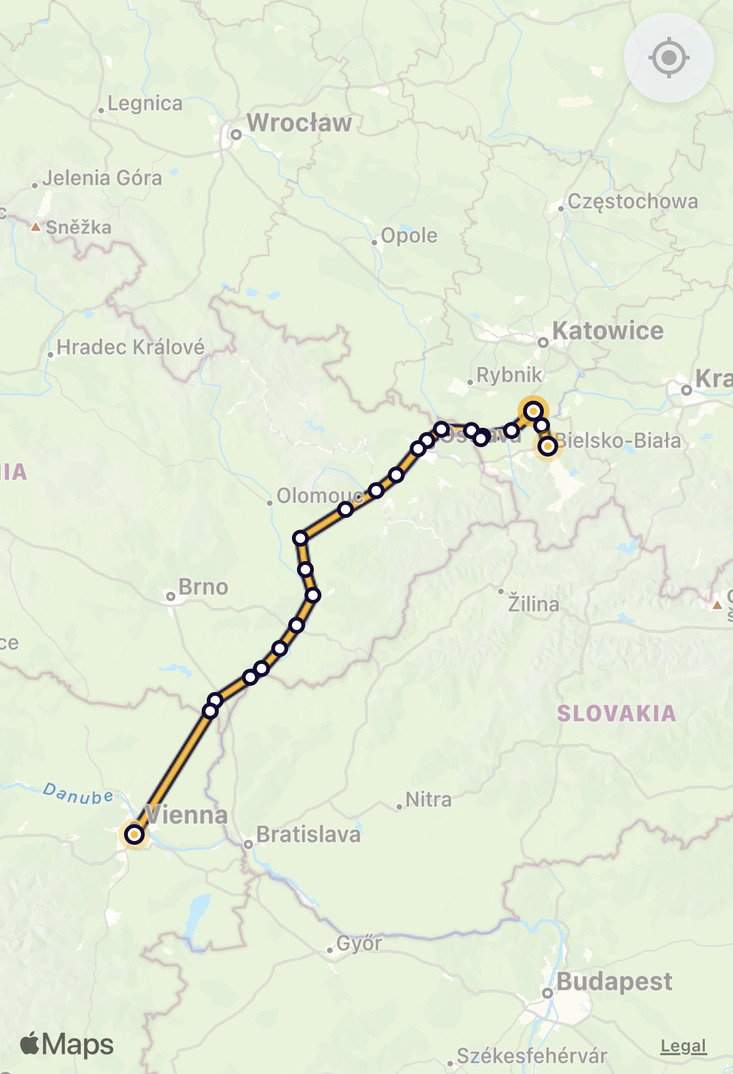
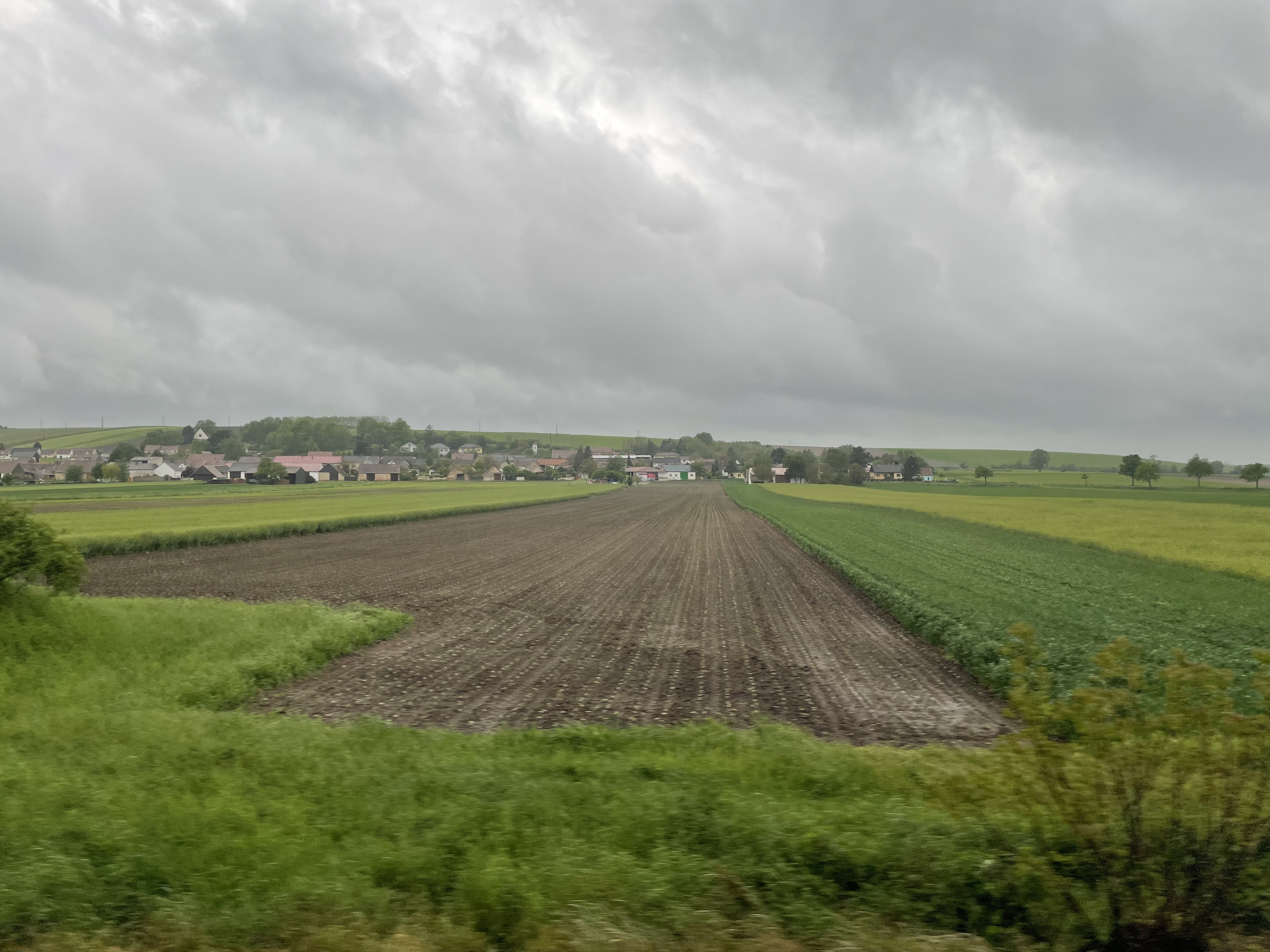
Walterhsdorf an der March
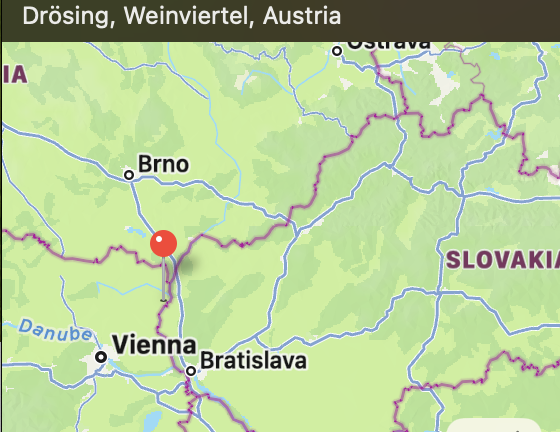
An aptly named small settlement. In Austria but almost in Česko/Czechia & Slovenská republika/Slovakia.
March/Mark: “a border between realms or a neutral buffer zone under joint control of two states in which different laws might apply.”
The Wikipedia article ‘March’ gives very detailed information on the ancient widespread use of the term.
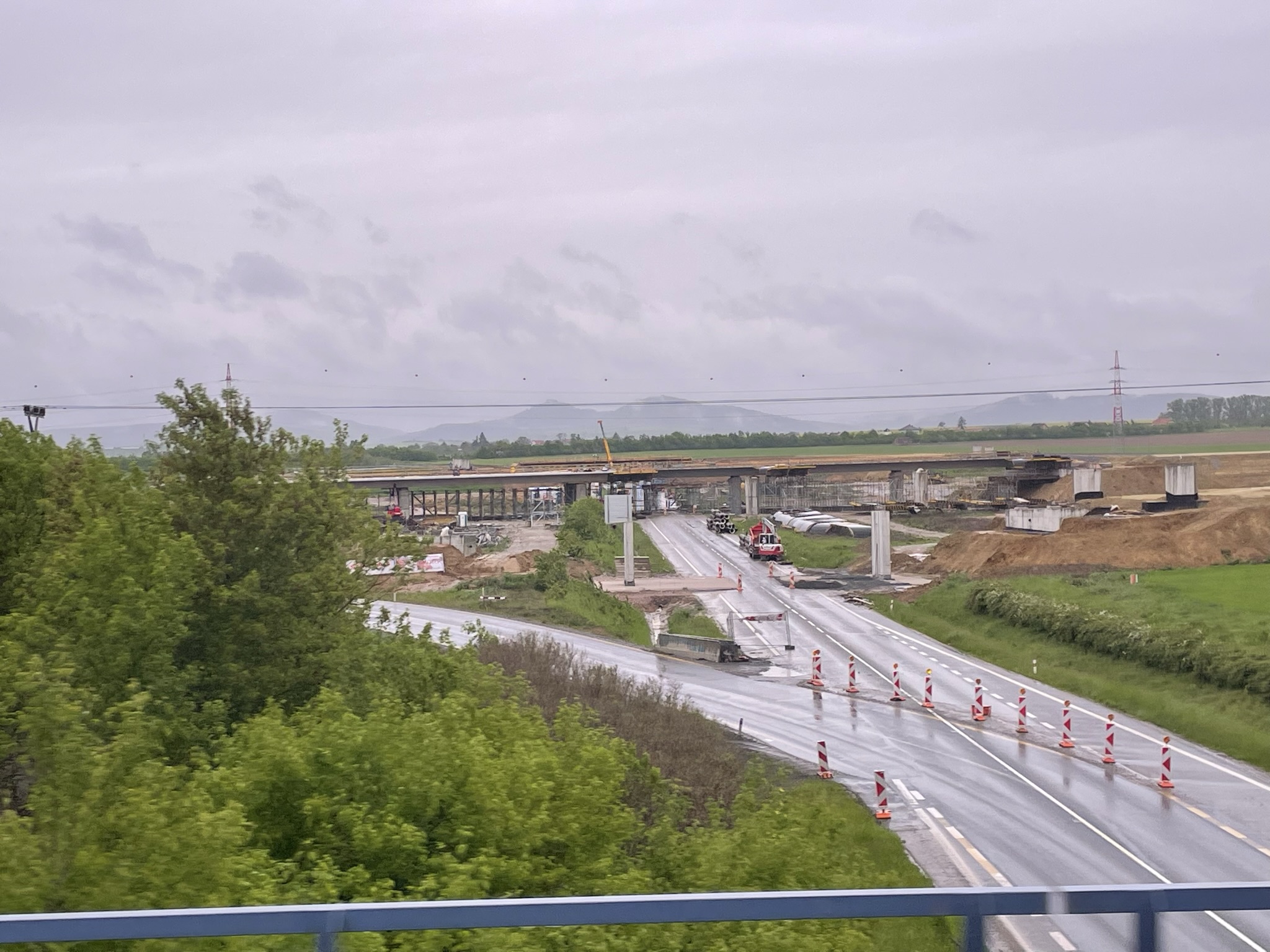
Czechia is now building high speed rail links through to Prague. These projects are not, as is usual in Central Europe ‘post-communist reconstruction’ but are indicative of fully dynamic economy.
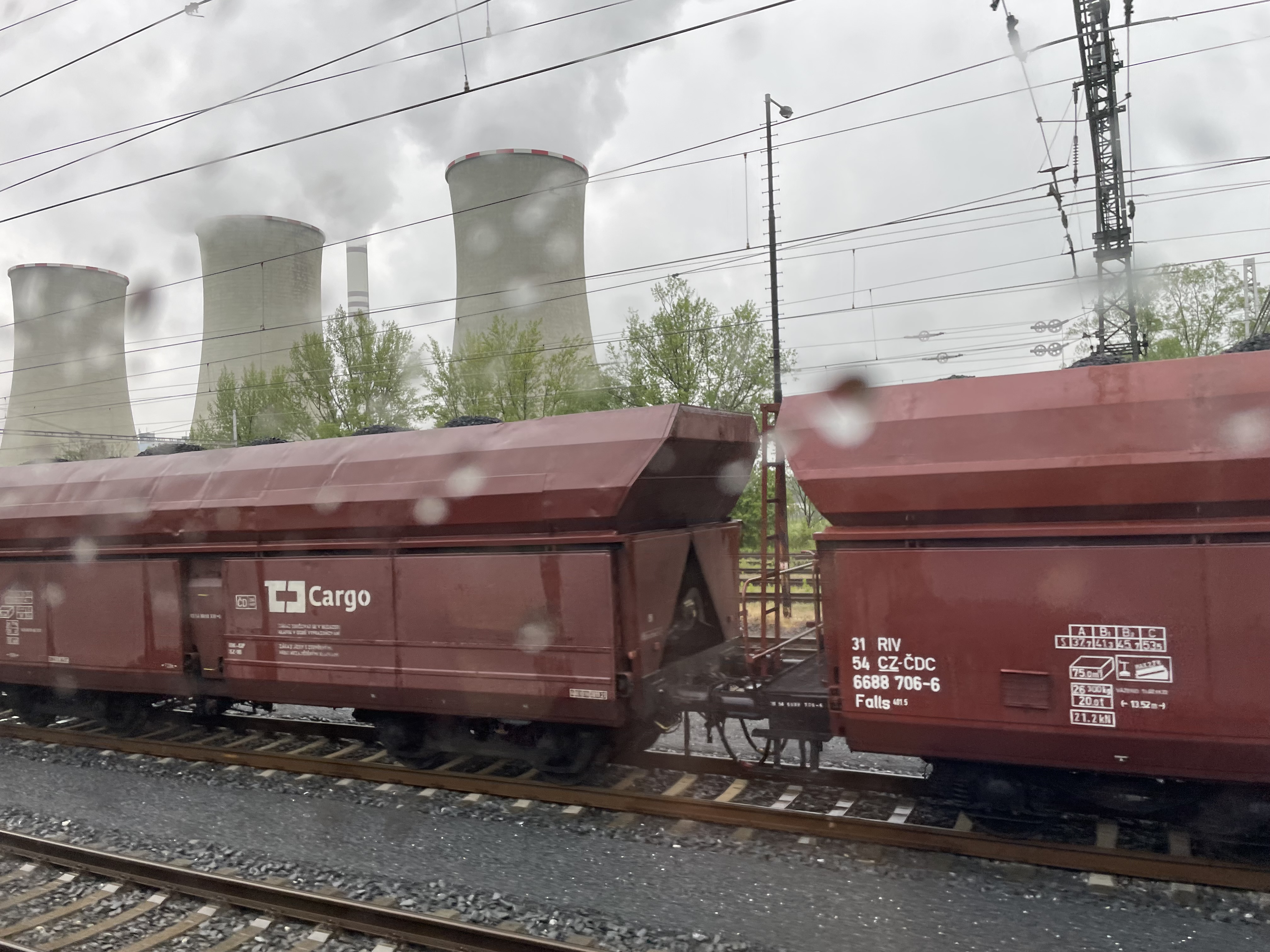
Some of the ‘old’ remains significant, even if delivered in wagons that are of modern design & function.
Into Poland
The rain & cold conditions, arriving in Wien yesterday, has been well established here for several days.
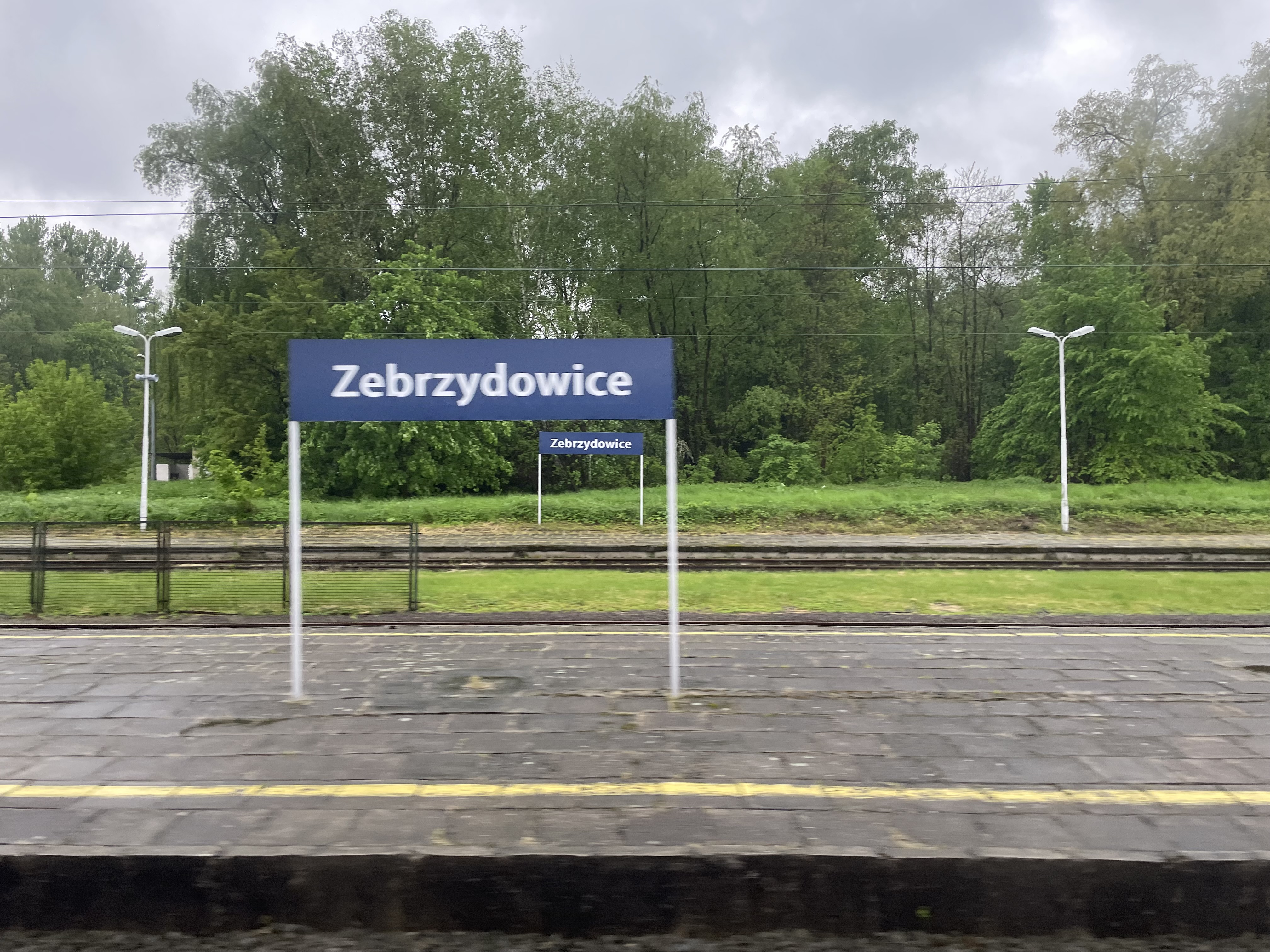

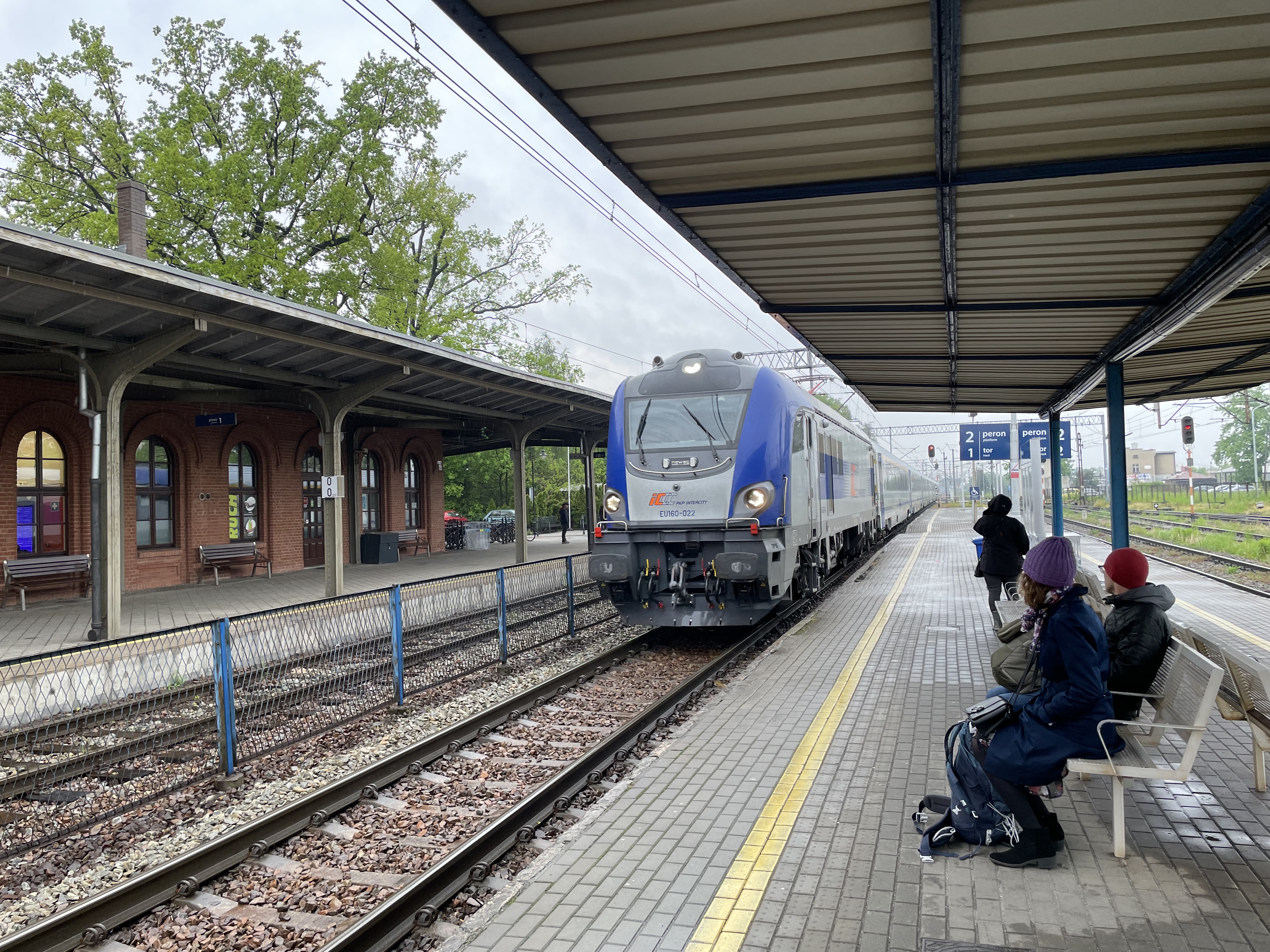
Changing train to reach Bielsko-Biała
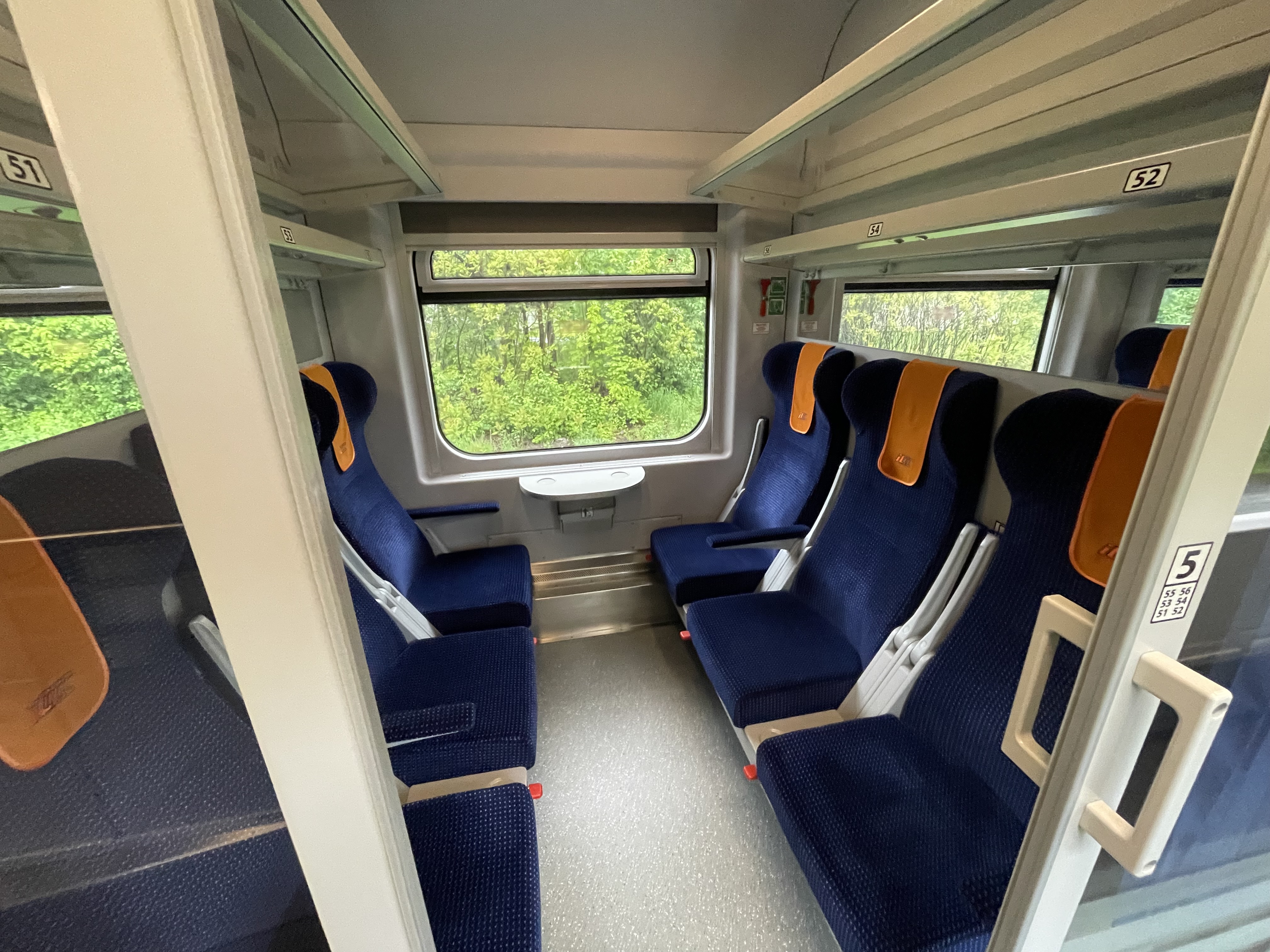
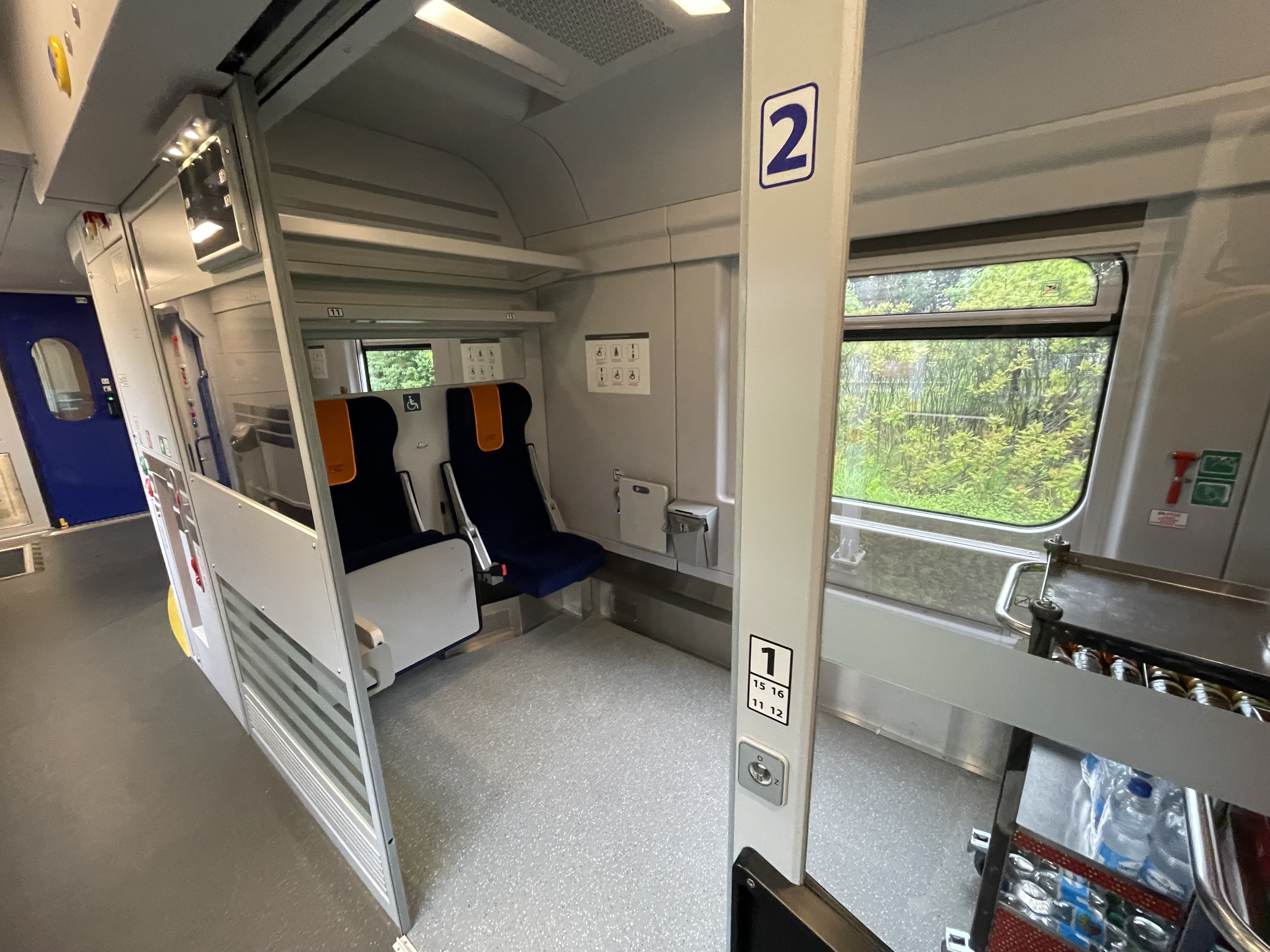
The apparently ‘new’ train is a restoration & refit – which explains why the compartment style has been retained.
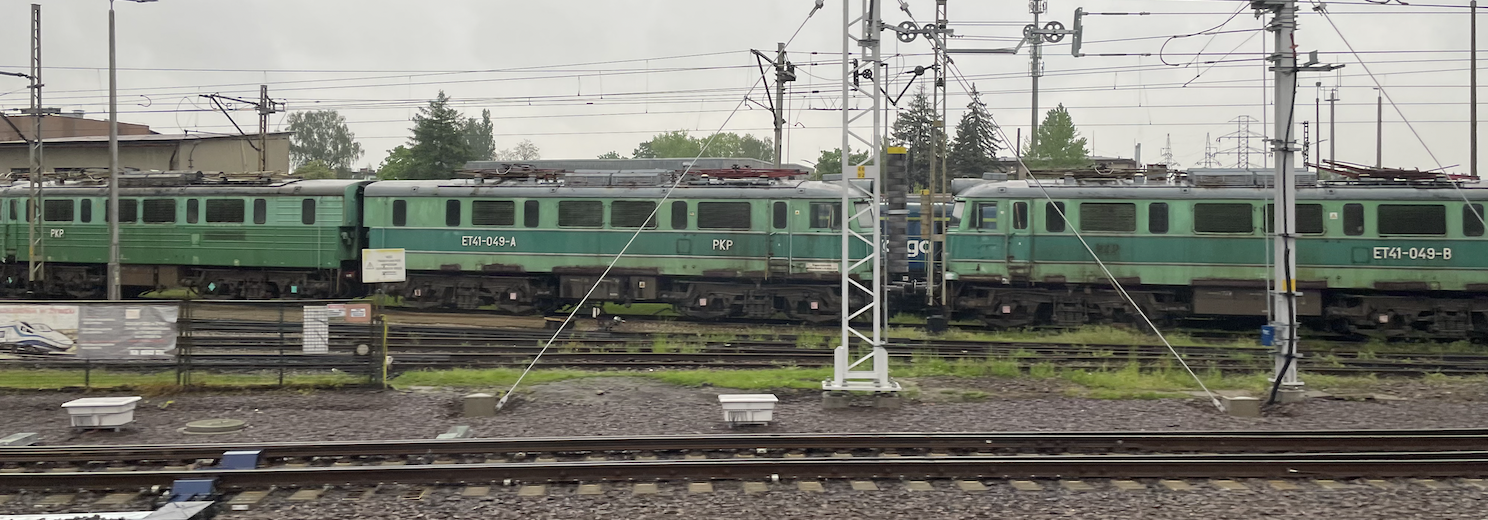
As we approach Bielsko-Biała we pass survivors of an ‘older time’…. “resting”
18th May: Bielsko-Biała
As in Journey 2 we are met by Magda & have arrived at a place, region & nation whose history for the past 250 years illustrates the confusion of boundaries & possessions that feed into the warped imaginings & actions of a neighbouring ‘World Leader’.
The regime’s great aspiration is to resuscitate the USSR. Russia is ruled by people who made their careers and lived their lives within the Soviet KGB. Their dream of restoring the country of their youth is being realised before our eyes. It is a land where the population obediently lays its head on the executioner’s block, sighing that, of course, the tsar knows best.
Mikhail Shishkin
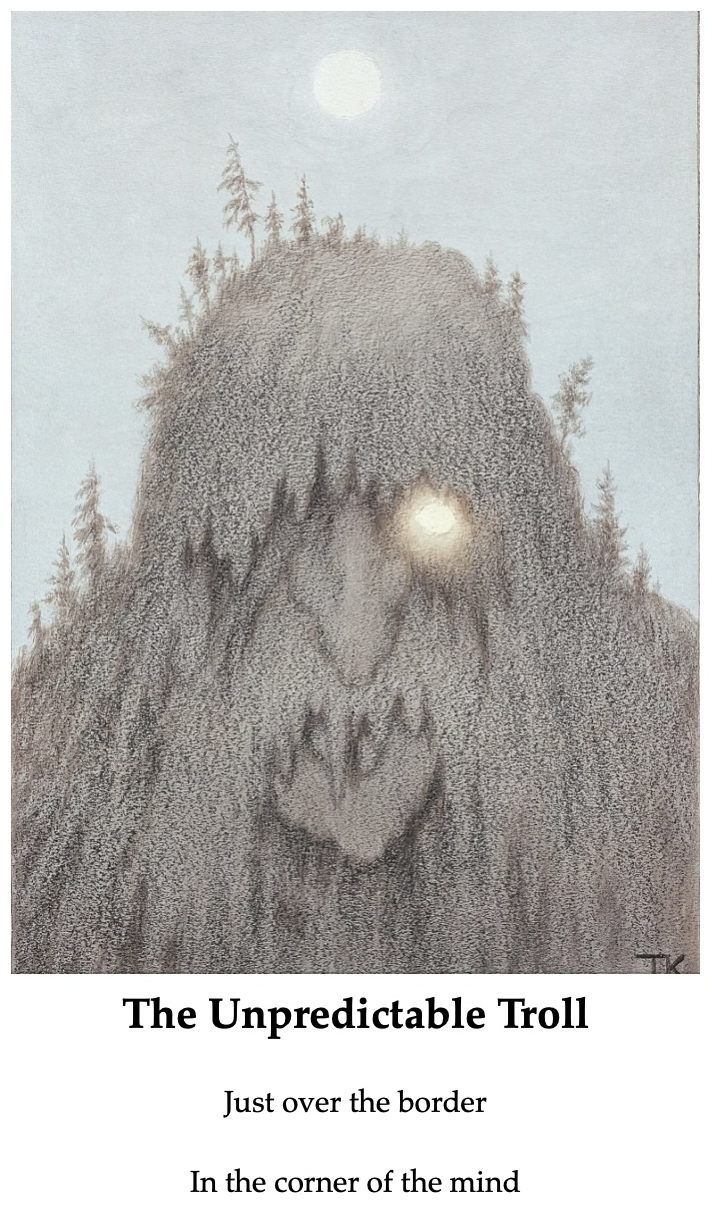
The rest of our 3rd Journey is contained within nations that would form part of this ‘restoration’: Poland, Lithuania & Latvia.
The focus of our first journey, Finland, though never part of the USSR, may also lie within the gaze of the Troll.
Unsurprisingly, there is increased concern, tension & fear caused by the knowledge & (for many) experience of events occurring within the last 100 years & lasting until national freedoms were gained just over 30 years ago.
Partnership Background
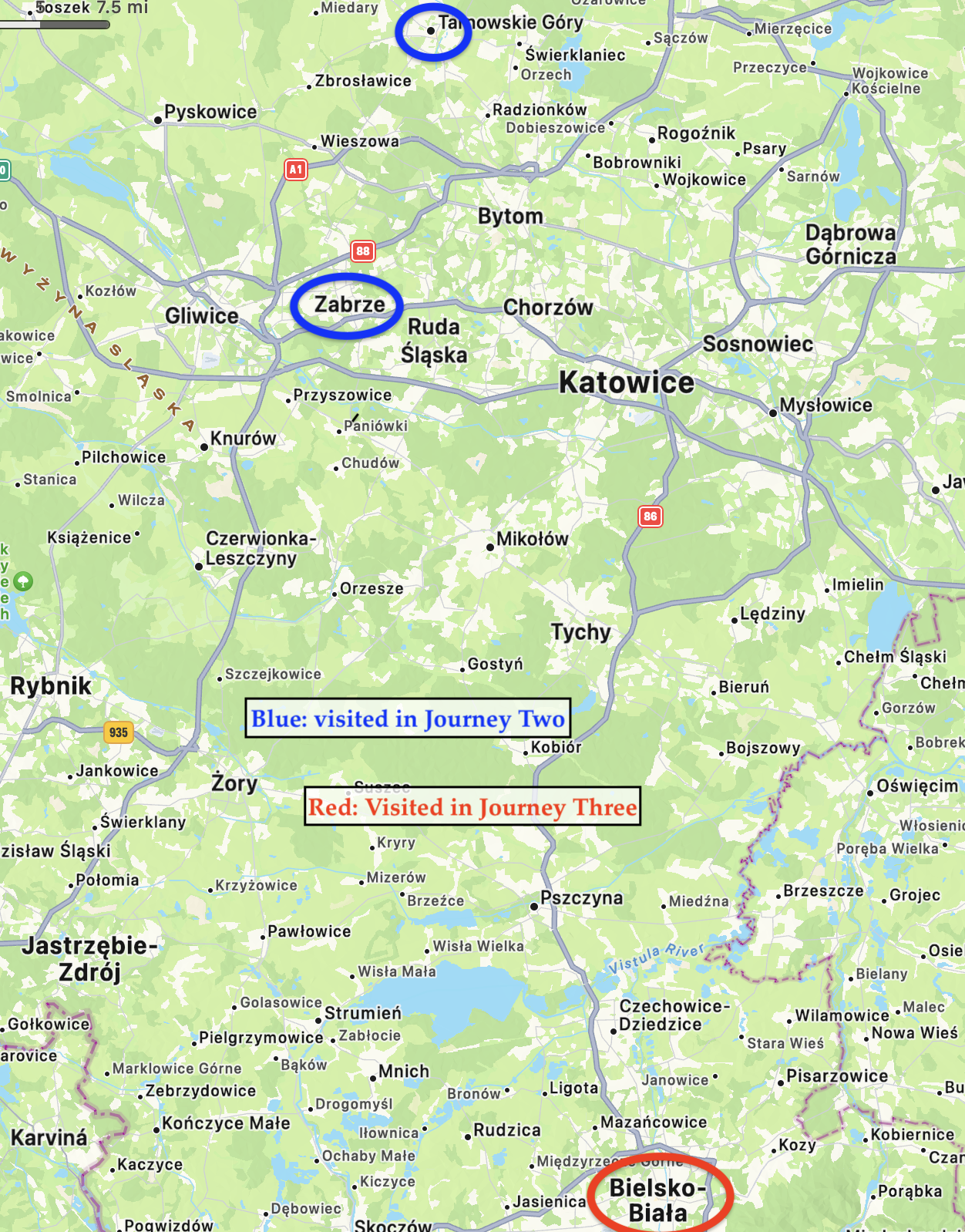
We’ve shared partnerships with Magda for around 15 years. The partnership activities were in Zabrze a town in an area of heavy industry & mining known (due to pollution) as ‘The Death Triangle’.
From our friendship with Magda & Marcin came the support (& visits in 2022) for the work of WSEH with displaced Ukrainian families.
In Journey 2 we visited Tarnowskie Góry & Zabrze.
In Journey 3 we are based in Bielsko-Biała
The area was, after the Partition of Poland once part of Prussia (eventually ‘Germany’) & known as the ‘Eastern Ruhr’. More recently, after WW2, it was in Russian controlled Soviet Poland.

Originally the area was part of the cultural mix that was the Polish-Lithuanian Commonwealth (stretching to the Crimea), it then became either in Russian, Prussian or Hapsburg (Austrian-Hungarian) territory.
Such was the fragility of Eastern Europe after WW1 that had it not been for the Polish army achieving ‘Cud nad Wisłą‘ (The Miracle on the Vistula) Russian Soviet control over their existing Polish territories may have extended across much of central Europe (including Germany) in the early 1920s.
Due to the threats being posed by Putin these actions of 100 years ago these events are sometimes referred to regarding the present day situation facing Poland.
Bielsko & Biała were border towns – one Hapsburg, the other Polish… but after the Partition of Poland both became ‘Hapsburg’ territory.
Trying to understand the complexity of the Austrian/Hapsburg/Hungary (etc) connections is difficult – adding other elements makes it exceptionally hard. The words used then and now to explain the different territorial divisions & their rulers illustrate that complexity.
Voivod:
an ancient term used in SE Europe. It indicates some form of senior ruler. The original meaning: ‘Warlord’ – and clearly was that in mediaeval times.
In Poland it is used for the elected heads (wojewoda) of the provincial administrative district (Województwa – Voivodship).
It sounds strange when having learned the term in lands further south and east to discover its present somewhat mundane use in Poland.
Hospodar:
another Slavic word usually meaning ‘head of household’ or clan chief. Is such a person, in ancient times also a ‘warlord’ (Voivode).
Hospodar, or Gospodar (with other variants) may also be the ruler of an area of land.
In Moldavia & Wallachia Hospodar was used in addition to the title Voivod.
It seems to be a case of – Voivod, Duke, Hospodar, King, Prince, Governor – choose the one which seems appropriate to context in which it is used.
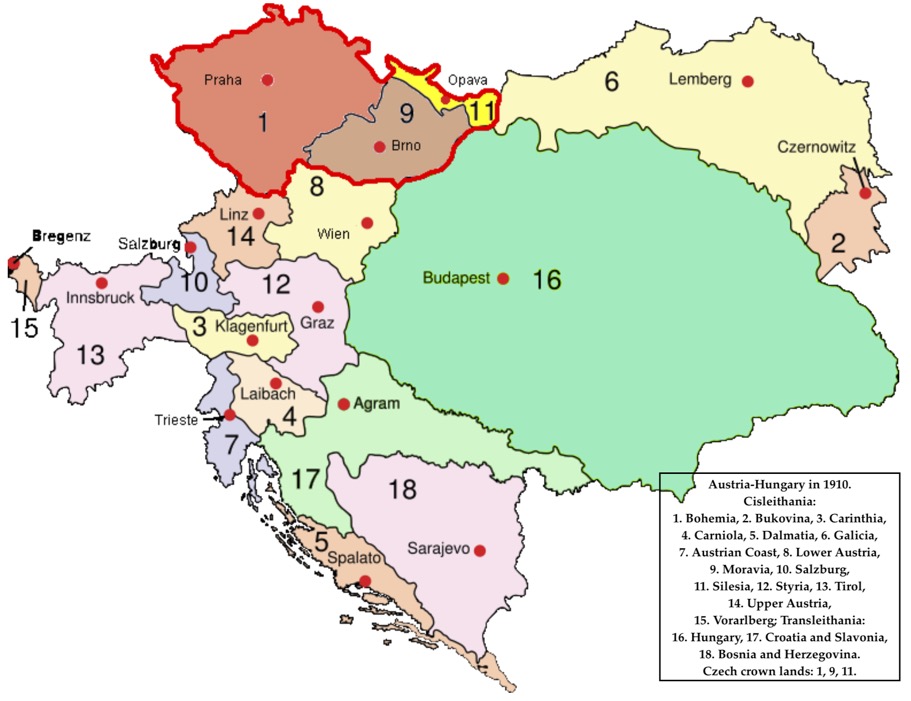
Levels of Complexity
In this 1910 map of Austro-Hungarian ‘Hapsburg’ territory 1910 Bielsko & Biała are placed on either side of the border between the ‘Crown lands’, 11 Silesia in the Kingdom of Bohemia & 6 Galicia (also ‘Crown lands as they are held directly by the Hapsburgs).
The EU funded Partnerships in Zabrze
The partnerships managed by Magda focused on the industrial heritage of the Zabrze & district.
Traditional industrial housing had become impressive cultural features – worthy of celebration.
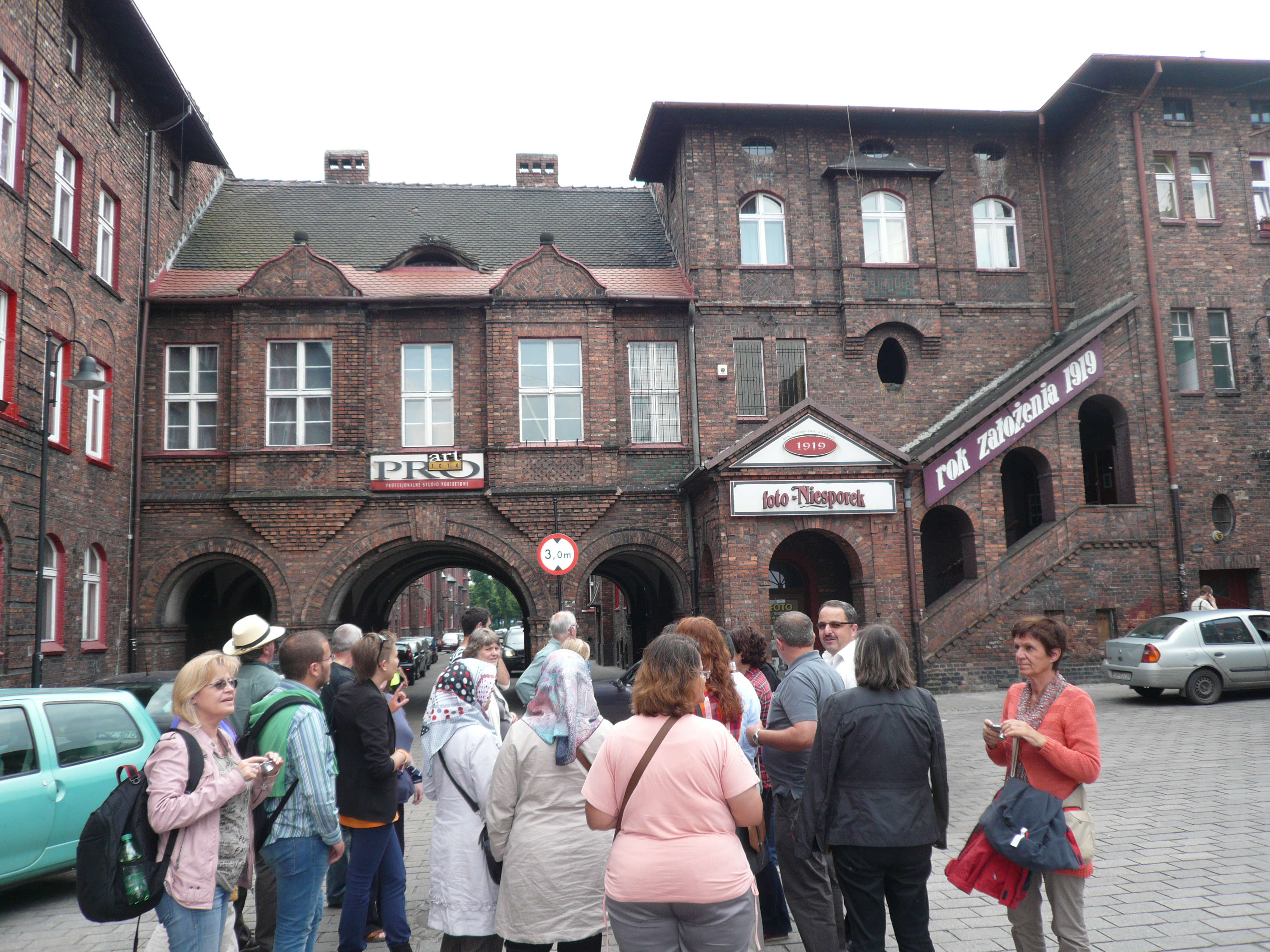

Closed mines were being converted into community resources – restaurants, Art galleries, museums. Those involved created social programmes alongside the commercial….. music & art.
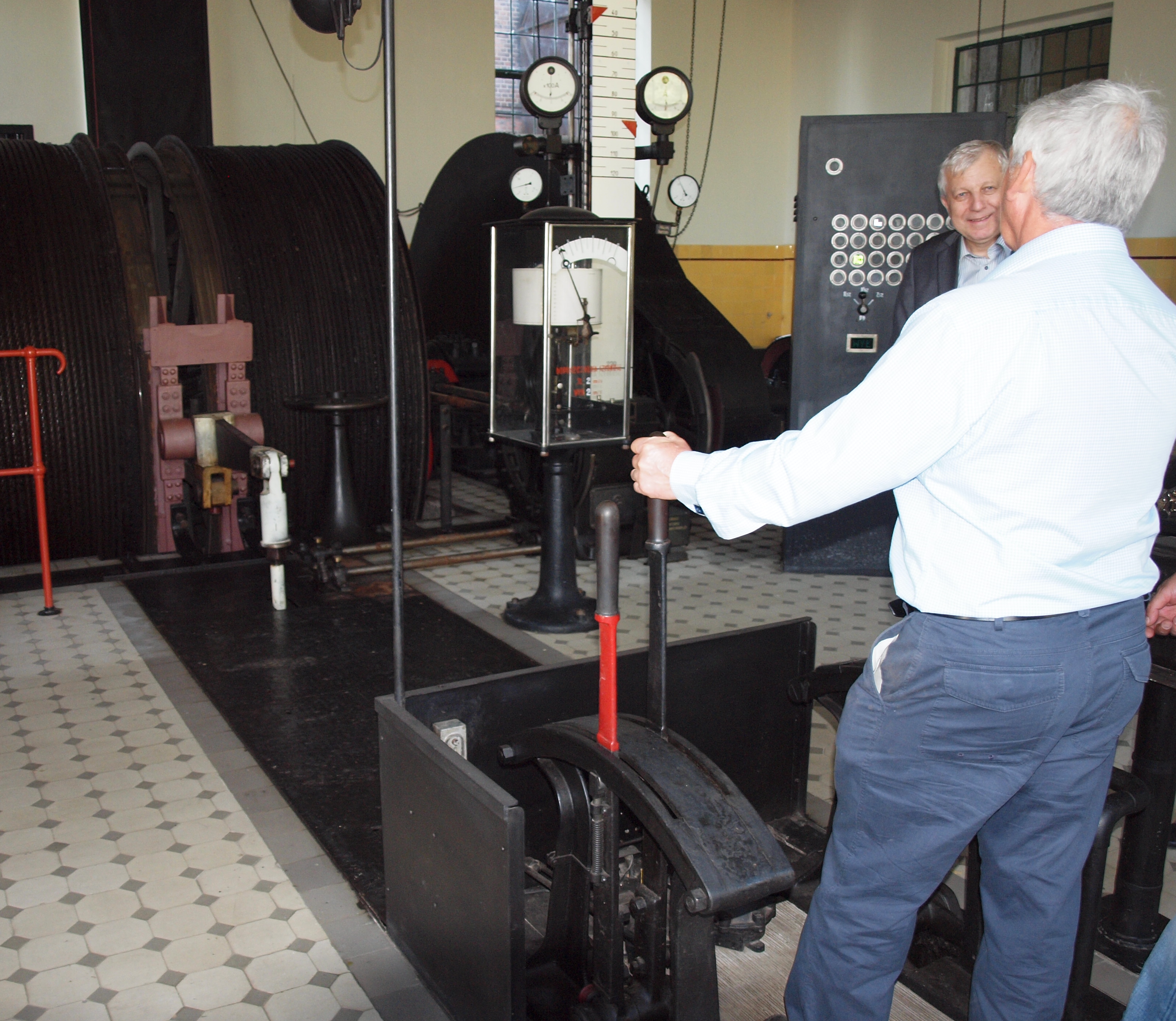
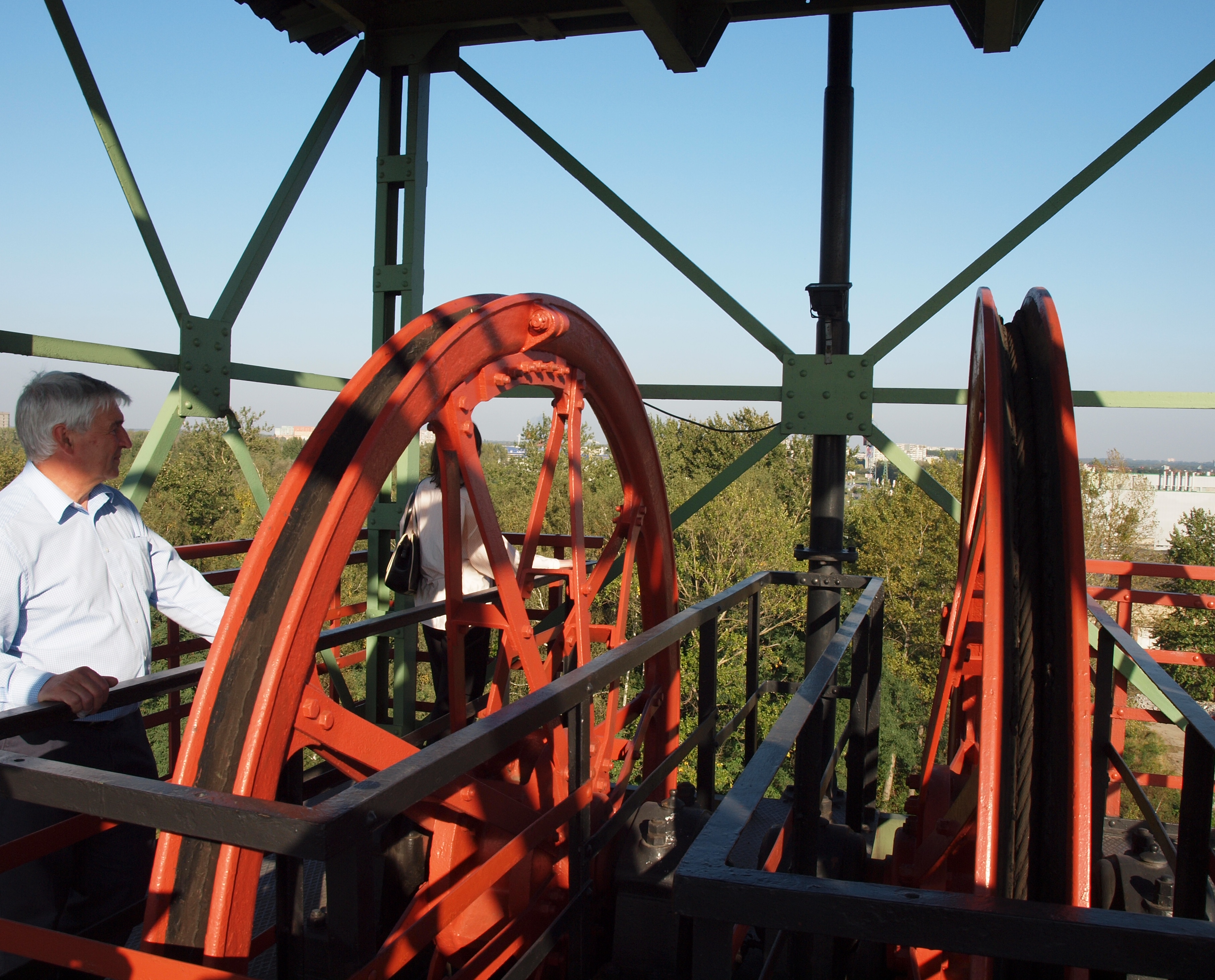
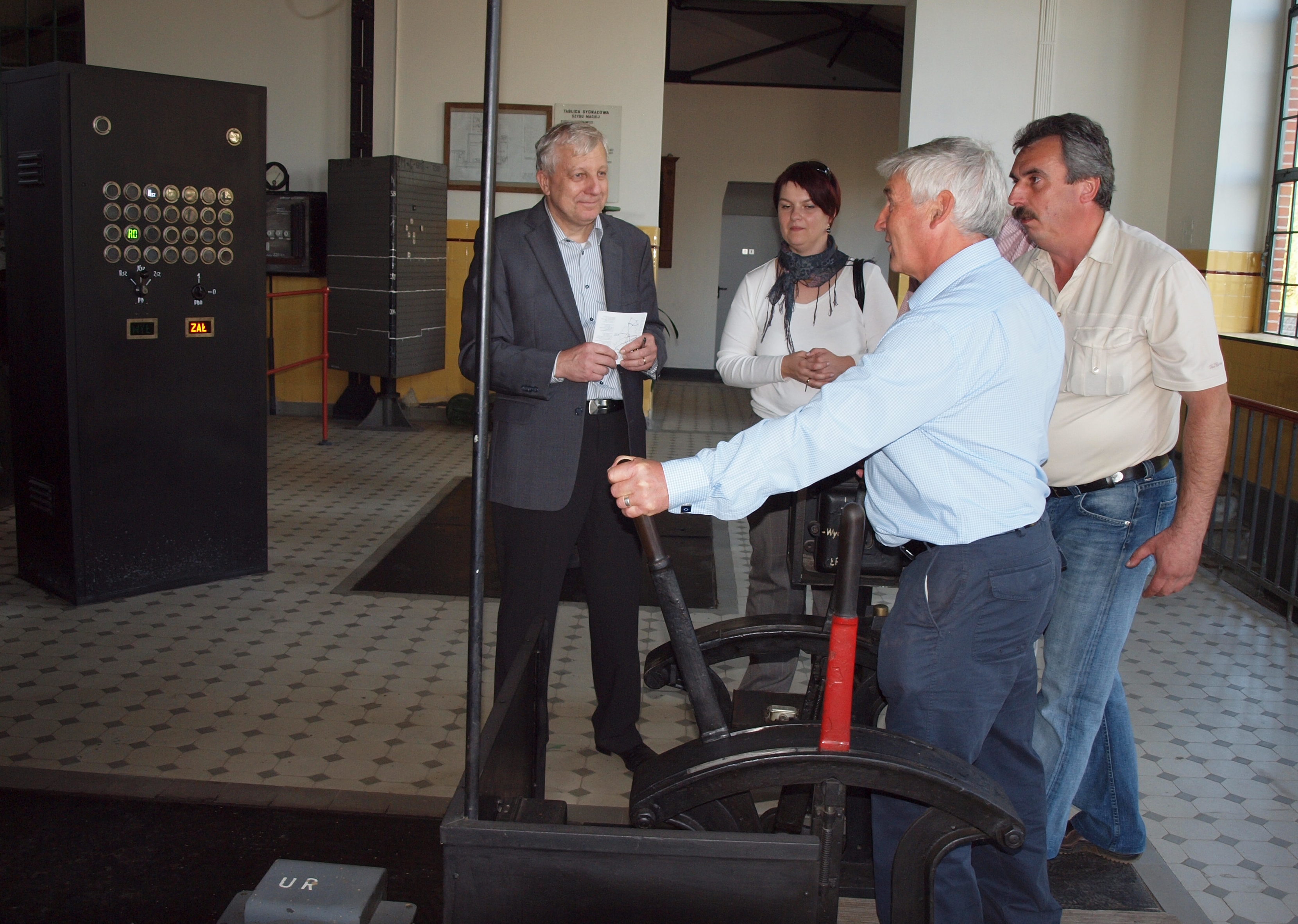
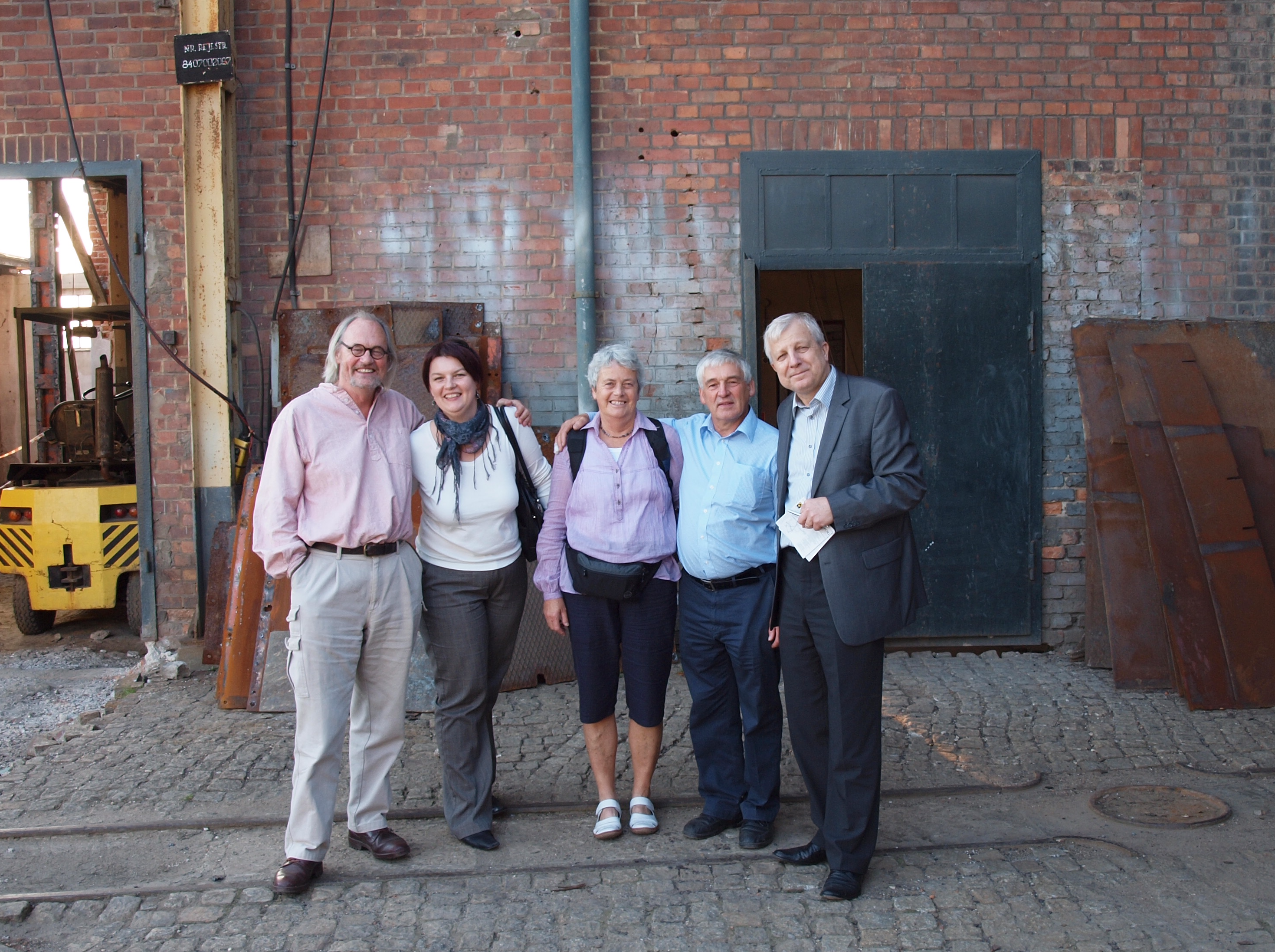
Ian., Magda, John & Della Fazey & Bizek – whose creative abilities ensured the development of the mine.
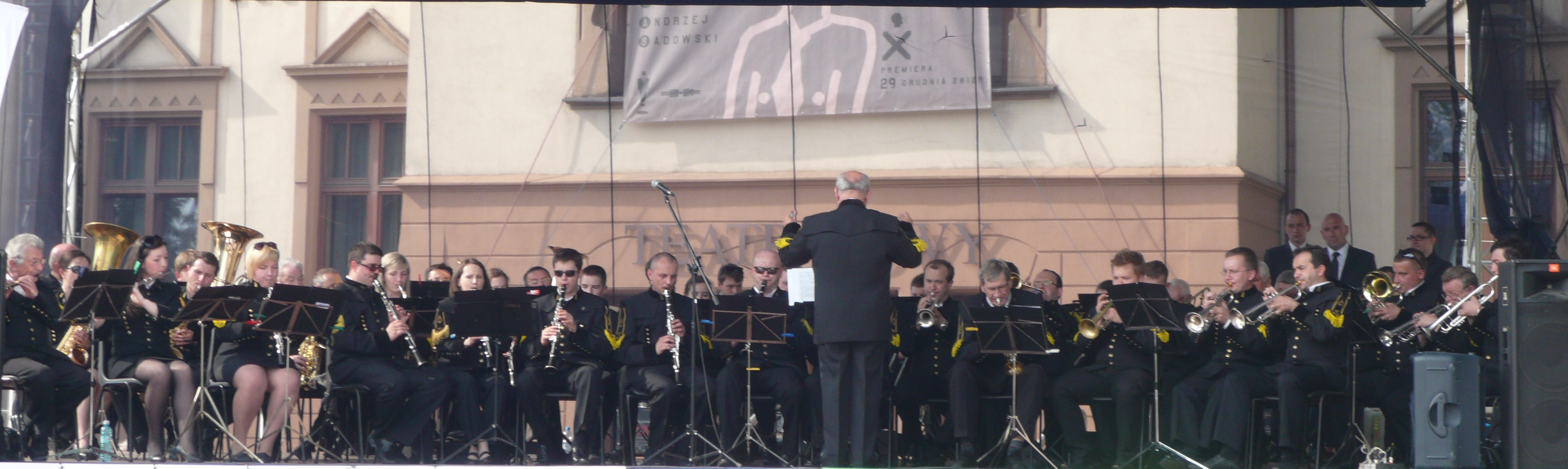
… and especially…. mining itself…..
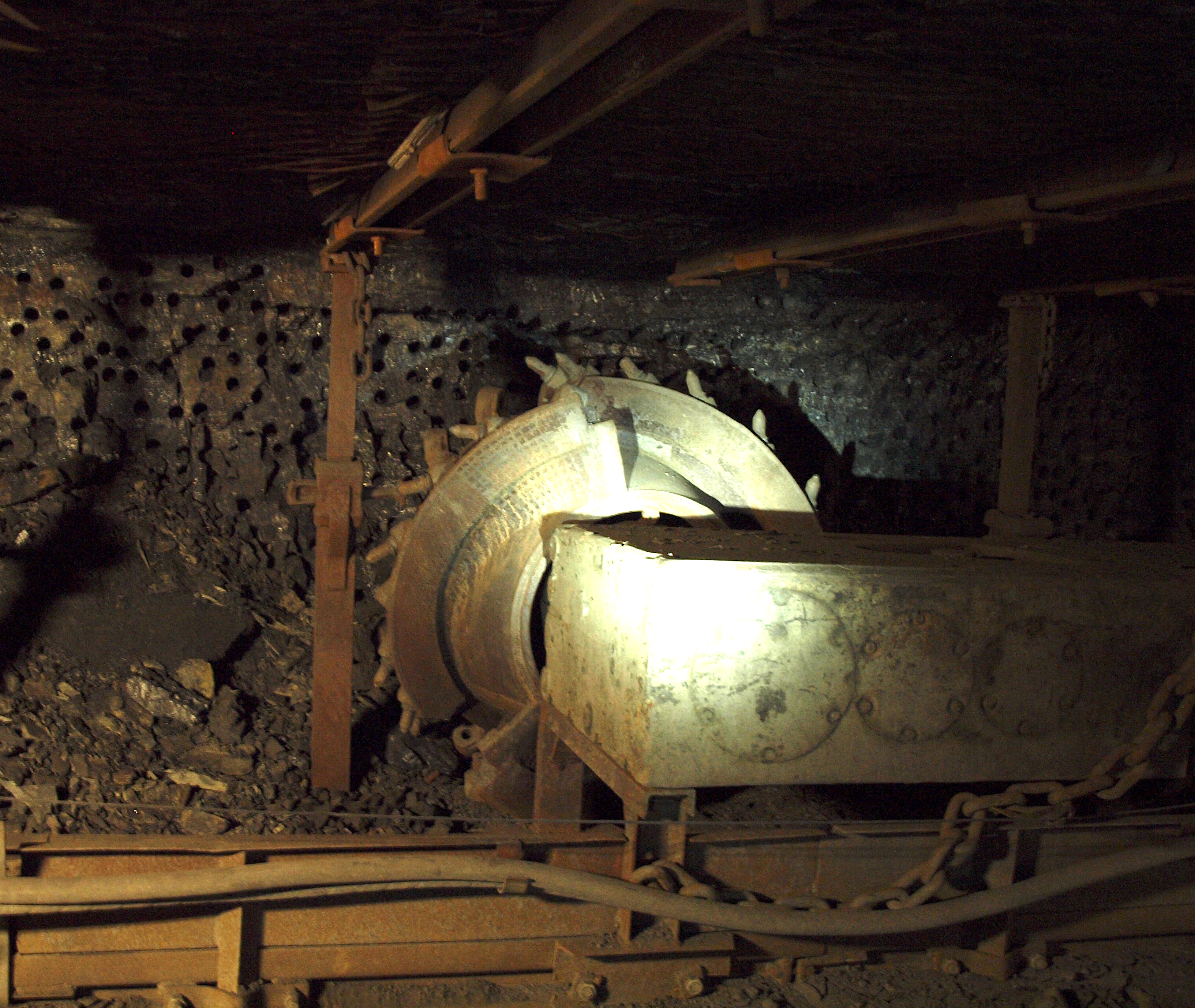
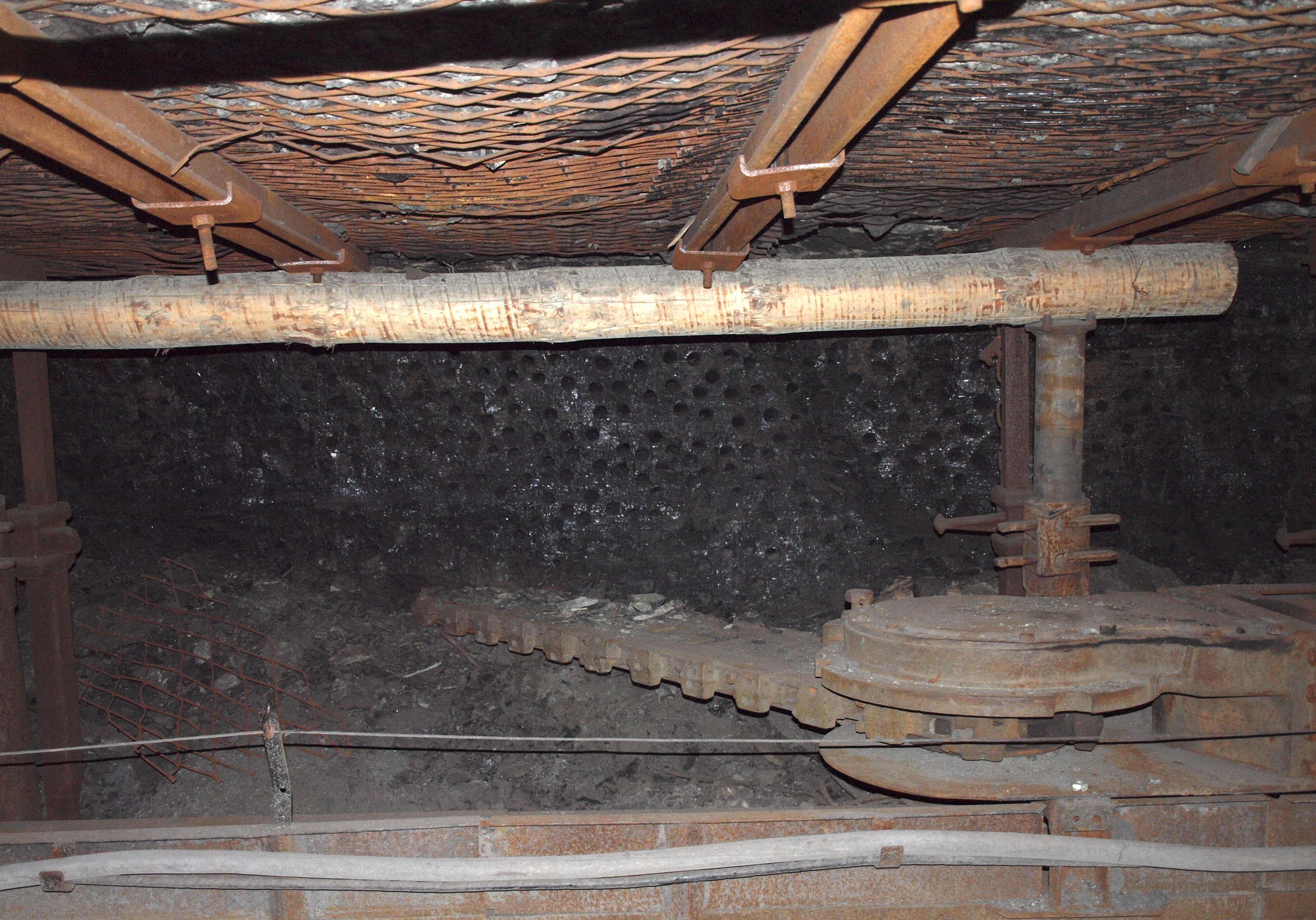
Greg, the Polish Minerals Expert & John, the English Miner’s Son (they both spoke German)
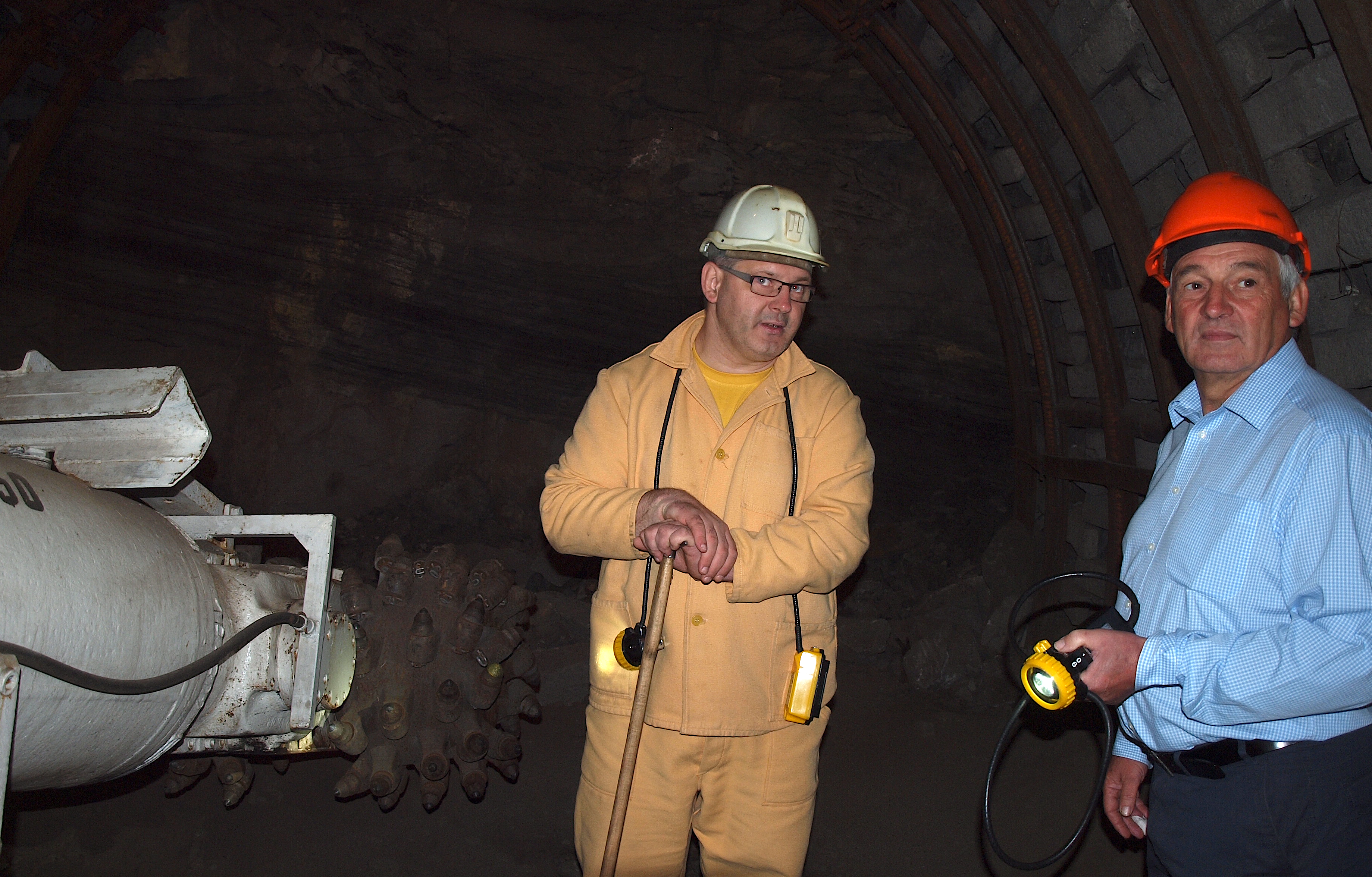
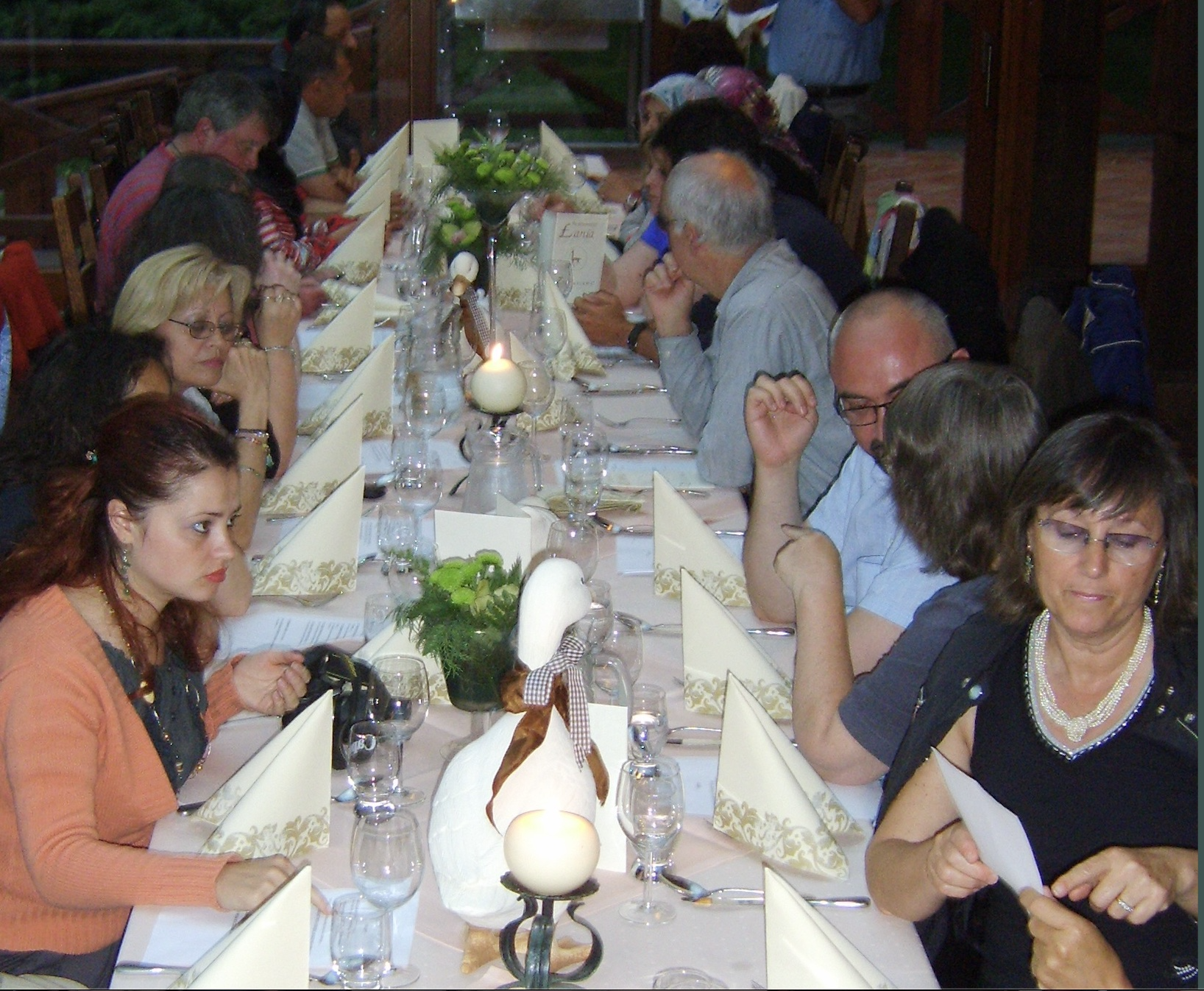
There were, de rigueur, celebratory meals….. this below, becoming, by chance, the most spectacular …. it ended when a violent thunderstorm exploded above & everything was cast into utter darkness.
We all felt it that Magda had organised a wonderfully impressive ending to the whole partnership project!
It was the most exciting partnership conclusion we experienced
The EU funded work we’ve shared with Magda (& others from Central & Eastern Europe) has been part of the process of assisting resuscitation of nations that had (in central Europe) been socially dynamic & economically successful. Now, whilst that need continues, the balance that we’ve witnessed is gradually returning, ……other factors and forces are now threatening that balance.
Personally & though only based on the range of positive experiences with positive people we’ve had in over 15 years of visits & work in Poland, I sense there is an embedded social strength that has developed & increased during that time.
The New Links to Bielsko-Biała
Bielsko-Biała is composed of two former towns which merged in 1951—Bielsko in the west and Biała in the east—on opposite banks of the Biała River that once divided Silesia and Lesser Poland.
Borders again – and this time simply a small river in the centre of a modern town – but once a barrier of some significance.
Despite several visits & being very aware of the river, I’m still confused as to which side of the town is ‘Bielsko’ & which is Biała.
Apparently both names may mean the same… ‘white’ – referring to the comparatively fast flowing river.
Bielsko is on the west bank and by inheritance (which makes a change from all the wars that seem to have produced many other changes in central and eastern Europe) became part of Hapsburg territory in C16th.

Biała was founded in the C16th in the Silesian County of the Kraków Voivodeship within the Kingdom of Poland. It was probably developed as a residential area for the opposite side of the (small) river.
The growth of both settlements resulted in them being closely related (regardless of political/national boundaries)
When Poland suffered its ‘First Partition’ in 1772, Biała was annexed by the Habsburg Empire and incorporated into the crownland of Galicia.
Still technically in 2 administrative districts but the two settlements were than able to develop in a reasonably integrated manner until becoming official one city.
All very curious as the ‘river’ is one that would qualify only as ‘small’ (except presumably after snow-melt in the nearby Beskid Mountains) – it probably is usually only ‘leap-able’ width.
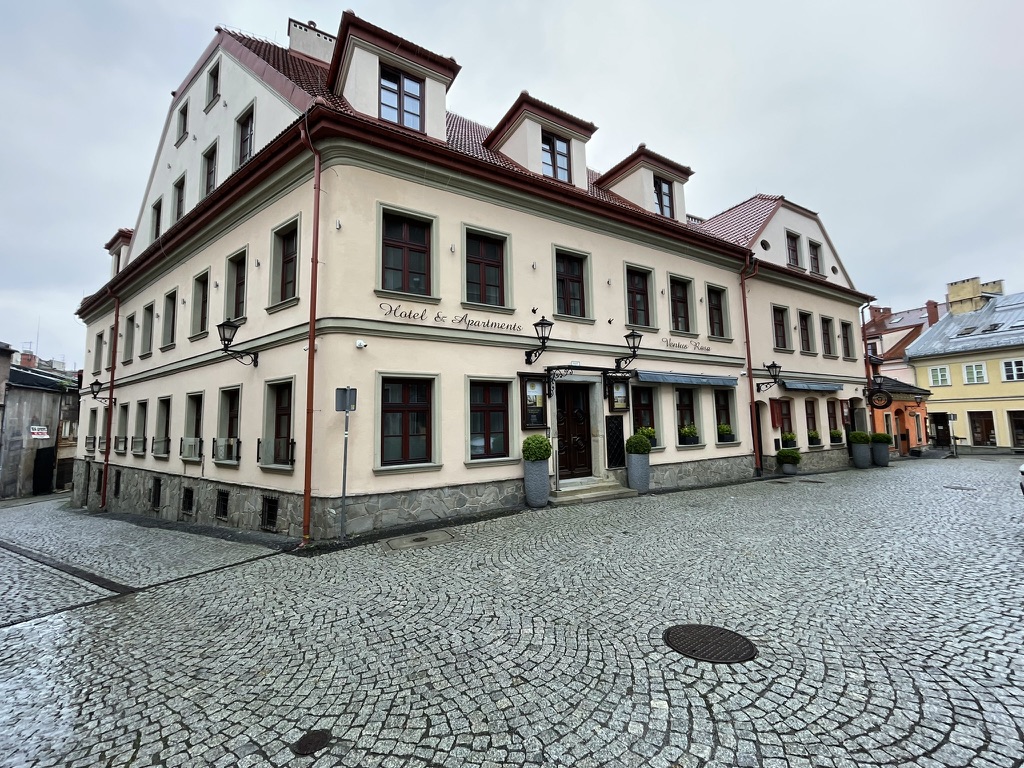
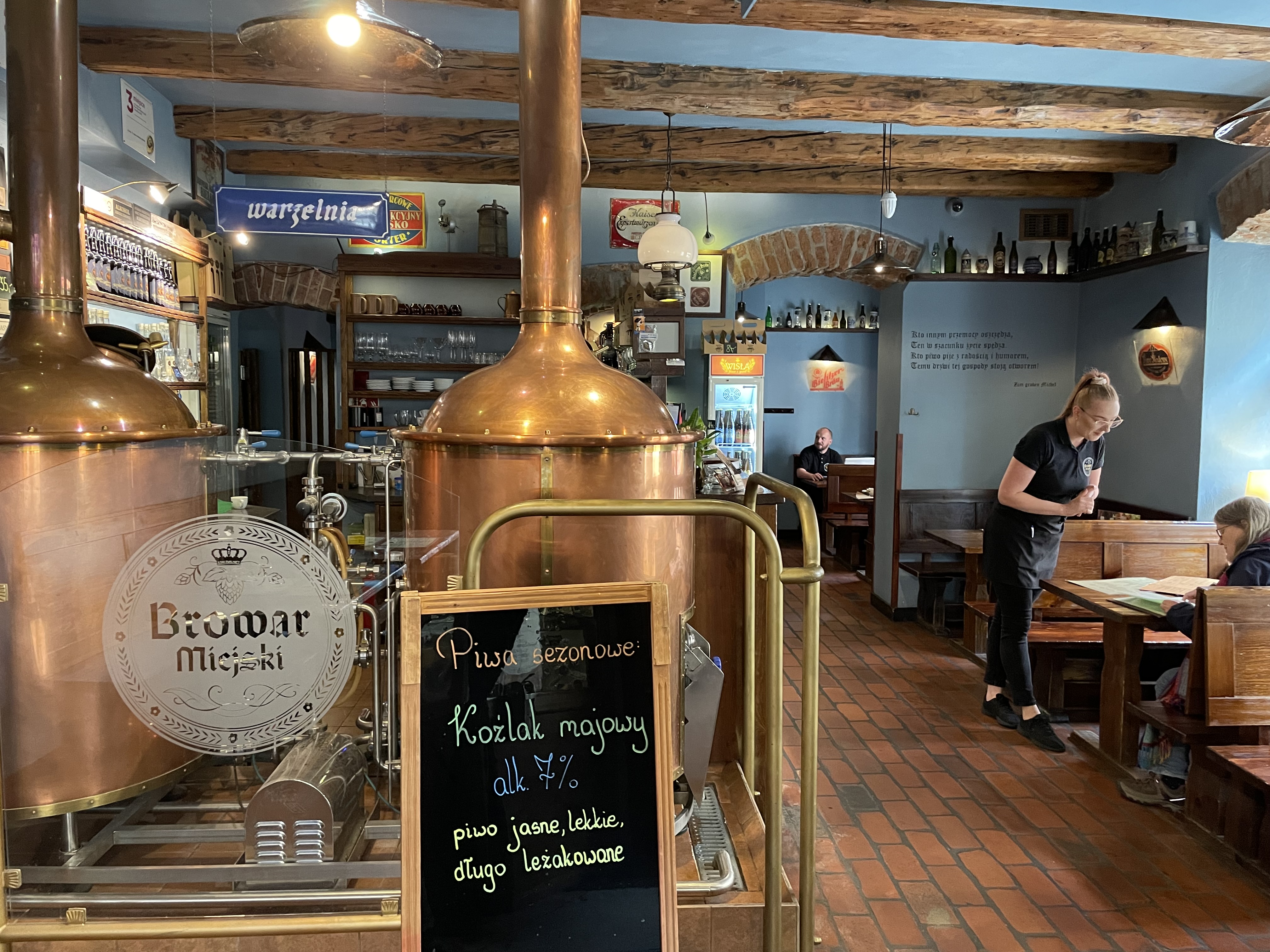
As in Journey 2 we are met by Magda who delivers us to our accommodation – which is conveniently next to a fine brewery – which we used several times in 2022.
The weather has been dreadful – with rain and low temperatures & so it continued……
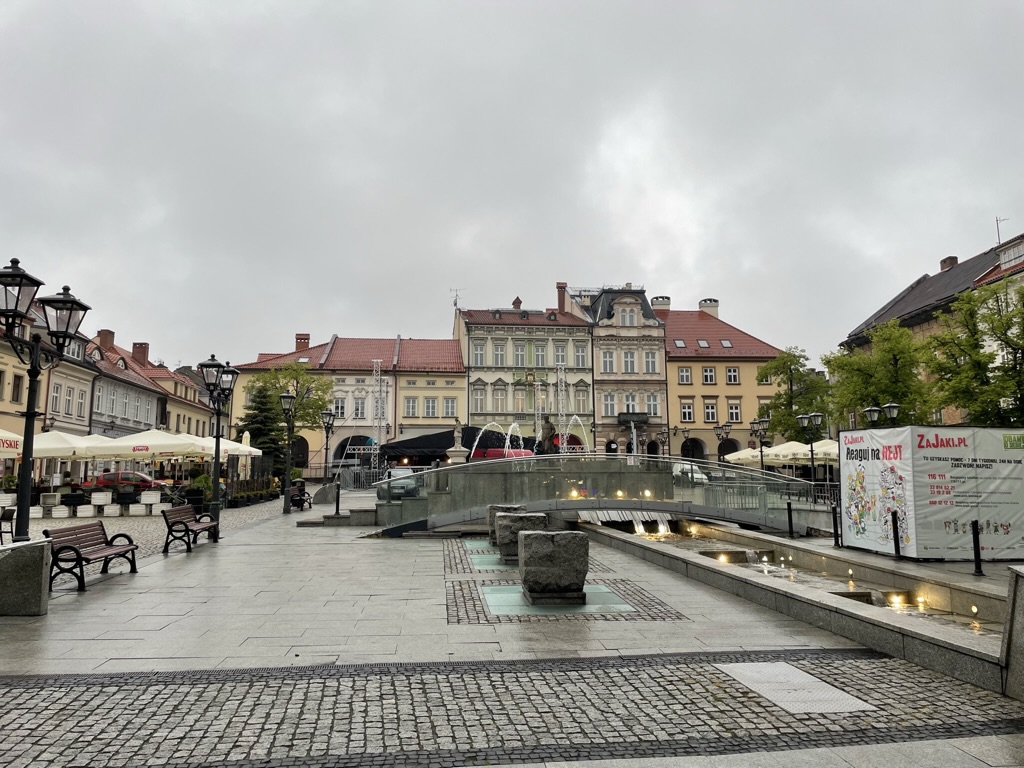
We are based in the centre of the attractive Old Town…. but the conditions prevent any real outdoor relaxation.
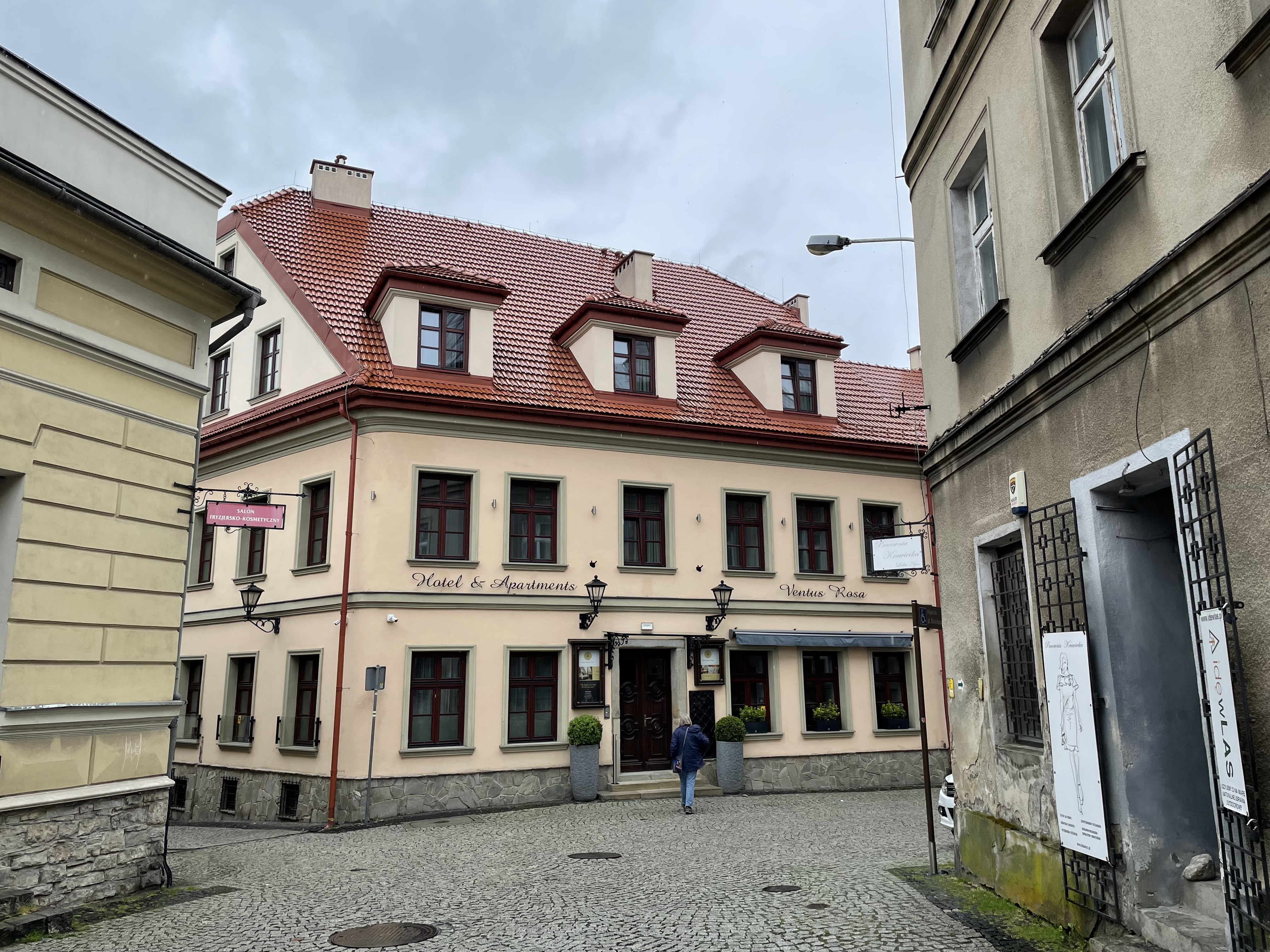
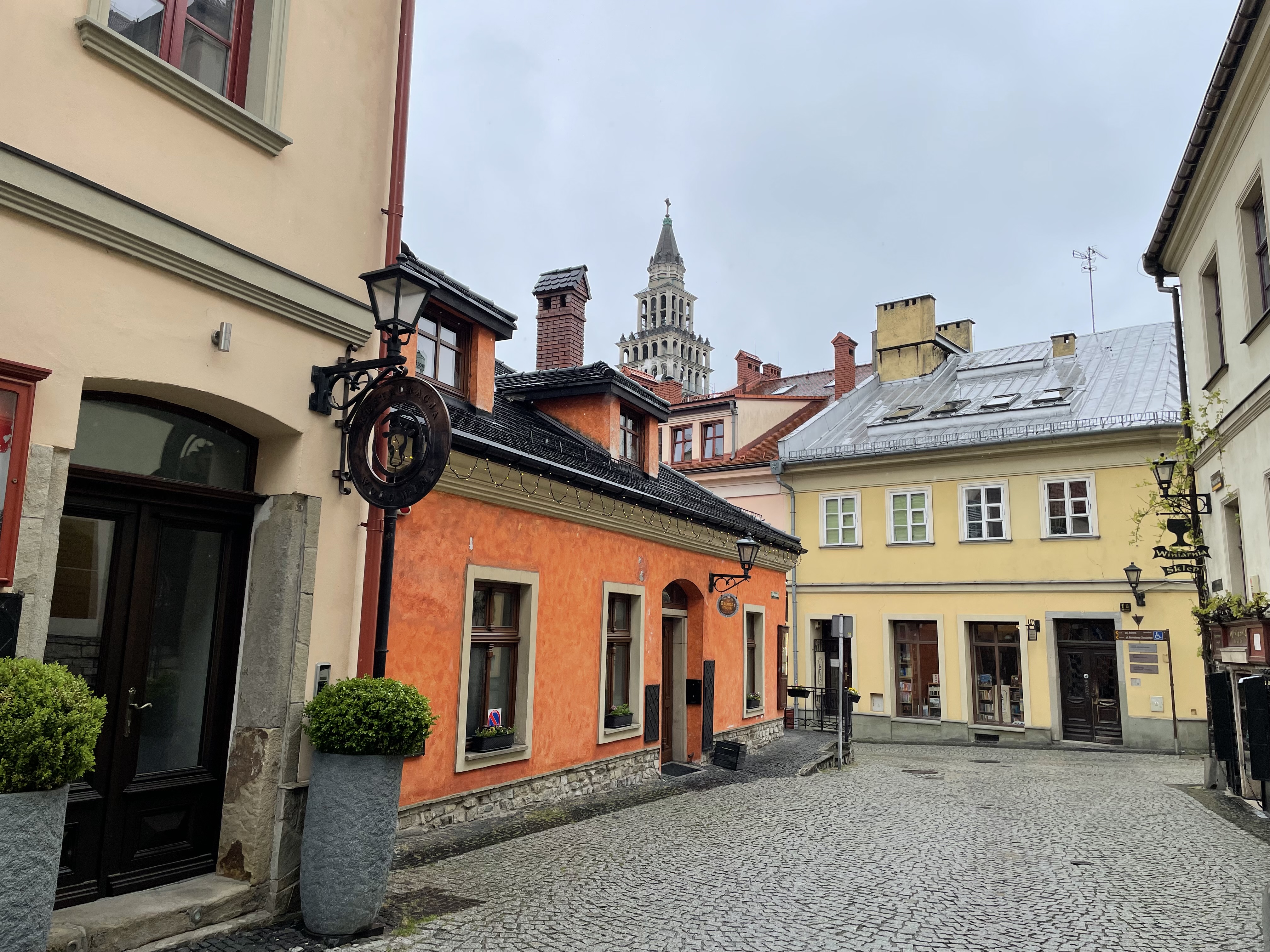
The University here had created activities for Ukrainian displaced families which had been supported by some of the money raised in Bishop’s Castle.
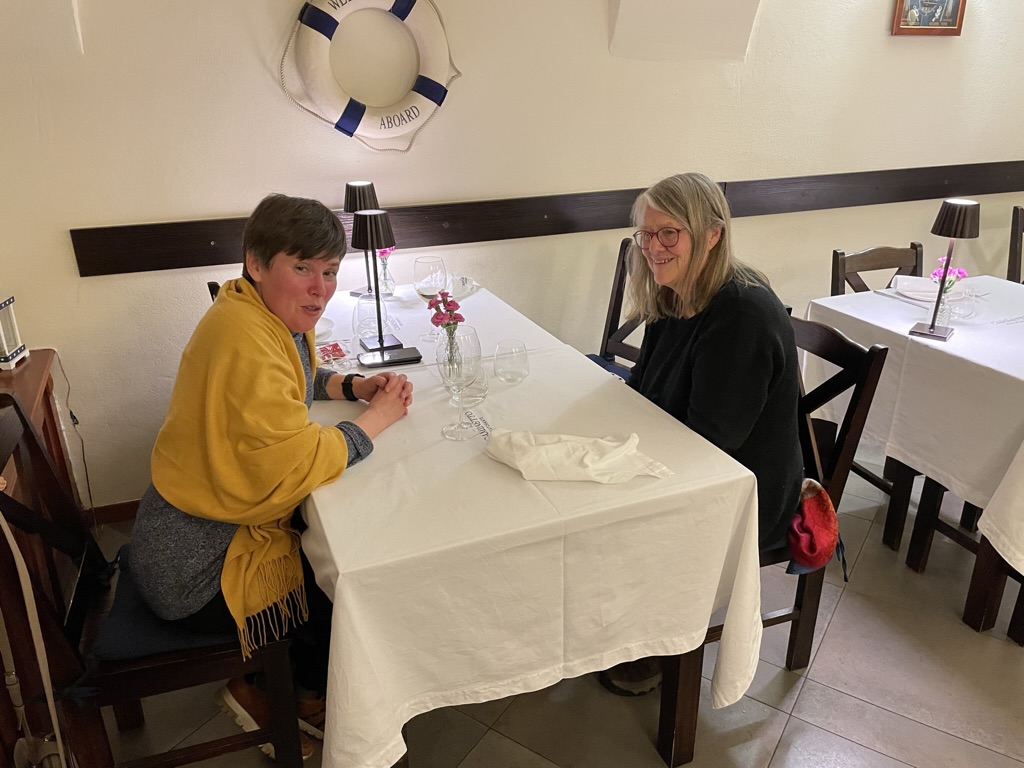
Liubov (a staff member at the University but with family members still in Kyiv) had been our key Ukrainian contact & so we spent the evening ‘catching-up’ in the very pleasant Italian restaurant in the Old Town.
2022
We made 2 visits to the University & Ukrainian group they had supported.
This allowed us to meet staff & share some of our background.

Most families we met (in Iași & Bielsko-Biała) had escaped from conflict zones & lost everything. Some children had been orphaned – or had lost contact with their parents & family members).
There were several occasions in which we were told of personal tragedies – from the early days of the war (in Bucha where massacres occurred), of occupation, murder & destruction of property in for example Nova Kakhovka (by the huge dam on the Dnieper River at end of the Kakhovka Reservoir) which has been under Russian occupation since February 2022.
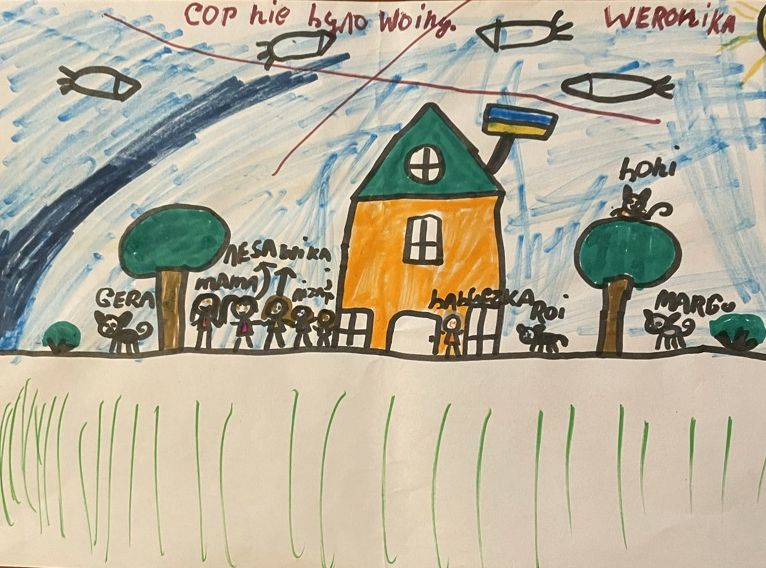
The pictures produced in Art Classes reflected their experiences of suffering rocket attacks.
For adults, there was in our October visit, a grim realisation that they would not be returning home for some considerable time.
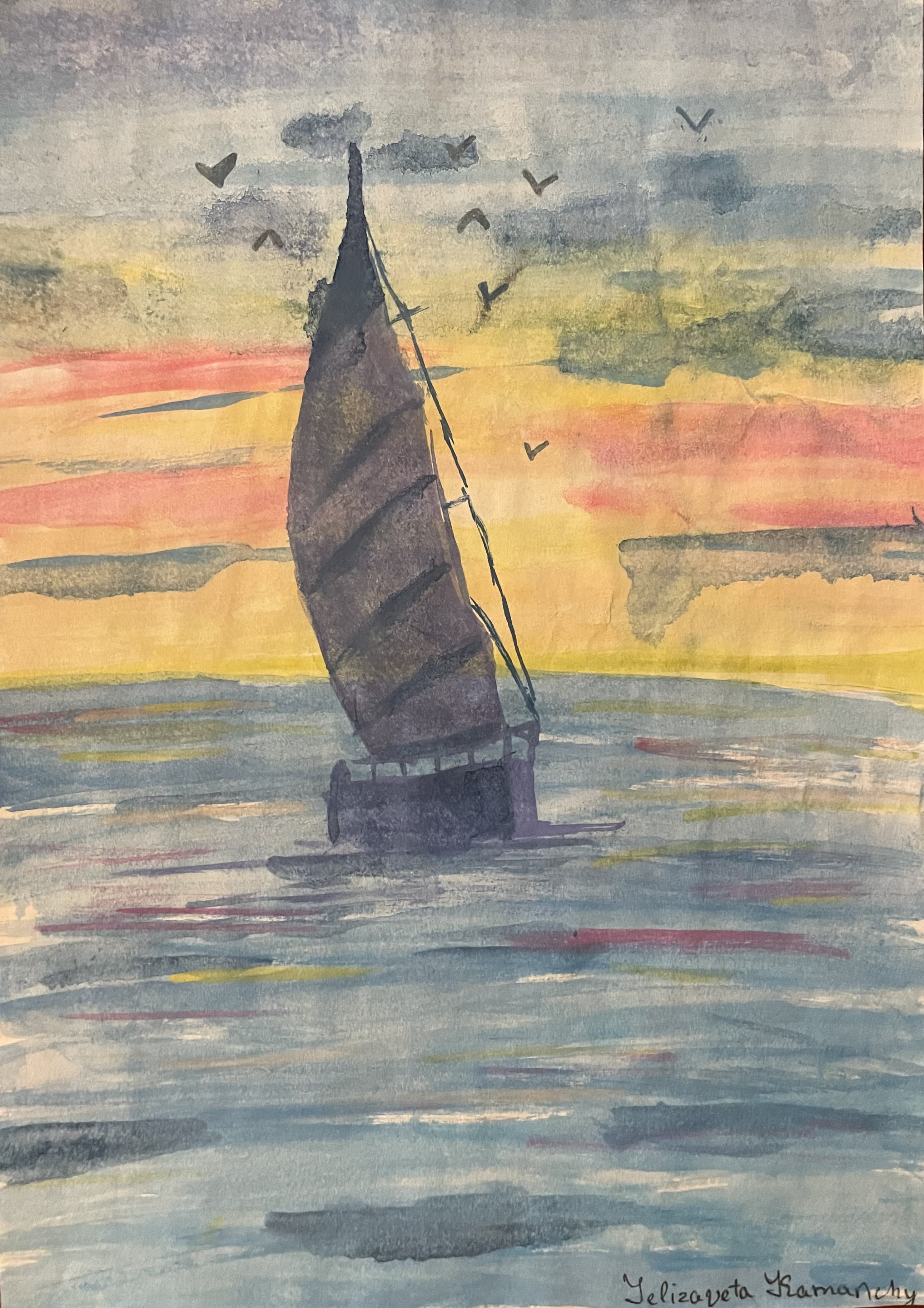
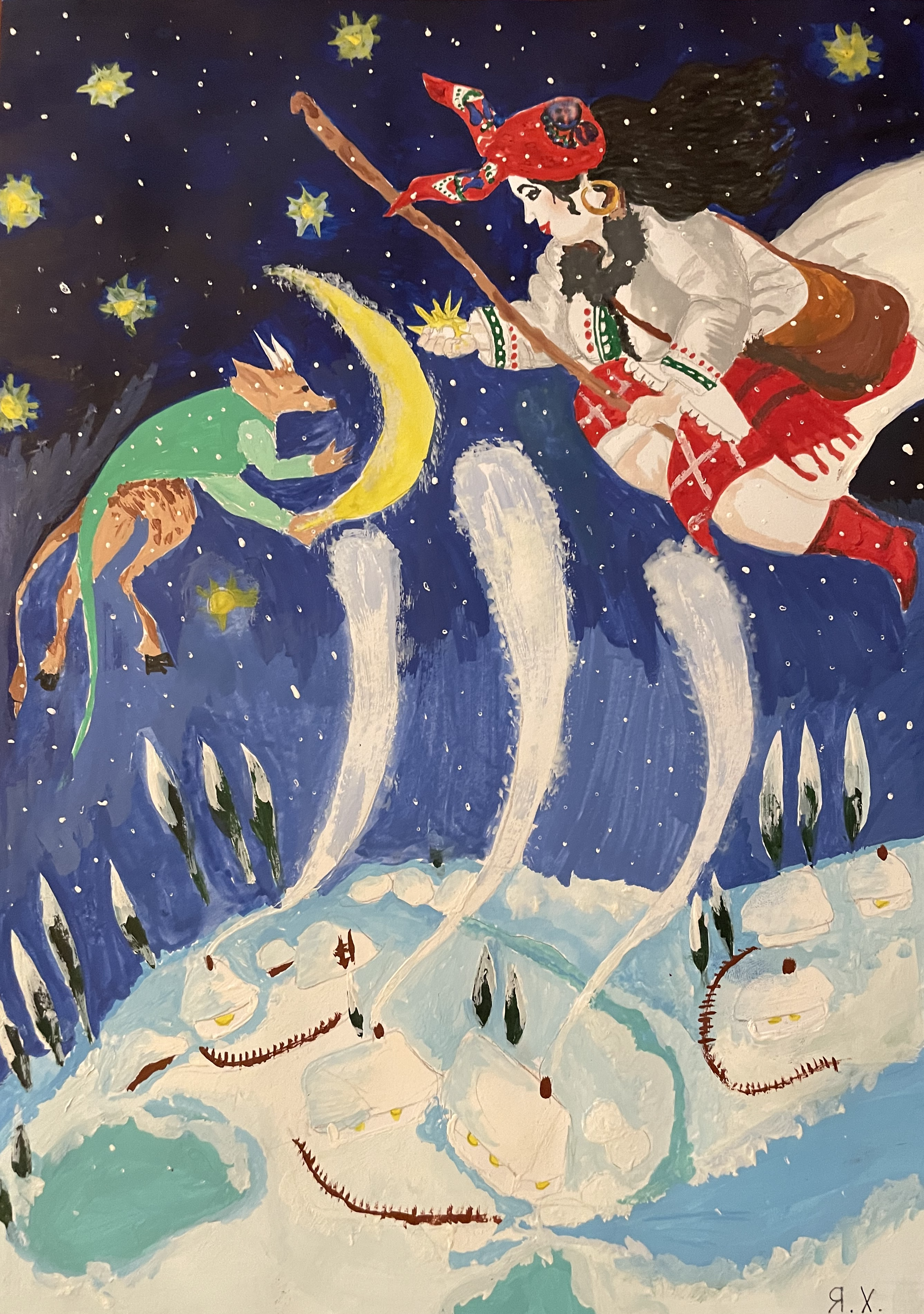
Other pictures used Ukrainian stories and legends as their theme.

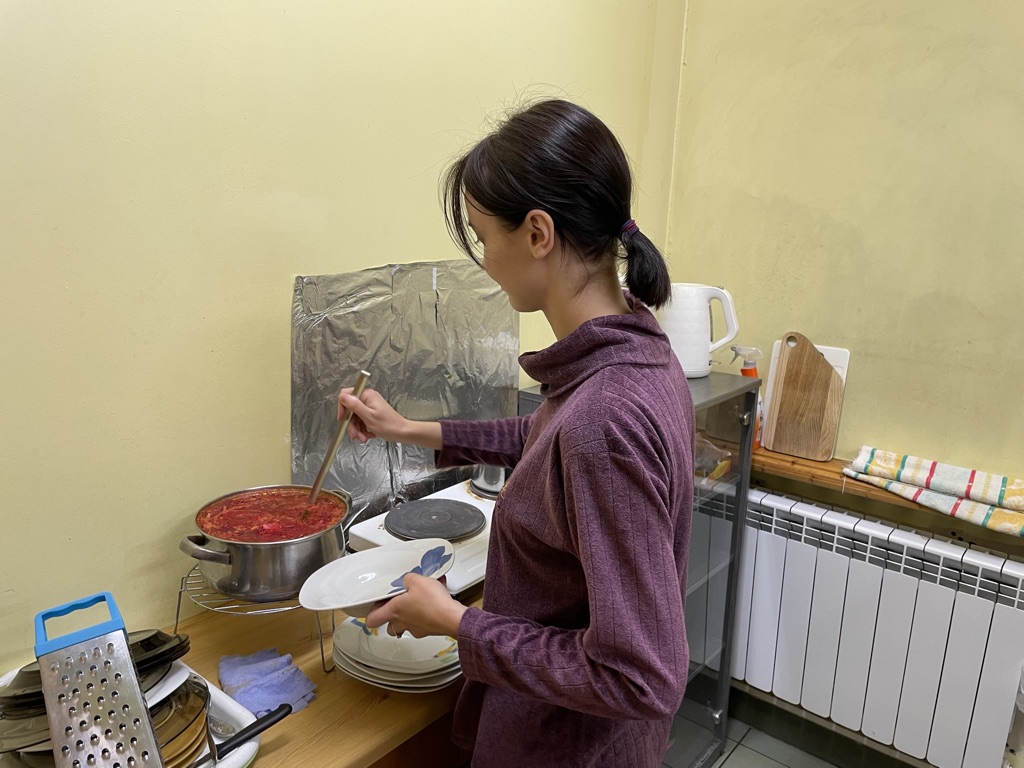
We were served Ukrainian Red Borscht Soup…. I was rather cautious…….
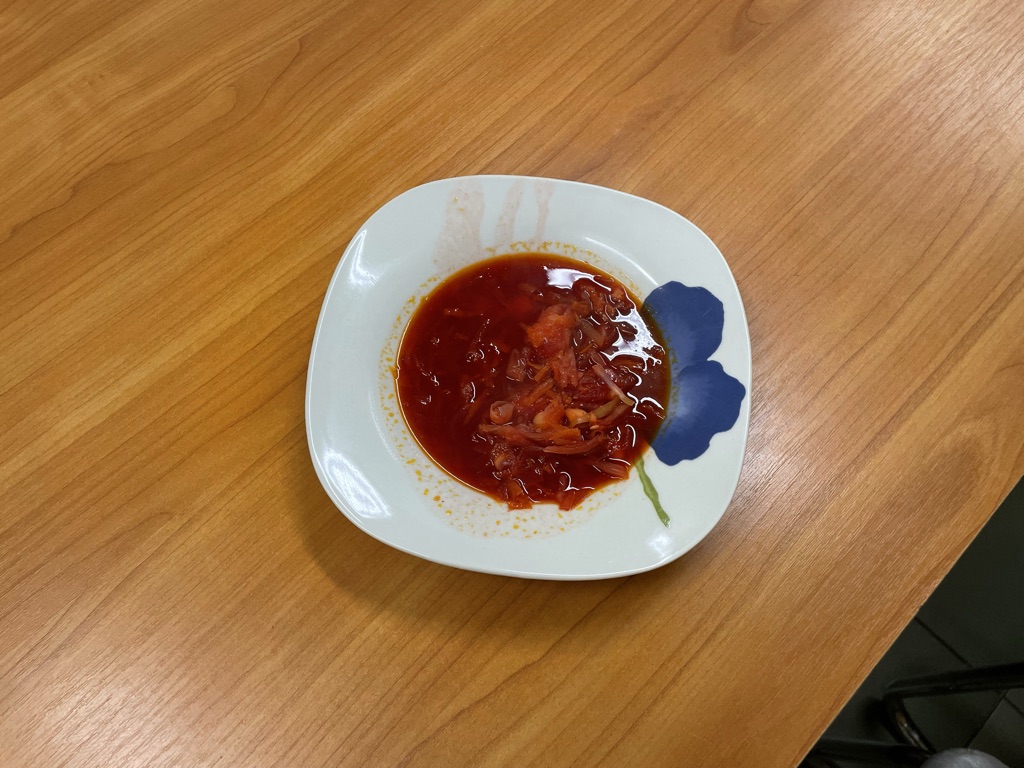
…. but it was delicious!
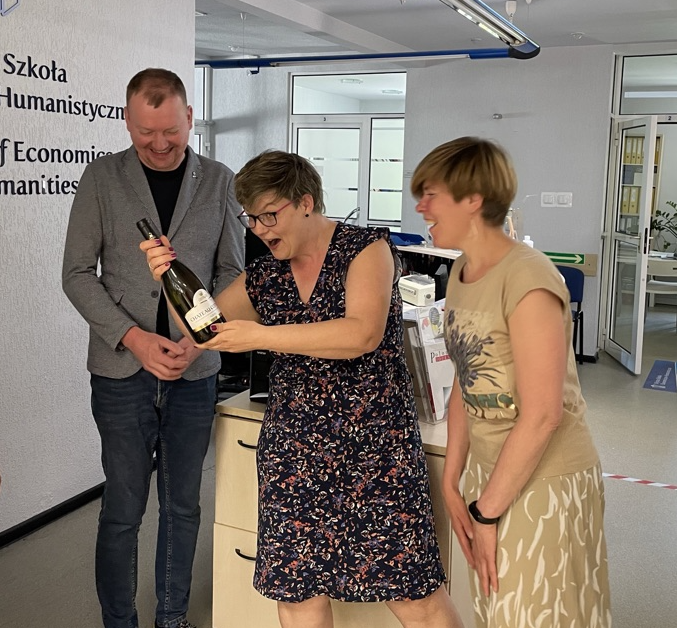
We met the Dean of the University – and provided a gift….. but I don’t know why Magda was so overcome with excitement!
19th May: Bielsko-Biała
The day was shaped around an important meeting with a City Councillor about our work, Ukraine links & the general international situation - but contained some unexpected elements.
Unexpected difficulty!
Whilst arranging the final part of our journey we suddenly faced an unexpected difficulty:
Inability to make a reservation in Vilnius. Accommodation costs had risen to over €1000.
Booking.com said they had only one place available…. 26kms from Vilnius
Internet research suggests the cause to be the popular group Ramstein starting a tour in Vilnius – in a venue with a capacity of 250,000
https://www.rammstein.de/en/live/The only place available through Booking.com is shown in the next message
WhatsApp
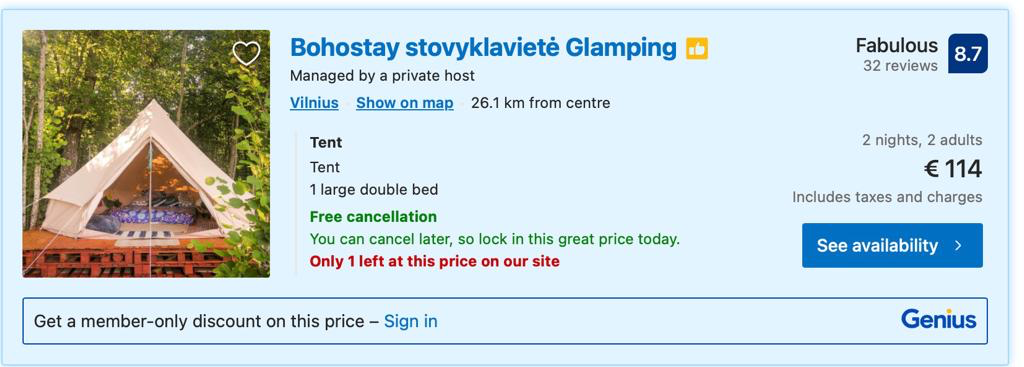
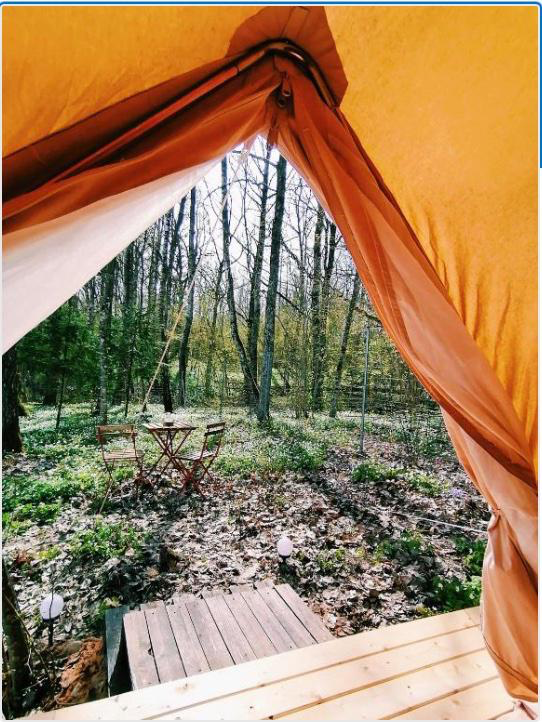
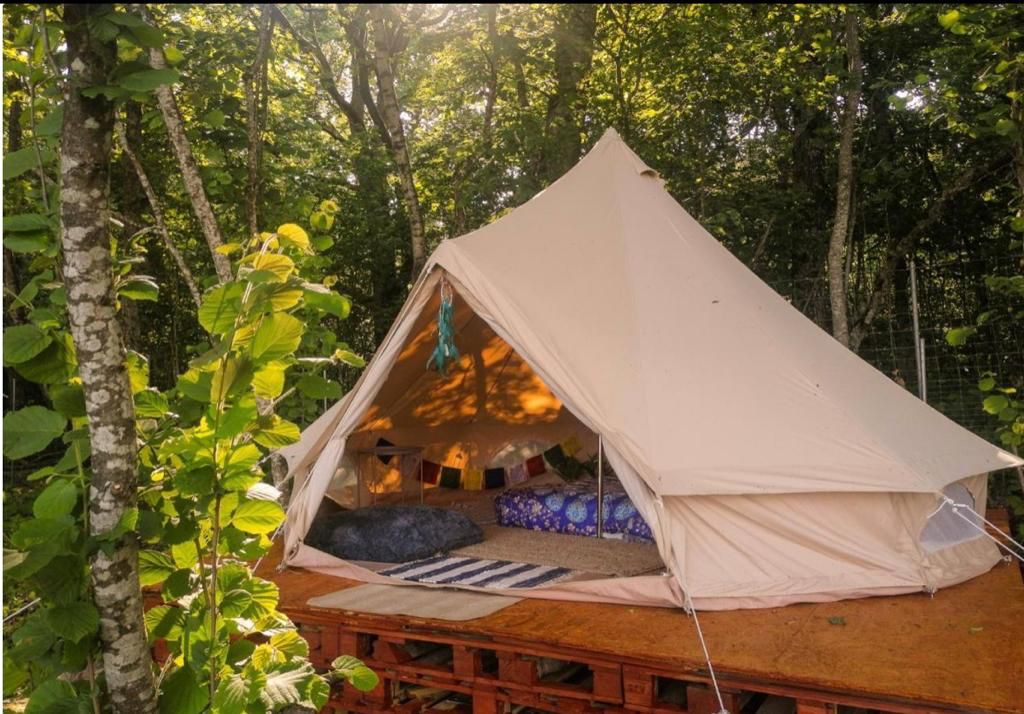
It’s a good idea.
A new experience….🤗
Responses on WhatsApp
We had no difficulty refusing this exciting opportunity – and adjusted our travel plans
Meanwhile in the city streets of this once Hapsburg possession, we found the Emperor himself – but working in harmony with local Polish patriots!

Some years ago I had discovered that Polish people share, with UK, a similar enjoyment of heritage and in creating accurate historic re-enactments (even when they are of recent, painful, memory).
This formal gathering for a church service allows a wide range of costumed individuals…. young and old clearly respected the efforts…. and included those with recent lived memory.
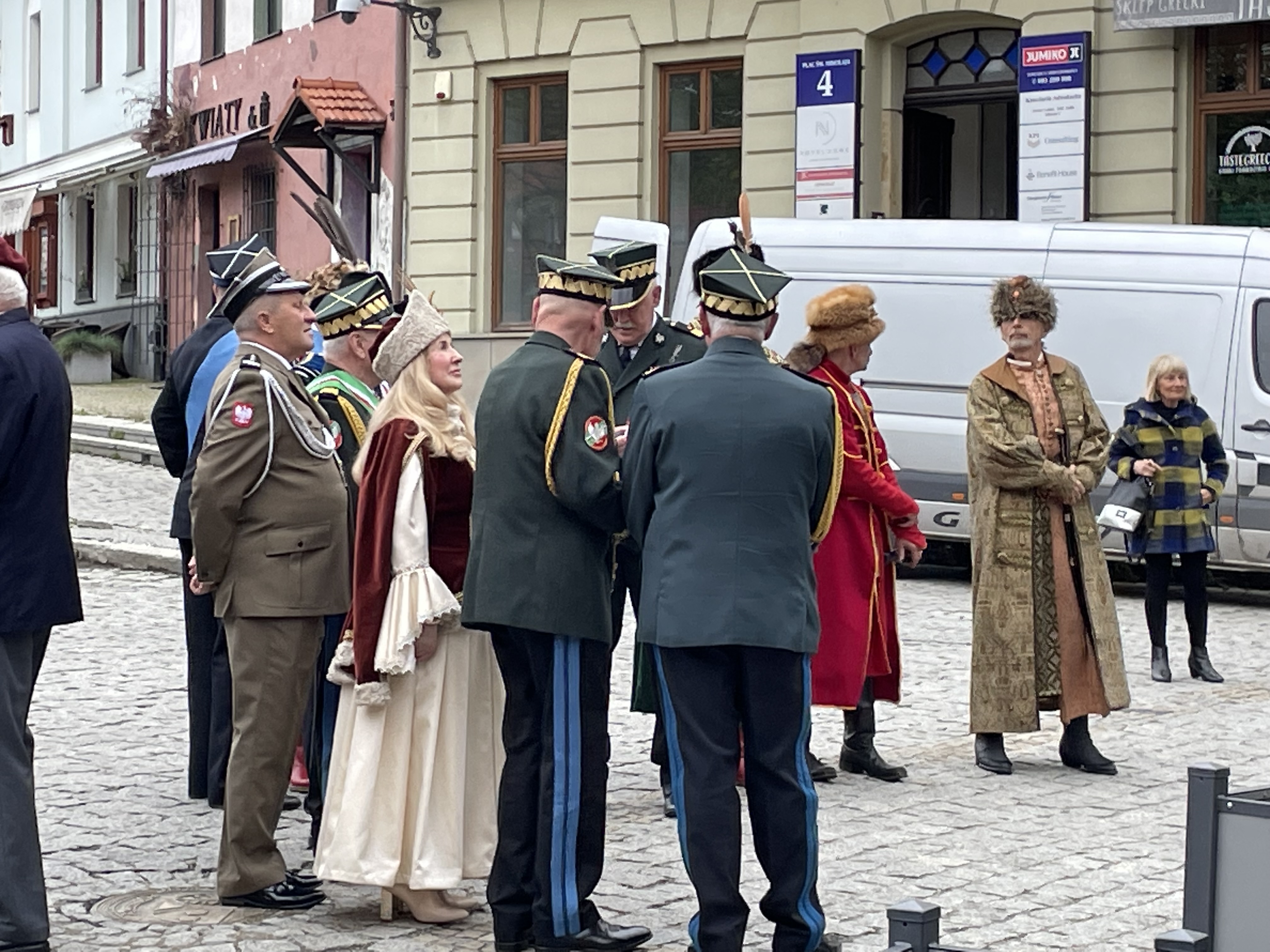
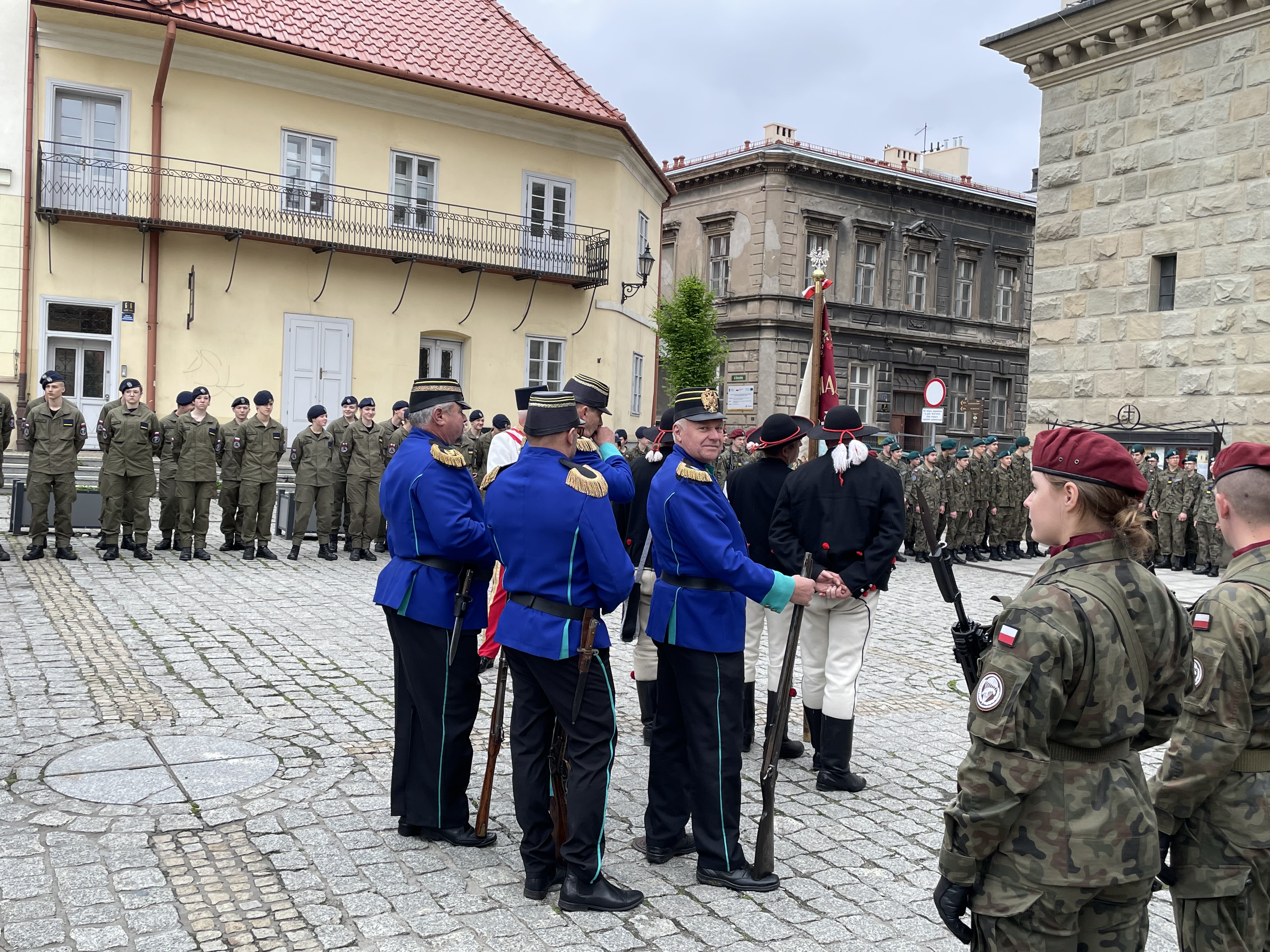
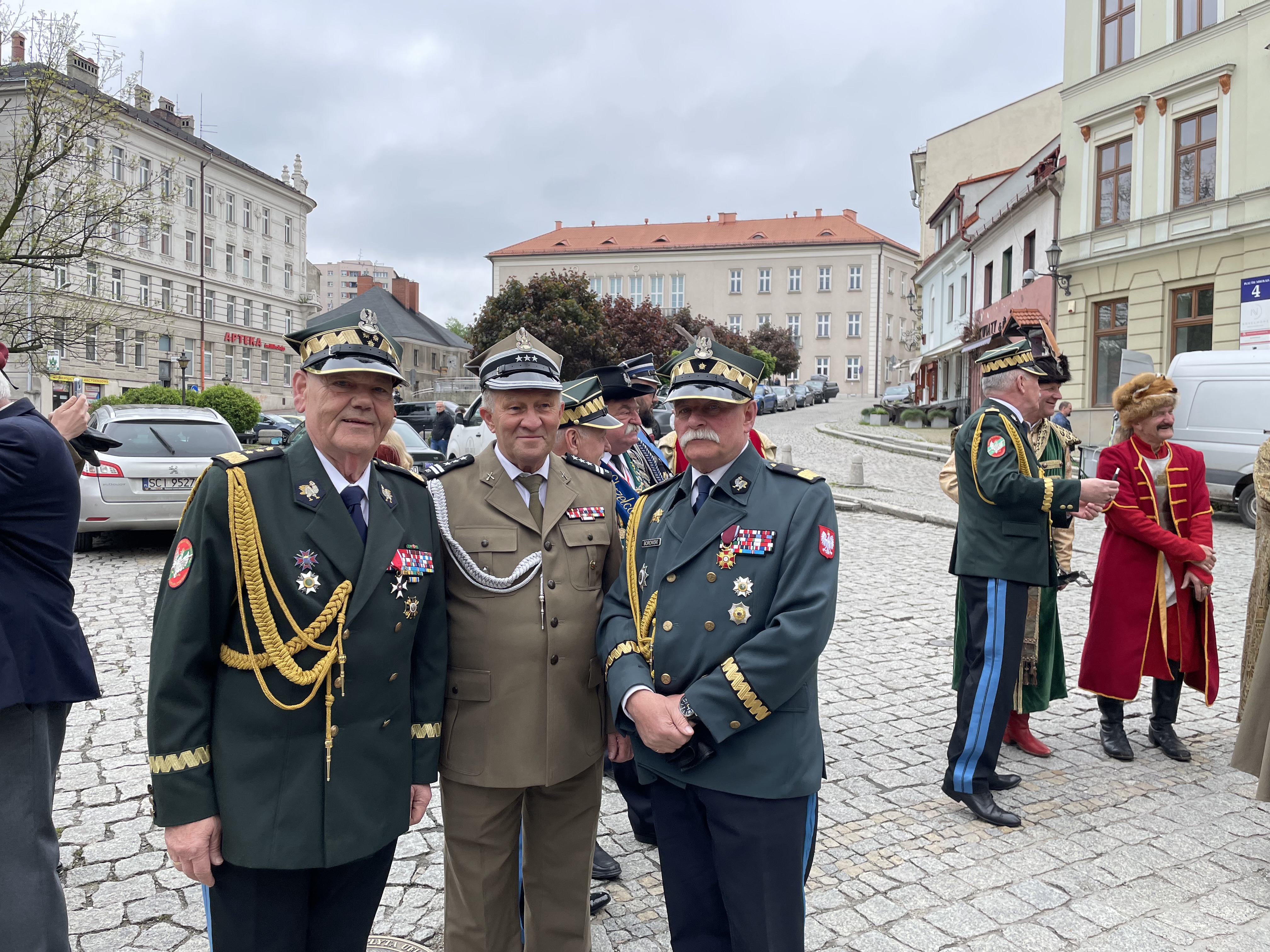
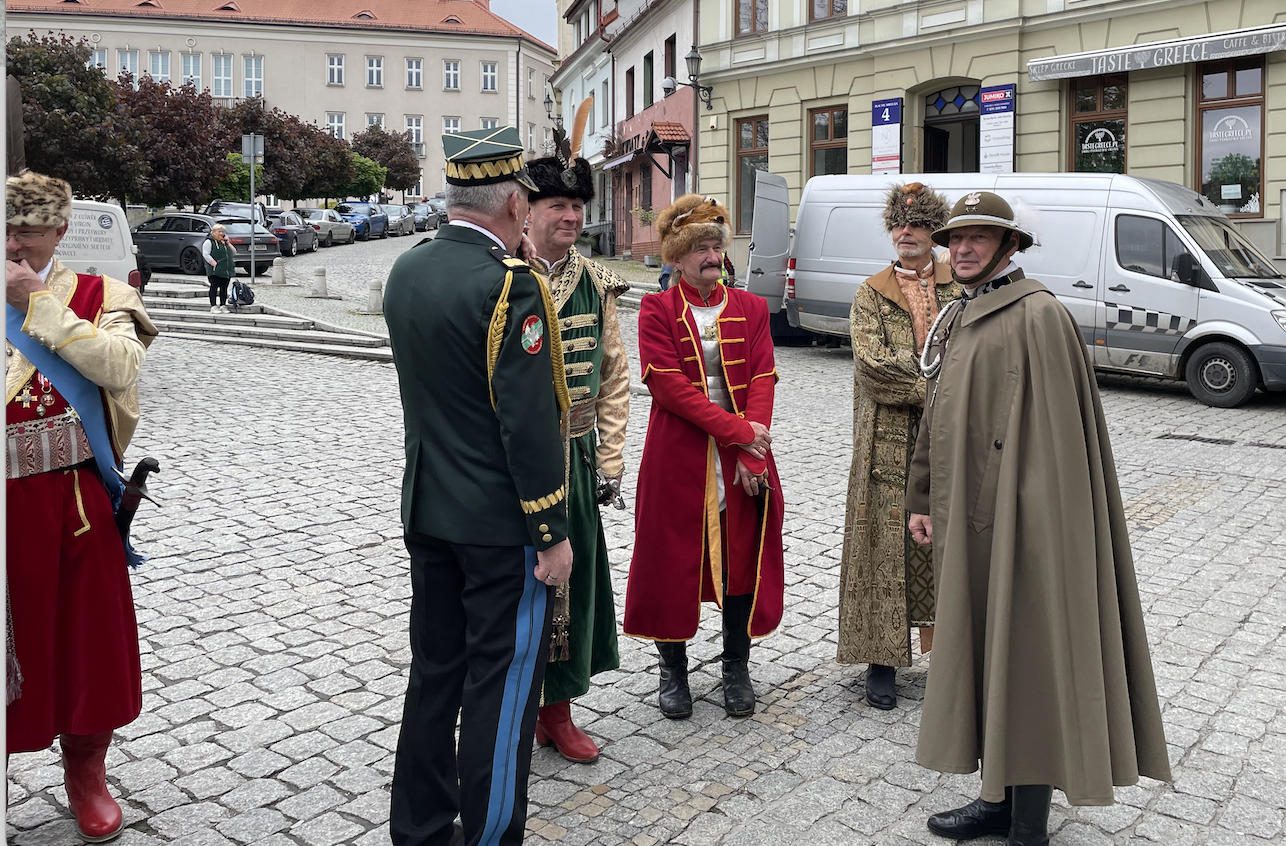
… even the late arrivals…..

Magda was concerned at my interest in this event – and I was forcibly hurried off to the splendidly impressive City Hall
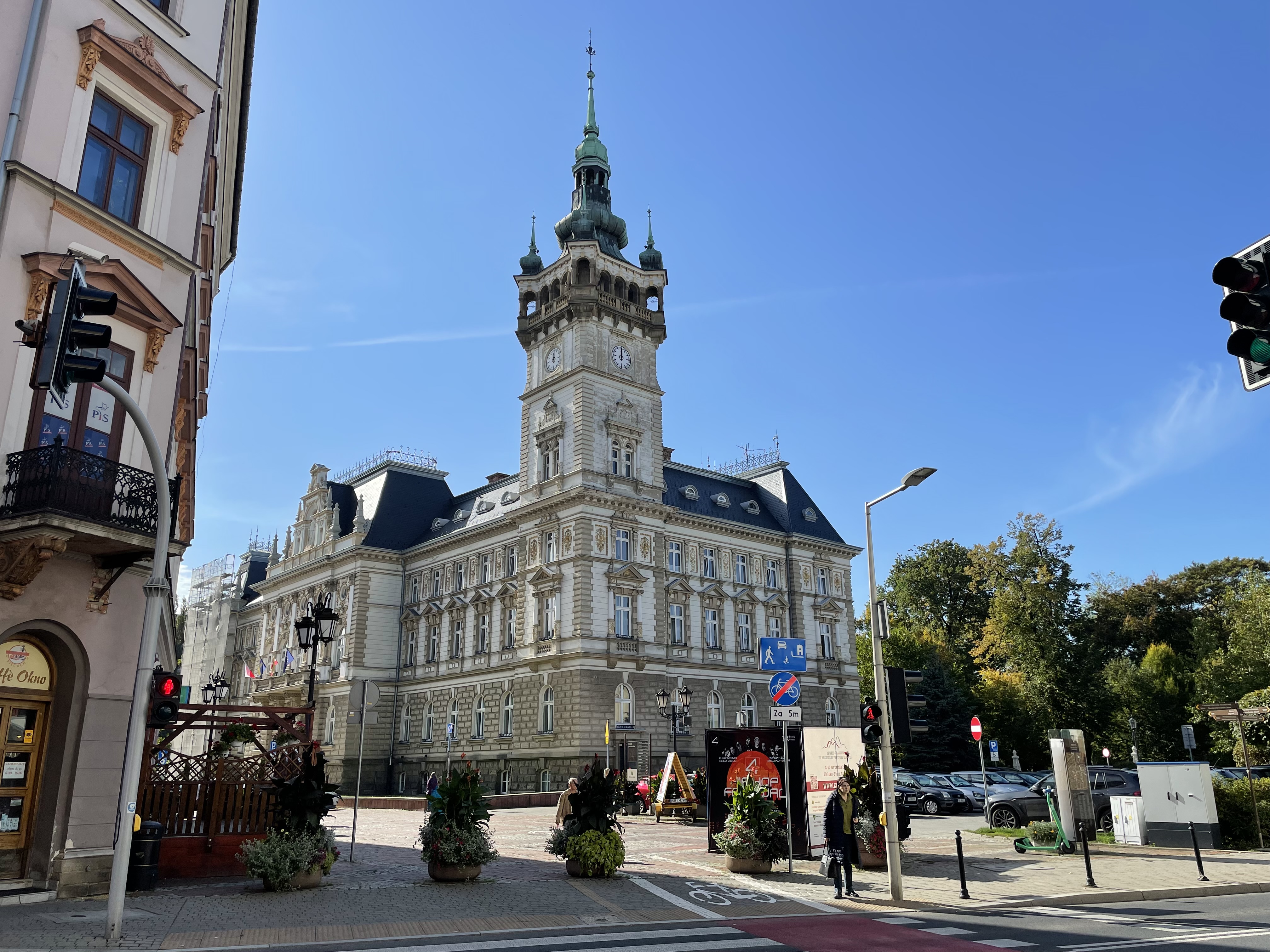
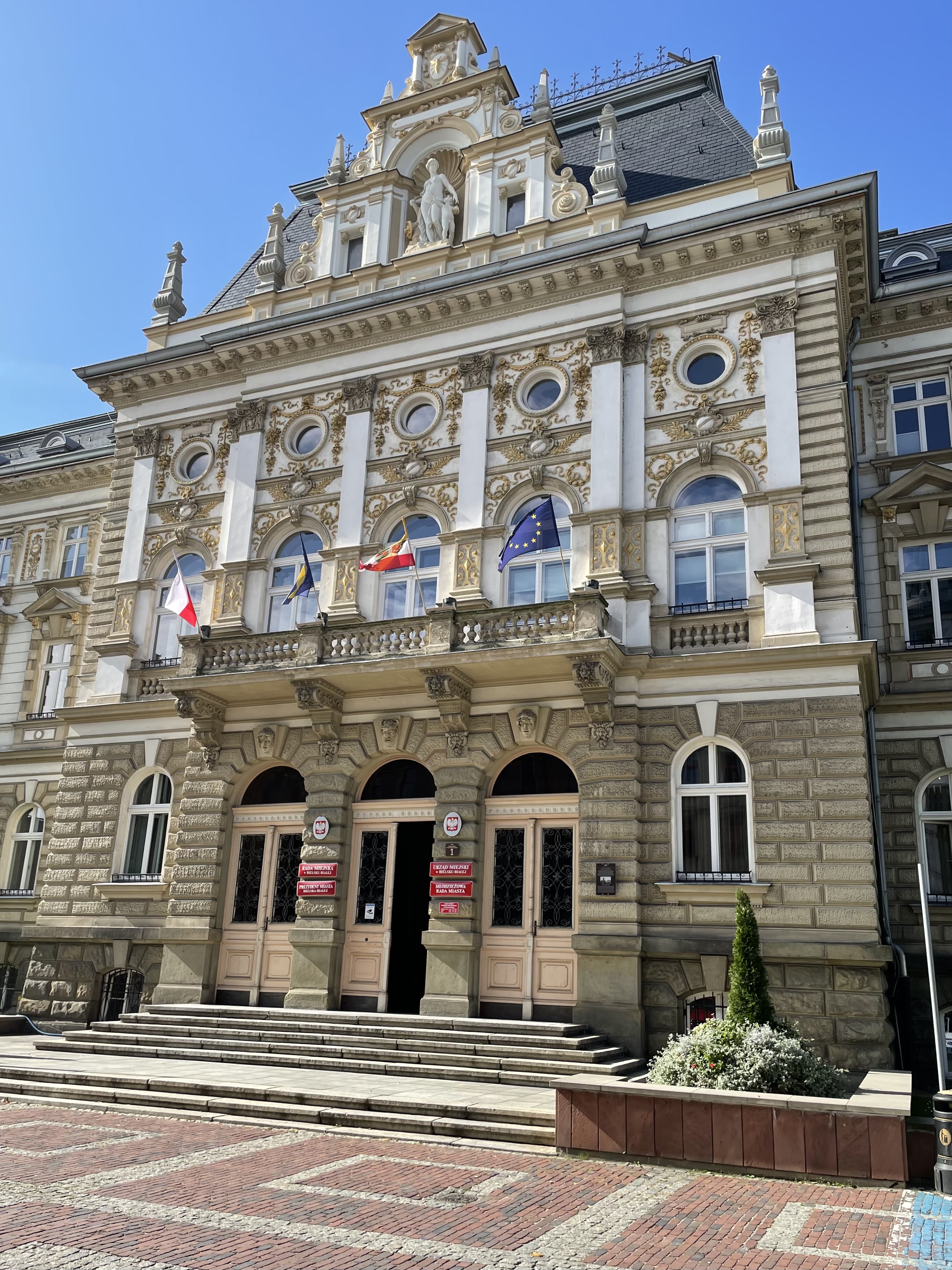
Our meeting was at the City Hall with Councillor Rafał Ryplewicz
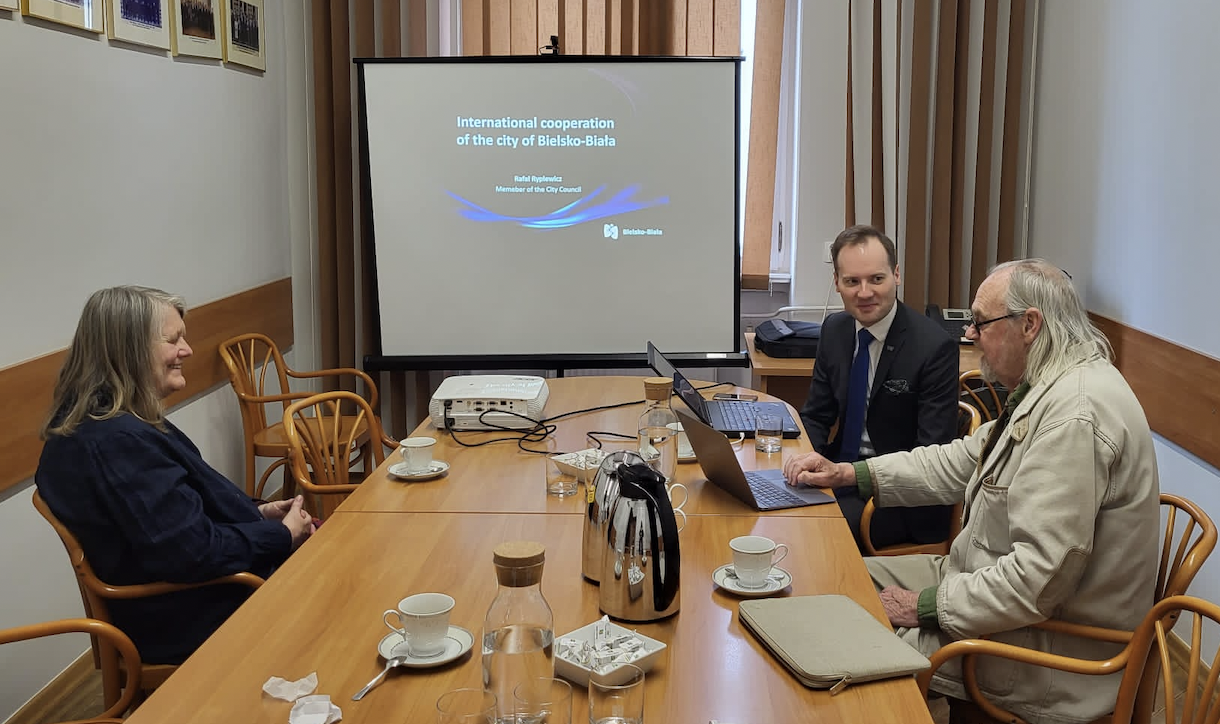
Magda wanted to use our presence as a means of increasing local politicians awareness of the effort that the University had been making in assisting Ukrainian families. In 2022 funding from Bishop’s Castle had assisted this process & we had made 2 visits to meet groups and assess needs.
Whatever ever graciousness may be shown to me on such situations I always feel that whatever is being ‘respected’ is, compared with the needs & requirements, a pitiful effort.
The prime issue was support for Ukraine – Councillor Ryplewicz stated it was essential because…. ‘they are fighting our battle’.
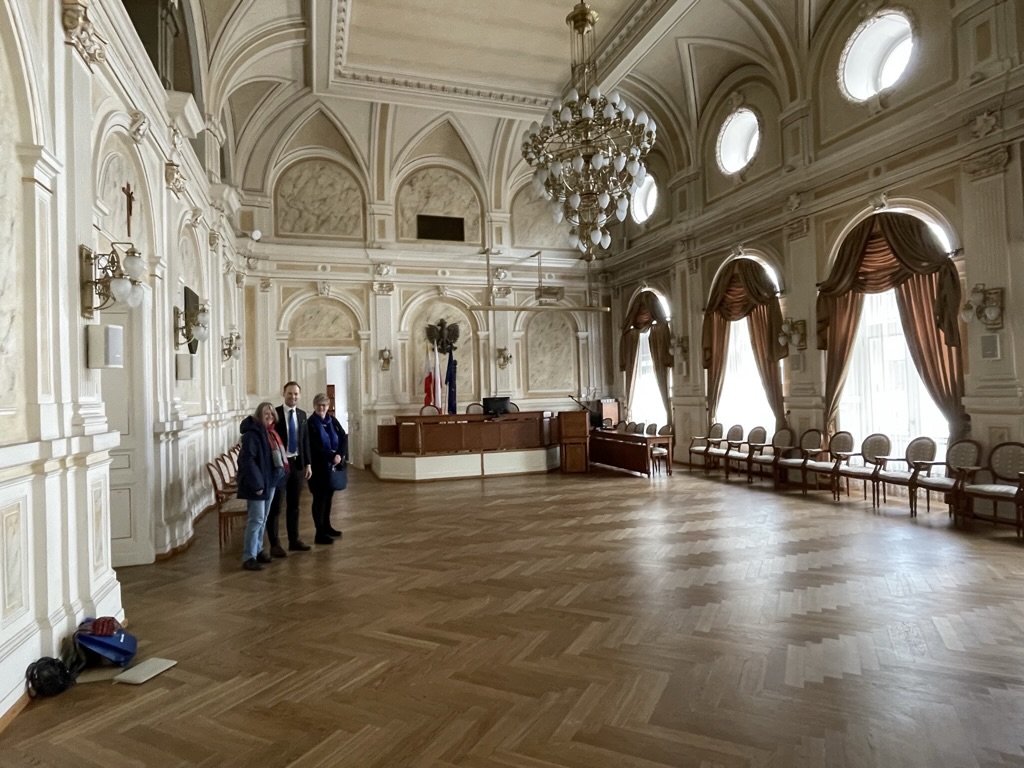
The emphasis for Magda was of trying to develop ways of working together in & for a ‘Common Cause’.
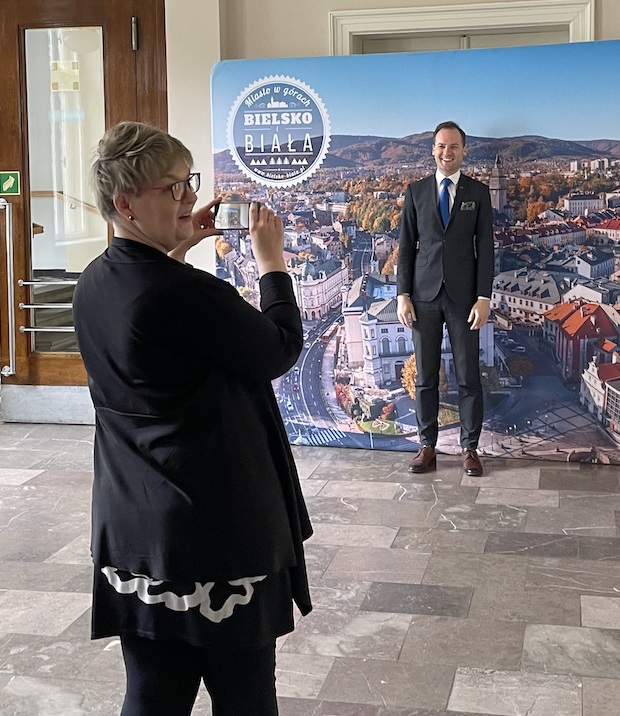
We then moved to the University - and Jacqui and I became Support Staff in an Adult education Class on teaching English.
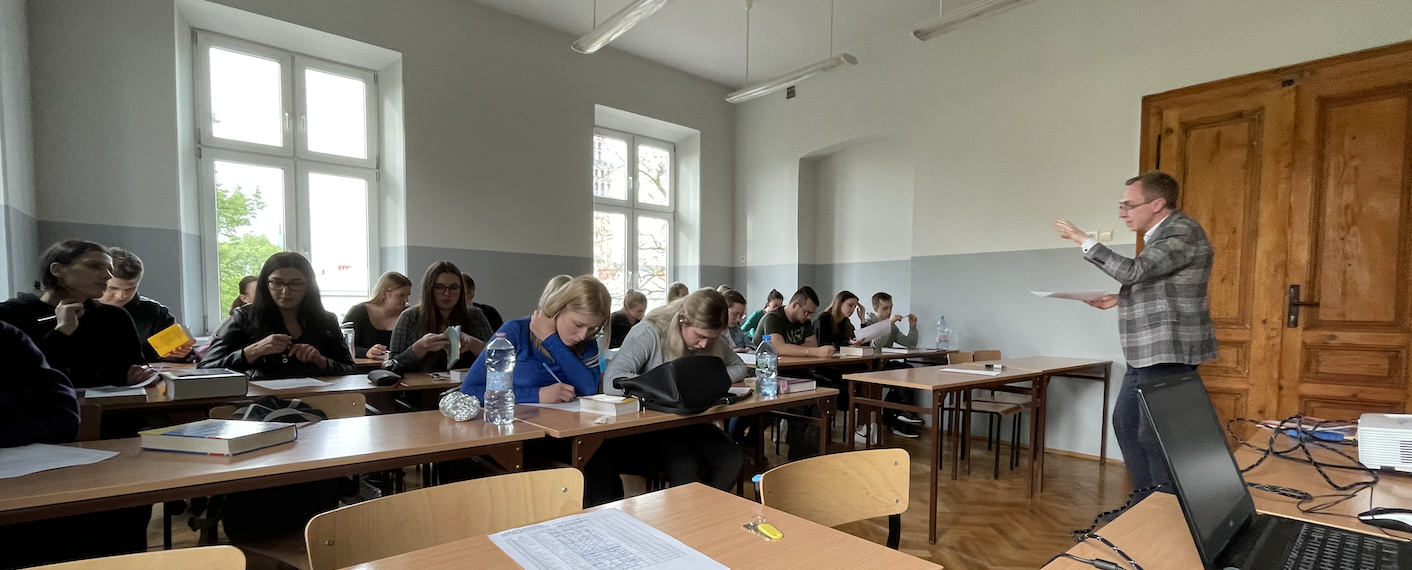
I was asked to talk to a group of students at the local University. This was a particularly valuable moment on our tour.
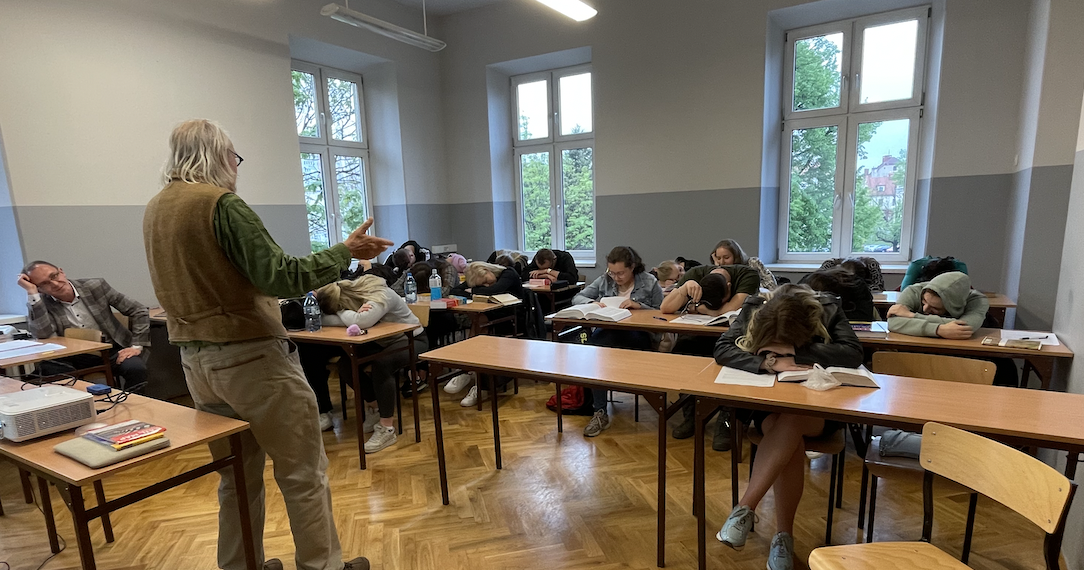
It was obvious to me that the presentation I gave was very enlivening and enthusiastically received by all who were present.
WhatsApp
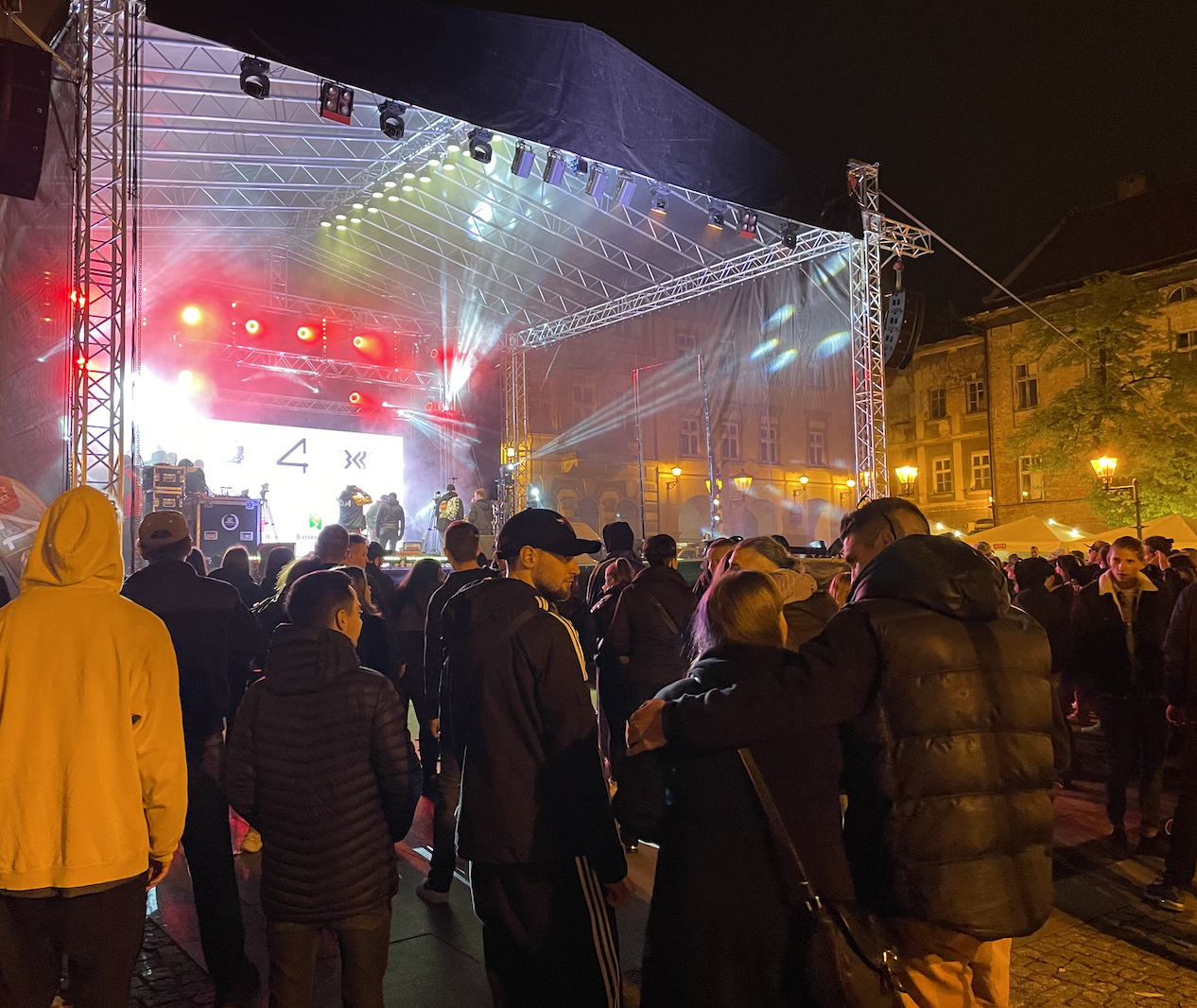
Cold and wet – but still celebratory.
20th May: To Warszawa
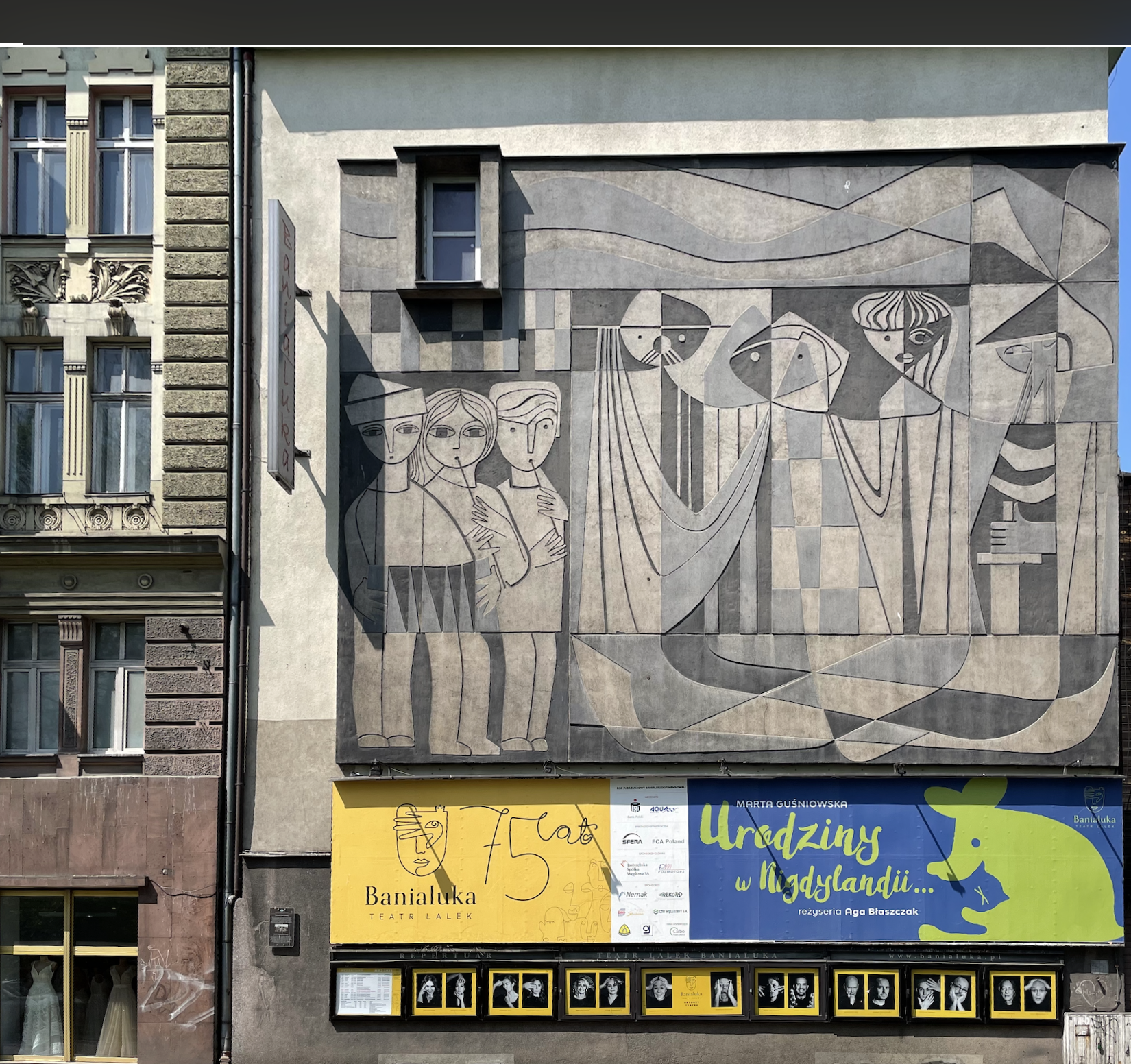
Some ‘Old Style’ art work is well worth preserving …. if only as exemplars of its limitations…… This is a Puppet Theatre & the the juxtaposition of images is interesting.
https://www.banialuka.pl
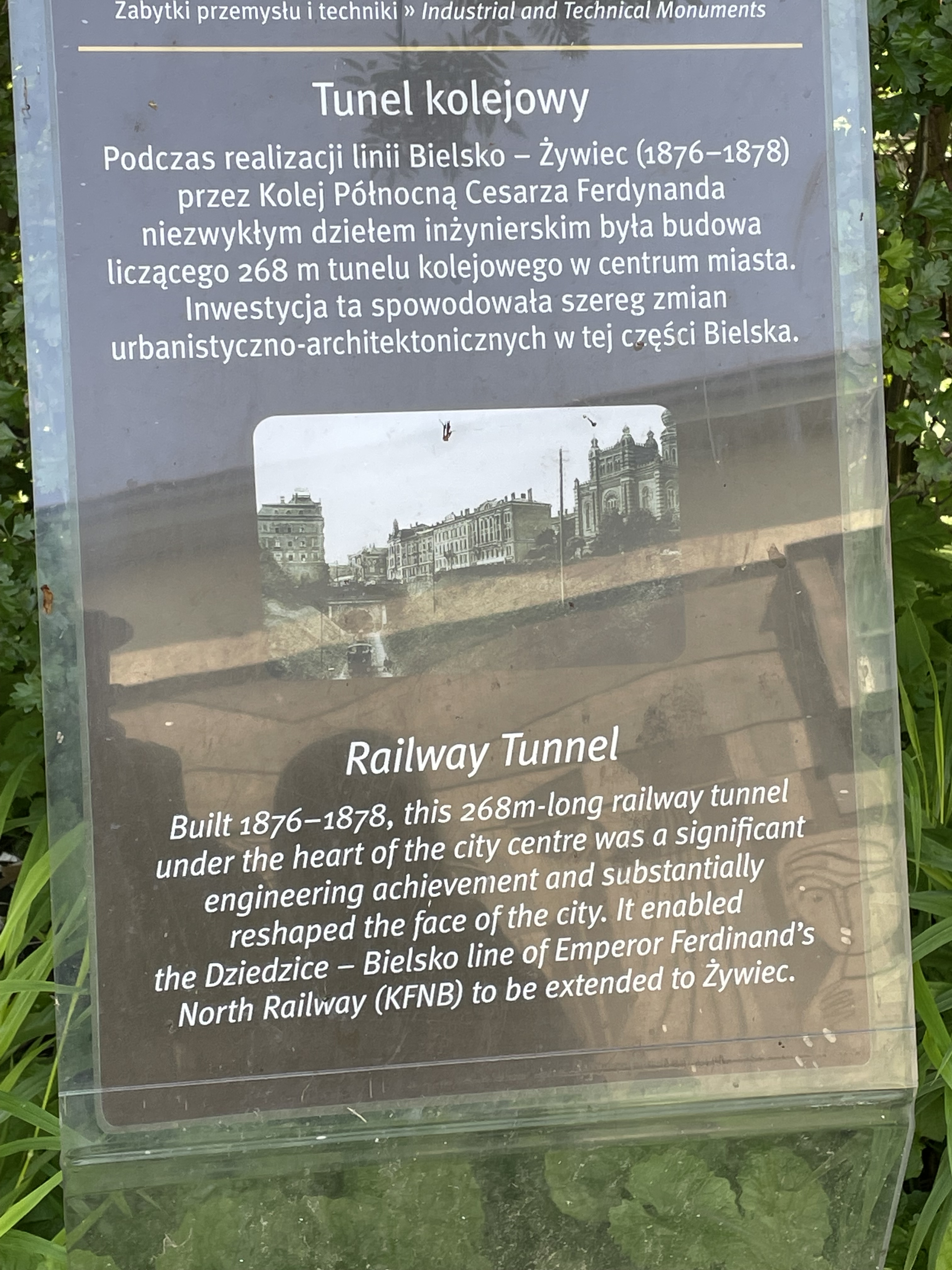
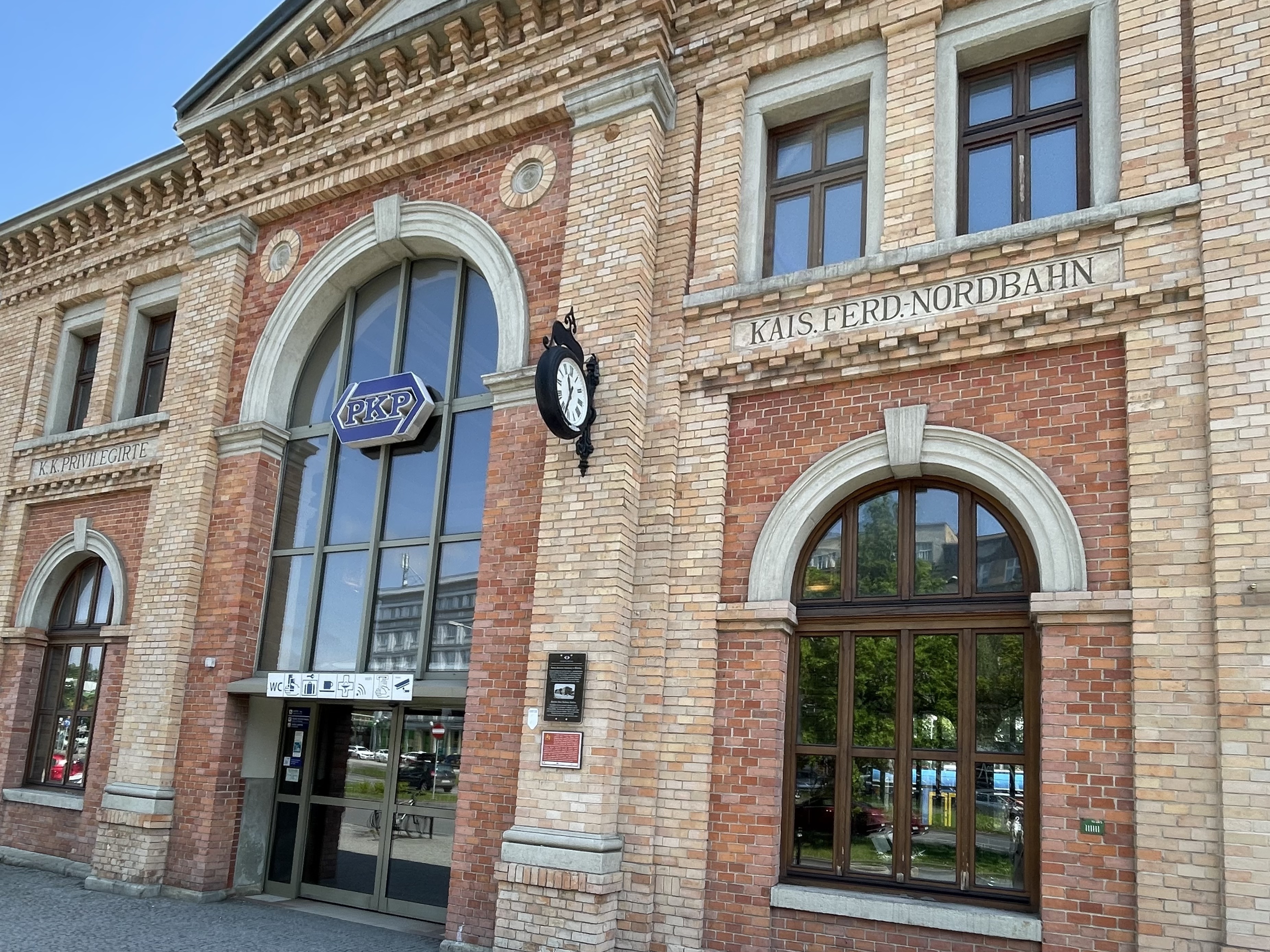
Evidence of the Hapsburg period – King Ferd……
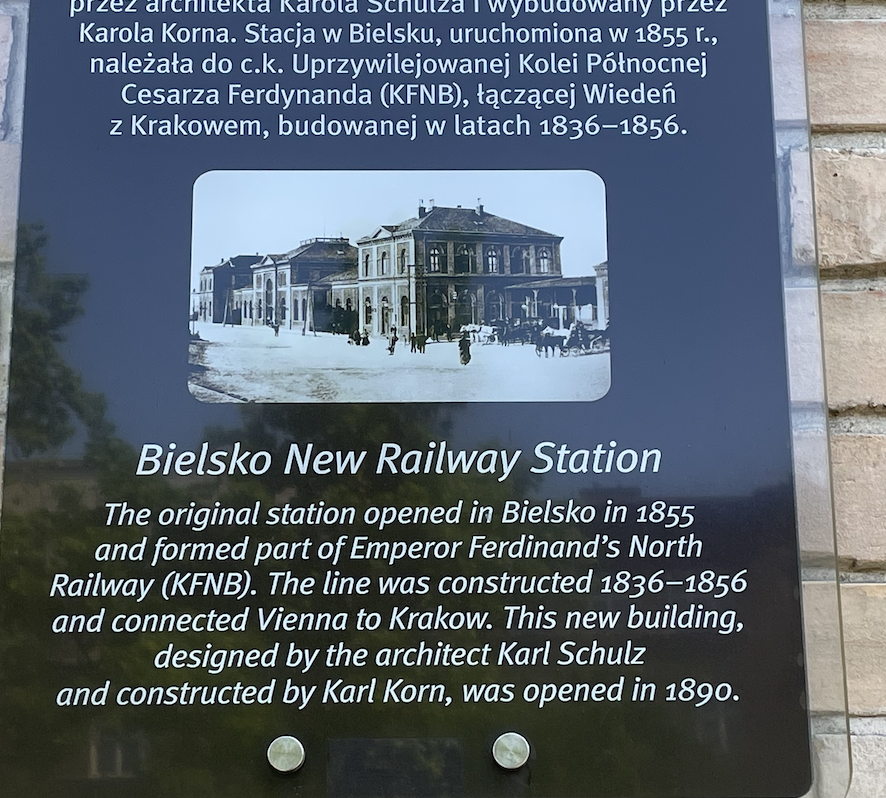
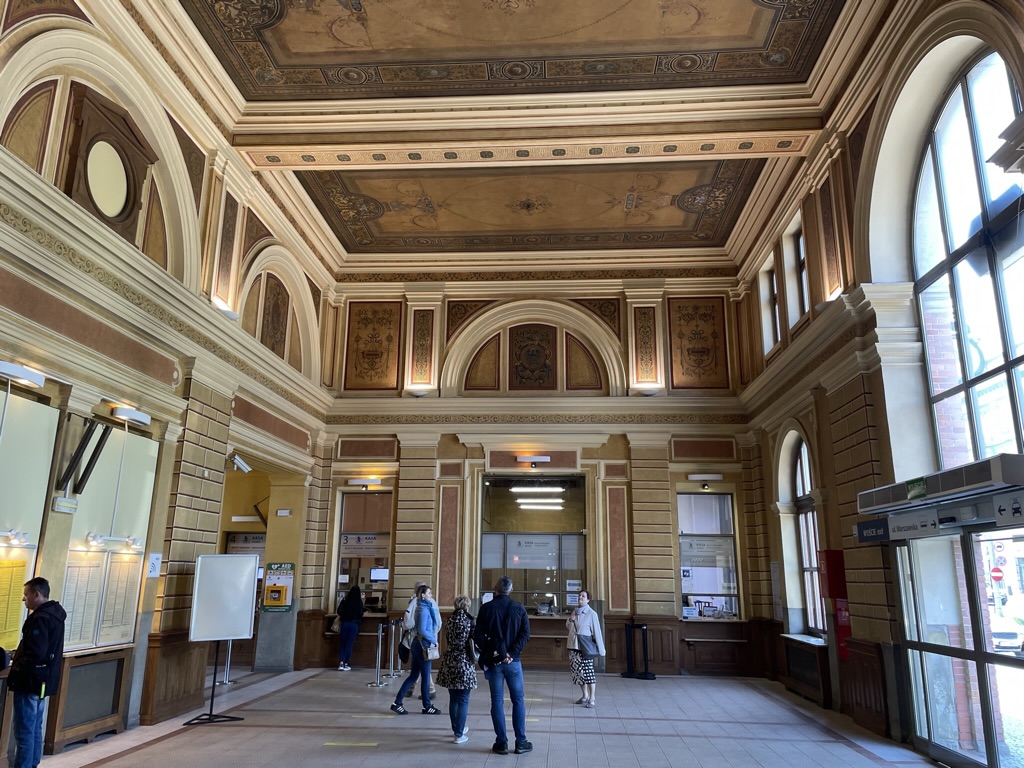
Vienna, like many capital cities, enjoys an excessive ‘grandeur’ – in the provinces of the Hapsburg dominions, as elsewhere there was quality that maintains an essentially decorous functionality.
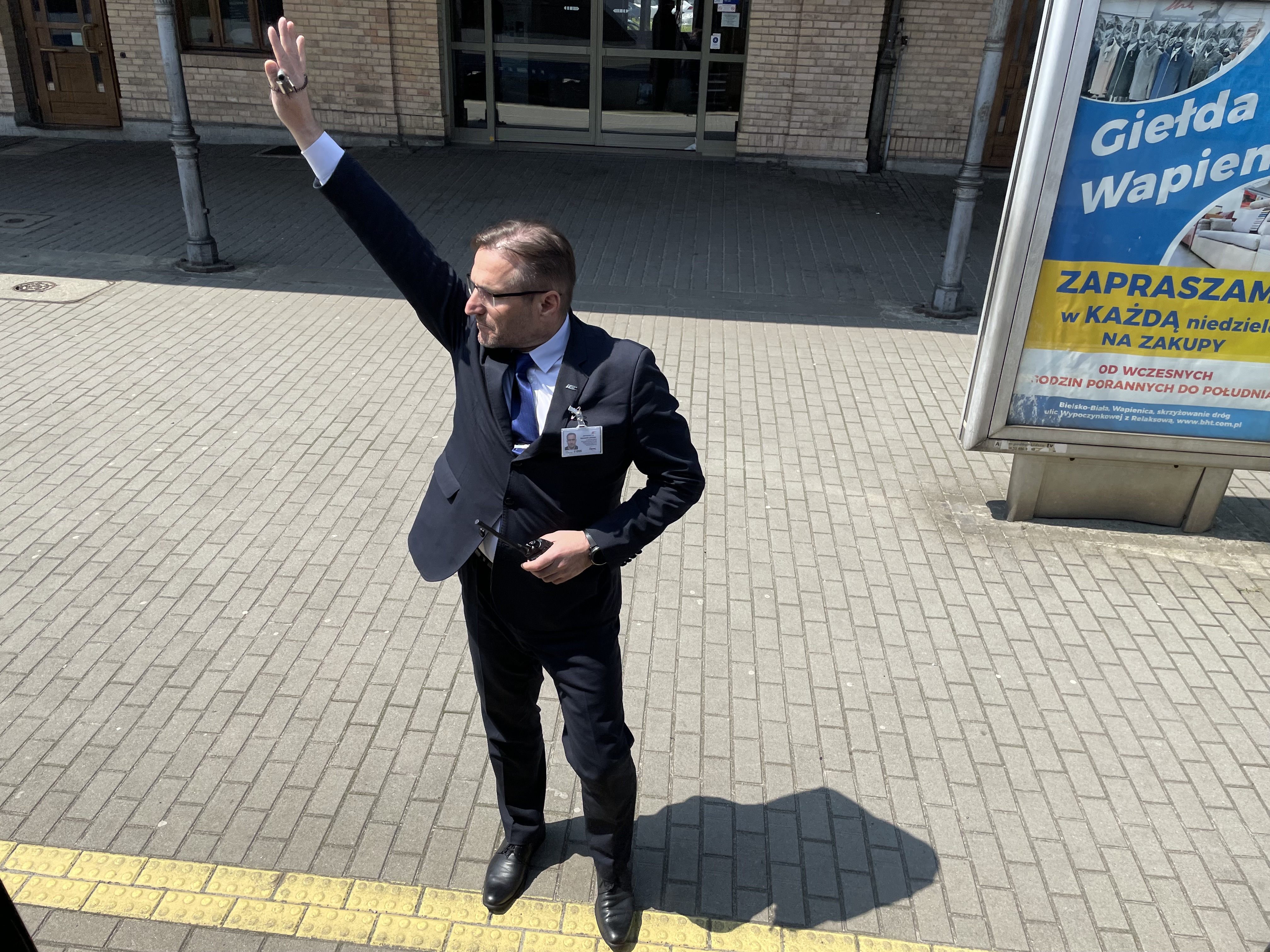
There is a delightful formality in aspects of railways practice and performance
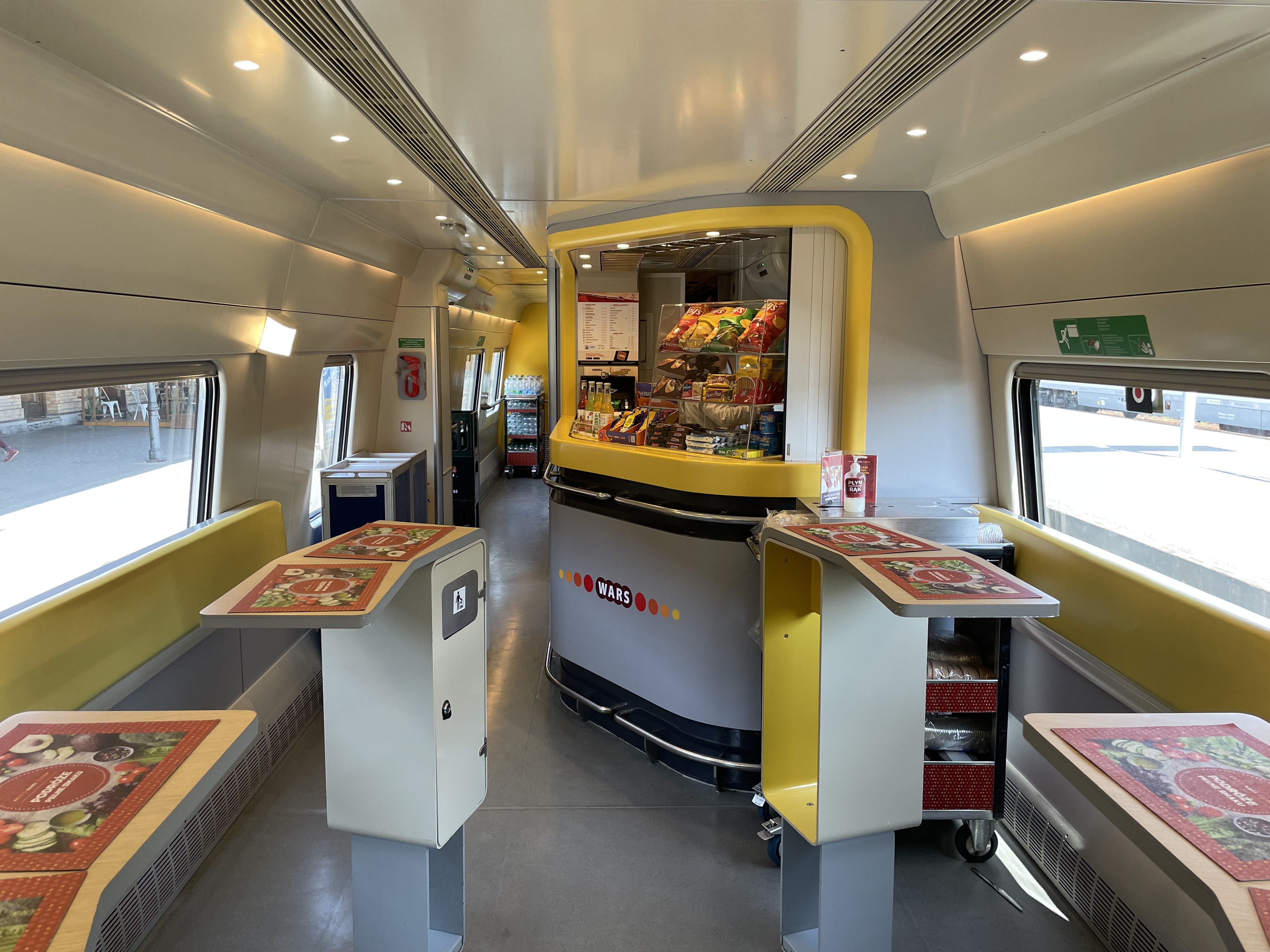

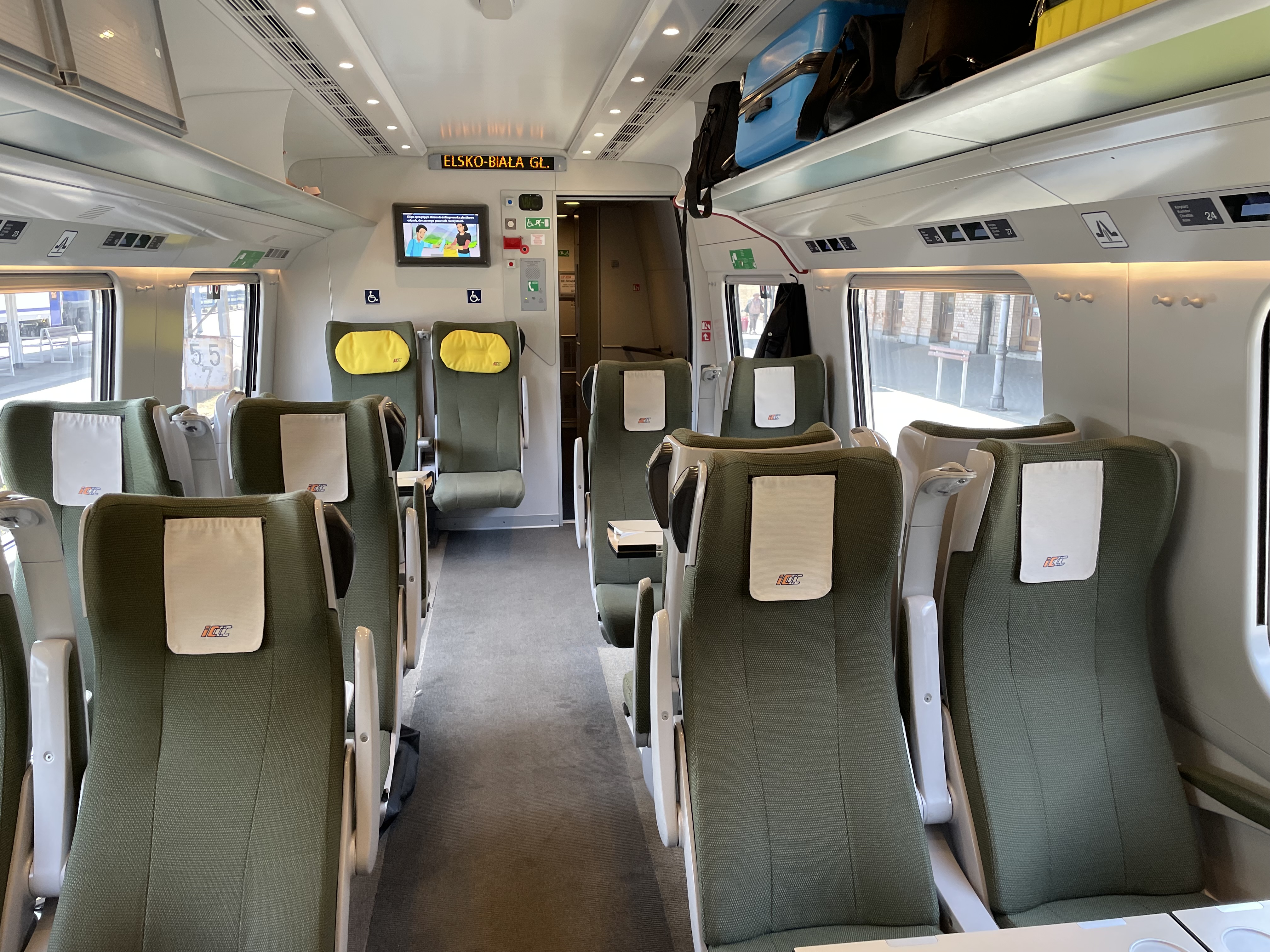
We also have the cleanest carriage windows we’ve experienced
(Finnish trains were similar, French were worst – an almost imperceptible thin film of grime was always present… made photography impossible)
Every time the train stops Chopin plays (a nocturne). I guess if that happened on a British train the present government would insist on ‘Land of Hope and Glory’……. Or ‘Rule Britannia’.
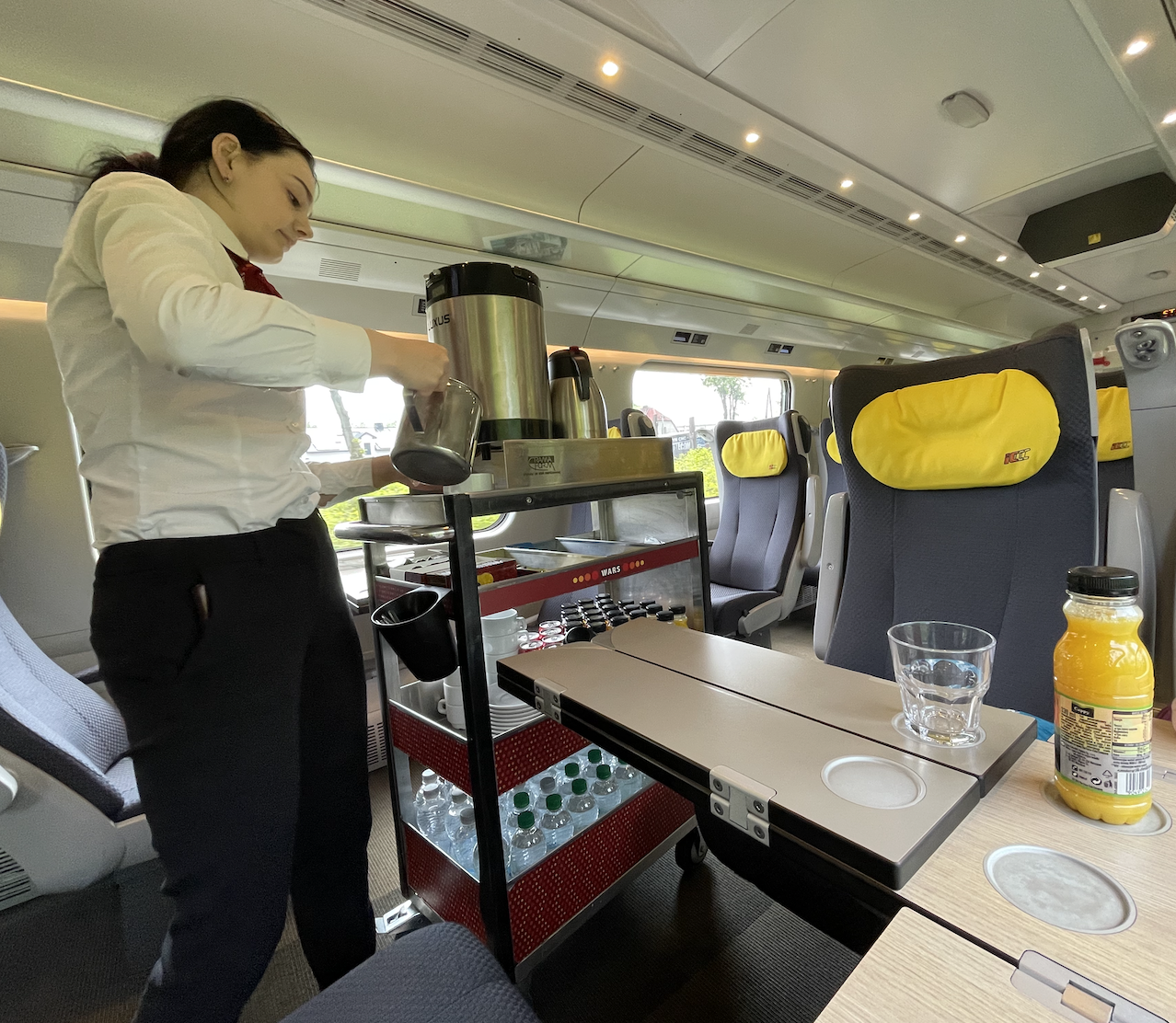
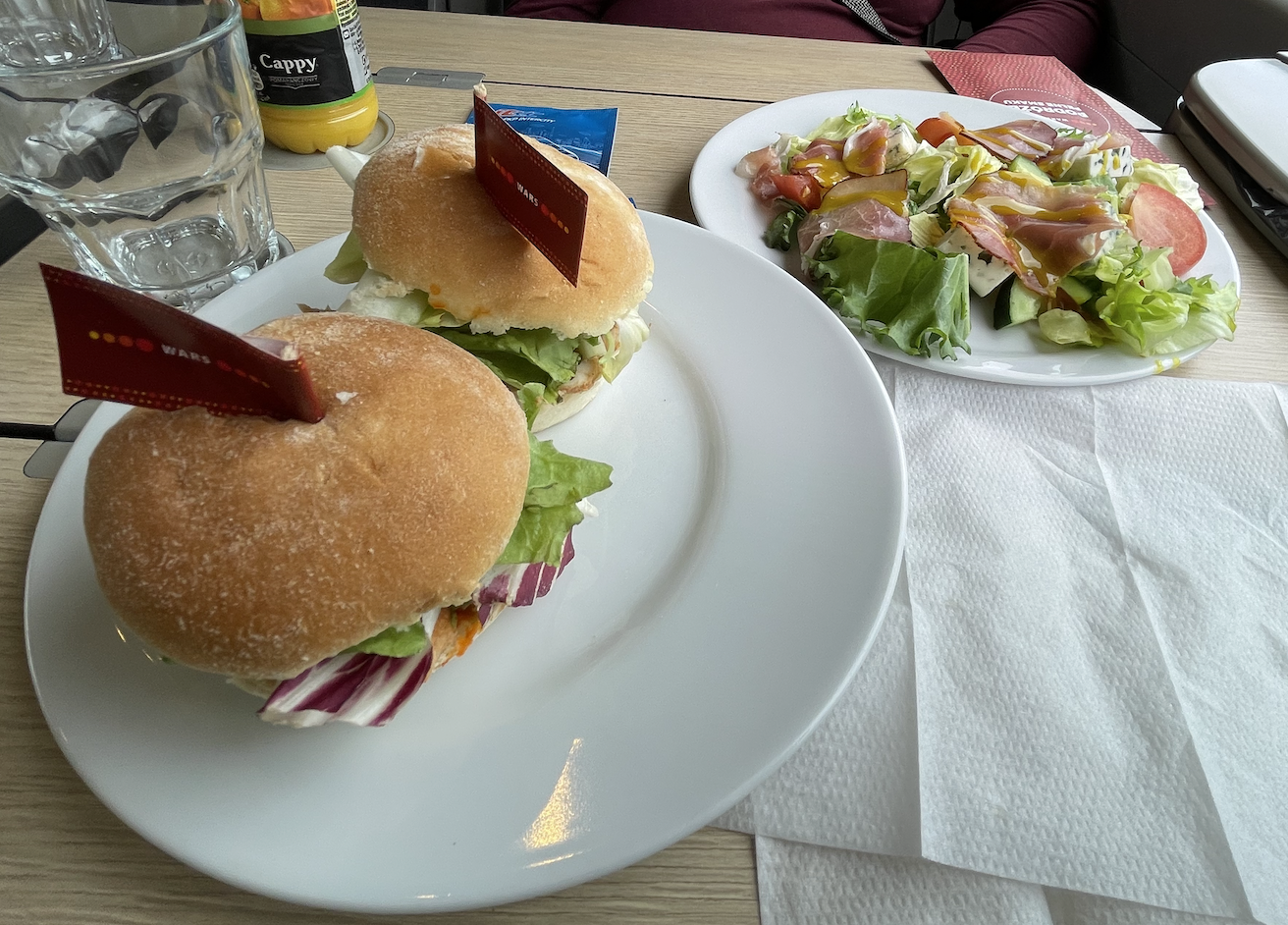
Through a changing structure
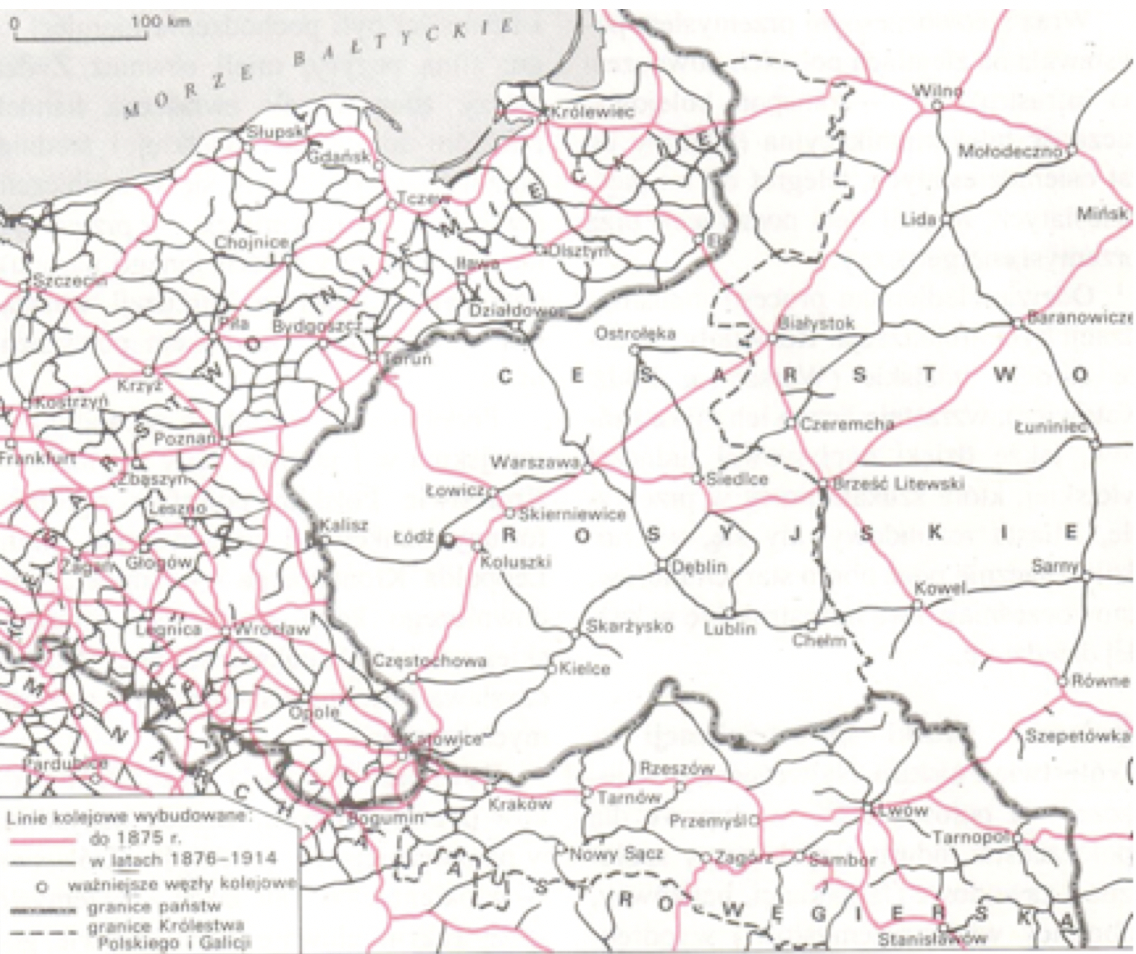
During the period of railway development (C19th & early C20th) there were 3 parts to Poland. This history is still reflected in the railway system.
The intensity of railways development is less in the Russian sector.
We head to Warsawa and just north of Katowice, leave the Hapsburg Dominions & enter what had been, after the partition, Russian territory.
 Inspirational Pathways