The sun shines on Warsawa – and everywhere to the north
Warszawa & the sun is shining!
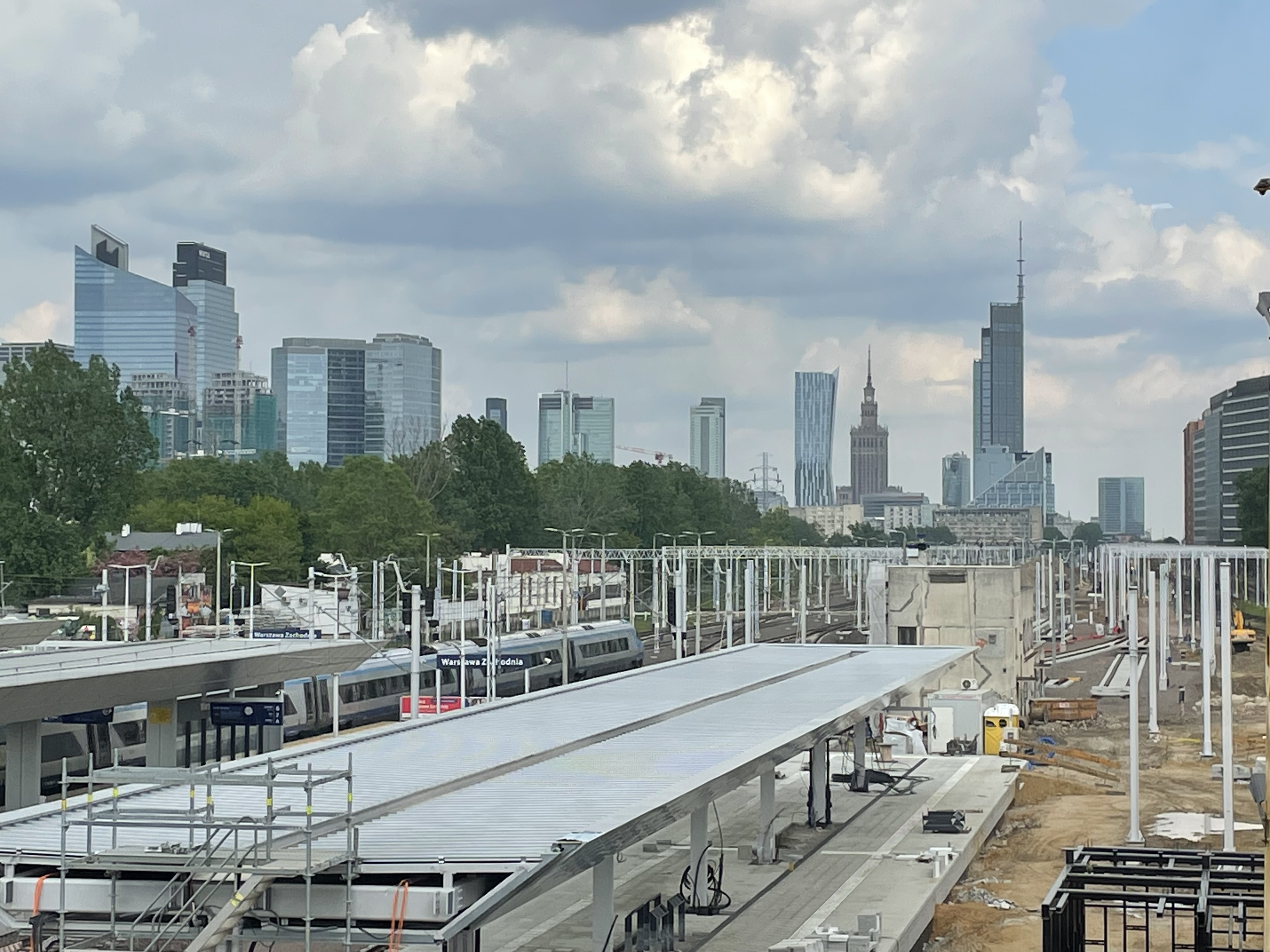
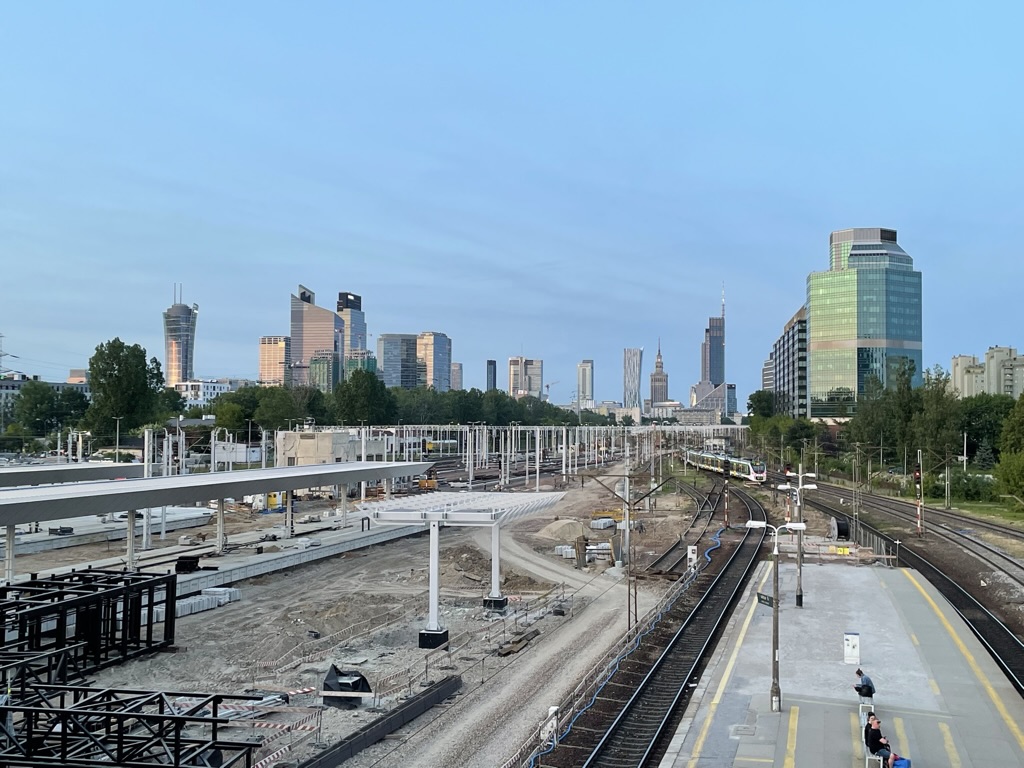
The skyline of Warsaw has changed dramatically since I first visited.
The building once described (by the Soviets) as a gift to the Polish people from [the people of] Russia now is still distinctive but somewhat overwhelmed!
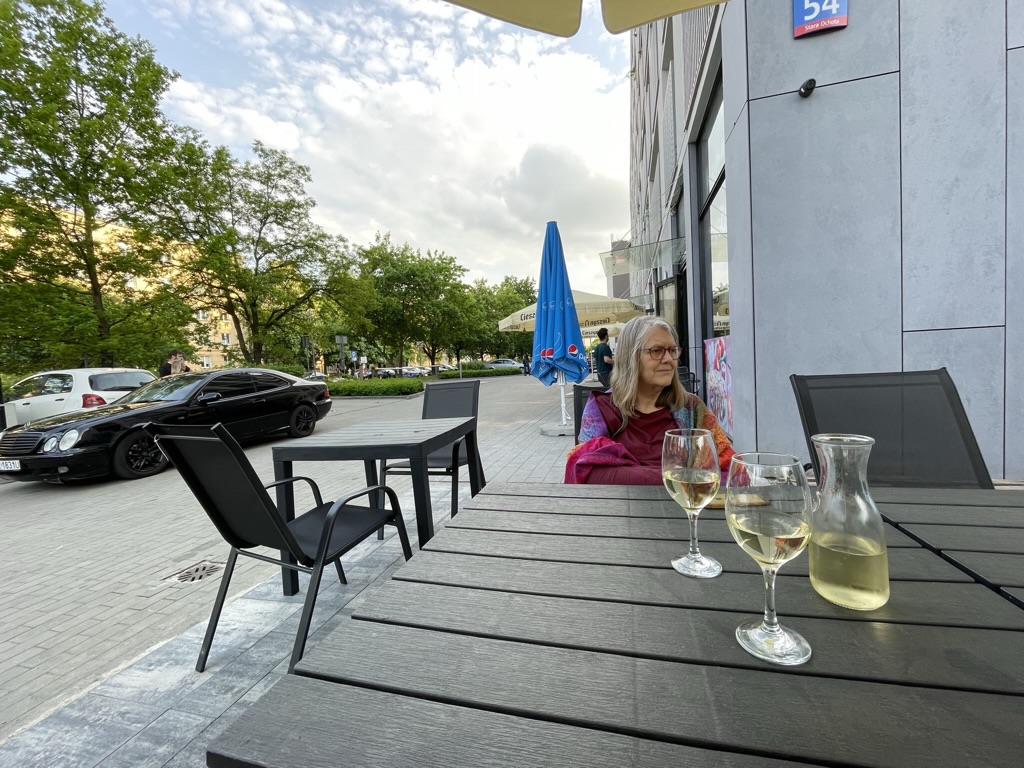
For the first time on this tour we have warmth and can sit outside to eat……the temperature went from c9 degrees [Bielsko-Biała] to 25…. And the cold wind became warm.
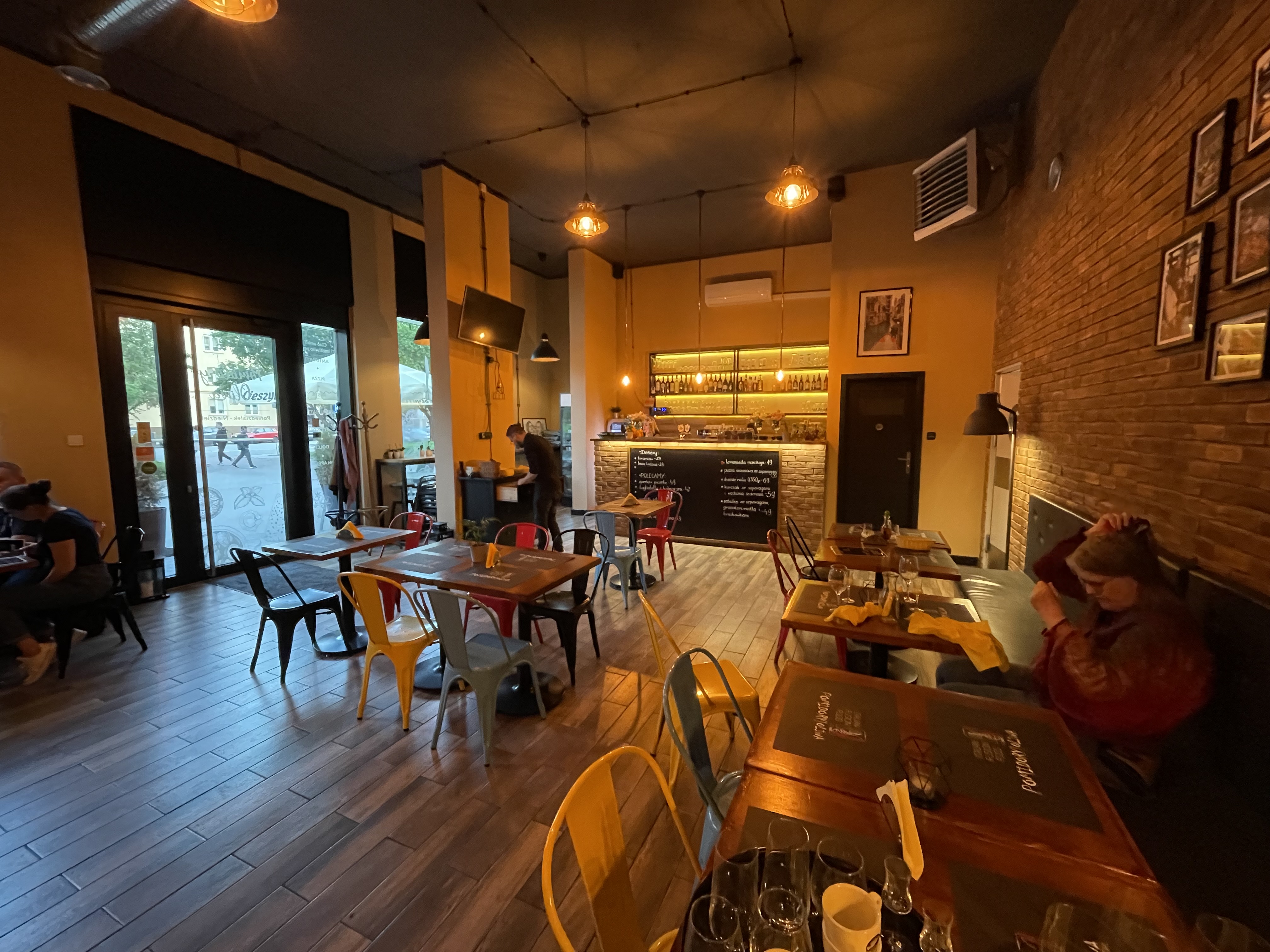
In a new very urban setting we found a corner occupied by an Italian restaurant.
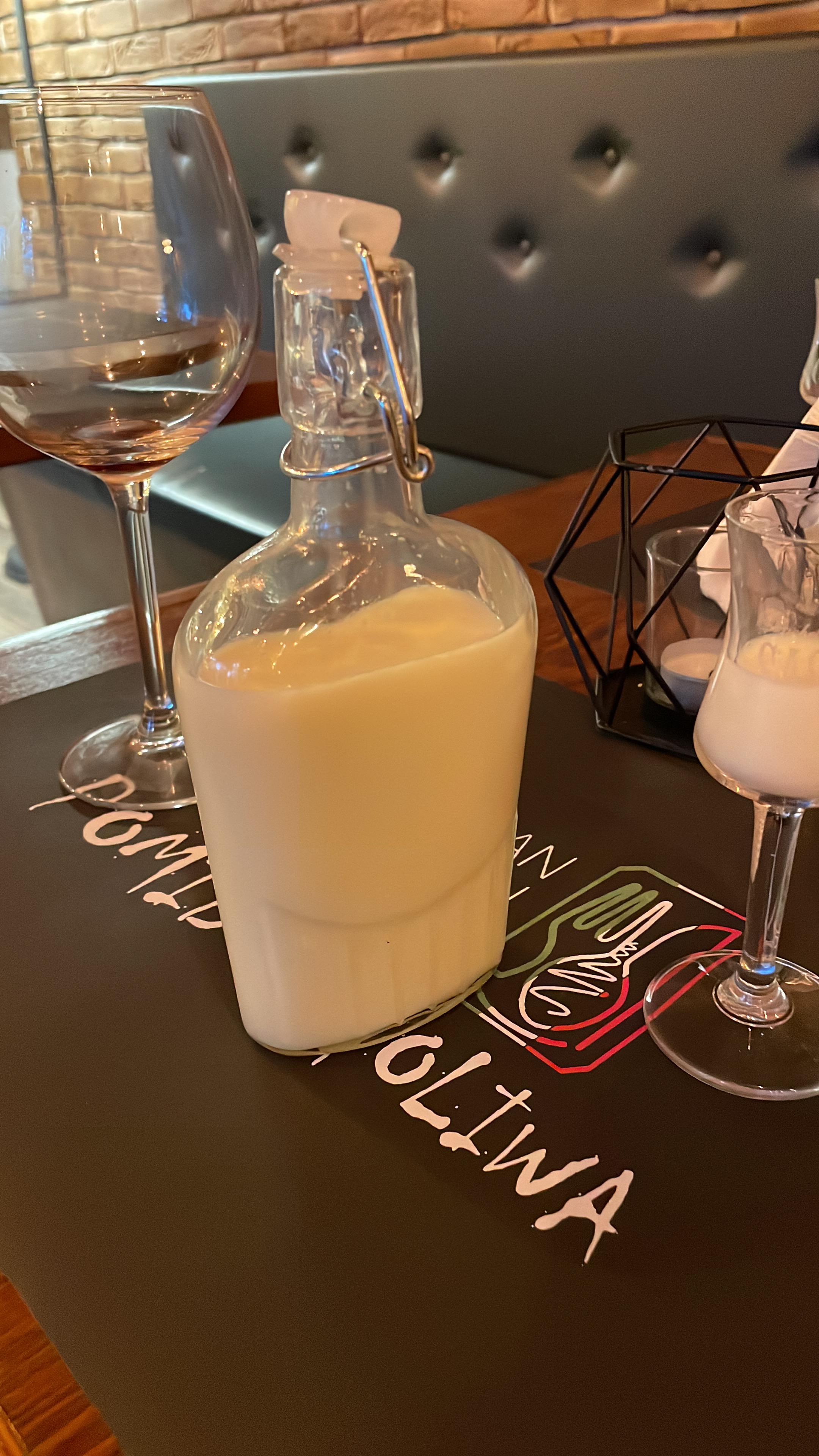
Lovely food – and our appreciation resulted in a gift of specially made Limoncello
We carried it, with the beer from Spilinga, to Kaunas.
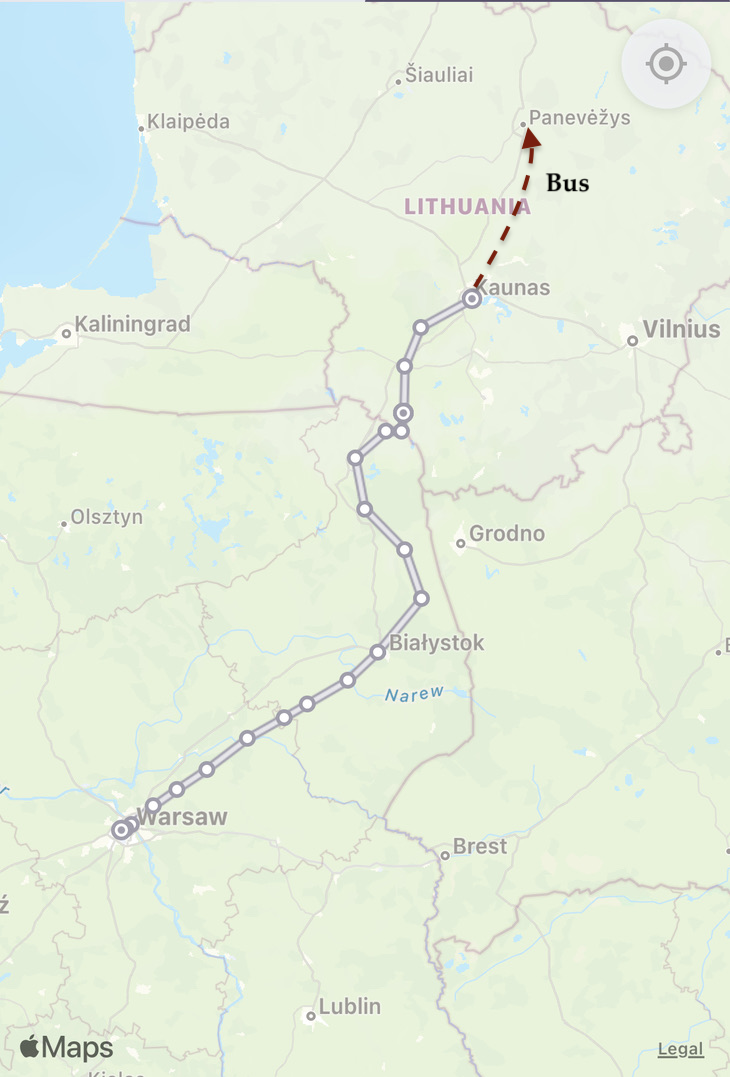
21st May: To Panevėžys
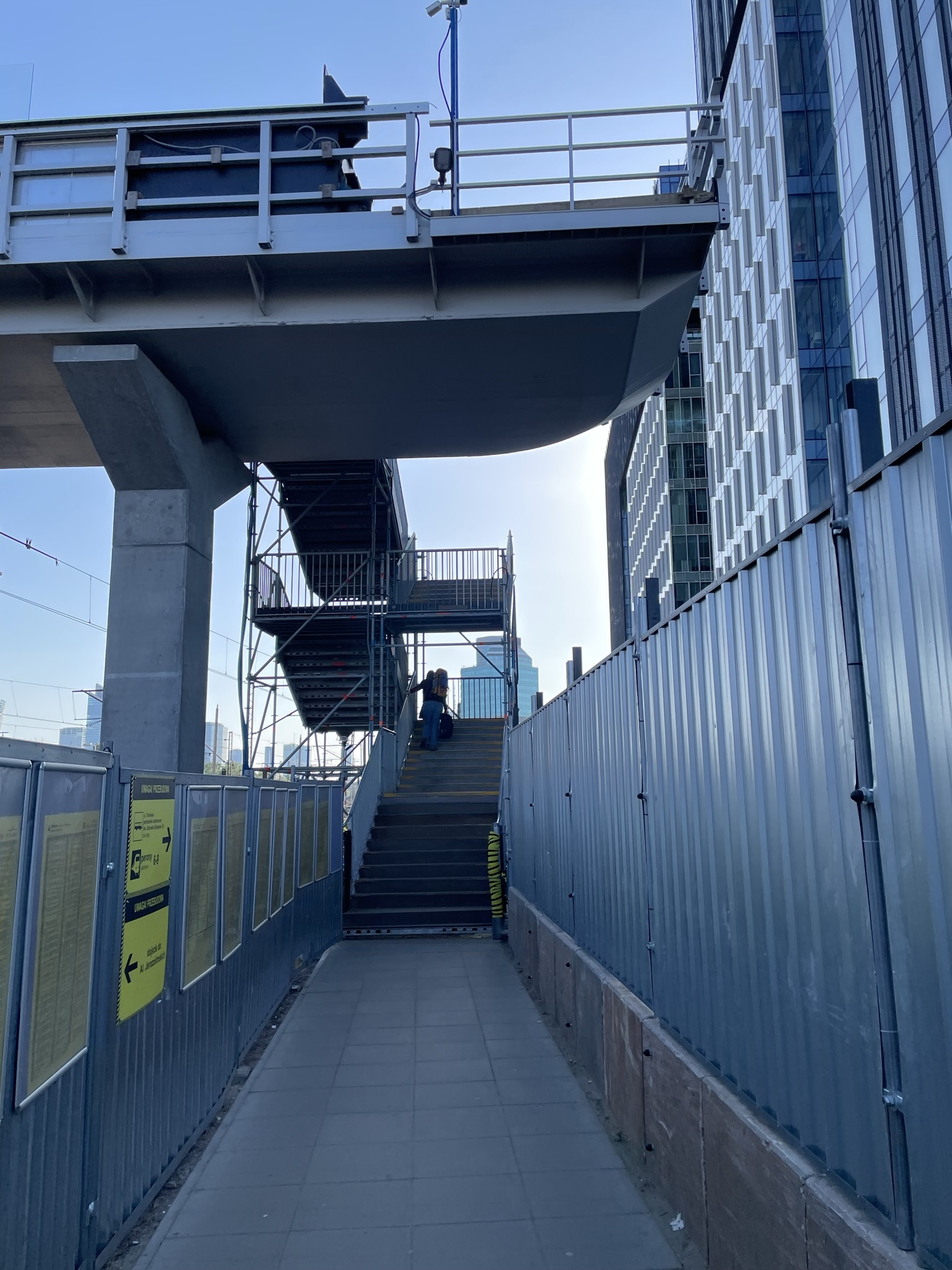
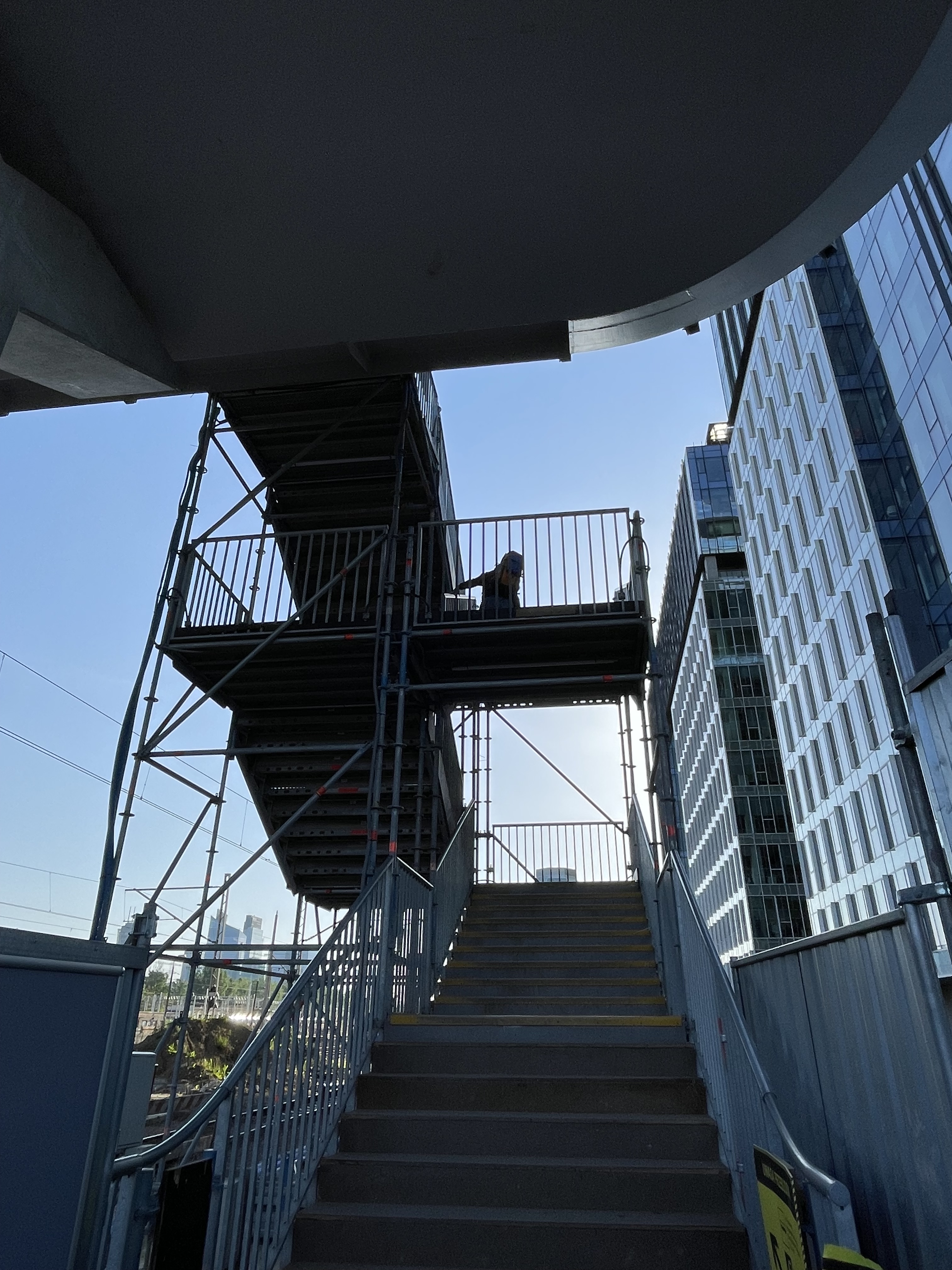
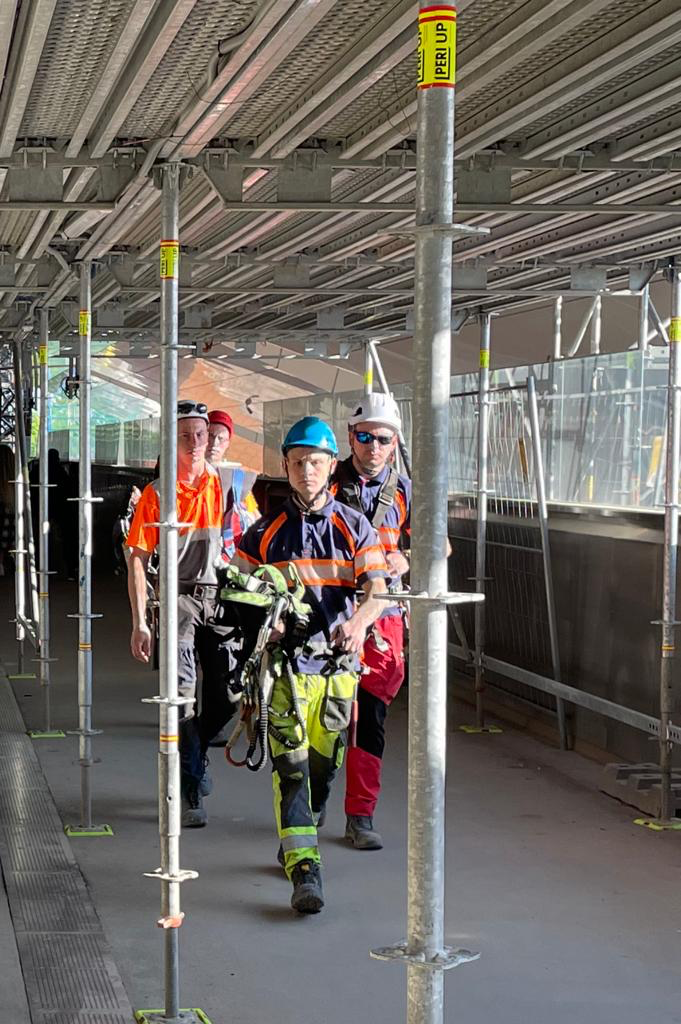
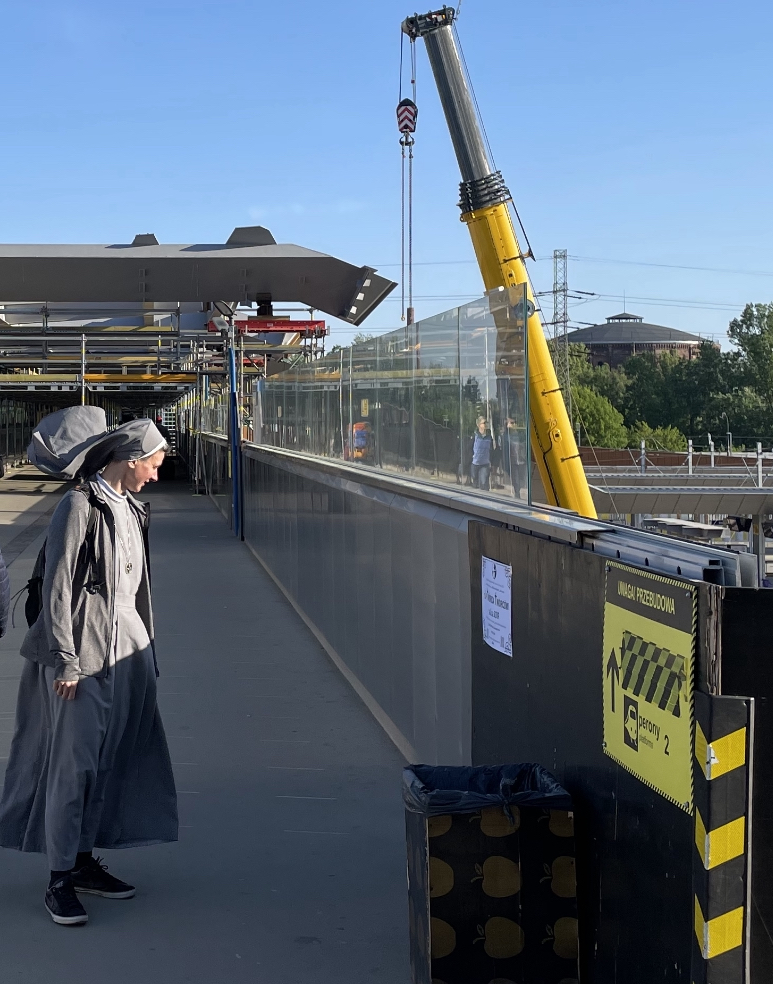
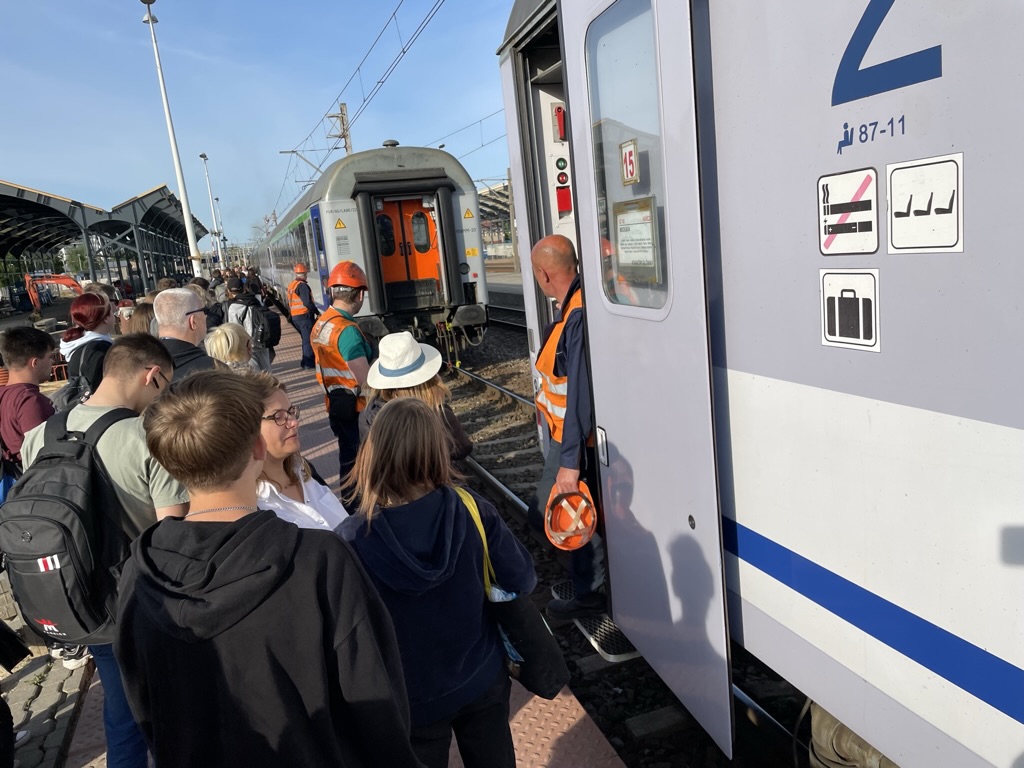
…. But before we were allowed to join our train we were required to complete the Polish Railways ‘PAC’ (Passenger Assault Course).
The motto being ‘ healthy individuals create a healthy nation’ (but please carry on smoking).
The guys in charge of this process also chanted (to a popular tune by Chopin) encouragement ‘If a Nun Can, You Can’
WhatsApp
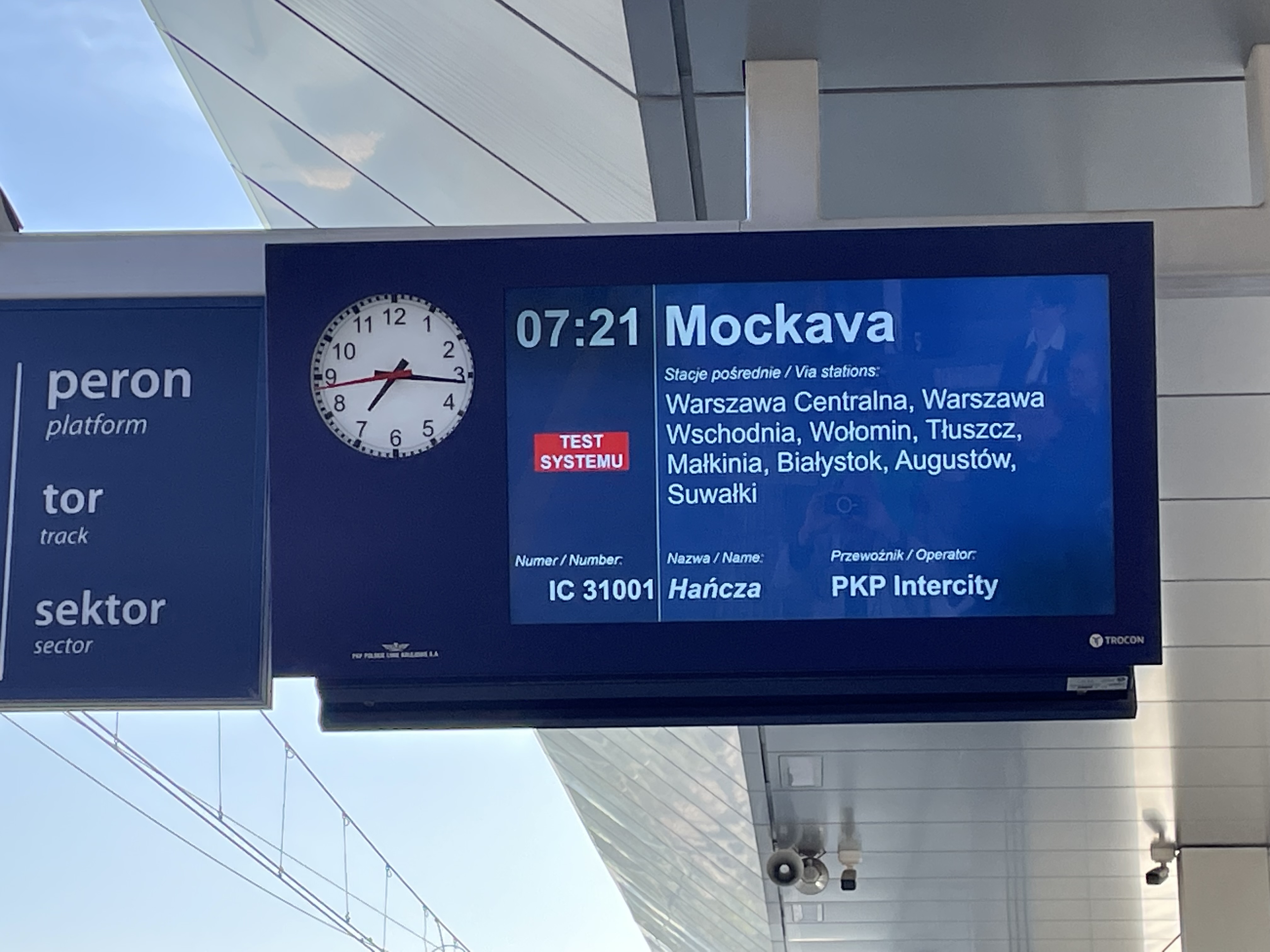
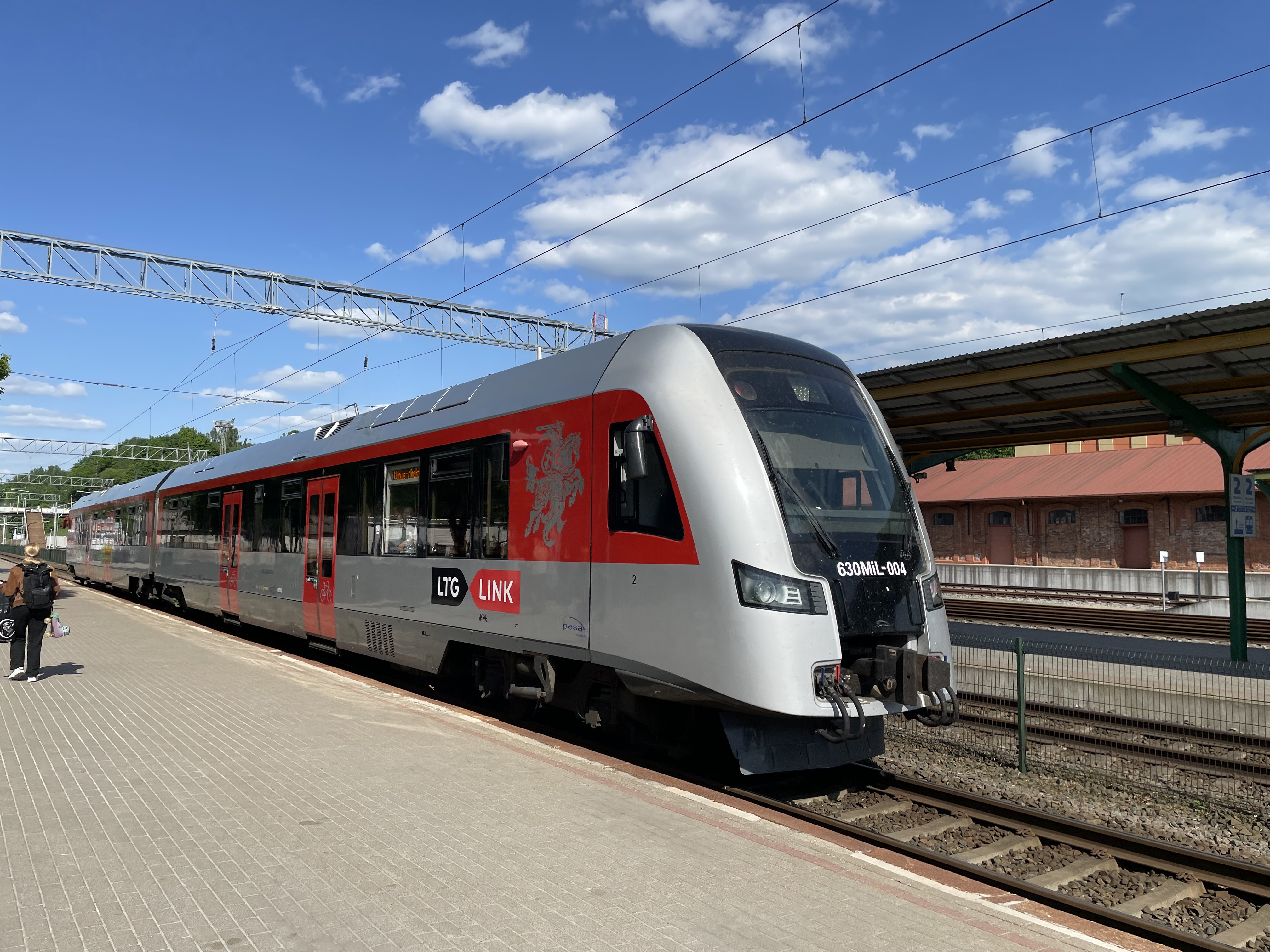
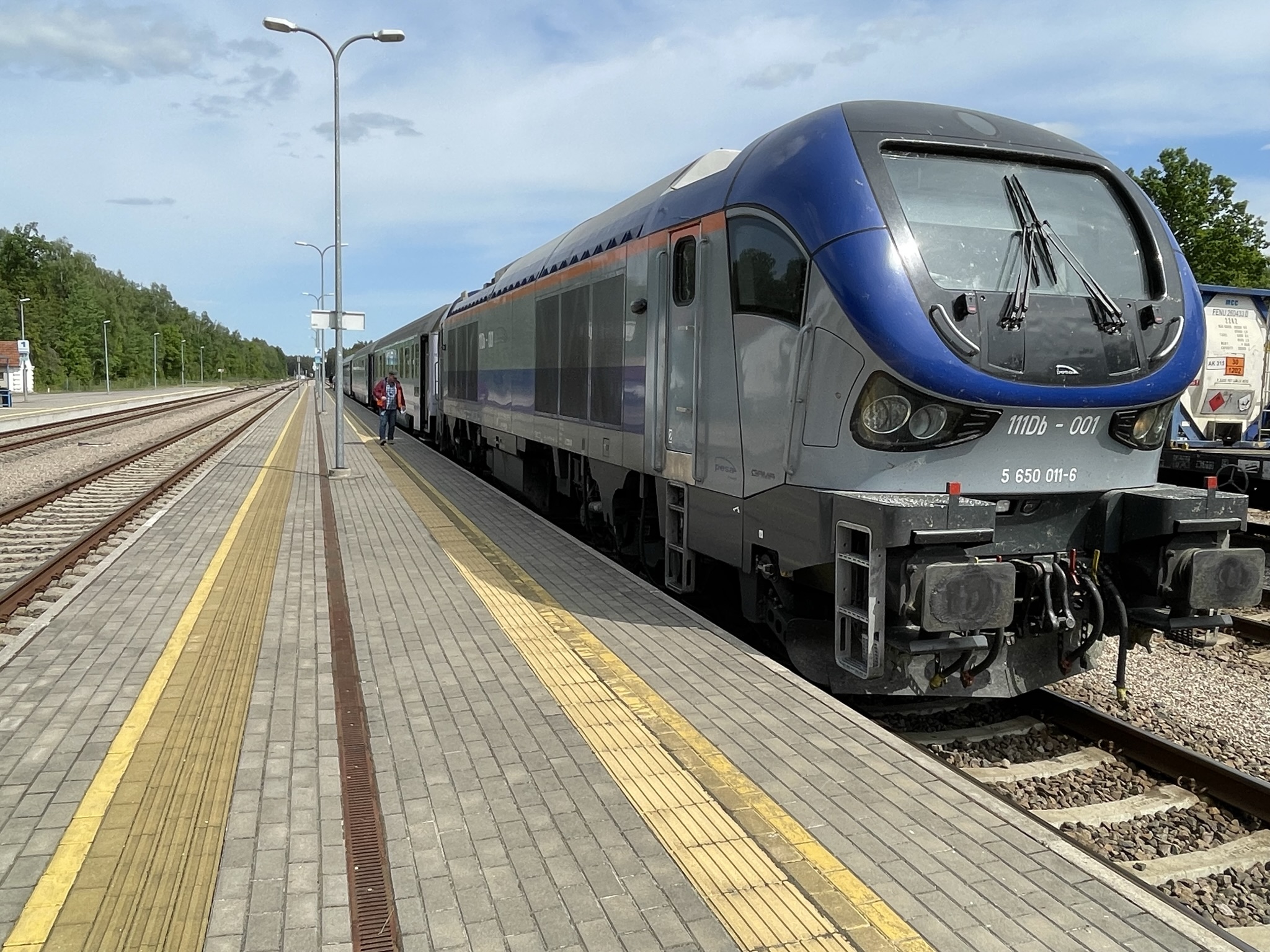
Our train to Lithuania
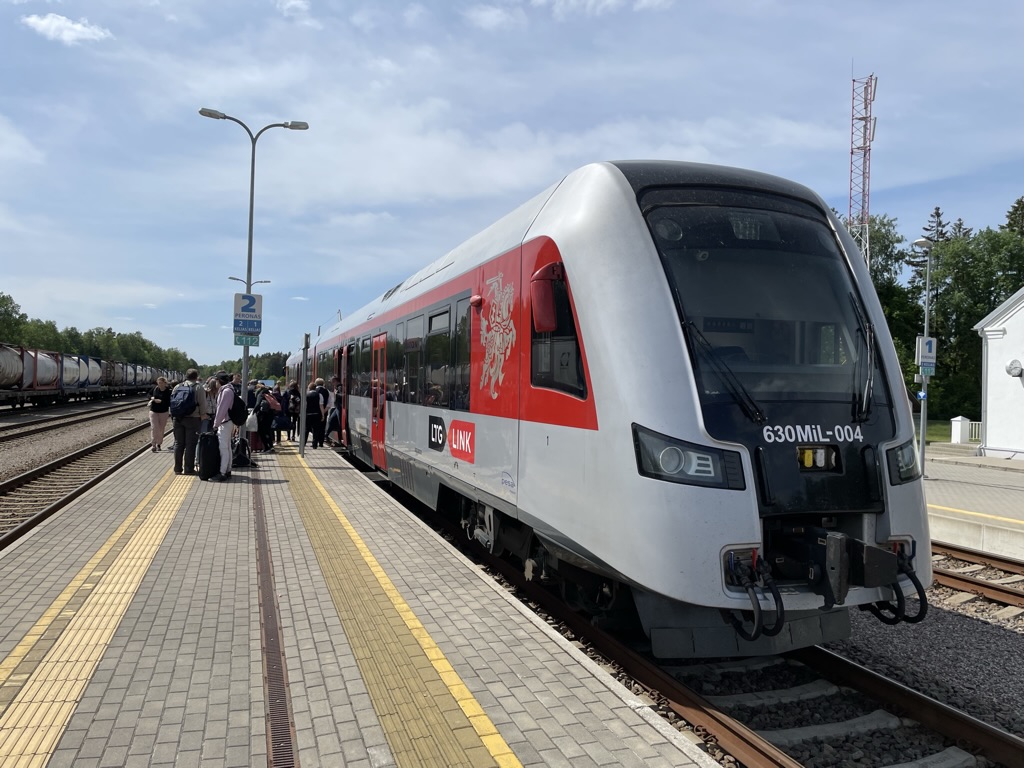
Mockavos Terminalas occupies a unique territory of 40 ha dedicated for the services of cargo loading and logistics and is located in the close proximity of Mockava railway station, which is the only station in Lithuania having direct connection to the rail network of Poland.
It serves as a gateway for the Baltic States to the EU rail system: goods from here can be delivered in just a few days almost anywhere in Europe using the modern Rail Baltica rail line.
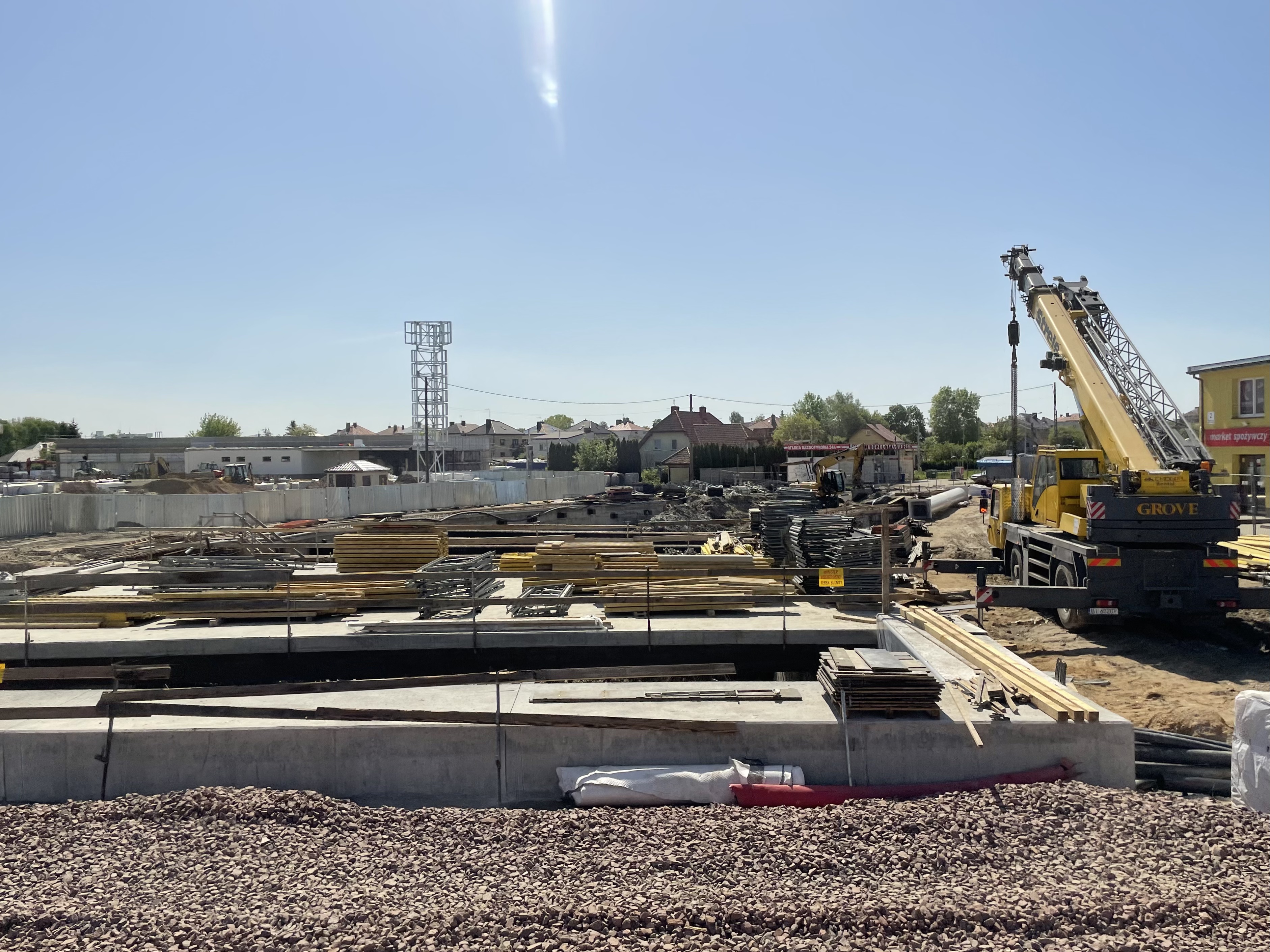
Everywhere we’ve travelled in Central and Eastern Europe there are major rail redevelopment schemes. Now we are travelling on a route that will form part of a trans-Baltic route through to Estonia.
At Bialystok the train becomes diesel hauled and though the line speed is slow there is evidence of the beginnings of surveys that will produce a faster route into Lithuania. Also at Bialystok we met 3 guys from Scotland (Galashiels & Edinburgh) travelling to a concert in Vilnius….. Yes, that one!
WhatsApp
Our train branches away from the mainline to Vilnius – but that line passes through corner of Belarus & is no longer used.
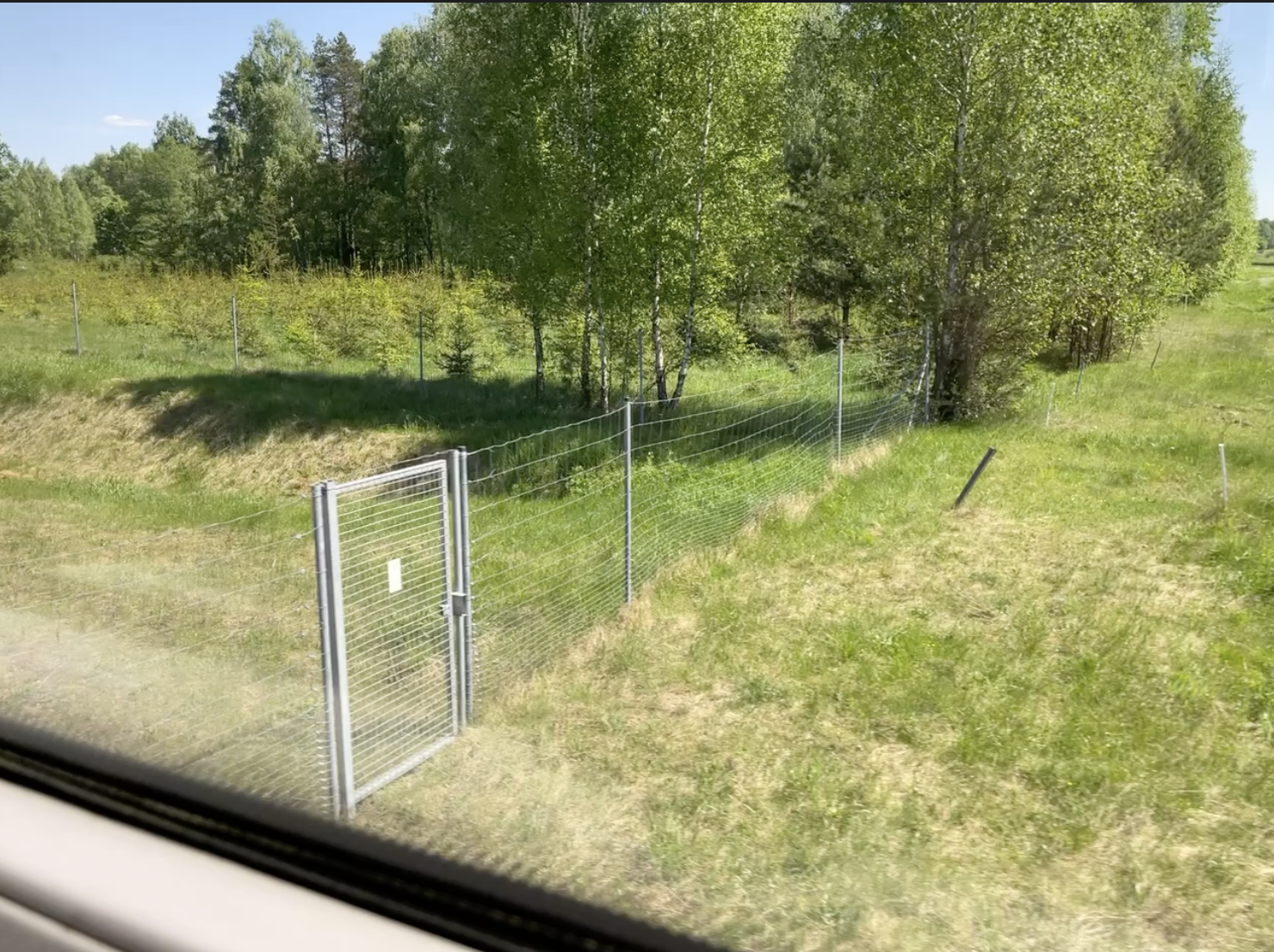
The Polish – Lithuanian border fence. Does the notice say ‘Please closes the gate’?
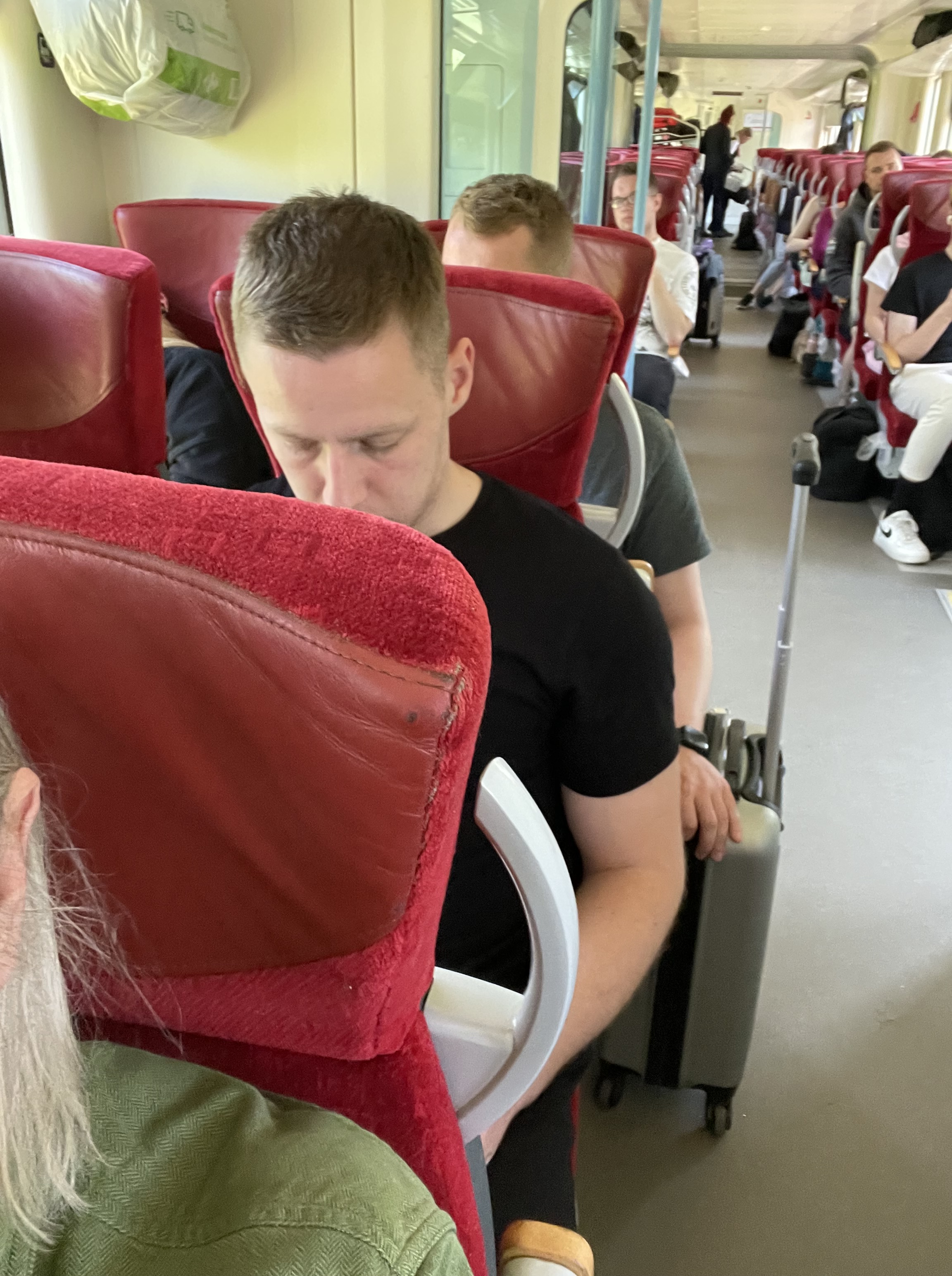
We were late & there was a mad dash onto the Lithuanian train which was not suitable for the numbers using it… a Ramstein Effect?
Into Kaunas
Walk to the impressive bus station complex
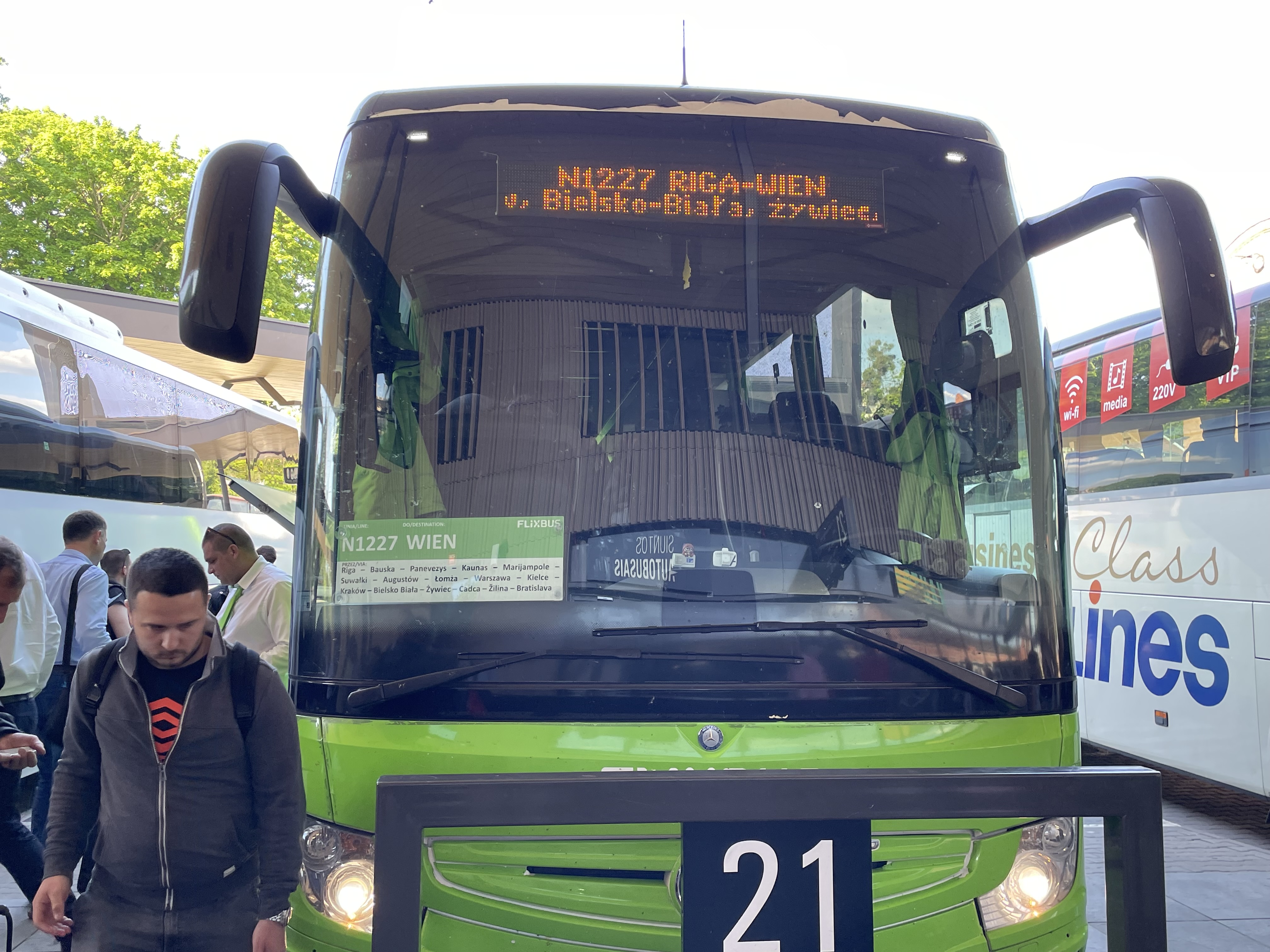
… note an overnight bus travelling back, along our route, to Wien……
… join our bus
Arrive in Panevėžys:
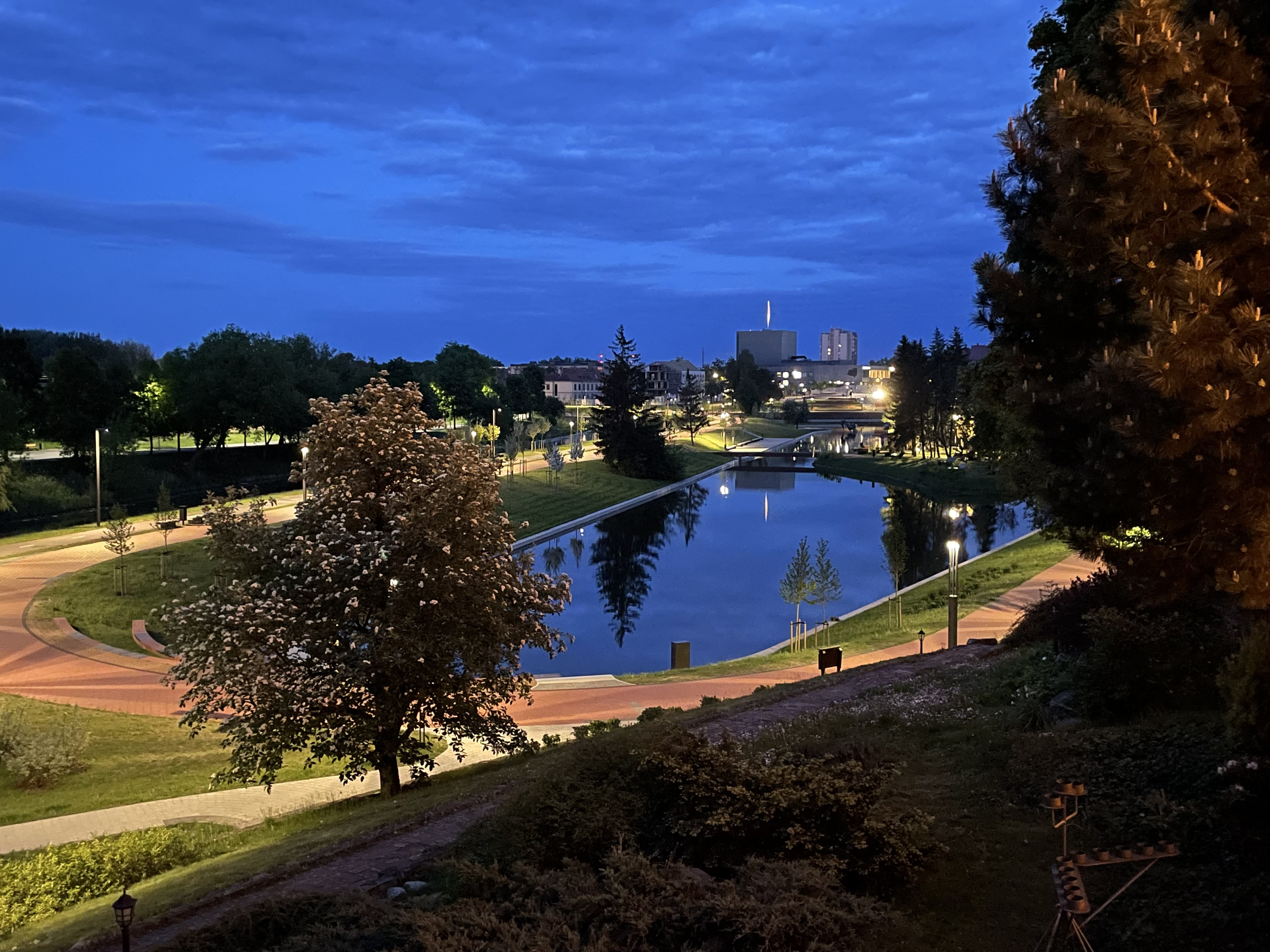
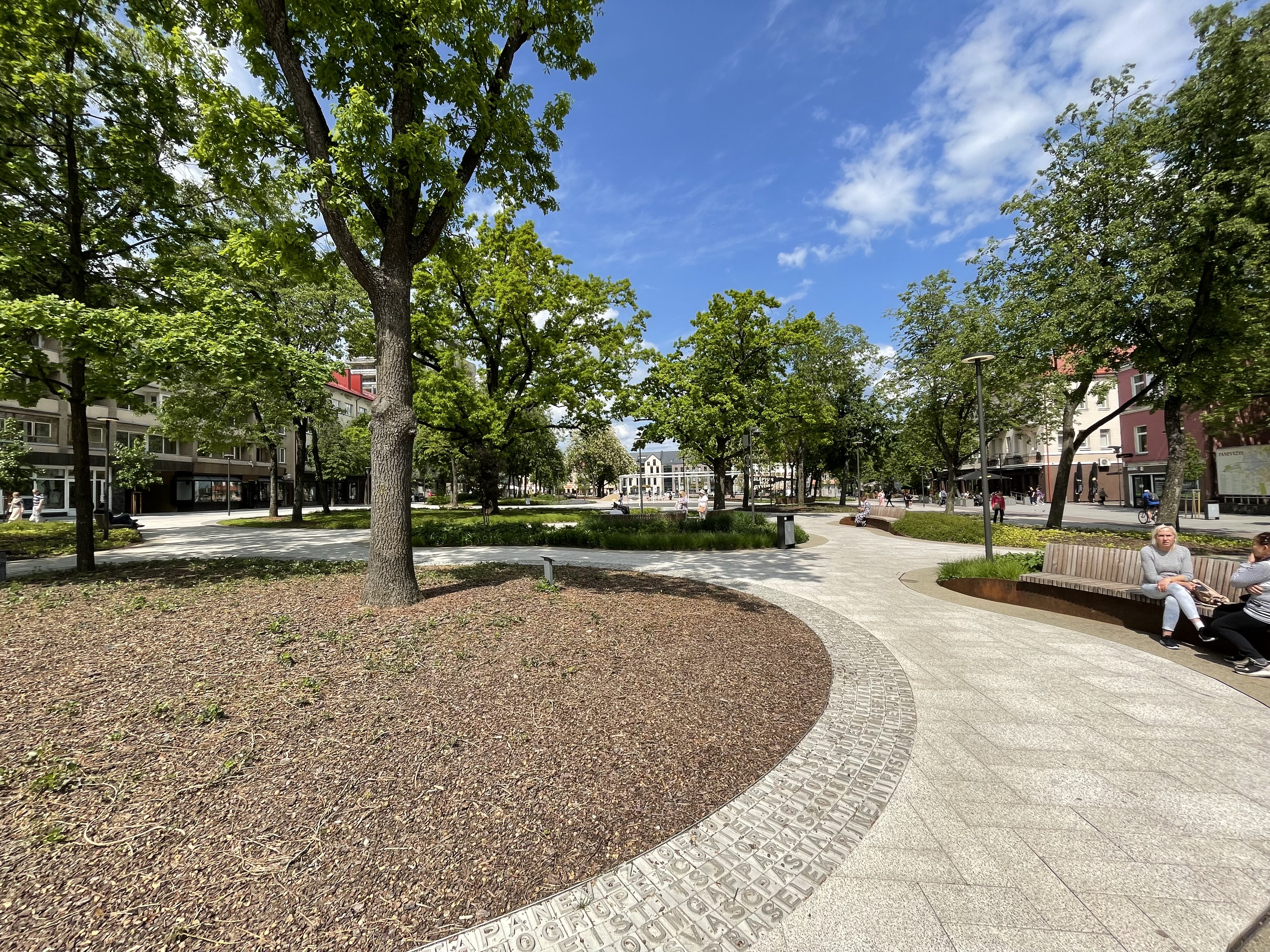
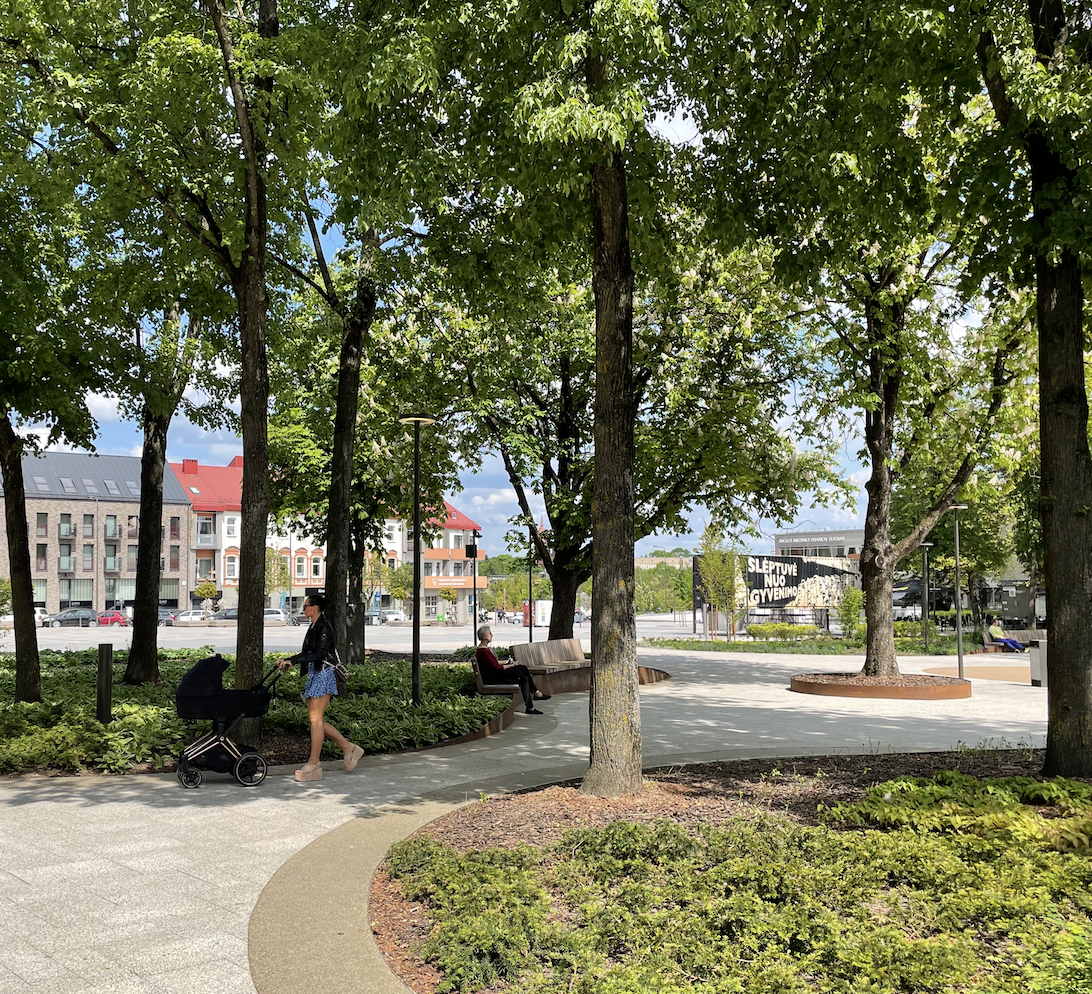
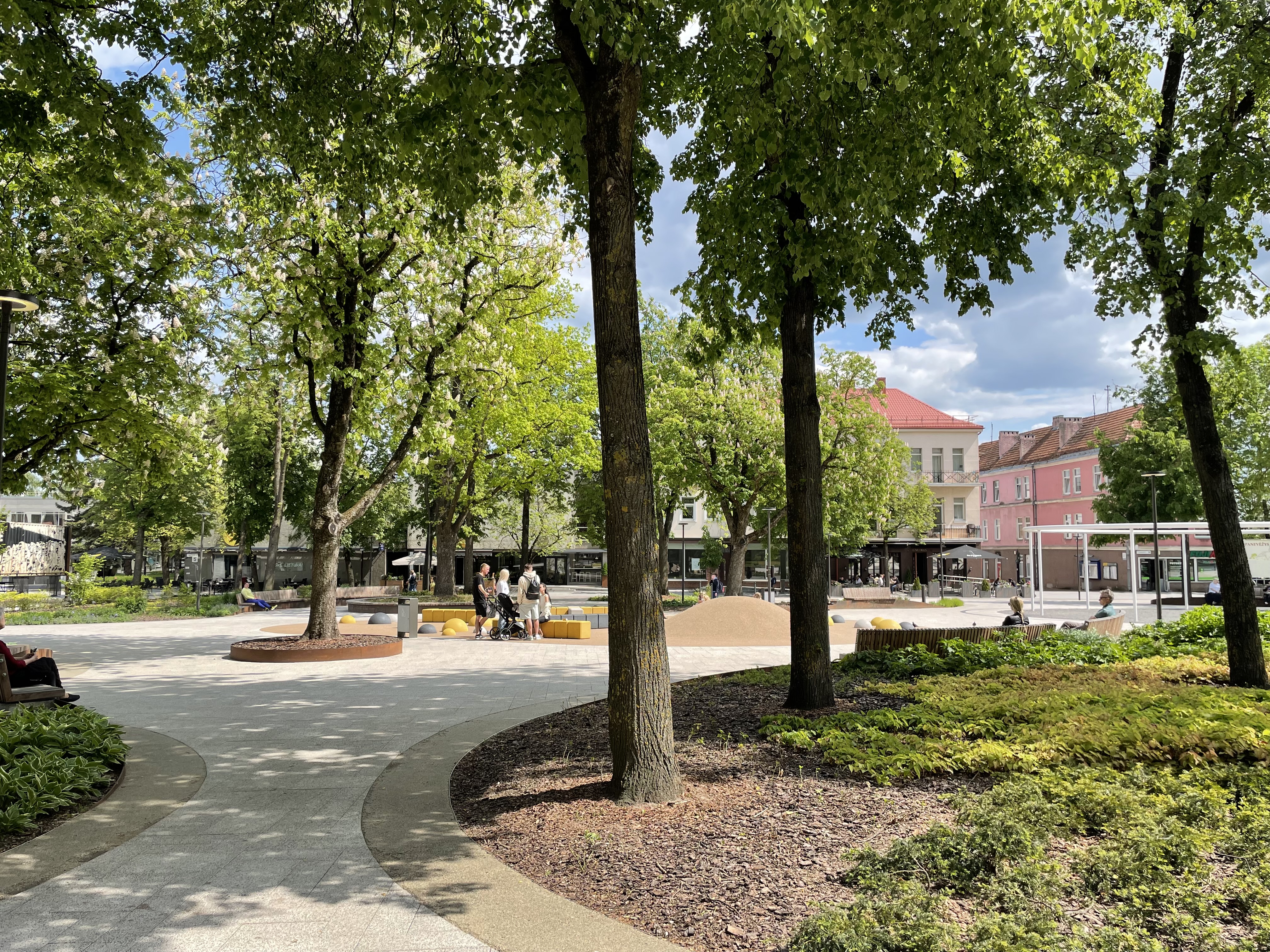
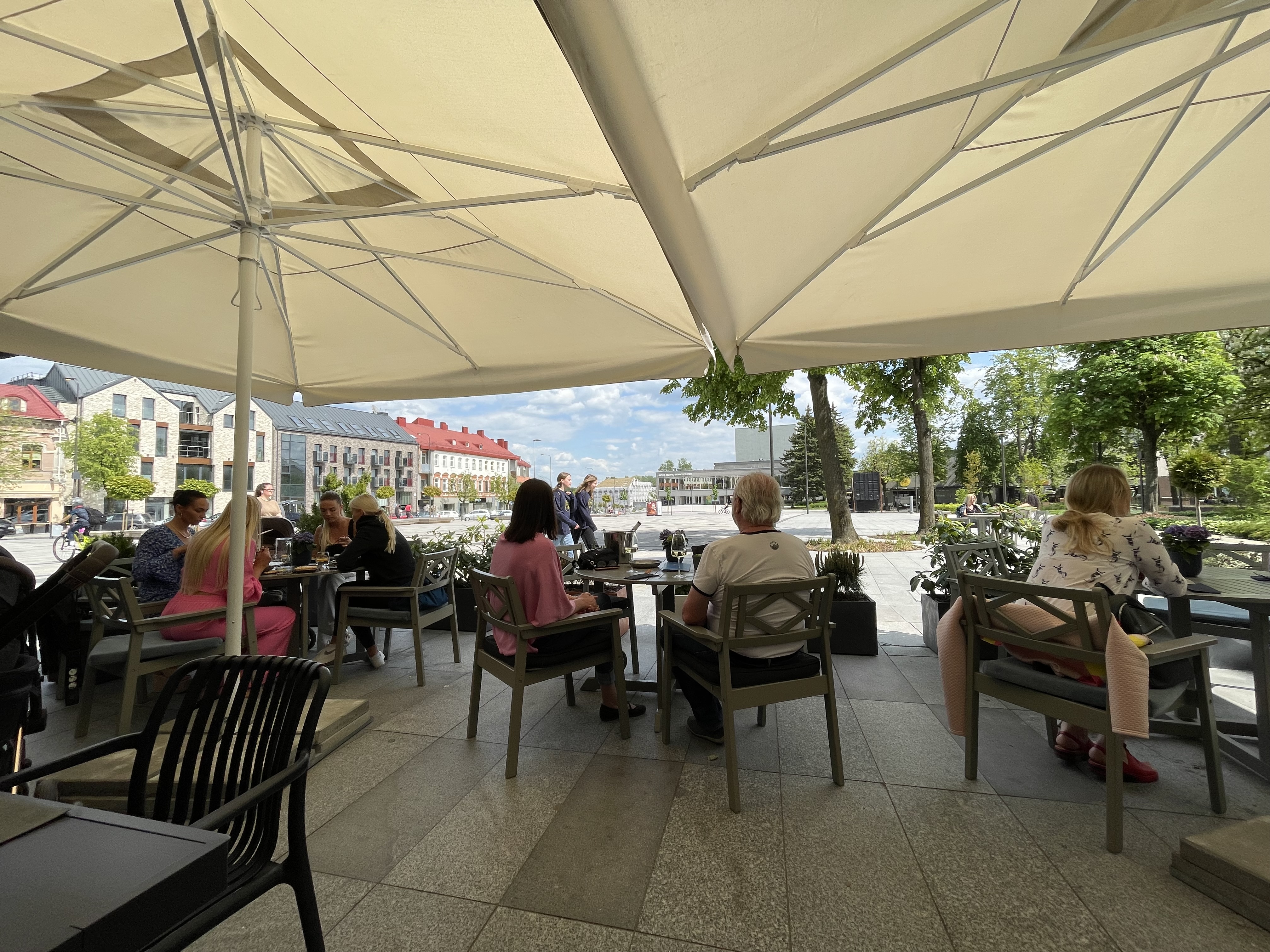
A newly developed central area has changed the whole atmosphere of the town…. we walk to the comfortable hotel first used in 2004…. relax in the warmth of the north (with rain & cool weather beginning in Spilinga & continuing until Warsawa, its been quite an unexpected reversal of expected weather patterns)
Panevėžys is important to our history of European partnerships.
It was the first place outside Romania to be involved in our partnership programmes. The Adult Day Care Centre became a very reliable partner, working with care and passion – and a considerable contrast to the official (but only ‘nominal’) partner in Iași that neither ‘worked’ nor had ‘care’… and whose leadership only demonstrated ‘passion’ for personal self-interest (above all other concerns).
Since my first visit to here, in Lithuania, 18+ years ago, many people have asked (negatively) ‘why Panevesys?’. They imply there is nothing very interesting….. but that very reason is a ‘good reason’ for visiting….. there is always something interesting and there are ‘discoveries’……
so tonight as well as being able to relax outside in warm weather, I had the most wonderful duck confit I’ve had for a long time ….. just enough to satisfy but presented with a marvellous sauce….. unusually for me, I eat it all…. And found a very pleasant Pinot Noir to accompany it.
WhatsApp
Creating the first partnership project was not easy.
In Iași we had a group of enthusiastic people who wished to continue working together – but they had no formal structure that would qualify for funding. It was realised (by whom I do not remember) that the formal Iași County Education Department would be appropriate. This caused difficulties as they were considered to be self-seeking and essentially ‘corrupt’. This was a term easily thrown around in Romania – and largely because corruption was deeply embedded in the system & through the poverty such systems create had thus become self perpetuating.
‘These were hard times, very hard times’ said a priest to me in 2022…. his face and whole bodily attitude revealing the depth of pain he was recalling in our conversation.
One key person in our group was so horrified at the prospect of working with ‘the corrupt’ leadership within the Educational Authority (the ‘Inspectorate’), that she refused to continue (despite strenuous efforts to persuade – and explanation as to how using this undesirable situation would give us access to others more appropriate and deserving.
A contact with a day Care Centre for Adults in Panevėžys – and a successful application, resulted in a first meeting in Iași & a 2nd in Panevėžys. Some of the Brits who had worked together in Iași were able to visit Panevėžys. The Iași Education Inspectorate, failed to appear – despite attempts by me at persuasion & being reminded they were contracted to engage in the visits.
This attitude was something of a theme at this stage – and later…. some partners in ex-communist countries were less inclined to visit each other…. but never reluctant to make the journey to known centres (eg Paris) further west!
The leader of the Inspectorate was later ordered by her EU National Agency to make a visit. She did and was so impressed by the hotel (at that time vastly better than anything in Iași) that on the next visit to Panevėžys she packed the meeting with her friends – all expenses paid (‘Thank you’ EU!).
At the end of the project she failed to send anyone to the final meeting in NW Wales – a community farm project on the side of Snowdonia was not the ‘smart’ sort of Britain she wished to experience… too wet, too far, no shops…..
The calculated risk taken with the first project was highly successful. A ‘calculated risk’ (easy – there were so many positive people involved) & long term relationships began during the project…. and excellent reliable partners (such as Liceul Tehnologic de Mecatronica si Automatizari), emerged.
22nd May: Panevėžys
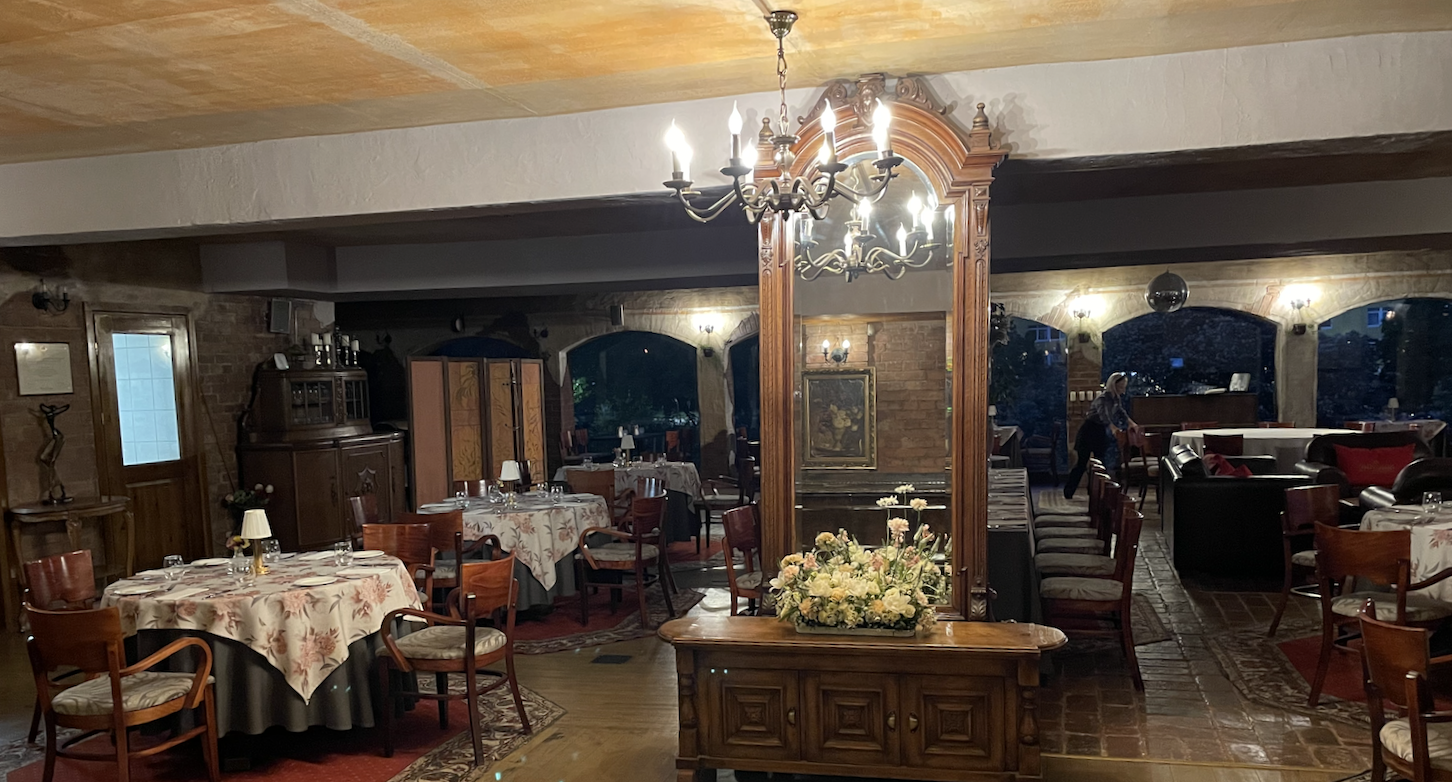
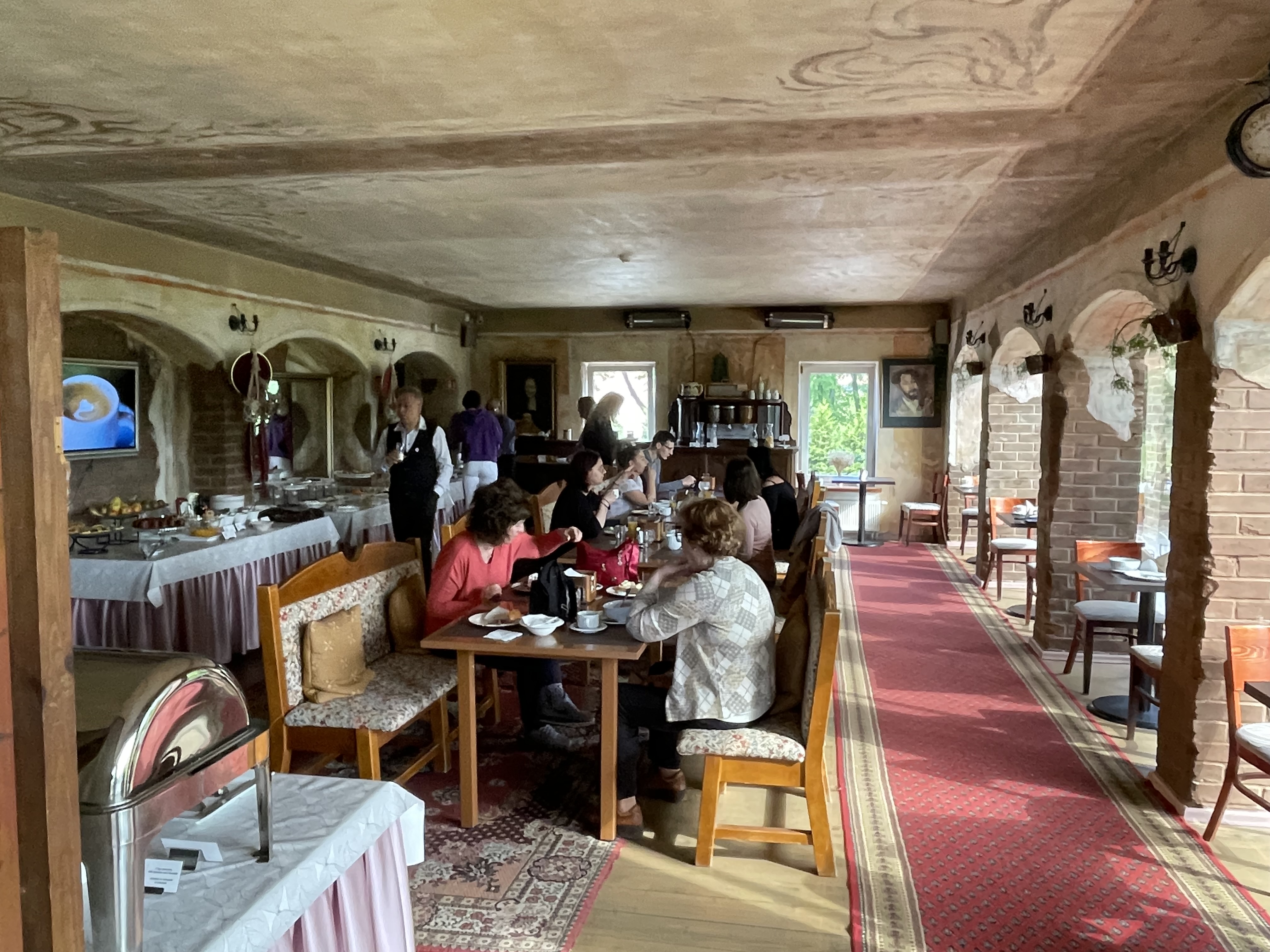
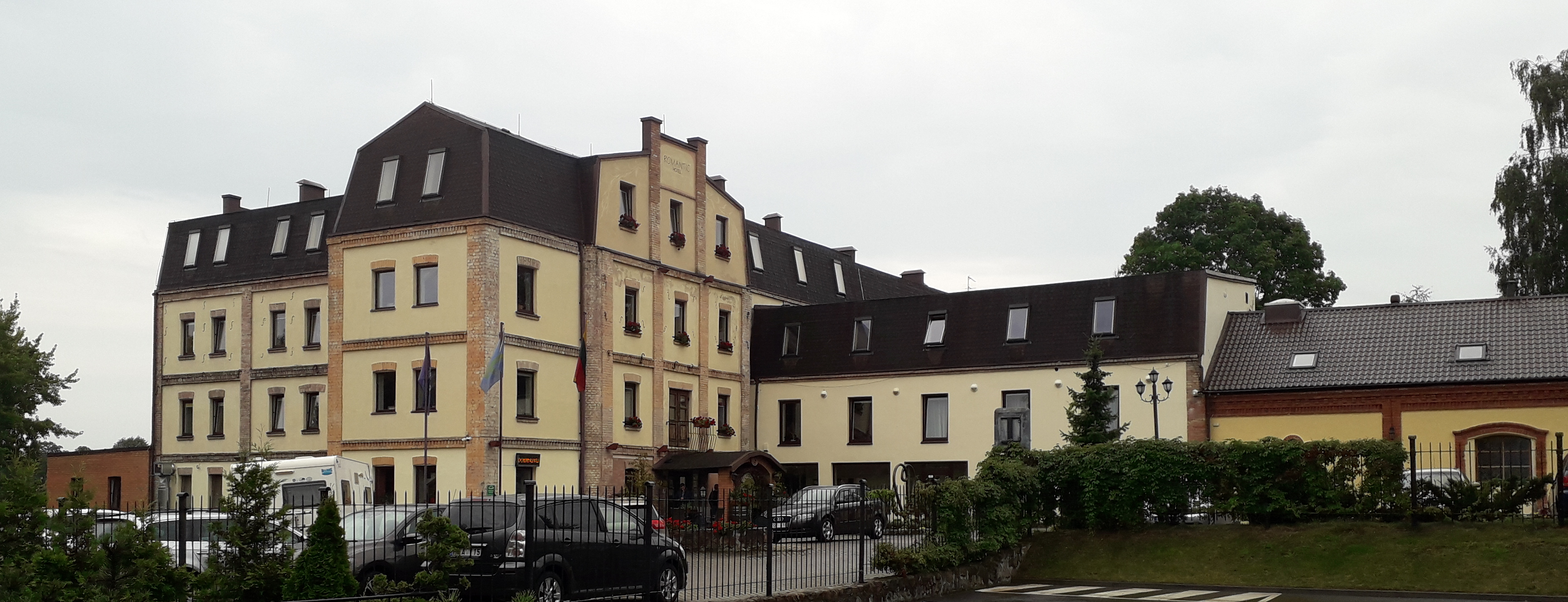
Panevėžys was the first place in Lithuania that I visited. This hotel, an old mill, was the first in which our group stayed. It was here, in ordinary Panevėžys that I realised how creatively distinctive was Lithuania.
WhatsApp
The Mill being the first mechanical mill in the Baltic region was a major feature in the town – which was also known as a ‘town of mills’.
The river Nevėžis, from which the town name derives, flows below the Mill.
Now a hotel ‘The Romantic’, it has changed little since I first visited
photo from Wikipedia
That initial experience was confirmed by a whole series other creative ‘encounters’ in Vilnius and Kaunas and at places such as the ‘hill of crosses’ and meetings here with humorously dynamic teachers.
WhatsApp
It also seems to be a country that produces giants.
WhatsApp
Our travels have required us to stay in major cities. For a day we are able to wander around a smaller but significant regional centre (8th largest city in the Baltic States).
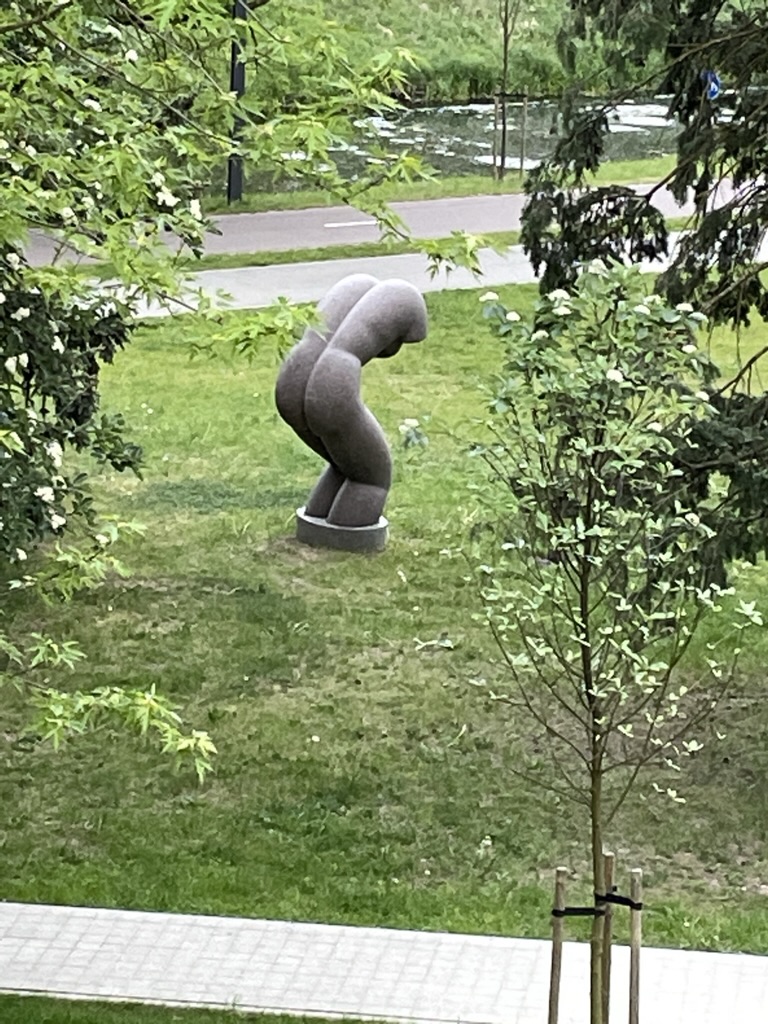
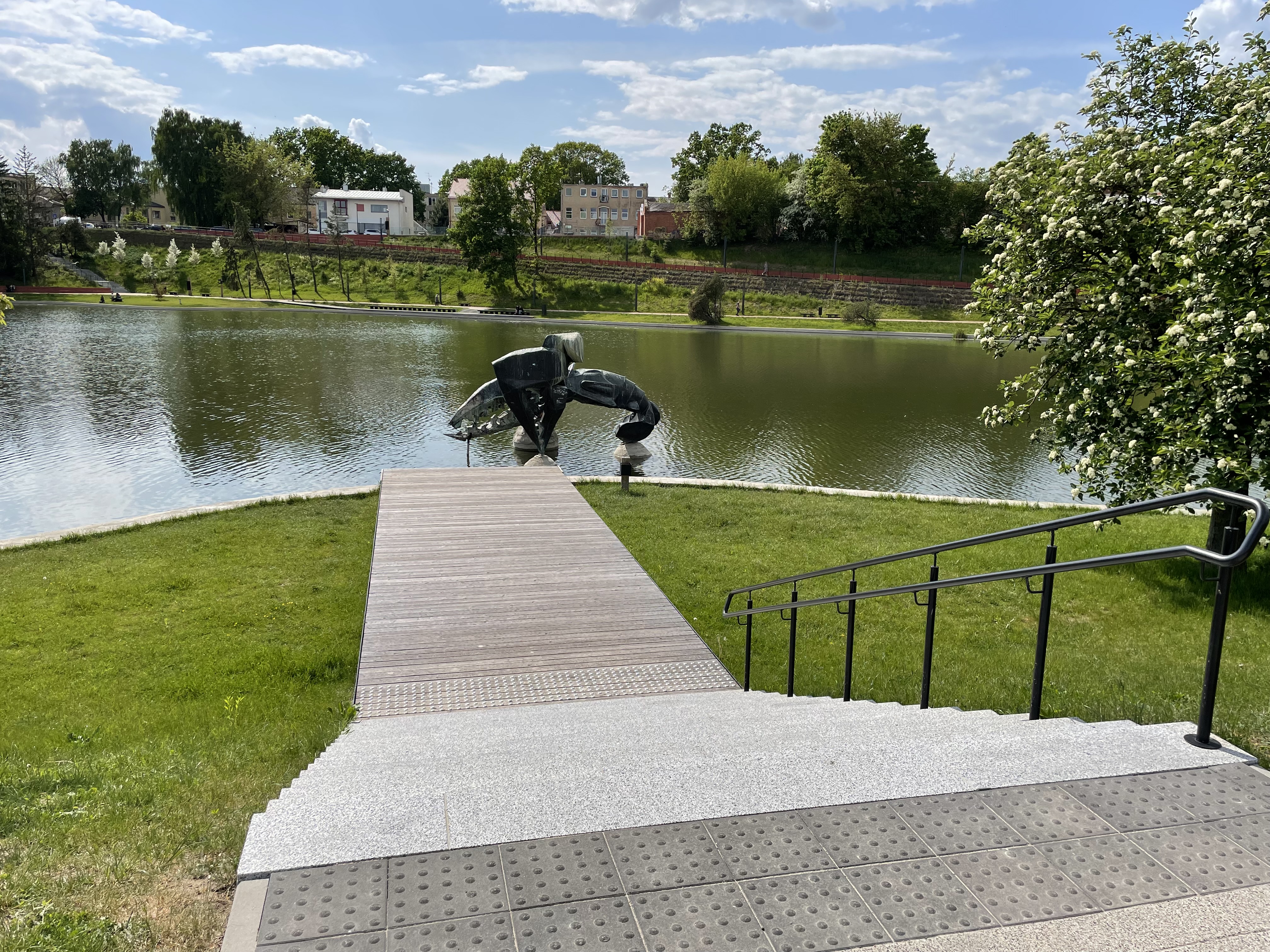
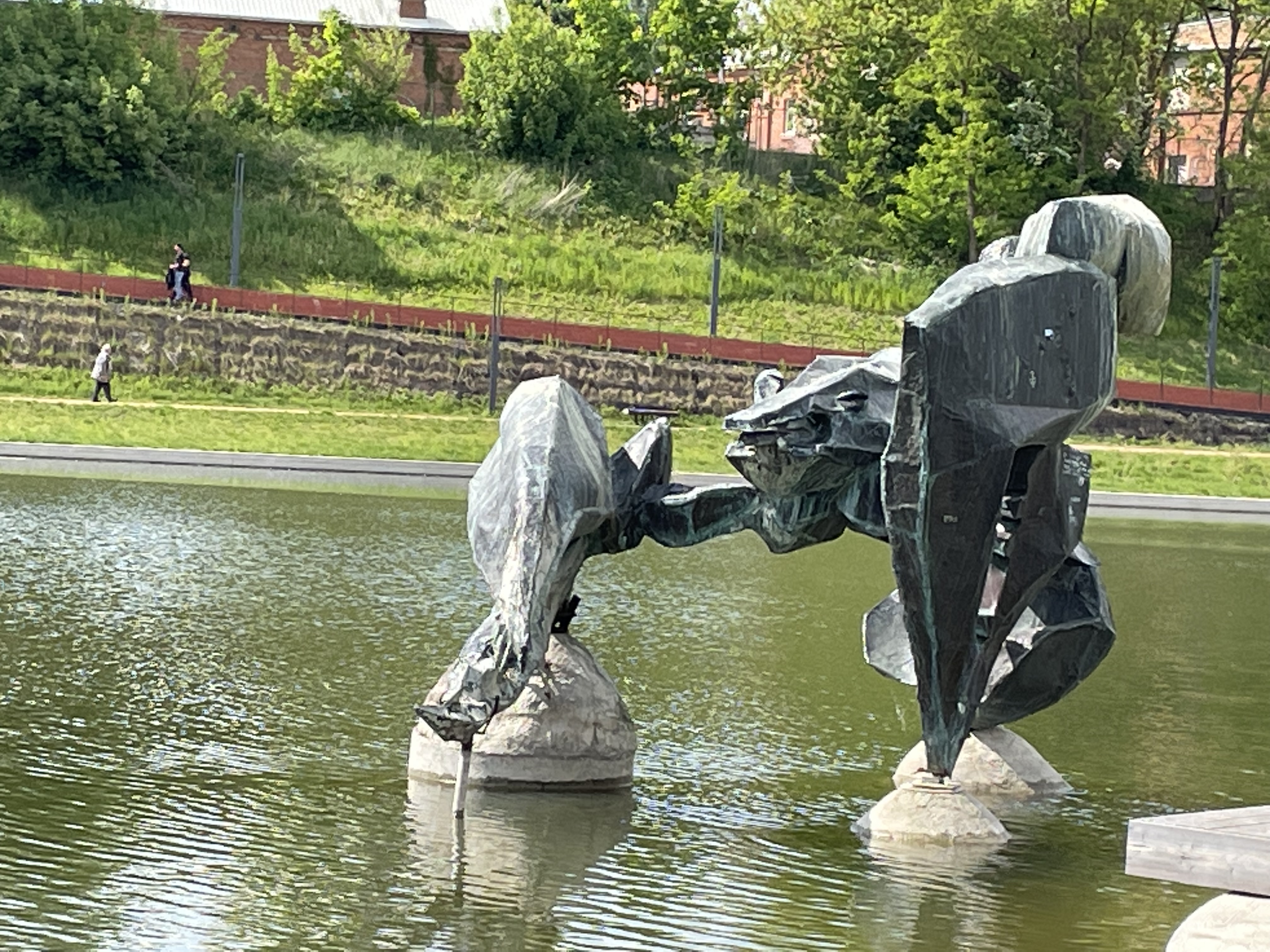
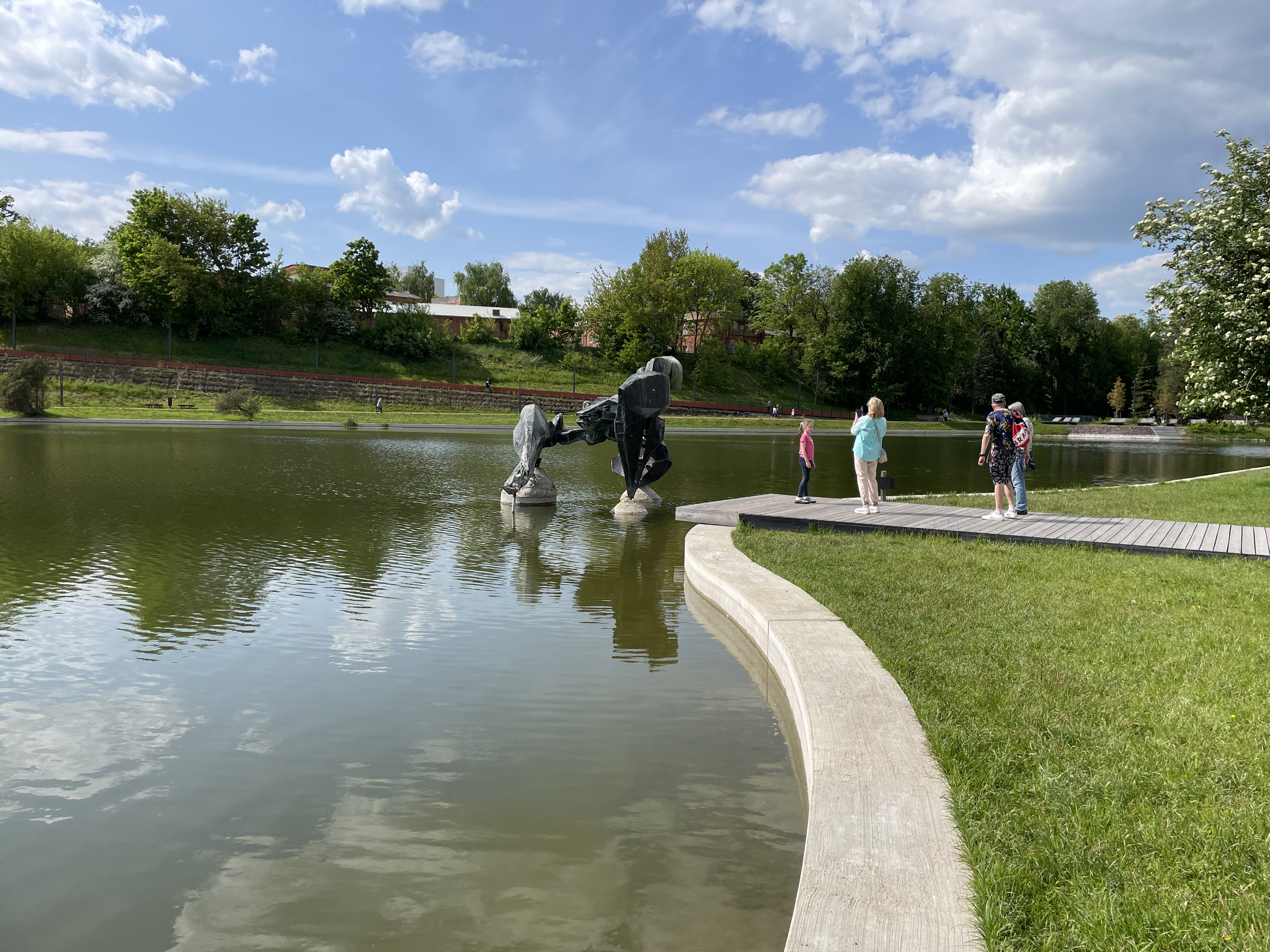
Sculpture probably based on a local type of river crayfish.
Gemma: do you remember this beauty? It was here when we made the visit in 2003/4. Maybe Jill (JF) would also remember her visit…. The brewery in the snow….? The town centre has been remodelled and now ‘flows’ into the lake and river area. Very very impressive creation of civic and public space. Too many pix for this site …. But they will eventually be on the web page. The wonderfully calming hotel is popular at weekends and for long distance travellers…. Finland/Estonia to Poland/ Germany and beyond.
Reply:
Fond memories of a visit to Panevezys, the warm welcome, excellent community projects, the Hill of Crosses and an unforgetable midsummer’s eve party in the countryside. Think it went dark for just a few hours.
An extra UK visit to Panevėžys was held at Midsummer & which allowed for greater individual involvement. The Lithuanian tradition is to arrange social gatherings that last through the night.
Gemma referred to it above.
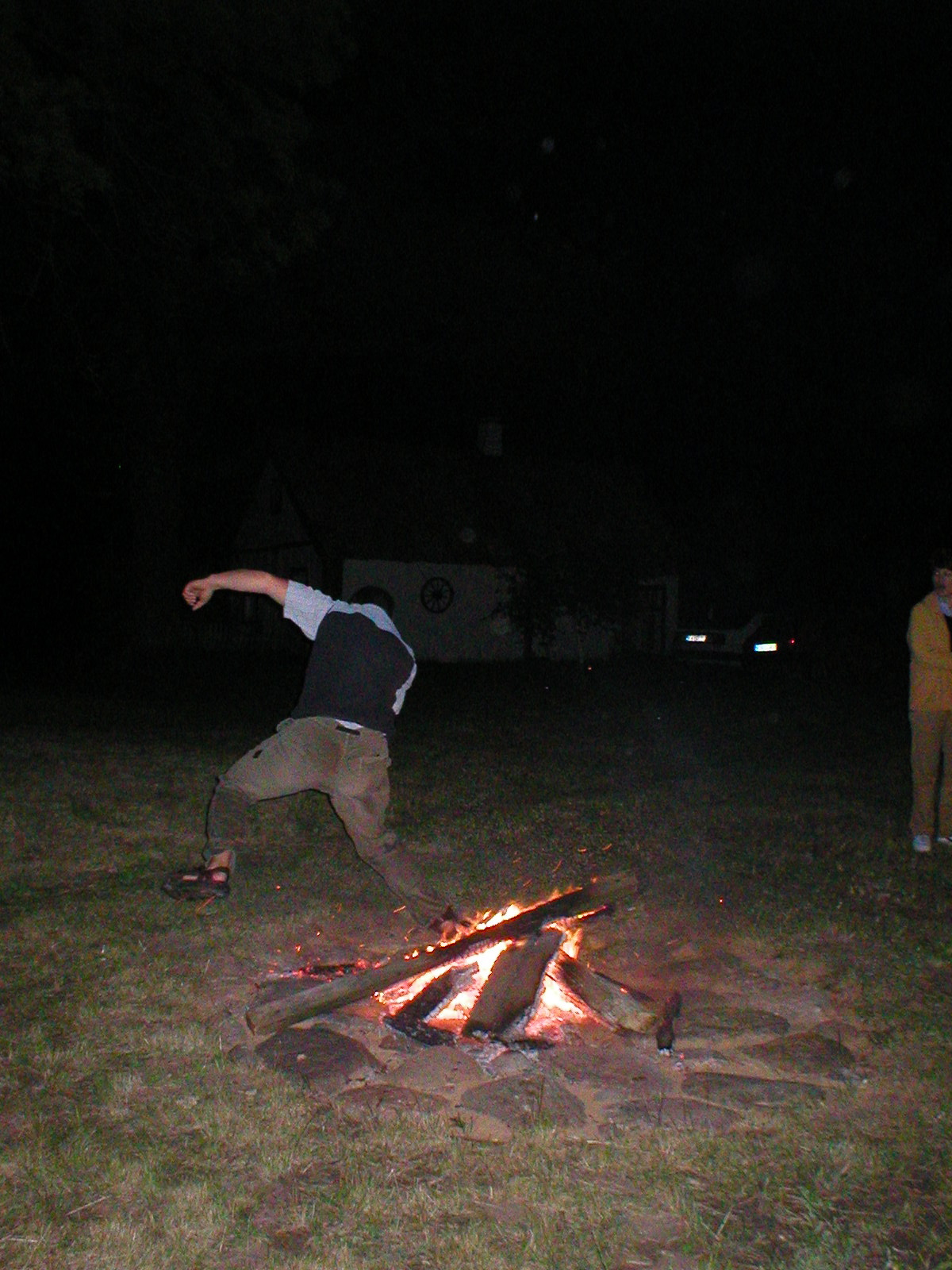
A major feature of the tradition is fire-jumping
…traditions include singing songs and dancing until the sun sets, telling tales, searching to find the magic fern blossom at midnight, jumping over bonfires, greeting the rising midsummer sun and washing the face with a morning dew, young girls float flower wreaths on the water of rivers or lakes.
Wikipedia
The leader of the UK group entered into the spirit of the event with initially cautious enthusiasm which grew as the night progressed
I’m not sure what was happening in the following picture…. but it looks pretty intense!
Gemma used to say ‘You cannot Swansea out of the Swansea Girl’……Whatever was occurring the Swansea Girl has not since been allowed back into Lithuania
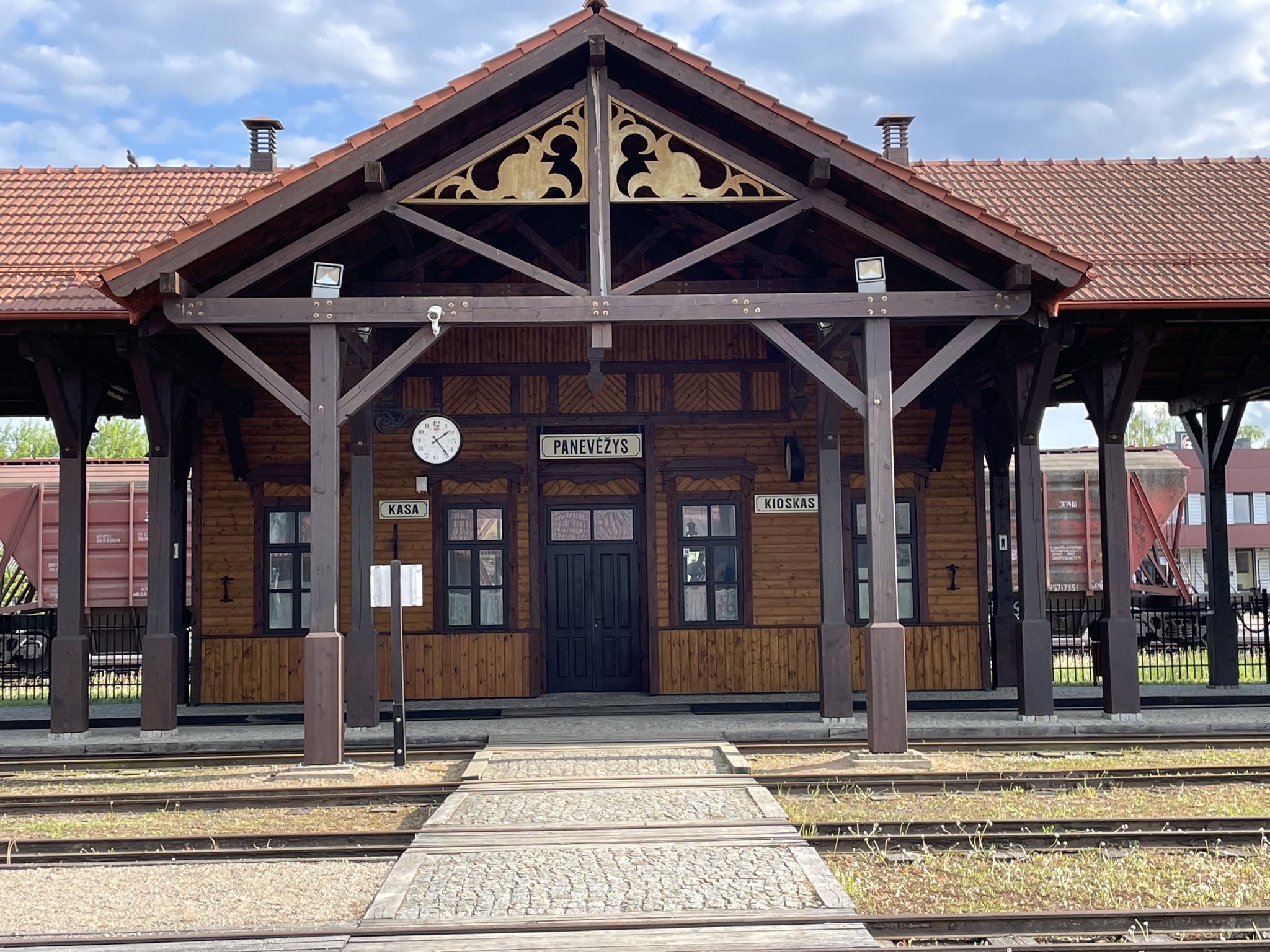
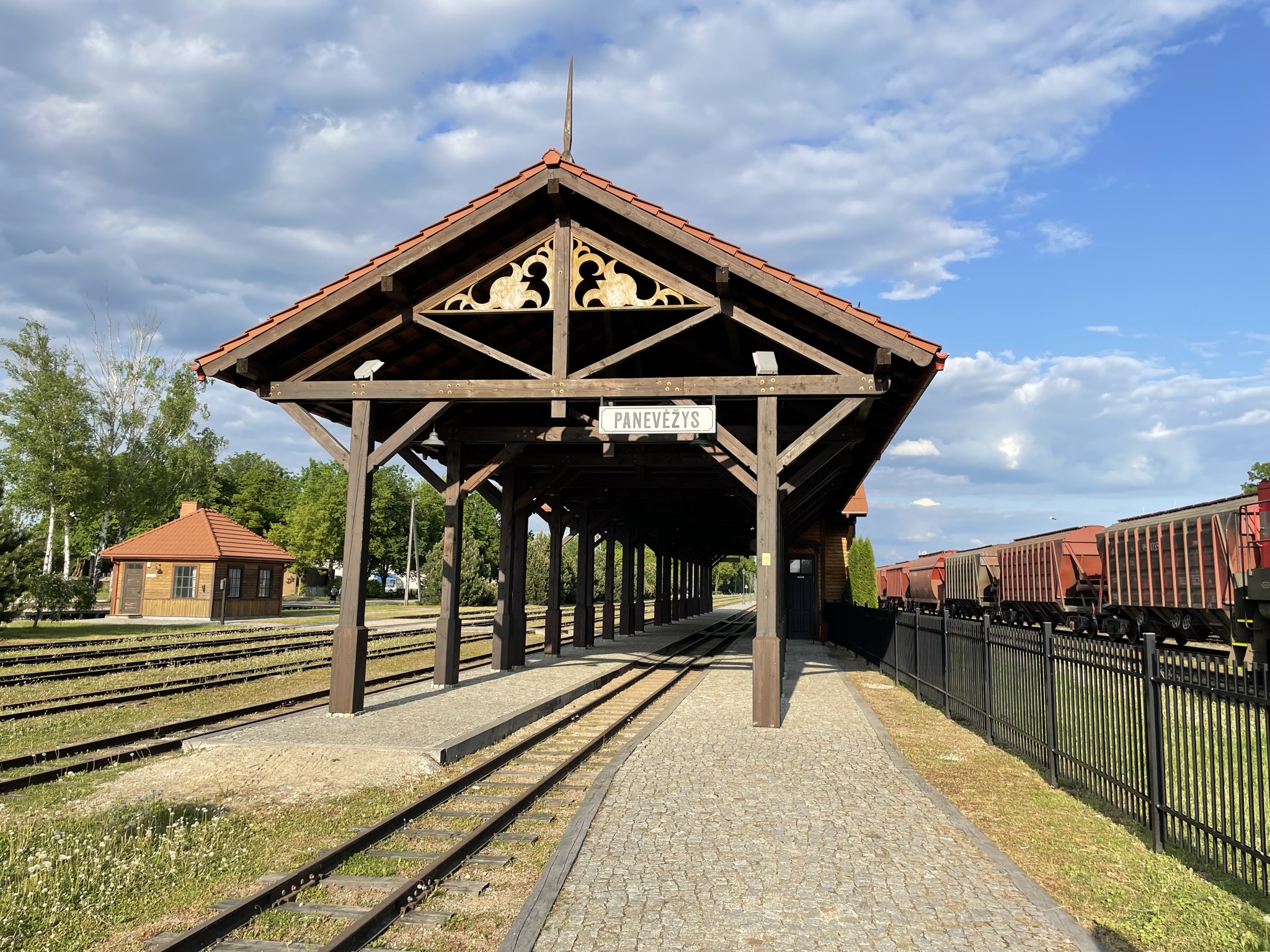
An evening stroll – to discover if the ancient narrow gauge railway first viewed in 2005, still exists.
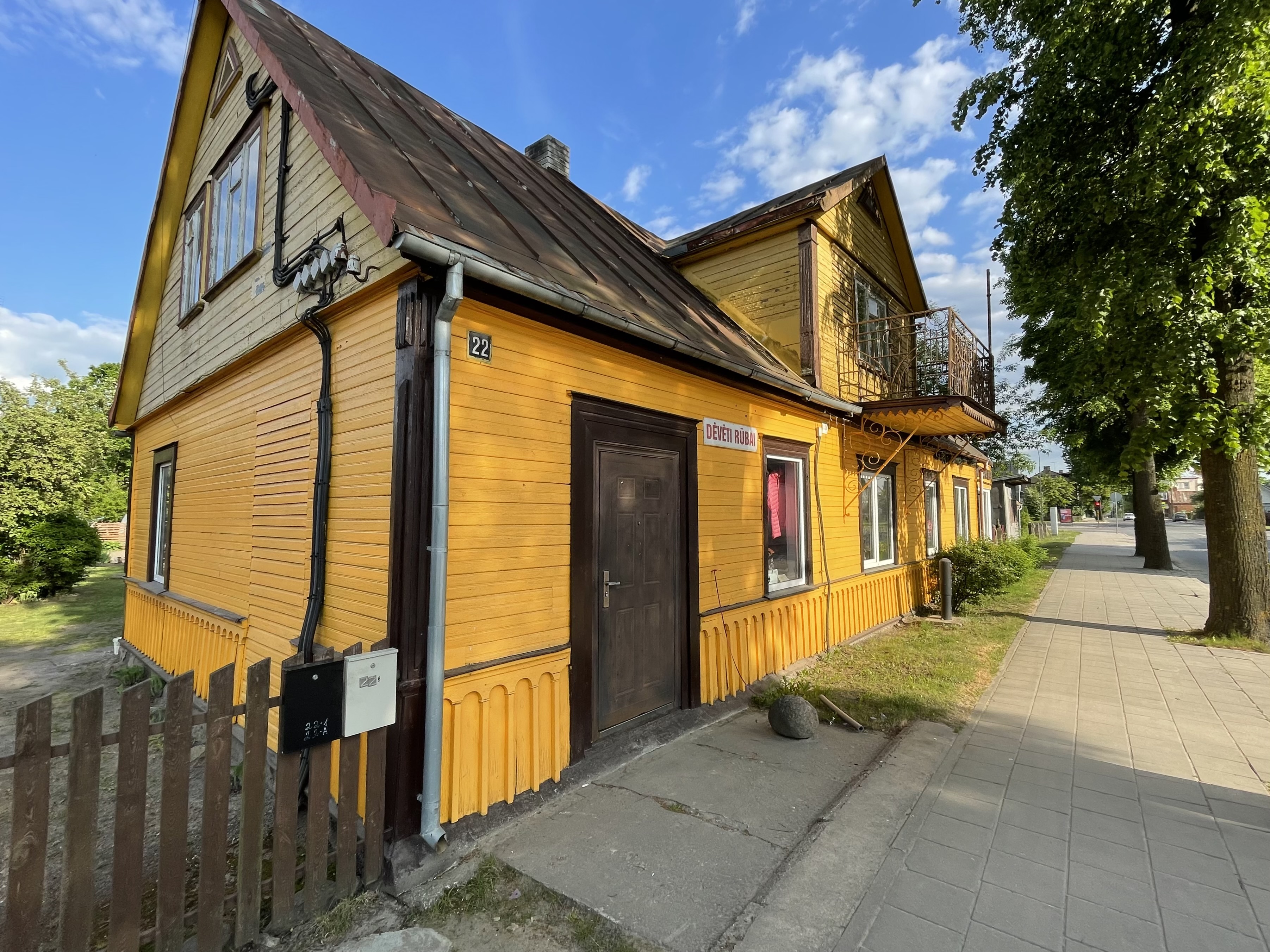
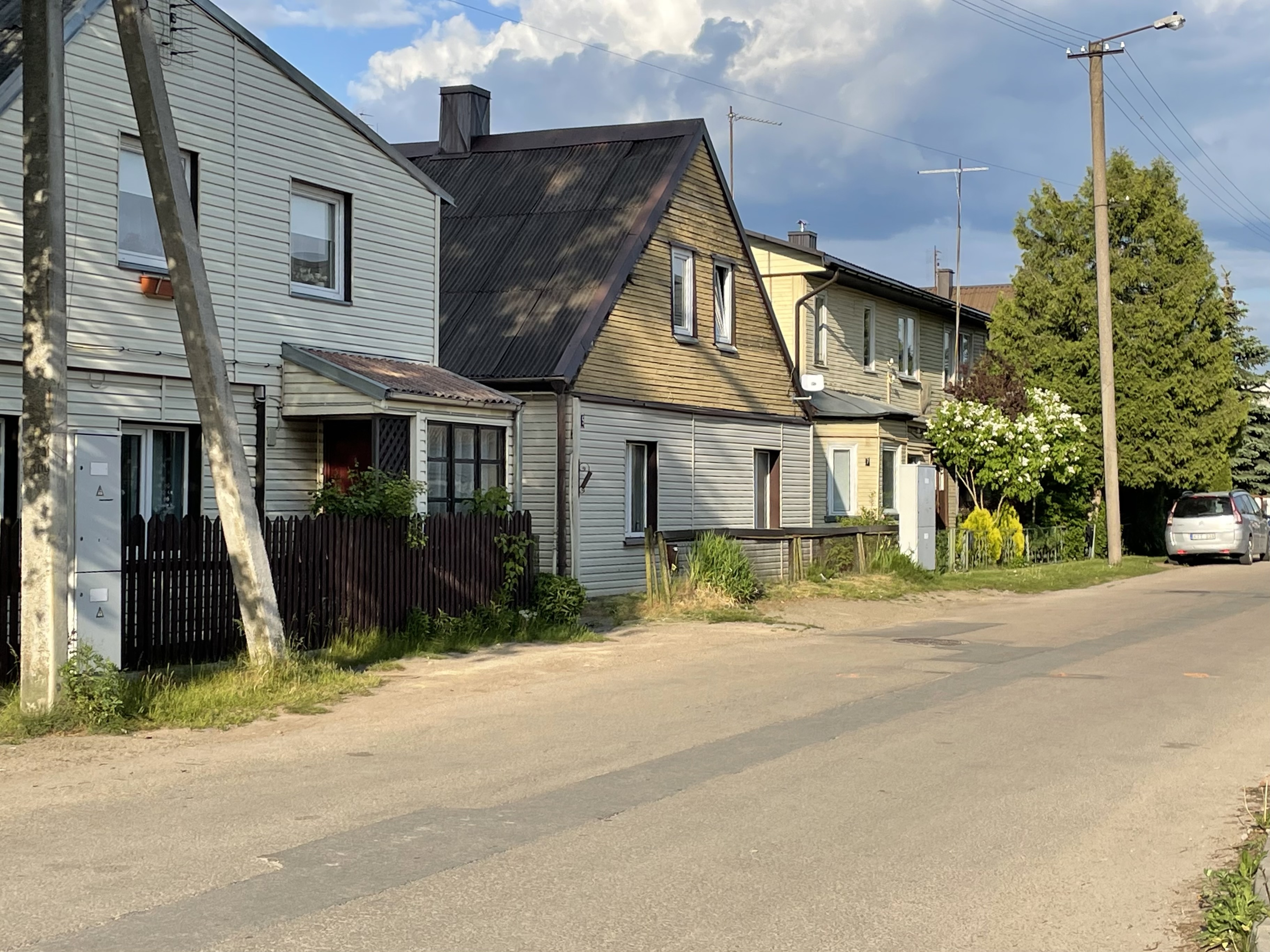
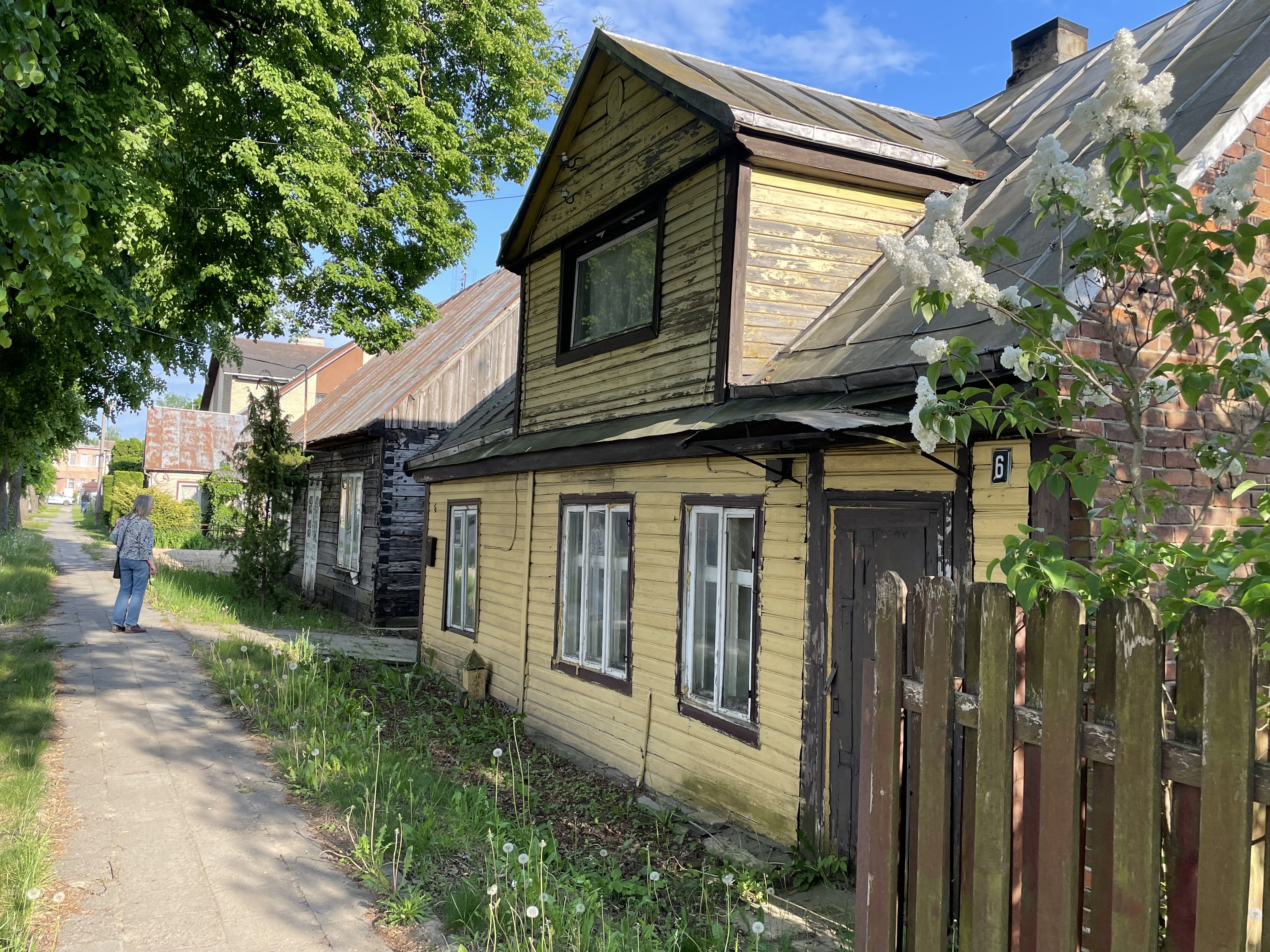
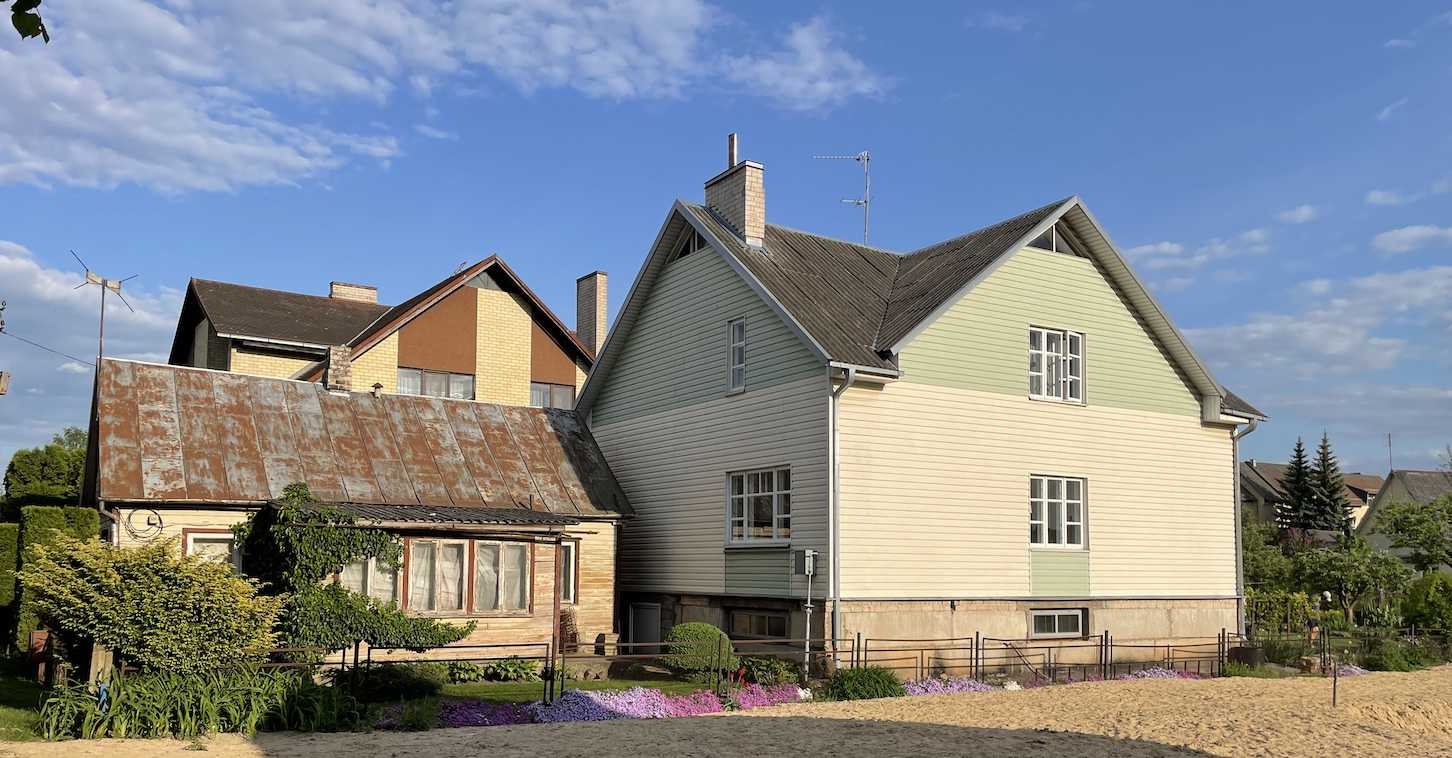
It takes past traditional houses – and those more recent, renovated and new-builds, that have continued to use the style.
We discover that the railway in Panevėžys, on a branch line, which in 2005 had very little traffic, has expanded – now with several daily passenger trains.
We could have travelled there by train.
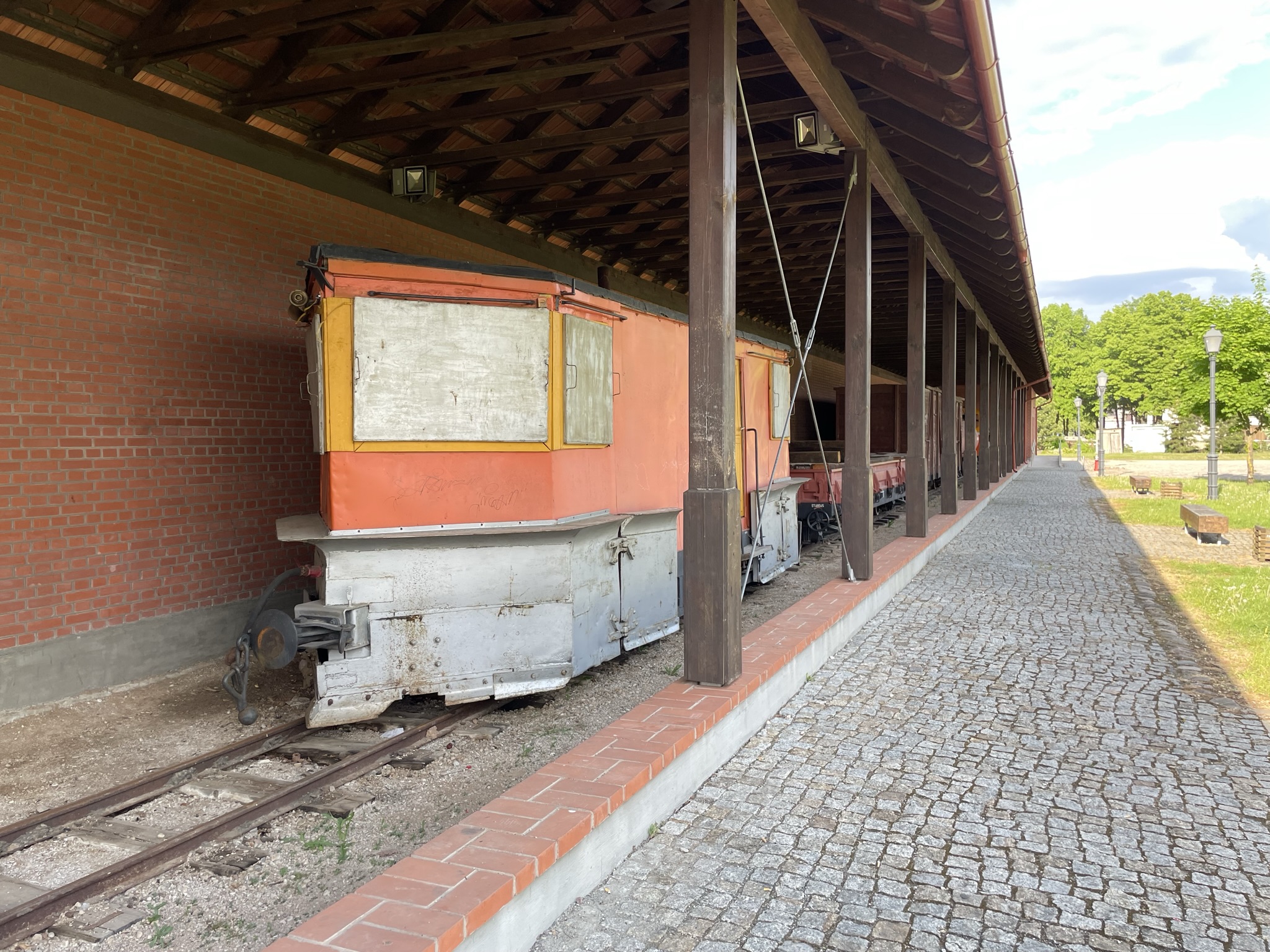
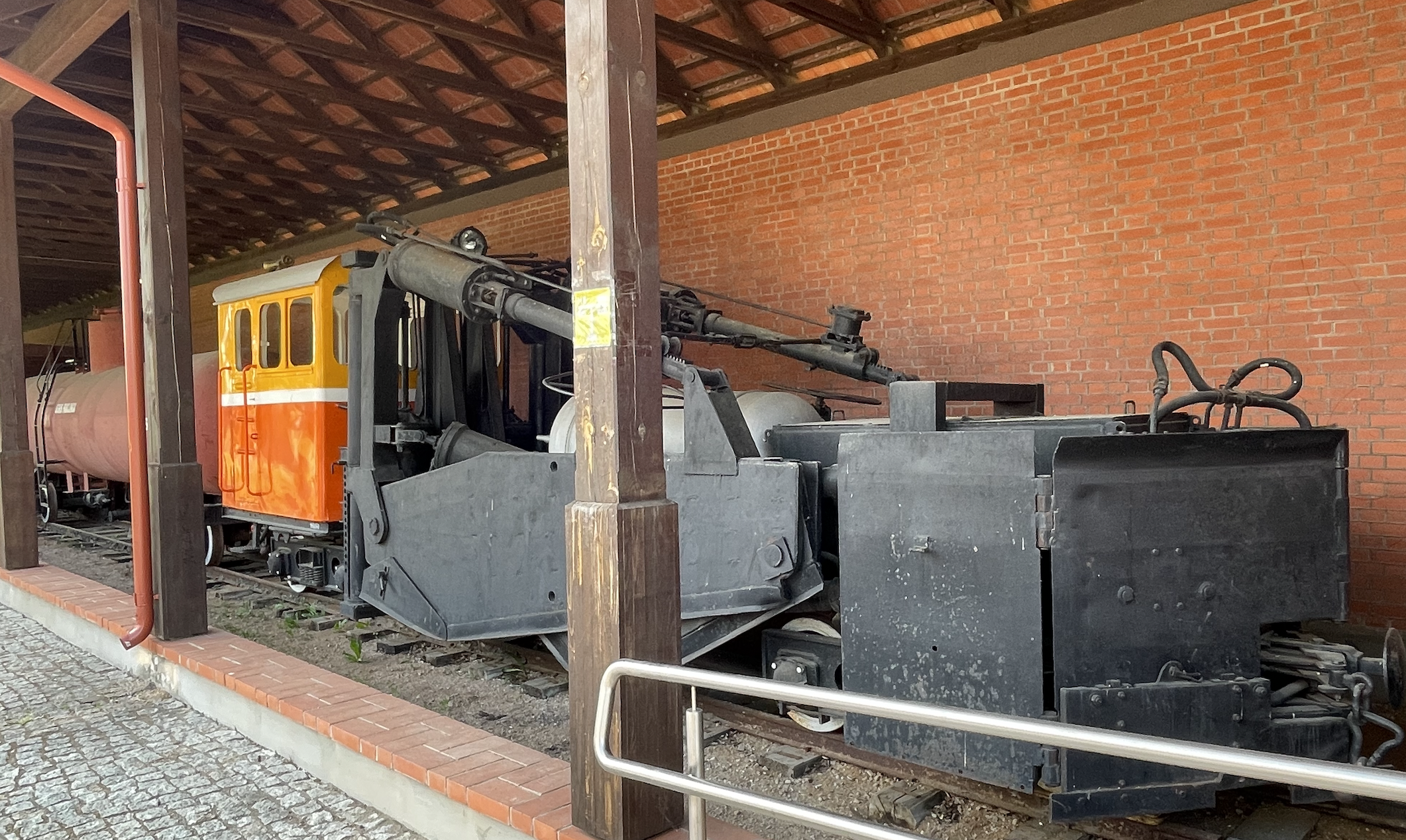
The narrow gauge though closed when we visited it is being managed as a tourist attraction.
The Aukštaitijos narrow gauge railway (Aukštaitijos siaurasis geležinkelis) is a 68.4 kilometres (42.5 mi) long tourist train from Panevėžys to Rubikiai in Lithuania with a gauge of 750 mm (2 ft 5+1⁄2 in).
Traffic declined in the second half of the 20th century. The operations ceased in 1996 north of Panevezys. The narrow gauge railway was added to the list of immovable cultural objects of the Republic of Lithuania in 1996 and was given the status of cultural heritage object. Subsequently, tourist train services began. The goods traffic was phased-out in 1999. A new department for Narrow Gauge Railways was created on 1 November 1999 within the governmental railways office Lietuvos Geležinkeliai.
There is an uncertainty as to how the railway will survive in future.
It has been the property of the National Government with official protection as a heritage resource..
There have been intentions, by the government, to sell the whole line.
The EU funded Rail Baltica is also intending to develop the whole station area for one of its 3 stations in Lithuania (Kaunas and Vilnius are the others). The proposals include protecting the heritage railway.
23rd May to Riga
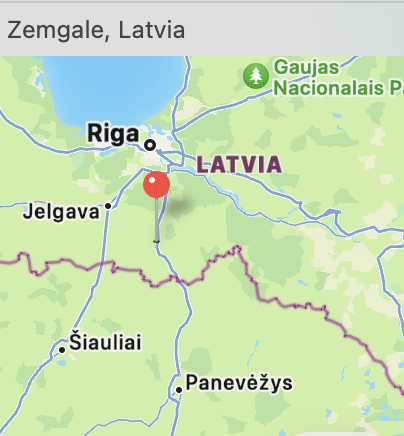
A direct bus from Panevėžys
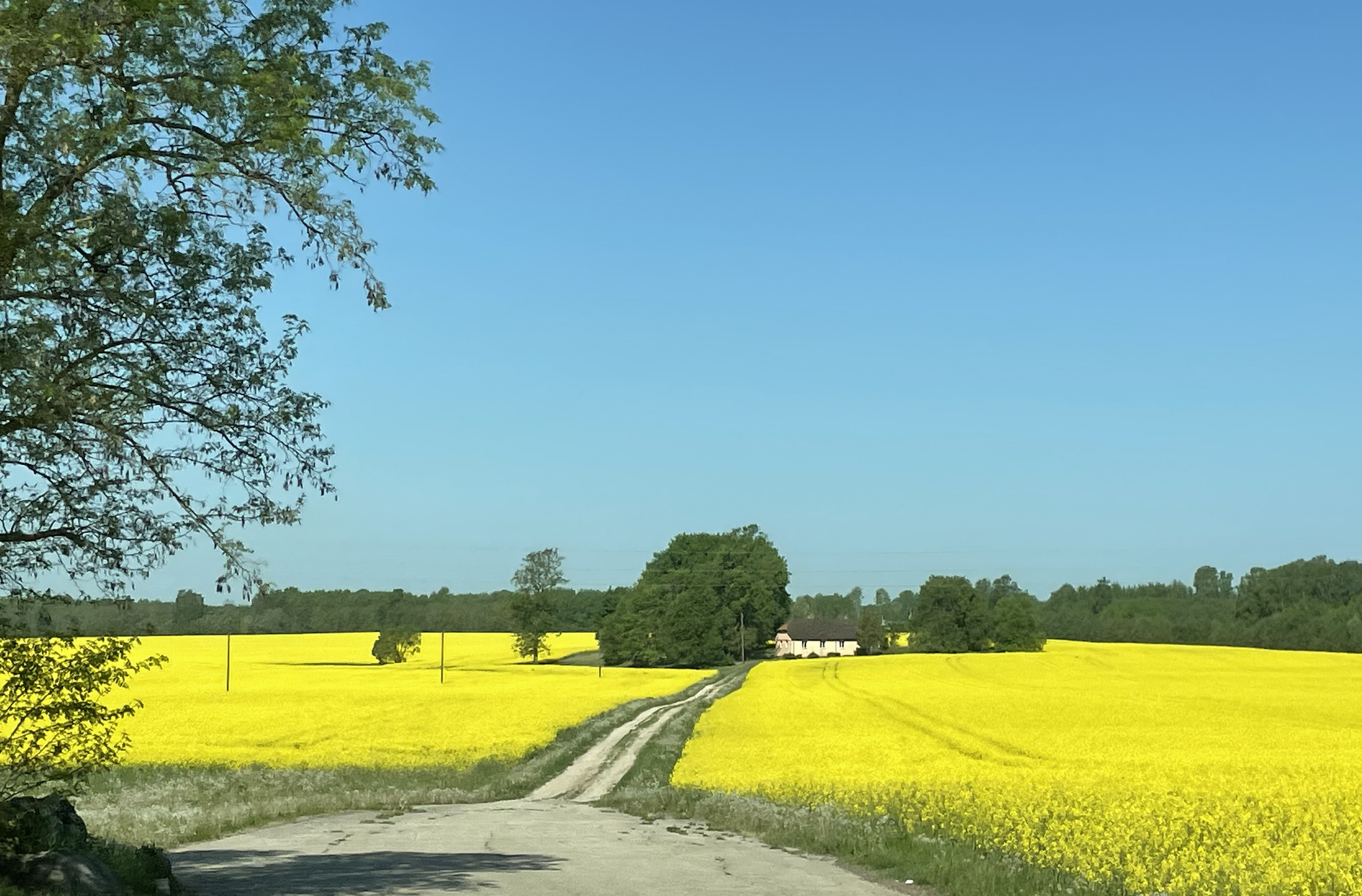
The land use has changed very dramatically in recent years, large scale agriculture has absorbed the small farms…. and we cross into Latvia almost without noticing the border.
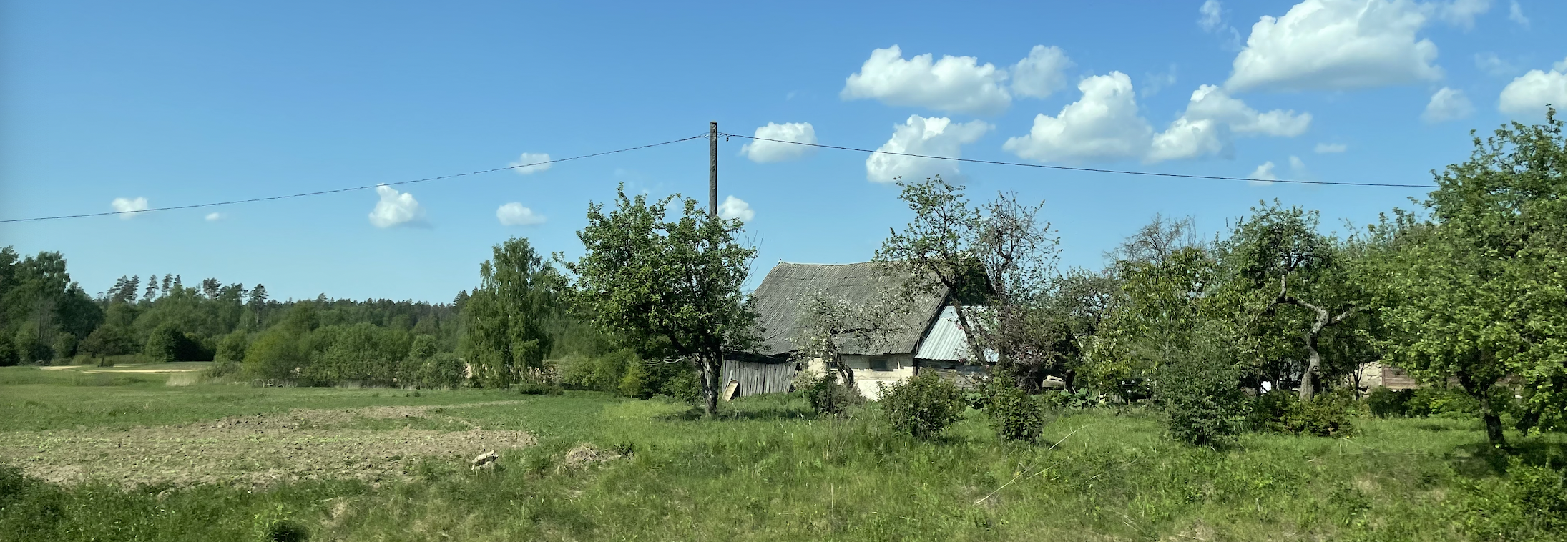
There are places where intensive agriculture is less significant
Appearances, taken only through a bus window, may be deceptive.
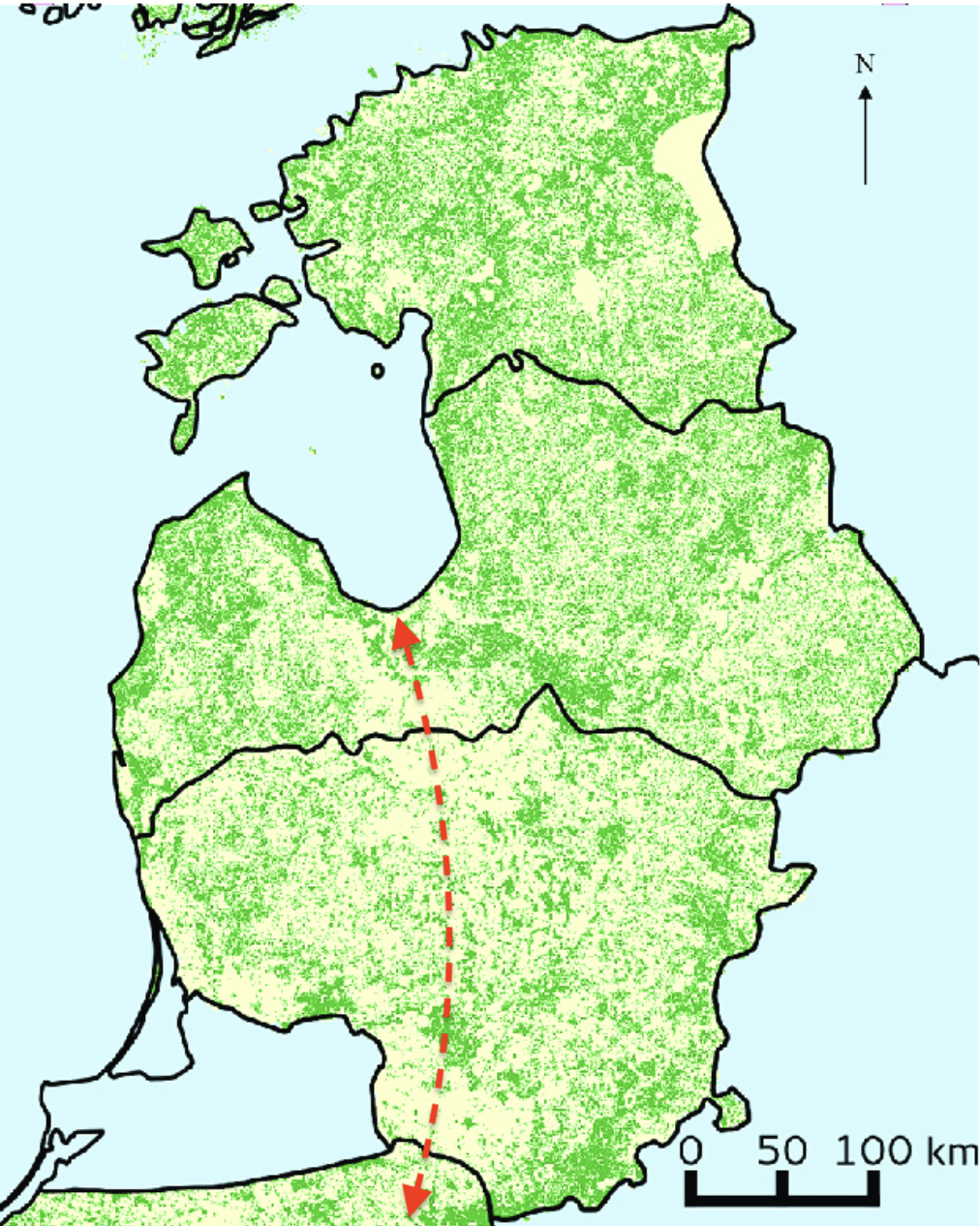
Our route in Lithuania and Latvia has been through a largely arable landscape. The greens on the map below show how much land is still forested (considerable, compared with many other parts of Europe)
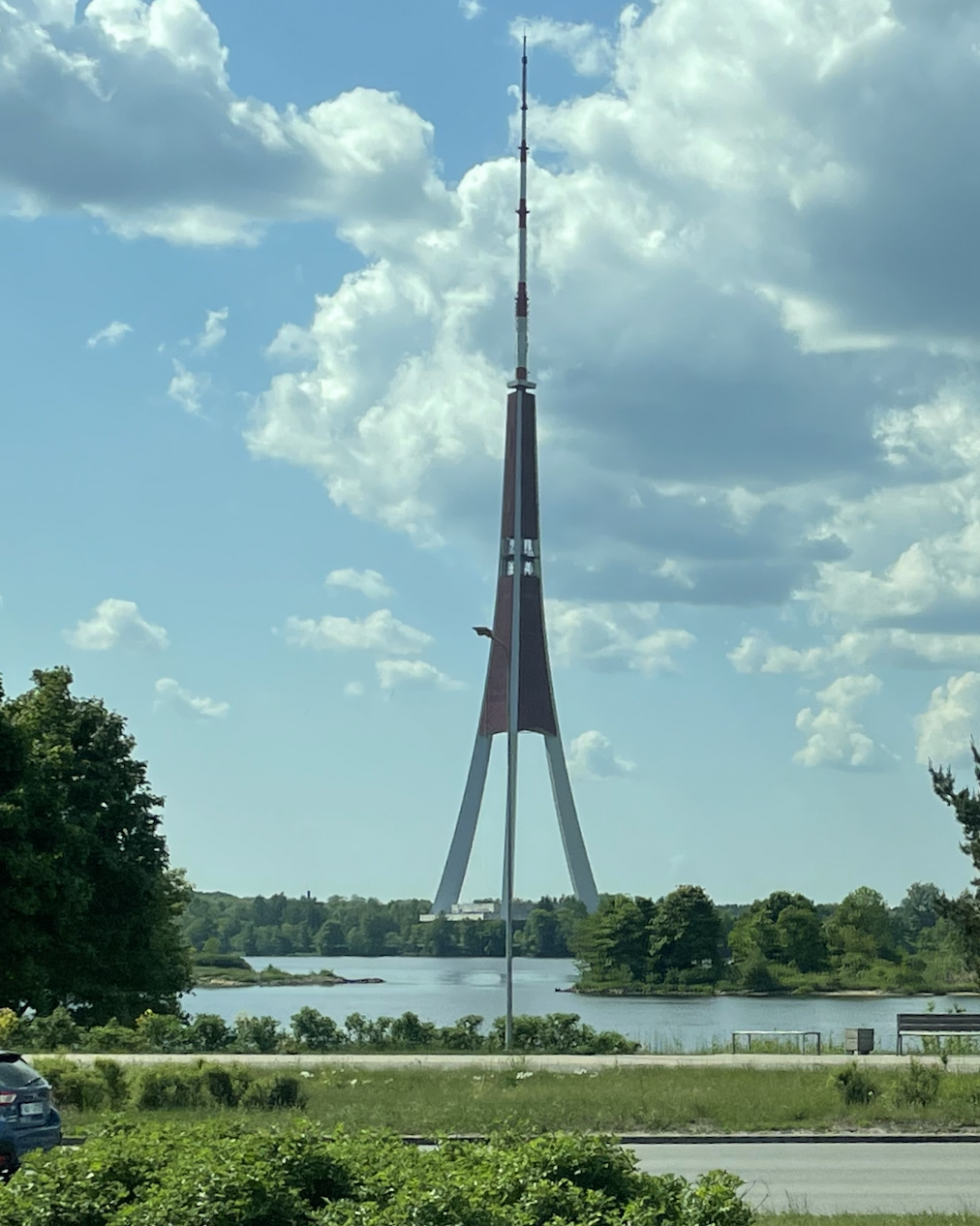
Into Riga… passing the Soviet era Radio Tower (still used) 368.5 metres high (3rd highest tower in Europe)
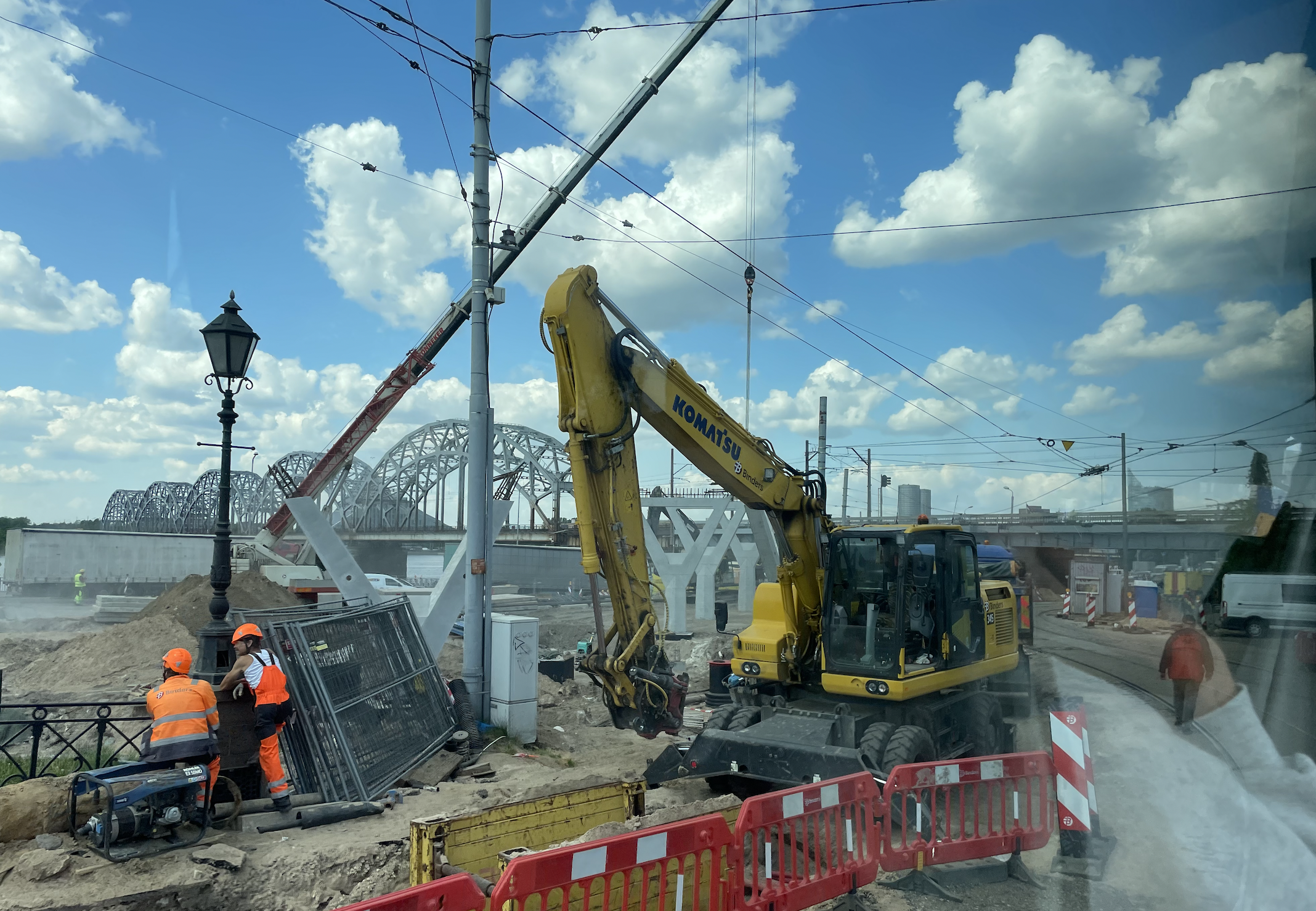
Riga seems to be ‘under reconstruction’
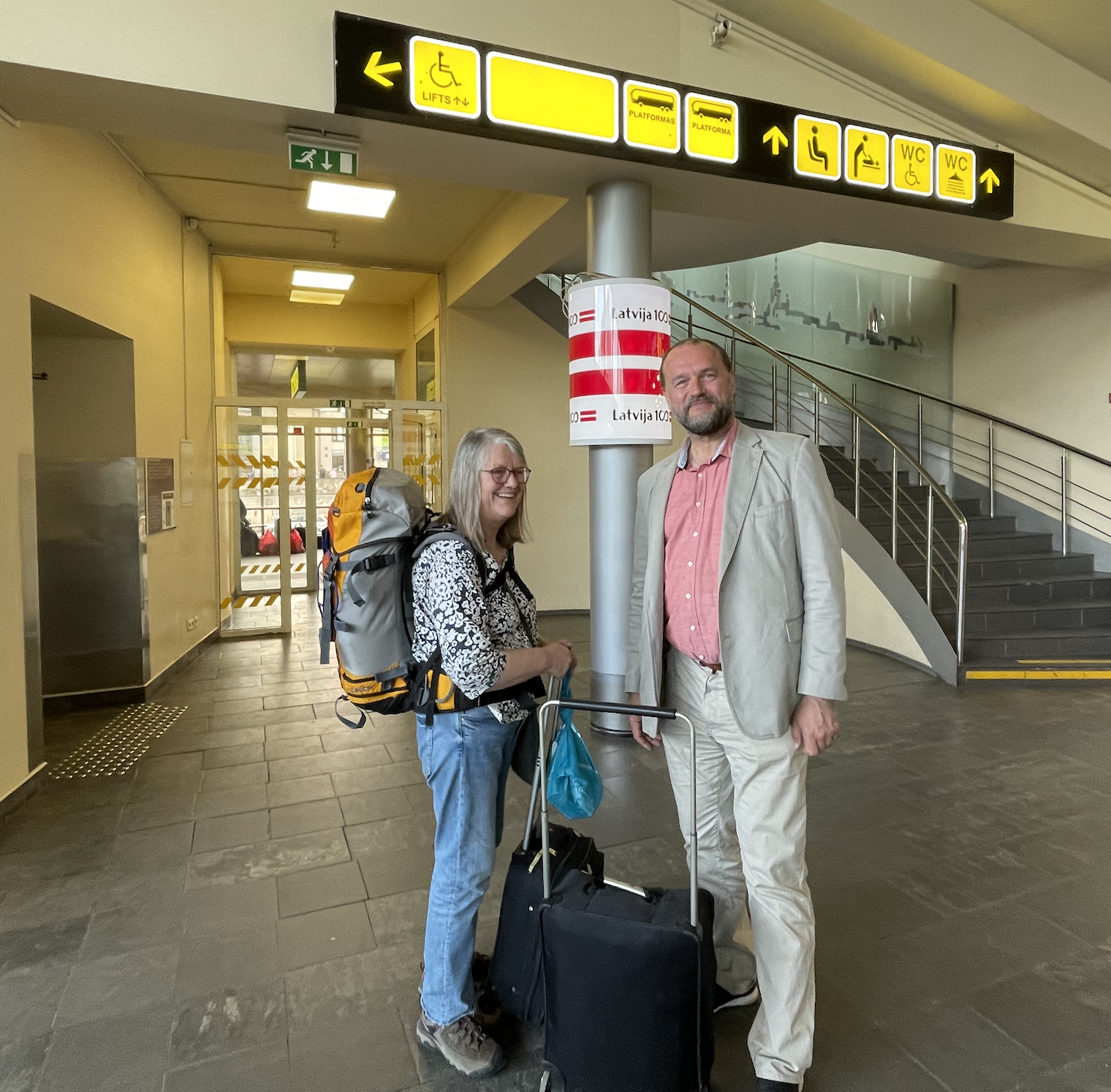
Into the bus station where Uldis is waiting to welcome us.
Our links with Uldis began in 2013 when he joined a The Green Line Workshop Community Programme held on the Welsh-English borders in the area around Bishop’s Castle.
His presence was Great Benefit & thoroughly enjoyed.
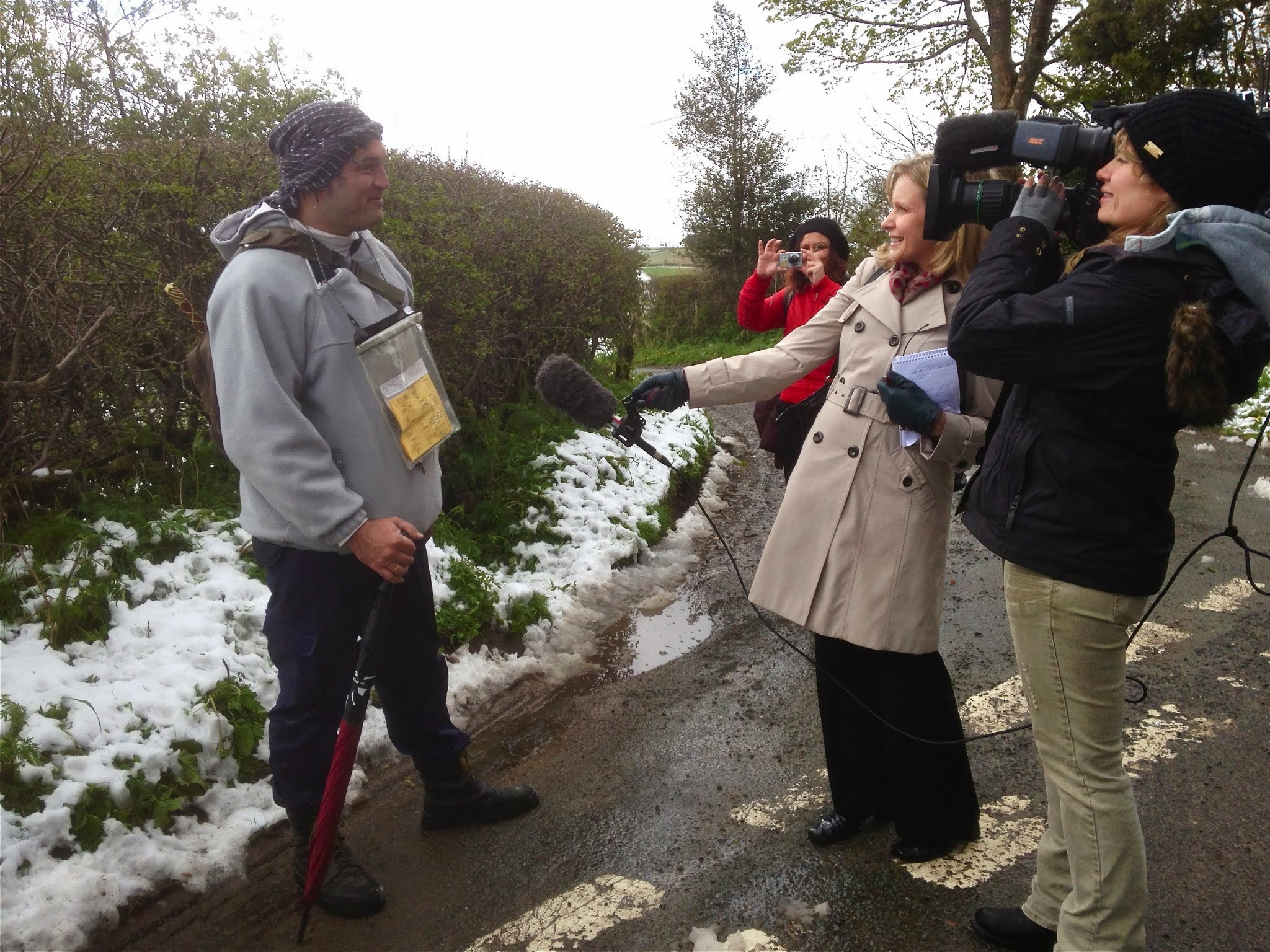
May 2013: Some people seem to pull-in events around themselves & in the Green Line Workshop Uldis became a focus for a BBC News film crew who were recording an unexpected fall of snow on the hills of the Welsh Border.
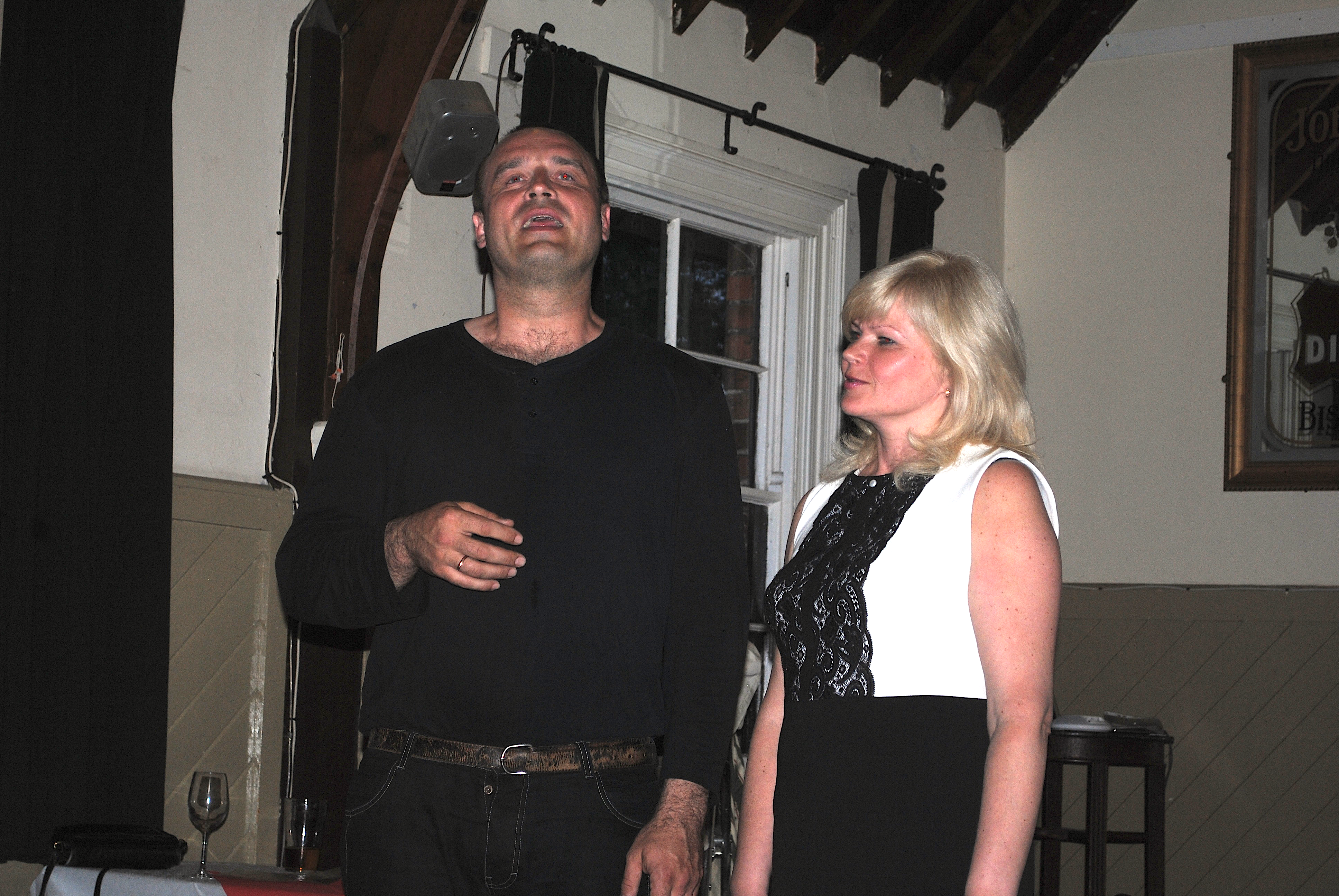
Singing……
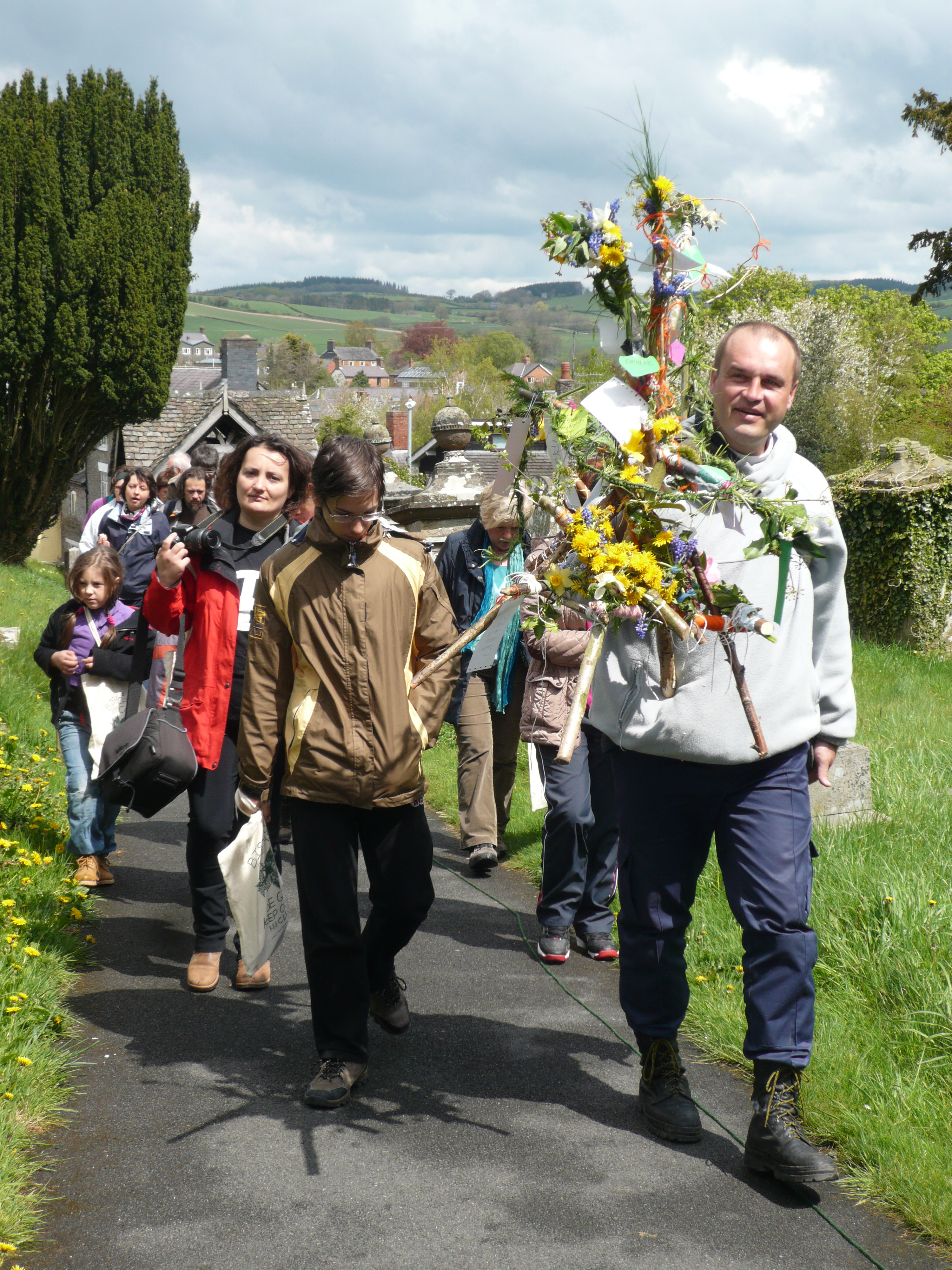
leading….
…. and ‘just being there’!
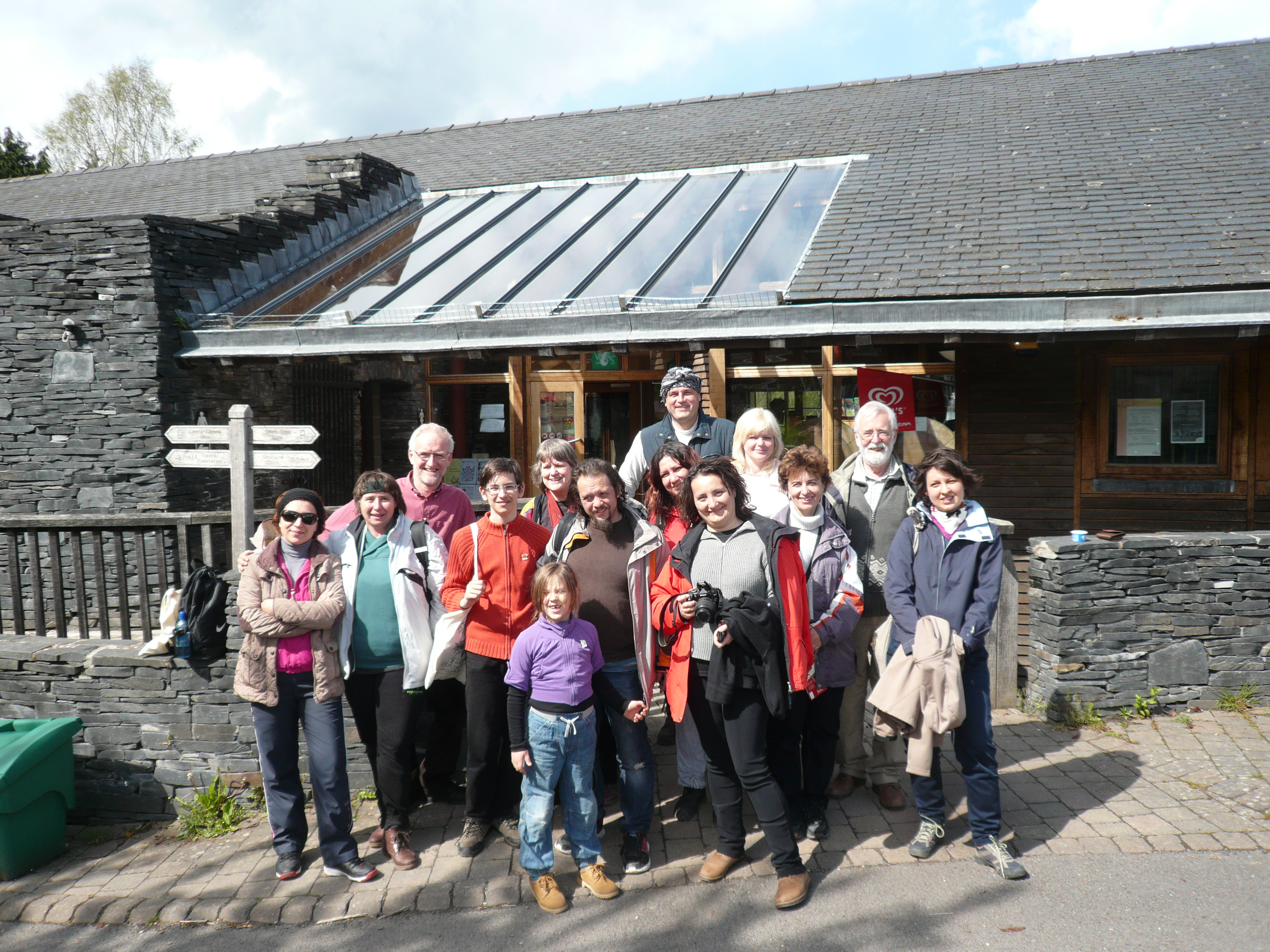
The group includes Vanya from Pleven (visited in Journey 2) & Dana & family from Iași.
Uldis, who, as is said, ‘knows Riga like the back of his hand’, became ‘the guide’ steering us through the streets of the ancient city to our hotel – whilst constantly providing a stream of information about the past and present nature of the streets through which we walked.
Hotel Room view
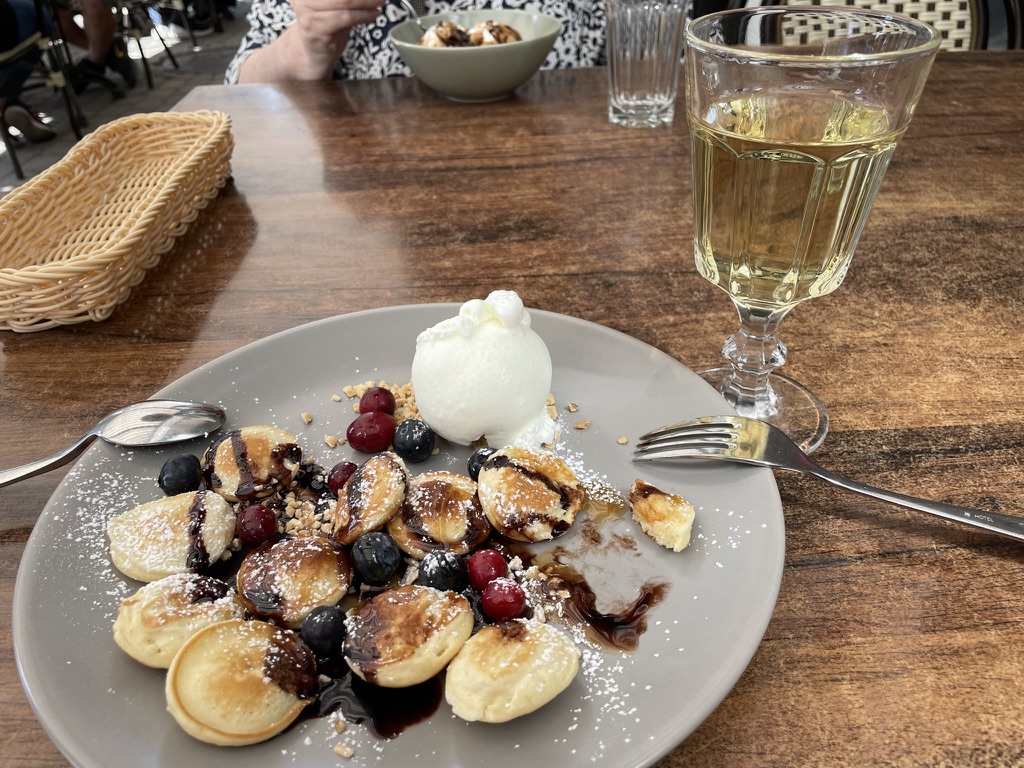
Then, having arranged to meet later, we ate lunch – which included local delicacies.
On arrival we’d discovered that, as with our earlier visit to Napoli, we’d arrived at an important ‘Sporting Moment’.
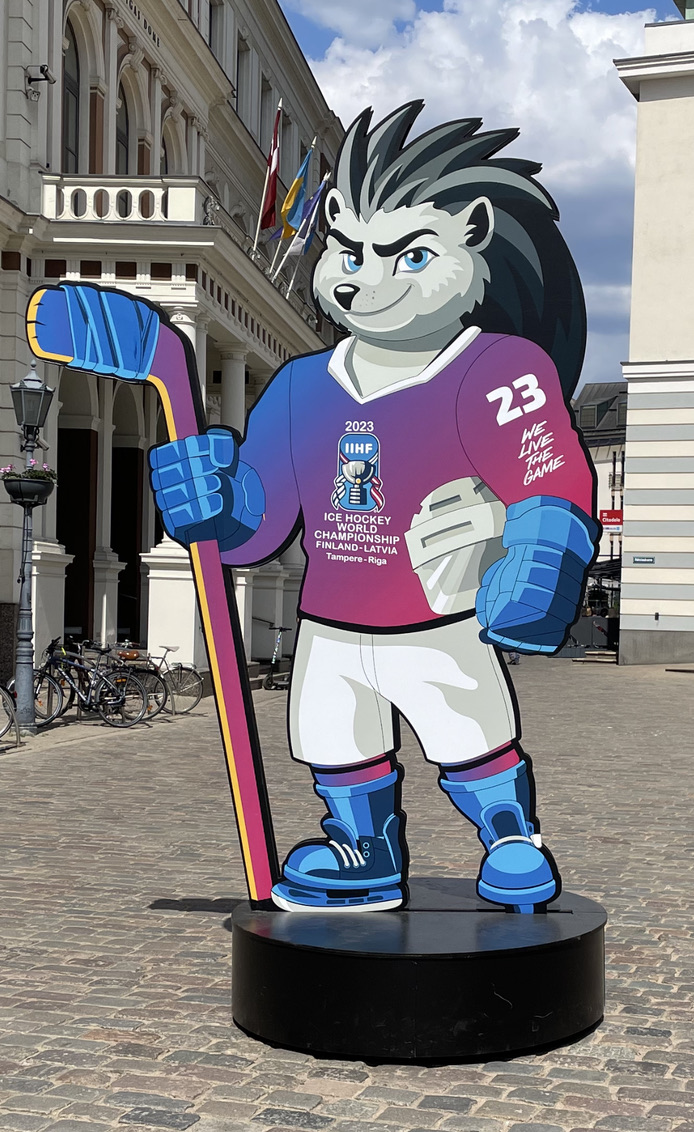
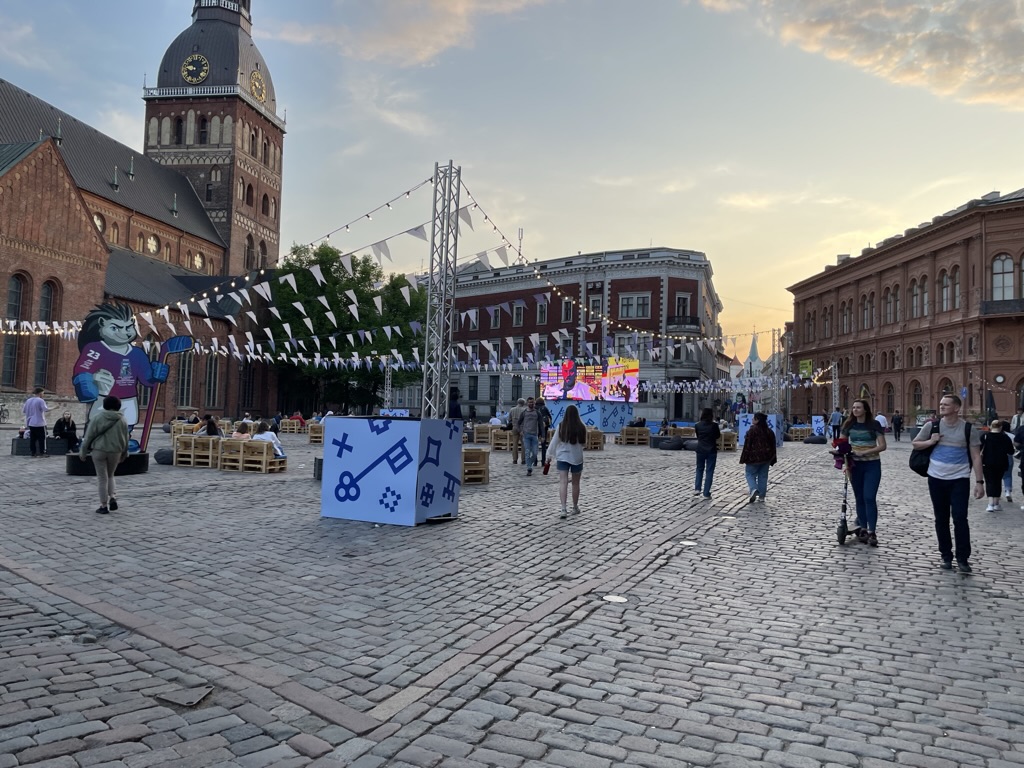
Riga was busy with visitors….. the Ice Hockey World Championship
We were pleased to see that the other host city was Tampere, the city which, still in the snows of March, we had as a focus on the 1st of our 3 No Kerosene journeys.
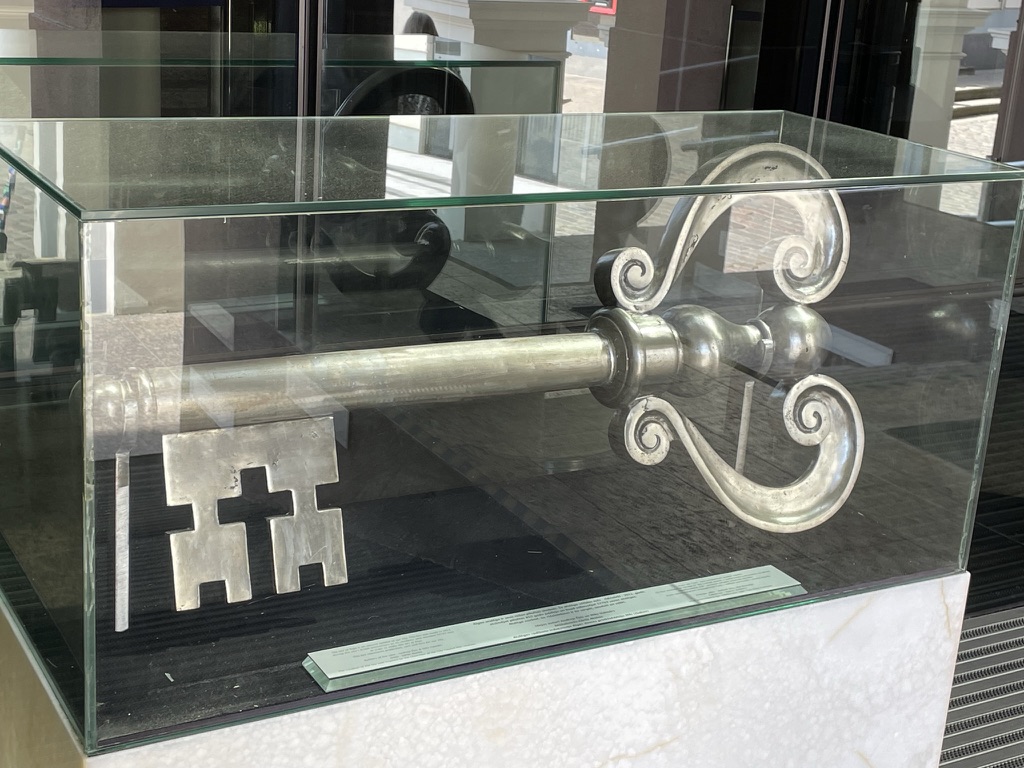
Our afternoon wanderings took us past the Town Hall & its City ‘Key’……
…… and which featured on the Championship publicity
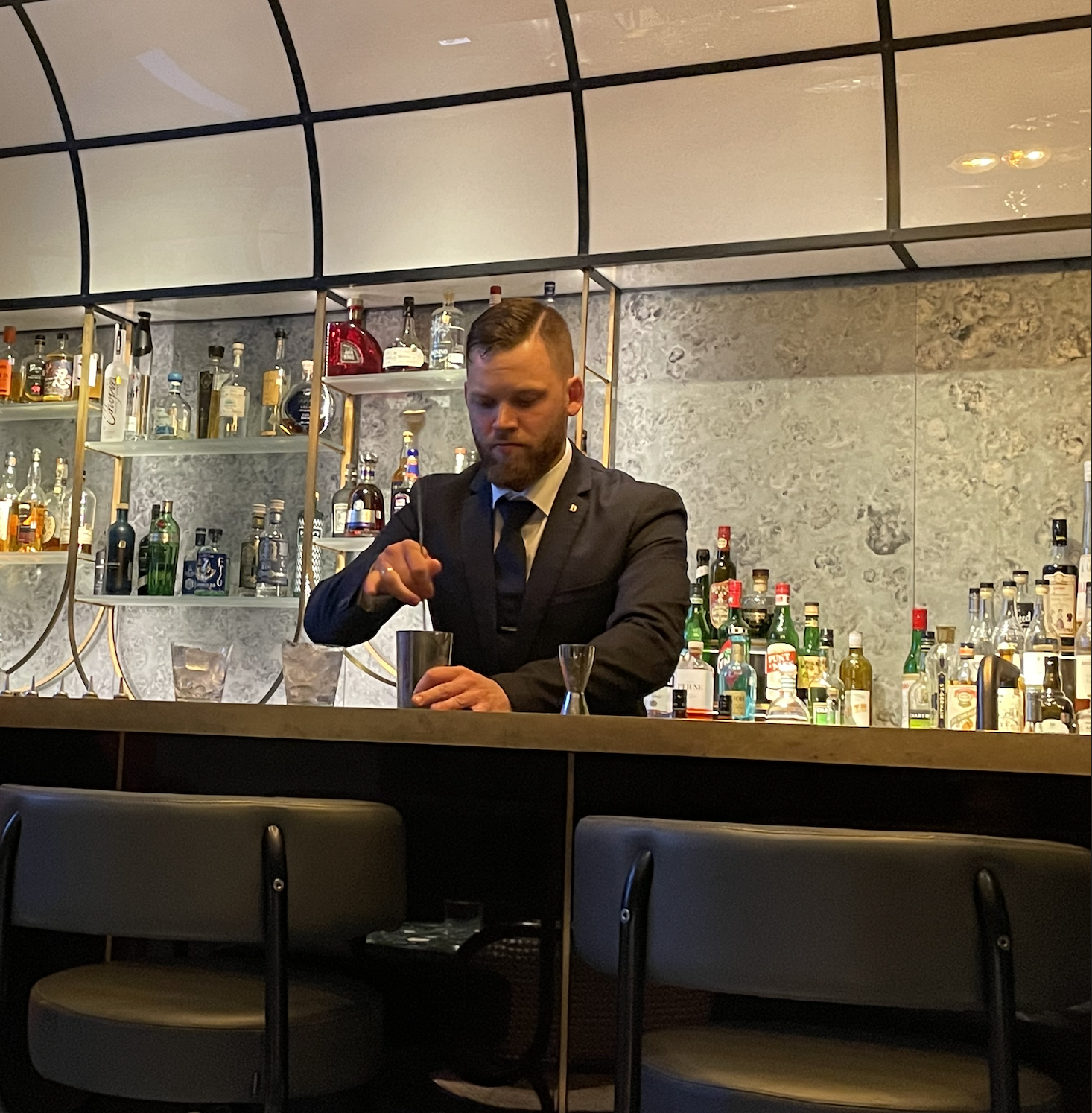
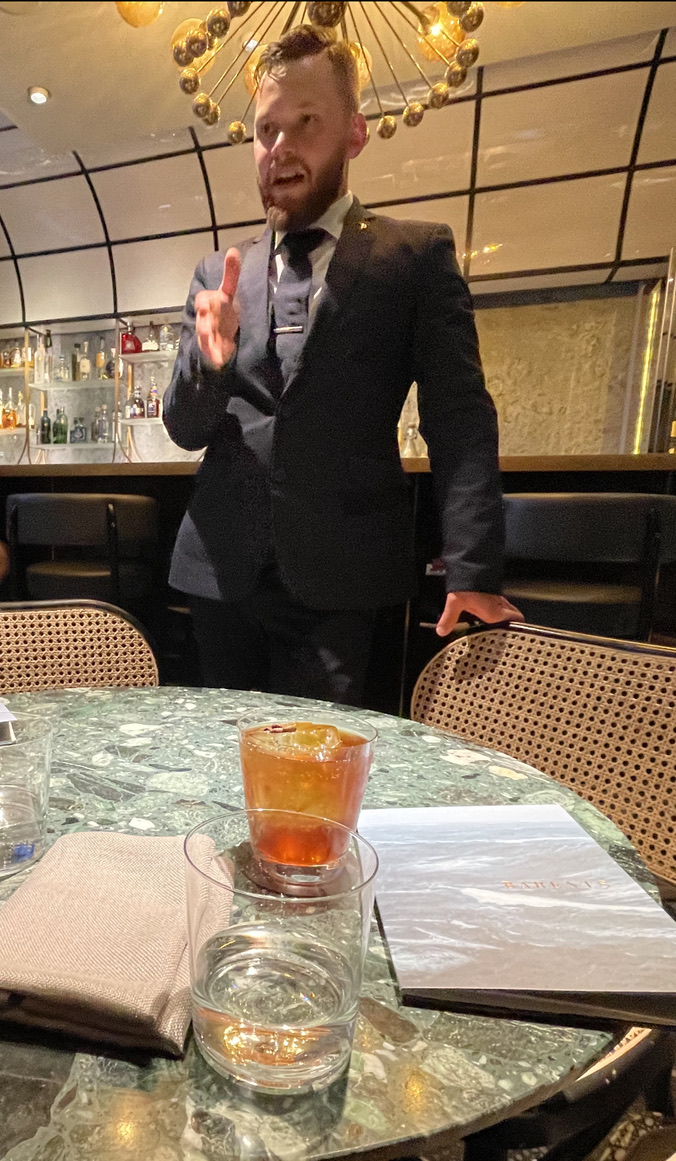
In the evening we visited a smart Cocktail bar
the drink was accompanied with detailed explanations
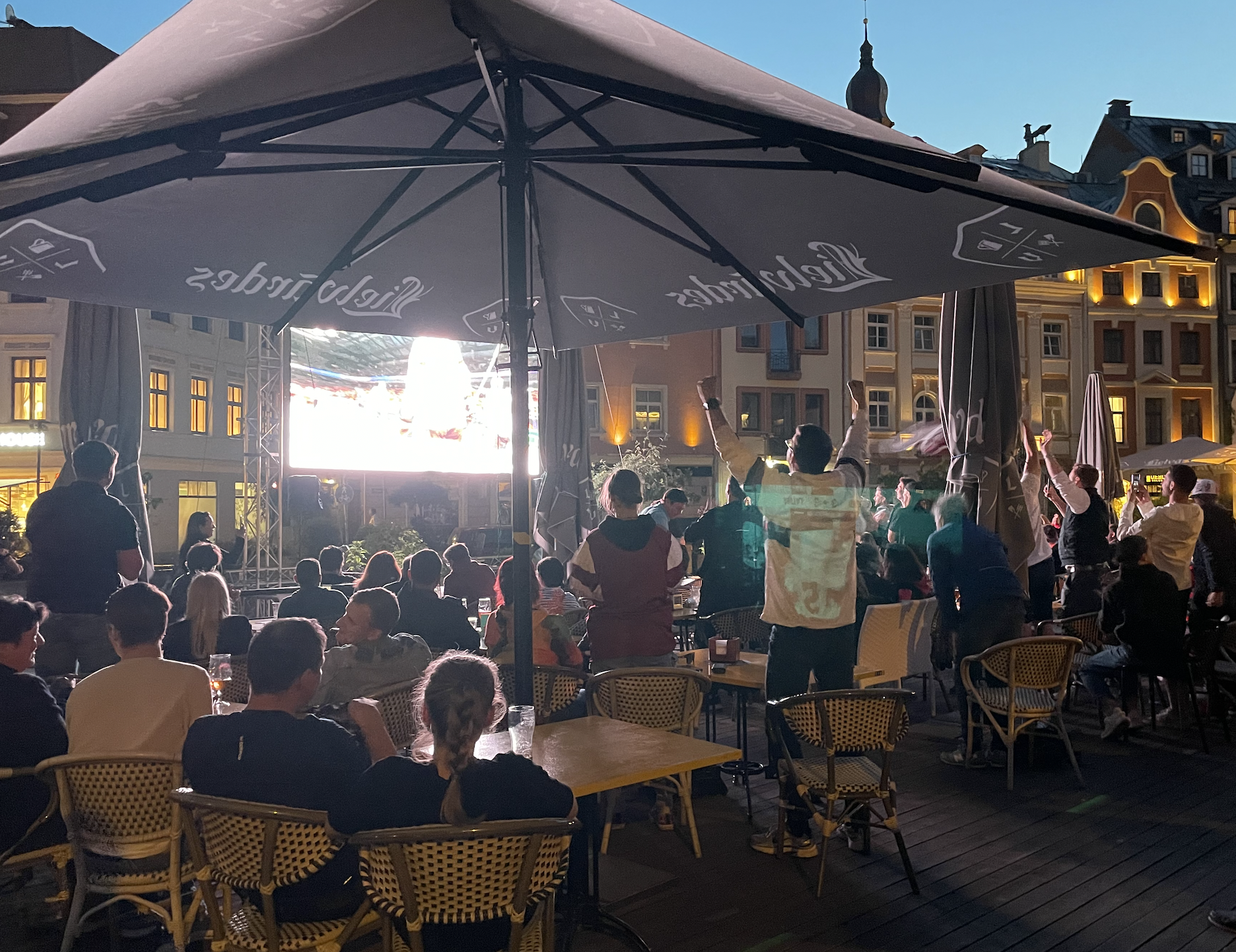
Then we joined the crowds watching a very close match between Latvia & Switzerland in which Latvia eventually triumphed
Locals were very pleased at the Latvian success in the tournament…..
“The playoffs also saw major upsets, as Latvia reached the semi-finals for the first time after defeating favourite Sweden 3–1 in the quarter-finals” (prior to their victory over Switzerland)
The game was played later evening in gloriously warm weather.
Waking early, around 03.00, the occasional beer-exhausted shouts of Latveee-a, La-atveeee-a could be heard in the distance. It was much quieter than Napoli – no sound as of distant gunfire.
Later (28th May) Latvia, after losing a semi-final, beat the USA to gain Championship bronze medal position.
Latvia claimed its first ever IIHF medal after defeating the USA 4–3 in overtime and finishing third.
Wikipedia
Wednesday24th May
We have one week left of our 3 months travels.
It feels appropriate to be finishing the in the Baltic States. We began in March by travelling across the more northern territories & had planning been a little more careful, we could have completed by linking up with the first journey into Finland by including Estonia (we had partnership links there).
However, for this 3rd Journey reaching our most northern part in Riga allowed us to to be ‘in the hands of’ Uldis who, in 2014, had given us the most wonderful tour of Riga: simply the best tour guide I’ve ever experienced….. why ‘the best’?…. because he understood that we were interested in details and curiosities and thus provided them – from his personal Great Memory Store of the city.
So – this time we do not see the major sites but we trek across the outer parts of the centre city to see ‘curiosities’.
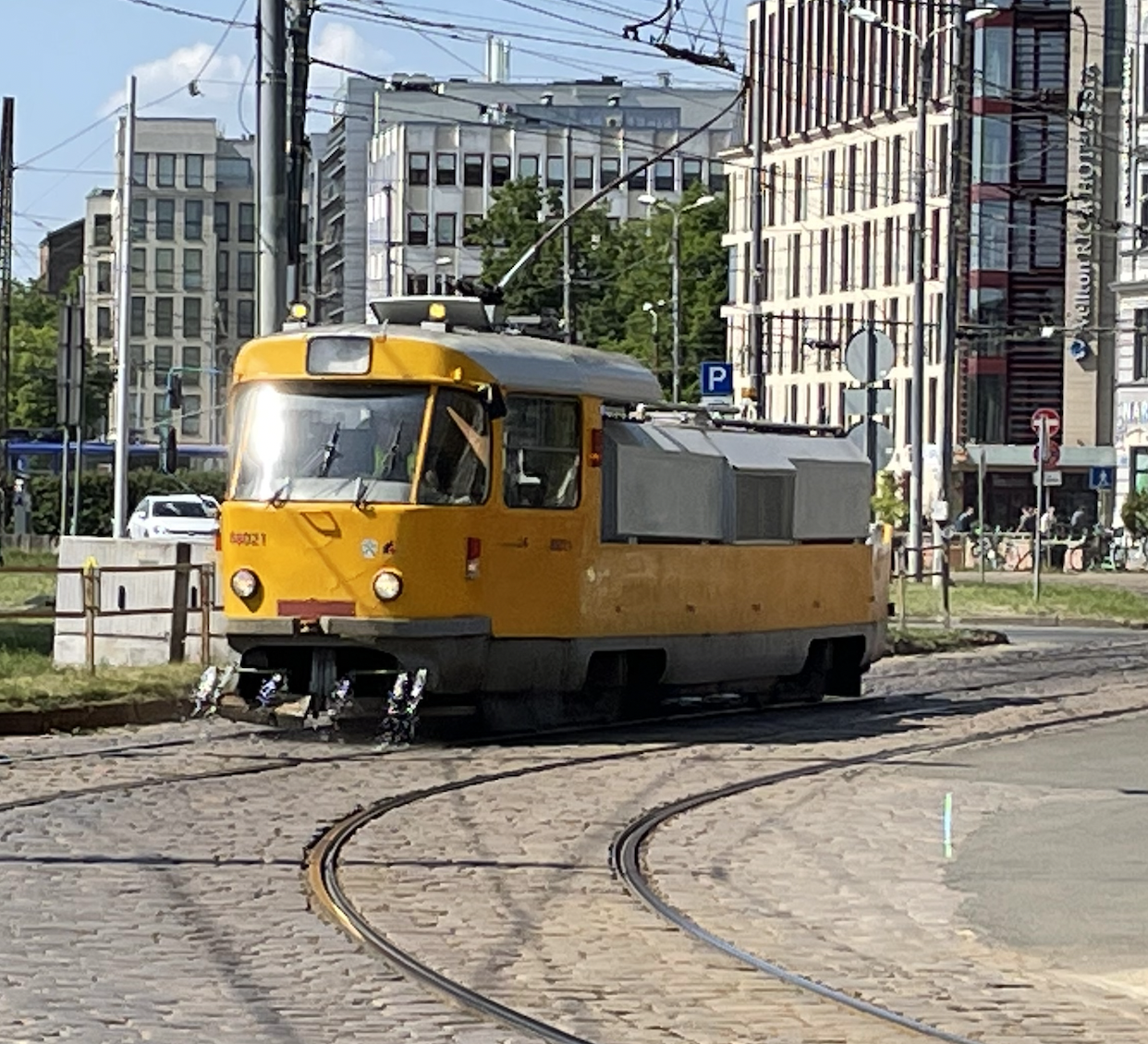
First, we wander and find some of our own…. which included this Cleansing Tram spraying water onto the tracks.
Was it originally thus… or (as I suspect) is it a cleverly converted traditional tramcar given New Life & New Purpose as an important role in the city’s urban transport network.
Great Joys for Many are supported by such menial but essential labour.
Riga:
a strategic trading city based at the mouth of the Daugava River to the Baltic Sea.
It has been, over many centuries, a city that multiple other groups & nationalities have at times used or controlled:
Danes, Swedes, Germans, Poles, Russians.
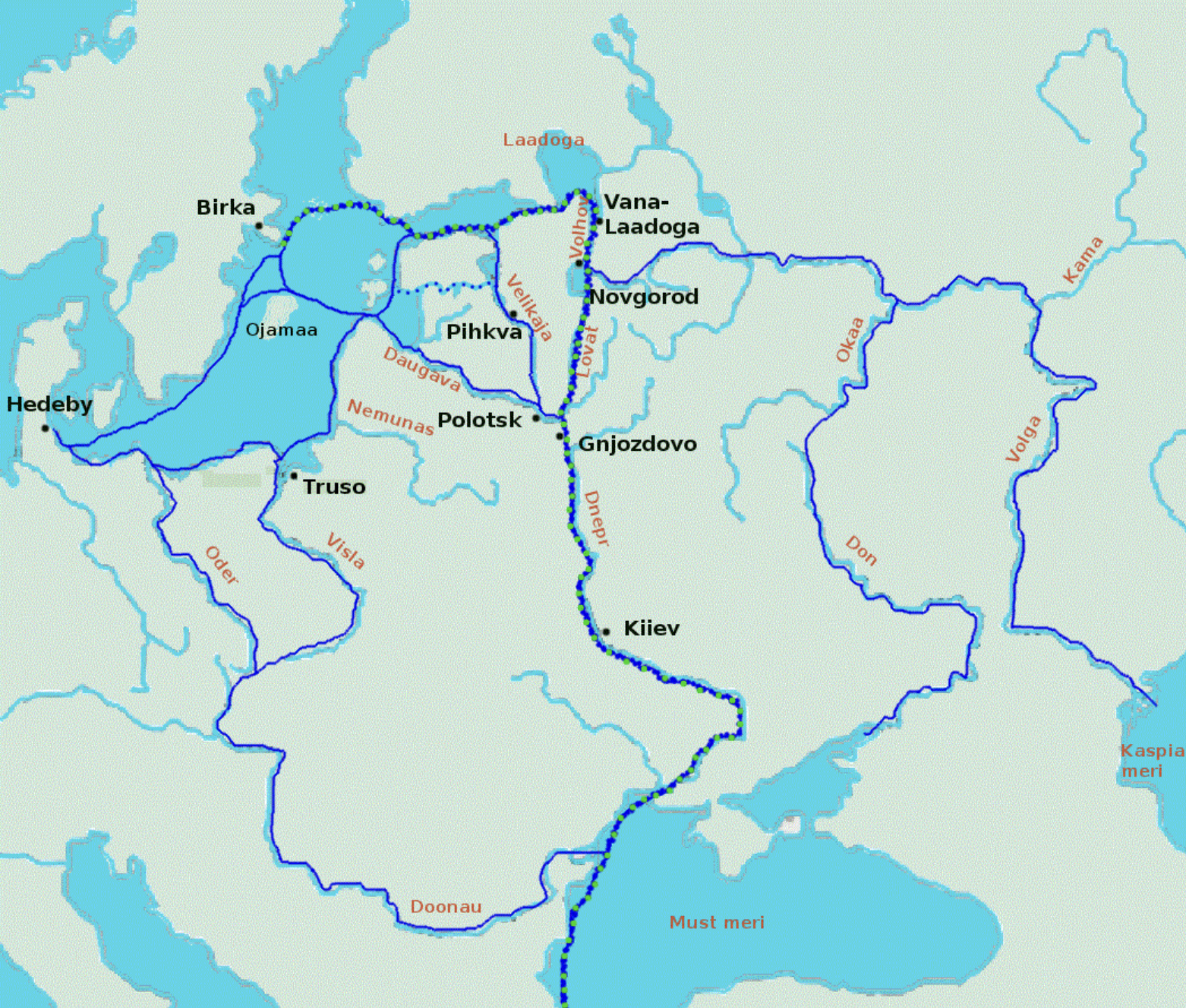
The Vikings had established trade & slavery routes along the Daugava river connecting to the Black Sea & Central Asia.
Uldis, on our first visit in 2014, explained much of this – and during this visit he talked about the Viking Era trade routes using the rivers
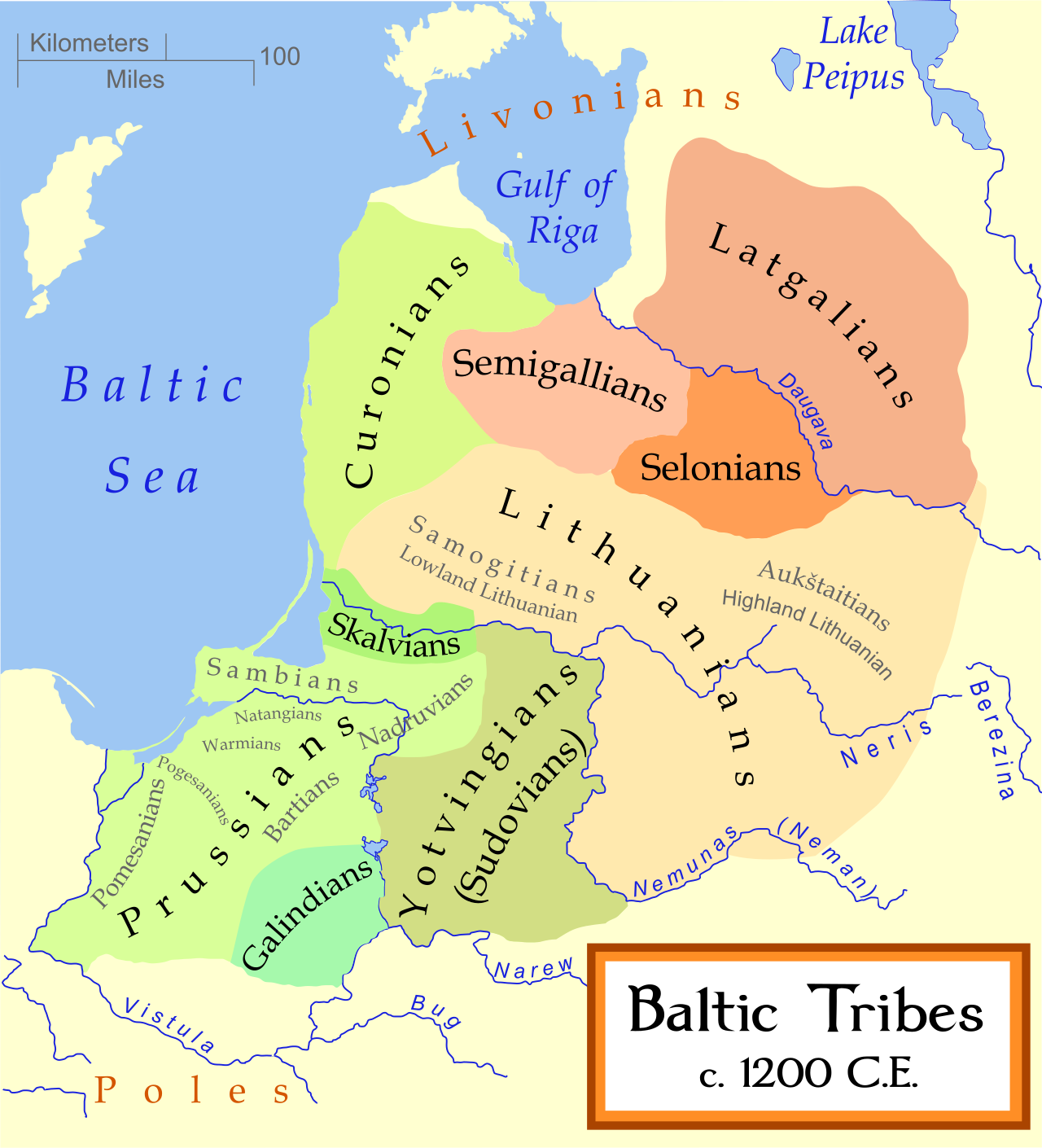
Essentially, whatever indigenous local control existed, the crusades (a mix of religious enthusiasm to convert ‘heathen tribes’ & a land grab) were used by Danes, Swedes, ‘Saxons’ (Teutonic Germans) & The Papacy to control the area.
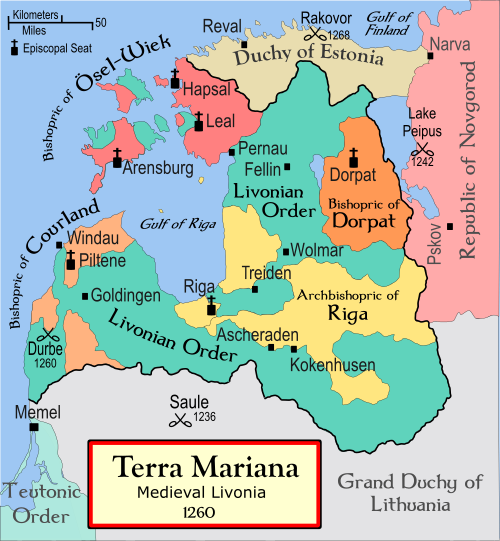
The result created a complex pattern.
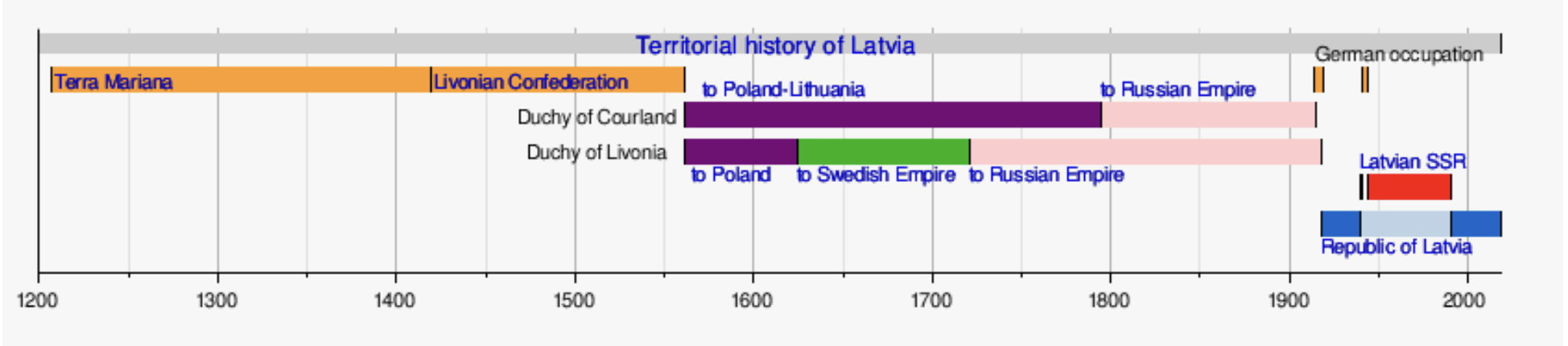
With the end of government by the last Archbishop of Riga, William of Brandenburg, Riga became a free imperial city and the rest of the territory was split between two Polish-Lithuanian vassal states: the Duchy of Courland and Semigallia (Polish vassal) and the Duchy of Livonia (Lithuanian vassal).
Wikipedia
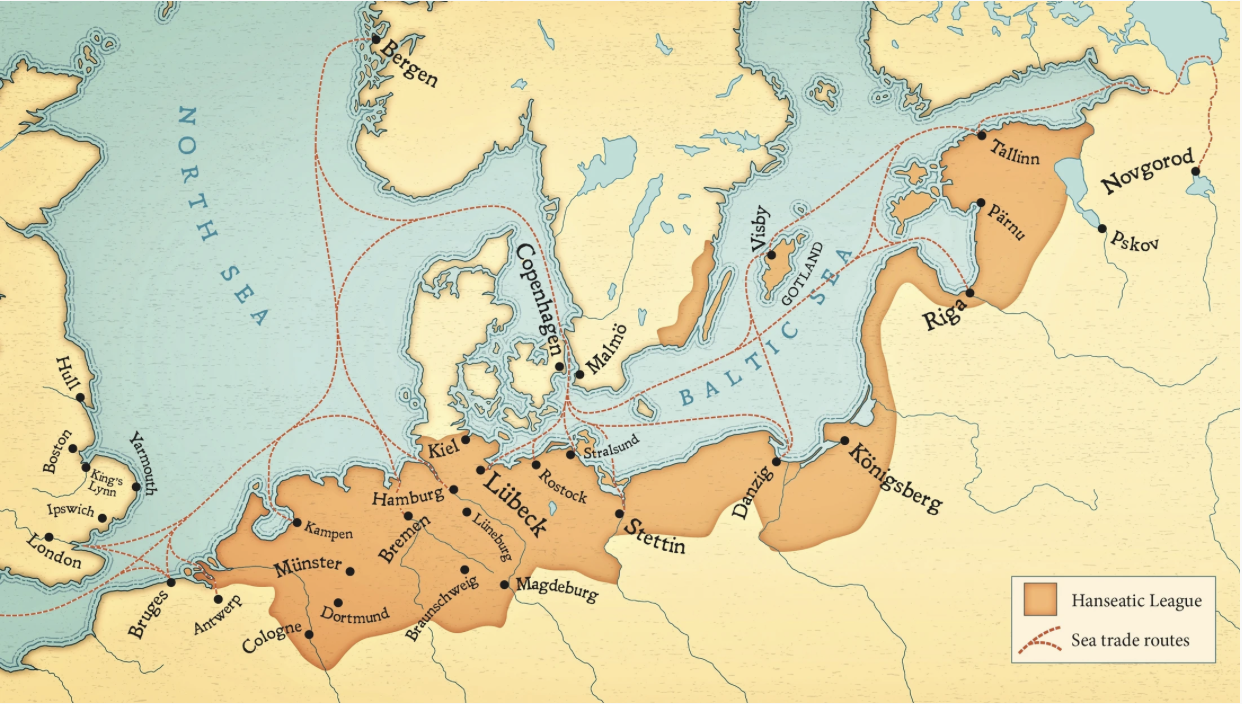
As a Free City, Riga is a member of the Hanseatic League
From the 13th century to the birth of nationalism in the 19th and independence in the 20th, Latvia’s and Riga’s history are intertwined, a chronicle of the rise and fall of surrounding foreign powers over the Latvians and their territory. As a member of the Hanseatic League, Riga’s prosperity grew throughout the 13th–15th centuries—with Riga to become a major center of commerce and later, industry, of whatever empire it found itself subject of.
Today, Riga and its environs are home to close to half of Latvia’s inhabitants.
Wikipedia: History of Riga
By the end of the 19th. century Riga had become one of the most industrially advanced and economically prosperous cities in the entire Empire, and of the 800,000 industrial workers in the Baltic provinces, over half worked there. By 1900, Riga was the third largest city in Russia after Moscow and Saint Petersburg in terms of numbers of industrial workers.
Wikipedia: History of Riga
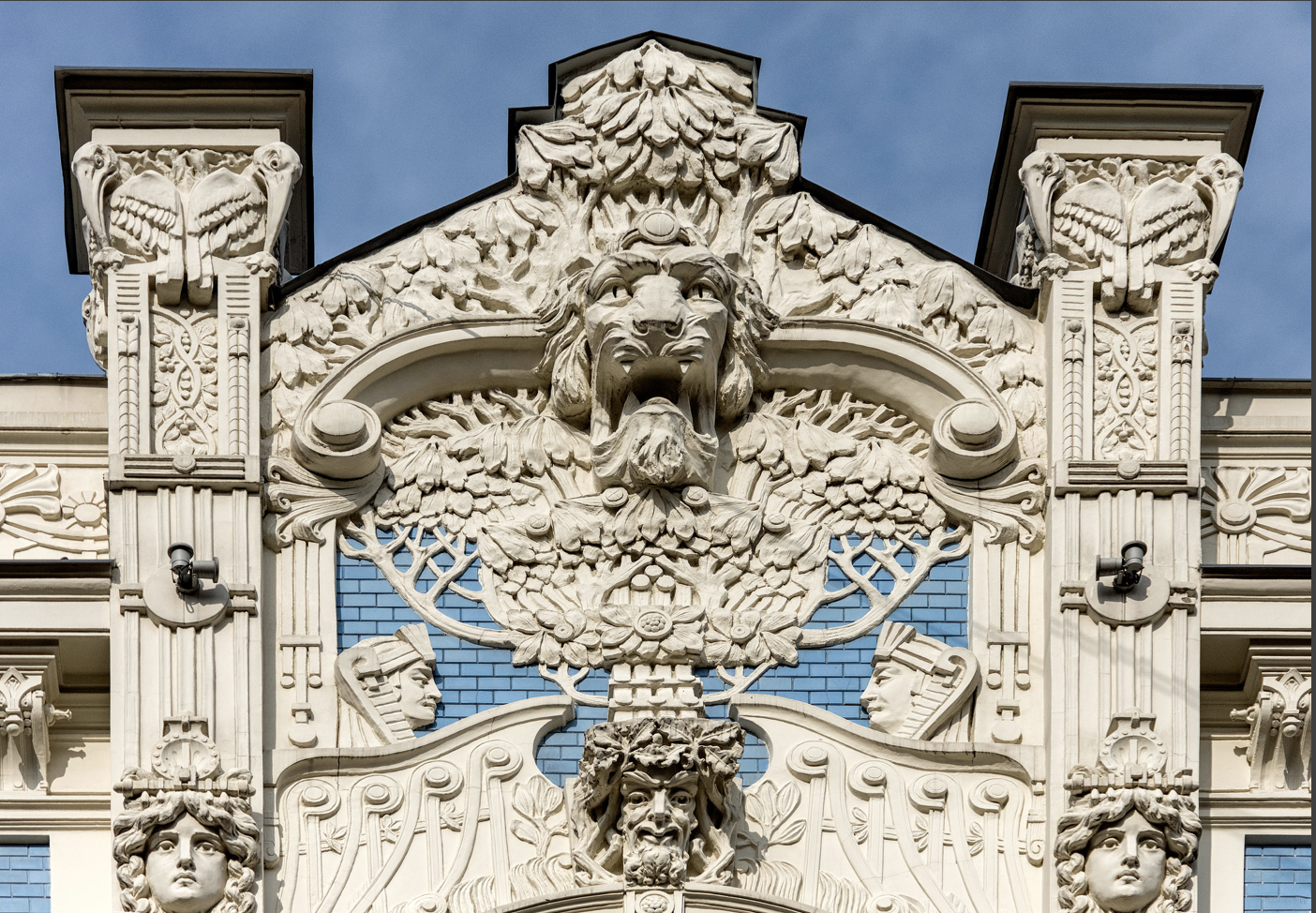
Riga’s importance to Imperial Russia resulted in it developing fine architecture in the C19th & early C20th.
“The Art Nouveau architecture in Riga makes up roughly one third of all the buildings in the centre of Riga, making Latvia’s capital the city with the highest concentration of Art Nouveau architecture anywhere in the world.”
The growth of Latvian nationalism in C19th paralleled that of many other regions. The chaos following WW1 allowed Latvia to emerge as independent.
It then suffered, along with Estonia and Lithuania, by being ‘re-absorbed’ by Russia. Most other nations in which we’ve worked and through which we’ve travelled recently: Lithuania, Poland, Bulgaria, Czechia, Romania, Hungary, were after WW2 under Soviet Russian control.
Does such a history of a place shape the consciousness of those who grow within its physical and creative ambit?
At present all positive developments relate to a return to the ‘Hanseatic’ period – trade and influence flowing along and across the Baltic- Bothnian corridor. Finland has achieved this successfully.
The ‘Hansa’ style of relationship was the essence of how the UK involvement in the EU evolved…. independent entities trading with each other through agreements, sharing of common interests & regulations. The degree to which such independent units should coalesce into one organisation continues to be debated.
Britain foolishly is trying to maintain absolute independence whilst needing to have a trading involvement – but in a world in which now everything is negotiated & size, as it always did, matters.
For co-operative agencies such as the EU, the degree of shared (& non-independent) structures has become, for present times, a significant issue in one particular respect…. ‘defence’… which requires ‘one’ to also be with & of ‘the other’.
Britain struggles unnecessarily with the dicotomy. Yes to NATO but NO to EU. Such a position cannot be sustained. Britain is not the USA, truly ‘separate’. If not in good relationship with the EU Britain can only become suzerain to the USA (except that the US is not interested in such a relationship!).
The difference, between a place like Finland compared with the 3 post-communist Baltic States is that they were ‘communist’. The time in which they were (Russian Soviet controlled) – when the communist authorities created intentional movement of others from Soviet Russia into Latvia (especially Riga) produces continuing difficulties.
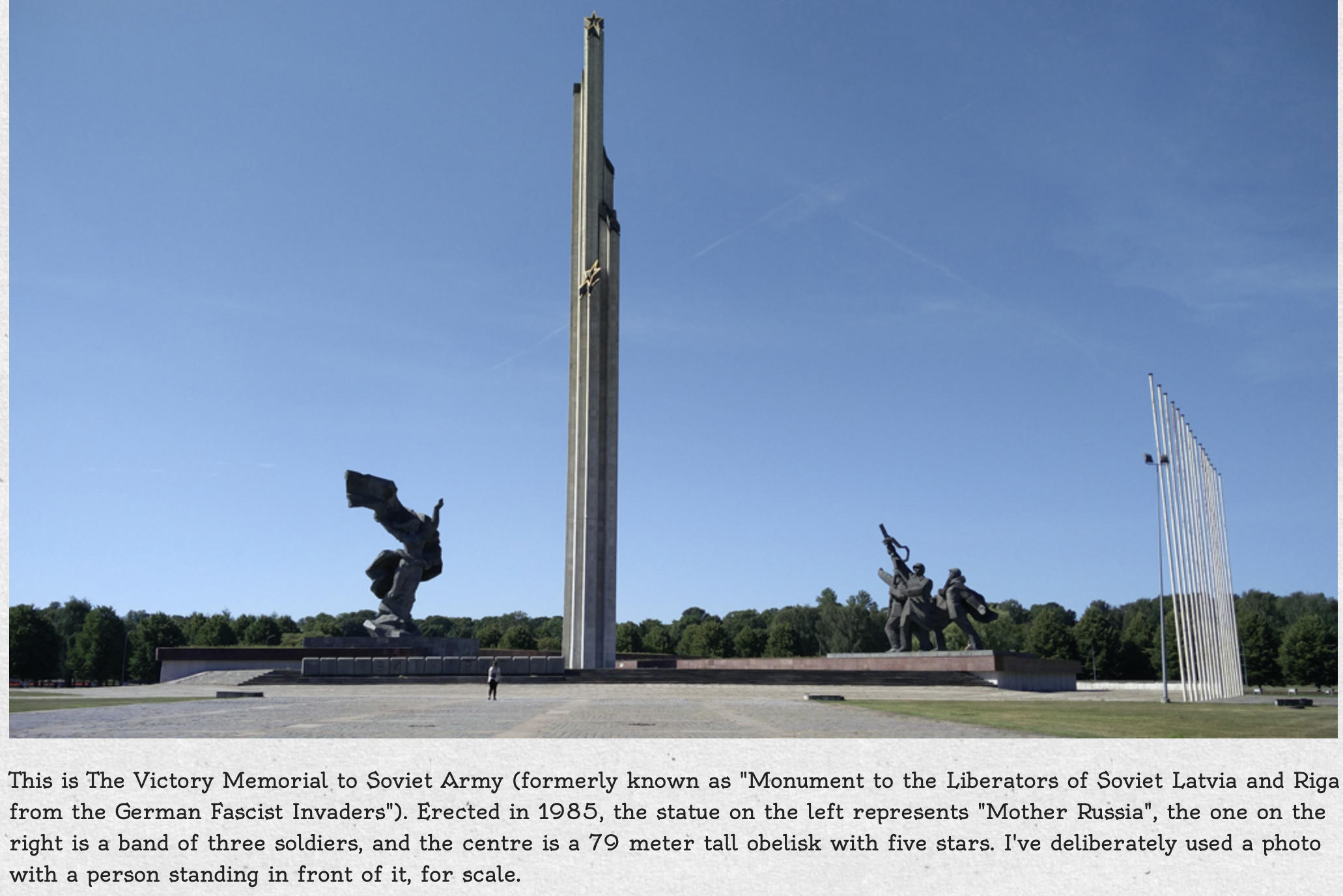
As in Pleven (described in Journey 2), as pressures build (economically, socially, internally) on the whole Communist Sovietised system, ‘Moscow’ decides to take opportunities to underscore its powerful presence by celebrating its ‘contribution’ to ‘liberating’ its now Client State. Pleven has a museum (in memory of the ‘liberation’ from the Ottomans in 1877) built on a hill dominating the town, Riga has a huge obelisk 79 metres high celebrating the recapture, in WW2 of Riga and Latvia.
It claims Liberation, ignoring capture, Saving, ignoring thousands transported to Siberia) The Soviet World corrupted everything – including (and most importantly) language.
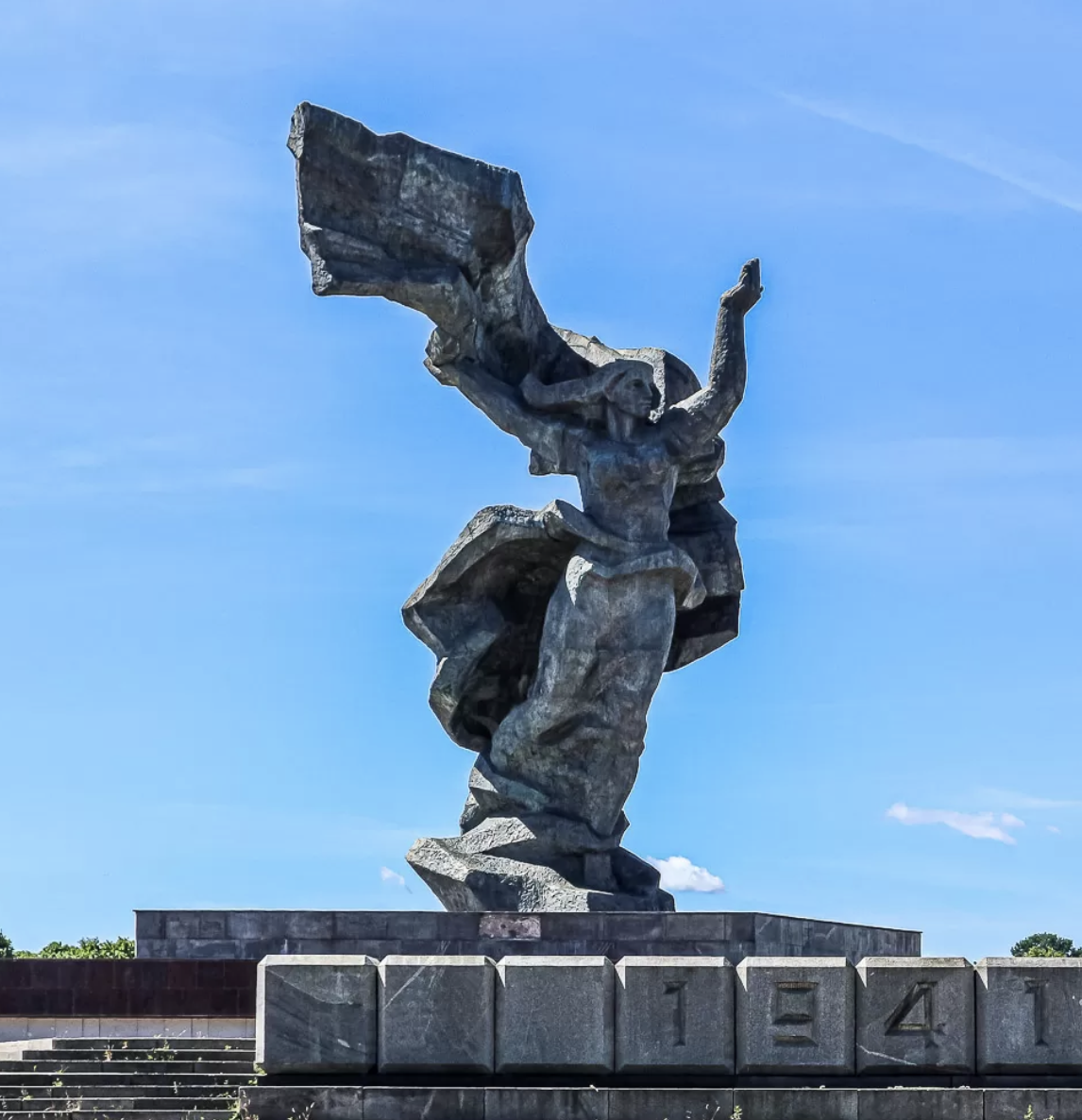
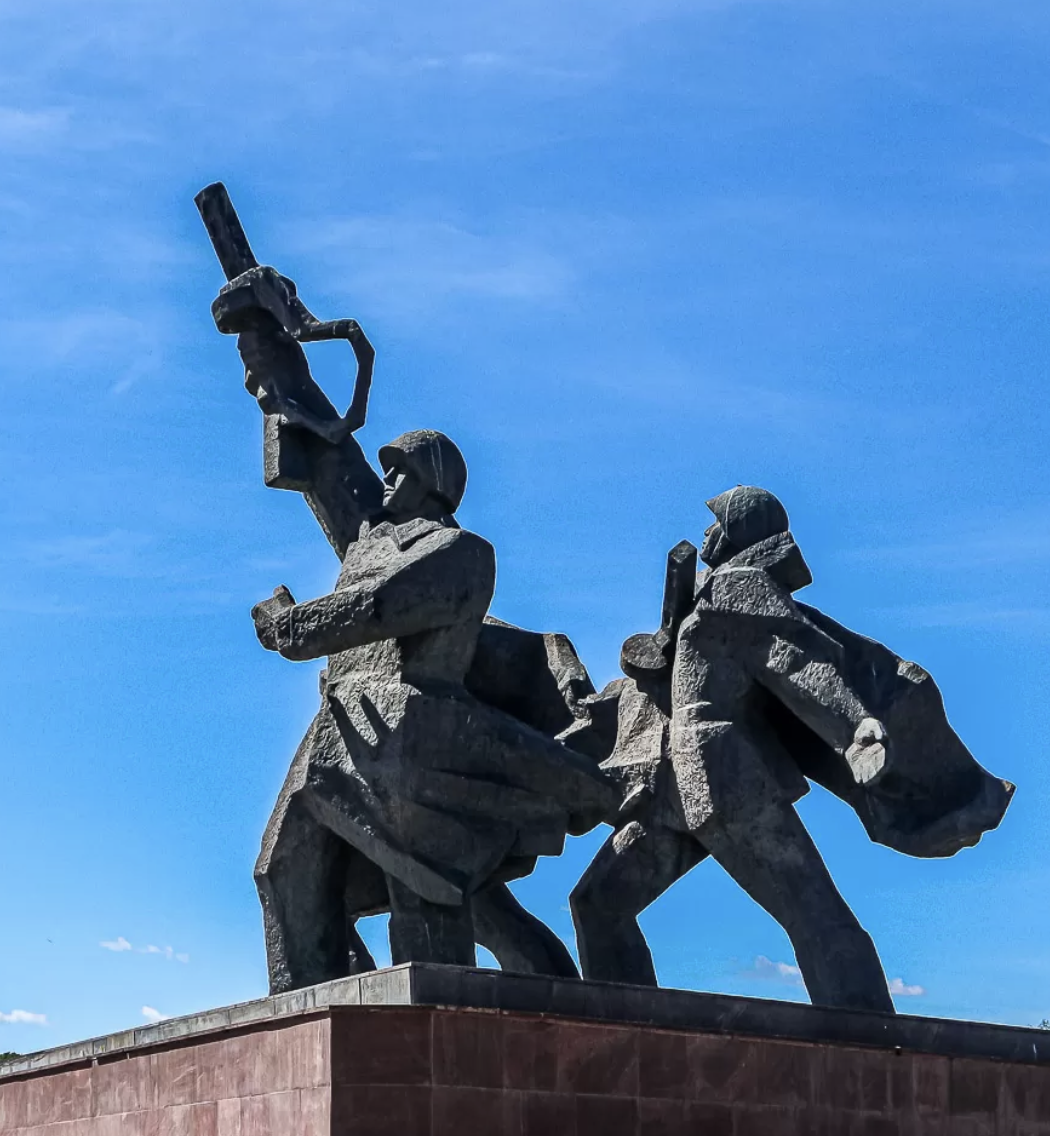
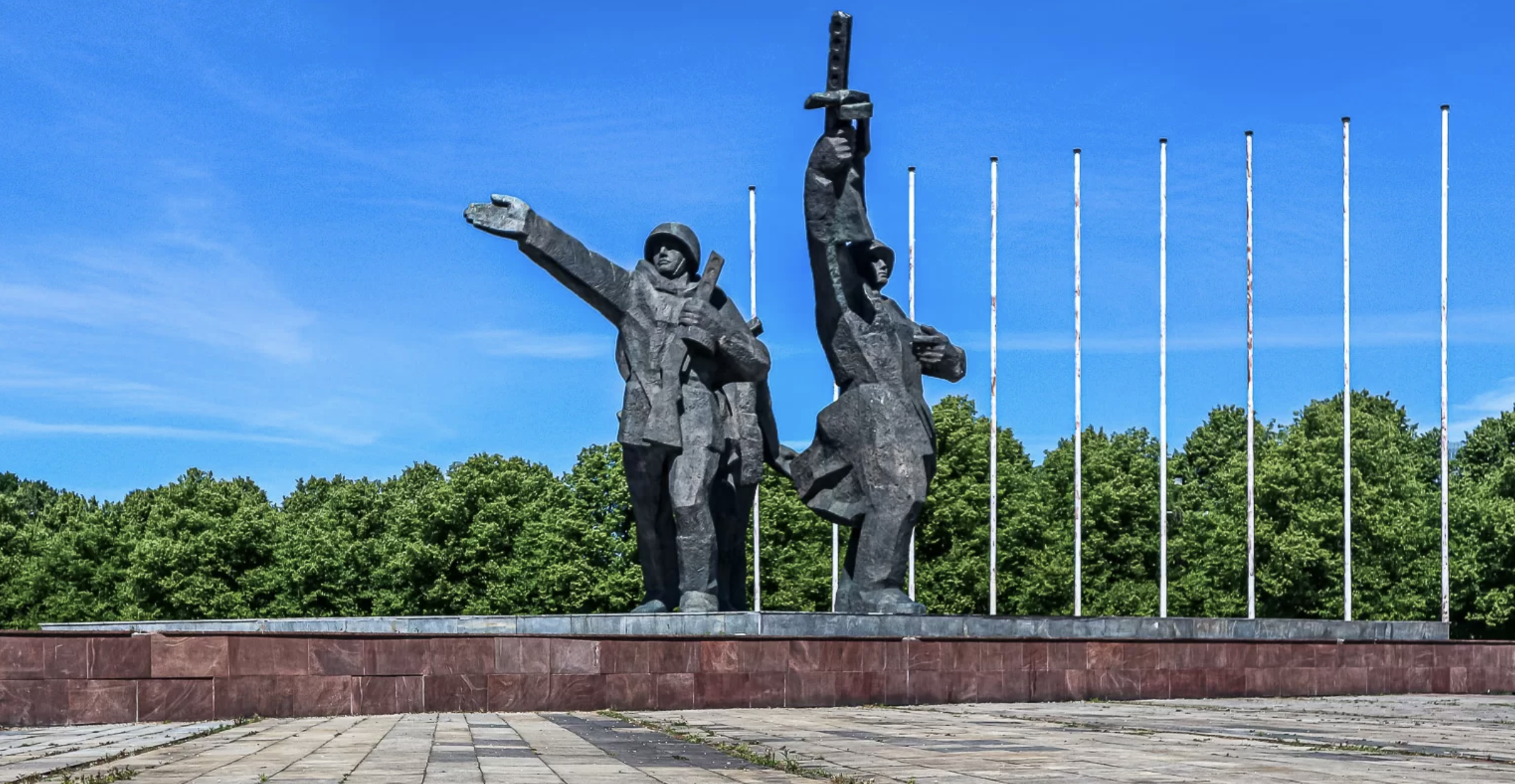
The monument was an horrific and visually awful ‘Stamp of Authority’.
The style always seems to be basically the same (and I’ve seen several examples).
The ensemble is utter nonsense – a sculptural lie…. but one that was repeated and imposed across the territories Soviet Russia controlled.
‘Stamps’ (on a person & by a boot) take time to eradicate & the decision to remove this reminder of Soviet oppression (known sometimes as Moscow’s Finger) did not occur until after Putin invaded Ukraine.
Latvia seems to understand the warped reasoning behind Putin’s claim to be ‘liberating’ Ukraine from ‘fascists’ (which now seem to include most of western Europe).
The monument was removed in 2022.
As noted in Chapter 4 of Journey 1, the Baltic Sea is now one of the most potentially dangerous seas in the world. What was once a Russian Sea (the nearest NATO presence was a short stretch of West Germany) & easily accessible to the USSR is now (once Sweden’s application has been accepted) a NATO Lake.
Given the covert approach adopted by Putin it is not easy to consider what actions he may choose to take.
We did not have ‘discussions’ about the potential dangers under which the Baltic States live but we did receive multiple concerned comments from individuals.
To ‘discuss’ we decided, was not something easy to manage… it seemed to have the potential for opening the ‘wound of fear’. There were references that seemed to suggest almost a preparation for ‘the worst’.
Some of what we see & hear & discuss quietly, underscores that, as with most of the partnerships we’ve had, the long-term impact & influence of Russian Communism has been important… and probably a continuing difficulty.
In the Baltic States the concerns have grown again as they are seen as almost first on Putin’s ‘Shopping List’ should he be successful in annexing Ukraine (or seek some form of consolation…?)
In Poland we were told that supporting Ukraine was vital as Ukrainians were, in effect, ‘fighting on our behalf’.
Finland, with the longest EU & NATO border with Russia, has been described as being (after WW2) ‘the one that got away’ (and is consequently more relaxed). For Latvia, Estonia & Lithuania that was not possible – and absorption into the USSR, with a Rule of Terror, was followed by actions demonstrating the complete control of Moscow.
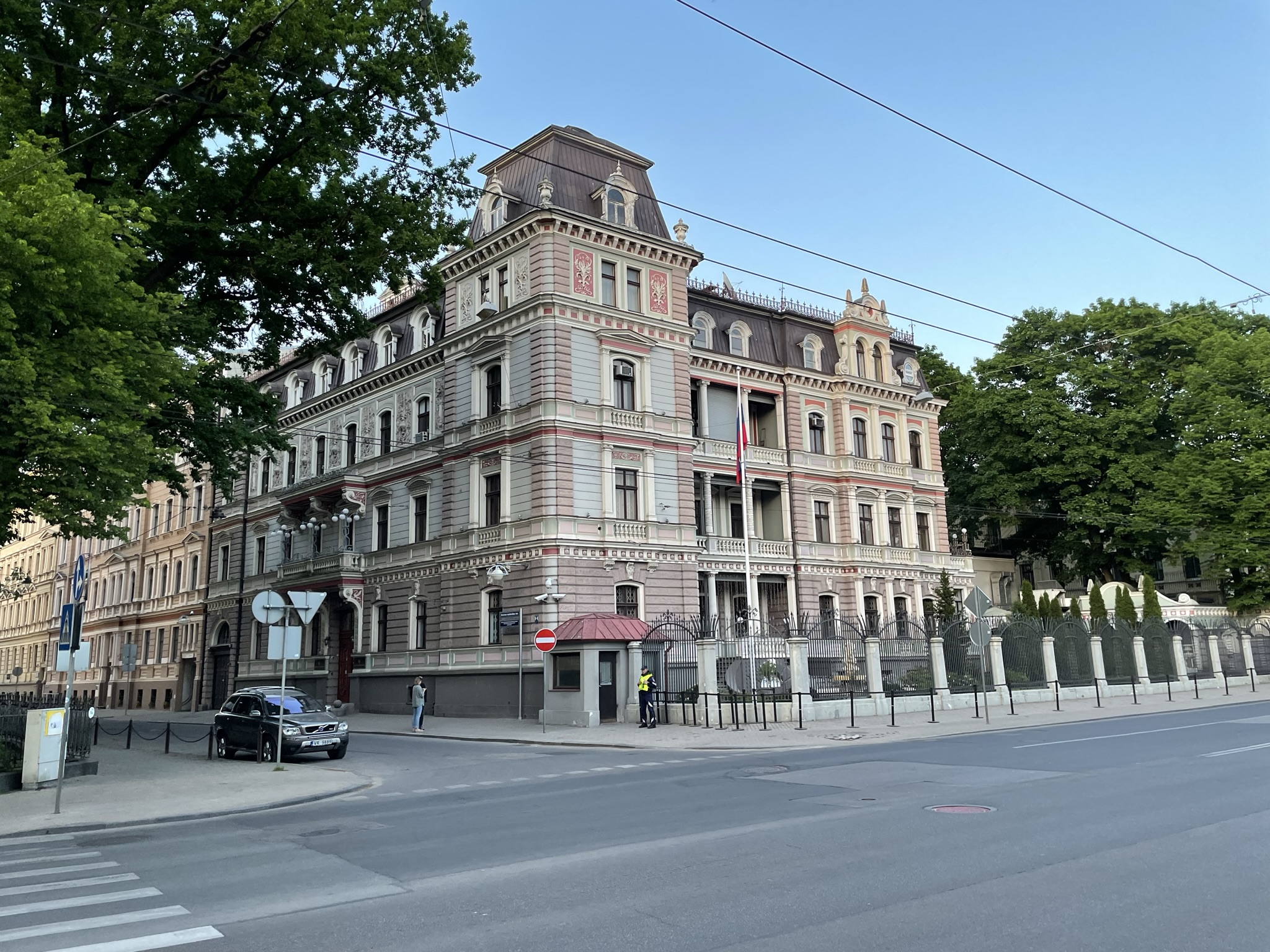
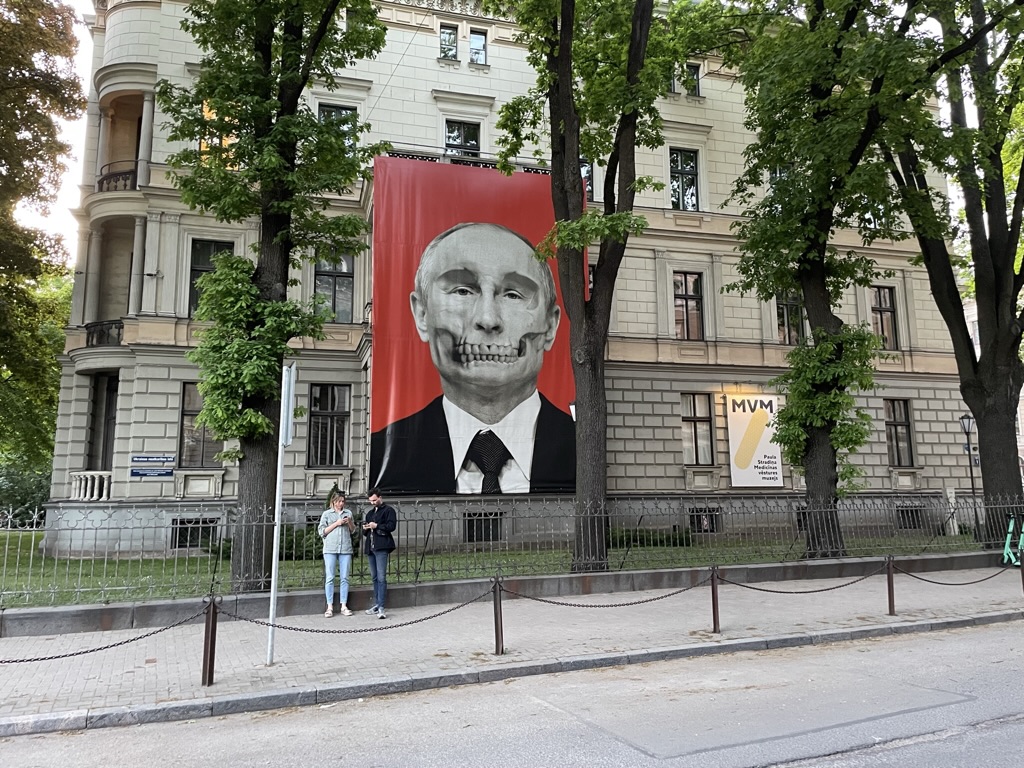
A very stark comment has been hung on a public building opposite the Russian Embassy
………………………
The Wonders of having Detailed Local knowledge
In the late afternoon Uldis took us on a walk to what was once the edge of the urban city…. an area now being developed commercially (as in many similar situations – & rather paralleling that which Vienna has being doing on its old railway lands).
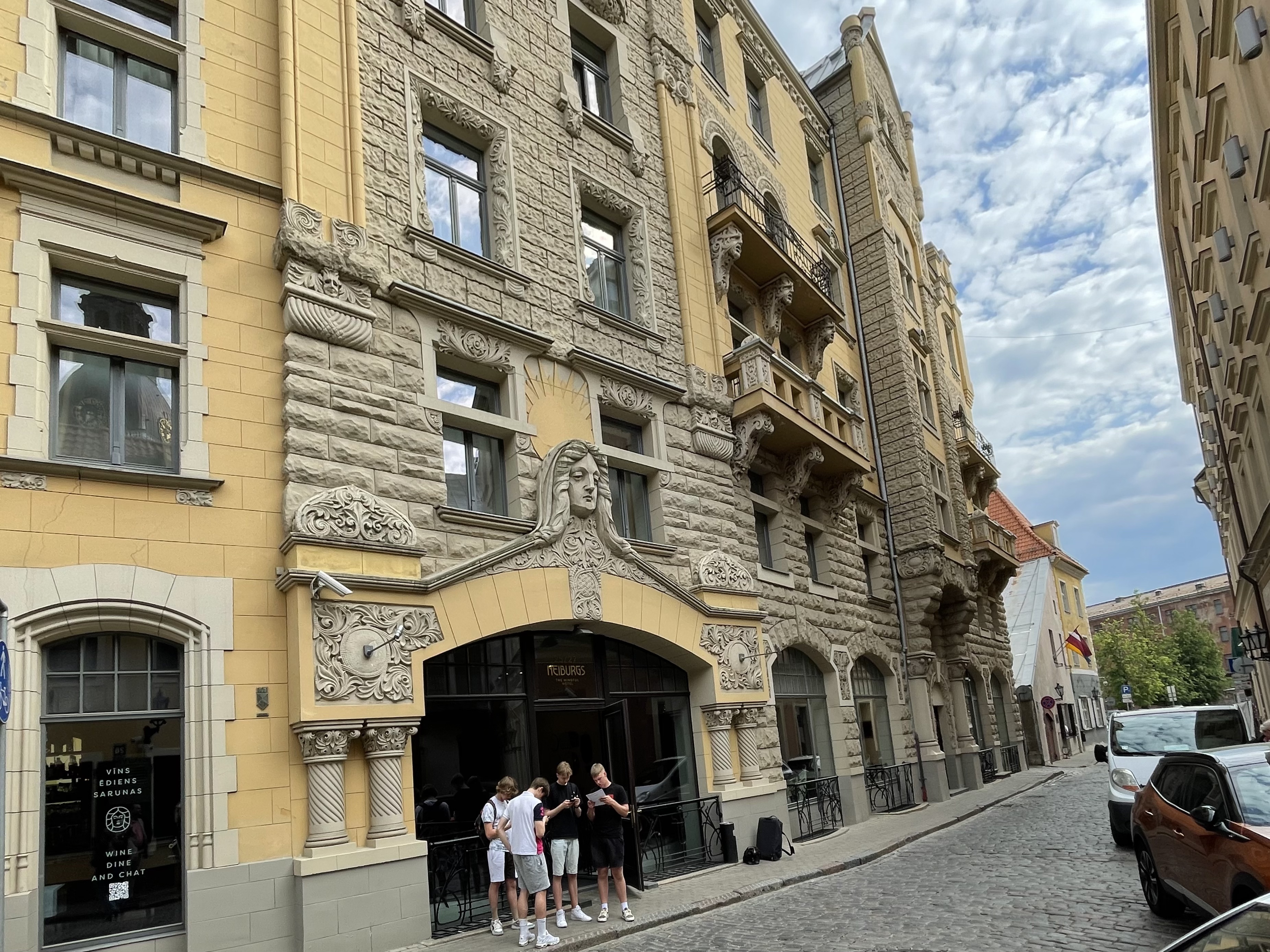
There is a section of older buildings which when built were, in their courtyard areas, used by architects to experiment with styles they considered using in the city centre.
A rather remarkable ensemble of styles – hidden away & rather neglected.
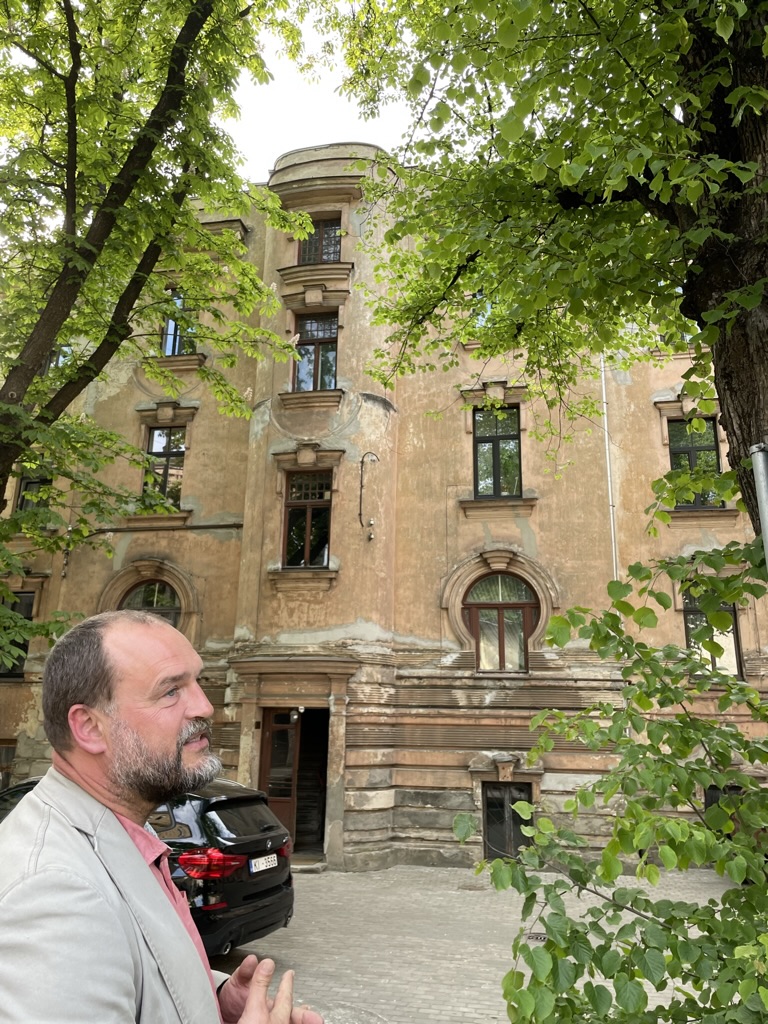
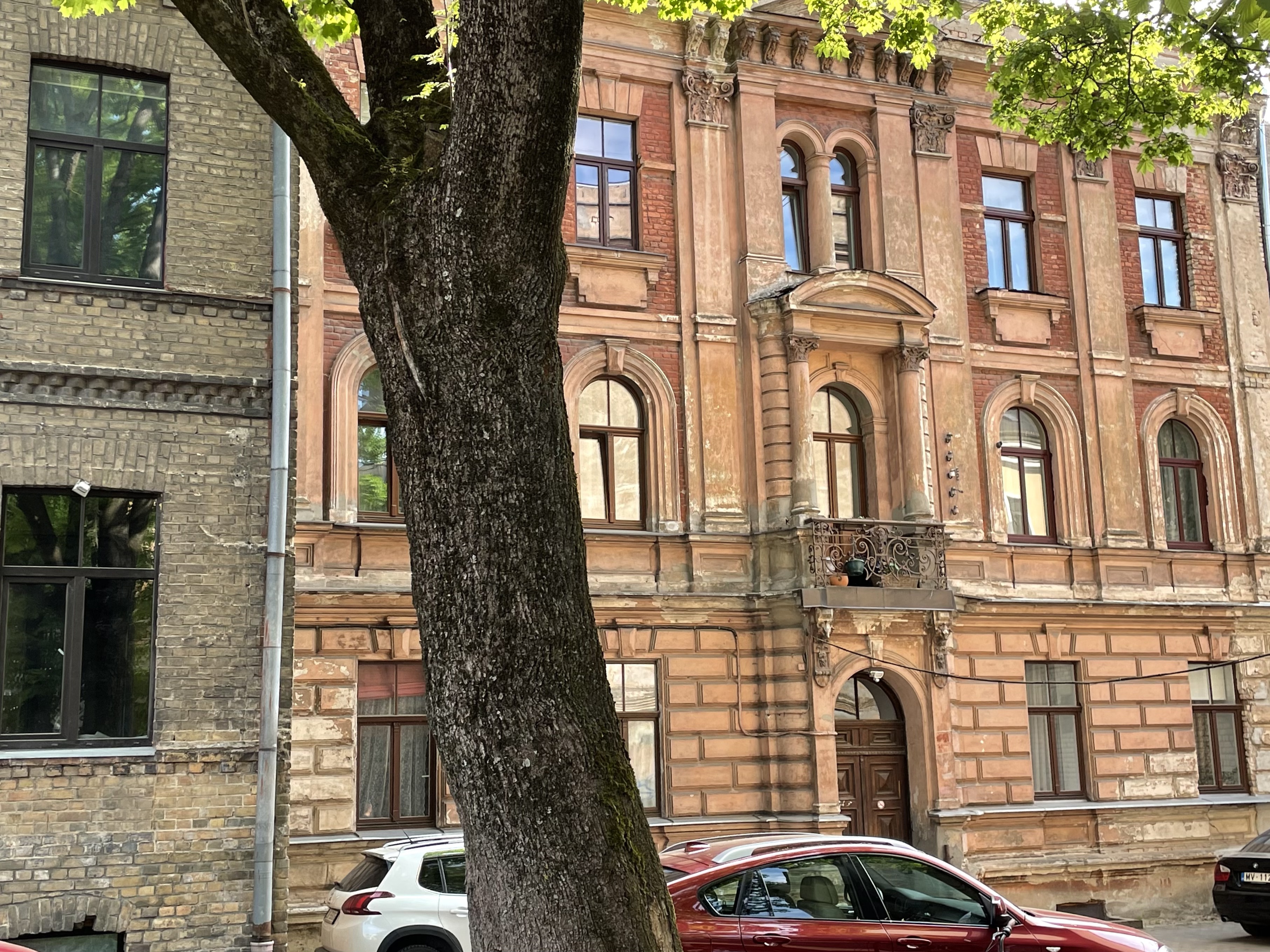
Uldis also took us to an even more curious site…. not by architecture but because of the story it provides…. a unexpected insight into the limitations of the Soviet World.
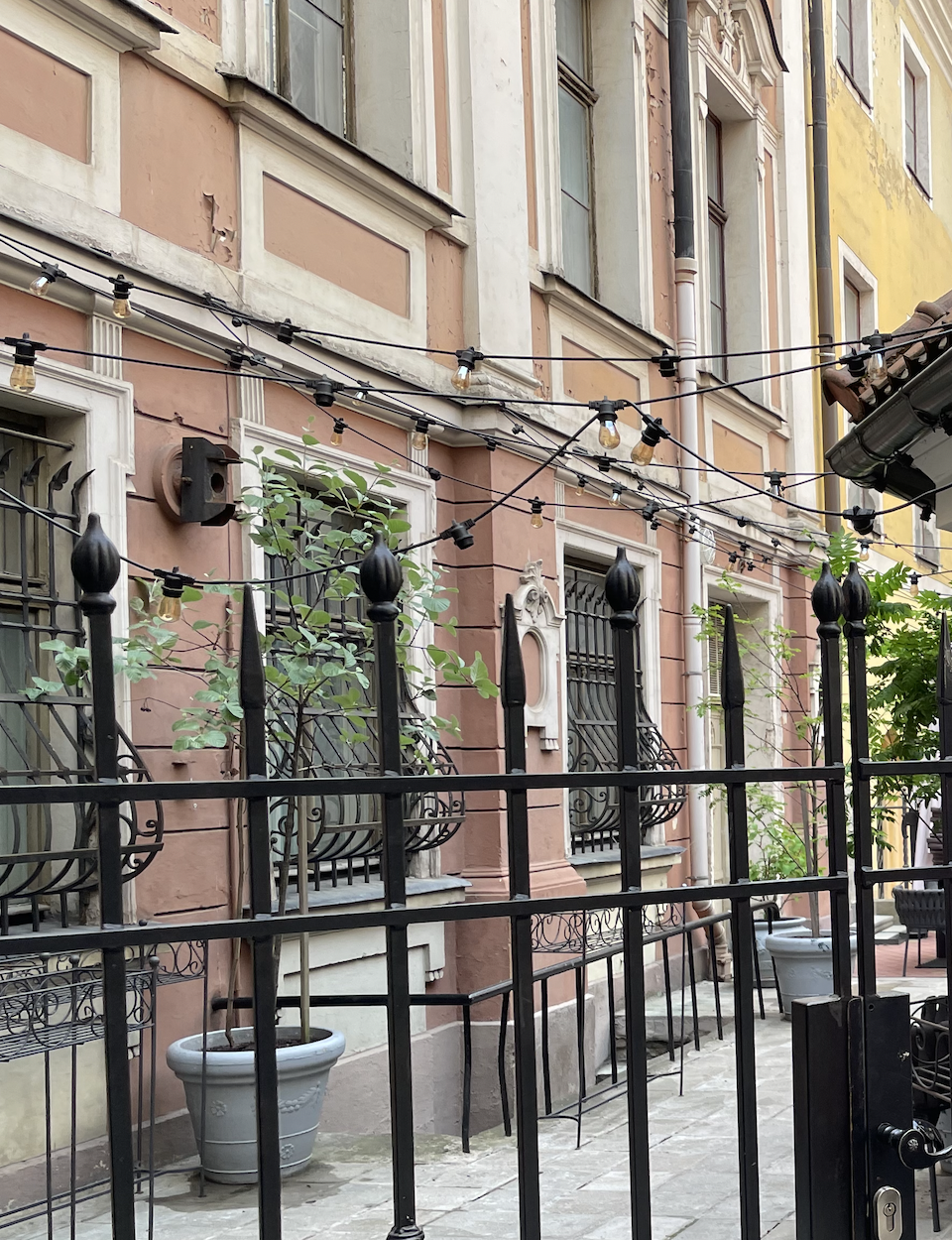
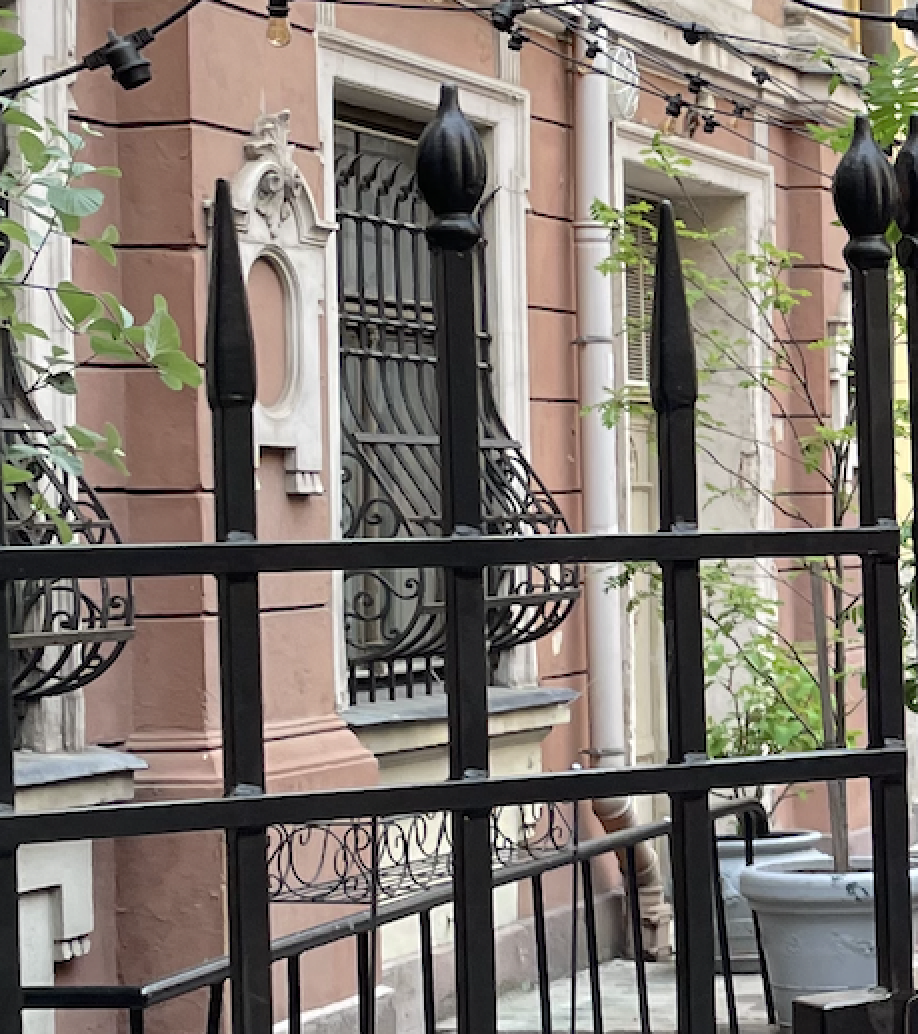
We were taken to a corner in the centre of the city to view a specific doorway.
It had featured in a Soviet era film.
Used because, in those days it was not easy to achieve the appropriate context or even accurate representation of the door (and building frontage) that the film required. Travel restrictions (applied by the State to prevent individuals absconding to ‘the West’) prevented the film makers from leaving the Soviet Union. They therefore sought-out, within their own lands, the sites they considered most appropriate.
Not unusual – but their choice could have been more appropriate – the plain building next to the second architectural picture would have been suitable – and even has a ‘London brick’ quality.
London……
Yes, London……..
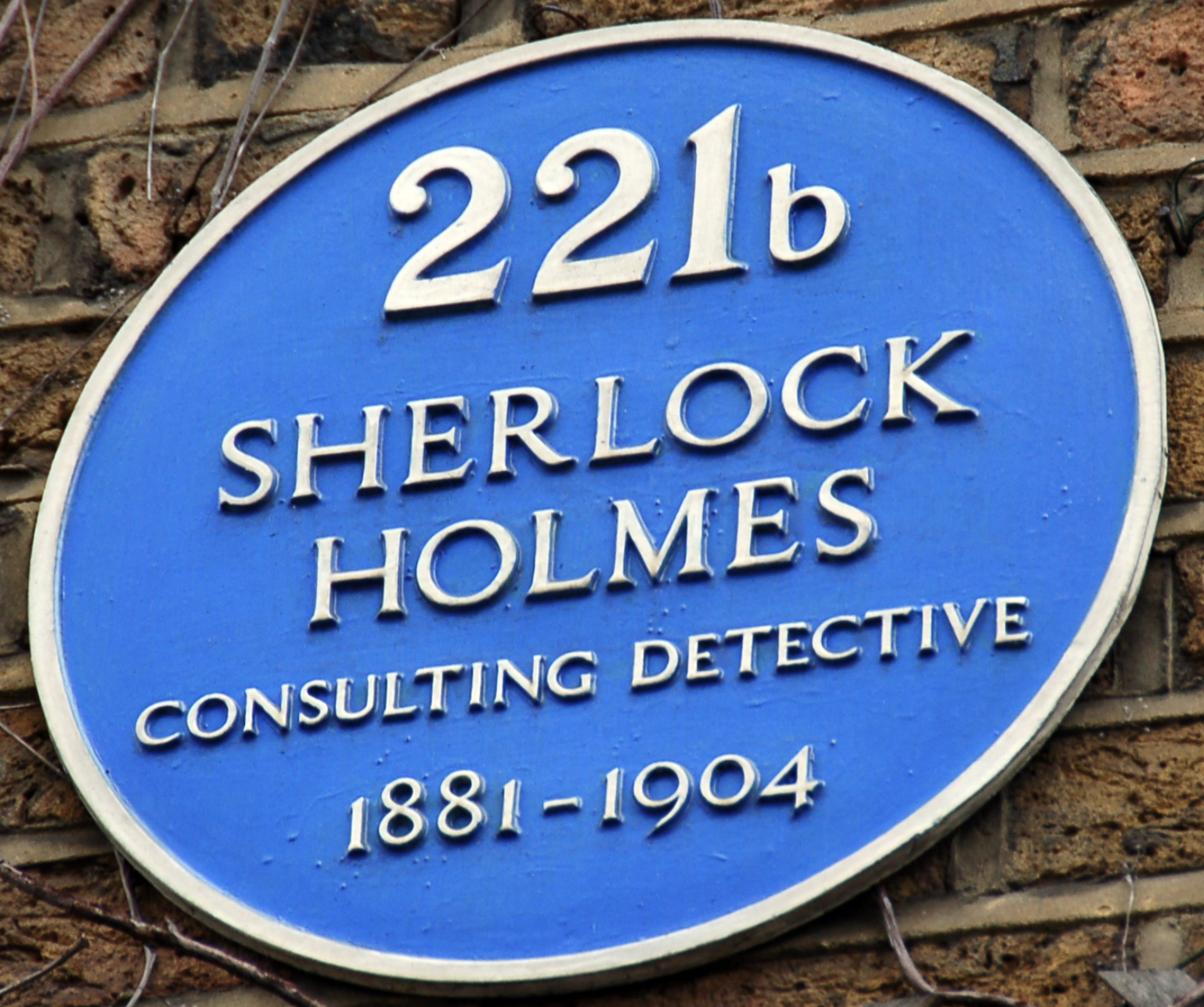
…. for the Soviet film maker this door was the home to
On the real – ‘invented real’ building in Baker St. London
Maybe, in the circumstances, quite a reasonable choice of building. Given that the whole history of Sherlock Homes is complete invention maybe it doesn’t matter where the house is…. like some relics of mediaeval saints there can be multiple heads, arms etc, all equally the ‘correct ‘real’ sacred relic….. & held in a variety of different places.
Thursday May 25th
To Kaunas: & our last partnership meeting.
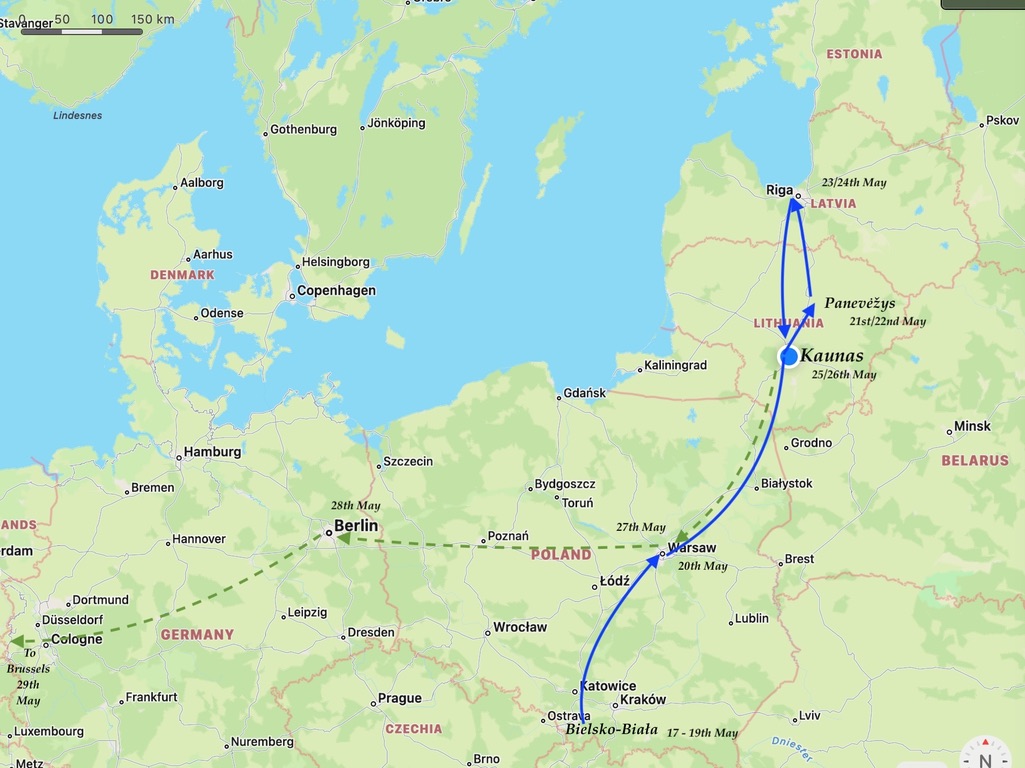
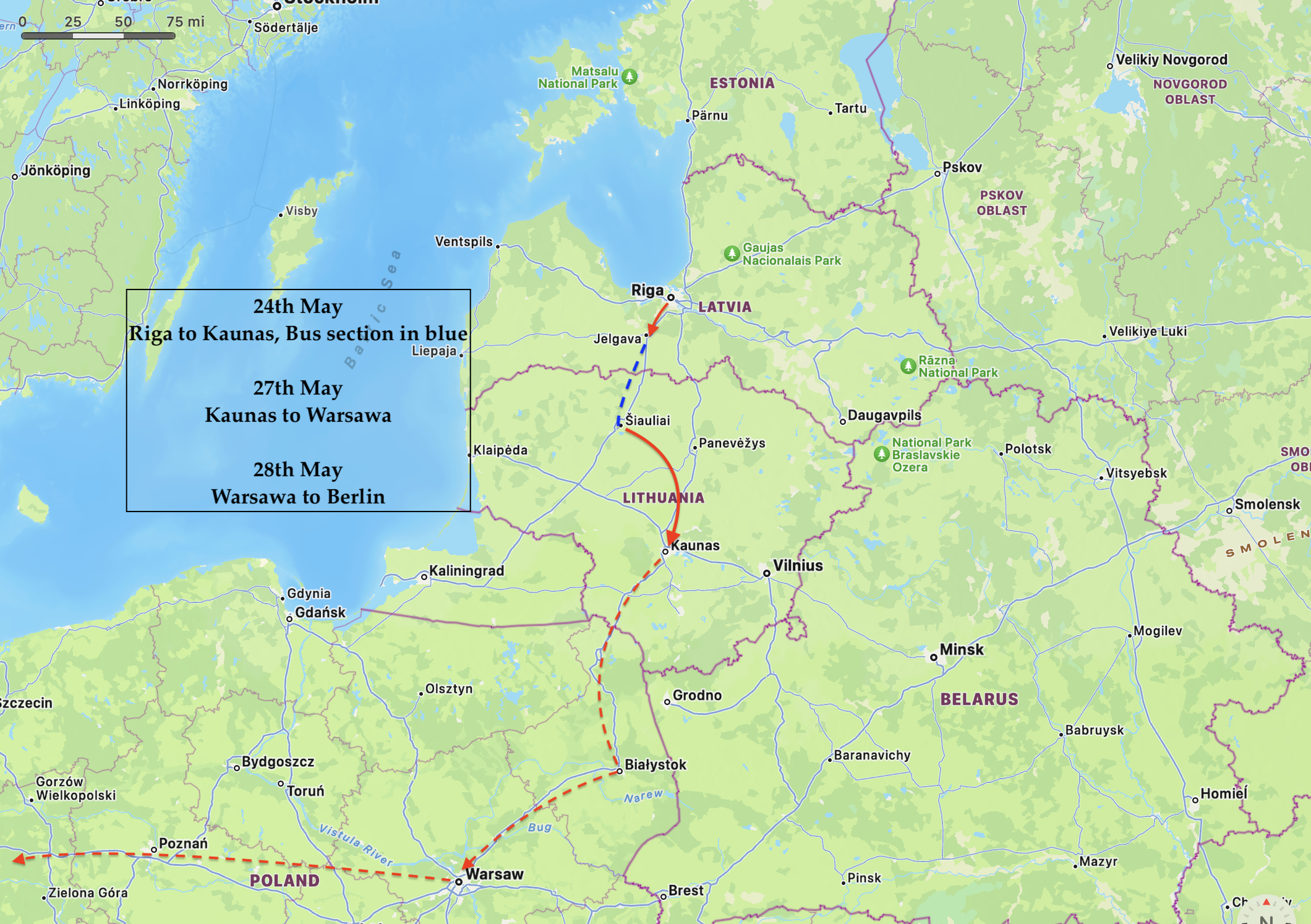
The route to and from Riga
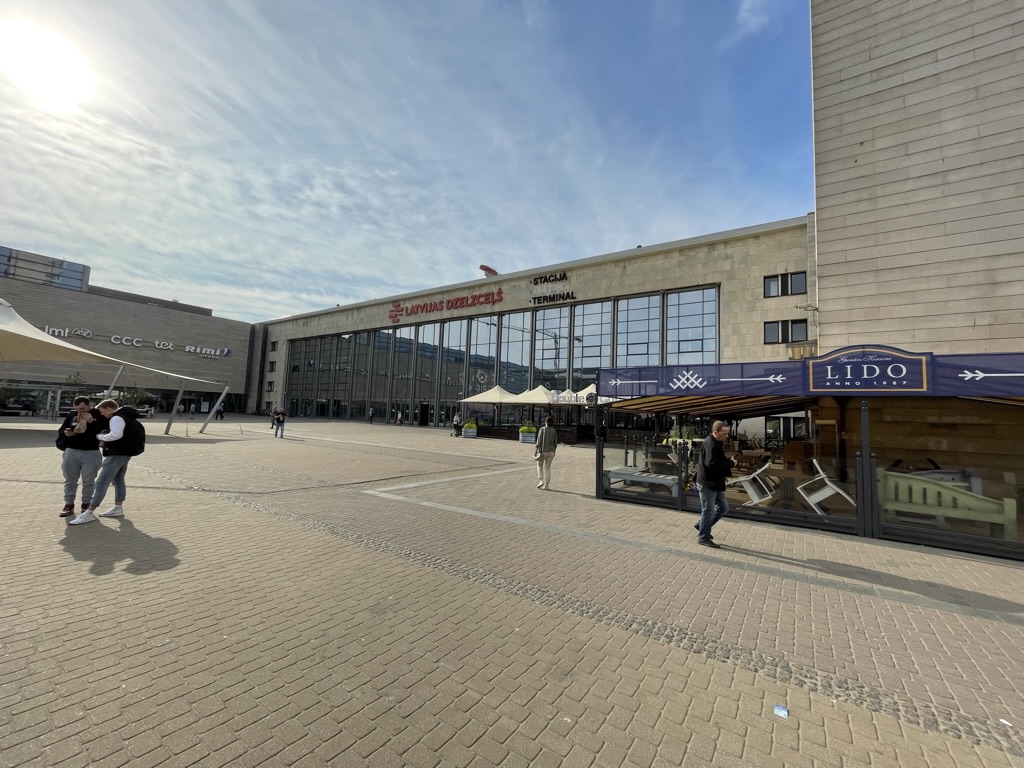
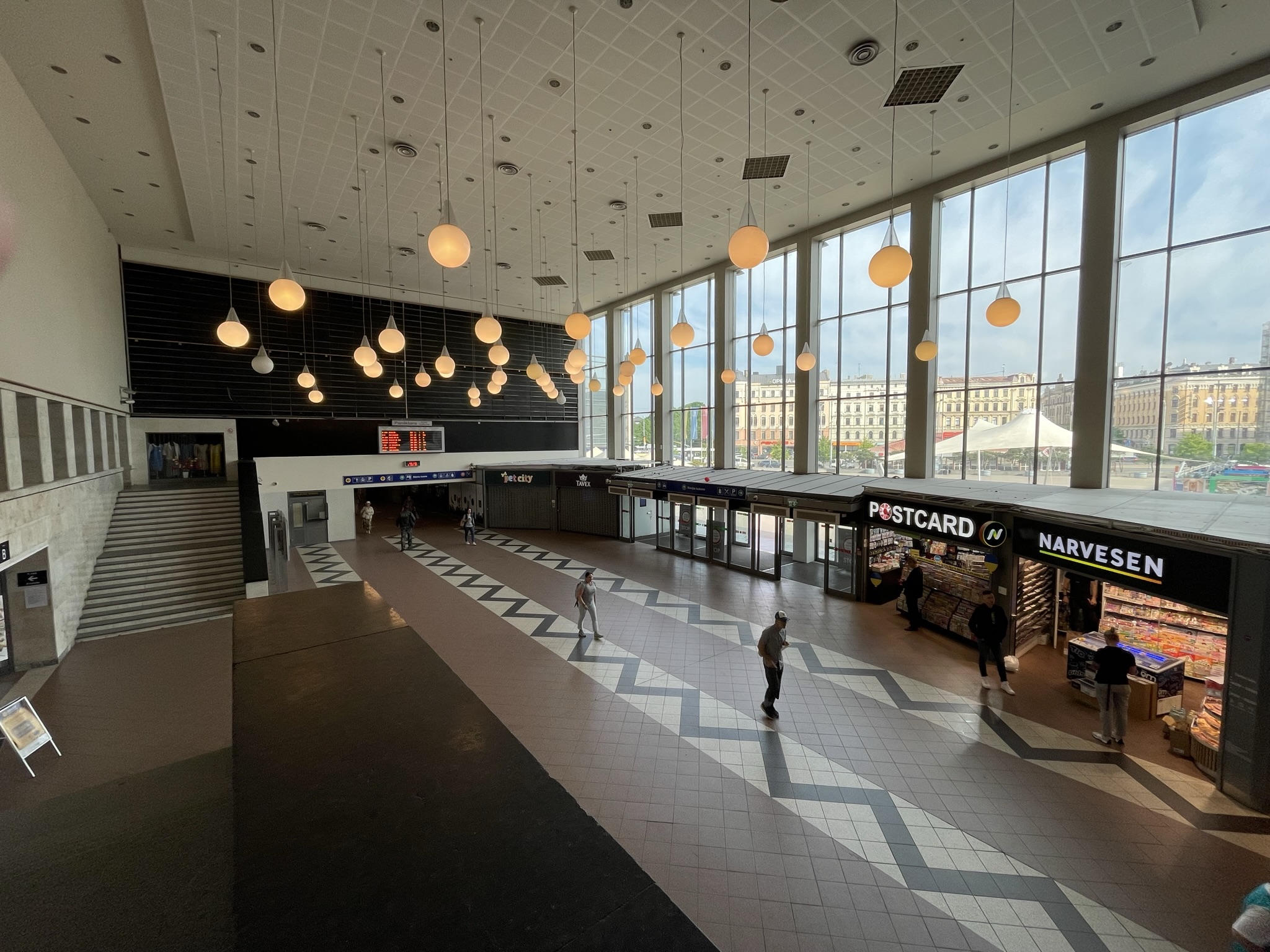
The railway station at Riga is being reconstructed so presently retains are rather Old Style appearance.
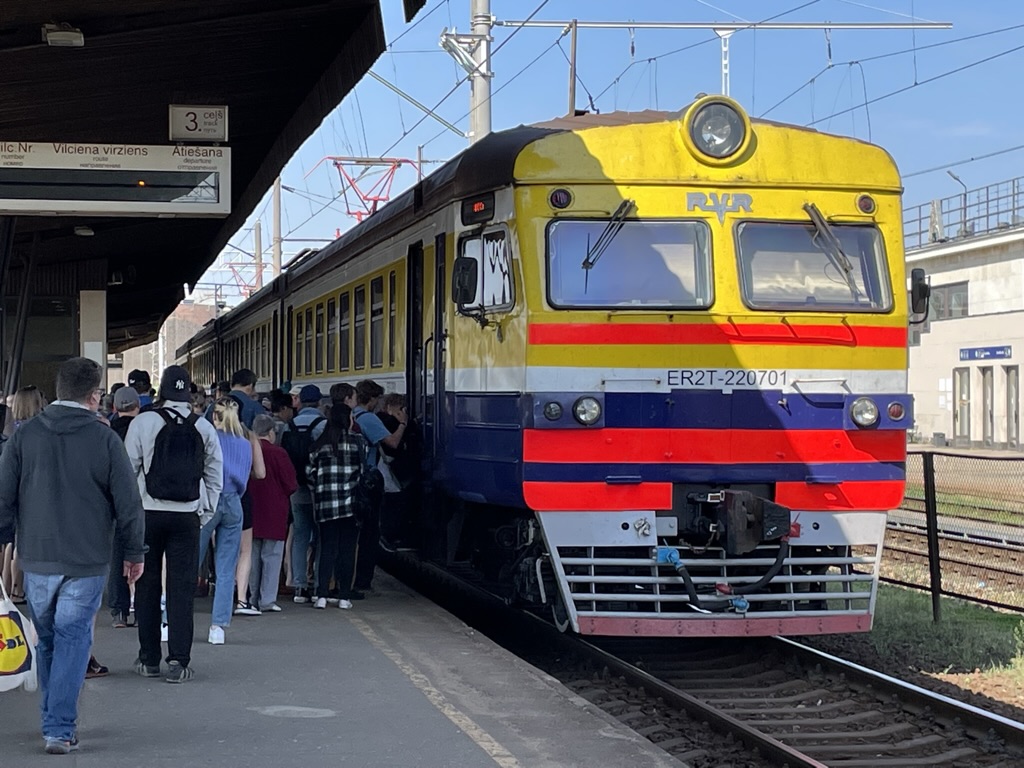
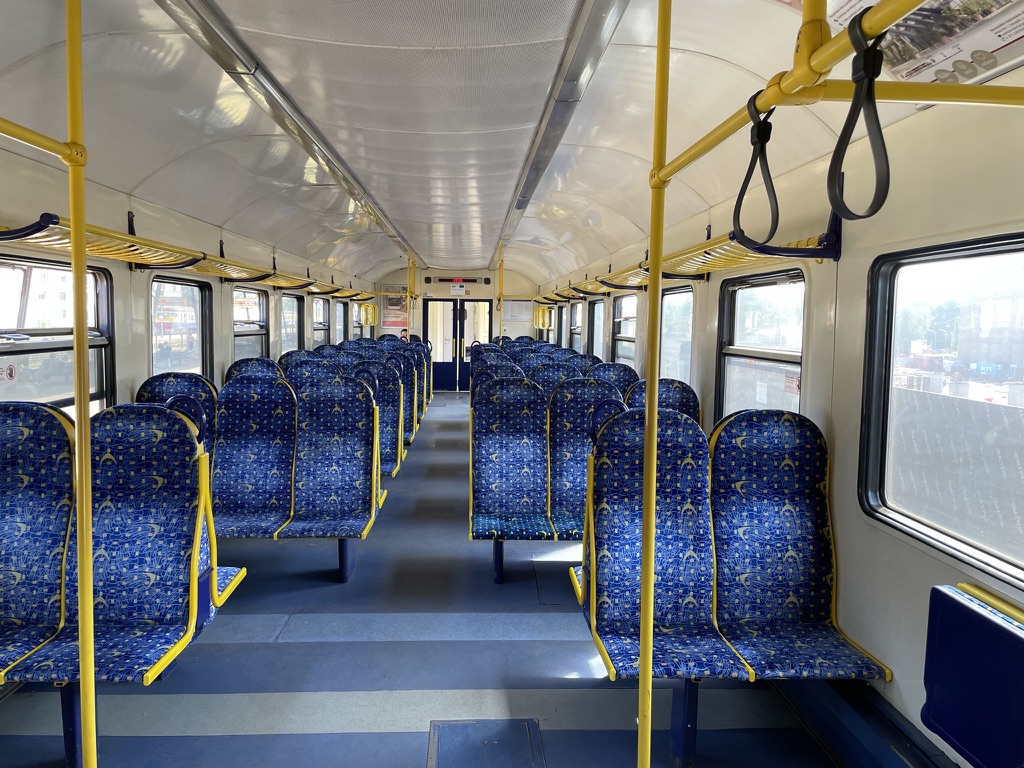
Most trains are from Soviet times & were locally built. They had a certain clunky appearance – but also a technically traditional simplicity and strength.
They were busy with many young passengers (presumably there are very supportive discounts)
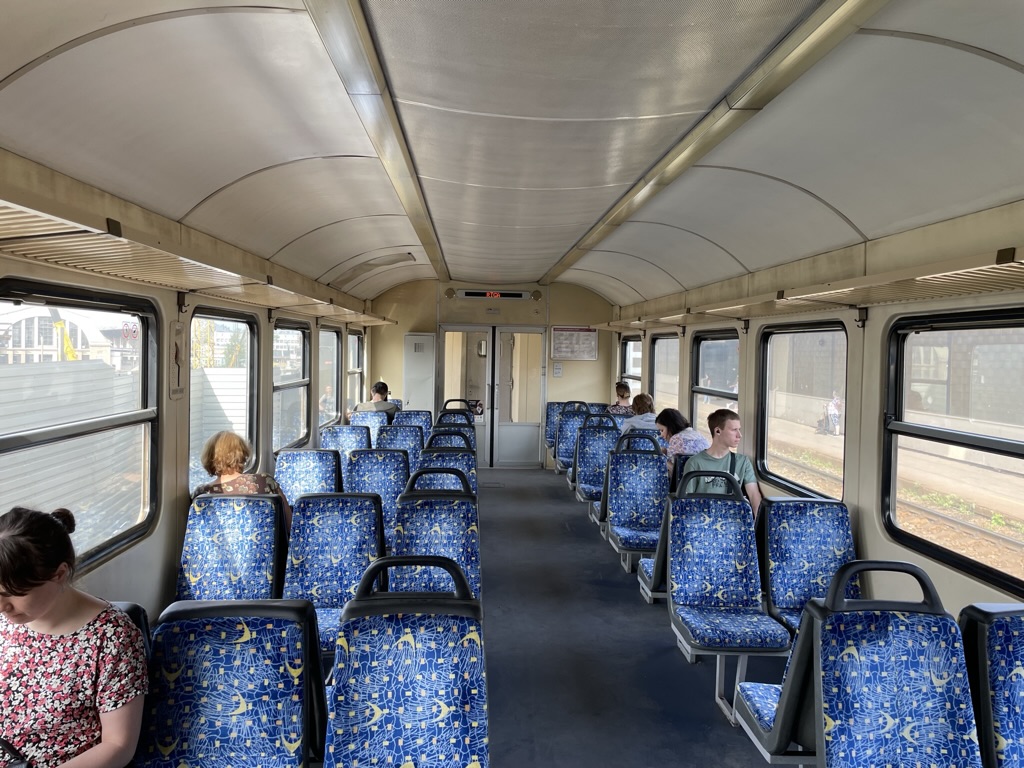
Internally they had been refurbished & we witnessed the scrupulous attention paid by staff to keeping feet-off-seats.
Huzzah to that!
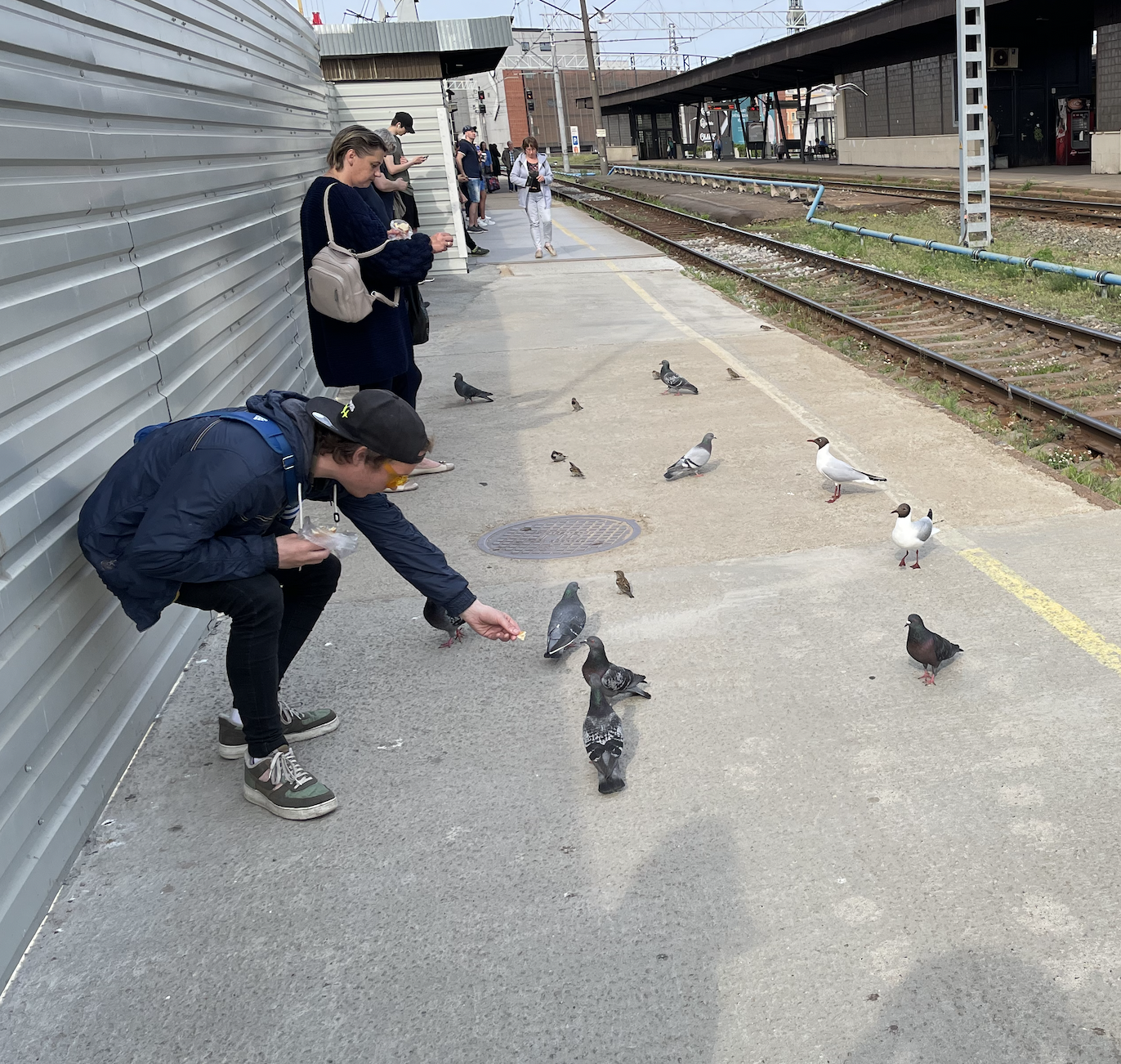
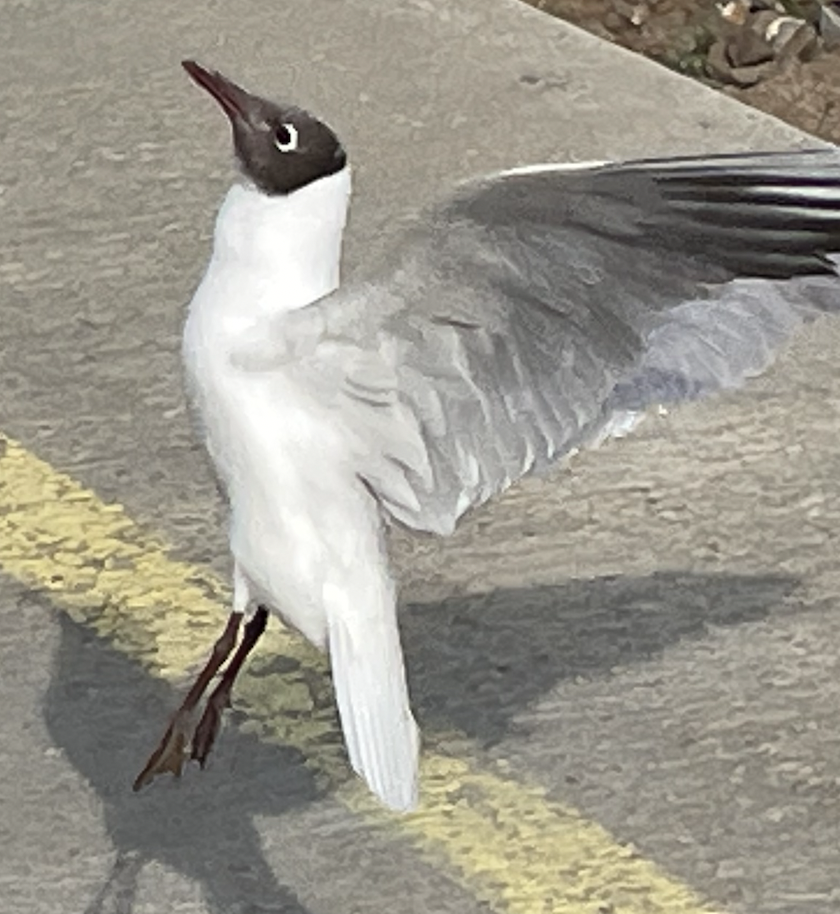
Whilst waiting for the train we watched another passenger feeding birds.
Cautiously but attentive
and successfully…….
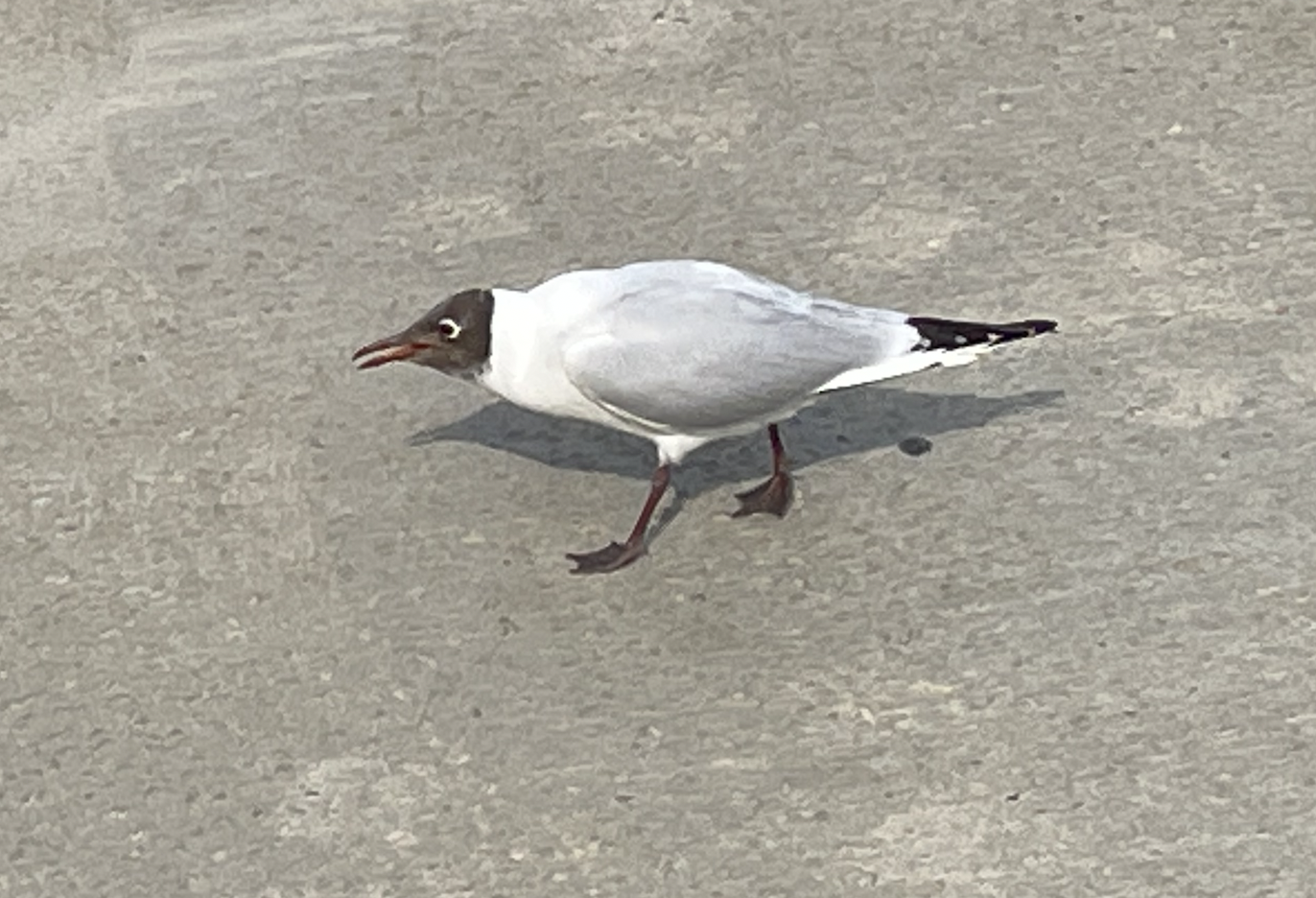
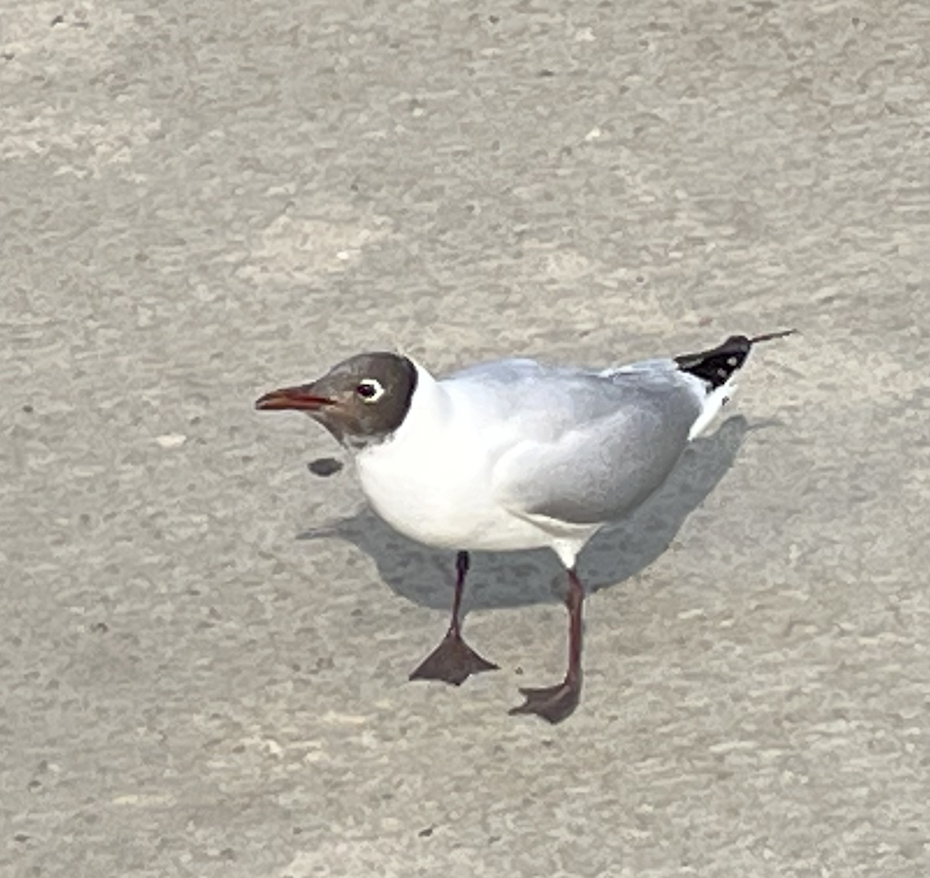
We had a conversation with him on the train – this was a regular activity, he knew the species, habitats etc – was clearly ‘environmentally’ concerned and told us he often found it easier to communicate with birds than with humans.
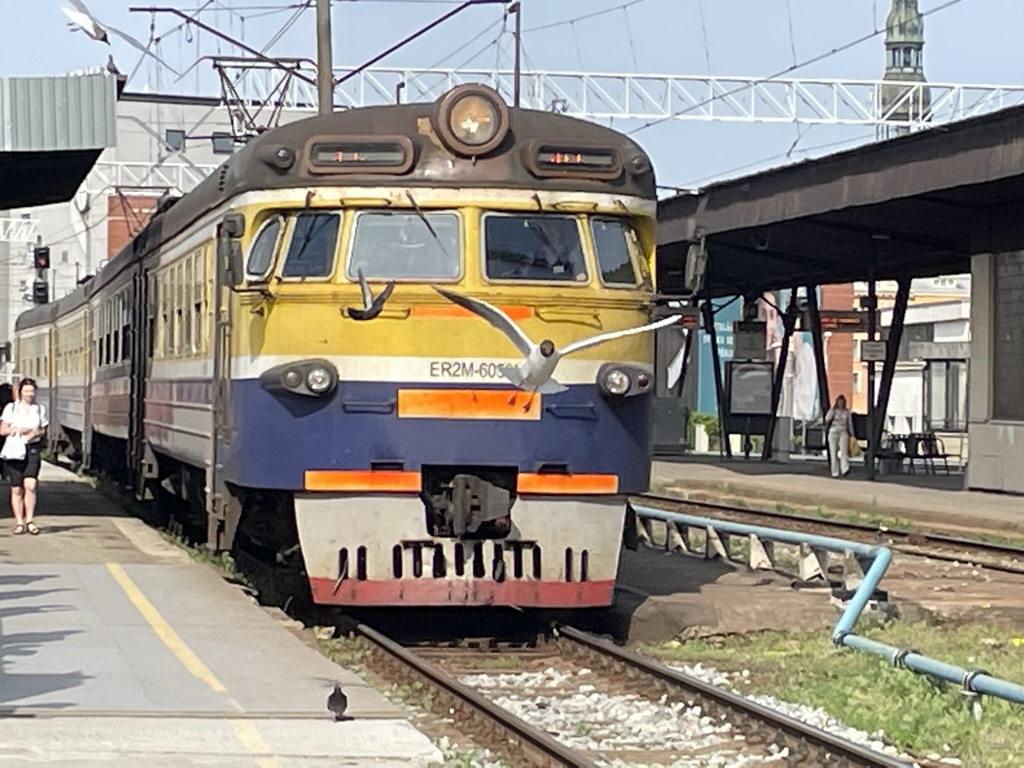
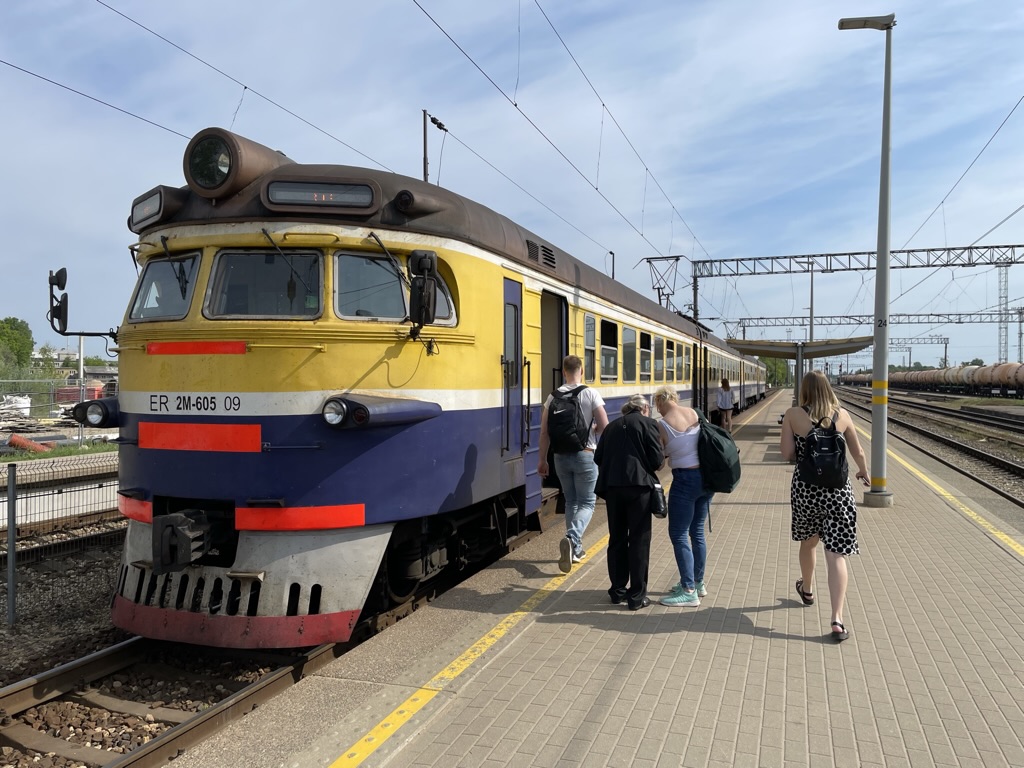
Our train was a ‘snub nosed’ version of the standard train unit (the only original surviving?)
The ER2M number indicates the type of ‘ER2’ which has been introduction in various forms since 1962. They were used for suburban traffic across the Soviet Union with most of the construction work in Riga.
We did not expect a particularly comfortable ride but were surprised at both the smooth quality of the ride & the reasonable acceleration and speed. The train filled with school students who seemed to be on some form of excursion & staff told them, with an authoritative tone of voice, to remove their feet from seats. The offenders obeyed instantly & the feet remained on the floor for the journey.
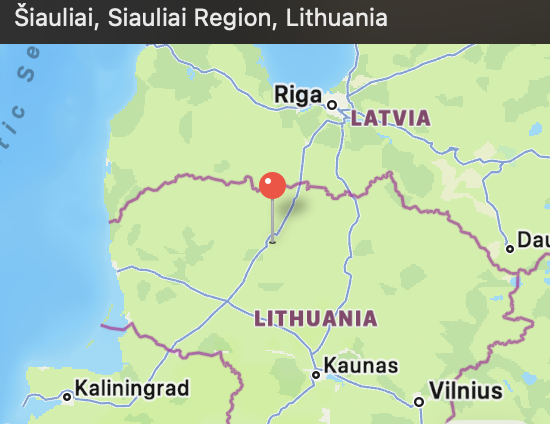
The first part of the journey is to Jelgava, followed by bus to Šiauliai, then train to Kaunas.
We could have used a single bus journey – but the intention is always to use trains where possible. The cross-border links by rail were not possible – even before Covid there were very few trains. It is expected that services will return – but its a very slow process.
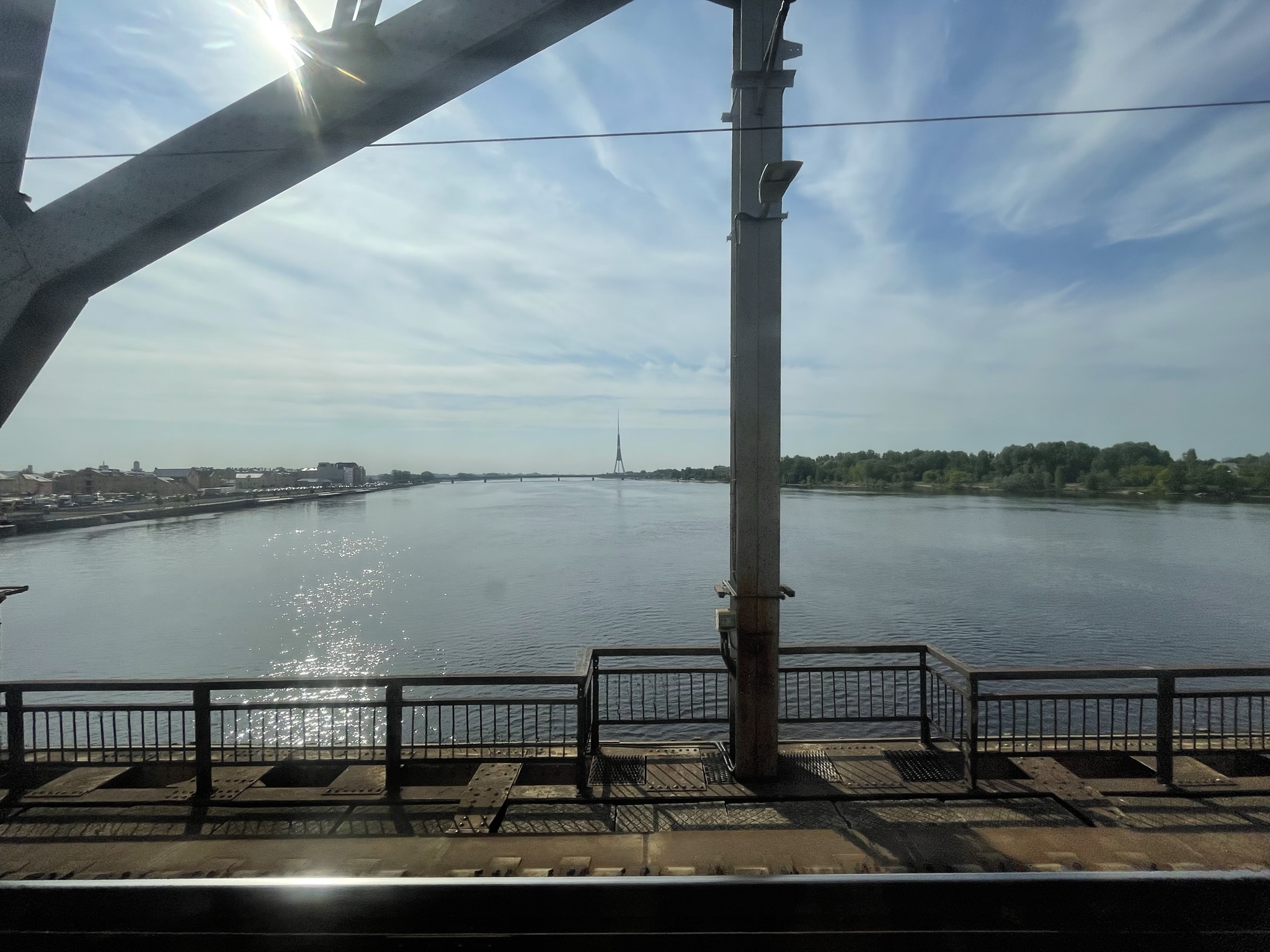
Heading south – across the Daugava River.
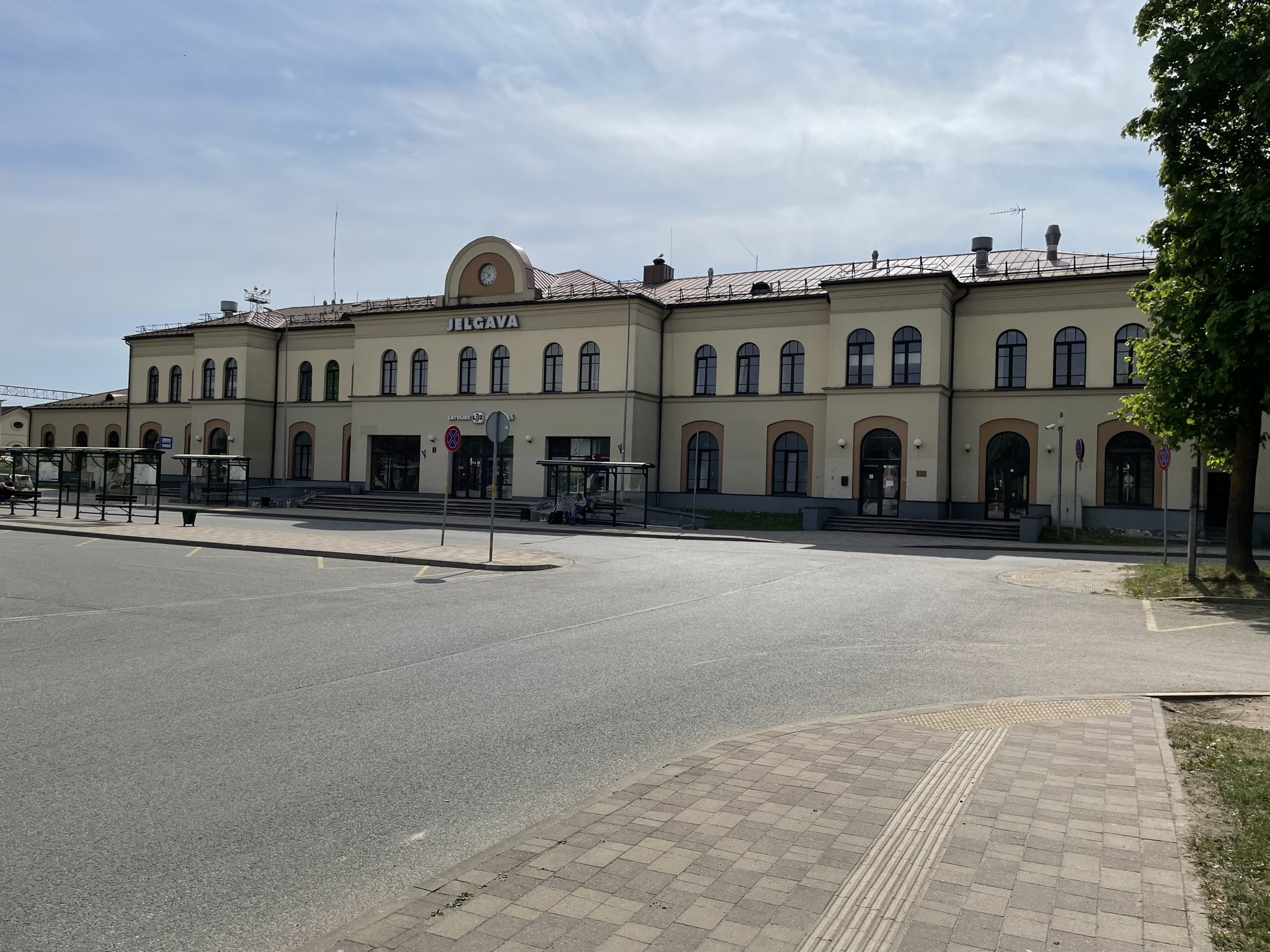
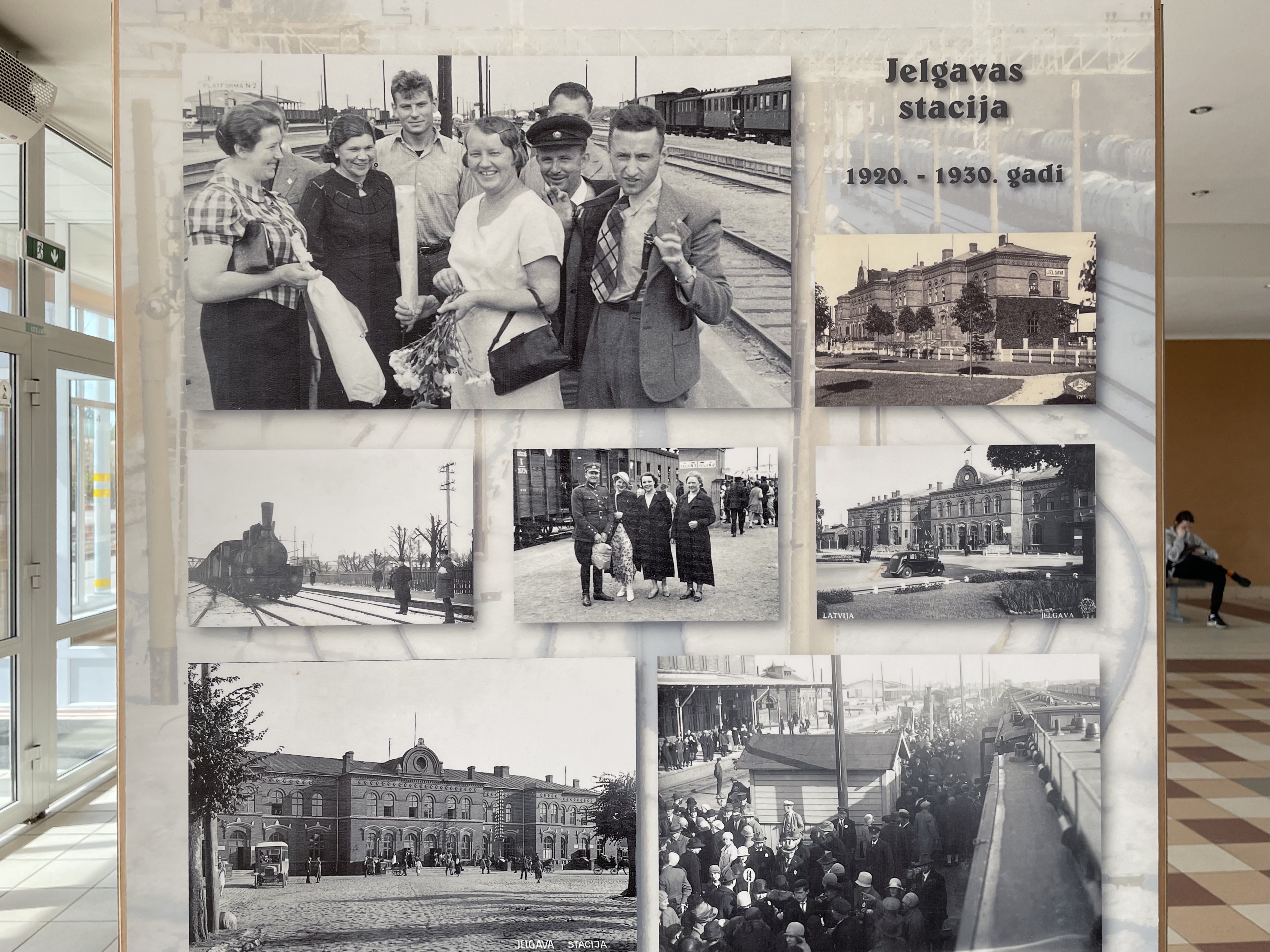
Jelgava (we had not realised the train had stopped short of the station)
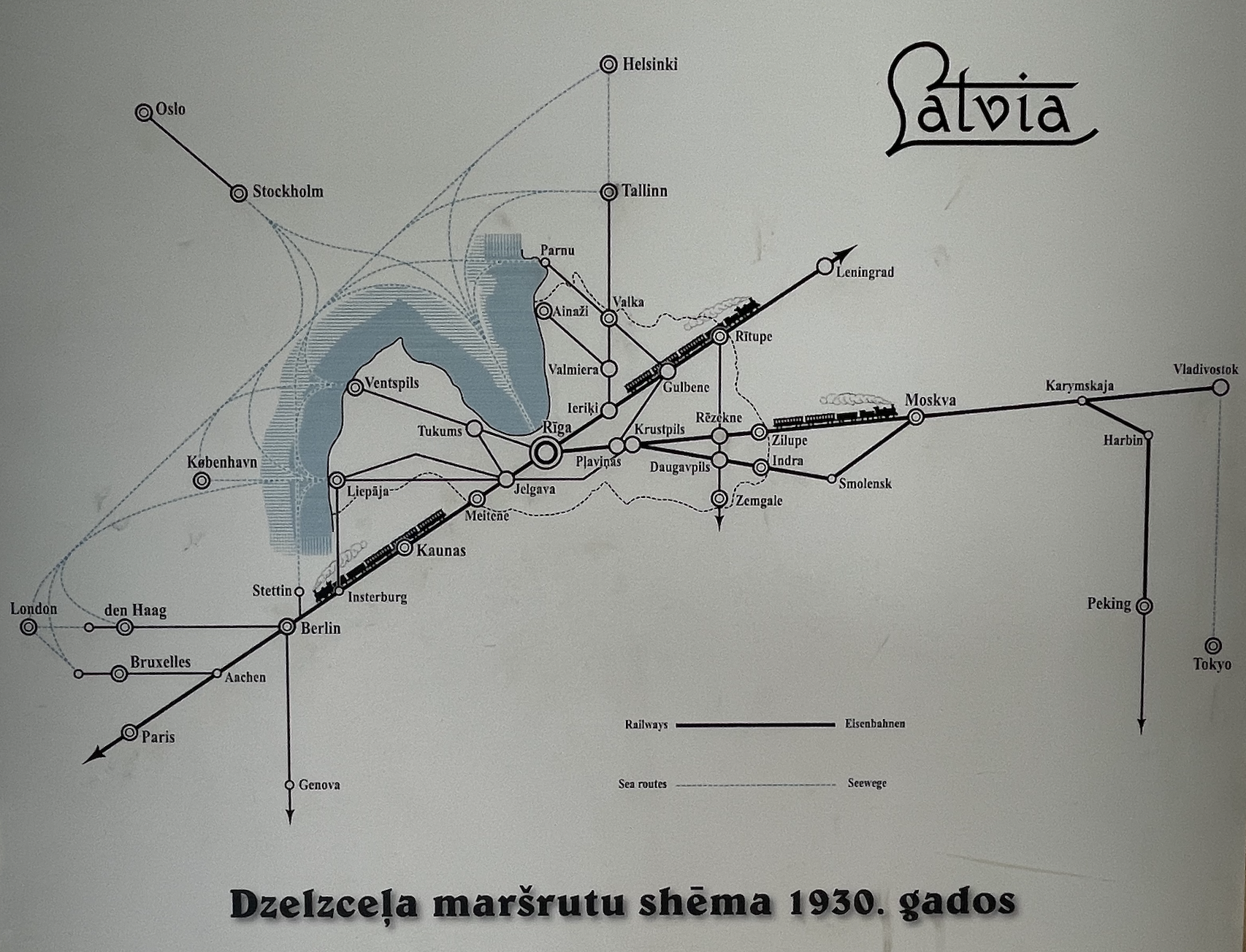
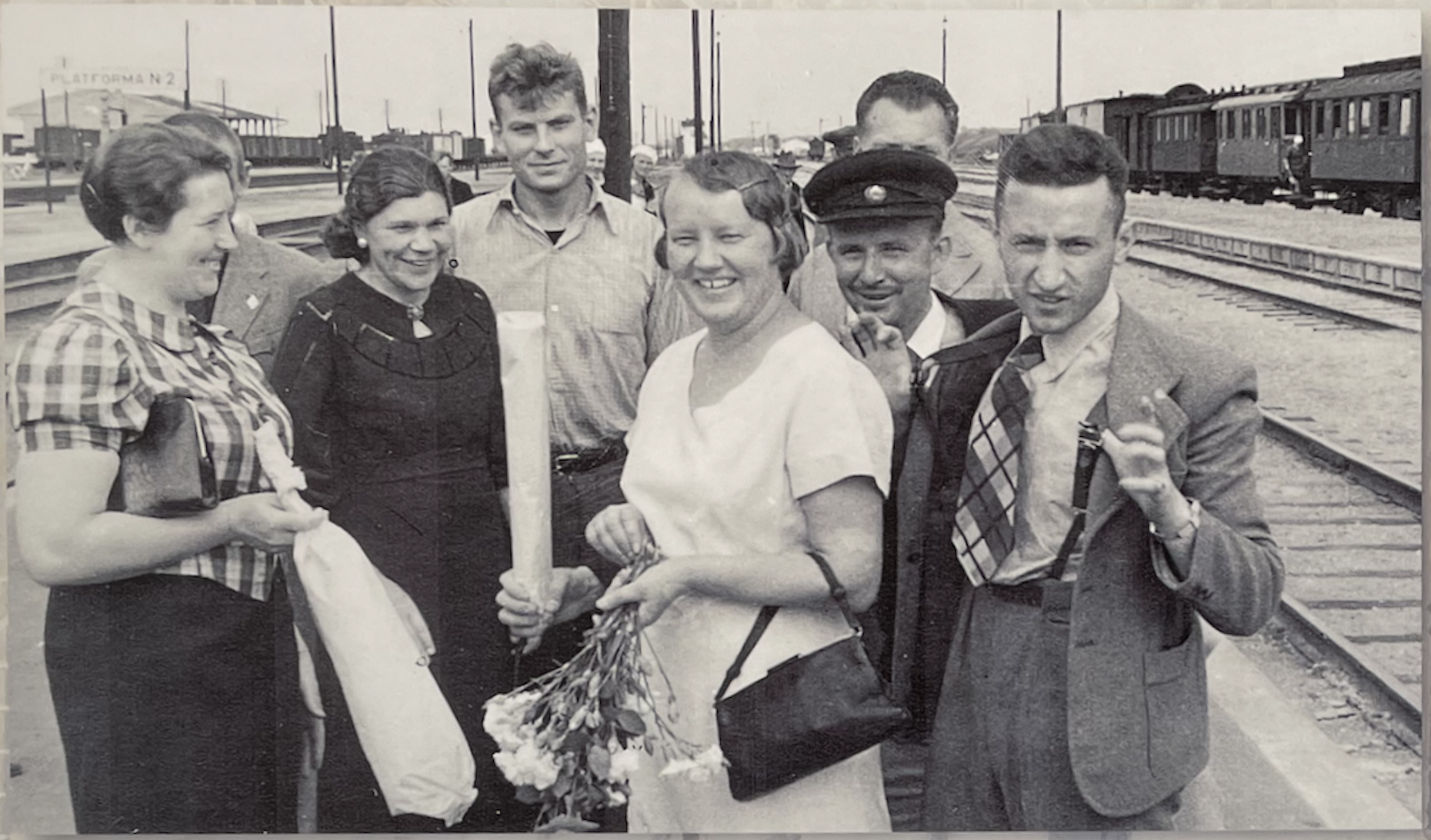
The station had a display of pictures
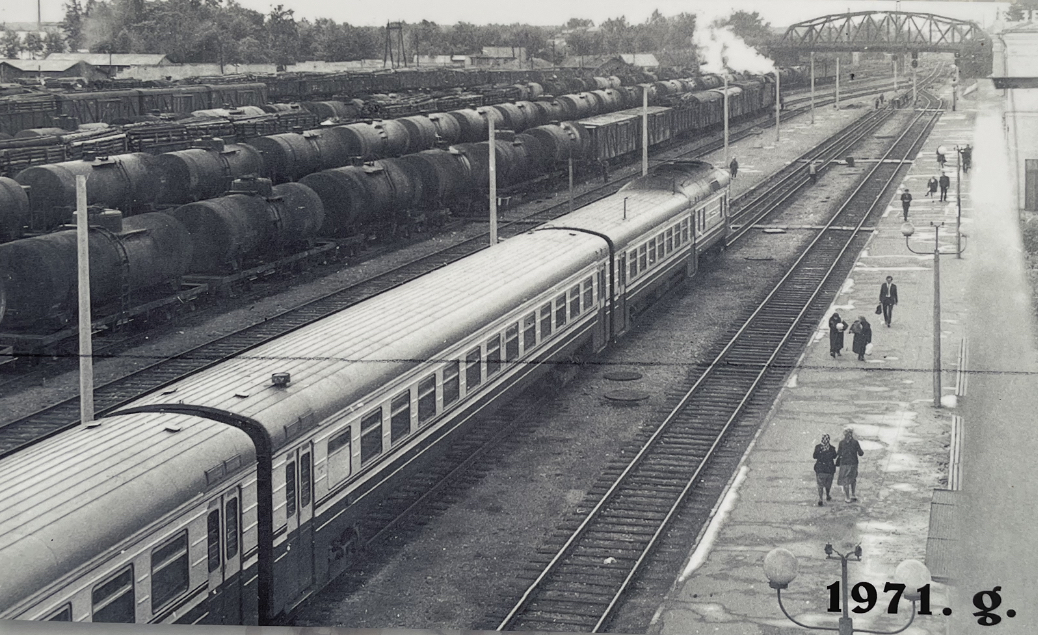
A diesel ‘multiple unit’ (of the type we travelled on) underneath the poles ready for electric wires…. a process of modernisation
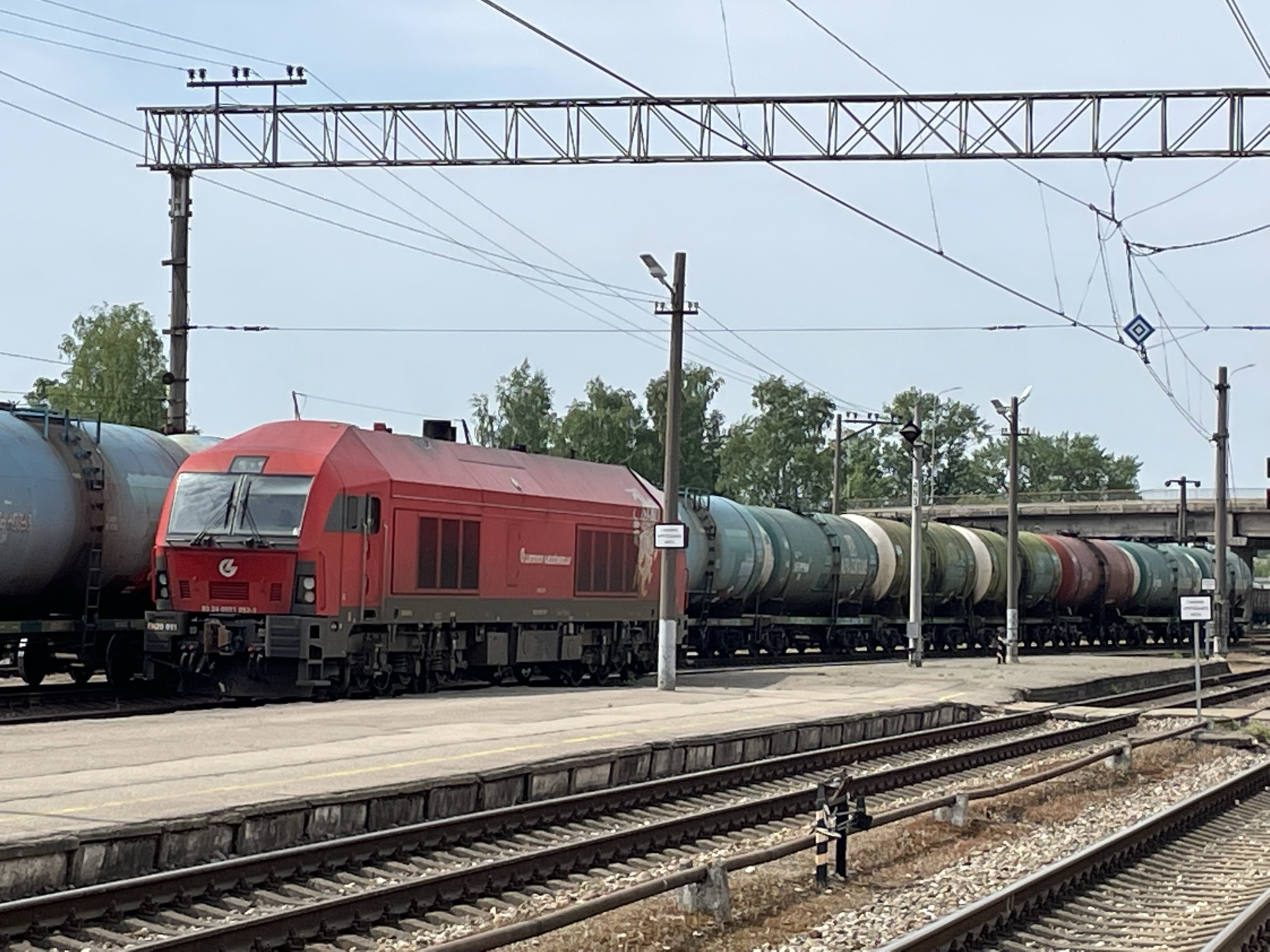
2023
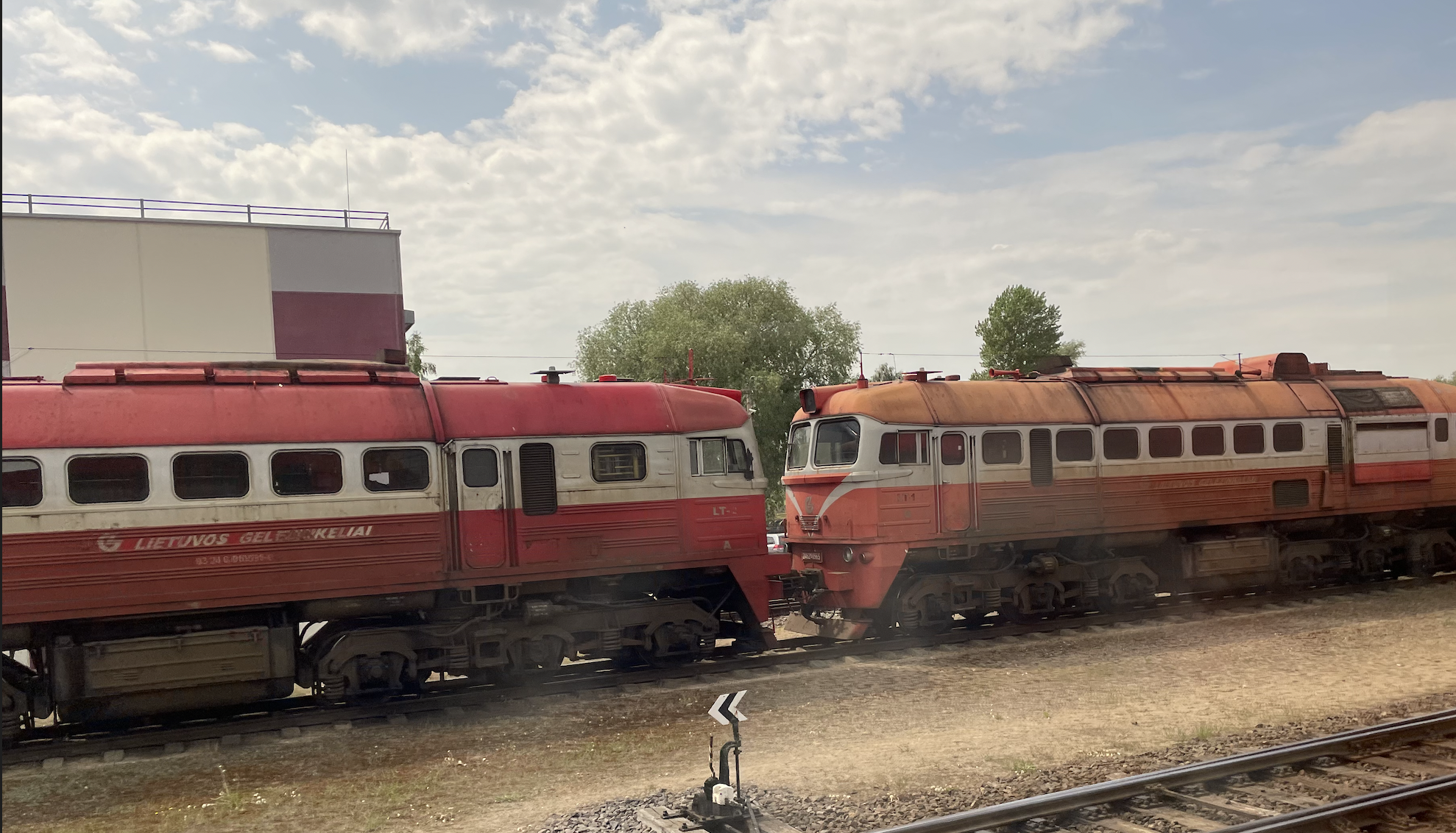
The oil tanks are still processed but the diesel engine is a visitor from Lithuania – having just left its train (the usual requirement… change country, change engine)
The bus took us back into Lithuania and to Šiauliai
…. but since 27th December 2023 a through train is available (one per day)
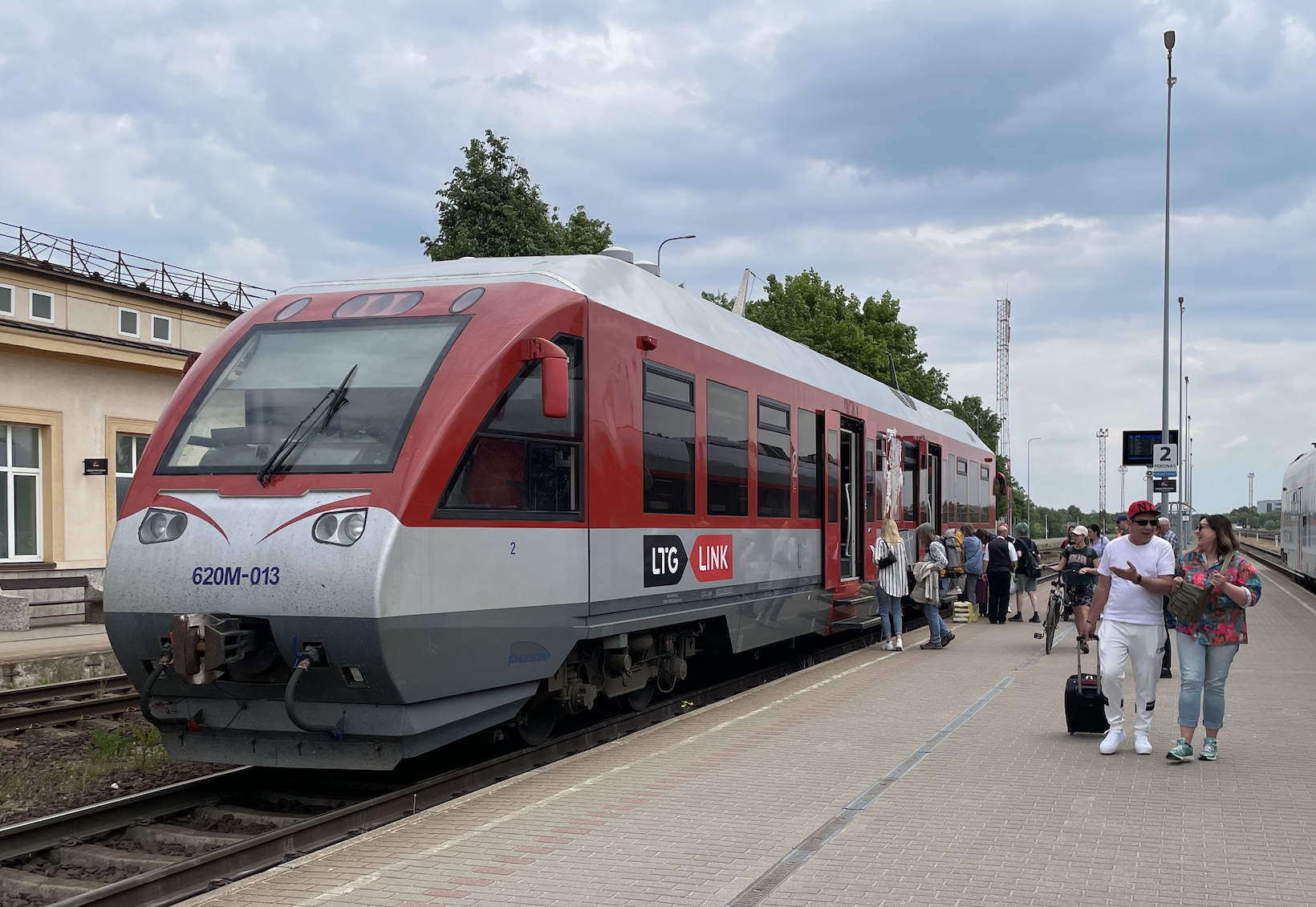
The train to Kaunas at Šiauliai is one related to the new cross-border links. It provides a link to and from the developing Vilnius – Warsawa trains
There are new smart trains operating long-distance services in Lithuania…..
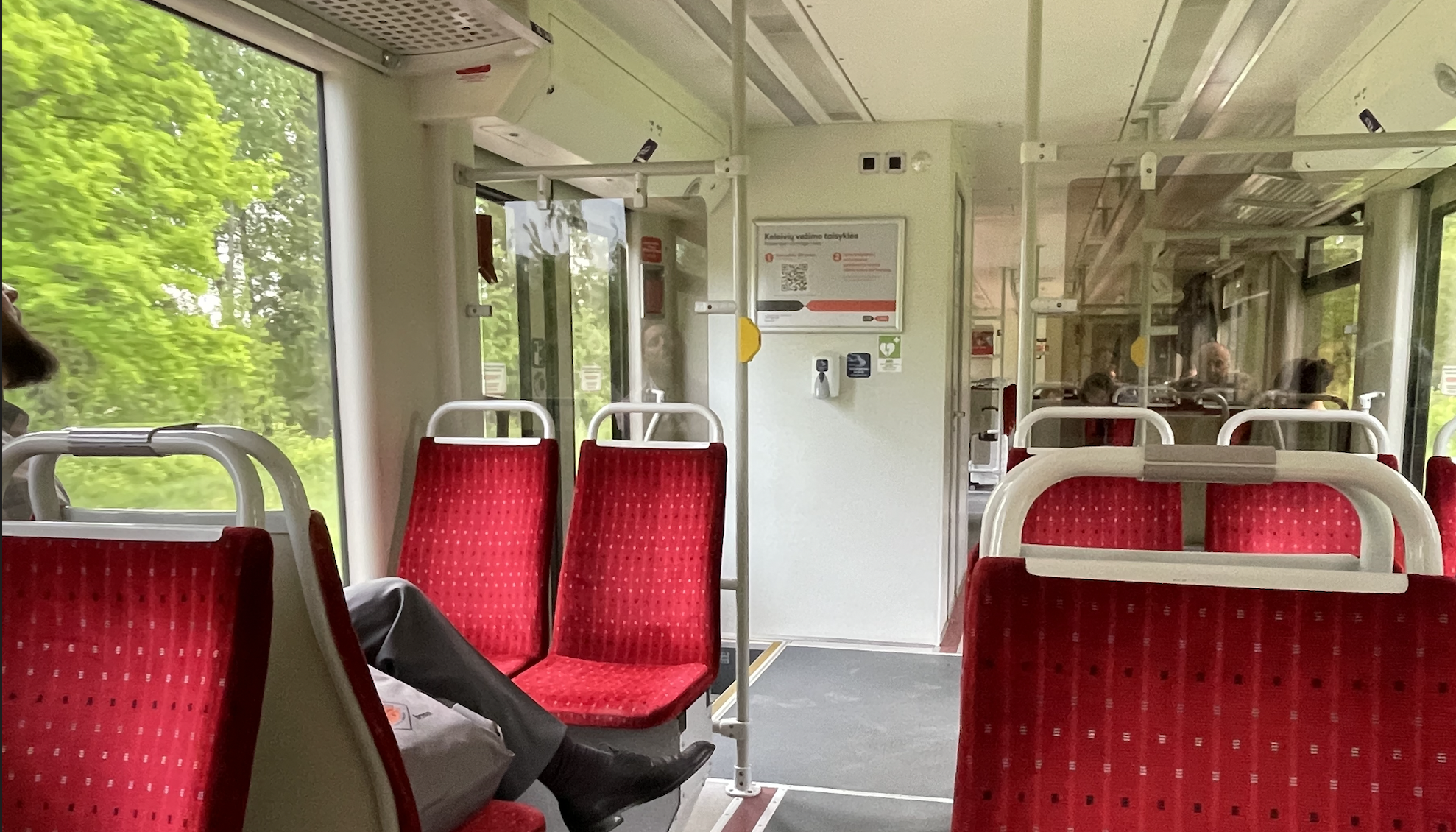
…….our train to Kaunas was not one of them….
We have behind our seat a cat in a carry bag that is clearly distressed. It has a squealing ‘miow’ that occurs continually at a rate of 21 times per minute. If this continues for the full 2 hours of the journey it will have made this complaint ove 4500 times. Annoying!
WhatsApp
Eventually the train conductor required the owner to take it out of its basket and hold it. The c at immediately calmed down and squealed no more!
Examples of ‘the old’ lie redundant
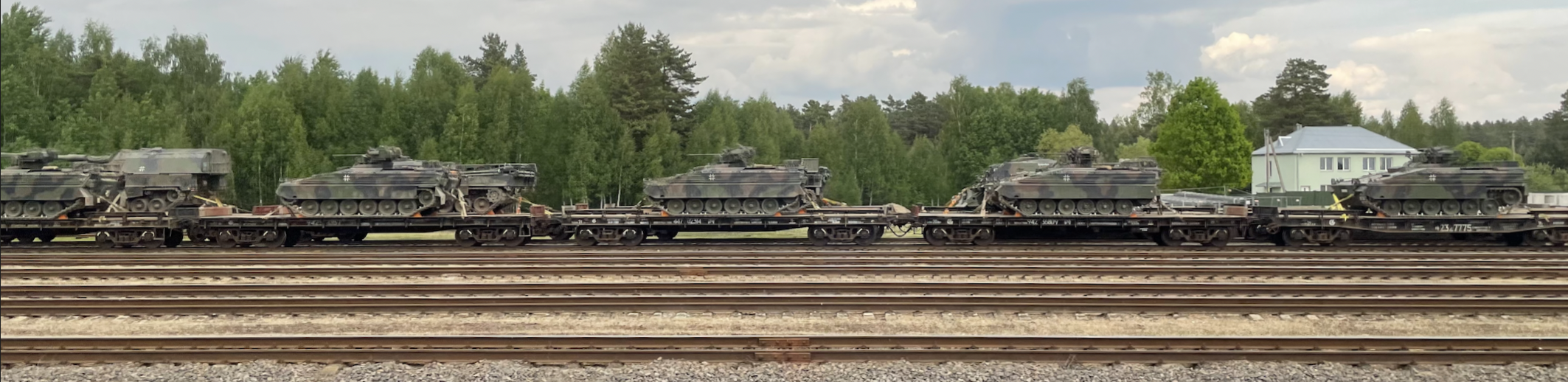
There are comments, impressions, expressed concerns… and direct evidence that we are travelling in ‘disturbed times’
German military equipment and weapons arriving in Lithuania as part of the increase in NATO presence in the Baltic States
Eventually into Kaunas (rather a slow journey due to long waits between trains, buses and trains.
Kaunas
The final significant place on our No Kerosene Tour
Its a long way from Spilinga – especially as we’ve included Iași & Bielsko-Biała on our route.
So, leave bags in hotel and dive straight to a brewery & bar we used on many previous occasions.
An offer not to be refused!
One of the privileges of having been able to create partnership programmes is that it has allowed links to develop on a regular basis. In this way we’ve managed to build working and (I hope) friendship relationships across Europe & Turkey. Hopefully those will be maintained in some form or another despite the difficulties for partnership work erected by the UK.
As with other regular links we’ve been able to have occasional insights into the way Kaunas has made positive change – and we hope, have gradually deepened our ‘grasp’ & understanding of the city.
One of the first facts we were given was that Kaunas had been, during the early years of the nations existence, the capital city of Lithuania.
Rather like Iași, the role was ‘thrust upon it’ due to warfare. For Iași the period was brief during the German occupation of Bucuresti in WW1.
For Kaunas it was capital for 19 years during the inter-war period.
This Inter-war period was very important to the development of Kaunas.
All the Baltic States & Finland follow a basic pattern.
Collapse of Imperial Russian control in 1917 produces emergence of nation states but in armed conflict with both the new Russian communist ‘red’ government (supporting their own local ‘red’ faction).
The nationalists then rely on an opportunistic Germany (still engaged in WW1) but following Germany’s defeat in 1918 struggle on (often with elements of the German forces either absorbed into national military or operating in the hope of creating German based states).
Lithuania had an ‘added factor’: Poland
Poland is also freed from Russian control & hopes to restore the boundaries that existed before the partitions of C18th (Polish lands ‘returning’ from German & Austro-Hungarian control).
Consequently Poland and Lithuania are in conflict over territory – and after much movement and territorial change Poland takes Vilnius.
Following this post-WW1 turbulence Kaunas became the ‘Acting- Capital City’ of Lithuania. Negotiations regarding the status of Vilnius continued unsuccessfully until Soviet Russia once again seized control.
After WW2 Lithuania returned to its present boundaries but only within the USSR.
As the USSR collapses (and Russia accepts the situation), the Baltic States re-emerge.
Kaunas has definitely shaken off its Soviet past and regards itself as more ‘Lithuanian’ than cosmopolitan Vilnius. It has always been a stronghold of Lithuanian culture, resistance and national identity and it was here that Lithuanian independence was first declared.
That comment was made in 2005 – the year I first visited (and instantly became attracted to) Lithuania. It was another 7 years before we came to Kaunas & since then have managed to visit regularly….. the changes which then were being initiated have matured & Kaunas now ‘sparkles’ in ways that one hopes the planners intended.
More is to come, there are good quality roads – and it will be interesting to see how the new Trans-Baltica railway will impact. We first used the route from Warsawa to Kaunas in 2018 & feel that our journey north was on trains that were much busier than previously.
One rather curious aspect of the present fracturing of relationships between the EU and Belarus is that all strategic overland routes between Finland & the Baltic States & central Europe have to be constructed through the narrow gap between Kaliningrad & Belarus (rather than via the original route to Vilnius through Grodno). As the desire to use rail travel increases (particularly for leisure & tourism), so will the impact on Kaunas.
Change the angle of view
Beyond the EU practicalities, there is the issue of those relating to the east – west link between Kaliningrad & Belarus.
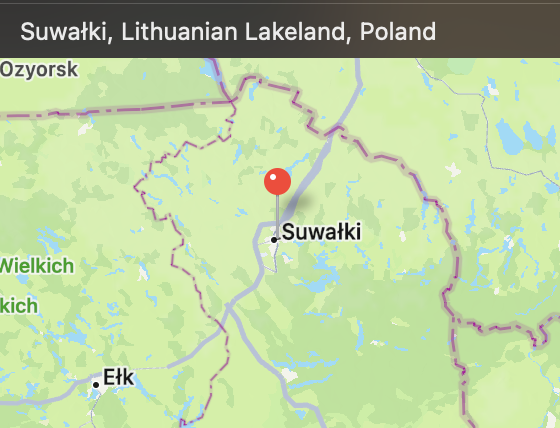
Local nations and the EU have been cautious at granting any form of open access. Now, since 2014 & particularly 2022, the issues relating to the Suwałki Gap, which the Russians had wished to call a ‘corridor’ (words matter & Russia knows how to corrupt meaning), have become very significant.
We can travel without any sense of the complexities relating to land we travel through ….. but in some places it is worth understanding the wider implications of the nature of the place & what is occurring in the locality.
26th May
We were to meet our partners from the Kaunas County Public Library. We last met in Spilinga in October 2021.
In time, all things change – even the title of libraries.
Kauno apskrities viesoji biblioteka became, at the start of 2020
The Blue Sky Library.
I’ve noted earlier that in 2005 I found Lithuanians to be creative – well, doubtless this title relates to their desire to continue as such…..?
Our Kaunus partners joined in 2016 & frustratingly were only able to organise one visit before Covid struck at the start of their 2nd. The one visit was very successful – full of interest and variety regarding their work on the theme of Arboreal Futures.
Planting trees, creating a form of pancake based on a leaf, exploration of a wilderness conservation area & including meetings in libraries.
Local team with familiar presence of Cezar a Romanian visitor
It was unfortunate that Covid prevented further visits to the team in Kaunas. Their approach, even during the pandemic was adaptive, creative & always relevant.
Reflecting on our one partnership visit (for ‘Arboreal Futures) demonstrates the way they took the basic theme and explored it in multiple creative ways.
Leaf pancakes
planting trees outside libraries…. in this case, at Birstonas.
An afternoon in a nature reserves that has become (since its creation in the 1960s) a largely untouched wilderness.
Pasquale, from Spilinga, as ever…. & as the the passionate ‘heart’ of the partneshiip, briefly breaking away in order to quietly examine the detail of the environment.
Local ‘built heritage’ was also included in our visit
The monastery here was used by Napoleon as a temporary headquarters prior to breaking the agreements in the Treaty of Tilsit with the Russian Tsar & invading Russia by crossing the Nemunas river en route to Moscow.
[In the treaty ‘Napoleon agreed to help Russia “liberate” most of European Turkey’. The use of the term ‘liberation’, as applied by Putin to his invasion of Ukraine, has a long history in Russia. It has been nurtured over centuries & seems to be embedded in the national consciousness, as a marketing term (‘Russia offers “Liberation” ‘) & as a justification for Russian ‘imperial colonialism’.]
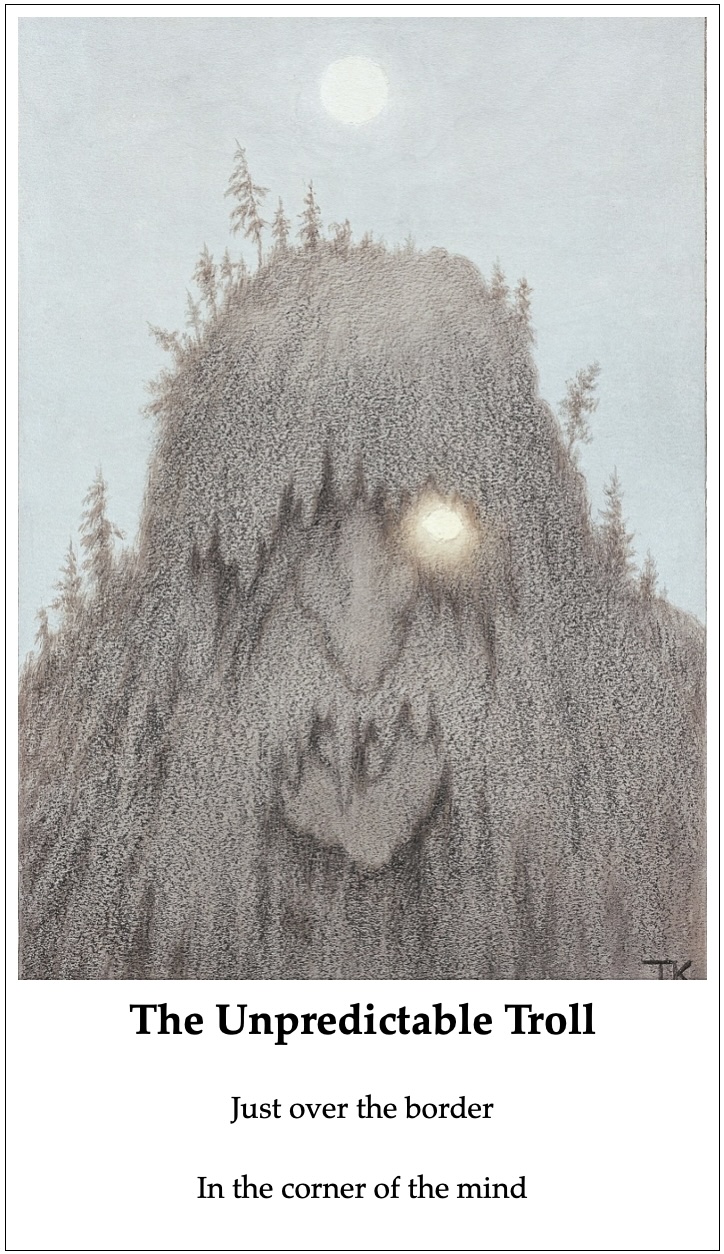
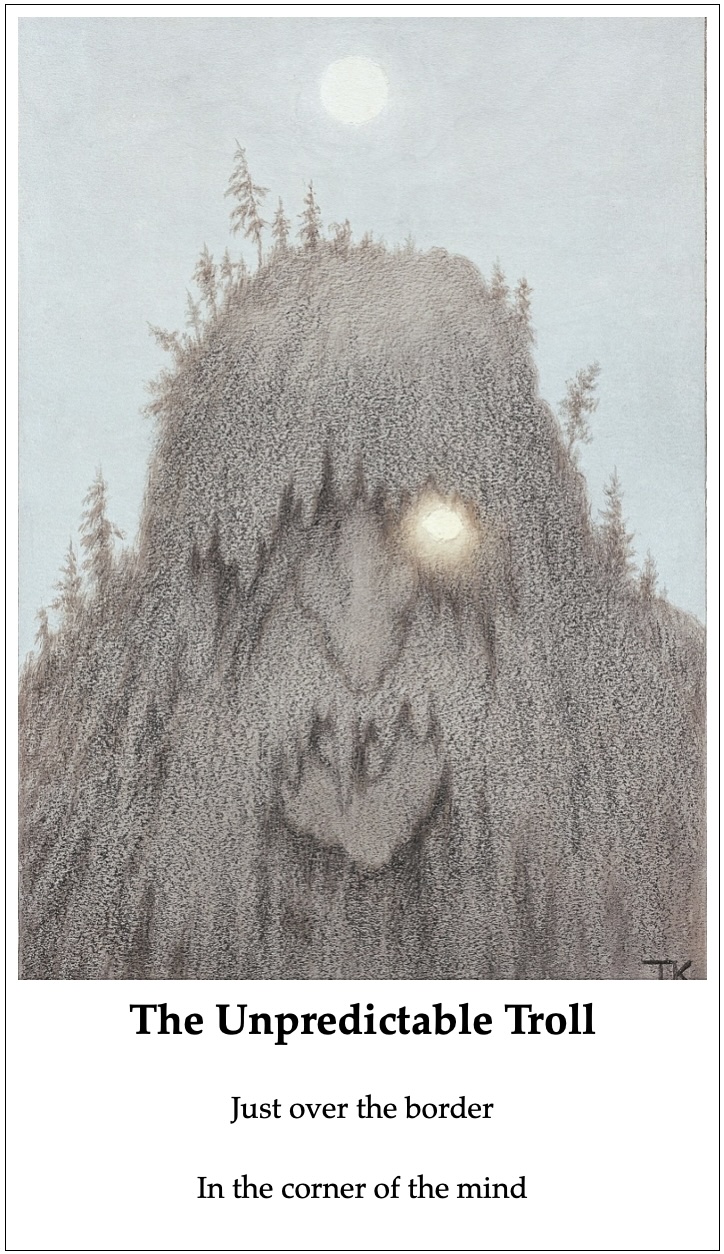
Language itself has been captured & ripped of true meaning. The continued acceptance of the term to describe a foul and murderous invasion, provides insight into the way the ‘Unpredictable Troll’ has been created & is sustained:
Napoleon (ever ready to demonstrate his Revolutionary Enlightened Rationalism) used the church to stable horses.
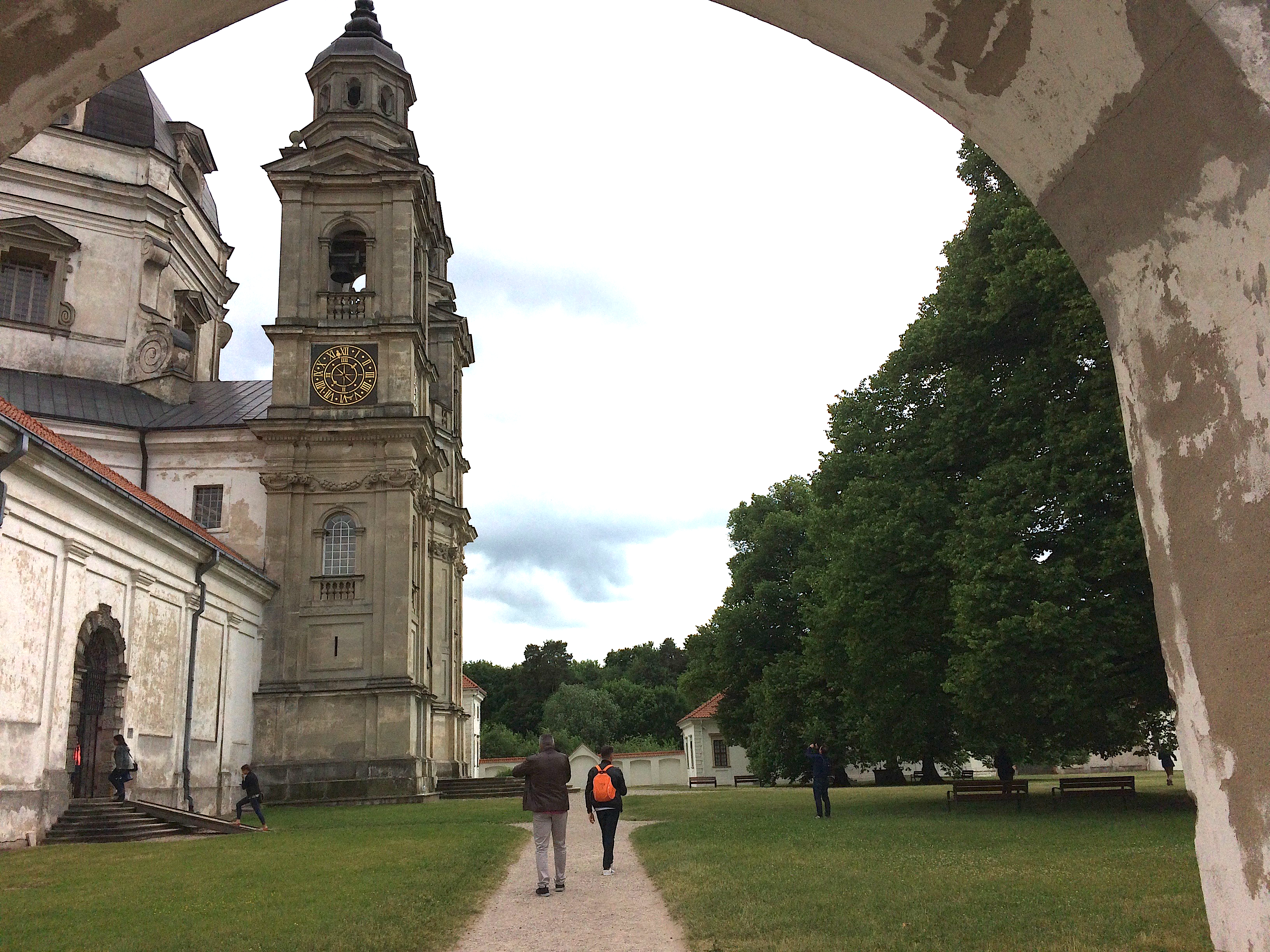
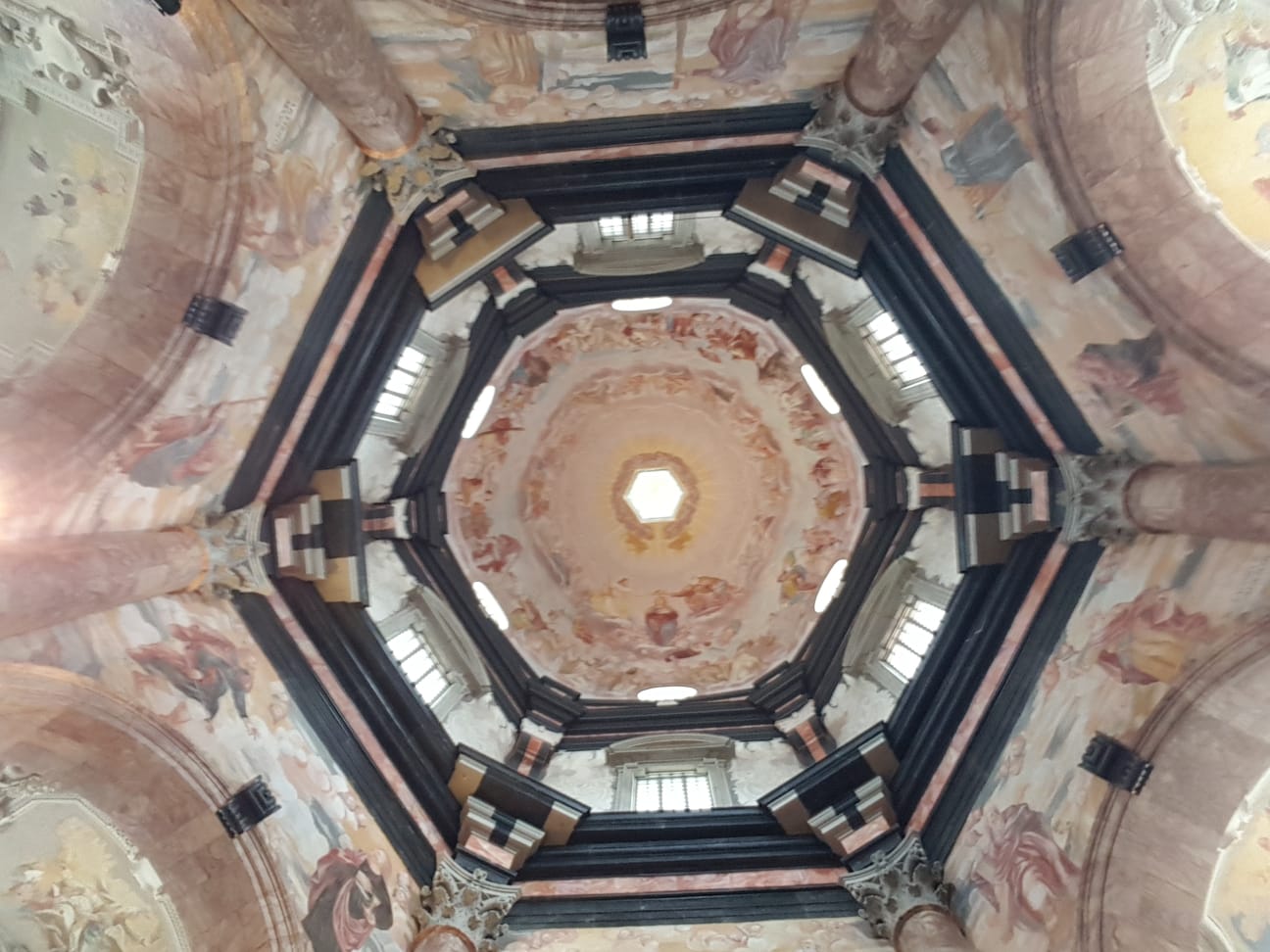
Pažaislio vienuolynas ir Švenčiausios Mergelės Marijos apsilankymo pas Elžbieta bažnyčia
This is an important national monument – but having been a psychiatric hospital in Communist period – and seriously neglected – it languishes, lacking appropriate care and attention.
Here is an example (in physical terms) of the degree to which post-communist governments in central and eastern Europe are faced with social, economic & cultural reconstruction.
Where are the resources of people (requiring time to grow, attitudinally), skills & finance…. ?
It takes time……
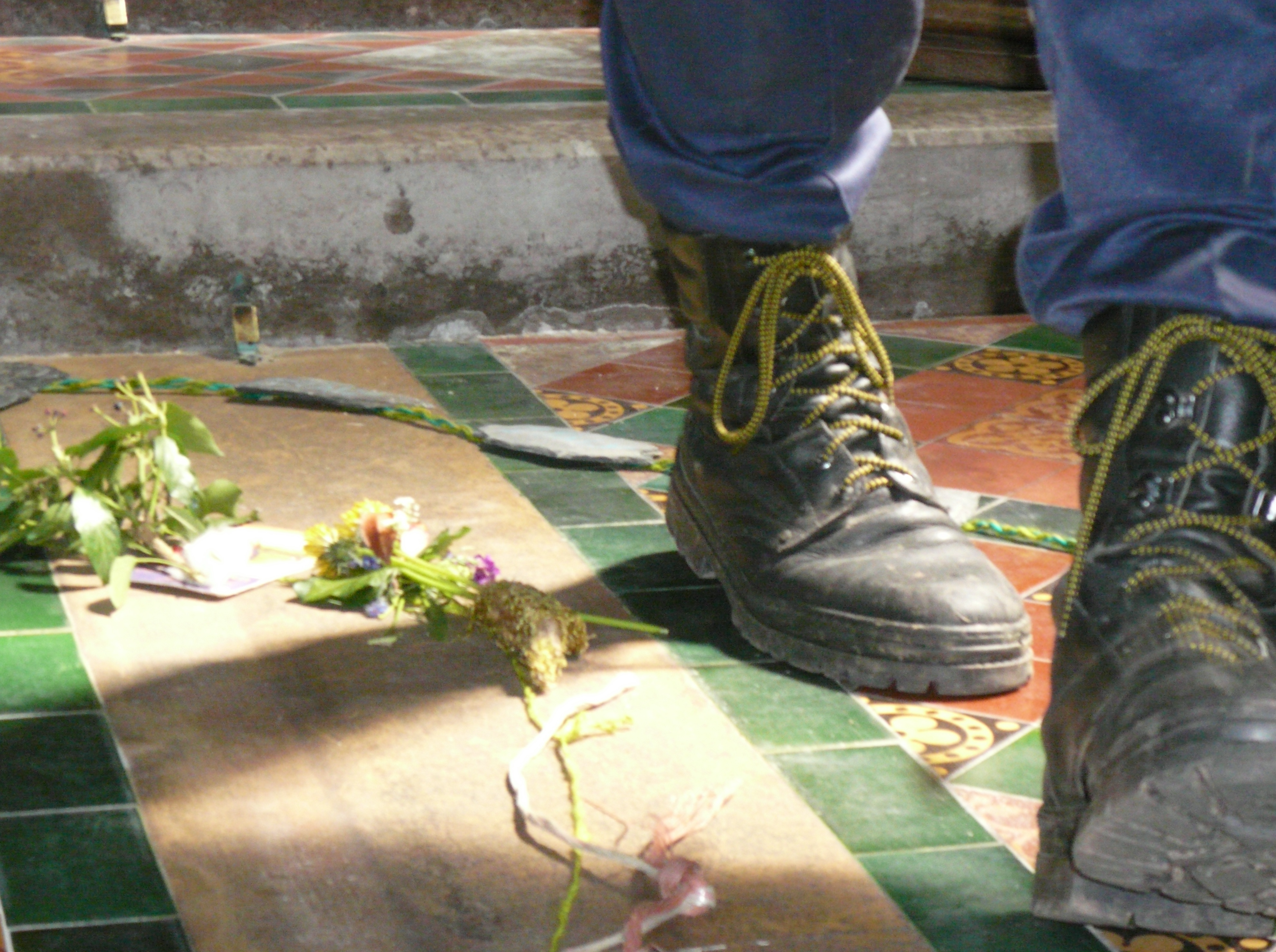
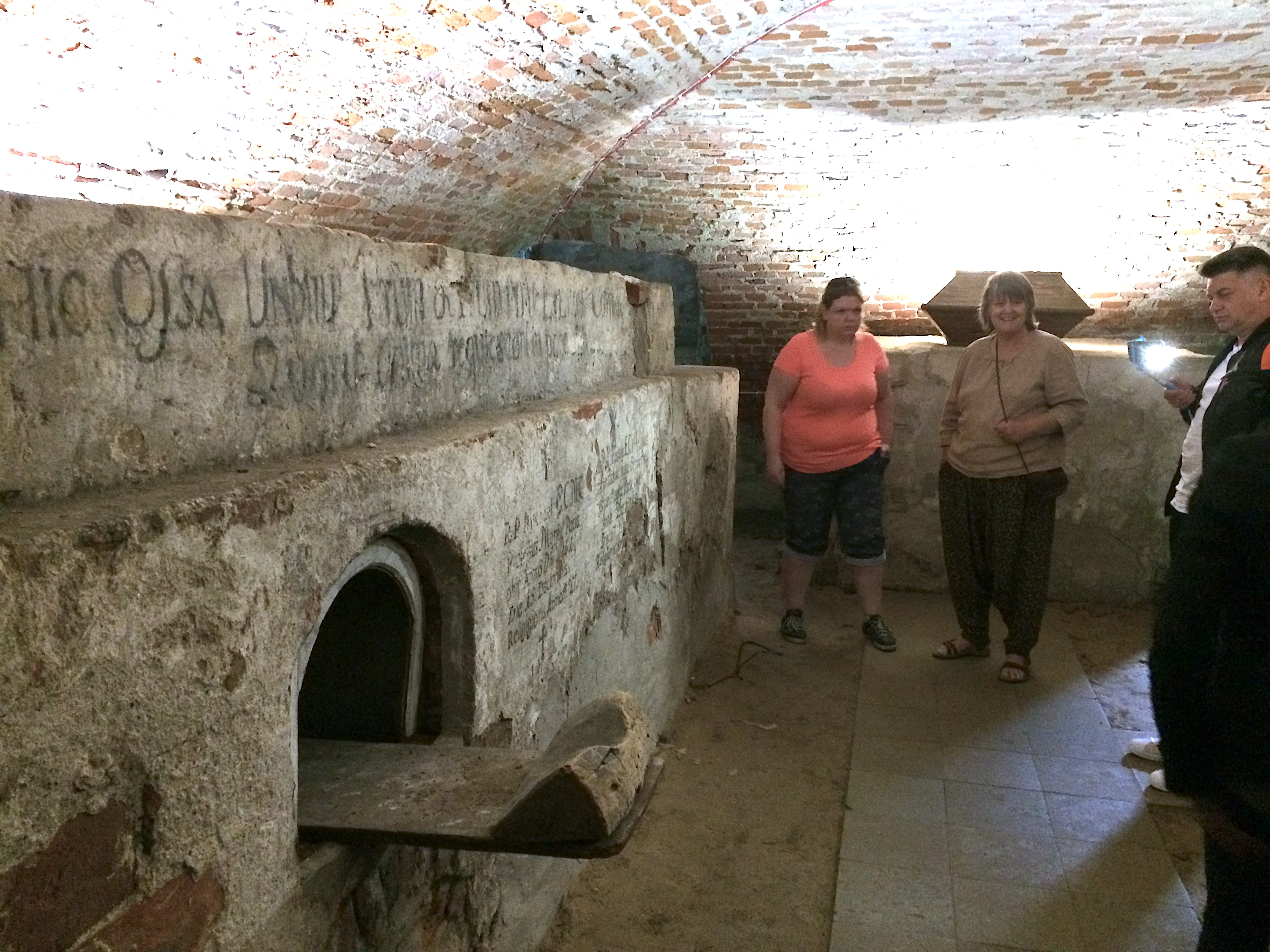
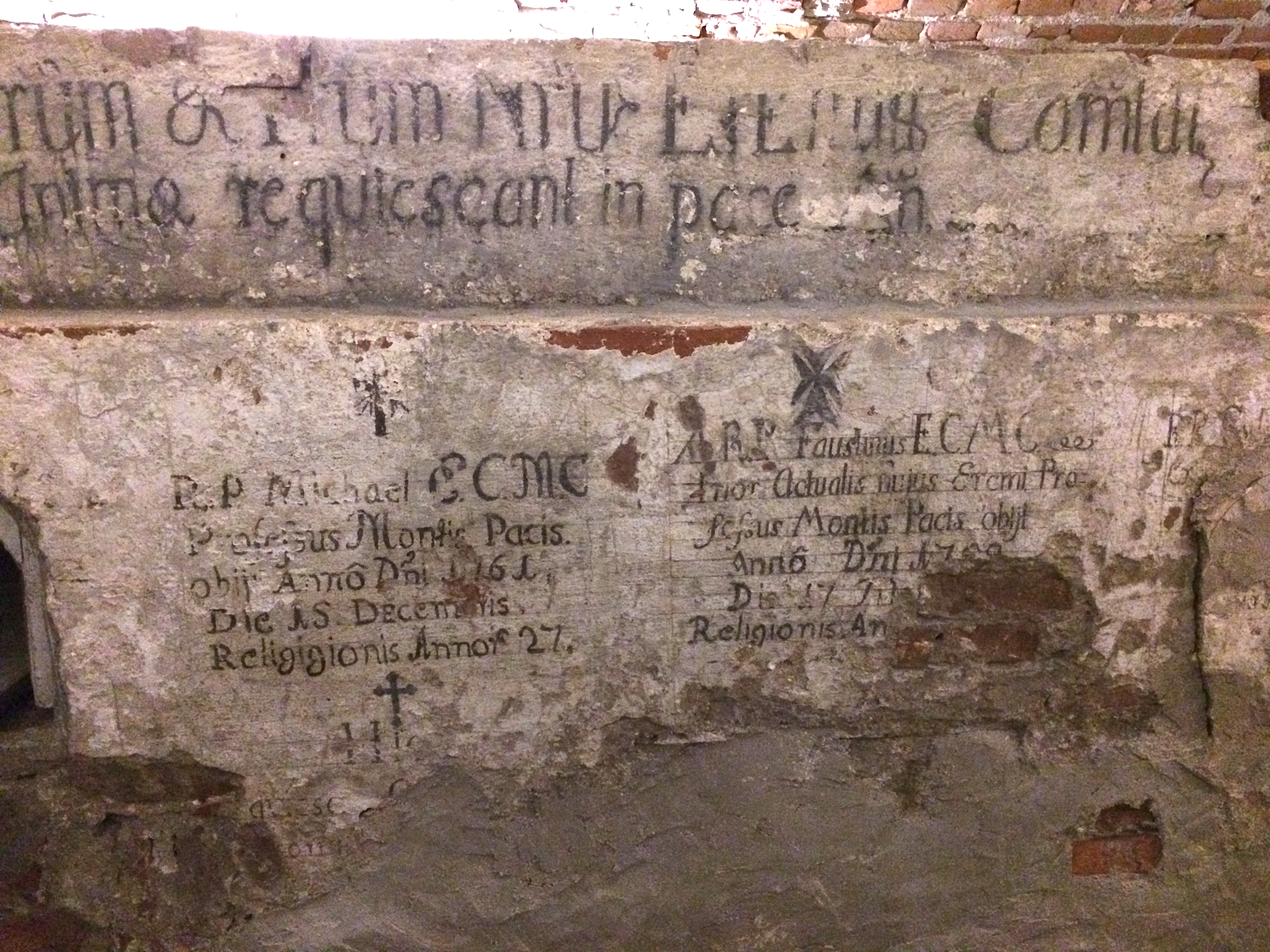
Meanwhile, here at the monastery the crypt is open to anyone – and the important graves of monks long dead… even before Napoleon abused the premises, are left accessible to anyone who cares to visits…. or steal.
We hope that the interests of others across Europe, each with their own local concerns, encourages & strengthens groups in their work.
Screenshot
Our link with the Central Library came about through the perceptive engagement of one person. Here, on the right: Aistė. She attended a 2 day course in Kaunas & quietly assessed & noted the value of some of what was being presented. This was followed by reporting to & encouraging the project development team in the Library.
This team then established contact in order to become members of the Arboreal Futures Partnership composed in 2016. The link continued through membership of the Green Bridges Partnership. The library team were led by Aistė….. standing here, on the left.
Our partners in Kaunas have always been enthusiastic & full of creative ideas… the following pictures reflect some of that dynamic positivity.
We could not have had a more cheerful & jolly final meeting for our Tour.
It was a family & friends affair…. we felt honoured.
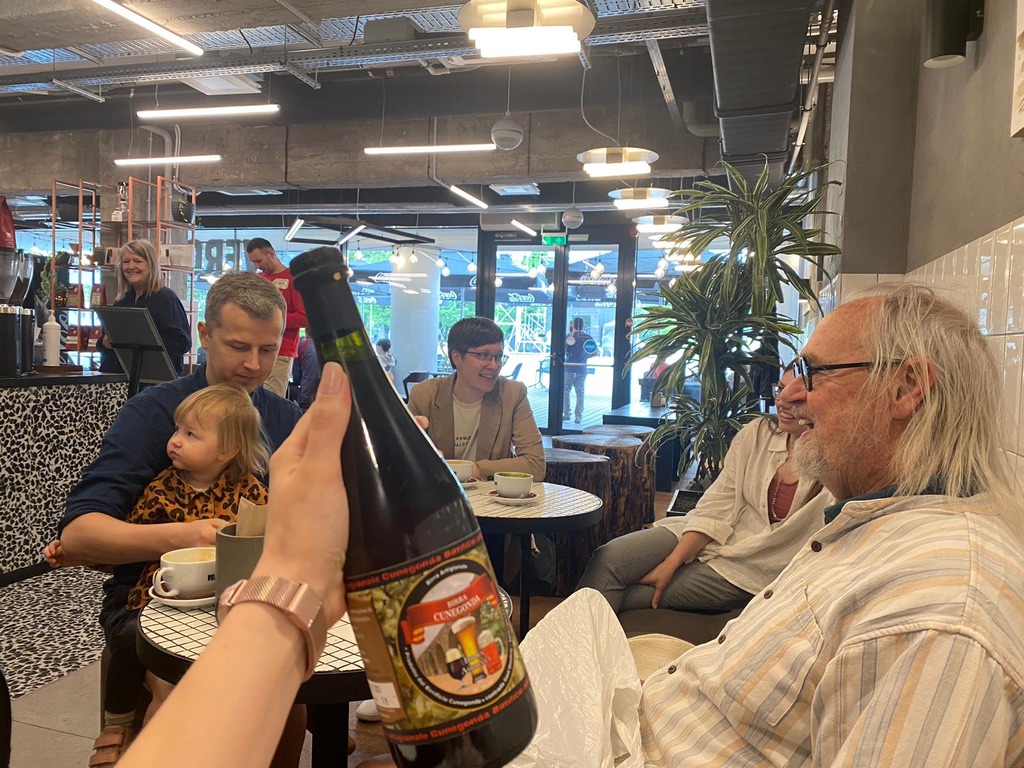
Pasquale’s beer (from Spilinga) was delivered
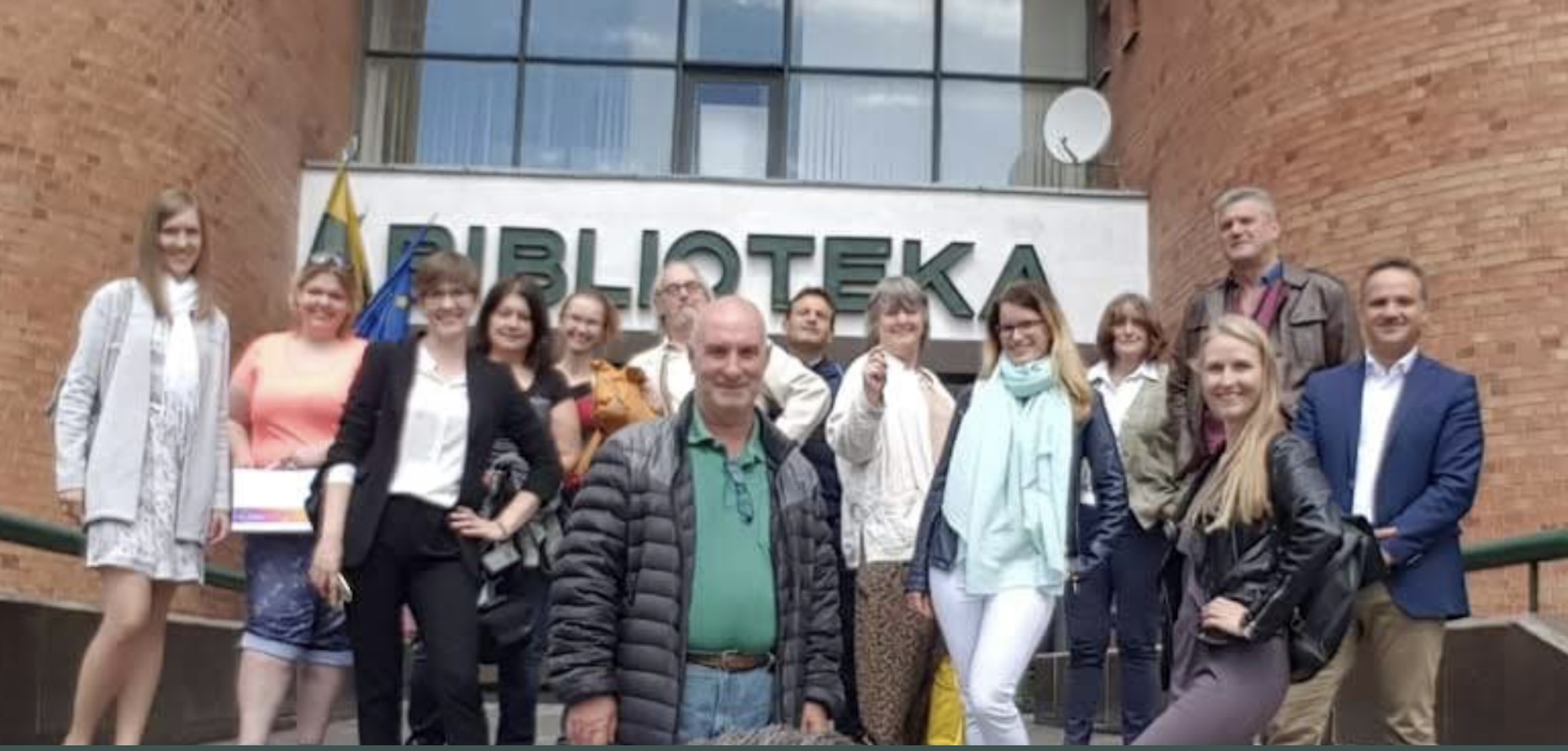
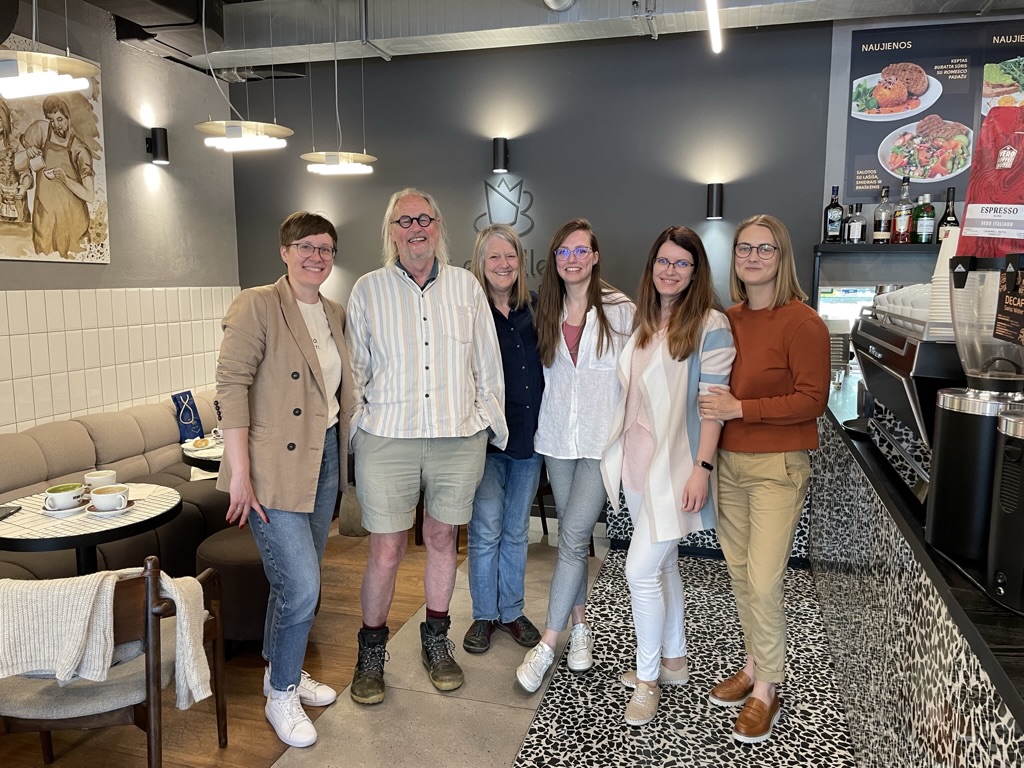
I was (reluctantly) required to be in a group photo
Following our ‘late breakfast’ gathering we visited one of the buildings of the library.
The main building is being re-developed so unlike previous vistas we went to an older building which is required to hold displaced elements of the library. This has been something of a normality for the service.
The pictures below are from the building
Probably it is the only large library in Lithuania that changed its name so many times and had to move its book stocks of from place to place so often. Obligated to perform the functions alien to its nature, the Library often had just minimal possibilities to act in its true role as the main library of the nation……
…. After the retreat of Hitler’s army, the Library moved to the premises of the former Chamber of Commerce, Industry, and Crafts (September 13, 1944).
It is here in Kaunas that we have clear statements (in English) regarding the impact on a nation of the ‘clearance’ of free expression. Combined with the physical ‘clearance’ (to Siberia or through death) of individuals who might have encouraged open discussion, community cooperation etc it is just possible to begin to slightly understand the total grip the Sovietised system, controlled from Moscow, had on society.
But never can we who had no personal experience, feel the constantly crushing pain many experienced.
During the early post-war years, the Library used to receive all publications printed on the territory of the USSR; since 1949 it received the publications in the Russian language only. The book stocks (especially Lithuanian and foreign publications printed between two wars) were greatly damaged by the campaign of “clearing the libraries of ideologically harmful publications”. Many books, even old and rare ones, were removed from the Library stocks and destroyed. In 1950, 30 tons (!) of books were taken to Petrašiunai Paper Factory and some other places for recycling, many books were just burned in heating-furnaces at the Library itself….
….Many books, including almost all periodicals published in the period of World War II and in the inter war years were transferred to special deposits to make them unavailable to the average reader. Even the Department of Lithuanian philology and history did not function for a long time.
Reading such reports underscores the degree to which our partners (as they would say ‘not librarians’!) have assisted through their project activities, the creation of a library service that encourages exploration, investigation, critical analysis, community action… and fun!
It is almost beyond belief that a system that was so oppressed has within a comparatively short period (24 years to the point in 2015 when we & they began to share ideas) evolved into such a dynamic force.
also in part explains that developments in ‘free’ Lithuania had its origin from within important actions in the past.
It established a special department for automation and mechanization of different library processes, reorganized the whole system of interlibrary services. A Room of Fairy Tales was established with a puppet theatre that enjoyed popularity among children readers. …
….Still, the activities of the Library in the nineteen sixties and later decades have not been thoroughly investigated yet. This period partly coinciding with the years of so-called stagnation is still waiting for an objective historical evaluation.
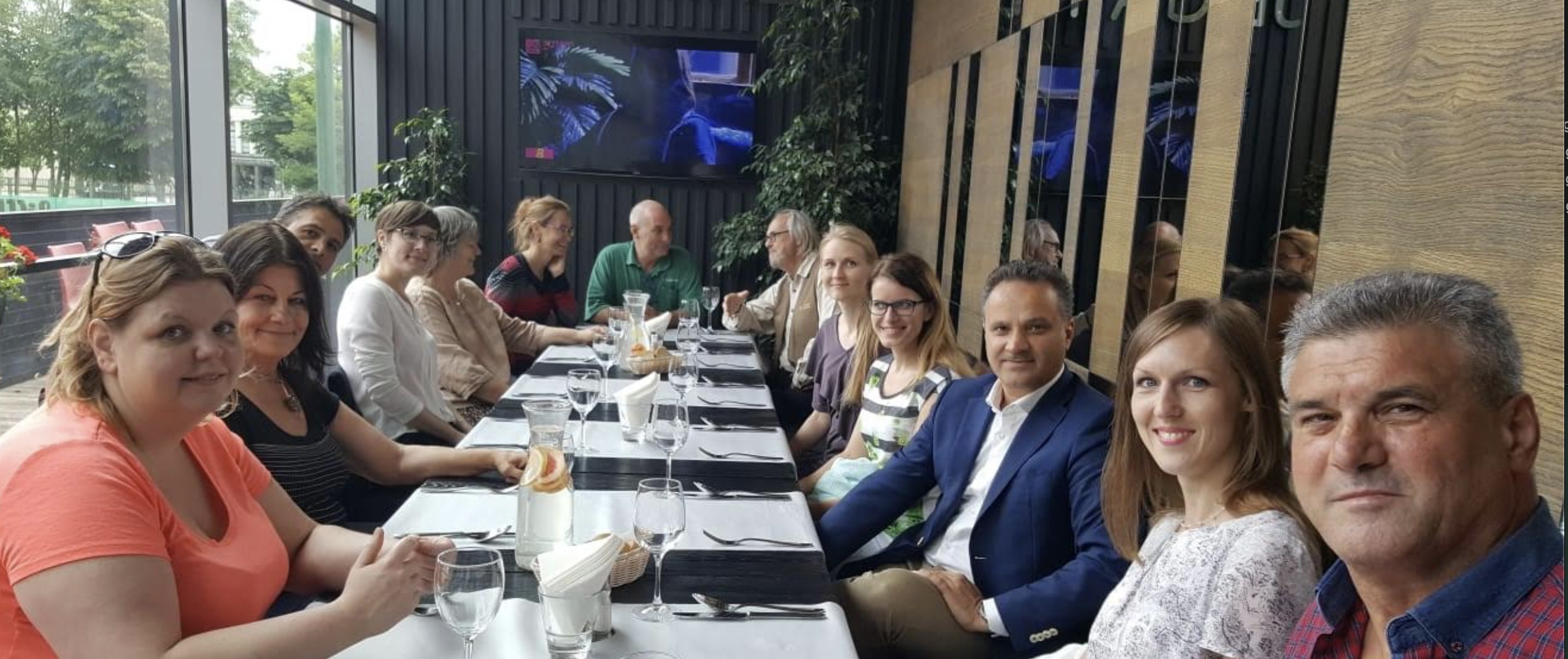
After the tour we retreated to a restaurant for lunch.
Pleasantly liquid!
Moments such as these with time given simply to chatter, gossip, muse, can be important. They provide opportunities for people to ‘open-up’ to each other.
During our time & after talking generally about the Ukrainian situation with Aistė she told Jacqui of a recent working visit to Italy. It confirmed a feeling of which she was aware – but had not fully appreciated until being in Italy where everyone in the group felt more relaxed.
Namely, a continuing sense of tension in Lithuania of which she was unaware in Italy. She felt that there was a general air of uncertainty regarding the present situation in Ukraine that created the tension.
In itself a small matter – but indicative of one which we had over the past 2 years encountered in many places….. thus ‘not so small’!
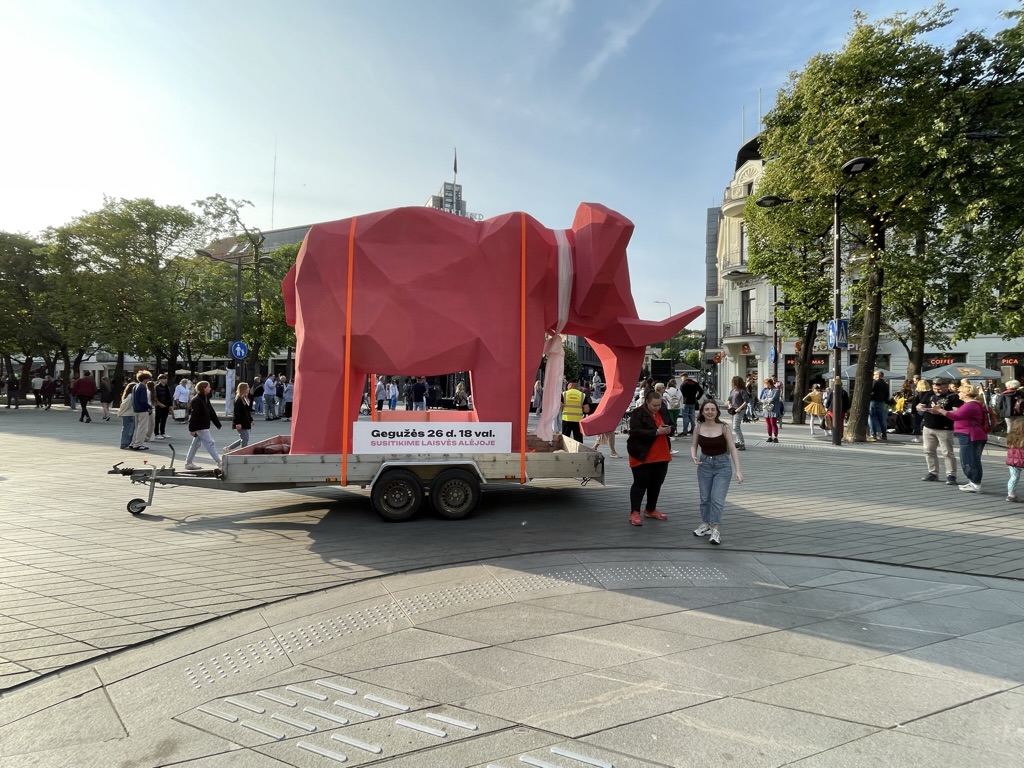
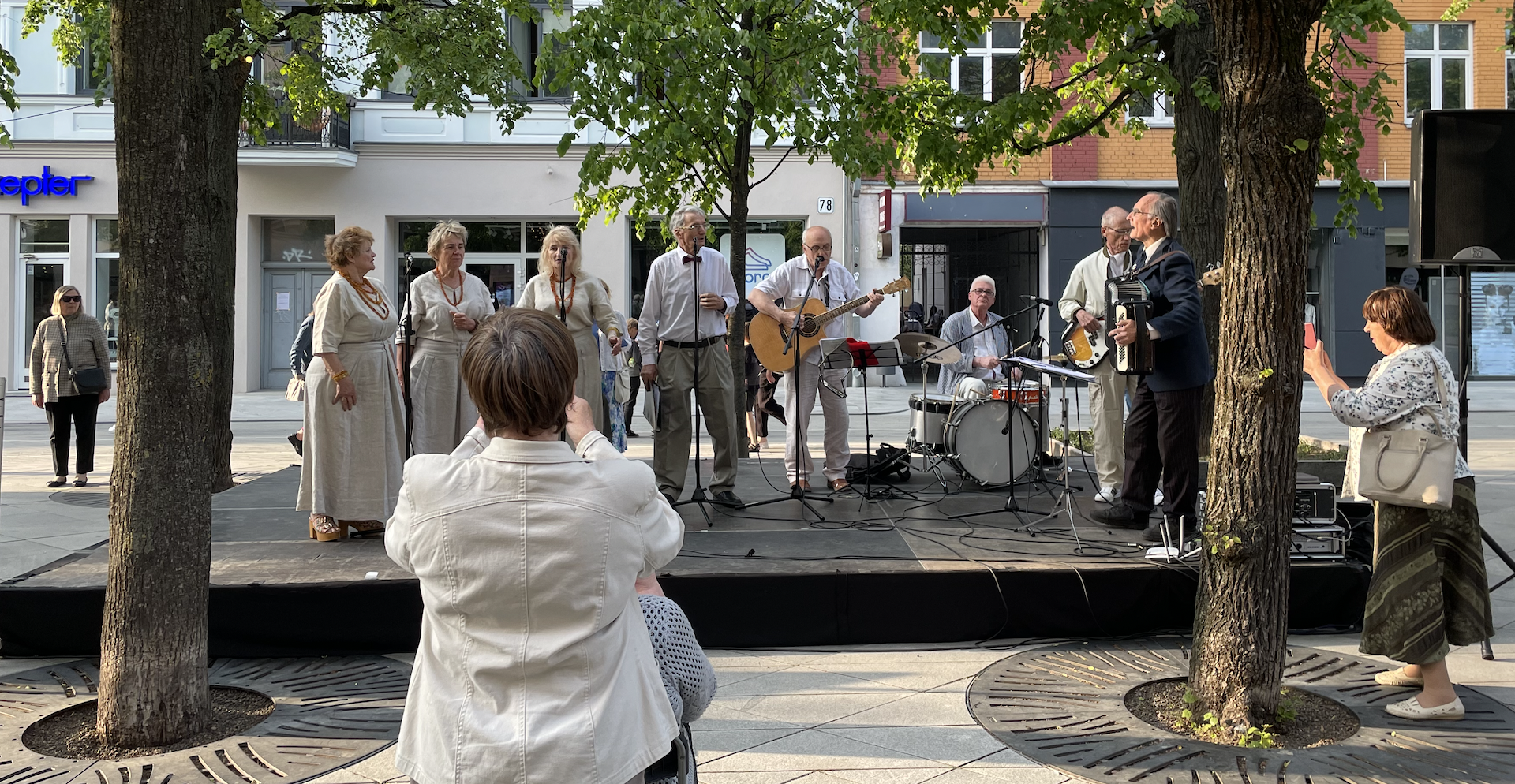
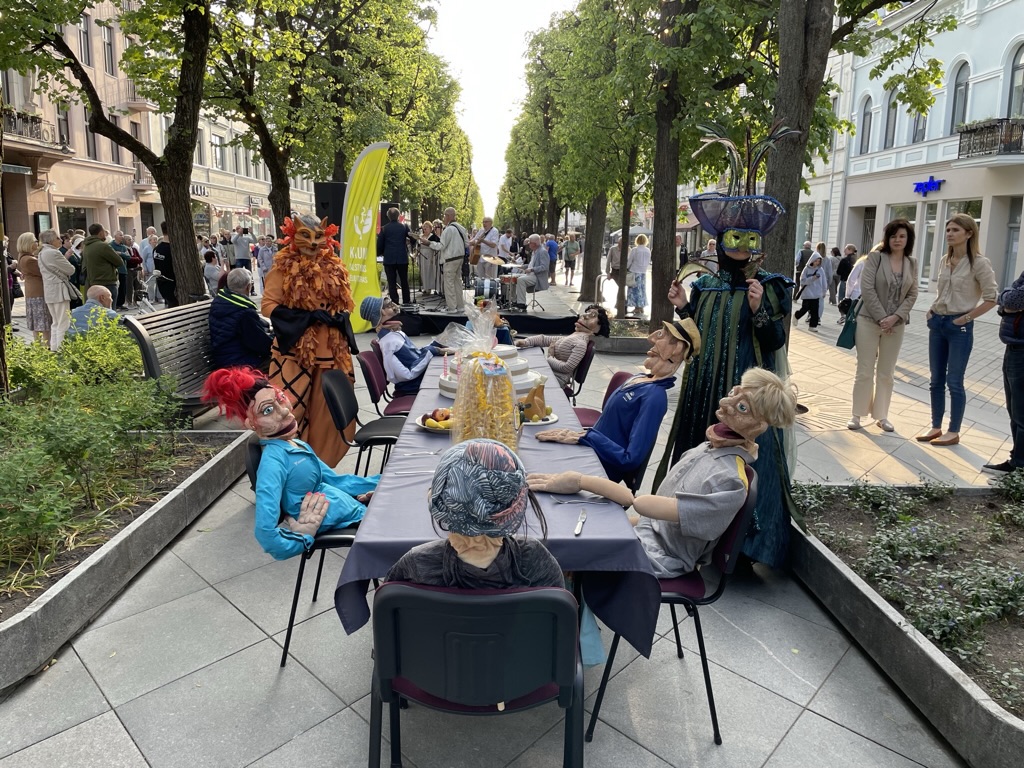
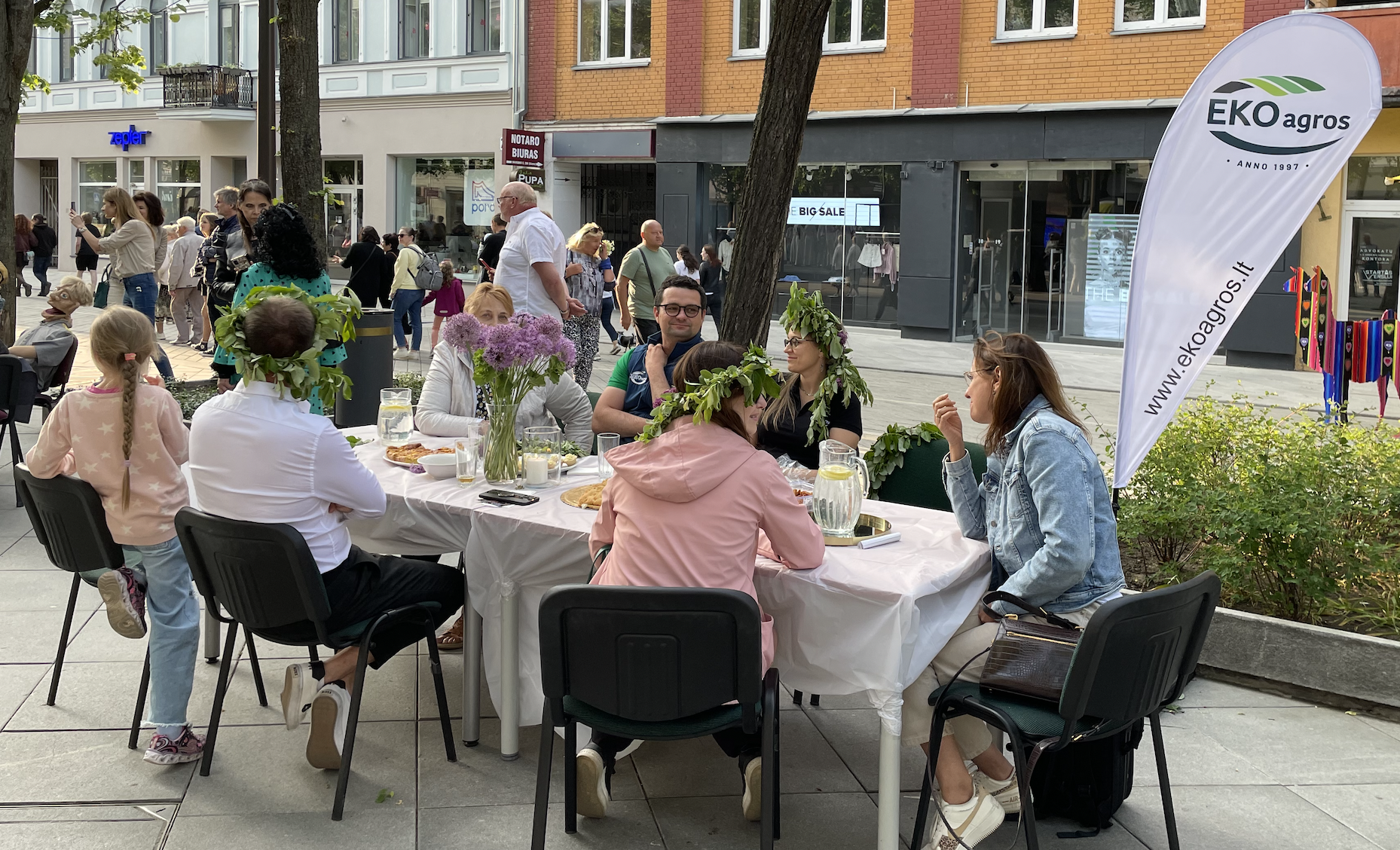
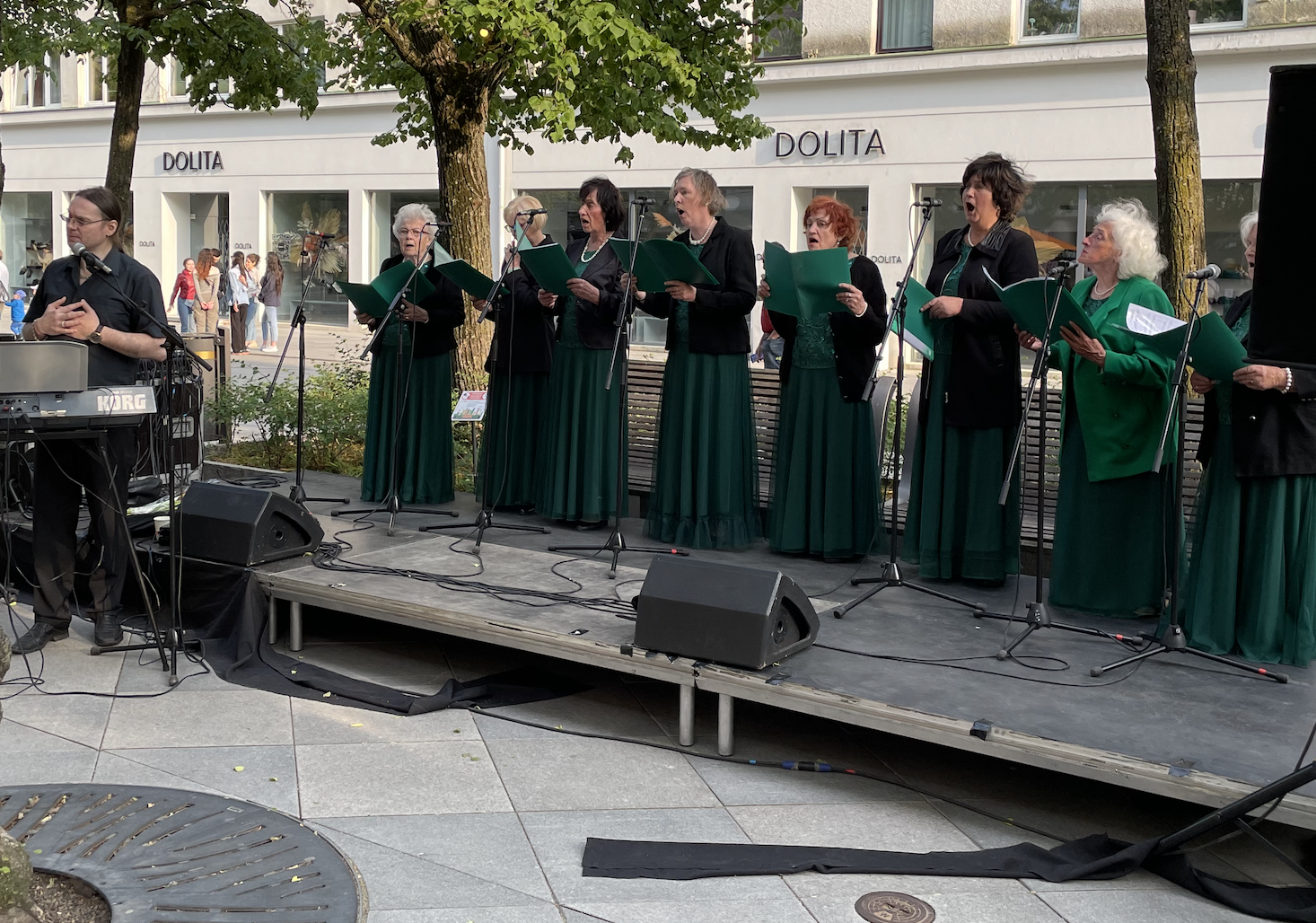
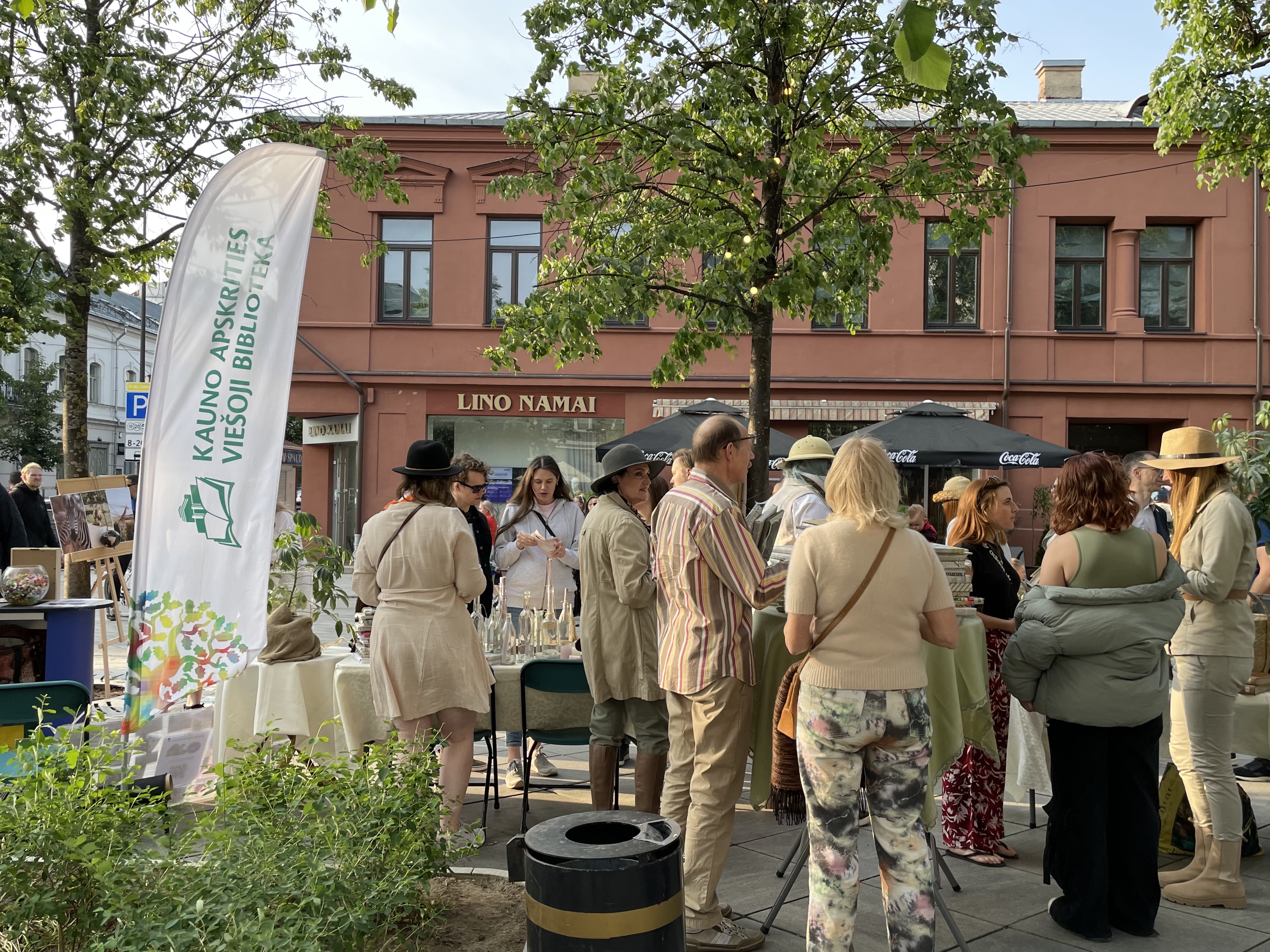
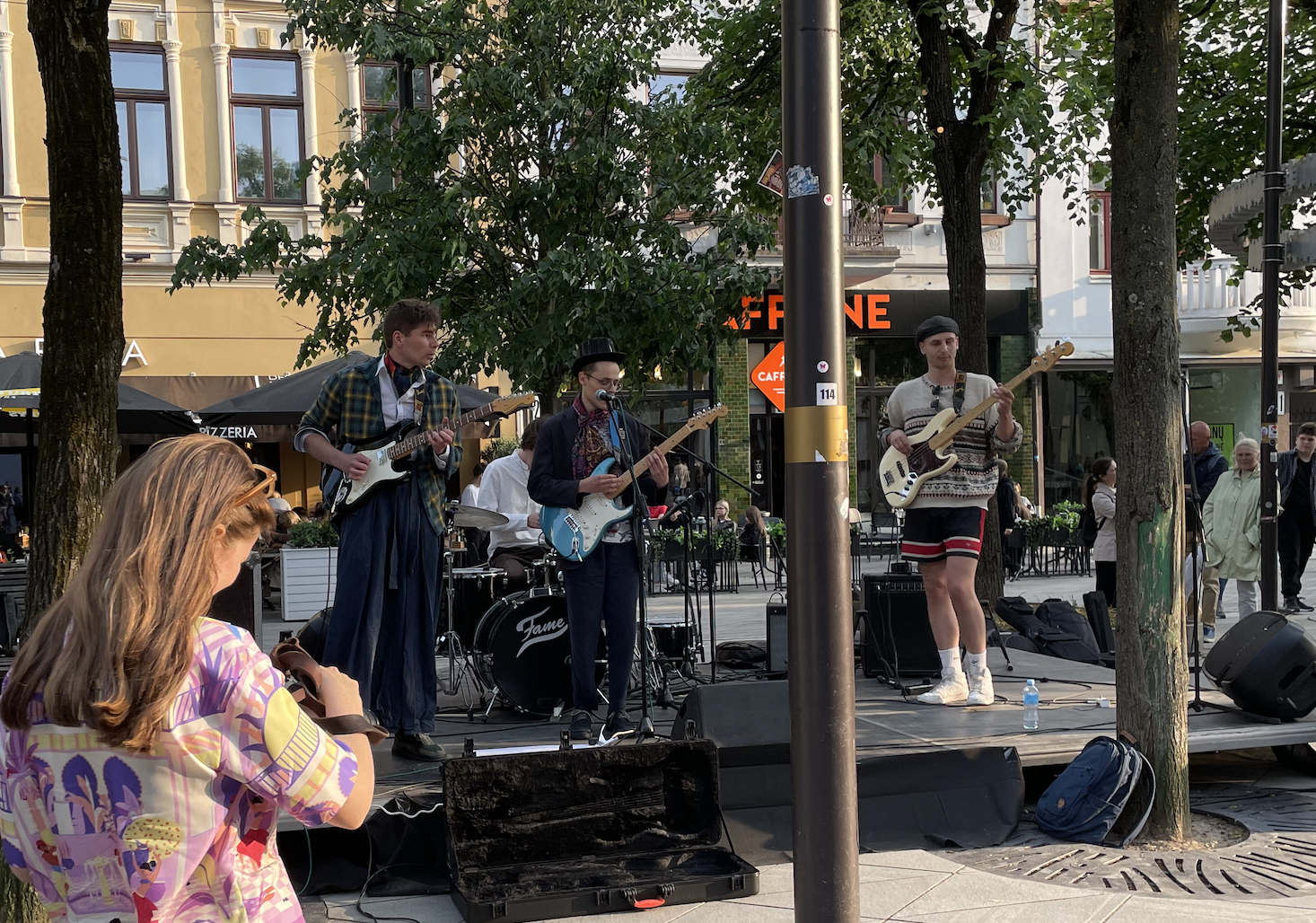
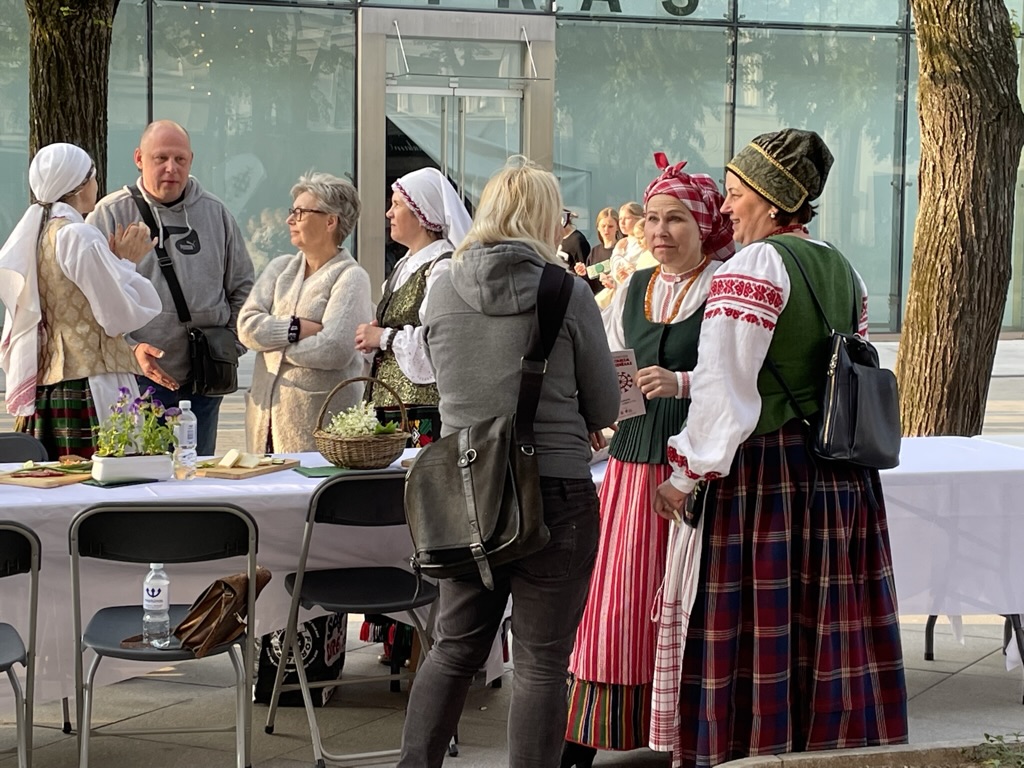
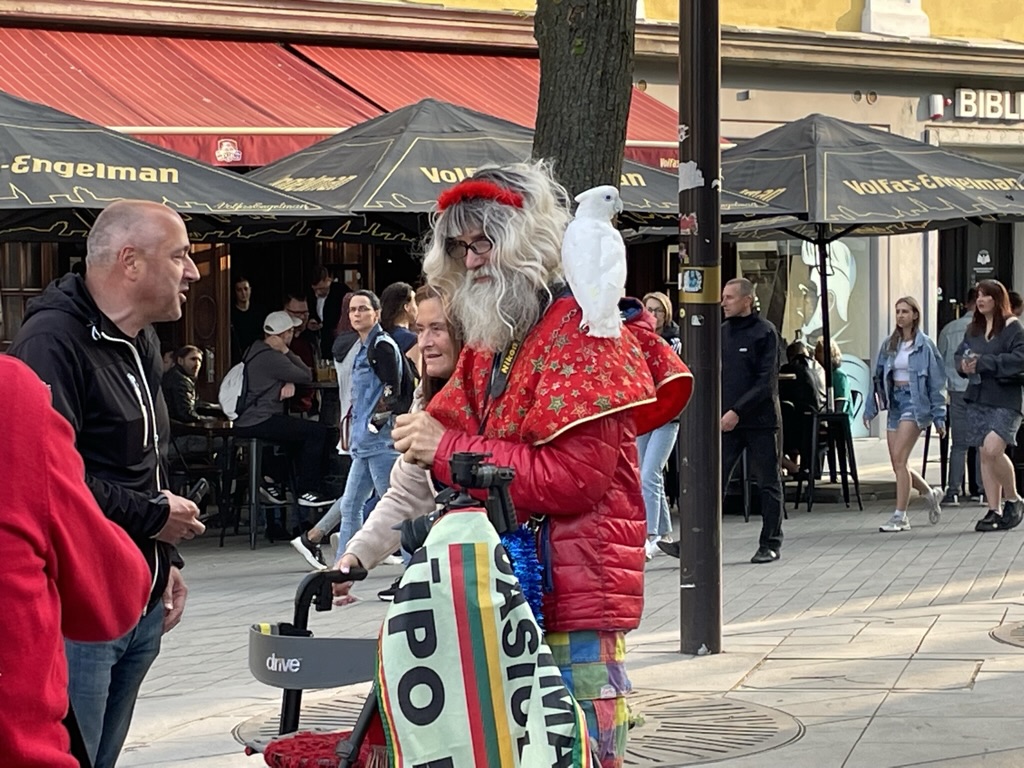
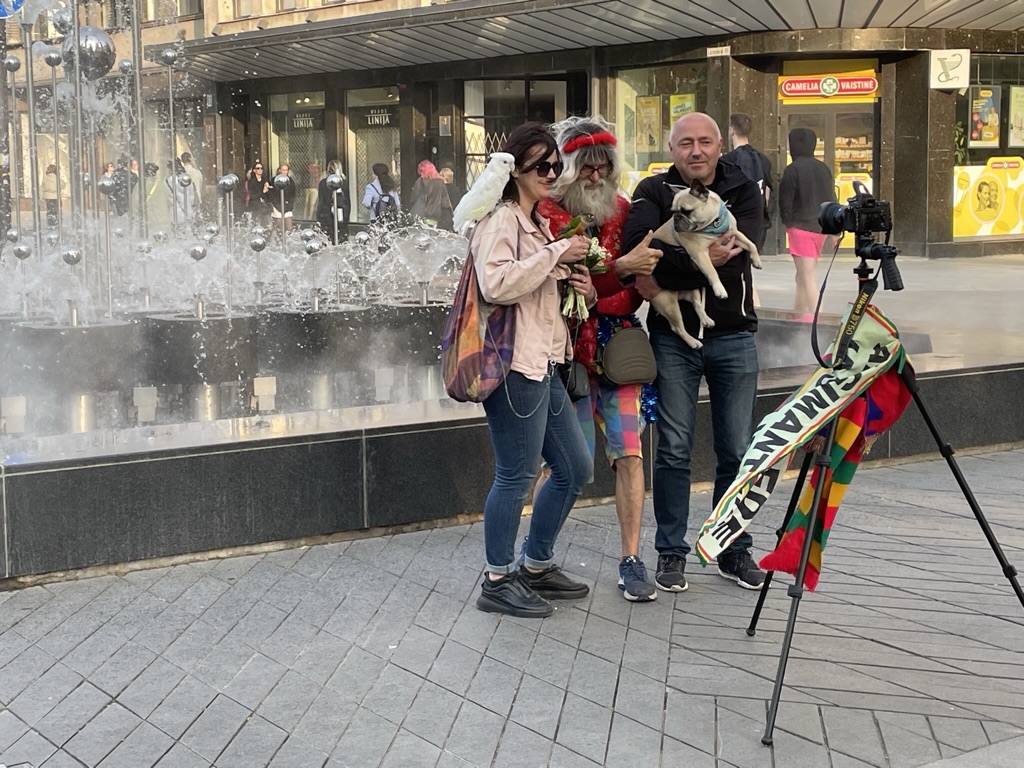
It’s ‘Birthday’ time in Kaunas and the Freedom Alley is full of local groups and institutions with activities and displays…. A real community event.
WhatsApp
Puppet Theatre
The ‘Alley’ (Boulevard) is 1.6 kms in length (1 mile) and is completely full with local groups bands, performers…. No group or individual is selling anything…. It’s simple a place for local ‘display’.
WhatsApp
The ‘techie’ for this group looks remarkably like our 2nd son…. I never checked…. (too young)
Our partners from the Central Library had a presence.
Youth Groups….
Traditional culture groups
Classical Music and Concerts
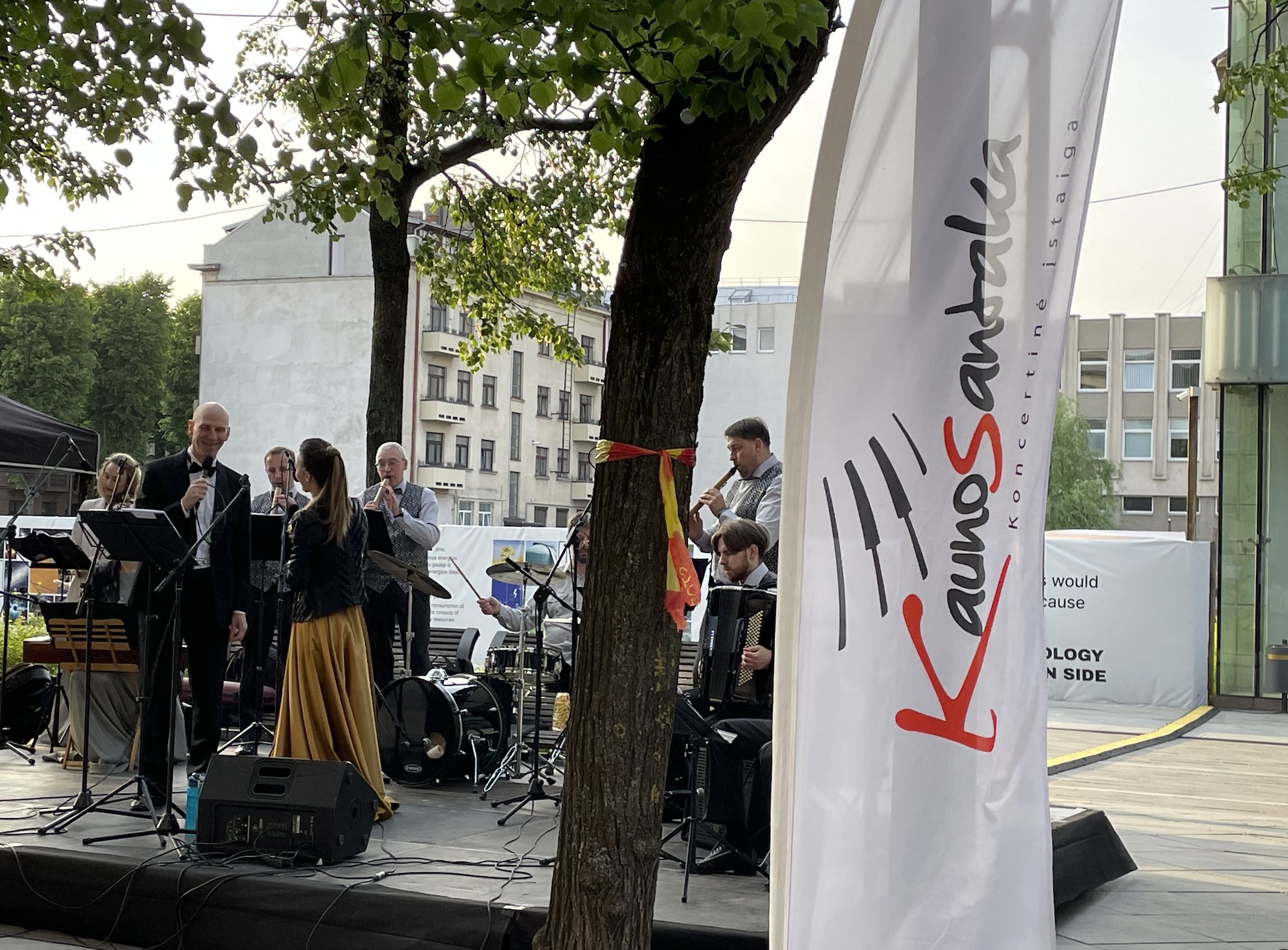
The Kaunas Concert Society
Others:
What a fantastic evening!
…. and with the owner of the elbow & shoulder on the right, we entered into a most interesting conversation!
The final discussion Jacqui and I had yesterday was unexpected.
Whilst dining we met and had lively, creative discussion with a manager of the Lithuanian National Opera. Addresses were exchanged!
Whatsapp
Before Brexit such a conversation would have led into making contacts with personally known individuals & agencies. That is now fairly pointless as, thanks to a Brexit attitude the funding sources which were available for links with European neighbours no longer exist (they were not part of the Brexit Agreement but were closed by a separate unnecessary decision to cut-the-links).
Saturday 27th May
We check-out and stroll though the centre towards the railway station.
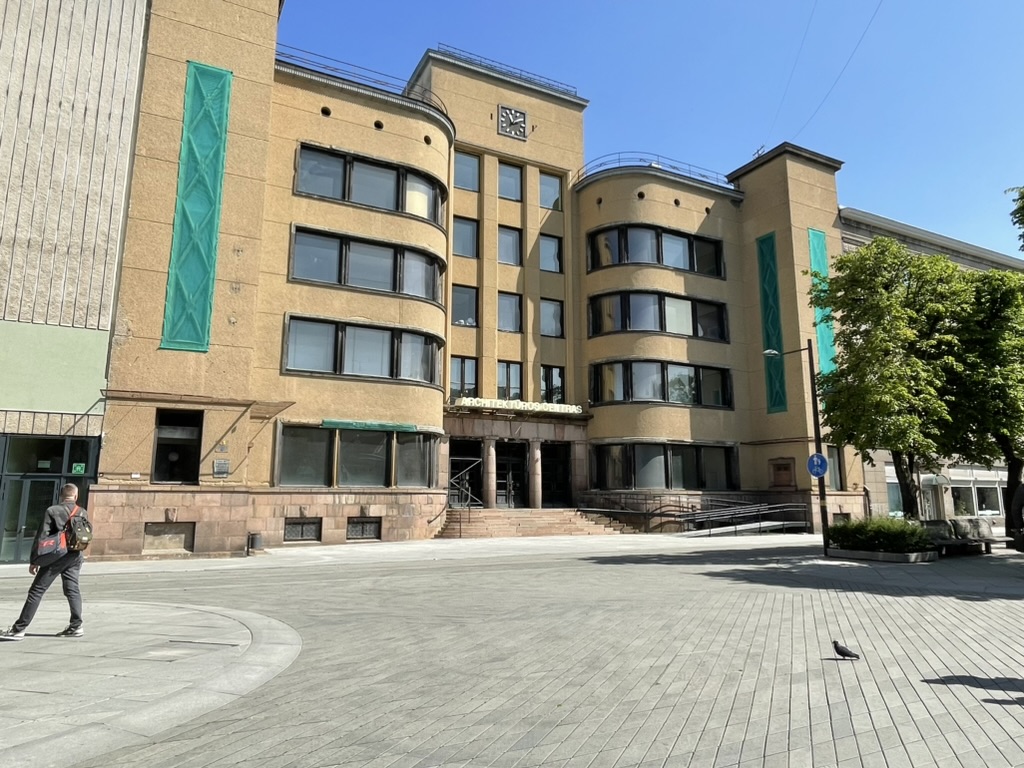
During the period between the wars Kaunas developed the necessary structures required of a nation state. This resulted in a considerable number of buildings being architecturally of Modernist, Art-Deco Style.
“Kaunas’s Art Deco interwar modern architecture is unique to Kaunas, because it’s not a direct copy of French or German architecture. It’s specific to Kaunas.
“It’s what we call the “national style”, where Lithuanian architects tried to incorporate traditional Lithuanian aspects into contemporary architectural trends.”
To the station…. where as in other public places there are serious attempts to remove smoking
We noticed that when groups are at street cafes anyone wishing to smoke leaves and finds a space in which to smoke. Ashtrays on outside tables are also absent from many bars & cafes.
It’s quite a contrast to what we experienced in some other eastern countries. Across all partnerships only two of our regular partners has individuals (3 people) with regular smoking habits.
In a sense it is ‘The End’ of the Tour
but there always has to be
A Return – and we so continue as ‘No Kerosene’.
Adventures, in story form, tend to occur on outward journeys.
That was never so. For example The Plantagenet King. Richard 1st of England had his return interrupted by capture and imprisonment – being released only after ransom money was paid. This money (equivalent to royal income for 2 or 3 years) was sufficient to allow the Hapsburg Emperor to build of a huge defensive ditch that secured Vienna. In the C19th that ditch became the site of Vienna’s impressive Ringstrasse ‘The world’s most beautiful boulevard’….part of which we walked.
We hope for a less stressful return journey
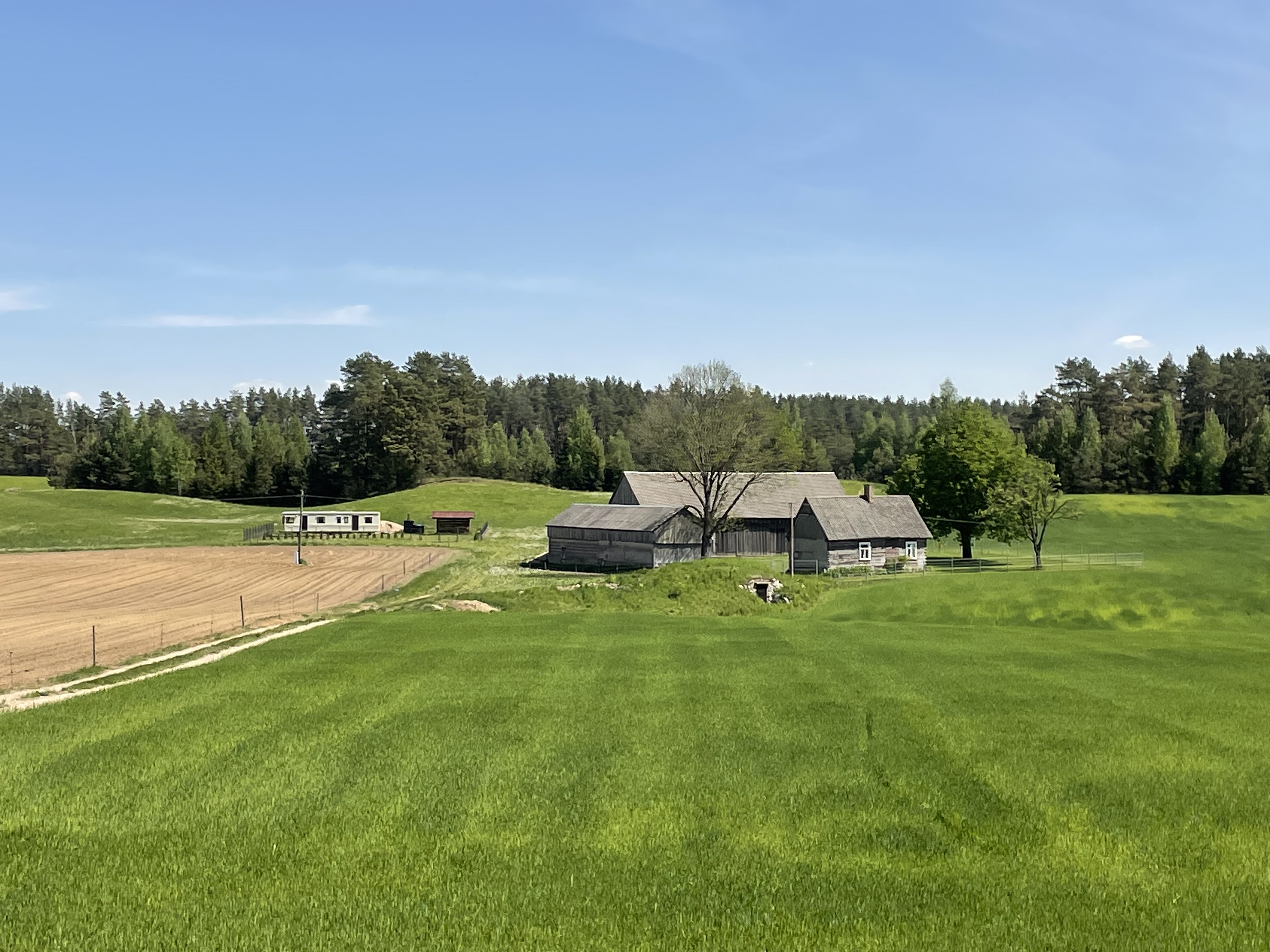
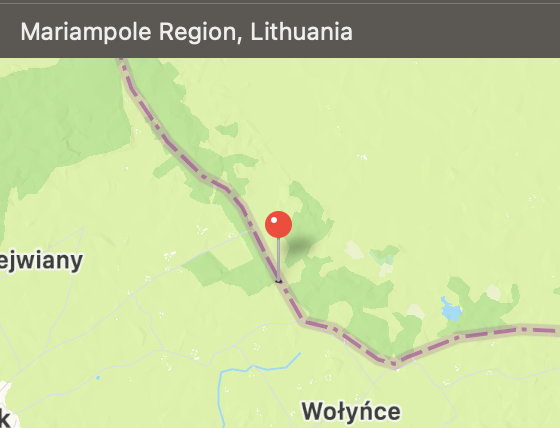
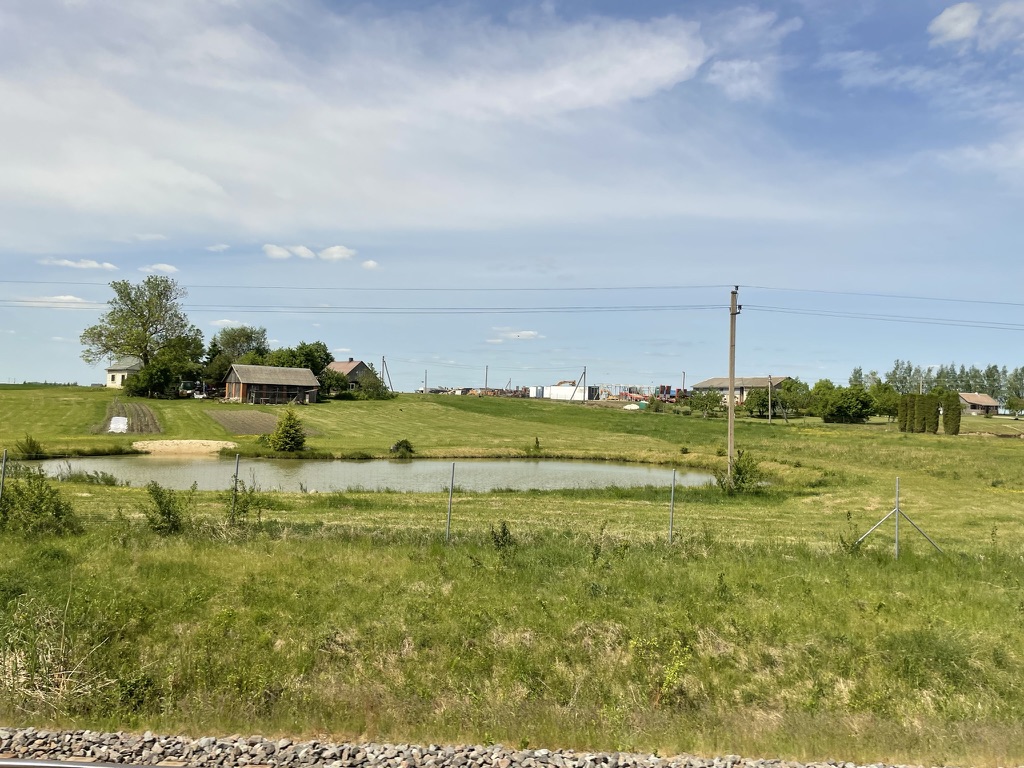
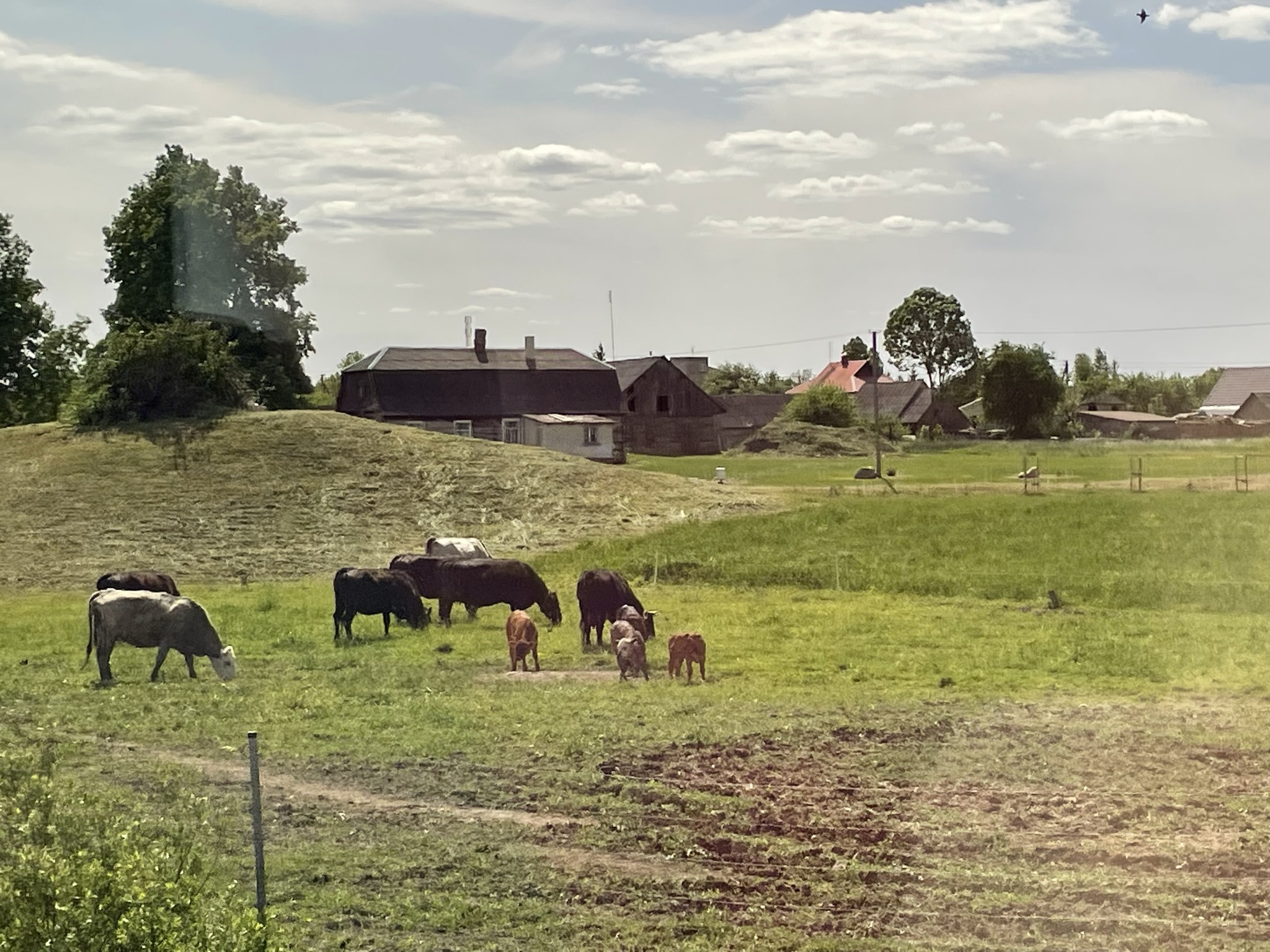
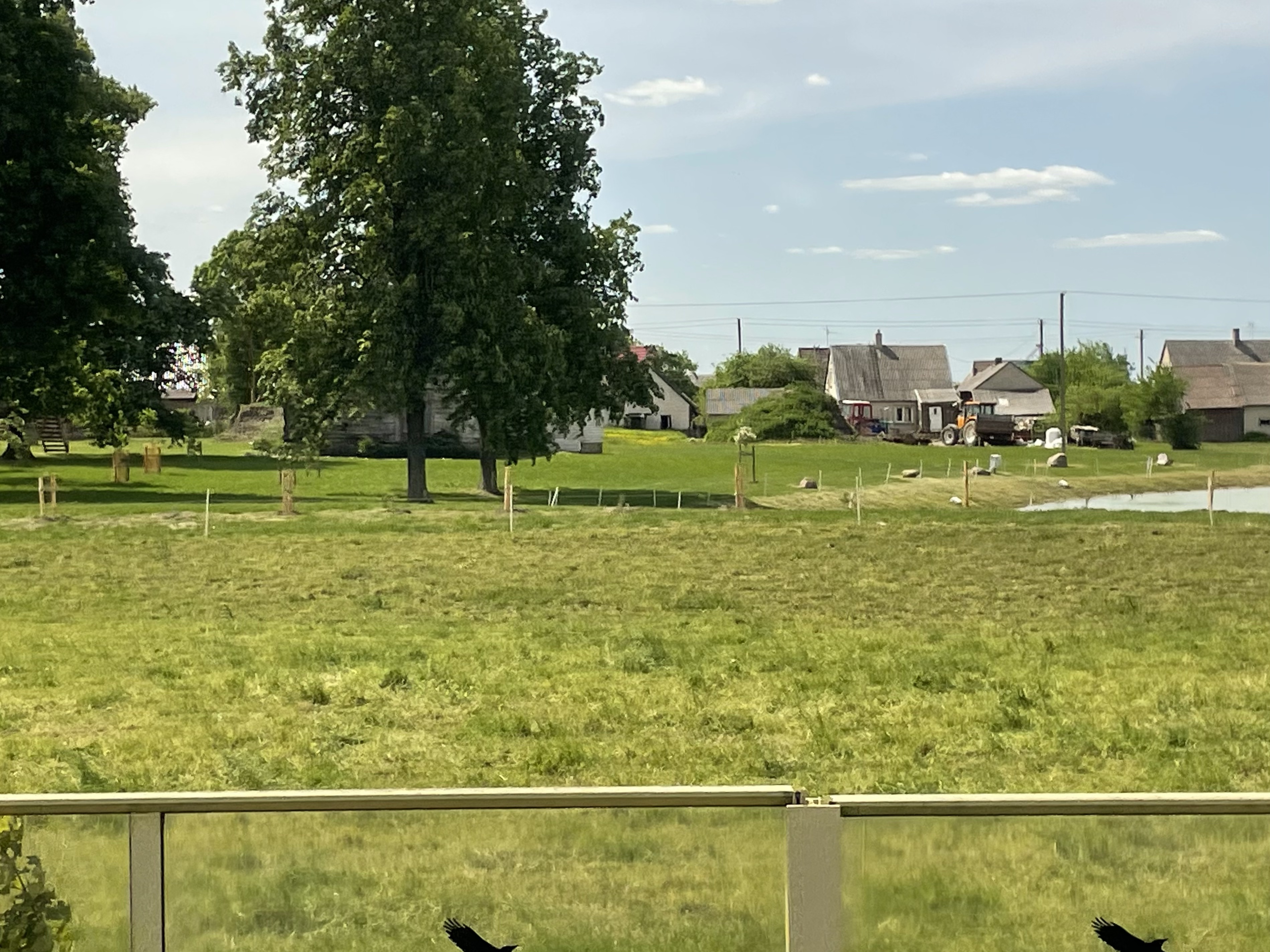
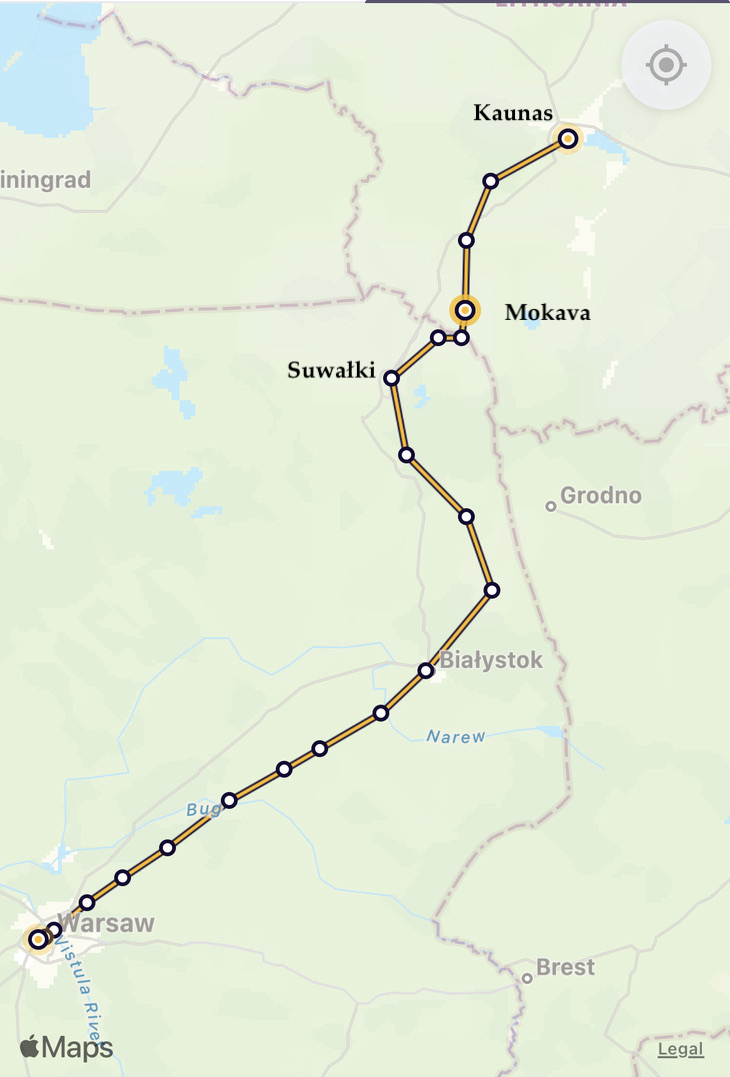
Through the gently attractive countryside of Marijampole County we gradually ascend to Mockava station
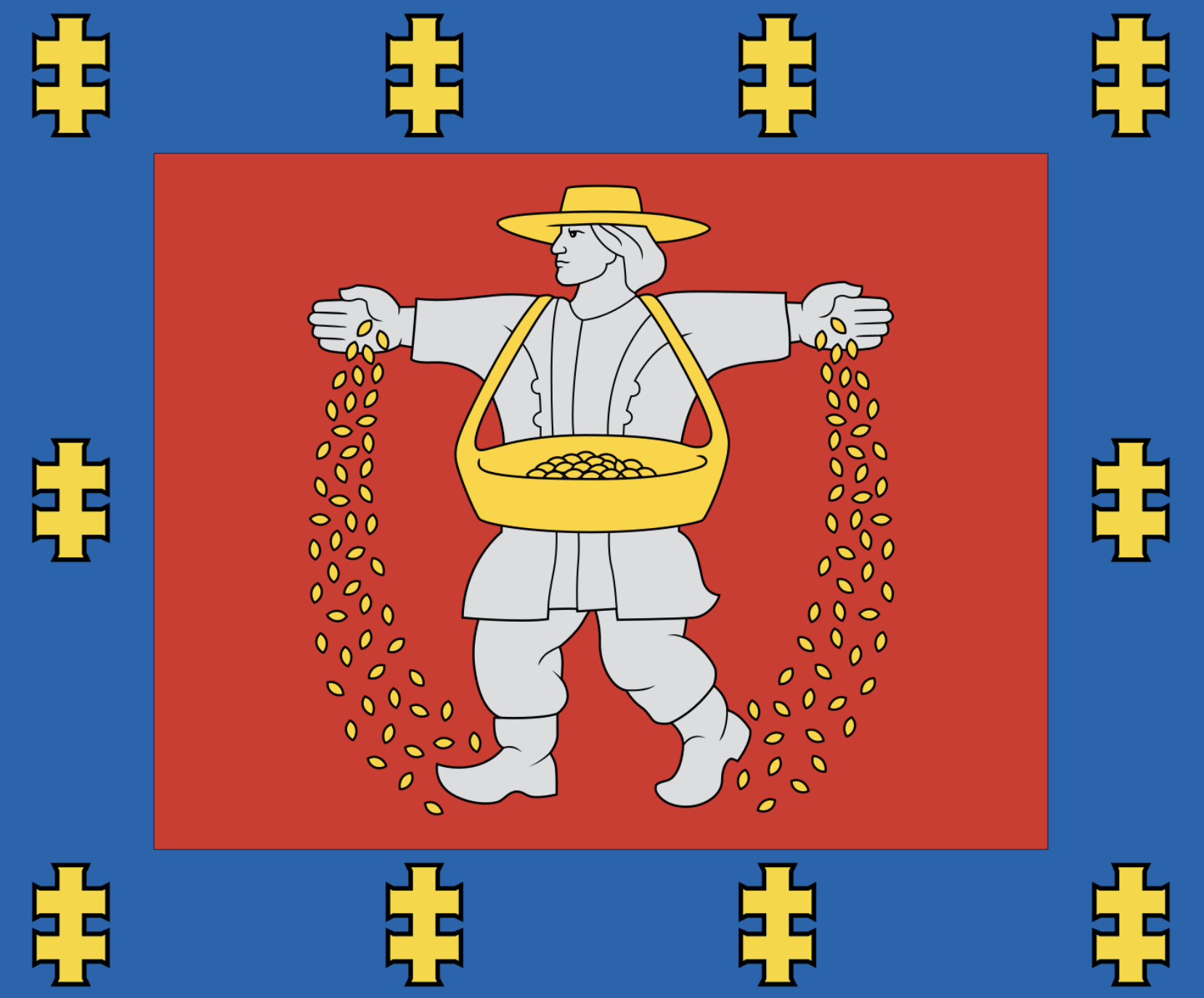
The county flag express the traditional nature of the area
The Rail Baltica project runs through the area. A break-of-gauge facility at Mockava allows rolling stock to be exchanged between the European standard gauge, 1435 mm (4 ft 8+1⁄2 in), and the 1520 mm (4 ft 11+27⁄32 in) gauge of former satellite states of the Soviet Union. To speed up though traffic, a track-gauge changing facility operates, which includes the SUW 2000 variable gauge axle system that allows fitted trains to pass through the break of gauge at walking pace.
wikipedia
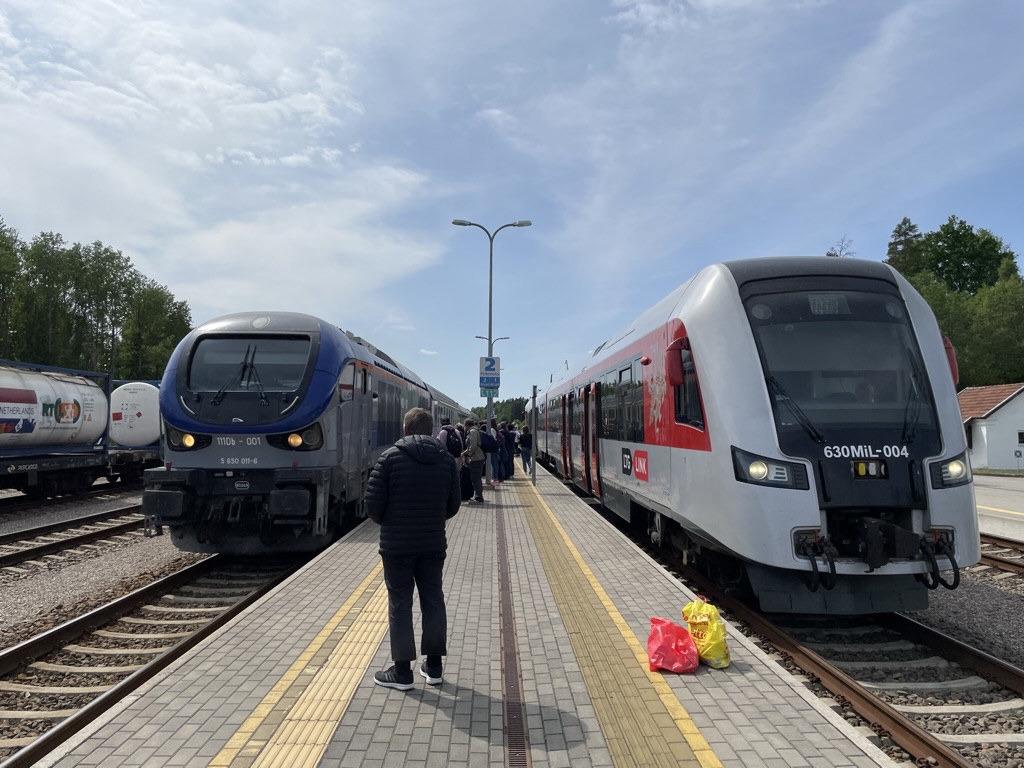
Another busy train disgorges us all at the transfer platform. We have a long wait. The train from Warsawa (which began early in the day at Kraków) should be arriving fast the same time as we do…. but it is 25 minutes late. This could be a rather uncomfortable experience in winter when temperatures are regularly -10 C during daylight.
The engine detaches and runs round the train.
Eventually we are ready to depart
then retrace our route across the final few kilometres of Lithuania
and back into Poland
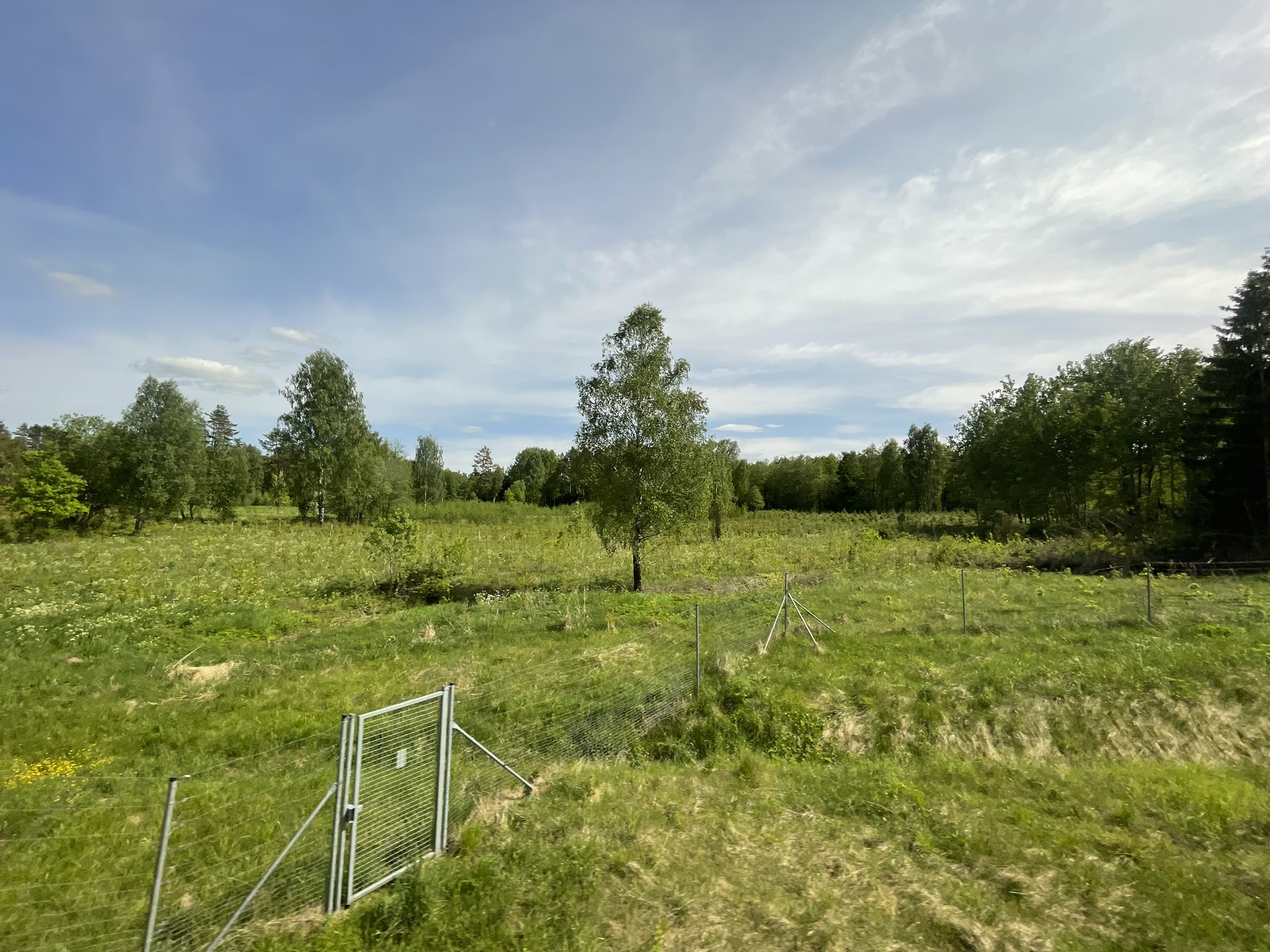
Though unobtrusive there are several sets of gated fencing
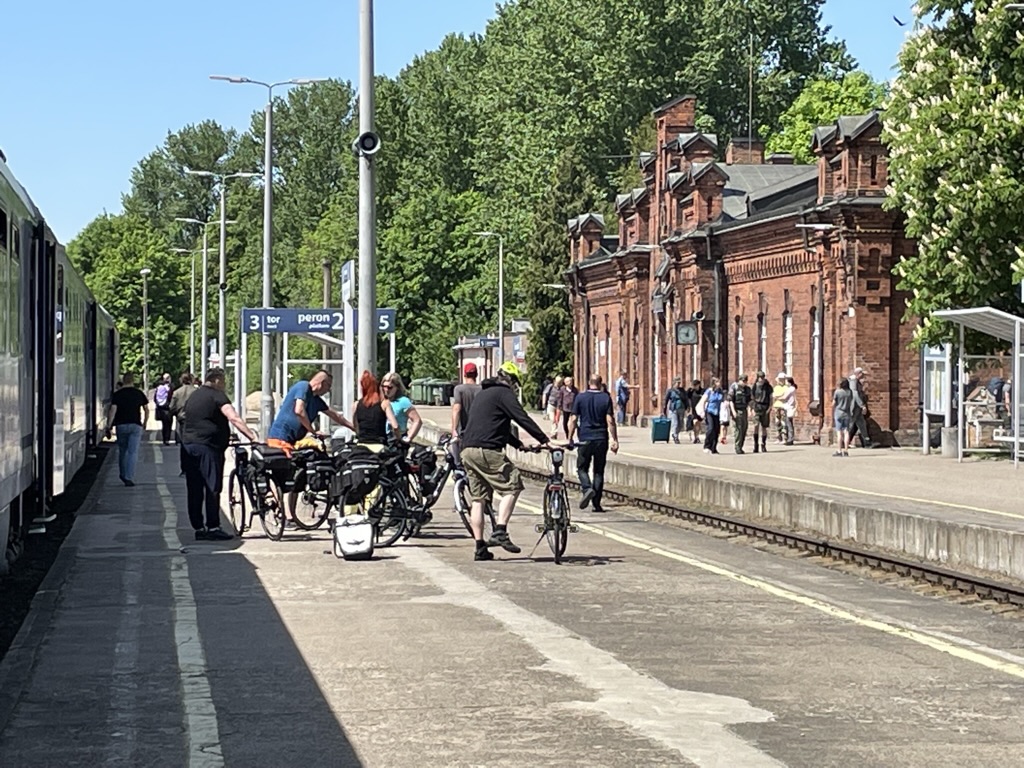
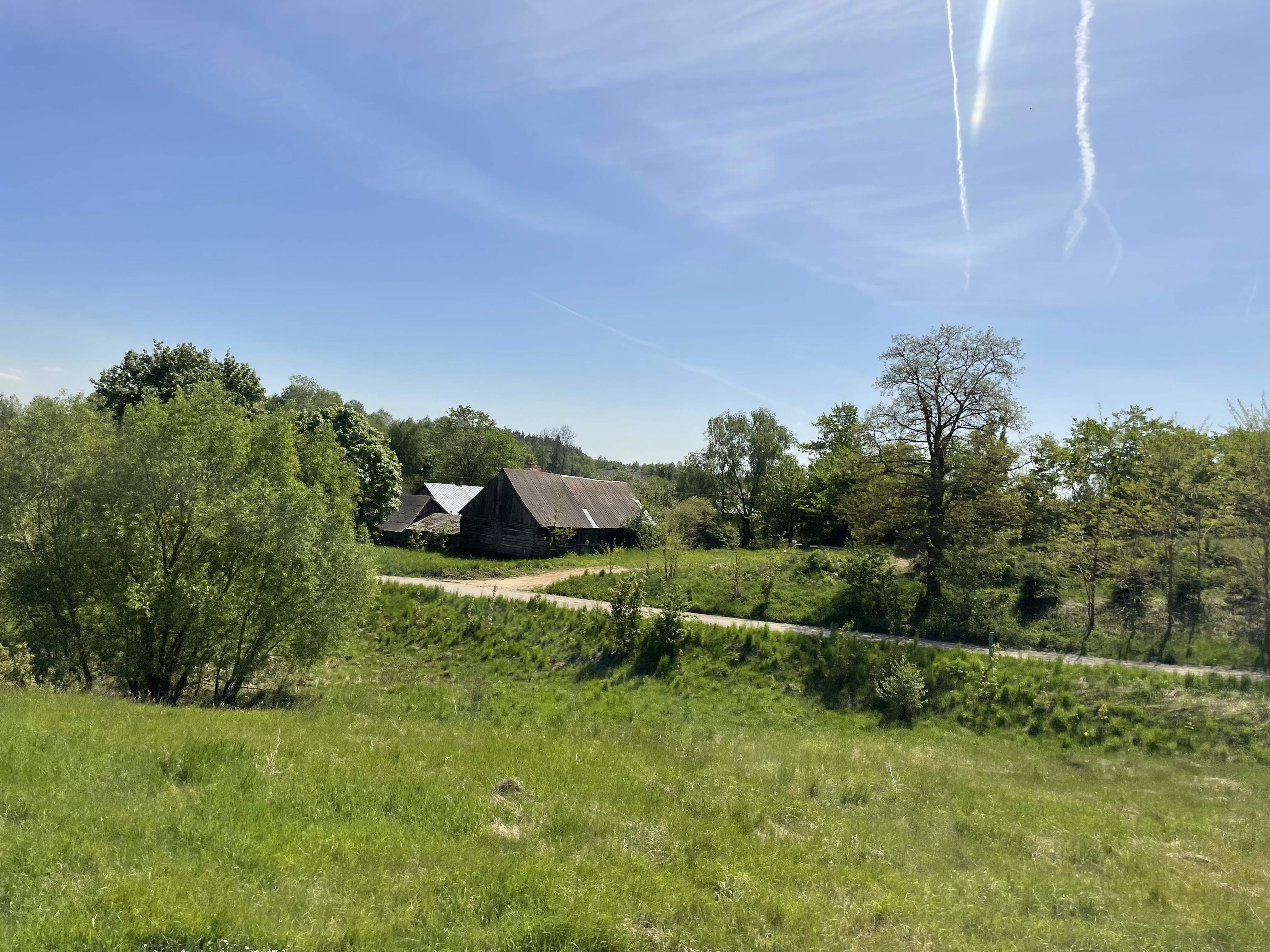
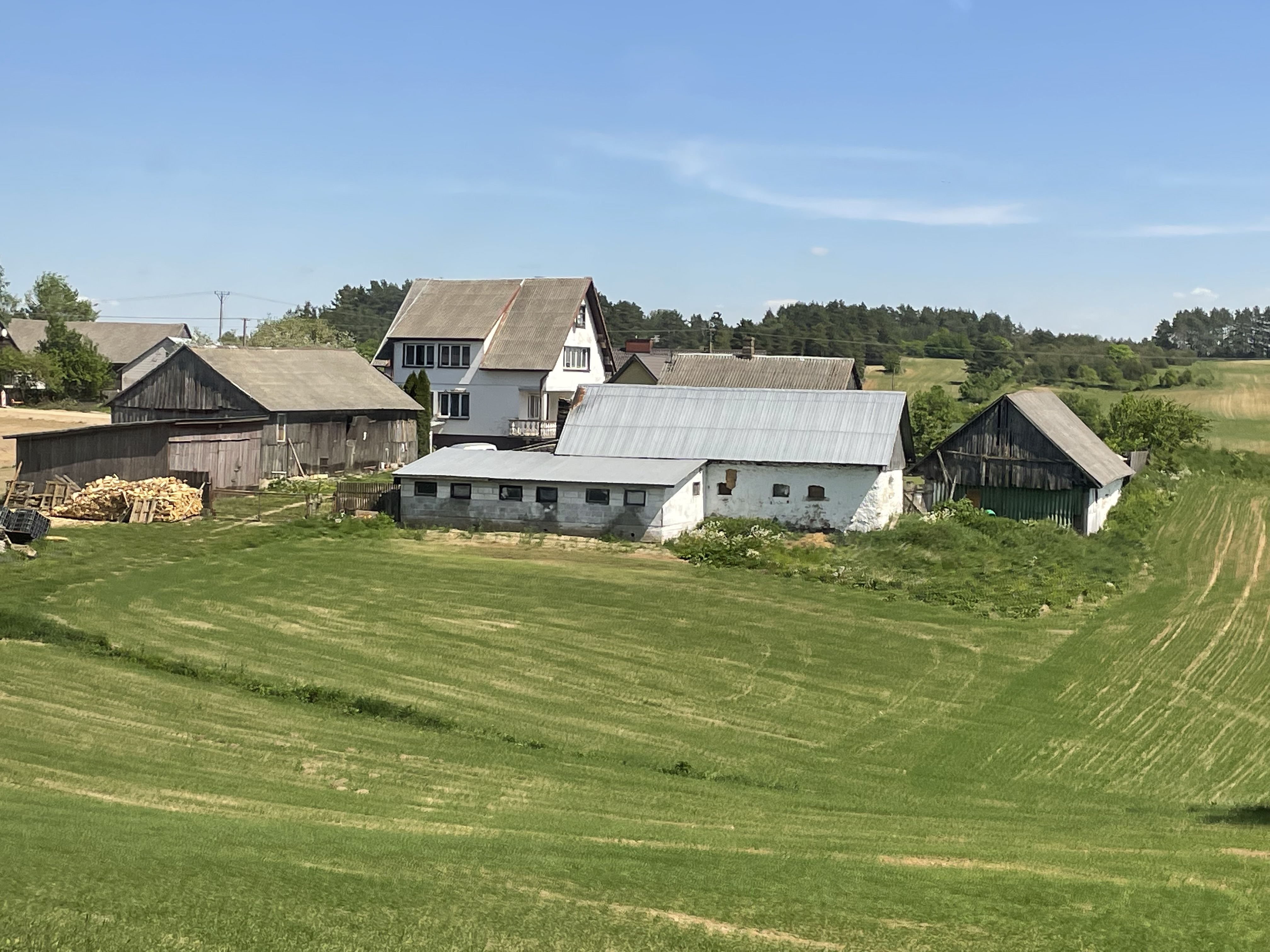
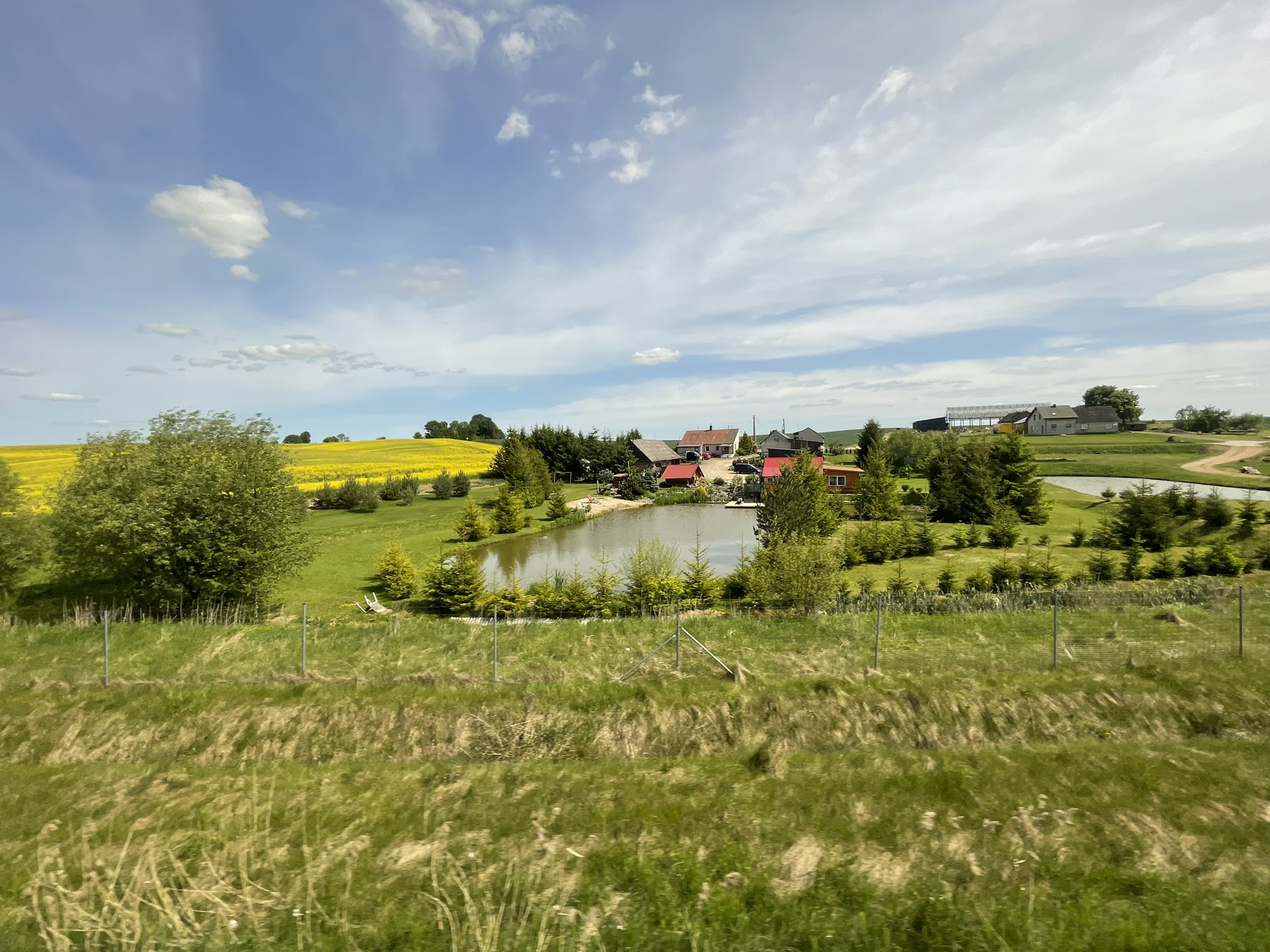
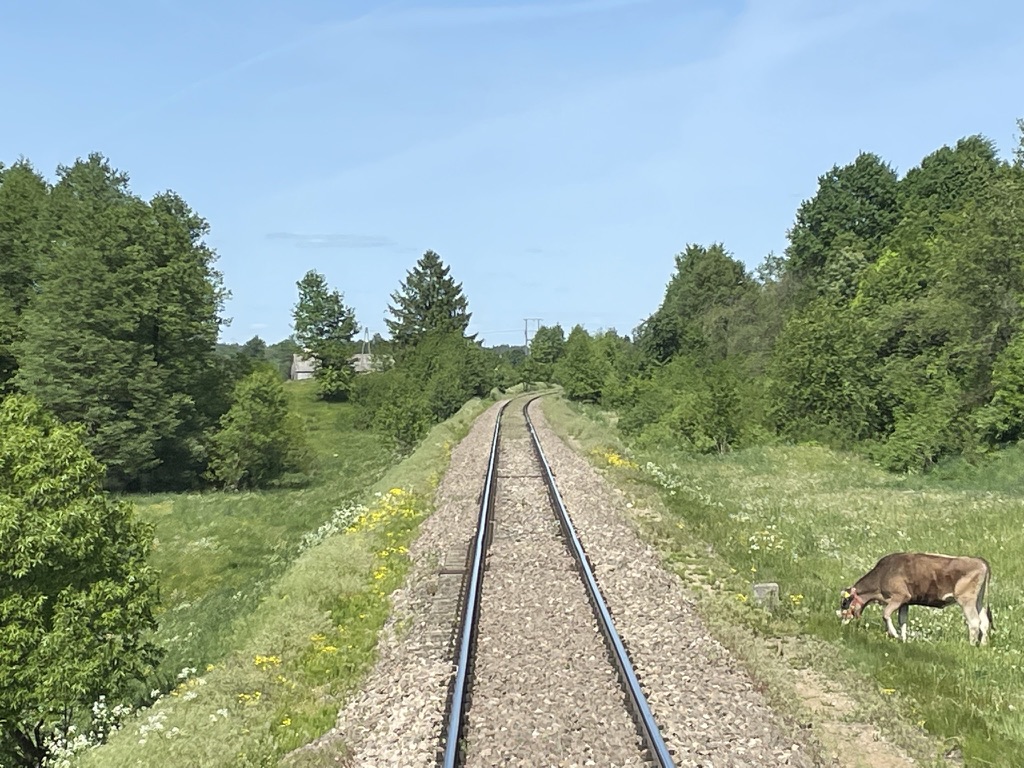
We continue our gentle ‘rural ride’ down to Suwałki
… after which the speed increases and we head for Warsawa
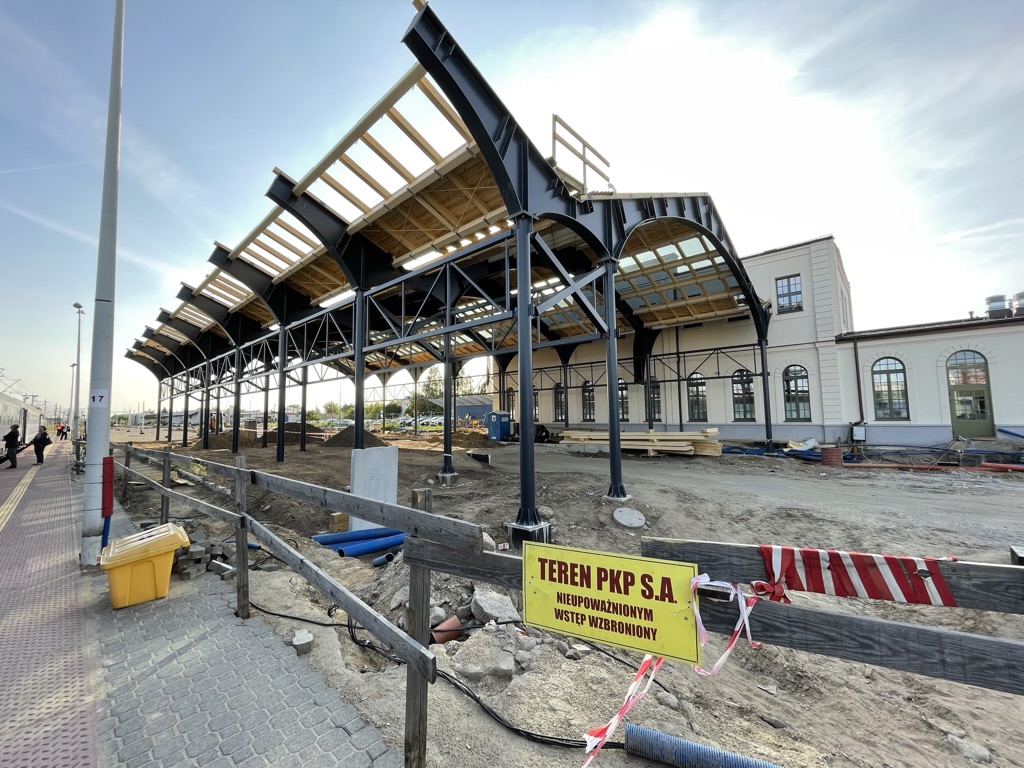
At Białystok (under reconstruction) there is another lengthy wait as there is an engine change (easy) & extra carriages are required – and there seemed to be some confusion regarding the process.
After which we leave the somewhat idyllic countryside….. ……’Somewhat’……… …..we have been close to Belarus & compared with our previous journey in 2018, the area is now in, a ‘sensitive zone’.
Eventually – back to Warsawa:
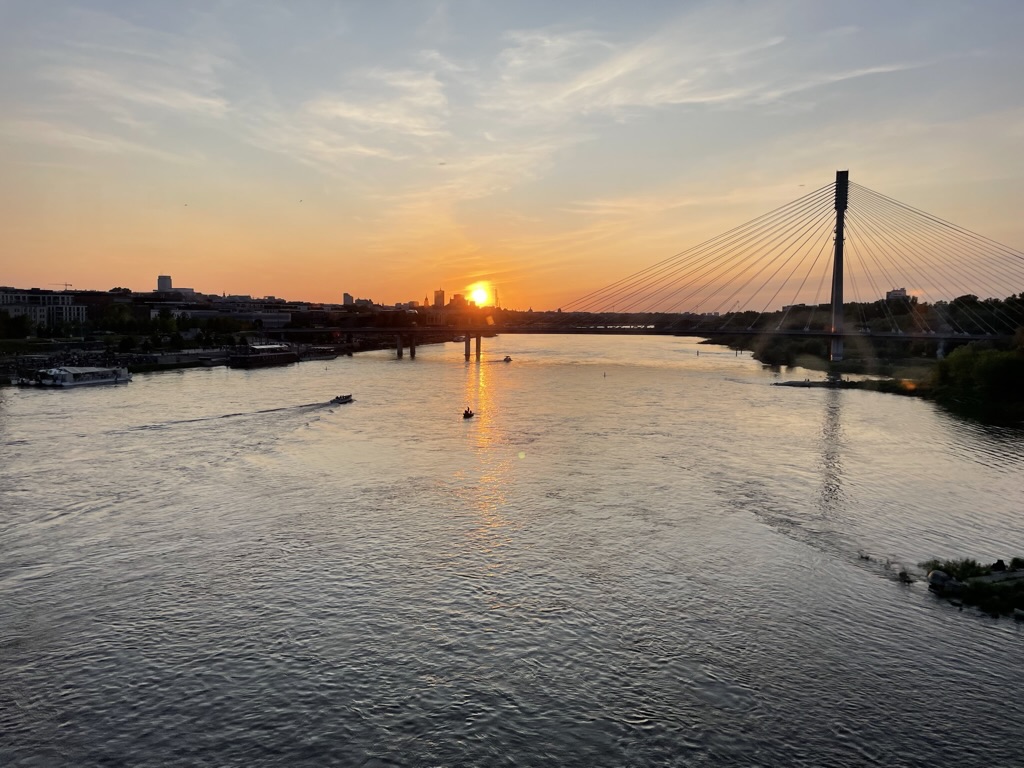
Crossing the Vistula River
It has important memories for us
The river at which in August 1944 WW2 the advancing Soviet Army stopped and waited to cross (which it could easily have done) until the Fascist German Army had destroyed the city and killed the Resistance forces.
Joseph Stalin tactically halted his forces to let the operation fail and allow the Polish resistance to be crushed. Scholars note the two month period of the Warsaw Uprising marked the start of the Cold War.
According to the historian Alexandra Richie, for instance, the Warsaw Uprising “laid bare the differences between Poland’s desire for a Western style democracy and freedom, and Stalin’s brutal ambitions to Sovietize postwar Central and Eastern Europe.”
We are all still living in the aftermath of the events of the 1940s. The memories and feelings are ‘raw’. In the UK it is only very recently that major newspapers have dropped (victorious) wartime references when reporting English (not Scottish/Welsh) football matches against Germany. It works both ways – in my early (high-hiking & other journeys, 1960s/70s) across Germany I had several drivers specifically explain (in German) that there were no longer Nazis in Germany. I was rather embarrassed because I’d never had that view…… our family relationships were with German families who had been oppositional to the Nazis (& suffered for it).
Consequently when reading any accounts of what happened during WW2 care is needed when reading accounts.
Stalin clearly seems to have prevented his armies from crossing the Vistula – & after initially encouraging the Warsaw Uprising, made no attempt to support it. Though a crossing would have been costly in lives that was not something that usually concerned Stalin – and artillery support could have been provided.
The aims of Hitler’s troops in the destruction of the city and death of its inhabitants during the Uprising is difficult to comprehend… but does seem to be a reflection of what Himmler had expressed and Hitler may have uttered privately in 1939
…our war aim does not consist in reaching certain lines, but in the physical destruction of the enemy. Accordingly, I have placed my death-head formation in readiness – for the present only in the East – with orders to them to send to death mercilessly and without compassion, men, women, and children of Polish derivation and language.
On our first visit to Warsaw in 2008 our hosts insisted on taking us across the river to the east bank. On our first visit to Warsaw in 2008 our hosts insisted on taking us across the river to the east bank.
The difference was considerable – as the buildings on the east side were clearly of a different and older style than in the west. It was at that point, standing on the east side looking back, that it became clear what horror was being permitted by the Soviet Army. The German Army was ‘doing their dirty work’.
Near the bridge was a recent monument to the local people who had lived in that area – the monument played music! Later, after other visits including the Warsaw Uprising Museum I was rather uncomfortable about what seemed to be an ongoing obsession with this period.
Then I realised that any open discussion of Polish history, recent and older, had been impossible until the 1990s.
The telling may not always be as precise as an uninvolved outsider might wish for but … ‘a story has to be told’ before it can be critically analysed.
When I stood before the monument created in 1989 and expressed this to our host he simply beamed broadly & lifted me off the ground in a warm hug of appreciation. No words were spoken…. but it was an important moment for me – of learning and especially, of acceptance.
Reflections on Aistė’s comment.
How easy is it to assess, following journeys taken in 2023 & 2022 across Central & Eastern Europe, the general mood of those whom we’ve met?
Aistė’s experience and reflections regarding the tensions felt at home in Lithuania, fit with others. Those (from Hungary, Poland & Romania) with whom, in 2022 we discussed the situation, described how they felt at the point the news broke of the Russian invasion. It was surprising (for us) to hear that in every case there was direct personal fear causing immediate thoughts as to how to escape invaders – or, in the Romanian case, of the sense of the already being in immediate proximity of the action.
For Iași literally just across the River Prut….. the Republic of Moldova already has, since 1992, an indeterminate number Russian troops in the Trans-Dniester region of the country.
In March 2022, the Parliamentary Assembly of the Council of Europe adopted a resolution that defines the territory as under military occupation by Russia.
Our impression was that Romanians had a slightly less ‘immediacy of concern’. This may be due to the country not having been under direct influence of Russia since 1964
In April 1964, Romania formally declared its independence from the Soviet Union’s control and detailed its plans to reorient its economy towards agriculture and natural resource extraction.
This had other unfortunate aspects as under Ceaucescu the country became focused on a ‘nationalised and personalised’ dictatorship more associated with the oppressive style of North Korea than other communist States. There were no opportunities for ‘alternative thinking’. The results of this (which lasted 25 years until 1989) seems to explain why when reading & hearing Romanian views, especially on their history, there are curiously warped versions of reality (as demonstrated in parks where both Emperor Traian & Decebal seem to have co-equal status).
The determined actions of Putin demonstrate how fragile, since 1991, has been our extended period of European reconstruction.
Thirty years has been insufficient.
The impact of the invasion of Ukraine in the UK was considerable – but our experience suggests that reactions of people in the UK are mild compared with the fears & uncertainties that have been reopened or created in lands recently released from Soviet Russian control.
Our contacts, especially in the Baltic States, have expressed an unease that may relate to their deep understanding of difficult histories that only began with the formal emergence of their nations after WW1. In some cases it is as if they are preparing to adjust, yet again, to the demands of an external authority.
These have been places where achieving a national ‘identity & individuality’ has been a struggle. The myths and legends have not simply been a form of Romantic Nostalgia (eg King Arthur, Knights & Round Table etc) but (however romanticised) are still important ‘living’ stories with present day potency.
In the UK because of our lengthy national stability many are inclined to think and believe that whatever difficulty is presently faced, there is an essential feeling (correctly or incorrectly) that everything will ultimately be ‘OK’.
It’s so very different where national histories are riven with recent disruption & disaster. For Poland (stretching back to C18th as well as C20th complexities) & particularly the Baltic States, the threat of losing everything is but simply a re-play of events that occurred since 1940 (living memory).
For those many with direct experience of the Soviet years (50+) unless they are very optimistic, the possible loss of freedom so recently gained (as with their parent’s generation) may create deep concerns.
The potential for an enlargement of the conflict in Ukraine remains. Whatever happens to that situation we all face a present danger that has already disrupted Europe. For how long will that remain?
“…. Russia as an empire has been consigned to the past, as a direct irreversible consequence of the war. many of us born into that empire cannot yet grasp this evident fact.
On February 24th [2022], around 140 million people woke up without the future they had the night before. All plans, all dreams, were destroyed that morning. And not at the whim of one man. They were devoured by the empire.
Not everyone realises this yet. Many are drugged up, intoxicated by the grandeur of imperialism.
We’ve been smoking this drug for centuries, feeding our own vanity. The myth of greatness was spooned down our throats, injected into our veins, and it made us high. We escaped reality. no longer saw what was happening around us, lost our empathy and human aspect. It’s time to get off the needle. Because we’re a danger to others and to ourselves.
Imperial history is our disease; its inherently addictive… We have to return to reality and realise what we’ve done.
The myth of greatness was spooned down our throats, injected into our veins, and it made us high. We escaped reality. No longer saw what was happening around us, lost our empathy and human aspect. It’s time to get off the needle. Because we’re a danger to others and to ourselves….
…We have got learn this lesson. To stop believing in our own uniquness. To stop being proud of our vast territory. To stop thinking we are special. To stop imagining ourselves as the centre of the world, its conscience, its source of spirituality. It’s all bunk.”
Mikhail Zygar: War And Punishment
Mikhail Zygar was forced into exile shortly after at the invasion of Ukraine.
Within any structure or institution are the elements that will bring about its decay… slowly, imperceptibly or sometimes rapidly & very dramatically.
At a personal level I never imagined that I would spend much of my life sharing partnerships with people from ‘beyond the Iron Curtain’. When the change occurred, both internationally and personally, it seemed very fast. Only in retrospect can I understand that the elements that create change were (at both international and personal level) busy ‘in the background’.
As ever we (collectively) have to guess where we are.
How can I even begin to understand how people develop their own negative or positive feelings?
A Comfortable Tourist, rail-rambling through places where life (regardless of finance) has never before provided such comfortable opportunities. There are an increasing number of people such as us.
One of the important conversations on all of the above was with Radu Alexandrescu in Râmnicu Vâlcea.
We discussed Brexit and its implications (his son works in banking and has recently had to move from London to Paris). He firmly made the point, against my complaining as to Brexit’s impact, that I lived in a very affluent country where even a serious decline would not have the same social & economic impact as occurs in less affluent societies.
Radu’s view is from one such place (Romania).
His view was fairly standard… but he was seeing me as someone who had always been able to move internationally…. whereas he had, until in his early ’40s, been trapped in Romania.
His now global experiences (much greater than mine) had underscored the belief that the freedoms he gained had been acquired through personal hard work.
Mine were viewed (correctly or not) as a birth-right, inherited because I was born in UK …. whereas he had to struggle for his.
At a personal and family level he has achieved an enormous amount…. I ask myself, how does that compare?
…………………….
We return to the hotel used previously. The view from the station demonstrates how much has changed. The “Palace of Culture and Science in the name of Joseph Stalin” was in 2008 the most dominant building, now it is gradually disappearing as other recent skyscrapers dominate.
A stroll through the urban park by the hotel and then taxi to an outer station (due to engineering works at the more central stations)
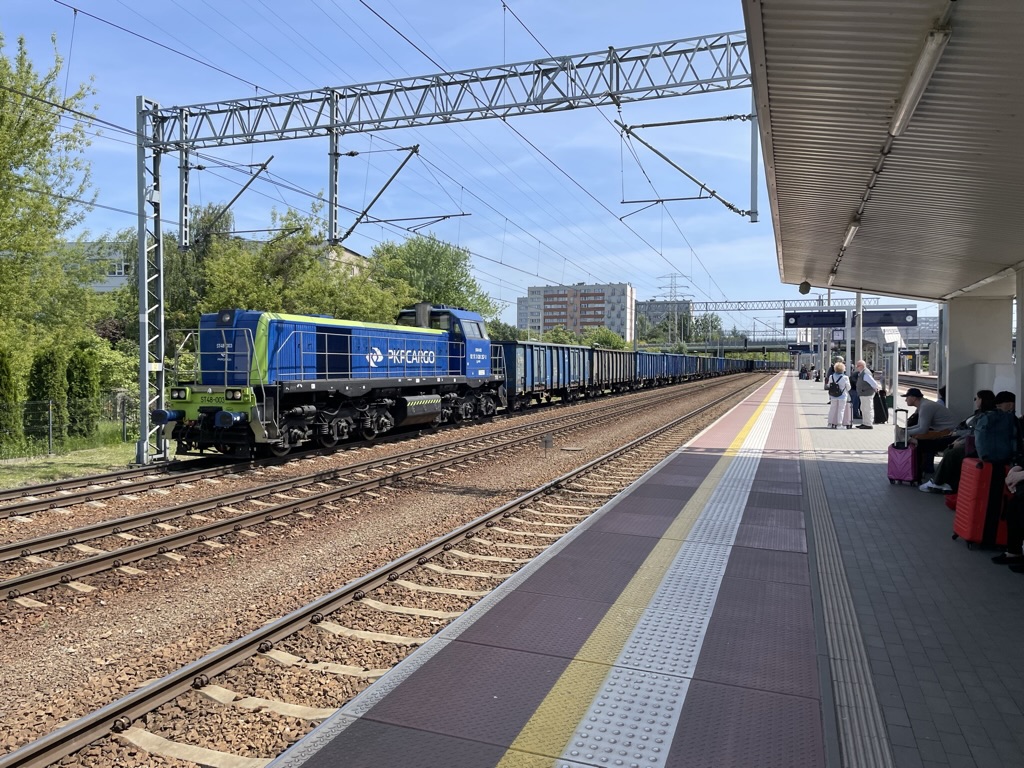
The smart engine is hauling a coal train – Poland still dependent on its (poor quality) lignite coal. Pollution levels in cities during the winter can be very oppressive (reminiscent of ‘smog’ from childhood).
Very smart (renovated) train for the Berlin Express. The bar and restaurant are open before we leave (still 15 minutes to go). Fine menu. ……… Poland, Czechia, Slovakia, Austria all provide good dining facilities. German railways are ok but the others disappoint. Have yet to try the new Welsh dining car service (Cardiff – Manchester/N Wales).
WhatsApp
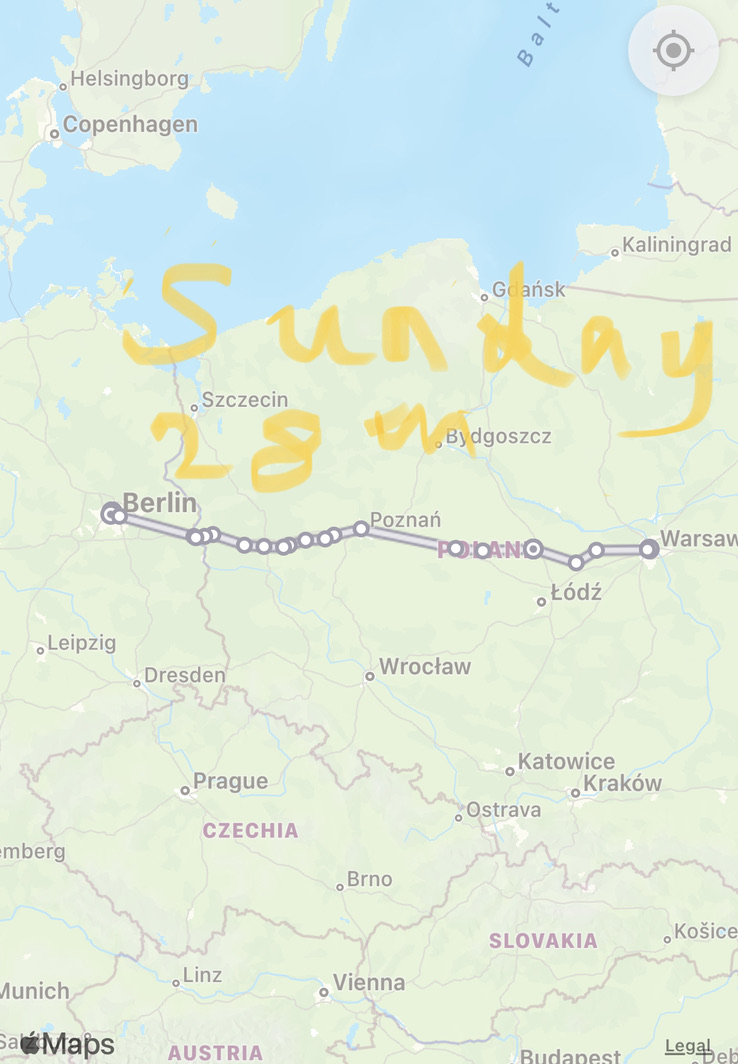
The express becomes very busy…. its Sunday
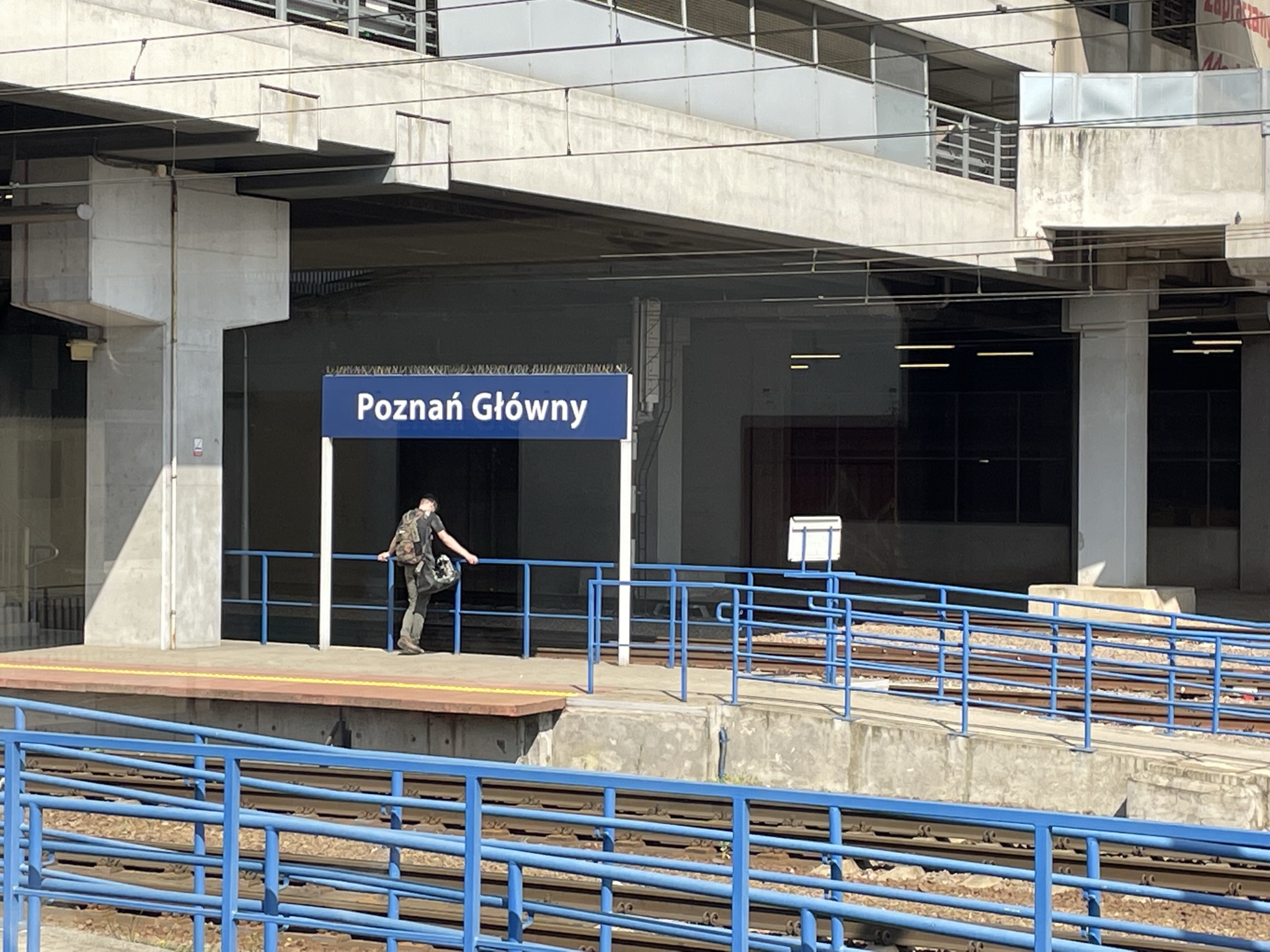
We wave to Poznań as we stop briefly – its unusual not to be leaving/joining the train here as we’ve had many visits and activities based there.
We have time to take what has been, on our visits (usually focused on other places) a regular walking tour in the centre.
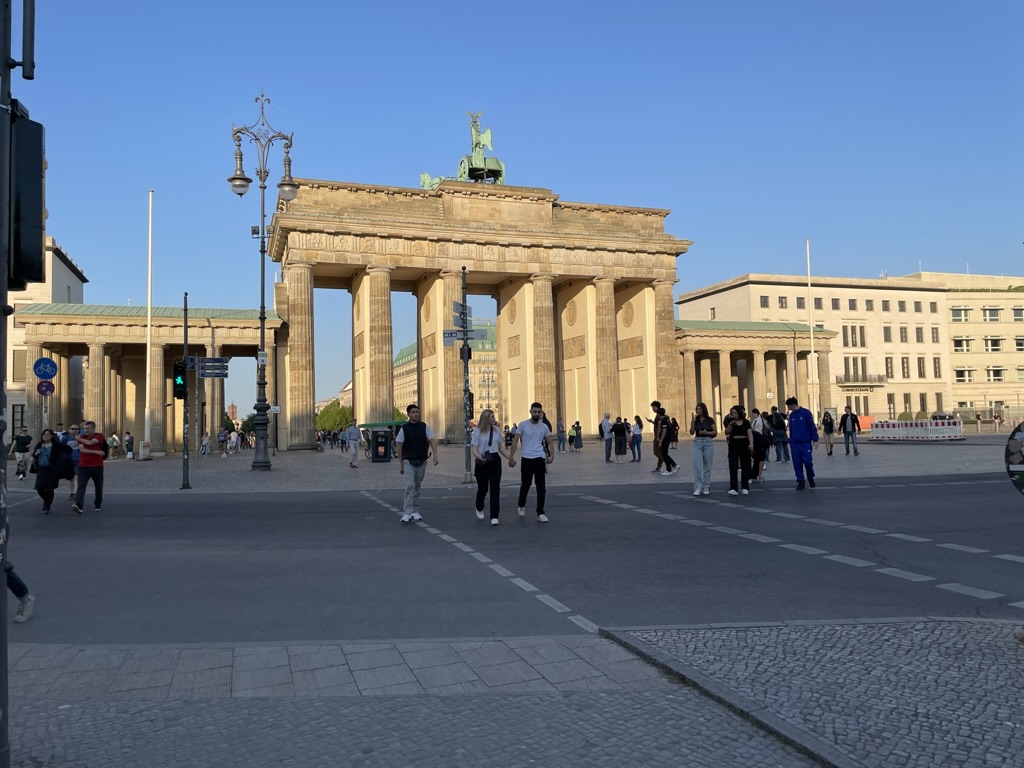
Brandenburger Tor: When I first stood in the place where I took the photo all in front was barbed wire…. And no access allowed.
WhatsApp
That was 1966 – 5 years after the ‘wall’ was constructed. I went across into East Berlin (which was beyond the Tor but that required passing through the infamous ‘Checkpoint Charlie’ in the American sector.
After the war and until 1990 Germany was dived ‘East’ (Russian) & ‘West’ (French/British/USA). The 3 western countries maintained their presence militarily but created the entirely independent democratic state of ‘West Germany’ – the Federal Republic of Germany (FRG; German: Bundesrepublik Deutschland (BRD). On October 3rd 1990 the ‘East’ German state was added.
Russia created the German Democratic Republic (GDR; Deutsche Demokratische Republik) which, though apparently independent, they effectively controlled as an authoritarian ‘satellite’ from Moscow. Following free elections on March 18th 1990 a Grand Coalition, having a 2/3rds majority voted to unify with the Bundesrepublik. This occurred on 3rd October 1990. The large Russian troop deployment stationed in East Germany was gradually withdrawn.
Berlin was in East Germany but divided into 4 sectors. It was technically in no ‘State’ and therefore had a special form of government based on the 4 Powers of France, UK, USA & Russia. The Russians withdrew from the group therefore French/British/USA worked together as one organisation. The city was managed by its own elected Senate with an important role for the City Mayor
On a previous visit when we had time to explore more of the city I felt that one of the interesting aspects of Berlin is that it still has 3 City Centres.
The ‘Western’ centre created around Ku’Damm (Kurfürstendamm) The ‘Eastern’ centre around Alexanderplatz The ‘historic’ centre (‘Mitte’) which starts at Brandenburger Tor & continues down the Unter den Linden (etc)
Much of the designated ‘Mitte’ felt more or less derelict when I visited in 1966 – at least that was the feeling produced after wandering around. Alexanderplatz was new and comparatively smart – in an unexciting way & when compared with an overall sense of greyness.
Monday 29th May
Our penultimate day. Probably the most chaotic travel day of the whole tour.
We began in February having to drive to the ferry in Newcastle as there were train strikes & r ail travel was severely disrupted.
Today, as it evolved, became a ‘balancing day’ to that at the beginning.
The Lost Express
Our train is for Köln
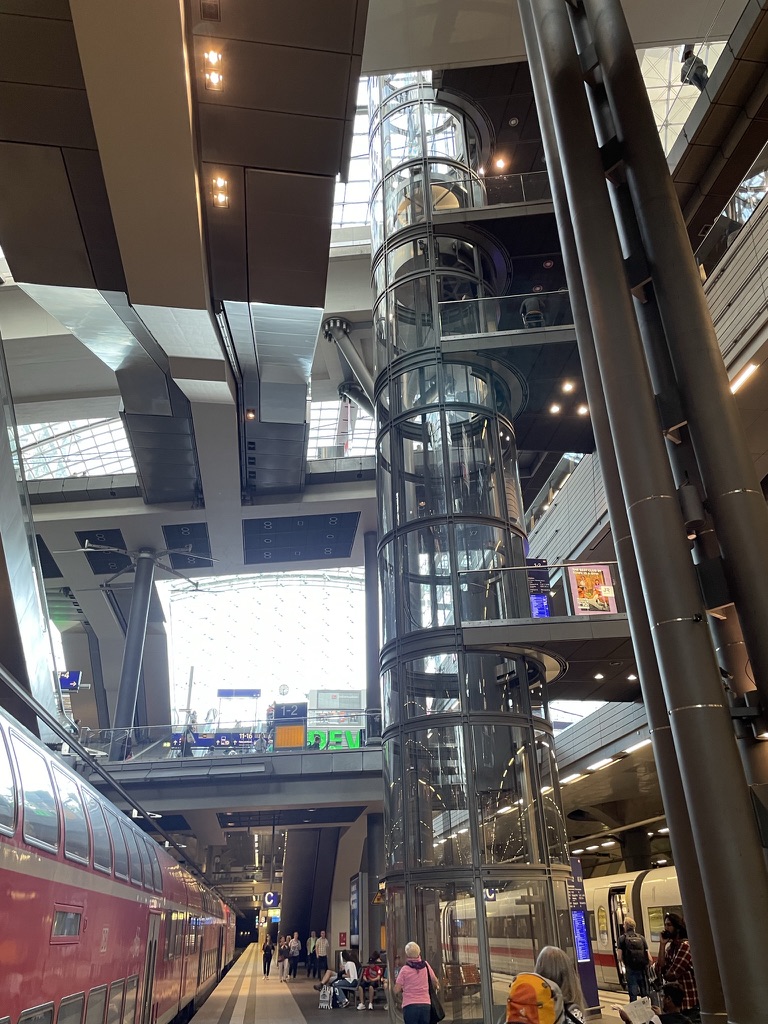
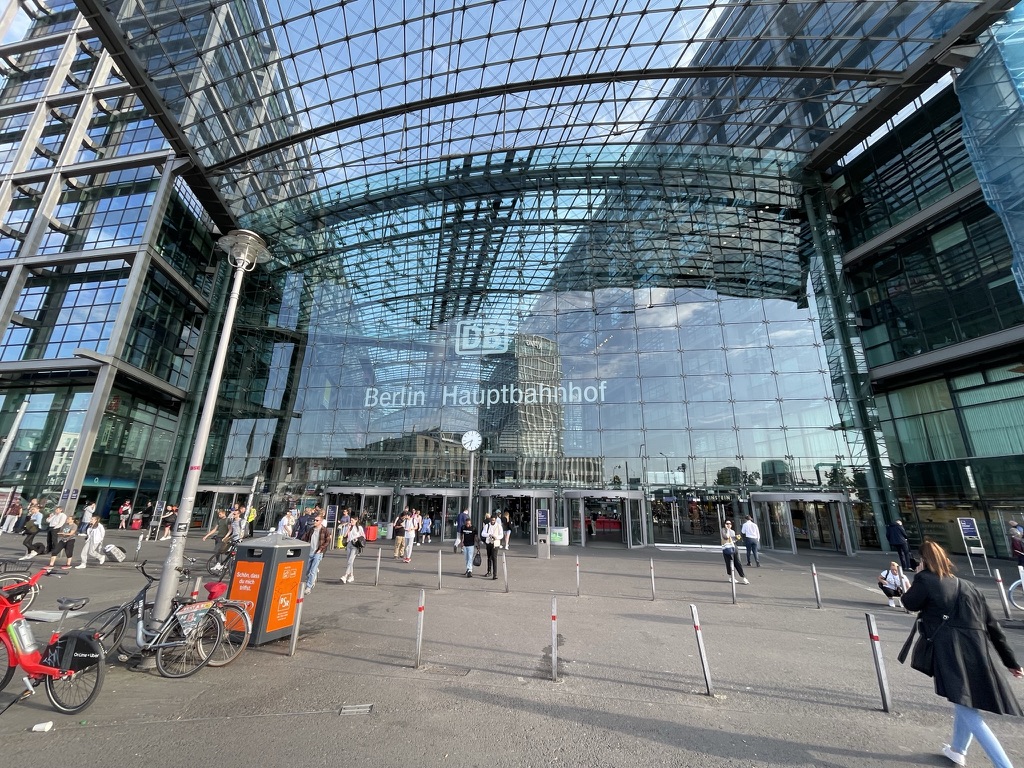
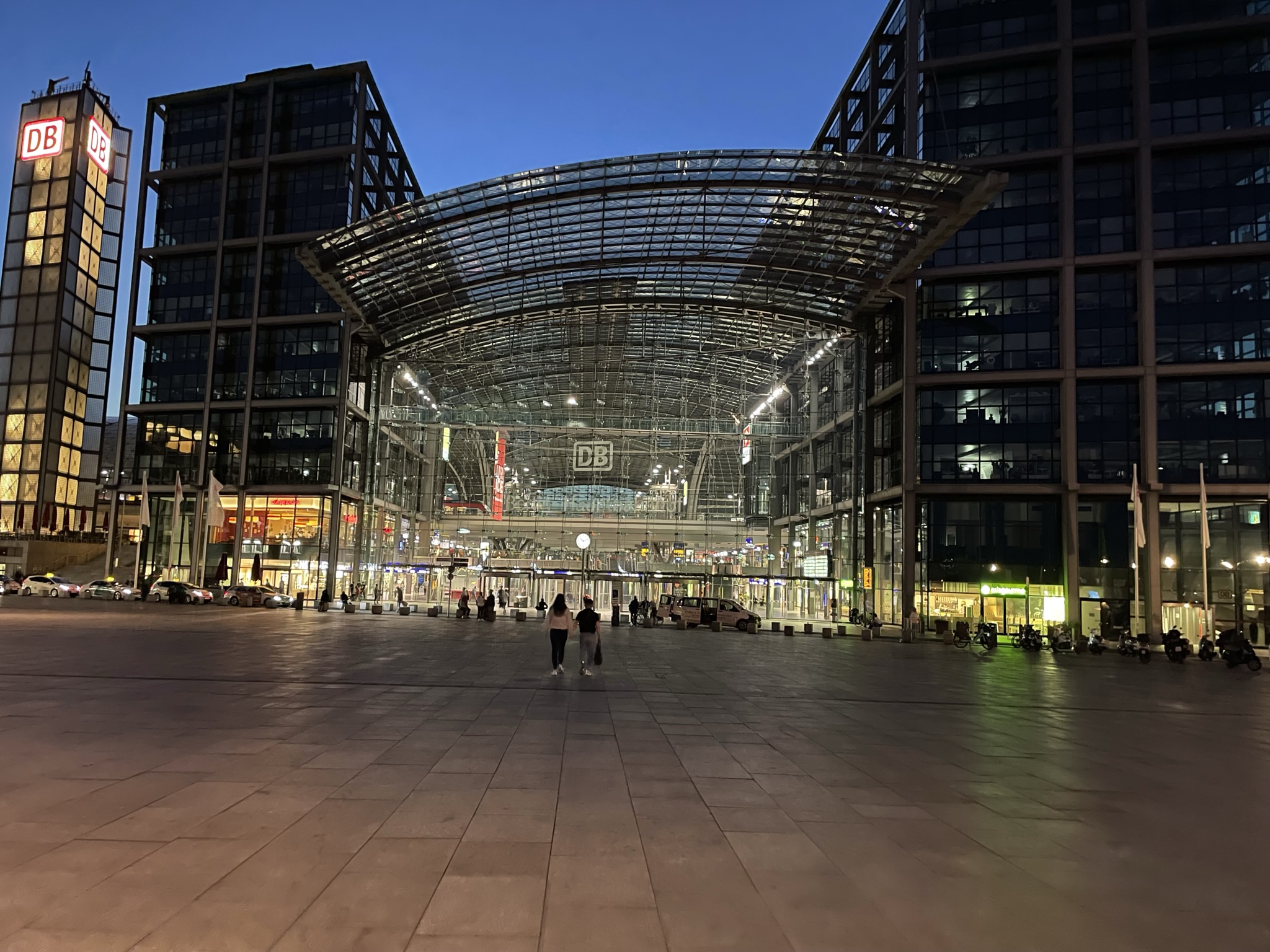
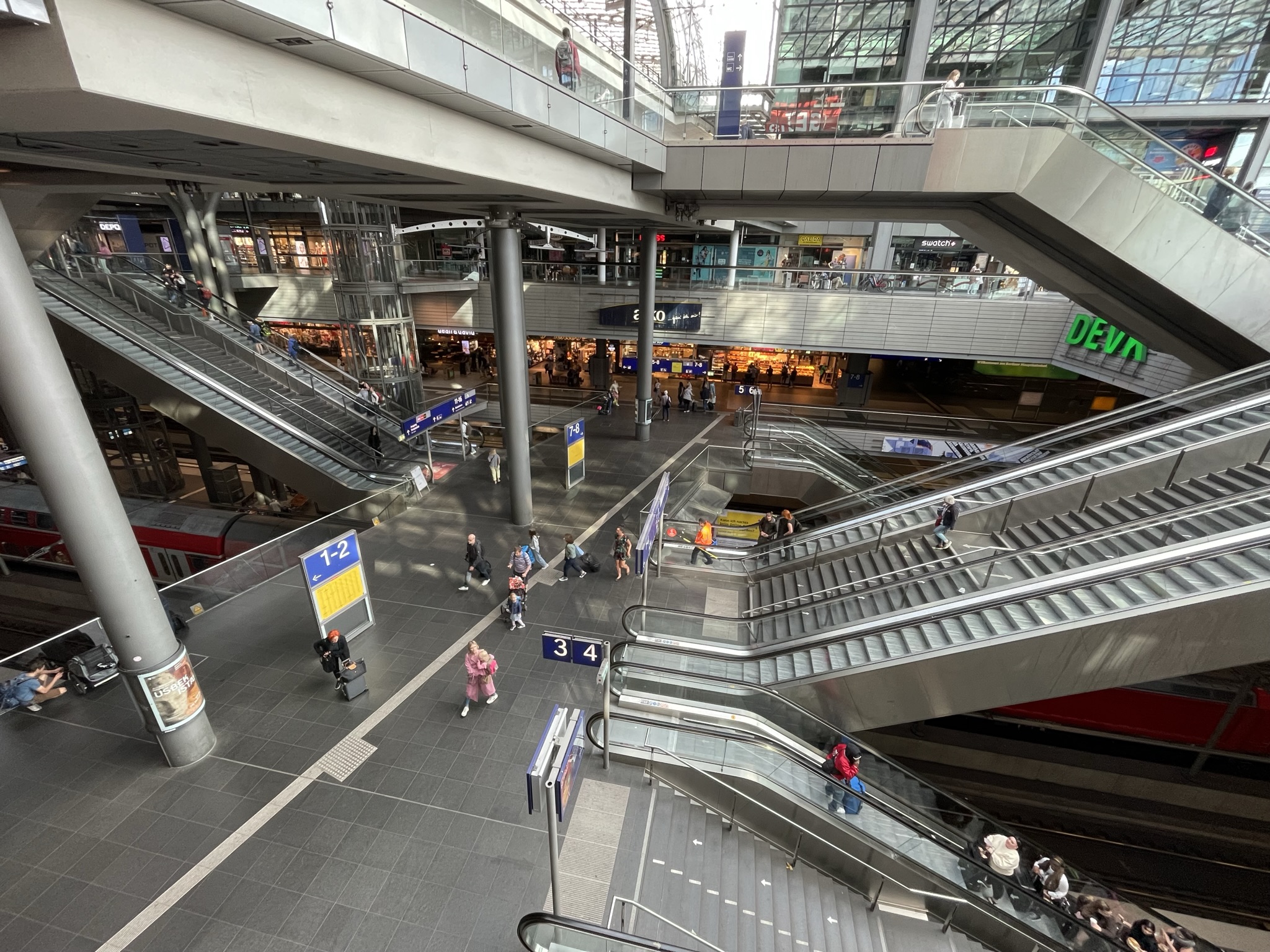
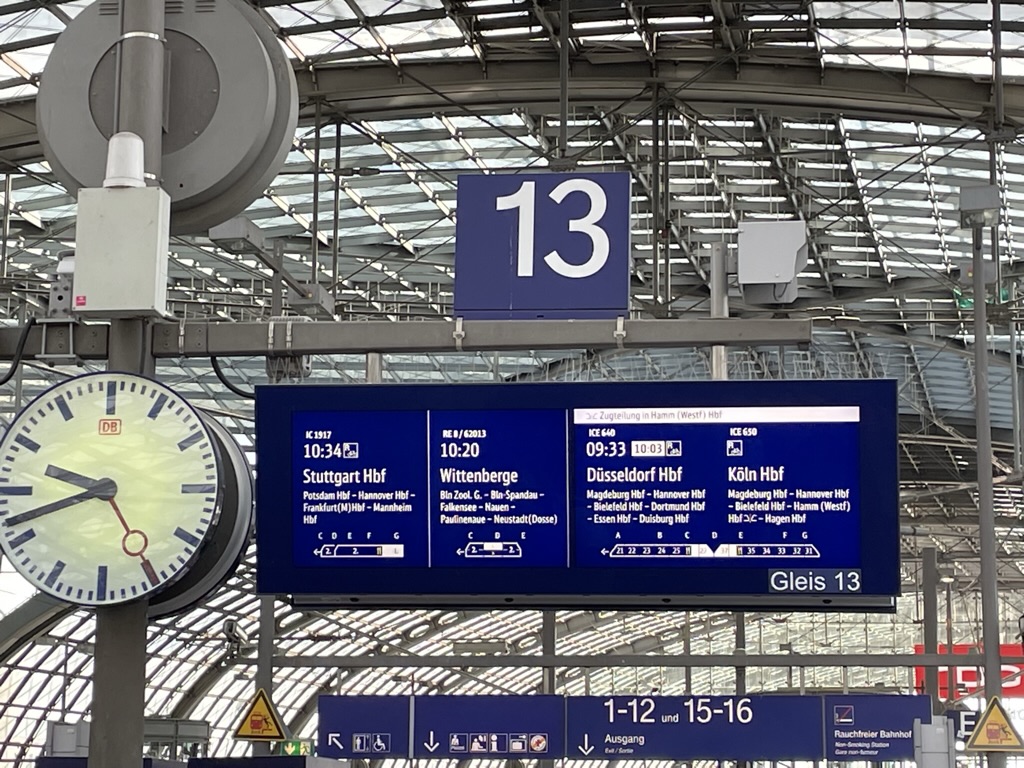
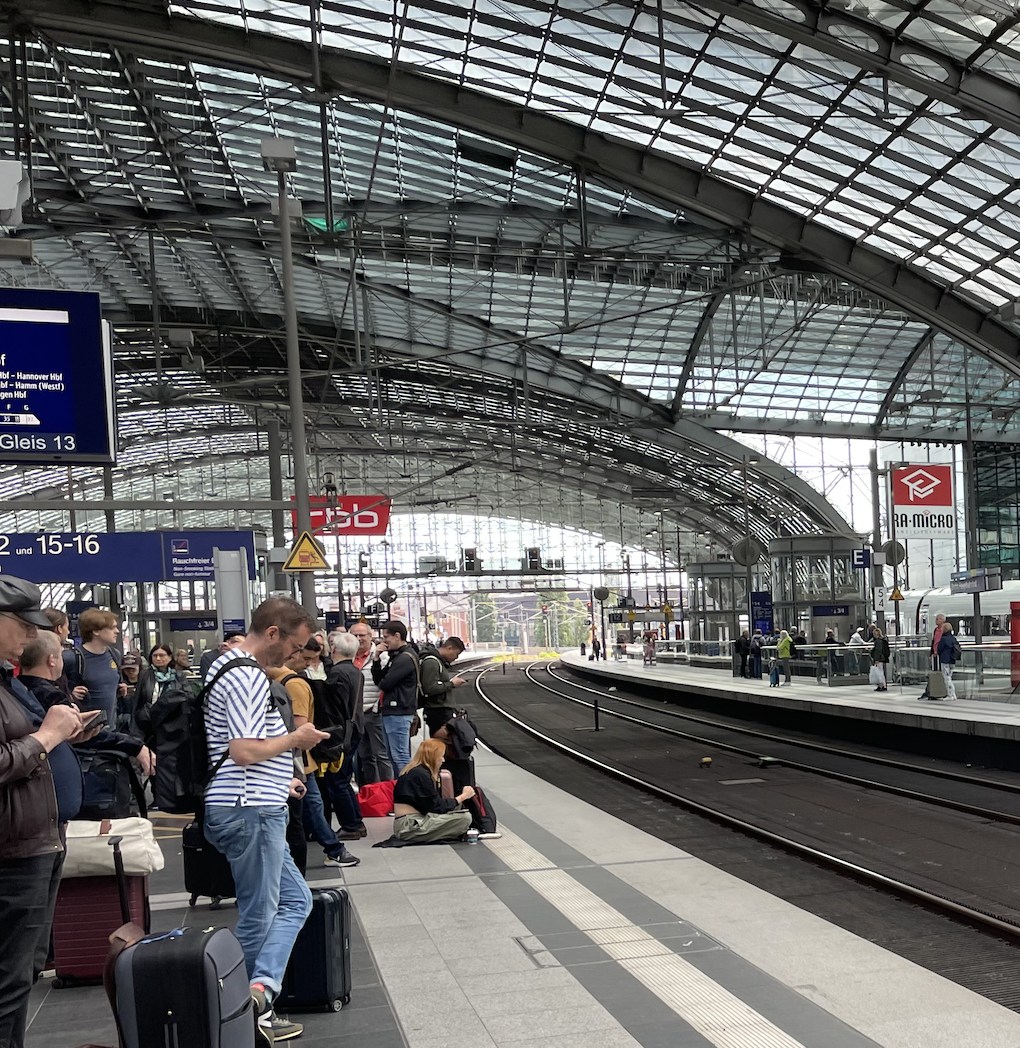
Wonderful station but….. our train is half an hour late (and it starts here!). Unfortunately this type of lateness has been normal on DB ICE trains….. if the train does not ‘catch-up’ time then in Köln we may miss our connection to Brussels.
The indicator board then added another 15 minutes to our delay
Now due to leave at 10.18 (instead of 09.33) The platform staff have no idea where the train is…. They have examined the electronic track diagrams and cannot find it! I suggested that it was now a ghost train…. They laughed and agreed! The original schedule for train ICE 650 had stated it was leaving at 10.42….. maybe the whole system is screwed up.
This situation is the worst we’ve had in 3 months.
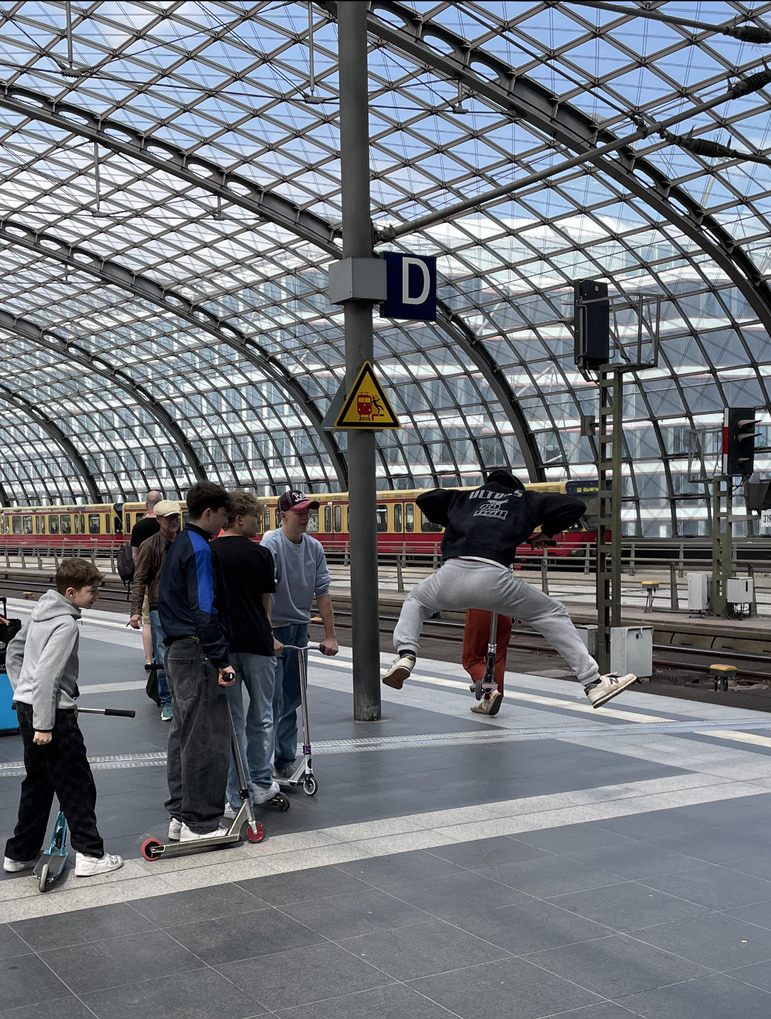
The platform, around 10.10 the platform became an adolescent exercise zone
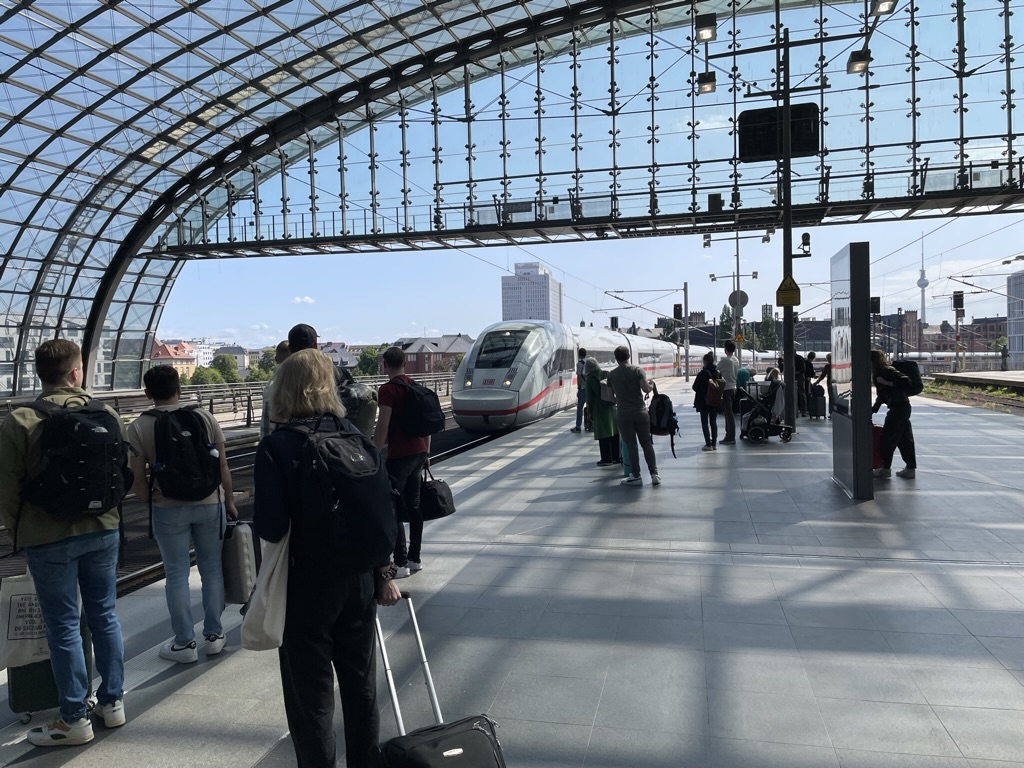
At 10.29 a train had been found and arrived to take us on board
we left Berlin over an hour late – close to the original time scheduled…. but there was a reason for the intended early departure & it had not changed
The cause is construction work…. Improving the system…. The time schedule had been changed by over an hour from 10.46 to 09.33. The DB app suggests we will be close to time on arrival in Koln.
Almost everyone with whom we’ve discussed DB stated that quality had declined in the last 10 years (marked at times by fatal rail crashes).
When Germany was divided into East and West the main line between Berlin & Hannover was one of 3 permitted routes between West Berlin & West Germany.
We are following the old ‘east’ German route through Magdeburg. This is much slower than the direct line to Hanover. Presumably there is major work on the direct line.
Anyway… in this part of the train there is a considerable degree of humour & bonhomie….. people from different places and backgrounds chatting away.
As speed was limited the delay increased during the journey
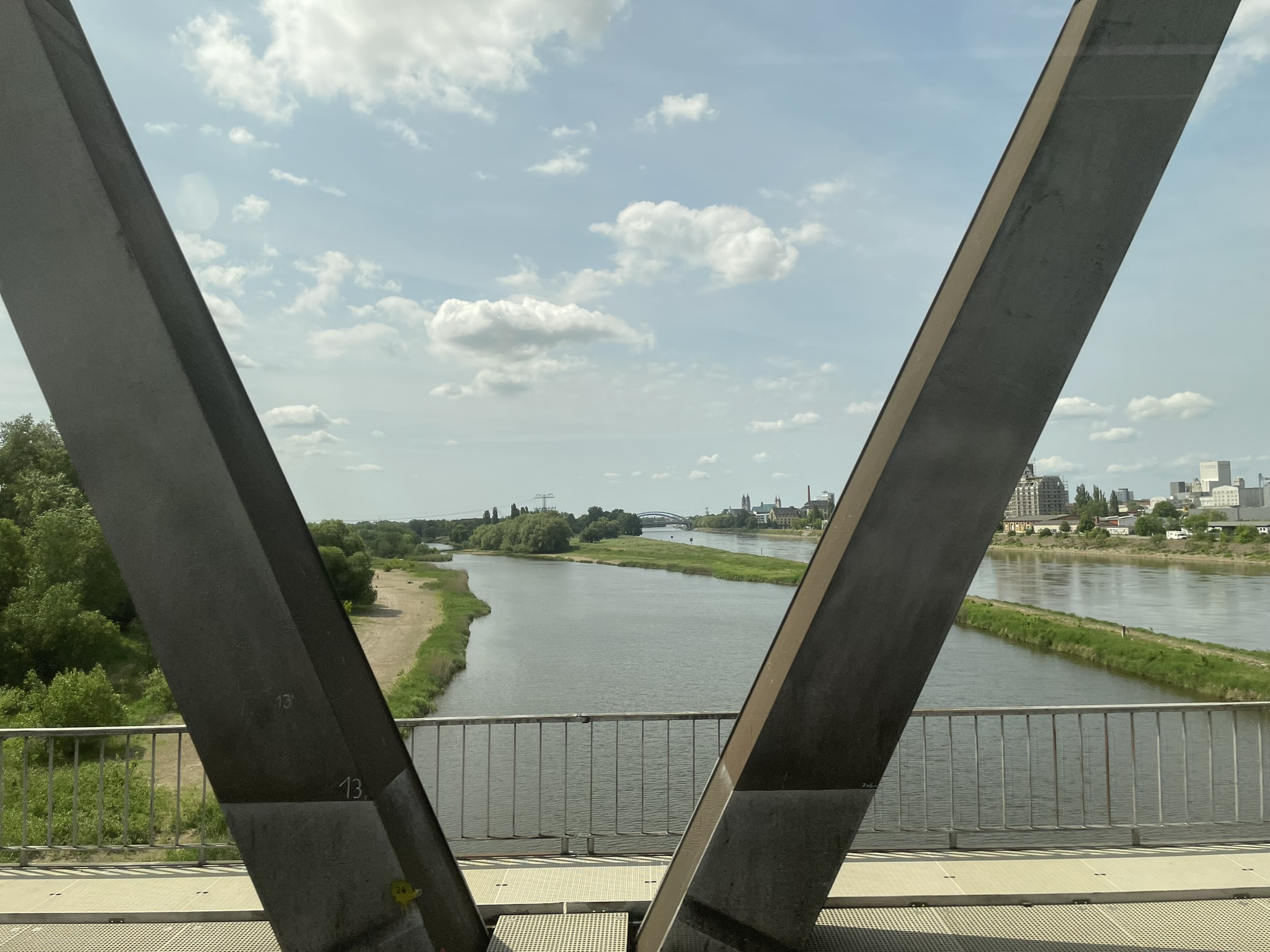
Crossing the Elbe at Magdeburg
We arrived in Köln 1 hour 40 minutes late.
We had missed 2 connections – but there was another for which we were to wait.
Then began the craziest part of the whole 3 months Tour
The whole day was strange but became bizarre after point 4 below
1. Train schedule altered & published, due to engineering work. Over one hour added to journey time (10.46 departure became 09.33)
2. At 09.33 announcements stated that there was a delay due to late arrival of an earlier train that was to form our train.DB platform staff then became unable to identify (electronically) where our train was… it seemed to have disappeared. Eventually a substitute train unit arrived & we left Berlin around 50 minutes late.
3. our train then took a diversion route (as planned) but which added a further hour (as the timetable schedulers knew would occur).
4. We arrived in Köln 1 hour 40 minutes late at 16.49
5. We had missed our original connection to Brussels & the one an hour later. We hoped therefore to take the ICE 17.41 from platform 5
6. At this point the day’s journey became surreal
7. Köln, our train arrived on time, we boarded….. but was then cancelled due to a technical fault.
8. All passengers moved to platform 12 to board another train
9. Another announcement ( in Germany and English) required us to move platform again.
10. We were fortunate in having a German speaking companion (‘Sally’, from Bridgend, Wales now living in Vienna) who had been on our train from Berlin. She realised that the instructions were probably incorrect & checked.
11. Thus we found ourselves on a very packed platform 4. There was a train on the platform and we rescued Sally who boarded it (it was going to Hamburg).
12. A further announcement told us that the train to Brussels would not be on platform 4 but platform 5.
13. And so – after travelling around Köln Hbf on foot, we found ourselves back on the platform from which we were to have departed at 17.41.
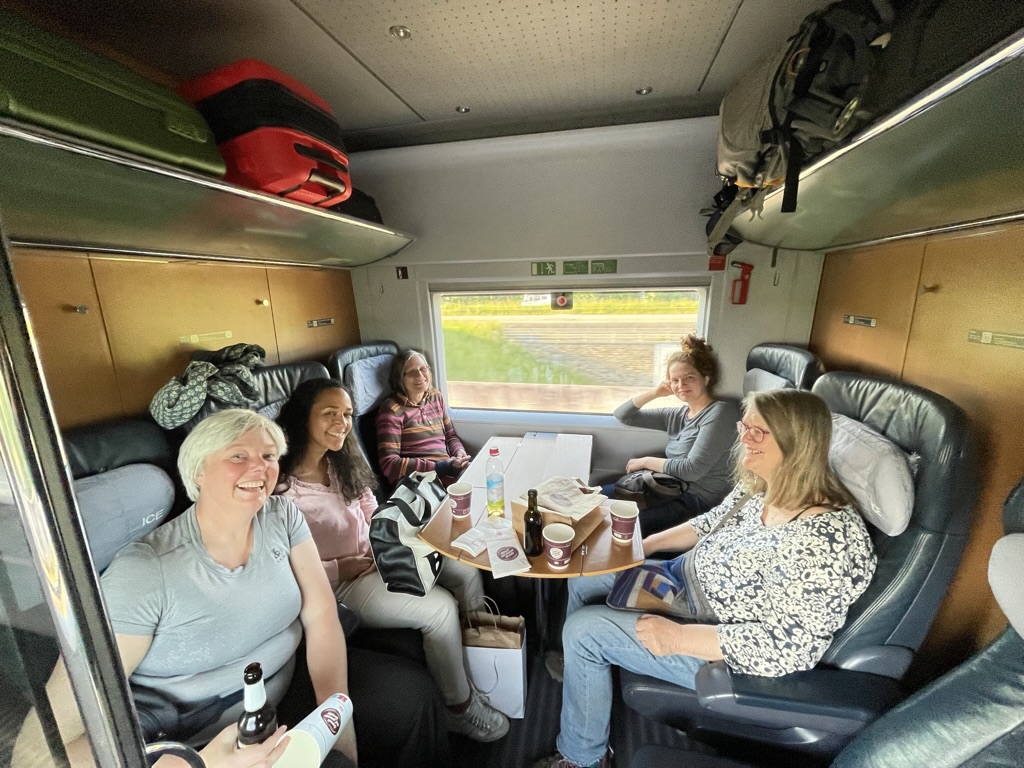
14. The train arrived passengers were leaving the train telling us that it had been cancelled…. but we boarded. I wonder if the DB system simply tells people their train is cancelled when in fact they are simply switching its use to another route? By this time all sense of time had disappeared – but we managed to find seats in a compartment.
I then whizzed down to the bar – and the member of staff who had been in the process of serving me beers when we had to leave our first train was still present – and had my beer ready! I ordered more and carried them… insisting that (given the circumstances) serving us in the compartment was unnecessary (there was a queue) … she seemed pretty grateful.
15. A Belgian who had also been on the original train from Berlin joined us and with 2 other occupants of the compartment, then began one of the most significant discussions we had on the whole 3 month journey.
16. It related to EU policy (agriculture featured) & the impact of communism on individual and social behaviour – our 2 new companions were both from ex-communist East Germany (Leipzig) and worked on social policy for the EU. Fascinating & valuable as it seemed to confirm much of what I’d noticed over years of ‘eastern’ engagement.
17. Addresses were exchanged
18. I’m unsure what time we arrived in Brussels but I believe that it was around 20.00… we were probably 2 and half hours/3 hours later than our original schedule.
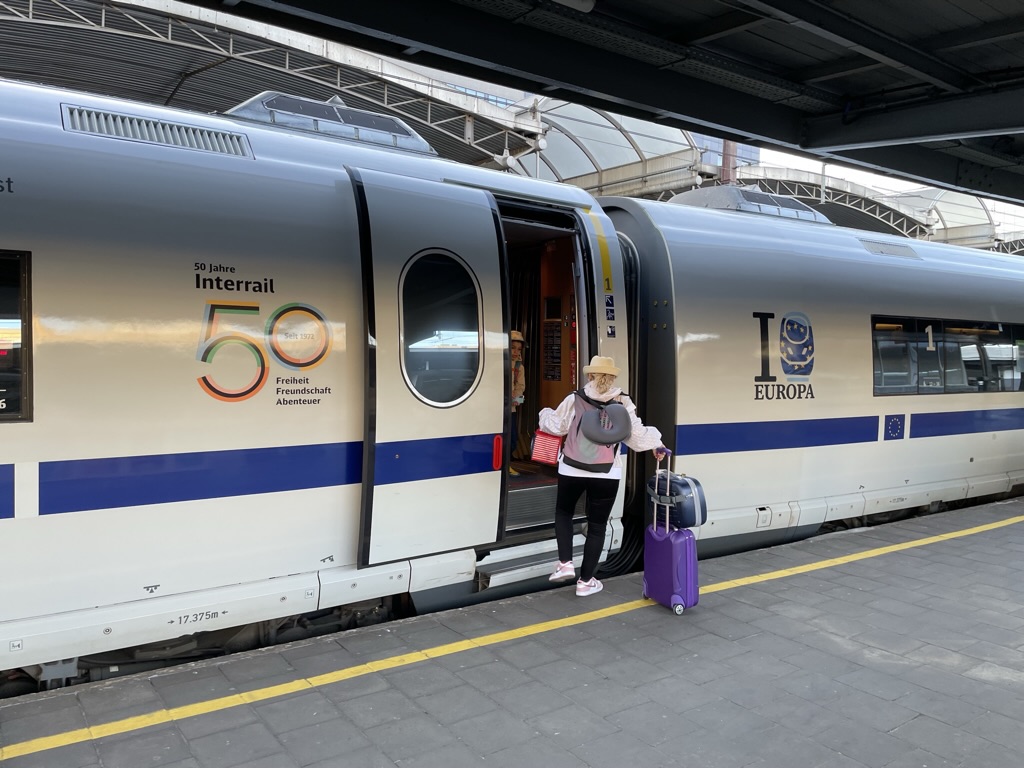
50 Years of Interrail – our half price 3 monthly tickets were an offer made in celebration.
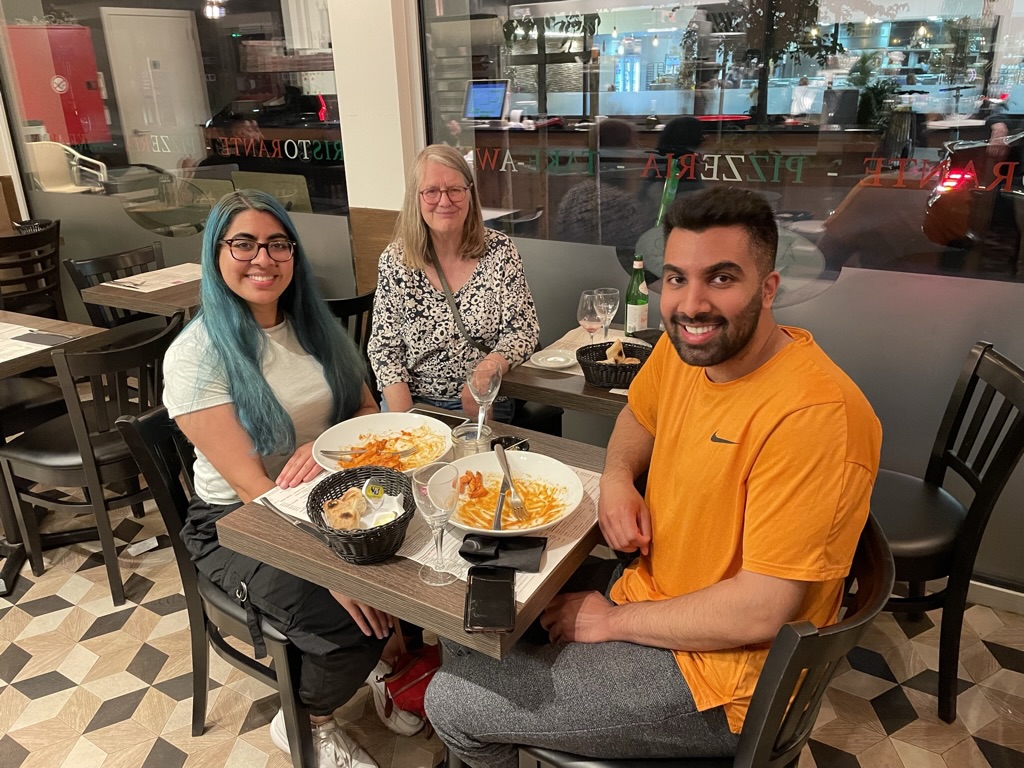
19. The day concluded with meeting, in a restaurant, 2 Canadians from Alberta – but who were studying at Universities in Leeds & York (and who thus knew exactly where I’d lived and where our present family connections existed).
Bizarre…… and the worst day’s travel successfully survived.
What will tomorrow bring?…….
30th May
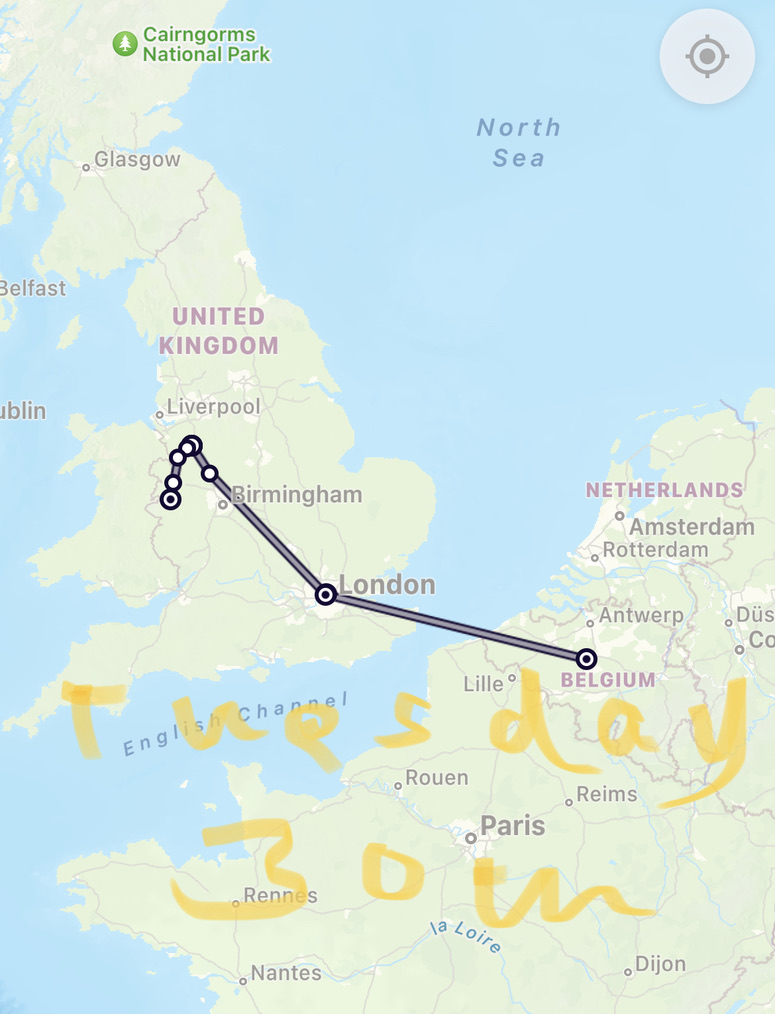
The day brought more chaos but thanks to Jacqui’s powers of observation, we turned it to our advantage.
As we were ambling past the Eurostar entrance – with time to spare before we need to check-in, fortunately Jacqui saw a notice about cancellation of our train…. and therefore, a possible transfer to the earlier service. We were just in time.
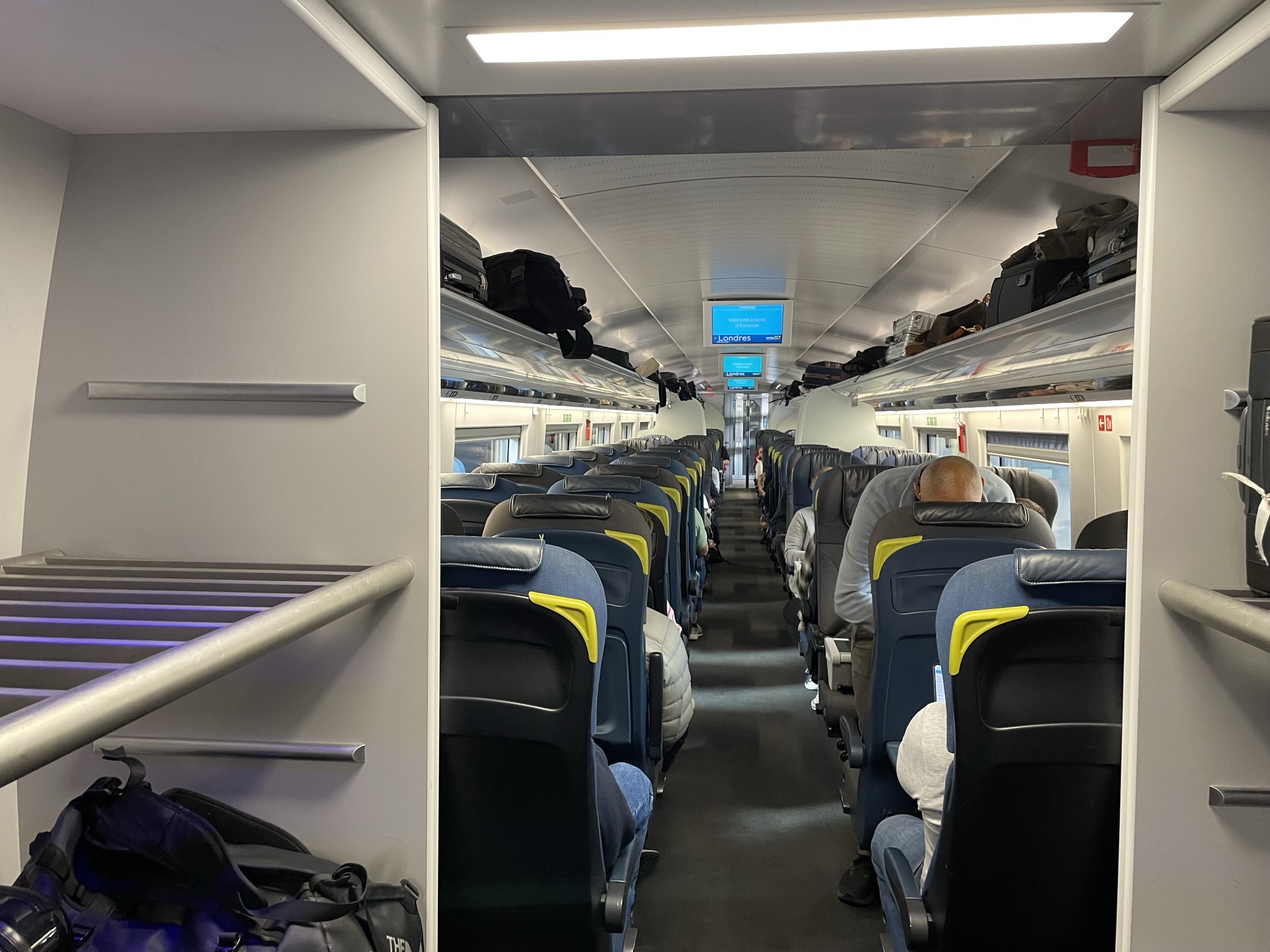
Sometimes chaos works to advantage. Today our Eurostar train to London is severely delayed….. but we reached the terminal in time to be transferred to an earlier train which (we hope) will prove ‘advantageous’….but there is a long journey ahead and there are many potential hazards…. For now, we leave Brussels one minute early.
and arrive on time.
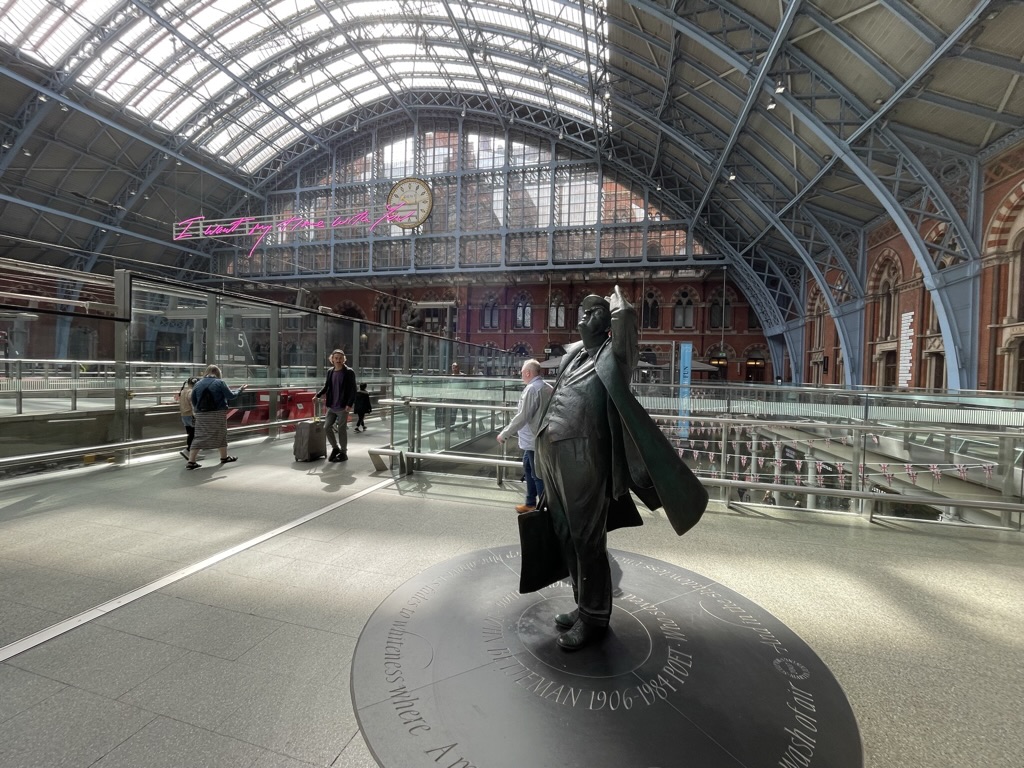
‘Yes Mr Betjeman, we are back.’
Then to Euston station & a northbound Express
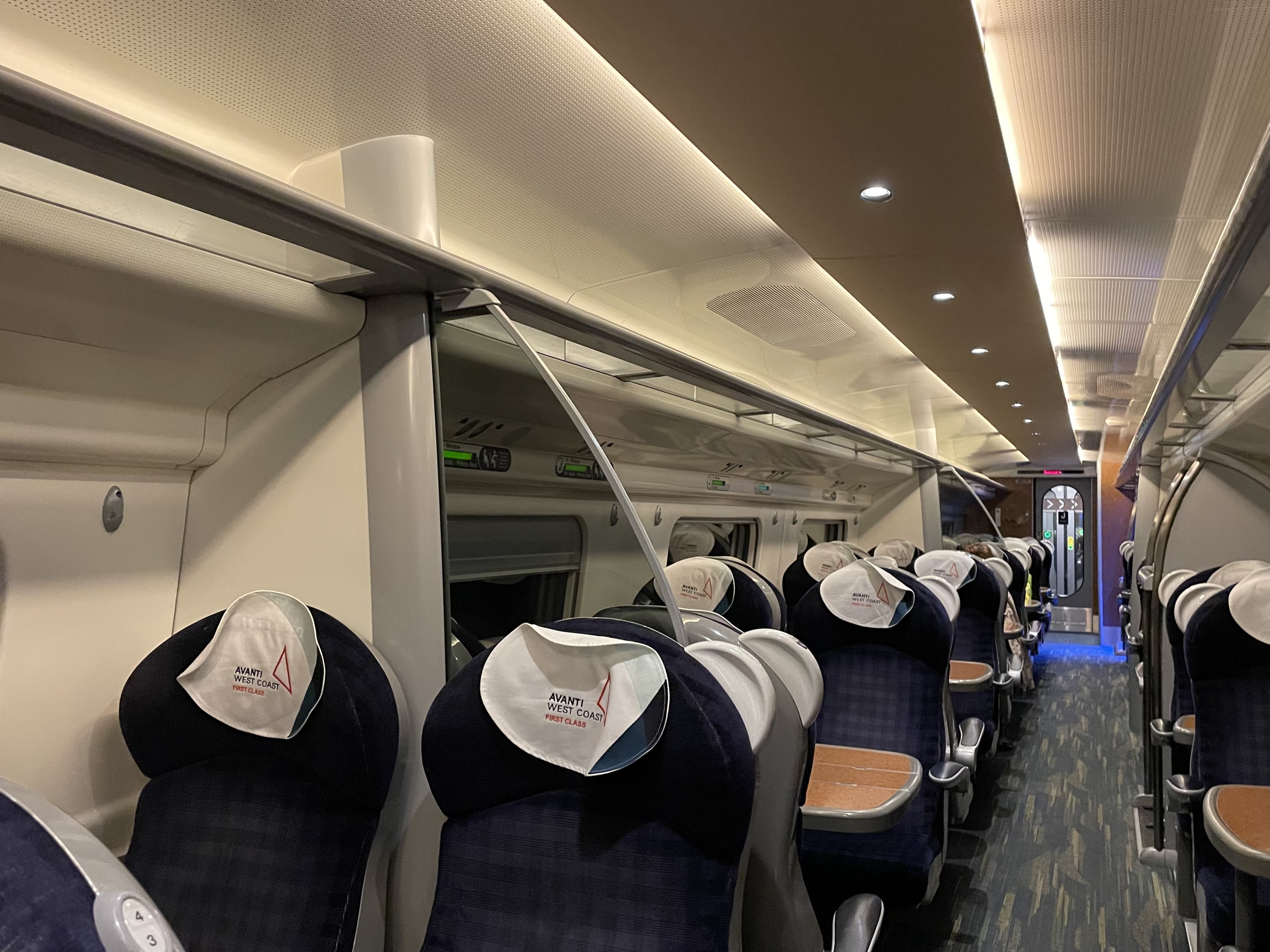
Thanks to railway staff who knew about our Long Journey, we’ve been upgraded. The train crew is from Liverpool so there was a considerable amount of jolly comment as drinks were served: ‘no singing or dancing’
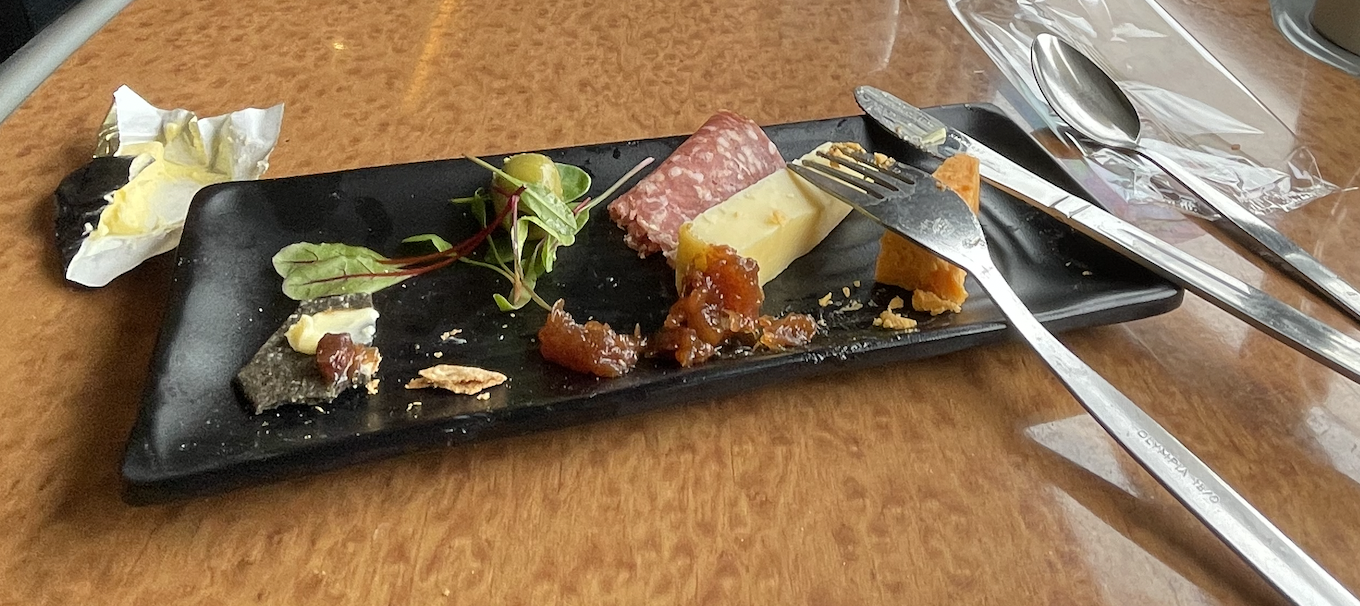
The food provided was described as a ‘Grazing Plate’ – so well suited to my style of dining.
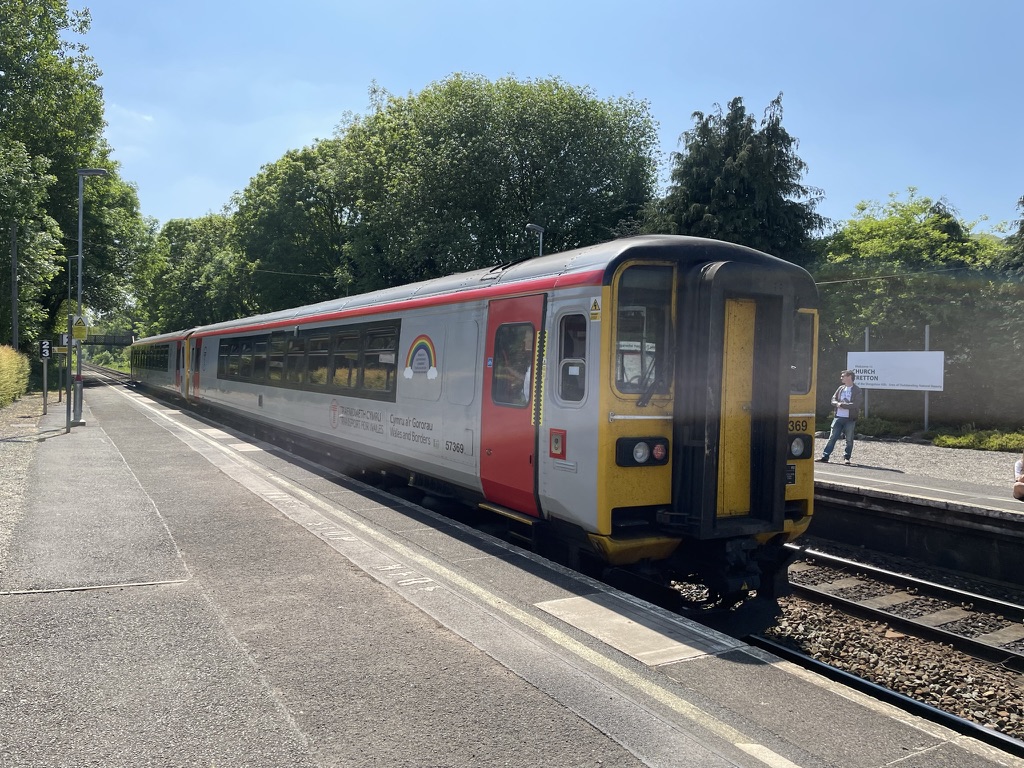
Our final train, from Crewe, leaving us at Church Stretton – below the standard we expected …. but unlike those smarter trains in Germany, on-time.
An outsider, looking in….completes with the Valedictory Wave
































 Inspirational Pathways