April 7th: Return to Sofia
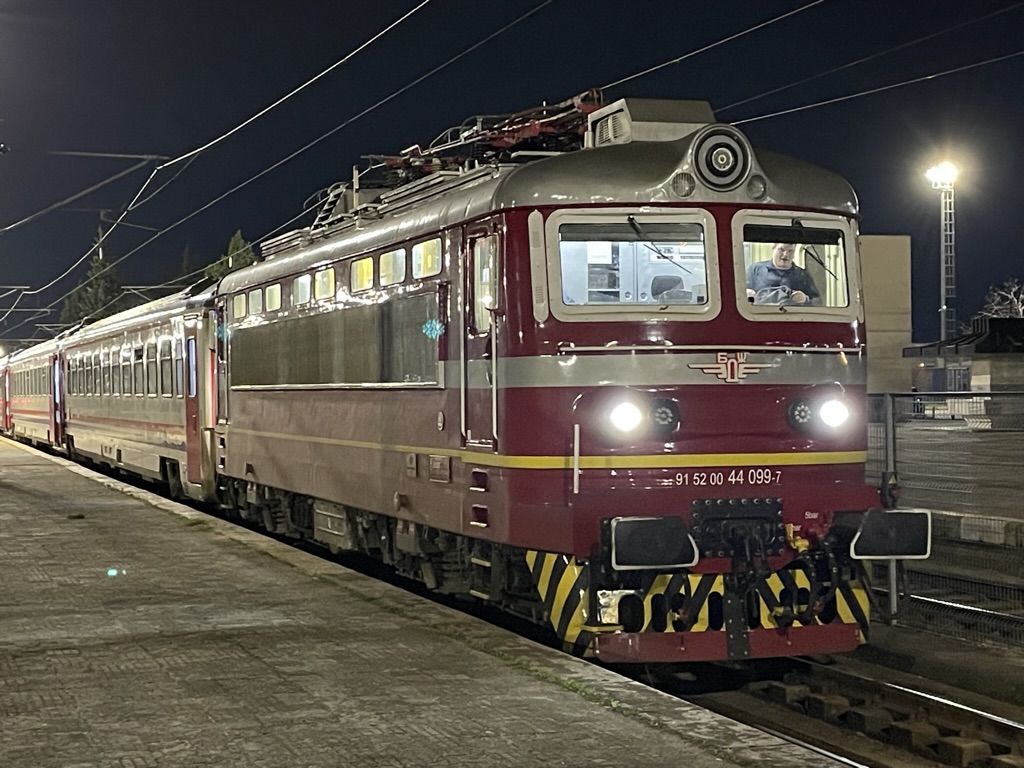
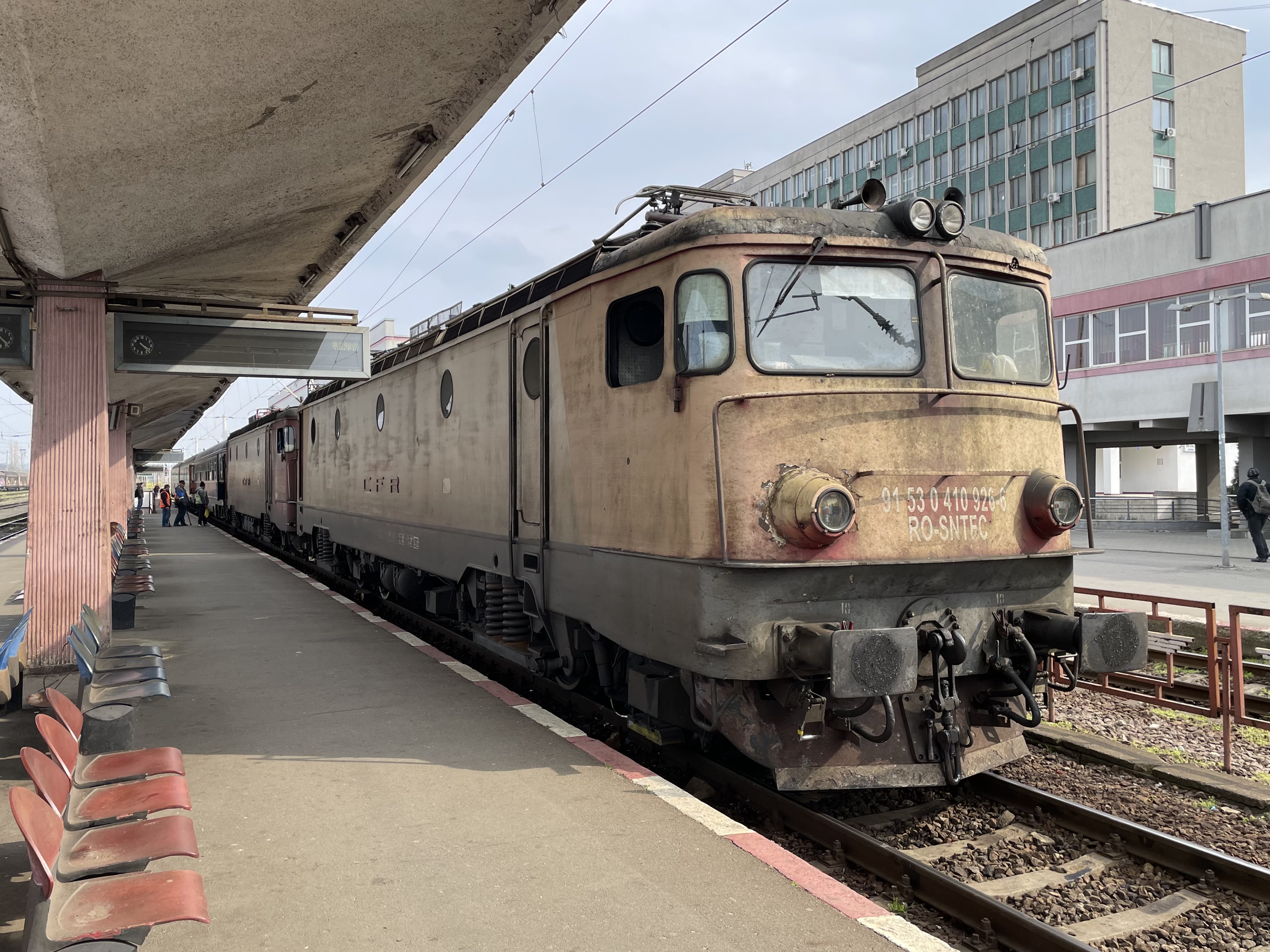
The Bulgarian engine takes-over the train. This is one of my favourite railway pictures.
On old Czech engine but which has been carefully cleaned ready to pull a major international train (at that moment the only cross-border international train on Bulgarian railways).
It is literally a ‘shining example’ of the pride that traditional railway systems developed in their workforce. Countries such as Bulgaria and Romania did not have the advantages that some other ex-communist nations had. They had been very isolated & largely disconnected from Central Europe. Economically they have struggled – but in both countries, despite lack of investment the railway systems have managed to provide a reliable service – in many ways much better than many inhabitants of the countries recognise.
I feel I’m looking at an Old Friend – and I hope to renew my acquaintance before they disappear.
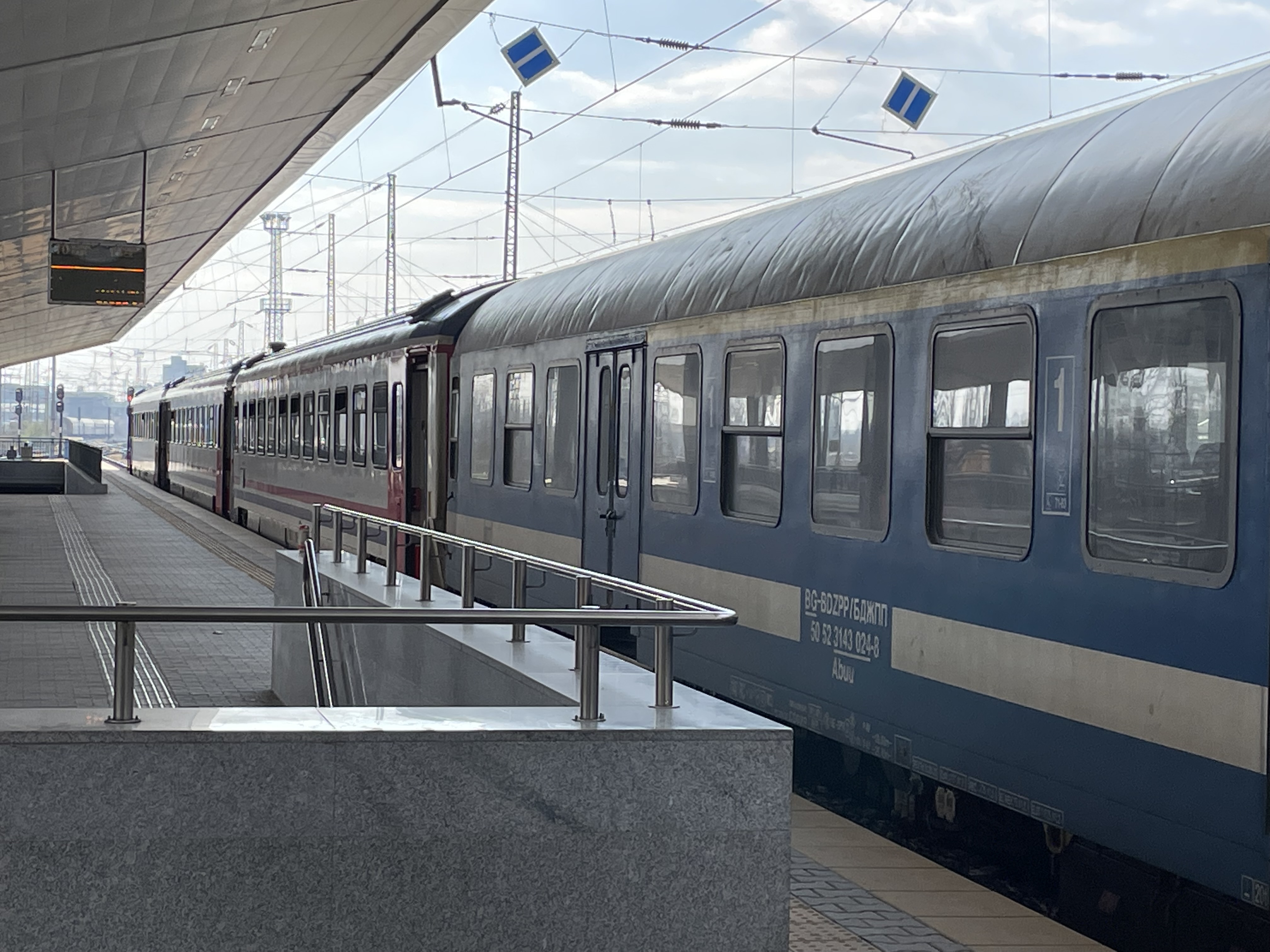
The train is attached to other coaches at Plovdiv & becomes the early morning express to the capital.

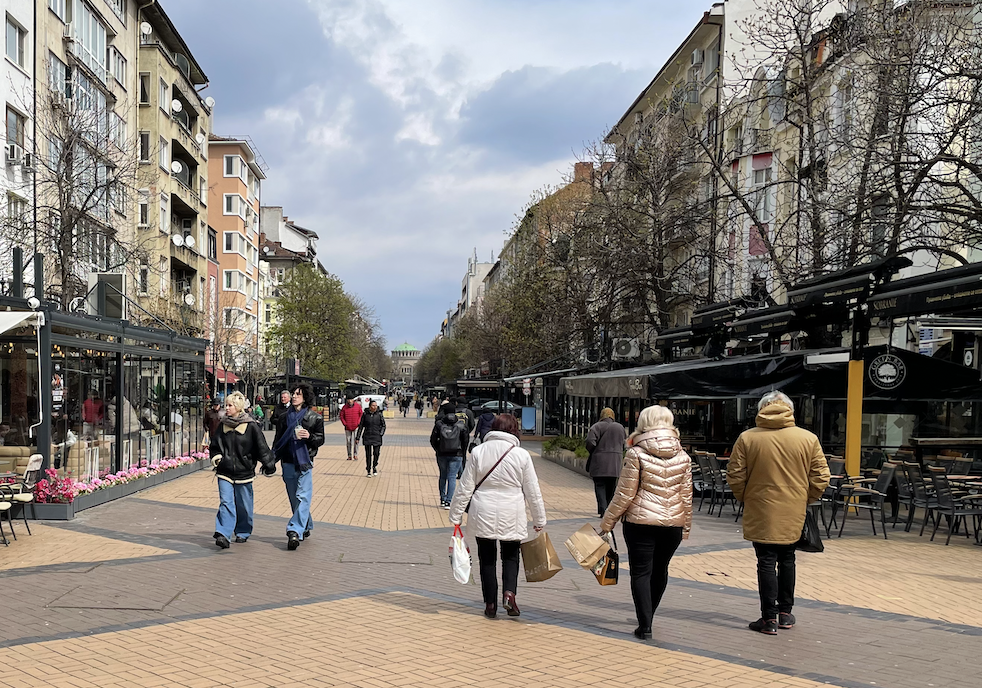
The Street of a Thousand Smoke-Fouled Boxes
Sofia
We deposit our luggage at the welcoming Favourite Hotel and one again, drift around the centre of the city. We were advised to visit the traffic free commercial area.
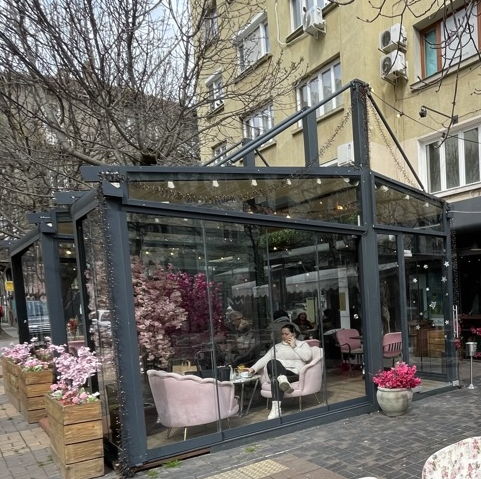
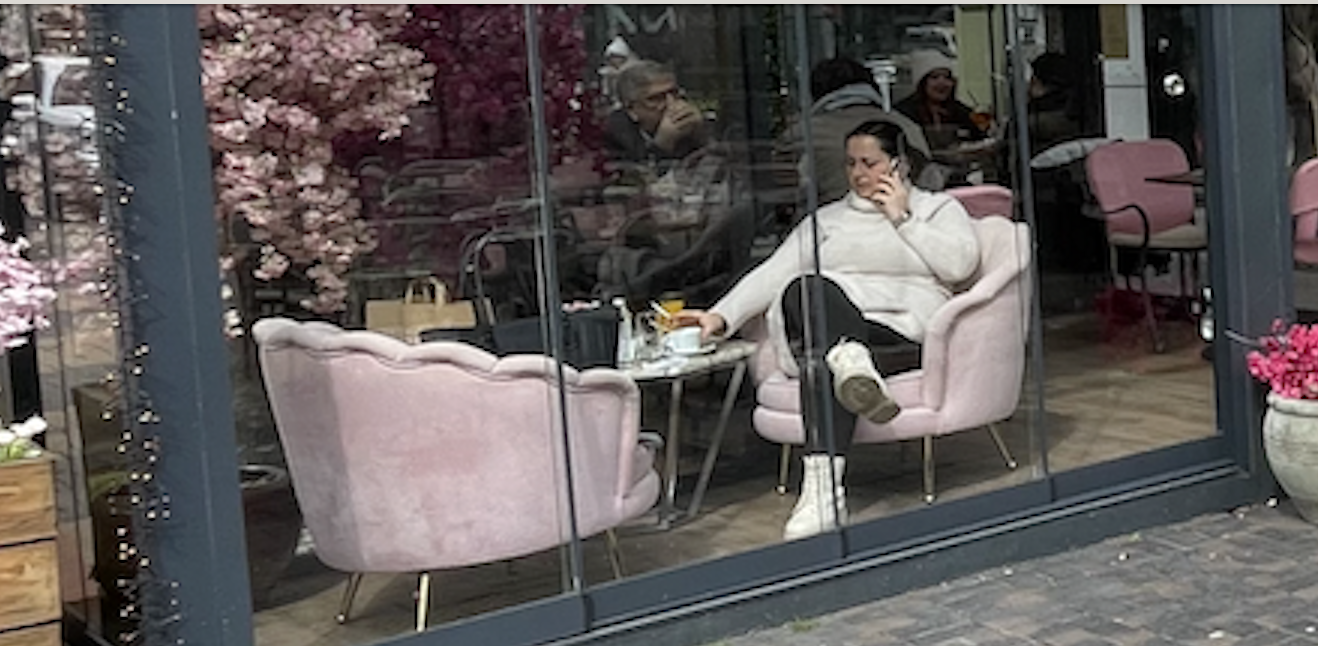
Here we encountered the ‘glass smoking boxes’. As we had previously noted in Iasi, Romania, the regulation that prevents smoking ‘inside’ has been circumvented by construction of apparently movable enclosed covered areas (effectively ‘glass boxes’) in the street outside cafe.In these smoking is permitted.
In Romania we were told at one establishment that there was no service ‘inside’ (the cafe). Here in Sofia, on a cold but pleasant day we discovered that every (sunlit) ‘box’ in which we would have had coffee – and more, was set (and used) for smoking.
In one place they suggested we sat in the (cold, wind exposed) seats on the street.
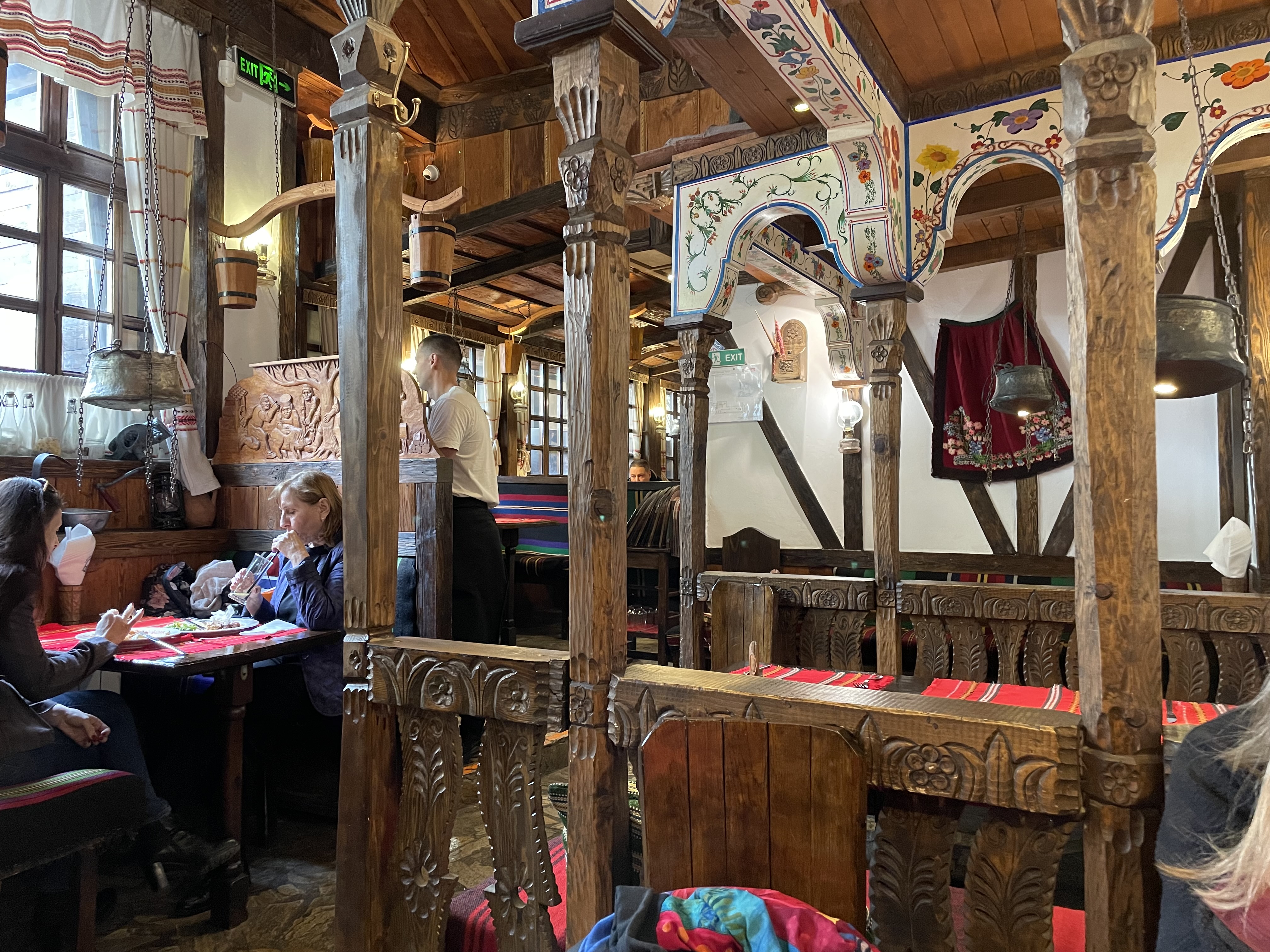
It was very annoying…. We turned away from the ‘Street of the Smoke-Fouled Boxes’ & discovered a traditional restaurant – being the same company as that near the hotel.
Other ‘delights’ were available
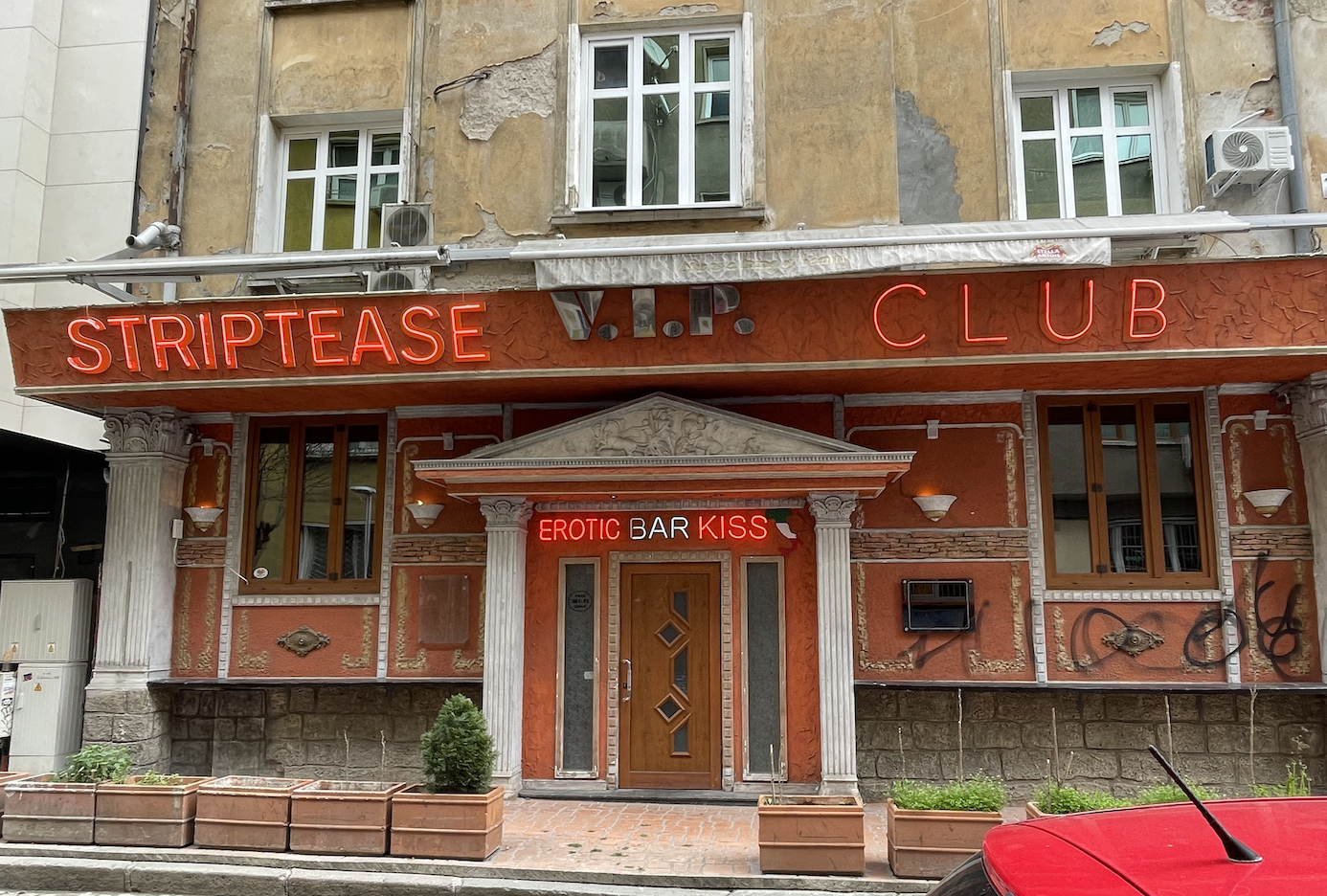
but the ‘Erotic Bar Kiss’ failed to tempt us – our desires & passions remained unaroused
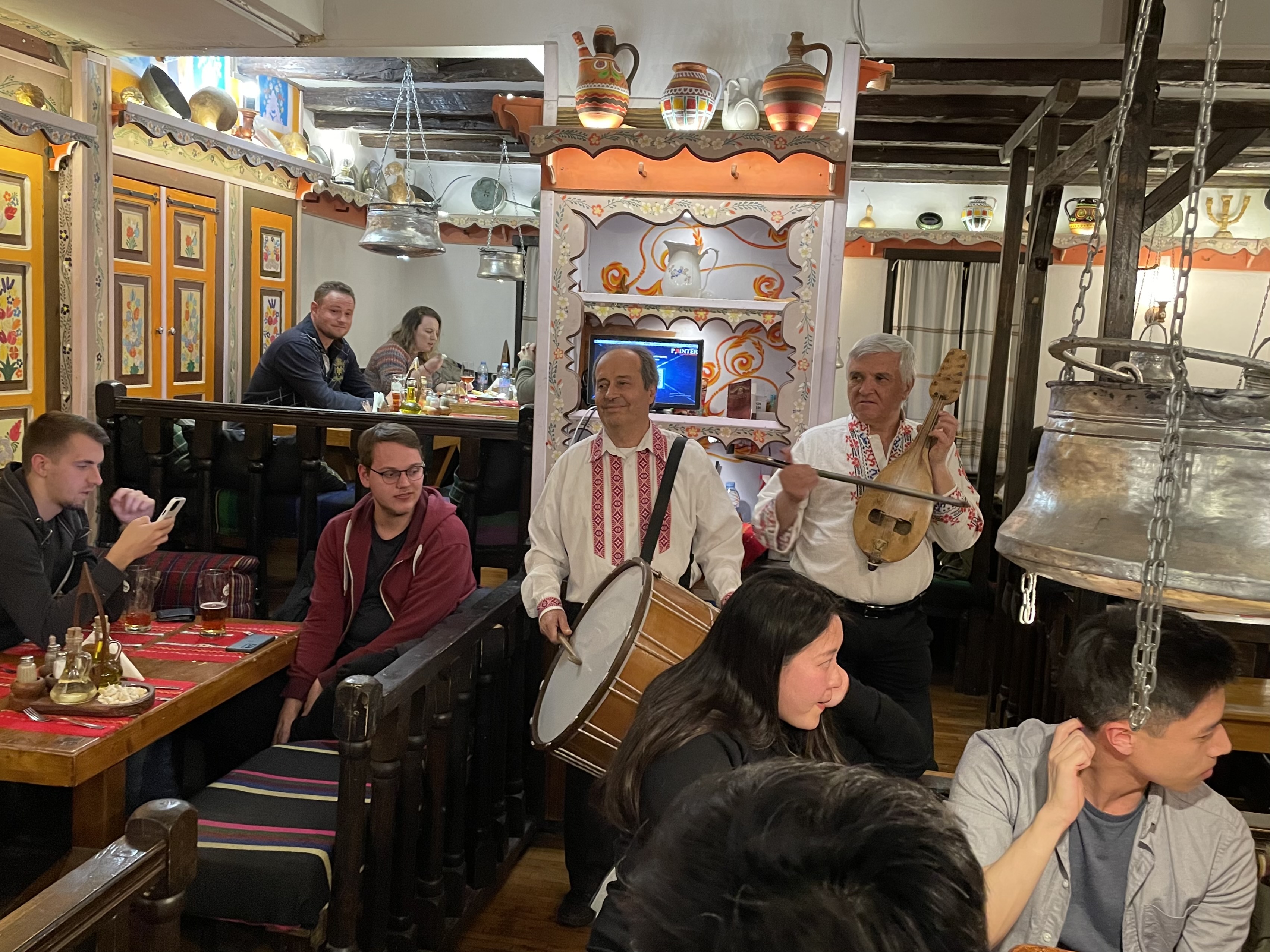
The evening was spent in the restaurant we visited previously…. the musicians remembered us
A Final Note on Bulgarian politics.
On our outward journey through Sofia we had been able to discuss the forthcoming election with various people. Though they seemed generally unmoved by the whole process (it was the 4th attempt, since 2021 at forming a government).
Our return followed the election & in Sofia at least there seemed to be some hope that a generally pro-EU government could be created by parties that had previously failed to work together. This was caused, in part, by a large increase in seats for the extremist party ‘Revival’, a party which is pro-Russian, anti-EU, anti-NATO, anti-American, opposed to COVID-19 vaccinations and anti-LGBT.
A pro-EU government has been agreed – but there continue to be difficulties in working with the President who favours links with Russia & has suggested the Ukraine is responsible for the war with Russia.
8th April: Sofia to Târgu Jiu
This day had the potential to be one of our most difficult day – but (unlike days further west) it was easy – all the connections work well & staff en route provided excellent service.
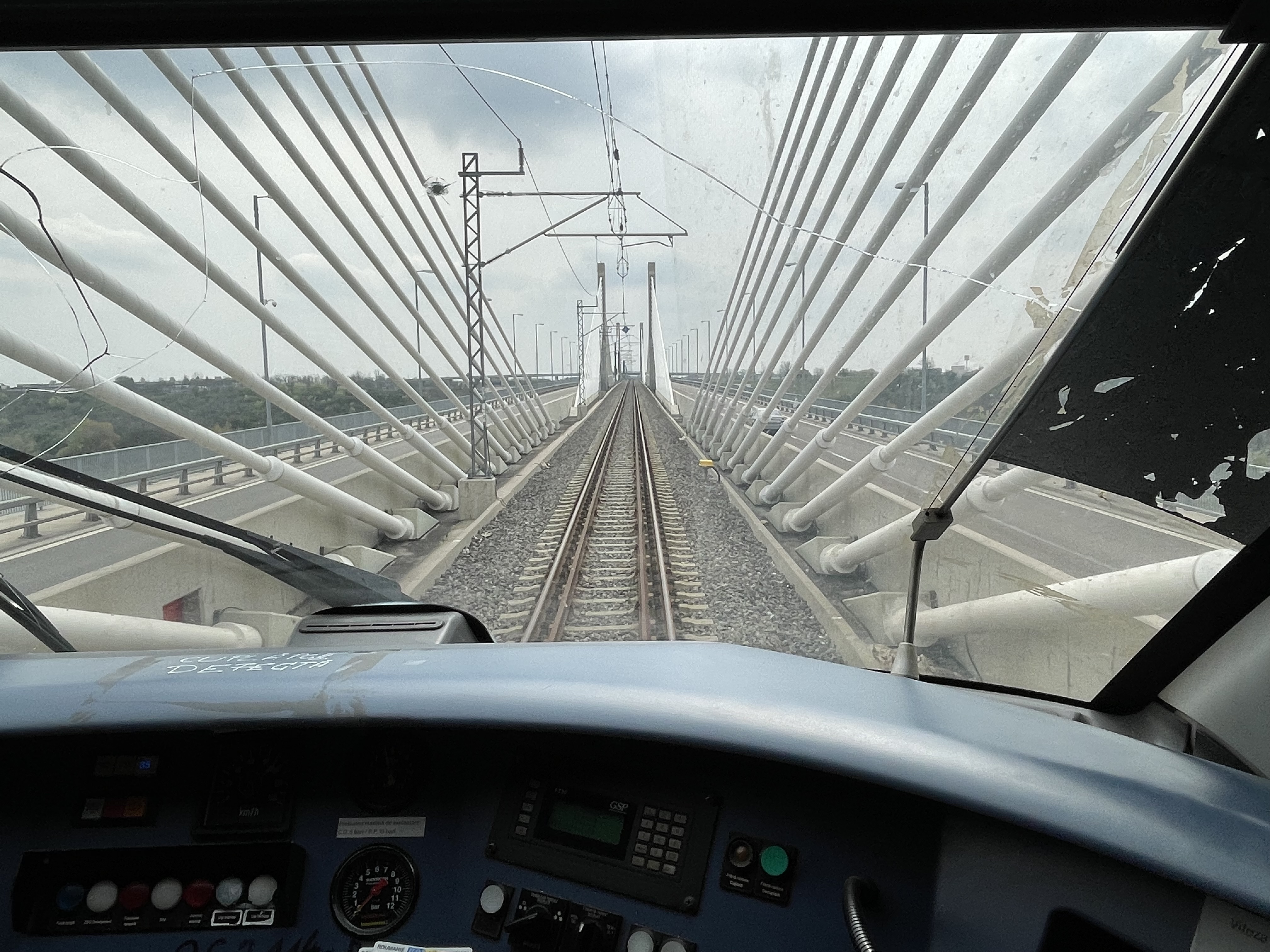
We were to cross back into Romania via the New Europe Bridge
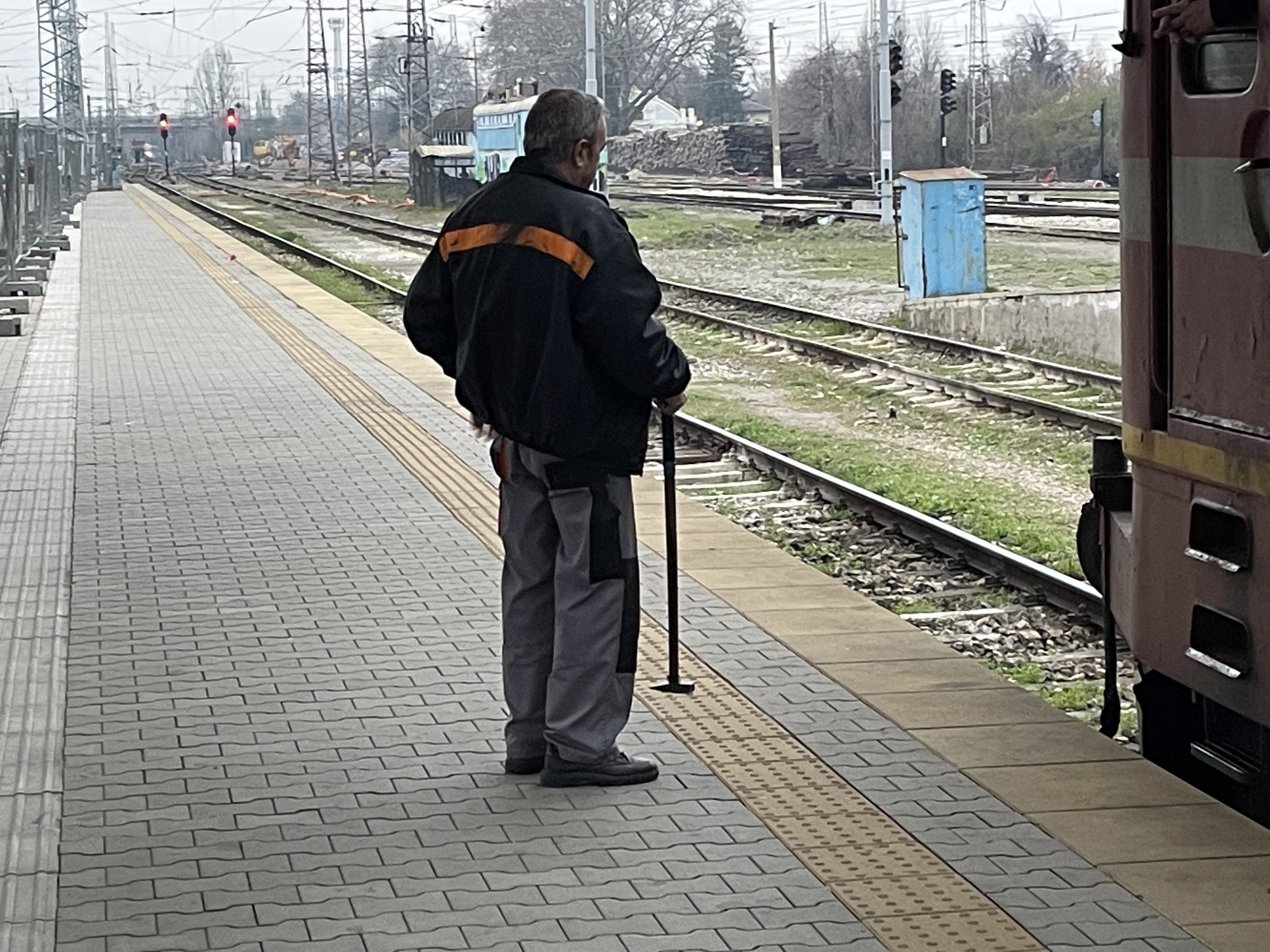
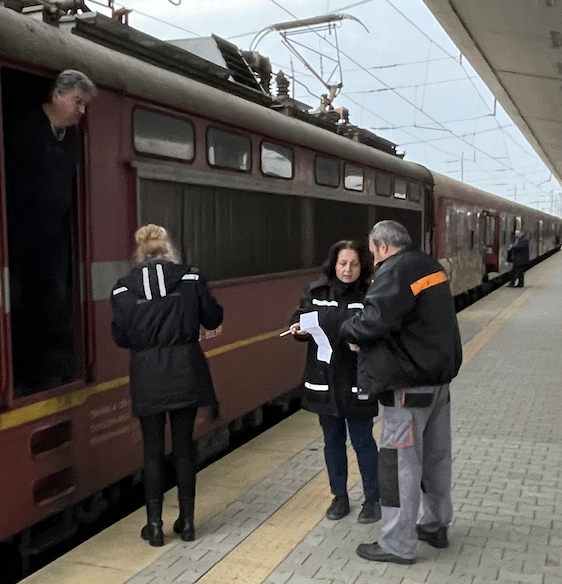
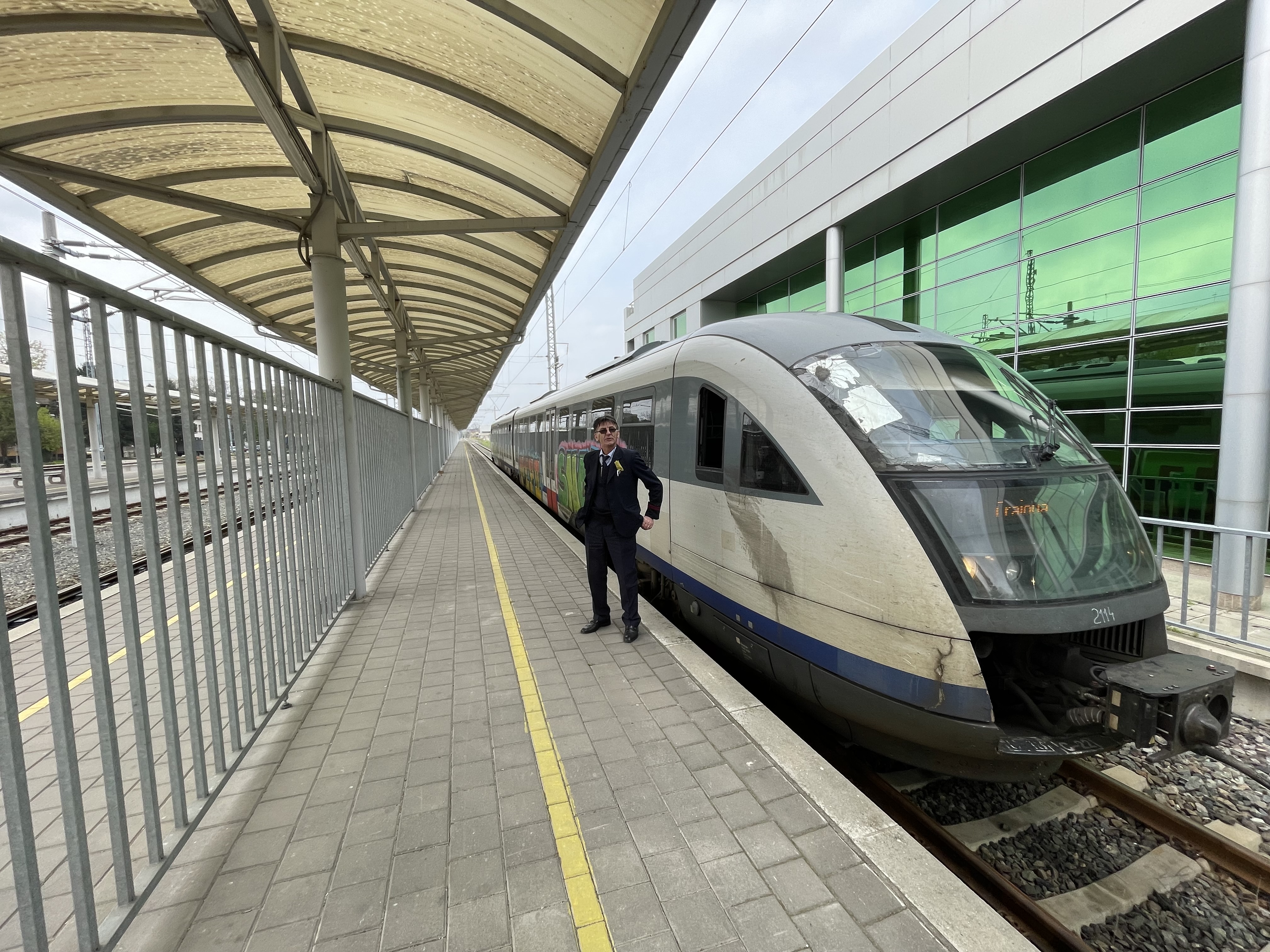
A Wheel-tapper: the tradition of having staff able to check wheels for cracks, during station stops, remains a common sight in Romania and Bulgaria but they no longer seem to do much wheel-tapping.
Is ‘Wheel-work, Real work’?
Completing paperwork is another popular activity
There seemed to be a considerable amount to be completed before the train could leave – and the wheel tapper seemed to be involved.
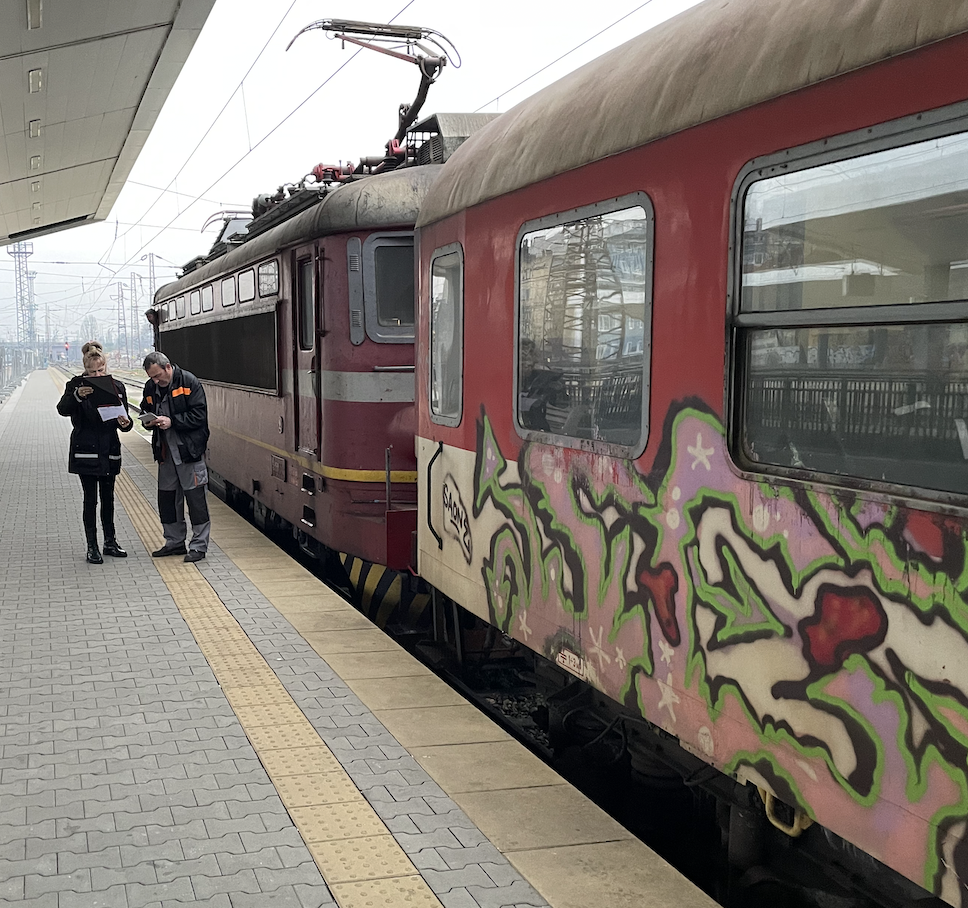
Completing paperwork is another popular activity

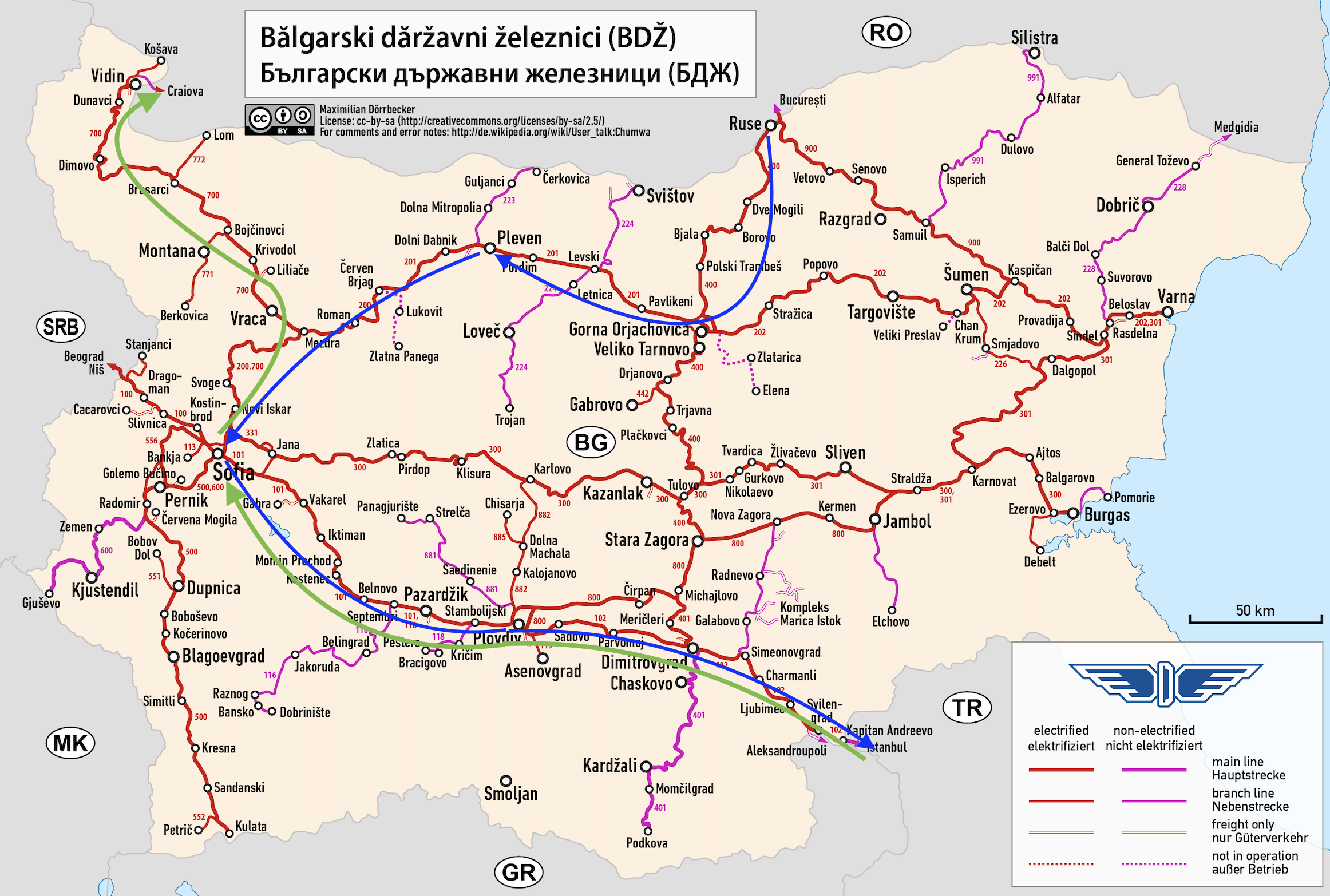
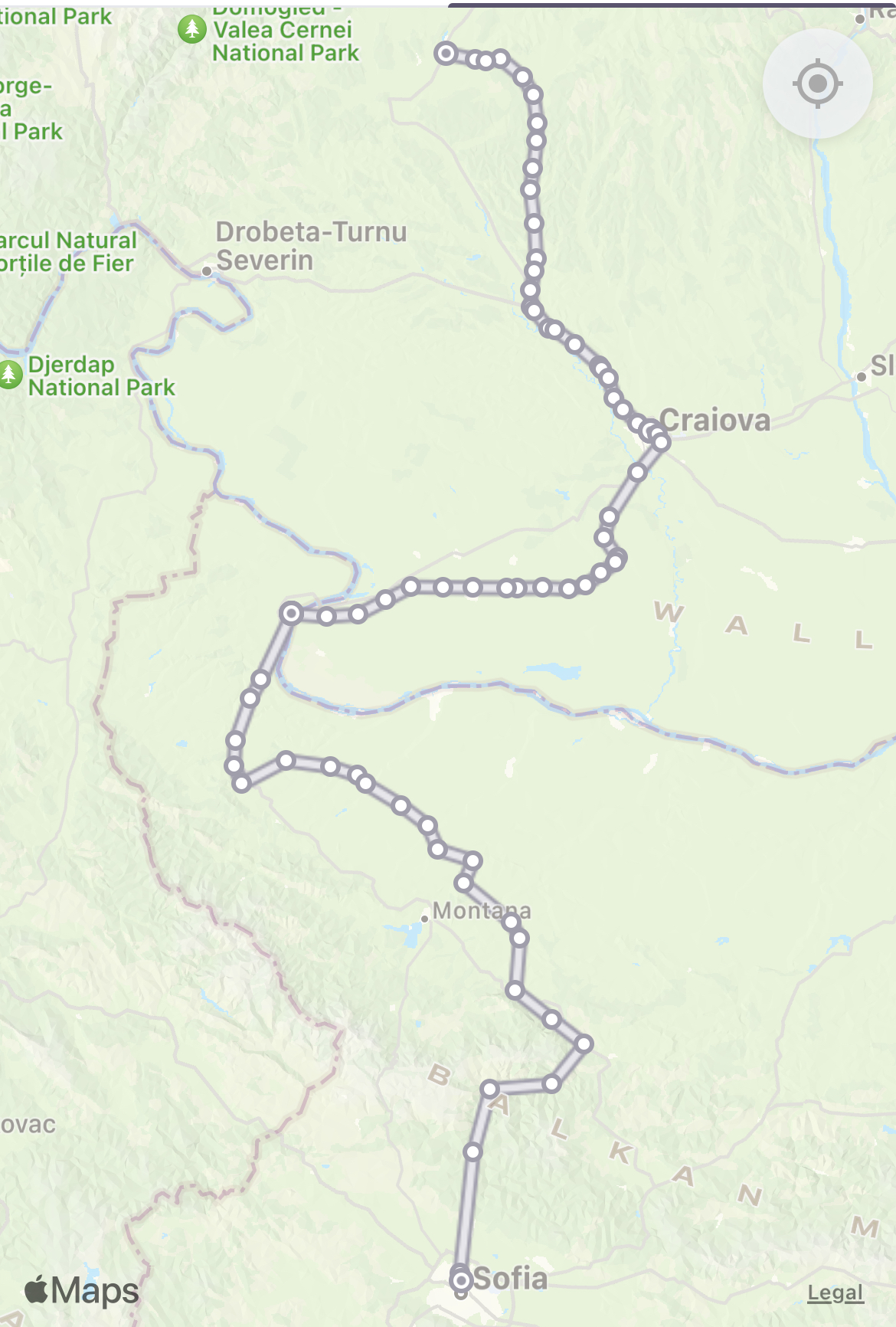
Our journeys through Bulgaria:
The Blue Route was first – București, Pleven, Sofia, Istanbul
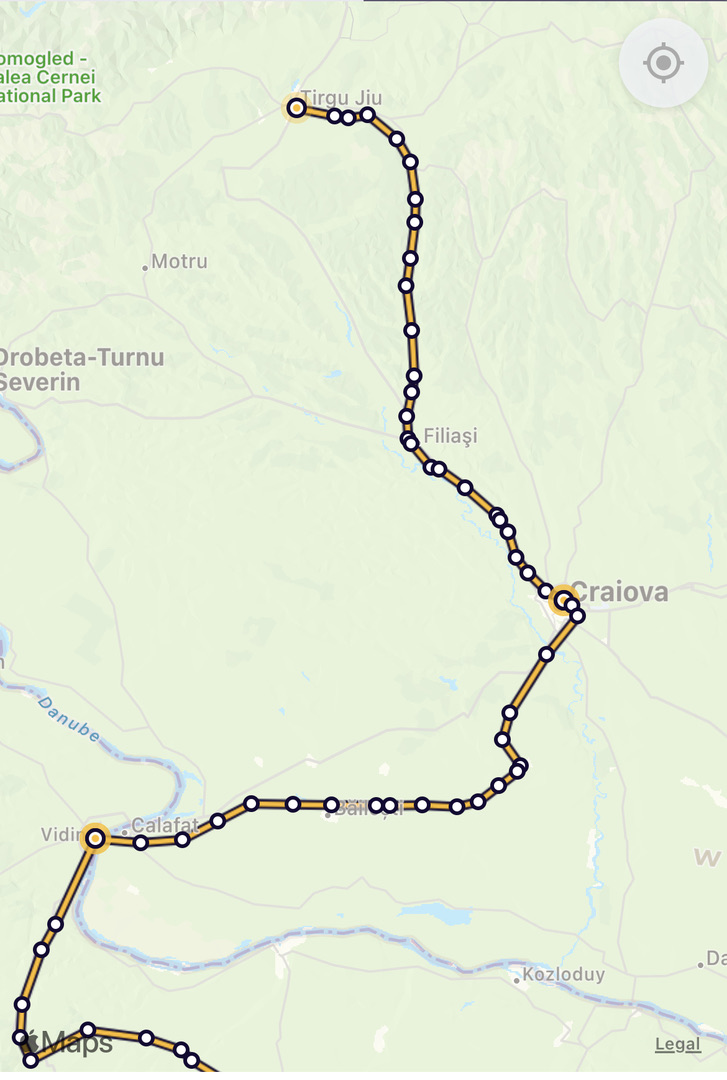
The Green Route marks the return, heading north from Sofia to Vidin & after crossing the Danube, on to Craiova.
The initial part of the journey follows (in reverse) the route we used from Pleven
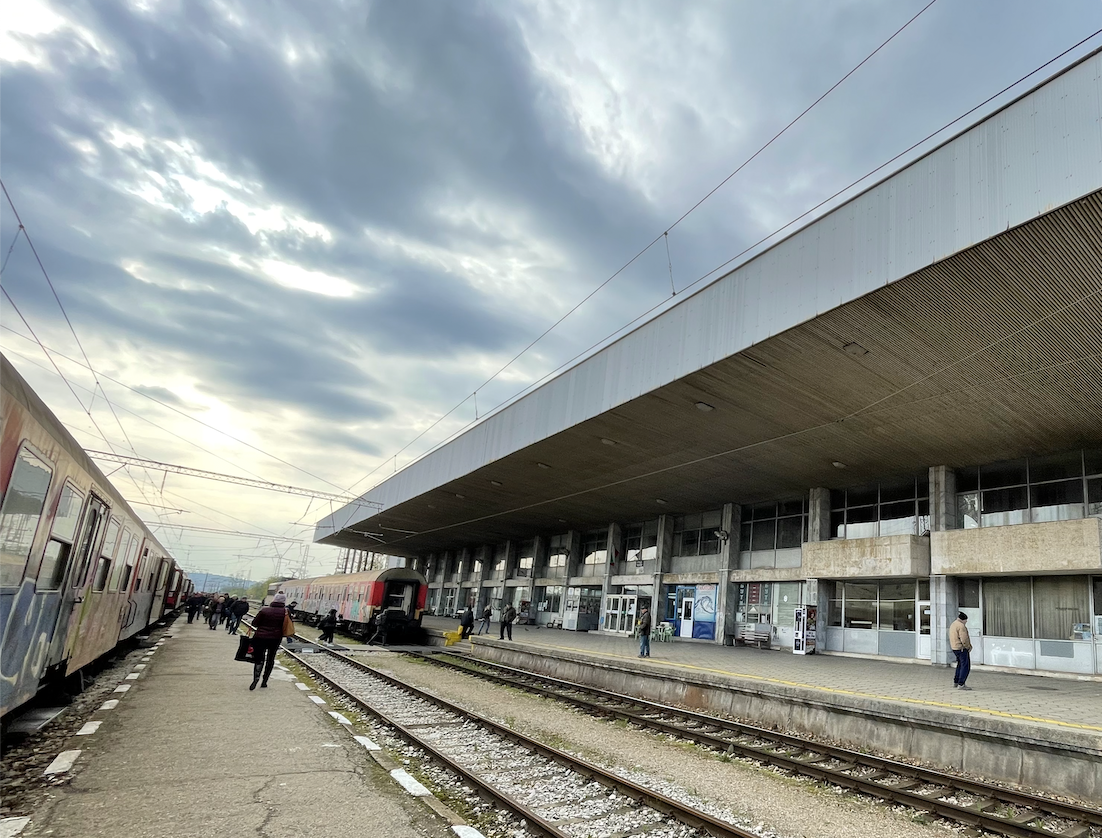
Most passengers were travelling to Vraca where there were connections to other lines
The Unfortunate Lady
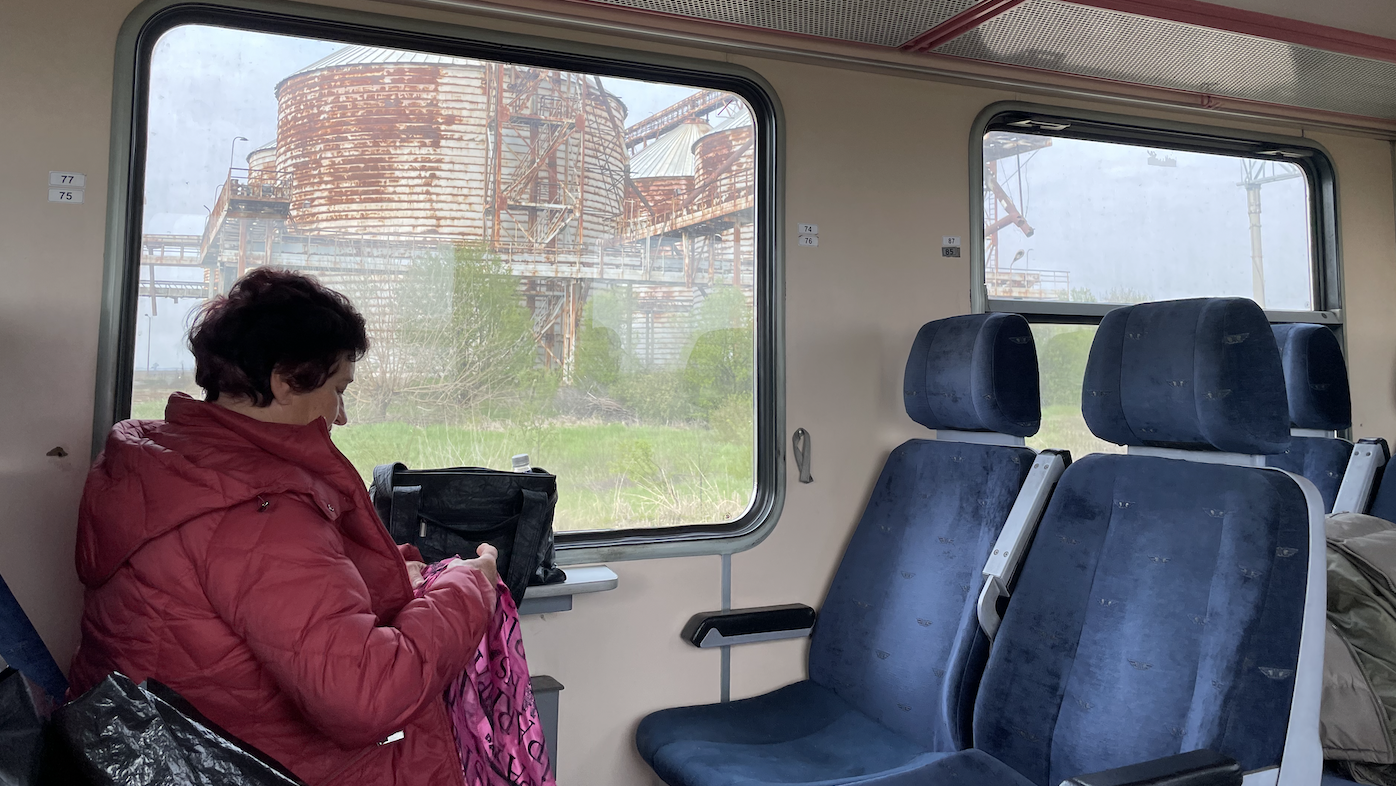
One of the few people left after Vraca was a lady who seemed delighted that she was travelling to meet ?family?.
Phone conversations were lively and positive & she watched each station carefully in anticipation….
…..Until one call arrived which seemed to shatter her expectations.
We have no idea what had happened or what was said but she became tearful and depressed & continued the journey in very low spirits.
She left the train at a very rural station & was met by someone with a car. They went off together – but without any sense of the joy she had felt during the early part of the journey.
Its strange how this event continues to have effect, in ‘reliving’ it…. months after it occurred.
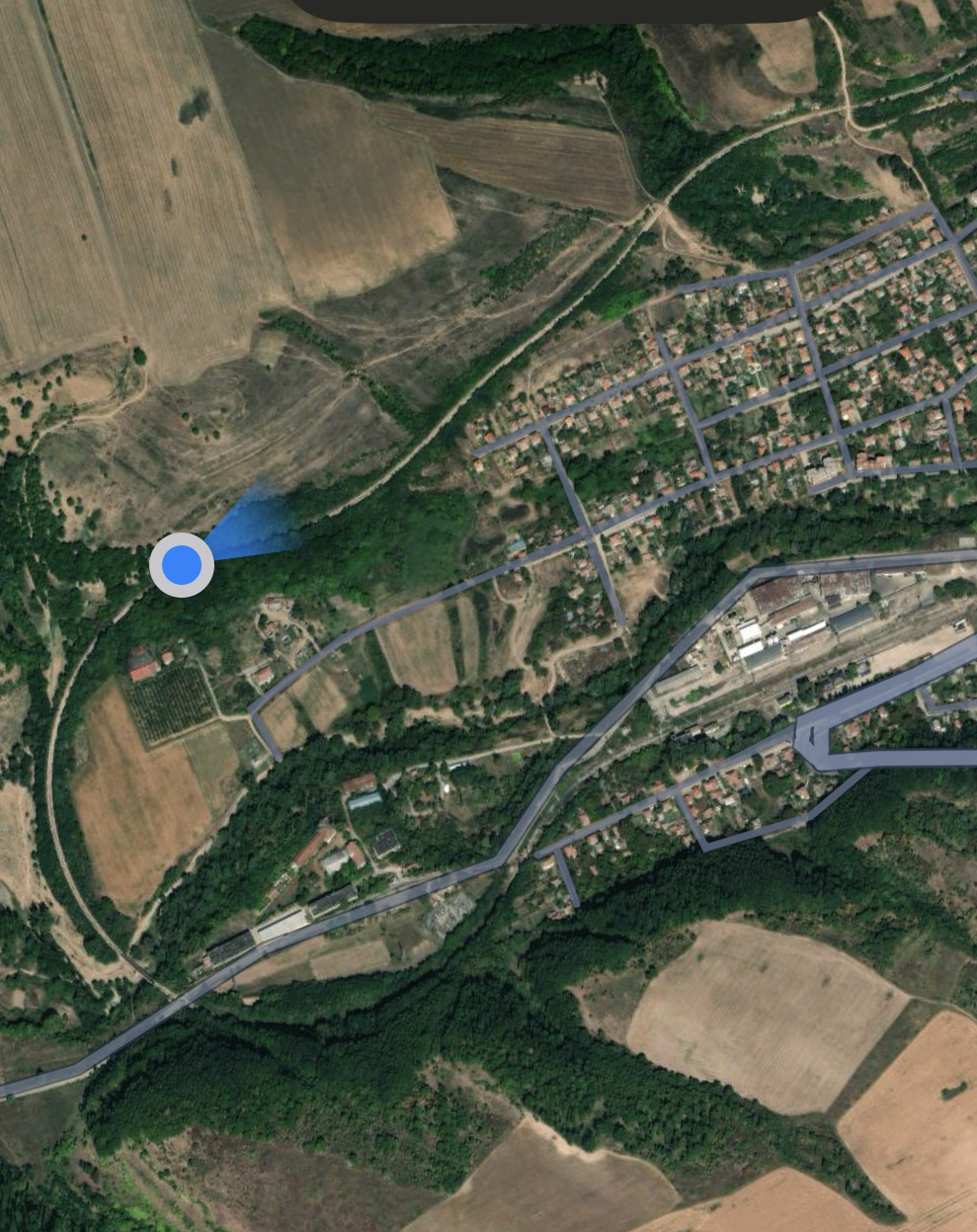
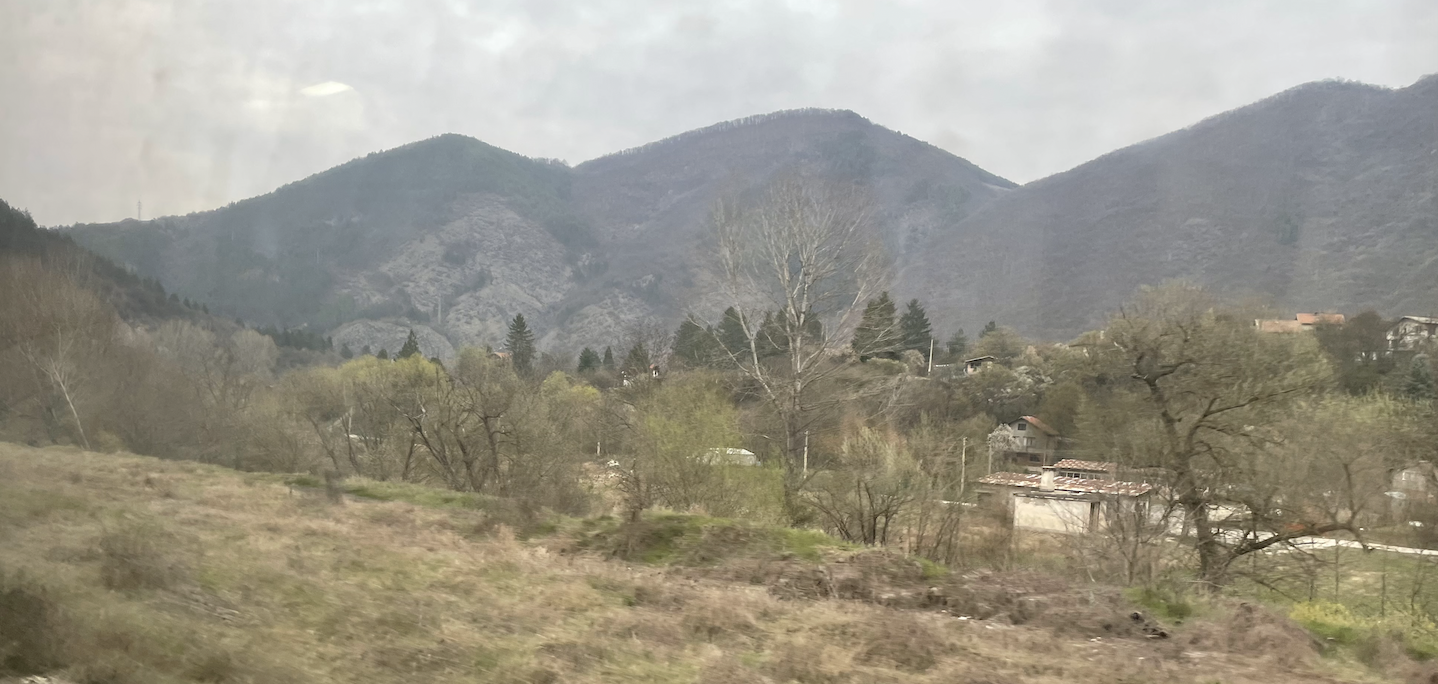
The final section of the line winds through and along hill sides down to the Danube valley.
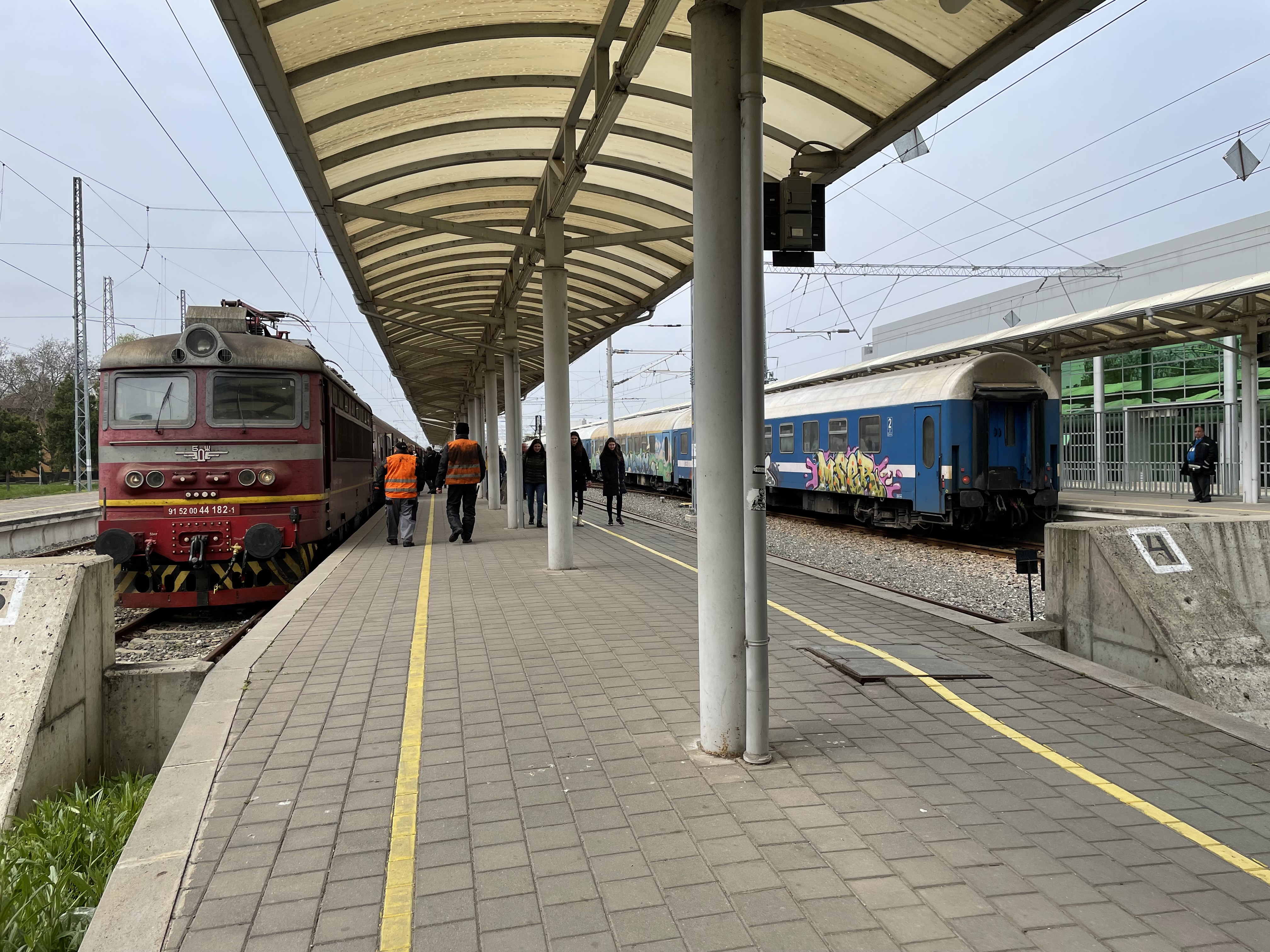
Vidin. An important river port & in the C19th a major Turkish fortress.
We change to a Romanian train. This requires passing through security fencing – and as usual, handing over passports.
Then begins the very slow crawl towards Craiova.
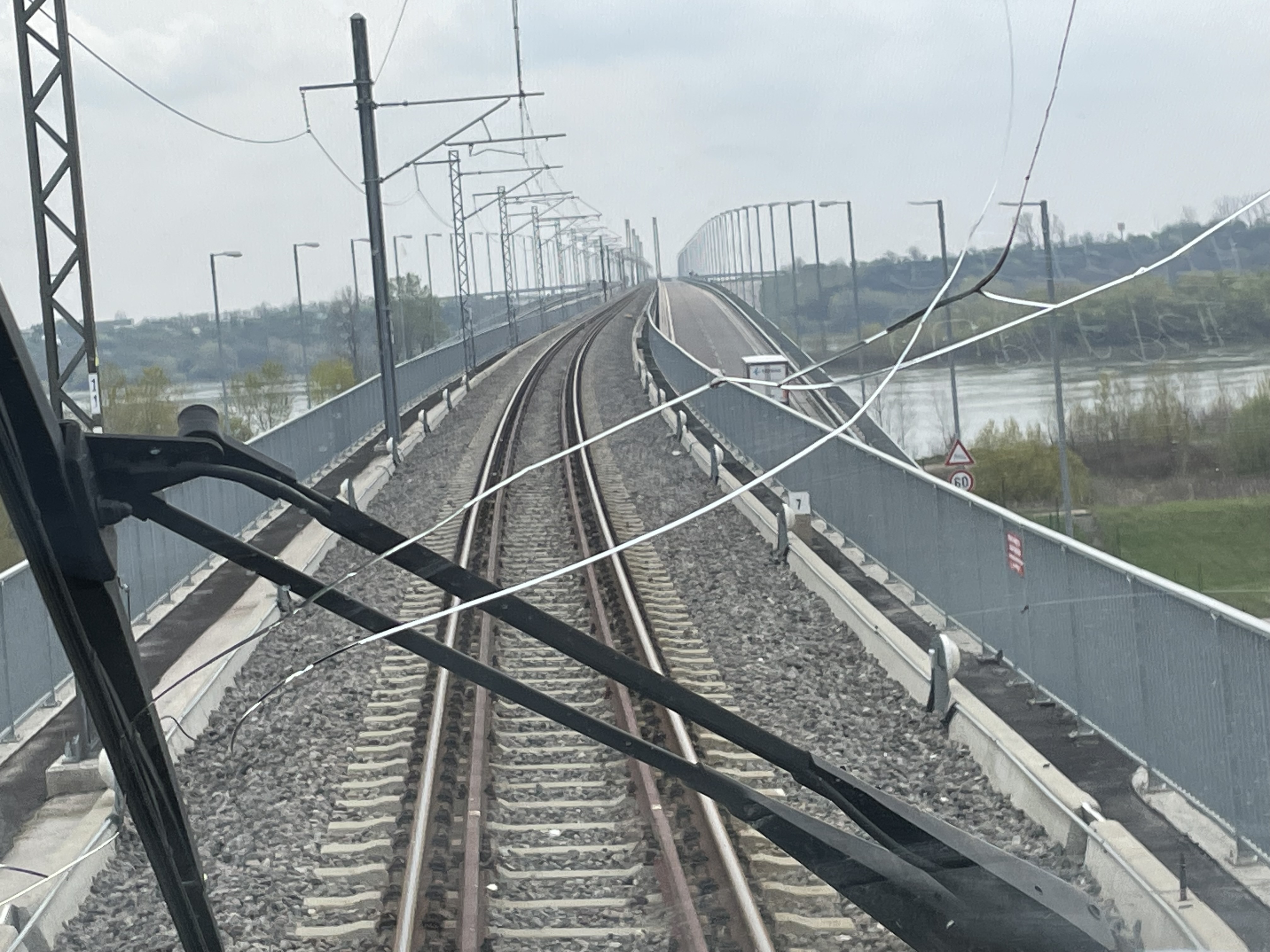
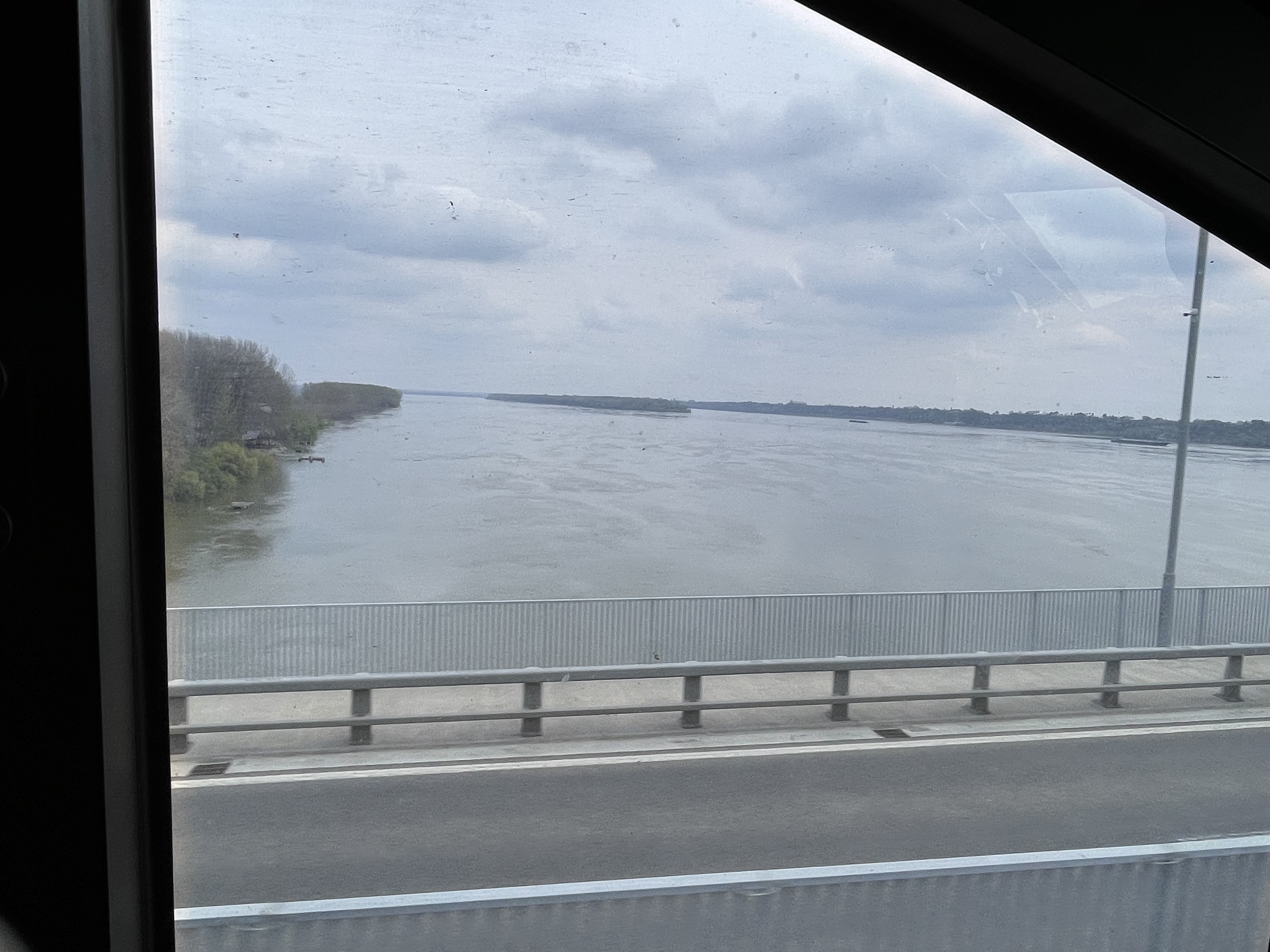
The bridge is important in providing road traffic (Bulgarian & Turkish) a route that avoids leaving EU. Serbia is the natural route but would require long waits for processing documentation. One reason why Irish Ferry traffic increasingly goes by sea direct to Continent rather than through U.K.
The railway staff invited me into the cab for the journey over the New Europa Bridge (opened 2013).
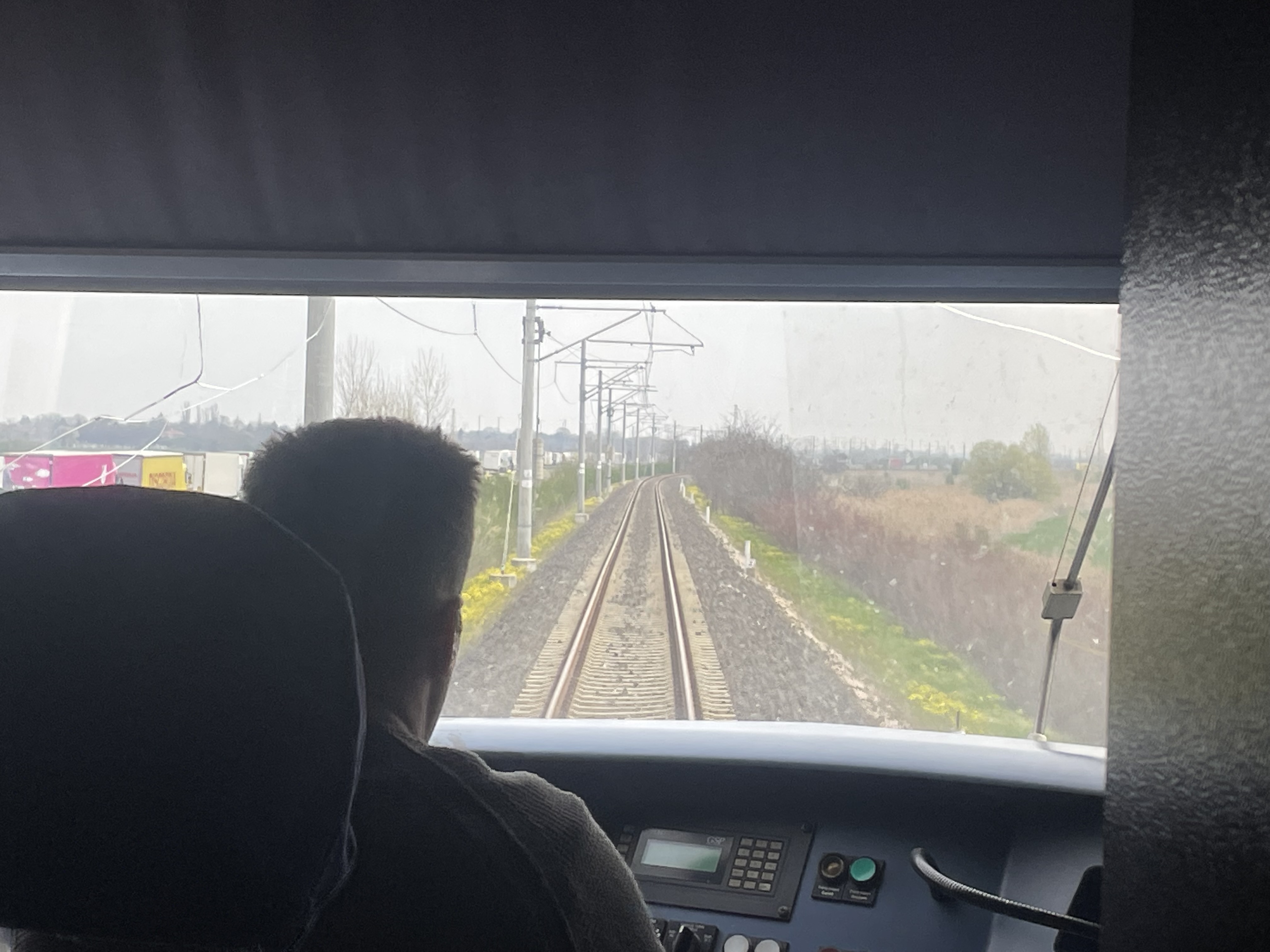
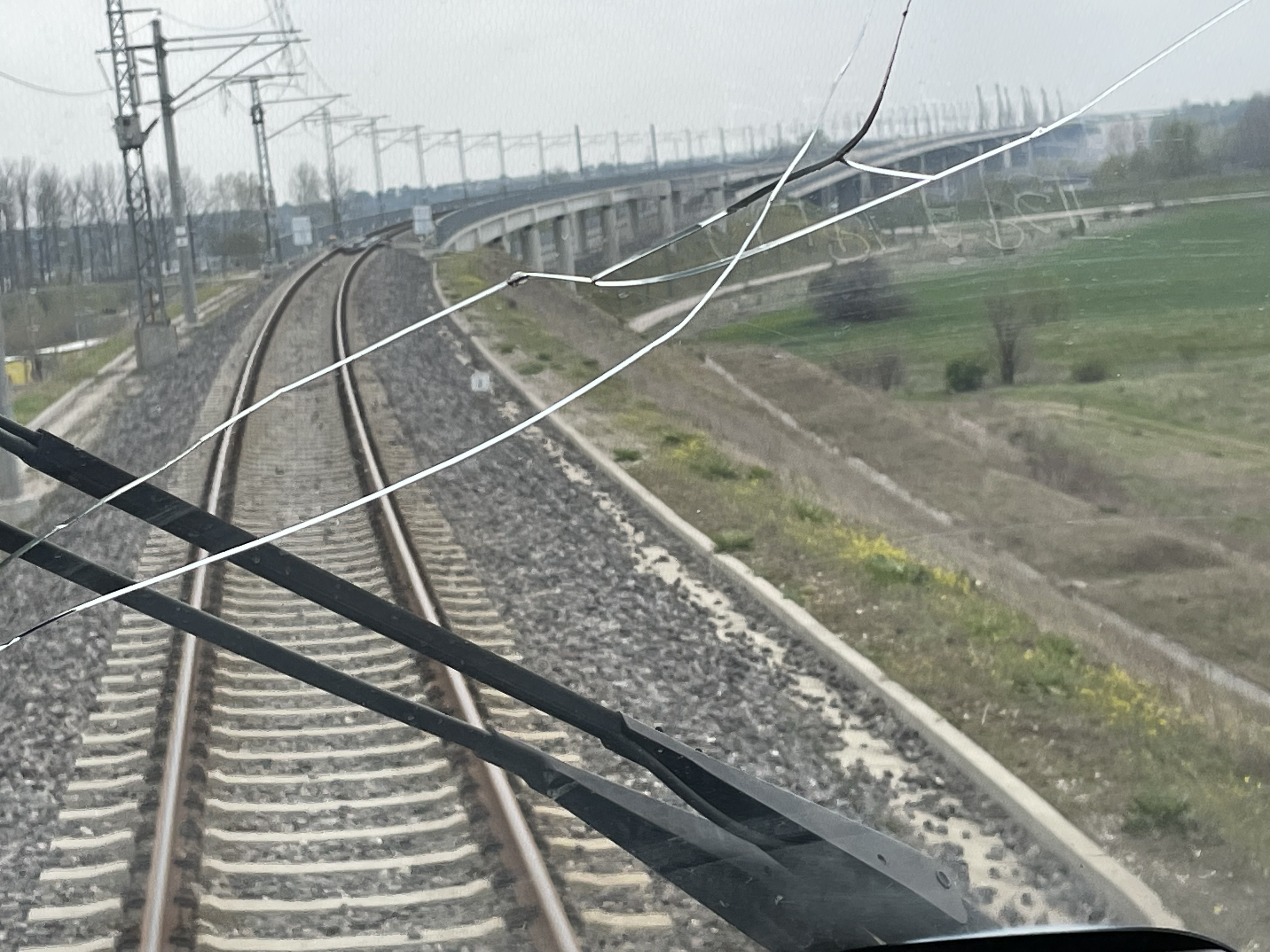
(cab window, as usual, somewhat damaged)
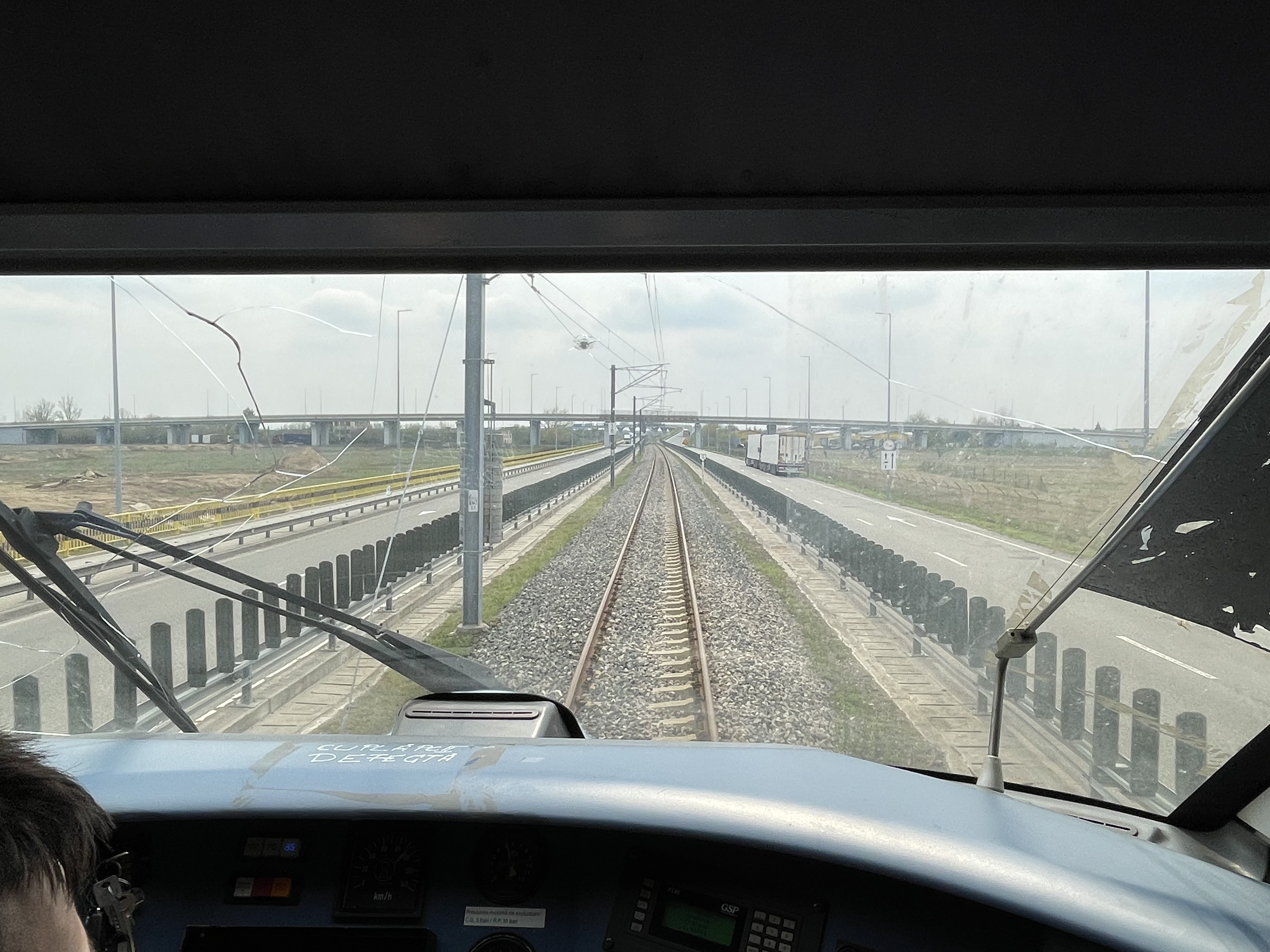
Everything changes
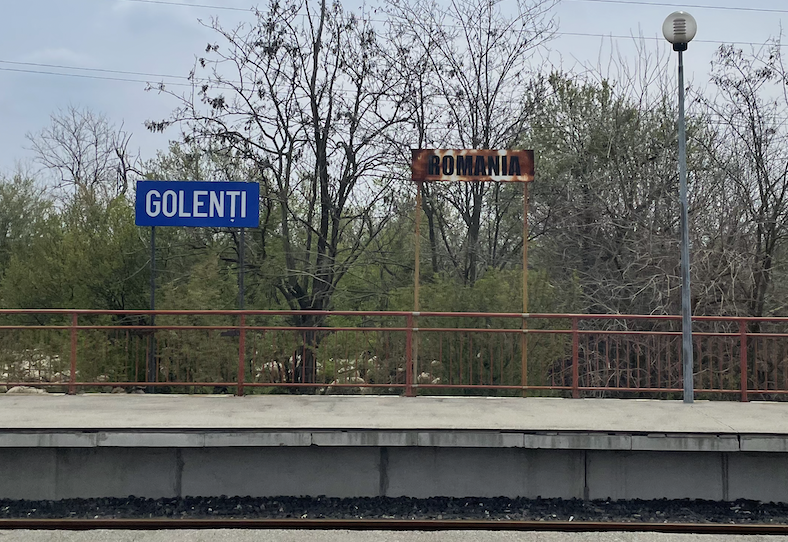
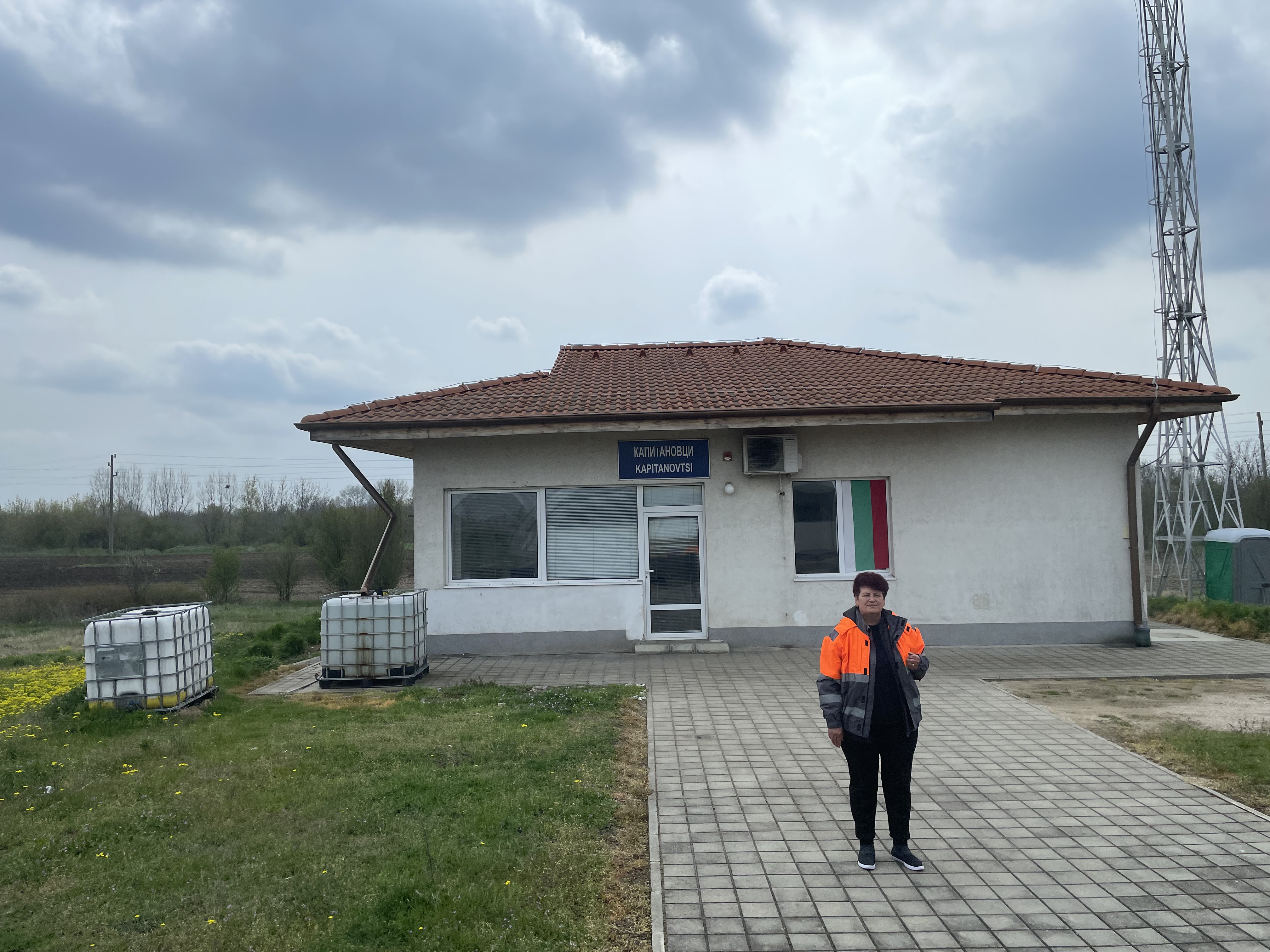
The return to ‘The Old’ is announced by the quality of the signs on the platform.
Changes:
But…. much is changing…. on the Bulgarian side the process has started to create a complete new line on the Medkovets – Vidin section (from the northern cross-country mainline that we used from Pleven)
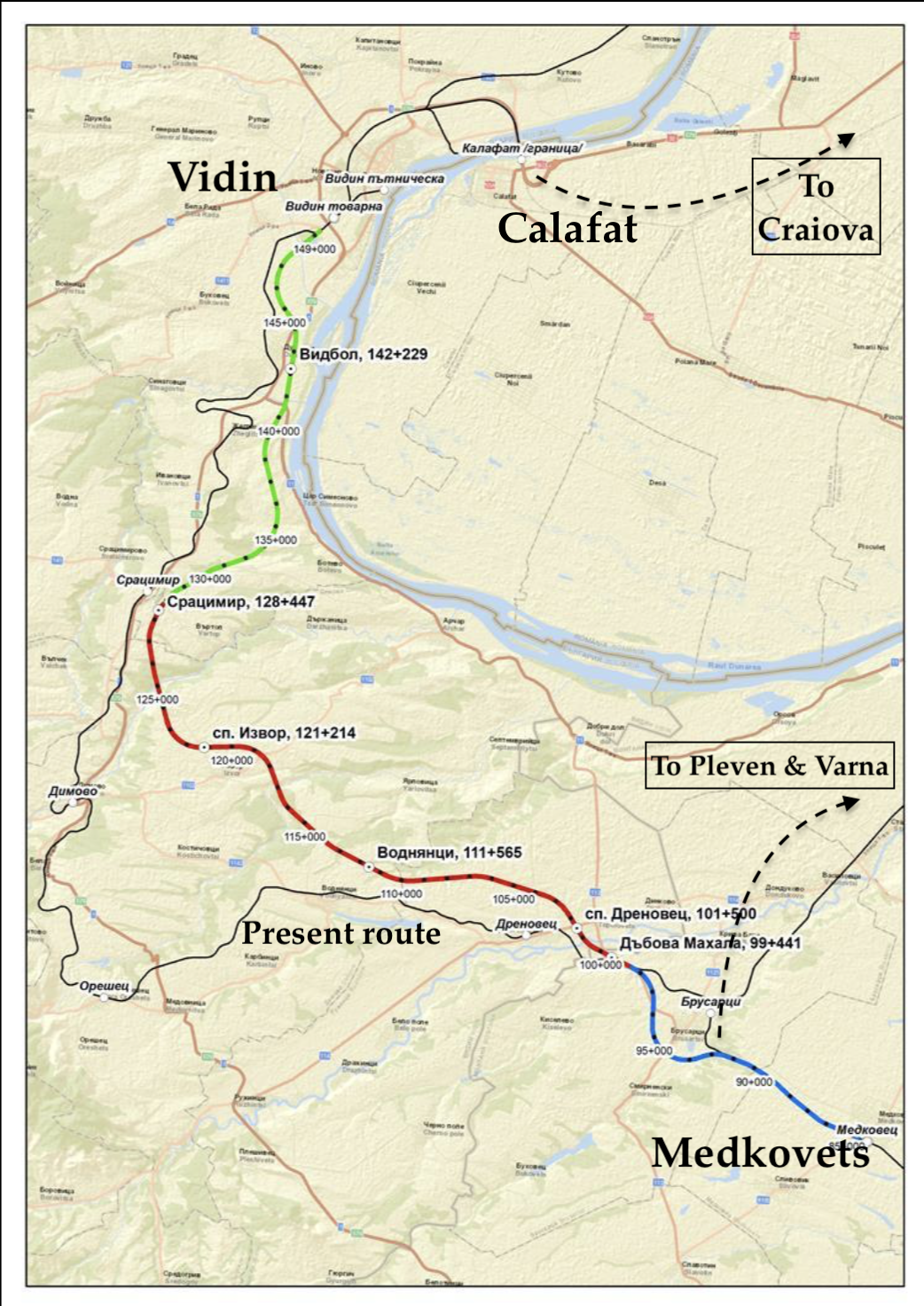
Presumably, in time, the improvement on the Bulgarian side will be reflected in developments in Romania.
For the present there is the Old Line
The distance from Vidin to Craiova is 104 kms. The journey takes over 3 hours.
The average speed for the journey is 33 kms (20 miles) per hour.
Romanian friends have frequently told me that their trains are slow (which is partially true – but not as bad as they sometimes suggest)…… In future I will advise that if they wish to experience a really & genuinely slow train, they should travel between Craiova & Vidin.
Its almost ‘flower picking speed’ – there were moments when we were overtaken by flying birds.
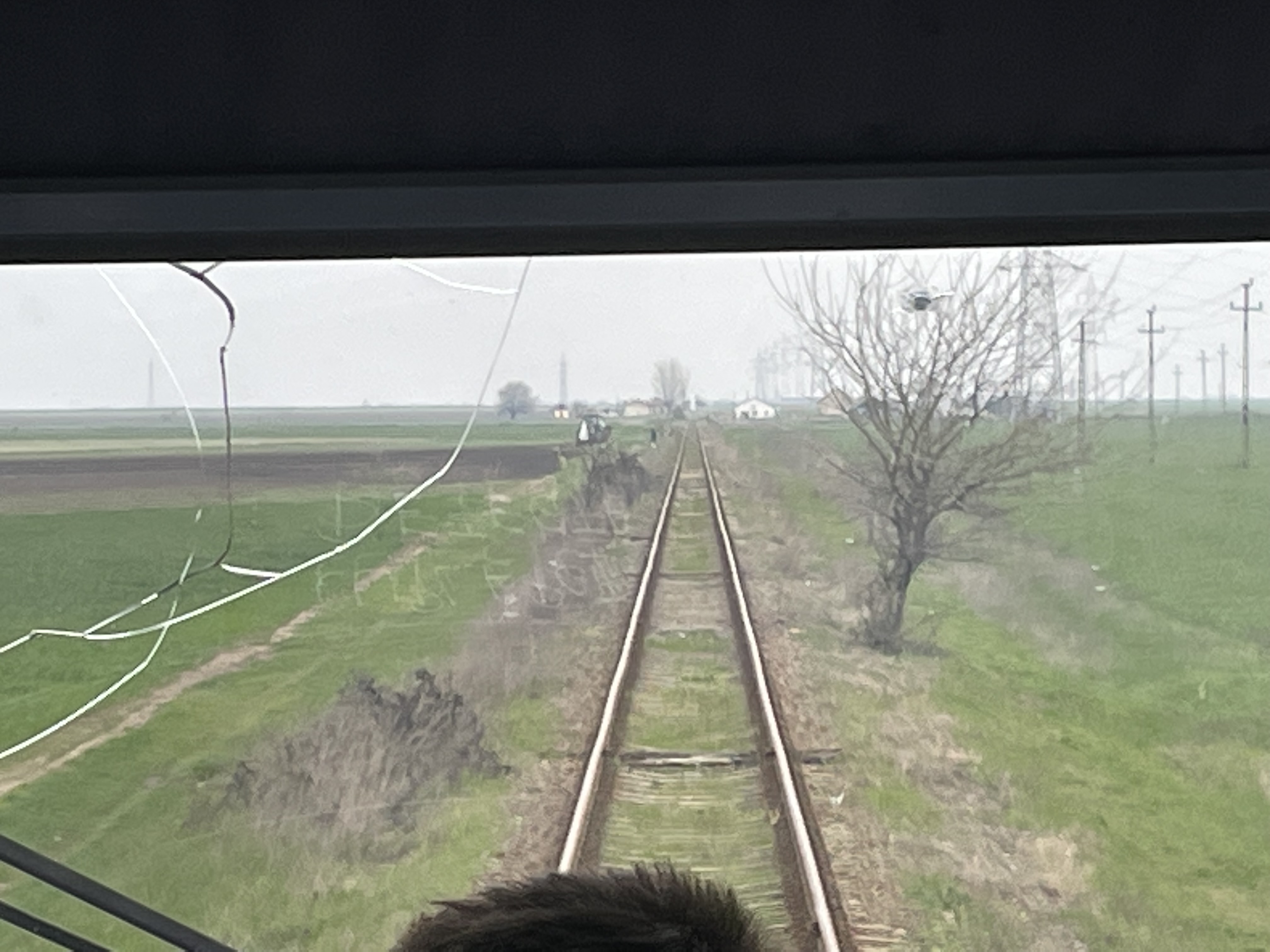
Dramatic change of track quality and speed is down the 20kms per hour. At one point 2 magpies were flying ahead of the train (pilot birds?)
The last time I travelled at this speed on a standard railway line was in 1961 between Whitland and Cardigan in west Wales….. but I think this may be slower…. the ‘Cardi Bach’ had bursts of speed (downhill)
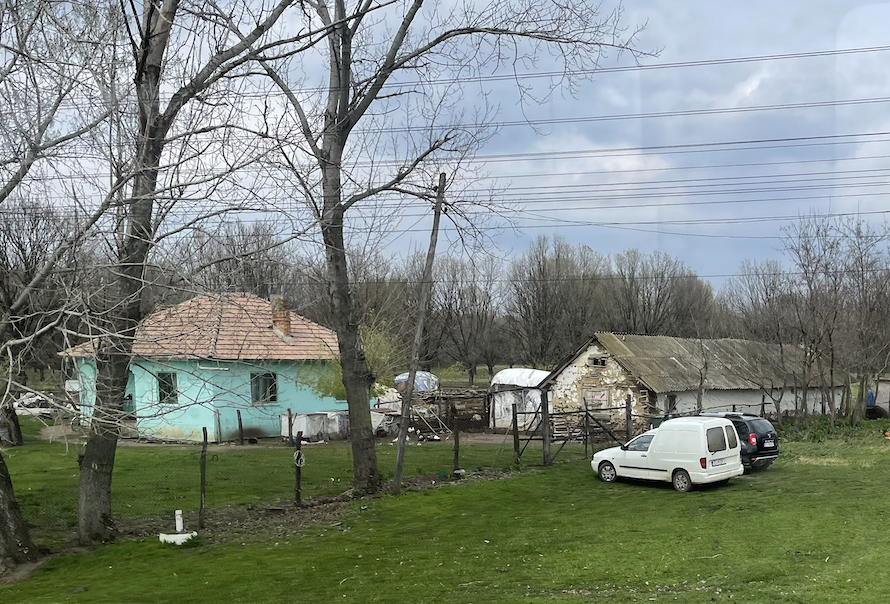
BUT… what matters is that the line exists – and allowed us to travel in comfort from Sofia to Tirgu Jiu without a lengthy diversion (over 2 days) through București.
I look forward to my next journey along the line.
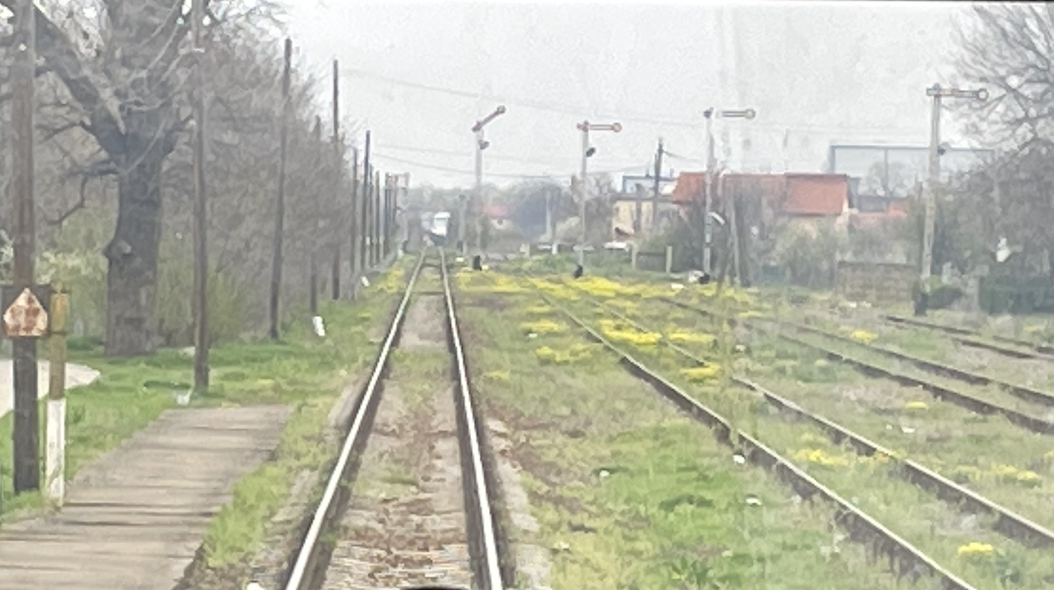
we weave our way through weeds, bushes & briars and into Craiova
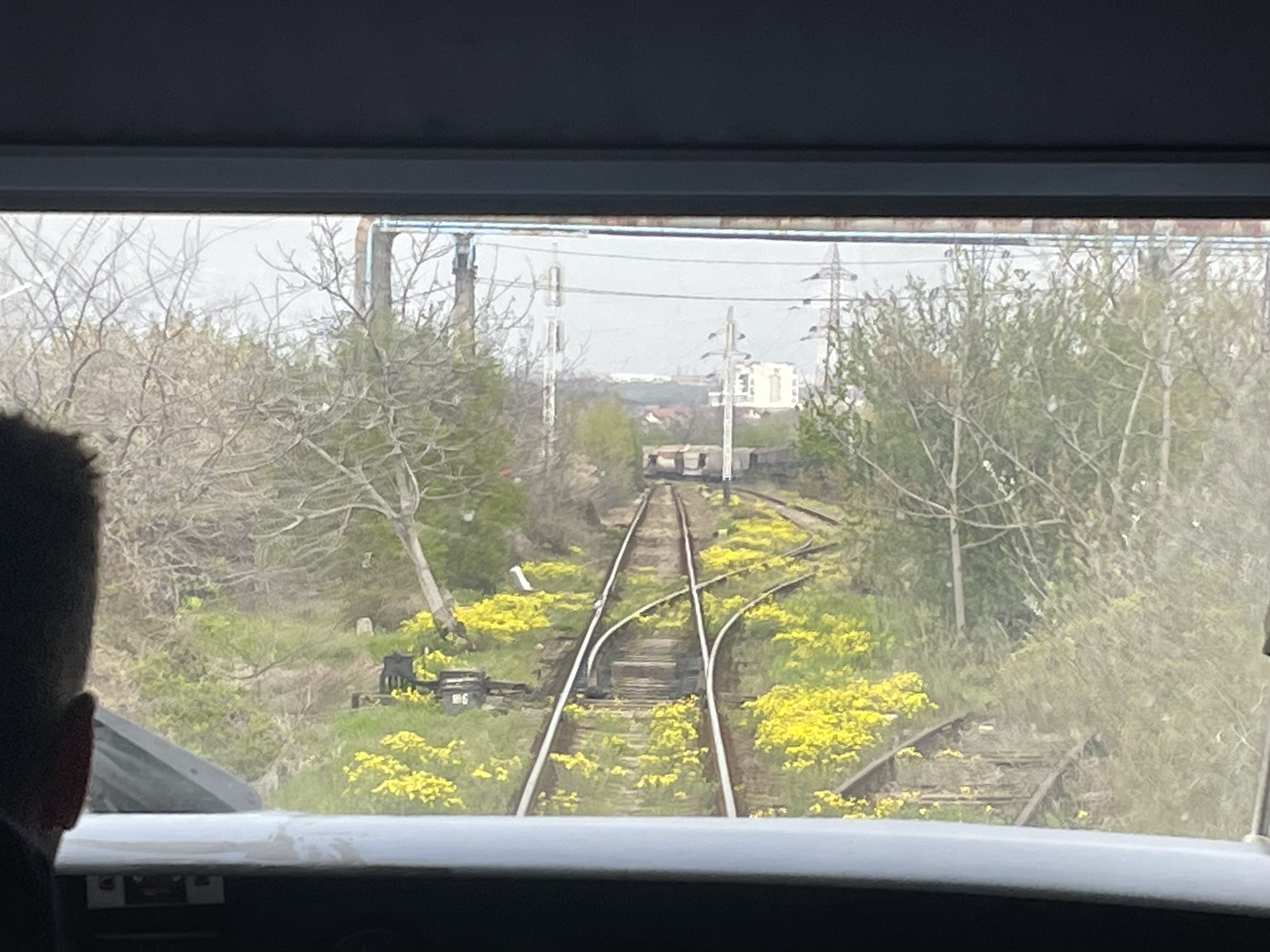
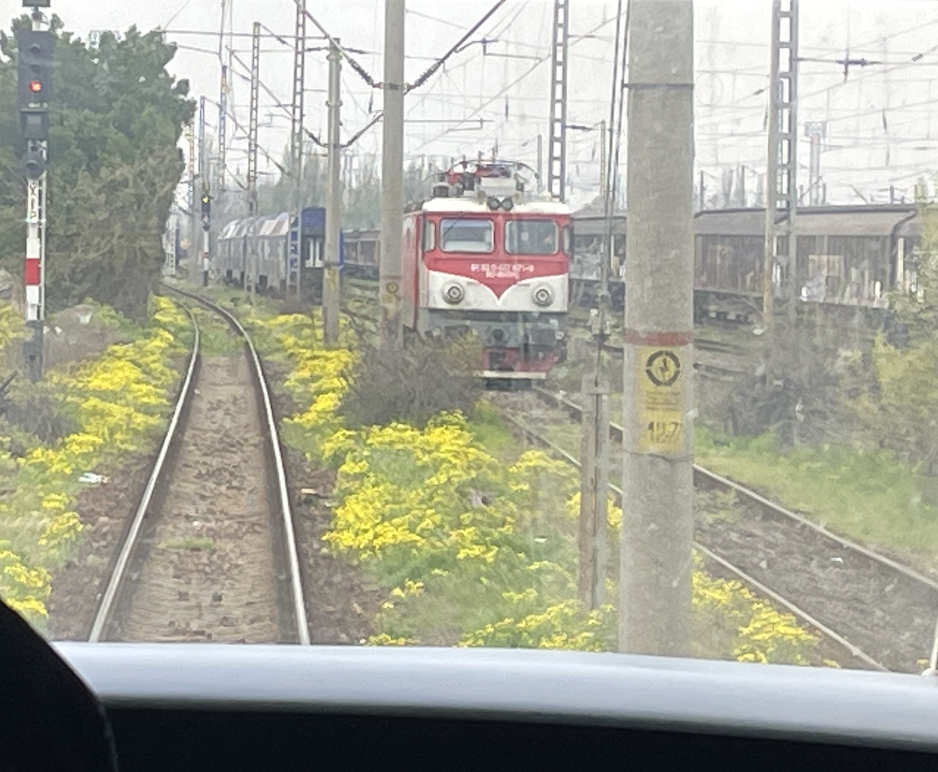
We join ‘The Afternoon Flier’ (not exactly) to Petroșani, travelling as far as Târgu Jiu
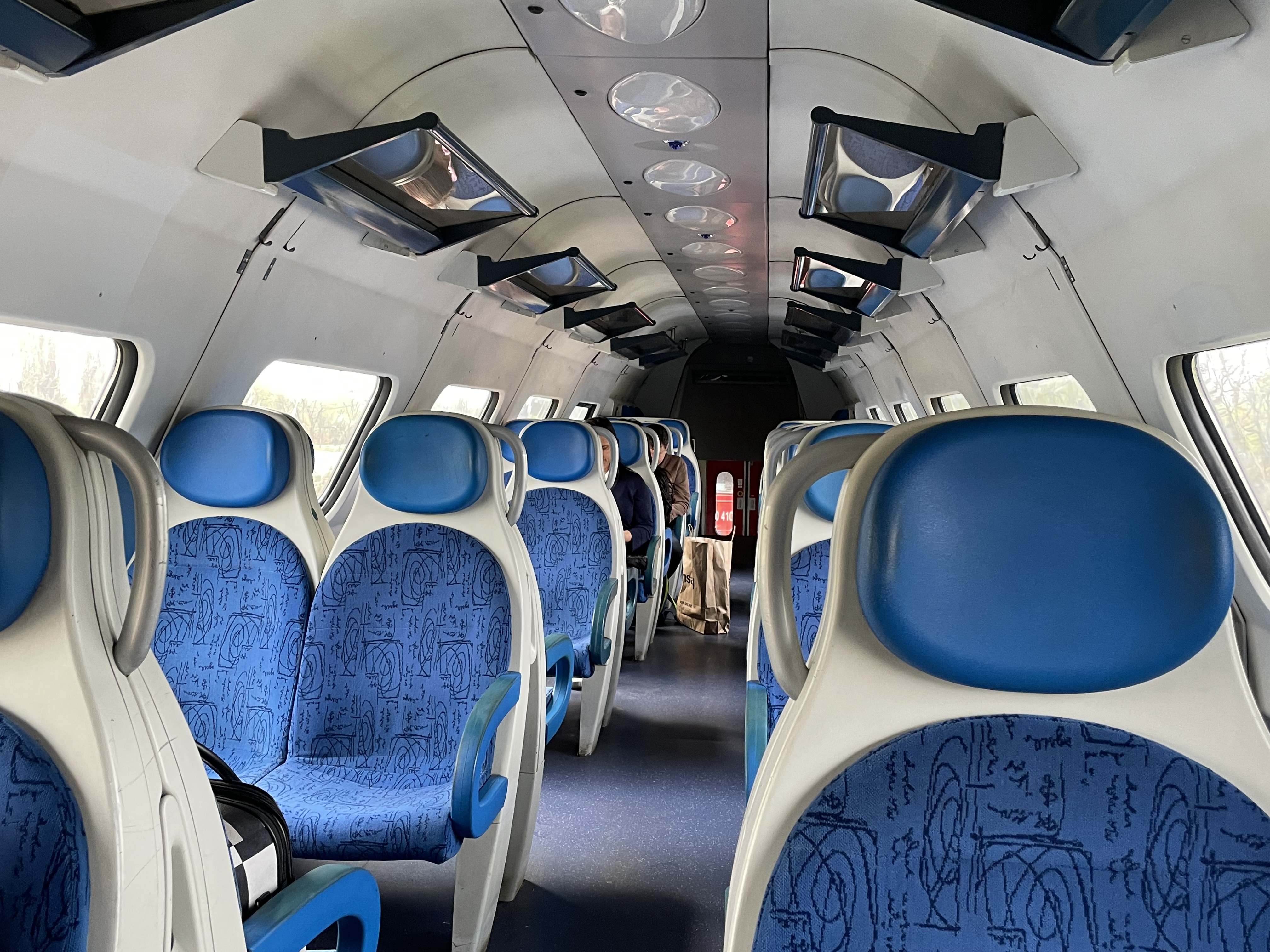
Upper Deck: busy with family shoppers
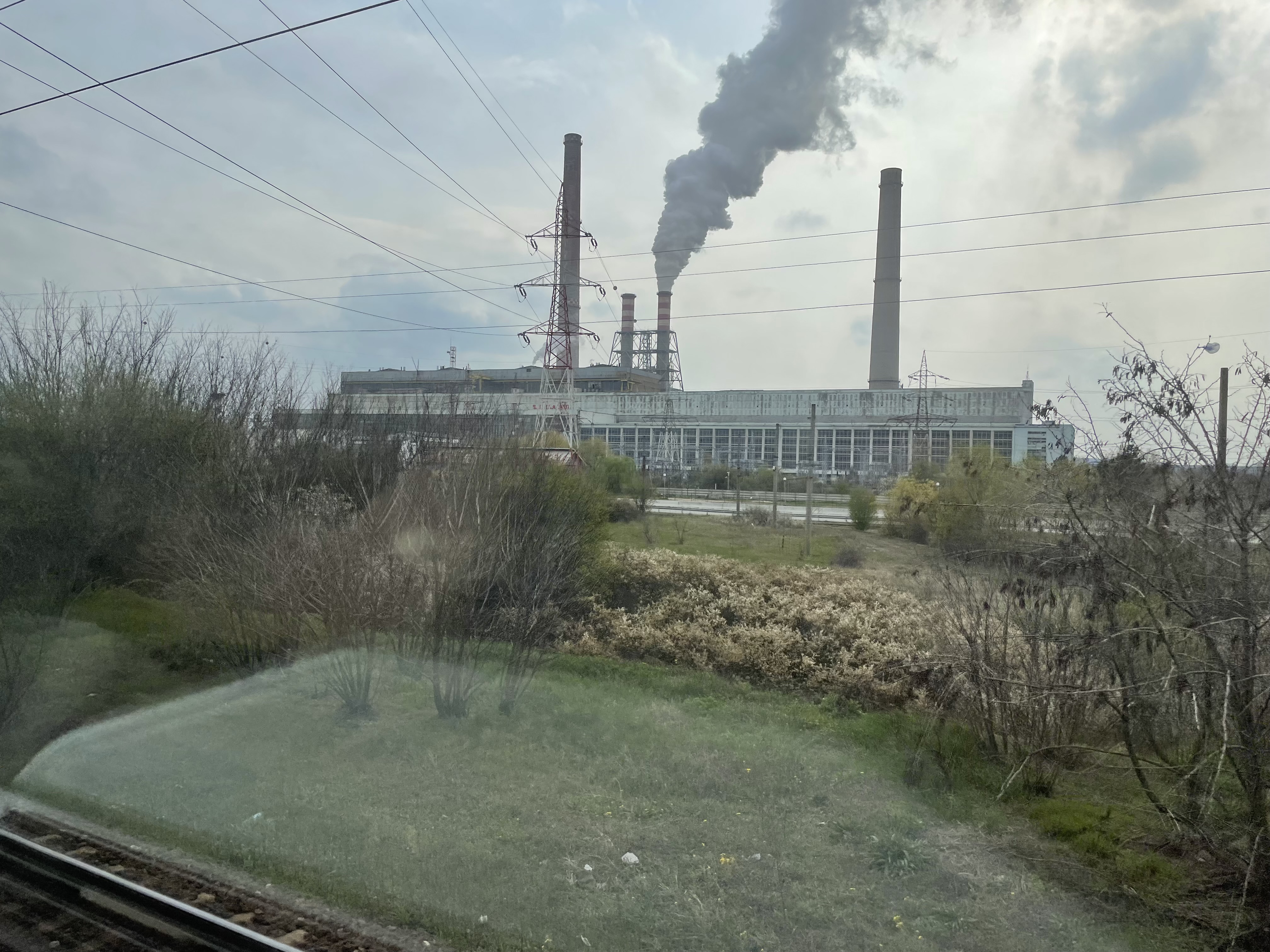
The huge Isalnita Power Station in Craiova. Presently being converted from lignite to gas.
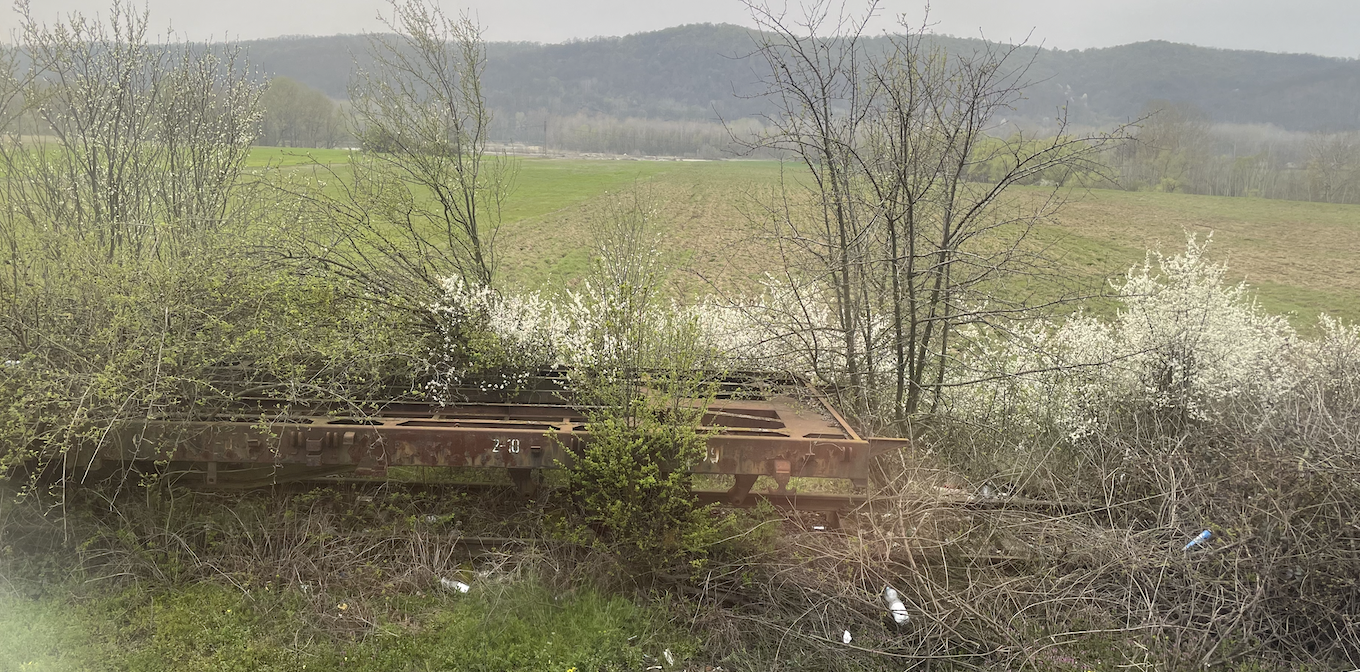
ghost wagons

Arrival in Târgu Jiu
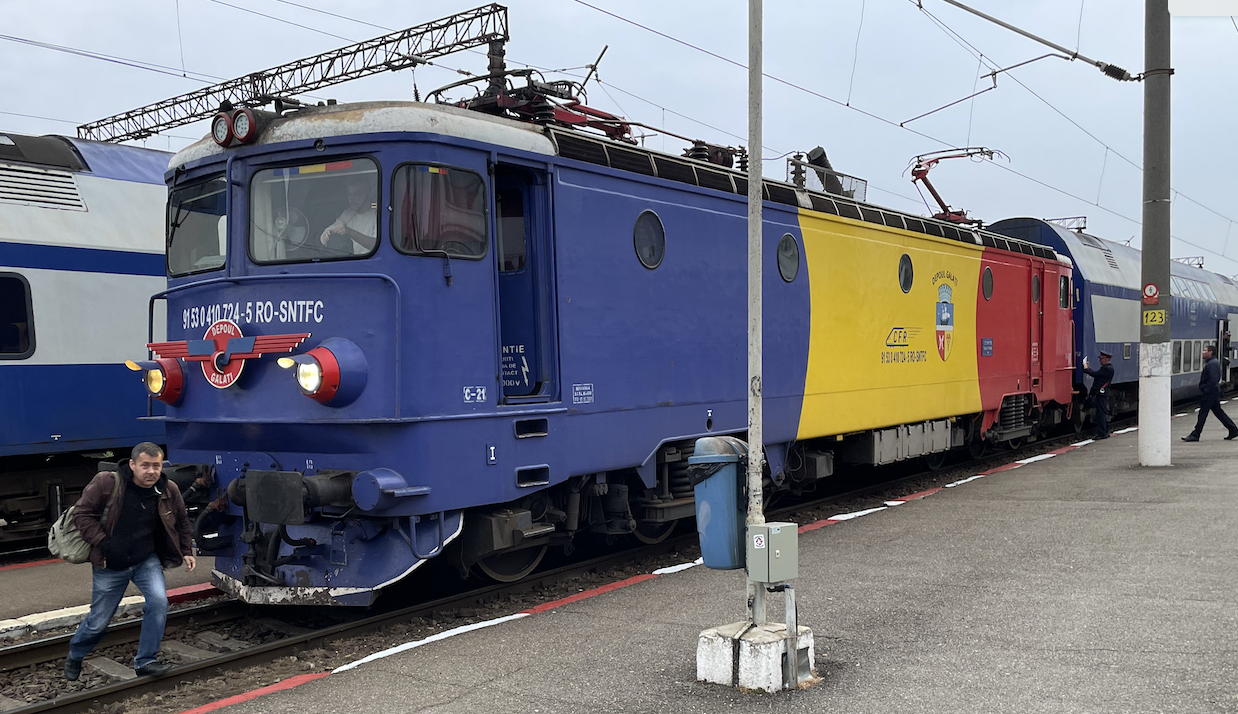
Long day – but very welcoming, comfortable hotel in Târgu Jiu… and with excellent internet connection
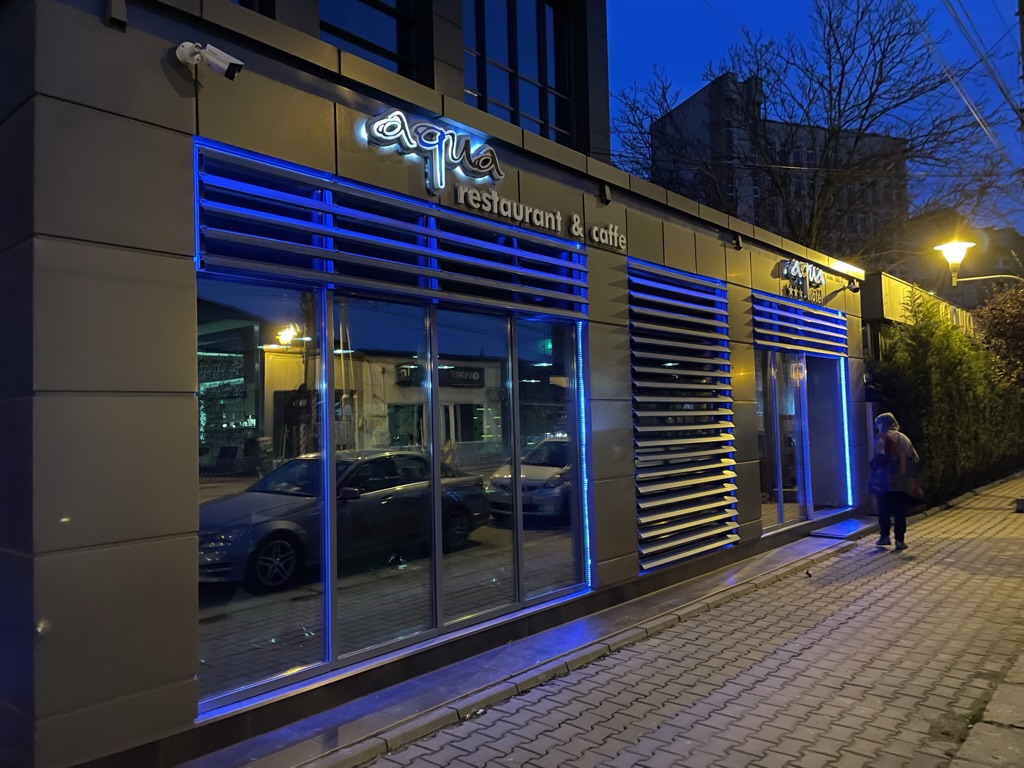
Before we settled into our hotel we took a short walk around the centre of the town.
We passed through in 1990 – and needed to stop and change the fuel filters due to the quality of local supplies which contained detritus that ‘choked’ the flow.
As we were changing the filter, from the road at the side suddenly appeared a Romanian Army tank which grumbled and ground its way around us and then down the highway…. It was almost the only vehicle we saw in the town. As we’d been in Romania for over a week we had become reasonably adapted to ‘experiencing the bizarre’. This became just another example.
Nothing in 1990 Romania related to the normality of other countries.
My last visit, as part of a project partnership was in 2013. The town had a very weary ‘old style’ appearance.
2023 & considerable changes. The buildings are not radically different – but everything now is much smarter… and there is a pride & confidence amongst staff that accompanies the changes.
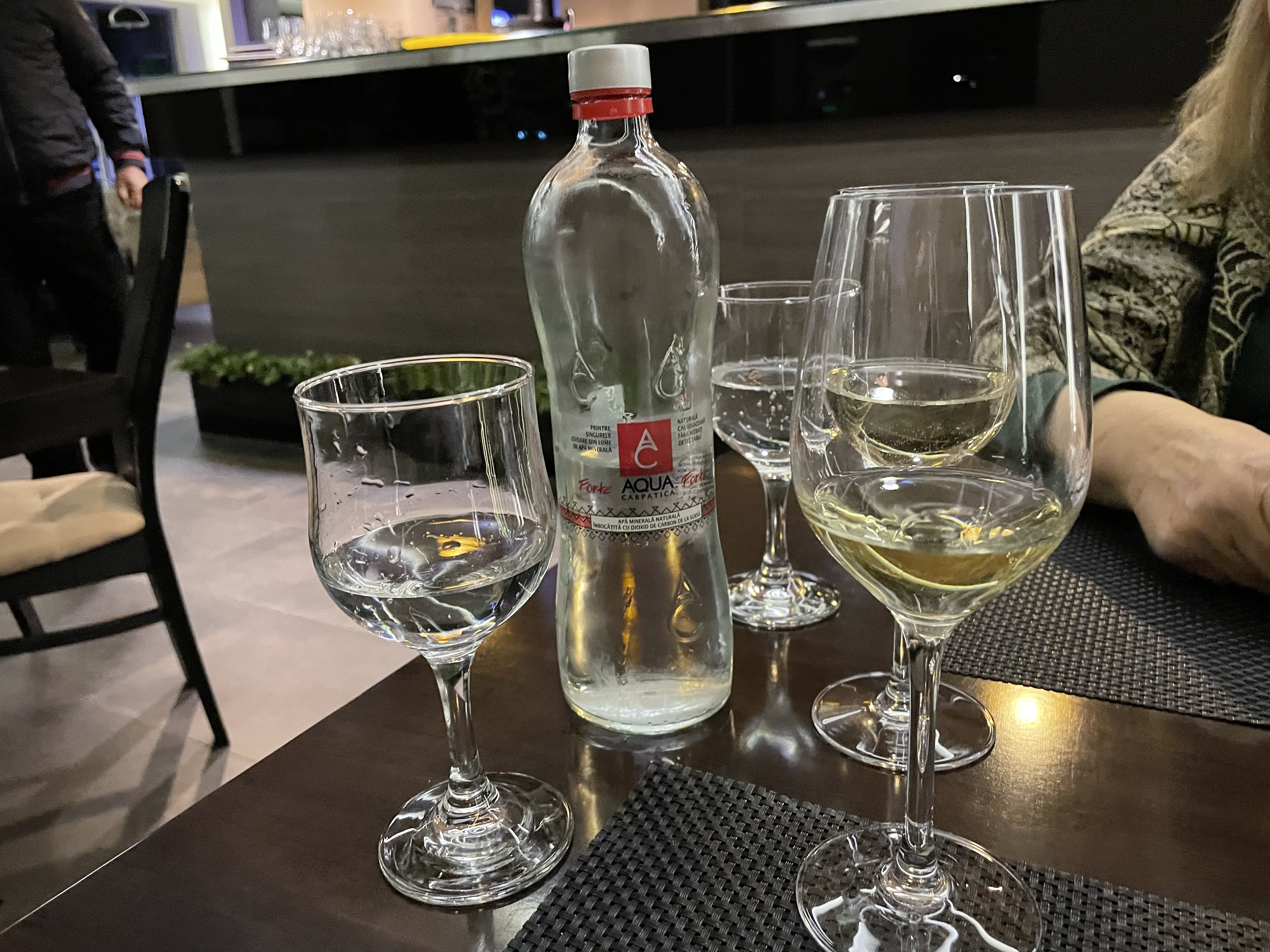
 Inspirational Pathways