April 9th: Brâncuși & to Deva & beyond.
Palm Sunday in Orthodox tradition
Constantin Brâncuși
‘Considered one of the most influential sculptors of the 20th century and a pioneer of modernism, Brâncuși is called the patriarch of modern sculpture.’
Born in the village of Hobița near Târgu Jiu, his ability at carving wood (influenced by local traditions) led to formalised development at arts schools in Romania – and international success after becoming established in Paris.
He expressed his aim as to depict
“not the outer form but the idea, the essence of things.”
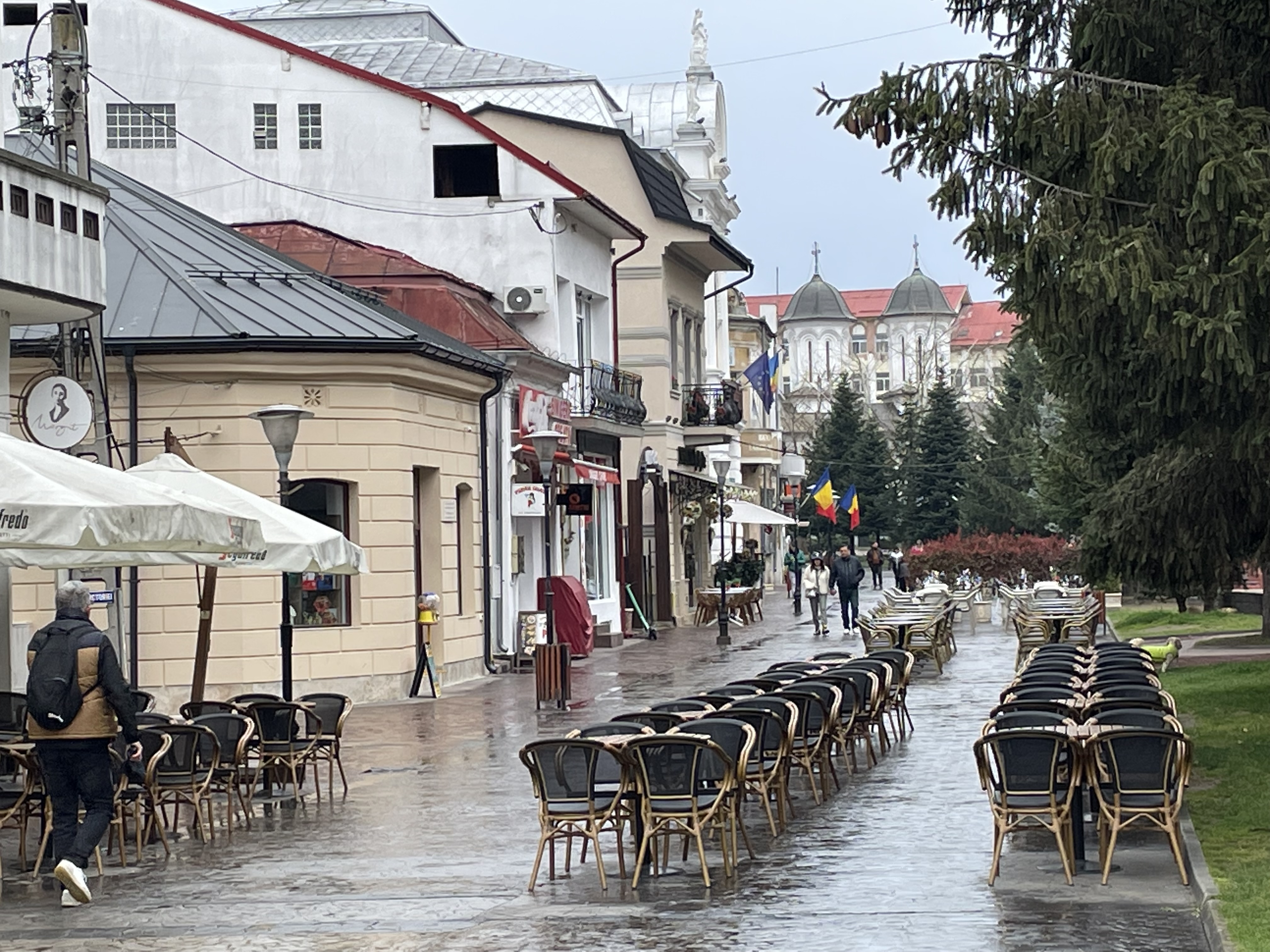
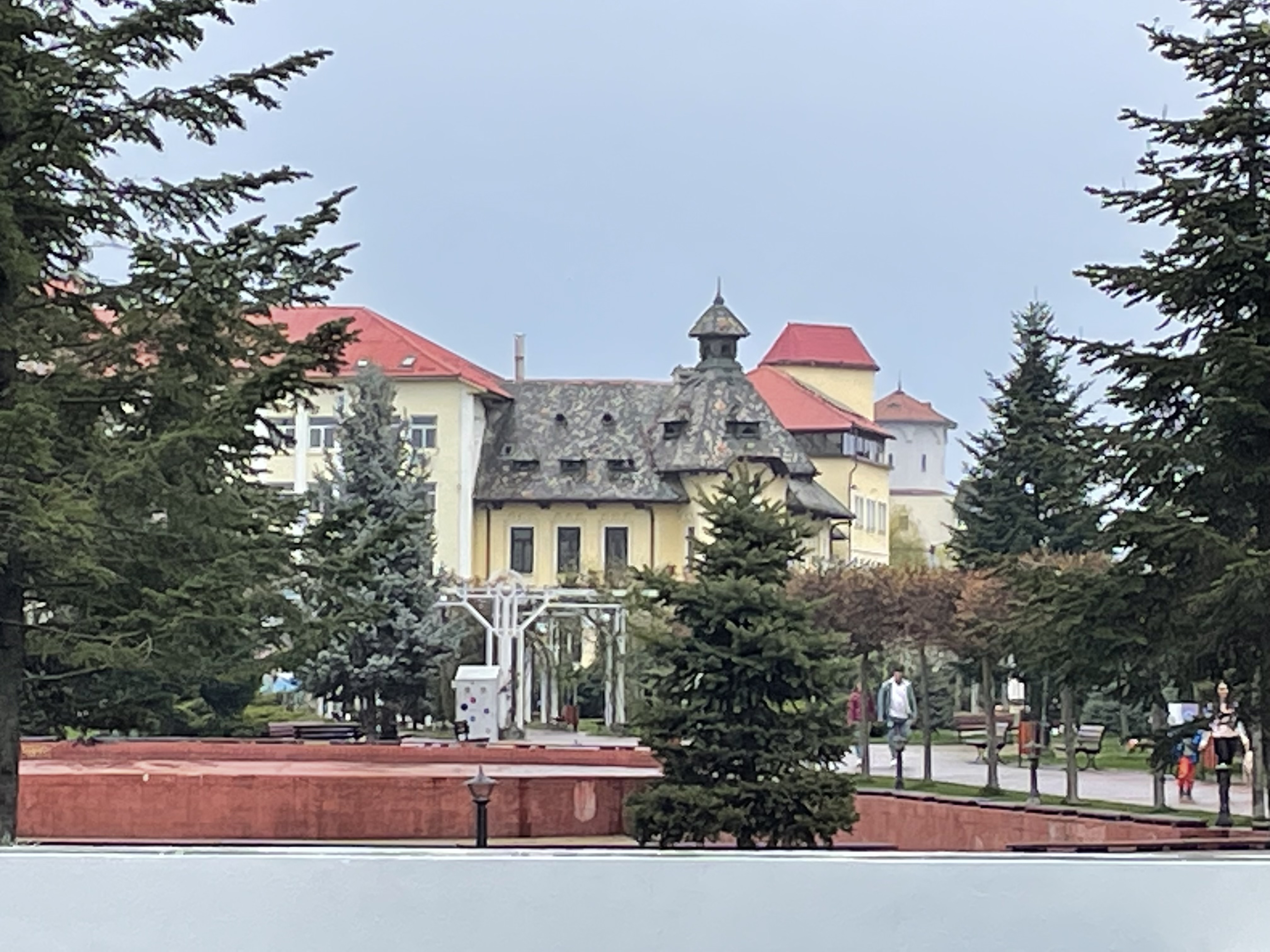
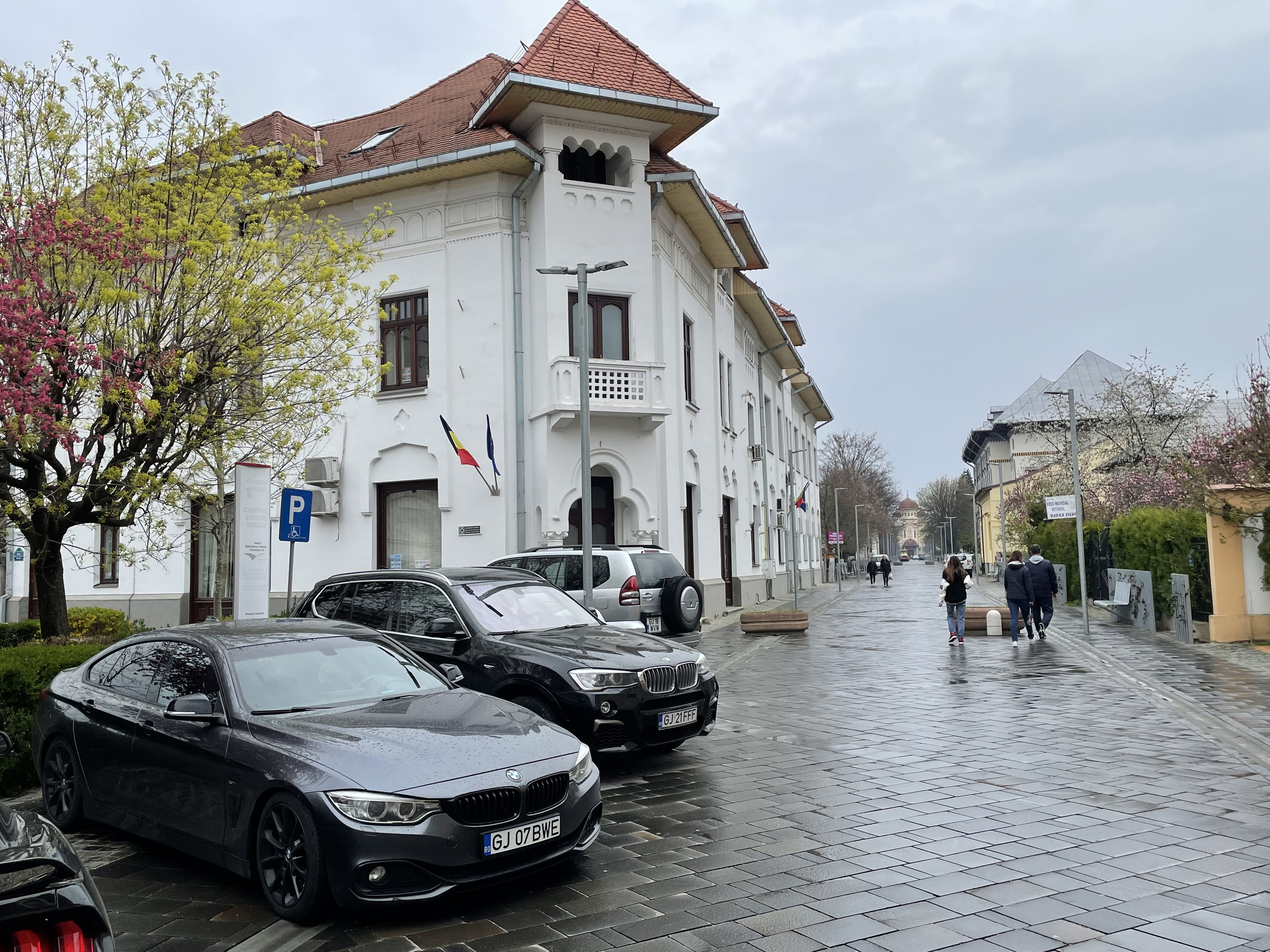
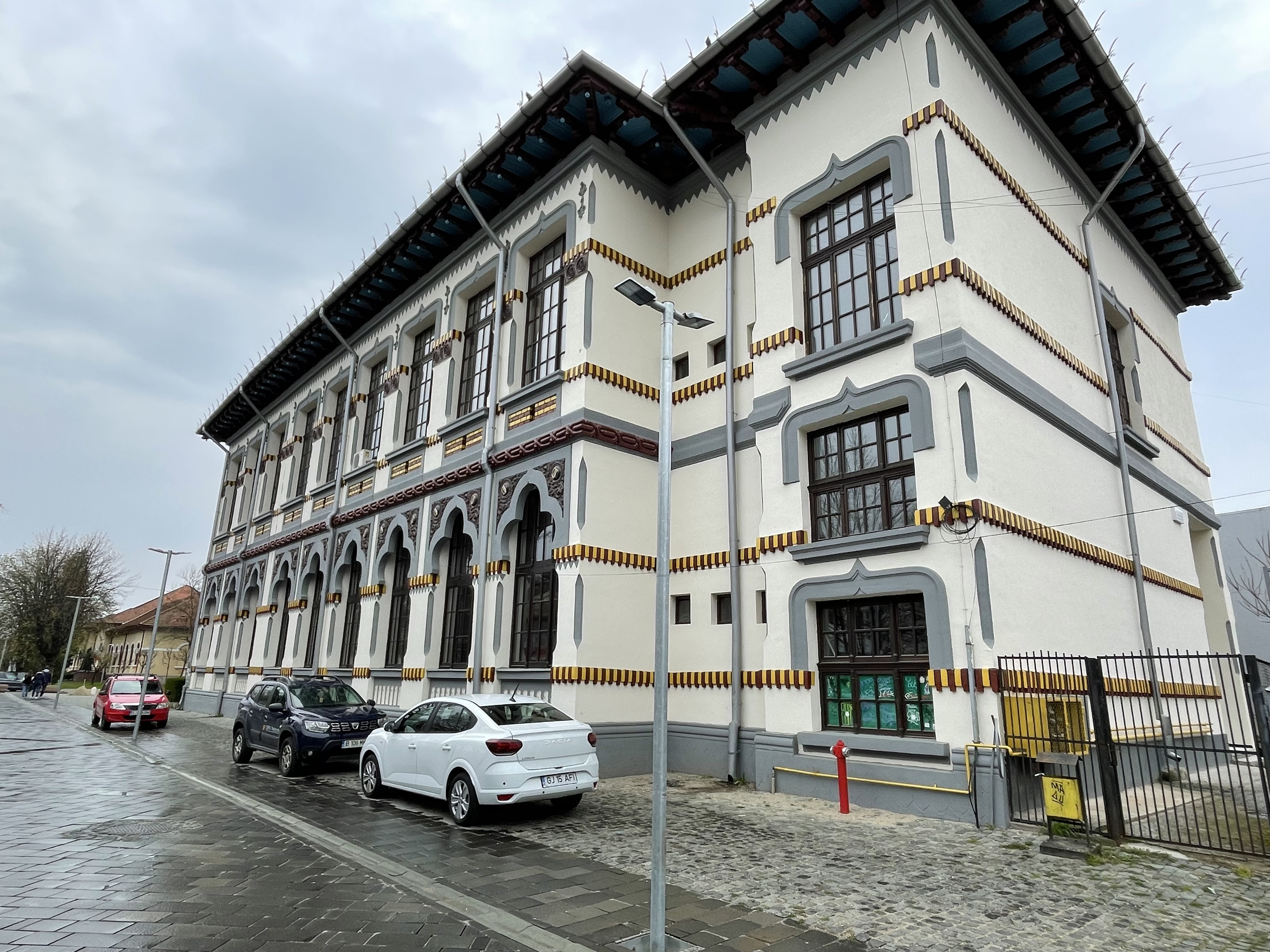
We walked into the town centre & to the Brâncuși sculptures which with the general improvements are being re-integrated as a complete linear ensemble starting near the river Jiu.
This involved joining the newly renovated pathway (‘calea’) that connects the whole ensemble.
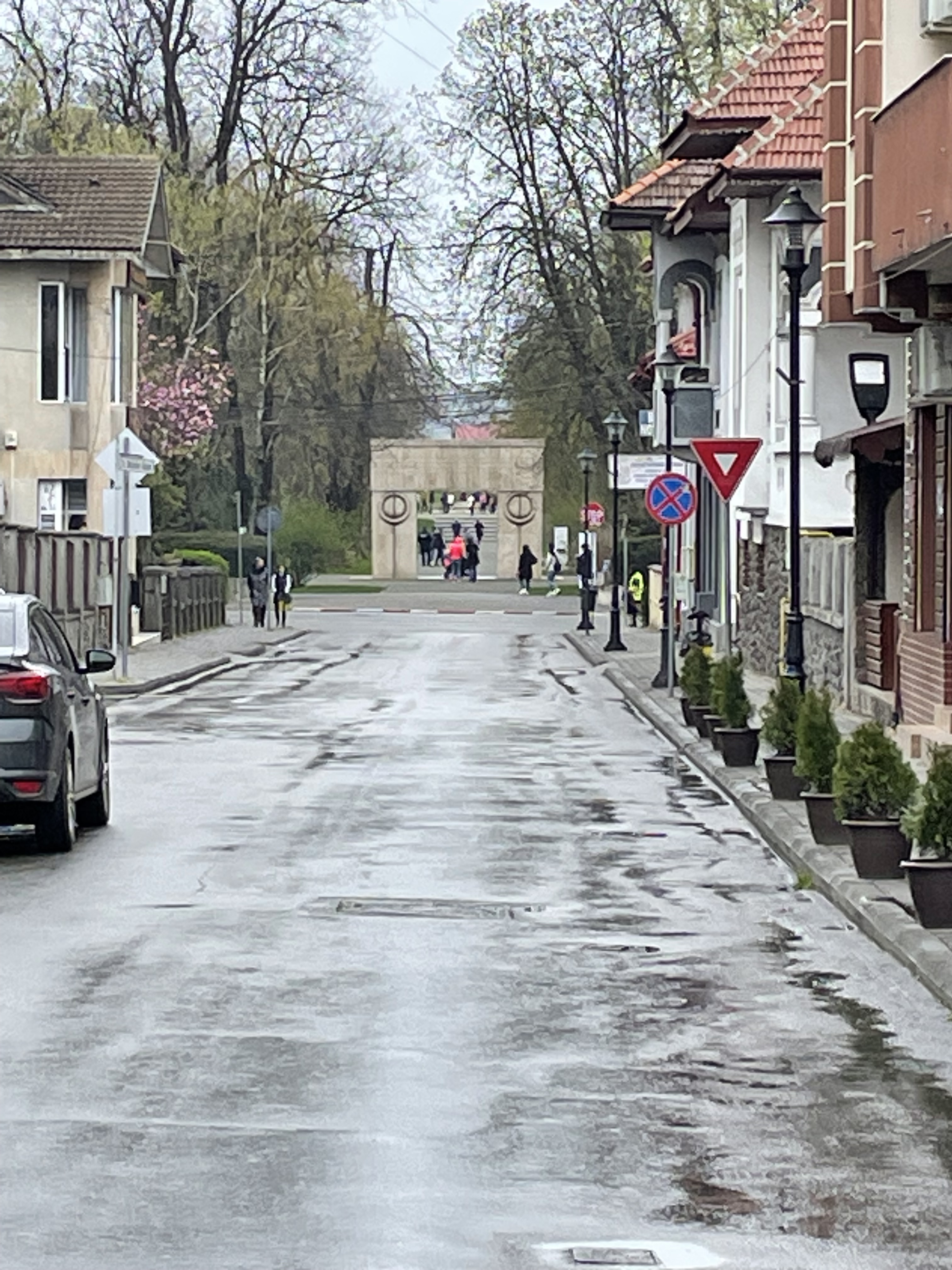
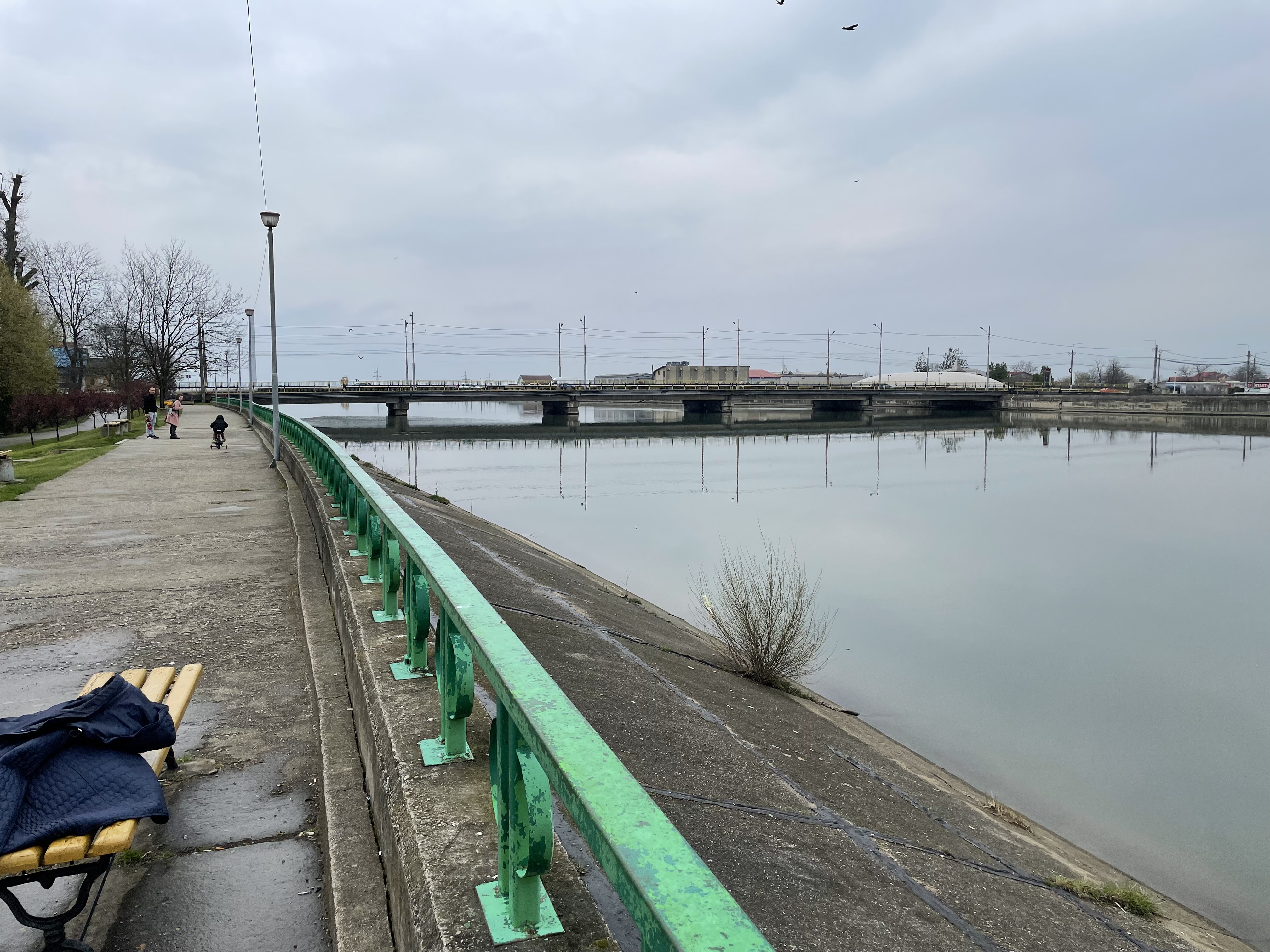
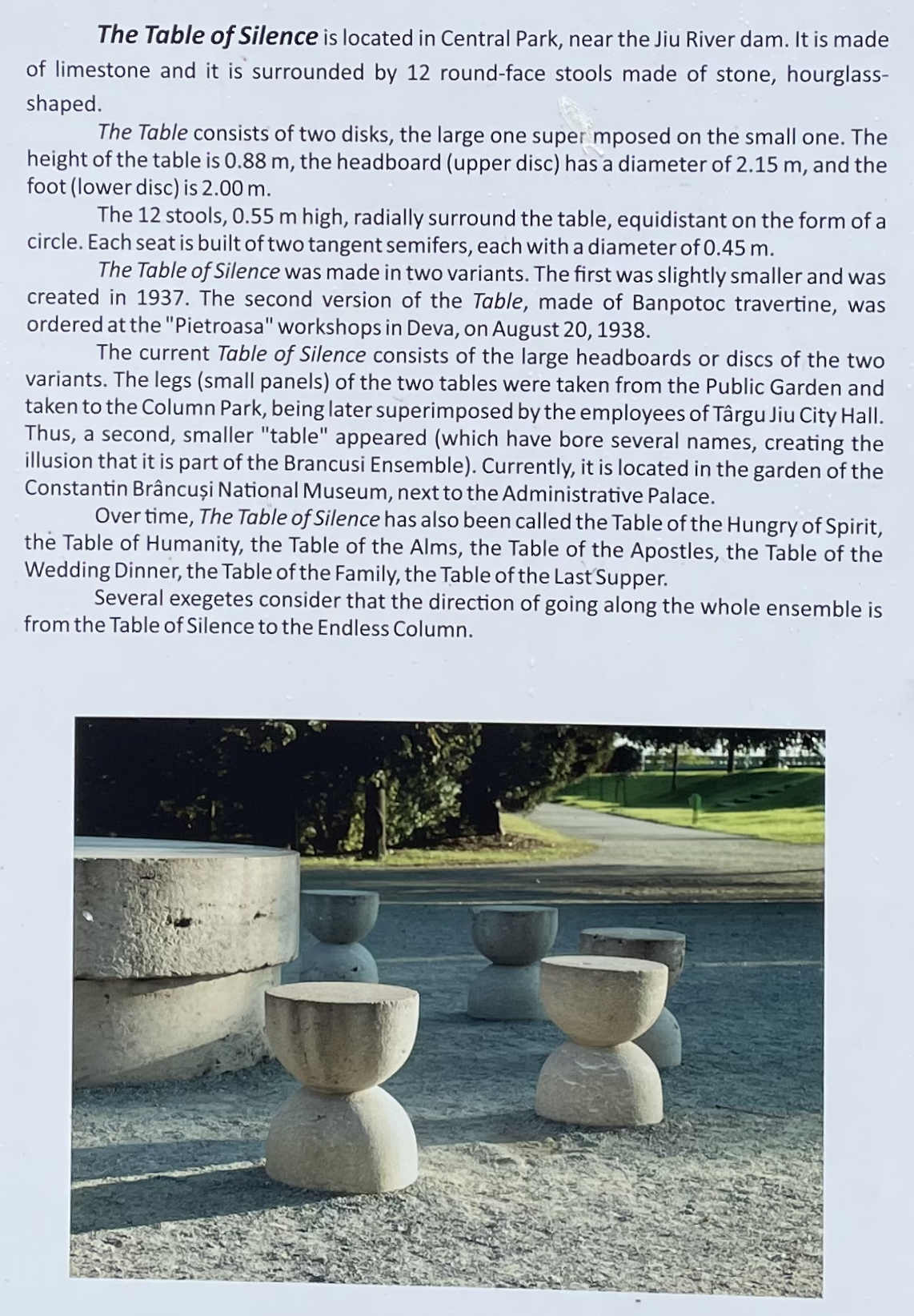
Part of the ‘reintegration’ has been to slightly re-position the table & ensure that it visually connected to the ‘Calea’ (‘pathway’) as originally intended.
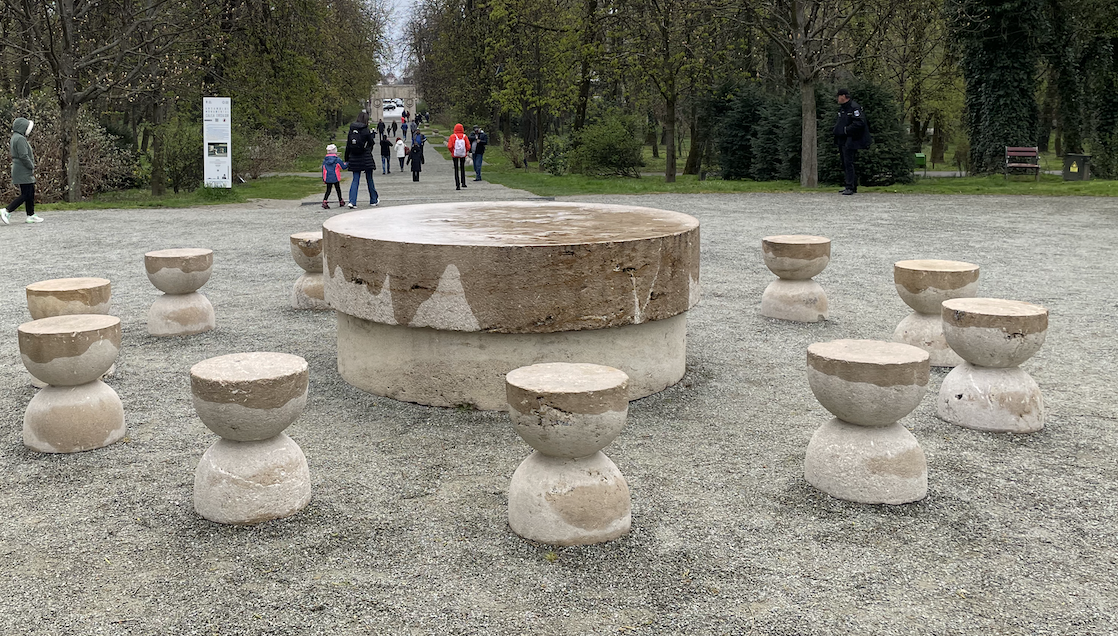
Sculptural Ensemble of Constantin Brâncuși
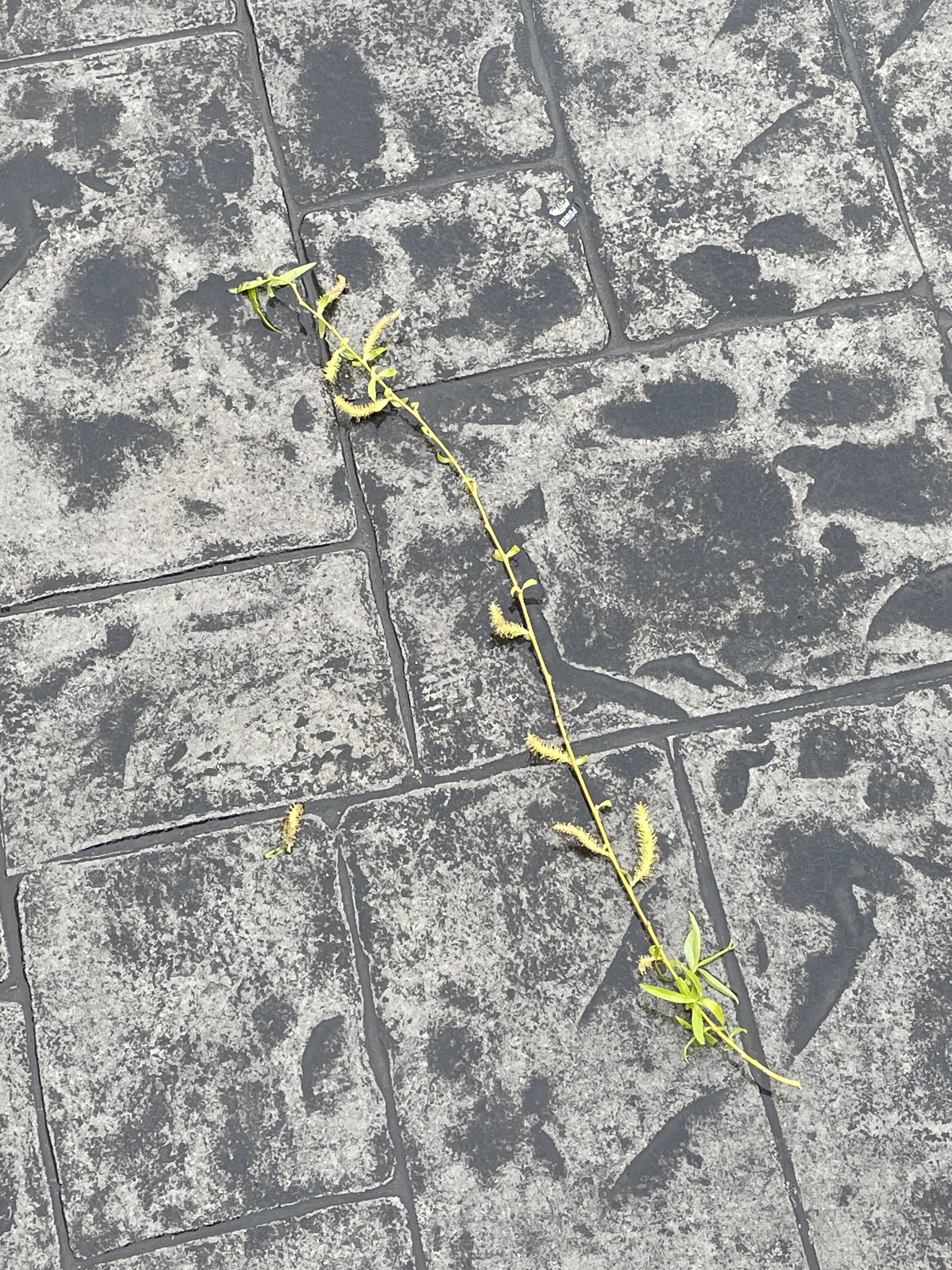
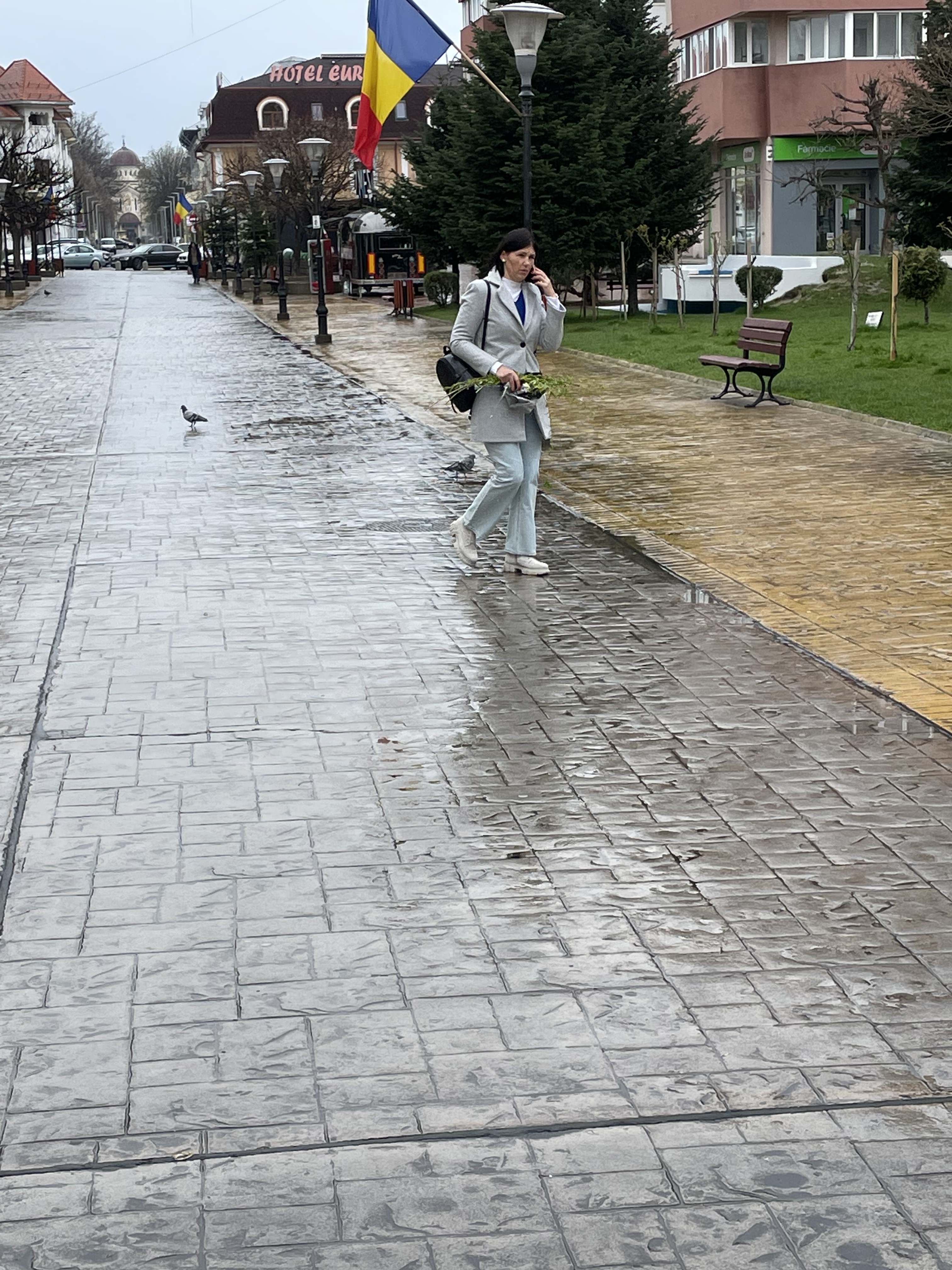
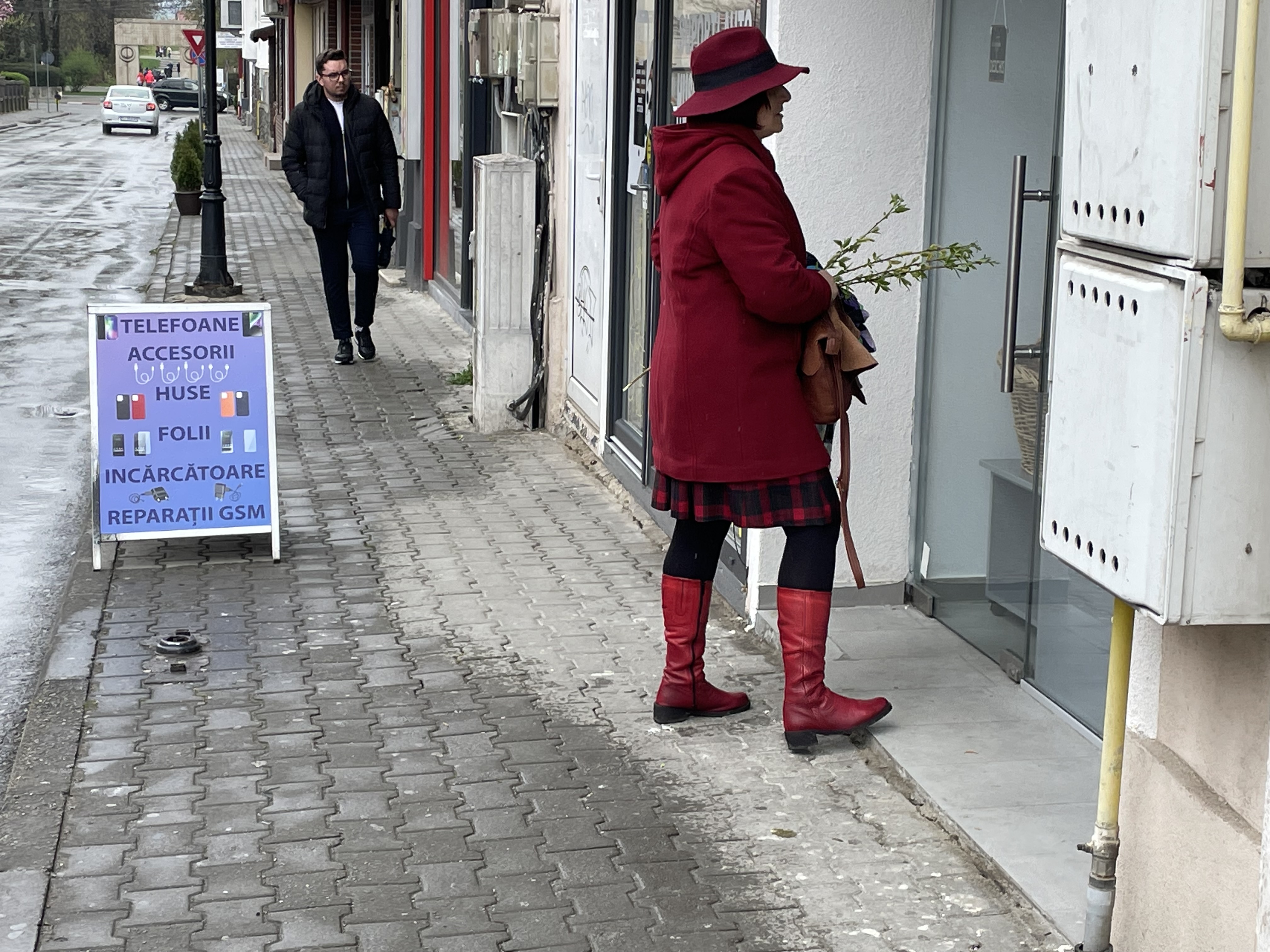
The day was “Palm Sunday’ (‘Florii’: Duminică floriilor) & local people had collected willow branches to carry home – one, rather appropriately for the day, had fallen on the calea.
Background
The route between the 3 major elements of the ensemble is called ‘Calea Eroilor’ (the path of the heroes). The work was commissioned as a memorial to those who died fighting the invading German armies that were responding to Romania’s decision in 1916 (after considerable pressure) to join the Triple Entente.
The Romanian Armies were not sufficiently well equipped (and never received the assistance expected from their allies) & after initial success invading Transylvania, were overwhelmed.
The German attack in November 2016 was crucial “a thoroughly unequal contest in which the Germans outnumbered the Romanians by more than two to one.”.
Prior to that attack a defence of the river bridge at Târgu Jiu, on 27th October, 2016 had halted the German Armies.
“They were repulsed by troops aided by the local population”… the citizens of the town had made rapid response.
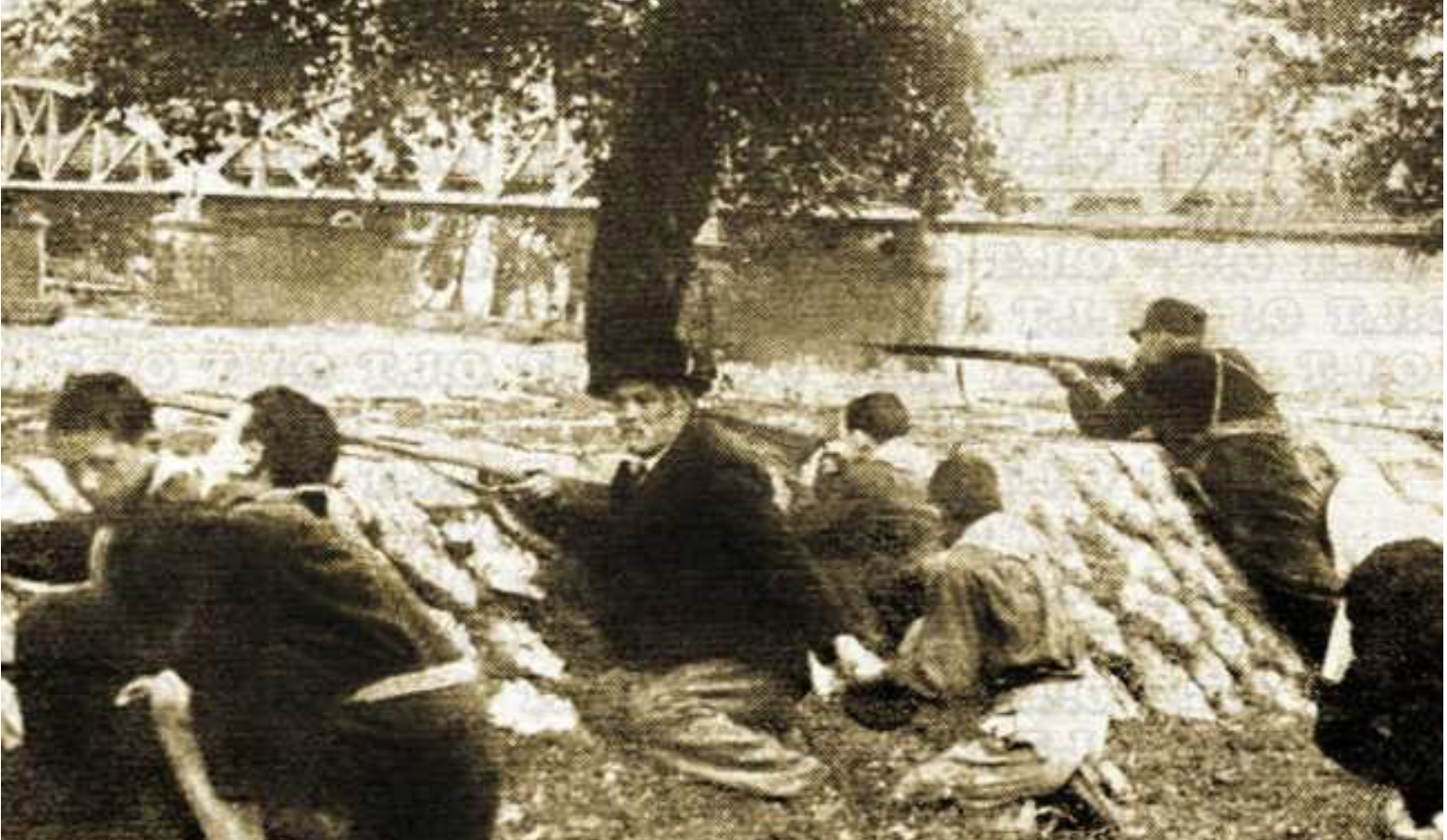
It was as a memorial to the citizens involved in that, ultimately futile, defence that, 20 years later, Brâncuși was asked to commemorate.
Whatever Brâncuși may have felt personally he managed to create an ‘ensemble’ that engages universal elements & which thus remains capable of multiple interpretations.
To describe it as simply a memorial to a (tragically futile) military event, is surely to fail to recognise its greater artistic, social, emotional and spiritual value.
The accidental dropping of a willow branch on the ‘calea’, on Palm Sunday 2023, seems especially poignant.
The descriptions of the ensemble focus on the 3 major elements:
The Table (called ‘of Silence’), The Gate of the Kiss & the Pillar (or ‘Endless Column’)
Brâncuși trained & worked with Rodin & by 1908 had evolved & simplified one of his master’s most famous works – The Kiss – which he produced several times.
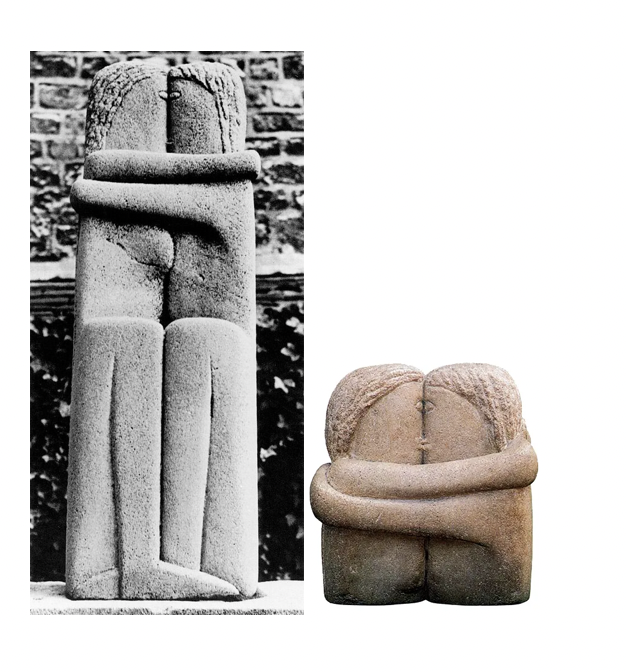
The Gate of the Kiss takes the simplification further.
But what of the total – the ‘Ensemble’. Do they relate to ‘its implications of birth, life and death’ ‘ (Tate Gallery)?
It could be ‘family, departure & future life’ (here & ‘beyond’
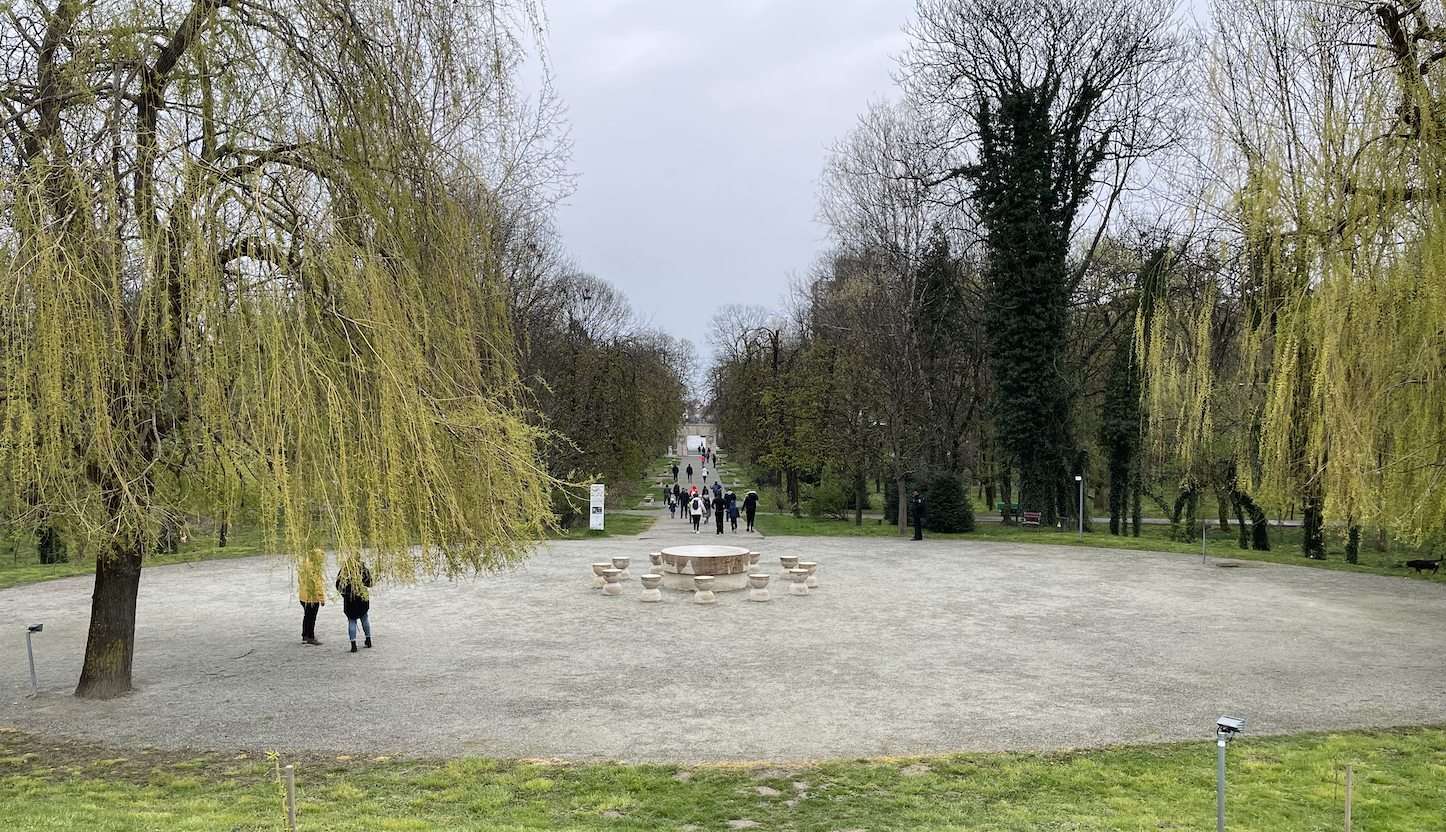
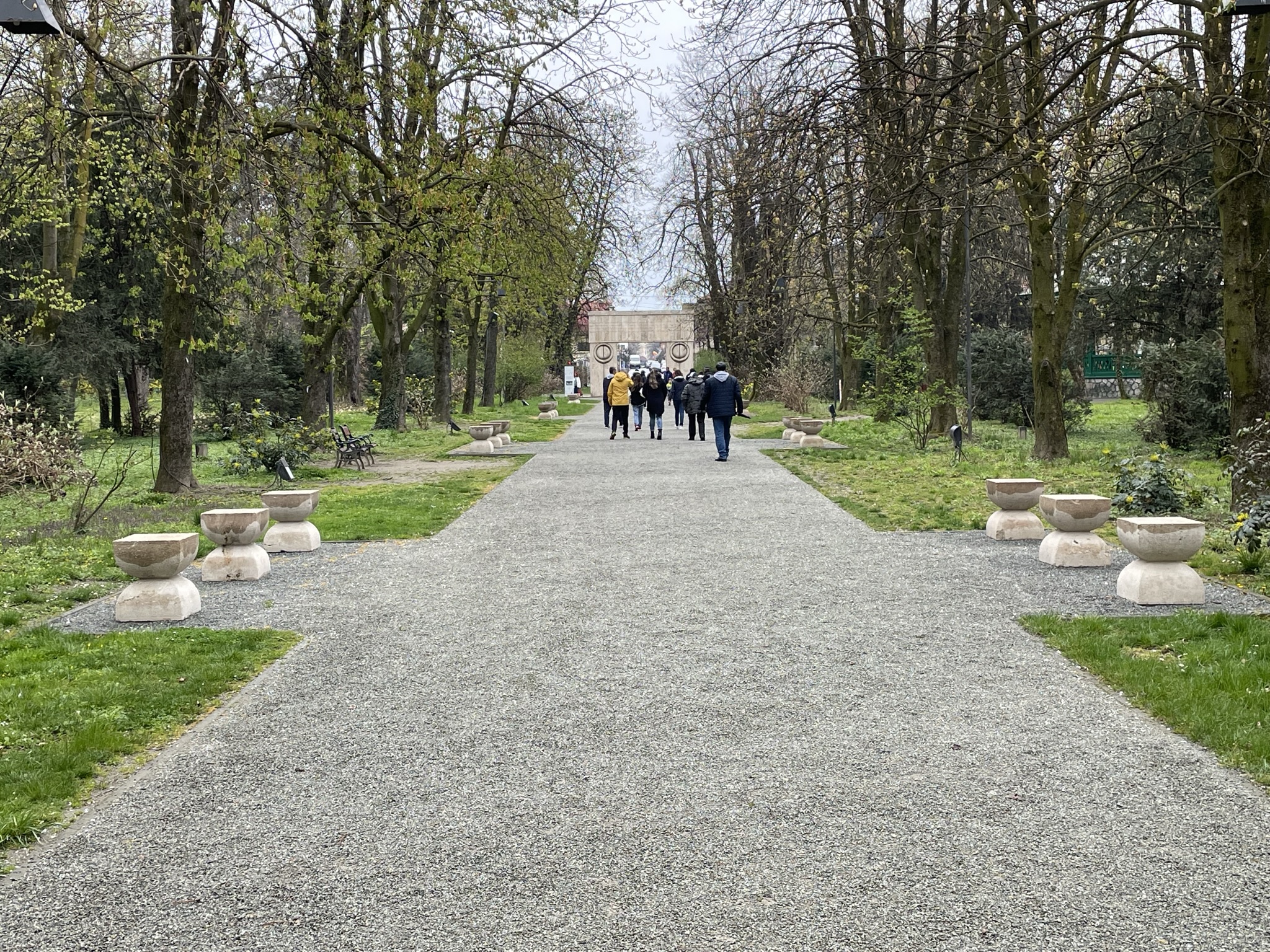
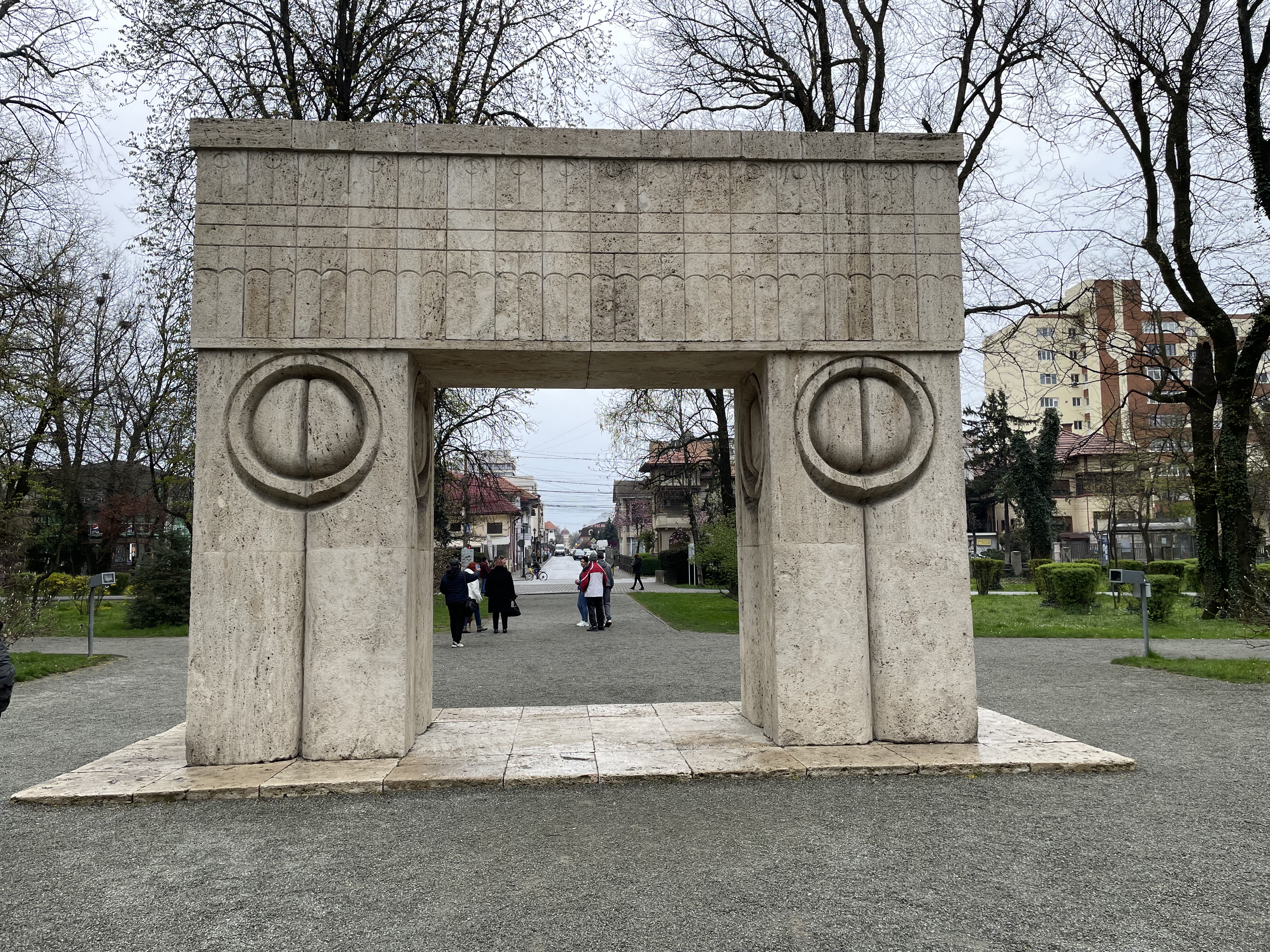
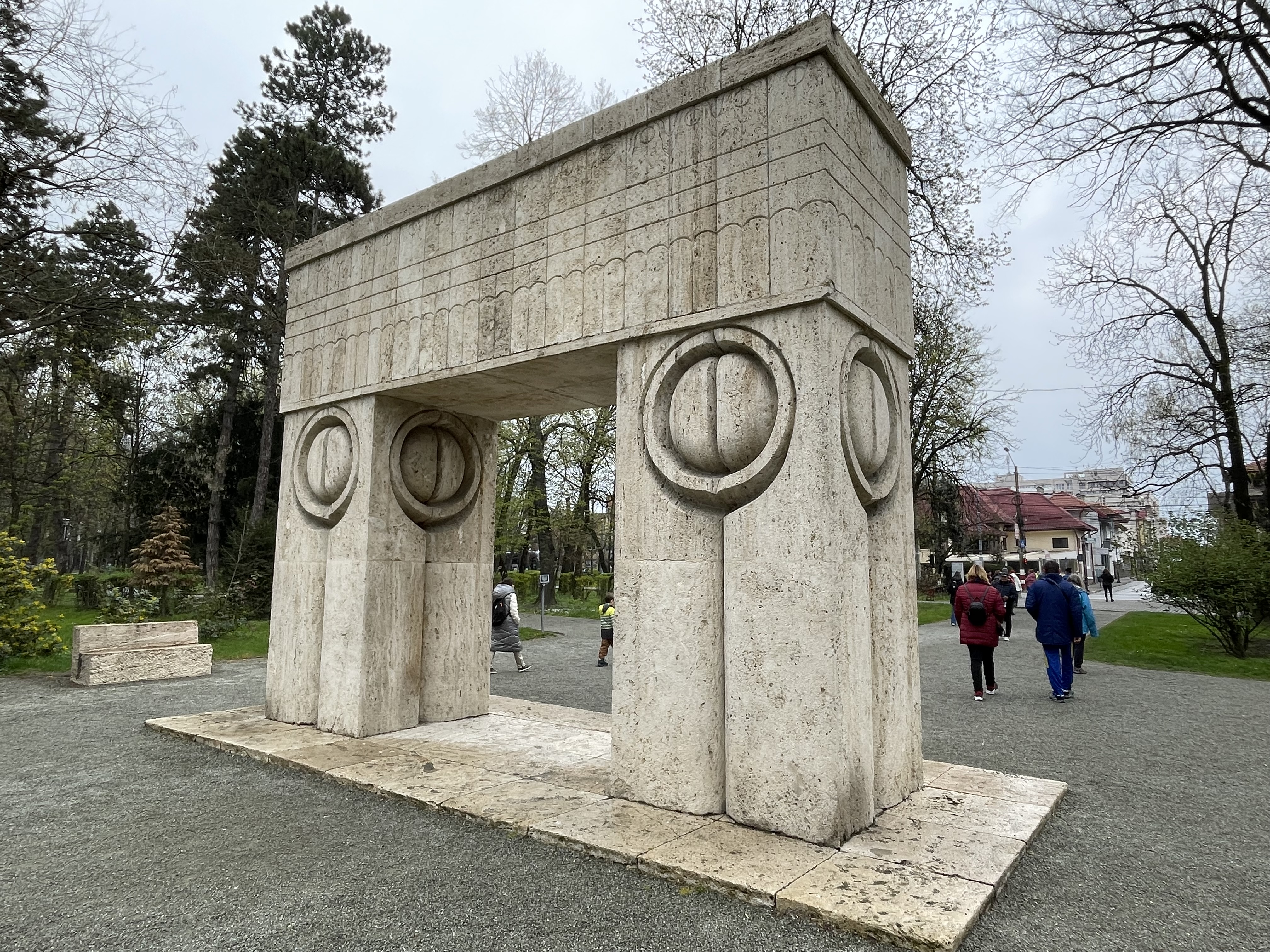
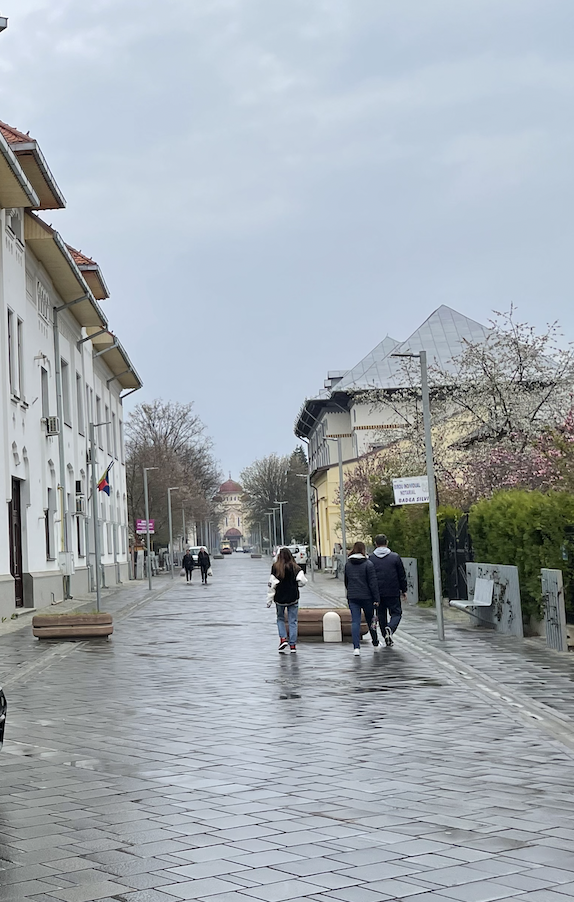
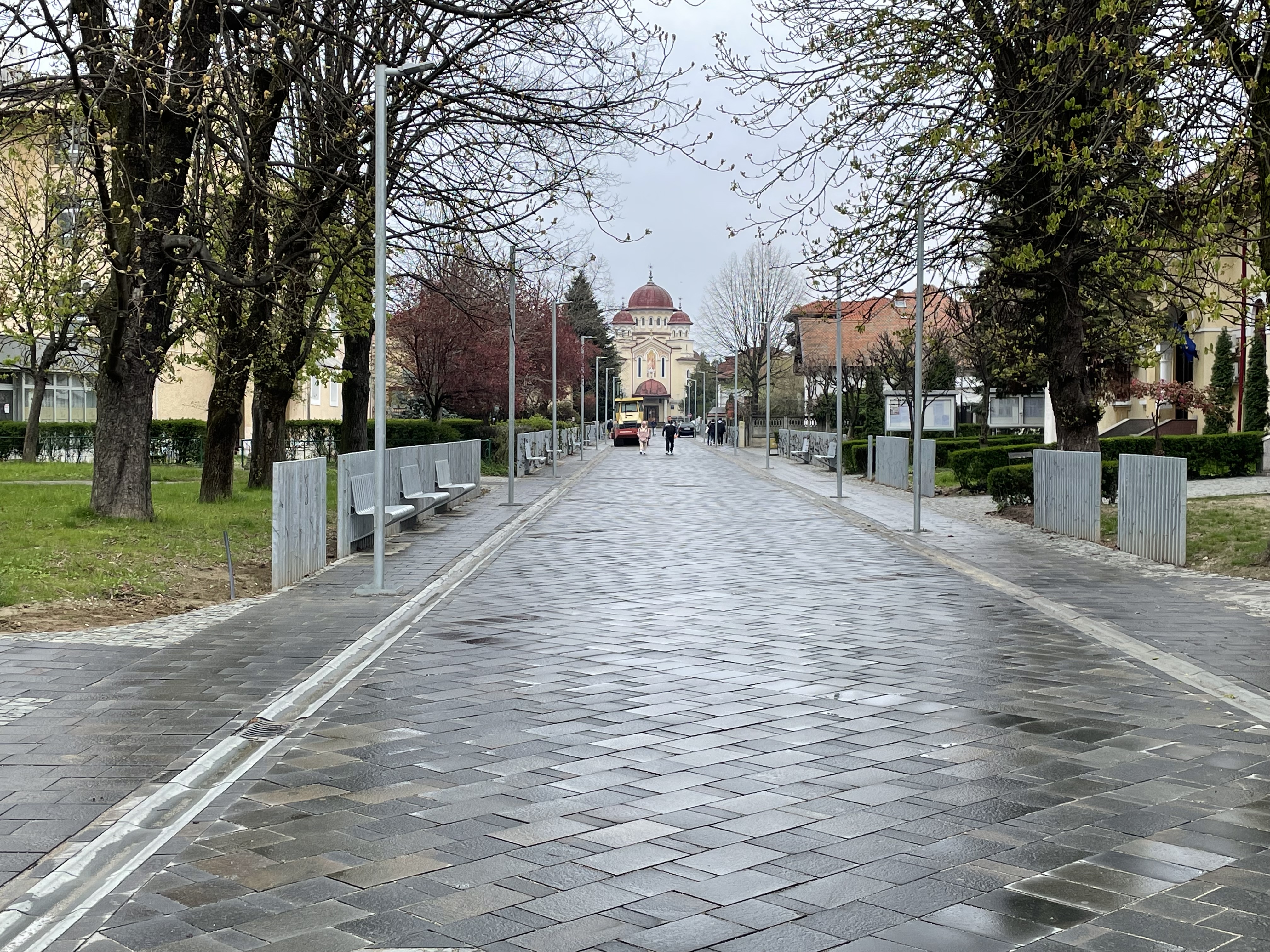
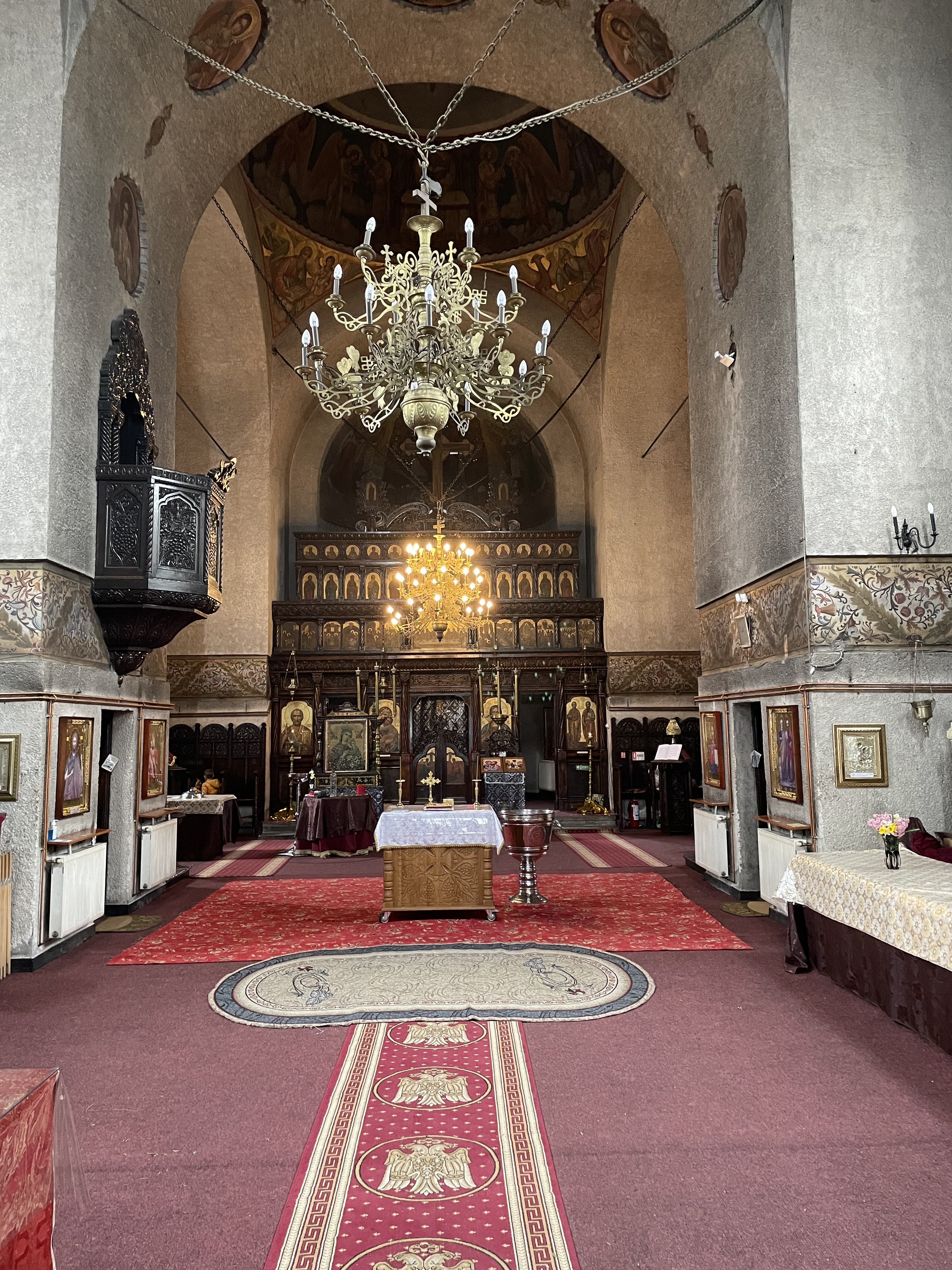
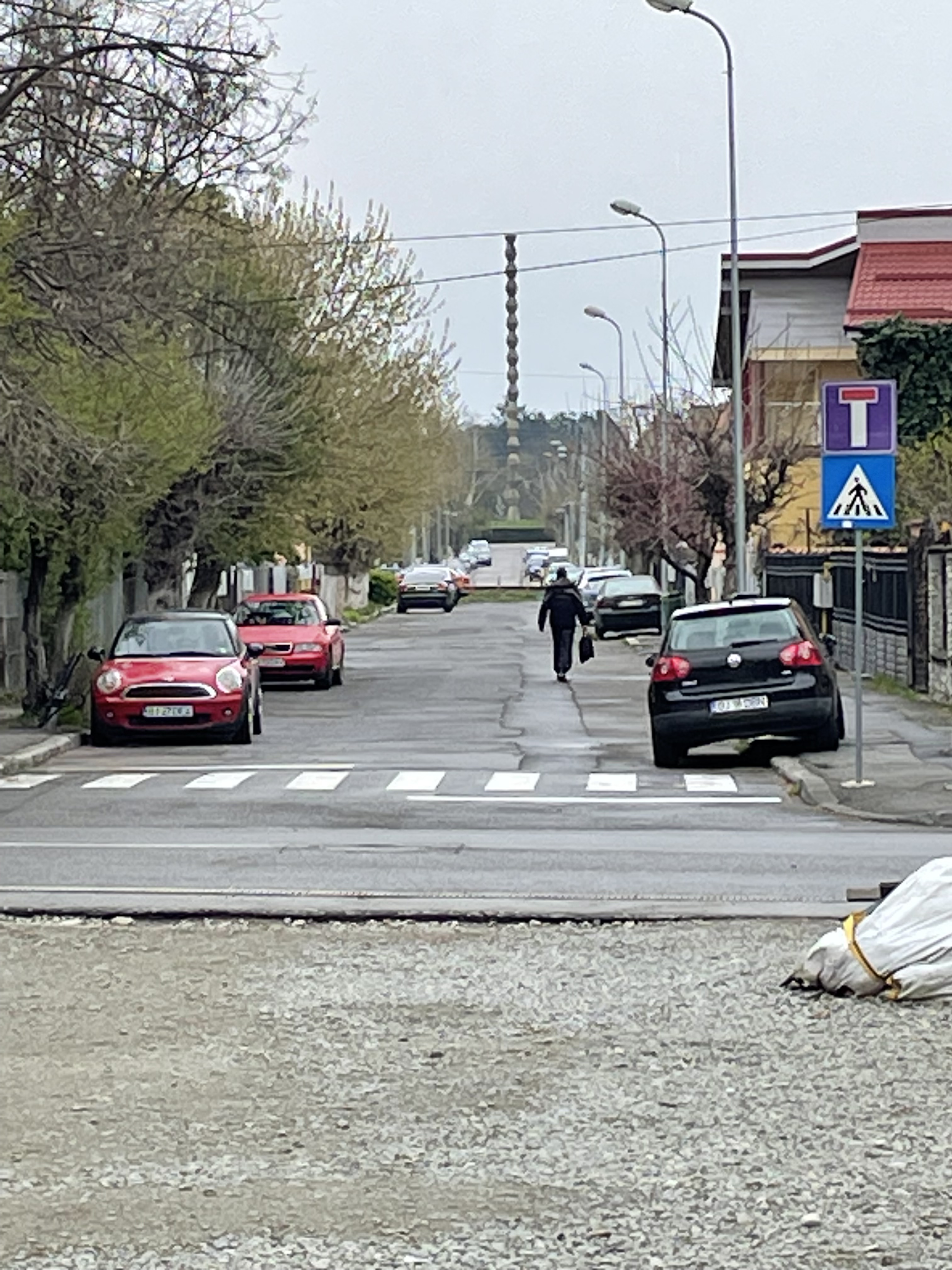
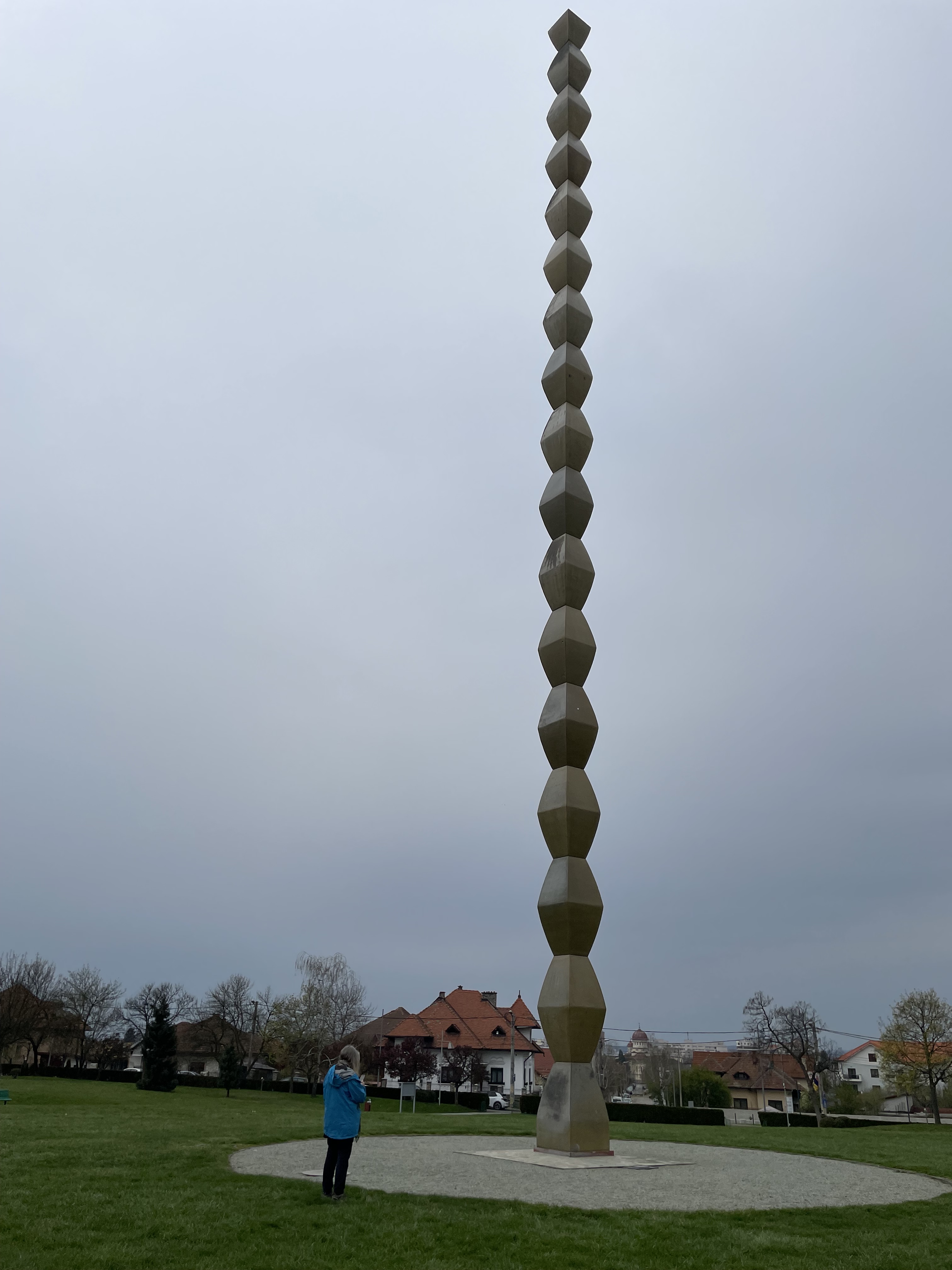
None of the immediately available commentaries consider the spacing of the elements – over 1.3 kms. The ‘Endless Column’ is placed on higher ground which adds to its significance – but maybe it is more significant that its position was, outside the settlement? There is a ‘pathway’ leading to the column & that is surely required to be walked – travelled…..?
The Orthodox Church that is the only building on the route was being rebuilt before Brâncuși began his work – so was surely seen, by him, as integral to the whole composition.
Has Brâncuși, with his apparent interest in the seemingly simple ‘folk art’ and culture, included the church as a reference to the ‘traditional’ village faith of Romania which still remain allied (compared with western tradition) to many simple visceral belief structures?
The ensemble was requested as a memorial to a specific event & Brâncuși made no financial charge for his work.
A local explanation (related to the positioning of the church) states the sculpture had ‘the aim of glorifying those who sacrificed their lives for the wholeness and defense of the ancestral land.’… A highly inappropriate, kitsch nationalistic, response; the ensemble is much more than just a memorial of a disastrous war.
Brâncuși’s sculpture contains a strong spiritual element.
It is the enigmatic nature of the composition that makes it so valuable.
Rather than showing us the exterior appearance of things, he is looking for their inner nature.
The elements provide considerable ‘food for thought’ about how we may view the essence of our humanity.
So – we view, walk and interpret
- Commonality (the table and its surrounds),
- Intimate proximity (The gate)….
- …fortifying & opening onto our own pathway…. Aware of
- Existential Mystery (the church)
- Distant yet achievable inspirational action (the column)
Yet that, put into written form, seems to be just a form of romanticised twaddle.
There are encounters & experiences of which, nothing can be spoken.
Occasions when we simply ‘don’t have enough words’ & any attempt to ‘pin down’ experience (positive or negative) is simply pointless.
‘Mystery’ is sufficient
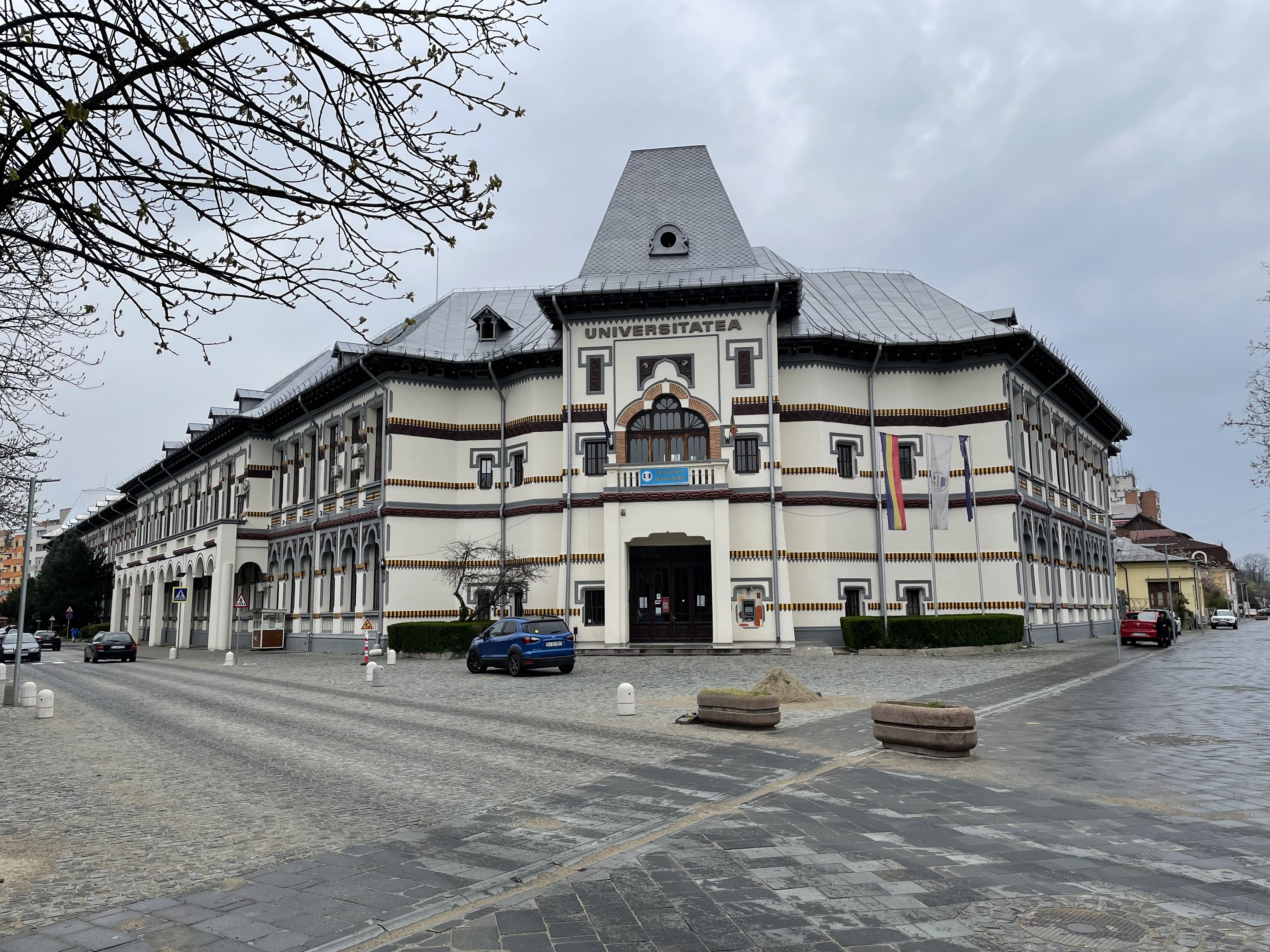
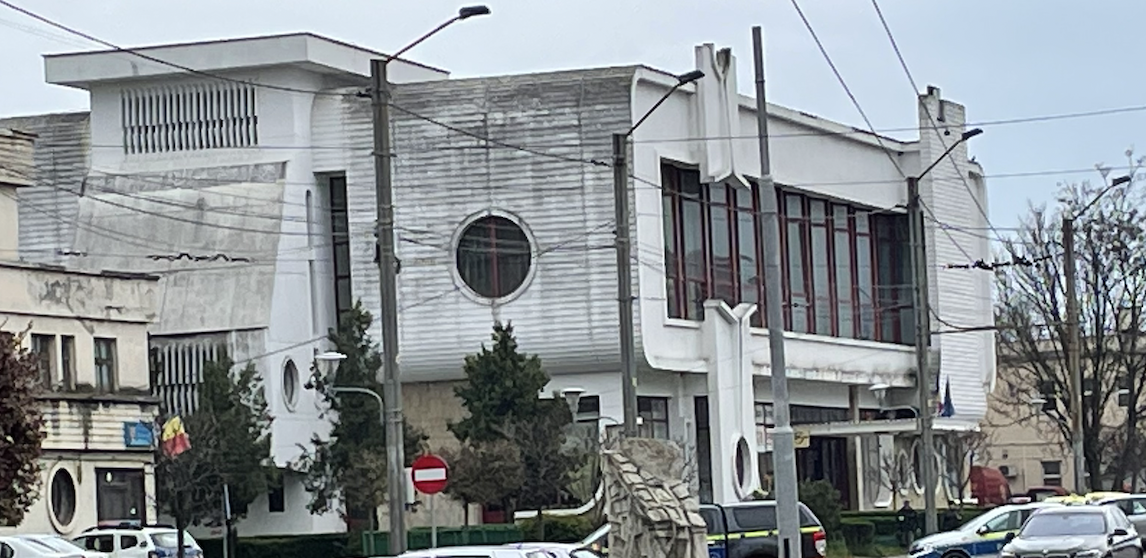
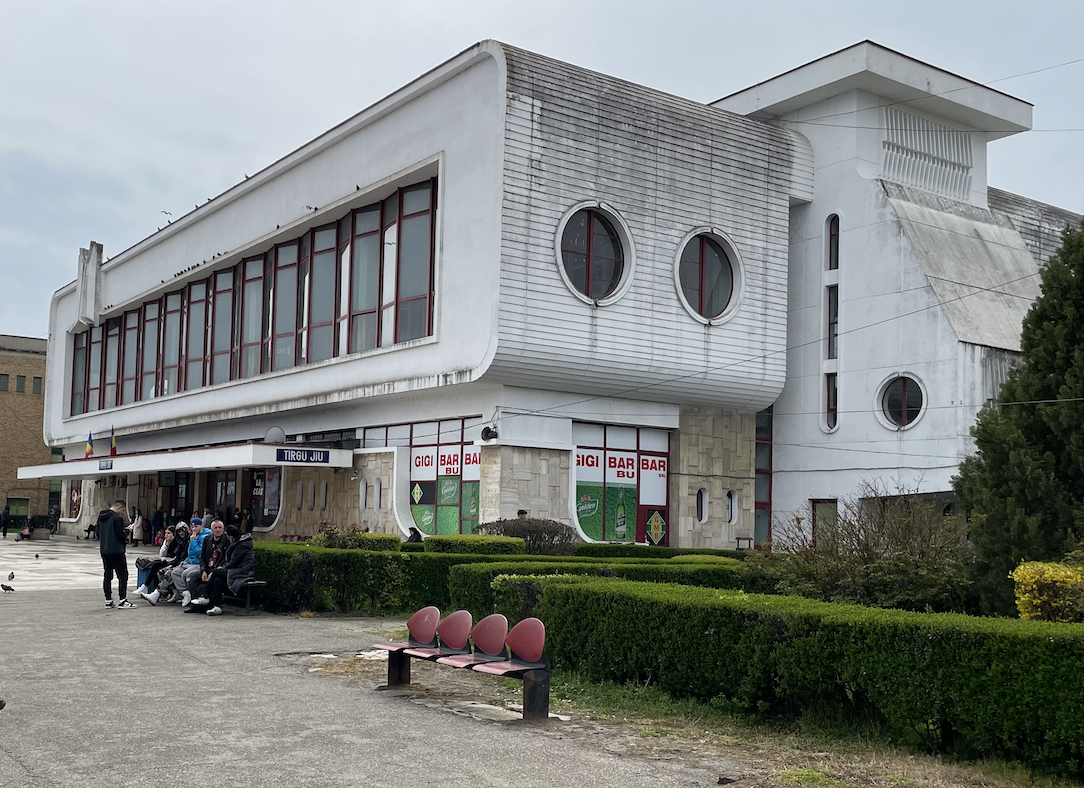
Returning to the station (a Soviet Realism architectural derivative) we wait for our train to Deva.
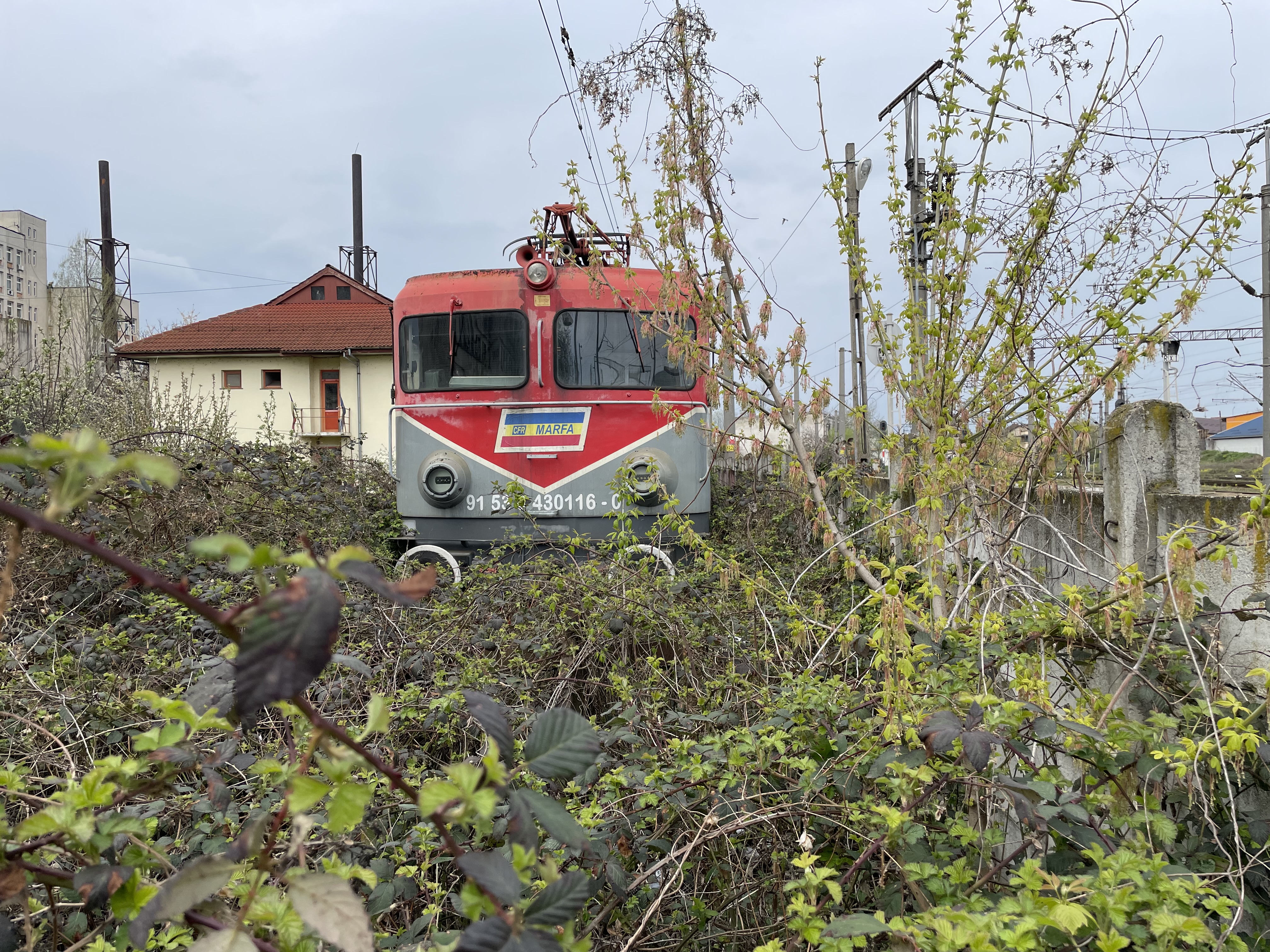
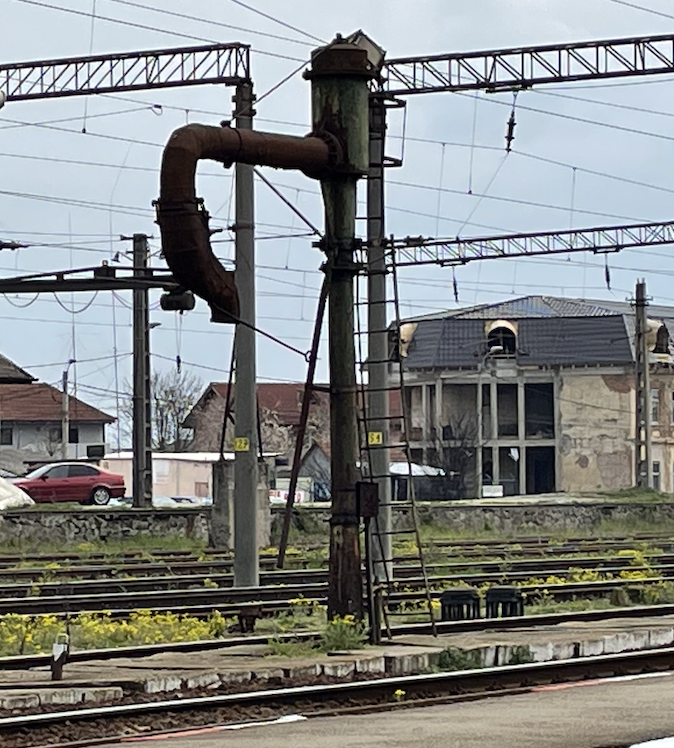
14.40 Start of a slow journey over the high hills
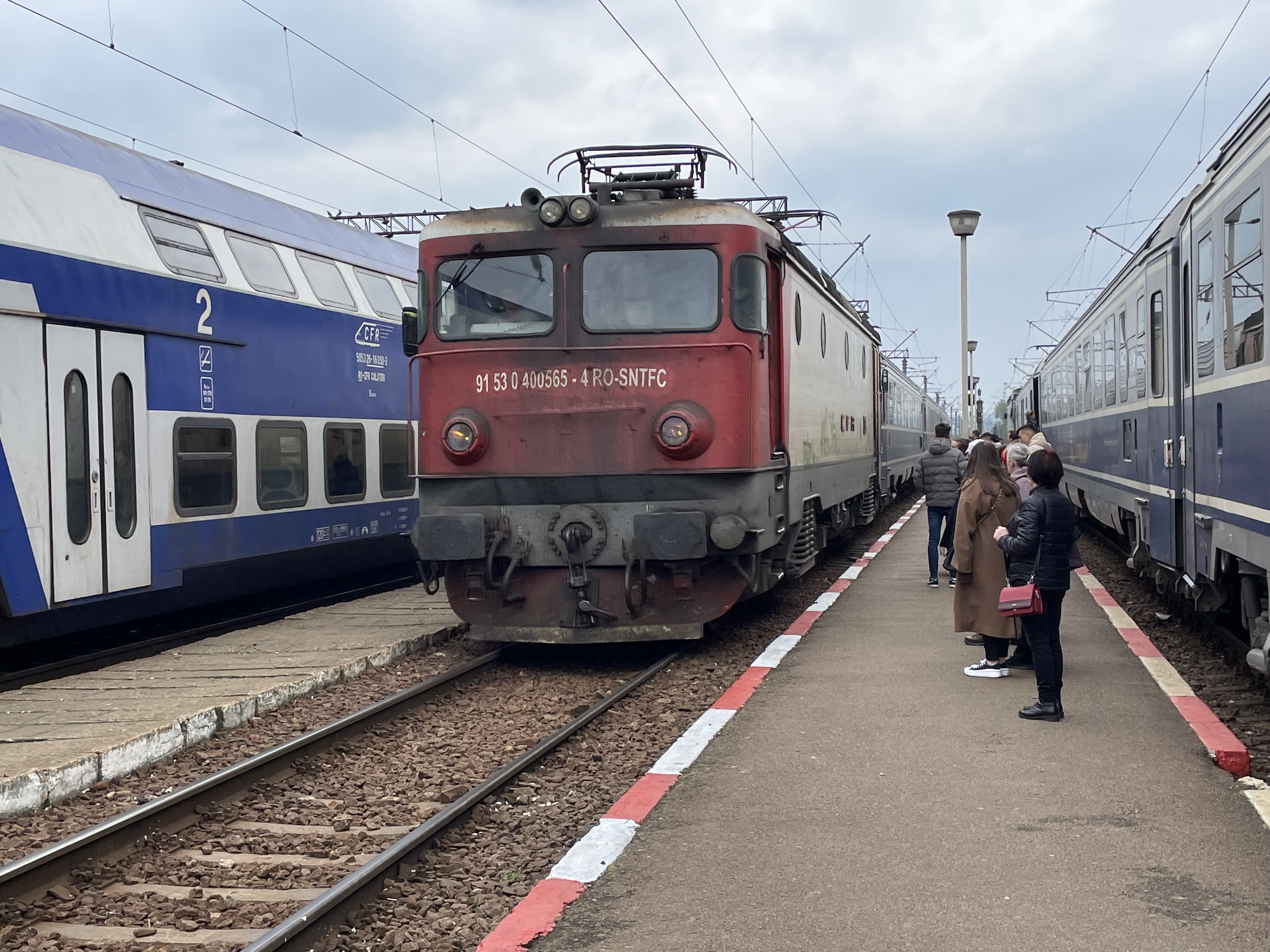
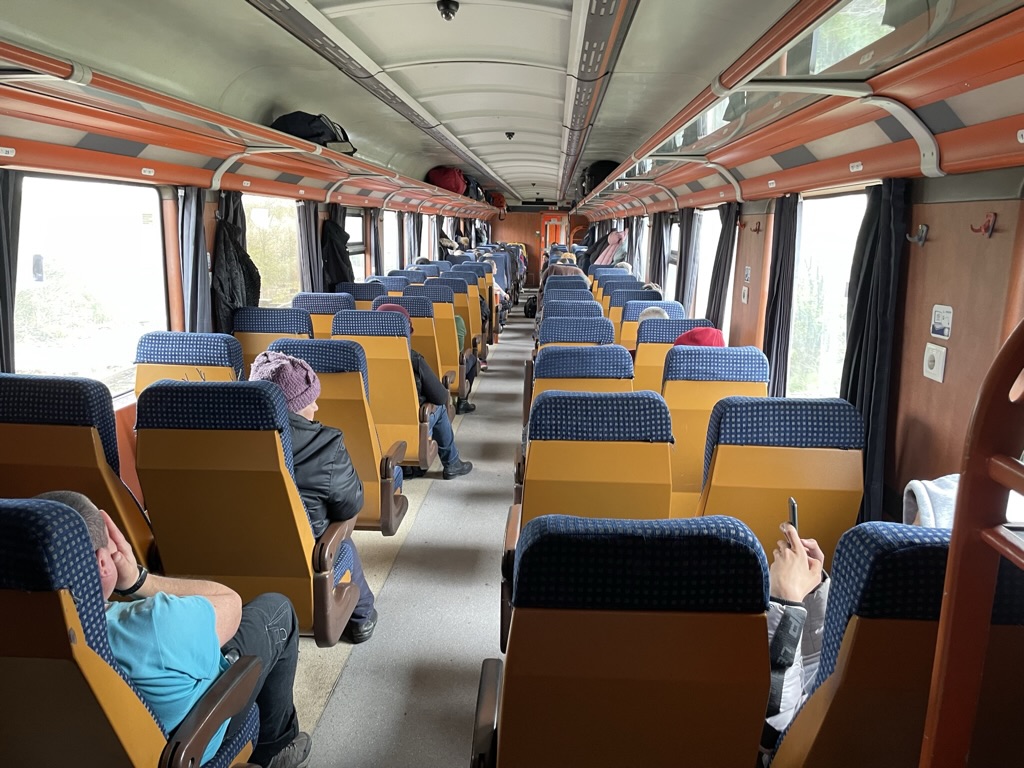
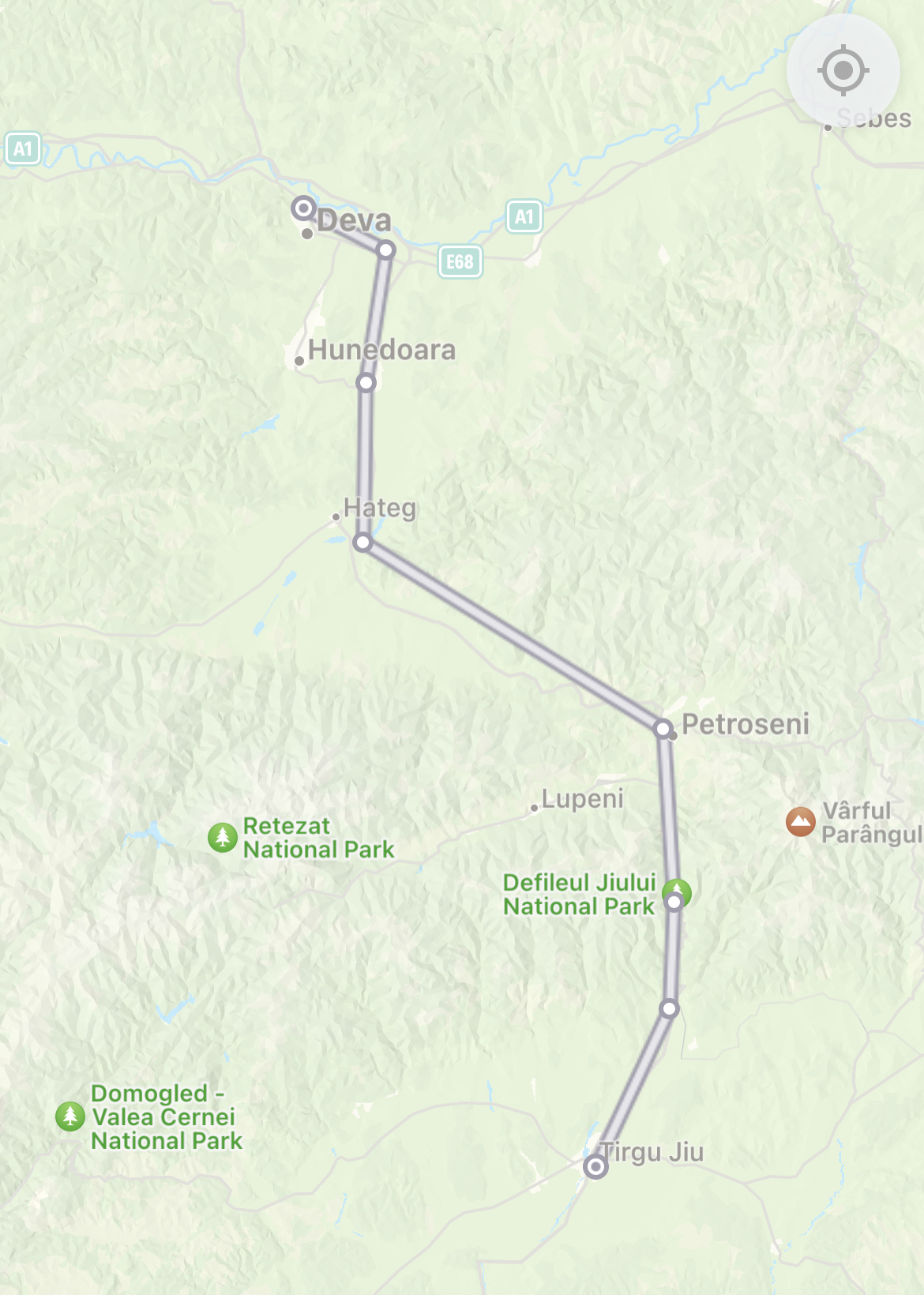
Following the route we drove in 1990 the train cautiously climbs up to Petroșani
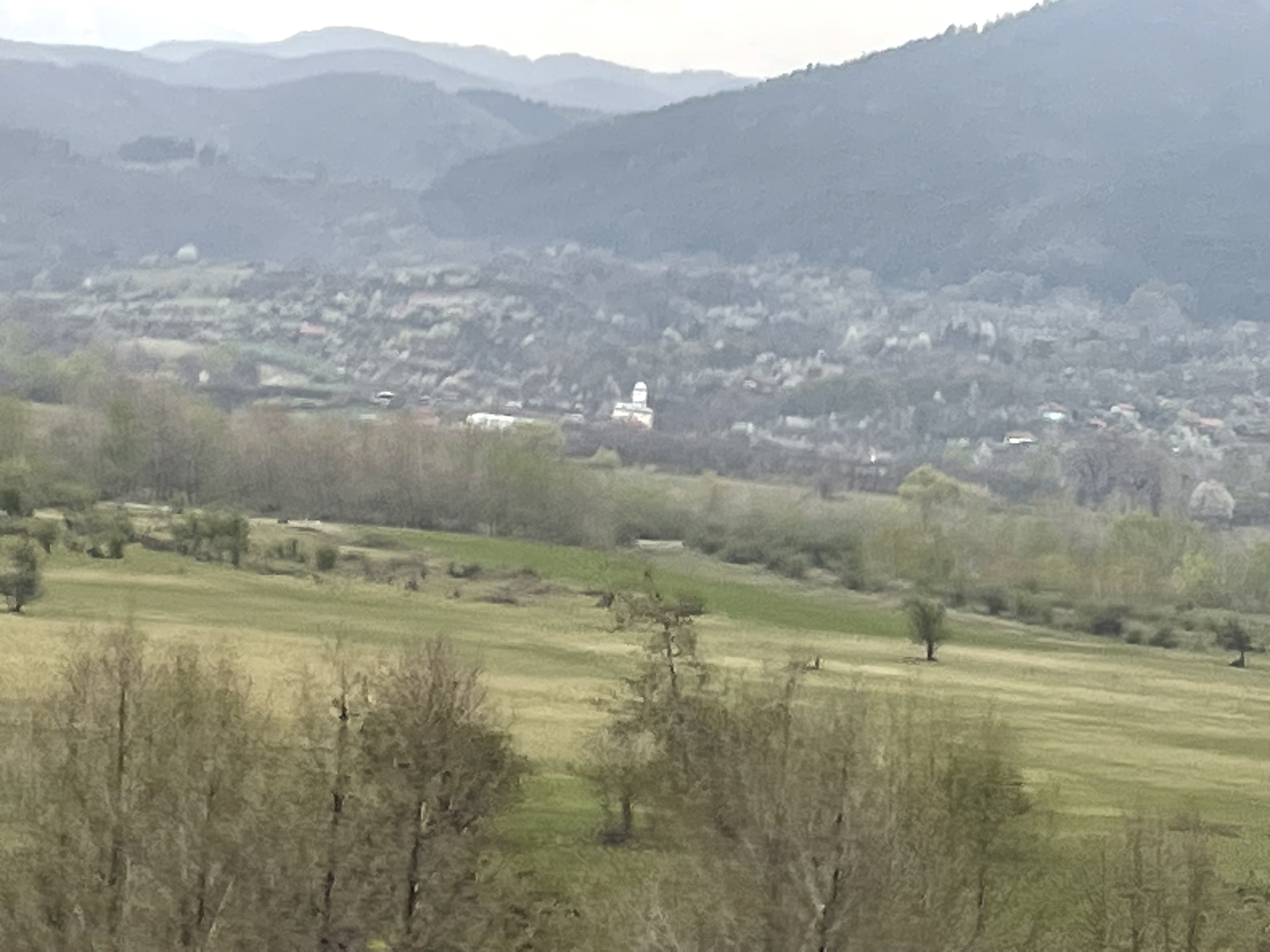
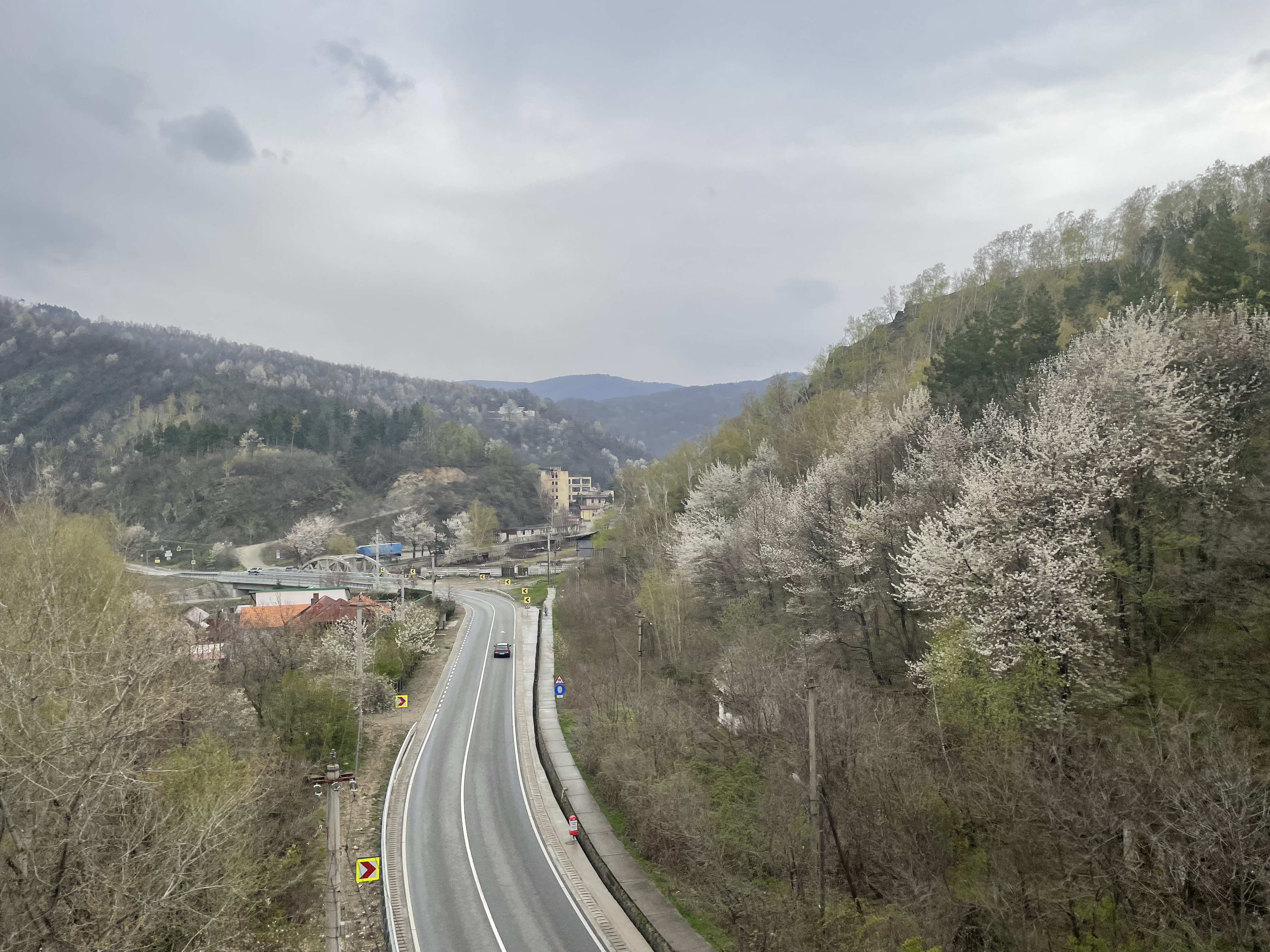
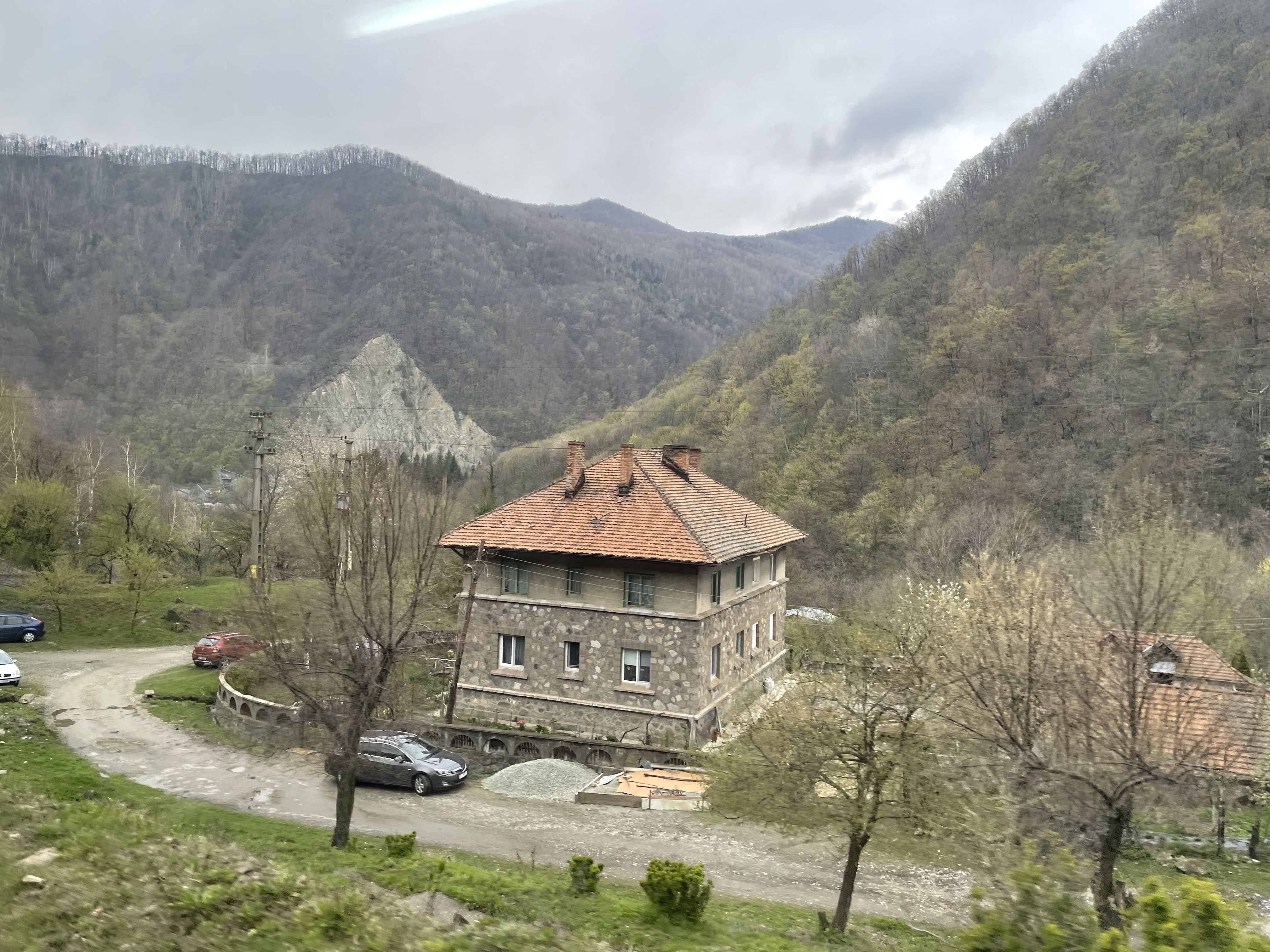
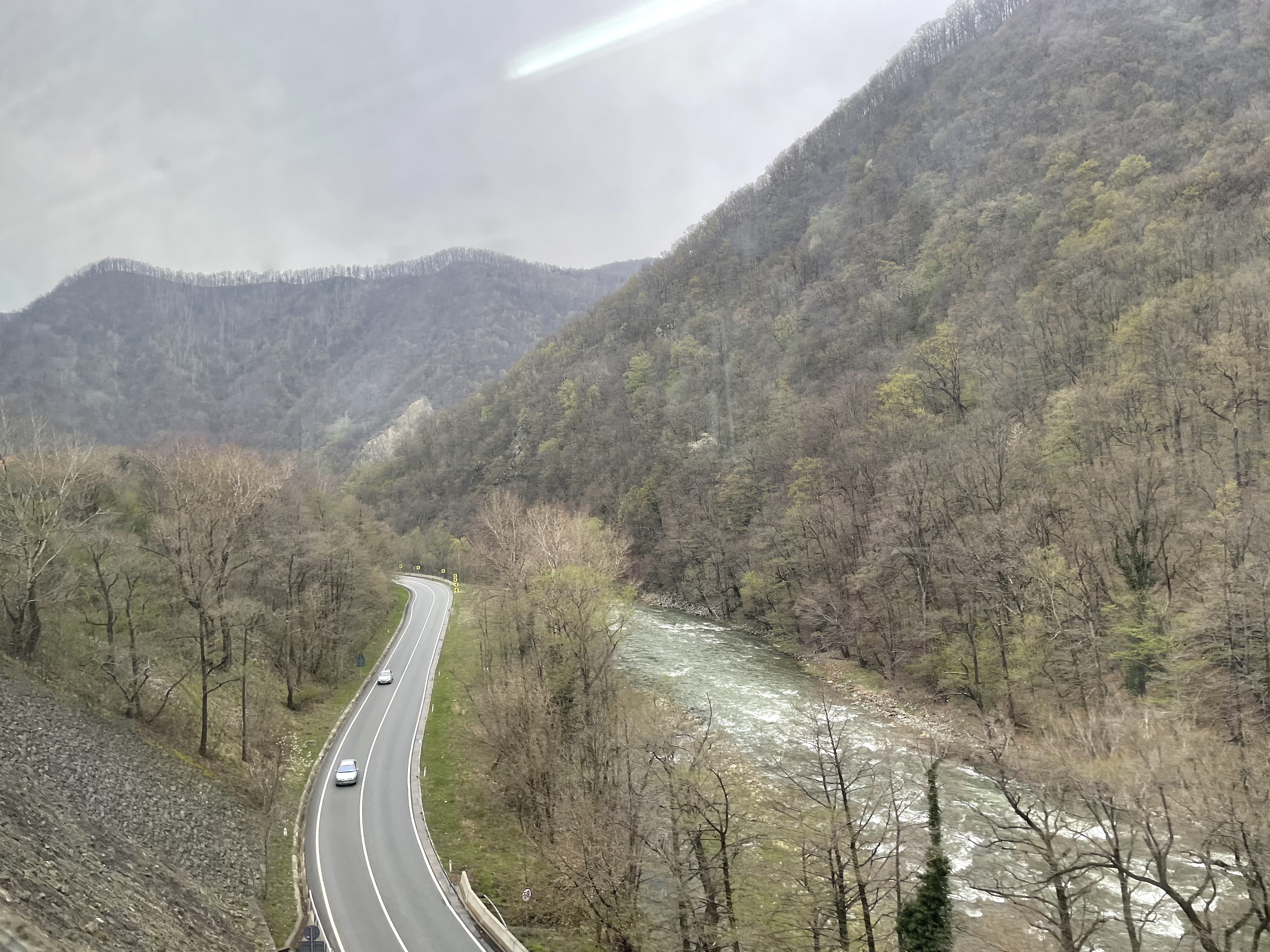
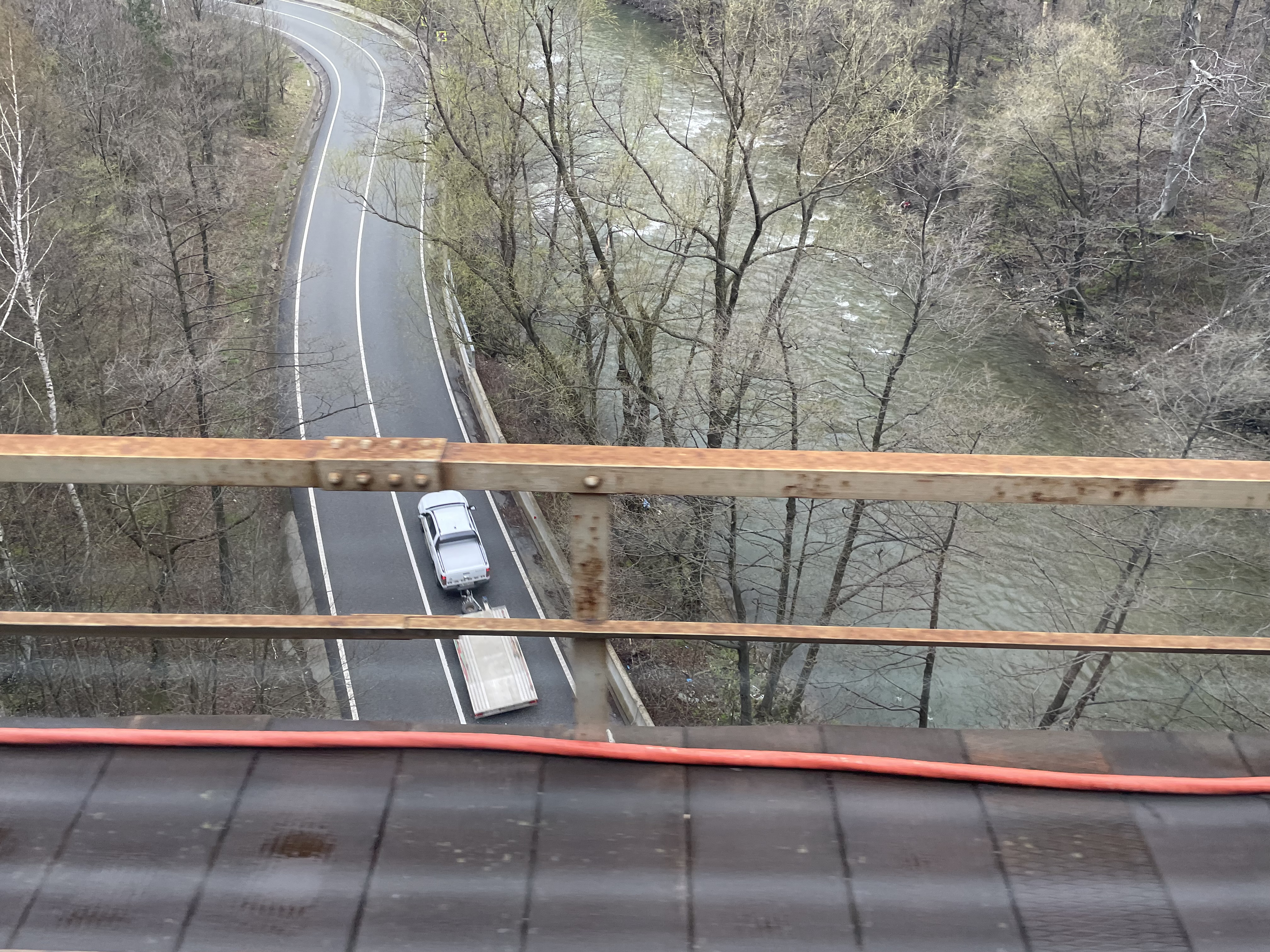
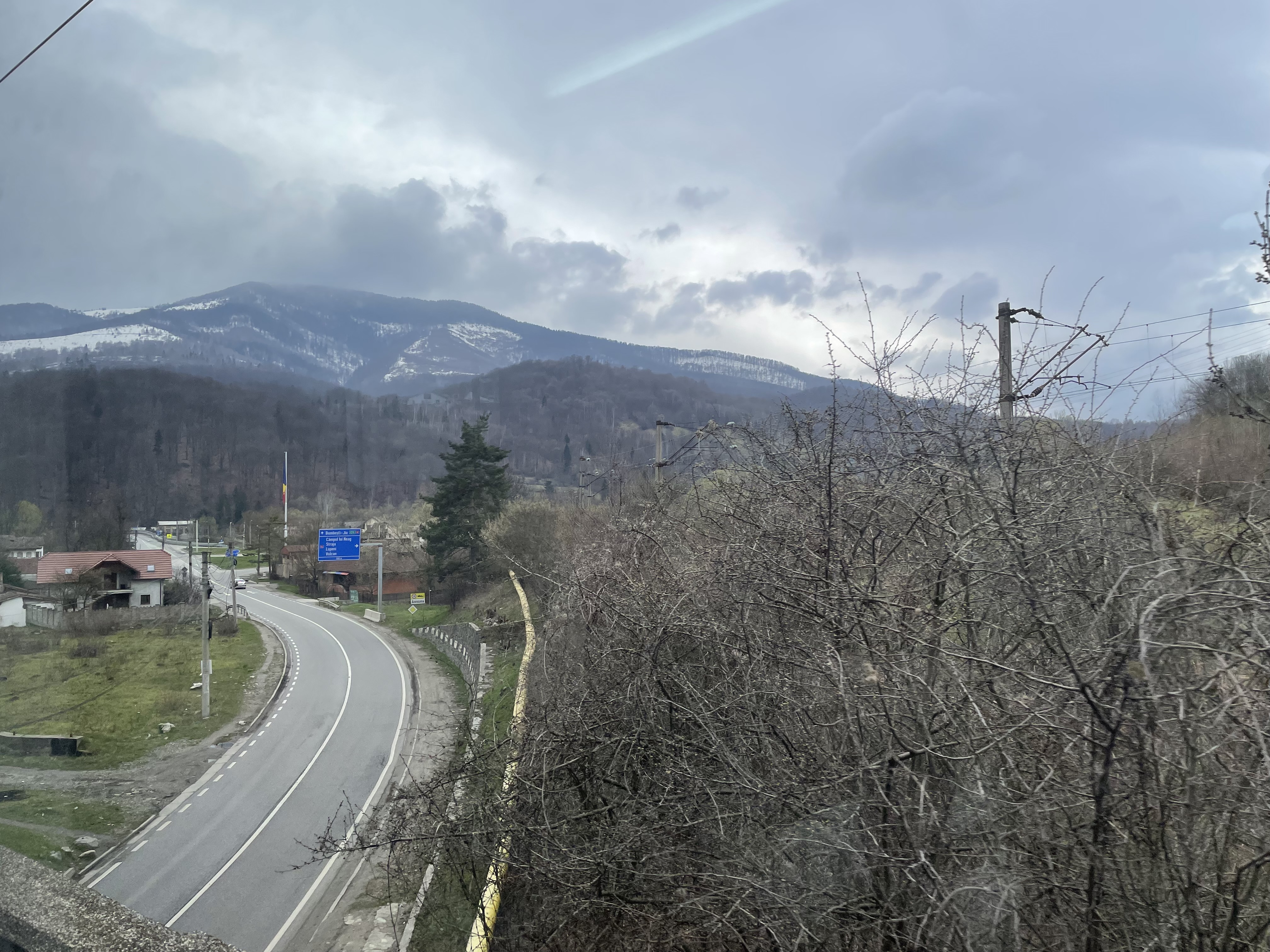
It is a long slow climb to Petroșani
– 606.44 metres (1989 ft) above sea level.
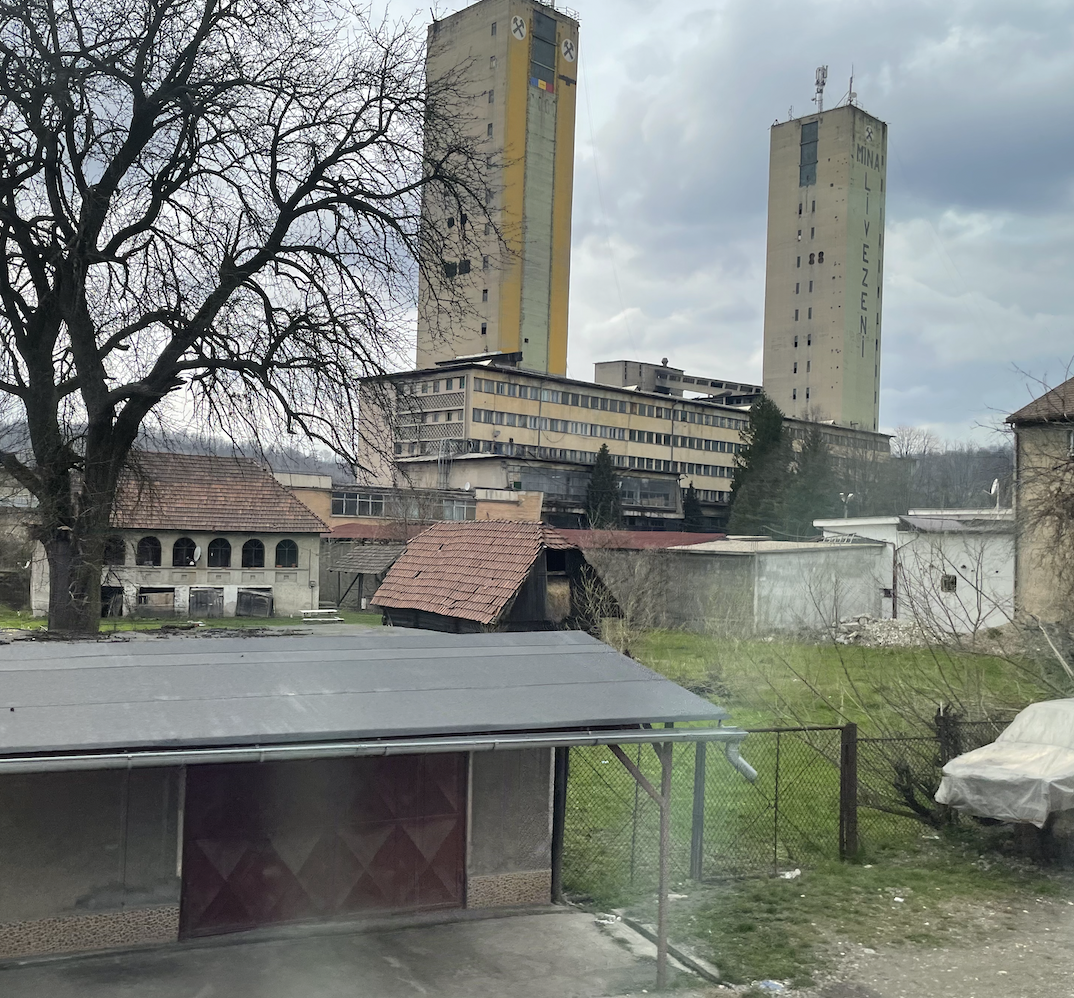
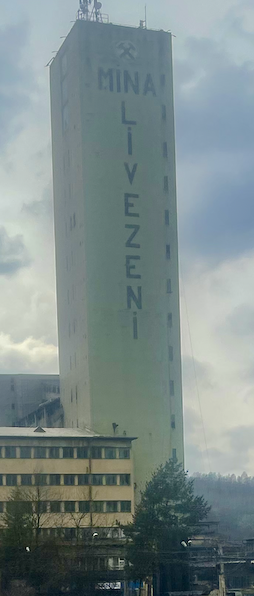
A place where mining developed in the C19th & during Communist times rapidly expanded.
Mineriad
In 1990 elections created a (technically) post-communist government. In reality it was simply the close associates of the deceased President Ceaucescu who had controlled & formalised the National Salvation Front into a political party. Demonstrators in București were demanding a greater & less corrupt level of democracy.
To suppress the demonstrations Prime Minster Ion Iliescu using ‘Old Style’ language and tactics) called on the miners of the Jiu valley to assist.
After almost certainly being encouraged and assisted by the Romanian Security service (which included provision of special trains) approximately 10,000 miners descended on București & violently attacked this whom they considered to be member of anti-democratic, fascist forces. There were many injuries and possibly over 100 deaths.
Mining in the area has now declined and Petroșani has suffered one of the greatest population declines in post-revolutionary Romania – from a population in 1992 of 52,390 to 31,044 in 2022.
The post-WW2 history of the area is a particularly stark example of what has occurred in many places – an industry rapidly expanding, requiring a workforce & encouraging incomers but which then suddenly and as quickly declines, creating high unemployment.
In this case the industry is in a remote area lacking transport infrastructure and other potential opportunities. This is further compounded by being in a nation where there is a general decline of traditional industry (often artificially created) & whose quality is incapable of competing internationally & which has never evolved effective social support mechanisms & structures. This situation is changing – but only slowly.
16.00
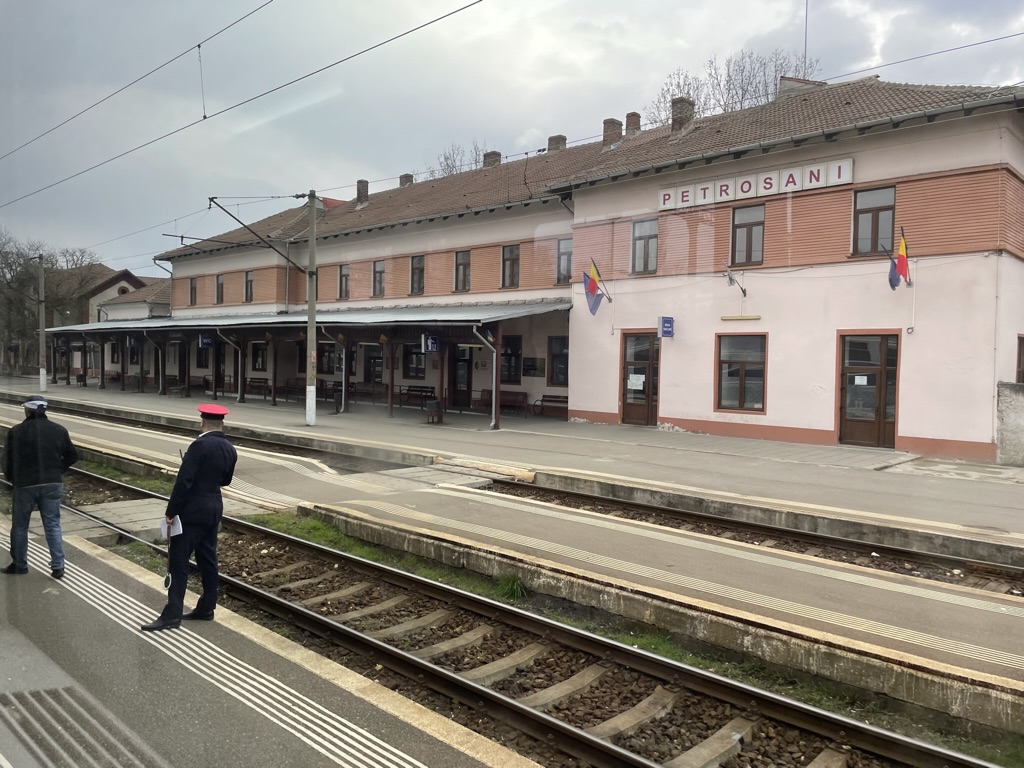
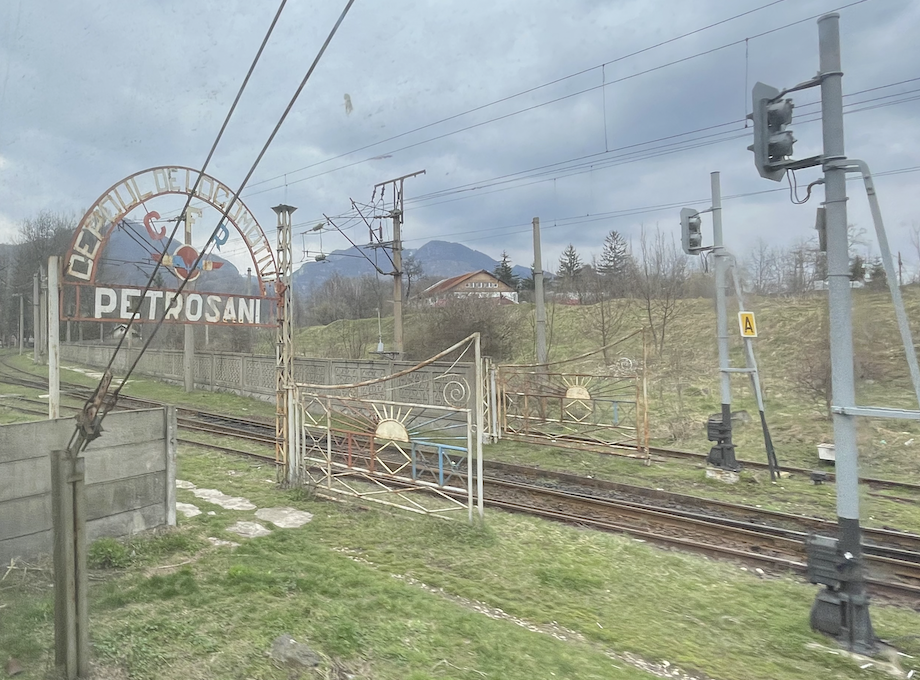
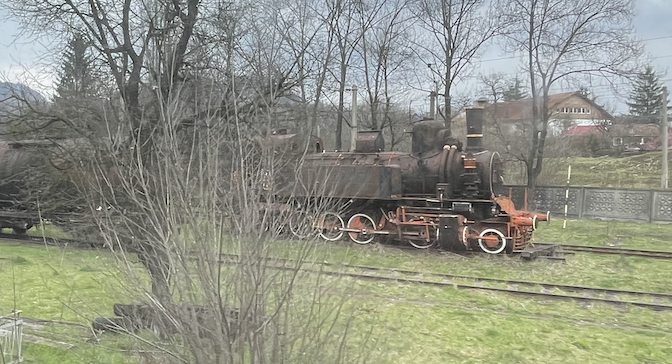
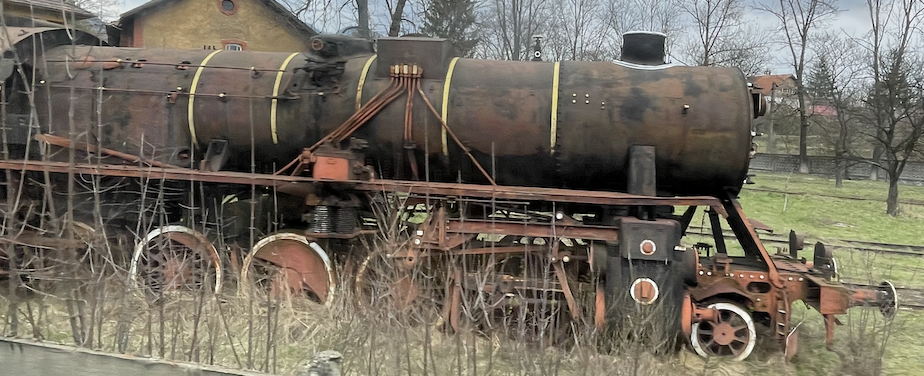
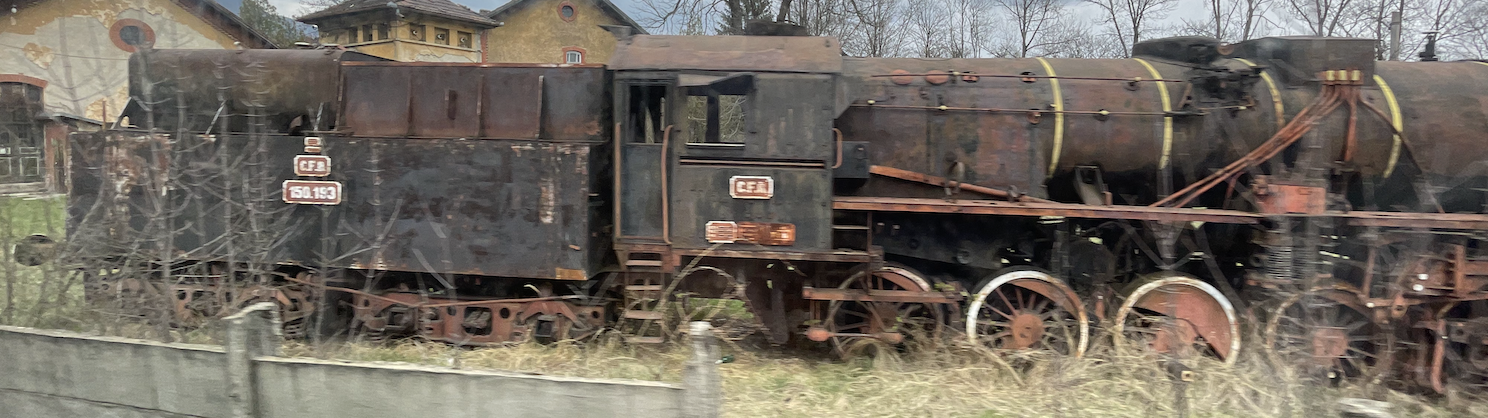
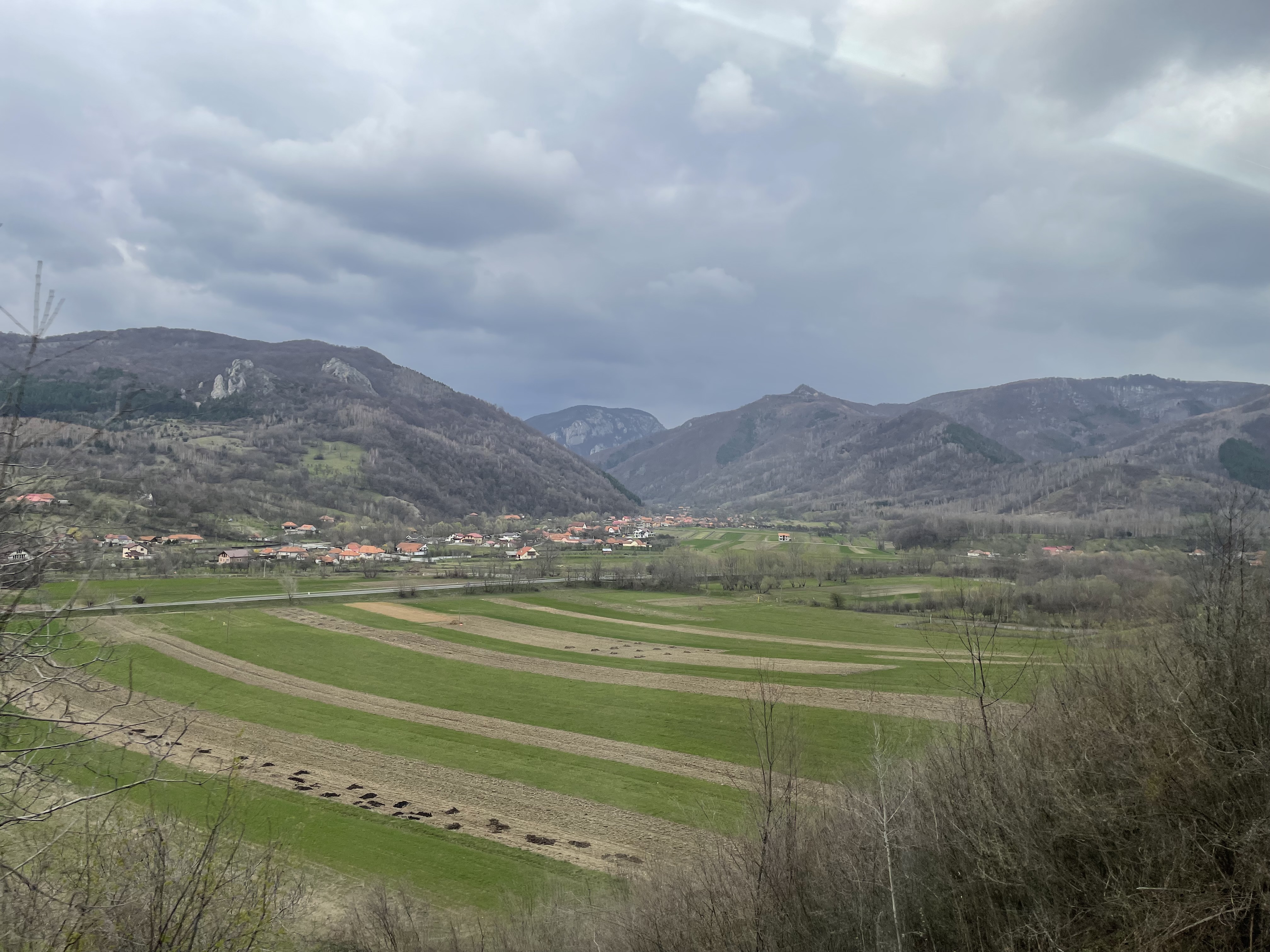
…a crawl round the hills almost at snow line and down into Transylvania. The final section of the journey allows the engine to ‘show its paces’ on new track as we glide at speed towards Deva
WhatsApp
Deva: Arriving 18.19
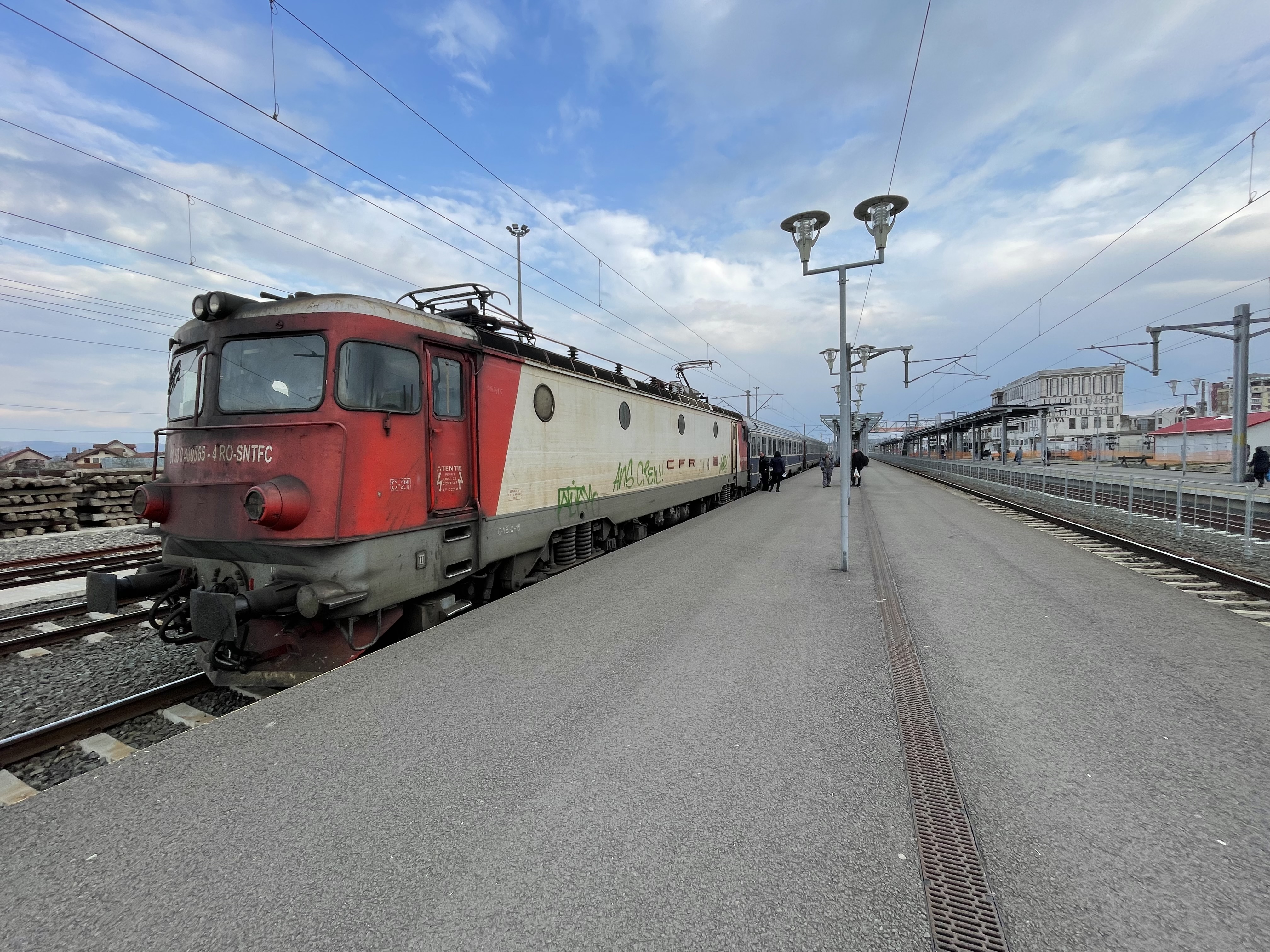
The City Centre another splendid renovation
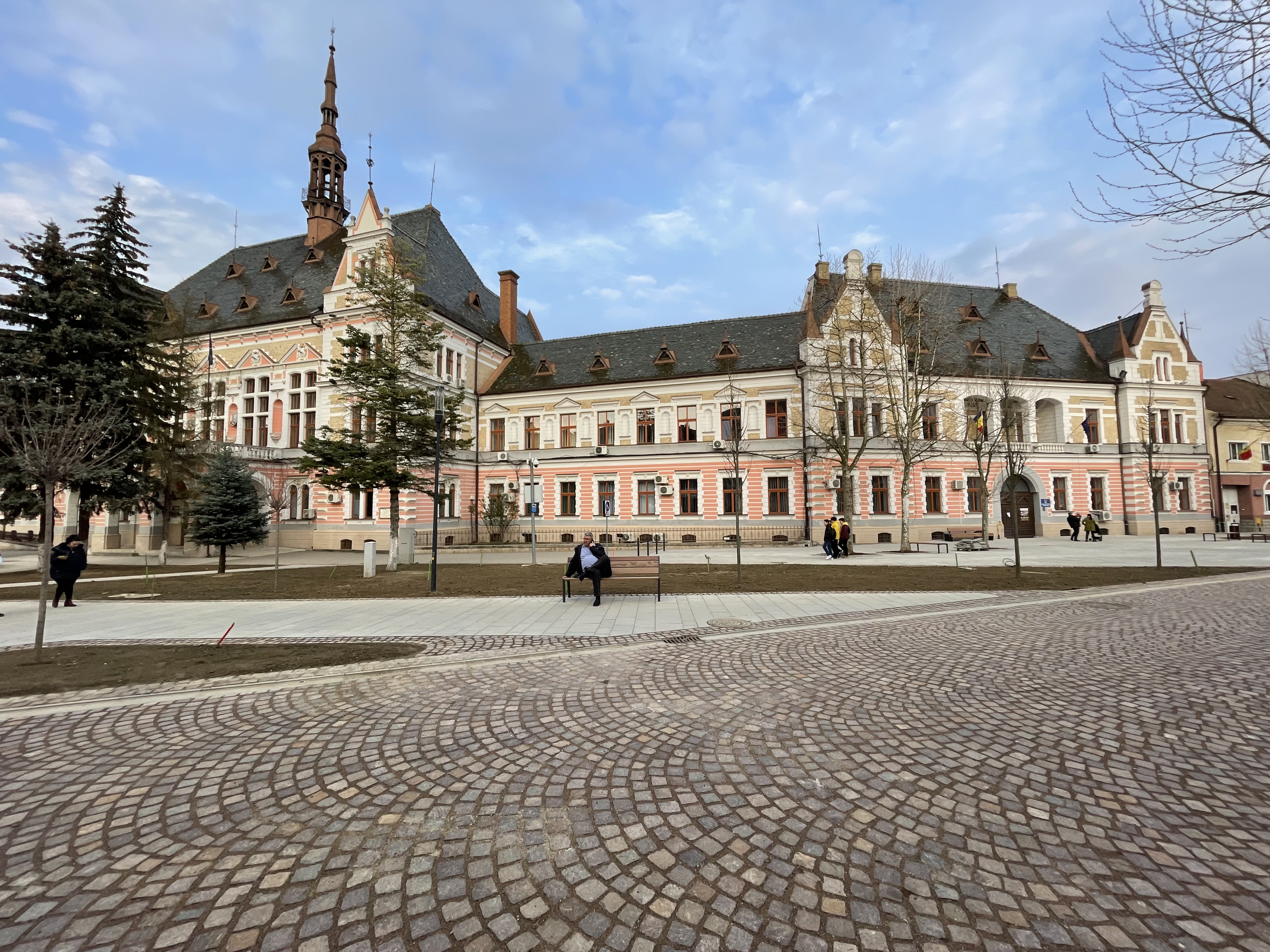
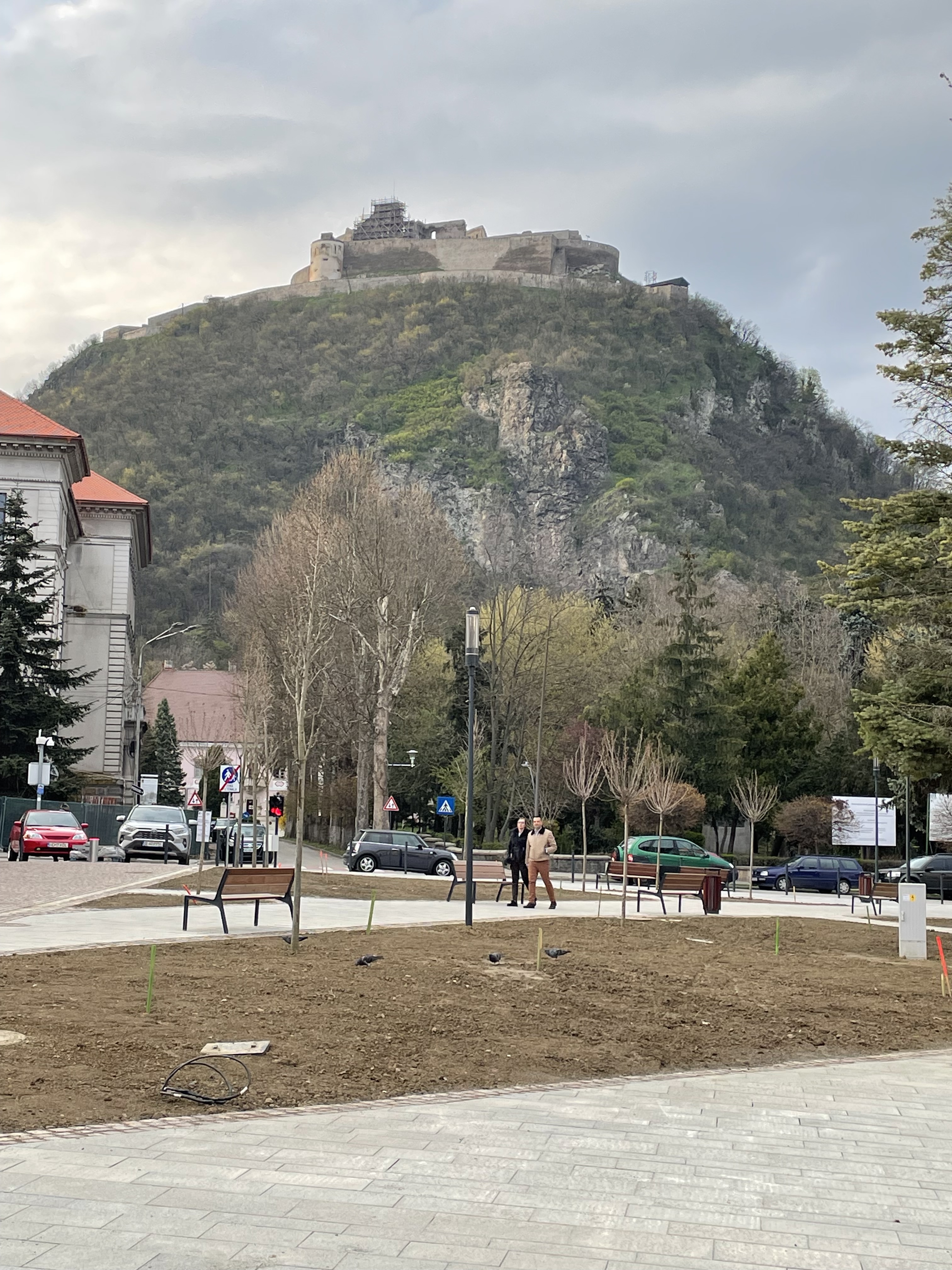
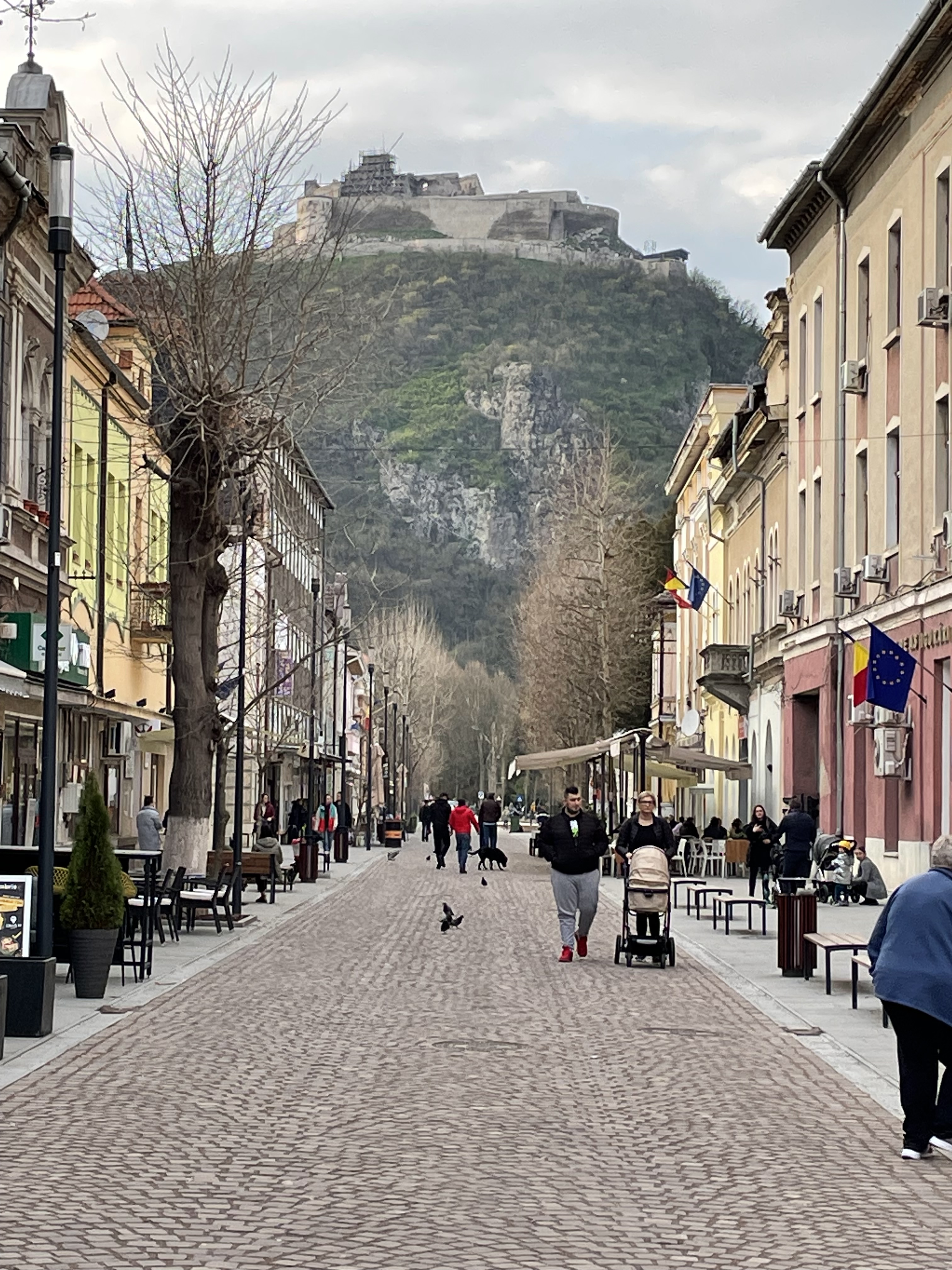
…stopped at very classy wine bar (associated with wine and coffee distributor).
For our meal, they sent us to “Bod”, near the rather magnificent (thanks to clever lighting) Old Style building. We have to eat very slowly as our sleeper train does not depart until 22.45. We cross into Schengen at around 0.200 hrs. The processes will take an hour or more. Then on to Wien.
WhatsApp
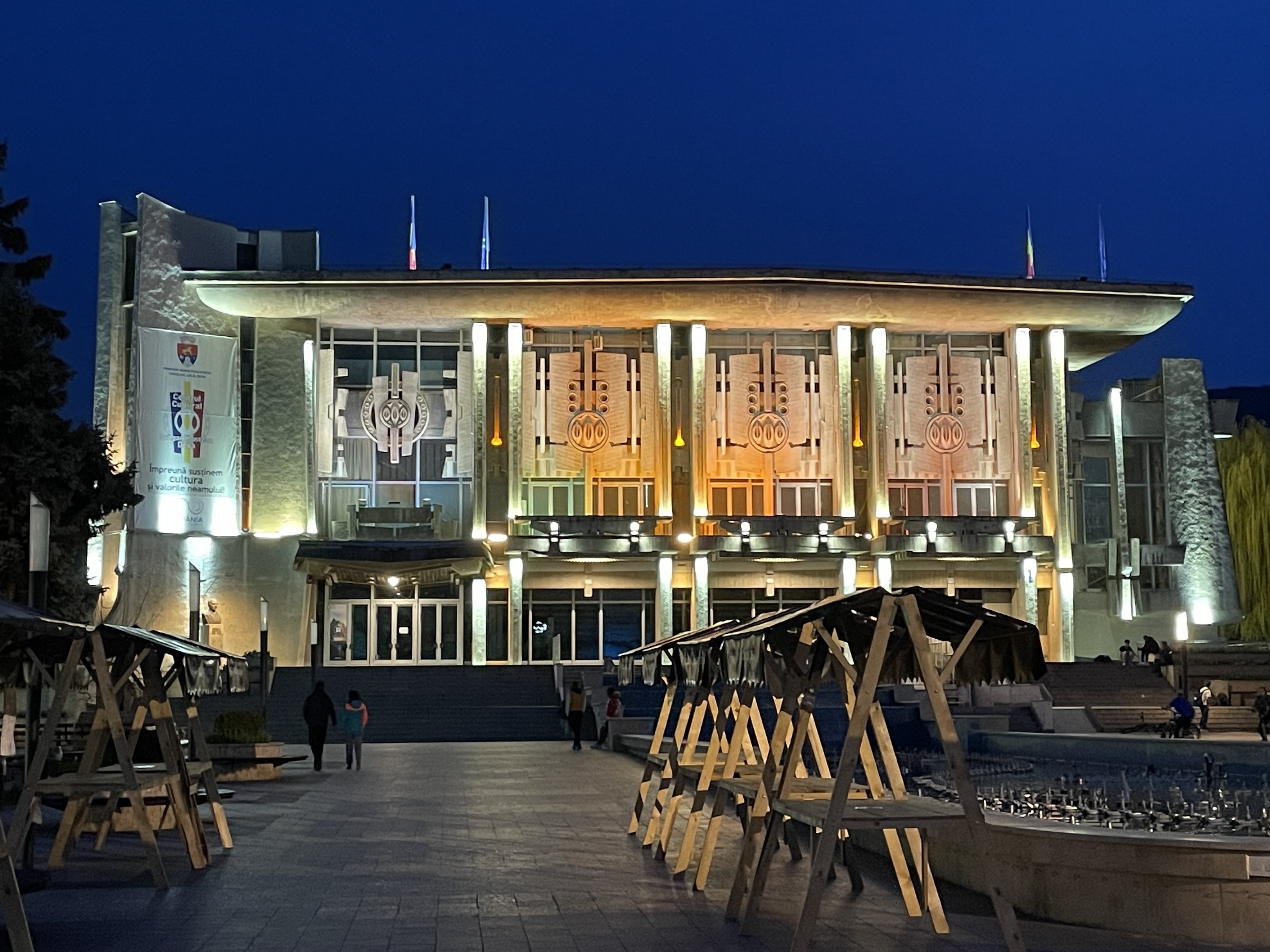
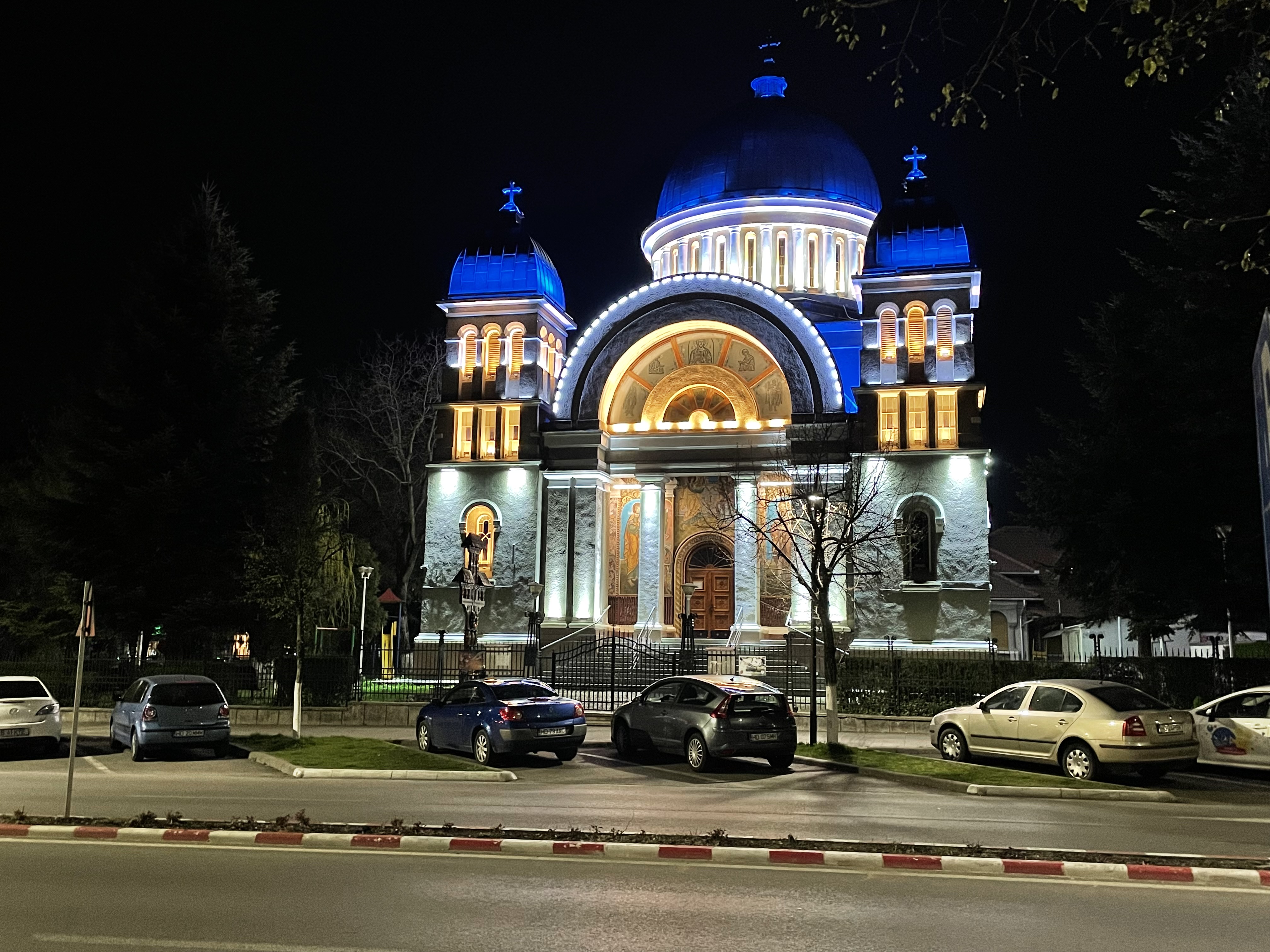
22.44 Final element of a day full of stimulating discoveries.
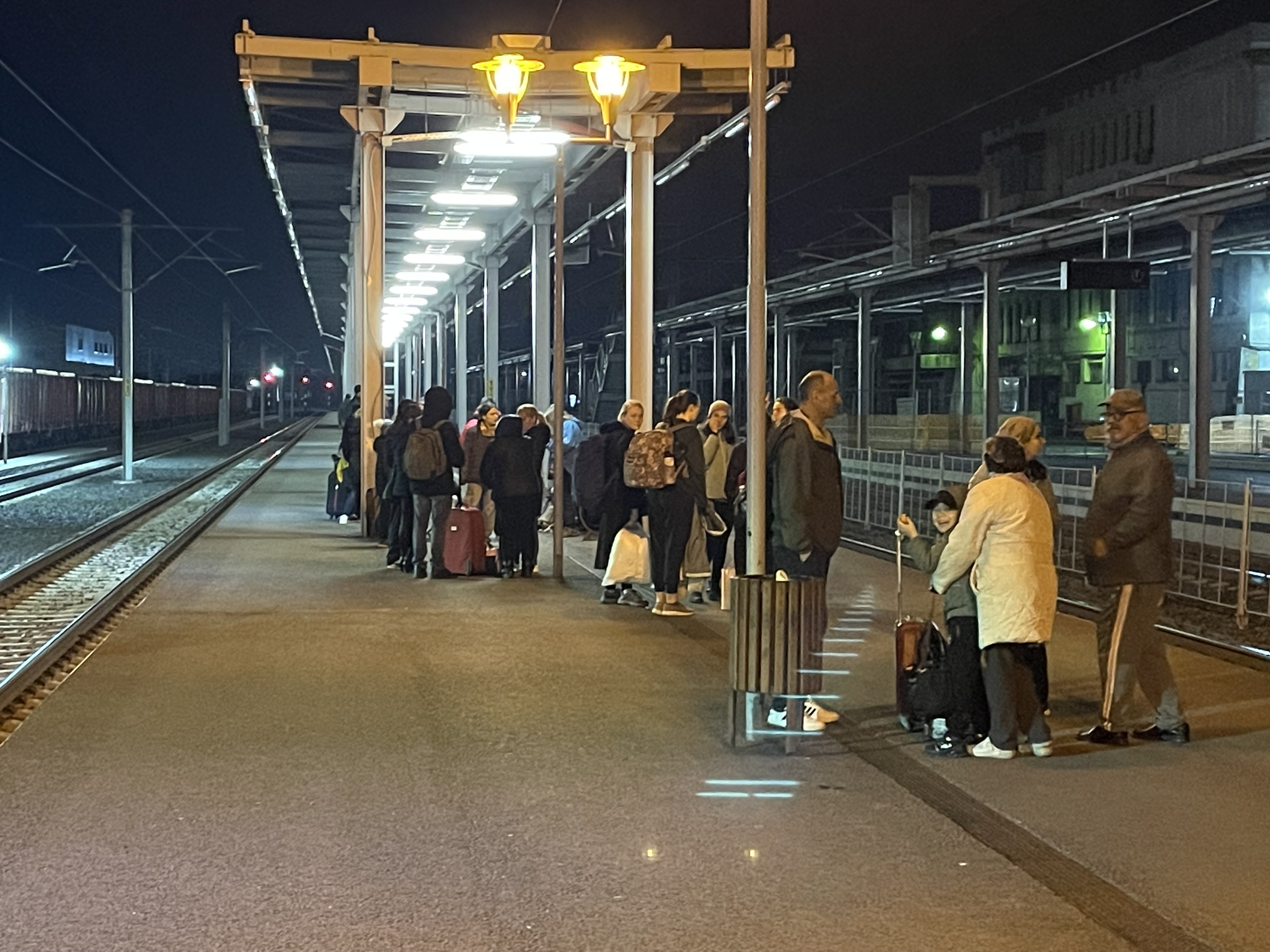
Here in Deva there are a wide range of people waiting for the Night train. Kids present are excited!
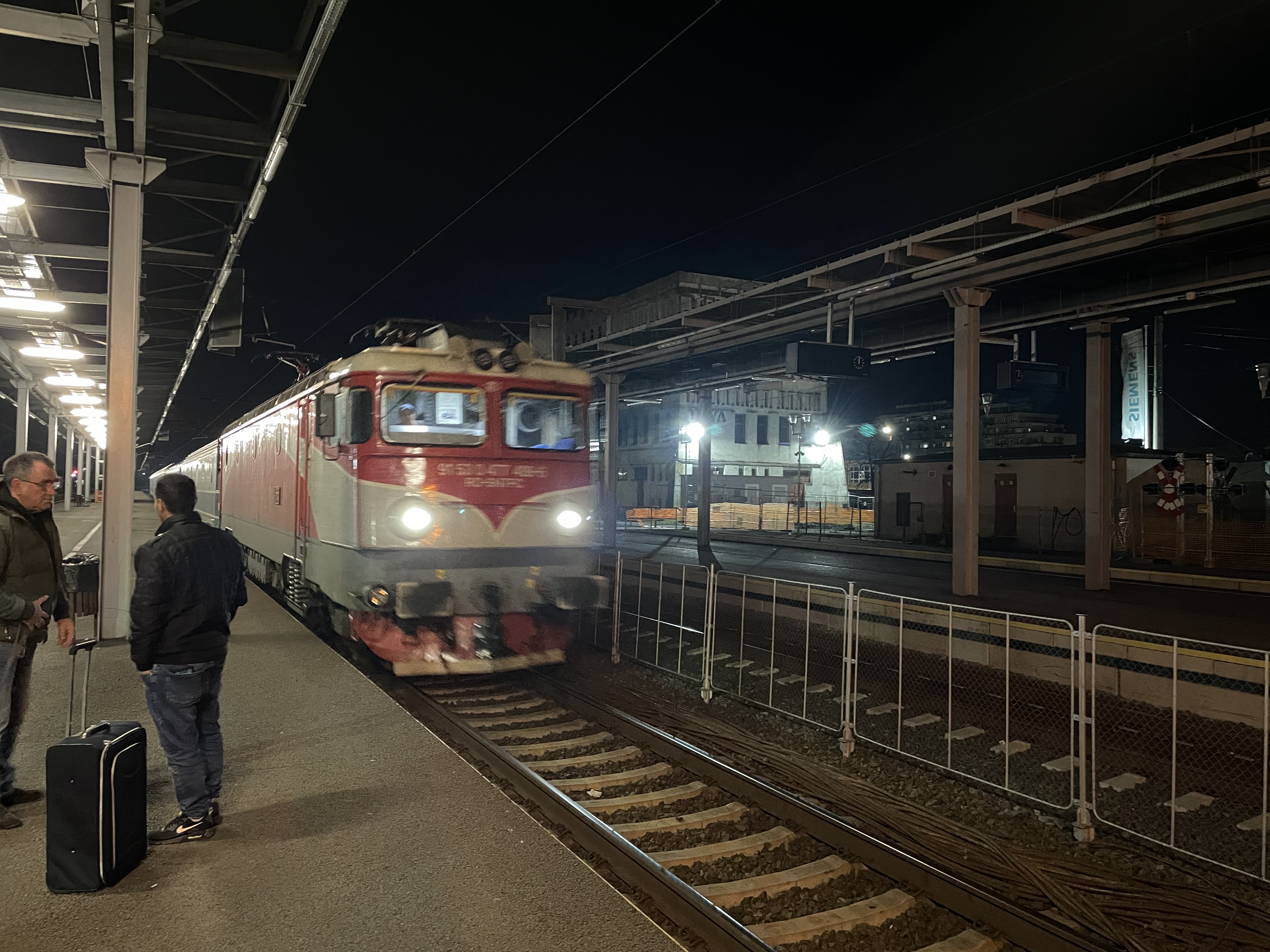
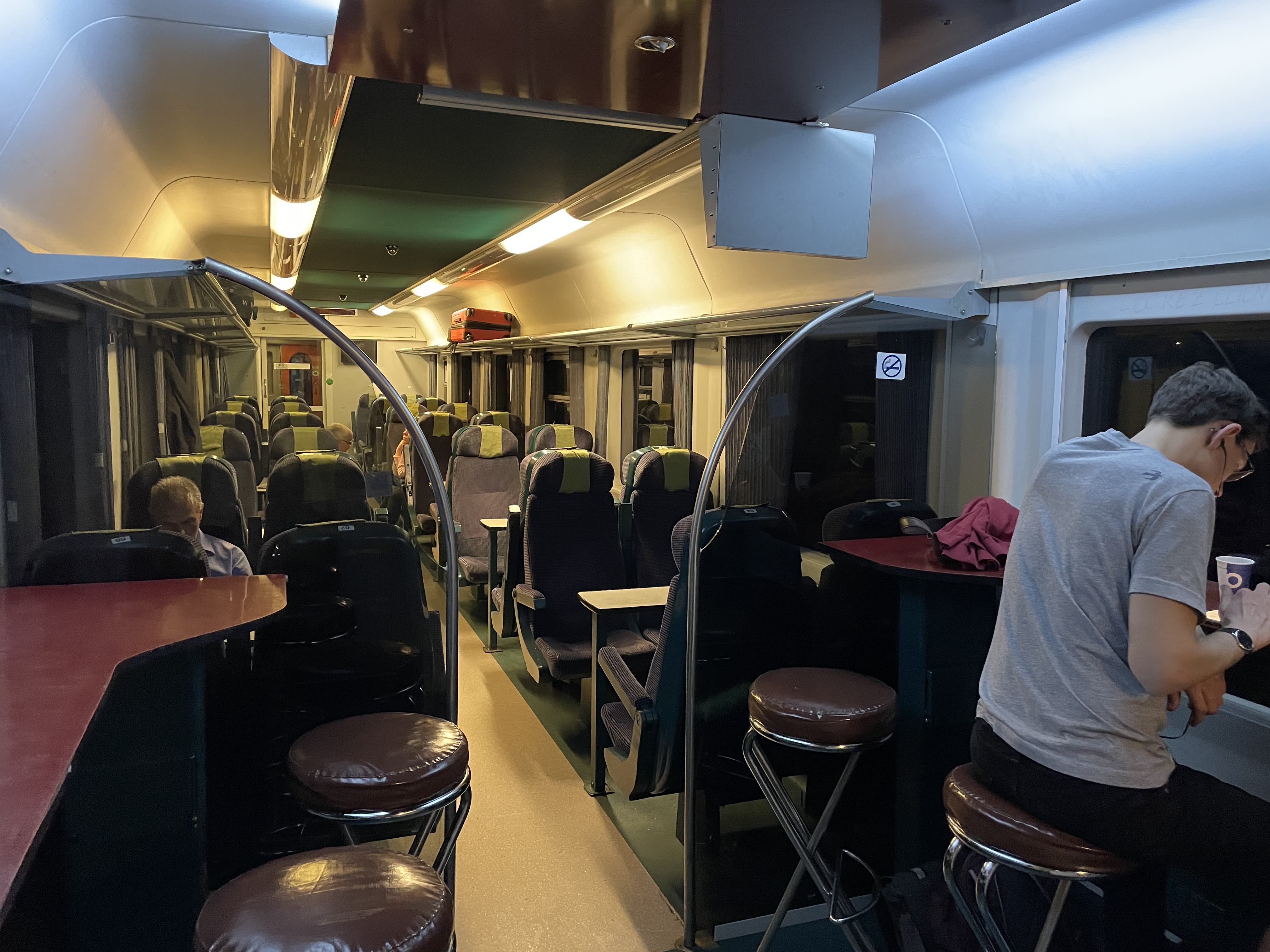
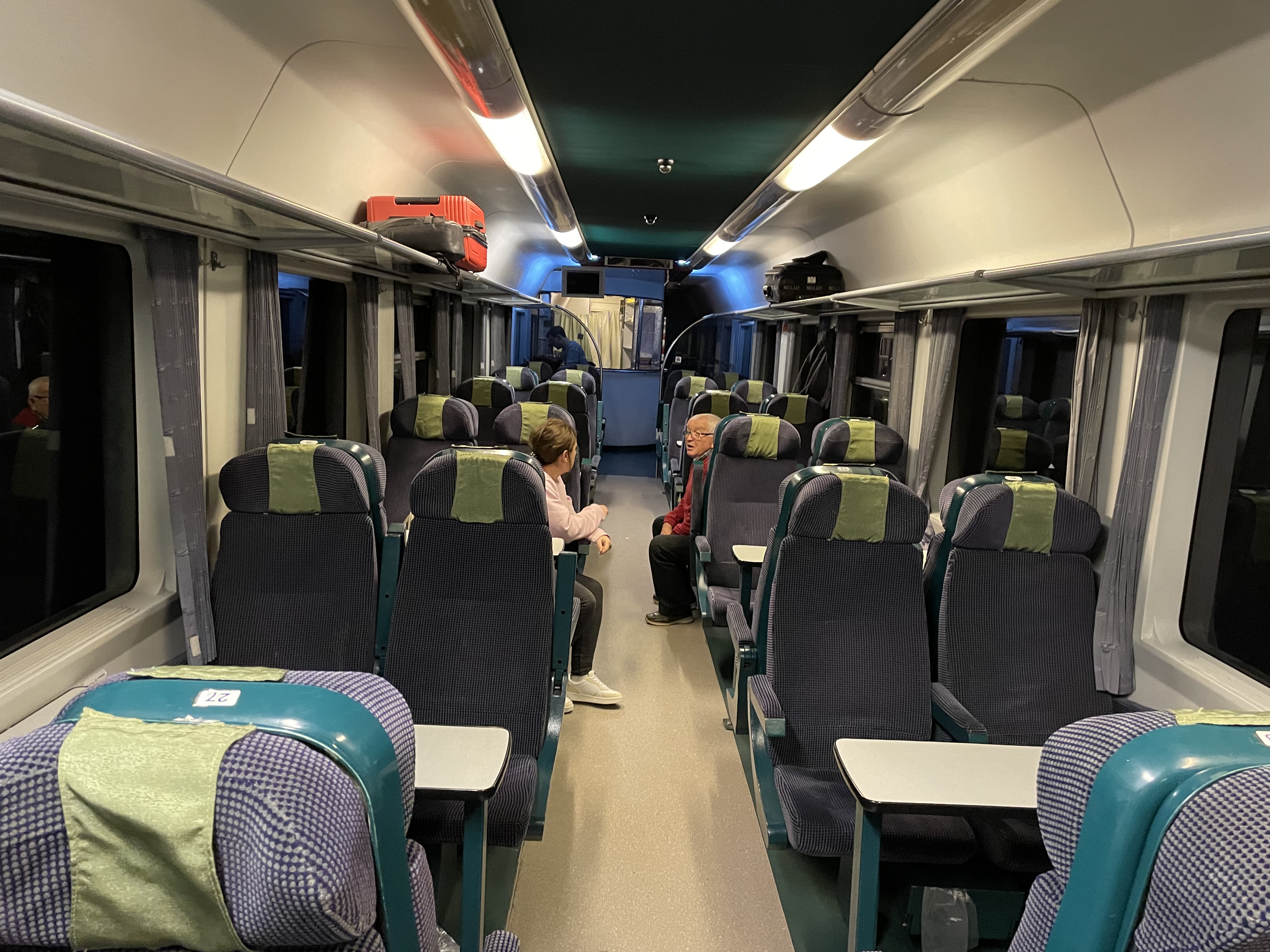
The delights of the Night Sleeper. In railway terms they are a different world. There is a form of camaraderie…. Chats on the platform before the train arrives, then a mutuality of concern as we all struggle with our baggage, then the varieties of accommodation providing, as judged by the facial expressions of people I’ve observed tonight, differing judgements on that to which they’ve committed.
Then ‘the bar’…. Unexpected but with at least 2 people making a new conversation …. Plus the inevitable geek locked into ‘distant worlds’ ….presumably until sleep has him fall off his bar stool. [he didn’t – he sensibly packed his computer away and & retired quietly… whereas I had to be rescued]
There are so few people in this carriage that it might be worth considering as a cheap option (but the carriage may be detached at the border).
WhatsApp
No murders have yet been reported.
The dangers late drinking:
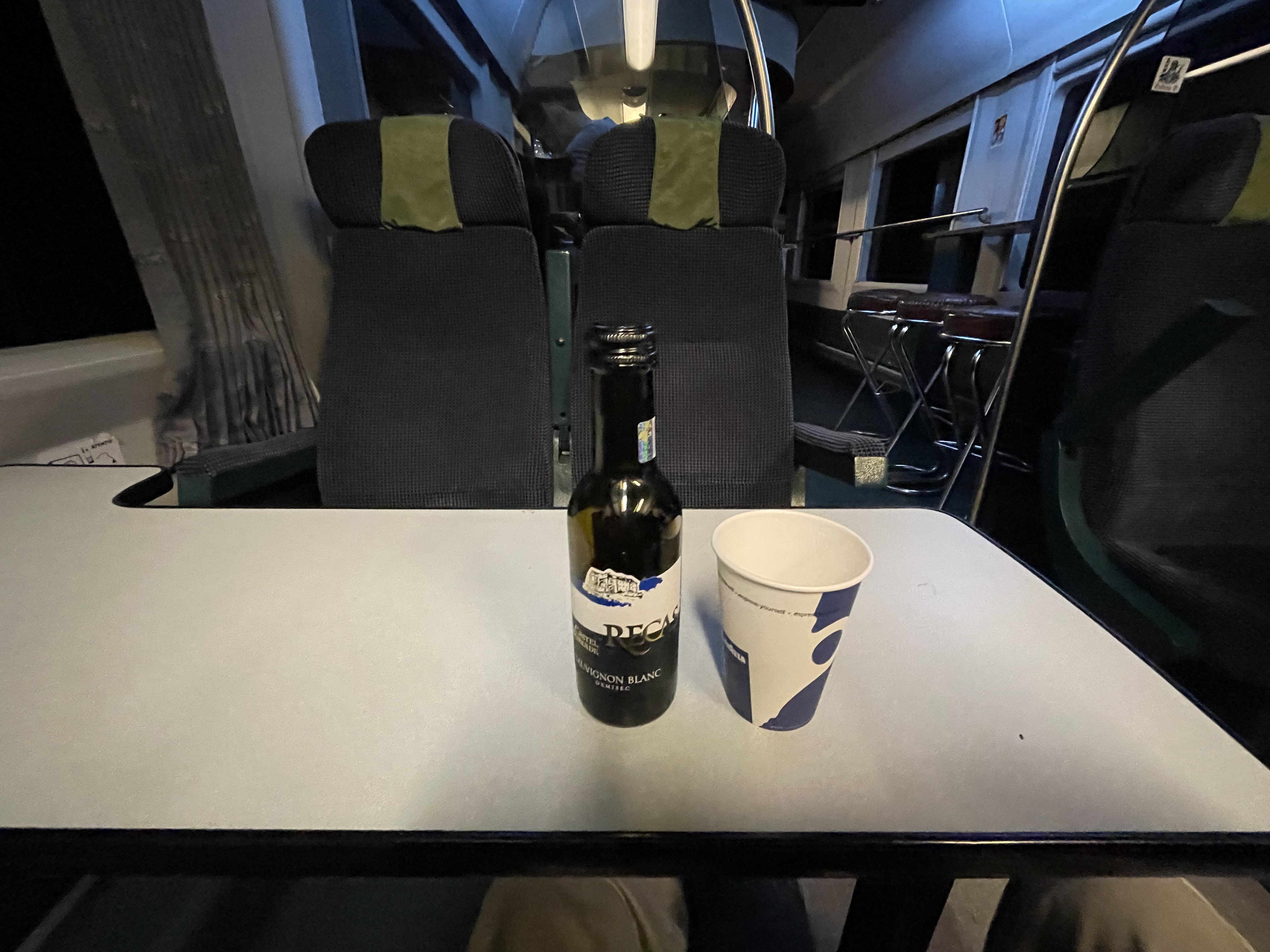
Shortly after writing the above quote I was removed by the attendant …. He was concerned that I had fallen asleep and would not be able to reach my sleeping compartment before the restaurant car was removed…. But he first had to find an English translator (who turned out to be a very helpful member of staff for some of our later journeys)
Reflection made at the conclusion of the ‘Eastern’ section of the No Kerosene Tour
WhatsApp
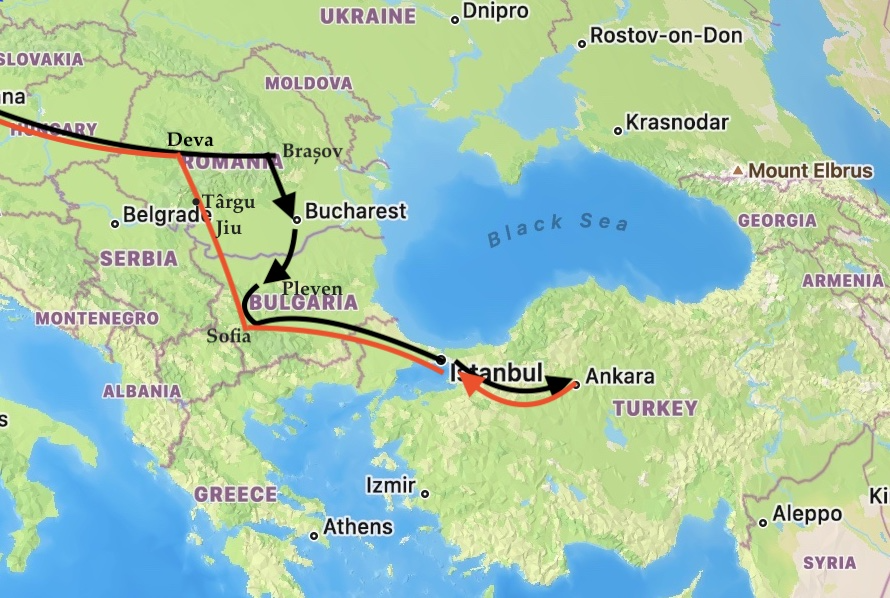
This visit through Romania and Bulgaria into Turkey has been a very valuable ‘eye opener’ for us. We have only been in large or locally significant towns and cities but it’s interesting to have seen how much positive development has occurred and is occurring.
Turkey has emerging problems…. One of our conversations said ‘45 days and he is gone’…. Referring to the President whom he called a ‘liar and a cheat’. Another , agreeing, compared the President to a recent British Prime Minister (and pointed out that he had Turkish antecedents).
But Turks seem to have the natural ability to overcome the political… and simply be warm and friendly….. so, as we crossed into Turkey at 02.00 one of the railway staff laughed at me, made a physical comparison with some media character and insisted on having photos of the 2 of us together by the locomotive that would haul us to Istanbul.
Marvellous…. What privilege to be accepted so easily!
And through Bulgaria and Romania, though more reserved, there have been similar encounters (the latest in the wine bar here in Deva)
Now to Wien, Poland and eventually to a ?disrupted ? (We hope not) France.
WhatsApp
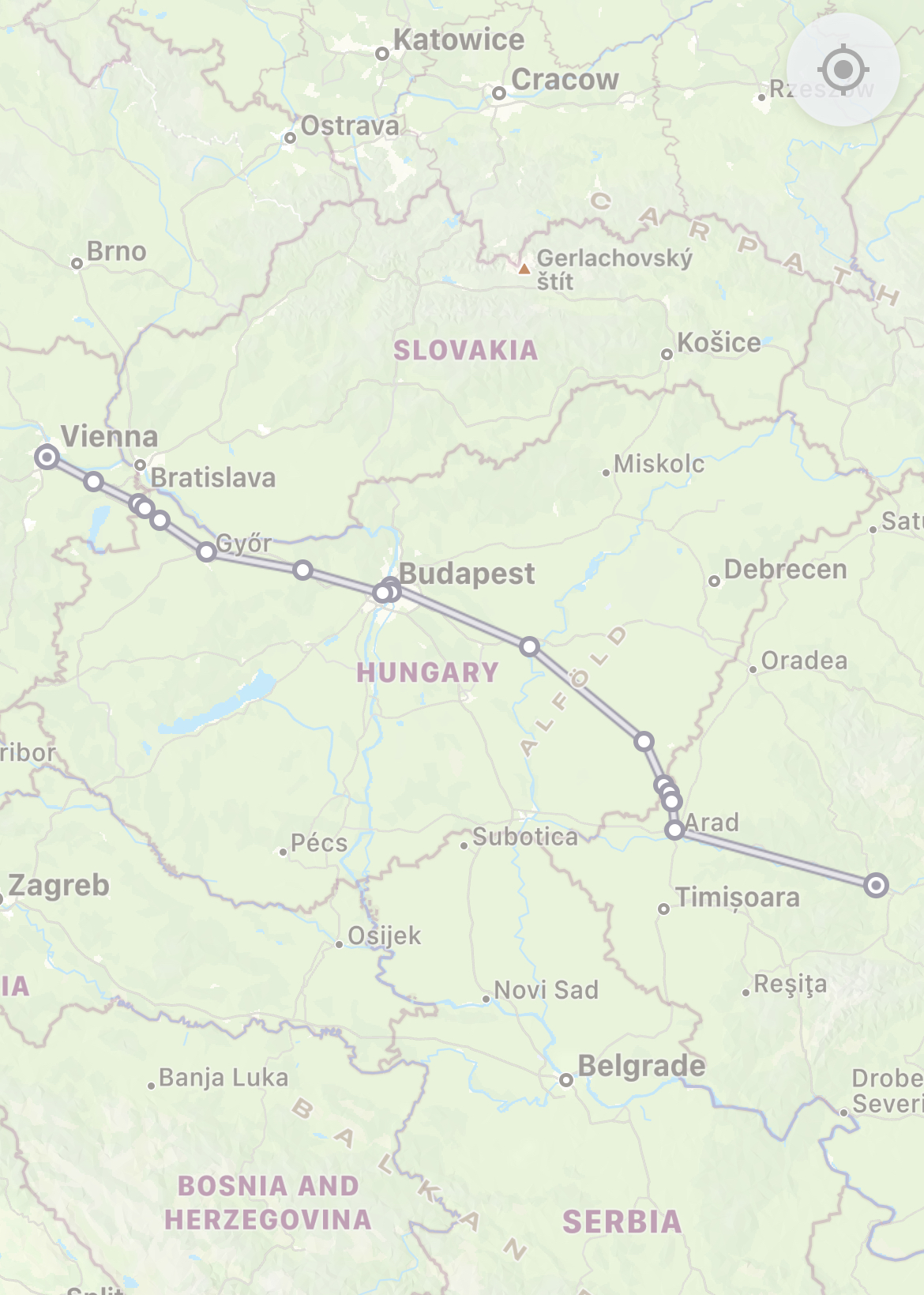
 Inspirational Pathways