16th April to Macon
The rain, intermittent yesterday, has been a feature since Poland. This morning, once again, it locked itself in on us and remained until we reached the Rhine.
Thus begins our travel to the most westerly section of our whole No Kerosene Tour.
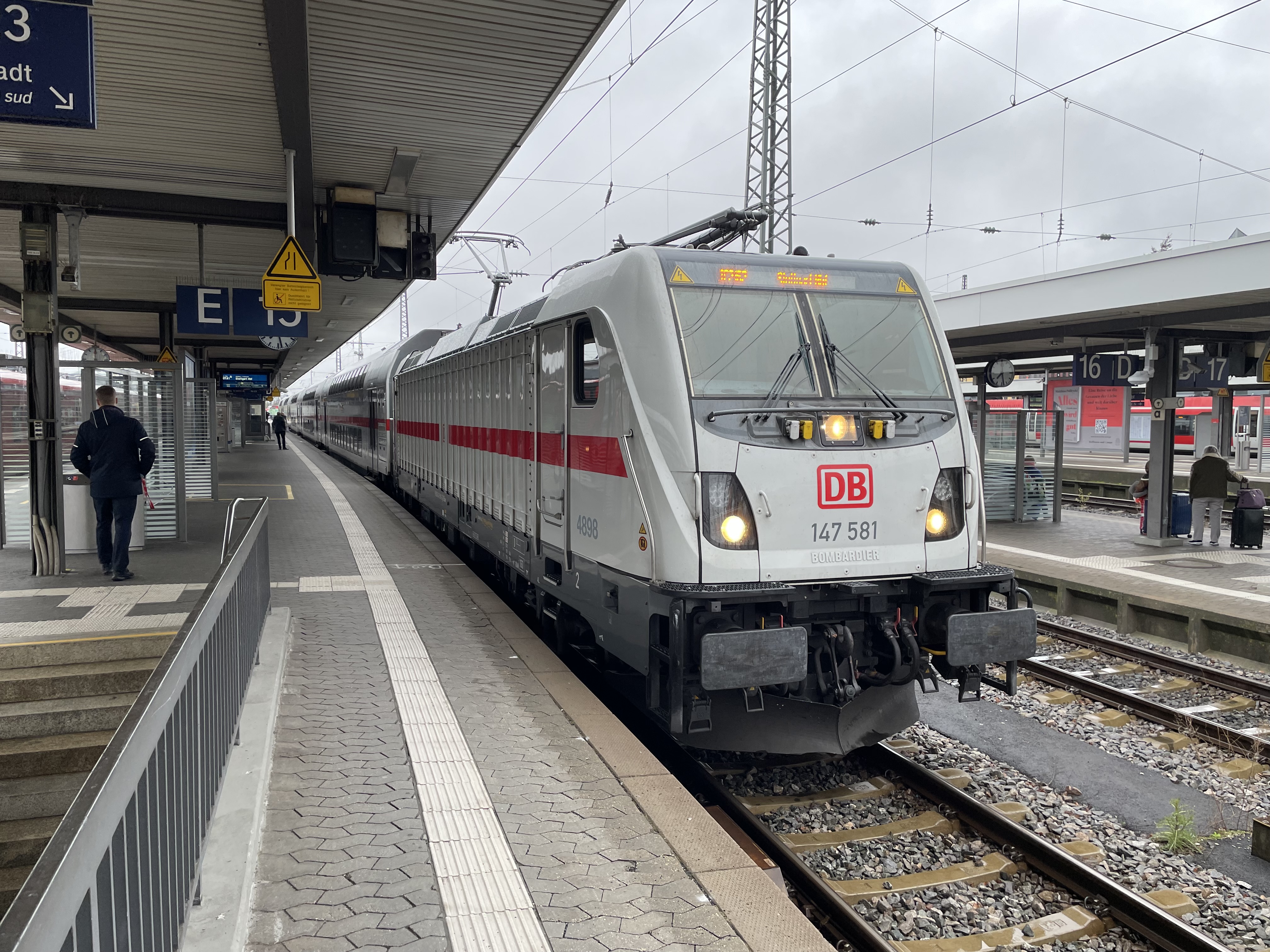
Our train was very new – one of type of ‘double-decker’ now being introduced by DB.
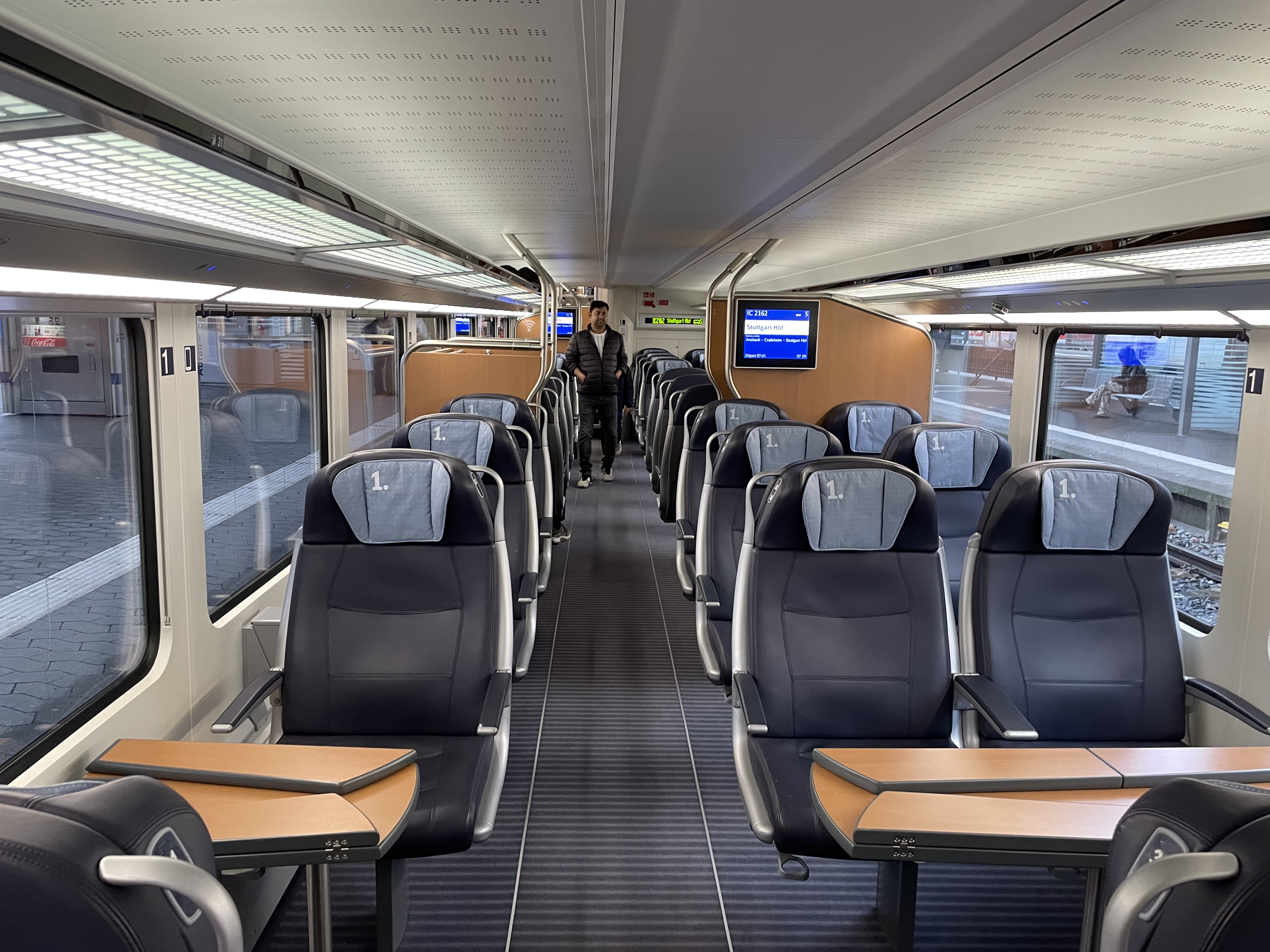
A fine and comfortable beginning to a day in which the ‘wonders of the western railway systems’ prove to be disappointingly (yet regularly) of only medium quality. & e experience.
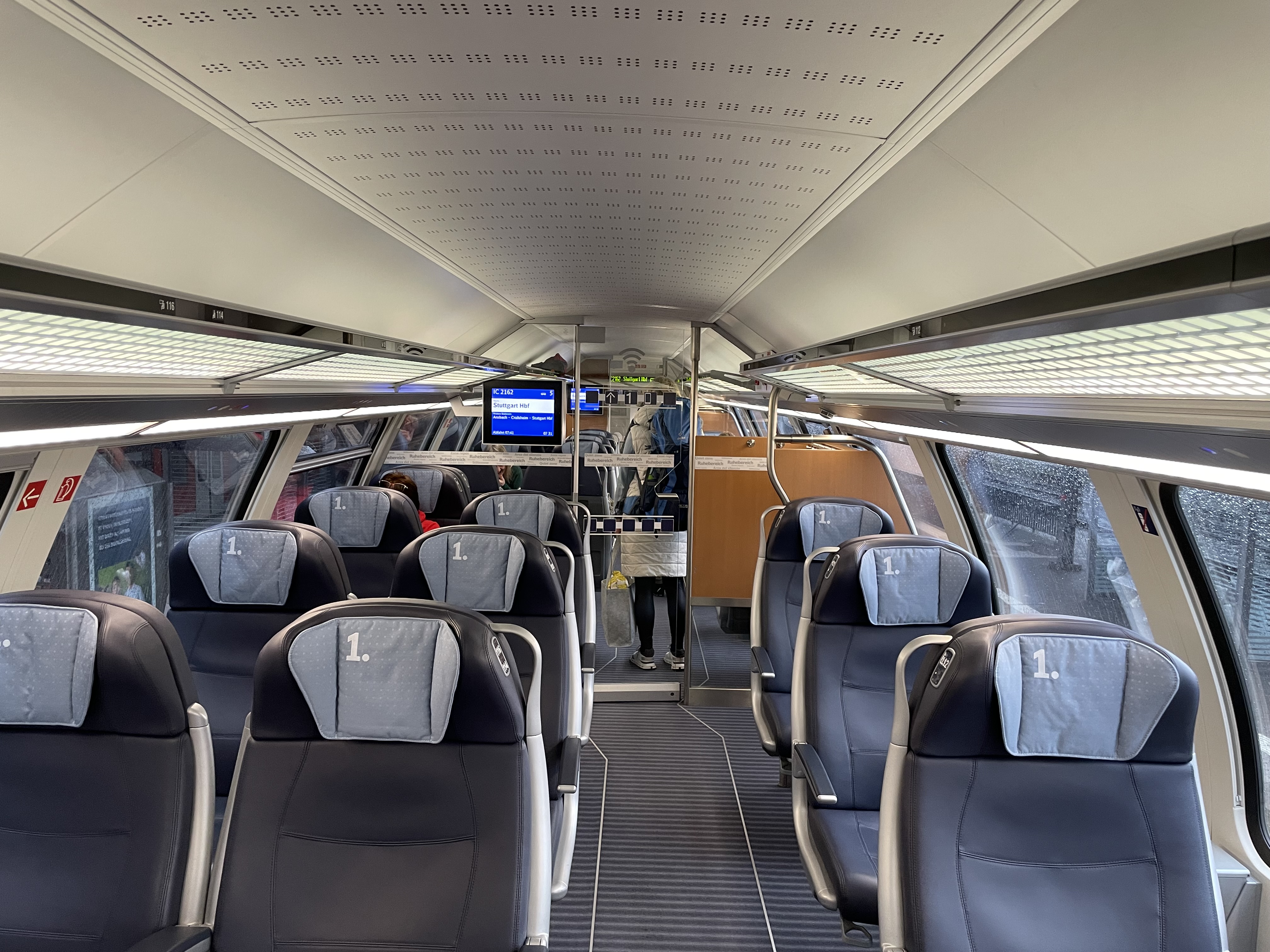
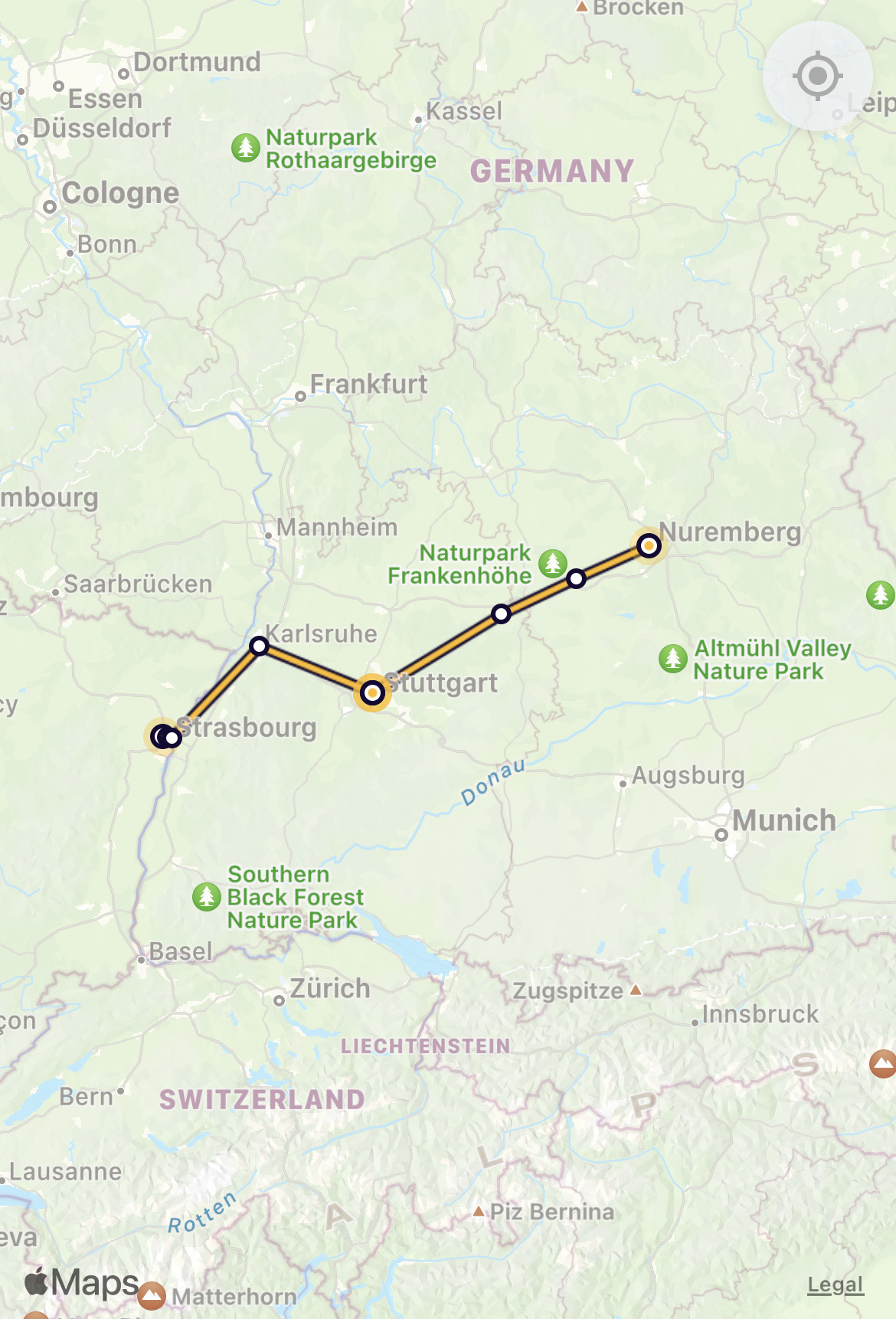
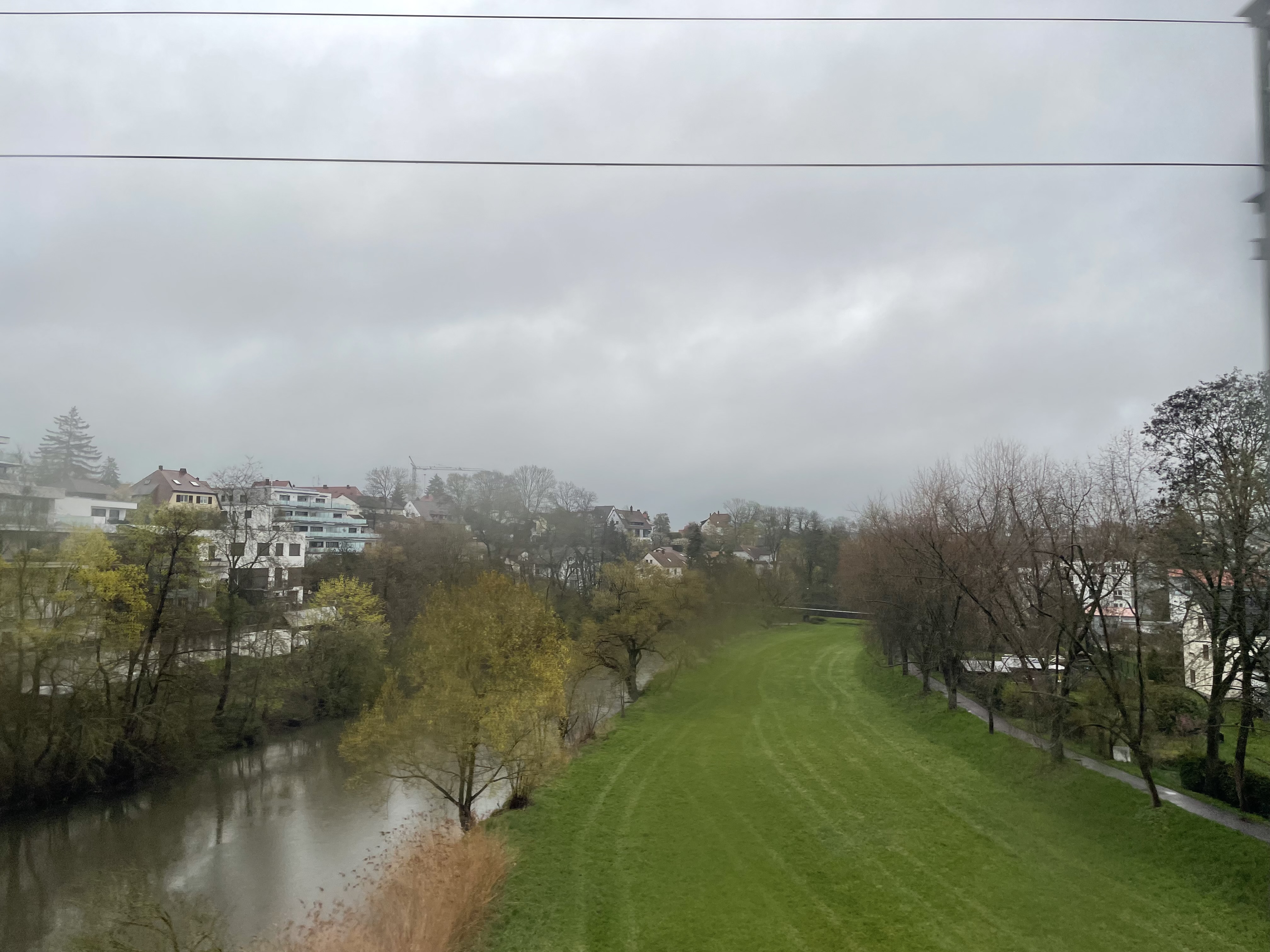
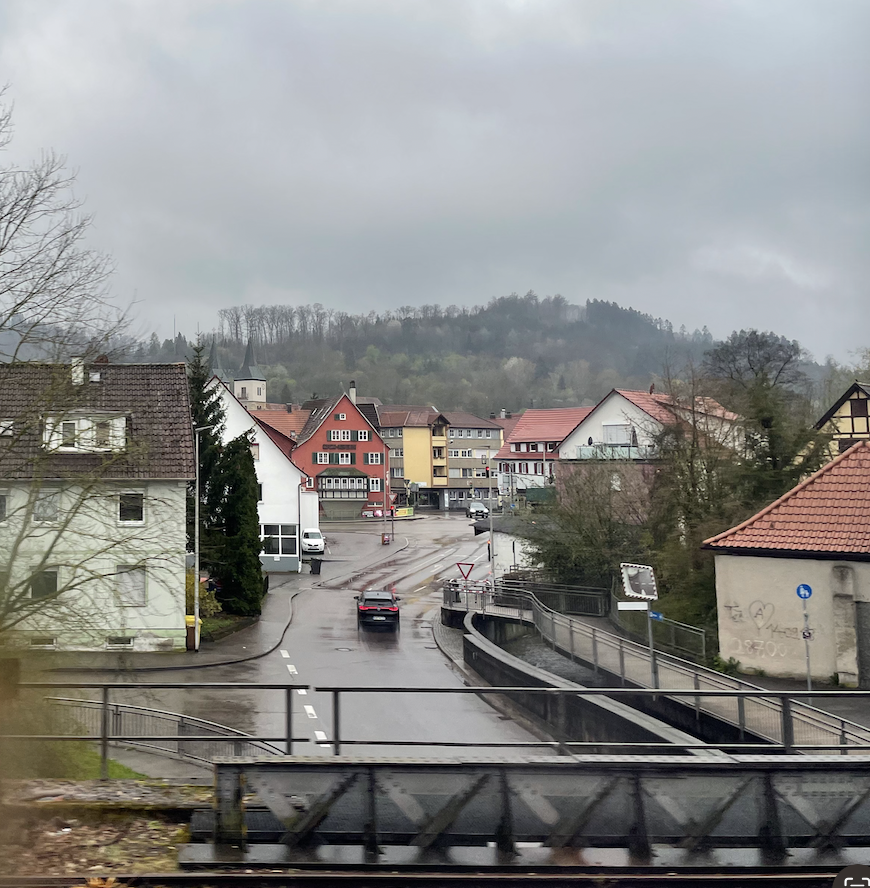
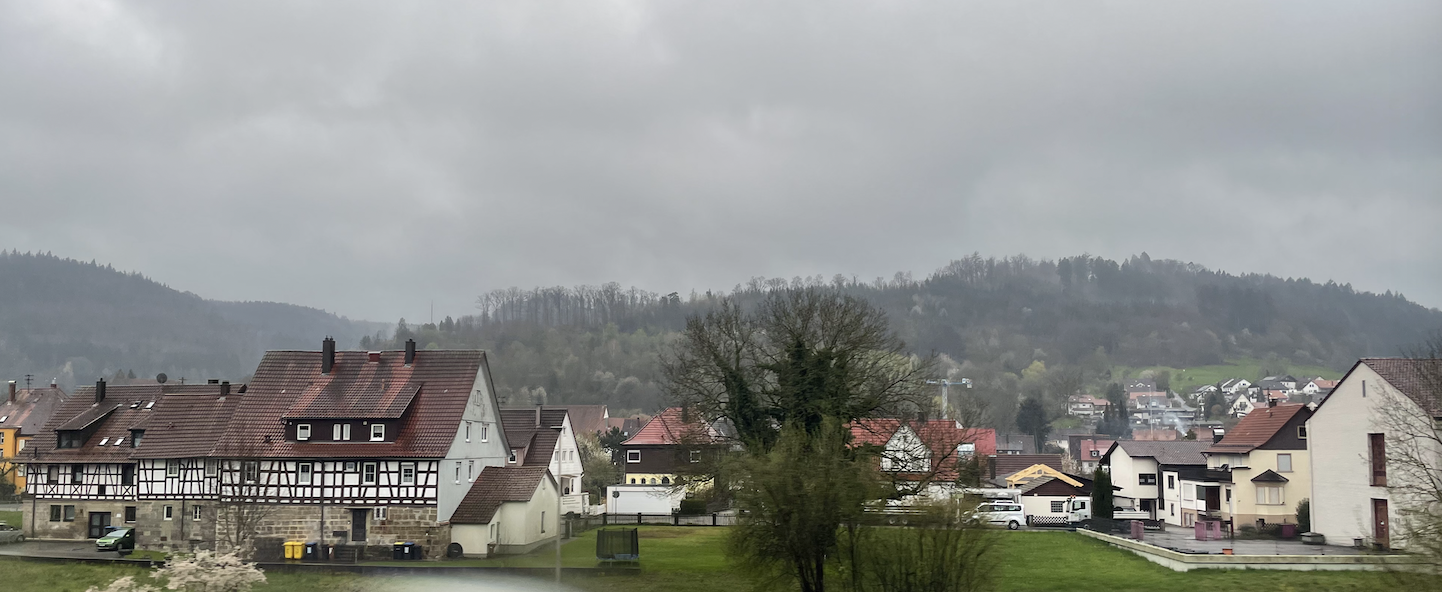
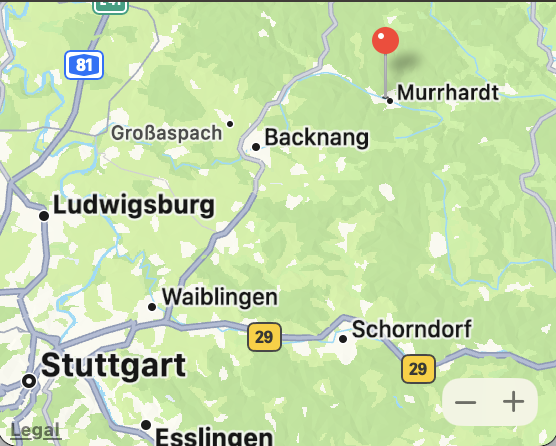
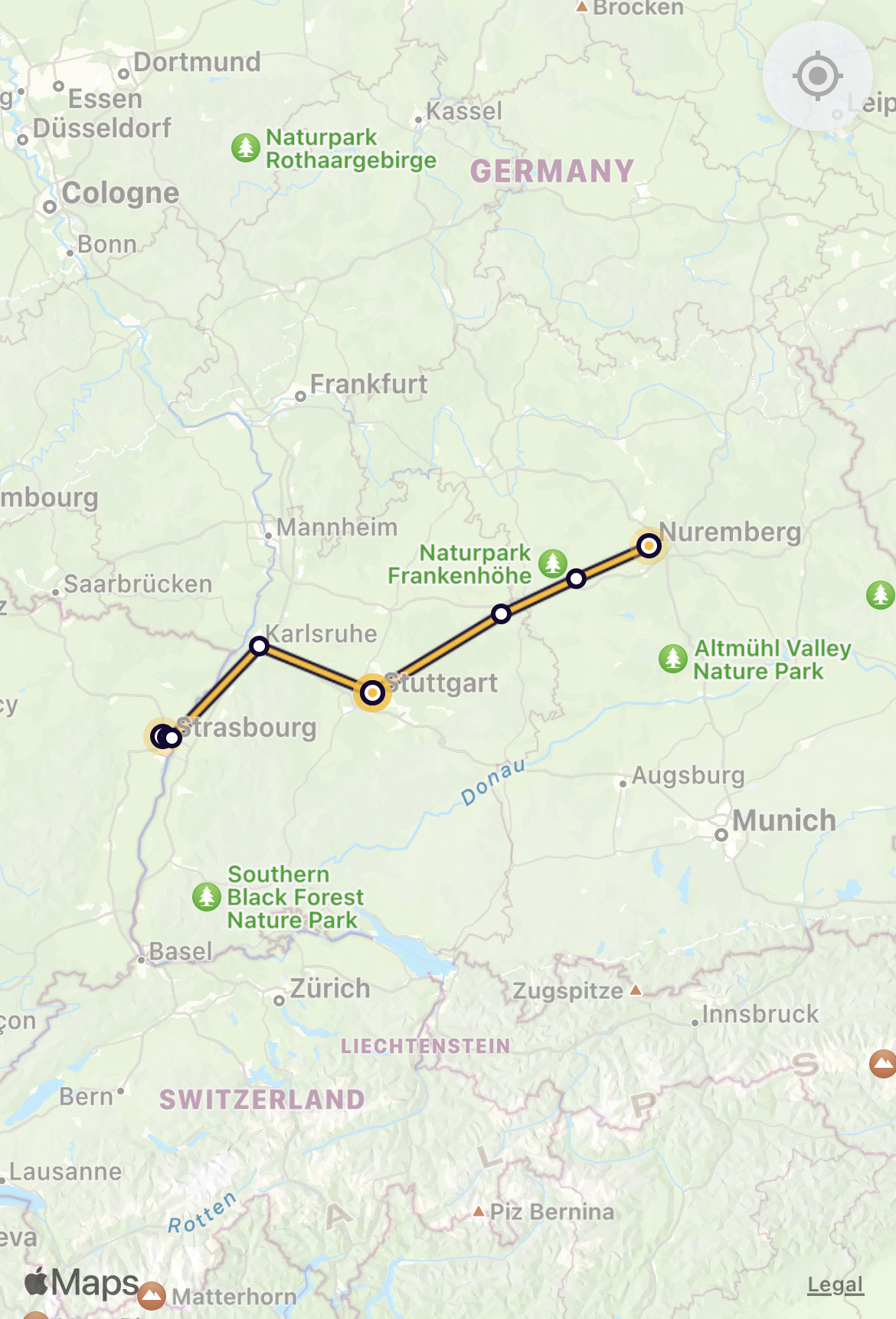
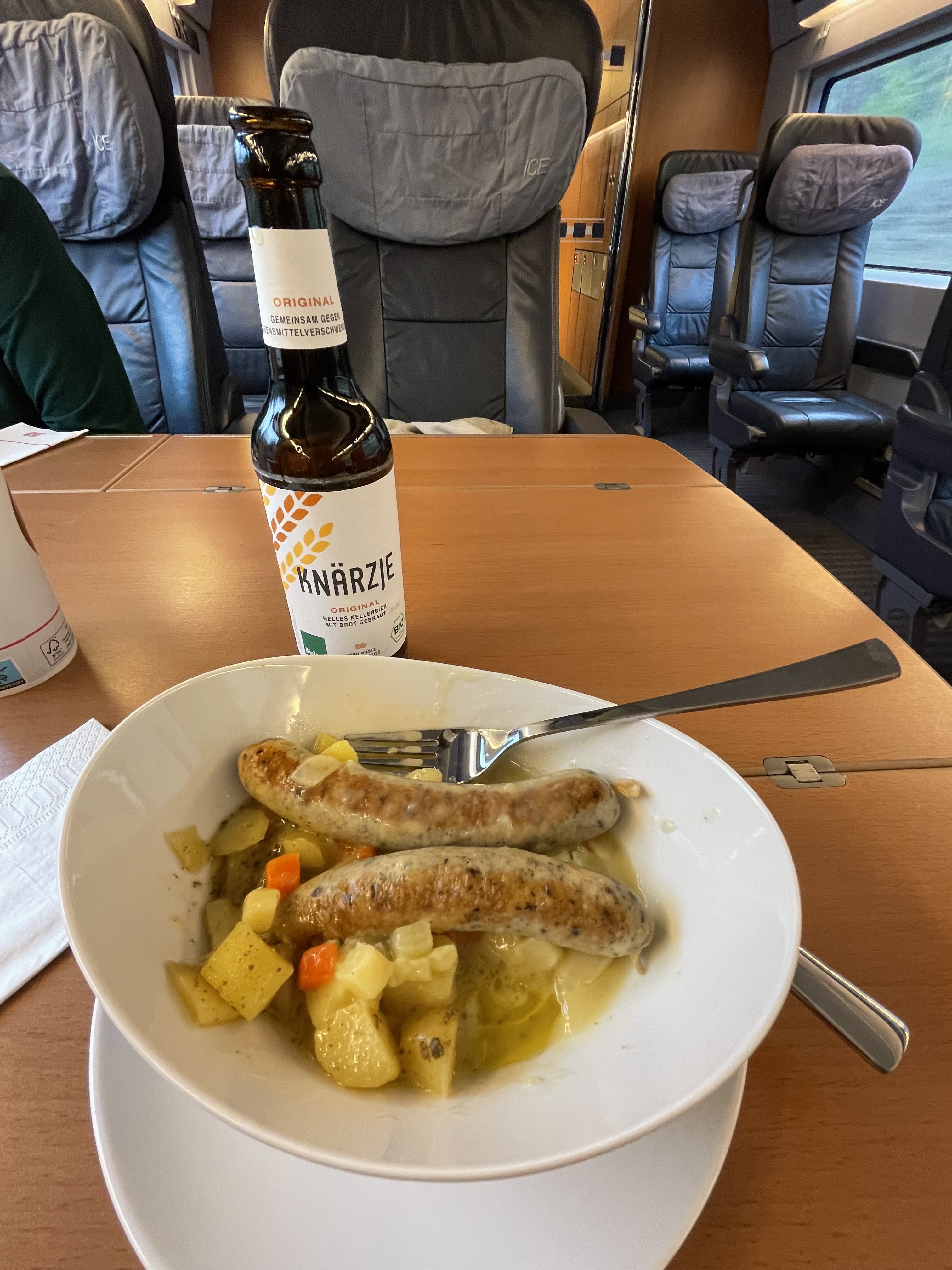
Early lunch on ICE train to Strasbourg (following rather chaotic change at Stuggart caused by very late arrival of another train)
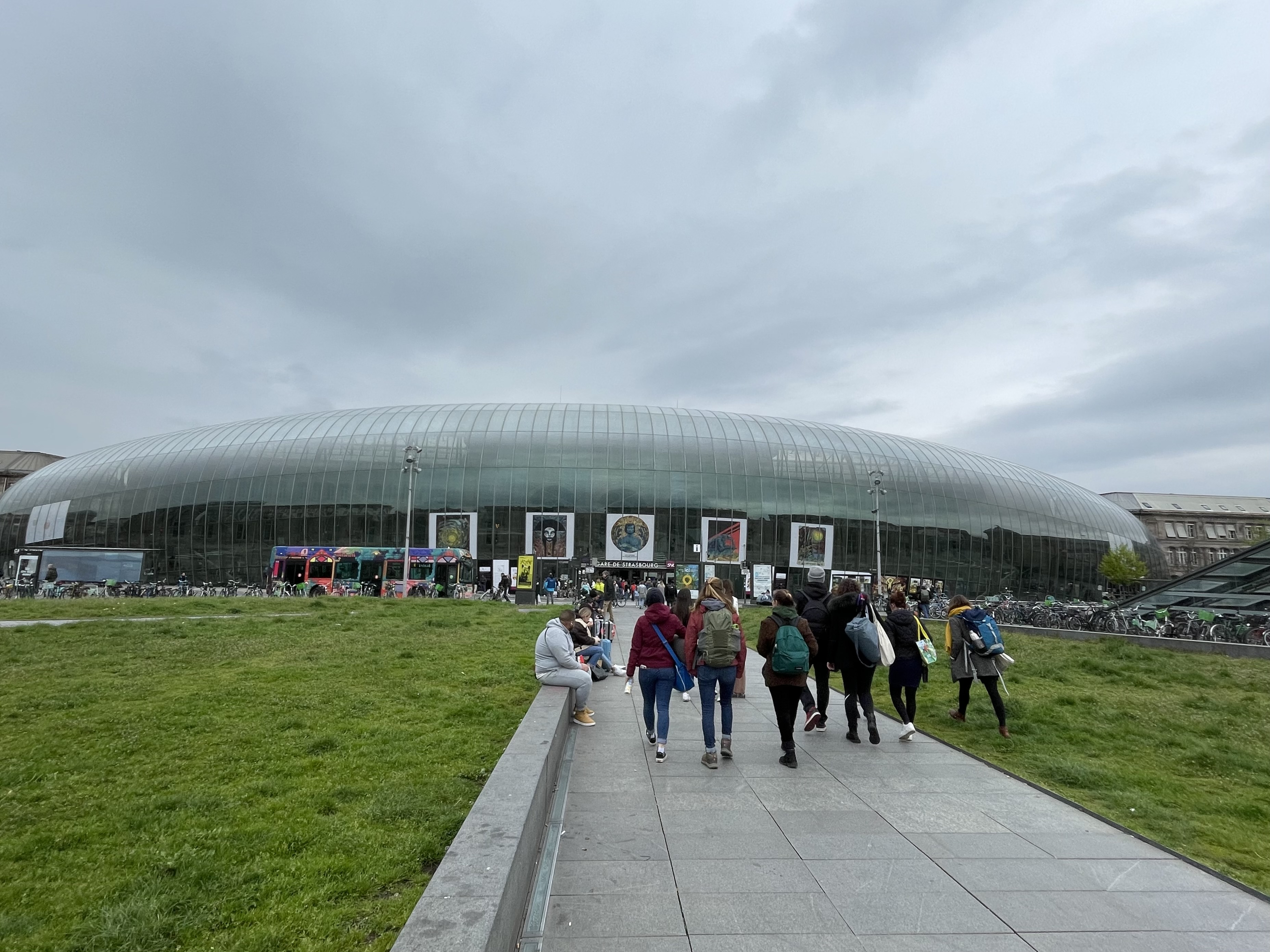
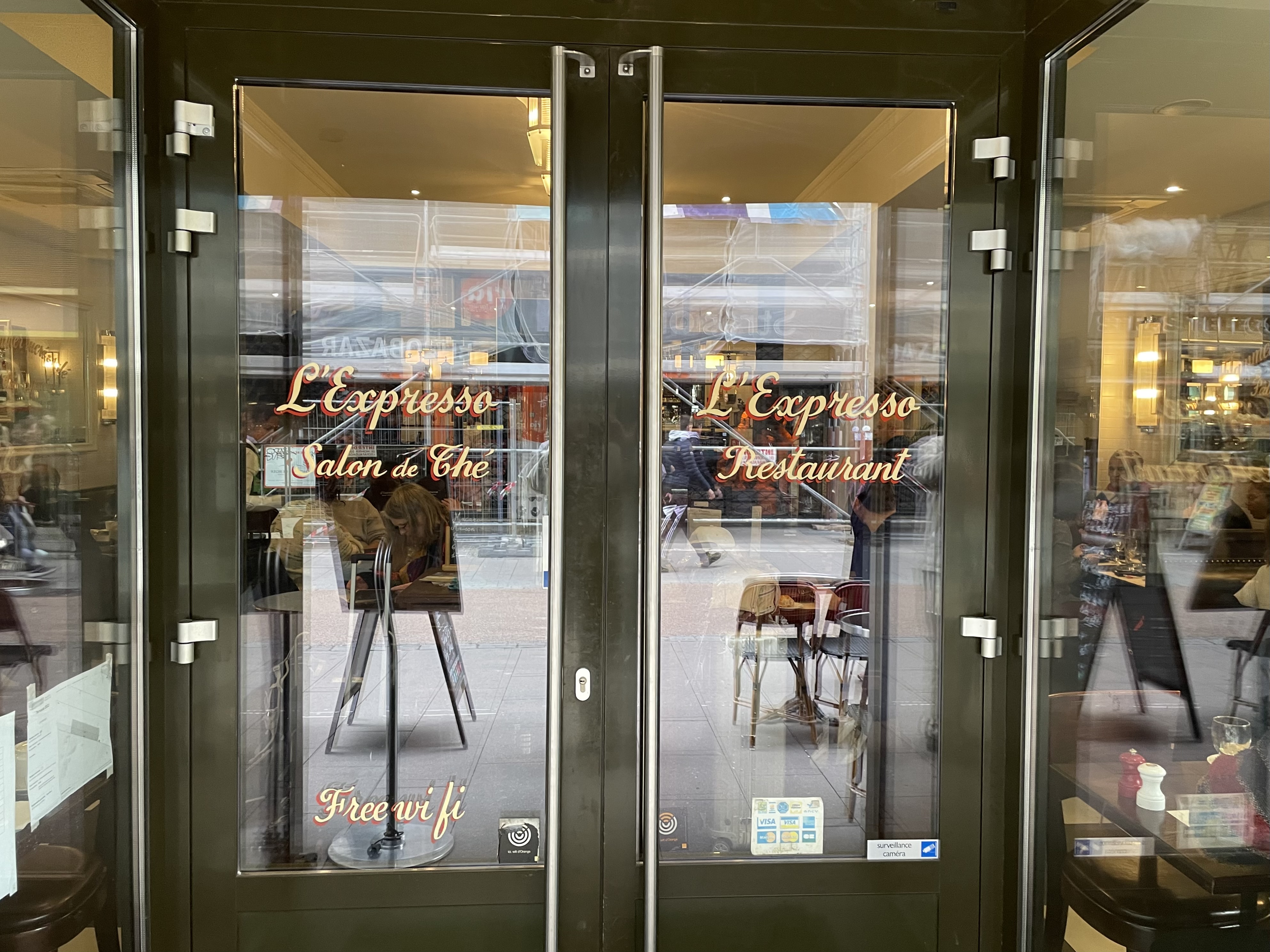
In Strasbourg (briefly) but with just time enough to walk away from the station. Incredible how national characteristics can appear ….. Strasbourg was a free city of the Hoky Roman Empire until the Sun King (L14) took it. It is directly on the border with Germany, separated by the Rhine river. Yet walking out of the station is immediately different. This morning we behaved properly and stood at a red light waiting for the green (despite no traffic)…. Here there is a red light but no traffic…. so everyone walks . And the first place we encounter is a classic cafe… so time for an excellent coffee and cream and a macaron (maybe a ‘madeleine’ would be more appropriate for this tour)
WhatsApp

The TGV had a rather worn feel to it – there was no great sense of ‘the excitement of travel’ & the staff rather contributed to that – the French ‘shrug of the shoulders’ was apparent and on arrival in Dijon they quickly joined others of the platform – to smoke.
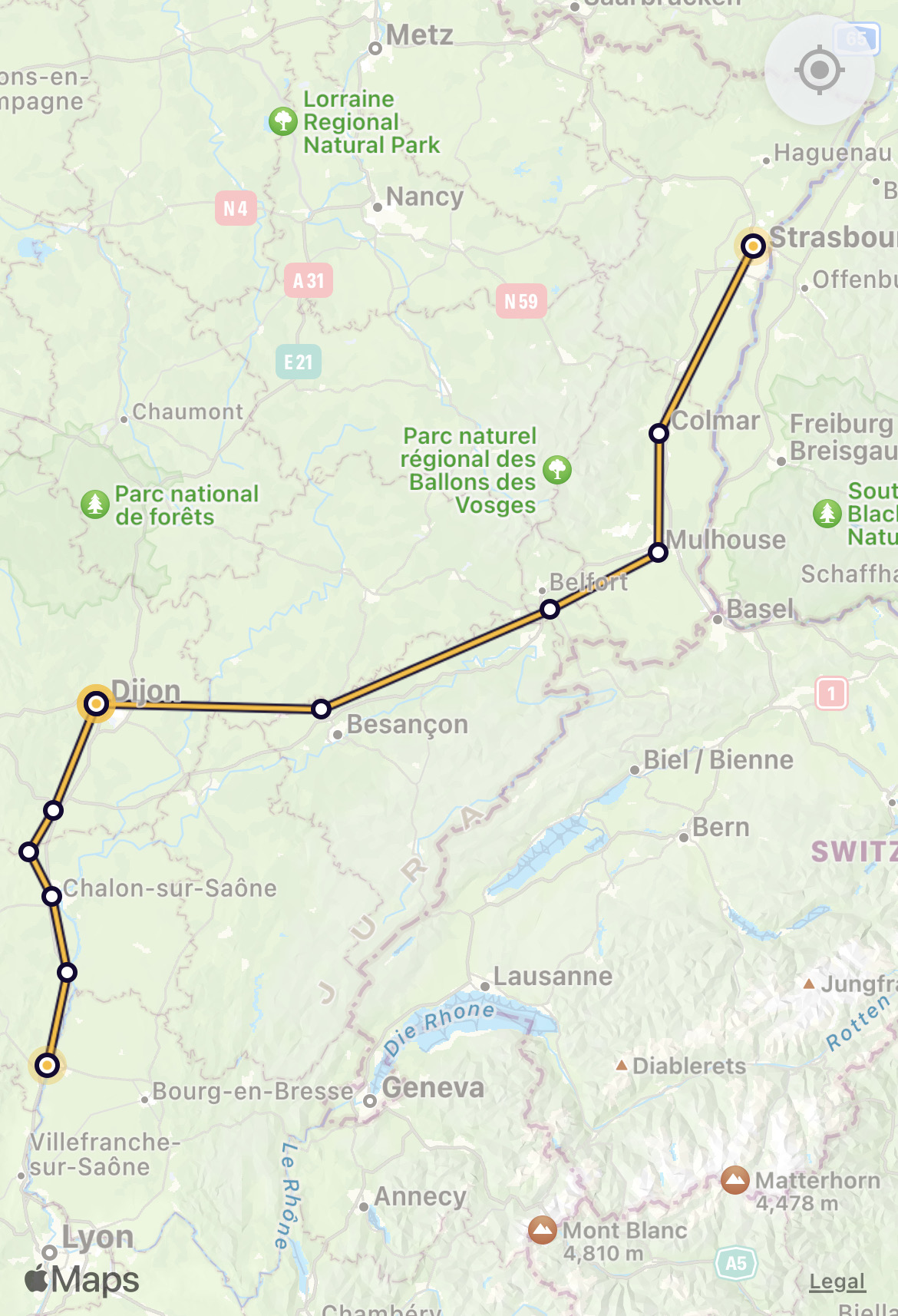
Changing trains at Dijon
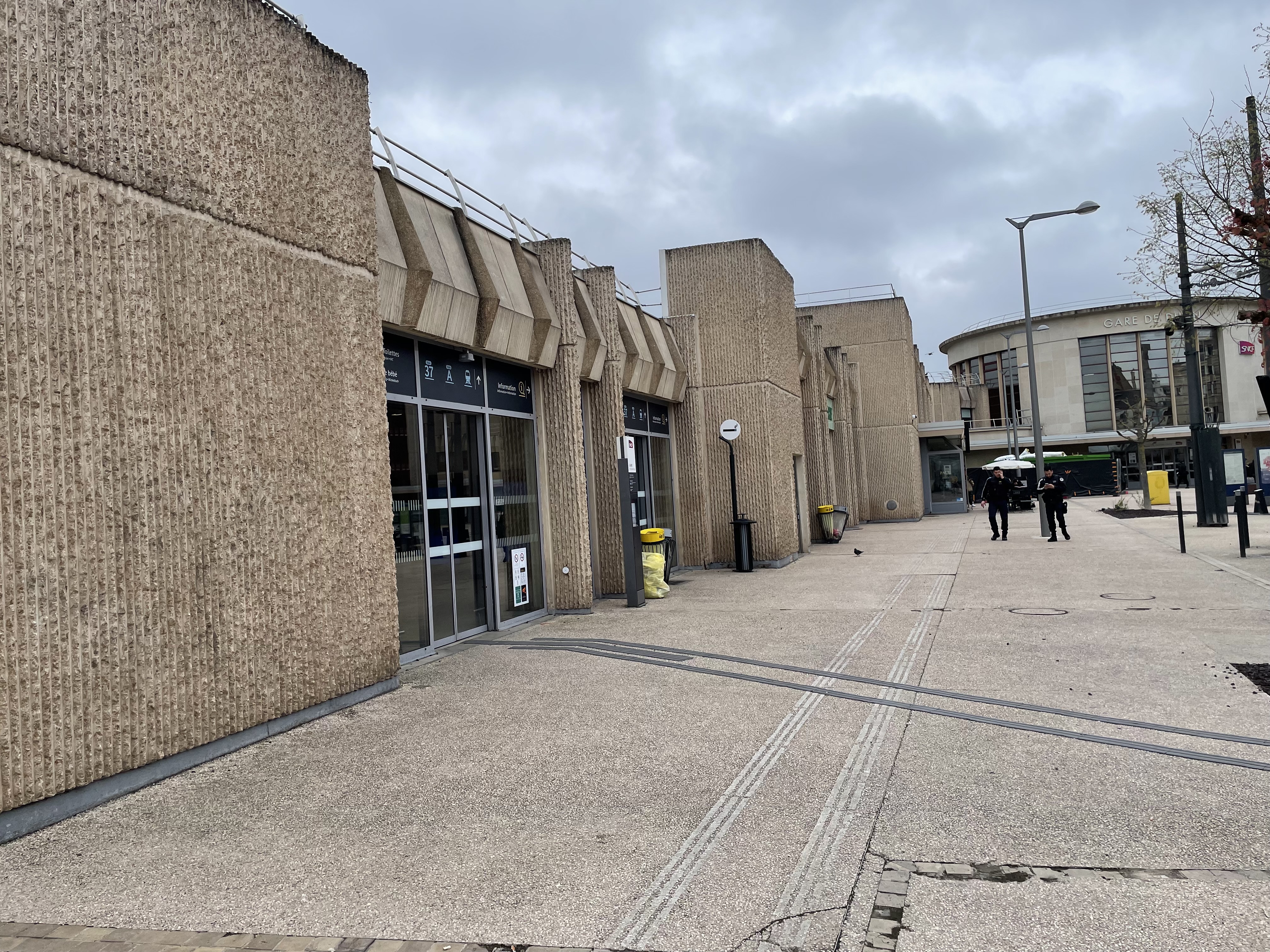
Strangely ‘decorative brutalist’ – and a reminder that the architectural style so constantly adhered to (and imposed) in communist countries was the normal style for buildings designed and built in the 1960s in western Europe. This particular example reminds me of several schools & parts of 1960s Birmingham city centre (now ‘redeveloped’)
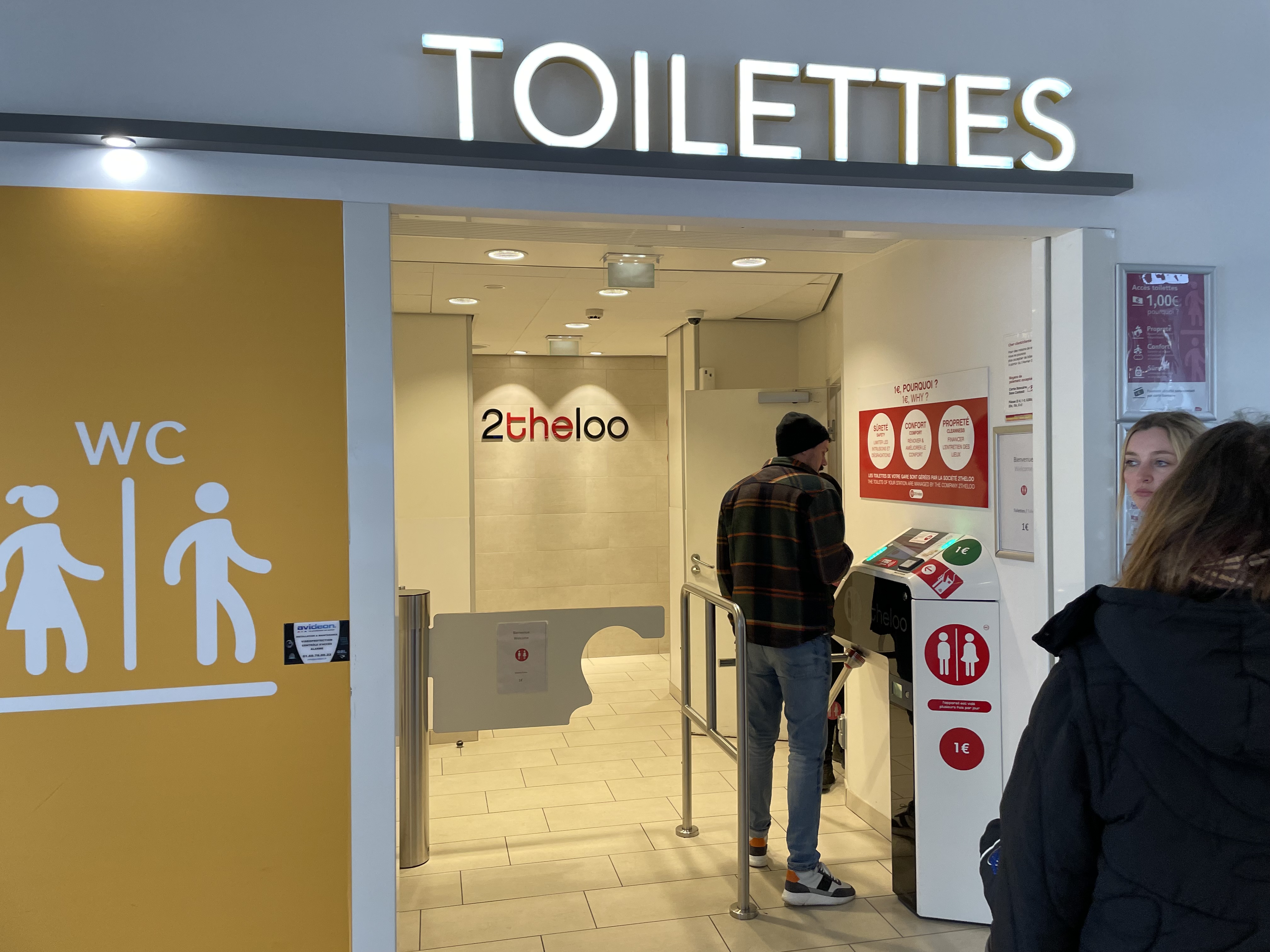
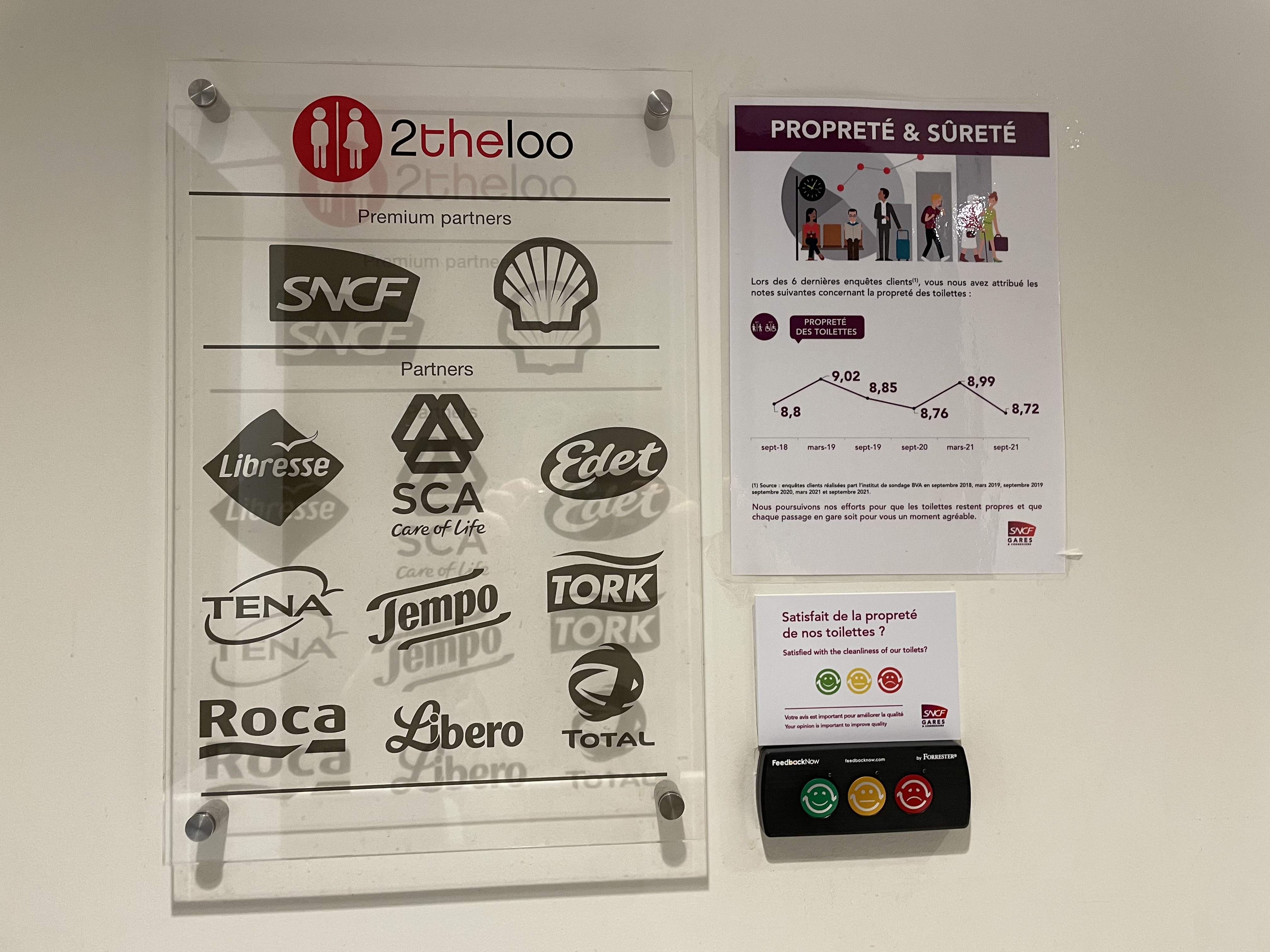
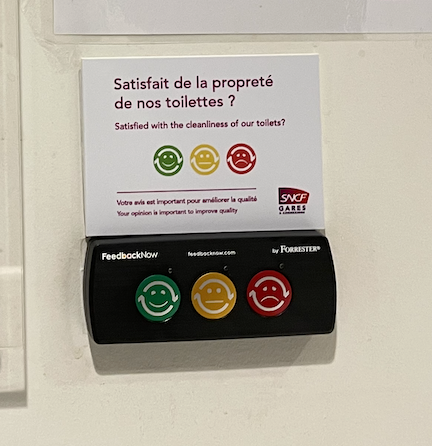
the WC Entrance possible with smart phone.. 1€ …. I wonder how many visitors are required to pay the attendant a reasonable salary? Further: what nonsense the company uses to justify charging ….. these aspects should be automatically guaranteed in the station…..
and then to put up a notice in the pissoir mentioning sponsors and an apparent public opinion survey just adds to the bizarre nature of the whole process.
Interesting to note the company name is a fairly popular British phrase.
It would be less annoying to be told about cleanliness if the trains we’ve travelled on in France had the windows cleaned properly… hopeless for photography due to thin film of dirt.
WhatsApp

Regional express to Macon – it’s Sunday – so (as everywhere else on Sunday afternoon) it’s very full. The photo gives a clear sense of the poorly cleaned windows – we were beginning to expect that on a French train.
Welcomed at Macon by Marc Nourrisat
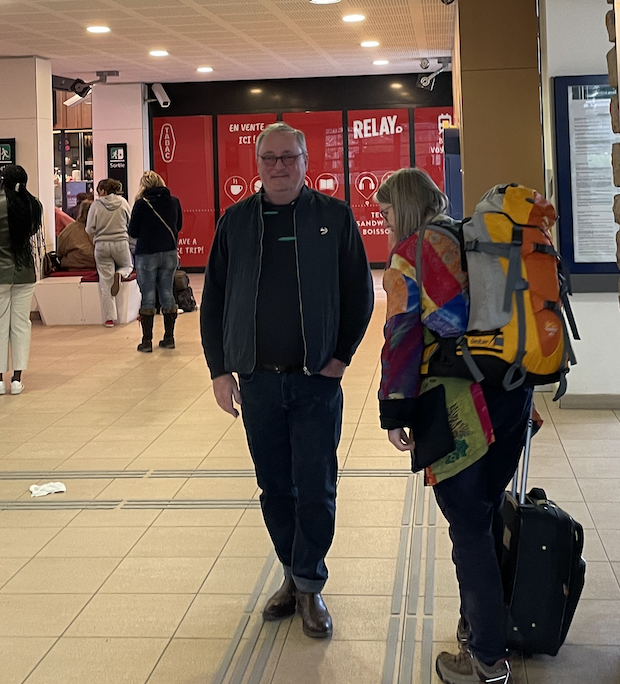
We were staying just outside Châtillon-sur-Chalaronne.

We’ve known Patricia since 1975 when she came to Bishop’s Castle, staying with Hannah and Roy Davies. She quickly gained friends of her age and became, over the next years, a regular visitor – being known at times simply as ‘the French girl’. We met marc after they were married and then from 1993 became regular visitors – either on holiday, delivering our sons to them; for the same reasons Patricia first came to UK but then as child-minders for the triplets that Pat and Marc produced in the 1990s.
There was always a considerable benefit to us, as well as being a négociant for Beaujolais, he is also a superb cook. We were always lavishly entertained & would return home with the vehicle swaying around the twisting roads on the Welsh Border as it was top heavy with wine boxes on the ‘galerie’. Our kids were able to find space inside – but only just as, every space was used for bottles & boxes.
Our brief sojourn with Pat and Marc provided 2 contrasting dining experiences. The first was one the best in the 3 month tour.
The second was unquestionably the worst – not just on this tour but for many years
17th April: Bourg en Bresse
Bresse was part of Savoy until joined to France in 1801
Our superb luncheon was at a brasserie in Bourg. Apparently such places are now very difficult to find outside Paris. Everything about the meal was of the highest quality: the place, the staff & service, the tradition, the food & the wine.
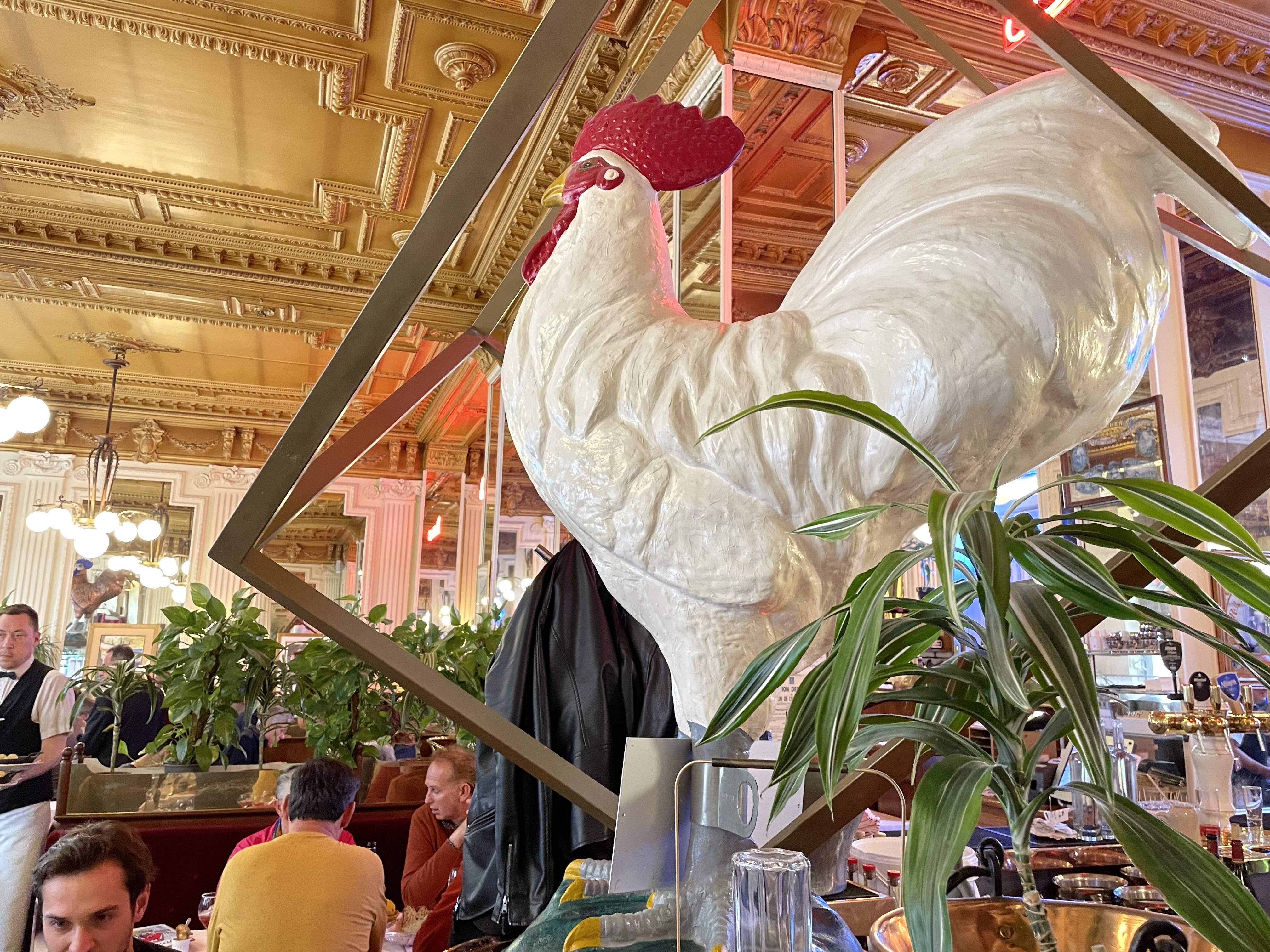
There are 2 foods associated with Bresse – Bresse Chicken
‘Bresse is noted for the 1,200,000 chickens per year which are raised primarily outdoors by 330 stockbreeders, with a minimum of 10 square metres per bird.’


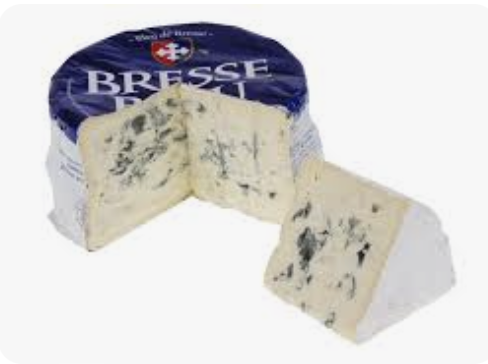
Bleu de Bresse originated in 1951 by an agricultural cooperative near Servas in response to the growing popularity of Italian cheeses. The small packaged rounds were an innovation for the retail market at the time.
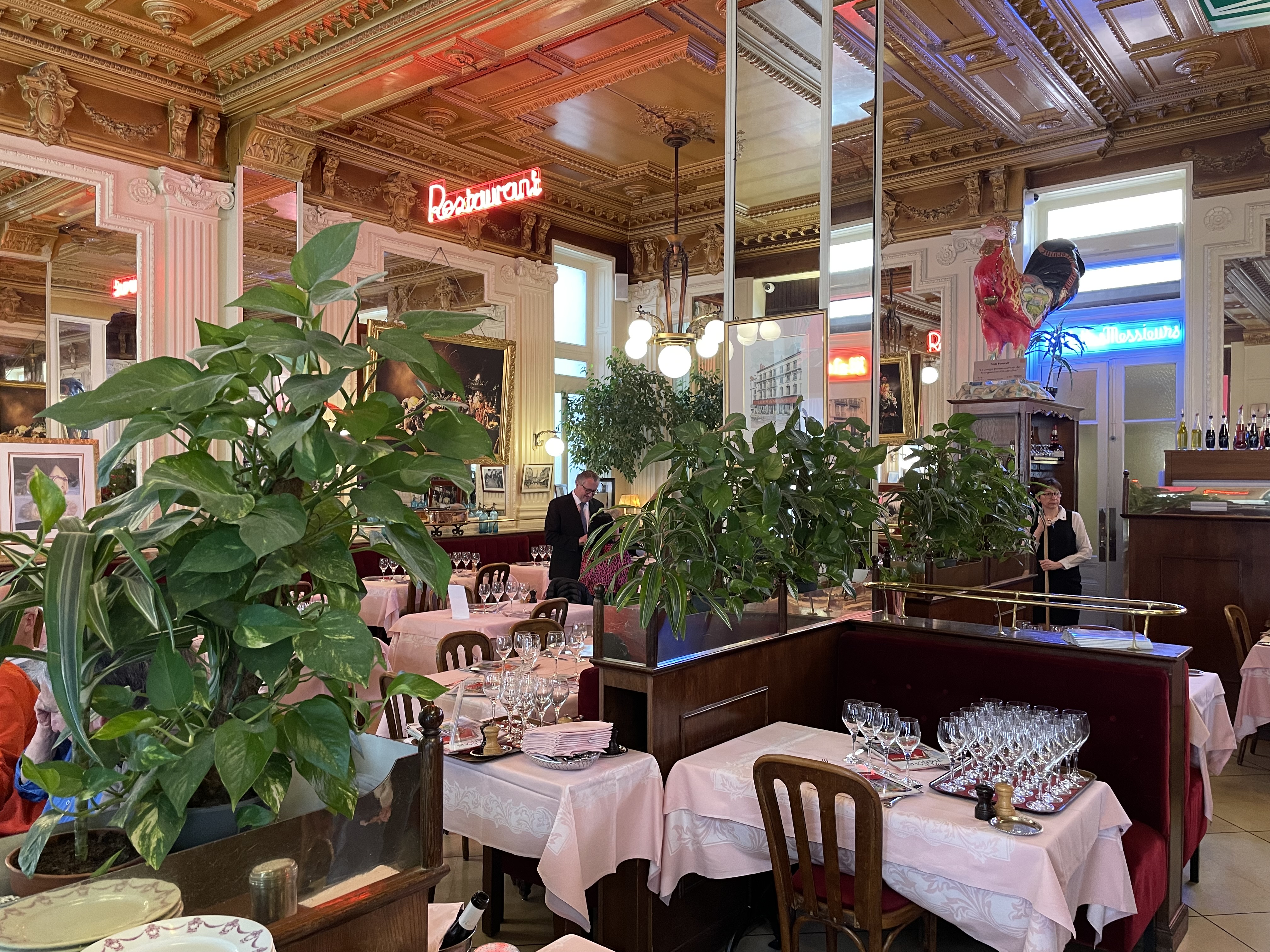
Pat was clearly a regular visitor being greeted as such – with a wonderful set of warm traditional formalities (that managed to feel informal) ‘Bonjour Madame’… etc, after which we were conducted to our (specially positioned) table – being greeted by staff en route.
Neither Jacqui nor I are used to such courtesy – it made the occasion feel particularly special.
Pat explained that the Brasserie had such a high reputation amongst its staff that many were long service employees.
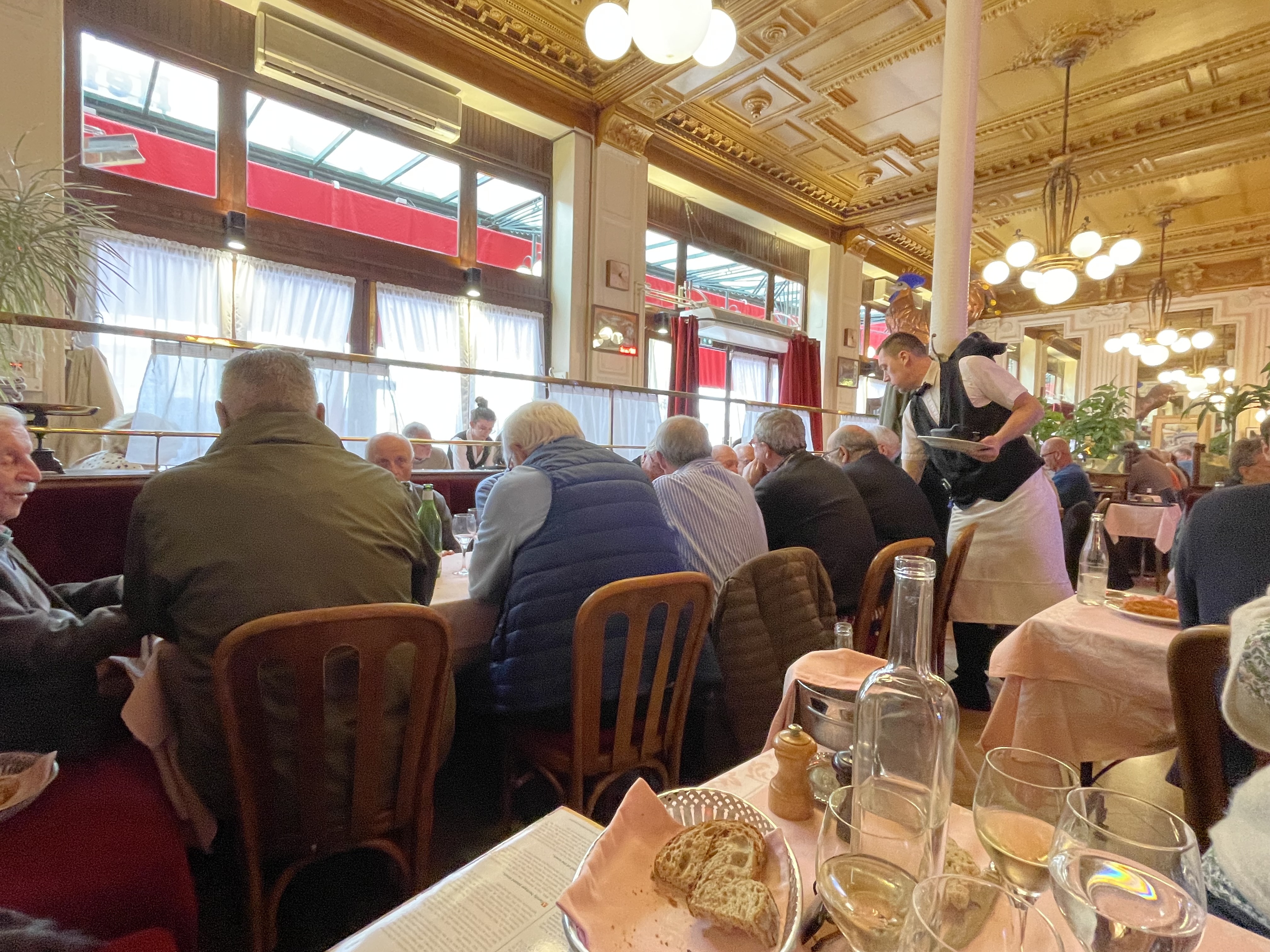
It is clearly very much the civic place – the table next to our was occupied by members of the local Masonic Chapter.
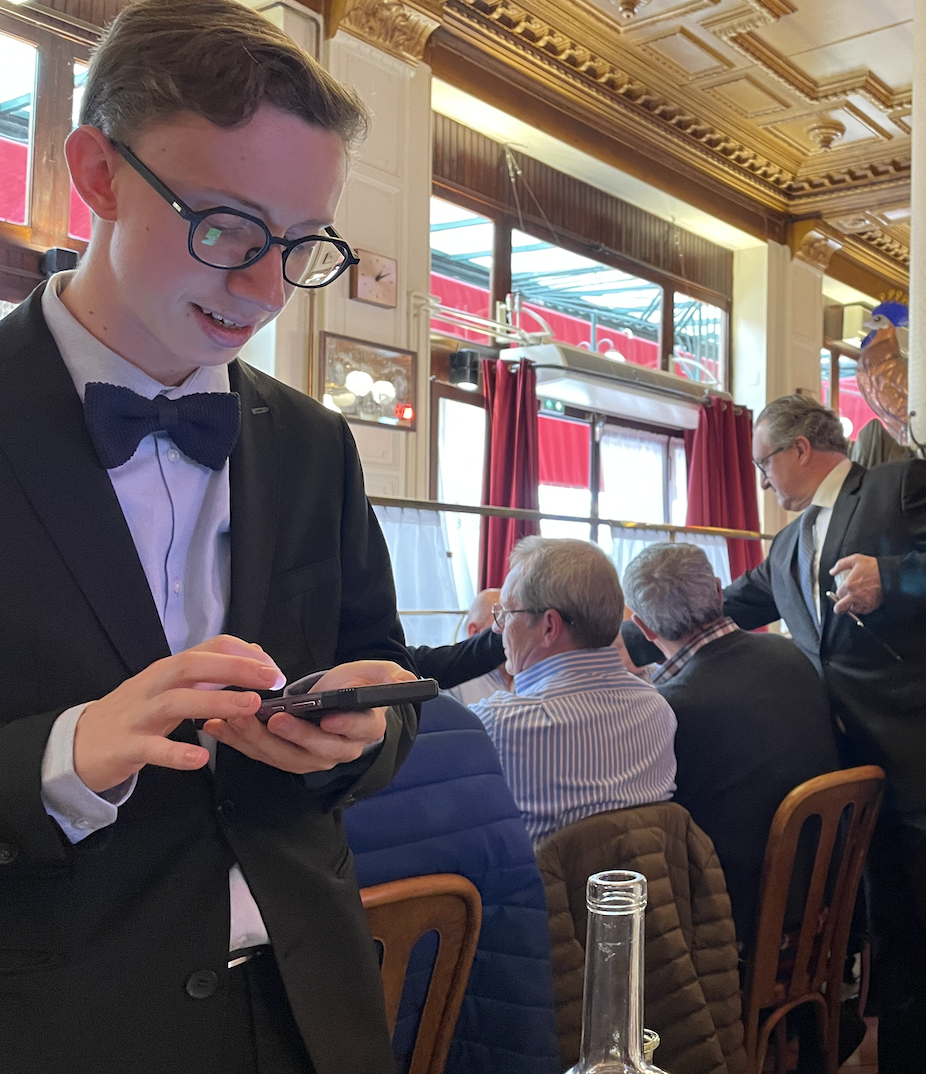
We were attended by the latest member of the owning family (4th or 5th generation) whose father, on our arrival, greeted us
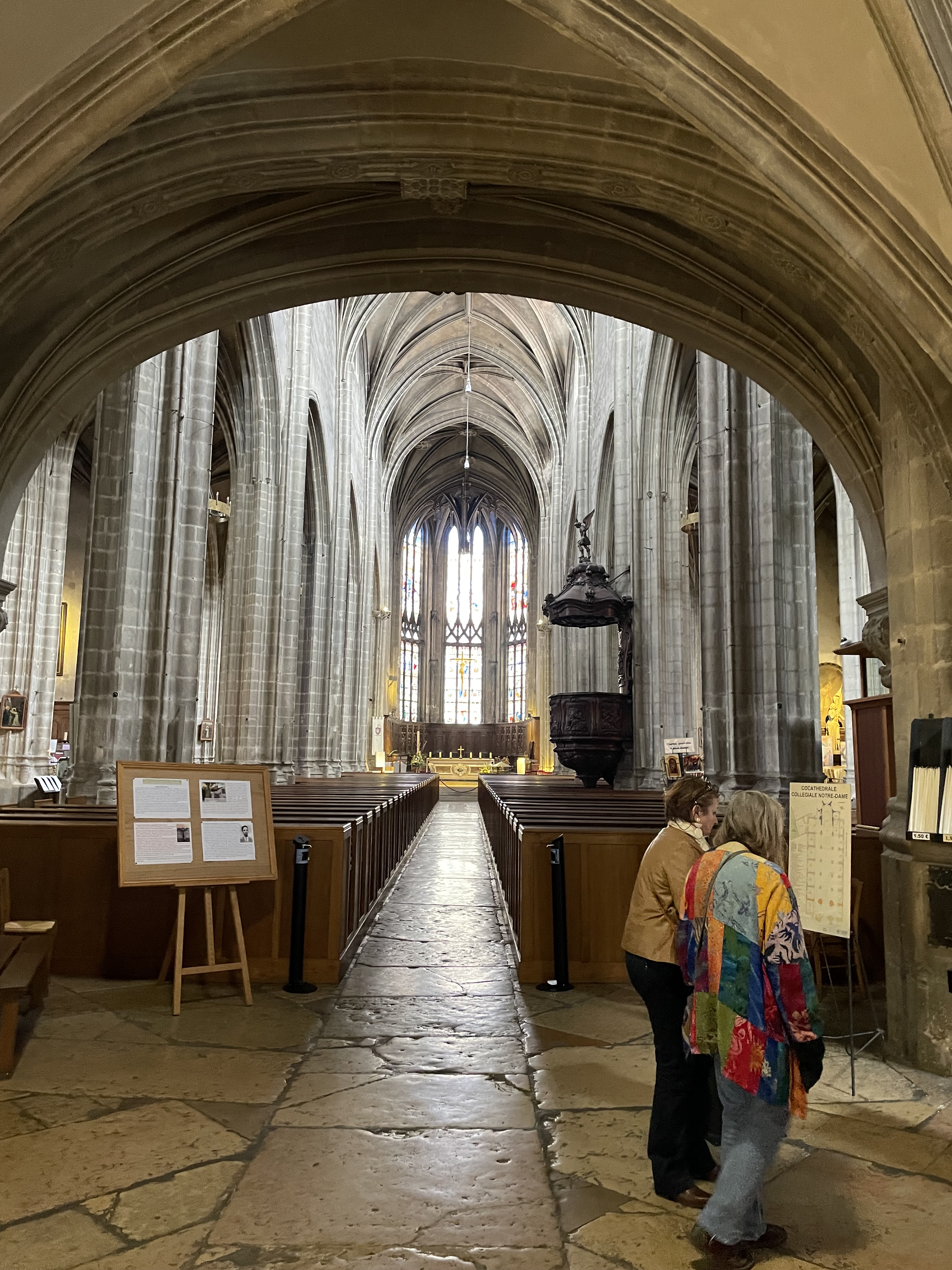
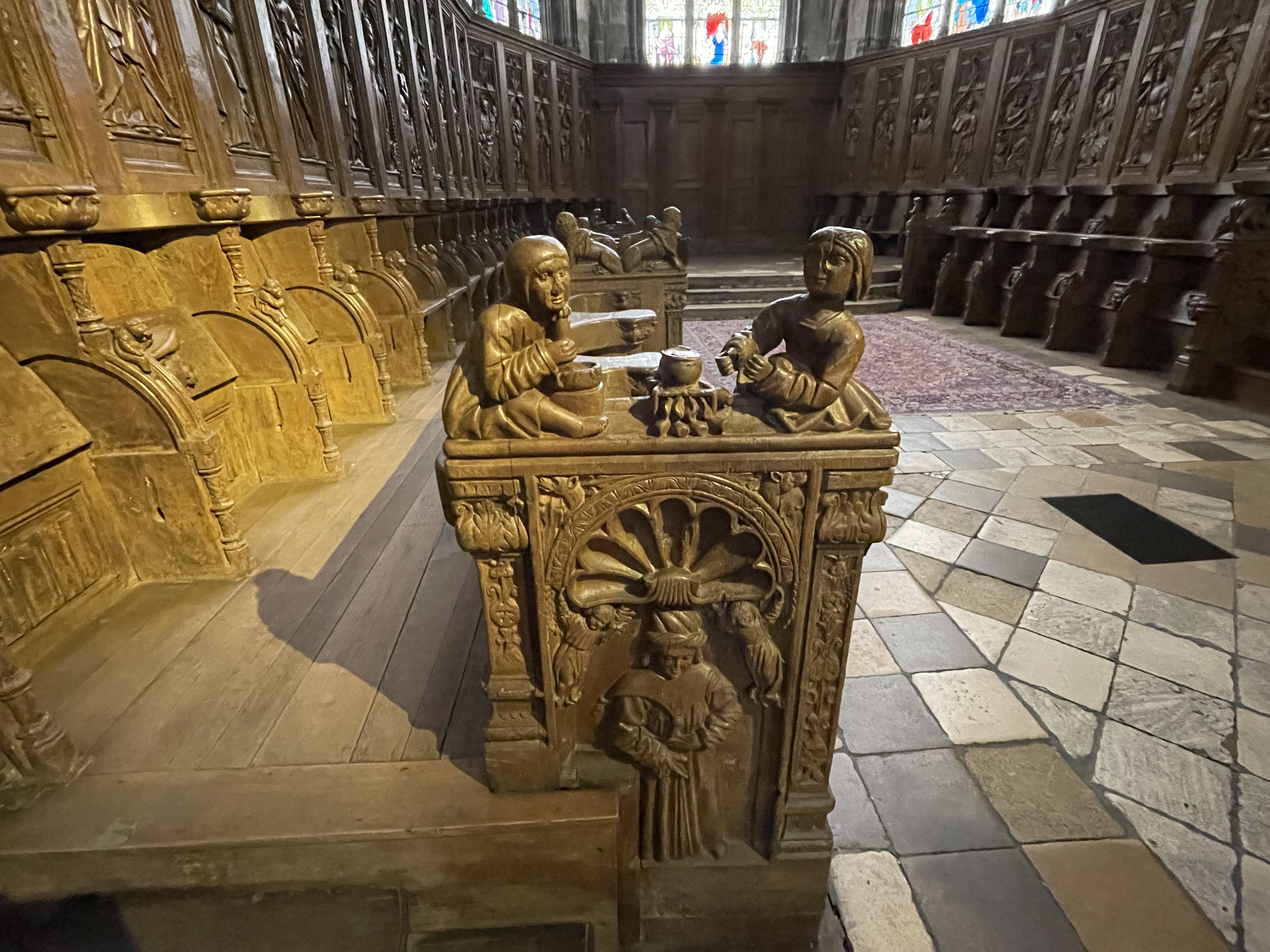
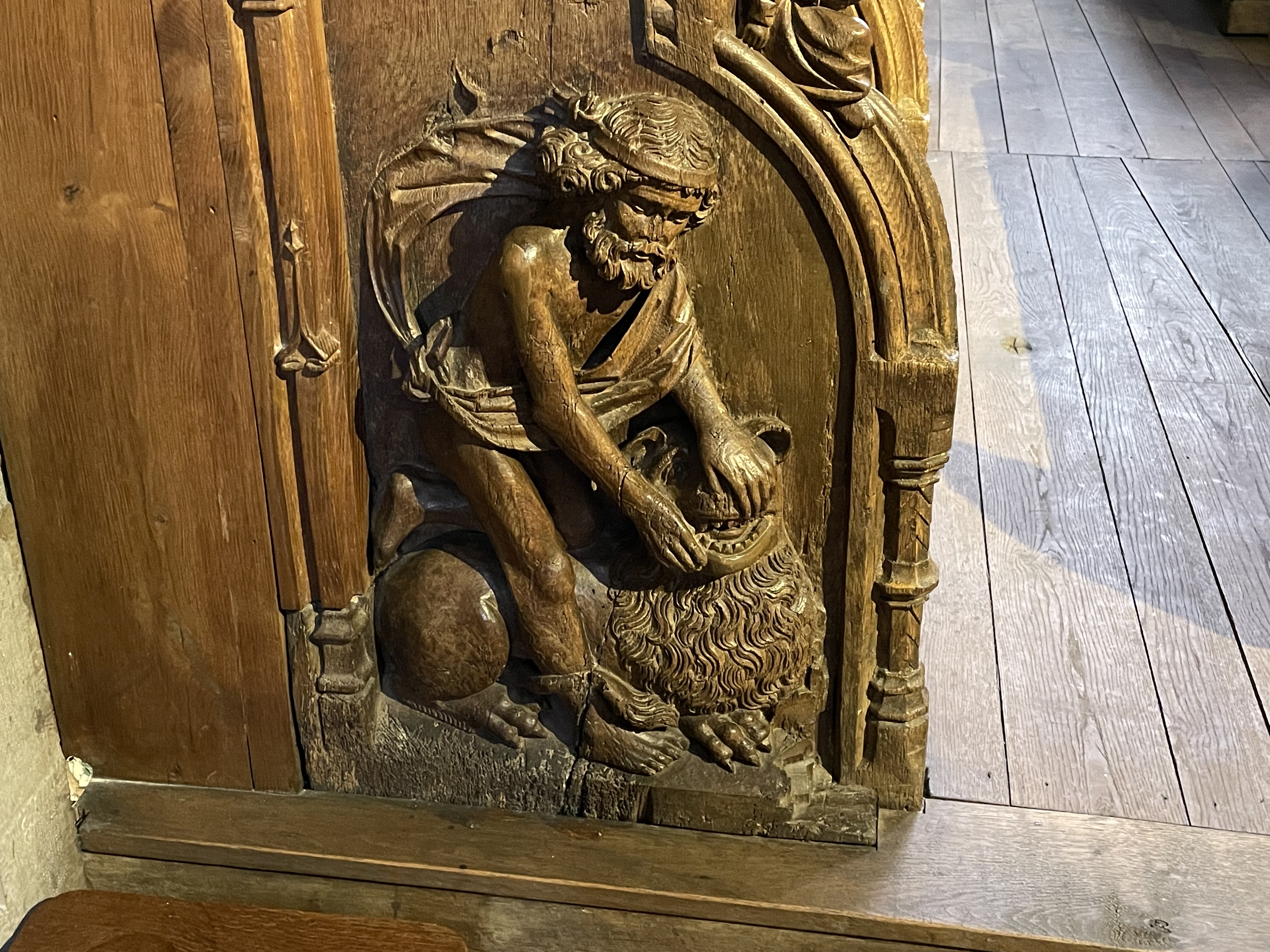
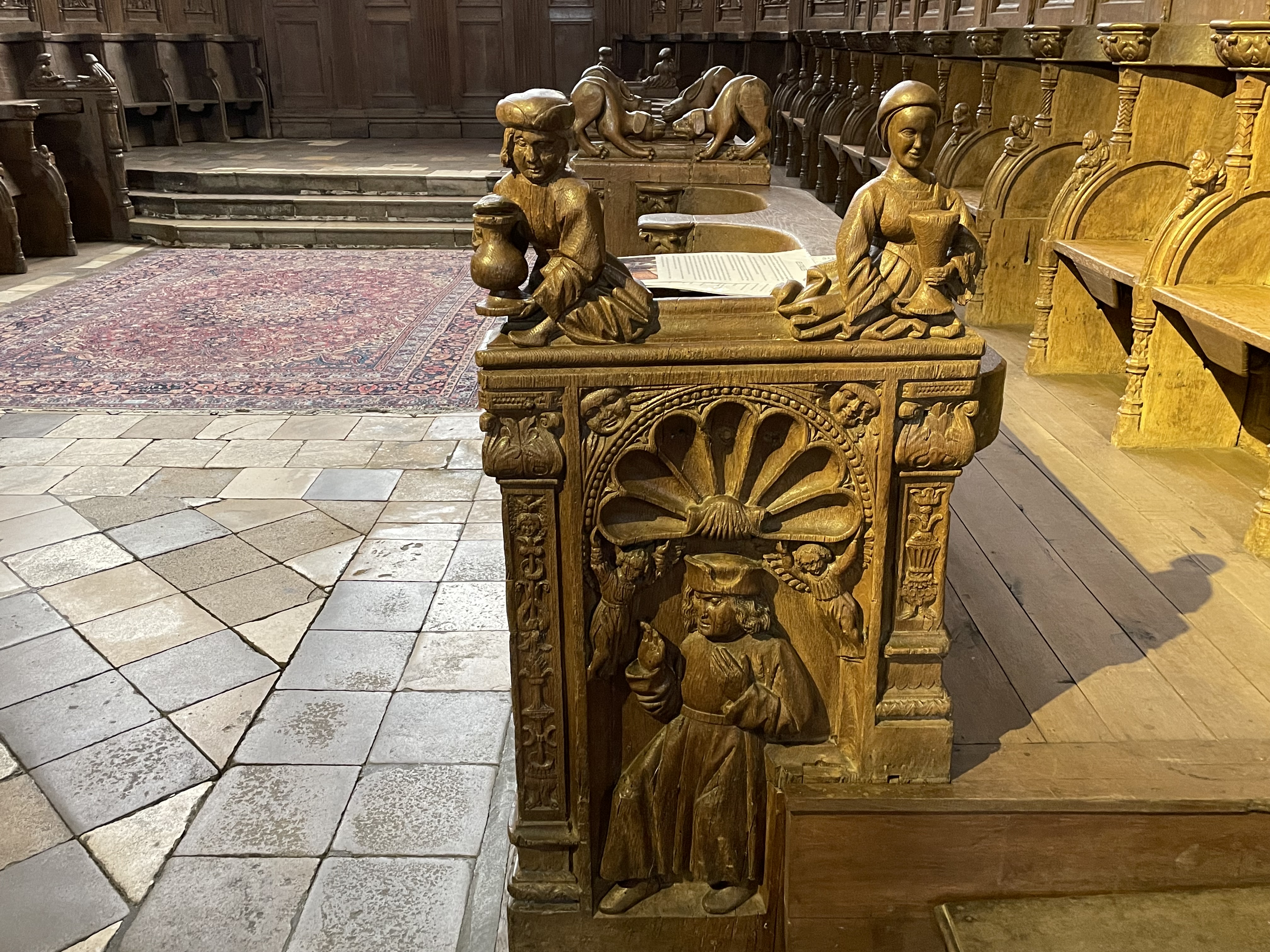
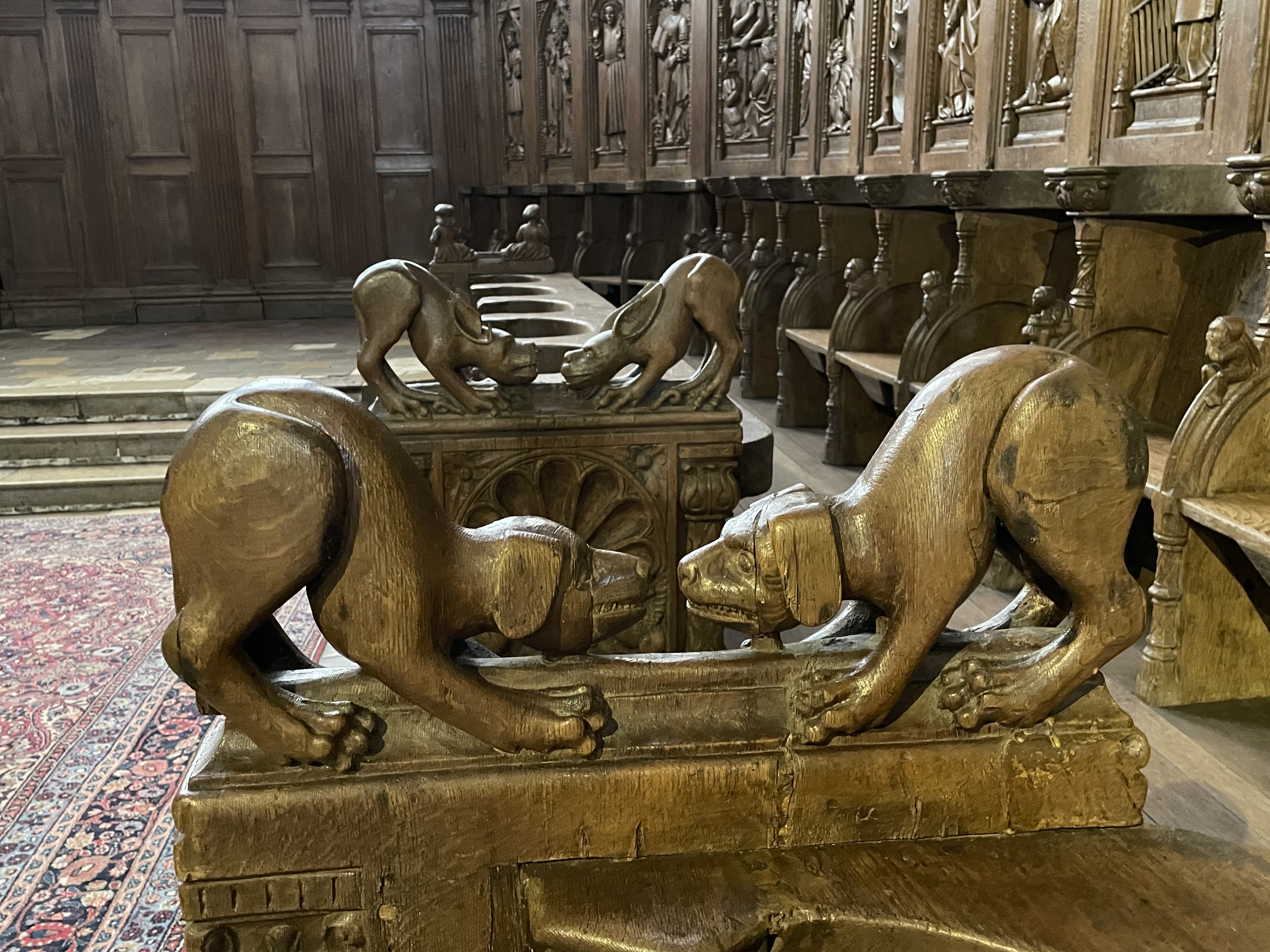
The Royal Monastery of Brou built at the beginning of the 16th century by Margaret of Austria, daughter of the Holy Roman Emperor Maximilian I and Governor of the Hapsburg Netherlands. designed as a dynastic burial place. The church is known as the Église Saint-Nicolas-de-Tolentin de Brou in French.
’Suitably refreshed’ (as is said) we retired to the historic Monastère Royal de Brou
One of the present functions of the place is as a Gîtes de France:
‘Vous aimez découvrir les joyaux de l’architecture ? Rendez-vous au Monastère Royal de Brou à Bourg-en-Bresse.
Ce « Monument préféré des Français » est un bijou du gothique flamboyant. En visite libre ou commentée, vous irez de découverte en découverte.’
The visit to the monastery marked a return to the Hapsburgs (they were becoming an ‘ever present’ element of our journeying).
For us it was a ‘going back’ to Maximilian and Mary (in the ‘Emperor’s Window’ )- their daughter was Margaret (‘of Austria’). She was unfortunate in her marital associations:
Aged 2: promised to the Dauphin of France
He changed his mind (a male prerogative..?)
1497 Aged 17 married to John, the Infanta of Spain – widowed 6 months later
1501 married Philibert II, Duke of Savoy
1504 Philibert died. Despite a personal de-fenestration, she survived the fall
1507 made Governor of the Low Countries (a Hapsburg possession) where she stayed until
1530 after treading on glass and contracting gangrene died from a strong dose of opium
Buried at Brou next to Philibert.
Margaret had commissioned the monuments – but never saw them.
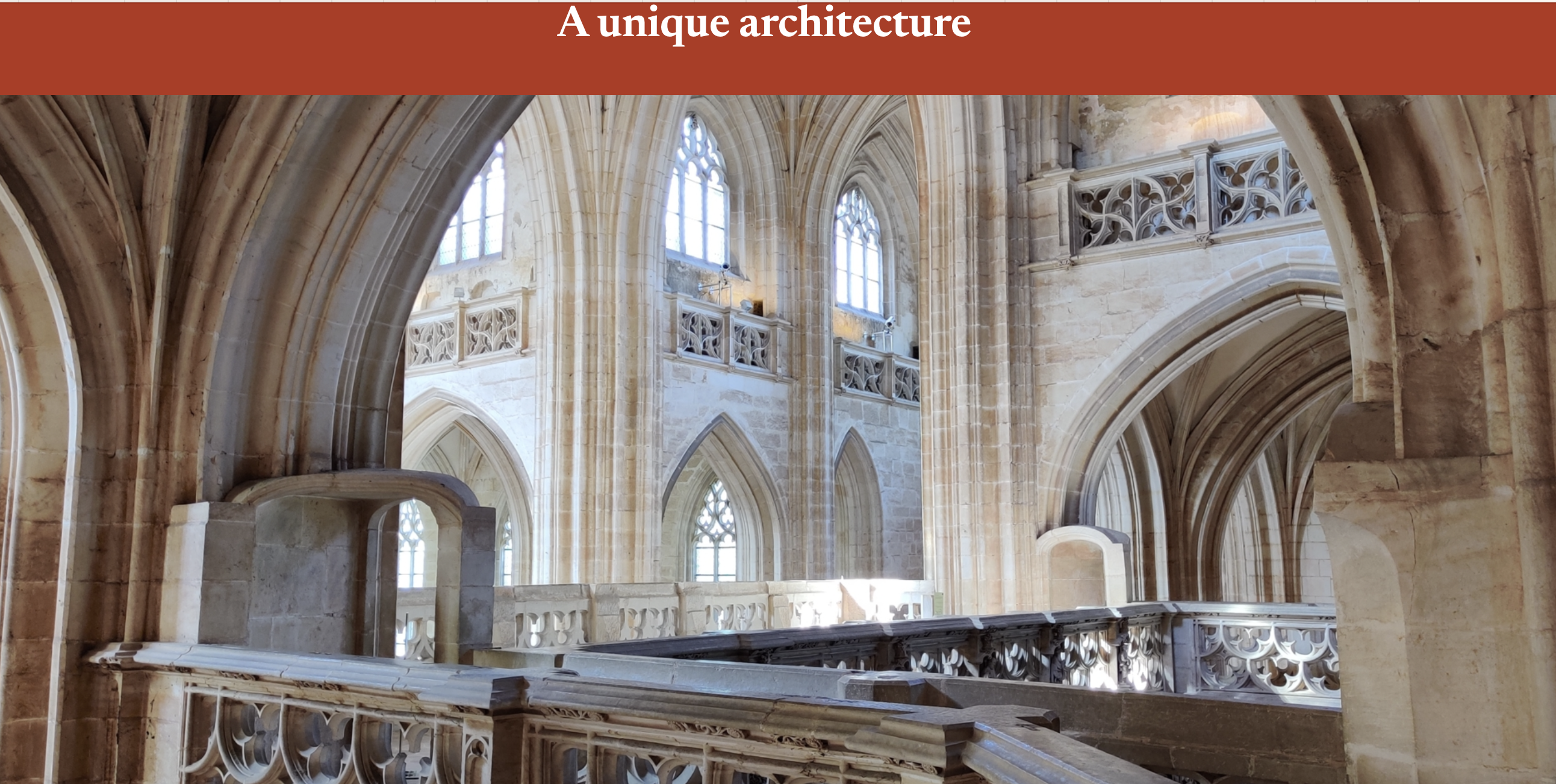
https://www.monastere-de-brou.fr/en/decouvrir/a-unique-architecture
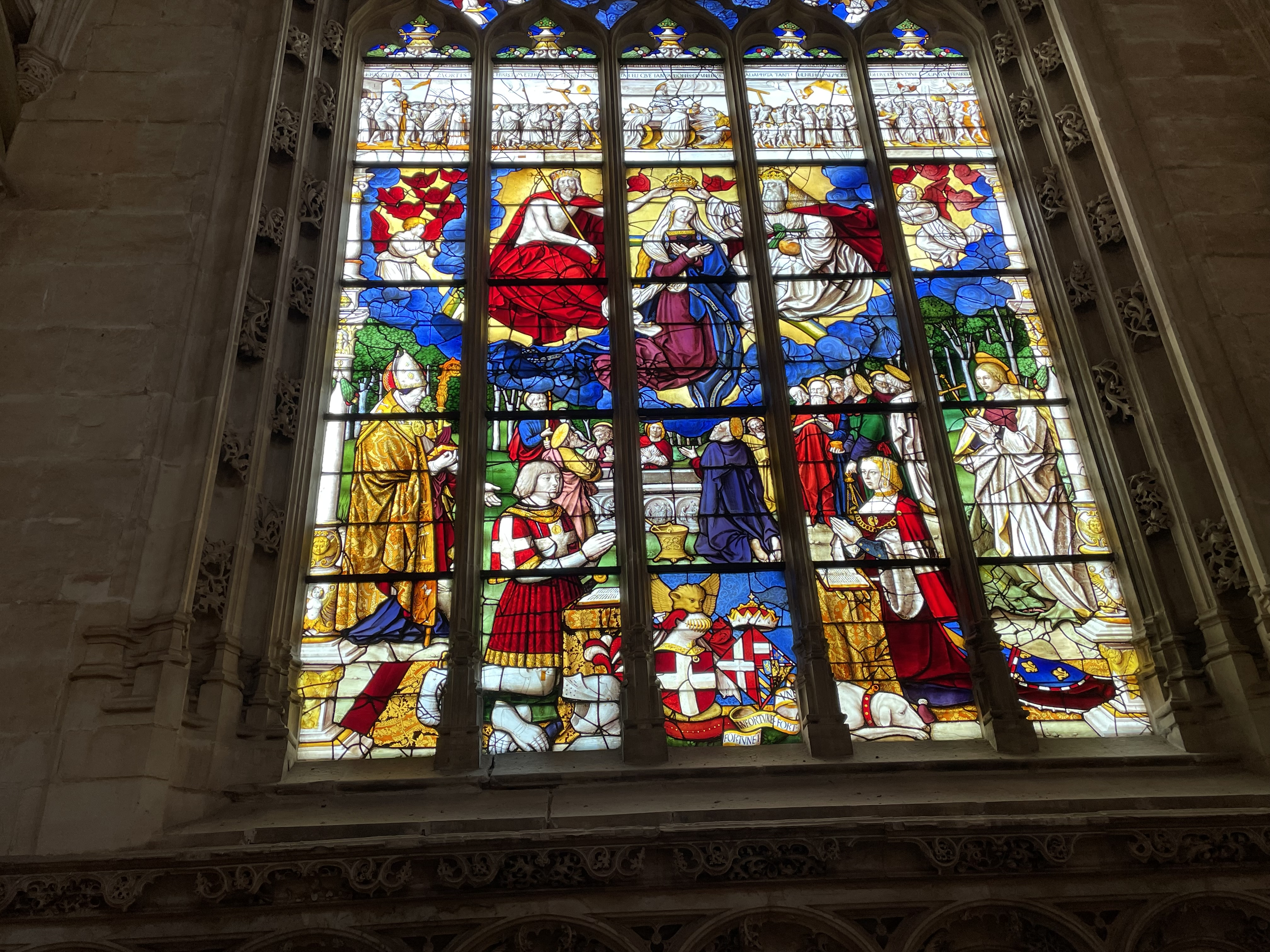
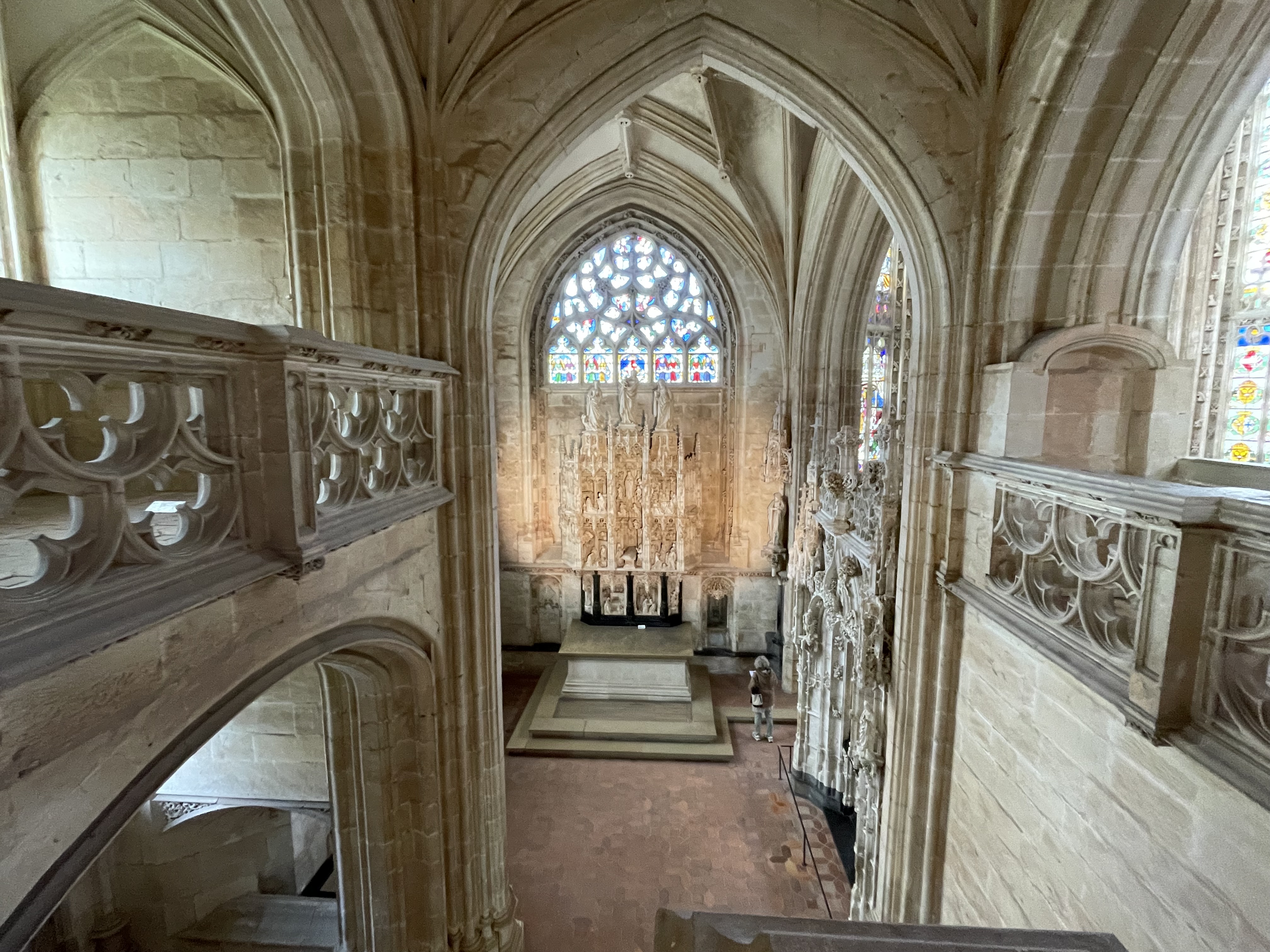
The royal monastery of Brou was born five centuries ago, from the love of an exceptional woman, Marguerite of Austria for her husband Philibert le Beau. Built at the gates of Bourg-en-Bresse at the beginning of the 16th century, this jewel of flamboyant gothic architecture houses three tombs: that of Philibert le Beau as well as that of his mother and the tomb of Marguerite of Austria.
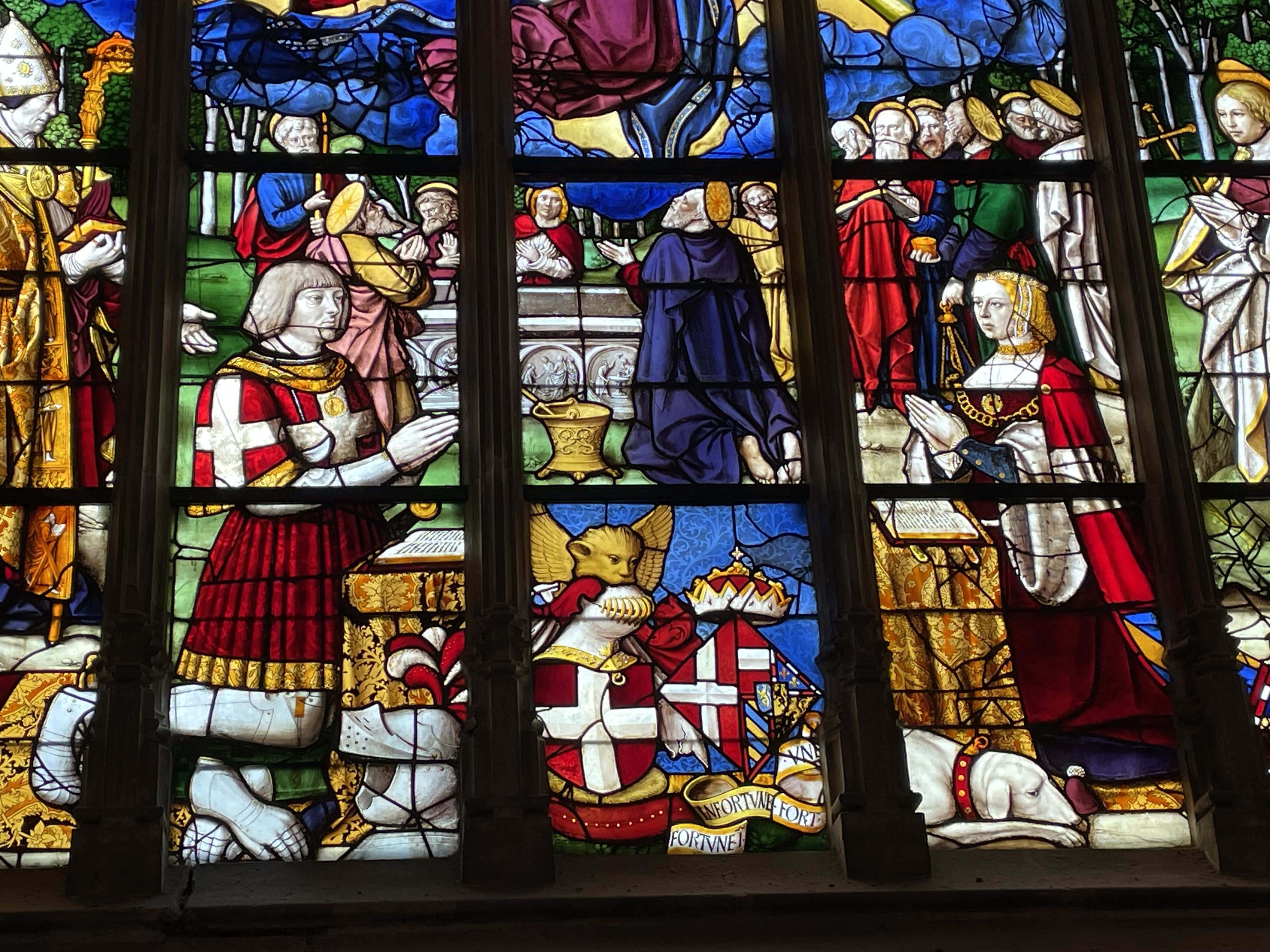
A striking building, it captivates the visitor from the very first seconds, with its immaculate facades, its impressive glazed roof and its three vast cloisters. Of extreme refinement, the stained glass windows that adorn the chapels are original. Relating episodes from the Gospel, they depict Marguerite and Philibert, whose love continues to irradiate this exceptional monument.
A masterpiece of flamboyant gothic art
https://loc-hall.fr
The tomb of Philibert
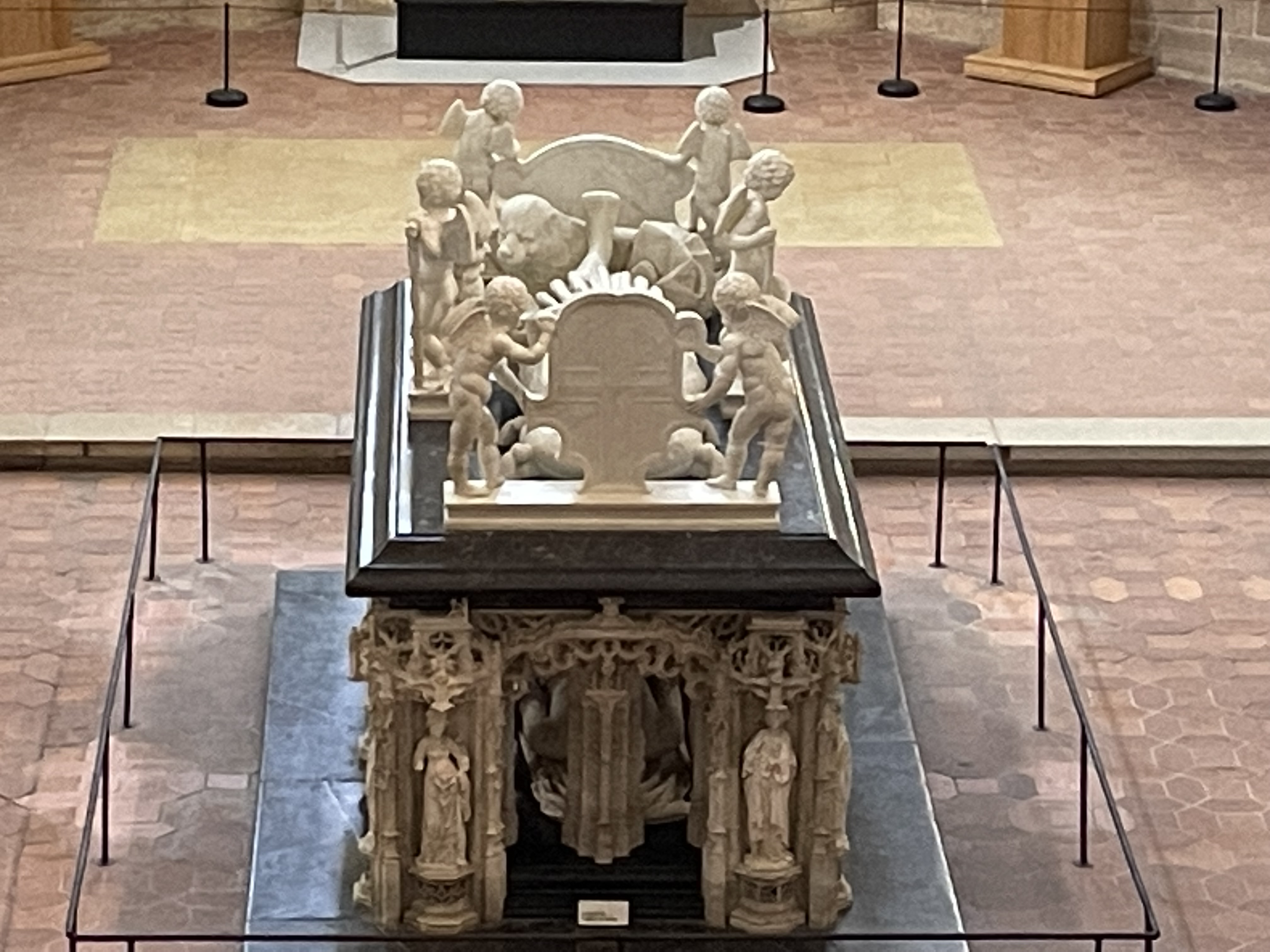
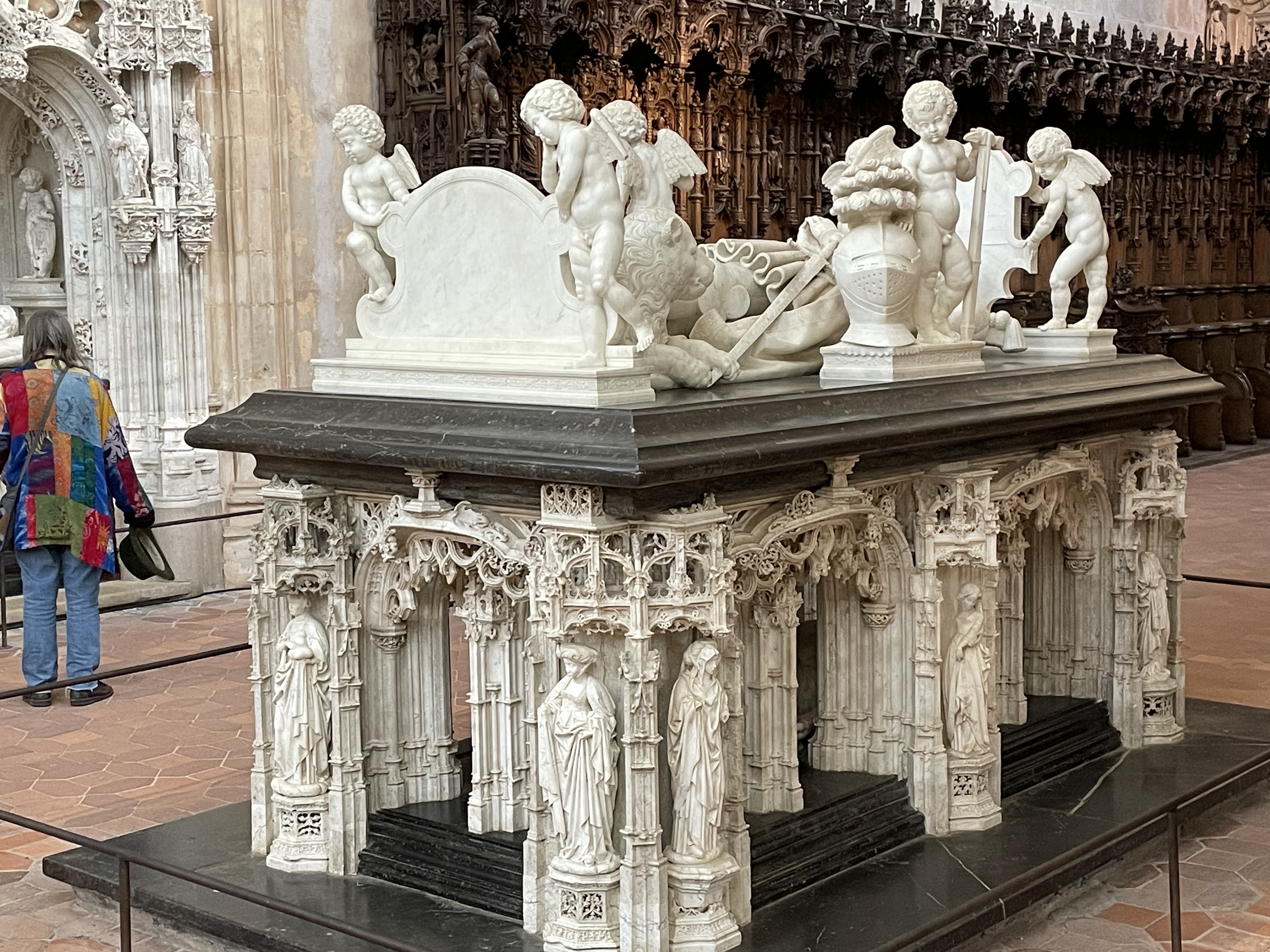
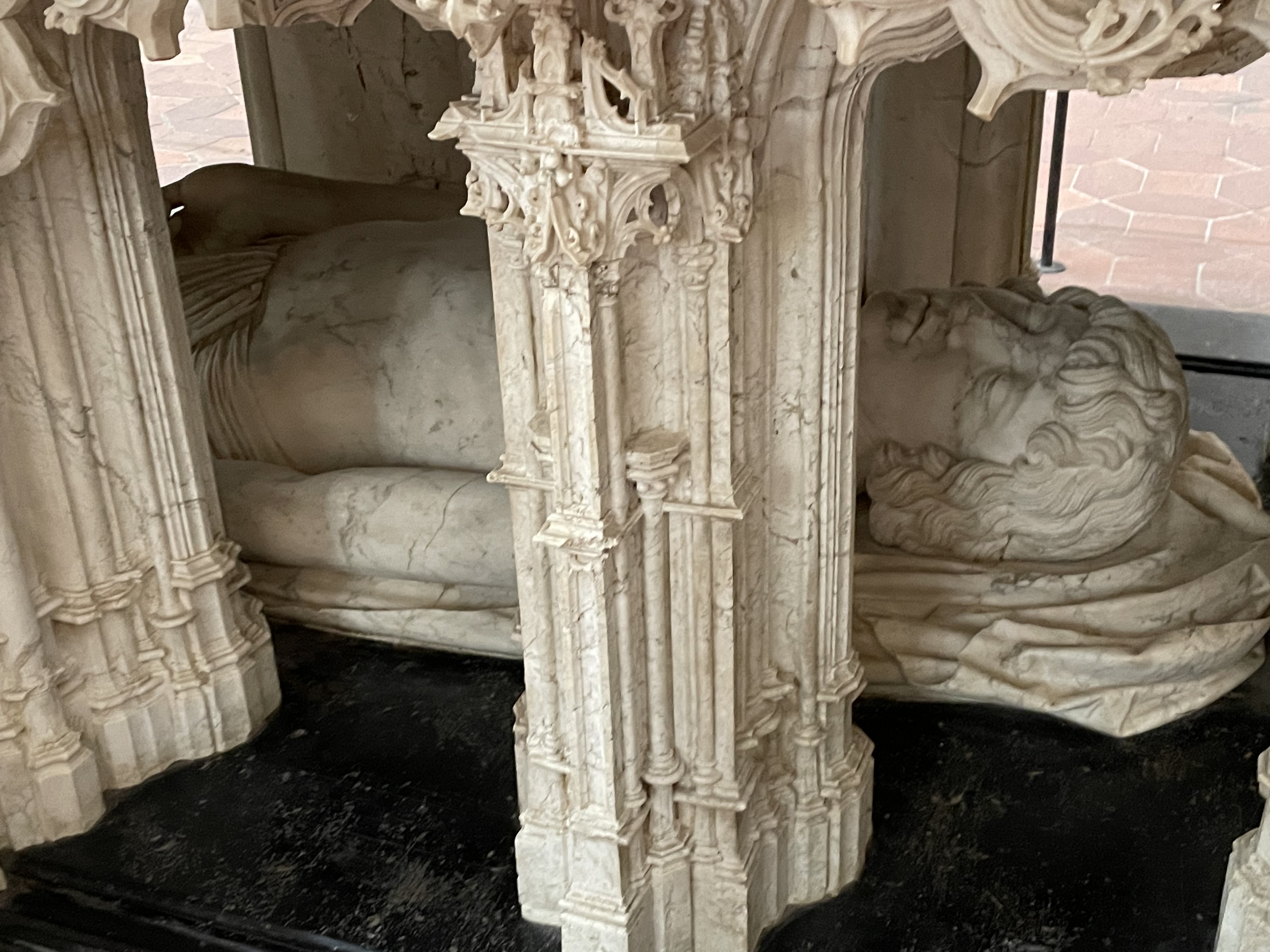
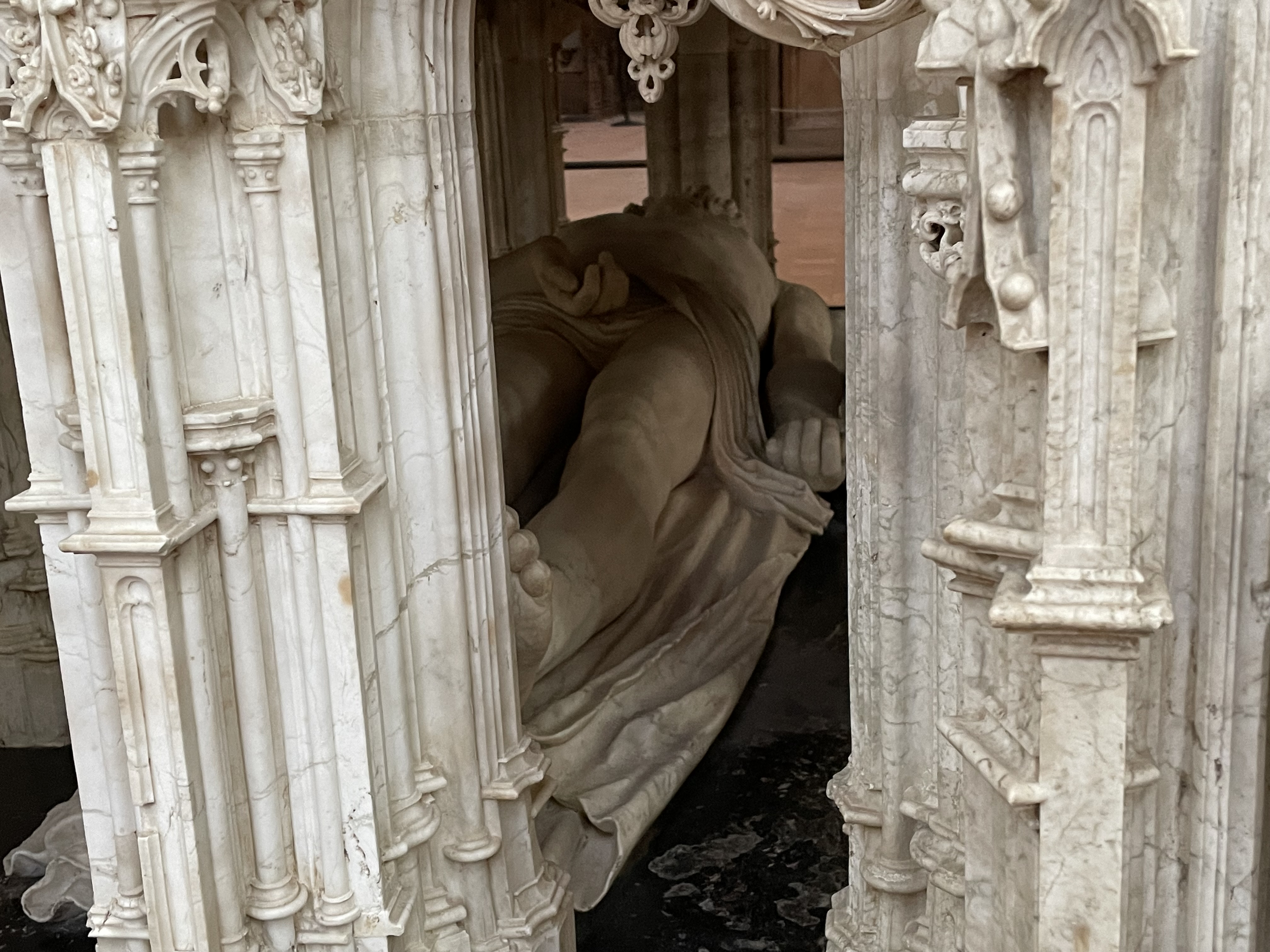
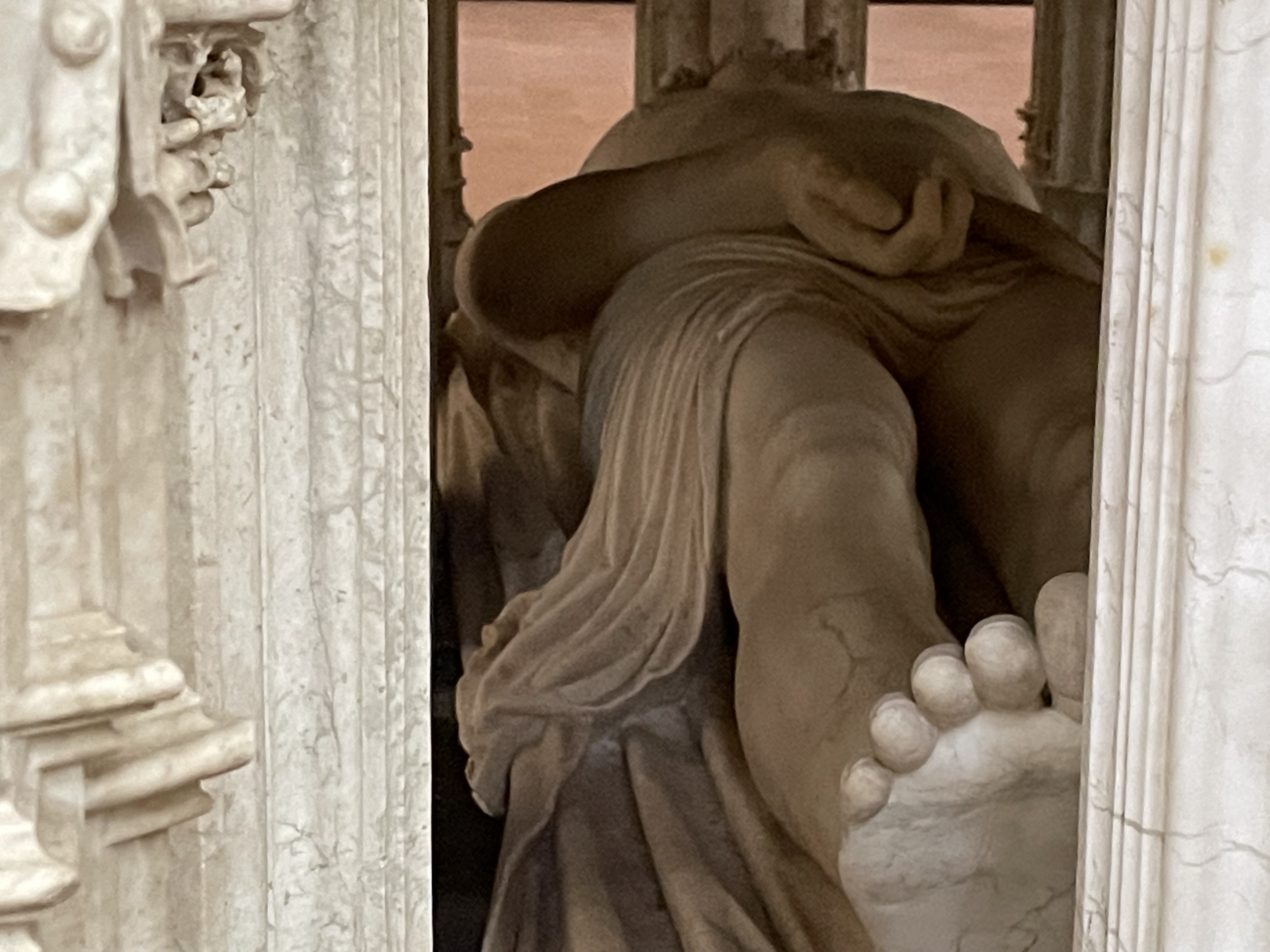
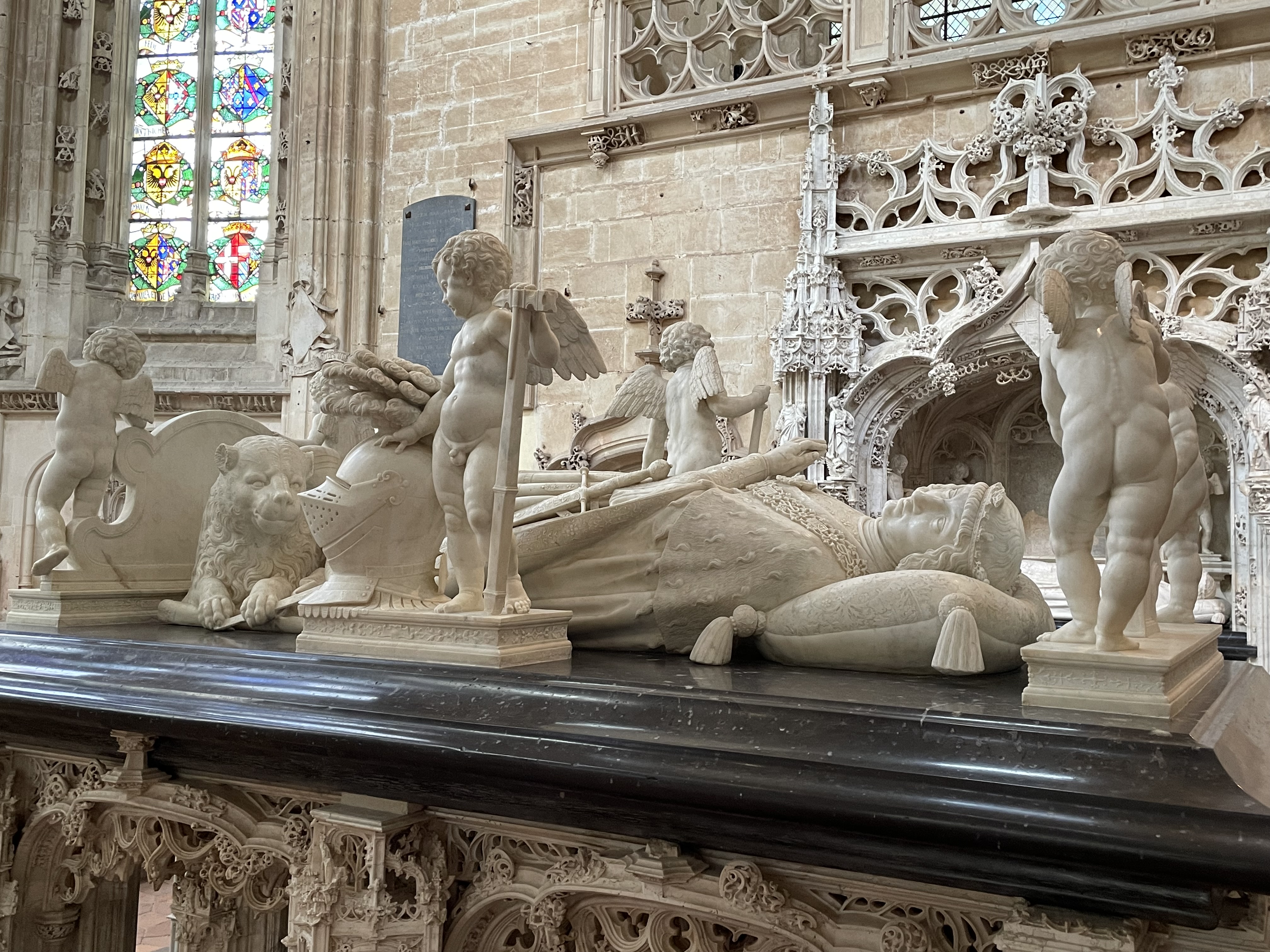
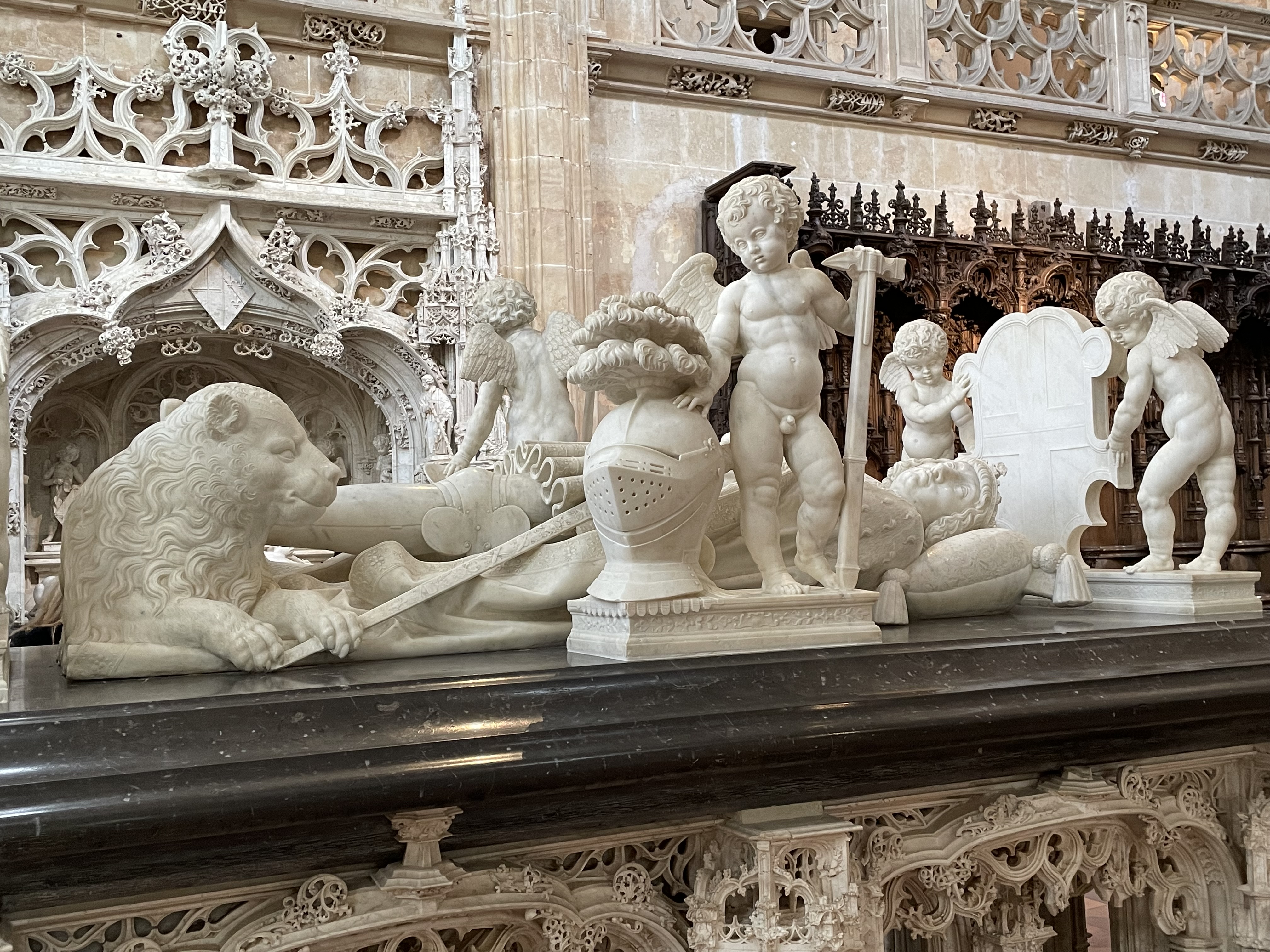
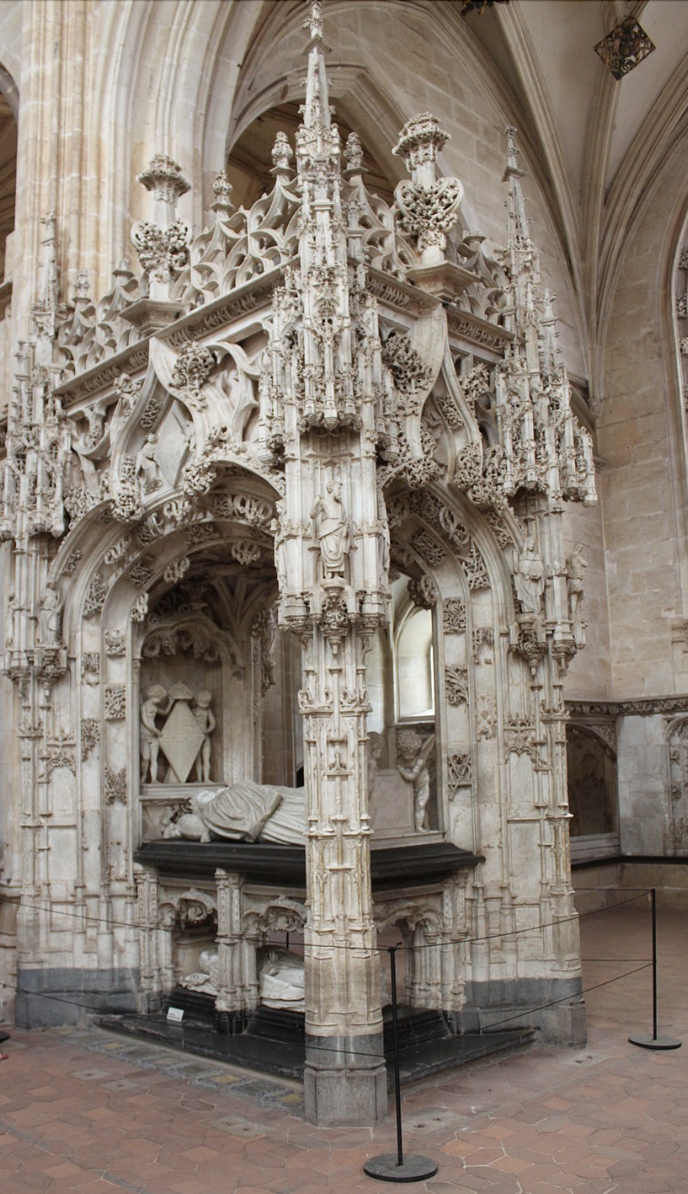
Margaret of Austria’s tomb.


April 18th
Châtillon-sur-Chalaronne
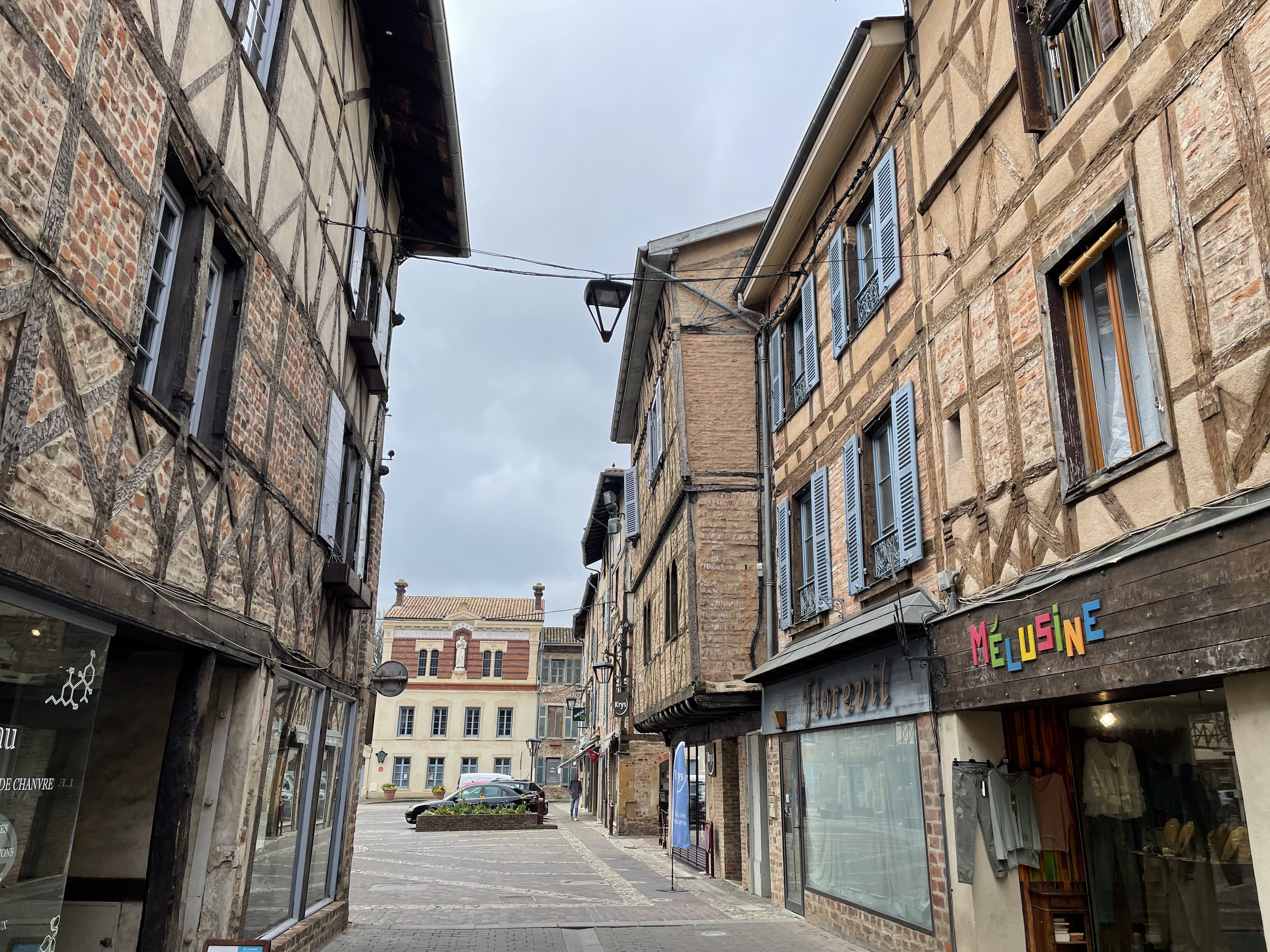

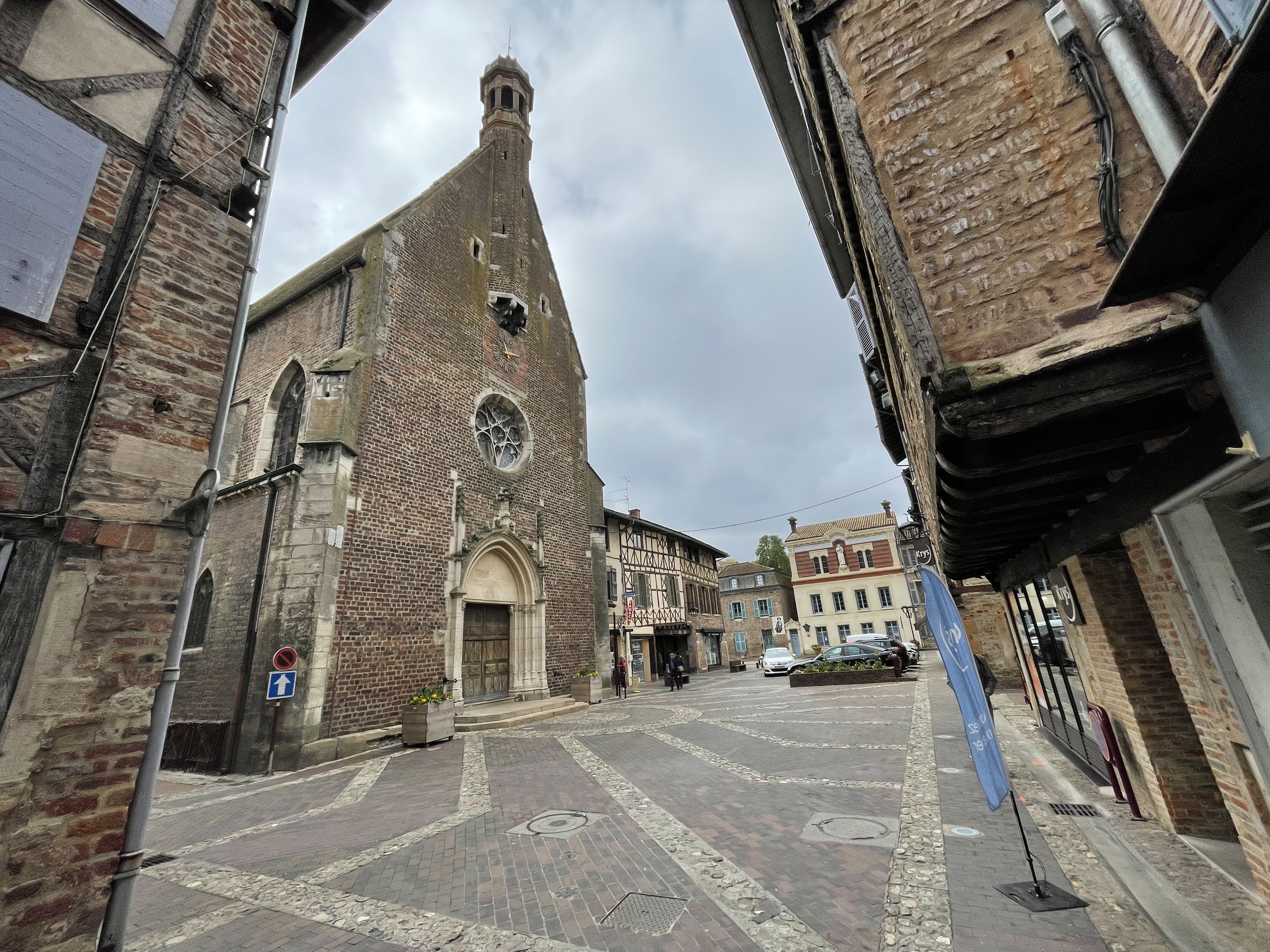
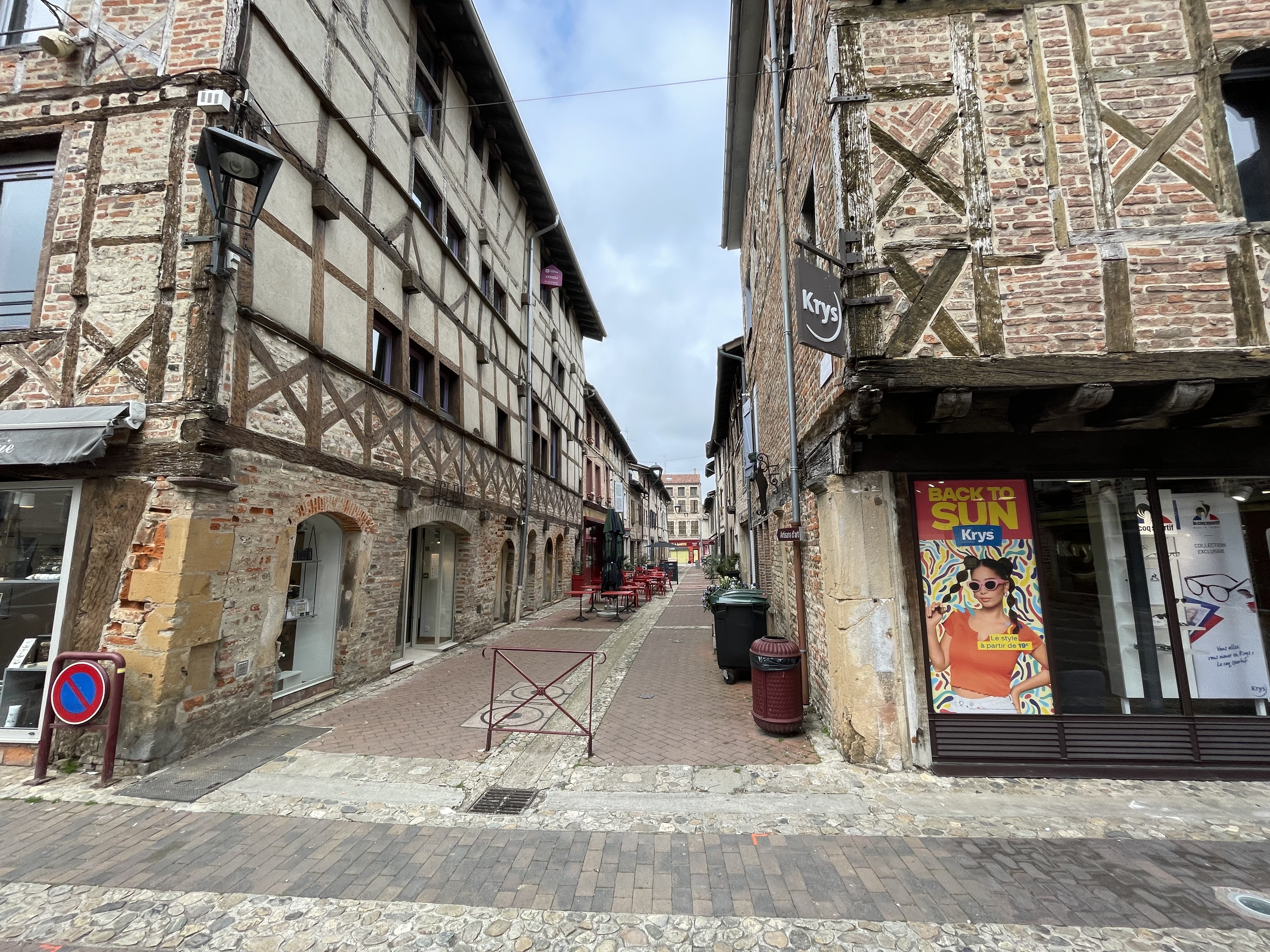


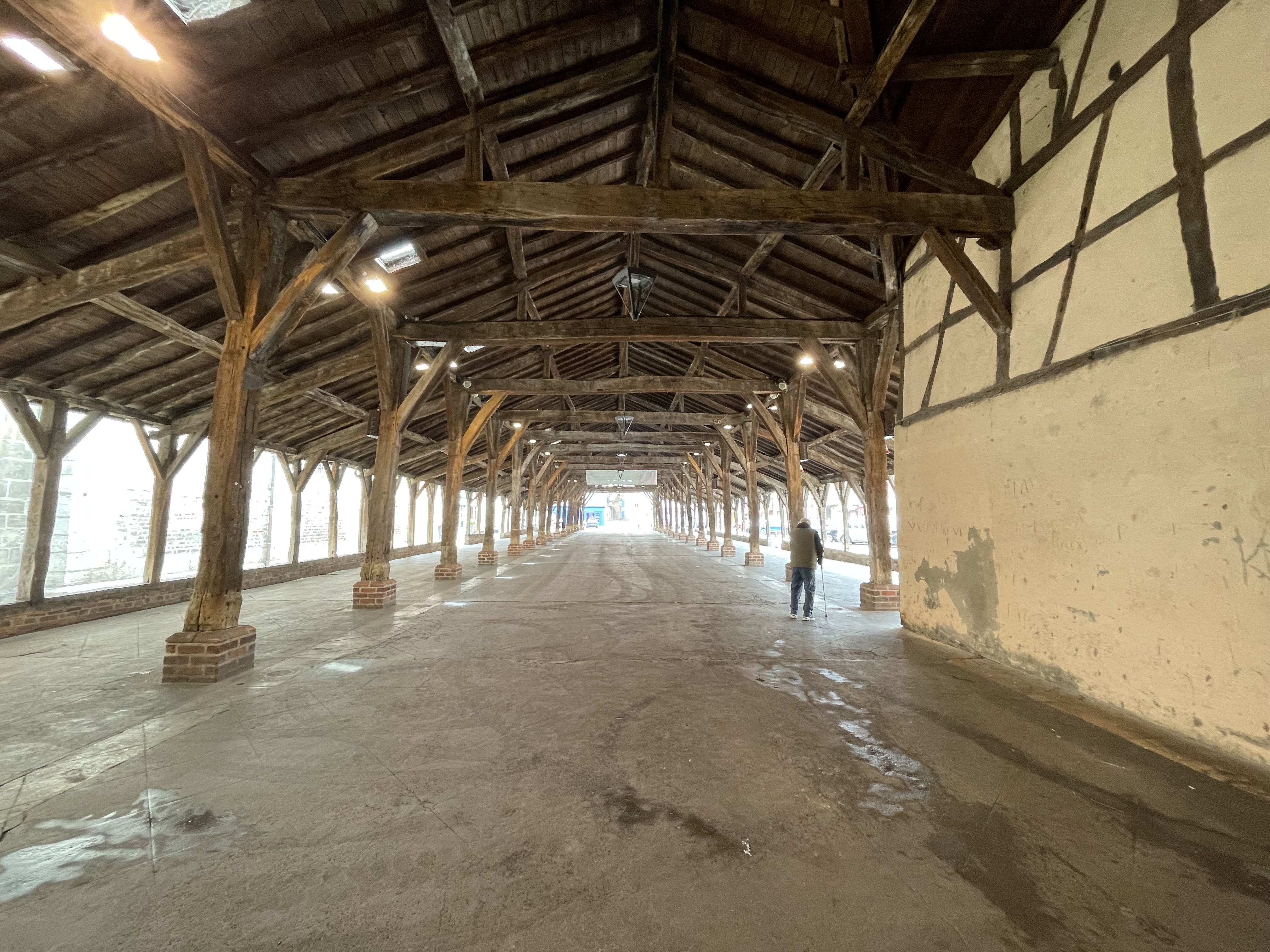
A busy traditional market is held every Saturday
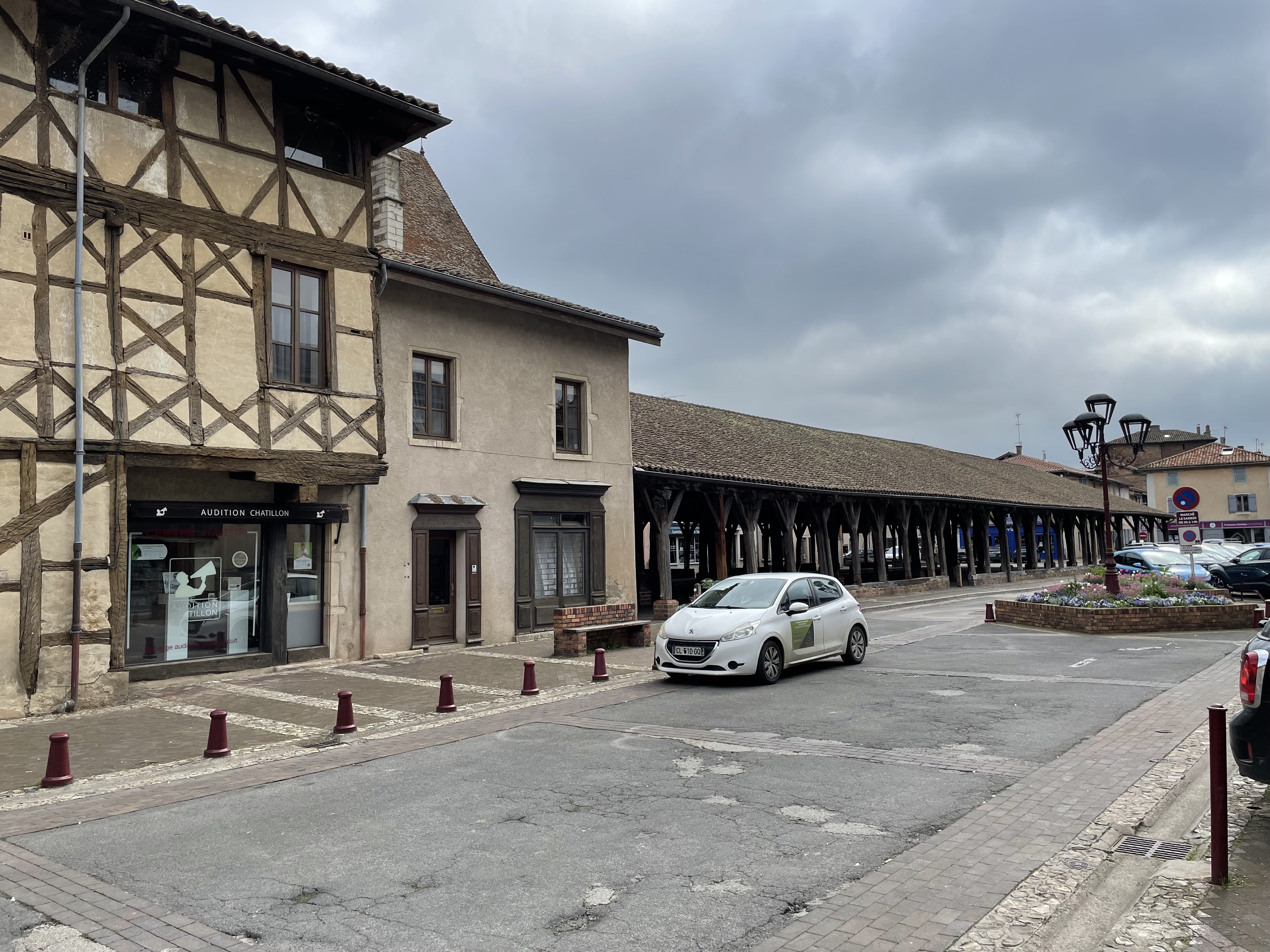
Châtillon is a ‘Ville Fleurie’ & even in the cold wet of early Spring manages to maintain a good standard.
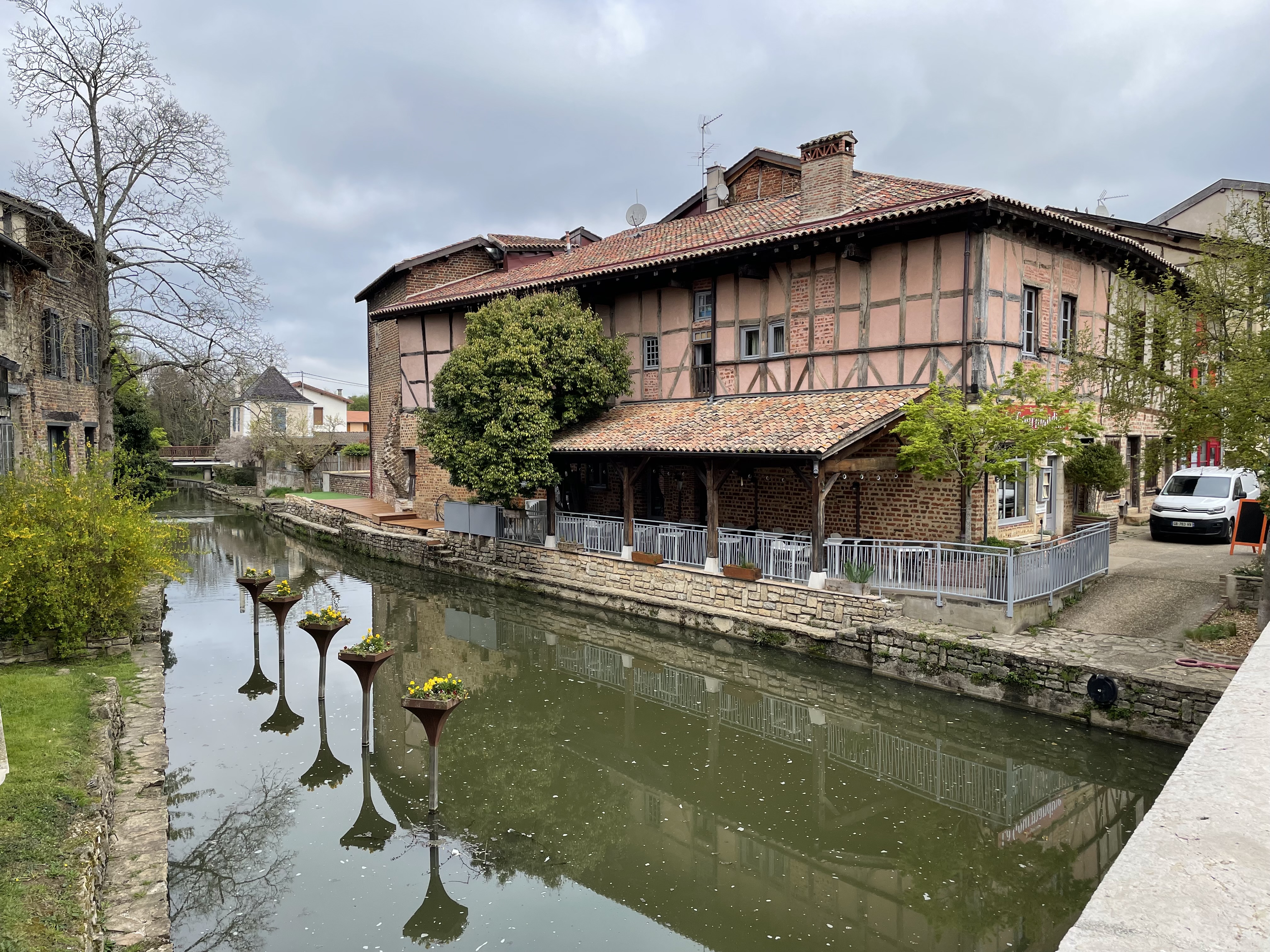
18th April
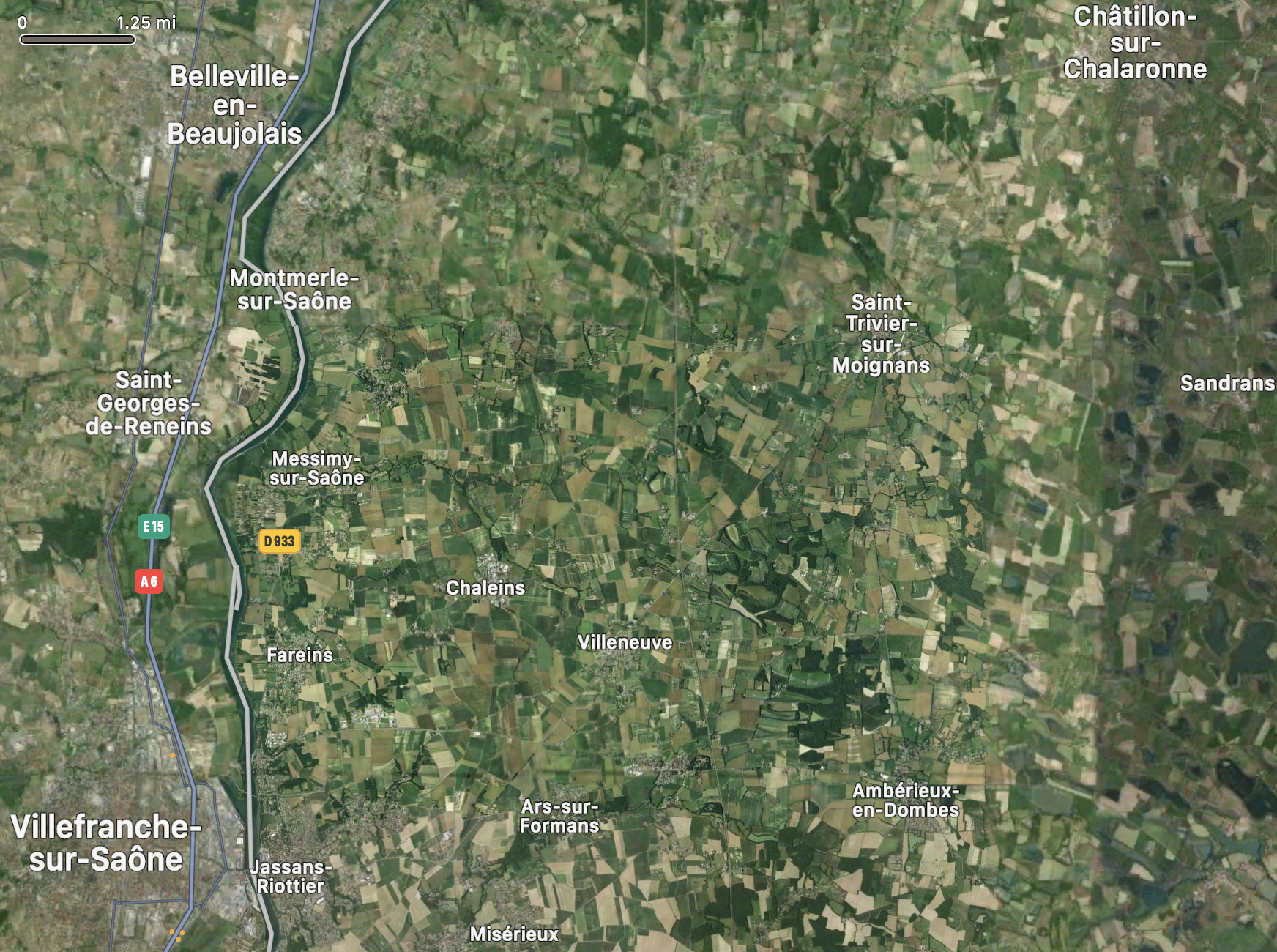
To Ars-sur-Formans.
… and the worst meal of the 3 Month Tour
The village has a neighbouring village appropriately called Misérieux (‘Miserable’)
Ars (please pronounce correctly!) has a claim to fame (at least for a form of intensely ‘self-denying’ Christianity)
A shrine to a parish priest whose obsessive behaviour (interminable praying) resulted in him achieving ‘Sainthood’.
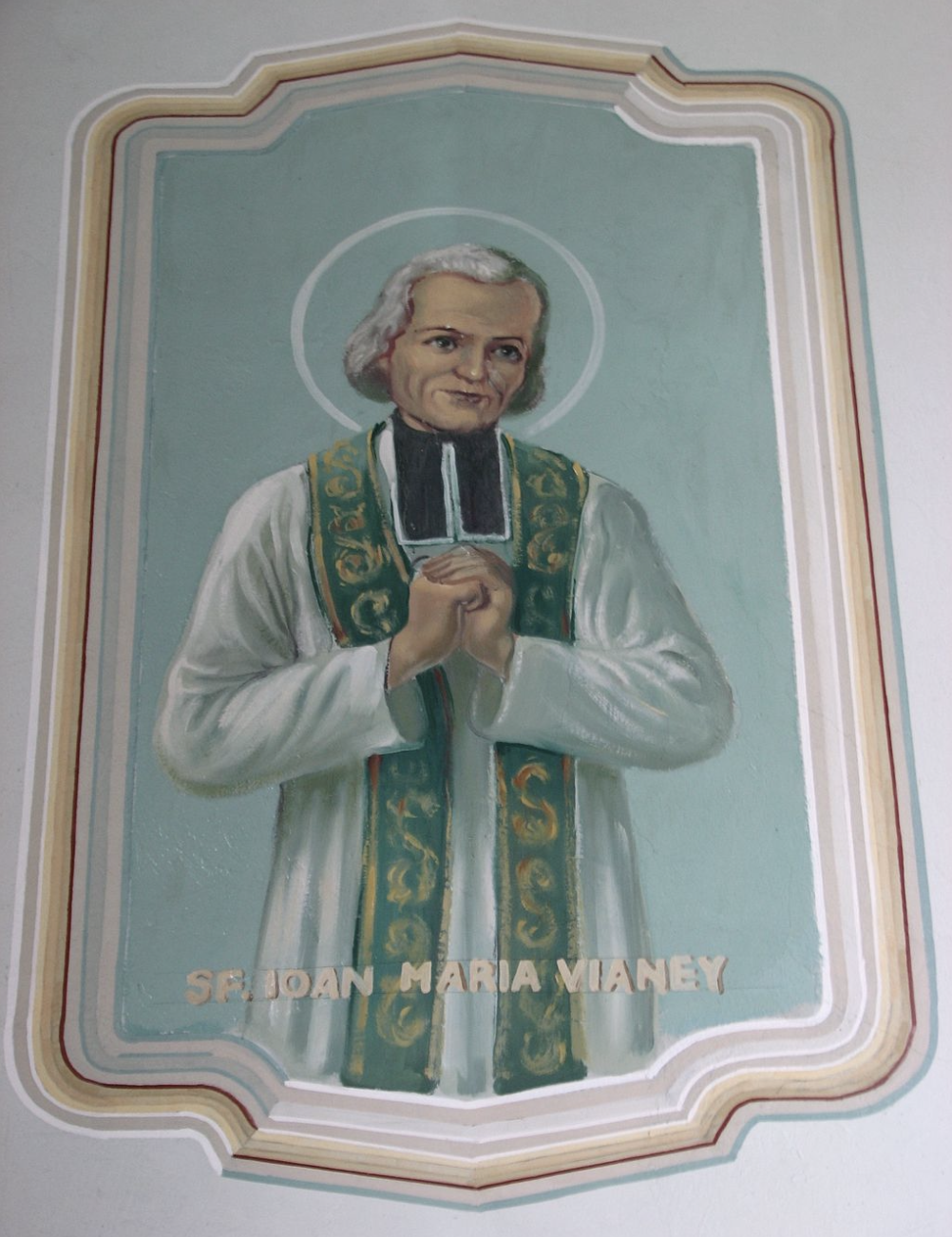
“On 4 August 1859, Vianney died at the age of 73. The bishop presided over his funeral with 300 priests and more than 6,000 people in attendance.”
A Basilica was constructed between 1862 – 1910 & his cult was encouraged by the Roman Catholic Church.
He was canonised in 1925 and was named patron saint of parish priests four years later.
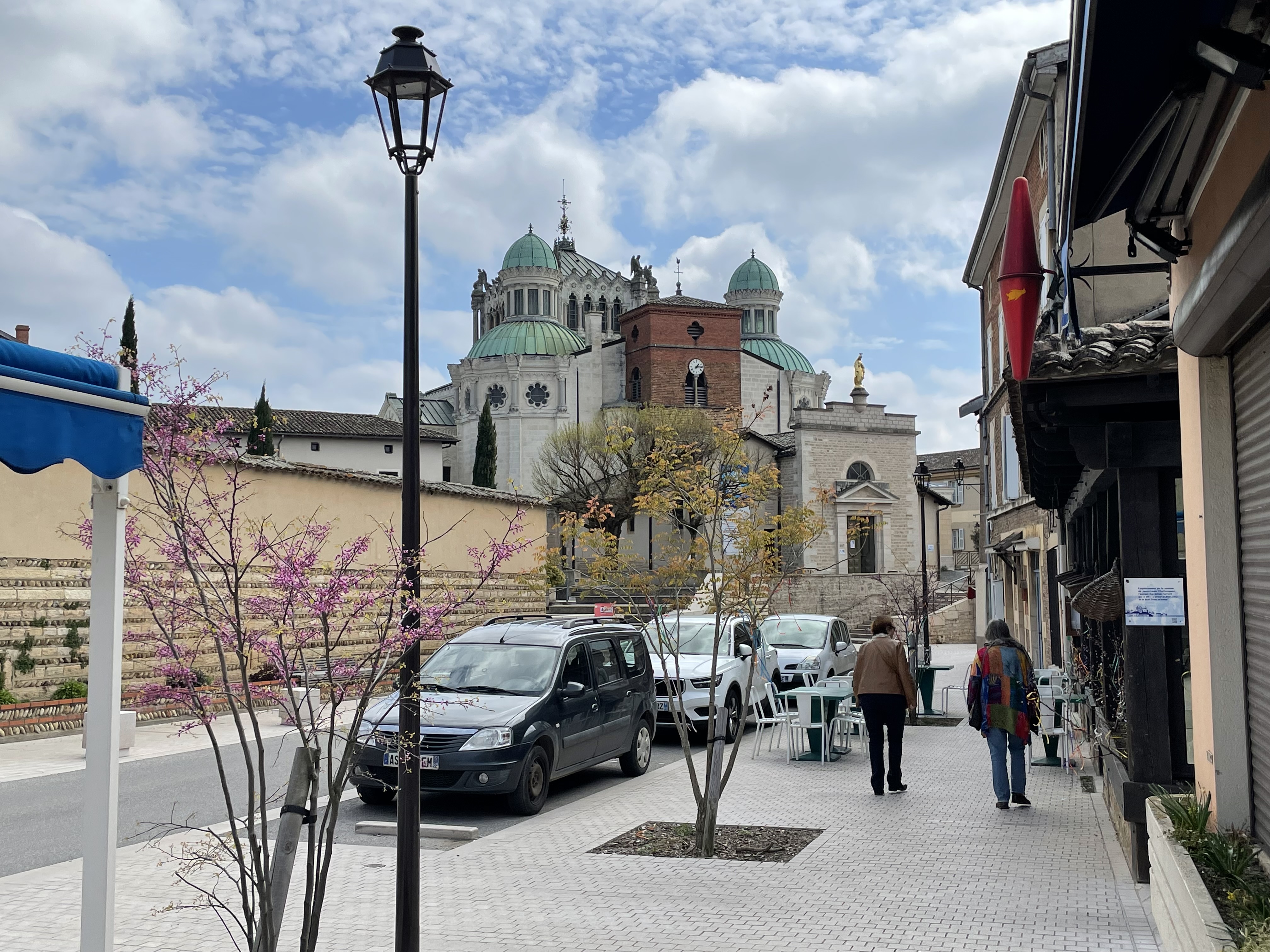
Institutions (of any type) require ‘exemplars’, ‘behavioural models’ to be used to encourage other members – and for recruiting purposes.
Vianney served the structures & his example (and corpse) was then used by his ‘managers’ (senior clergy) to encourage further obedience from those they regarded as their ‘flock’.
Vianney lies in a glass box – and visitors (‘pilgrims’) kneel in a form of submission hoping that something of value is gained from being close to the physical person.
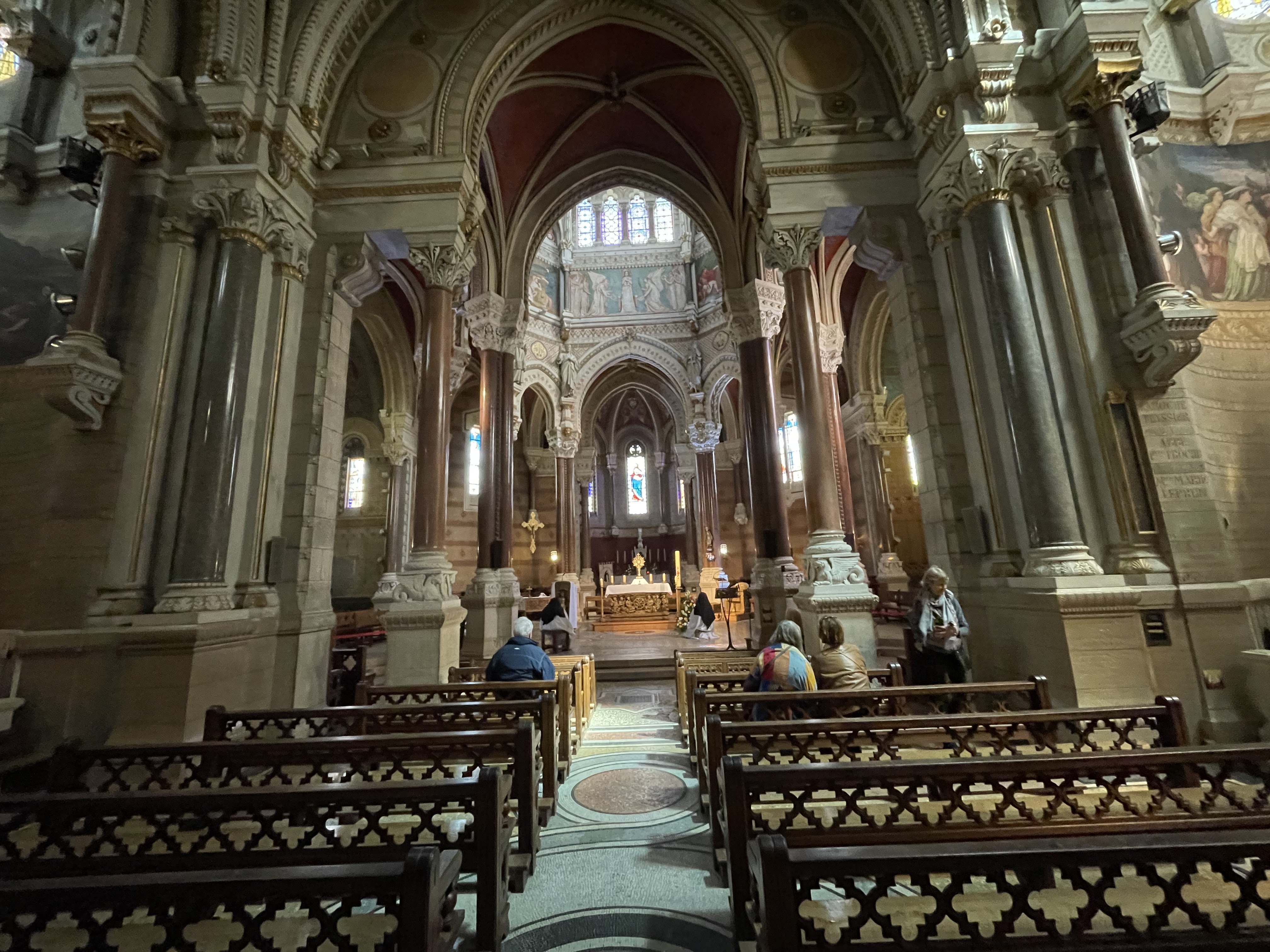
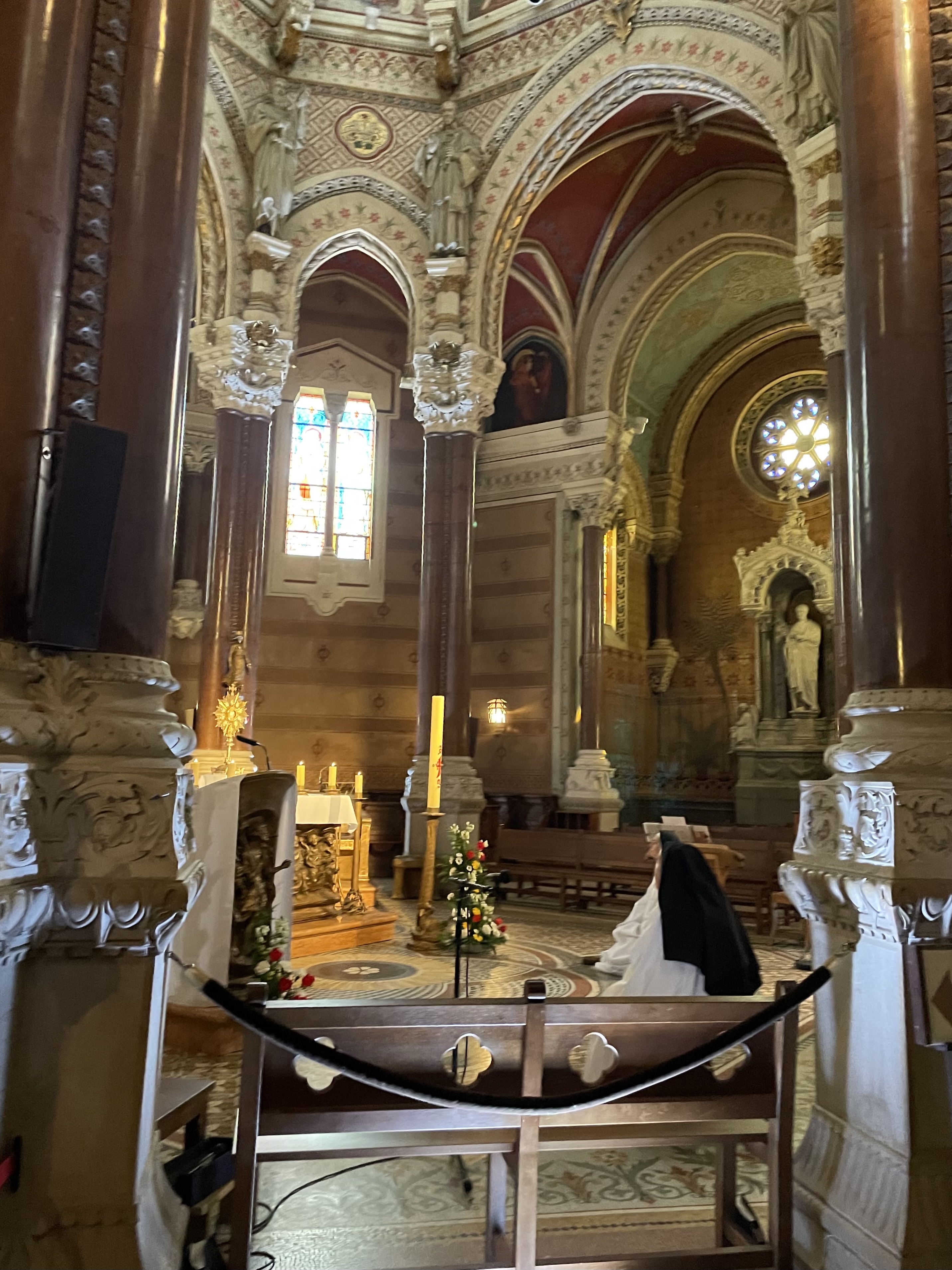
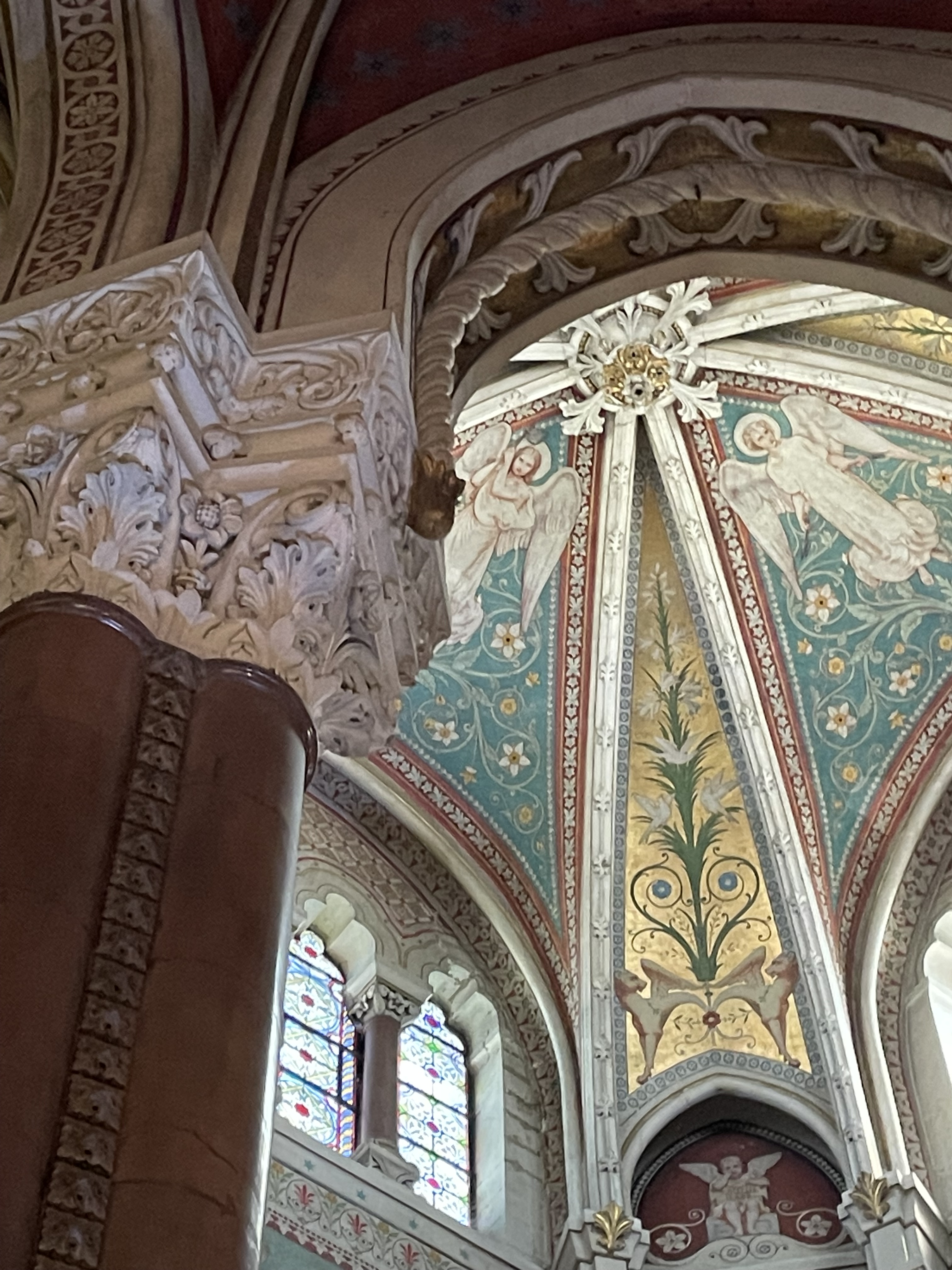
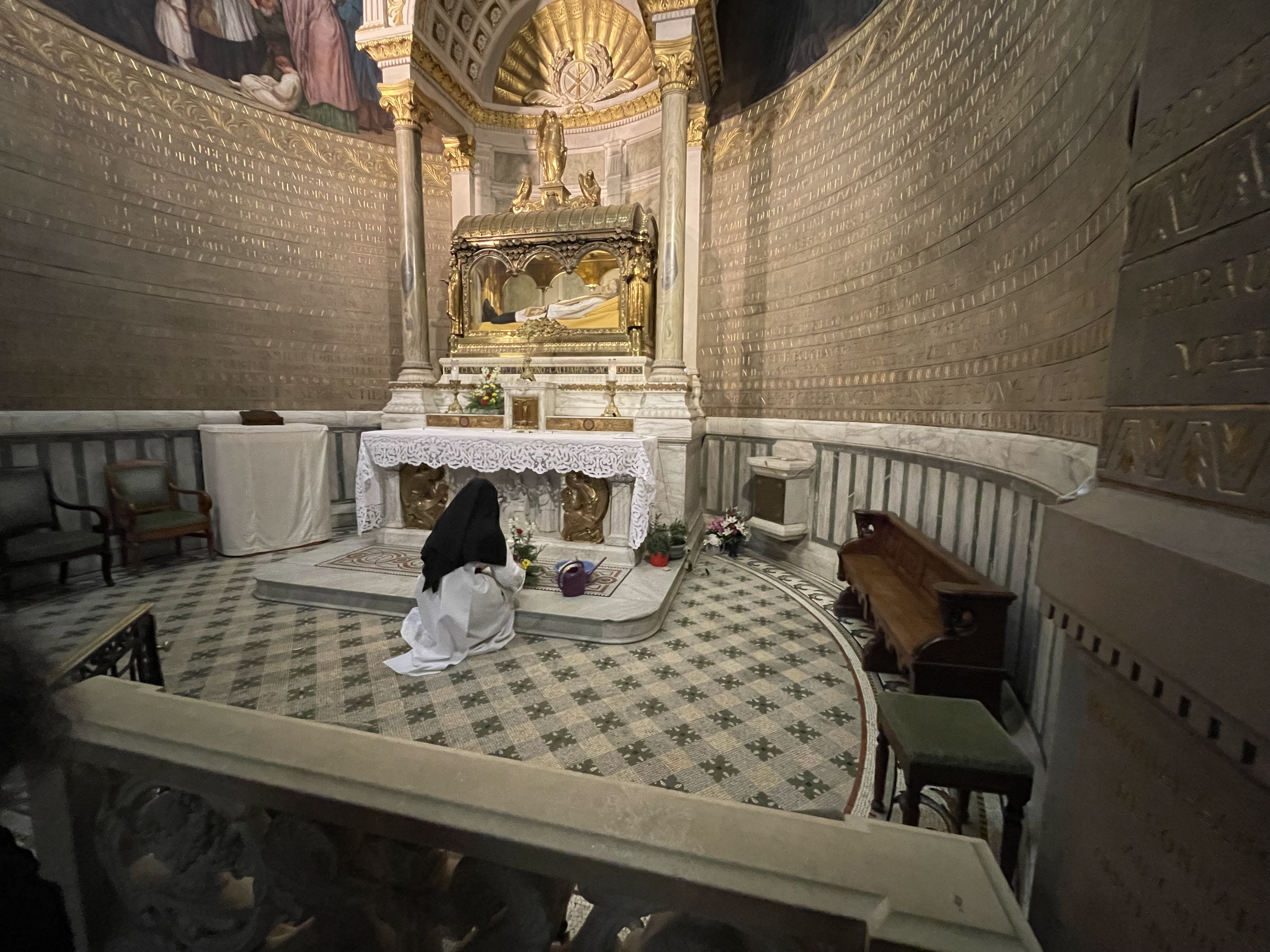
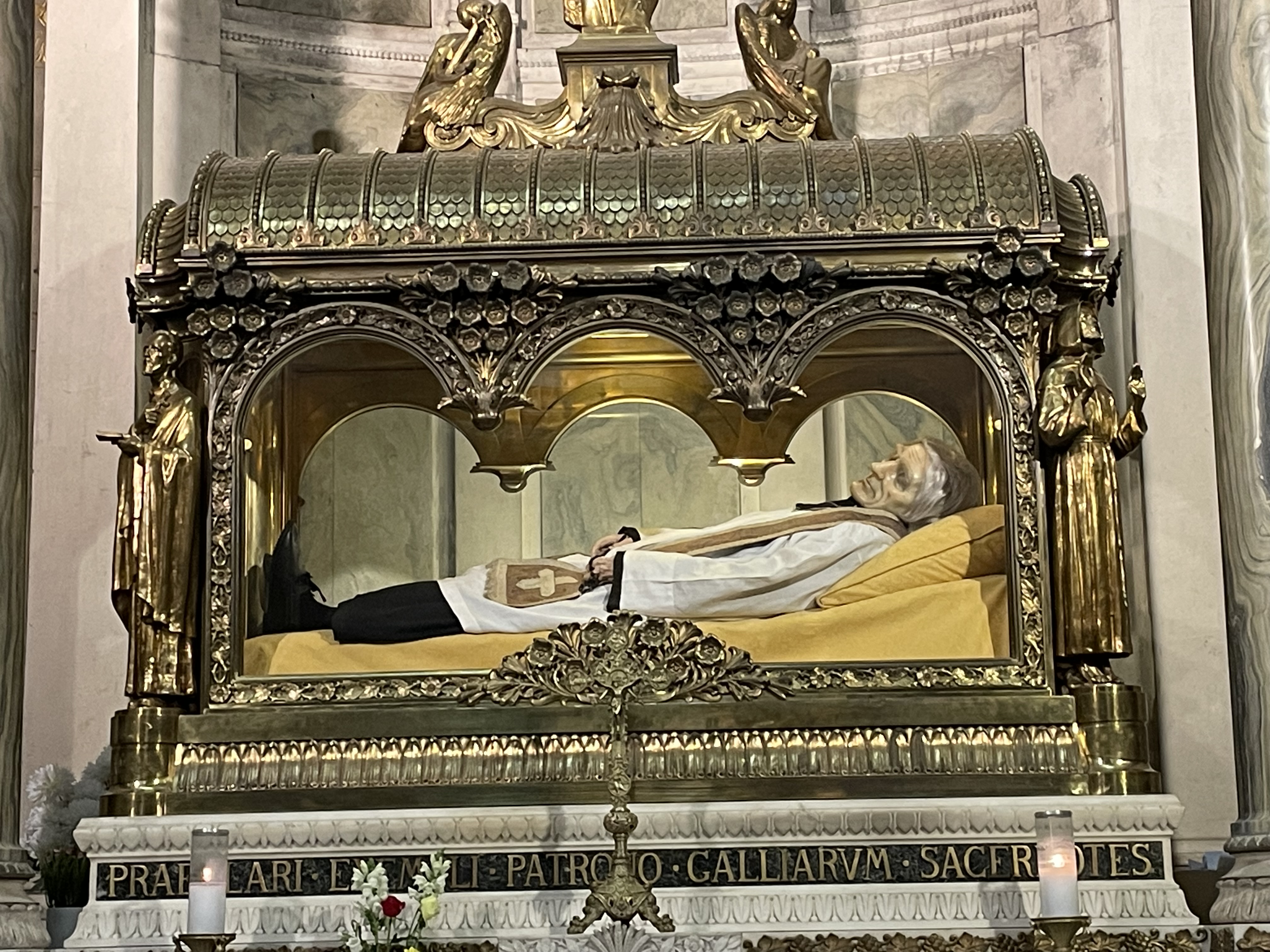
Before he was entombed, Vianney’s body was fitted with a wax mask.
For the the devout there is a web site in several languages
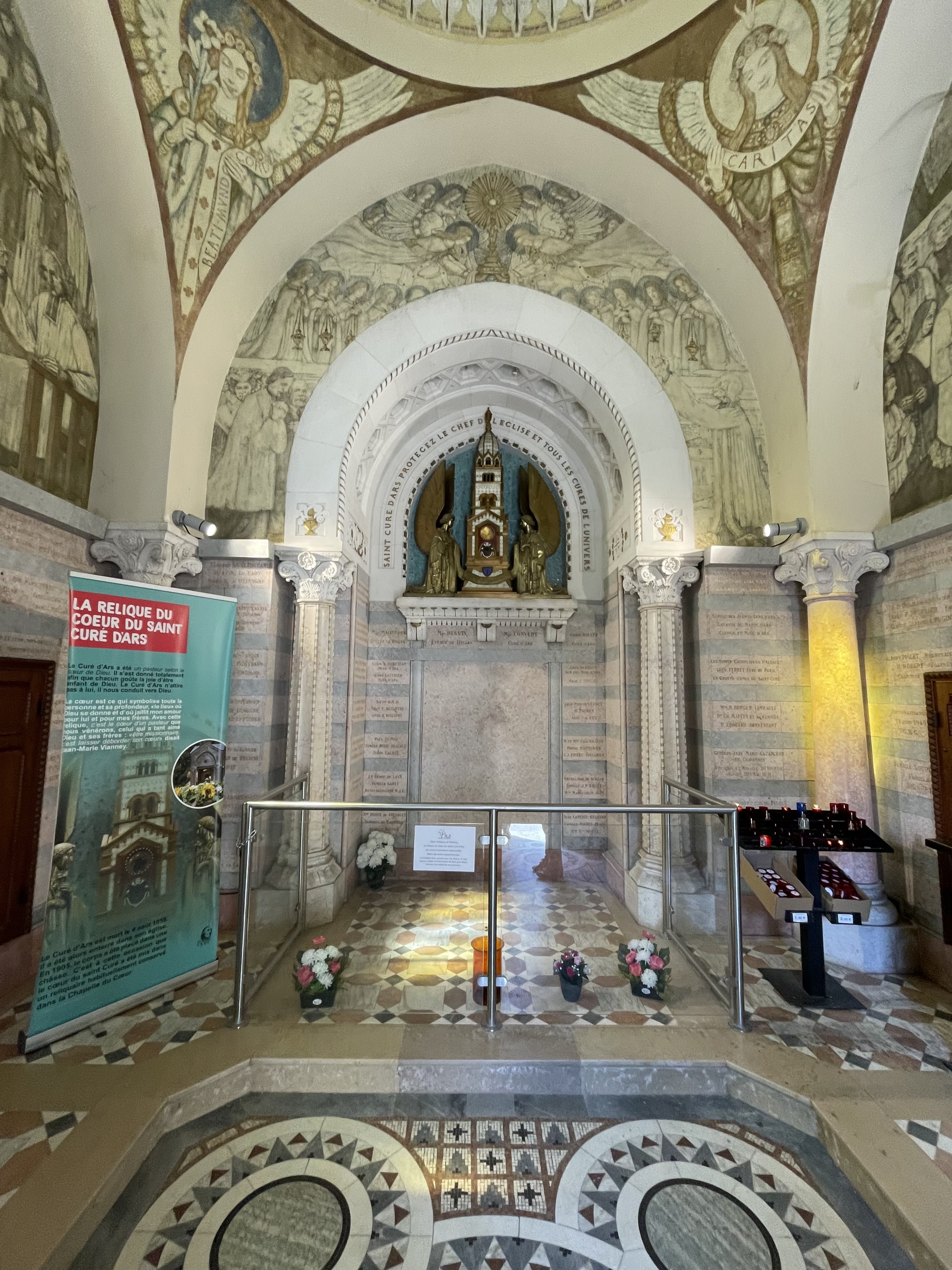
A separate building houses the heart of the priest. The heart is occasionally sent ‘on tour’ to be venerated in distant places.
In 2019 it visited the USA
Thousands venerate incorrupt heart of St. John Vianney during Valley stops on Knights’ national tour
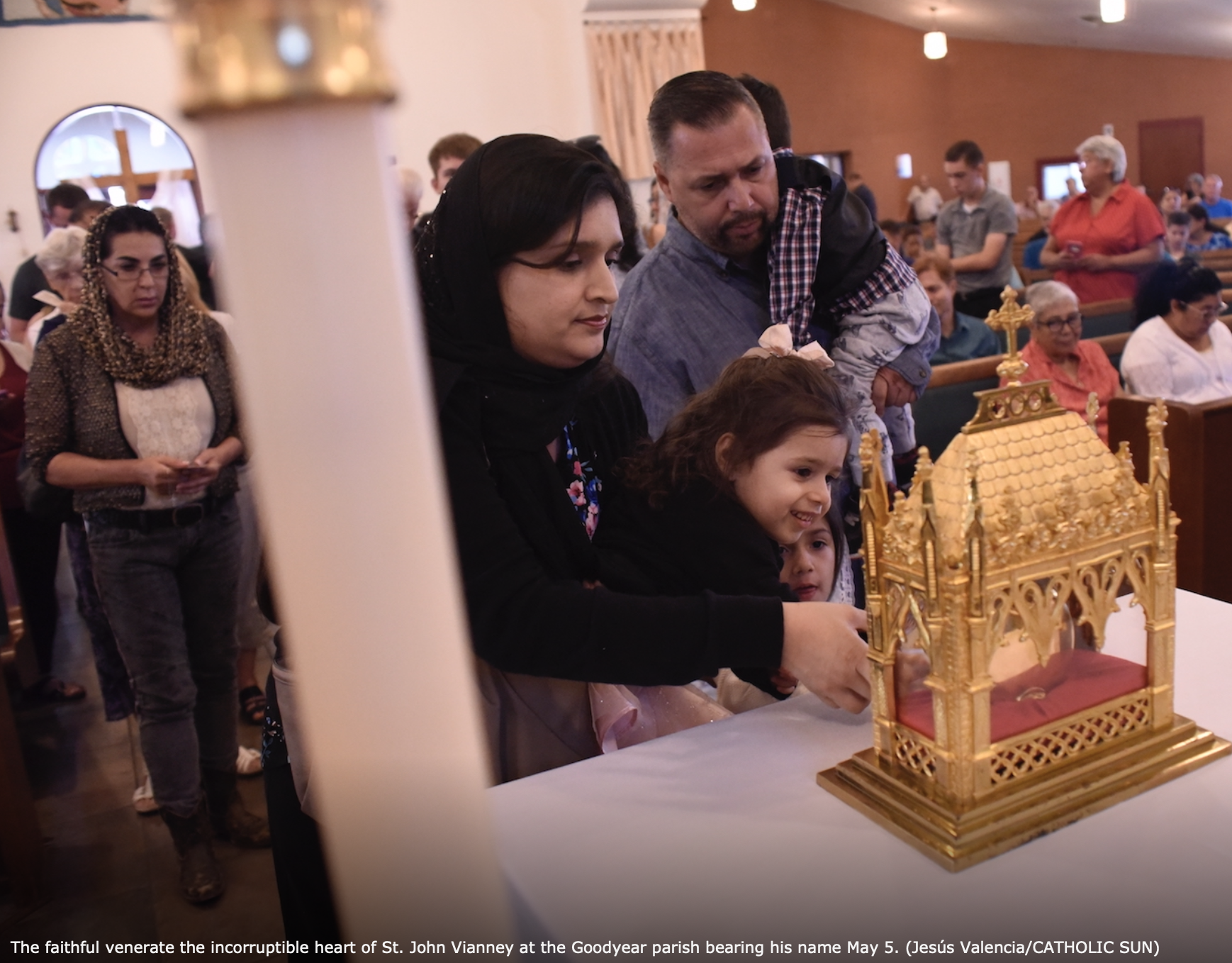
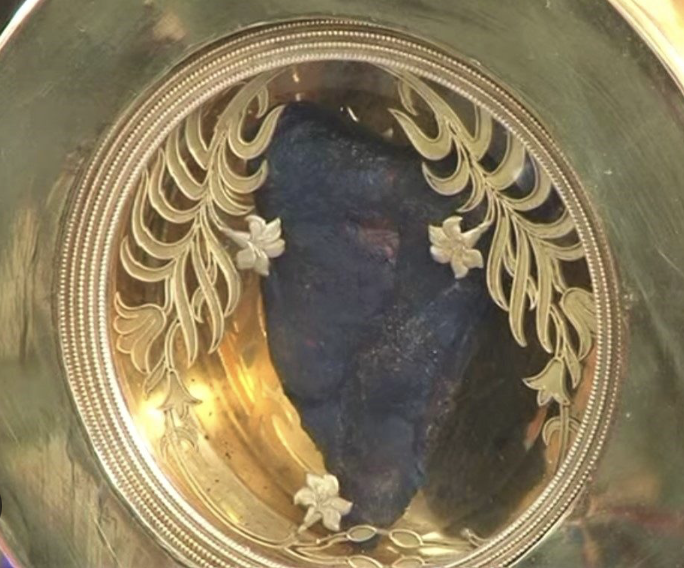
GOODYEAR — The incorruptible heart of St. Jean Vianney, who used the confessional and his gift of reading hearts to lead thousands of central Europeans away from sin and toward devotion to God during the mid-1800s, made its way through the Diocese of Phoenix this month as the Knights of Columbus opened the Southwestern leg of a national tour that has seen thousands of pilgrims, clergy and church representatives venerate the first-class relic.
A ‘gift of reading hearts’ linked to a specific physical heart – really?
Well… it is a ‘first class’ relic
Maybe 2nd & 3rd class relics, like cheap electric batteries, have less power?
The issue of ‘incorruptability’ seems to be some sort of ‘proof’ of the special nature of a person. The suggestion implies that there is no interference with natural process. Yet the very separate existence of the heart demonstrates that the body was, at the very least, subject to a necropsy. Presumably any genuinely uncorrupted heart would not have dried out – but remained fleshy and ‘capable of use’….?
“Thousands of pilgrims would wait in Ars to have their Confessions heard by him. He would sit in the confessional between 13 and 18 hours a day,”
But perhaps, it was Fr. Jean Vianney’s gift of reading hearts that contributed most dynamically to the drawing of souls. “As people would wait in line for three days, he would go through the church with some assistants. He could tell those who hadn’t been to church in decades, and he would not make them wait. He would let them cut the line. He knew they didn’t have the time wait. He would win many back for Christ.”
The Catholic Sun, Phoenix
‘win many back for Christ’ what, in any sense, does this mean?
The person feels better? Goes to church more frequently? Stops cheating? Is more sensitive? etc etc
Vianney was very clear about what people should do:
Fr. Vianney realized many were either ignorant or indifferent to religion as a result of the French Revolution. Many danced and drank on Sundays or worked in their fields.
Fr. Vianney spent much time in confession and often delivered homilies against blasphemy and dancing. Finally, if parishioners did not give up dancing, he refused them absolution.
Catholic Online
So – in a social context where receiving absolution was important for individuals, he was prepared to use his power (giving absolution after confession) to control people.
In fairness to Vianney, he had never wished to be a parish priest. He desired a contemplative life, living separated from society in a monastery.
Maybe some of his contemplative passion charged his severity towards pleasures such as dancing. It may also have led to the ‘attacks’ that he suffered and believed were caused by the Devil (who apparently also managed, on one occasion, to set fire to his bed
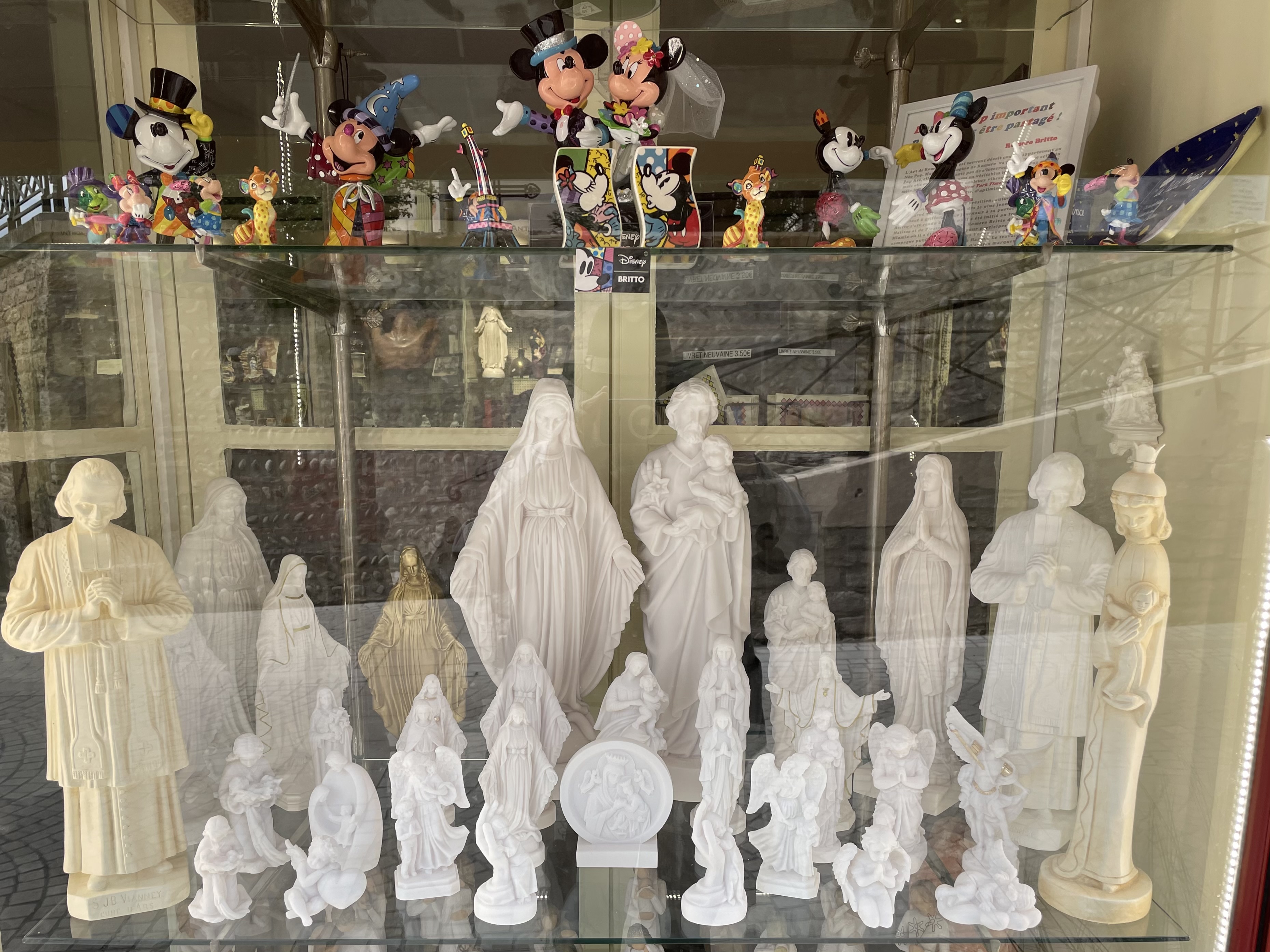
Today in Ars, beyond the precinct, visitors are provided with devotional choices that may, to many, seem quite apposite.
We choose to dine at the local cafe (there was no other option).
Its appearance was ‘classic’… it felt as if we were in a Simenon novel & I was rather expecting Inspector Maigret to walk through the door. Yet we were completely unprepared for what occurred.
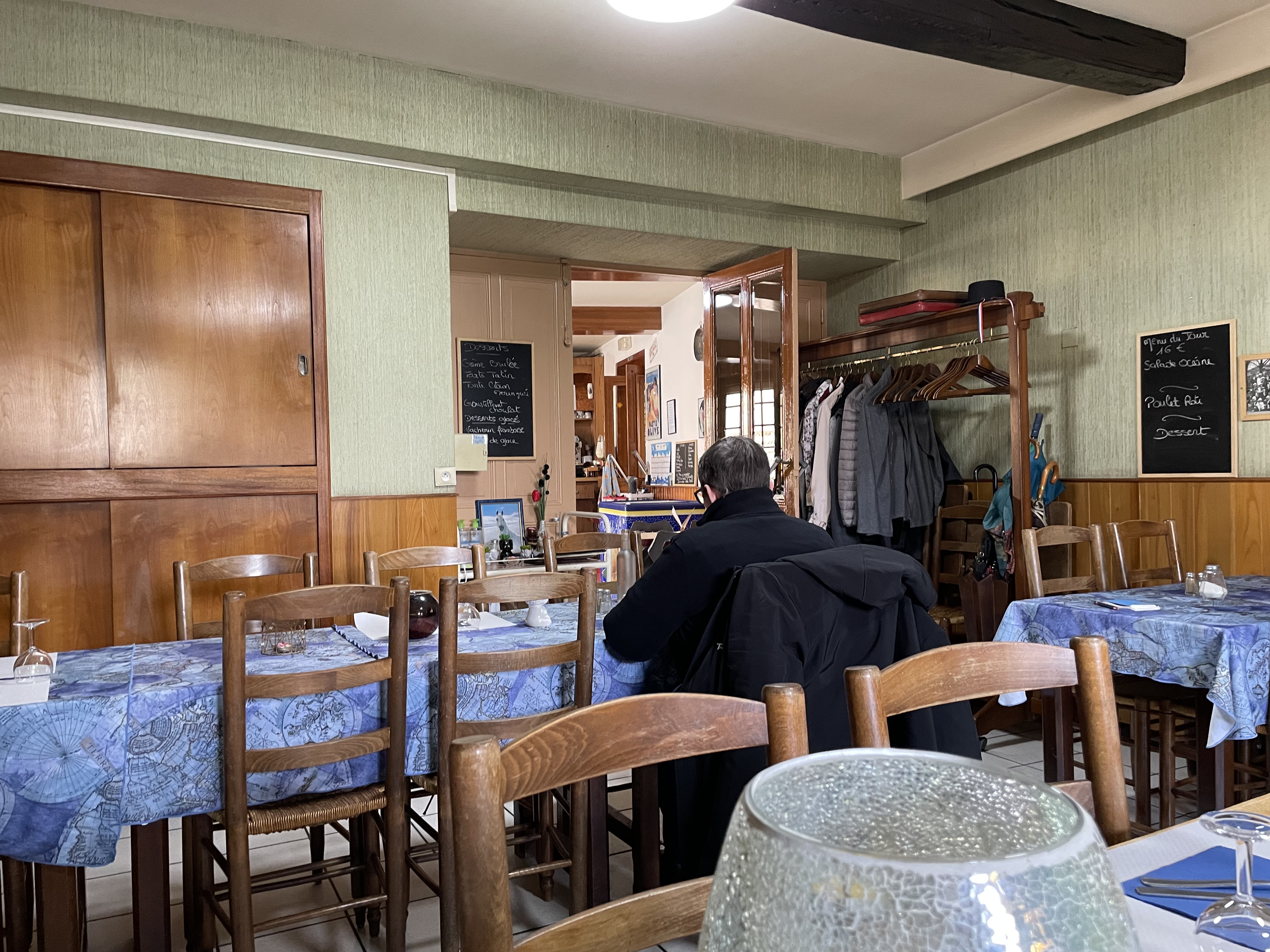
We wished for a simple lunch – and that was all that was being offered.
Wine was, of course, ‘de rigueur’. What arrived was an unlabelled litre bottle of a pale liquid which, when tasted really did not compare favourably with anything we’d tasted during our now 2 month tour.
We had an advantage of having a ‘native speaker’ who was able to fluently express our concerns.
A conversation then ensued between Pat and ‘Madame’ – who seemed pretty offended that we didn’t appreciate her ‘house white’.
‘The locals like it’ she stated firmly (at which point we silently wondered if the ‘locals’ were of the type that Vianney upbraided for drinking and dancing on Sunday).
The bottle was exchanged for another unlabelled & of similar size and which was described as being ‘d’Alsace’. Yes, it did taste different but had I been from Alsace I would have been embarrassed. There seemed little point in continuing our ‘discussion’ with Madame.
We passively awaited our meal.
Omelette’s are generally regarded as a food that is difficult to ruin. Unfortunately we were dining at a place where that became a reality.
That with which we were presented had managed to be floated on water – and some form of oil. Its nature was such that on entering the mouth it broke into soft watery elements lacking taste or structure. It was not possible to finish.
What was clear to us was that we had offended the management. Jacqui, in conciliatory mode managed, as she paid the bill, to gain a smile from Madame by complementing her on the coffee and providing her with a decent gratuity. The tip provided was, as intended, a ’sweetener’ & we left the establishment ‘in peace’.
Later that day Pat was able to recover sufficiently to amuse Marc with a very lengthy detailed account of the experience.
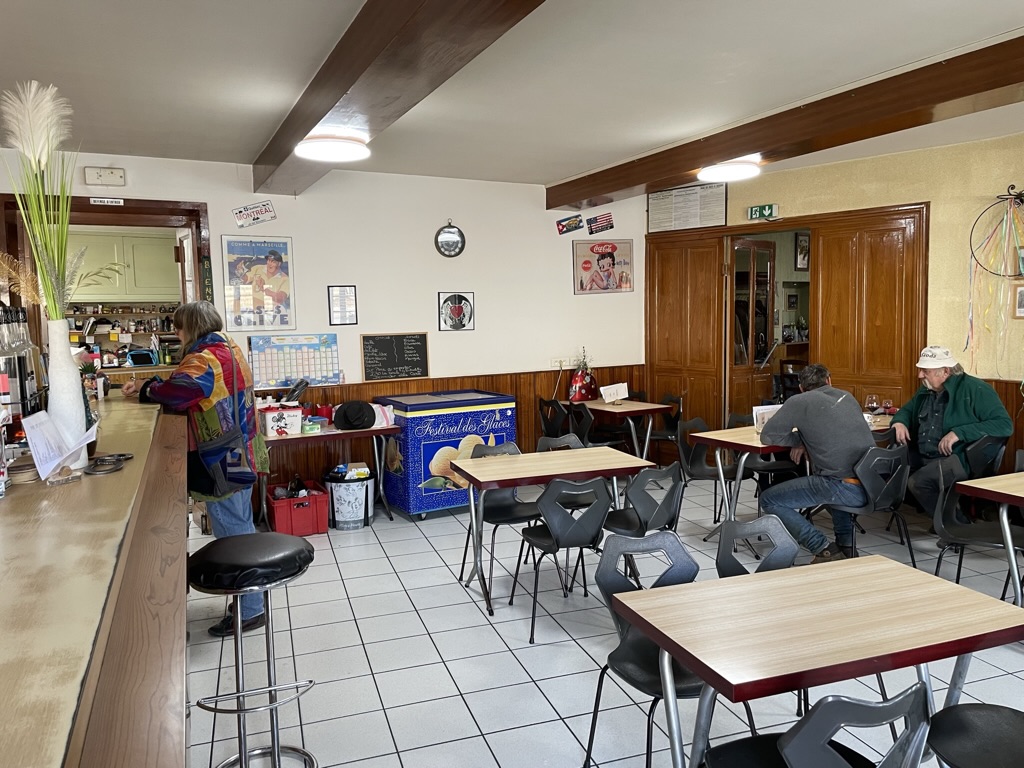
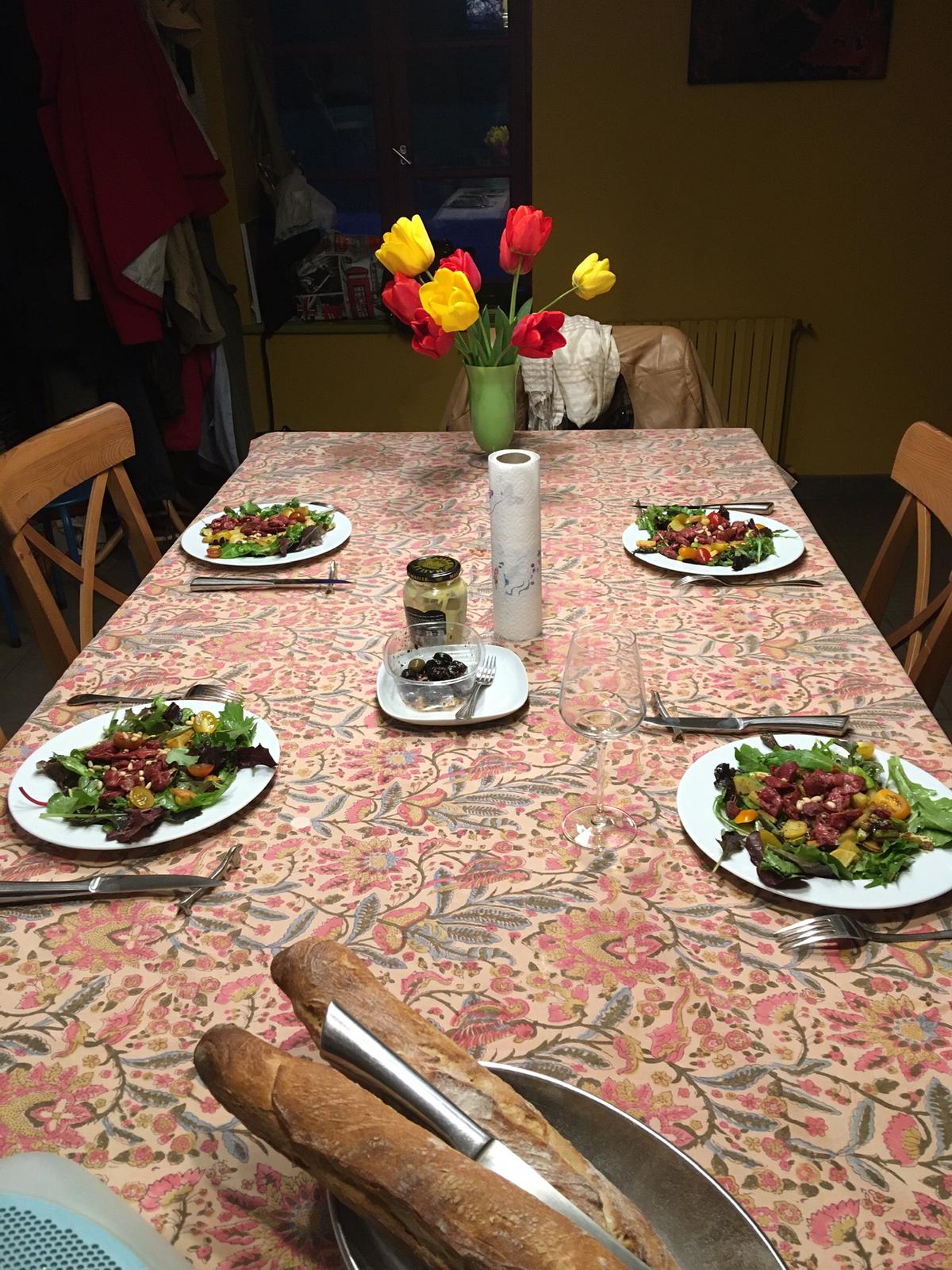
A welcome quality home made meal (as they always are) helped our recovery from the lunchtime experience.
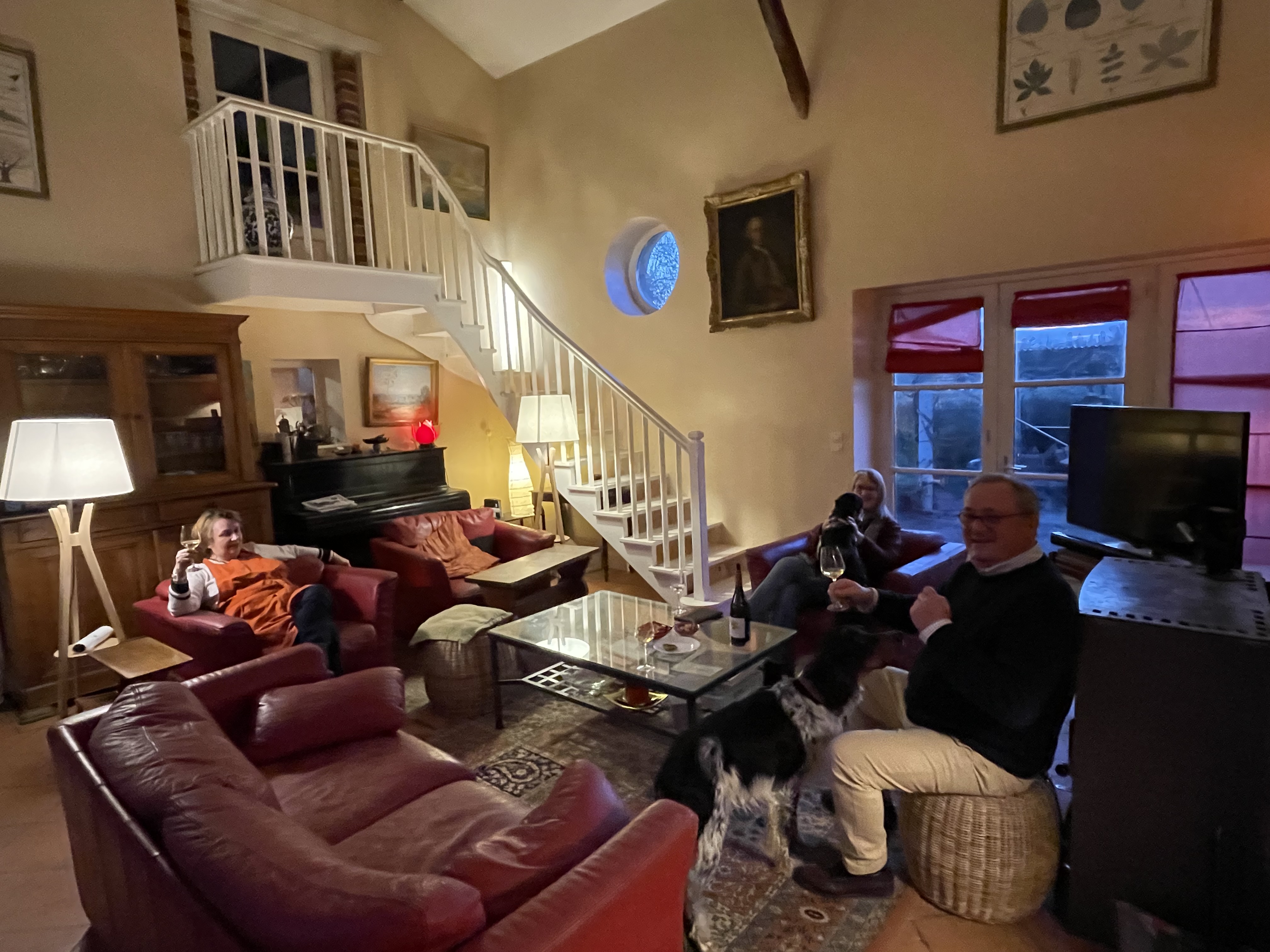
An evening spent reminiscing – over 40 years of shared stories
This visit was probably the last at a house we’ve come to know since 199 shortly after they had bought it and had begun to convert a farm into a very comfortable home.
On that first visit we sat in the opened window area of the semi-developed sitting room (above) looking over the warm countryside and listened to Debussy piano music.
There was another memorable moment during that visit – my introduction to Marc’s generous flow of Beaujolais wine.
A warm evening, good food & no difficulty with supply of wine. Marc would check before pouring from a bottle – and though at first surprised, we soon became used to him simply pouring the contents down a drain if it was not up to his standard.
So – we enjoyed ourselves…. But later, after retiring to our partially renovated bedroom, I found myself being (what in the UK we would call) ‘the worse for drink’.
Fortunately their shower room had been completed – I staggered there, went into the shower cubicle, leaned against the wall & fell asleep – until early the next morning.
Later that day Marc commented that this was not an unusual problem as Beaujolais is a light wine and easy to ‘quaff’.
The event is well remembered but it has not occurred again.
April 19th: to the Brionnais, Paray-le-Monial & Paris
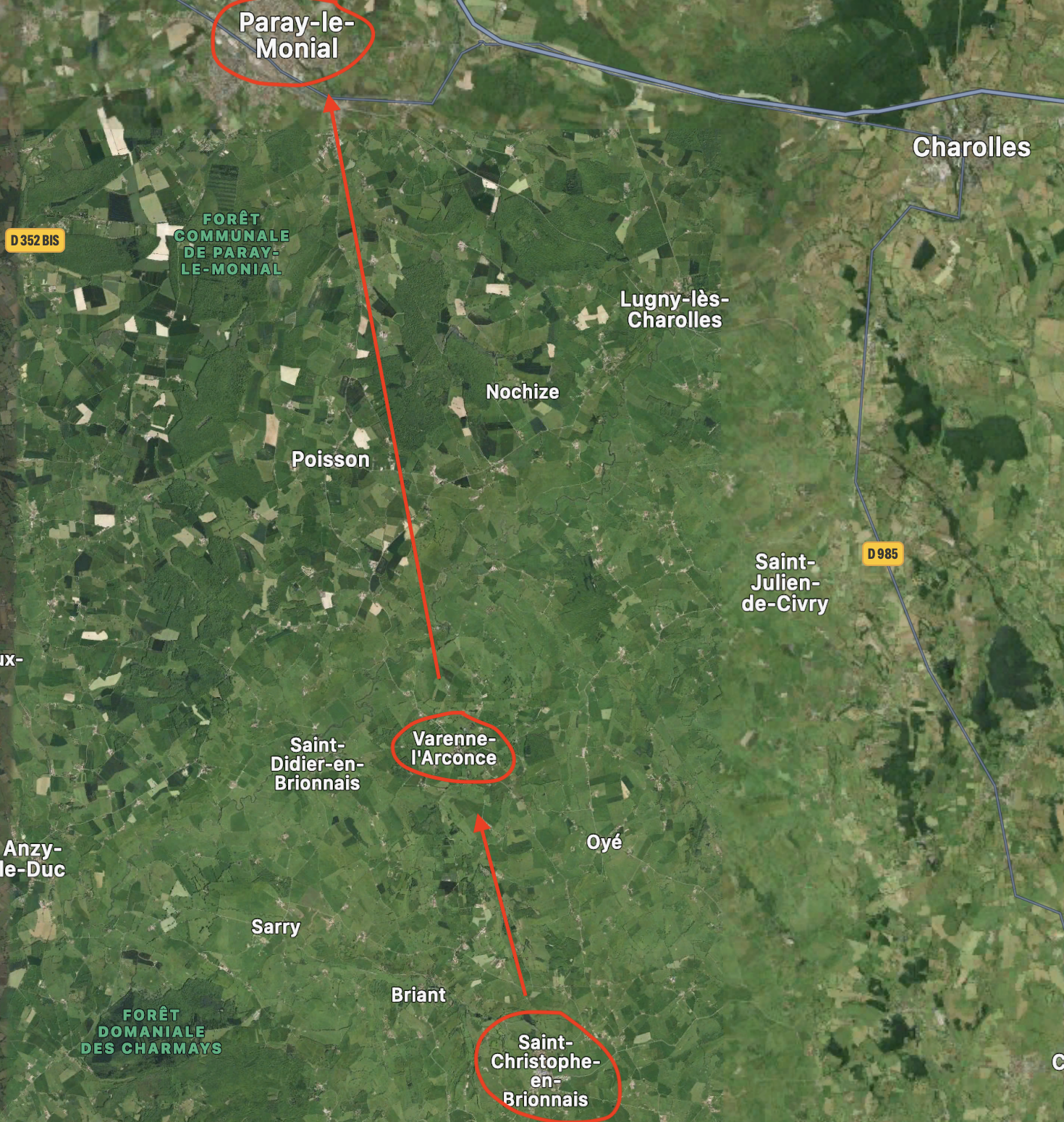
Charolais-Brionnais region
Saint-Christophe-en-Brionnais
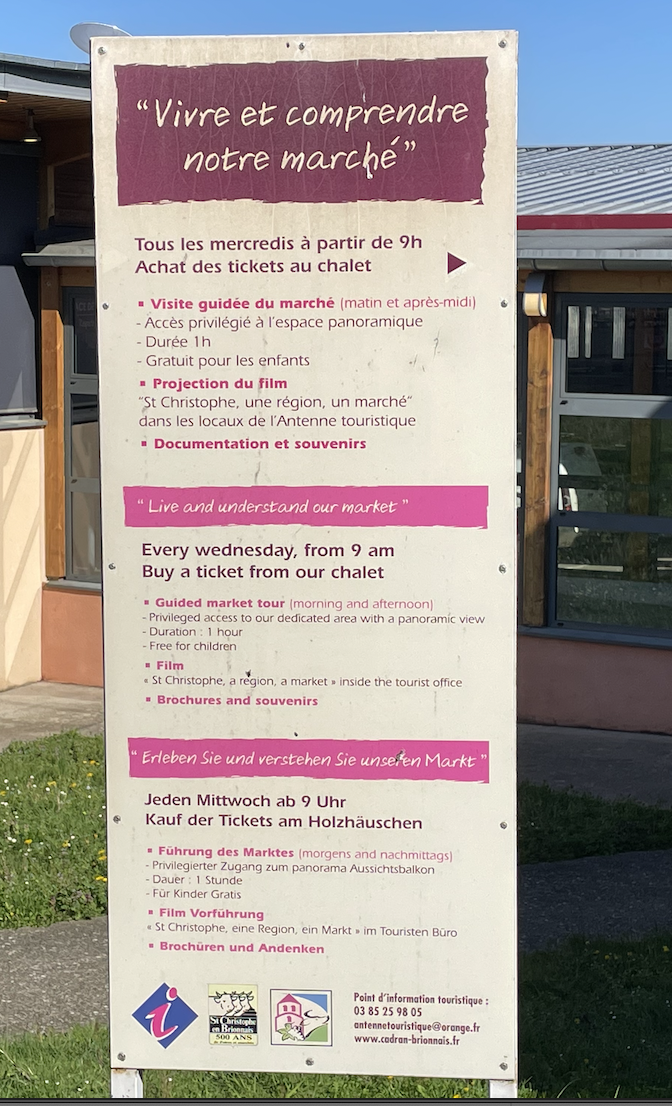
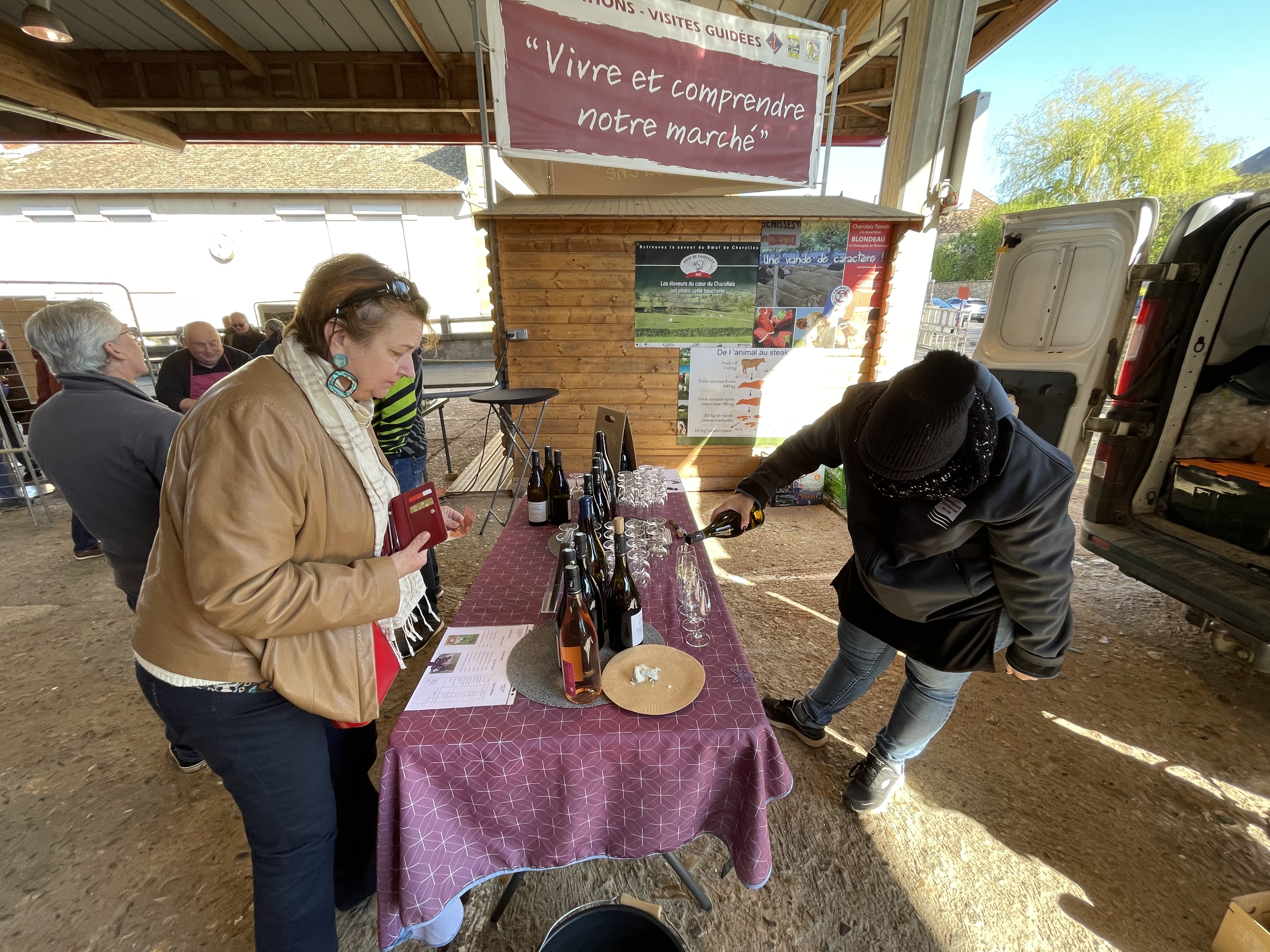
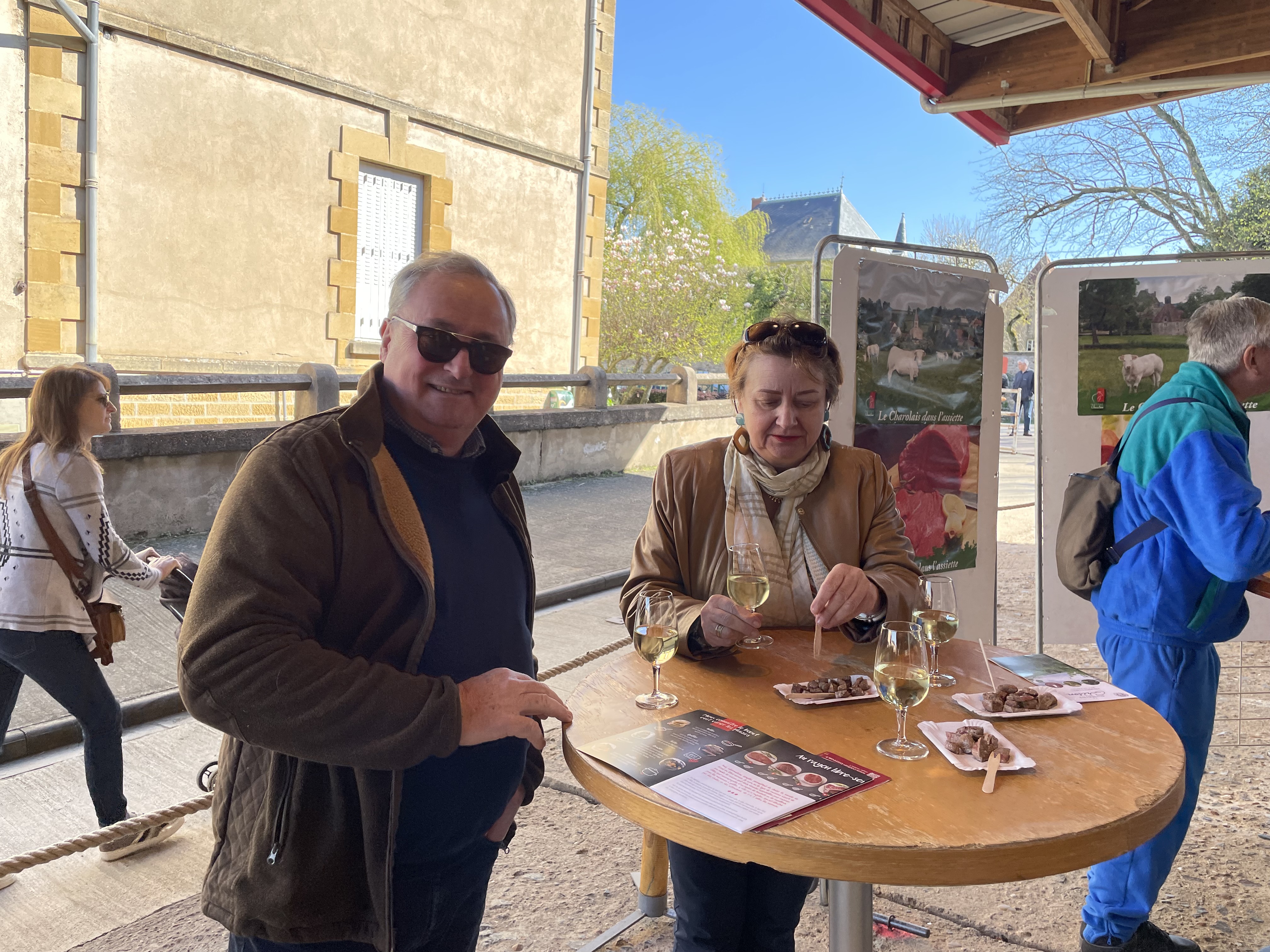
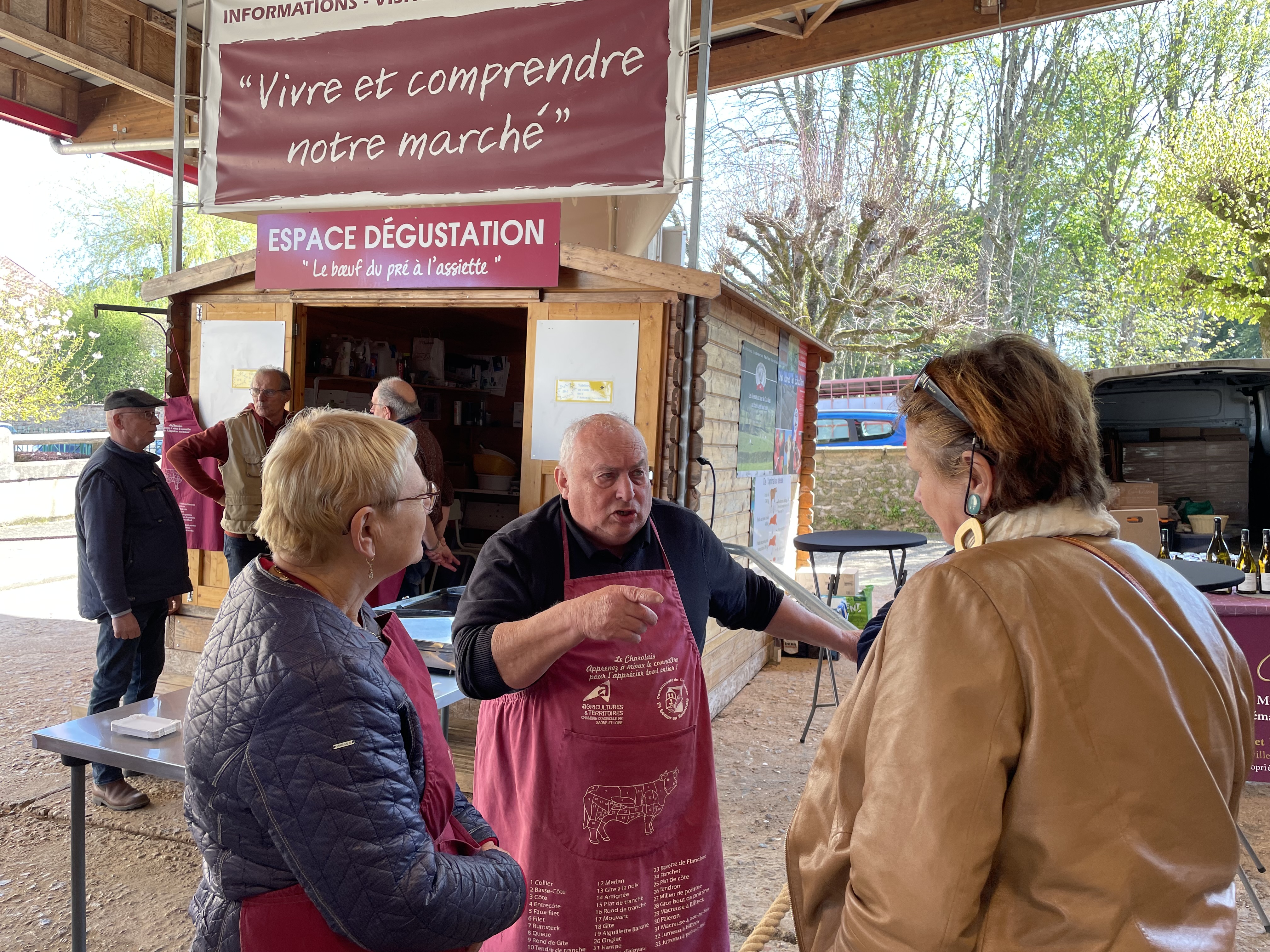
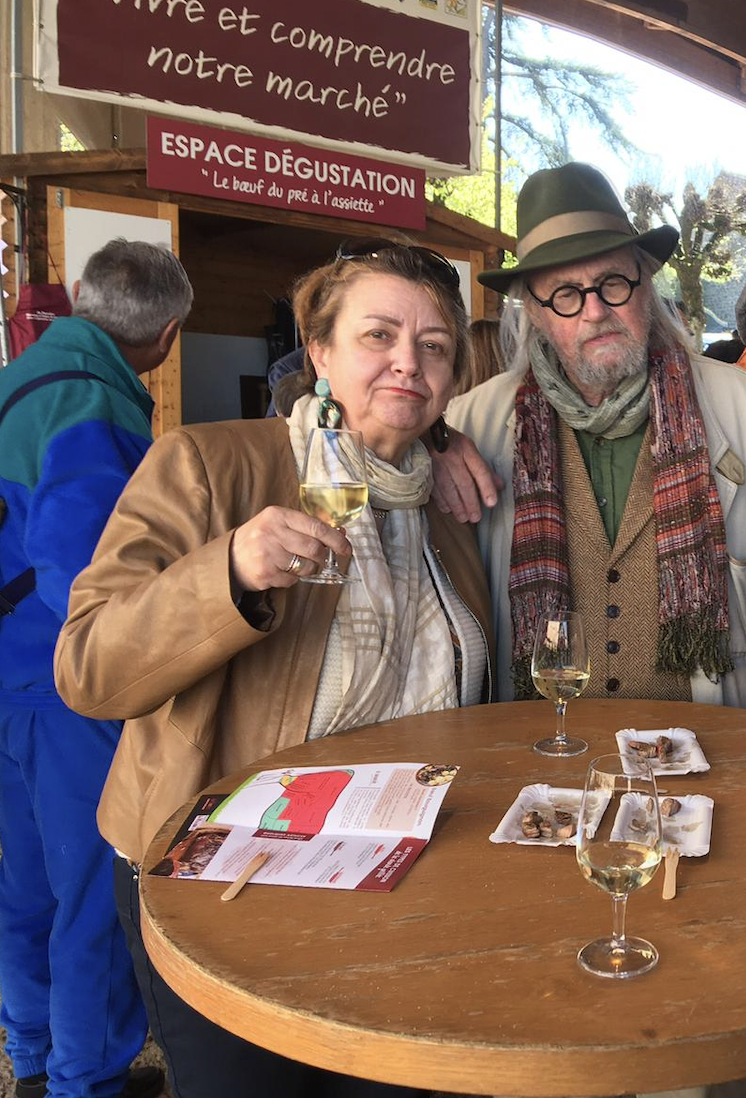
The market – every Wednesday & used as a tourist attraction.
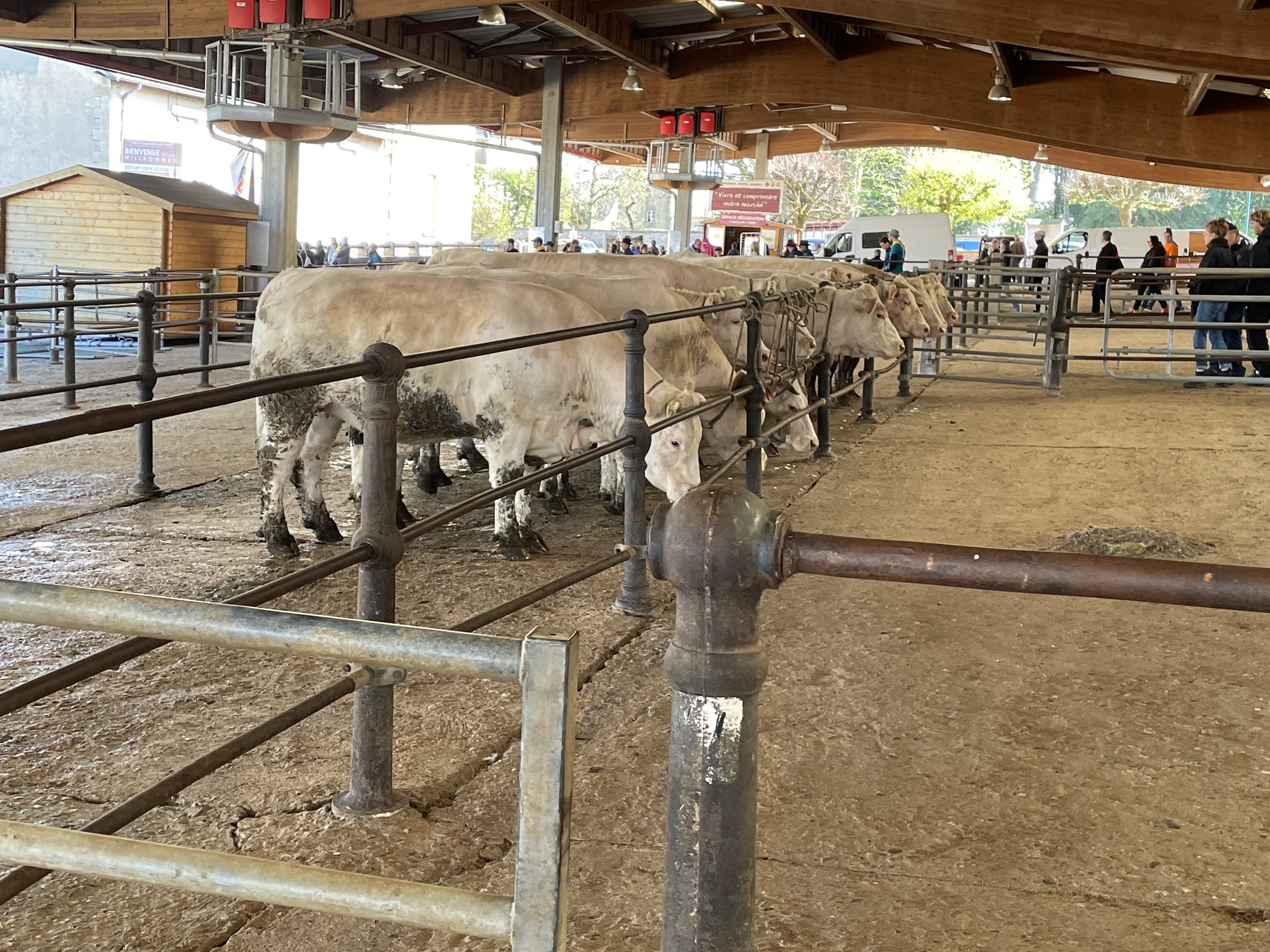
The local breed: Charolais
Varenne-l’Arconce
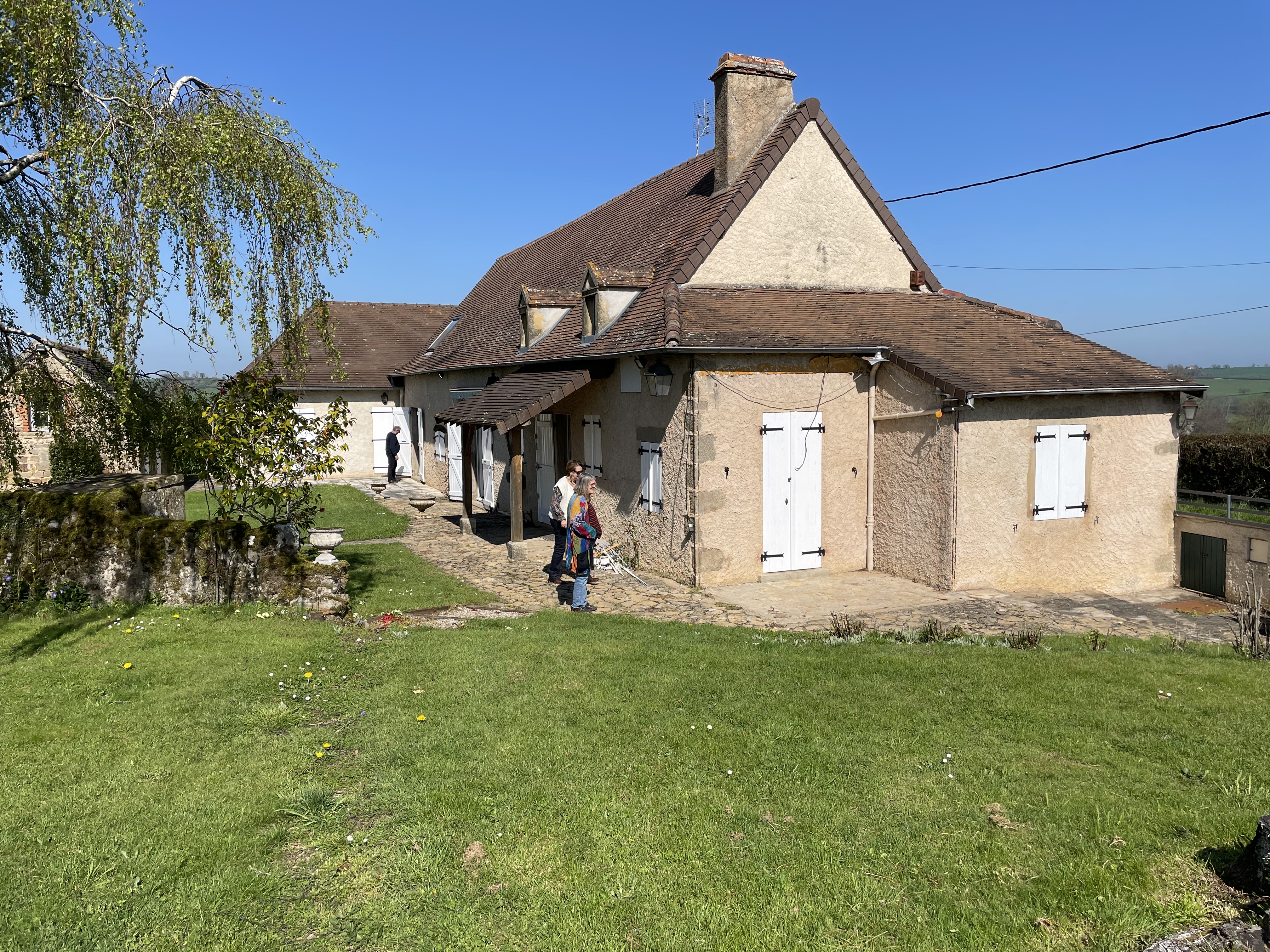
Pat and Marc have bought a new house & intend moving in 2024. There is much work to be done in modernising the property. Their neighbours (apart from the farming community) will be Belgian and Dutch. Further west they might have been British. One feature of our Present Times has been the movement of northern Europeans into the warmer lands further south.
We are close to Marc’s home territory and therefore hear stories from his youth & visits with his father who had been a doctor in a local village not far from Paray. During one of our projects we had a partner from Belgium and her childhood was spent in the area – she remembered Dr Nourissat.
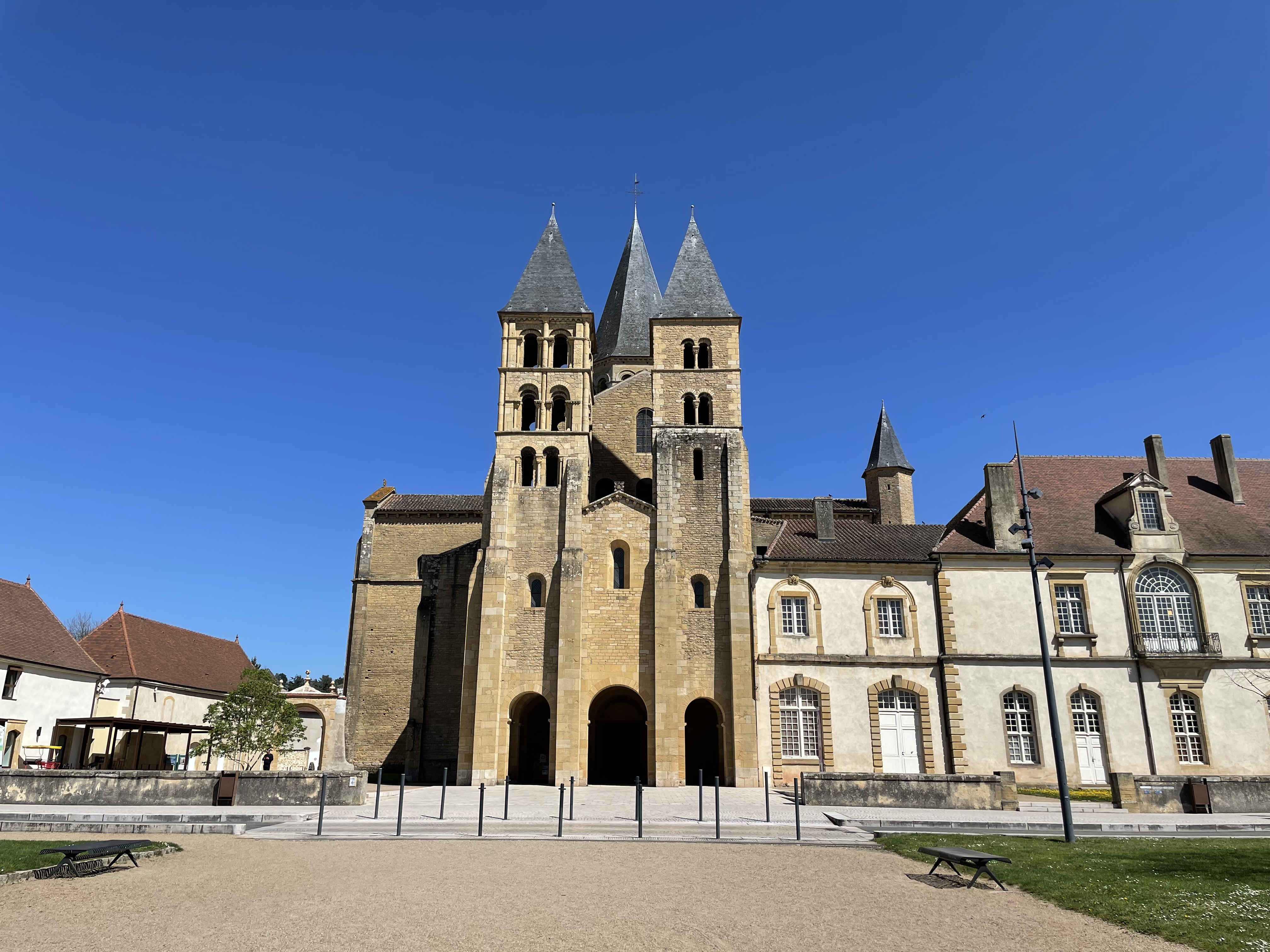
The town contains an important Romanesque Church – one of several in the area.
It is sited on one of the ancient pilgrim routes to Santiago di Compostela. In mediaeval times, the monks at Cluny Abbey (north of Mâcon) had effective control over the whole route through France and Spain.
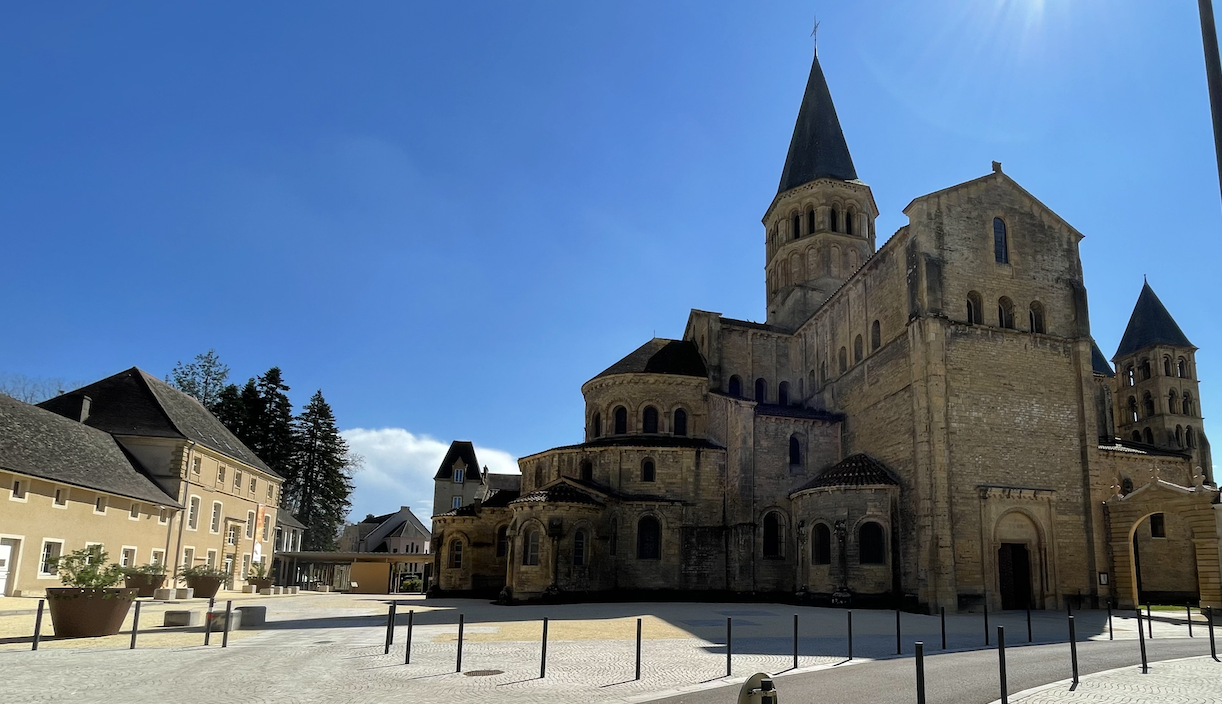
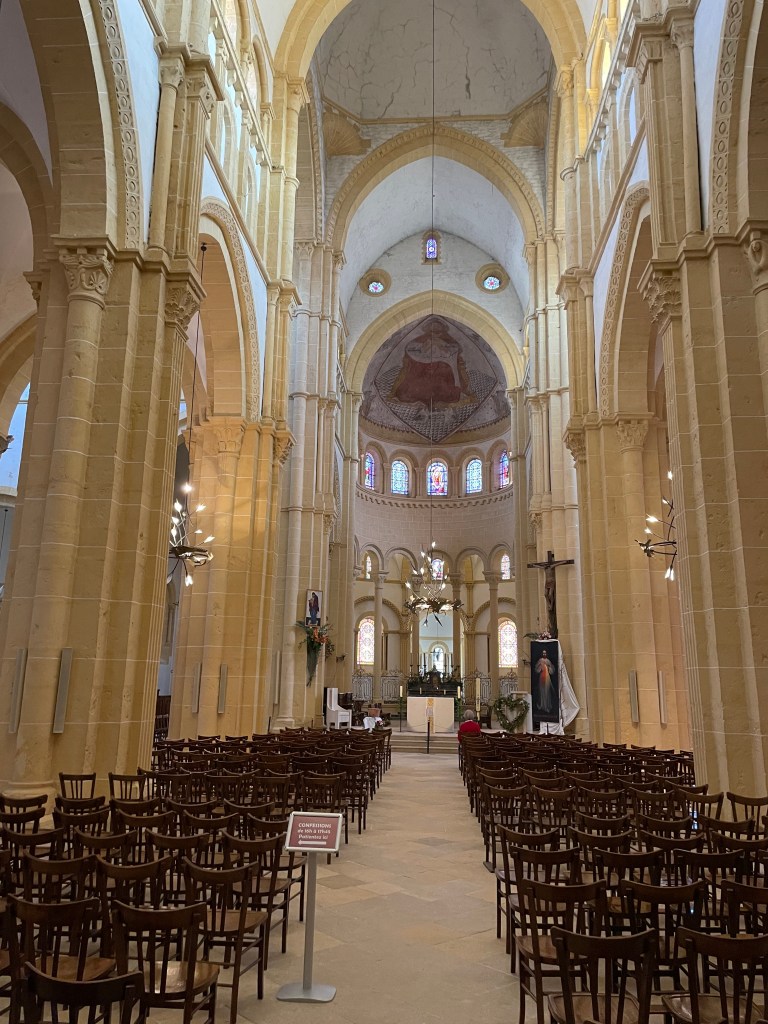
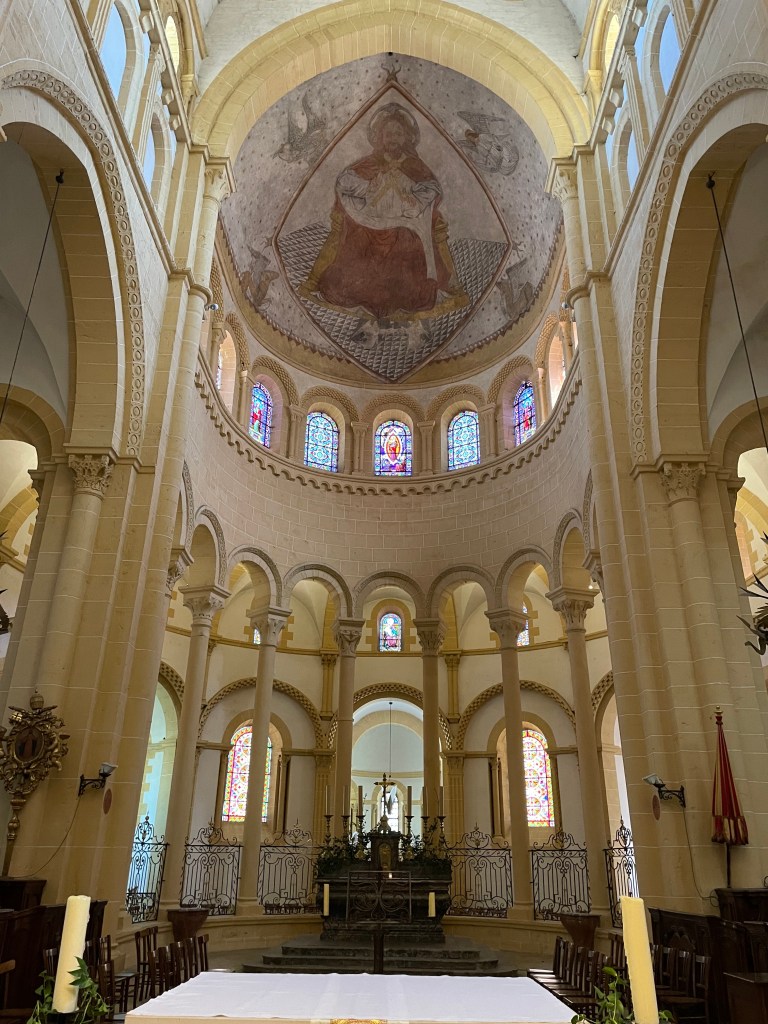
Paray has other delights and the town tourism web site provides excellent information and introductions to them.
These include the resting place of Marguerite-Marie Alacoque (saint)…
…one of those who, like Jeanne D’Arc & Jean Vianney from Ars were beatified in the 1920s. These actions may be seen as the Papacy attempting to increase political support.
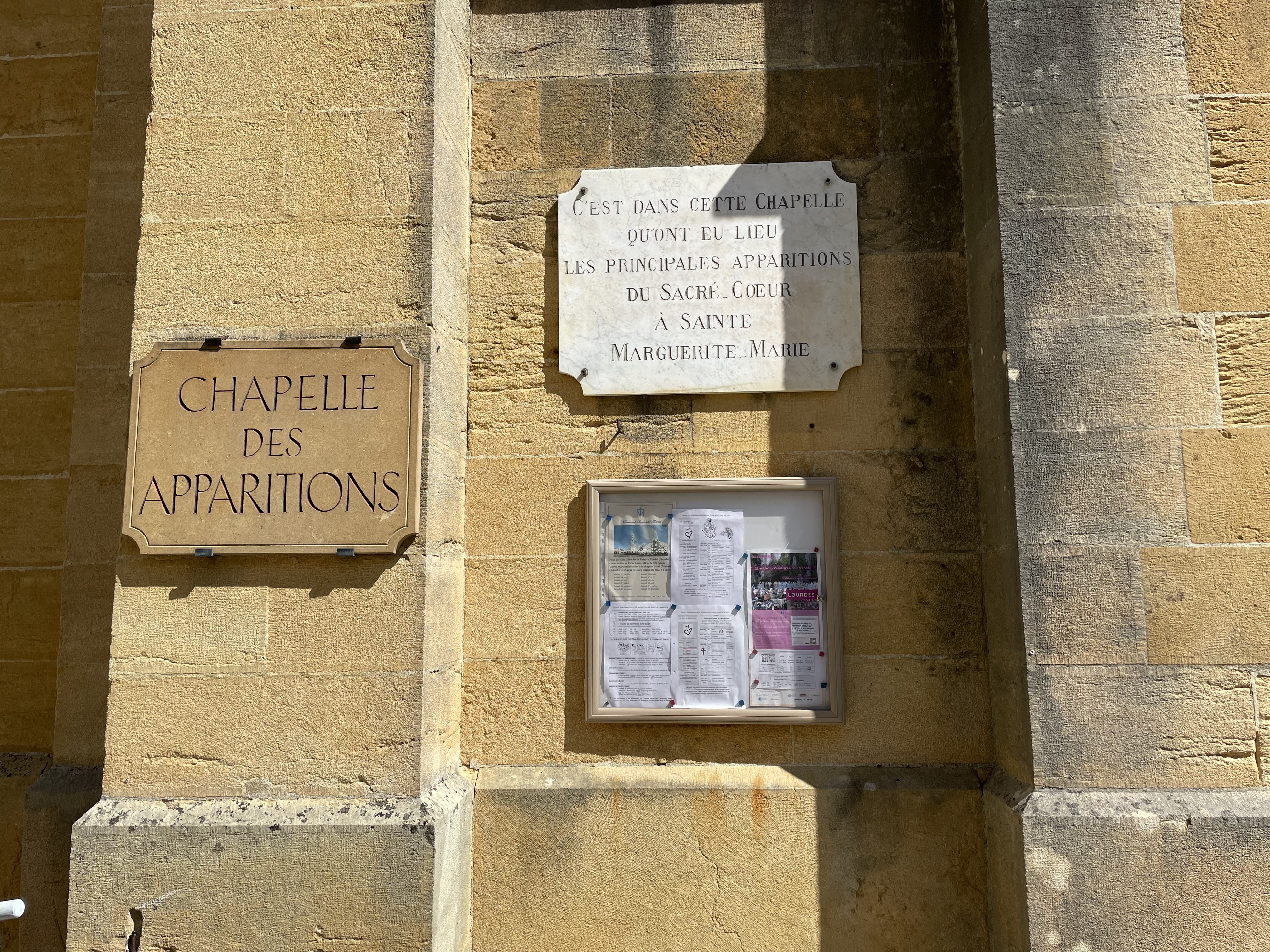
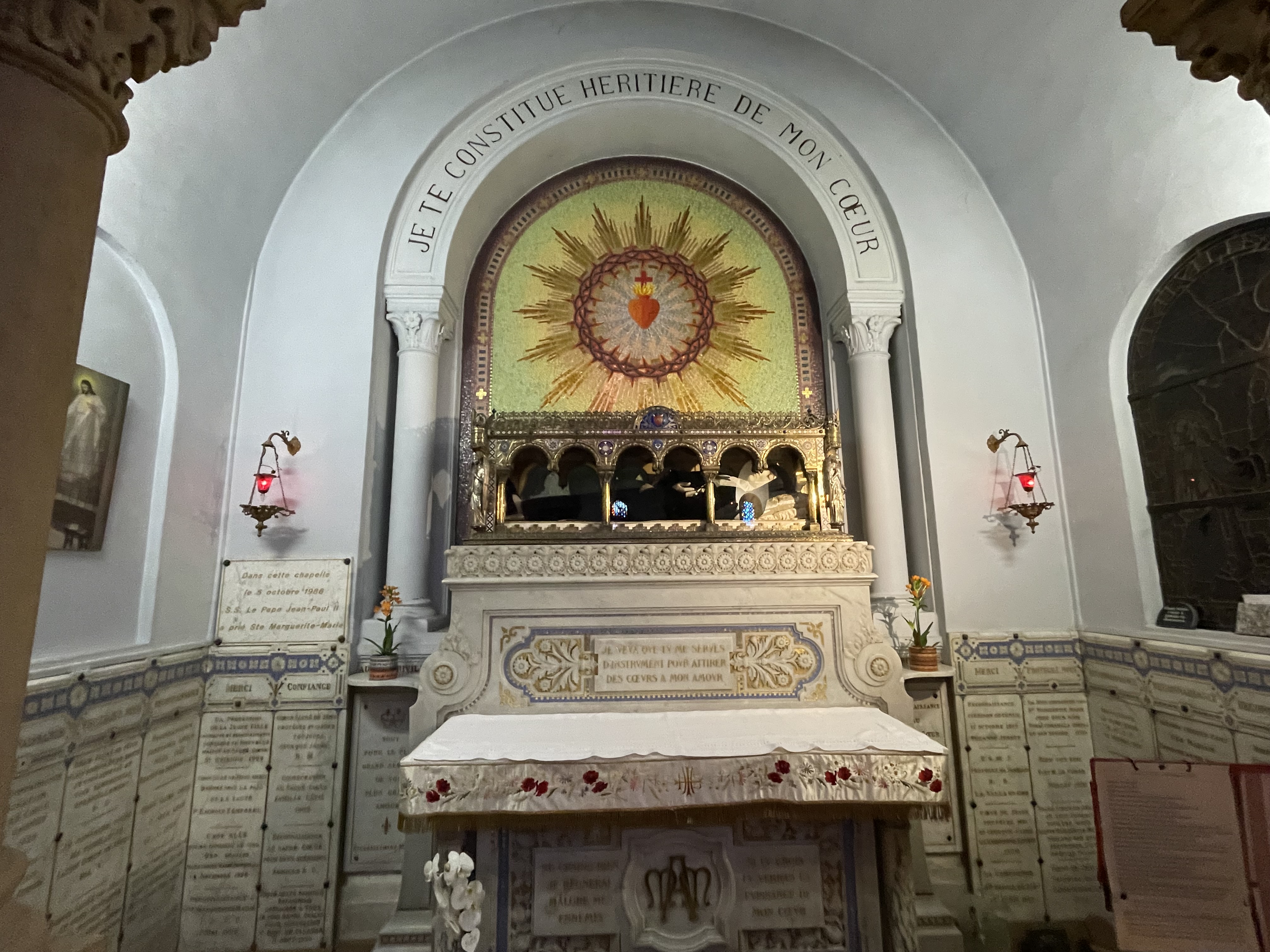
In the 17th century, Christ appeared to St Margaret Mary.
Between 1673 and 1675, He entrusted her with three great messages for the Church and for the world. She revealed the content, helped in this by St Claude La Colombière.
Marguerite-Marie Alacoqu became a promoter of ‘Devotion to the Sacred Heart of Jesus’.
She became so caught-up with this idea that she carved the name ‘Jesus’ above her own heart.
This action required repeating due to the original ‘fading’ (presumably the wound healing). This failed therefore she burnt the name onto her chest.
She seemed unafraid to publicise her visions:
In 1689, Alacoque received a private request from Jesus to urge the King of France, Louis XIV, to consecrate the nation to the Sacred Heart, so that he may be “triumphant over all the enemies of Holy Church.” Either Louis XIV never received the letter or he refused to reply.
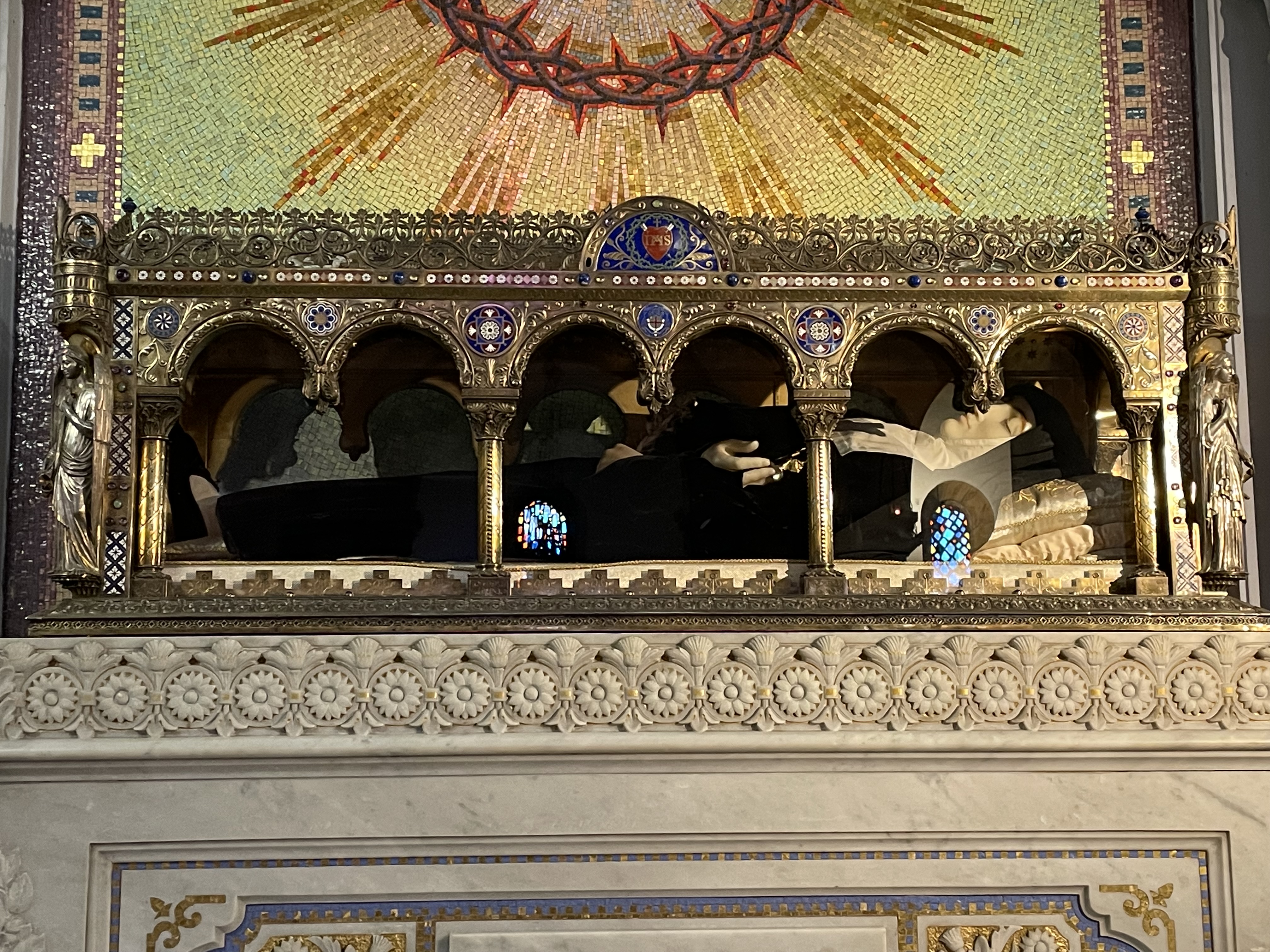
The photograph produces its own ‘vision’…. blue …. but simply reflections from a rear window.
Macon TGV to Paris
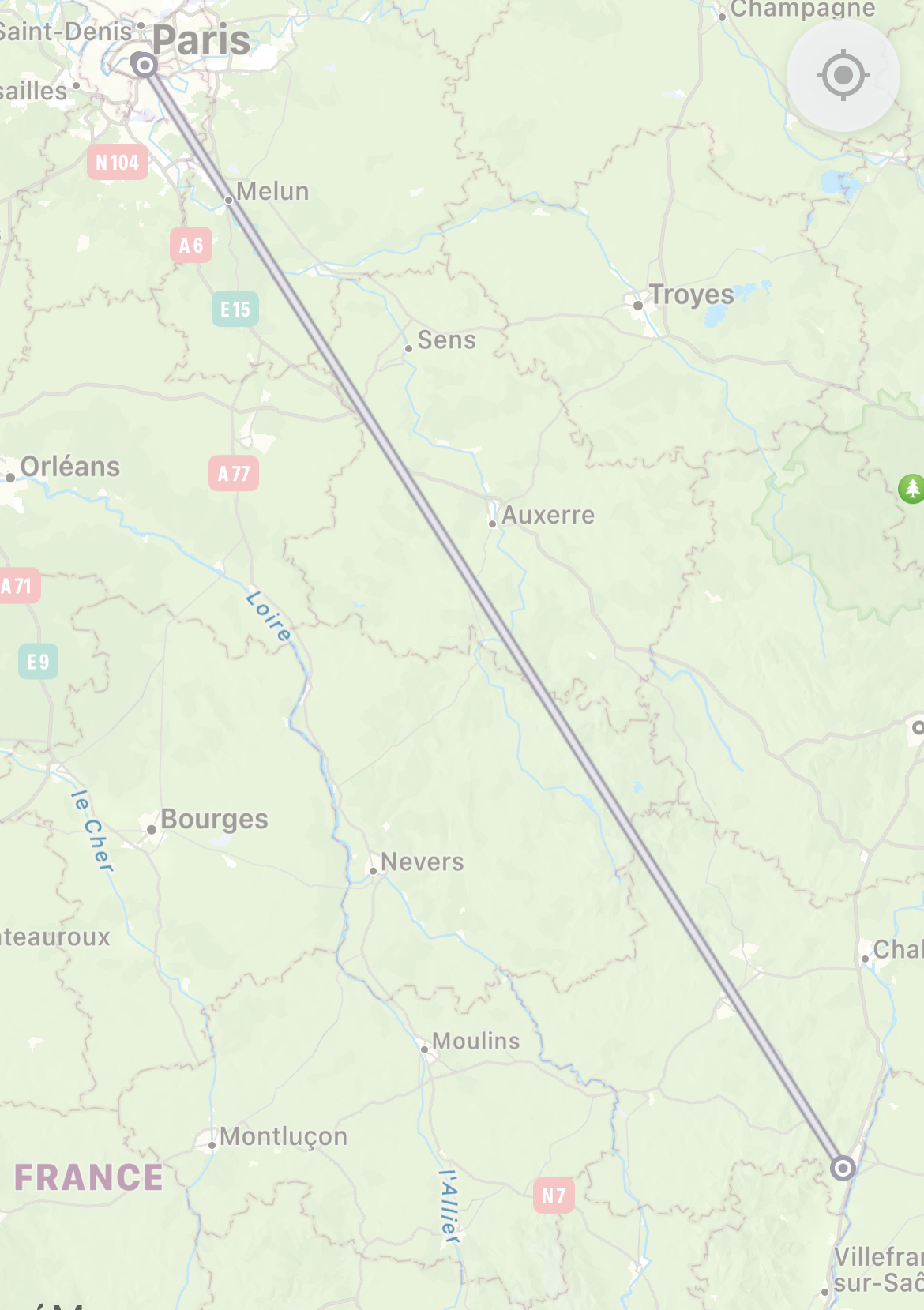
We return to Mâcon where we observed some French railway chaos:
It involved 2 sets of approximately 300 passengers, who, in order to continue their journeys (in one case from Barcelona to Paris, in the other from Paris to Barcelona) had to leave their trains and transfer through an underpass and join another.
It was fascinating to note what people carry with them on such journey – some were carrying so much (large potted plants, birds in cages, vast luggage cases) that they almost seemed to be moving home.
Our train was delayed but we travelled to Paris easily enough (despite the unwashed windows).
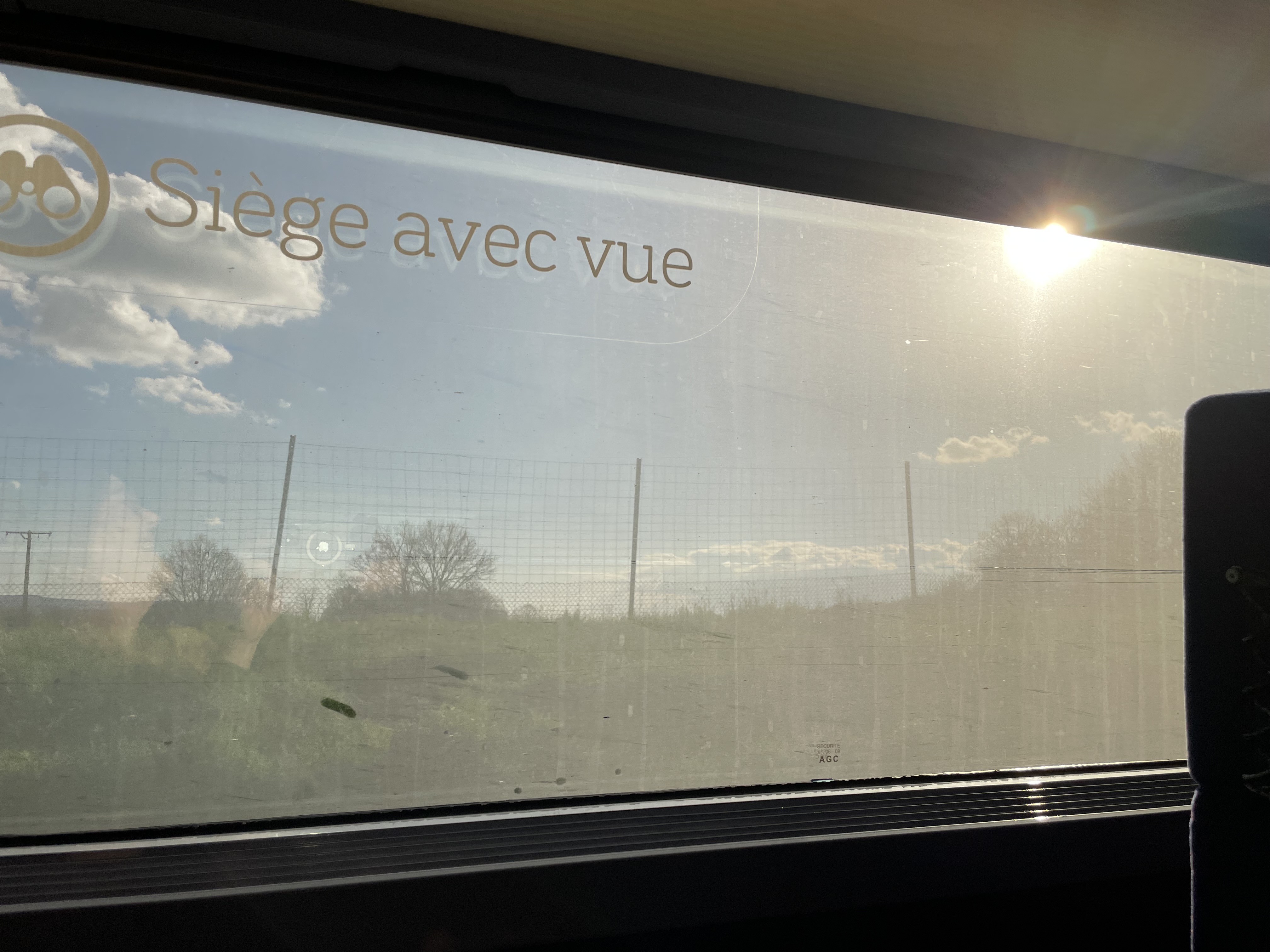
a seat with a view….. through the grime
Gare de Lyon, Paris
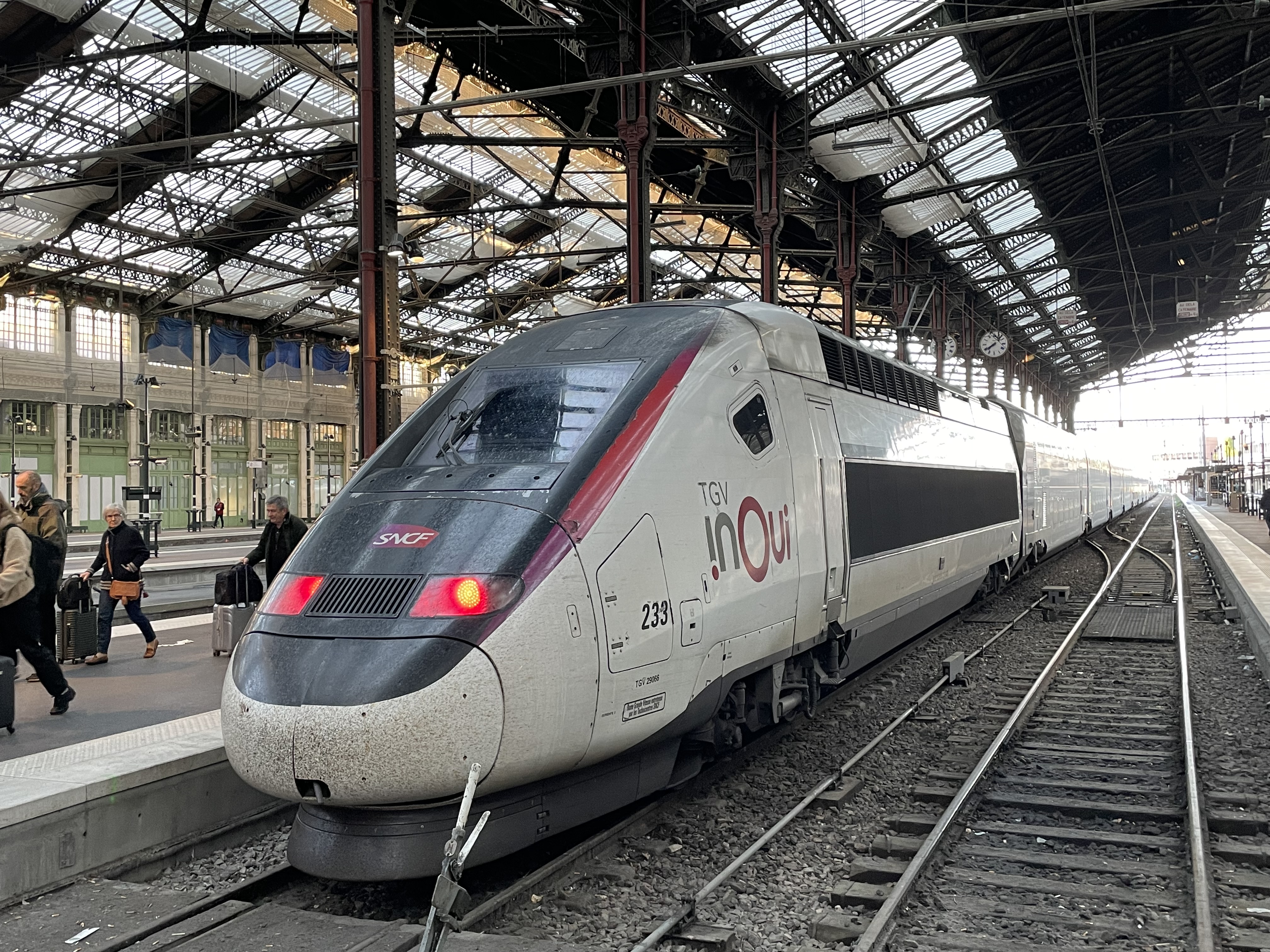

Final evening on Journey 2. Arrival at Gare du Lyon’s then corner cafe in wonderfully multi-cultural street parallel with Gare du Nord (note Ganesh near the door). The street has almost everything…. Oriental, Middle Eastern, African, gold, clothing repairs, food stores & boulangerie and crêpes… very nice small hotel in old Haussmann style building …..all wonderfully vibrant.
WhatsApp
We finished the evening talking to management about the restaurant (Sri Lankan) and the differences between French bhajiis and UK bhajiis.
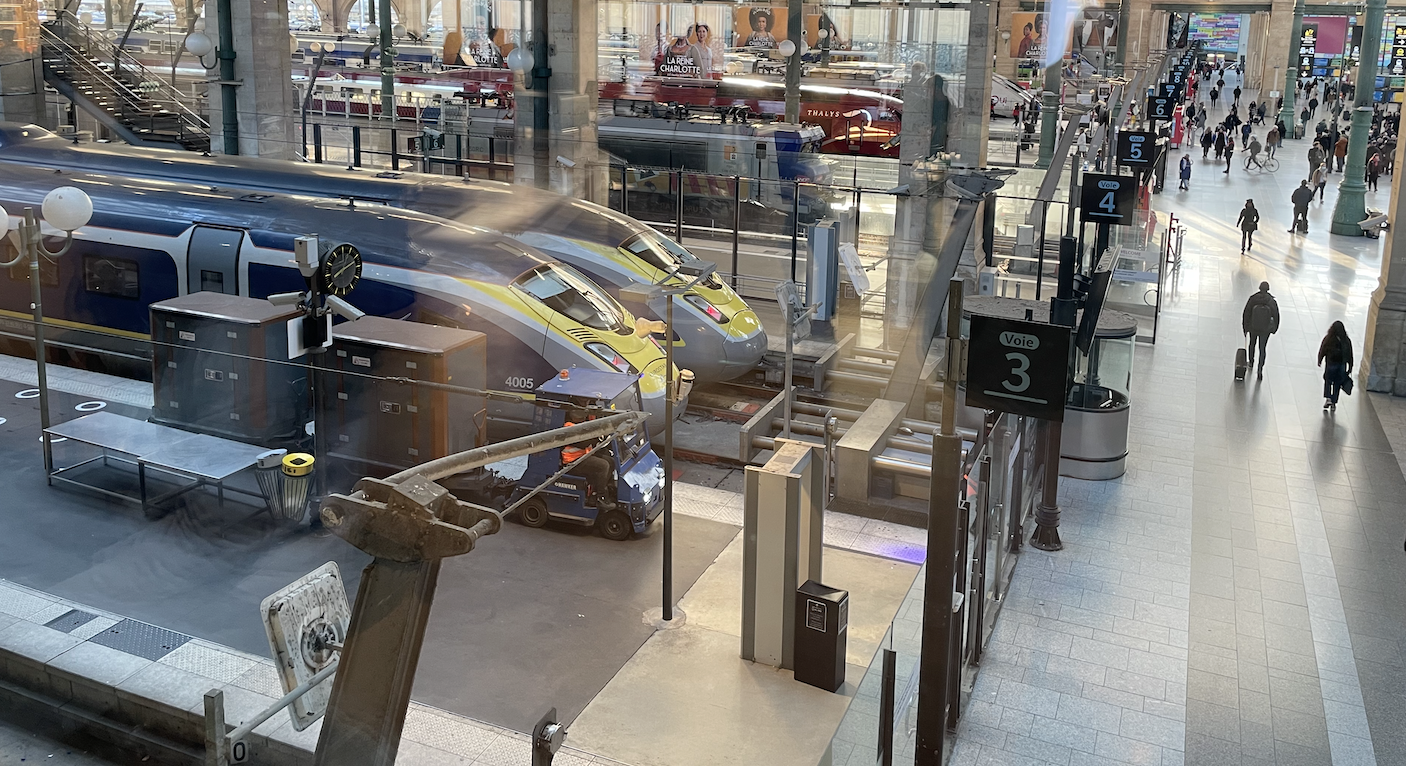
20th April: Gare du Nord, Paris to Church Stretton
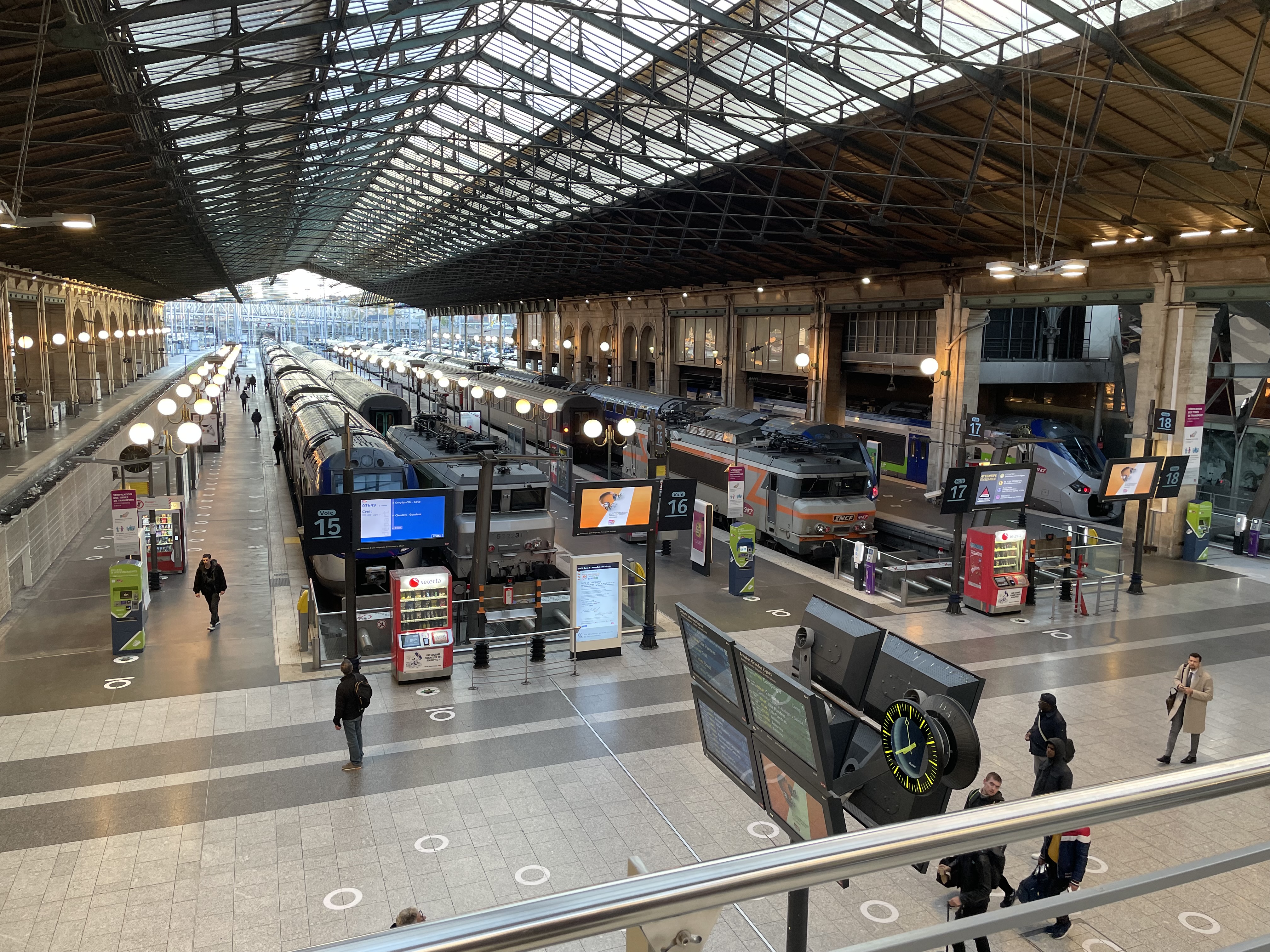
Farewell to Continental Europe…. 2 journeys stretching from the Arctic Circle through Cental Europe to Ankara in Turkey have been positive and revealing and it’s rather depressing to be returning to a Britain that has become so isolated from its friends and neighbours.
WhatsApp
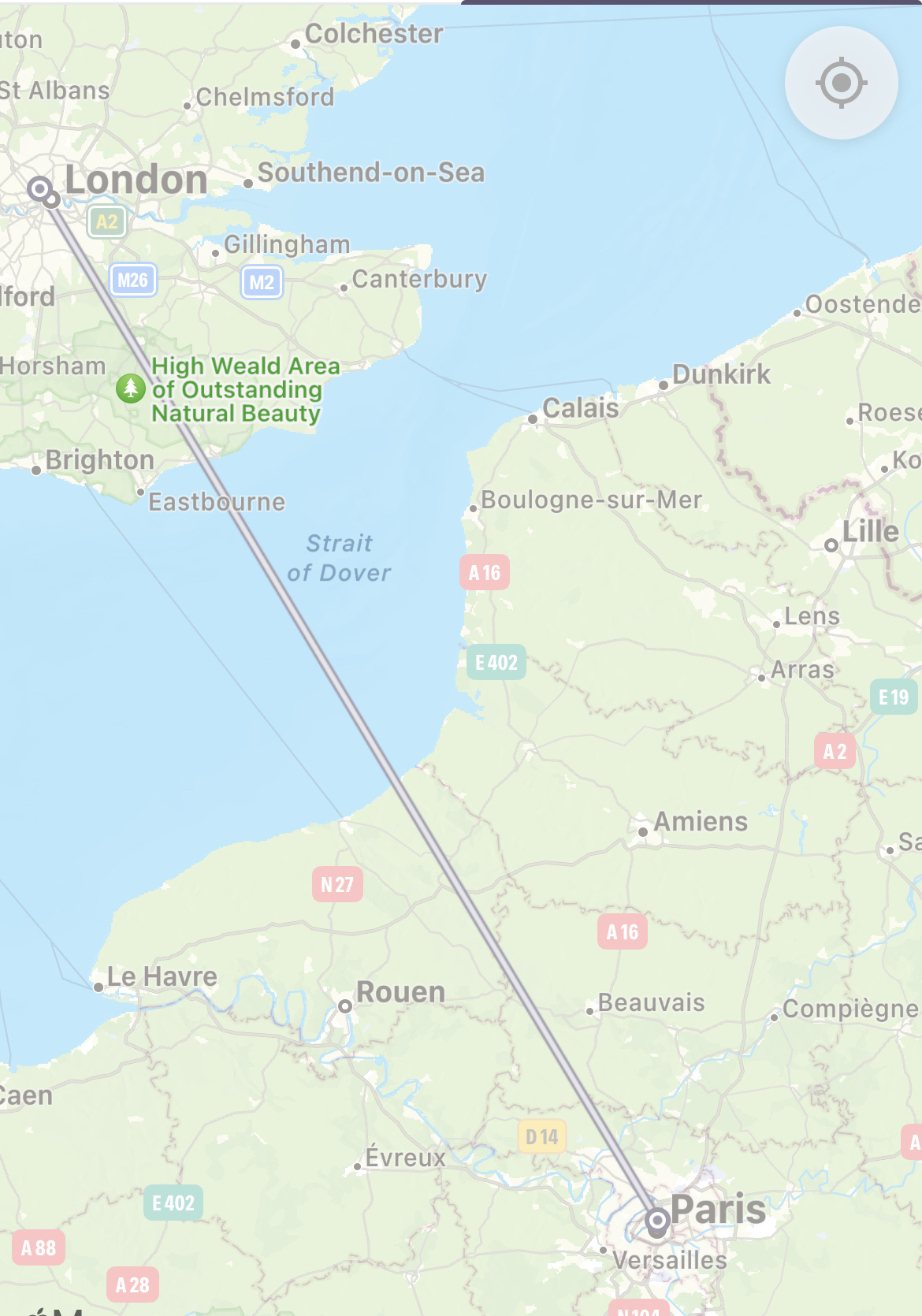
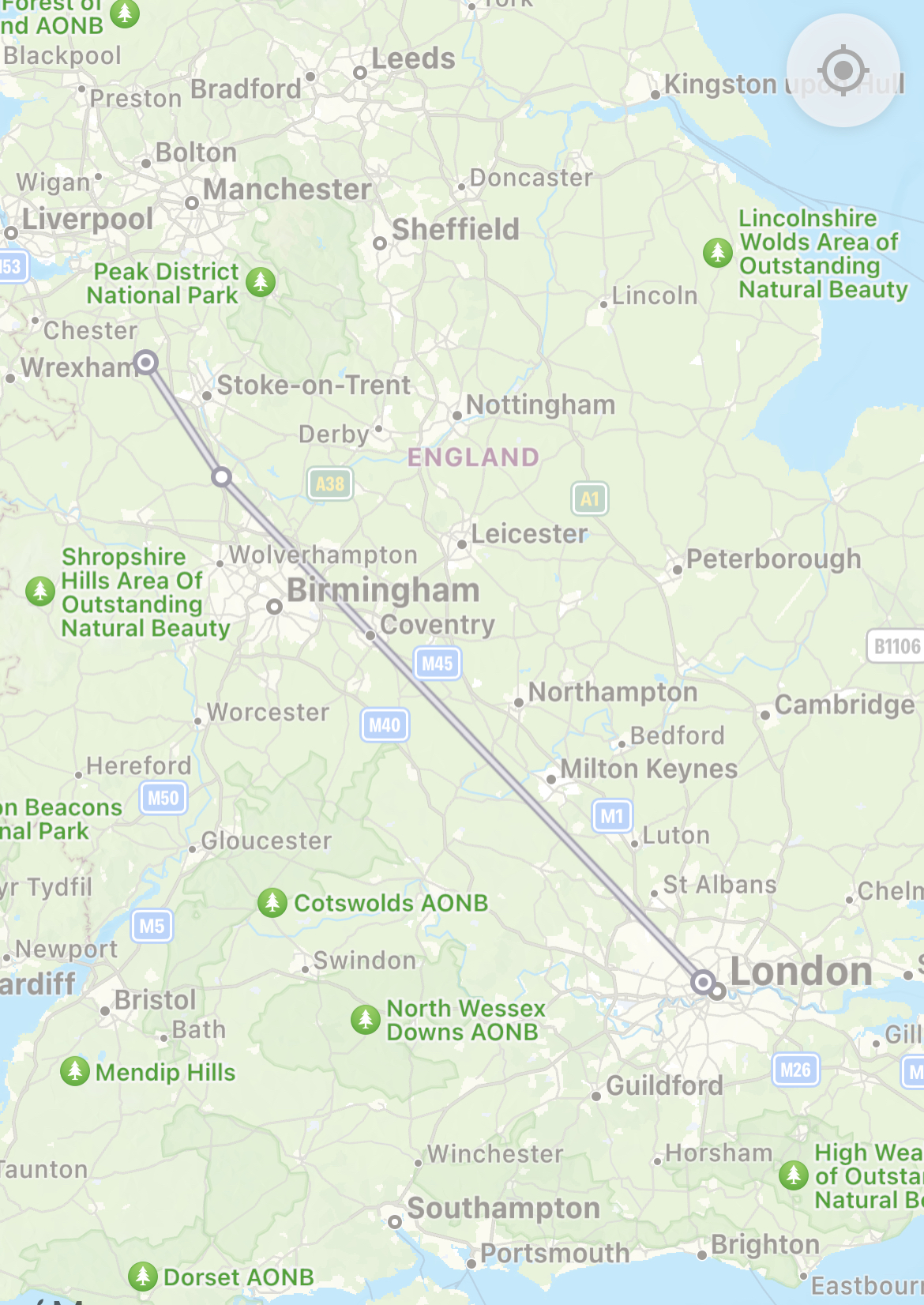
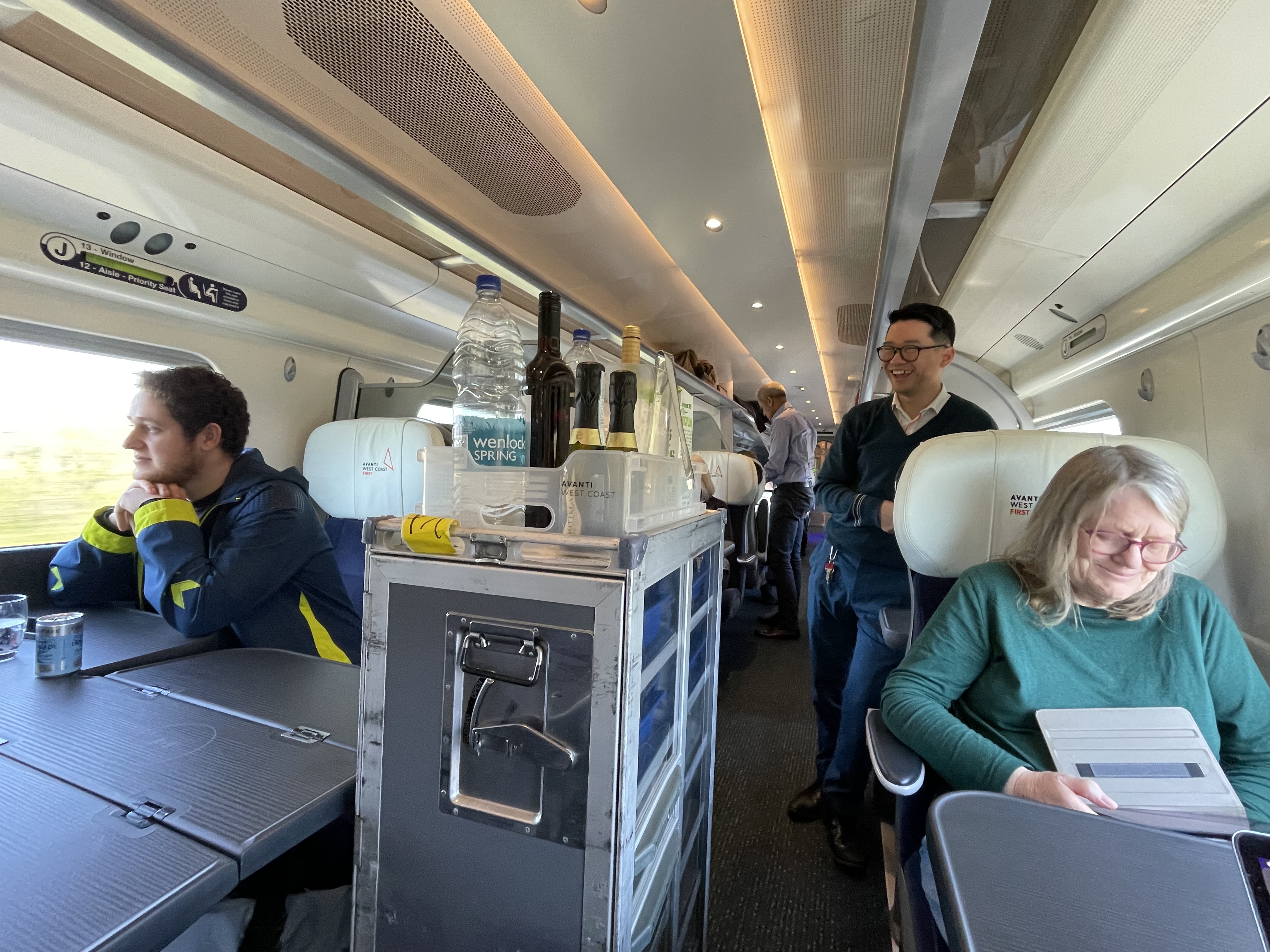
In U.K. heading for Wales on train to Manchester…. Restoring faith….. great guy serving drinks…. Most cheerful service since Romania…. Long chat about trains and service quality…. And….. our windows are properly clean (unlike TGV & Eurostar).
WhatsApp
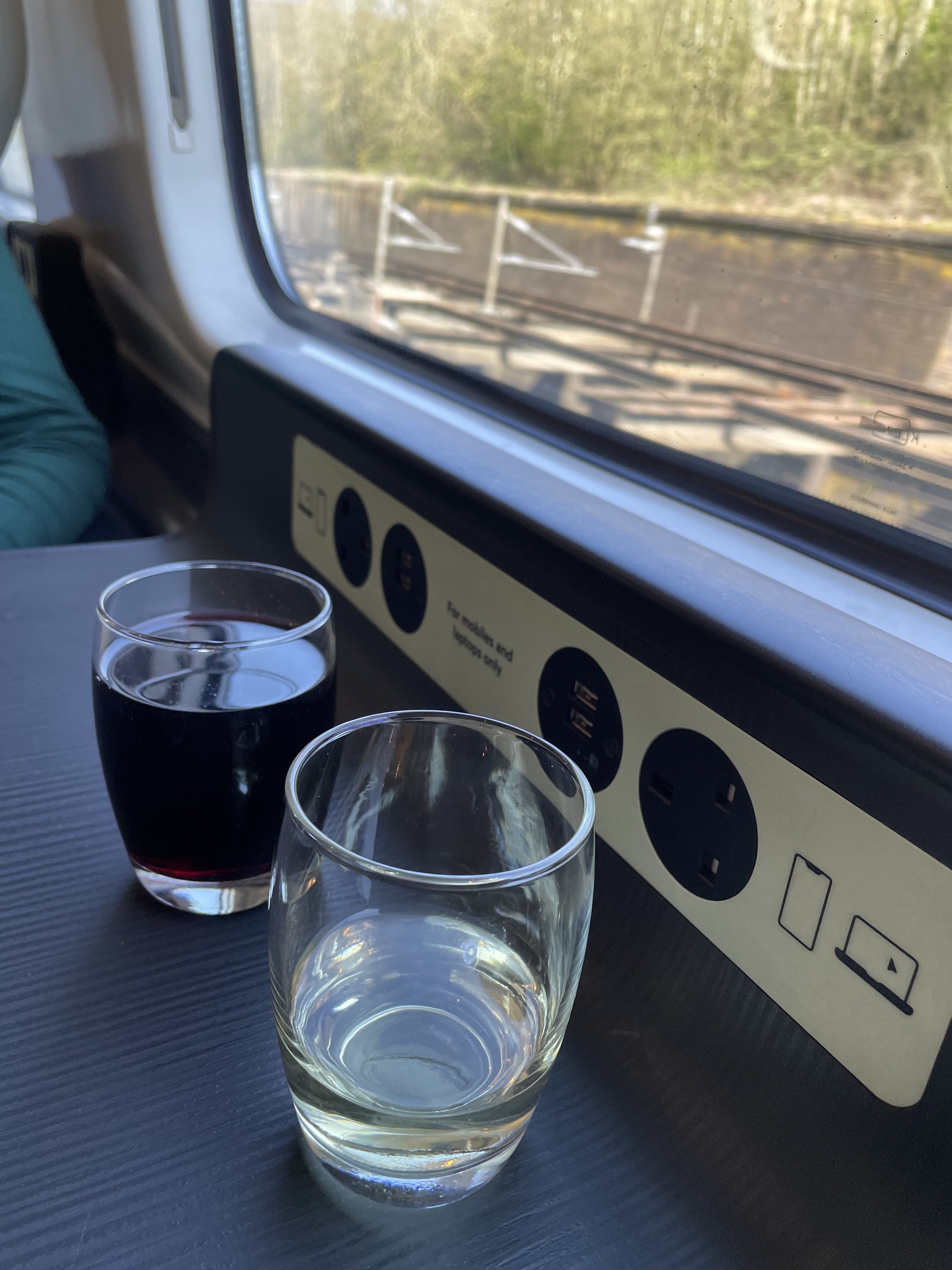
One nearly gone…. Another to go….. free drink as part of the ticket….. food on its way
Roaring through Rugby …..One of the best train meals we’ve had….

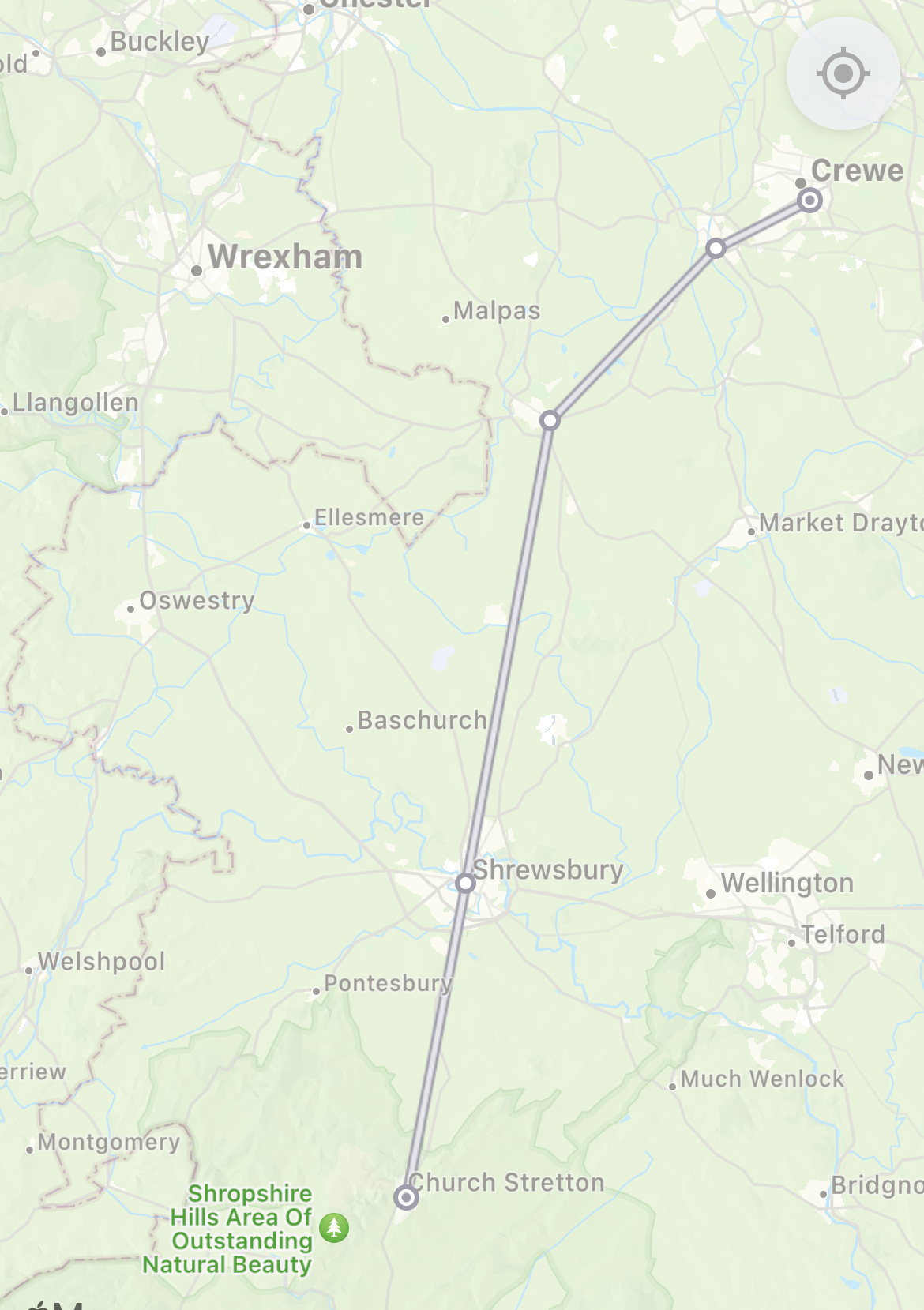
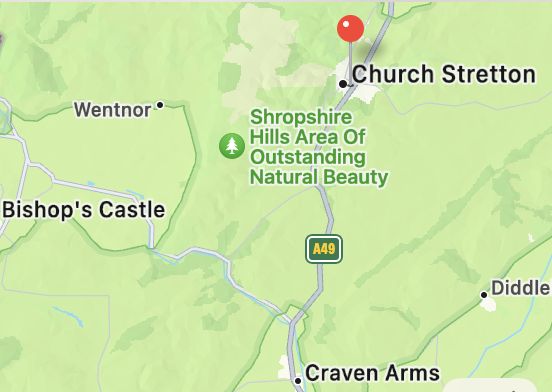
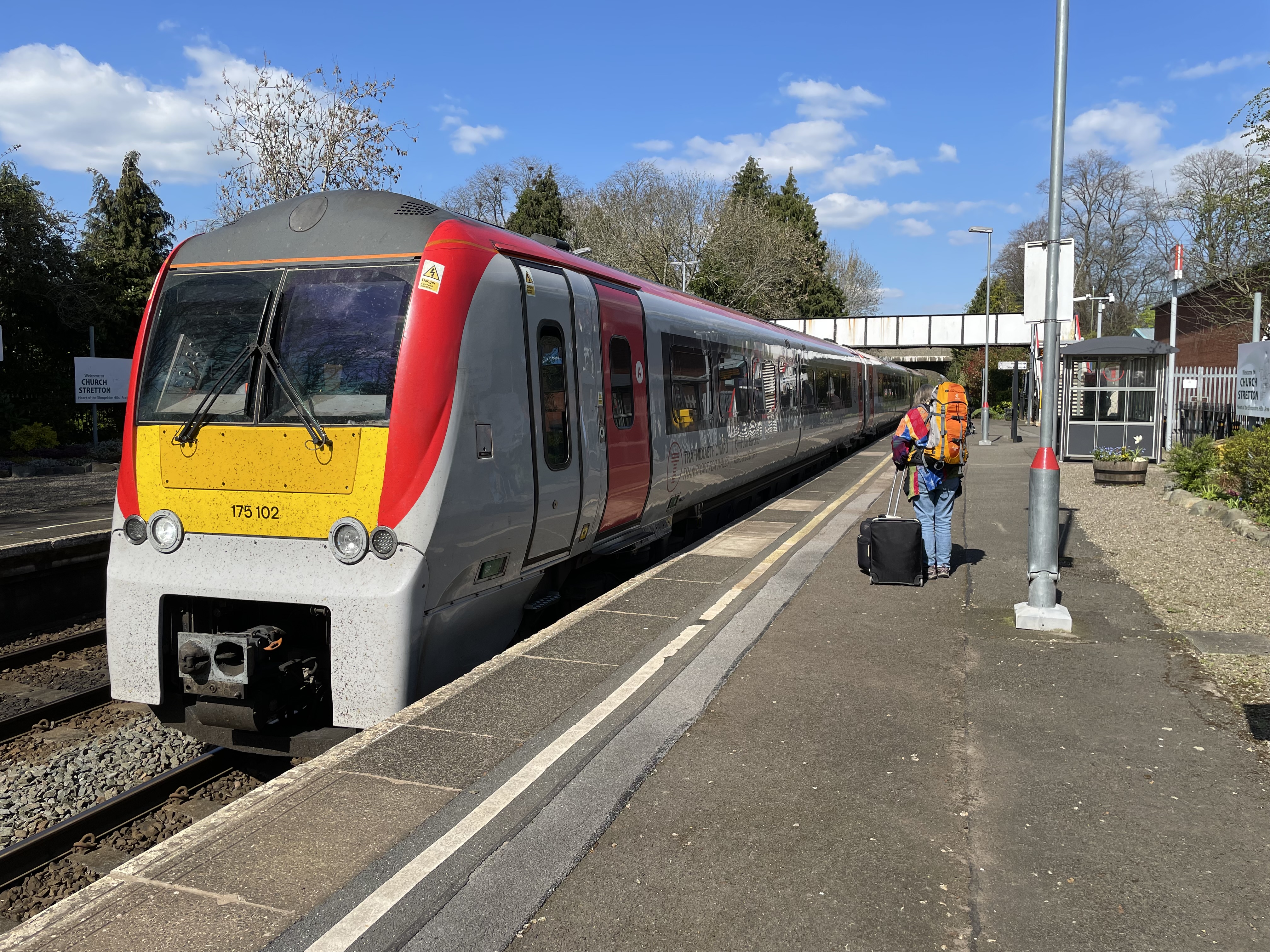
Arrival, on time, in Church Stretton
Collect car
Go home.
 Inspirational Pathways