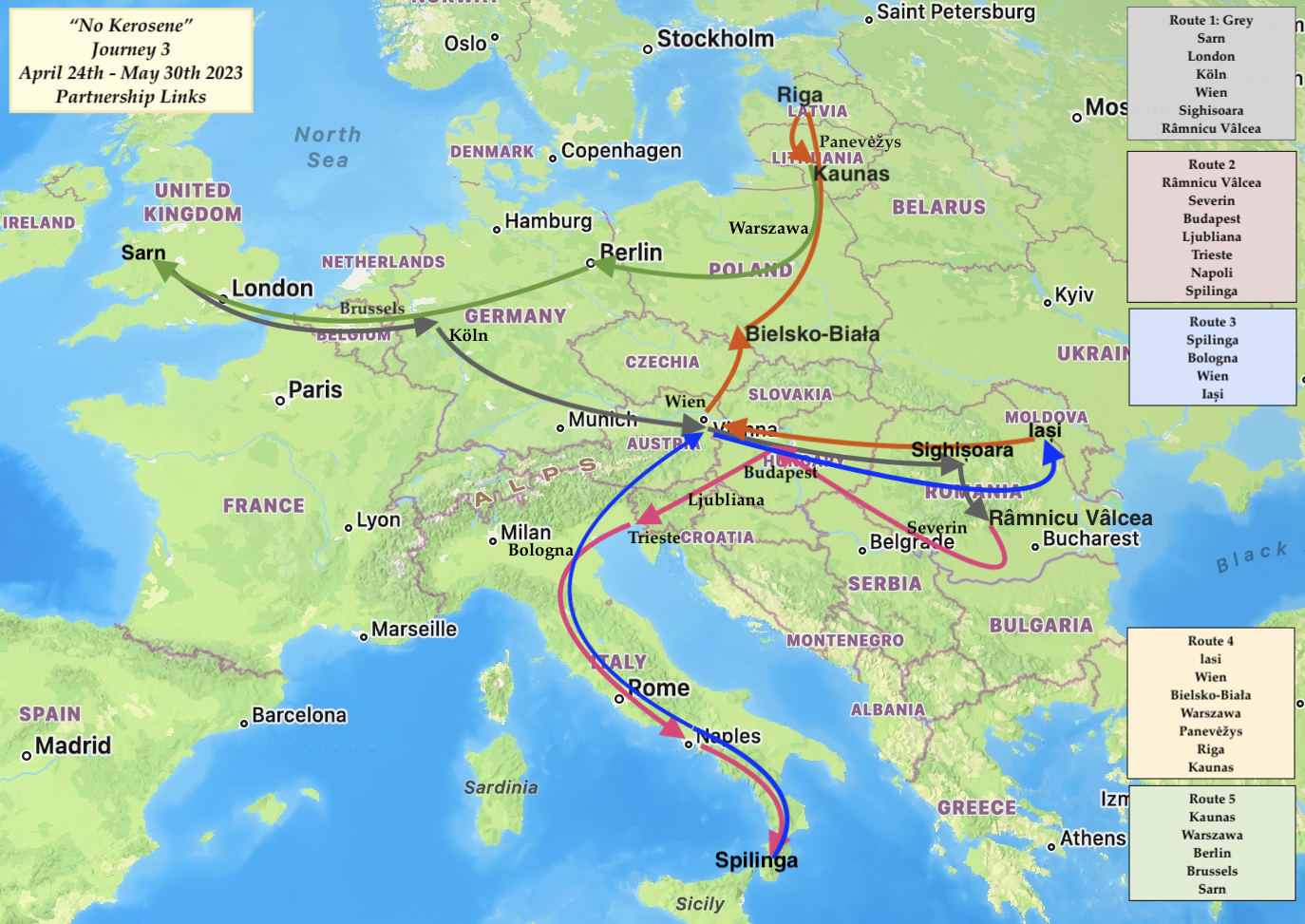
The No Kerosene Tour occurred during March, April & May 2023.
Three journeys made by rail & connecting ferries & buses visiting friends & partners with whom we’ve worked since 1990
……………………………………………………………..
THE INTENTION
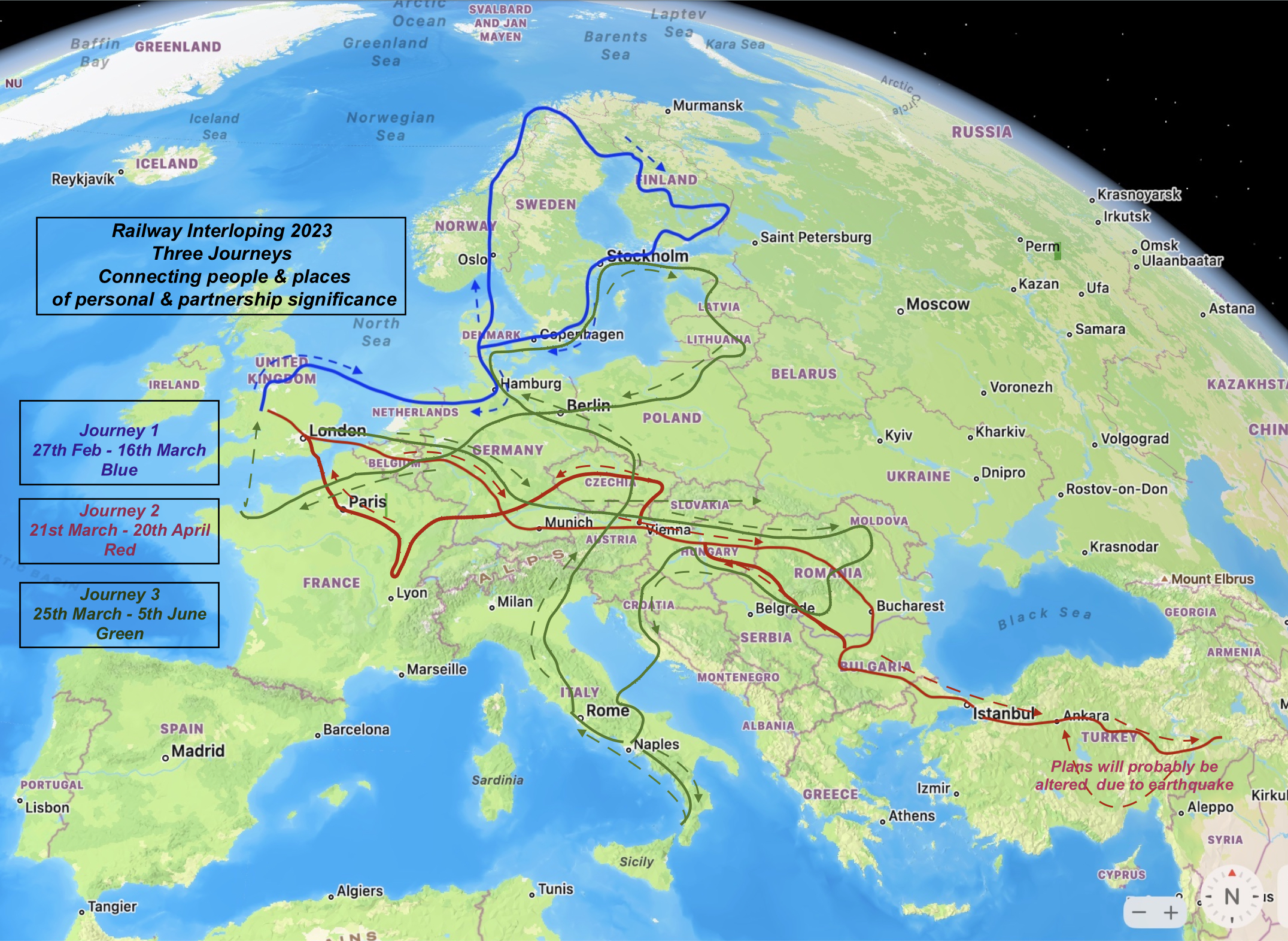
THE REALITY
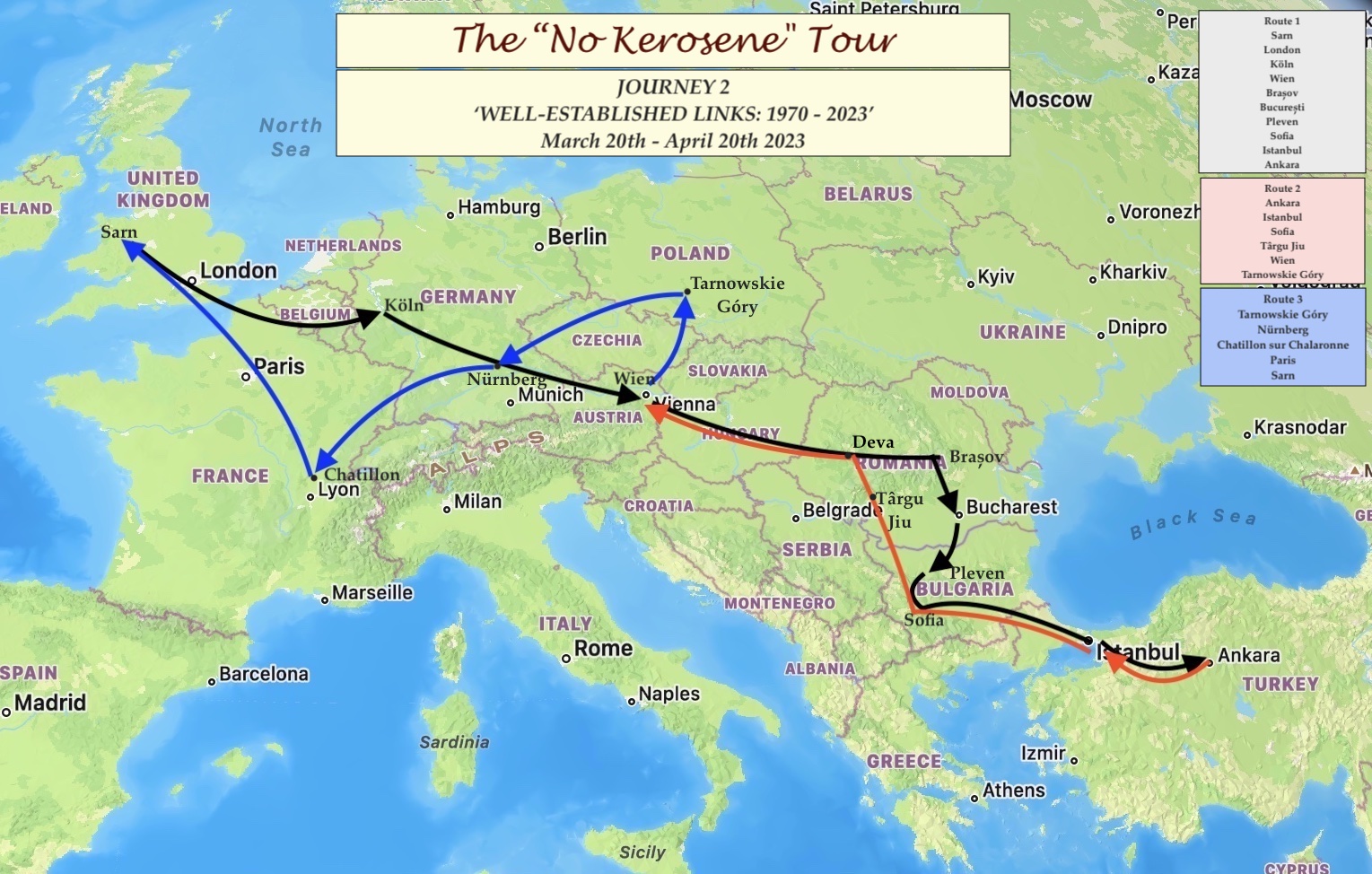
Apart from Journey One, the above routes, whilst covering most of the same places and people, were changed.
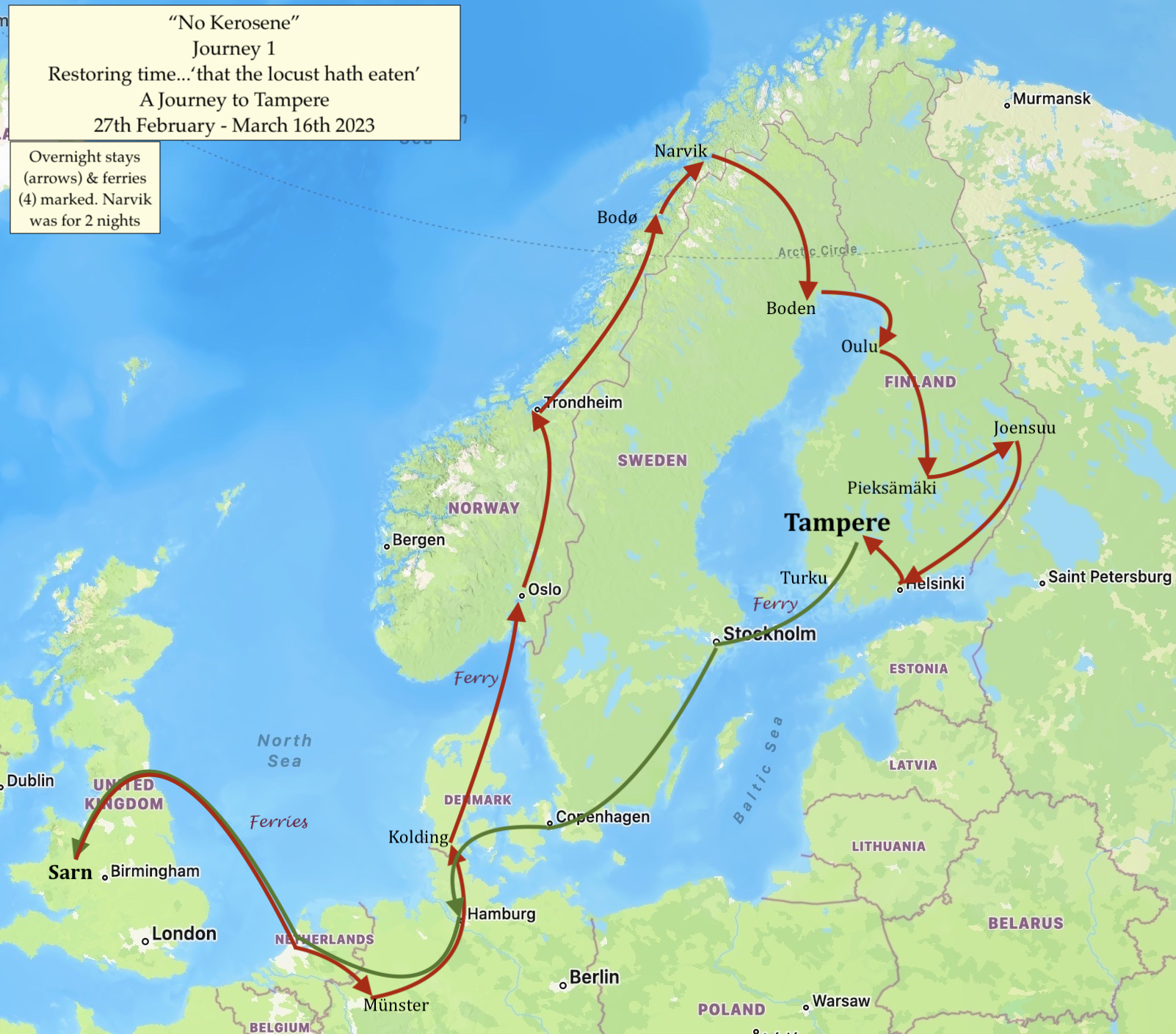
First Journey
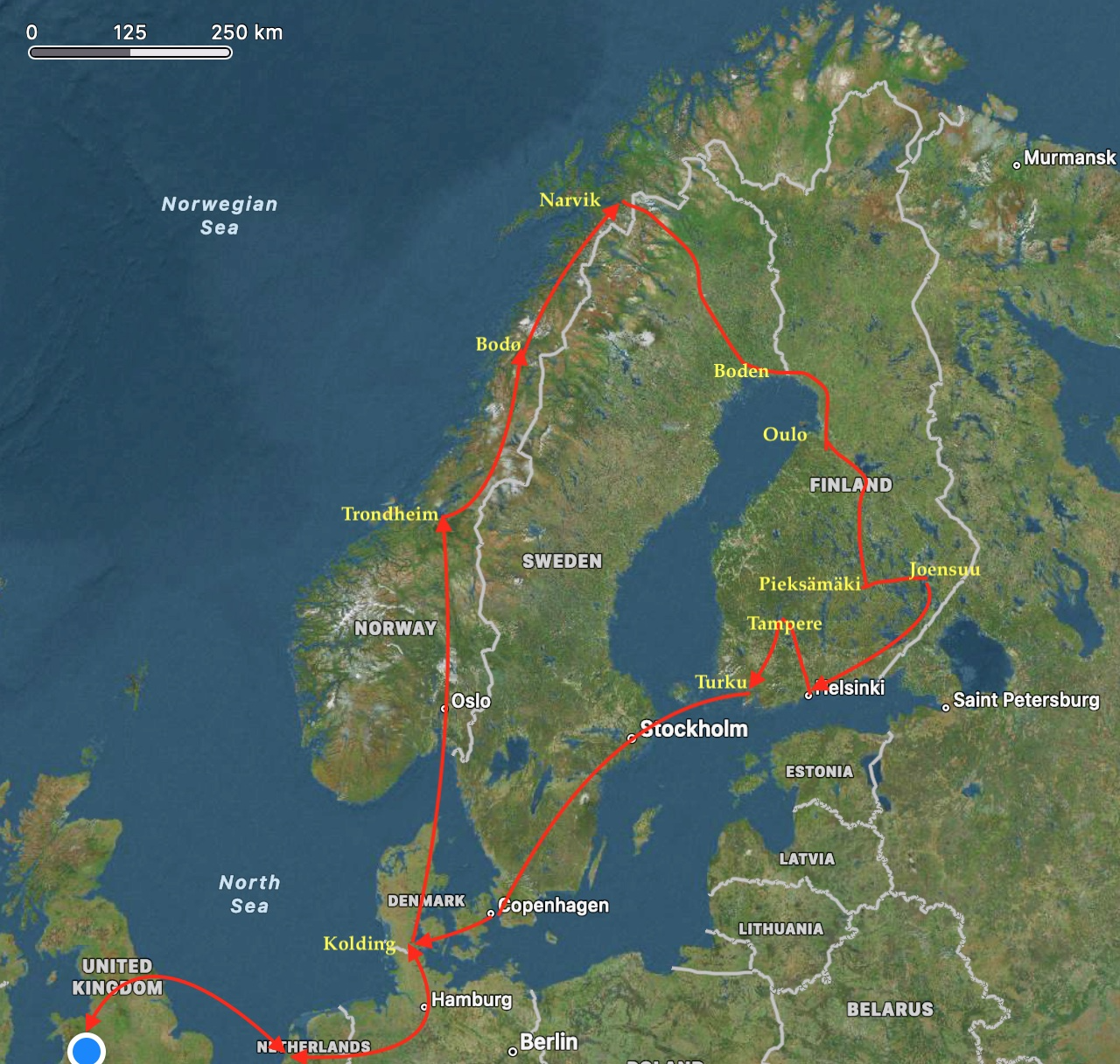
A circuitous Route to Tampere
Memories & photos pieced together.
February 27th – March 16th 2023
Leaving North Shields on the River Tyne
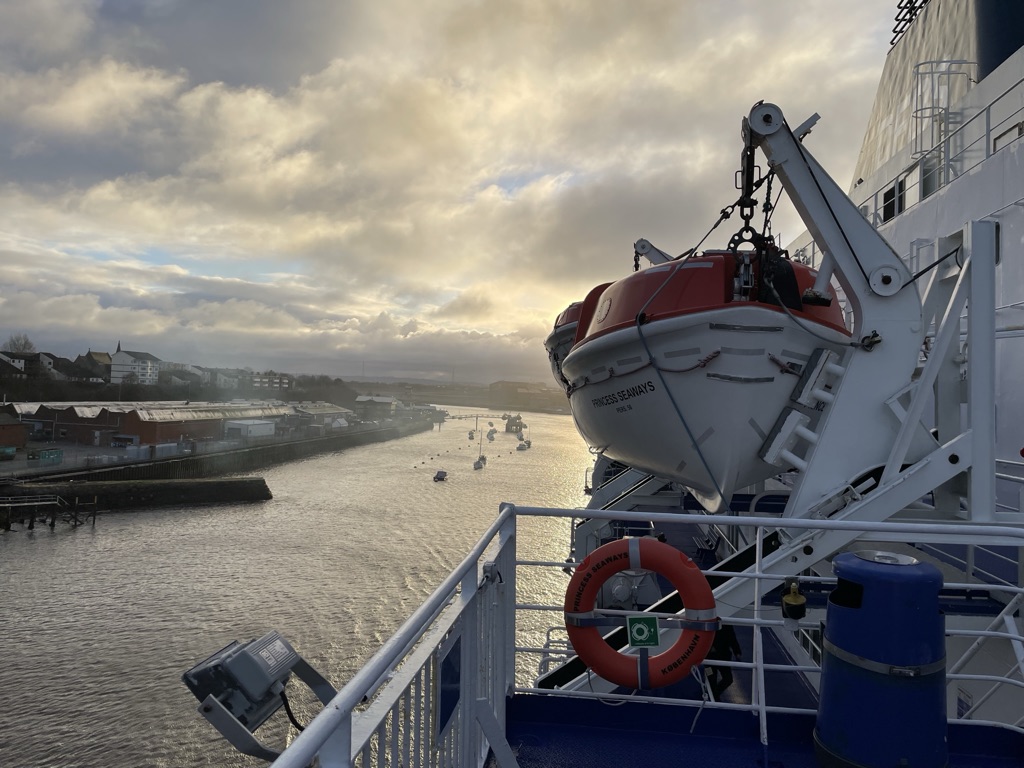
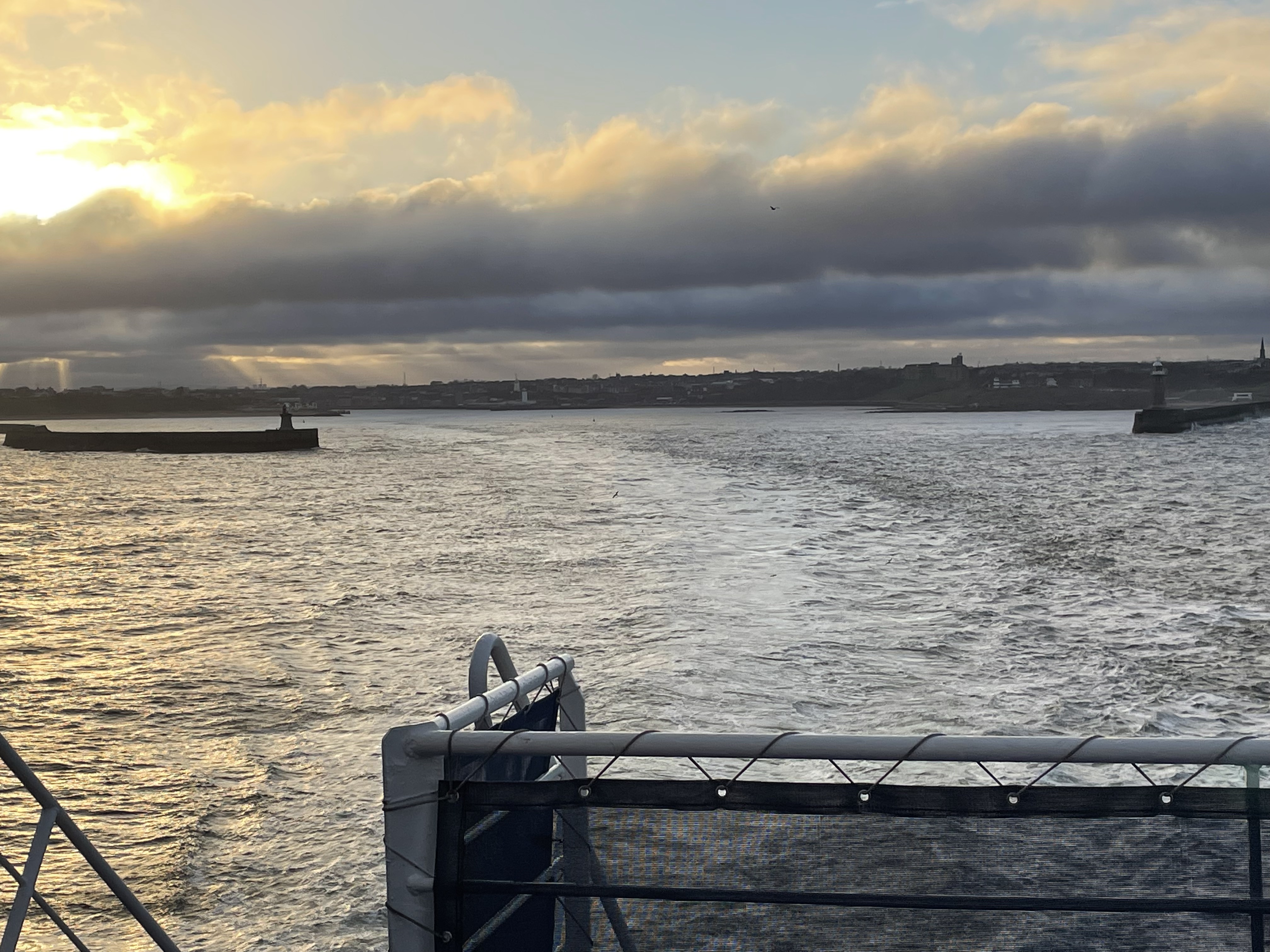
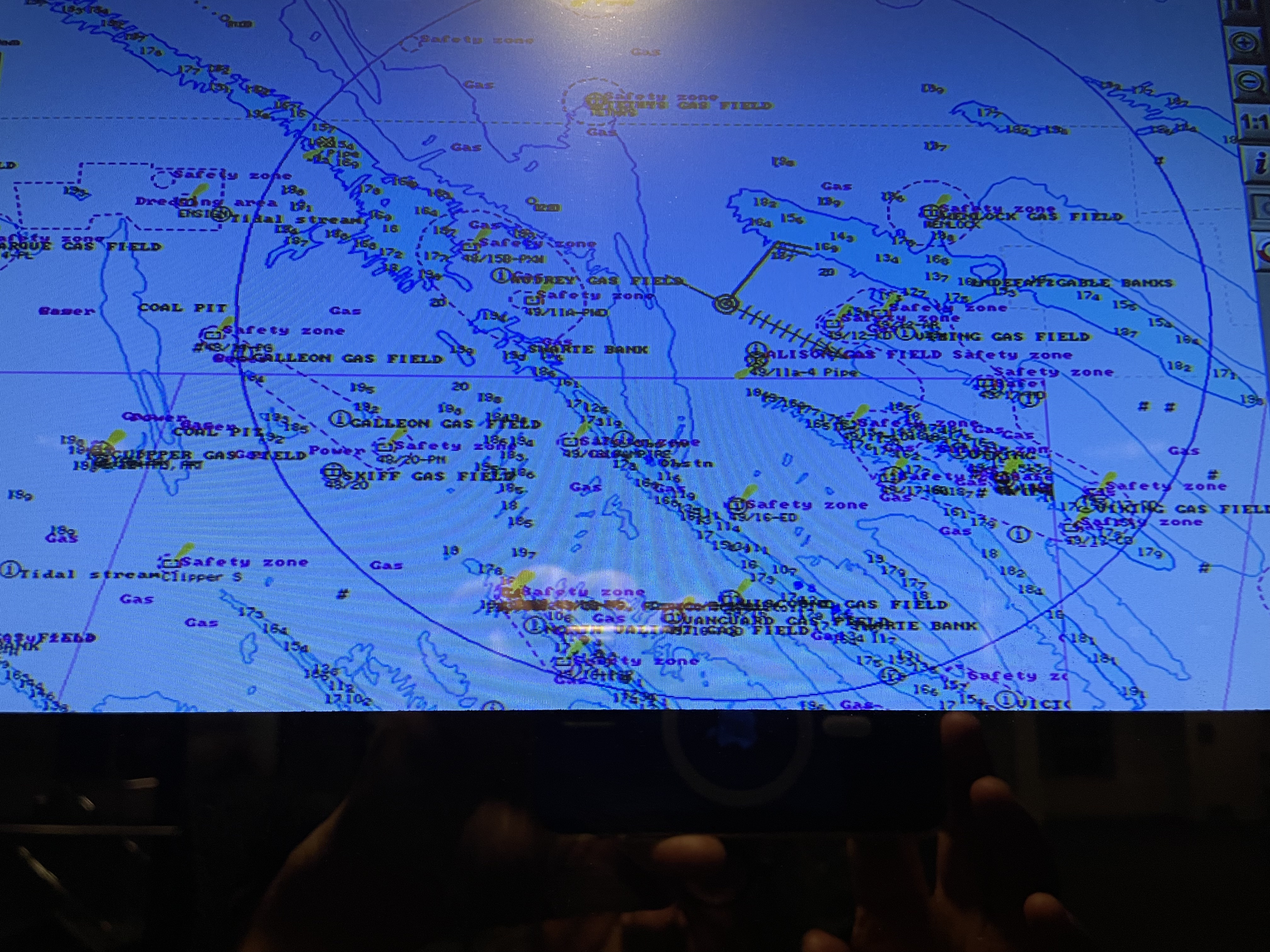
Galleon Gas Field
The ferry sailed parallel to the English coast until resting for a time, during the night, off the town of Grimsby.

Amsterdam
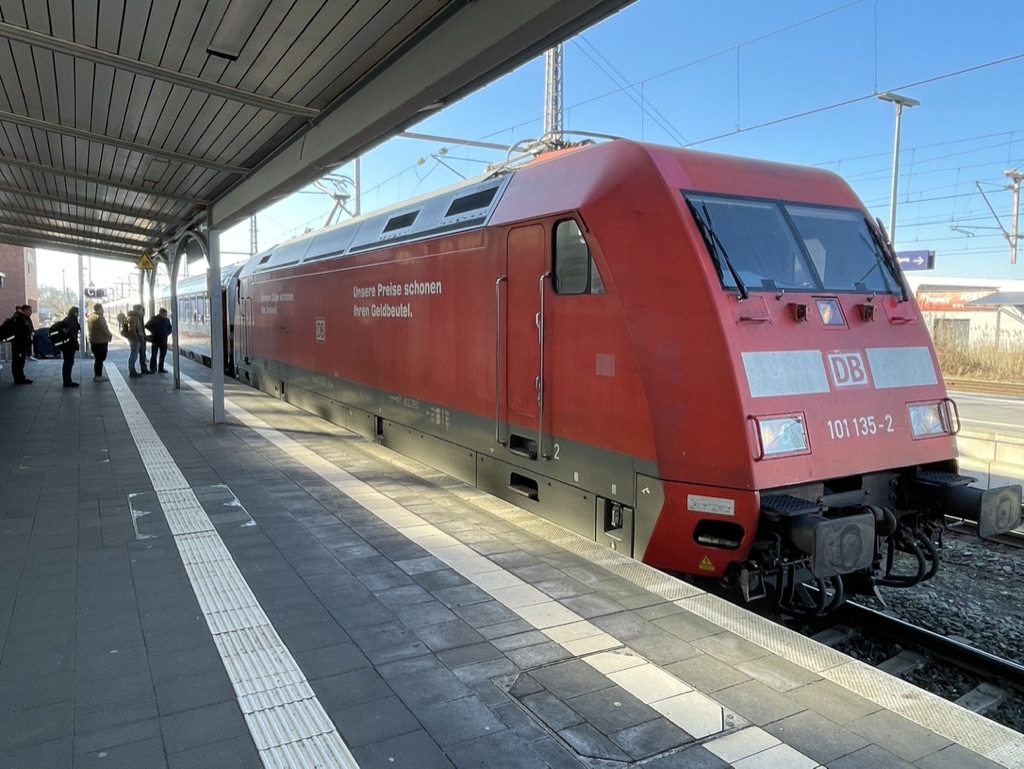
Train across the Netherlands to Münster in Germany.
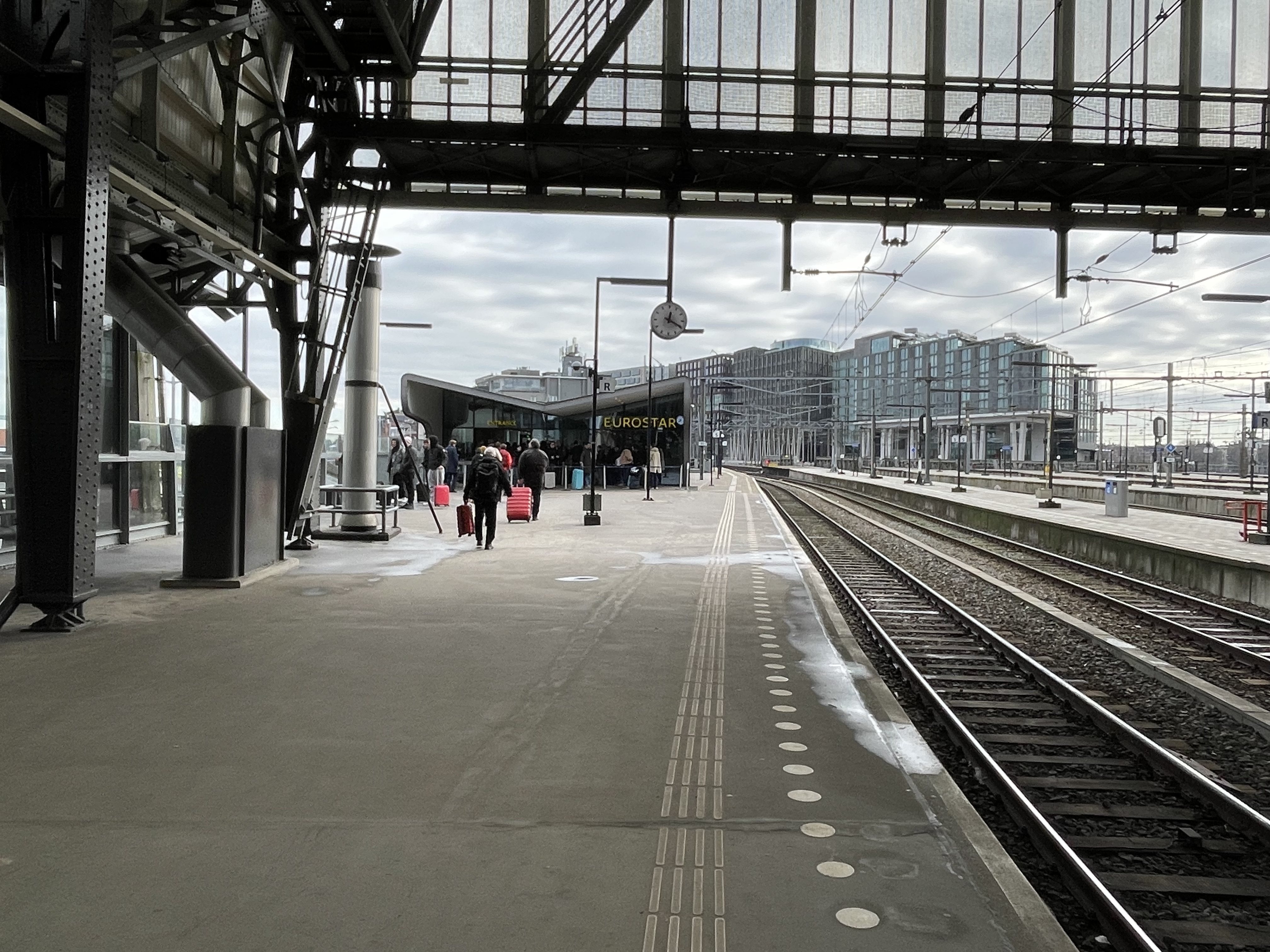
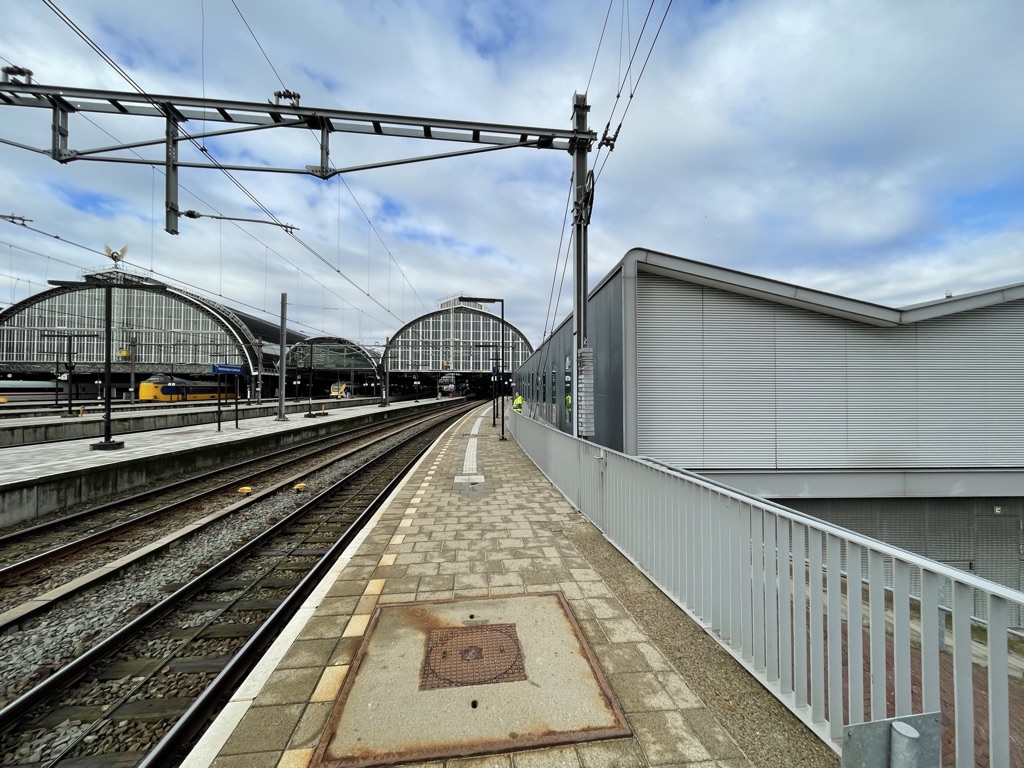
Amsterdam now has a direct Eurostar connection with London….. but to use it requires a wait in what seems like a box attached to the end of a platform at the end of the Central station. Rather appropriate given the largely English (not ‘British’) ‘Brexit Desire’ to be separate from its neighbours.
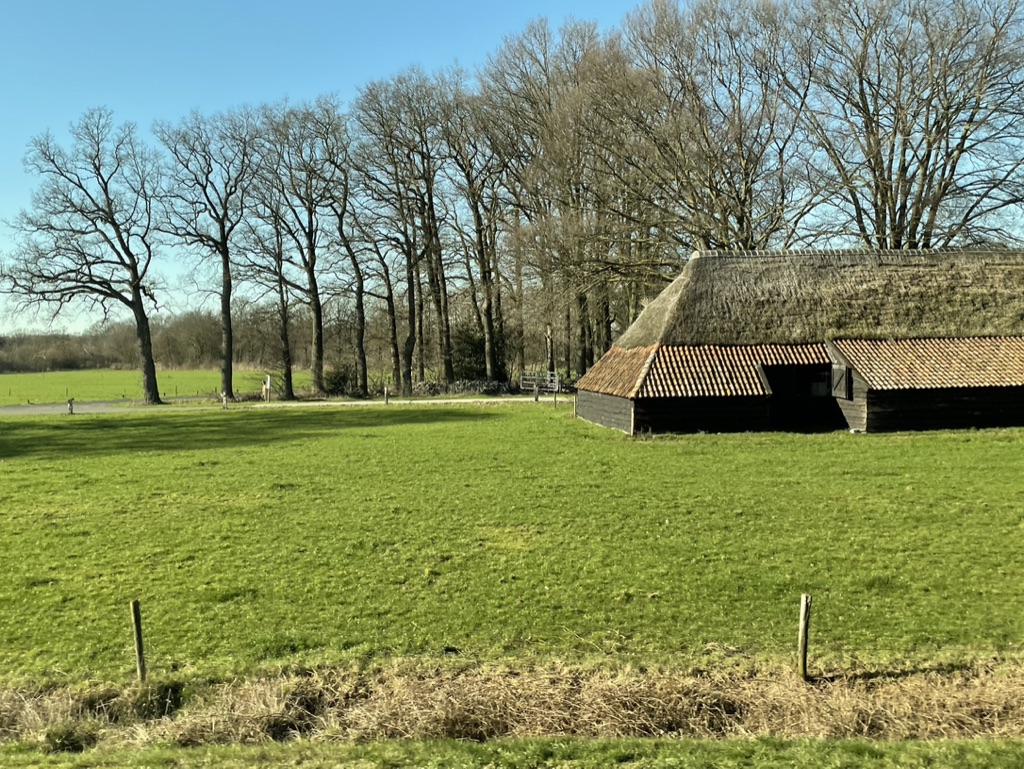
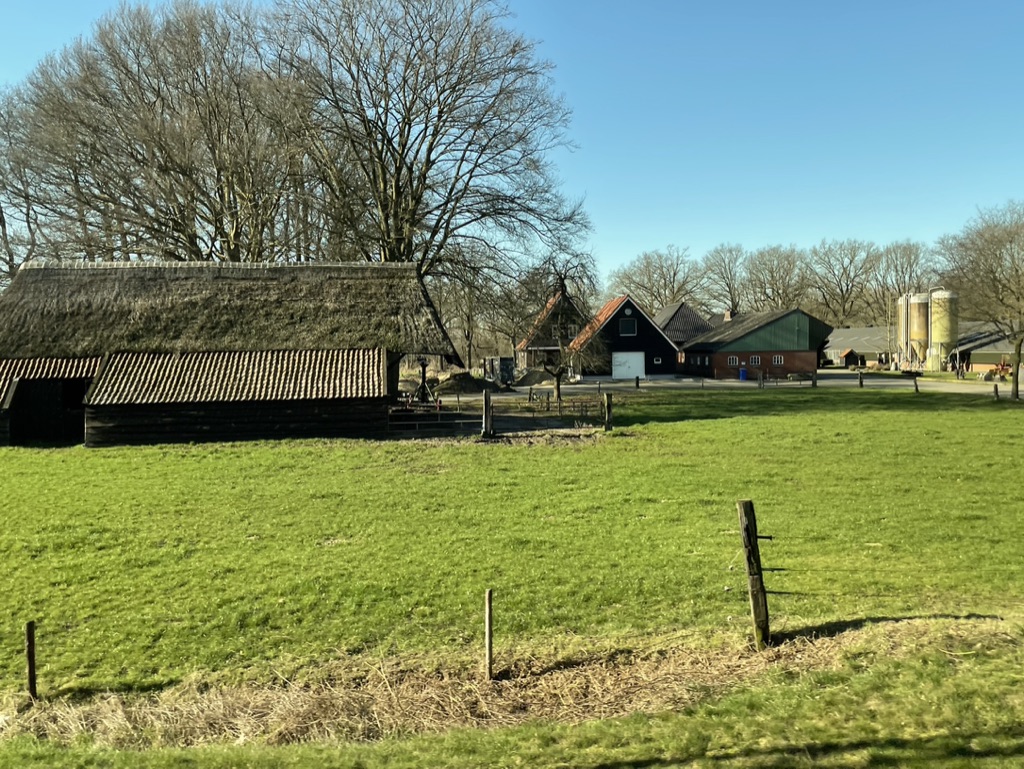
Landscape in eastern Netherlands.
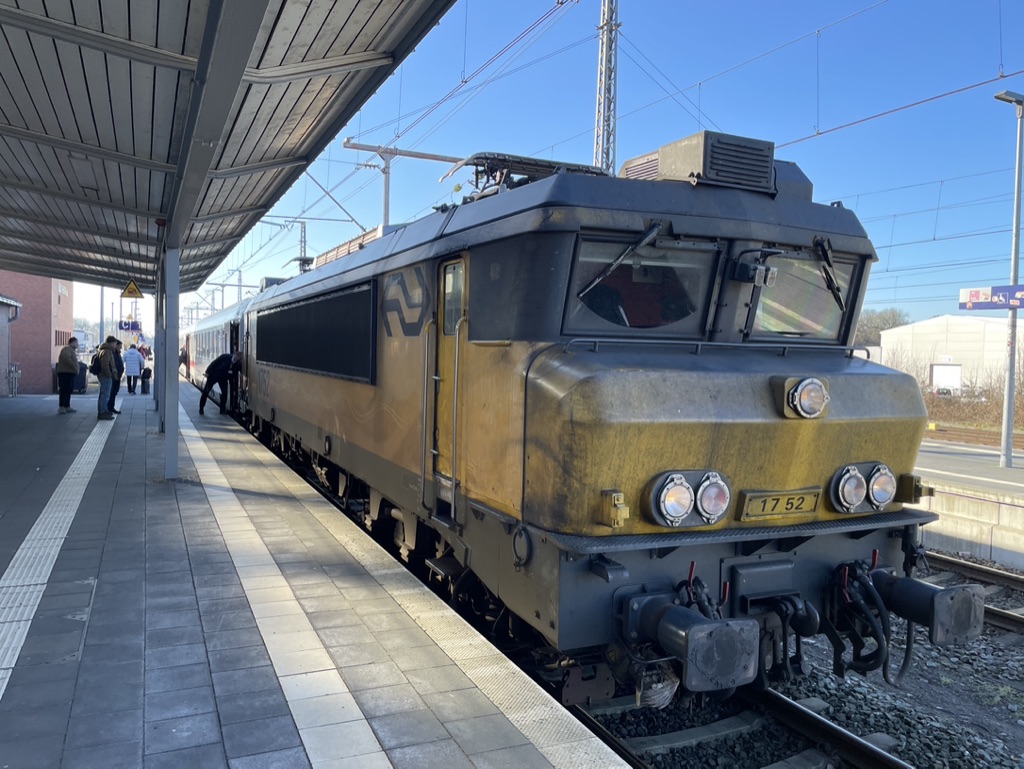
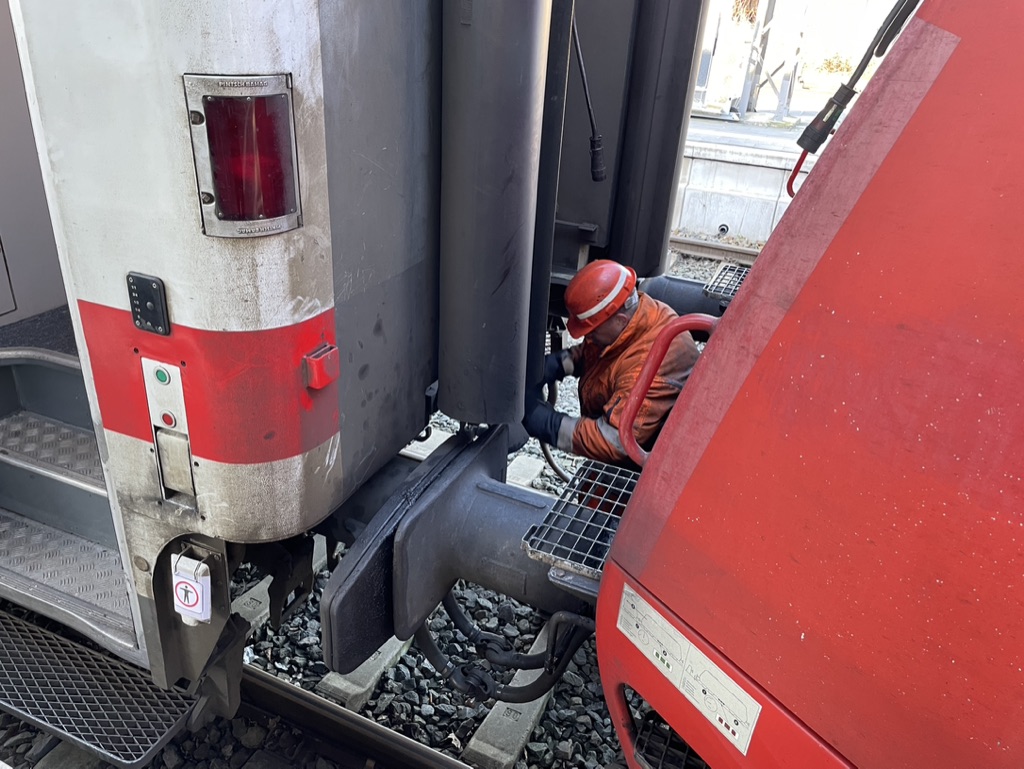
Entering Germany and change of engine (different electrical power systems)
Münster
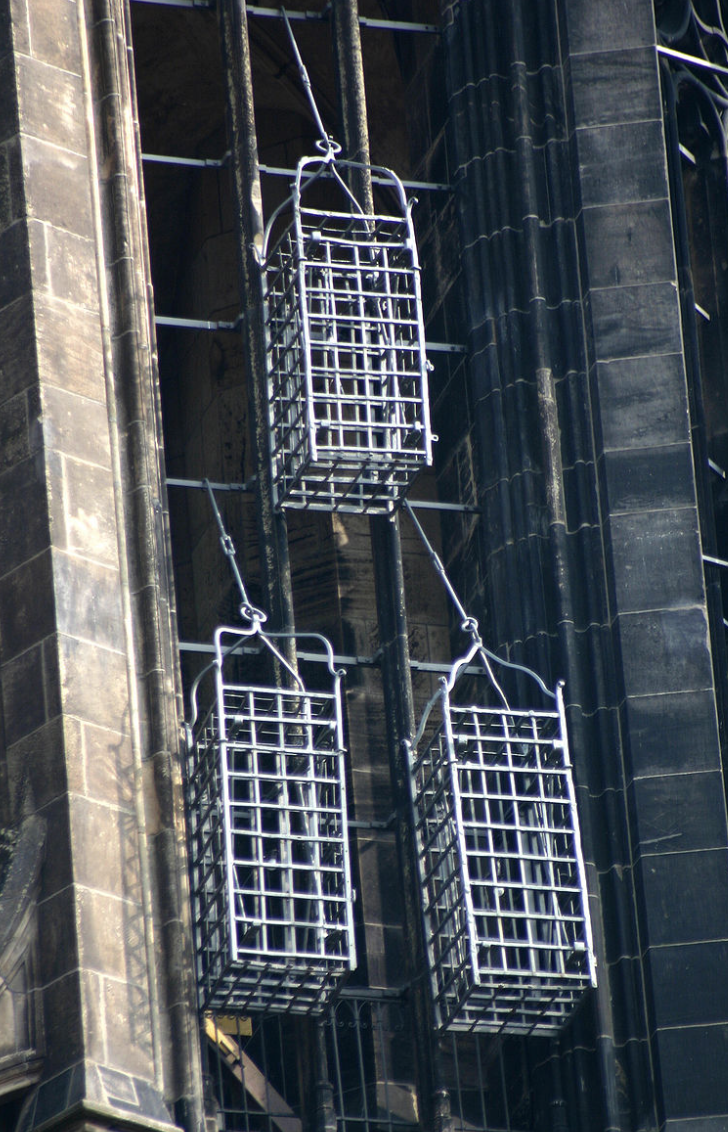
St Lambert’s church from which, following the failure of a revolt, the bodies of John of Leiden & others were hung in cages following their prolonged torture and death.
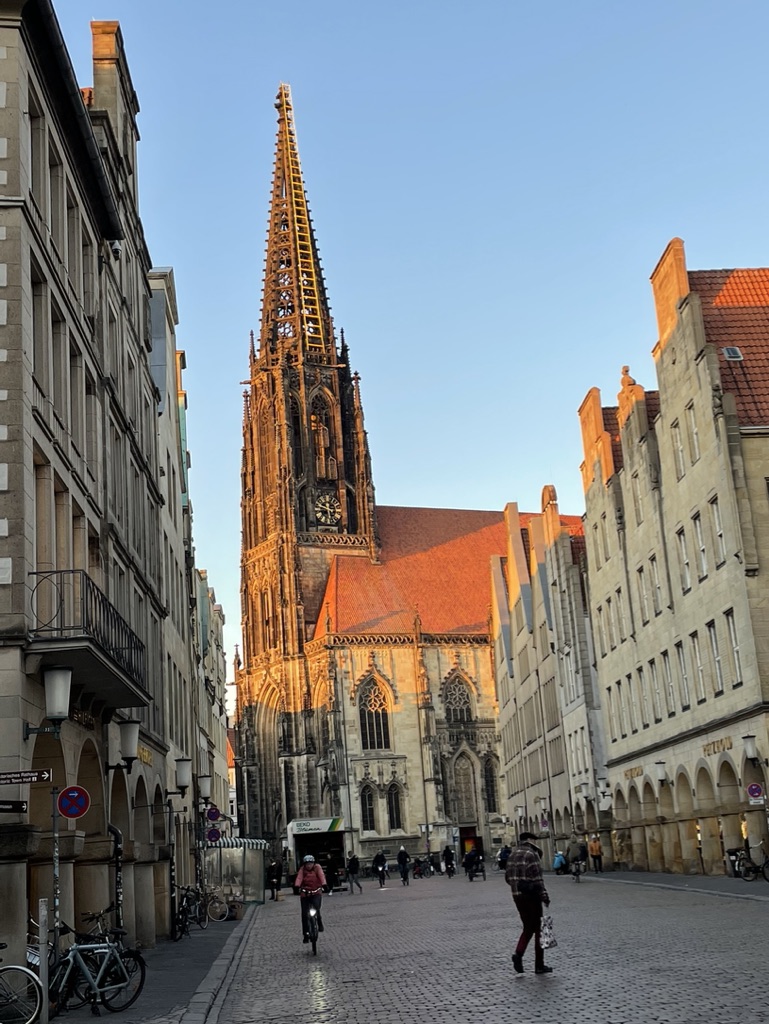
In 1534-35 they had established a ‘Millenarian’ communistic society in the city. They were defeated by the local Catholic Bishop who had laid siege to the city.
The original cages are kept in a local museum but replicas still hang from the church tower.
1st March
Dydd Gŵyl Dewi Sant (St David’s Day, Patron Saint of Wales)
Münster to Kolding through Hamburg (rapid change as the train was very late – a comment from much later in the tour suggested that in the last 10 years or so DB’s performance has declined)
At Münster the police are able to direct people (where necessary) to the ‘mission’ on the platform. Here they are provided with drink and food)

Entering Denmark: full passport check
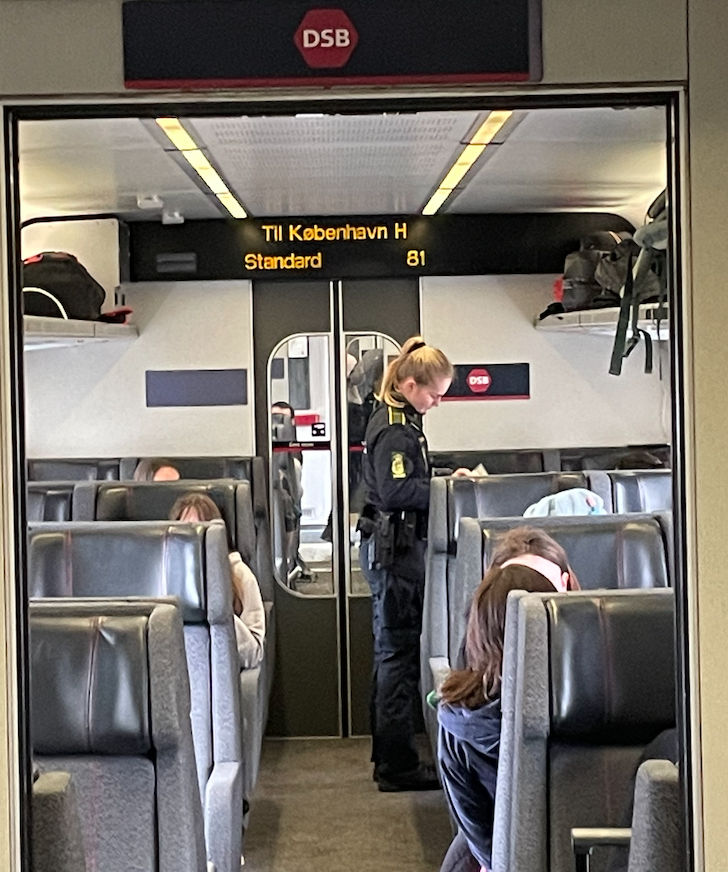
Most Danish express trains have a very particular appearance)
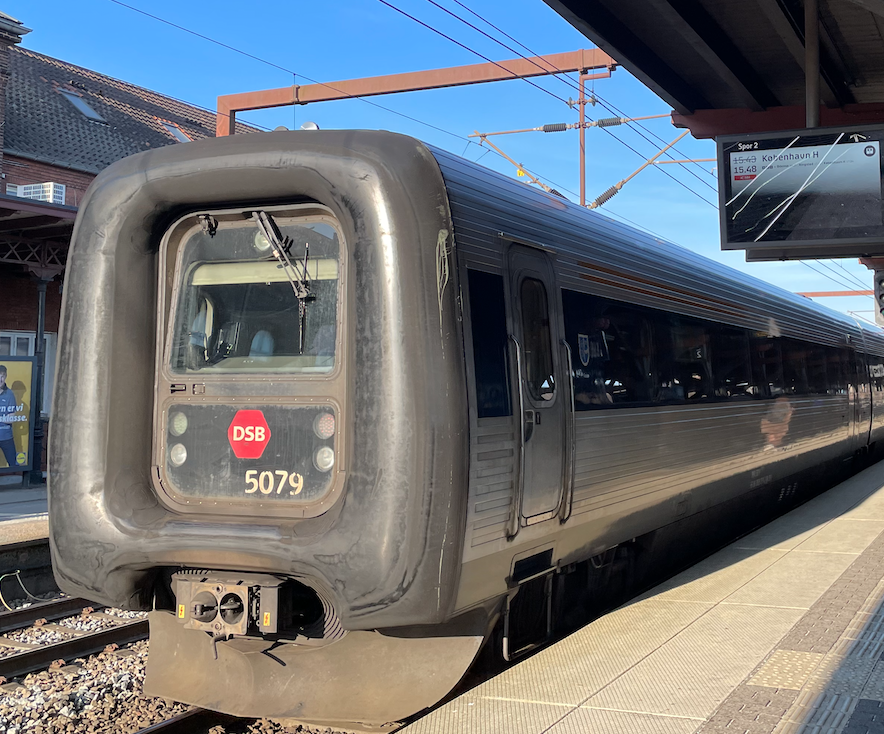
The Danish Railways “Flying Lamprey” – a type of train in use for nearly 30 years.

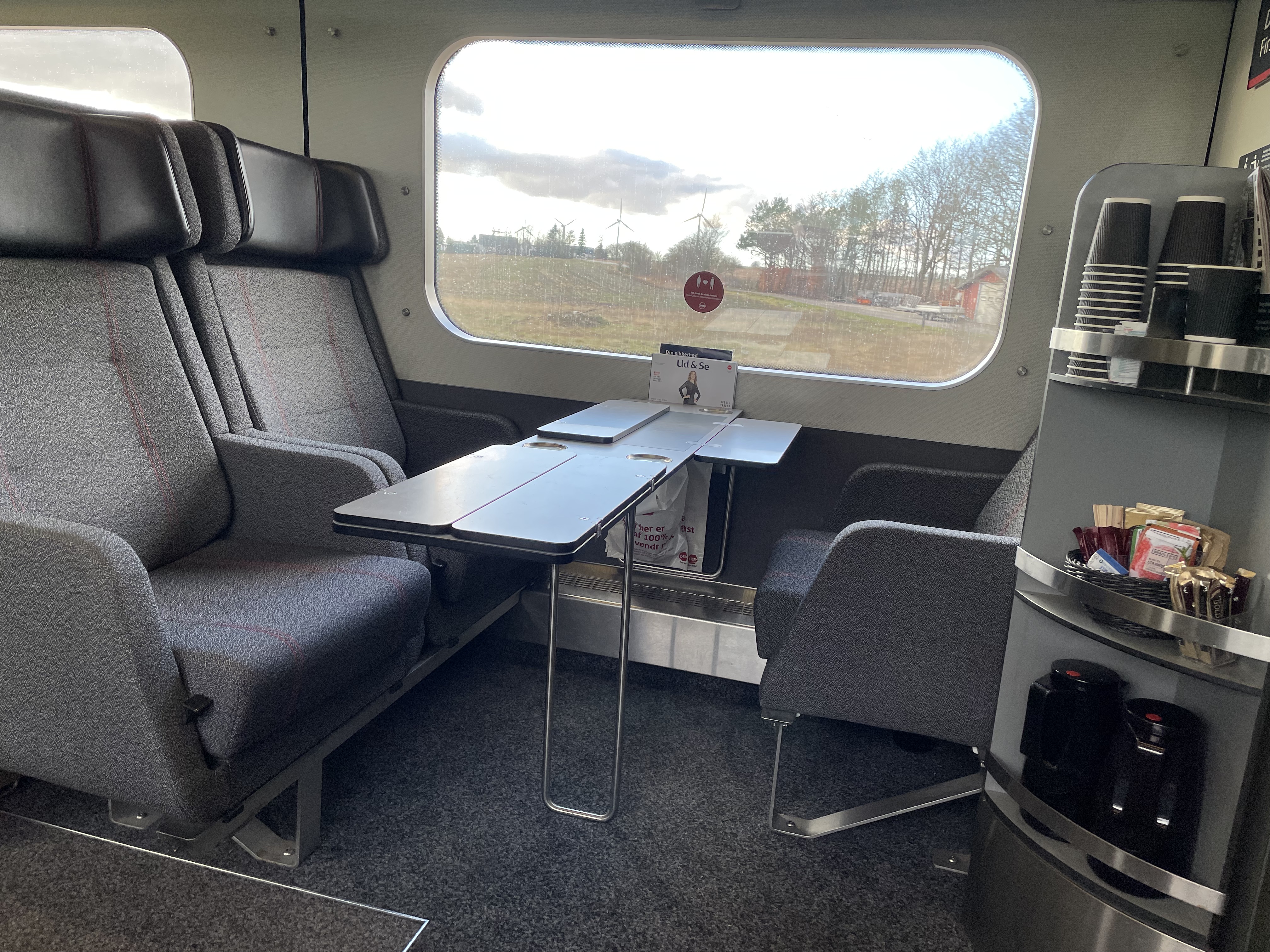
The seating design is very definitely ‘from another Age’ (but more comfortable than many more recent designs). This is first class – and the compartment provides a self-serve coffee & snacks service (but only after entering Denmark).
Kolding, Denmark
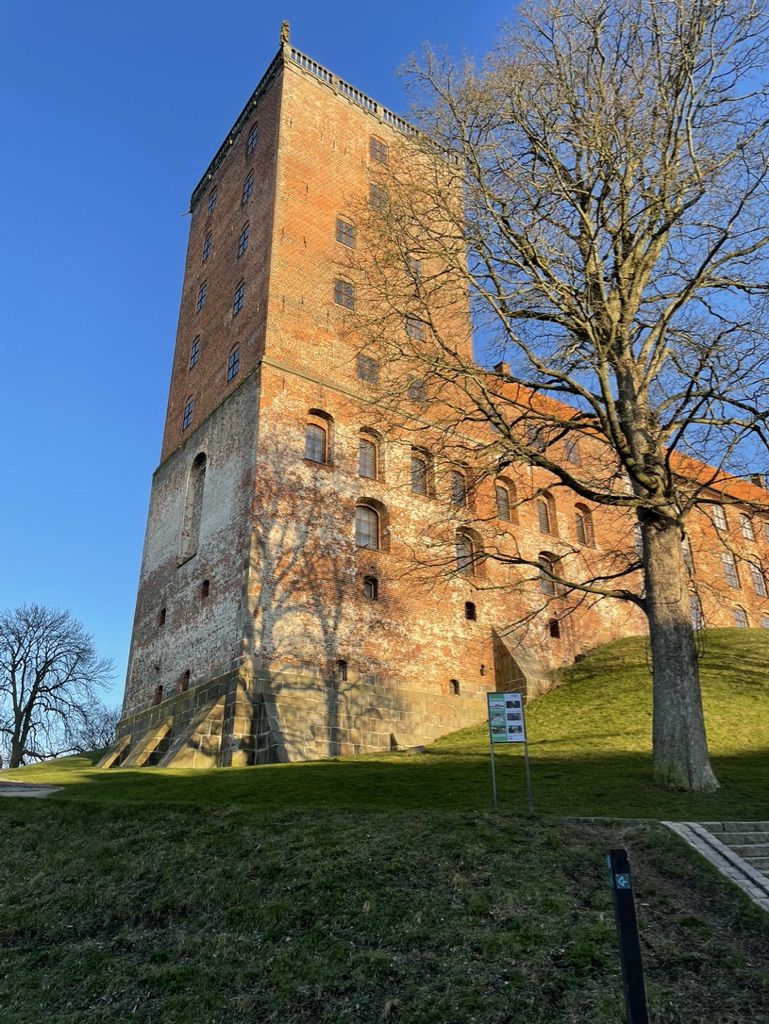
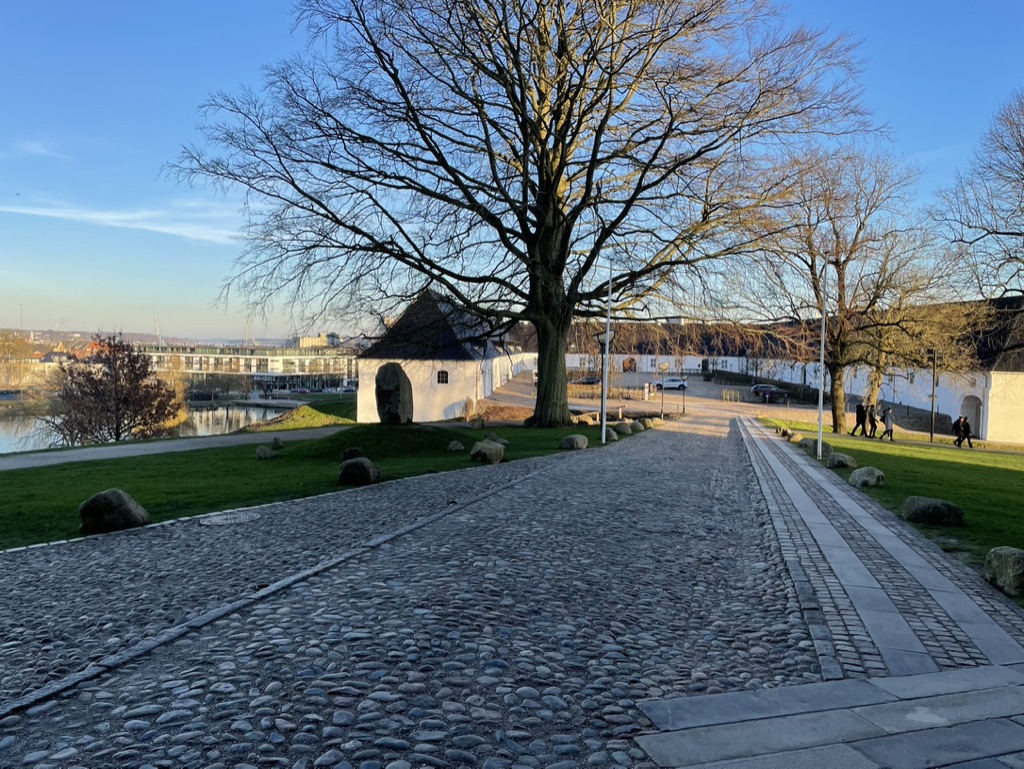
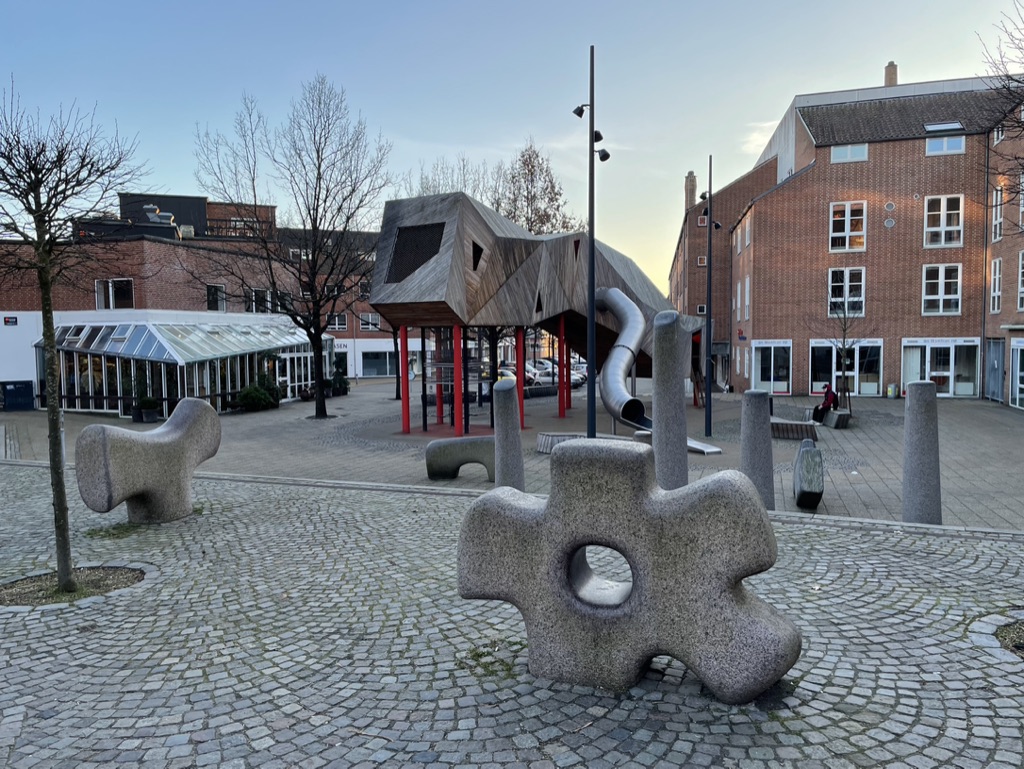
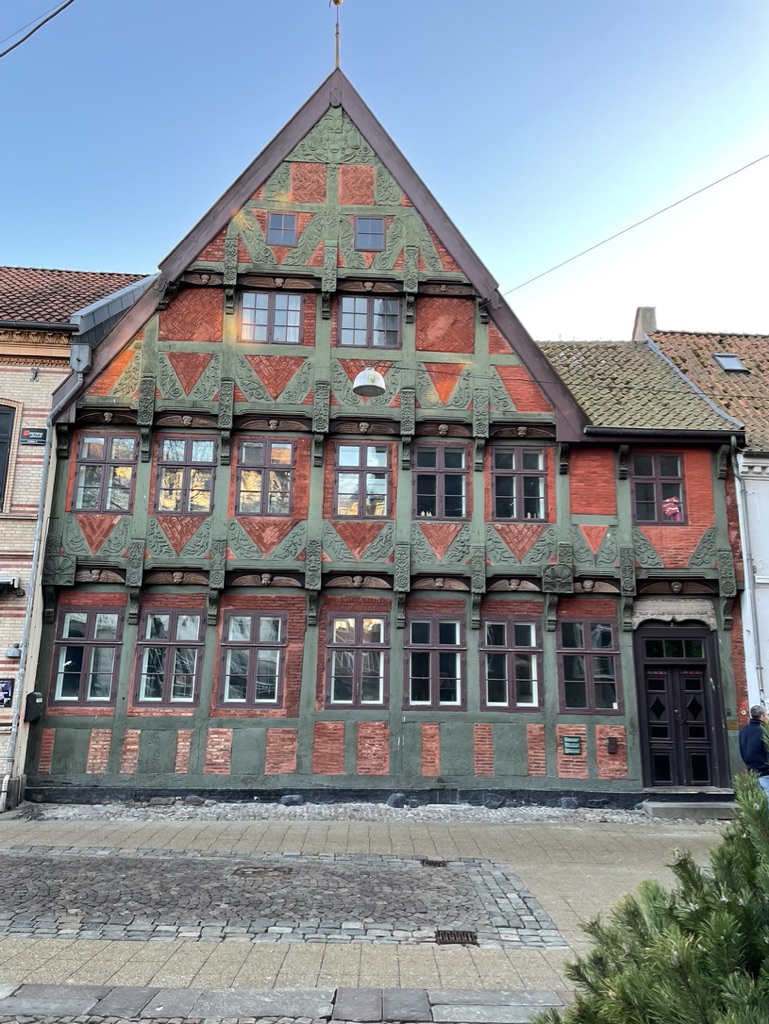
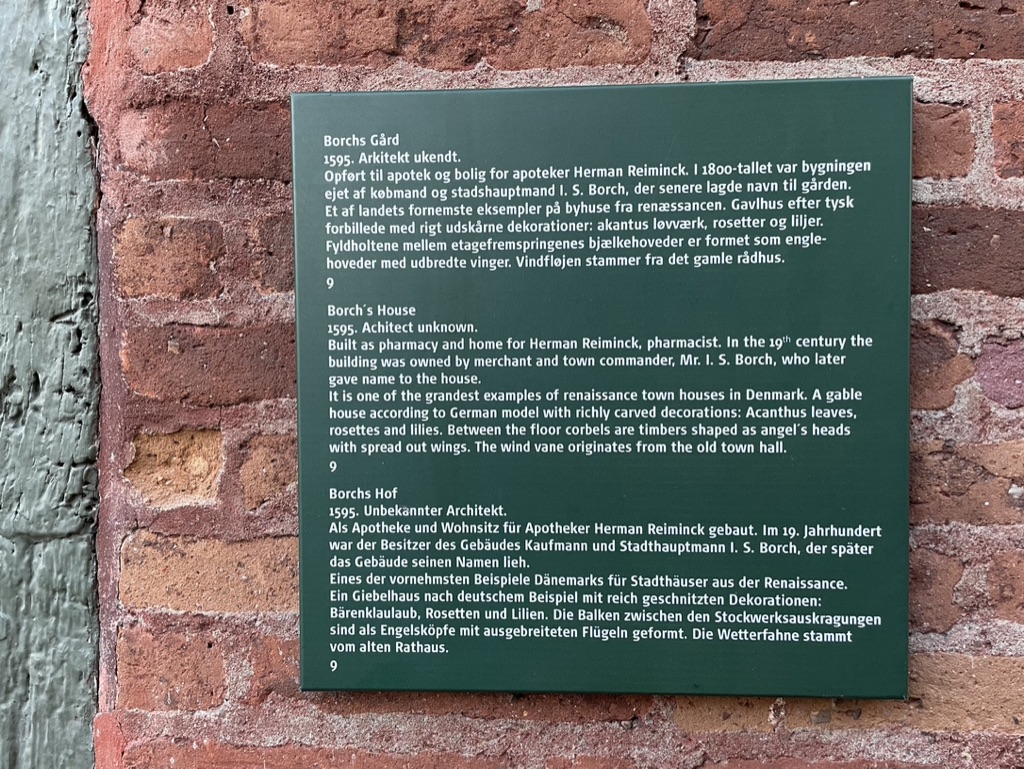
Kolding: Preening Rituals
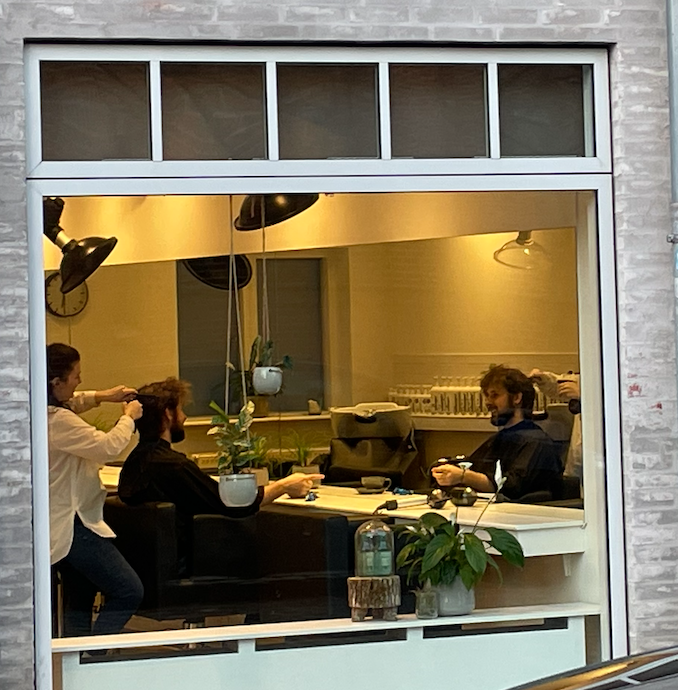
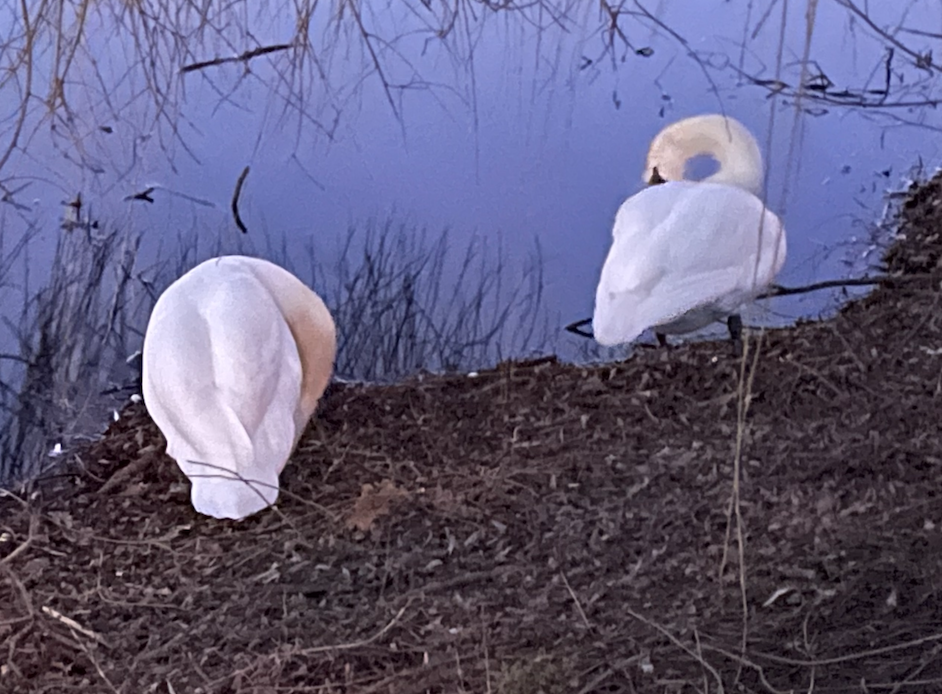
The idiosyncratic delights of personal hospitality (compared with standardised hotel chains)
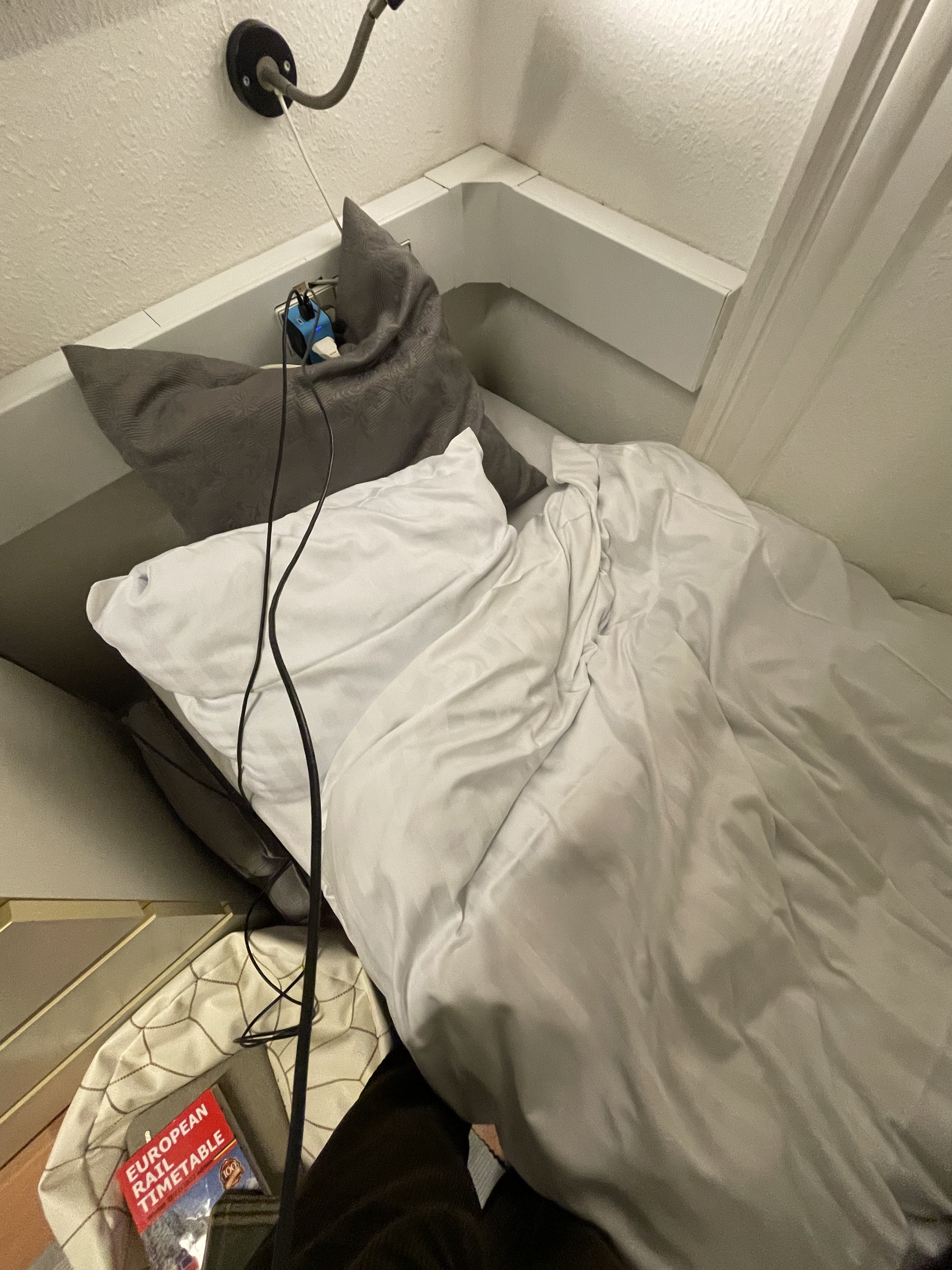
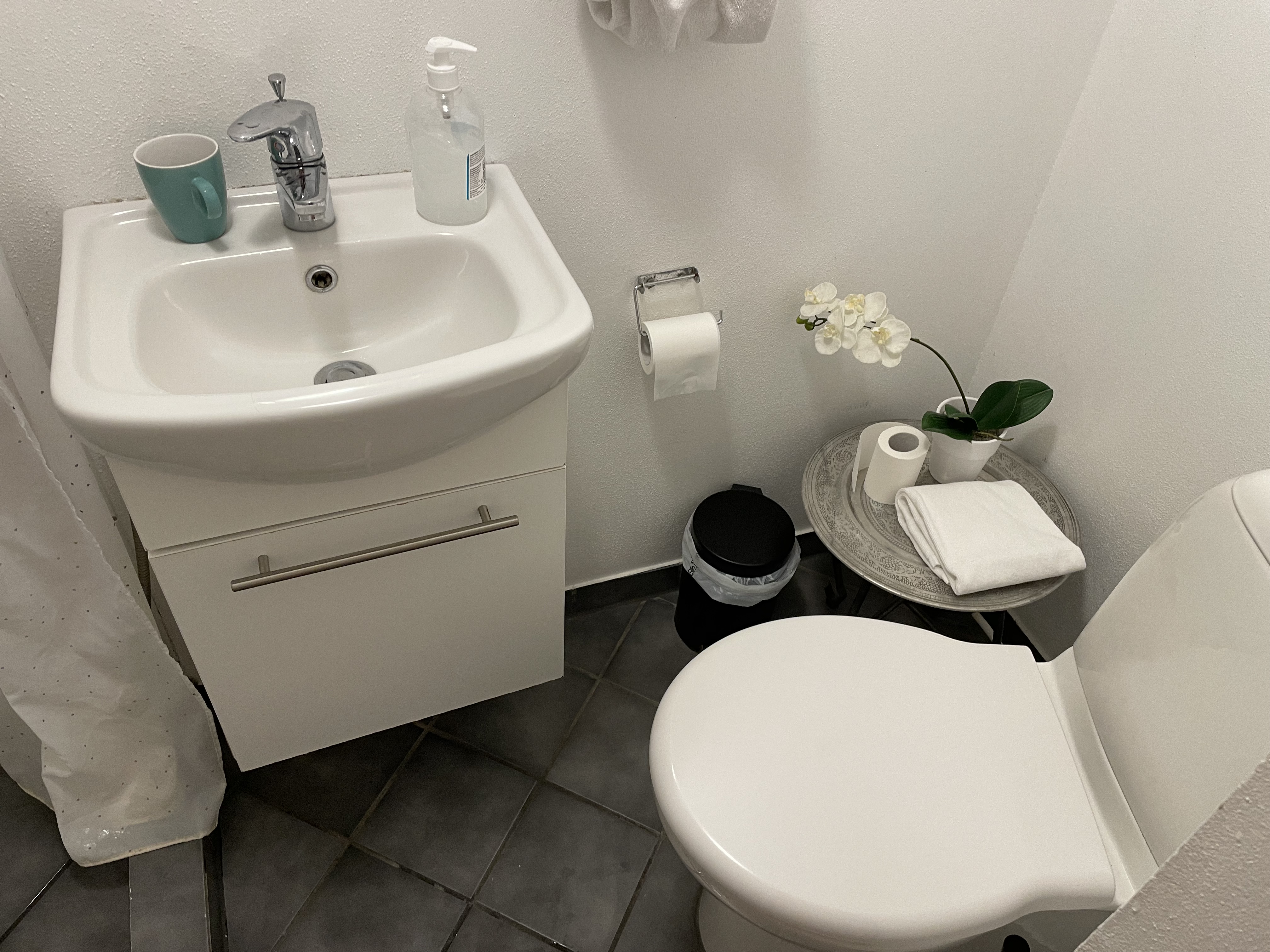
The safety value of extra pillows…..
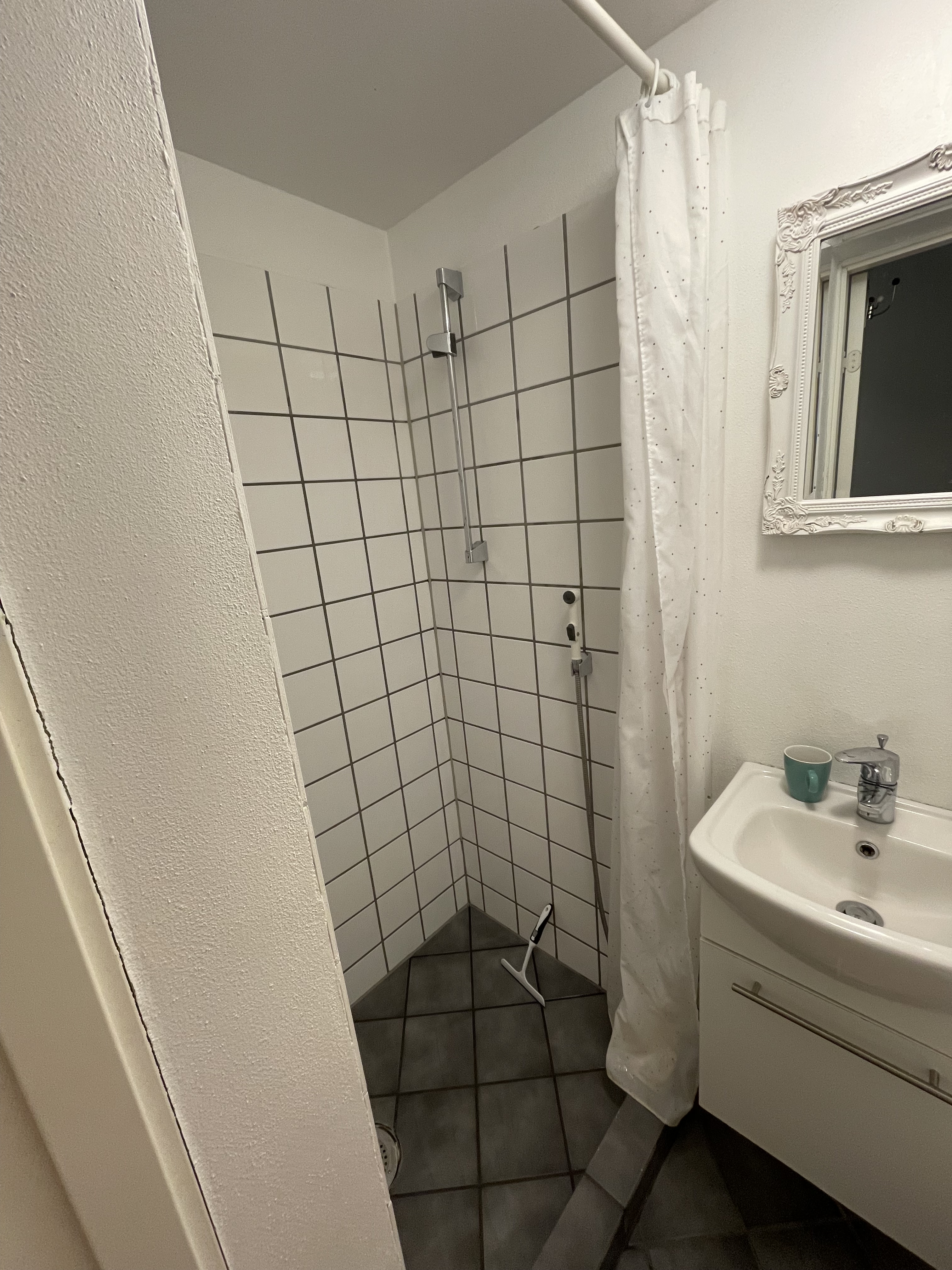
The ‘Dinky’ Shower head (which in use provided a very satisfyingly concentrated spray cf with the use broad shower head… the intended purpose of such showers is for cleansing of a lower orifice! ). It was directly connected to the basin supply.
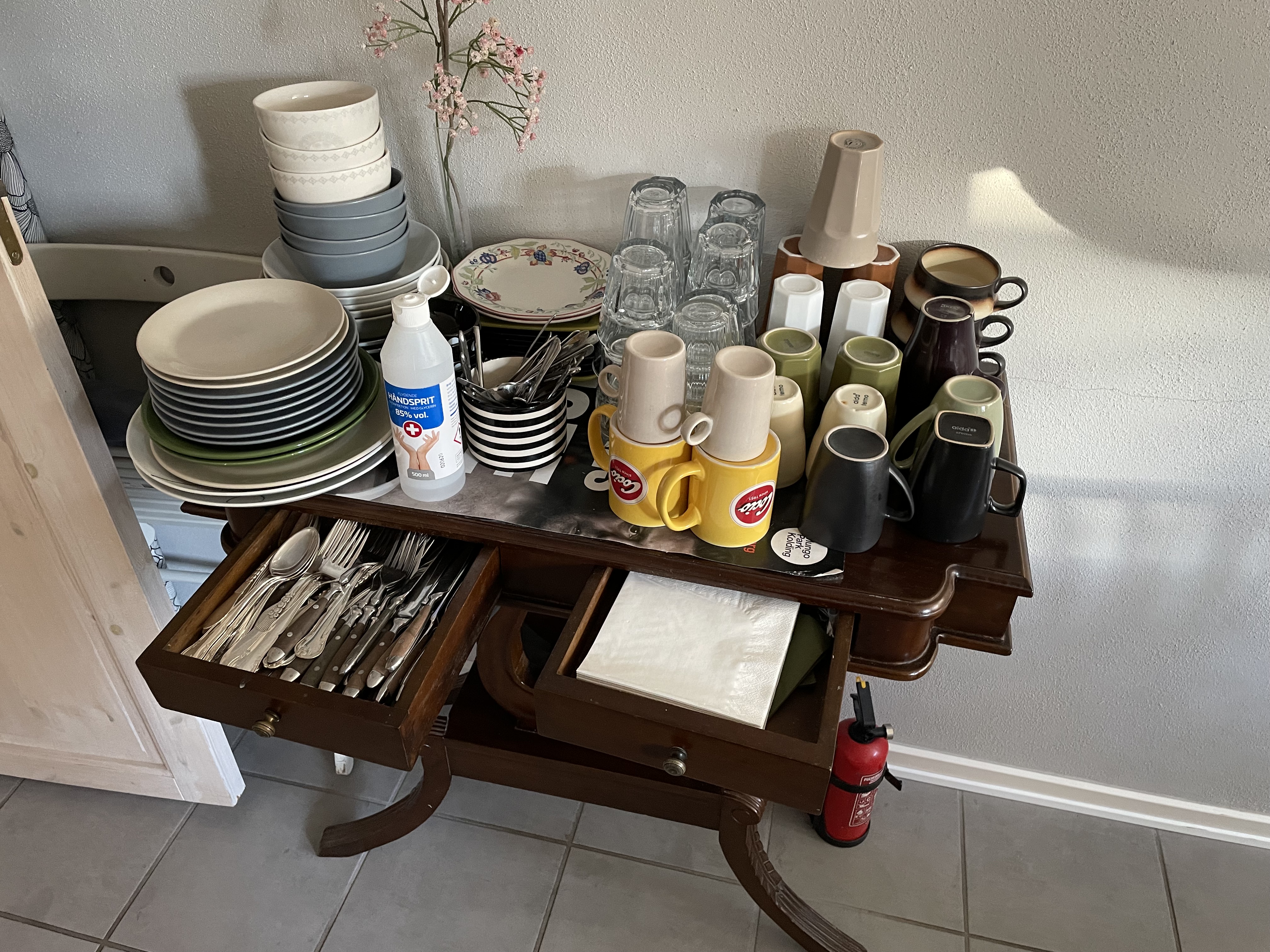
Grandmother’s cutlery
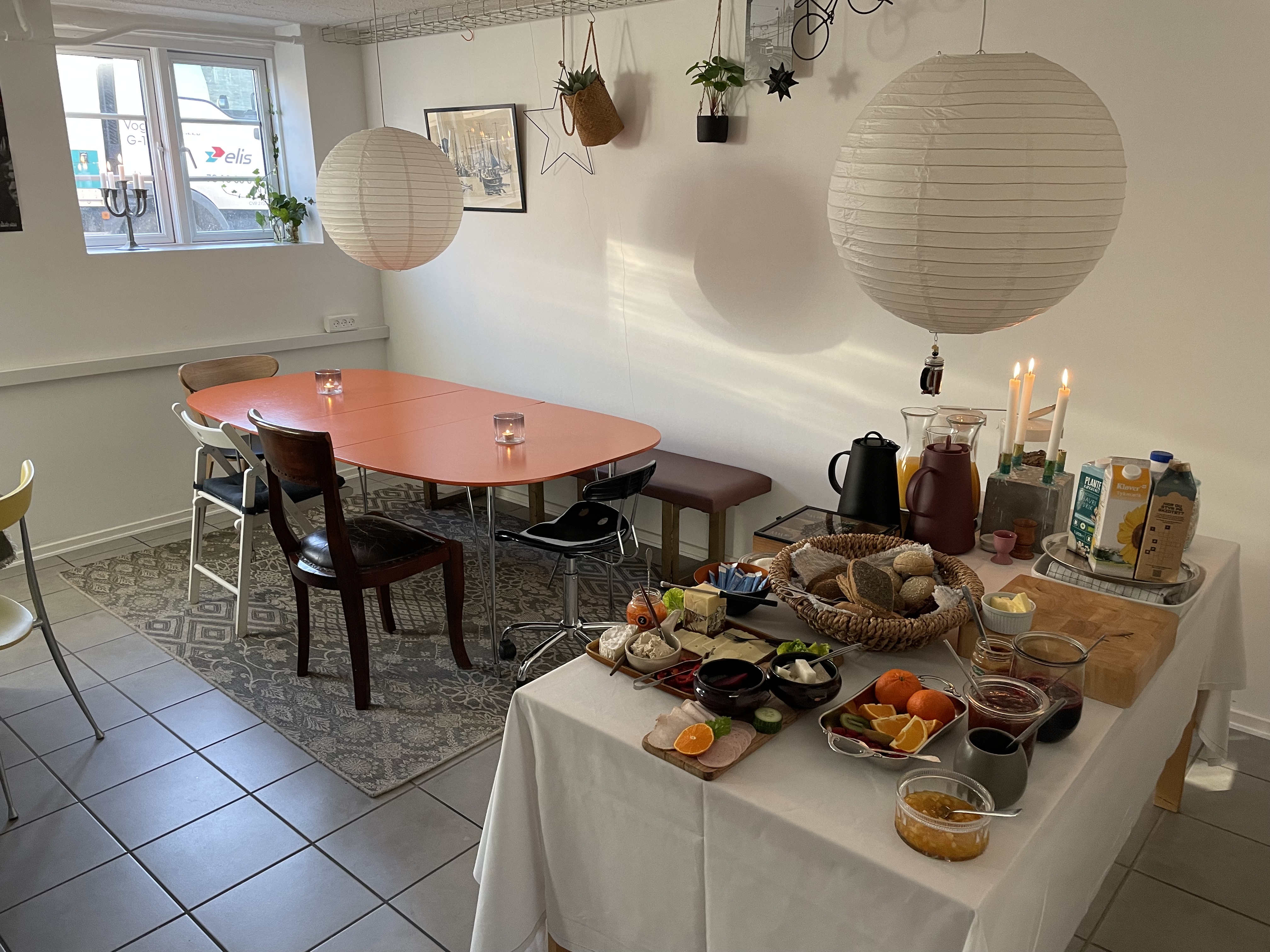
shared tables – we met a couple who had come from Germany to Denmark in order to marry (an easier process when one partner is not German by birth).
March 2nd
Kolding to Frederikshavn – Oslo ferry
Another Flying Lamprey

Landscape in the northern Jutland peninsular
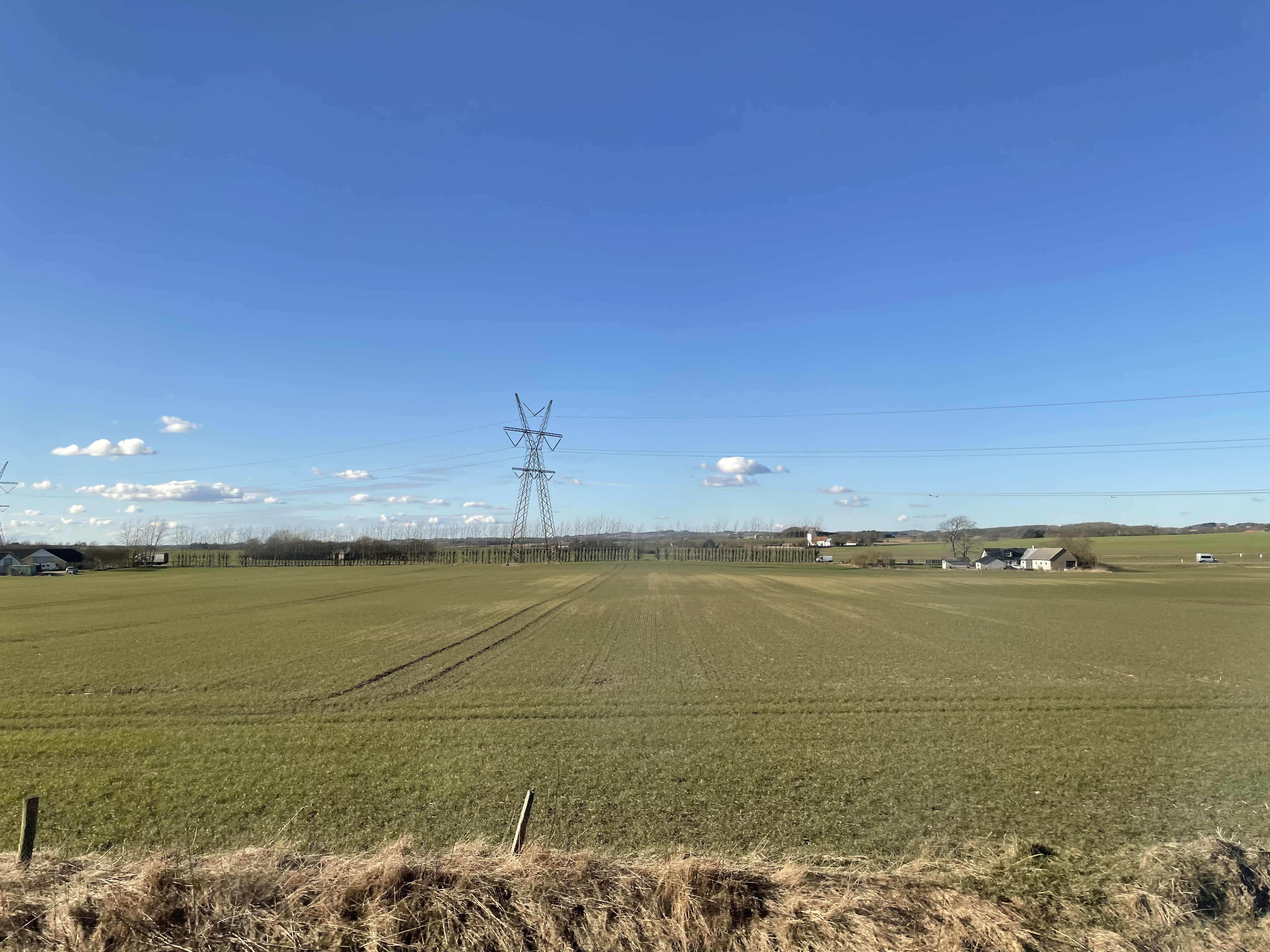
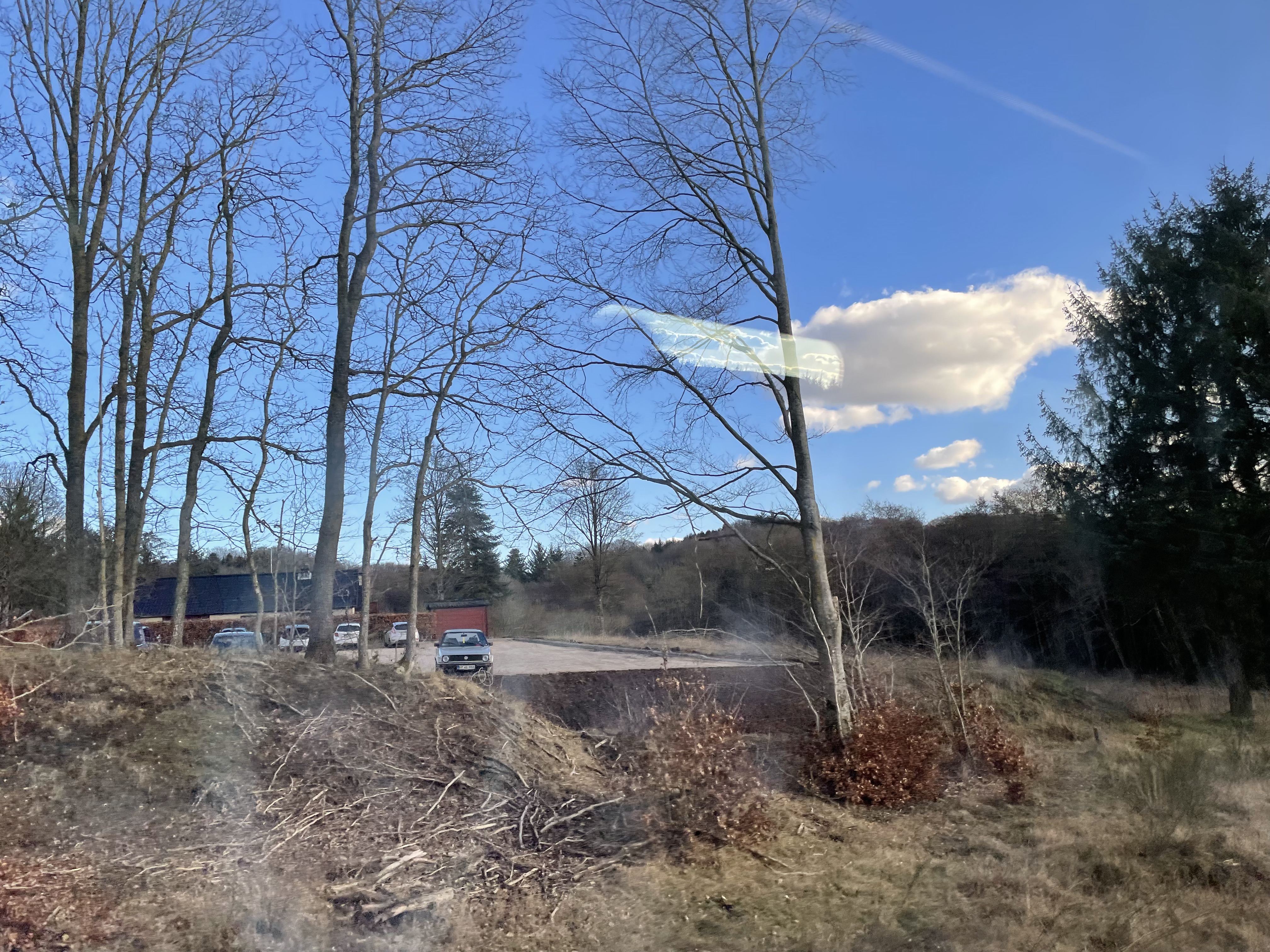
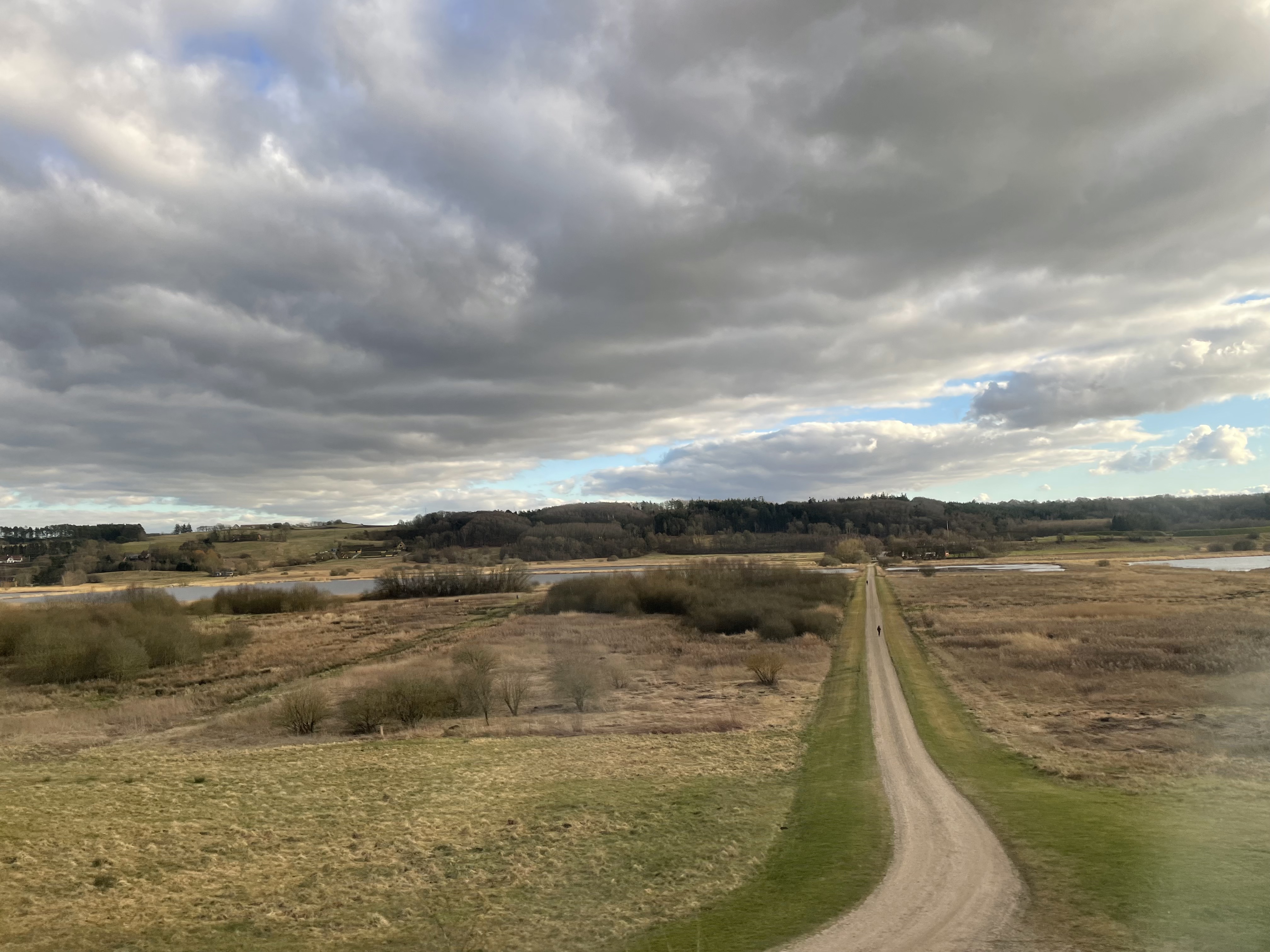
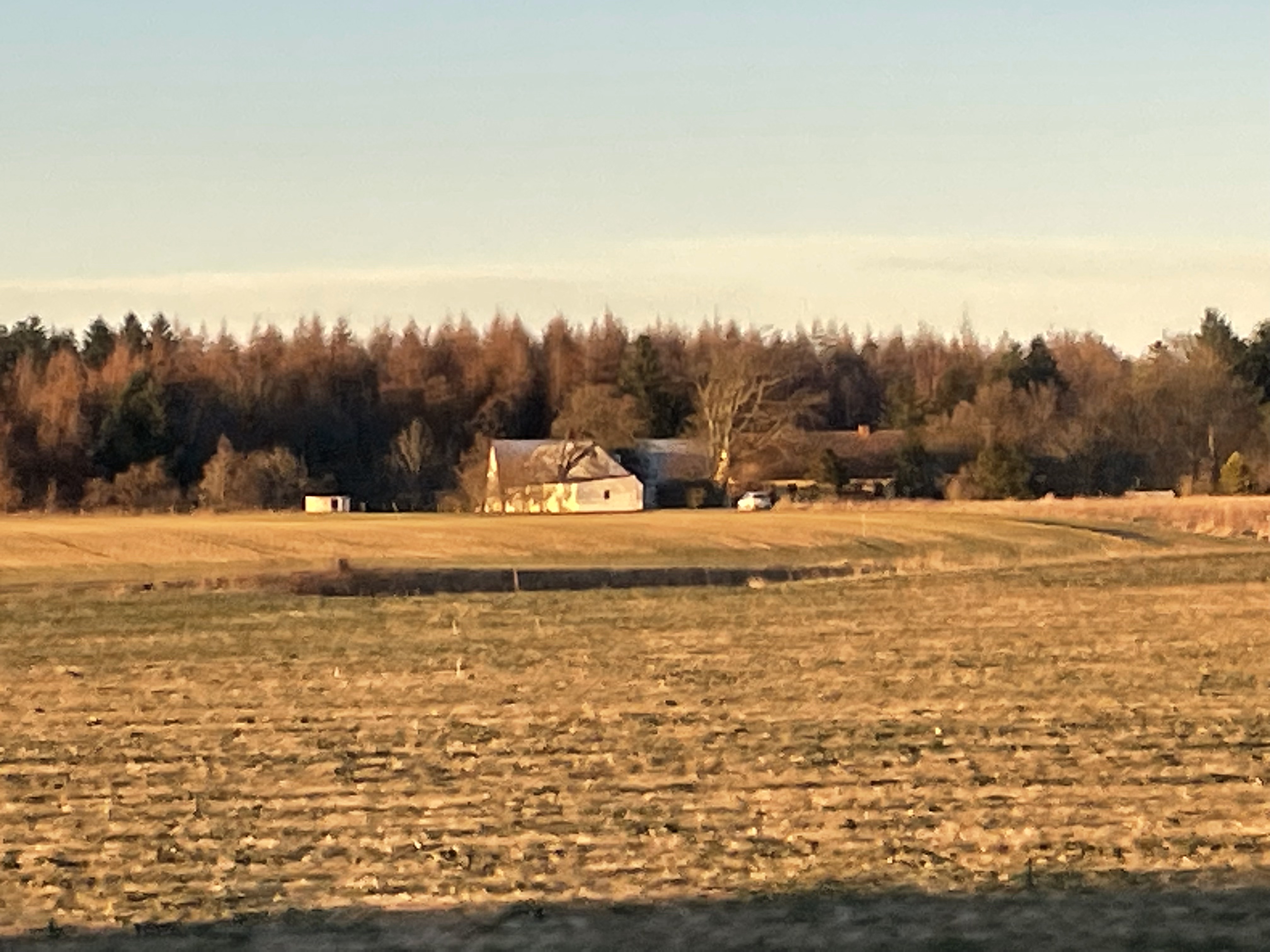
Winter comes later said guy on train
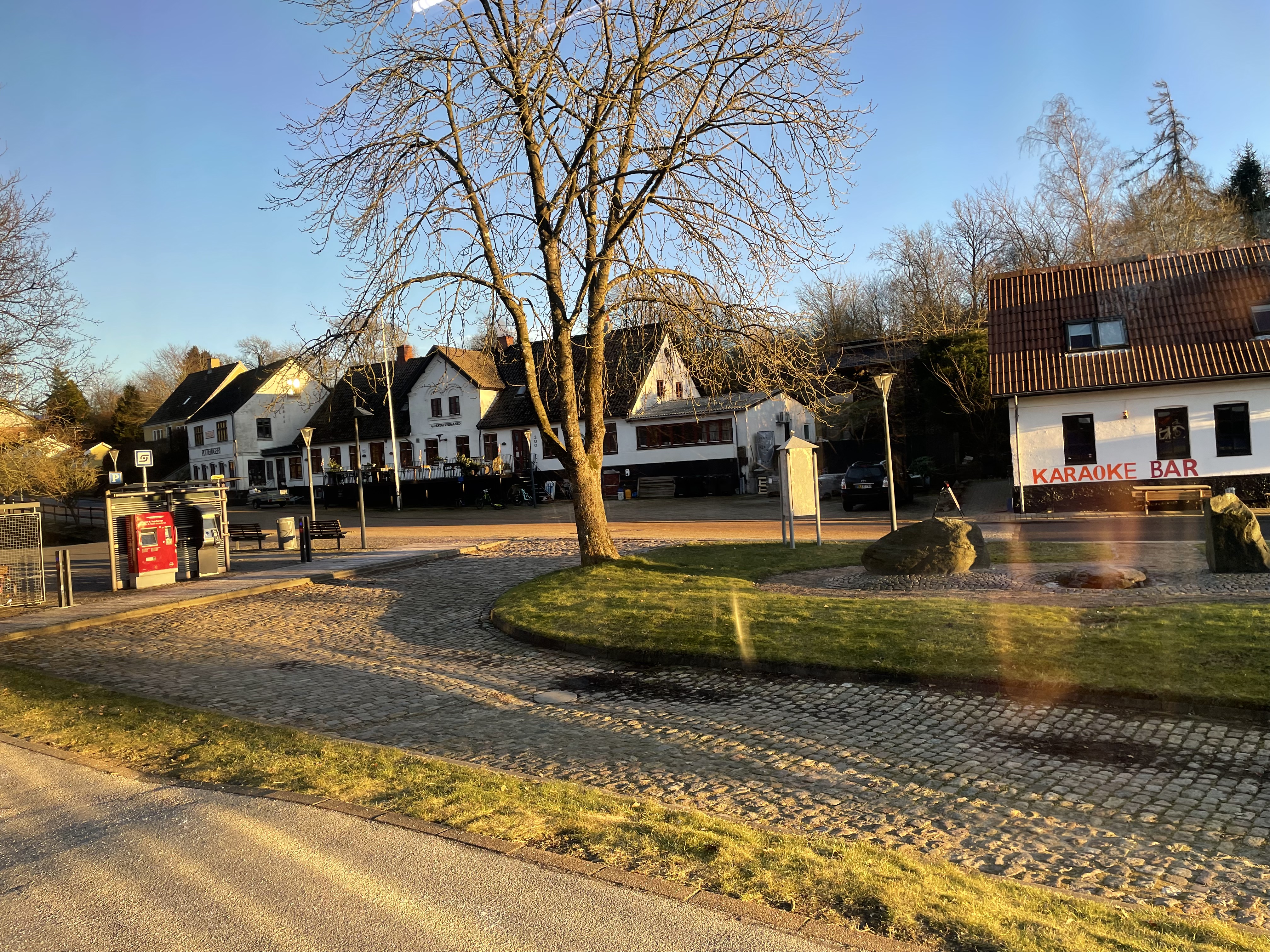
Frederikshavn

We were travelling with DFDS. On the ferry from Newcastle to Ijmuiden we had asked about the boarding timings for the ferry. Despite their own ‘in-house’ searching they could not provide information.
We planned our arrival with considerable time allowance & hoped that somewhere would provide information.
The walk to the ferry port is short and easy. Then matters became more tedious.
A lengthy covered bridge leading to the 2 Ferry terminals. There was no information at the start of the bridge.
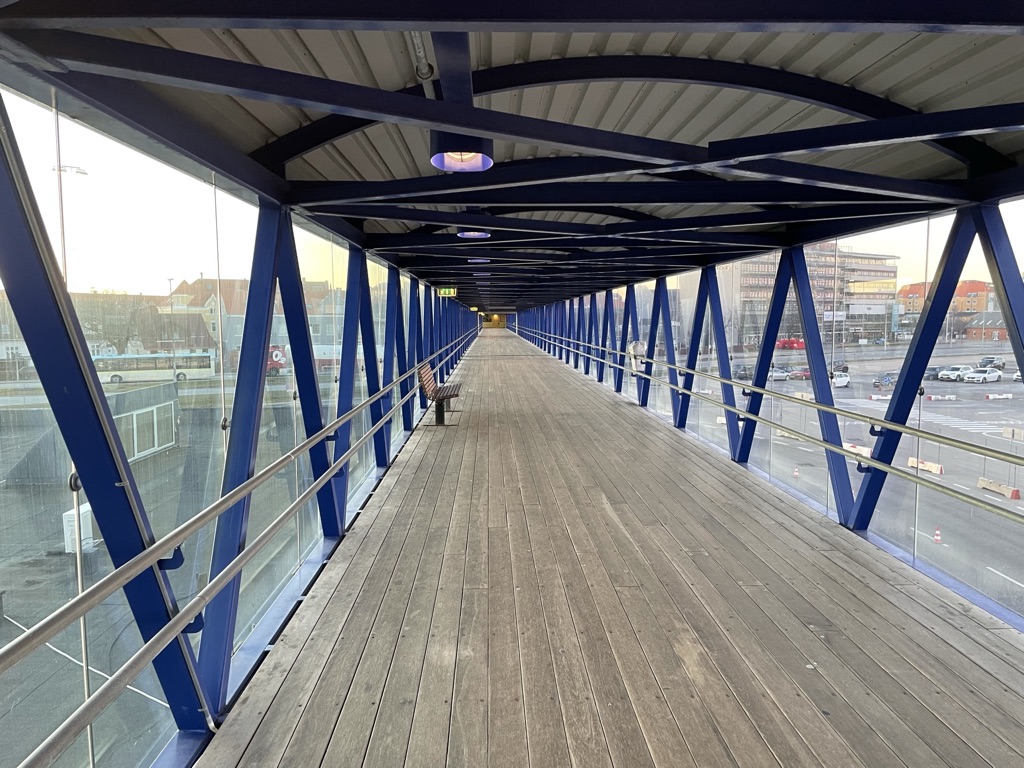
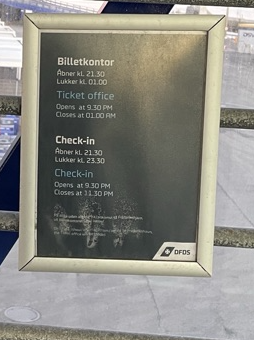
The long bridge (looking back to the town) – and eventually (after 5 minutes walking) the first notice stating when it is possible to check-in (nearly 4 hours later).
[we later reported all of this to the attendant supervising our check-in & to staff on the DFDS boat that returned us to the UK. In both cases action was initiated – so maybe (at the very least) there is now a board at the start of the bridge – and maybe information available on-line]
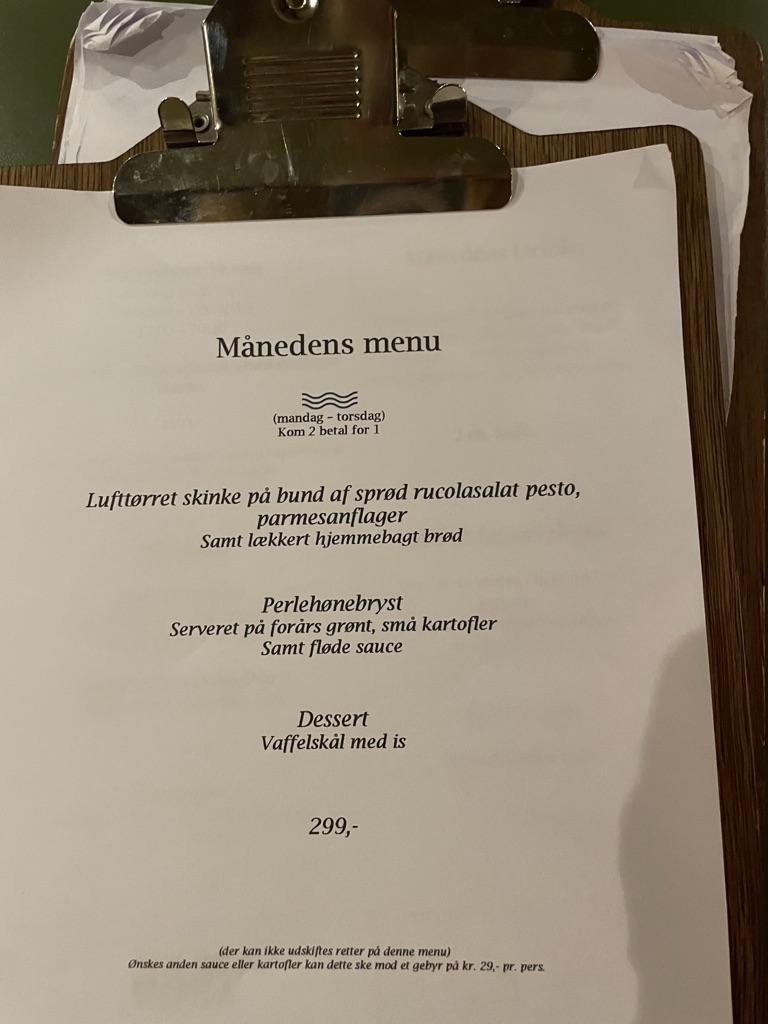
Walk the bridge again – and use time to investigate the dining options in the town. Our decision was to use The Moby Dick restaurant – fortunately very close to the bridge.
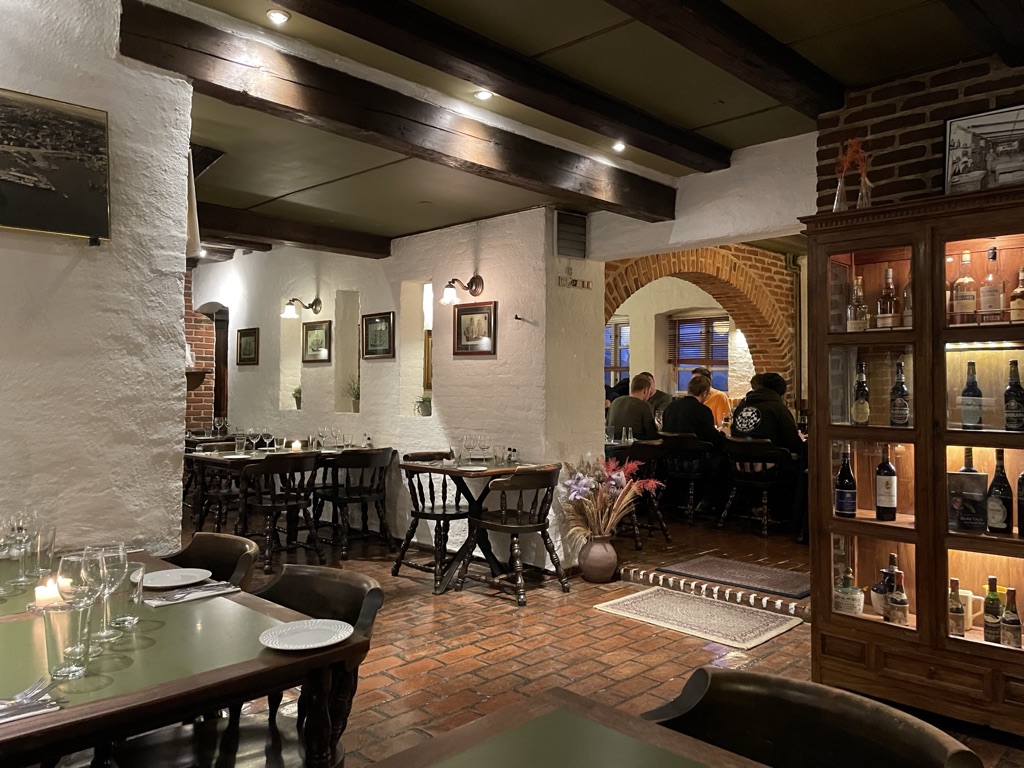
We were very pleased by the whole experience.
Then back onto the the ‘bridge of sighs’ (or maybe the ‘Bridge of Expletives’) and a 2 hour wait
To use Public Transport systems as the sole means of travelling is to engage in an activity that requires a love of logistical of process, the delicate inquisitiveness of a mouse searching for cheese & a near saintly patience of tedium.
Thus armed the traveller may step out on a journey knowing that their experiences will be of a quality that far surpasses those who only ever confine themselves to the protective bubbles of the motor car & airplane.

We wait and eventually, on time, the ferry (which started in Copenhagen) arrives
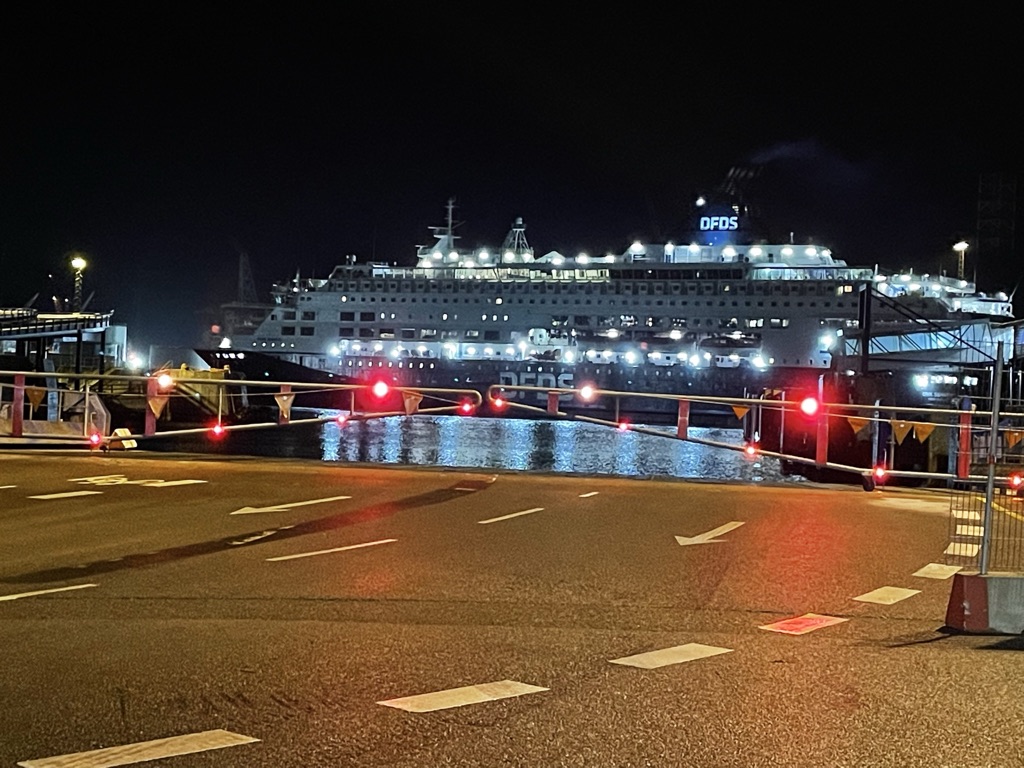
Reverses into its berth, loads and 20 minutes later, leaves.
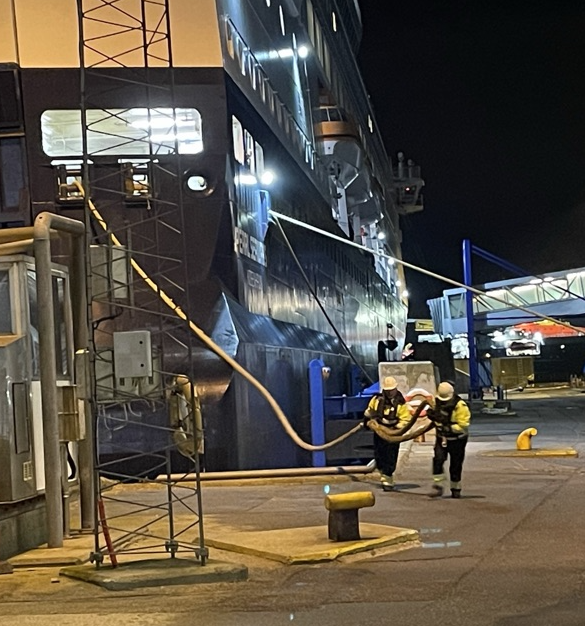
In this process one critical process – securing the ship – is achieved in completely traditional fashion 2 people hauling a heavy, long rope:
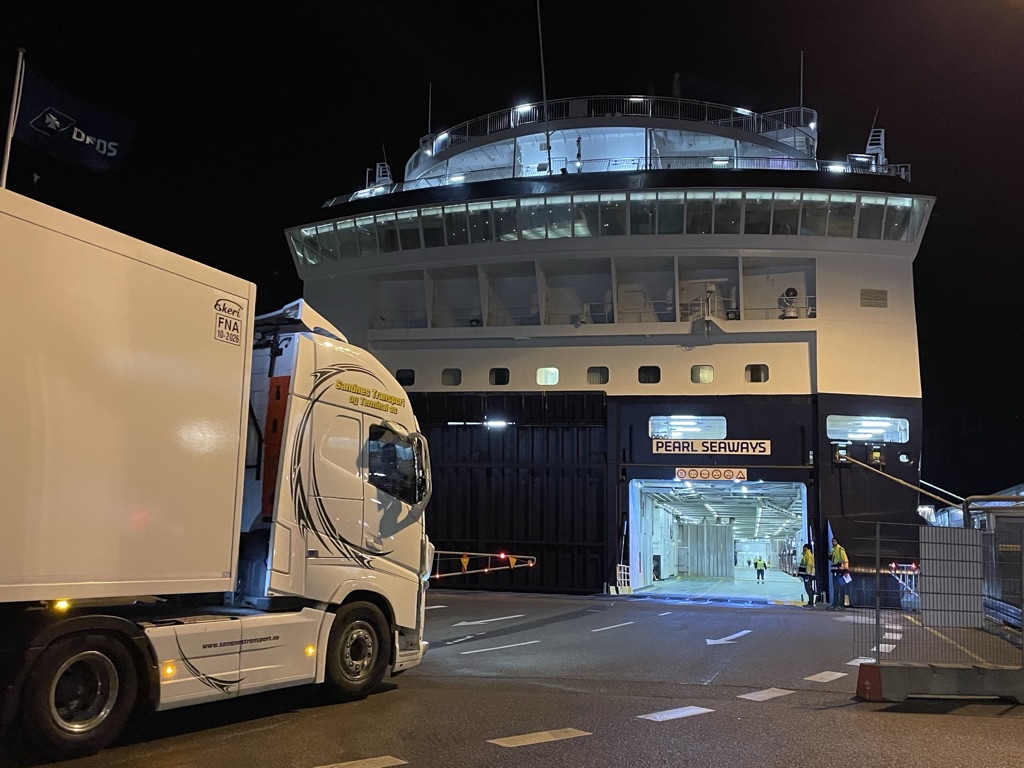
Very efficient – loading is fast & in 20 minutes the ferry is sailing.
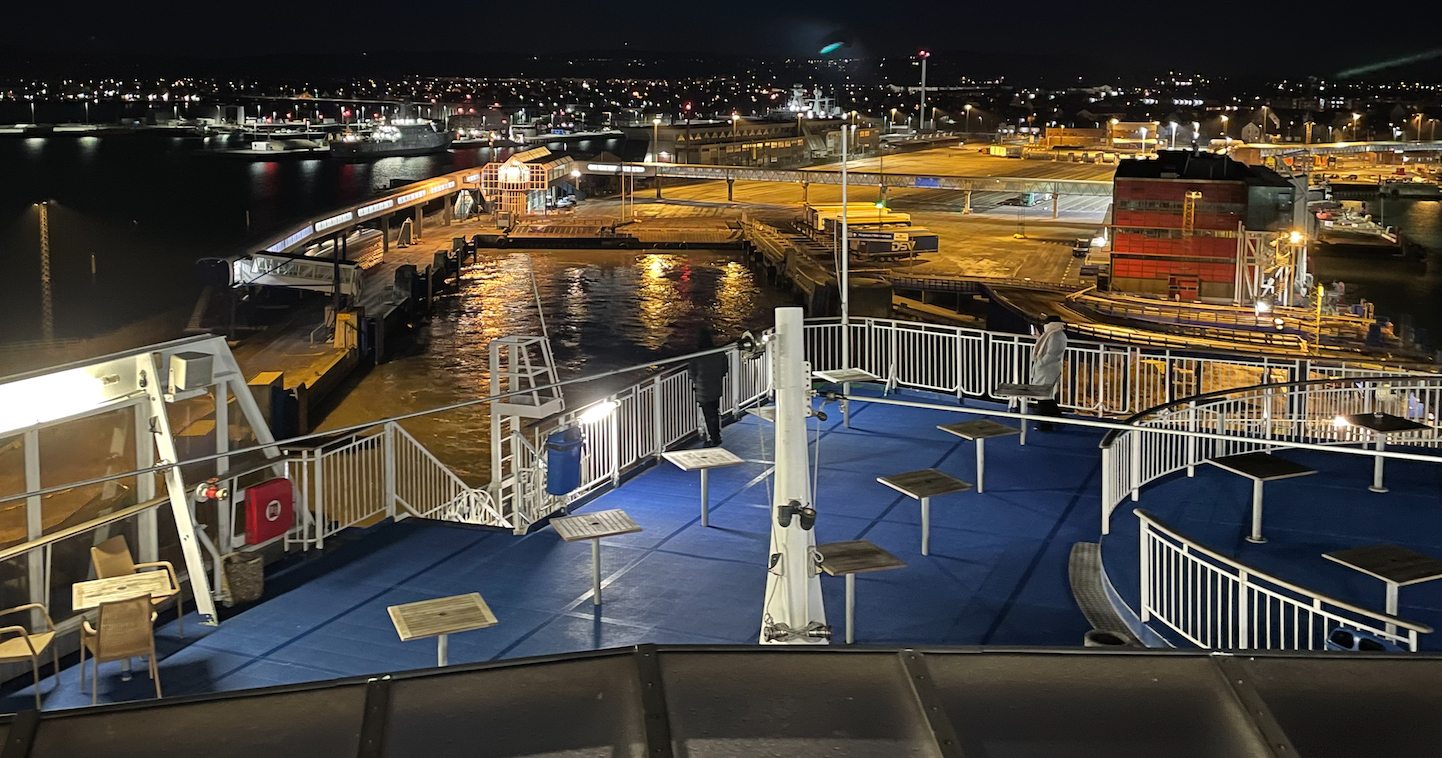
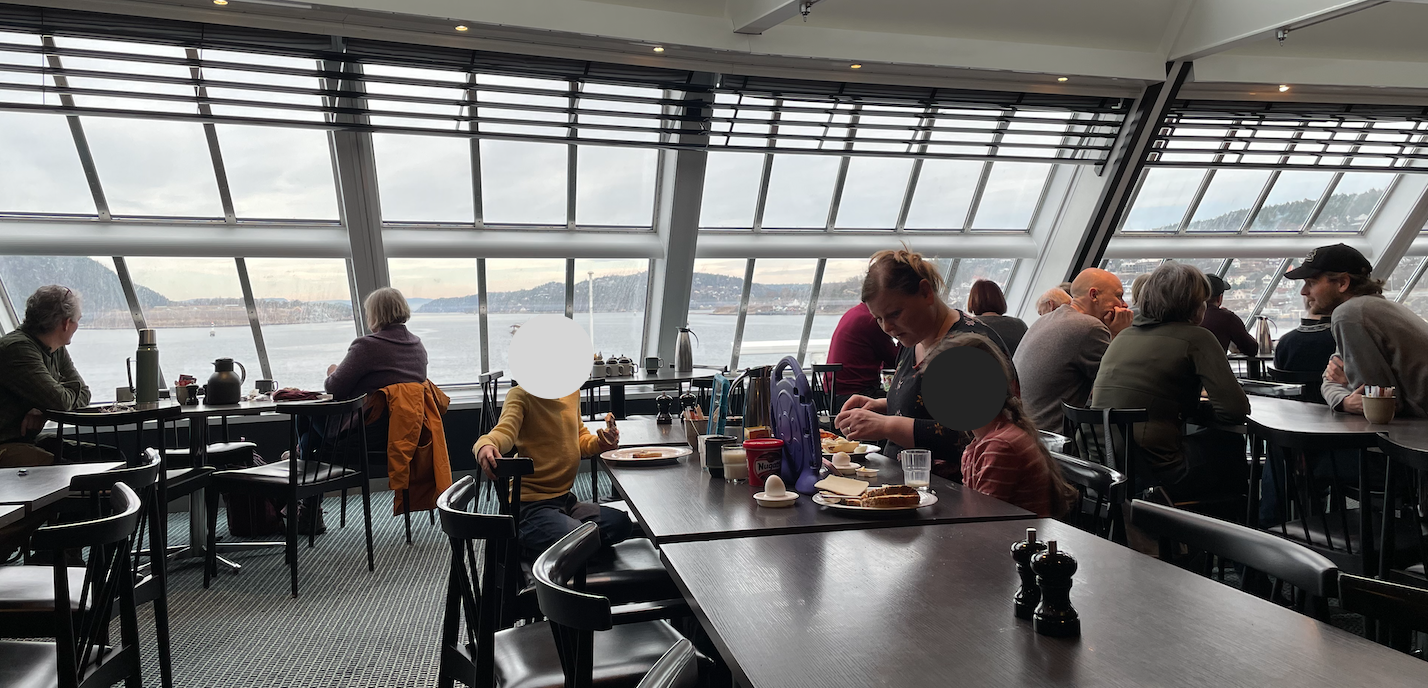
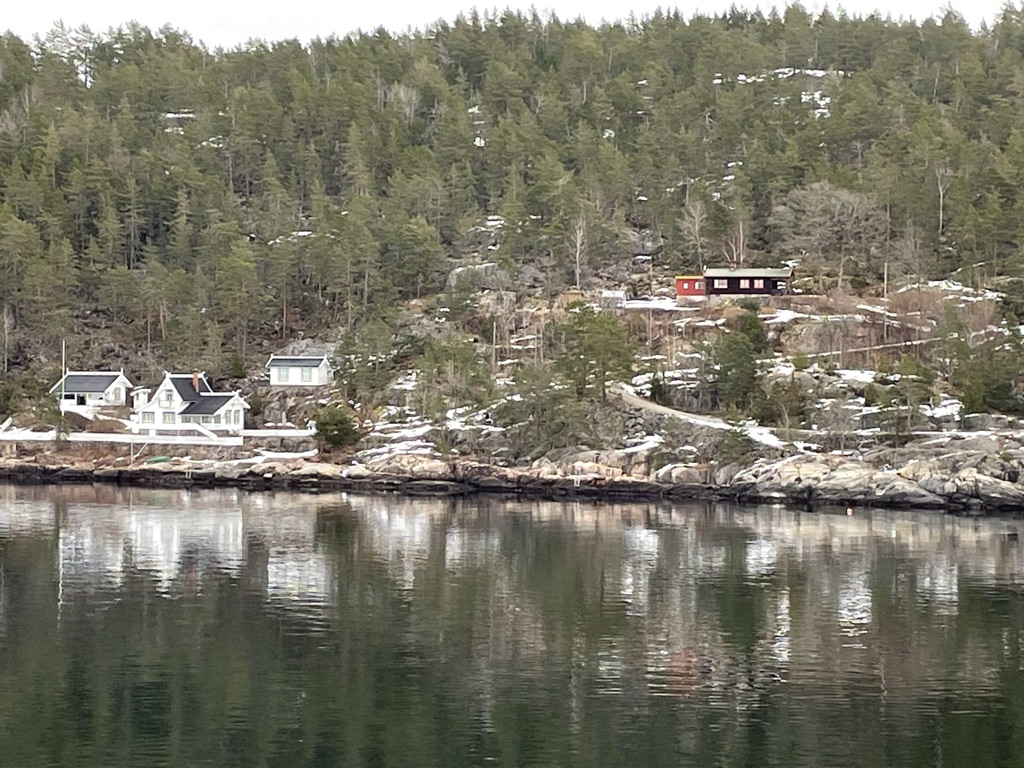
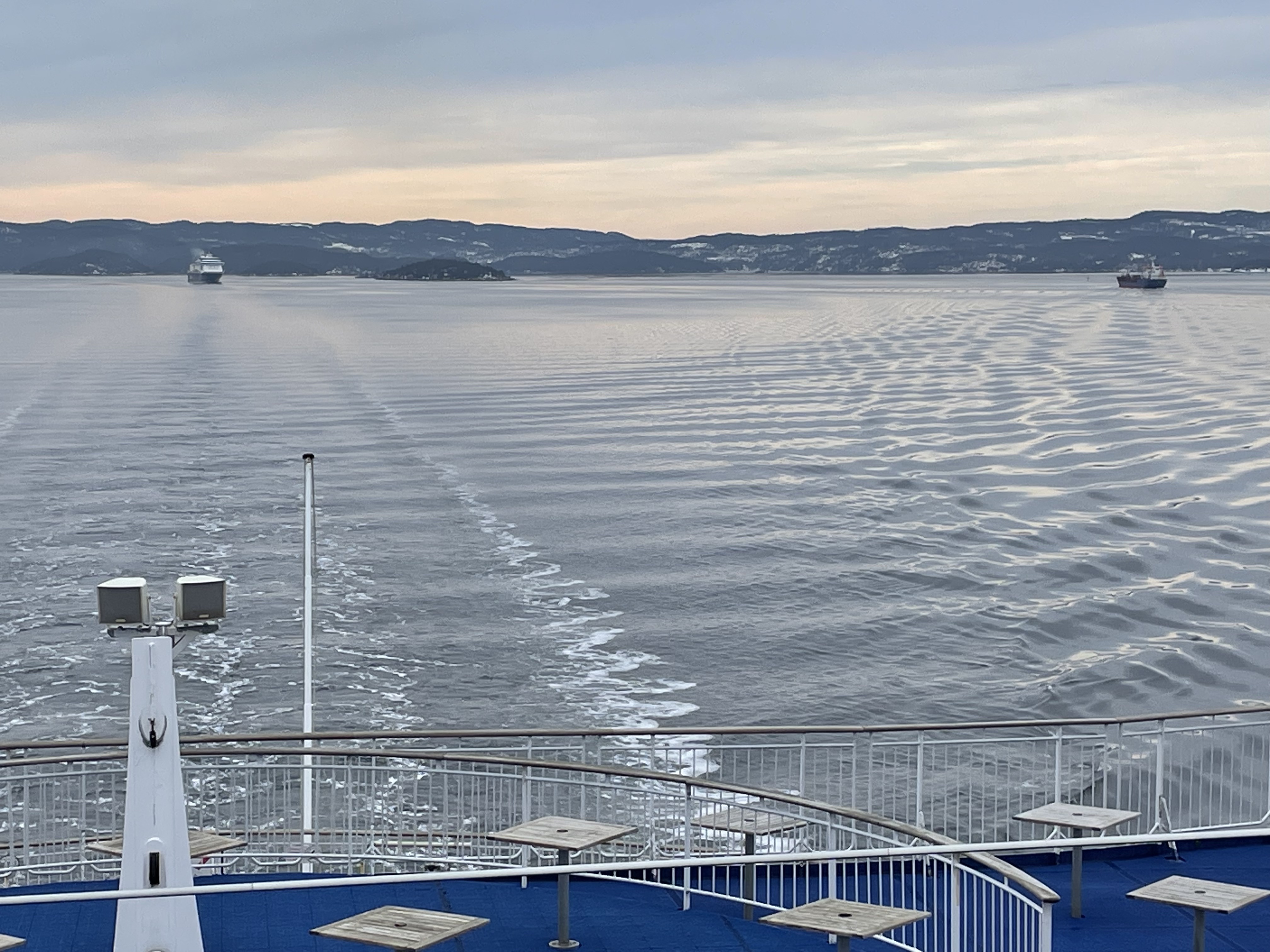
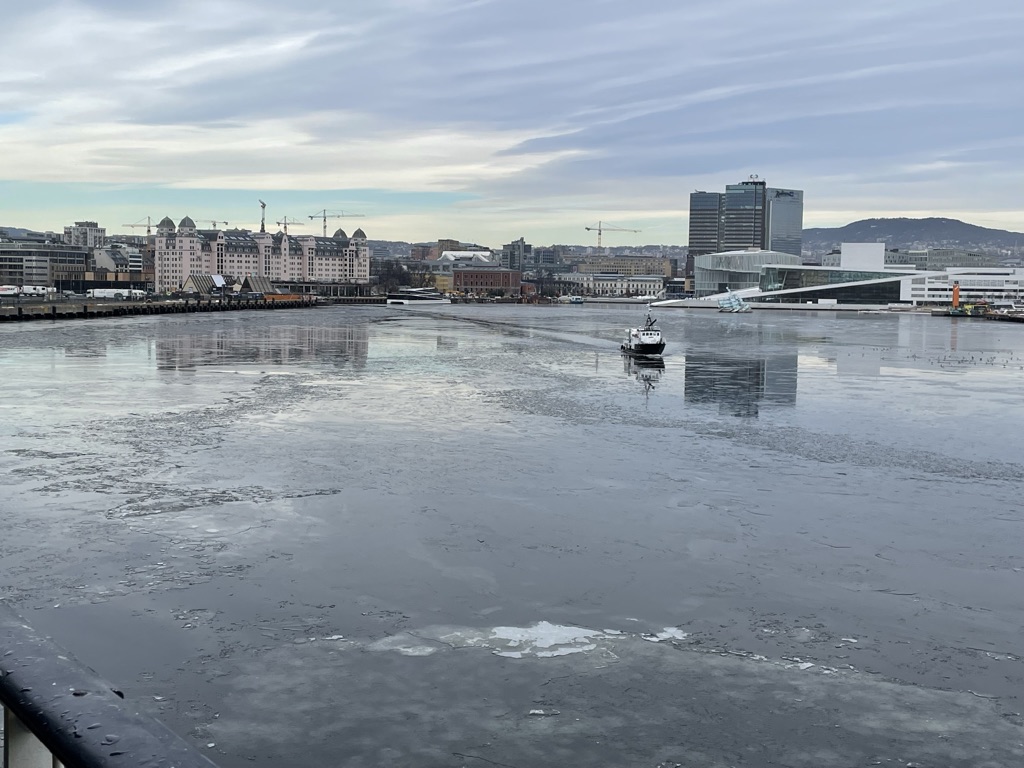
Through the ice dock near the centre of Oslo
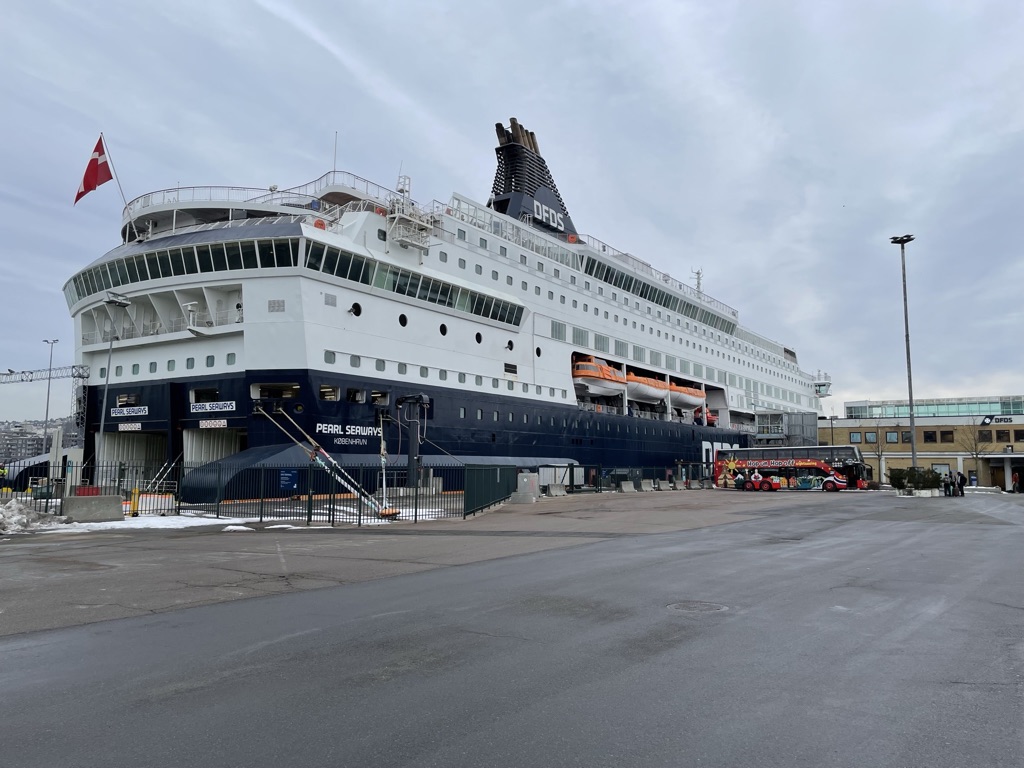
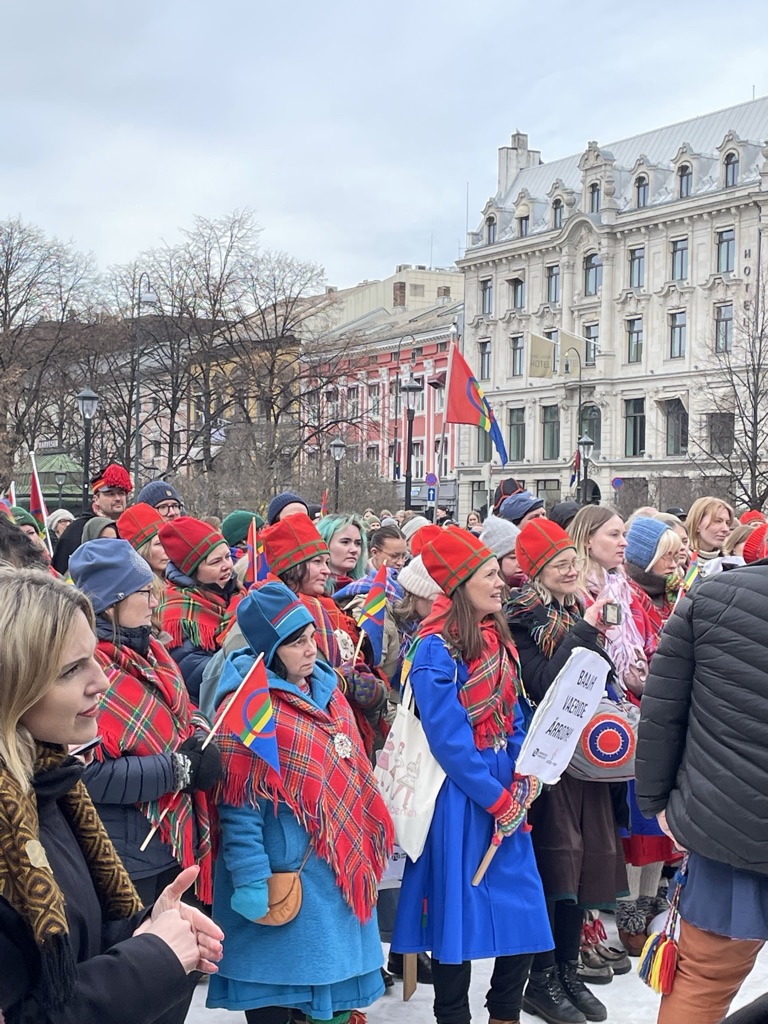
We walked into the centre of Oslo and found ourselves in a demonstration.
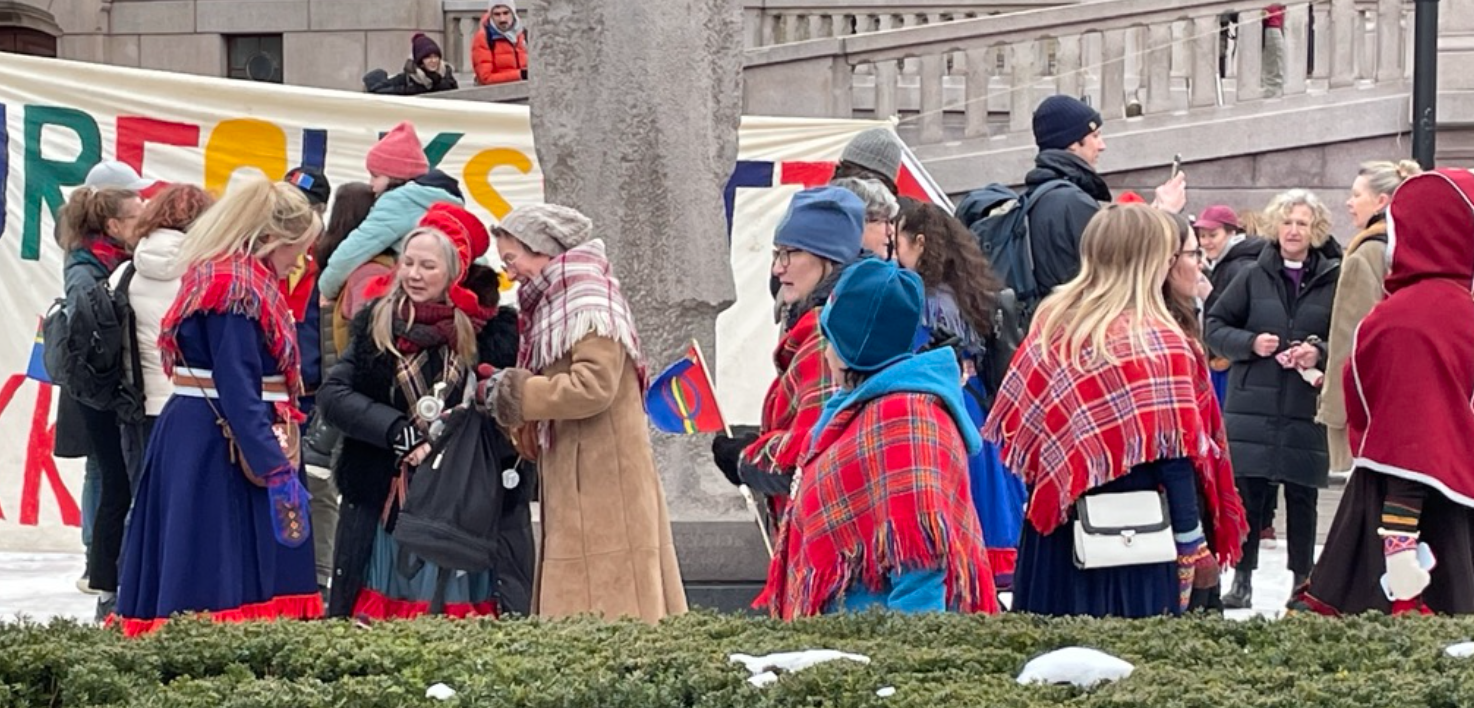
It was of Sámi people- the indigenous people of the far north. Reindeer herding is a major part of their life and culture. Recent permissions granted by the Norwegian Government have created Wind Turbine sites in land that is essential for the nomadic reindeer. The action, seemingly taken without appropriate environmental care and consideration, have caused major disruption both the reindeer and the Sámi whose lives relate closely to the natural movement of the reindeer.

The Sami
click above for more information
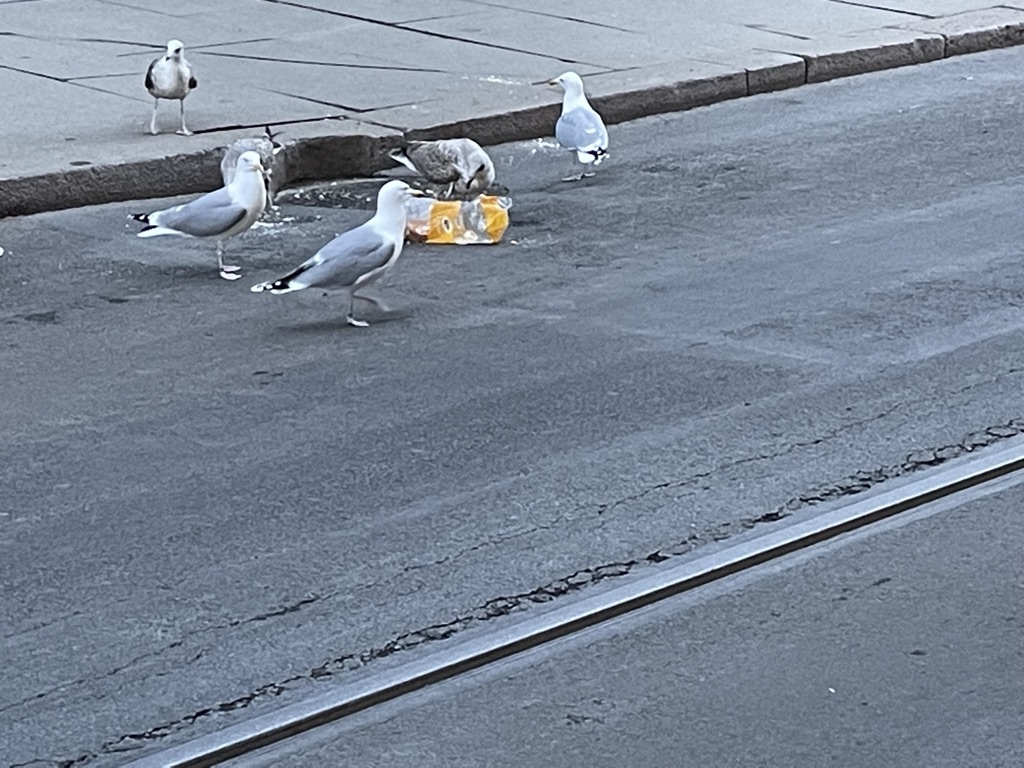
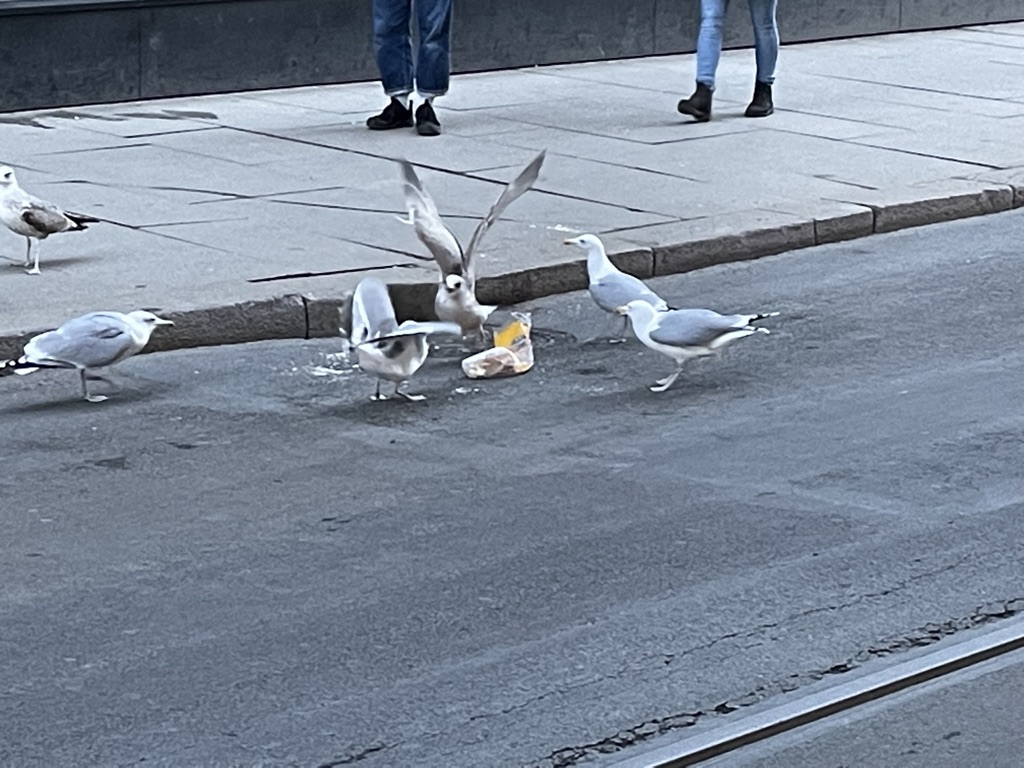
Observing birds feeding (and fighting)
Who has ownership – of anything?
“The commonwealth of the material world – the air, the water, the fruits of the soil, and all nature’s bounty.”
Who decides the definition of ‘nature’ & what do we, humans or birds, consider to be ‘bounty’
Bounty: “a gift, a reward, a favour bestowed freely”.
Is that what these birds have discovered and are exploiting?
{The term can have other less positive implications: ‘Bounty hunters’
“I do … promise, that there shall be paid … the following several and respective premiums and Bounties for the prisoners and Scalps of the Enemy Indians that shall be taken or killed ….”
[“Papers of the Governor of Pennsylvania,” 1764]}
The Sámi demonstration was focused on this issue: the appropriate ‘bountiful use’ of natural resource.
The Norwegian Government, by licensing companies to build wind turbines in the sami nation homeland, were seriously damaging both the ‘natural’ and the cultural nature of the area. They had chosen areas that were important Reindeer ‘birthing’ territories & to which they regularly returned. A culture has been built around such wildlife patterns no being destroyed.
‘It’s a Human Rights Issue’ said the Bishop of Oslo who had to tolerate an encounter & brief conversation with me (she being present in a supportive capacity).
Oslo Cathedral
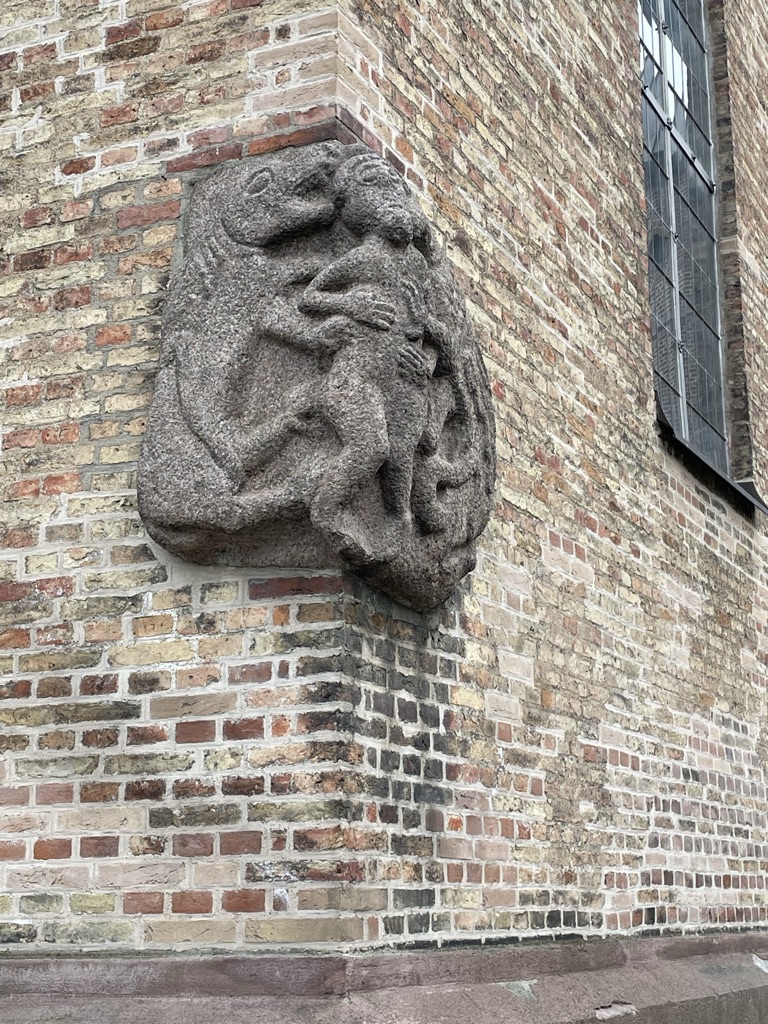
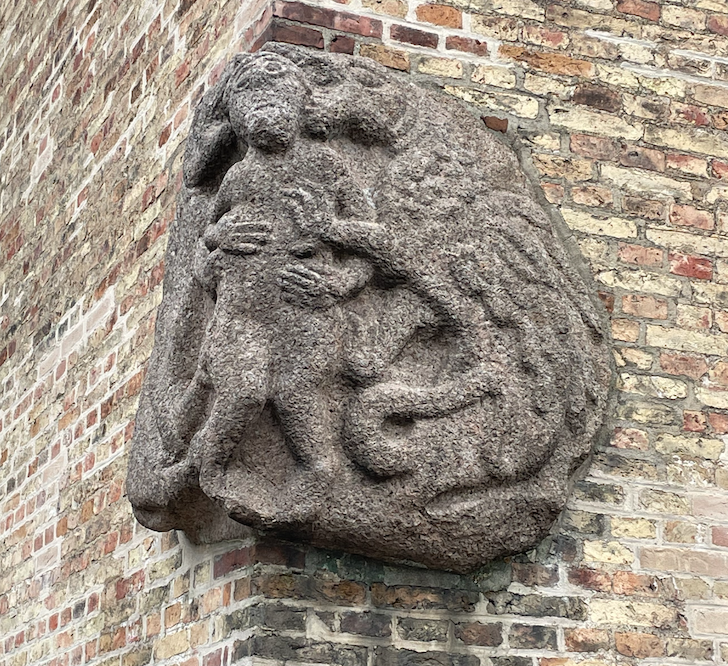
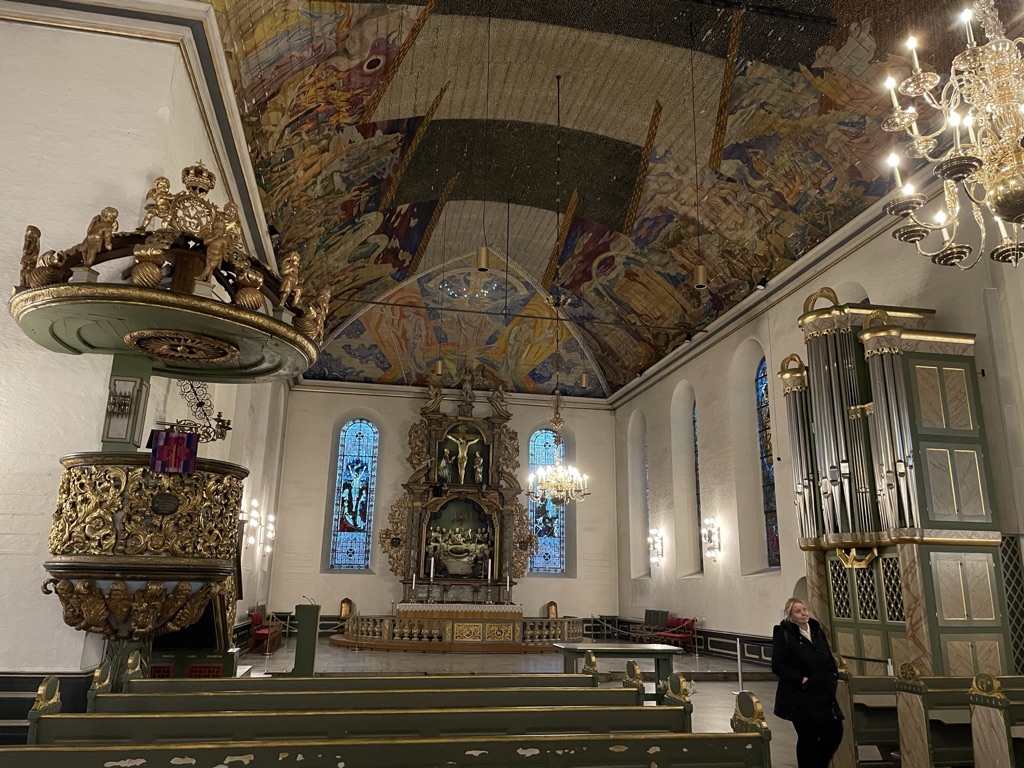
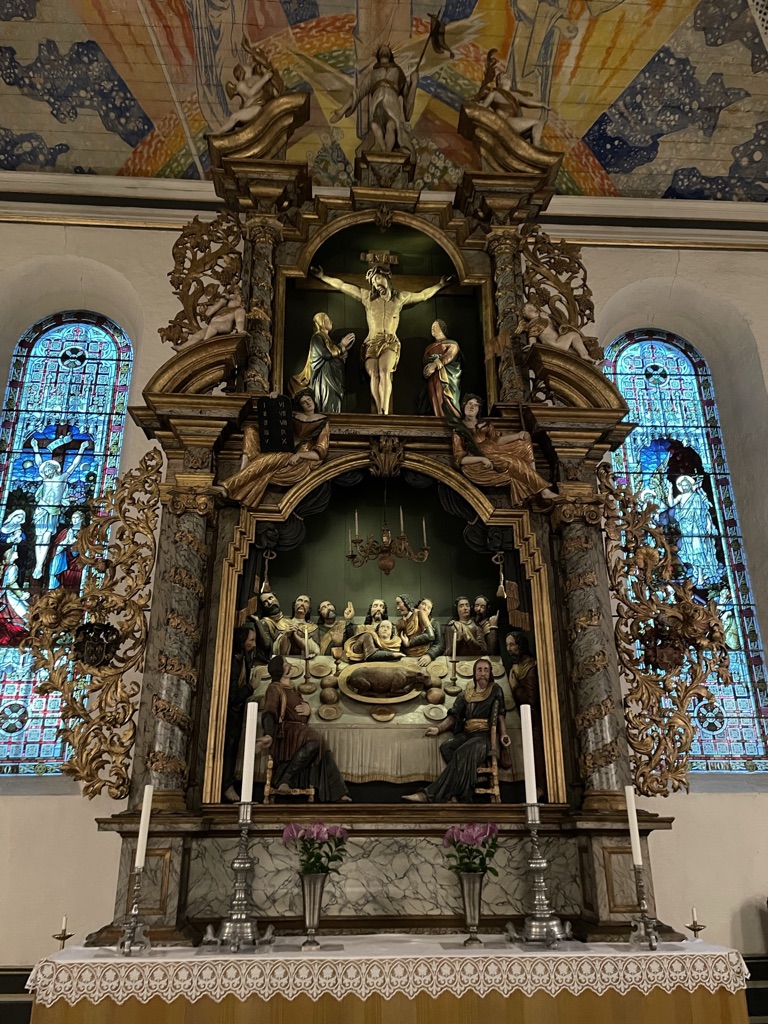
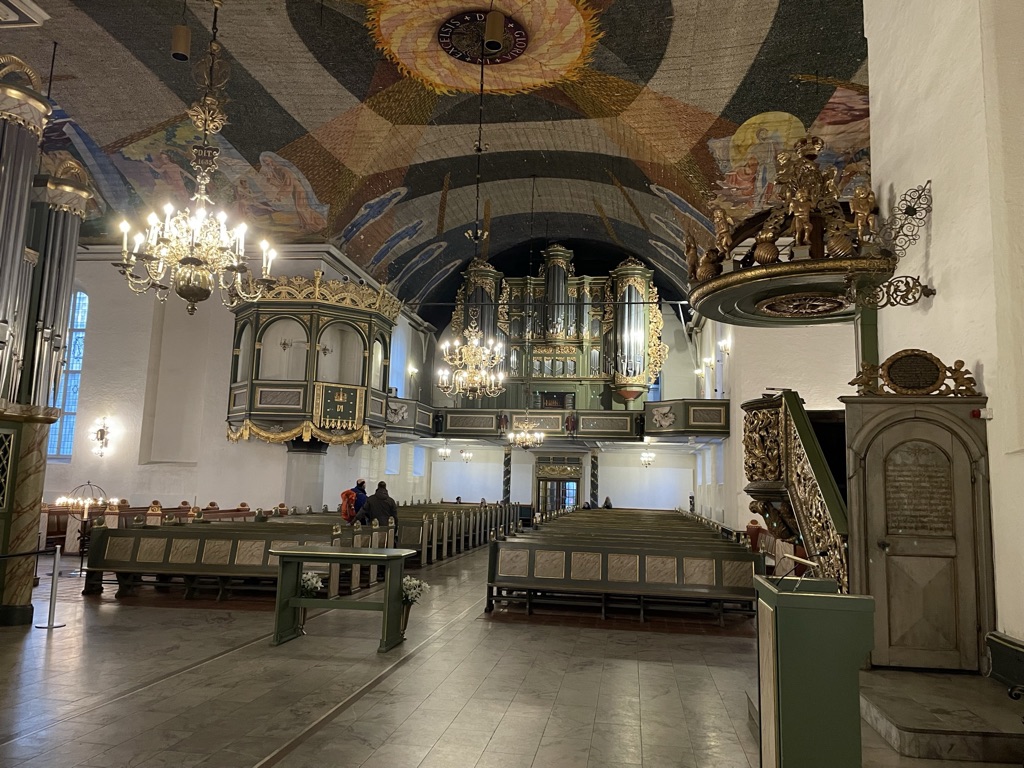

The art work demonstrates a distinctive northern style.
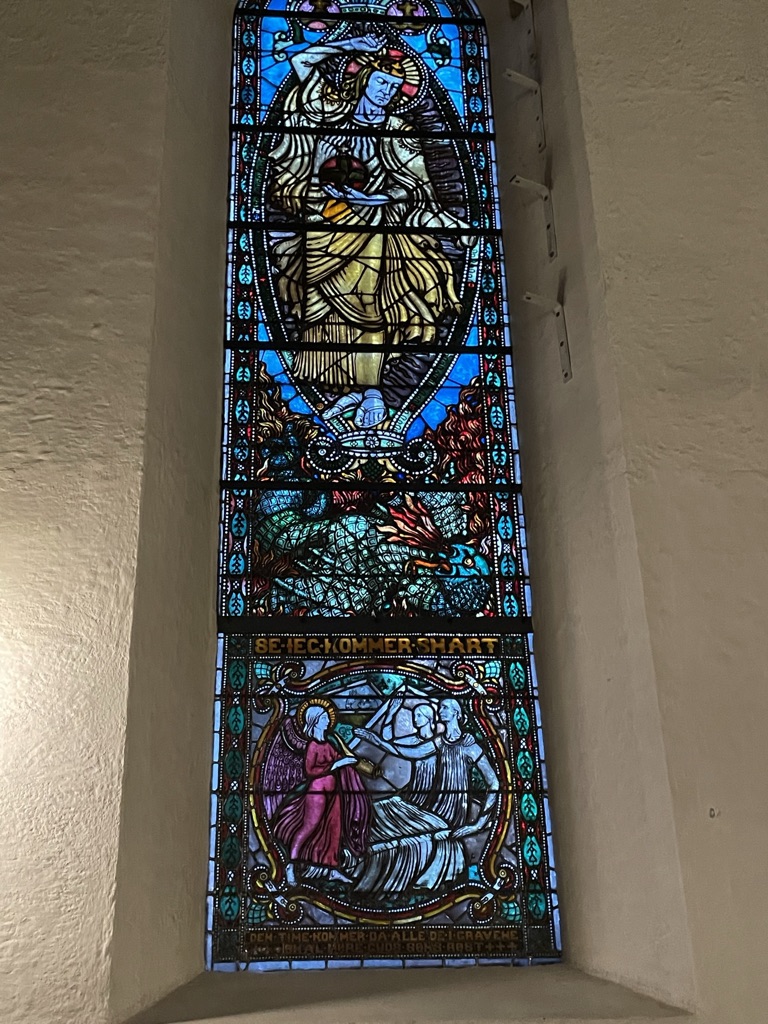
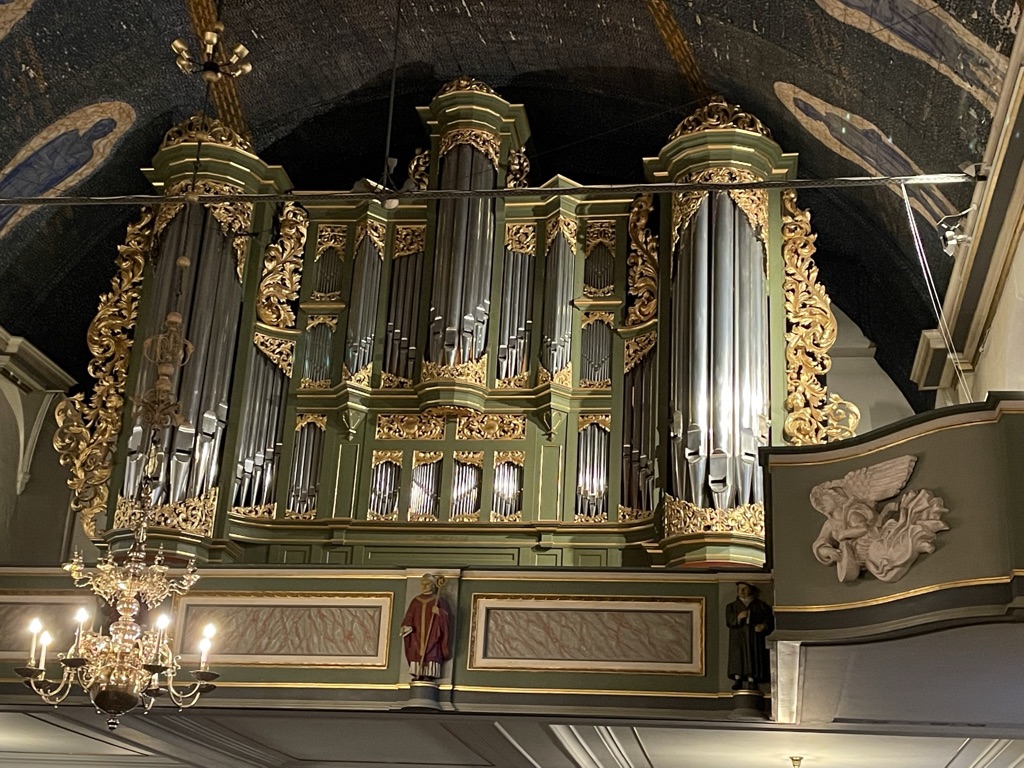
Saturday 4th March

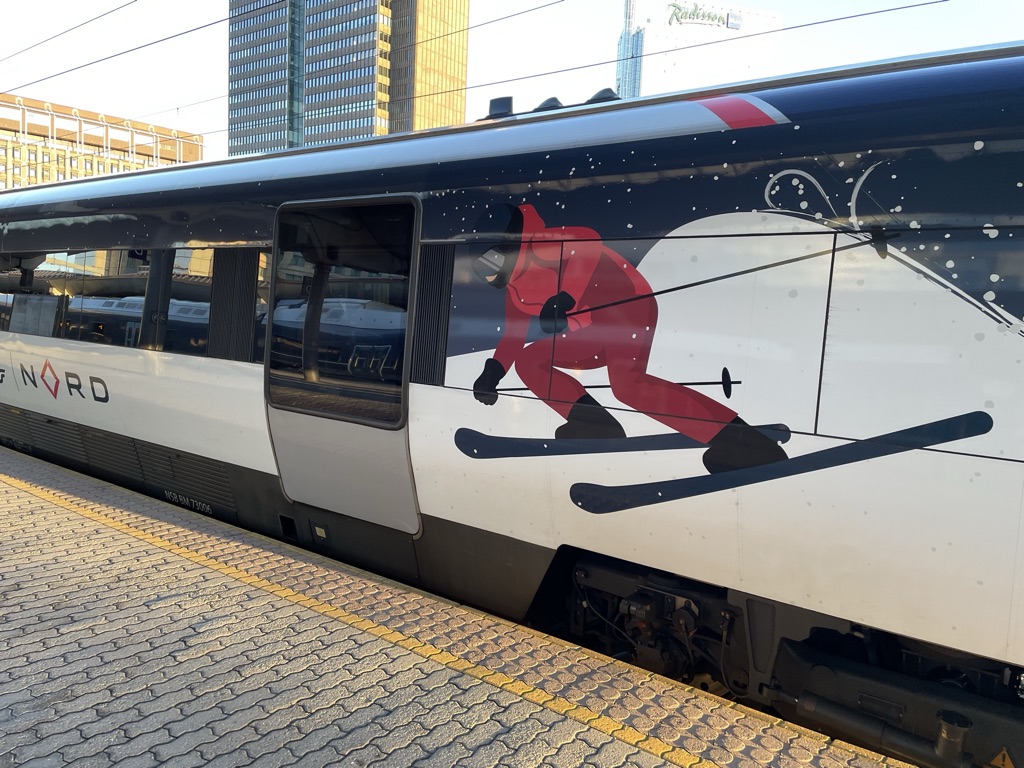
Nice picture – but not if your seat is next to it…. those who had been reserved place there had to move.
Dombas Fjall

Trondheim: its personal significance relates to our links to Iasi, Romania. It was here that they were confirmed by the presence of a representative from the city attending a follow-up conference to one held in Hamburg.

Trondheim Cathedral
Burial place of St Olaf.
Closed at 15.00 hrs (not surprising in the short days of winter)
Snow storms began – and continued into the evening.

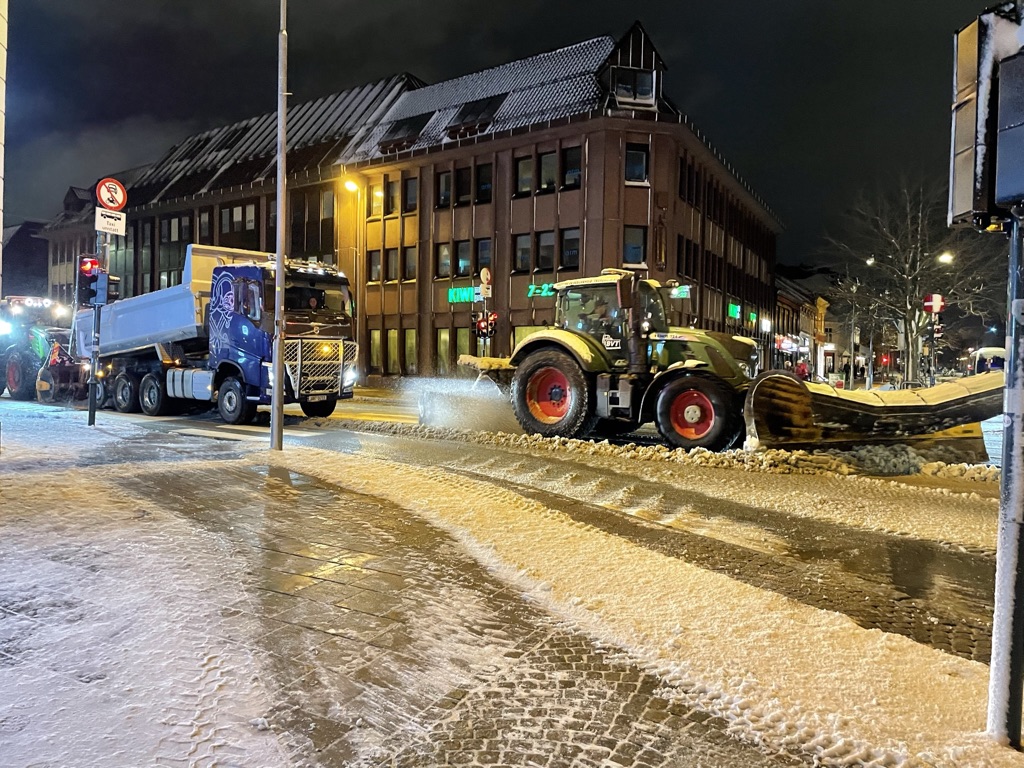
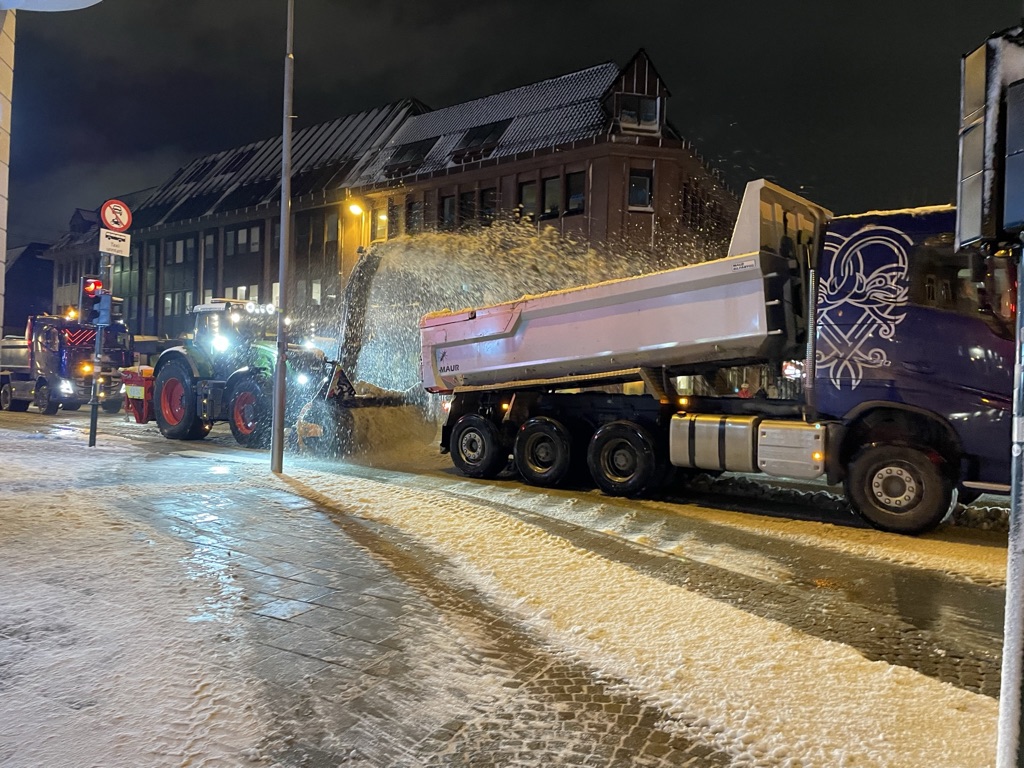
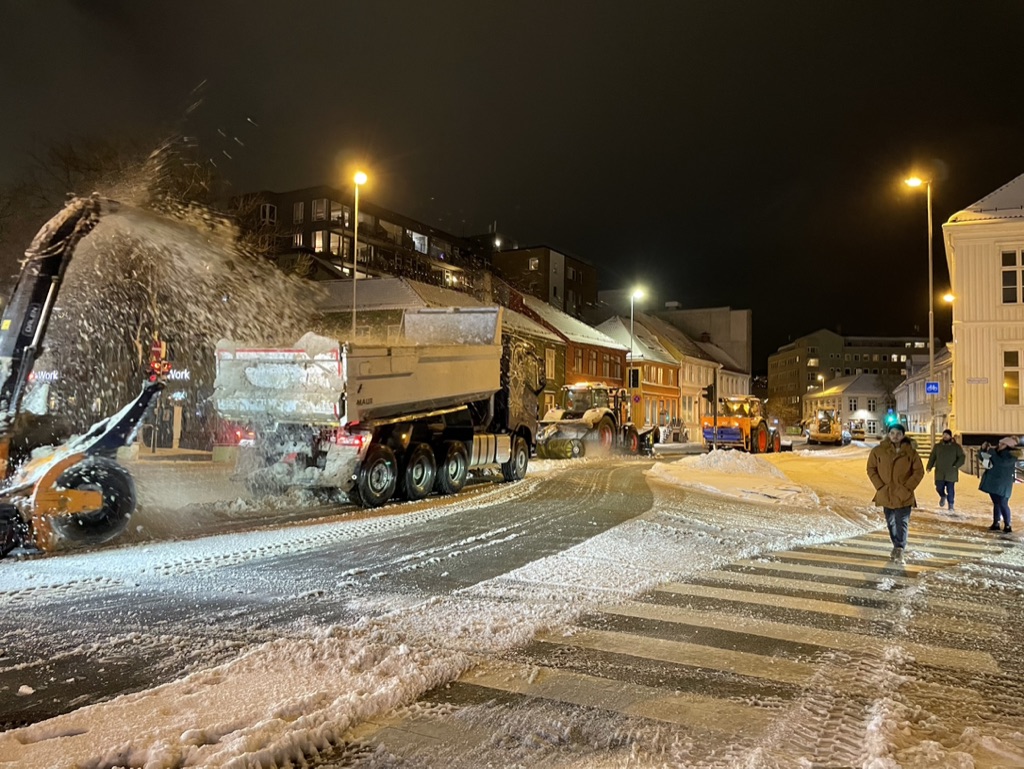
The local authority has a very prompt response to snow. We were delayed at a crossing whilst the snow clearing ‘convoy’ of 8 large vehicles passed majestically.
Sunday 5th March
Curiously charming ‘Muppet engine’ (? – should we expect ‘charm’?) recently arrived.
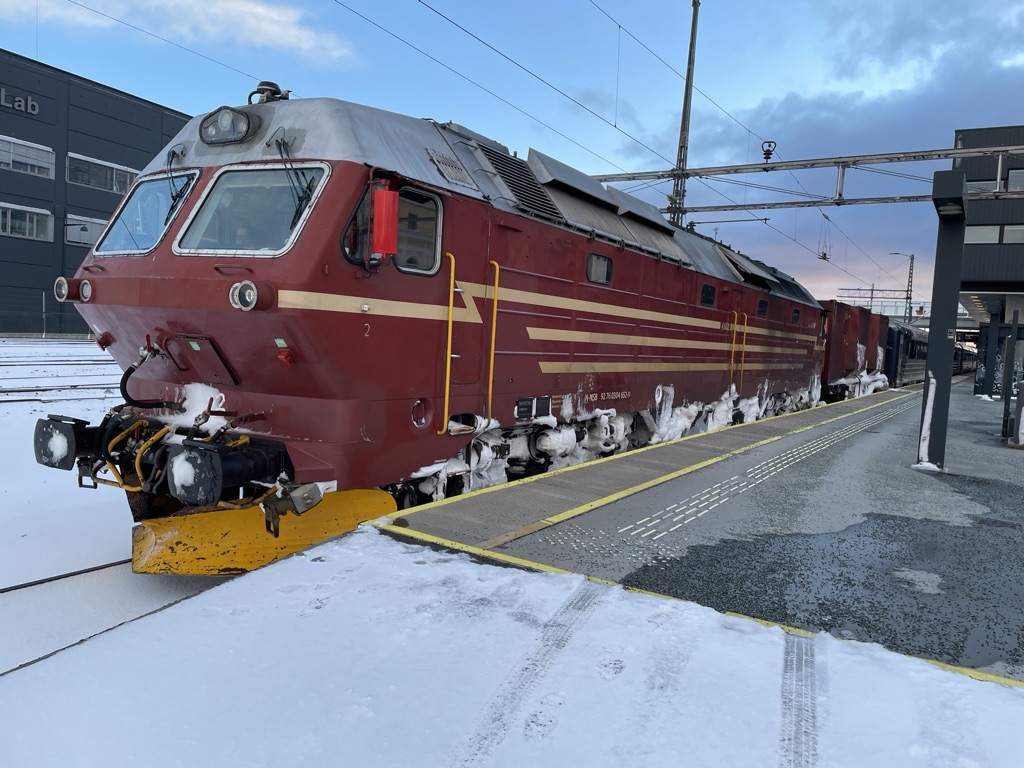
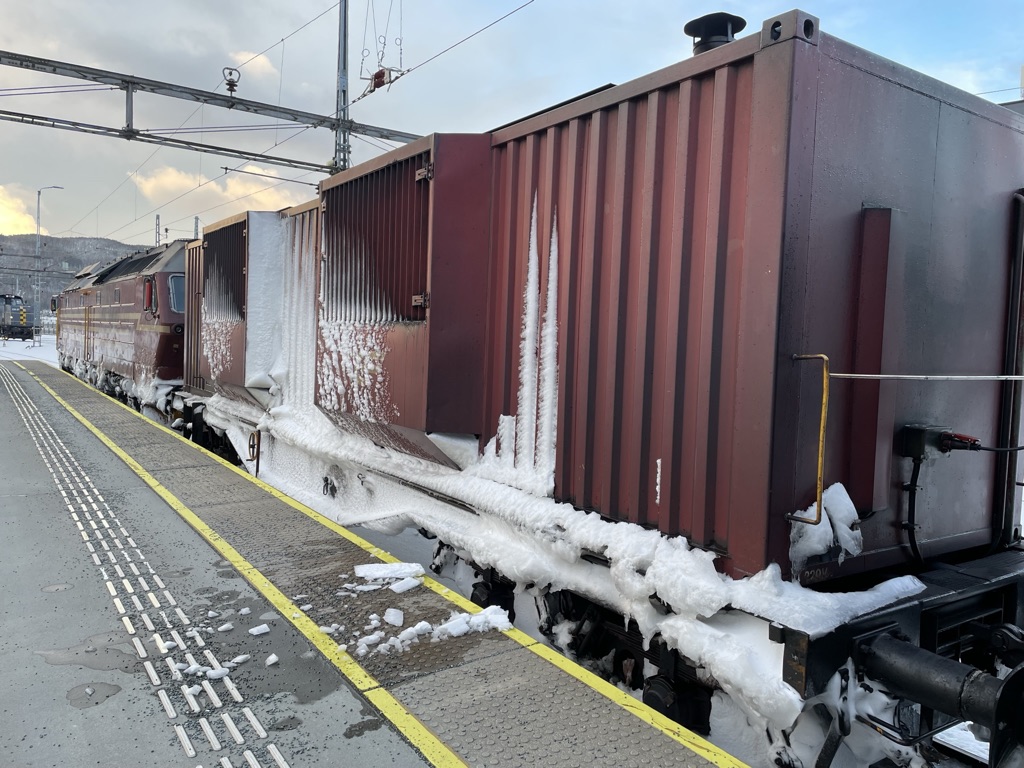
It has a supporting ‘tender’ ?providing extra power to the carriages?.
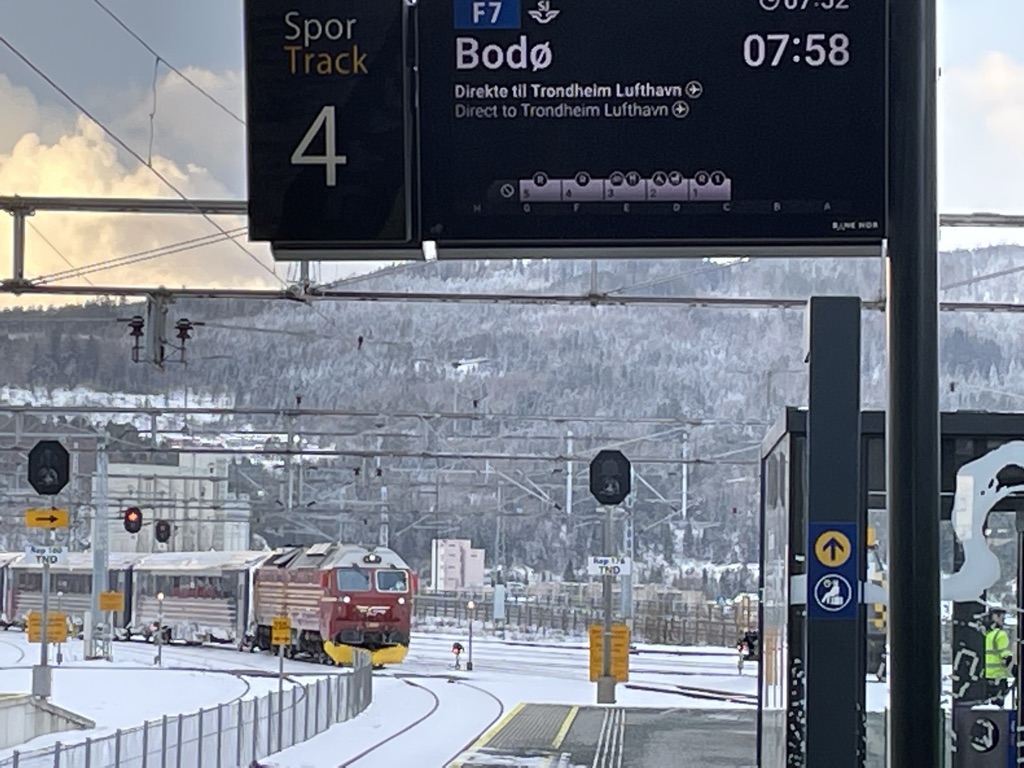

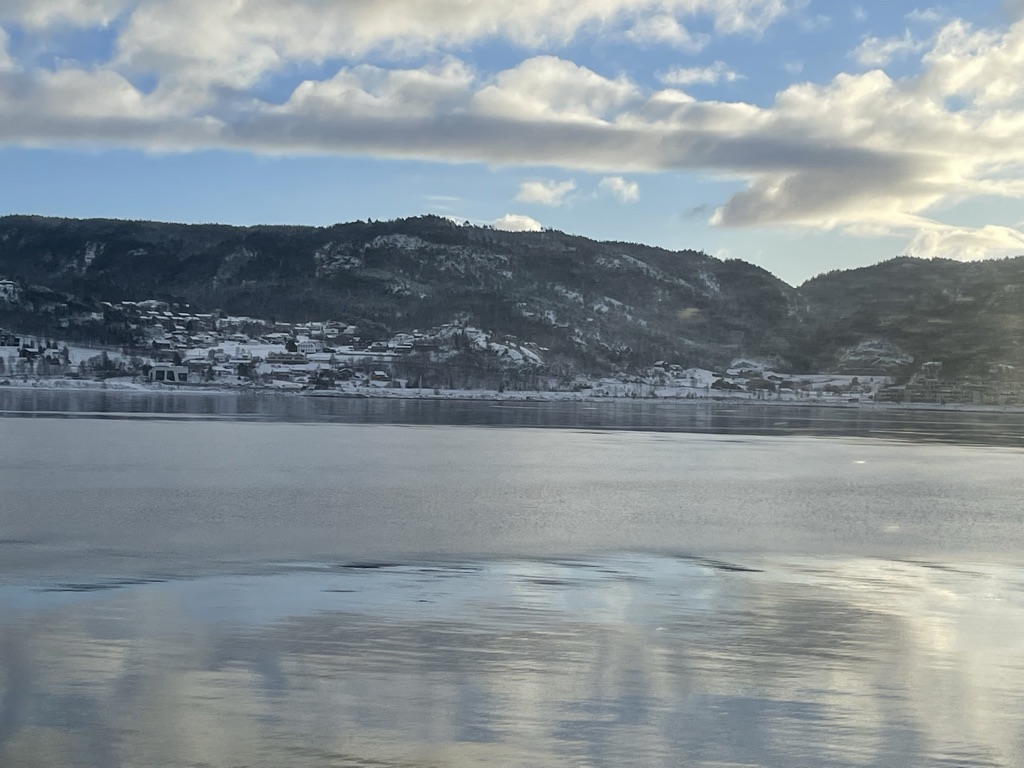
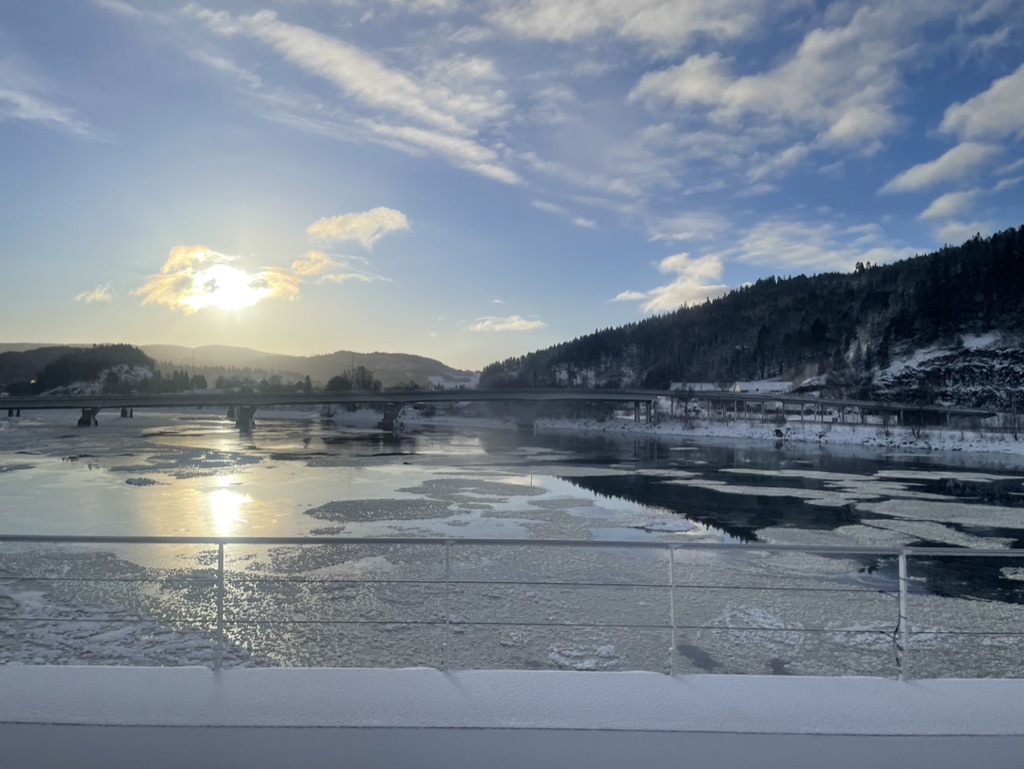
along Trondheim Fjord…..
and through Hell.
From the train timetable:
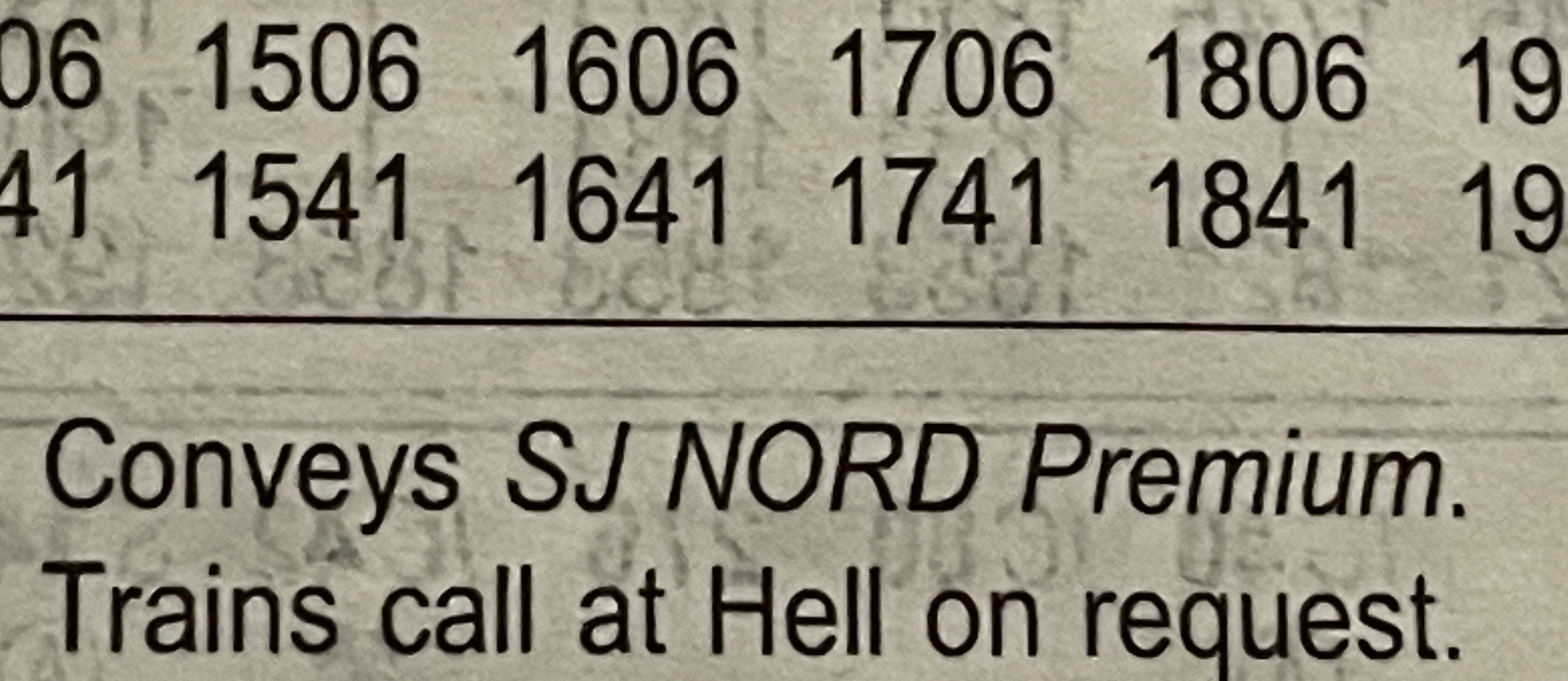
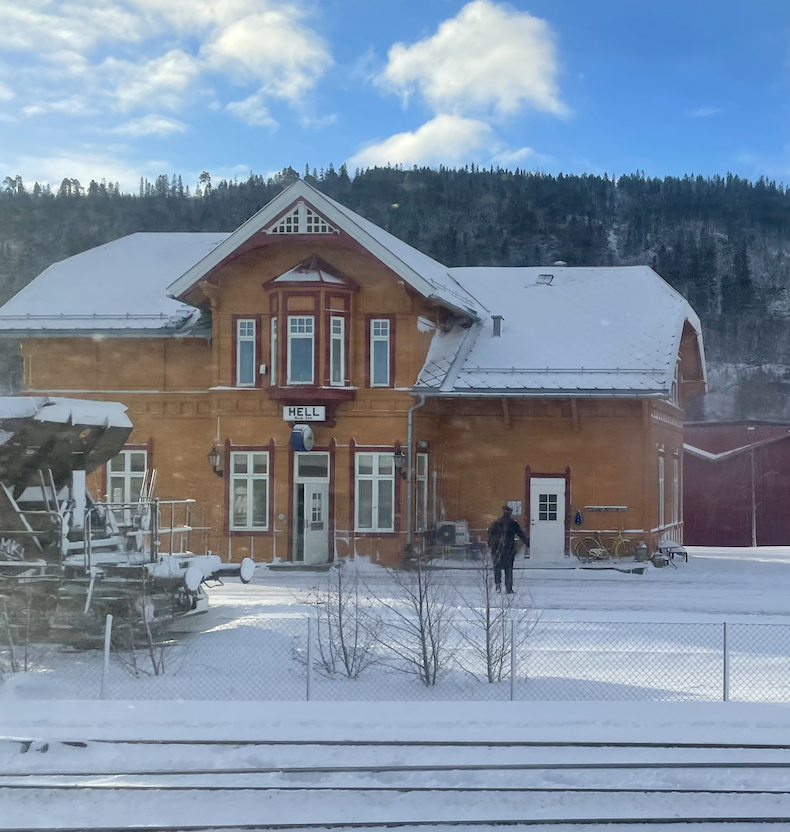
Evil is not easily contained but a frozen station (the lowest circle punishing treachery, in Dante’s vision), would be appropriate.
and gradually away from the coast and into the hills.
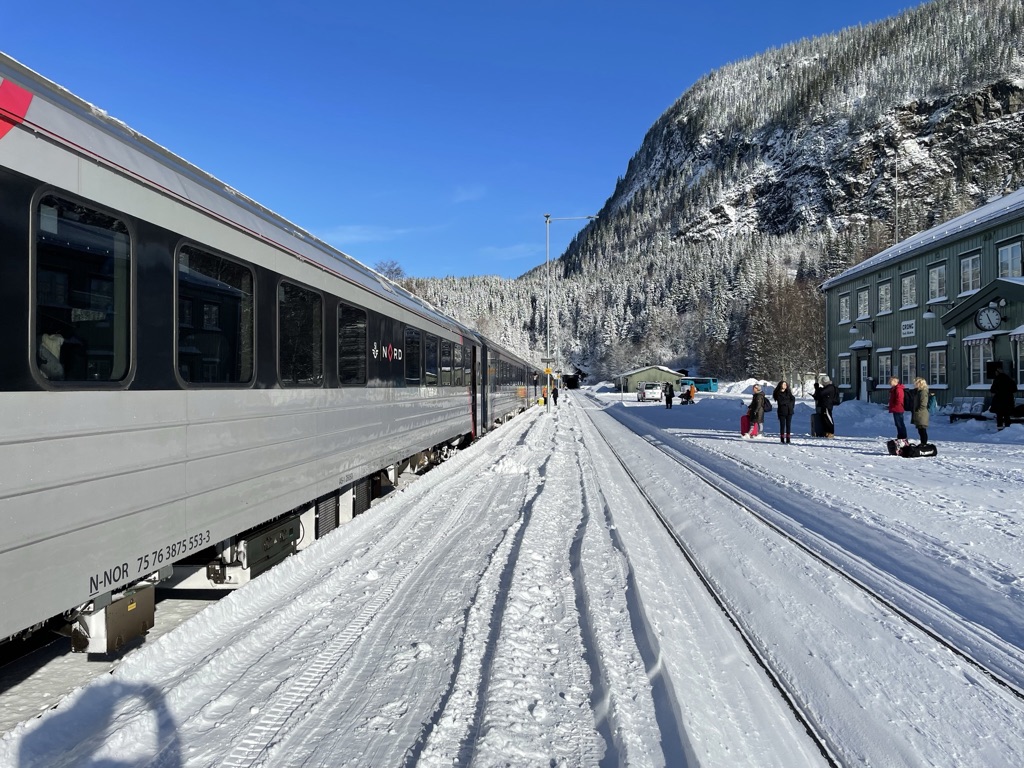
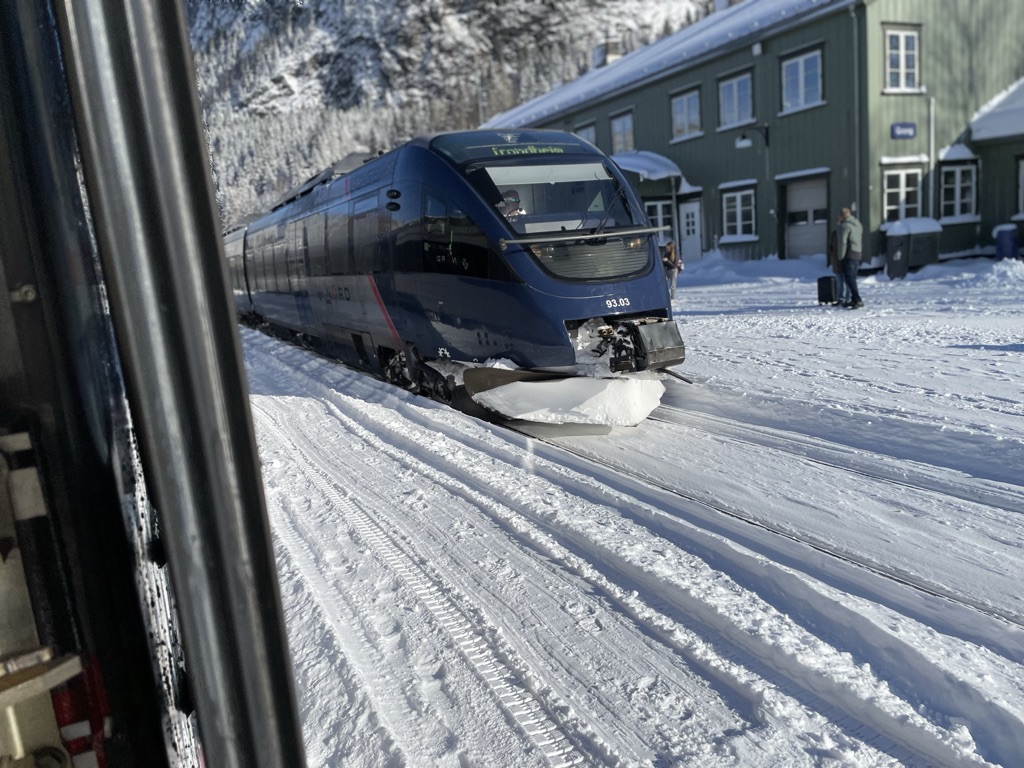
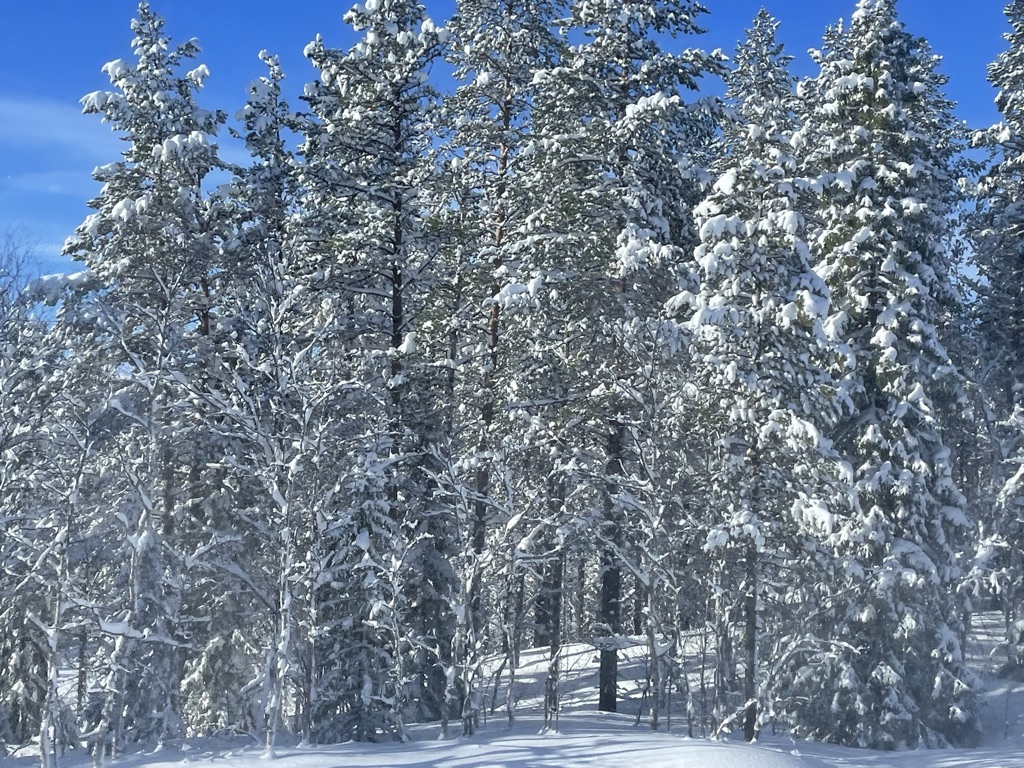
The weather had been cold throughout but our arrival in Oslo was the start of permanent zero temperatures (night and day). These gradually deepened as we moved north…. but not necessarily with much snow impact.
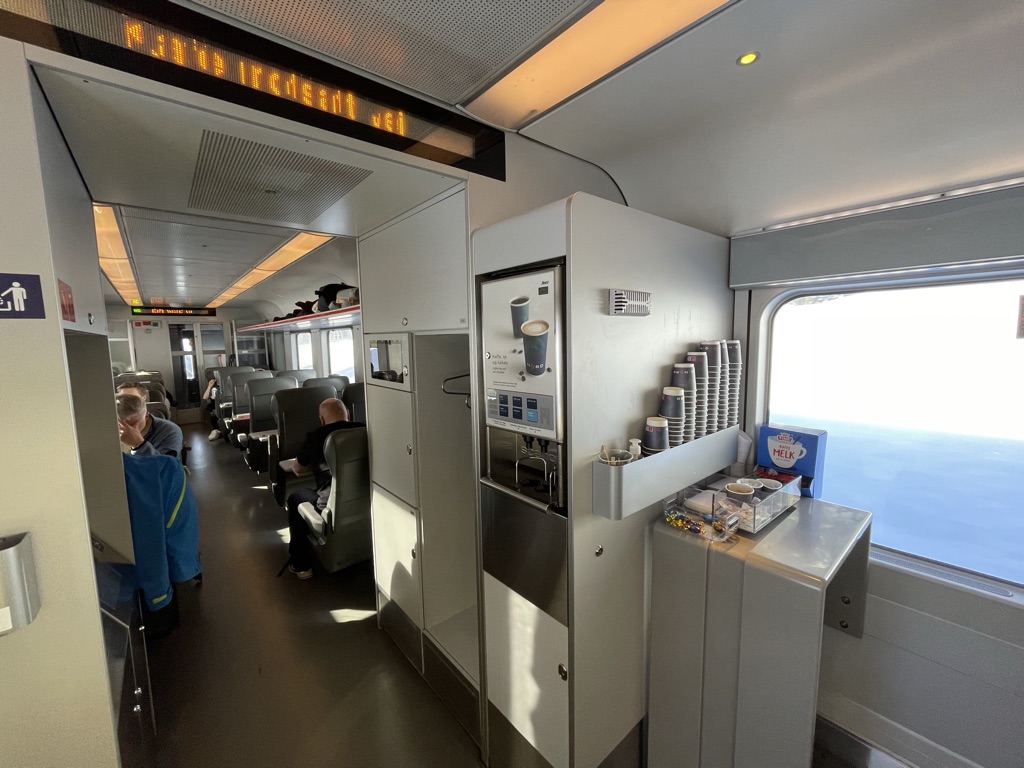
The usual free coffee in ‘comfort/extra/premium/first’ class (choose your term).
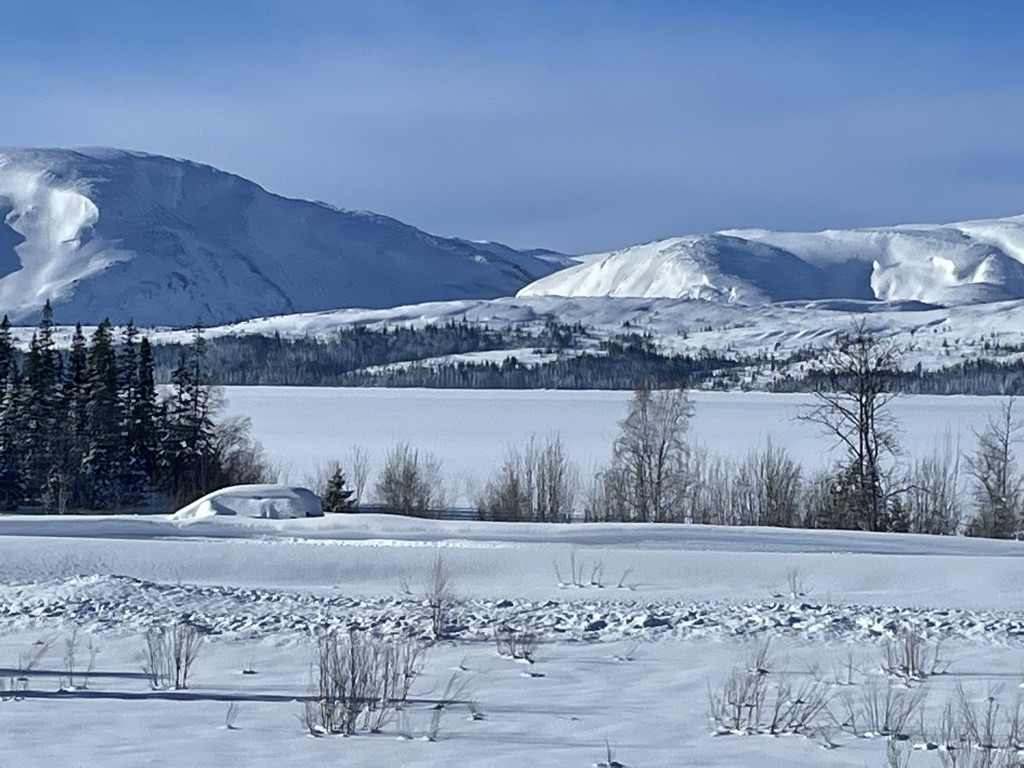
………on towards the Arctic Circle
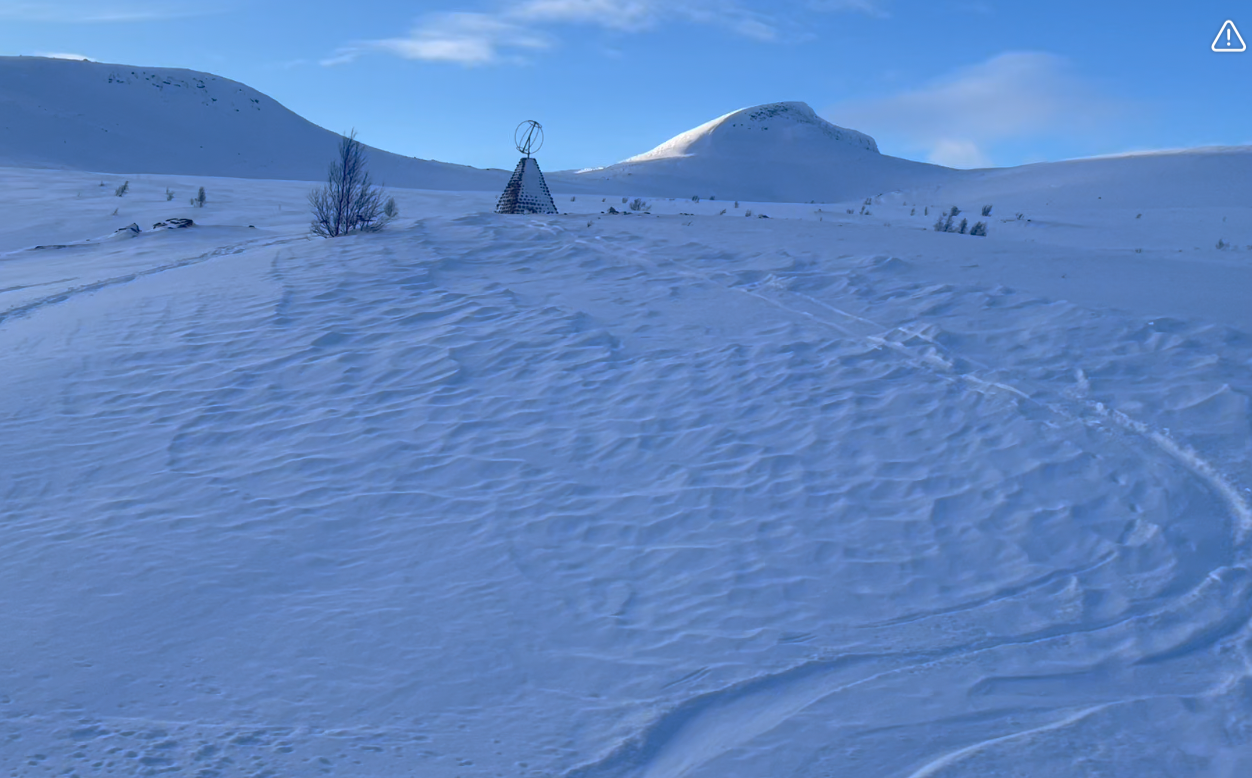
marked by a small monument.
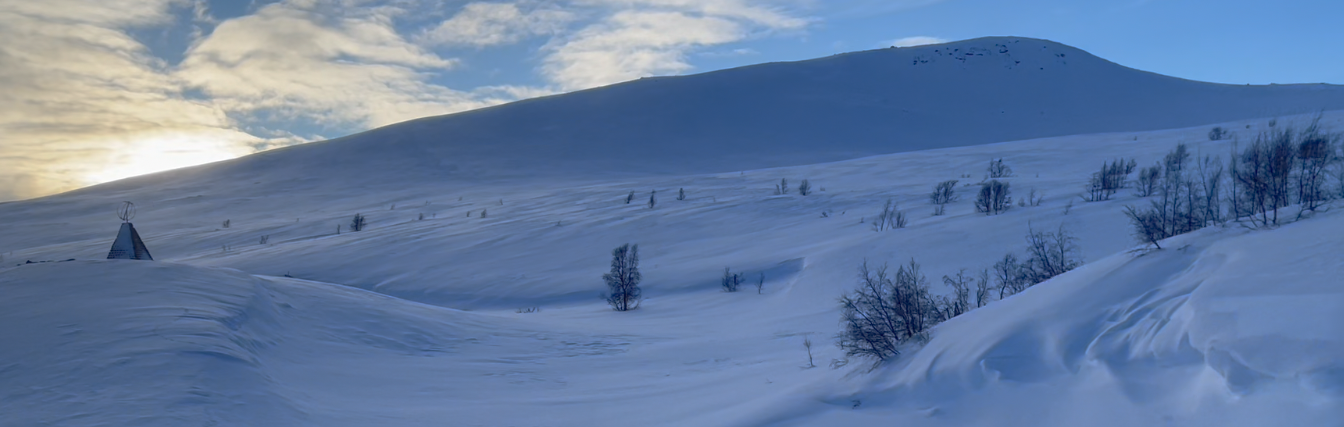
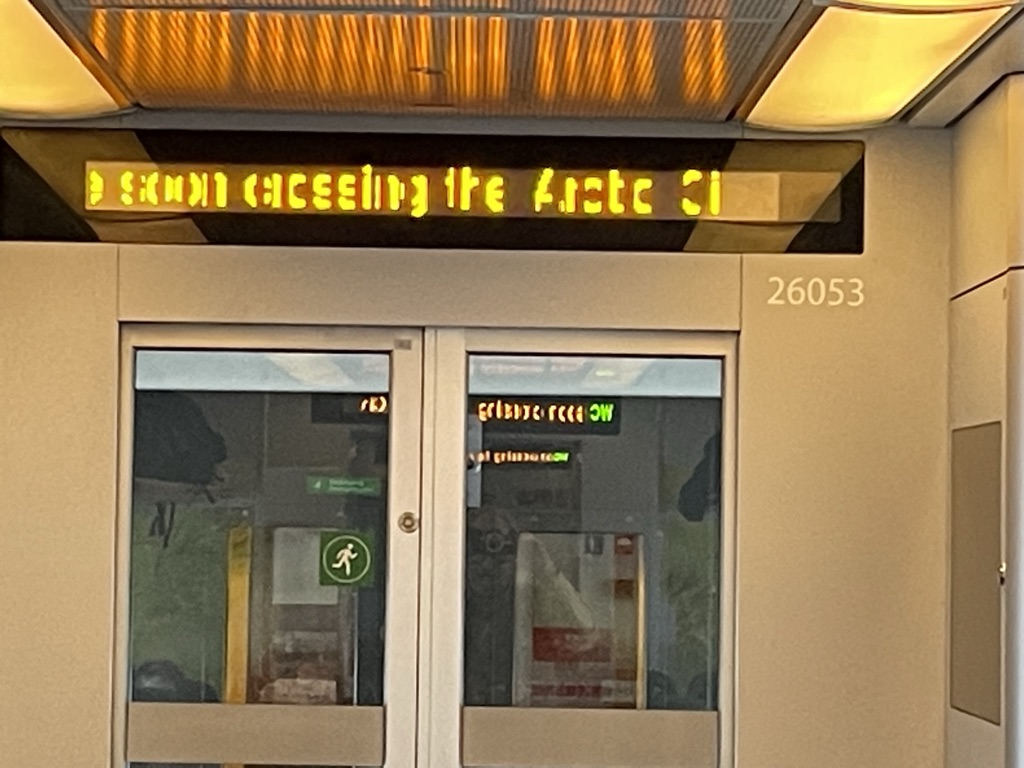
There was an announcement from railway staff and the information board mentioned our crossing. The train was also slowed to allow the moment to be observed.
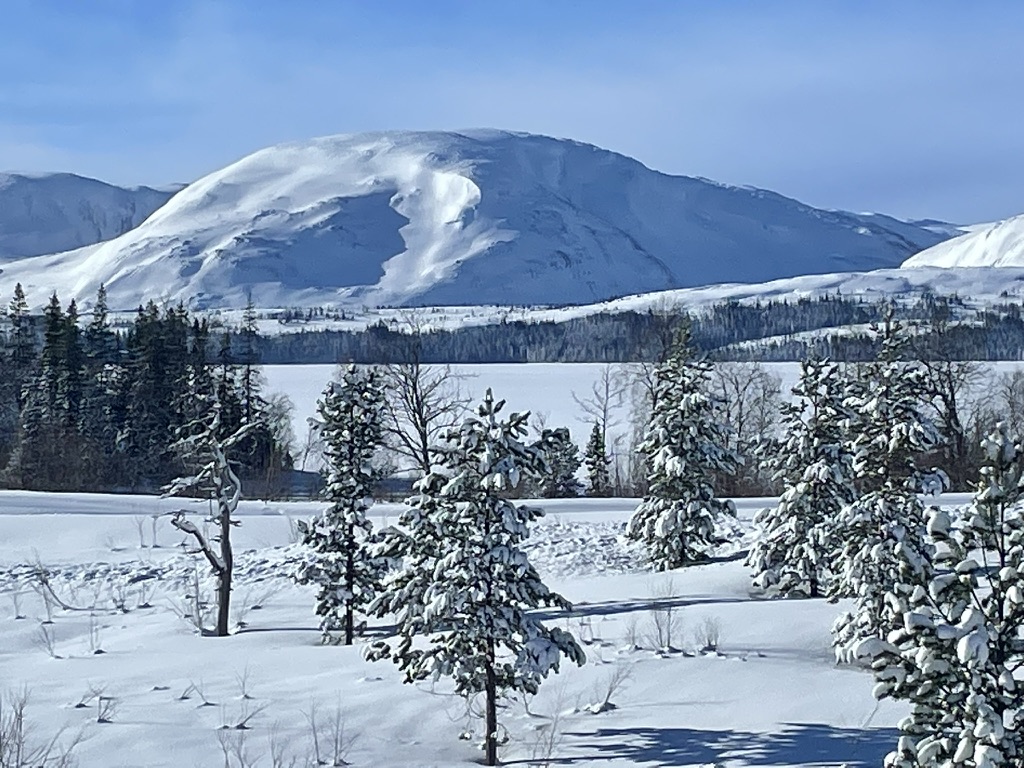
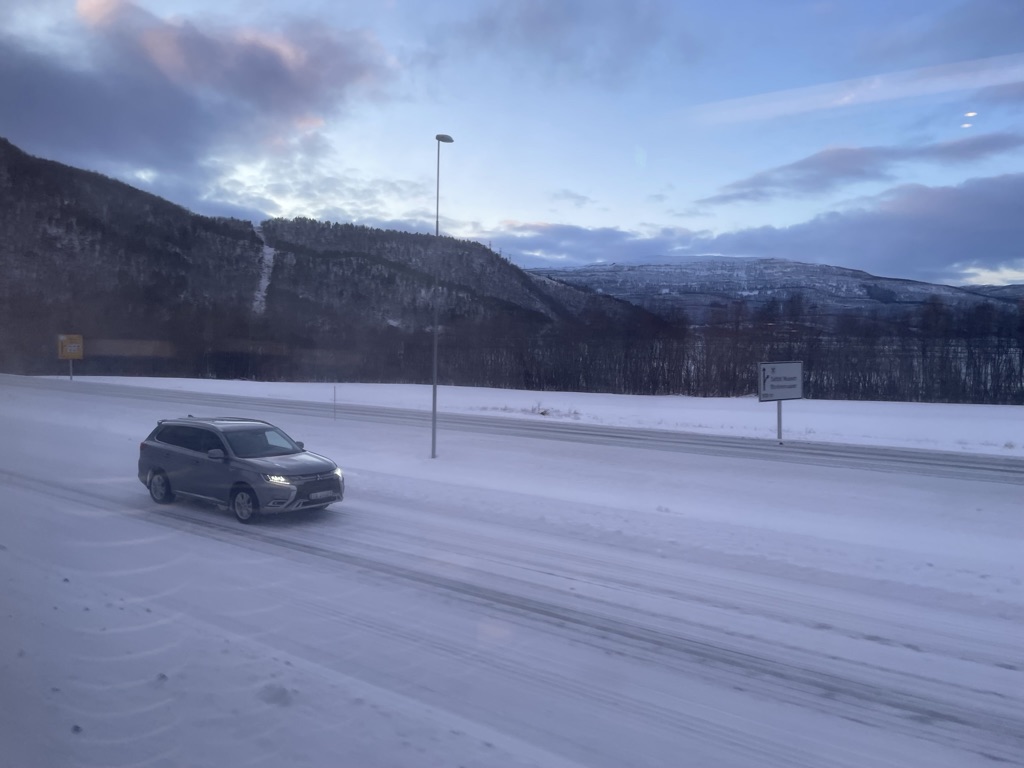
Photographing from a moving train can produce some what mistaken impressions…..
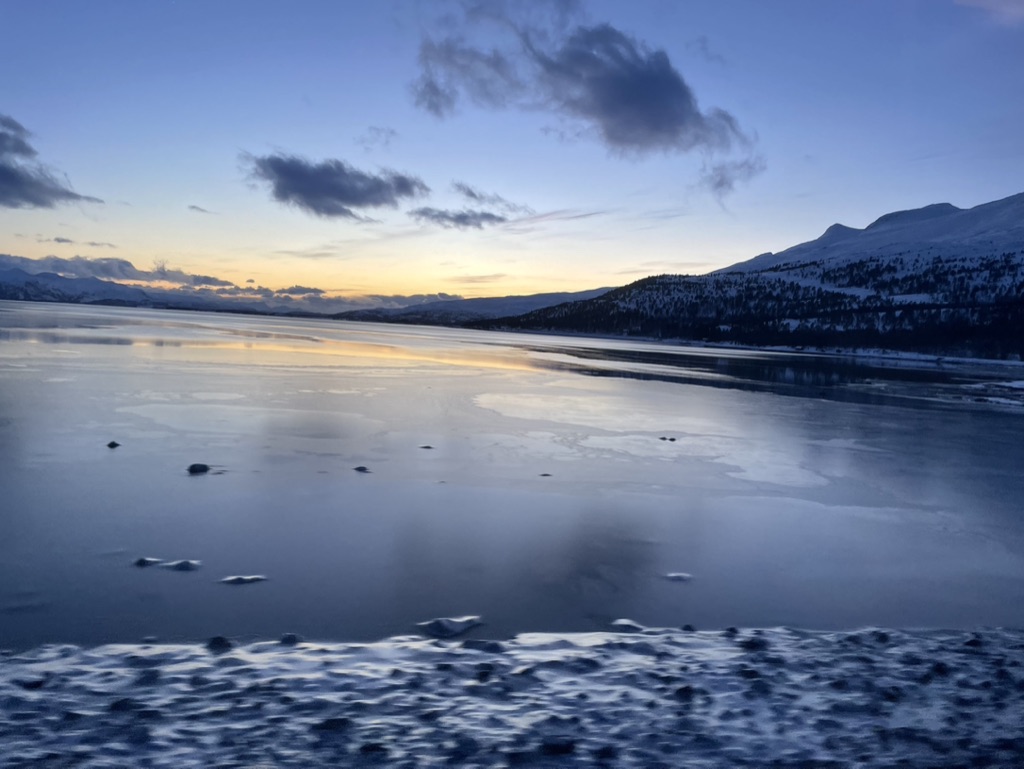
Into Bodø (only an hour late!)
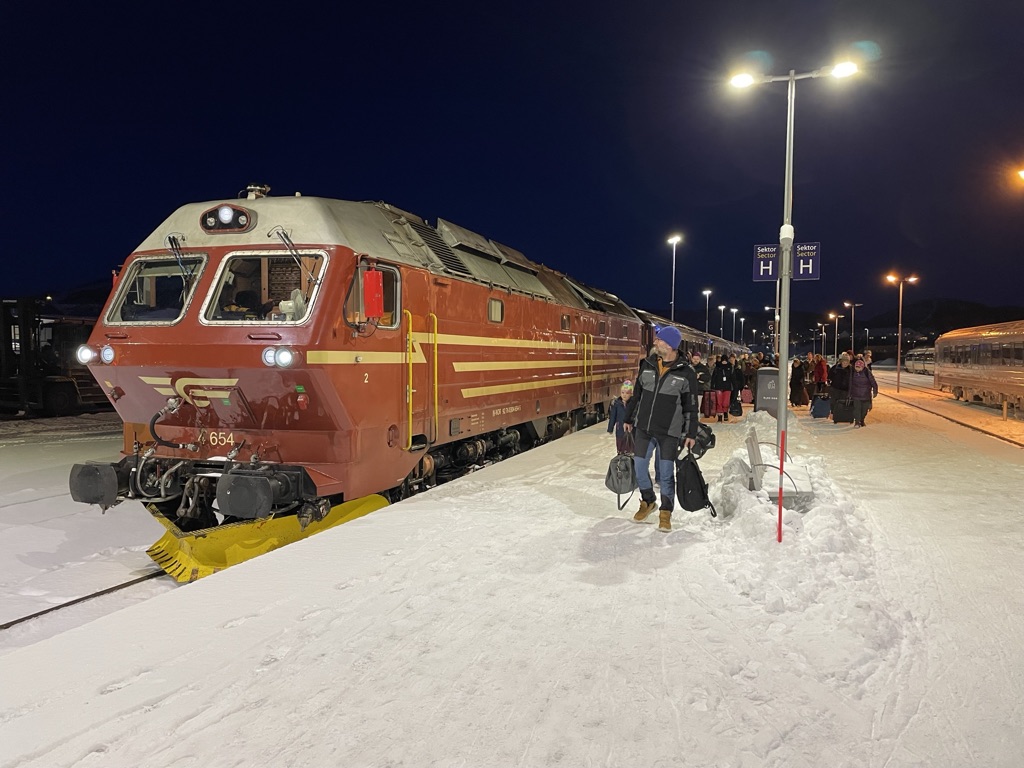
Walking (and briefly living, travelling) in, with & through ice and snow, was (surprisingly) remarkably easy.
Once snow arrives, it stays.
Roads can be cleared to a certain level but then more snow arrives. So snow (‘dry’ compared with what usually falls in most of the UK) simply lies on snow…. and layers build. Where clearance is required (eg on roads after snowstorms) huge piles are created (sometimes in special deposits on the edge of towns).
In places (parts of town centres) there are pavements heated from below & which leave spaces completely clear.
There is no relief from the snow & the freezing temperatures. Adaptation (for those from warmer climates) is required.
Habits (for those unused to continually freezing temperatures, change – and layers of clothing are always worn. The temperatures dropped to around minus 20 degrees at times but were usually around minus 7 or 8 during the day.
Journey One
Chapter Two
Through Icebound Lands
Experiencing the Glories of Public Bus Services…
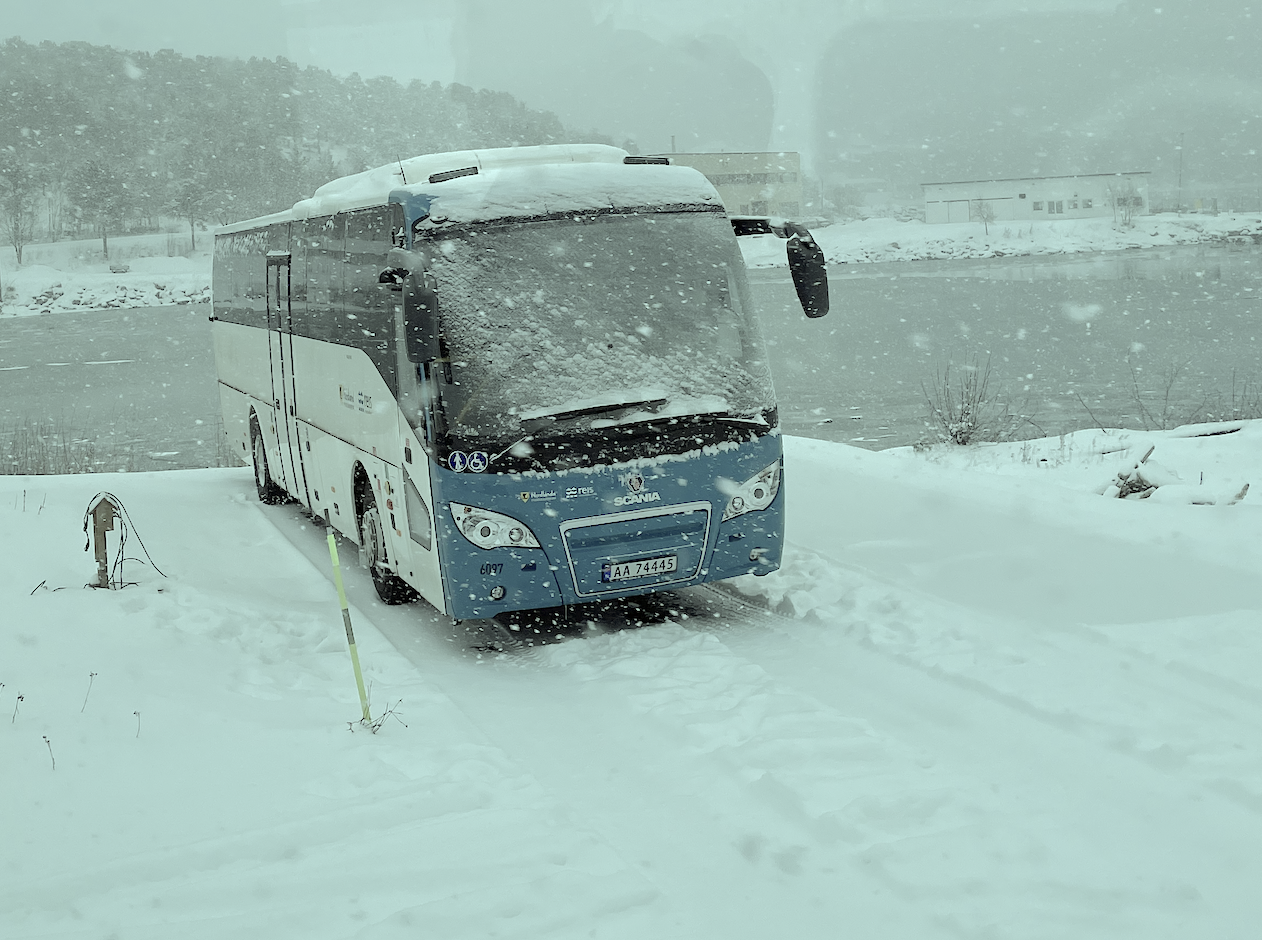
and the Ice-Free Port of Narvik.
Living in Northern Europe requires different skills (and attitudes) than are ‘normal’ for most people across the Continent & its Western Isles.
We were told ‘winter comes later’ but the far North region remains snow-bound & frozen for several months.
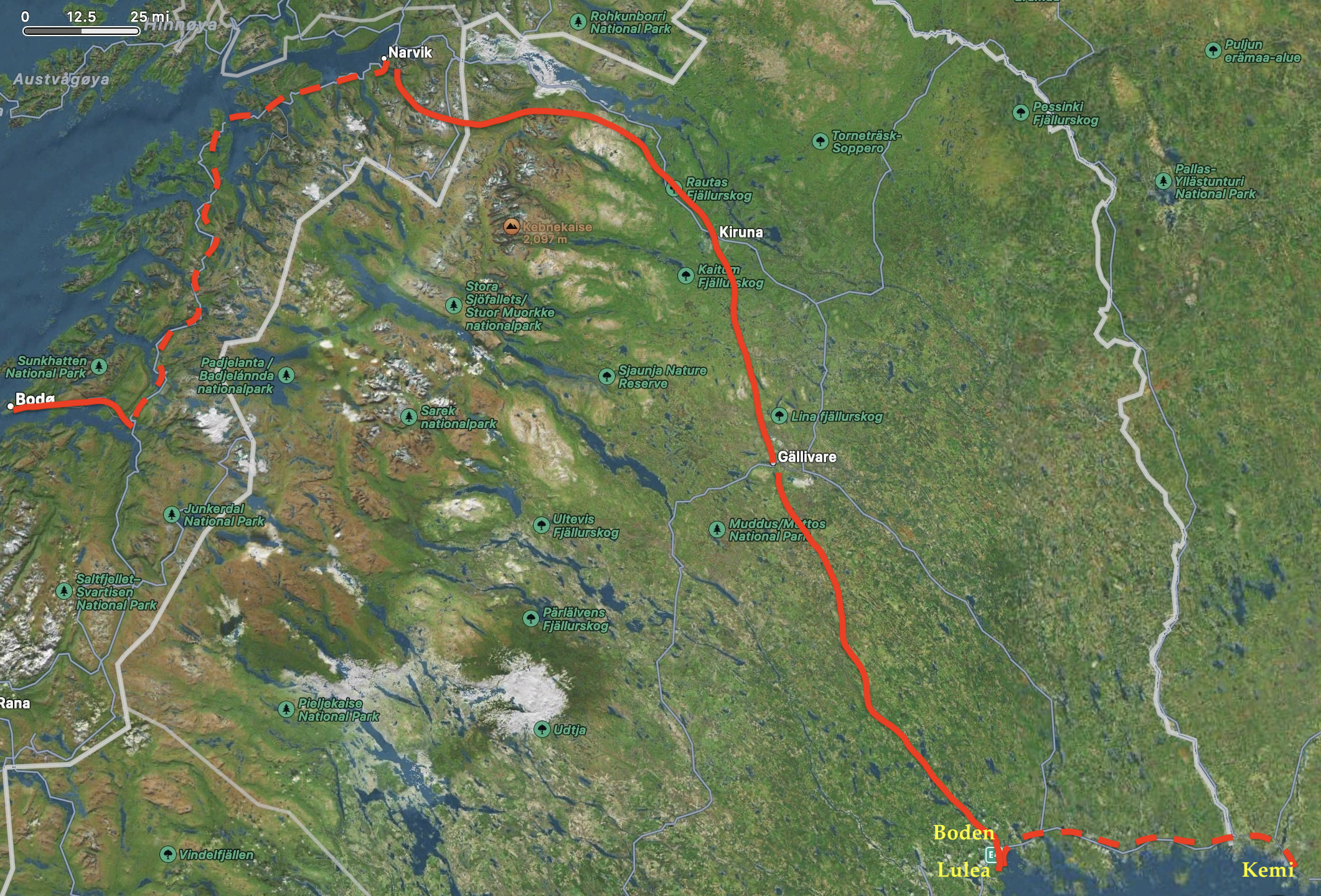
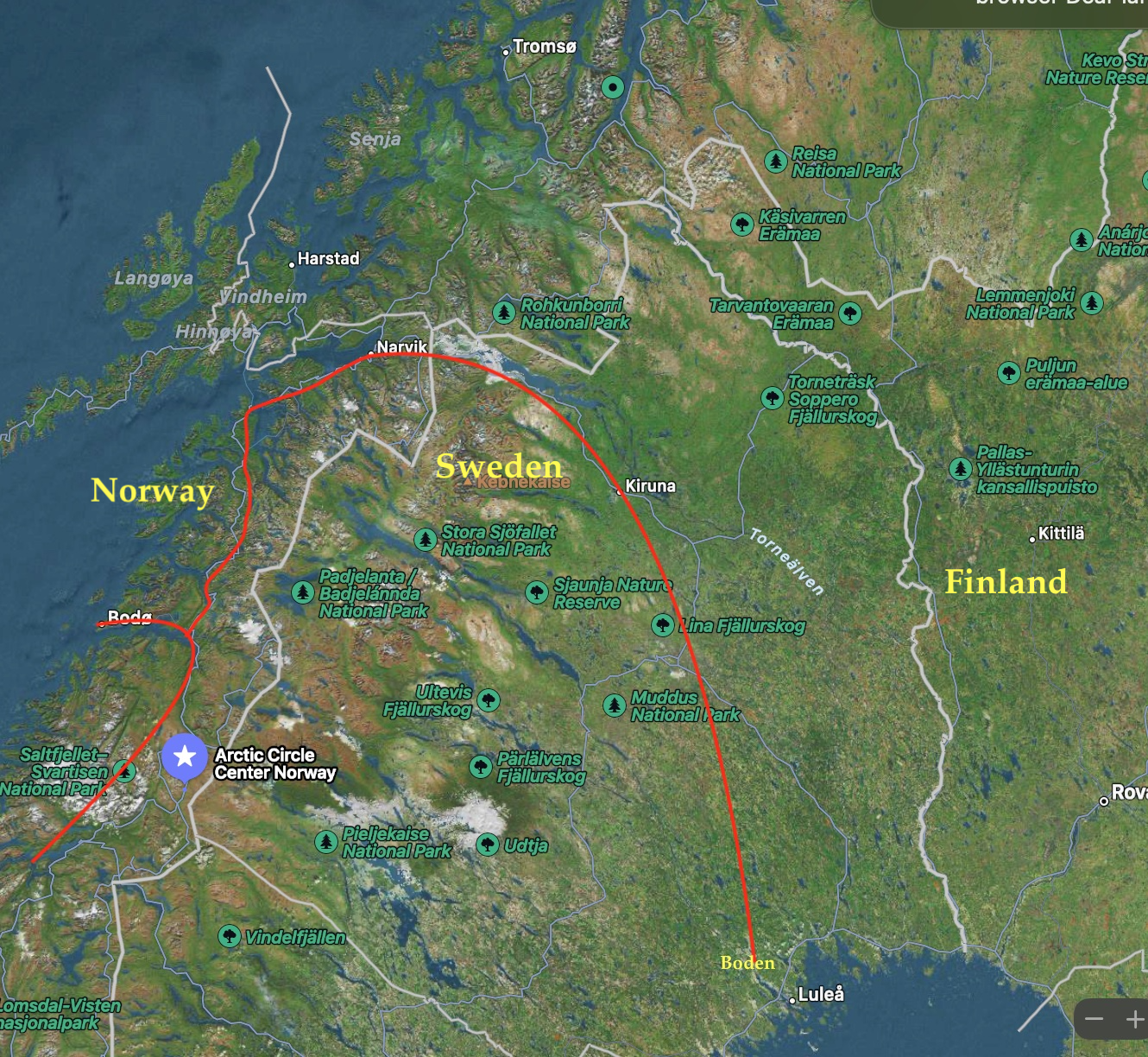
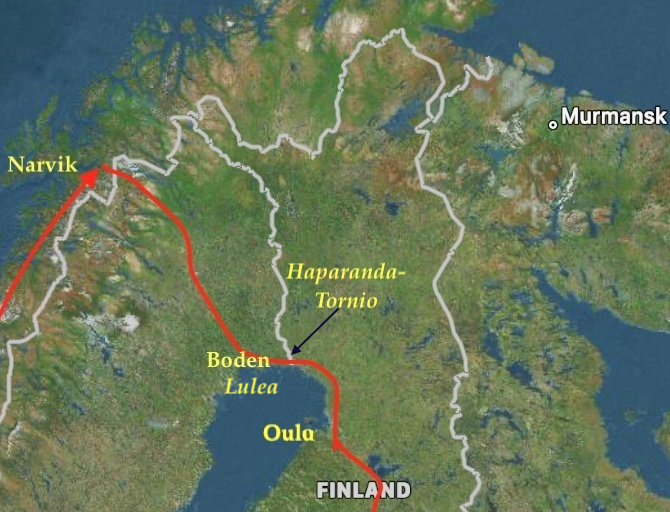
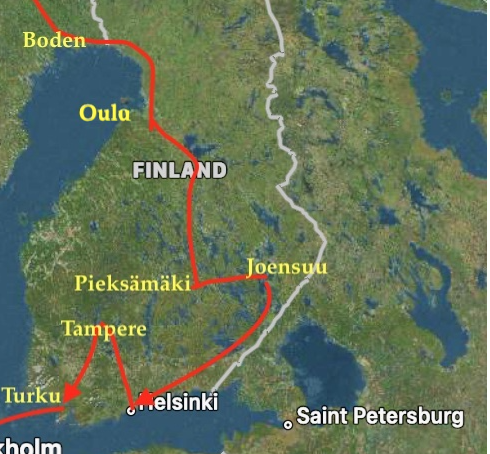
To reach Narvik we could fly (from UK) or use rail & bus. This is ‘No Kerosene’. Our route is by rail & ferries – we take the bus. The journey was surprising, mildly exciting, but particularly, very impressive.
Public transport integration links schedules:
- Leave Oslo on the night train,
- change to day train in Trondheim,
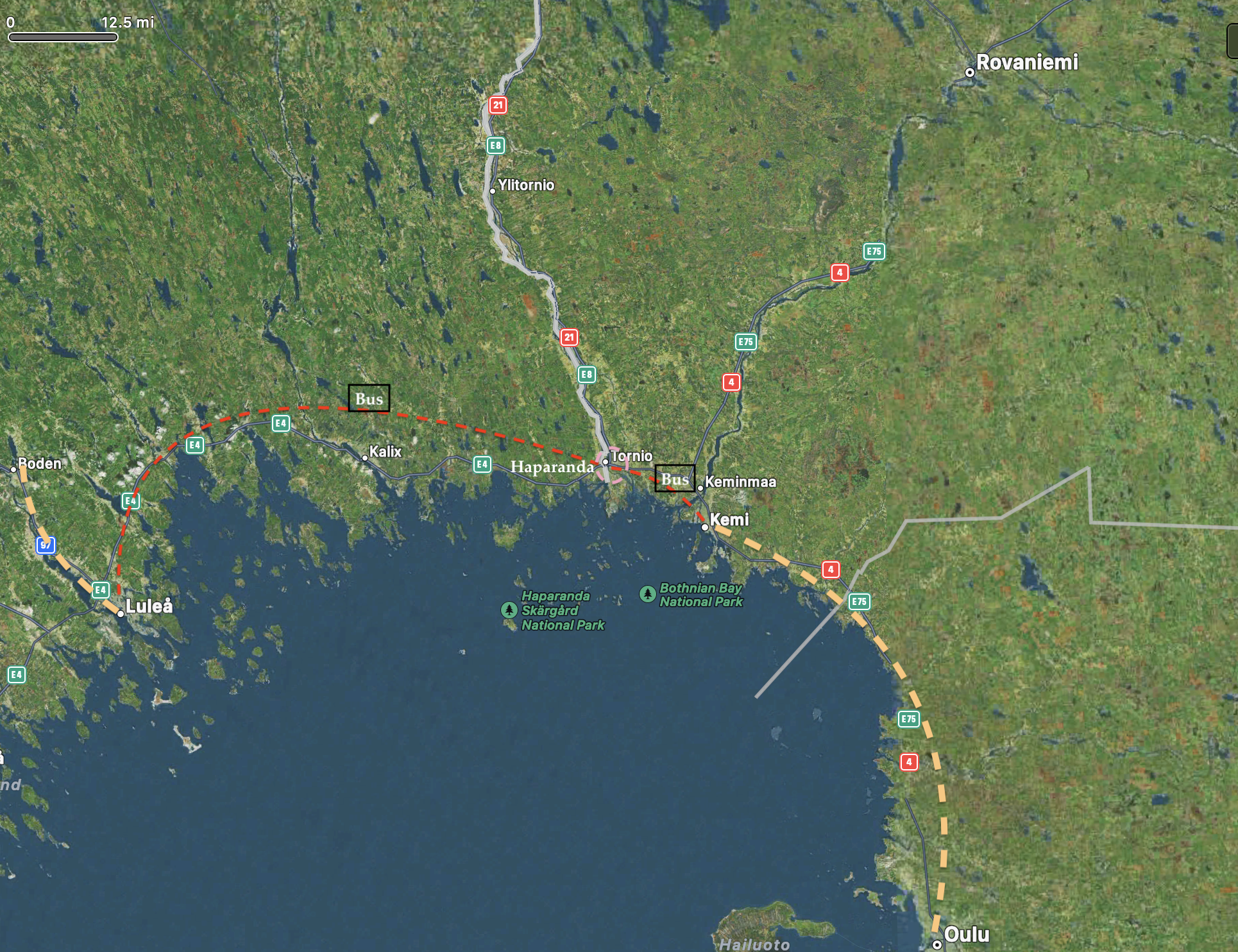
- connect at Fauske with evening bus to Narvik (and points further north). Distance 1391 kms (864 miles)
We travelled on the day trains & buses.
Despite the variable weather and conditions, the 2 journeys we made on buses (dashed red line on map) were faultless & thoroughly enjoyable.
Part of that enjoyment was in being the only ‘tourists’ on what in summer is a very popular route
(inevitably we saw Dutch motor-home travellers on the journey – some seem to live without care – intrepid or foolish?)
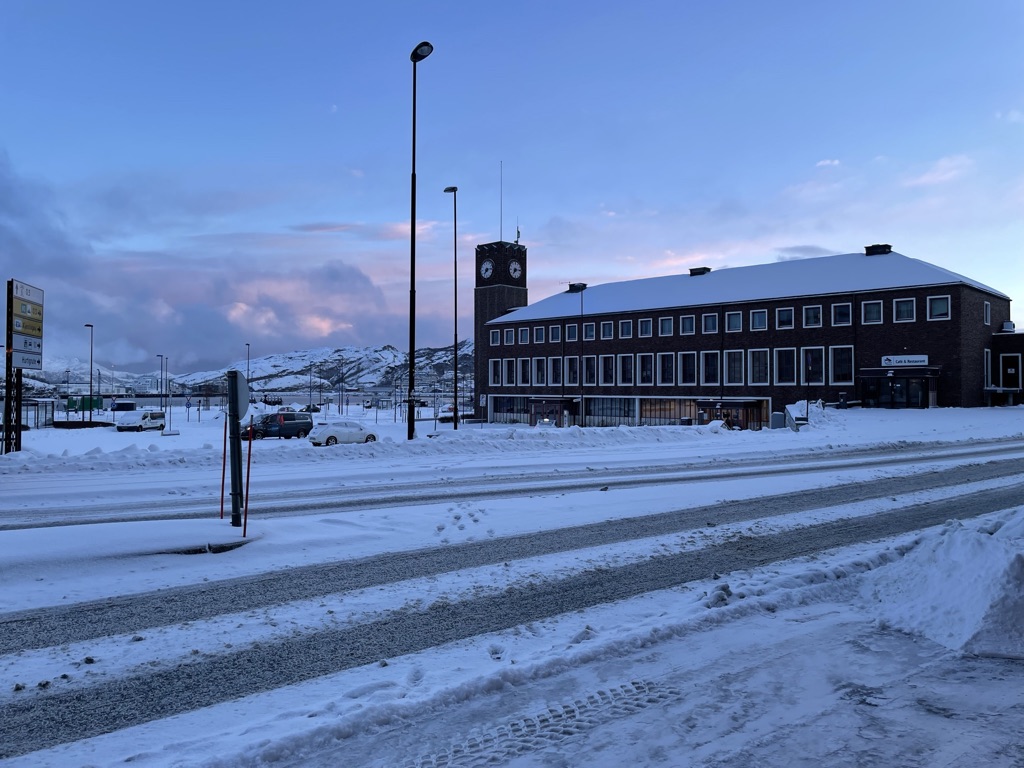
Monday morning March 6
Arctic Morning
We are realising that this journey needed to have more space included… ie days without travel that would allow both chance to ‘take a breath’ and to deal with any issues that may have arisen.
Yesterday we spent 9 hours on train… which was then late and so became 10 hours…. we were up and off at around 07.15 on Saturday & Sunday. On Saturday we arrived to face snow storms and only enough time to walk round Trondheim to find place to eat in the evening. Yesterday our journey lasted from 07.15 to 18.45 – we went to a restaurant had soup, then returned to hotel & retired early.
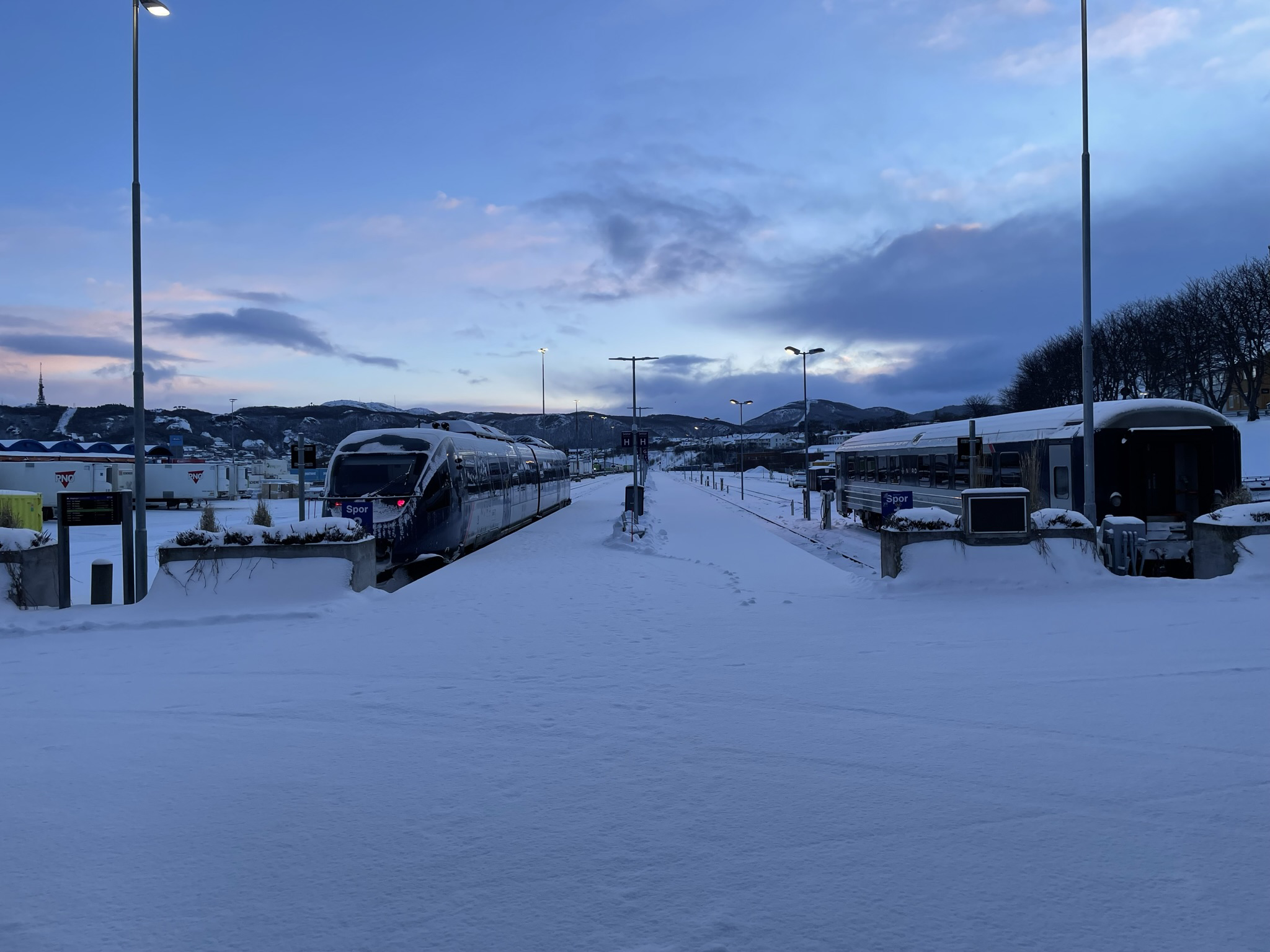
Today: train to Fauske (07.30 departure… fortunately our hotel is immediately opposite the station).
Change to a bus (we hope!) and in Narvik before 14.00. We have allowed an extra night there…. but that was largely to allow for ‘catch up time’ in case of disruption en route.
This journey is becoming ‘helter-skelter’…. but it will be completed after another week + (it takes 2 night journeys and 3 days of travel to travel back from Finland).
Maybe we should build some ‘extra’ days into the next 2 journeys as we head to central, eastern & southern Europe.
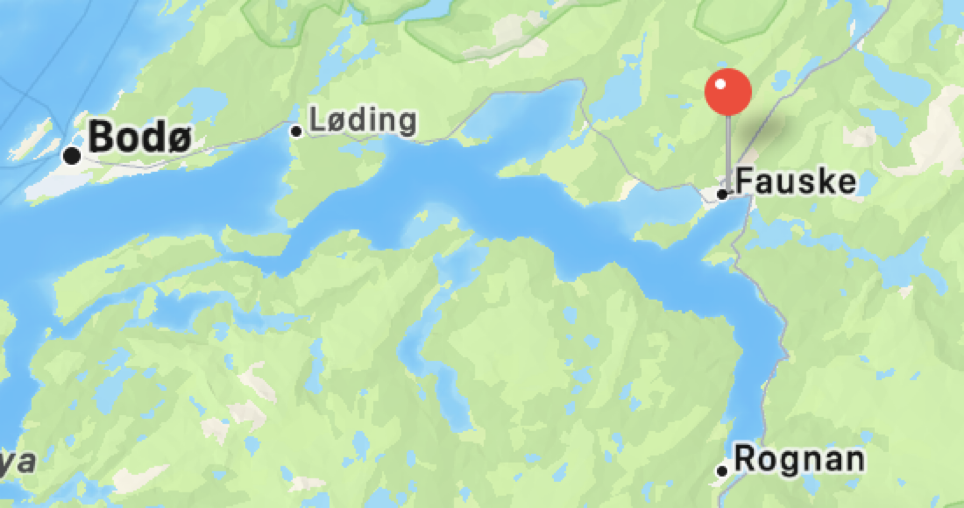
The final section of the northbound journey is by bus.
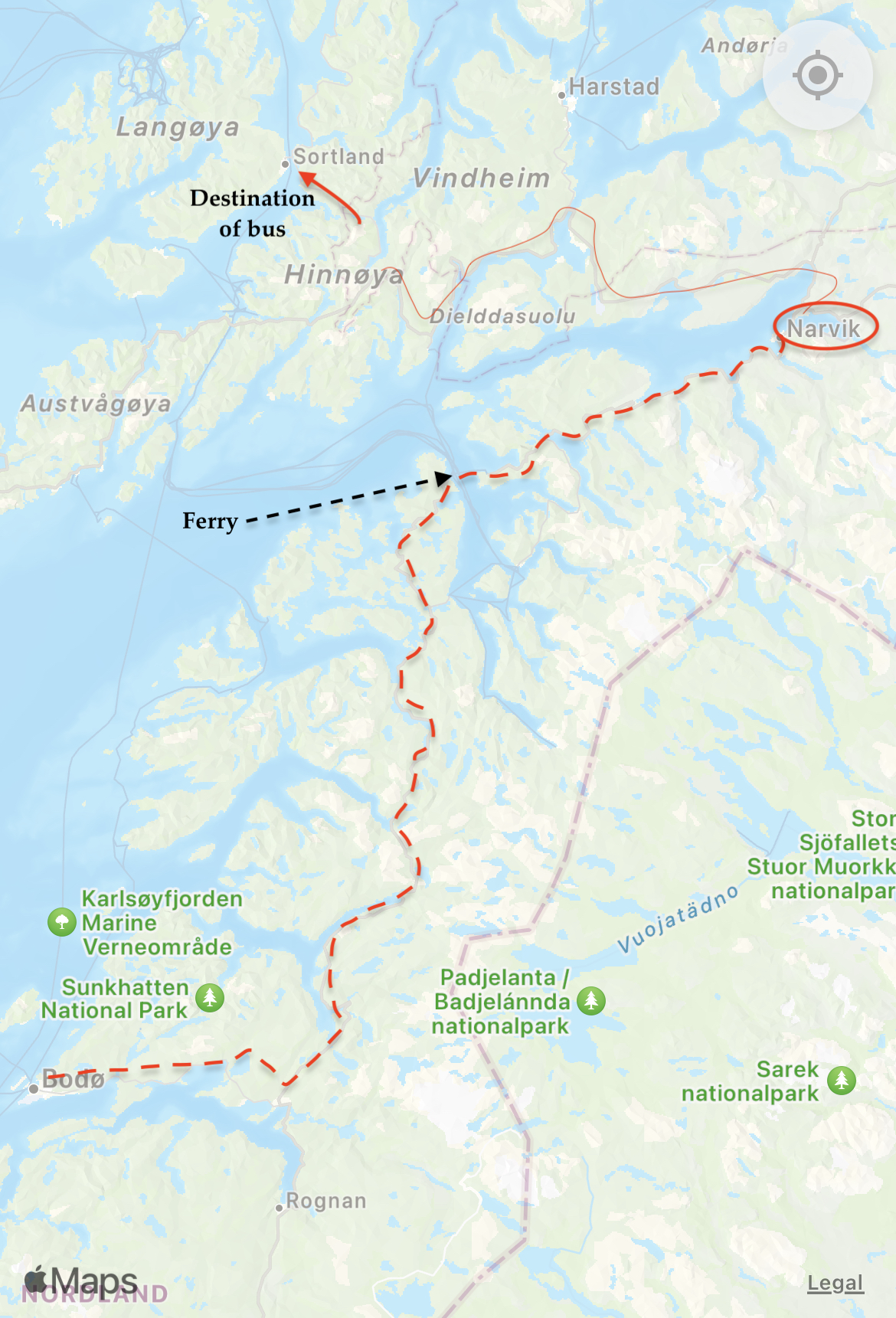
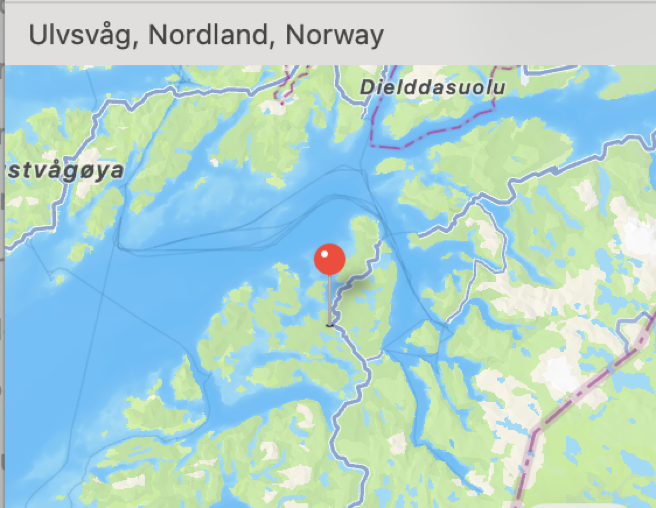
Fauske: and the final section of the northbound journey
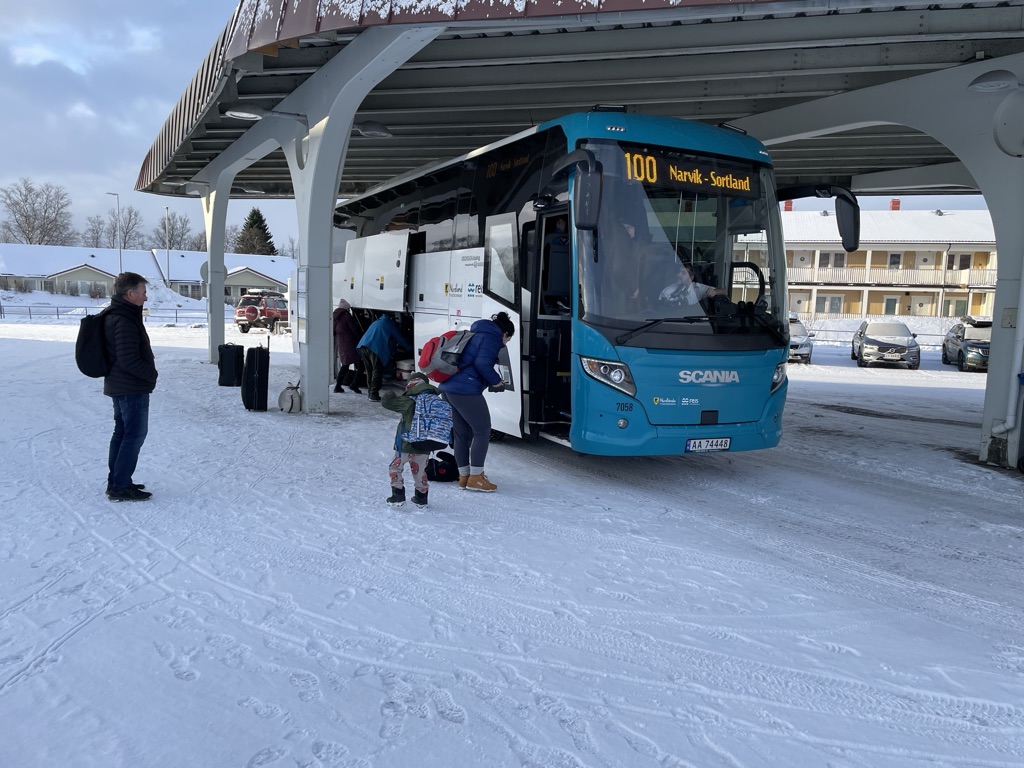
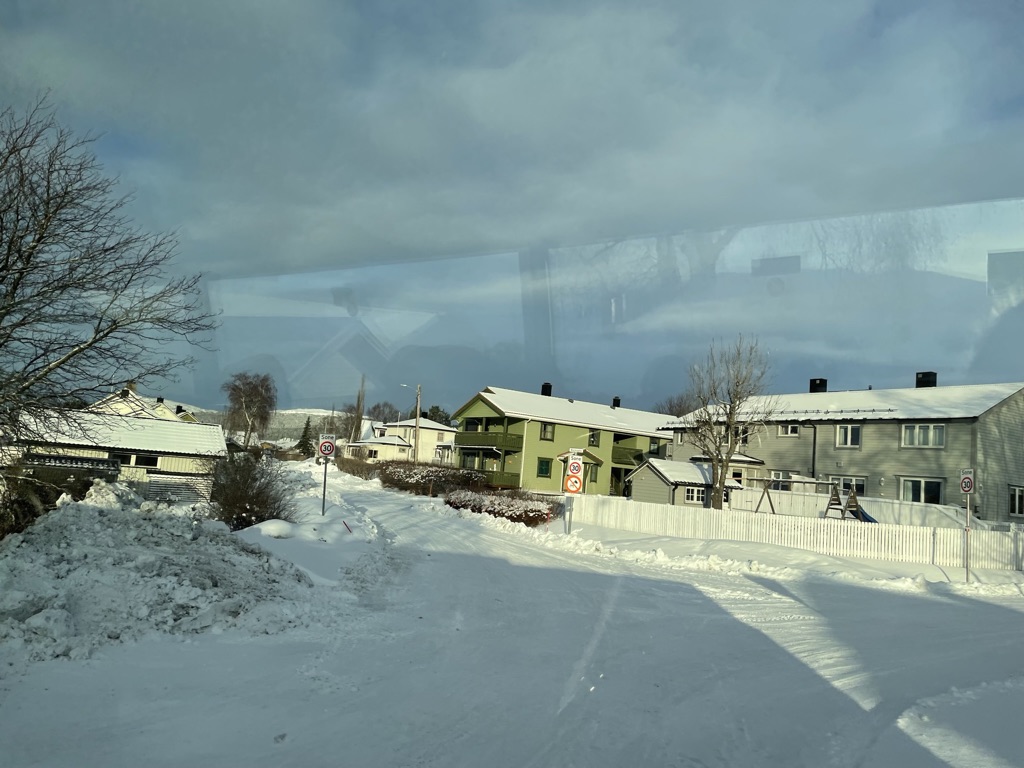
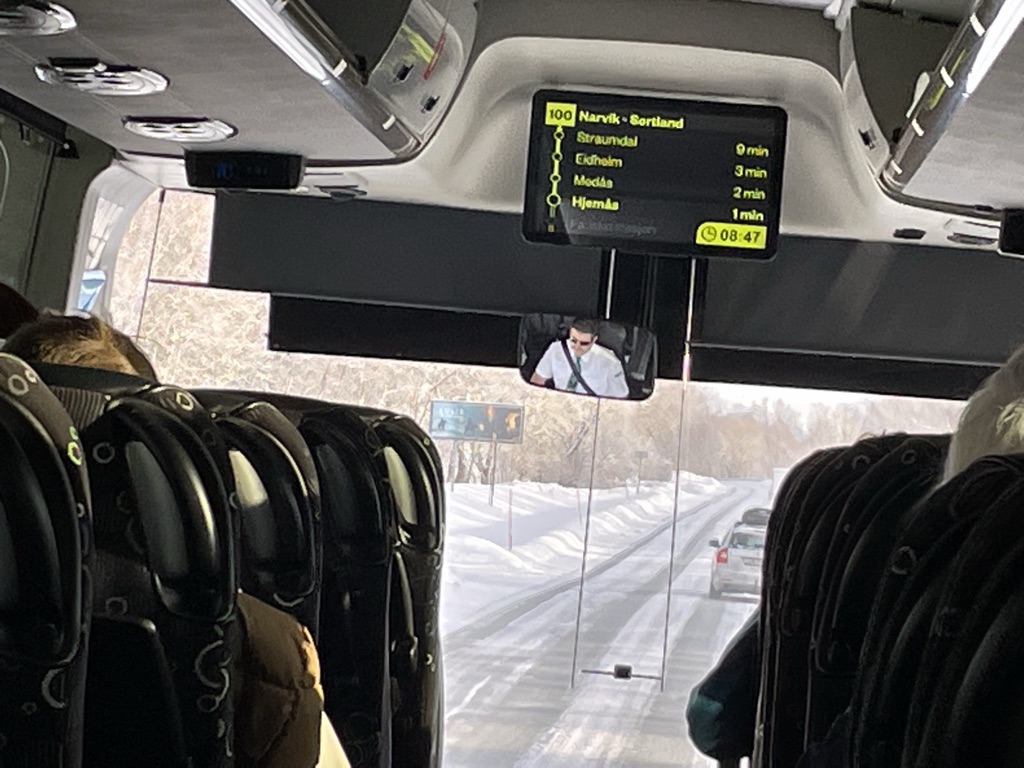

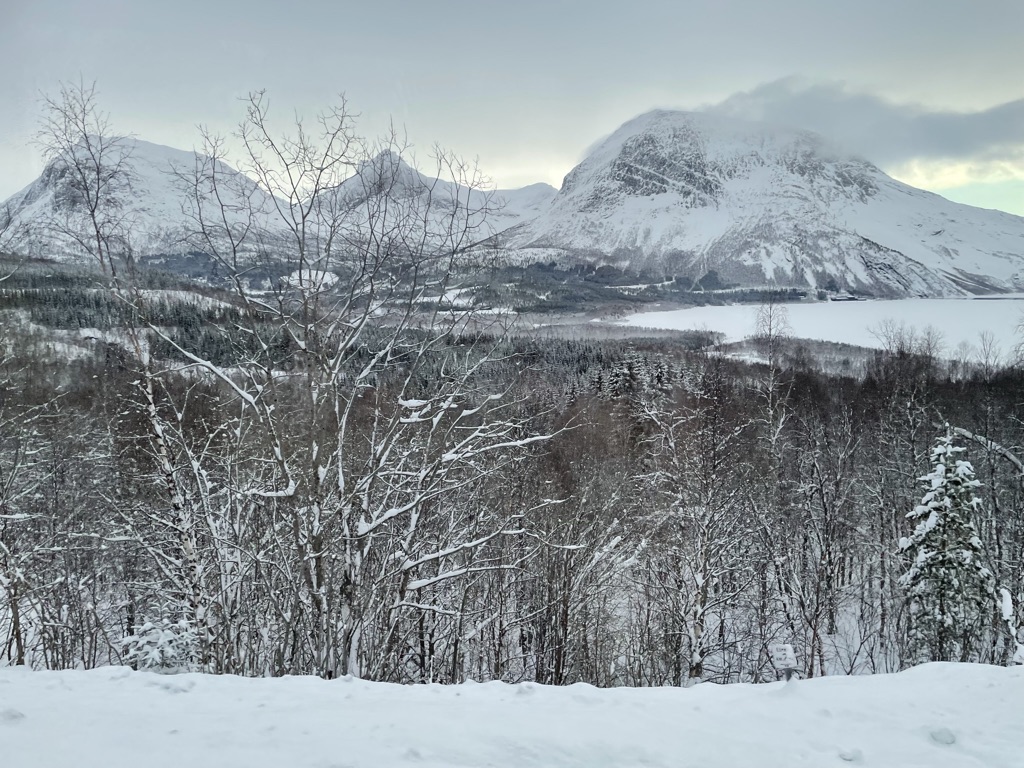
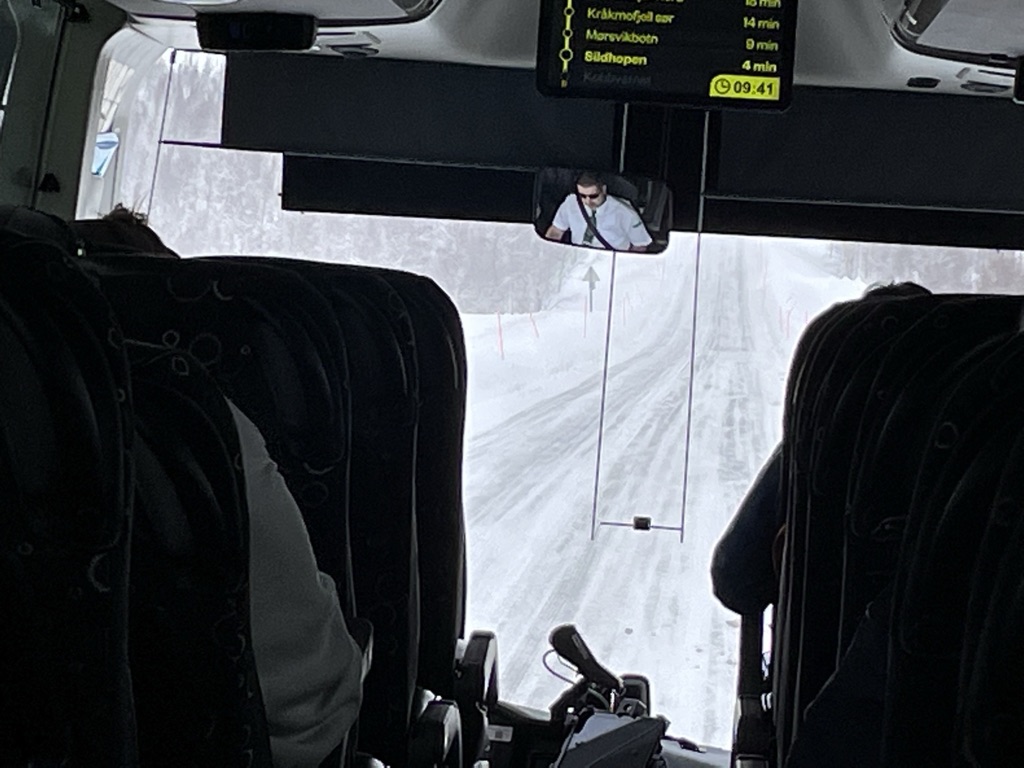
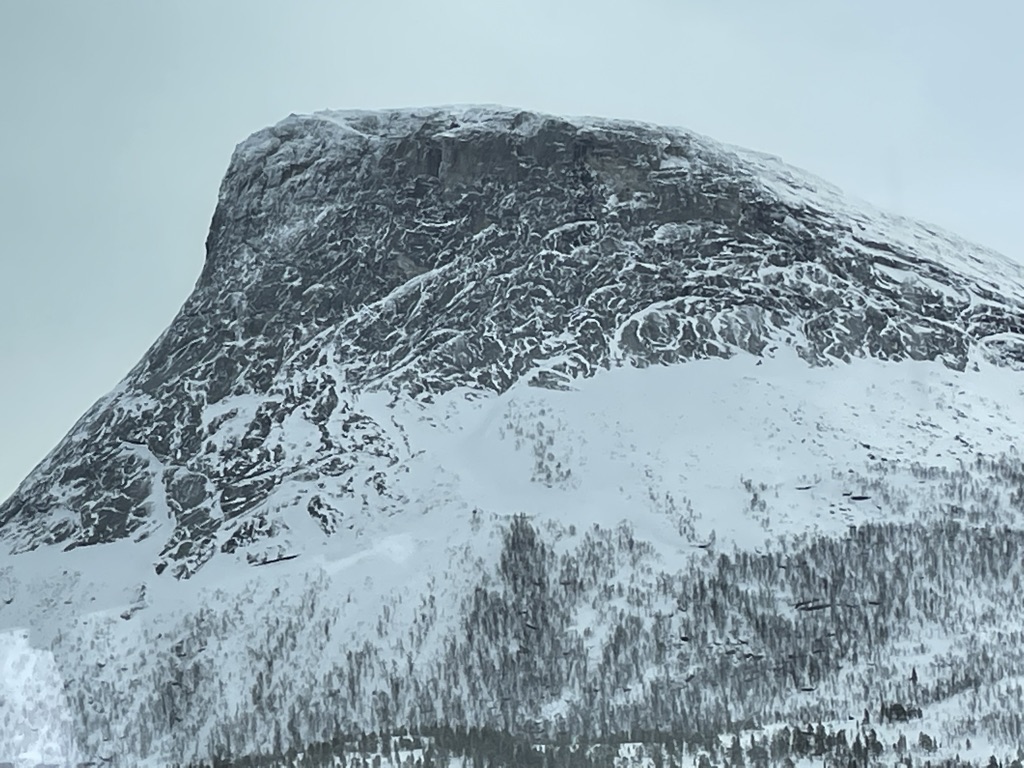
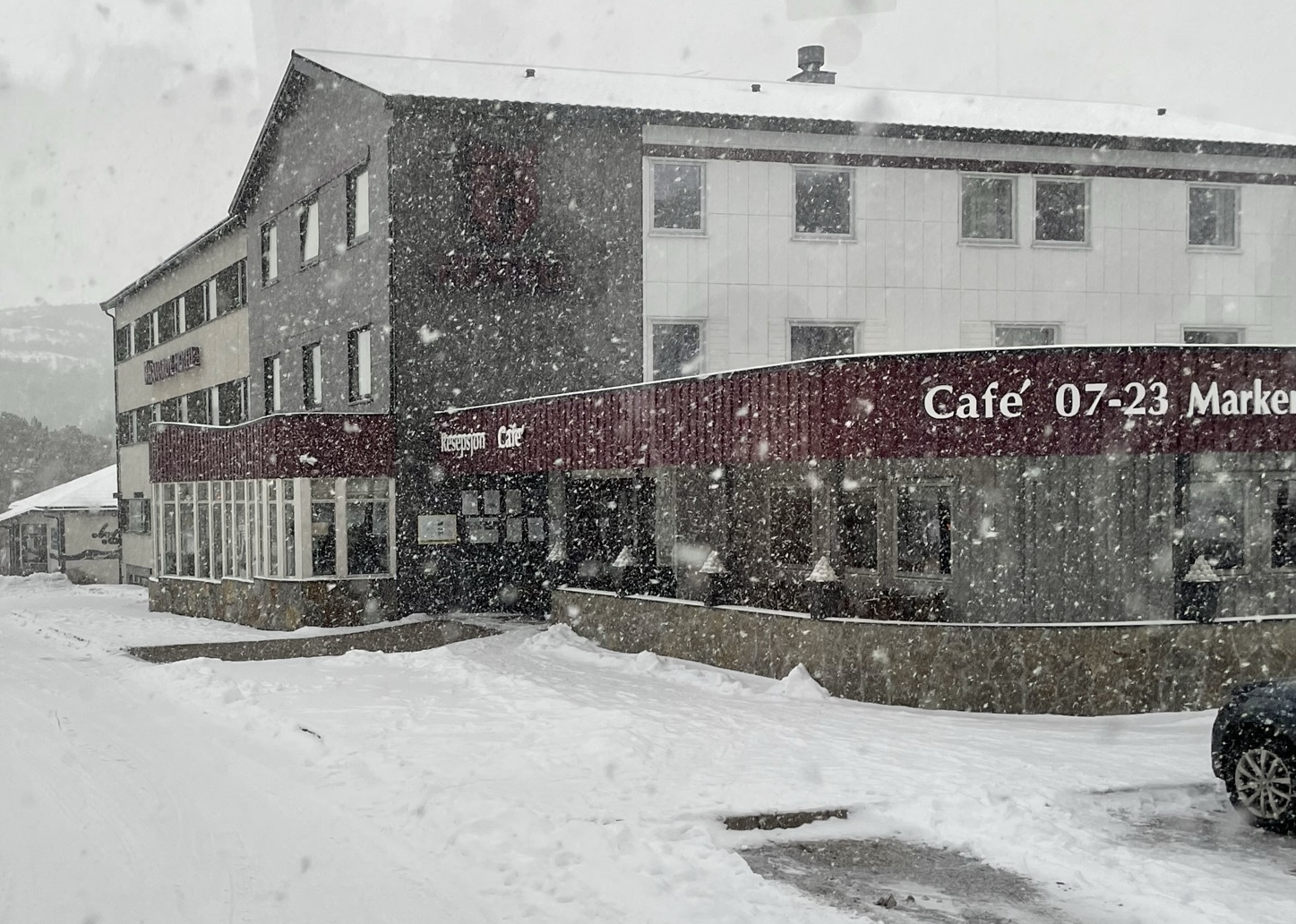
Connections in a ‘gathering gloom’
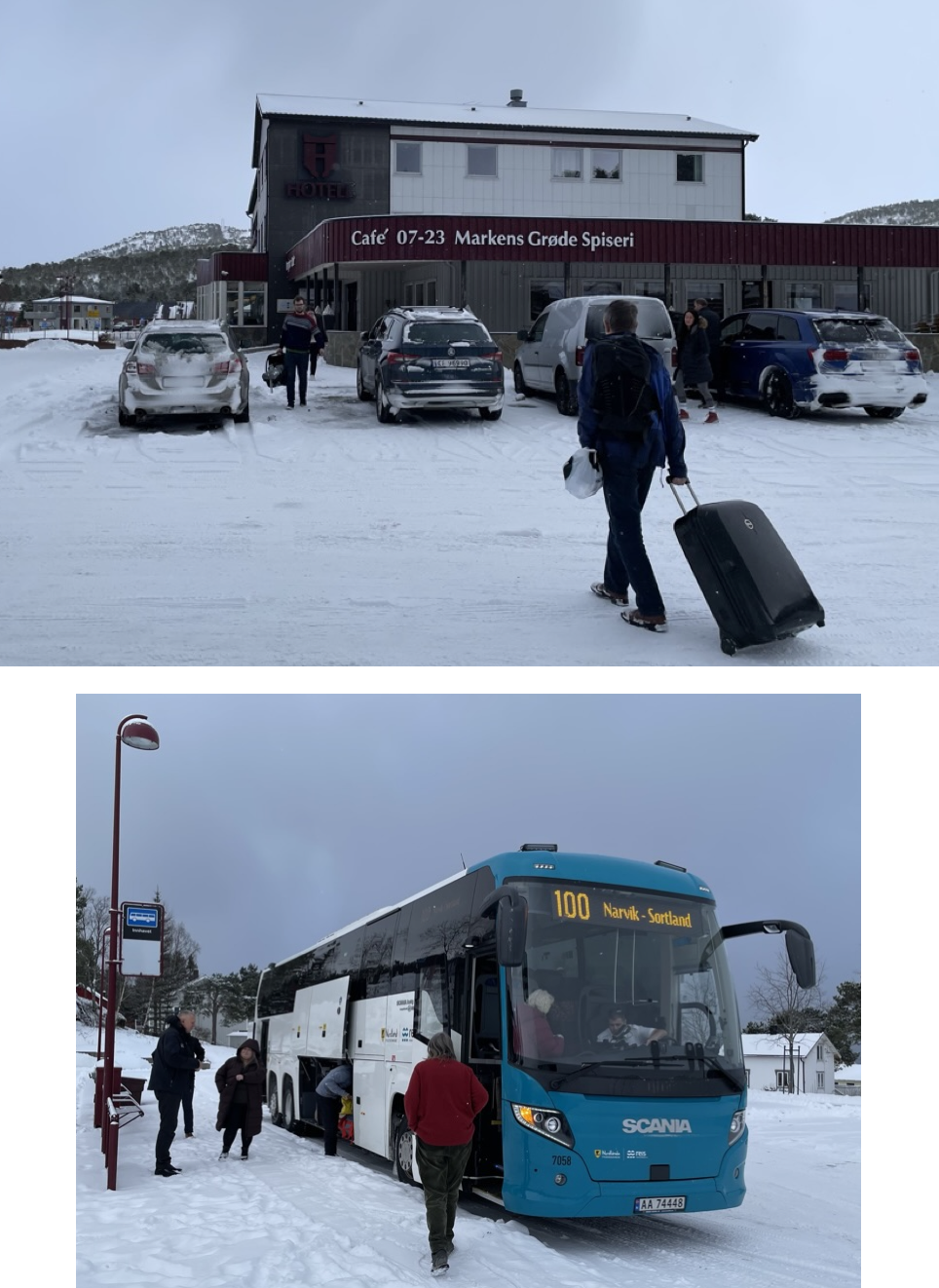
time & conditions mattered……one passenger was nearly left in the ensuring snow storm.
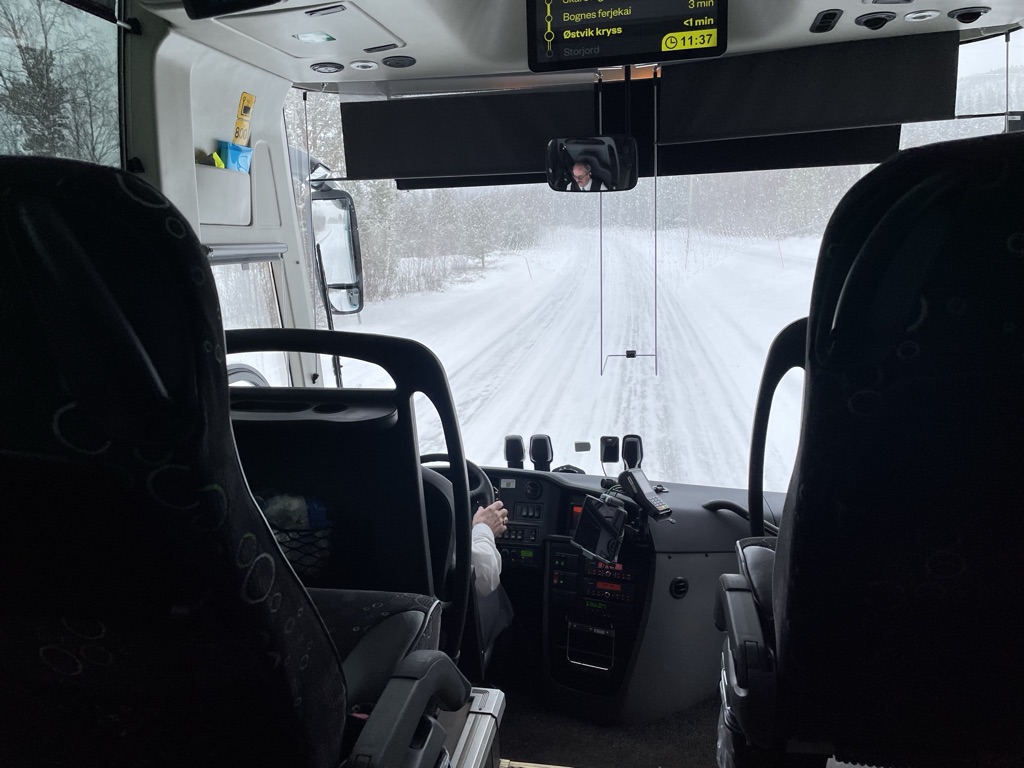
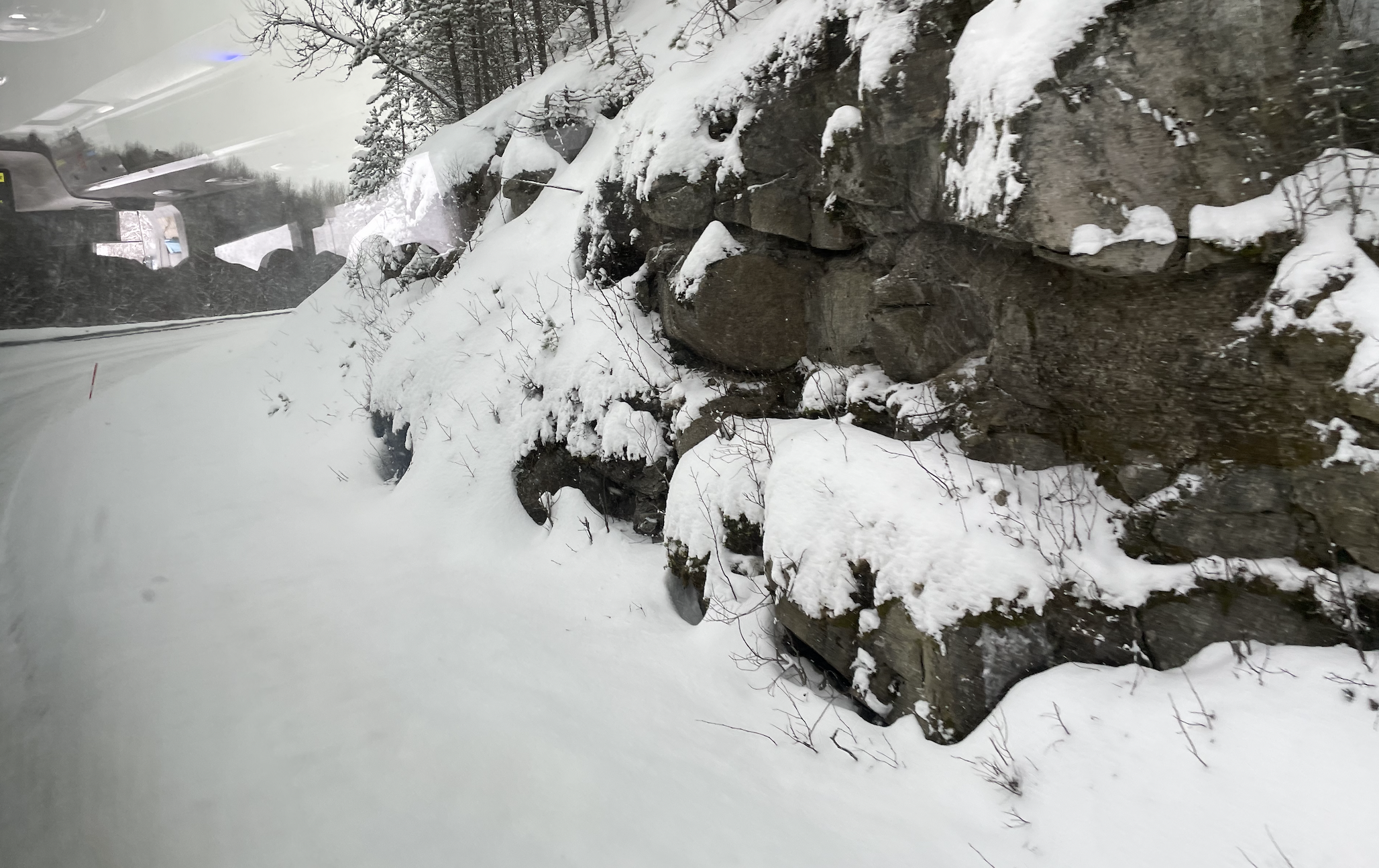
reflective moments as we rounded ragged rocks
……. others required links to remoter communities
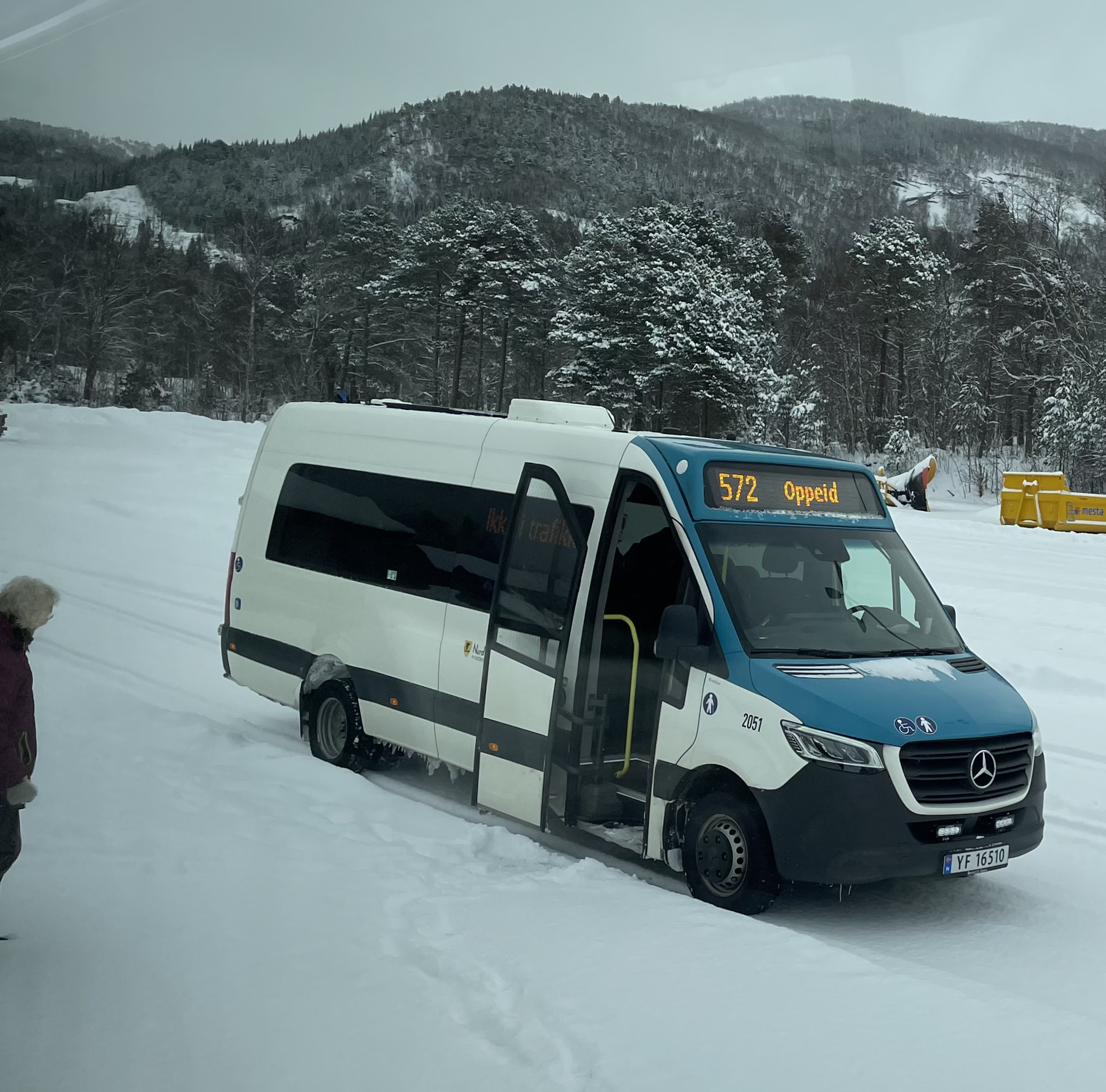
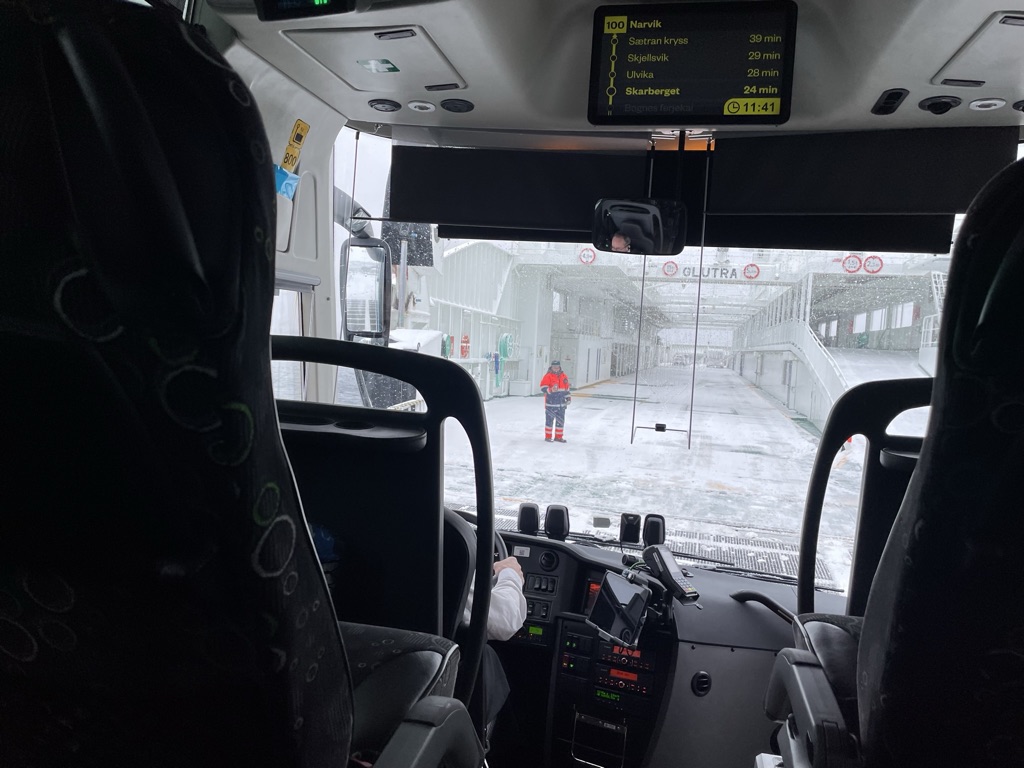
Onto a ferry – it happened without any stop, just a slowing of the bus. Everything was prepared and arranged to fit the bus timetable
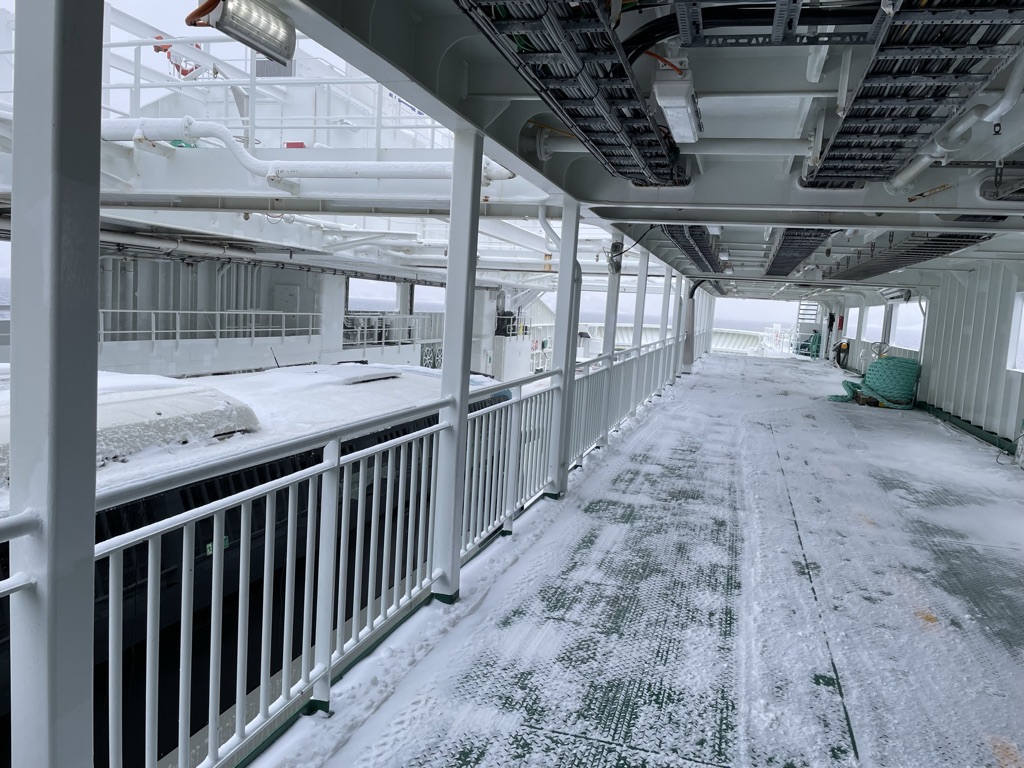
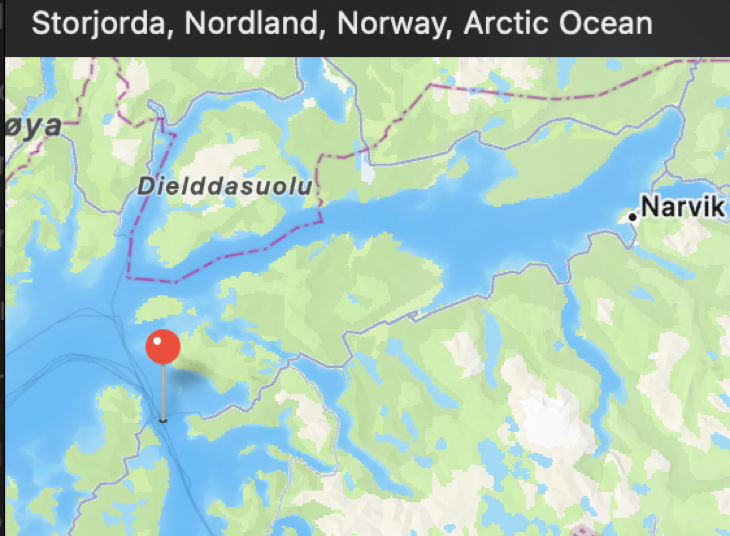
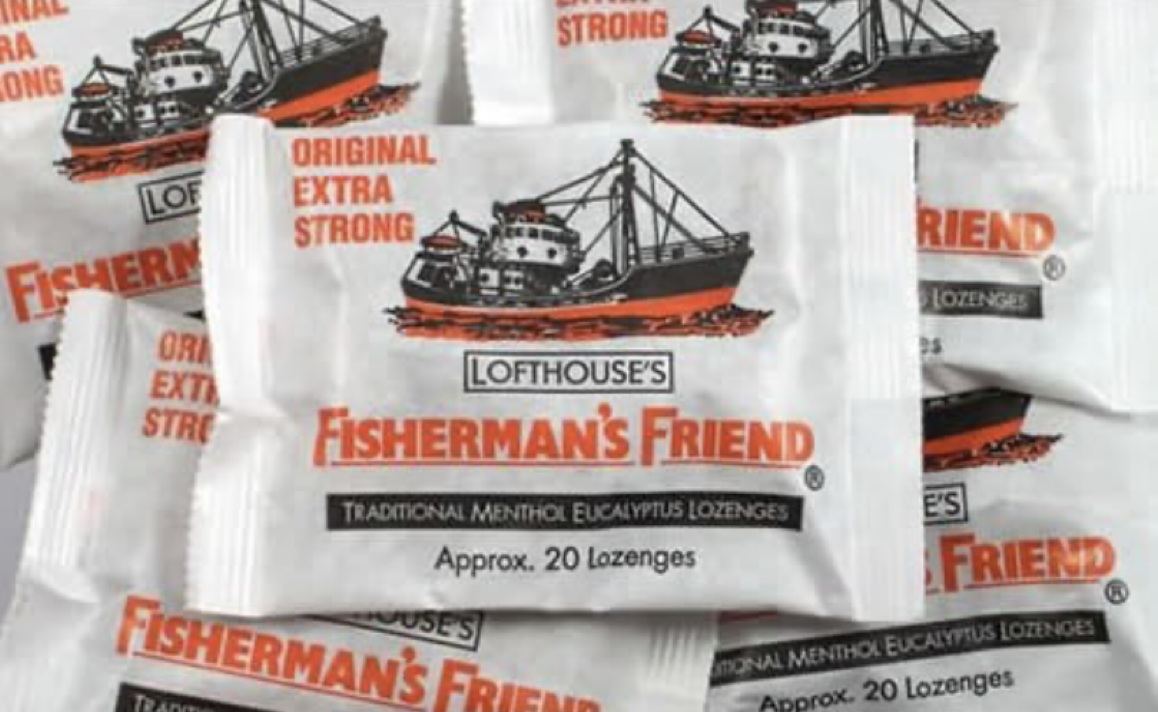
There was a cafe on the ferry – selling an essential winter product, a contribution from the small British port of Fleetwood to those living in Arctic conditions.
French president Emmanuel Macron uses them.. “He finds his energy in les Fisherman’s, those lozenges which rip your throat out. He keeps them in his pockets and in the car-seats. When speaking publicly, he needs water, some slices of lemon and a small dish of Fisherman’s. During the Presidential campaign, he was reported to have devoured crates of them, delivered to his campaign headquarters.”
https://en.wikipedia.org/wiki/Fisherman’s_Friend
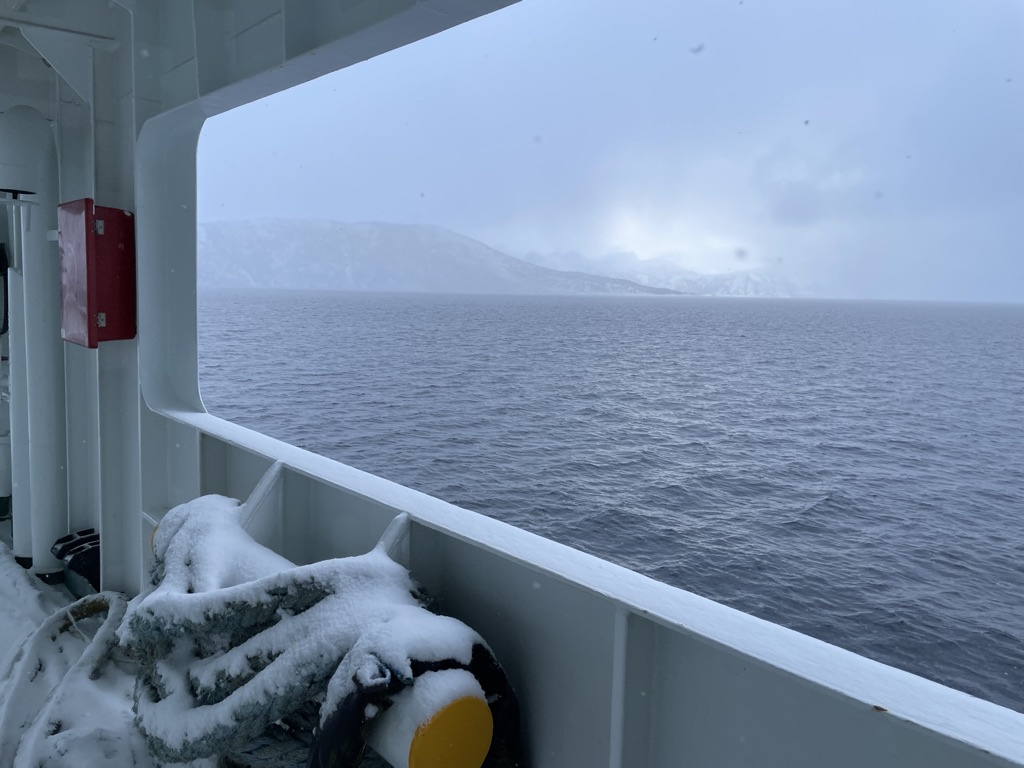
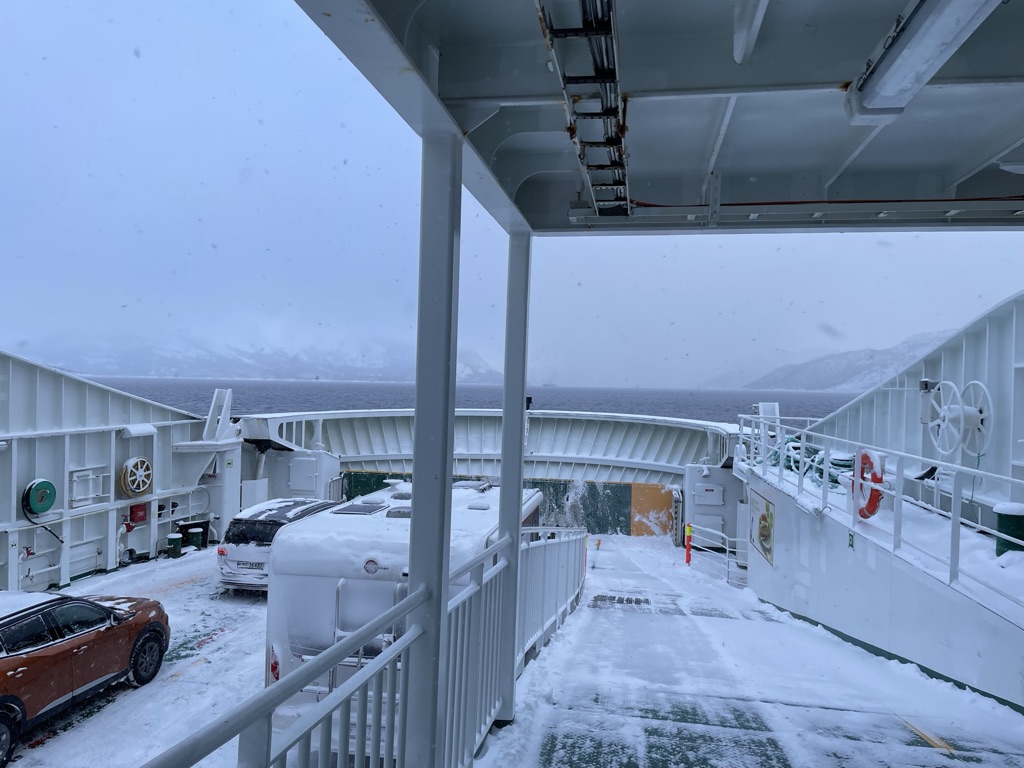
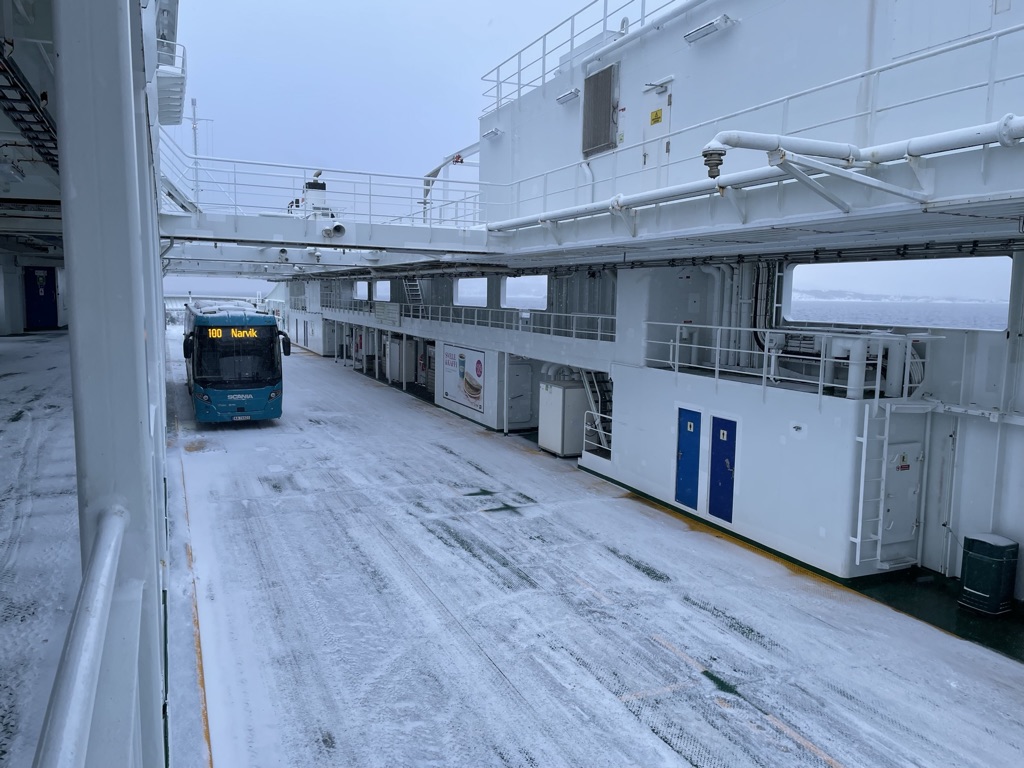
Narvik
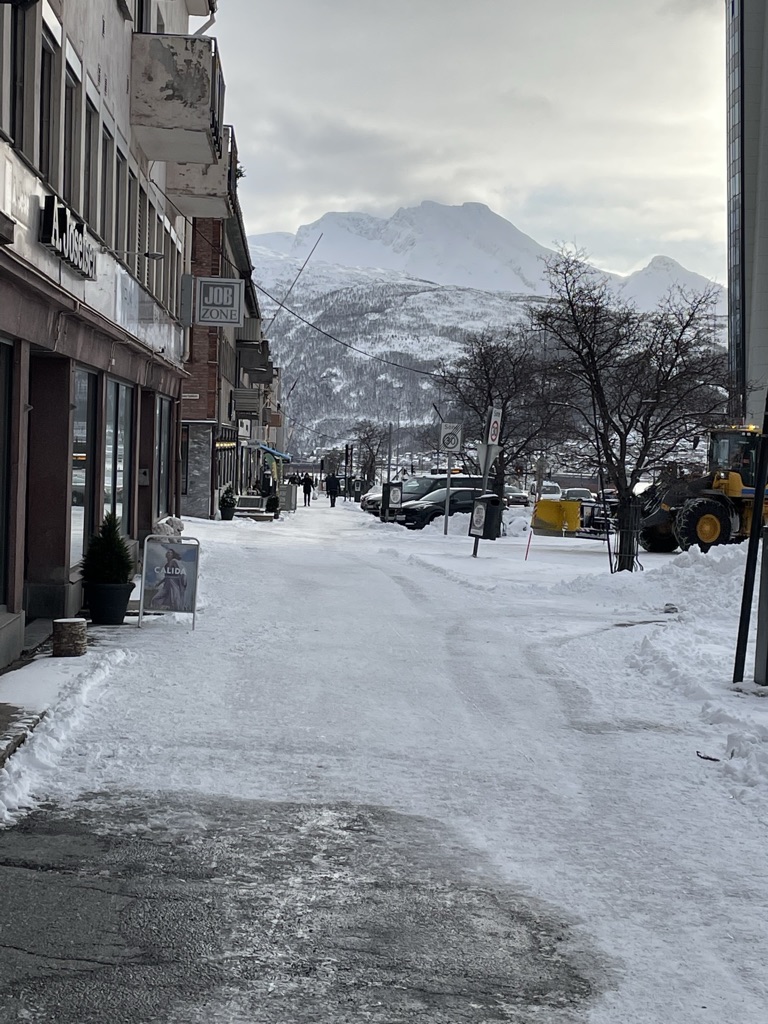
Tuesday March 7th
Narvik, originally simply a small rural settlement was developed in the late C1th as an all-year ice free port for the Swedish Kiruna and Gällivare iron mines. Sweden’s nearest port, Luleå, on the Baltic, freezes in winter.
Narvik’s natural harbour is also suitable for large vessels.
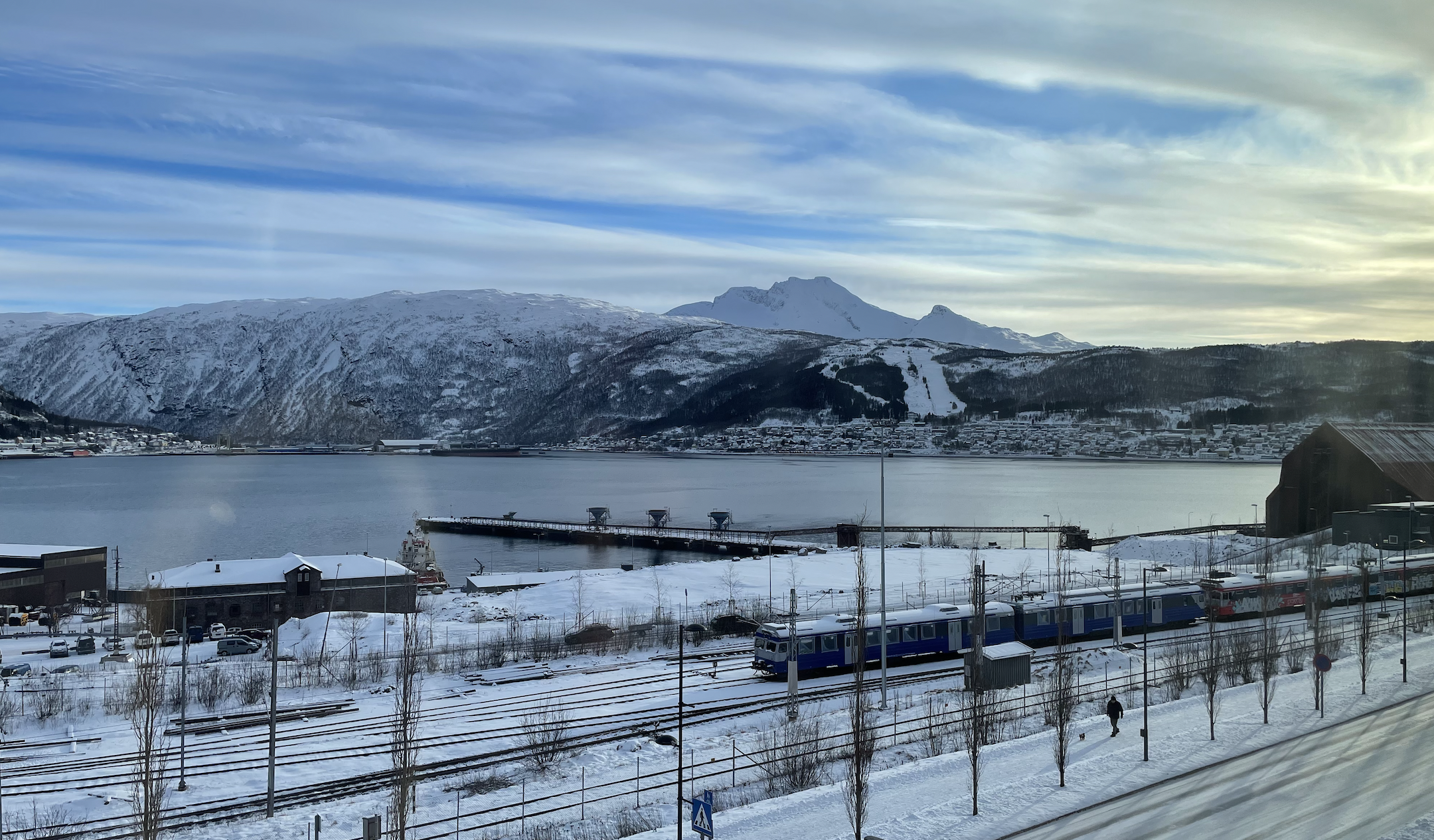
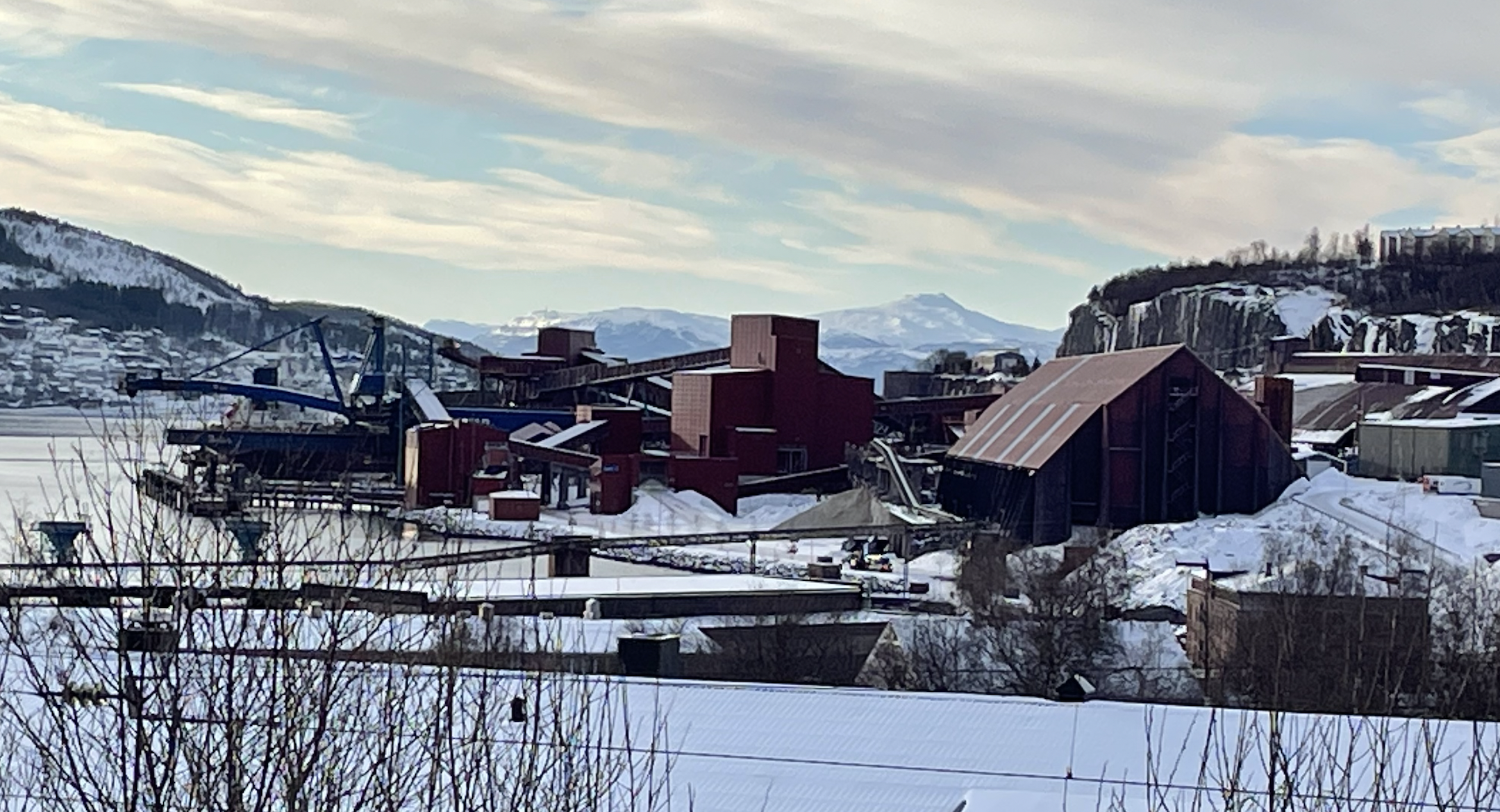
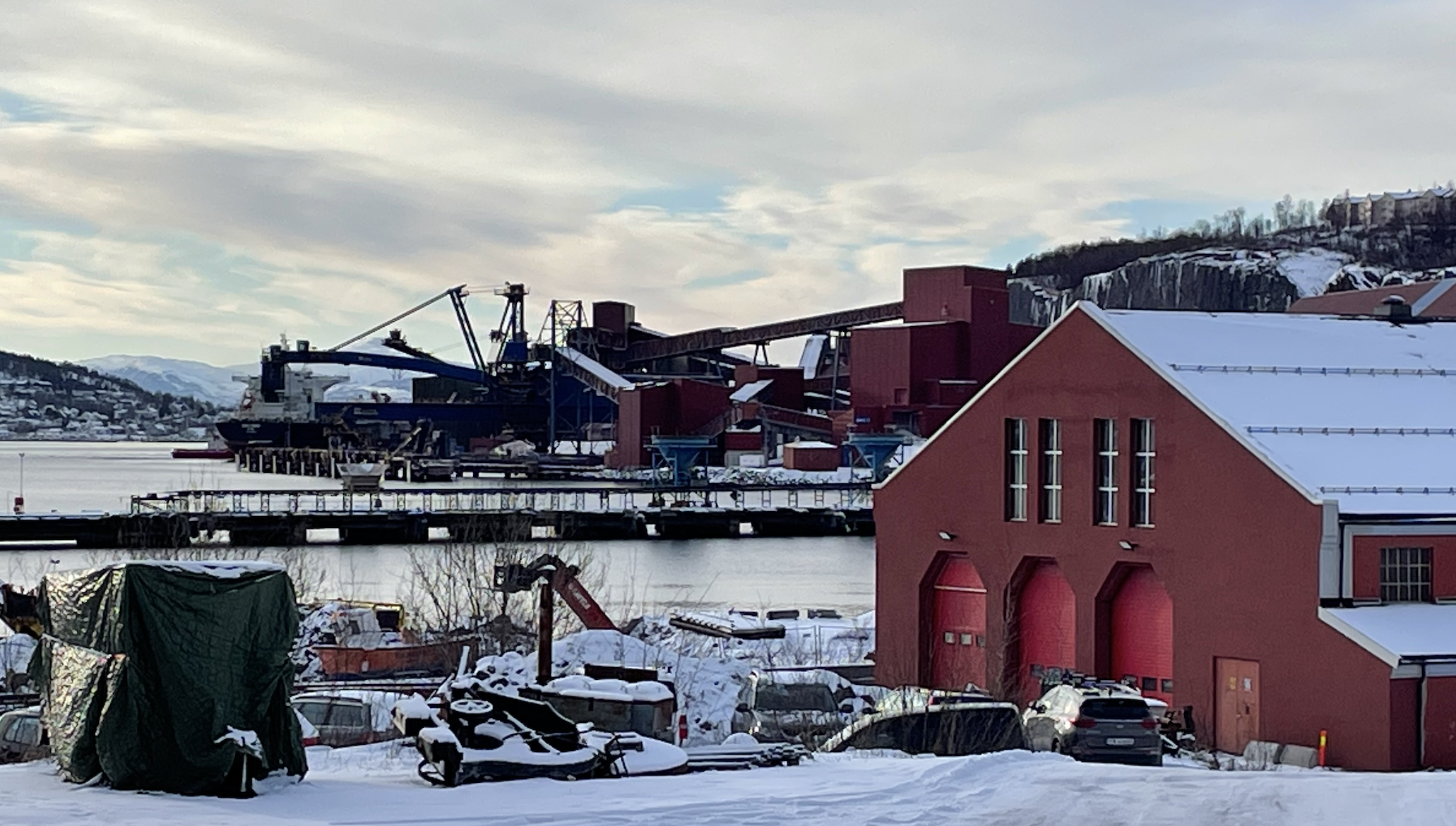
The railway was constructed to bring the ore to Narvik
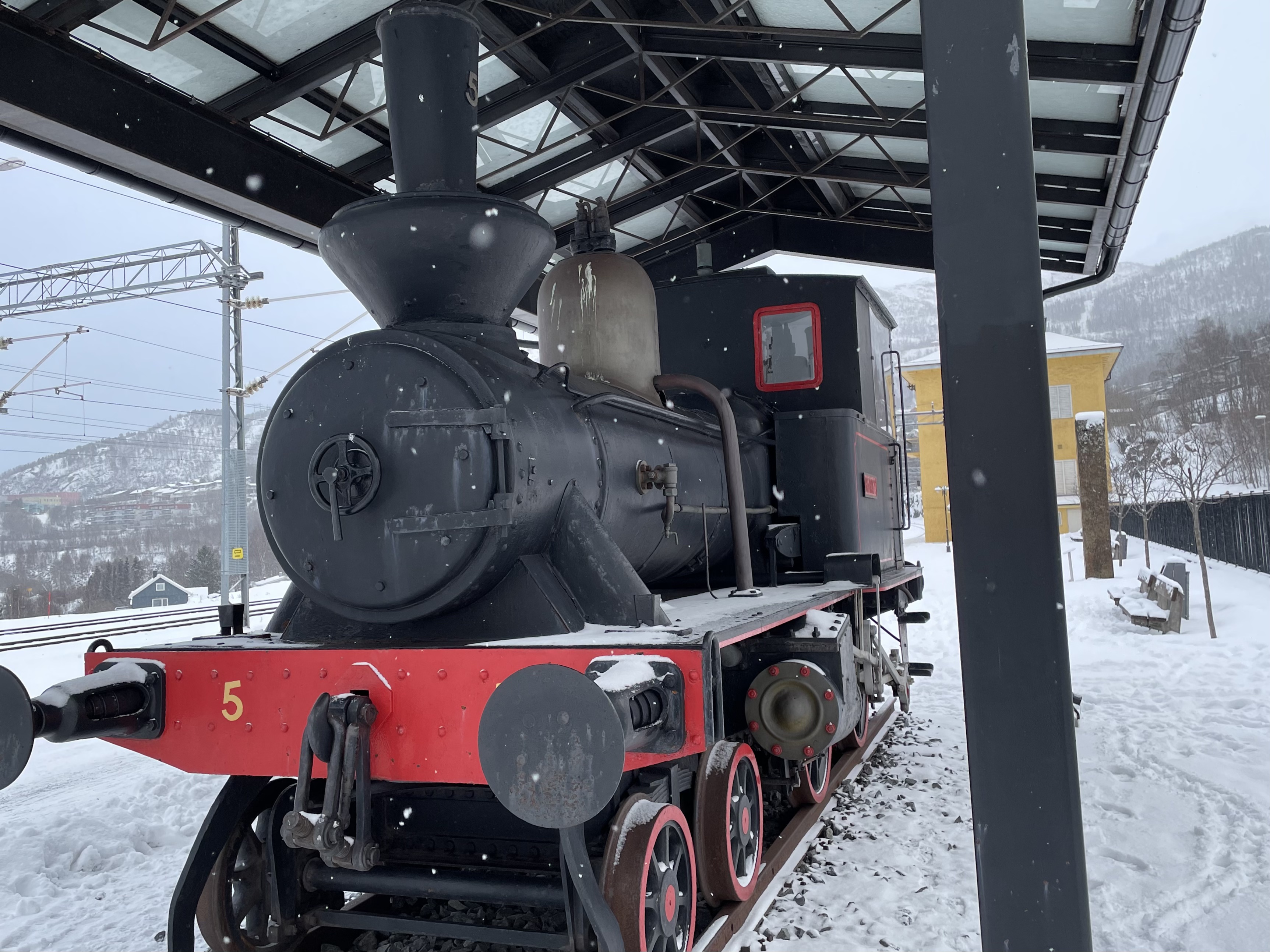
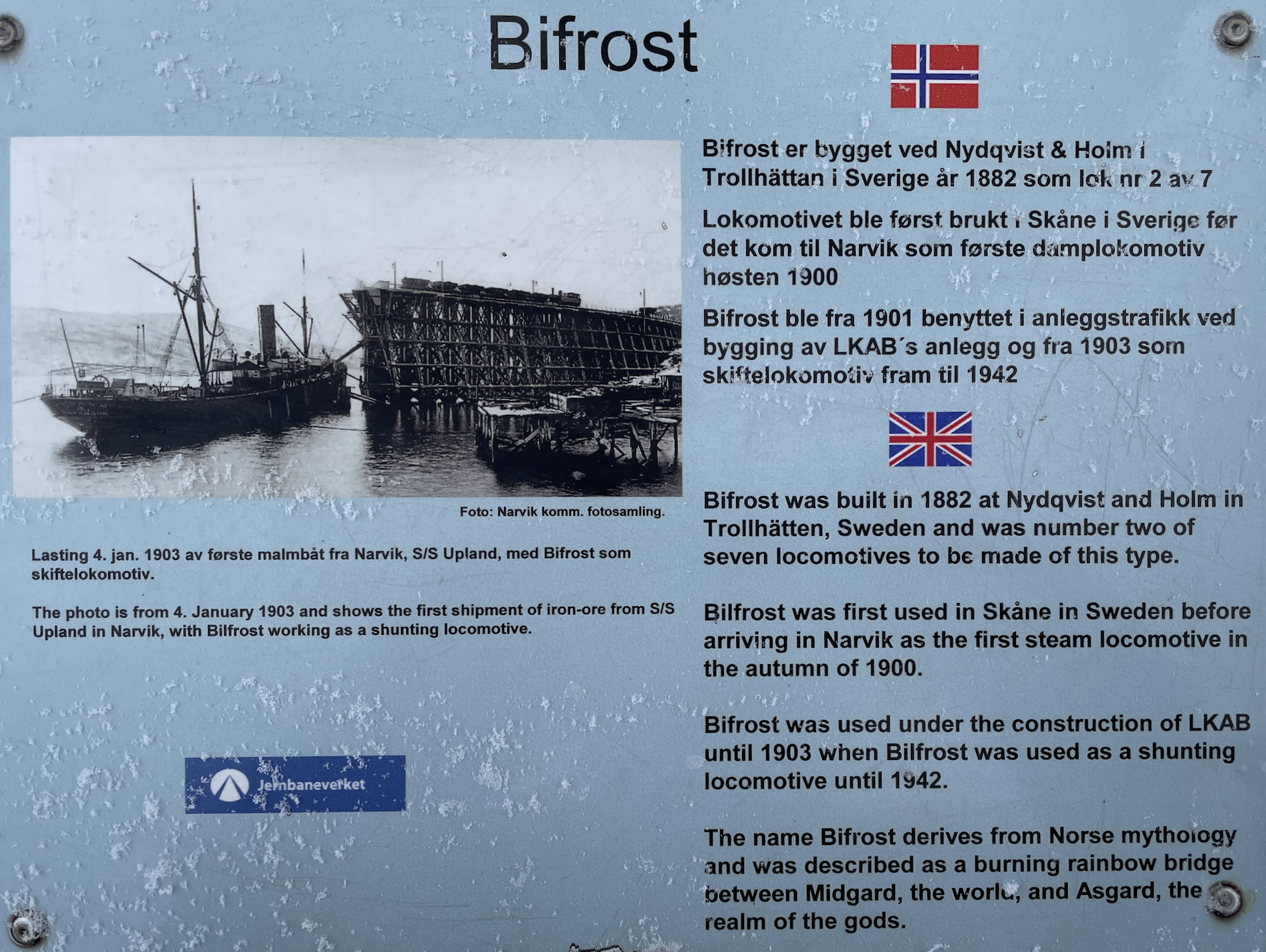
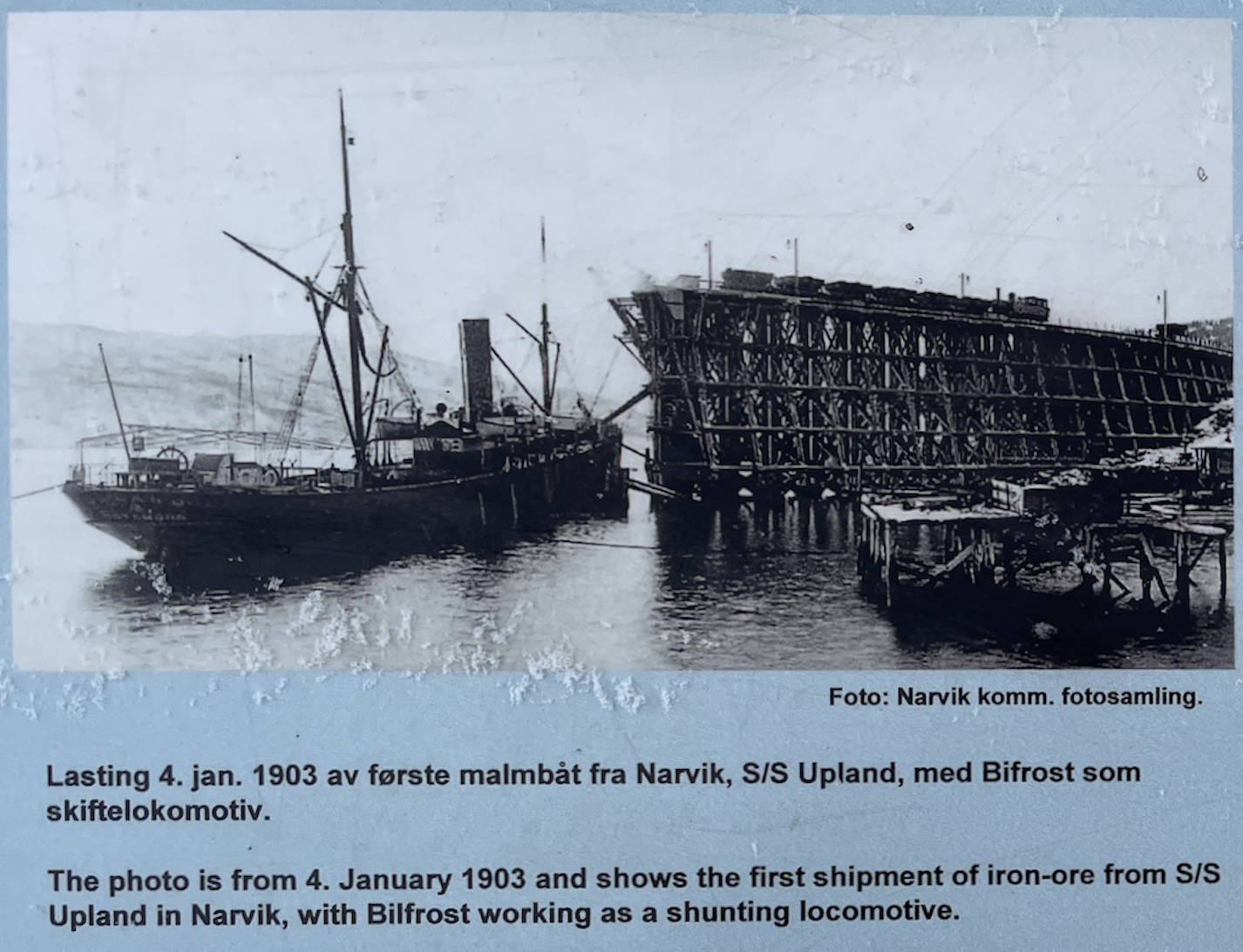
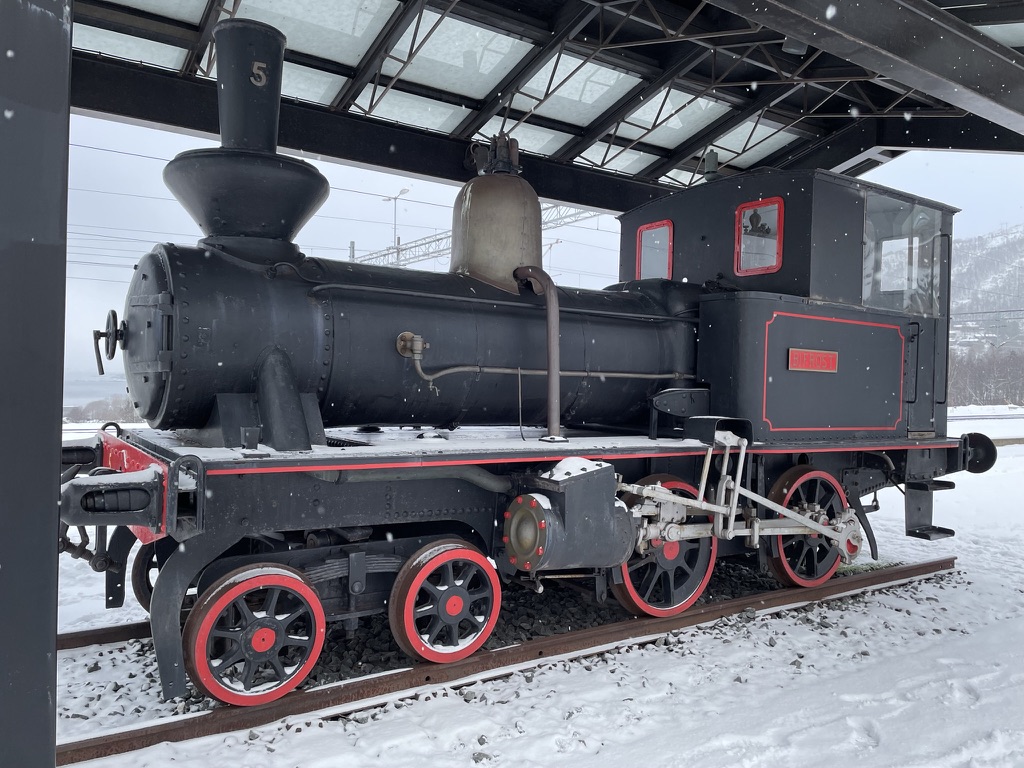
Narvik became a crucial port during the early stages of WW2 as Nazi Germany needed to secure supplies of iron from the Swedish mines.
This was achieved by conquest & after initial Allied & Norwegian resistance.
Following its capture the German navy used it as a base for battleships that could harass and attack allied merchant ships on the ‘Arctic Convoys’ supplying their Russian allies via Murmansk (also an ice-free port).
https://en.wikipedia.org/wiki/Arctic_convoys_of_World_War_II
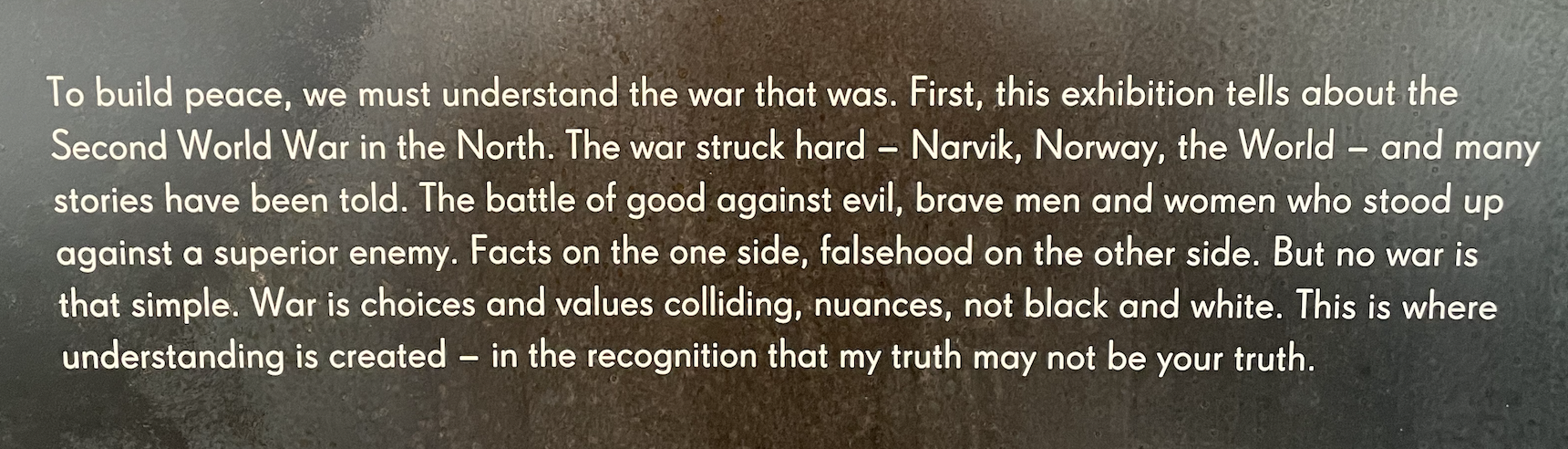
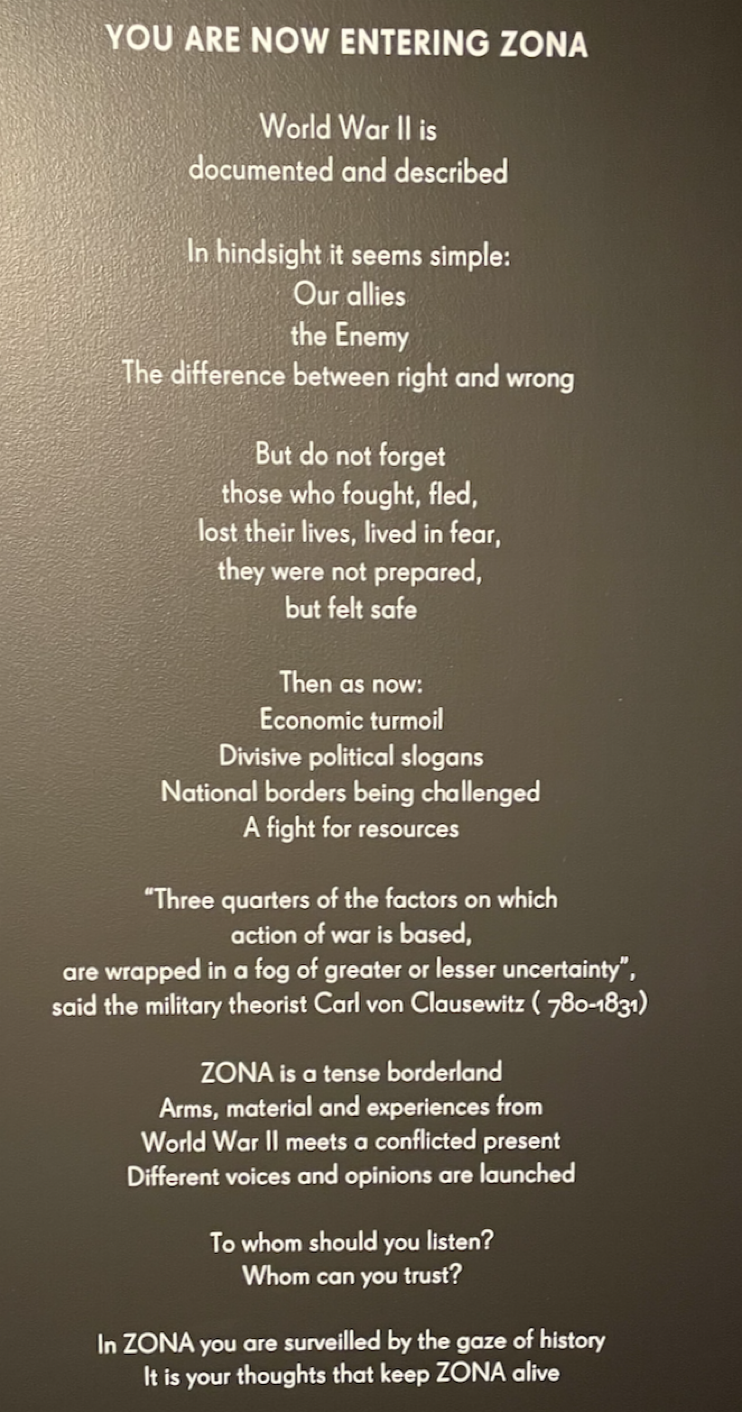
Narvik has a very effective and well balanced museum explaining the whole period.
It explains and challenges.
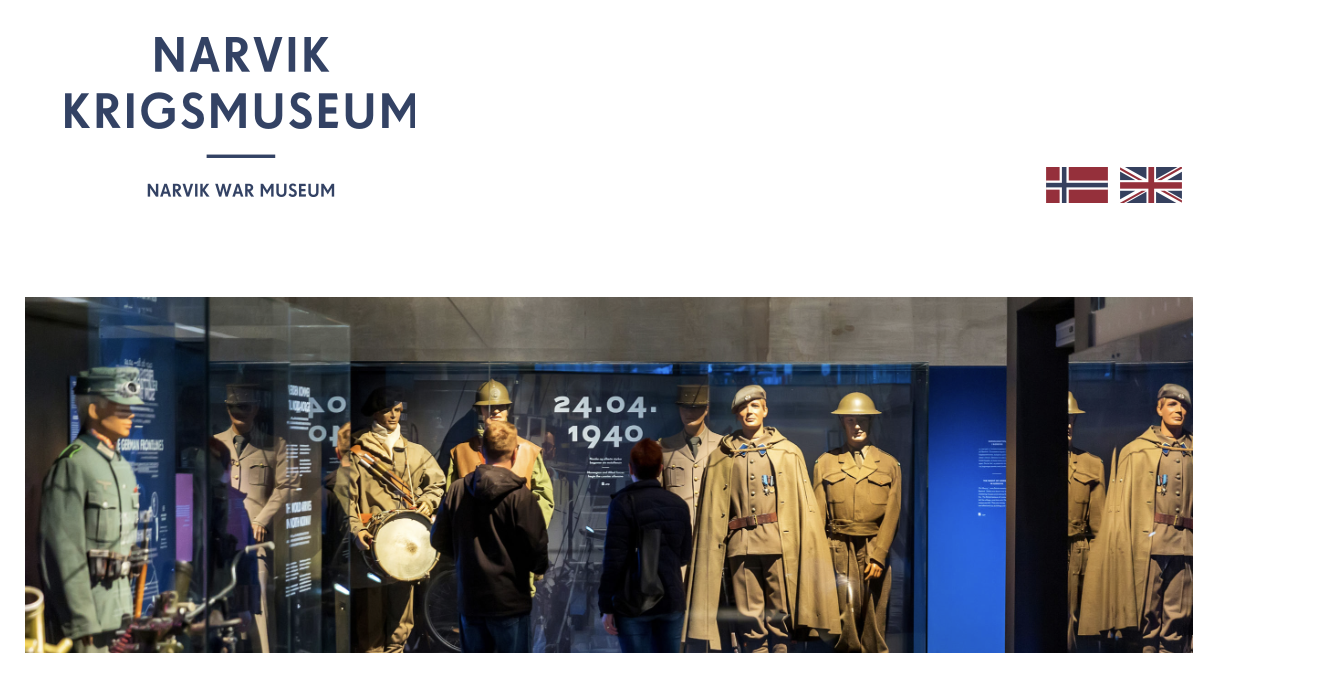
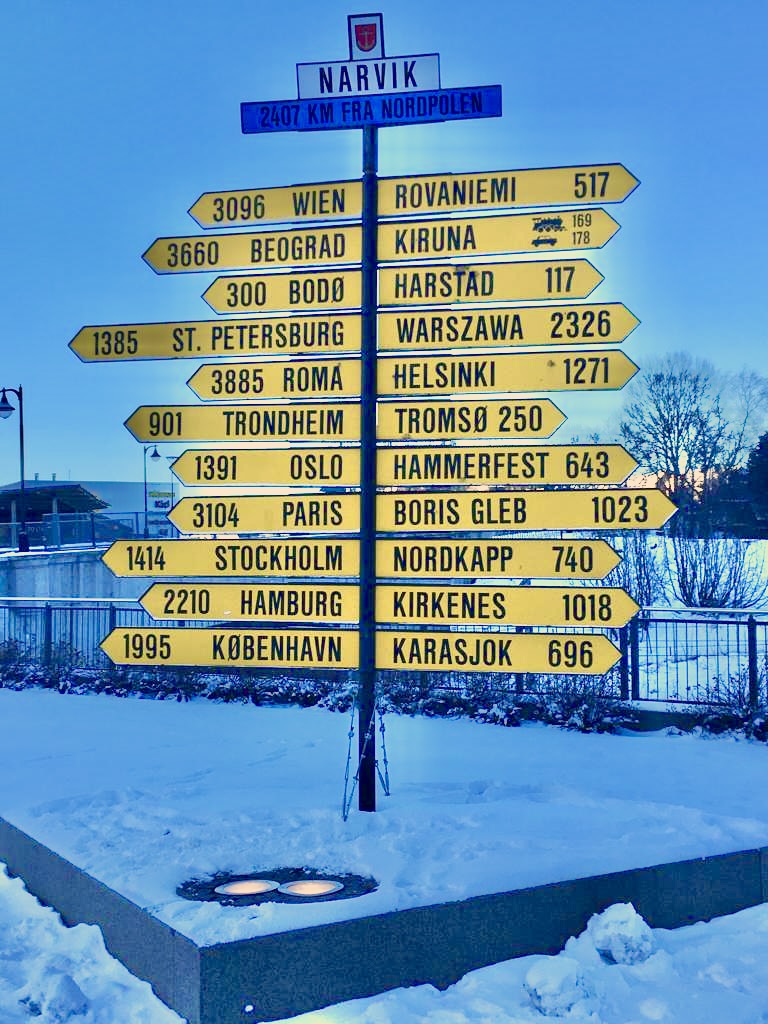
Narvik, our most northerly point on the No Kerosene Tour… yet still another 2407 kms to the North Pole. Even Nordkapp (the most northerly point of the European mainland & still in Norway), is 740 kms.
Roma is shown as 3885 kms.
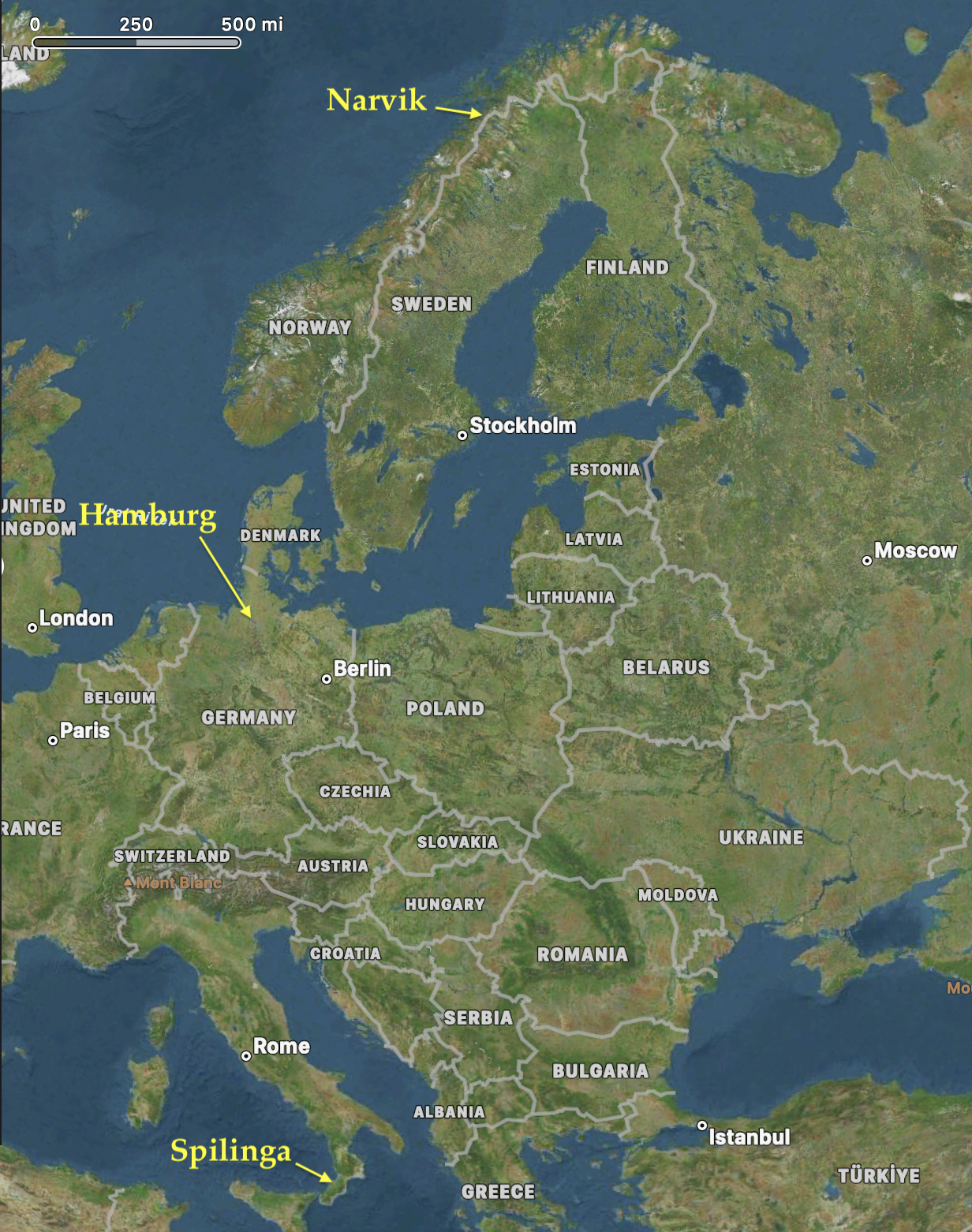
Our most southerly point will be on the 3rd Journey: Spilinga in Calabria, Southern Italy, 4519 kms distant (634 kms from Roma).
The Northern Scandinavian & Nordic Lands, compared with most of central Europe, are vast.
Hamburg, where our route turned north & to which we return on this journey (via Helsinki) is nearly half way to Spilinga.
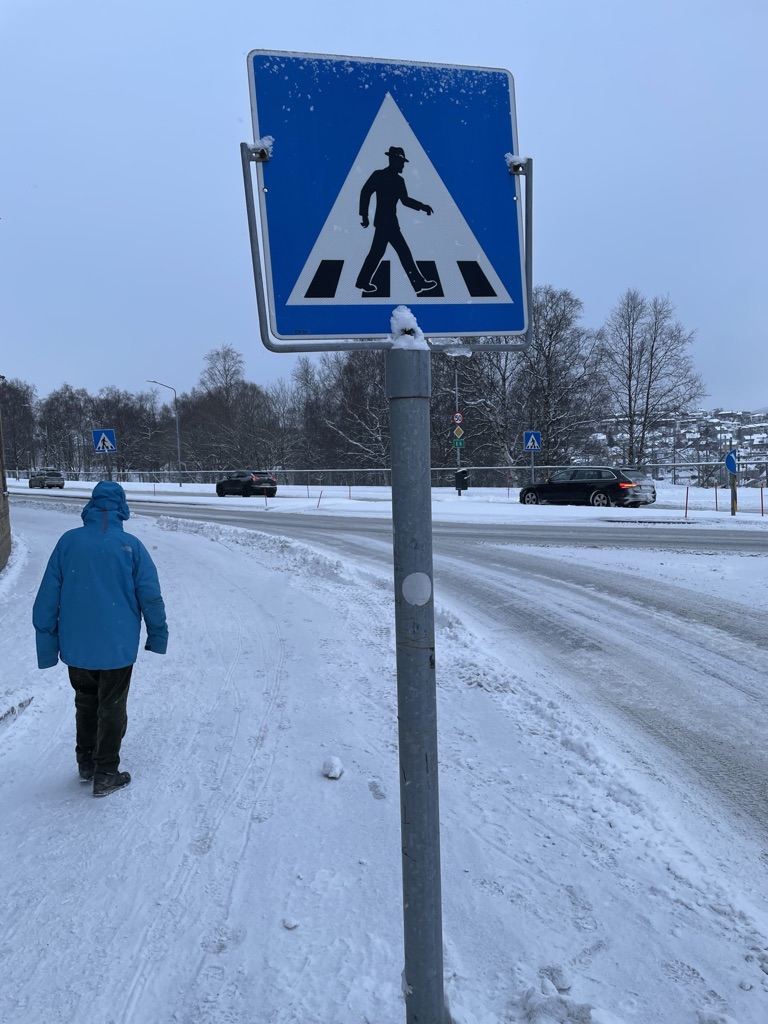
Men (in hats?… I was permitted as was wearing a close copy) only.
Segregated pedestrian crossings?
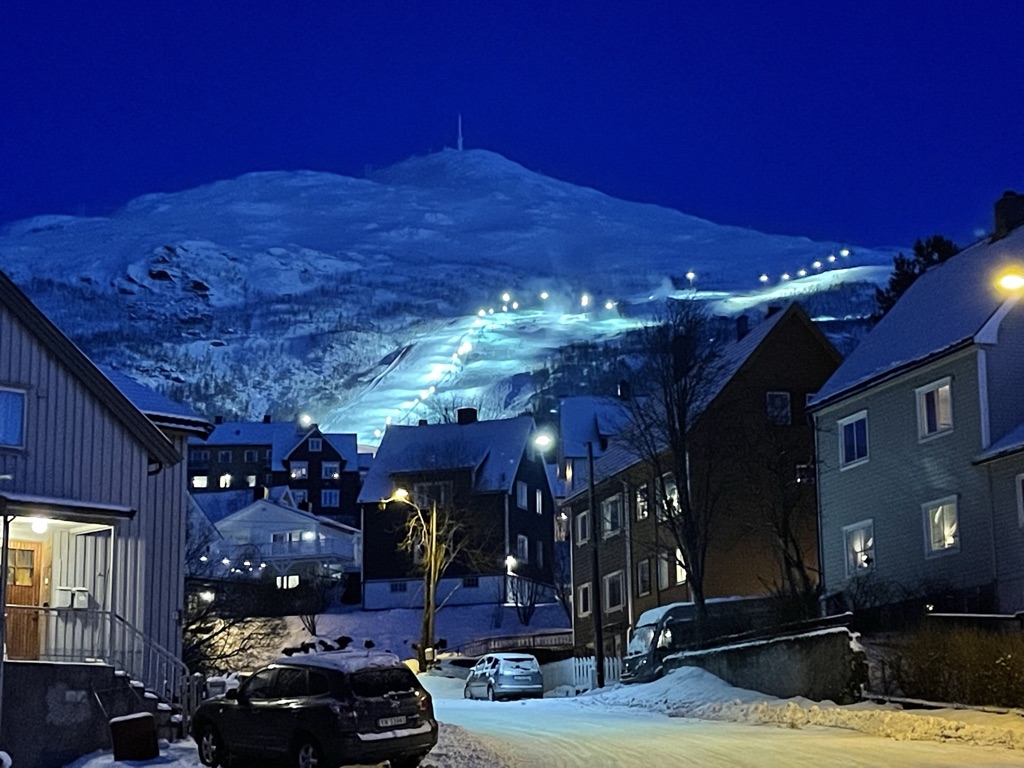
Wednesday March 8th: To Boden
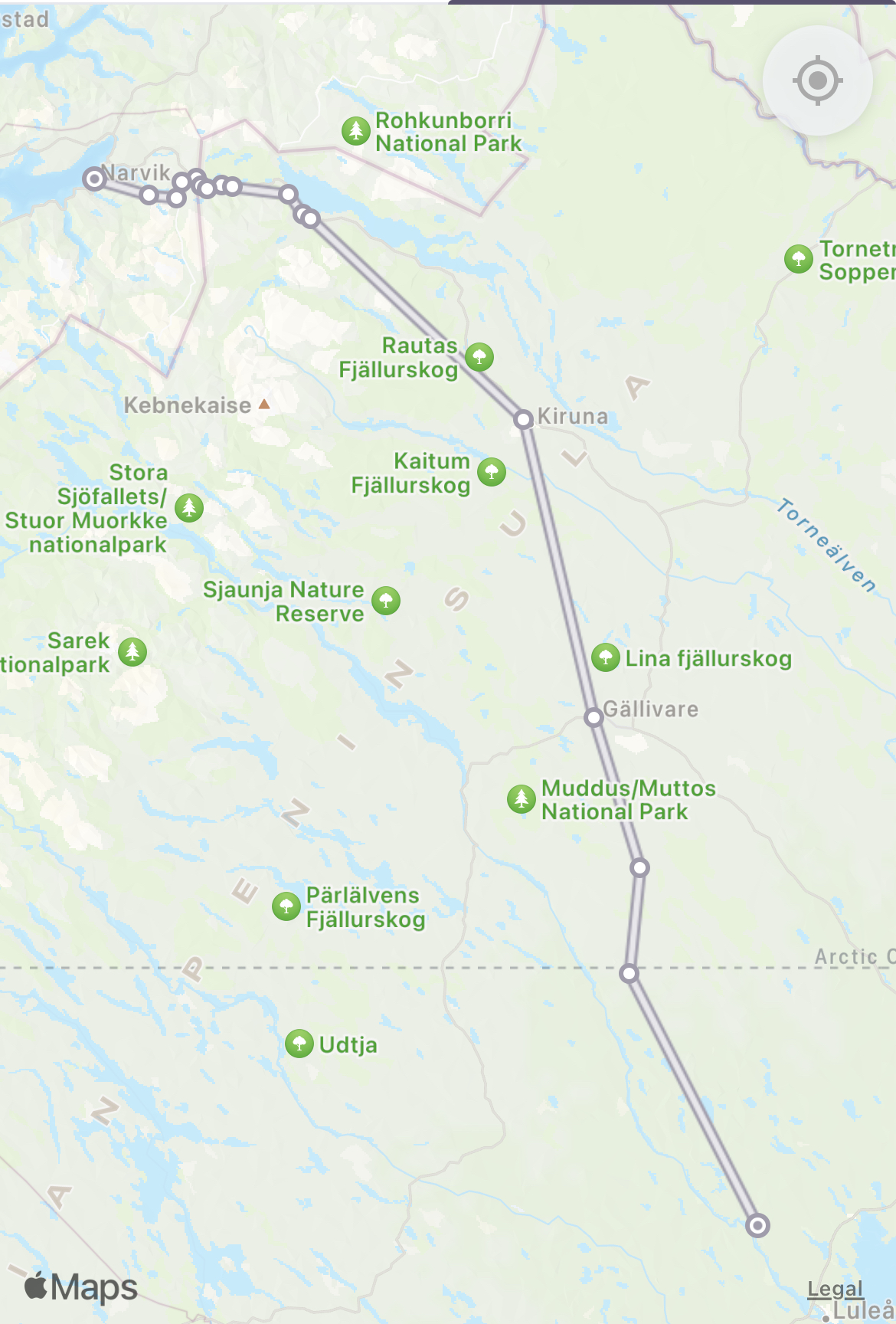
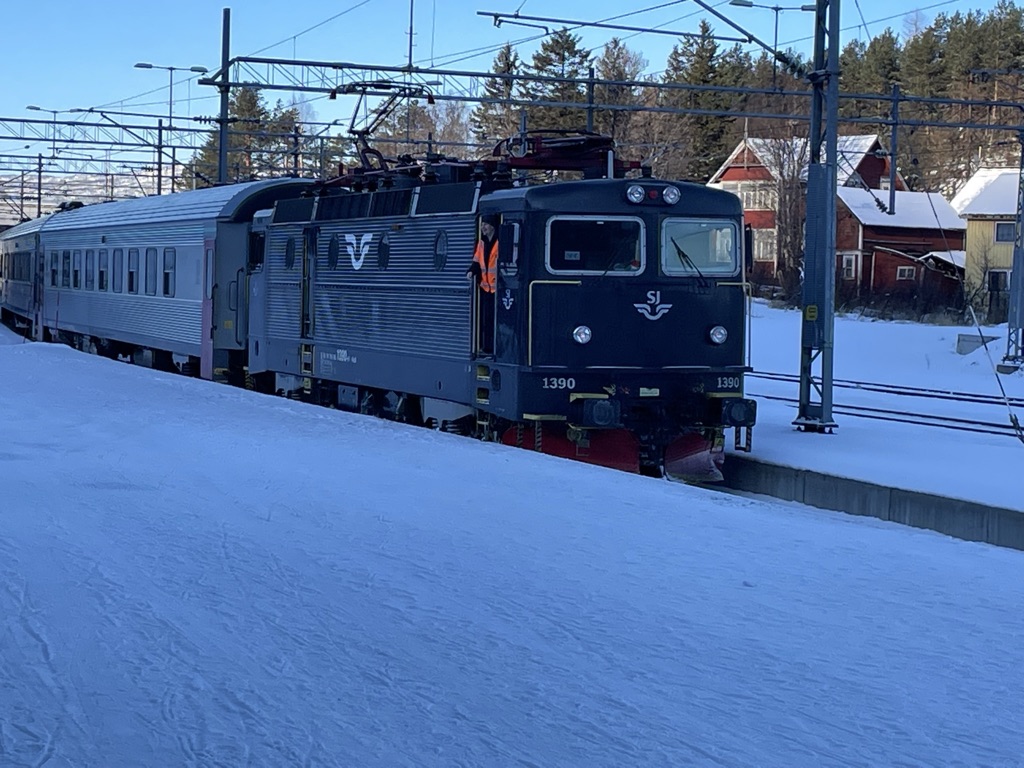
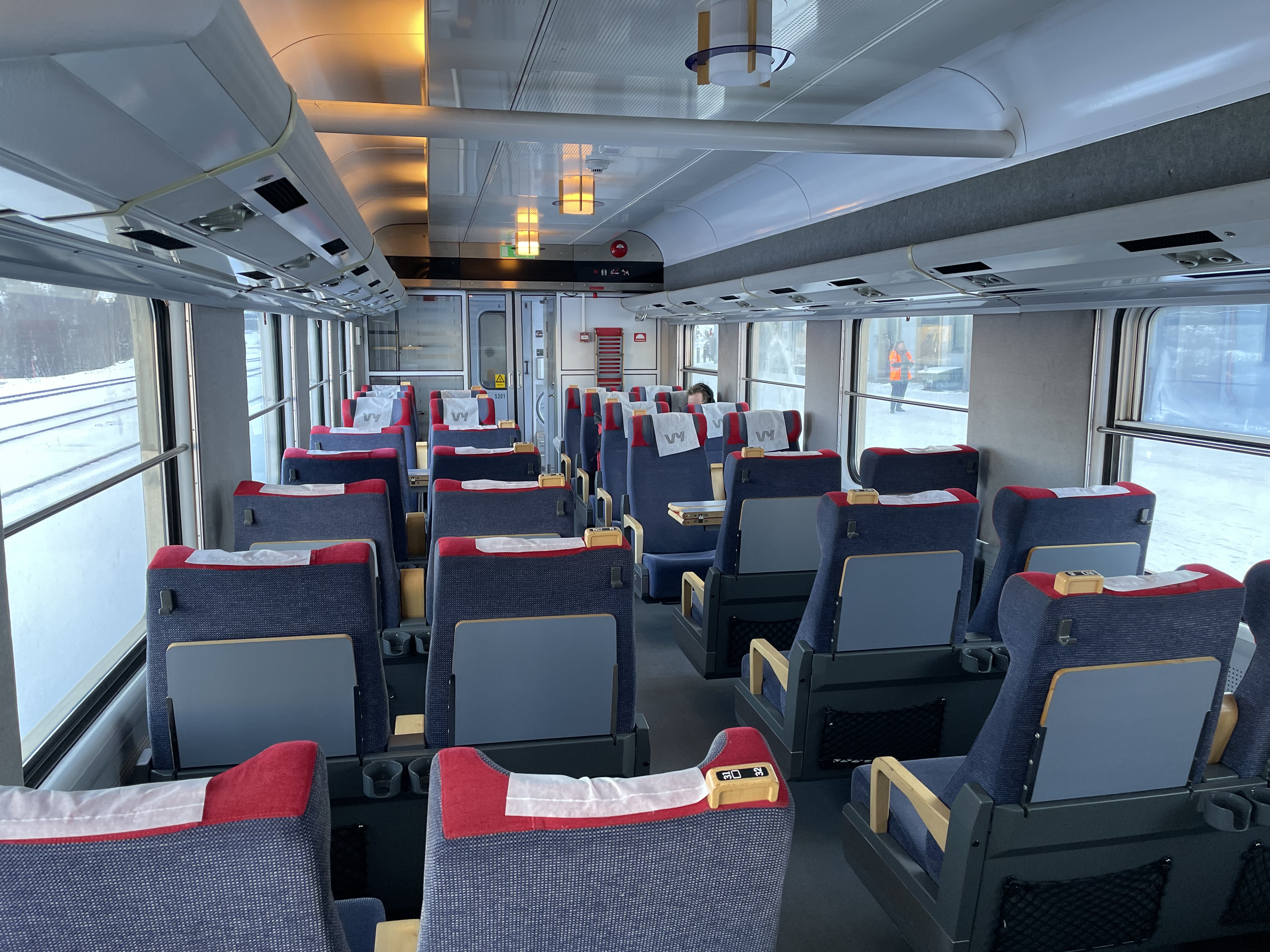
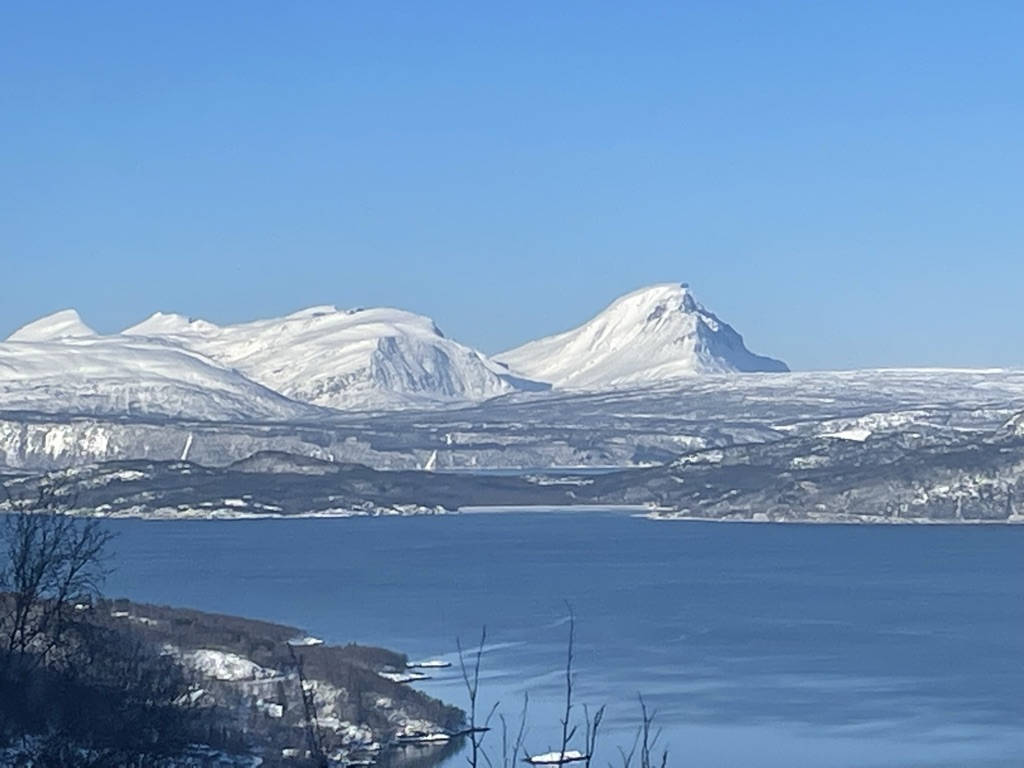
There is an extremely steep climb away from Narvik and the coastal area. As with many hill ranges the Steep slopes are on the west – the land gradually rises from the east. So the drama of the journey into Sweden is all on the western side. Once the line has crossed into Sweden it gradually descends to the Gulf of Bothnia
Looking back
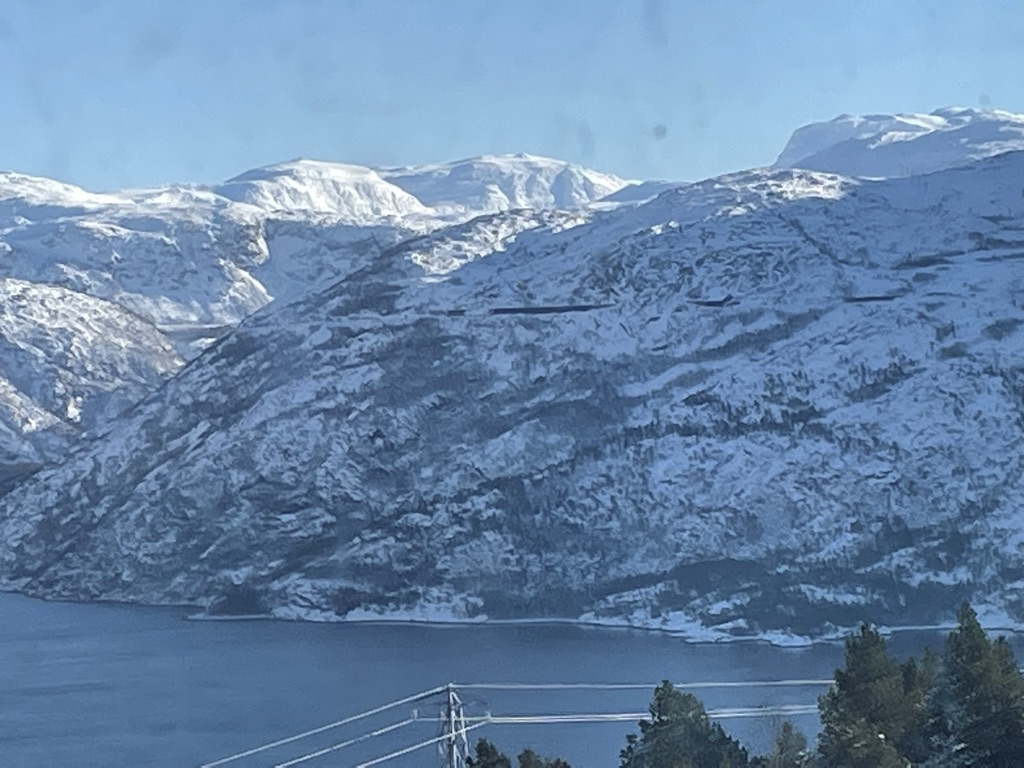
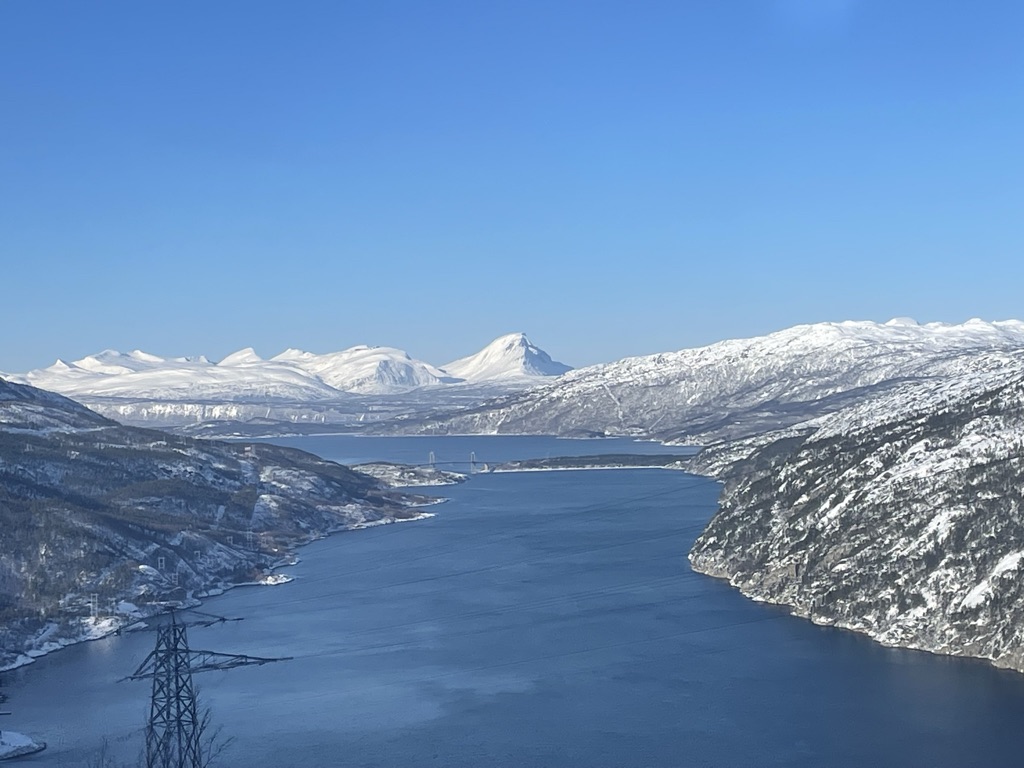
… and ahead…. the railway line is marked by the dark lines on the hillside.
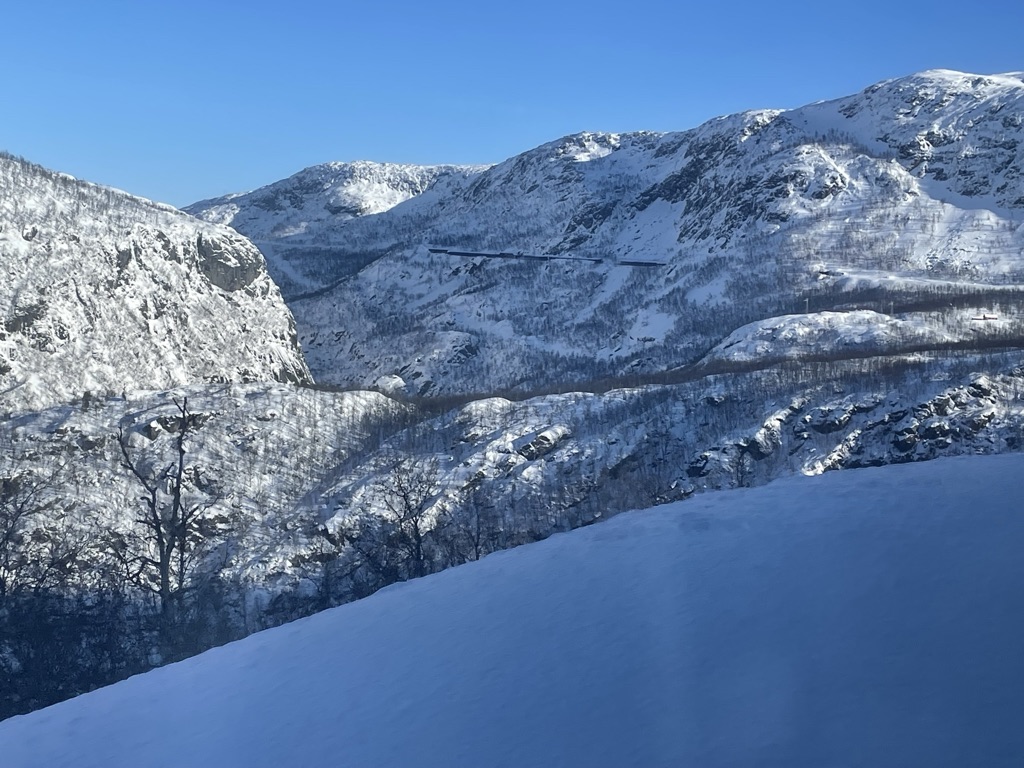
and from one of those comes the following picture
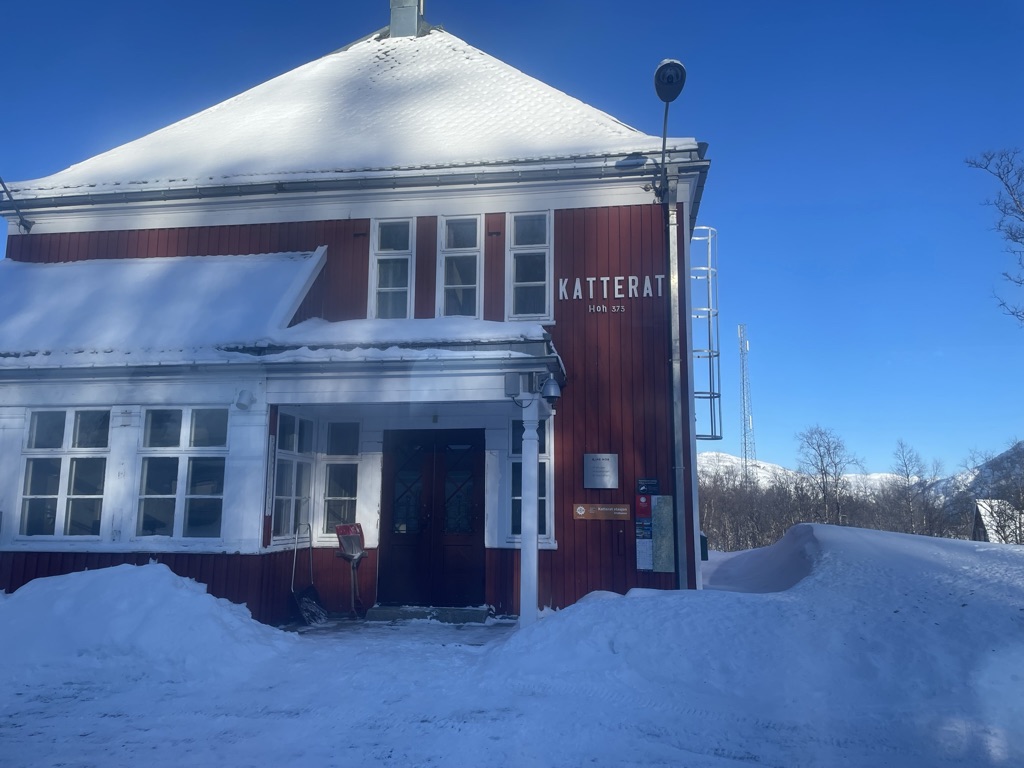
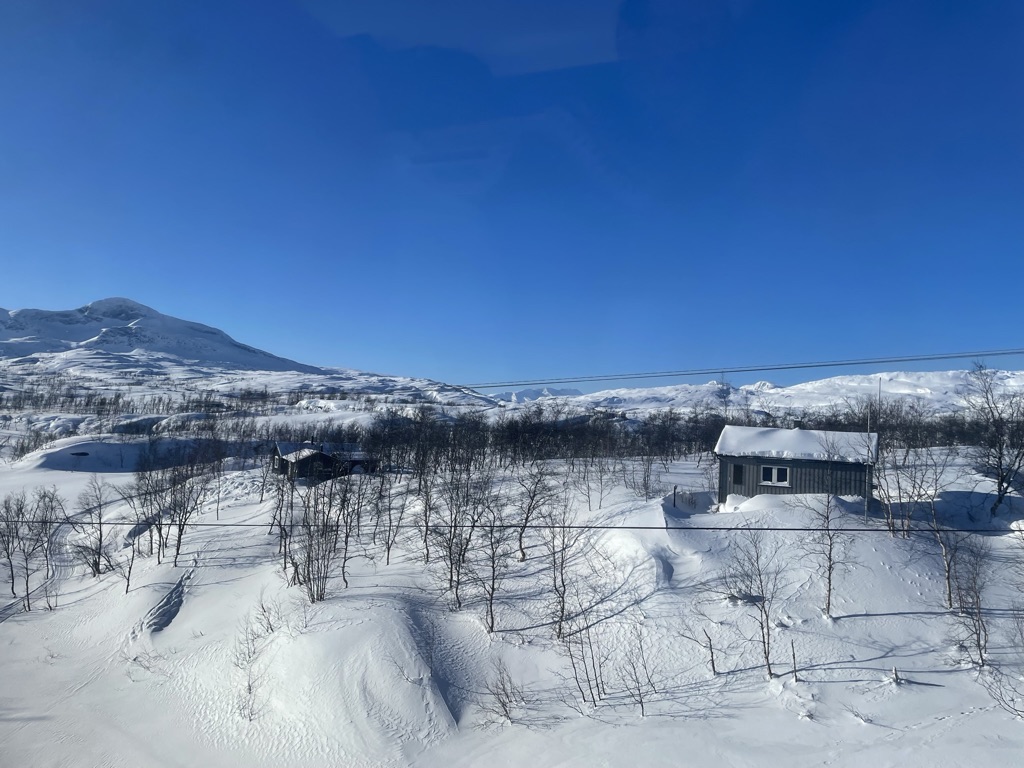

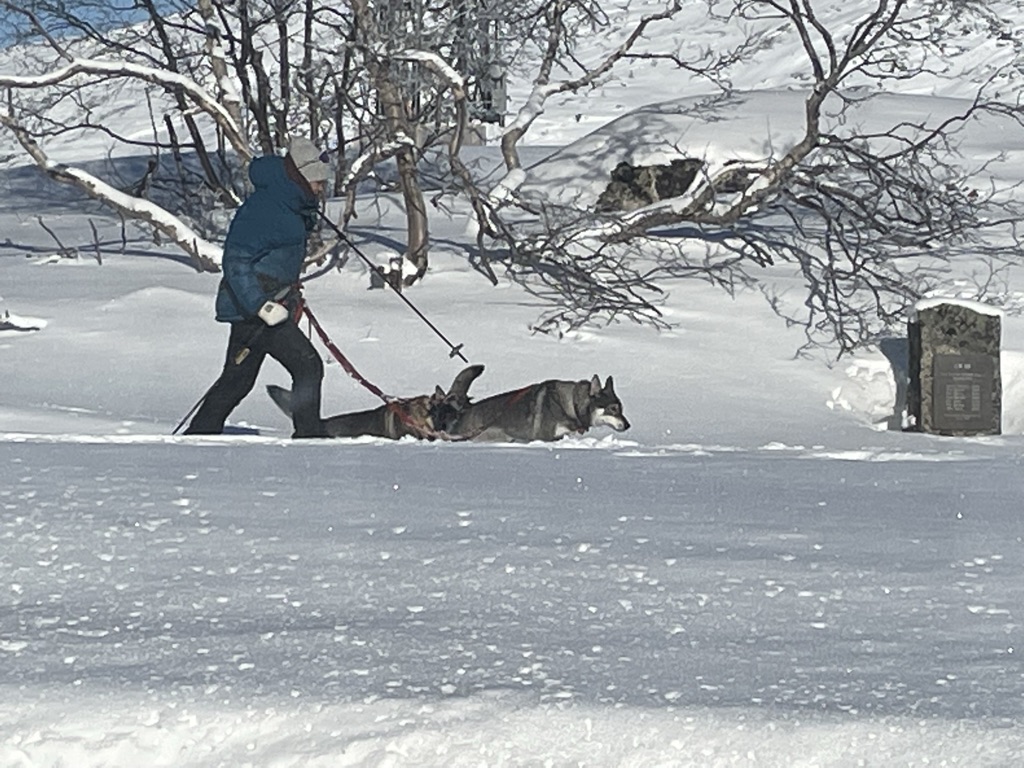

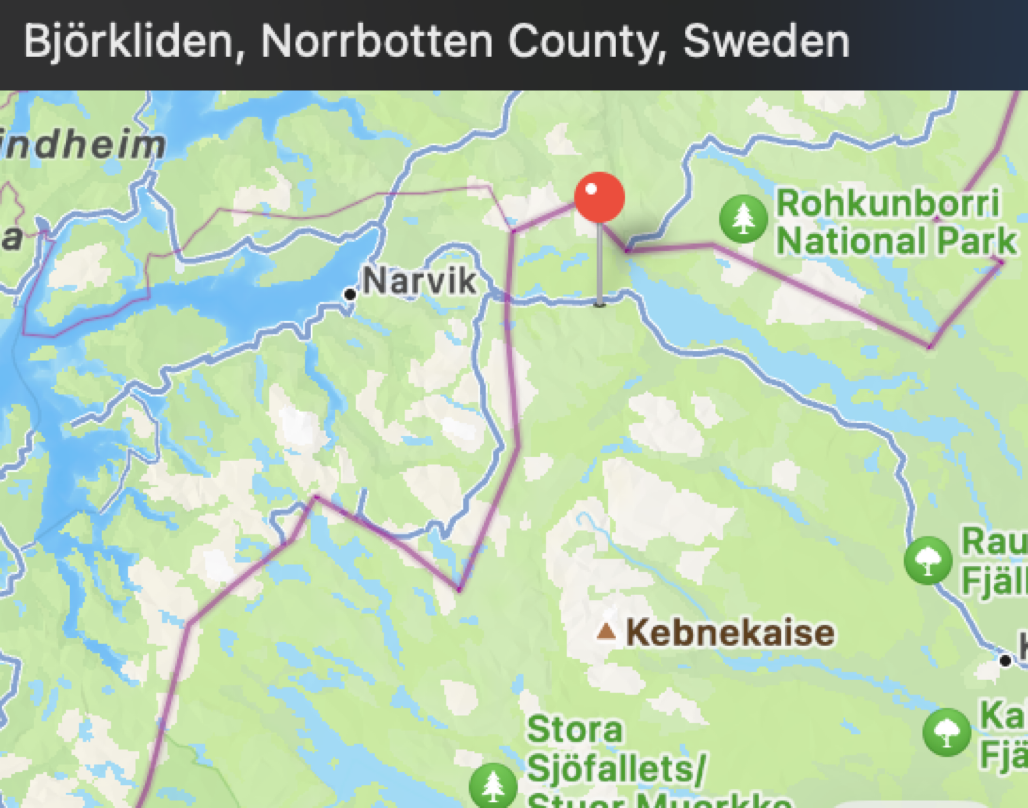
On the border
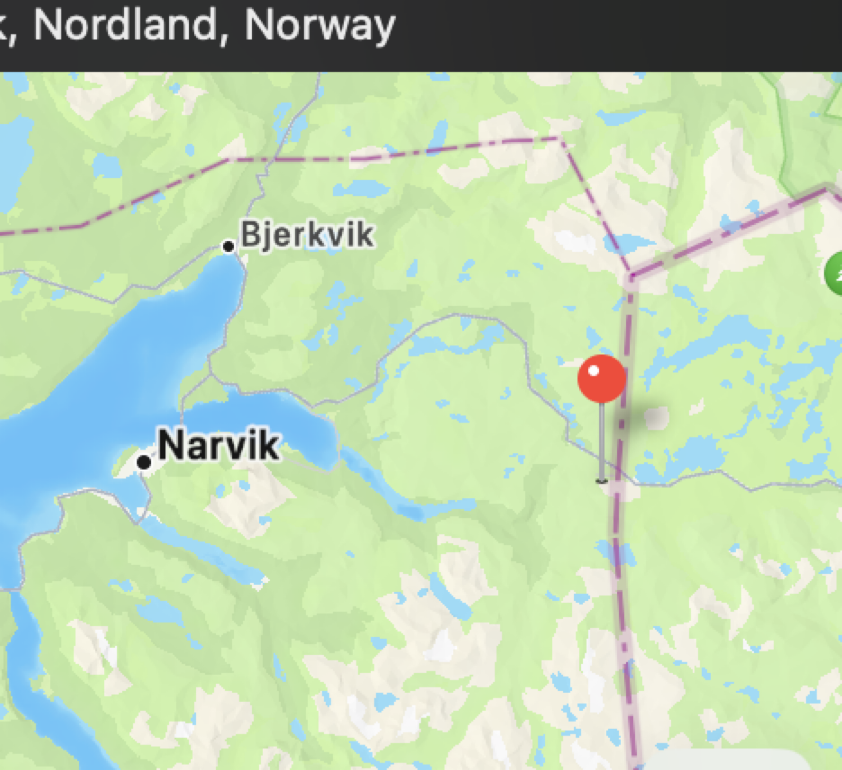
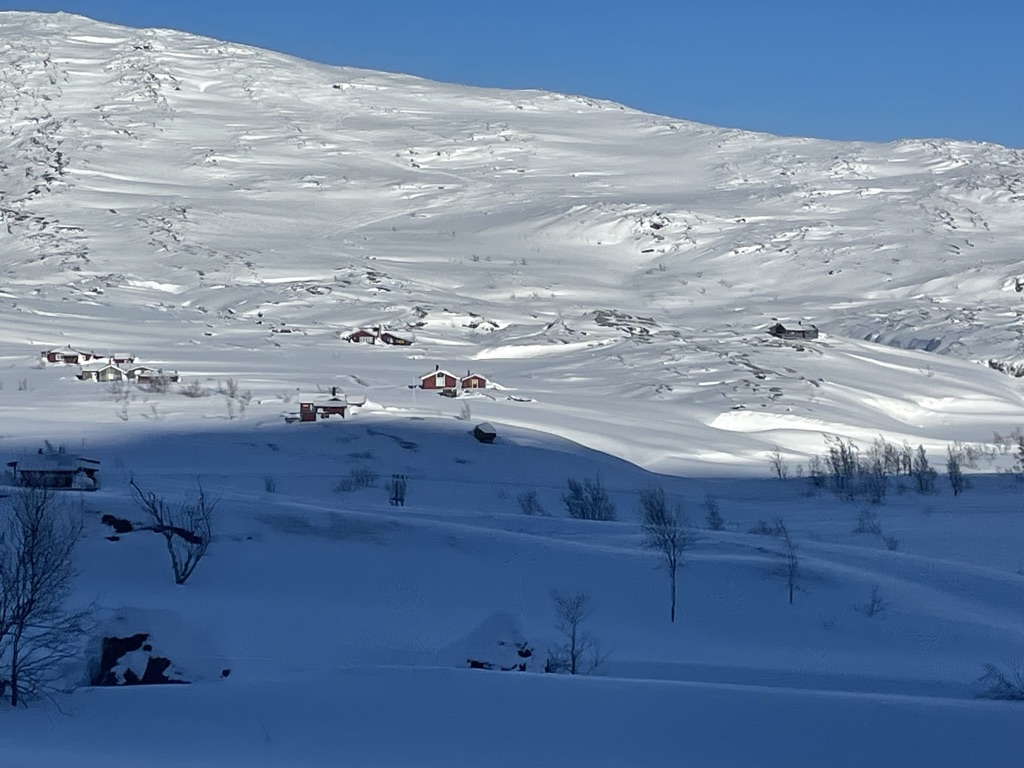
Into Sweden
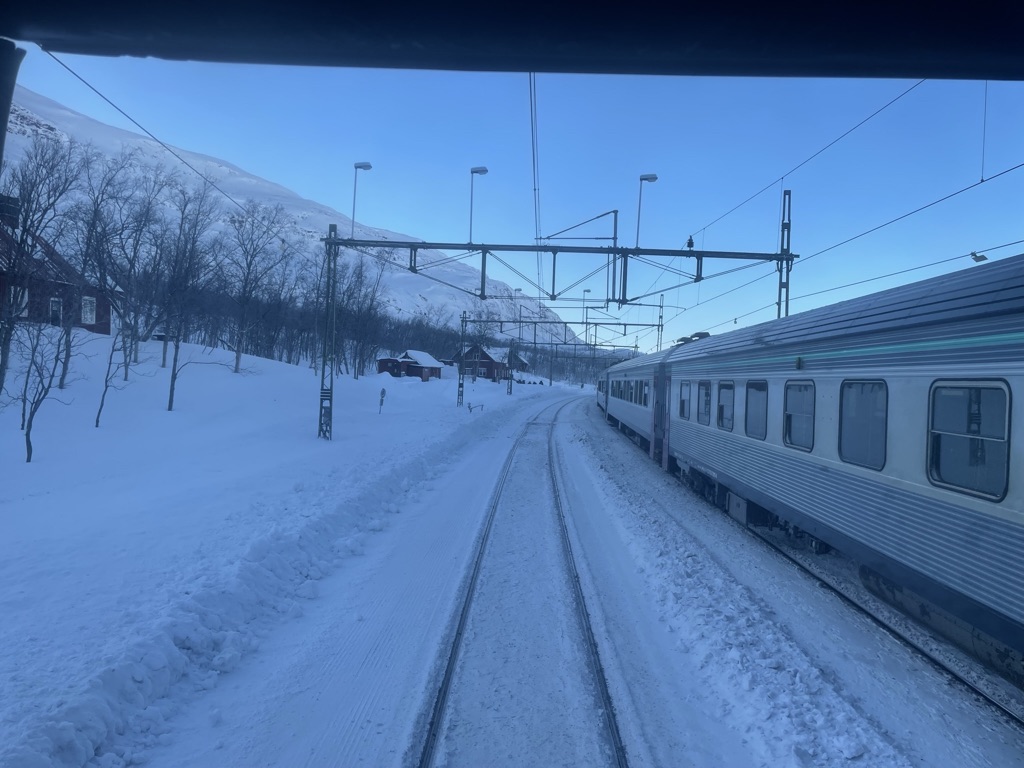
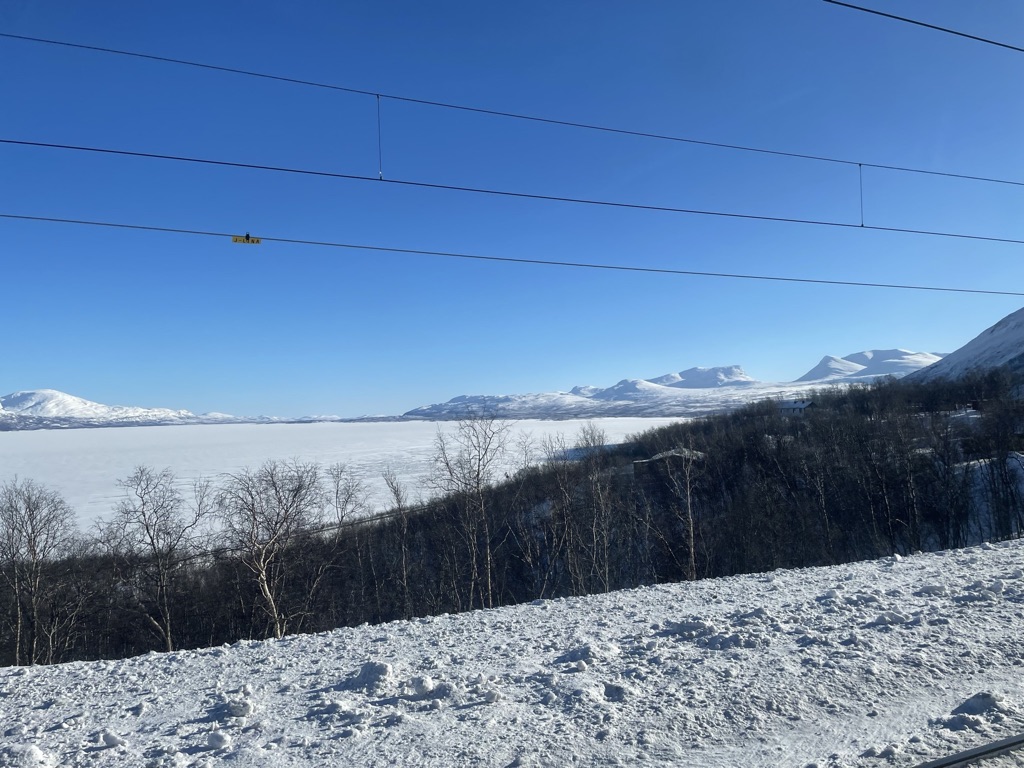
Frozen lakes – the first of many, particularly in Finland
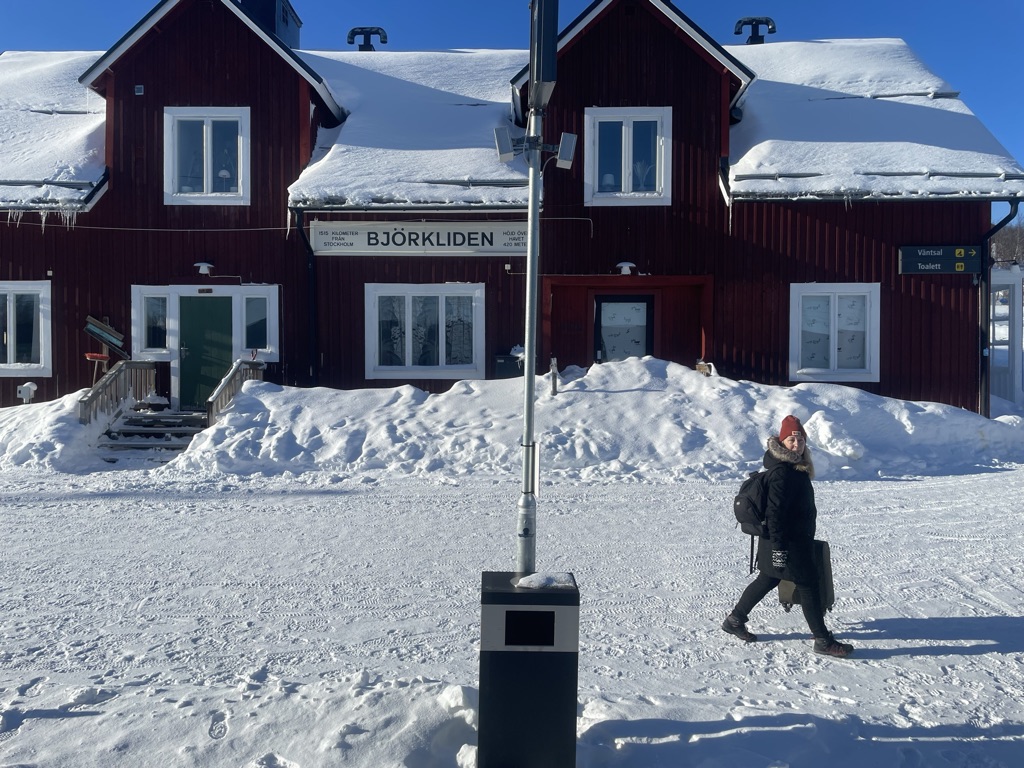
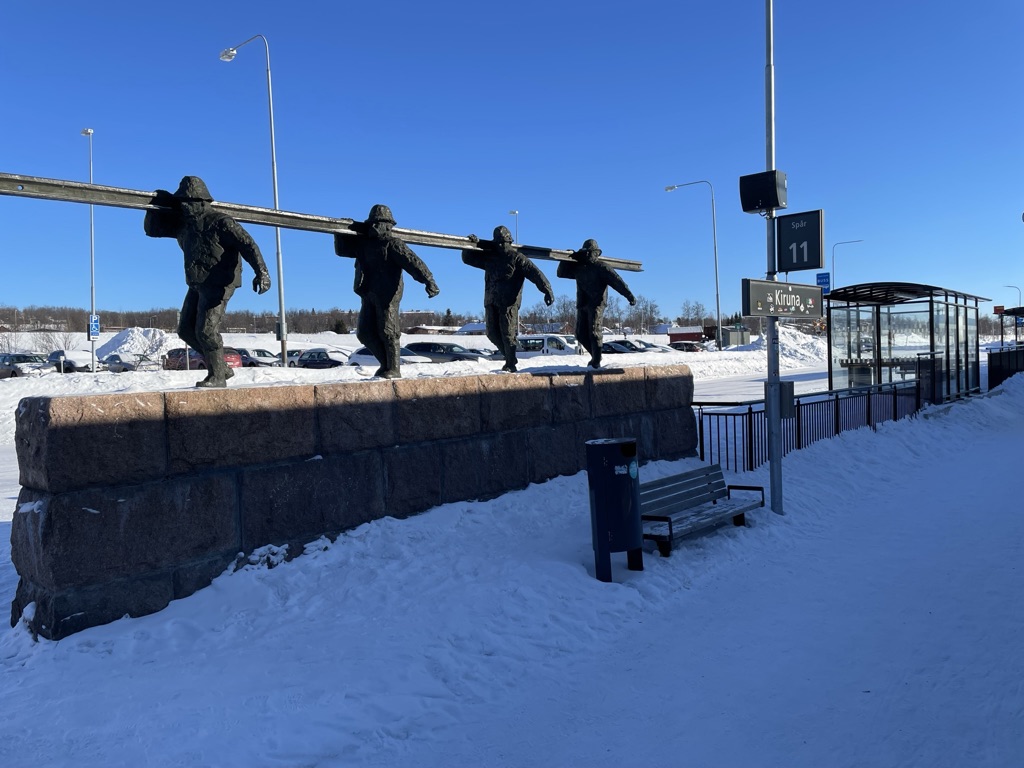
The mining town of Kiruna – and the reason for the railway being constructed to Narvik. It is the nearest ice -free sea port for export of the iron ore.
Click on this link for a detailed article on the history and general background of Kiruna
Image from the above link
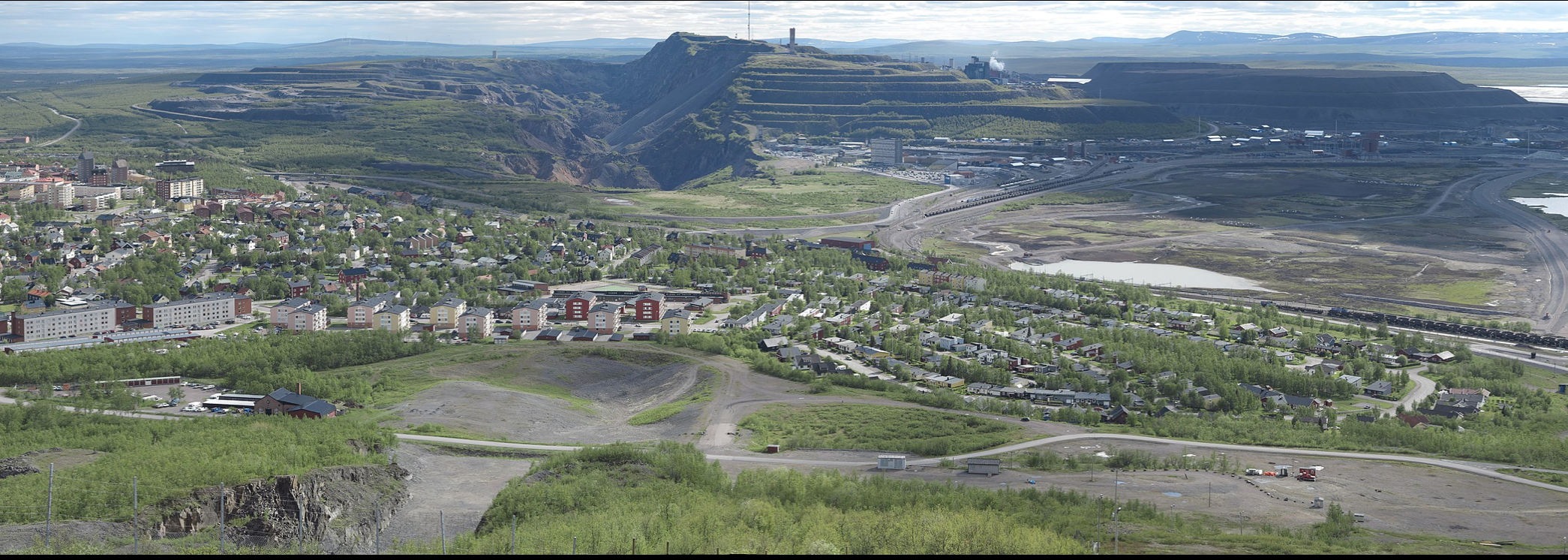

Mining matters. Sweden has significant deposits of metals.
In 2020, 93% of iron ore produced in the European Union (EU) came from its mines, as well as 32.8% of lead, 34.4% of zinc, around 18% of gold and silver and 10.7% of copper.
In 2004 potential subsidence resulted in moving the town – 18,000 residents being re-housed – rather than close the world’s largest underground iron ore mine.
Gallivare
A view that became ‘standard’ for much of the rest of the journey through the ‘Nordic Lands’
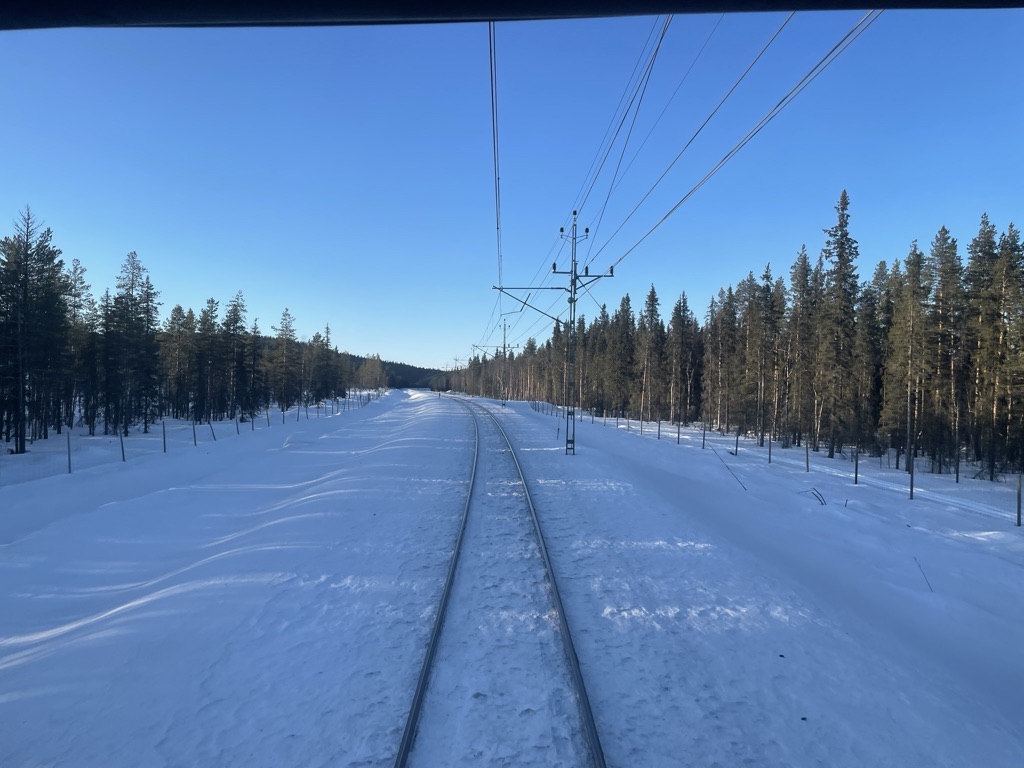
.. and into a bleak empty Gällivare
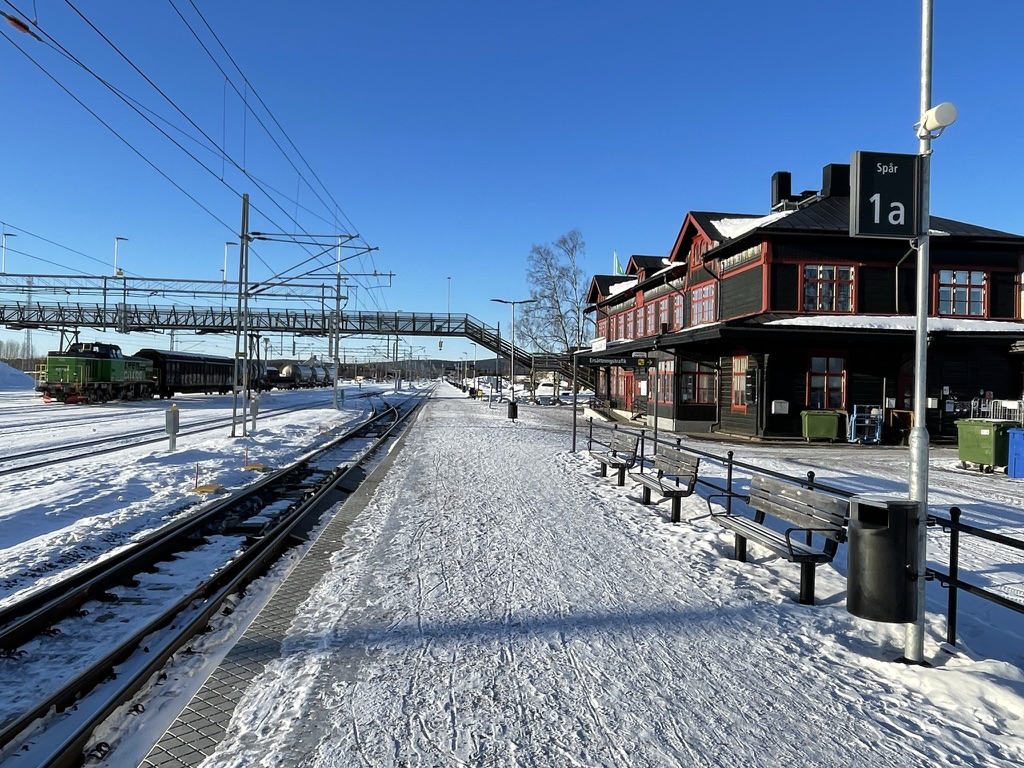
Interlude:
That Which Is Not Seen
Regardless of our knowledge, beliefs and attitudes there are, for all, only limited levels of experience and understanding.
Our train rolls smoothly through the Arctic Snows.
500 kms with 2 significant settlements:
Kiruna: population 23,000
Gällivare (conurbation): population 15,000
The train is so comfortable that we may never know & easily forget where we are, where & what we pass – that this is a harsh land of extremes – of environments & weather.
Tourist information (vital for the local economy) smooths everything in attractive presentations
It is easy to remain ignorant of the complexities, mysteries & struggles of an area, a locality & a society.
A train rolling gently through the snows (average speed c.70kms per hour) creates our own calm dreamtime.
Dreamtime: Considering Ecstatic Encounters
Survival of an ancient European culture
In the Northern Lands there survives a ‘Way of Life’ different to that which exists elsewhere in Europe. Not unchanging – but with a continuity from & through past time.
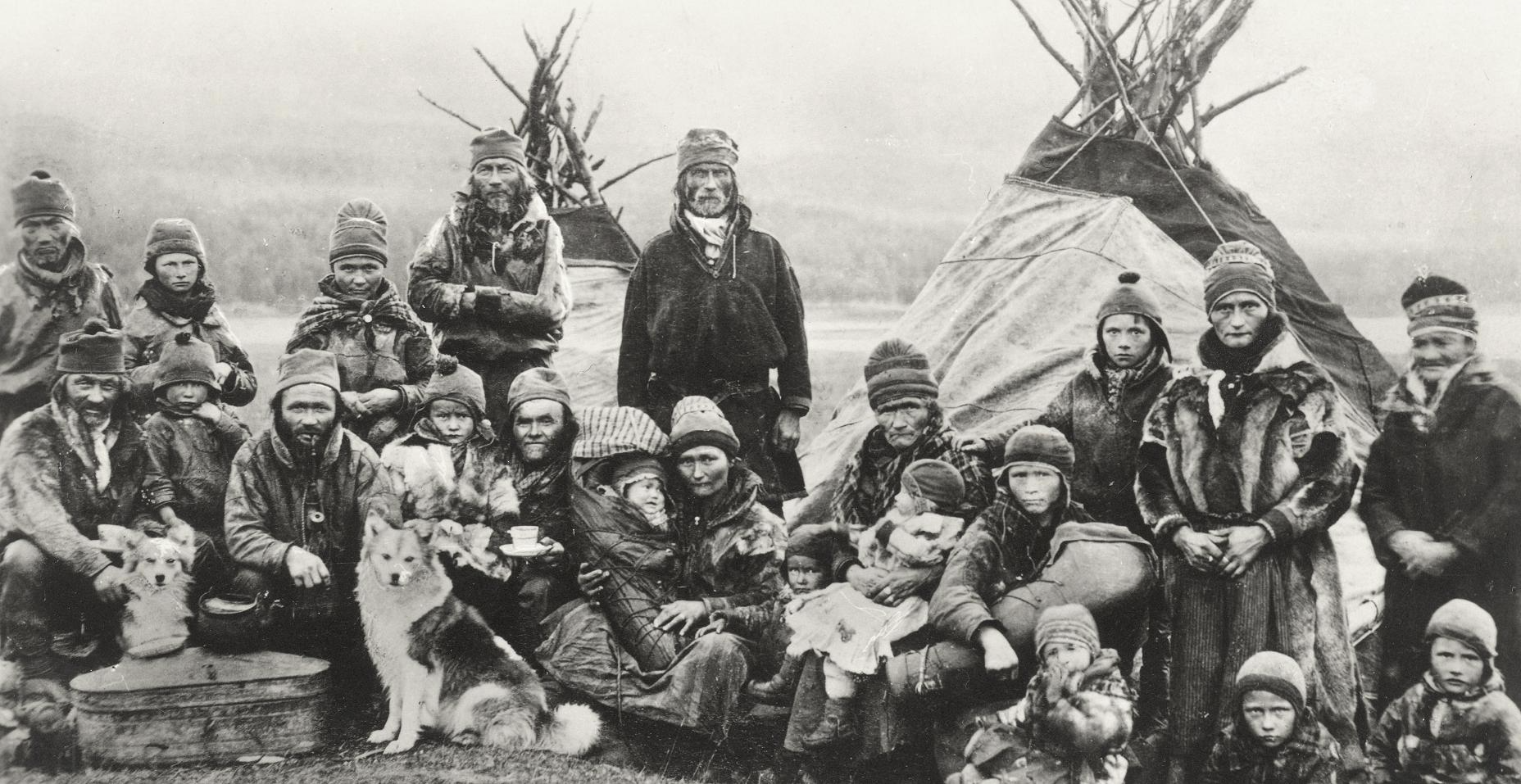
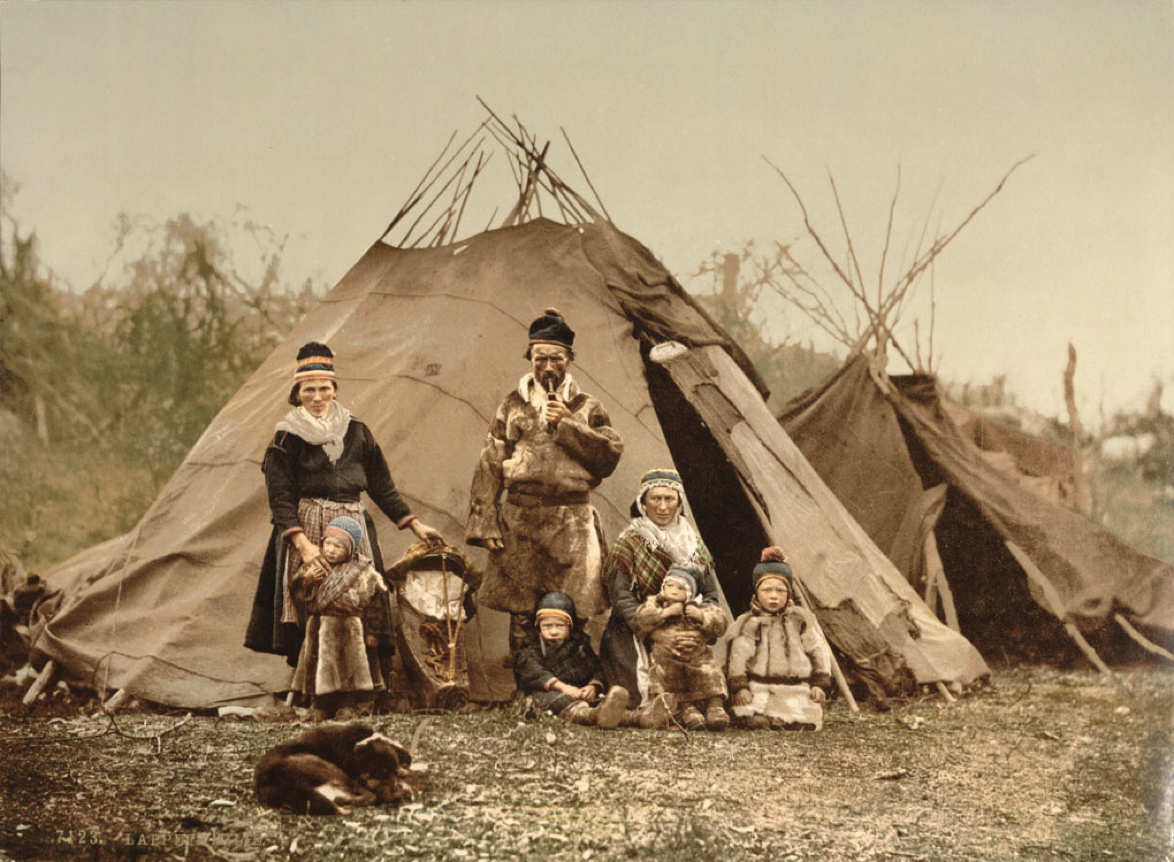
Granbergs Nya Aktiebolag – Old Photography from 1900 -1920
Nordic Sámi in Sápmi in front of two Lavvo Tents.
The Sámi people in the photo are Nomads of Norway/Sweden…. nomadic because they are herders & that, like any equivalent situations, requires time to be spent away from a fixed base (‘home’).
The group seems to be a family ensemble – successful farming folk agreeing to someone recording them.
Not ‘unsophisticated’ people…….The photo appears to have been taken during a tea/coffee break as 2 of them are holding cups and saucers & there is a kettle (left foreground).
As with other ‘pastoralists’ the numbers required to be involved have reduced dramatically during the C20th/21st.
Gällivare
An Iron Ore Mining town
Centre of the Firstborn Laestadians
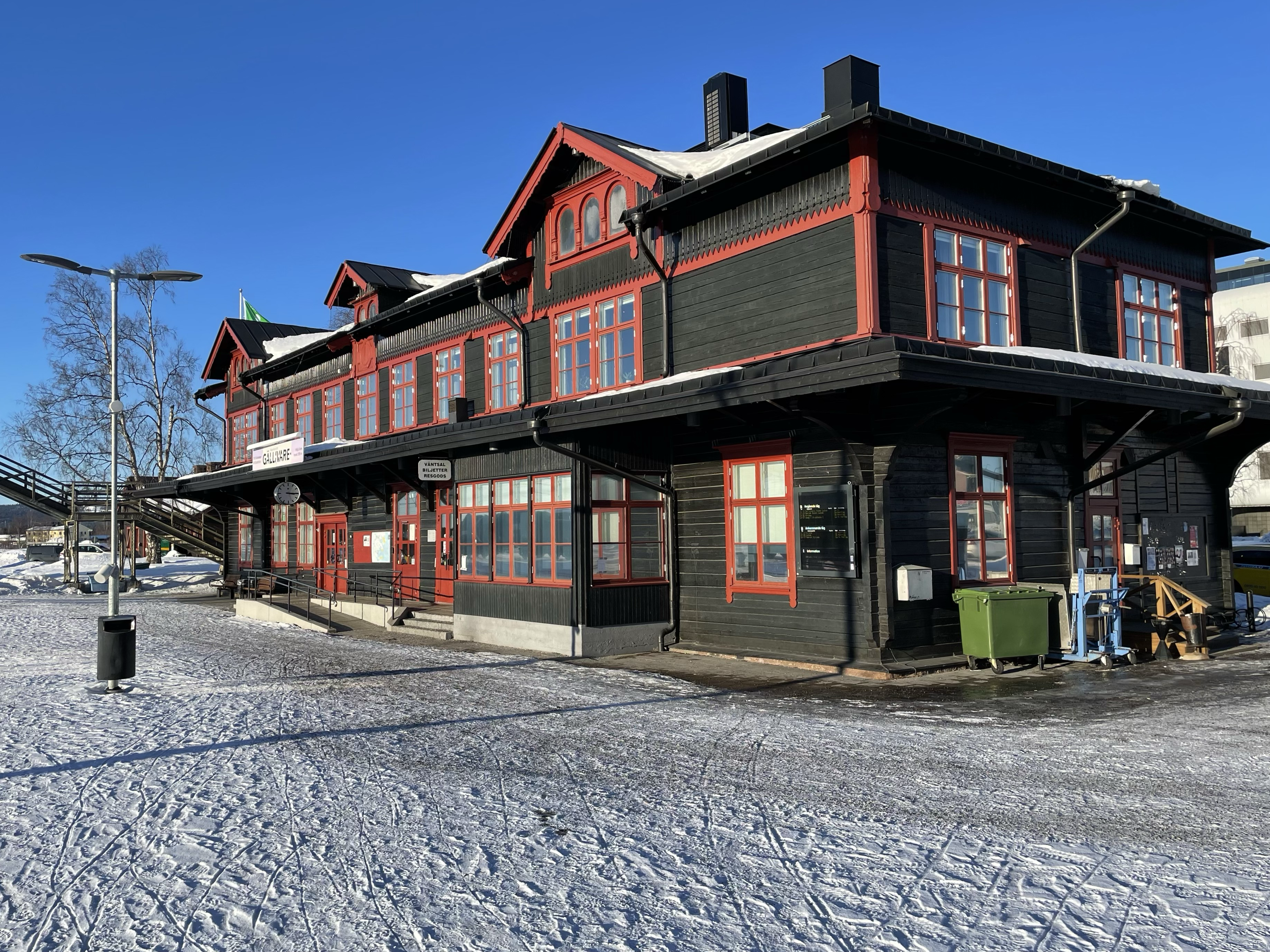
The train stopped at Gällivare station & resulted in the personal discovery of a historically significant social, racial & linguistic complexity that defies easy explanation. The accidental discovery of Gällivare as the place of the Christmas Celebration of the The Firstborn Laestadians was one of several ‘rabbit holes’ of curiosity into which I crawled in the course of the 3 month peregrination.
We began our Nordic journey, in Oslo with a Sámi demonstration. The curious term (to me) ‘Firstborn Laestadians’, introduces a wider group that is historically important in the recent history of the local indigenous Sámi population.
Given the apparent severe beliefs of the the ‘Firstborn’ I wondered of what is involved in the
Christmas Celebration of the The Firstborn Laestadians.
From that reference I worked backwards in order to try and understand more.
Firstborn Laestadians are a subgroup within the Laestadian Lutheran revival movement.
The Firstborn are known for their traditionalism and their conservative pietistic ideals, and they seek to avoid “worldly pleasures”.
https://en.wikipedia.org/wiki/The_Firstborn_Laestadianism
The Laestadian Movement had considerable influence, from the mid C19th, on the Sámi & their beliefs and practises.
In learning about the one I realise that I began to understand that this day’s travels are through a significant part of Sámi territory.
There are no physical indicators – we ‘rail tourists’ are as the blind and deaf…. utterly ignorant of the importance (to an indigenous people) of the region.
We’ve been travelling through part of Sápmi:
theterritories of the Sámi people (whose demonstration we saw in Oslo).
‘Sápmi refers to the areas where the Sámi people have traditionally lived but overlap with other regions and definitions.’
https://en.wikipedia.org/wiki/Sápmi
The demonstration in Oslo (Chapt 1, p54 ff ) & our subsequent conversations on the train north from Oslo, introduced us, in some detail, to the issues that the Sámi people have had to survive & with which they continue to struggle. As the Bishop of Oslo stated, the present difficulties caused by the Norwegian Government are a ‘human rights issue’.
There are regions and linguistic differences amongst the Sámi and different terms used to describe them & their territory. Because of the derogatory use made of the term ‘Lapp’ (as in the common term ‘Lapland’), the Sámi have largely disavowed its use.
The region covers 4 separate nations & the term survives as a geographic term within the region – as do other geographic terms such as ‘Finnmark’. It is possible that the Finnish word ‘Suomi’, may be related to ‘Sámi’.
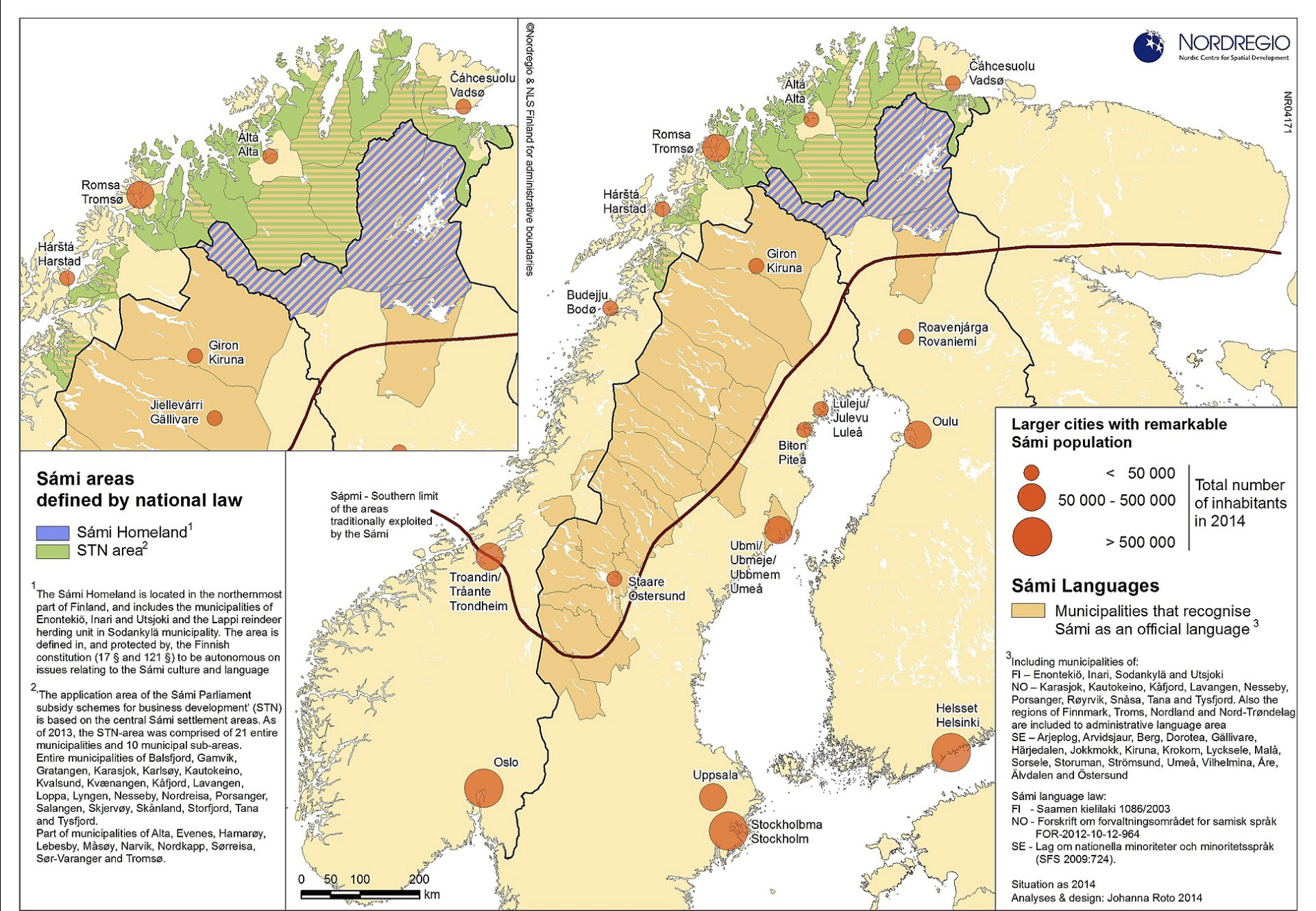
The dark line marks Southern limit of the areas traditionally controlled by the Sámi.
A larger version of the above map may be viewed at https://en.wikipedia.org/wiki/Sápmi#/media/File:Sami_Language_Recognition.jpg
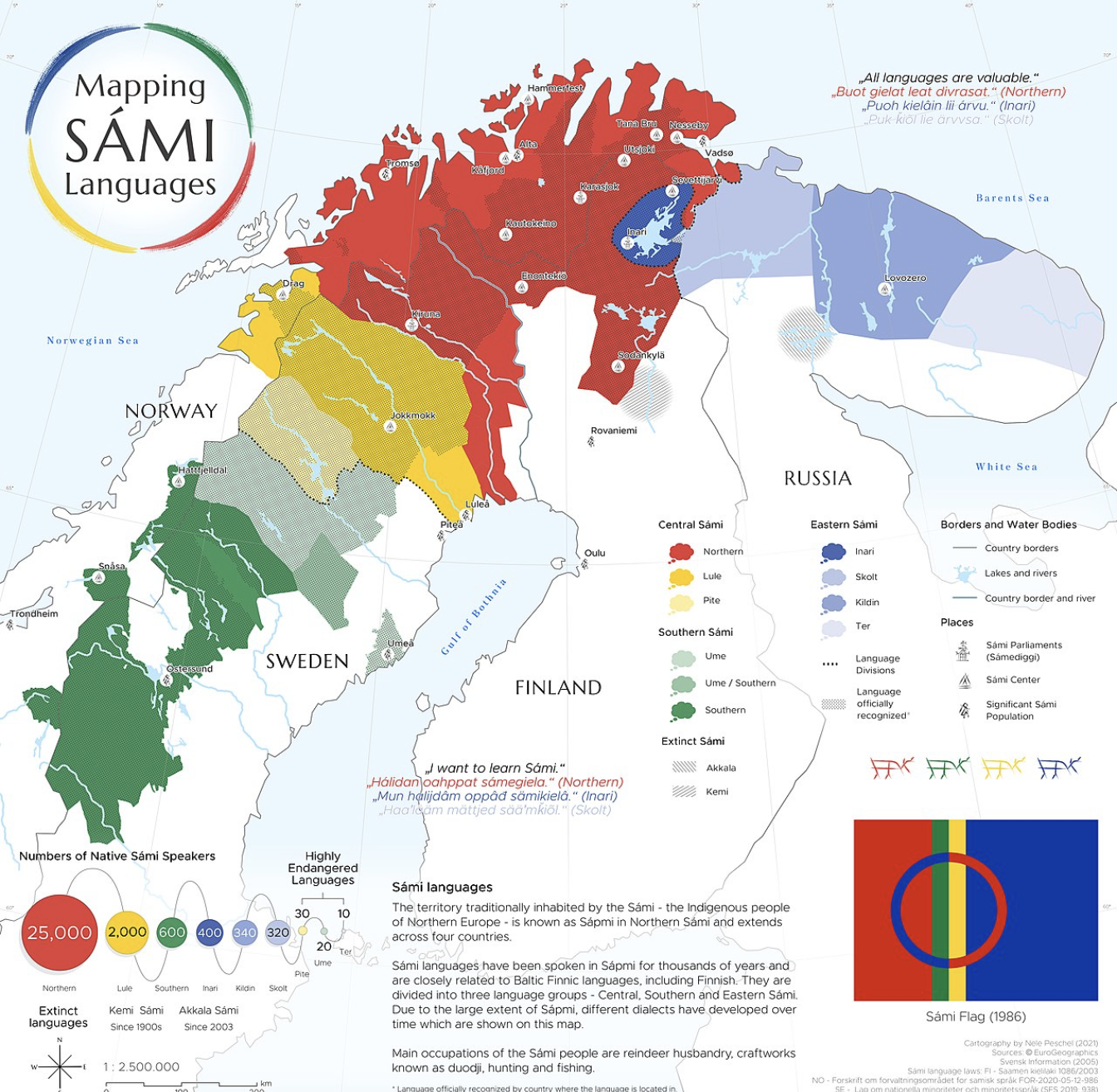
A larger version of the above map may be viewed at
https://en.wikipedia.org/wiki/Sámi_peoples#/media/File:Mapping_Sámi_Languages.jpg
As well as the complexities related to Sámi there are other linguistic and social elements within the region. Most created by groups moving into & then settling in the region. Gällivare is apparently a place where many Tornedalians(Finnish related) have settled.
It is all very confusing to an outsider who simply passes through the area – yet tries to learn a little…. just a little… of what exists in a locality.
Some basic research was achieved as the train travelled through one of the Sámi linguistic regions: Lule Sámi
It is based on the Lule River which the railway follows to the Gulf of Bothnia
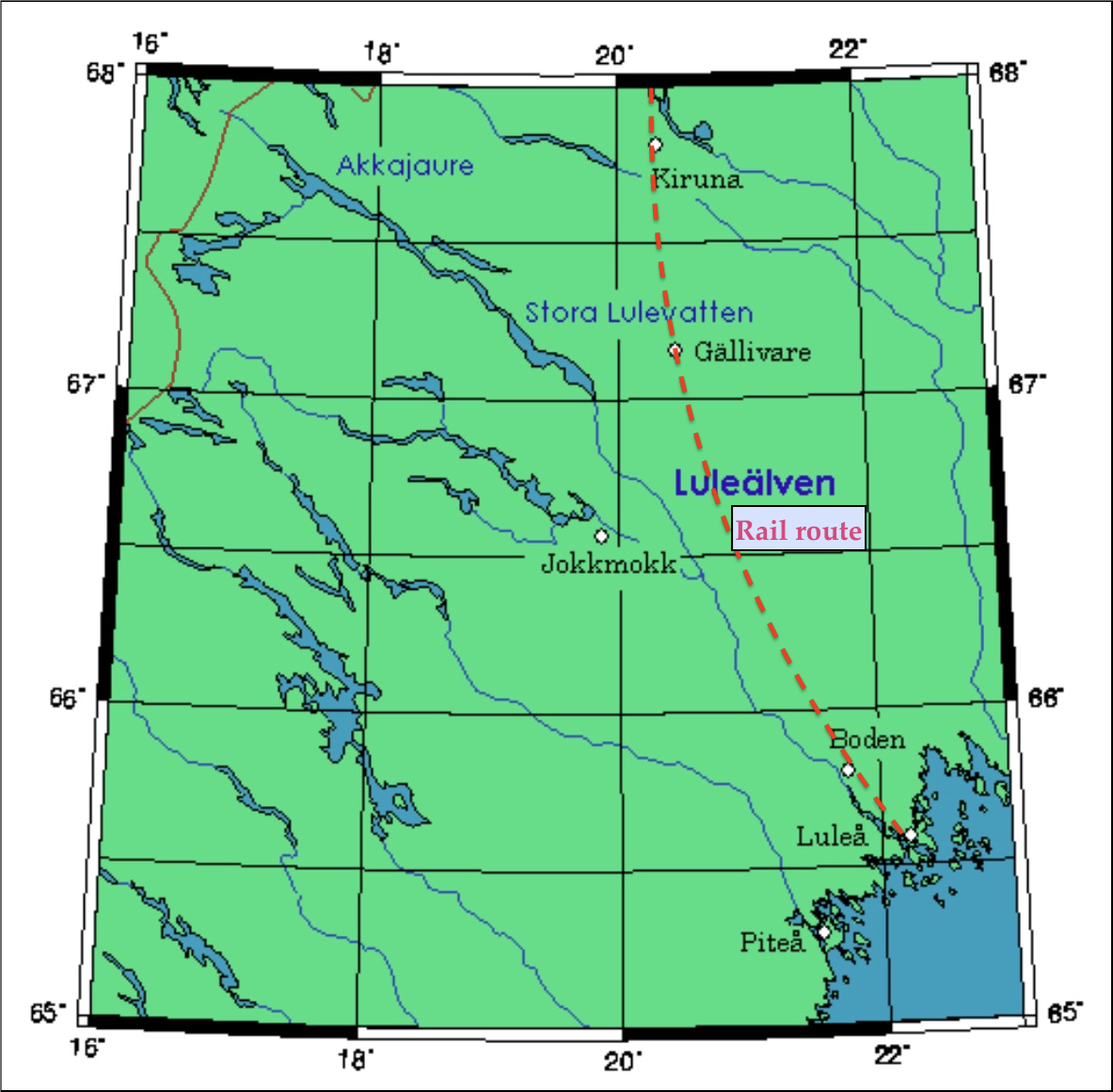
Discovering the work of the C19th Lutheran minister, Lars Levi Laestadius, who was of Sámi descent, led into many of the issues relating to the survival of the Sámi.
The Sámi living in the regions on the above maps contain those whose way of living & its associated culture has been different to that of most western European societies.
These differences make descriptions & explanations difficult because we (outsiders) use our cultural terms to describe what is observed & recorded …. and our terms have often been negative or are insufficient.
There are some parallels with shepherding & herding societies (eg in Romania & Bulgaria) but those do not include specific language, cultural and ‘belief’ (‘world-view’) systems and structures.
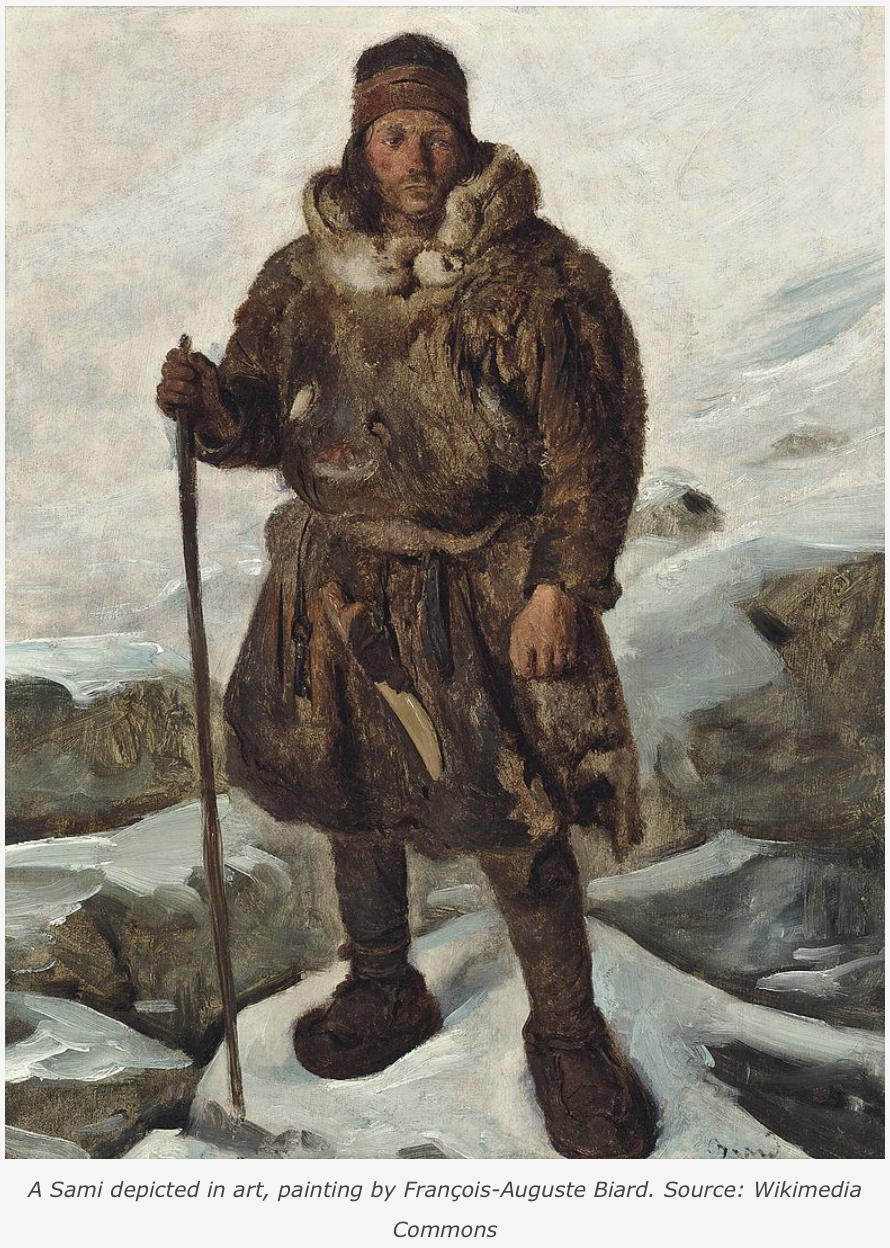
In this area of northern Sweden (& other neighbouring nations) is a life as a reindeer herder, following their seasonal movements & practised since (at least) C16th.
However, these popular images of the Sámi (herding with its own very specific qualification & regulations) apply to only 10% of the Sámi.
Others are settled with land ownership capable of being demanded by external agencies (eg mining).
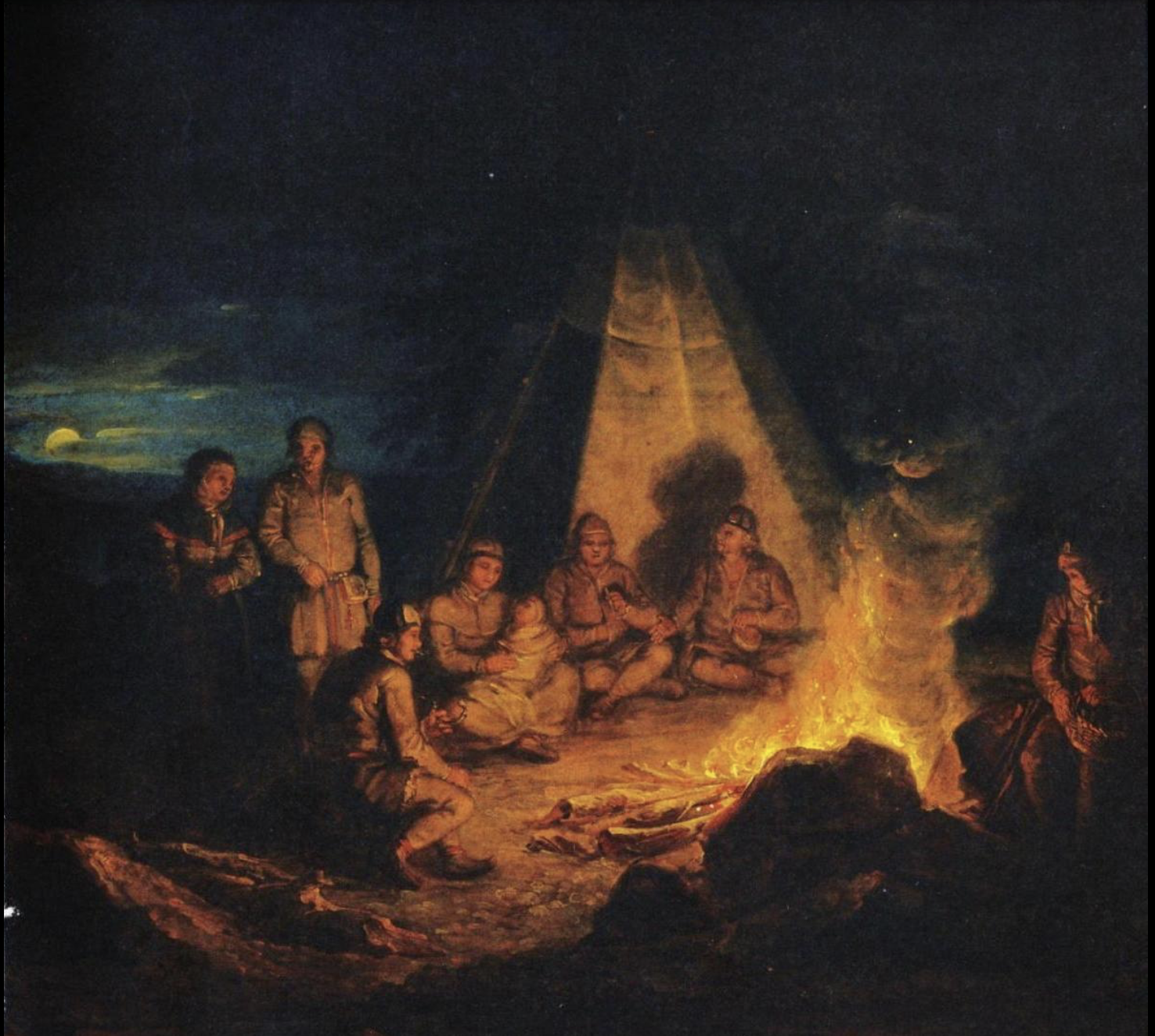
Aleksander Lauréus 1818
We also learned from direct conversation with Sámi on our train journey north from Oslo that Hi-Tech developments (internet etc) are allowing Sámi families to re-locate to their traditional heartlands in the north.
‘Only Connect’ as an English writer once suggested.
An exciting possibility – and one that is mirrored in different but related ways in many other places, especially since the ‘Covidian Intrusion’ began its disruptive presence.
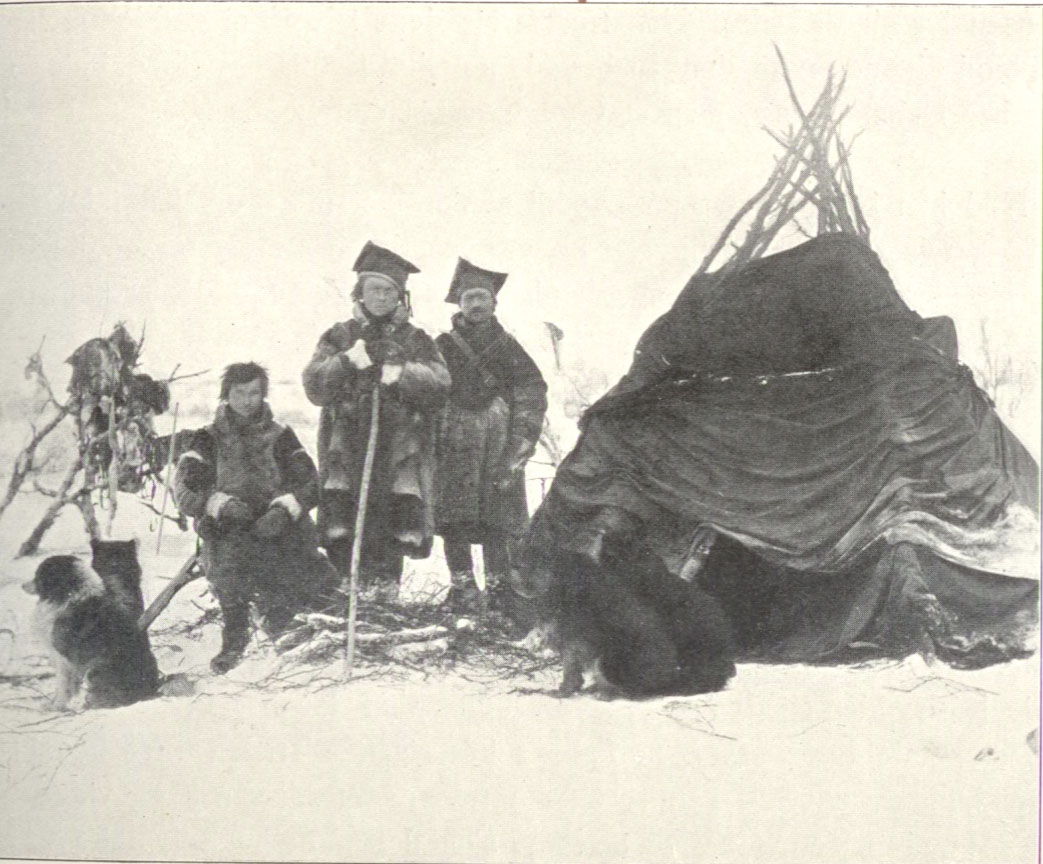
Sámi Reindeer herders & ‘Lavvu’ photo from c 1900
Details of a LAVVU: https://en.wikipedia.org/wiki/Lavvu
“The reindeer-herding Sami lived in tents or turf huts and migrated with their herds in units of five or six families, supplementing their diet along the way by hunting and fishing.
Nomadism, however, has virtually disappeared; the remaining herders now accompany their reindeer alone while their families reside in permanent modern housing. While the reindeer of a unit are herded communally, each animal is individually owned.”
https://www.britannica.com/topic/Sami
Recent Norwegian research
The Inga Family
The Inga family around 1896.
‘Those who today deal with reindeer in the Hinnøy part of Andøy have deep roots in the area.
This picture was taken, probably in 1896, in the Kanstadfjord area. The two adults on the left are Ingrid, née Sarri, and her husband Nils Andersen Inga.
These two are the origin of the reindeer herding family Inga in Kvalshaug in Sortland.
Before them, they have children Berit, married to Jon Andersen in Kvalshaug, and his brother Ole Nilsen.
Both spent many years in the Forfjord in the area near Finnsæterholman.
The adult lady on the right is Ellen, sister of Ingrid Sarri. In front of her are her children Inger Anna and Tomas. Inger Anna married Fjelldal, and is the parent of the Hansen reindeer herding family from Kanstad in Lødingen.
One of the sons from there, Peder Hansen (Buljo), who is Inger Anna’s great-grandson, has settled in Medby in Andøy.
The photograph itself is unique. It was found in the archives of the US Congress, and was taken as a color photo(!).’
Above information is undated but may be as recent as 2020
http://www.vesteraalen.info/andoy_friluftsliv.htm
‘The indigenous Sámi population is a mostly urbanised demographic, but a substantial number live in villages in the high Arctic. The Sámi are still coping with the cultural consequences of language and culture loss caused by generations of Sámi children being taken to missionary and/or state-run boarding schools and the legacy of laws that were created to deny the Sámi rights (e.g., to their beliefs, language, land and to the practice of traditional livelihoods). The Sámi are experiencing cultural and environmental threats, including: oil exploration, mining, dam building, logging, climate change, military bombing ranges, tourism and commercial development.’
https://en.wikipedia.org/wiki/Sámi_peoples
Motorised management
Our attempts to understand Laestadianism introduced the range of negative actions in their past & present existence that threatened indigenous Sámi people.
Anciently, Sámi peoples traded with other societies (eg Vikings) but there was no direct impingement on their lives until after the Black Death when Nordic peoples began to colonise. At this stage the Sámi seem to have made a transition to focus on Reindeer herding. This required a lived relationship with the seasonally itinerant Reindeer, adapting to their movements.Though greatly reduced the threat to its survival was the focus of the demonstration Oslo.
The Sámi had their “sámi vuoiŋŋalaš árbevierru” (their distinct traditions, customs, and beliefs).
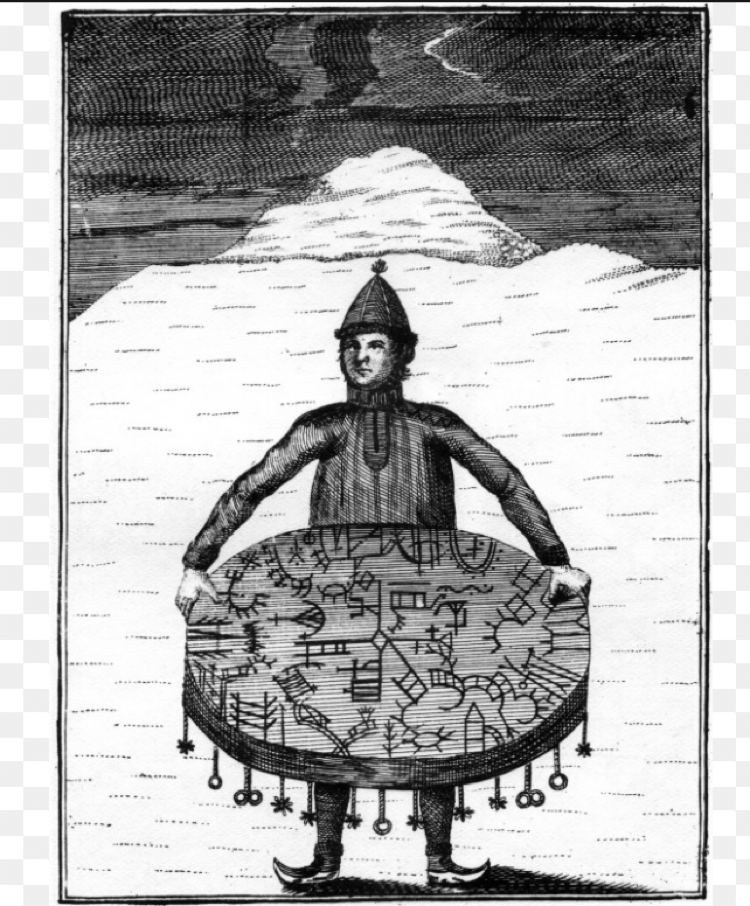
These included the use of ‘Noaidevuohta’ (drum based ceremonies) in which the ‘Noaidi’ engaged in ecstatic action that connected the physical present with other levels of existence & consciousness.
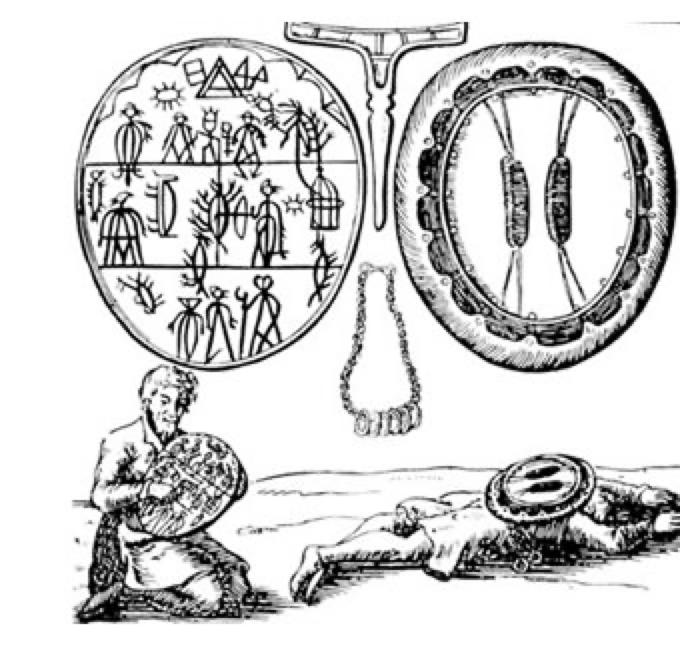
The Noaidi seem to have a multi-functional role including movement across different levels of consciousness & existence, including healing, community conflict resolution, story-telling & entertainment. Some activities required achieving a trance-like, ecstatic state in order to connect with other ‘souls’ & gain knowledge.
The drum illustrated above suggests 3 levels of existence & a rather managed, formalised position when in ecstatic trance. One British museum commentator describes the process as responding to ‘the rhythmic sound of nature’. To achieve that requires some form of concentrated, focused effort which the drumming provided.
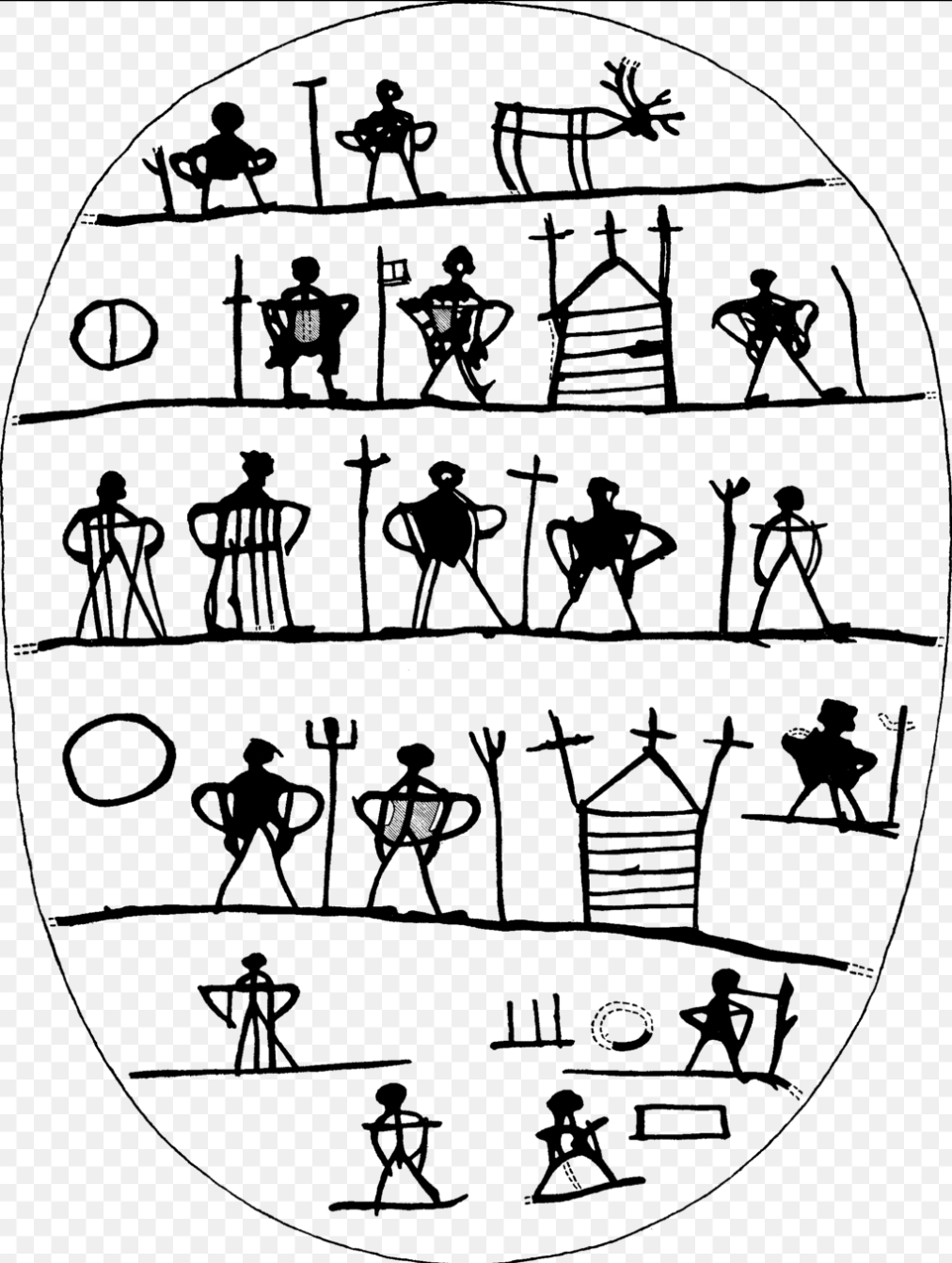
https://en.wikipedia.org/wiki/Sámi_drum#
There is no equivalent word for ‘religion’ & the word ‘belief’ is almost too formal for what was an ‘attitude’ or ‘world view’ that included philosophy, nature, the essence of the human being and the relationships between them all & the physical natural surroundings.
These elements distinguished the Sámi from most of European society which, during the mediaeval period was gradually changing its own views, attitudes & beliefs.
Sámi beliefs may have assimilated related aspects of Christian beliefs but they were primarily non-Christian.
After the Protestant Reformation religious leaders in the Lutheran tradition (priests, ministers etc) began to insist on ‘full conversion’ to the Protestant Faith. The Swedish Crown (which also included Finland) established winter markets in areas where the nomadic Sámi grazed reindeer. This allowed increased control, taxation & establishment of a Christian church & priest. The efforts at conversion were limited. The Sámi were impermanent members of the market settlements. They also had their own counter-measures to those being imposed.
For example, required Christian baptism was often followed by a family cleansing the infant to remove the harmful, Christian name.
(Wonderfully simple!
A good illustration of the way people retain a sense of social and personal balance…. but without making any public demonstration… and leaving the imposing ‘authority’ completely ignorant of their deep resistance & ability to retain their sense of ‘who I am/we are’)
https://jokkmokksmarknad.se/en/the-history/
Sámi were forced to attend church services, under threat of fines, imprisonment and even the death penalty for those who did not give up their traditional beliefs. This effort included the burning of sacred drums and desecration of sacred sites, and led to an almost complete destruction of traditional Sámi religious expression. The persecution went hand-in-hand with state encouragement of farmers to settle on Sámi territory in the very far north of Sweden.
https://minorityrights.org/minorities/sami-3/
Some of the earliest images of Noaidi & drum ceremonies attempted to demonstrate the ‘witchcraft’ intentions of the Noaidi. The demons are shown as emerging from the prone figure of the Noaidi in an ecstatic trance.
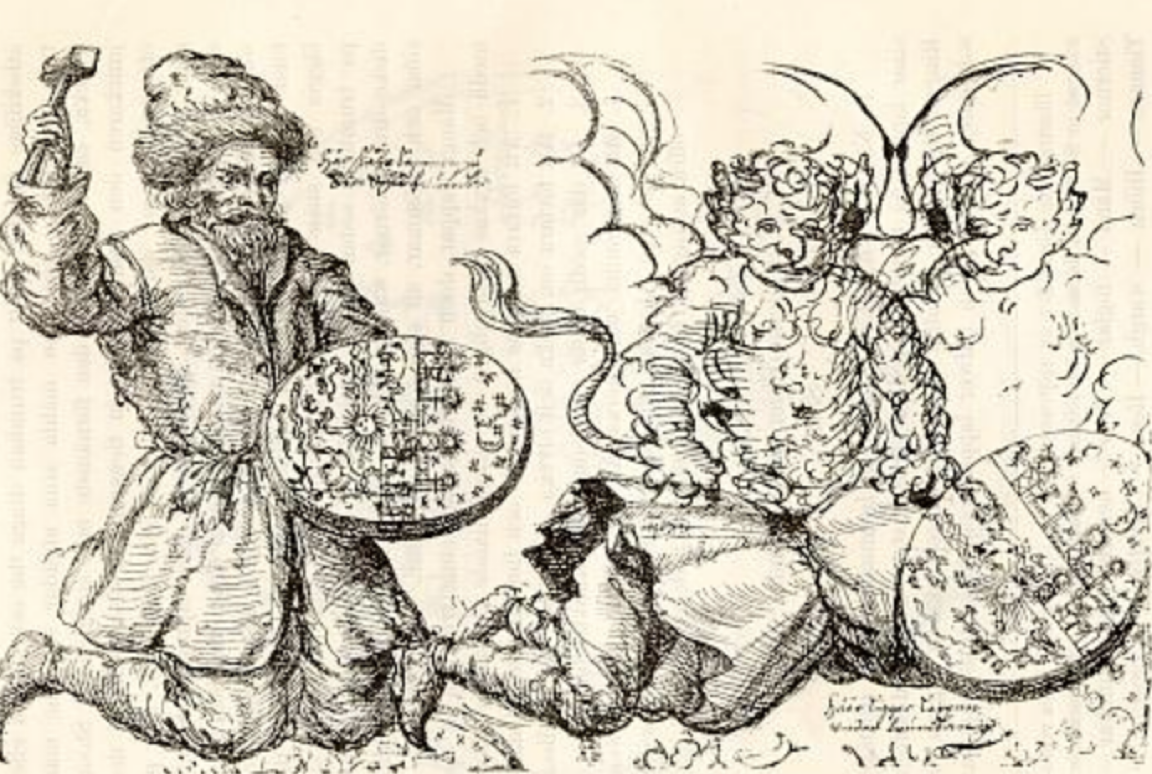
drawn by the Swedish priest Samuel Rheen, 1671.
1688: ’Lars Nilsson. When he later lost his son, he used a drum in a futile effort at bringing him back to life.
He was prosecuted, but at the district court sessions he explained outright that he would “observe and use the custom of his forefathers, in spite of what higher or lower authority in this case would now or in the future prohibit him from doing”.
He was sentenced to death, the judgment was ratified by the court of appeal, and he was thus decapitated and burnt at the stake “together with the tree-idols he had used and the divination drum and the tools belonging to it.”
The execution was held in the presence of his kinsman, who had been summoned to attend. ‘
from:
https://www.laits.utexas.edu/sami/diehtu/giella/music/noaidi.htm
Protestant Colonialism had negative impact. Drums became silent (destroyed & collected – many now found in museums).
However, it is also probable that lack of empathy & particularly understanding of language and culture, resulted in a quiescence amongst the Sámi – they obeyed the commands & continued to maintain their traditions.
As anyone who has been beaten down or controlled by superior force might do.
At a simple level, all who have been through rigid formal education know that there is always ‘something else occurring at the back of the class’.
Laestadius was different.
Lars Levi Laestadius:
A Lutheran Pastor who began
“a religious movement that some would say drove the final nail into the coffin of the traditional Sámi worldview.”
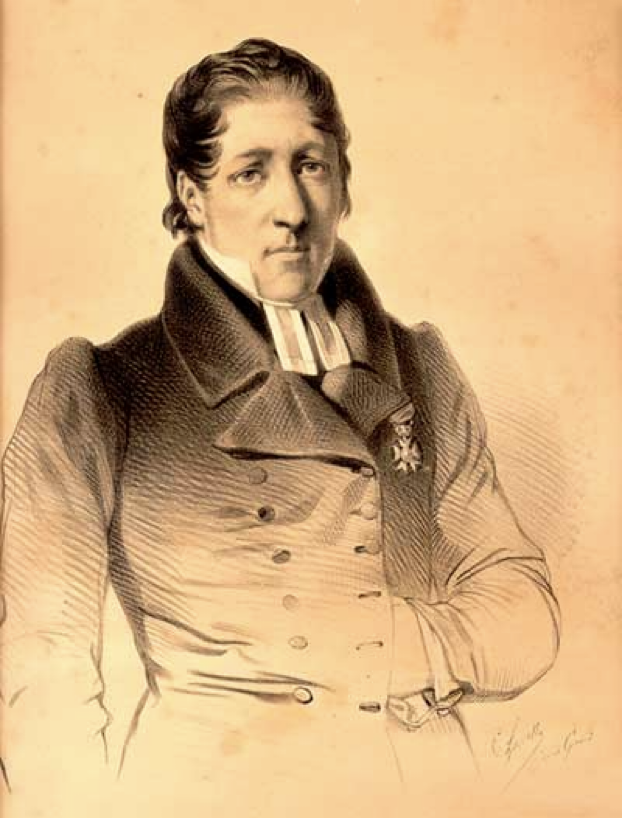
https://en.m.wikipedia.org/wiki/Lars_Levi_Laestadius#/media/
The following link explains how the Laestadian movement brought benefits but also profound change to Sámi culture.
https://www.laits.utexas.edu/sami/diehtu/siida/christian/vulle.htm
Having a background as Sámi (including ability to speak 2 of their languages) & of the same working-peasant background, Laestadius had a major influence of local Sámi societies and settlements.
He was remarkably erudite & maintained a level of curiosity into his natural and social environments.
“He was as an internationally recognized botanist and a member of the Edinburgh Botanical Society as well as the Royal Society of Sciences in Uppsala”. Some of the plants he listed are in the Kew Gardens (London) International Plant Names Index: https://www.ipni.org/a/5200-1
His work also included collecting examples of Sámi culture ‘Fragments of Lappish Mythology’ (unpublished until 1997).
In his version of Christianity he used terms and concepts that were naturally understood by the Sámi & he encouraged, through a very dynamic ecstatic approach which related to Sámi tradition, a reform of habits which included a change of faith and culture & dramatically reduced alcohol dependence (a major social problem at the time).
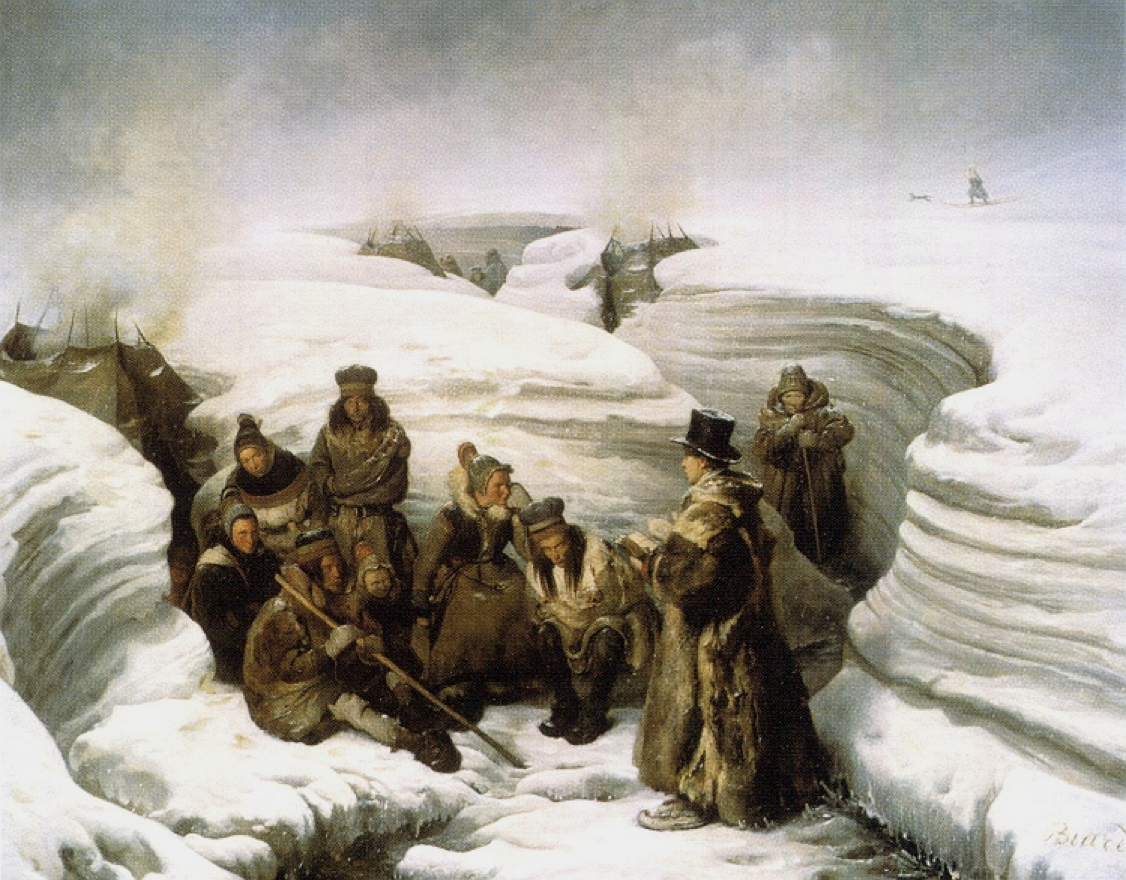
The picture illustrates the way the Lavuu was used in winter – a community living in protective ‘snow burrows’.
Apart from the ‘Authorative’ Top Hat (!) his clothing also compared with theirs – eg his traditional style winter boots. He was also, very importantly ‘with them’ on ‘their’ territory… not requiring them to be on ‘his’.
On the basis of the above evidence (plus knowing that he was from their background and spoke their language… both literally and metaphorically) plus his detailed interest in other aspects of ‘locality’ (botany & local culture), there is much that many engaged in any form of community development, marketing or persuasion, at any level, could be learned from the approach of Lars Levi Laestadius.
A specific movement within Lutheranism was created around his work – and this has developed into further sub-groups such as the Firstborn Laestadians & Conservative Laestadians.
Sámi culture was not just been altered and reduced by direct action but by the influence of social, economic & cultural changes – for example, the rise of nationalism, belief in ‘progress’ associated with increased commercialism, industrial & urbanisation, formal education etc.
A specific movement within Lutheranism was created around his work – and this has developed into further sub-groups such as the Firstborn Laestadians & Conservative Laestadians.
Sámi culture was not just been altered and reduced by direct action but by the influence of social, economic & cultural changes – for example, the rise of nationalism, belief in ‘progress’ associated with increased commercialism, industrial & urbanisation, formal education etc.
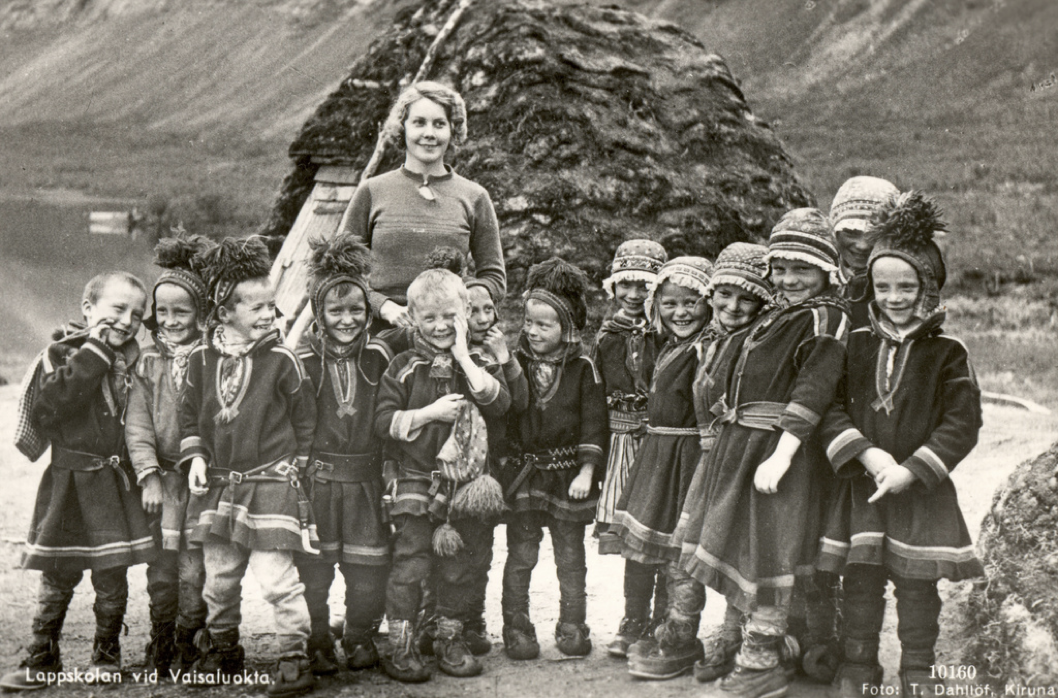
Sami school in Vaisaluokta, Jokkmokk, Sweden circa 1955
Life in C21st is different from that of the older traditions.
“reindeer herding is characterized by large herds and a high degree of mechanization in all regions.”
https://en.wikipedia.org/wiki/Reindeer_herding
The cultural beliefs and attitudes of the Sámi now include forms of Laestadian Lutherism, traditional beliefs & practises inherited from the distant past but also those that have evolved in recent times in more urban societies.
In the past 20 years there have been attempts to redress the harms imposed on the Sámi – including reconciliation commissions & increased local democracy.
The hurt is deep – and there are a continuing difficulties with certain sectors of society who have negative attitudes regarding the Sámi & their culture.
The pressures are considerable:
“Suicide is something that every Sámi family has been through,…”
The Great Beasts of Consuming Commercialism remain hungry for the rich mineral resources available in Northern Lands
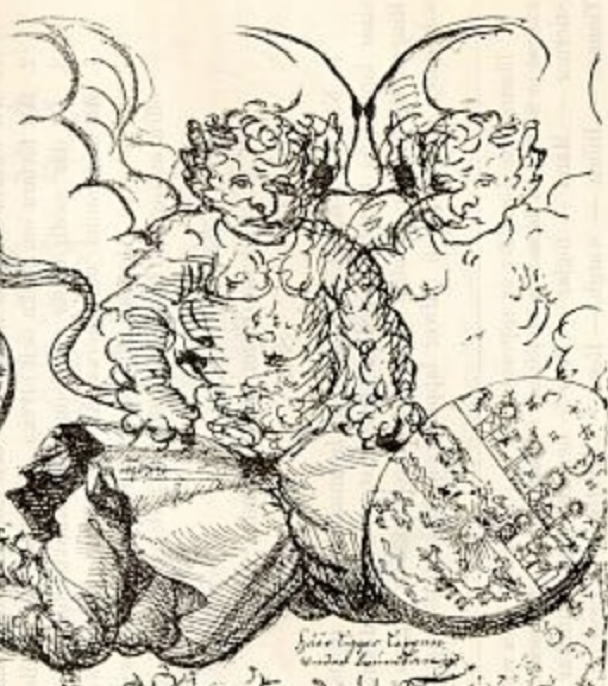
Maybe they are the demons of C17th images – but in reverse… ones that prey on established tradition & lifestyles
For Noiade the dreaming is of a continually difficult future
In Sweden, one threat that has been revived recently concerns a British mining company called Beowulf.
A curious name for a mining company. In the Beowulf saga, troll like creatures are killed by the hero who is later in life killed by a gold hoarding dragon (though he also kills the dragon). The setting is Scandinavian.
Mining is important to the Swedish economy: eg 90% of European iron ore extraction is from Sweden.
The mining company had failed to gain a mining concession in Sámi reindeer herding territory to the west of Gällivare (and by coincidence one in which Laestadius was raised).
In 2021 the new Swedish government changed it position. The site at Gállok/Kallak is important Possibly ‘vital’) for the companies’ future.
A survey conducted suggested
“Six out of ten people (62 %) between the ages of 18 and 79 think that the Swedish mining industry should be given the opportunity to develop in order to secure the supply of important metals, and every second person (49 %) could see themselves accepting an active mine in their vicinity.”
Quite how many of the 49% who would ‘accept’ a mine, have experience of living in a mining area is not stated.
Ore extraction (& associated activities & transportation) creates considerable physical impact.
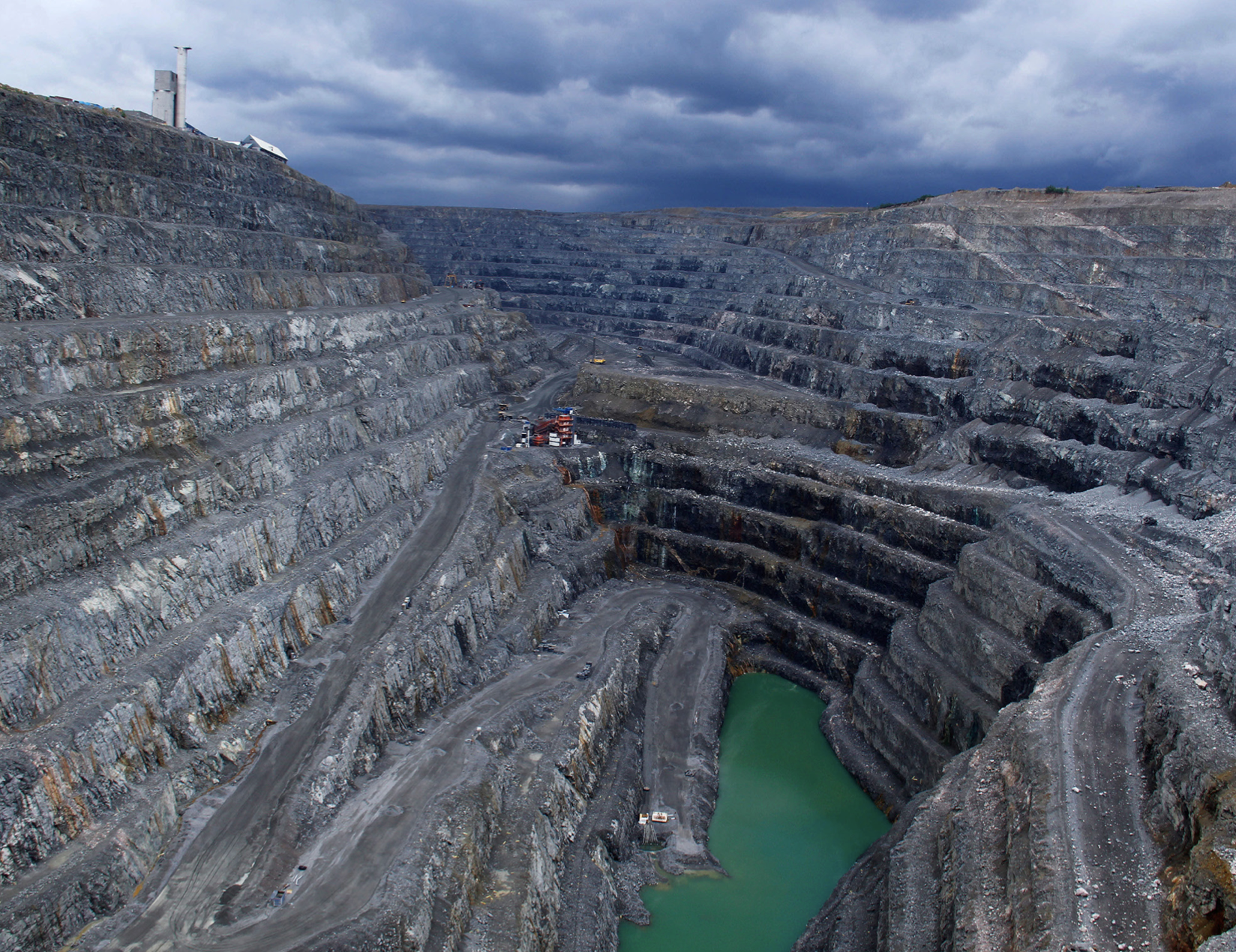
Open-cast mine in Sweden
A ‘mine’ is not simply the ‘hole in the ground’ but the complexity of eg waste disposal, supporting structures, transportation etc that spread & extend the inevitable physical damage.
The Beowulf proposal states
Kallak has the potential to create 250 direct jobs and over 300 indirect jobs in Jokkmokk, over the period that a mine is in operation.
These jobs could be sustained over a period of 25 years or more.
Kallak has the potential to generate SEK 1 billion in tax revenues, considering the case where 70 per cent of the mine’s workforce are based locally, with annual tax revenues of SEK 40 million over a 25 years mine life.
These tax revenues would help to develop and sustain public services and infrastructure in Jokkmokk, which are at risk due to a lack of new investment and job creation in the community, a declining population, and an ageing population.
https://beowulfmining.com/projects/sweden/kallak/
What happens after 25 years?
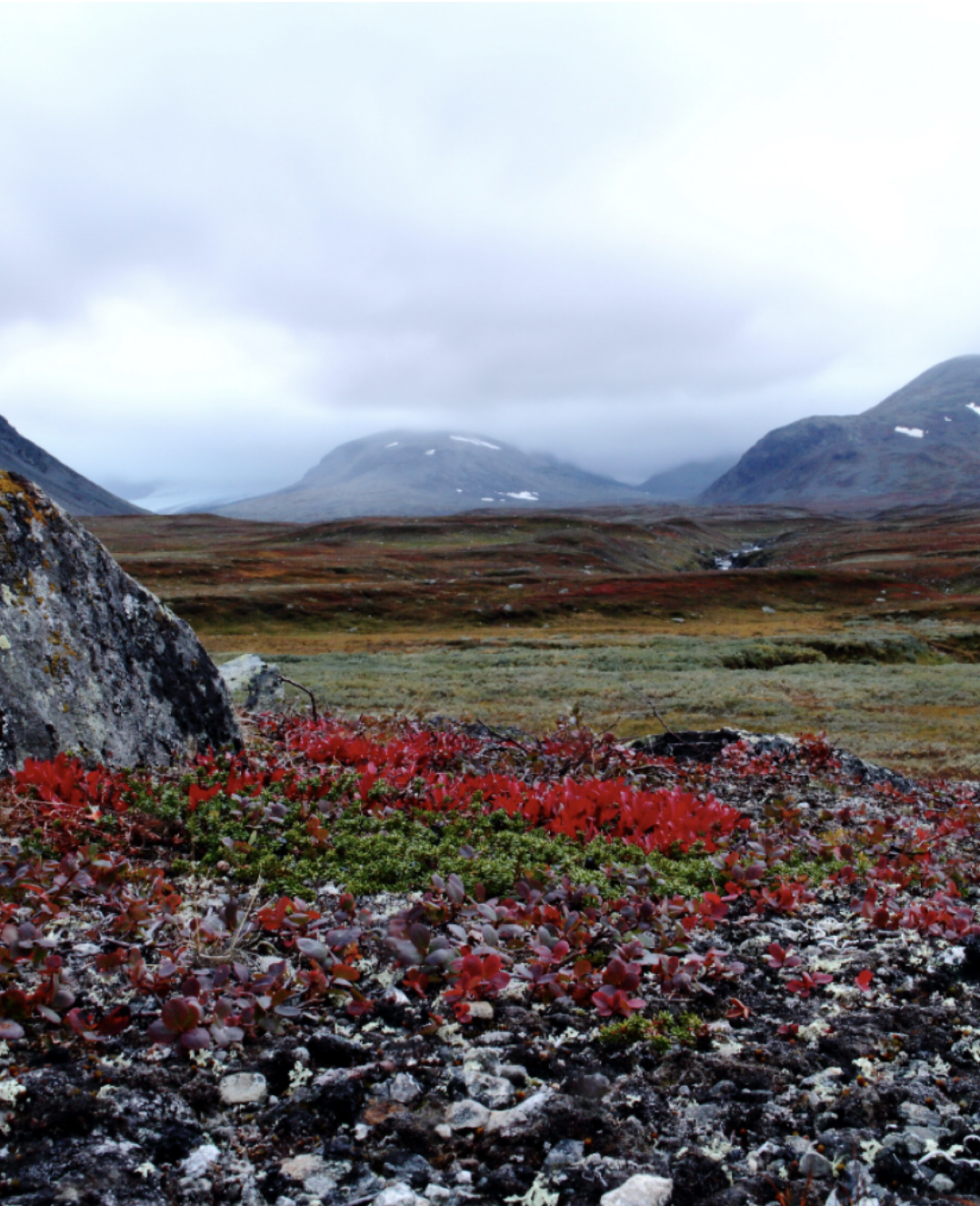
A summary of the issues:
https://en.wikipedia.org/wiki/Kallak_mine
Impact Assessments for such proposals (including ‘environmental’) have not included the issues related to views and values:
One report noted that
“The Sami structure their worldview around the elements and phenomena of their natural environment. The Sami believe that all living things and other elements which other cultures may not even consider alive such as rocks and mountains are connected to one another.”
It referred to an environmental/cultural assessment stating
“In the final results, the only recommendation about cultural heritage was: “Areas with prehistoric remains should be avoided” … In the area there are four Sami villages or samebys. A detailed study of the reindeer herding activities was considered, but there was no direct contact with the Sami that make use of the area.”
https://www.ncbi.nlm.nih.gov/pmc/articles/PMC8259850/
A separate report is entitled
‘ “If the reindeer die, everything dies”:
The mental health of a Sámi community exposed to a mining project in Swedish Sápmi ‘
The qualitative report covered the impact of the original Beowulf proposal & focused on views expressed by local people (Sámi and non-Sámi).
‘David & Goliath’
The report underscored the consultation’s weighting in favoured the proposers – with local tensions and disagreements becoming a significant part of the consultation process.
Negative attitudes to the traditional reindeer herders surfaced – but the report had hints that some attitudes had improved (maybe as non-Sámi residents began to understand the full implications of the mine developments).
[I recall a similar situation in our home village in Mid Wales where, as a consultation process evolved, a member of a ‘born & bred’ local family stated publicly that ‘these newcomers have some use after all! ‘]
The report also made clear that
“The health component of the current EIAs is insufficient to capture the impact on the social determinants of health and its consequences.”
https://www.ncbi.nlm.nih.gov/pmc/articles/PMC8259850/
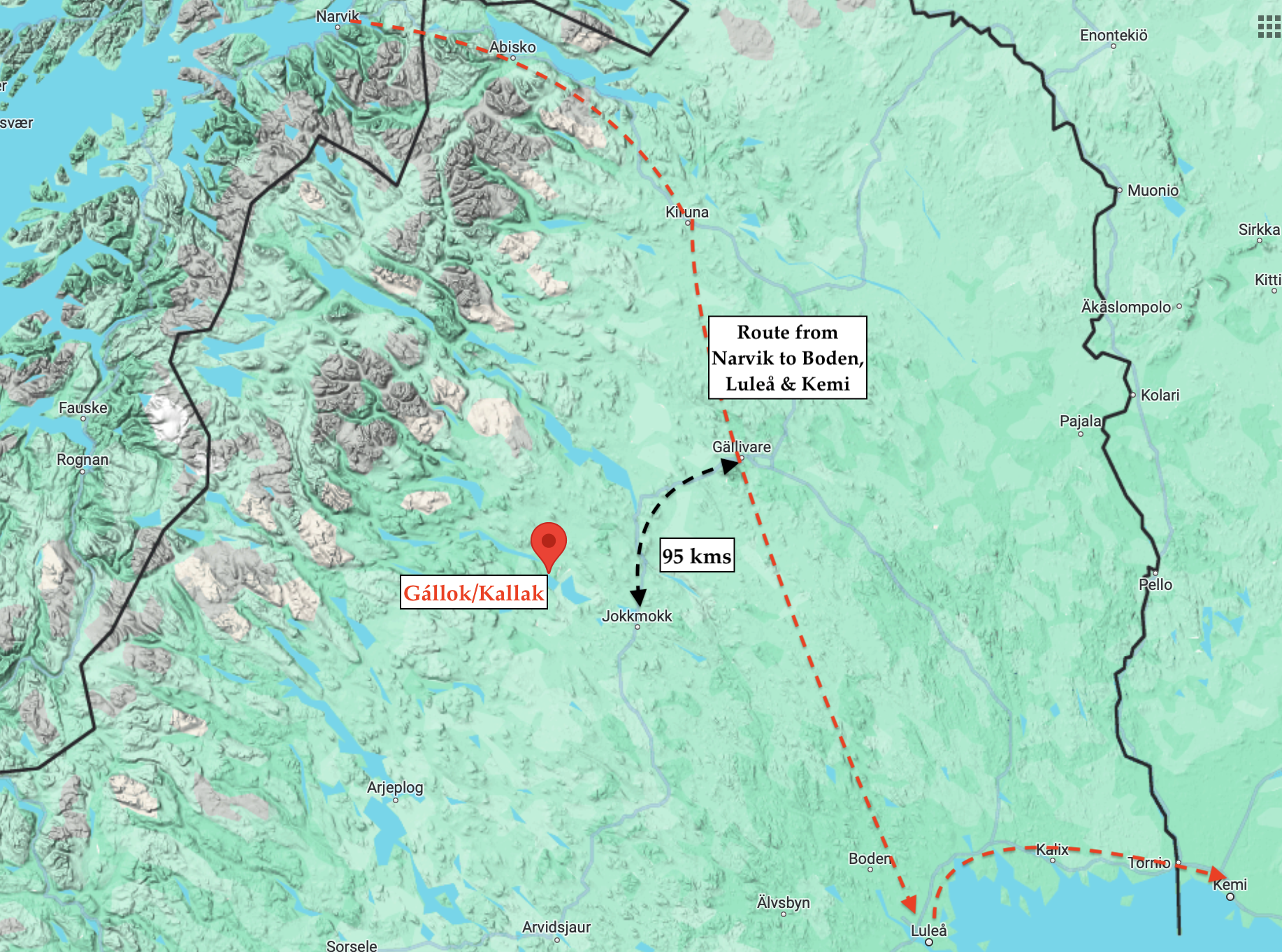
Gällivare connects by road to Jokkmokk which is the municipality in which Gállok/Kallak is situated.
Many of the elements of what the above describes, sound familiar (though on a much larger scale & with considerably greater social implications).
Having lived in a rural community for 50 years it is possible to observe how the increasing number of ‘incomers’ with urban backgrounds (& greater affluence) settling in a largely farming community, remain distant and indifferent to the local life & culture with its existing informal (but established and understood) social structures & methodologies. The tensions created can be damaging.
In more fragile (due to a range of issues) Arctic Societies the pressures are much greater.
The ‘colonial’ attitudes that existed in the C18th/19th remain, though expressed in different language.
The ‘mission’ considered itself, well meaning. A C19th English hymn states:
‘The heathen in his blindness
Bows down to wood and stone….
Shall we, whose souls are lighted
With wisdom from on high,
Shall we to men benighted
The lamp of life deny?’
The ‘worldview’ & purposes of a C19th English missionary (& of those who ‘converted’ the Sámi) may be different to that of a C20th Mining Company but the power relationships are similar.
Stakeholders like the Sámi population are subordinated to more dominant stakeholders such as the government, the company and media, who have ‘more’ power or ‘different’ kinds of power ‘over’ others. Through these asymmetric power relations, historical state-Sámi relations are continuously reproduced within prevailing institutions, and also in this mining conflict. Interviewees from business and the municipality testified to the discourses driven by a neoliberal and profit-focused worldview.
As much as the C19th missionary formed part of a society that was imposing itself on another (usually for a variety of physical/economic gains and opportunities), so the present exploitation of resource is ultimately an accepted & reinforced product of ‘our’ society seeking similar gains.
“Discovering and Developing Natural Resources to Meet Society’s Needs”
The Company’s purpose is to be a responsible and innovative company that creates value for our shareholders, wider society, and the environment, through sustainably producing critical raw materials, which includes iron ore, graphite, and base metals, needed for the transition to a Green Economy and to address the Climate Emergency.
https://beowulfmining.com/about-us/purpose/
First concern is ‘shareholders’, the others follow that purpose.
At present there is no ‘return’ for shareholders as the company makes no profit allowing it to issue a dividend – & share value has declined since 2022.
Now salvation is brought in the form of new economic & especially ‘Green’, opportunities
Both preach that individual and social lives of those who upon whom the ‘action’ is imposed will be ‘improved’ but in terms with which the recipients may, or may not agree.
Plus ça change, plus c’est la même chose
Dreamtimes….. are they ever achieved, for an ancient society under threat, for missionaries determined to ‘improve’ others, for managers of international mining companies, for the C21st society in which we exist?……..Dream On…
– maybe we simply follow Aerosmith (1970)
‘The past is gone
Oh, it went by like dusk to dawn
Isn’t that the way?
Everybody’s got their dues in life to pay, oh, oh, oh
I know nobody knows
Where it comes and where it goes
I know it’s everybody’s sin
You got to lose to know how to win
Half my life’s in books’ written pages
Storing facts learned from fools and from sages
You view the earth
Oh, sing with me, this mournful dub
Sing with me, sing for a year
Sing for the laughter, and sing for the tear
Sing with me, if it’s just for today
Maybe tomorrow, the good Lord will take you away…..
…. Dream On’
Our train continues without incident – we do not even see a marker informing us we’ve left the Arctic Circle.
At dusk we arrive in Boden.
Boden Central station
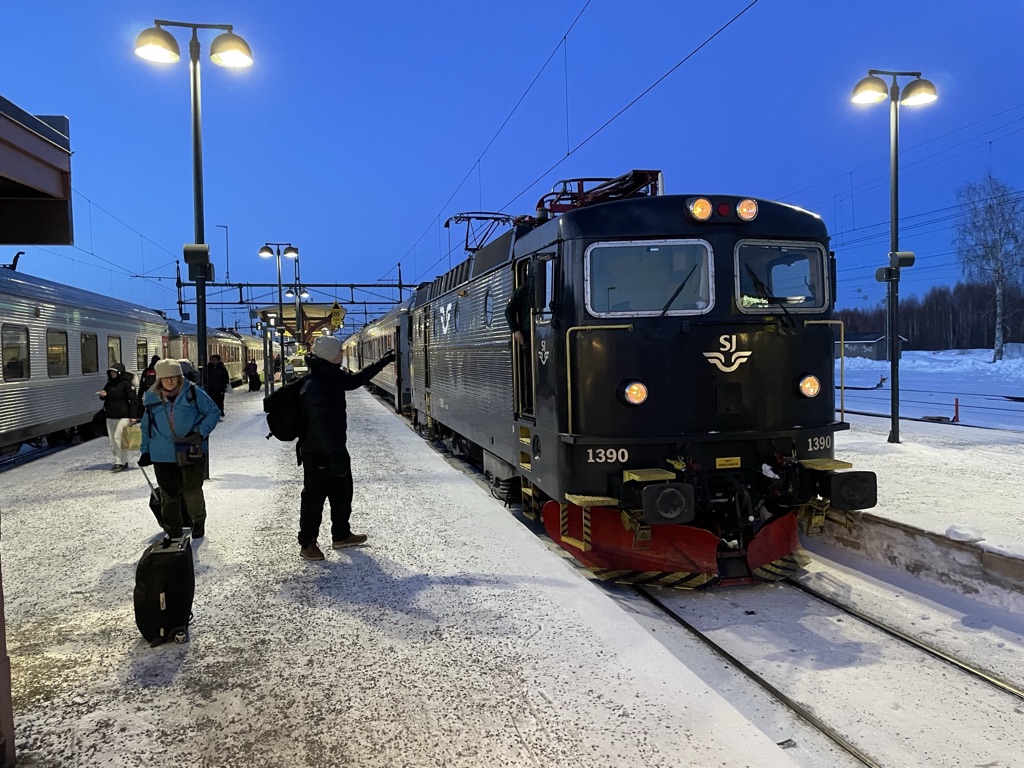
Throughout the journey from Narvik we were accompanied by a person we labelled ‘The Brighton Bore’ (there used to be a smart train called ‘The Brighton Belle’). He seemed to manage to pester almost everyone on the train – even sitting in with the staff. Though at times he spoke almost non-stop, asking questions etc, he never listened and thus questions were often repeated.
Our last sight of him was just after this picture was taken as he joined the ‘Sleeper’ train to Stockholm. He had a place in a 6 berth compartment – Jacqui and I felt very sympathetic towards the other members of that compartment – sleep may not have been easy!
He had one ‘saving grace’ – he carried quantities of gin and tonic & did seem to be possessed of a reasonably generous nature – so maybe the night to Stockholm became more enjoyable as it progressed.

Thursday 9th March 2023
Boden to Oulu
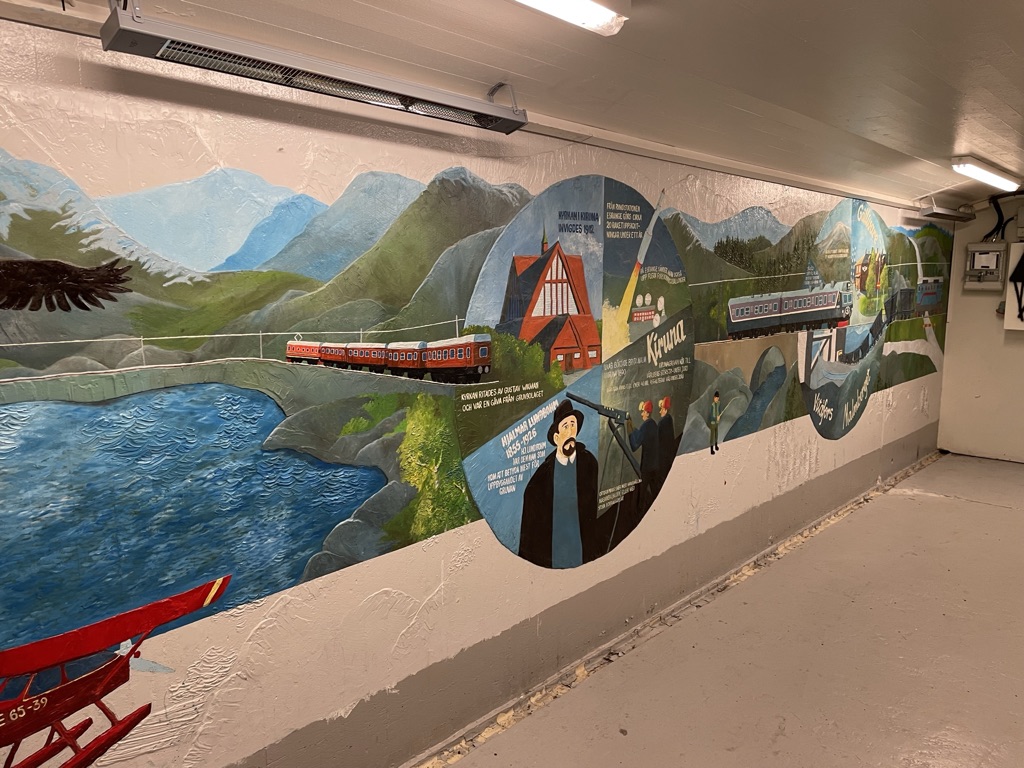
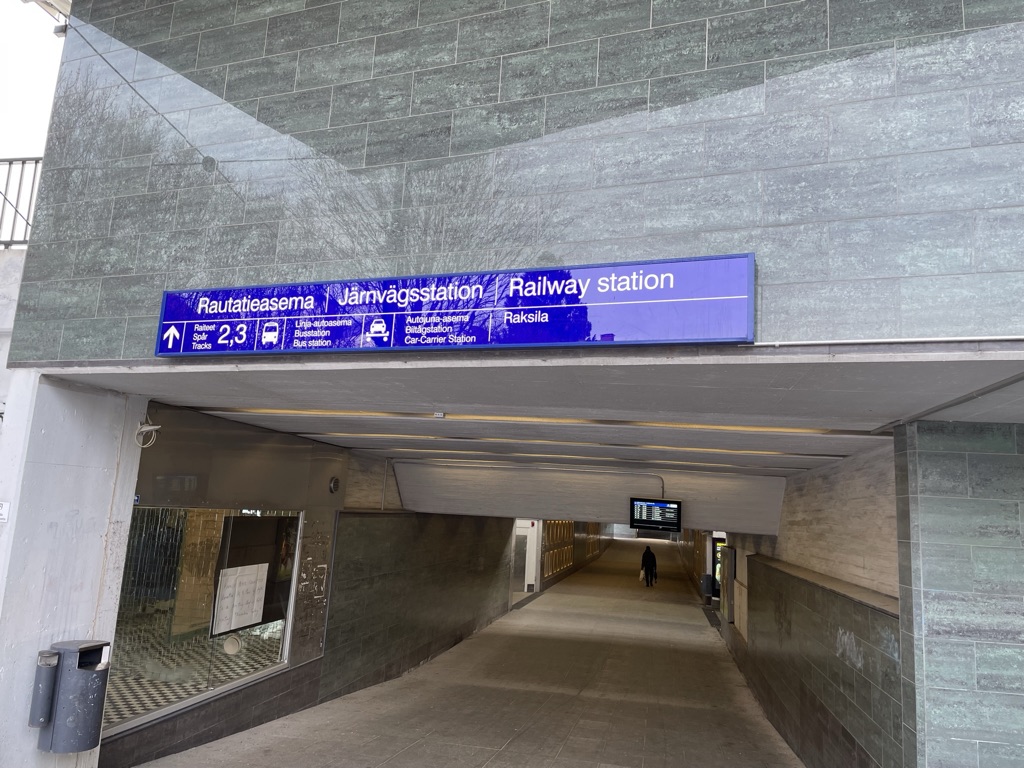
The walls of the underpass at Boden station celebrate the industry of the region
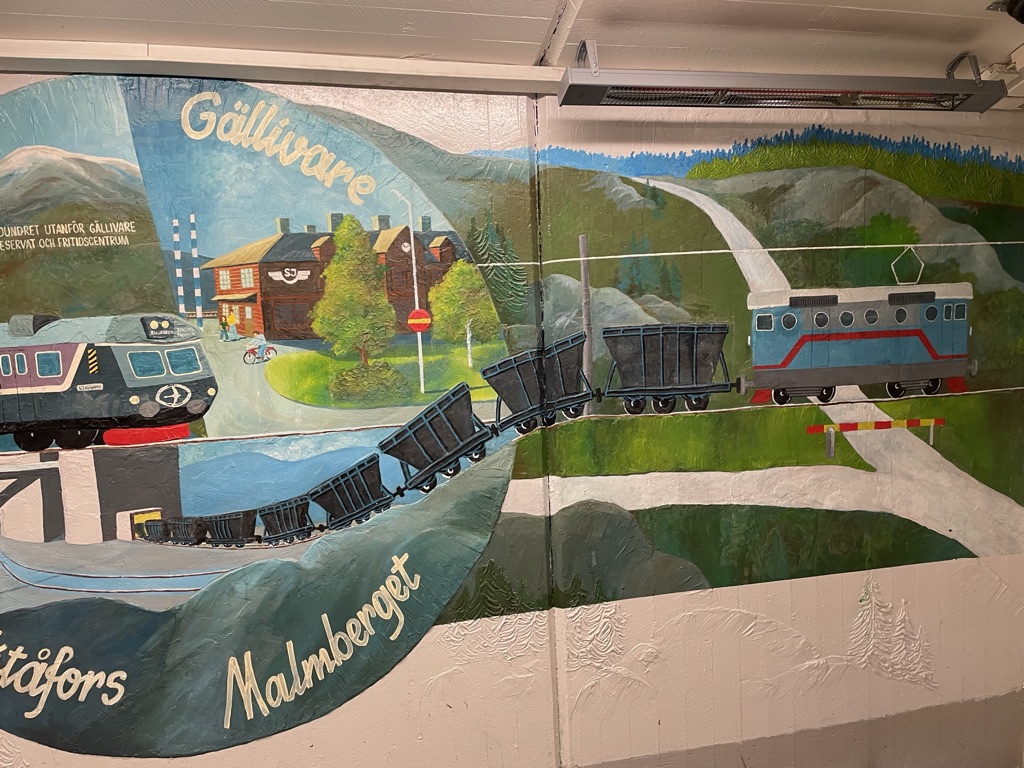
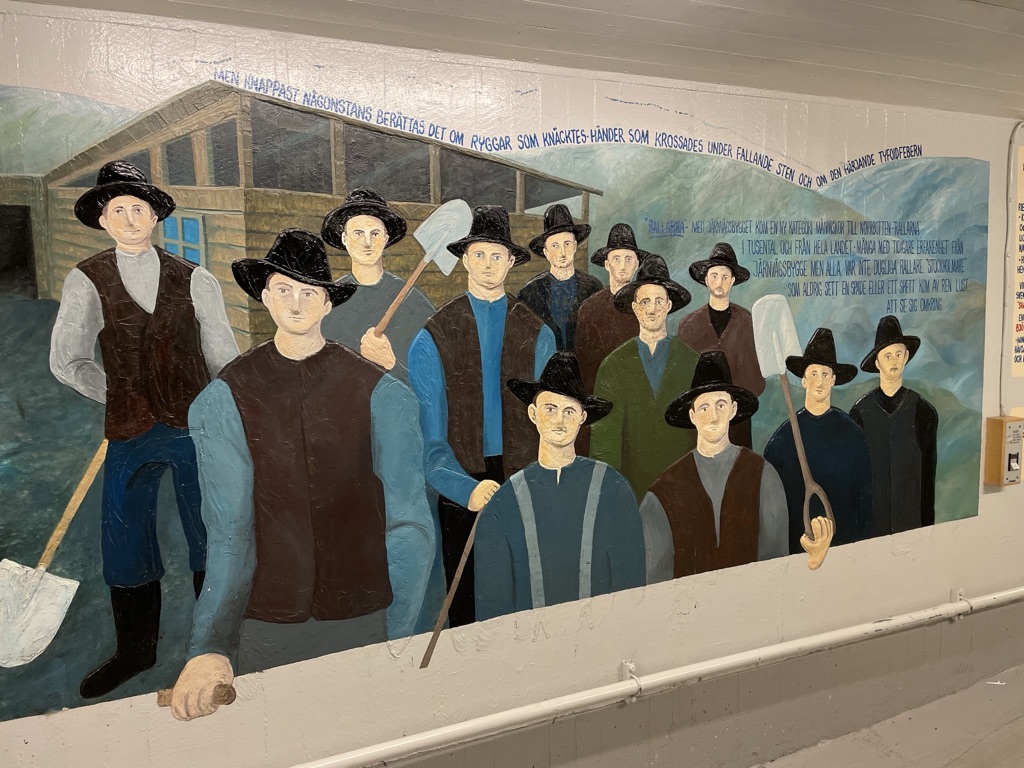
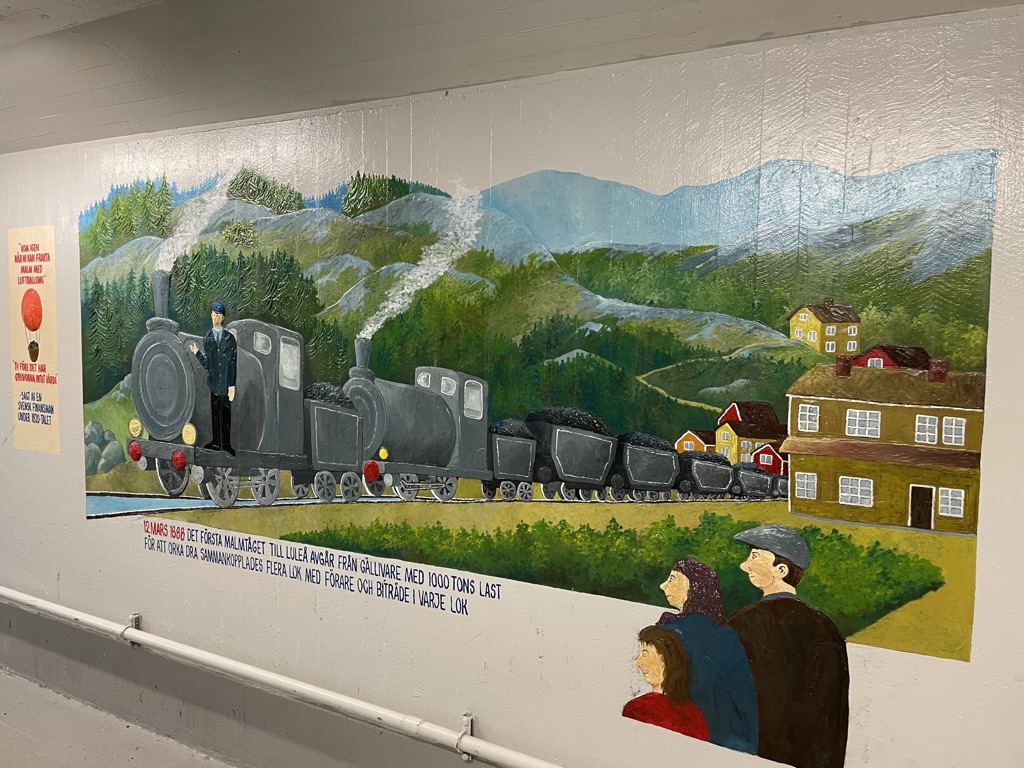
To the WhatsApp group I wrote:
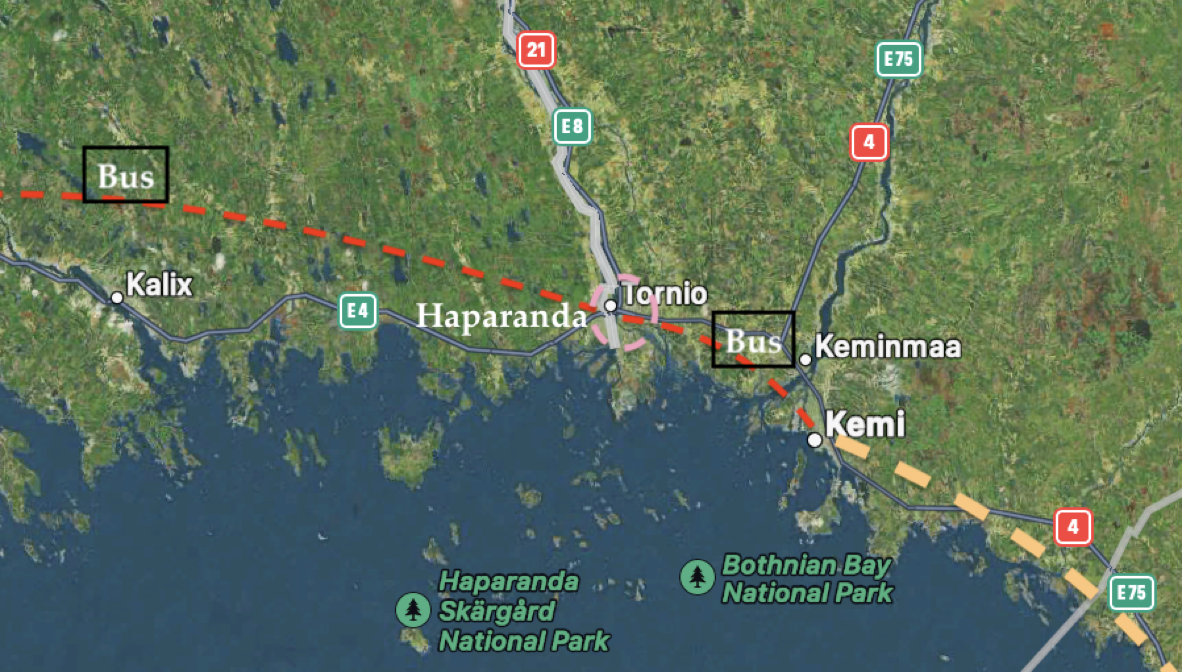
We have hit difficulties here. Heading for the Sweden Finnish border…. Unreliable services and a cancelled taxi which was to connect us across the border.
So, we are adjusting and hopefully will have a bus that takes us to near the border. At that point we may need to walk in the snow (quite easy because everyone knows how to manage walking on packed ice). The temperatures are around minus 23.
BUT you might be able to watch us. When we get off the bus at the world’s most northerly IKEA, we will be ‘on live camera’.
Here is the link:
https://www.webcamtaxi.com/en/sweden/norrbotten/haparanda-city-view.html
We expect to be in Haparanda at around 13.00 CET (midday U.K.)
We will update later and try and let u know when we will be waving at the camera.
We would have better traveled directly to the coast at Luleå. The trains start there & we discovered that train to Haparanda which we required for this day (& recently restored after Covid), were not always guaranteed.
In Luleå it is possible to take a bus to the border with Finland – and its journey (unlike the railway journey) finishes at the bus station placed on the border with Finland.
So we travelled to Luleå – on a train from Haparanda joining it at Boden
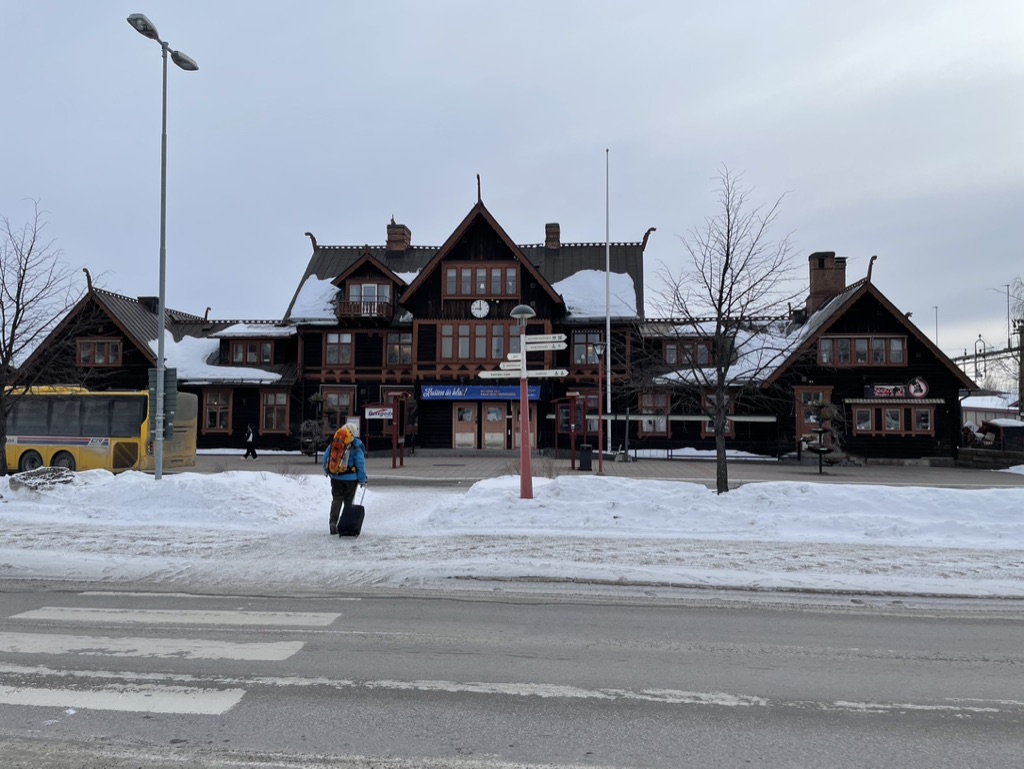
Boden Station
For the WhatsApp group:
Snow? The experience of several days in truly cold conditions found in Scandinavia and the Baltics (and as used to occur in Iasi) helps us understand how to live slightly differently than we do in the warmer south where ‘snow’ has become unusual. The train manager (and othered before her) on the first stage of our altered journey was very helpful and felt (like the Brits with rain) that dry cold was considerably preferable to ‘warmer’ (ie zero degrees) precipitation.
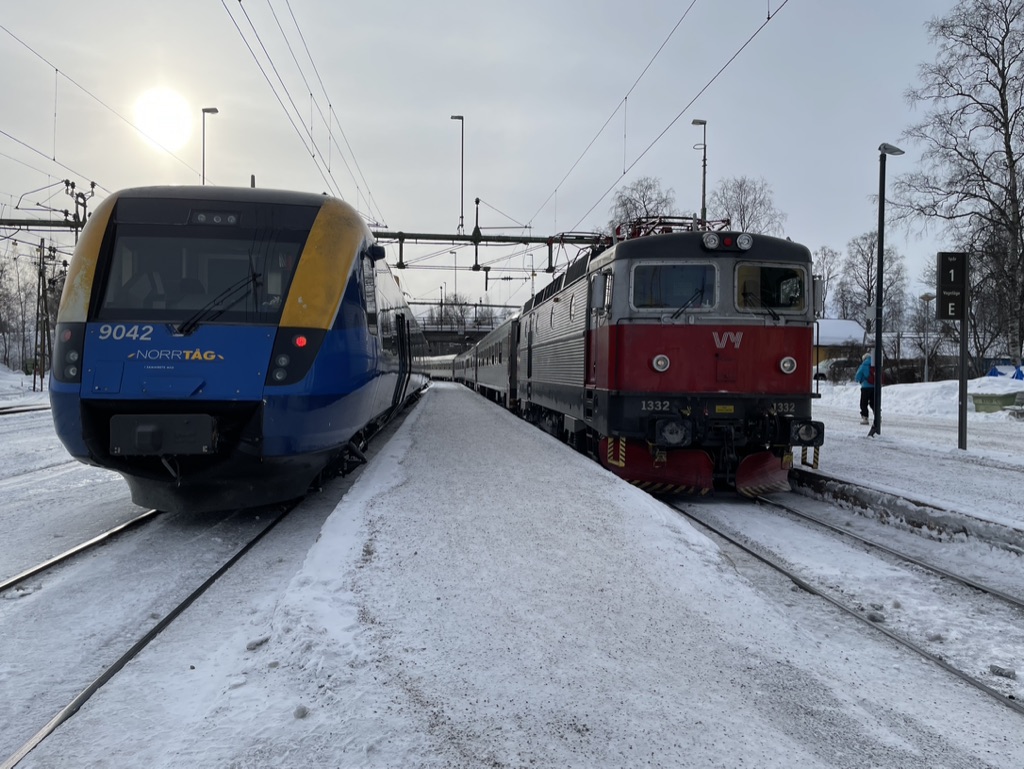
Luleå
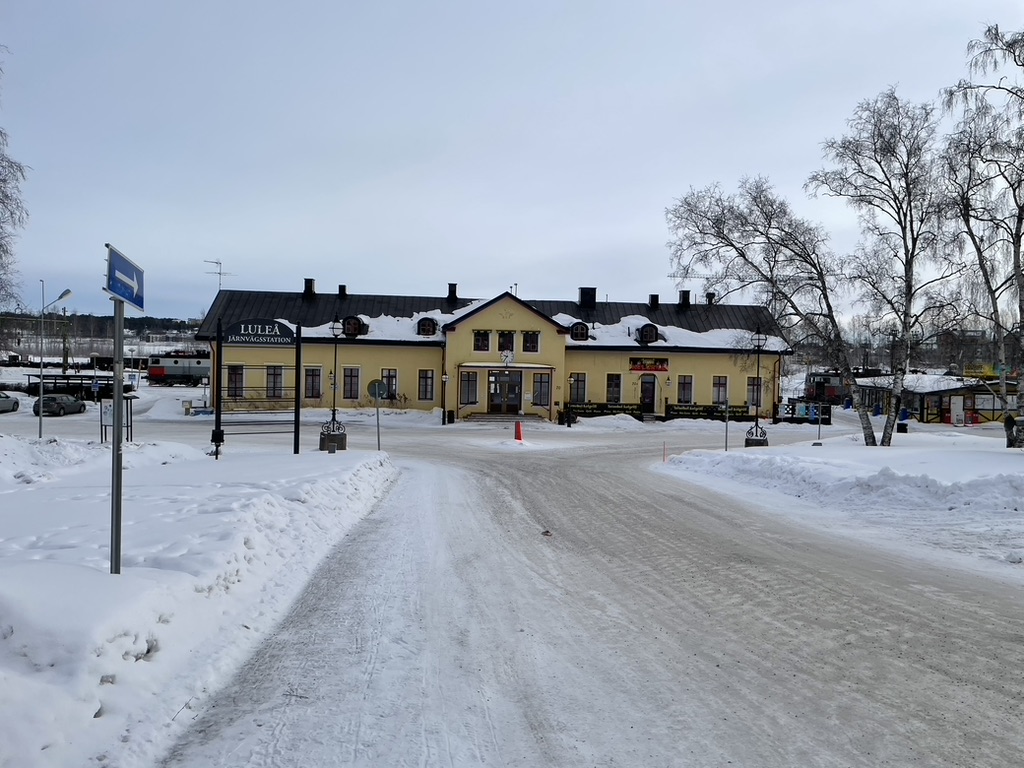
…….walked the short but sometimes icy path to the nearby bus station……
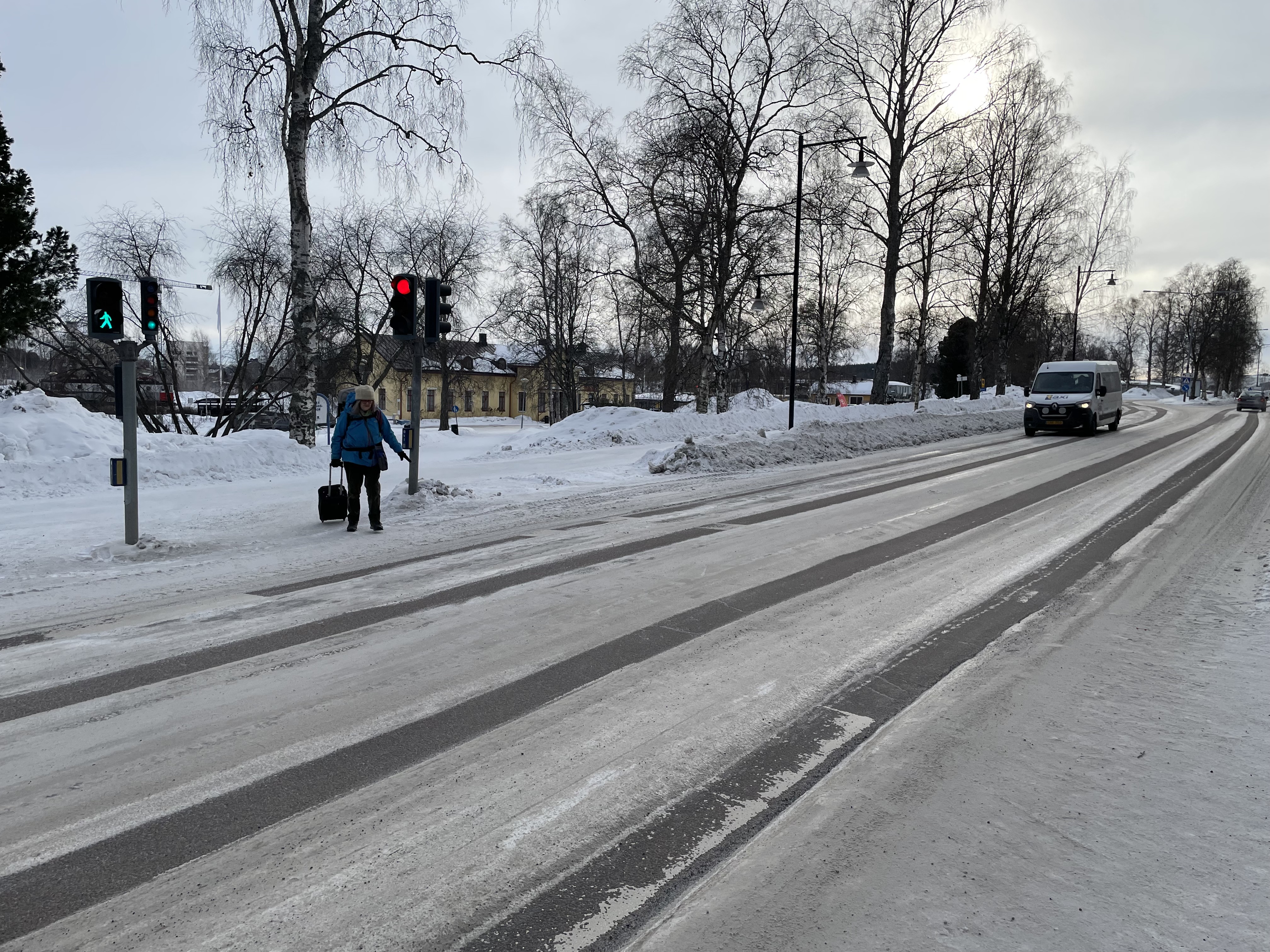
…. and began enjoying the journey to the Sweden – Finnish Border at Haparanda
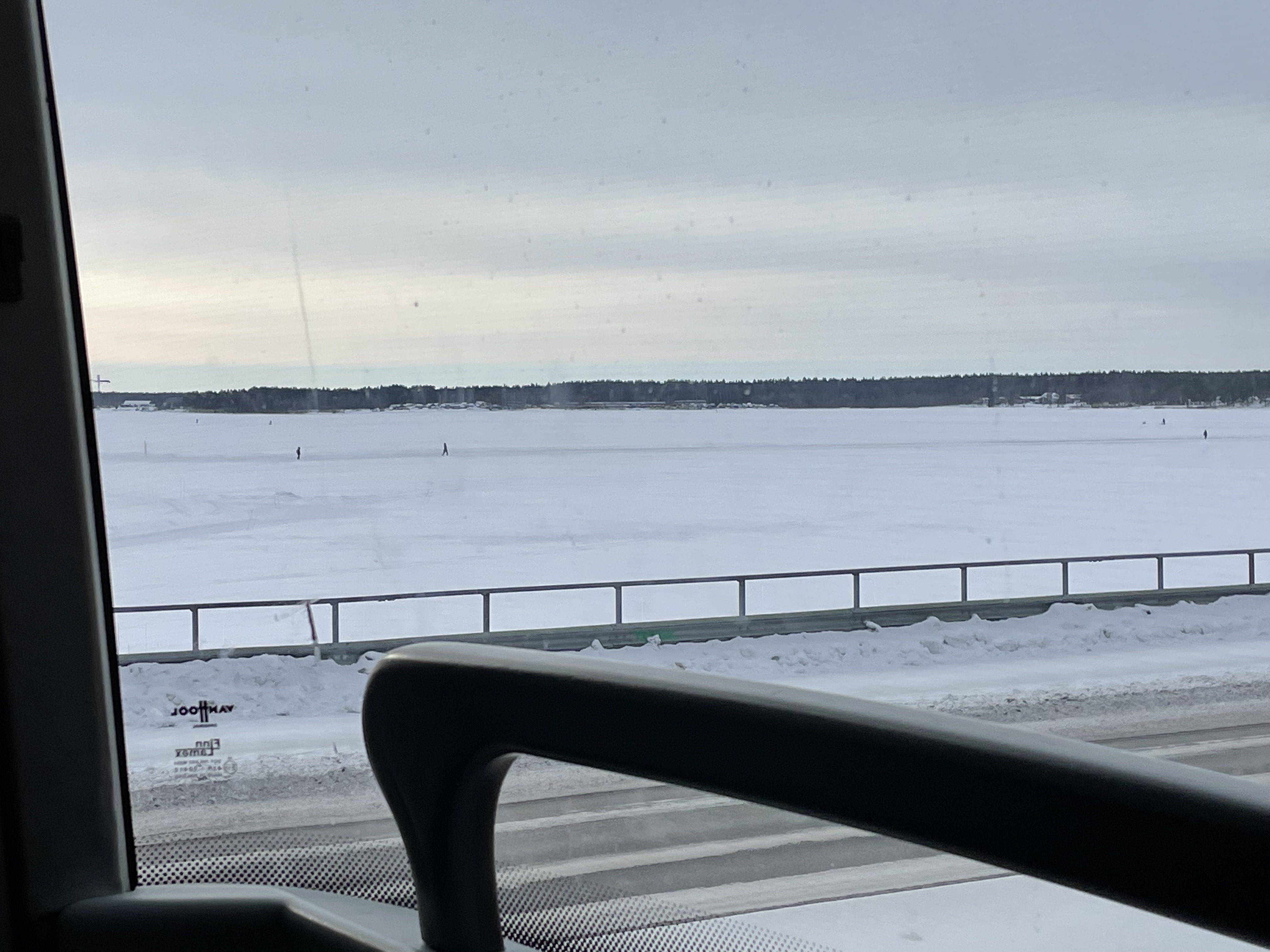
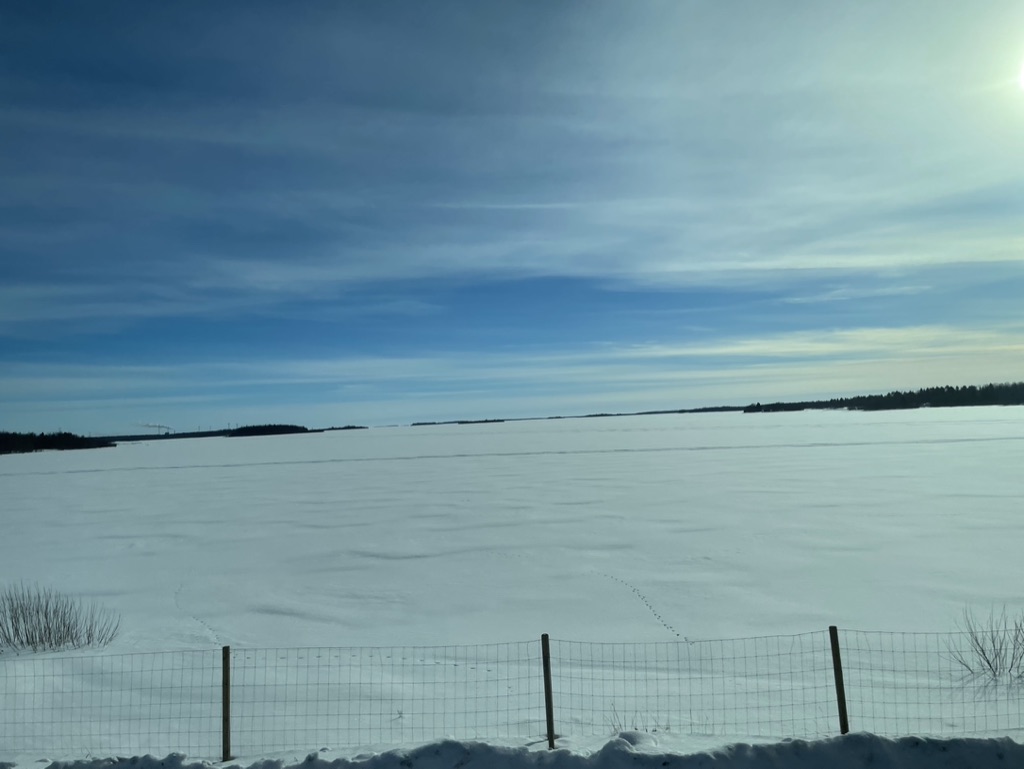
The port is frozen… allowing pedestrian ‘short-cuts across the ice……

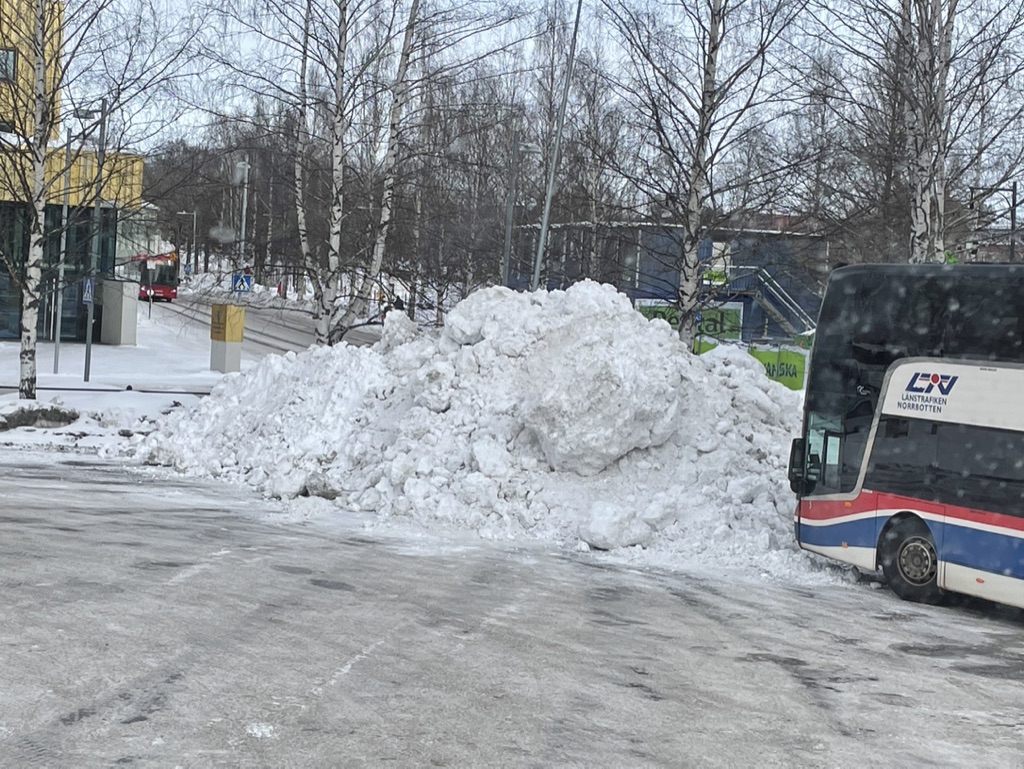
Snow that is cleared and collected is taken, rather after the fashion of traditional waste clearance, to an official ‘dump’ beyond the town.
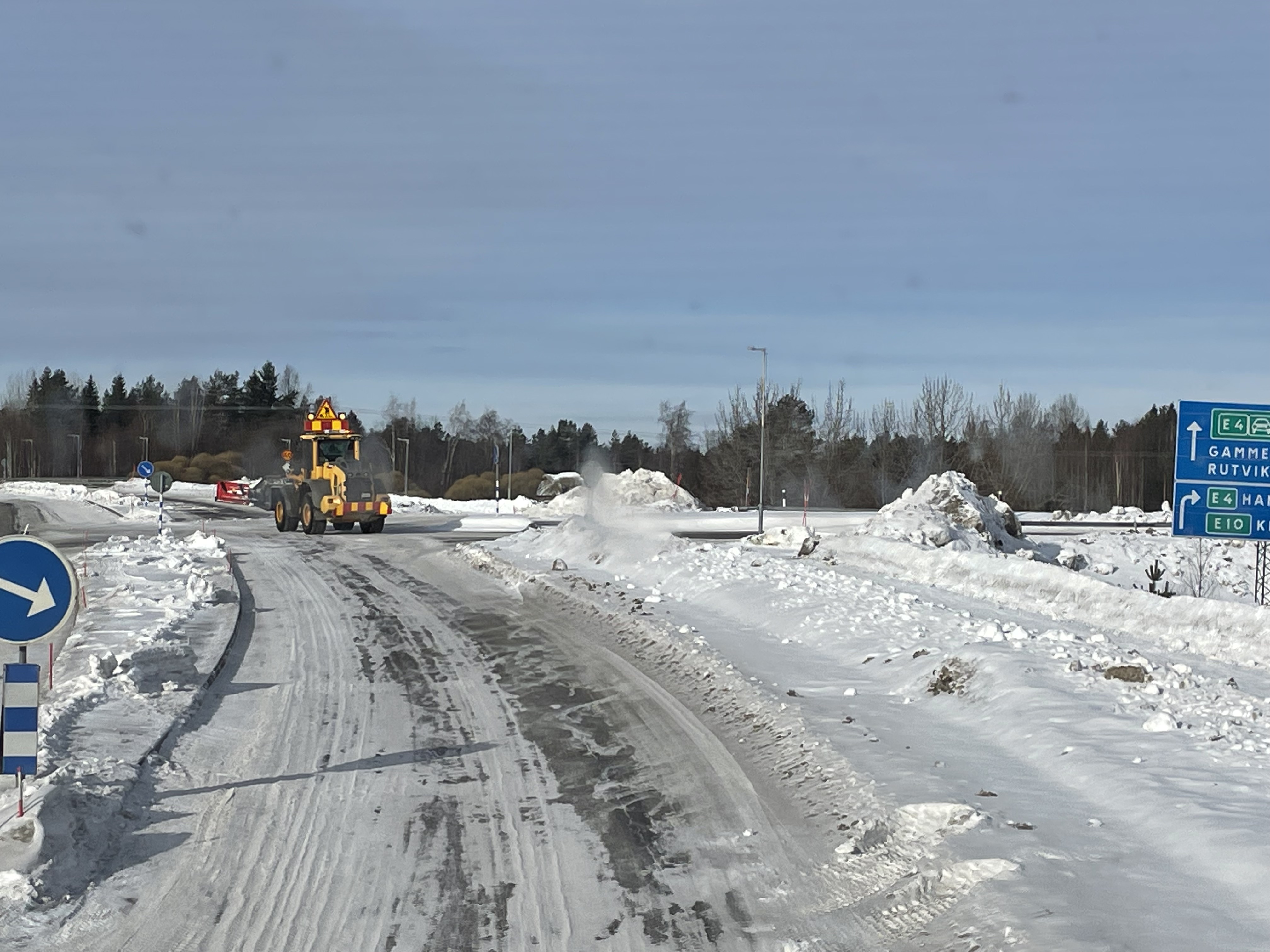
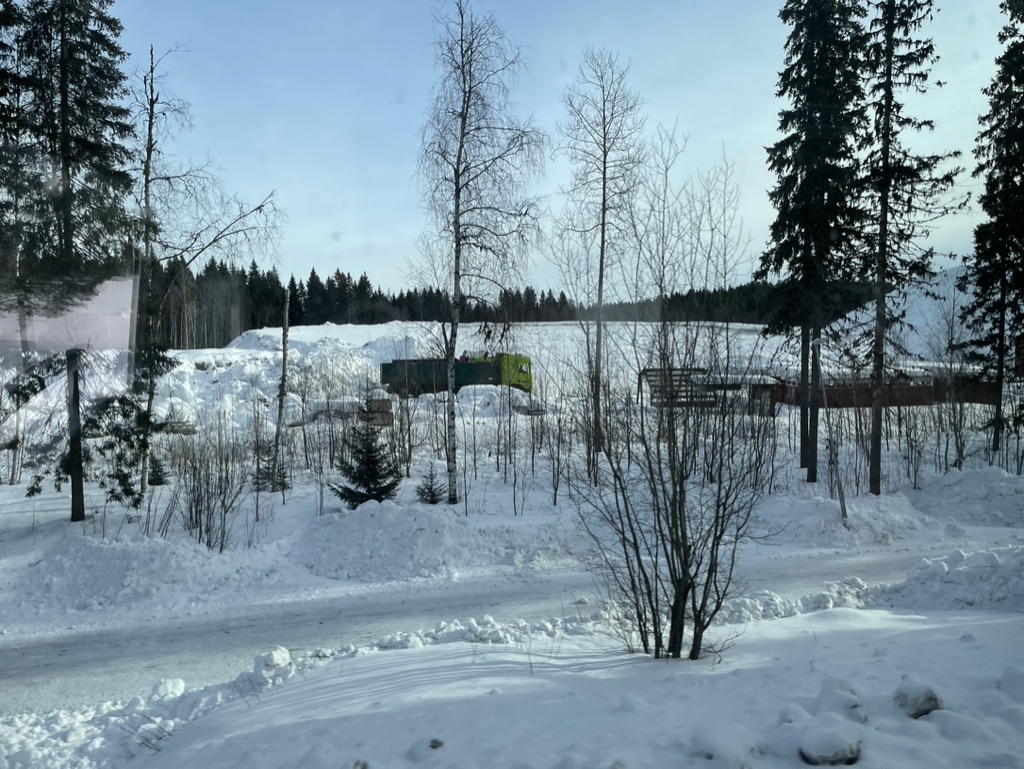
One continually impressive aspect of travel in these vast areas of low human population, is the quality of the infrastructure.
The road from Lulea to Haparanda is an important link in the network that covers this part of Sweden. The route is also important in connecting 3 countries (Norway, Sweden and Finland)
Though traffic is at a comparatively low level, the road is structured to allow smooth flow of traffic.
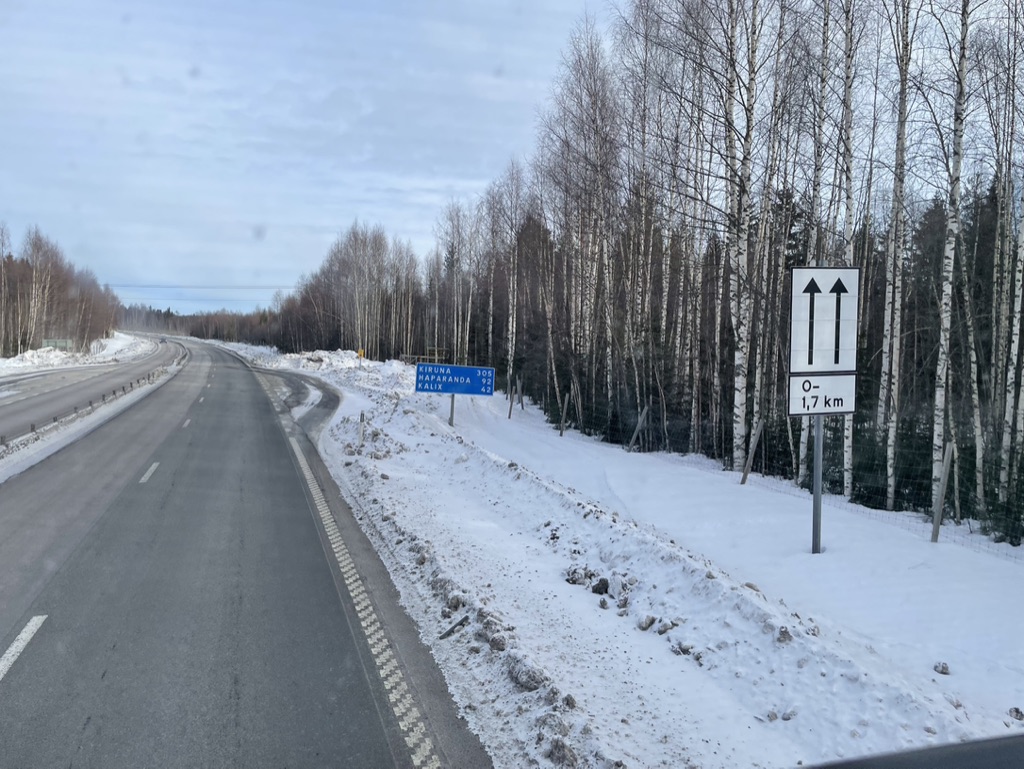
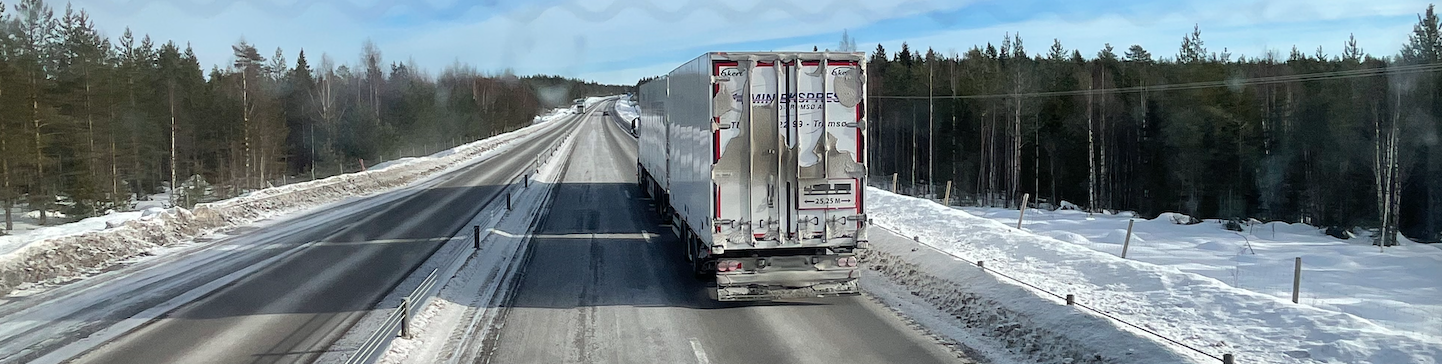
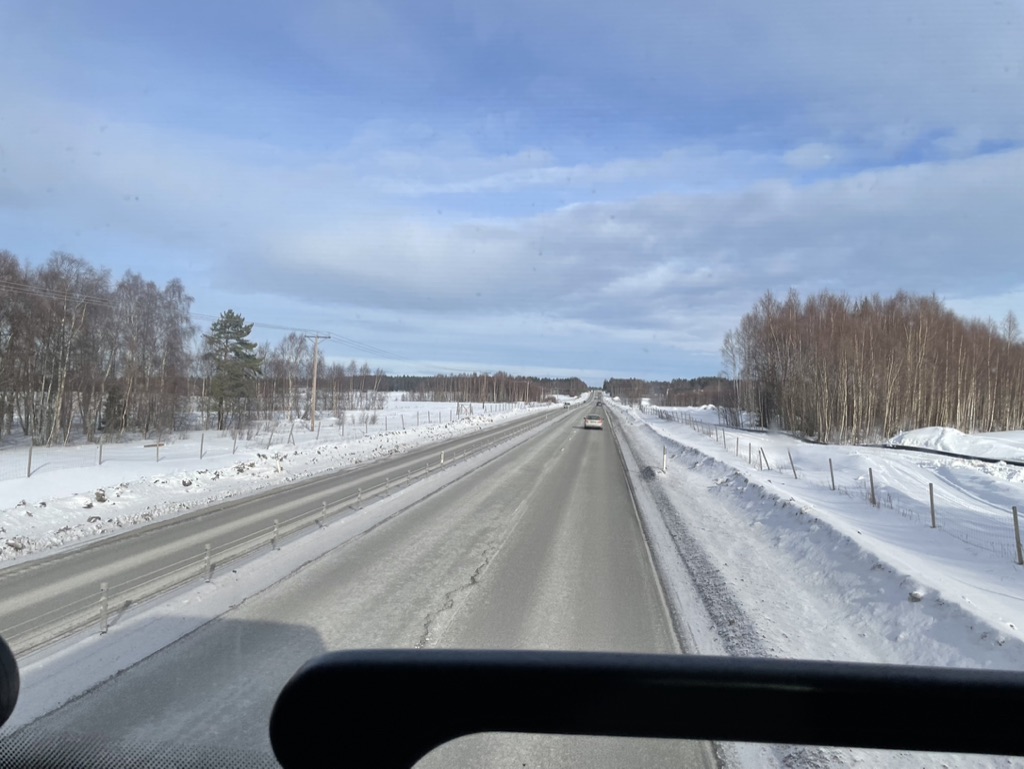
The bus diverts from the main road, serving the local communities.
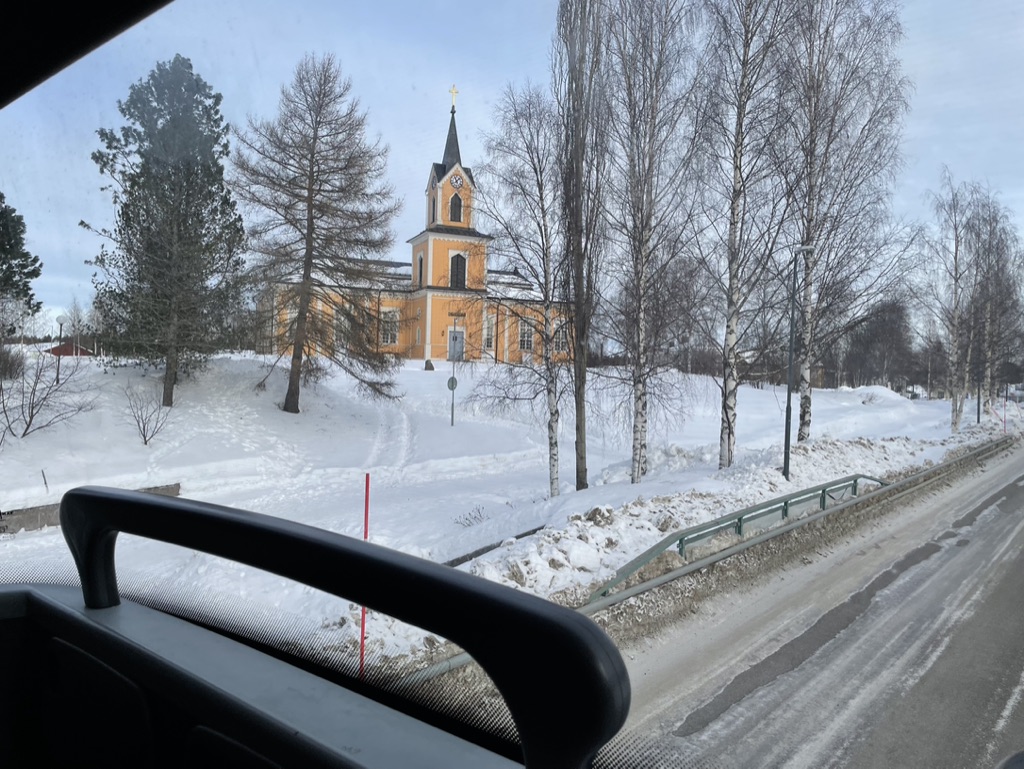
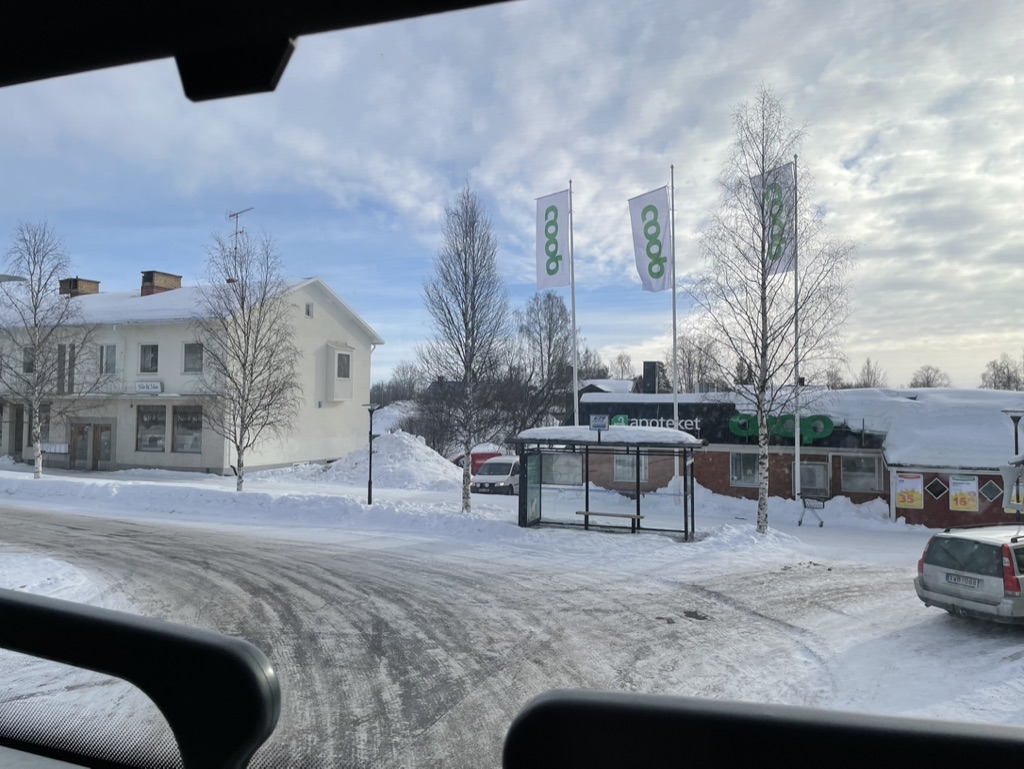
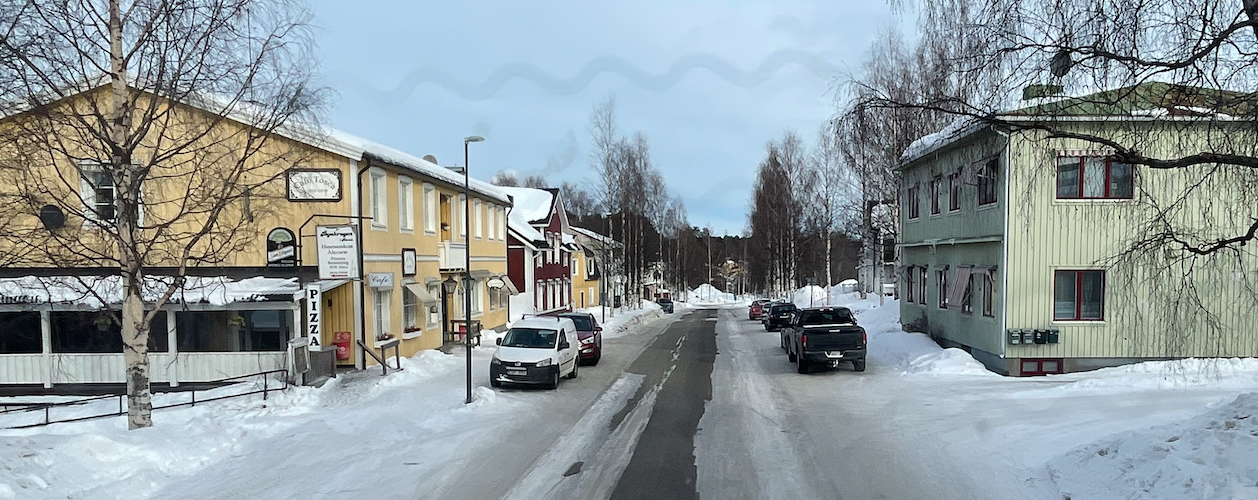
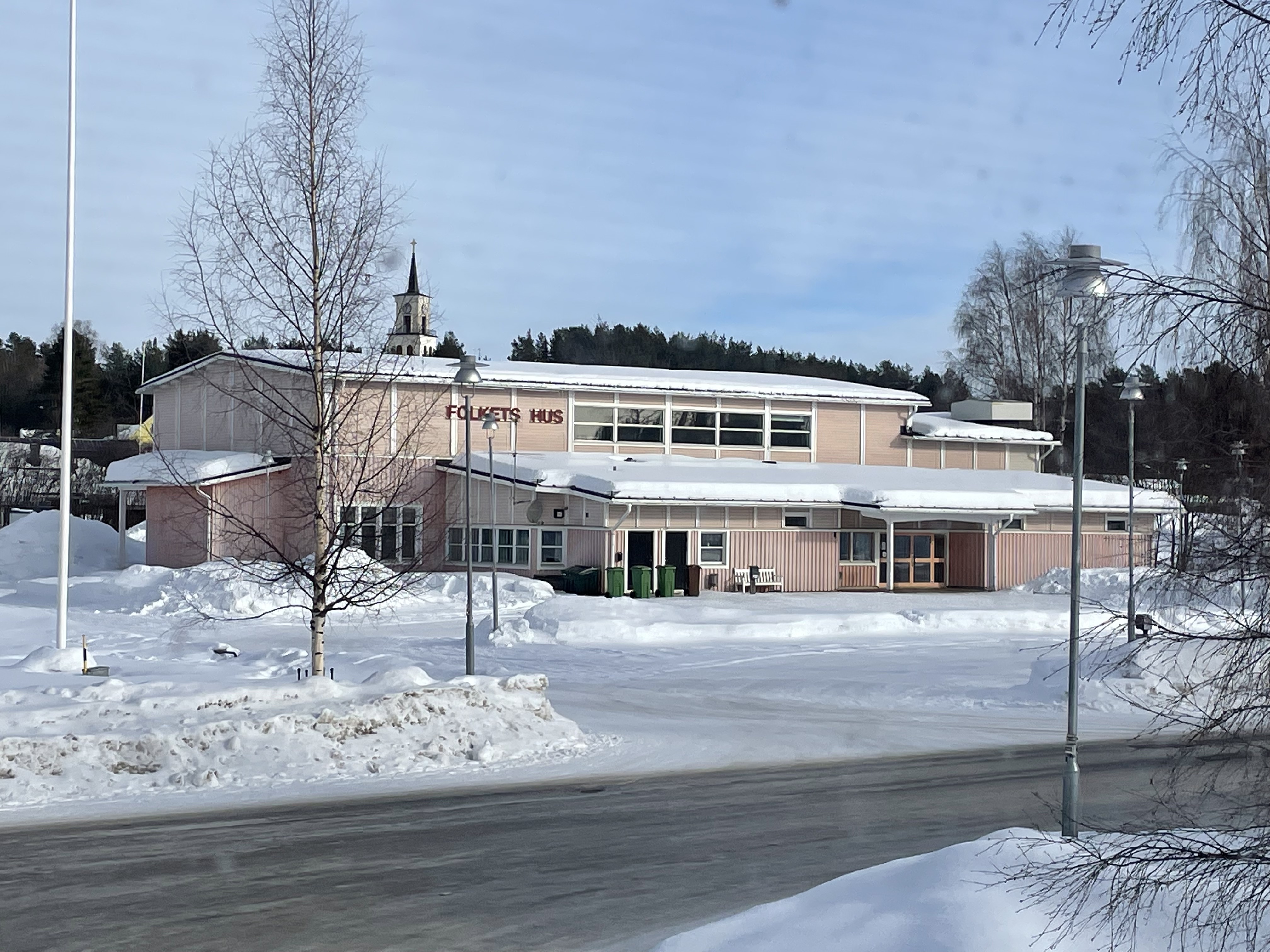
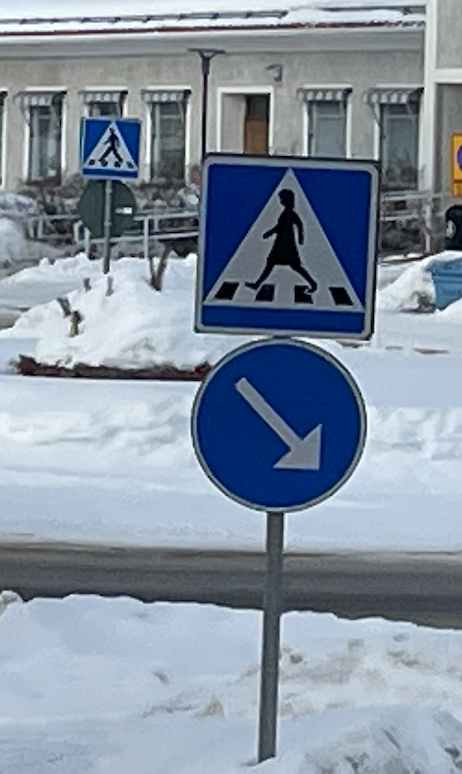
The curious custom of marking pedestrian crossings with ‘assumptional’ gender based images seems to be normal
Moose Walks
In places special bridges are being constructed to allow safe passage for local wildlife (Moose etc)

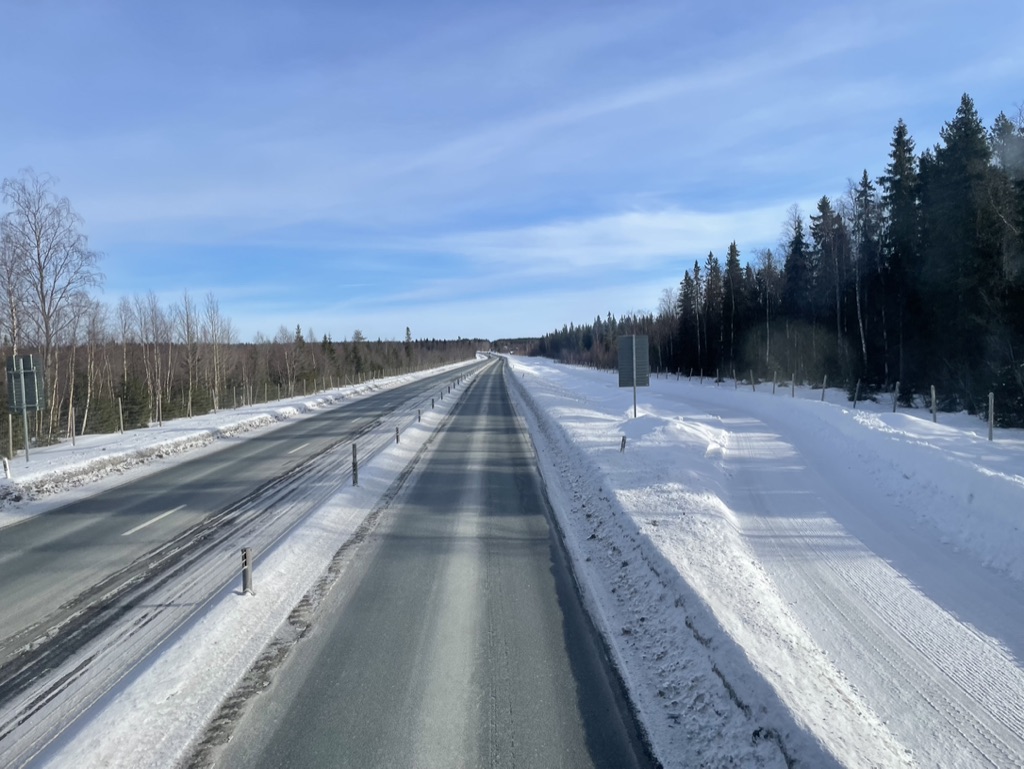
and on – and on…. smooth and comfortable travel
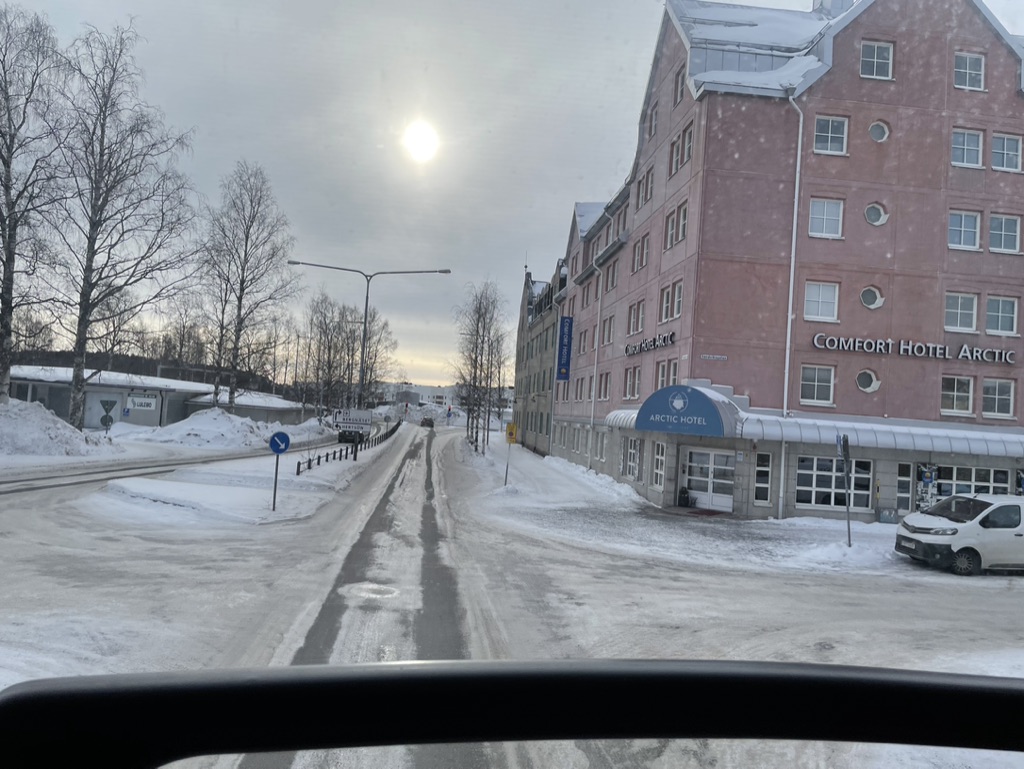
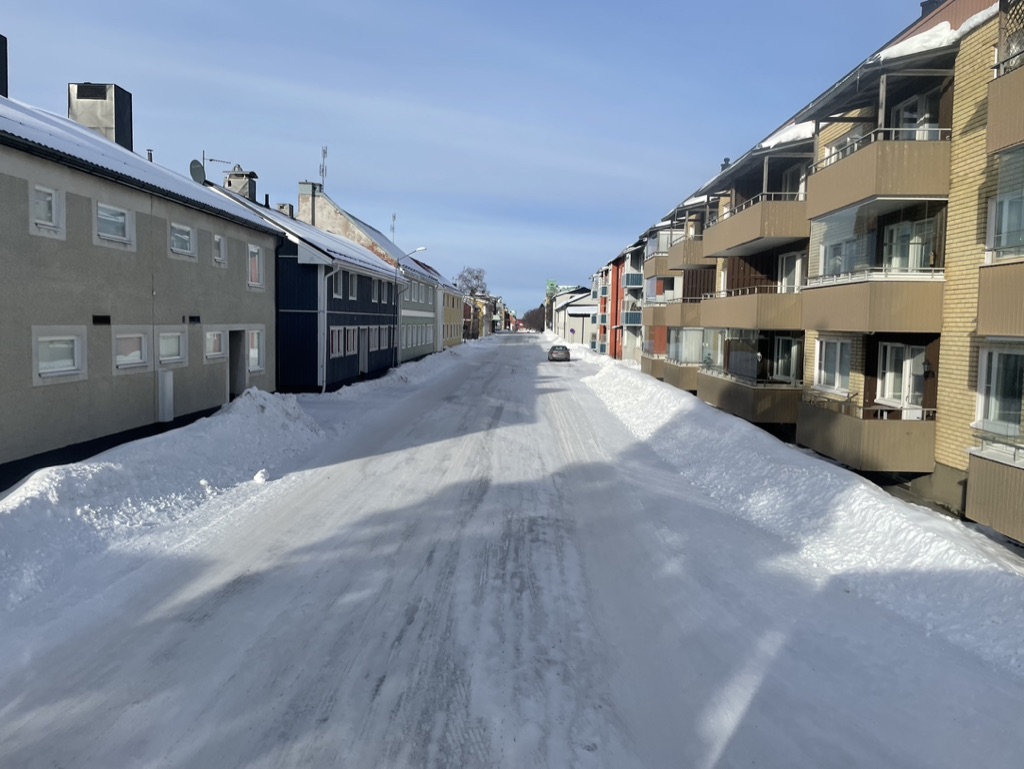
Into Haparanda – and a ‘tour’ of the town streets…..
… to the bus station that is technically in Sweden but is is Finnish.
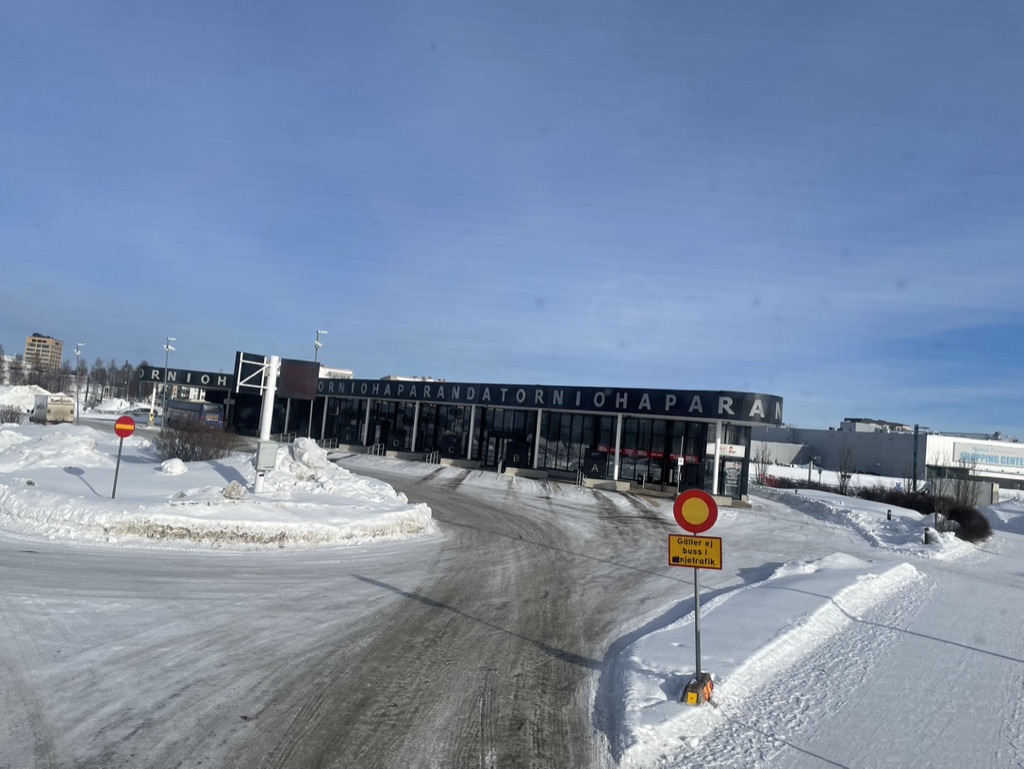
The area is covered by a live video camera (click this link) – which includes the world’s most northerly IKEA (opposite the bus station)
The bus station is Finnish – but in Sweden – with a Time-Zone change, Finland is an hour ahead of Sweden – which time does the bus station use?…. we never discovered.
After a brief stop during which we realised that the bus required would not call at the bus station, we walked (slithered) on, over (we believe) a heavily iced bridge (was it a bridge?) – and we assumed, ………
entered Finland.…….?
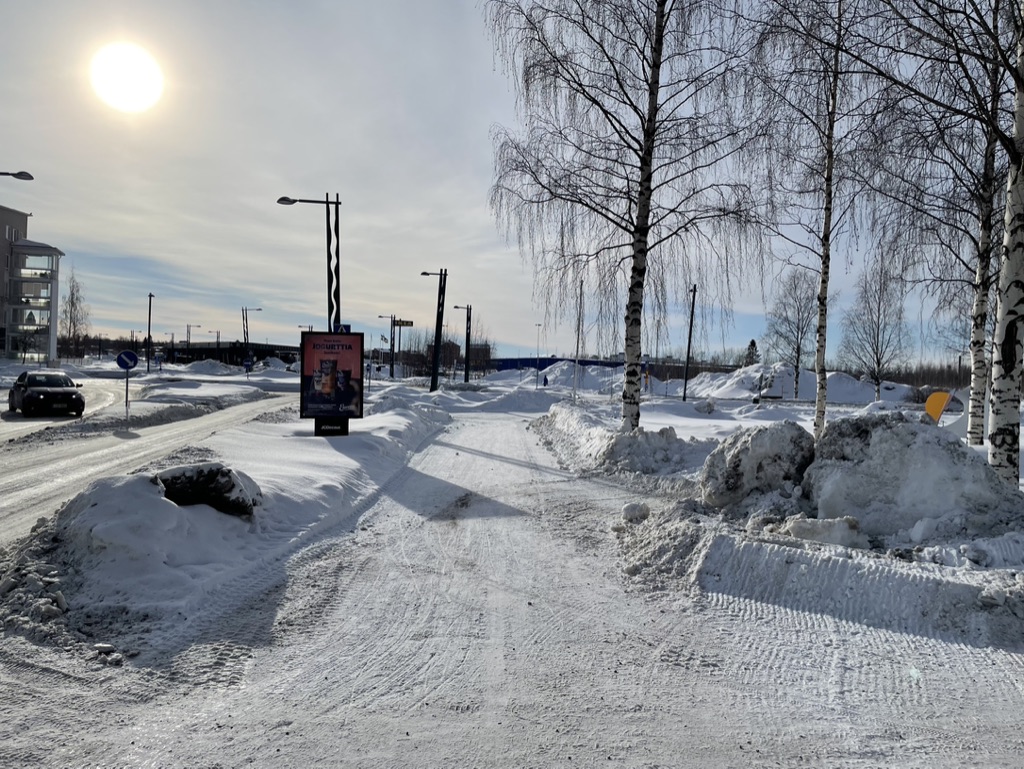
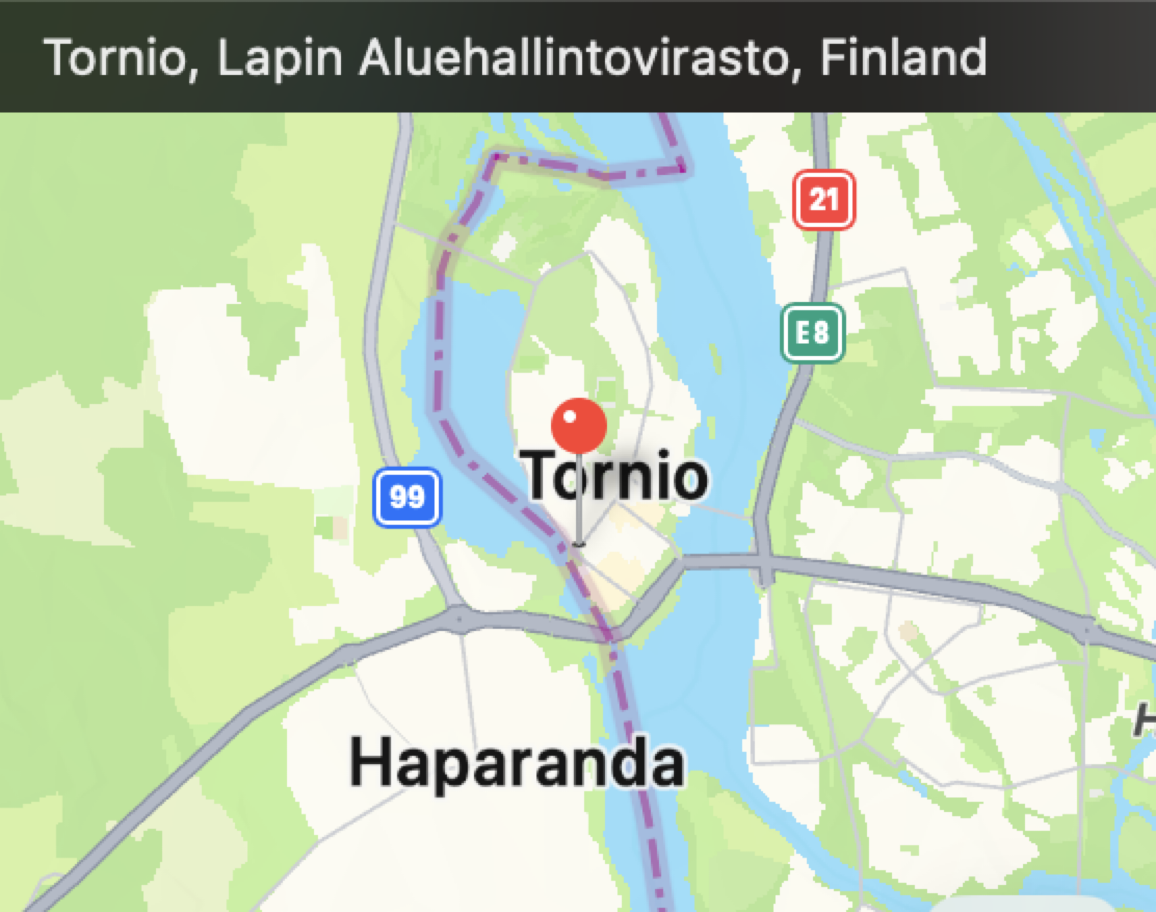
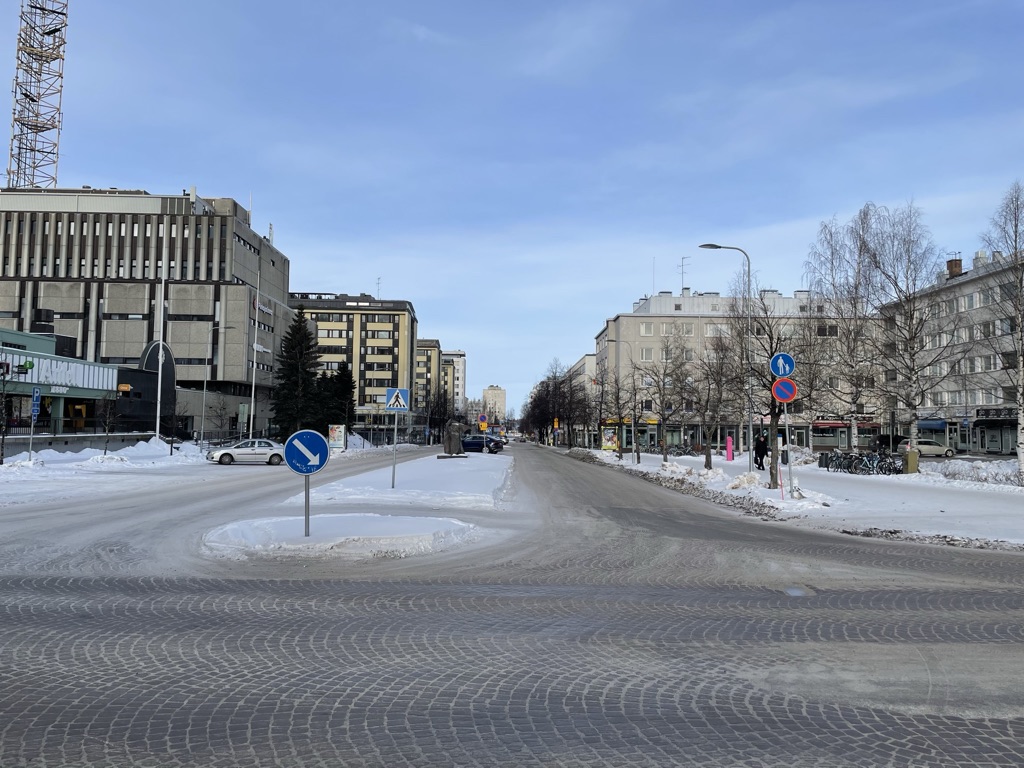
Arrival in Tornio, Finland, (walked into in the snows), is a point which completely escaped us, as after crossing the bridge we assume we are in Finland… but there is no marker.
Where are we?
Where is Finland?
A short but icy walk…
after which & continuously
‘..the snow lay round about, deep and crisp and even’
(English Carol with C16th Finnish tune)
“Svenskar äro vi icke, ryssar vilja vi icke bli, låt oss alltså vara finnar.”
“Swedes we are not,
Russians we do not want to become,
let us then be Finns”
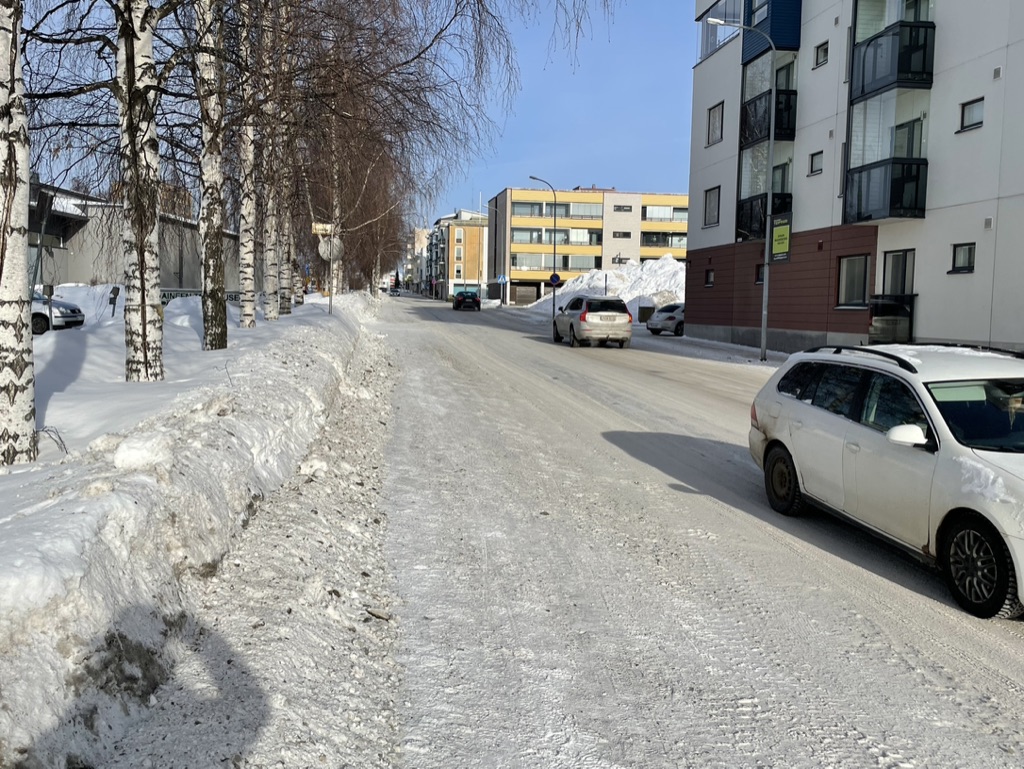
There was also a confusion of information regarding the bus we required that would take us to Kemi railway station.
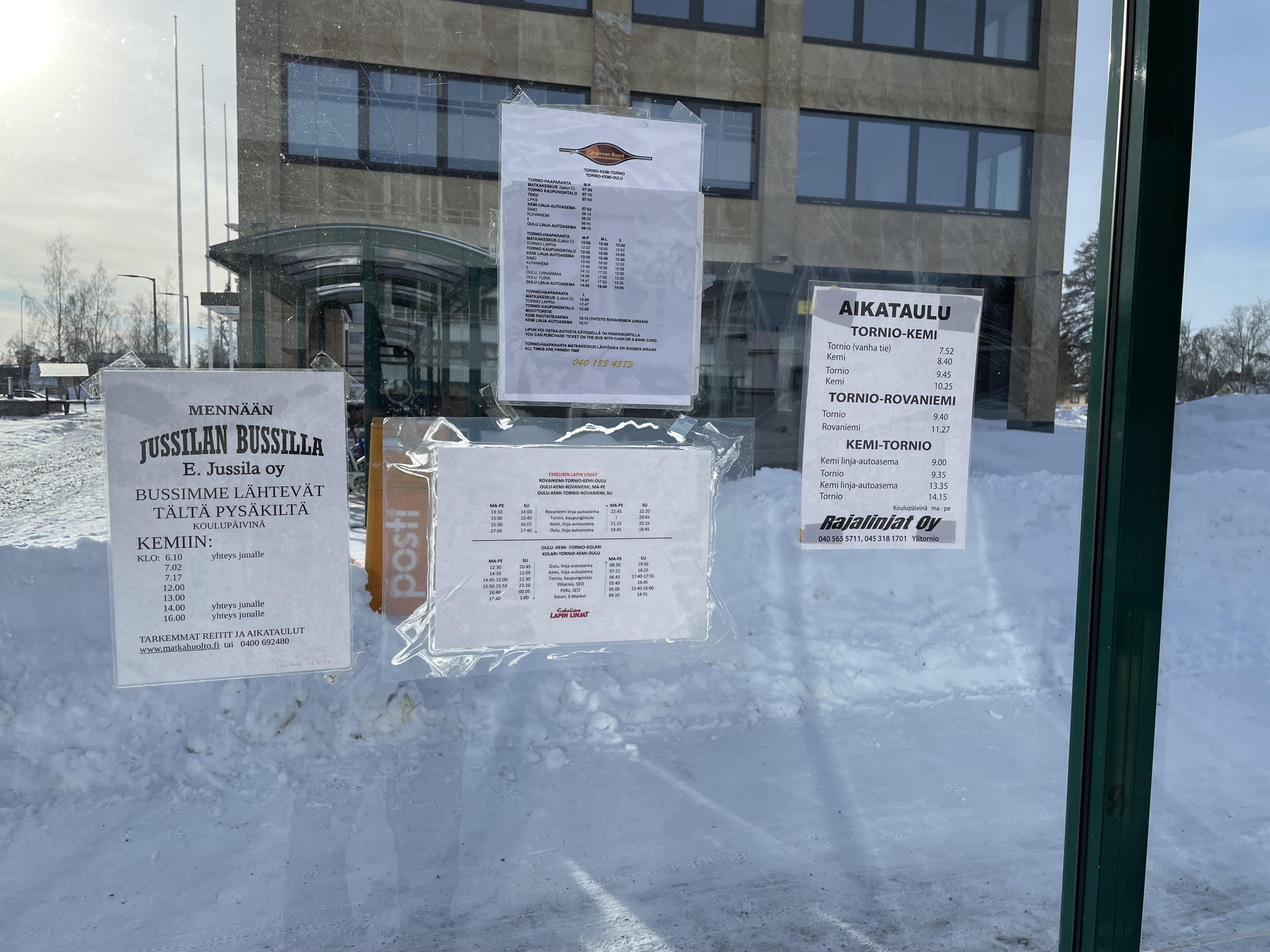
Some (including verbal requests at the bus station at which we arrived) suggested our bus to Kemi would leave from that main bus station – but various other sources stated the bus we needed did not call at the bus station but left from a point inside the Finnish town of Tornio.
As there are only limited services on the railway line at Kemi it was important to find the (also limited) correct bus.
We walked – and found a bus shelter with sufficient information posted by the differing companies that provided bus services.
We then had plenty of time to wander around and note the variety of restaurants in the vicinity – Turkish, Chinese and Nepalese.
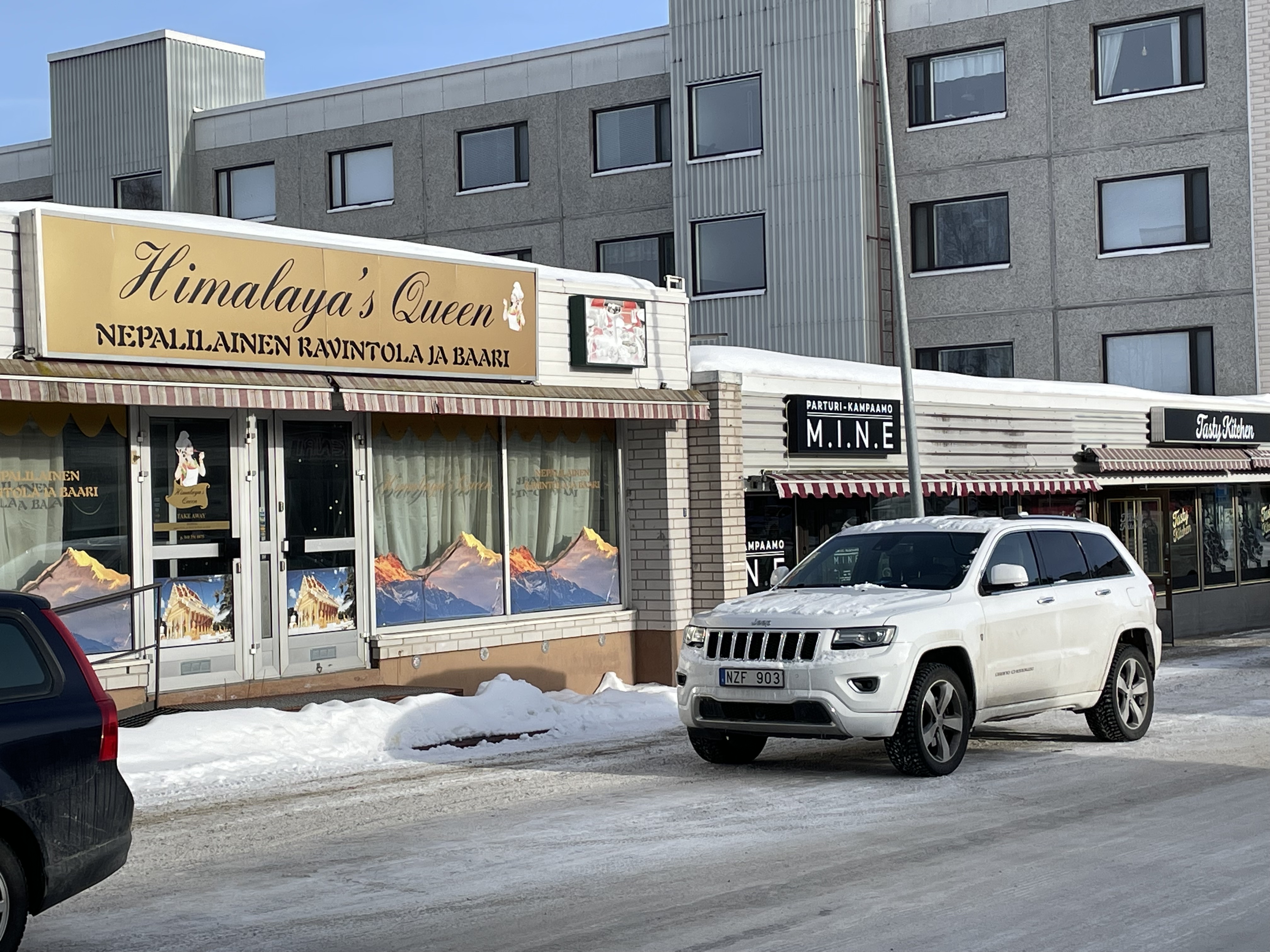
We called in at the nearest ( a ‘Thai’ restaurant) and had pizza and coffee.
Other buses were scheduled around the time of ours – an ‘integrated’ system.
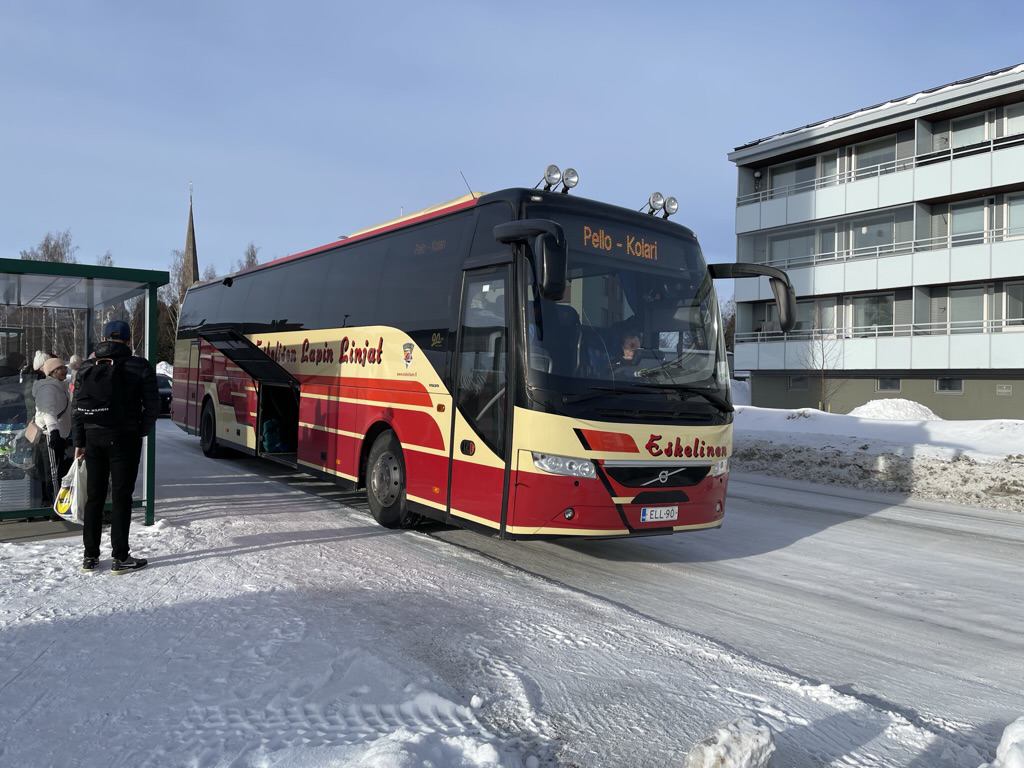
The bus arrived and took us to Kemi railway station.
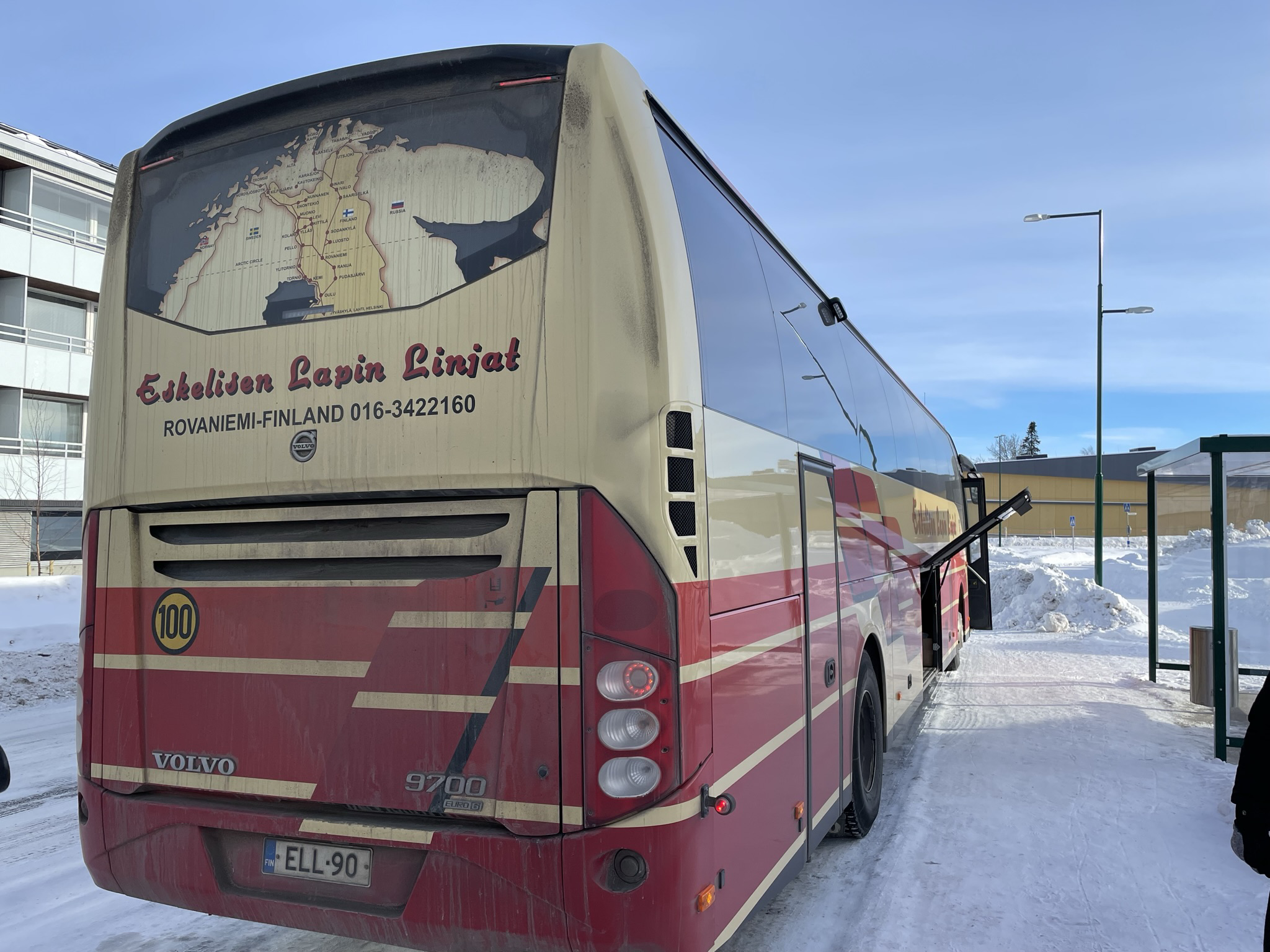
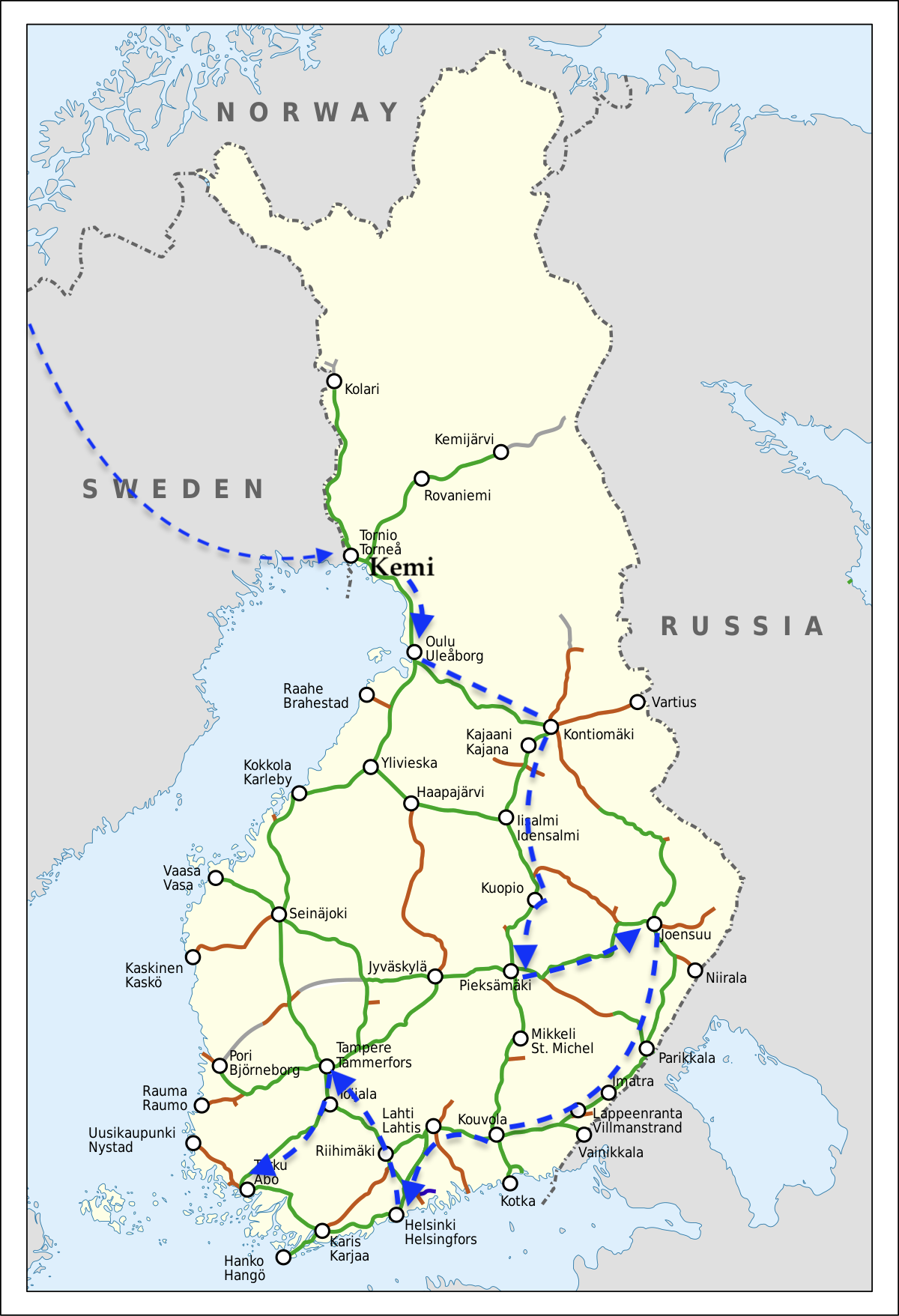
Our aim was to travel to Finland.
Travelling to Finland ‘the long way round’ has taken time!
We’ve been travelling for 11 days.
In a week we will be back at home.
After 11 days – is this point the start of the partnership related journey?
Changes
On to Kemi – different time zone, different country & a very different language.
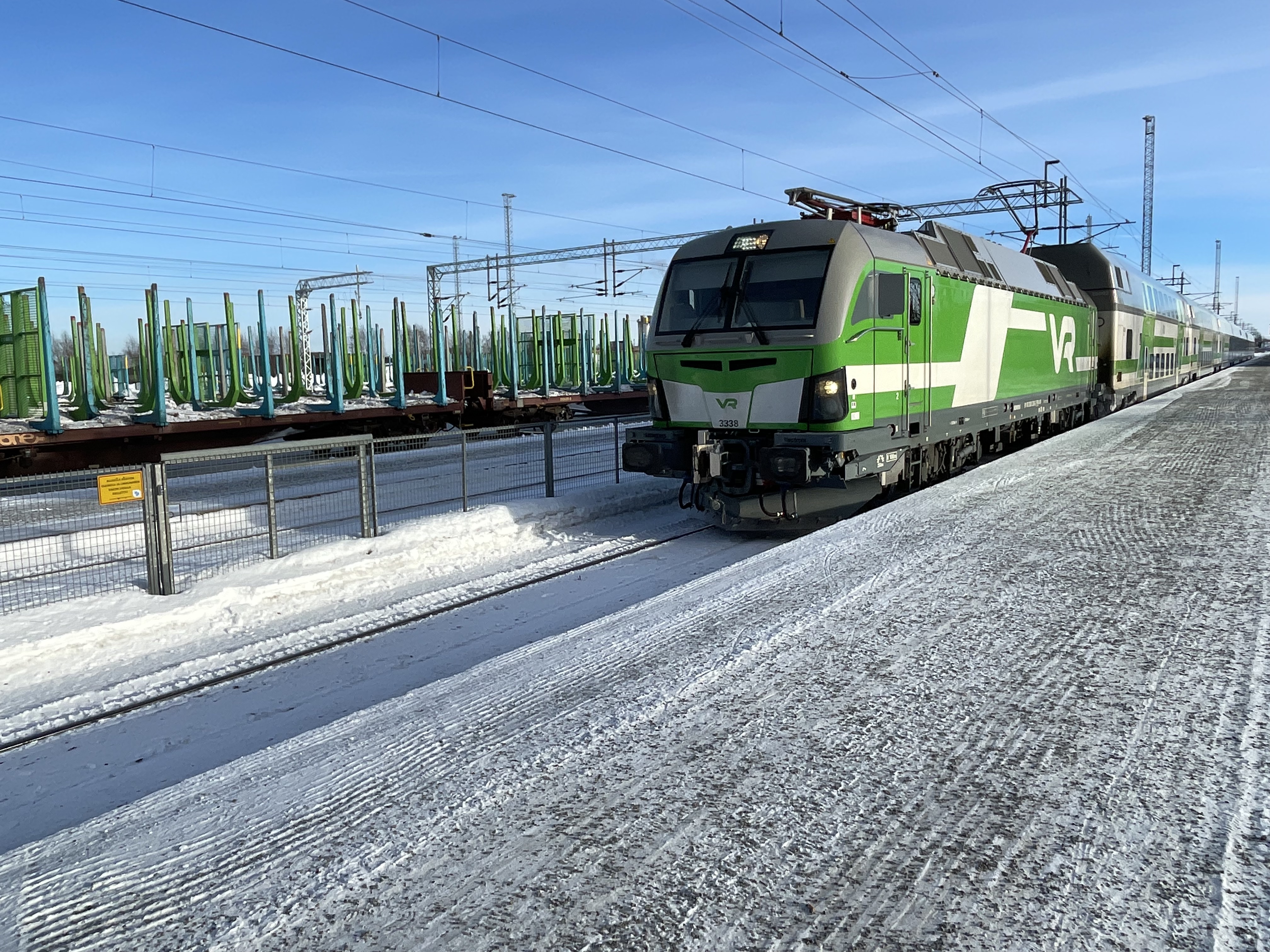
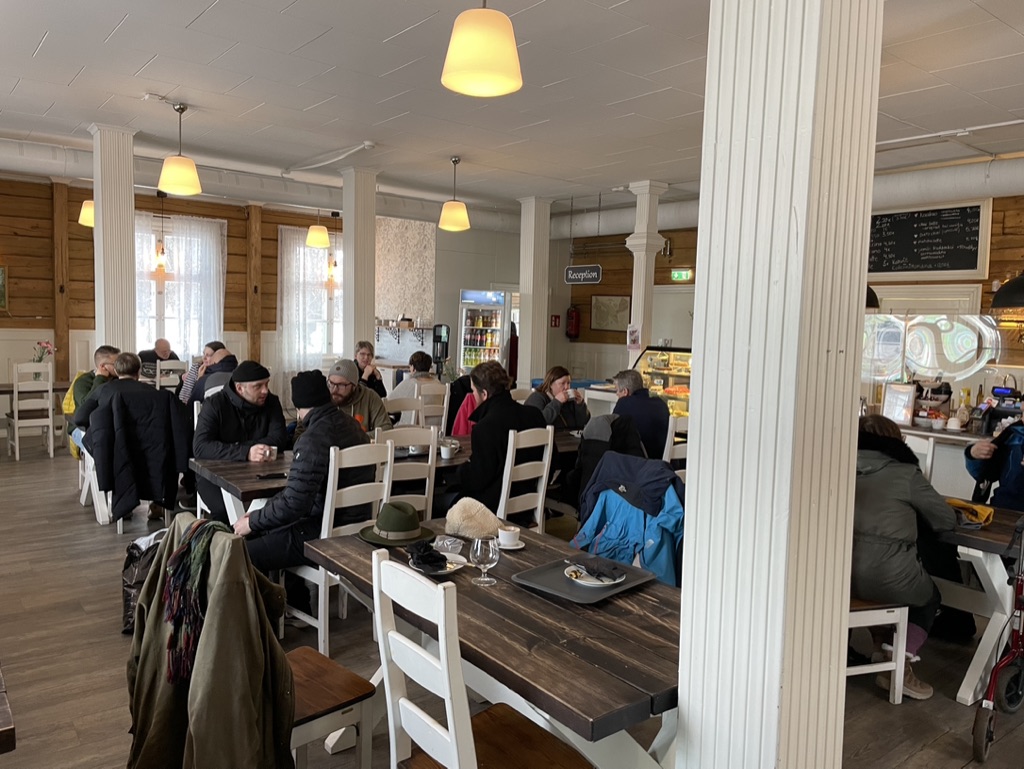
Next to the station building (closed) was a cafe. We discovered that in Finland, whilst railway stations did not have any public buildings or ticket offices, they usually had cafes or restaurants.
There also seemed to be a practice of ‘raking’ the frozen ground & of spreading slightly larger grit than in Norway. It was also mixed with salt. The temperatures were too low for the salt to be effective – but later in the journey, further south, when the temperatures became slightly higher, they had impact.
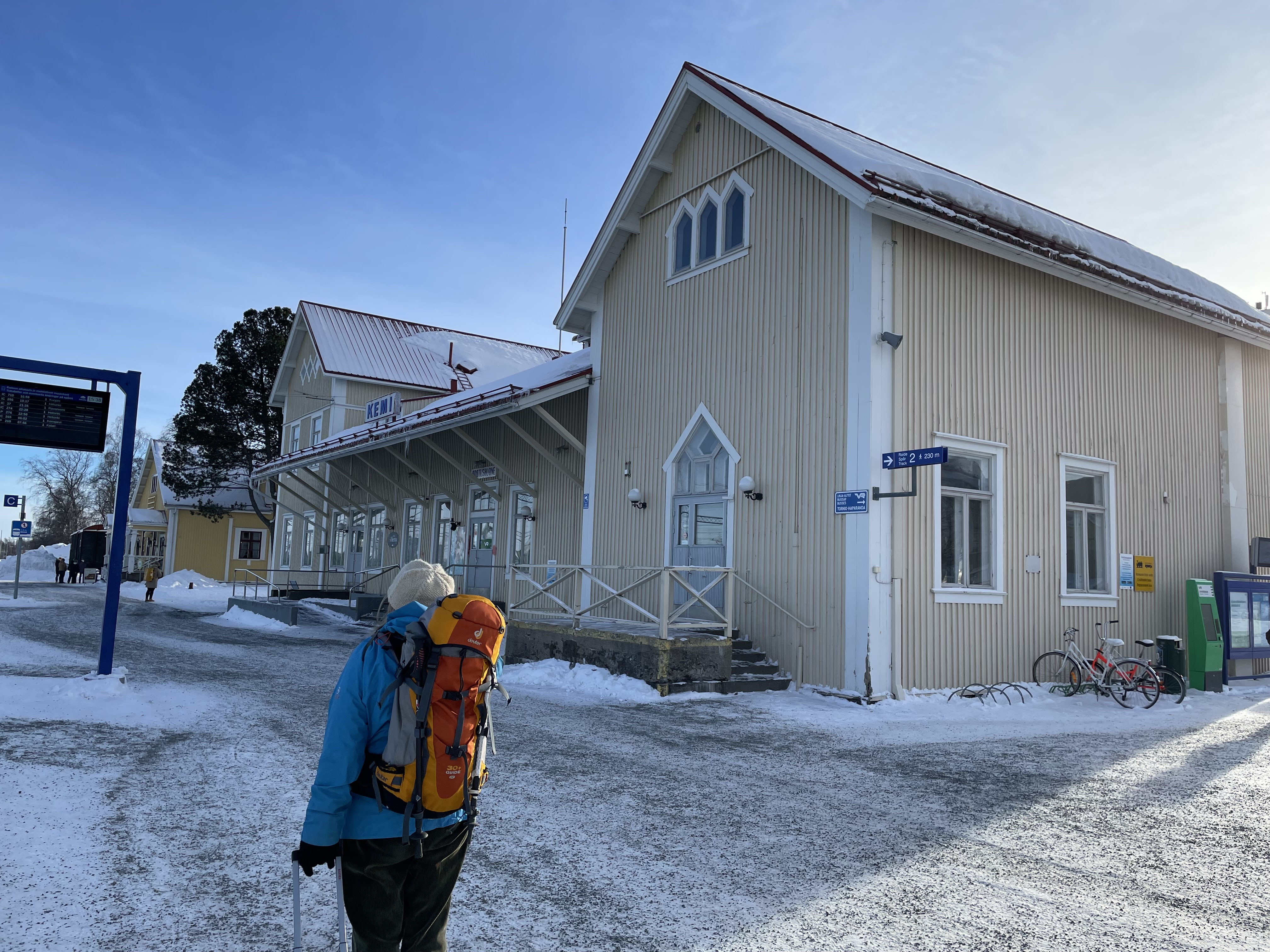
The main station building offers no shelter – but beyond it is a lively cafe

Between the station building and the cafe is a memorial stone

Marking a Change
Between the station building and the cafe is a memorial stone.
Discovering its purpose connected us to European issues that continue to resonate violently.
Issues & actions, historical & present, which have absorbed us for over 30 years.
It is at this point, unexpectedly, that we began to sense a change of focus to our travels.
“Where” is Finland?
Finland: it was part of Sweden until 1809 and then became a The Grand Duchy of Finland – part of Imperial Russia. The railway system was Russian – and has a different (wider) gauge to most other countries. Memorials to modern events also reflect its differing history.
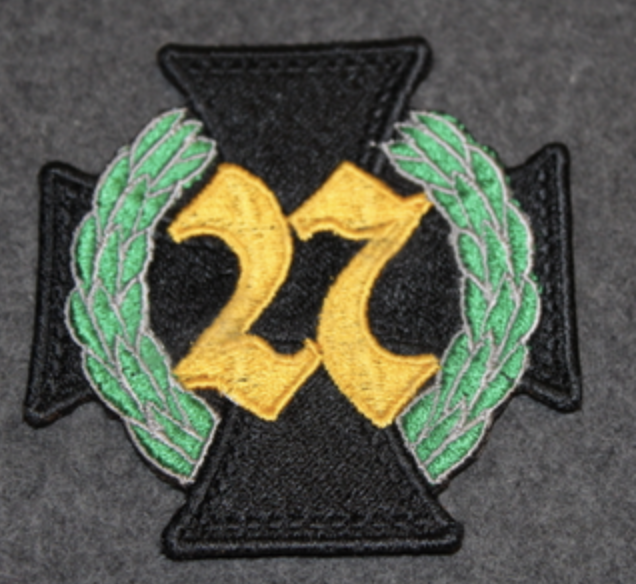
The memorial (headed by the insignia of the Royal Prussian Jaeger battalion number 27 (simply 27th Jäger Battalion (Finland) ) relates to The Jääkärit (Finnish Jaegers). Individuals who, during WW1, wishing to assist in creating a Finland free from Russia, crossed into Sweden & moved onto join & fight with the German army. Then, as Finland became independent, became an important element in the Finnish national Army.
Finnish troops were a kind of miniature people’s army, representing all occupational groups and ages between 15-49.
Kemi station was important as a point of arrival for the volunteers on their journey into Sweden via Haparanda.
It is at this point, unexpectedly, that we began to sense a change of focus to our travels.
Our circular tour through the Northern ‘White’ lands – was intended as a form of introduction to the lengthier more complex southern travels of Journeys 2 & 3.
The memorial & the ‘gauge change’ served, for us, as markers of change – the journey, with its intention of re-visiting personal partnership links began to include reflections on the origins of Present Times, Present Troubles.
Finland, with its history of struggle for independence from & later invasion by Russia (1940s) has the longest border with Russia of any EU country (1340 Kms).
Following WW2 international agreements had supported a ‘neutral’ status (similar to that in Austra). Putin’s invasion changed that & Finland joined NATO in April 2023.
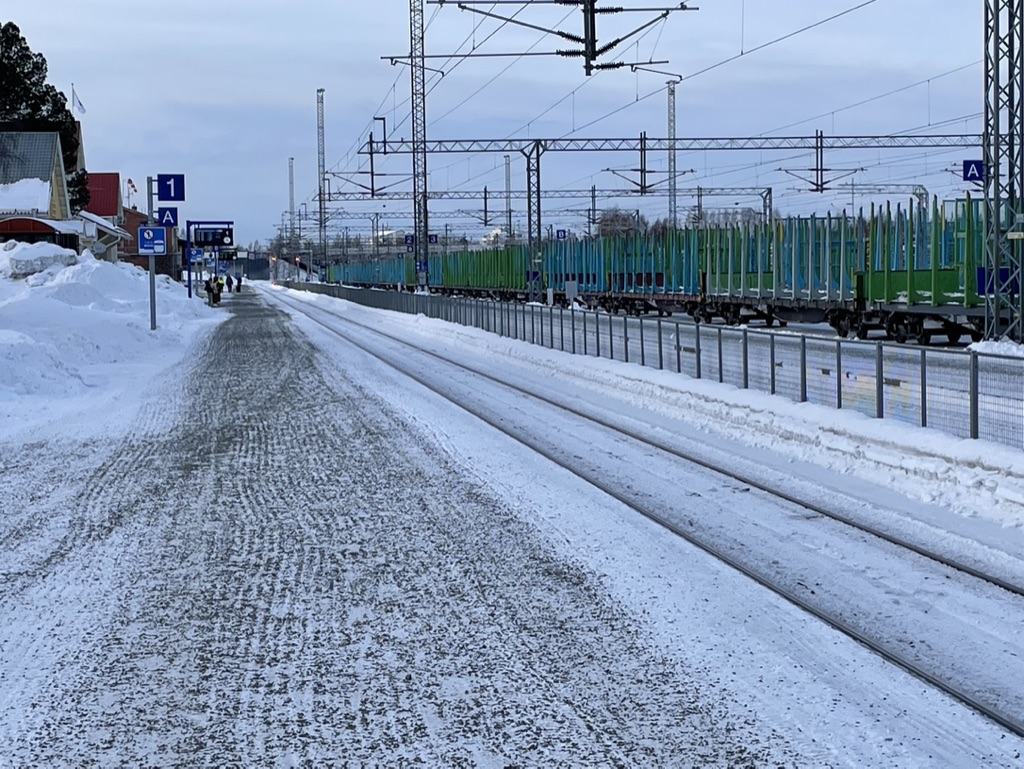
Throughout Finland the railways provide the principle means of moving the vast quantities of timber produced.
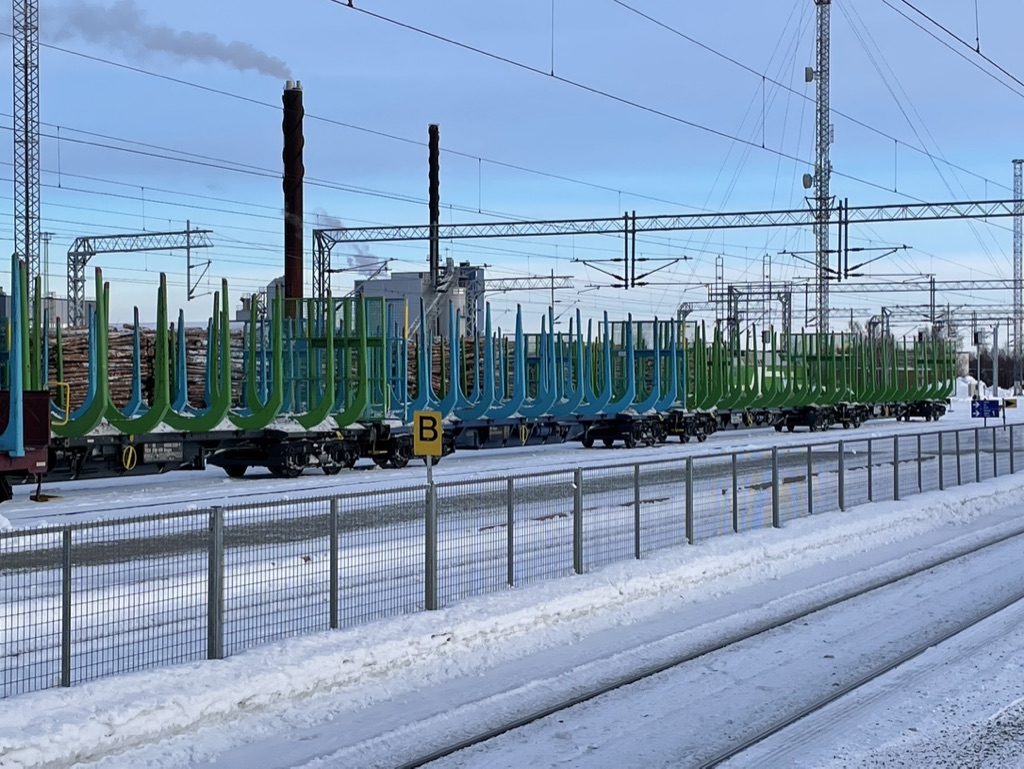
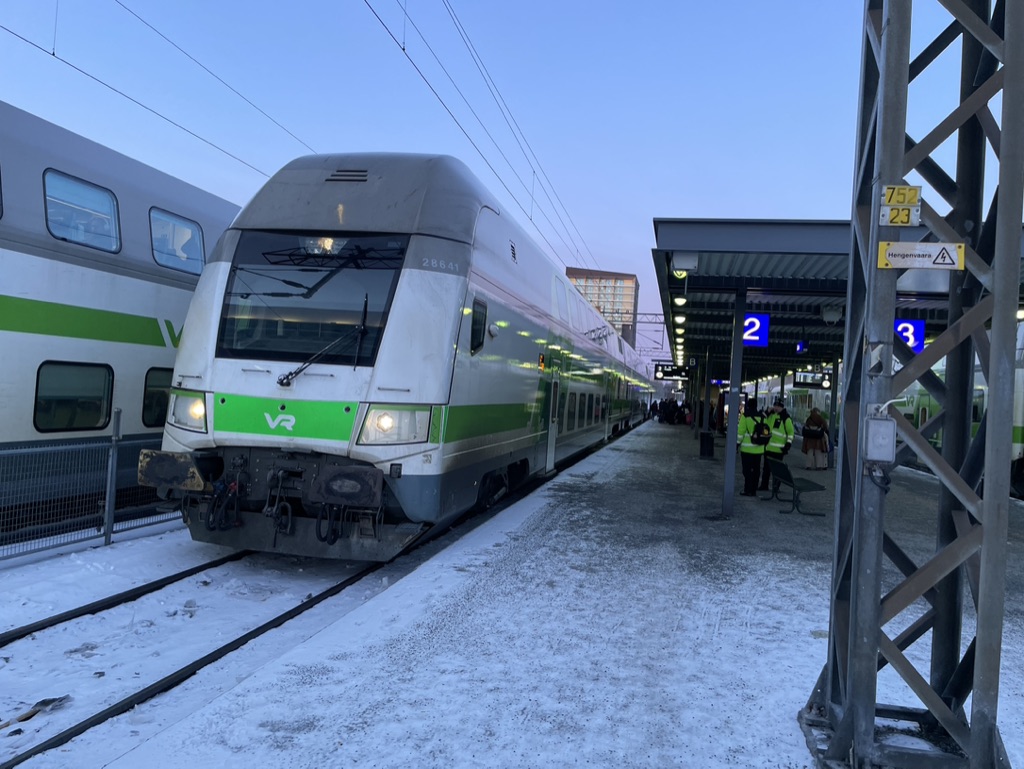
Many trains are ‘double-deck’ and have a quiet zone area called ‘extra’. Despite the impression given in this picture they were very busy – and we needed to make reservations. As there are no ticket offices at stations, booking seats was either made online or by phone – to the English speaking staff.

We arrived at Oulu at nightfall.
We had completed the most complex(and potentially difficult) day of this part of our tour. Fortunately the online information, from various sources, supplemented by the International Railway Timetable, made the journey comfortable.
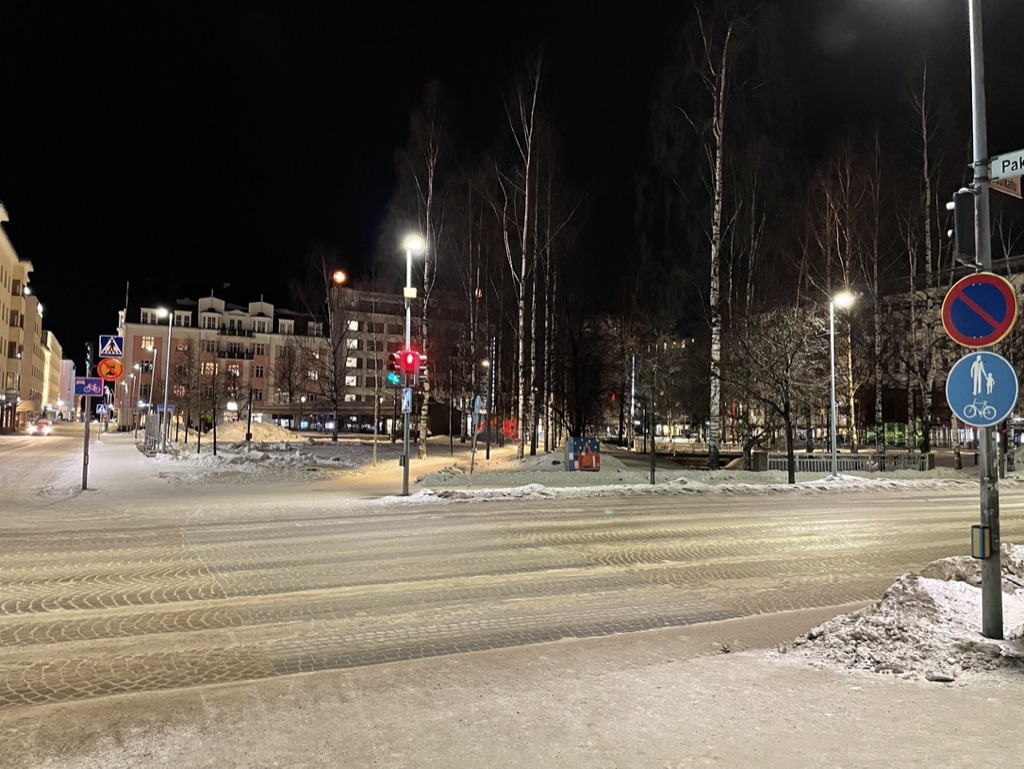
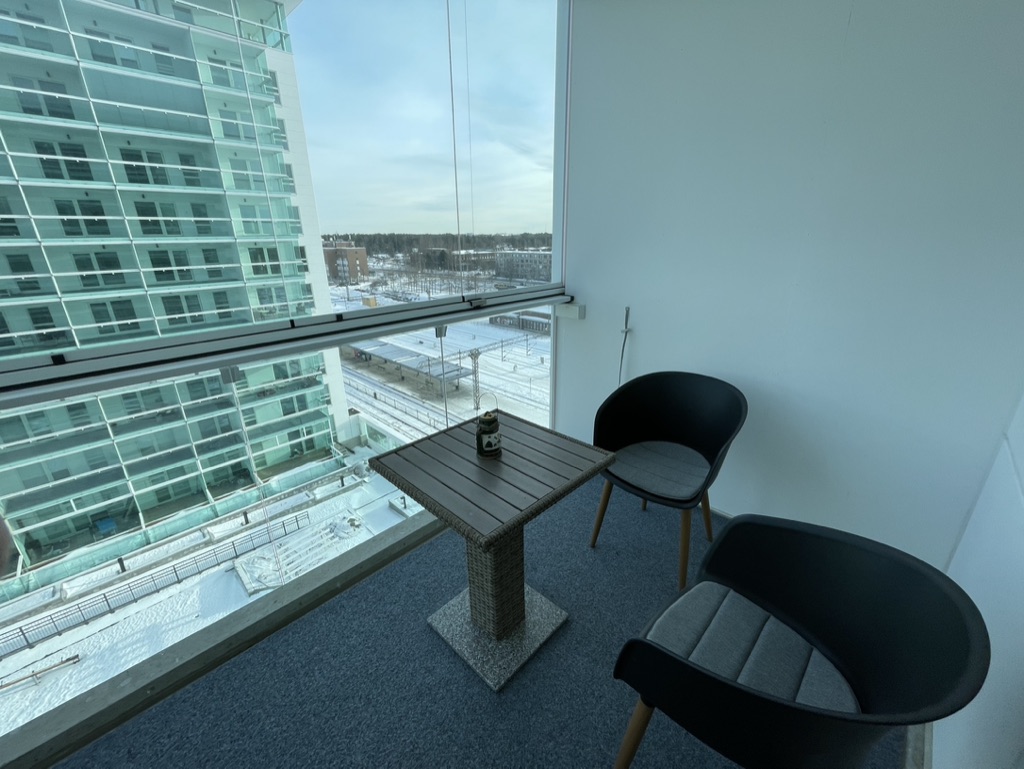

information in Finnish, Swedish & English
10th March
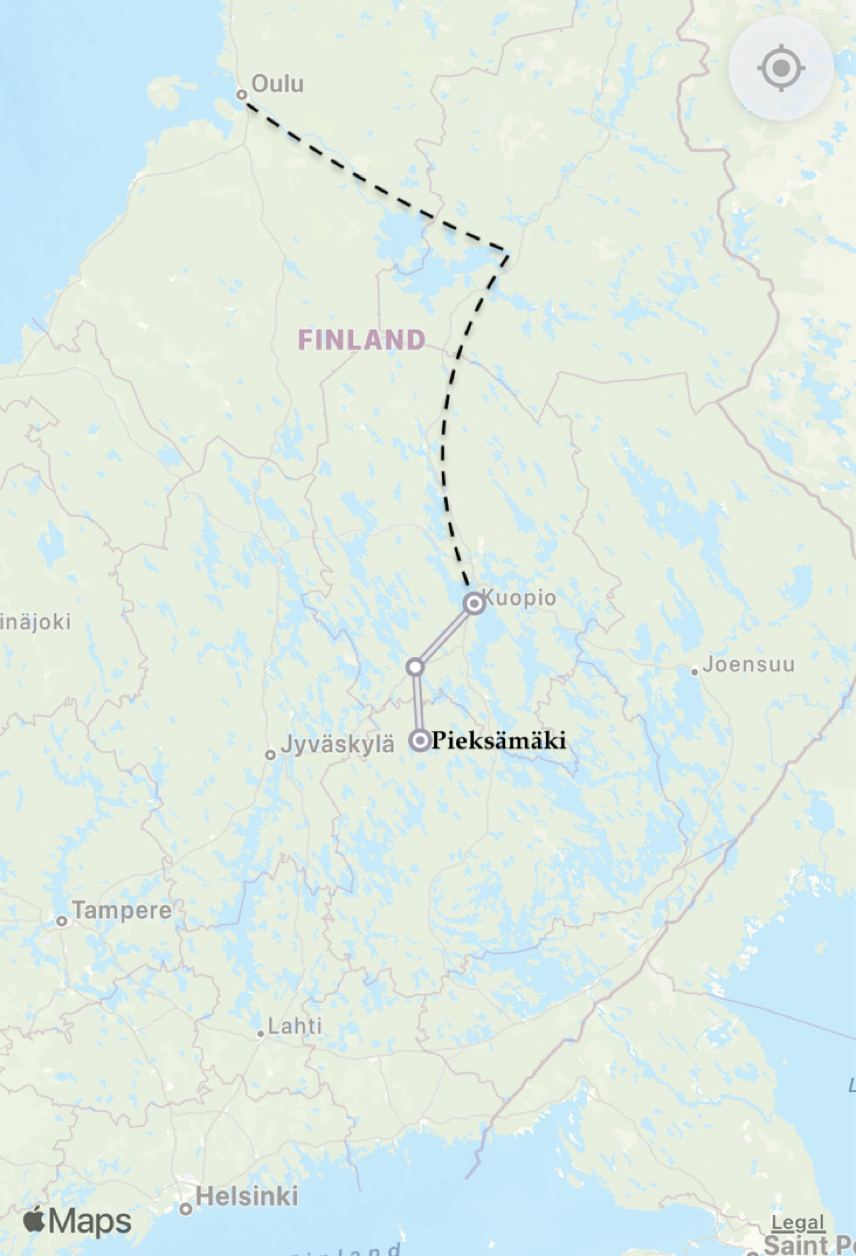
Oulu – Pieksämäki
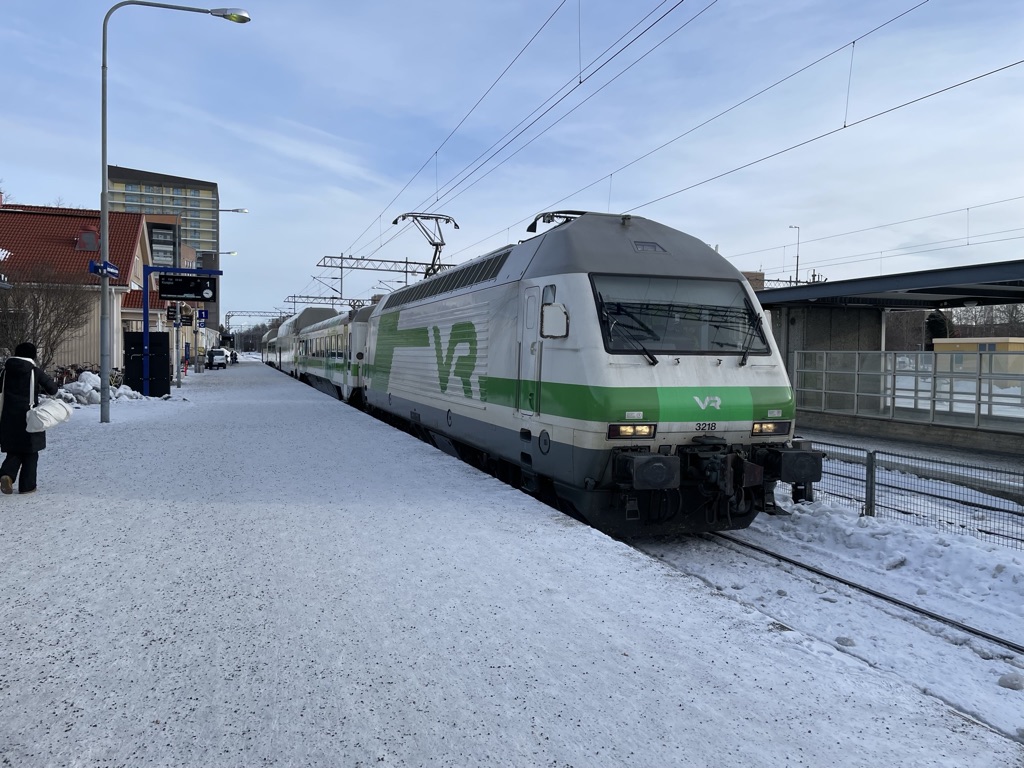
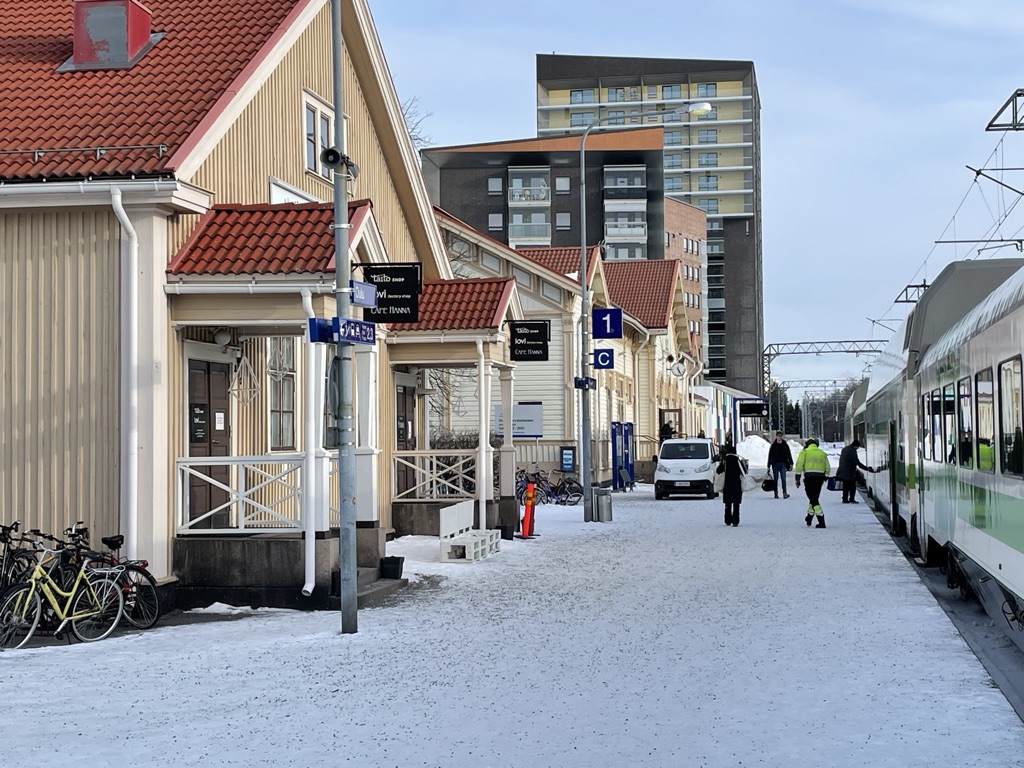
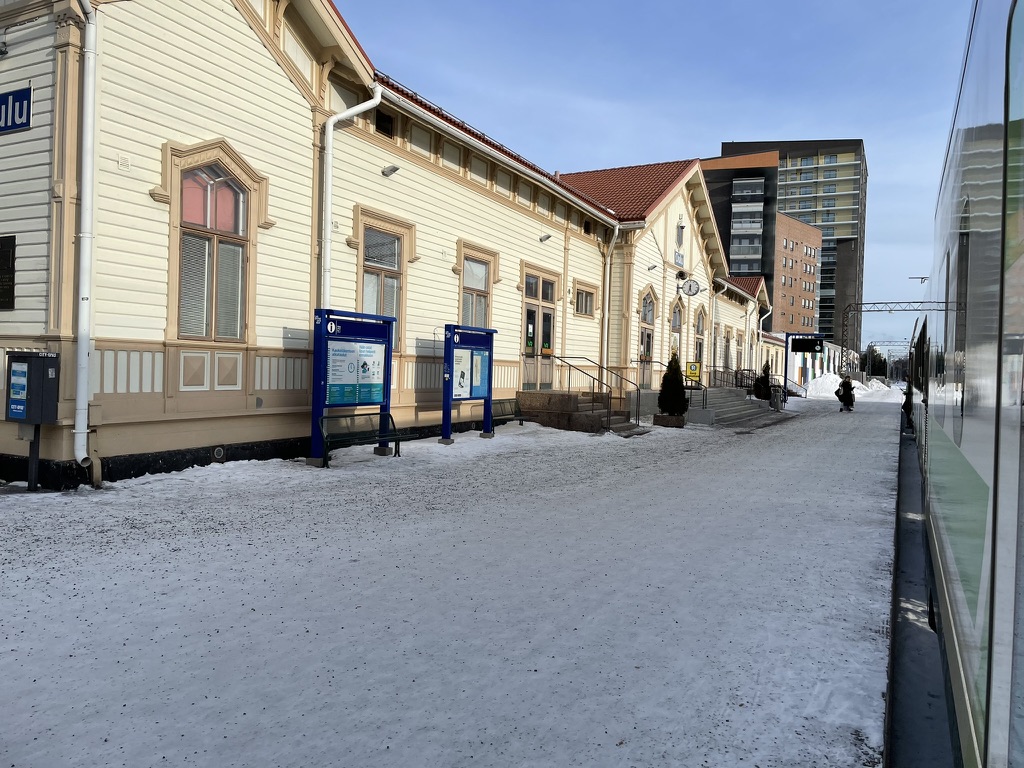
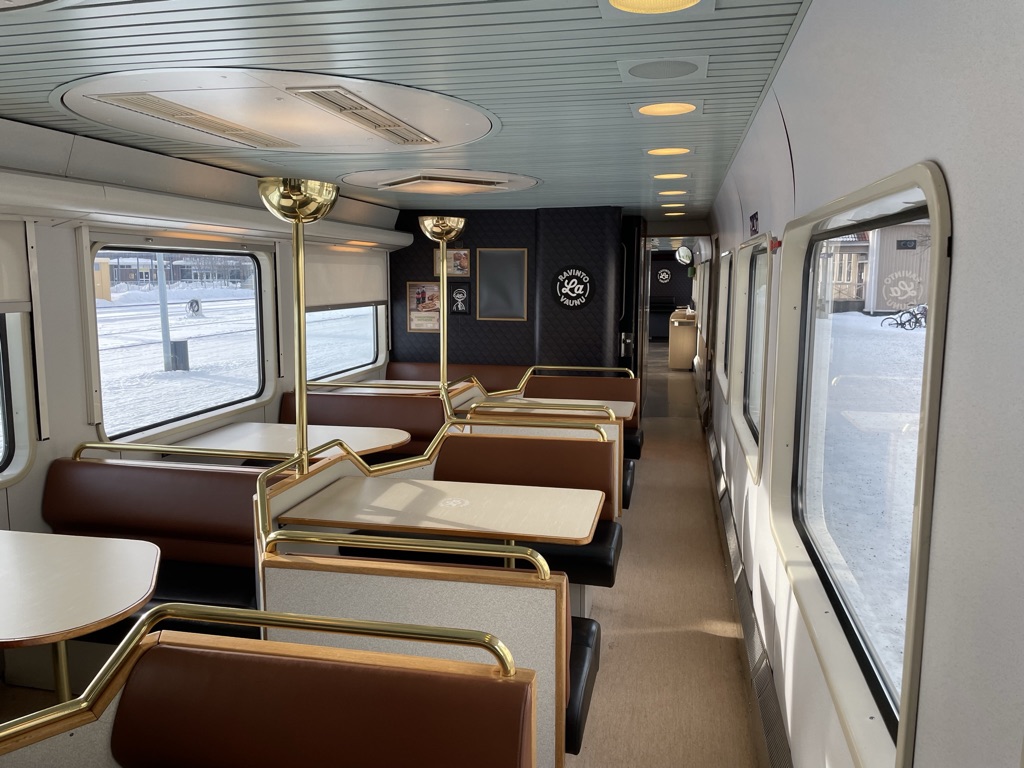
Most (all?) longer distance trains have restaurant/bar facilities. The regulations regarding alcohol are curious… but similar to Poland. Alcohol can only be consumed ‘on the premises’ (ie in the bar/restaurant area. The curiosity element is that where trains operate an at-seat trolley service, alcohol can be consumed anywhere on the train.
Regardless of regulation, prices, as in Norway, are, compared with many other countries, very high.
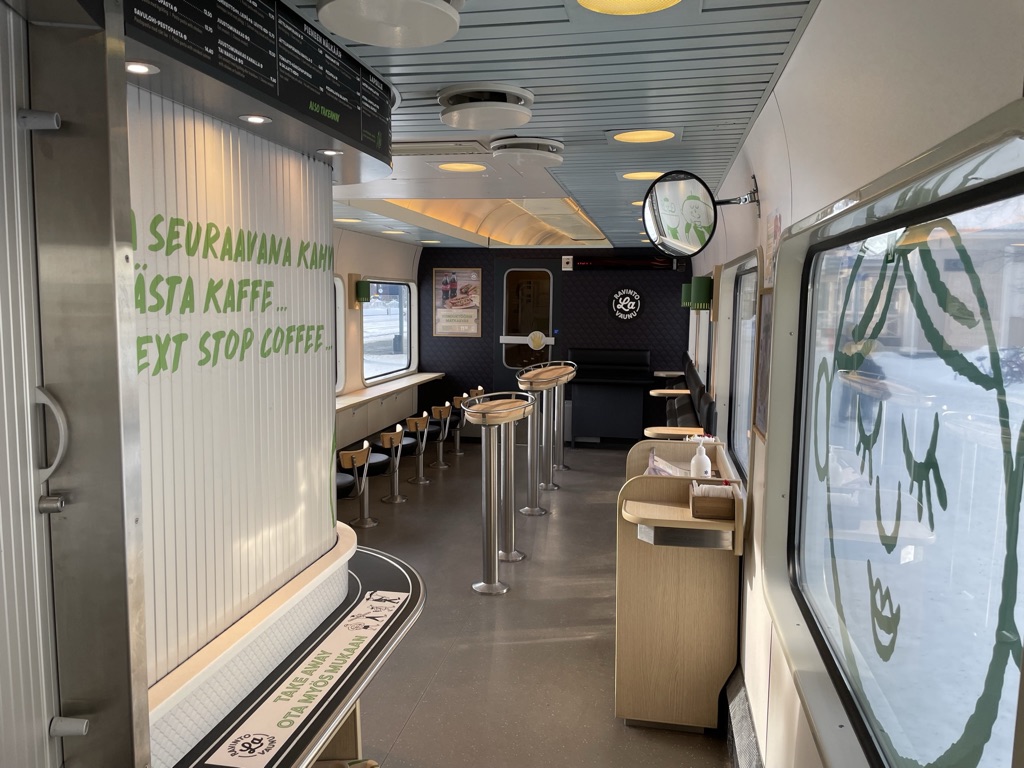
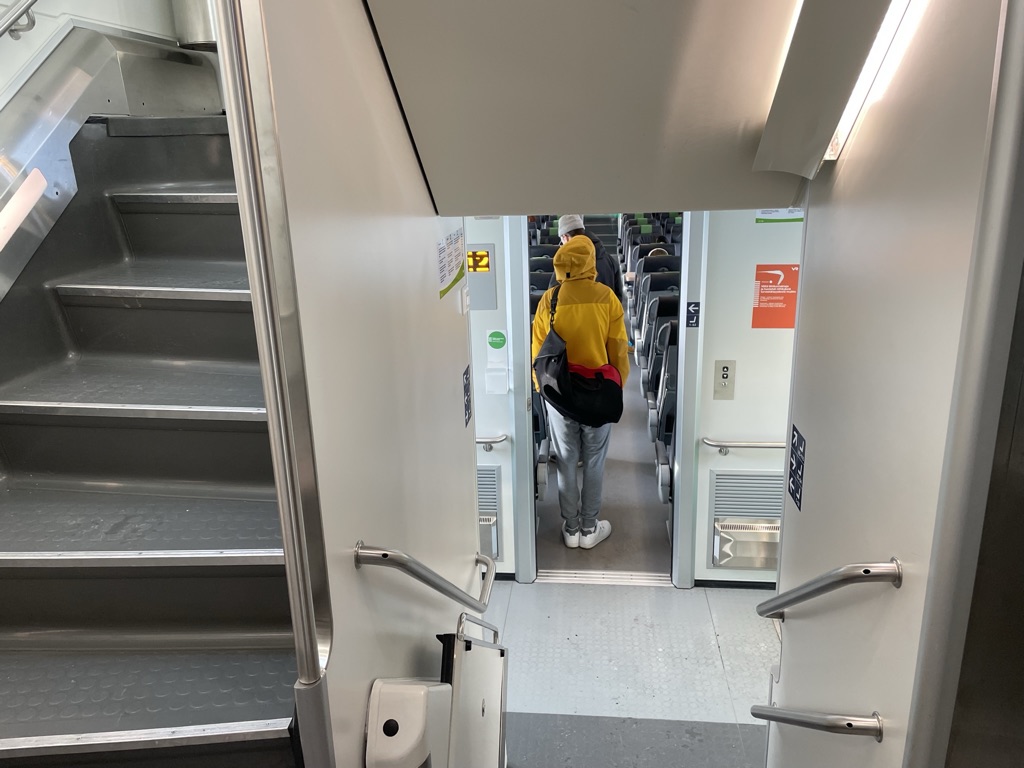
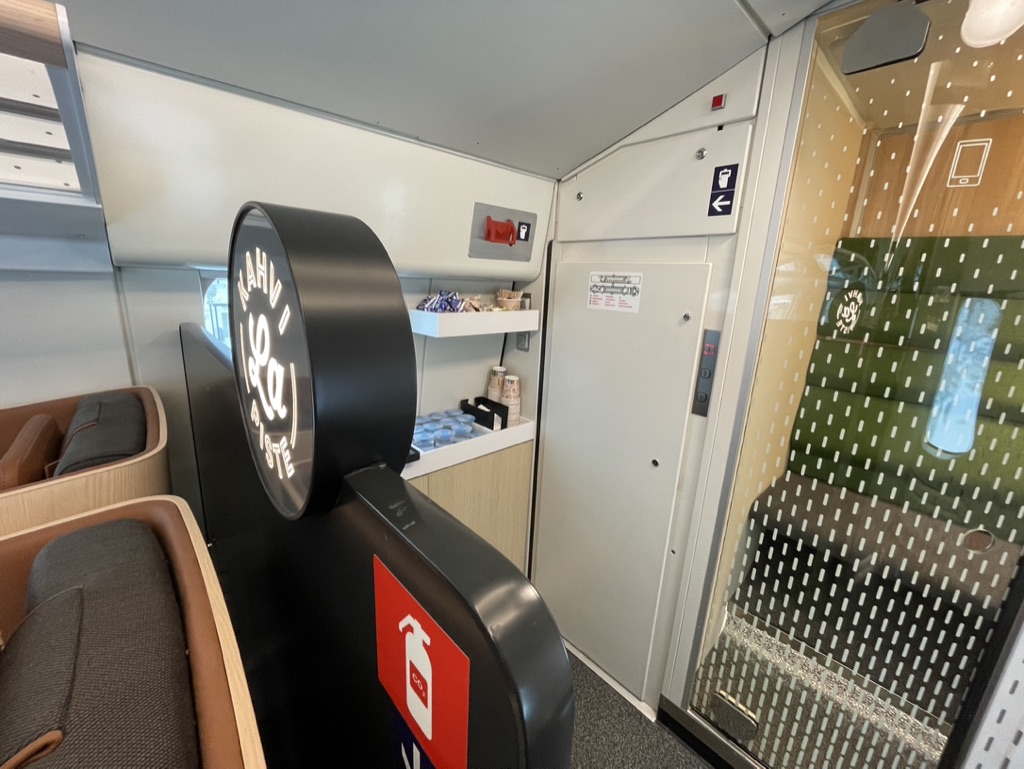
In ‘Ekstra’ class there are free coffee and light snacks – and a booth (on the right) for use if phoning as it is also a ‘Quiet Zone’…. and the trains moved so smoothly that it really was ‘quiet’.
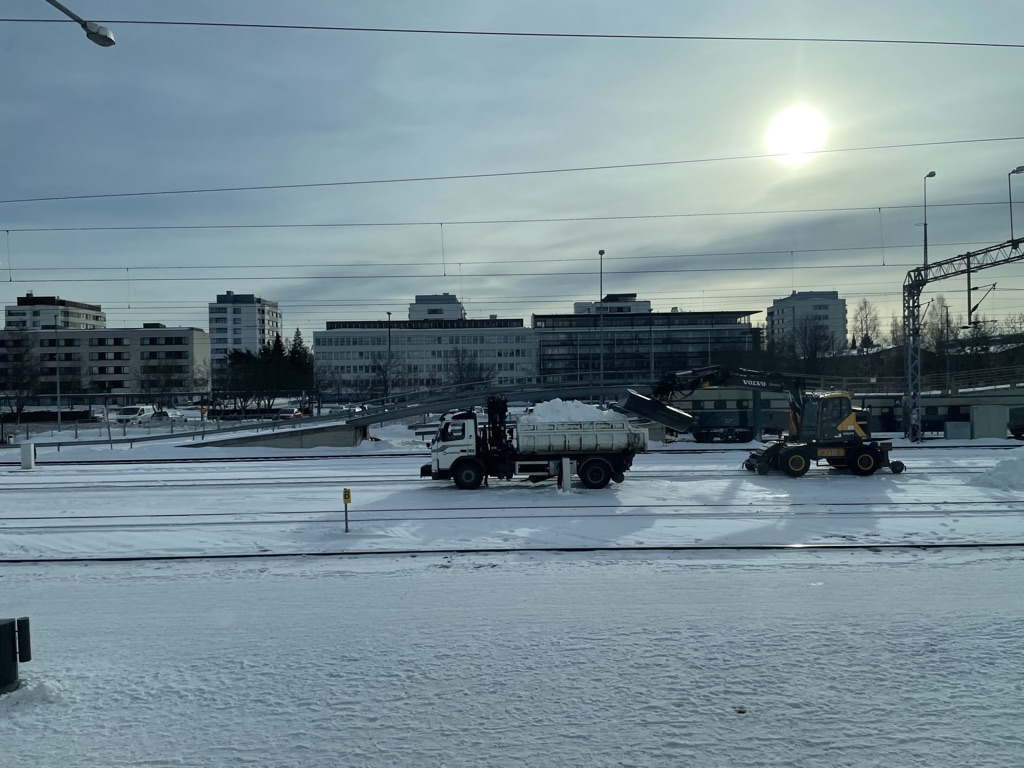
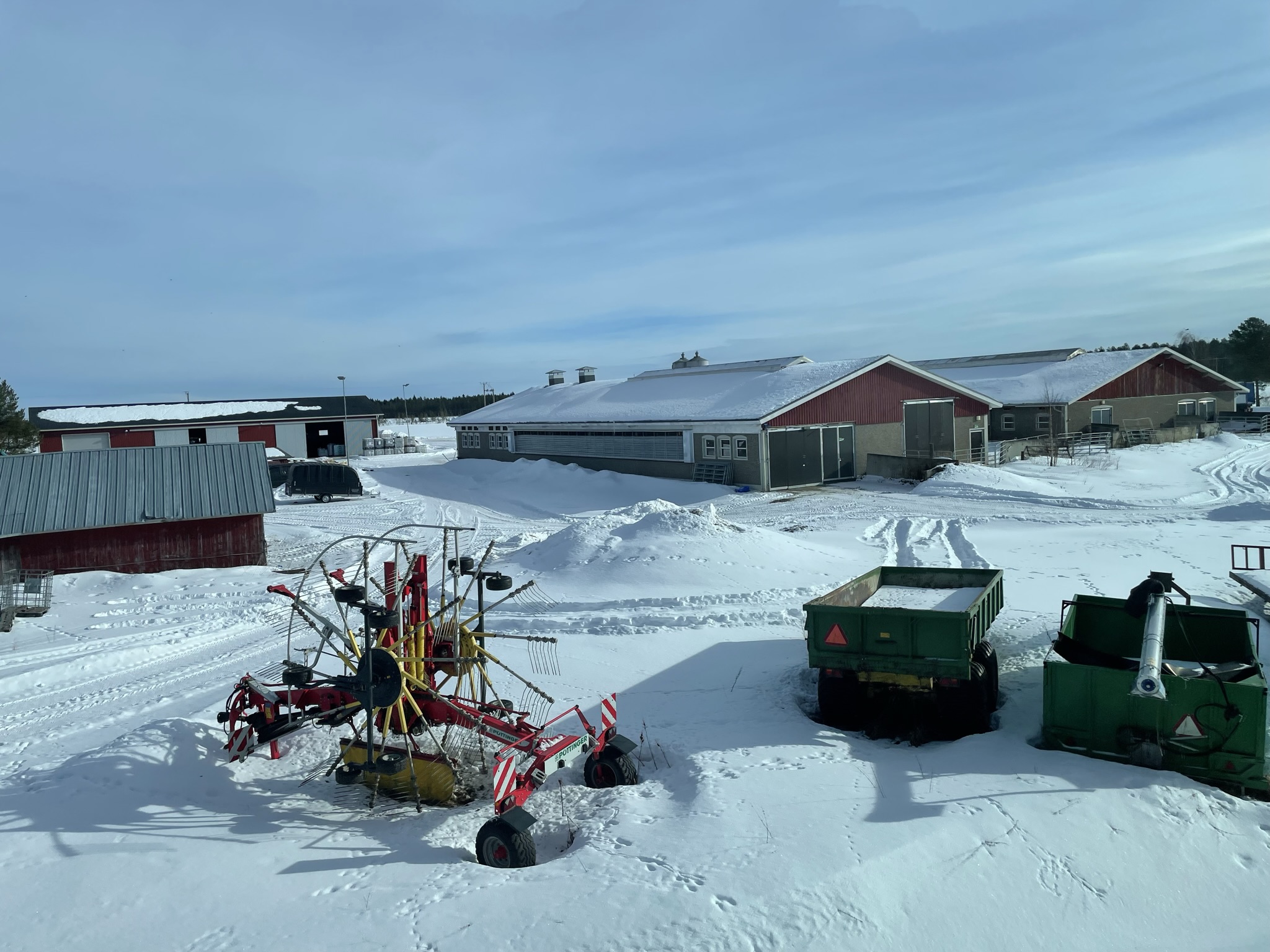
After only a few days travelling through continually frozen landscapes a view of a machine designed to lift & turn cut grass to assist drying for hay or silage (‘tedding’) seems very strange. In this landscape will the grass ever re-appear? The view therefore creates an air of mystery…. but is also a sign of hope….. no farmer would own such a machine simply for decoration.
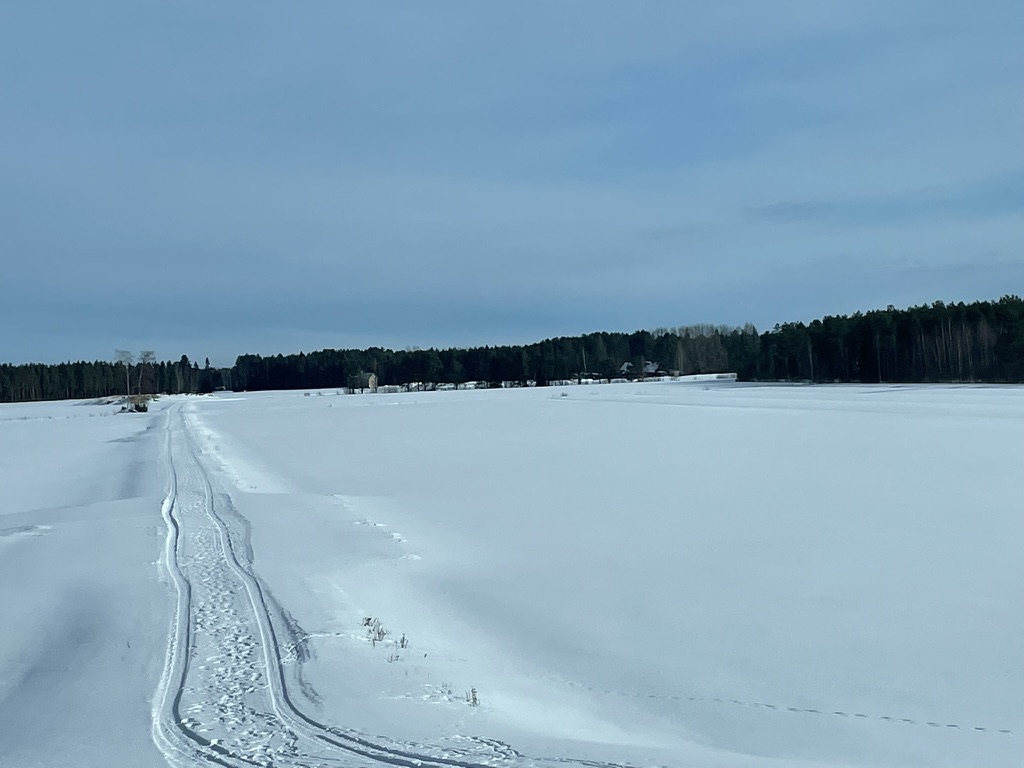
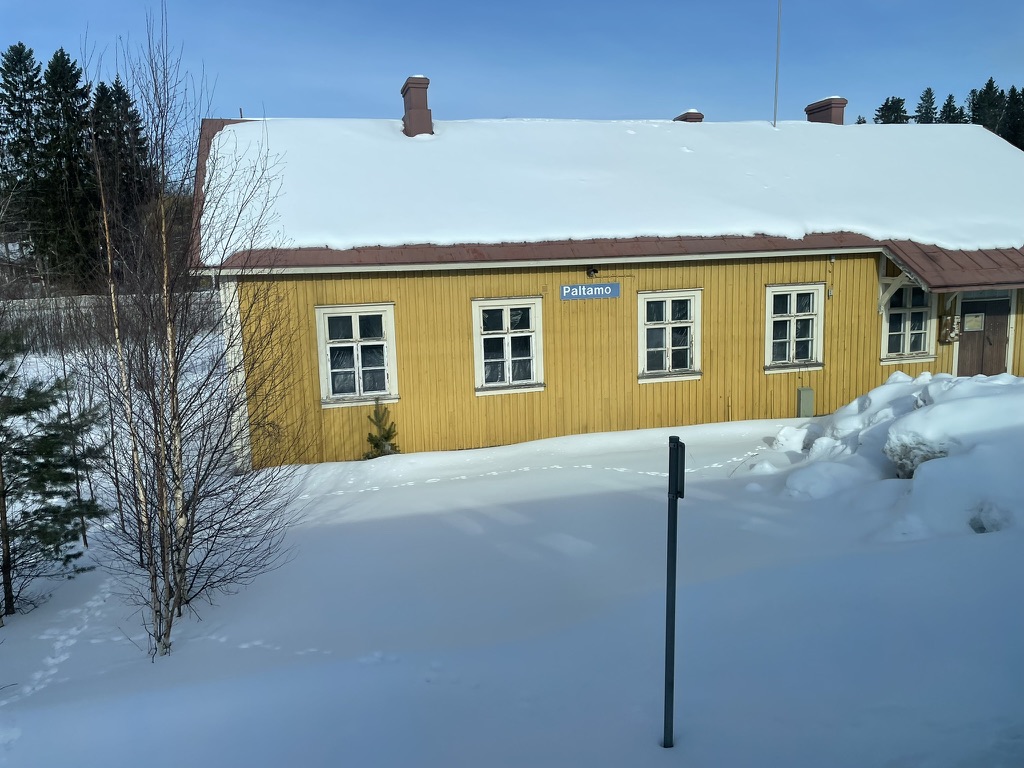
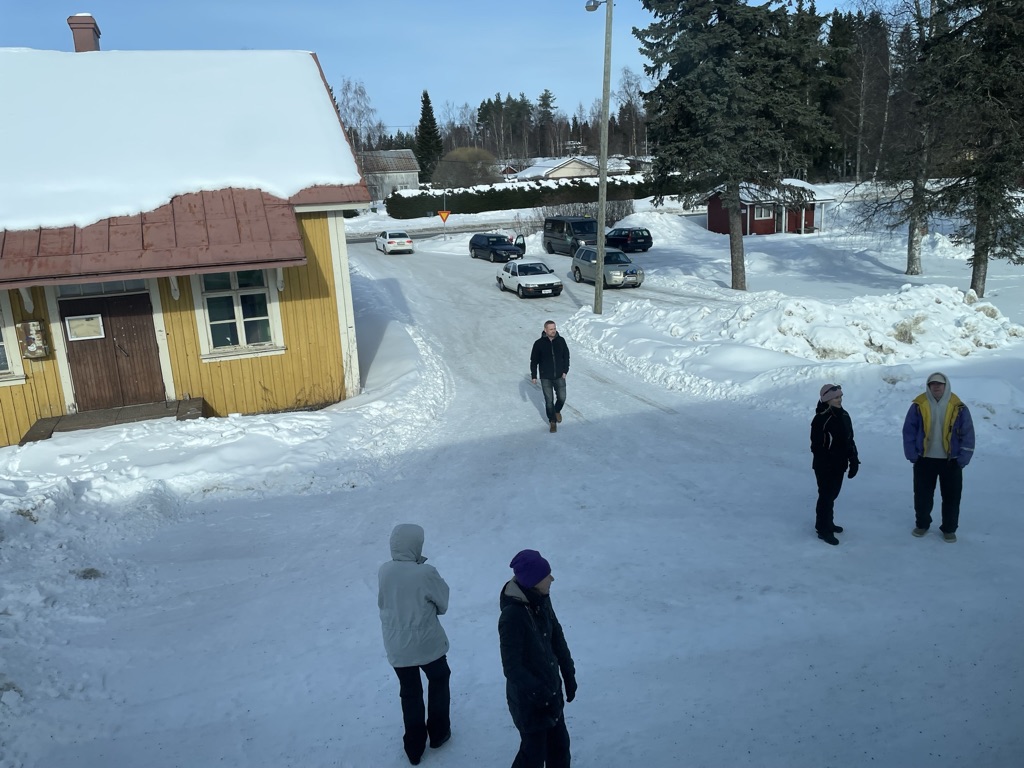
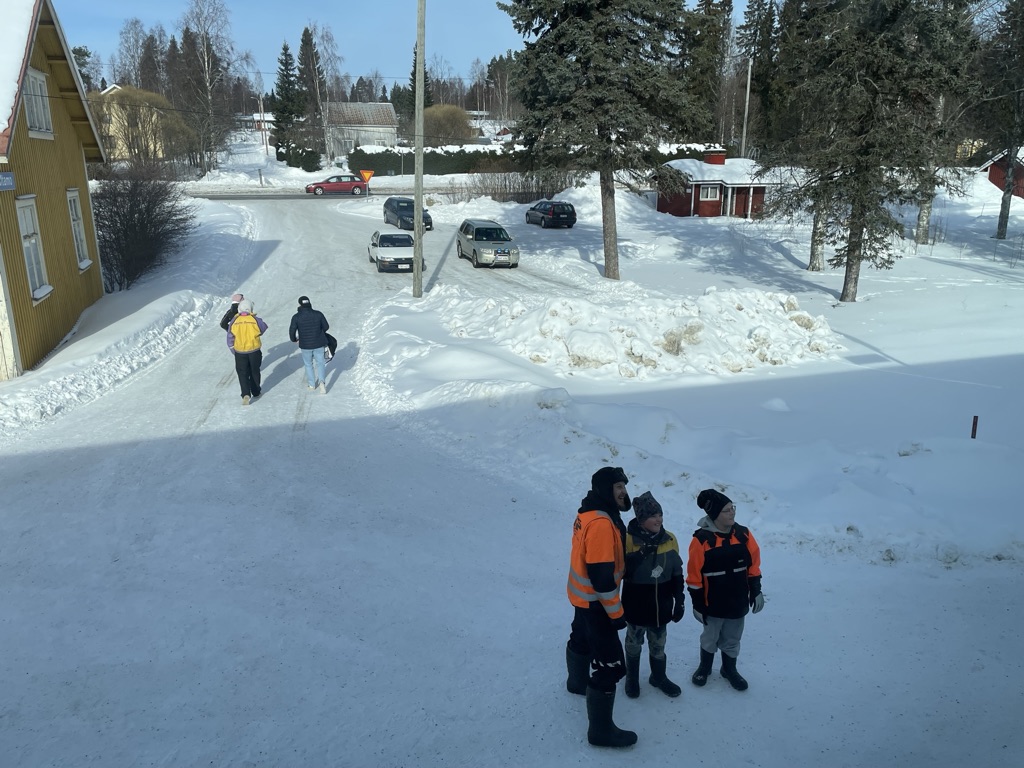
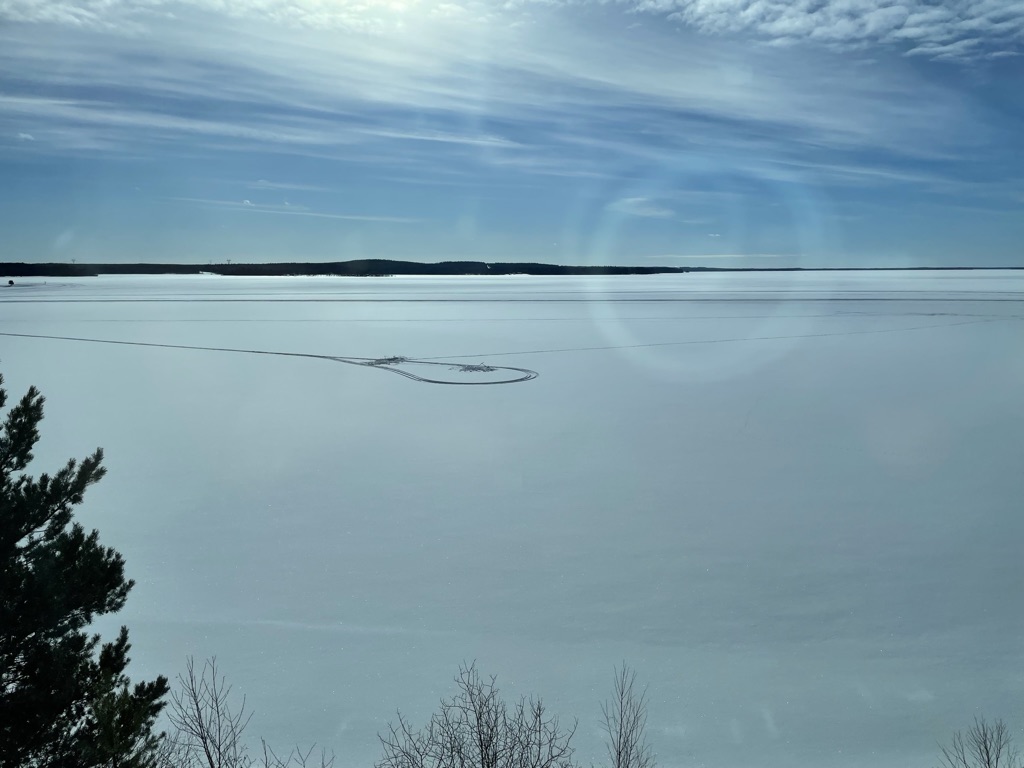
Fishing holes
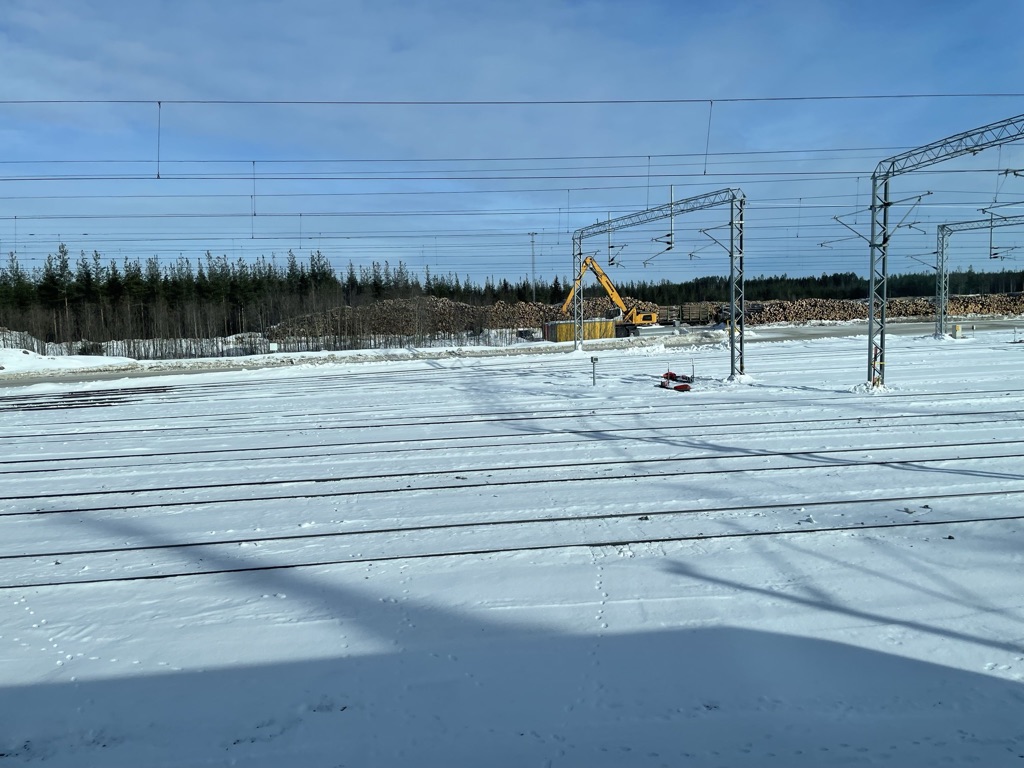
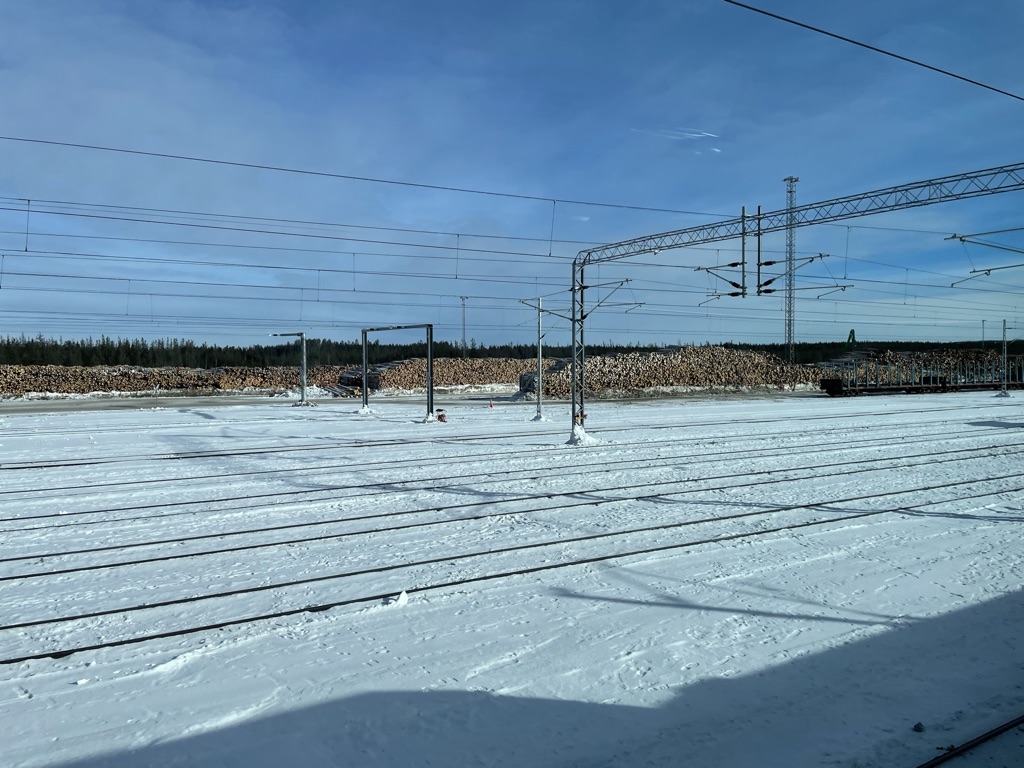
The wood depot at Kontomaki – in sequence
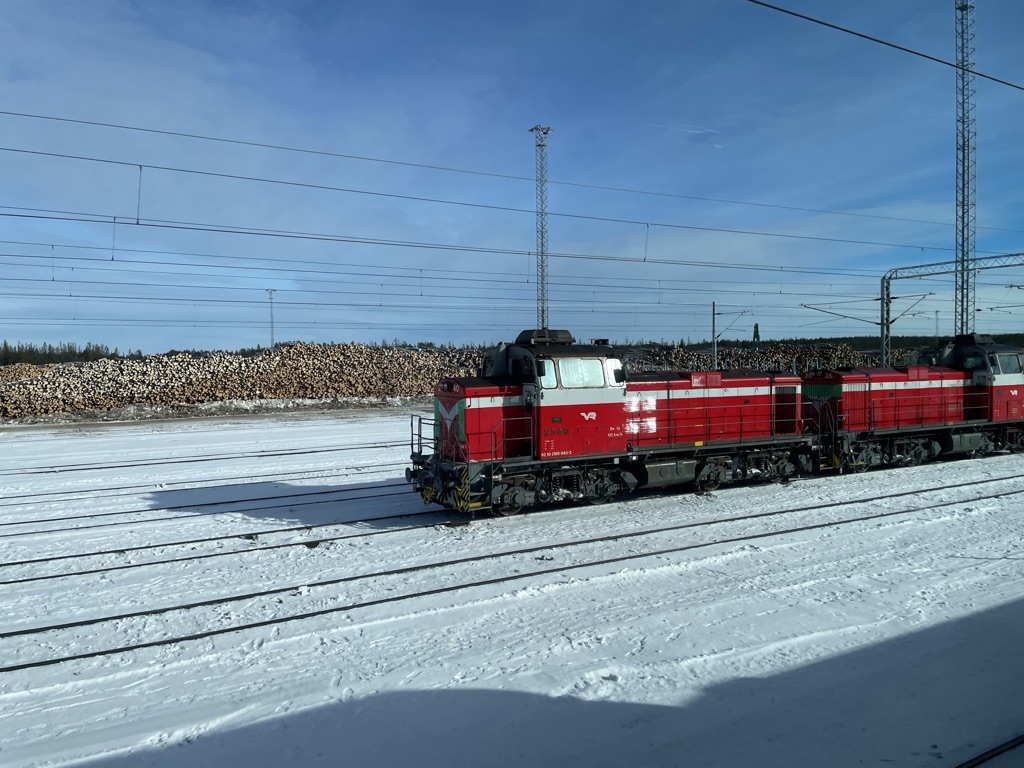
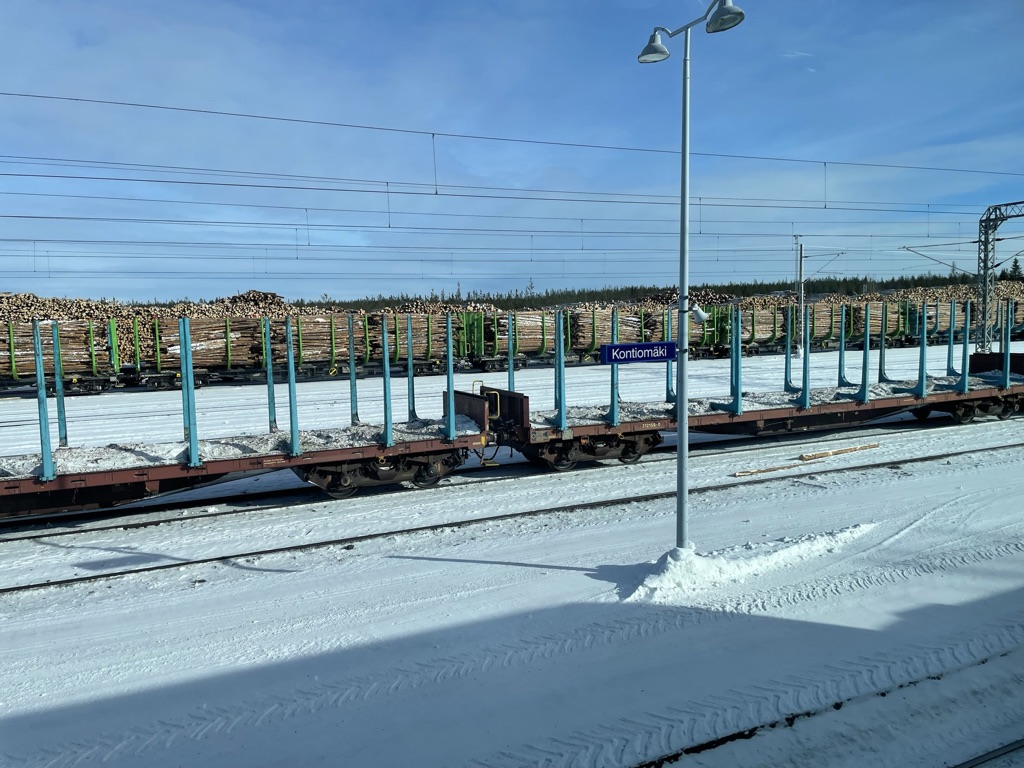
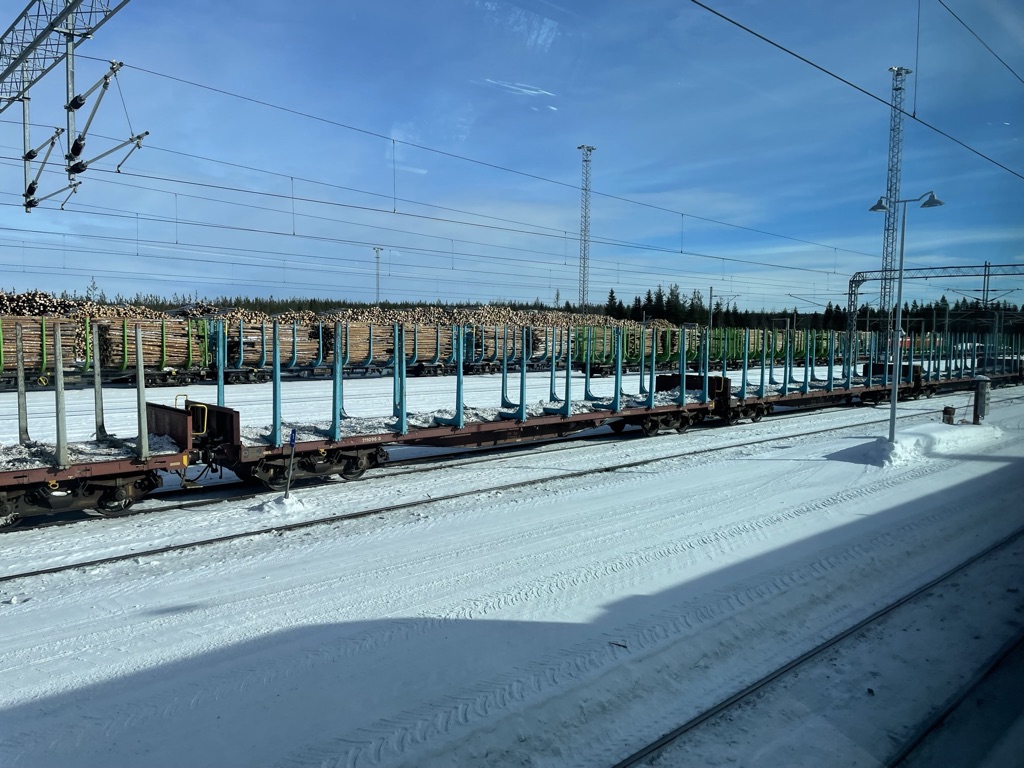
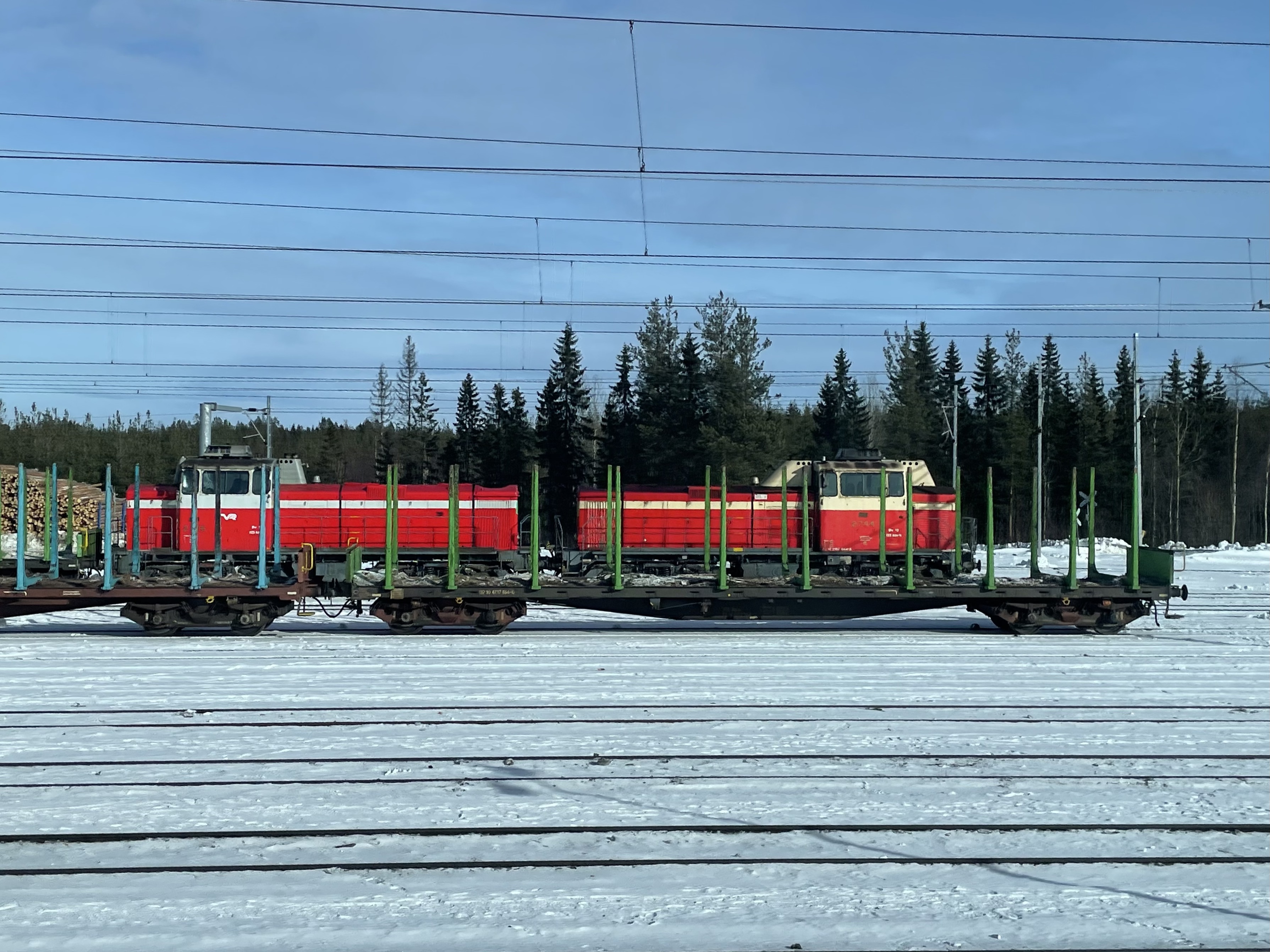
Houses near a lake
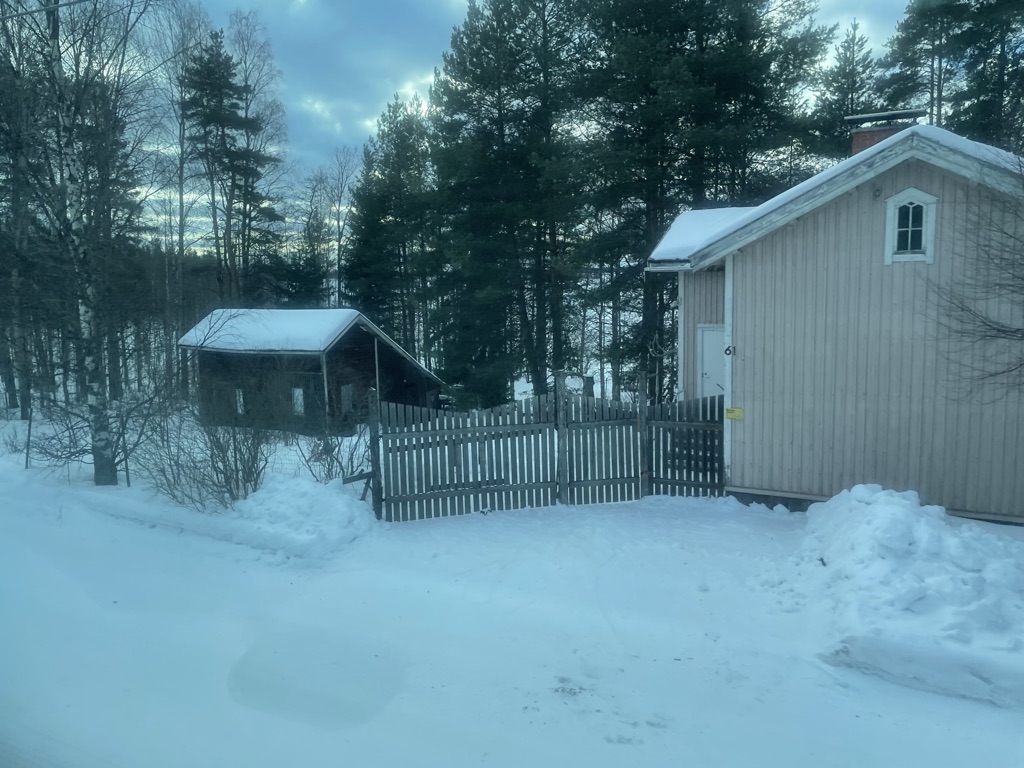
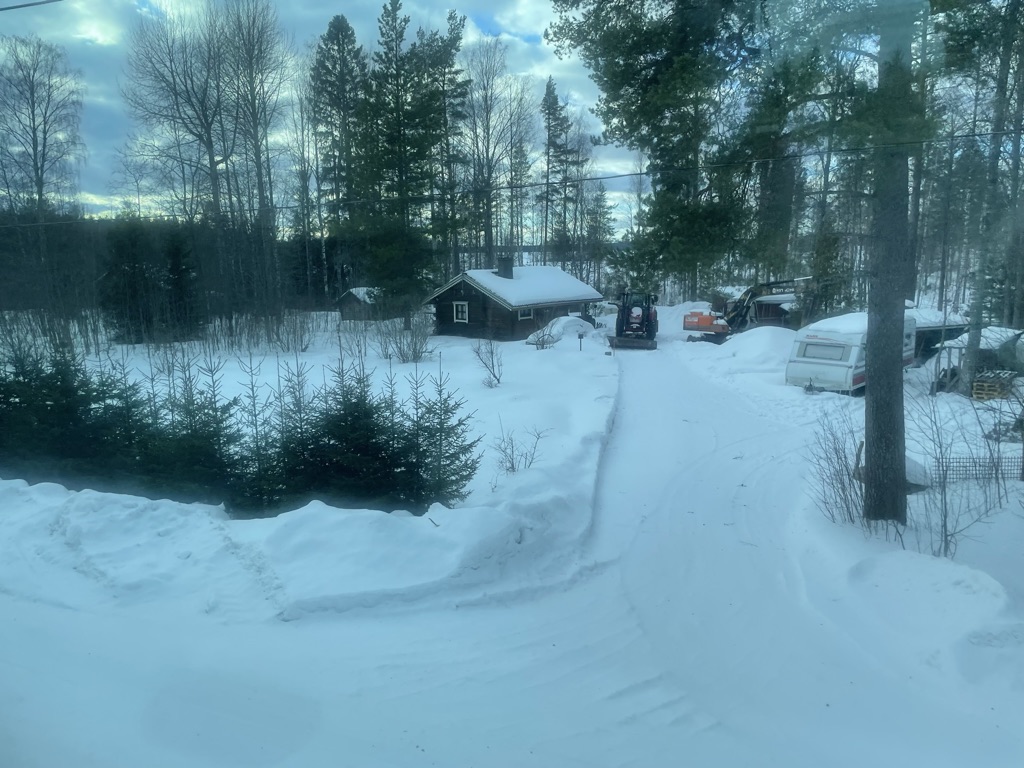
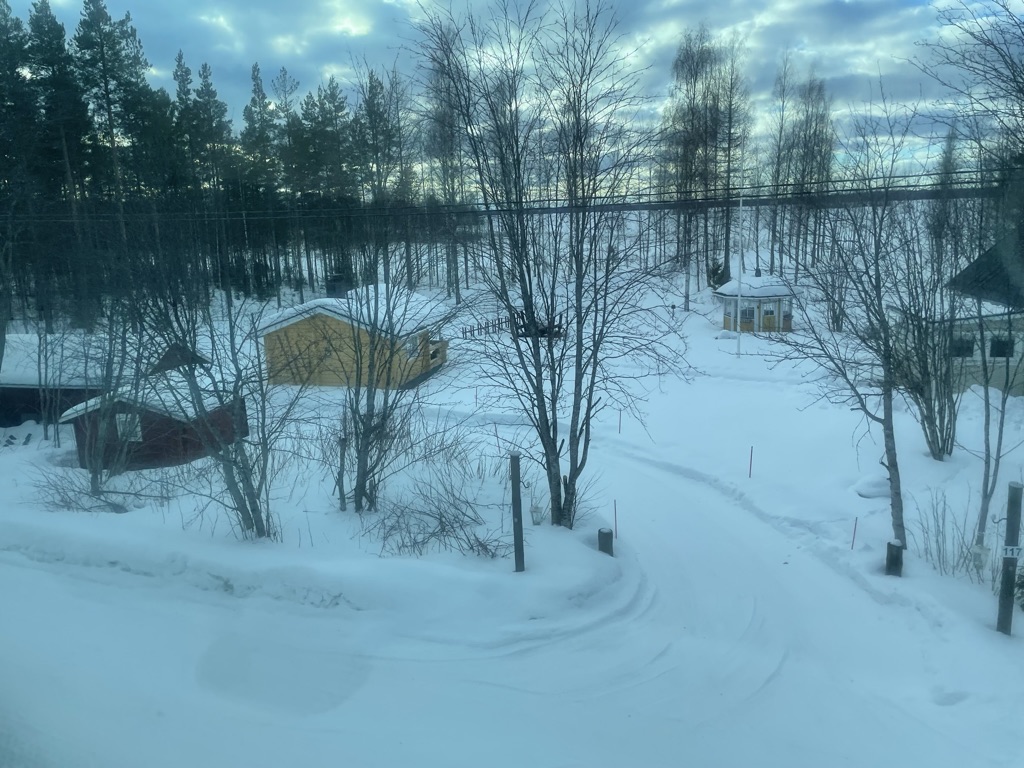
It was Friday afternoon and the train became very busy. We realised that we needed to have reservations for certain trains as, if they full, access would be refused. As some services only operate once or twice a day we did not wish to stranded.
Our train to Pieksämäki filled with young soldiers – conscription is still applied in Finland (there is a community-work option).
Finland, due to its history, has been more aware than most other ‘western’ nations of the uncertain ‘presence’ of its Russian neighbour.
Comments made by those we chatted with about conscription indicated their underlying concern….
‘You may not need to’ was one very clear statement.
A British General has mirrored what Finland, through experience, understands: “Ukraine brutally illustrates that regular armies start wars; citizen armies win them.”
Finland can muster one of Europe’s largest armies. The size of its active armed forces is only 19,000 personnel, but it can call on another 238,000 reserves.
Pieksämäki is a railways junction of national significance – and the infrequent trains are timed to connect….. after which the timber traffic flows again.

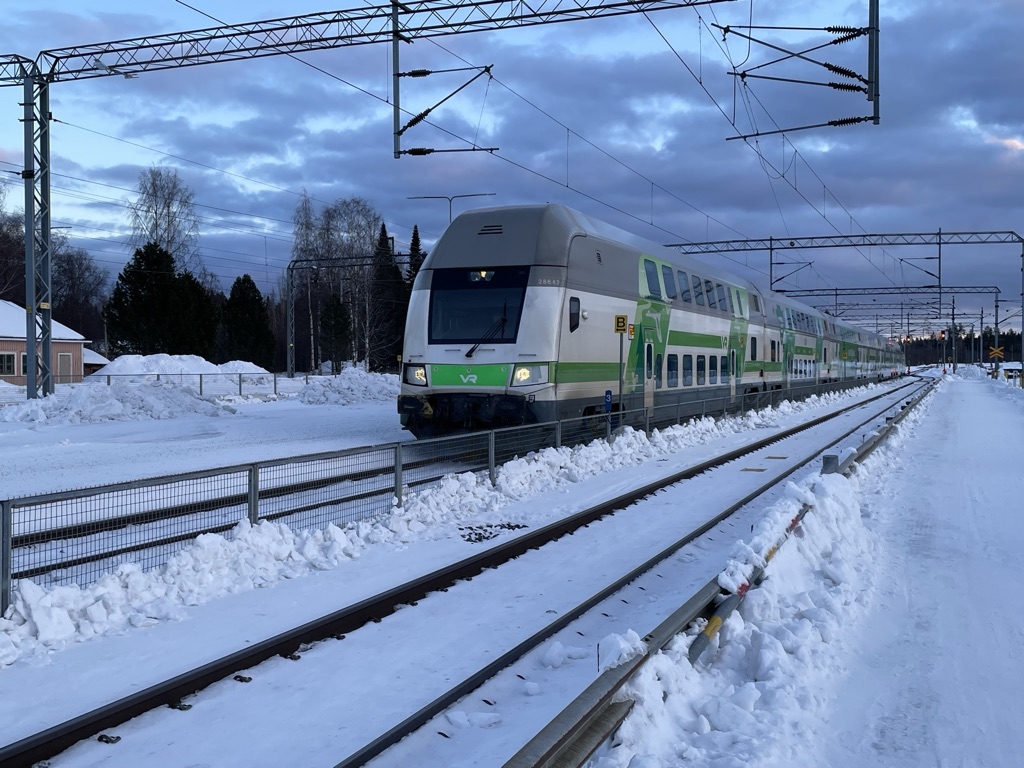
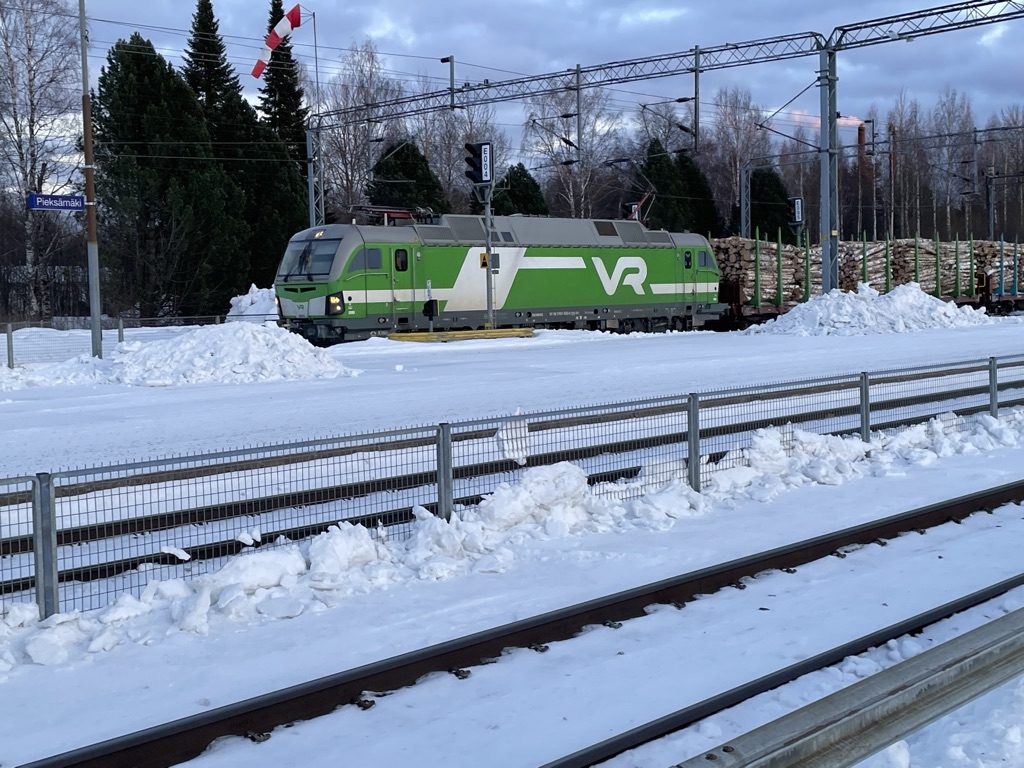
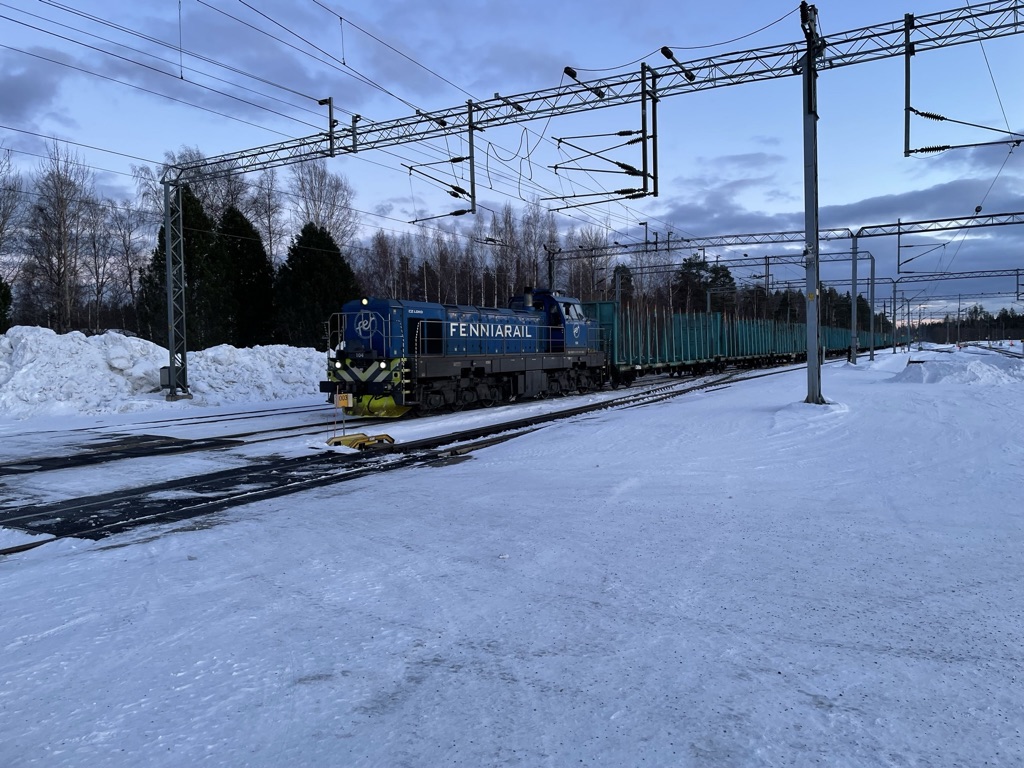
There is a railway museum… requiring crossing the tracks (we waited until we saw others using the crossing)
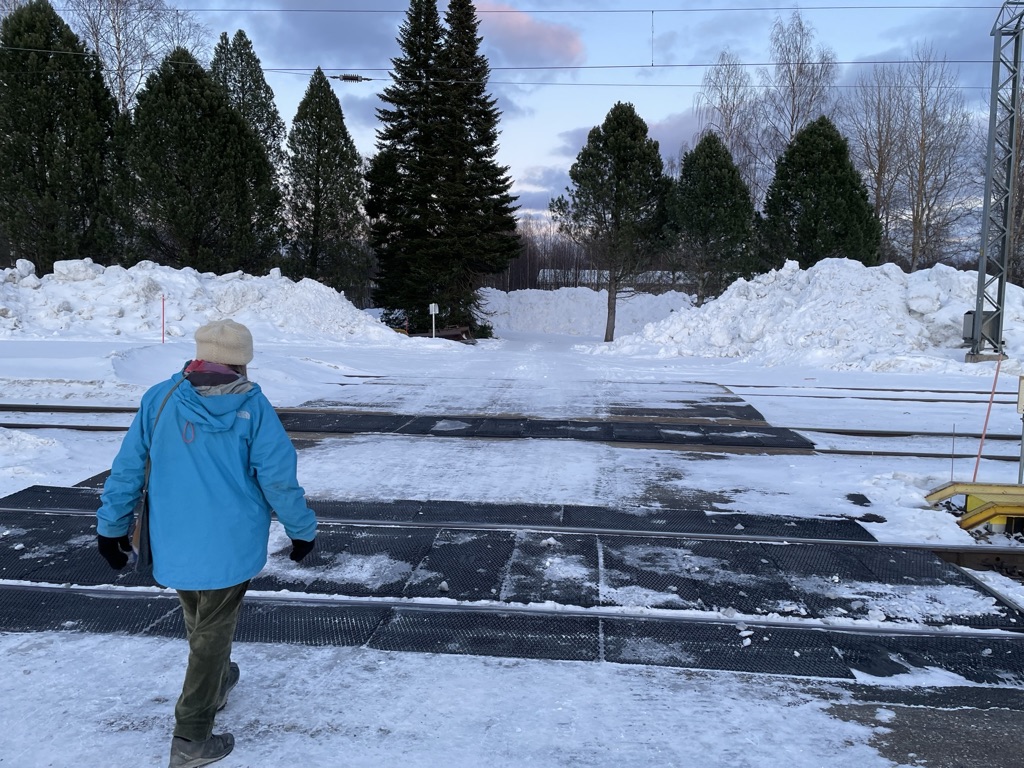

………..closed in the winter.
As were some other facilities
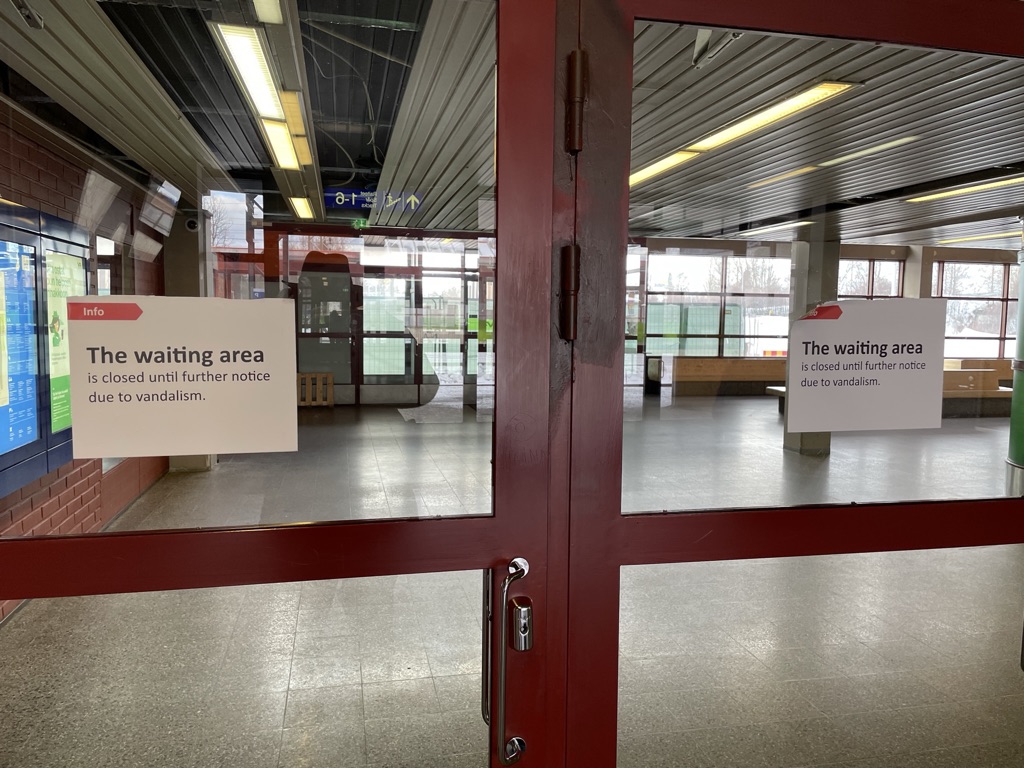
Finding our accommodation proved difficult due to instructions being sent to us by the owner in Finnish. They involved meeting her mother in the town and collecting a key…. which we failed to do. We found the address in buildings partially hidden by mounds of snow but didn’t quite believe it was correct. After 2 telephone calls mother arrived with the key.
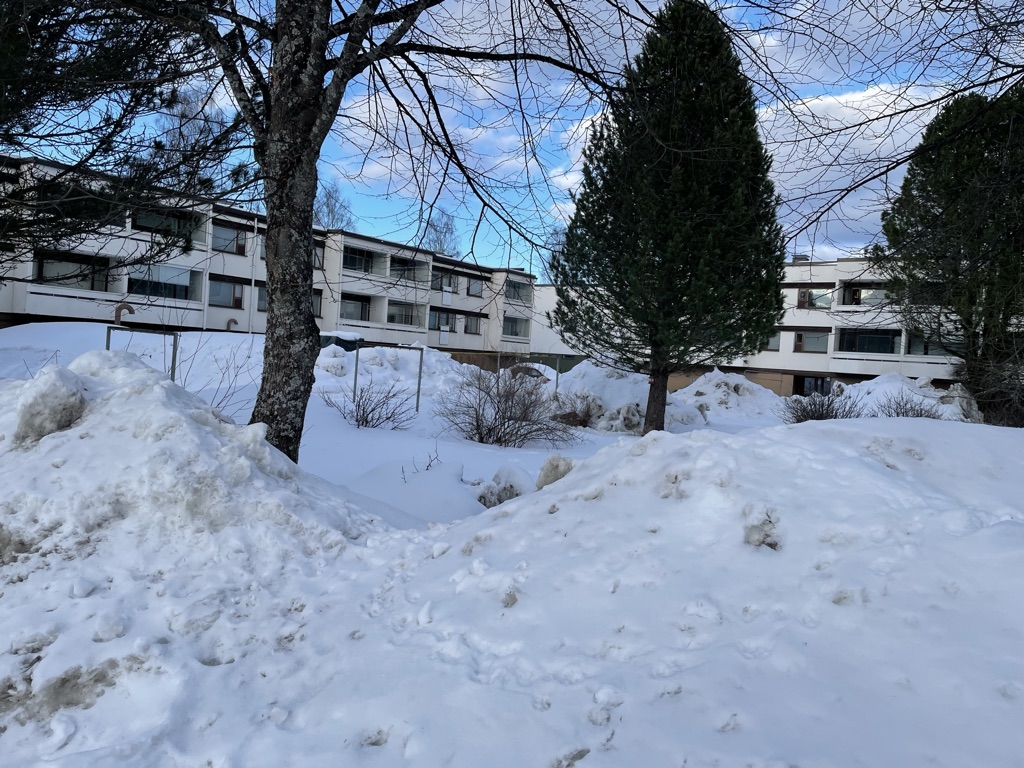
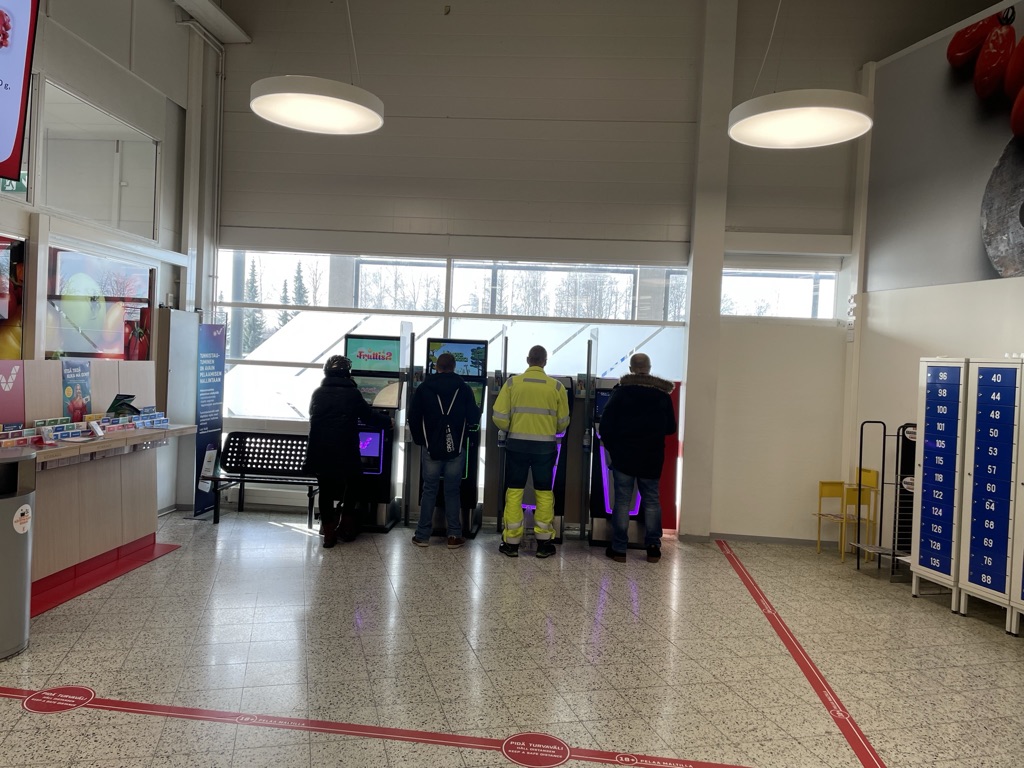
In the supermarket: Not a urinal
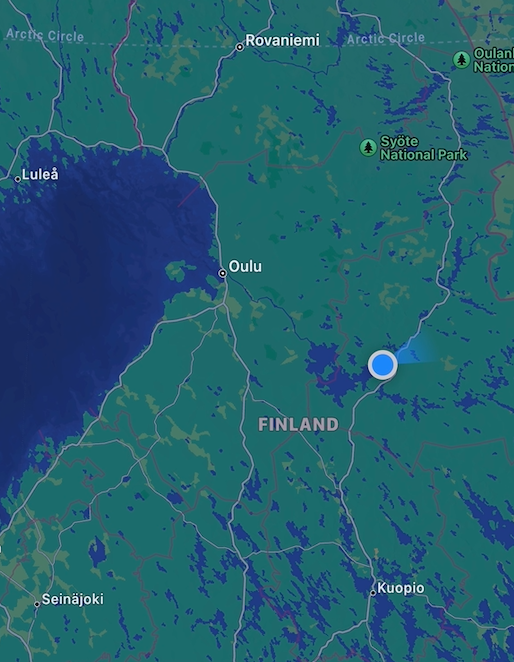
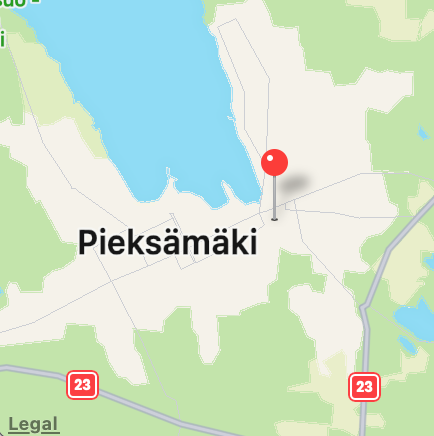
As this map shows – Pieksämäki is at the end of a large lake – like all the others, frozen.

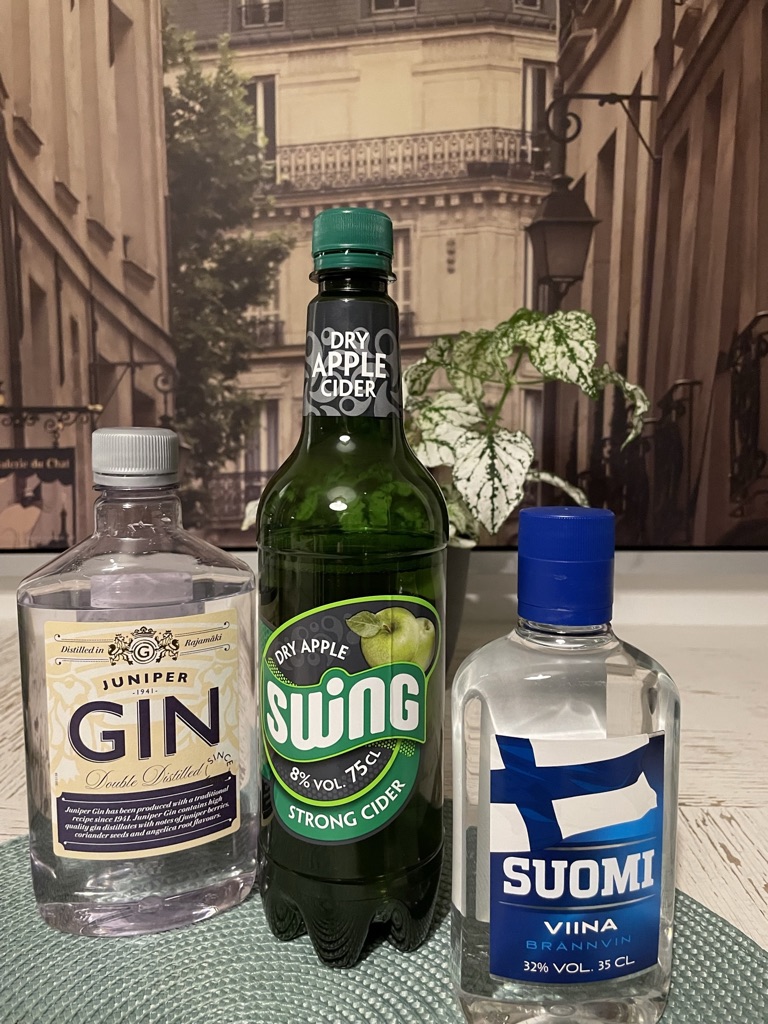
In the town we also discovered an official ‘liquor store’. All drink above 5% is sold through these stores (or restaurants, where consumption is only on the premises).
We bought a small collection of plastic bottled ‘liquor’.
The night was not so comfortable… but not due to alcohol consumption.
At one point, shortly after retiring, we were surrounded by flashing blue light….. not police, nor the Aurora Borealis….. but static electricity from the bed clothes….. ! It did not stop until the bedding was changed!
11th March
To Joensuu
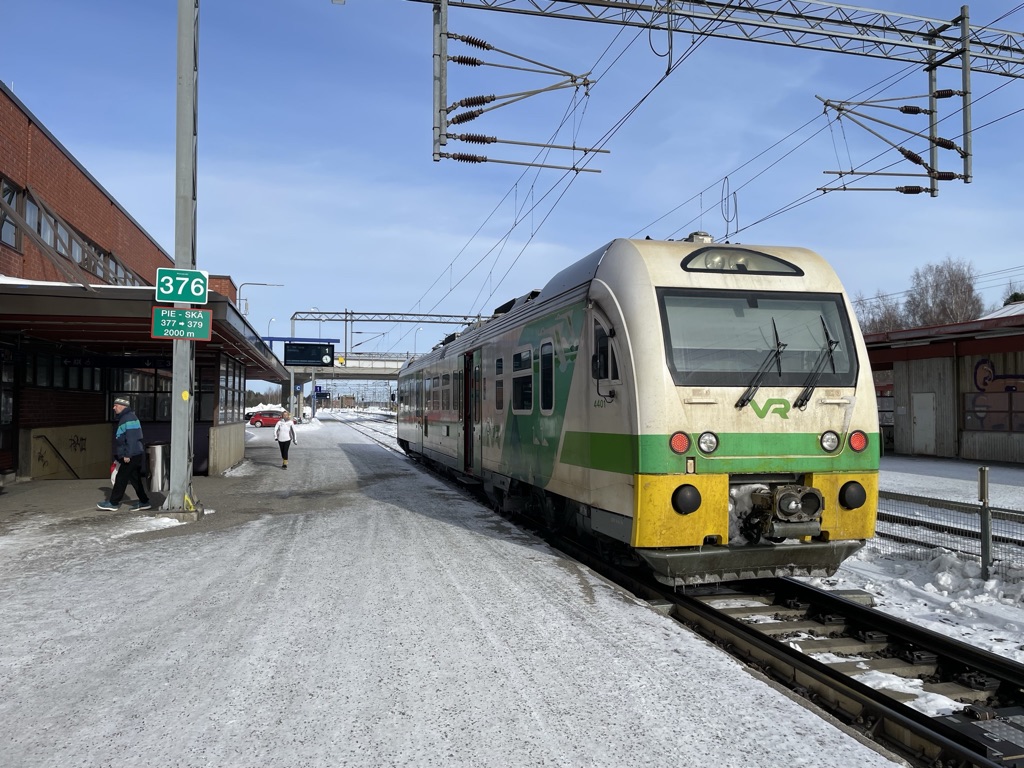
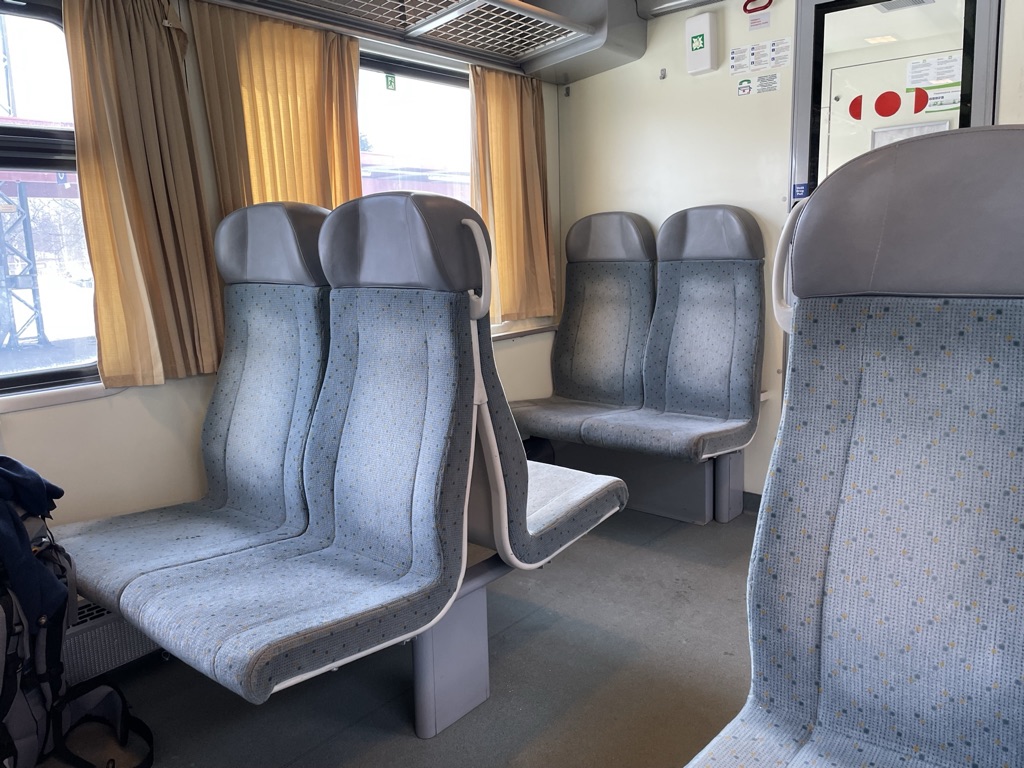
It seemed that the trip along a minor line would be in a largely empty train – but two long distance express trains resulted in every seat being occupied – with most people travelling the whole route.
We created a small but annoying problem by putting our wheeled cases on the rack. The people underneath suddenly found themselves in a gentle shower of water as the ice trapped in the wheels melted. The white tissue was a satisfactory solution…. But not before a degree of concern was expressed by those effected (including Jacqui). I was spared and remained blissfully unaware of the issue.
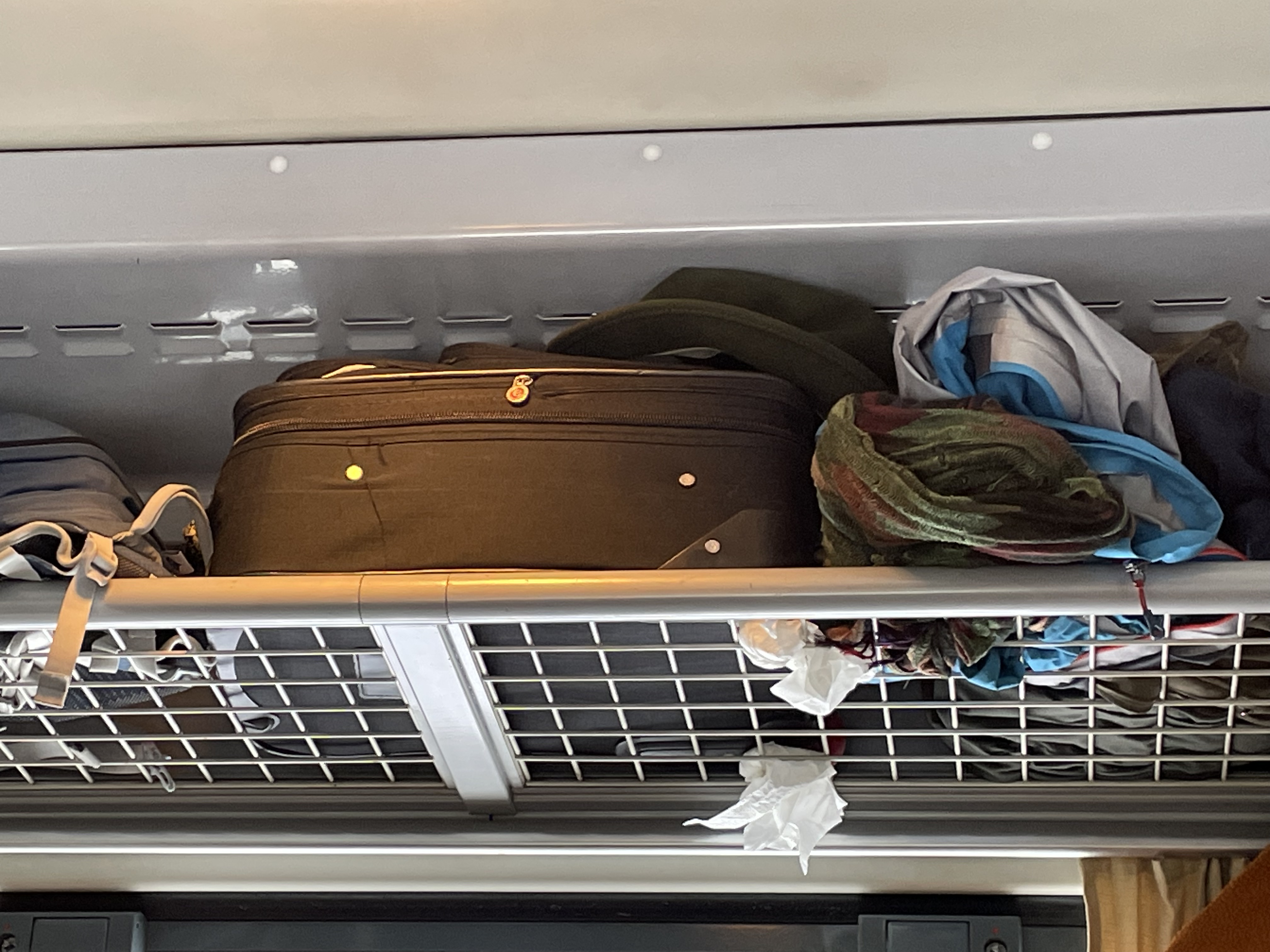
‘We don’t have this problem on our other trains’, said the passenger most effected, ‘the racks have a solid base’
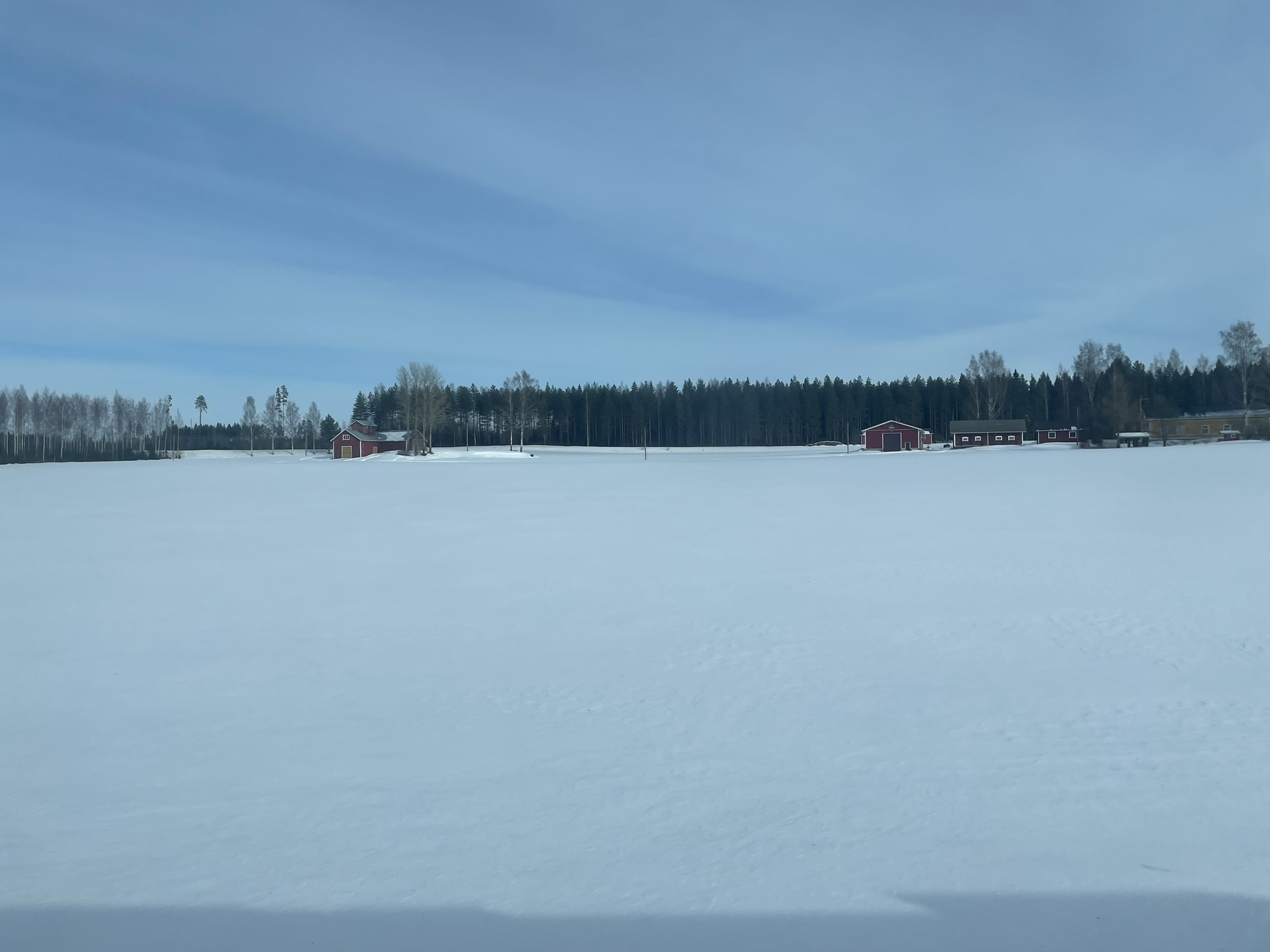
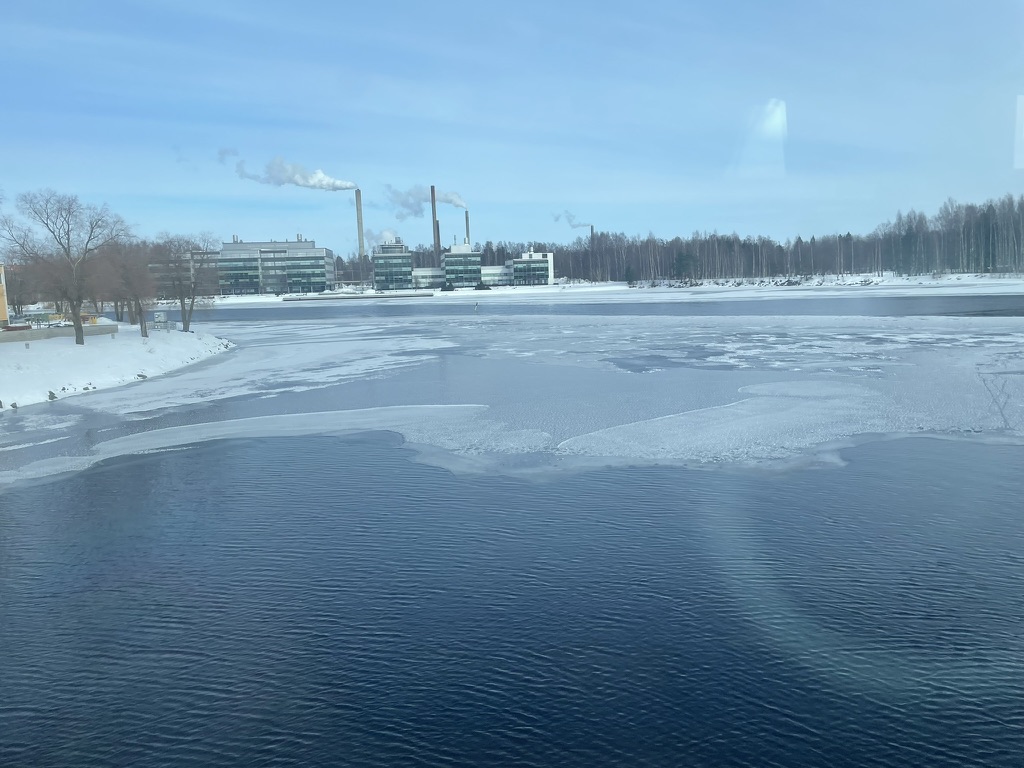
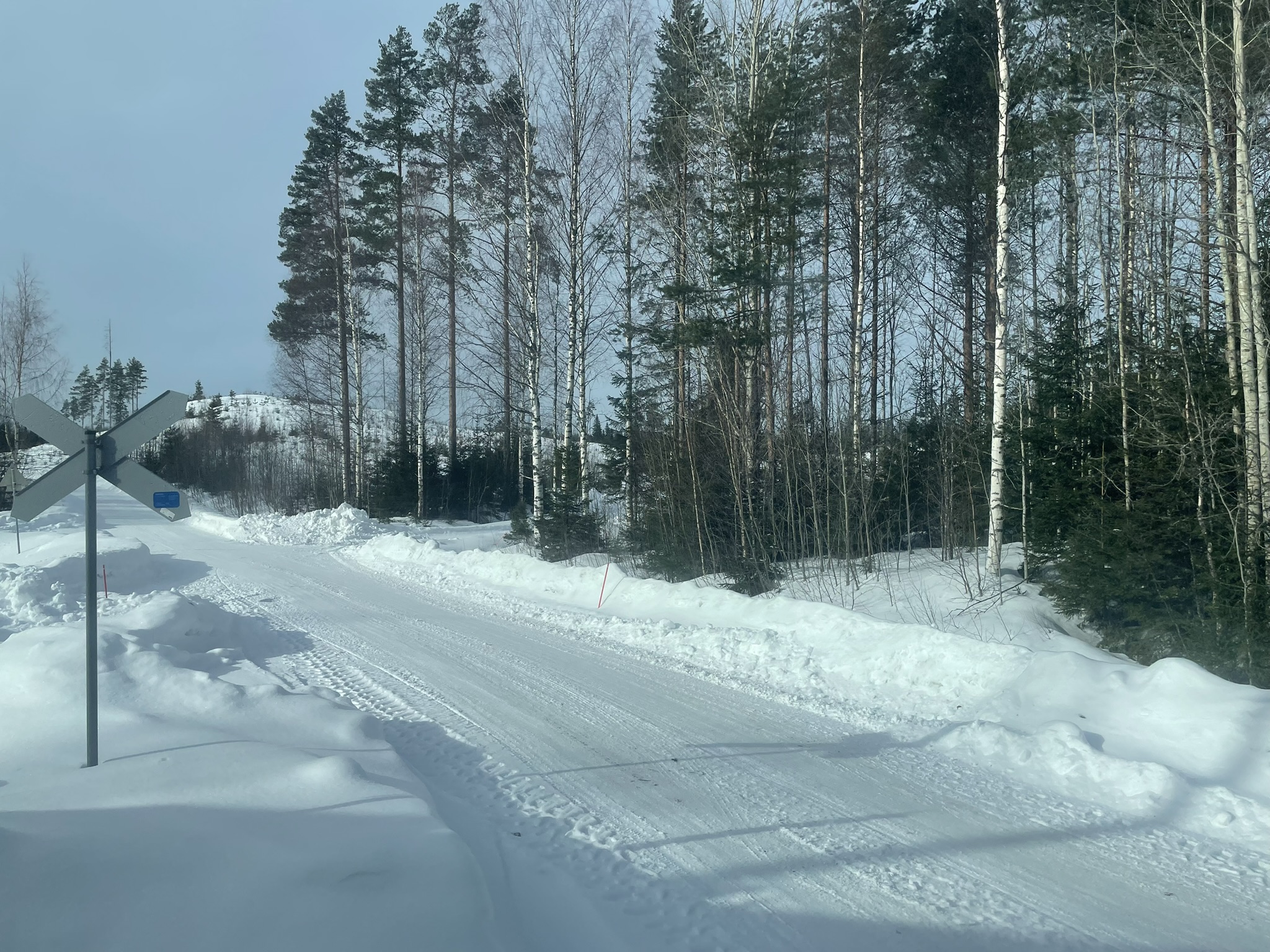

Joensuu
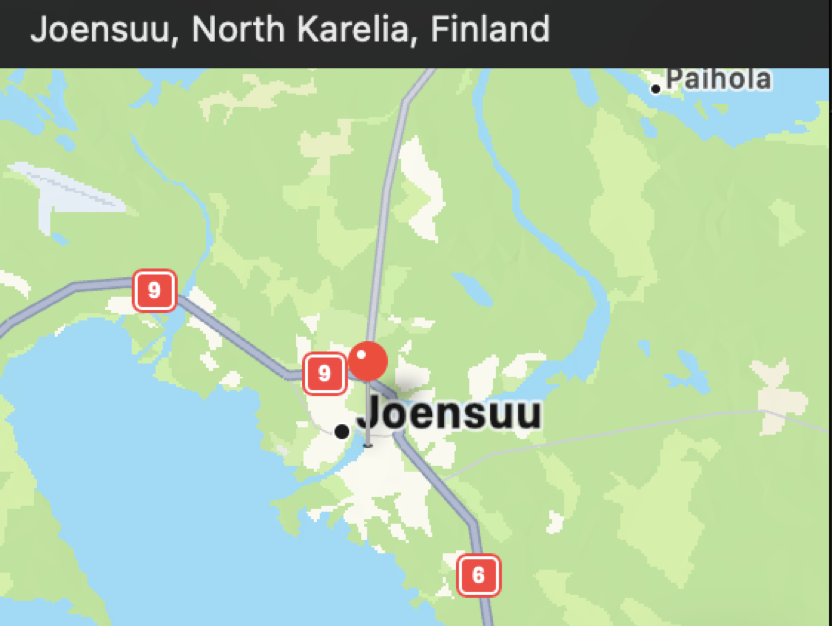
The most important town in eastern Finland – close to the border with Russia.
It was established by Czar Nicholas 1st in 1848.
Finland became an independent nation on 6th December 1917 following the chaos initiated by the Bolshevik revolution. Previously it had been an Arch-Duchy first of Sweden and after the C18th of Russia. Since its independence it has survived various crises (especially during WW2) and unlike other Nordic nations in the EU, had no difficulty accepting the Euro when it was introduced.
The original station building is presently fenced off as a new station is being constructed
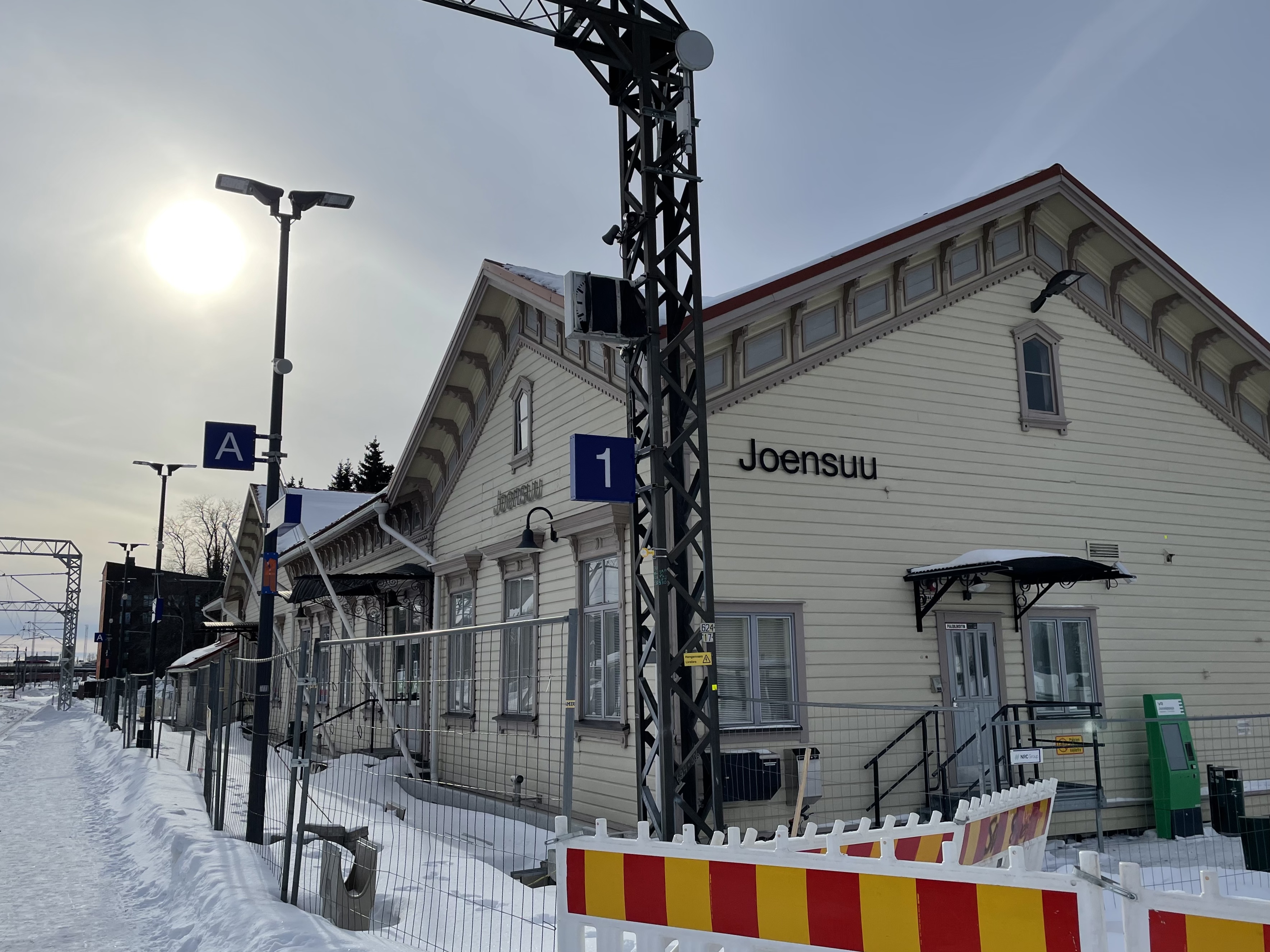
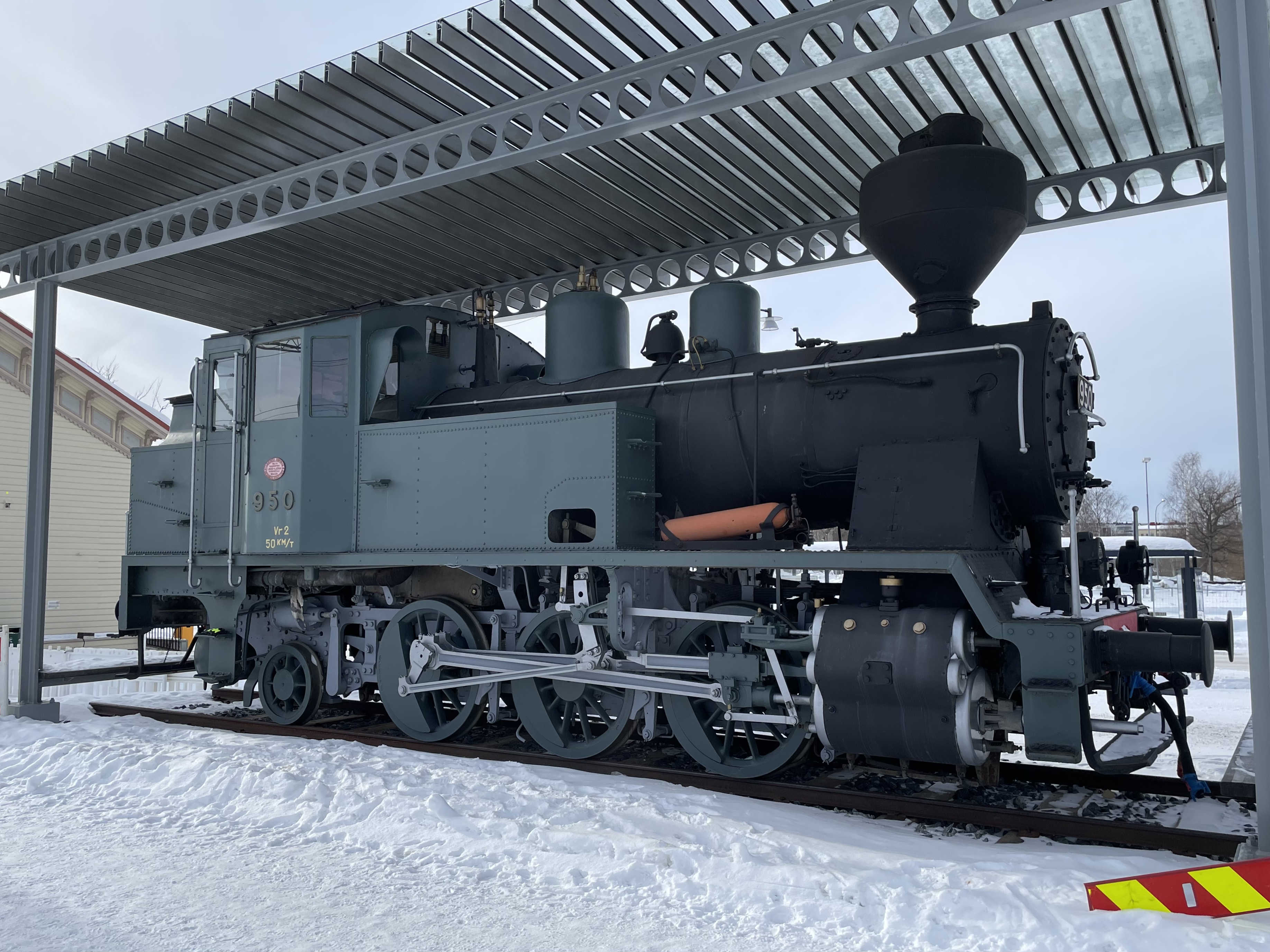
In many major stations keeping a specimen of a previous Age is popular
The city of Joensuu had most of its trade (logging timber) based around the major river & associated canal
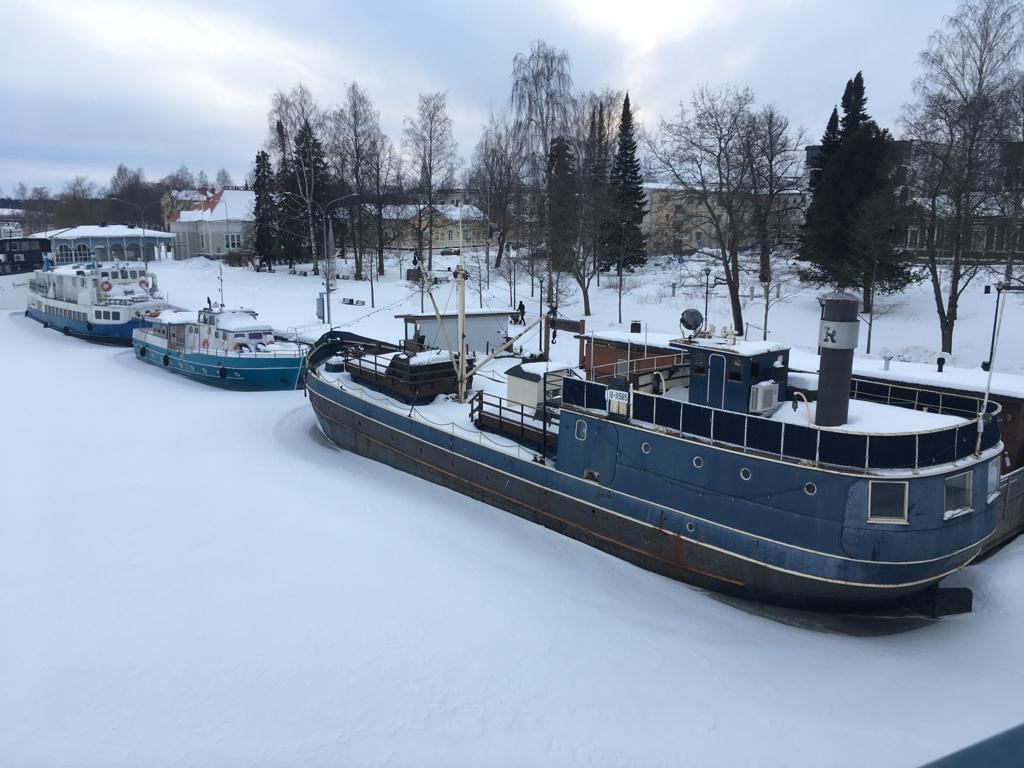
The timber industry was the major factor in its development & Joensuu is known as ‘The Forest Capital of Europe’.
It is the centre for The European Forest Institute (EFI)
‘an international organization established by the European states. It has 30 Member Countries, and c. 130 member organizations from 40 countries working in diverse research fields. EFI provides forest-related knowledge around three interconnected and interdisciplinary themes: bioeconomy, resilience and governance.’
Given that we’ve travelled through almost continuous forests (with frozen lakes as the large spaces between) & the amount of timber we’ve seen being processed & moved, it is unsurprising that a city in Finland has positioned itself as a ‘forest capital’.
As well as the institute it also has the world’s largest forest machine factory.
https://www.deere.co.uk/en/forestry/
Its present economic life is closely related to its importance as a University city with older buildings situated near the river
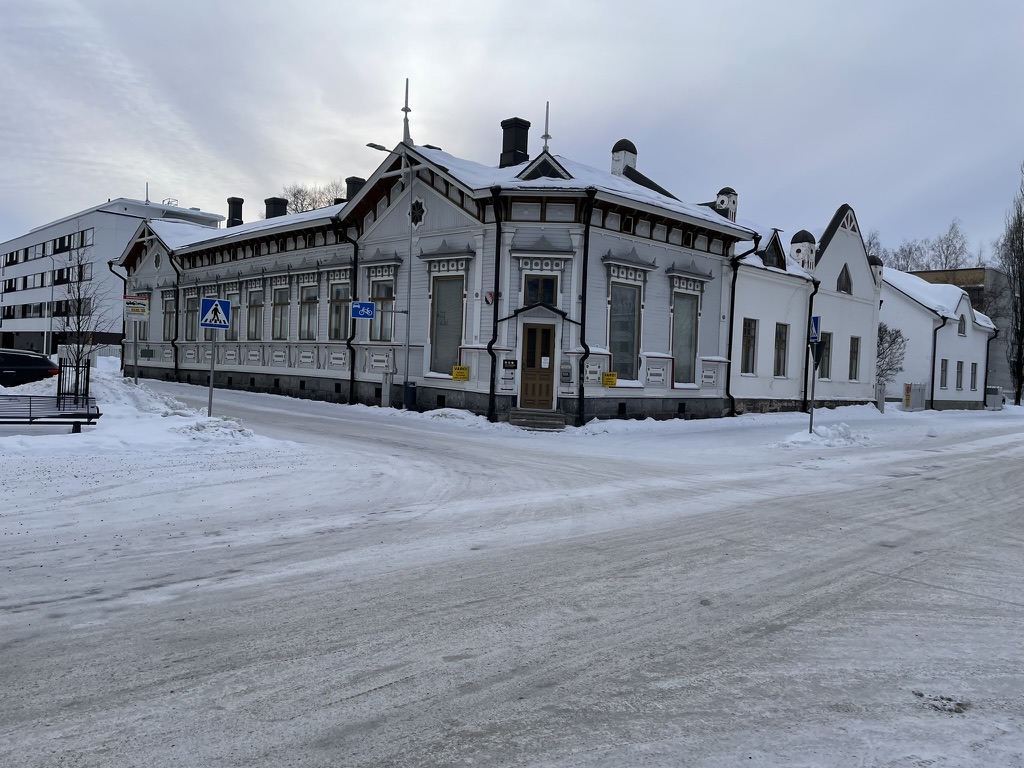
Some areas in the town have streets heated from below ground
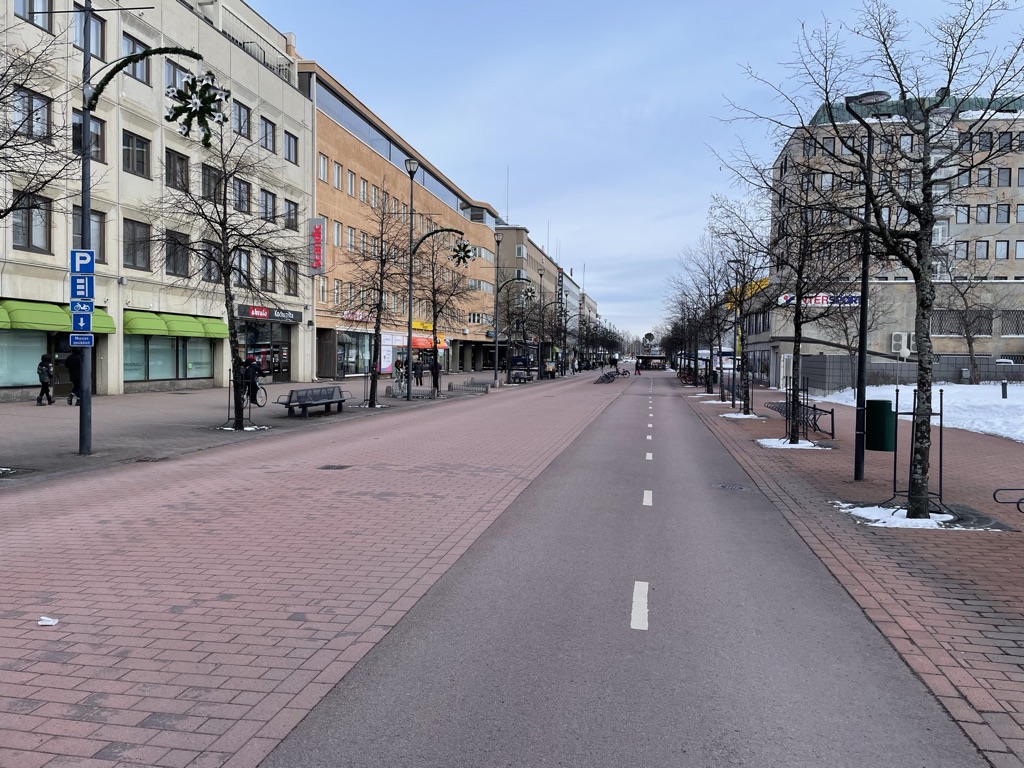
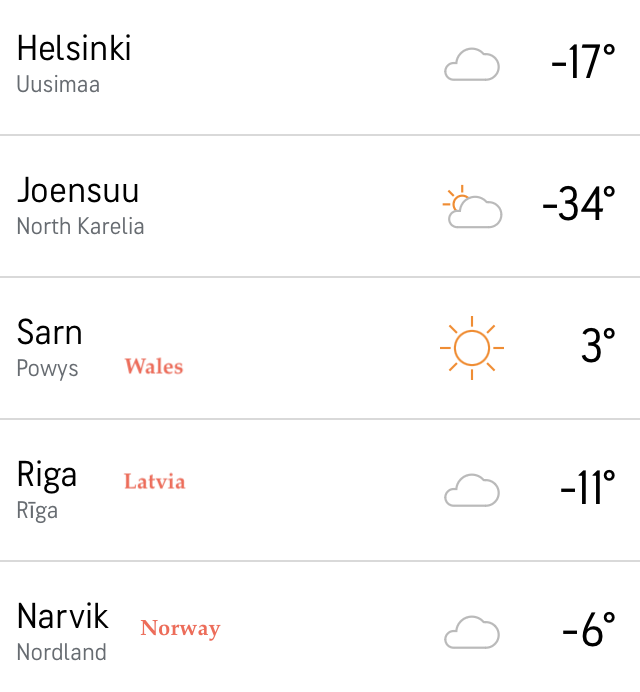
It is very cold (much colder than western/southern Finland) –
People are not inclined (!) to take gentle strolls around parks & city centres (even in wet, windy Britain seeing people strolling, walking dogs, taking a quick outdoor lunch break is quite normal in winter).
One consequence is that those with various personal difficulties become more obvious. This we saw in the empty but warm sections of a mall.
The individual pictured was sitting opposite a group who we noticed in various places in the town – and included the sharing of ‘substances’ amongst younger members & a couple of older drunks who had ‘greeted’ us as we walked to our hotel.
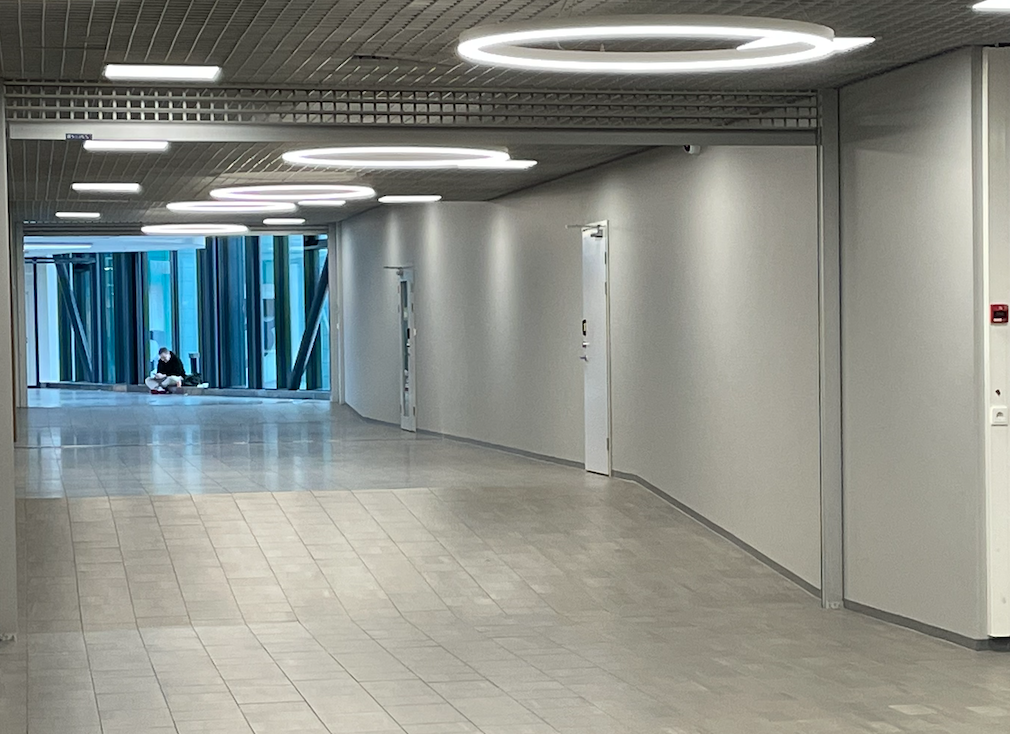
Sunday 12th March
Overnight the weather changed and a light, dry but persistent snowfall began.
Everything was quickly covered

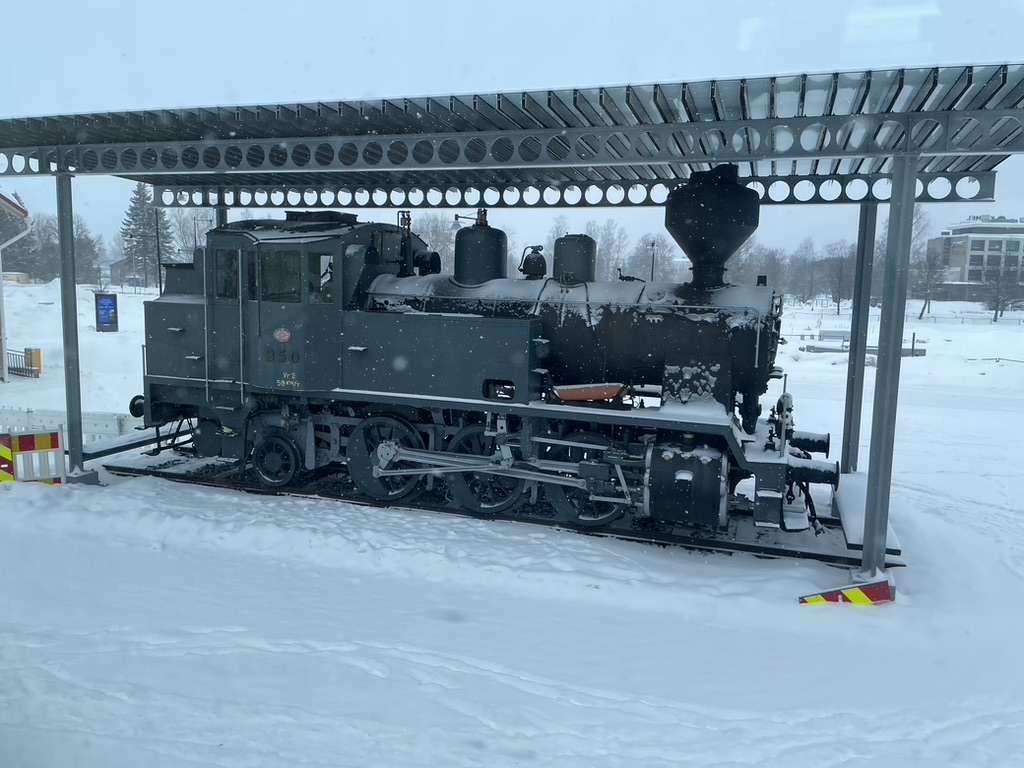
including historical relics
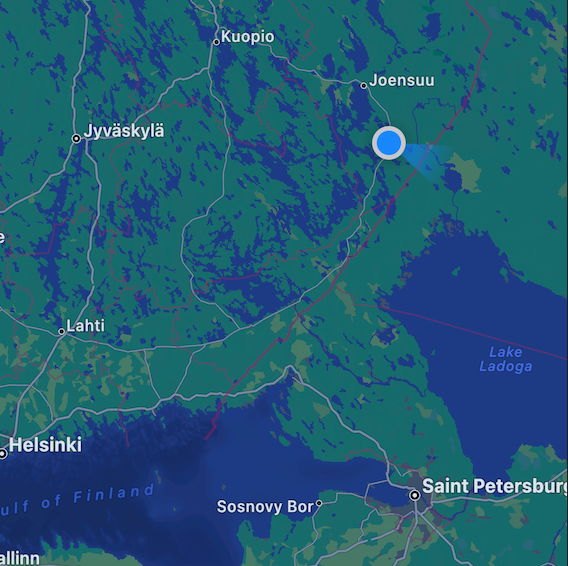
Joensuu to Tampere through Helsinki
The route follows the white line and at one point is very close to the border of Russia (thicker red line)
The single freight-only rail link with Russia that was being maintained (despite the sanctions applied since Mr Putin’s invasion of Ukraine), closed in April 2023.
Looking into Russia, on the other side of the frozen lake.
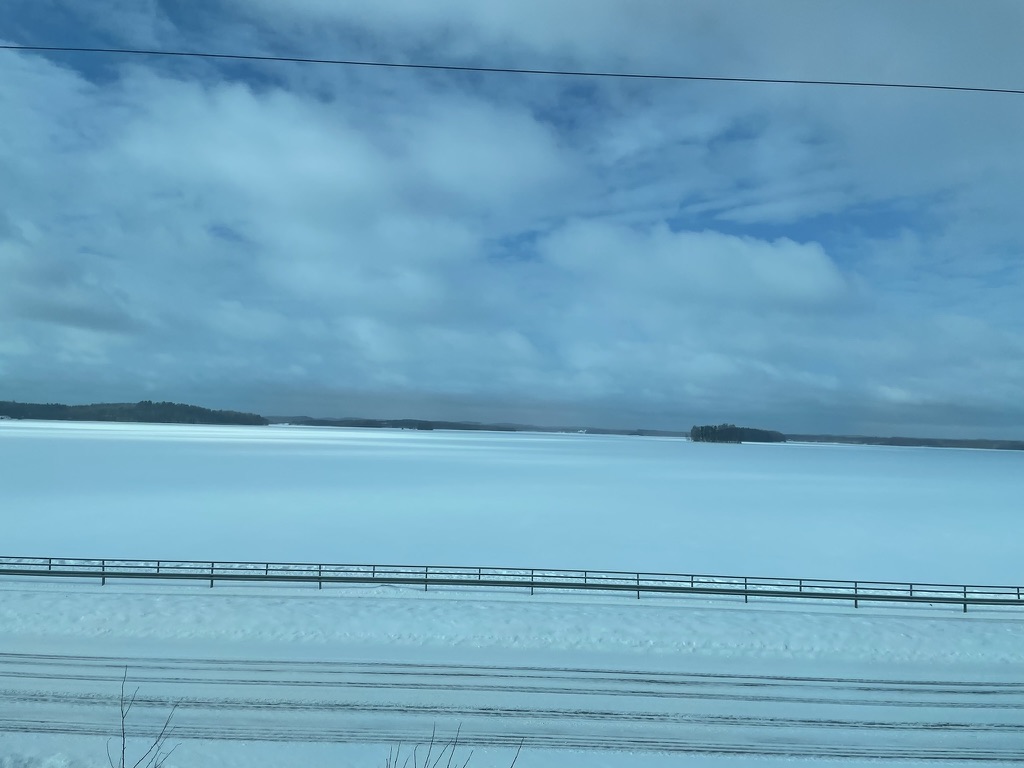
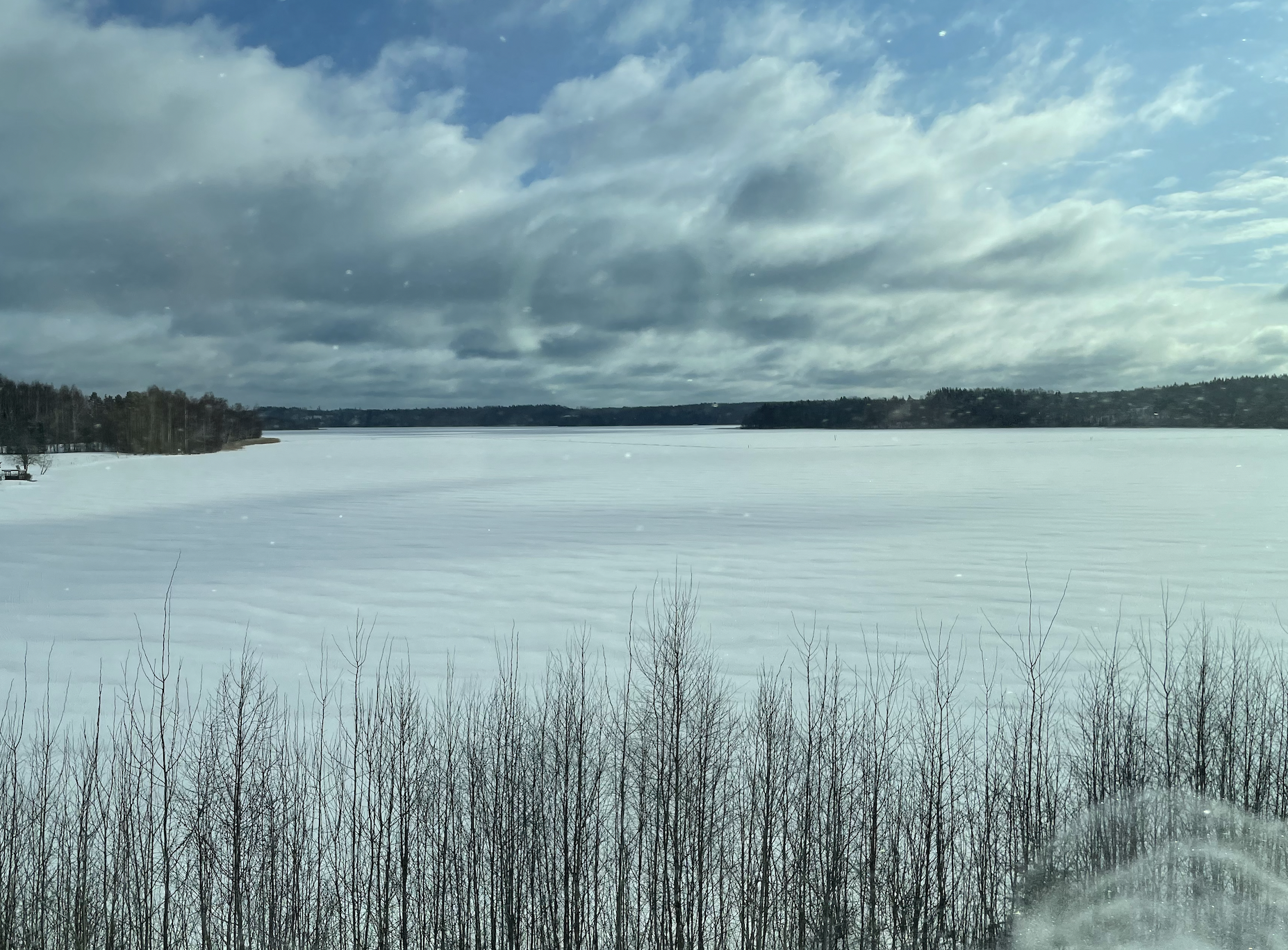
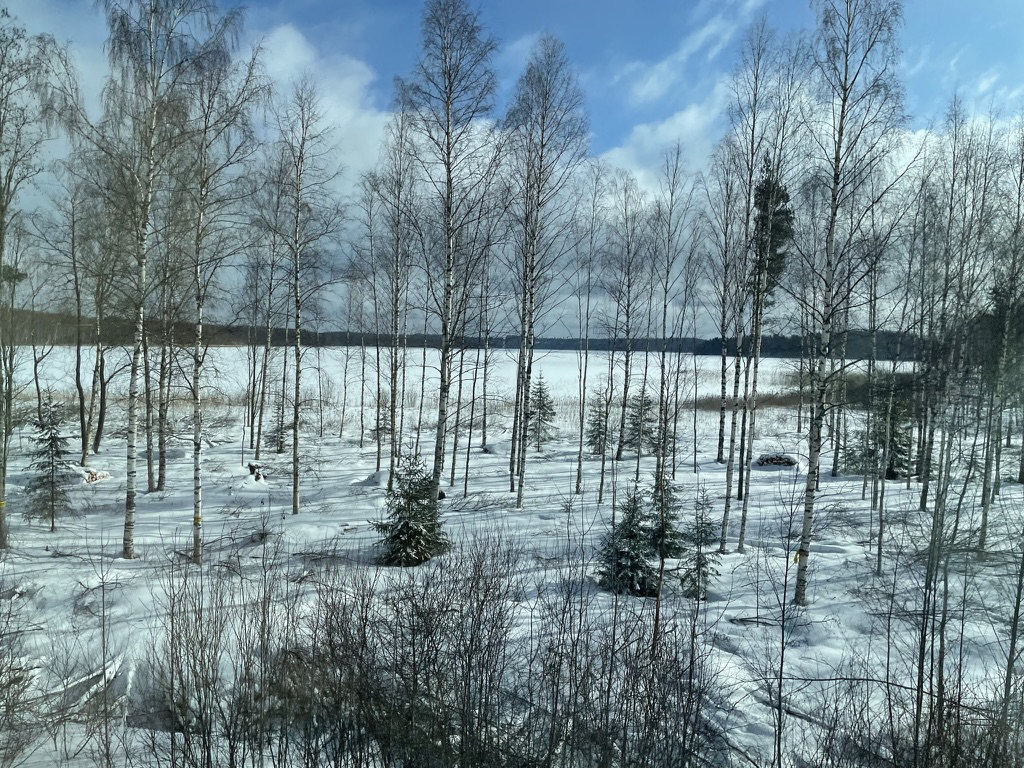
The Border, less than 600 metres away…. along the lakeside.
Helsinki: 310 Kms, St Petersburg 313 kms
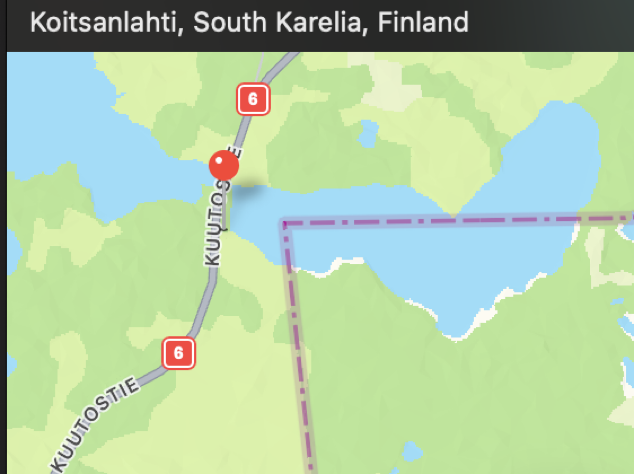
Border territories can become ‘areas of concern’.
The old C19th statement :
“Svenskar äro vi icke, ryssar vilja vi icke bli, låt oss alltså vara finnar.”
has a new resonance in the C21st…. and Finland seeks security in NATO.
“Swedes we are not,
Russians we do not want to become,
let us then be Finns”
In Joensuu I asked various people what they considered Finland to be & ‘where’ is was situated:
- Scandinavia
- Baltic
- Somewhere else – & if so ”Where?”
The answer from all was clear
‘Nordic’
Very understandable.
Throughout most of this journey we will be travelling in lands where the Putin led invasion of Ukraine has created a deep concern… and remains a continual presence.
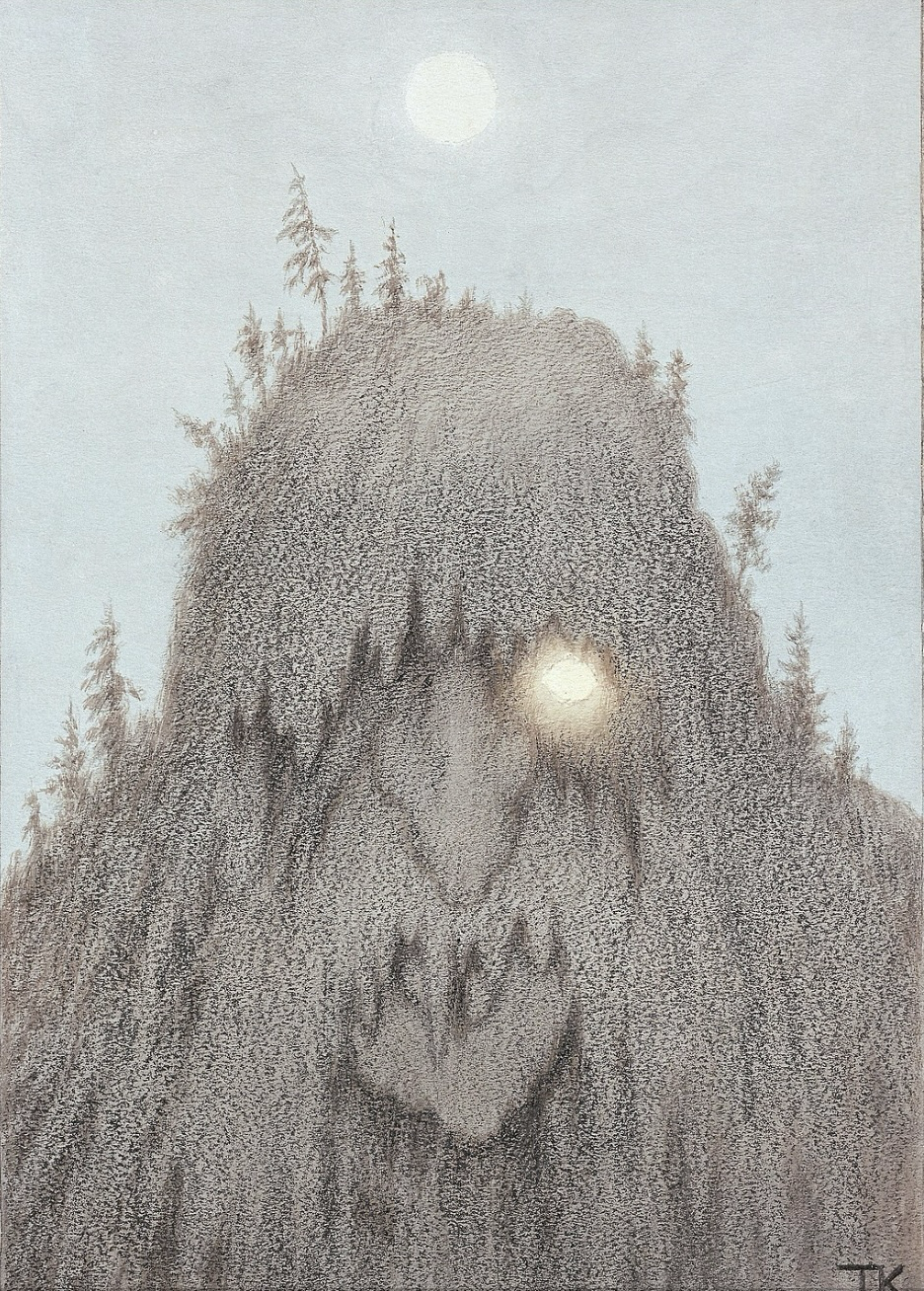
The Unpredictable Troll
just over the border
in the corner of the mind.
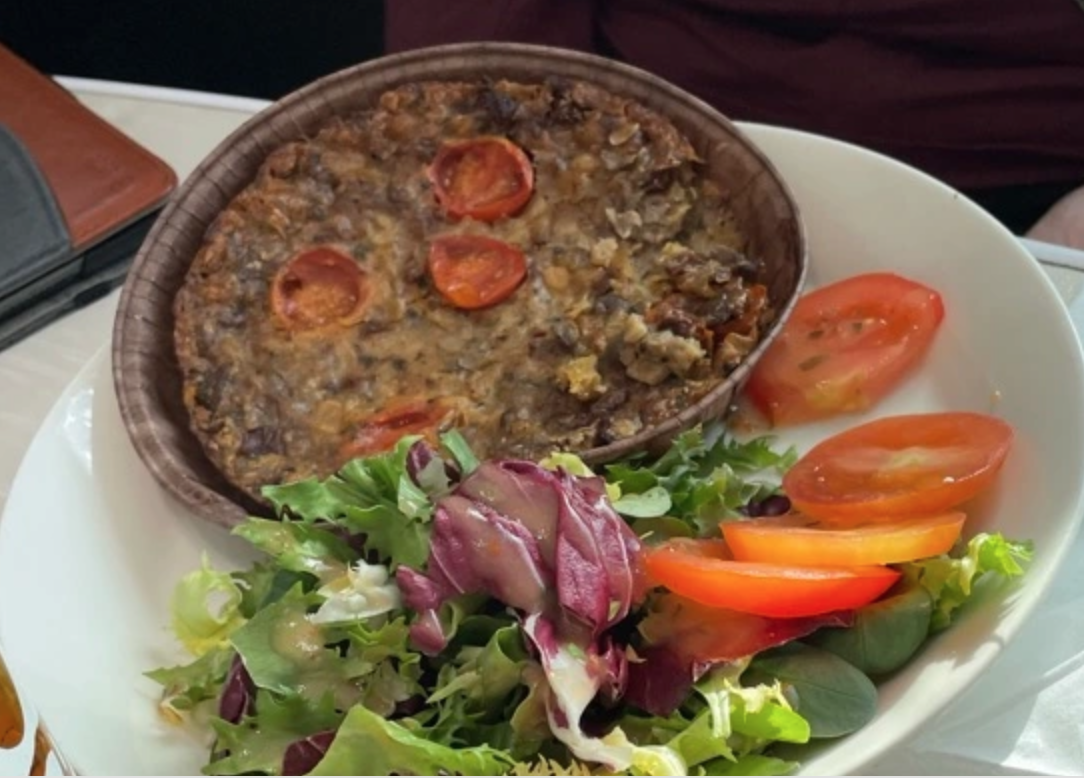
Lunch in the dining car:
A Vegan Risotto
…..and after hesitation & much humorous persuasion by other passengers
a Finnish meat pie with sausage

Thus fortified we continue our speedy journey to Helsinki
To Helsinki: Intro
Our journey: an exploration with New Encounters – social, cultural & historical realities of the places through which we travel.
The realisation grew slowly – beginning immediately after arrival in Norway as we walked passed the architecturally distinctive old telegraph office in Oslo….
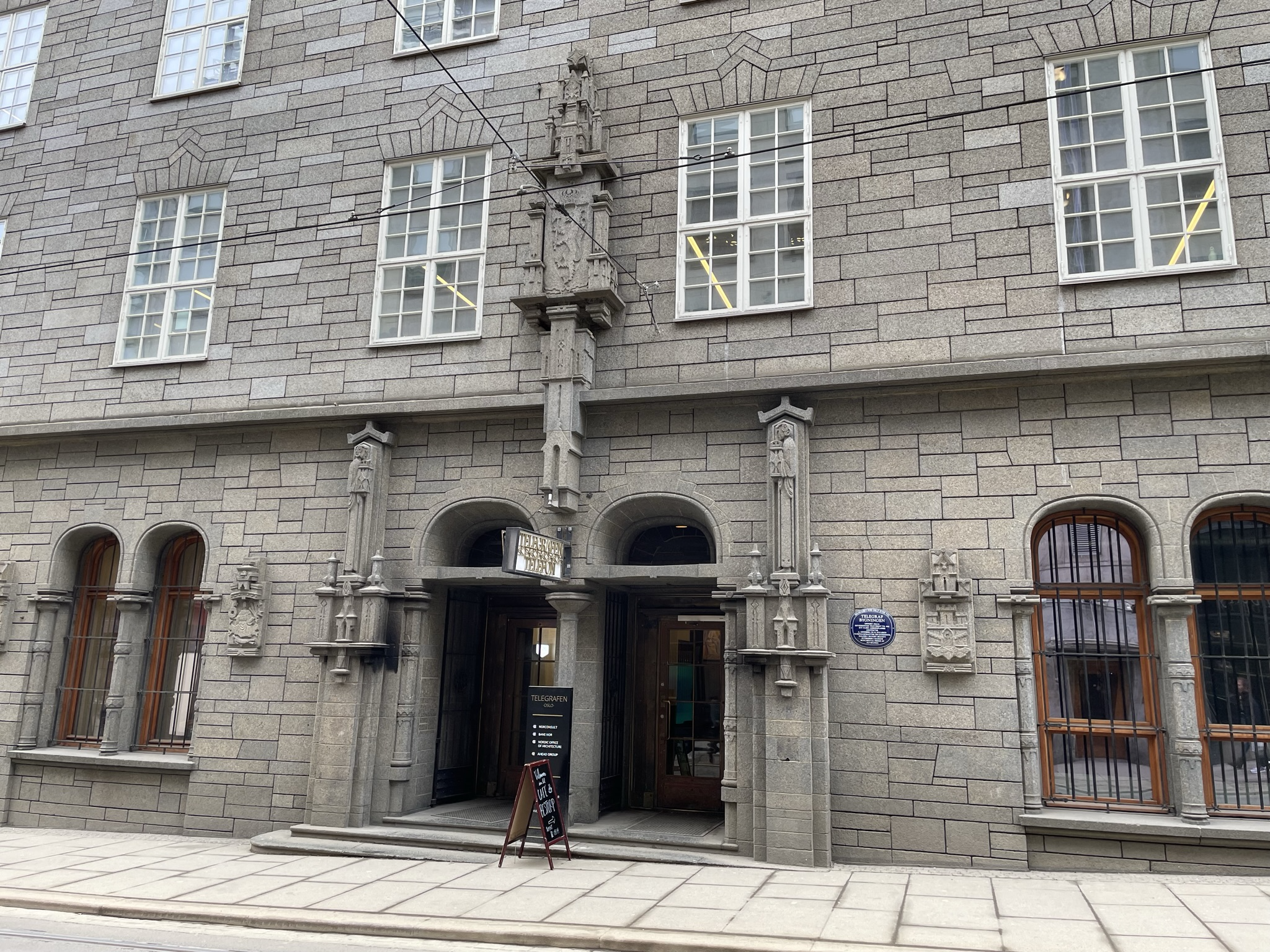
… then continuing with the Sami demonstration.
On entering Finland at Kemi station we find a monument marking an aspect of Finnish history.
Finland – part of the Swedish and then Russian Empires.
A distinctive ‘voice’ developing through the Fennoman movement in C19th
“Svenskar äro vi icke, ryssar vilja vi icke bli, låt oss alltså vara finnar.”
“We are not Swedes,
We do not want to be Russians,
So let’s be Finns.“
Expressed in various cultural forms with the compositions of Jean Sibelius marking the complexities that existed in the region.
Sibelius’s interest in Russian music is to tell a… complicated story of a small nation’s engagement with its bigger imperial neighbor not through the well-worn narrative of resistance and rebellion but through that of a creative and often ambiguous stimulus.
http://assets.press.princeton.edu/chapters/s9592.pdf
The rise of ‘nationalism’ in the C19th created movements for independence – from Ireland & across the Continent. All forms of artistic endeavour encouraged a ‘national mood’
Regions with their distinctive languages, had a sense of ‘difference’ from the empires into which they were placed (‘Great’ Britain, Austro-Hungary, Russia)
The Old Empires suffer regret – sometimes the consequences are dangerous & disruptive, sometimes, disastrous.
A sense of loss, fed by nostalgia for an imagined past. Manipulated by self-serving politicians.
Present in those who support Putin’s military invasion of Ukraine.
Helsinki:
Though Finland had been part of the Swedish and then Russian Empires it developed a distinctive ‘voice’, expressed in various art forms. The most obvious (ie easiest to observe) is the public architecture created during the late C19th. The style is ‘Nationalist Romantic’.
There is a relationship with other ‘Nordic’ styles of that period which are sometimes regarded as being part of the Arts & Crafts movement & ’Art Nouveau family’.
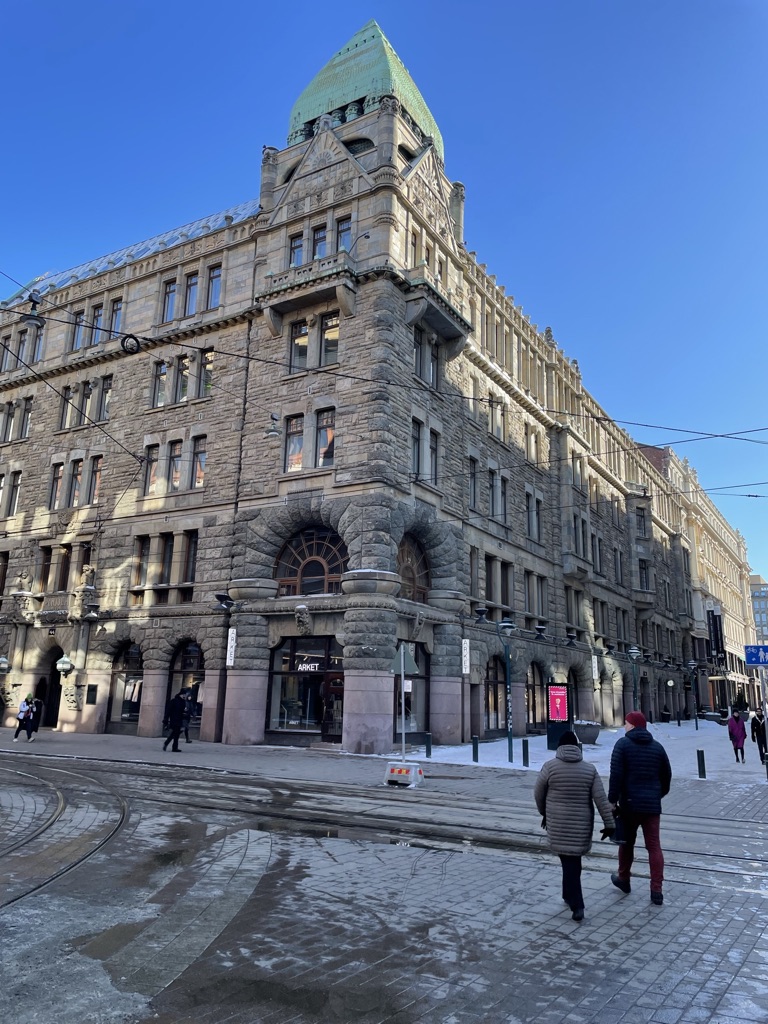
The Joys & Puzzles of uninformed random exploration.
A question
What was this place – with its bears, pillars (that are trees) & jovially frightening images?
A Diversion
The journey within a journey
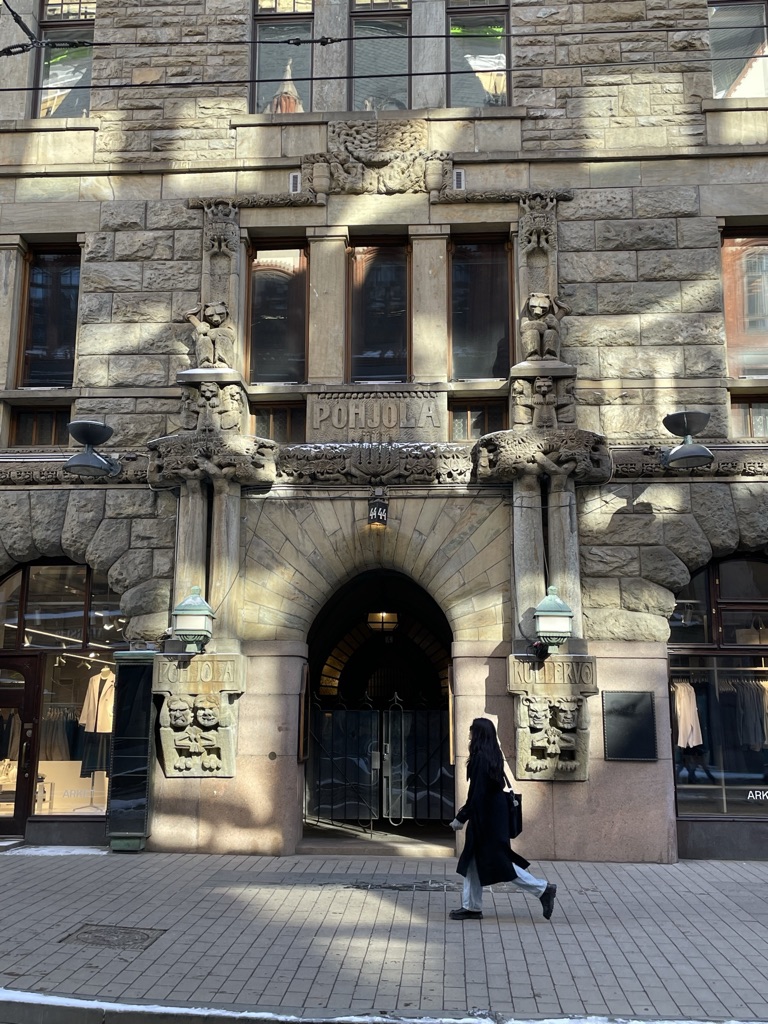
It seems to be a clothes shop – but was that what it was first used for?
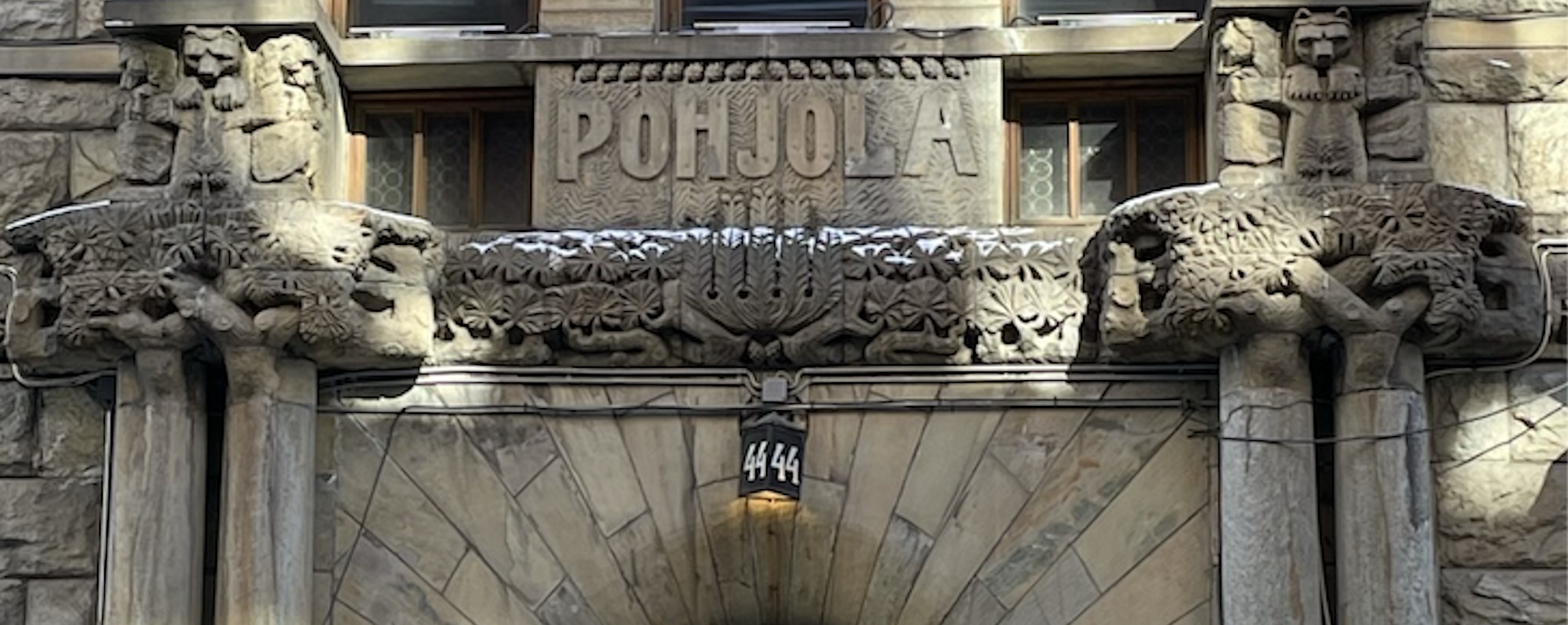
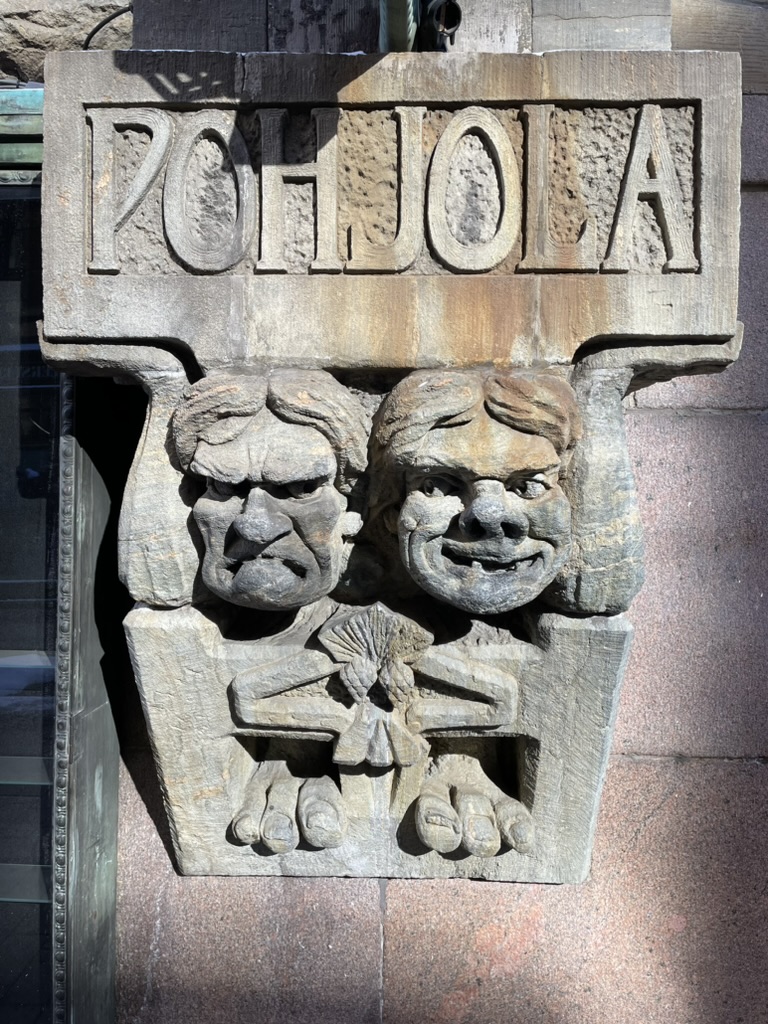
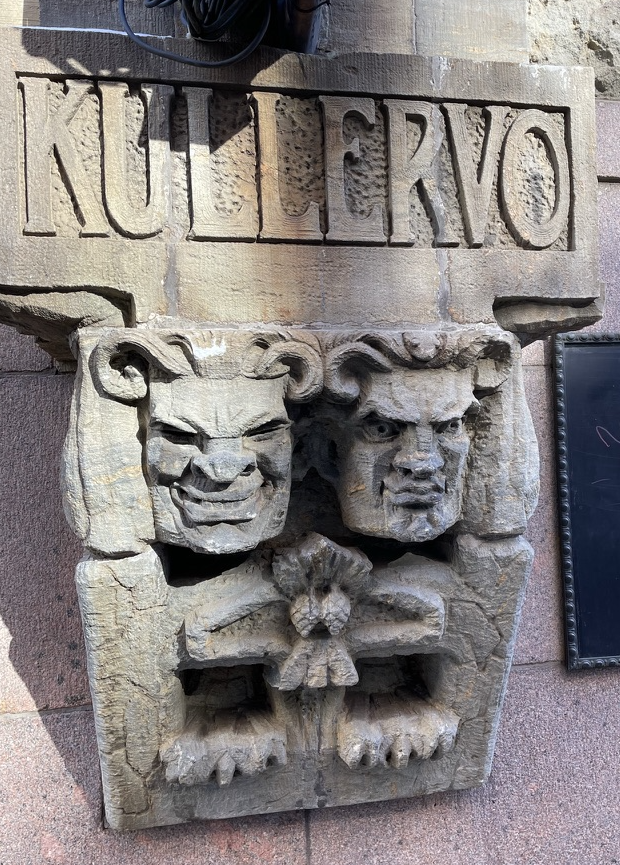
The sculptures of the building relate to the Kalevala & become an introduction to the Finnish National Epic – a collection of ancient stories, originally sung.
The Kalevala
…compiled by Elias Lönnrot from Karelian and Finnish oral folklore and mythology, was intentionally shaped & with ’political’ purpose (in the broadest sense) & became the Finnish National Epic
“The Kalevala was instrumental in the development of the Finnish national identity and the intensification of Finland’s language strife that ultimately led to Finland’s independence from Russia in 1917” (https://en.wikipedia.org/wiki/Kalevala)
They are of origins, of creation, Gods & heroes, magicians & malevolent beings. They are both particular (to a northern land and people) & ‘universal’ providing hope and error, effort, attainment & glory and examples of horrifically dark & terrifying aspects of human cruelty & its consequent impact.
Darkness is as a major element.
Pohjola
described in an C18th description as
Yttersta Norden, beskrives såsom en mörk och förfärlig ort. Tartarus & ultima Thule.
‘the most extreme North … a dark and terrible place. Tartarus and Ultima Thule’.
In The Kalevala “Pohjola mainly appears as the home of women whom the male heroes, from the land of Kalevala, seek as wives.”
https://en.wikipedia.org/wiki/Pohjola#cite_note-Ganander-1789-2
Pohjola: also the place where major elements of the Epic are literally ‘forged’.
The decorative sculptures refer to this action
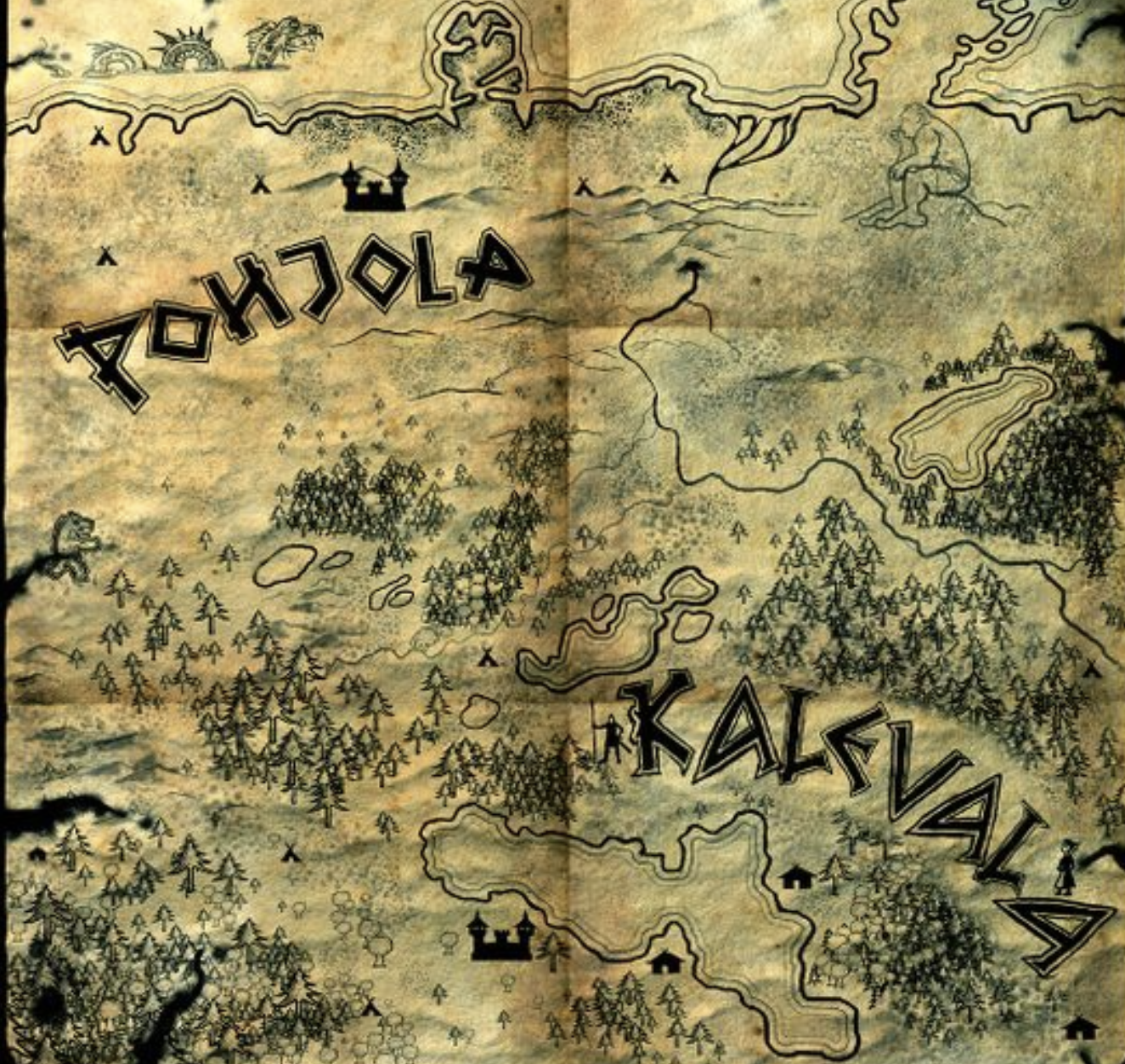
Ilmarinen, “ the only skilful blacksmith” is persuaded to travel north &
“Forge … the magic Sampo,
Forge the lid in many colors,”
The sculptures concern an incident on his journey
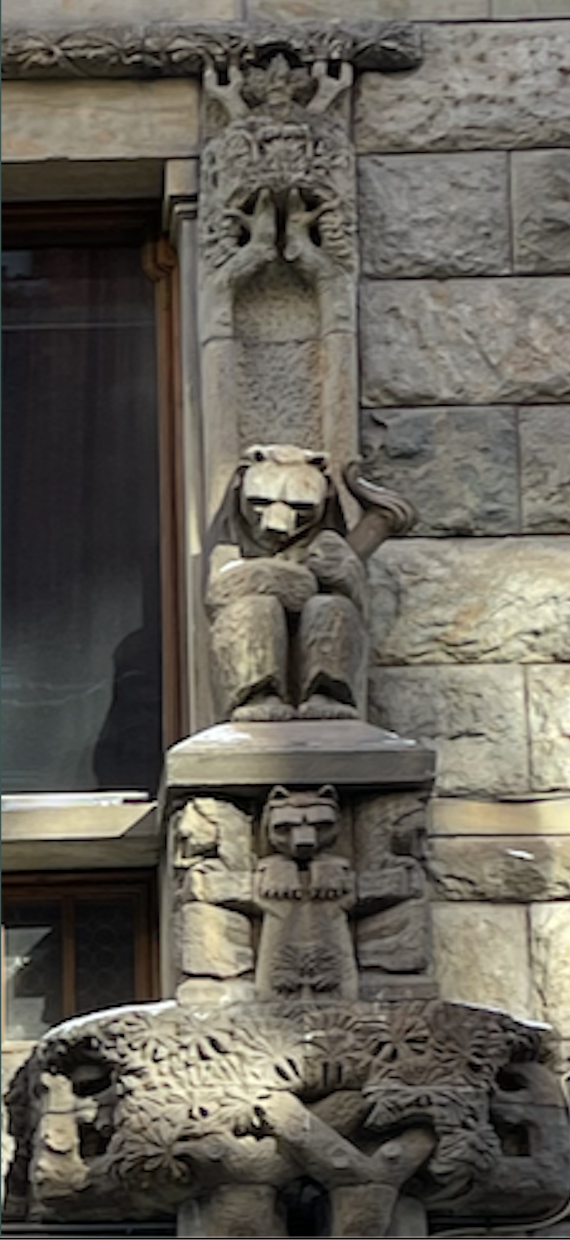
“Ilmarinen hastens forward
That he may behold the wonder,
Spies the Bear within the fir-top,
Sitting on its emerald branches,
Spies the gleam of golden moonlight….
“Ilmarinen, full consenting,
Straightway climbed the golden fir-tree,
High upon the bow of heaven,
Thence to bring the golden moonbeams,
Thence to bring the Bear of heaven,
From the fir-tree’s topmost branches.”
Eventually the “Sampo” is forged. It was intended for the ‘Daughter of the Northland, honoured by land and water’ but was stolen by her mother “Louhi, hostess of the Northland”.
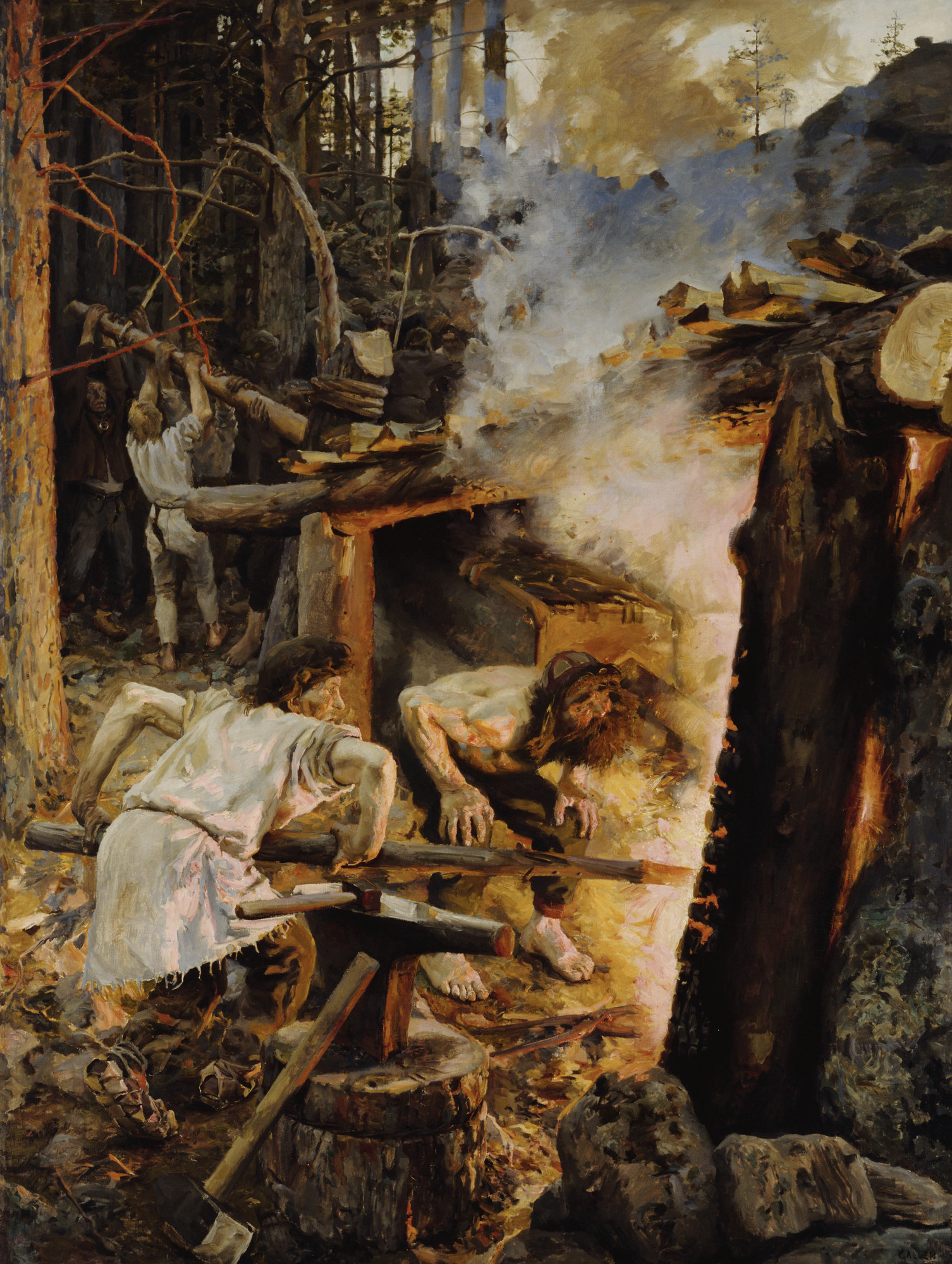
“the artist, Ilmarinen,
Hither comes from Kalevala,
Here to forge for us the Sampo,
Hammer us the lid in colors.”
The Sampo seems to have been regarded as having magical properties related (in ancient terms) to present day ‘health, wealth & happiness’ aspirations.
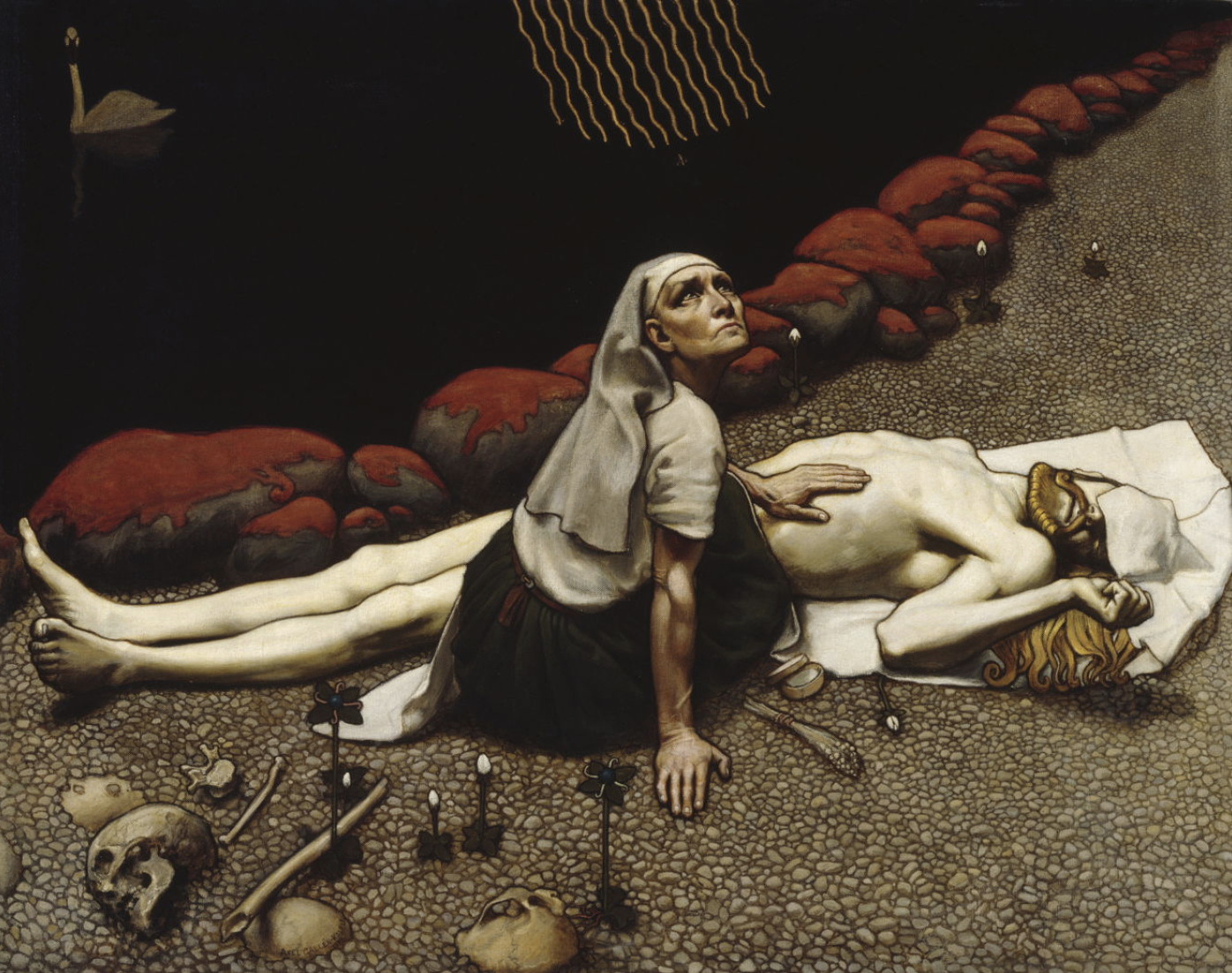
Kullervo: an ‘an ill-fated character’
Of the many magical characters in the Kalevala, Kullervo has, maybe because of his personal ‘complexities’, became an almost obsessively fascinating character.
Kullervo gains considerable magical powers. He was severely harmed as a child, (including attempted crucifixion), commits incest (causing suicide of his sister) & ultimately takes vengeance before committing suicide.
‘Fatherless, the magic infant,
In the cradle of attention,
To be rocked, and fed, and guarded;
But he rocked himself at pleasure,…
…
Kicks in miracles of power,
Bursts with might his swaddling garments;
…
Knocks his cradle into fragments,
Tears to tatters all his raiment,…
…
“When my form is full of stature,
When these arms grow strong and hardy,
Then will I avenge the murder
Of Kalervo and his people!” ‘
Kalevala: Rune XXX1. Kullerwoinen Son of Evil
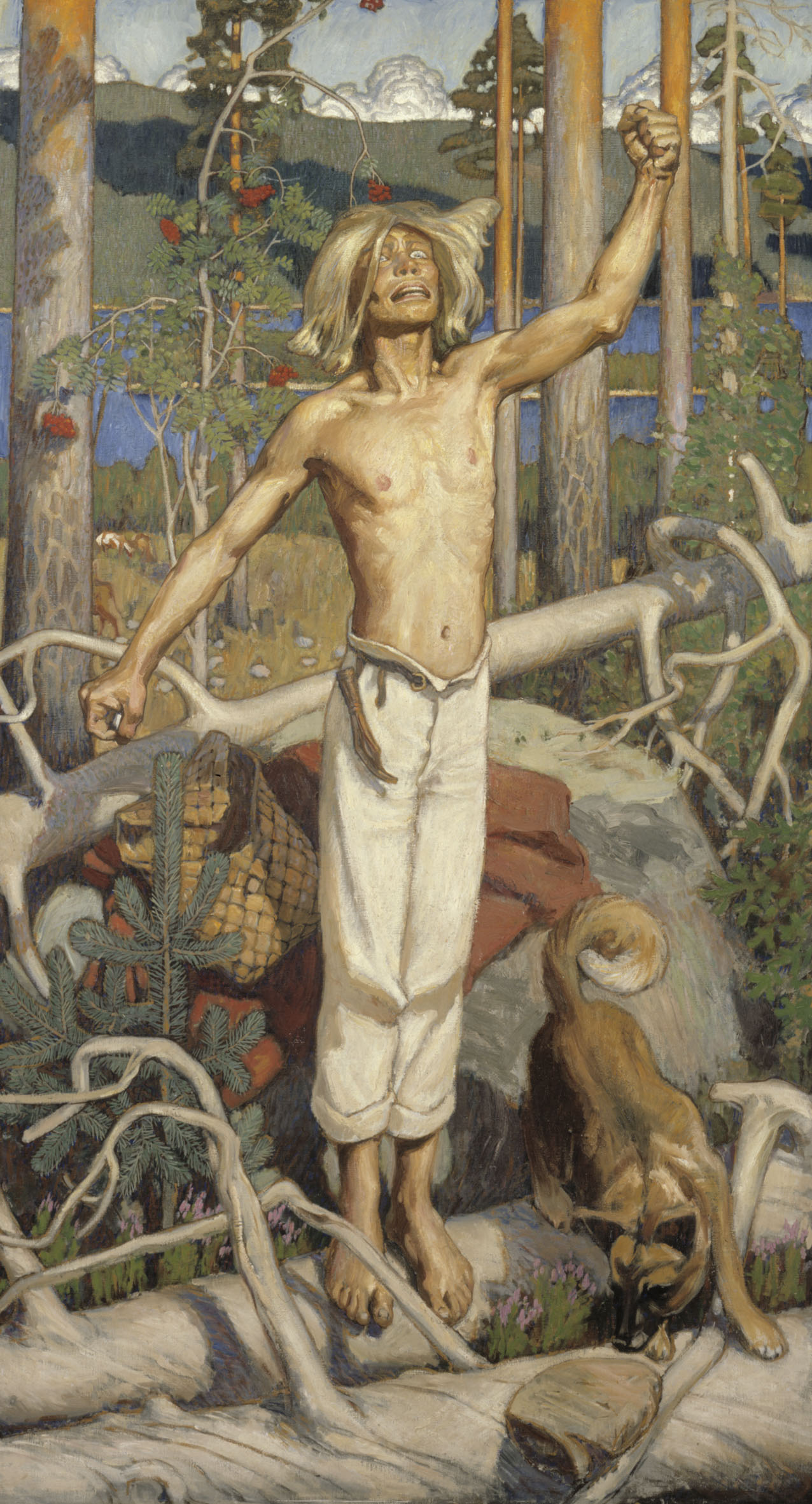
Kullervo’s Curse by the Finnish painter Akseli Gallen-Kallela from 1899. It depicts a scene from the Kalevala in which Kullervo curses beasts from the woods to attack his tormenter, the Maiden of the North.
https://en.wikipedia.org/wiki/Kullervo
Kullervo creates his end as intentionally as he created other acts of destruction.
Though clearly an ‘Epically Presented Life,’ there is an underlying sense of harsh reality to the story
Accompanied by his (appropriately black) ‘watch-dog’ he chooses the ground where his sister died
“Finds the turf itself is weeping,
Finds the glen-wood filled with sorrow,
Finds the heather shedding tear-drops,
Weeping are the meadow-flowers,
O’er the ruin of his sister.”
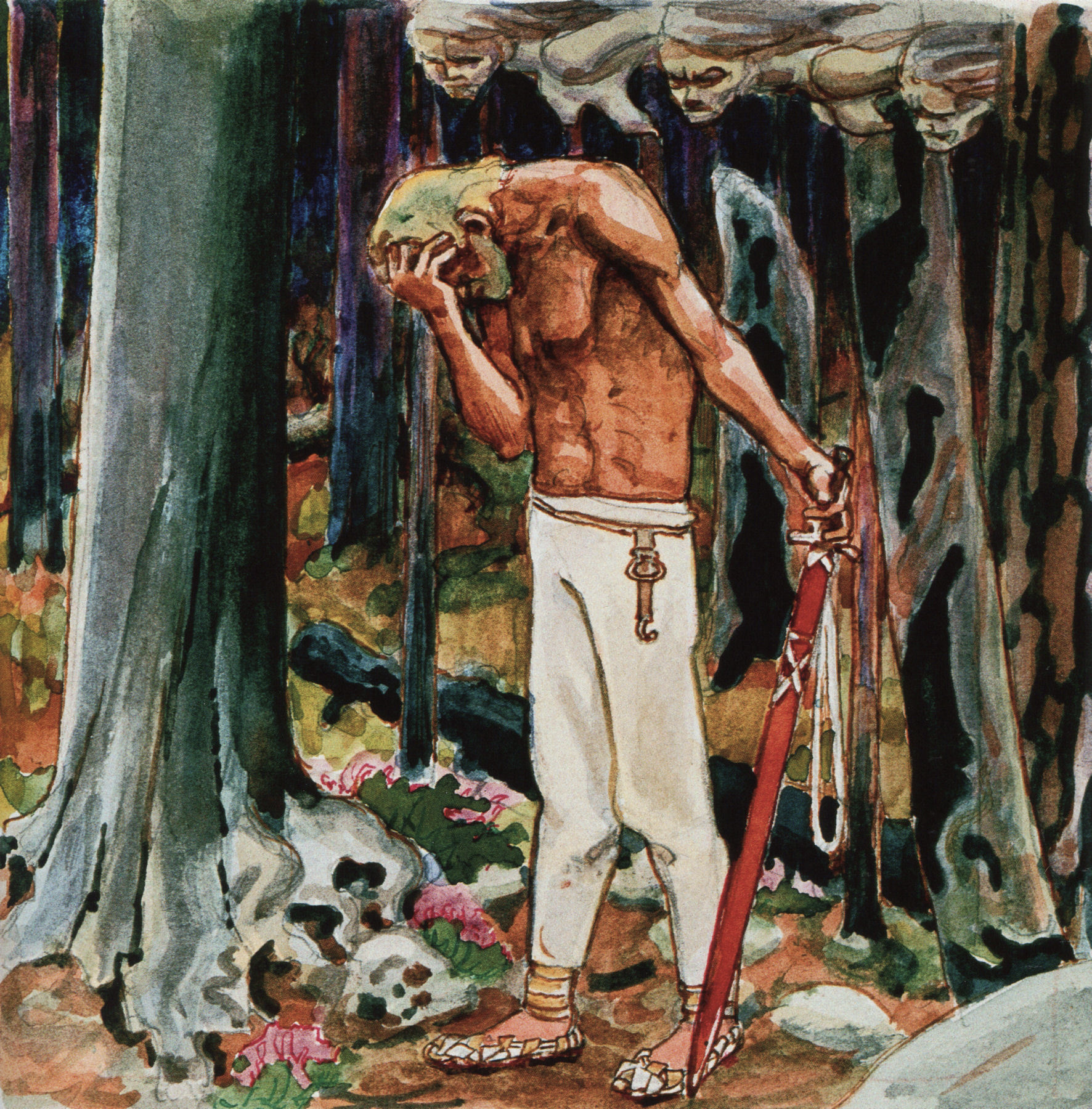
Kullervo
“Asks the blade this simple question:
“Tell me, O my blade of honor,
Dost thou wish to drink my life-blood,
…
Thus his trusty sword makes answer,
Well divining his intentions:
“Why should I not drink thy life-blood,
Blood of guilty Kullerwoinen,
…
Thereupon the youth, Kullervo,
Wicked wizard of the Northland,
Lifts the mighty sword of Ukko,
Bids adieu to earth and heaven;
Firmly thrusts the hilt in heather,
To his heart he points the weapon,
Throws his weight upon his broadsword,
Pouring out his wicked life-blood,
…
Thus the wizard finds destruction,
This the end of Kullerwoinen,
Born in sin, and nursed in folly.”
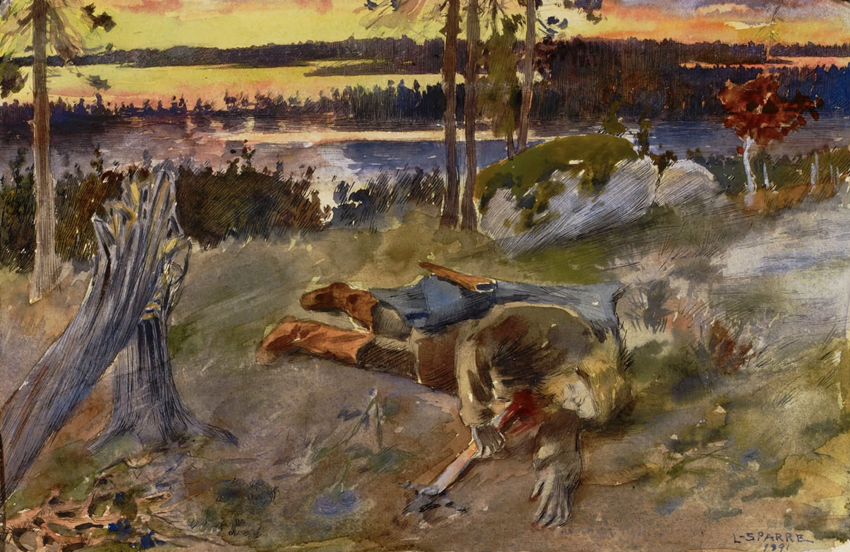
https://www.kansallisgalleria.fi/en/object/467449
The Kalevala
Archaic mythology providing an underlying drive to social & political action.
Politicians, desiring a Finnish nation built their actions on the creative work of Lönnrot – whose efforts in collecting, compiling & publishing became the basis for other inspirational art work – particularly by Akseli Gallen-Kallela, music & other epics that have inspired the growth of a vast range of ‘Fantasy’.
“To survive you must tell stories” (Umberto Eco: Island of the Day Before).
It is unavoidable – and is primarily ‘oral’.
We all do it – in gossip, family gatherings, with friends.
Then through in Facebook, with Twitter, WhatsApp & all other forms of ‘Social Media’ (including the photos & details of the ‘No Kerosene Journey’).
We receive accounts that are incorrect or have malignant intent (purposefully or by accident), or are simply misunderstandings. Accounts need to be tested (informally or otherwise) by personal ‘critical faculty’.
All knowledge, ‘fact or fiction’ of any kind (including rigorously produced through ‘scientific method’ – a mark of our Age) is but an ‘account’ – a ‘story’. Always ‘of its time’.
The Kalevala, composed from oral singing traditions (‘runes/runos/chants’), is shaped in C19th & thus, for C21st creates some classic ‘issues’ (gender roles particularly).
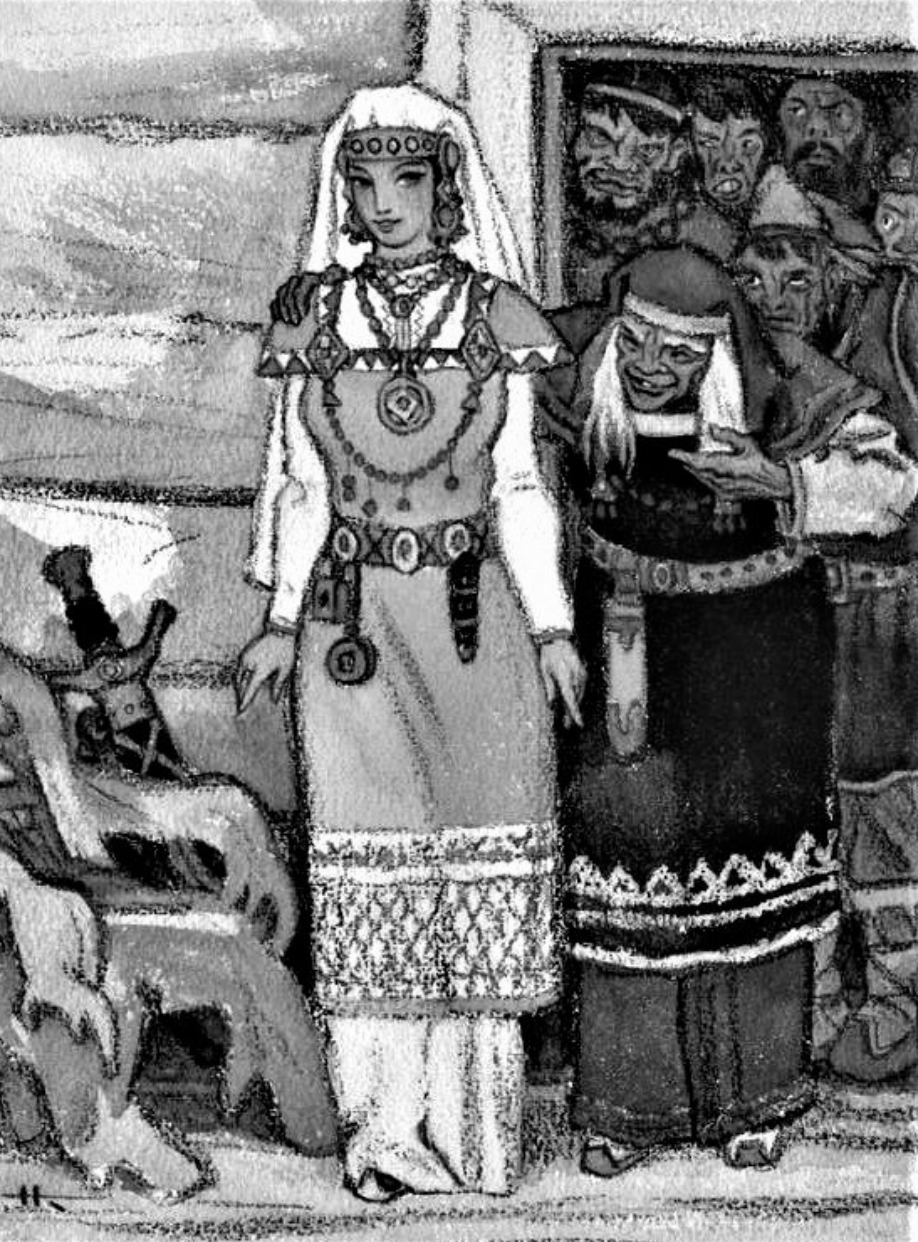
‘Truth’ is not simply ‘literal or physical reality’ but exists, in ‘layers’, through ‘its telling’….. story.
The original material collected by Elias Lönnrot was largely from the Karelia region (in Russia – part of the region is still in Russia).
Despite the apparent (and ‘encouraged’) readings of the Kalevala as being somehow ‘otherworldly’, their general purpose seems (as with other ancient, pre-Industrial Age story) as expressive of prosaic realities common to any Age.
Present, apparently rational, pragmatic story-telling has the same intent – attempting to make sense of and maintain ‘balance’, regardless of whatever may be occurring.
The apparently mysterious ‘Sampo’ is an example of such ‘prosaic reality’
On one side the flour is grinding,
On another salt is making,
On a third is money forging,
the theme repeated:
Grinds a measure fit for eating,
Grinds a second for the market,
Grinds a third one for the store-house.
having the similar purpose as English Wassailers encouraging, through an annual practical ritual in January, an apple tree to produce fruit
Apples enow,
hatfuls, capfuls, three-bushel bagfuls,
tollants ol full, barn’s floor full,
little heap under the stairs.
Hip, hip, hip, hooroo!
Sound worlds & Silent ecstasy
This ‘Rabbit Hole’ has music…..
The stories in the Kalevala were sung – slowly, sometimes for hours.
The Sámi (in the far north of Scandi-Nordic countries) had their drum, the Finns have the kantele which accompanied their singing.
The Kantele was supposedly created by Väinämöinen, the god of chants, songs and poetry
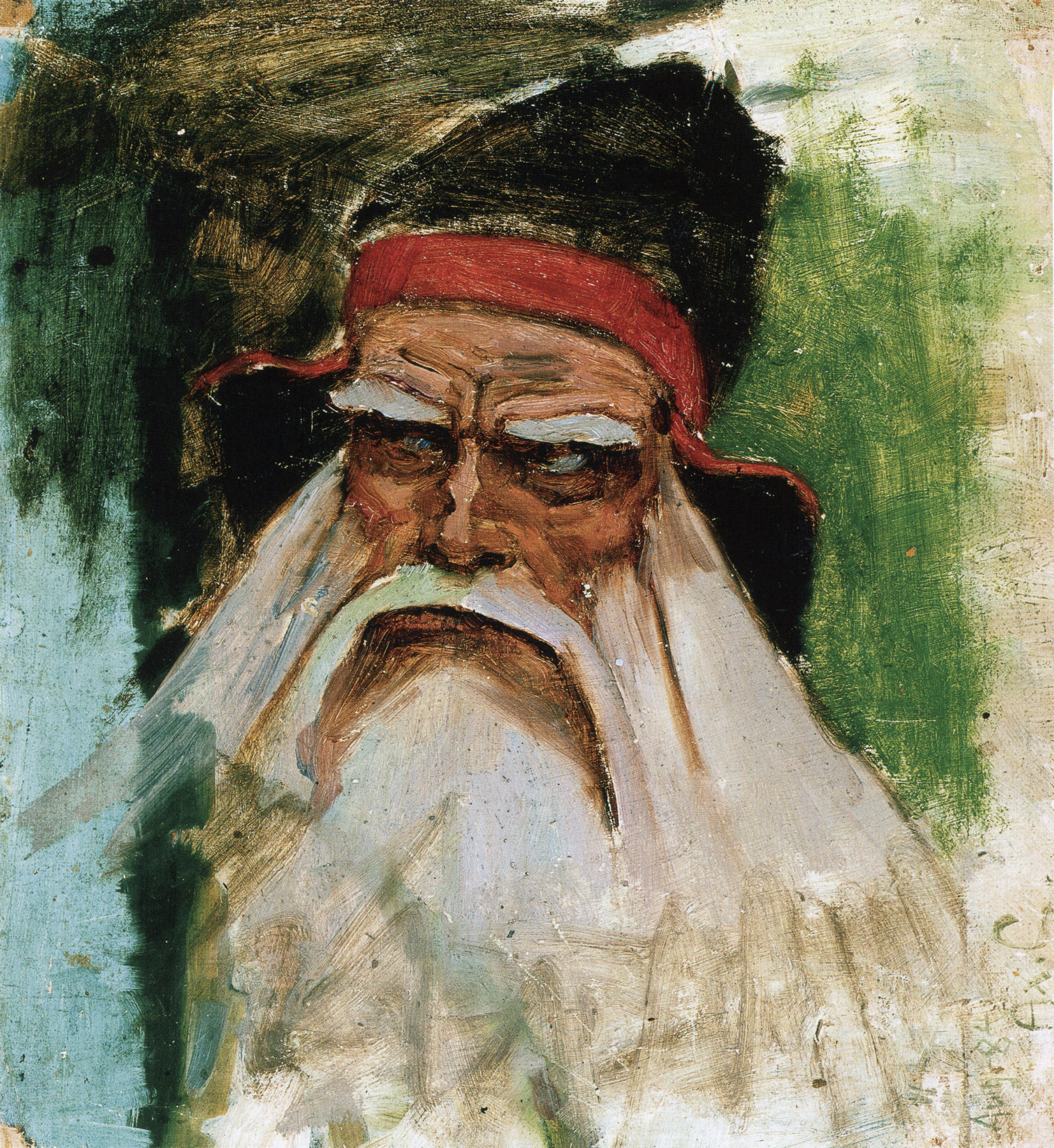
https://en.wikipedia.org/wiki/Väinämöinen
His original Kantele was made from the jawbone of a monstrous pike.
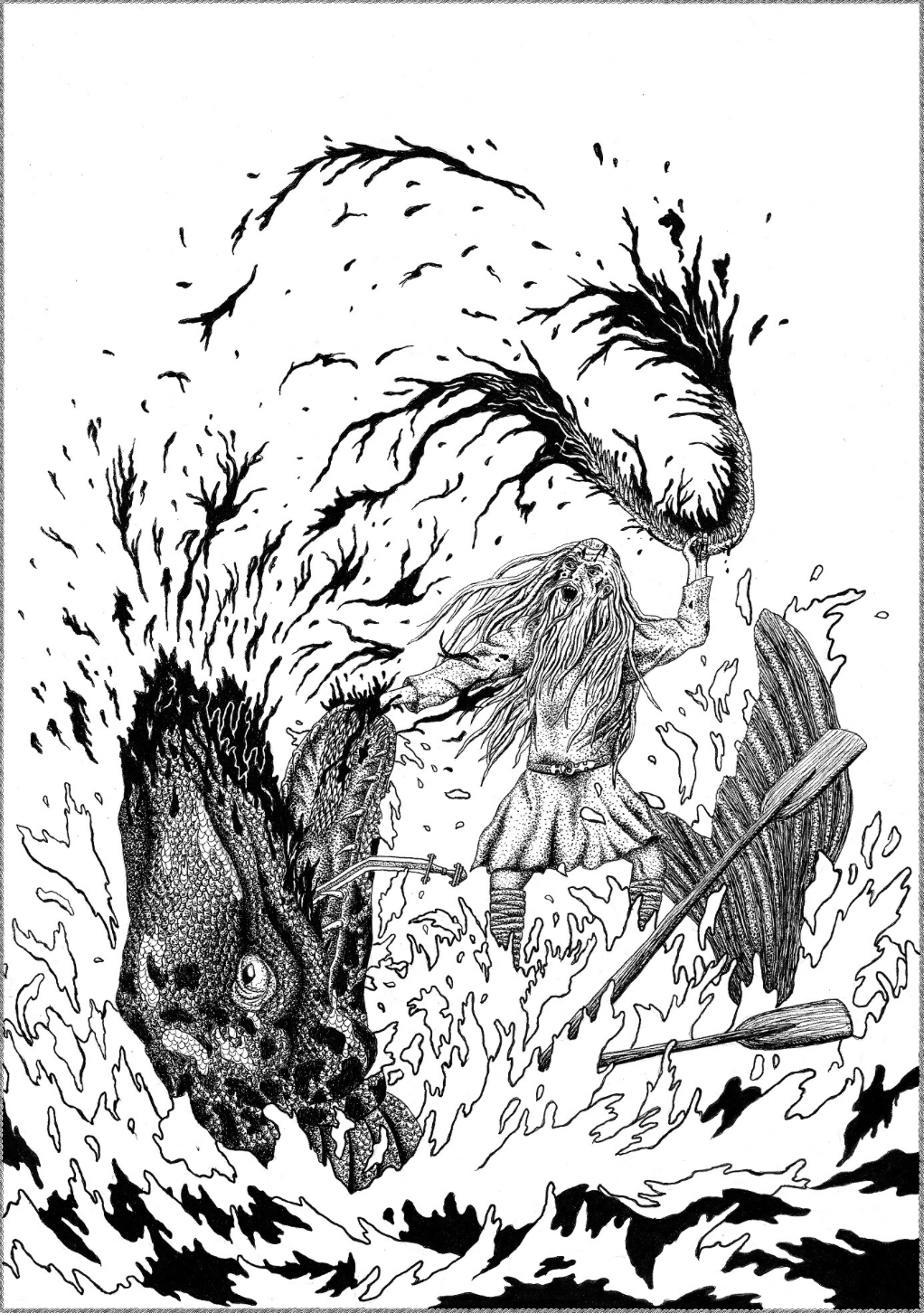
https://palosaari.artstation.com/projects/e0Y5r6
This link has examples of the sound
https://en.wikipedia.org/wiki/Kantele
A song recorded in 1939:
Versions of the instrument are also used in other Baltic countries – and the shape and style is found in many cultures – sometimes called psaltery, & including hammered dulcimers, cimbalom
Traditional players and singers were photographed & recorded in the early C20th. The three in this photo are Iivana Misukka, Iivana Onoila and Juho Kuokka.
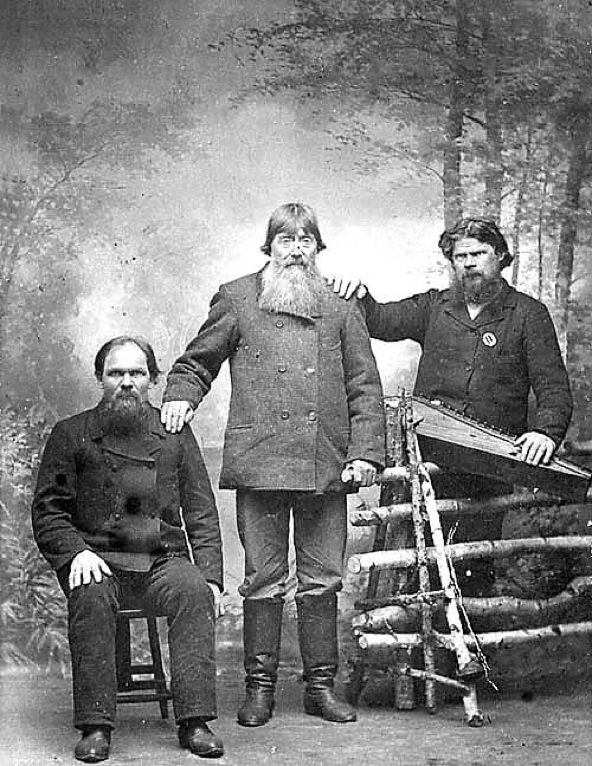
Present active research is exploring possibilities:
The Kalevala Epic continues to have major influence on Finnish culture and sensibility
Journal of Finnish Studies, Volume 13, Number 2, Winter 2009:
The Kalevala, Popular Music, and National Culture
- provided Sibelius’s first major musical success in 1892: ‘Kullervo’
“the definitive breakthrough of Sibelius’s nascent career” (Wikipedia).
- had major influence on the development of fantasy literature – especially Tolkien.
The Kullervo story was ”the first time that J. R. R. Tolkien,…began writing prose” (Wikipedia)
“In 1955 he told the poet W.H. Auden that discovering Finnish had been like ‘entering a complete wine-cellar filled with bottles of an amazing wine of a kind and flavour never tasted before’.
‘Tolkien realised with The Story of Kullervo that language, culture and mythology are inextricably linked,’ … ‘He had invented a language – and so he invented a mythology.’ …
…the mood of the Finnish epic affected Tolkien’s writing: ‘There is a strain of deep tragedy and pessimism that runs through Tolkien’s work, even The Hobbit and certainly The Lord of the Rings.
The Story of Kullervo is without a doubt the darkest story he ever wrote. It is our first experience of that darkness.’
https://www.clarendonhousebooks.com/single-post/tolkien-and-the-kalevala
- provided Longfellow (who had visited Finland), with the ‘trochaic tetrameter’ structure for his American Epic ‘The Song of Hiawatha’ Longfellow.
The journey within a journey:
becoming, in the process, a rather lengthy diversion
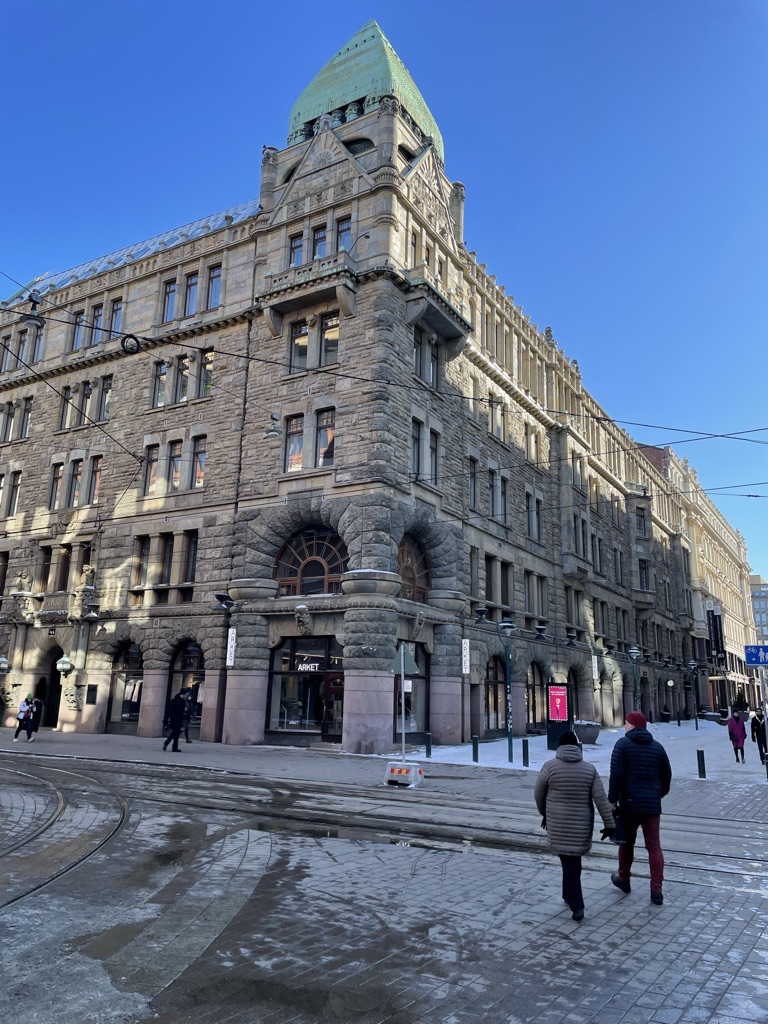
The question: ‘What was this place’
Result:
A very mundane answer discovered after researching articles on the architectural style.
Originally the building was constructed for an insurance company called Pohjola with another insurance company called Kullervo included. The companies still exist as part of the ‘OP’ Group: https://www.op.fi/home-page
The main entrance, designed by Hilda Flodin, a pupil of Rodin, is flanked by the names of the two insurance companies, both from Kalevala, and by devils, monsters or trolls; bears, the symbol of the insurance company, top the pilasters and also appear in the interior decoration. Because the mouths of the Pohjola characters are slightly open, passers-by sometimes leave cigarette butts in their mouths as a prank.
https://en.wikipedia.org/wiki/Pohjola_Insurance_building
There it is – I’m rather amazed that by accident we’re viewing important elements of the Finnish National Epic on the front of a building.
Amazed & Delighted – not because they exist – but that we encounter such an attractive example of the epic as we took a brief stroll between trains.
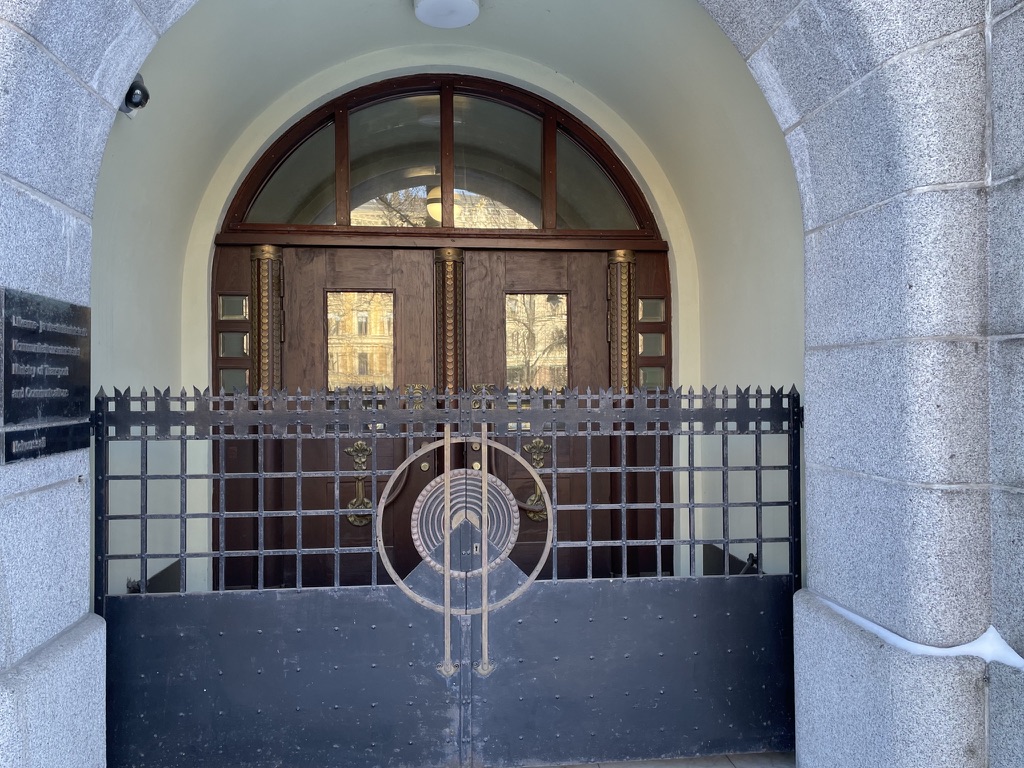
We did not have time to make anything other than ‘a walk round the block’ (literally) but saw other examples of the National Romantic architectural style are in other buildings
– these 2 seem to have been associated with a government agency (Ministry of Transport).
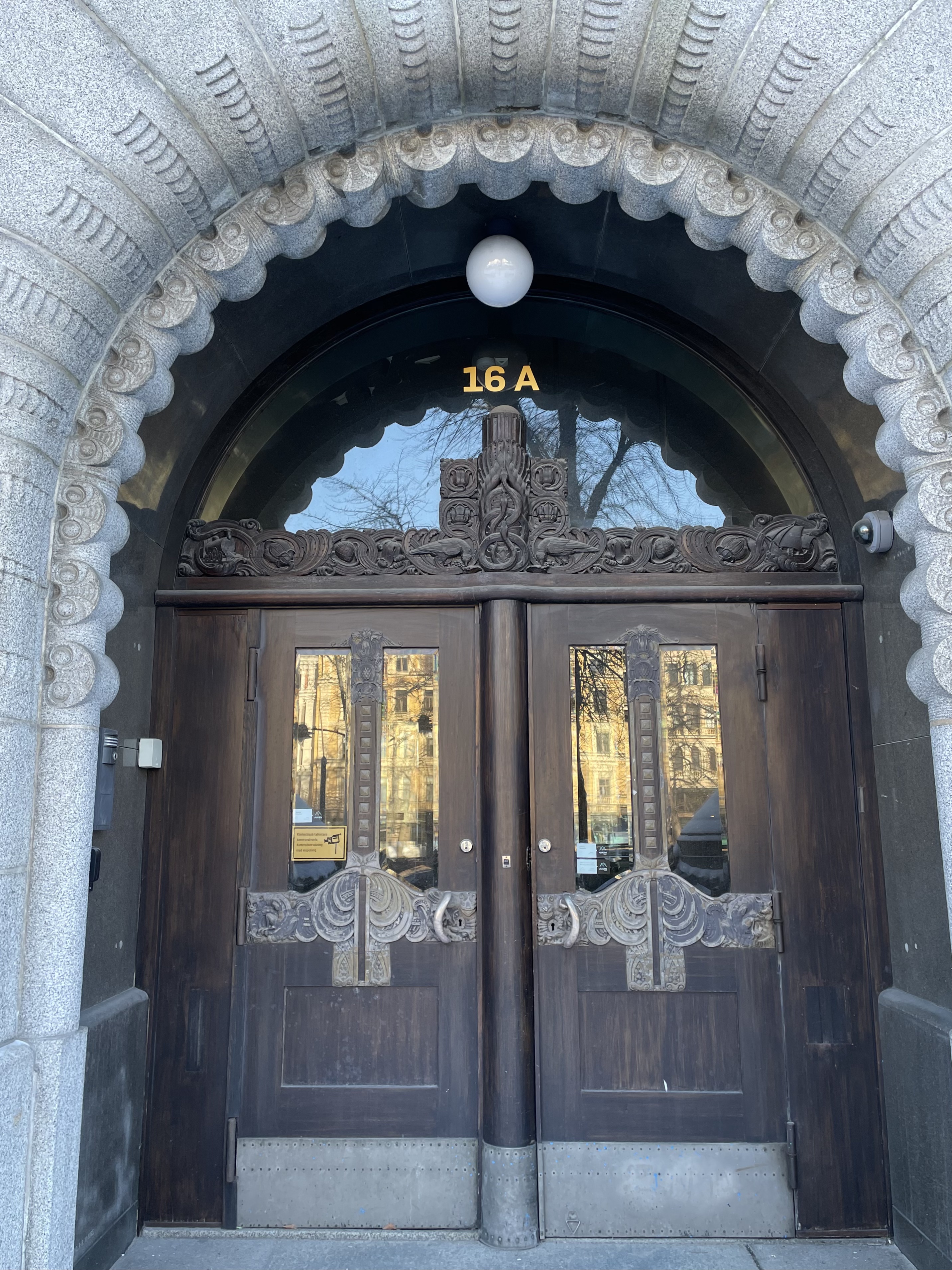
A decorative door lintel
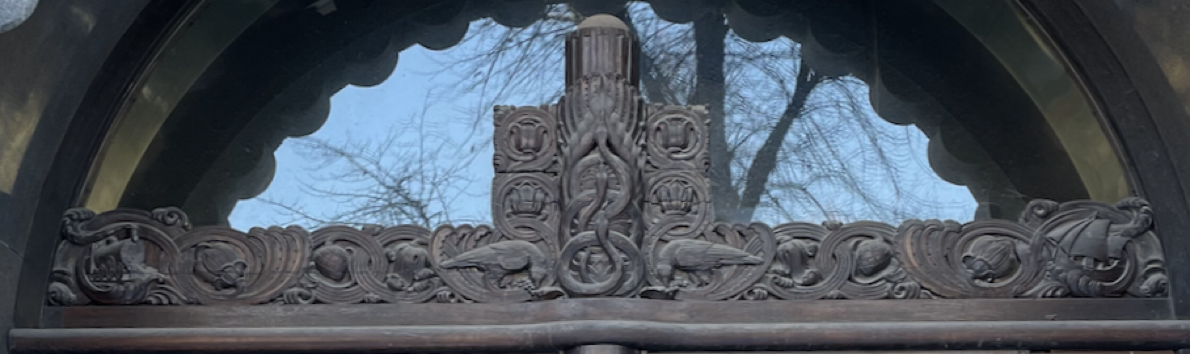
A steam railway engine on one side & a sail driven ‘trader’ ship on the other
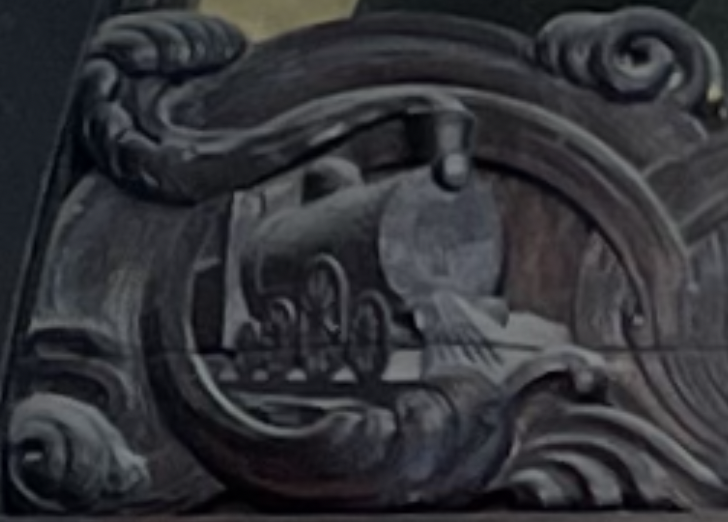
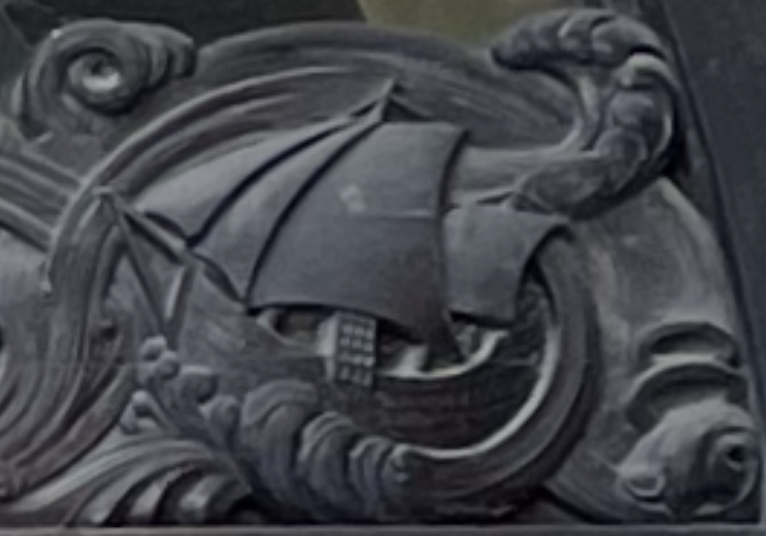
Probably the most significant architectural site is the Central Railway station which was not in ‘Nationalist Romantic’ style. It was intended as the western-most terminal of the Russian Empire but was not completed until 1919 by which time Finland had become an independent national state.
It is regarded by some as one of the world’s most most architecturally significant railways stations.
There is a very detailed description of the history of the station in the following link:
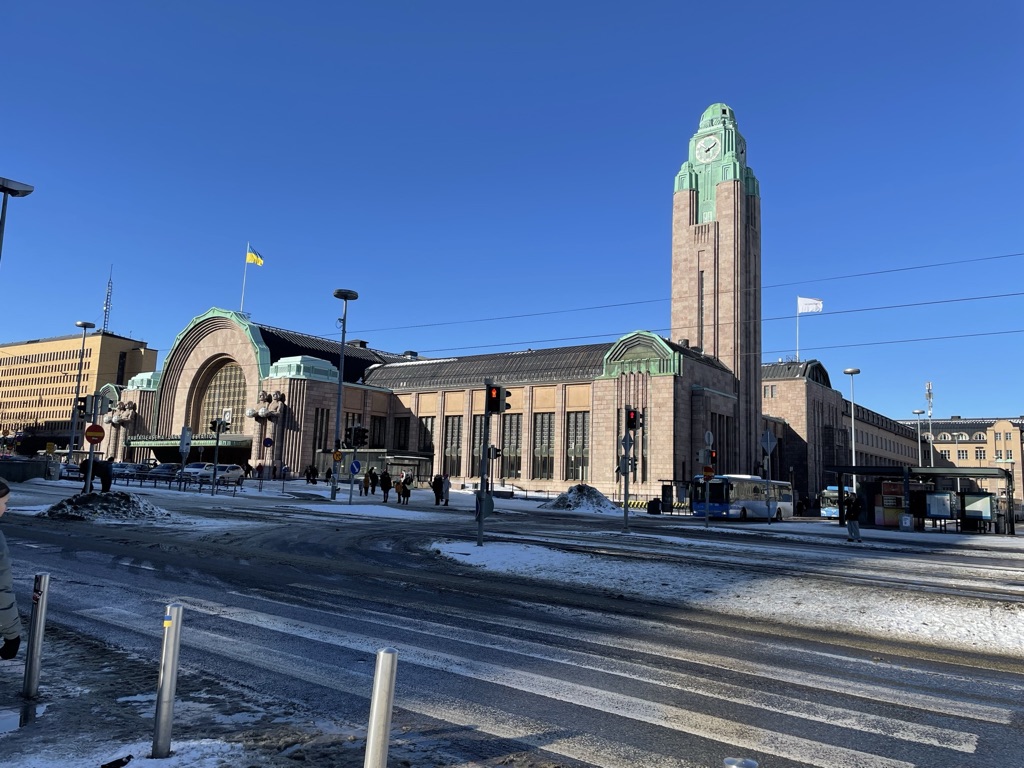
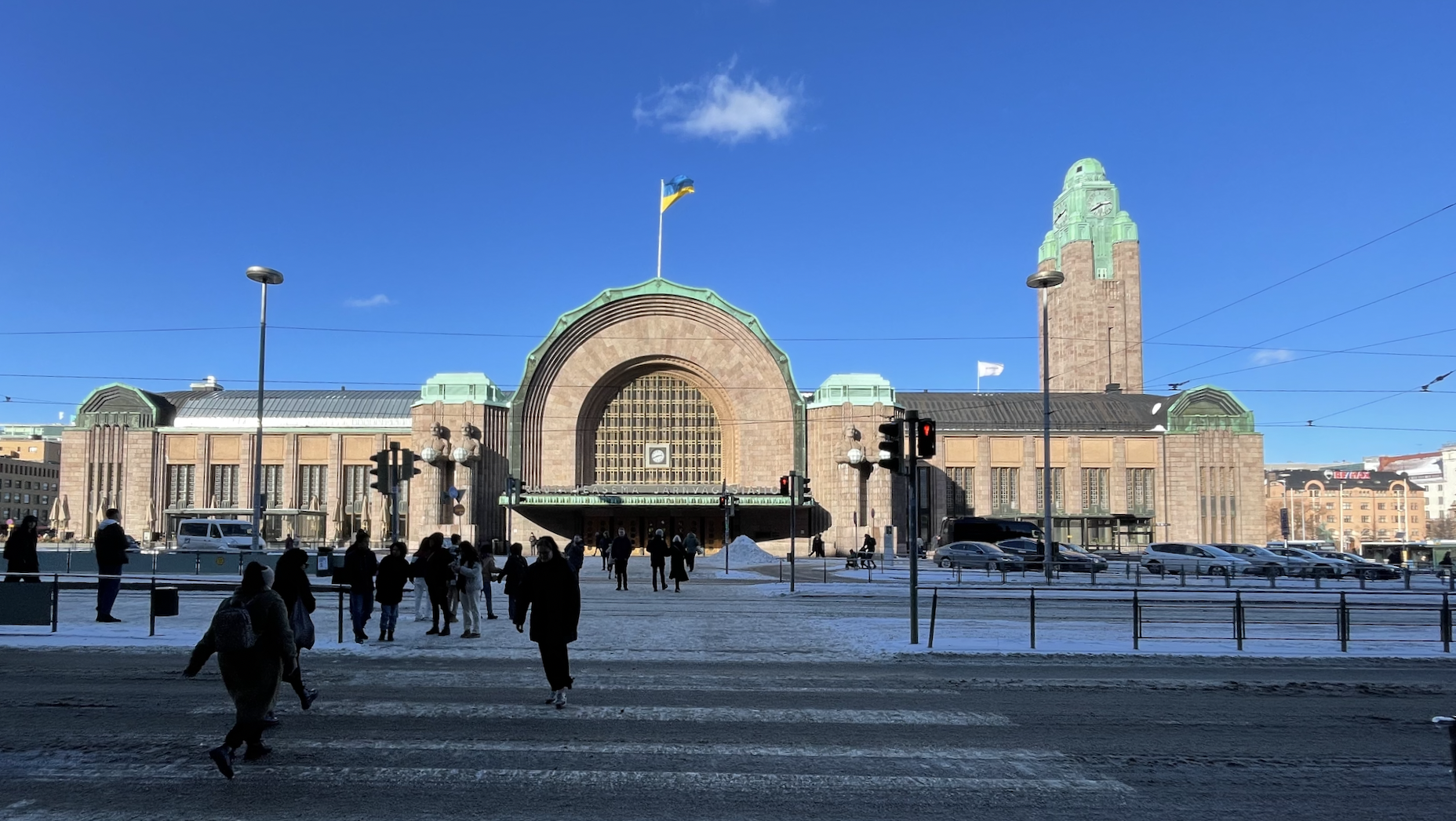
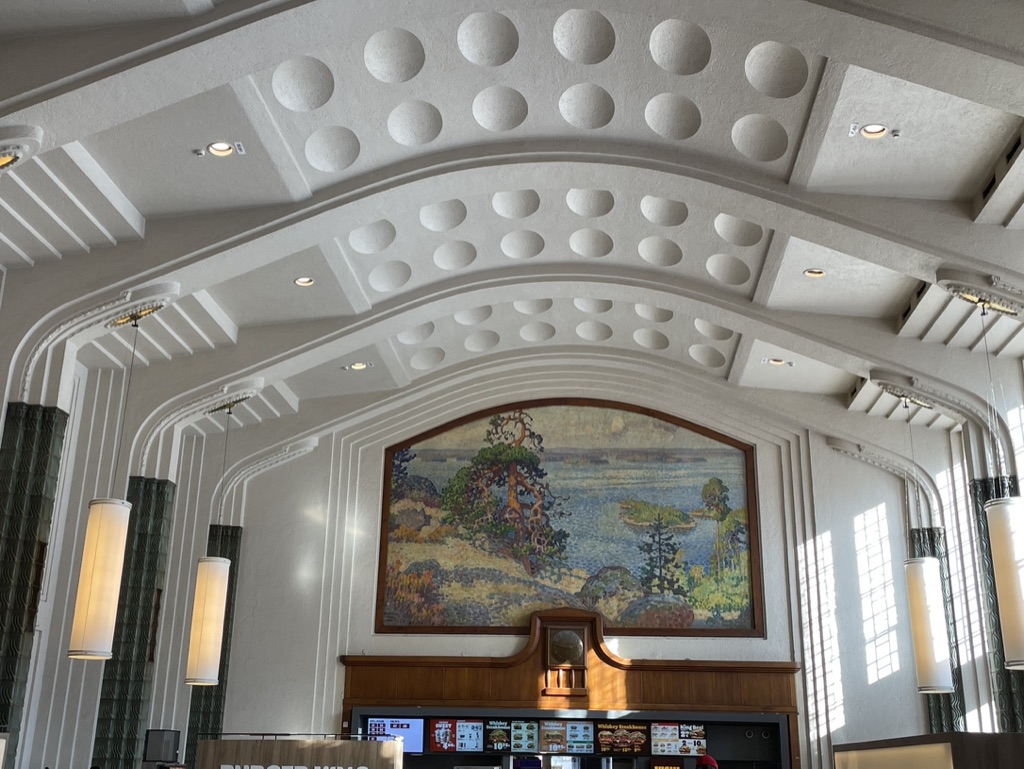
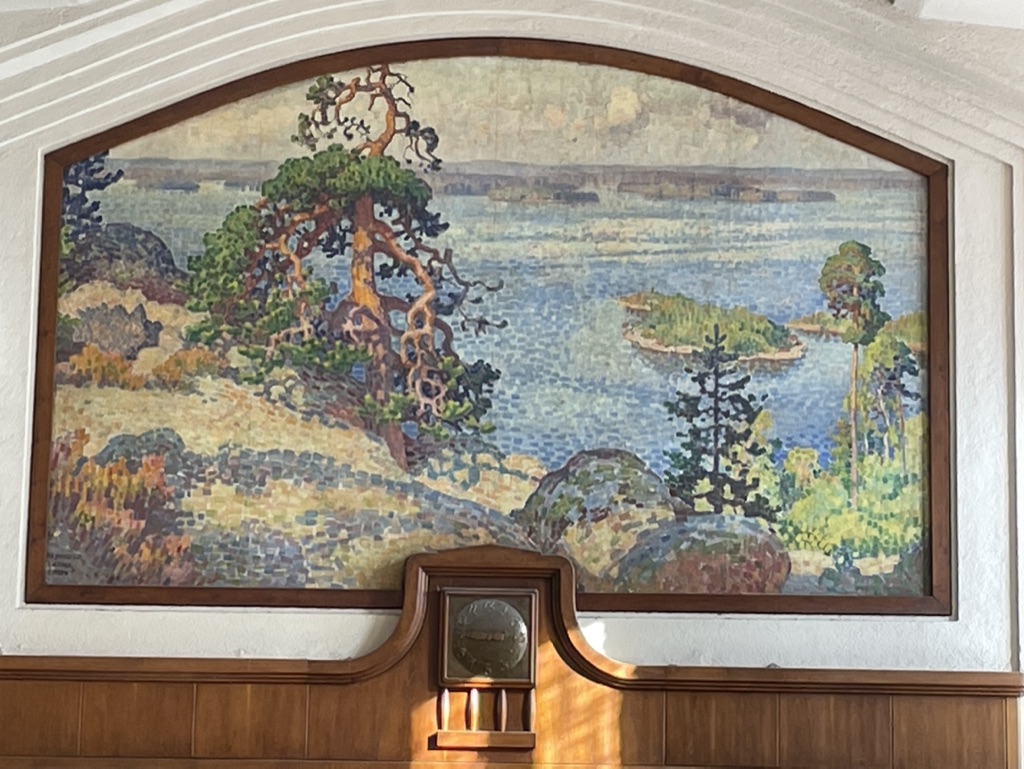
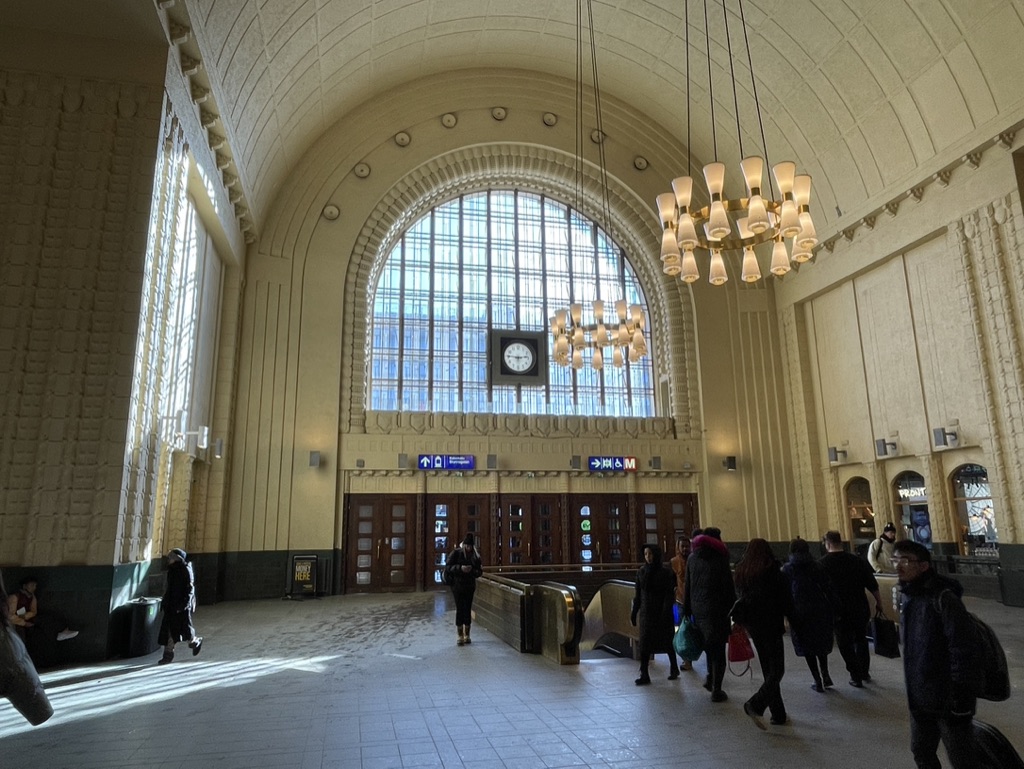
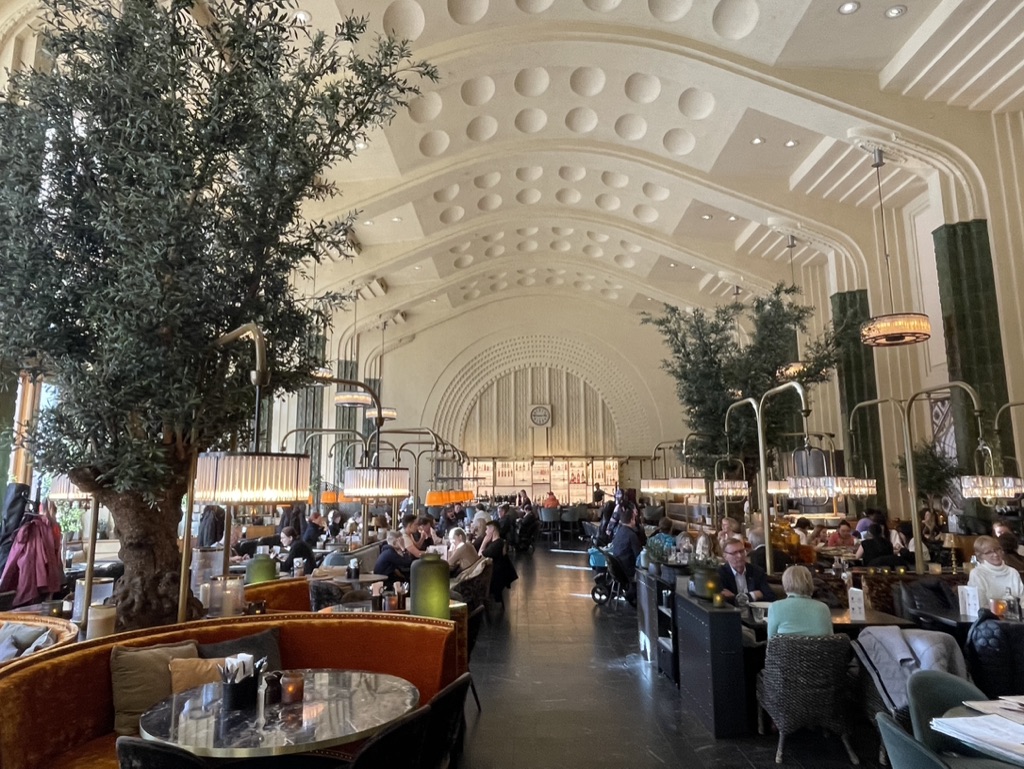
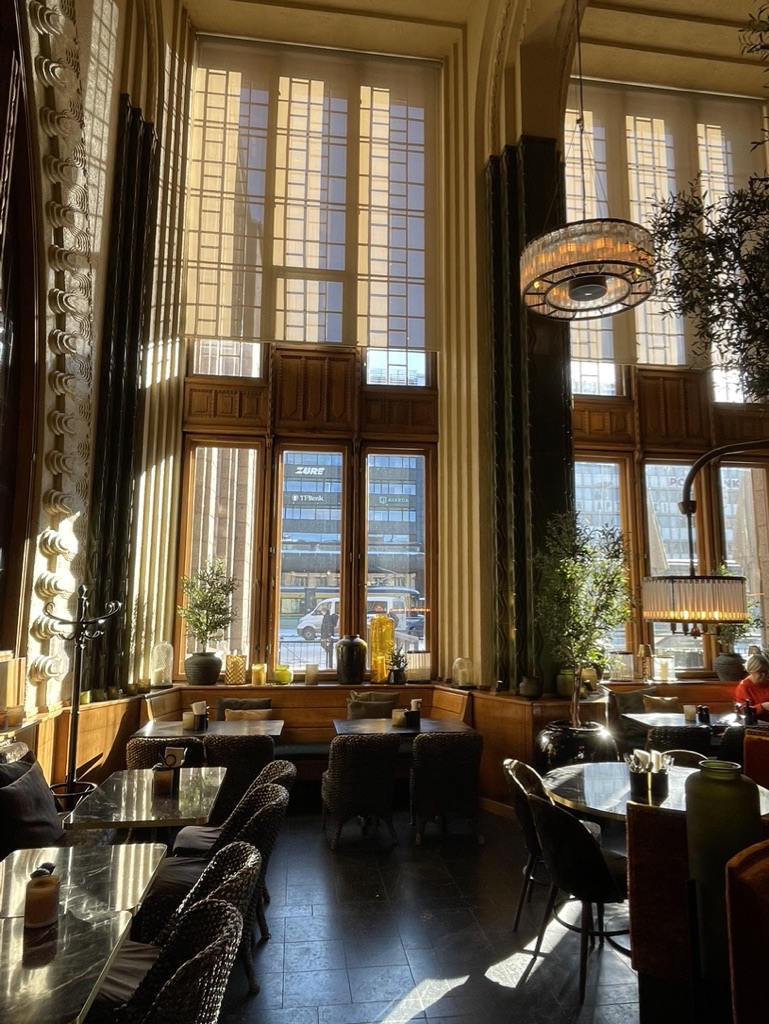
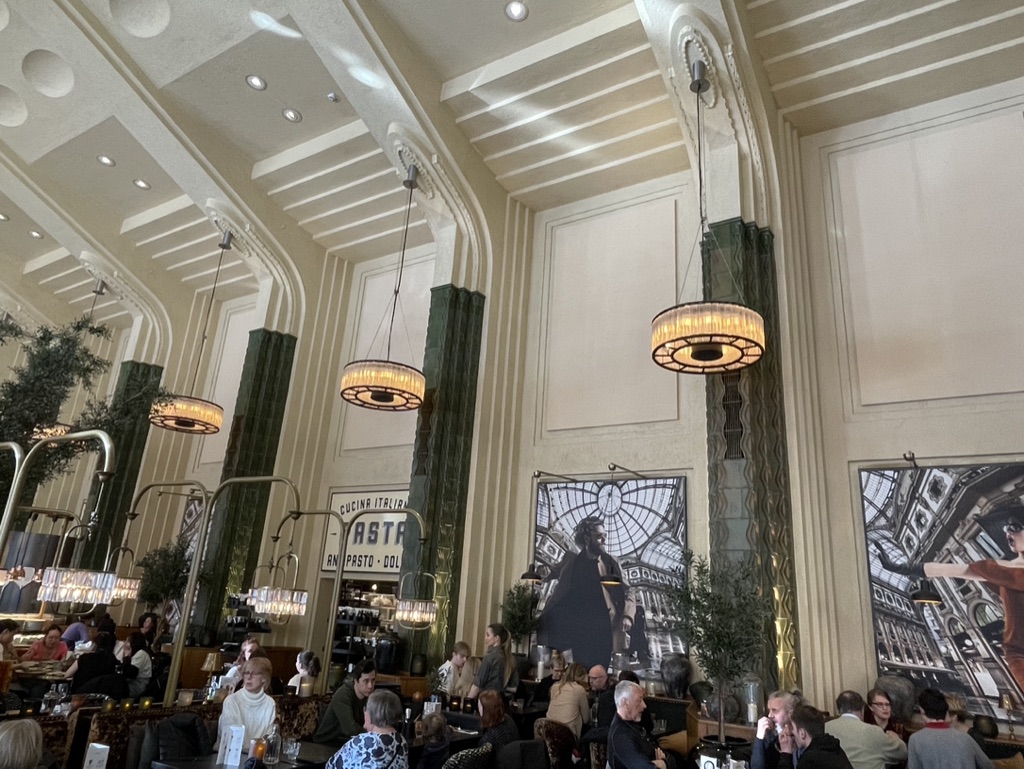
Travelling on railways systems is to travel with a degree of uncertainty as each national system is idiosyncratic & requires experience to understand.
On one occasion a group of us were left behind in Krakow due to failure to realise the terms in which Poland describes its train ‘arrival/departure positions’. I use that phrase because the term for such positions varies & sometimes systems use more than one term.
In Finland the word ‘track’ and a number occur – but this is a more recent usage as in the Helsinki station there is evidence of the term as used in UK

On to Tampere:
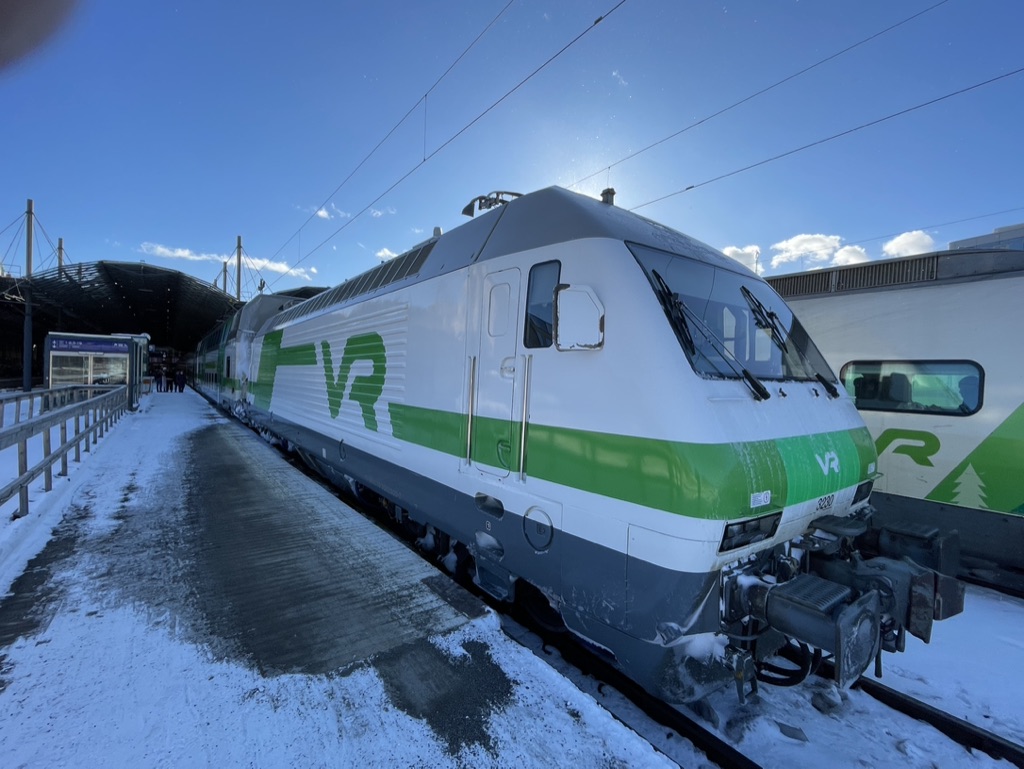
Such is the precision of standardised train lengths that it is possible to keep a space on the platform clear of snow for staff and crew.
Tampere
Tampere the focal point of Journey One.
We travelled there ‘indirectly’ on the lengthy land route through Narvik & by avoiding crossing the Baltic Sea.
Here we were to meet a project partner with whom, due to the Covid restrictions, we had only been in contact with through email & on-line systems.
Unfortunately before we arrived in Tampere we were told that they were unwell and could not meet us.
Fortunately we did not alter our plans…….
Tampere was yet another unexpected discovery
a delightful place to visit
In itself, a complete educational experience
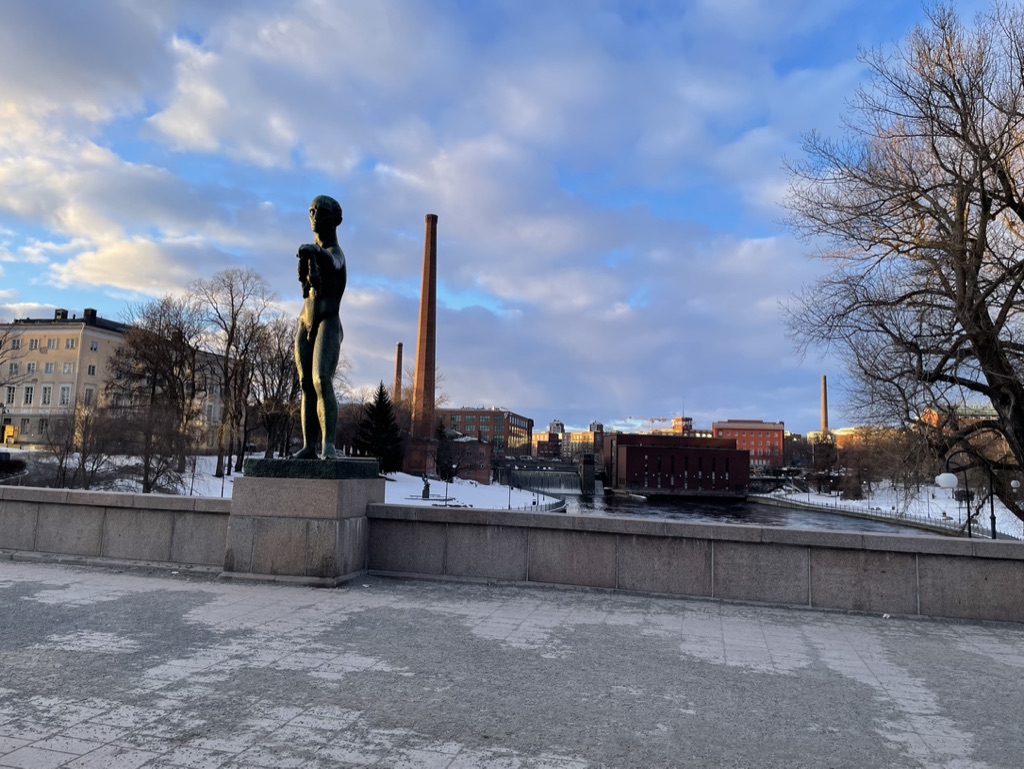
We were told that Tampere was the ‘Manchester of Finland’. A centre, thanks to the availability of water power, of the textile trade established by a Scottish business entrepreneur James Finlayson
https://finlaysonshop.com/pages/our-story1820
Scottish engineer James Finlayson establishes a cotton factory by the Tammerkoski rapids in the city of Tampere.
Over a short period in the 1800s Finlayson became the largest industrial enterprise in Scandinavia. This growth was based on unique courage and open-mindedness. The company’s weaving hall had the honour of switching on the first electric lights in the Nordic. The company had its own hospital, daycare centre, school, fire brigade, pharmacy and nursing home. The company even its own social security system at a time when no one had yet heard of such a thing. More significantly, Finlayson was the first company in Finland to offer women an opportunity to an independent life: an apartment and livelihood. Women’s status in Finnish society is evident in the fact that in 1906 Finland became the first country in Europe to grant women the right to vote.
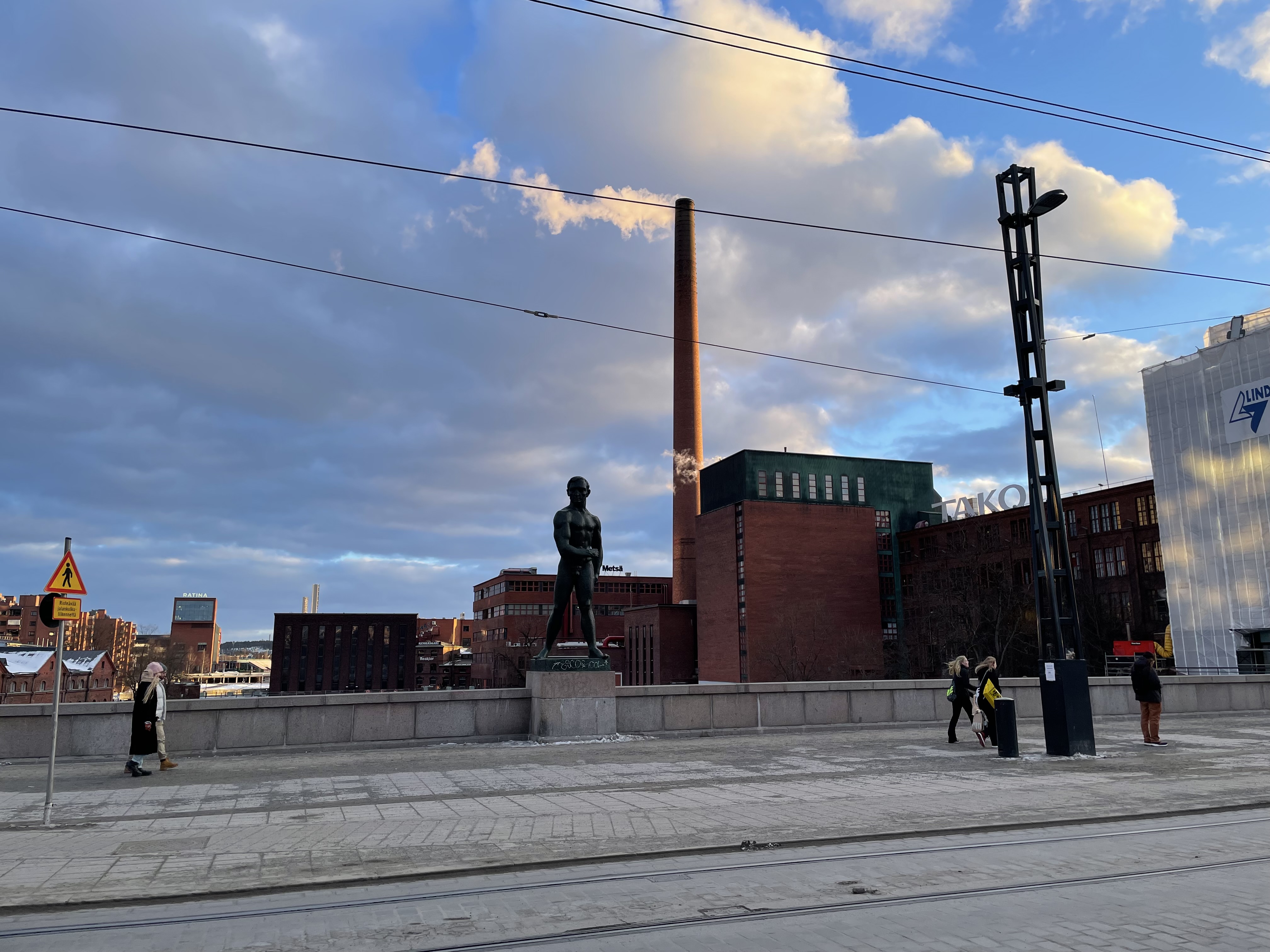
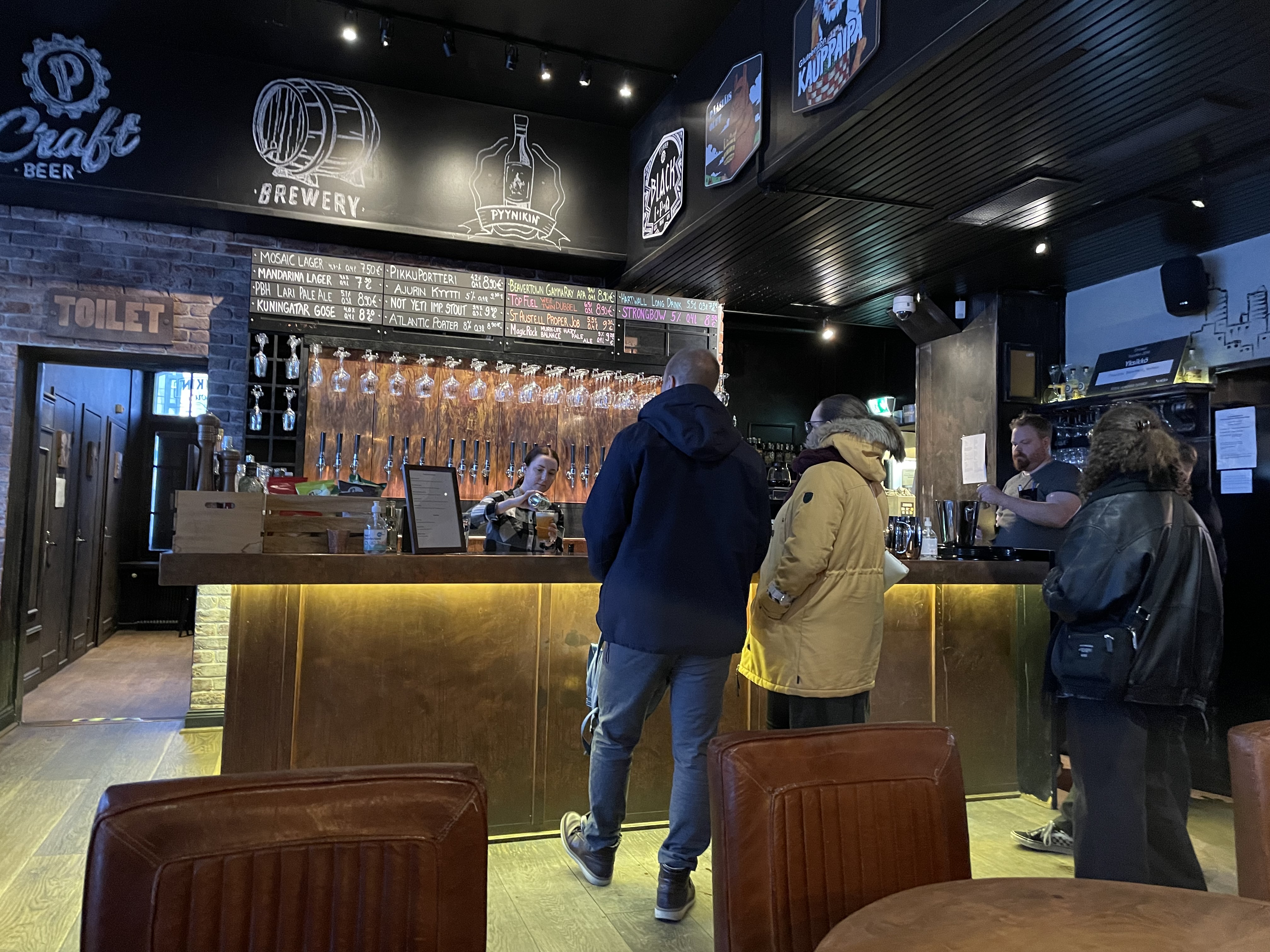
Once offices, now a brewery.
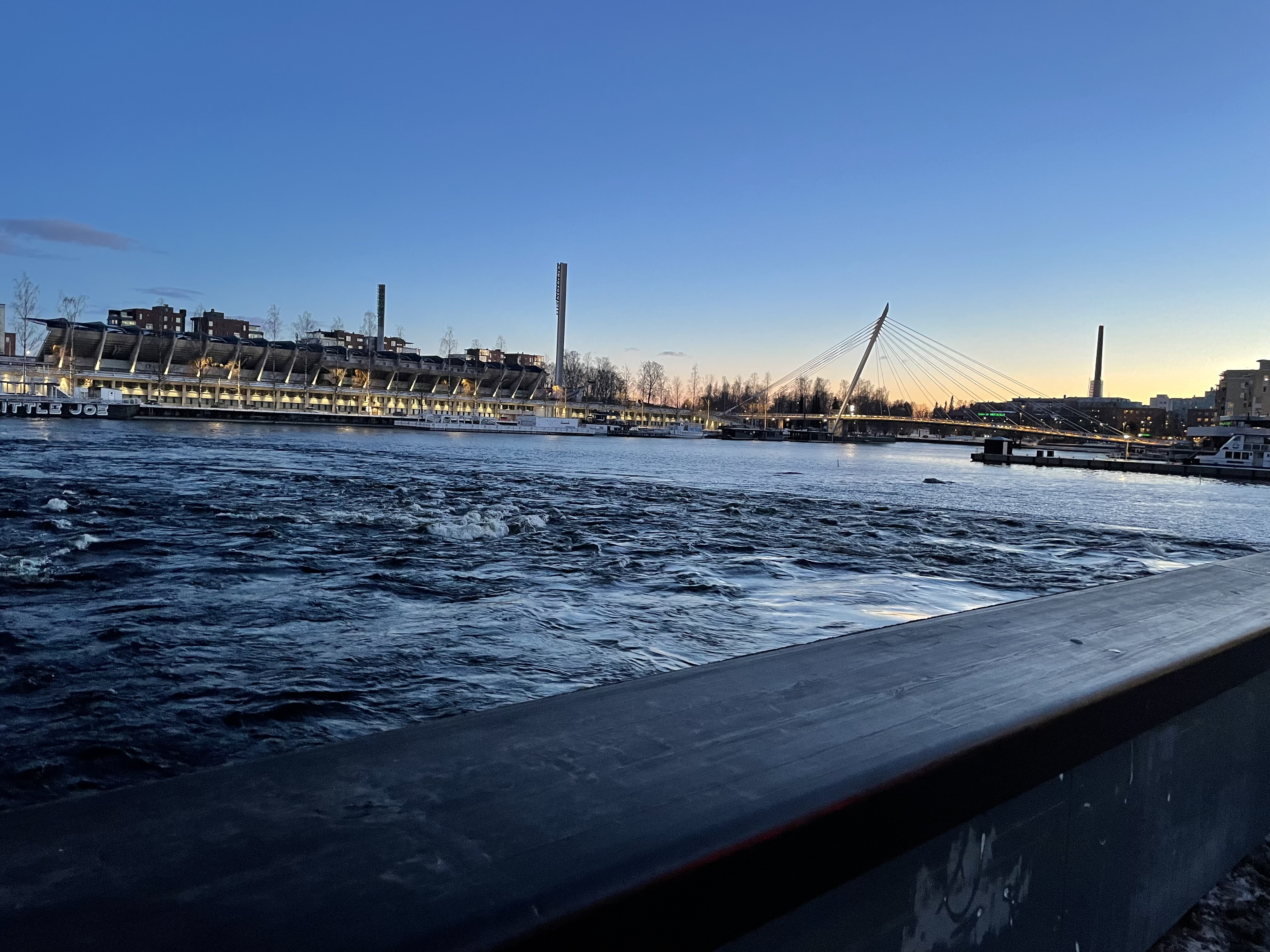
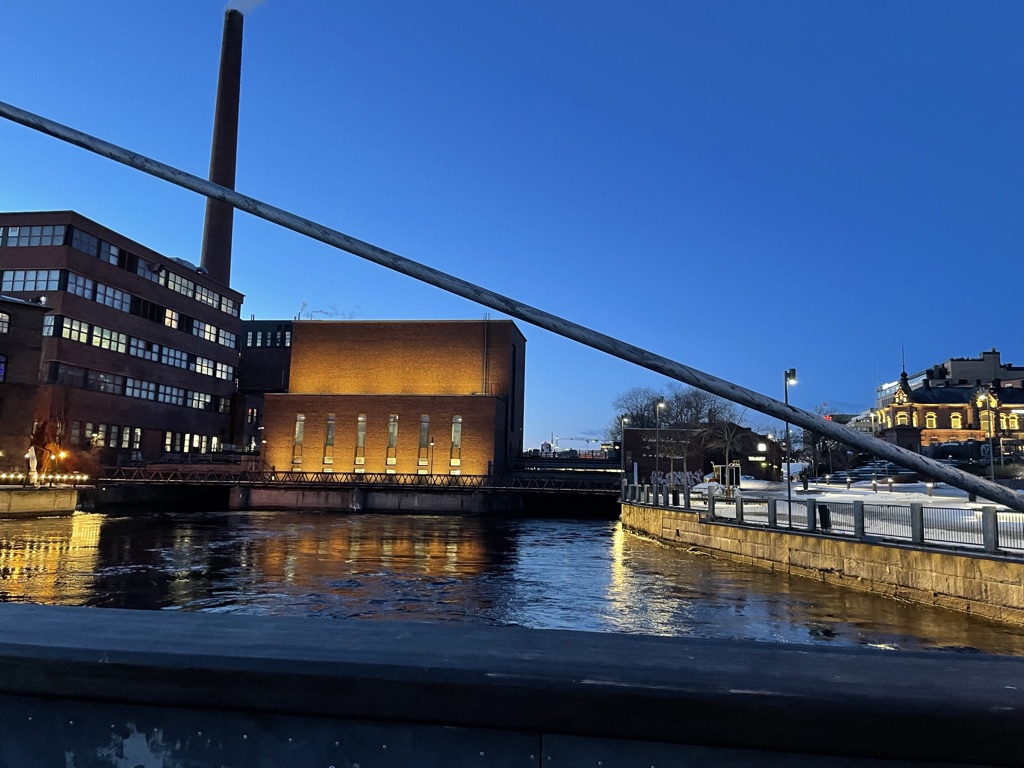
There is, now, only one working mill (paper) in the town centre. The chimneys are not functioning but were kept as reminders of the history of the town. They have impressive sculptural impact.
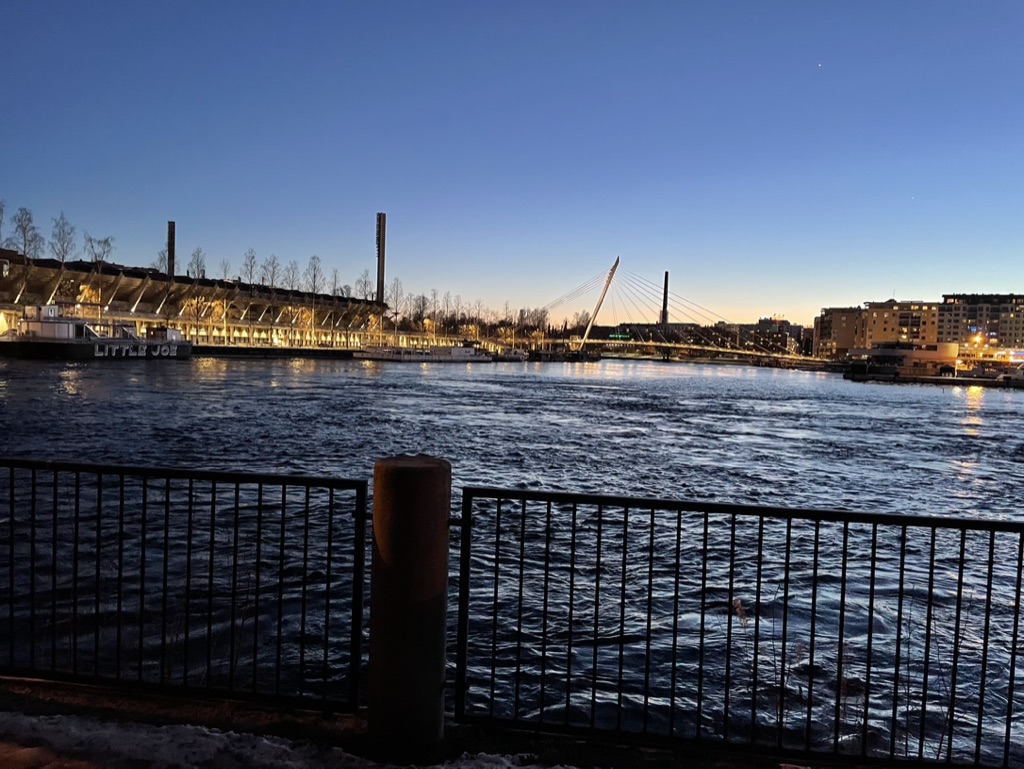
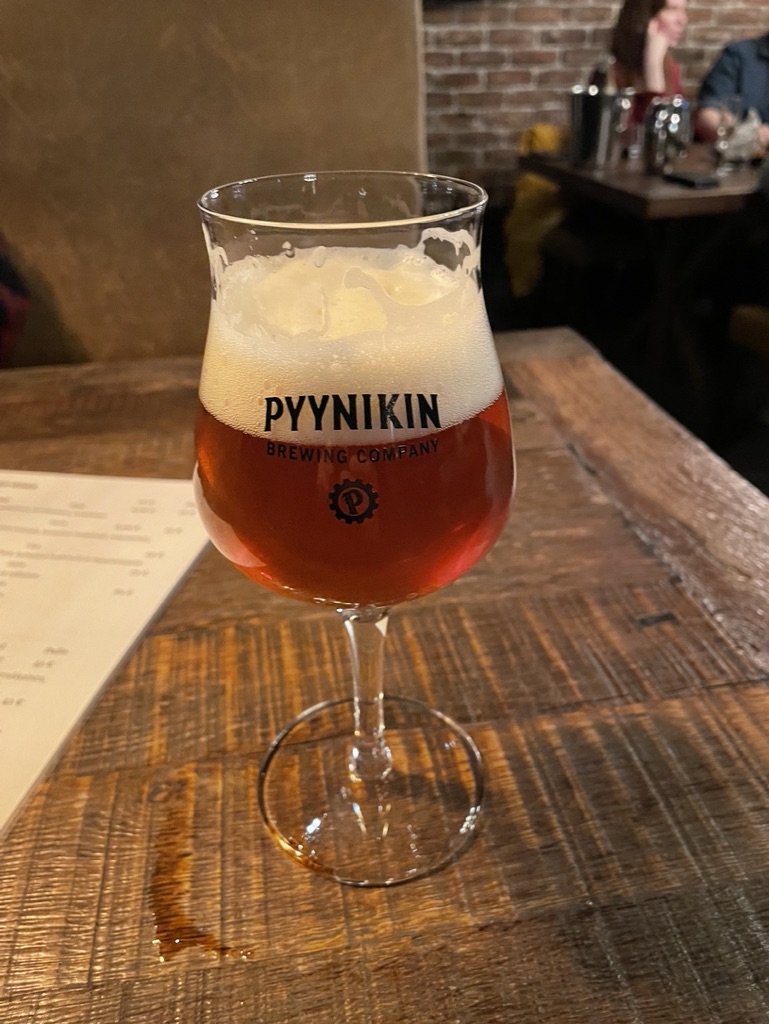
Monday 13th March
Our hotel was fine – but had a somewhat severe ‘penitentiary’ style. Access to breakfast was controlled by locks.
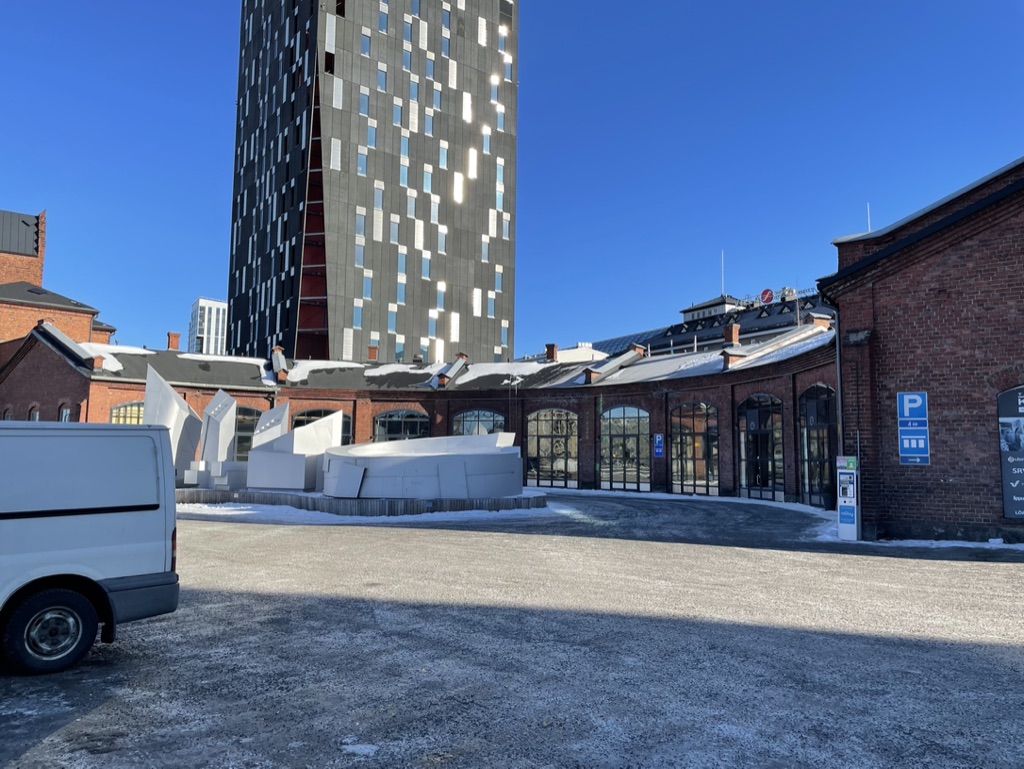
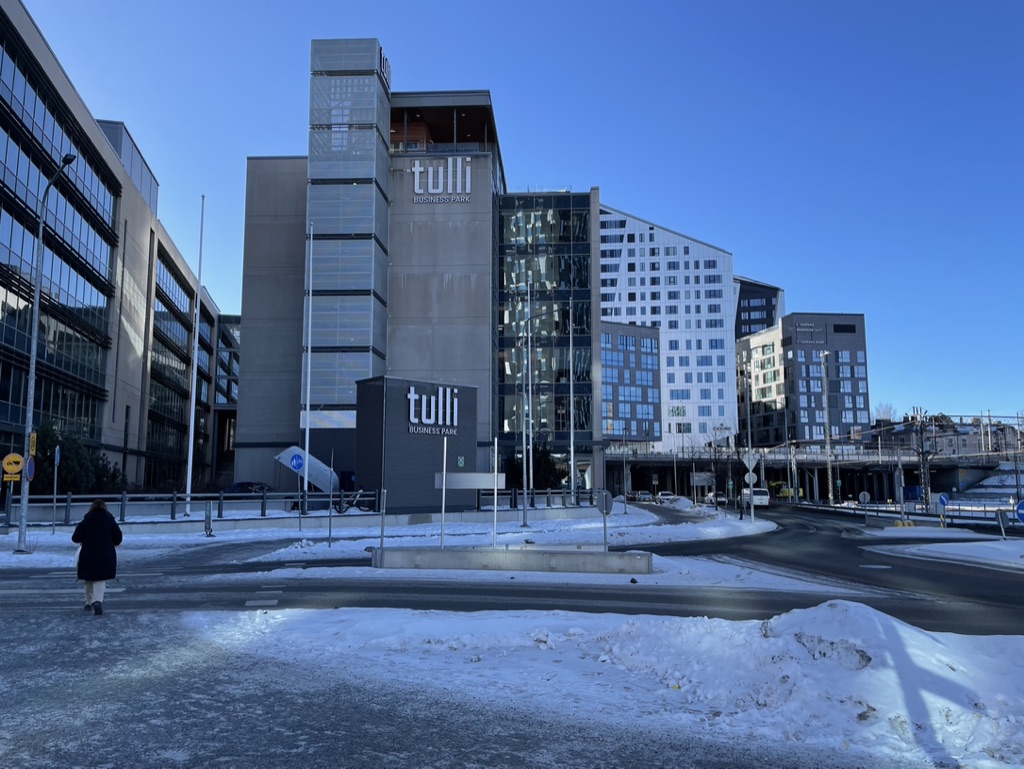

As is standard in many European cities, there is a ‘mass-transit’ system – usually, as here, using trams.
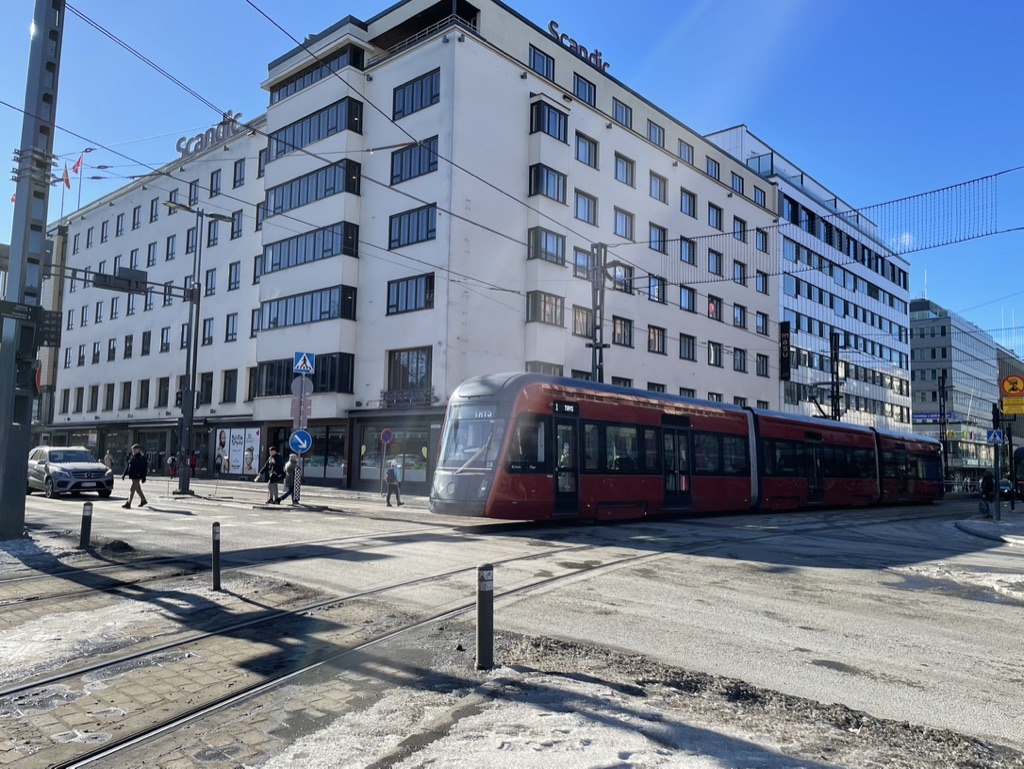
Our train to Turku was in the mid afternoon and we decided on an unplanned, drifting route around the centre.
One building ‘caught our eye’ due to its significant position and a seemingly slightly curious style.
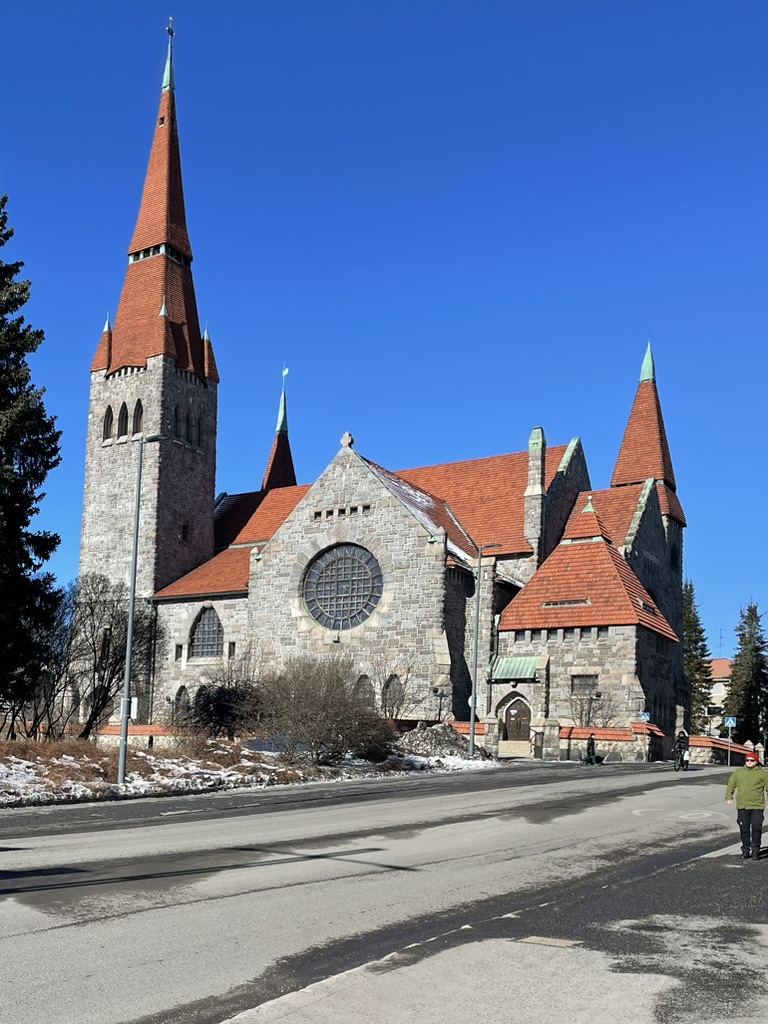
After the experience of Helsinki & of visiting this place, my conclusion is that that the judgements of eye and of ear are formed during early childhood.
We did not expect to find anything particularly interesting – but the entrance we used (a side door) indicated it was rather special.
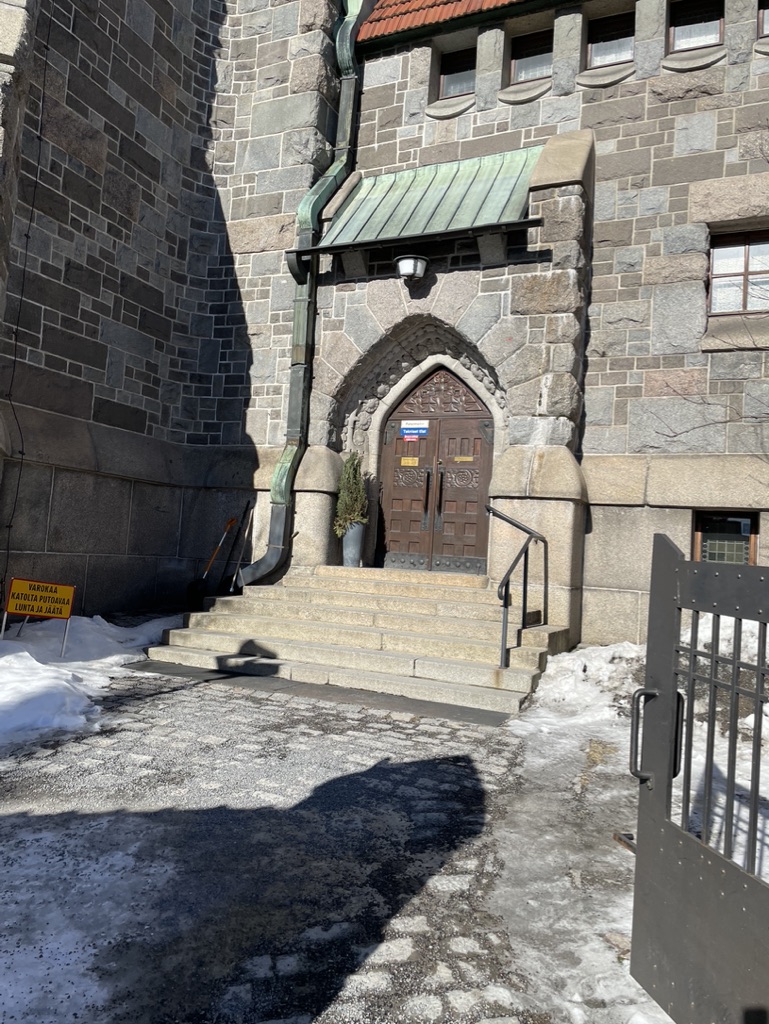
I’m ‘cast back in time’ by architecture:
In the case of Helsinki, to folkloric stories & here in Tampere to a specific place that has no direct connection.
Not directly… but through the intention of architects separated physically but being of the same background, spirit and intellectual interest.
Edward Wood – working in the 1890s in Manchester and with a style called Vernacular Revival.
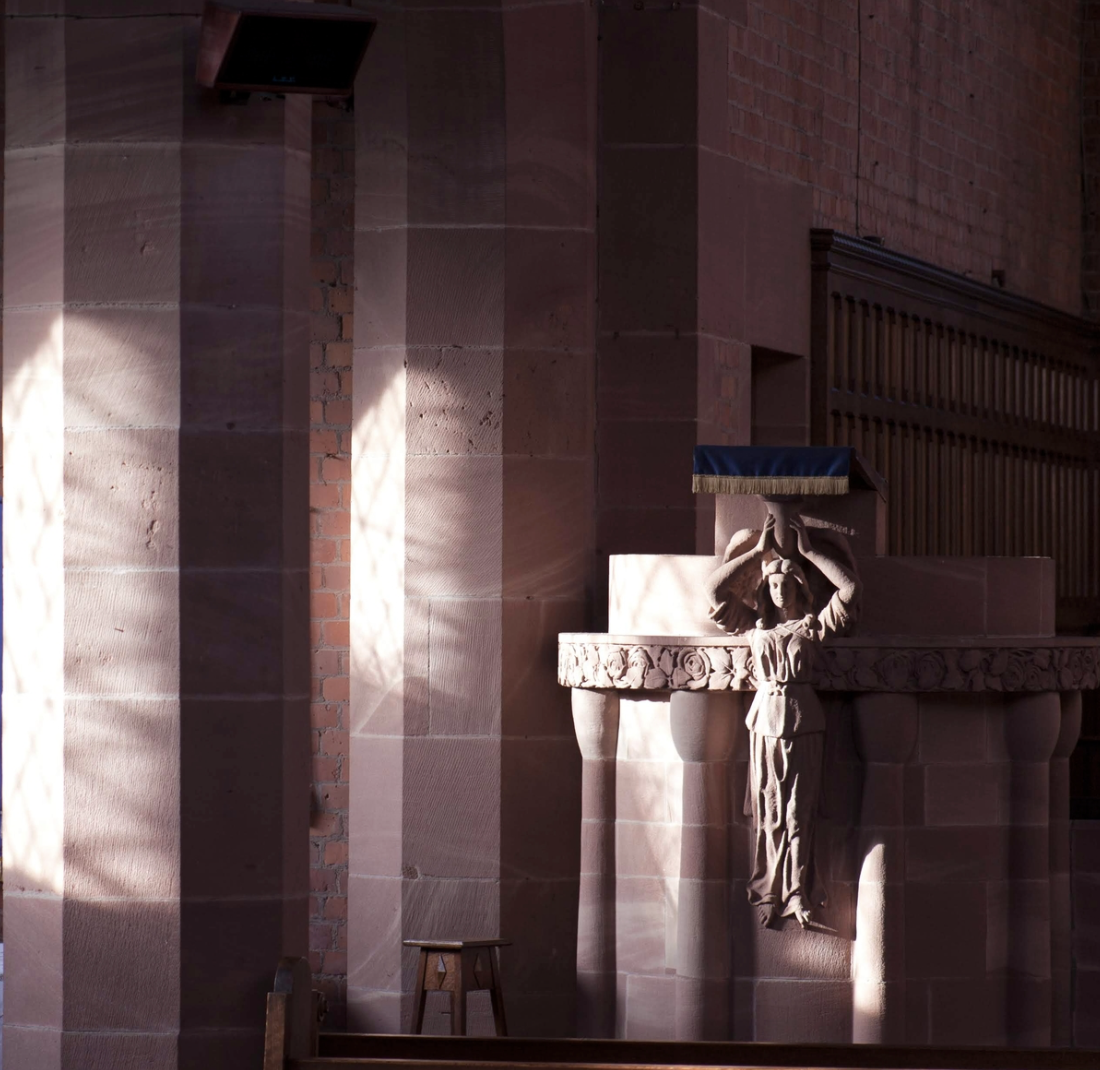
Long St Methodist Church, Middleton 1899 – 1903.
Leaving a profound impression on me as child aged 3 to 8 years.
‘..he saw himself as an artisan serving the people…’
Tampere: the ‘Manchester of Finland’.
Lars Sonck 1903 – 07 & decorated by Hugo Simberg – creating a building for the area of the town that housed the
growing industrial workforce. Designed in National Romantic style, it became Tampere’s Lutheran Cathedral.
On entering we were astonished – and captivated by the interior…. photographing as much detail as possible
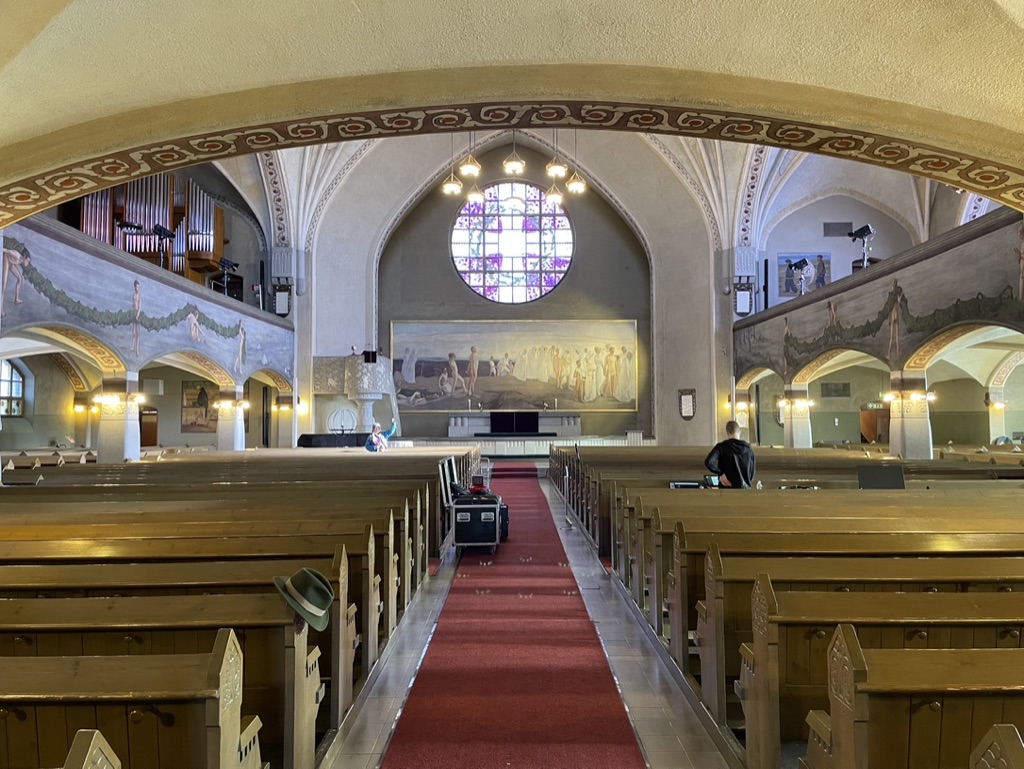
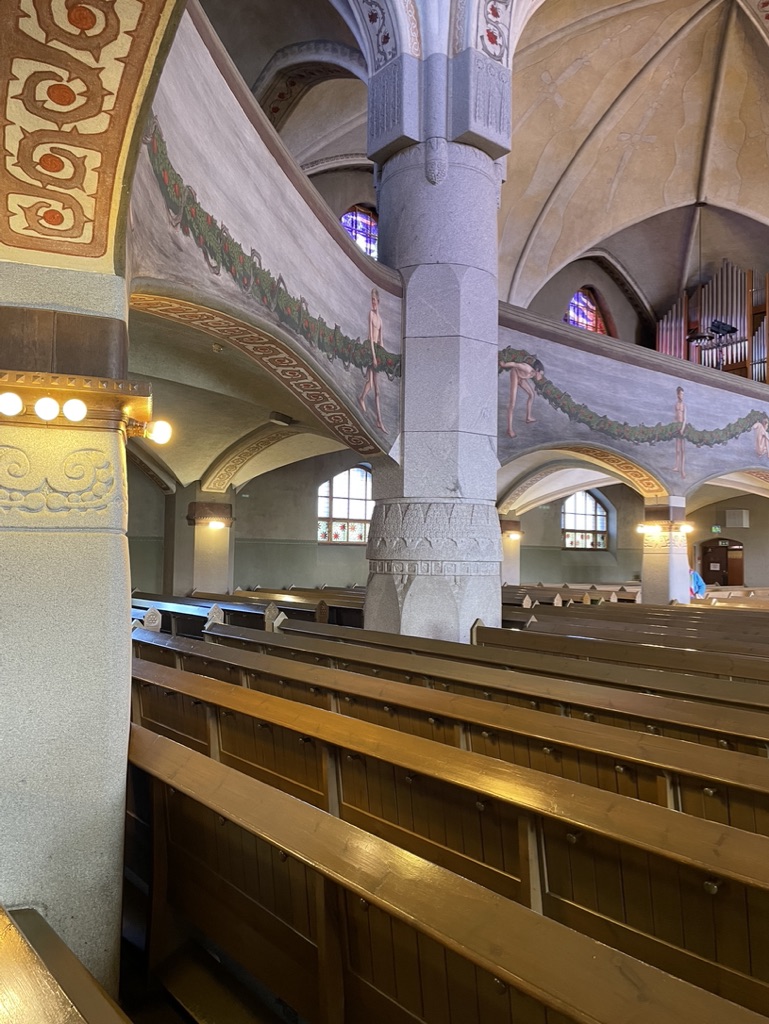
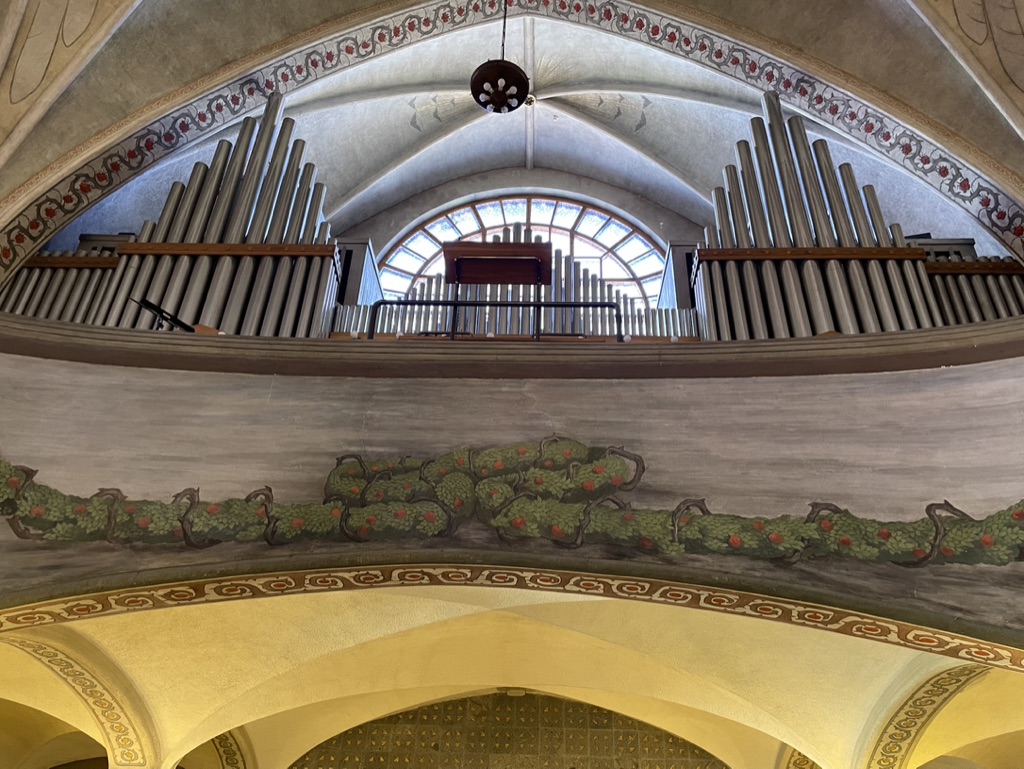
There is a lengthy green cord, bundled & carried
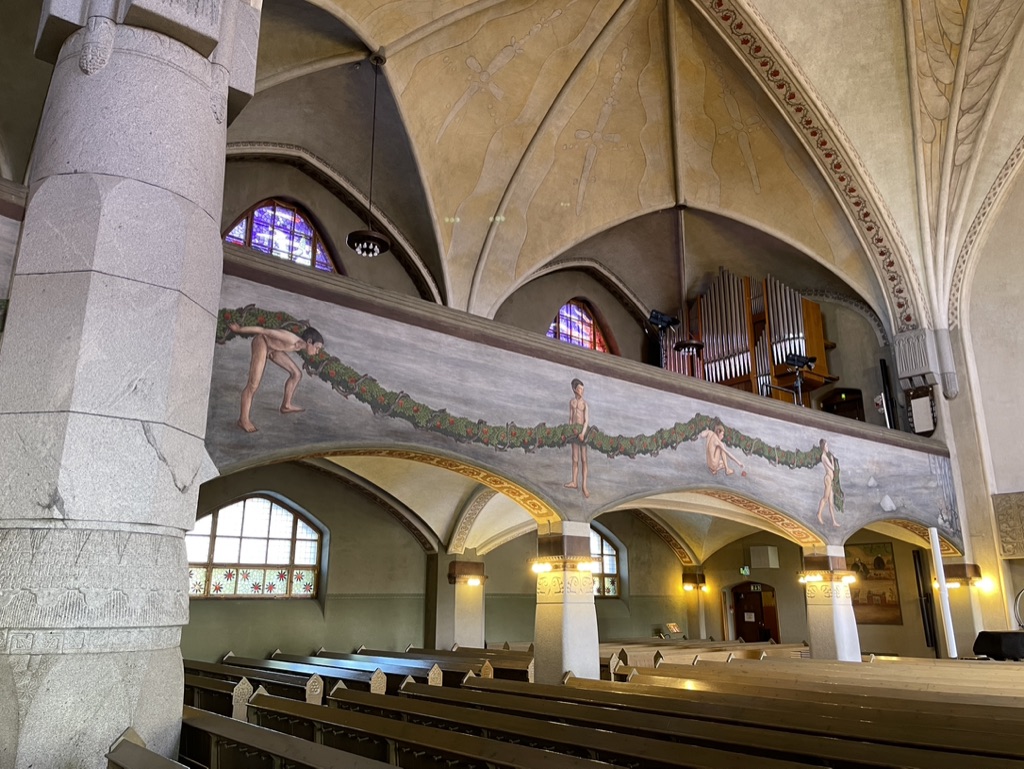
Boys, apparently modelled from locals, carry the cord forwards

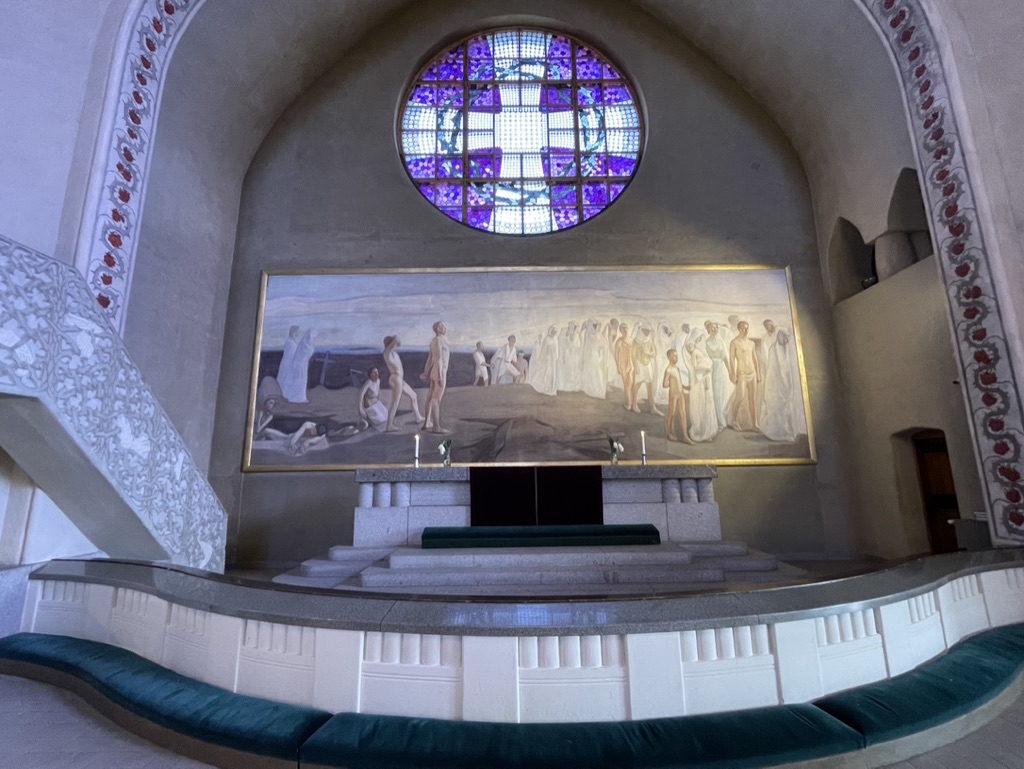
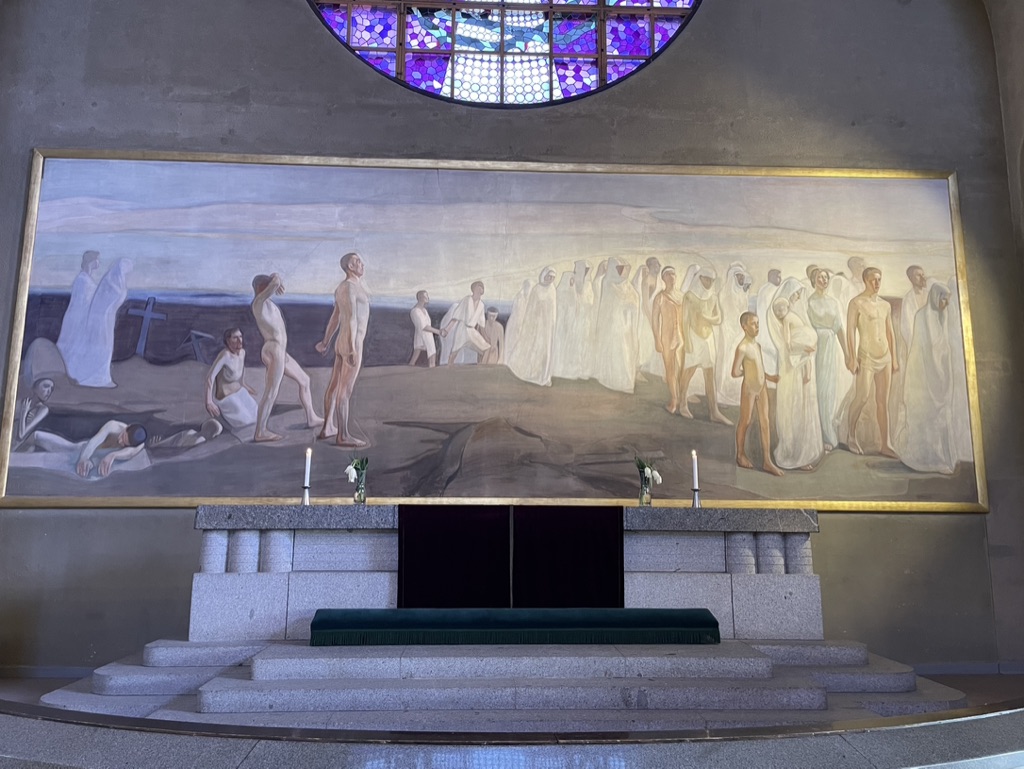
The resurrection (Magnus Enckell) still requires women to dress ‘appropriately’… curious.
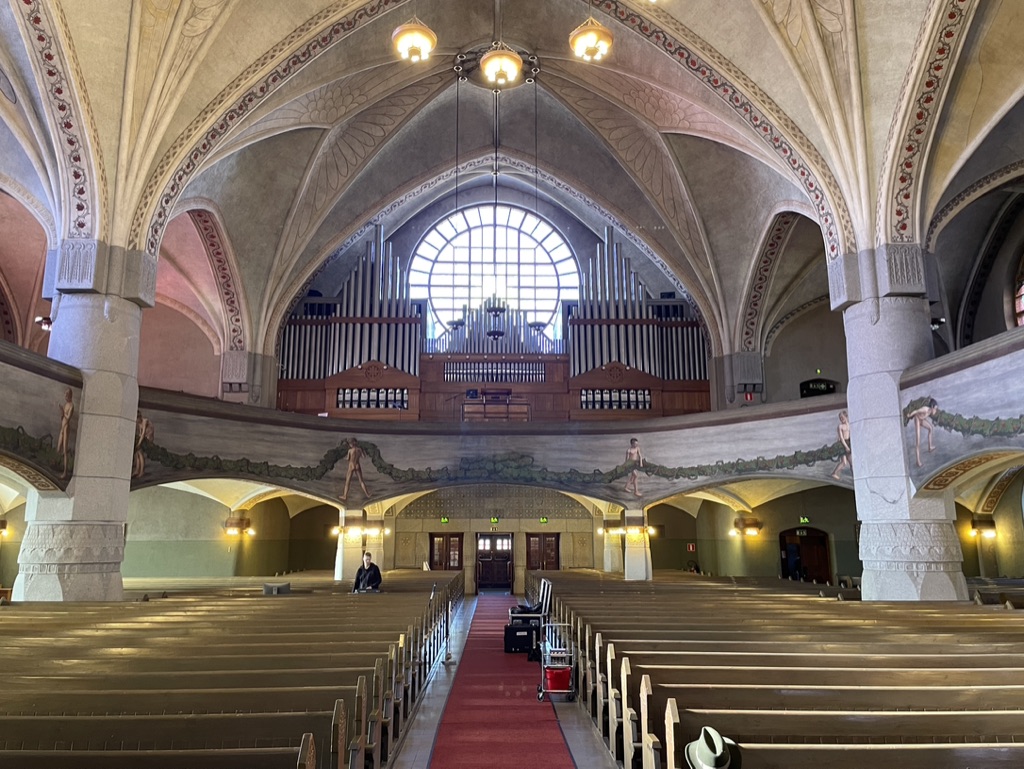
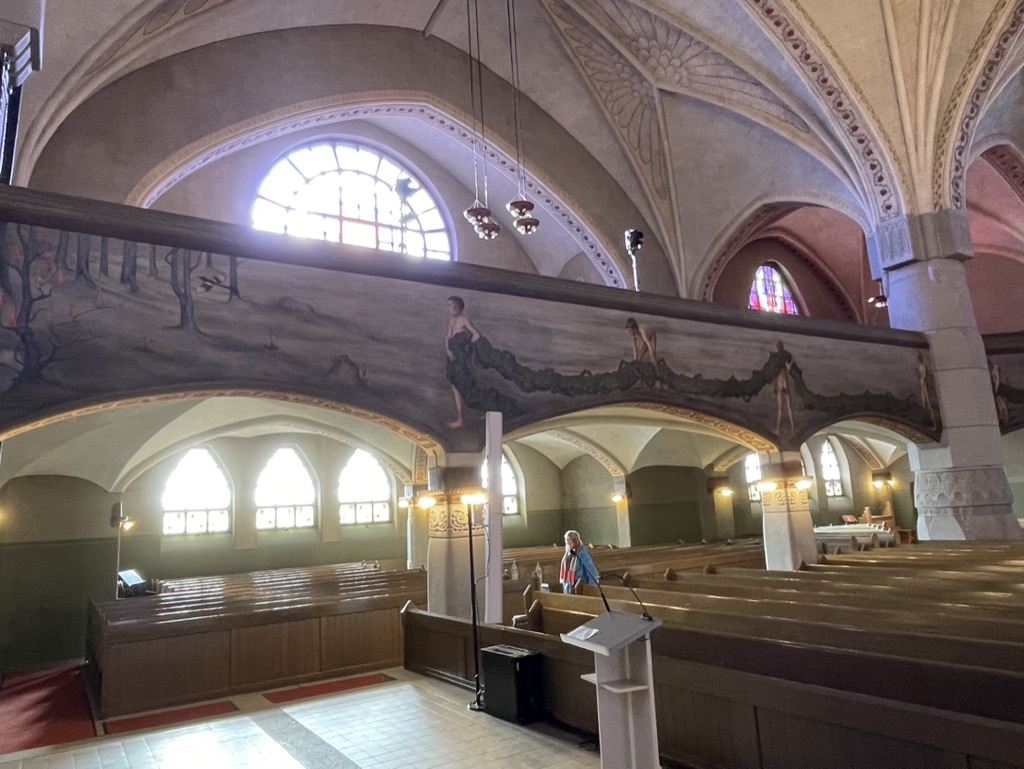
The destinations of the cord carriers (on both sides) seem very bleak

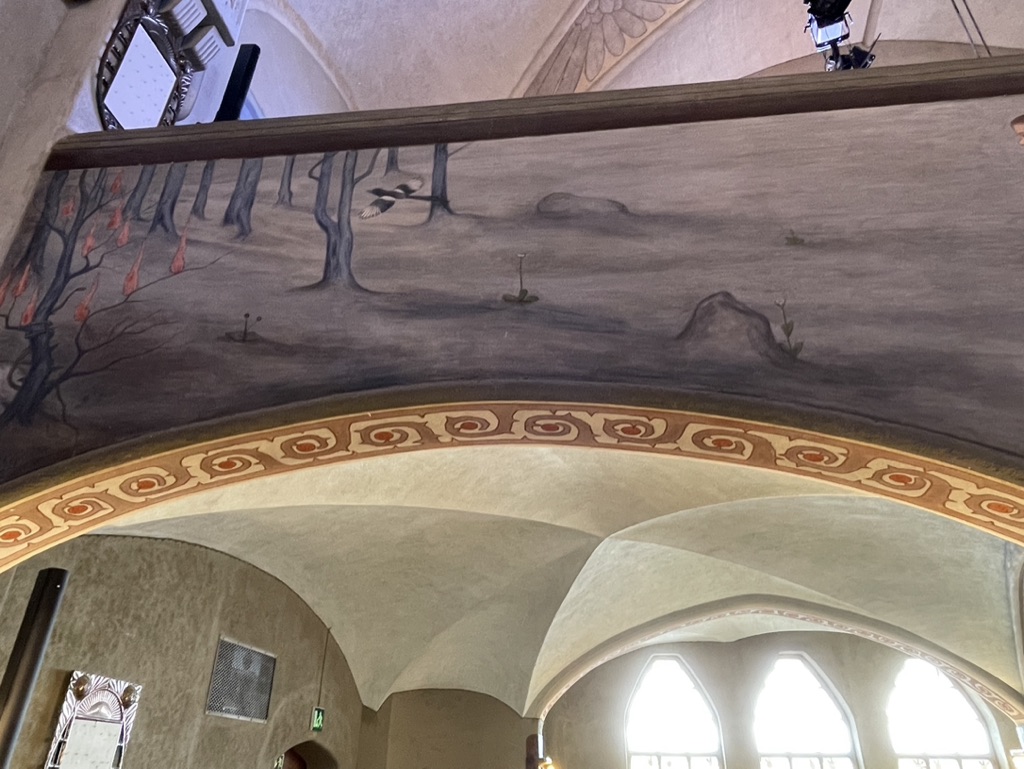

Overseeing the centre of the church are angel wings surrounding a flying serpent.

The artist, Hugo Simberg, was criticised for placing a snake/winged serpent at the centre of the ceiling.
This is maybe to have mistaken Simberg’s approach to his work. He has also included a positive theme of boys (from Tampere) carrying a symbol of life – the green and fruitful cord….ut to bleak destinations.
A ‘cord of life’ to which the Welsh poet Dylan Thomas refers:
“The force that through the green fuse drives the flower Drives my green age”
(excellent summary & poem in English & Italian)
Much of that poem seems to bear a similar understanding of life as may be seen in Simberg’s work, which also maintains a humorous aspect:
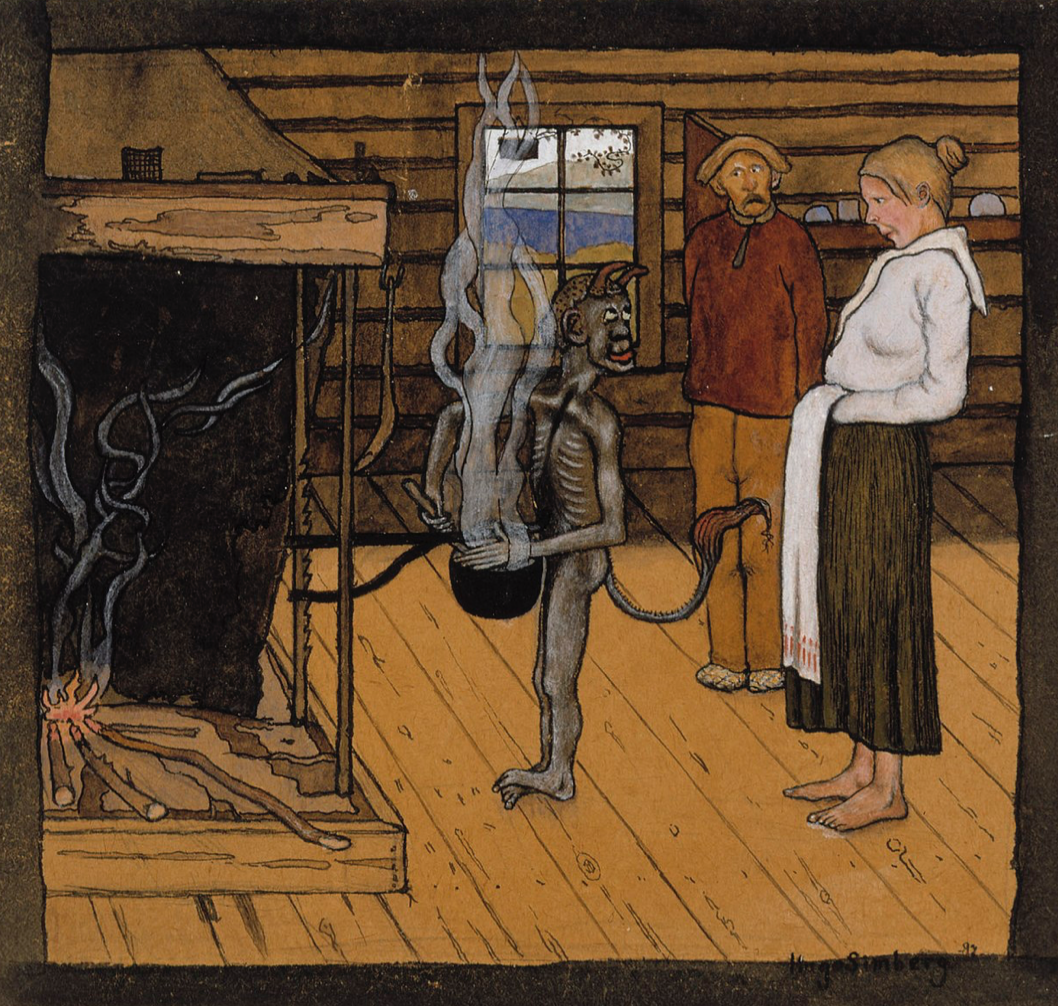
The serpent is usually a symbol of evil. Simberg’s other frescoes in the church demonstrate an approach to artistic expression that requires the observer to engage sensitively.
The symbol of evil that is placed centrally is not alone – it is surrounded by angel wings.
Angel wings also cover other parts of the church ceiling.
Is Simberg suggesting evil is a central issue for humanity – but there is the surrounding protective power of angels?
The serpent could be viewed as contained (and ‘uncomfortable’) being surrounded by angels…….
Or is ‘temptation’ & evil always present, despite the protection – snake-like, ‘forked’ or ’double-tongued’ always untrustworthy.
…’preserve me from the violent man;
They have sharpened their tongues like a serpent; adders’ poison is under their lips.’ Bible: Psalm 140
…. the protective, sheltering wings of the angels are everywhere. They may be seen as a positive reassuring image

Of the Garden of Death Simberg stated that is was a place where the dead wait prior to entering heaven.
Simberg’s ‘wounded angel’ was reproduced several times and in this case he has located it in industrial Tampere (the chimneys & footwear are different from the original version).
Everywhere the details form an important part of the whole – and they retain a decorous simplicity of line.
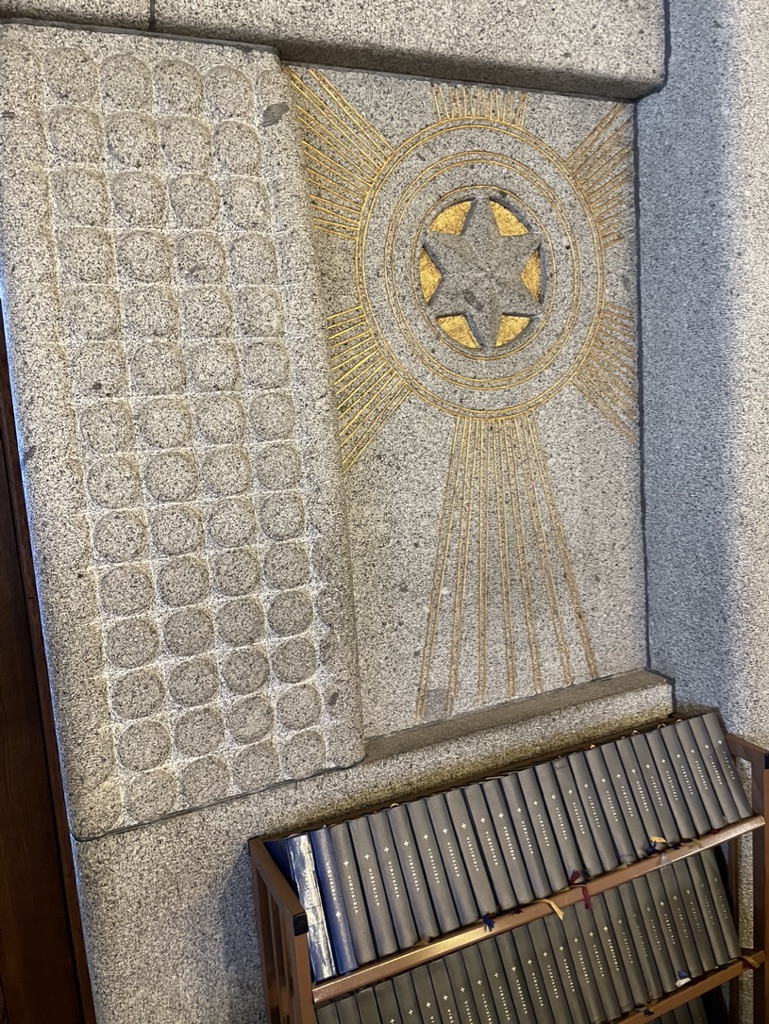


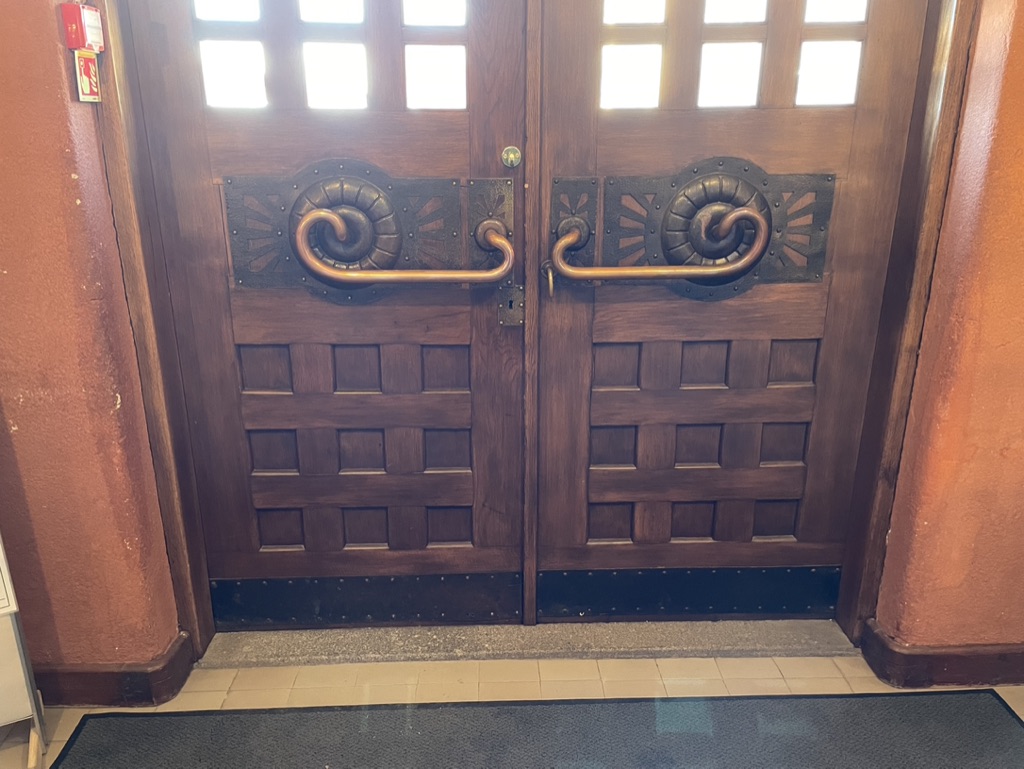
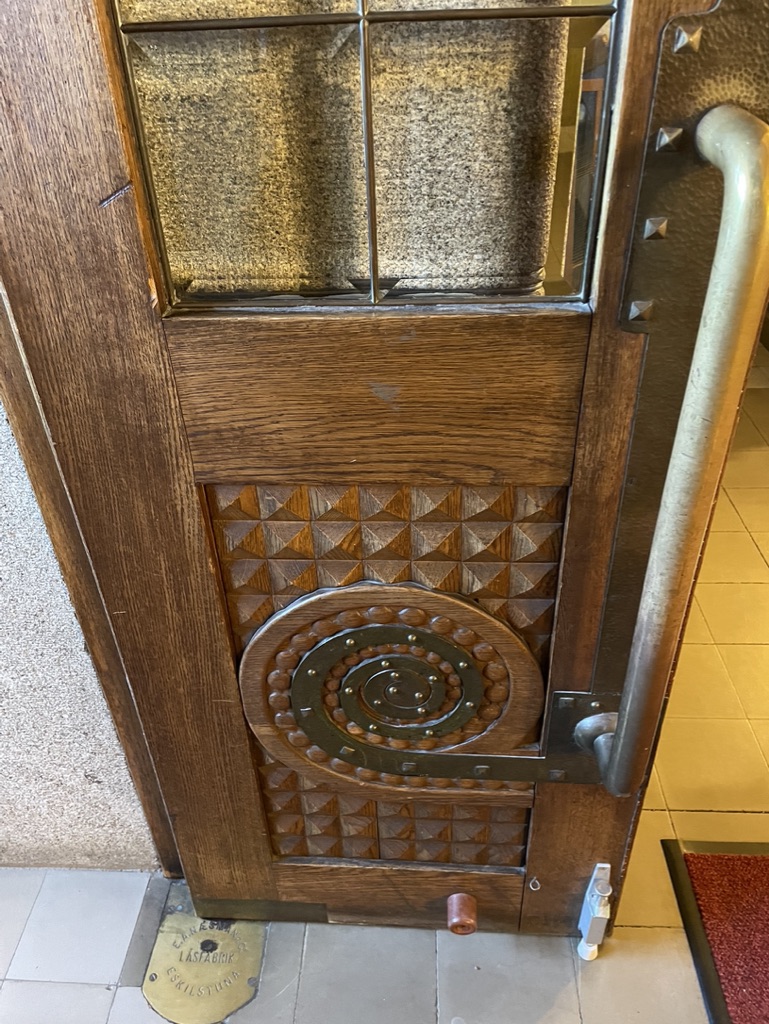
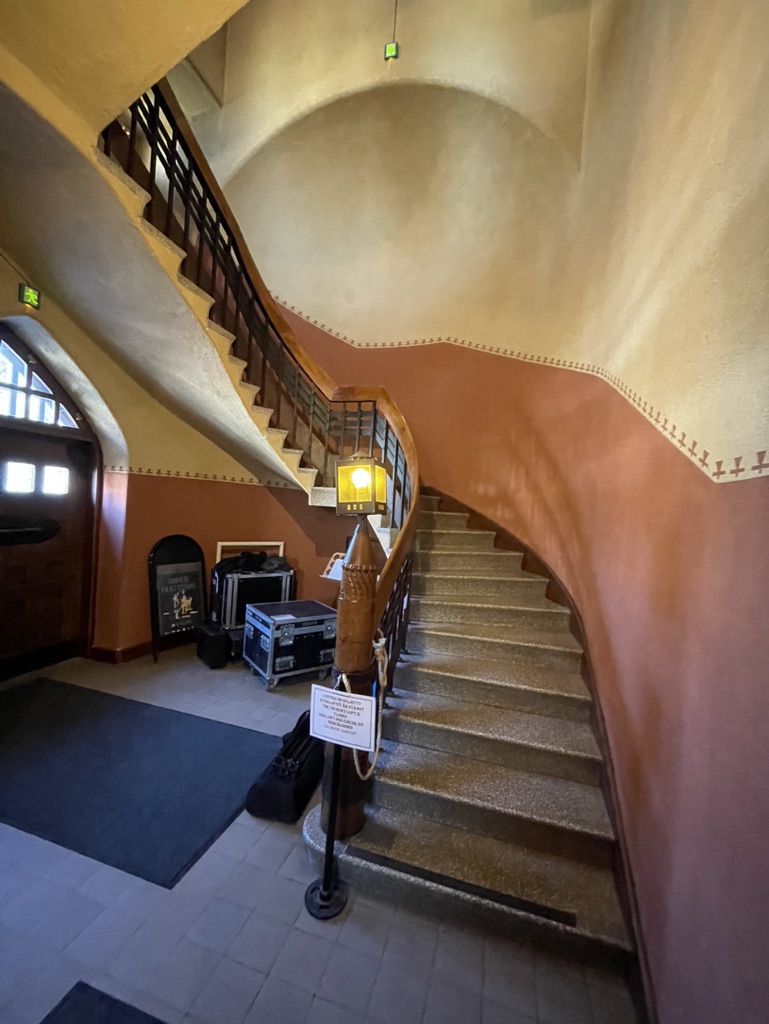

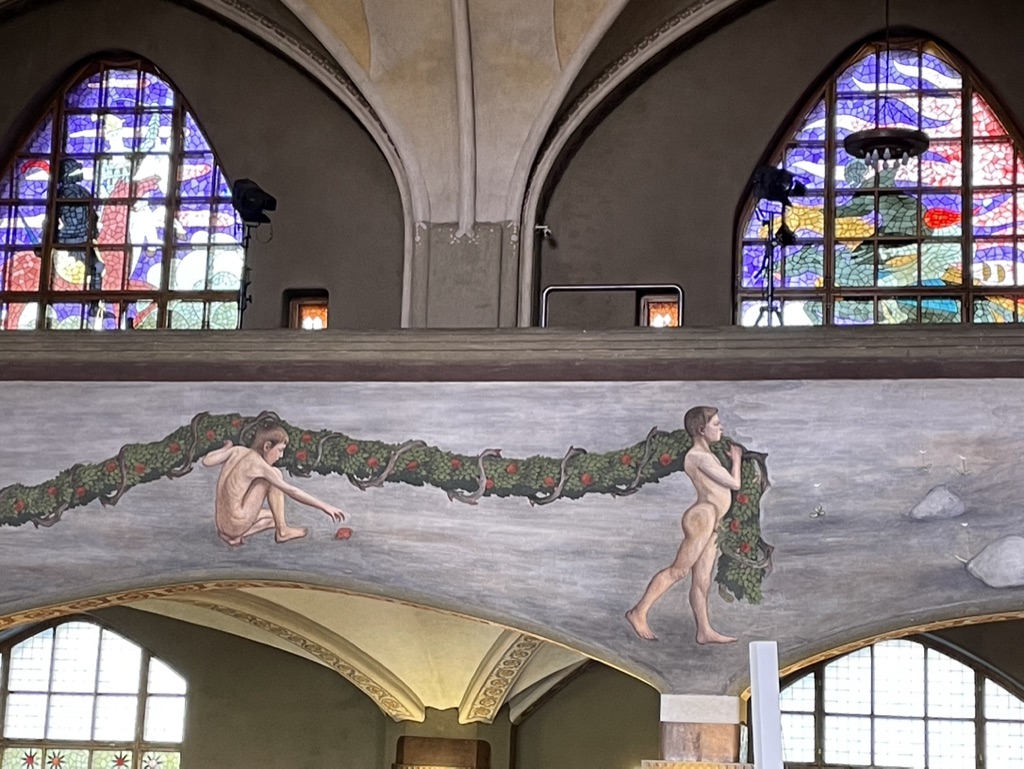
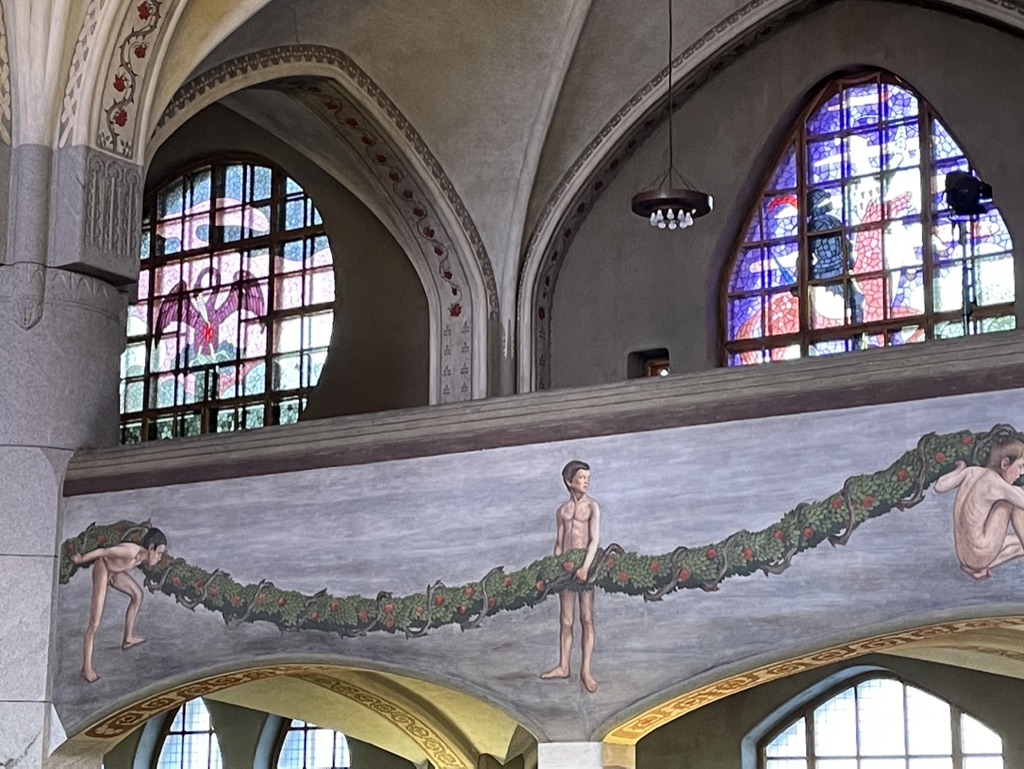
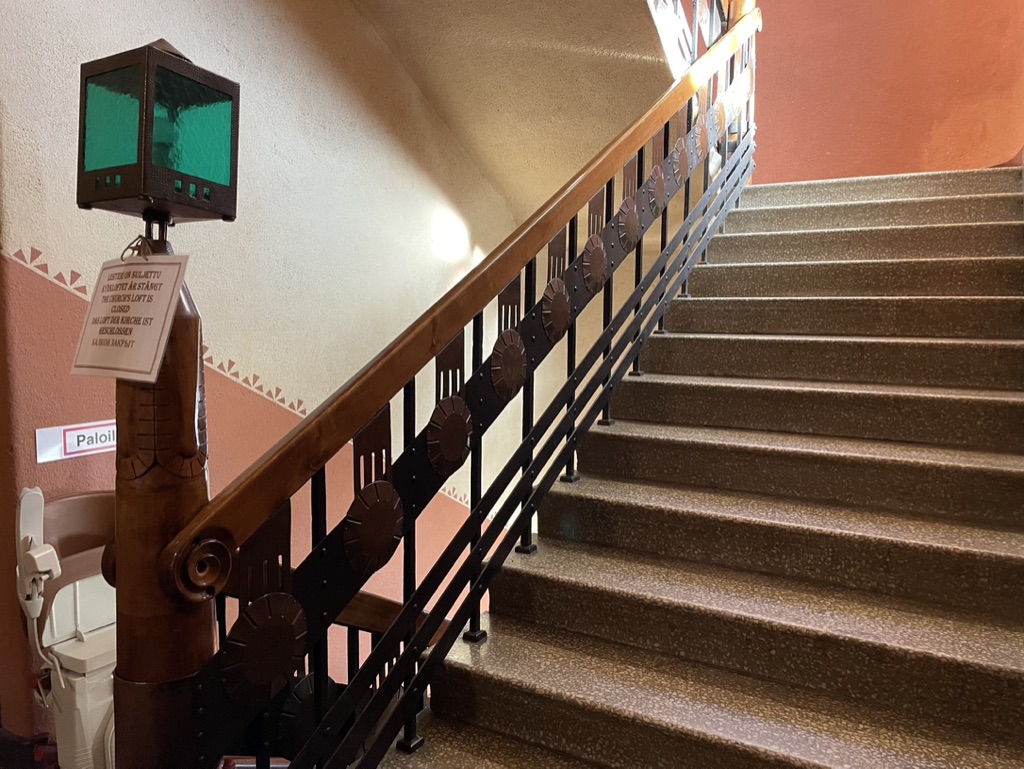
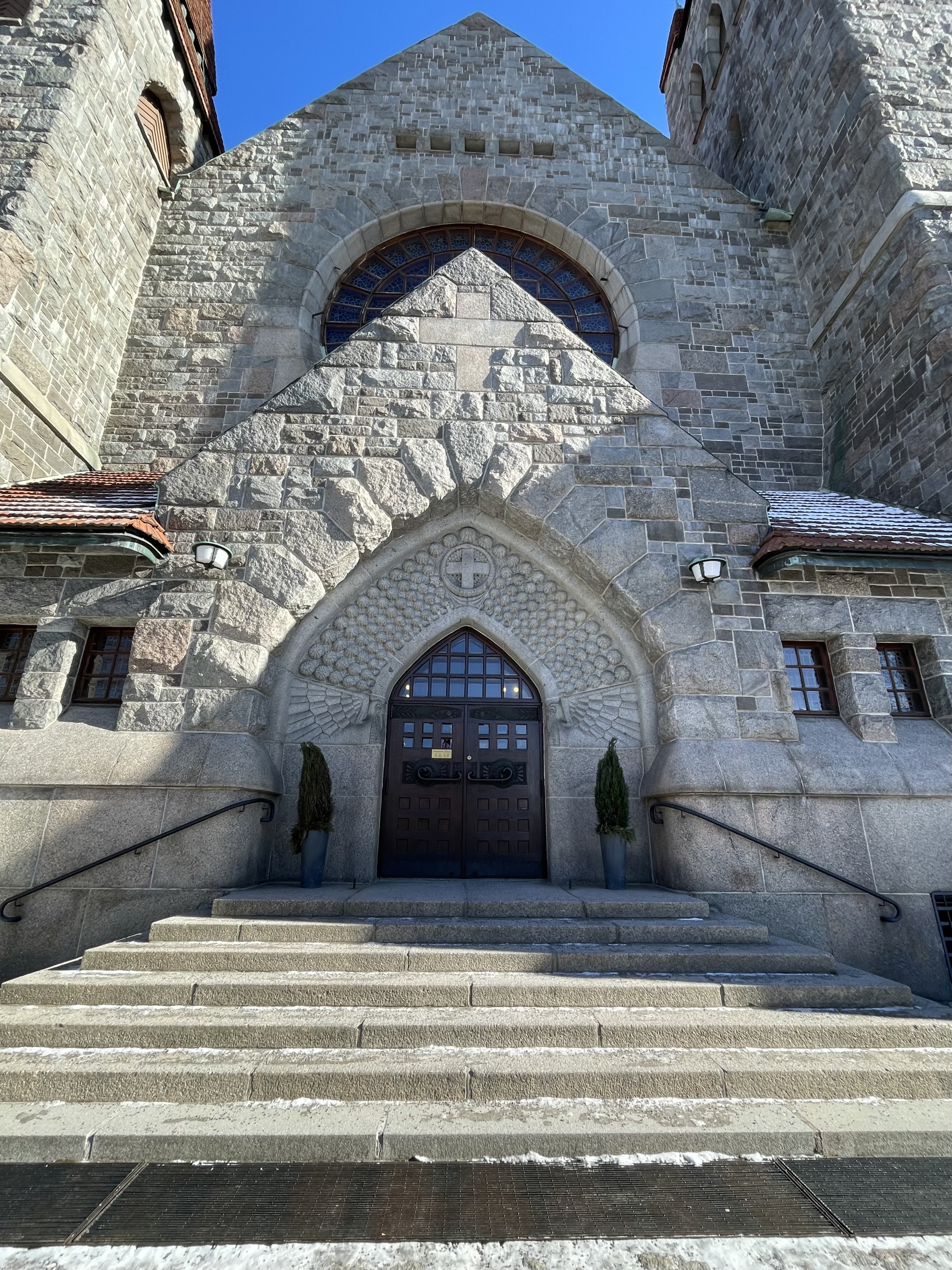

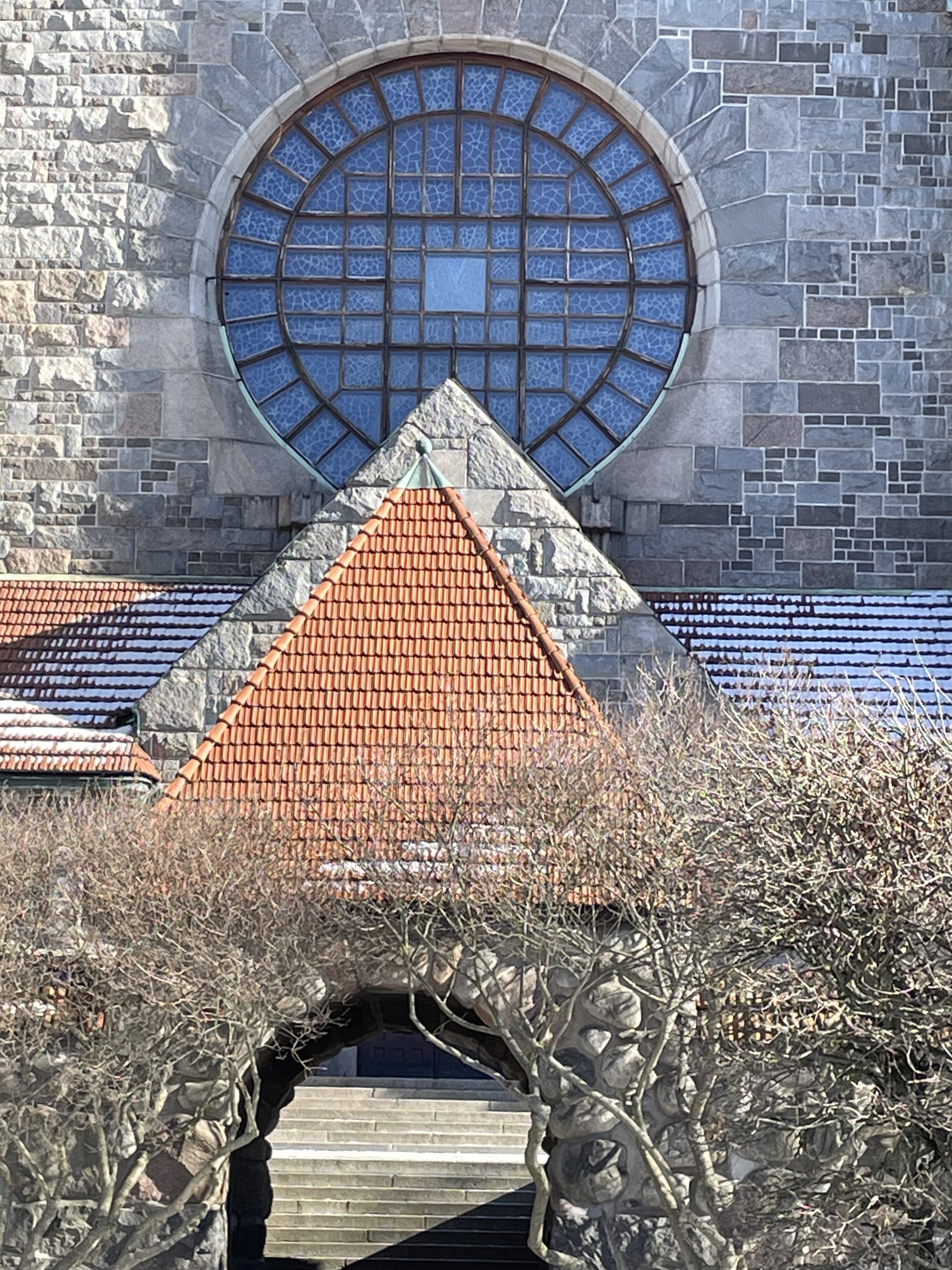
The centre of Tampere is equally fascinating – with the industrial buildings re-purporsed, providing connectional & recreational spaces.
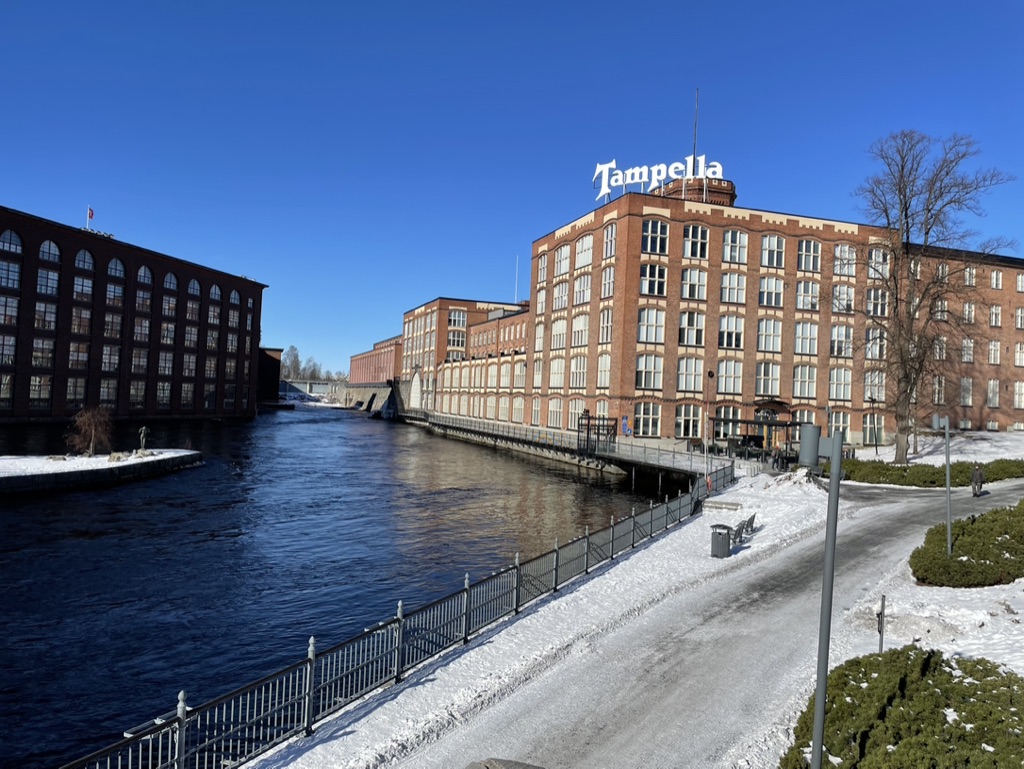
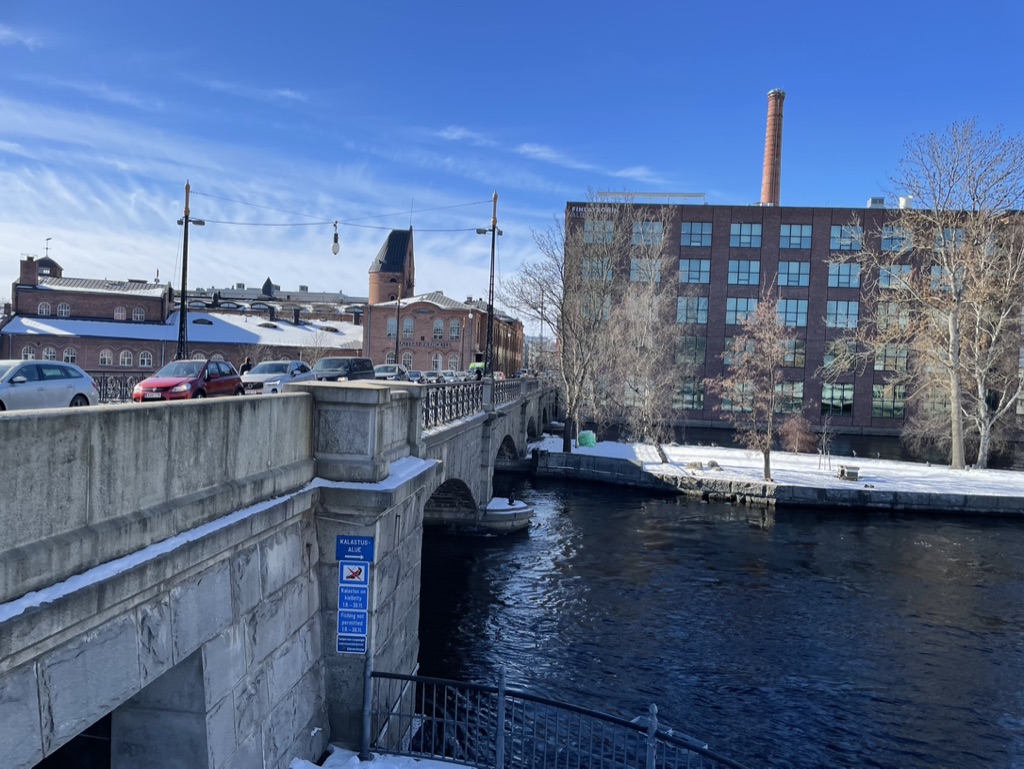
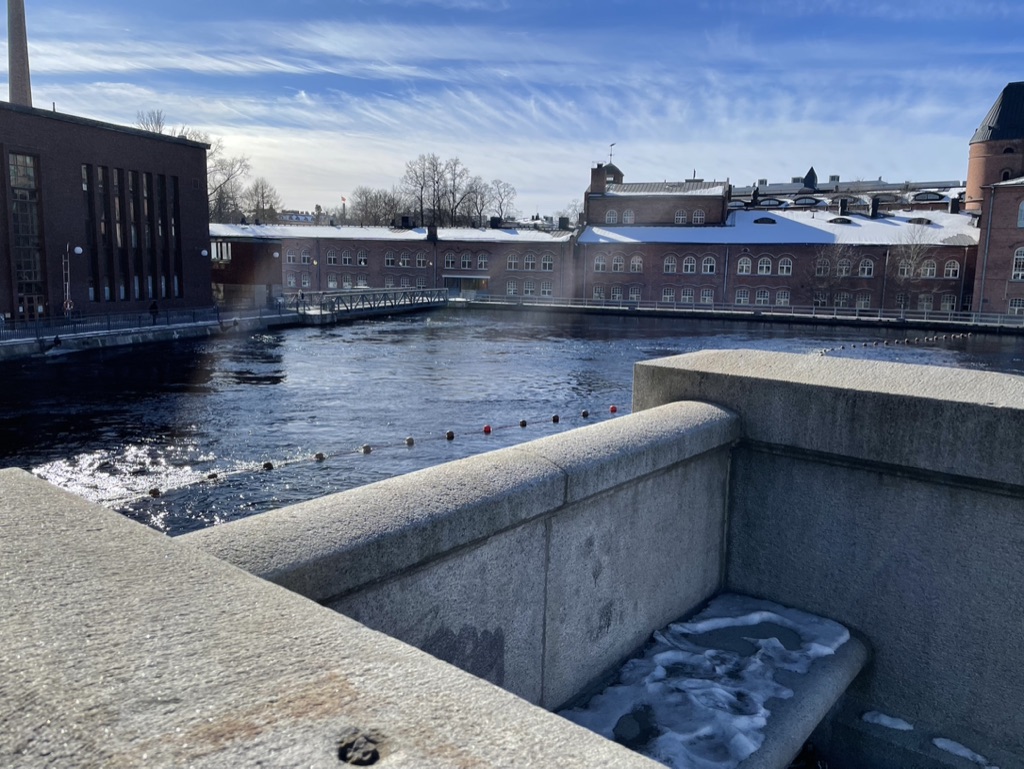
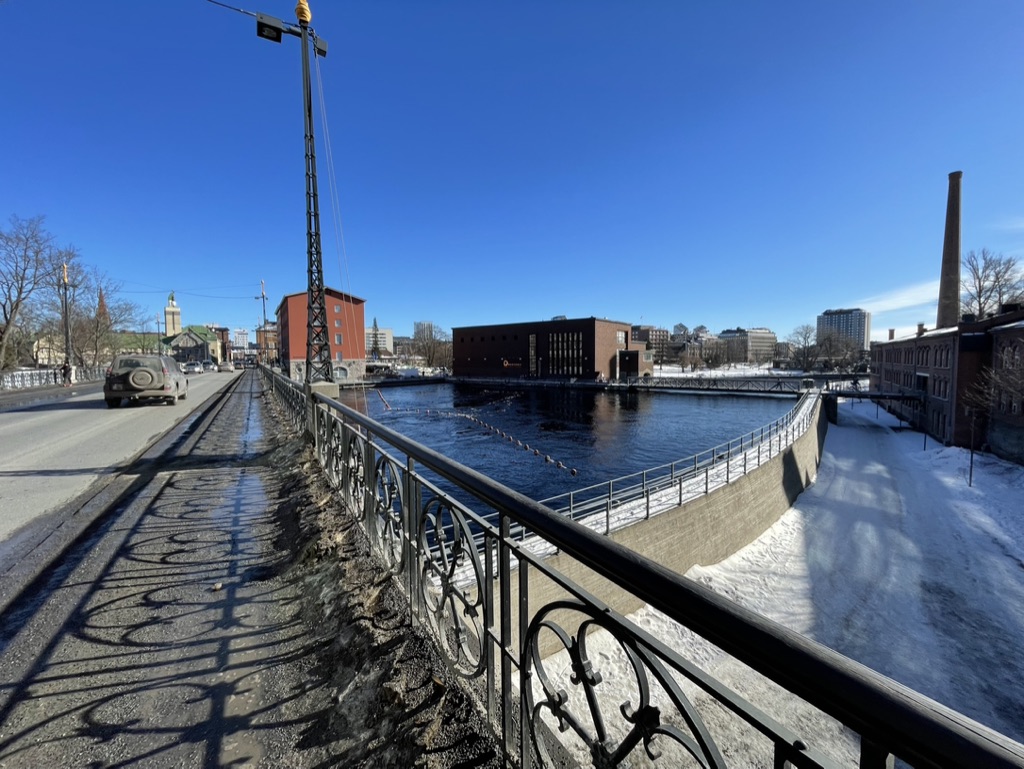

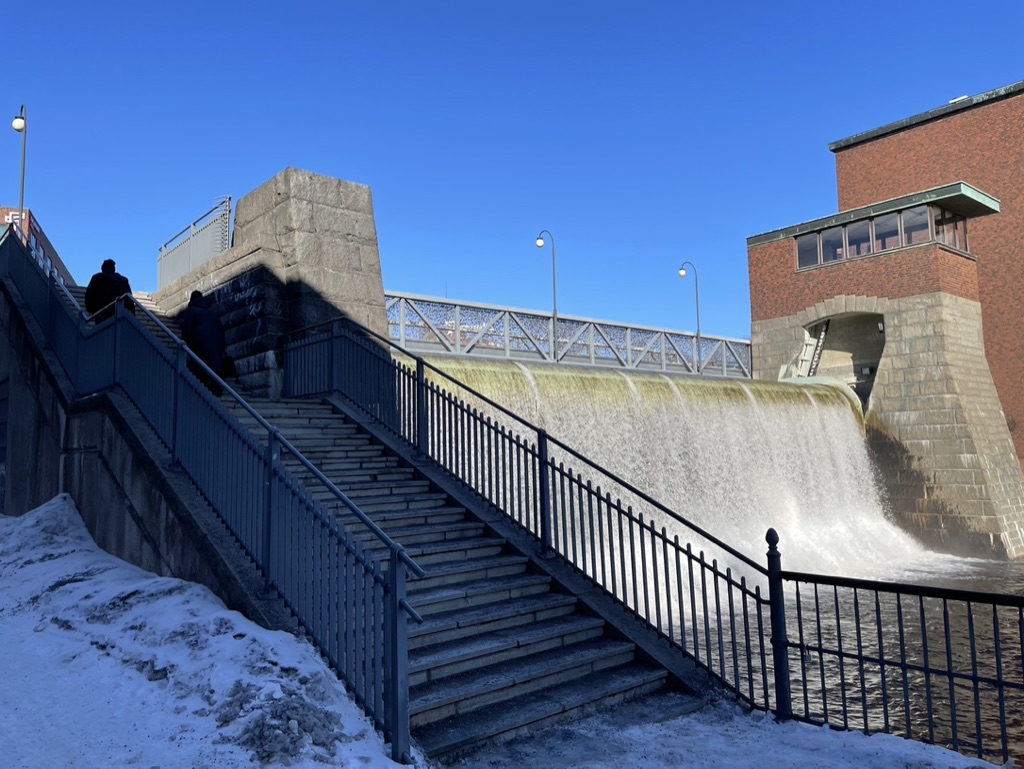
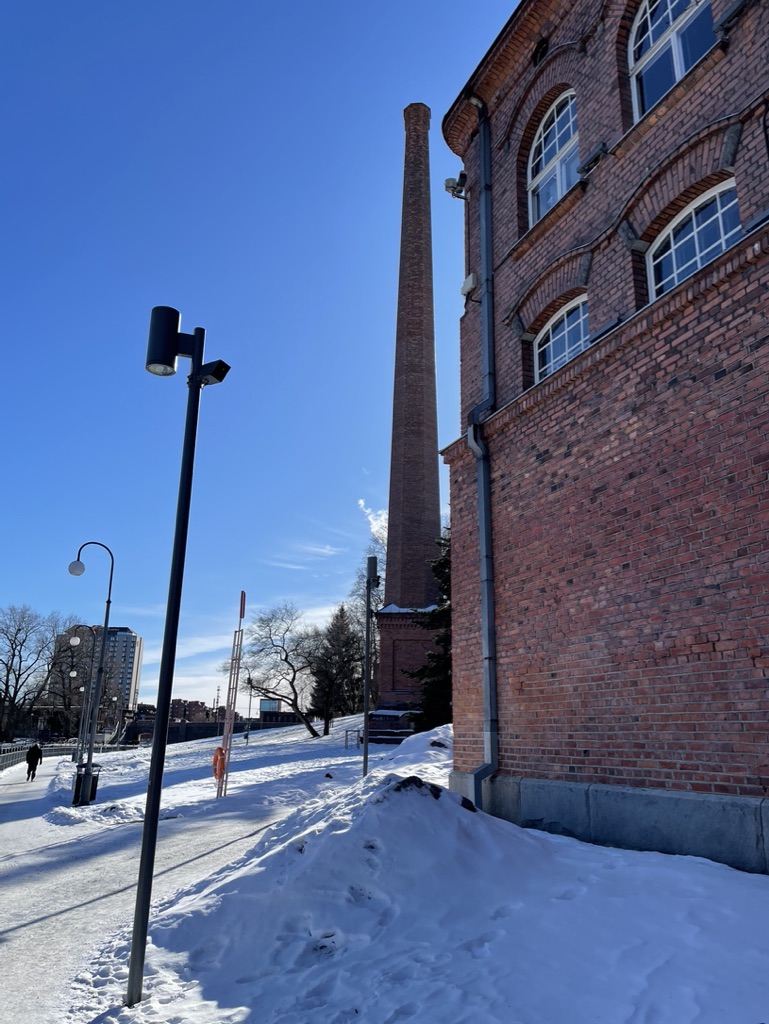
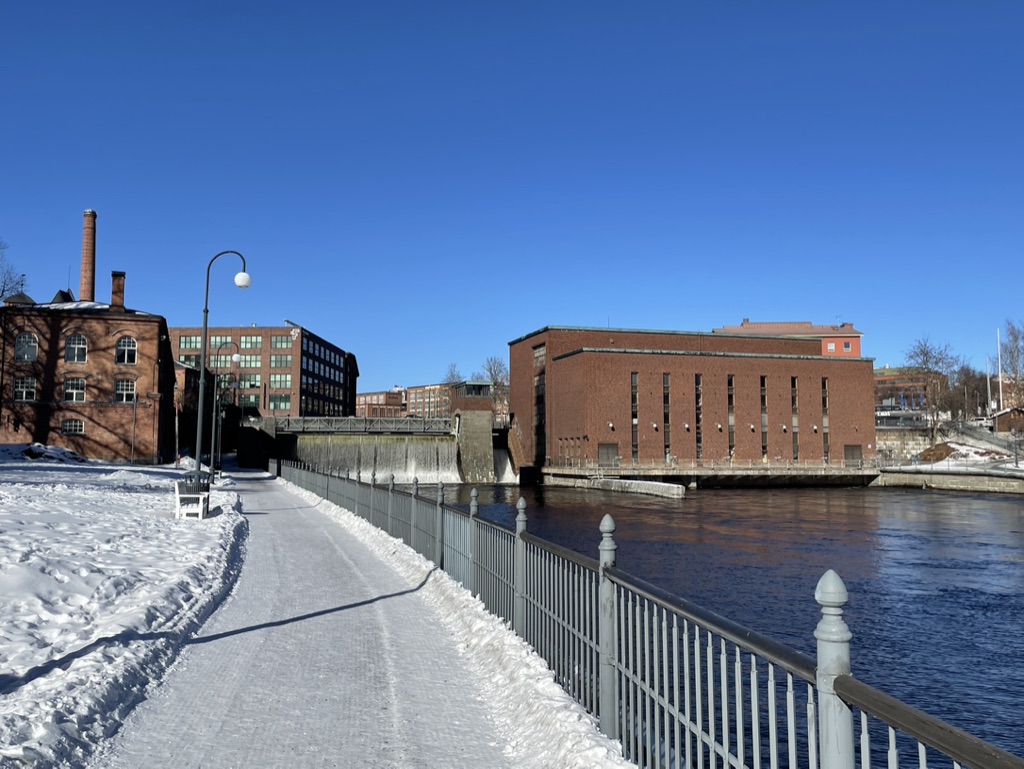
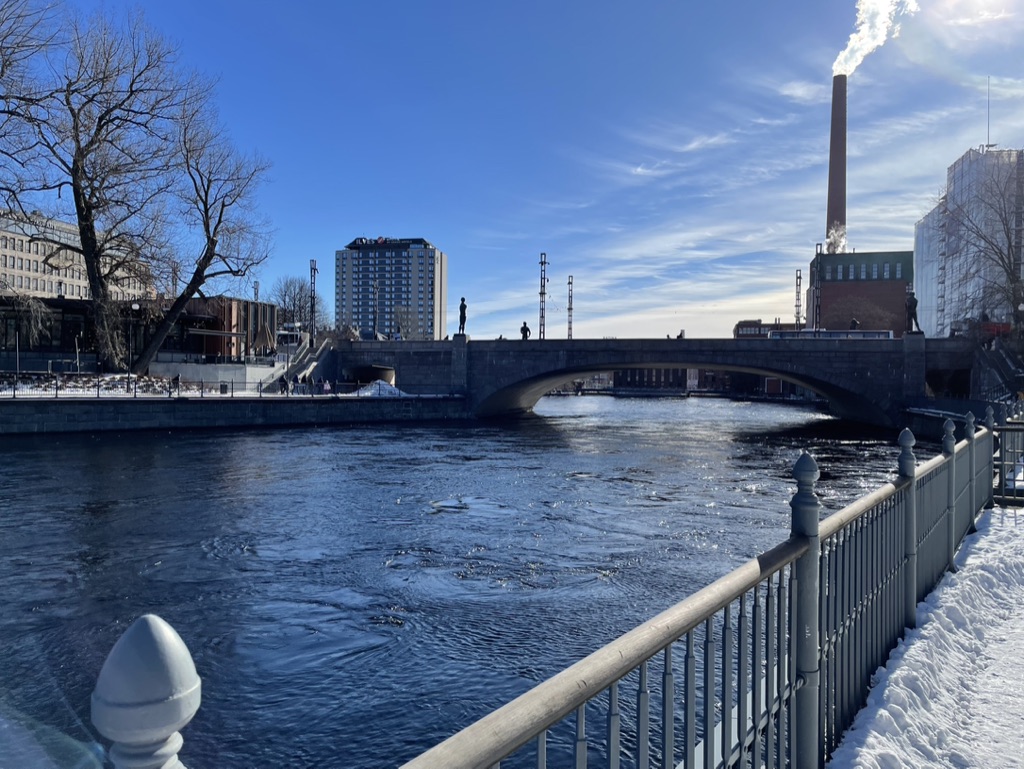
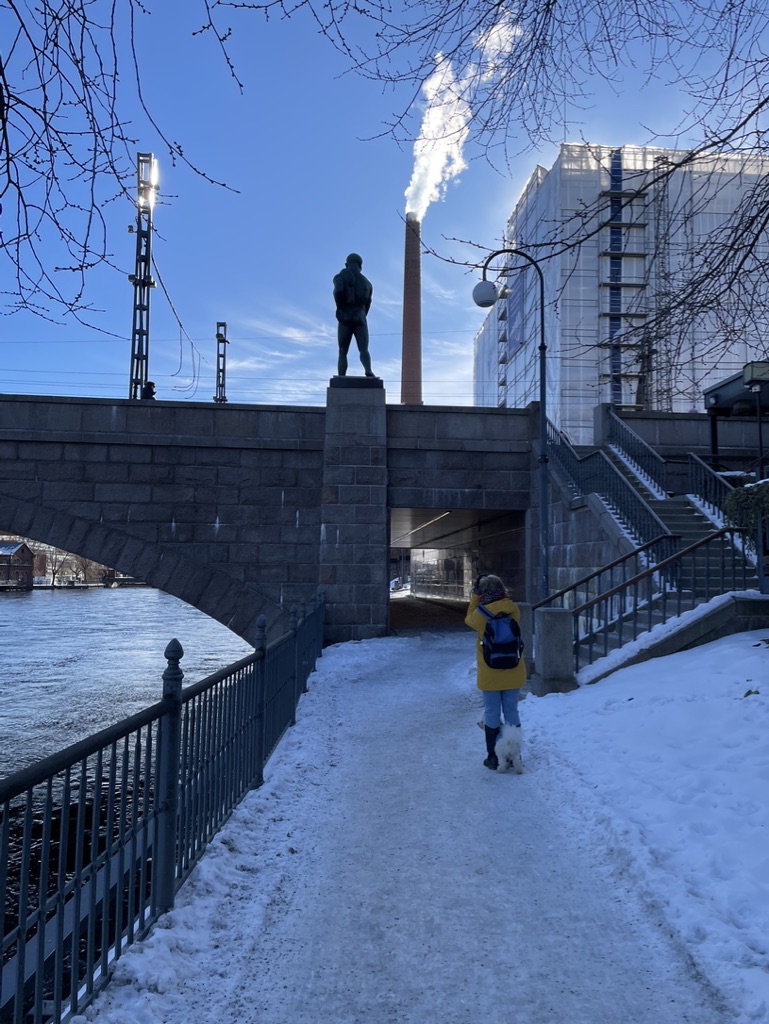
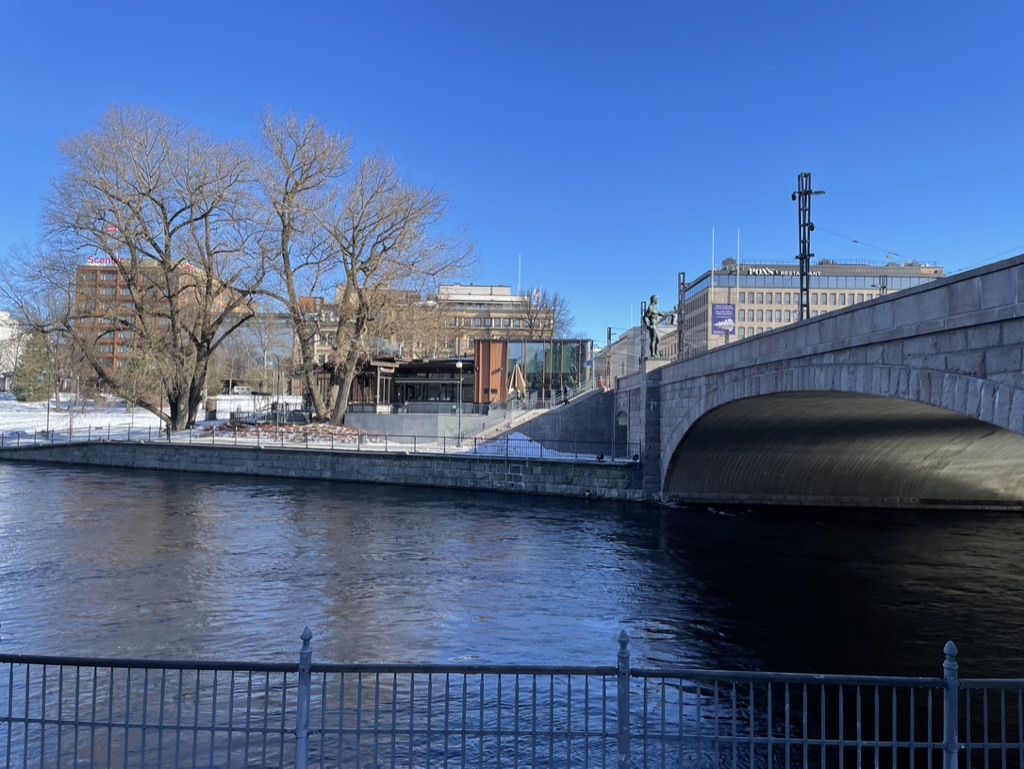
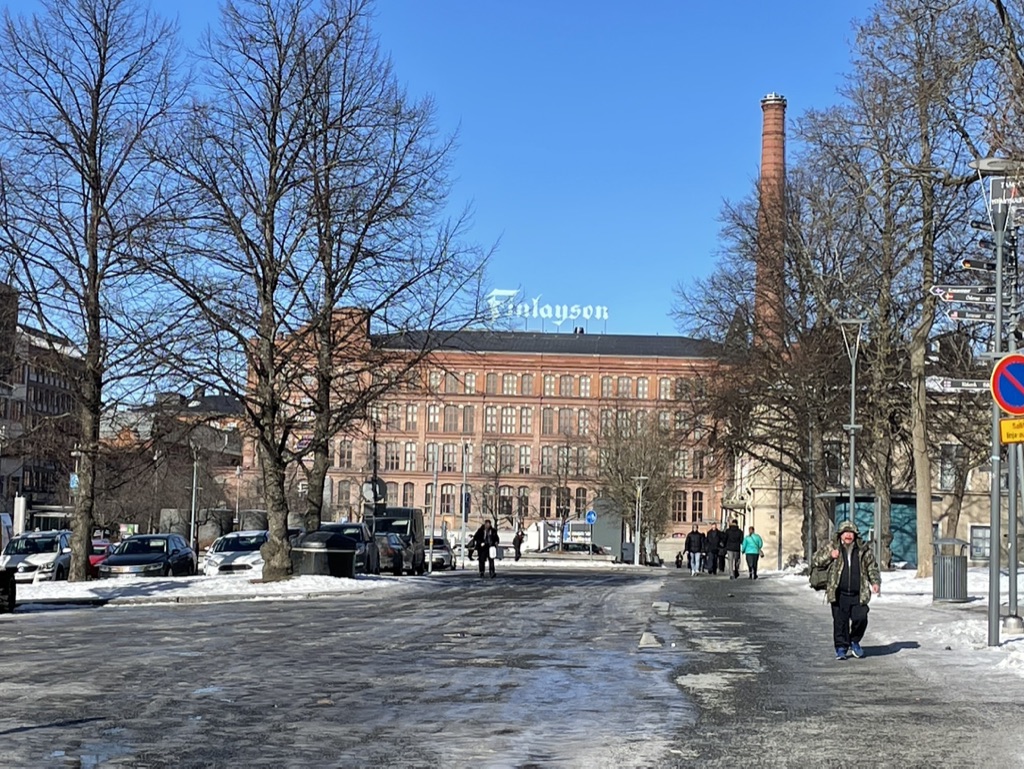
Tampere was a traditional industrial town & the preservation of the buildings makes a ‘clear statement’ as the picture above one demonstrates. Having lived in similar environments in UK, it feels very familiar.
Its importance as an industrial base resulted in its significance for Russian Bolsheviks. Here, in 1905, Lenin first met Joseph Stalin & Lenin’s journey from exile to Petrograd included a stop in Tampere.
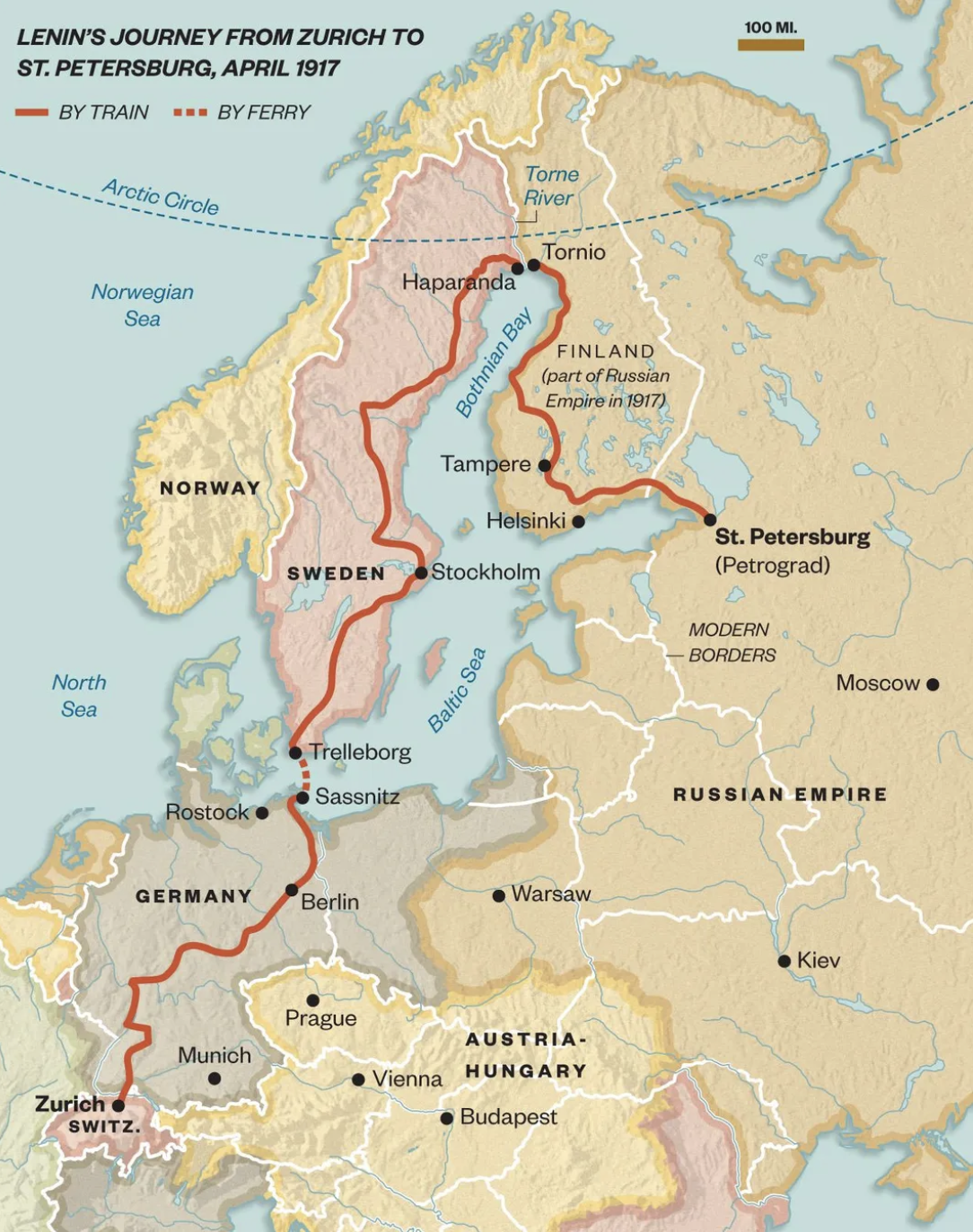
As Tampere was the most important industrial city in Finland its (considerable) workforce supported the red faction during the Finnish Civil war (‘War of Independence’) of 1918 (27 January – 15 May 1918)
It was site of a major battle after being besieged by ‘the Whites’. As ever with civil wars, there were the usual horrors and unjustified murderous aftermaths (the longer lasting war, across Russia, was horrifically vicious).
https://en.wikipedia.org/wiki/Battle_of_Tampere
Finland was born through such strife & for most of its history in C20th has had to manage an uneasy political context – between ‘west’ & ‘east’
The Lenin Museum in Tampere, created after WW2, represents something of that compromise.
Fortunately the (originally promotional) Museum has survived.
Welcome to the Birthplace of the Soviet Union!
Everyone from President Brezhnev to cosmonaut legend Gagarin has paid a visit to this place. You should come too!
The only Lenin Museum in the Western world is located in Tampere Workers’ Hall, where Lenin and Stalin met each other for the first time in 1905.
The museum has become a cult destination, attracting visitors from around the world.
A visit to the Lenin Museum is a real experience.
The Lenin Museum tells you about the multi-generational history of Finnish-Soviet relations.
Visit the legendary Lenin Museum and discover our museum shop!
Since February 2022, Lenin Museum has unequivocally opposed the war and supported Ukraine.
Museum donates to UNICEF one euro of every ticket sold to to help Ukrainian children and families.
Unfortunately, we could not visit, on Mondays in winter the museum is closed.
A disappointment
Having spent the past 33 years working with partners in post-communist societies (and because of present political circumstances) it would have made a rather special visit (& with odd personal links… I once had a specially arranged visit to a wine cellar in which Yuri Gagarin was incarcerated accidentally, having fallen asleep, heavily intoxicated – and failing to leave with other guests. Mr Putin and friends had also partied there – with, as usual with Putin, doors locked to console his exaggerated concern for personal protection – an inevitable projection of his own behaviour)
Being the only one of its type in ‘The West’, it was a very popular destination for tourists from the Soviet Union!
The presence of the museum is a reminder that Finland, since its creation, had survived through a series of compromises with greater powers – especially Russia & the Soviet Union.
The necessity of such compromises is a matter for debate – but the English language Moscow Times made the comment
“And while the museum in Tampere might be a reminder of just how deep its historical wounds still are, it’s also a monument to how Finland has evolved.
Lenin and the October Revolution may have altered its fate forever 100 years ago, but now more than ever, that fate may finally be in Finland’s own hands.”
https://www.themoscowtimes.com/2017/11/07/finnish-town-where-lenin-met-stalin-still-lives-in-russias-shadow-a59495
(based in Amsterdam since 1922 after being branded in Russia as a ‘foreign agent’ for its open approach to news)
The comment was written in 2017 – and proved to be a correct prophecy as Finland is now in NATO
We regretted not having more time to explore more of what we felt to be a particularly delightful city.
On to Turku
We had a ferry- boat to catch.
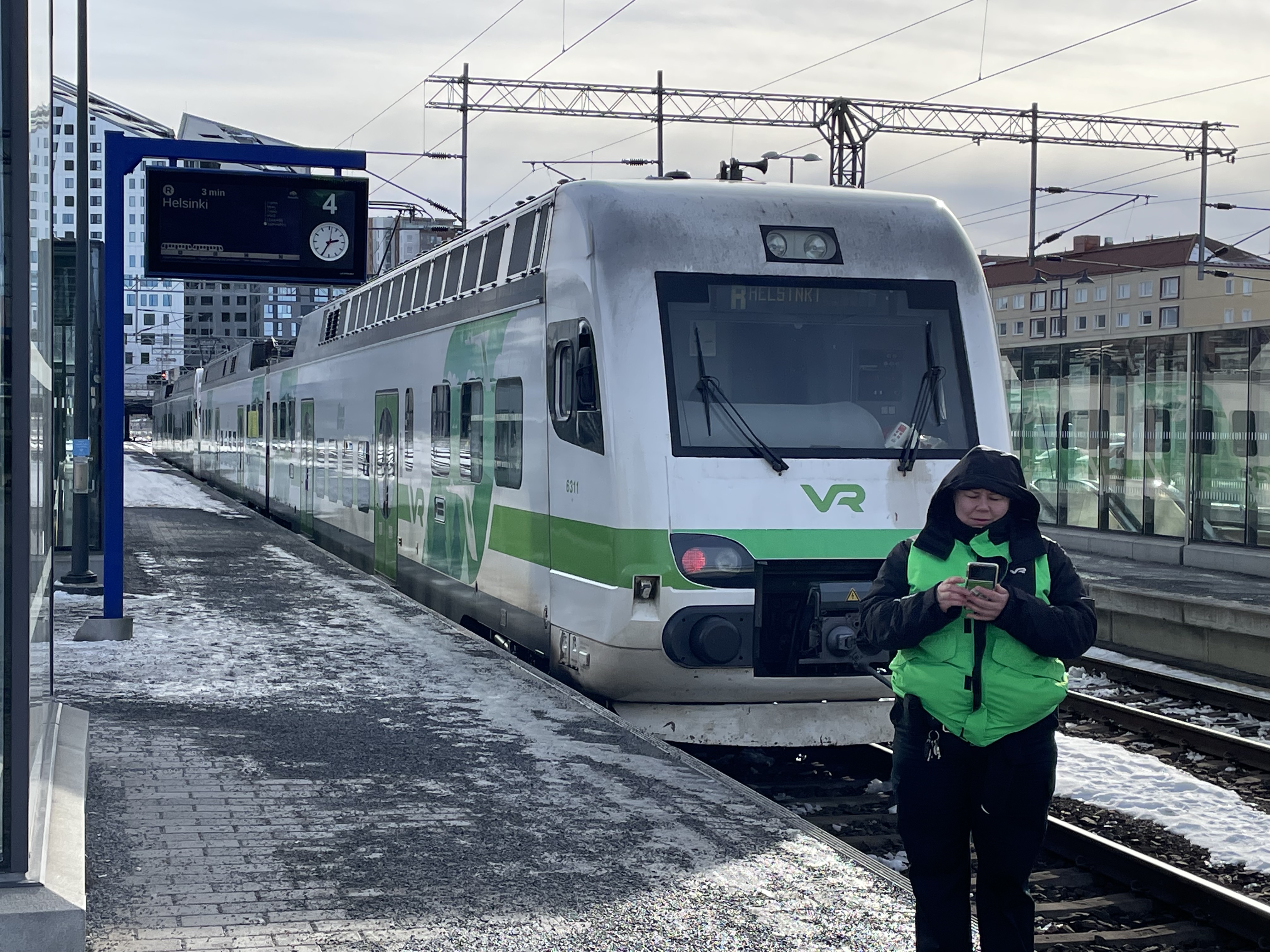
The departure screen gives a count-down in minutes – the train manager stands ready to hold the train for any late arrivals – and she calmed people as they hurried to the train.
Even though there was a slight thaw & a sense of an impending Spring, we simply faced more snow
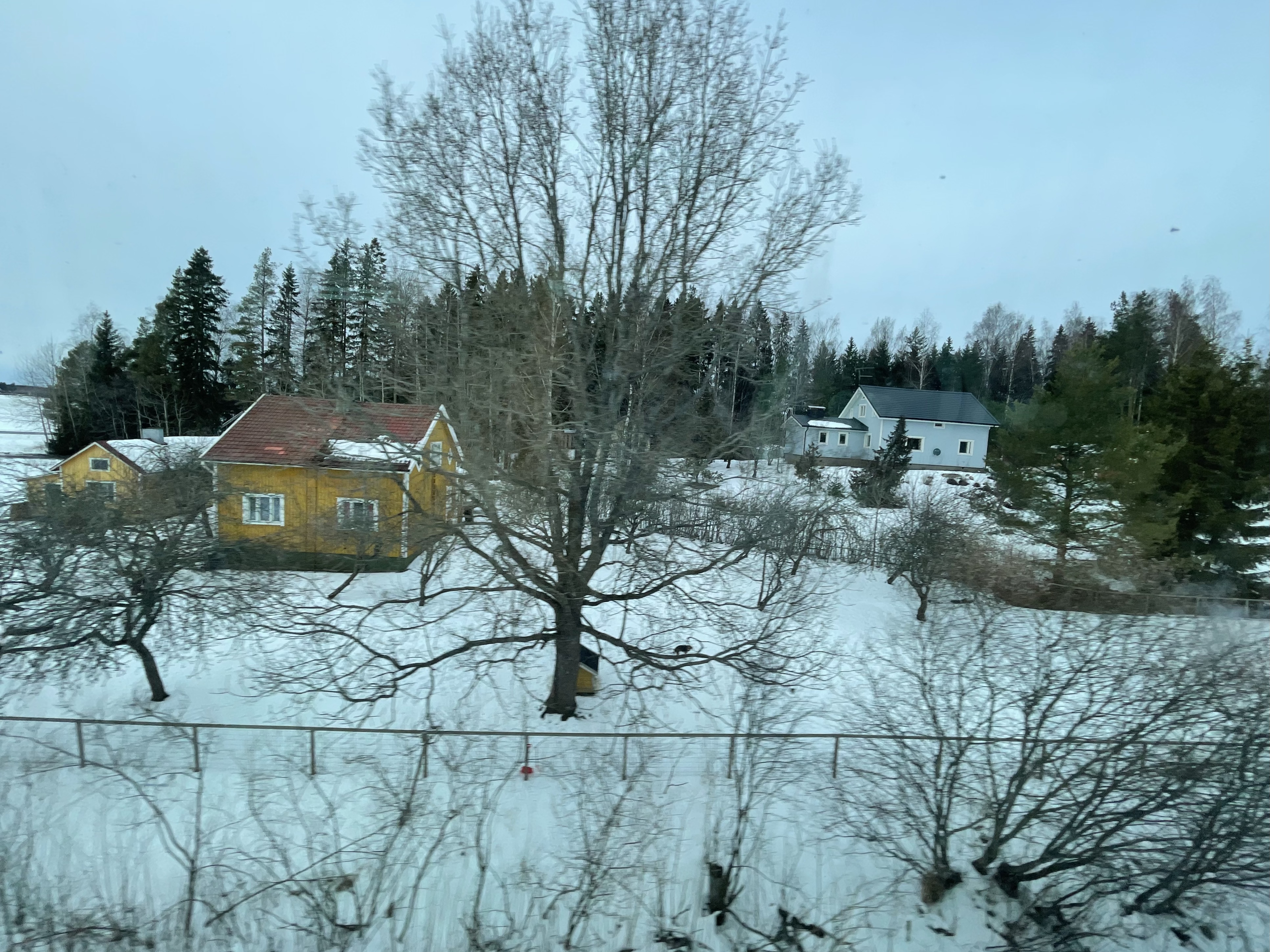
and the trade in timber
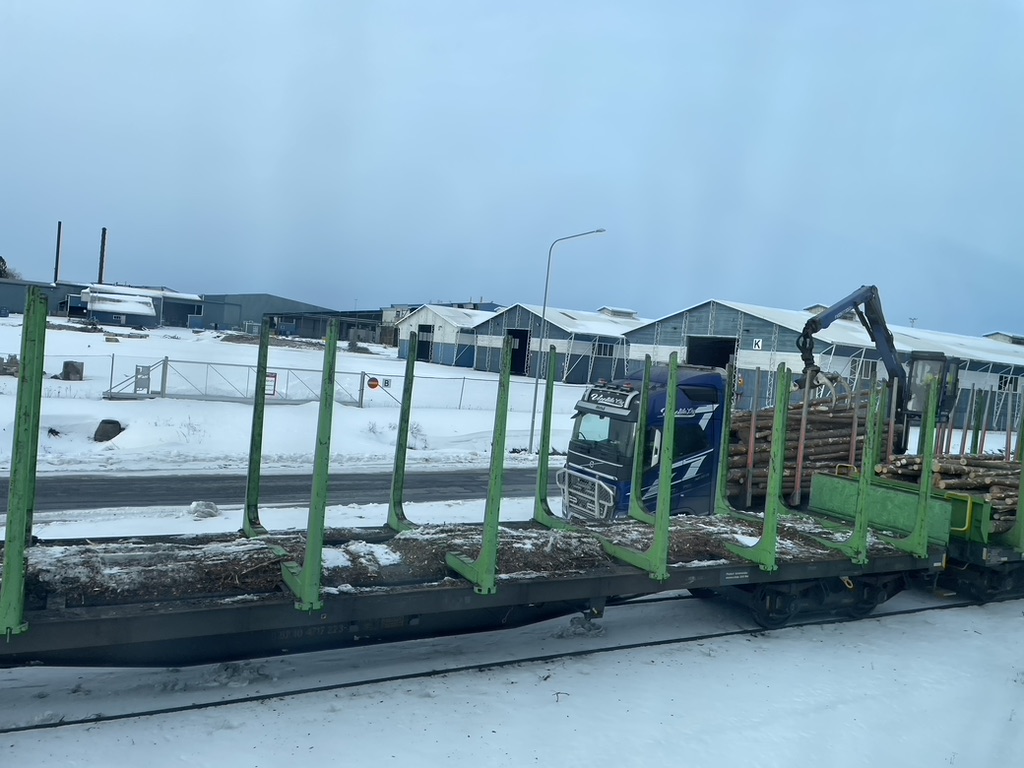
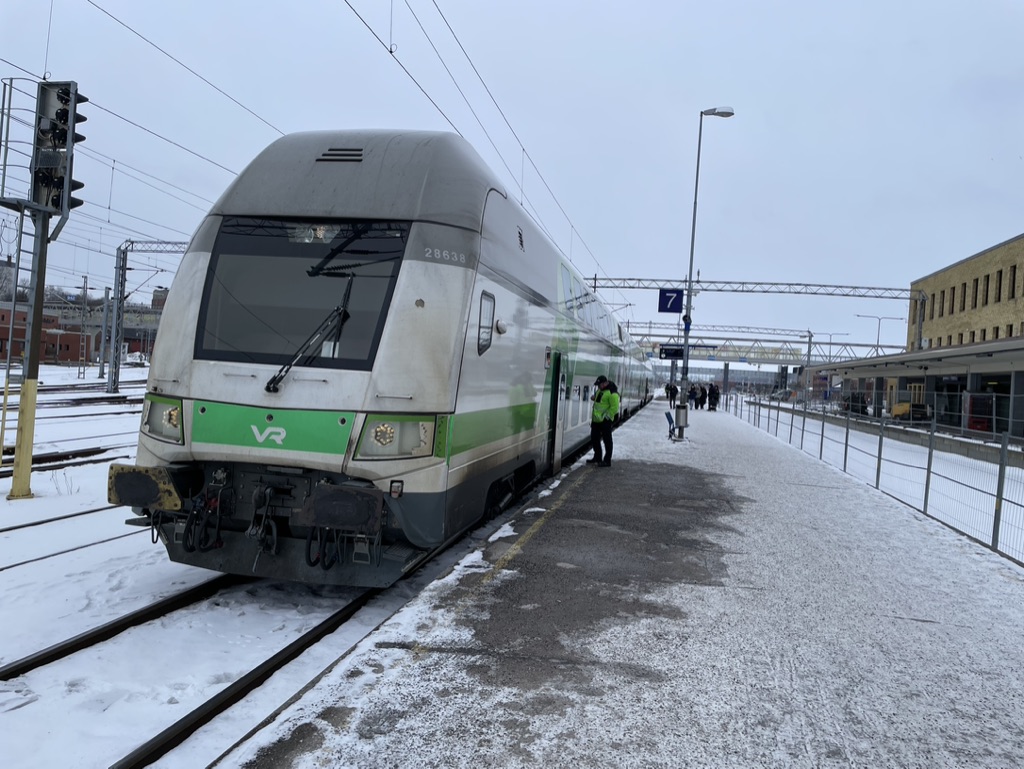
Turku:
more station reconstruction (this is being composed in Turkey – all the way railways are being remodelled)
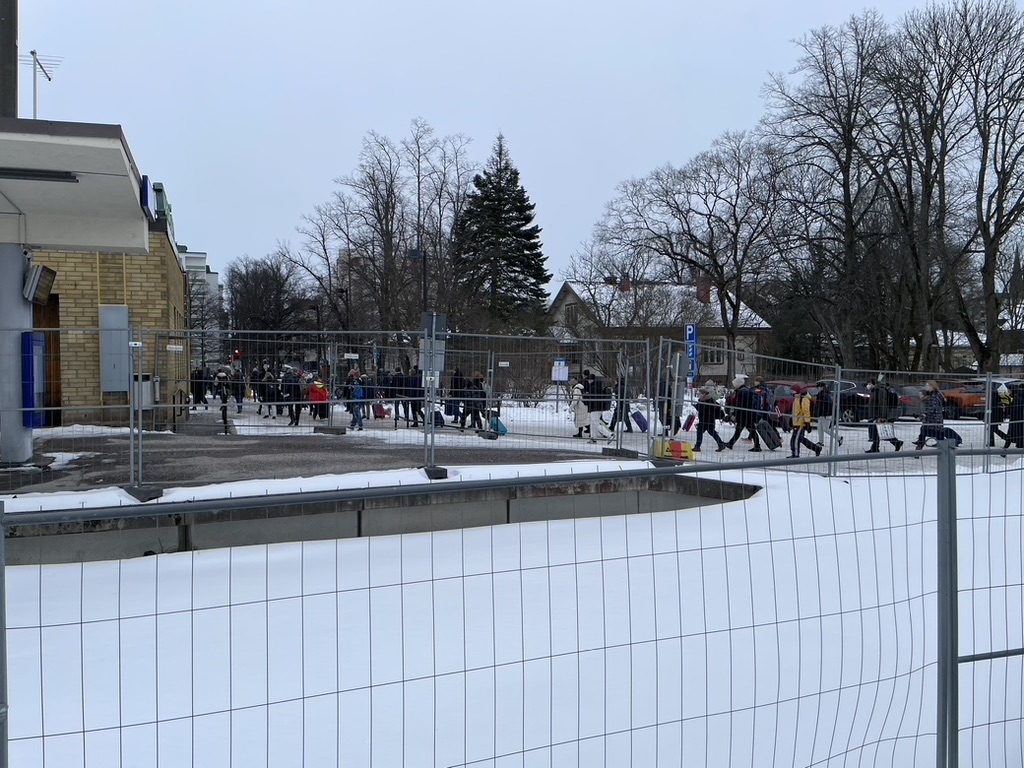
we leave the train (which continues to the port) and immediately it starts snowing – but its light snow so we decide to continue walking to the ferry (for Stockholm)

We drag our bags and walk for 3kms – the snow increases – so we shelter in a smart but very friendly restaurant.
No-one notices our heavily clad presence – except a manager who compliments us on being correctly dressed. Its the expected normal. Inside – informal, short sleeves – shorts sometimes… but not outside. Dressing and undressing can take time – but is simply part of what is required.
As we live in a rural, farming, environment, where practicality of dress is a major consideration, this attitude in Nordic pubs and restaurants feels ‘homely’.
They have a delicacy called a Stromboli. So, as our 3rd Journey will take us in sight of that volcano, we buy 2.
And explained to our hosts the reason….. eventually leaving them with greater knowledge of Calabria & Spilinga – and Nduja – than they had before we arrived.
The final 2 kms were in a worsening snow storm
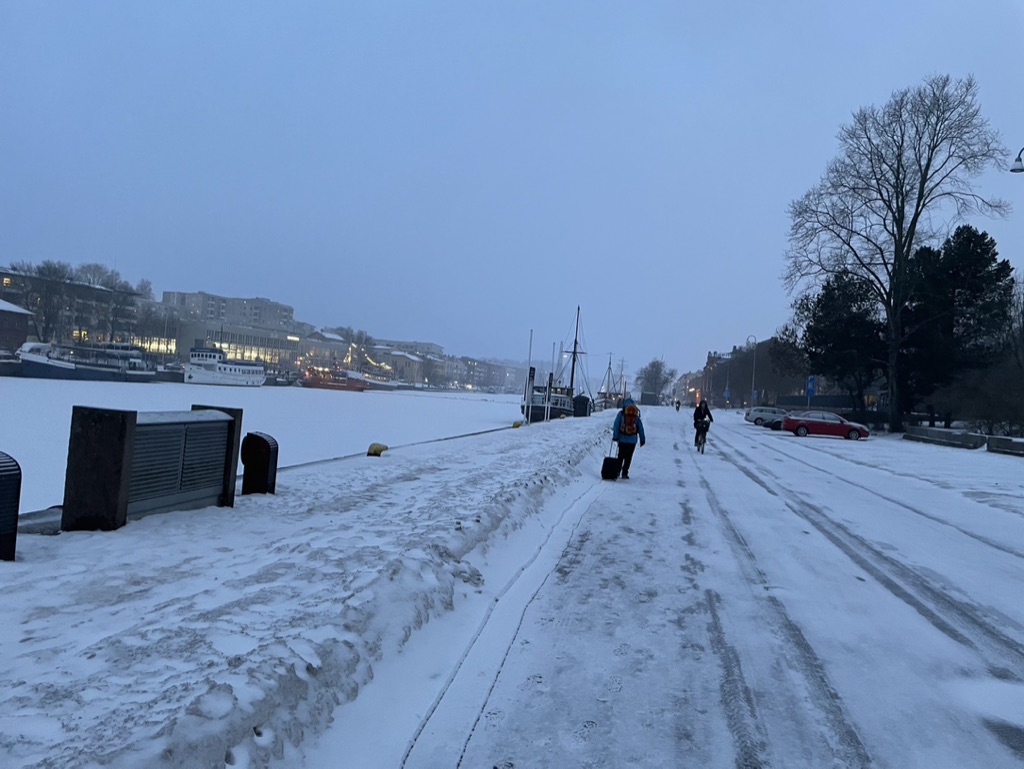
Despite the worsening conditions we thoroughly enjoyed ourselves (though the bags proved reluctant at times as they snared on blocks of snow and ice)

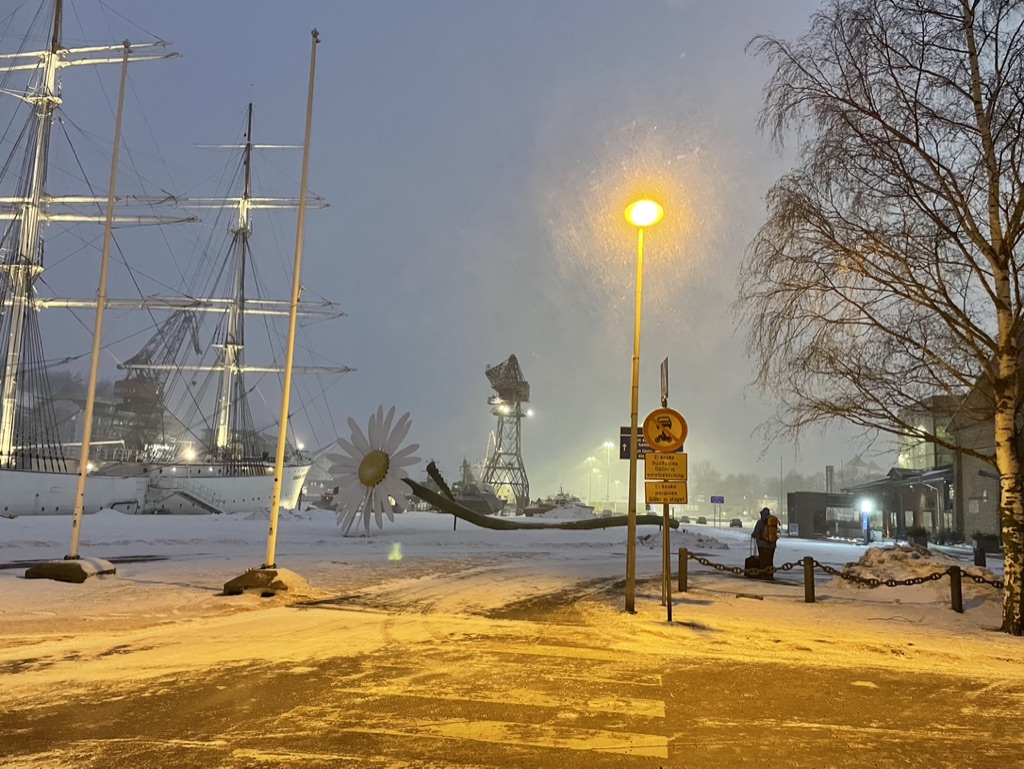
Though the snow was driving in the from the west it was powdery dry & had little impact – we were dry.
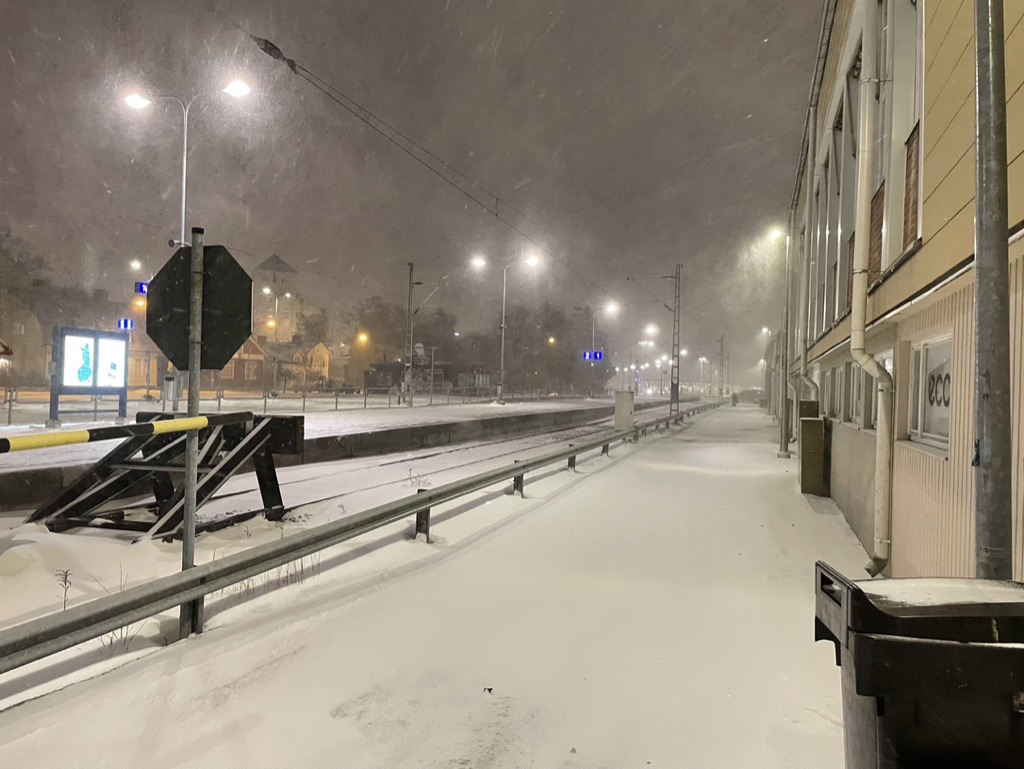
It was also good to see that the road crossing was gender neutral – and we were quite pleased to arrive at the terminal building.
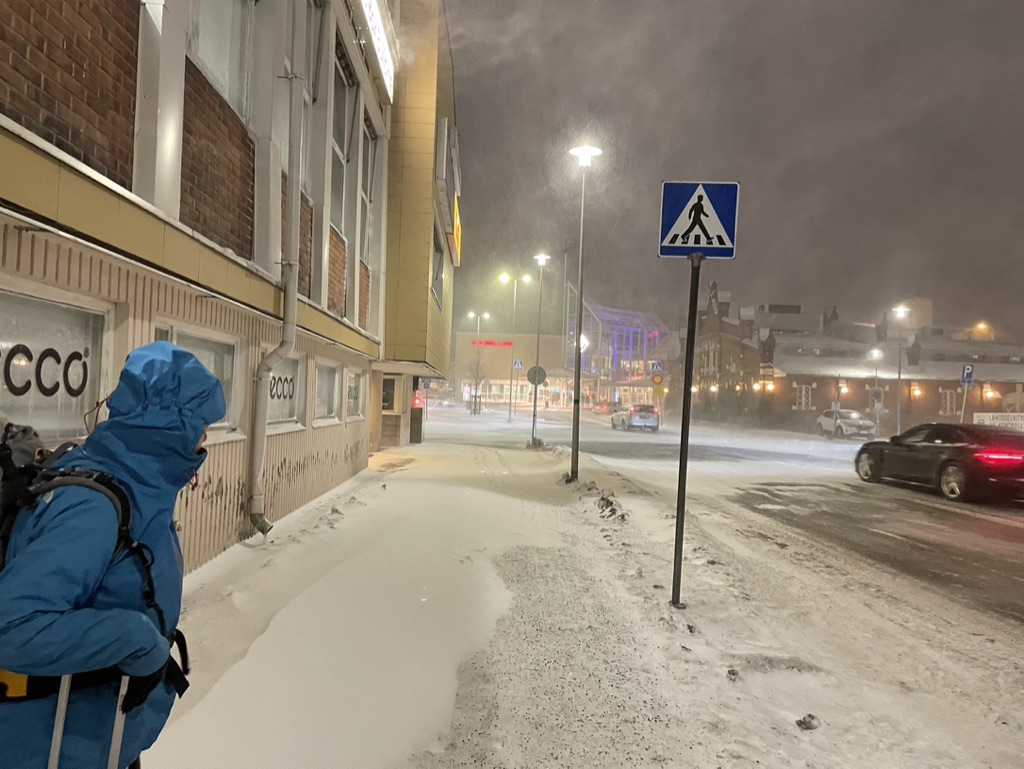
Our ferry to Stockholm was with Viking Line.
Aptly named.
I’ve always assumed that Viking boats did not have much ‘accommodation space’ for their warriors. This tradition has been continued by the present company, who managed to squeeze two of us into a space that only allowed one person to stand inside the cabin. The other had to be on their bunk-bed or outside. Opening the door to the lavatory was not possible unless every other space was clear.
Not much could be seen as we ploughed, in the dark, through the ice
…….. and the decks were dangerously covered in ice and snow
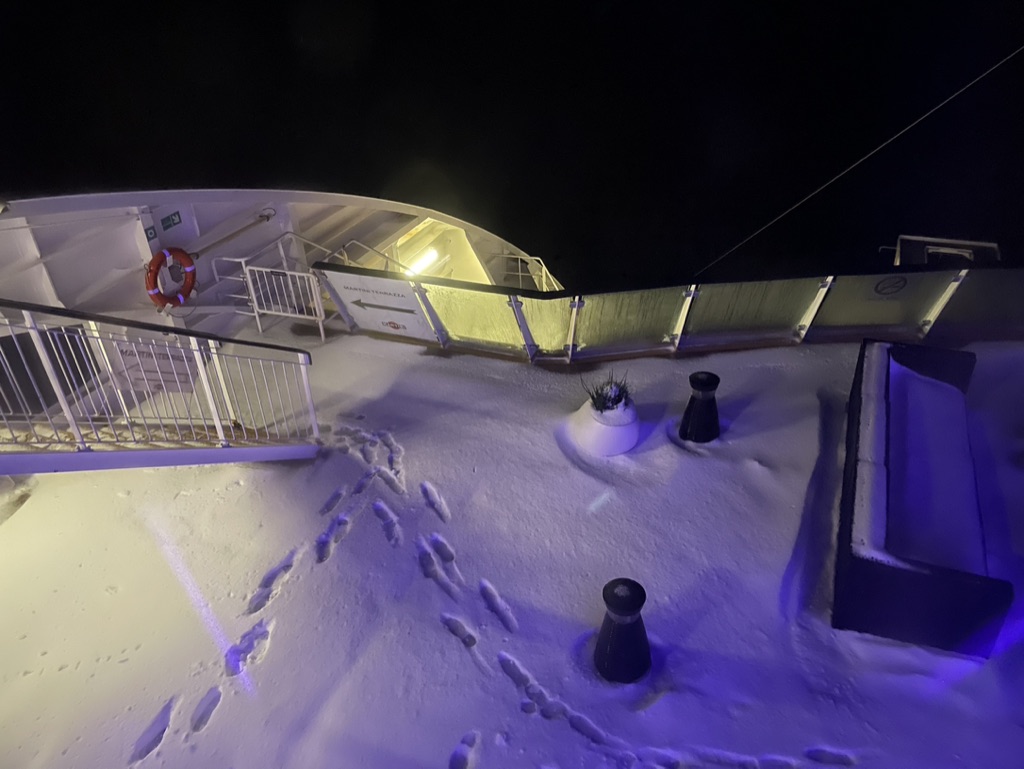
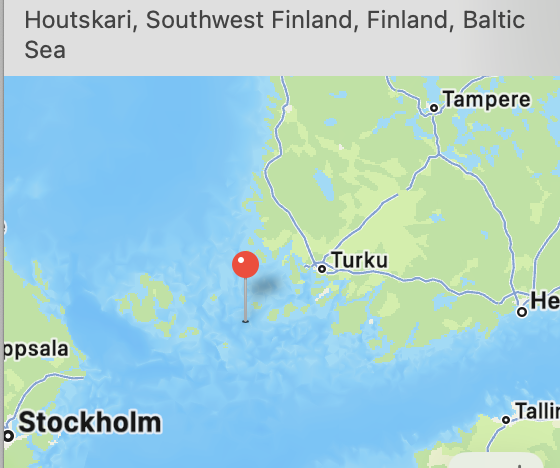
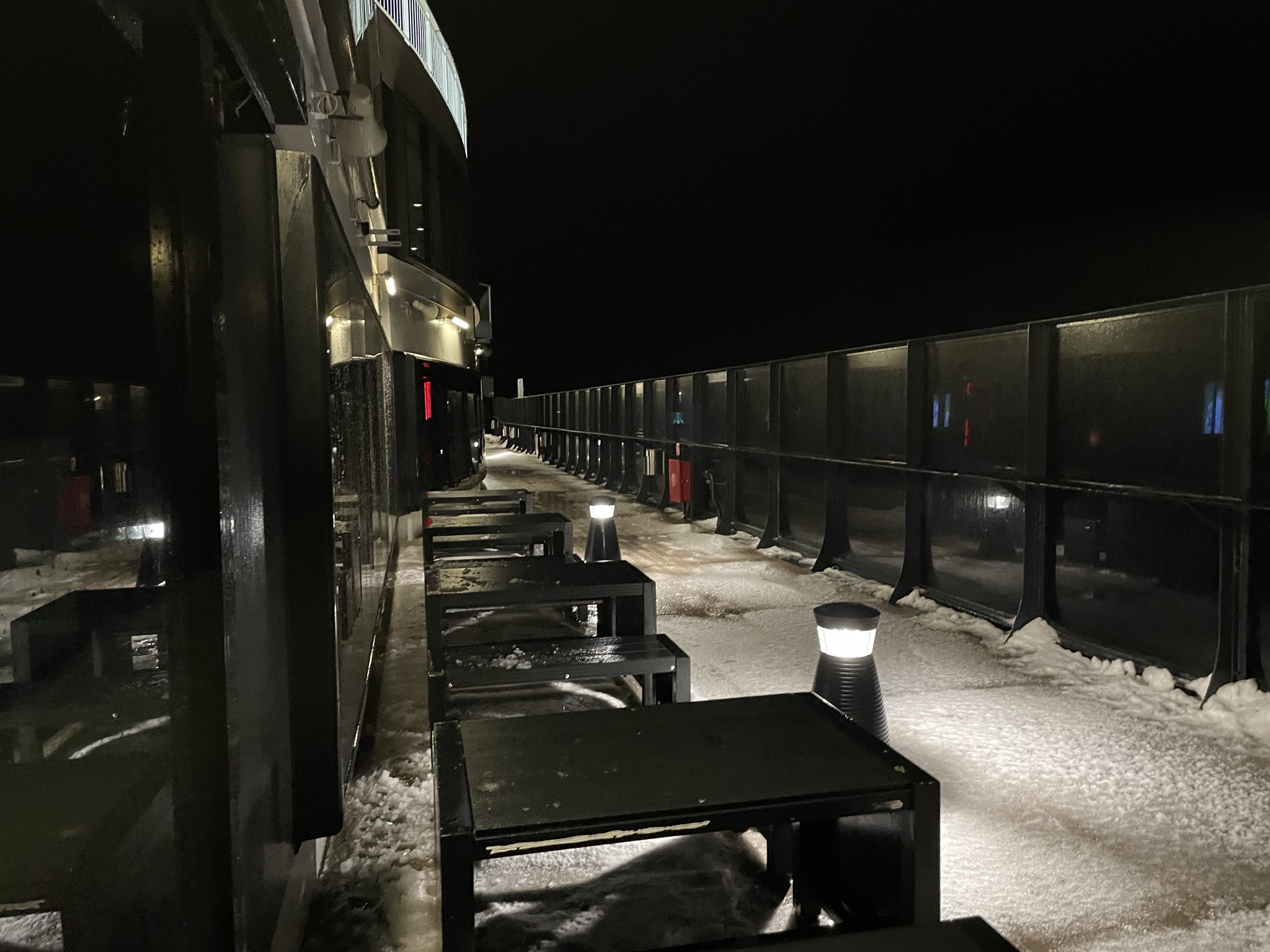
We were sailing into a fierce gale which briefly became very turbulent when we lost the shelter of the islands that cover most of the Baltic Sea between Turku and Stockholm. The Baltic is a shallow sea and therefore the turbulence is considerable.
Regardless of the weather the dancing continued. I suspect that many of the people who were travelling were on a a short return trip that provided 2 nights of such pleasure with a day ‘sightseeing’ (as occurs with many other ferry journeys such as the one we used between Newcastle and Amsterdam.
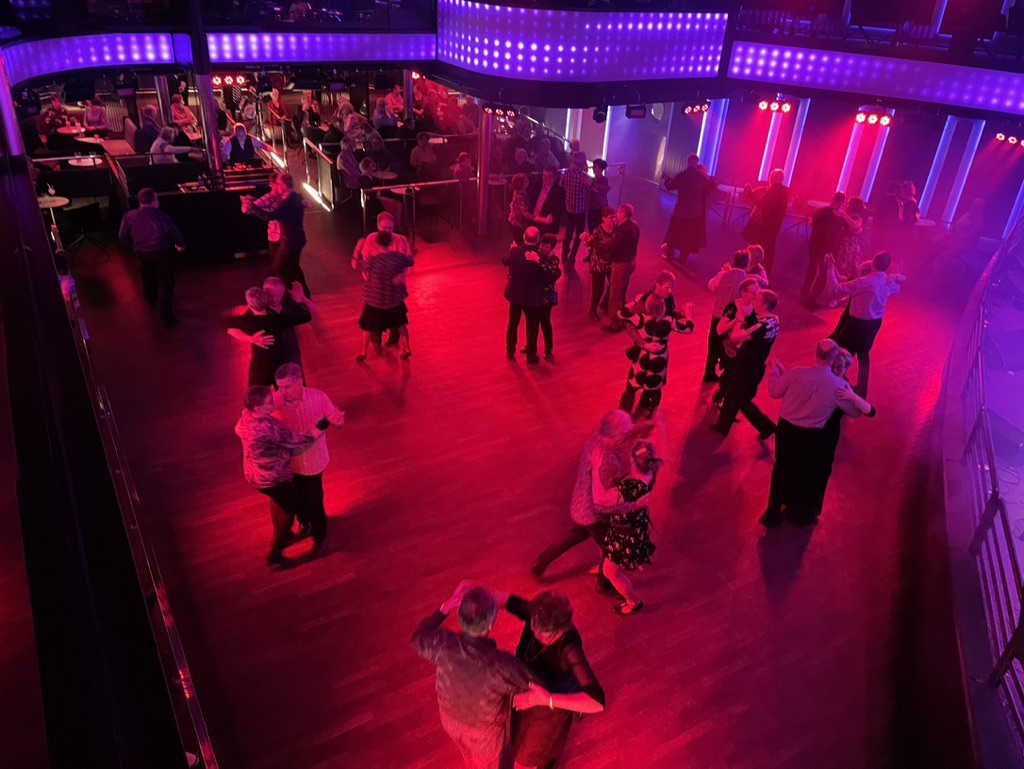
We also sail across a sea that has become potentially one of the most dangerous international seas..
Our route is through the Åland Islands:
‘an autonomous and demilitarised region of Finland’.
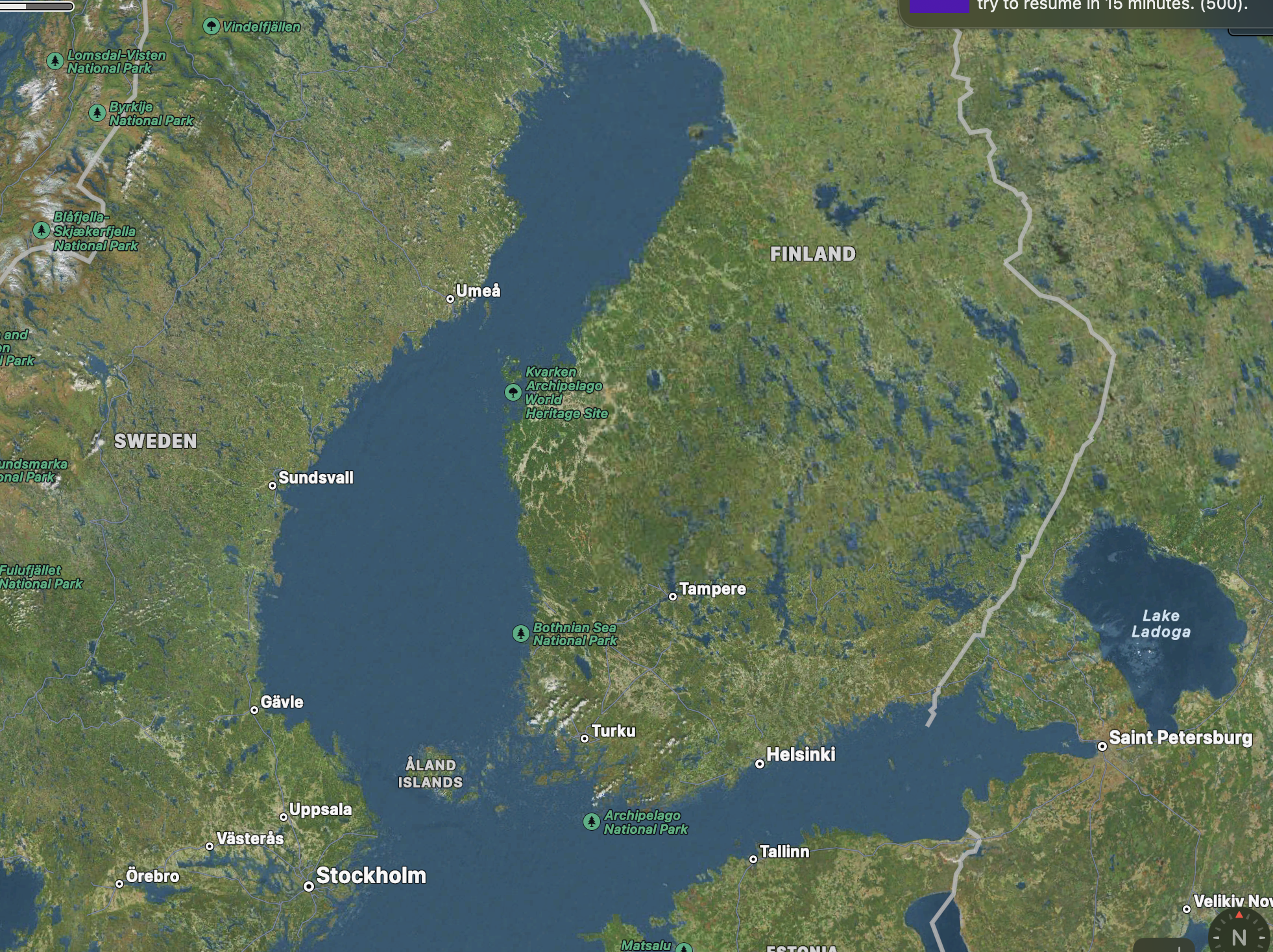
The islands have been demilitarised since 1856 after the Åland War between France, Britain & Russia (whose territory they became after war with Sweden). A 1920 decision of the League of Nations confirmed their autonomy within the Finnish State.
Russia once regarded the Baltic Sea zone as ‘their sea’.
Until 1989 East Germany & Poland were Warsaw Pact countries & Lithuania, Latvia & Estonia were in the USSR with Sweden and Finland neutral. Since then all 5 have become part of the EU & NATO & Putin’s War has resulted in Finland joining NATO in 2023 with Sweden intending to.
The whole of the Baltic zone will be in NATO…. Russia has now lost influence & the ease of access it once had & with Finland and Estonia have oversight of all waters leading to St Petersburging
Given Putin’s obsessions, fears & intentions, this major change may may have increased the potential for conflict.
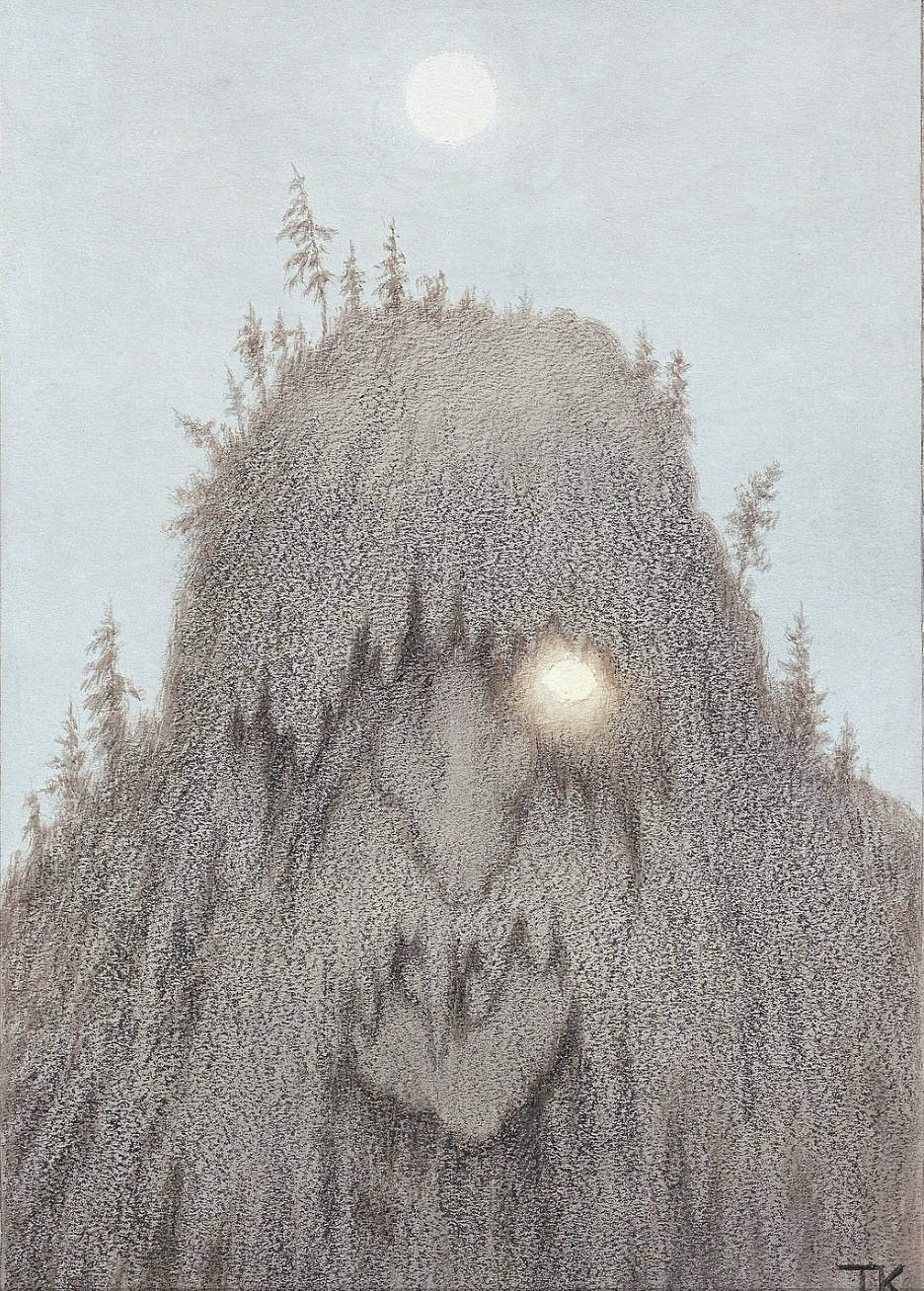
The Unpredictable Troll
just over the border
in the corner of the mind.
Given the manner in which Putin took control of Crimea in 2014, the danger is that he (dreaming of restoring the territories lost since 1989), uses any excuse to reclaim, as a base for further action, the Åland Islands.
“…military intelligence of Sweden and Finland have concluded that Russia has a parachute brigade stationed in the Baltic exclave of Kaliningrad, surrounded by EU territory, able to attack Gotland and Åland…..
Russia has a consulate there, seen by many as a spy base.
Moreover, it was reported that Russian citizens had purchased large plots of land on the archipelago and equipped them with helipads and docks. Some of the properties are reportedly located extremely close to important shipping routes.
Russia likes to have many pretexts available – you never know which one may come in handy.”
https://www.euractiv.com/section/global-europe/opinion/the-brief-whiskey-on-the-rocks/
We sailed on, crossing the boundaries & through the islands
The band played on………..
…….Karaoke also featured
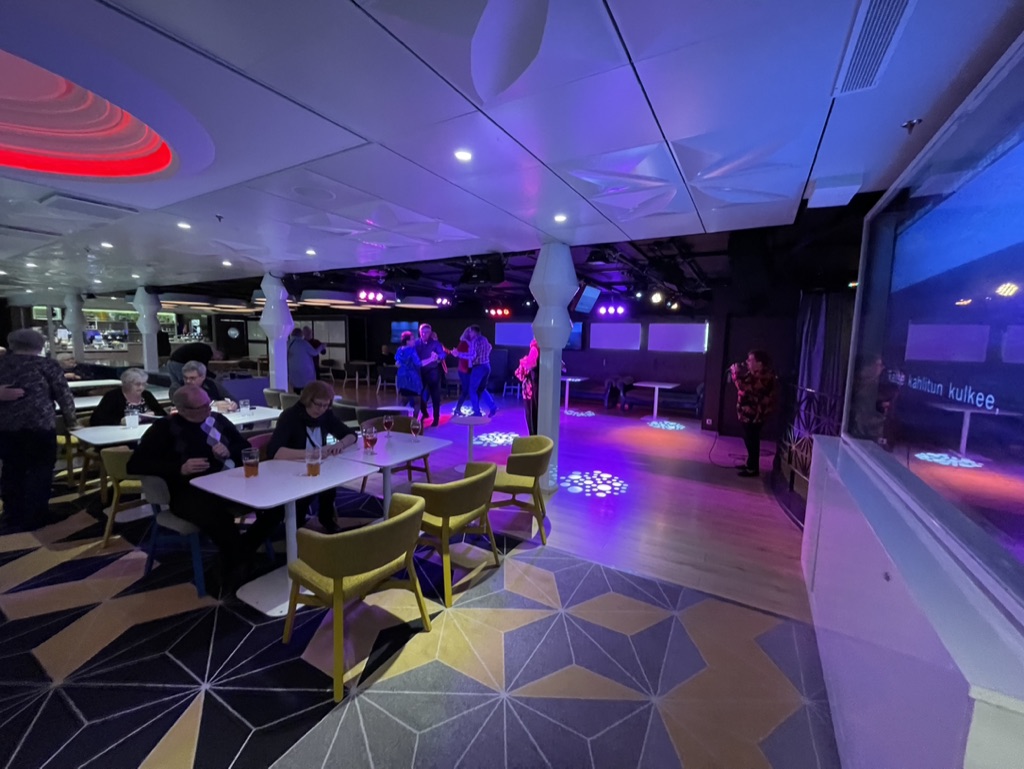
For over 30 years we had partnerships in Central & Eastern Europe (post-communist countries). More recently these had included assisting Polish & Romanian colleagues with displaced Ukrainian families.
Consequently we planned a tour that was largely focused on eastern regions of the EU – and beyond.
We knew that present warfare & threats issuing from Putin’s Russia would increase our interest in the recent history of the region and nation’s we visit.
This journey to the north, is physically disconnected to Journeys 2 & 3 (with that criss-cross each other).
From the moment we entered Finland & puzzled about a grey monument at Kemi railway station, we realised that this First Journey is intimately connected to the others.
From 1809 – and until 1917, Finland was a Grand Duchy (self-governing) within Russia.
Finland was reluctantly ‘Russian’ – and was part of the history that was imposed on most of the other regions.
Yet, at the same time (as with the Baltic lands to the south), was a society whose cultural leaders were encouraging national expression & working for release from the increasing Tsarist oppression.
The monument at Kemi introduced the theme.
The architecture & art, encountered in Helsinki & Tampere, revealed the underlying and very particular Finnish culture.
On 28th April 1892 a young Sibelius established himself as an important composer. He conducted the first performance of his composition Kullervo
‘the dawn of art music that was distinctly Finnish….
by setting the Finnish-language Kalevala and evoking…the melody and rhythm of Finnic rune singing, he had given voice to the political struggle for Finland’s independence from Imperial Russia.’
The audience applause ‘erupted’ in enthusiasm…. Sibelius was presented with a
‘blue-and-white-ribboned laurel wreath that quoted prophetically lines 615–616 of Runo L of The Kalevala:
“That way now will run the future
On the new course, cleared and ready”.’
Present-day, the international atmosphere is concerned that those conflicts related to ‘national self-determination’ may once again increase & engage many more nations.
Sitting alone, in distant Mid Wales, nearly 133 years later…. and listening to the dramatic music of Sibelius’s Kullervo, …it is as if I am one of those present in Helsinki – ‘erupting’ with relief & delight at what he has presented…. but aware of what may yet occur……
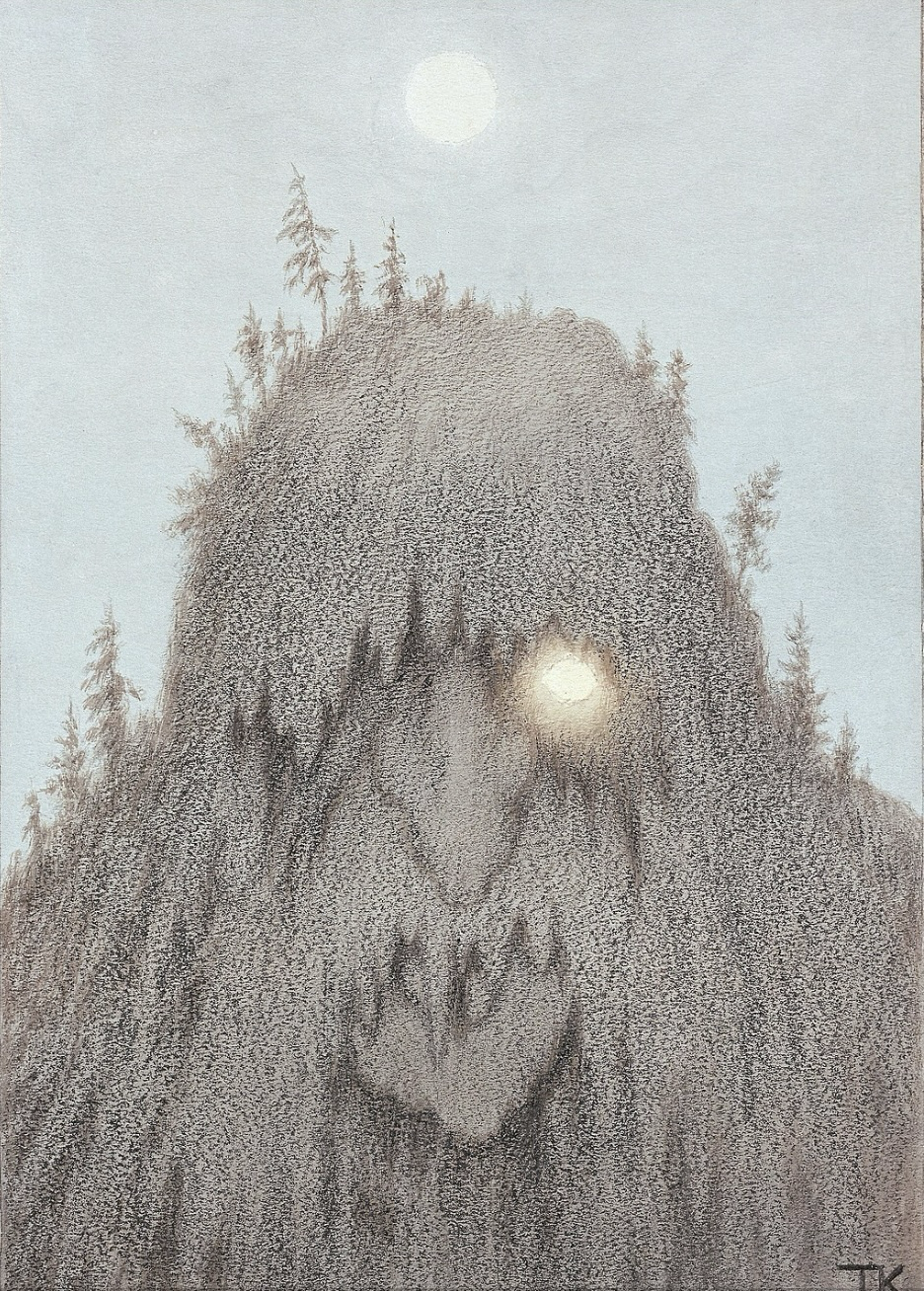
The Unpredictable Troll:
just over the border,
in the corner of the mind.
Reflection:
Of Finland we knew little & after a ‘whistle-stop’ visit of 5 days we depart feeling that we have barely begun to even ‘see’ the country – we’d smoothly wizzed from town to town through a white landscape that was (including the human element) in hibernation.
We finish our visit ignorant of any real understanding & seizing only on aspects to which we could easily relate.
Such is the curse put upon tourists
– as a mother said to Kullervo:
“With a frog thou’lt journey homeward,
Victor, with but little honor!”
March 14th
Arrival in Stockholm was at 06.30 hrs

Followed by disembarkation (what else!) and a walk to the Central Railway station
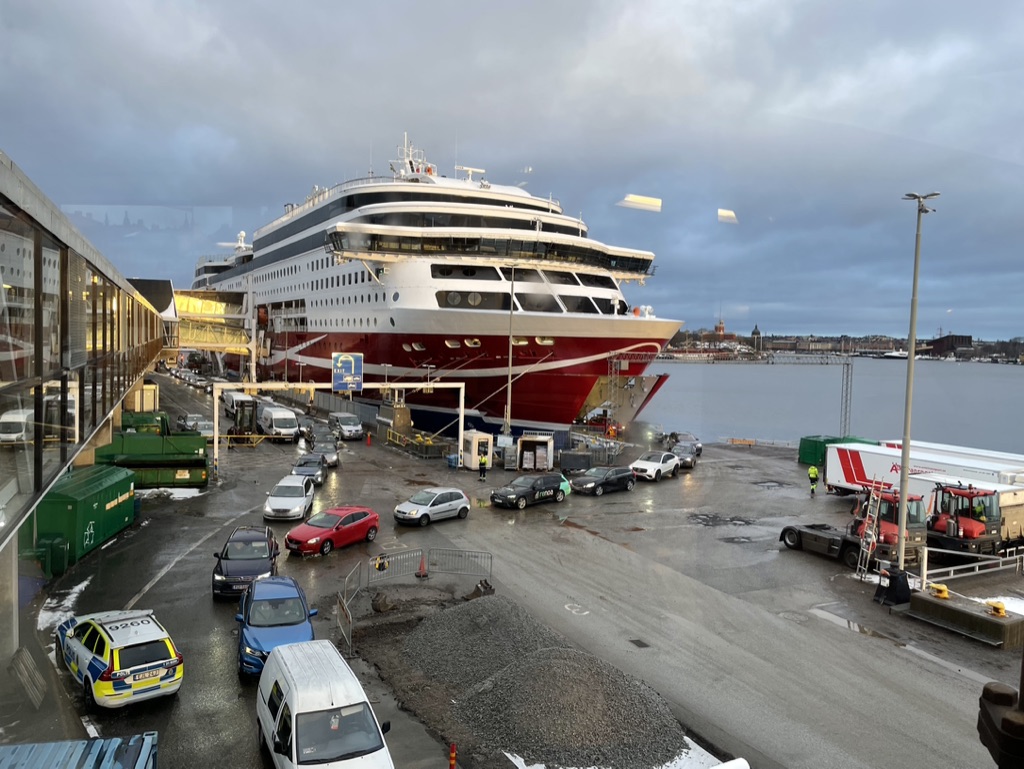
The weather system that had brought snow to Turku in Finland had fallen as heavy rain in Stockholm. This made some of the walking more treacherous as it exposed the compacted ice – but we were now, for the for the first time since arriving in Oslo walking in temperatures above zero.
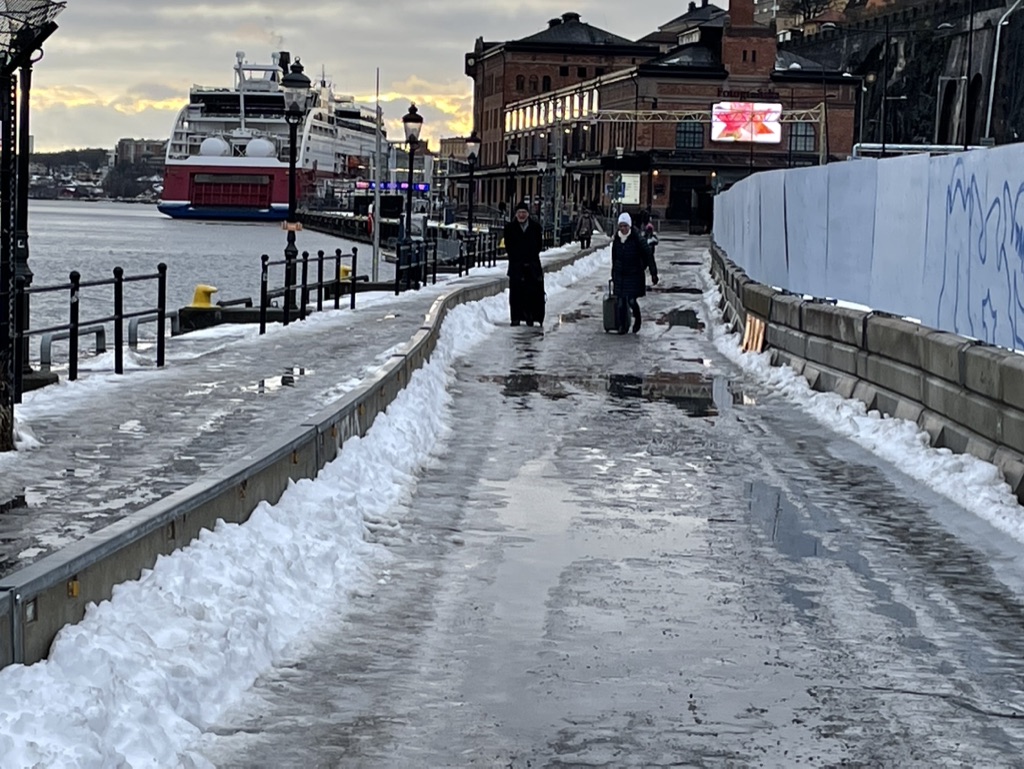
Though a rather lengthy walk it had interesting features.

The Royal Palace……
……. and some of its neighbours

The Central Railway Station
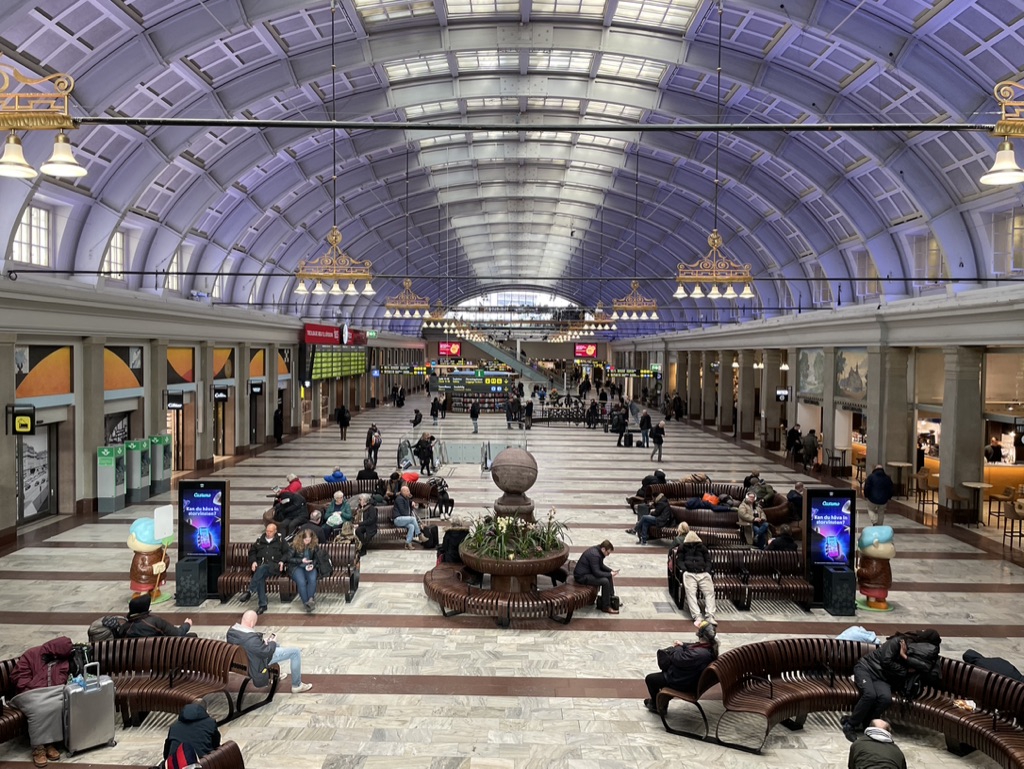
It became the first place in which I paid for a loo visit by credit card
The venue also, rather curiously, provided a screen with fire image

Our train was supposedly to Copenhagen – but announcements on board began to raise doubts
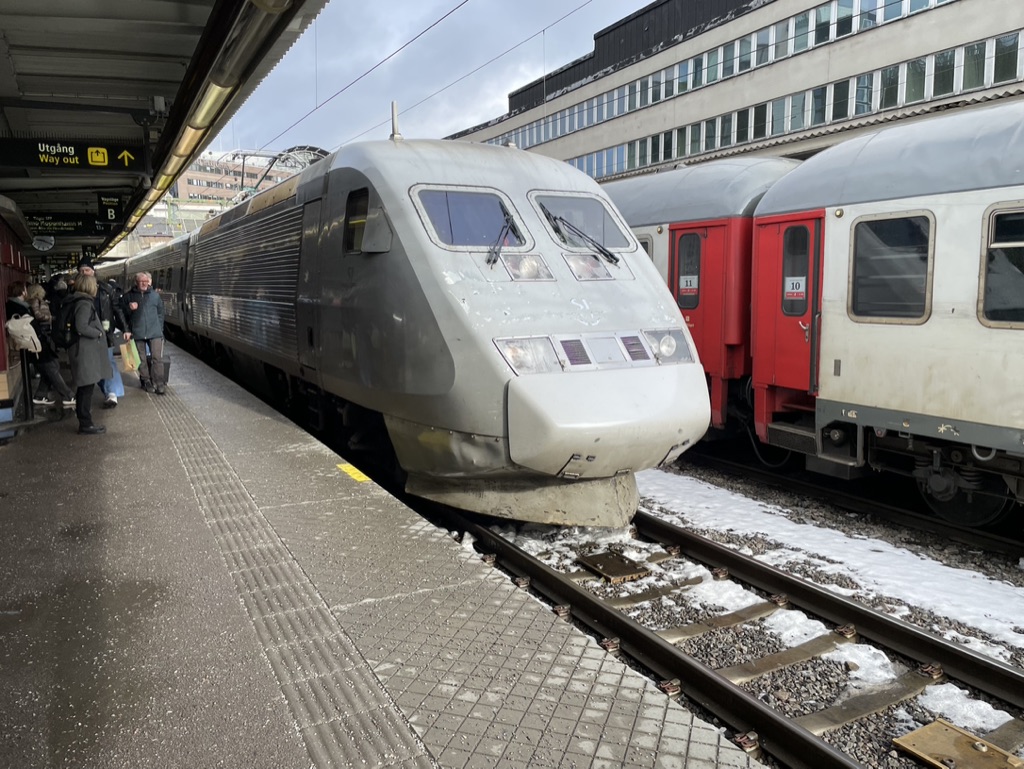
There were decreasing amounts of snow & lakes were thawing
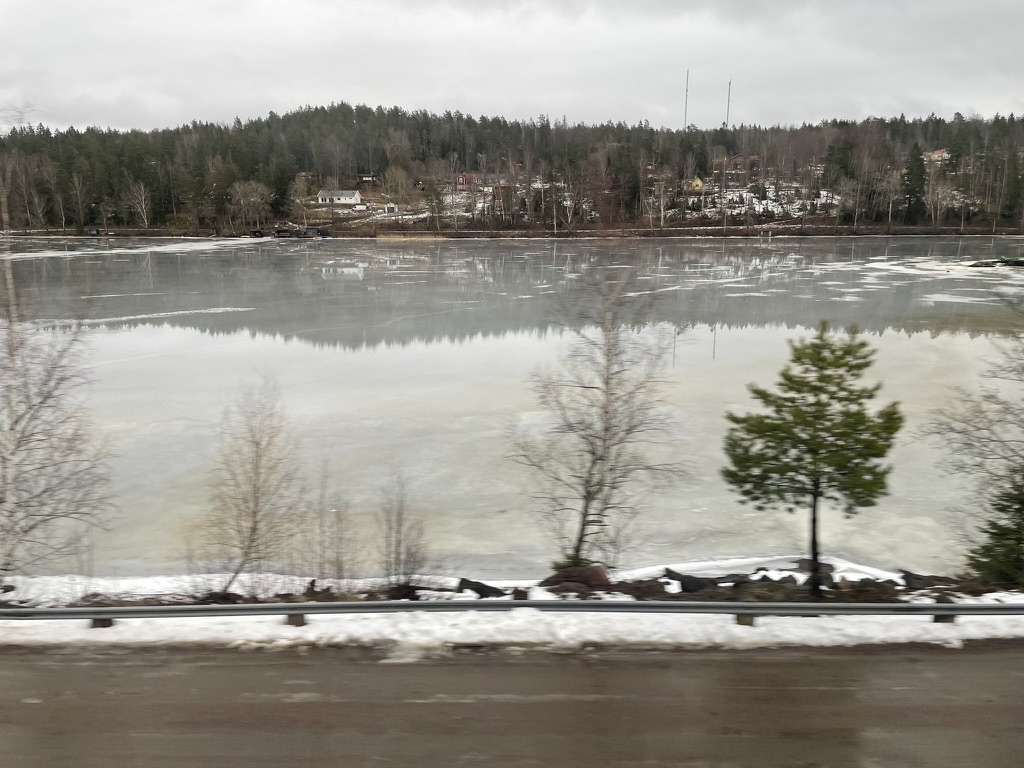
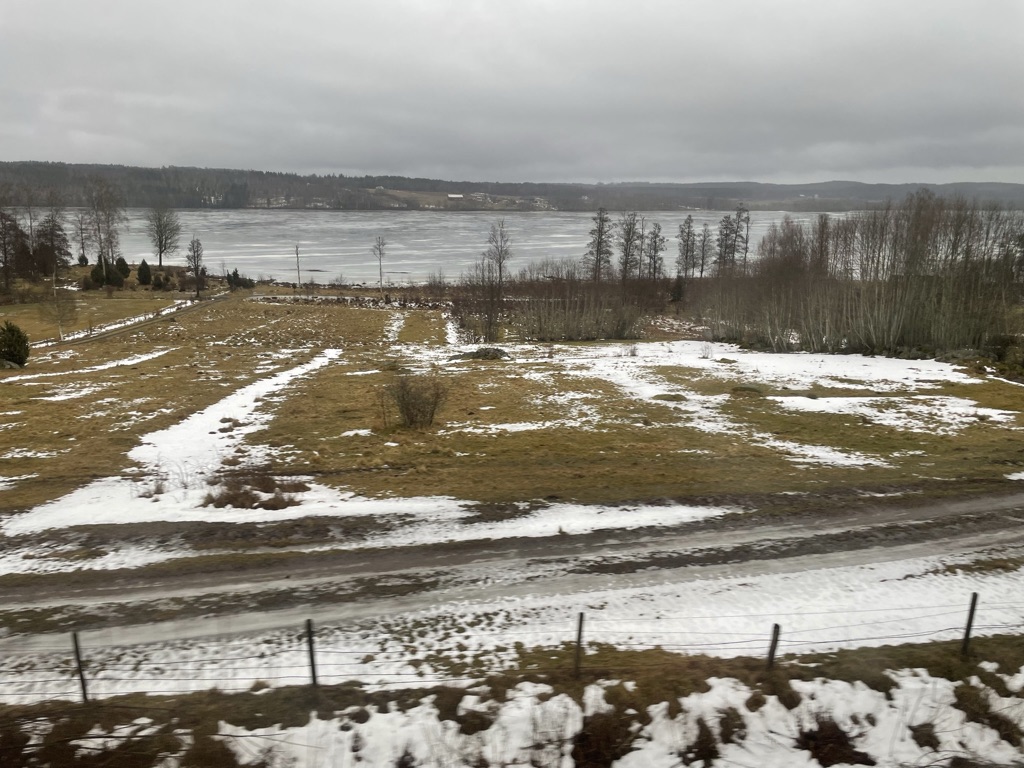
In places the ground was littered with rocks of varying sizes.
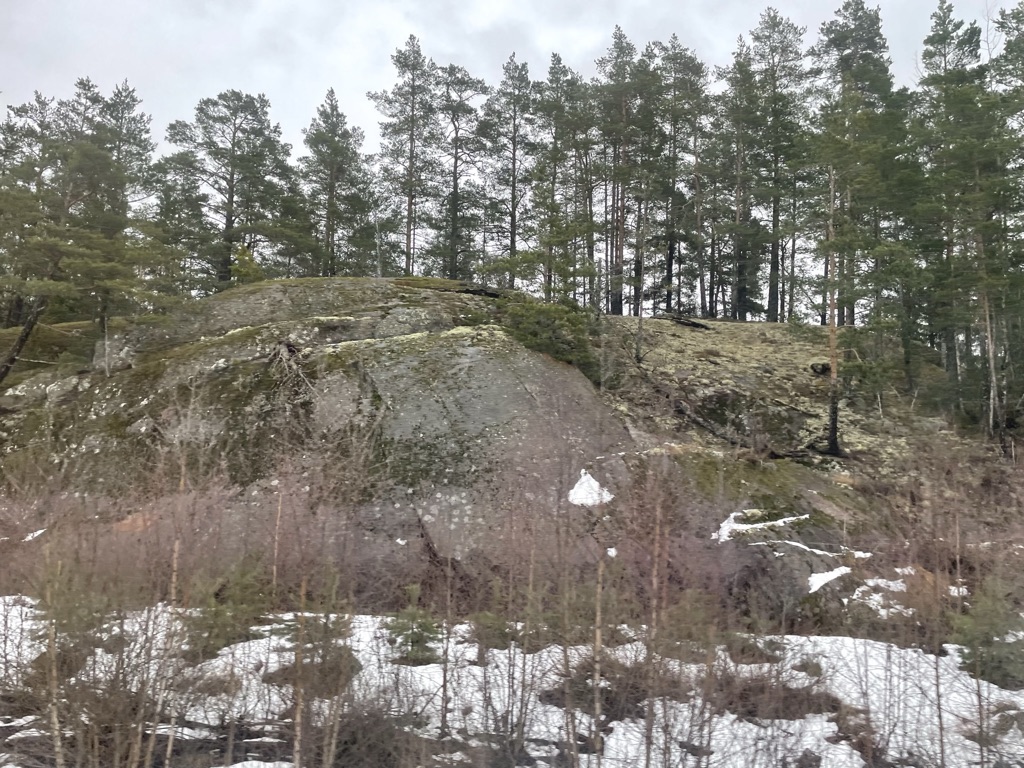
It was difficult recording the variety of rock formation due to the speed of the train.
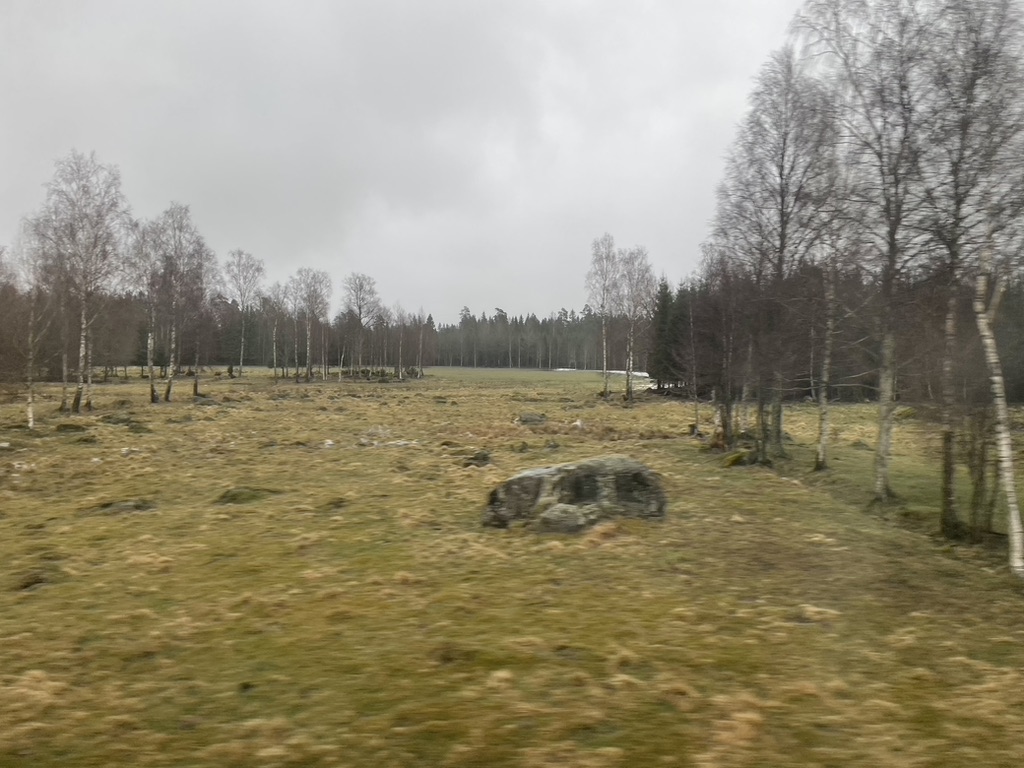
Nearly a month later we saw a picture (‘Early Spring’) by the Finnish artist Akseli Gallen-Kallela that captured the landscape:
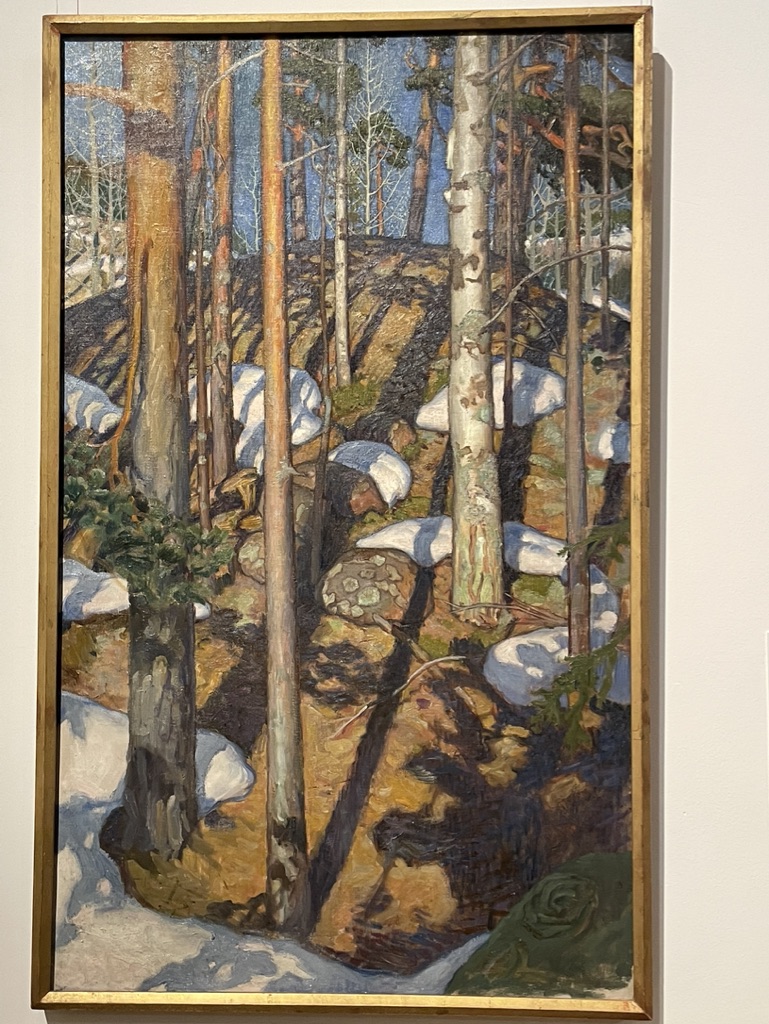
It hangs in the Belvedere in Vienna.
Just before Malmo station we had our suspicions verified when suddenly we were told the train would not continue to Copenhagen.
There was a dash from one platform to another… involving stairs to a lower level and obstructing the doors of the train to allow us – and our cases – onboard. Then a crossing of the lengthy road-rail bridge between Sweden and Denmark and we were then, once again, saying hello to (and joining) one of the Flying Lampreys that had featured in the early part of the journey.

The Danish equivalent of a trolley service:
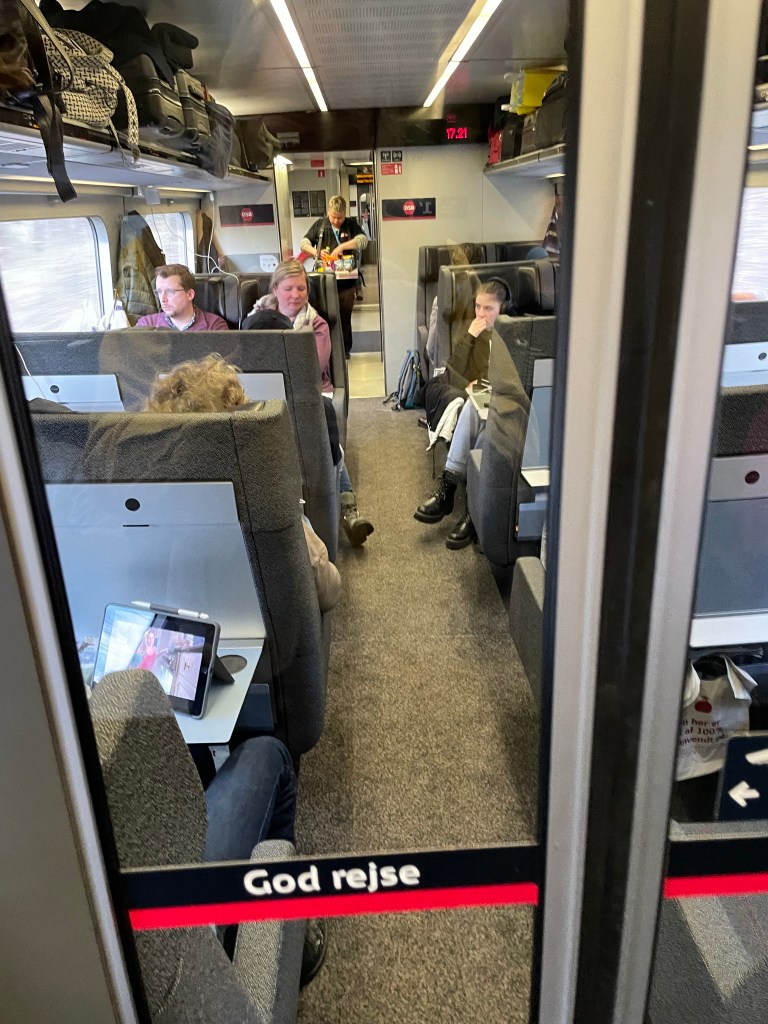
The person who provided this curiously limited service was also required to carry tanks of water strapped to their back.
The style seemed very archaic.
Over the great Rendsburg High bridge spanning the Kiel Canal. It has a vehicle transporter underneath the railway line.
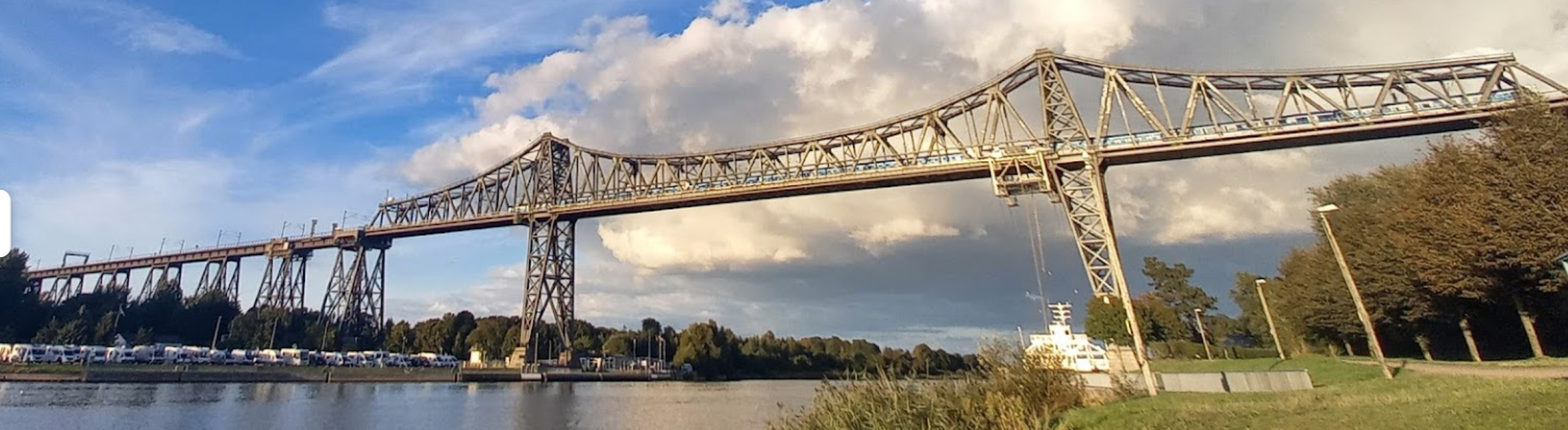
The railway line rises and descends from the bridge in a great looping metal framed bridge, crossing over itself – trains go over and then under – we were travelling south thus went through Rendsburg station and ‘Under’ (on the long circuit), then ‘Over’.
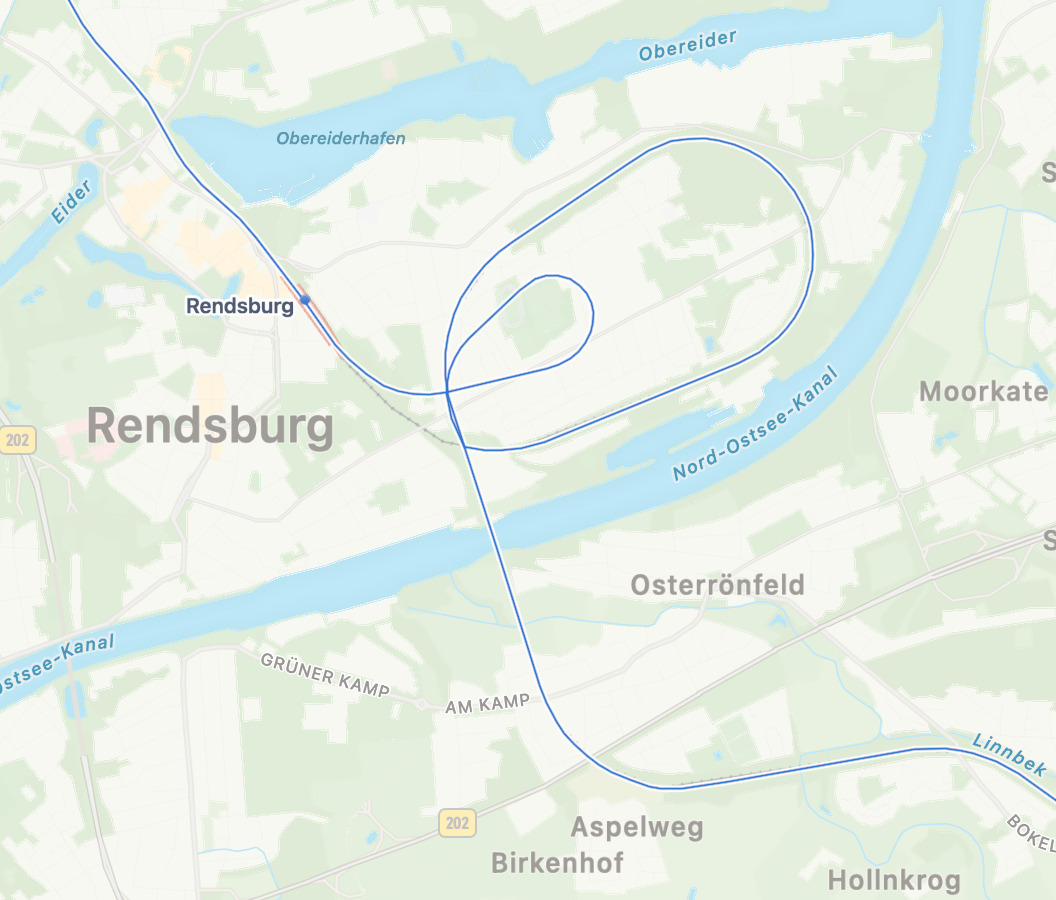
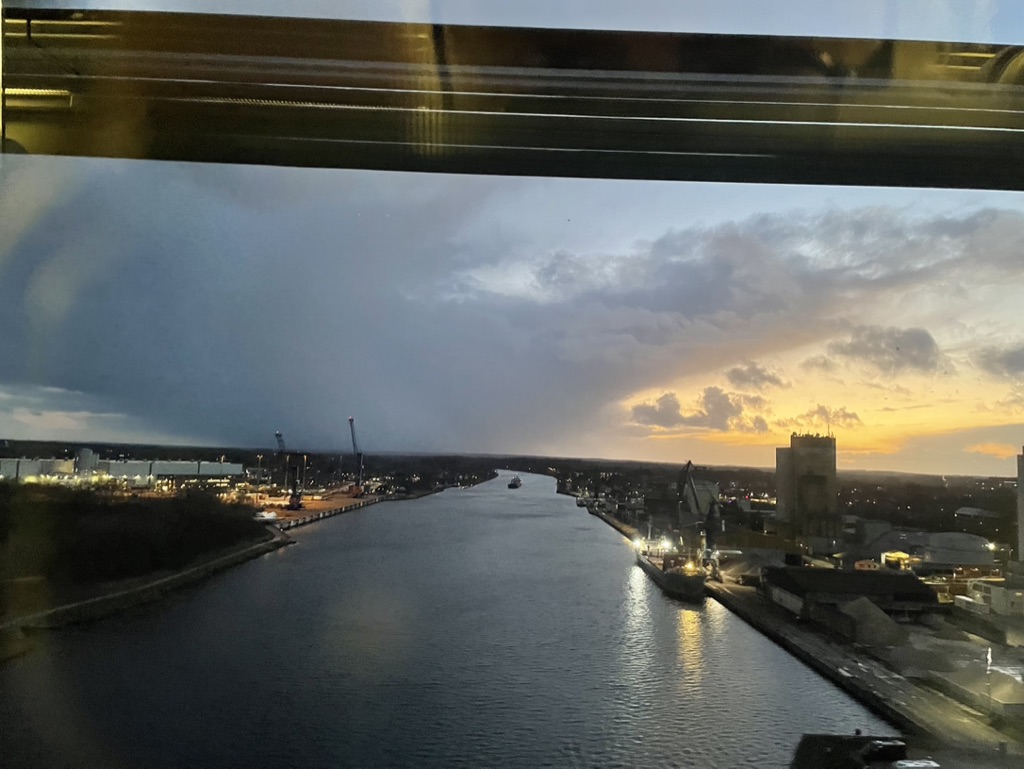
Hamburg, for one night.
A place of considerable personal significance, Here lived ‘Uncle’ Helmut Kalbitzer.
My childhood was never marked (as many in UK seemingly were) by the sense of Germans as ‘enemies’. My parents had connected with Helmut & Emi (amongst others in Germany) who would visit on occasions bearing gifts (Nürnberger Lebkuchen). Both Kalbitzers were radicals persecuted by the Nazi regime. Their visits to us were welcomed and in 1966 I arrived as darkness fell & unannounced at their house (‘interloping’ with a stray Scotsman wearing a kilt). Though surprised (shocked probably), hospitality was automatic. I then learned something of how the relationship had developed after my parents made contact (sending, through these contacts, food parcels).
Writing these notes revised powerful family emotions – as I realise an aspect of my ‘upbringing’ that was never properly discussed with my parents.
https://de.wikipedia.org/wiki/Hellmut_Kalbitzer
https://de.wikipedia.org/wiki/Emmi_Kalbitzer
At the end of my stay in Hamburg the Kalbitzers insisted that I should visit Berlin – which became an action of some significance as it gave direct experience of placers such as ‘Check-Point Charlie’ & the Russian directed redevelopment in East Germany.
In 1998 I was again in Hamburg for a conference on pilgrimage that was led by a Lutheran Minister from Trondheim. Here I met, for the first time, the Romanian who became our first link to Iasi in Romania. That place has remained significant.
Arrival on this latest occasion had a certain drama as we witnessed an attempted (and failed) robbery….. and its aftermath.
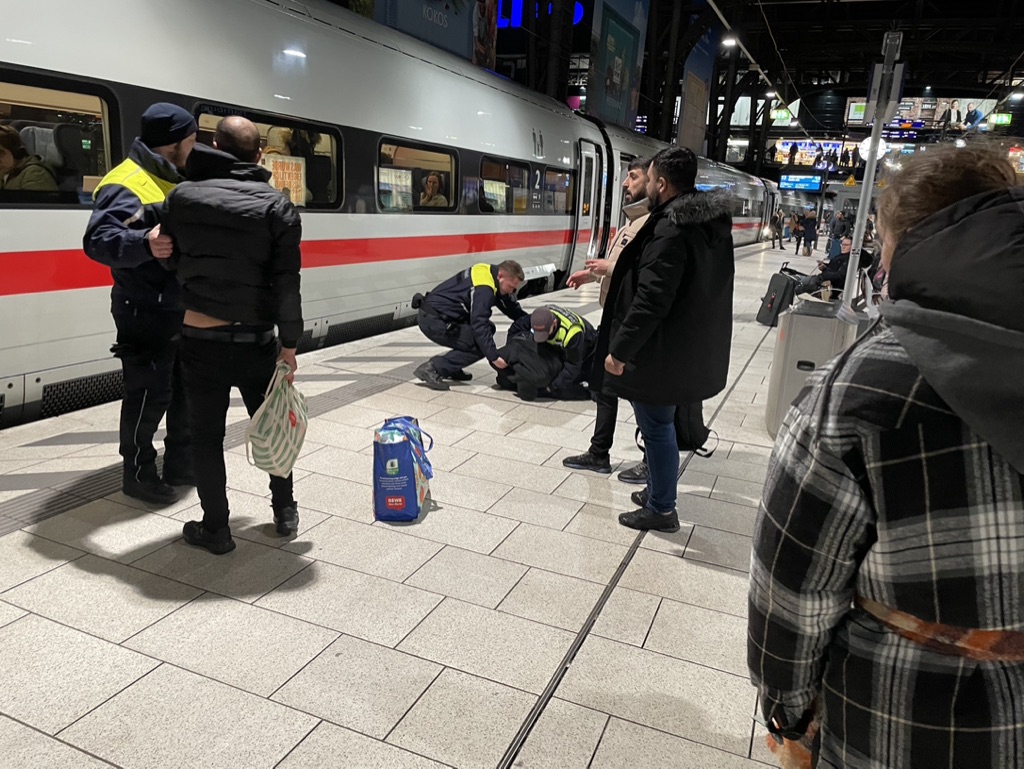
We stayed at the Graf Moltke Hotel. It is a curiously faded old fashioned place but it is named after of one of those who resisted the Nazi regime – and was murdered by them.
https://en.wikipedia.org/wiki/Helmuth_James_von_Moltke
Our evening was completed at a restaurant opposite the station entrance
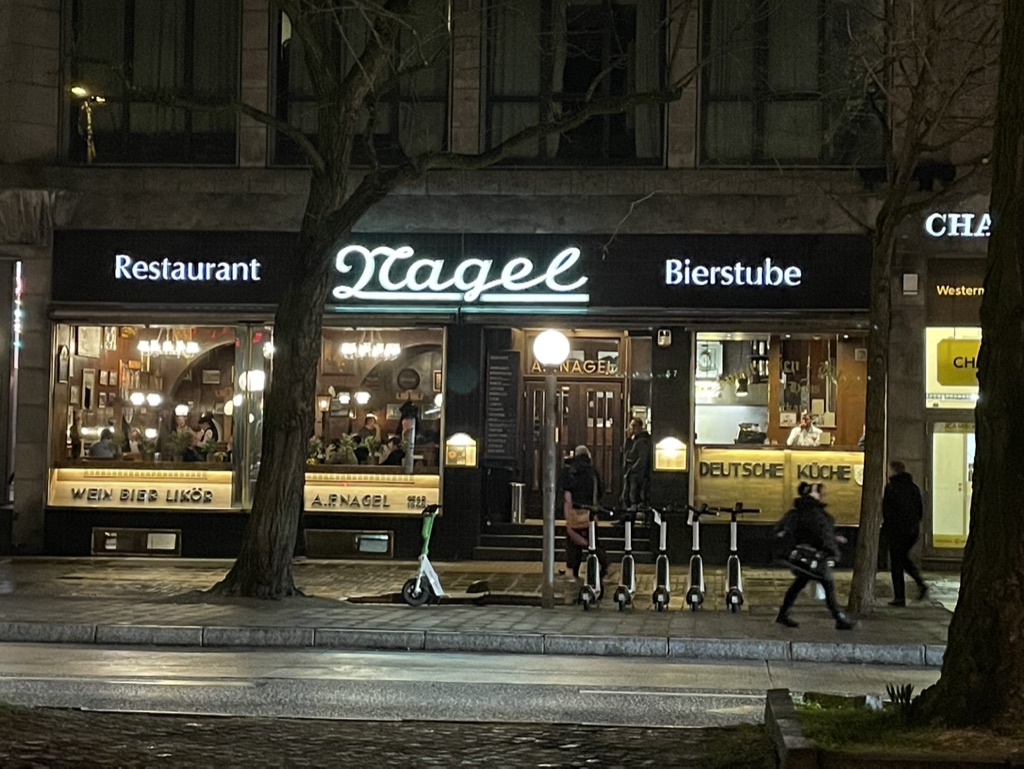
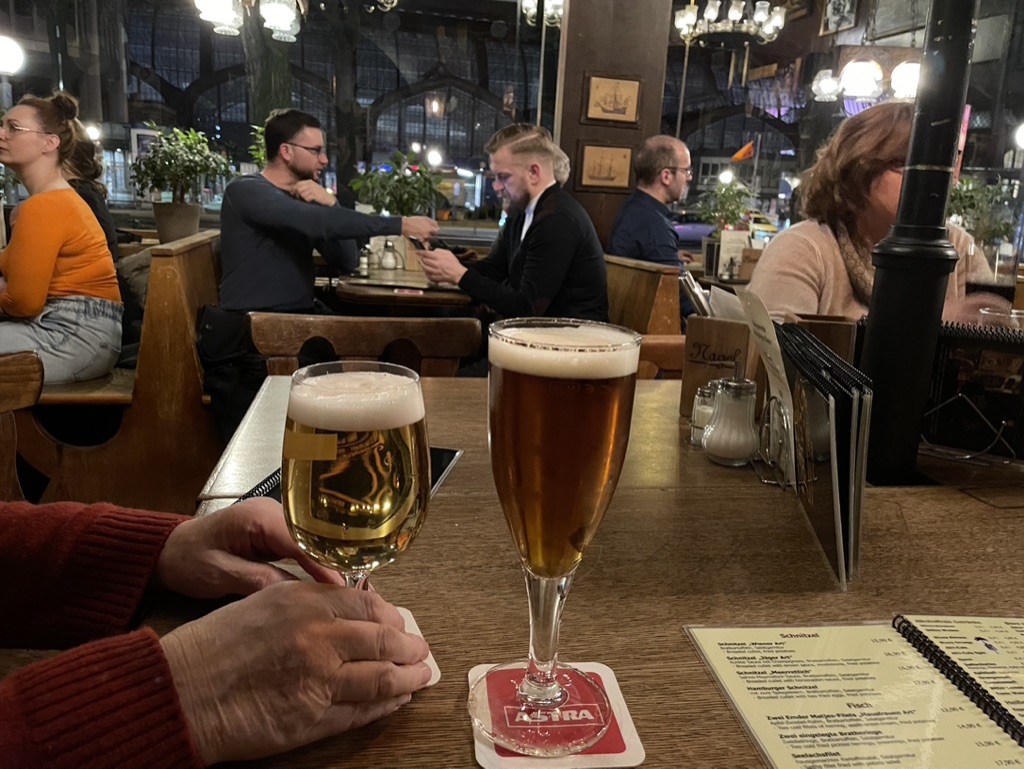
The next day we woke to discover snow & iced windows (again)…. but not for long
March 15th
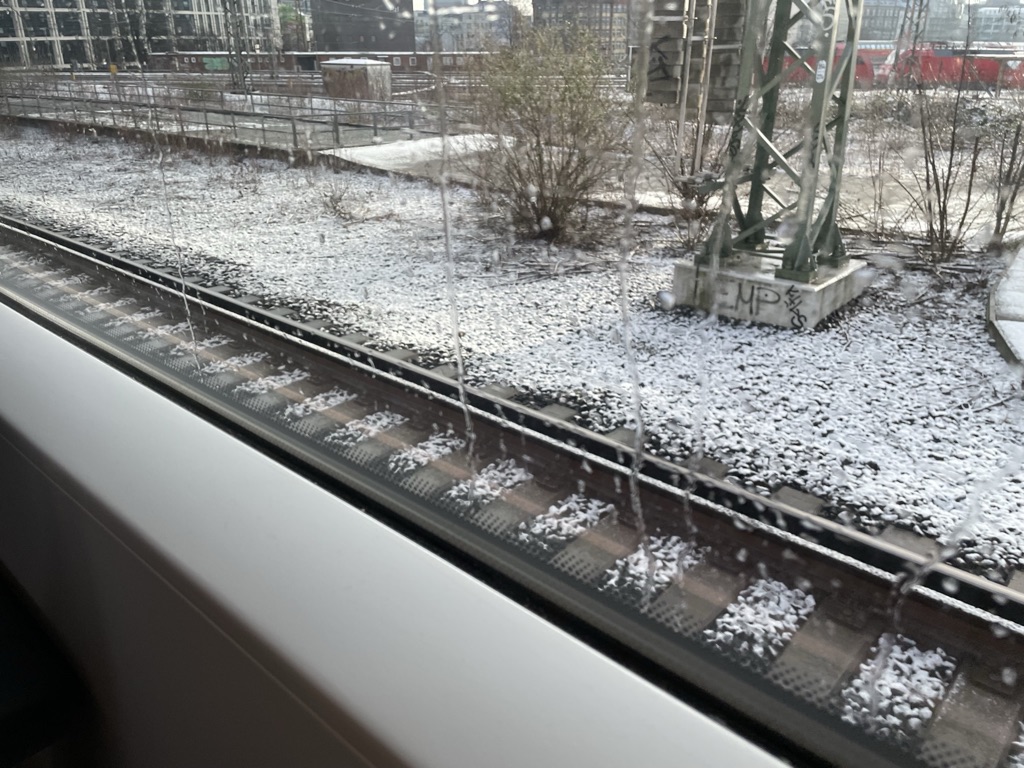
The journey to Amsterdam was without incident. The bus to Ijmuiden and ferry to Newcastle…..
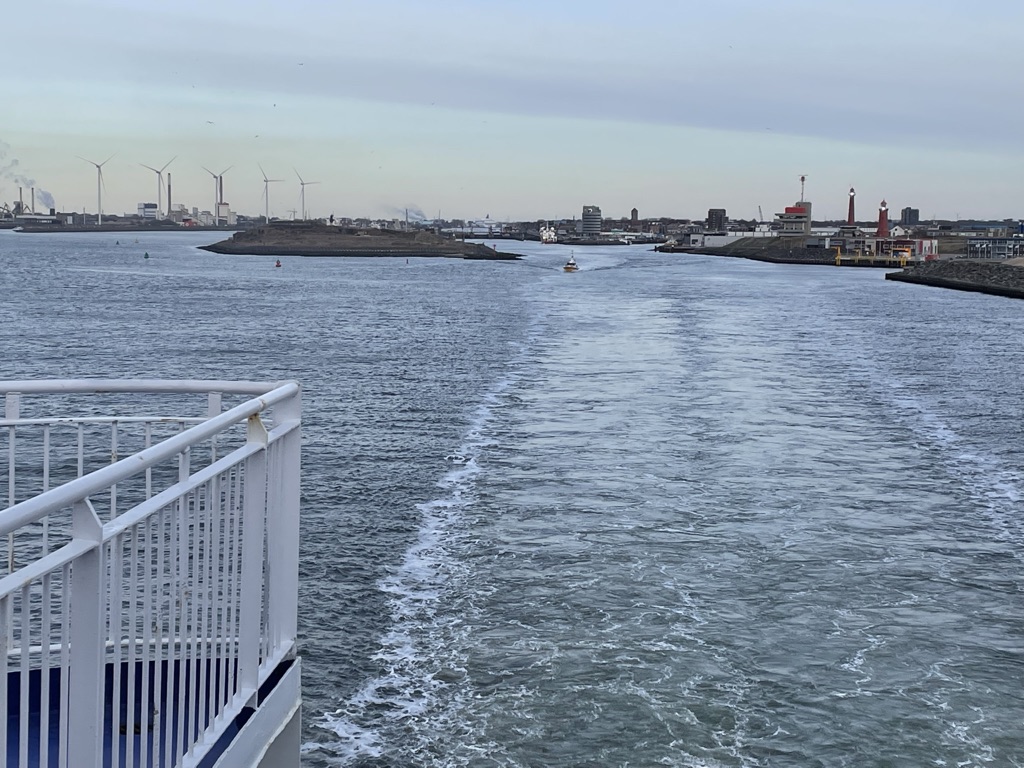
……… sailing up the River Tyne & docking at North Shields.
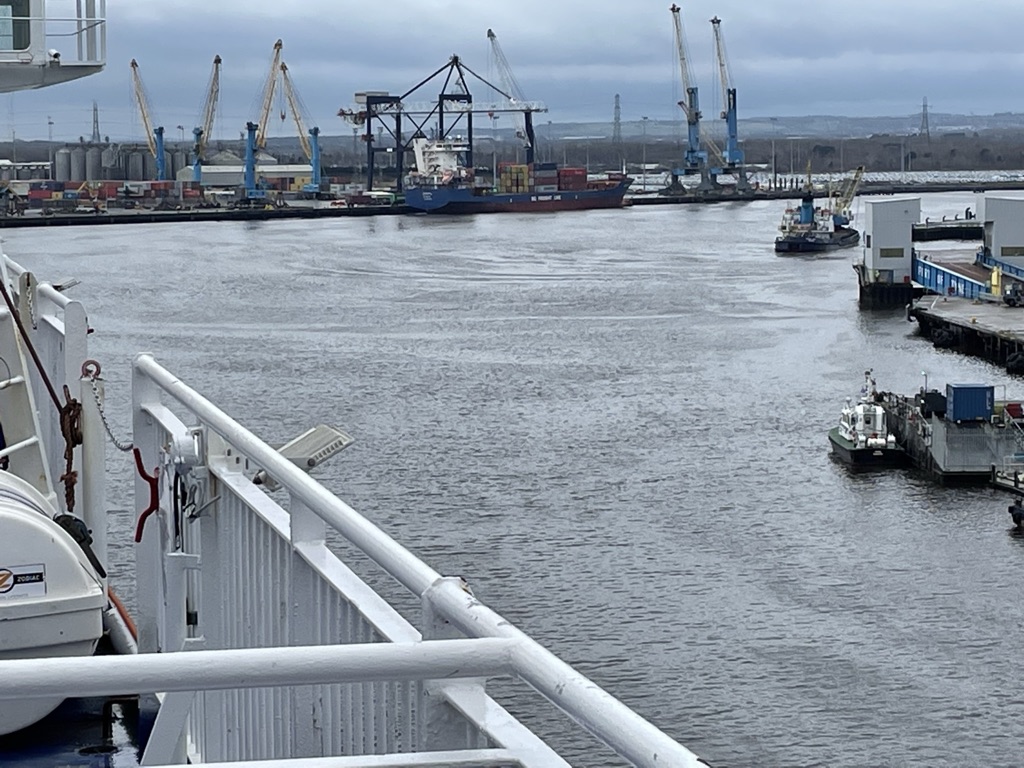
Journey 1 was completed with a lengthy drive home.
Conclusions:
This first journey was always to be a journey that had no physical links (ie connected by railway routes) to those that followed.
It had purpose that linked to last major EU funded project.
‘Green Bridges’ had a Finnish partner from near Tampere. The intention was to meet with one of the staff who had, due to Covid, no chance to join with another partners in the disrupted project.
Unfortunately, after we had begun the journey, due to personal difficulties, our partner had to withdraw from our planned meeting.
The personal link was lost and the personal gifts we carried stayed in our bags to transport until given other partners in Journey Two.
This unfortunate (and weighty) experience led to a continuation of ‘portage of gifts’ from one partner to another. The final being that of Pasquales’ beer (large bottles of…) carried from Spilinga to Iasi, Romania & Kaunas (Lithuania).
So – this journey became an exploratory personal circular tour of Northern Lands. Its main feature, a near totally white landscape, was close to that of our journey in December 2019 to Taiwan, using the Trans-Siberian Railway from Moscow to Beijing.
Journey Two was altered (before it began) due to the tragic Earthquake in Turkey. However, unlike the Northern ‘Scandi-Nordic’ Tour, the journey became a re-visiting of places we’d known previously.
Fortunately the travel cancellations occurred after commitment had been made.
In both cases (Finland & Turkey) the journeys proved to be important elements in the whole No Kerosene Tour.
‘There and back again’
Early in the First Journey elements of the ‘Northern Lands’ became eminent. Travelling north through Jylland/Jutland, heath and peat bogs were present. Such landscape (covered in snow and ice further north) became common.
These elements form major part of Western & Northern Britain as does the use of the Norwegian word fjell. The ‘Fells’ of Northern England & South-West Scotland indicate bare topped, heath & peat bog, high hills – land that is also structurally similar to places in Norway.
The influence of these northern lands is deeply embedded in Northern Britain – through Scotland, Northern England & coastal regions in Wales the naming of places retains the influence of Viking travellers (and raiders) who settled. Many other words entered the English language.
We were going ‘there’… and we came back.
Like Bilbo Baggins (whom Tolkien had using the term for his reminiscences) our journey was into landscapes that, without the advantages of the Industrial Age of the past 300 years, would have required a similar commitment.
Our tale could have been presented so very differently…. not as a largely prosaic account of a comfortable tour on modern transport, centrally heated hotels & frequently elegant restaurants.
We briefly touched on deeper issues – the Sami culture, the political struggles of comparatively recent times, the pressure of a persistent unchanging nature of a harsh winter with an all-too-brief summer (referred to more than once by local people).
We saw holes in the ice….. a simple fishing technique but one that can be a metaphor for what lies beneath our veneer of industrial & commercial modernity. The dark, hidden uncertainties that are underneath our own lives.
It was in Finland – in Helsinki, Tampere and the final walk to the port area of Turku, where encounters with another age and time were highlighted. The Romantics, exploring their mythologies as, in part, a means of making a statement as to their identity.
Tolkien took these stories – and creatively adapted & mixed them in such a way that have made them almost universal.
After confronting them, maybe our tale of a brief journey could be told in such a fashion – it would be very different!
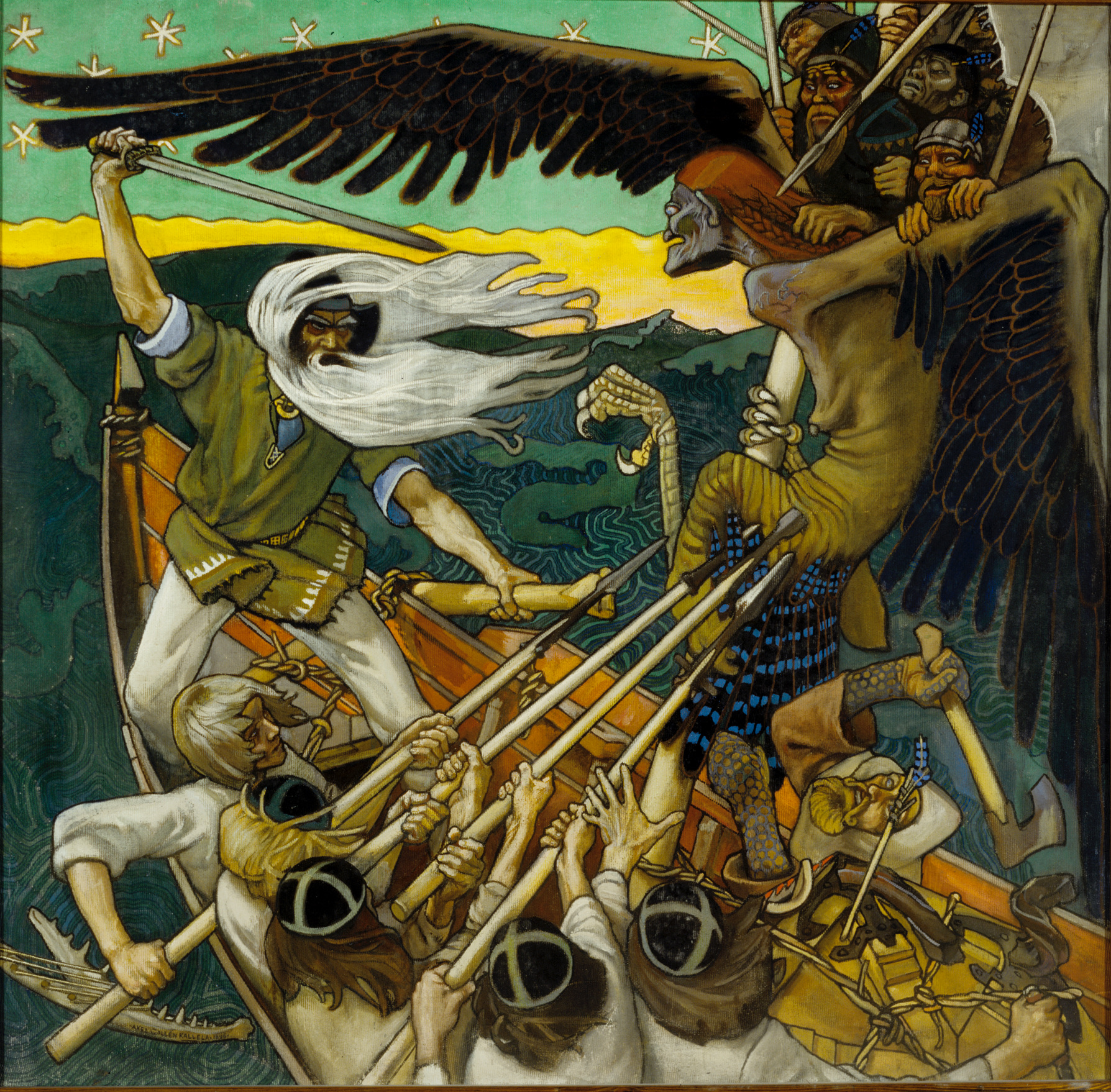
 Inspirational Pathways

